Contemporary ceramicist Jody Folwell (Santa Clara Pueblo) always knew she was going to make art that was a bit different, even as she was learning traditional Pueblo pottery making at the kitchen table from her her mom, celebrated artist Rose Naranjo. Satirical, sculptural, social-political, and avant-garde ceramic statements line the gallery from start to finish in O’Powa O’Meng: The Art and Legacy of Jody Folwell, a celebratory retrospective exhibition at the New Mexico Museum of Art through September 13, 2026.
The Santa Fe stop is the final on the exhibition’s journey across the United States, which started at the Fralin Museum of Art at the University of Virginia.
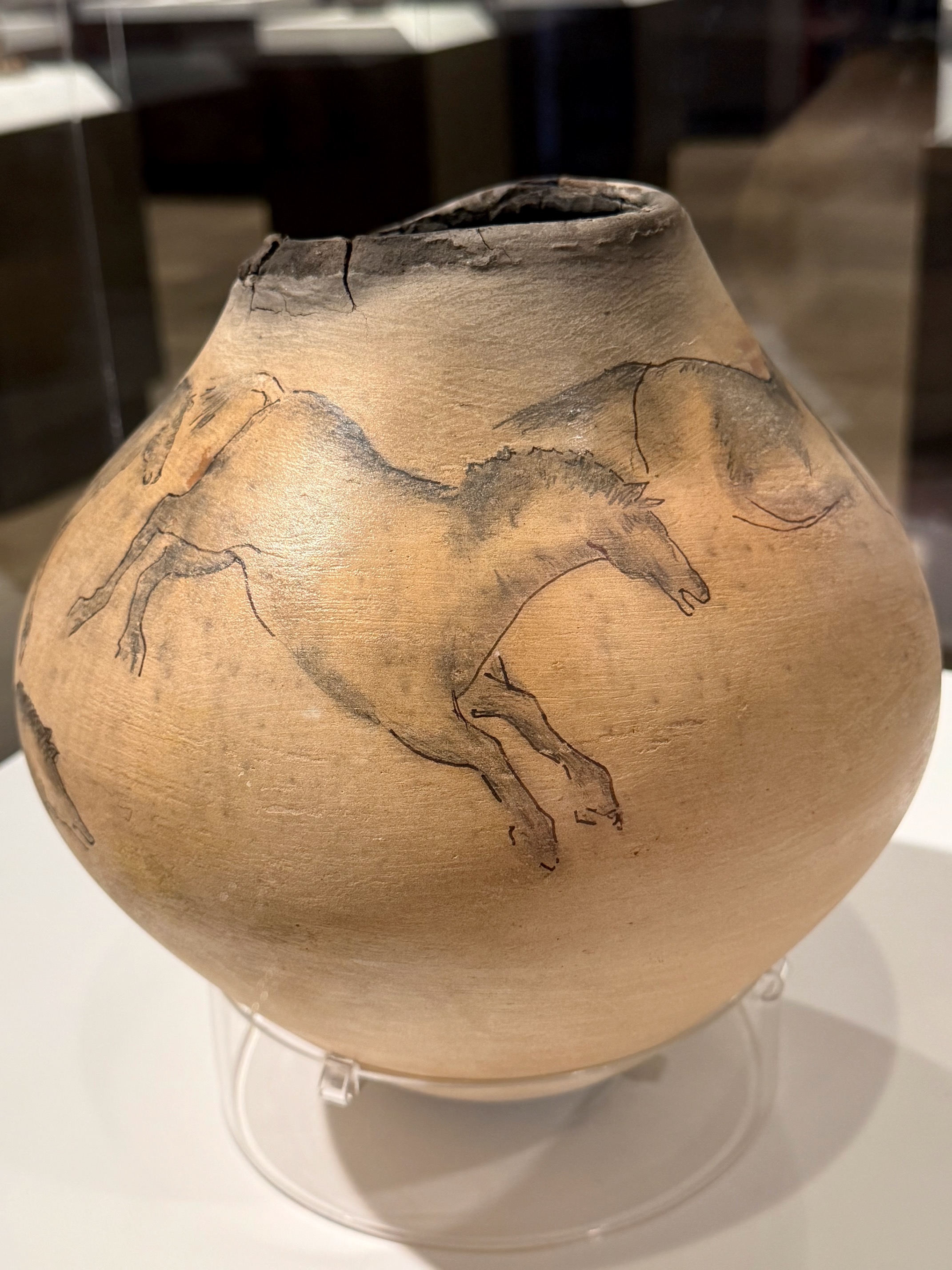
2018 Ancient pot by Jody Falwell (Santa Clara Pueblo), with painting inspired by Lascaux cave painting; rim evokes fire’s importance to humanity’s art making traditions. Courtesy: private collection.
Walk through the show to see our favorites in our Flickr album.
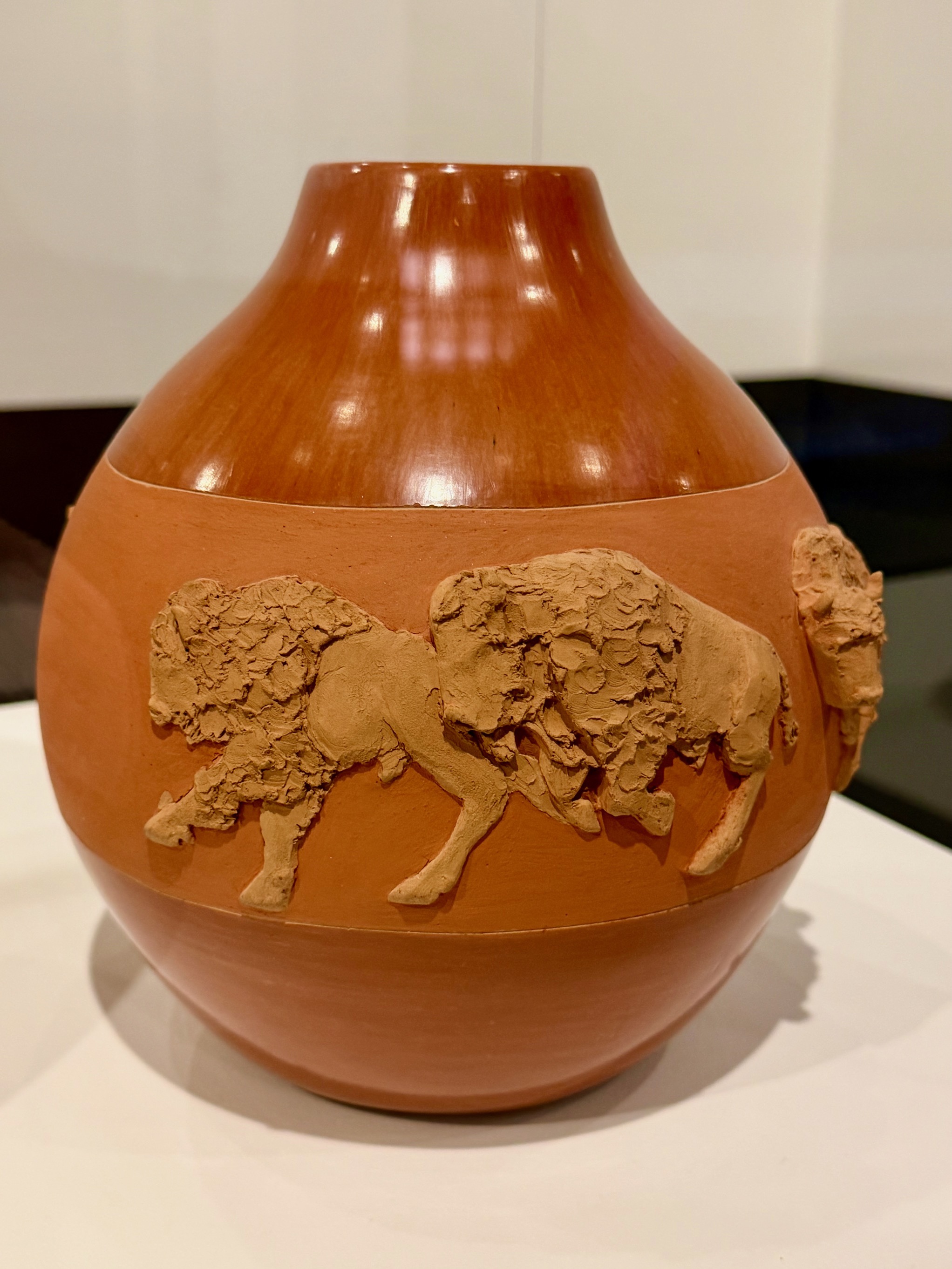
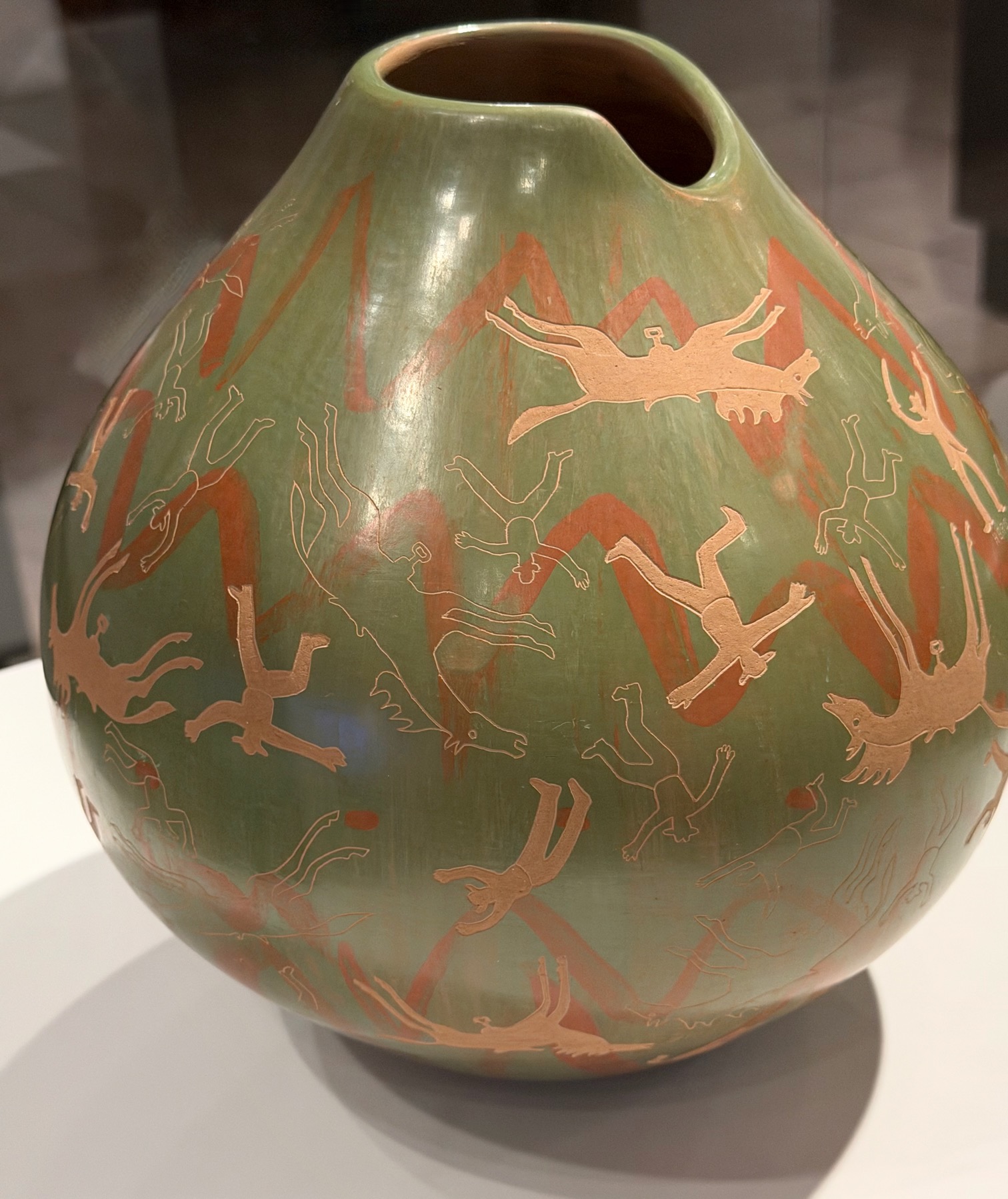
The exhibition does not unfold chronologically, even though it features some of Jody’s (and her family’s) most ground-breaking and controversial work. At one end is Half a Step, that she credits as one of her earliest nontraditional ceramic statements, featuring a lively bison thundering around the partially polished curved surface – a “half step” away from what was expected from Santa Clara pottery at the Santa Fe Indian Market in 1975. At the other end is her collaboration with the acclaimed sculptor Bob Hazous (Chiricahua Apache) that won Best in Show in 1984. Who had ever seen a green Pueblo pot with loaded commentary?
1975 Half a Step pot by Jody Falwell (Santa Clara Pueblo) – featuring sculpted animals and an unpolished band. Courtesy: Museum of Indian Arts and Culture.
Jody’s 1984 Hero Pot collaboration with Bob Hazous (Chiricahua Apache), awarded Best in Show at that year’s Santa Fe Indian Market for its unconventional color, shape, and subject. Courtesy: private collection.
Collaborations, social commentary, sculptural details, and different painting styles encourage gallery goers to move slowly, stop, look, and circumnavigate each work to let the beauty, humor, or story sink in. Jody’s recent multi-pot ceramic installation The Cycle of Pottery is Us causes viewers to stop, think, and reflect on not only the persistence of the traditional Tewa art form, but of the entire human cycle of birth and rebirth.
Detail of Jody’s 2024 The Cycle of Pottery is Us, a sequential reference to black-and-white Ancestral Pueblo ceramic traditions, the art form’s near-loss 50 years ago, and its resurgence. Courtesy: Tia Collection.
As cultural appropriation carries a loade charge in the art world, Jody’s feels that her fascination by sinuous designs of other cultures, the cheekiness of Pop culture, and admired styles of epochs in Western art history gives her license to honor them. She incorporates Plains Indian ledger book style, Maori iconography, comic books, and even the cave paintings of Lascaux. A wide lens from her travel and studies delights visitors as she takes them on a world journey of history, art, and people.
2008 Northwest Coast Art 101 incised with a tribute to her love of fluidity of Pacific Coast design; at rear, 2006 Doh San Quah (I Stole It) painted in Plains Indian ledger style. Courtesy: private collections.
The feelilng behind the show chronicles how much the maternal ceramic making tradition means to her.
2013 Star Wars pot by daughter Susan Folwell (Santa Clara Pueblo), with images of Hopi style and cosmologies. Courtesy: Fred Jones Jr. Museum of Art at University of Oklahoma, Norman.
The exhibition includes a large traditional bread making bowl by her mother as well as work by her daughters and grandchildren – accomplished artists in their own right.
Jody titled her show O’Powa O’Meng (“I came here, I got here, I’m still going”) to demonstrate her continued commitment both to innovation in her art form and to inspire the next generation of contemporary artists.
Several pieces involve a mix of tiles (some broken) and pots with incriptions or depictions woven across all of them, such as The Buffalo Hunt that she created for the Santa Fe installation and Buffalo Soldier, a meditation on Obama’s historic presidency and the enslaved workers who originally built the White House.
Hear more about pushing the boundaries from inside a Tewa home dedicated to art making from Jody and daughter Susan as they talk about exhibition’s final stop with curator Jill Ahlberg Yohe at Santa Fe’s New Mexico Museum of Art.
Look up at the night sky and find patterns in the stars. You can do that, even though you’re standing inside the exhibition Makowa: The Worlds Above Us at Santa Fe’s Museum of Indian Arts and Culture through January 31, 2027. The wall-sized photo murals of day and night skies provide the backdrop to sculptures, pottery, and textiles with stylized images of stars, planets, the Sun, Moon, meteors, and changes of season.
Beautifully crafted objects and immersive photos provide contemplative spaces to consider the different types of skyward observations that Indigenous communities have made across millennia, and how stories and rituals convey this knowledge across generations.
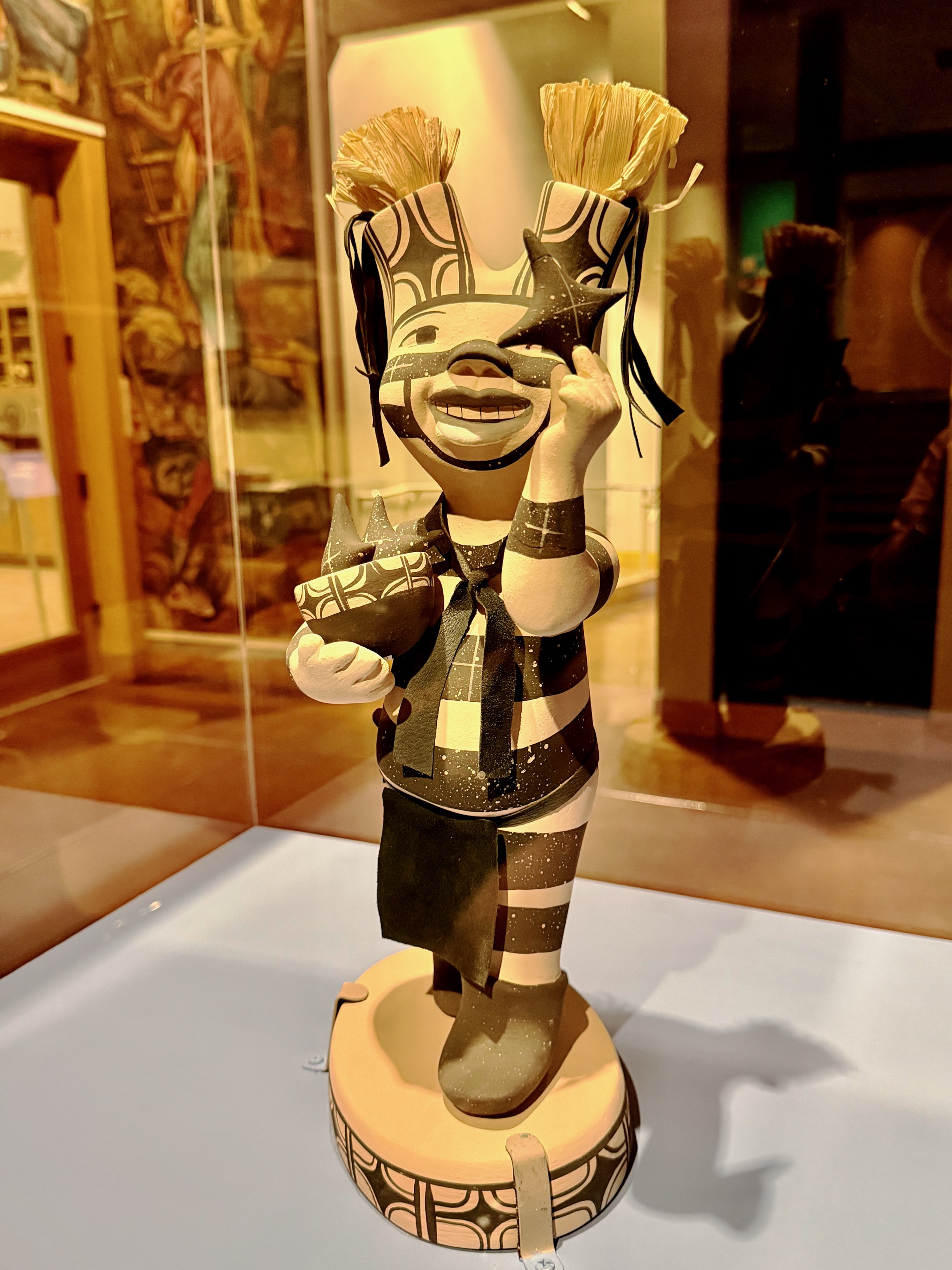
Exhibition welcome: 2009 Evening Star ceramic sculpture by Kathleen Wall (Jemez Pueblo) – a Koshare holds stars important to celestial calendar.
Kathleen Wall’s charming Koshare holding up the Evening Star welcomes everyone to the journey. Take a look through our Flickr album to see some of our other favorites.
A mix of historic and contemporary art underscores the story behind star gazing. Tracking their slow movement across the night skies, sky watchers have long seen stars as important guides. The Ancients used petroglyph images as reminders of how to use ancestor stars for guidance – to tell time, mark seasons, and take journeys through vast desert landscapes.
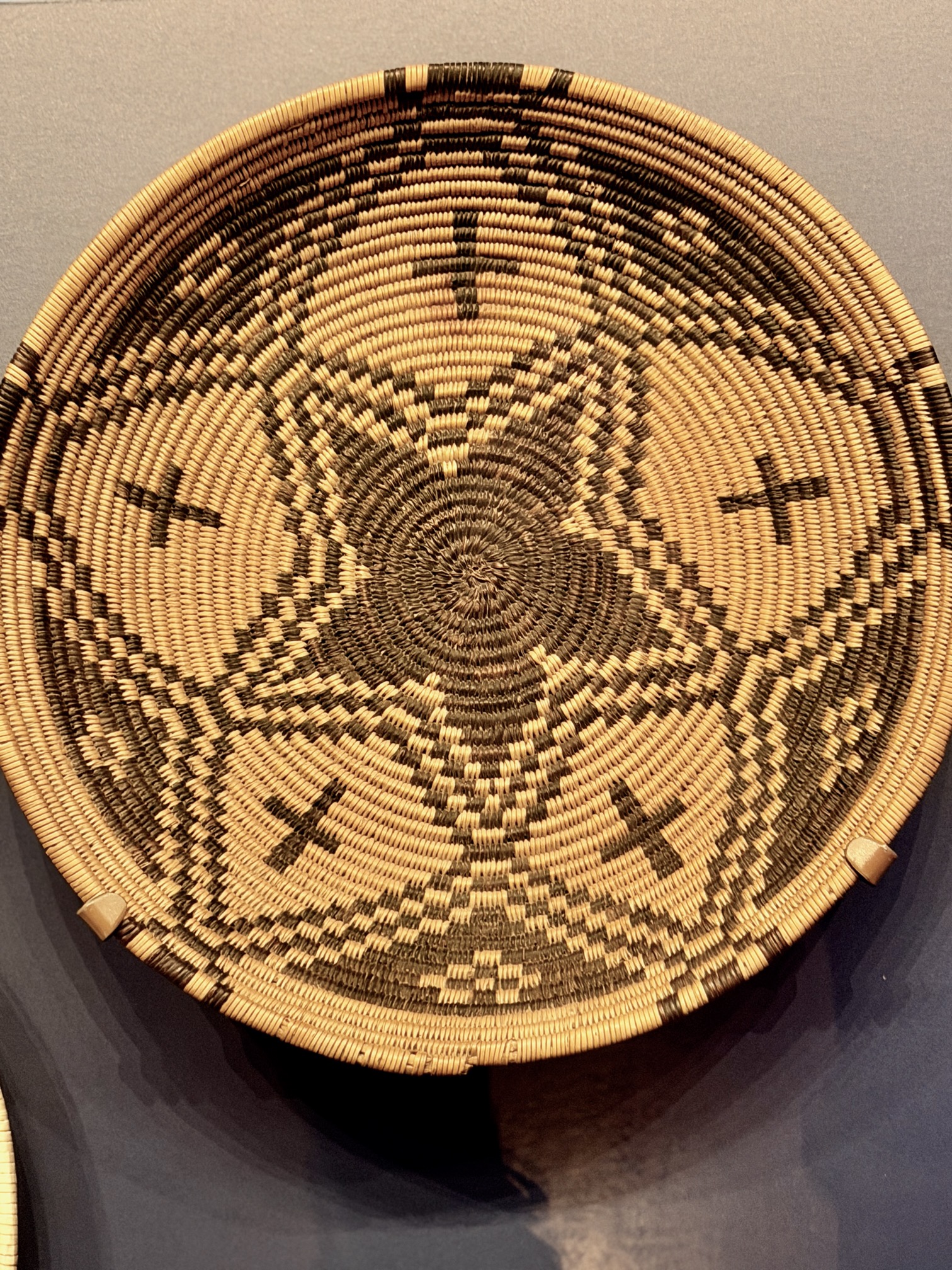
Star patterns: 1930s tray woven by unknown Tohono O’ohdam artist.
2020 Star Child painting by George Toya (Jemez Pueblo), showing a star surrounded by ancestors in the night sky. Courtesy: private collection
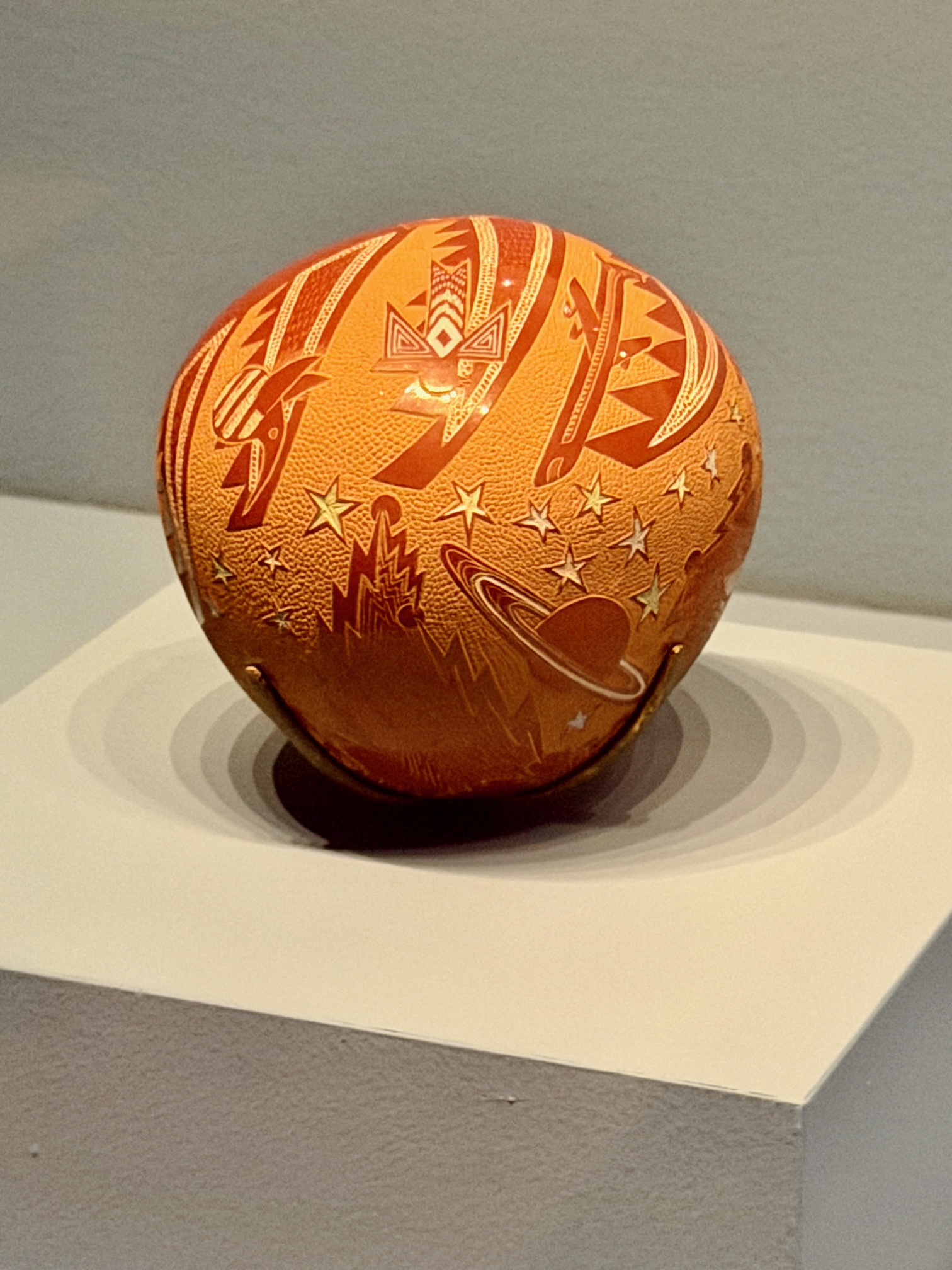
Recent artworks suggest a range of the activity in the day and night sky. Phases of the Moon inform agricultural cycles. Planetary alignments, meteor showers, and also plane traffic are all part of night-sky viewing today. Rosemary Lonewolf’s tiny pot summarizes this dynamism nicely.
Distant worlds and a crowded sky: 1992 miniature Spaced Out jar by Rosemary Lonewolf (Santa Clara Pueblo).
2000-2001 sand painting by Joe Ben Jr. (Diné) linking phases of the Moon to planting cycles.
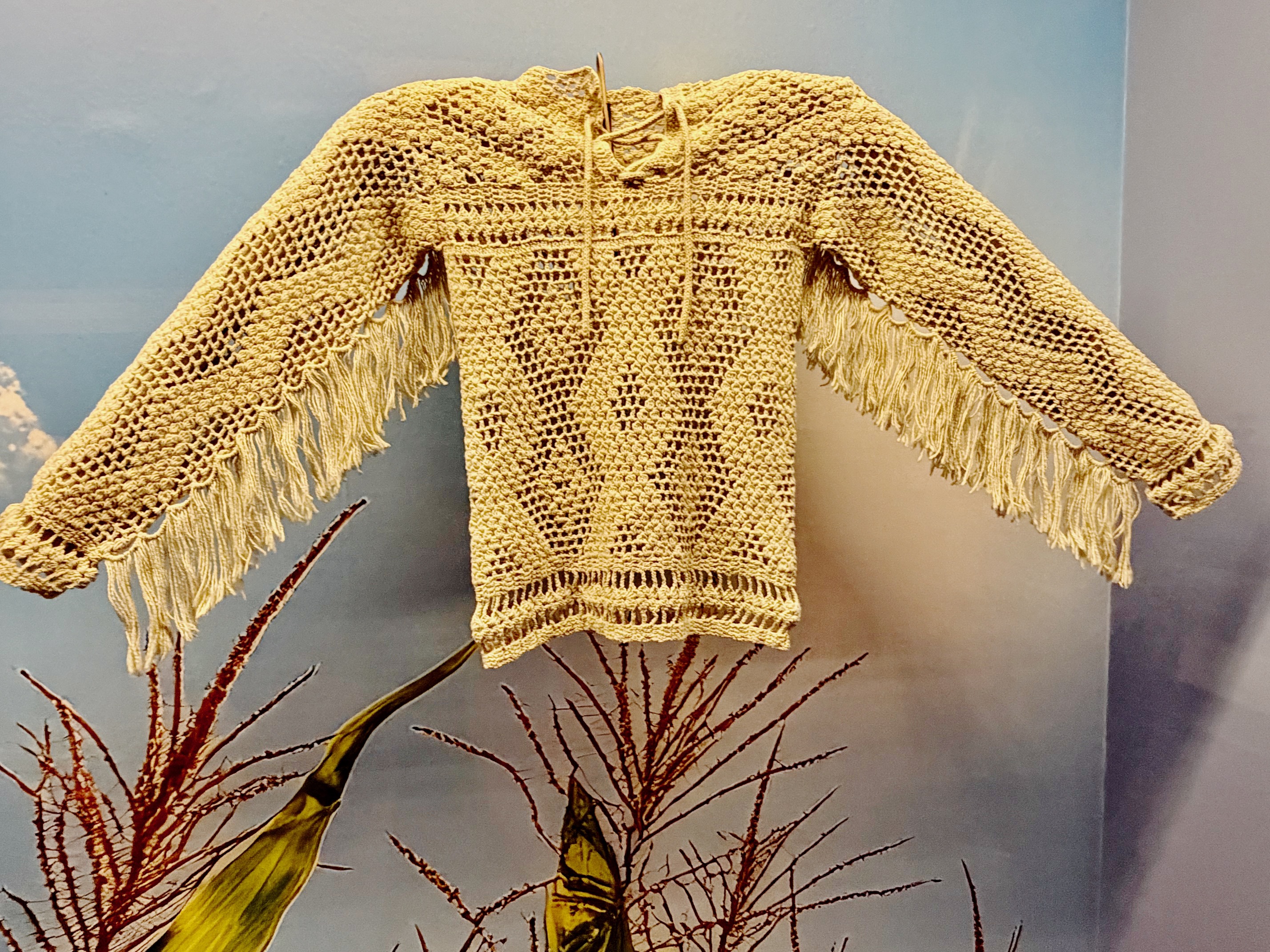
The curators show how traditional symbols of clouds, sky, and sky dynamics are learned, used, and adapted over the centuries by exhibiting modern woven regalia alongside ancestral Puebloan pots from Chacoan culture. It shows that abstract Indigenous symbols do not exist in a single place and time – they are used and reused.
Acknowledging the lively, changing sky: 1984 shirt with sky symbols woven by Evelyn Quintana (Okay Owingeh) with Ancestral Pueblo ceramics below.
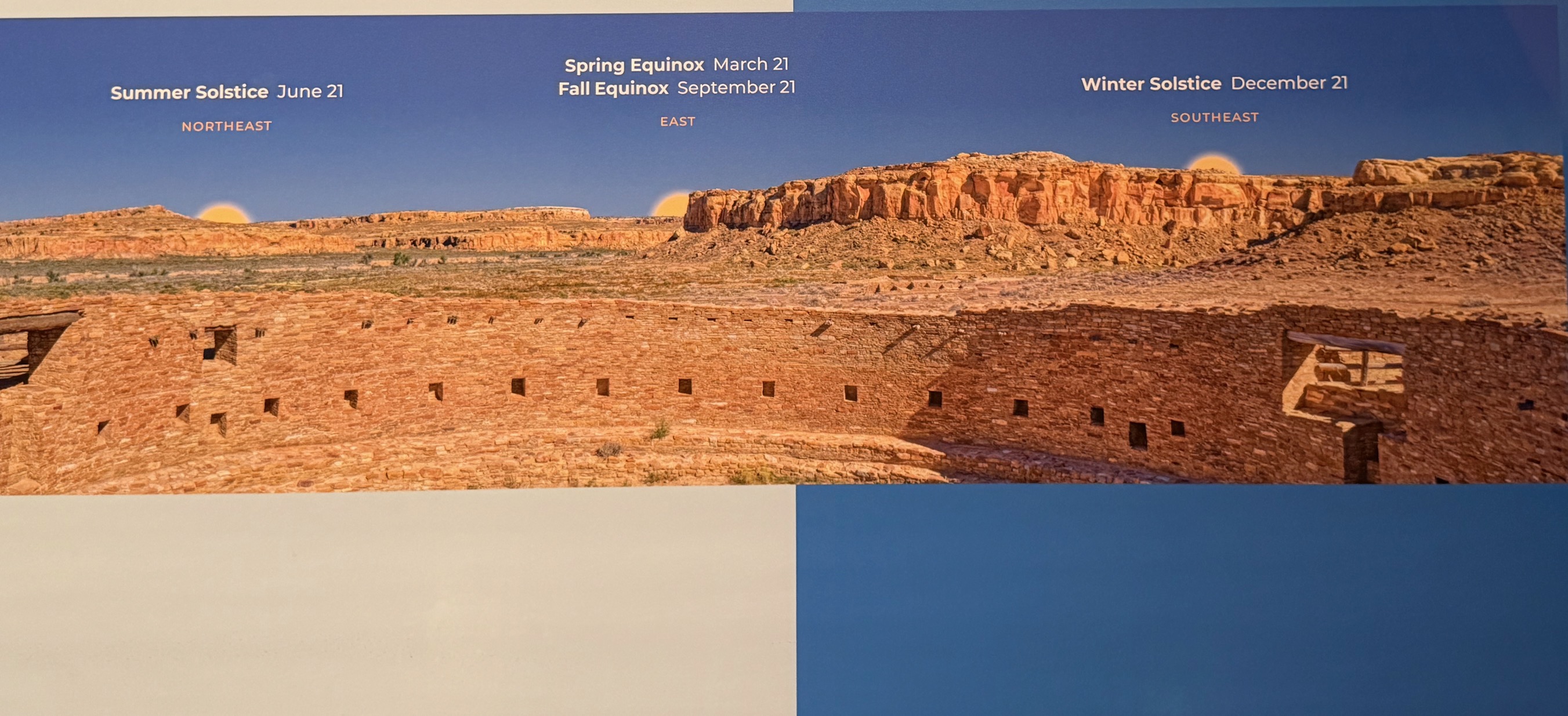
The exhibition also takes a deep dive into how ancient architecture and landscapes across the Four Corners are used to mark cardinal directions, annual cycles, and astronomical phenomenon. Chaco’s magnificent kivas are featured in dramatic photo murals that show how a combination of architecture, horizon markers, and sunrise to mark the seasons.
Equinox and solstice: Duke Johnson’s 2022 photo of the Great Kiva Casa Rinconada at Chaco Canyon showing where the Sun rises against the landscape at key times of the year.
Aerial photographs show how buildings reflect astronomical alignments. Most visitors stand intrigued before an archaeoastronimical explanation of Chaco Canyon’s famous Sun Dagger, which transformed Fajada Butte into an observatory to mark the solstice and equinox.
Google Earth photos of Chaco Canyon National Historic Park. showing how structures are aligned to the cardinal directions – Pueblo Bonito and the Great Kiva at Casa Rinconada.
Visitor watches the Sun Dagger Explorer, a virtual experience of the archaeoastronomy site on Fajada Butte in Chaco Canyon. Courtesy: Advanced Computing Center for the Arts and Design at Ohio State University, The Solstice Project, and the New Mexico Museum of Natural History and Science.
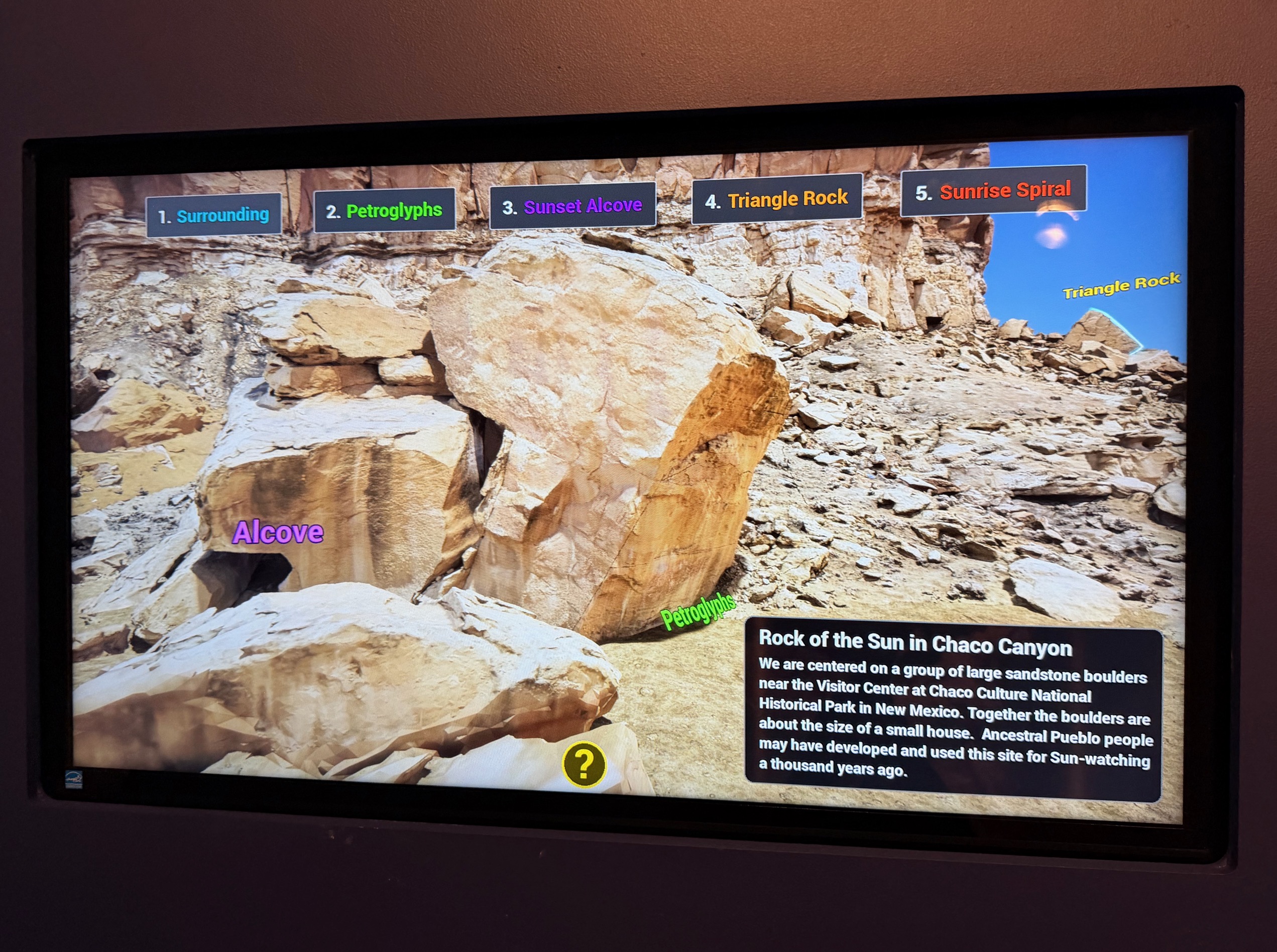
Best of all, visitors themselves can explore the video interactive of another Chaco site – Rock of the Sun – to experience what it’s like to interact with petroglyphs, shadows, and the skies to mark time within the year. Nearby, there’s a copy of a petroglyph (carving into stone) that archeoastronomers suggest could depict an exploding star that was visible for 3 weeks in the year 1054.
Interactive video screen that provides visitors with a virtual experience of Rock of the Sun, an archaeoastronomy site in Chaco Canyon National Historic Park.
Other sections of the exhibition focus on the animals that serve as sky messengers – bats, eagles, and other birds – and rituals that honor the four cardinal directions.
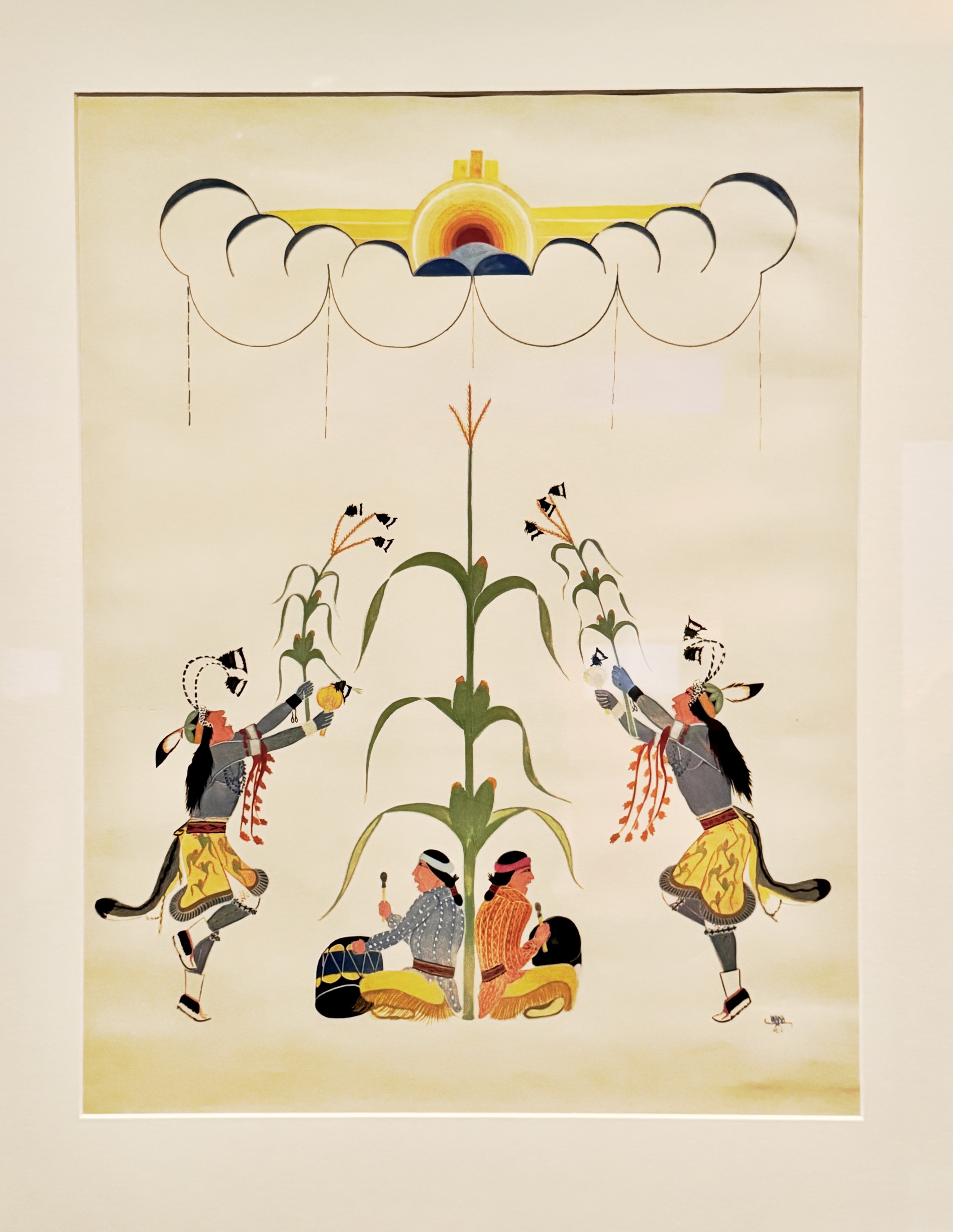
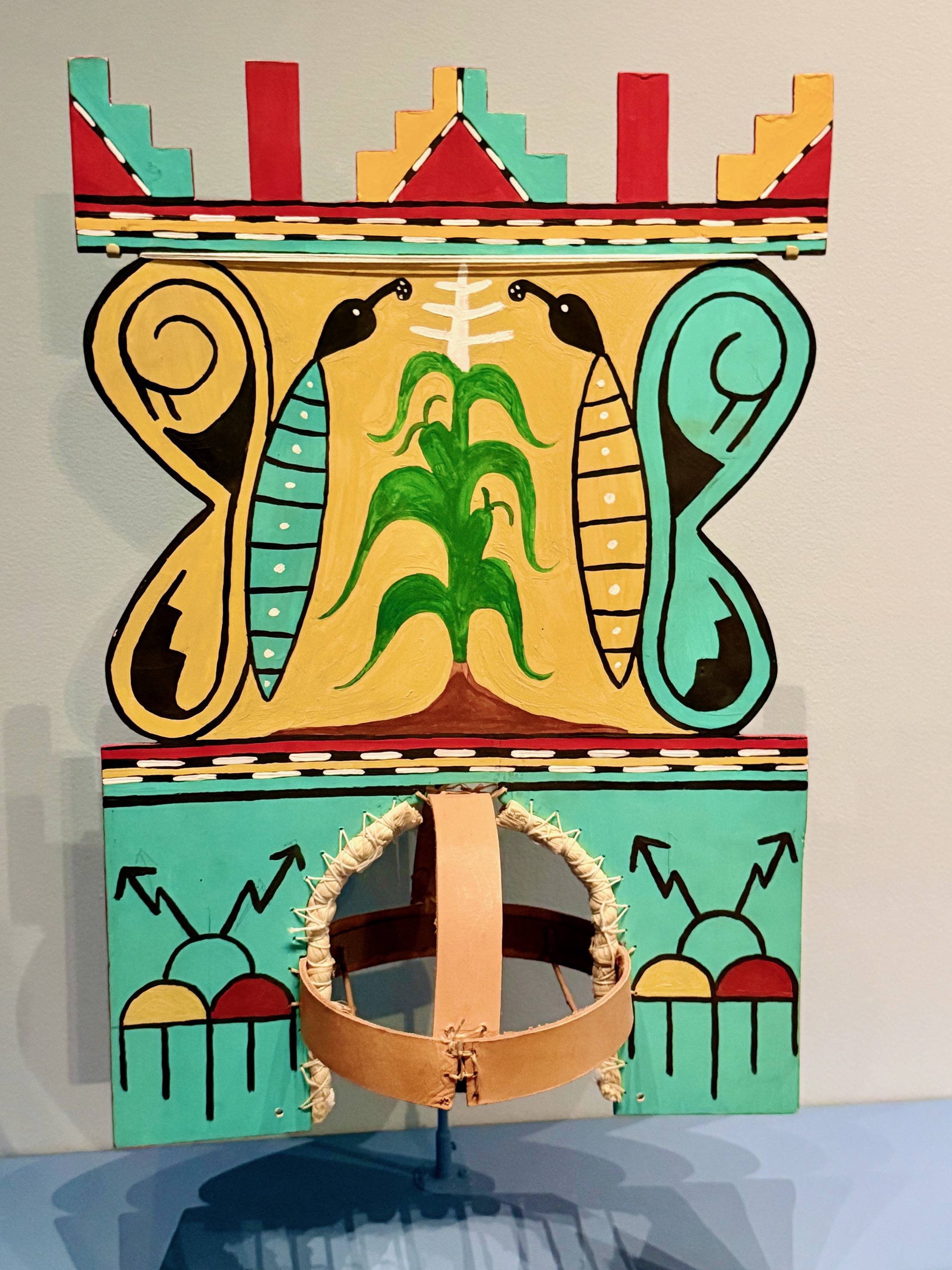
One of the key themes here is to respect the elements – not try to control them – which is emphasized brilliantly in the final fitting tribute to these scientist farmers. Phenomenon such as rain, wind, clounds, and thunder seemed unpredictable to the Ancients, so ceremonies and dances were performed to convey desire for favorable elements. Beautifully woven cotton garments, paintings, and ritual headgear are rich in layered meanings – seasonal calendars, rain, and lightning.
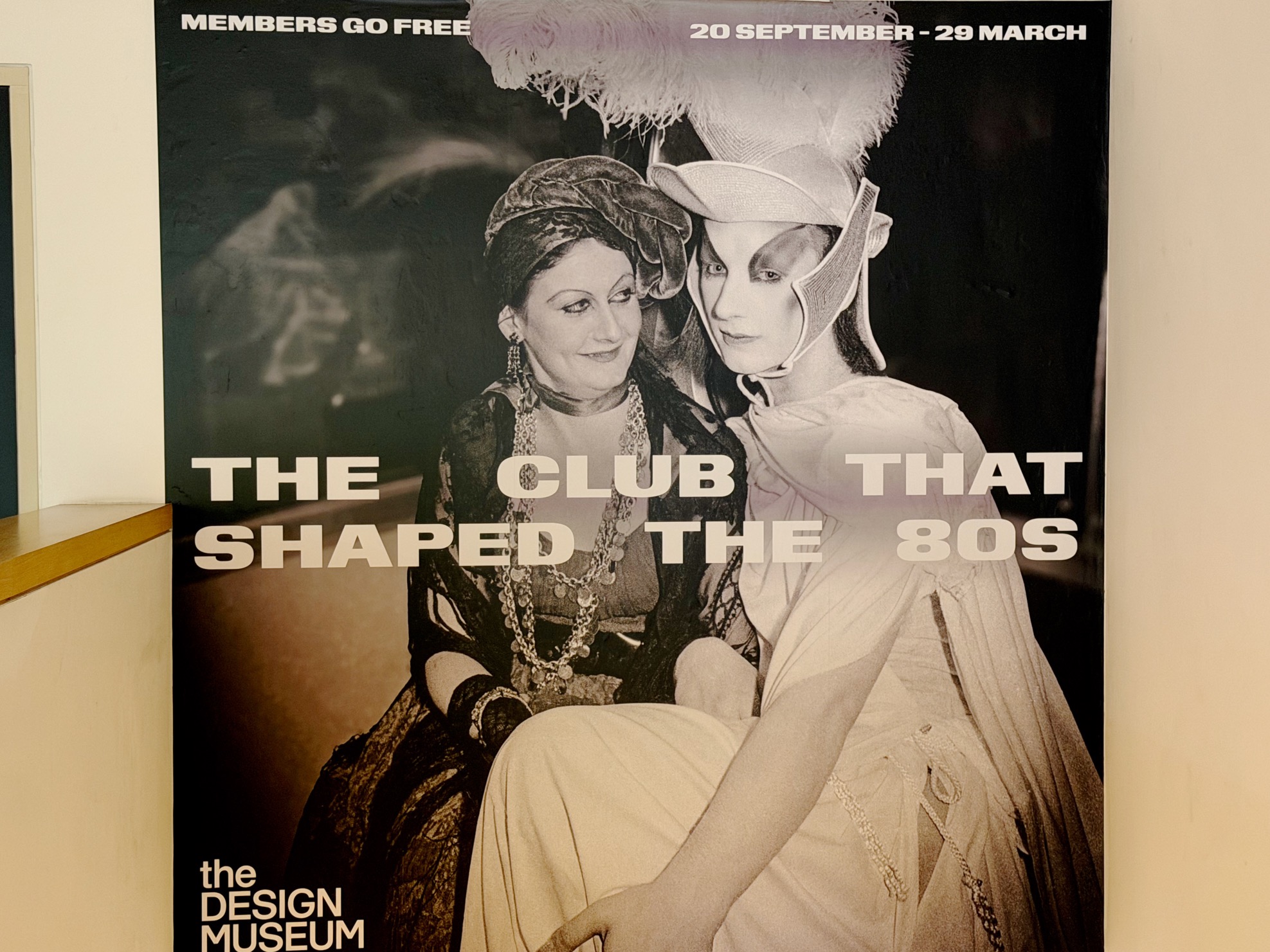
You’ll have to go downstairs and get past the doorman to get into the club where art, design, trend, creative dress, techno-pop, synth, retro, and gender-bending fashions rule. The Design Museum in Kensington, London has created a time machine that takes visitors back to the edgy days of Covent Garden through the exhibition Blitz: the club that shaped the 80s, on view through March 29, 2026.
As soon as you enter the museum lobby, you can tell who’s there for the exhibition. Many are dressed for the occasion in bold designs, sparkly accessories, band T-shirts, and 80s hair accessories. Everyone’s having fun, going back to their youthful club days in London, remembering the “private party” at the Blitz wine bar every Tuesday night.
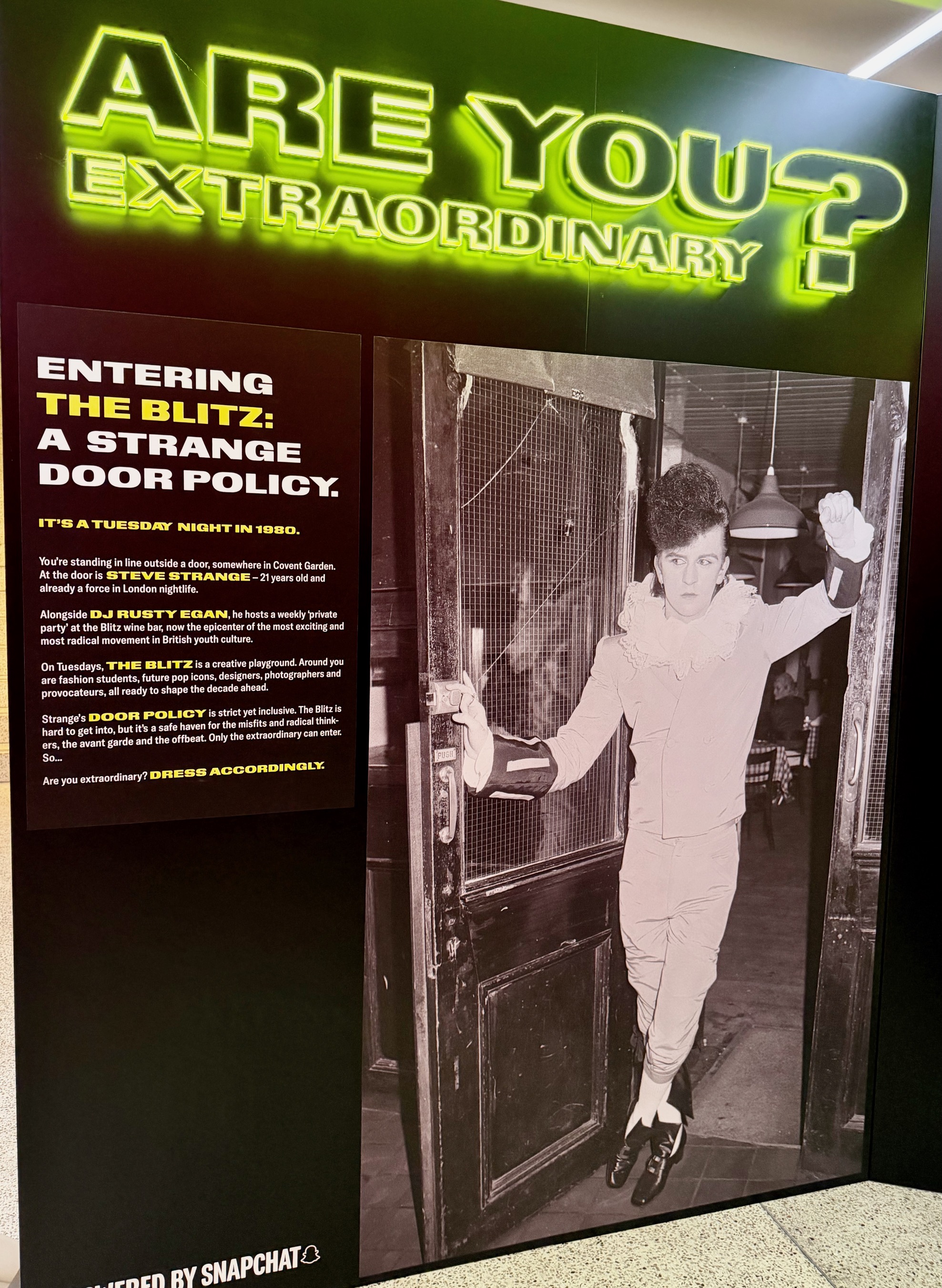
Exhibition entrance with photo of Steve Strange, who decided who got into the Blitz club.
See some of our favorite memorabilia and fashion in our Flickr album.
The exhibition recreates the convergence of everything cool in London culture circa 1979-1980. Visitors stand before posters, walls of photos, and fashion recollecting their own experiences at the Tuesday-night wine-bar “private party” where Steve Strange and DJ Rusty Eagan presided over bare-bones space that came alive with color, outrageous fashion, and ginormous personalities. Steve worked the door and (for a nano-second) Boy George ran the coat room. No one repeated outfits.
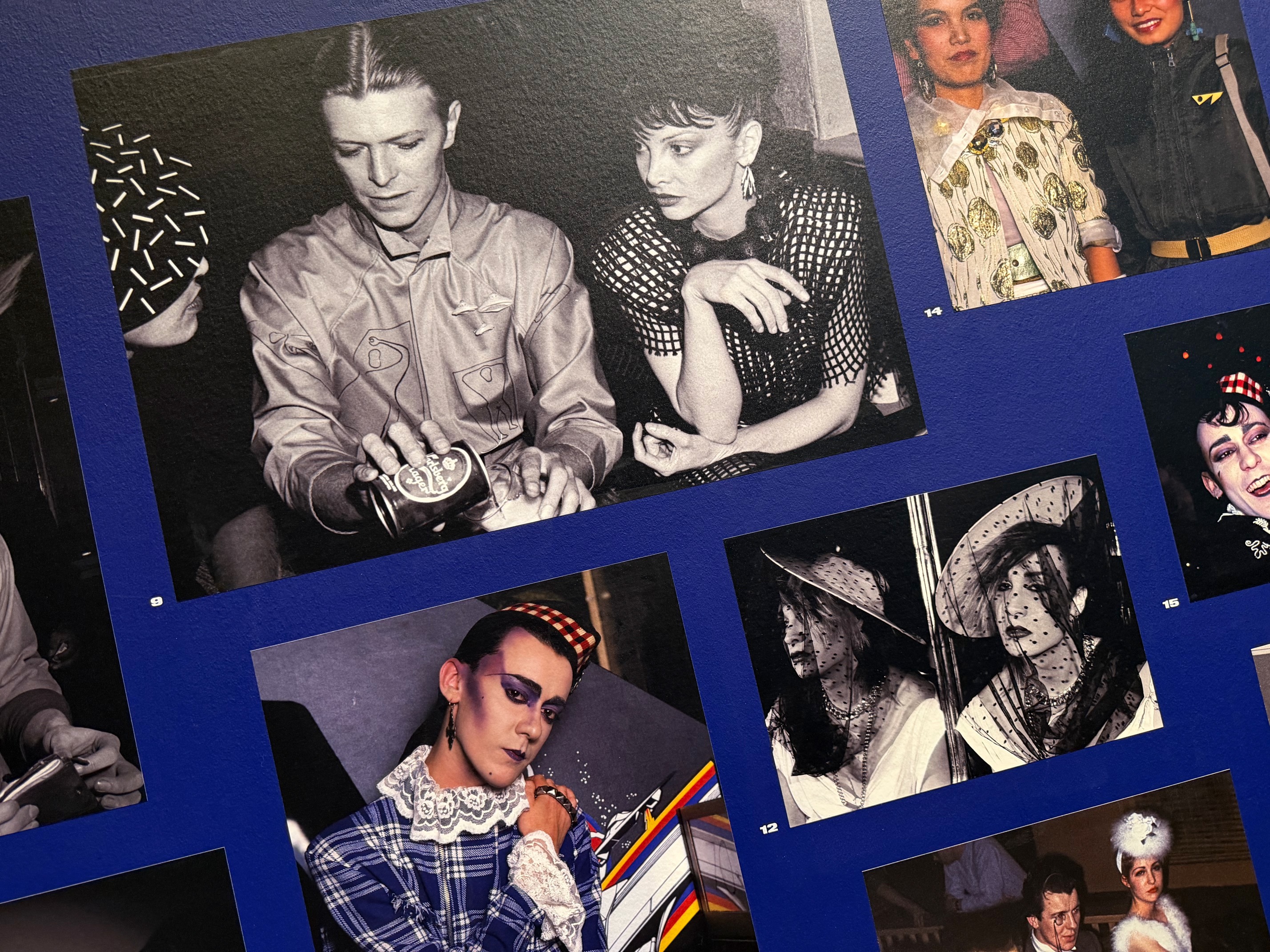
Photo wall of Blitz party goers 1979-1980 – (top) David Bowie and Toni Basil by Robert Rosen; double portrait by Robyn Beeche; (bottom) designer/club kid Stephen Linard by Robyn Beeche; Marilyn at Club for Heroes by Robert Rosen; and Stephen Linard by Ted Polhemus.
The journey opens with a look at the counter-culture that was percolating in Britain in the mid-1970s – the subversive punk scene, young people’s passion for European retro avant-garde cinema and art (thought to be more exciting that UK’s drab day-to-day), the magic of public persona reinvention (look no further than the music and image of the morphing Mr. Bowie), and and subversive, transmuting morals exemplified by drag and The Rocky Horror Picture Show.
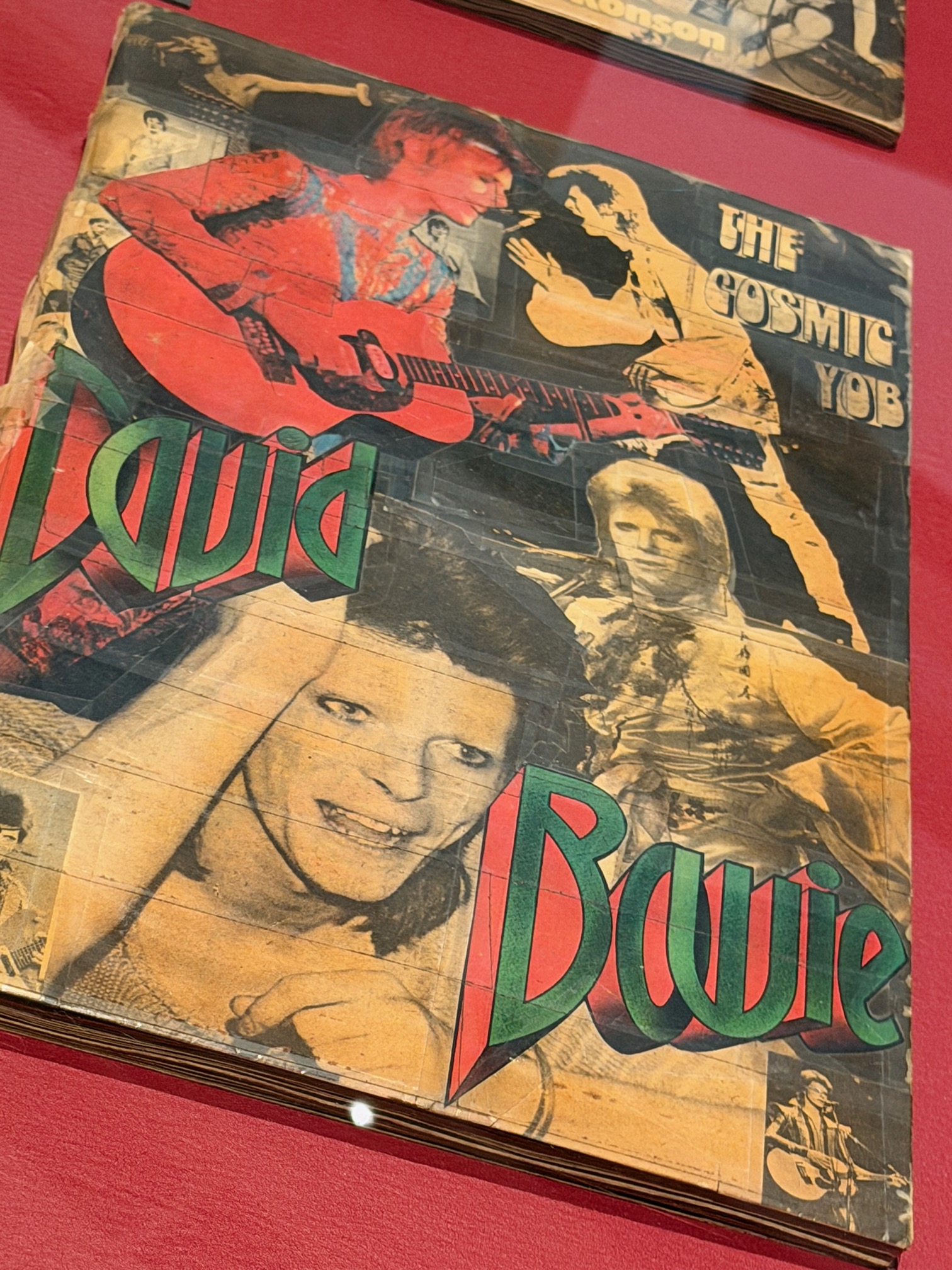
Keeping track of a style and music influencer – late 1970s scrapbooks with pictures of David Bowie. Courtesy: Iain R. Webb.
Clubbing before Blitz: Nicola Tyson’s 1978 photos of “Bowie Night” hosted by DJ Rusty Egan and Steve Strange at Billy’s Club in Soho, London. Courtesy: Sadie Coles HQ, London.
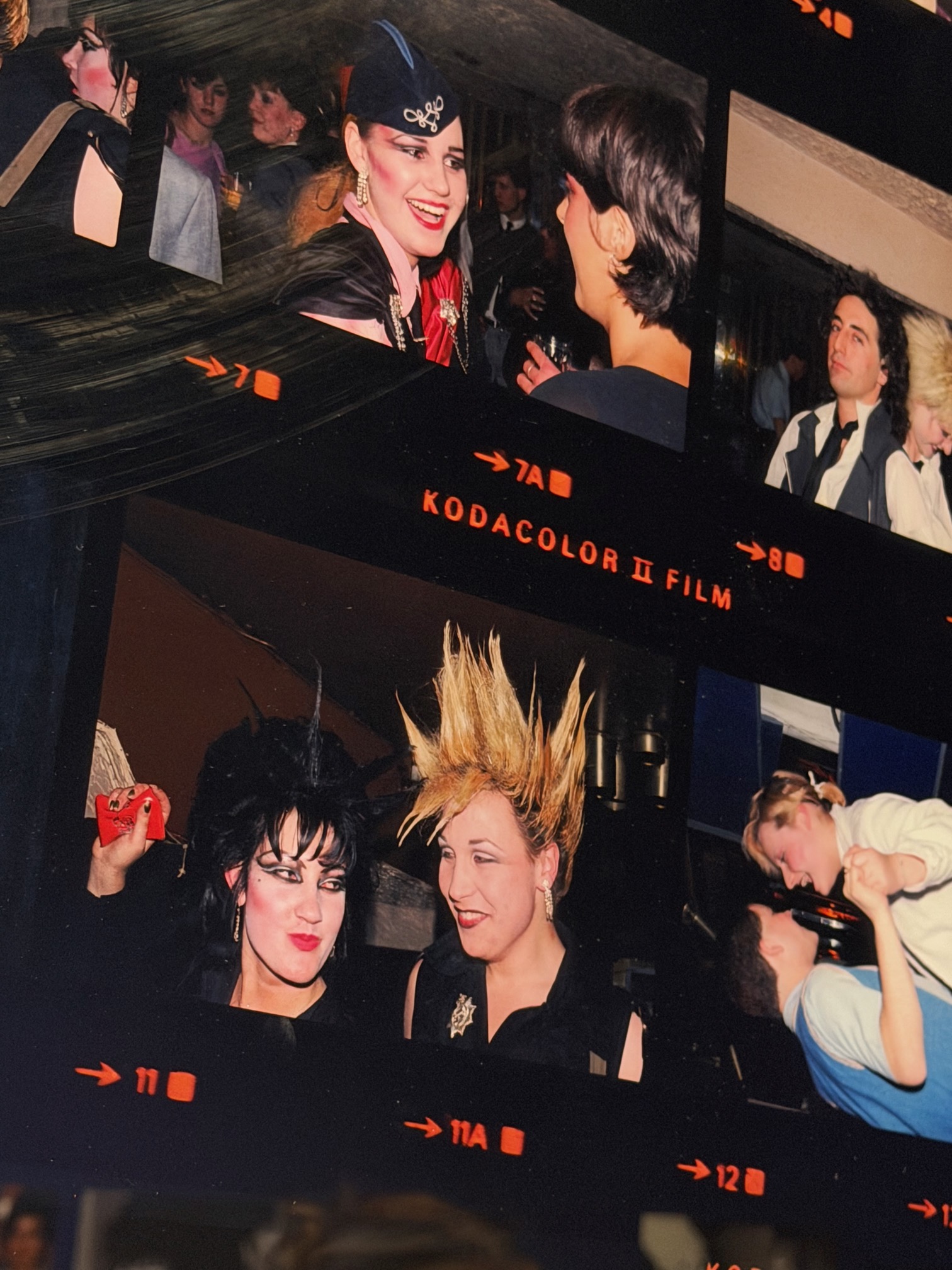
DJ Rusty Egan began by hosting parties at other venues (“Bowie Night” and so forth) before asking the Blitz to agree to his recurring weekly event. Young art and fashion students of St. Martin’s and Central flocked to these party nights, turning themselves (and friends) into unique cultural creations. You were safe at the Blitz.
Student designer David Hola’s 1979 robe and dress; 1979 photo by Derek Ridgers of makeup artist Lesley Chilkes wearing it. Courtesy: Lesley Chilkes
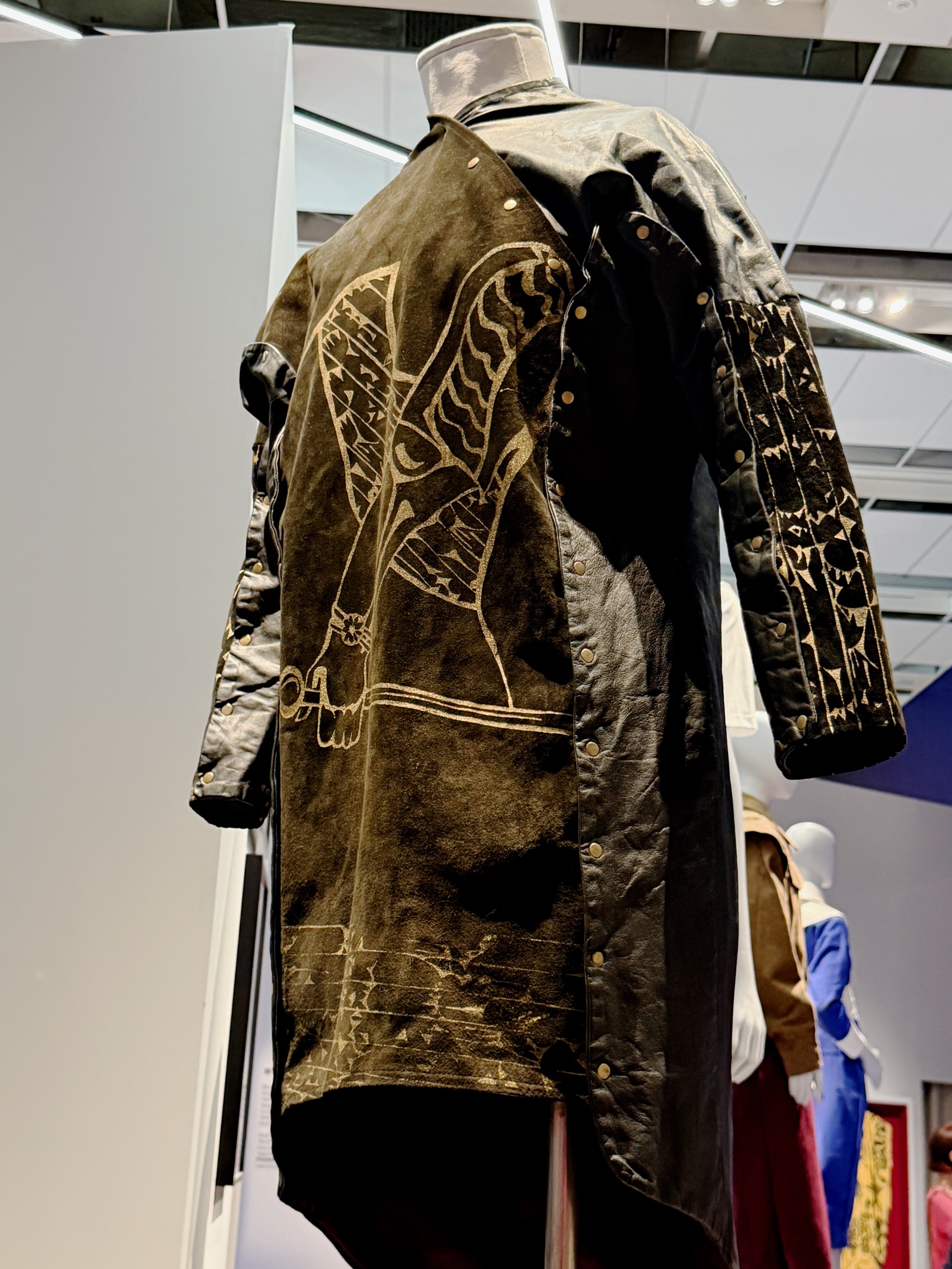
1980 man’s hand-painted leather coat by Melissa Caplan for Pallium Products. Courtesy: the artist.
Fashion and innovation at the club were key, and after the Blitz club opened in 1979, it didn’t take long for the press to catch on. Spandau Ballet did their first live performance at the Blitz, costumed by up-and-coming student designers. Manolo Blahnik and (future milliner to Dior and Diana) Stephen Jones were just part of the crowd, collaborating with designer friends, musicians, and make-up and hair artists to create look after look. They never imagined from those funky club days that their business would become the stuff of Met Galas, big-time runways, and museum archives.
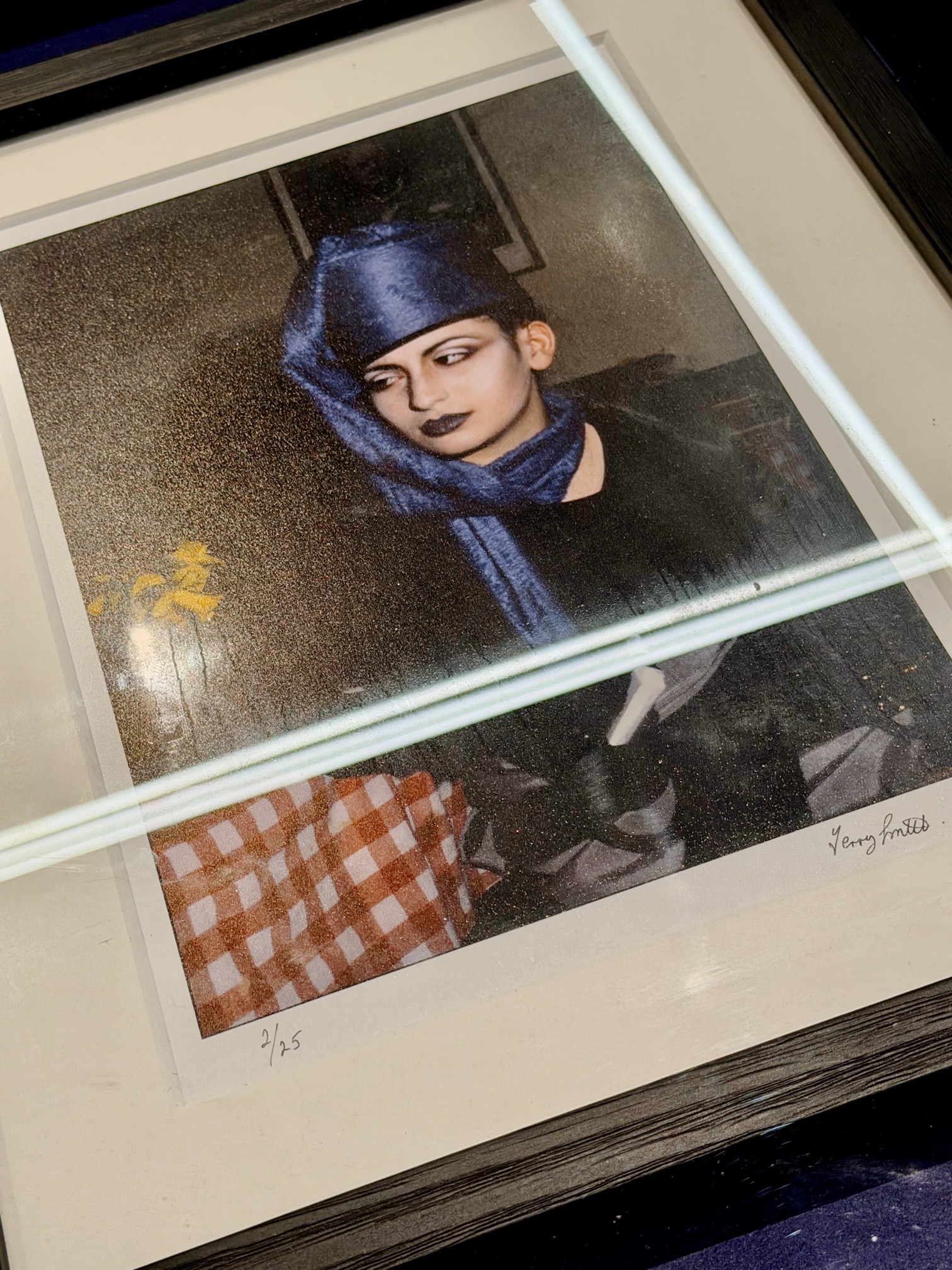
Peter Ashworth’s 1980 photograph of Blitz style icon Kim Bowen wearing the Archbishop hat by Stephen Jones. Courtesy: Iain R. Webb.
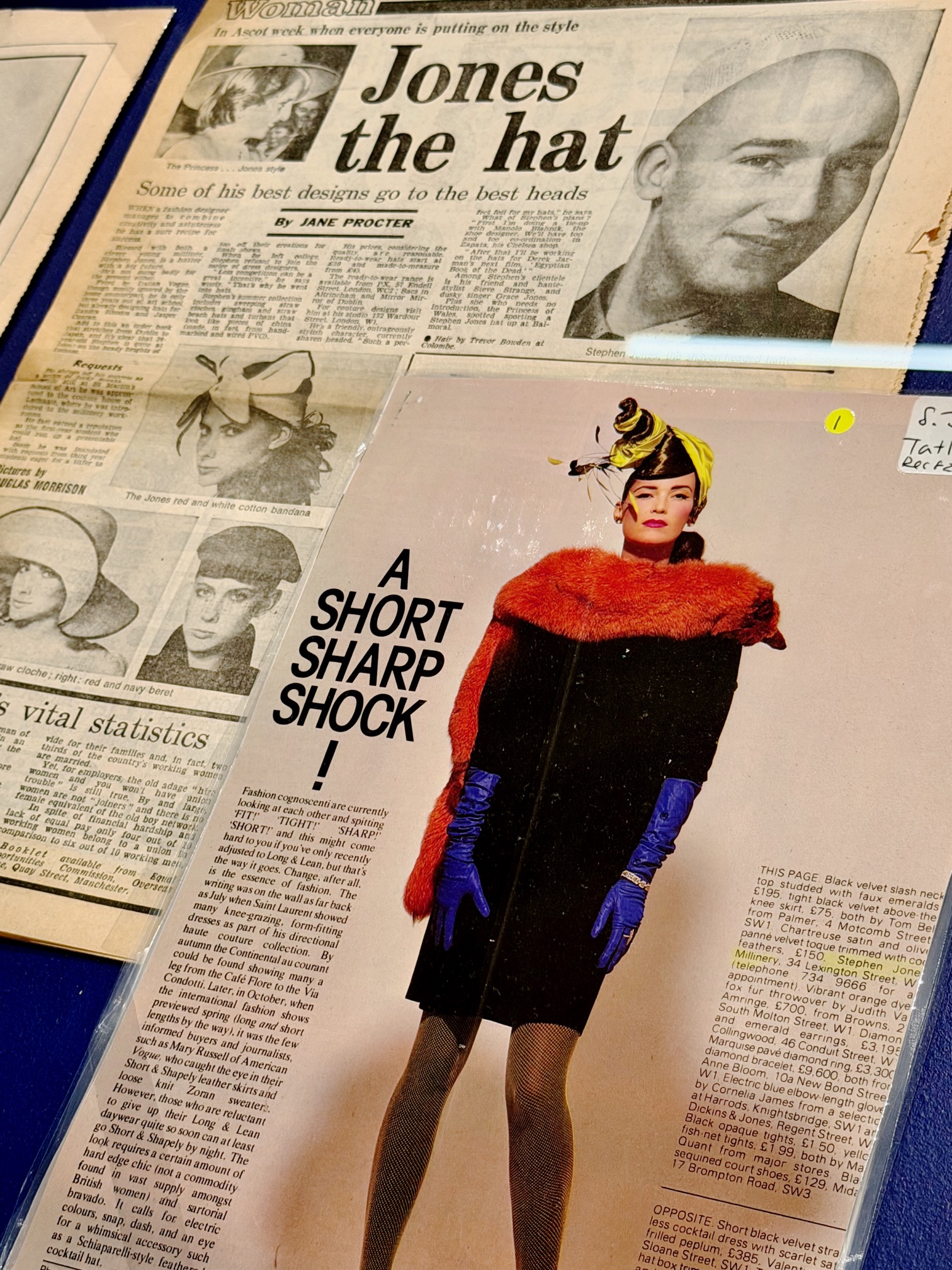
Press about milliner Stephen Jones from a 1982 article in the Daily Express and 1983 story in Tatler. Courtesy: Stephen Jones; Central St. Martin’s Museum.
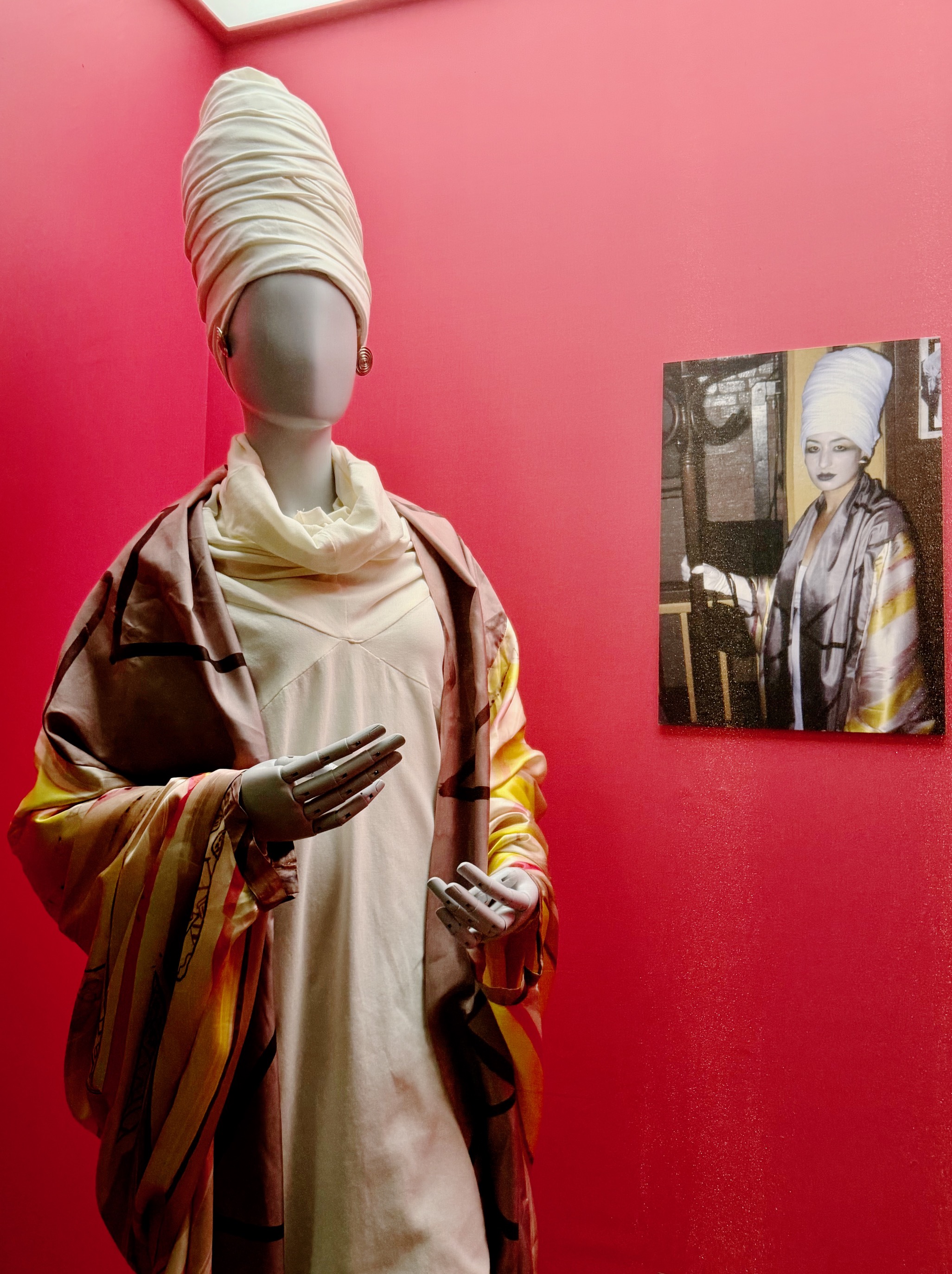
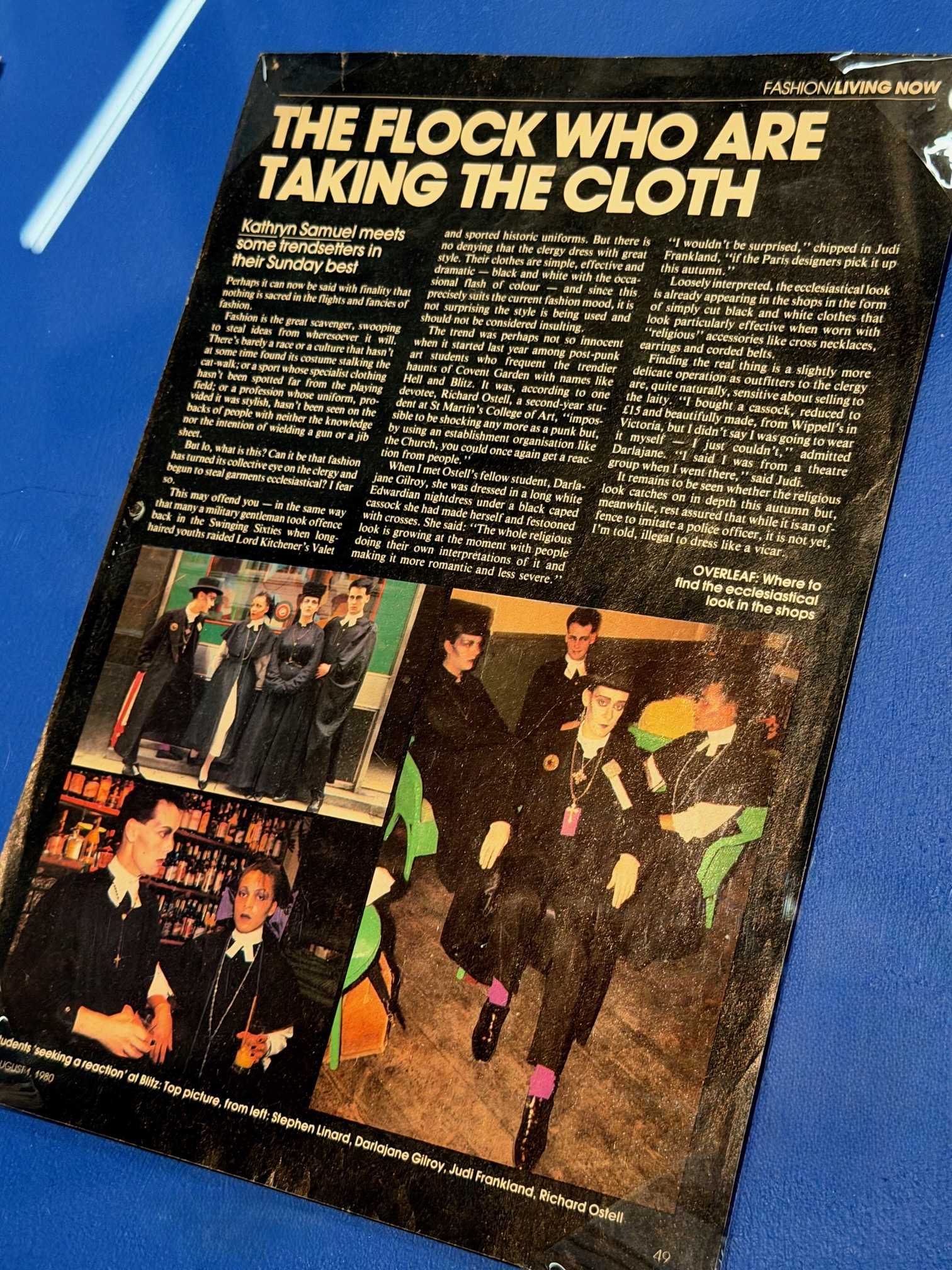
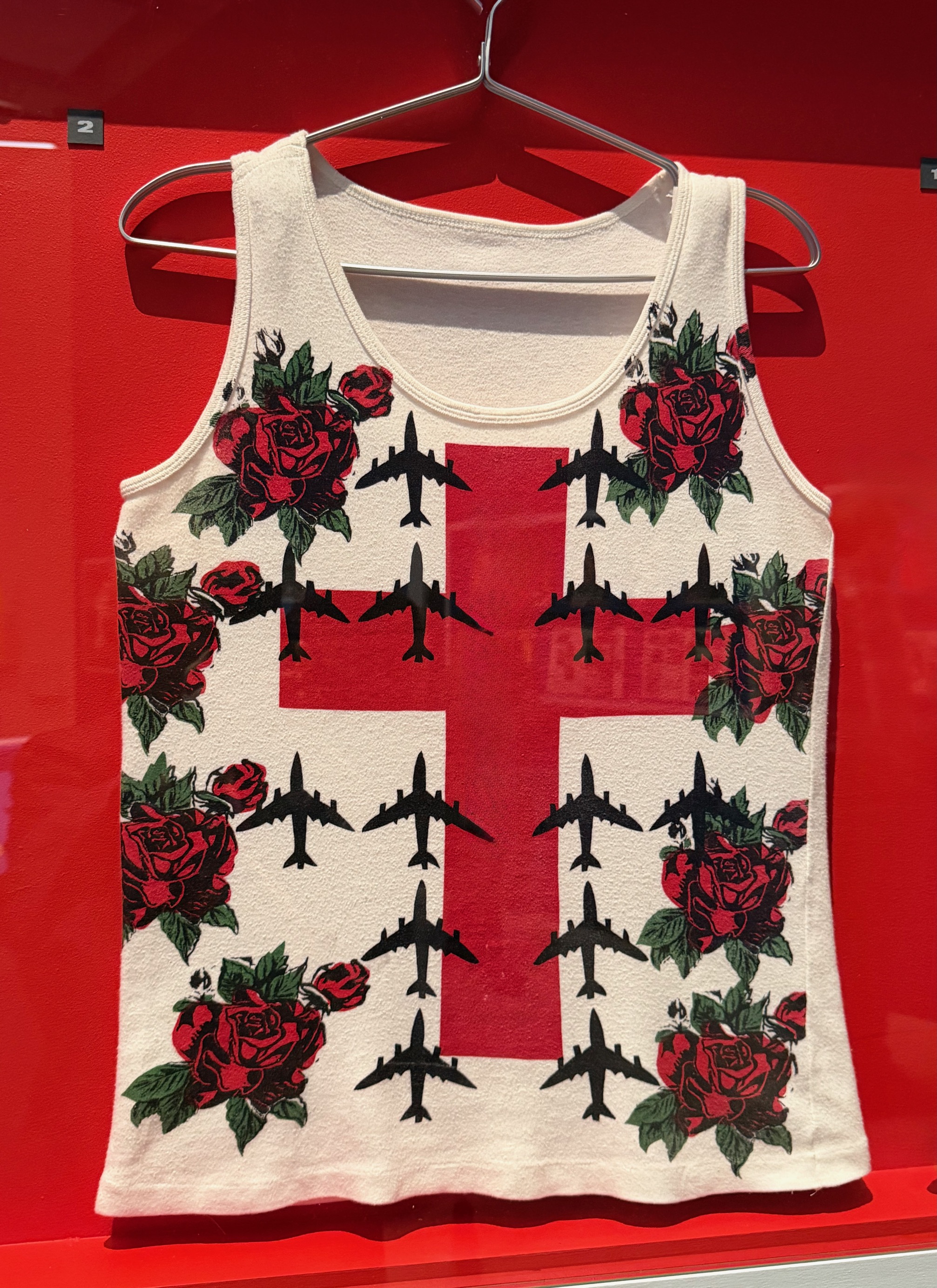
The exhibition shows off many of the designers who defined the ever-evolving look of (what the press called) “The New Romantics.” Backless leather dresses by Fiona Dealey, retro zoot suits by Chris Sullivan, ecclesiastical-inspired unisex garb by Darla-Jane Gilroy, and socio-political tank-top commentary by Sue Clowes. After their graduation collections, many of them sold clothes at Camden Market or specialty boutiques near the club. Their careers were off and running.
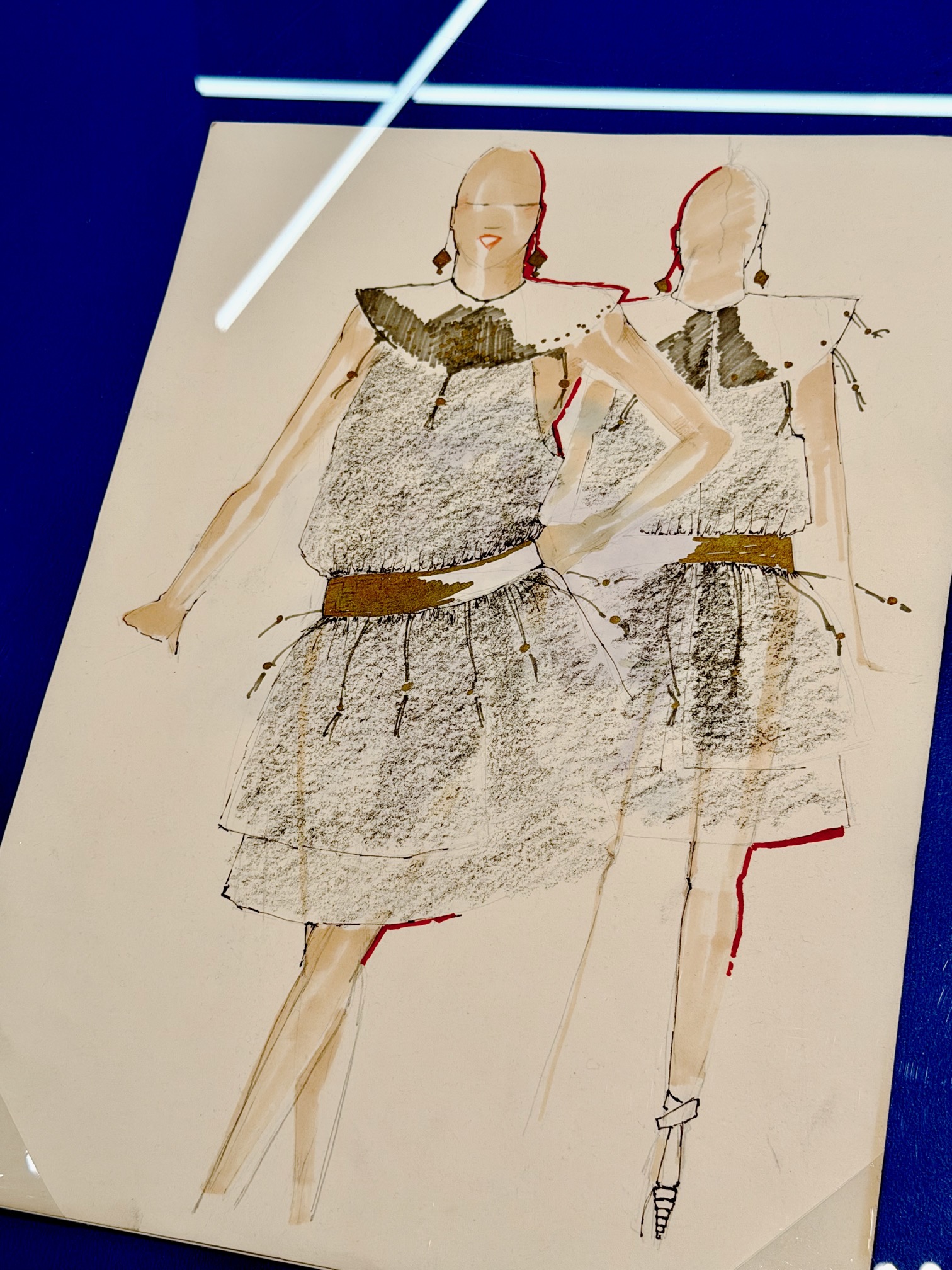
Darla-Jane Gilroy’s 1980 fashion illustration for her final-year student collection.
1980 magazine story about the Blitz designers inspired by ecclesiastical garb.
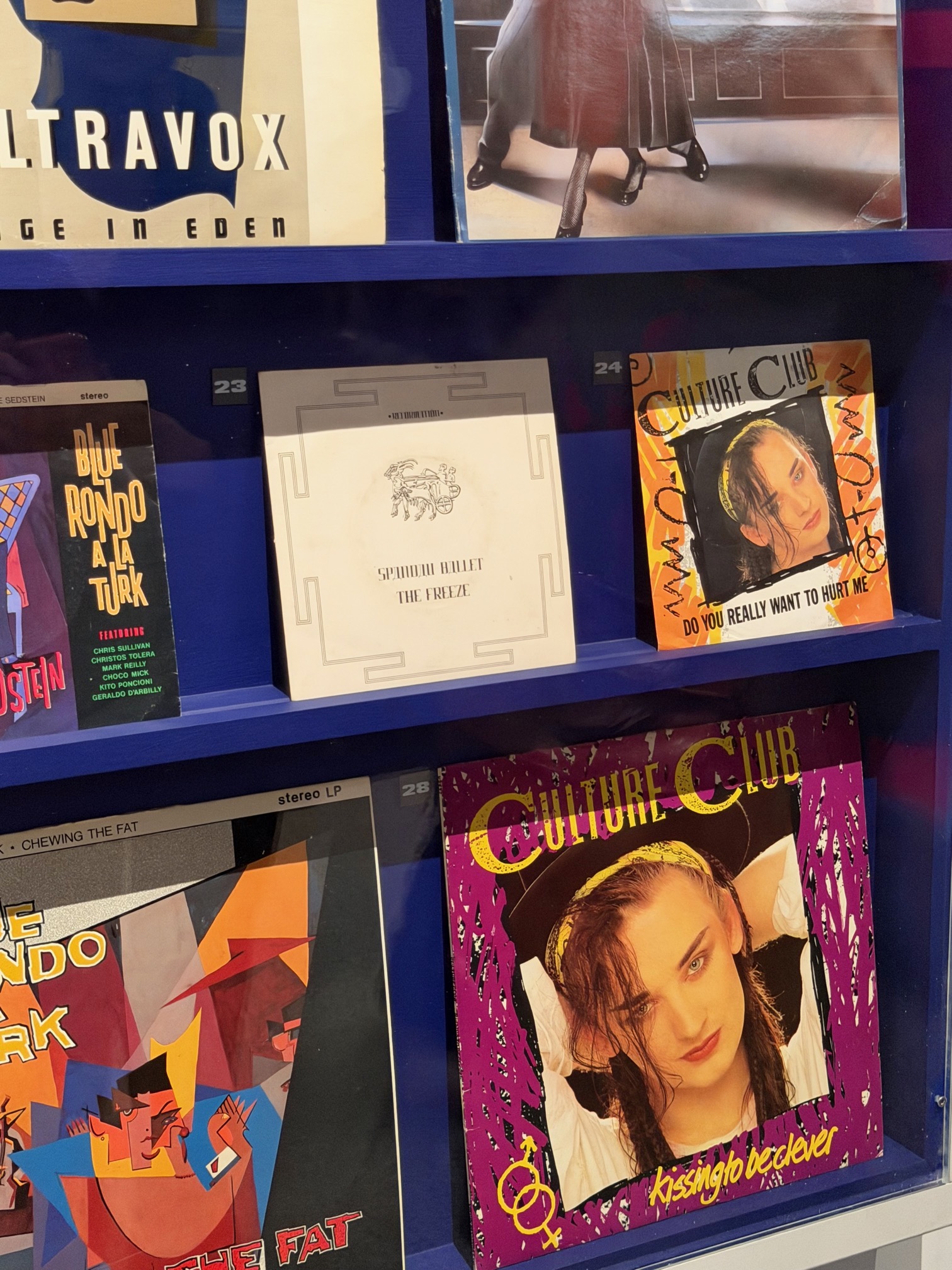
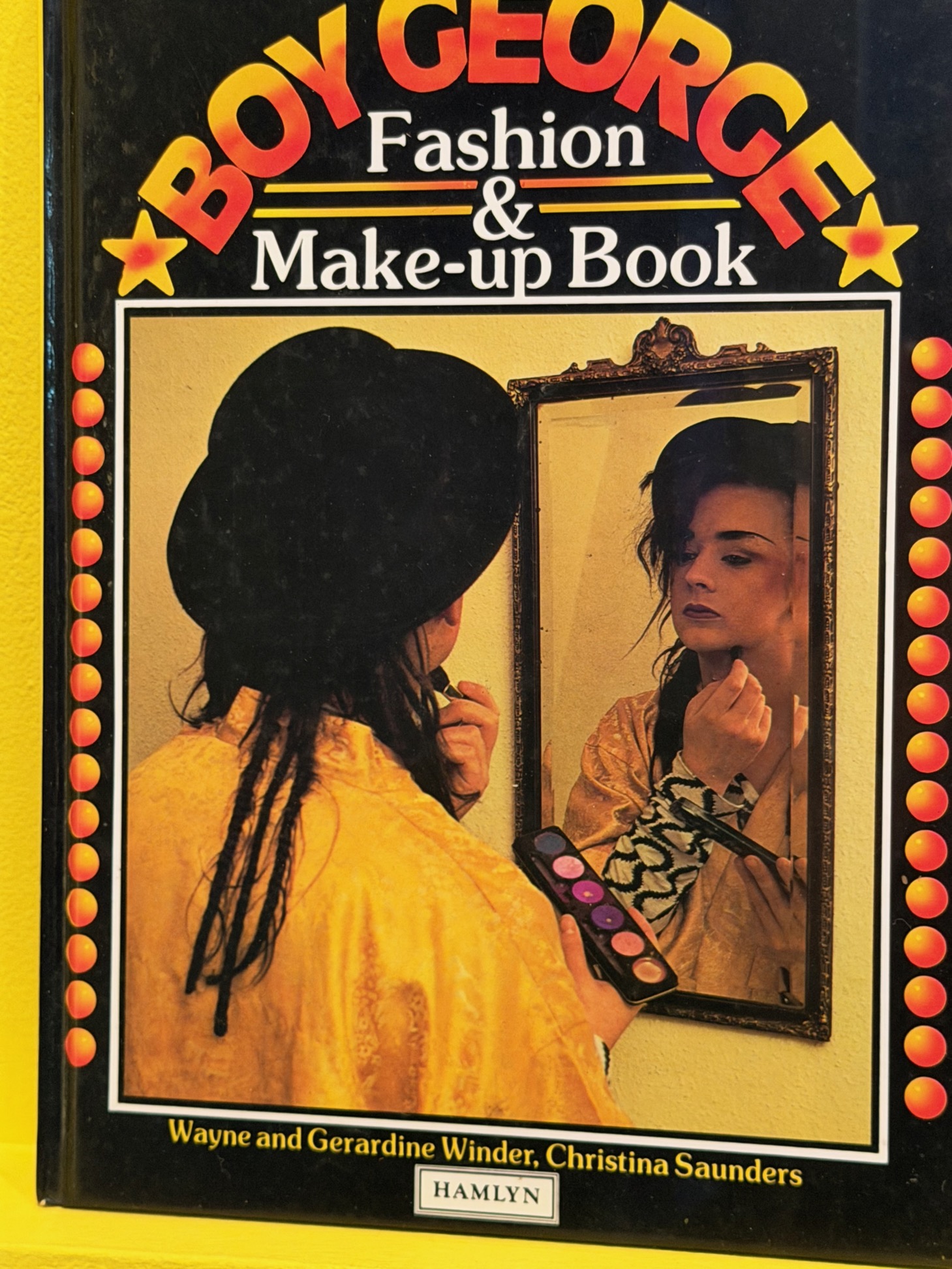
Celebrity sightings were common at the club in those days. But just as many of the “Blitz Kids” promoted their own celebrity. Eventually Steve Strange was starring in music videos for his group Visage and Boy George was fronting Culture Club, all with revolutionary clothes, makeup, hats, and hair. With the advent of the wildly successful MTV, the whole thing went TV-viral.
Blitz Kids hit the charts – album and record-sleeve art for Spandau Ballet by Graham Smith and Culture Club.
1984 book by Wayne and Gerardine Winder and Christina Saunders, Boy George Fashion & Makeup Book. Courtesy: Michael Bean.
The central gallery of the exhibition is a physical recreation of the club with a period soundtrack. Although there aren’t any drinks being served, a virtual DJ Rusty Egan and virtual images of club goers thoroughly entertained museum visitors, all remembering those days when they were young and the the scene felt so alive.
Video of the Blitz recreation inside the exhibit with virtual club-goers and museum visitors enjoying the scene at the bar.
Several visitors shepherded their now-adult kids through the exhibit, reliving those days and explaining how it felt to be witnessing pop-culture history-in-the making. You see walls of record albums from the era, a series of MTV video clips, and first editions of i-D magazine that quickly morphed from a punk-music publication to a chronicle of Blitz Kid fashion and street style.
Sue Cowles’ 1981 “Destruction of Purity” vest with images of warplanes, English roses, and St. George’s cross. Courtesy: Mikey Bean.
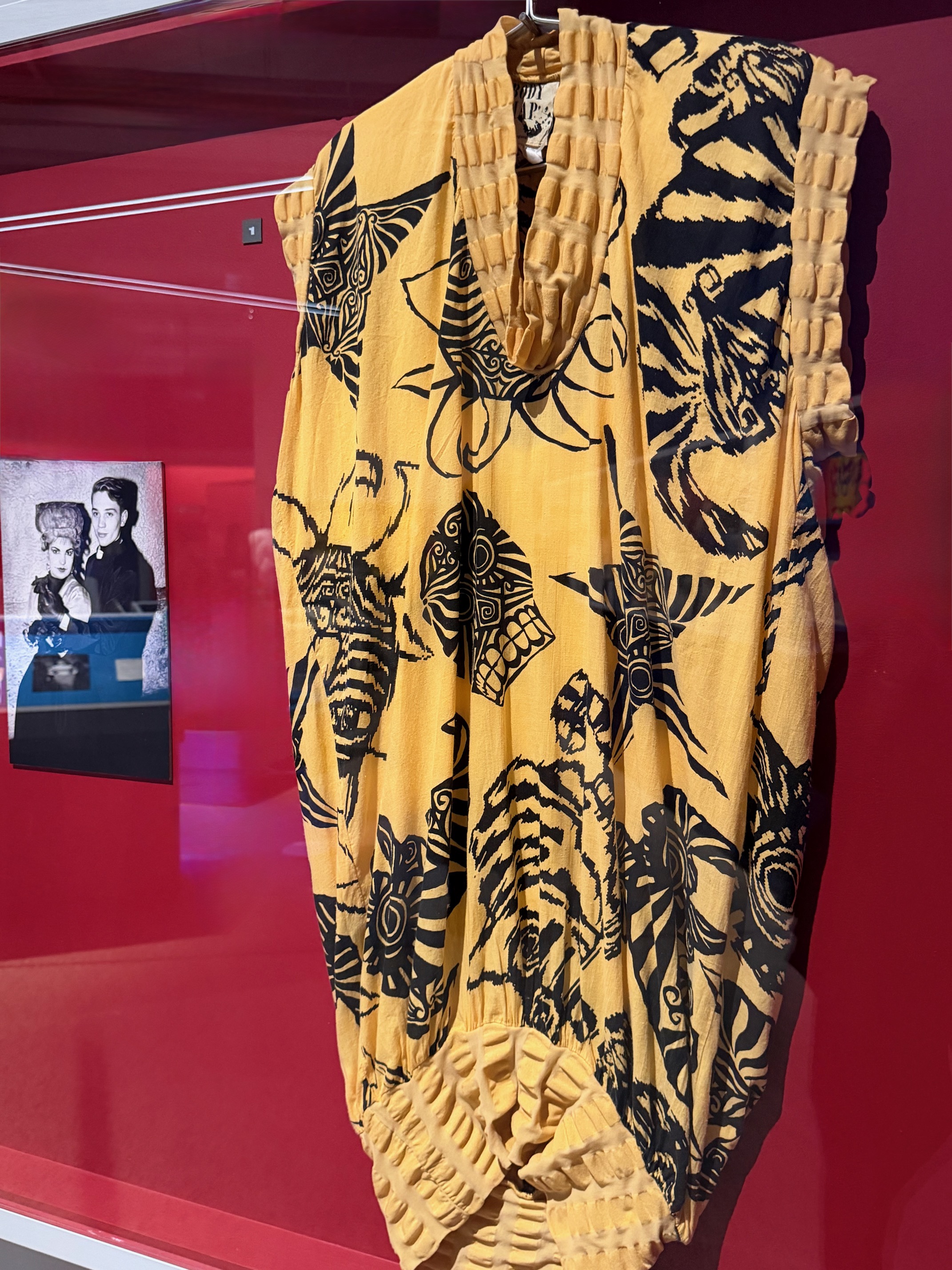
Graham Smith’s 1980 photo of BodyMap creators Stevie Stewart and David Holah with 1986 BodyMap tunic with print by Hilde Smith. Courtesy: University of Westminster Menswear Archive.
Watch this short video with curator Danielle Thom, Gary Kemp of Spandau Ballet, and Blitz creator Rusty Egan, who talk about the creative sparks that flew in a pre-Internet society.
Bravo to The Design Museum for making so many Londoners so happy, and to let everyone see, feel, and experience a time when transformation people and ideas seemed limitless and an army of misfit creatives changed pop-culture, design, and fashion for the better.
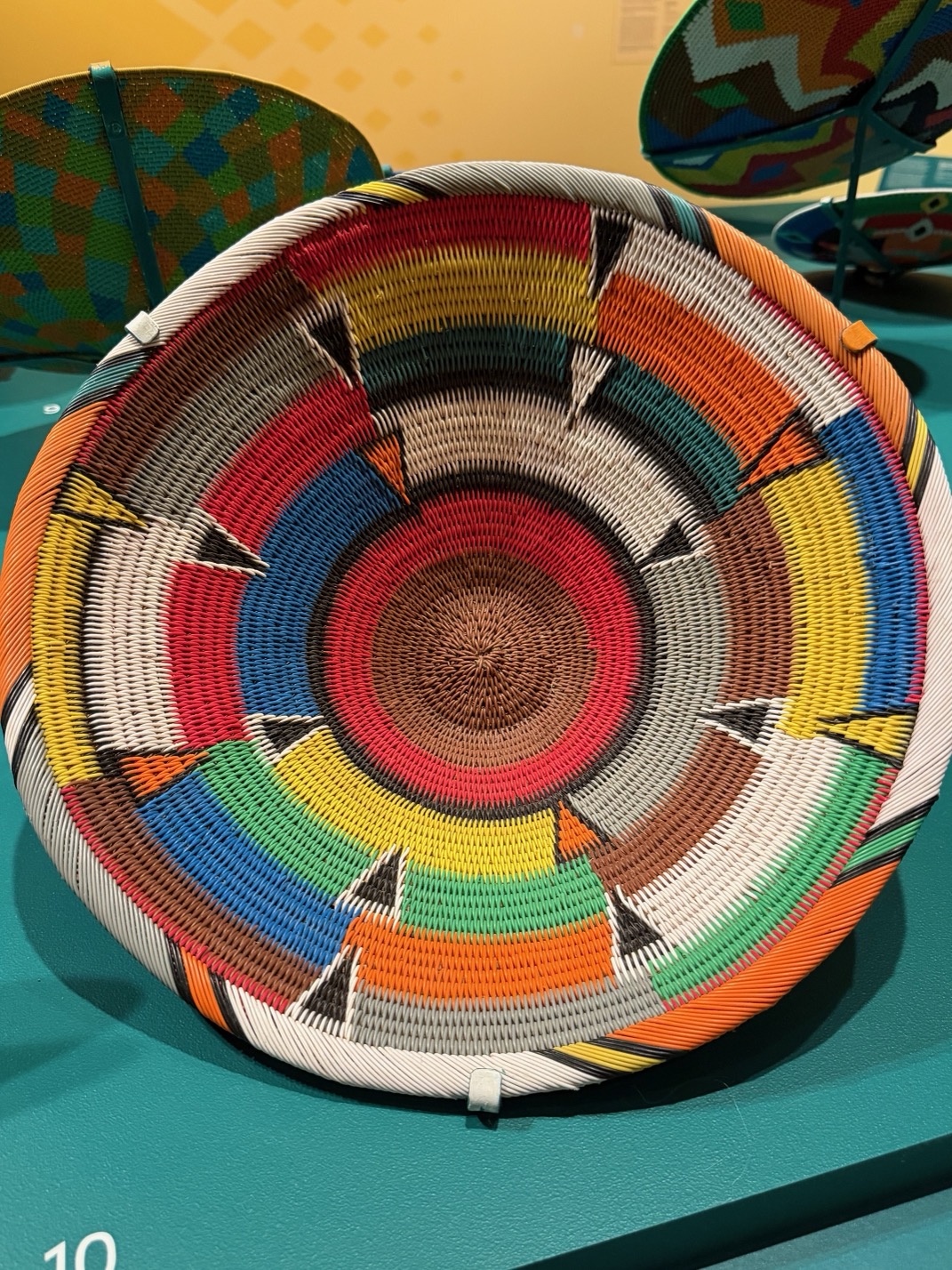
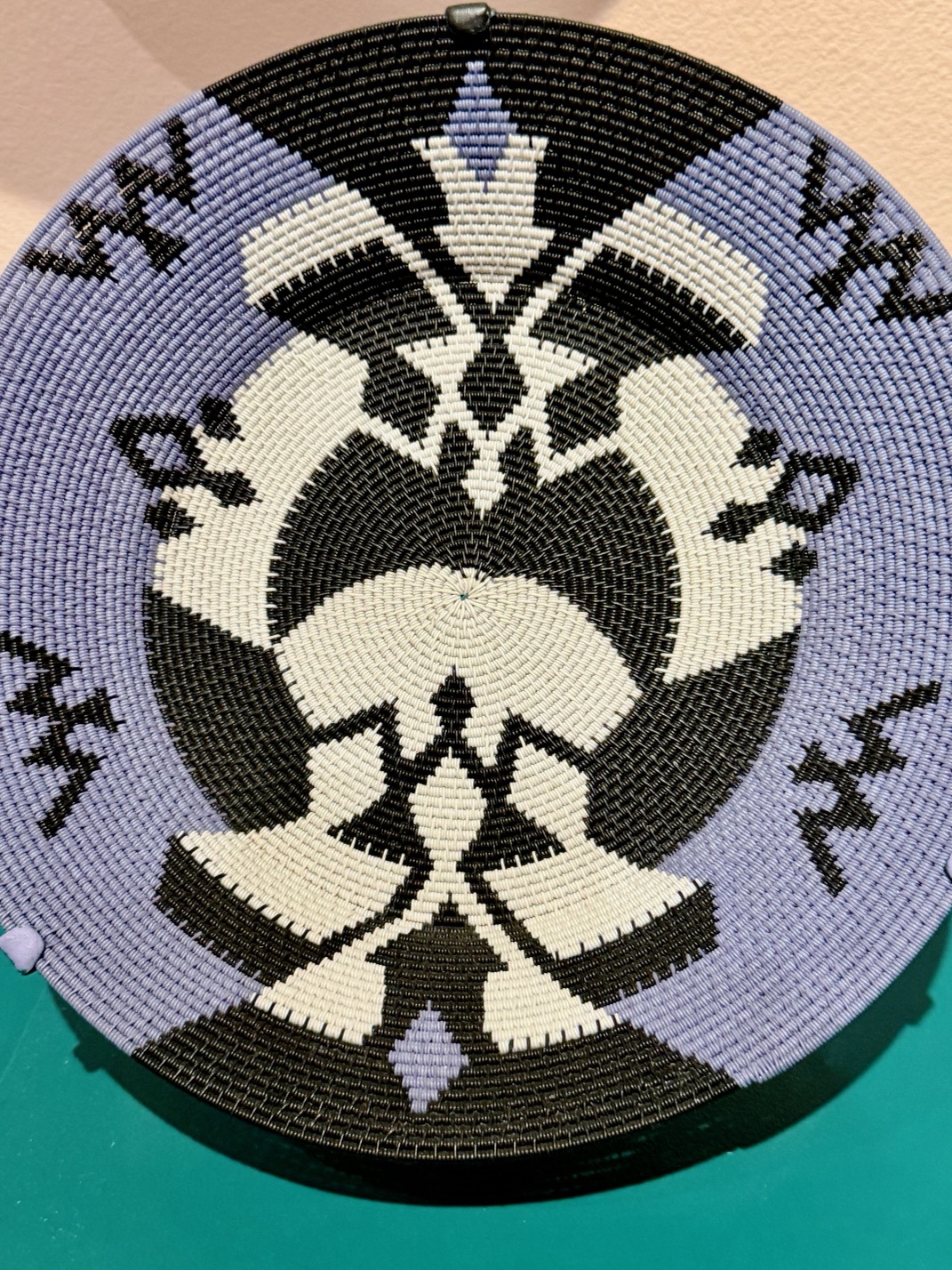
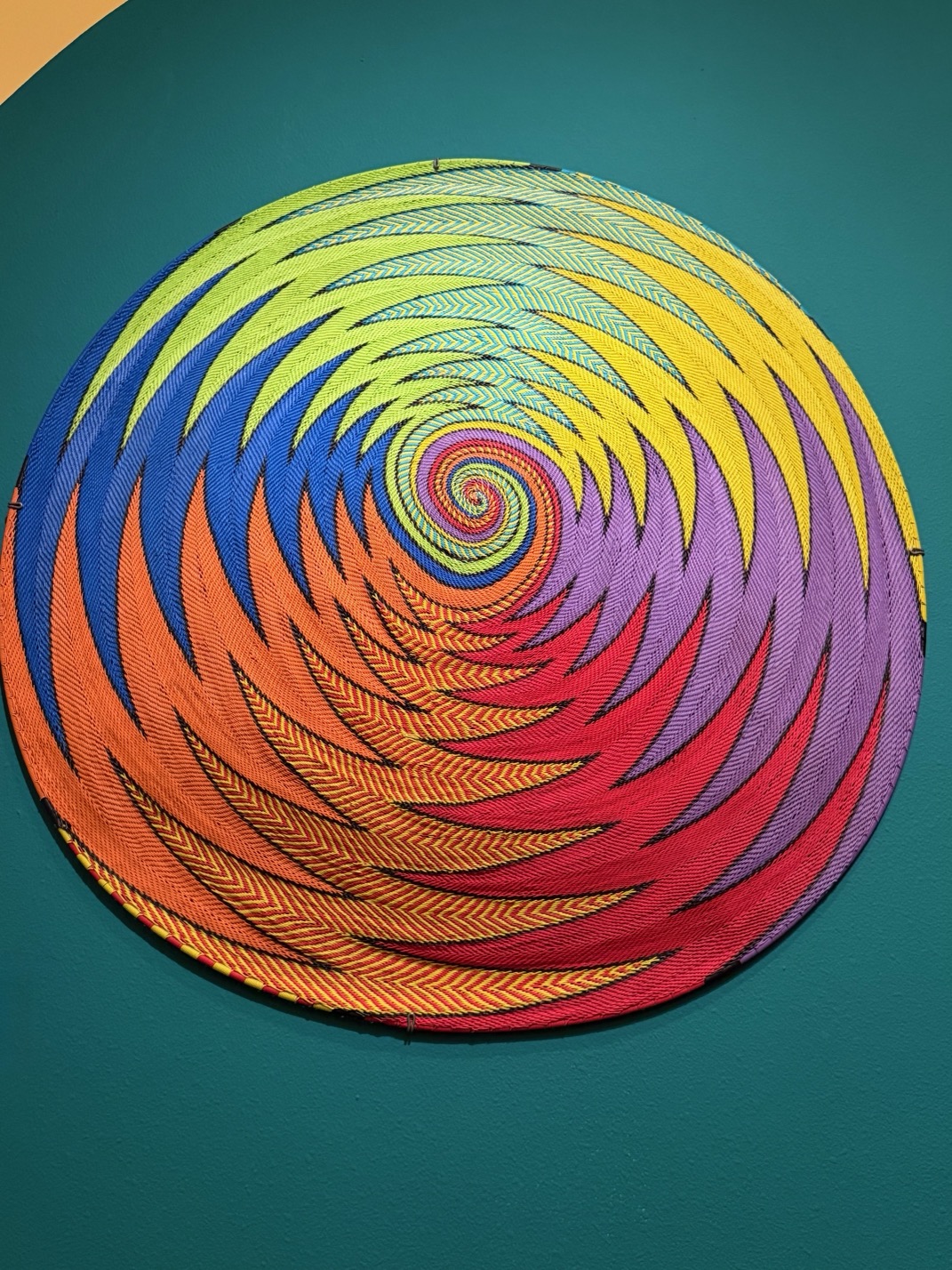
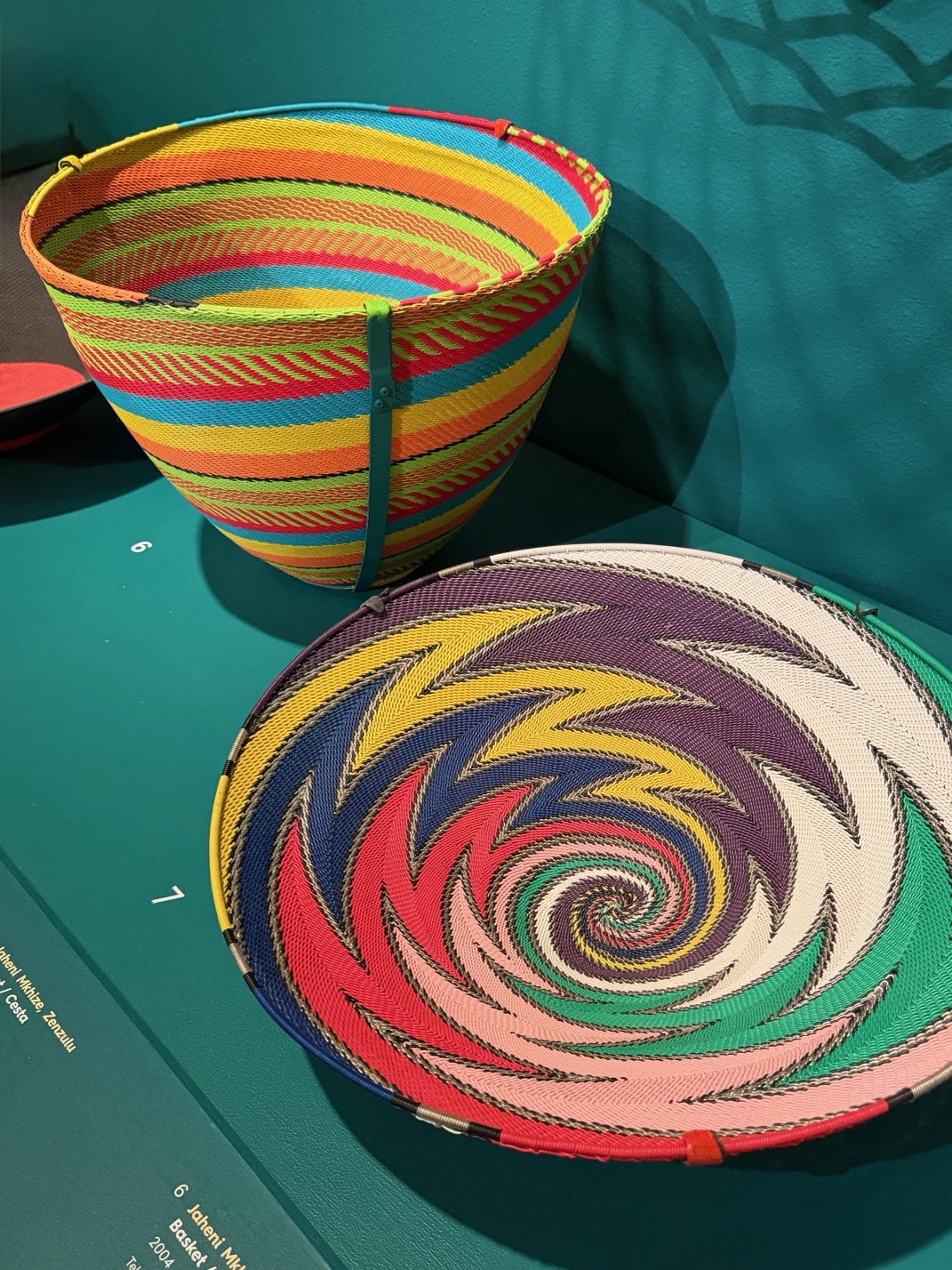
How do you take a domestic beer pot and lid and turn it into art? Take a look at the dazzling designs on display in the first museum exhibition dedicated to one of the most unique art forms to blossom in post-Apartheid South Africa – iNgqikithi yokuPhica/Weaving Meanings: Telephone Wire Art from South Africa, on view at Santa Fe’s International Museum of Folk Art through March 29, 2026.
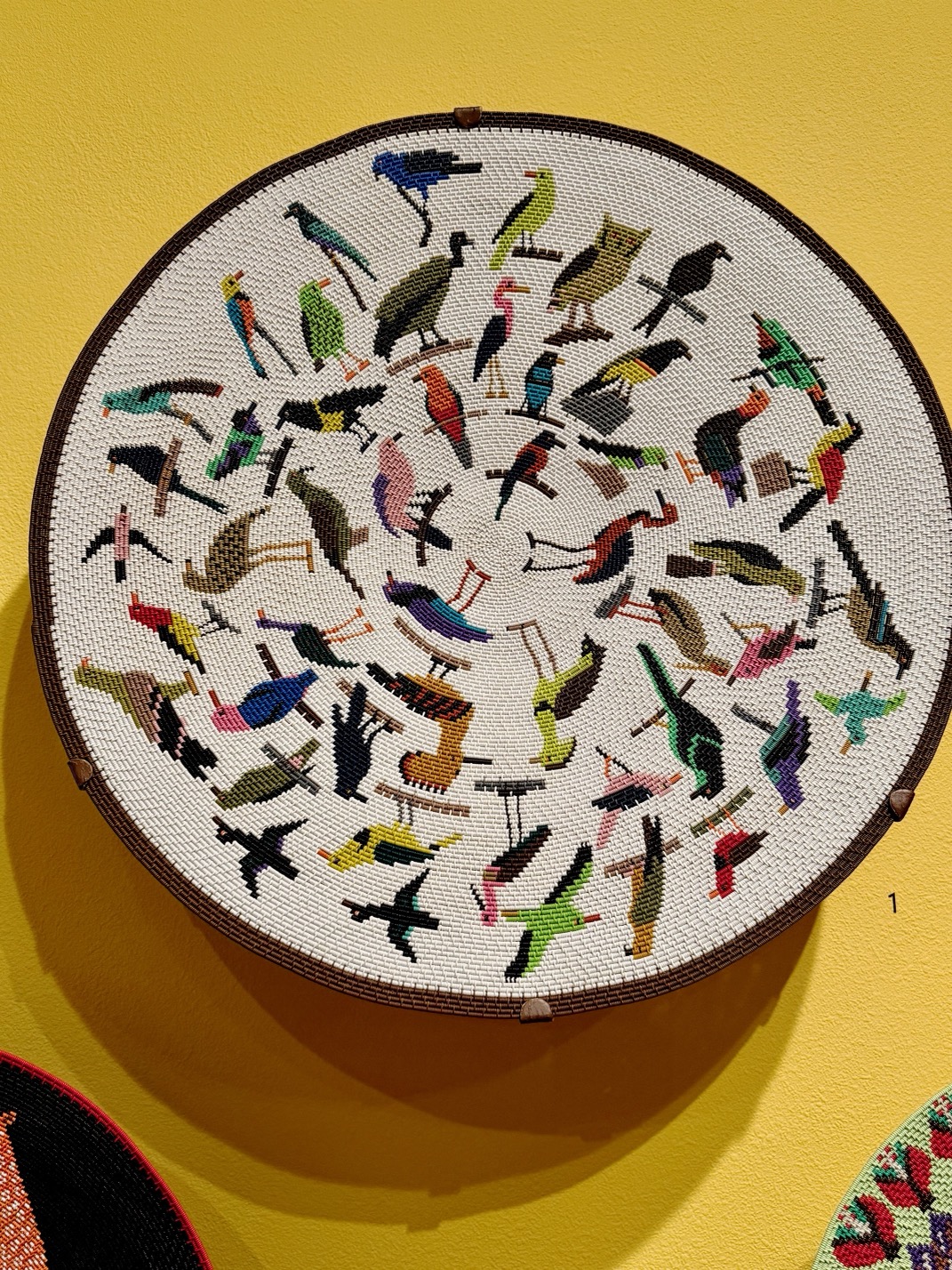
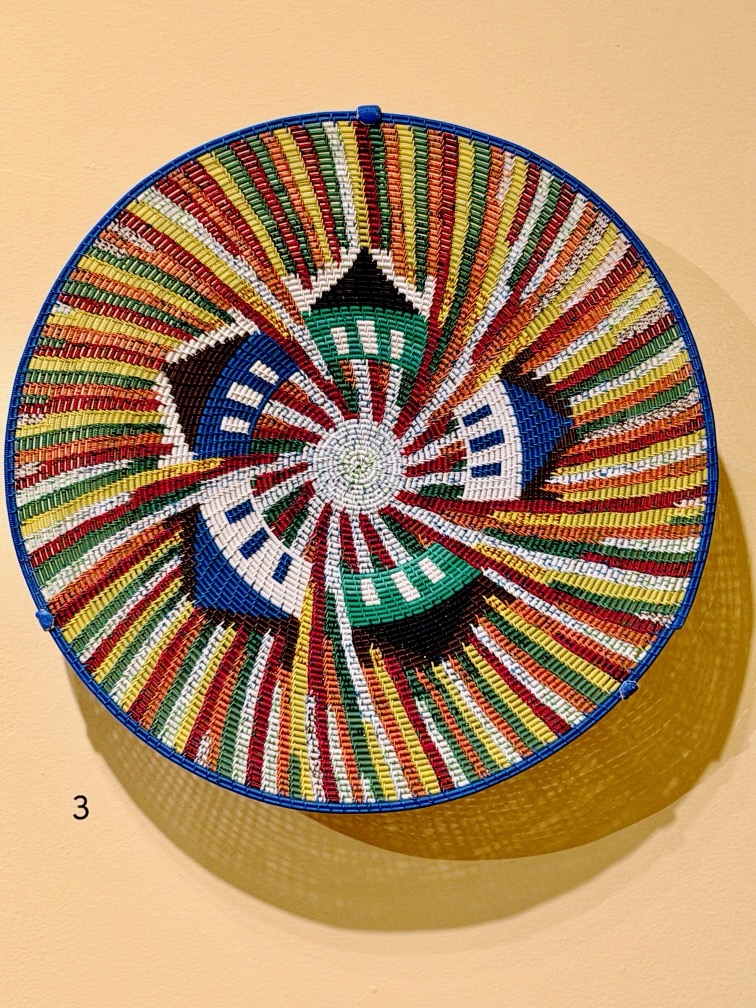
It’s easy to be overwhelmed at the the intricacy of the colorful, whirling designs that first meet your eye. But when you slow down to look more closely, all sorts of meanings appear – ancient tribal writing, village scenes, Zululand wildlife, patriotic emblems, and even celebrated achievements in the sports world
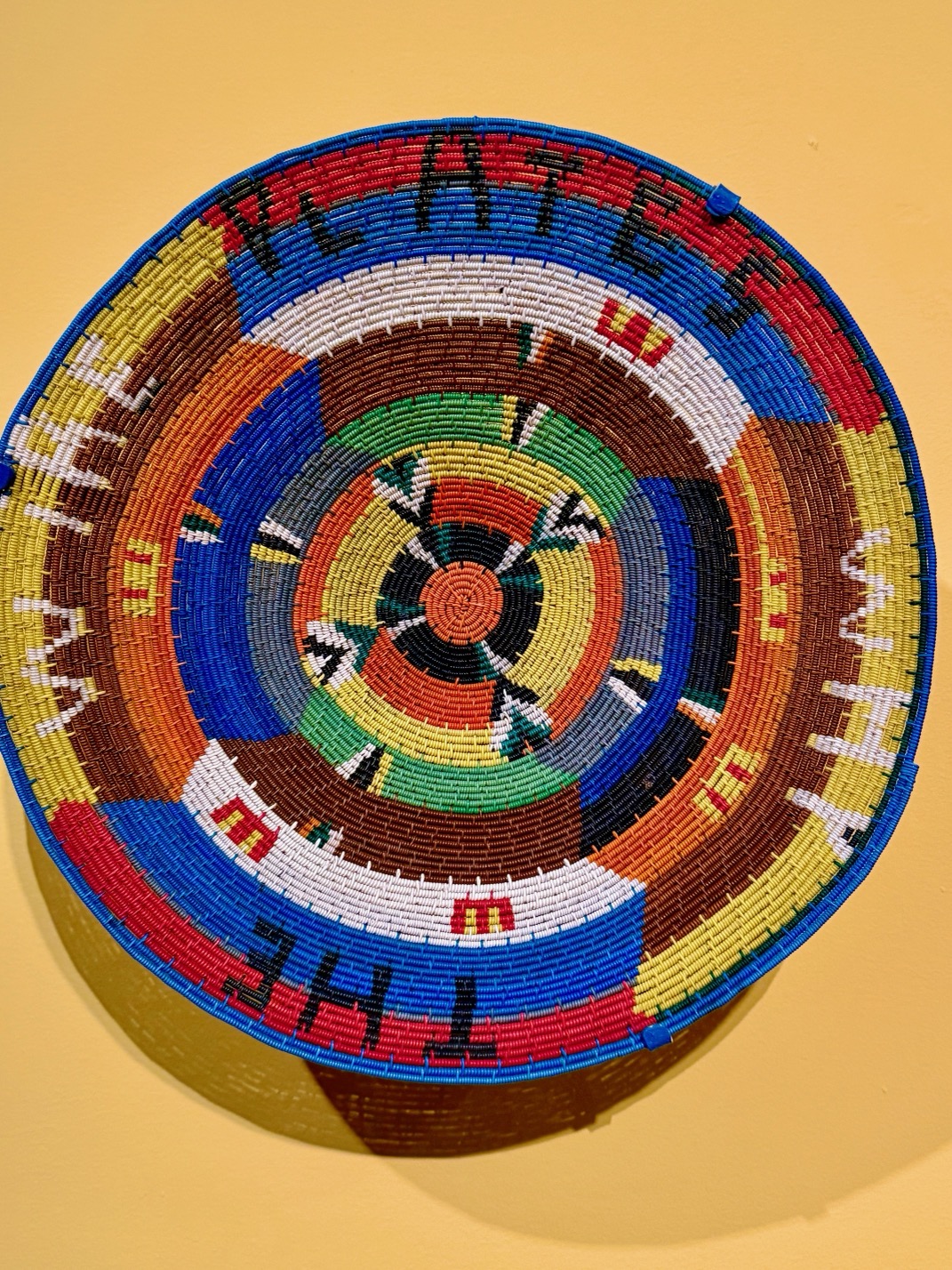
Dudu Cele’s 1990s The New South Africa telephone-wire weaving celebrating the end of apartheid featuring the colors of the nation’s new flag.
Take a look at some of our favorite works in our Flickr album.
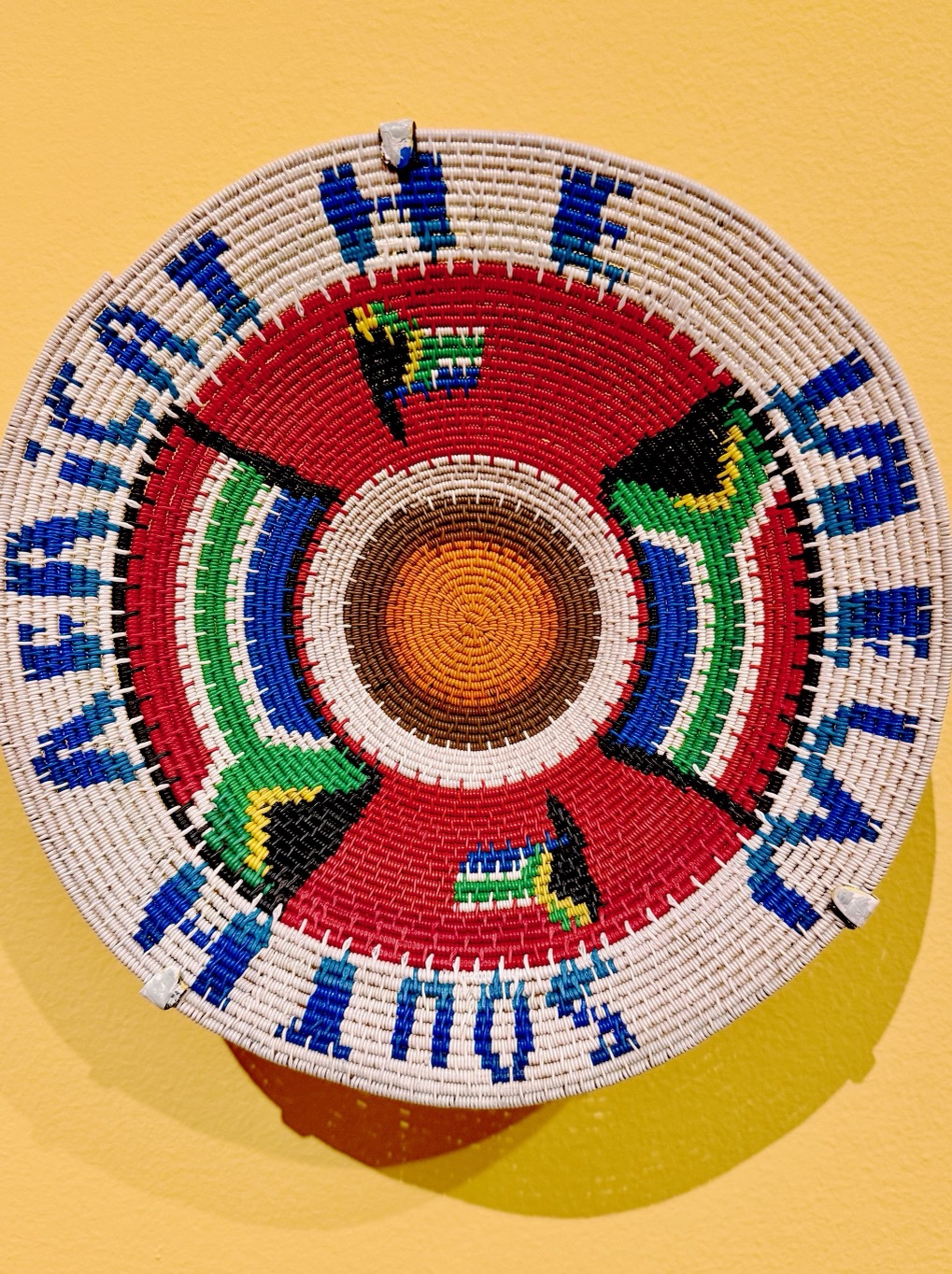
The journey begins with Bheki Diamini’s 1990s telephone-wire basket, whose text asks the question “Why the Wire Plates?” T
The exhibition answers by explaining the long history of African wire weaving, the stories of innovators who started using colorful telephone wire in the 1990s, and how it became an economic game-changer for practitioners.
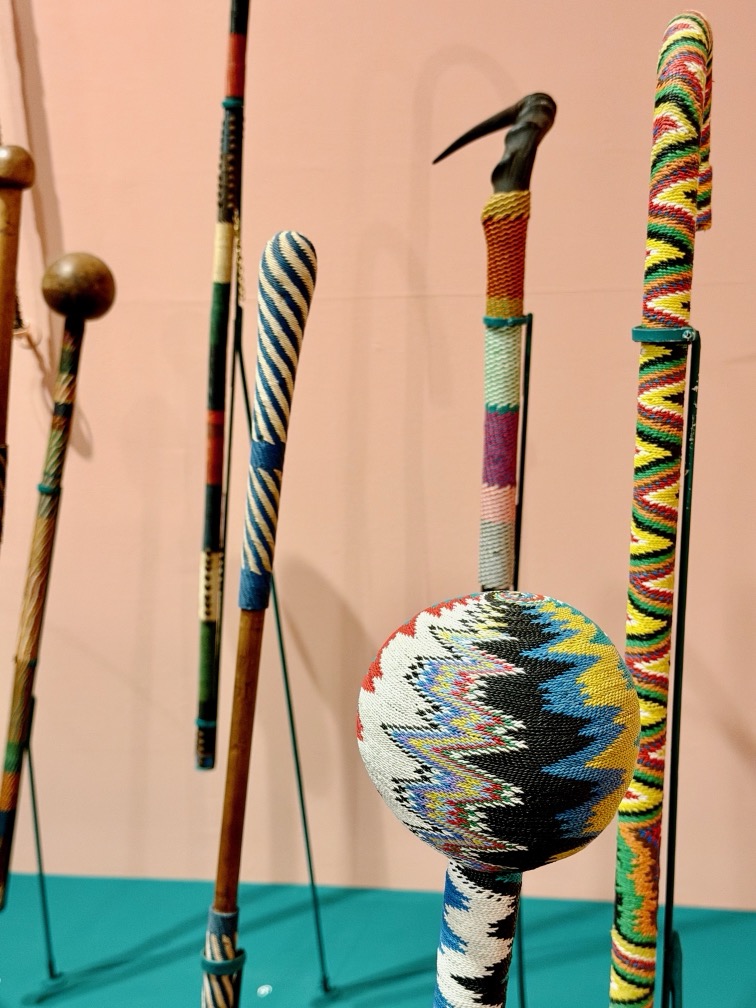
As far back as the 16th century, wire and metal rods were popular trade items in South Africa, and by the 19th century, everyday people were embellishing snuff containers and traditional sparring and walking sticks with intricate wire weaves. Although traditional beer and grain pots were made of woven fiber, and sometimes people wove in beads to personalize (and identify) their own.
An array of sparring sticks embellished with telephone wire and other materials –dancing sticks, 2005 walking stick, and Peter Lekotjo’s 2005 knobbed fighting stick.
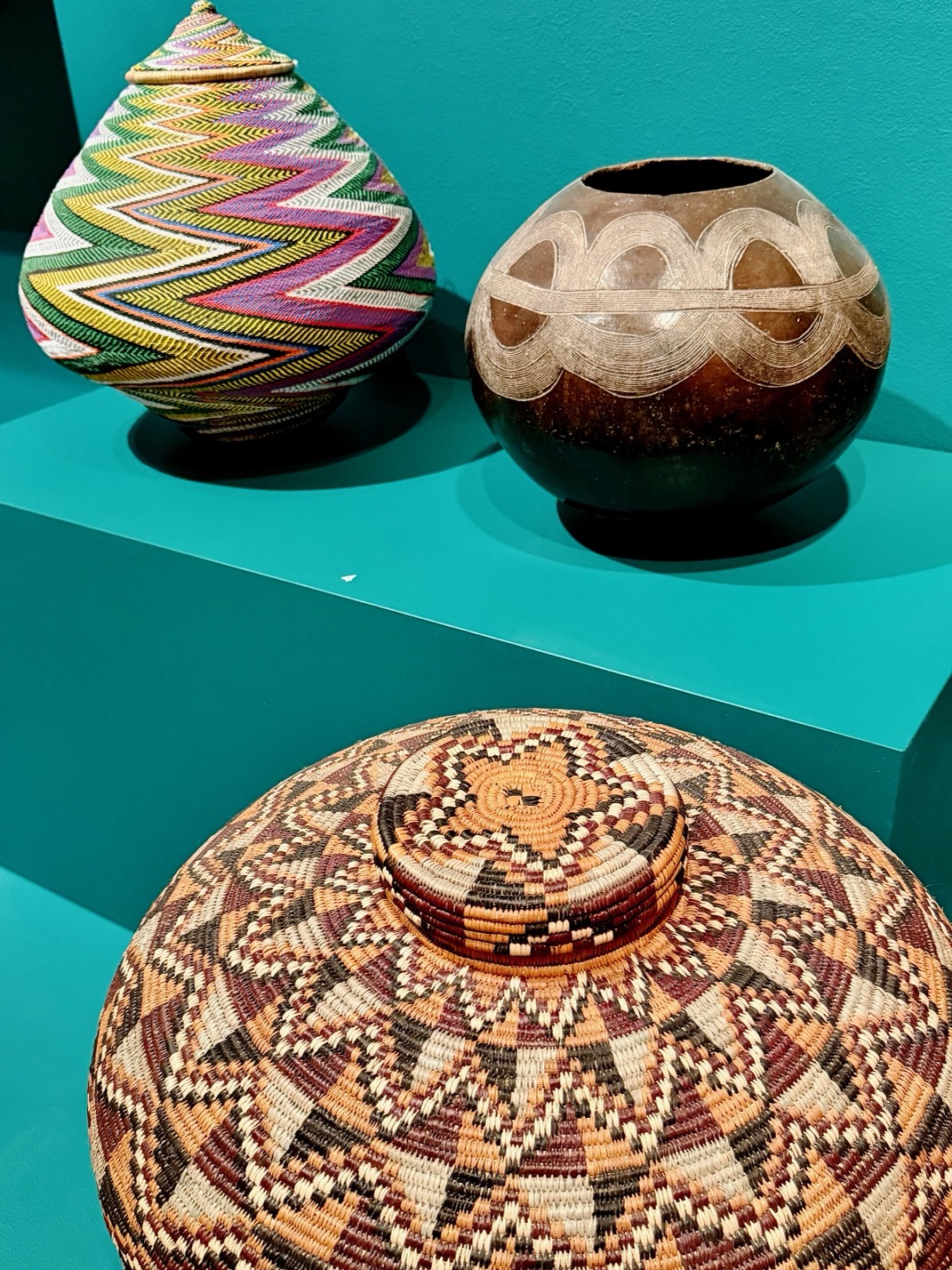
Rare late 20th-century works made of telephone wire and natural materials – a palm and grass basket embellished with telephone wire, an earthenware grain-storage pot, and Laurentia Diamini’s grain storage basket woven with palm and grass.
In the 20th century, when a few weavers began incorporating colorful telephone wire into their work, it didn’t take long until highly decorated sticks, colorful hats, amped-up drinking cups, and beer pot lids were transformed. Under the repressive apartheid system, Black South Africans lived under highly restrictive work-life conditions, just scraping by and hardly able to afford most art making materials.
As telephone technology was deployed across Black communities in South Africa, the spools of colorful, coated wire surged in popularity as a tool more creative expression because workers often cast it off when industrial projects were done. Cheap (or free!), plentiful, and in a dozen colors! Perfect!.
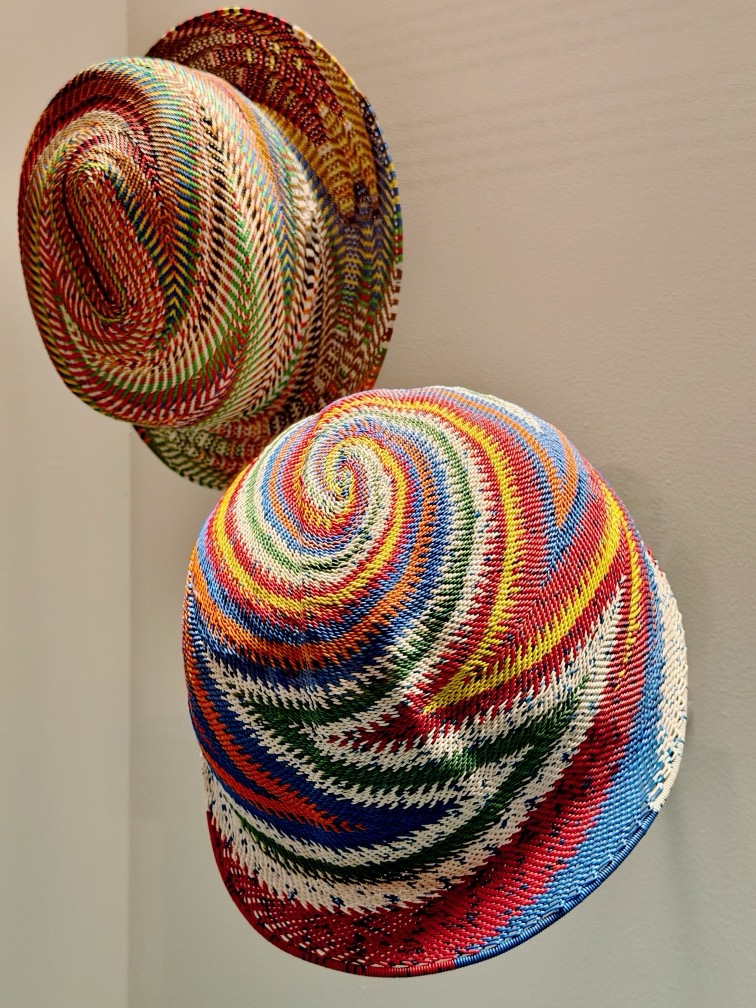
Two hats embellished with telephone wire – a top hat (pre-2007) and Shadercke Ntuli’s 2000 hard hat – similar to those used for mine-worker dance performances.
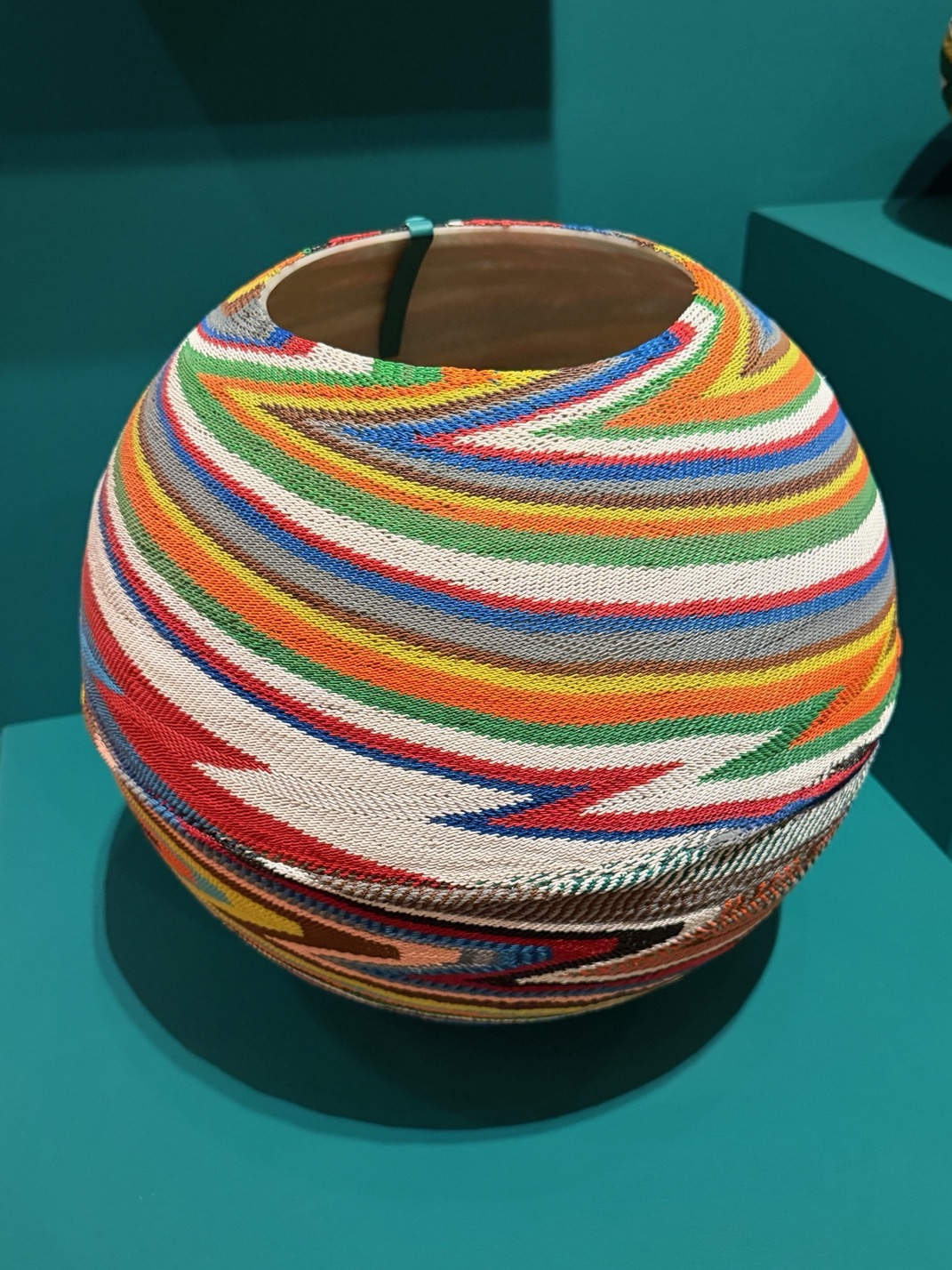
Michael Mfeke’s late 20th-century telephone-wire basket in the shape of a beer pot (ukhamba).
Rather than making an historical exhibition, the curators have chosen to focus on grouping work by and presenting biographies of the innovators – like master weavers Bheki Diamini, Jerita Mmola, Elliot Mkhize, Vincent Sithole, and othes – who popularized this art form with makers in their own country and collectors internationally. It’s captivating to see all the ways Sithole, for example, incorporated wildlife into his designs to satisfy demand from tourists who began flocking to South Africa as a safari destination.
Colorful 1990 telephone-wire food basket (xirutu) by Jerita Mmola of Limpopo, South Africa.
Elliot Mkhize’s 1997 telephone-wire basket with abstract symbols inspired by ancient Zulu hierographic writing.
A compelling video in the center of the exhibition takes visitors into the Maphumolo family home to show how increased revenue from art sales – in South Africa and abroad at art festivals – have boosted living standards and opportunities for artists on an intergenerational basis.
Two by master soft-wire innovator Jaheni Mkhize – 2004 cone-shaped basket and colorful 2000 telephone-sire basket.
In the mid-1990s and early 2000s, as tourism to South Africa increased, weavers began to incorporate South African wildlife, create whimsical wire animals, and depict rural villages to boost a new pride in the homeland. Sports triumphs are celebrated by weavers, too.
Figurative master Vincent Sithole’s 2008 telephone wire basket depicting numerous species of South African birds. Courtesy: Arment-Rimelspach collection.
Octavia Gwala’s 2005 telephone-wire and wire weaving showing a rondavel – a circle of thatched-roof Zulu homes that form a homestead.
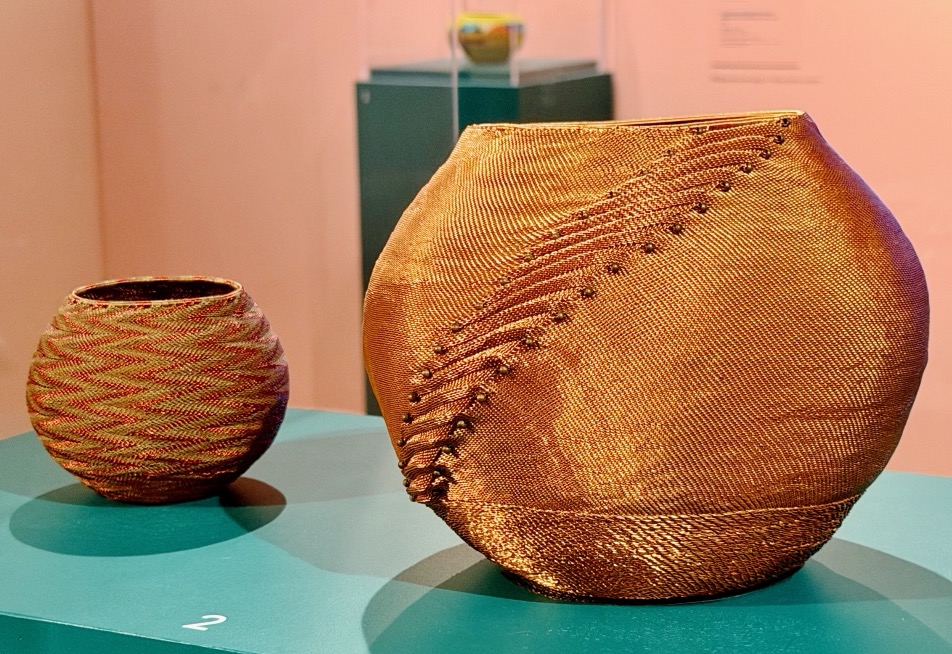
The exhibition walk-through concludes with work exemplifying new trends – baskets that incorporate pop culture references. three-dimensional wall pieces, and shimmering works in gleaming woven copper wire.
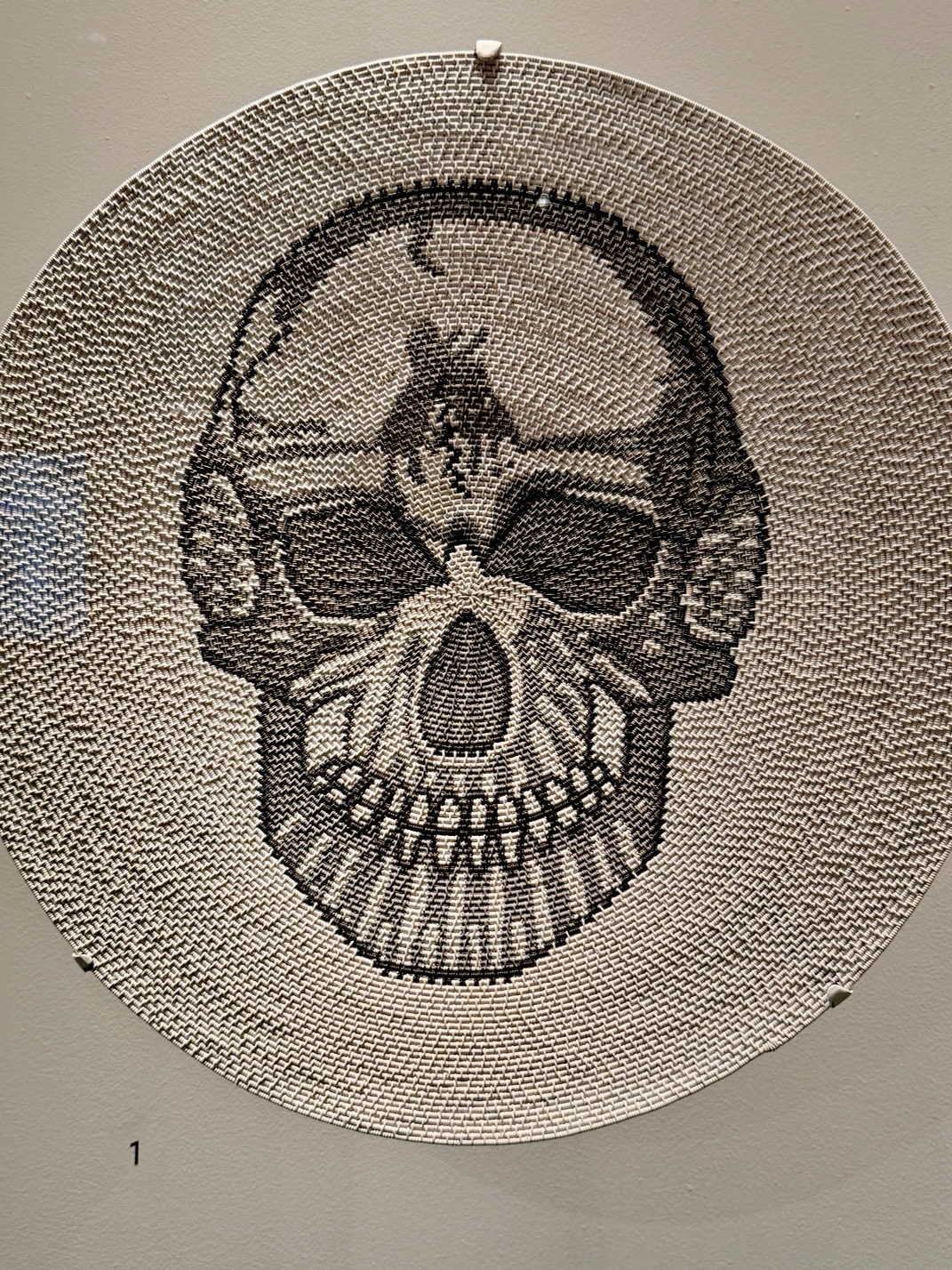
Simon Mavundla’s 2013 telephone-wire and wire basket Grey’s Anatomy Series: Norma Frontalis from a design by Marisa Fick-Jordaan. Courtesy: Arment-Rimelspach collection.
Details of 2009 Nature Series, Wall Platter, Rousseau, a three-dimensional telephone-wire sculpture designed by Marisa Fick-Jordaan
In the exhibition promo, indigenous knowledge-keepers explain more about what these artworks mean and see some of the masters at work.
Enjoy this look at the riches on display in this beautiful show.
Thanks to collectors David Arment and Jim Rimelspach, whose passion, patronage, and vision have introduced us to beautiful work by the most innovative artists and families creating in South Africa today, and donated so many exquisite works to IFAM’s permanent collection.
Two metal baskets from Threads of Africa project: Bandile Mtshali’s 2010 brass and copper-wire basket and Jobe Sithole’s 2016 copper wire and brass bead basket.
In her day, she was considered a style icon, spendthrift, deviant, monster, and hapless victim. And why are we still talking about her and dissecting her lifestyle, look, and acquisitions over 200 years later?
You’ll find the answer in the South Kensington V&A galleries with portraits, clothes, artifacts, and haute couture fashion in Marie Antoinette Style, on view in London through March 22, 2026.
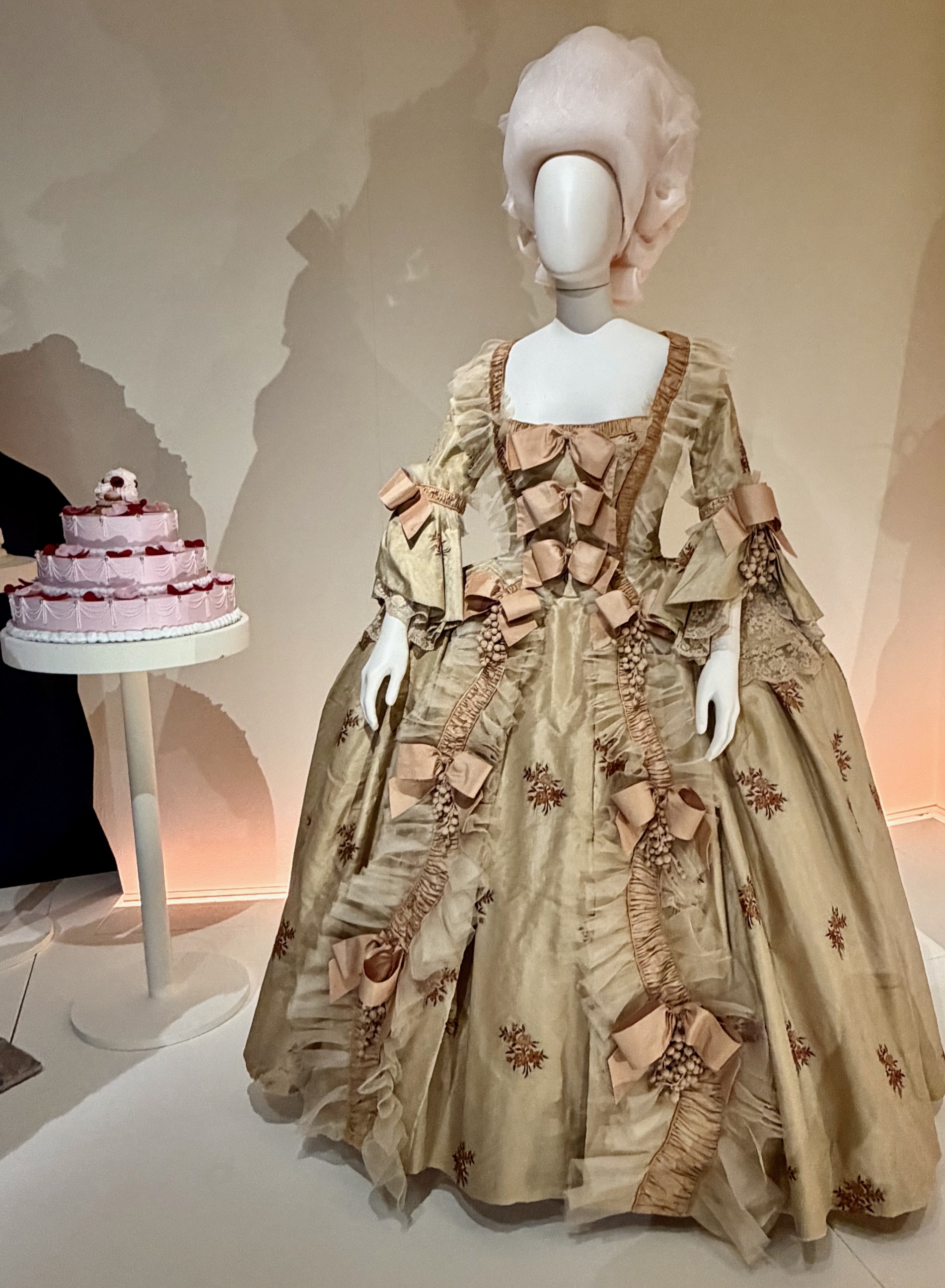
The Victoria & Albert Museum has pulled incredibly well-preserved fashions from its own 18th-century collection, and has also borrowed from Versailles and European collections that scooped up Marie’s stuff when it was ransacked and put on the open market after her death during the French Revolution – jewels, furniture, Sèvres table settings, and remnants of her dress fabric.
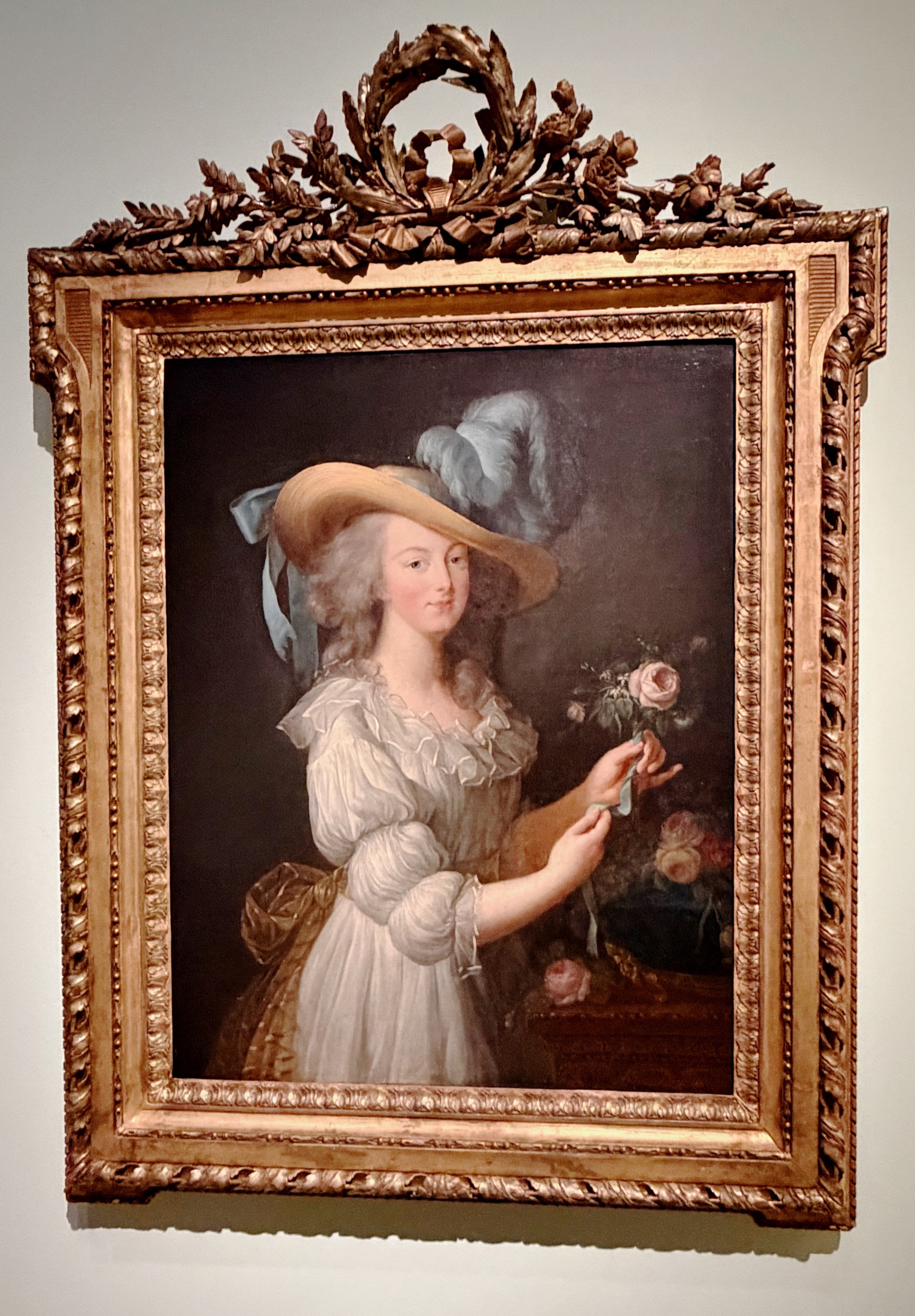
1783 Marie Antoinette in a muslin dress by Elisabeth Louise Vigée Le Brun; seeing the queen in a dress resembling underwear shocked everyone who saw it at the Paris Salon, but it soon became the style. Courtesy: National Gallery of Art, Washington, D.C.
As befitting a Versailles icon, the introductory gallery is a dazzling room of mirrors. With the dramatic illumination of opulent court dresses, wedding attire, royal portraits nof Marie, fans, and swaths of over-the-top embroidered silk, the effect is magnified by the points of light dancing across multiple reflections of sumptuously draped fabric.
Take a look through some of our favorites on display in our Flickr album.
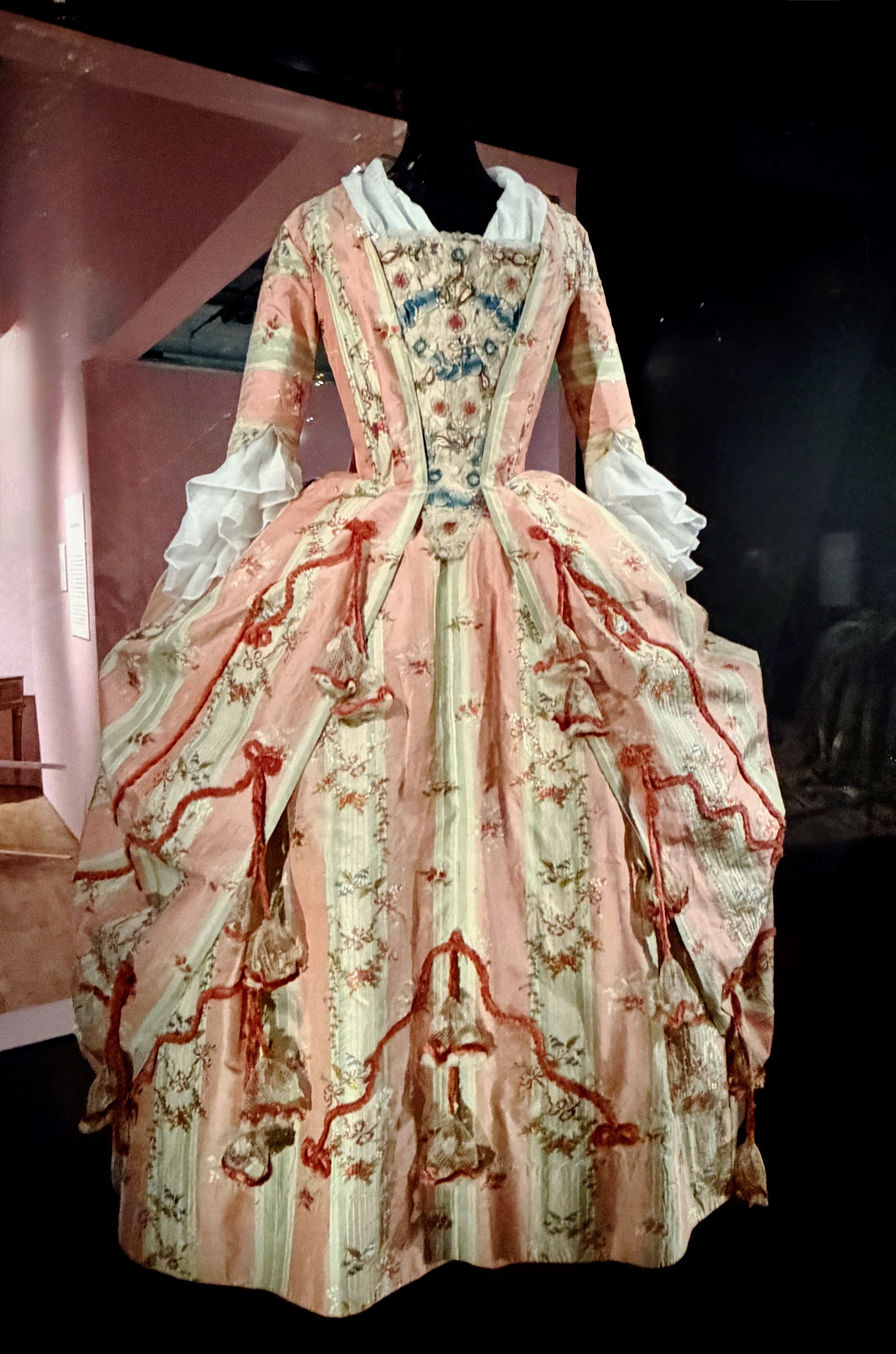
1775 French robe à la française à la Polonaise silk taffeta, silk chenille, and linen lace; less formal style with skirts looped up to create volume. Courtesy: Los Angeles County Museum of Art.
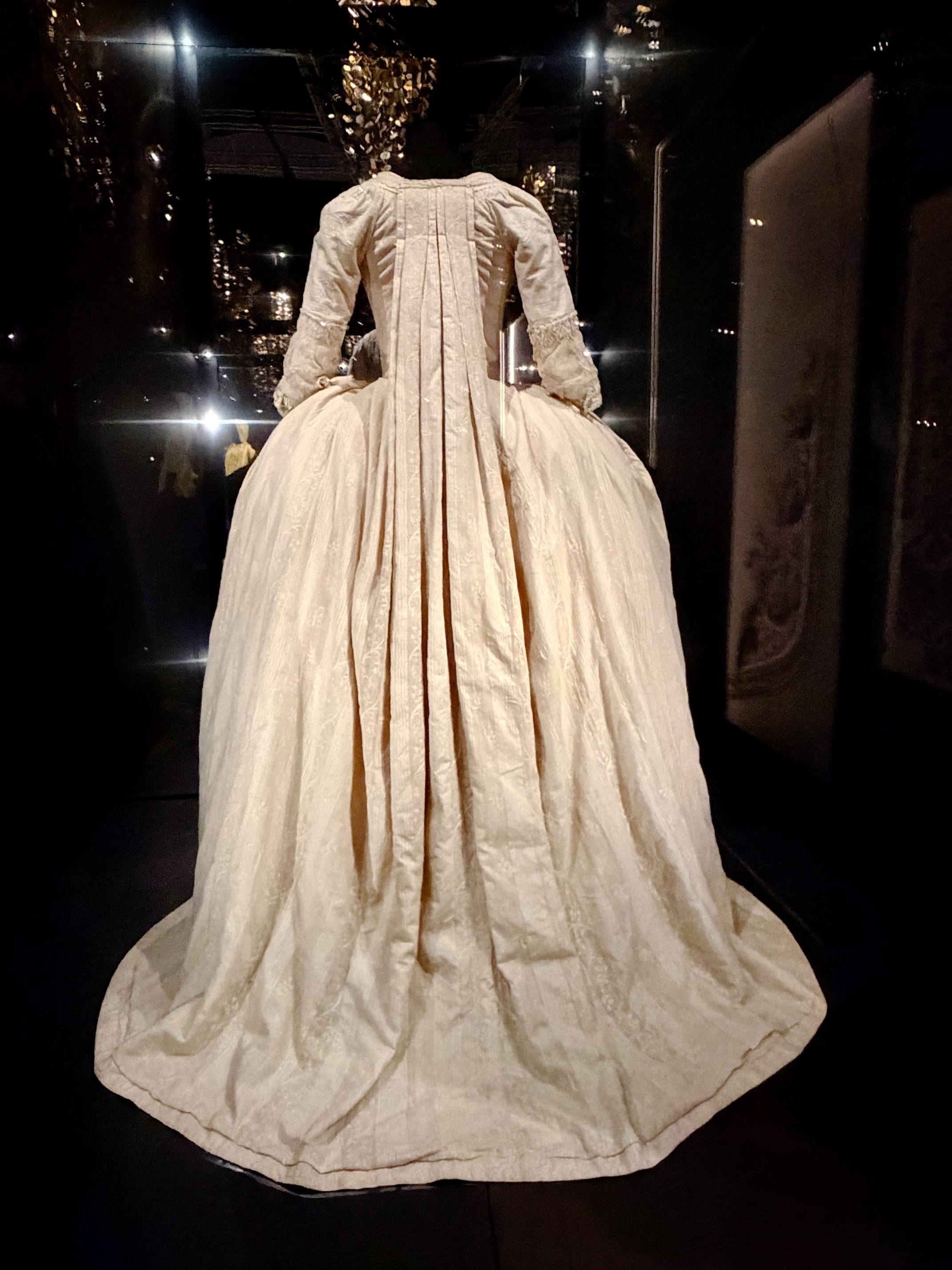
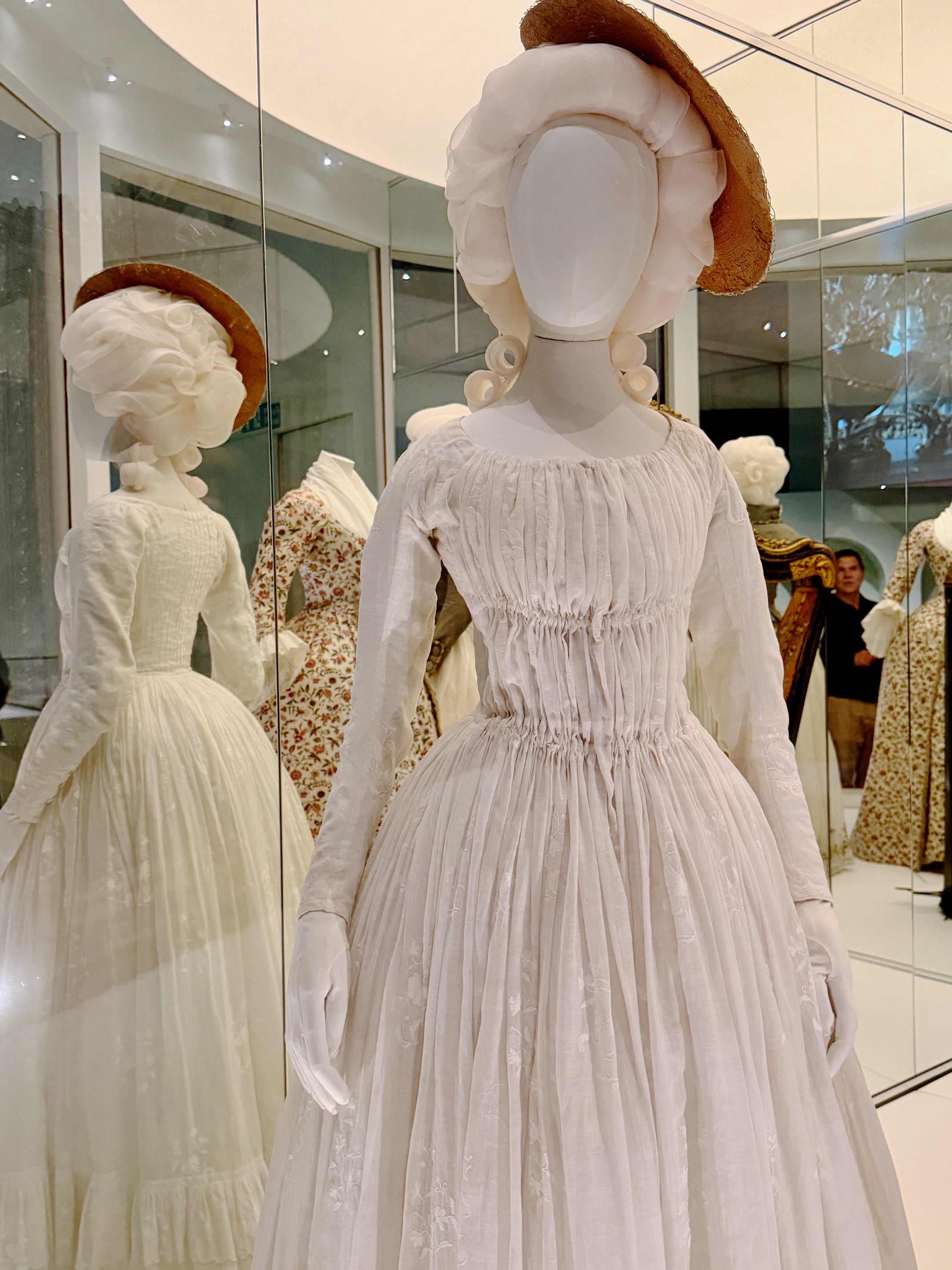
1775-1780 French embroidered cotton and linen muslin robe à la française – a fresh, light style innovated by the French court; silk lining creates a blush effect. Courtesy: V&A
You experience how Marie’s fashion sense changed from the big-time Rococo style she sported as a teen to the more minimal muslin style she popularized as she and her friends gallivanted around the Tríanon grounds in jaunty Italian straw bonnets.
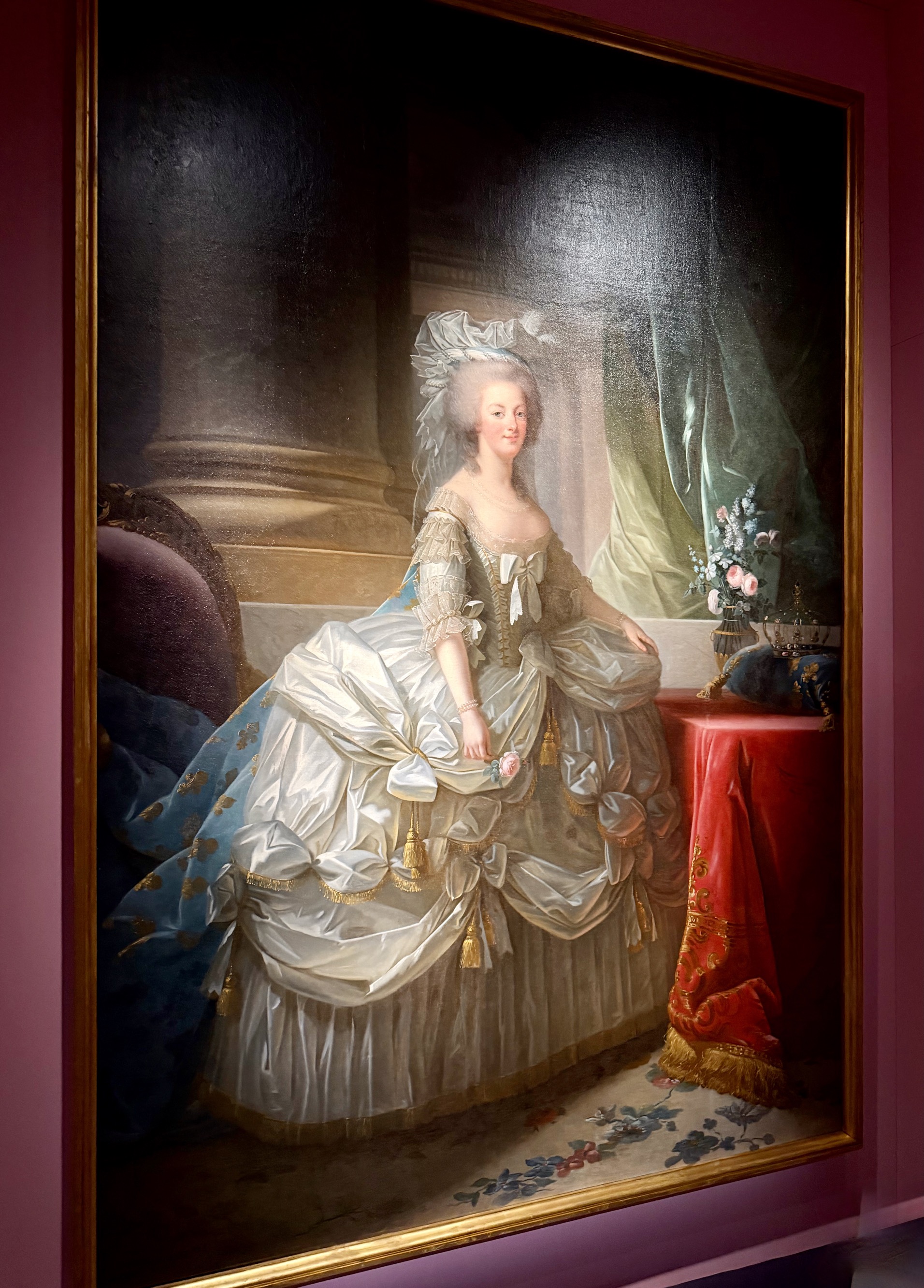
Style icon: later painting based on 1778 oil Queen Marie-Antoinette in Court Dress by Elisabeth Louise Vigée Le Brun; the queen at 22. Courtesy: Versailles, musée national des chateaux de Versailles.
Informal dress that Marie popularized: 1760-1780 “shepherdess” hat (bergères) of Italian straw and a rare 1785-1790 embroidered muslin dress (robe en chemise) owned by Madame Oberkampf of Jouy-en-Josas. Courtesy: V&A; Musée de la Toile de Jouy
Plates from 18th-century fashion publications show off the latest extravagant details of hair poufs that Marie popularized. Incredibly, there’s also an actual shoe owned by the style icon herself. As queen, she received four new pairs of shoes per week! Watch this short video to get a close-up view of her 230-year-old silk and kid shoe that survived!
During her reign, Marie had an outsized influence on interior design, landscape architecture, the decorative arts, and music. Her fashion selections and hairstyles were noted, discussed, and copied.
When the winds of democratic change came to France, Marie’s attire changed again to a more pared-down republican look that every patriotic woman in Paris also sported, right down to the patriotic silk cockades pinned to hats and lapels.
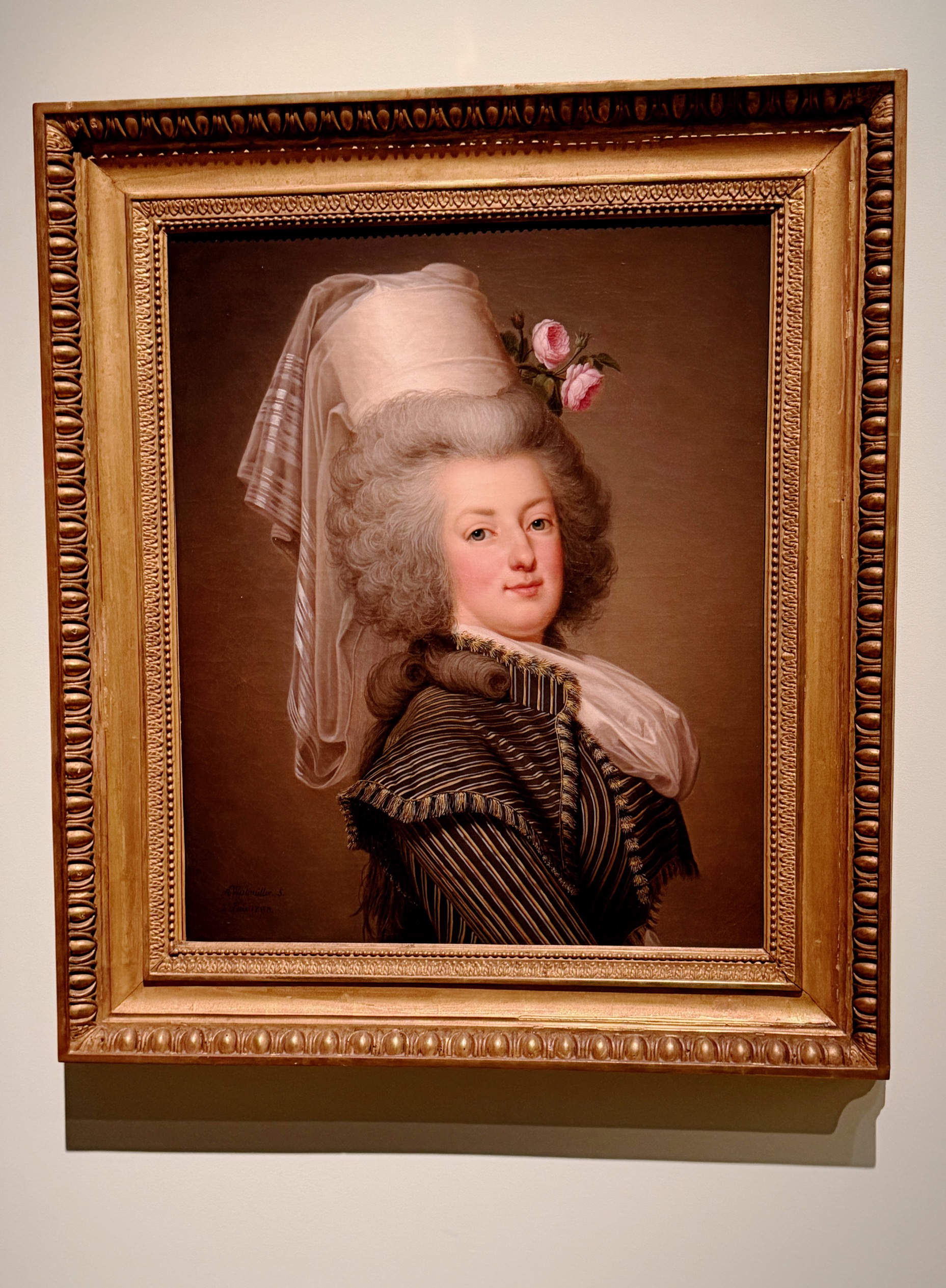
Years of the Republic: 1789 oil Marie Antoinette wearing a fashionable jacket (pierrot) and gauze-draped white silk fez; portrait by Adolf-Ulrich Wertmüller. Courtesy: Versailles, musée national des chateaux de Versailles et de Tríanon.
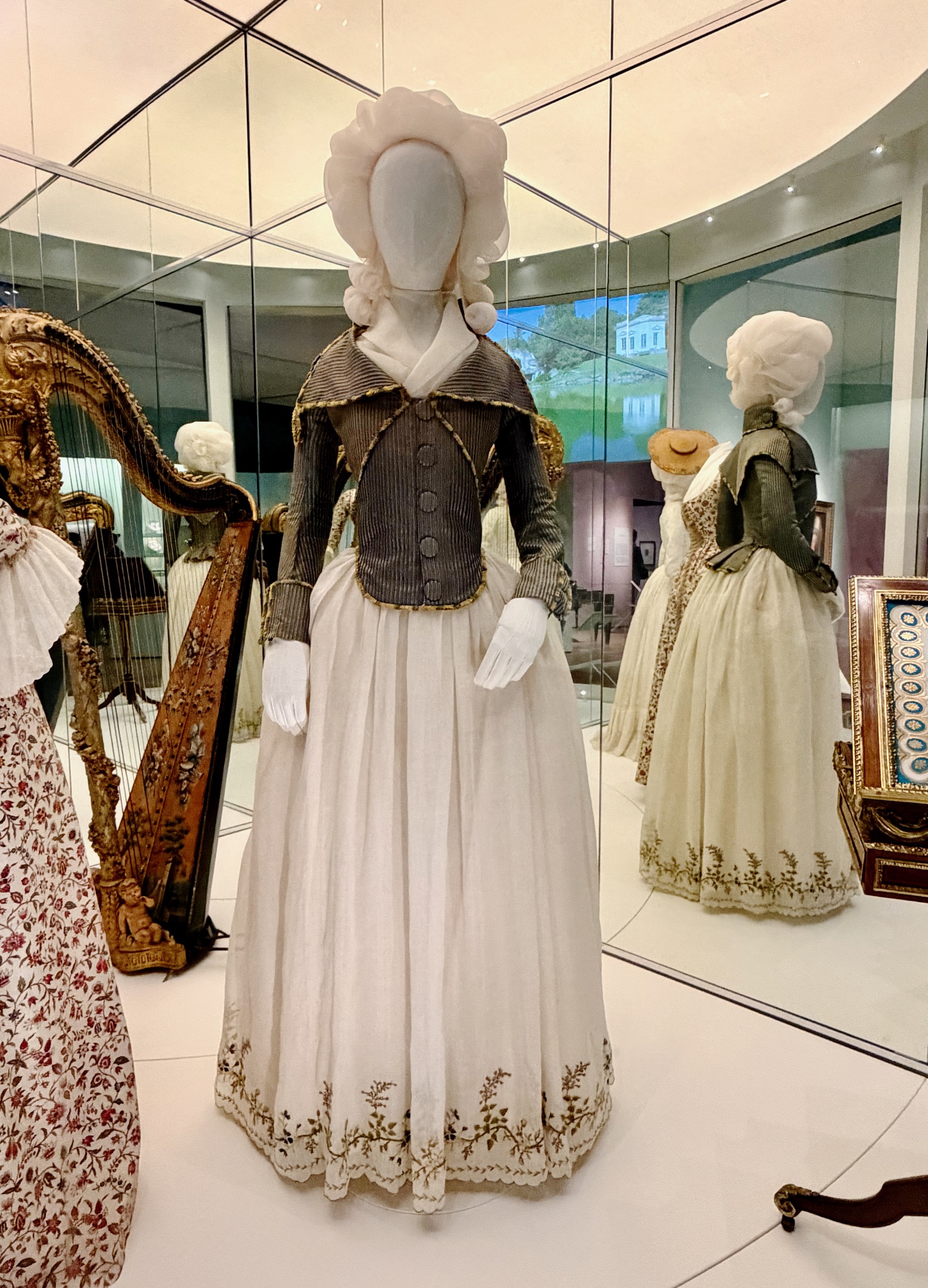
Years of the Republic: Height of French 1780s-1790s fashion – a 1790 striped silk pierrot (jacket) work atop a muslin petticoat, decorated with tambour embroidery. Courtesy: V&A
But by then public opinion had turned against Marie, largely due to the unfortunate incident that completely tarnished the public’s view of her – The Diamond Necklace Affair. In an exhibition section titled “The Queen of Sparkle,” the curators display a modern copy of the necklace that created the ruckus alongside lavish jewelry created from the diamonds removed (and resold) by an 18th-century con artist.
Here, the V&A’s Senior Curator Sarah Grant provides a close-up look at those infamous diamonds and tells the story:
Decried, denounced, and executed, it’s remarkable that 75 years later, Marie-Antoinette style and influence had a come-back, thanks to an obsessive 19th century fan, Empress Eugénie of France. Eugénie loved Marie’s fashion sense began sporting her look at various fancy-dress balls. She even commissioned haute courtier designer Charles Frederick Worth to design some looks, and he was happy to oblige.
Over the years, the Marie Antoinette’s Tríanon retreat had fallen into extreme disrepair and its contents scattered. Eugénie set about to find much of the furniture Marie had commissioned, did a major rehab job on the property, and had a big, public exhibition about Marie at the Tríanon’s reopening in 1867.
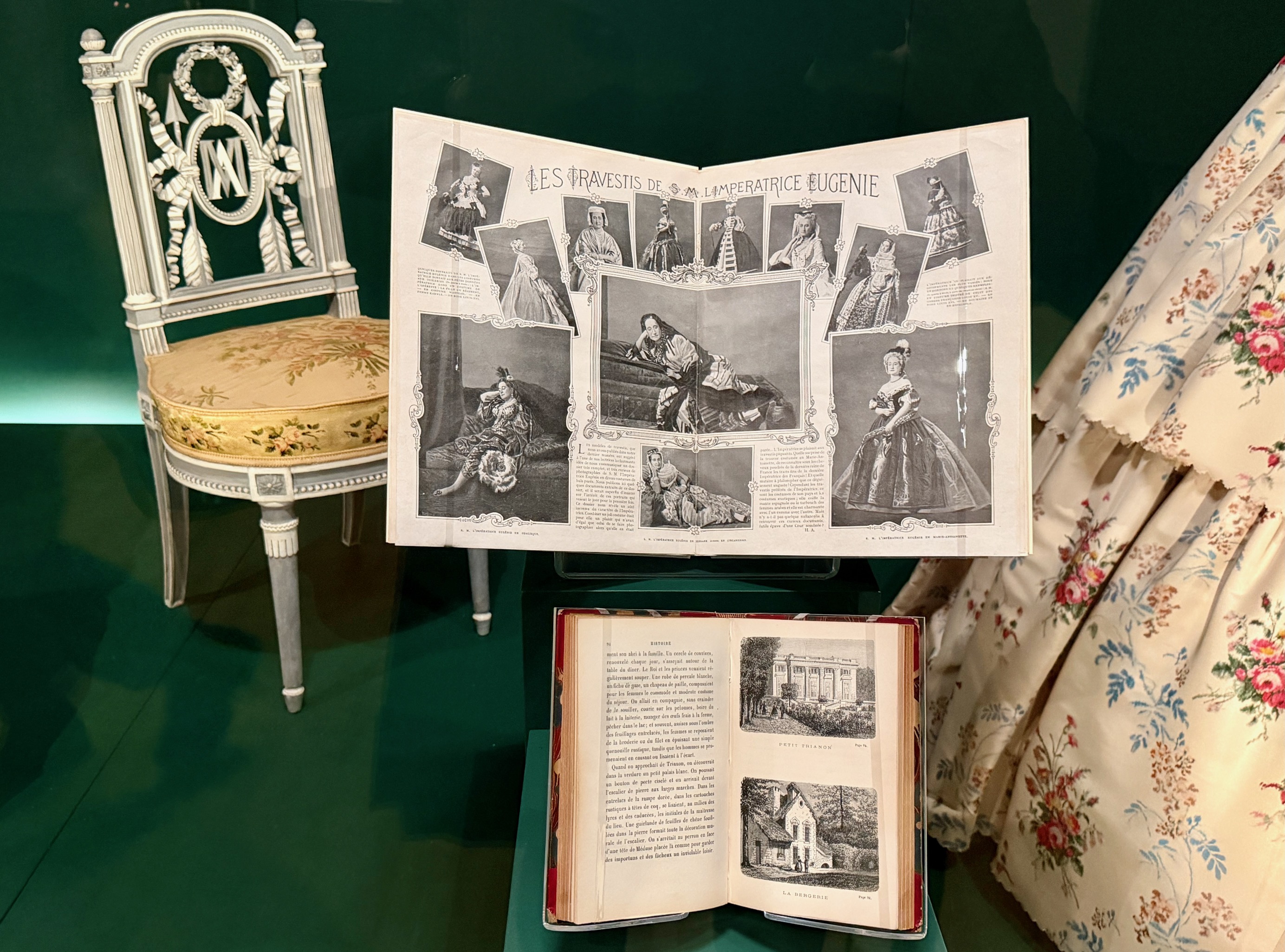
Style revival: Marie Antoinette’s 1784 carved monogrammed chair, part of a four-piece set; 1911 Fémina magazine article about Empress Eugénie’s love of big court costumes; and Eugénie’s 1867 exhibition catalogue about Marie Antoinette at the Petit Trianon. Courtesy: Versailles, musée national des chateaux de Versailles et de Tríanon; private collection; V&A
Spurred by Eugénie’s very public fandom into the 20th century, pop culture did not lose sight of Marie Antoinette as a style on display at upscale costume parties or as the evergreen image of fairy-tale princesses. The V&A shows illustrations using the queen’s pouf-do, tiny waist, princess-heel shoes, and voluminous 18th-century gowns to convey royal ingenues right into the 1910s and 1920s.
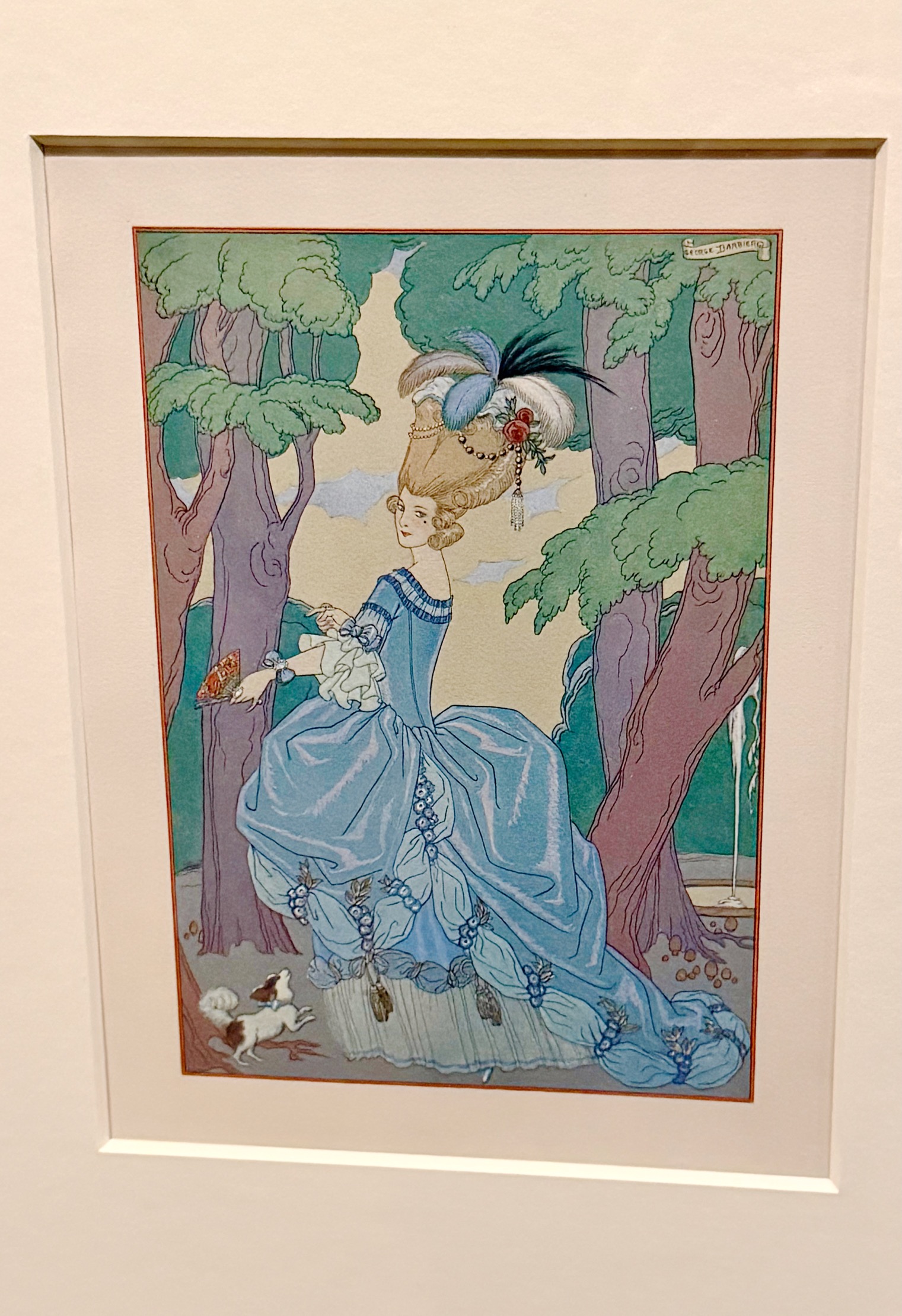
20th c. fairy tale princess: George Barbier’s 1928 illustration “L’Allée (The Pathway)” for Fete Galantes (Gallant Festivities) featuring an Art Deco image of Marie Antoinette based on Elisabeth Louise Vigée Le Brun’s portrait. Courtesy: private collection
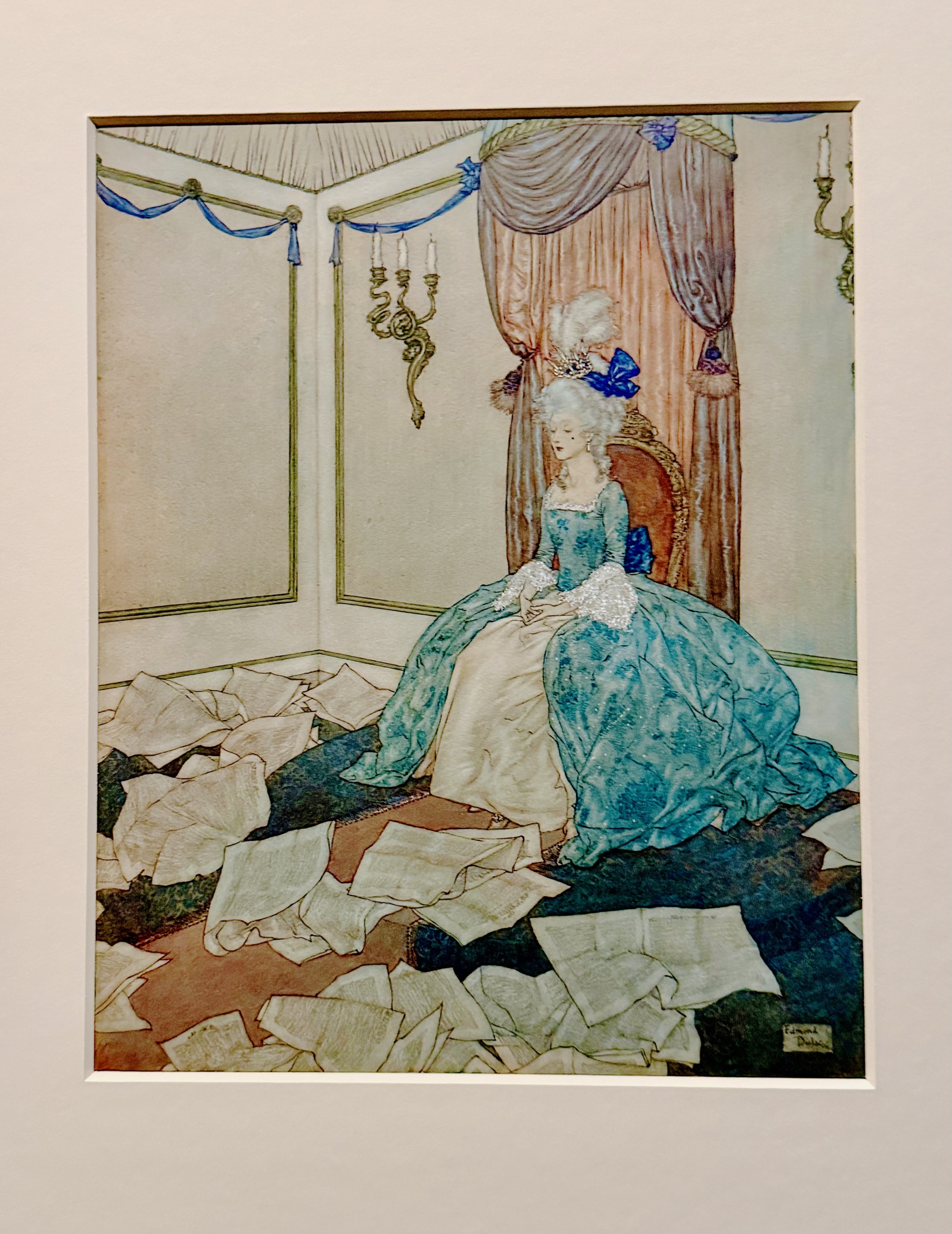
20th c. fairy tale queen: Edmund Dulac’s 1911 watercolor illustration of Marie Antoinette as Hans Christian Anderson’s Snow Queen; aloof, seated on an icicle throne. Courtesy: private collection.
And 1920s fashion designers took note, mixing gauzy references to Marie’s muslin dresses with full skirts and panniers.
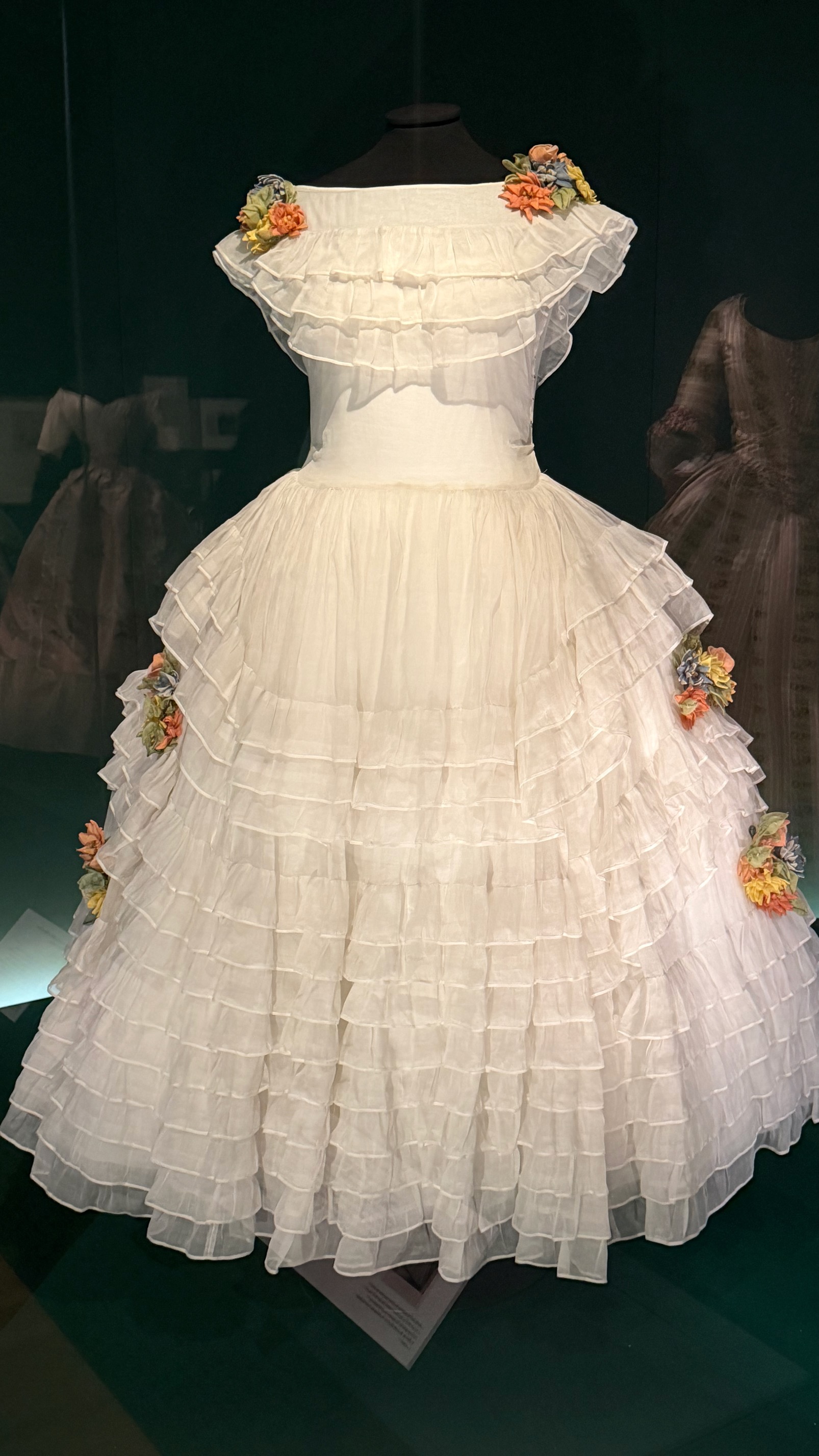
Referencing Marie Antoinette’s lingerie style: Jeanne Lanvin’s 1922-1923 silk organiza robe d’style (evening dress); a chemise with panniers. Courtesy: V&A
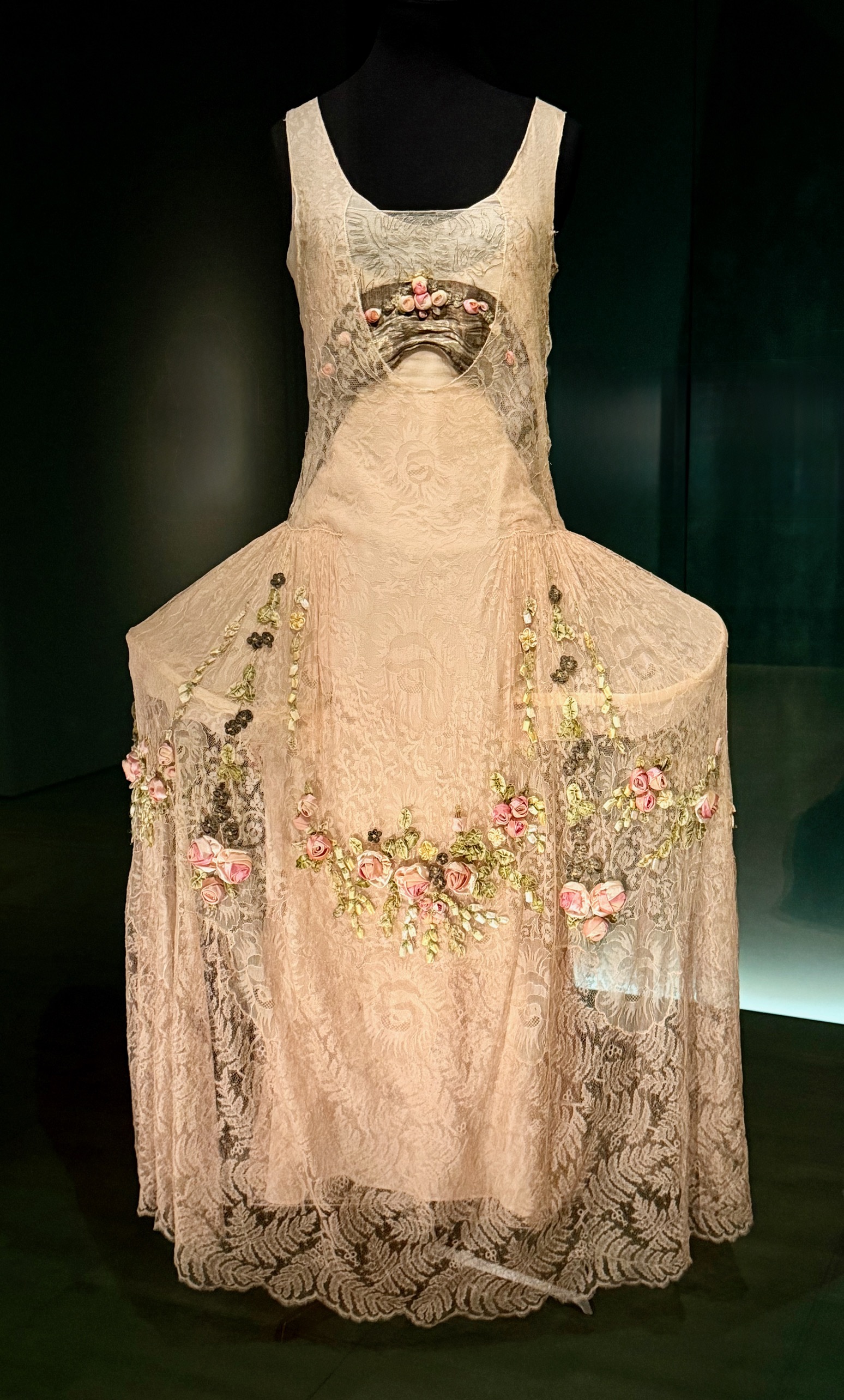
Boué Soers’ “lingerie frock” – a 1923 appliqued silk chiffon robed’style (evening dress) with panniers and ribbon roses; advertised showing models as Trianon shepardesses. Courtesy: Designmuseum Danmark
The spectacular finale to the exhibition pays tribute to the costume designers and haute couturiers who have translated Marie’s style into modern times. Even Manolo Blahnik jumped at the invitation to make shoes for Coppola’s Marie Antoinette film actresses, making each pair himself and basking in the glamor of using truly opulent silks and embellishments. It’s fun to see an entire wall of them.
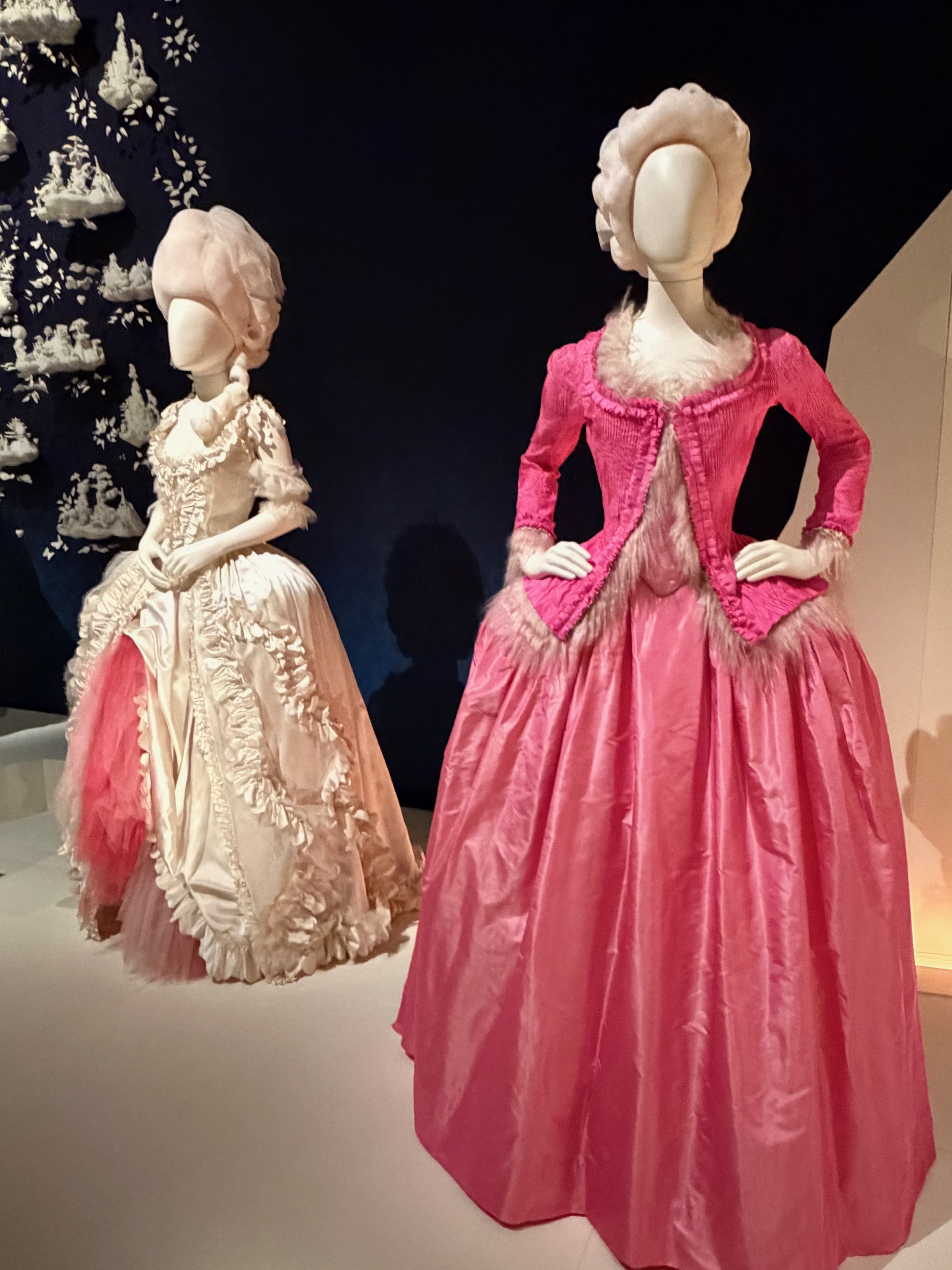
Neon pink costumes by Milena Canonero worn by Kirsten Dunst in Sofia Coppola’s 2006 film, Marie Antoinette. Courtesy: private collection.
Adrian’s silk gown worn by Norma Shearer in Willard Van Dyke’s 1938 Marie Antoinette film. Courtesy: private collection
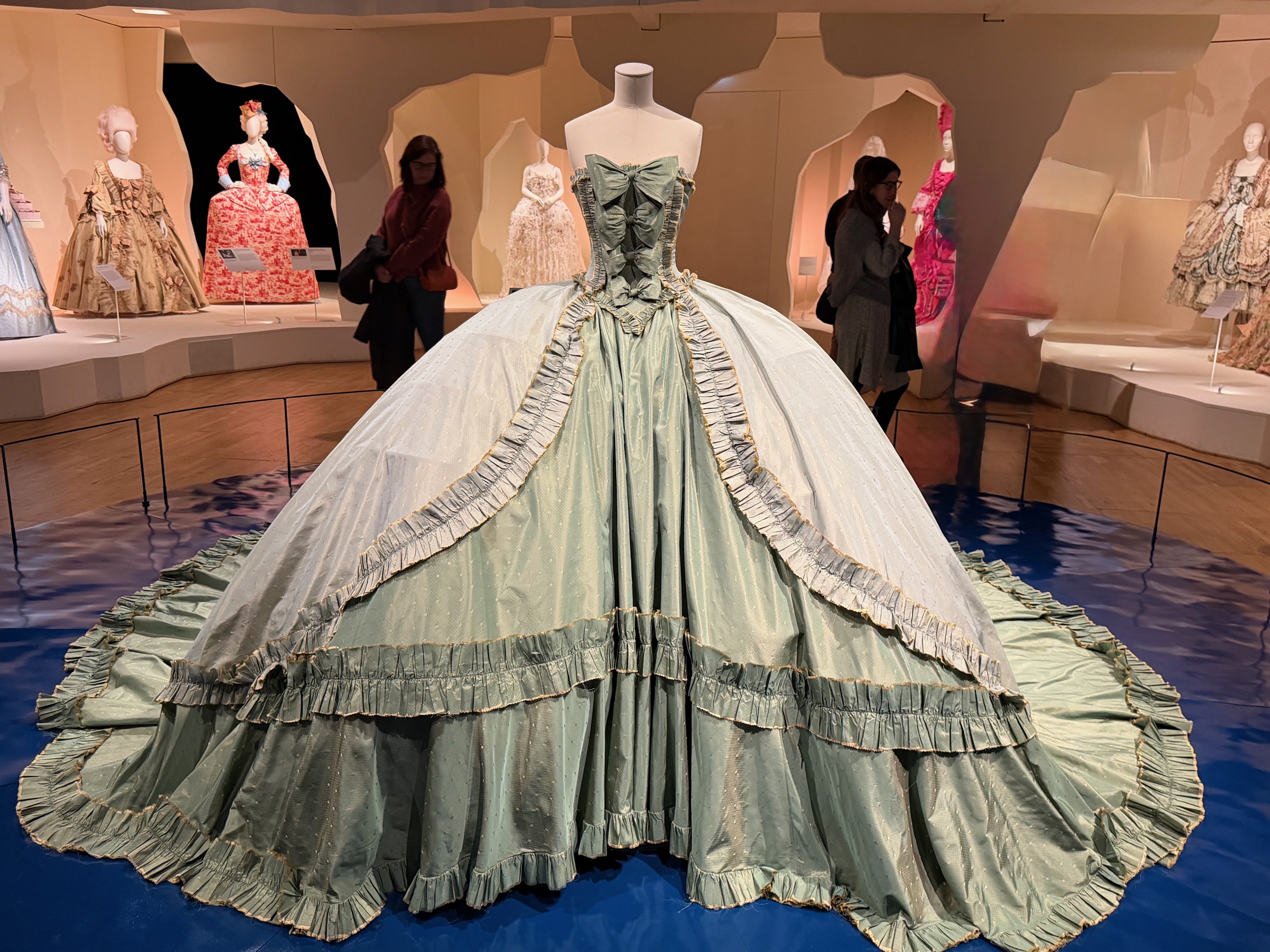
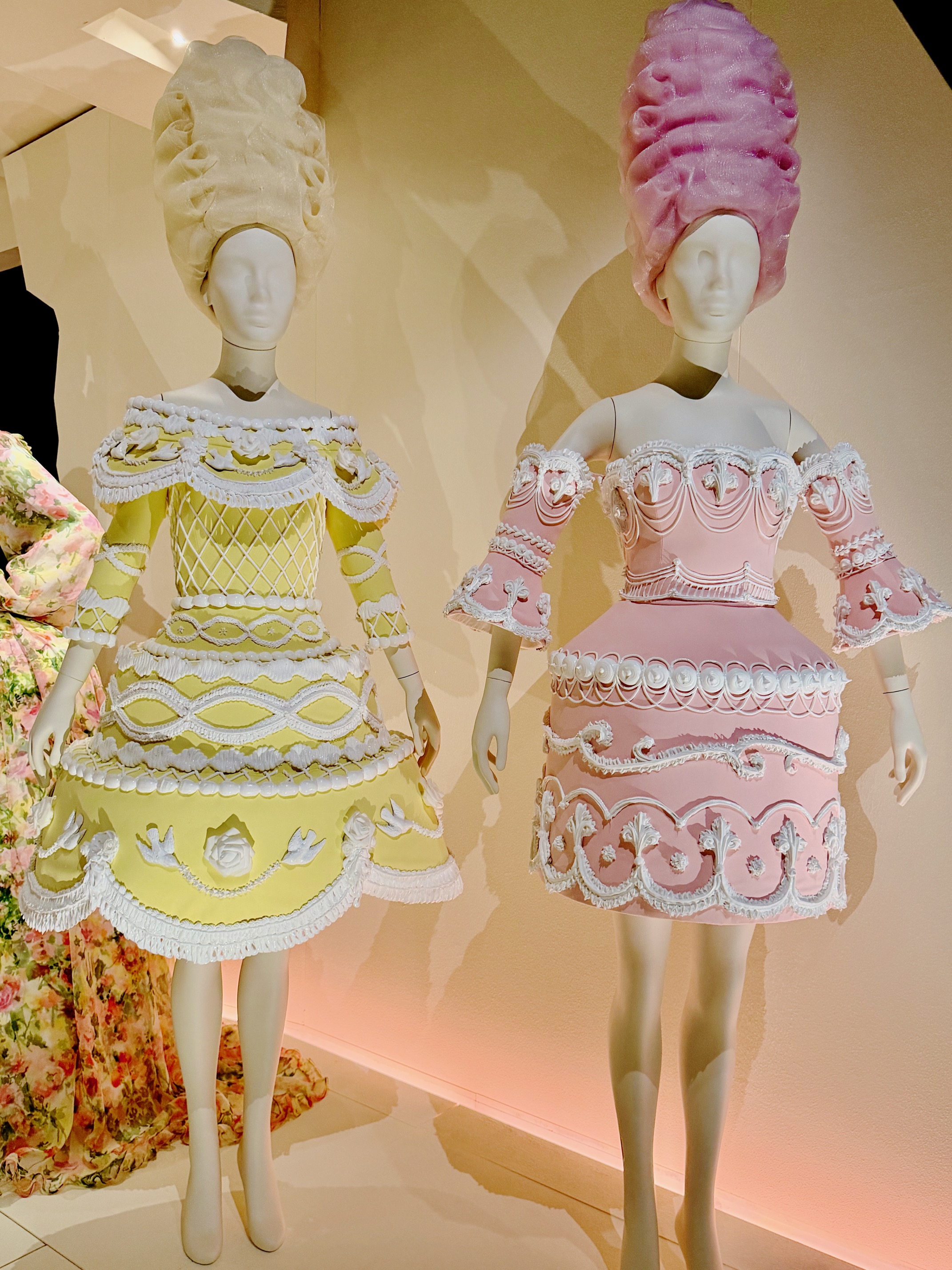
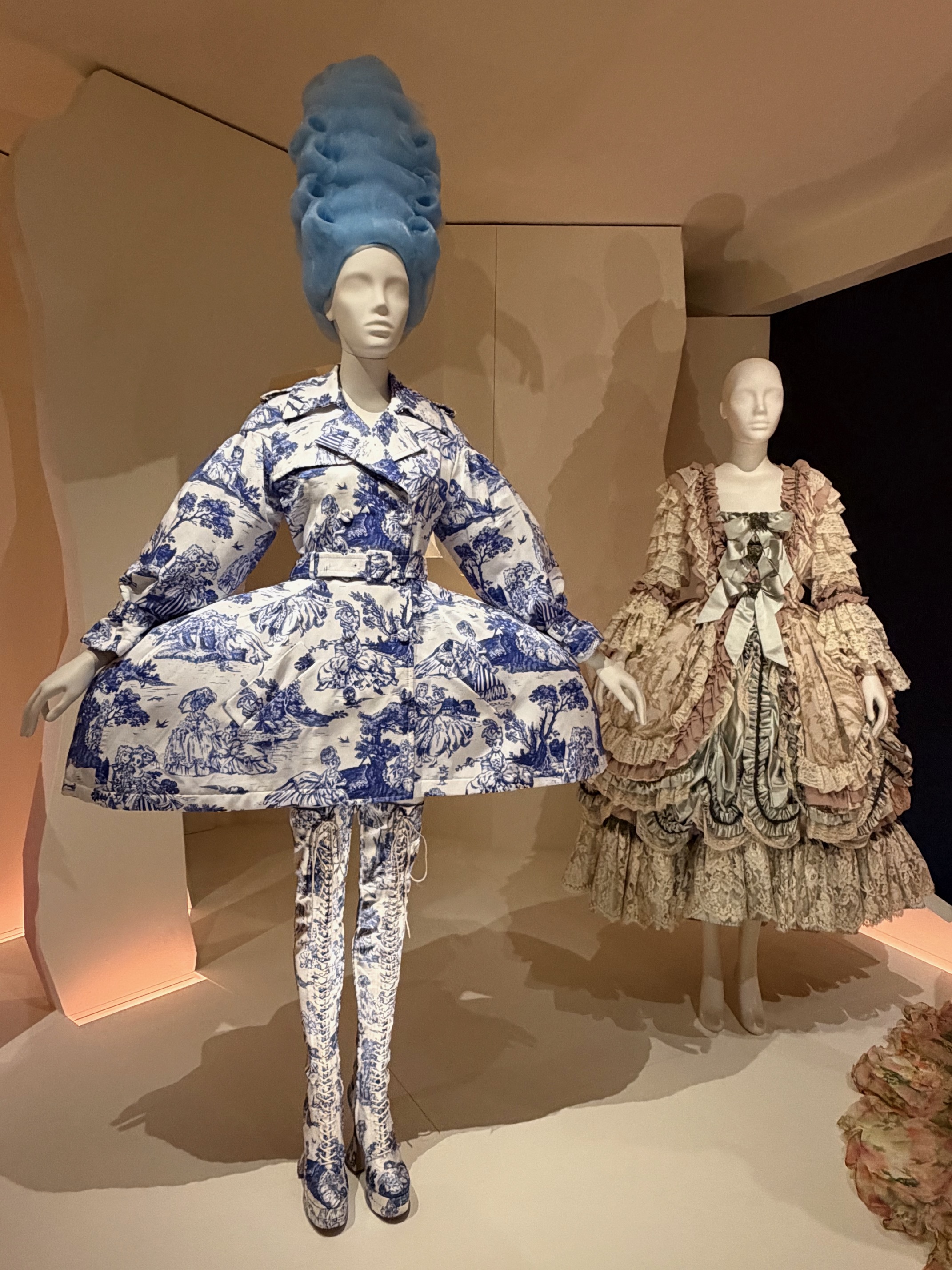
The show closes with a bigger-than-big wide gown by Galliano for Dior, surrounded by two tiers of Moschino silicone cake dresses, Moschino toile de jouy pannier spoofs, Marmalade’s drag ensemble, Vivienne Westwood’s bridal take, and even Lagerfeld’s take on those scandalous diamonds for Chanel.
Gallery of restyled Marie Antoinette fashions by contemporary designers; at center, John Galliano’s 1998 iridescent silk taffeta Marquise Masquée gown for Dior. Courtesy: Dior
It’s an unmistakable style that’s recognizable hundreds of years later, and one everyone who’s seen this unforgettable show is still talking about!
Be forewarned: Schiaparelli opens at the V&A South Kensington on March 28, 2026.
Jeremy Scott’s 2020-2021 silicone cake dresses from a runway show mixing contemporary and 18th century style and fun. Courtesy: Moschino archives.
Jeremy Scott’s 2020-2021 cotton anime Toile de Jouy mini-pannier dress with matching boots and Franco Moschino’s 1990 silk and lace robe á la polonaise. Courtesy: Moschino archives.
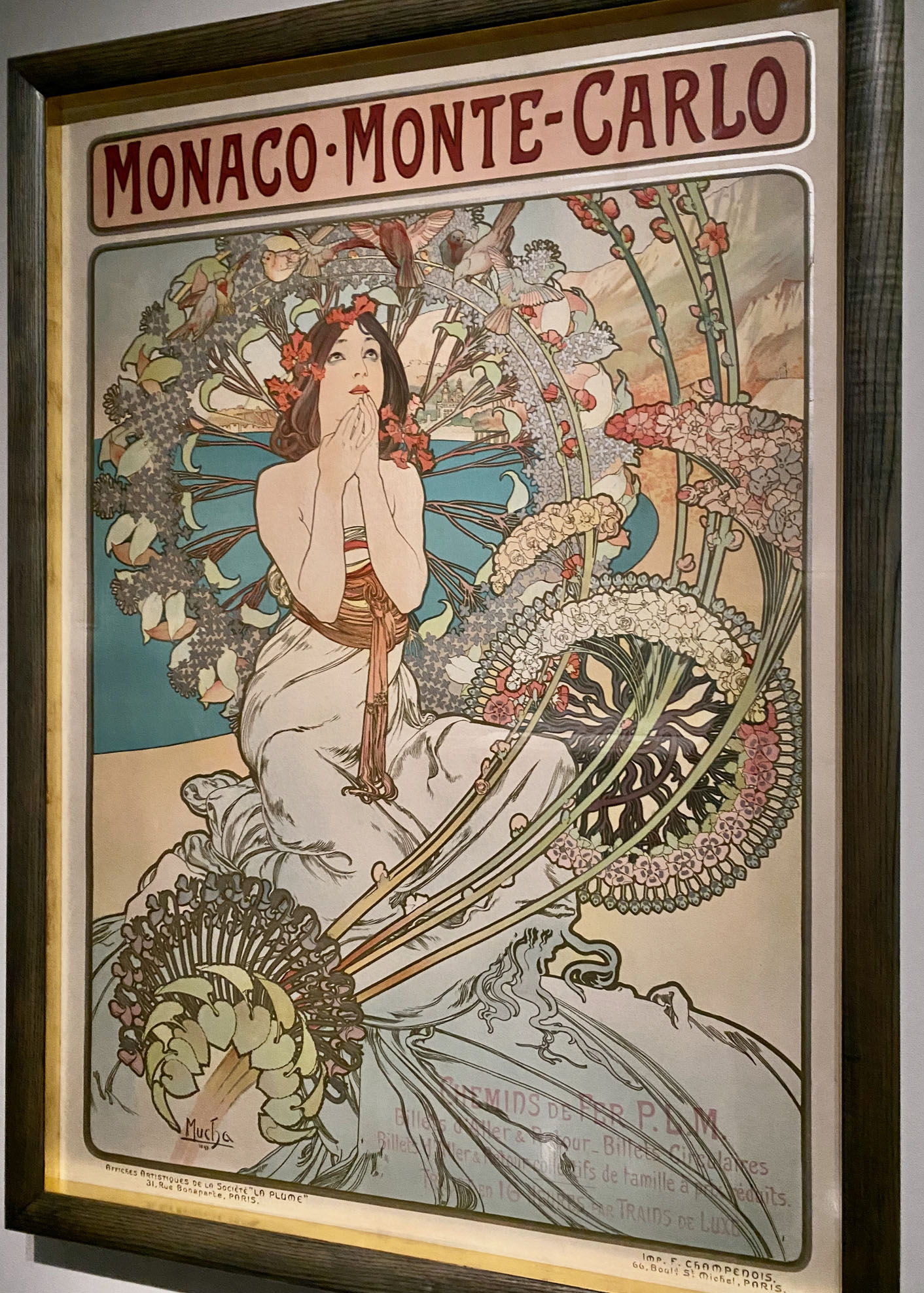
Fans of Mr. Mucha, the grand master of sinuous line, have been lining up across North America to admire some of his greatest works – epic posters of Sarah Bernhardt, beautiful women hawking products surrounded by swirling halos or smoke, and exotic details on small-scale, affordable decorative panels representing the seasons, flowers, or arts.
Created by the Mucha Foundation in Prague, Timeless Mucha: The Magic of Line presents Mucha’s own collection of art and books that inspired his creativity, his early works as an in-demand illustrator, and his most famous posters and viral images. It’s all on display at the Boca Raton Museum of Art through March 1, 2026 after successful stops at the Phillips Collection in Washington, D.C. and Santa Fe’s Vladem Museum of Contemporary Art.
Mucha’s 1897 lithograph Monaco – Monte Carlo, an ad for the Paris- Côte d’Azur railway featuring a young woman dreaming about her beach trip. Courtesy: Mucha Foundation.
See some of our favorite works from the Vladem installation in our Flickr album.
So how did a designer who was all the rage for Art Nouveau at the 1900 Paris Expo inspire Sixties psychedelic rock illustrators, Marvel Comics creators, and Japanese manga artists? You’ll see that in the exhibition, too. Check out this promo from Boca:
A portion of the exhibit features drawings, sketches, and acquisitions that suggest the building blocks that formed his mature style – Moravian folk style, the mix and match of multicultural design elements seeping into European designers’ consciousness, and the super-flat design in Japanese prints, and fantastical embellishments on Japanese collectibles in late 19th century Paris.
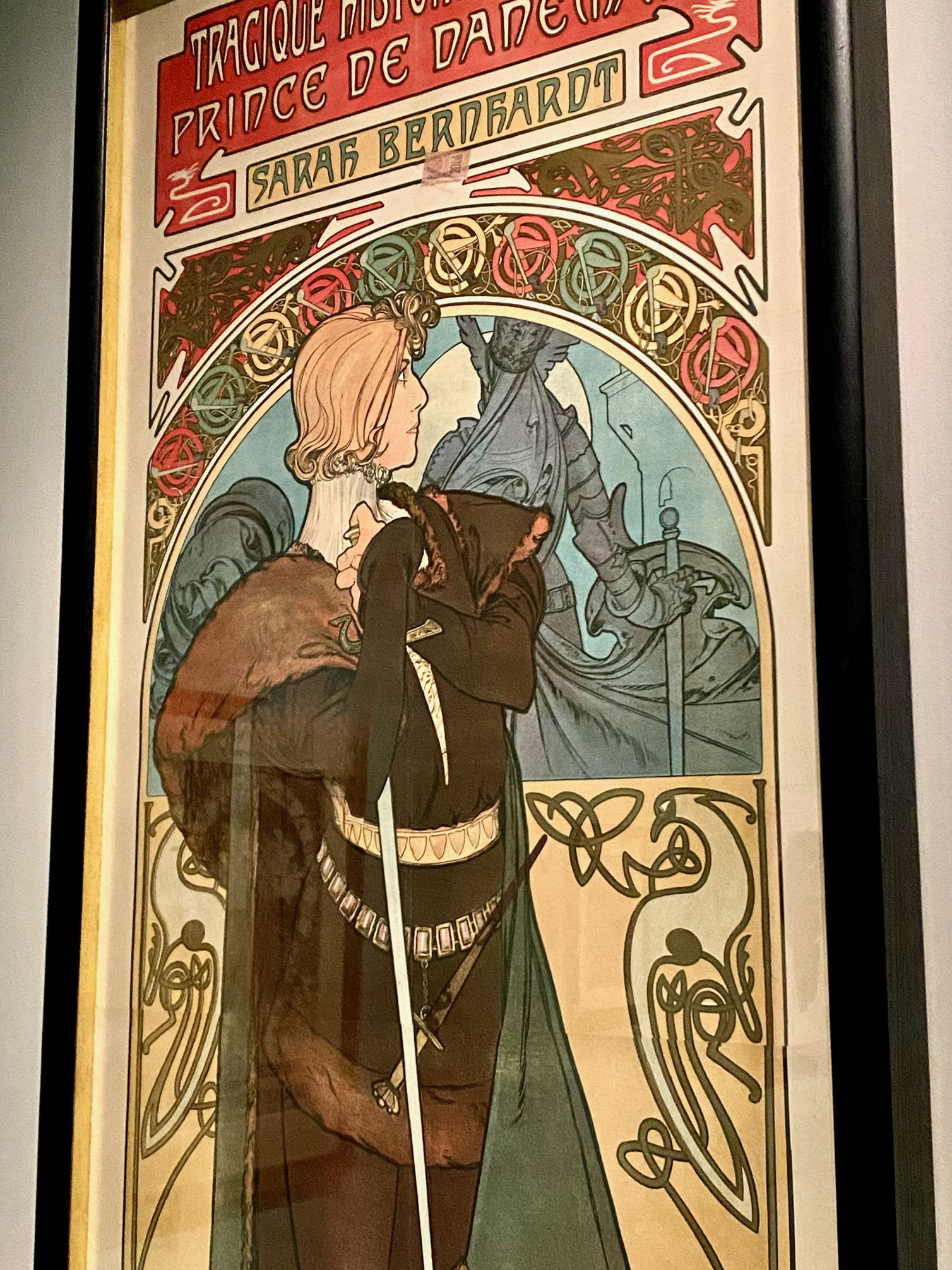
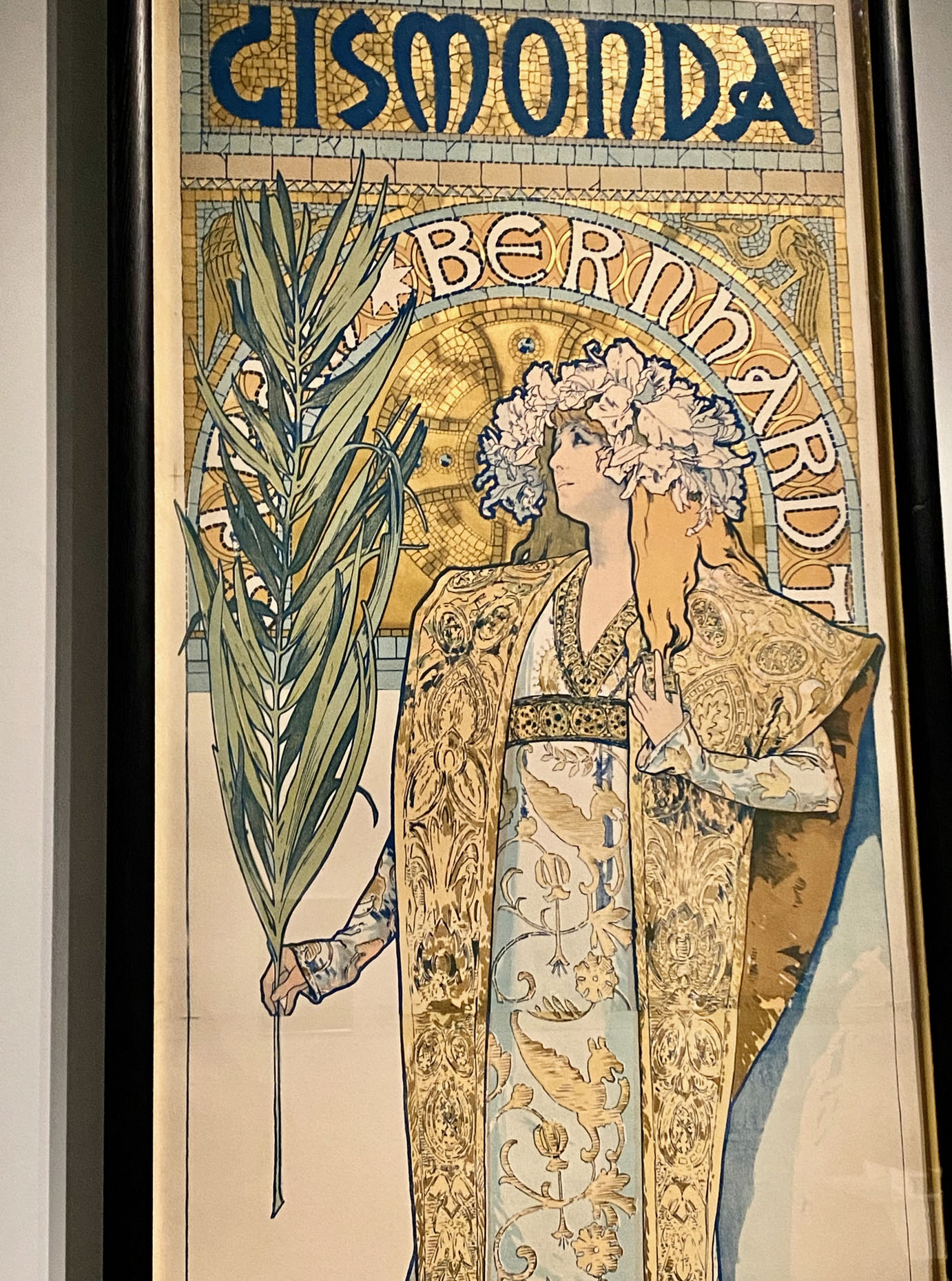
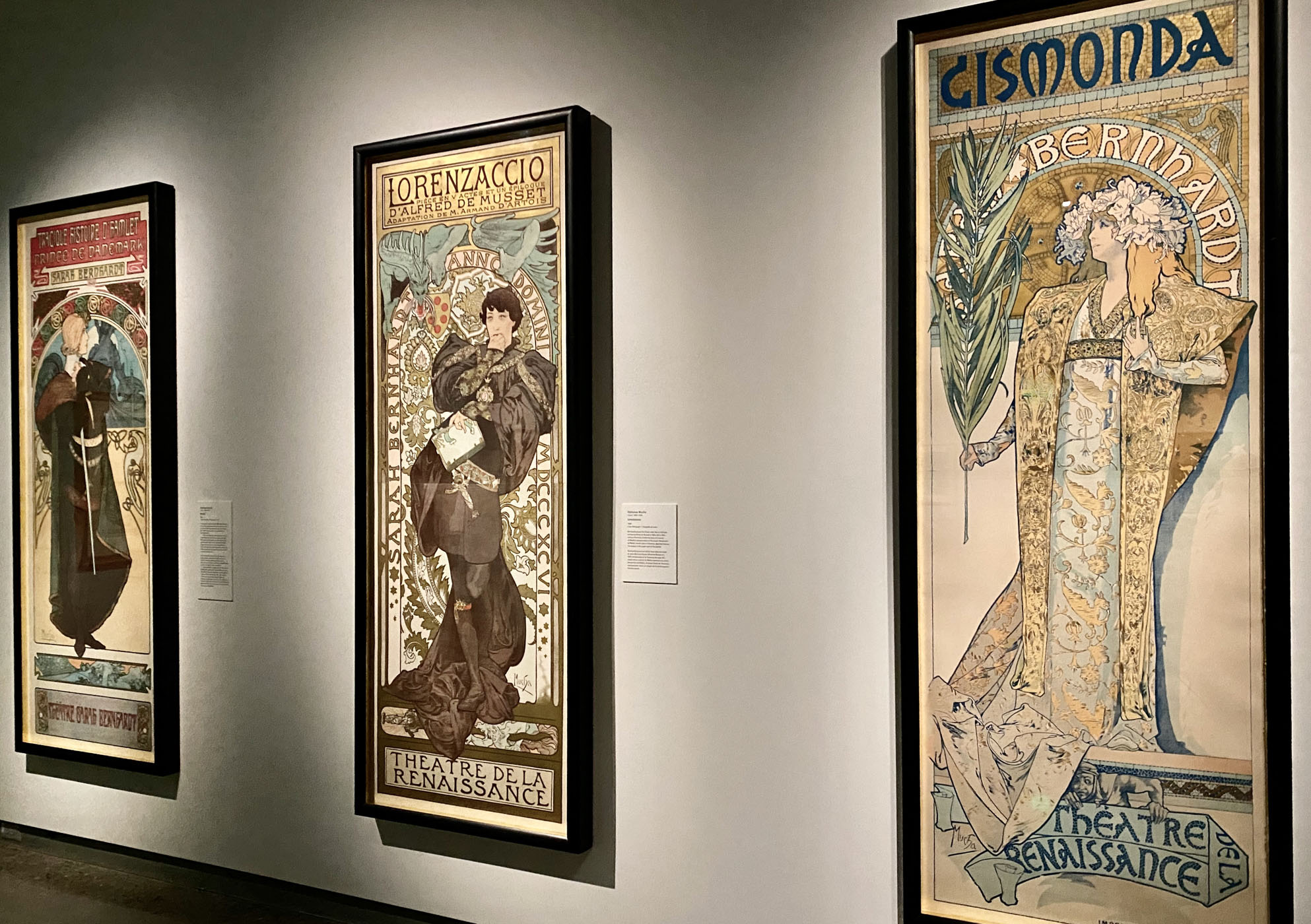
Just take a look at how many of these design influences Mucha packed into his viral street posters advertising actress Sarah Bernhardt’s new plays – mosaics like those in Eastern European churches, exotic decorative elements, and arcs functioning as halos.
Close-up of Mucha’s life-size 1899 poster of Sarah Bernhardt starring in Hamlet, with Celtic motifs. Courtesy: Mucha Foundation.
Close-up of Mucha’s life-size 1894 poster of Sarah Bernhardt starring in Gismonda featuring a Byzantine mosaic, Orothodox cross, and Slavic designs. Courtesy: Mucha Foundation.
Listen to the Foundation’s curator Tomoko Sato (shown in Phillips Collection galleries) explain how Mucha’s 1894 poster commission – his first – immortalized superstar actress Sarah Bernhardt:
When Mucha’s Gismonda poster appeared on the streets of Paris in 1894, it was a sensation and cemented Mucha’s status as the hottest designer of the day. Bernhardt signed him to a six-year contract (including designing her jewelry), and other offers started rolling in.
Everyone considered Mucha the leading practitioner of Art Nouveau, although Mucha never cared for this label. As the exhibition shows, Mucha’s style was a flat application with bold outlines around ethereal depictions of independent women, swirling vines and/or hair, and a sinuous spiral curving through his layout.
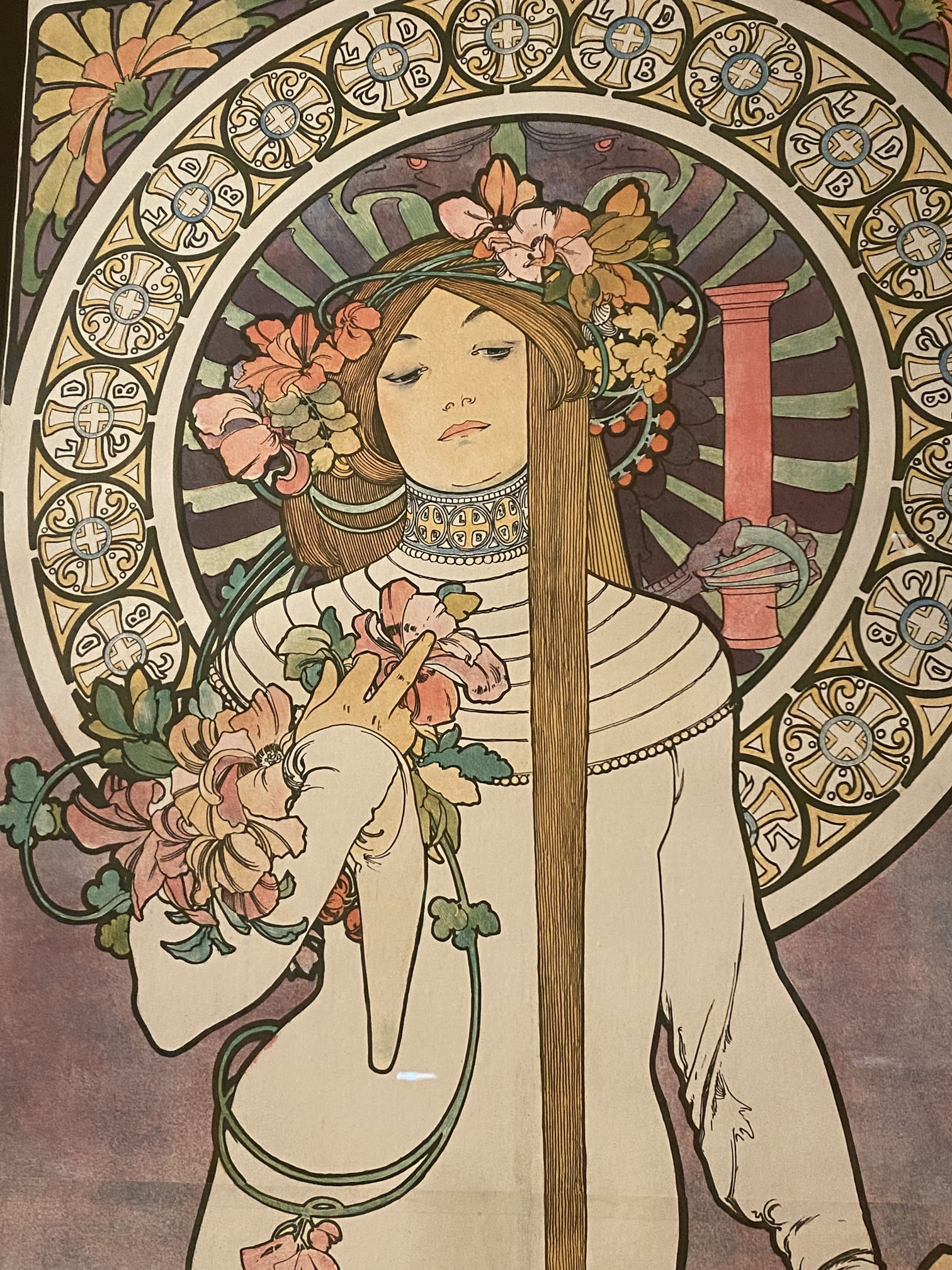
Detail of Mucha’s 1897 lithograph La Trappestine, a liqueur ad featuring a halo, Celtic designs, and a floral wreath. Courtesy: Mucha Foundation.
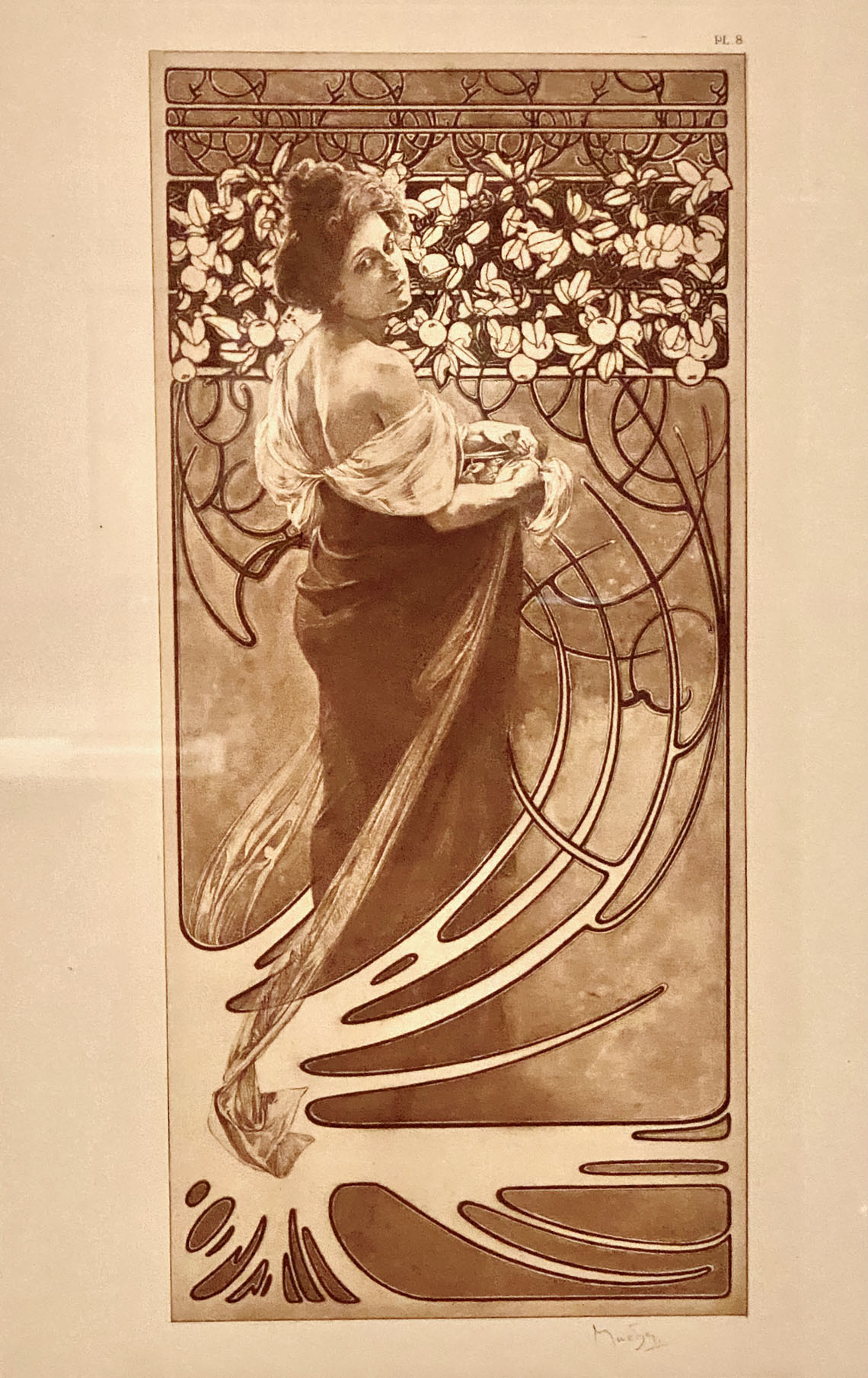
Plate from Mucha’s 1902 Documents dècoratifs, his designer handbook on how to combine human figures with decorative elements. Courtesy: Mucha Foundation.
As his fame grew, publishers licensed his images and published them at affordable prices worldwide. Mucha himself traveled abroad, teaching sold-out classes in drawing, line, and figures. He was in such demand that he eventually created books showing up-and-coming designers how to create universally appealing designs in his style.
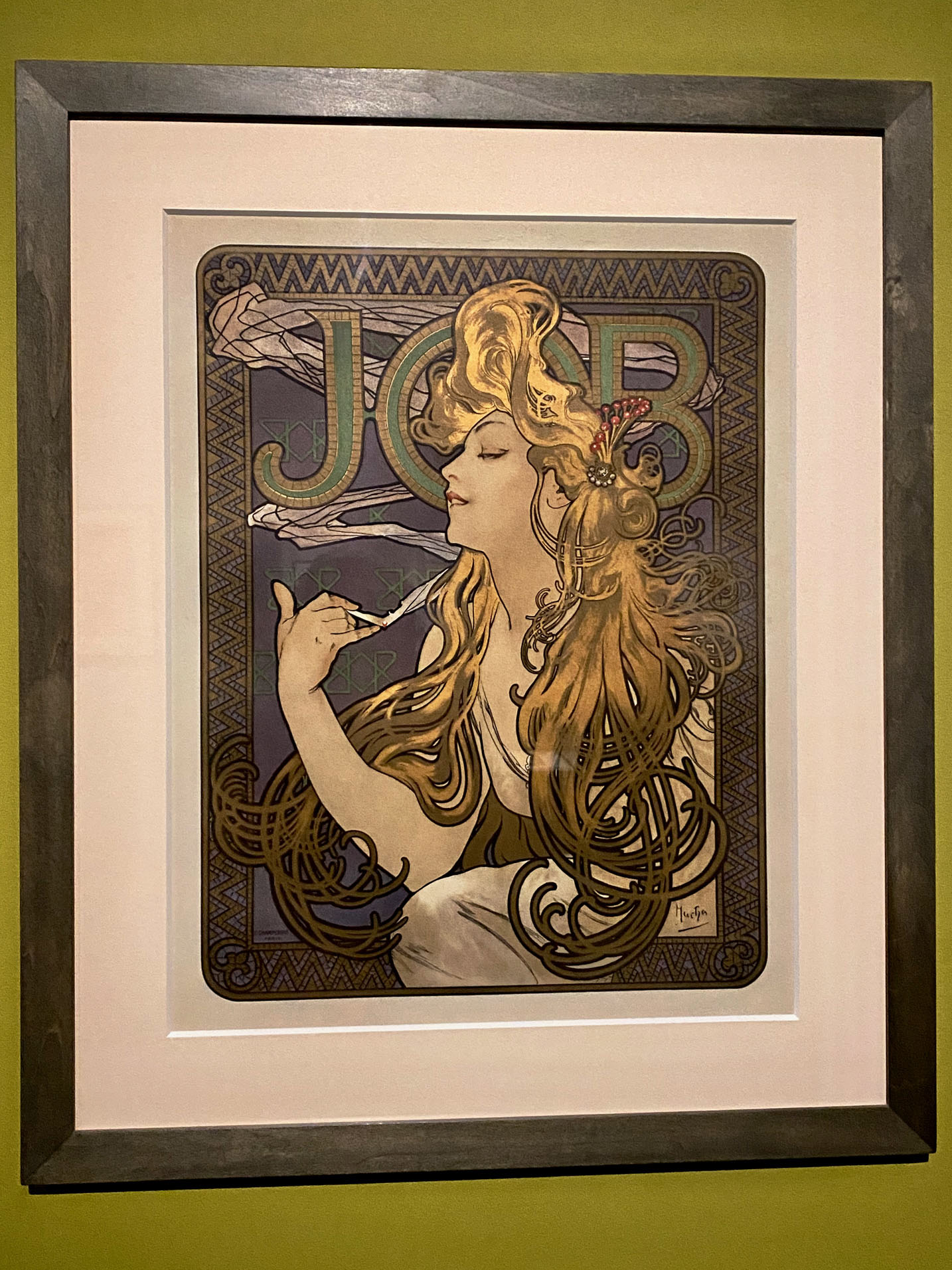
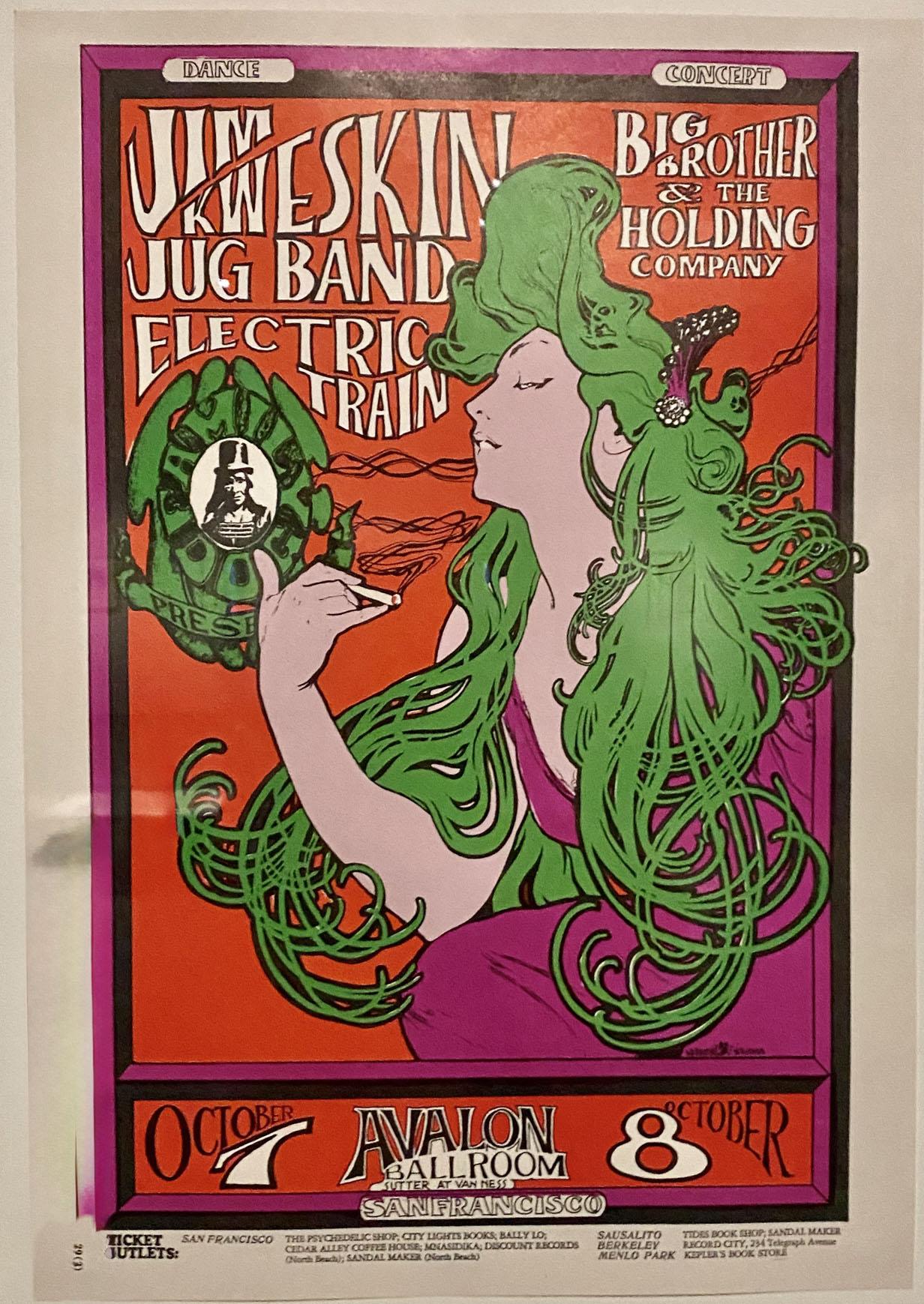
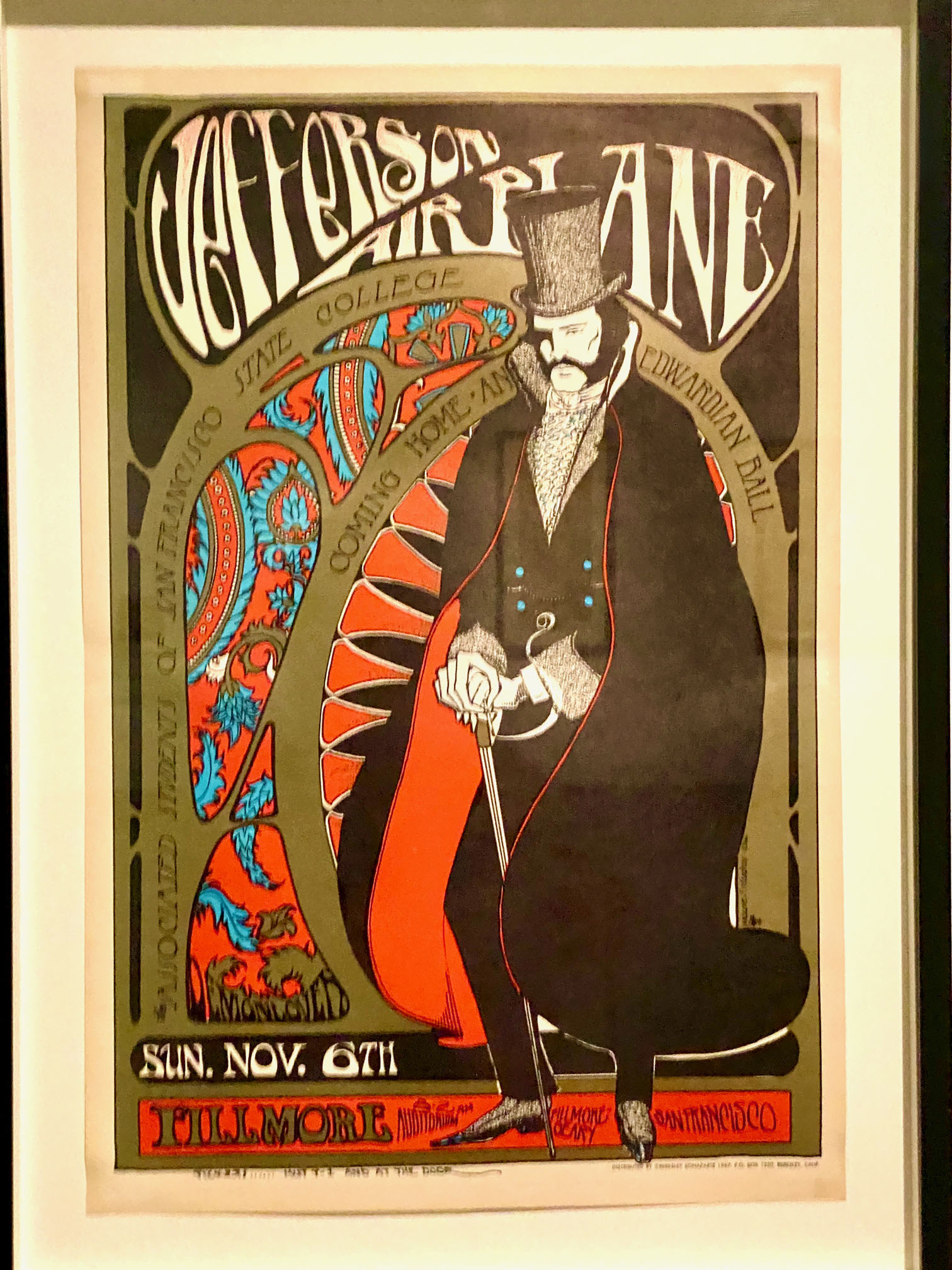
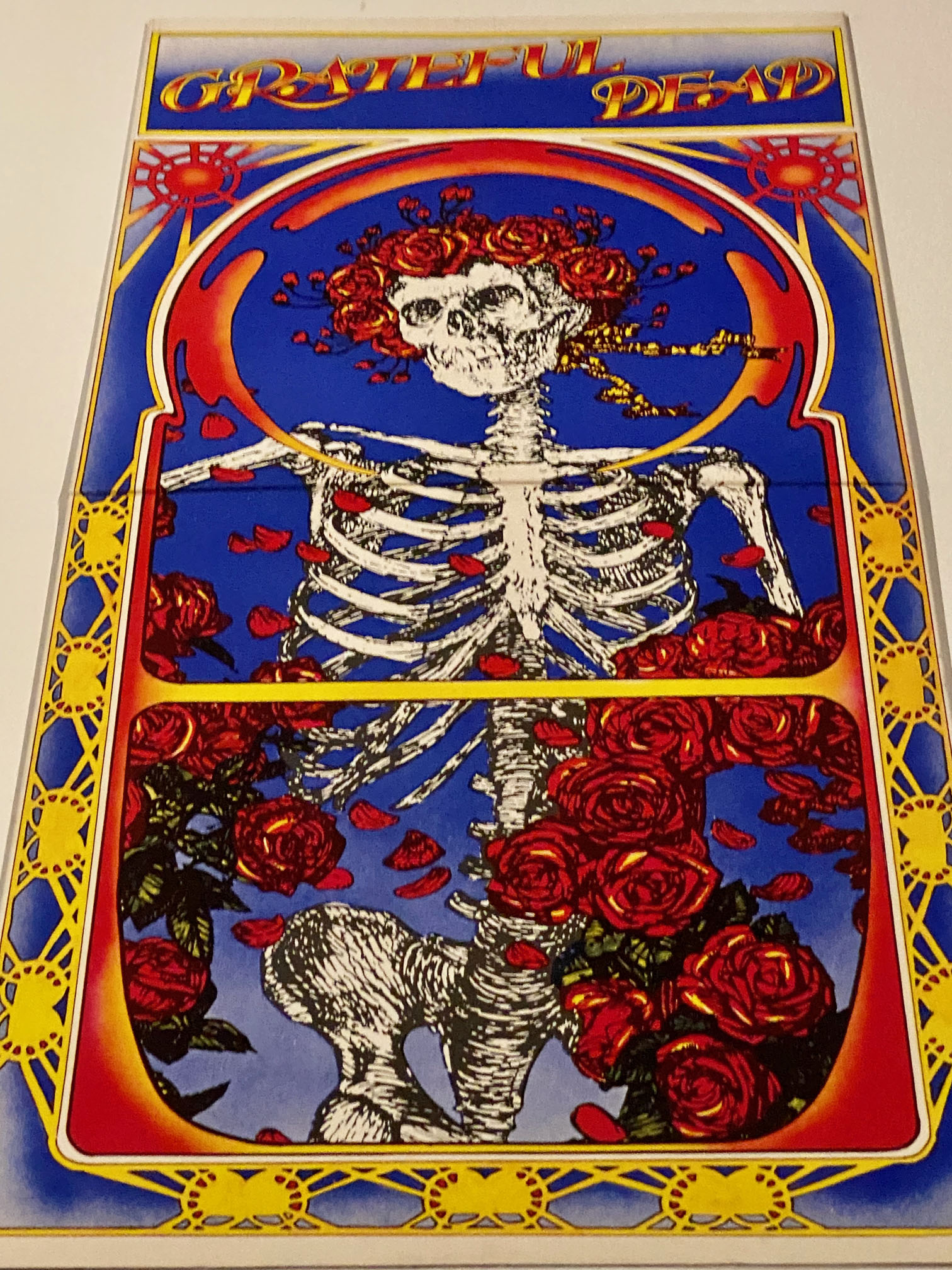
When Mucha produced these design look-books in the early 1900s, could he have envisioned that illustrators and designers of the late 20th and early 21st century would take note? The exhibition showcases Fillmore West posters and Sixties’ rock album covers that repurposed Mucha’s style, such as this transformation of Mucha’s cigarette paper ad into a nearly identical promo for the Jim Kweskin Jug Band.
Mucha’s first product advertising poster – 1896 promo for JOB rolling papers featuring a sensuous smoker and a Byzantine border. Courtesy: Mucha Foundation.
1966 poster by Stanley Mouse and Alton Kelley for a San Francisco concert headlining the Jim Kweskin Jug Band and Big Brother and the Holding Company.
Flowers in your hair? Swirling hair, flowers, and stars were part of Mucha’s “universal language” that took design in a new direction in the 1900s. Museum visitors love pouring over the Sixties album covers and posters detail in the exhibition, remembering which albums they owned and acts they saw, delightedly pointing out the Mucha design influences to their friends.
1966 tour poster for Jefferson Airplane at the Fillmore Auditorium by Stanley Mouse and Alton Kelley.
1971 Skull and Roses tour poster for Grateful Dead by Alton Kelley.
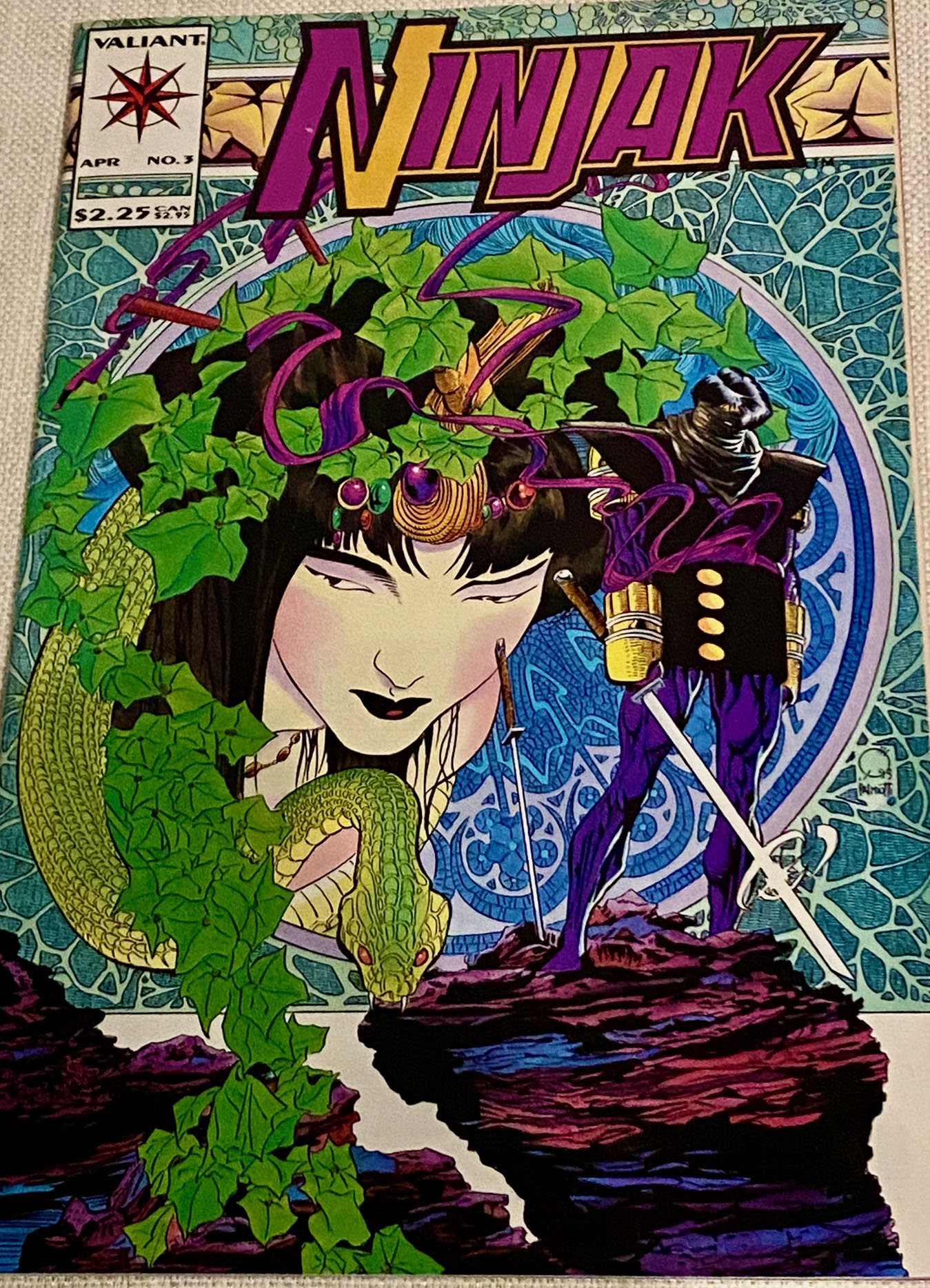
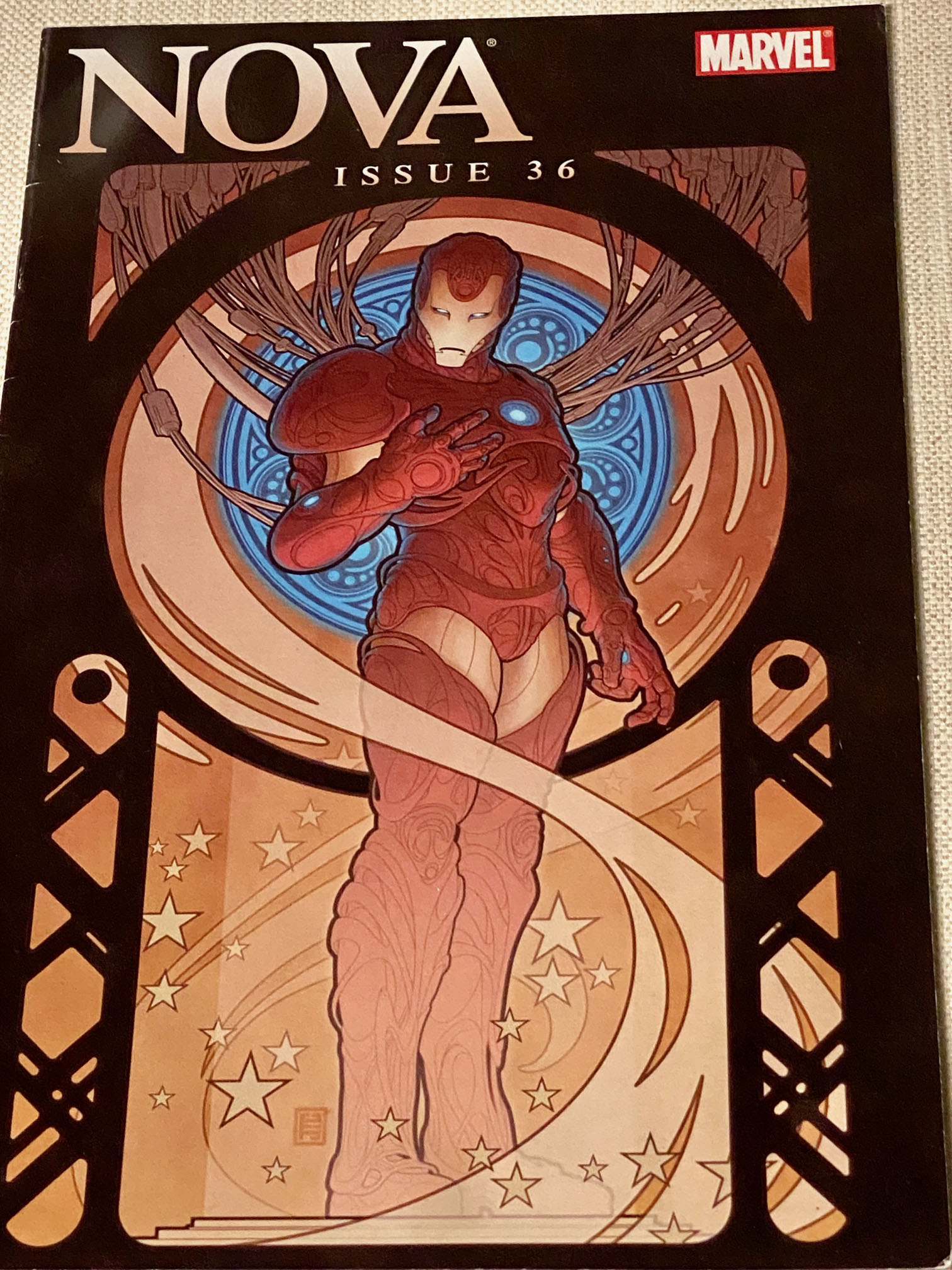
But subsequent generations of media makers also adapted Mucha style – comic book and manga artists.
Joe Quesada’s 1994 Spread, Ninjak cover for Valient Comics.
John Tyler Christopher’s 2007 cover for Marvel’s Nova, no. 36B.
Listen to curator Sato about how Japanes artists adapted Muca’s design breakthroughs for 21st manga fans:
Next on the tour for this beautiful exhibition – the Nelson-Atkins Museum of Art in Kansas City, Missouri (April 11-August 30, 2026) and Museo Kaluz in Mexico City (October 8, 2026 – February 7, 2027).
The riches on display in this exhibition are also a reminder that much more is on view at the Mucha Museum – a spectacular new venue in Prague opened by the Mucha Foundation at the Savarin Palace in 2025, right on the western edge of Old Town.
A star framed by a halo: years of Mucha’s poster ads for Sarah Bernhardt’s 1894-1899 plays – Hamlet, Lorenzaccio, and Gismonda. Courtesy: Mucha Foundation.
Demand for Gus’s intricate block-printed sun-dappled Western landscapes from the 1920s through the 1950s still runs high. So, it’s a treat to learn how Gus achieved such a high degree of technical proficiency early in his career, lived Arts and Crafts philosophy, relished immersion in art colonies, and found his family in Santa Fe.
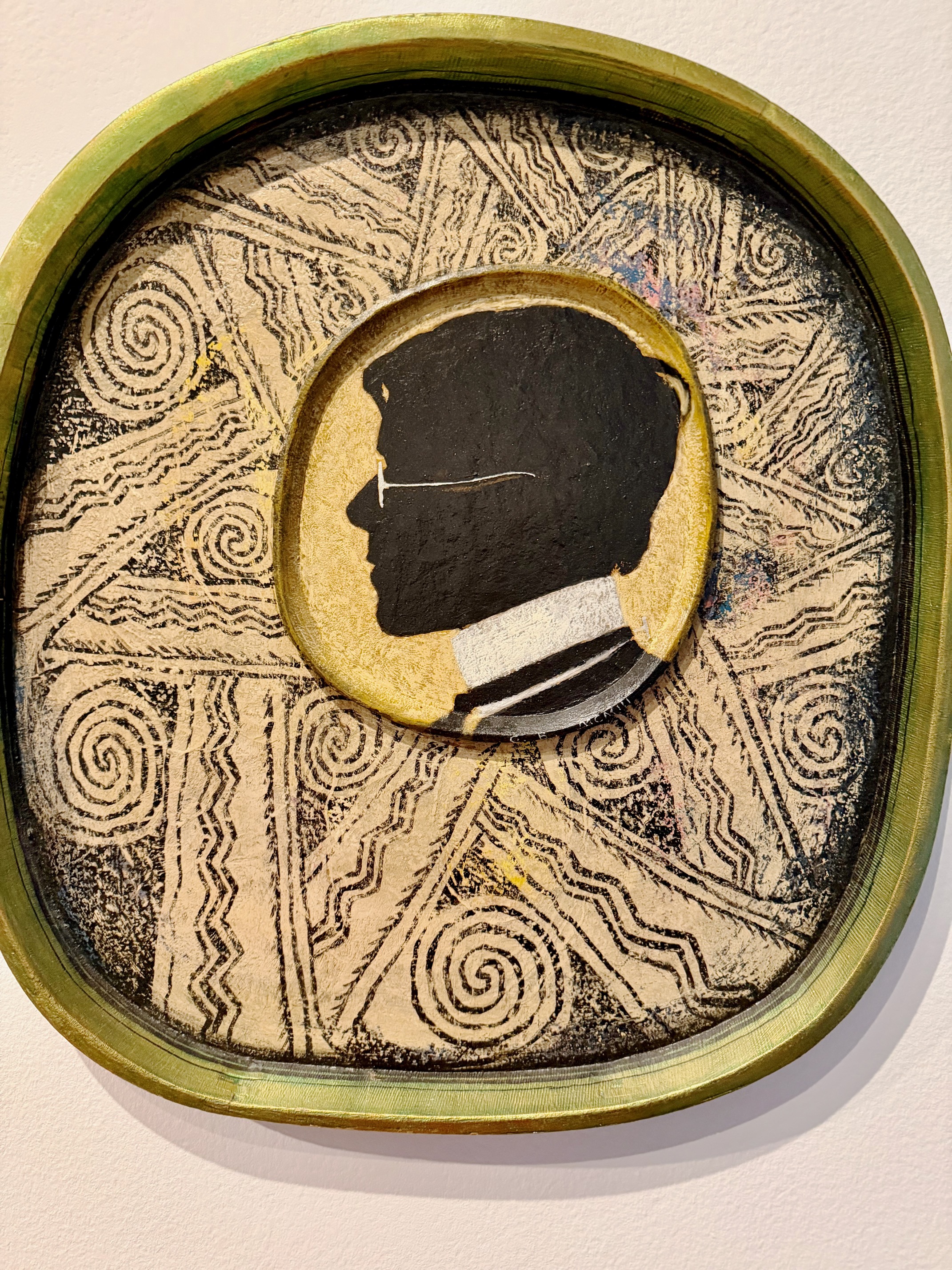
Gus Baumann’s 1903 oil Self-portrait (Silhouette) painted in his Chicago studio; reworked in Santa Fe after 1920 with a border inspired by Mimbres pottery.
Although Gus was born in Germany in 1881, his family emigrated to Chicago when he was around ten. His father was a craftsman and woodcarver, and it left an impression. The first themed section of the exhibit – “Finding His Way”– gives a glimpse into his family background, early commercial art work, wood carving expertise, and furniture he designed later in the 1930s.
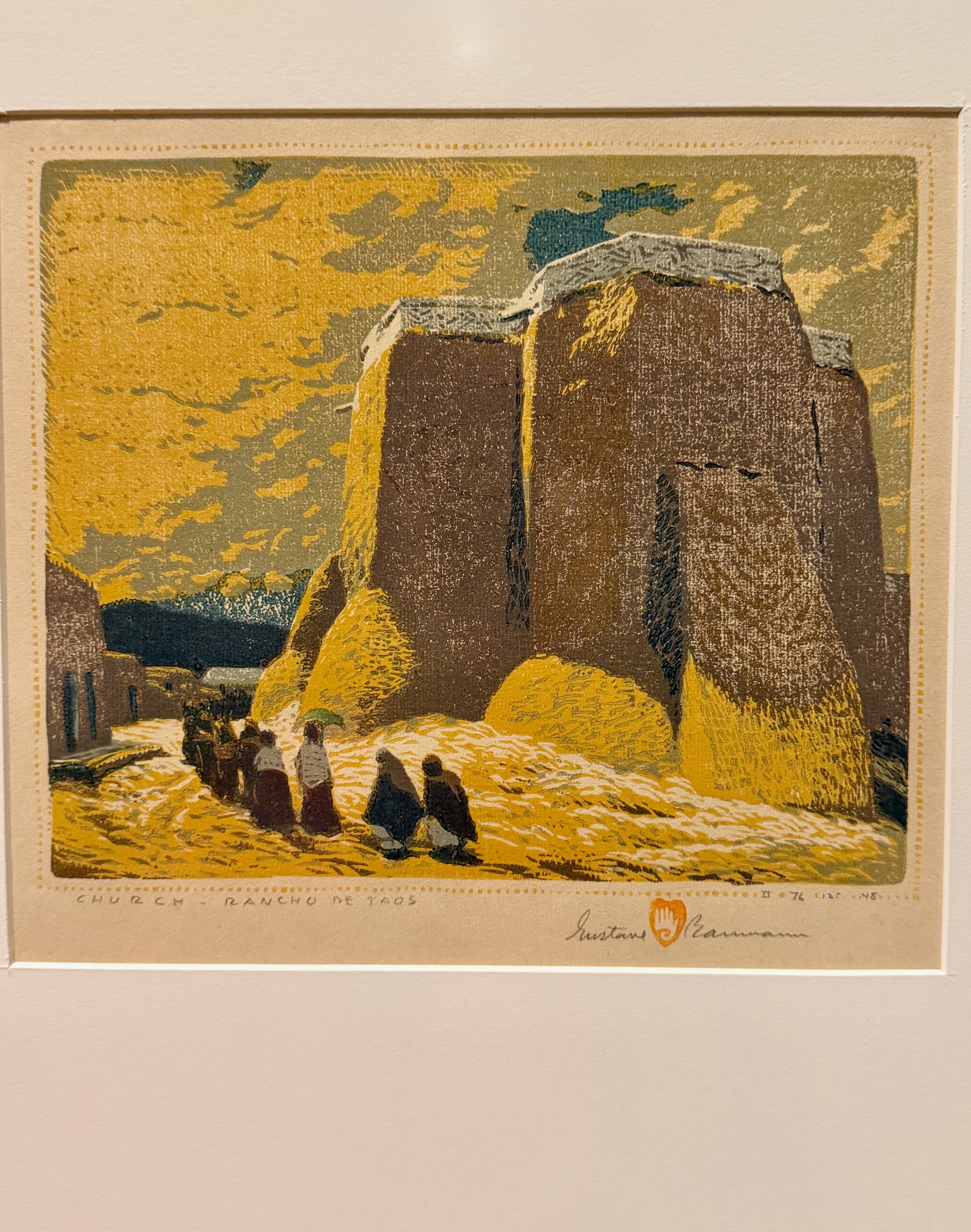
Gus Baumann’s 1919 color woodblock print Church Ranchos de Taos – one of the first modern artists to depict this iconic church; printed in 1948.
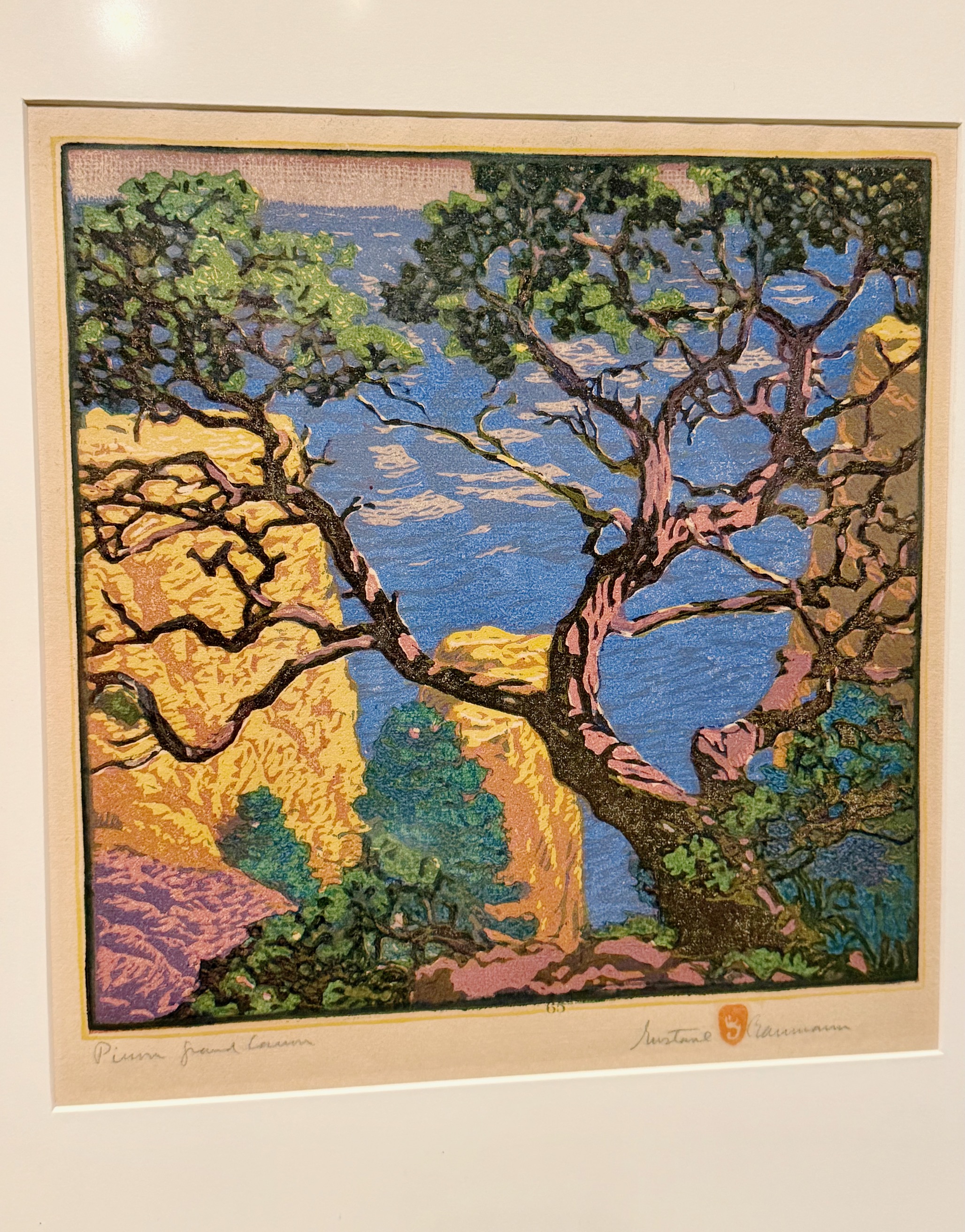
Gus Baumann’s 1921 color woodblock print Piñon Grand Canyon – one of four landscapes created after his first visit.
When he was 17 and his dad left the family, Gus had to find work to help his mom make ends meet. He worked full time at a Chicago wood-engraving shop that cut illustrations for books, magazines, and newspapers. When he was 20, Gus opened his own wood-engraving studio.
To fine tune his skill, he attended Munich’s Royal Arts and Crafts School for a year to learn from the best German color wood-block print masters – a move that chose traditional skills over academy fine-arts training. When he returned to Chicago, he opened Baumann Graphic Art Service.
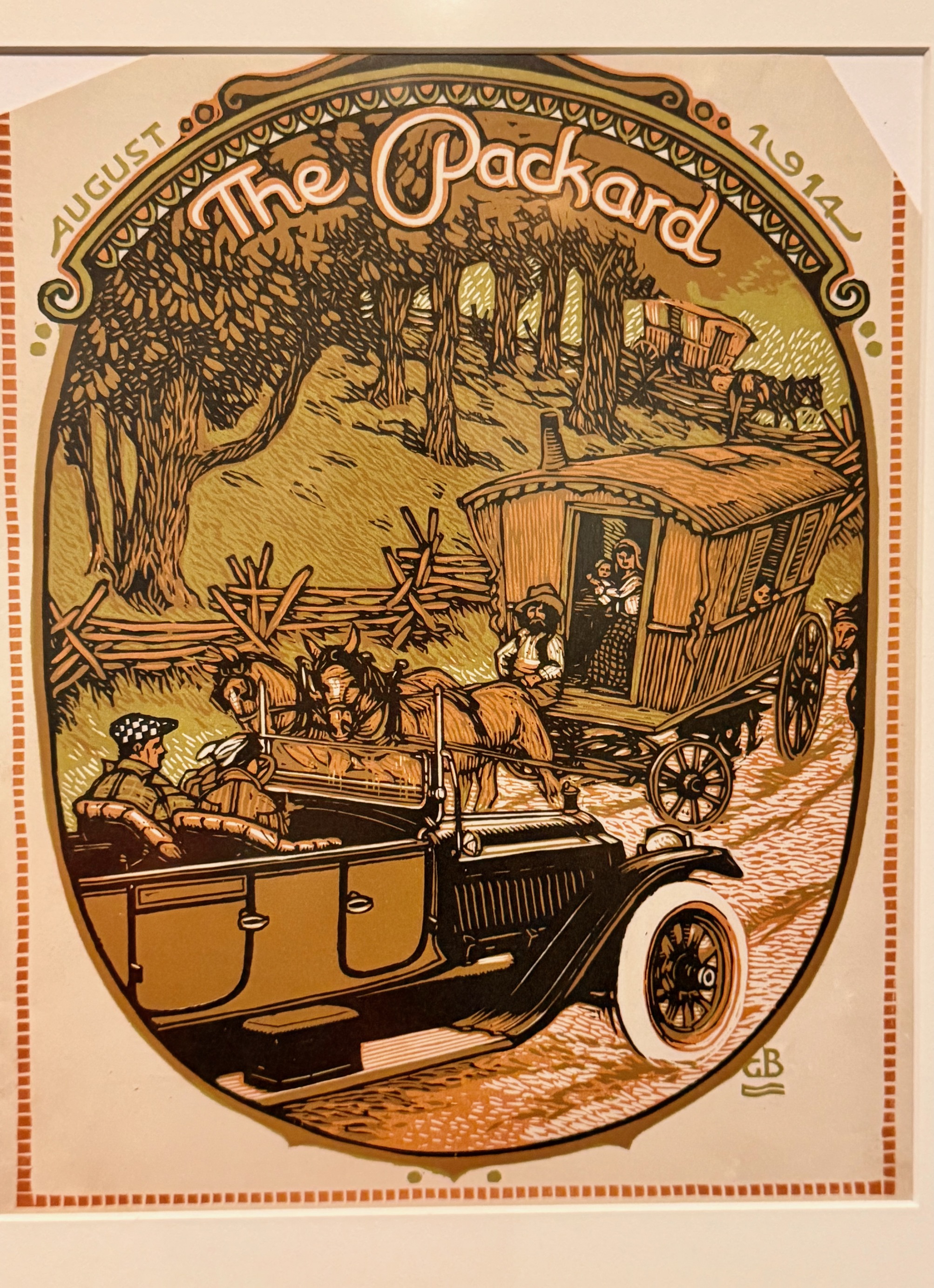
Gus Baumann’s 1913 Illustration for a Calendar: The Packard Car Motor Company, August 1914 – one of four he created for Packard.
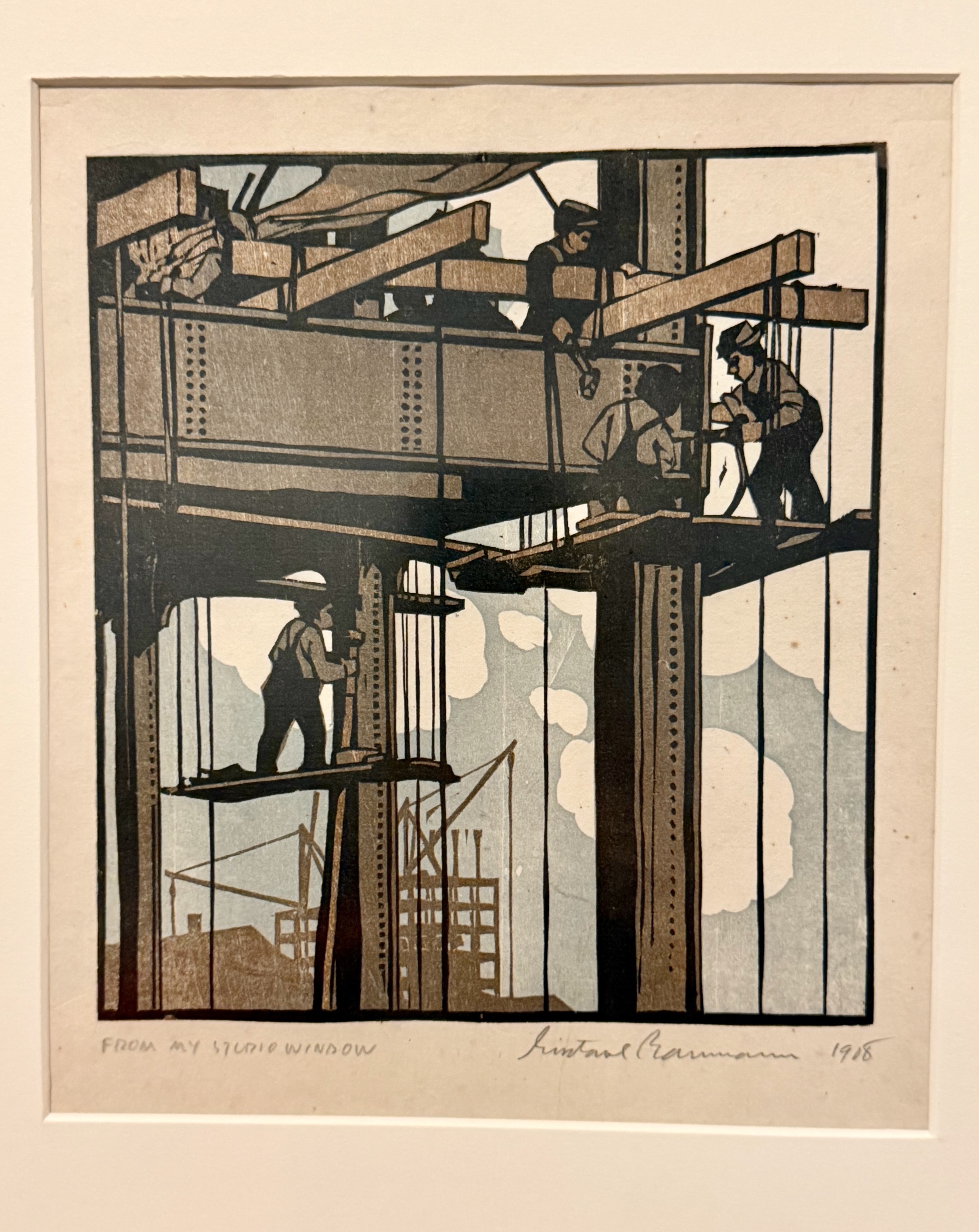
Gus Baumann’s 1908 color woodcut From My Studio Window in downtown Chicago –the high-rise McCormack Building going up on South Michigan Avenue.
Although Gus found success, his love of craft and traditional printmaking methods drew him to an art colony in Nashville, Indiana that revered traditional crafts and a slower pace of life. The second section of the exhibition – “A Rolling Stone” – highlights work he did in Munich, his acclaimed print series featuring Indiana craftsmen, coastal life in Provincetown, and the electricity he felt in New York.
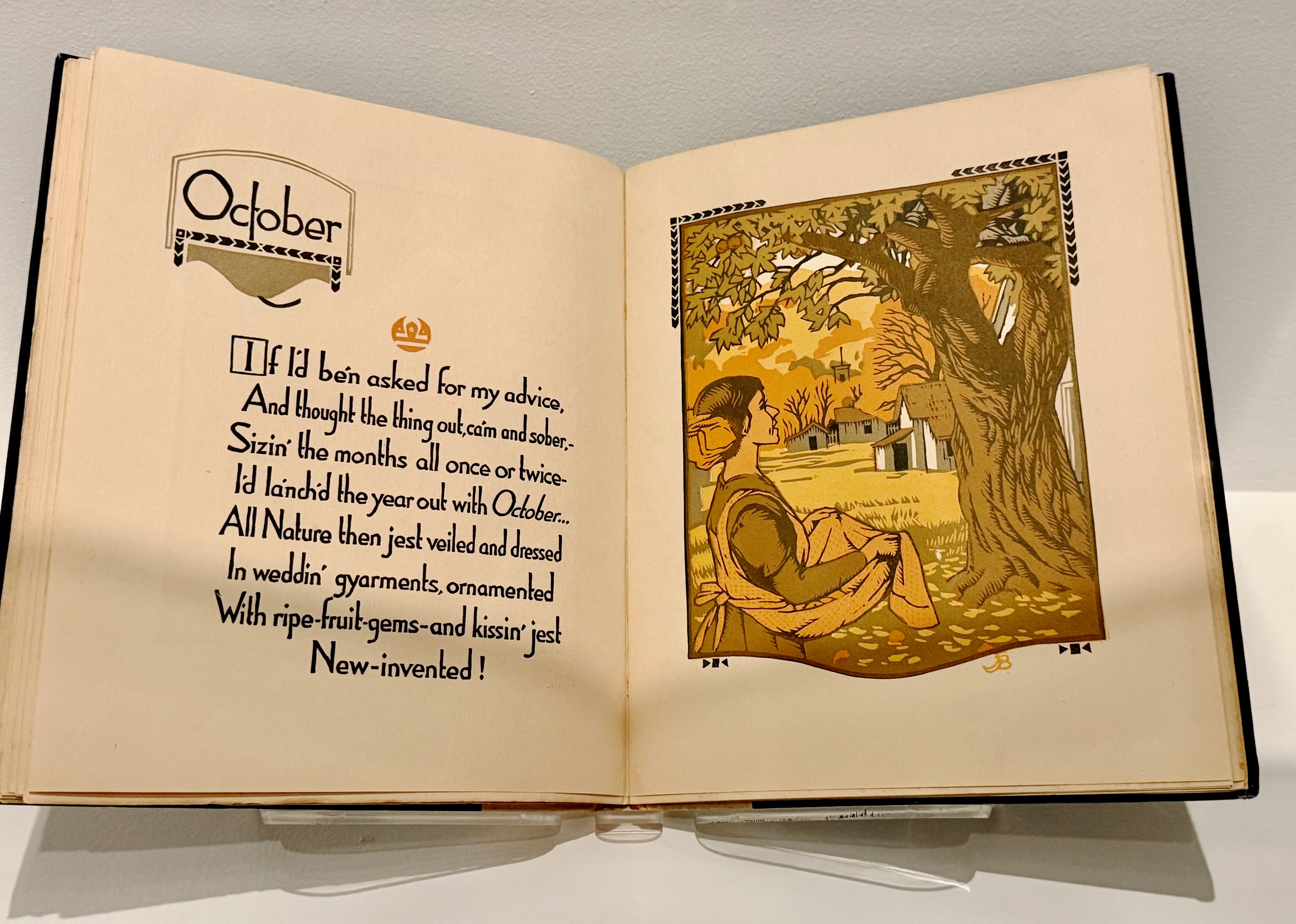
Gus Baumann’s 1912 book All the Year Round – woodcut illustrations and poetry James Whitcomb Riley, featuring scenes of daily rural life for each month of the year.
But his life would change forever when he traveled West and landed in New Mexico in 1918. Due to his reputation as an award-winning printmaker, Santa Fe welcomed him with open arms. Gus was struck by the unique Hispanic and Pueblo ways of life, the beauty of the Southwest, and the growing art colony in Santa Fe.
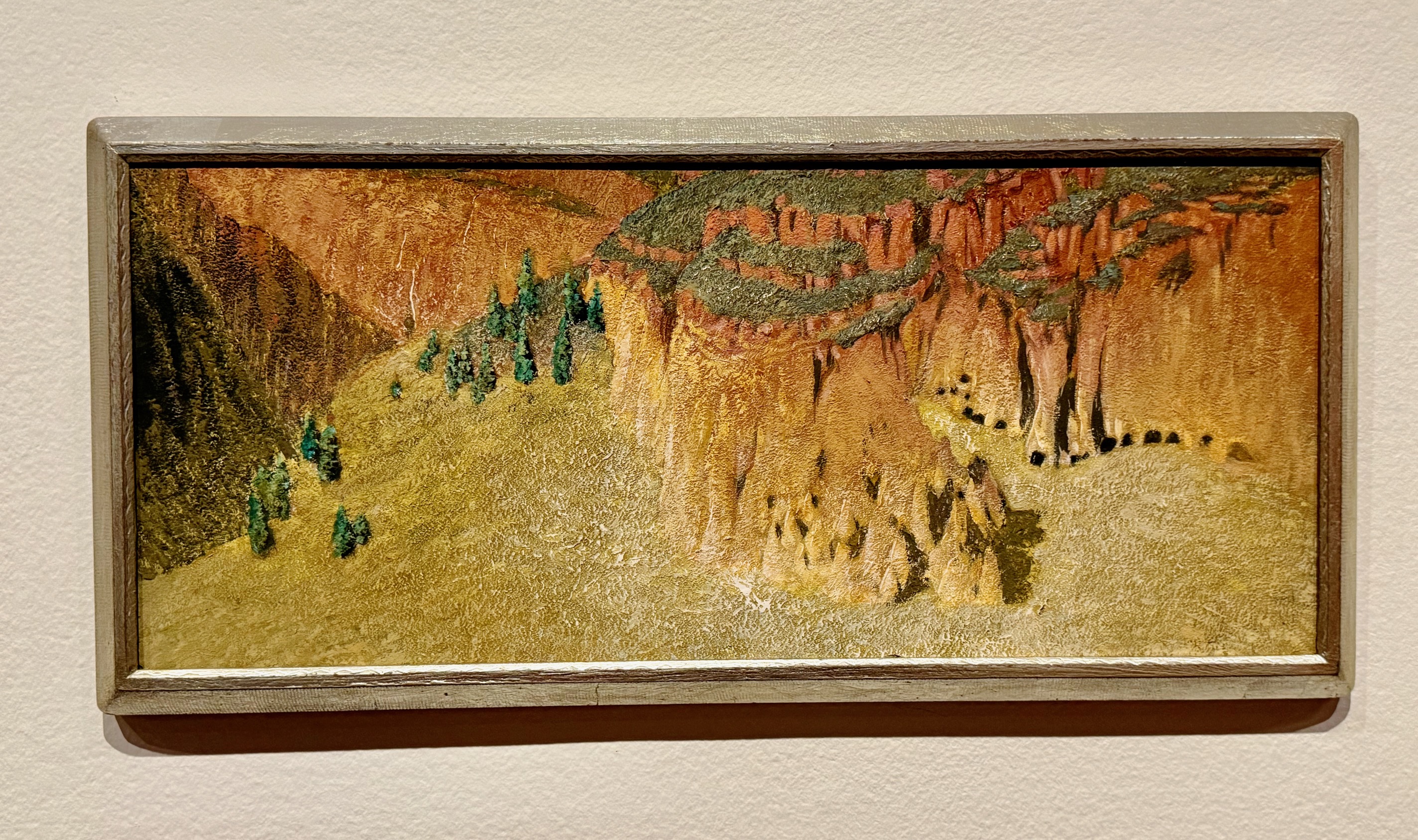
Gus Baumann’s 1925 oil painting Frijoles Canyon – a panorama of ancient tuff dwellings of Tuyoni Pueblo at Bandelier.
Before long, Gus was making and selling gorgeous prints, traveling to archeological sites, attending dances at the pueblos, soaking up the ambience of ancient Spanish churches, and putting brush to canvas, and partying with his new artist friends. And he met Jane, the love of his life, and started a family – creating a life full of fun, art, play, and community service.
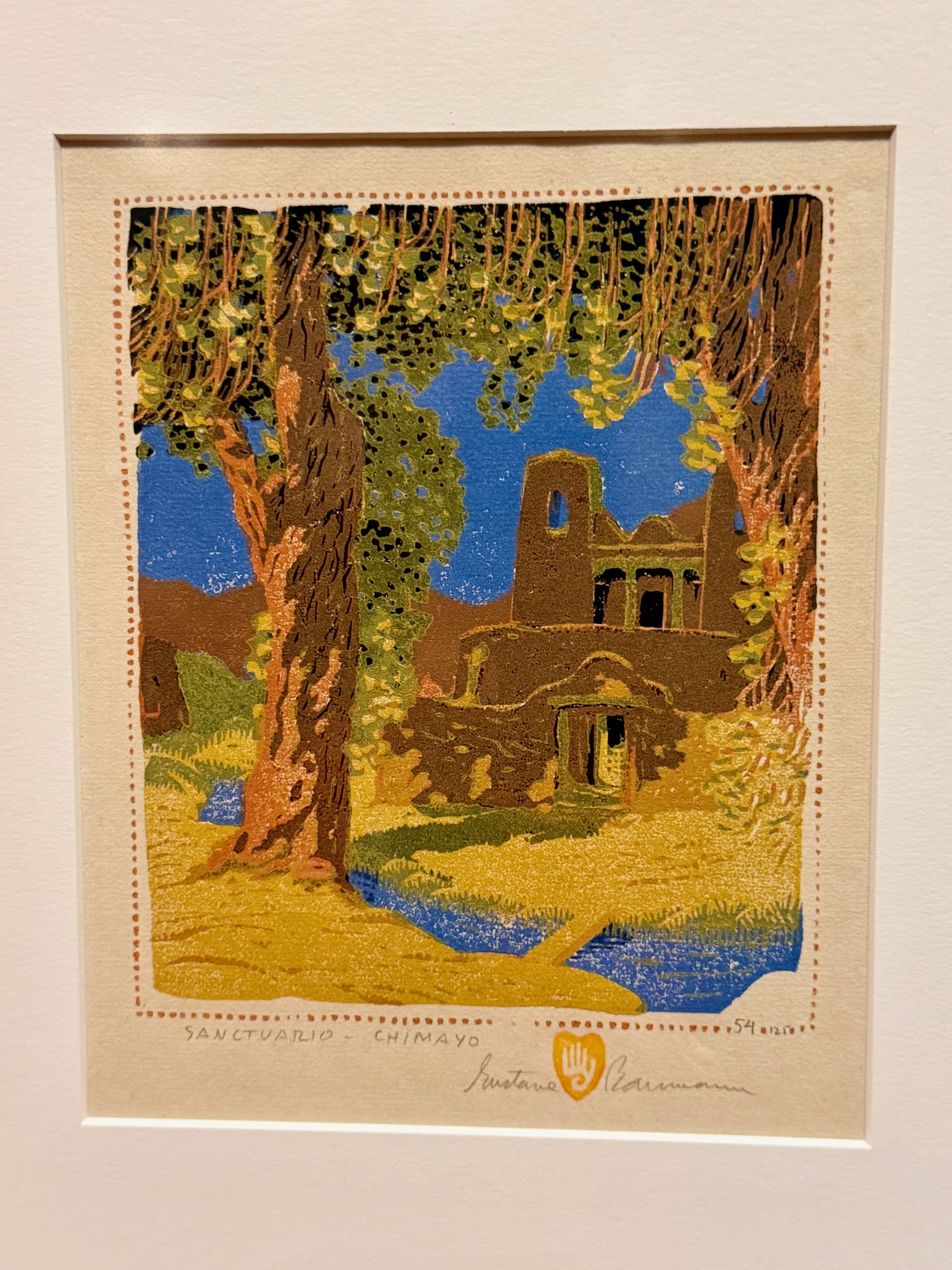
Gus Baumann’s 1924 color woodblock print Sanctuario Chimayo – learning of the historic church’s imminent sale on a sketching trip, he lobbied successfully for its preservation.
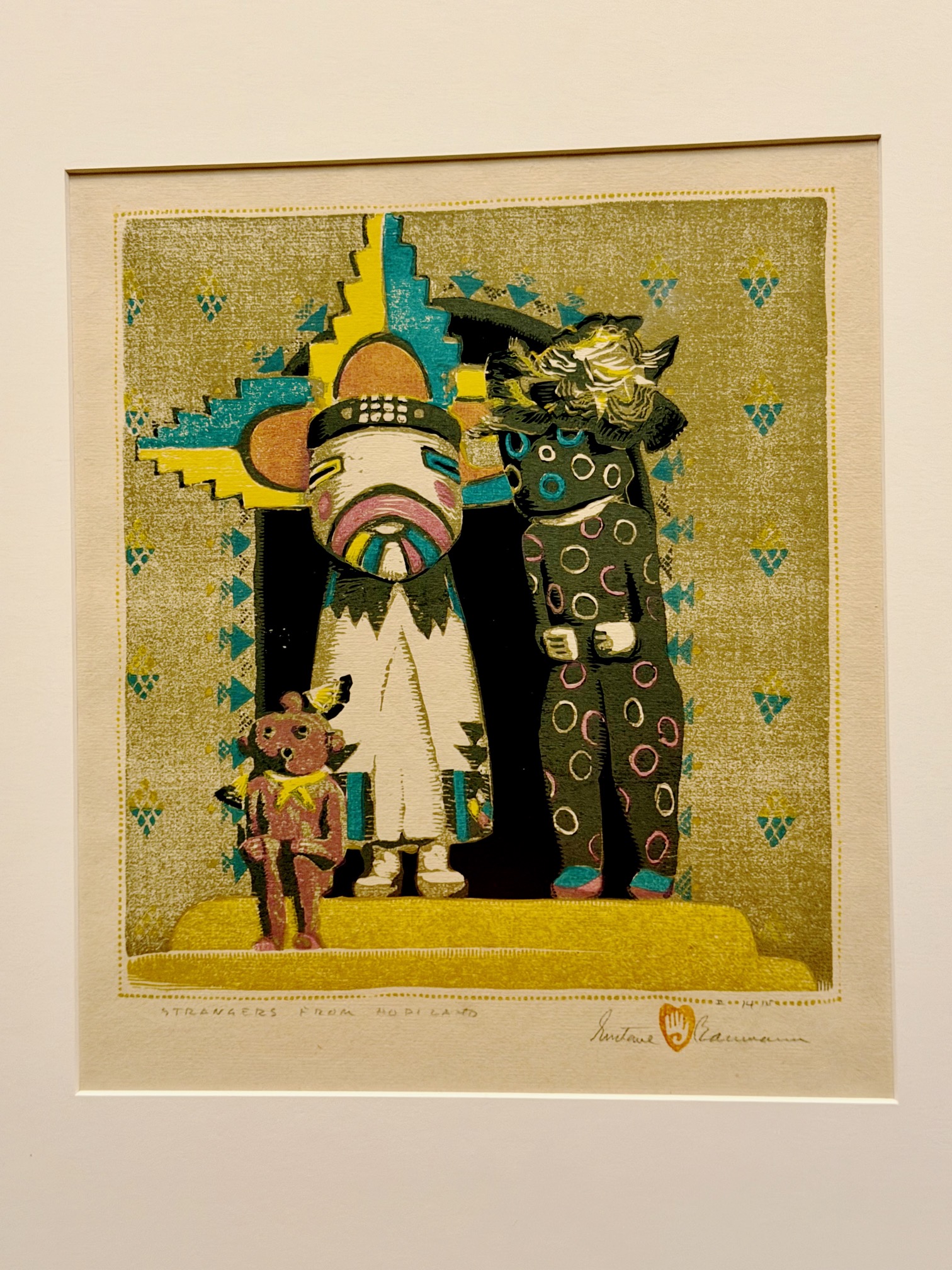
Gus Baumann’s 1921 color woodblock print Strangers from Hopiland, featuring kachinas from his collection; printed in the 1930s.
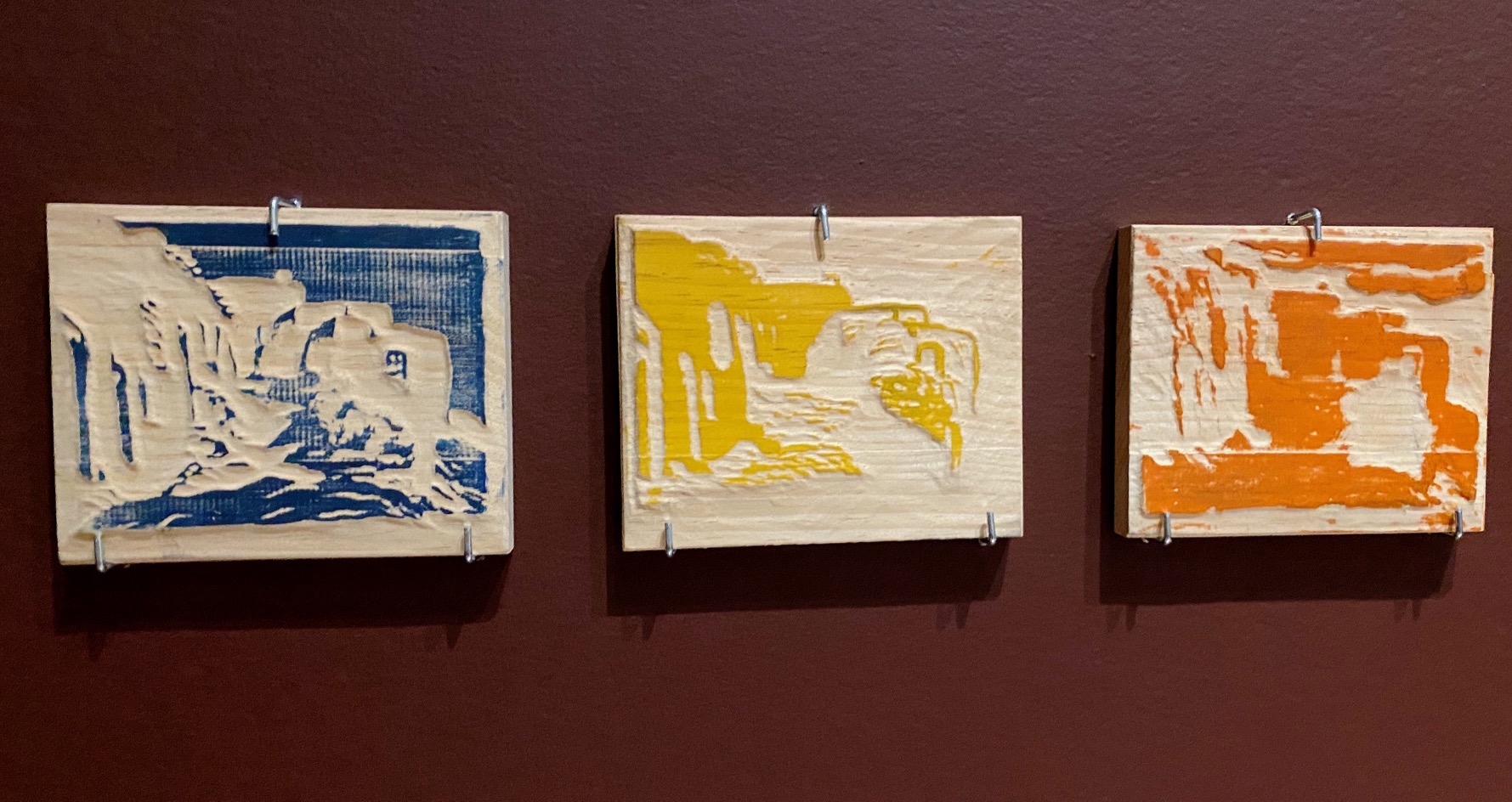
Since Jane and Ann Baumann donated so much of Gus’s work to the New Mexico Museum of Art, the curators were able to display finished prints alongside drawings and wood blocks that give visitors insight to his process. One long wall dissects his multi-color printing process for his famed Old Santa Fe – the initial drawing, the separately carved color blocks, single-color proofs, multi-color runs, and the finished six-color print.
Reproductions of Baumann’s blue, yellow, and orange woodblocks for his 1925 print Old Santa Fe.
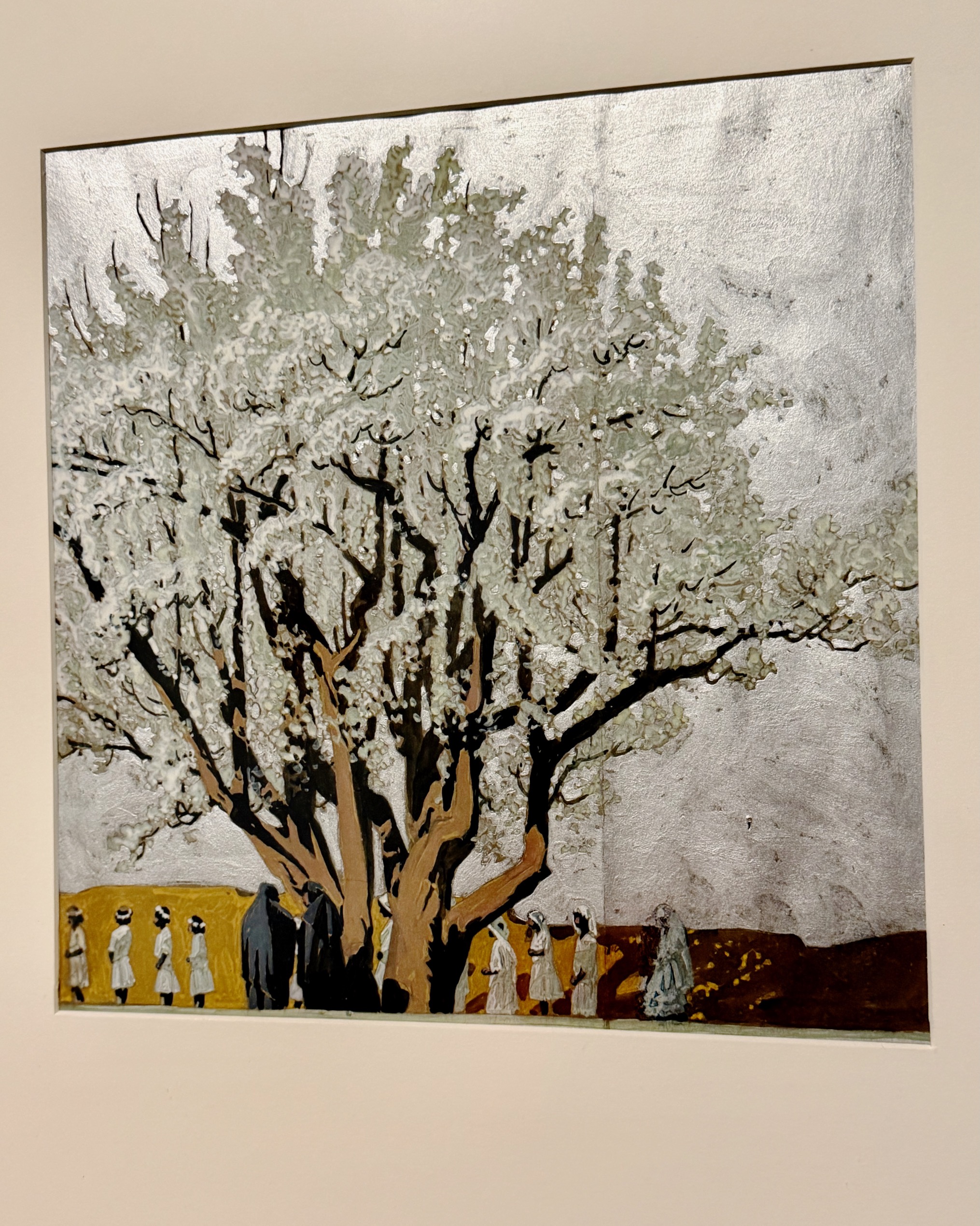
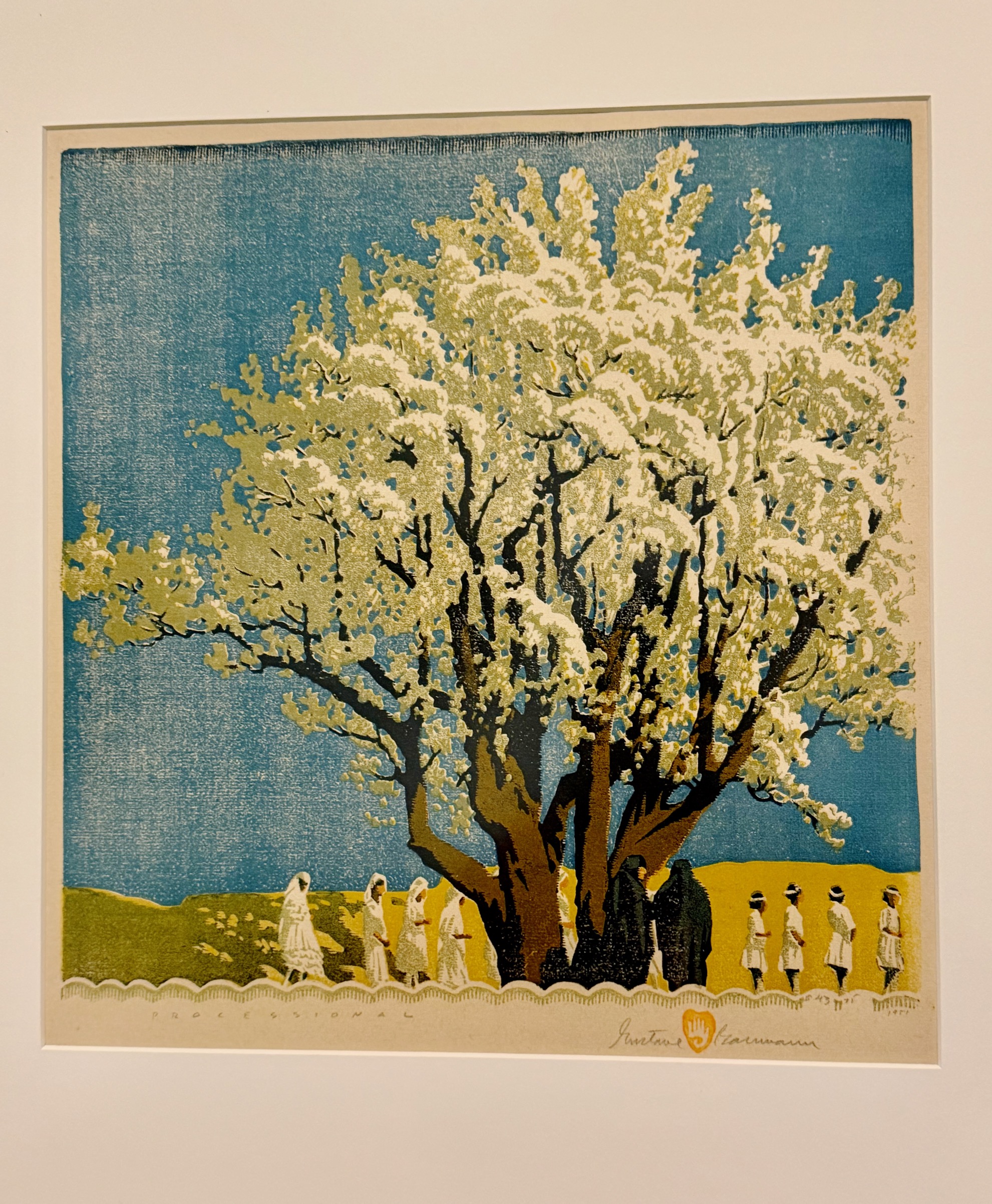
Nearly a half-dozen example of Gus’s watercolor paintings and finished prints are displayed side by side. Visitors are delighted to stand, look, compare, and wonder how he conceptualized steps to carve blocks for each color and achieve images of such depth and vibrancy.
Gus Baumann’s 1930 watercolor Processional (Study), featuring girls walking to their First Holy Communion under a blooming tree and silver sky.
Gus Baumann’s 1930 color woodcut print Processional (printed 1951), based upon his watercolor.
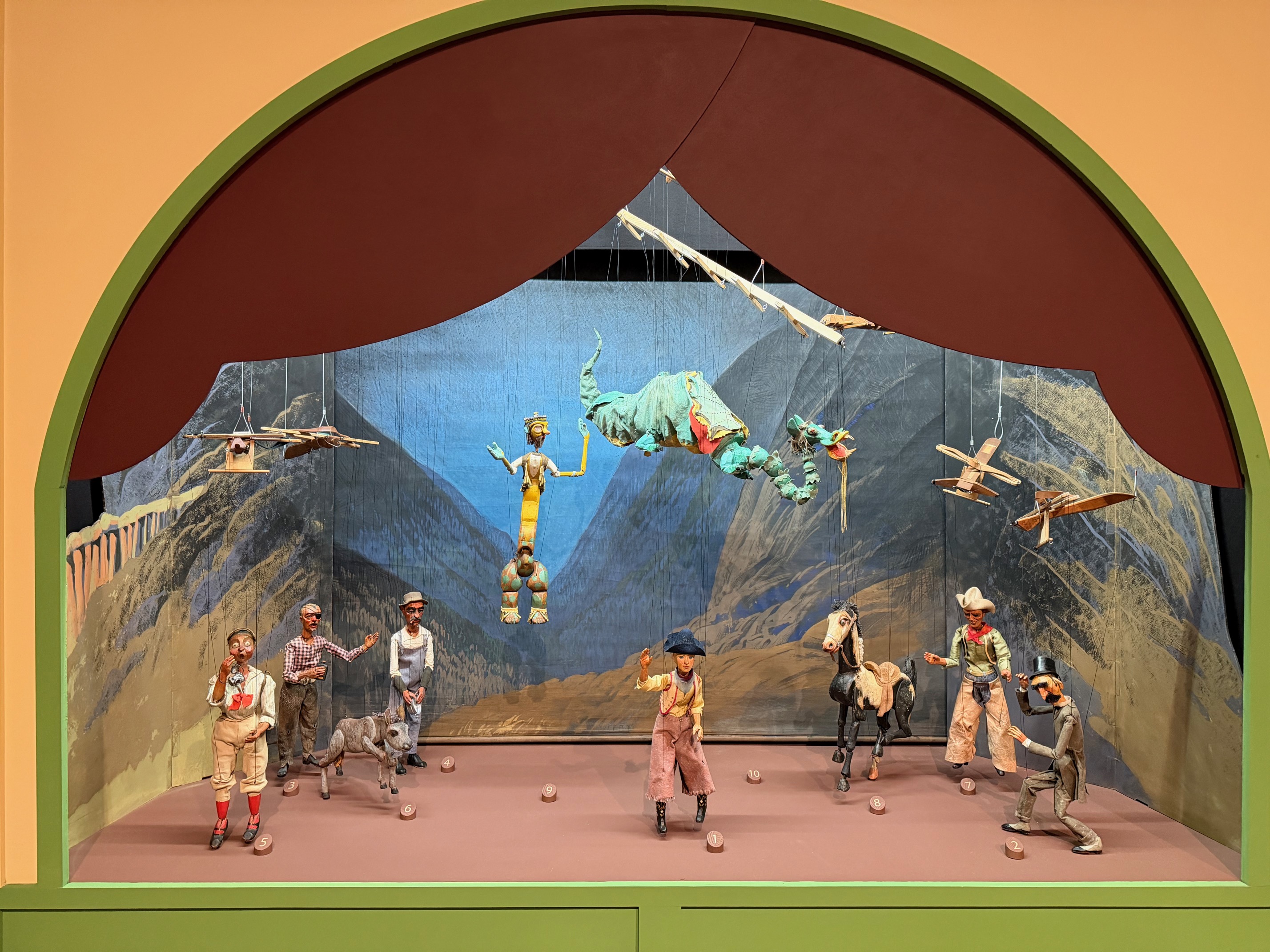
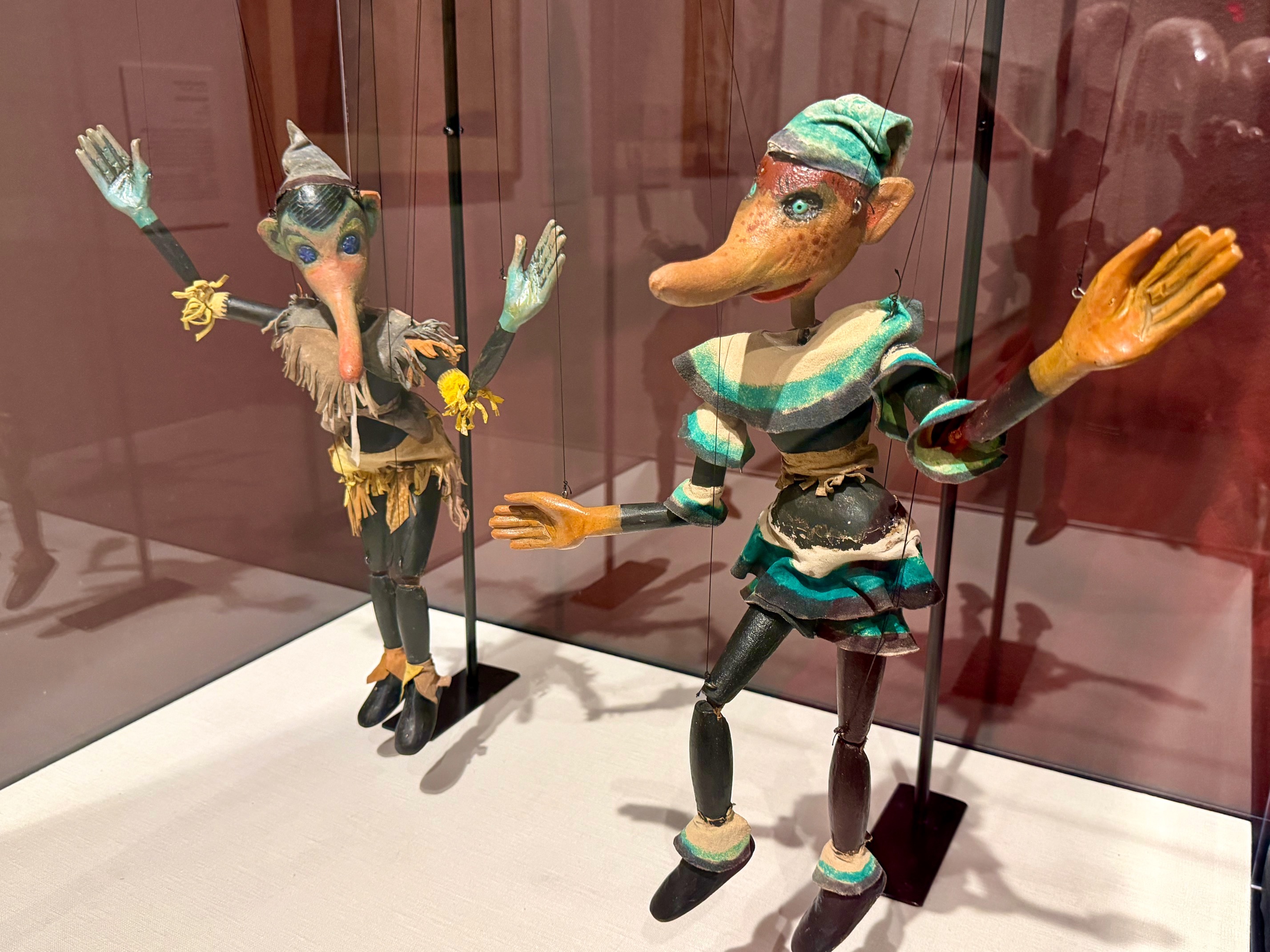
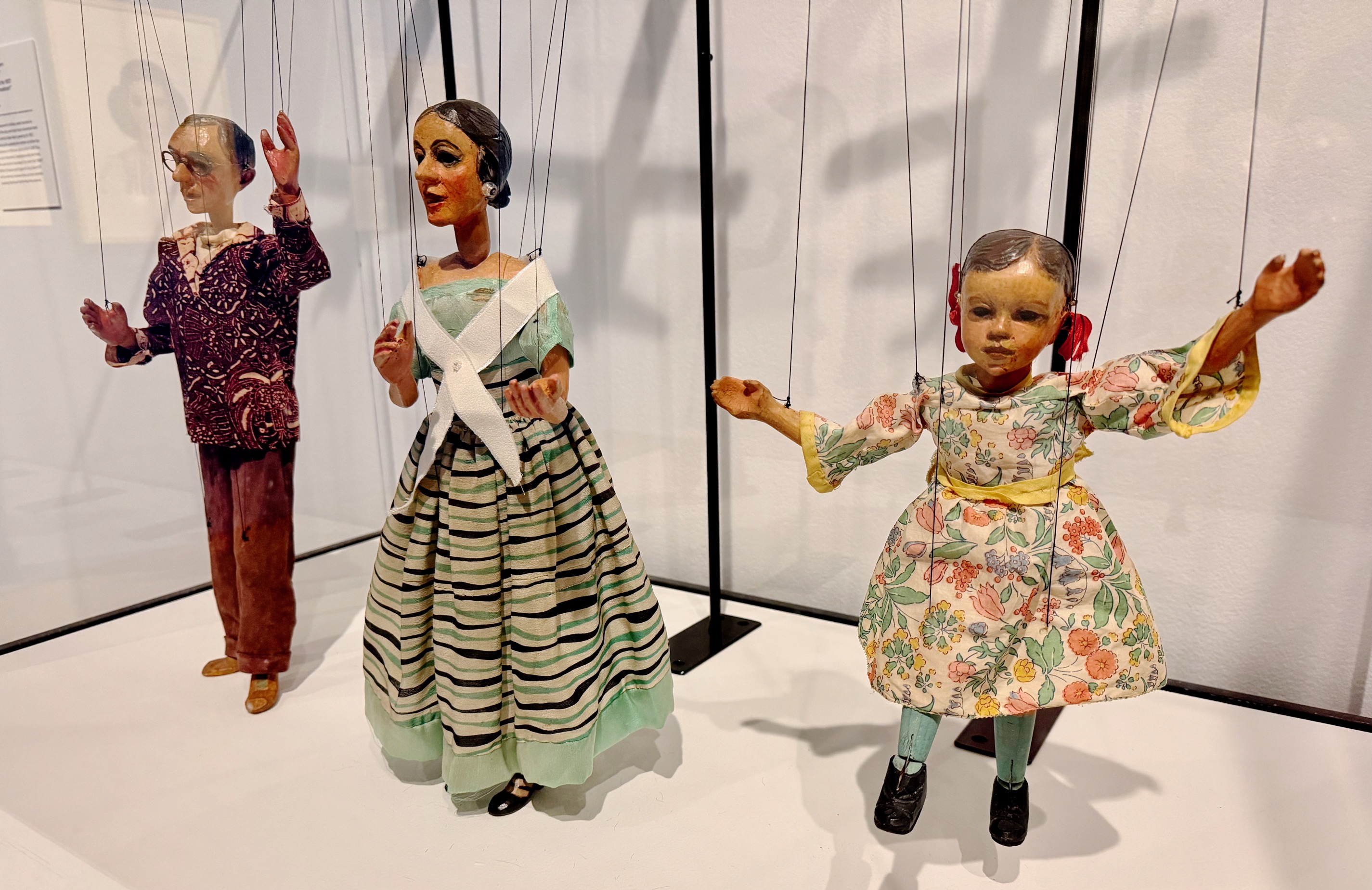
It’s the first time Gus and Jane’s marionette casts have been displayed in decades, complete with hand-painted backdrops – scenes representing just a few of the couple’s scripted shows that they performed at home, in venues around Santa Fe, at world fairs, and on tour.
Gus and Jane Baumann’s stage set for the Santa Fe Puppett Wranglers’ 1932 marionette production of the comic melodrama The Golden Dragon Mine –starring The Tourist Lady, Temperence the Miner, Hardpan, Burro, Old Man of the Mountain, the Green Dragon, Nambé Nell, Coco the Horse, Pecos Bill, and Lord Leffinghoop.
Whimsey, delight, innovation, social commentary, and fun are all there, with surprises unfolding around every corner. And this is all just a fraction of Gus’s creative output from his coming-of-age in the horse-and-buggy era to the Atomic Age.
Gus Baumann’s 1940 marionette comedy stars of Teatro Duende – Long Nose (“Nosey”), the Duendi and Freckles the Duende – mischief-making Iberian elves.
No, he didn’t follow the traditional academic path, but he did leave his creative touch on America’s printmaking traditions, the foundation of many Santa Fe cultural and historical institutions, and the care and feeding of a state full of artists as head of New Mexico’s New Deal artist programs.
Gus Baumann’s 1932 carved family portrait – marionettes Gus, Jane, and Ann – with costumes by Jane.
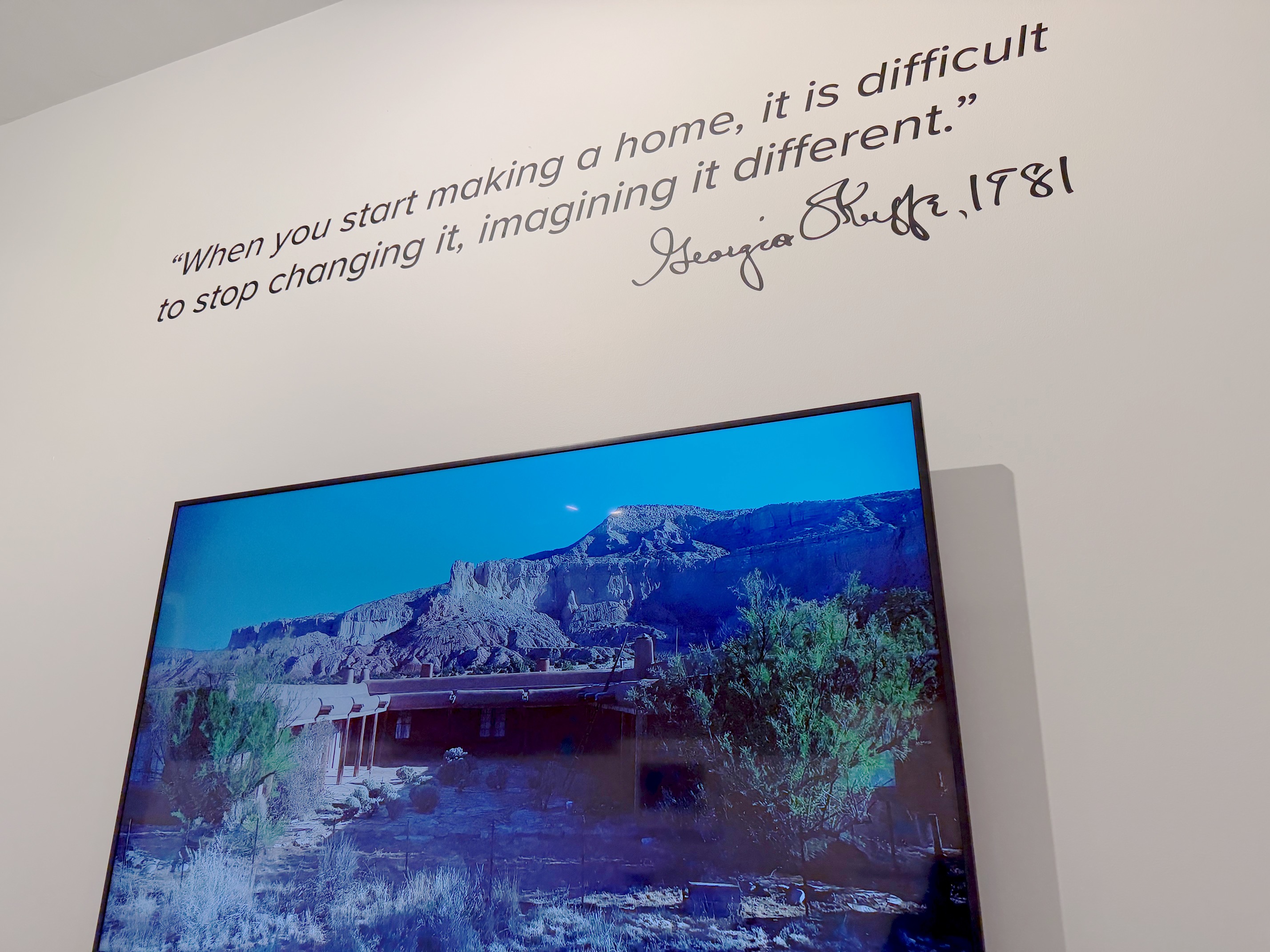
How do you turn a 200-year-old adobe home into a temple of mid-century modern design? See how Georgia O’Keeffe did it in Artful Living: O’Keeffe and Modern Design, an exhibition available on-line and at the GOK Museum’s Welcome Center near her home and studio in Abiquiu, New Mexico through January 31, 2027.
When Georgia bought her second New Mexico home in 1945, it was a wreck. All the better, for her to envision the possibilities of her dream house. Why was she obsessed with this? It had a home garden and irrigation, a placita in the center of the house with a working well, the iconic black door in the red wall, and an incredible view of the stunning landscape (and Pedernal).
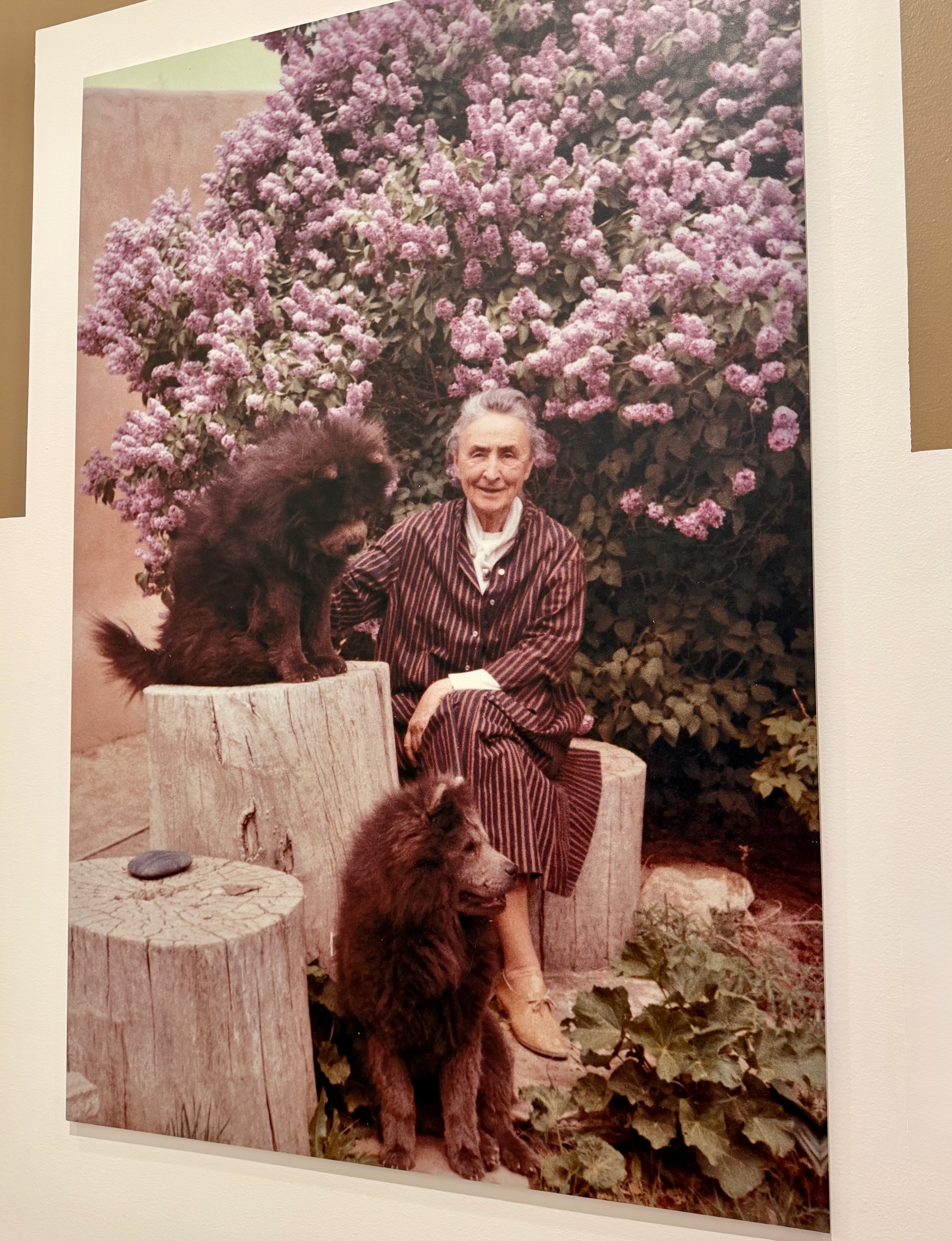
Todd Webb’s 1962 photo Georgia O’Keeffe and Chows in Abiquiú Garden with Georgia in a striped Marimekko dress.
By collaborating for the next four years with her friend and project manager Maria Chabot, the property was transformed into a showcase for everything modern – furniture, fabrics, lamps, tableware, and (eventually) architectural innovations like skylights, gigantic picture windows, and open-plan living. To keep her creative sparks going, Georgia never stopped rearranging, adding, and switching things up.
The exhibition space is small, but provides a tight curated selection of Georgia’s things accompanied by great photos of her interiors over time.
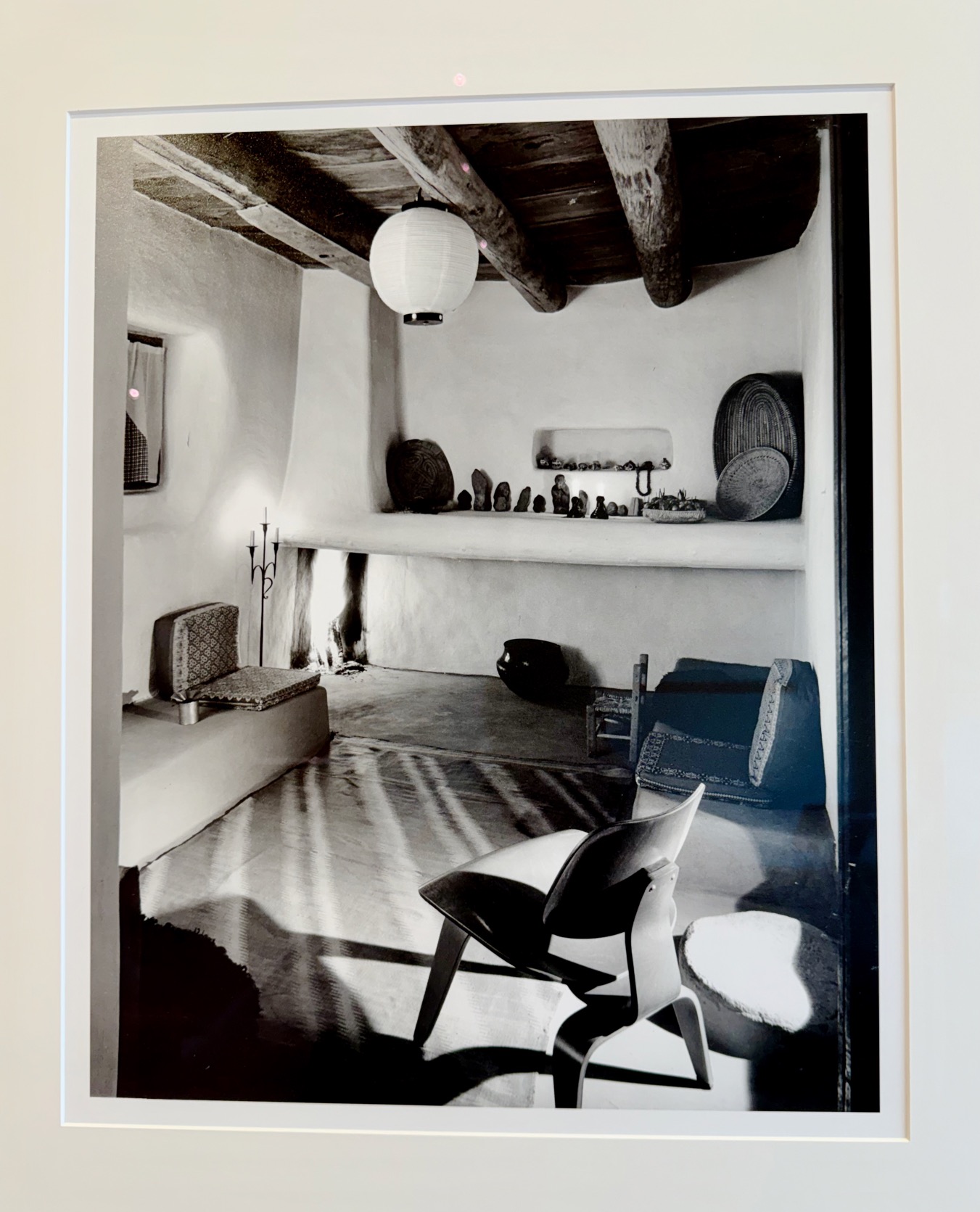
Balthazar Korab’s 1965 photo Abiquiú House, Indian Room with Noguchi lamp and Eames chair.
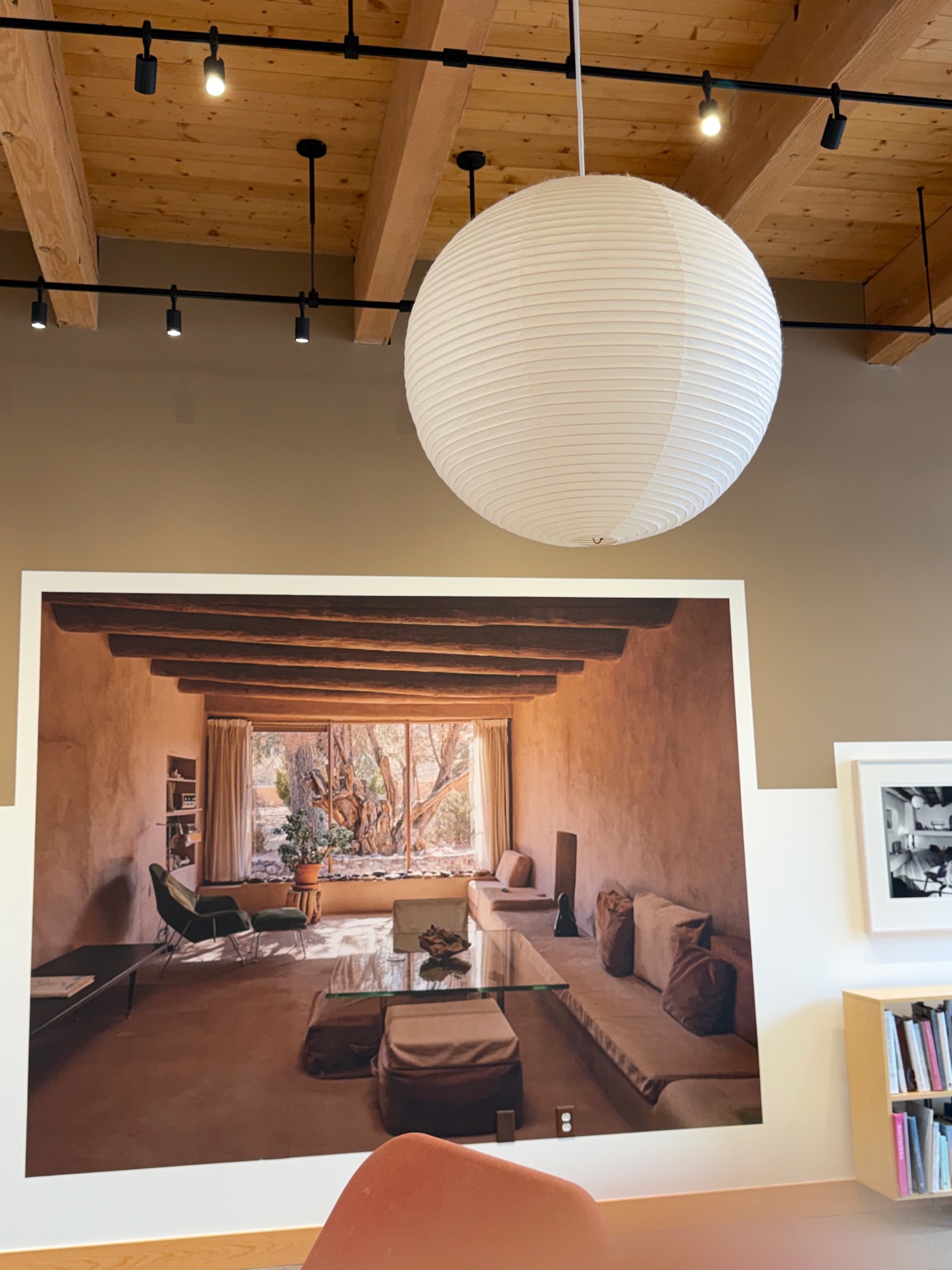
1960s Akari Lantern, a gift from sculptor and designer Isamu Noguchi with Krysta Jabczenski’s 2019 photo of her living room arranged as she left it in 1984.
The furniture is front and center, made by a who’s who of American 20th century designers. After all, as one of the recognized greats of modern American painting, the designers were often her friends, too. Simple, clean, modern lines – that’s what Georgia liked. But she loved design innovations, too.
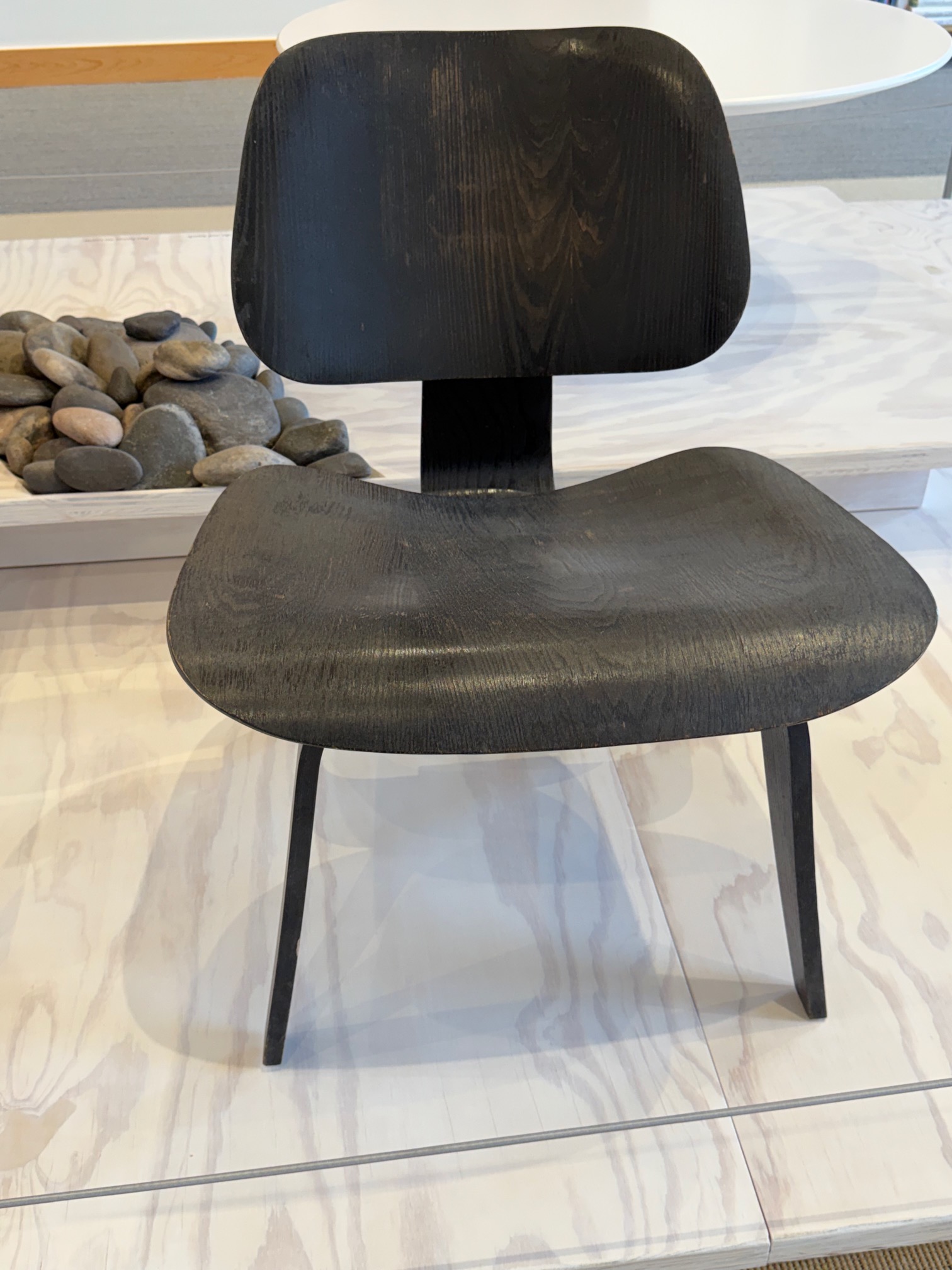
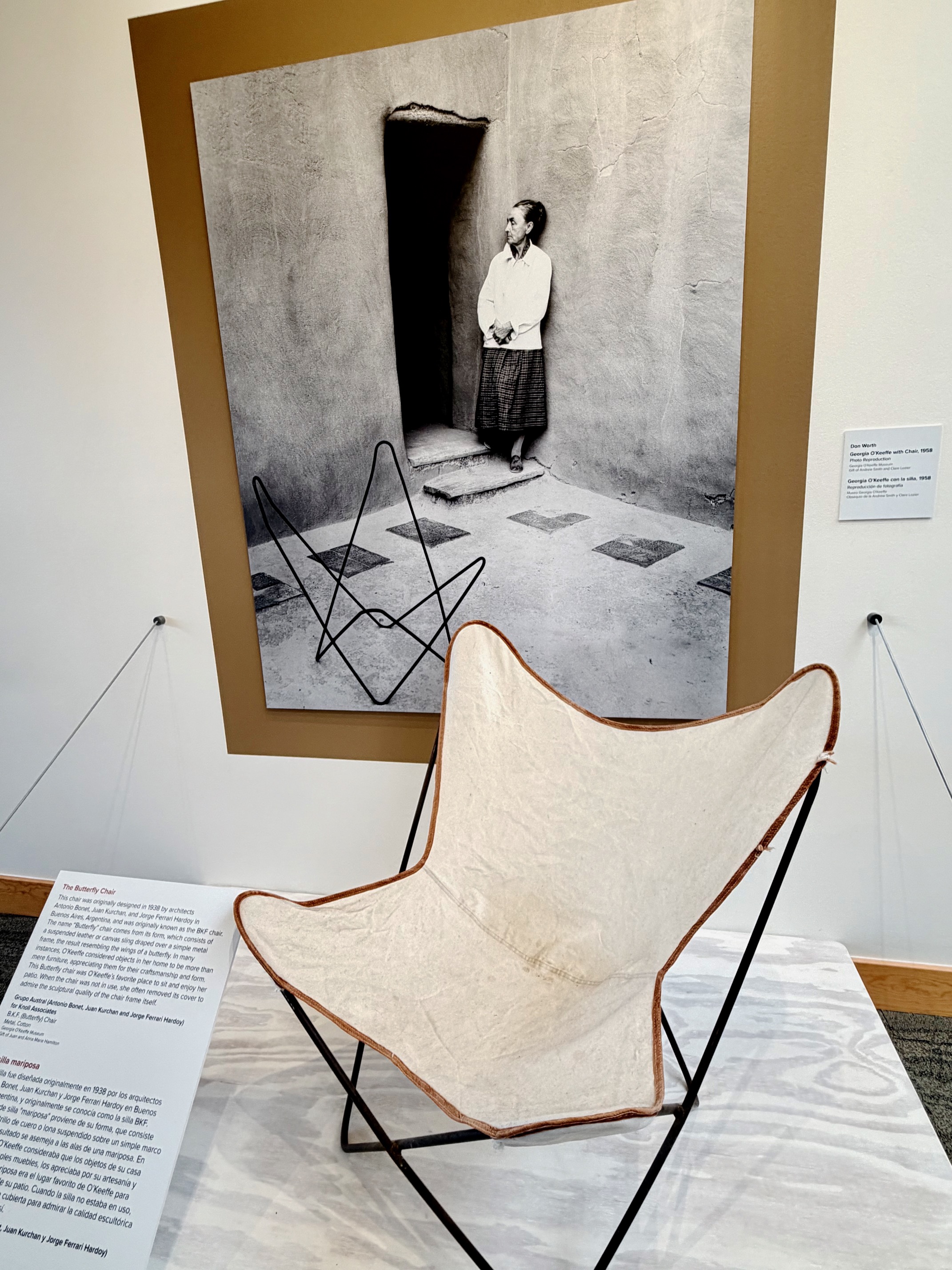
No wonder she was captivated by the innovative BFK (“Butterfly”) chair designed by a trio of Argentine architects in 1938. She ordered one from Knoll, used it on her patio, and sometimes took the cover off just to admire the frame. And she bought several LCW chairs by her friends, Charles and Ray Eames – the molded-plywood marvel that defined a design decade.
1940s LCW Plywood Lounge Side Chair designed by Charles and Ray Eames for Herman Miller – the first chair in the Eames’ molded plywood series.
Don Worth’s 1958 photo Georgia O’Keeffe with Chair with 1938 metal and cotton Butterfly Chair for Knoll Associates.
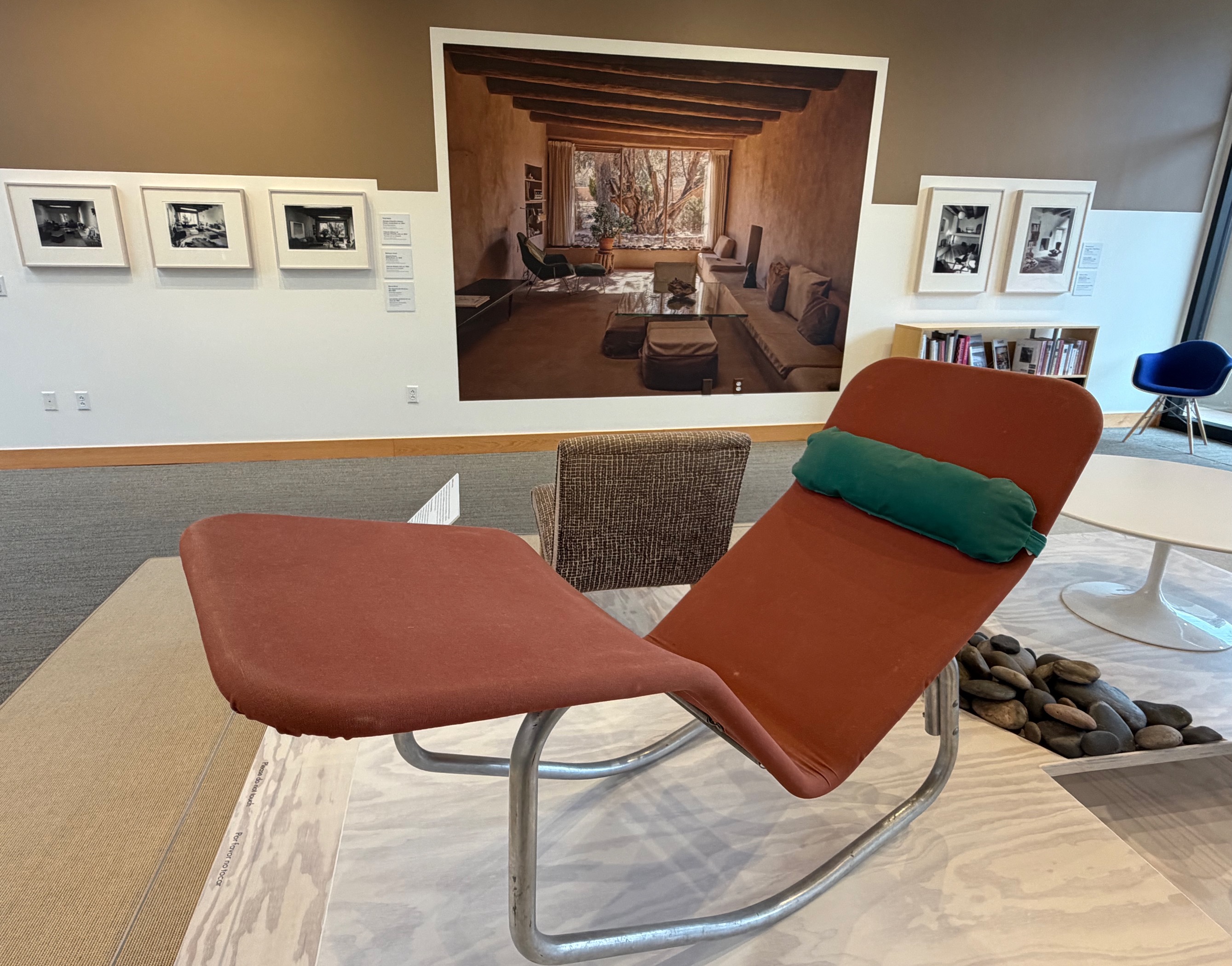
But perhaps her most-used piece was the versatile BARWA Lounger – perfect for laying back and listening to classical music or looking at the stars during a summer camping trip to the badlands. The aluminum frame made it light enough to strap to the top of her car.
1940s BARWA Lounger designed by Edgar Bartolucci and John Waldheim of BARWA Associates; Georgia relaxed here while listening to classical music.
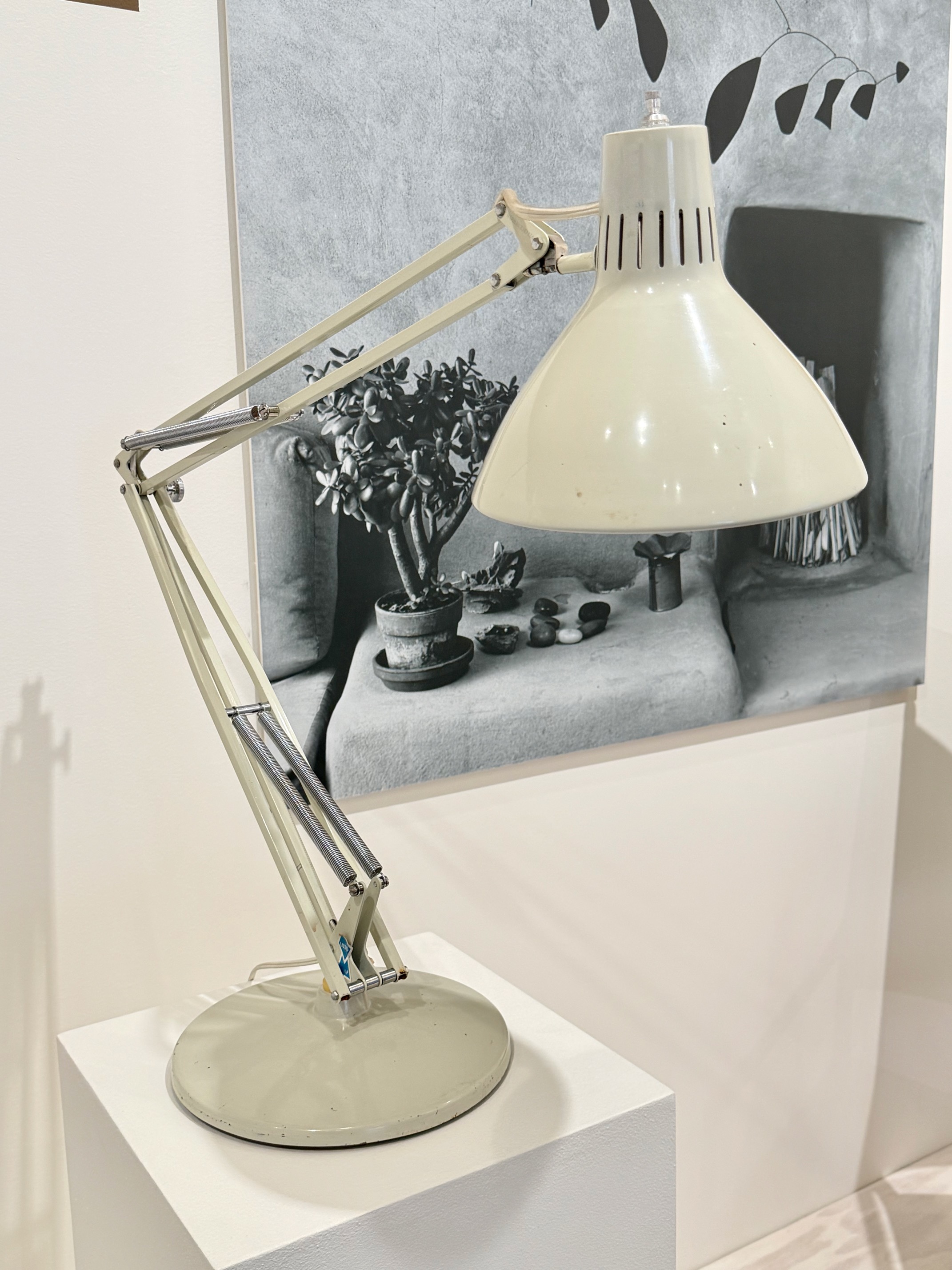
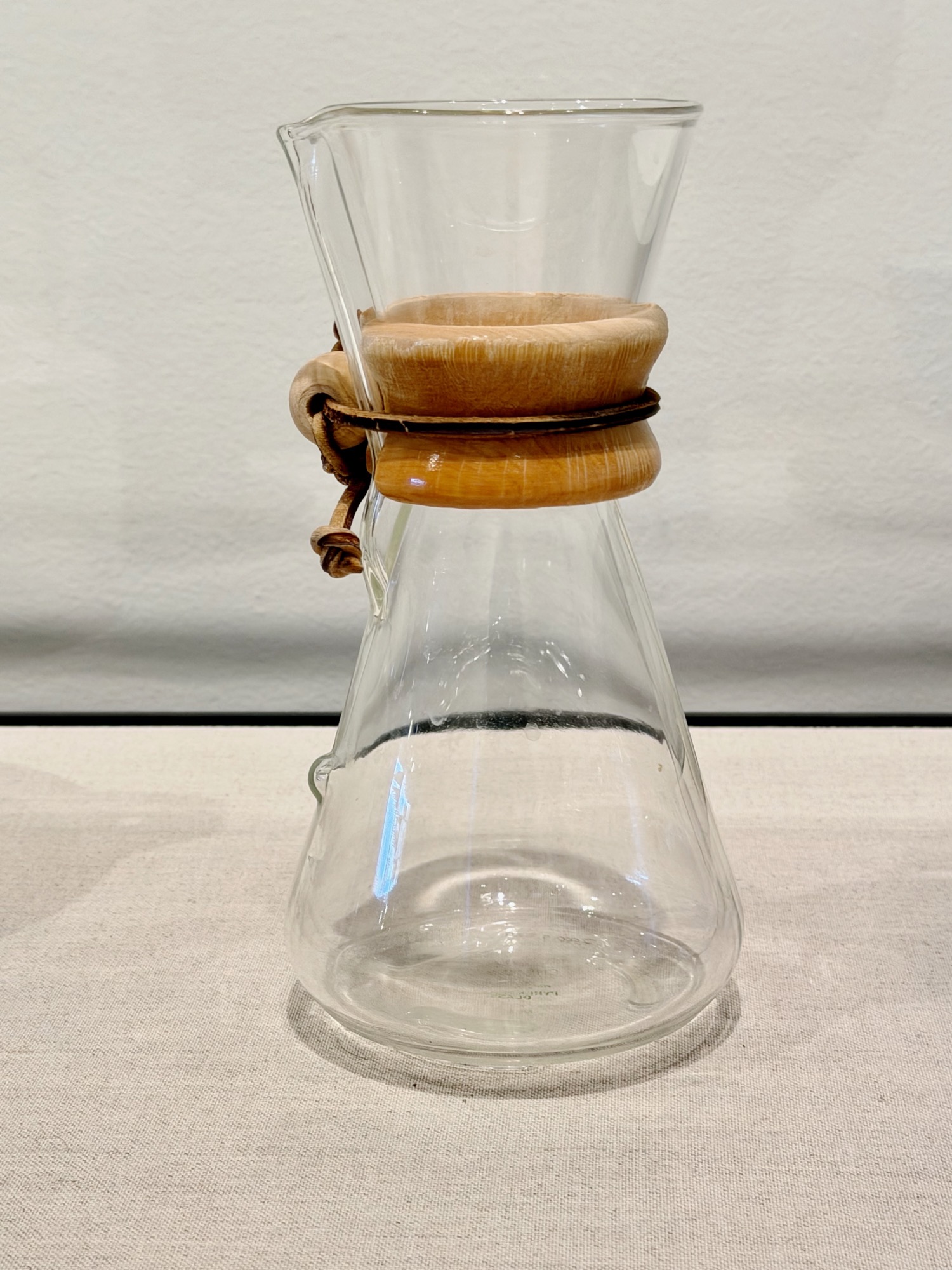
Of course, Georgia loved her rock and bone collections, but she also collected practical items for her home that epitomized mid-century design. Why not select a Finnish design innovation that you could adjust to get the light just right on your work desk or still life? Or use a sleek, modern, see-through coffee maker to prepare your morning cup of Bustelo? Pure bliss.
Finnish design: 1960s metal Luxo Lamp designed by Jac Jacobsen.
Everyday modern design: 1950s Chemex coffee maker designed by Peter Schlumbohm for Chemex.
The curators also want us to remember that modern design principles also extended to Georgia’s dress preferences.
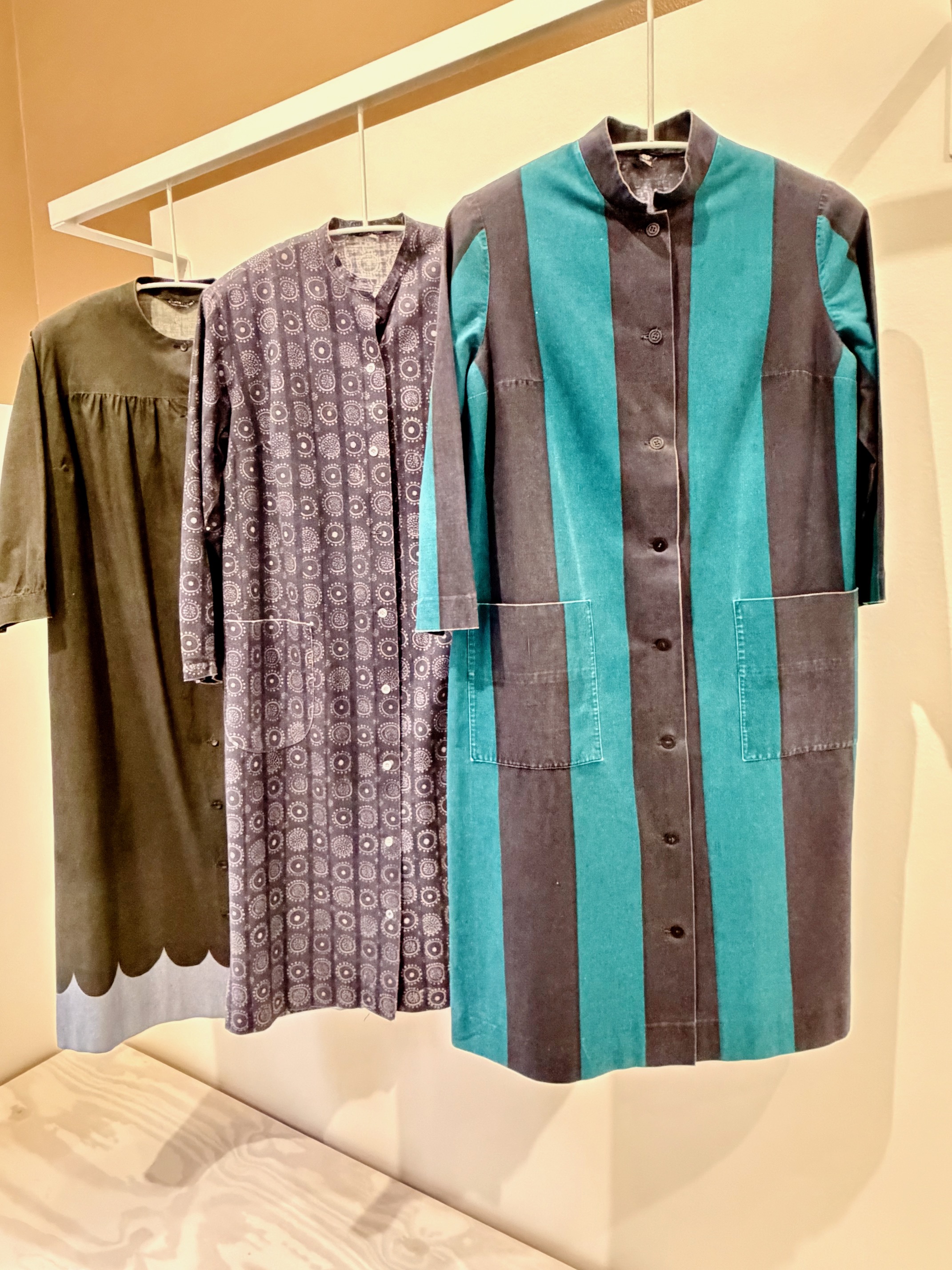
Three cool cotton dresses by Anika Ramala for Marimekko – 1963-1965 Varjo dress, 1961 Karutakkj dress, and 1963 Asumistakki dress.
When she wasn’t posing for the most famous photographers against the red rocks of New Mexico in her black hat and wrap dress, she preferred wearing loose-fitting Marimekko dresses. A working studio artist could really move in them to prepare canvases, rehang paintings around the house, or carry around stuff in the pockets. Never mind that the dresses from the popular Finnish design house were marketed as the finishing sartorial touch for any modern Sixties interior.
Feel free to revisit our past blog post about the wildly successful traveling exhibition about Georgia’s fashions here.
See some of our favorite photos, furniture, and items in our Flickr album.
Two of her best friends and travel buddies were Alexander and Susan Girard. Georgia always welcomed the small textiles that Alexander Girard gifted her. Although she never adopted his revolutionary conversation-pit seating, she did get out the sewing notions and turn his iconic designs into small throw pillows placed lovingly (and colorfully) throughout her house. She also covered her kitchen work surfaces in Marimekko oil cloth to make it pop, too.
Visit this fantastic design exhibition on line here, and read more about each of Georgia’s mid-century modern choices.
For more, listen to Giustina Renzoni, the museum’s curator of historic properties, discuss how Georgia turned her modern sensibilities into a legendary high desert home:
And if you’re really interested in what Georgia had in her closet, the next time you’re in New Mexico, sign up for that new extra-special tour!
Video still of Georgia O’Keeffe’s Abiquiú home and her philosophy about home design
Most fossil fans are familiar with the spectacular Jurassic marine reptiles found by Mary Anning along England’s Dorset Coast in the early 1800s, but few are aware that their predecessors – gigantic Triassic ichthyosaurs (250-201 mya)– have been emerging from the central mountains of Nevada’s Great Basin for the last 125 years.
A beautiful exhibition – Deep Time: Sea Dragons in Nevada – shines a spotlight on these magnificent extinct creatures, brings them to life through life-size animations, and tells stories of scientific discoveries at the Nevada Museum of Art in Reno through January 11, 2026.
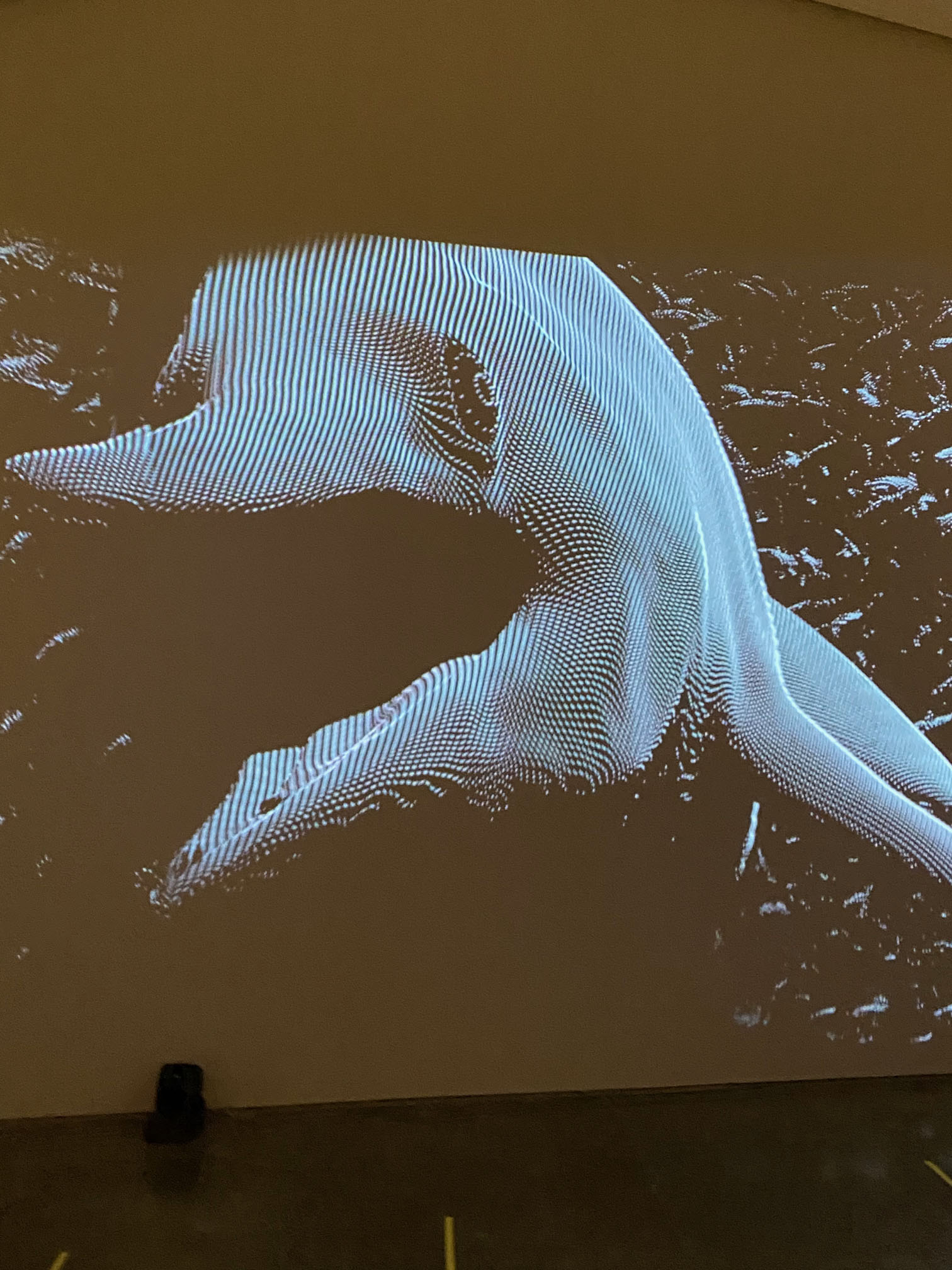
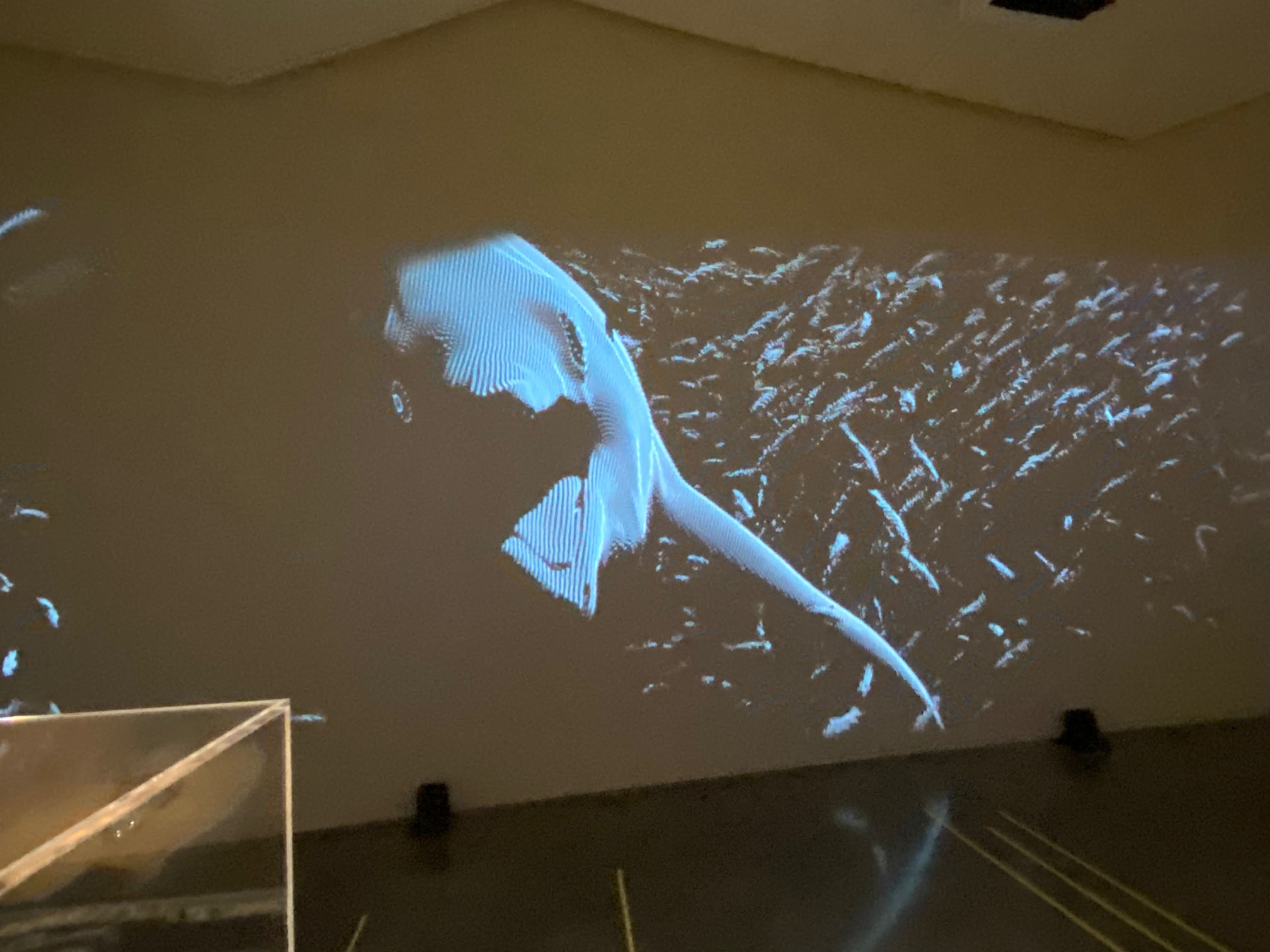
Life-sized digital animation of swimming ichthyosaur by artist Ivan Cruz, paleontologist Martin Sander, and exhibition designer Nik Hafermaas.
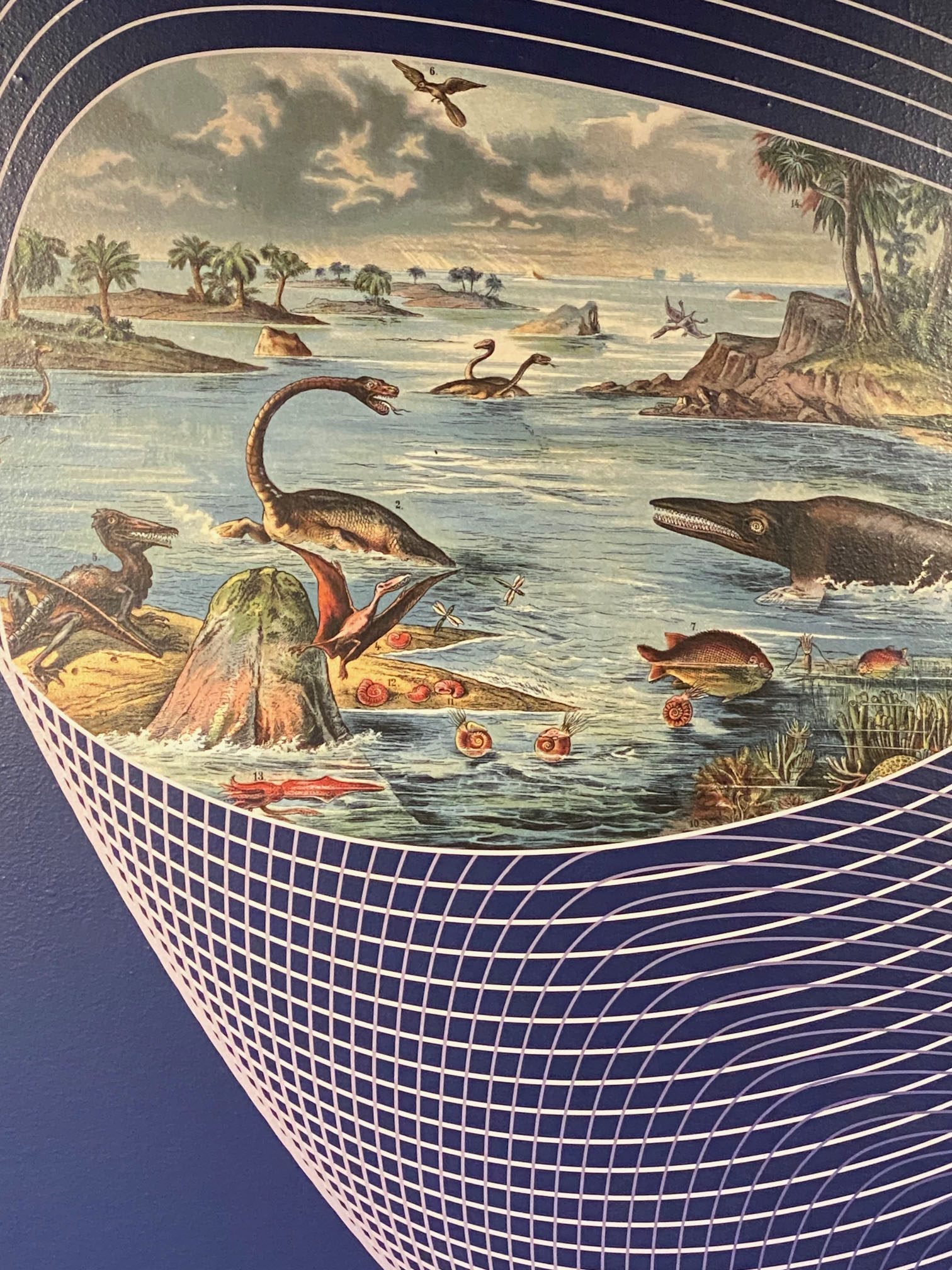
The art museum reunites the state’s stunning Triassic marine reptiles from museum collections across North America, and couples this with an engaging walk through 200 years of paleo-art history starring these enigmatic Mesozoic “sea dragons.”
Triassic ichthyosaur (Cymbospondylus) (245 mya) discovered in Nevada’s Humboldt Range in 1905 by John Merriam and Annie Alexander. Courtesy: UC-Berkeley Museum of Paleontology
Reproduction of Frederick Rolle ‘s illustration Geology and Paleontology: Landscape of Europe in the Jurassic Era from Gotthilf Heinrich von Schubert’s 1887 Natural History.
The most dramatic spectacle is on the far wall – a life-sized animated recreation of these gigantic swimming creatures by artist Ivan Cruz in collaboration with paleontologist Martin Sander and exhibition designer Nik Hafermaas. From the inky blackness, thousands of points of light emerge, float across the long wall, and coalesce into 3-D sea creatures that appear to swim across the entire length of the room.
Digital animation of swimming ichthyosaurs by artist Ivan Cruz, paleontologist Martin Sander, and exhibition designer Nik Hafermaas.
Take a close-up look at the gorgeous Deep Time exhibition design and ichthyosaur animations by Hafermaas°creative here.
History, adventure, art, and expeditions intertwine. The gallery tells the story of ichythyosaur discoveries across three Nevada mountain ranges – the Humboldt, Shoshone, and Augusta. Each section presents spectacular ichthyosaur fossils and along with tales of intrepid paleontologists who have toiled away in Nevada’s most remote regions for over a century.
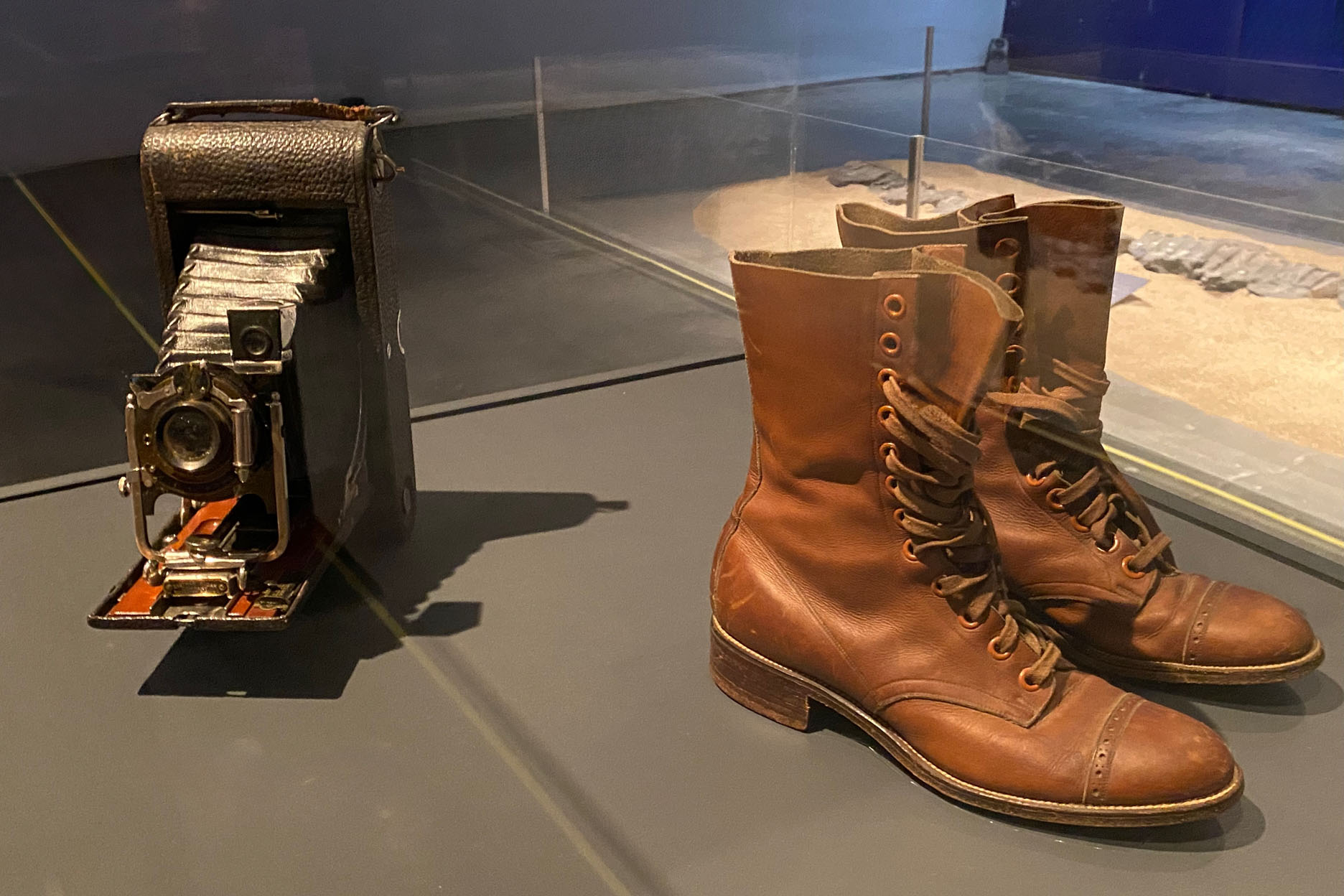
Paleontologist and philanthropist Annie Alexander’s Kodak field camera and boots; excavated 25 ichthyosaur fossils with UC-Berkeley 1905 Saurian expedition. Courtesy: UC-Berkeley Bancroft Library and Museum of Vertebrate Paleontolgy Archives.
Nevada’s “sea dragon” story begins in the Humboldt Range in 1867-1868 as the U.S. Geological Exploration of the Fortieth Parallel, led by Charles King, discovers and collects bits and pieces of ichthyosaur ribs and vertebrae in their survey of the Great Basin. These discoveries spawned national news stories. The fossils ended up in Harvard’s museum collection, so it’s nice to see them here.
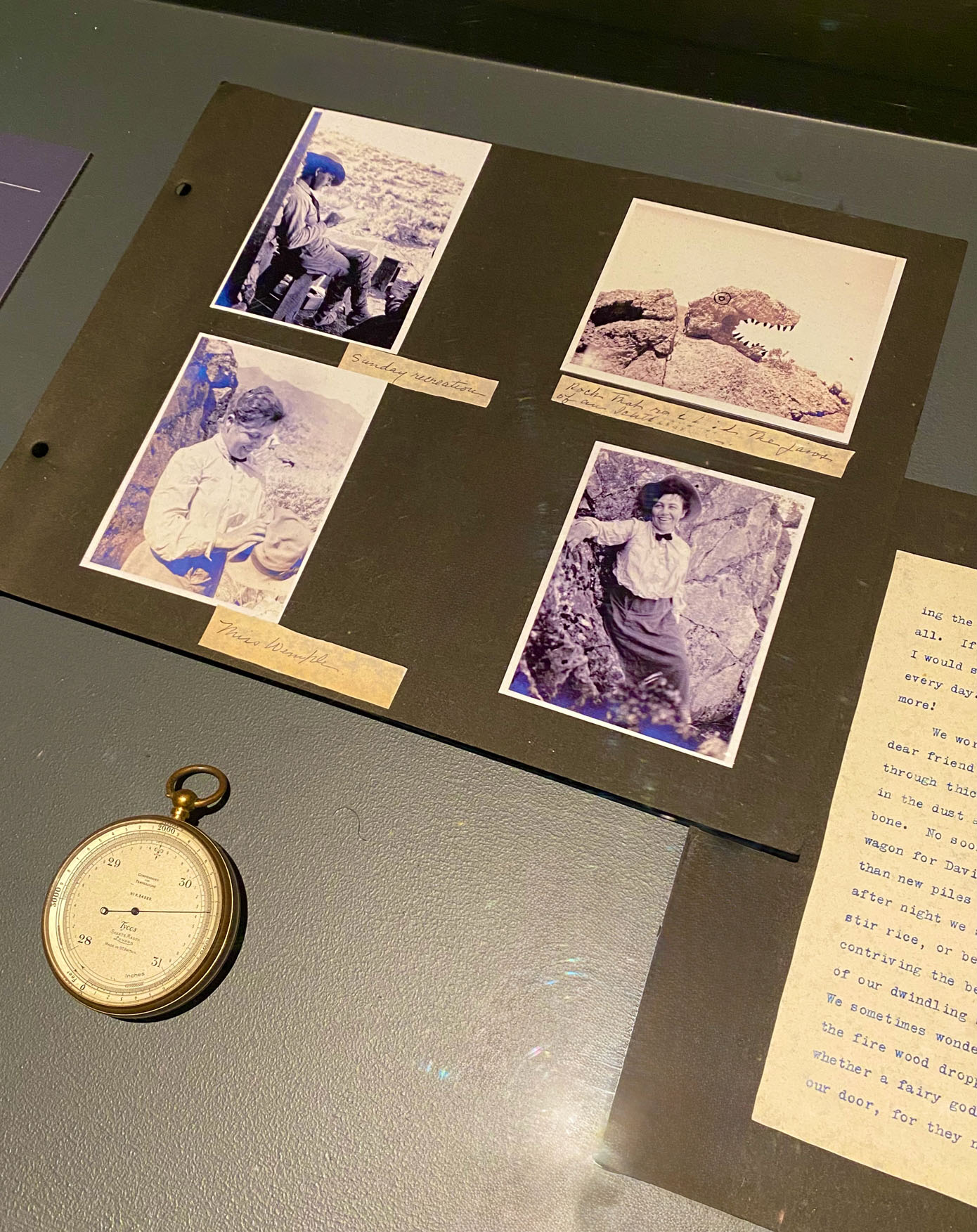
Paleontologist Annie Alexander’s field notes and photographs in scrapbook of the UC-Berkeley 1905 Saurian expedition to Nevada’s Humboldt’s Range, where she discovered and excavated 25 ichthyosaur fossils. Courtesy: UC-Berkeley Museum of Paleontolgy.
1905 was a big year for Triassic discoveries in the Humboldt Range. James Perrin Smith and his team from Stanford collected dozens of ammonites from the Humboldt slopes, and philanthropist Annie Alexander bankrolled (and participated in) John Merriam’s UC-Berkeley Saurian expedition.
Merriam’s team excavated 25 ichythyosaur skeletons, loaded them out by horse-pulled wagons, and then got them back to Berkeley via train. Annie’s field notebook and photo scrapbook give us a look at the fossils, camp, and the team. In 1907, Annie founded and funded the UC-Berkeley Museum of Vertebrate Zoology. Her subsequent field trips led her to collecting more than Triassic fossils, but Annie’s the one to thank for kicking off spectacular preservation efforts for Nevada’s marine-reptile riches.
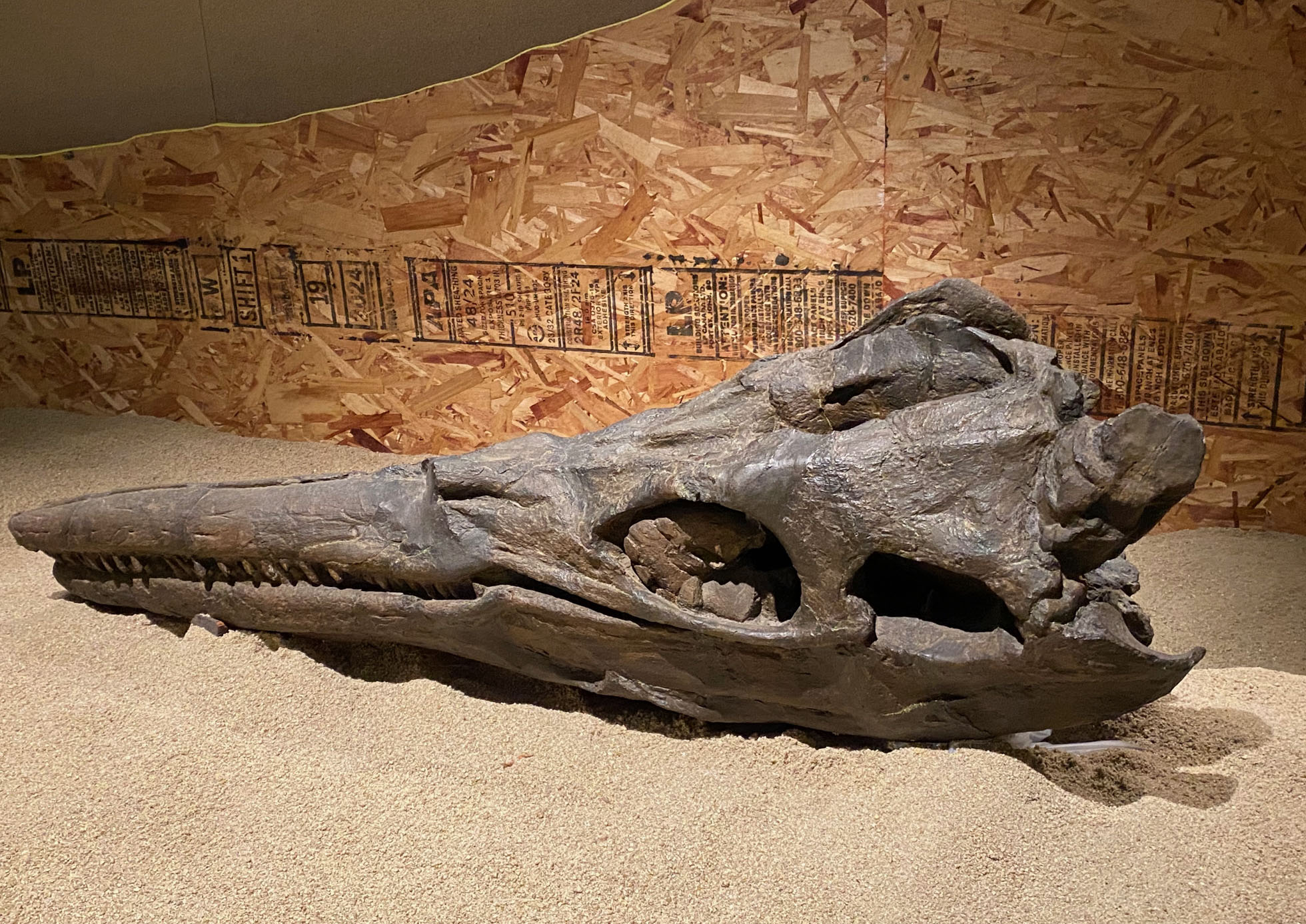
And as most fossil hunters know, discoveries are often made inside the collections storage room. It’s nice to see one of Annie’s 1905 fossils redefined as a new ichythyosaur species in the 21st century by exhibition co-curator paleontologist Martin Sanders!
Found in the Humboldt Range: 245-million-year-old Triassic ichthyosaur skull discovered in 1905; Nicole Klein and Martin Sander have recently reclassified “slender snout” as a new species. Courtesy: UC-Berkeley Museum of Paleontology
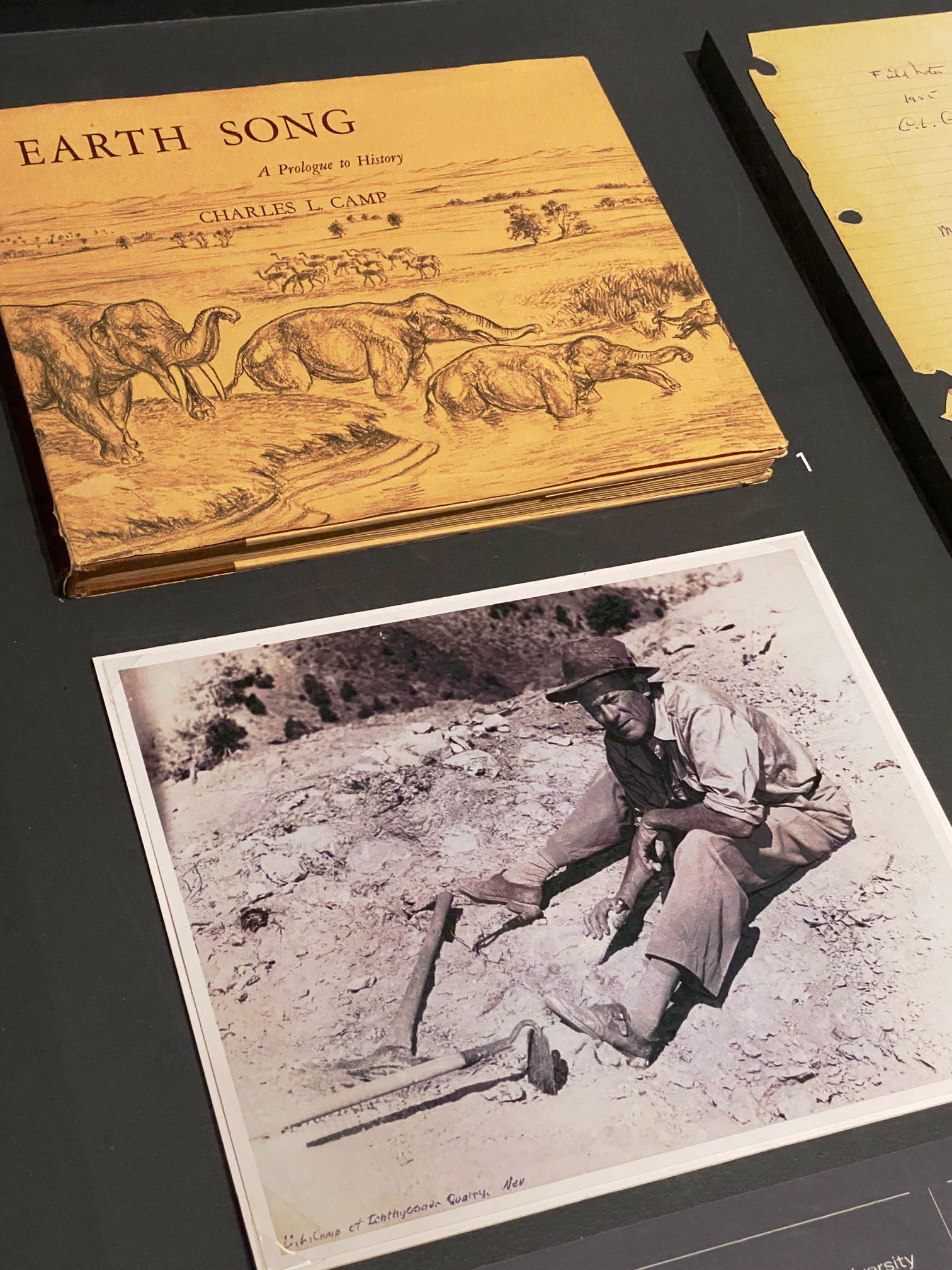
The story moves to the Shoshone Mountains near the old silver mining town of Berlin. In 1928, paleontologist Siemon Muller came across a massive amount of ichthyosaur remains encased in super-hard limestone near Berlin. Although he told the paleontologists at UC-Berkeley about them, no one followed up until Charles Camp went out to take a look in 1953. He found huge, articulated skeletons that were younger in age than the fossils from Humboldt.
In the Shoshone Mountains: 1954 photo of Charles Camp excavating fossils at the site that will become Berlin-Ichthyosaur State Park; Camp’s book Earth Song. Courtesy: University of California Museum of Paleontology; Nevada Museum of Art.
From the Shoshone Mountains: Digital print of front flipper of 228-million-year-old Triassic ichthyosaur (Shonisaurus) discovered in the 1950s by Charles Camp. Courtesy: Nevada State Museum; scan by Alyson Wilkins, Tyler Birthisel, and Randy Irmis.
Over the next ten years, Camp and his team found and sand-blasted out remains of 40 Triassic ichythyosaurs, which he later named Shonisaurus. In one quarry, the skeletons were so complete and numerous that Camp decided just to uncover their them and leave them exposed in place. People heard about these unique finds from news reports, and came out to marvel for themselves.
By 1957, the site was named a Nevada state park – a place where visitors could large concentrations of the world’s largest ichthyosaurs. Over time, Camp opened ten separate quarries in the area. The fossils Camp removed are now held in the Nevada State Museum in Las Vegas.
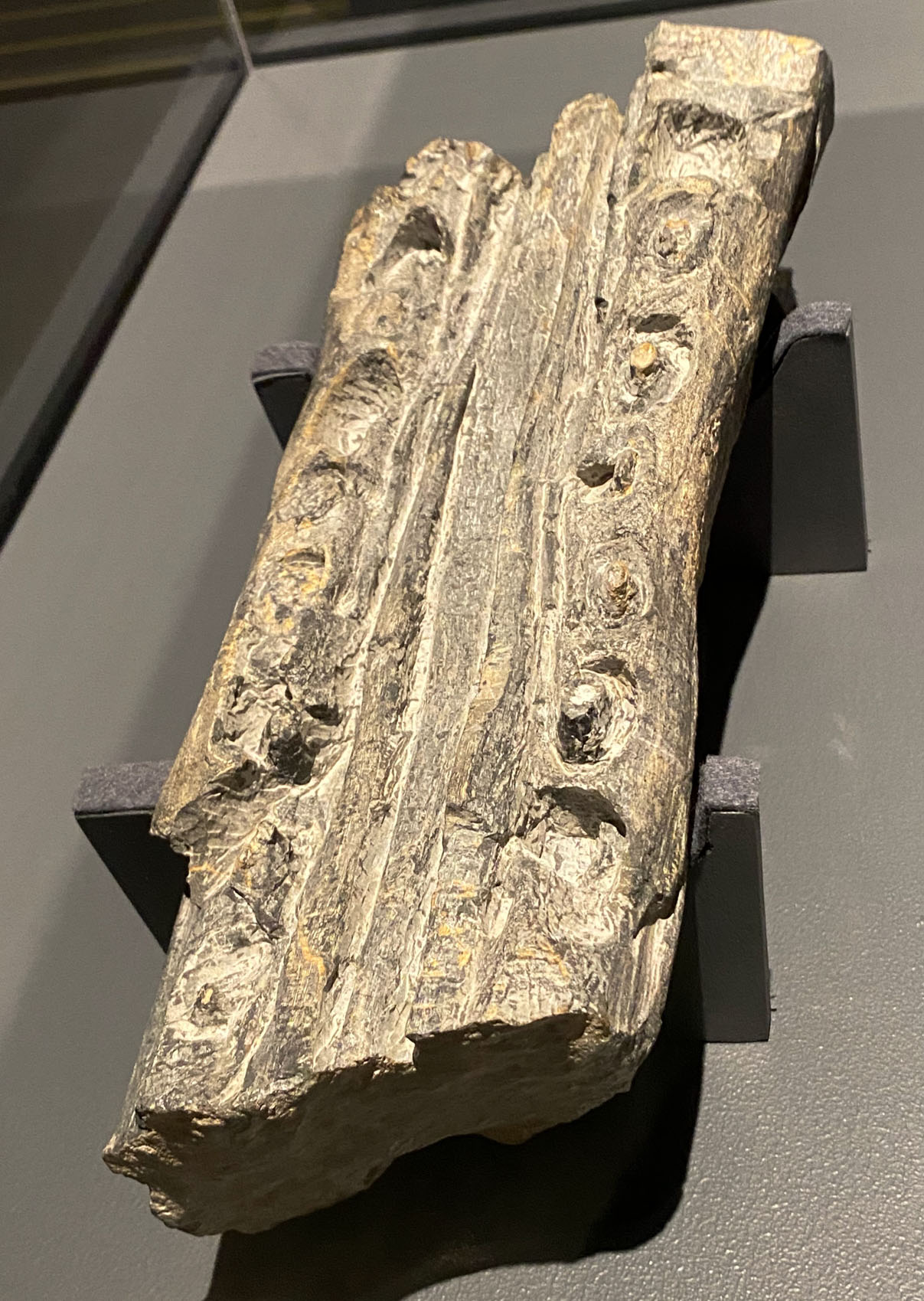
For the last ten years, palentologists Randy Irmis and Neal Patrick Kelly have been working in the same area. The exhibition includes their recent ichthyosaur discoveries, including baby Shonisaurus bones, teeth, and a snount containing tooth sockets – evidence that the animal was likely a formidable predator.
Watch their video here for a history of ichthyosaur collecting in Nevada, a digital model of Camp’s main quarry, and new fossils
From the Shoshone Mountains: Tooth sockets in snout fragment of a 228-million-year-old Triassic ichthyosaur (Shonisaurus) discovered in 2015 by Randy Irmis, Neal Patrick Kelly, Paula Noble, and Paige dePolo. Courtesy: Natural History Museum of Utah, US Forest Service, and Nevada State Parks.
The Augusta Mountains has been the site of field work by Martin Sanders and team for nearly 30 years – – old and new ichthyosaur species, which are on display.
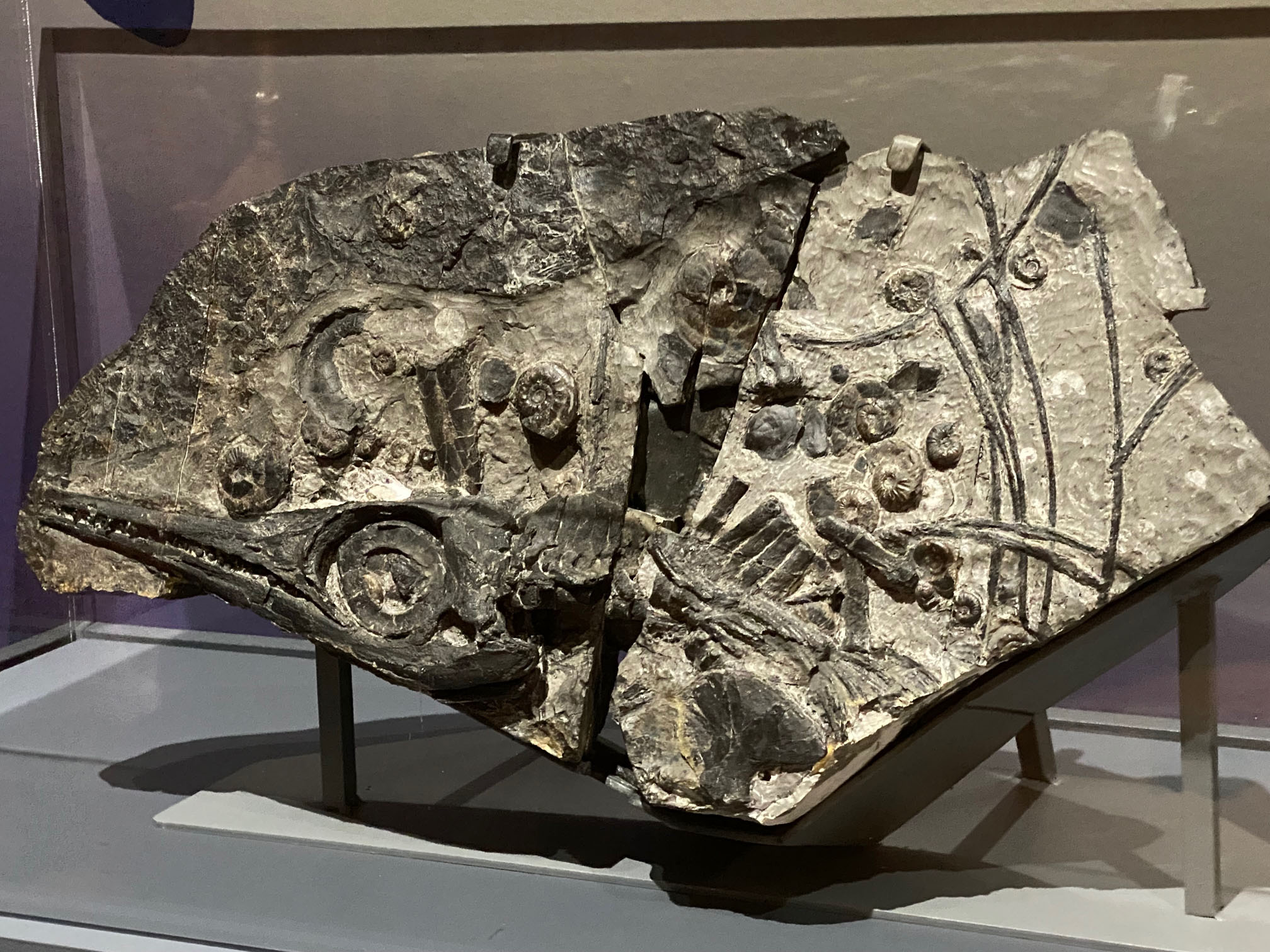
Fossilized sea floor with 242-million-year-old Triassic ichythyosaur (Phalarodon) and ammonites; found in 1996 by Martin Sander and Glenn Storrs in Nevada’s Augusta Mountains. Courtesy: Cincinnati Museum/BLM
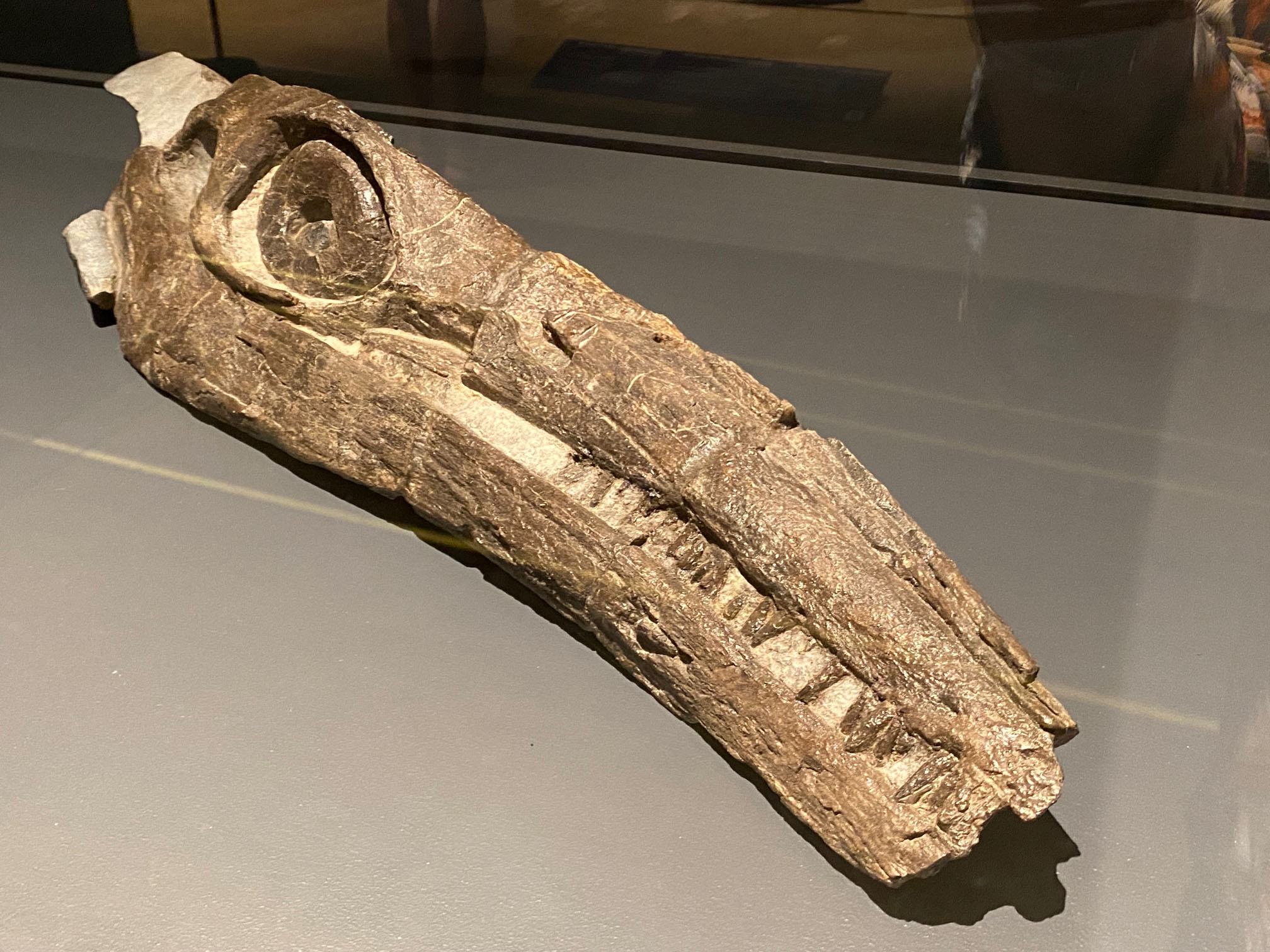
From the Augusta Mountains: Skull of 243-million-year-old Triassic ichthyosaur (Cymbospondylus) discovered in the 2011 by Martin Sander (excavated 2014). Courtesy: Natural History Museums of Los Angeles County; BLM.
The exhibition includes a whimsical corridor leading to images from 19th-century paleo art and to vintage toys from a dinosaur and prehistoric-animal collector. The final room is a kaleidoscope of nostalgia – images from Europe’s earliest prehistoric ecosystem recreations to dinosaur collectibles from Chicago’s 1934 Century of Progress Fair.
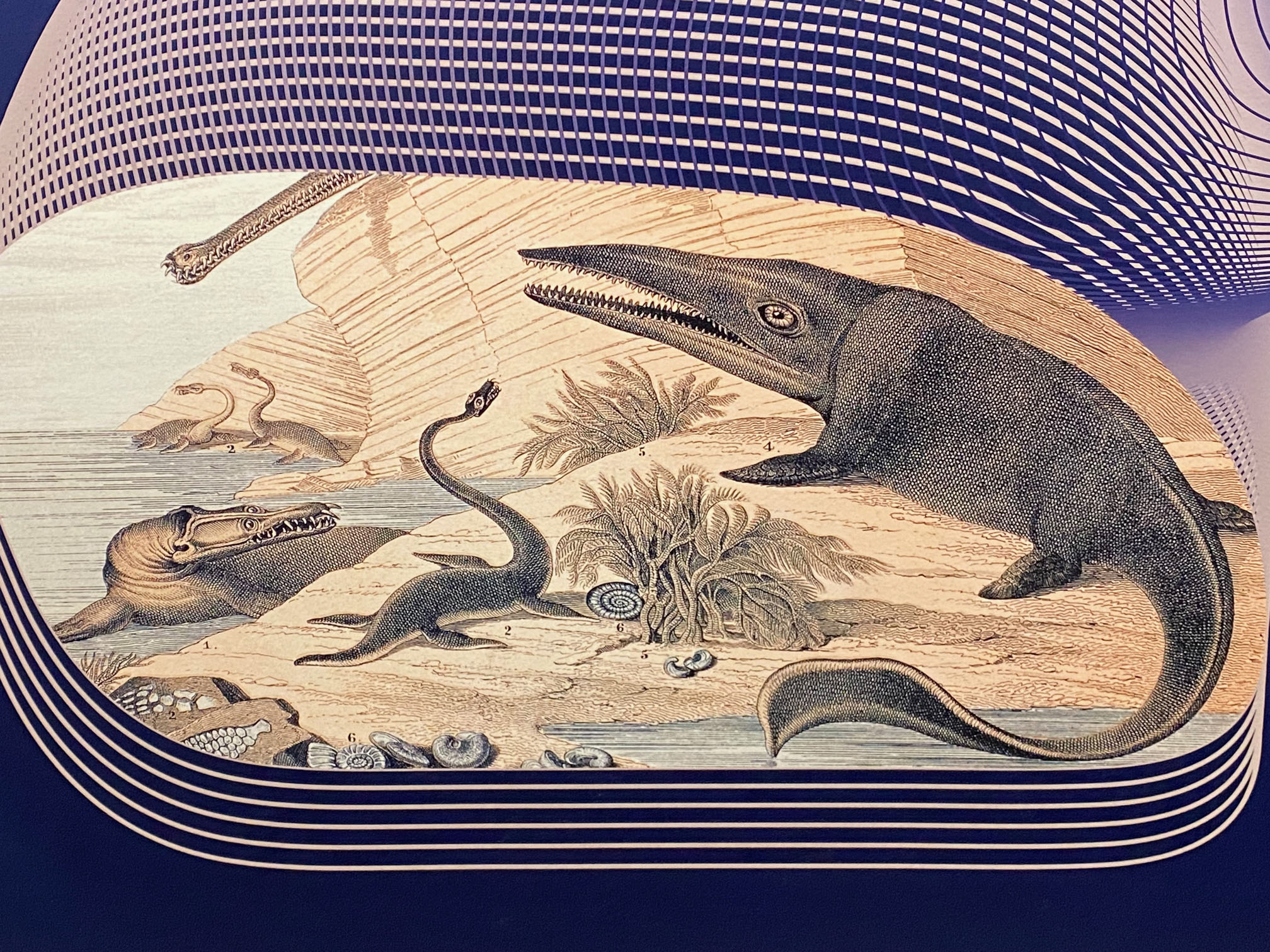
It’s a fun way to observe how scientific thinking has changed about prehistoric marine lifestyles and body plans. Remember when science thought Brontosaurus spent its life submerged in lagoons? Or ichthyosaurs used their flippers to paddle around on land?
Take a look at our favorite fossils and toys in our Flickr album.
Reproduction of 1862 wall-chart illustration by Benjamin Waterhouse Hawkins Enaliosauria (extinct marine reptiles) produced for the UK’s Department of Science and Art, featuring land-dwelling Ichthyosaurus and Plesiosaurus.
To see how art and science were brought together to create this immersive time-travel experience, watch this short documentary from PBS Reno, take a trip to Nevada’s Augusta Mountains with paleontologist Martin Sander and see how artists and designers brought his Triassic creatures to life:
There’s plenty of dazzling eye candy tucked away in a corner of the Gems and Mineral Hall inside the American Museum of Natural History. Look at sparkly diamonds, rubies, emeralds, turquoise, and every other polished gem you can think of as you contemplate the mysteries of stars, planets, and distant galaxies in Cosmic Splendor: Jewelry from the Collections of Van Cleef & Arpels, on view through January 4, 2026.
The gallery is an ethereal cosmic universe – it feels like you’re floating in deep space where infinite points of light illuminate and reflect thousands of facets of about 60 astronomy-based jewelry creations by the 129-year-old luxury house. It’s a small space, but the illusion suggests the limitless night sky.
Inspired by images of the the spiral Porpoise Galaxy: 2021 Opal Nebula Clip; black opal surrounded by gold, emeralds, rubies, sapphires, tourmaline, and diamonds. From Van Cleef’s Under the Stars high jewelry collection. Courtesy: private collection.
The curators have arranged the dazzlers into loose astronomical themes, like the Sun, Moon, Planets, and Galaxies, but closer inspection demonstrates how the the designers of these works were inspired by the views of the Milky Way, knowledge about black holes or meteors, or images from the Hubble Space Telescope.
The Moon: 1969 yellow gold Moon pendant to commemorate the first men to land there; ruby marks the spot. Courtesy: Van Cleef & Arpels.
2021 Whirlpool Galaxy Clip, inspired by the Ring Nebula in the constellation Lyra; blue tourmaline (center) with garnet outer ring. From Van Cleef’s Under the Stars high jewelry collection. Courtesy: private collection.
The masterworks in the AMNH exhibition are drawn primarily from Van Cleef’s Sous les étoiles (Under the Stars) collection, but a few pieces are showstoppers from previous collections inspired by Jules Verne’s sci-fi or NASA’s 1969 Moon landing.
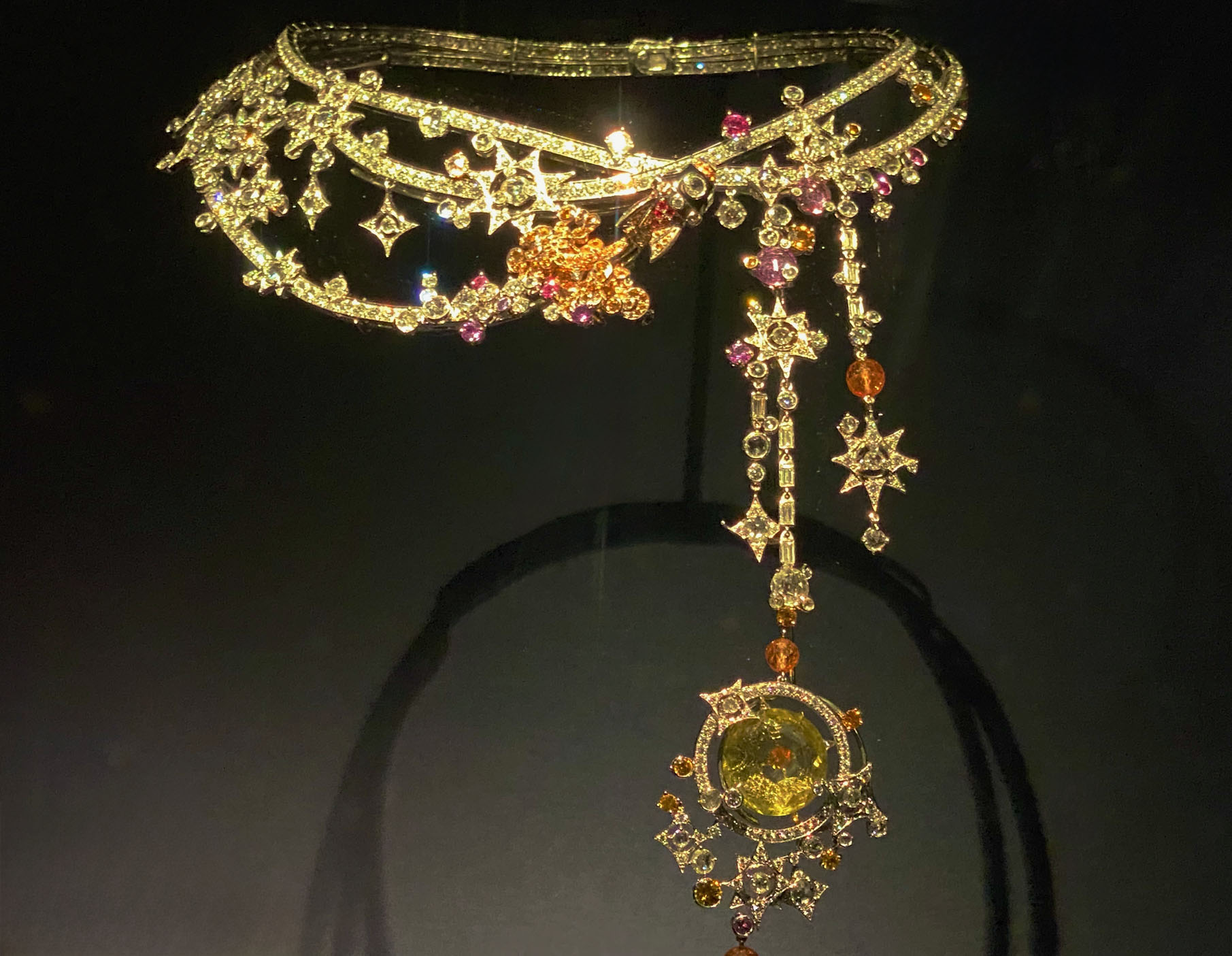
Inspired by Jules Verne’s 1865 sci-fi space travel story – the 2010 gold, sapphire, garnet, and diamond Tampa Necklace. From Van Cleef’s Extraordinary Journeys high jewelry collection. Courtesy: private collection.
2021 gold, mauve and pink sapphire, ruby, and diamond Doubles Galaxies Saphir Mauve Clip; inspired by the Virgo constellation’s merging Butterfly galaxies. From Van Cleef’s Under the Stars high jewelry collection.
2010 Star Necklace; gold and diamonds flow around an Australian black opal. From Van Cleef’s Extraordinary Journeys high jewelry collection. Courtesy: private collection.
Listen as Nicolas Bos, Van Cleef’s CEO and Artistic Director describes the history and inspiration of the Sous les étoiles (Under the Stars) collection.
Here’s astrophysicist Isabelle Grenier explaining more about the scientific inspiration behind these these jeweled masterpieces.
Before January 4, take a video stroll through the exhibit courtesy of Van Cleef & Arpels here.
Out of This World: 2021 gold, sapphire, and diamond Stellar Explosion Transformable Necklace; designed to be reconfigured as separate necklaces and a clip. From Van Cleef’s Under the Stars high jewelry collection. Courtesy: private collection.














 itsnewstoyou