Lucy Lippard and The Radical Whirlwind

The Sixties and Seventies were a time of rebellion and change in the world at large and in the New York art world. As you enter Lucy R. Lippard: Notes from the Radical Whirlwind at the Vladem Contemporary in Santa Fe through August 9, 2026, the white gallery space appears quiet, but the art that confronts you is done by artists living, creating, and collaborating in a tumultuous, exciting time.

Post-war eclecticism, minimalism, conceptualism, feminism, environmentalism, and activism – these were the movements swirling in downtown Manhattan. Writer, curator, rabble-rouser, and activist Lucy R. Lippard seemed always to be near the center it all.

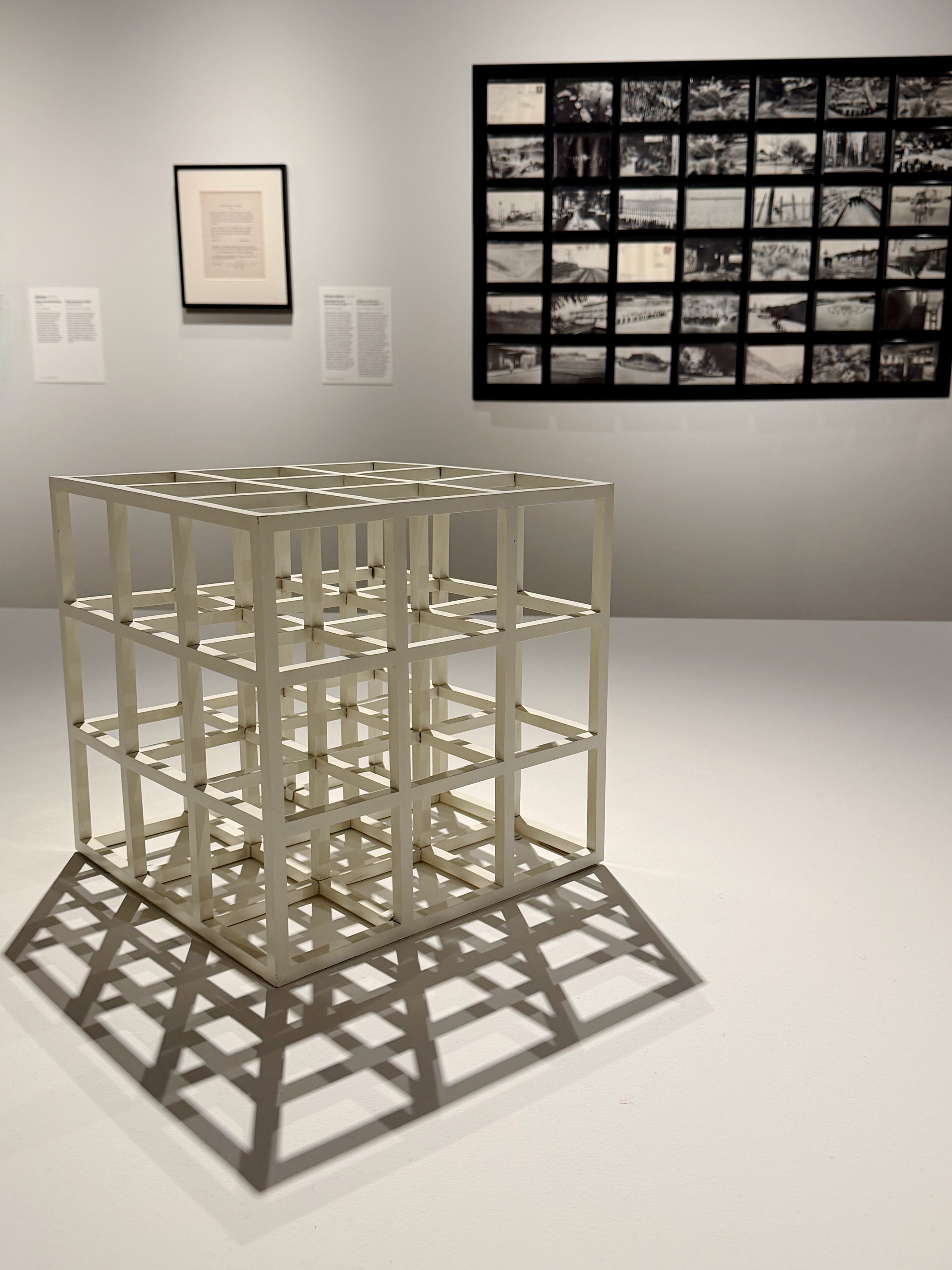
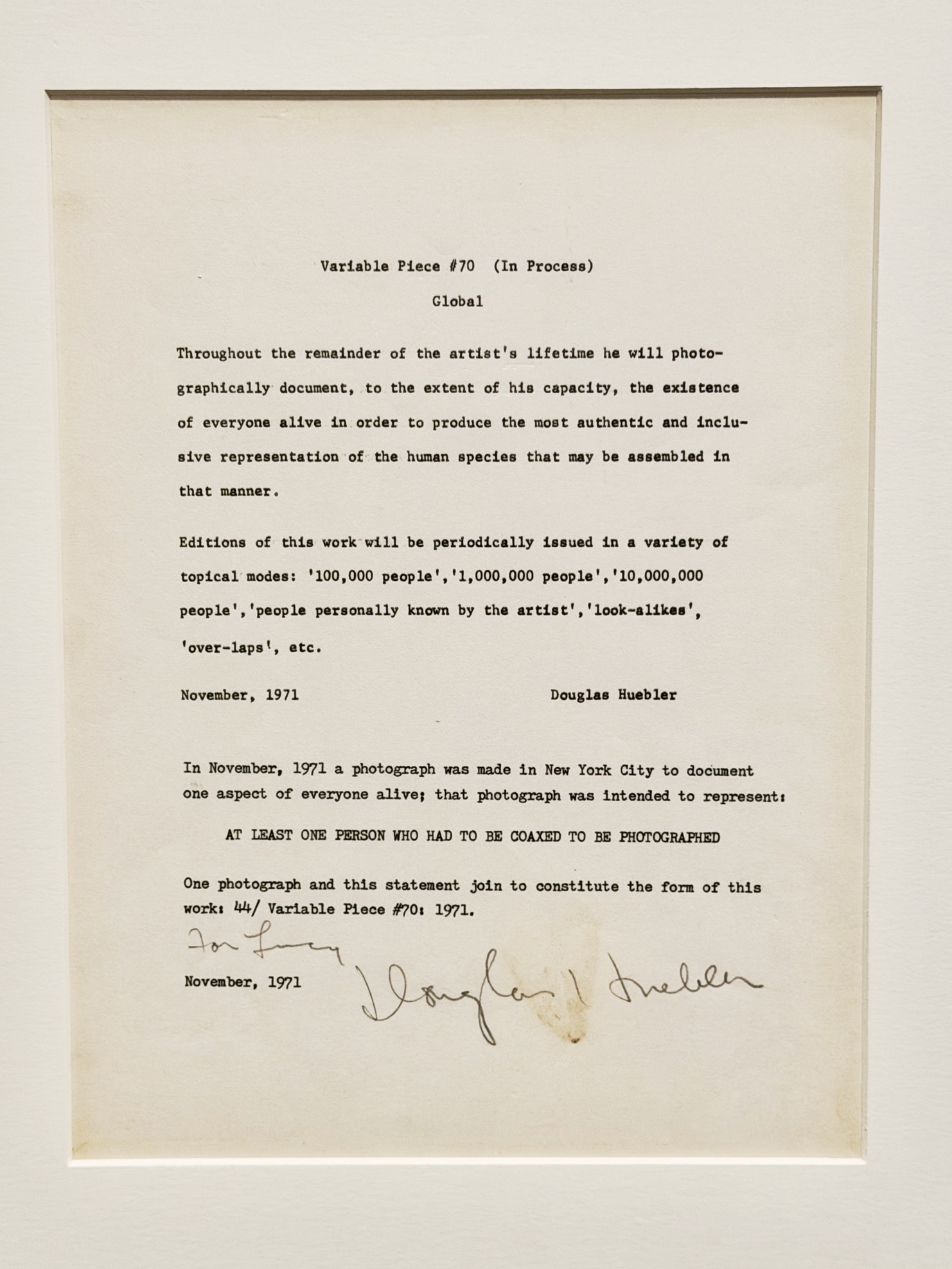
Minimal and conceptual art: Sol Lewitt’s 1979 Steel Grid 3 x 3 x 3; at rear, conceptualist Douglas Huebler’s 1971 typed 44/Variable Piece #7: 1971 (In Process) Global, and Eleanor Antin’s 1971-1973 postcard piece 100 Boots Marching.

The two-floor exhibition is just a fraction of the paintings, prints, sculptures, photographs, and art books that artists gifted to Lucy across four decades. To walk through it chronicles every important trend in American (and global) art and a “who’s who” of contemporary art in the latter half of the 20th century.

Take a look through it all in our Flickr album.

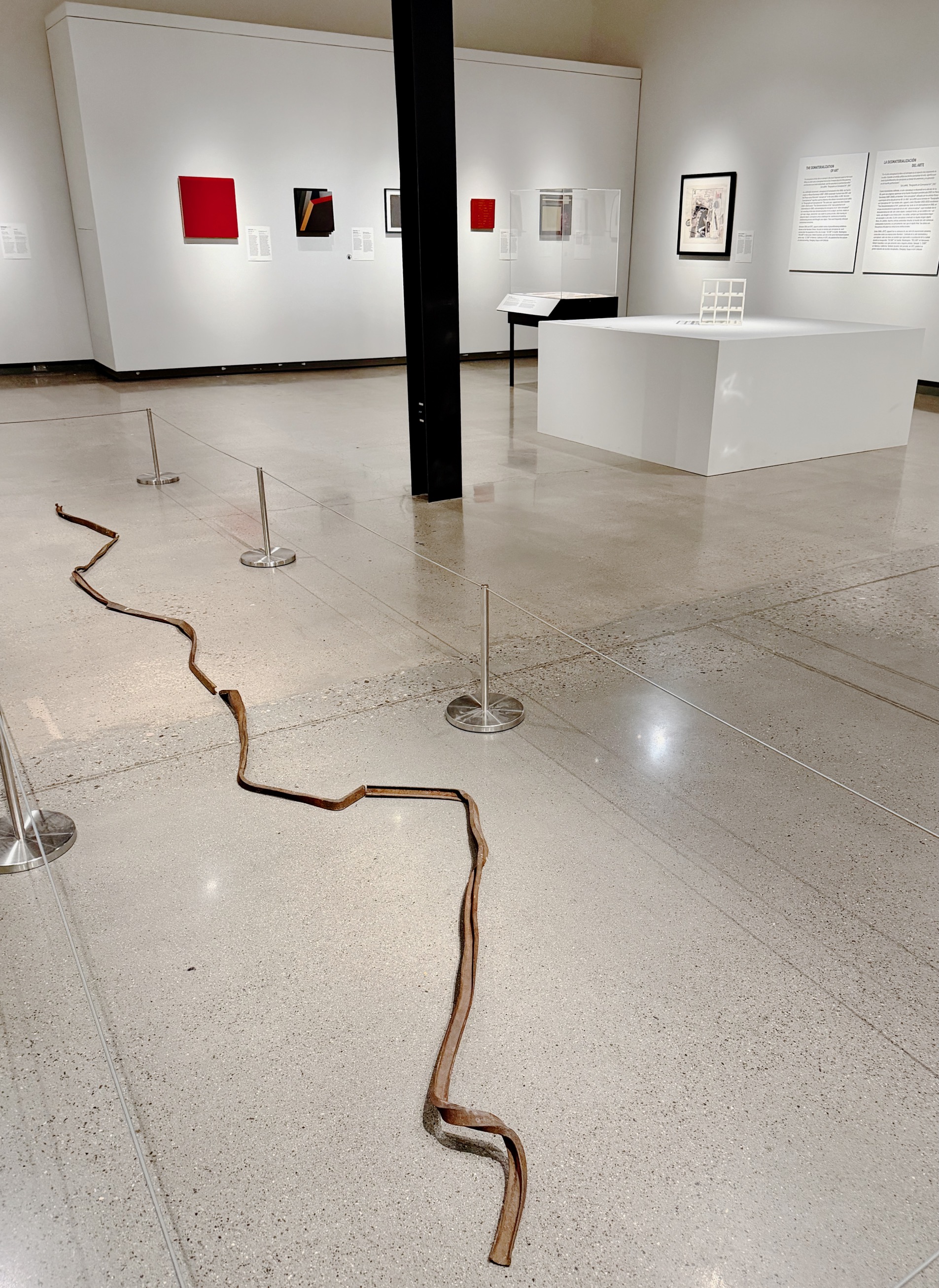
Gallery featuring minimal and conceptual artists; foreground, 1971 5 Steel Track Meander by Carl Andre.

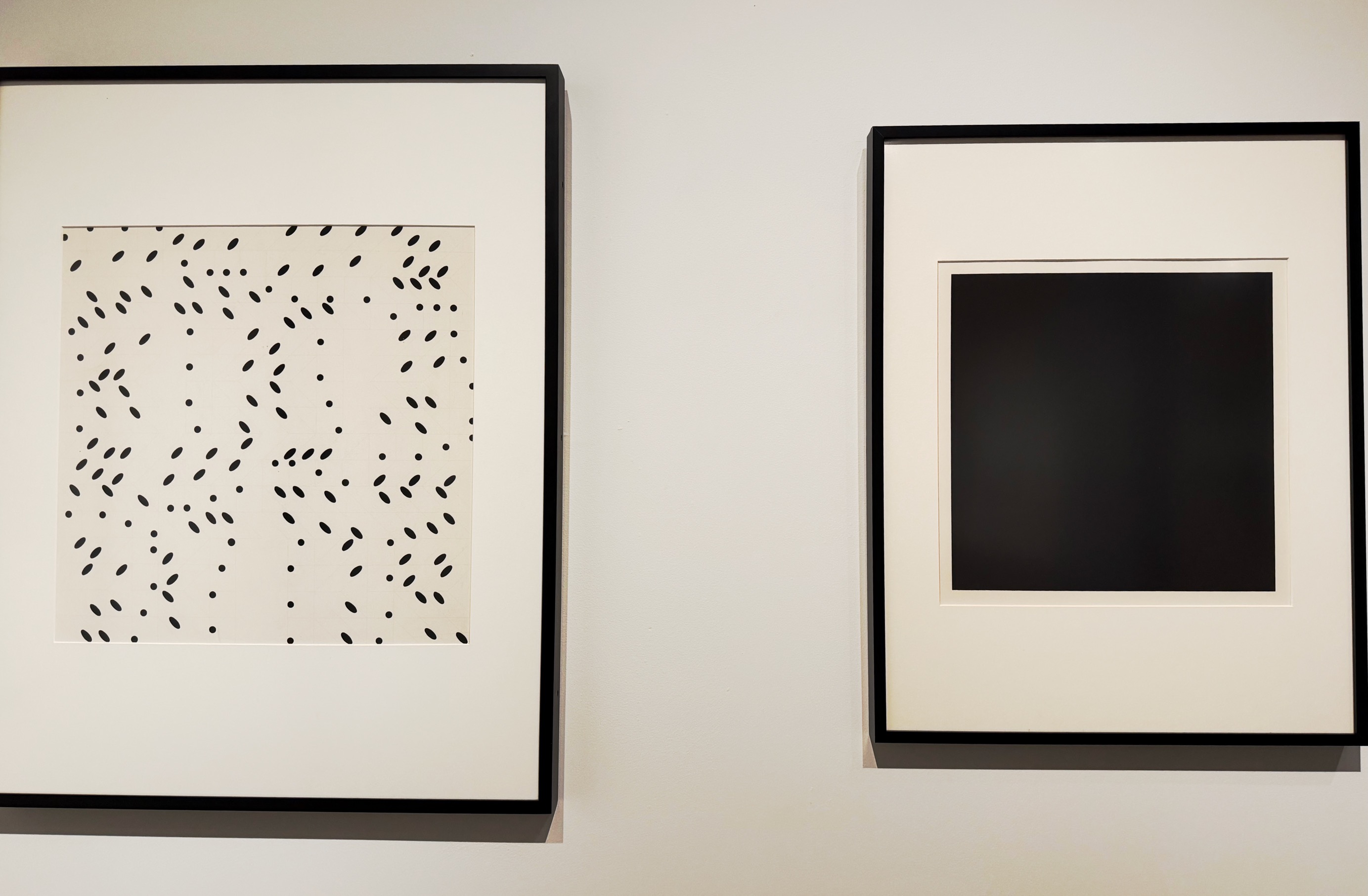
At the center of the first gallery are pieces by minimal-conceptualists Carl Andre (a twisted piece of chanelling lying on the floor that could have jumped out of a dumpster) and Sol Lewitt (a pristine grid sculpture). Nearby are super-minimalists Larry Poons and Ad Rhinehart, where you can see the hidden black-on-black squares if you peer through the glass just right.

But as the exhibition points out, Lucy didn’t just have the typical artist-curator relationship with the people whose work is on the wall. Her mentor Ad Rhinehardt asked her to pen his monograph for his ground-breaking 1966 retrospective at the Jewish Museum where is black-on-black canvases begged the question, “Is painting at an end?”

Minimalists: 1960 silkscreen by Larry Poons and 1964 screenprint Untitled (Black Square) by Ad Reinhardt.

Lucy and Carl Andre worked side-by-side in 1969 to organize the historic Art Workers’ Coalition to advocate for artists’ rights inside the art establishment. She and Sol Lewitt met at entry-level jobs at MoMA, but when Sol published his influential 1967 essay on Conceptualism in Artforum magazine, Lucy built upon his foundation with other essays and produced her acclaimed Numbers exhibitions across the country (1996 – 1972) to show conceptual and minimalist art to new audiences.

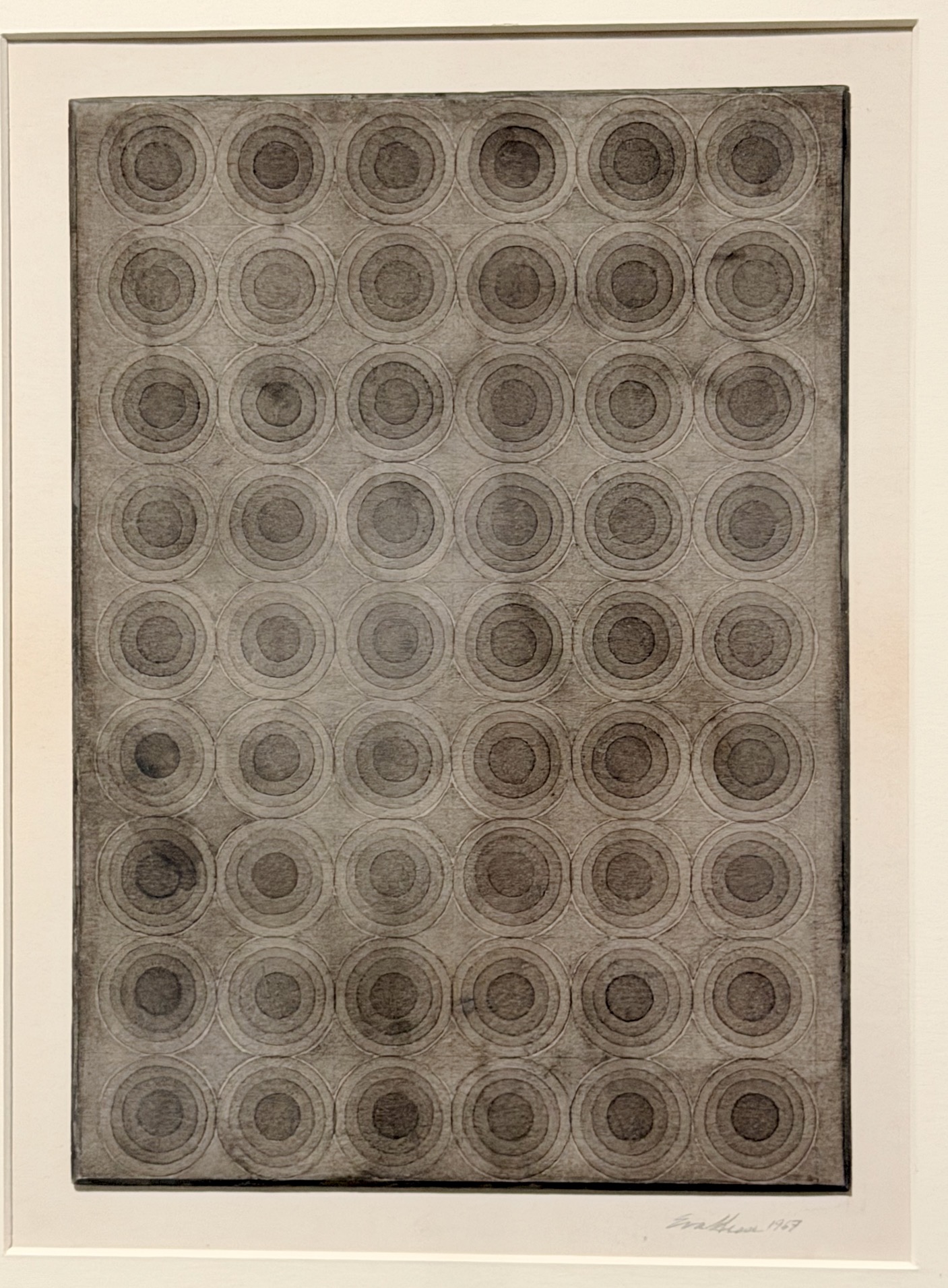
Lucy and Sol Lewitt championed the work of post-minimalist, Eva Hesse. Lucy included Eva’s work in her 1966 exhibition Eccentric Abstractionism at Fischbach Gallery, and both worked tirelessly to keep Eva’s work front and center after her untimely passing in 1970 at age 34.

The exhibition underscores the tight relationships among artists during a period of rampant experimentation, happenings, pop art, anti-war protests, and organizations protesting discrimination and advocating for justice. All forms of expression were welcomed – from performance pieces to typewritten instructions to mail art.

Post-minimalism: Eva Hesse’s 1967 ink and graphite drawing on an invisible grid.
Concepual art: Douglas Huebler’s 1971 typewritten project declaration – 44/Variable Piece #7: 1971 (In Process) Global.
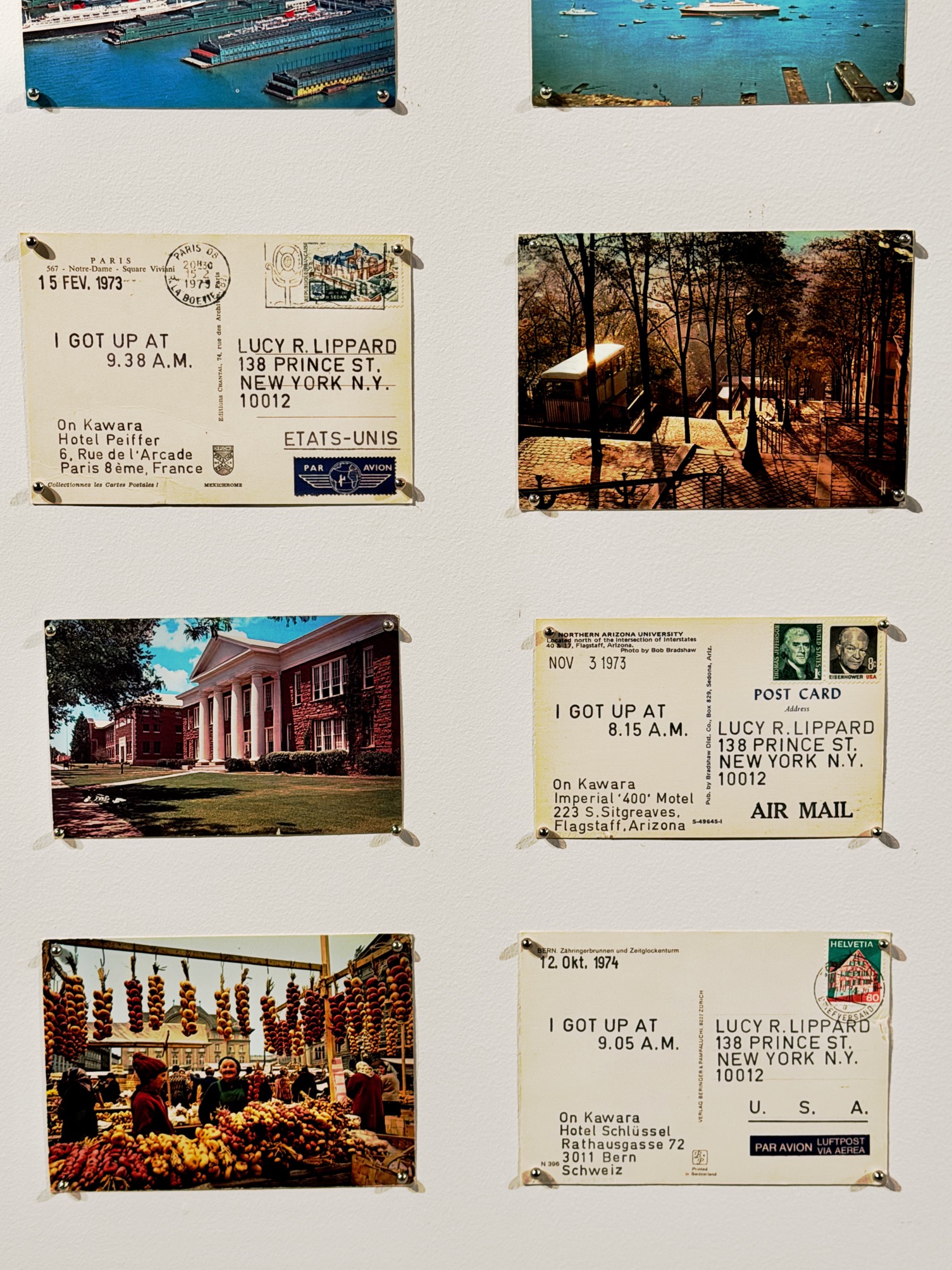
Details of On Kawara’s 1968-1973 I Got Up – commercial travel postcards stamped with reductive messages and mailed to friends.

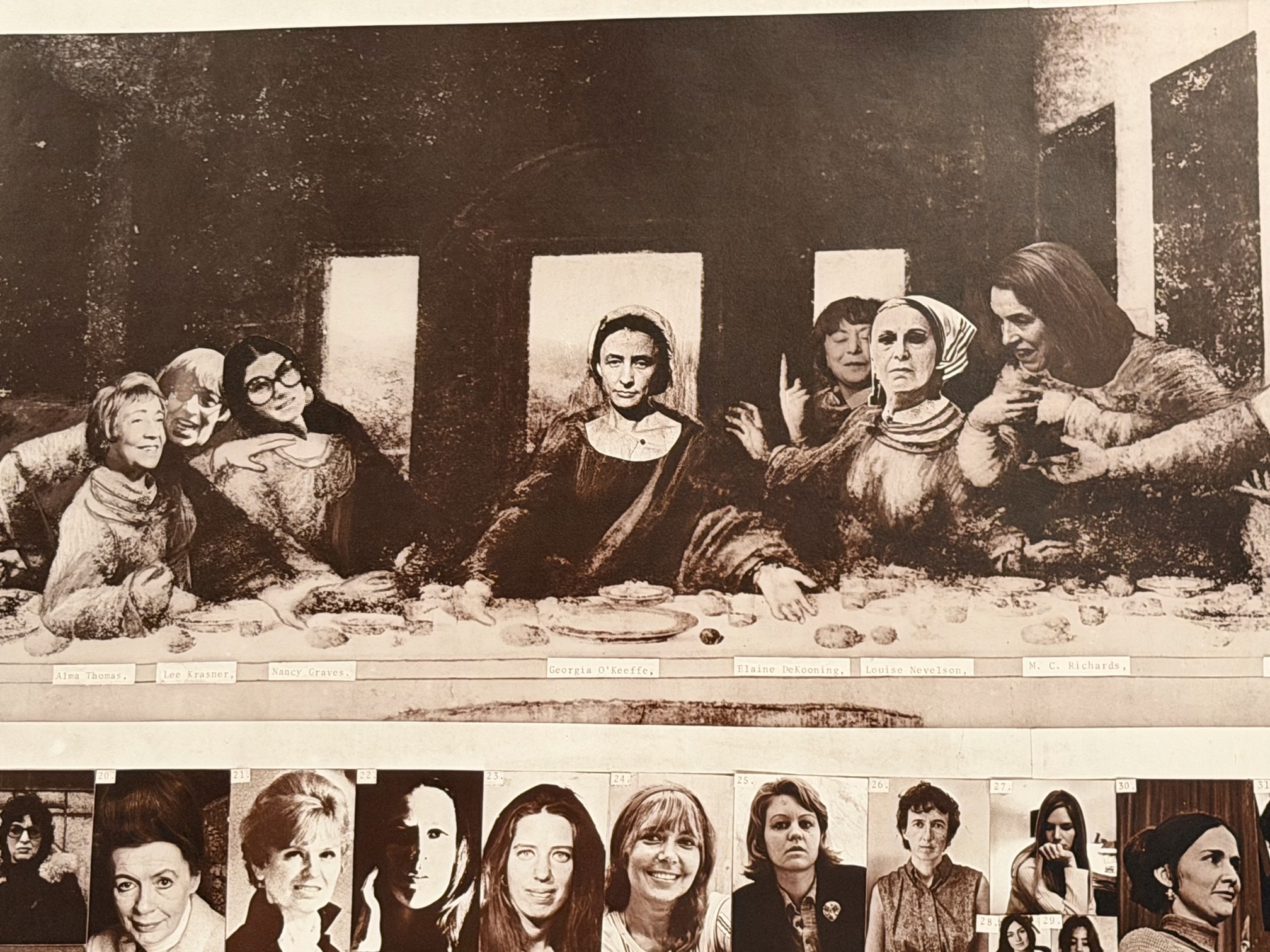
The array of feminist and political/social protest art in the exhibition reinforces the activist theme that runs through Lucy’s life.  Works by Louise Bourgeois, Harmony Hammond, Ana Mendieta, Faith Ringgold, Mary Beth Edelson, and many more are shown – including the founders of A.I.R., New York’s first women-operated cooperative gallery, and the Heresies Collective, who published the first feminist art journal. Over time, their collective pressure worked, as museums and galleries finally opened up to exhibiting works by women and people of color.

Feminist power: Mary Beth Edelson’s 1972 satirical poster Some Living American Women Artists a spoof of Da Vinci’s The Last Supper with O’Keeffe and Nevelson at center stage.
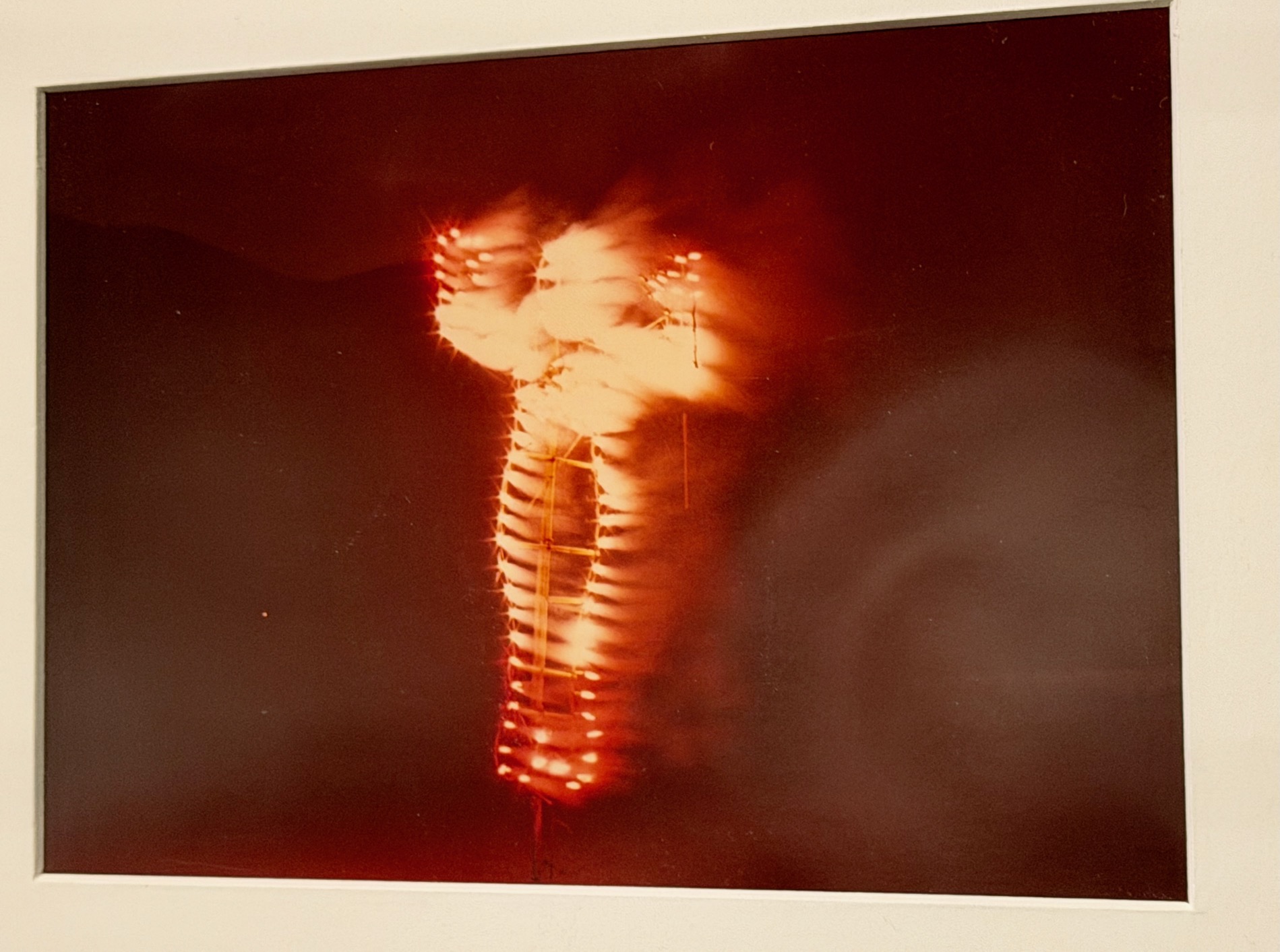
Performance art documentation: Ana Mendieta’s 1976 photo Silueta de Cohetes from her Siluetas eries – showing a body-shaped fireworks display agains the night sky.

The last section downstairs contains works on the Vietnam War, civil rights, Indigenous rights, the Cold War, and the risks from nuclear power. Lucy and her fellow artist were extremely active in response to injustice. In 1965-1967, they created the Angry Arts Festival through their collective, Artists and Writers Protest the Vietnam War to mobilize cultural leaders against U.S. involvement in Vietnam. In 1975, Artists Meeting for Cultural Change successfully lobbied for disenfranchised artist’s inclusion in the Whitney Biennial. In 1979, Artists Against Nuclear Madness mobilized.

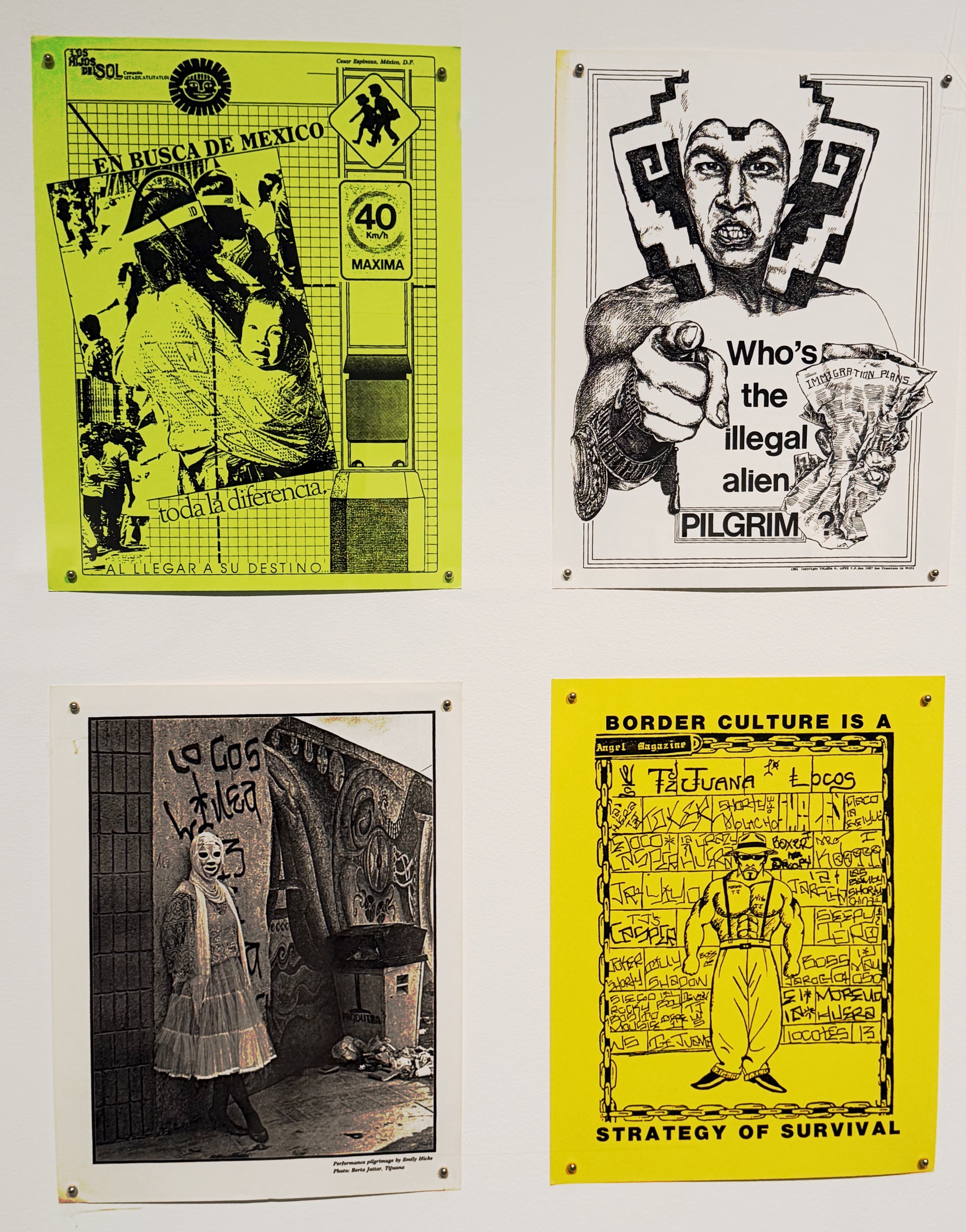
Artist power: selections from the 1986 mixed-media portfolio La linea quebrada = The Broken Line – a project to promote exhibition opportunities and cultural exchange in communities across the US-Mexico border; created by Guillermo Gomez-Pena, D.Emily Hicks, Harry Polkinhorn, and Cesar Espinoza.

In 1984, Lucy and other colleagues led Artists Call Against US Intervention in Central America. Over1,100 artists and activists mobilized to create over 200 events in 27 cities. (Click here to read our 2022 post about the University of New Mexico Art Museum’s exhibition on this mobilization.)

Lucy’s philosophy: “Artists alone cannot change the world. Neither can anyone else alone. But we can choose to be part of the world that is changing.”

The second-floor gallery is dedicated to artists books – a movement that started around the same time that everything else was happening. Many artists felt the high-end art market on the East Coast was too elitist. Many artists wanted to bypass the whole thing and create affordable art.

Lucy Lippard, Sol Lewitt and others decided to open a storefront in 1976 where anyone could buy inexpensive books created by artists…books that were themselves affordable art! Although it moved from Tribeca, to Soho, and Chelsea, it’s still selling artist’s books fifty years later!

The upstairs gallery is a tribute to the decades of “affordable art” perseverance.

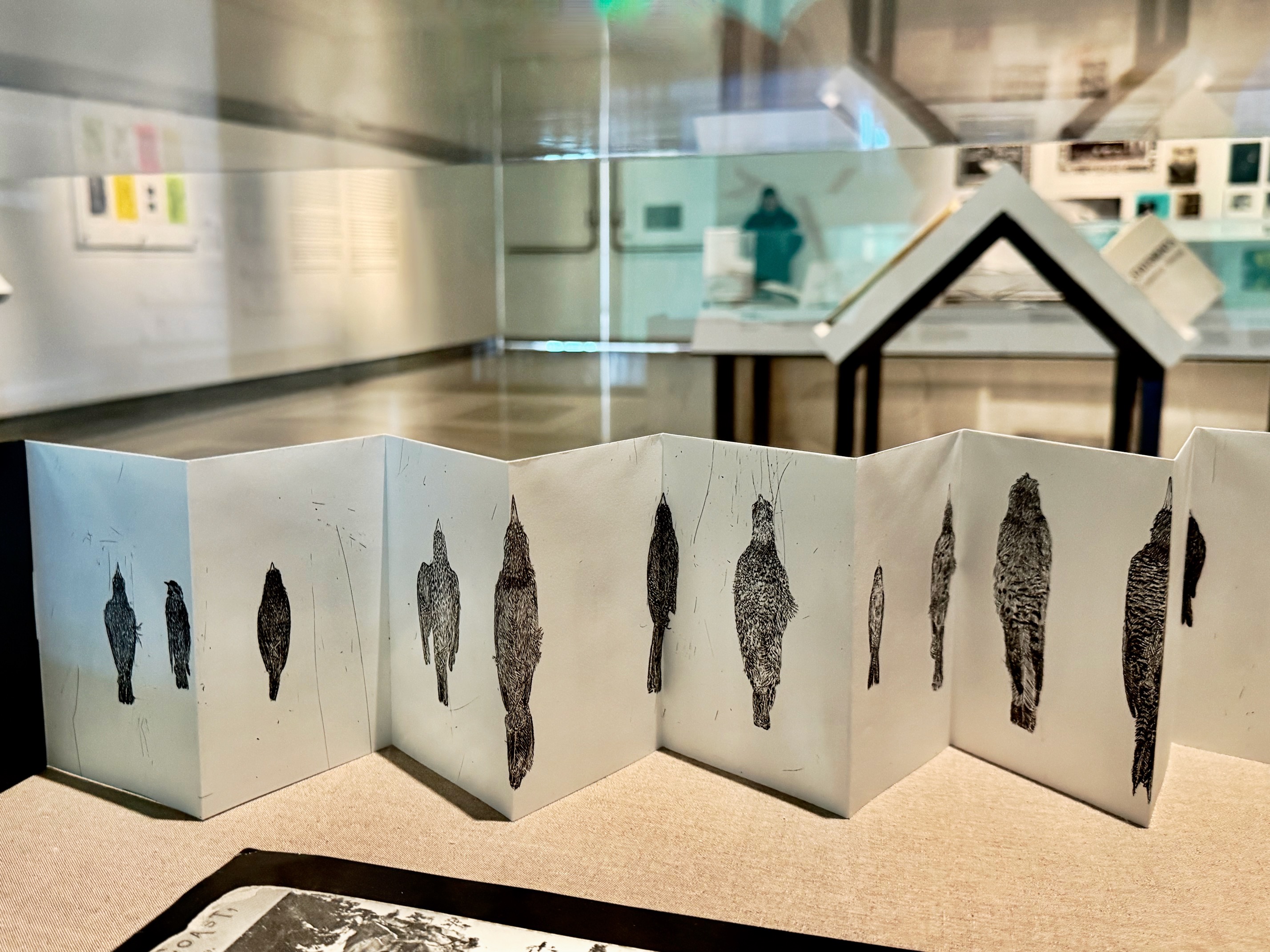
Environmental awareness: Kiki Smith’s 1997 accordion book The Fourth Day: The Destruction of Birds.

You can wander through imagining you are in the Printed Matter bookshop in the late 1970s, browsing through all the different projects, statements, picture books, and manifestoes flowing out of the Downtown New York art scene! 

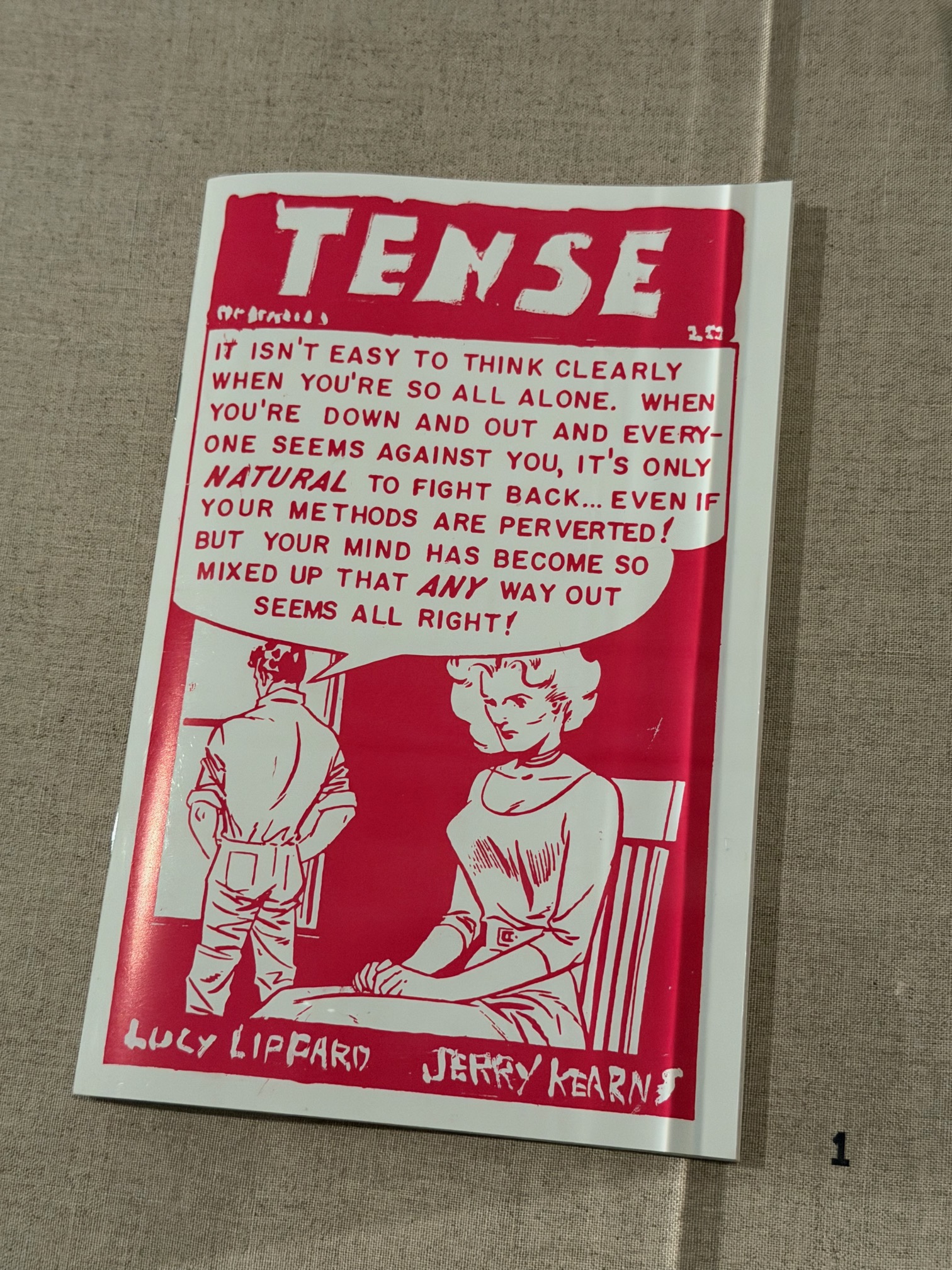
Social commentary: 1984 book Tense by Jerry Kearns and Lucy Lippard. Publisher: Kunstverein Amsterdam.
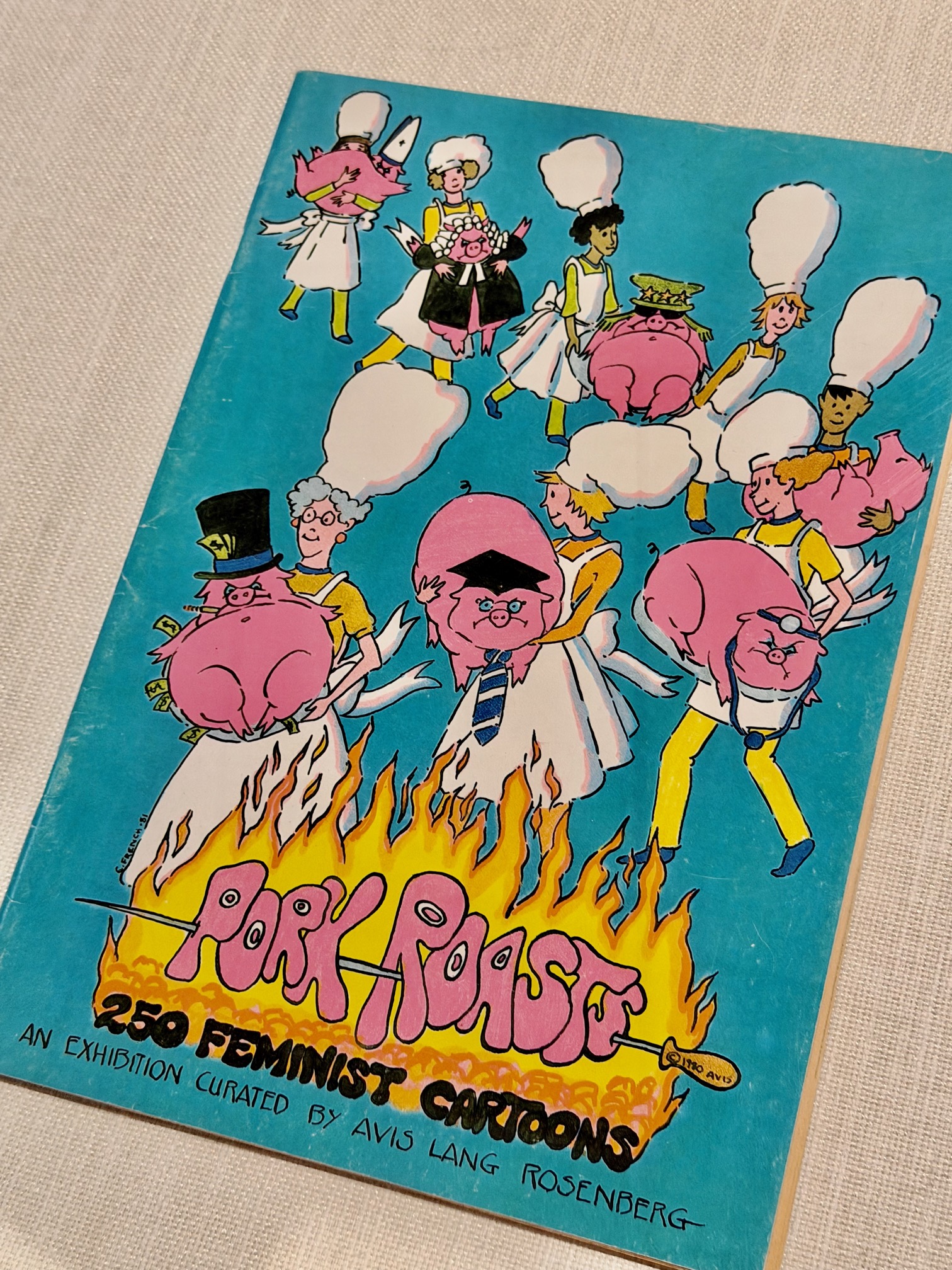
Feminist book: Avis Lang’s 1981 book Pork Roasts: 250 Feminist Cartoons. Publisher: UBC Fine Arts.

The gallery also contains some of the artist books that started it all by Ed Rucha.

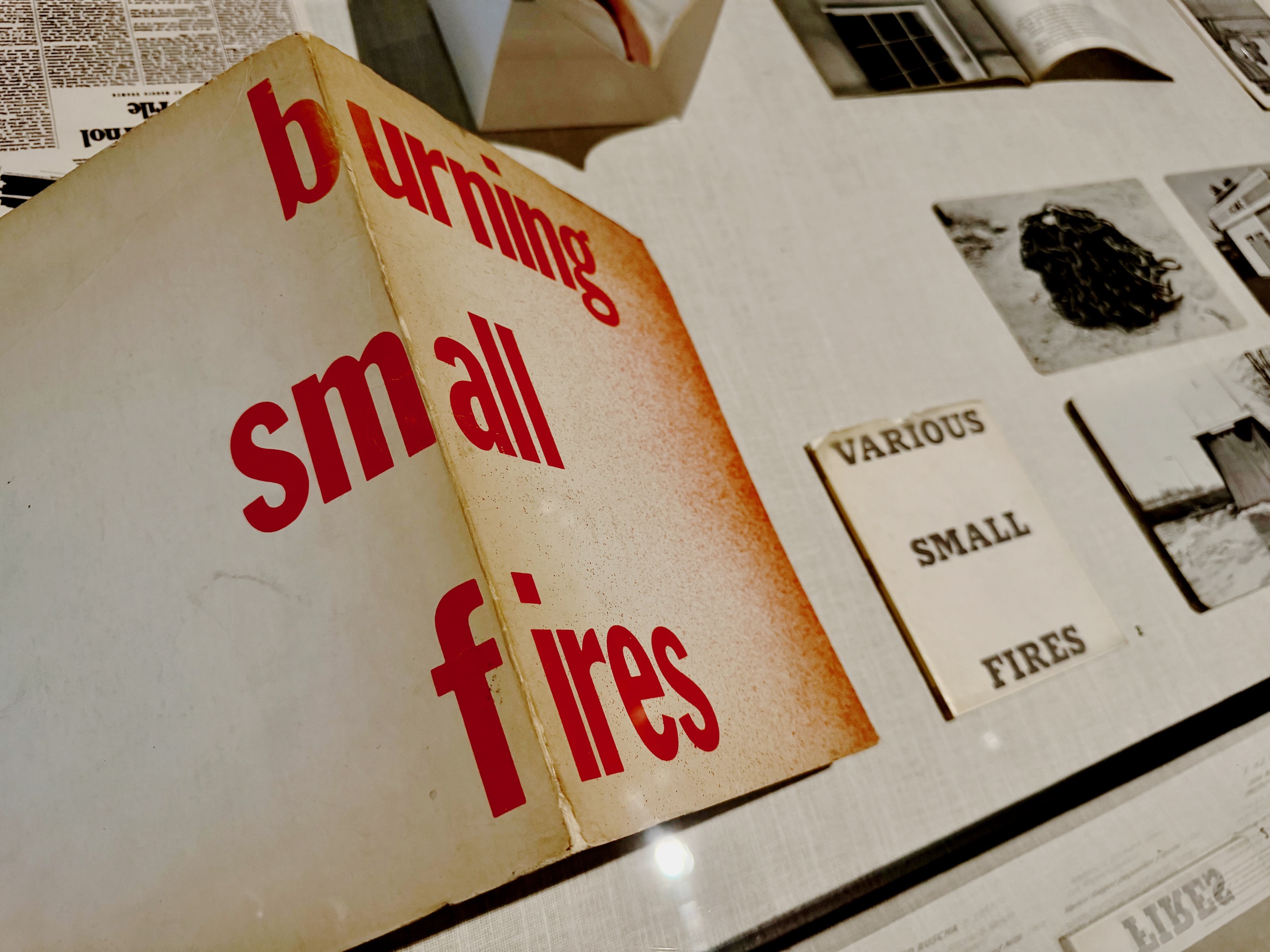
Two infamous artist books:  Ed Ruscha’s 1964 Various Small Fires and Bruce Naumann’s 1968 Burning Small Fires that documents his performance-art destruction of Ruscha’s earlier book. Publishers: Fluxus editions; Seth Siegelaub, The Louis Kellner Foundation.

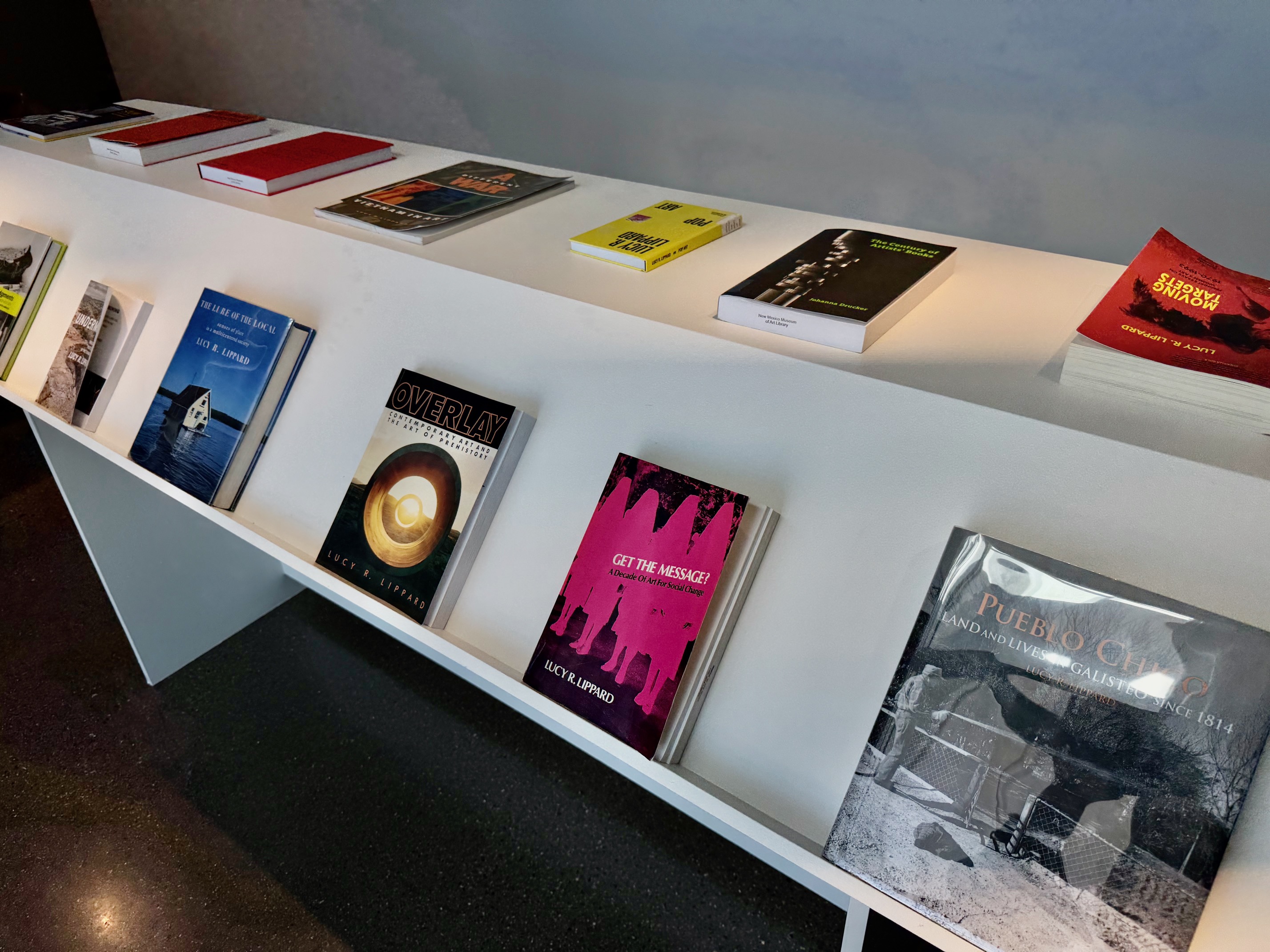
But maybe some of the best books are those found in the back reading room – some of the 30 influential treatises written by Lucy herself, publications that document art, life, and society in our times.

Lucy Lippard’s celebrated publications on display in the second-floor reading room.

Viewing Deep Time with Australian Contemporary Indigenous Artists

The massive exhibition is a blockbuster of abstraction – giant canvases, bold strokes, and enough dots and concentric circles to satisfy the most avid Kusama fan. But these visions don’t emanate from the 20th century’s Western modernist tradition. They’re the work of visionary artists from the Outback, whose abstractions use traditional icons as meditations on stories and landscapes that indigenous Australian people have relayed for thousands of generations.

The Stars We Do Not See is a journey like no other through the Denver Art Museum through July 26, 2026.

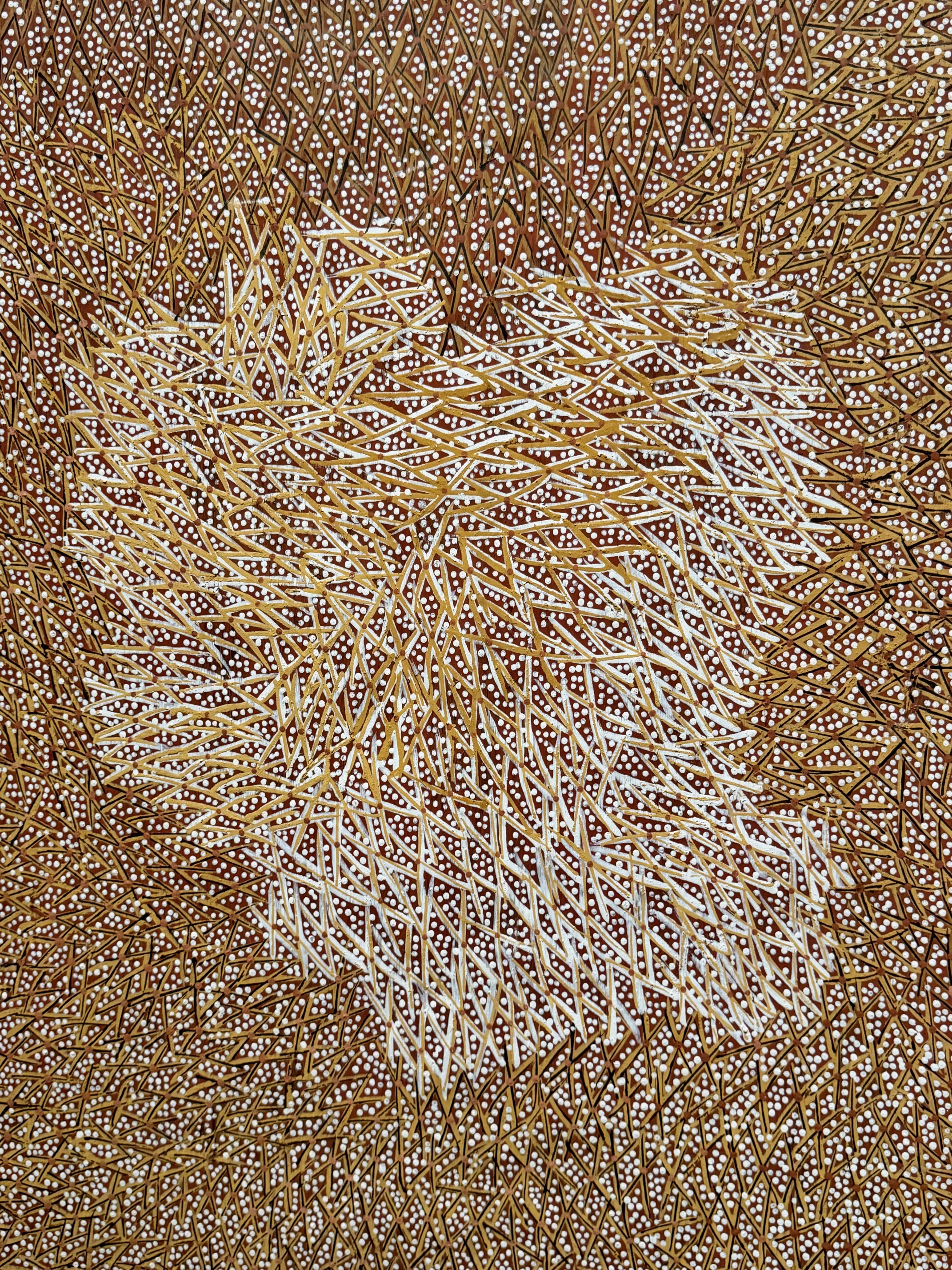
Detail of 2011 Gan’yu (Stars) by Gulumbu Yunupinju (Gumatj), referencing ancestral stories of the creation of stars and universe. Courtesy: National Gallery of Victoria, Canada

The winding path reveals principles of cyclical time, how the spirits of the land influence specific Indigenous cultures, and how icons of sacred landscapes and water sources are translated onto horizonless painted canvases.

Enjoy some of our favorites – full-size works and close-ups of paint details – in our Flickr album.

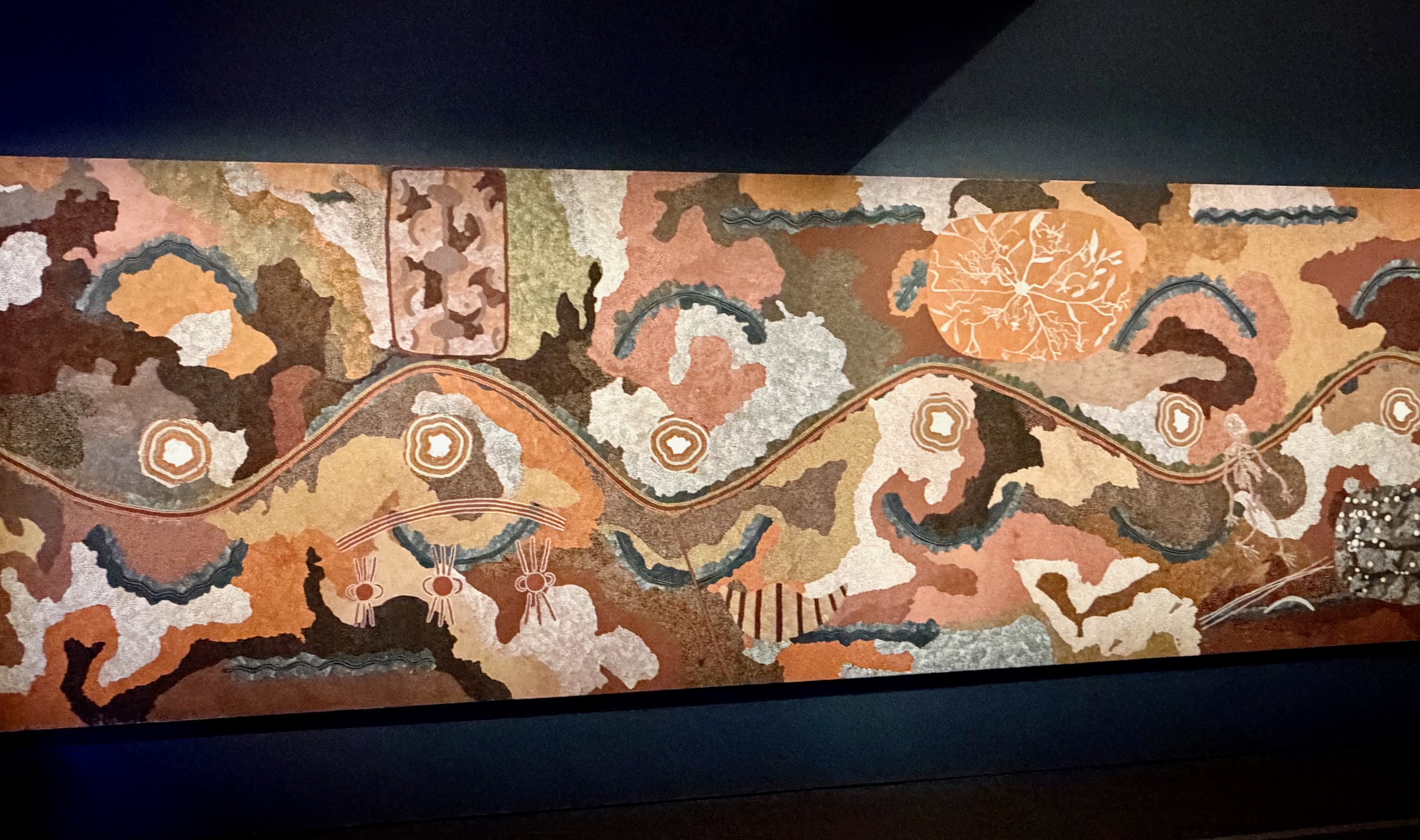
1980 painting Spirit Dreaming Through Napperby Country by Tim Leura and Clifford Possum Tjapaltjarri (Anmatyerre) – a recollection of ancestral homelands taken by cattle ranchers in the early 1900s. Courtesy: National Gallery of Victoria

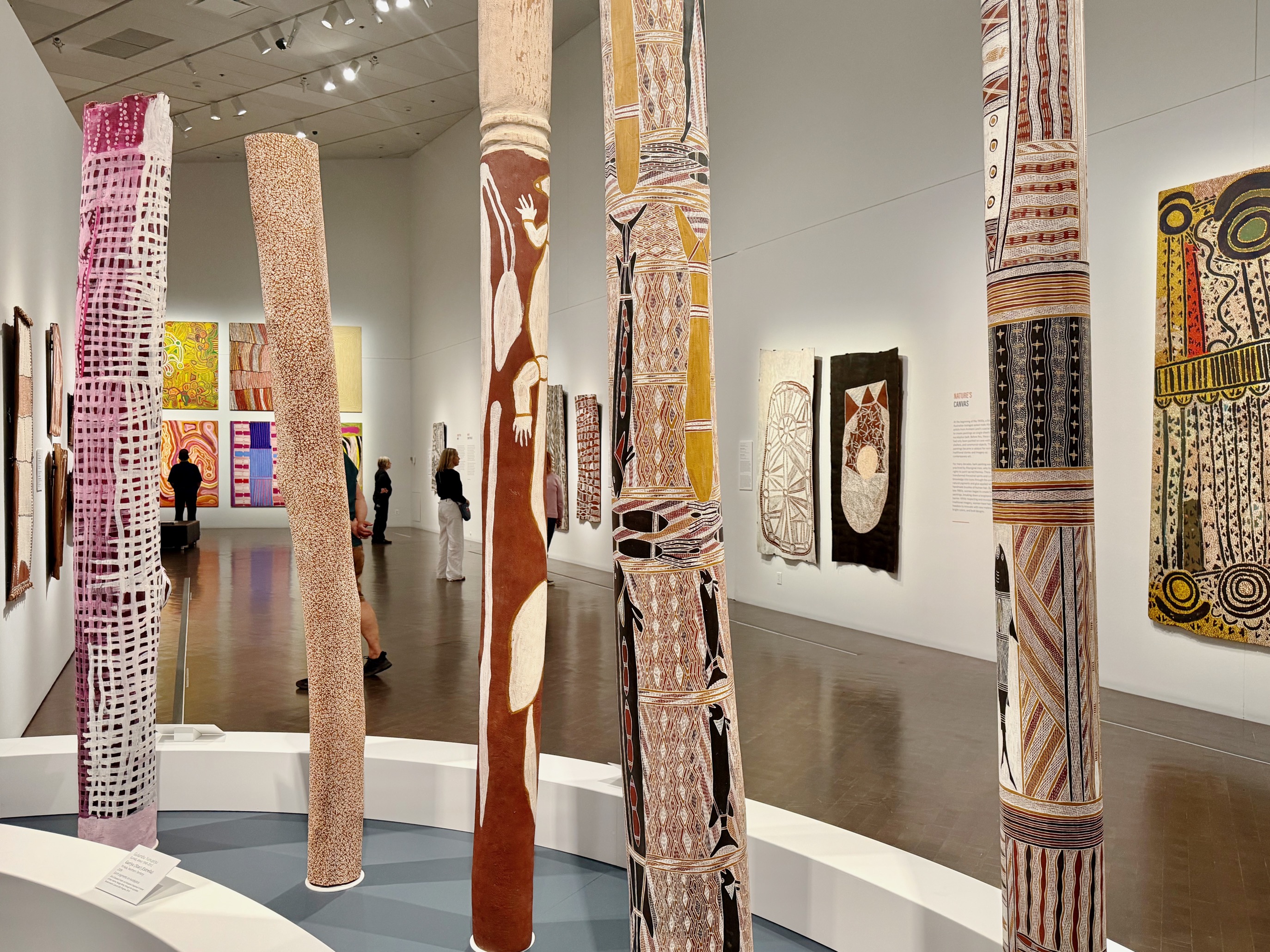
At every turn, there are gigantic room-size works (some realized as large-group colleborations) and arrays of towering carved and painted memorial poles. Abstract symbols denote spirit beings, water, river systems, nature or animal traces. Everything is drawn from the massive collection of the National Gallery of Victoria, Canada.

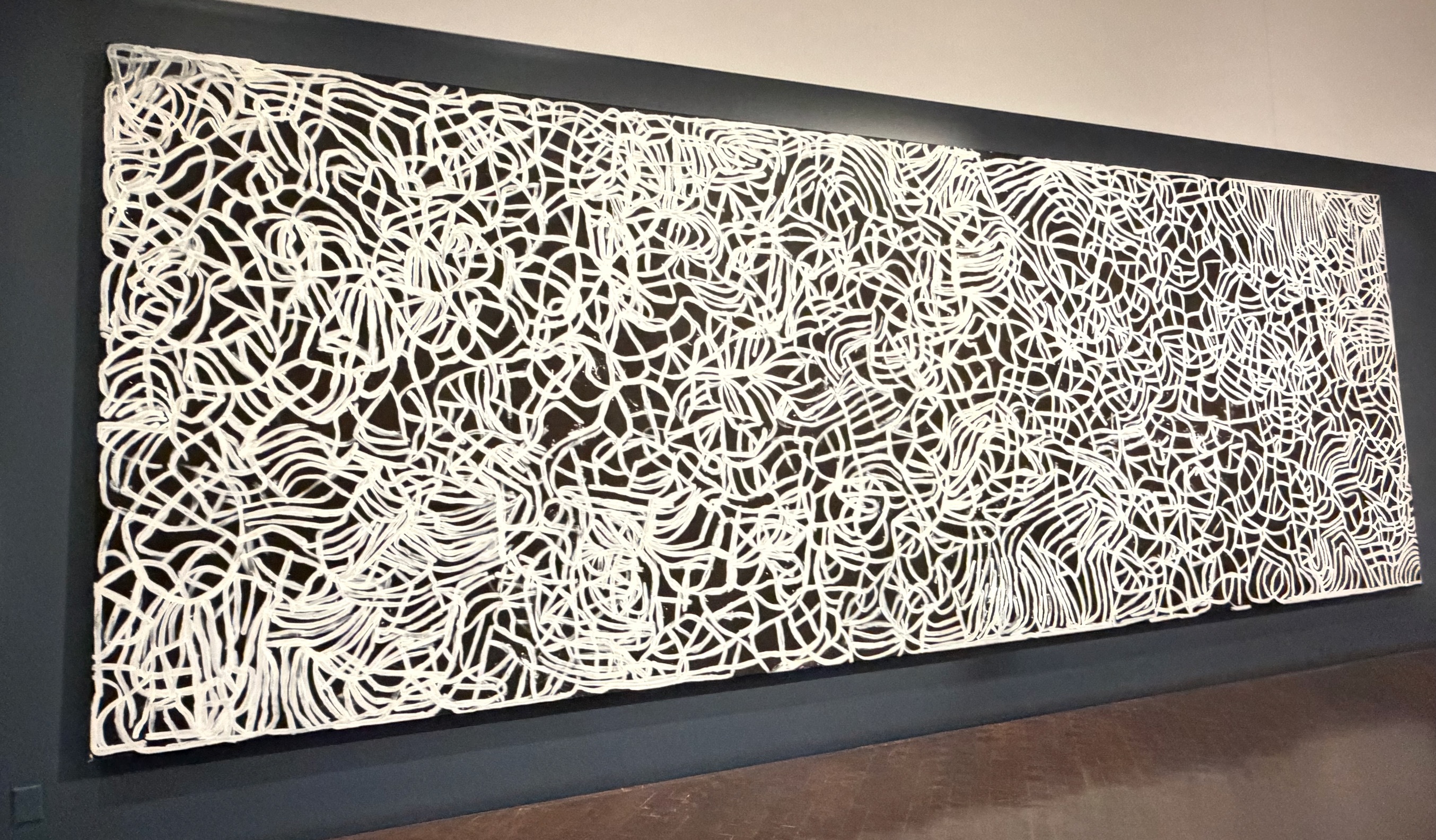
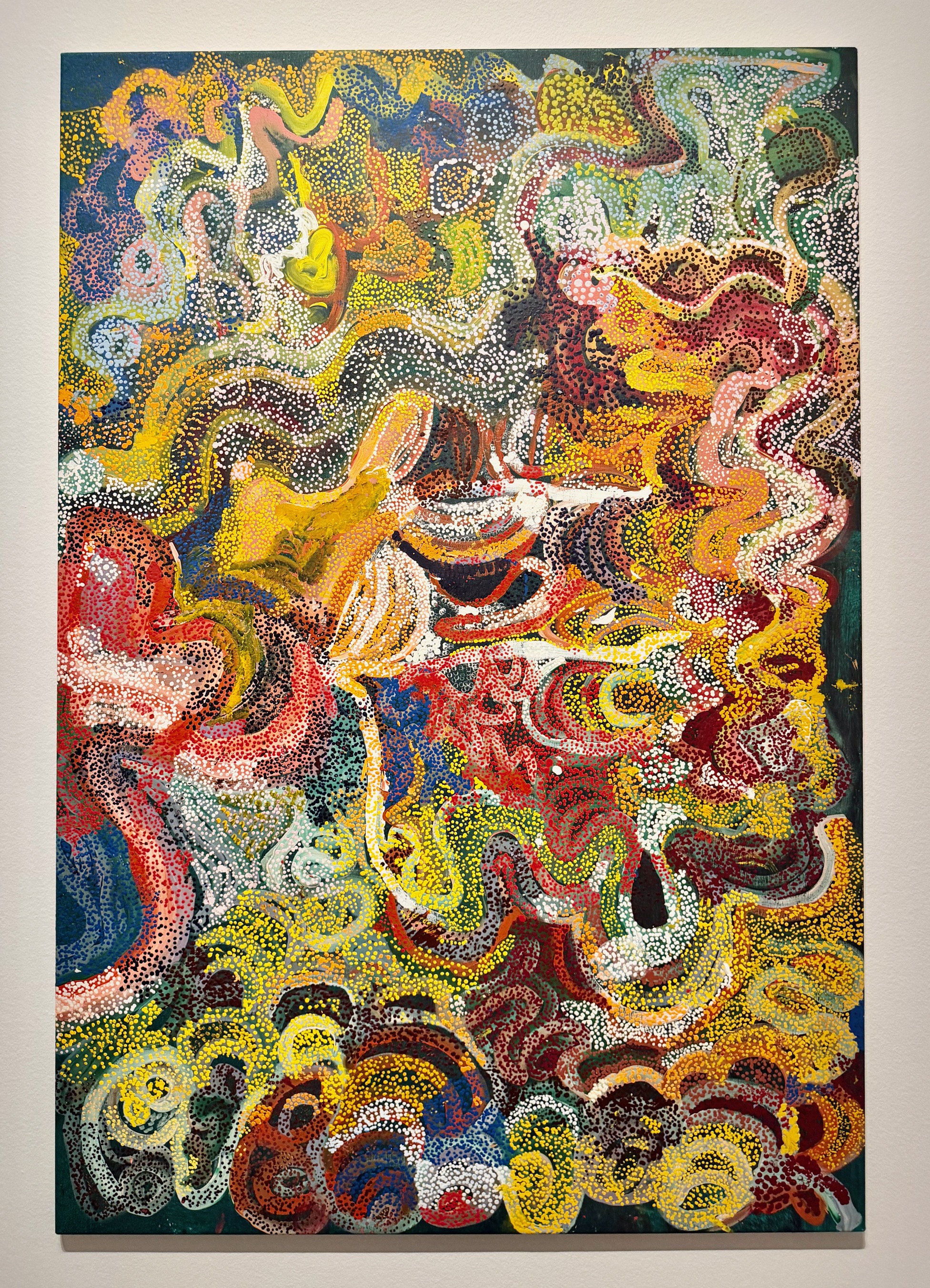
Epic 1995 abstraction Anwerlarr Anganenty (Big Yam Dreaming) by Emily Kam Kngwarry (Anmatyerre), depicting a network of sacred underground roots. Courtesy: National Gallery of Victoria

The curators start and end the show with arresting contemporary works by urban Indiginous artists – a neon installation, video, a painted skateboard, and representational works referencing forced relocation and unjust assimilation policies.

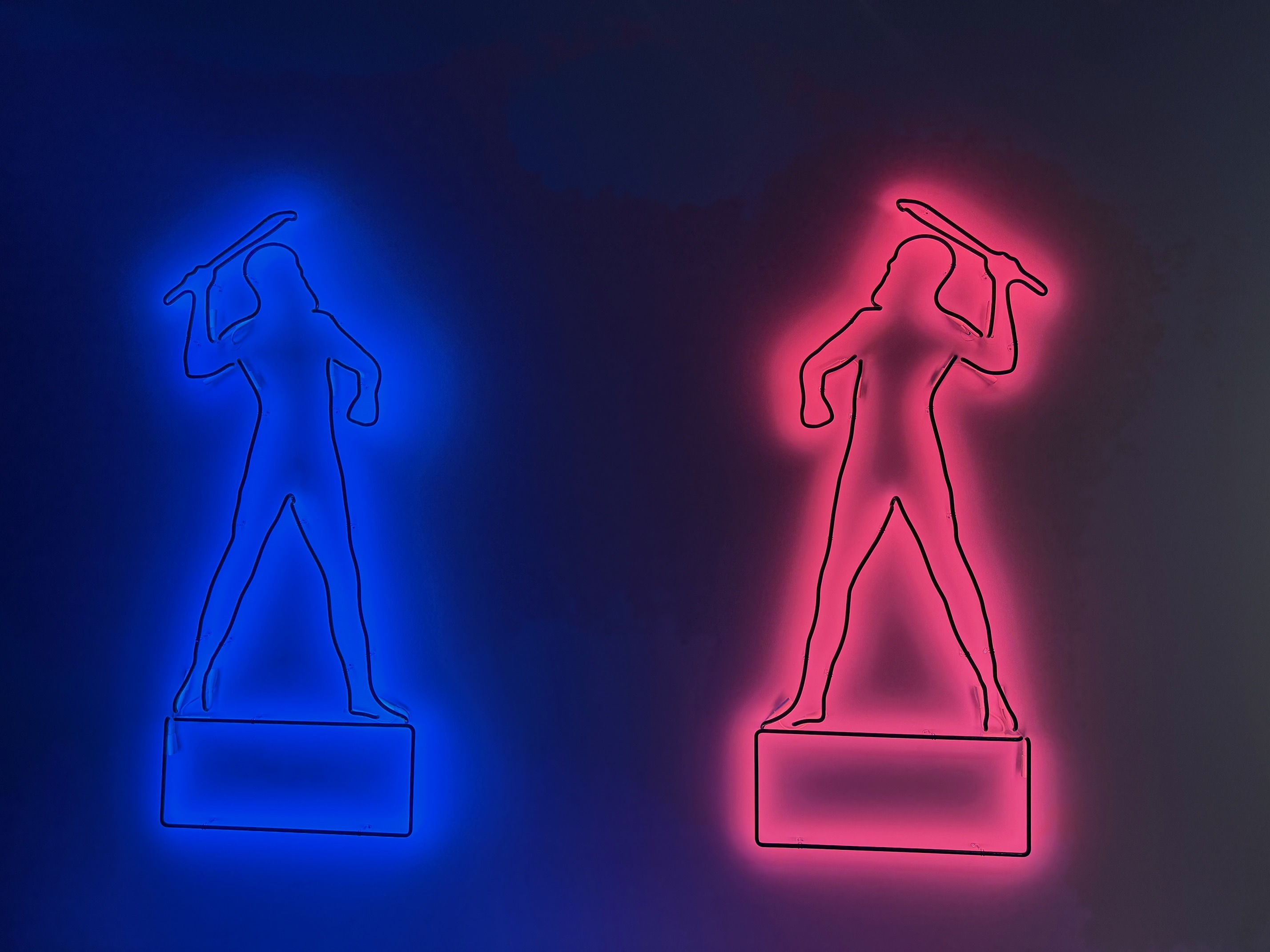
2020 neon “OA Warrior I (Blue) (Azul)” and “OA Warrior I (Pink) (Rosa)” by Reko Rennie (Kamilarol) – a mix of ancestral and urban culture. Courtesy: National Gallery of Victoria
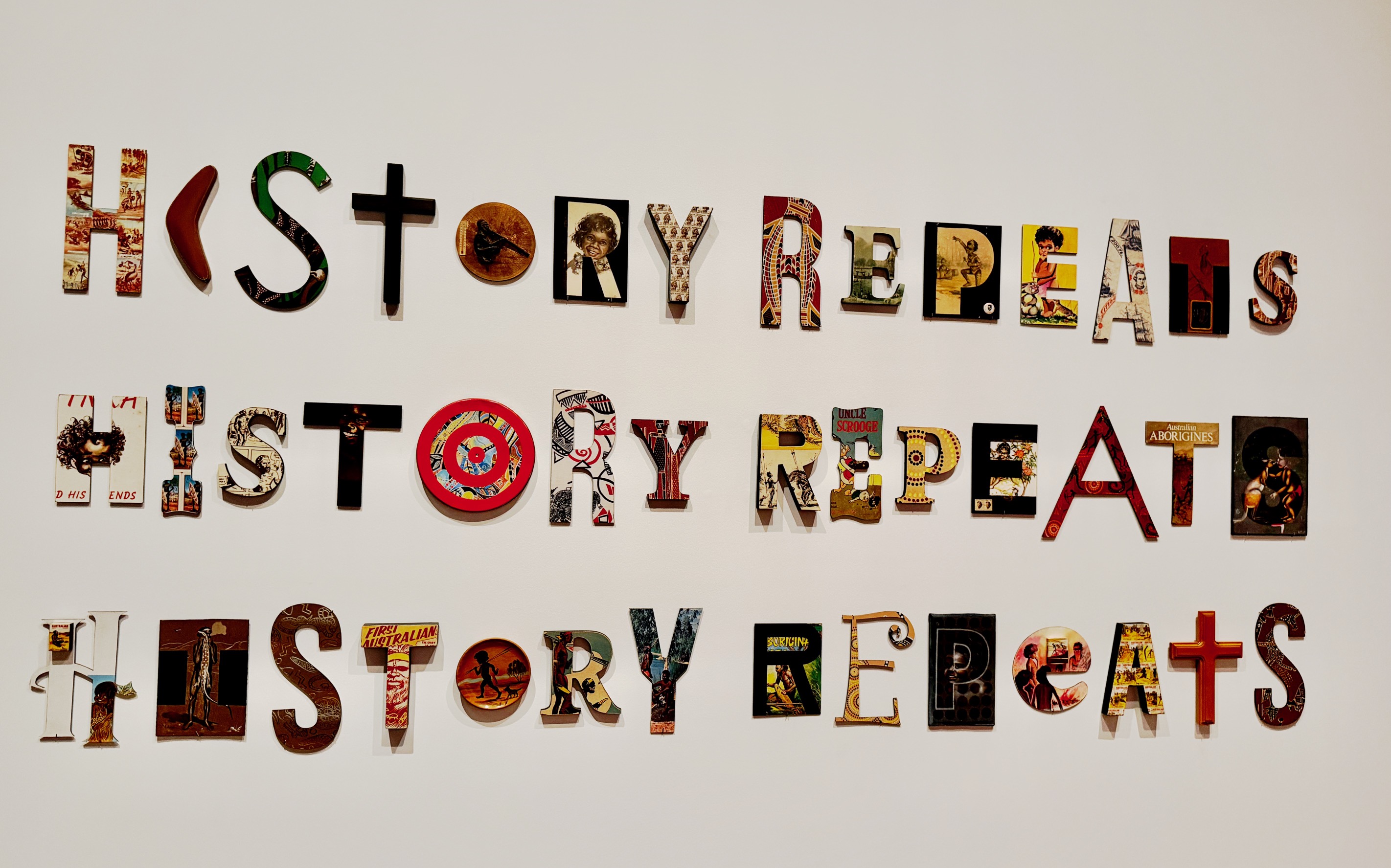
2022 History Repeats by Tony Albert (Girramay/Yidinji/Kuku Yalanji)– a work made of recycled vintage commercial knicknacks featuring appropriated Aboriginal iconography. Courtesy: National Gallery of Victoria

But the majority of the show shows how traditional artists using earth pigments on eucalyptus bark prior to the 1970s gave way to community artist who used new synthetic pigments to paint first on posterboard and then on canvas.

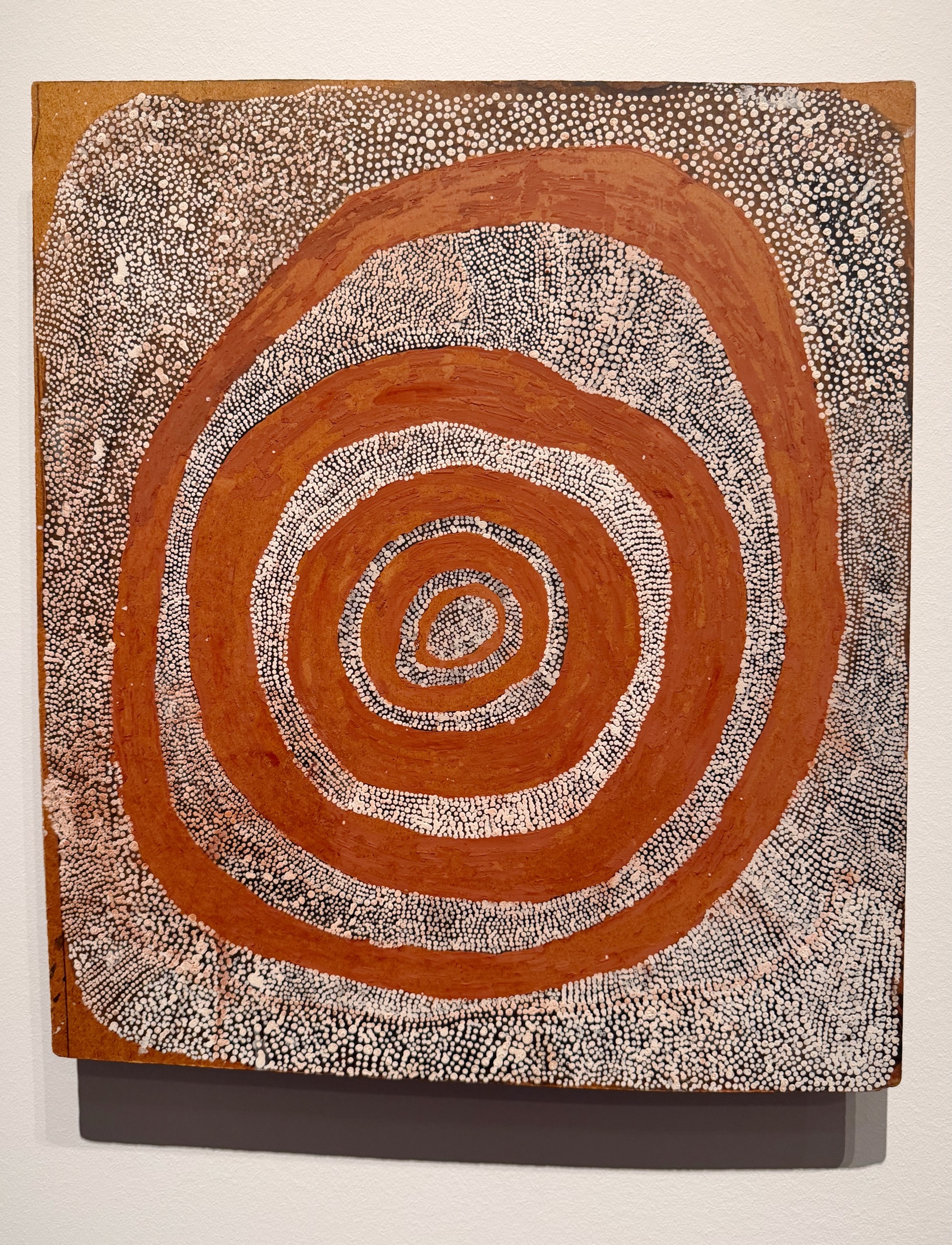
1972 Snake and Water Dreaming by Yala Yala Gibbs Tjungurray (Pintupi) from the first Indiginous art community in Papuna, Northern Territory to establish a contemporary art center; design from ritual body painting and cave art. Courtesy: National Gallery of Victoria
Conceptual Maps: 2006 conceptual abstraction Kalaya Wati (Emu Man) by Alkawari Dawson (Pitjantjatjara). Courtesy: National Gallery of Victoria

For more about the artists and how/why they create, take a look at the exhibition guide here.

Experience the majesty, scale, and experience of this exhibition through this walk-through produced by the Denver Museum of Art. Listen for the explanation of how the exhibit received its title, too!

Don’t worry if you missed this in Denver. The Stars We Do Not See will be on view at the Portland Art Museum in Oregon from September 5, 2026 through January 3, 2027, and at the Peabody Essex Museum in Massachusetts from February 27, 2027 through June 13, 2027.

First gallery with display of eucalyptus memorial poles carved by Northern Aboriginal artists and painted with ritual designs

Georgia’s Circles and Musical Abstractions

As a young woman, O’Keeffe learned to play the violin and piano. But she was also a talented visual artist, which made her wonder which path she would take in her education – music or art? We know which career path she chose – a modernist painter of nature, New York cityscapes, and New Mexico landscapes.

But deep in her artistic upbringing, she figured out a way to have the best of both – using music as a conduit to make abstractions that express emotion, hidden feelings, and channel pure beauty. It’s a hidden, personal dimension to O’Keeffe’s creativity that is on display at the Georgia O’Keeffe Museum’s capsure exhibition, A Circle that Nothing Can Break, on view in Santa Fe through June 7, 2026.

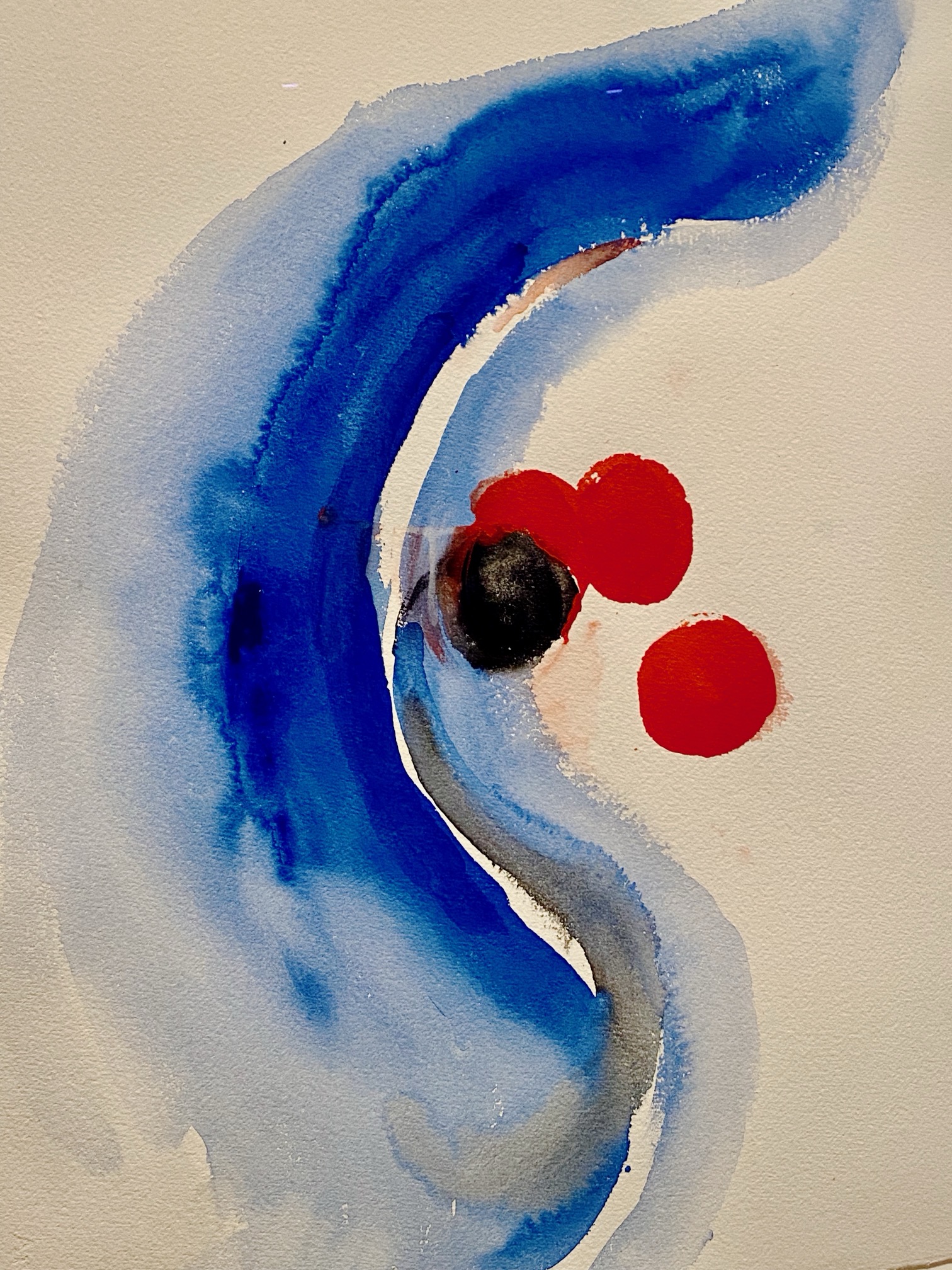
O’Keeffe’s 1970s watercolor Untitled (Abstraction Blue Wave and Three Red Circles). Painted after she lost her central vision with help from Belarmino López.

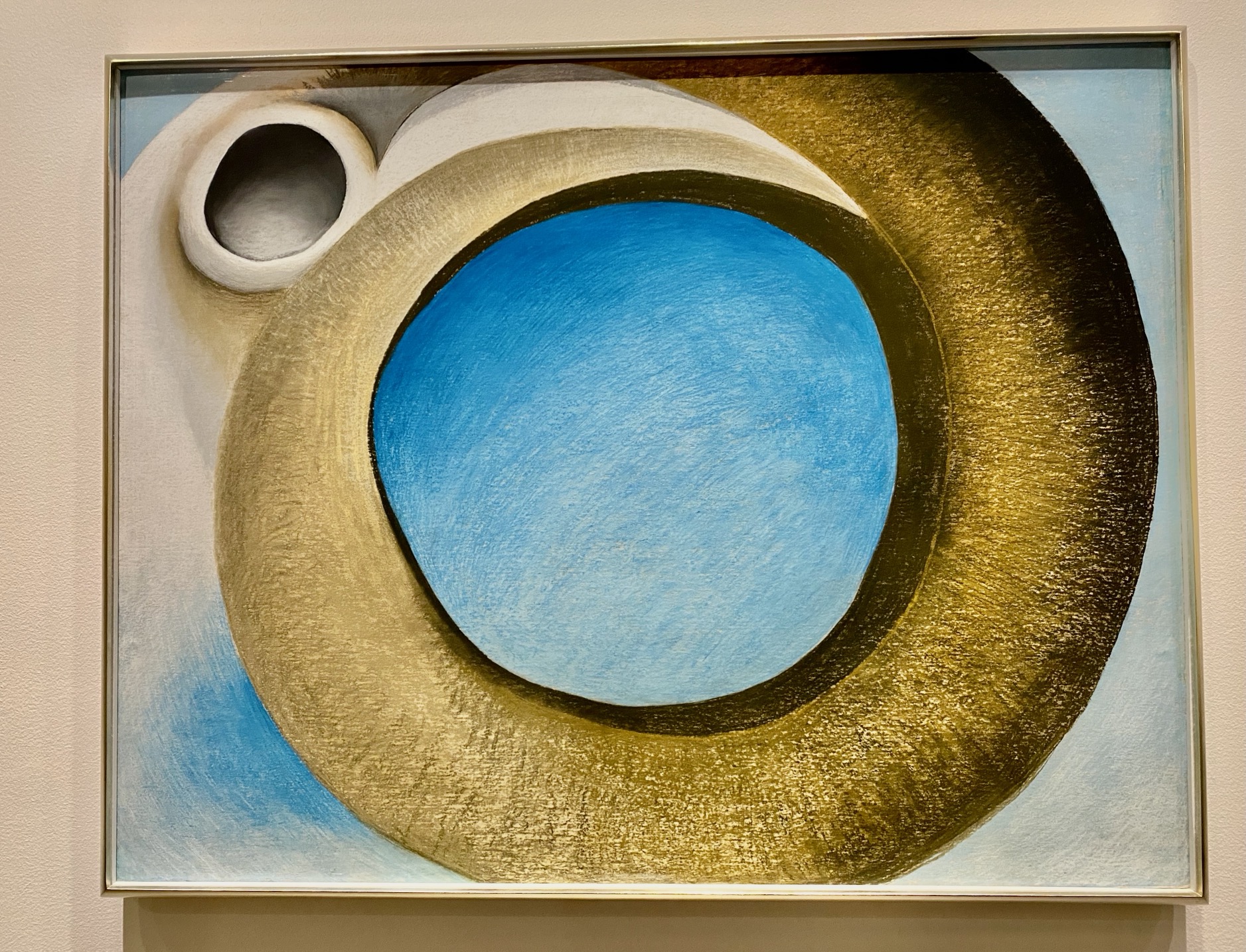
The title of the exhibition refers to a comment by Georgia in a 1922 letter to her husband – the influential photographer and gallerist Alfred Stieglitz – in which she said their relationship was “like a circle that nothing can break.” Looking around the small gallery, circles and arcs are everywhere – in her earliest charcoal abstractions, a circle of blue sky seen through a curved goat horn, and her late-in-life abstractions.

O’Keeffe’s 1945 pastel Goat’s Horns with Blue. Courtesy: private collection

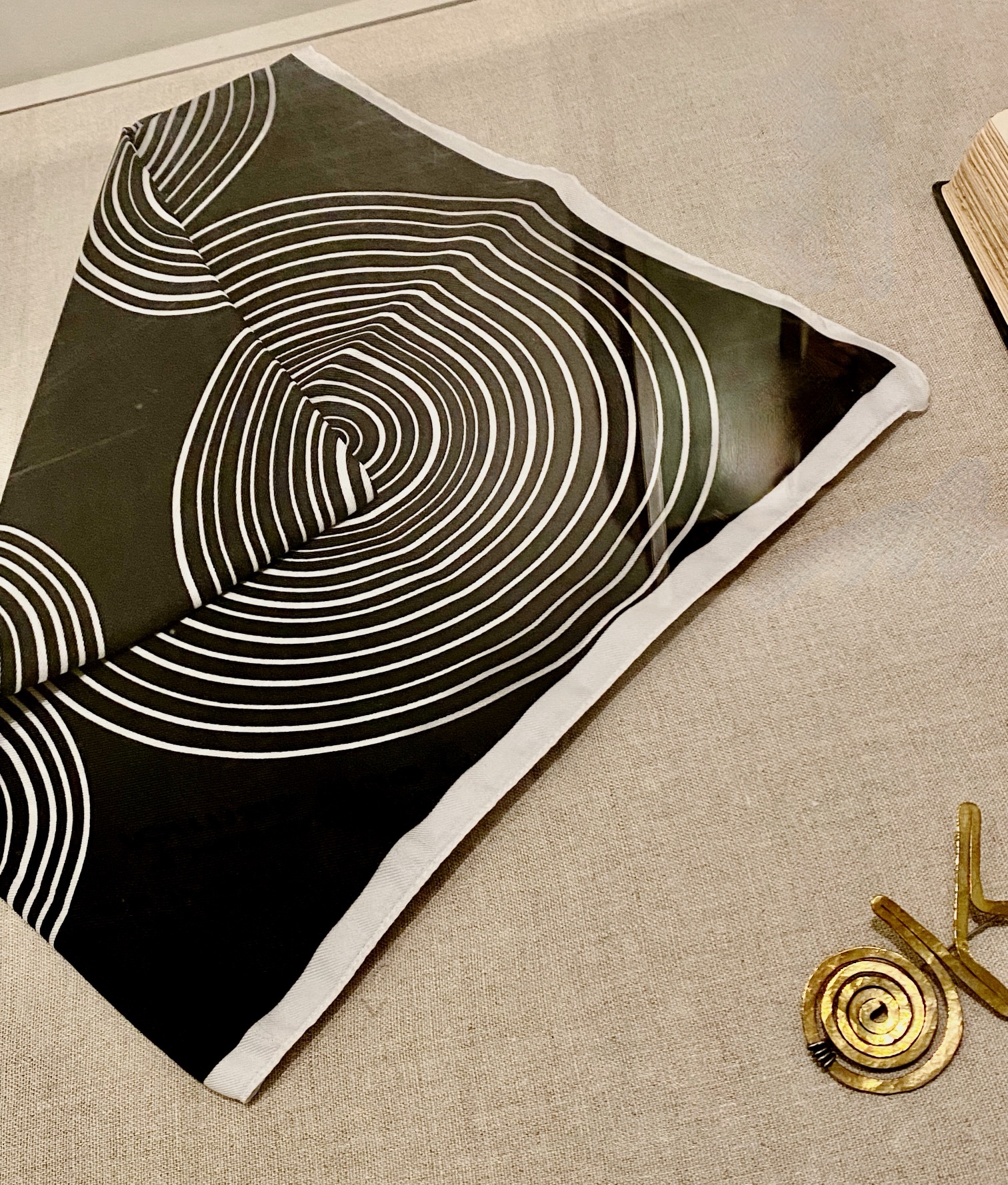
Even some of her favorite fashion accessories feature circles! Take a look at some of our favorites in our Flickr album.

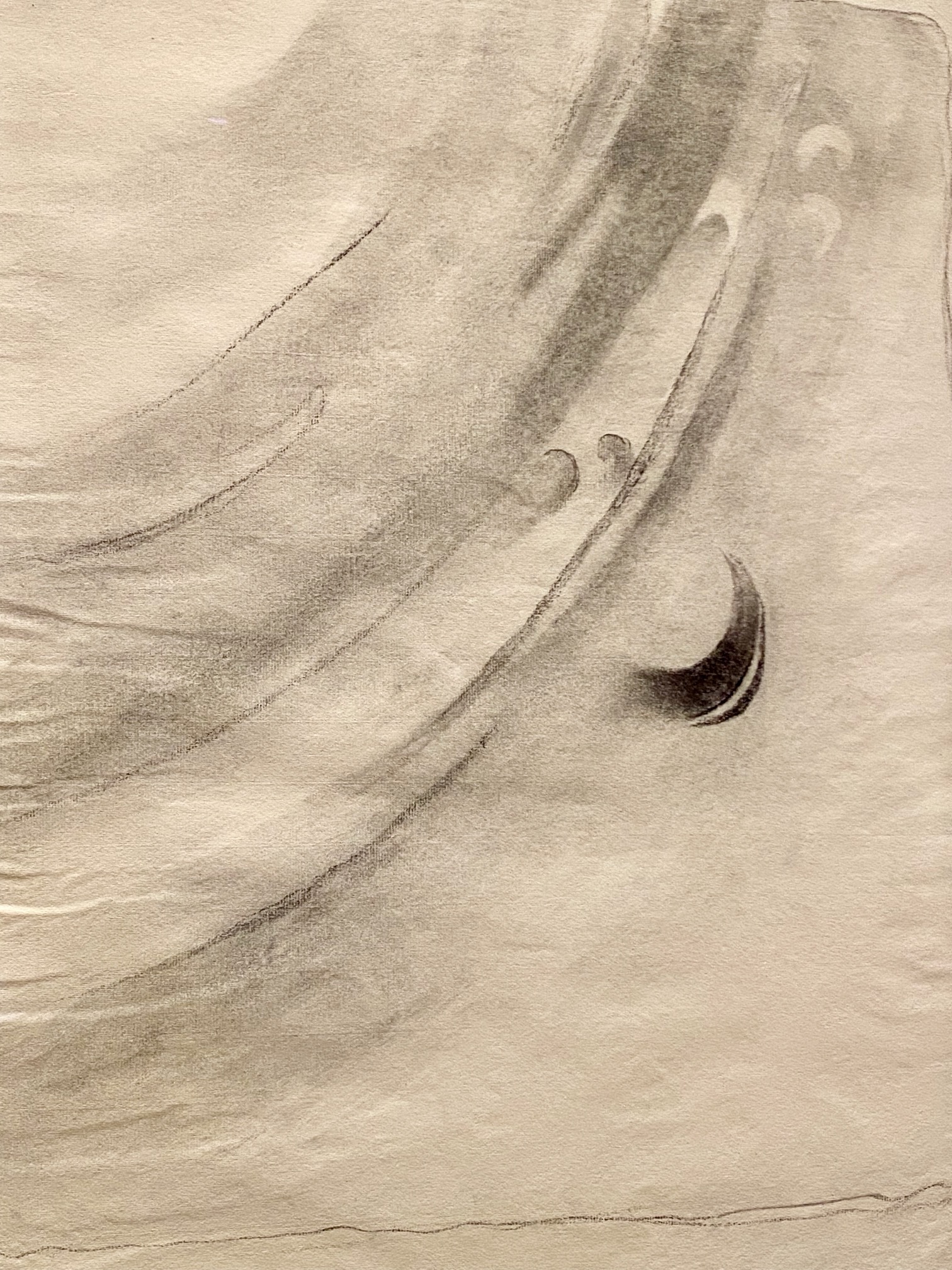
O’Keeffe’s 1915-1916 charcoal drawing Abstraction with Curve and Circle.
Personal accessories featuring the circle motif – a 1960s-1970s Italian scarf with concentric circle designs and her signature 1930s “OK” brooch from Alexander Calder.

When O’Keeffe took summer classes at the University of Virginia in 1912, her teacher Alon Bennett often played music on his Victrola during class and encouraged her to explore expressionist synergy between music and art. Around 1914, she also read Kandinsky’s influential book, Concerning the Spiritual in Art. It made quite an impression on her with quotes such as “Color is the keyboard, the eyes are the harmony, the soul is the piano…(and) the artist is the hand which plays…”

Georgia’s early charcoal works show her experimentation in using lines as “sounds” and interest in using circles in an expressionistic way. In letters to her long-time friend Anita Pollitzer, sent in 1915-1916 while she was teaching in South Carolina, Georgia said she did a “liberating series of drawings.” She explained that she often played violin for many hours to interpet her feelings, and then translated it all through her charcoal drawings.

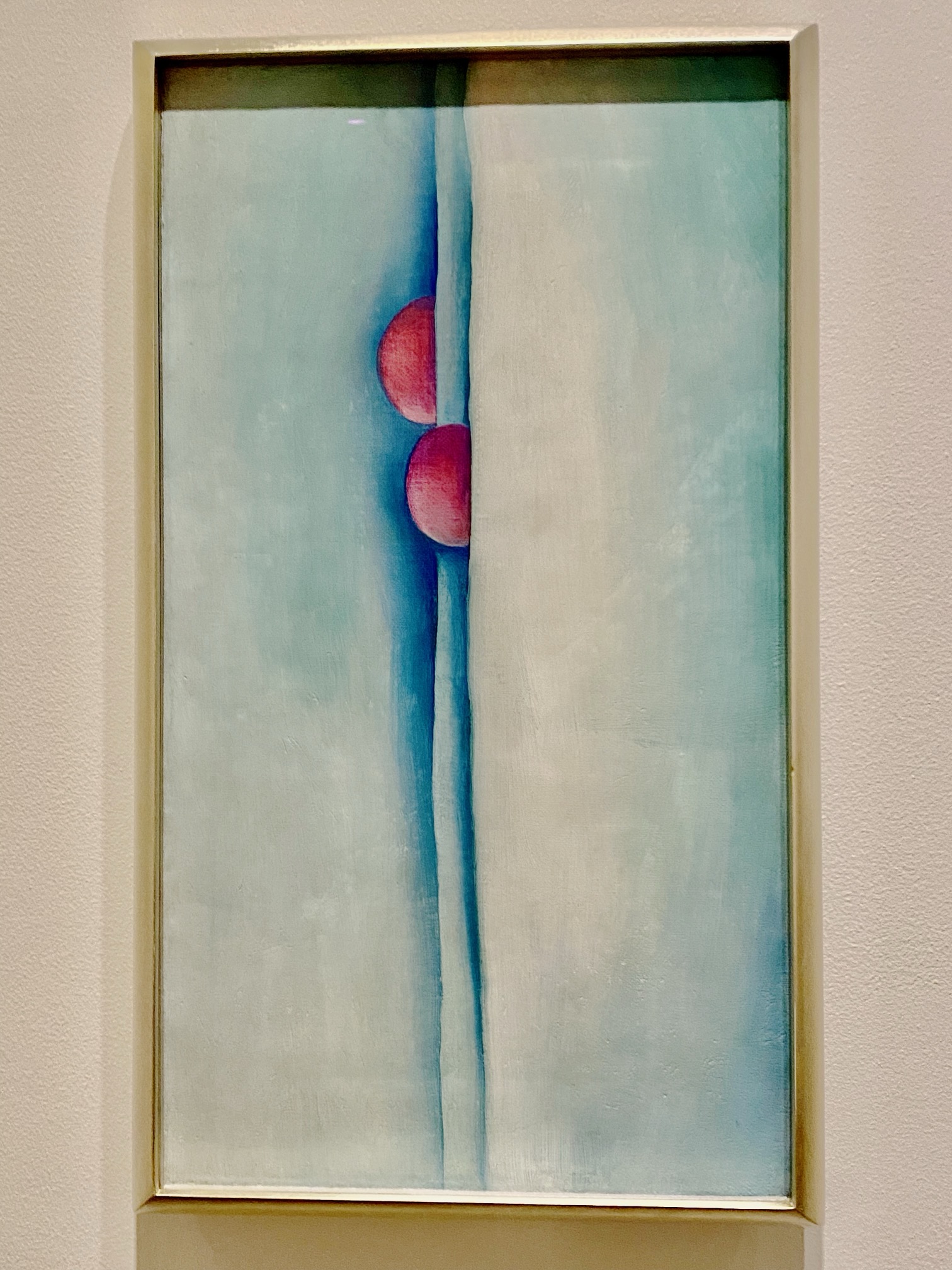
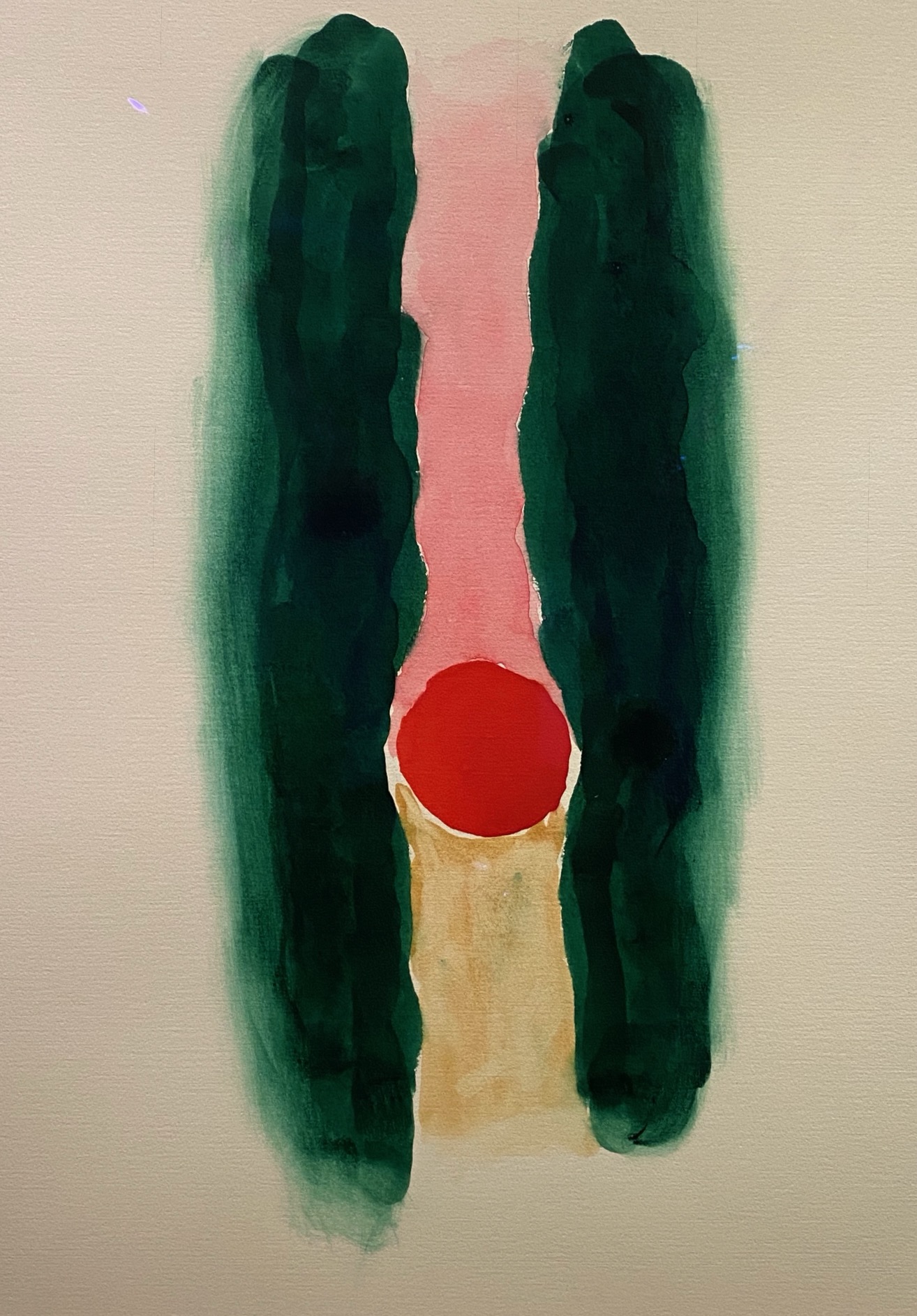
O’Keeffe’s 1919 oil painting Green Lines and Pink.
O’Keeffe’s 1970s watercolor Abstraction Dark Green Lines with Red and Pink. Painted with the assistance of Belarmino López.

These drawings electrified her future husband, Alfred Stieglitz, who immediately mounted them for a show in his gallery and kick-started her career.

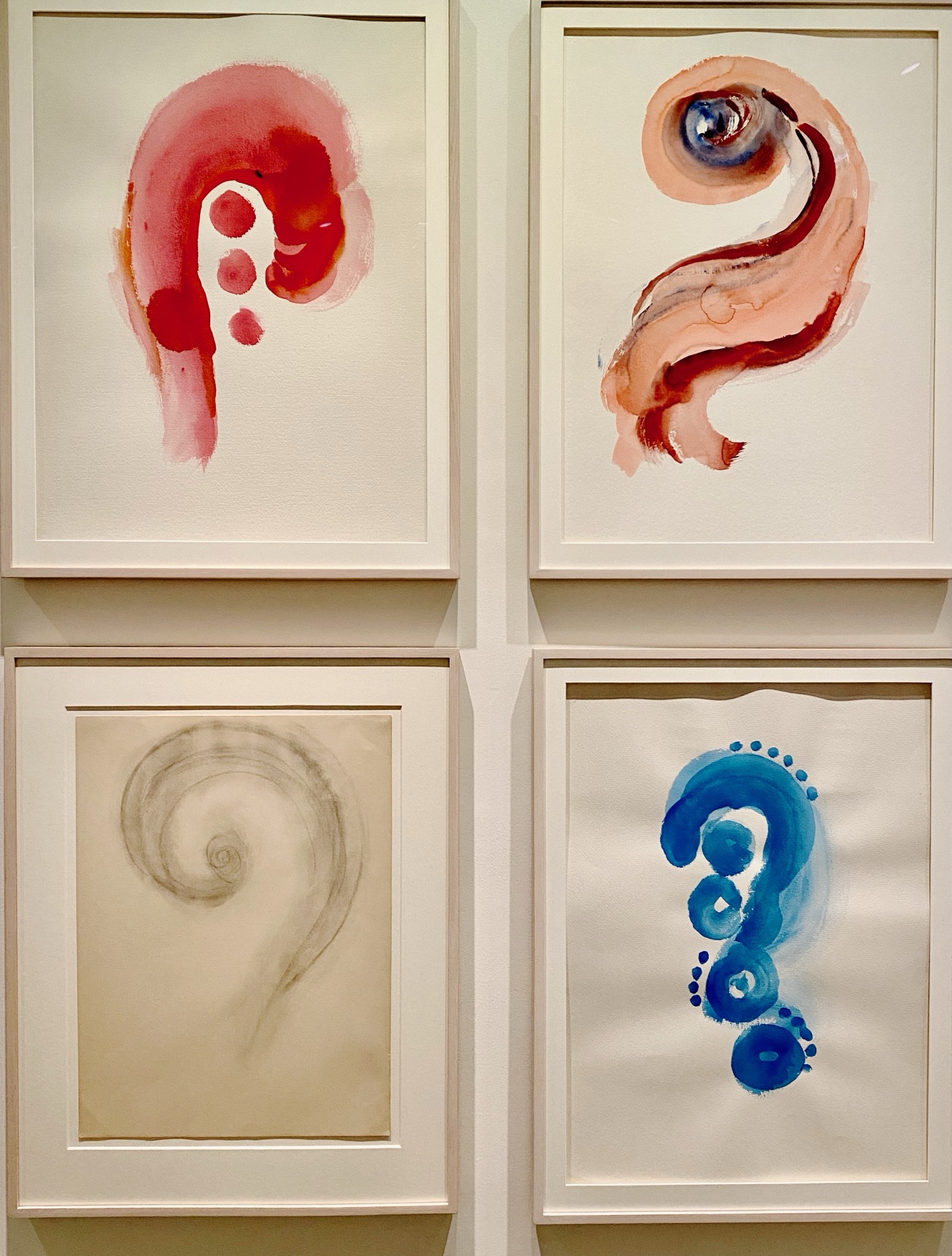
Four O’Keeffe 1970s watercolors (painted with assistance from Belarmino López) – Untitled (Abstraction Pink Curve and Circles), Untitled (Orange and Red Wave), Abstraction, and Untitled (Abstration Blue Curve and Circles).

In New York, the couple shared a love of live concert and recorded music throughout their lives together. By the time Georgia moved to New Mexico, she had assembled an extensive classical record collection. During the 1960s, when she began to lose her eyesight, listening to music from the comfort of her BARWA Lounger was a near-daily afternoon routine.

The exhibition selects paintings from throughout Georgia’s life featuring this circle motif – early oil paintings and sketches through to her late-in-life watercolors (done in her nineties with help from artist Mino López) that revisit these early themes. Note the upper arcs that suggest the top of a violin. She remembered it all.

Listen to this fascinating talk by music education professor Janet Revell Barret, who provides an in-depth explanation of how O’Keeffe’s early training and musical inclinations led her to greater expression on the page and canvas: