
Contemporary ceramicist Jody Folwell (Santa Clara Pueblo) always knew she was going to make art that was a bit different, even as she was learning traditional Pueblo pottery making at the kitchen table from her her mom, celebrated artist Rose Naranjo. Satirical, sculptural, social-political, and avant-garde ceramic statements line the gallery from start to finish in O’Powa O’Meng: The Art and Legacy of Jody Folwell, a celebratory retrospective exhibition at the New Mexico Museum of Art through September 13, 2026.
The Santa Fe stop is the final on the exhibition’s journey across the United States, which started at the Fralin Museum of Art at the University of Virginia.
Walk through the show to see our favorites in our Flickr album.
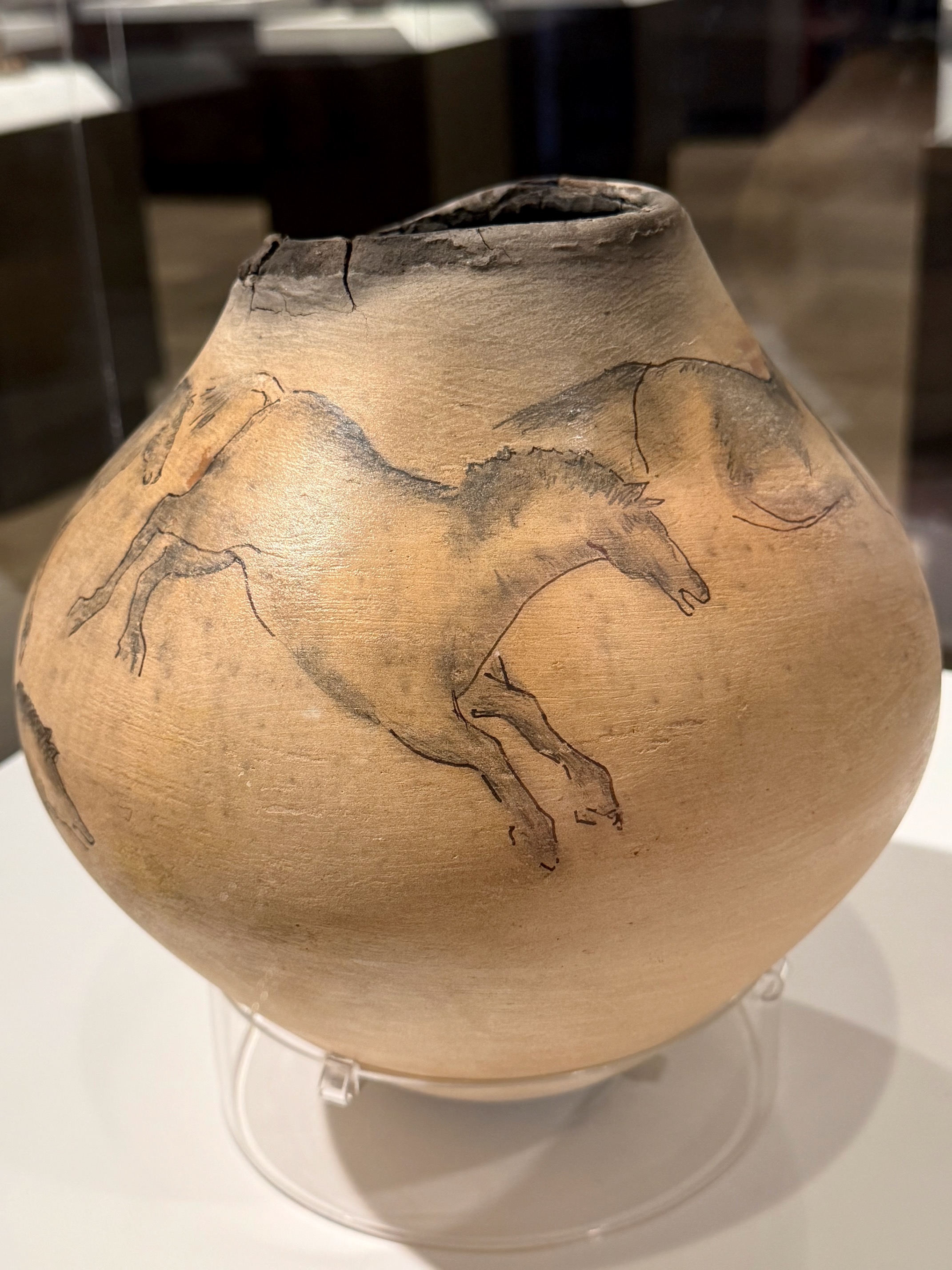
The exhibition does not unfold chronologically, even though it features some of Jody’s (and her family’s) most ground-breaking and controversial work. At one end is Half a Step, that she credits as one of her earliest nontraditional ceramic statements, featuring a lively bison thundering around the partially polished curved surface – a “half step” away from what was expected from Santa Clara pottery at the Santa Fe Indian Market in 1975. At the other end is her collaboration with the acclaimed sculptor Bob Hazous (Chiricahua Apache) that won Best in Show in 1984. Who had ever seen a green Pueblo pot with loaded commentary?
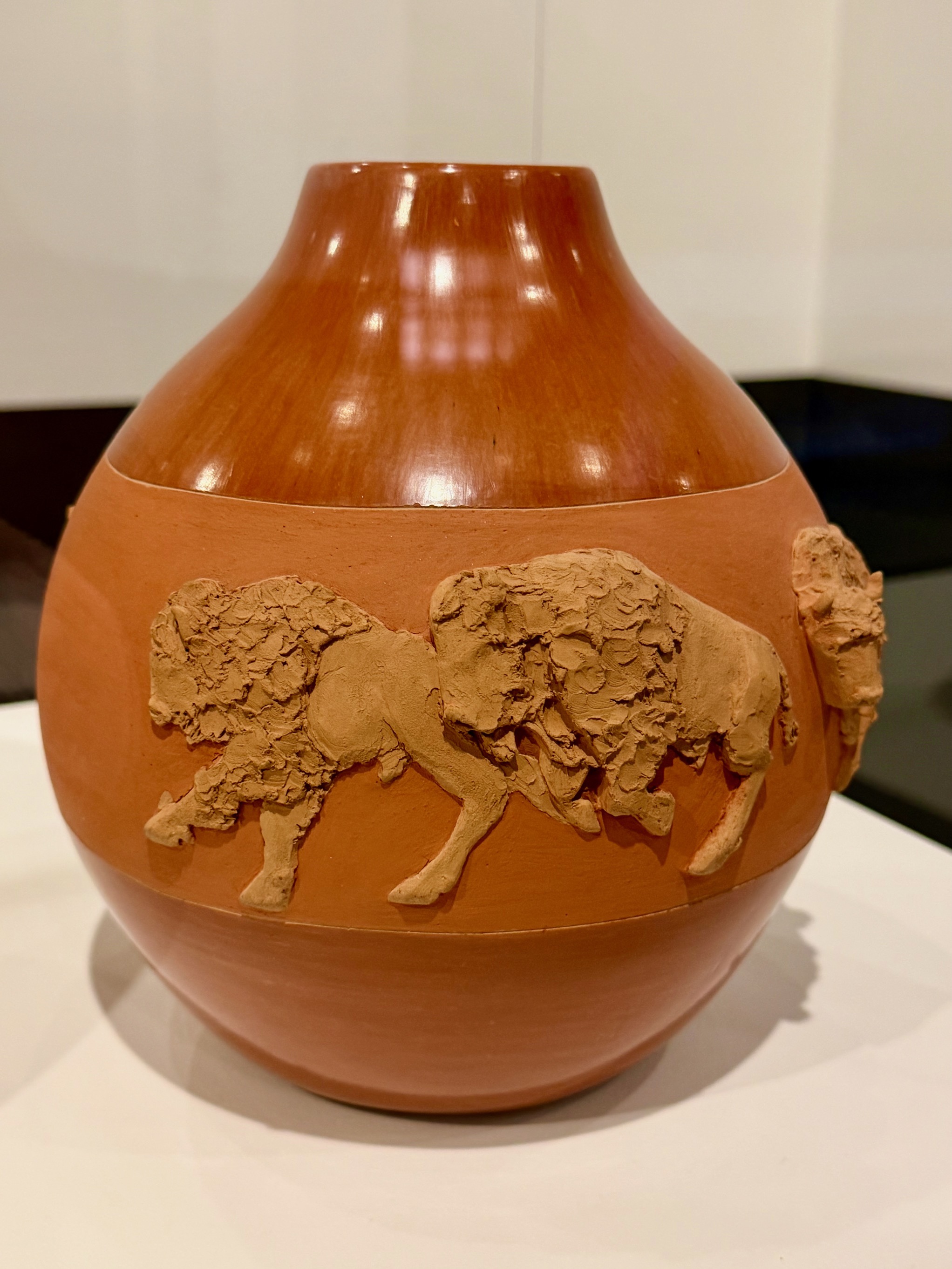
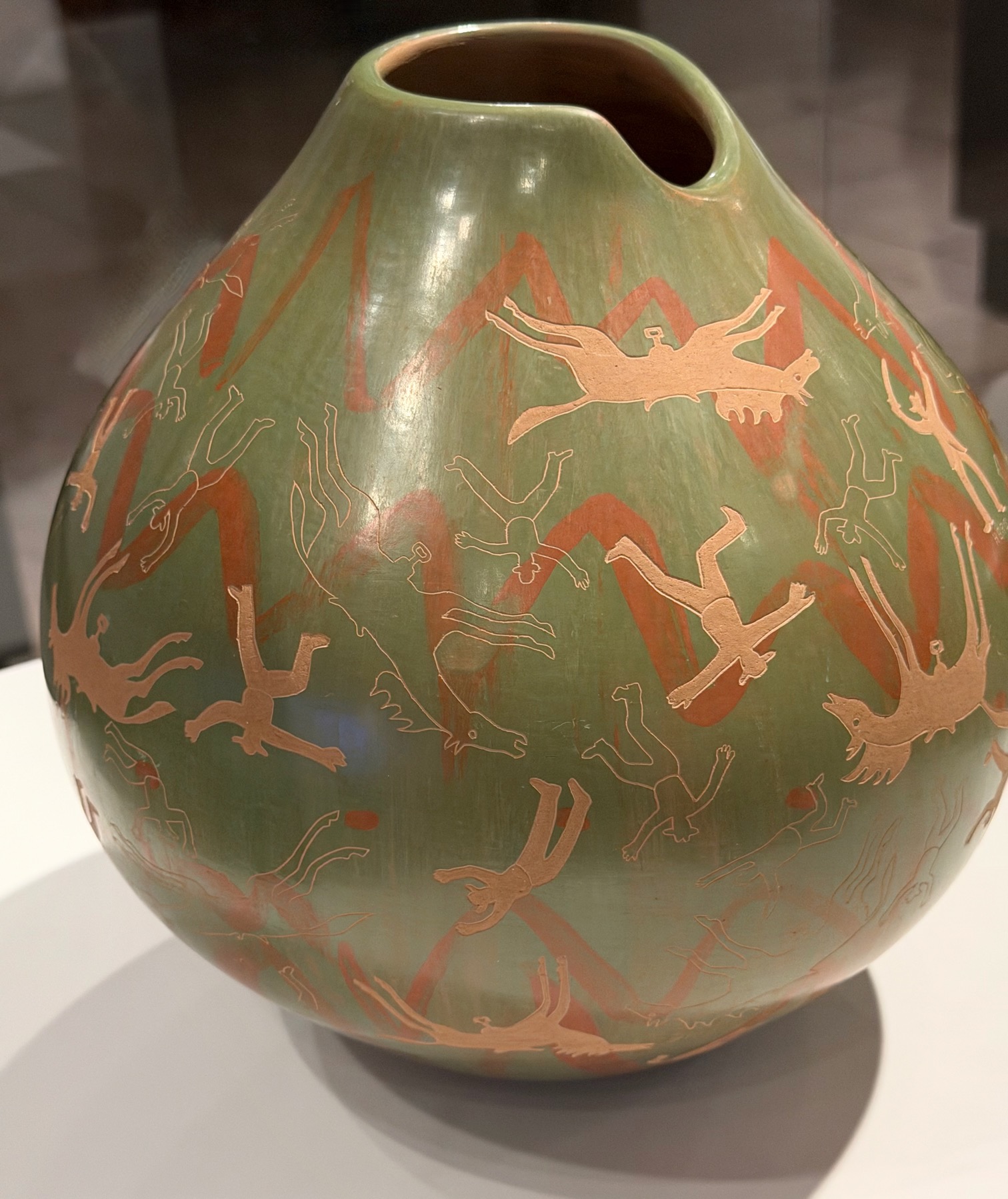
Collaborations, social commentary, sculptural details, and different painting styles encourage gallery goers to move slowly, stop, look, and circumnavigate each work to let the beauty, humor, or story sink in. Jody’s recent multi-pot ceramic installation The Cycle of Pottery is Us causes viewers to stop, think, and reflect on not only the persistence of the traditional Tewa art form, but of the entire human cycle of birth and rebirth.

As cultural appropriation carries a loade charge in the art world, Jody’s feels that her fascination by sinuous designs of other cultures, the cheekiness of Pop culture, and admired styles of epochs in Western art history gives her license to honor them. She incorporates Plains Indian ledger book style, Maori iconography, comic books, and even the cave paintings of Lascaux. A wide lens from her travel and studies delights visitors as she takes them on a world journey of history, art, and people.

The feelilng behind the show chronicles how much the maternal ceramic making tradition means to her.

The exhibition includes a large traditional bread making bowl by her mother as well as work by her daughters and grandchildren – accomplished artists in their own right.
Jody titled her show O’Powa O’Meng (“I came here, I got here, I’m still going”) to demonstrate her continued commitment both to innovation in her art form and to inspire the next generation of contemporary artists.
Several pieces involve a mix of tiles (some broken) and pots with incriptions or depictions woven across all of them, such as The Buffalo Hunt that she created for the Santa Fe installation and Buffalo Soldier, a meditation on Obama’s historic presidency and the enslaved workers who originally built the White House.
Hear more about pushing the boundaries from inside a Tewa home dedicated to art making from Jody and daughter Susan as they talk about exhibition’s final stop with curator Jill Ahlberg Yohe at Santa Fe’s New Mexico Museum of Art.

