It’s 1680 and the Revolt has begun. Heavily armored Spanish forces guide their horses and armored attack dogs through a maze of Southwestern mesas in driving rain and a blinding storm to thwart the unexpected uprising of the Pueblo nations. The leader of the Revolt, Po’pay invokes the spirits and calls up his warriors and archers to meet the challenge of the assault. In the epic, 9-minute video installation Blindfall, there’s another twist – Pueblo warriors and starship pilots from the 2180 future use their superpowers to ensure a win.
The exiting epic is part of the exhibition Continuum: Blindfall, First Strike on the second floor of Vladem Contemporary in Santa Fe through October 18, 2026. See the highlights in our Flickr album
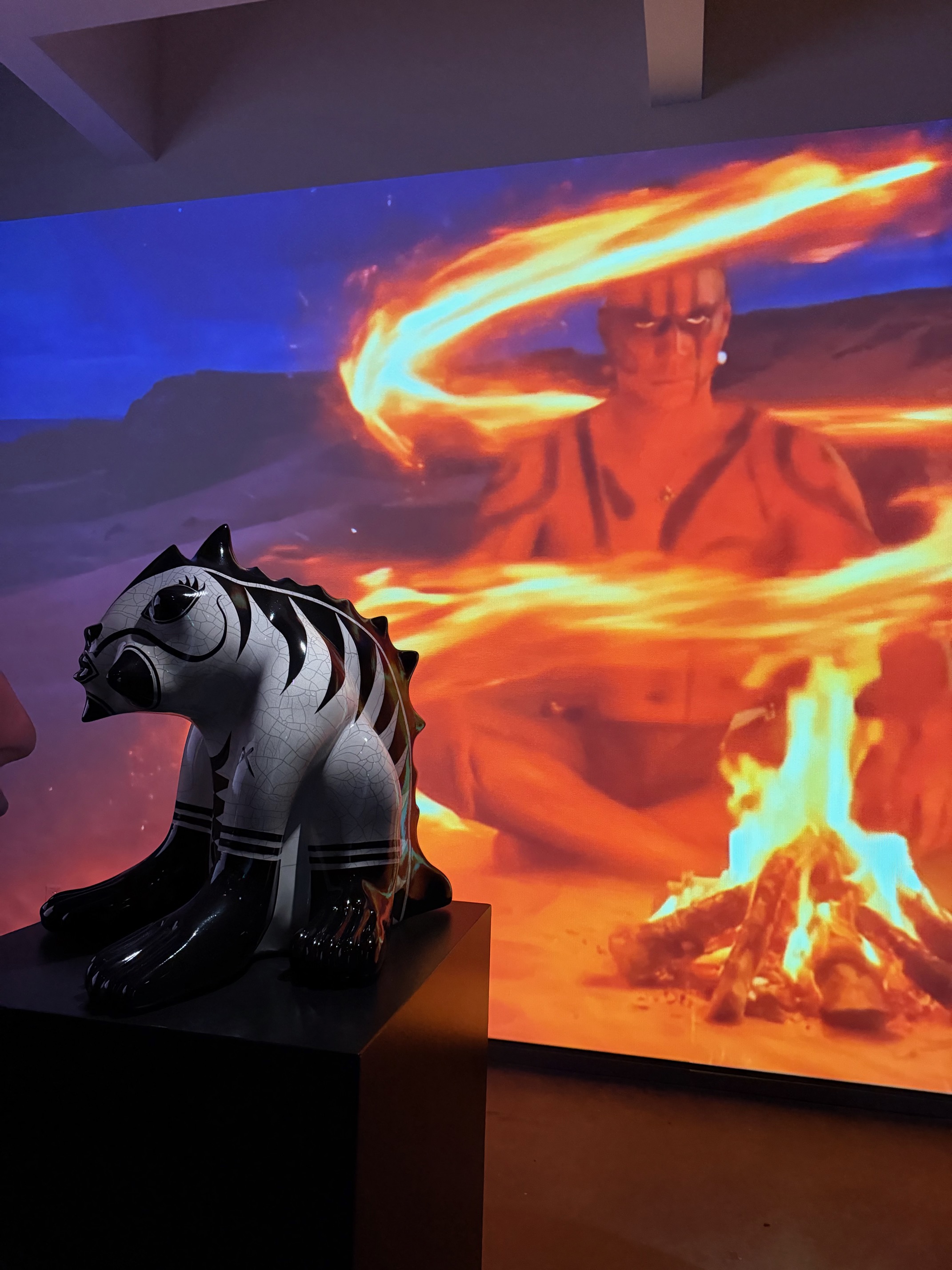
Acclaimed ceramic artist Virgil Ortiz (Cochiti Pueblo), who has developed this time-travel Pueblo superhero history/sci-fi adventure over the last twenty years, partnered with artist Eric F. Garcia to bring the Spanish story to life and provide visitors with a glimpse into the deep histories and belief systems of the clashing cultures.
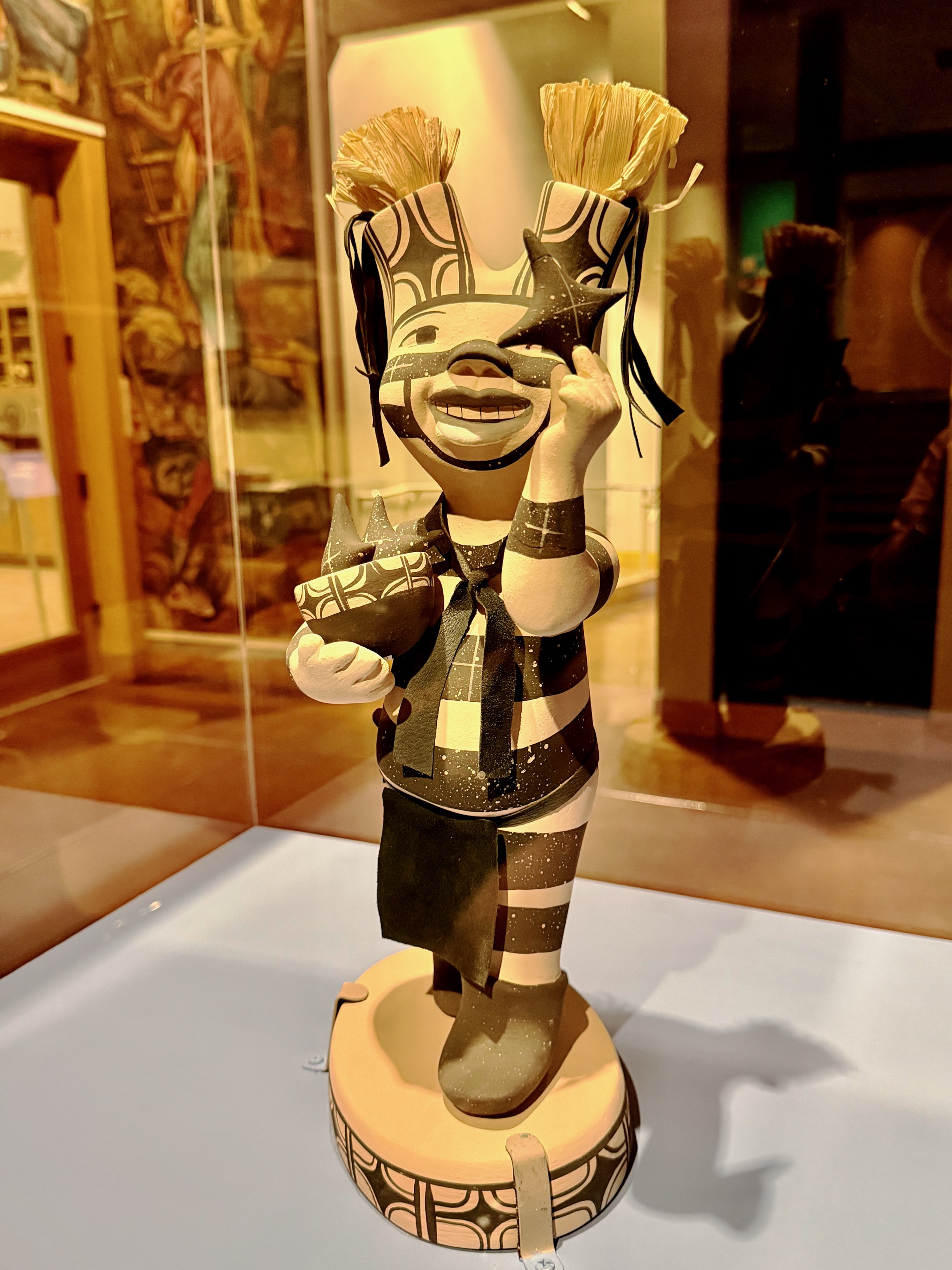
The three-part exhibition space initially feels like a contemplation of traditional and contemporary ceramic artistry, but unfolds. Through the doors, it’s a fast-paced, other worldly presentation on the process of creating 19 tribes of superheroes (representing the 19 current Pueblos of New Mexico) and surrounding sculptures. Turn the corner, and you experience a no-holds-barred immersion into an action-packed past/future futuristic cinema experience.
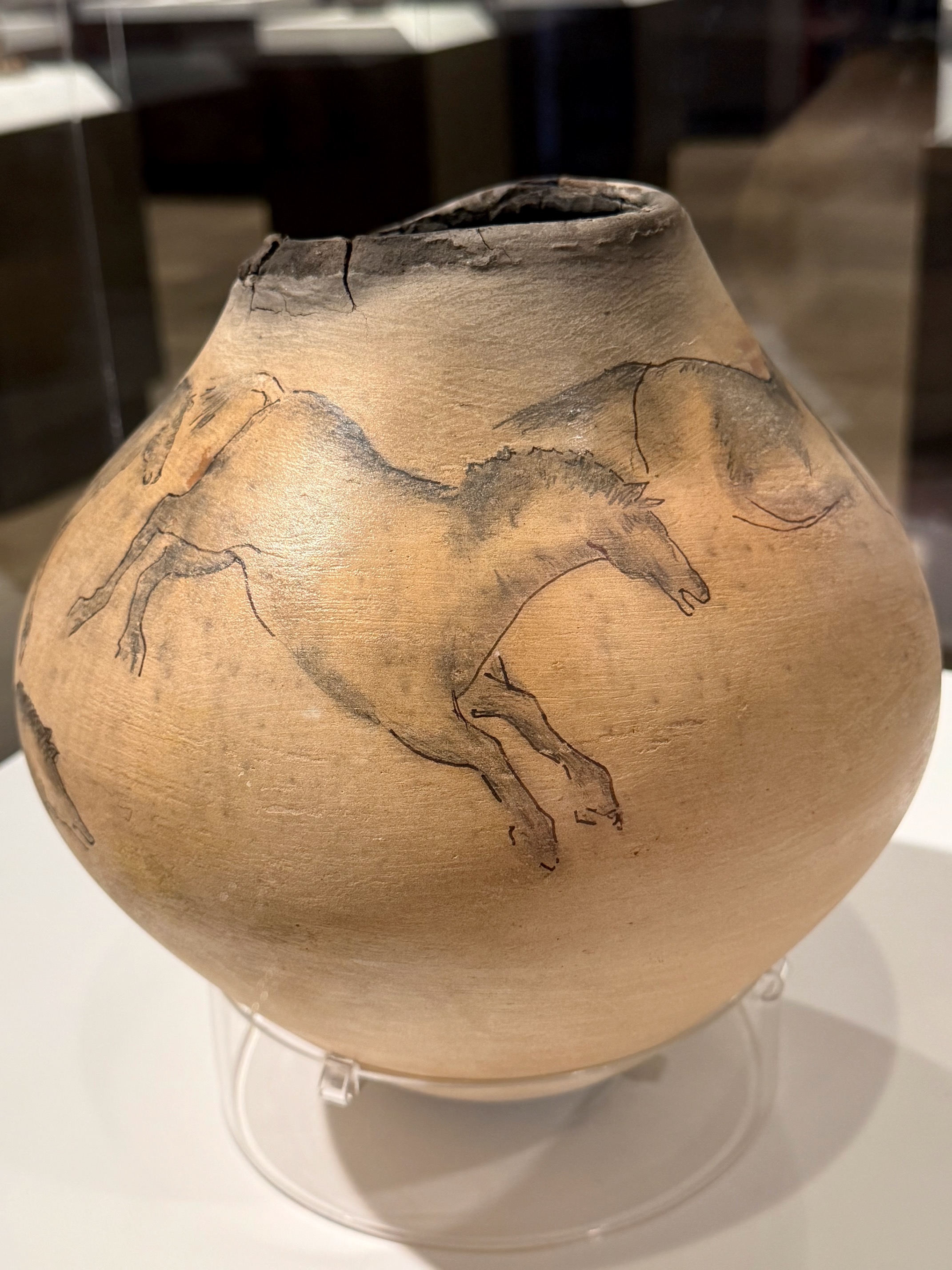
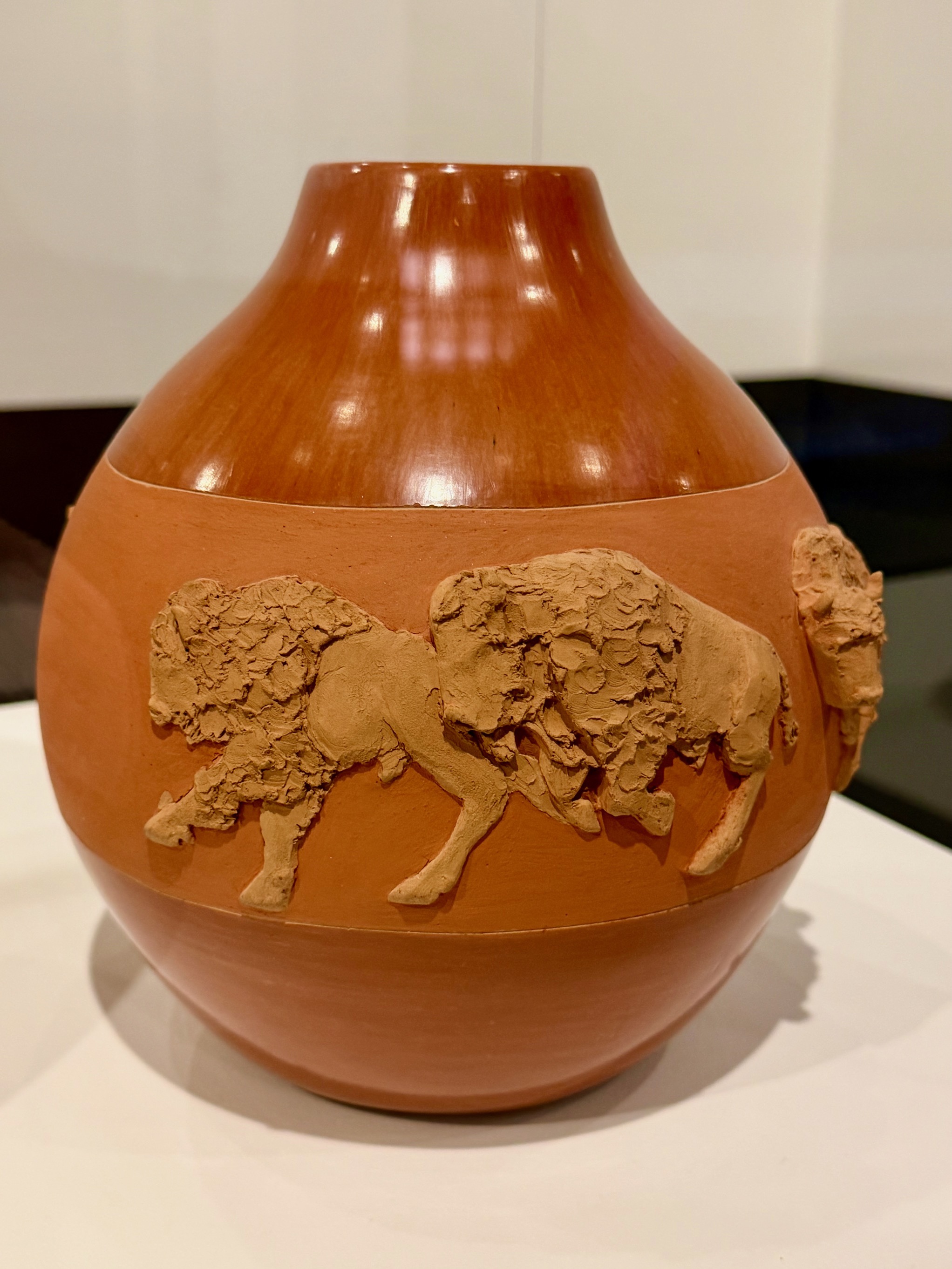
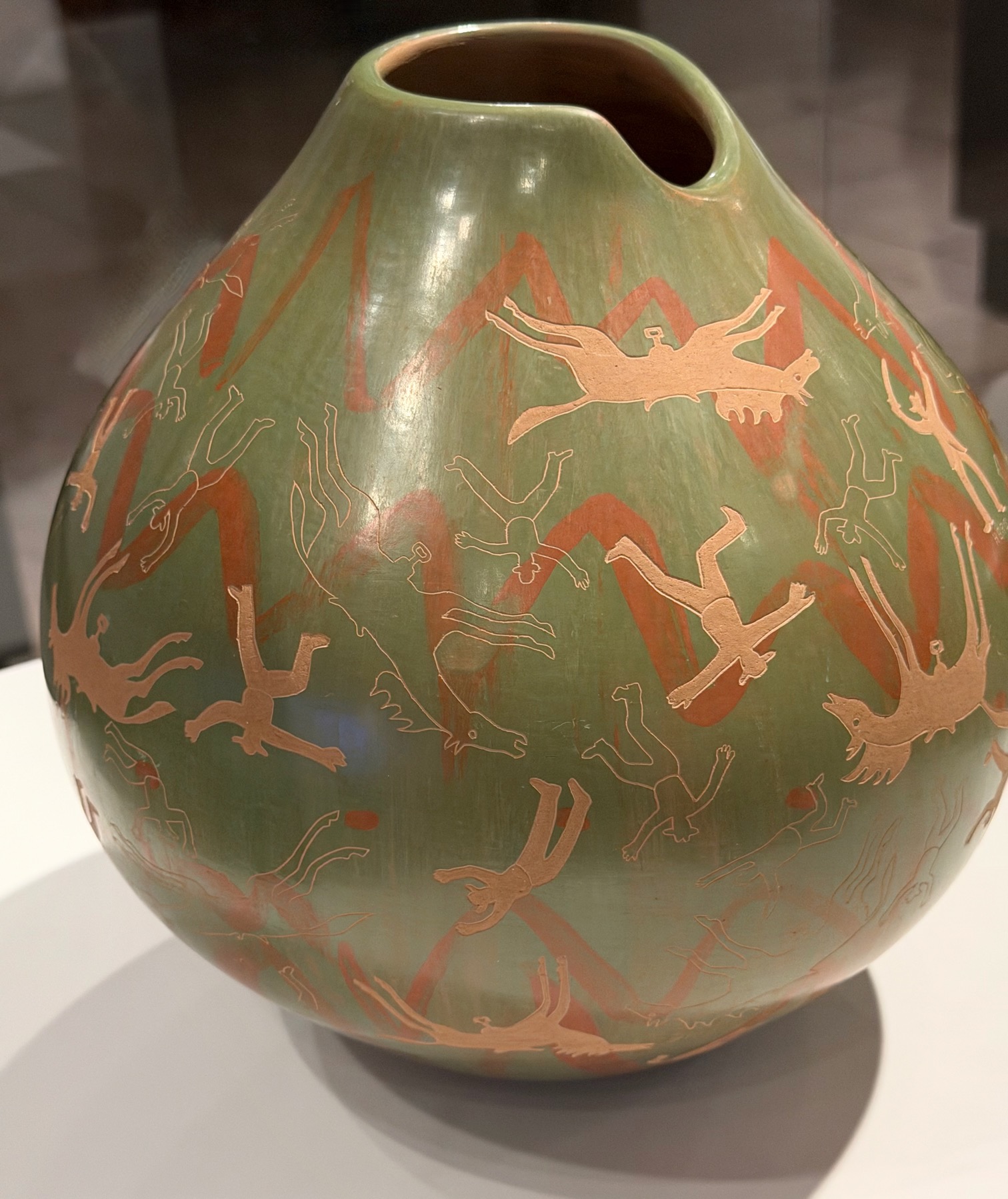
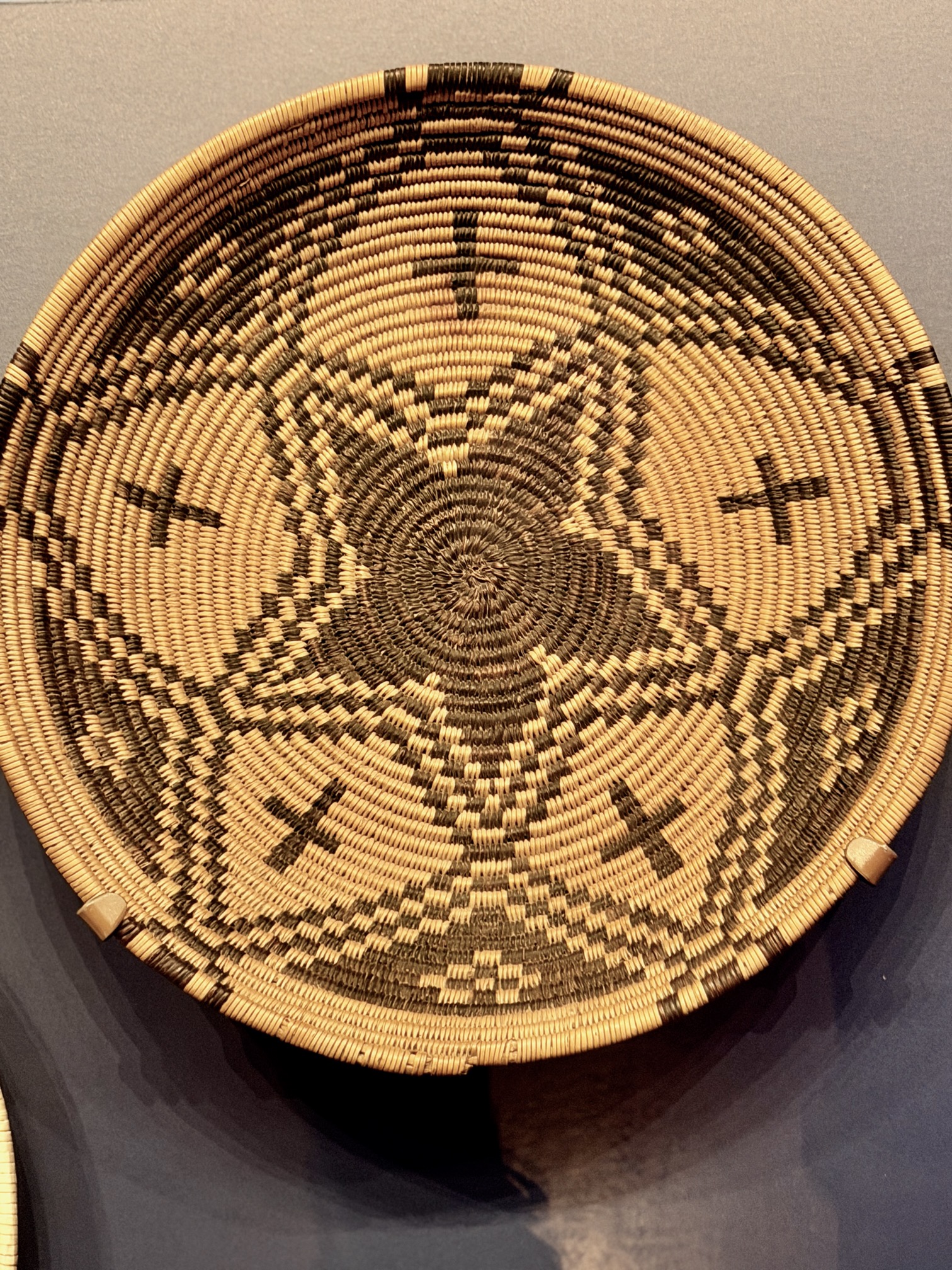
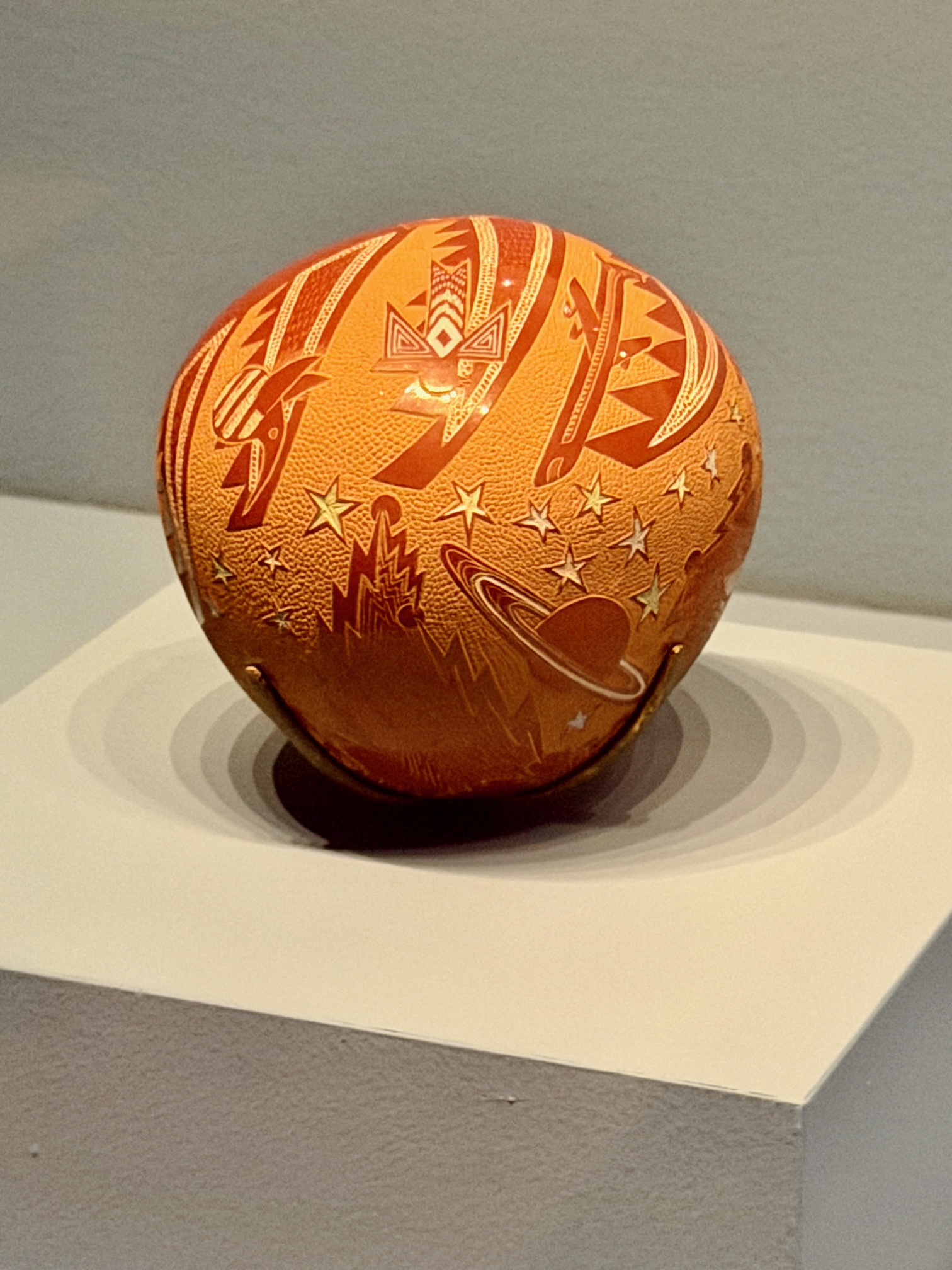
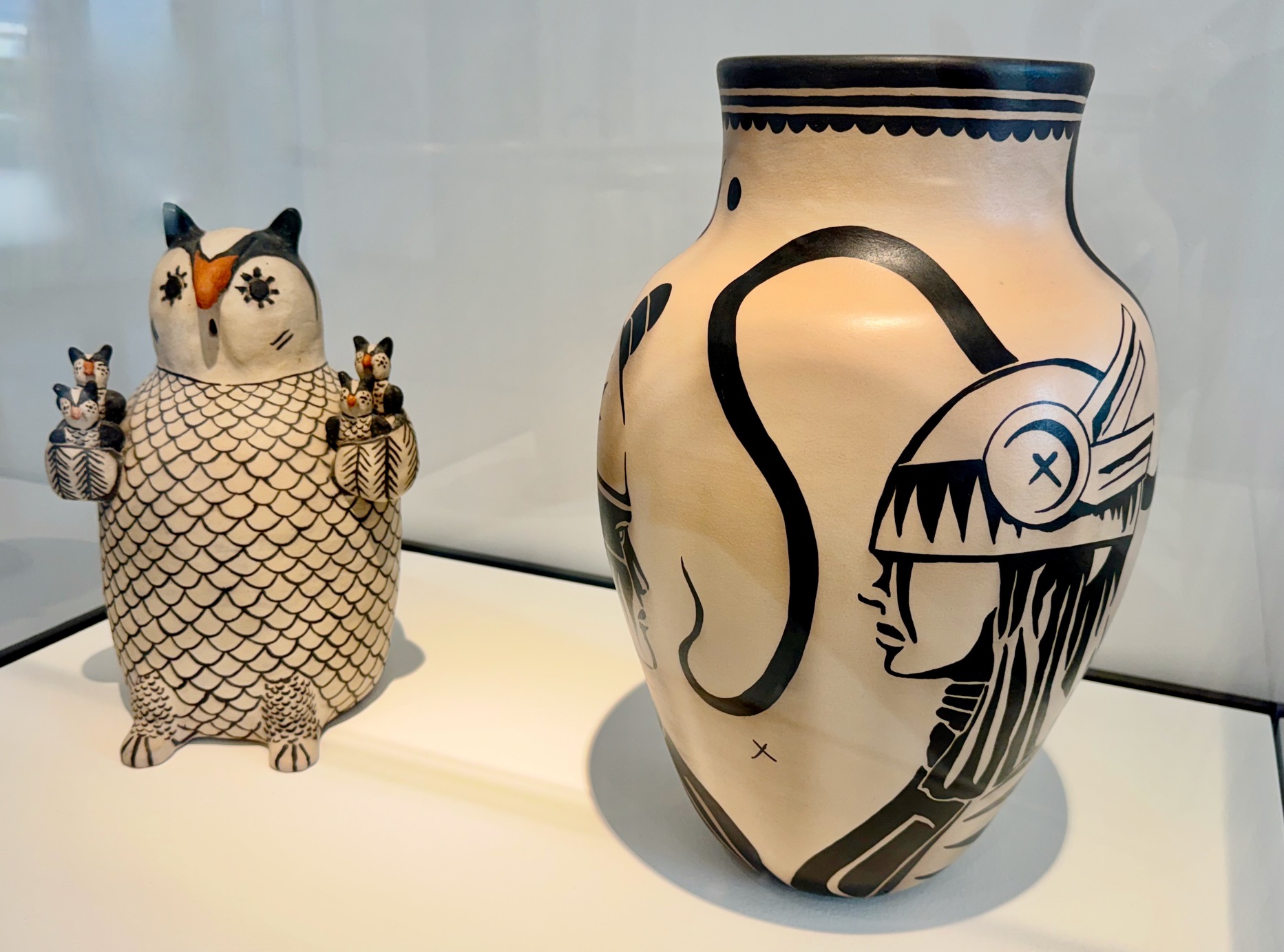
Ortiz calls this exhibition a “three-dimensional storyboard” for the full-length epic he plans to make. The first section begins with a small case with traditional and contemporary Cochiti pottery. Ortiz showcases the ancient practices that he’s mastered in his contemporary work – and believes will be continued by future generations of Cochiti artists.
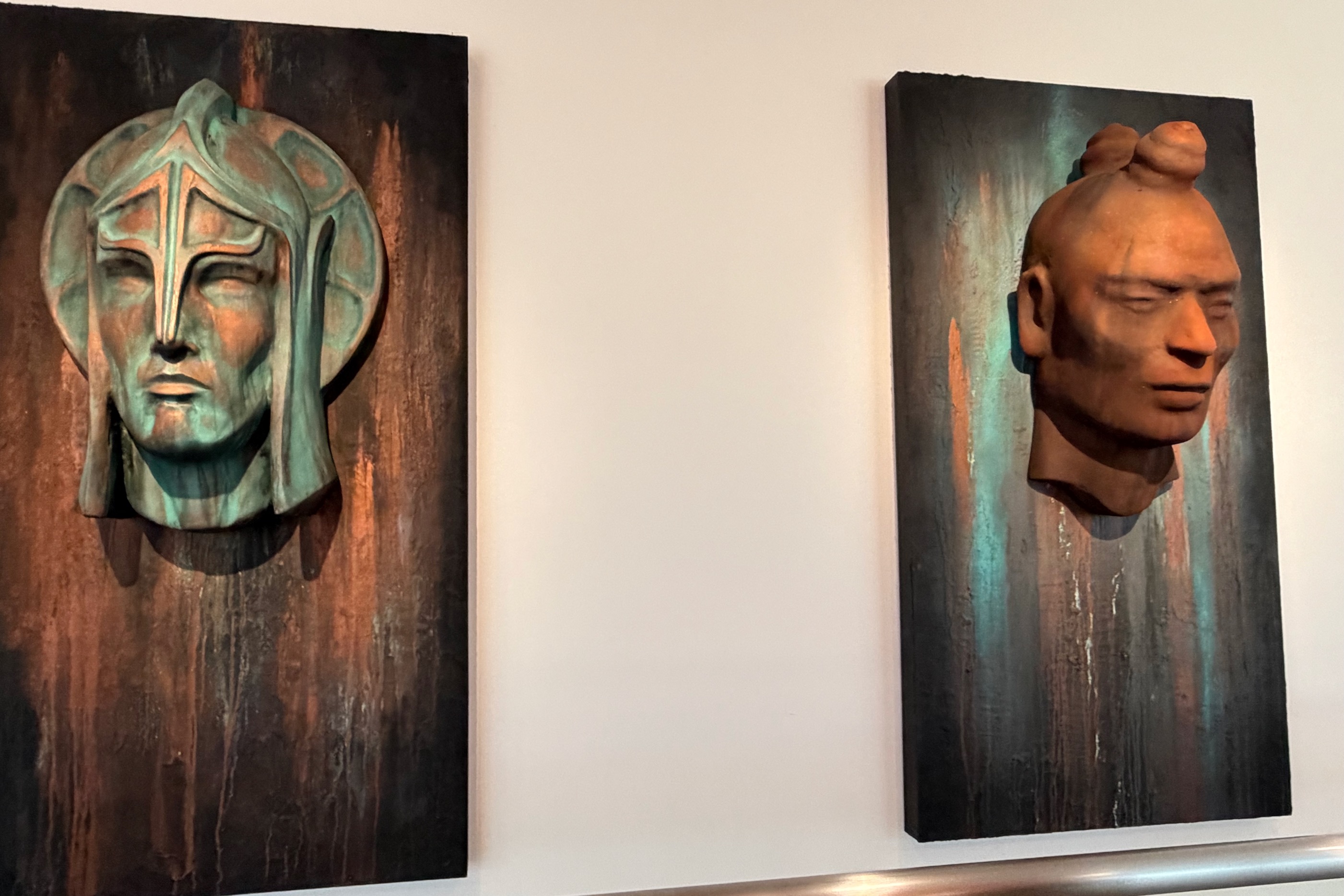
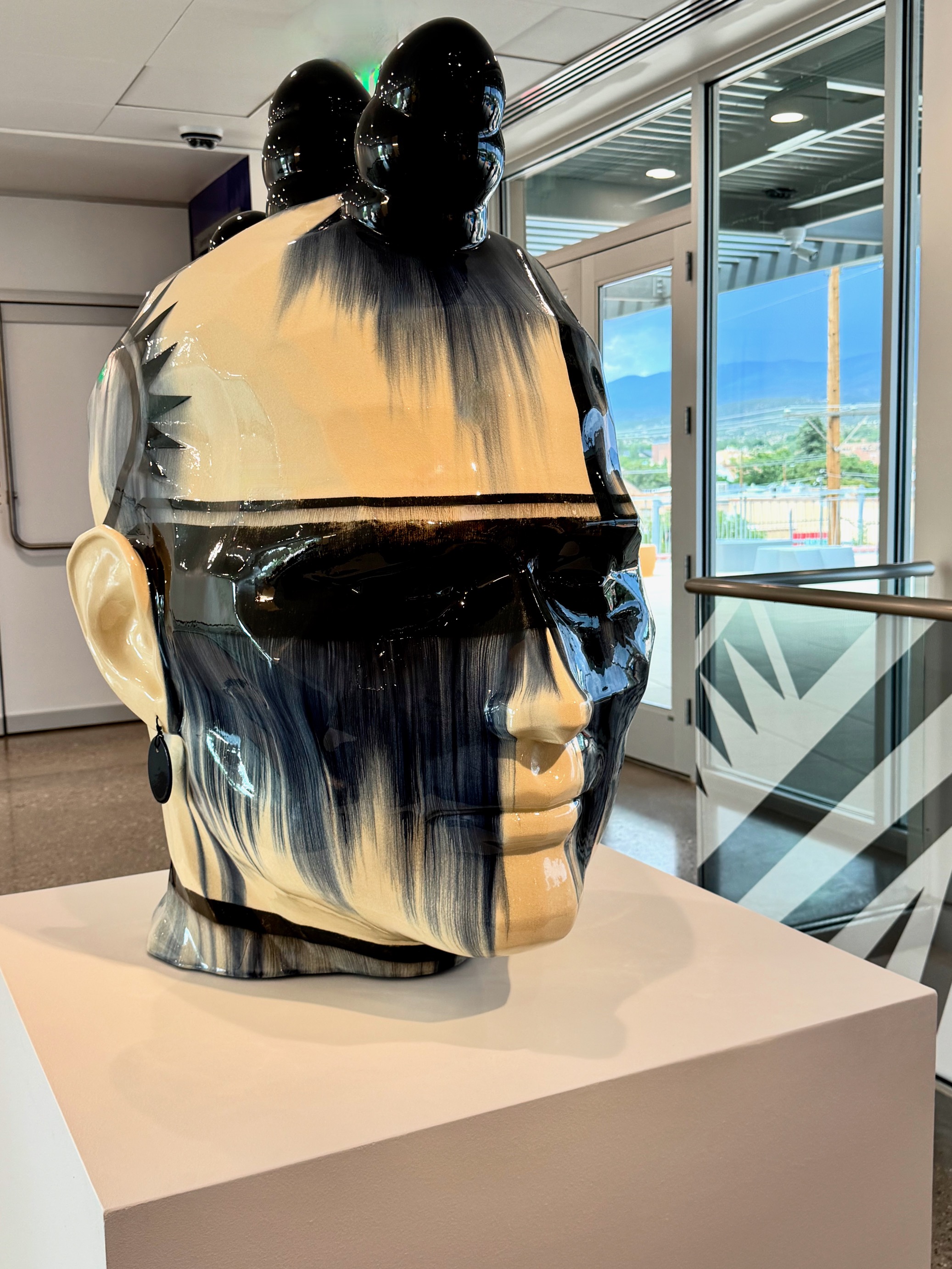
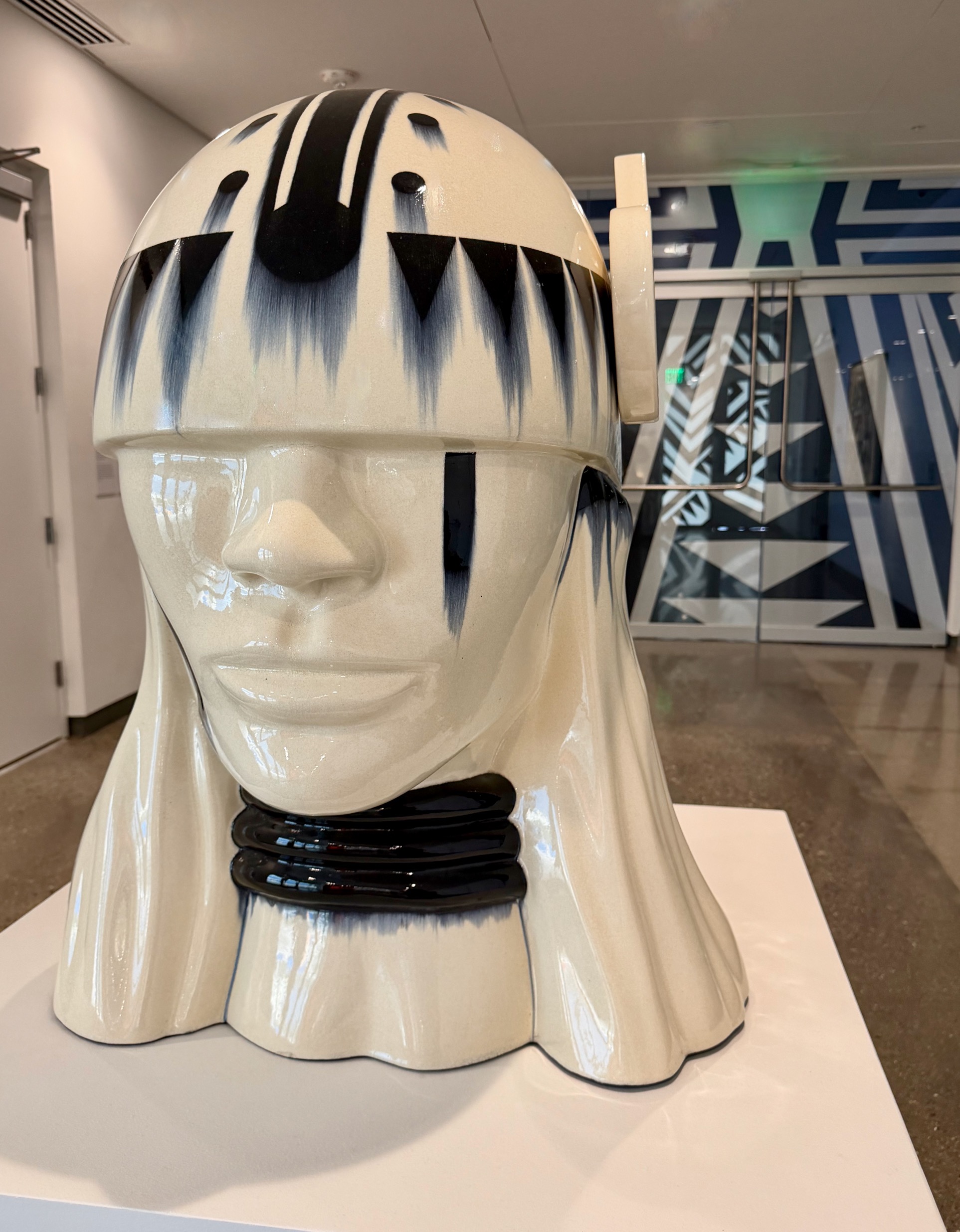
Two enormous ceramic raku-fired heads dominate the main hall of the gallery. Both depict warriors from the future – Po’pay, the brave leader of the Revolt, and the leader of his female archer corps, Tahu the Blind Archer (“you are not blind if you can see through your fear”). Ortiz created these at the Cuernavaca studio of Juan de Dios Sánchez – an experience with a large-scale ceramic master that Ortiz says felt “like working with Prince and Madonna.”
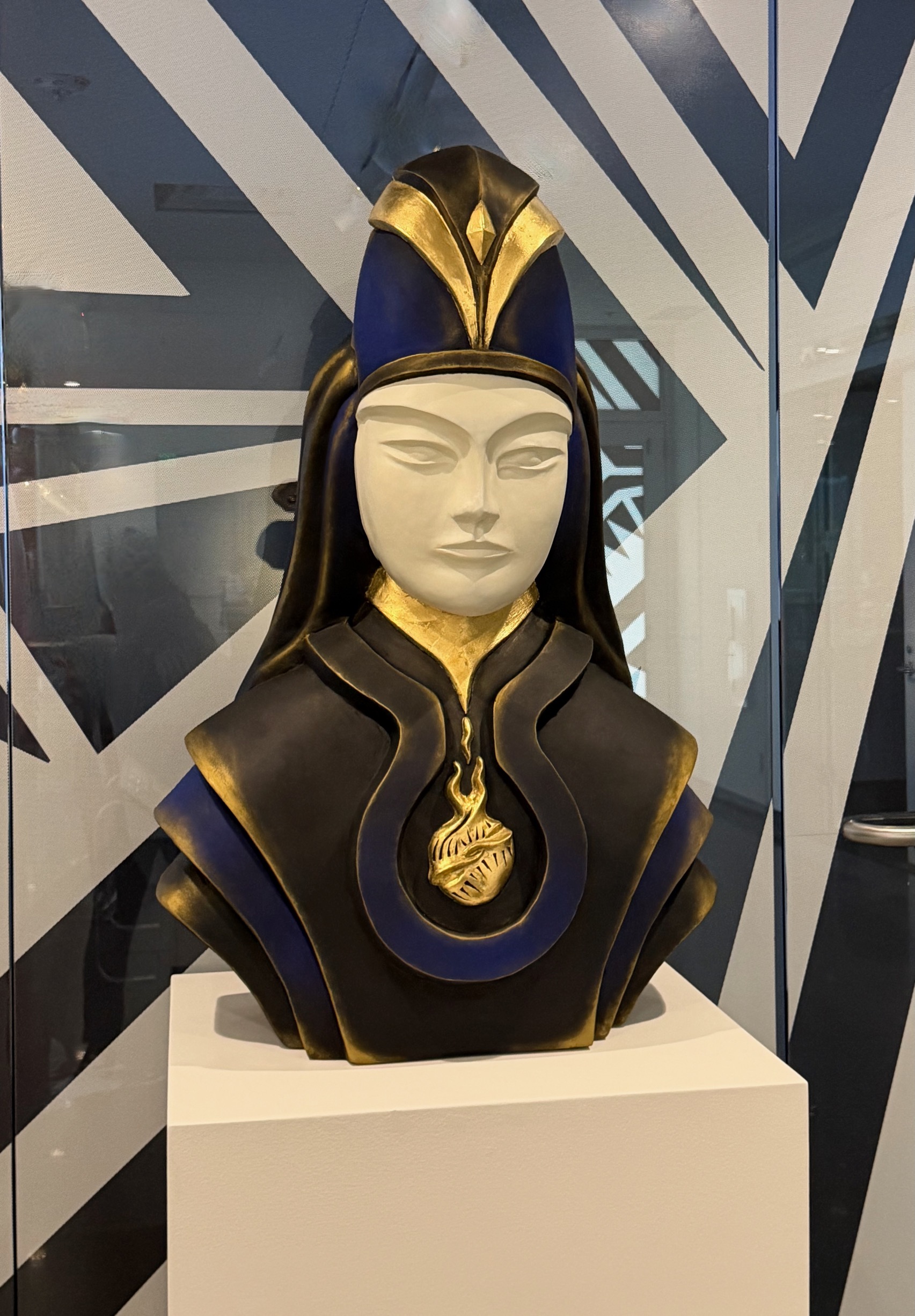
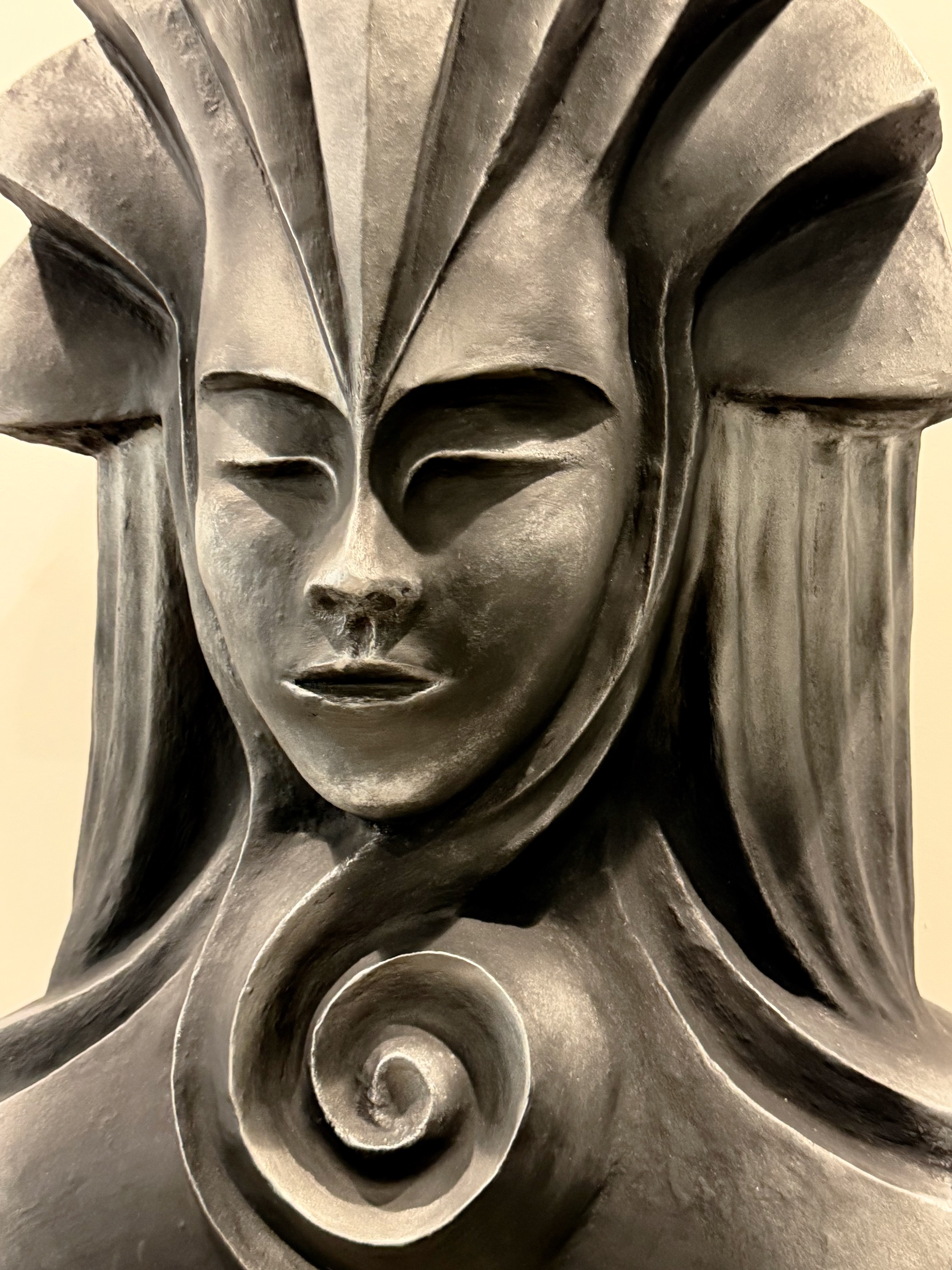
These are flanked by his work with Garcia and his other ceramics collaborator, Tommy Lomeli. Garcia contributes two busts of the controversial La Malinche, the Indigenous Nahua woman who translated at Cortez’s side as he negotiated with neighboring city-states to vanquish Montezuma in 1520 and bore him a son. There’s no better symbol of New World cultural collision and legacy.
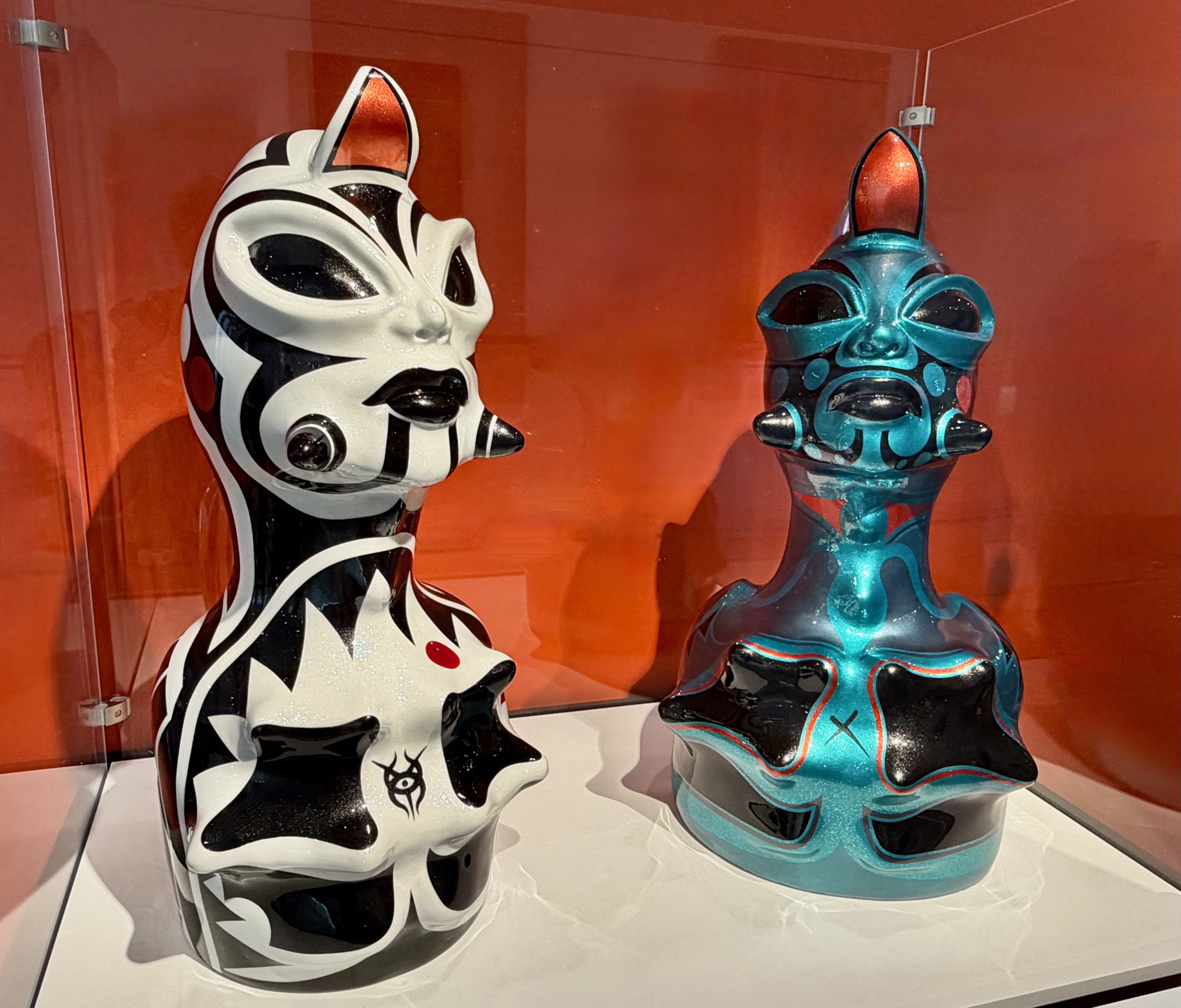
Lomeli’s collaboration bedazzles Virgil’s ceramic busts of his twin aeronaut pilots with gorgeous layers of automotive paint, giving the 2180 characters some low-rider flash.
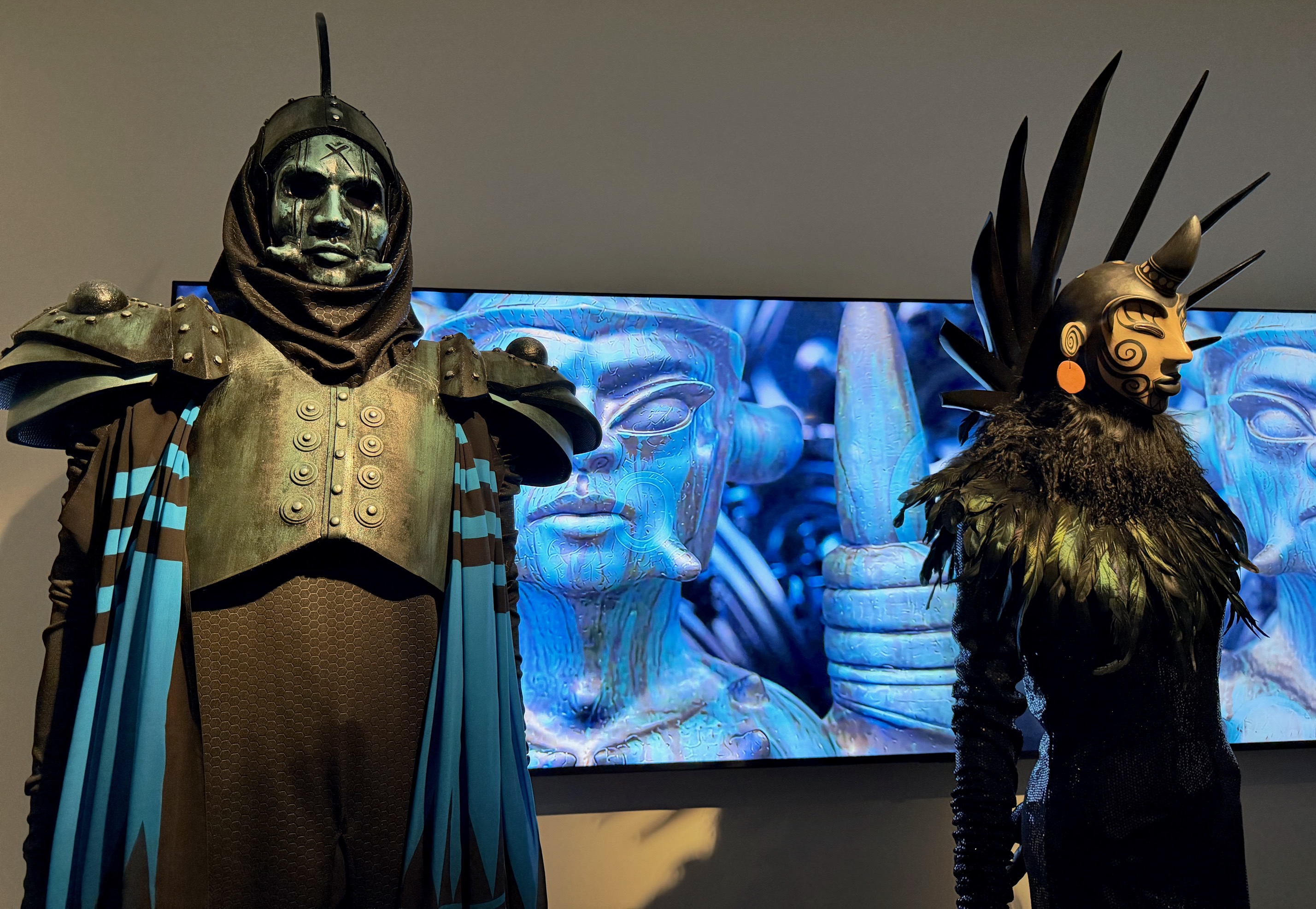
The second exhibition space features mannequins of the warriors themselves, bedecked in custom fabric, leather, and fierce masks and headgear. Several are superhero Recon Watchmen from 2180, who are seen in the back video advancing through the forbidding Bisti Badlands, preparing for an attack on the unsuspecting Spaniards. There are also video clips of the artists at work creating clay, costumes, and large-scale sculpture, interspersed with stylish clips showing his transformation of friends into superheroes.
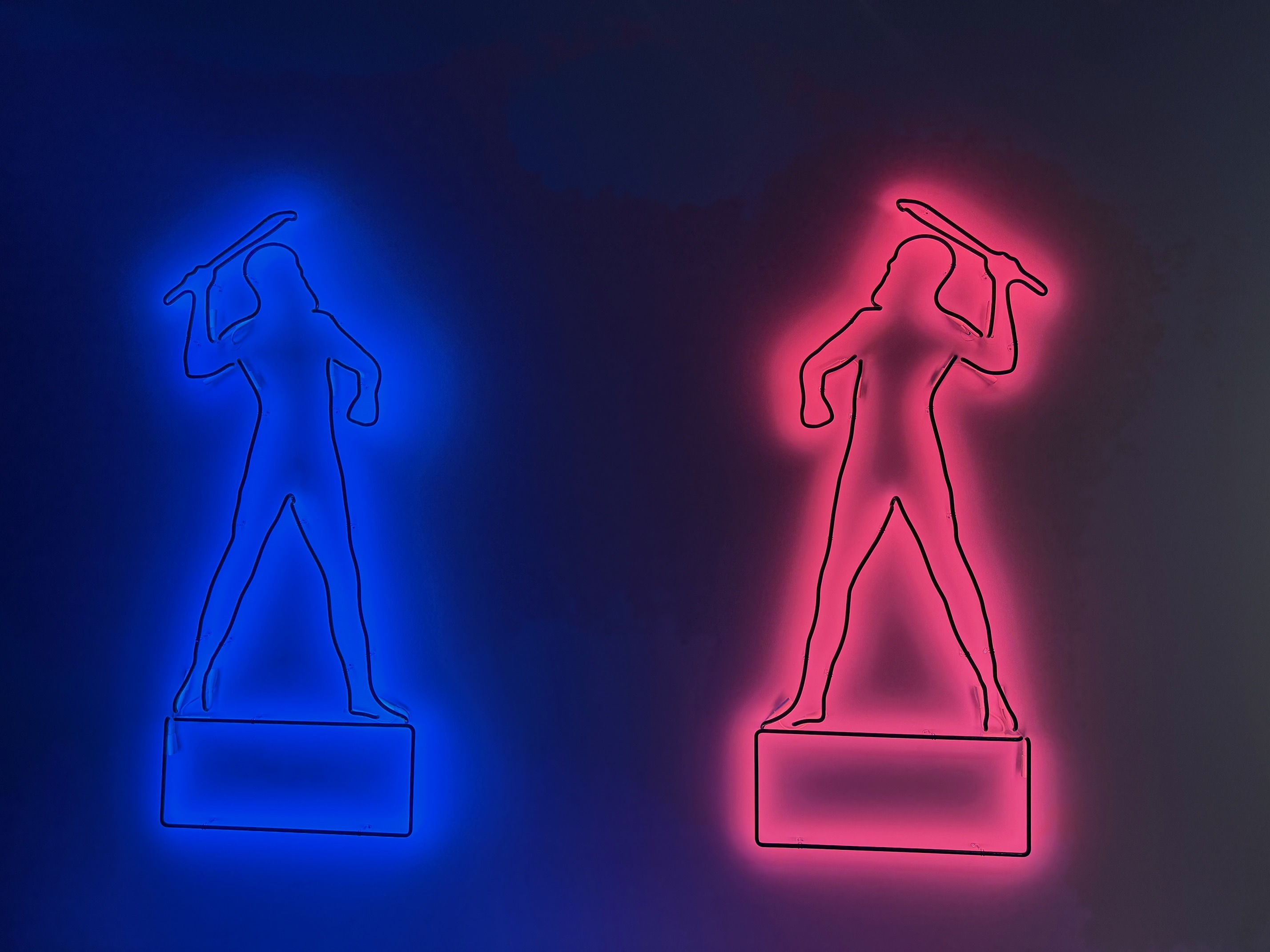
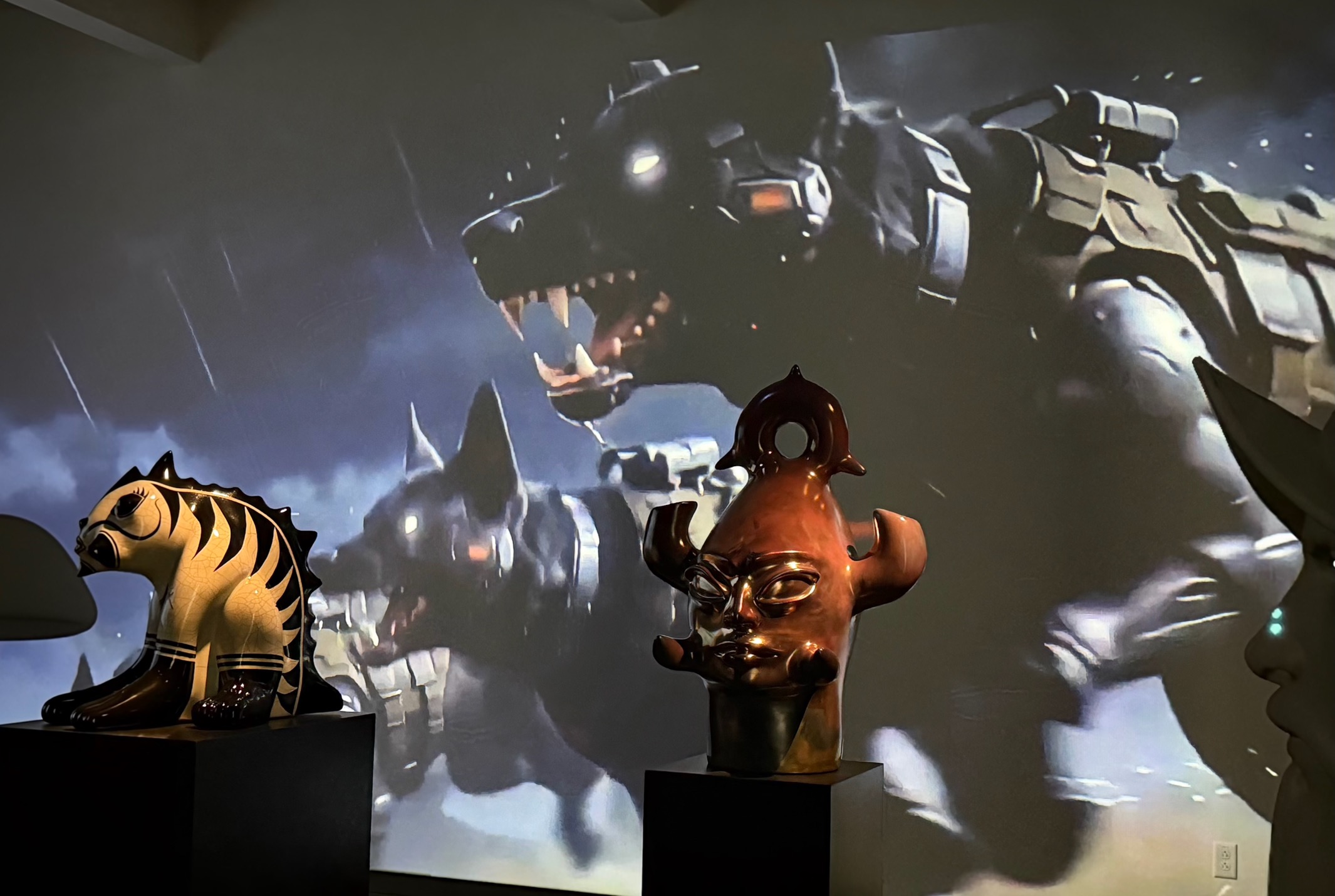
The third dark gallery is where fury is unleashed on a wrap-around screen. At the sides, ominous black profiles of Po’pay and his Spanish opponent loom. Garcia contributes large stand-alone sculptures of a charging Spanish conquistador and his vicious war dogs. Ortiz counters with a Recon Watchman and a gentle Sika Cochiti creature, who protects children but turns deadly when unleashed in battle.
Blindfall, First Strike is an unforgettable experience – an assault of images, past and future, colliding, changing, morphing into unknown beings, worlds, and forces – a message about the blind whirlwind of war and strength required to ensure that culture will endure.
Listen in as Ortiz explains his process, Cochiti tradition, and collaboration with his community of multicultural artists:
And thanks to Ortiz, Garcia, their team for the reminder of the legacies and promise that guides them going forward.