Environmental Alerts by Native Artists

Who better to ask us to pay attention to environmental impacts than people whose ancestors have been stewards of the land for millennia? Earth, air, fire, and water is the thematic structure for this beautiful, throught-provoking contemporary art show Essential Elements: Art, Environment, and Indigenous Futures, on view at Santa Fe’s Museum of Indian Arts and Culture through May 31, 2026.

The curators have selected 31 artists from 18 tribal communities across the United States to draw our attention to how tribal communities and the rest of us can listen to the Earth and imagine positive outcomes in the future.
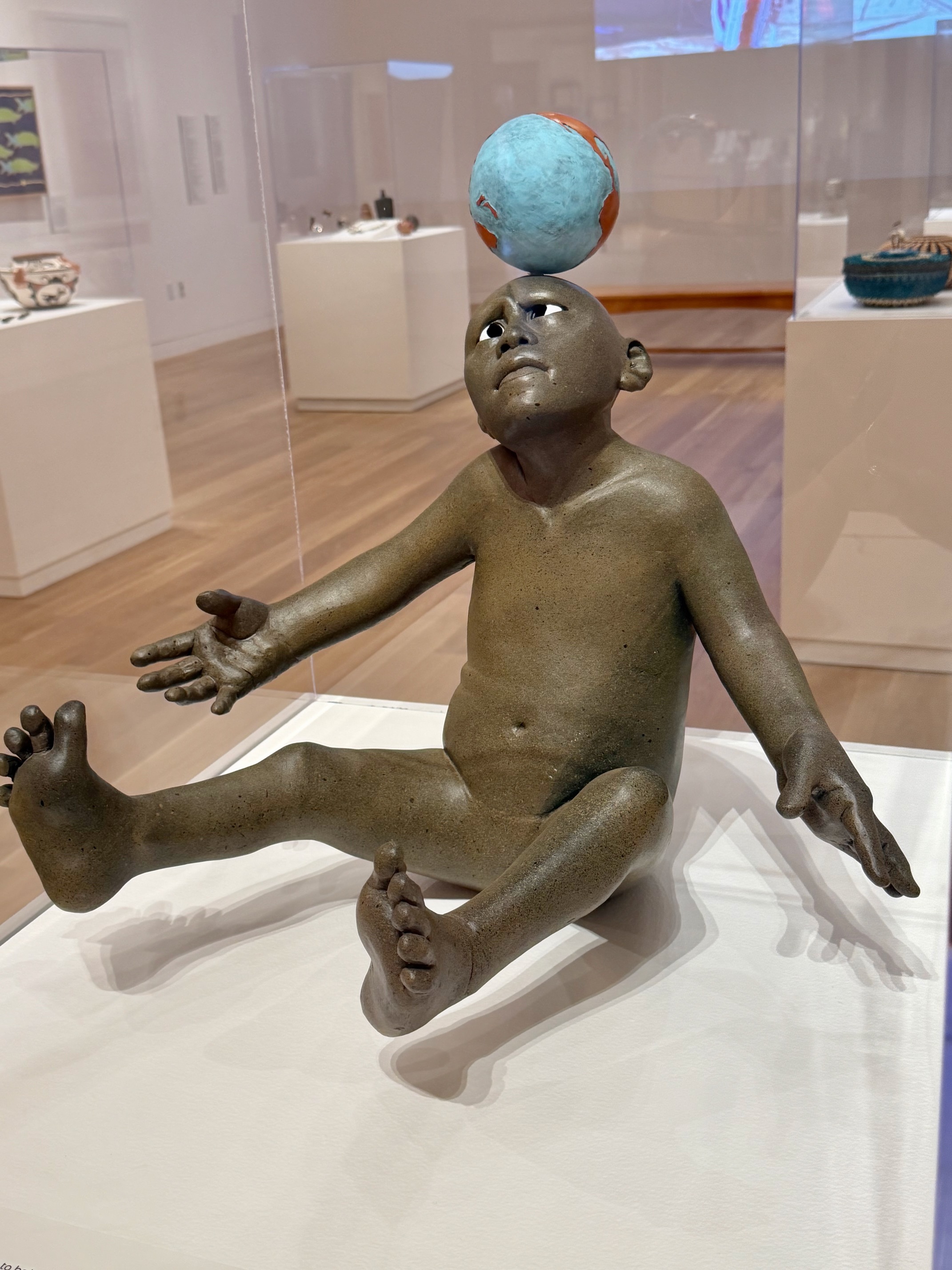
The Earth on edge: 2020 fired clay Unstable World by Roxanne Swentzell (Santa Clara Pueblo). Courtesy: private collector.

Some jewelry, paintings, drawings, pots, and installations draw attention to traditional symbols of the Earth’s health (traditional symbols, wildlife living in a healthy environment), but many include pointed references to recent wildfires and other devastating alterations affecting tribal agriculture and people’s health.
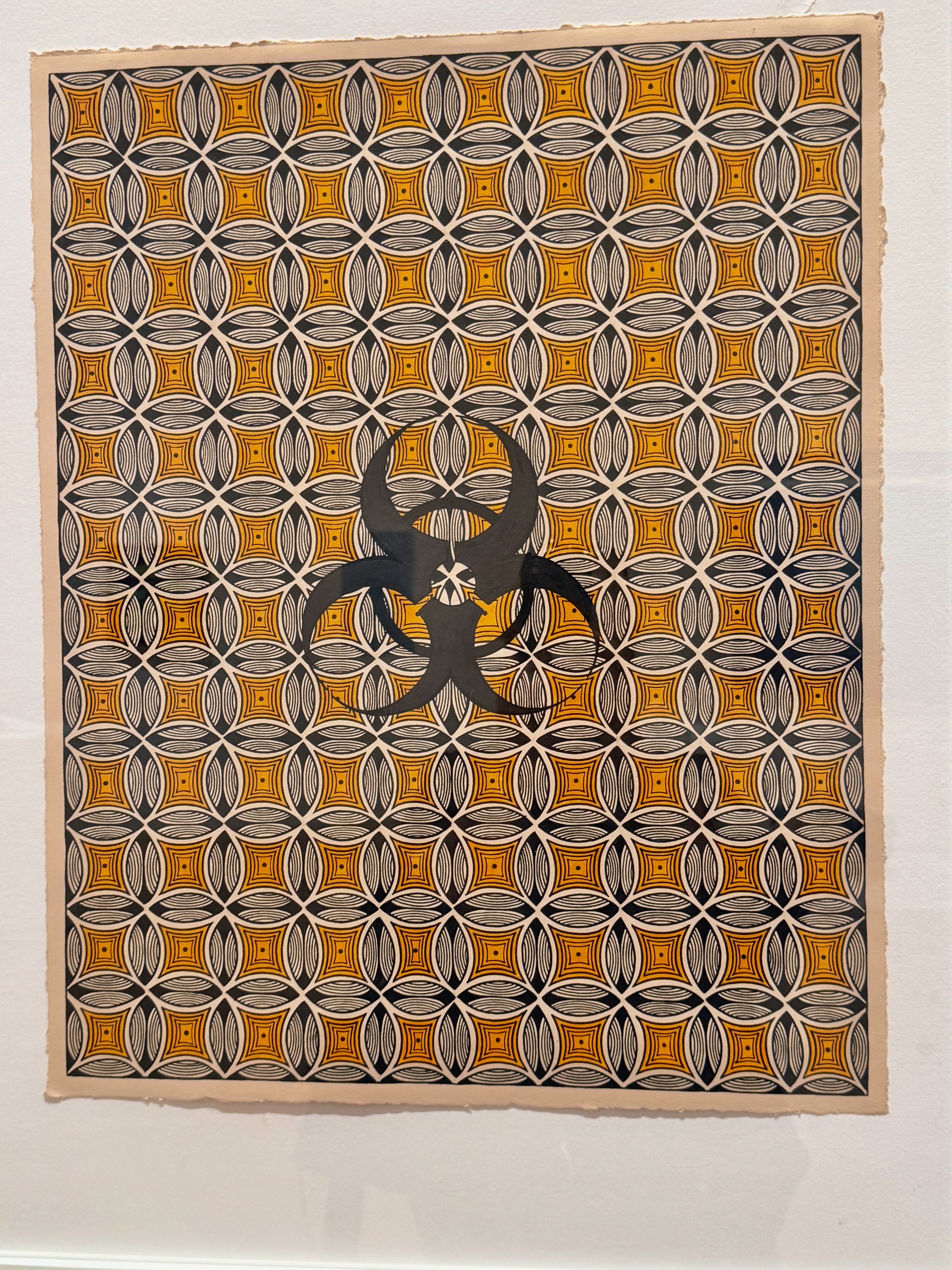
2025 pen-and-ink drawing Biohazard Beauty II by Rowan Harrison (Diné/Isleta Pueblo). Courtesy: the artist.

Take a look at some of our favorite work in our Flickr album.

The Earth section begins with Roxanne Swentzell’s large ceramic sculpture Unstable World, which sets the tone for the rest of the show – Native art that calls attention to our current environmental balancing act. Nearby, several Diné artists ring the alarm bell about the insidious damage being done to Navajo Nation and nearby pueblos – and their own families – from the long legacy of open-pit uranium mining and contamination from nuclear testing.

Rowan Harrison’s intricate drawings are made to raise awarness of intergenerational health challenges and to honor and support to cancer victims. The curators have given lots of space to Diné artist Shayla Blatchford’s photo-interview Anti-Uranium Mapping Project, including a sobering map of the nearly 500 abandoned uranium mines scattered across her homeland. Biologist-artist-public health advocate Mallery Quetawki (Zuni Pueblo), creates abstracted works. Only when you get close do you see the shapes are radiation symbols of uranium contamination working its way into DNA strands.
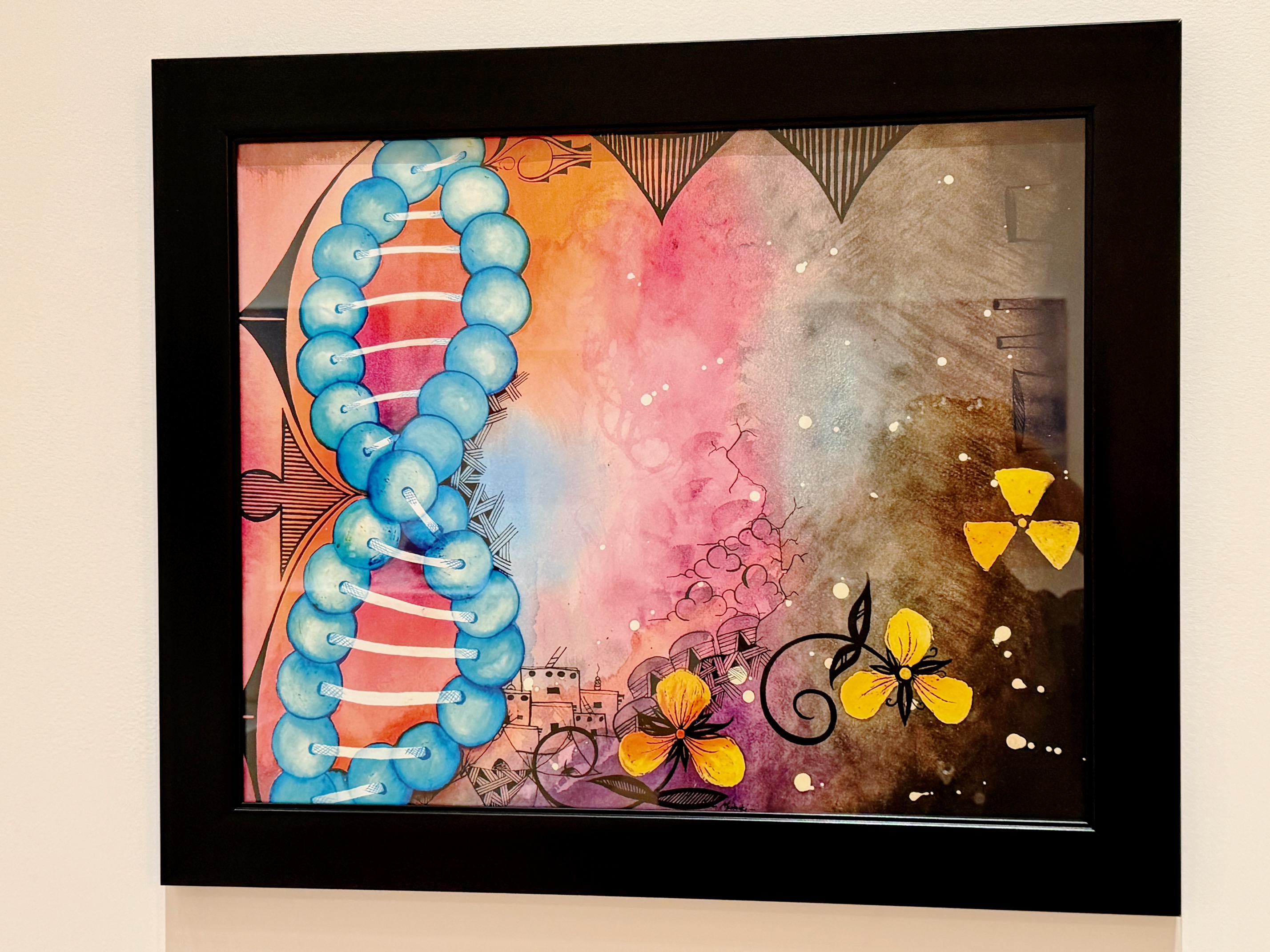
2019 We Will Continue to Fight by biologist-artist Mallery Quetawki (Zuni Pueblo), raising awareness of how radiation contamination on native land damages people’s DNA. Courtesy: the artist, University of New Mexico Community Environmental Health Program

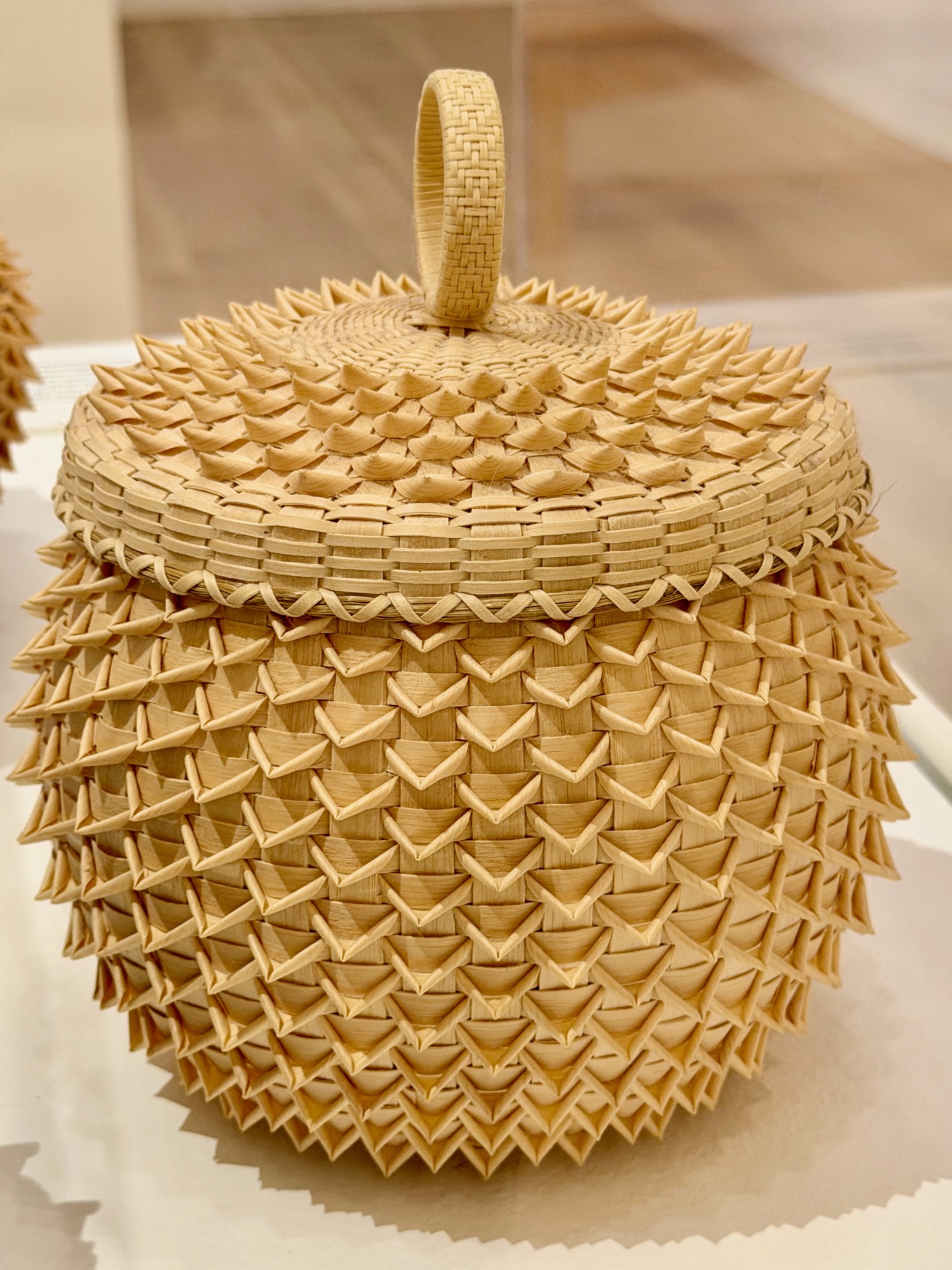
Beautiful, intricately woven baskets are displayed nearby. As you admire the creations of Jeremy Frey (Passamaquoddy), a 2025 recipient of the MacArthur Fellowship “genius” grant, it’s unsettling to learn that Jeremy and other Eastern art virtuosos are concerned that their baskets could be the last. Black ash and other natural materials are disappearing from their homelands at an alarming rate due to the triumph of invasive plant species.
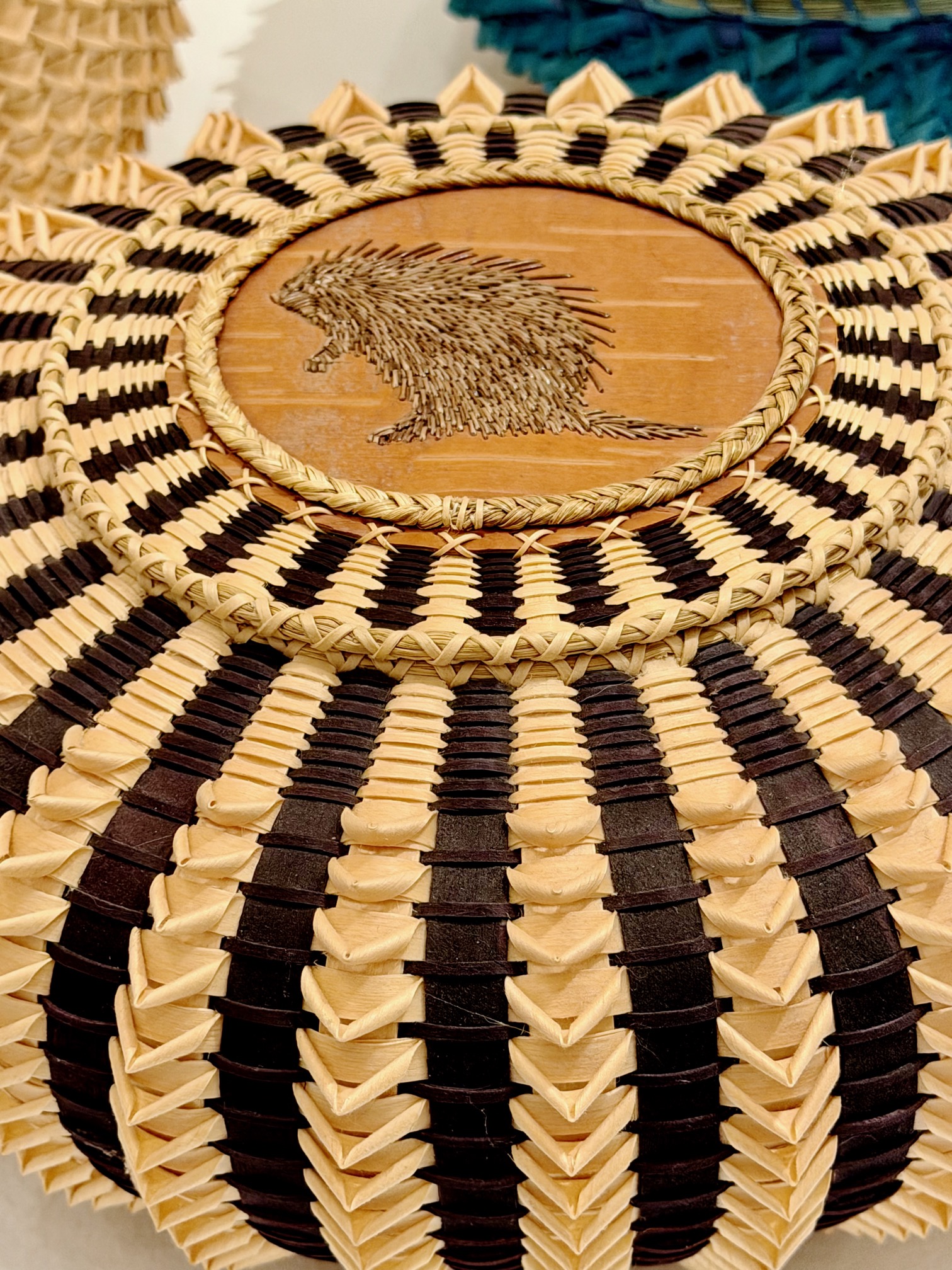
Closeup of 2010 Lidded Basket with Porcupine Design by Jeremy Frey (Passamaquoddy) woven from black ash, sweetgrass, and porcupine quills; 2010 SWIA Market award winner. Courtesy: private collection.
2015 Ash Basket by Jeremy Frey (Passamaquoddy) woven from black ash, which is important to the tribe’s creation story, but highly endangered. Courtesy: private loan.

Other jewelry and ceramics artists incorporate images of animals, insects, and other indicators of what the world looks like when clean water and healthy air abound – dragonflies, tadpoles and frogs, and Avanyu, the all-important Puebloan water spirit. Multimedia artist Cannupa Hanska Luger is seen (via video) in a ritual performance “from the future” to ensure people’s continual gratitude for food, shelter, and tools.
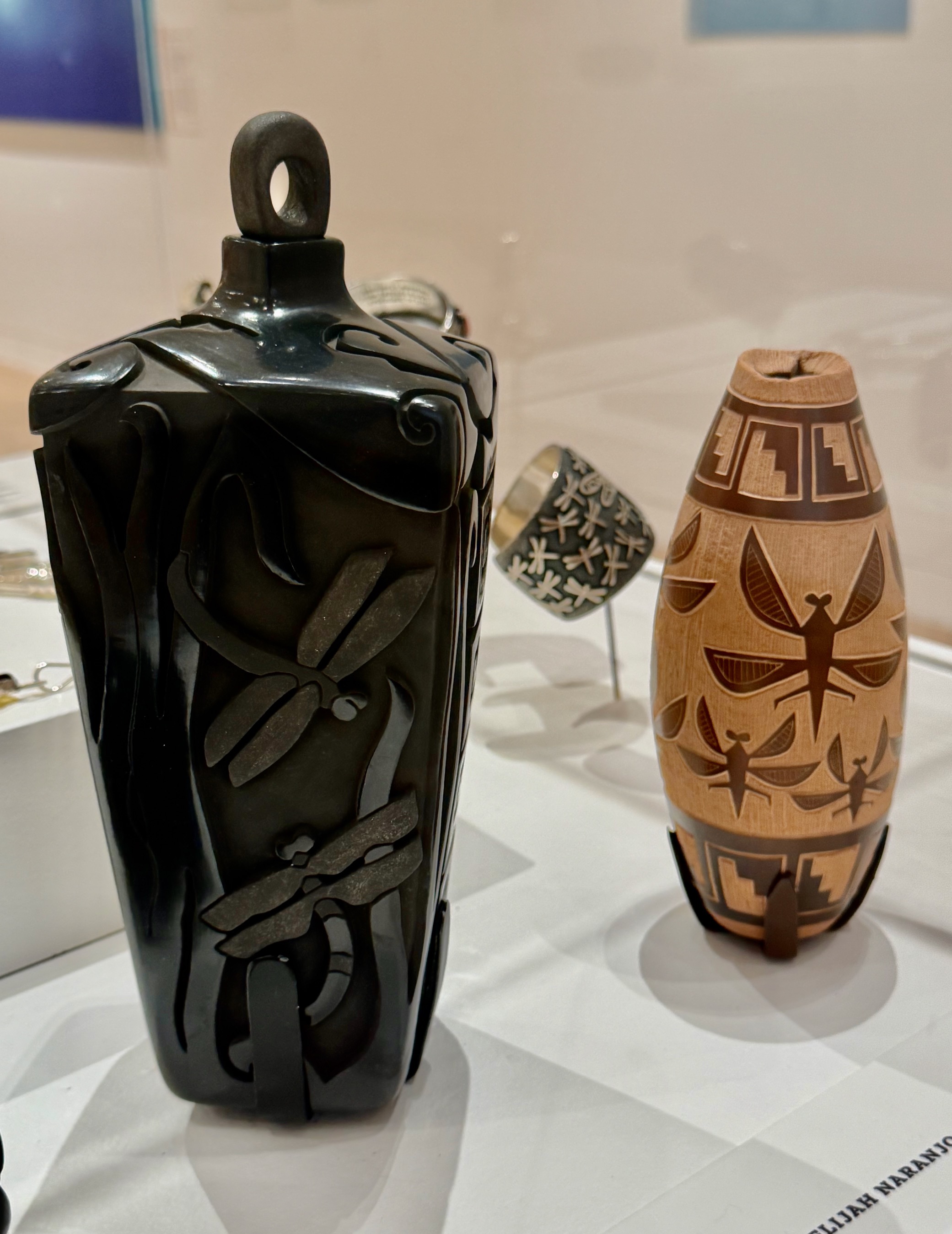
Art featuring creatures of healthy air: 2001 Dragonfly Tall Lidded Jar by Autumn Borts (Santa Clara Pueblo), 2005 Dragonfly Bracelet by Ramon Dalangyawma (Hopi), and 2006 Dragonfly Vase by Dolly Naranjo Neikrug (Santa Clara Pueblo).
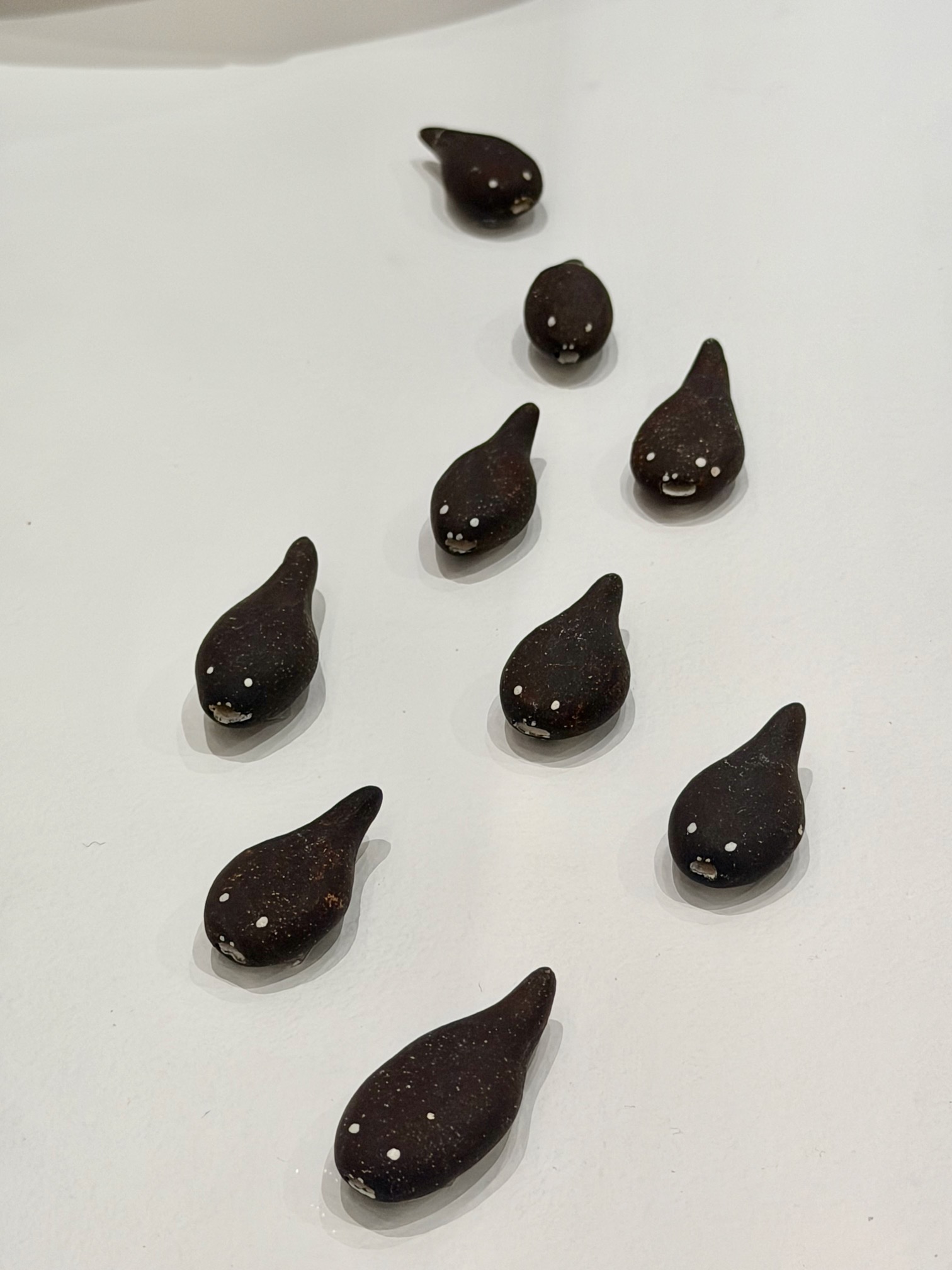
Keystone water species: 1958 ceramic Tadpole Figurines by Lucy Lewis (Acoma Pueblo); clay, crushed potshard temper, slip, and carbon paint.

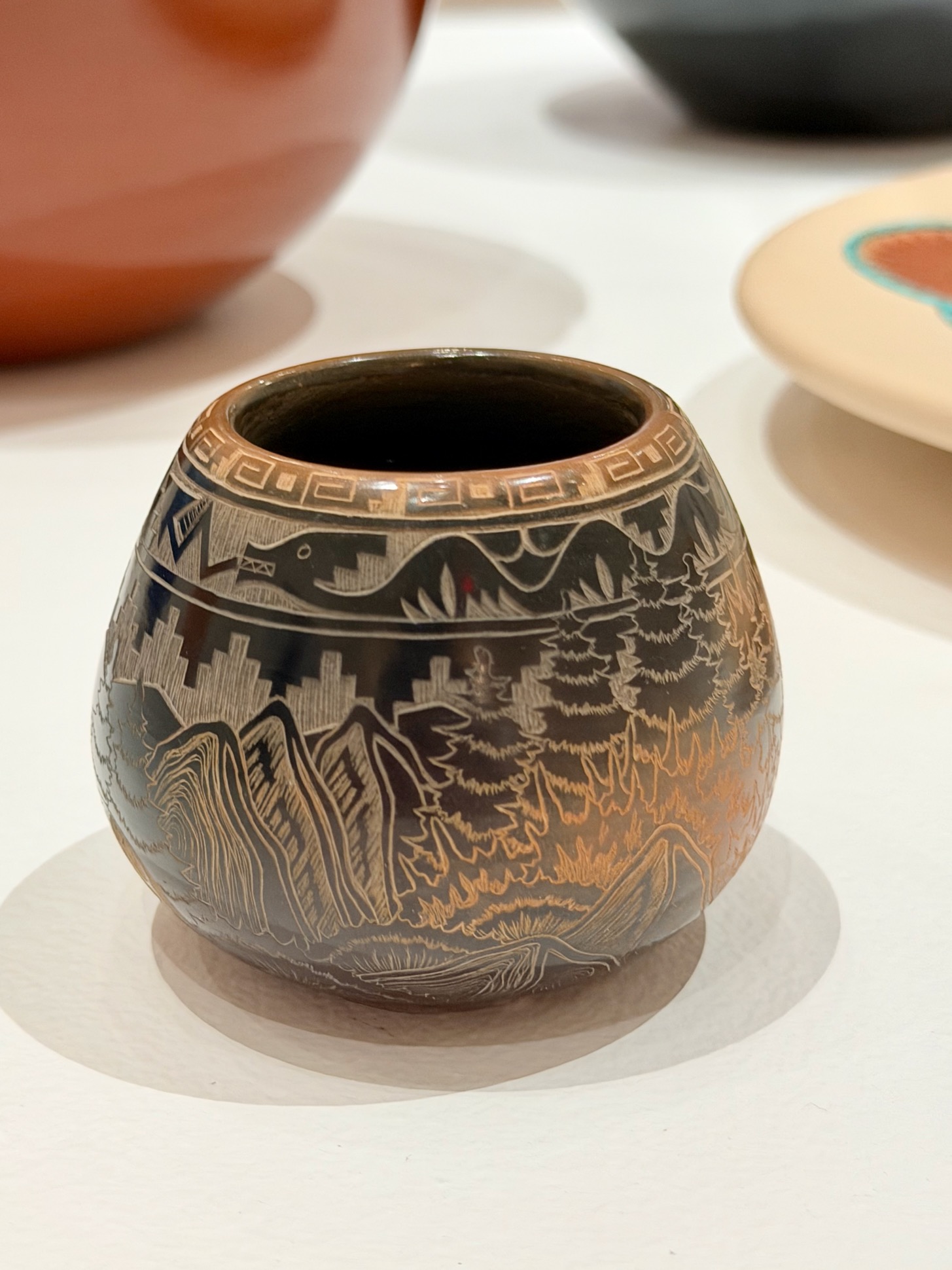
Considering the string of recent devastating wildfires that have plagued New Mexico in recent years, the artwork in the exhibition representing the element of fire is truly resonant. Kevin Naranjo made a tiny ceramic jar into which he carved his recollection of the wildly destructive 2011 Las Conchas Fire. Michael Namingha’s spectacular digital image is not just a pretty view of the sky. It’s the image of a cloud that only appears above an extremely intense heat source – exactly what he photographed during the 2022 Hermit’s Peak Fire or that New Mexicans witnessed in the Trinity blast.
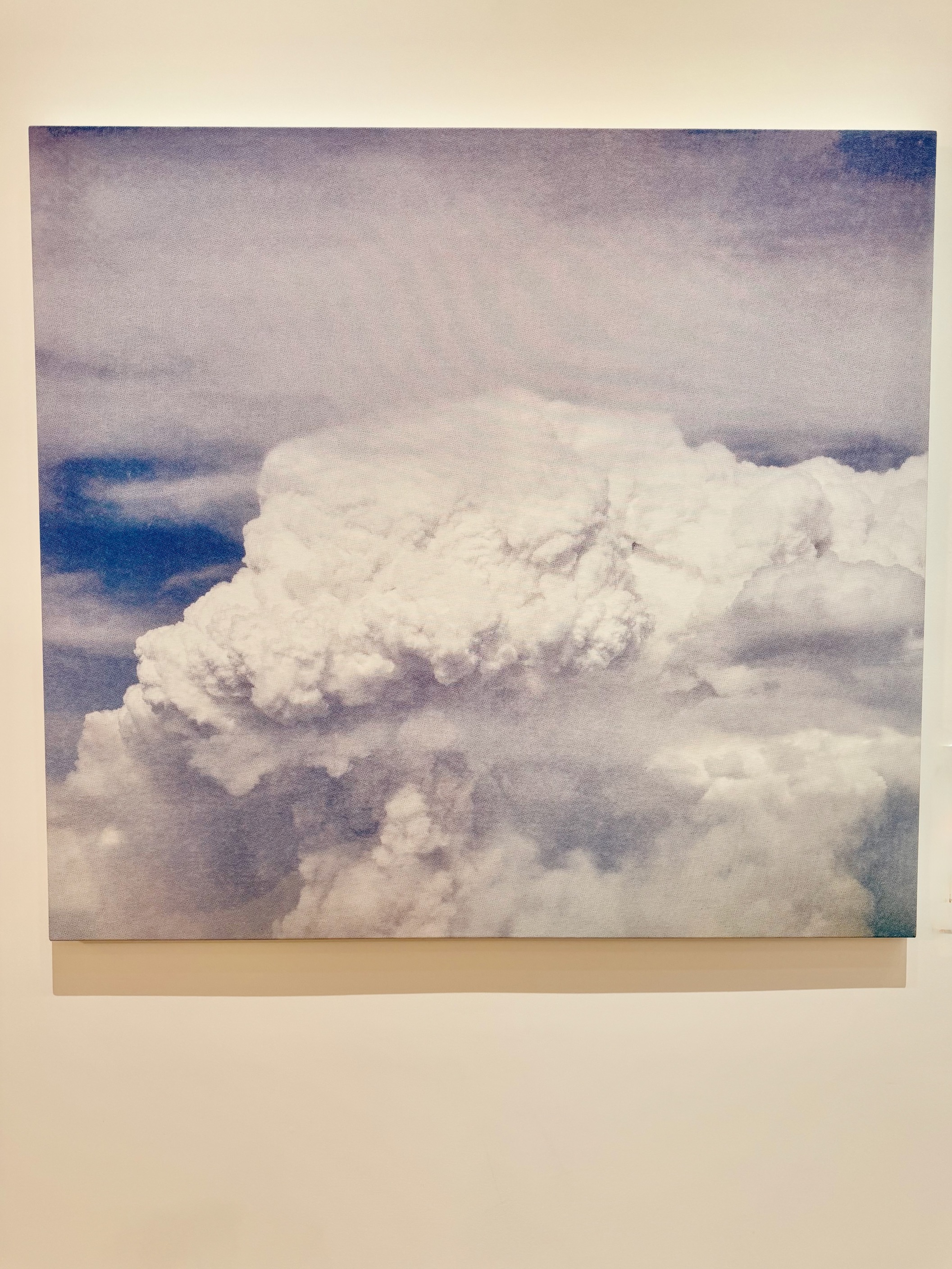
2024 silkscreen Disaster 2 by Michael Namingha (Tewa-Hopi) – a pyrocumulus cloud emerging from the Hermit’s Peak Fire, the largest wildfire in New Mexico’s history. Courtesy: the artist, Niman Fine Art.
2011 Las Conchas Fire by Kevin Naranjo (Santa Clara Pueblo) – a carved (sgraffito) ceramic depcting trees, land, and fire that burned 150,000 acres of Santa Clara’s land on the Pajarito Plateau, including ancestral sites; the Avanyu water spirit hovers above.

Overhead, as you enter or leave this thought-provoking experience, you see paper poppies – the first flowers that bloom after a fire.  Artist Leah Mata Fragua (Northern Chumash) is going a step further with her art after this exhibition ends. She’ll take her paper blossoms back home and burn them in a ritual that recycles her beautiful art back into the Earth.
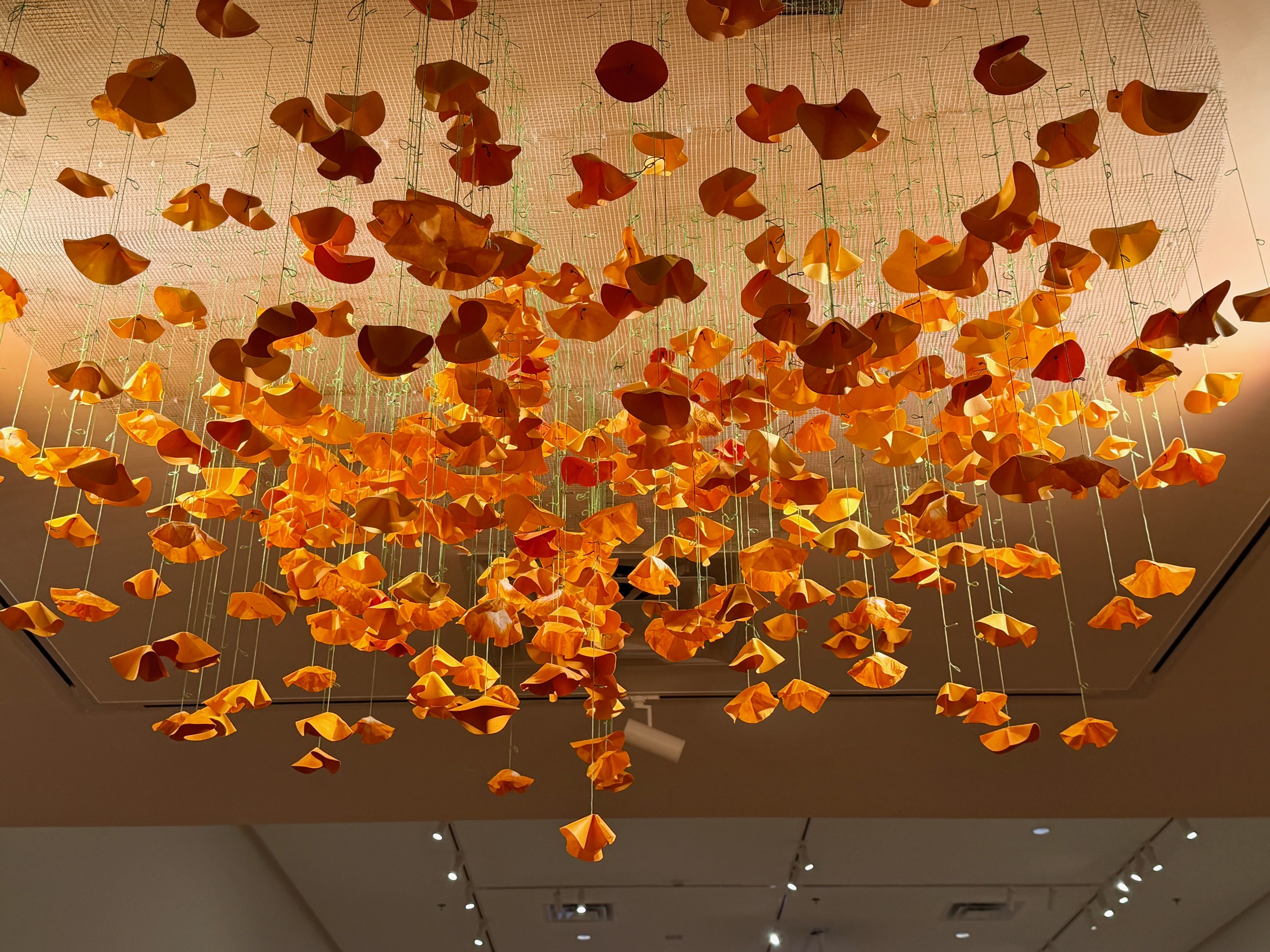
2025 dyed handmade paper installation The Sun is on the Ground by Leah Mata Fragua (Northern Chumash), suggesting the wild poppies that bloom right after a wild fire. Installation intended to be recycled with fire at the exhibition’s conclusion. Courtesy: the artist

Contemporary Pueblo Architecture Honors Ancient Beliefs

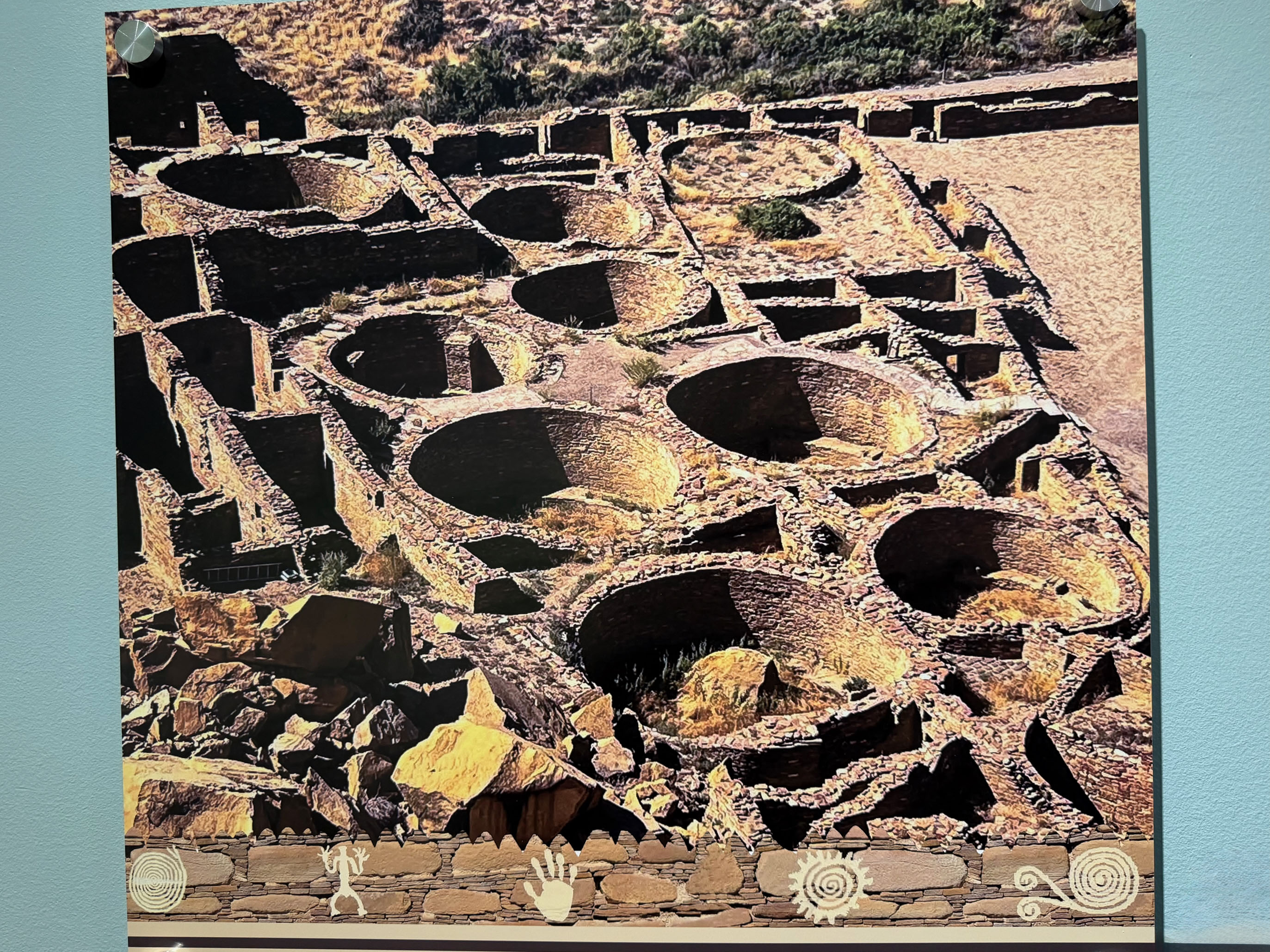
Any visitor to Chaco Canyon National Historial Park (850-1250 CE) makes the journey to appreciate innovative masonry of the Great Houses, the precision of the ancient road system, and the astronomically aligned walls, windows, and kivas. But how do contemporary Pueblo architects incorporate these traditional beliefs in their 21st century projects?

A fascinating, in-depth exhibition, Restorying our Heartplaces: Contemporary Pueblo Architecture – on view at Albuquerque’s Indian Pueblo Cultural Center through December 7, 2025 – explores how modern Indigenous architects incorporate traditional world views into their work.

2023 photo Kivas at Pueblo Bonito,Chaco Canyon by curator Ted Jojola (Islela Pueblo) showing advanced masonry and architectural concepts.

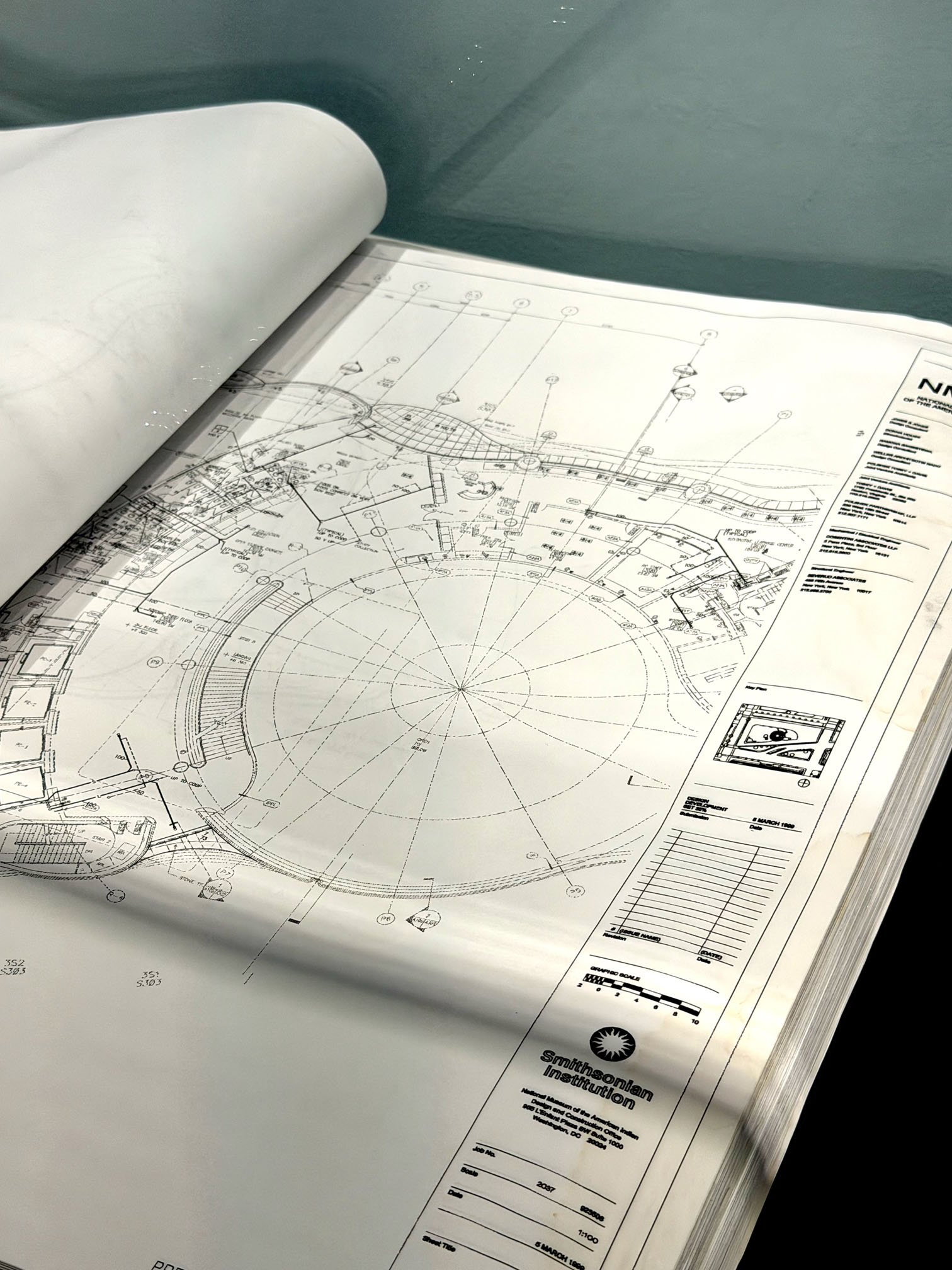
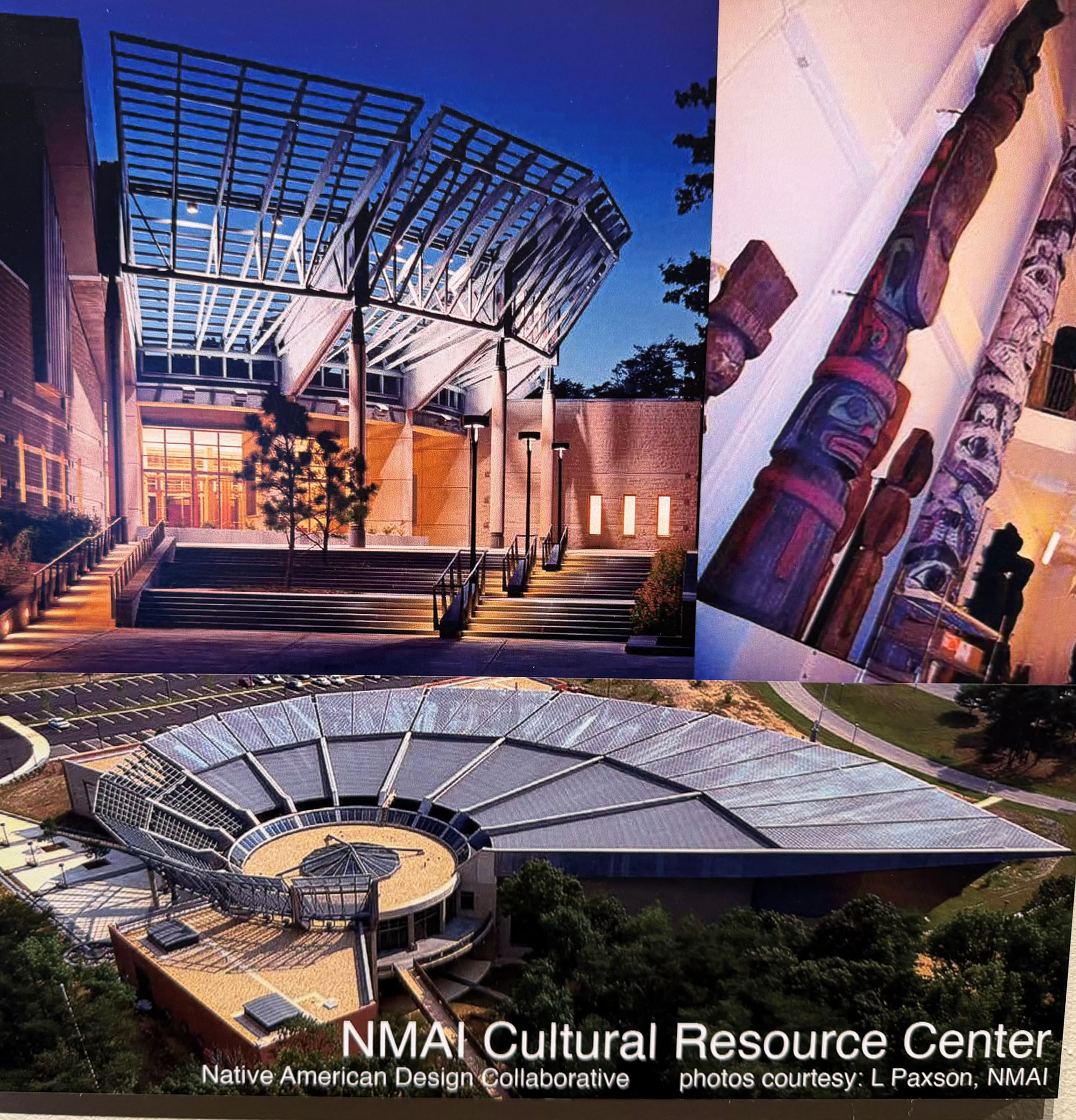
For example, just look at the design of the National Museum of the American Indian’s Resource Center – an organic design, aligned to the four cardinal directions, with extensive use of cedar wood.

1999 plans for the National Museum of the American Indian Resource Center. Courtesy: Ted Jojola (Isleta Pueblo)
Views of the 1999 National Museum of the American Indian Cultural Resource Center in Suitland, Maryland. Courtesy: Lynn Paxson.

This exhibition coincides with the 50th anniversary of the 1975 Indian Self-Determination and Education Assistance Act – legislation that shifted Native American policy in the United States from assimilation to self-determination. Tribes were now able to initiate and run justice, government, health and education departments of their own – a change that triggered a construction boom for new schools and administrative buildings.

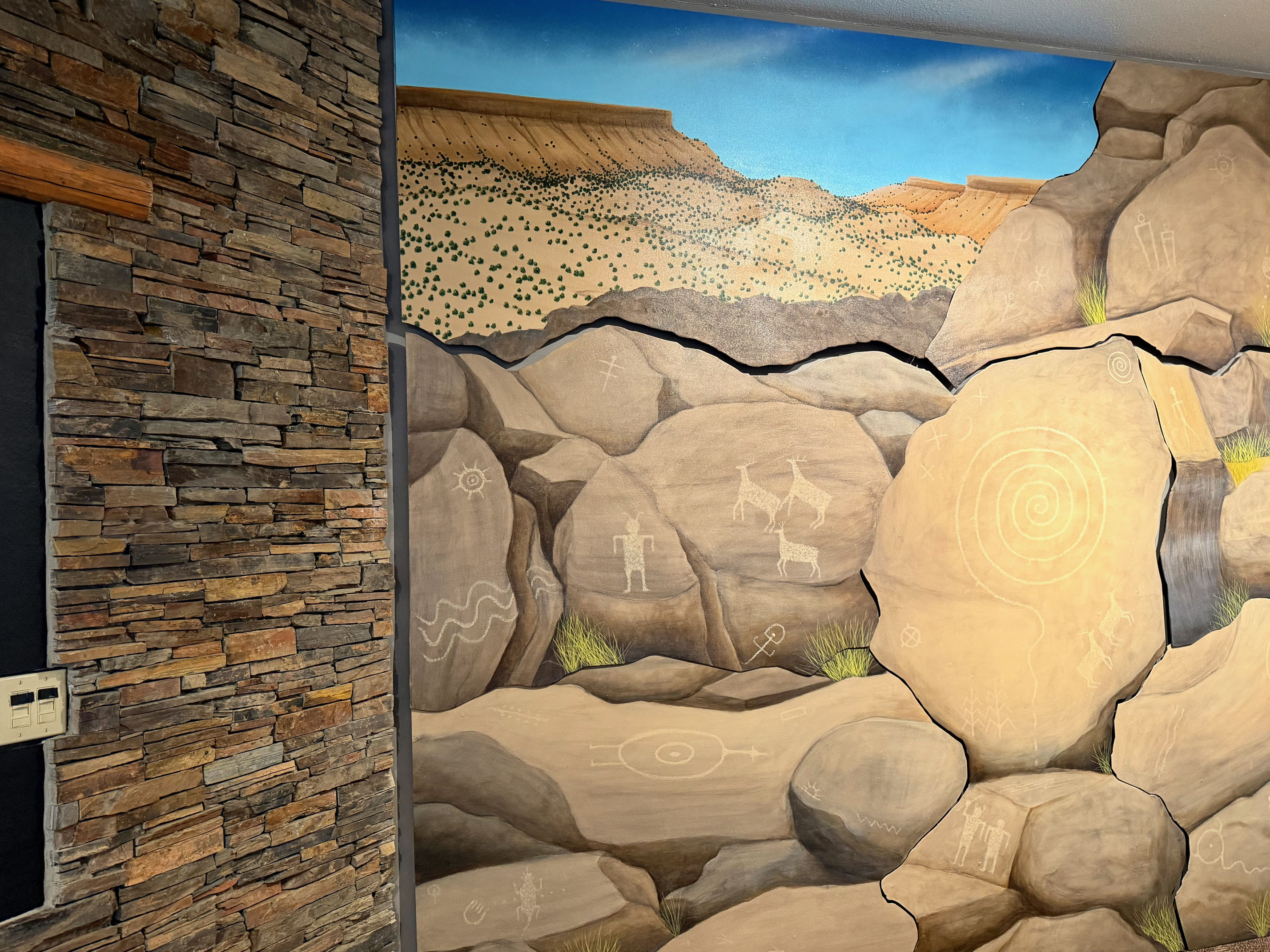
The show opens as an immersive experience in a large, circular gallery that introduces the core belief system and origin story of the Ancient Puebloans. Across a large screen in a vivid animation, the Pueblo people emerge into this world from a previous world. You watch them migrating outward in a spiral – symbols that are reflected across the art, murals, and photographs on the surrounding walls.

Mural by Dominic Aquero (Cochiti) with symbols of Pueblo creation; T-door represents the spiritual passage between two worlds (sky and Earth)

This experience sets the stage for the rest of the exhibition by showing how the stonework and beliefs reflected by the architecture of Ancient Puebloan centers points the way forward for Pueblo architects today.

2022 print by Gerald Dawavandewa (Hopi Cherokee) with T-shaped door for passage between worlds (sky and Earth]

The exhibition describes Ancient Puebloan architectural innovations – passive solar heating, precise window alignment, and masonry approaches. How did the Ancients achieve such precision in their dramatic Chaco and Mesa Verde buildings?

The curators present engineering and survey tools from archaeological excavations and modern survey backpacks side by side – plumb bobs, levels, and measuring devices.

Ancient stone and ceramic plumb bobs (from California and from Hewitt excavation at Rito de los Frijoles, Bandelier). Courtesy: Museum of Indian Arts & Culture/Lab of Anthropology.
Modern survey tools: level, tape measure, compass, brass plumb bob, wood, and string. Courtesy: curator Ted Jojola (Isleta Pueblo)

They also add comparisons of selenite used as window panels in Old Acoma’s Sky City (among the longest-inhabited communities in the US) and the contemporary architectural approach to windows in the recently built Acoma museum – a thoughtful reflection of the past

The exhibition directly addresses past HUD housing approaches on tribal lands – pushing suburban-style low-income housing, which moved families away from the traditional Pueblo plaza (the HeartPlace) and provided pitched-roof designs that blunted community cultural practices that utilized traditional Pueblo flat-roof construction.

The curators remind us of the continual upkeep required by adobe construction – a repeated communal task typically undertaken by a community’s women that happened on a regular, cyclical basis.  It’s also a reminder that Pueblo communities view buildings as living presences that evolve – not just concrete objects exist in a “finished” state.

Views of the 2000 campus for the Institute of American Indian Arts in Santa Fe. Courtesy: Paul Fragua (Jemez Pueblo)
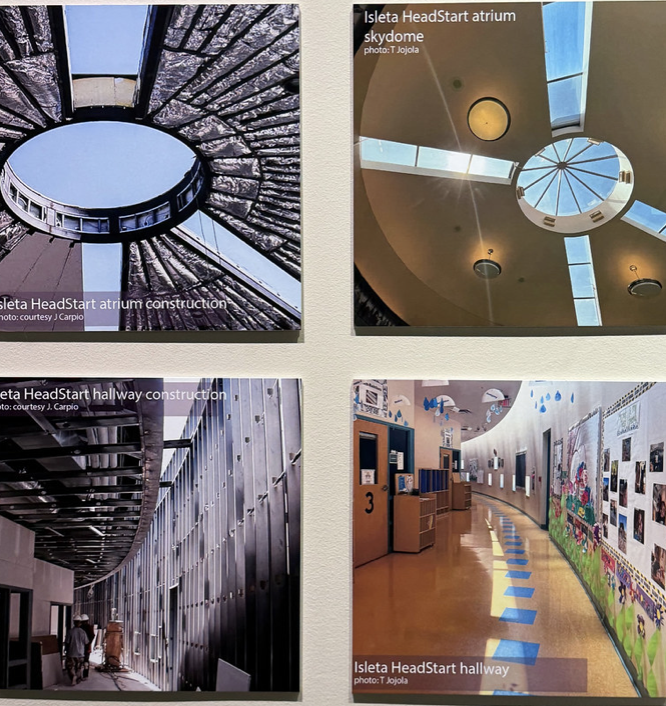
Views of 2004 building designed by Janet Carpio (Laguna/Isleta Pueblos) for Pueblo of Isleta’s Headstart/Child Care Center.

Wall panels, blueprint books, and architectural models are used to demonstrate the contemporary innovations of Pueblo architects – the Resource Center of the National Museum of the American Indian (1999), the campus of the Institute of Amercian Indian Arts in Santa Fe (2000), and the Headstart Child Care Center for Isleta Pueblo (2004). Both incorporate design elements echoing the spiral migration path, alignment to the cardinal directions, and colors and elements of the Earth.
A huge multimedia interactive theater punctuates the walk-through – an immersive visit to Acoma’s new Cultural Center and Haa’ku Museum with tribal members and designers explaining the architectural details and how the buildings reflect the landscape and traditional belief systems.

Immersive interactive experience of Acoma’s new Cultural Center and Haa’ku Museum. Courtesy: Anna Seed Productions, Electric Playouse, and UNM ASPIRE.

The exhibition features the work of the Indiginous Design and Planning Institute (iD+Pi) at UNM and presents dramatic architectural models of the past, present, and future of the community of Nambe Pueblo.

Look through the exhibition in our Flickr album here – a future-forward look at the continuing progression of innovative architectural designs and the next generation of designers and architects respecting and integrating the Pueblo world view with buildings considered to be living, breathing HeartPlaces for the community. 

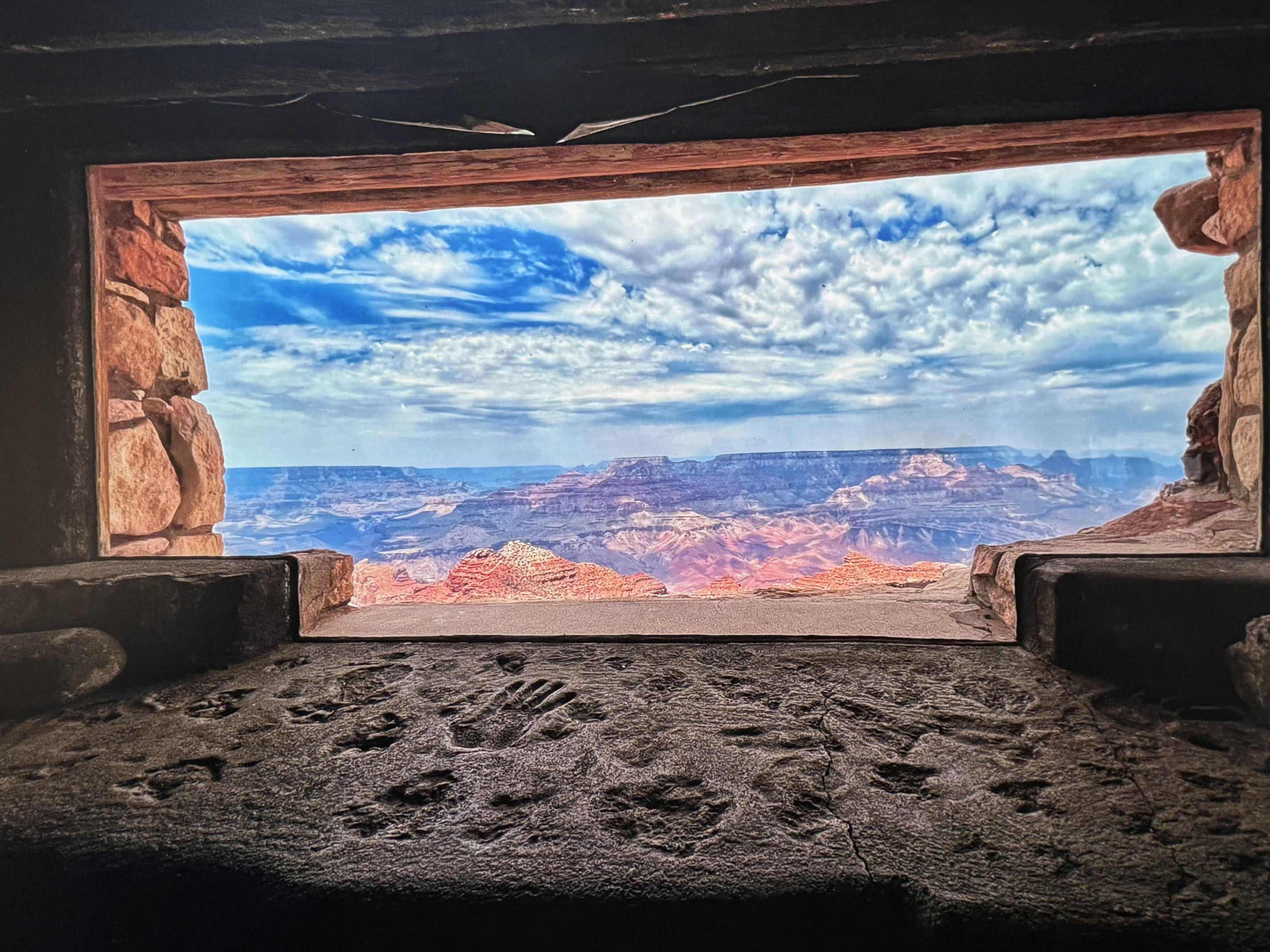
2023 photo by curatorTed Jojola (Islela Pueblo) North Window View from Desert View Watchtower, Grand Canyon showing the T-shaped doorway symbolizing passage between worlds

As the curators made clear in their opening-day remarks, a similarly extensive exhibition could explore architectural innovation and spiritualism across Navajo Nation. Let’s hope that happens!

Pueblo Pots Speak in “Grounded in Clay”

Contemporary artists say they can hear their ancestors speak across generations. All they have to do is hold their community’s ancient pots – living beings that connect them to the Earth and the people from the past who made them.

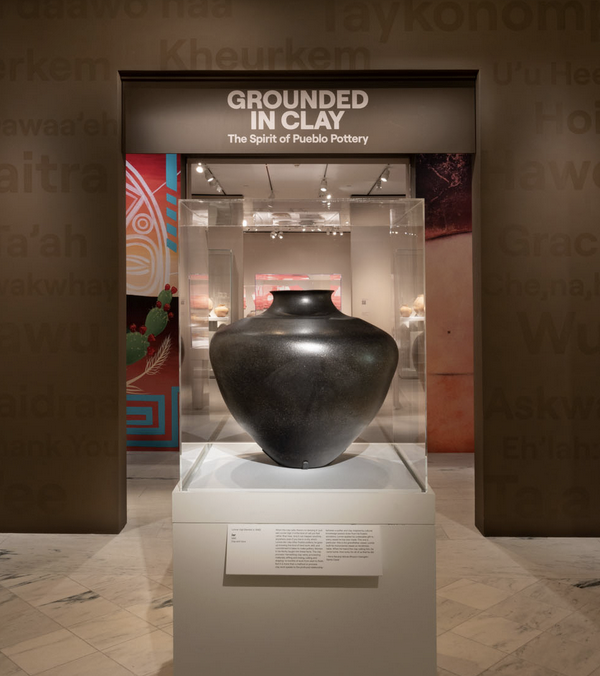
You can hear these modern and ancient voices and see ceramic masterworks in Grounded in Clay: The Spirit of Pueblo Pottery, an exhibition on view the The Museum of Fine Arts, Houston through January 12, 2025; continuing at the St. Louis Art Museum March 7 to September 14, 2025; and on display at the Pueblo Cultural Center in Albuquerque from March 2026 to February 2027.

In video at Museum of Indian Arts and Culture, Clarence Cruz (Okay Owingeh) reflects on a pots’s personal meaning

Clay is central to Pueblo culture, and this show is special, because it’s the first major exhibition of Pueblo pots curated entirely by the indigenous community – artists, leaders, teachers, and museum professionals.

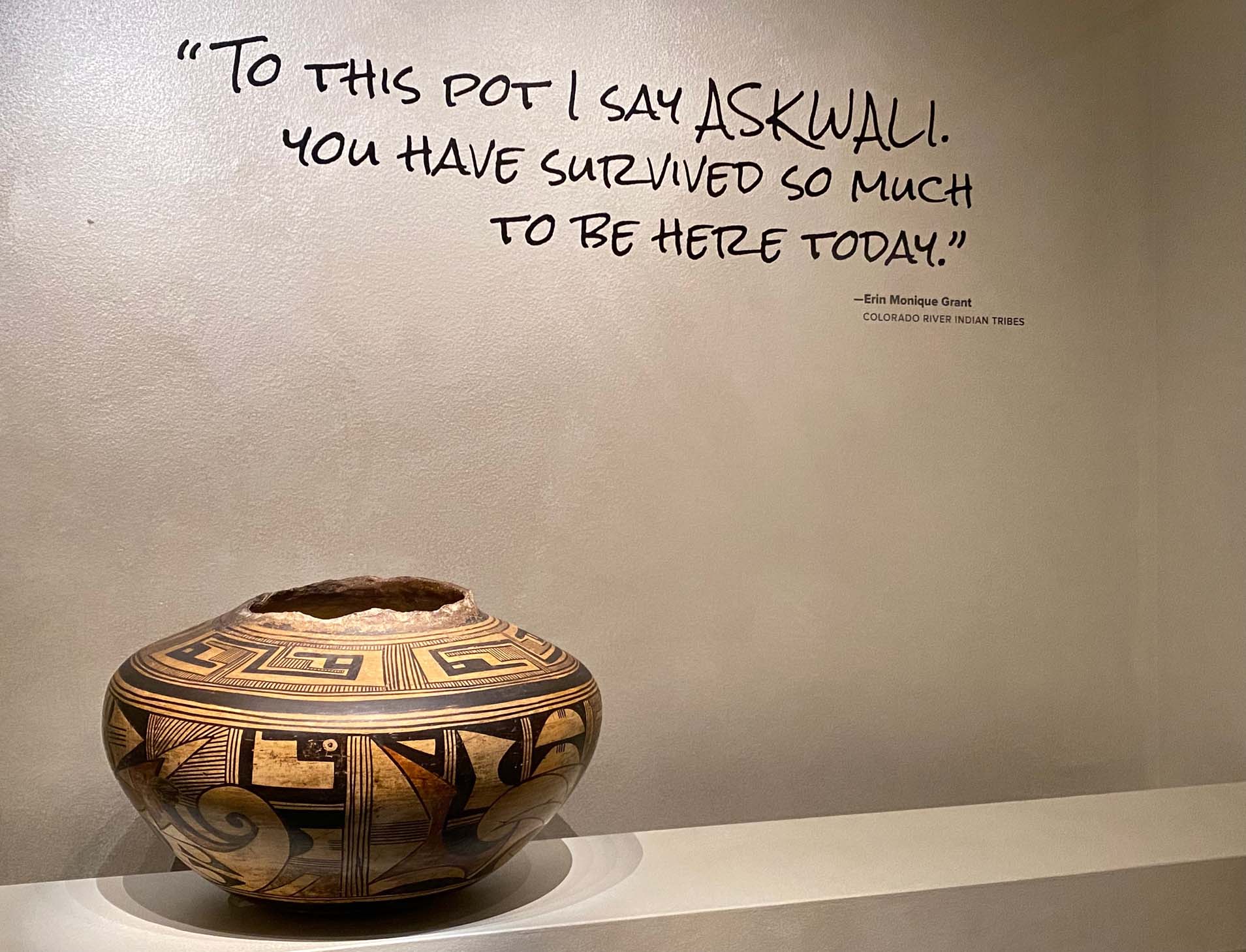
1900 Tewa-Hopi Hno jar selected by Erin Monique Grant (Colorado River Indian Tribes); it reminded her of her Hopi family. Courtesy: Vilcek Collection.

For the 100th birthday of the Indian Arts Research Center at School for Advanced Research (SAR), the exhibition debuted in 2023 at Santa Fe’s Museum of Indian Arts and Culture, and then traveled to New York to open at the Metropolitan Museum of Art.

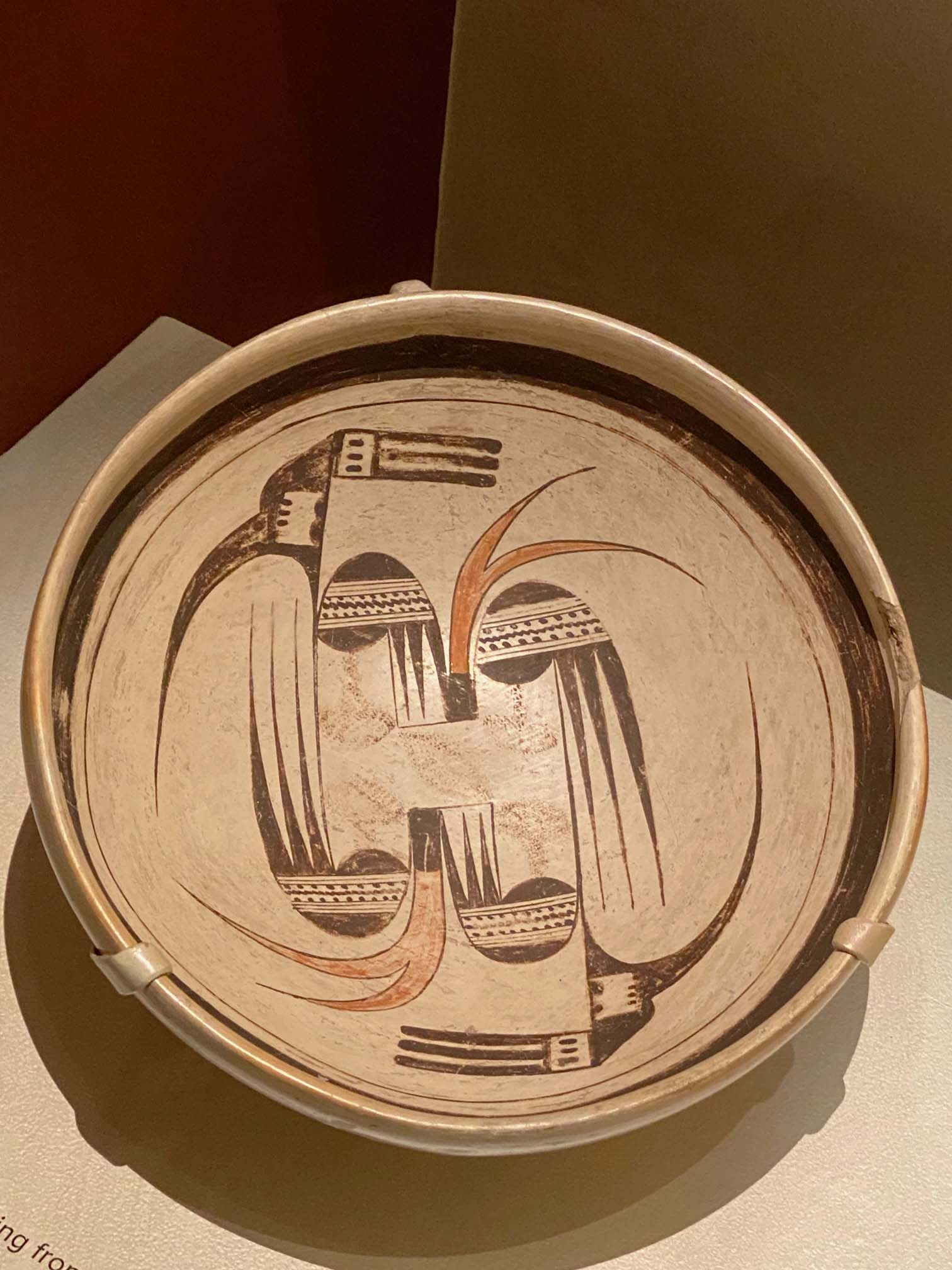
1907-1910 bowl by Nampeyo (Tewa/Hopi) selected by her great-great-grandson artist Dan Namingha. Courtesy: SAR

New York’s Vilcek Foundation co-sponsored the community-curation project, exhibition, and project website. The organizers consulted with sixty curators from 22 pueblo communities across the Southwest to select work from the IARC collection and write about the spirit of these works. Communications weren’t always easy, since Internet service (email) is still spotty on some tribal lands.  

But The Pueblo Collective’s inclusive approach to create the exhibition and catalog is now considered a template for major art institutions to work with tribal communities to convey their stories and culture to the public..

The IARC collection is legendary, spanning prehistoric to modern-day works. This video takes you inside IARC archive to meet a few of the Pueblo curators and the pots they selected:

Utilitarian vessels, ancient legacies, and intergenerational connections are themes explored in the 2023 installation at Santa Fe’s Museum of Indian Arts and Culture. The exhibition design artfully integrated the words and thoughts of the curators in, around, and above the spectacular selections. Take a look at some of our favorites in our Flickr album.

Two 19th-century Tesuque water jars: a jar chosen by artist Marita Hinds (Tesuque), who saw it on a 1980s class field trip; and one admired by potter Bernard Mora (Tesuque) for its personality and imperfections. Courtesy: SAR

In some cases, a curator chose an Ancestral Pueblo pot from the 1100s and reflected on how well it’s survived today. In other cases, a curator discovered their grandmother’s pot stored for decades within the IARC collection. What a joy to bring it out and let it breathe! Listen in….

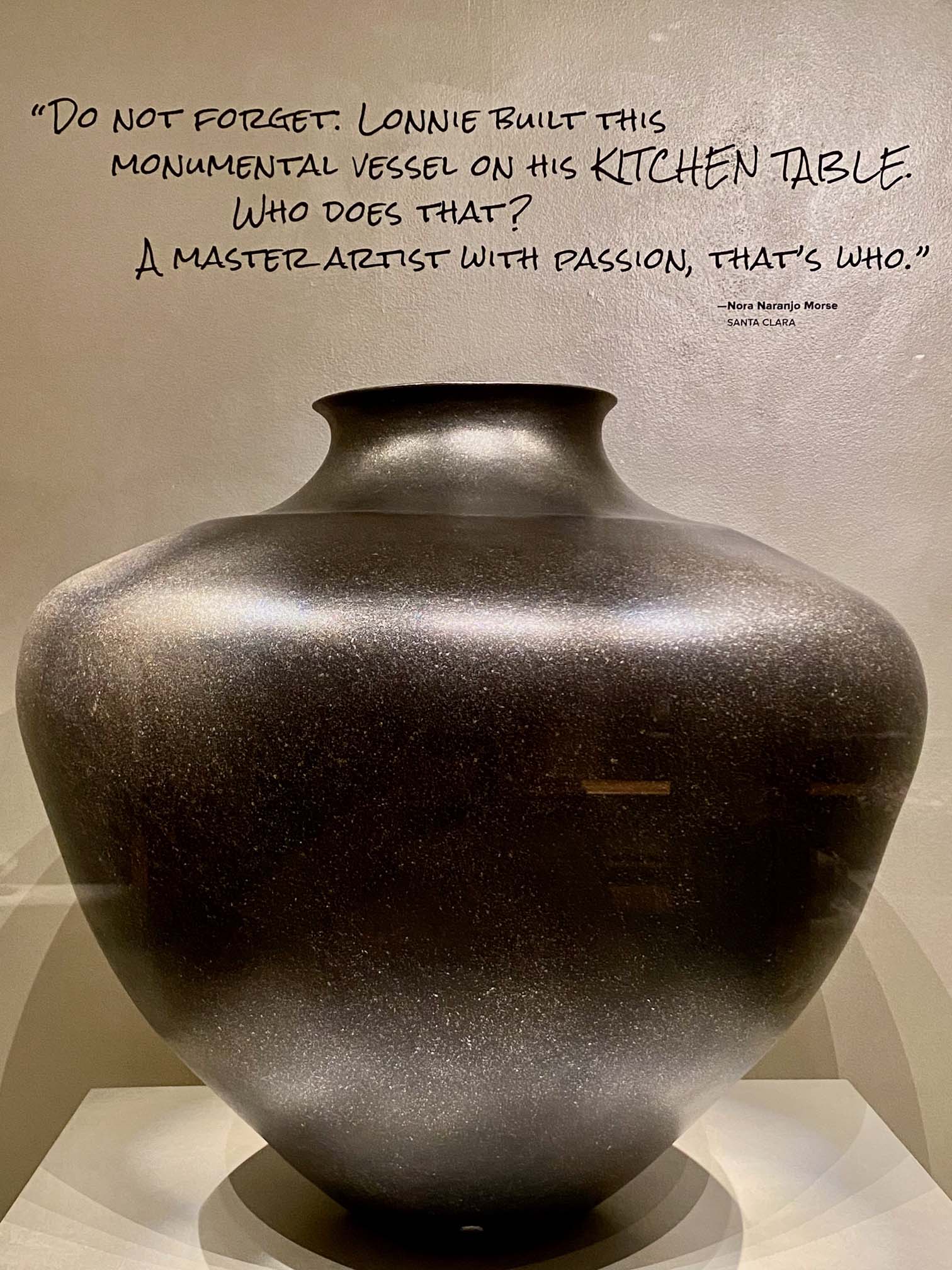
This statement about Lonnie Vigil’s magnificent vessel by Nora Naranjo Morse says it all.  The MIAC gallery space recreated a Pueblo kitchen so we can experience the environment in which most Pueblo potters create their work.

1995 micaceous clay jar made by Lonnie Vigil (Nambe) selected by Nora Naranjo Morse (Santa Clara) because it glitters like stars. Courtesy: SAR
Santa Fe’s Museum of Indian Arts and Culture’s replica of Pueblo kitchen where most pottery is created

And here’s how the Met featured Lonnie’s show-stopping work – made on his kitchen table – prominently in the American Wing entrance!

Micaceous clay jar by Lonnie Vigil (Nambe) in the show’s entrance at the Met’s American Wing. Photo by Richard Lee; courtesy: The Metropolitan Museum

The project website presents the curators’ biographies, their selections, and stories. As of 2026, the pots have toured other institutions in the United States and have come home to New Mexico. See this beautiful exhibition at the Indian Pueblo Cultural Center in Albuquerque through February 21, 2027.

Listen to the Met’s 2023 panel with five curators behind this magnificent community-curated indigenous exhibition and find out why they believe understanding the vessels’ power is important:

Past and Future of Santa Fe’s Indian Market

There’s no better way to see the best of the best at the Santa Fe Indian Market than to visit the remarkable retrospective assembled at the New Mexico History Museum in their honorary centennial exhibition, Honoring Tradition and Innovation: 100 Years of Santa Fe’s Indian Market, 1922-2022, on view through August 31.

The curators have gathered loans from private collections, museums, individual artists, and big-name galleries to give visitors a decade-by-decade chronicle of the people, families, maker innovations, and contemporary-art trends that converged to showcase works from one the most exciting confluences of creativity in the United States.

Santa Clara artist Nancy Youngblood’s 2018 polished pottery jar (best of pottery category award), granddaughter of Margaret Tafoya. Courtesy: private collection.

The items in the show – traditional pots, dazzling Navajo weavings, whimsical figurines, elaborately embroidered accessories and clothing, social-commentary photos and paintings – are so compelling that it takes two or three visits to actually focus on the thoughtful, illuminating text that accompanies each portion of the show.

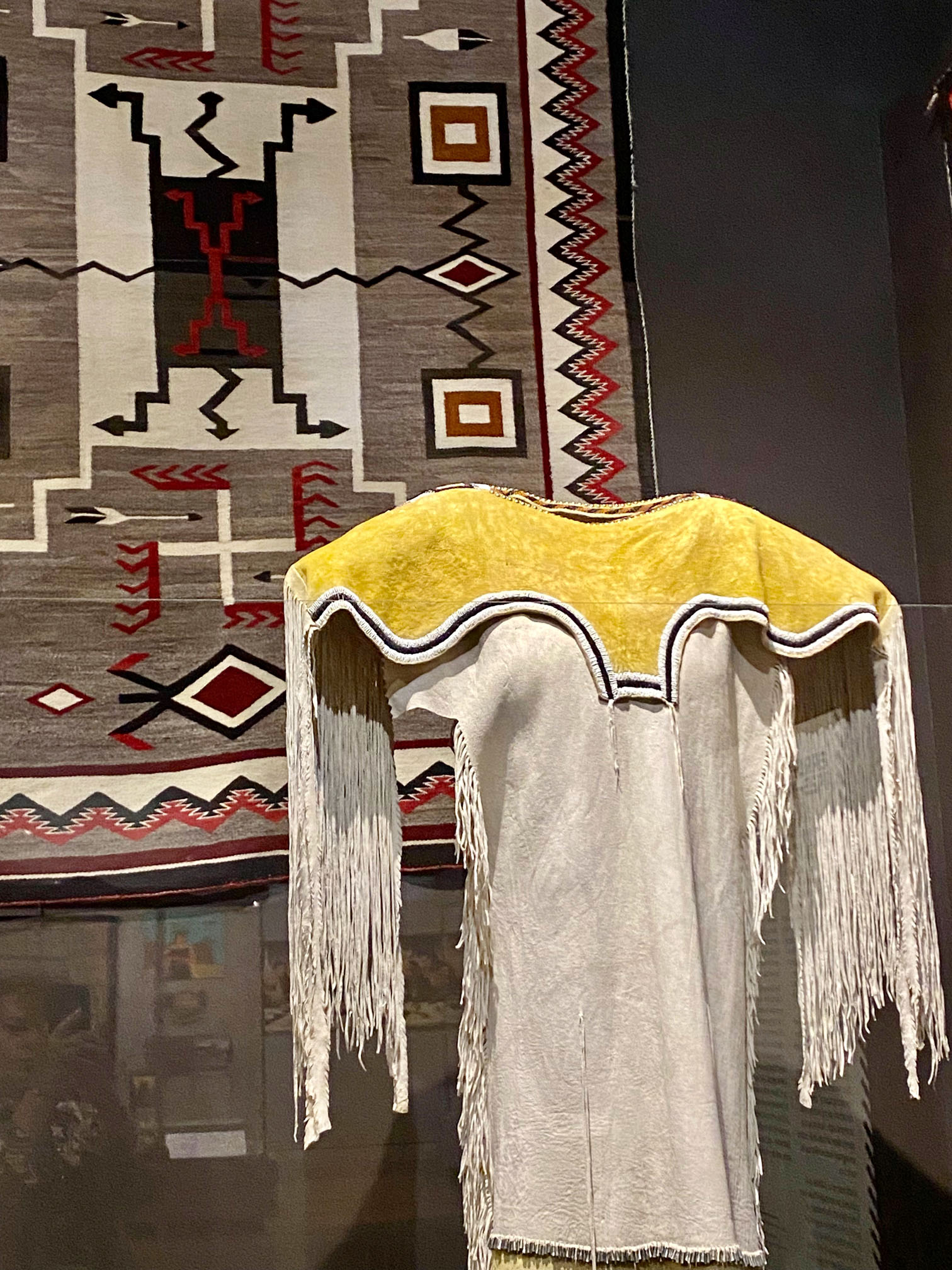
Embellished 1890 buckskin Apache/Ute dress; behind, a 1925-1930 Navajo rug. Courtesy: Cowboys and Indians Antiques, Historic Toadlena Trading Post Museum.

The organizers have provided a revealing chronology of the politics, economics, and social context of each decade of the arts festival, noting changes in the people, processes, power, and patronage over time.

The first gallery brings you back to the earliest days of the market – a time when there were no Indian curators or judges (unlike today!) and when Native makers were not even allowed to sell their own work or interface directly with non-Native buyers. 

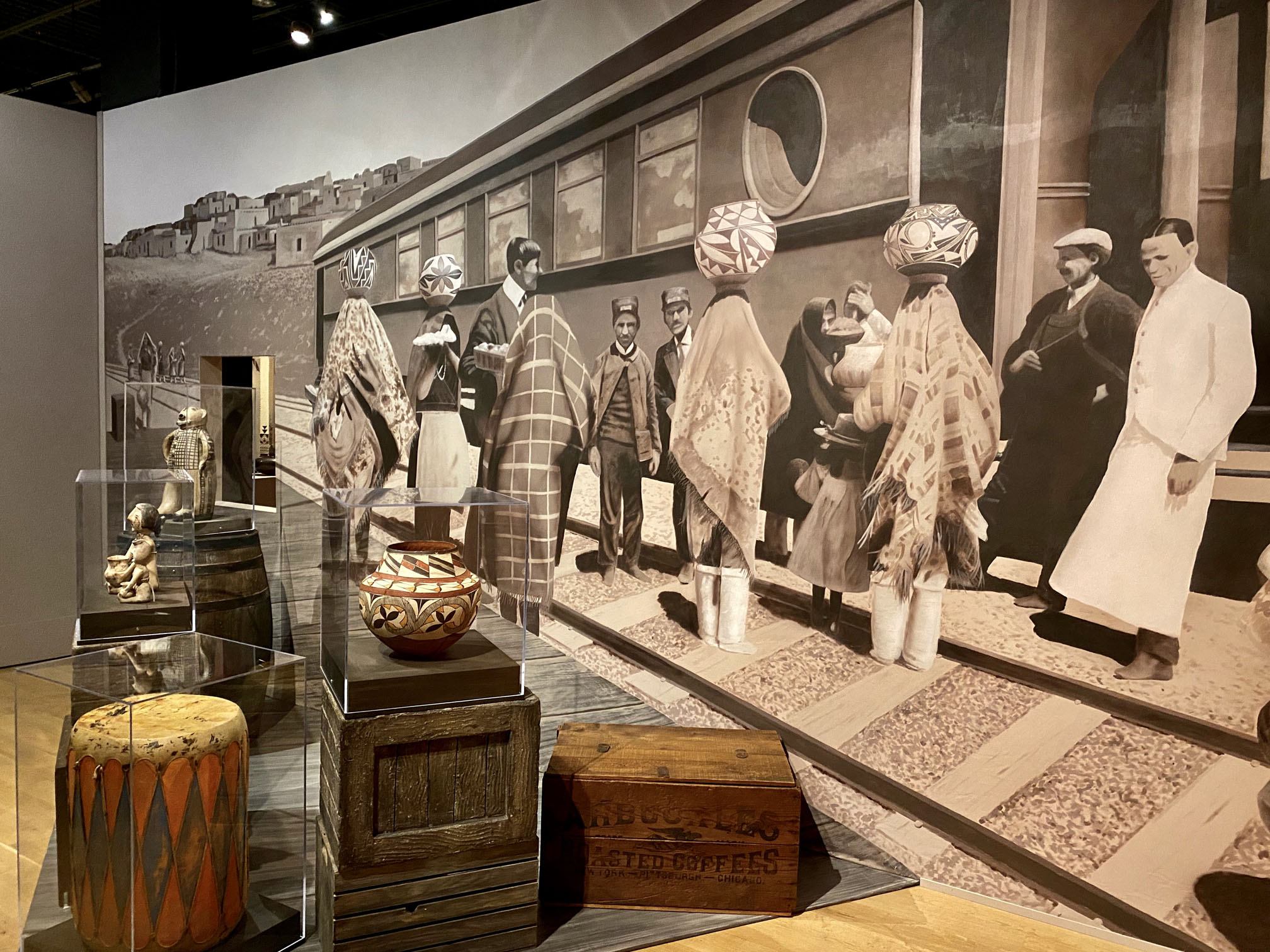
The wall mural harkens back to the days when Pueblo people sold their pots and creations to tourists along the railroad, which in the late 1890s and early 1900s brought curious travelers, East Coast dandies, and traveling showpeople out to the Western badlands.

David Rock’s mural with early Native-made collectibles – early 1900s pottery and 1920s drum.

Turn-of-the-century tom-toms, curios, and older pots are displayed near the rail-top mural; Navajo rugs and beaded moccasins from the period are arrayed across the way. It’s an arrangement that evokes what might be displayed in an old trading post, or at least in the early 1920s Santa Fe markets.

Many of these makers in New Mexico were still living on their ancestral lands, but across the United States, the majority of Indigenous populations had either been relocated to reservations or boarding schools.

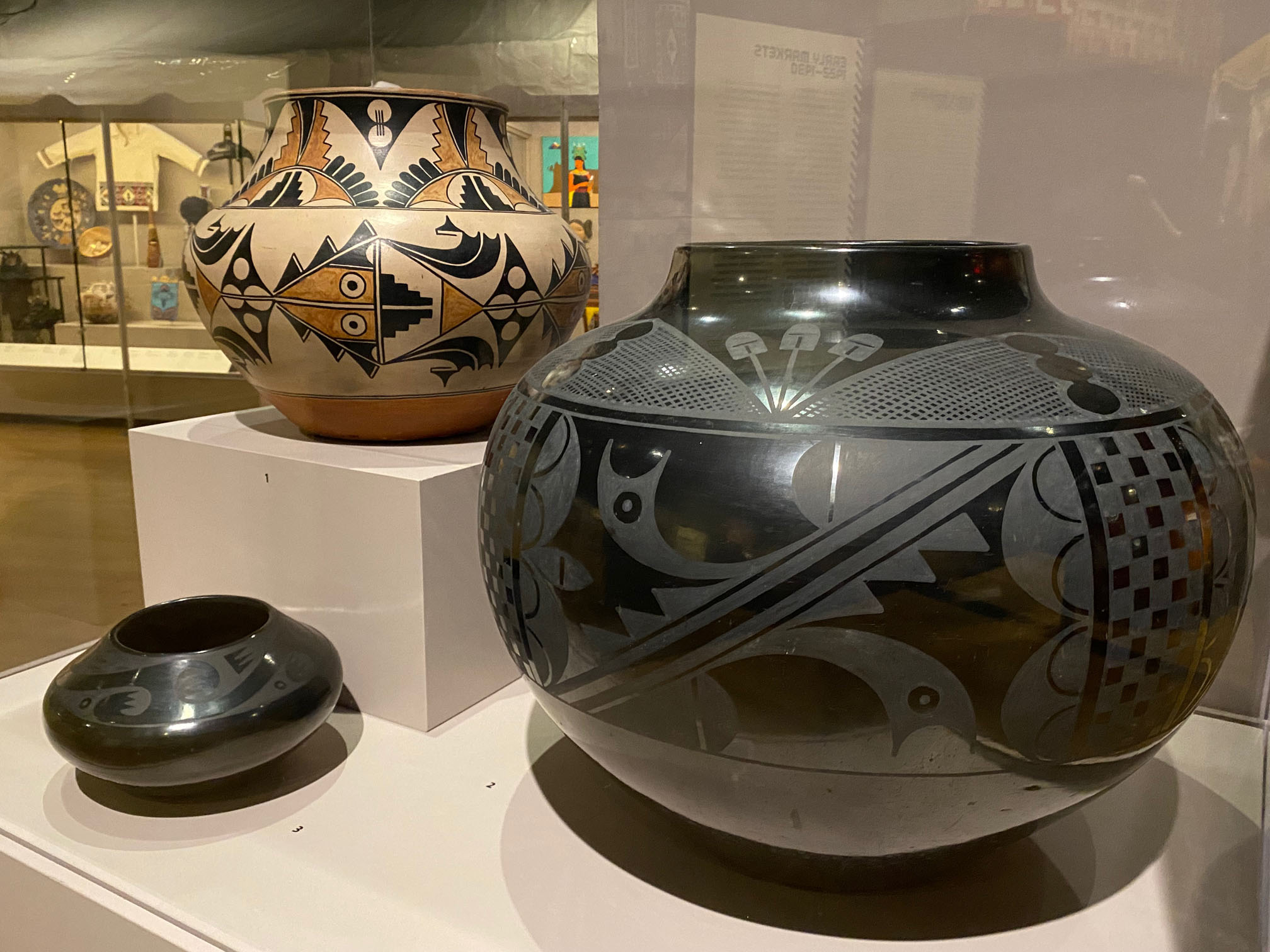
The inter-generational mastery of New Mexico’s Pueblo artists is featured in several vitrines holding examples of black-on-black (and other) masterworks by the Martinez family at San Ildefonso (go, Maria!) and the Tafoyas of Santa Clara, with Margaret’s famous bear-paw imprints.

Work by famed San Ildefonso artist Maria Martinez: 1922 polychrome, large 1942 black pot (award-winner painted by Julian Martinez); and 1928 jar. Courtesy: MICA, SAR

The surrounding gallery features dazzling painted pottery works by Zuni and Acoma from the 1920s – all drawn from the School for Advanced Research (SAR) collection, which began in 1922 to preserve classic works, SAR is the source of the acclaimed exhibition now at the Metropolitan Museum, Grounded in Clay: The Spirit of Pueblo Pottery. Sometimes the artists who made the pot is known; but often the maker is lost to history.

1928 Acoma jar. Courtesy: SAR

In the 1930s and 1940s across the United States, tribal mortality rates increased and their other economic lifelines decreased. But these conditions in the Southwest made the Market an even more important source of family revenue. Throughout the 1940s, the Santa Fe Market boomed.

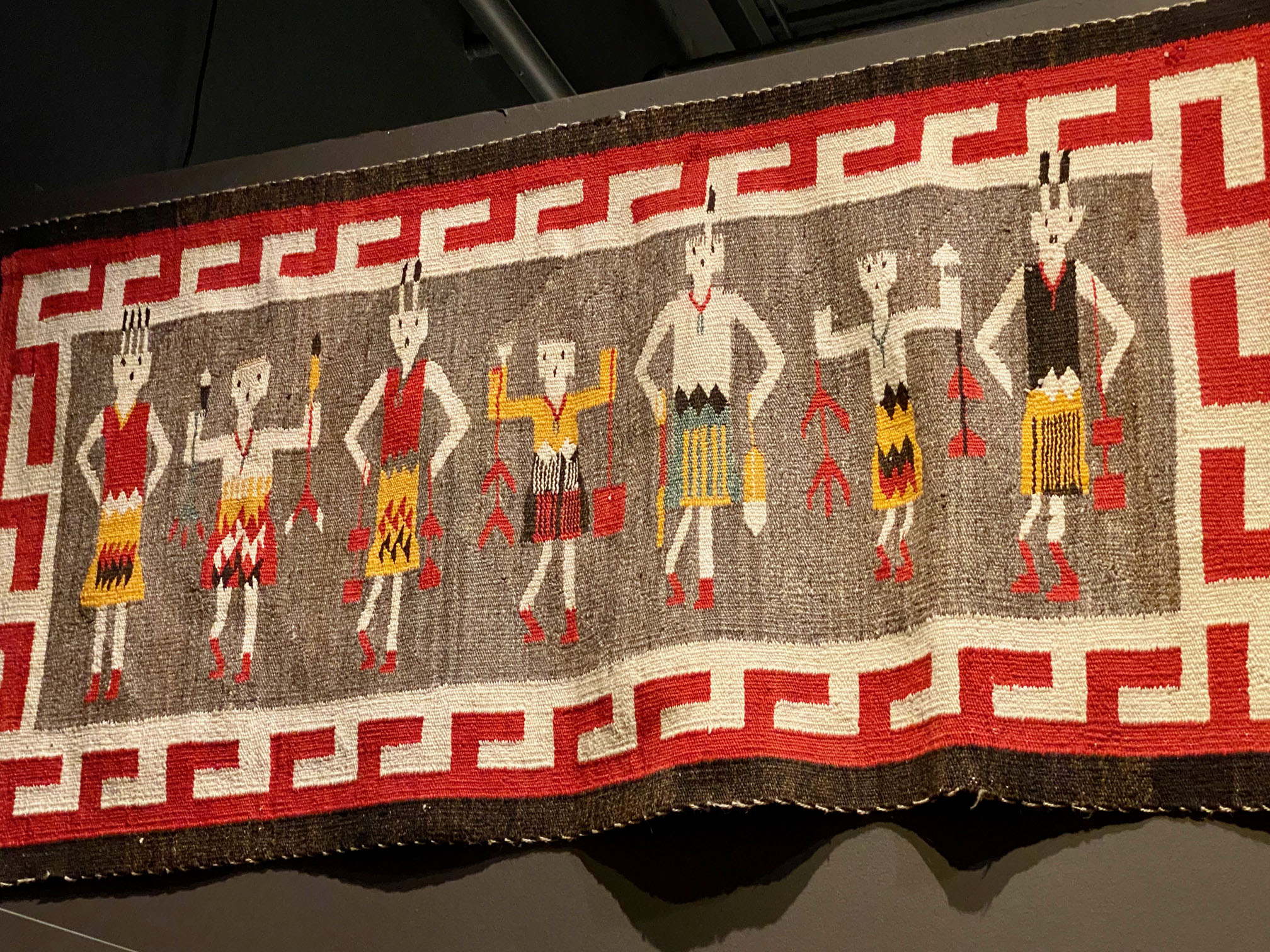
1920-1930 Navajo hand-spun wool rug with figures representing the fire dance. Courtesy: Historic Toadlena Trading Post Museum.

By the 1950s, Federal government instituted policies to encourage Indians to leave their land and move into cities. Unfortunately, Santa Fe Indian Market policies had the same depressing effect – the organizers reduced both the number of artists allowed to show and amount of prize money that could be won.

By 1959, the SF Indian Market was on life support, with a few private donors stepping in with funding just to let it survive.

But during the 1960s, changes were afoot. The Institute for American Indian Arts began in Santa Fe, where Lloyd Kiva New gave Native artists “permission” to throw off traditional conventions and make contemporary art. Across the United States, social-justice movements focused on indigenous people’s rights demanded policy changes to reverse the impact of oppression. By 1968, Congress had passed the Indian Civil Rights Act.

What did that mean for the Market? The majority of works on display in the museum gallery are from the post-1970s period, when the scope, range, voice, virtuosity, and experimentation reflected the times.

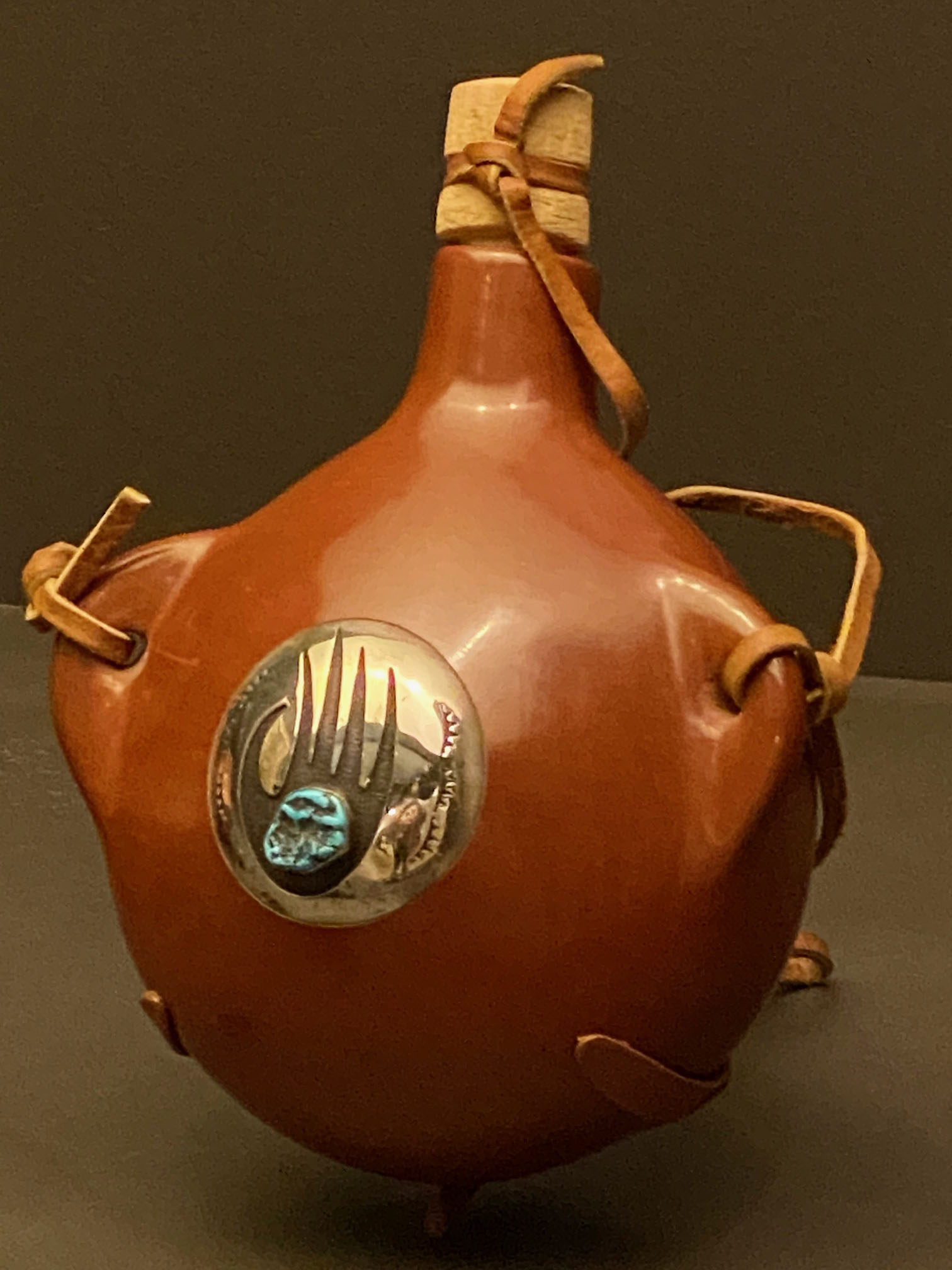
1974 pottery canteen with turquoise and silver by San Ildefonso artists Rose Gonzales and Tse Pe. Courtesy: private collection.

Here are some examples – the glorious, gleaming, turquoise-inlaied 1980s vessel by by Zia/Jemez/San Ildefonso artist Dora Tse Pe and the virtuoso painting on a jar by by Acoma artist Dorothy Toriio.

1980s pottery jar by Zia/Jemez/San Ildefonso artist Dora Tse Pe. Courtesy: private collection.
1990 pottery jar by Acoma artist Dorothy Toriio. Courtesy: King Galleries.

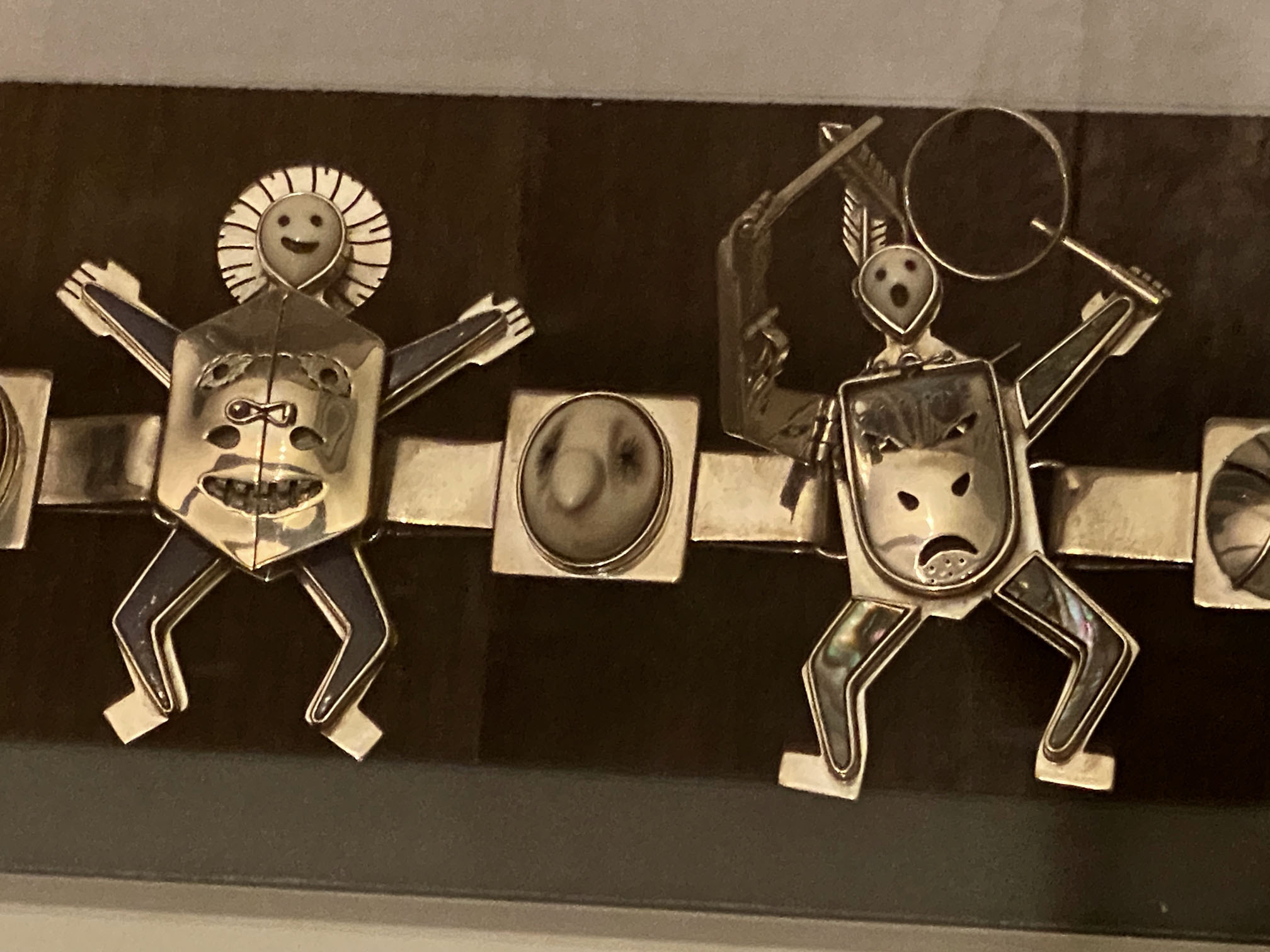
Or, consider the virtuoso silverwork and inlaid belt by Aleutian master Denise Wallace; edgy, theatrical 1990s Cochiti figurines by Virgil Ortiz; and a 1999 horsehair basket woven by Tohono O’odham artist Leona Antone. See more in our Flickr album.

Silver 1986 “Aleut Dancer Belt” by Aleut artist Denise Wallace with abalone, fossil ivory, and lapis; Best in Non-traditional Jewelry Award. Courtesy: private collection.

The show’s finale catapults the story of Indian Market into the future.  First, there’s a cluster of sculptural and video works by Virgil Ortiz, featuring his sci-fi, super-powered, time-traveling warriors from the future who travel back to 1680 to fortify the success of the Pueblo Revolt and save Pueblo culture.

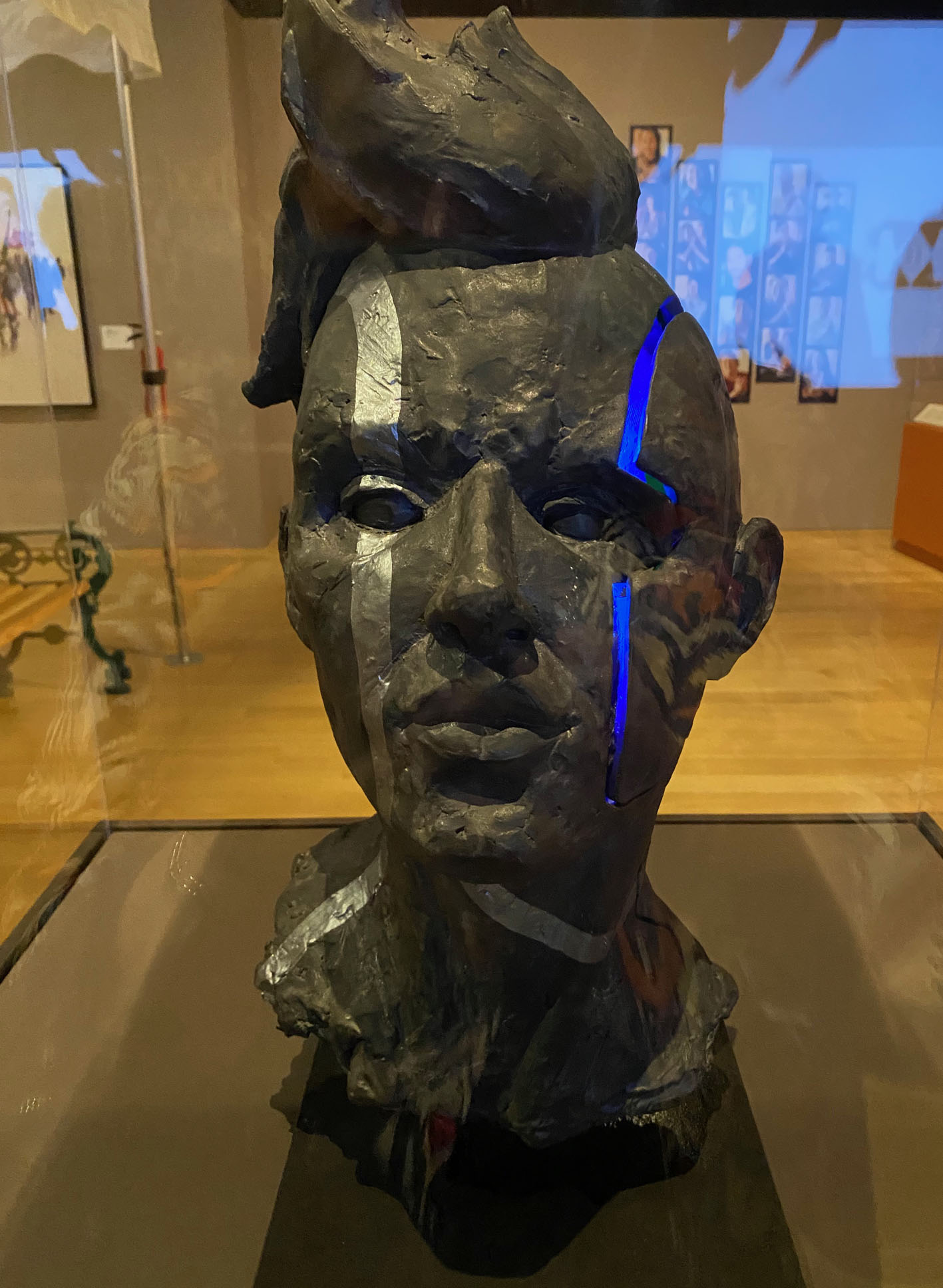
“Kootz (Runner-twin brother of Tahu)” 2018 high-fire clay sculpture with “warning” LED lights by Cochiti artist Virgil Ortiz. – a character from his sci-fi 2180 ReVOltage Series. Courtesy: the artist
“Tahu (Blind Archer)” 2018 sculpture with LED lights by Cochiti artist Virgil Ortiz.. Courtesy: the artist

Second, there’s a photo wall of families and their young children, who create work to enter in to the children’s division. It leaves visitors with the strong feeling that not only will forward-looking artists keep innovating and creating, but that the kids will be all right.

Still of 2022 “Made in Native America” video by Cochiti artist Virgil Ortiz, featuring sci-fi costumes. Courtesy: the artist