WWII Veterans Flock to Make Art in Taos

The quiet adobe museum entrance displaying a retro WWII-era poster prepares no one for the ultra-modern abstraction extravaganza inside the Harwood.

Pursuit of Happiness: GI Bill in Taos, on view through May 31, 2026, shows and explains how an influx of rule-breaking painters from both coasts returned from the War, enrolled in contemporary art classes, and created the mid-century phenomenon that art historians classify as Taos Modern. Take a virtual visit in our Flickr album.
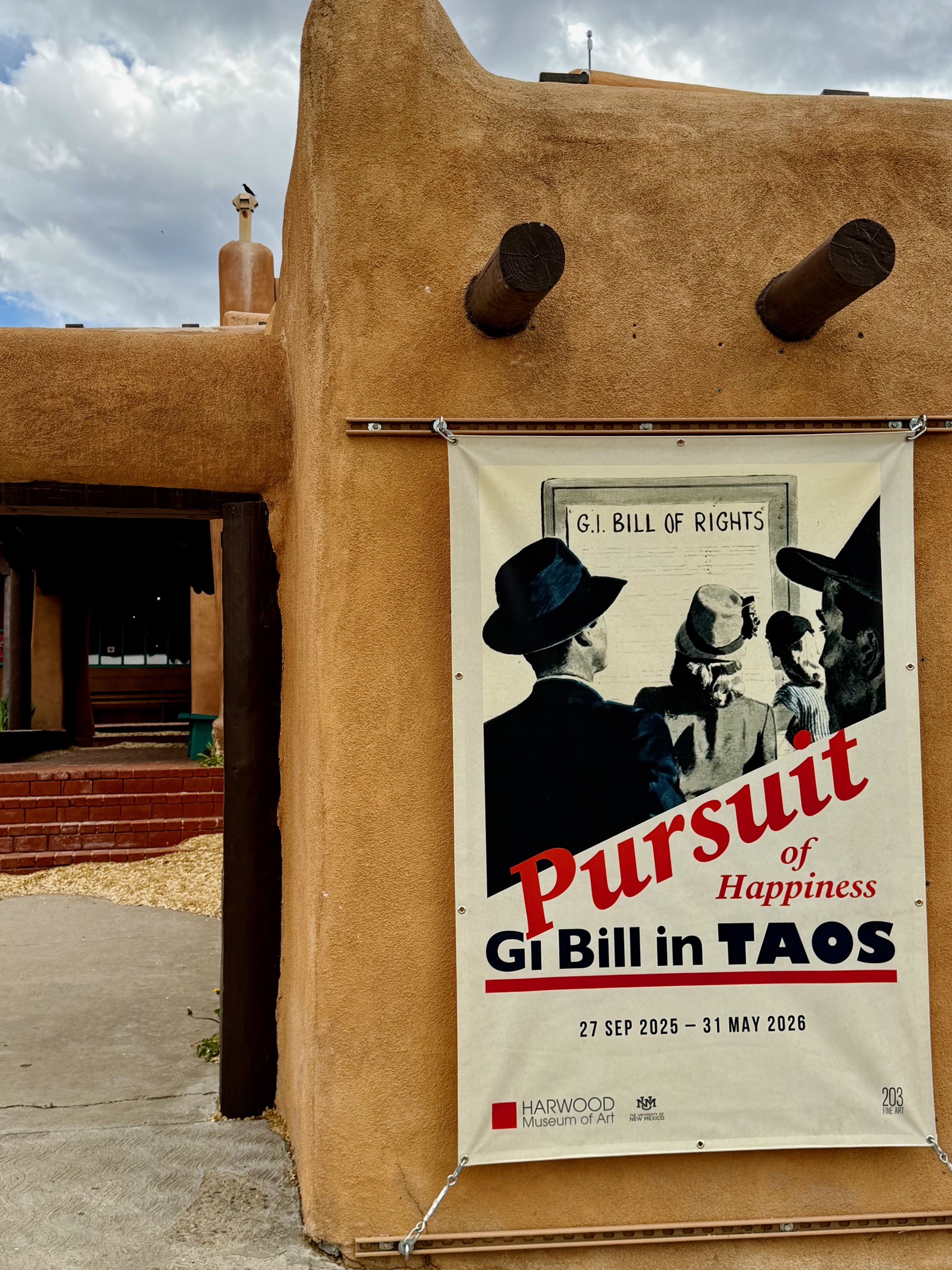
Harwood Museum of Art entrance in Taos

The exhibition tells the story of young people who first applied their talents to defend America in Europe, the Pacific, and the home front, and then chose to channel their energies and experiences through color and paint on large canvases to give life to postwar Abstract Expressionism, big-field flat color painting, and innovative materials.

The exhibition captures both the energy and optimism of the moment and shines a light on the mentors, teachers, and educational institutions that gave these vets a platform to experiment as social realism’s dominance in the art scene was giving way to new expressions – inner spiritualism, bold strokes, and white canvases with wide open spaces.
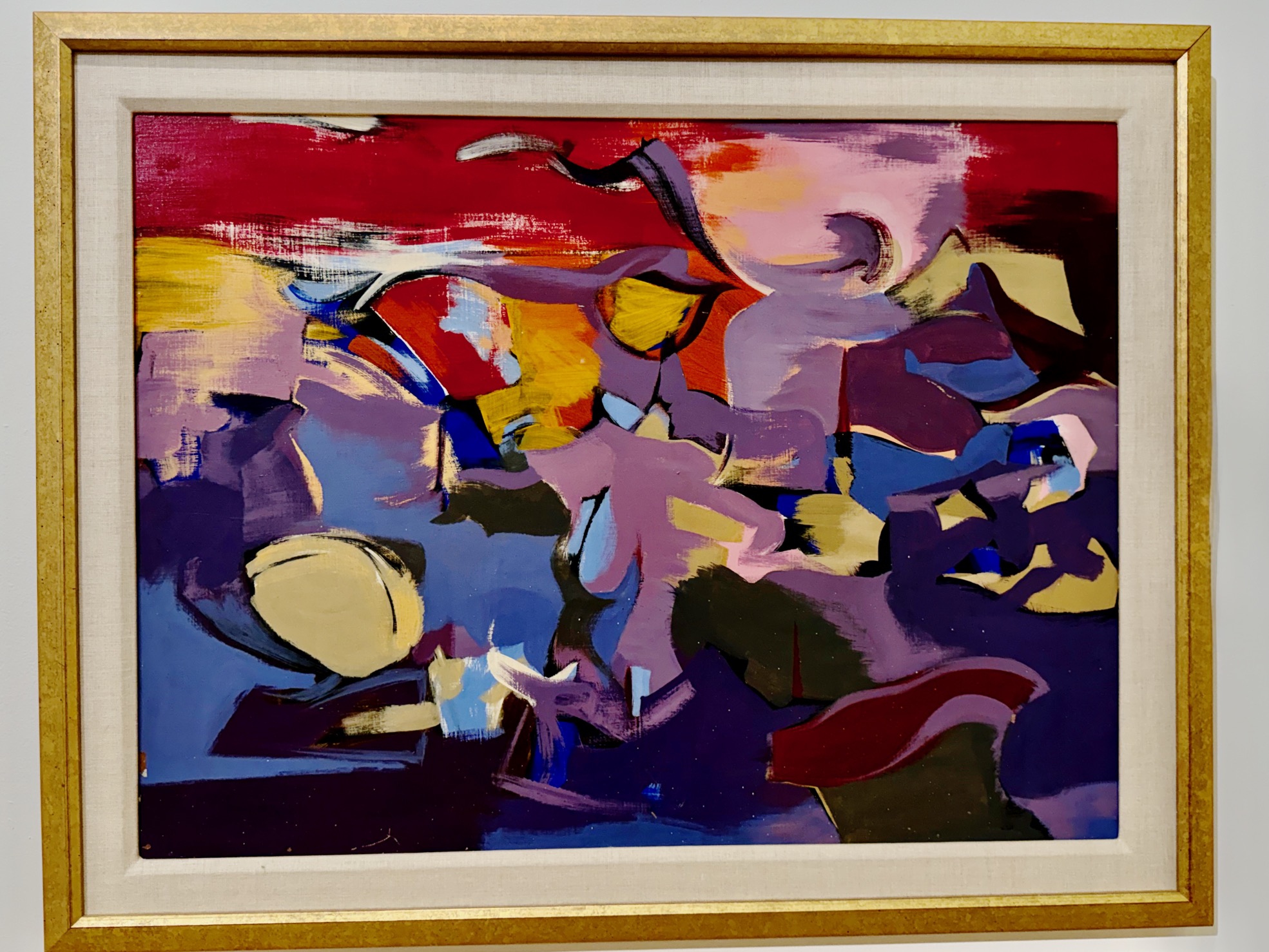
South Pacific Army airman Wolcott Ely’s undated oil From the Seas that are South – trained in Paris and was a private student of Andrew Dasburg in New Mexico. Courtesy: Taos Municipal Schools Historical Art Collection.

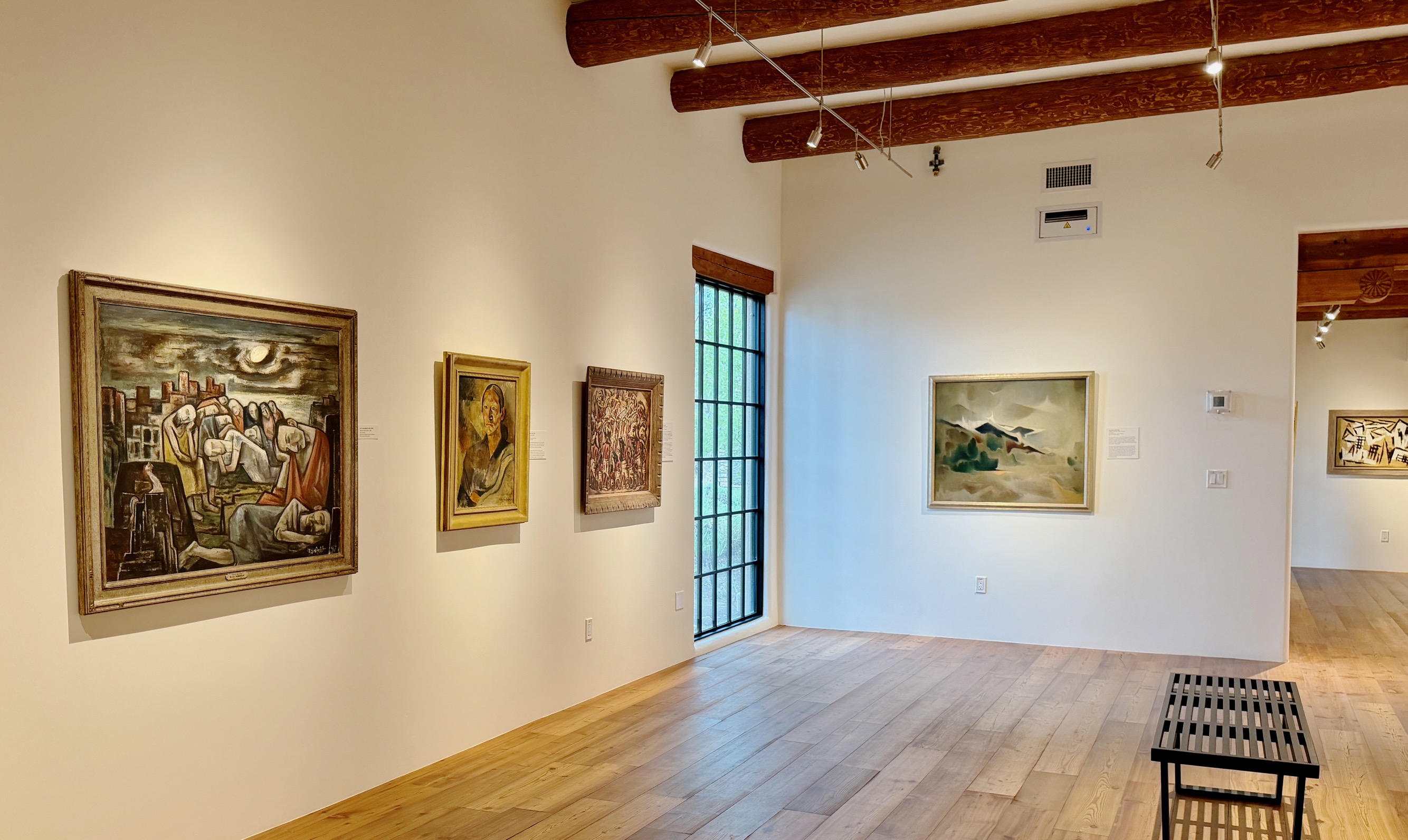
Mid-century modern dominates the exhibition, but there are a few references to artists’ wartime experiences – dramatic ink drawings from Oli Shivonen’s European war journals and Janet Lippencott’s expressive canvas that puts the viewer amid the carnage in London from one of Germany’s final bombing raids – something she experienced as a WAC serving on Eisenhower’s staff.
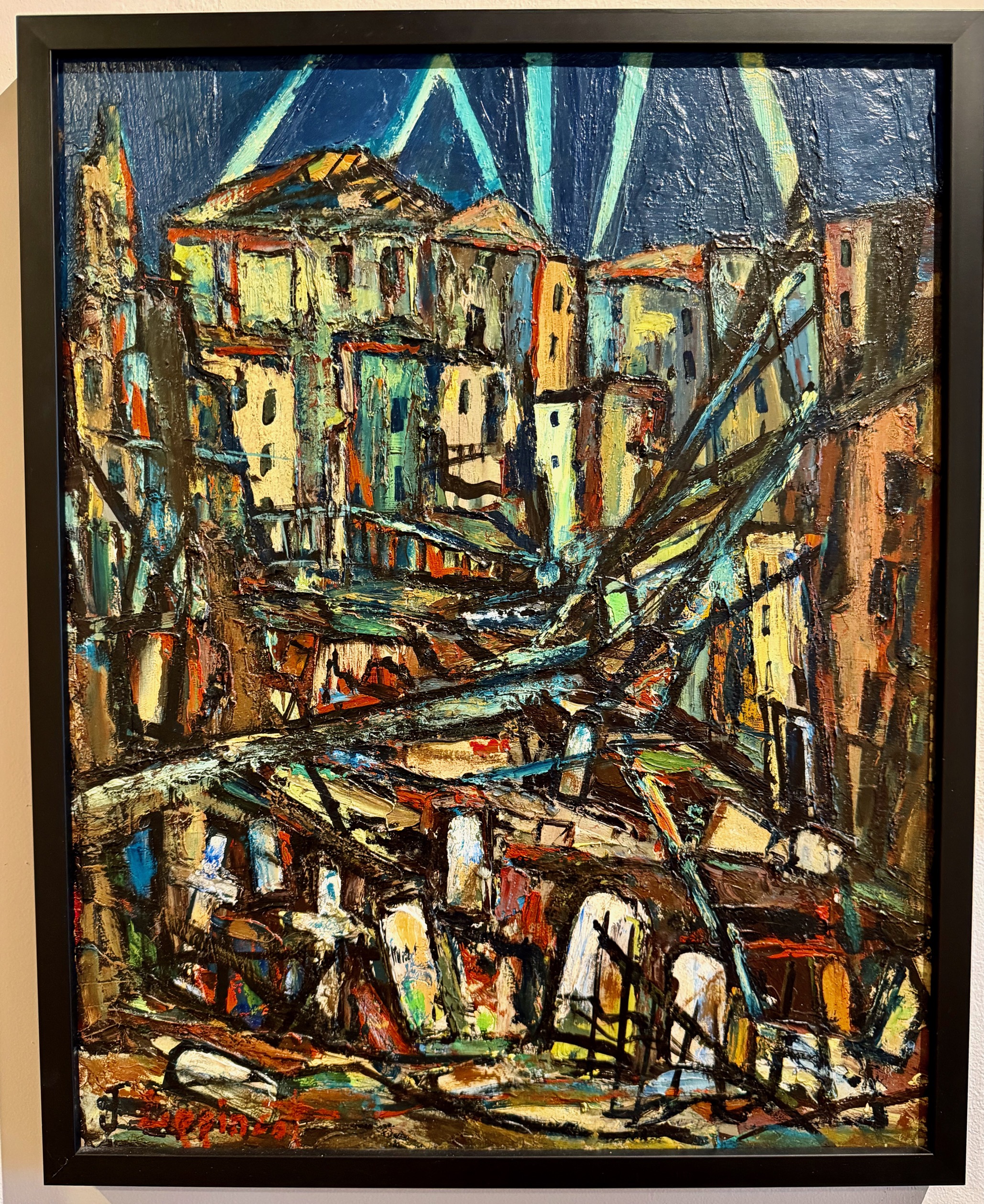
Janet Lippencott’s 1940s painting Raid – reflecting her experience as a WAC in London during one of Germany’s final 1944 bombing raids; in 1949, she used the GI Bill to study at the Bisttram School of Fine Art.
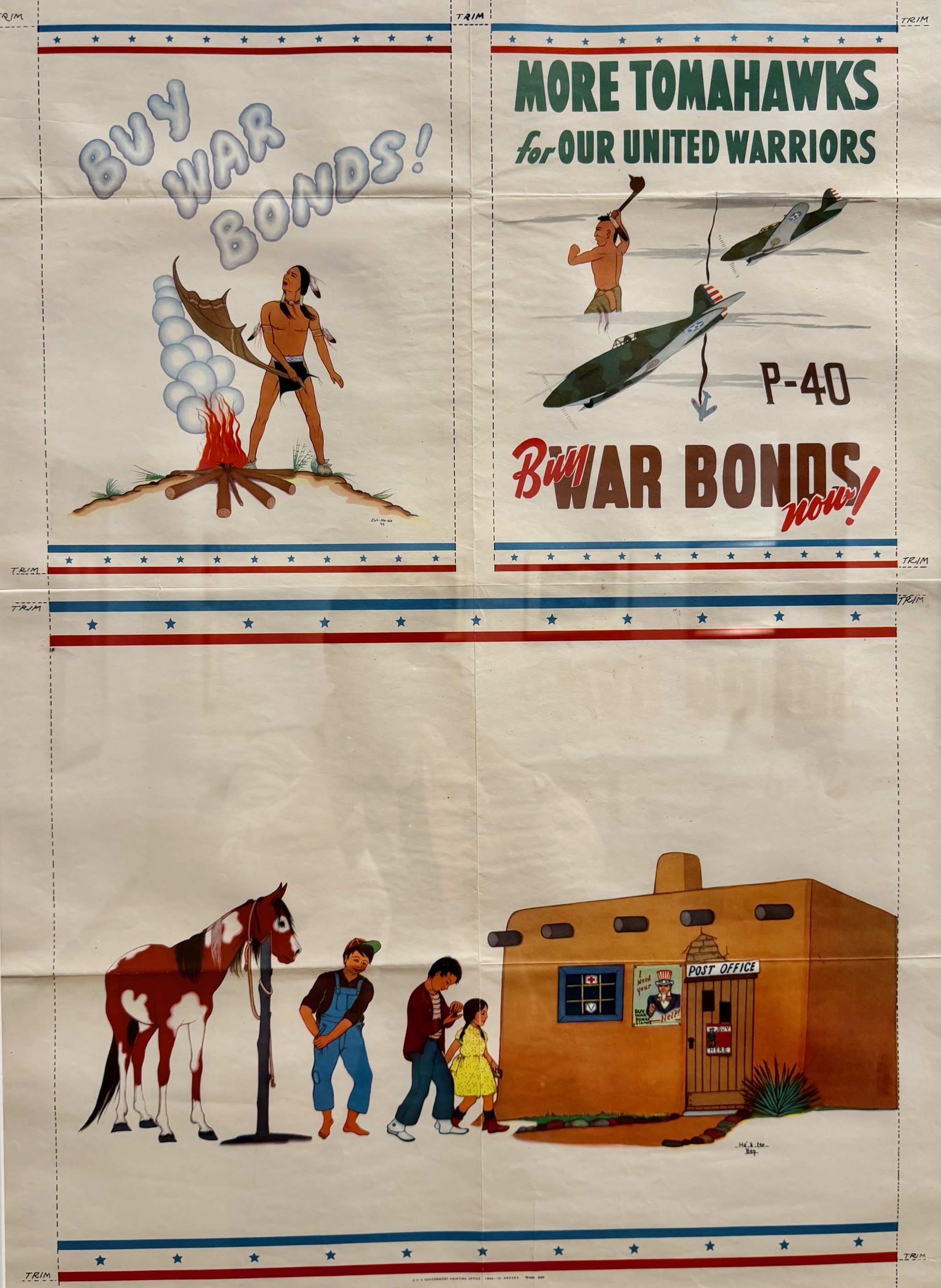
An award-winning 1942 poster by Taos Pueblo artist, cartoonist, and Army veteran Eve Mirabal, who studied at the Taos Valley Art School. Courtesy: private collection.

The exhibition frames the work by highlighting the seasonal and year-round schools that welcomed students under the GI Bill of 1944, which provided WWII vets with benefits for education, mortages, and employment. A remarkably high percentage of veterans took advantage of this transformative legislation that built America’s middle class. To learn more, download the gallery guide here.
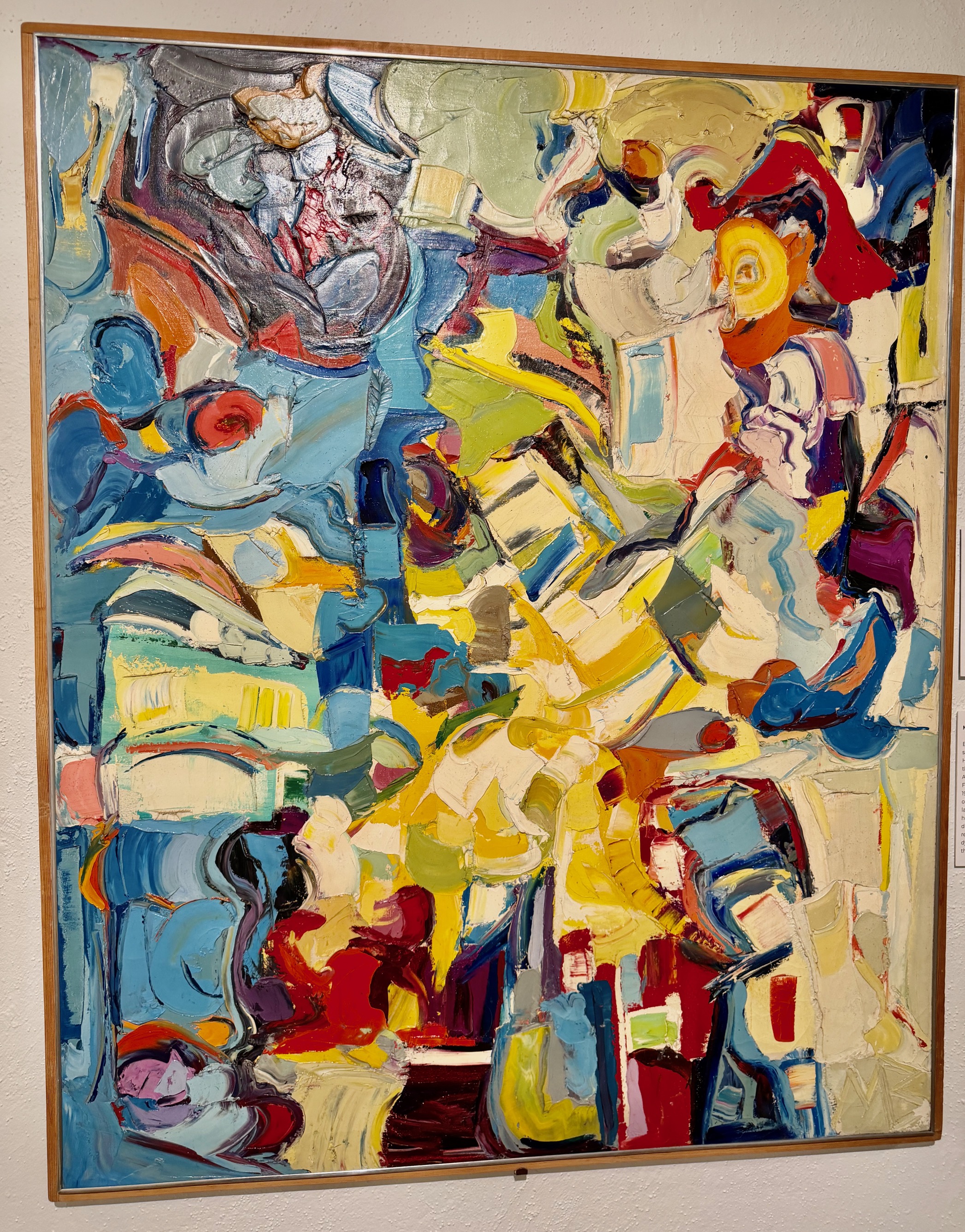
Gestural abstraction by a former student of the UNM Taos Field School on the GI Bill – Malcolm Brown’s 1960 oil painting Olaf’s Dream.

The earliest modern art program in Taos was the University of New Mexico Summer Field School, which began in 1929. Students worked and slept on the grounds of today’s Harwood itself. By the time that GI Bill students attended, property owner and philanthropist Elizabeth Lucy Harwood gifted her former residence – now the Harwood Museum – to UNM. The exhibition showcases work by former UNM summer students R.C. Ellis and Malcolm Brown.

Although she wasn’t on the GI Bill, the Harwood has an entire room full of the UNM program’s most acclaimed attendee, Ms. Agnes Martin, who shared studio space alongside returning war vets in 1947.

Transcendentalist artist Emil Bisttram also accepted GI Bill students into his seasonal fine arts program, which emphasized the principles of Kandinsky and European spiritual abstractionists. Although Taos was his home, Bisttram offered summer and winter fine arts sessions were in Los Angeles and Phoenix, where he taught. Janet Lippincott, who became a lifelong Taos resident, and Cliff Harmon, who also trained with Albers at Black Mountain College, are featured.
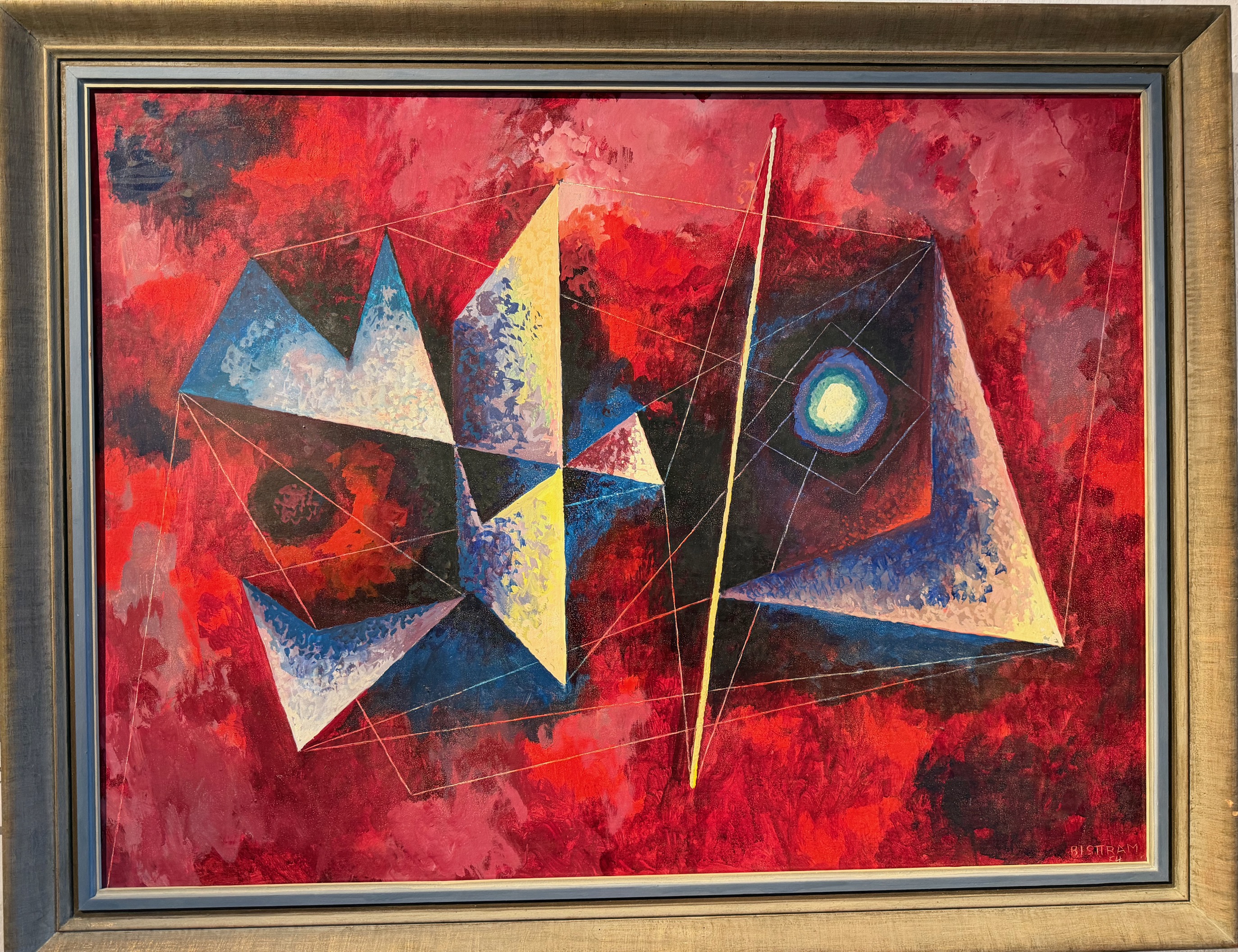
Founder of Bisttram School of Fine Art –transcendentalist Emil Bisttram’s 1954 geometric abstraction Out of Space.
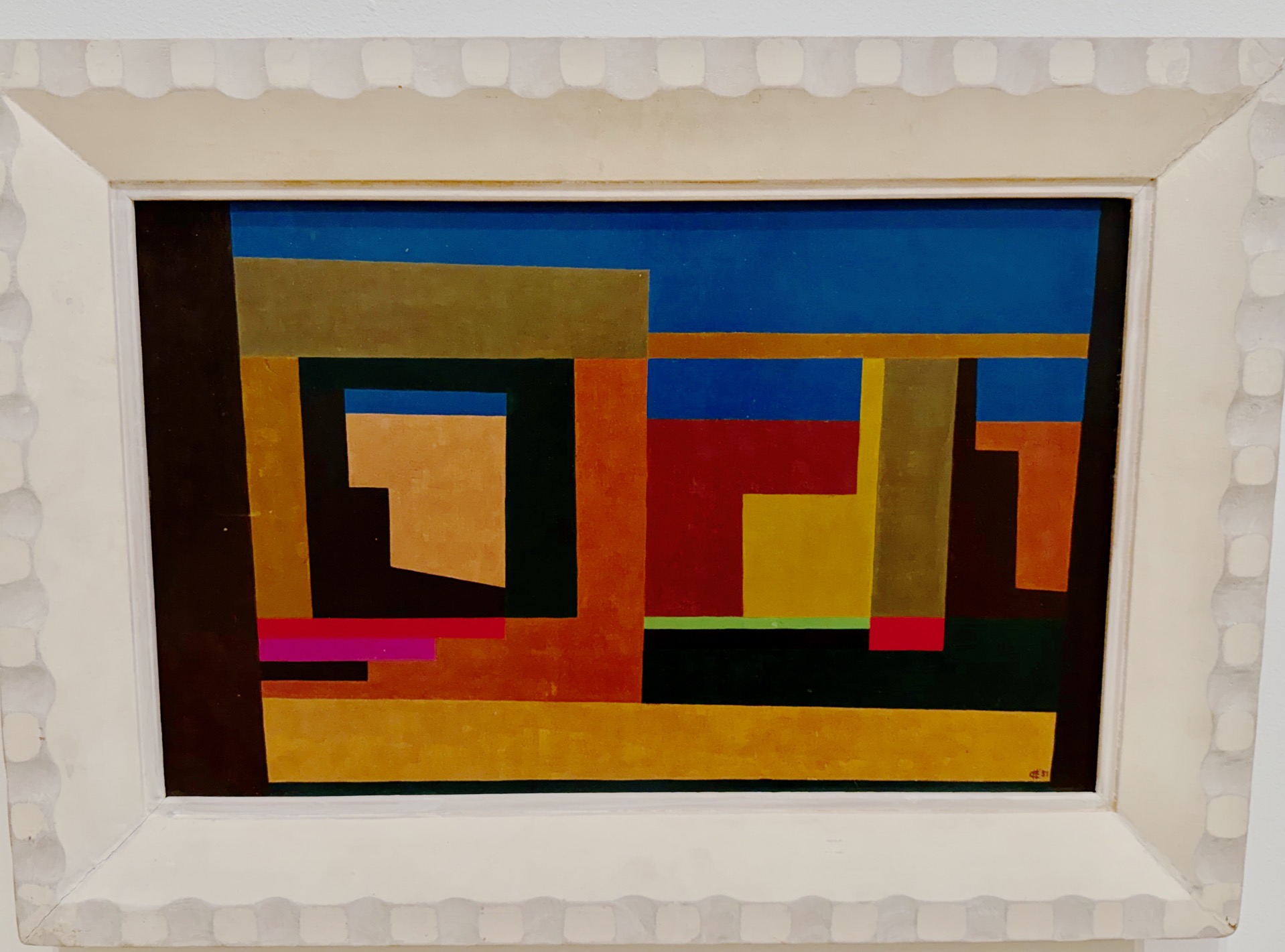
Work by a former student of Josef Albers at Black Mountain College and the Bisttram School of Fine Art on the GI Bill – Navy sonarman Cliff Harmon’s 1951 oil painting, Construction.

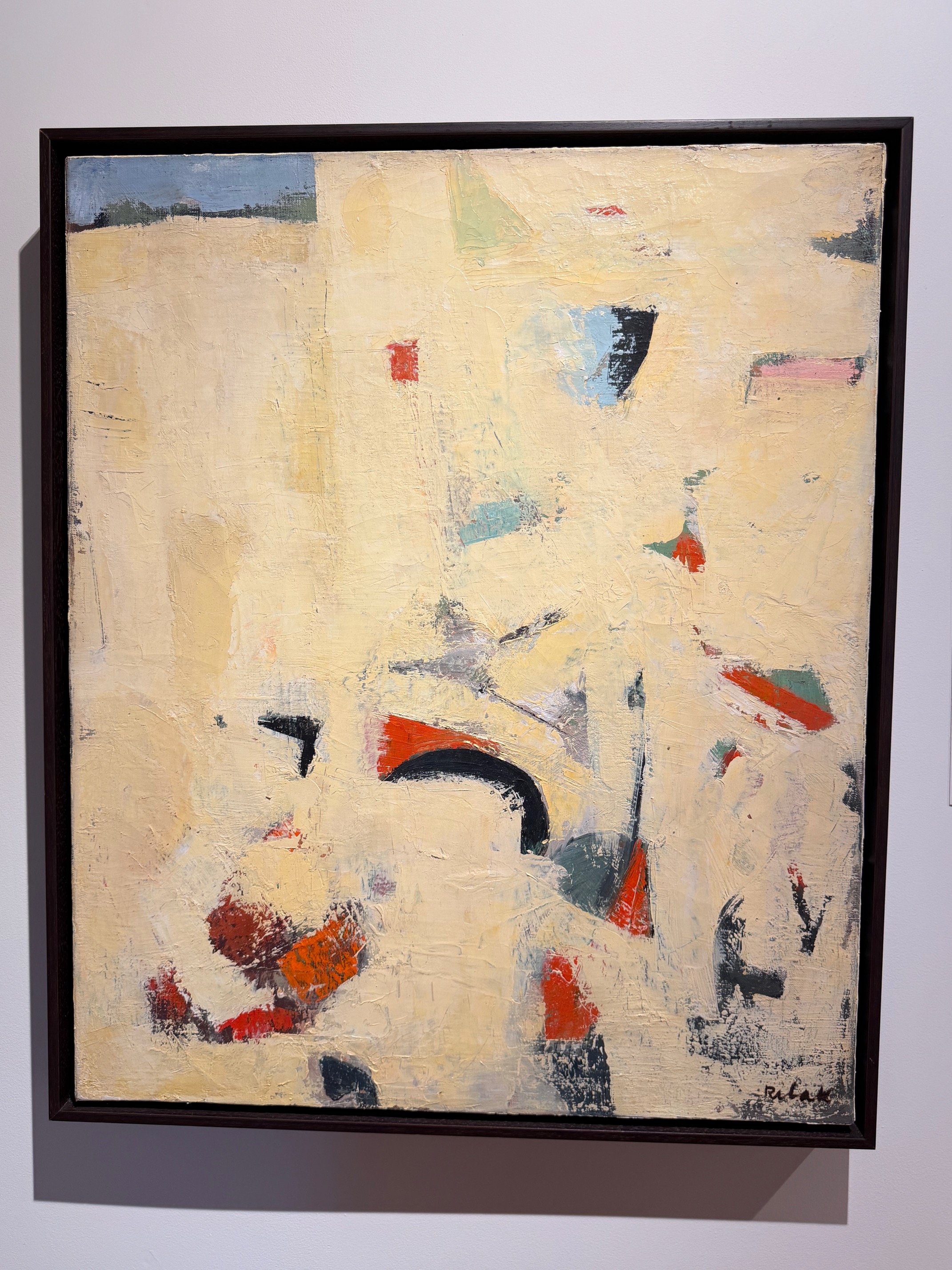
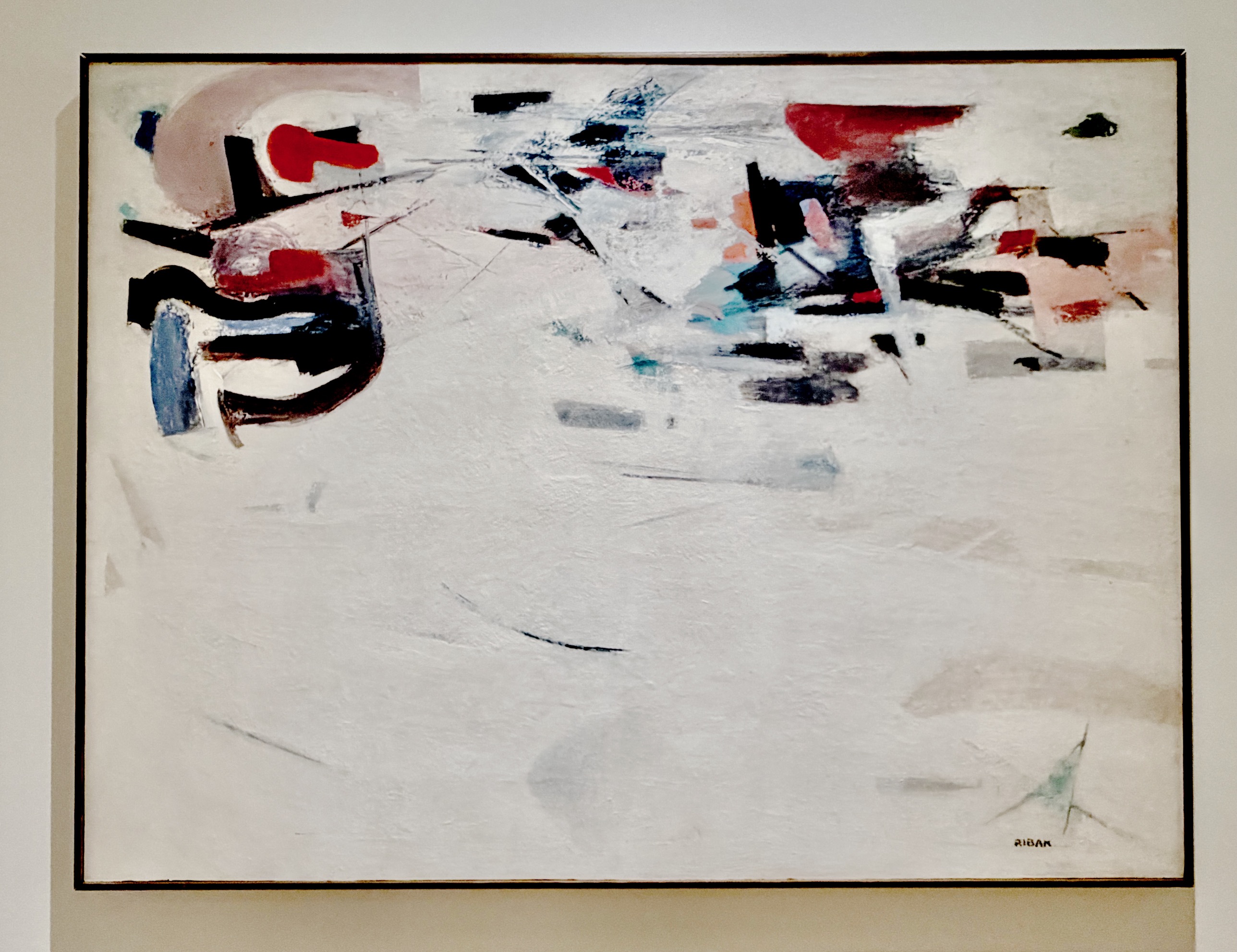
The cross-pollination of styles, personalities, spiritual influences, and teaching philosophies in Taos was intense and rewarding in those post-war years. Two upstart abstractionists – Bea Mandelman and Louis Ribak – arrived and began the Taos Valley Art School in 1947, which welcomed 20 students per semester.

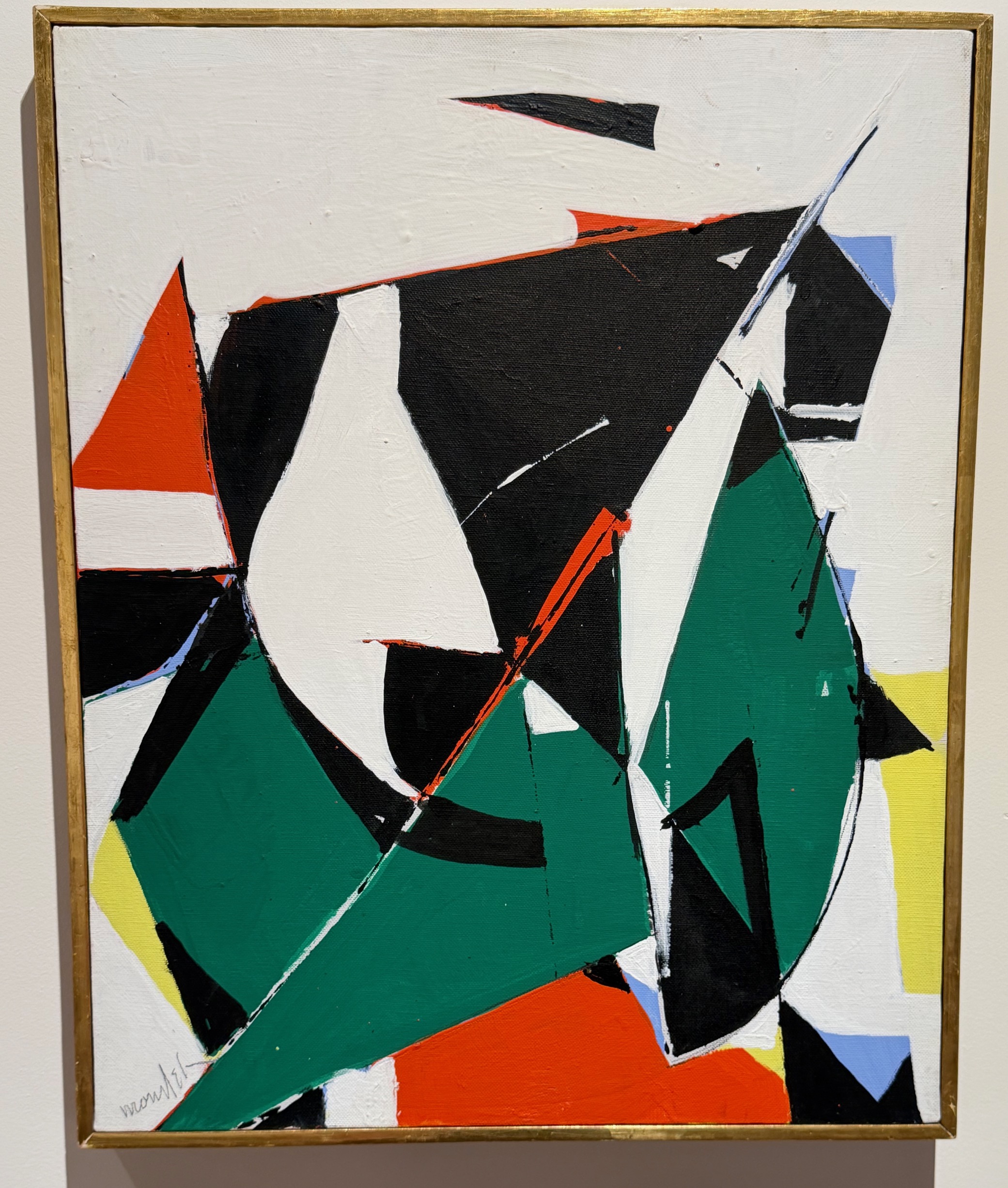
A significant number of works are by Leger-trained Mandelman and social-realist-turned abstractionist Ribak, and their former GI Bill students – Louis Catusco, Ted Egri, Leo Garel, Herman Rednick, and Eve Mirabal (the Taos Pueblo artist credited as the first female Native cartoonist in America).
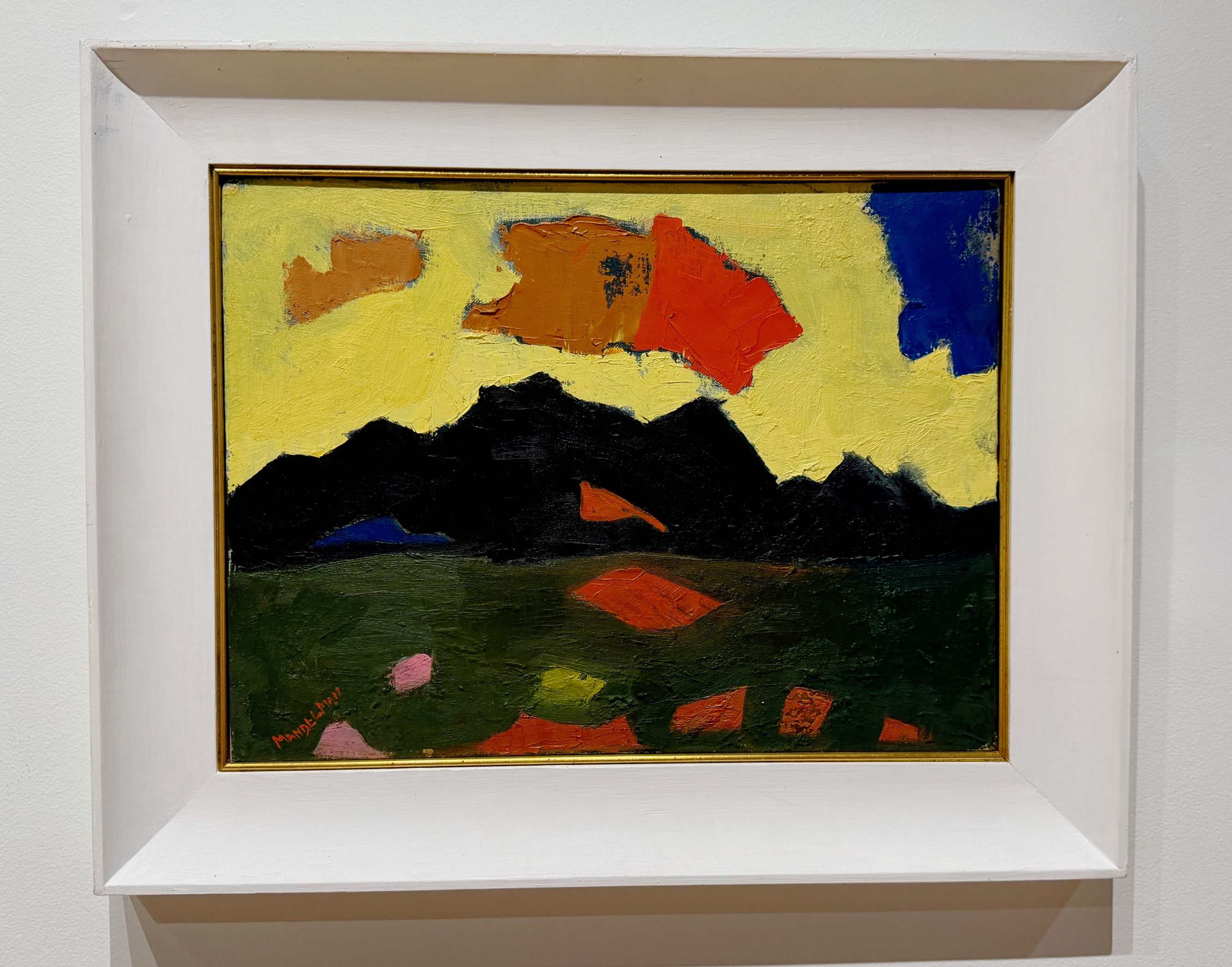
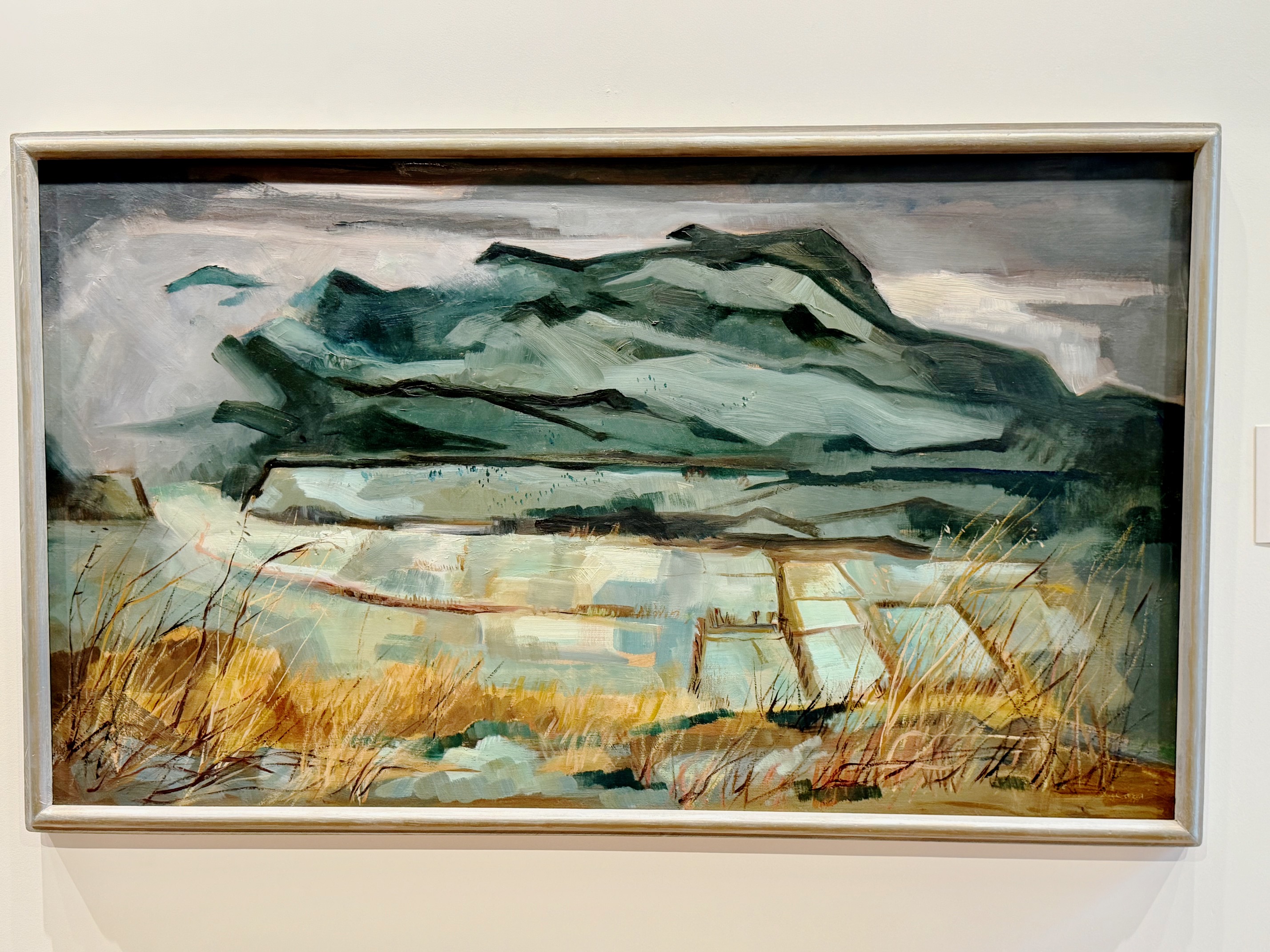
Co-founder of the Taos Valley Art School – Beatrice Mandelman’s 1950 Mouintain (formally Dark Cloud)
Co-founder of the Taos Valley Art School – Louis Ribak’s 1950 abstract Movement No. 2.

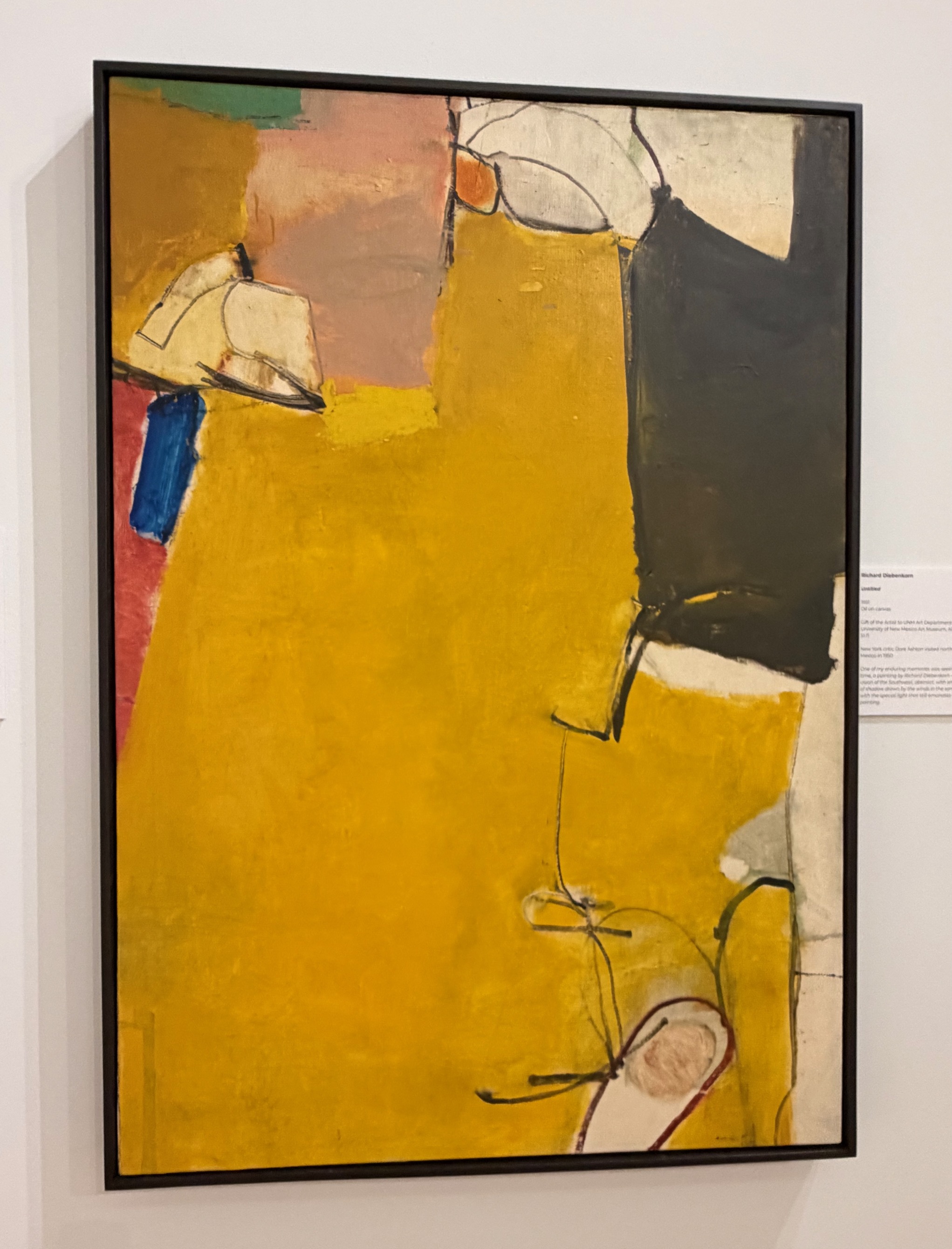
Clyfford Still-trained painters also made their way to Taos from the California School of Fine Arts, the legendary modern-art training ground in San Francisco. The Harwood’s all-white back gallery features spectacular works by Clay Spohn, Lawrence Calcagno, and Ed Corbett. When the pay was too low at CSFA, even Richard Diebenkorn enrolled in UNM to use his more generous GI Bill benefits.
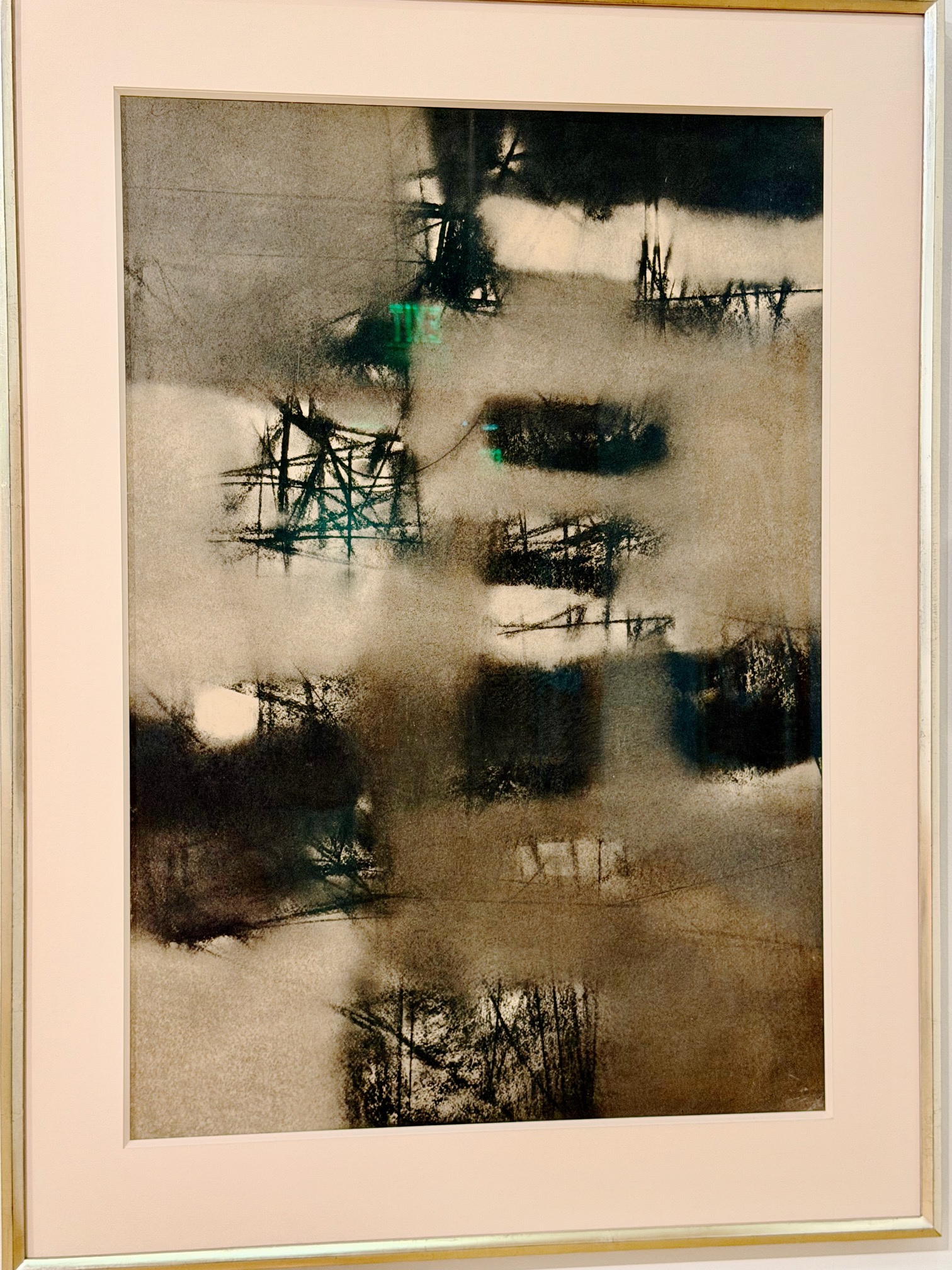
Edward Corbett’s 1951 chalk on paper Number 9 – former student at California School of Fine Arts who moved to Taos. Courtesy: Tia Collection.
Former teacher and student at California School of Fine Arts who moved to University of New Mexico – Richard Diebenkorn’s 1951 untitled abstraction inspired by New Mexico’s Southwestern landscape.

The back corner features work by two former Black Mountain College. Several are by Oli Shivonen, who served in the corps of artists and sound engineers in the “Ghost Army” that created battlefield deceptions to deceive Axis troops. Note the flat shapes and bold colors, reminiscent of another Ghost Army vet, Ellsworth Kelly.  
 
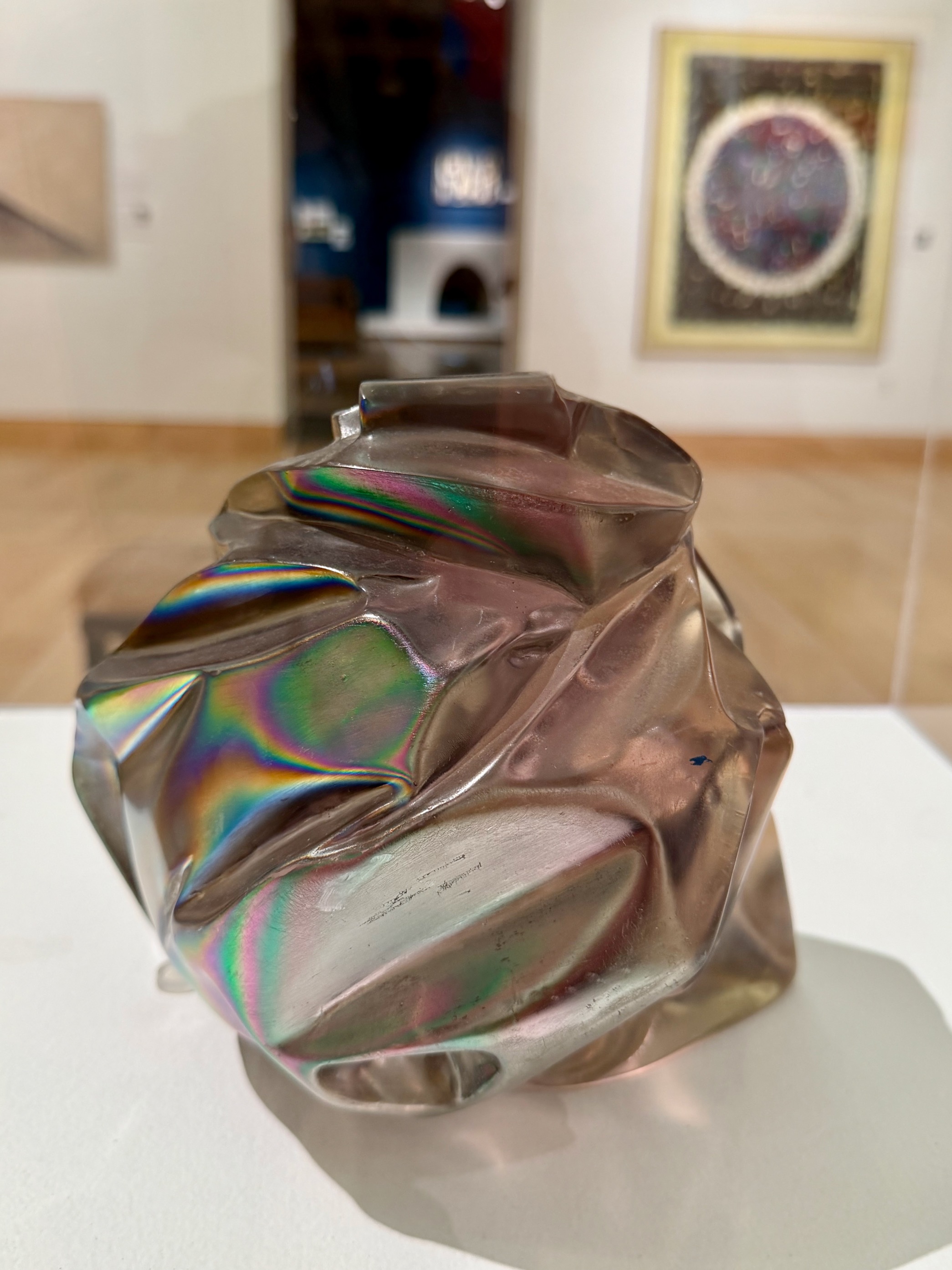
A small multiple by John Chamberlain also stands here – a tribute to the inspiration that Chamberlain drew from the new methods, material, and iridescent magic reflected in work by another SoCal-to-Taos transplant, Larry Bell.    
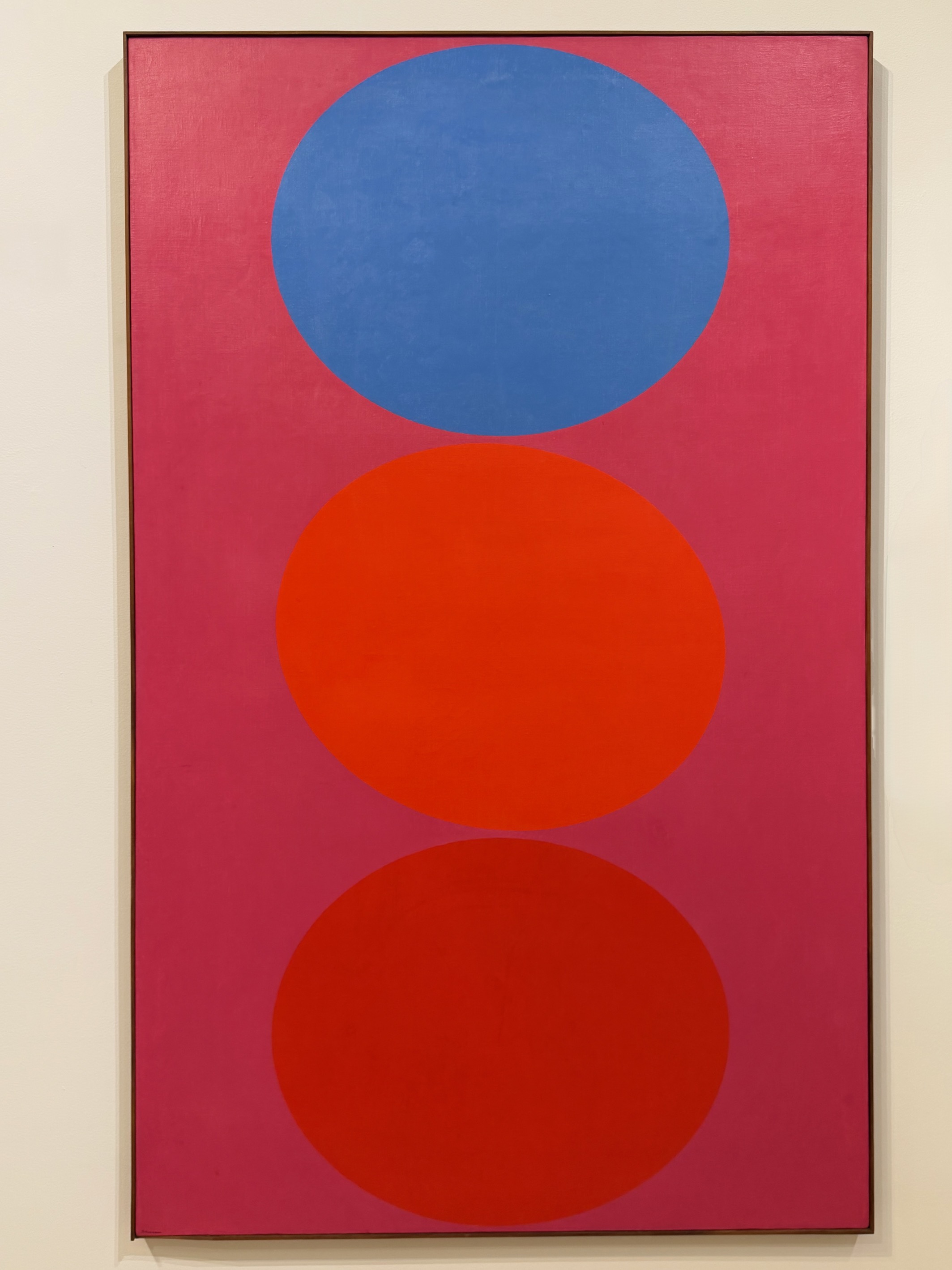
Former Black Mountain College student on the GI Bill who moved to Taos – Oli Shivonen’s 1965 color abstraction Column Three.
John Chamberlain’s 1971 El Molé based on crumpled paper bags – one of a cast poly resin edition by Gemini G.E.L.; coated with silicon oxide. Courtesy: private collection

For more stories, background, and innovations by GI Bill beneficiaries across the US art world, listen to this lecture by the curator of this amazing show, MaLin Wilson-Powell:

And in a living tribute to all of the Taos veterans, the Harwood created a community space for temporary exhibition of photos, memories, and tributes right inside this remarkable exhibition that honors the men and women of art and service.
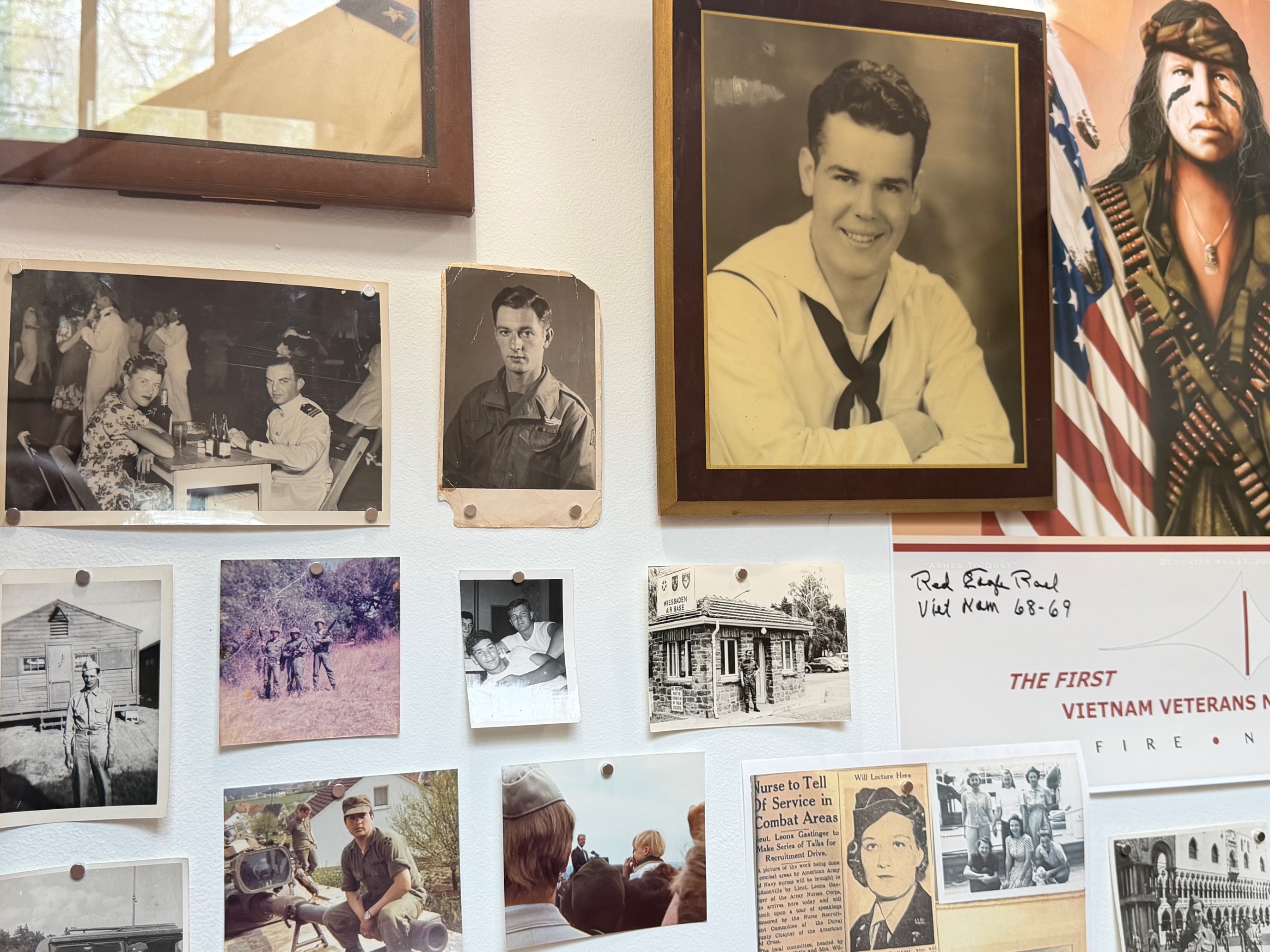
Photos and other items donated by the community for the Harwood’s veteran memorabilia space.

Everything Modern at Fechin House in Taos

The 1915 founding of the Taos Society of Artists captulted Taos into one of the most recognized art colonies in the United States due to its traveling exhibitions of romantic, colorful paintings depicting the people, places, and traditions of unique to Northern New Mexico.

But another group of artists and cultural influencers arrived a few years later to inject the art scene there with a new, more contemporary style – one reflecting the approach associated with European modernism and the trends showcased in the 1913 Armory Show.

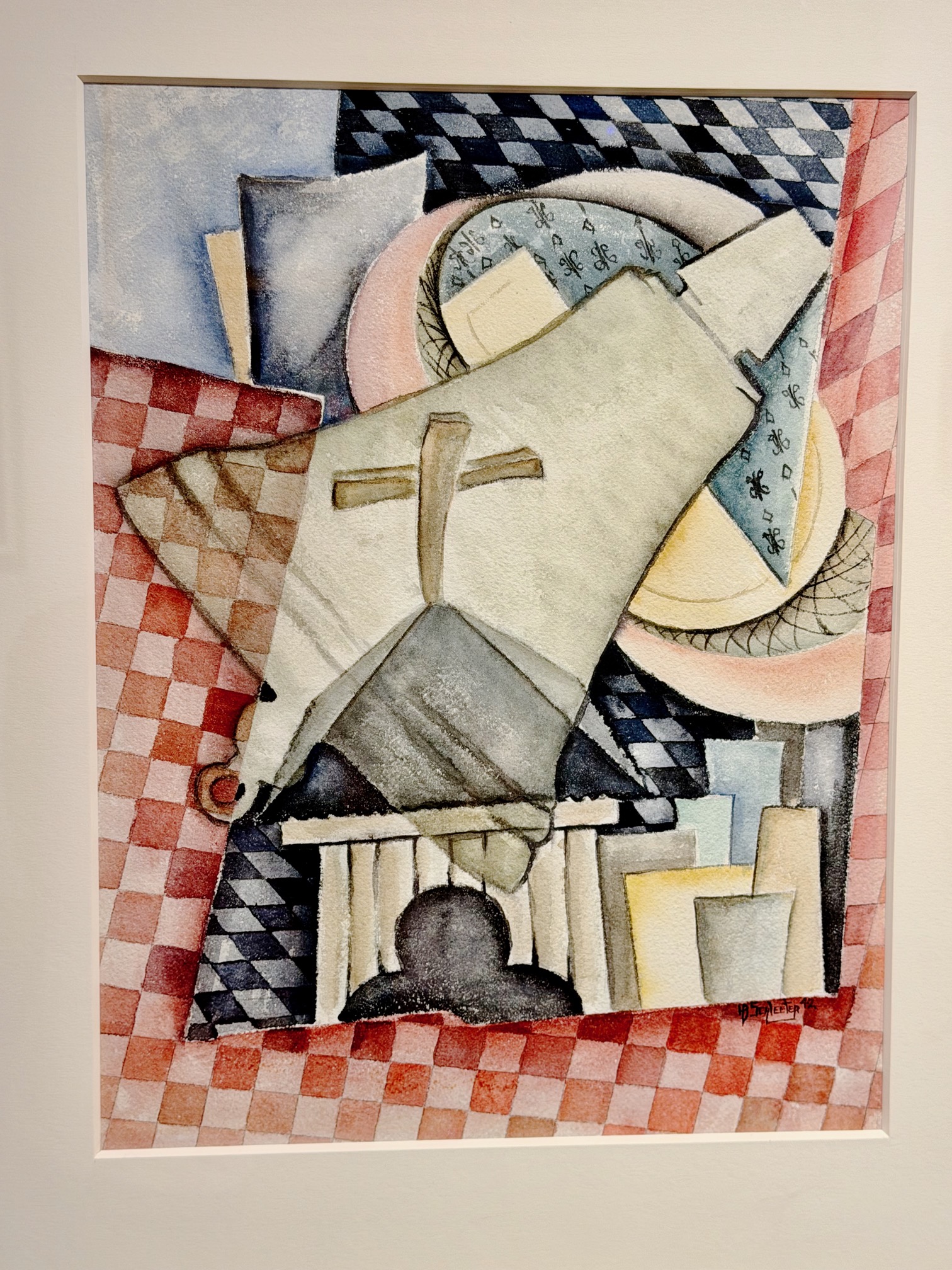
1943 watercolor by Howard Schleeter, who experimented with many contemporary styles

This less traditional group of innovators – and the next generation of their followers – are celebrated by the Taos Art Museum in its exhibition Taos Reimagined: Modernist Experiments in the High Desert, on view in the beautiful, new Janis and Roy Coffee Gallery at Fechin House through May 10, 2026. Most of the works in the show are selected from the museum’s own collection.

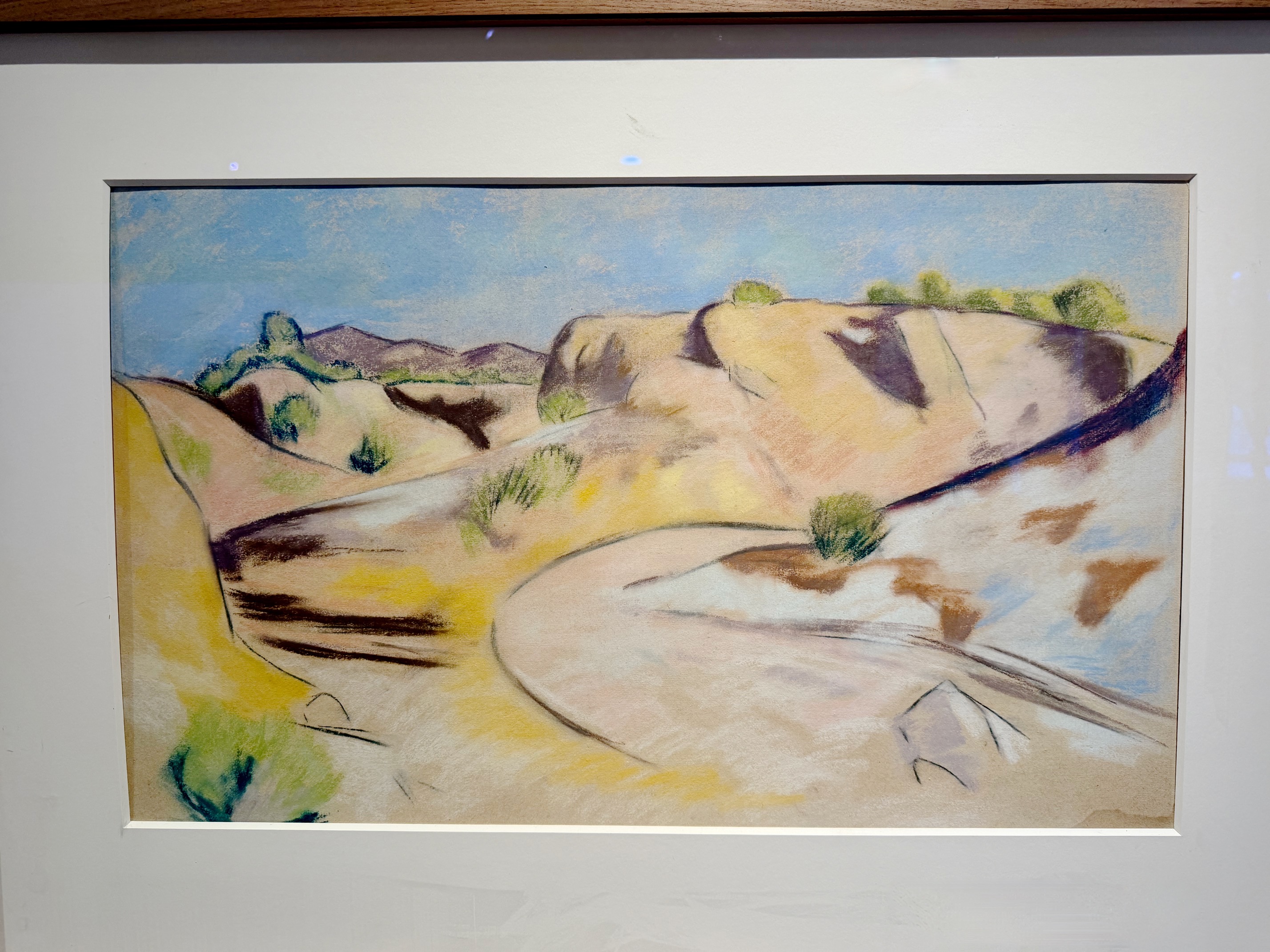
After moving to Taos in 1917, philanthropist and fan-of-the-avant-garde Mabel Dodge soon recruited East Coast modern mavericks to join her. One of her first friends to take the trip West was painter Marsden Hartley, whose early symbolic abstractions electrified European critics and clients of Stieglitz’s gallery in New York.  One of his modernist landscapes is featured in this show.

Marsden Hartley’s 1918 drawing New Mexico – a pastel by one of America’s early modernists inspired by New Mexico. Courtesy: The Owings Gallery

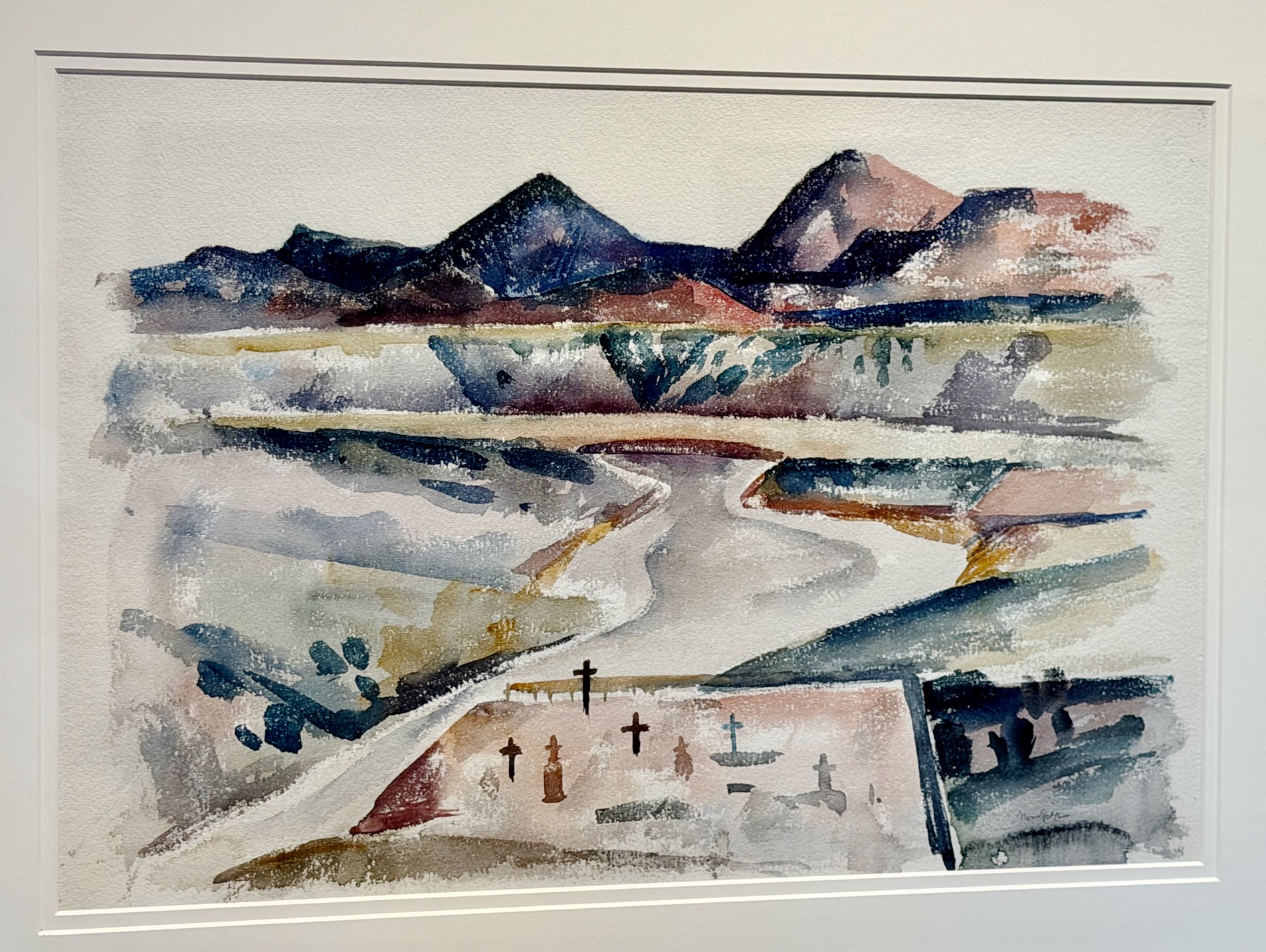
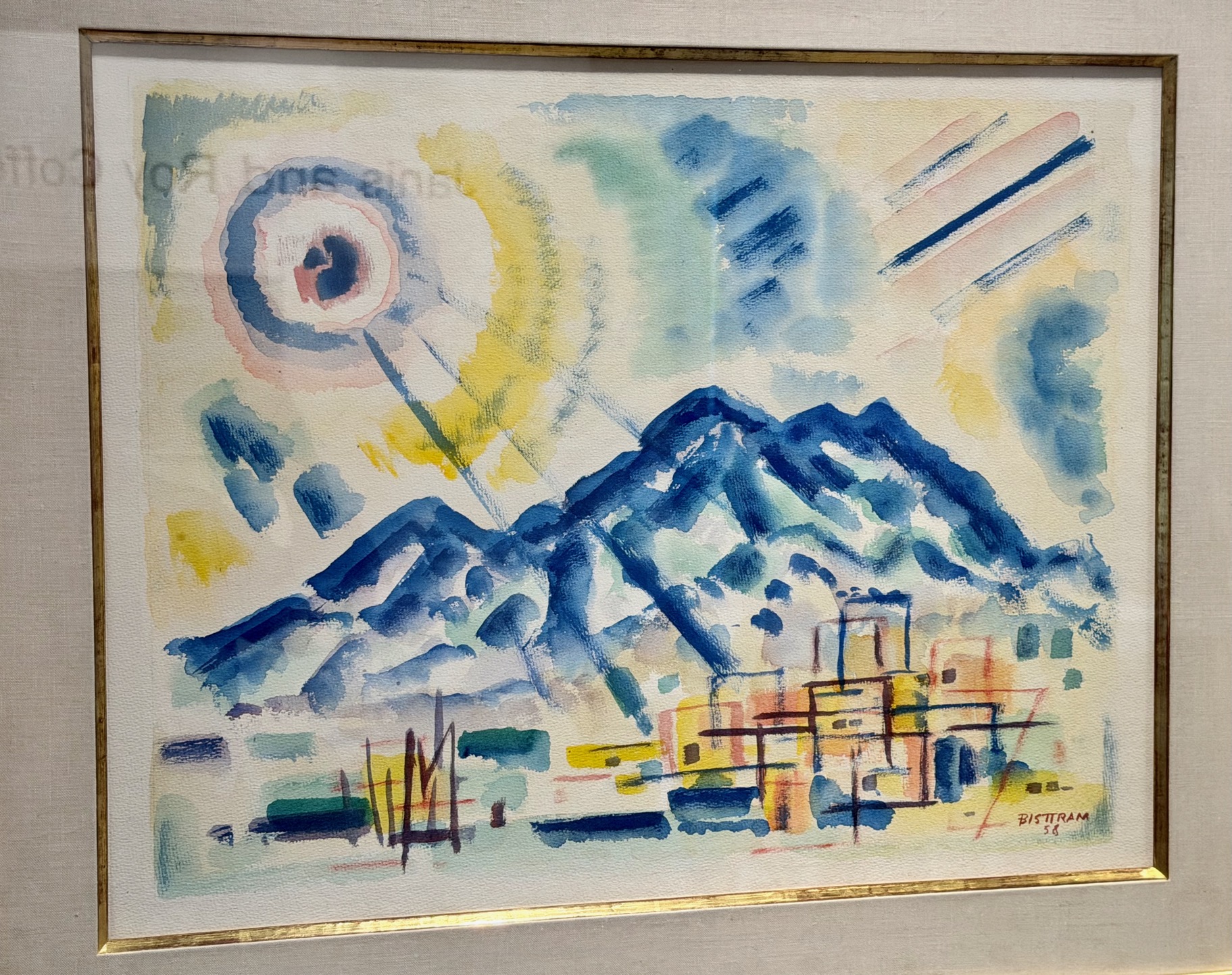
It’s thrilling to view the Hartley watercolor next to landscapes by modernist B.J.O. Nordfeldt and Emil Bisttram.

B.J.O. Nordfeld’s watercolor Campo Santo – landscape painted by an artist who was significantly influenced by Cezanne’s modern innovations.
Emil Bisttram’s 1958 watercolor Sun Over Pueblo.

Much of the work on display was painted mid-century – some works by older mondernists (like Nordfeldt or Dasburg) and others by artists arriving in the 1940s and 1950s (often called the Taos Modernists). Louis Ribak and Beatrice Mandelman arrived in the 1940s co-founded the Taos Valley Art School in 1947, and effectively served as the center for postwar modernism in Taos for the next decade.

1964 painting Rift Series #23 by Beatrice Mandelman –a co-founder of the Taos Valley Art School with husband Louis Ribak
Louis Ribak’s Untitled (No. 9) – painting by one of the most influential teachers encouraging experimentation at the Taos Valley Art School. Courtesy: private collector; the Owings Gallery

It’s a beautiful, light-filled space that shows off these magnificent works to great advantage.  Take a look at some of our favorites in our Flickr album.

Doel Reed’s 1974 oil This Morning at Eight.
Janis and Roy Coffee Gallery

Portrait Masterworks at Home in Taos

To see the works by one of the top virtuoso portraitists of the 20th century, drop into the home that Nicolai Fechin designed and built for his family in Taos, New Mexico. Masterful oil and charcoal portraits created throughout his life are hung in quiet, contemplative corners of his spectacular 1920s home as part of Masterful Expression: Nicolai Fechin’s Portraiture, on view at the Taos Art Museum at Fechin House through December 31, 2025.

The house itself is a masterwork with all the doors, railings, and embellishments carved by Fechin’s own hand, but the portraits and small, carved wooden busts show why he is considered one of the greatest Russian artists ever to take up residency in the United States.

Fechin’s undated charcoal portrait Manuelita. Courtesy: private collector
Fechin’s 1927-1933 oil painting Taos Studio Interior. Courtesy: private collection; Owings Gallery.

Fechin grew up during the time when Russia was ruled by the Czar, and thrived at the Higher Art School of the Russian Imperial Academy of Arts in St. Petersburg, where he studied with the acclaimed Russian history painter, Ilya Rapin.

Fechin’s classical training followed the principles advocated by the French virtuoso, Dominque Ingre – subtle human expression, anatomical awareness, and verisimilitude that jumps right of the page (or canvas).

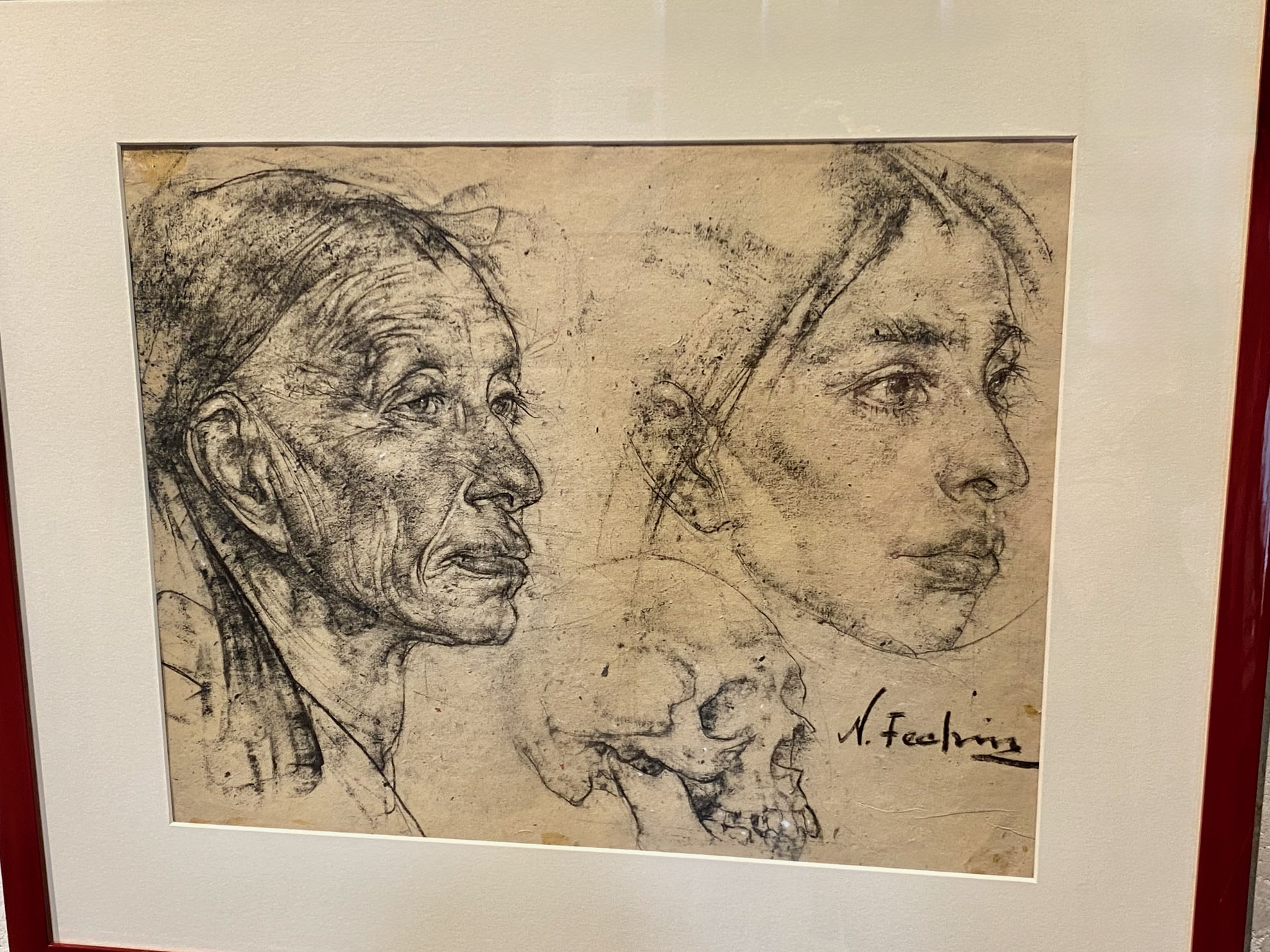
Fechin’s charcoal Head and Skull Study. Courtesy: private collector

Fechin learned his lessons well and won national acclaim in Russia by 1908 for his grand, epic depictions of peasant life, which provided an opportunity for his work to be shown internationally and gain fans in the United States.  But it was his reputation for portraits that captured the essence of human expression that cemented his reputation in the United States and provided him with continuing commissions.

When the Russian Revolution and civil war brought disruption to the domestic life he was starting to build with his new bride, Alexandra, an American benefactor arranged for them to emigrate to the United States.  As soon as the Fechin family landed in the United States, the commissions began, largely due to the enthusiastic public reaction his portraits in shows at the Grand Central Gallery and the Brooklyn Museum.

Fechin’s undated oil portrait Russian Singer with Fan. Courtesy: private collector
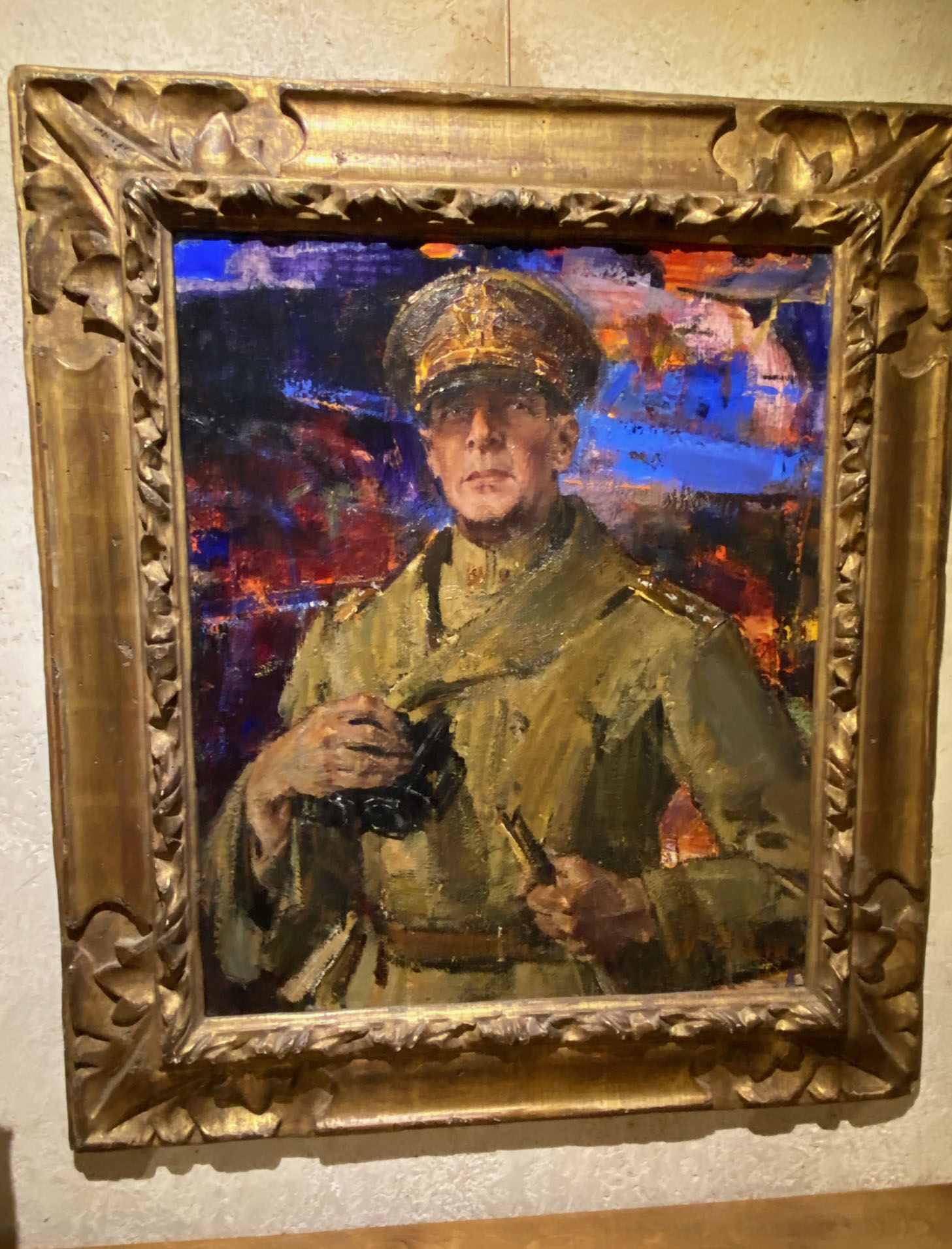
Fechin’s 1951 oil portrait of General Mac Arthur. Courtesy: Taos Art Museum

For health reasons, Fechin and his family left the sophisticated steets of New York City during the high-flying 1920s for the high desert of Taos – a thriving art community anchored by Mabel Dodge Luhan. Fechin figured that when the tumult in Russia died down, he would return. But that never happened.

The exhibition, with many works drawn from private collections, provides a glimpse of the Fechin family over time, with portraits and sculptures of his wife early in their courtship (an oil), a bronze bust, and drawn portraits in their life in New Mexico.

Fechin’s 1910 oil portrait of his wife Alexandra with Coral Beads. Courtesy: private collector
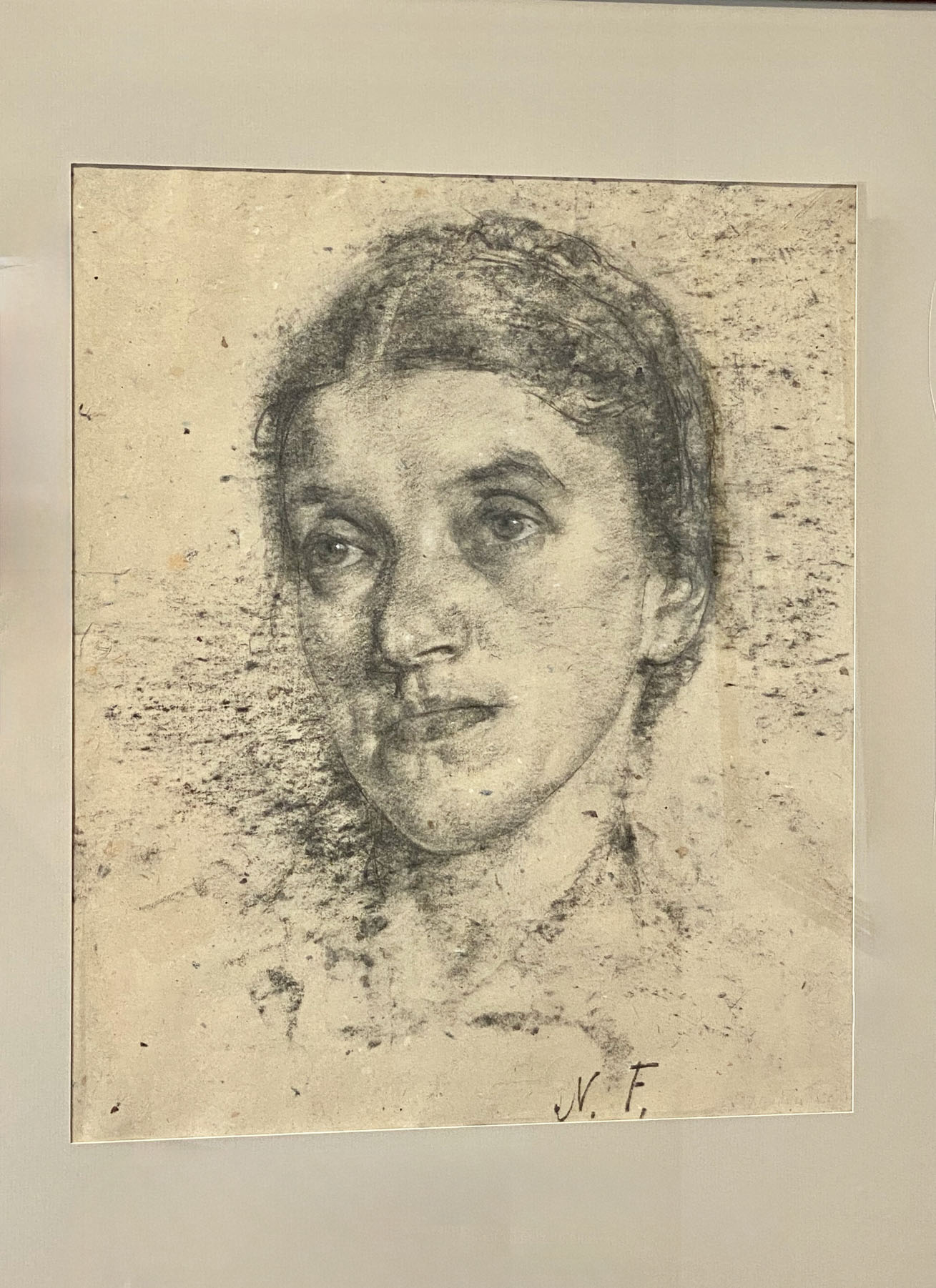
Fechin’s 1927-1933 charcoal portrait of his wife Alexandra; on rice paper. Courtesy: private collector

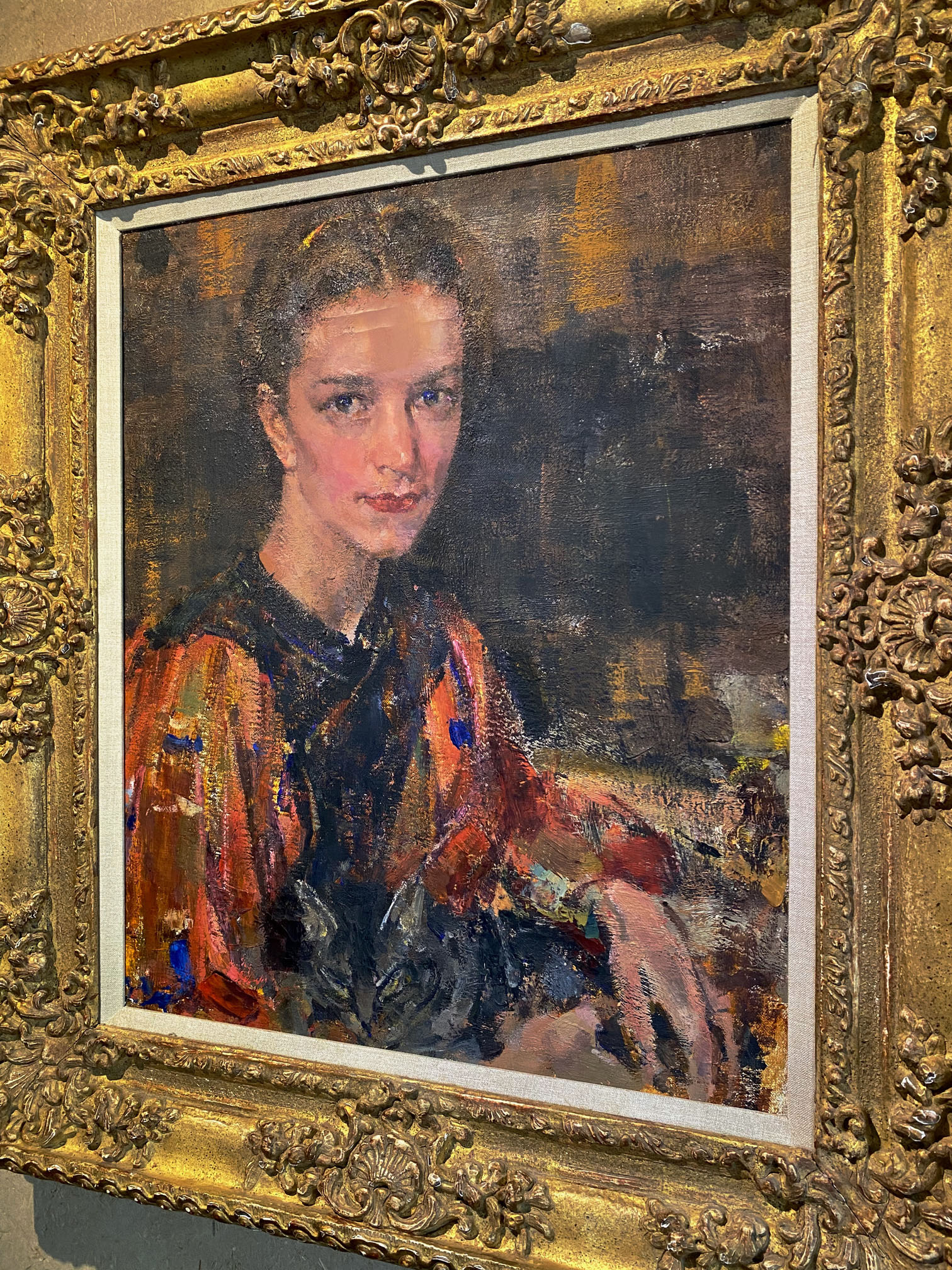
His beloved daughter Enya – who ultimately saved and restored this unforgettable home and her dad’s studio – is shown as a baby in Russia, as an older child in carved wooden busts, and in paintings in her coming of age, as well as a portrait of her as a grown woman looking out for her dad later in his life.

Fechin’s carved wooden bust of his daughter Eya.. Courtesy: private collector
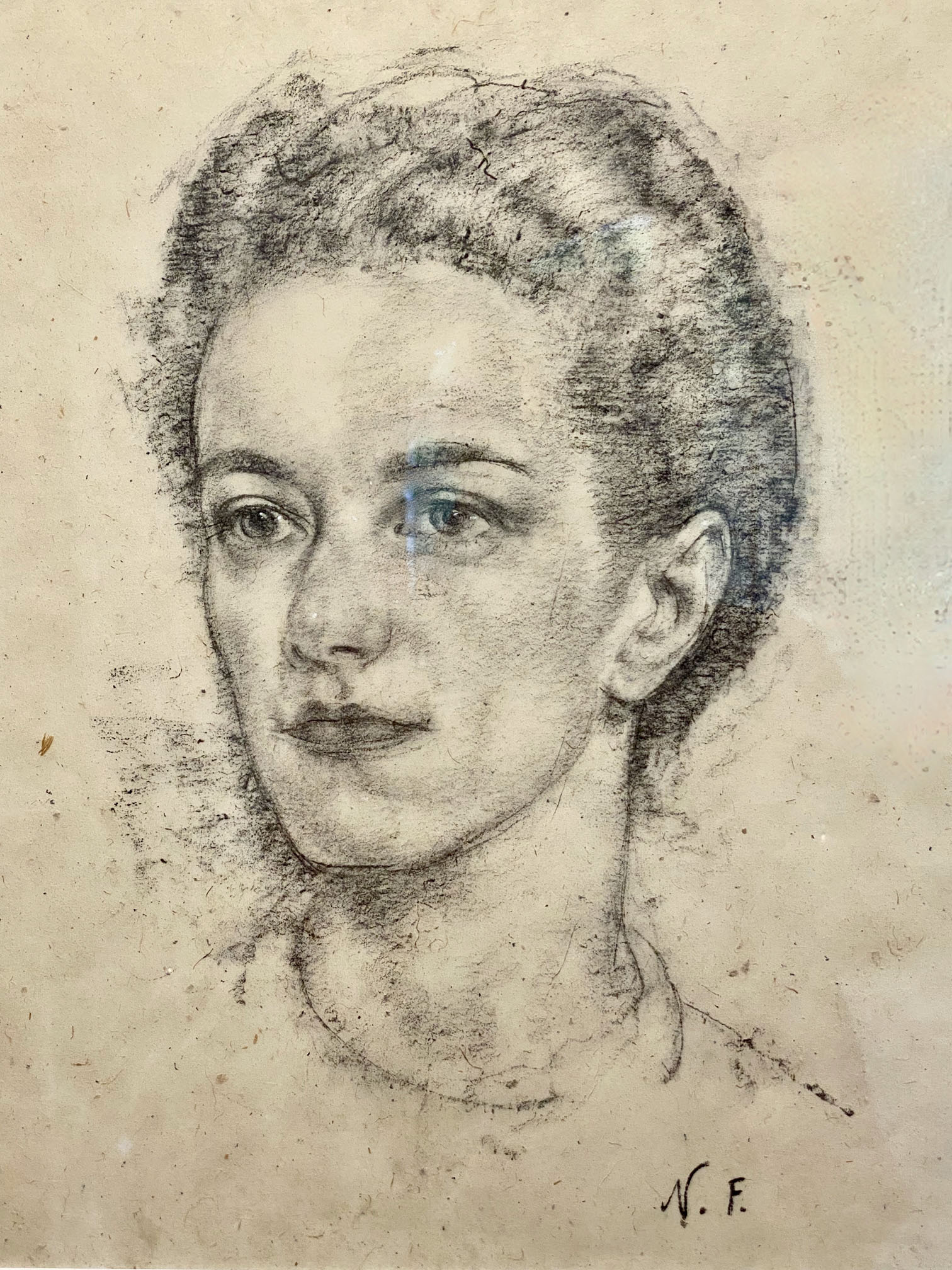
Fechin’s 1940s charcoal portrait of his daughter Eya; on rice paper. Courtesy: private collector

The exhibit also includes sensitive, gorgeous portraits and studies that Fechin created in his five-month stay in Bali in 1938 – delicate features of young models and reflective expressions of respected elders. All have clean, sure lines and carefully observed, personalized nuances.

Fechin’s 1938 charcoal portrait Balinese Girl with Long Hair. Courtesy: private collector
Fechin’s 1938 charcoal portrait Balinese Man with Beard. Courtesy: private collector

This walk-through the Fechin home holds delight and awe at every turn – awe at the hand-carved interiors and delight at at the humanity and diversity of the faces greeting us in every room. Visit, if you can!

Take a look at more in our Flickr album.

Fechin’s 1950s charcoal self- portrait on rice paper. Courtesy: private collector
Fechin’s 1940s charcoal portrait of his daughter Eya; on rice paper. Courtesy: private collector
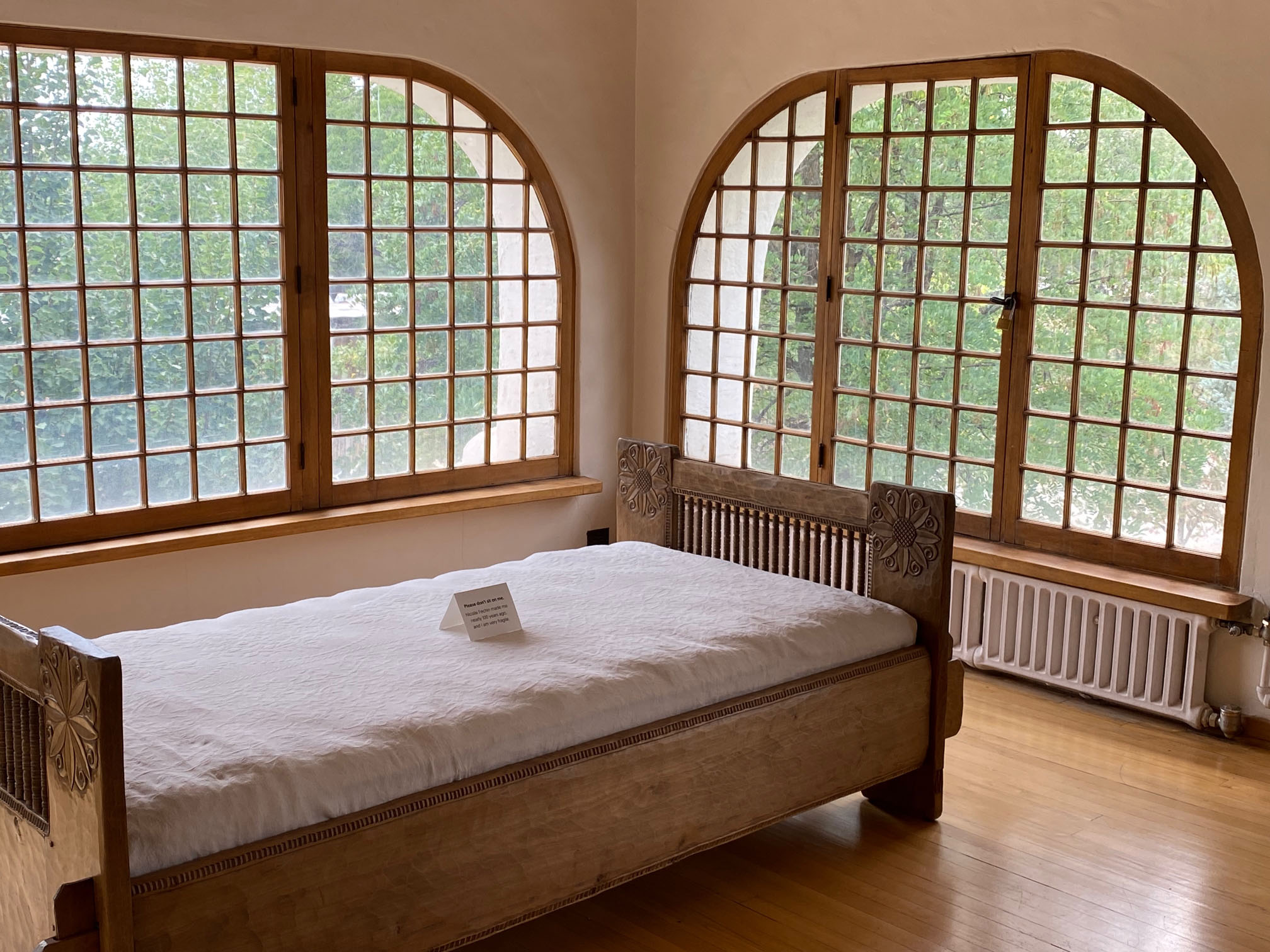
Inside the 1933 Fechin house: sunroom on the second floor features his hand-carved bed for his daughter, Eya.

Santero Nicholas Herrera at the Harwood

The local artist honored in Taos with a lifetime retrospective lives and works only 18 miles from Georgia O’Keeffe’s famous home in El Rito. But their work, lives, purpose, and legacy couldn’t be further apart.

Nicholas Herrera: El Rito Santero, on view at the Harwood Museum of Art through June 1, fills three galleries with work by a New Mexican wood carver who not only pays tribute to saints and ceremonies important to the nearby rural Hispanic communities, but also channels politics, social commentary, lowrider culture, and pressures of modern life in a mixed-up world into his craft.

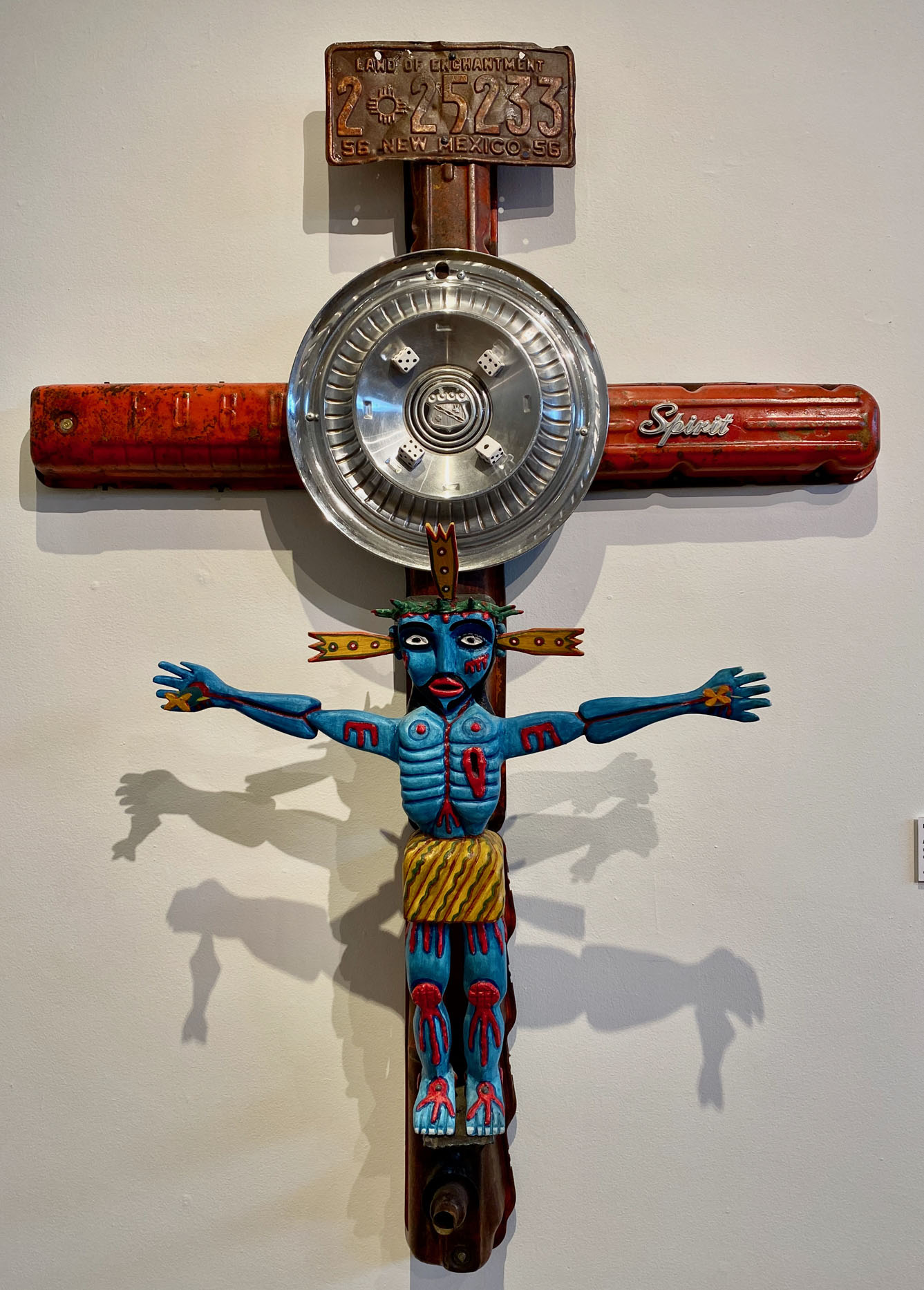
Herrera’s Espiritu mixes religion with found car parts. Courtesy: private collector

It’s a colorful, irreverent, heart-felt tribute to the people, places, religion, and culture of the rural high hills that he calls home. And here’s Herrera’s self-portrait – the namesake of this engaging retrospective.

Herrera’s 2022 hand-carved self-portrait – El Rito Santero. Courtesy: private collection
Herrera’s1998 hand-carved image of his favored protector La Virgen de Guadalupe. Courtesy: Evoke Contemporary

At first glance around the gallery at the top of the back stairs, Herrera’s work seems firmly situated in the tradition of the last 400 years of northern New Mexico saint-carving. Since the 1600s, when Spanish farmers first colonized these remote hills, the faithful relied primarily on local artists and carvers to decorate home chapels, churches, and shrines.

Herrera’s work is the 20th century version. There’s a grand, colorful painted altar honoring his brother in which a pantheon of Catholic icons gazing benevolently upon you. You’ll also meet his special icon – a bright, enigmatic Lady of Guadalupe.

In a small, dark room you’ll experience a powerful home altar, filled with hand-carved spiritual tributes, surrounded by candles and and all manner of other-worldly retablos.  

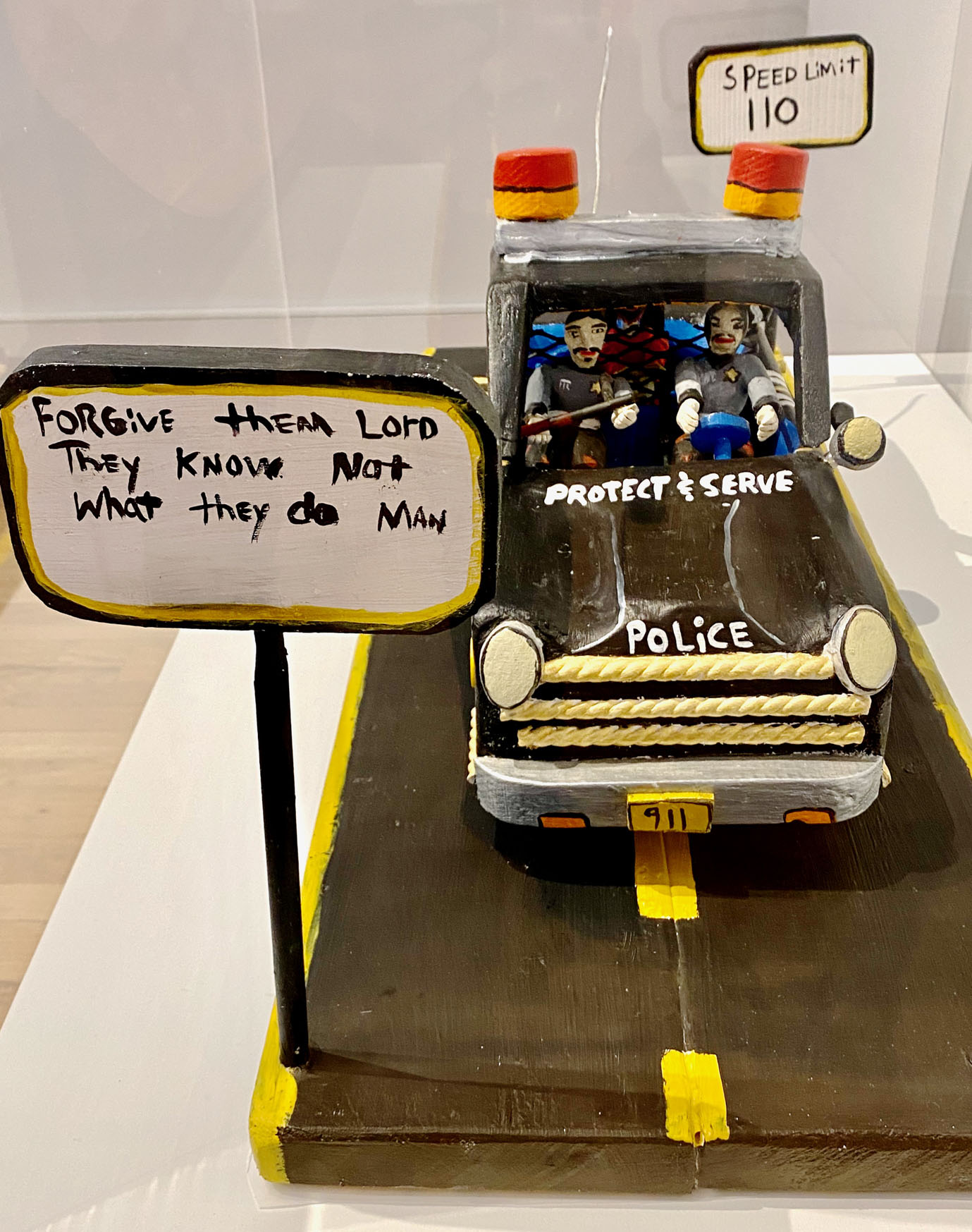
But the next two galleries, you’ll encounter work using these same materials and techniques, but reflects life-changing events in the artist’s life that are mashed up with ancient spiritual traditions – Jesus in the back of a speeding cop car, Herrera’s own near-death experience in a car crash when he was in this twenties, and a crazy lights-flashing slot machine promising allures that only the Devil can love., or aerial views of old Spanish valleys.

Herrera’s 1994 painted wood and mixed-media sculpture Protect and Serve with Jesus in the back seat of the patrol car. Courtesy: Smithsonian American Art Museum
Herrera’s 1995 painted wood and metal Los Alamos Death Truck. Courtesy: private collection

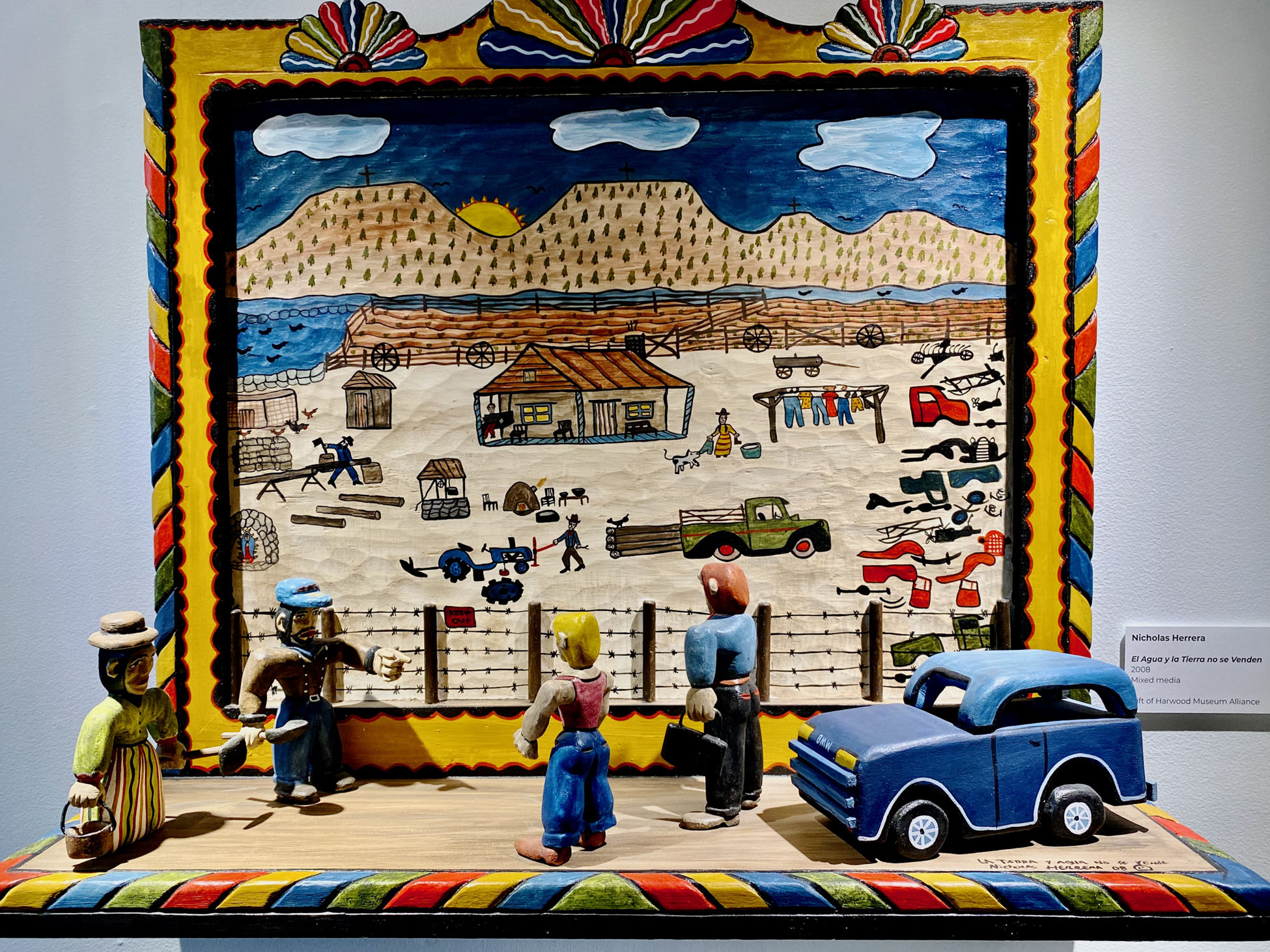
Like all great artists, Herrera is inspired from life events and the world around him – reflections about his growing up and home life, land-use and traditions in his community, and issues ripped from the headlines, like the terror of transporting Los Alamos nuclear waste or issues with the border patrol.

Herrera’s 2008 mixed-media El Agua y la Tierra no se Venden, highlighting the importance of 400 years of protective land stewardship in Northern New Mexico.

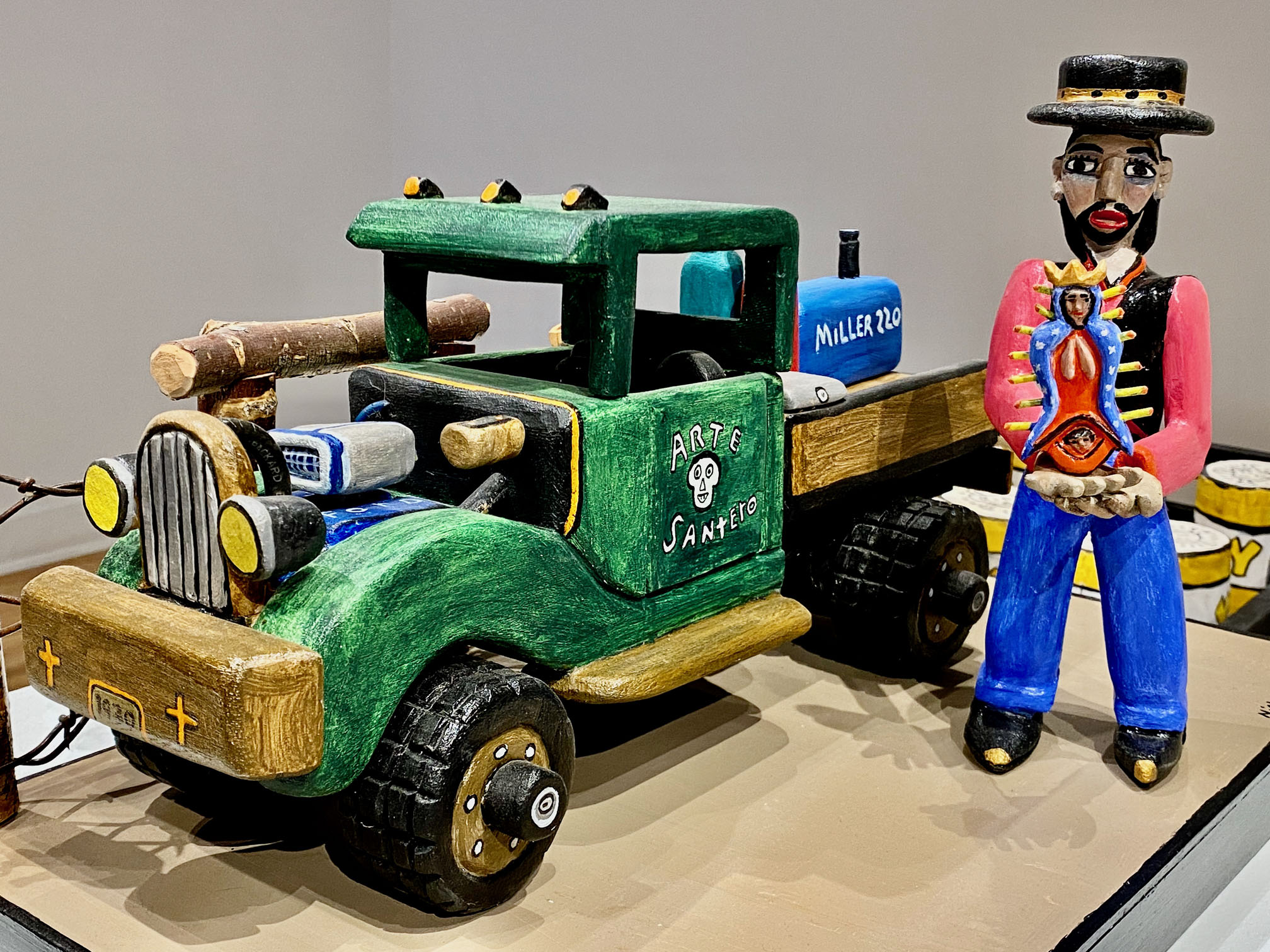
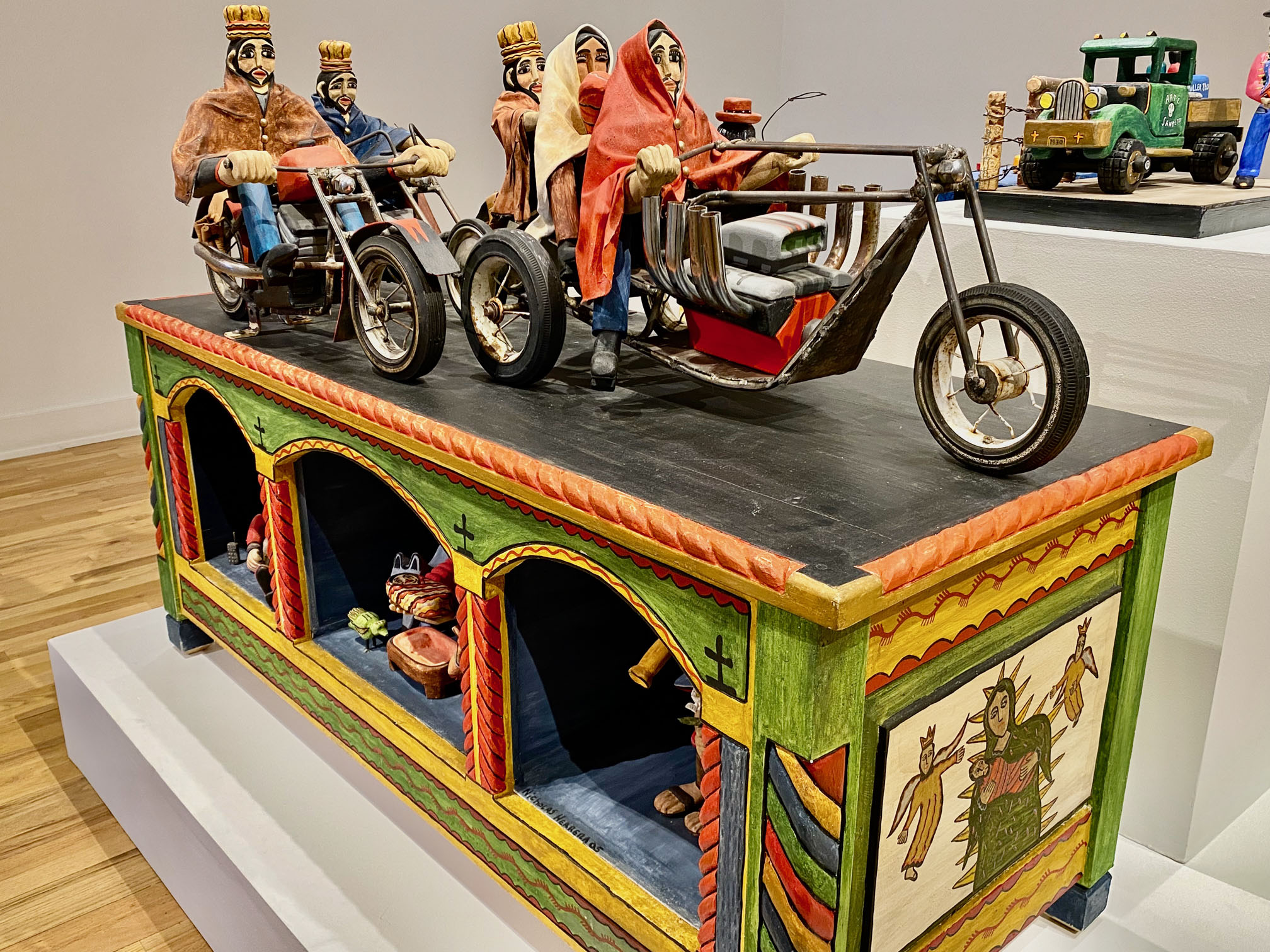
Used car parts, toy parts, and other stuff from the junkyard “tell” Herrera how and where he might use them. Lowrider culture is an important source of price in Northern New Mexico, so it’s not surprising that he’s channeled that part of the local experience into his work, too.

The Holy Family hits the road in Herrera’s 2005 carved and painted Low Rider Nativity, embellished with cloth, toy wheels, and found metal. Courtesy: private collection

See some of our favorite works in our Flickr album, and meet the artist himself in this short video profile created by the Smithsonian American Art Museum:

Master Printmaker Gene Kloss Sees Taos

Do you wish you could travel back to Taos in the Thirties and Forties to experience the quiet, small, out-of-the-way place that inspired so many artists? Take a walk through this two-site exhibition, Legacy in Line: The Art of Gene Kloss, on view through June 8, 2025 at the Harwood Museum of Art and through May 31 at the Couse-Sharp Historic Site just off the Taos Plaza.

Kloss, whose artistic style was honed in the 1920s and 1930s, is arguably one of New Mexico’s favorite artists.  Kloss specialized in printmaking, creating an immediately recognizable style – a landscape, village, or pueblo scene with dramatic contrasts (often at night). Look at some of our favorites in our Flickr album

Kloss 1934 aquatint and drypoint Eve of the Green Corn Ceremony –Domingo Pueblo, which received a gold medal from the Pennsylvania Academy of Fine Arts. Courtesy: Couse Sharp Historic Site

Kloss fell in love with plrintmaking as an undergraduate art student at UC-Berkeley. She was captivated by the printmaking revival that swept Paris and Britain in the mid-19th century. Artists owned their own presses and produced affordable prints of landscapes and small towns that encouraged everyone to collect art.

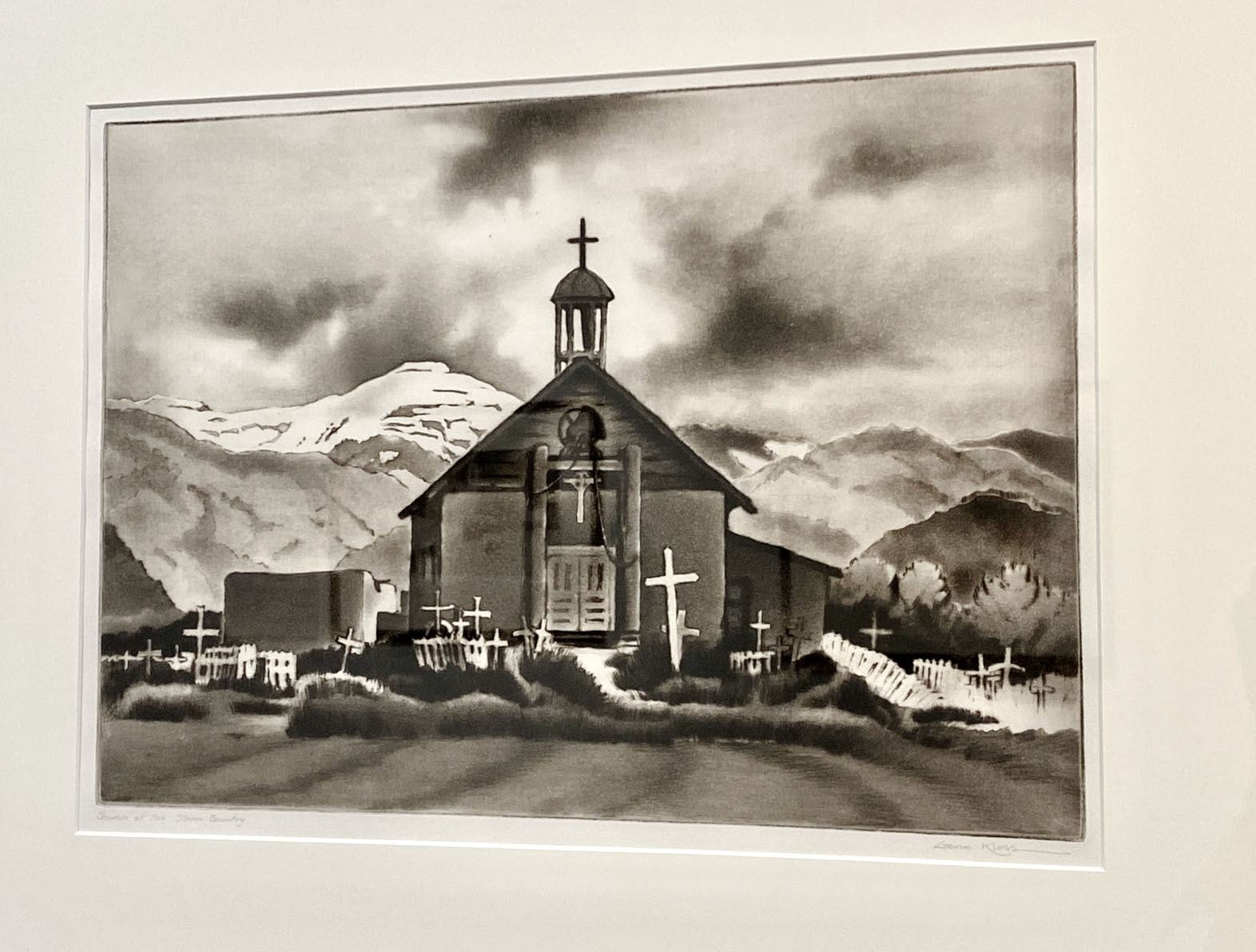
Kloss 1941 drypoint Church of the Storm Country. Courtesy: Taos Municipal Schools.

A lifelong resident of the Bay Area, she first came to Taos on a car-camping honeymoon in 1925 with her writer-composer husband. She fell in love with the landscape, the culture, and the pueblos of Northern New Mexico. Did I mention she brought along her 60-lb. portable printing press?

Kloss 1934 drypoint All Saints Day Mass – Taos. Courtesy: Taos Municipal Schools.

Kloss was prolific, and the next year showed over 100 of her paintings and prints – including Taos subjects – at a wildly successful solo show in Berkeley. She and her husband were hooked on the inspiration Taos provided, and soon rented a getaway home, where they would spend two to four months per year. 

Kloss 1934 drypoint Acoma. Courtesy: Taos Municipal Schools.

Kloss developed her images from quick sketches and from memory, bringing the drama as she precisely worked her impressions into the copper.

In the Thirties, Kloss did artwork under several New Deal programs and produced a nine-part series on New Mexico that was gifted to public schools in the state.

As a master of intaglio, drypoint, and aquatint, she developed an innovative technique in which she painted acid directly into the ground with a brush or pencil that allowed her to create super-deep tones, gradations, and atmospheres in her prints.

Few others could create scenes like hers – dramatic nighttime scenes at the pueblos, tiny pilgrims making their way at dusk among the mountains, or aerial views of old Spanish valleys.

Over her lifetime, Kloss would create over 18,000 signed prints, show in New York and Europe, and be honored with membership in the National Academy of Design. She always pulled her own prints in the studio, and kept on working through the Seventies, until the quality of commercial copper and ink that she had always used became unavailable.

Kloss 1950 drypoint and aquatint Desert Drama. Courtesy: Harwood Museum (Purcell gift)

The Couse-Sharp Historic Site (where the Taos Society of Artists was founded) and the Harwood Museum have mounted this fantastic show to honor a gift bestowed upon them by Joy and Frank Purcell, Taos residents and Kloss collectors that ultimately amassed over 130 of her works.

To see more of her work, watch this short New Mexico PBS documentary on Ms. Kloss with art historian David Witt, who talks about his friendship with her, her process, and unique interpretation of her Taos world: