WWII Veterans Flock to Make Art in Taos

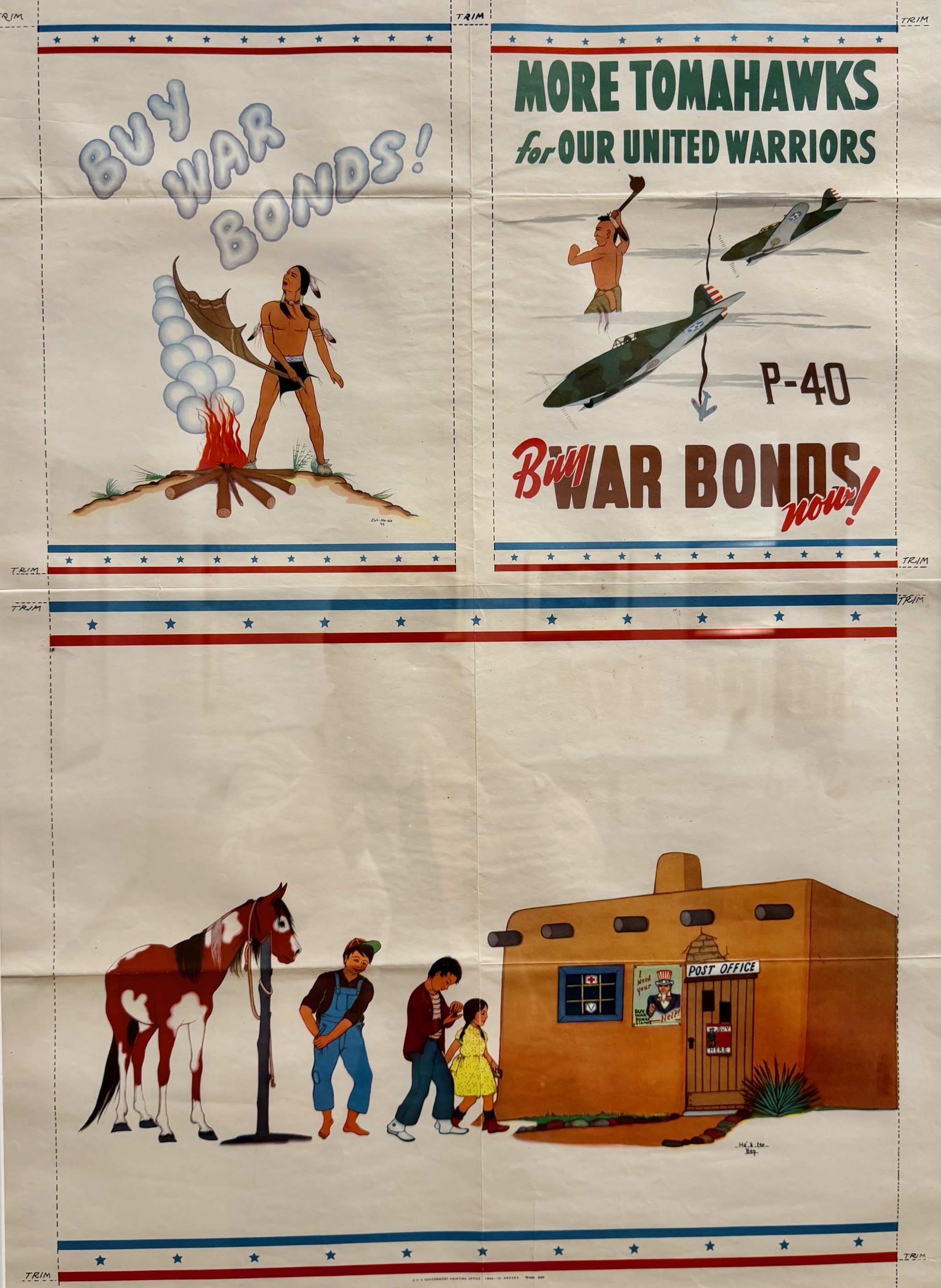
The quiet adobe museum entrance displaying a retro WWII-era poster prepares no one for the ultra-modern abstraction extravaganza inside the Harwood.

Pursuit of Happiness: GI Bill in Taos, on view through May 31, 2026, shows and explains how an influx of rule-breaking painters from both coasts returned from the War, enrolled in contemporary art classes, and created the mid-century phenomenon that art historians classify as Taos Modern. Take a virtual visit in our Flickr album.
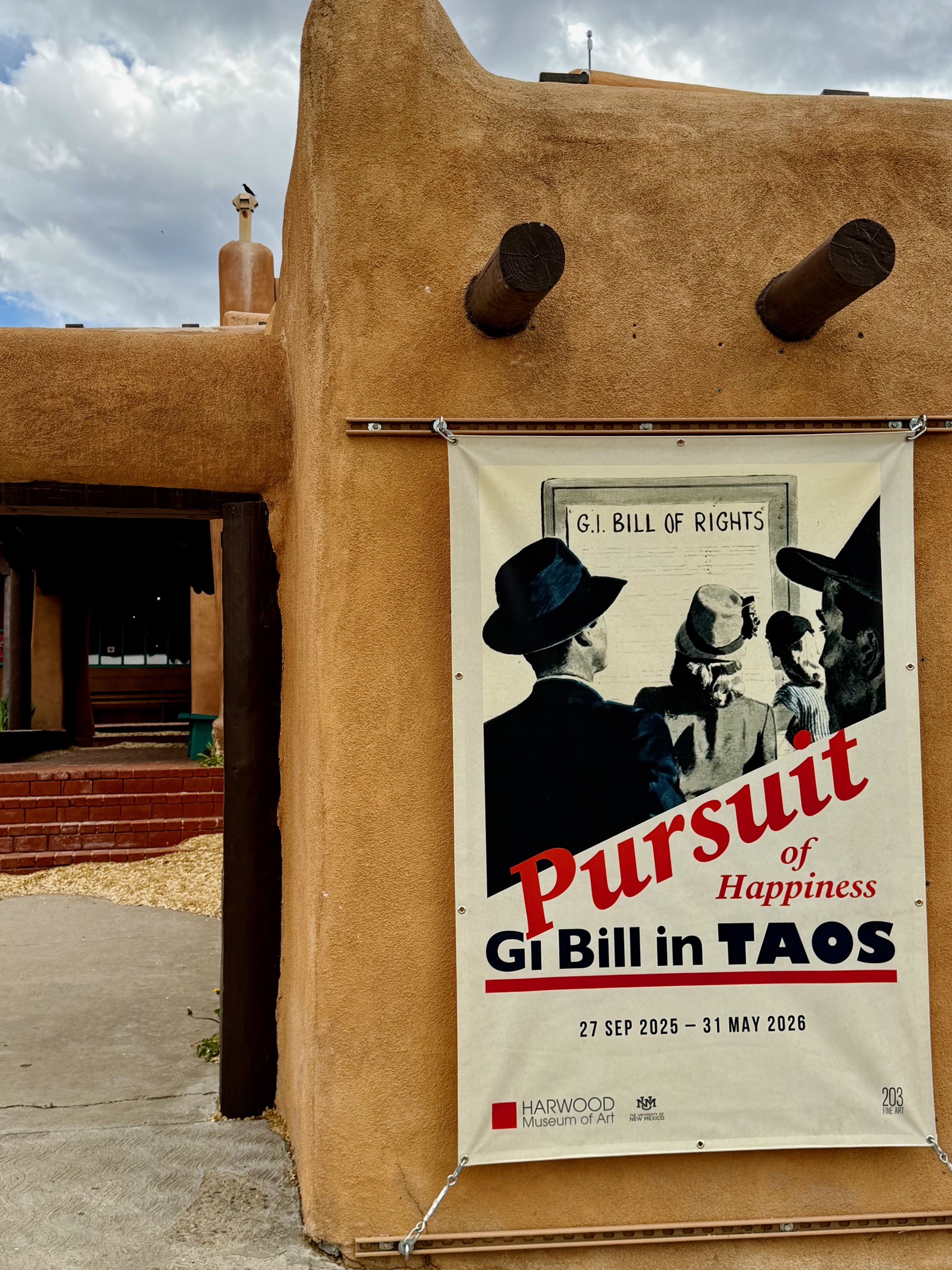
Harwood Museum of Art entrance in Taos

The exhibition tells the story of young people who first applied their talents to defend America in Europe, the Pacific, and the home front, and then chose to channel their energies and experiences through color and paint on large canvases to give life to postwar Abstract Expressionism, big-field flat color painting, and innovative materials.

The exhibition captures both the energy and optimism of the moment and shines a light on the mentors, teachers, and educational institutions that gave these vets a platform to experiment as social realism’s dominance in the art scene was giving way to new expressions – inner spiritualism, bold strokes, and white canvases with wide open spaces.
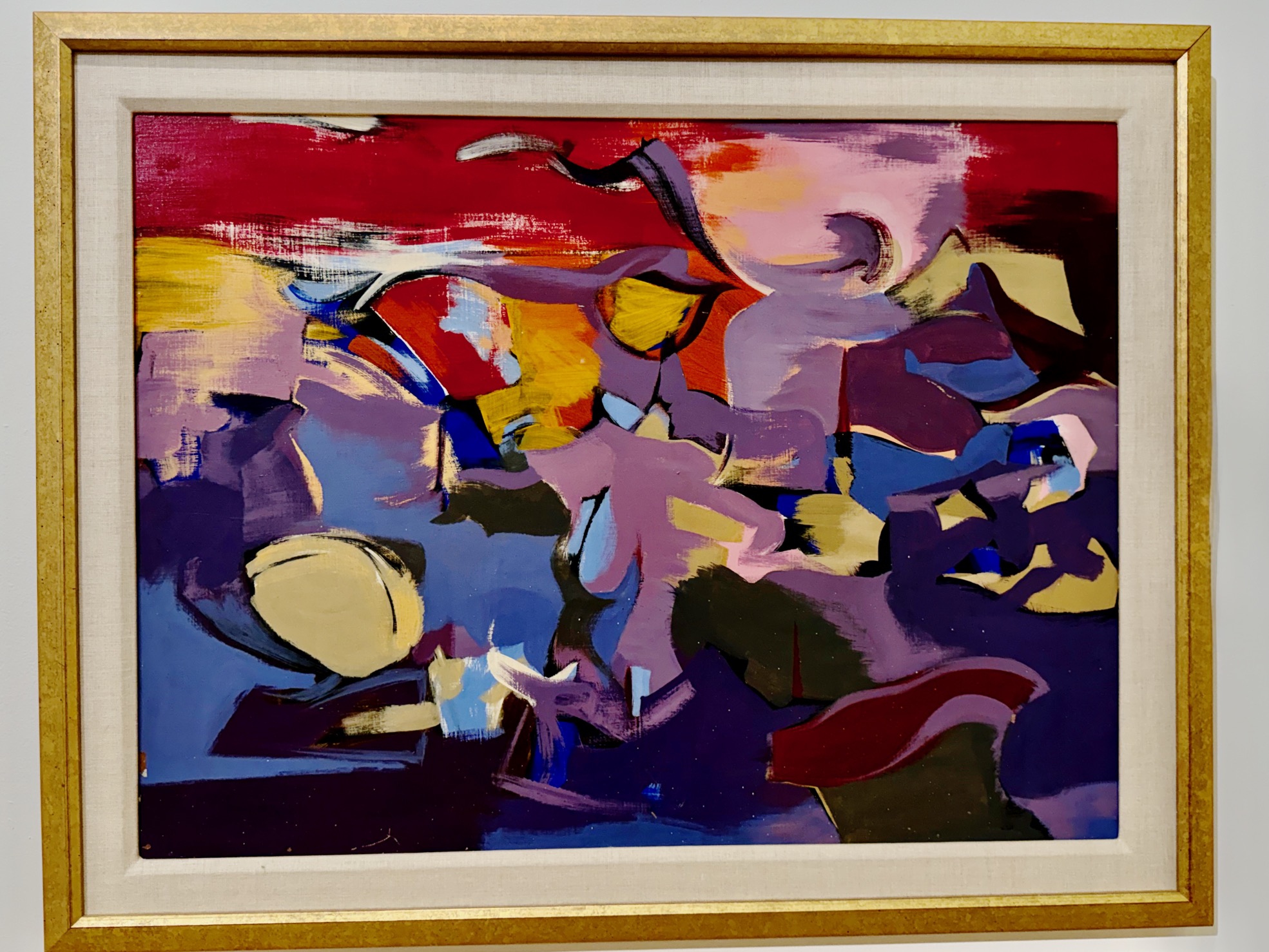
South Pacific Army airman Wolcott Ely’s undated oil From the Seas that are South – trained in Paris and was a private student of Andrew Dasburg in New Mexico. Courtesy: Taos Municipal Schools Historical Art Collection.

Mid-century modern dominates the exhibition, but there are a few references to artists’ wartime experiences – dramatic ink drawings from Oli Shivonen’s European war journals and Janet Lippencott’s expressive canvas that puts the viewer amid the carnage in London from one of Germany’s final bombing raids – something she experienced as a WAC serving on Eisenhower’s staff.
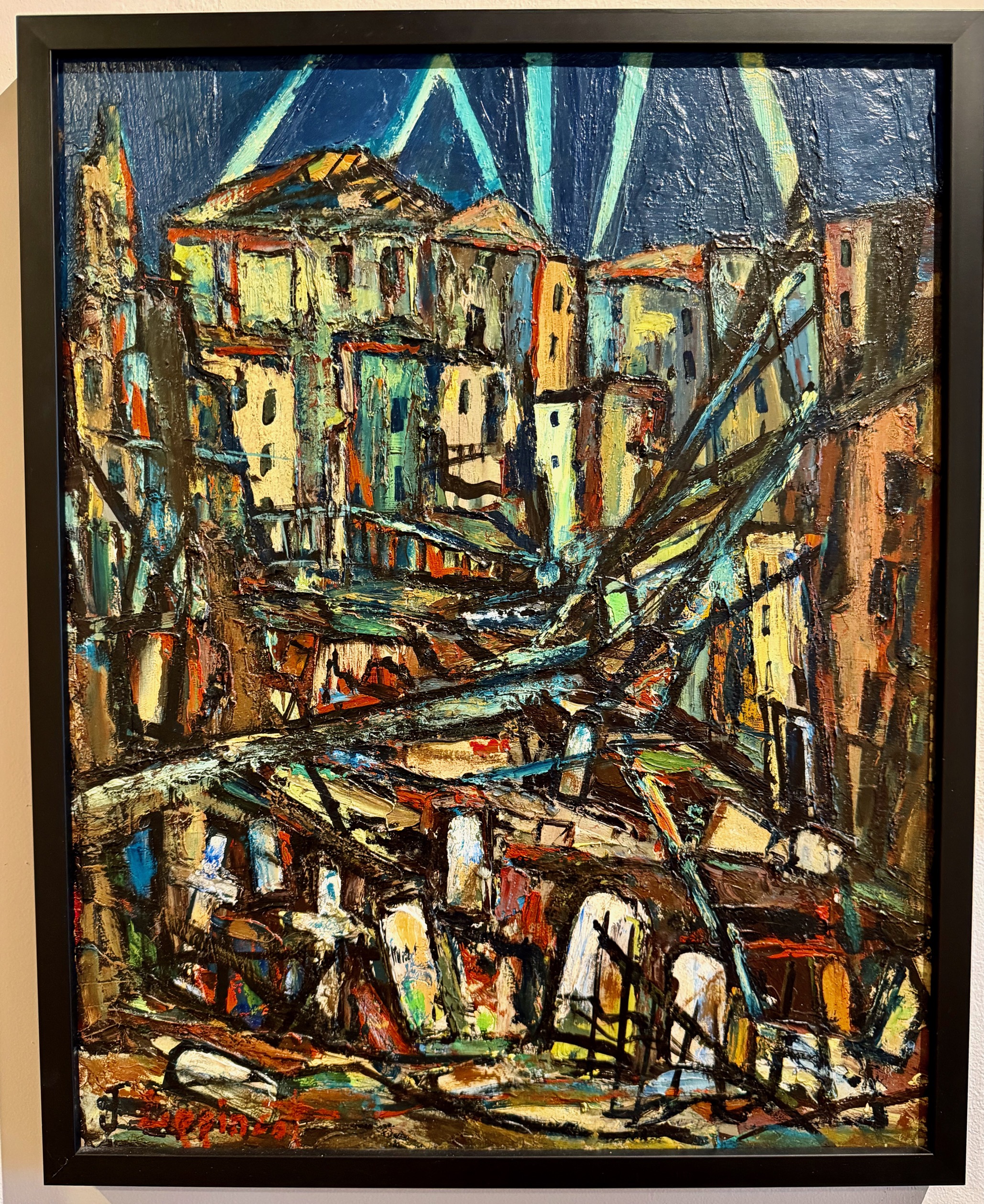
Janet Lippencott’s 1940s painting Raid – reflecting her experience as a WAC in London during one of Germany’s final 1944 bombing raids; in 1949, she used the GI Bill to study at the Bisttram School of Fine Art.
An award-winning 1942 poster by Taos Pueblo artist, cartoonist, and Army veteran Eve Mirabal, who studied at the Taos Valley Art School. Courtesy: private collection.

The exhibition frames the work by highlighting the seasonal and year-round schools that welcomed students under the GI Bill of 1944, which provided WWII vets with benefits for education, mortages, and employment. A remarkably high percentage of veterans took advantage of this transformative legislation that built America’s middle class. To learn more, download the gallery guide here.
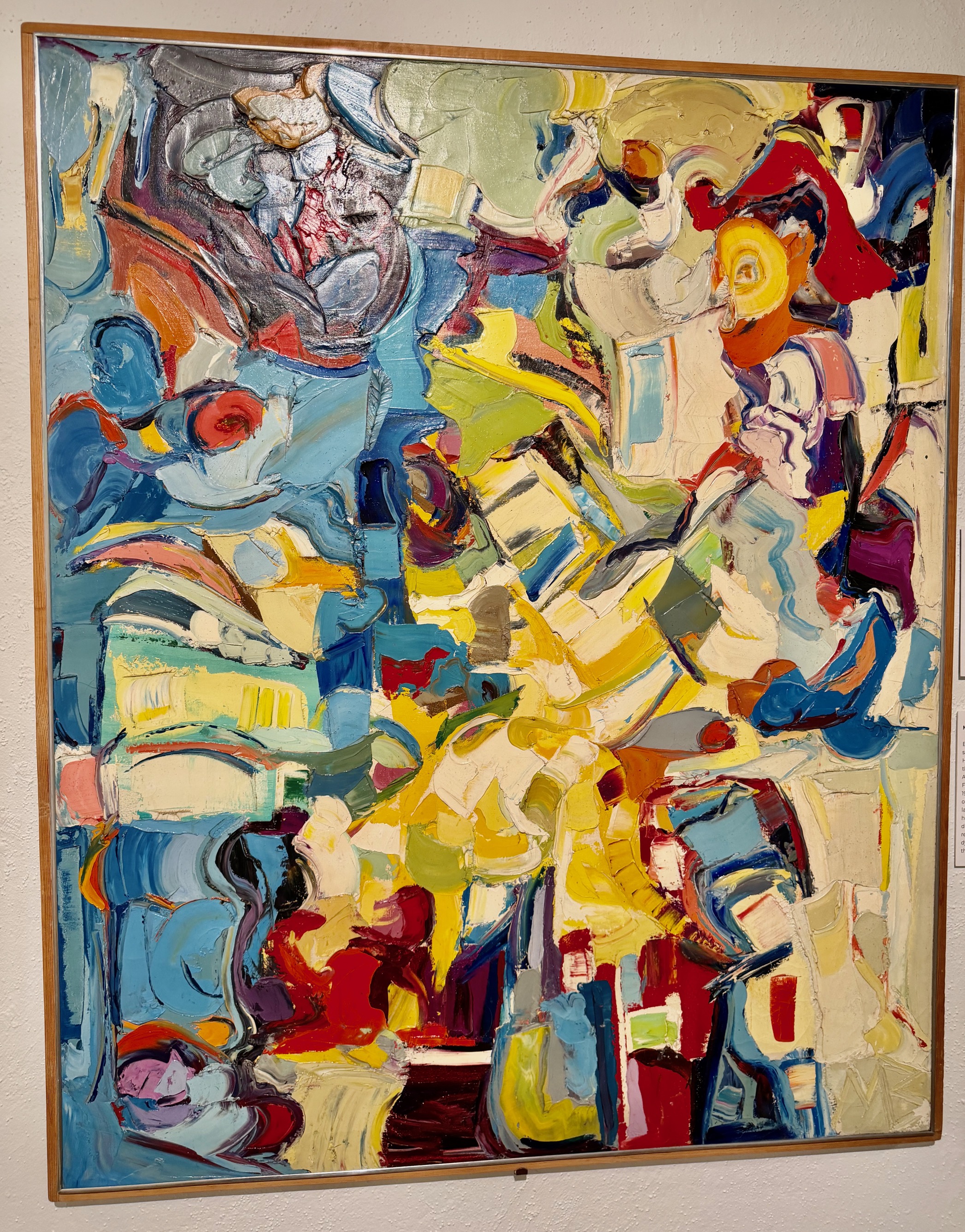
Gestural abstraction by a former student of the UNM Taos Field School on the GI Bill – Malcolm Brown’s 1960 oil painting Olaf’s Dream.

The earliest modern art program in Taos was the University of New Mexico Summer Field School, which began in 1929. Students worked and slept on the grounds of today’s Harwood itself. By the time that GI Bill students attended, property owner and philanthropist Elizabeth Lucy Harwood gifted her former residence – now the Harwood Museum – to UNM. The exhibition showcases work by former UNM summer students R.C. Ellis and Malcolm Brown.

Although she wasn’t on the GI Bill, the Harwood has an entire room full of the UNM program’s most acclaimed attendee, Ms. Agnes Martin, who shared studio space alongside returning war vets in 1947.

Transcendentalist artist Emil Bisttram also accepted GI Bill students into his seasonal fine arts program, which emphasized the principles of Kandinsky and European spiritual abstractionists. Although Taos was his home, Bisttram offered summer and winter fine arts sessions were in Los Angeles and Phoenix, where he taught. Janet Lippincott, who became a lifelong Taos resident, and Cliff Harmon, who also trained with Albers at Black Mountain College, are featured.
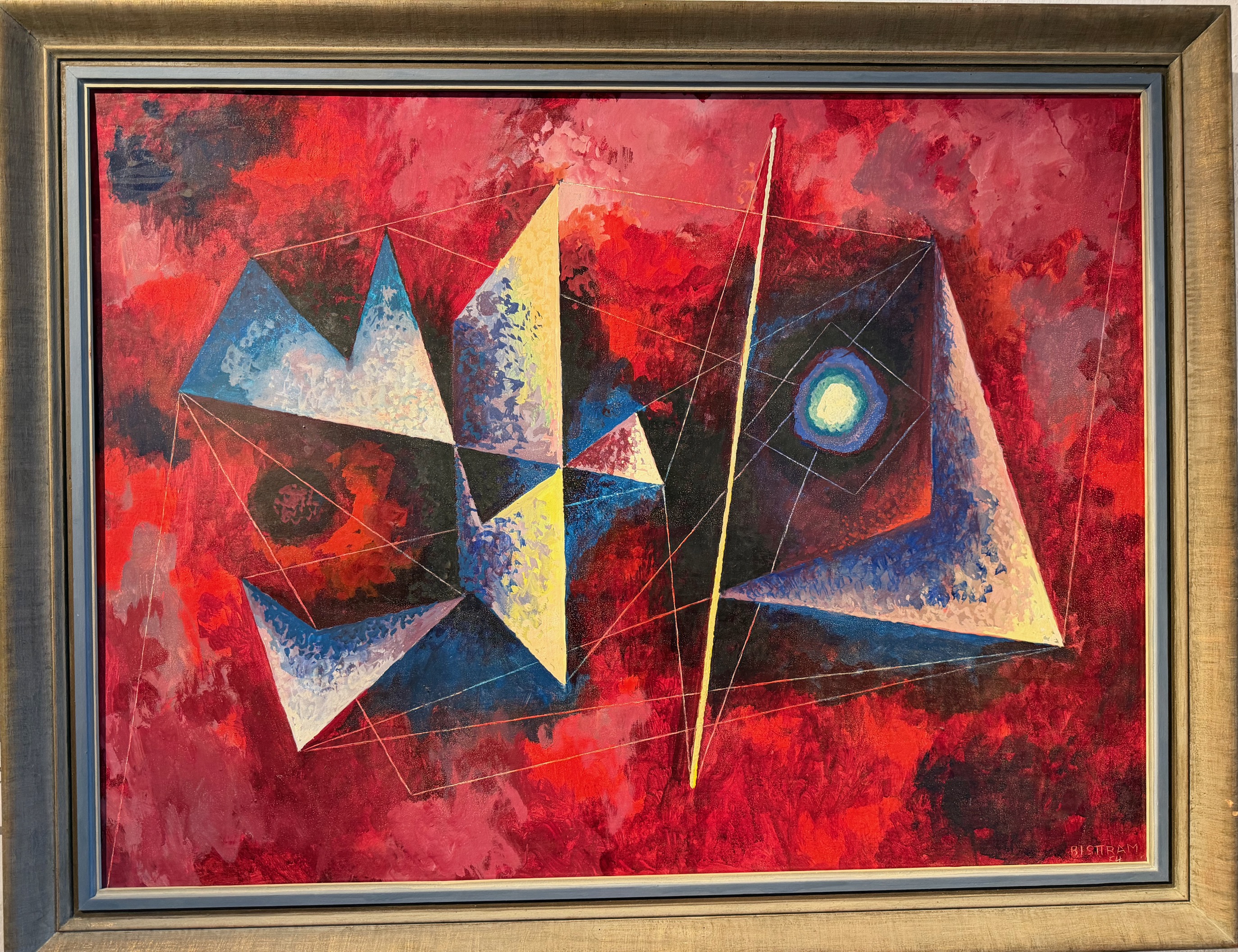
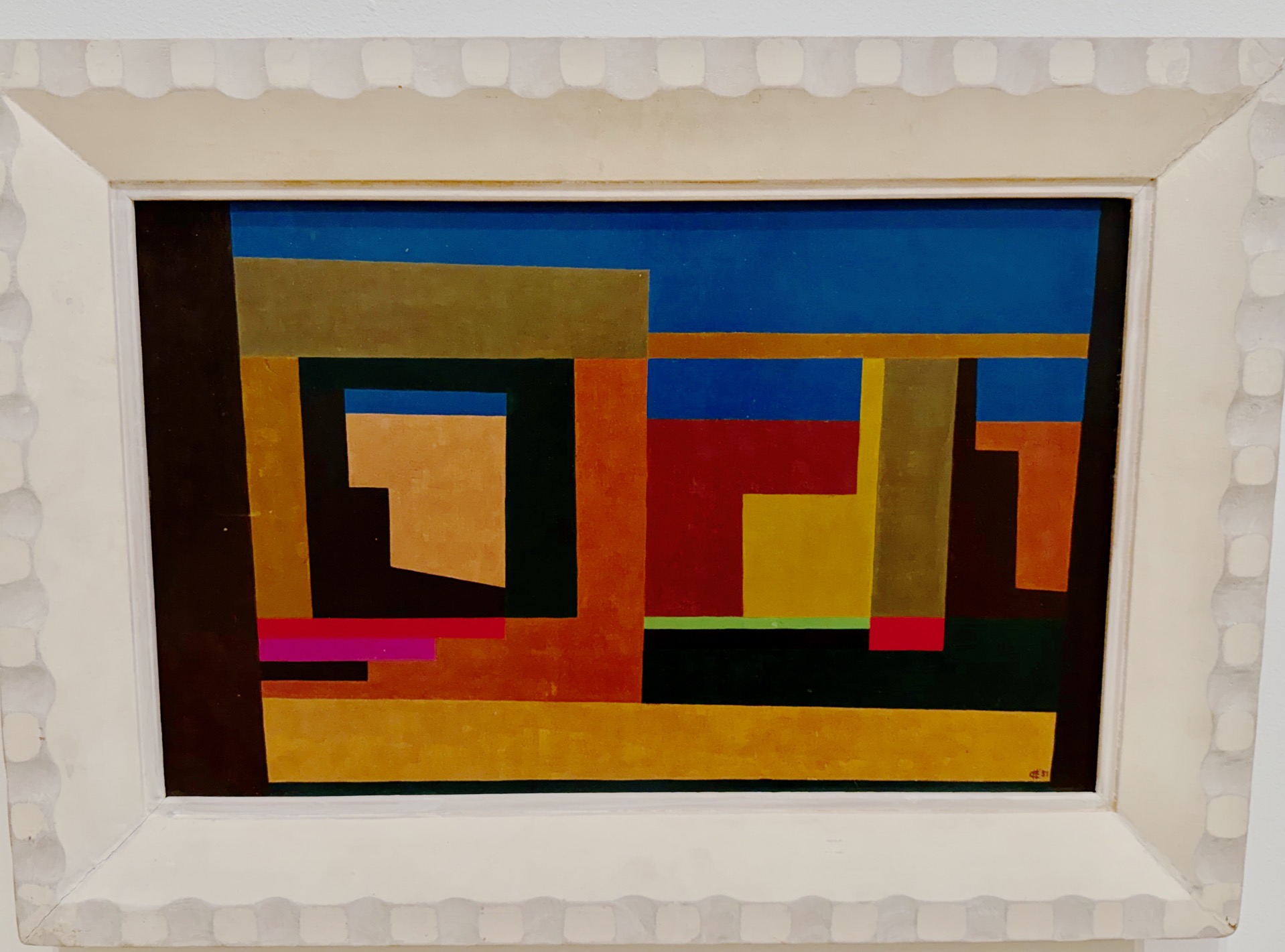
Founder of Bisttram School of Fine Art –transcendentalist Emil Bisttram’s 1954 geometric abstraction Out of Space.
Work by a former student of Josef Albers at Black Mountain College and the Bisttram School of Fine Art on the GI Bill – Navy sonarman Cliff Harmon’s 1951 oil painting, Construction.

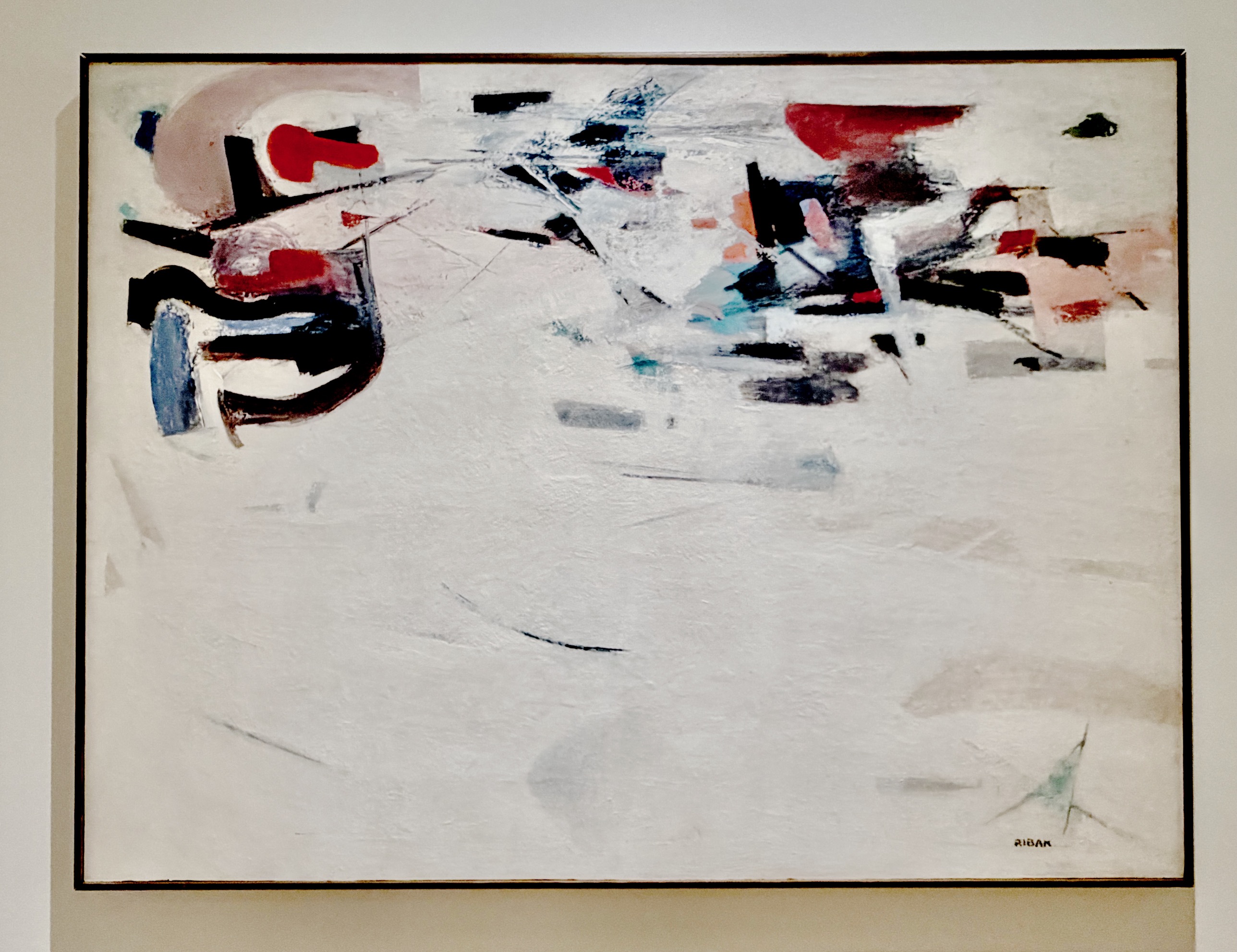
The cross-pollination of styles, personalities, spiritual influences, and teaching philosophies in Taos was intense and rewarding in those post-war years. Two upstart abstractionists – Bea Mandelman and Louis Ribak – arrived and began the Taos Valley Art School in 1947, which welcomed 20 students per semester.

A significant number of works are by Leger-trained Mandelman and social-realist-turned abstractionist Ribak, and their former GI Bill students – Louis Catusco, Ted Egri, Leo Garel, Herman Rednick, and Eve Mirabal (the Taos Pueblo artist credited as the first female Native cartoonist in America).
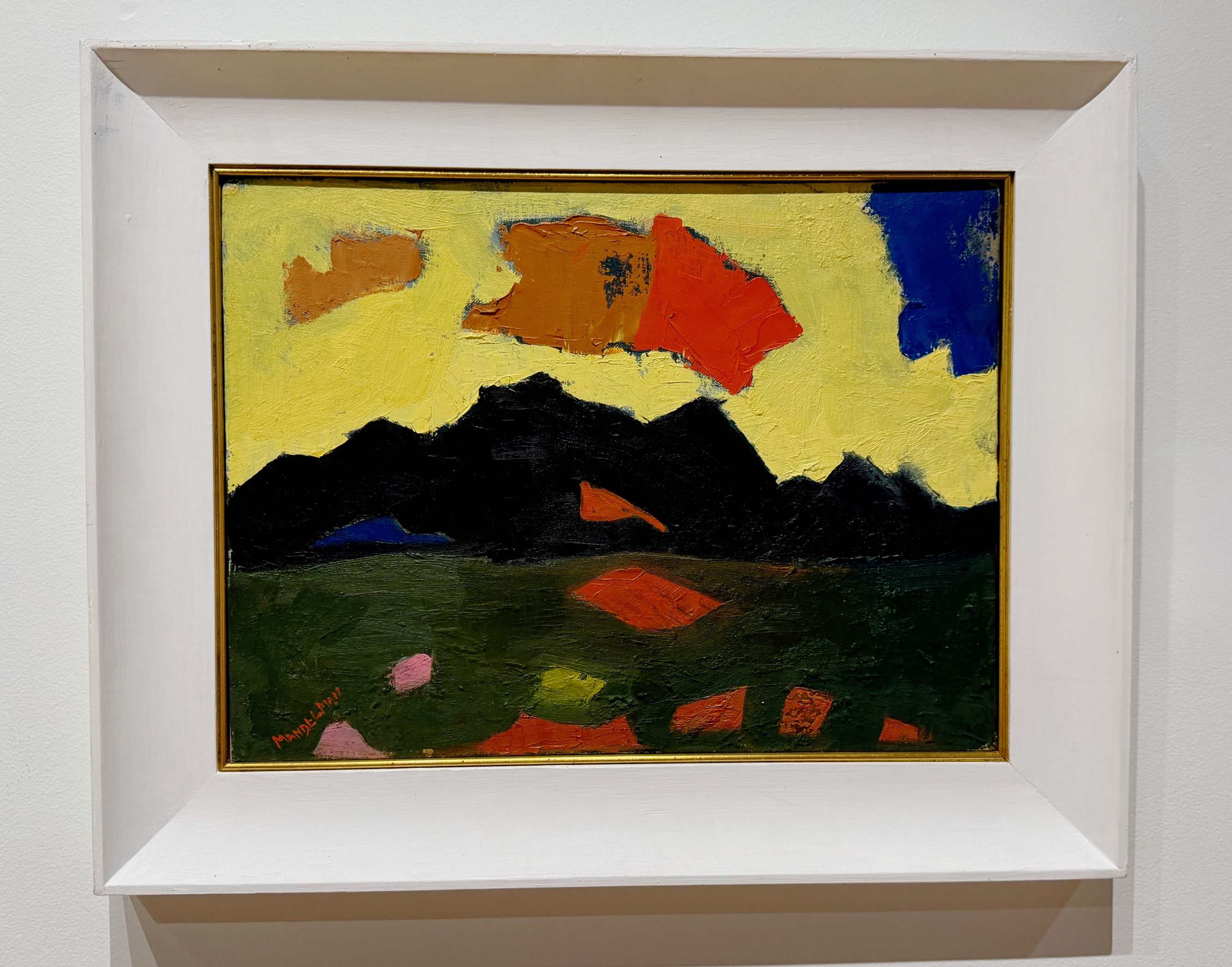
Co-founder of the Taos Valley Art School – Beatrice Mandelman’s 1950 Mouintain (formally Dark Cloud)
Co-founder of the Taos Valley Art School – Louis Ribak’s 1950 abstract Movement No. 2.

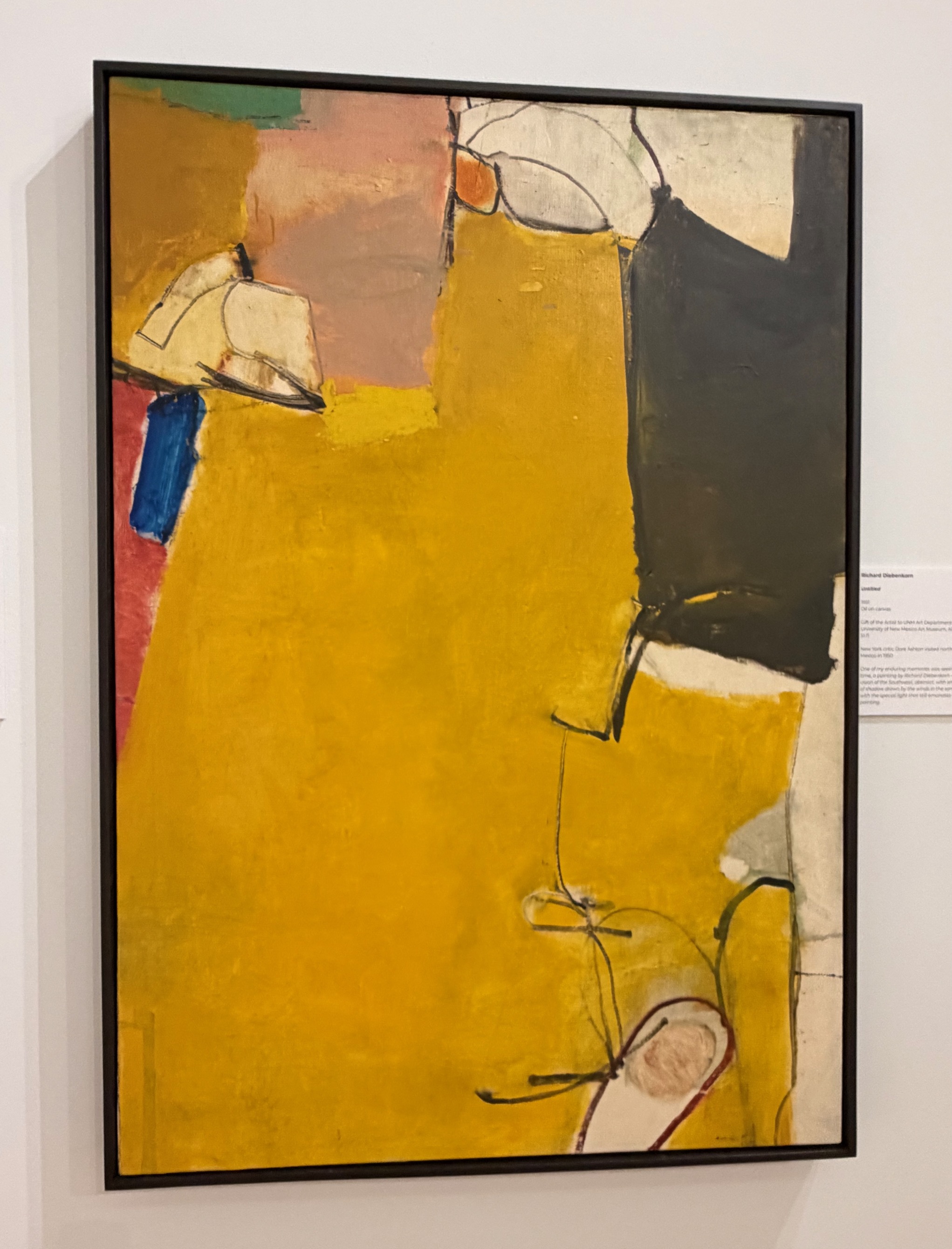
Clyfford Still-trained painters also made their way to Taos from the California School of Fine Arts, the legendary modern-art training ground in San Francisco. The Harwood’s all-white back gallery features spectacular works by Clay Spohn, Lawrence Calcagno, and Ed Corbett. When the pay was too low at CSFA, even Richard Diebenkorn enrolled in UNM to use his more generous GI Bill benefits.
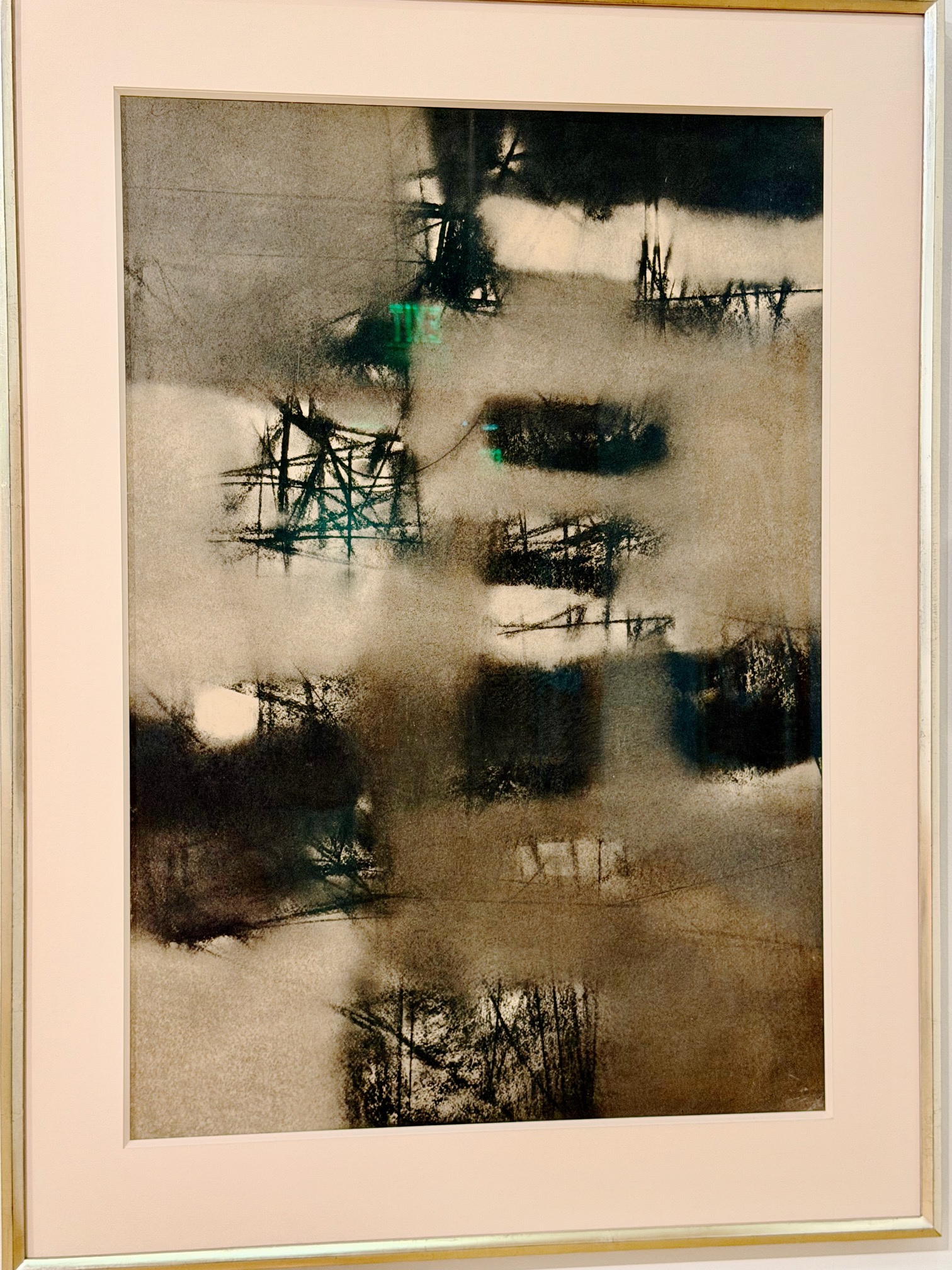
Edward Corbett’s 1951 chalk on paper Number 9 – former student at California School of Fine Arts who moved to Taos. Courtesy: Tia Collection.
Former teacher and student at California School of Fine Arts who moved to University of New Mexico – Richard Diebenkorn’s 1951 untitled abstraction inspired by New Mexico’s Southwestern landscape.

The back corner features work by two former Black Mountain College. Several are by Oli Shivonen, who served in the corps of artists and sound engineers in the “Ghost Army” that created battlefield deceptions to deceive Axis troops. Note the flat shapes and bold colors, reminiscent of another Ghost Army vet, Ellsworth Kelly.  
 
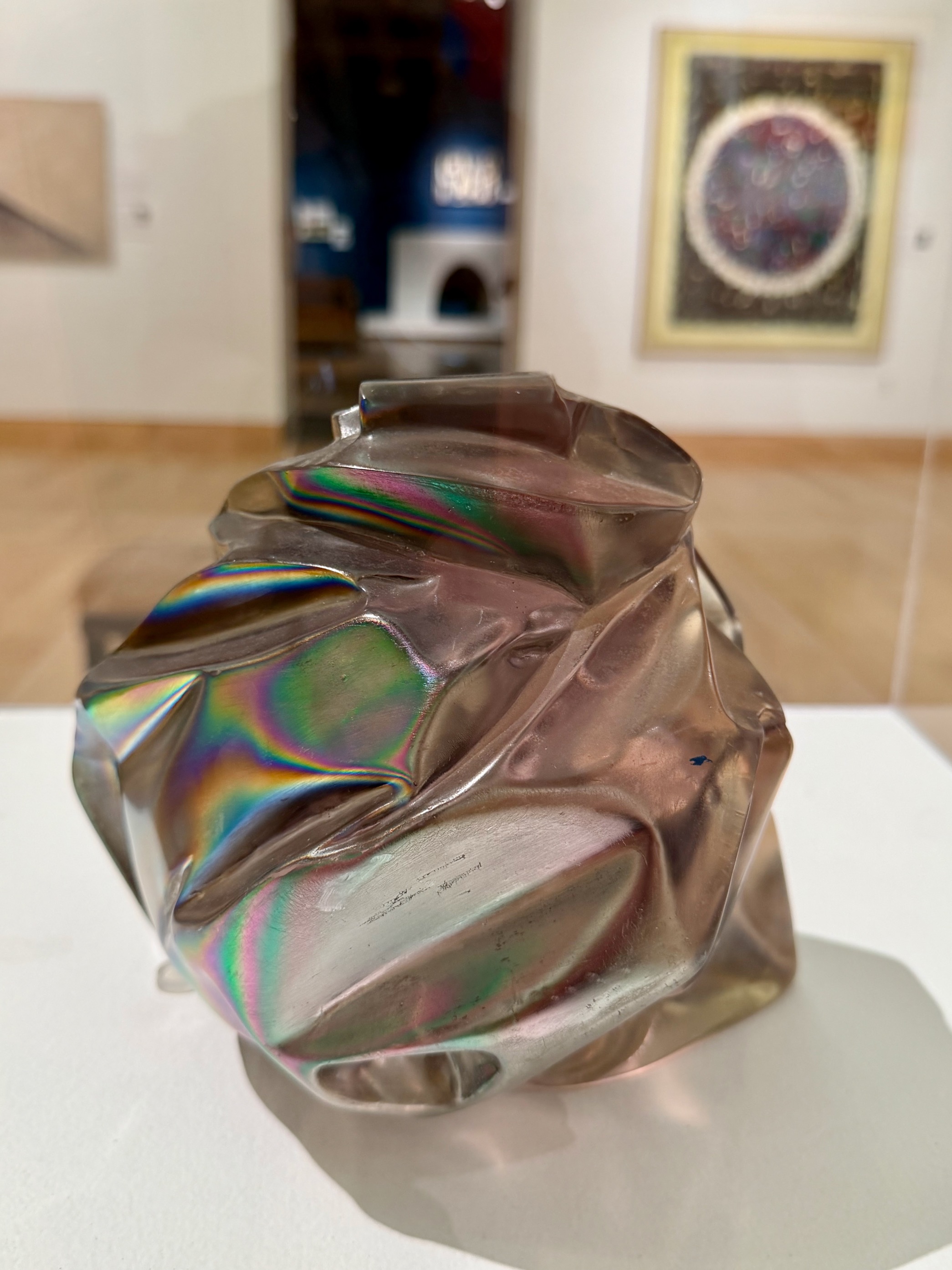
A small multiple by John Chamberlain also stands here – a tribute to the inspiration that Chamberlain drew from the new methods, material, and iridescent magic reflected in work by another SoCal-to-Taos transplant, Larry Bell.    
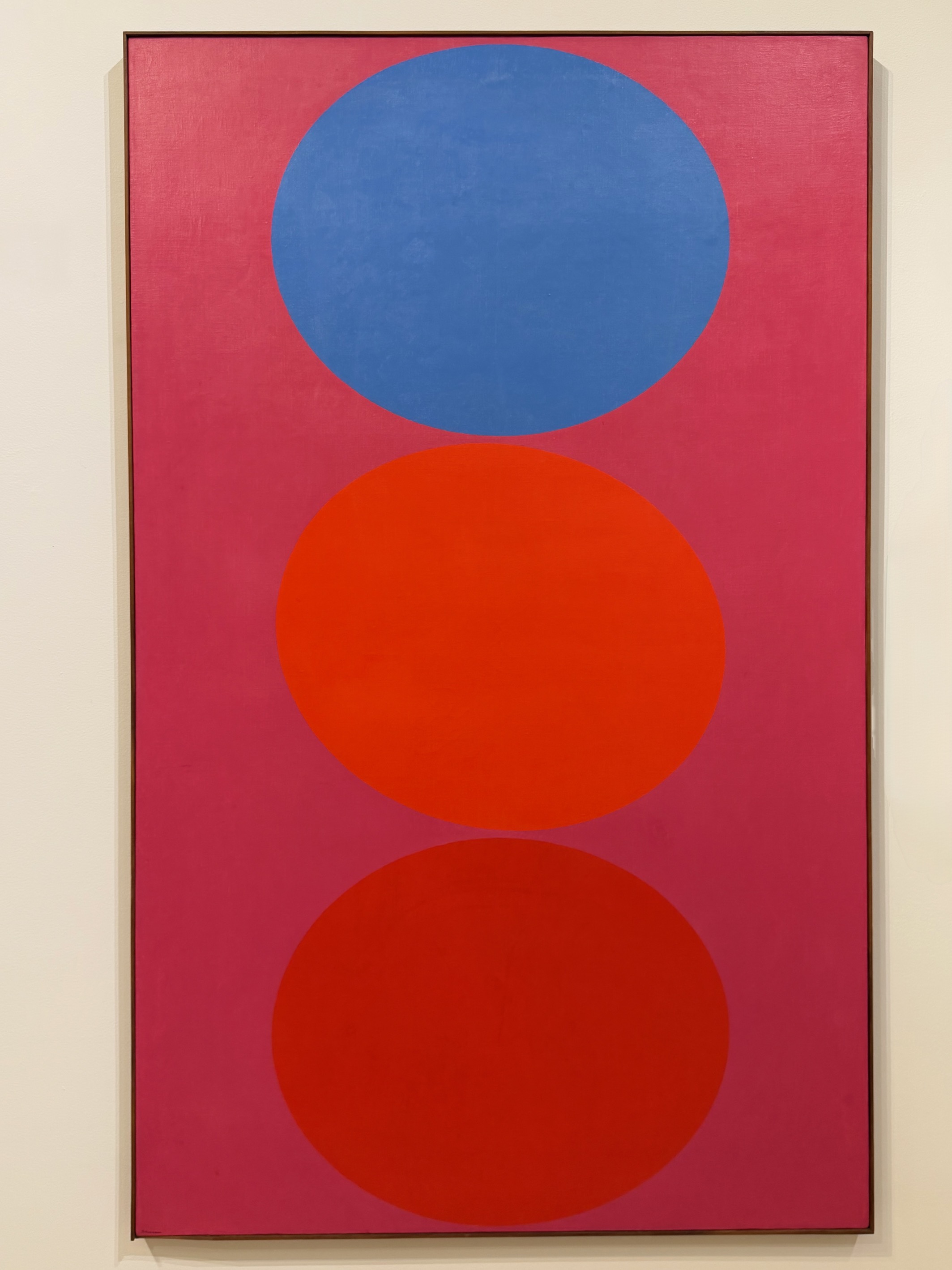
Former Black Mountain College student on the GI Bill who moved to Taos – Oli Shivonen’s 1965 color abstraction Column Three.
John Chamberlain’s 1971 El Molé based on crumpled paper bags – one of a cast poly resin edition by Gemini G.E.L.; coated with silicon oxide. Courtesy: private collection

For more stories, background, and innovations by GI Bill beneficiaries across the US art world, listen to this lecture by the curator of this amazing show, MaLin Wilson-Powell:

And in a living tribute to all of the Taos veterans, the Harwood created a community space for temporary exhibition of photos, memories, and tributes right inside this remarkable exhibition that honors the men and women of art and service.
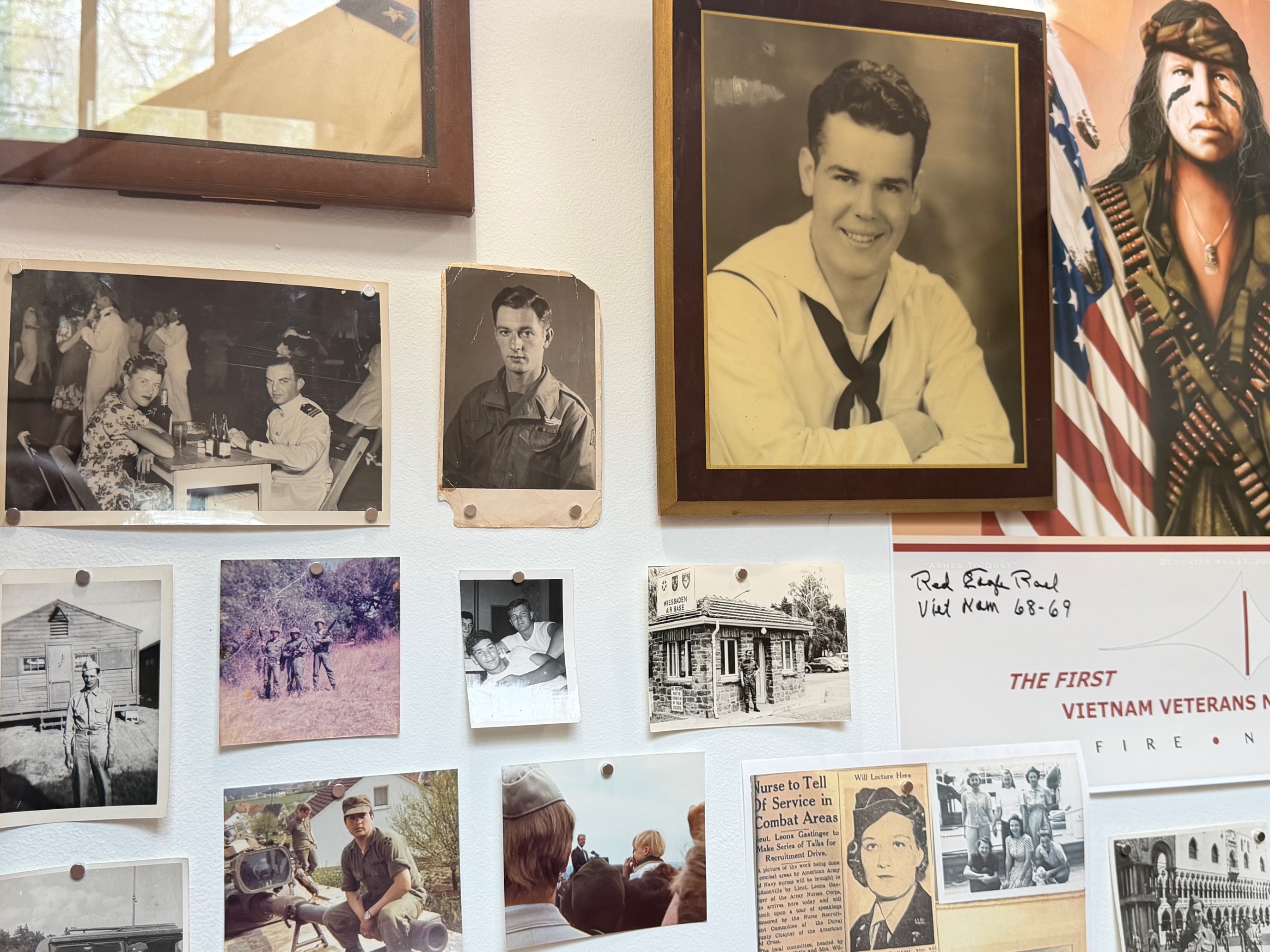
Photos and other items donated by the community for the Harwood’s veteran memorabilia space.

Georgia O’Keeffe’s Modern Living

How do you turn a 200-year-old adobe home into a temple of mid-century modern design? See how Georgia O’Keeffe did it in Artful Living: O’Keeffe and Modern Design, an exhibition available on-line and at the GOK Museum’s Welcome Center near her home and studio in Abiquiu, New Mexico through January 31, 2027.

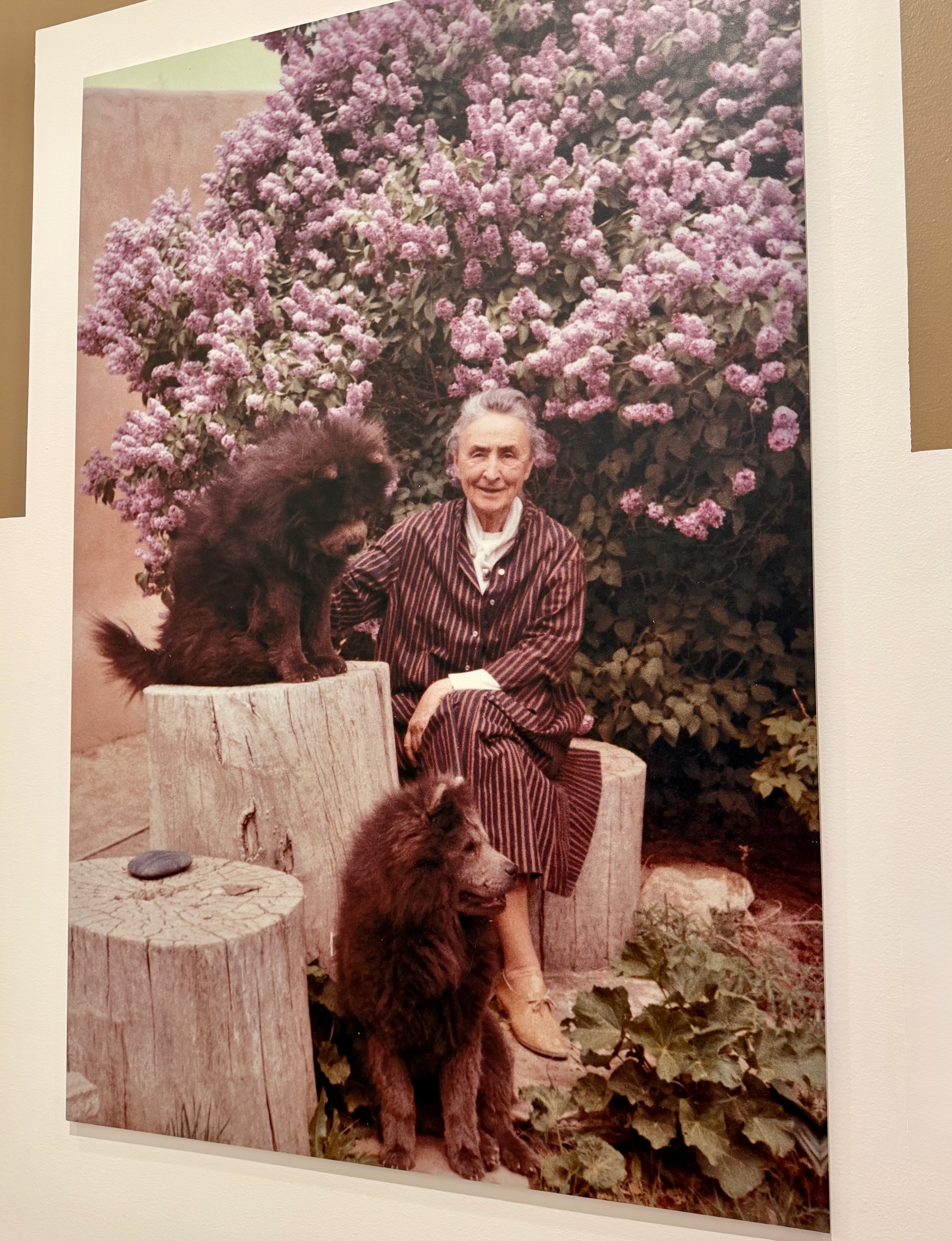
When Georgia bought her second New Mexico home in 1945, it was a wreck. All the better, for her to envision the possibilities of her dream house. Why was she obsessed with this? It had a home garden and irrigation, a placita in the center of the house with a working well, the iconic black door in the red wall, and an incredible view of the stunning landscape (and Pedernal).

Todd Webb’s 1962 photo Georgia O’Keeffe and Chows in Abiquiú Garden with Georgia in a striped Marimekko dress.

By collaborating for the next four years with her friend and project manager Maria Chabot, the property was transformed into a showcase for everything modern – furniture, fabrics, lamps, tableware, and (eventually) architectural innovations like skylights, gigantic picture windows, and open-plan living.  To keep her creative sparks going, Georgia never stopped rearranging, adding, and switching things up.

The exhibition space is small, but provides a tight curated selection of Georgia’s things accompanied by great photos of her interiors over time.

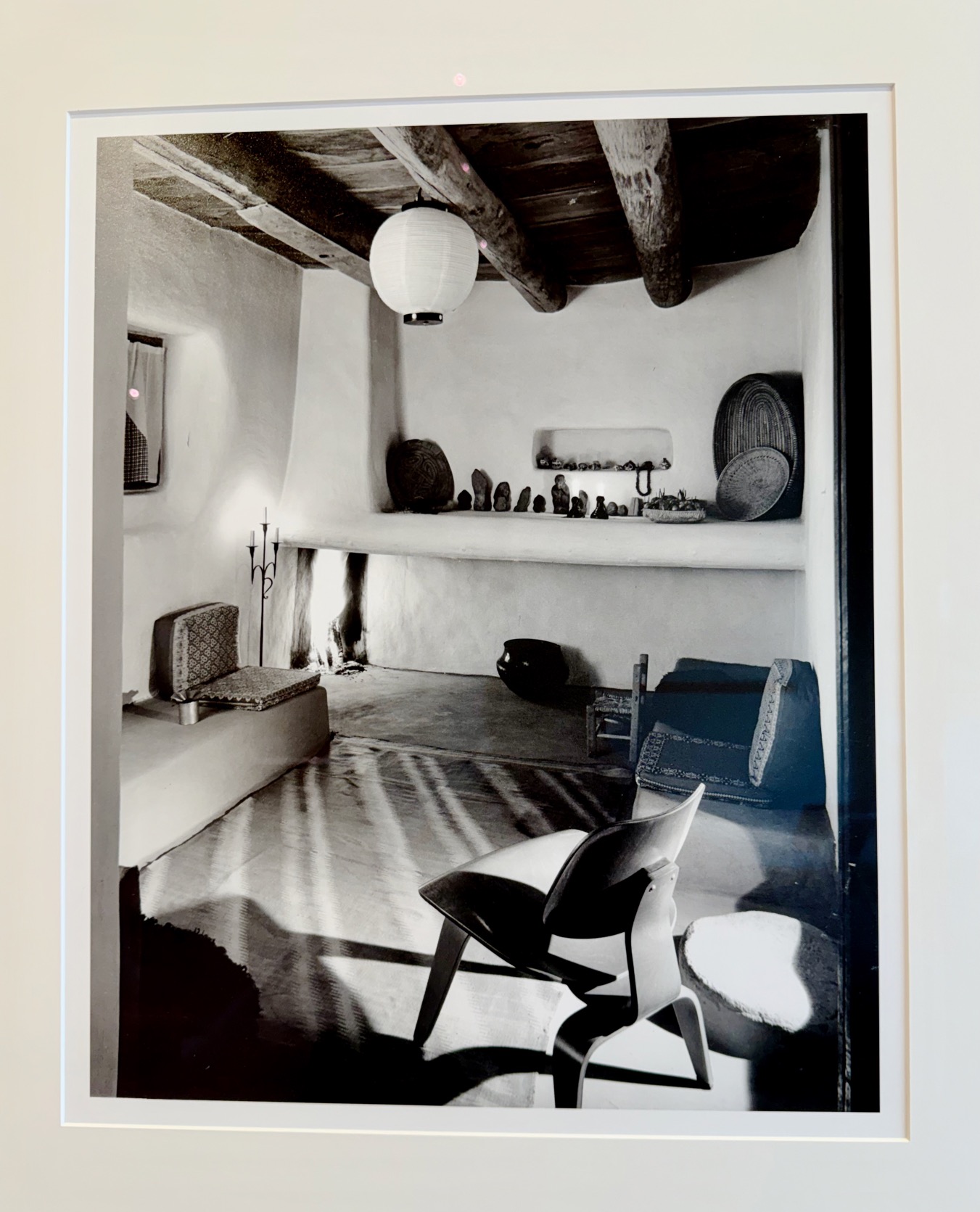
Balthazar Korab’s 1965 photo Abiquiú House, Indian Room with Noguchi lamp and Eames chair.
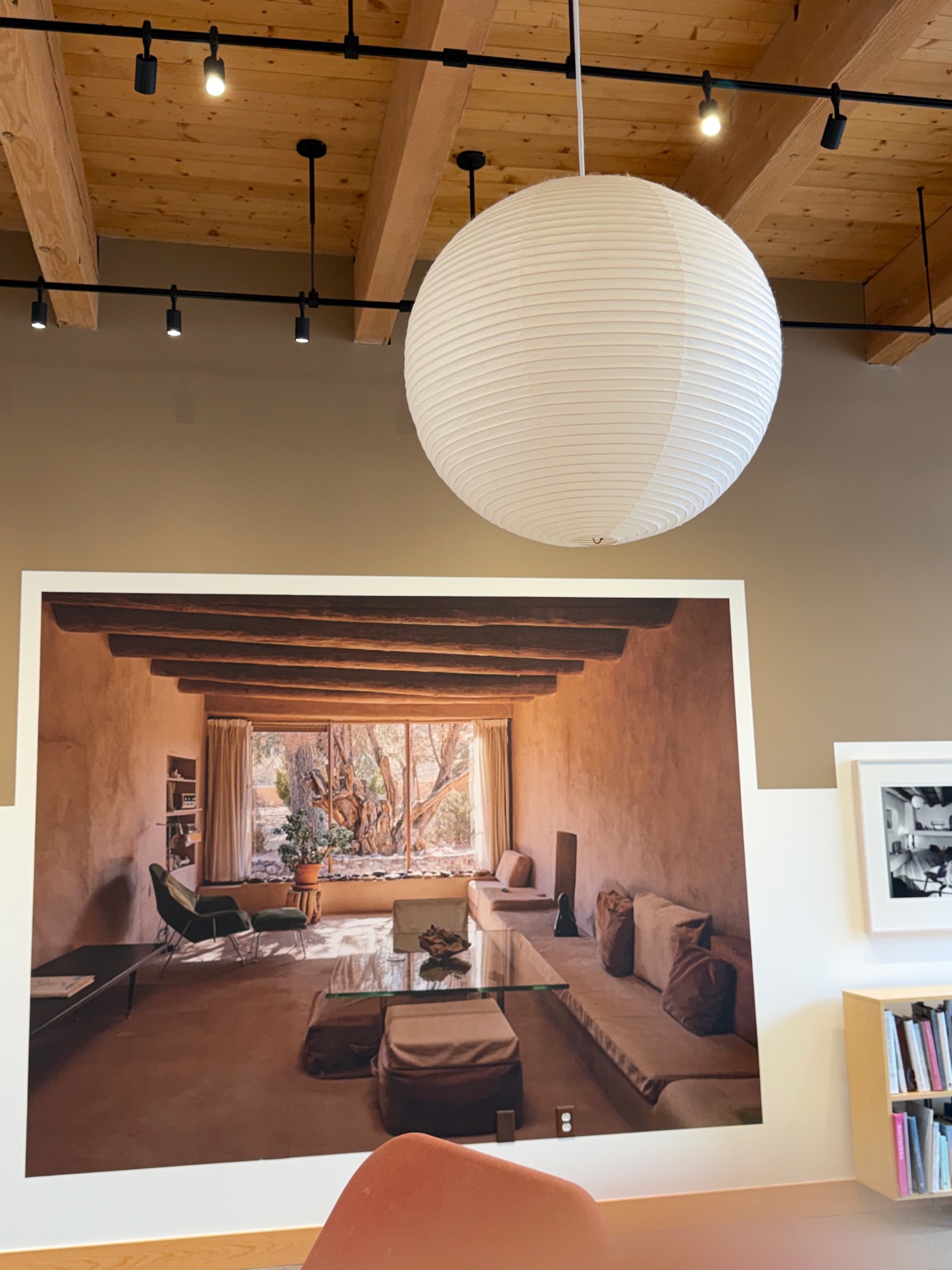
1960s Akari Lantern, a gift from sculptor and designer Isamu Noguchi with Krysta Jabczenski’s 2019 photo of her living room arranged as she left it in 1984.

The furniture is front and center, made by a who’s who of American 20th century designers.  After all, as one of the recognized greats of modern American painting, the designers were often her friends, too. Simple, clean, modern lines – that’s what Georgia liked. But she loved design innovations, too.

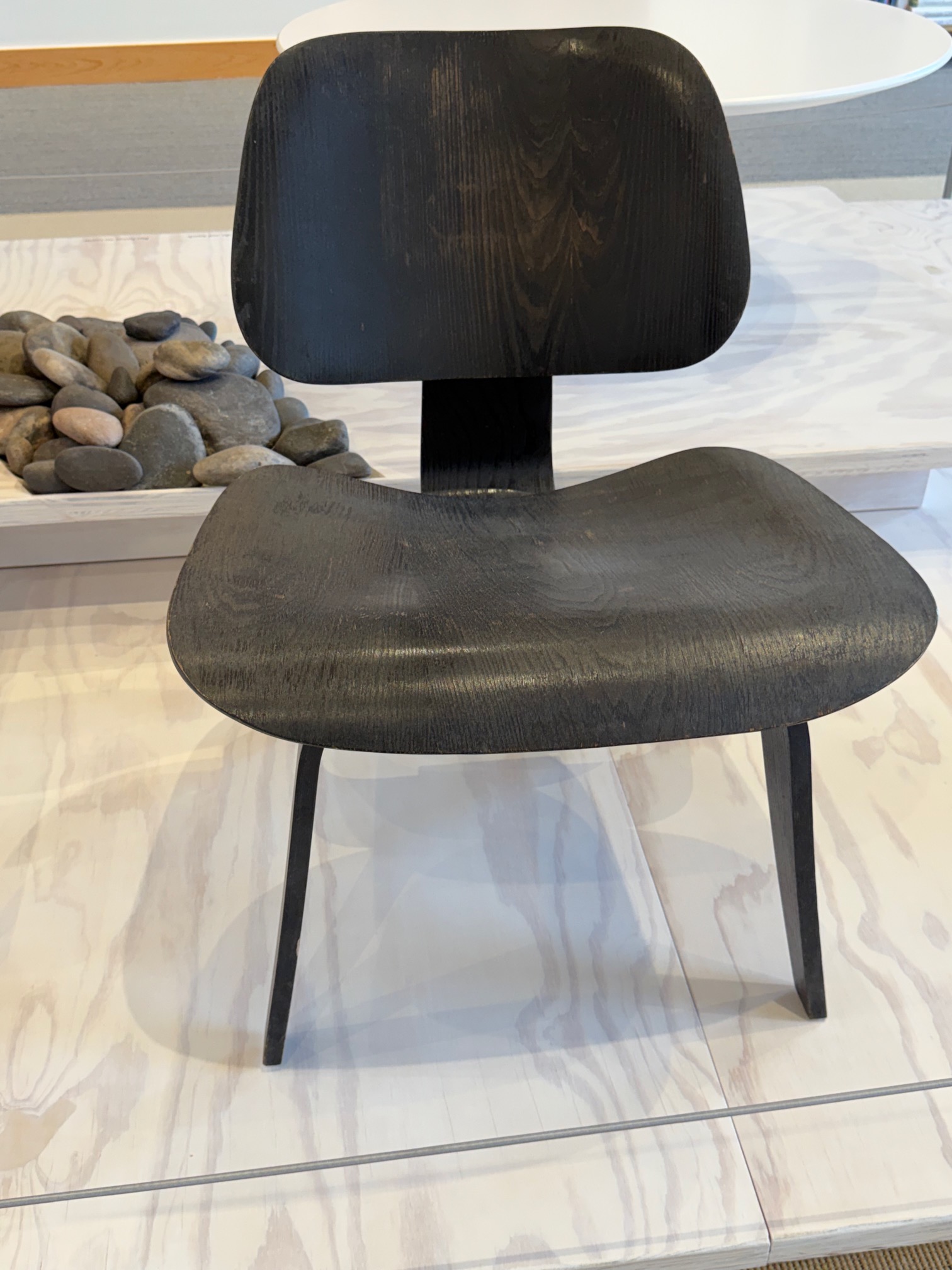
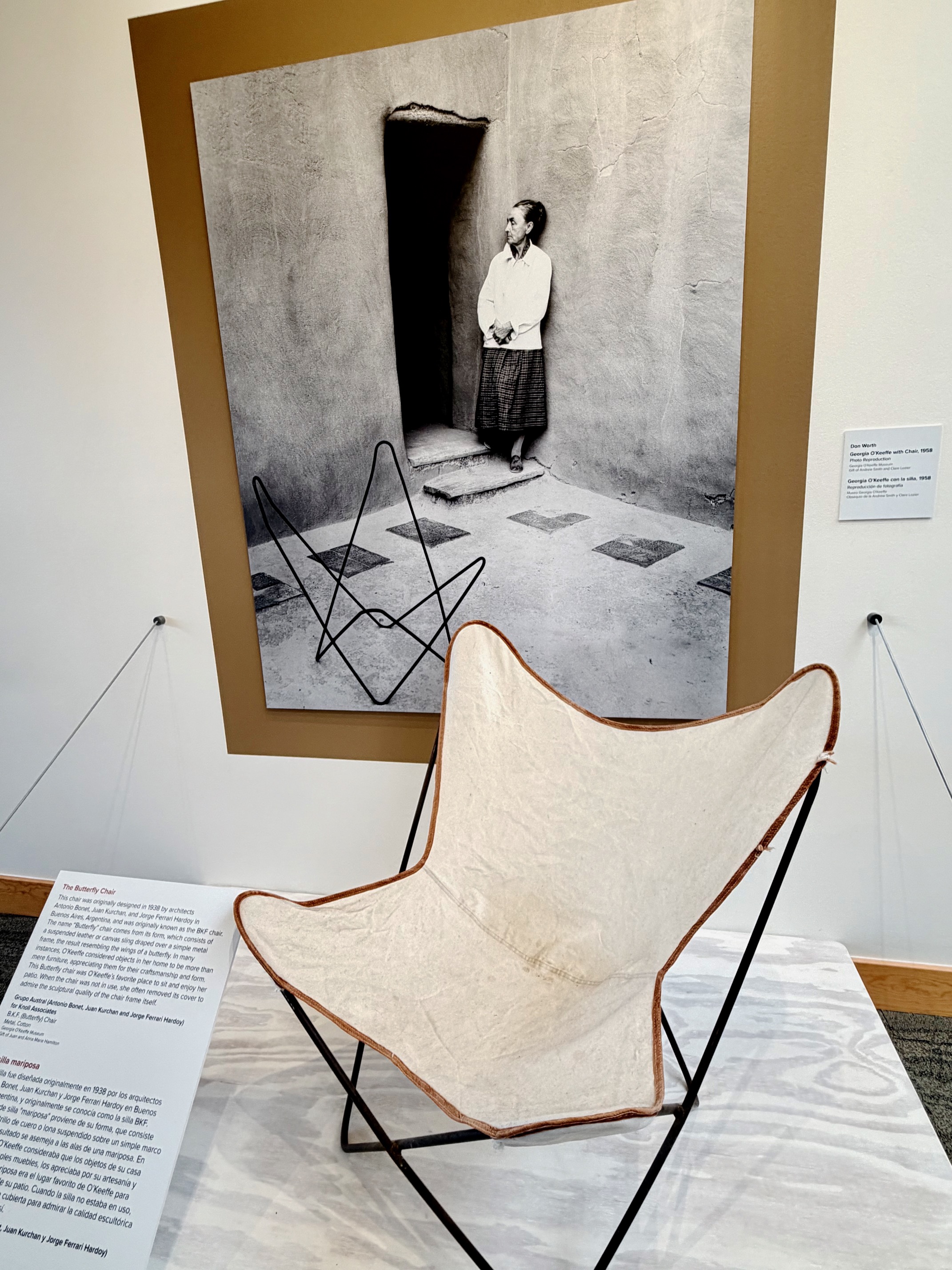
No wonder she was captivated by the innovative BFK (“Butterfly”) chair designed by a trio of Argentine architects in 1938. She ordered one from Knoll, used it on her patio, and sometimes took the cover off just to admire the frame. And she bought several LCW chairs by her friends, Charles and Ray Eames – the molded-plywood marvel that defined a design decade.

1940s LCW Plywood Lounge Side Chair designed by Charles and Ray Eames for Herman Miller – the first chair in the Eames’ molded plywood series.
Don Worth’s 1958 photo Georgia O’Keeffe with Chair with 1938 metal and cotton Butterfly Chair for Knoll Associates.

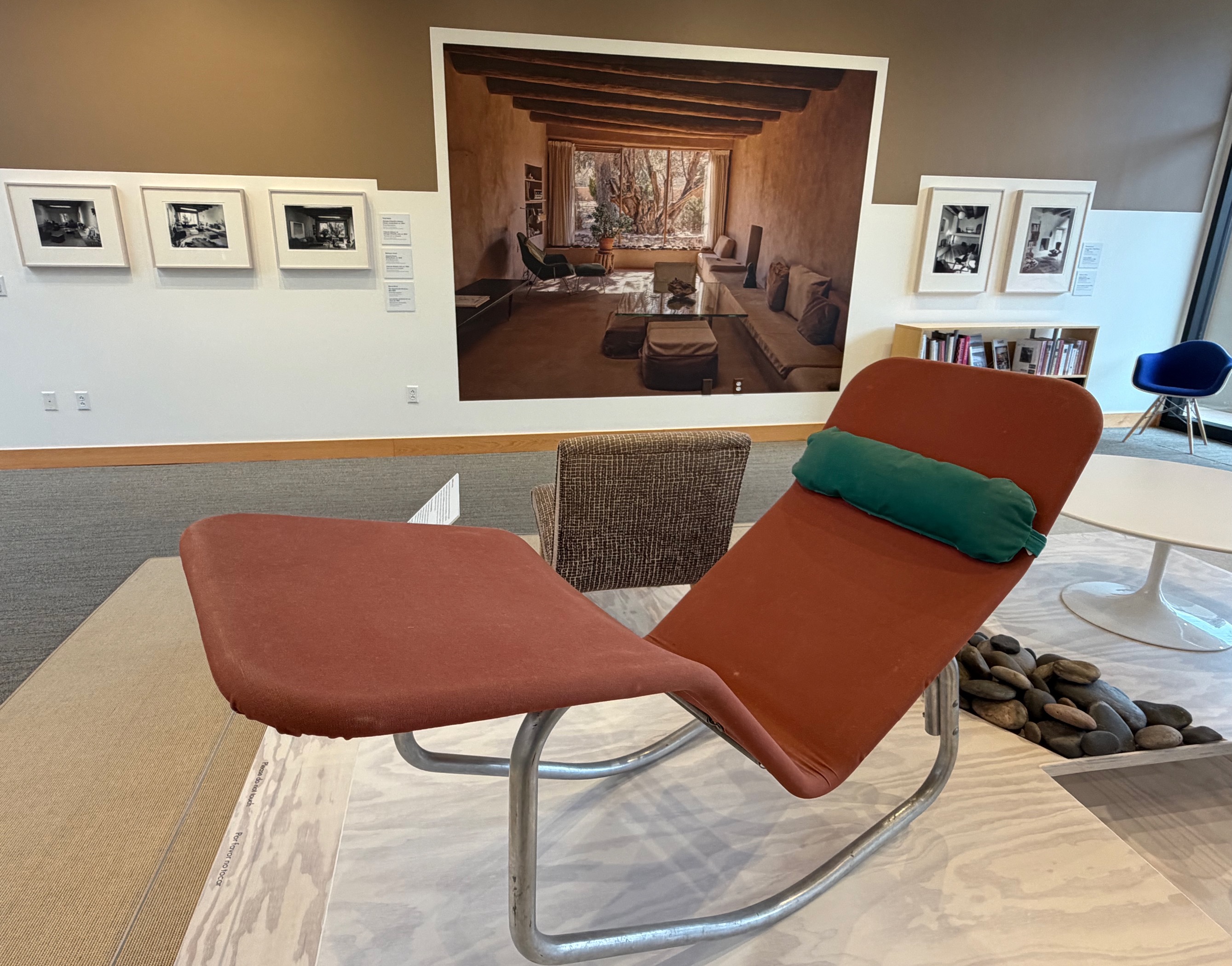
But perhaps her most-used piece was the versatile BARWA Lounger – perfect for laying back and listening to classical music or looking at the stars during a summer camping trip to the badlands. The aluminum frame made it light enough to strap to the top of her car.

1940s BARWA Lounger designed by Edgar Bartolucci and John Waldheim of BARWA Associates; Georgia relaxed here while listening to classical music.

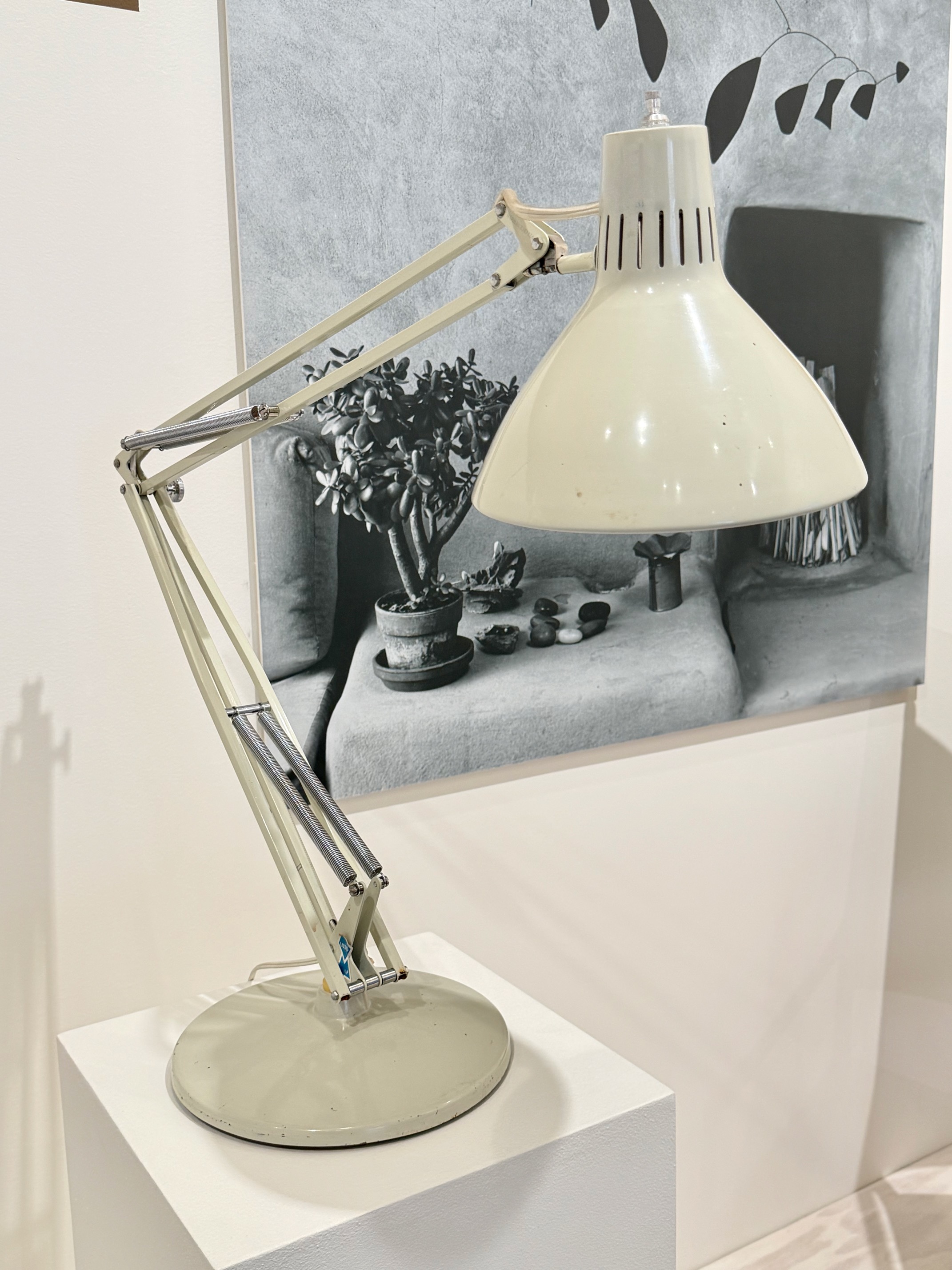
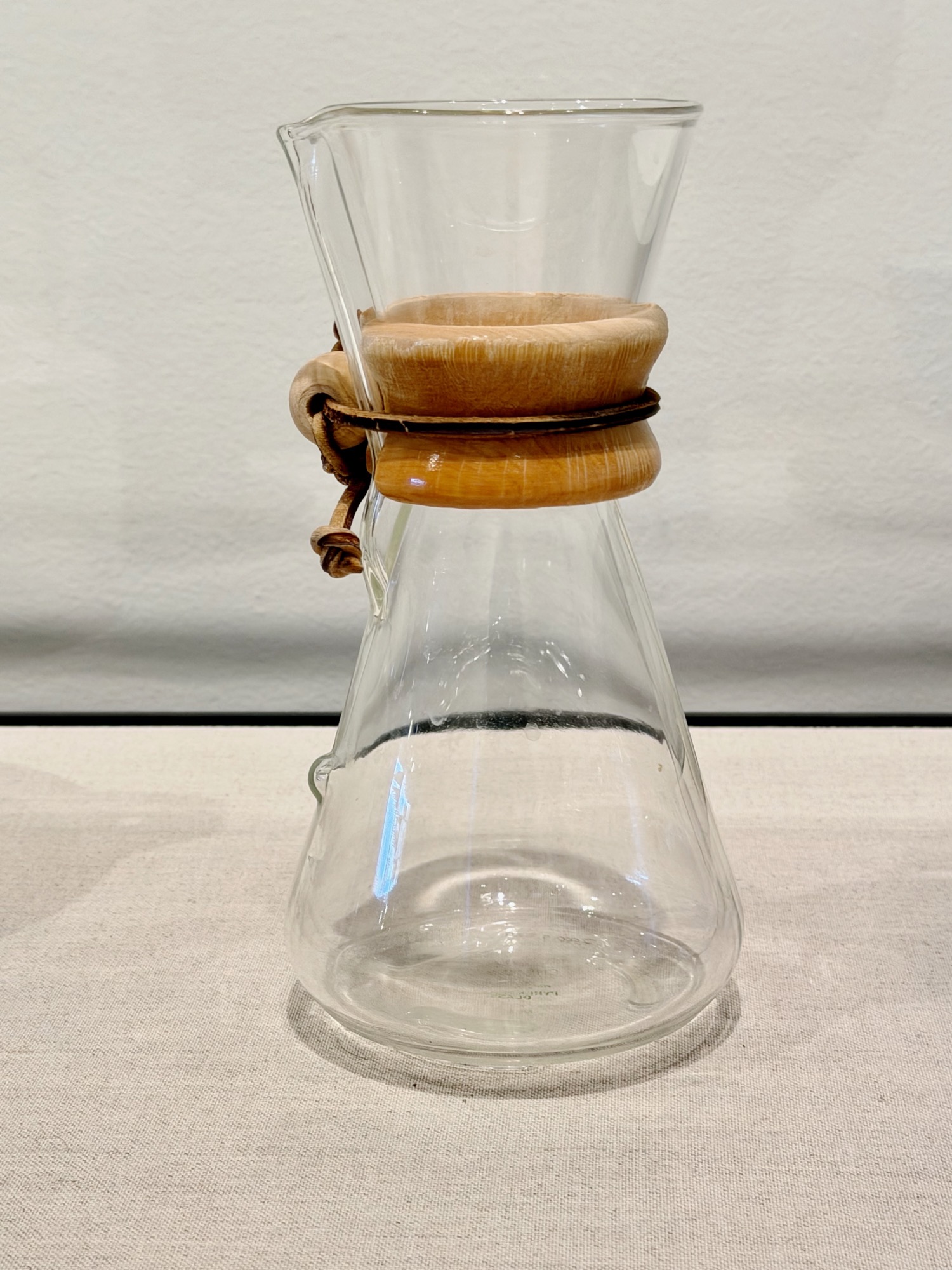
Of course, Georgia loved her rock and bone collections, but she also collected practical items for her home that epitomized mid-century design.  Why not select a Finnish design innovation that you could adjust to get the light just right on your work desk or still life? Or use a sleek, modern, see-through coffee maker to prepare your morning cup of Bustelo? Pure bliss.

Finnish design: 1960s metal Luxo Lamp designed by Jac Jacobsen.
Everyday modern design: 1950s Chemex coffee maker designed by Peter Schlumbohm for Chemex.

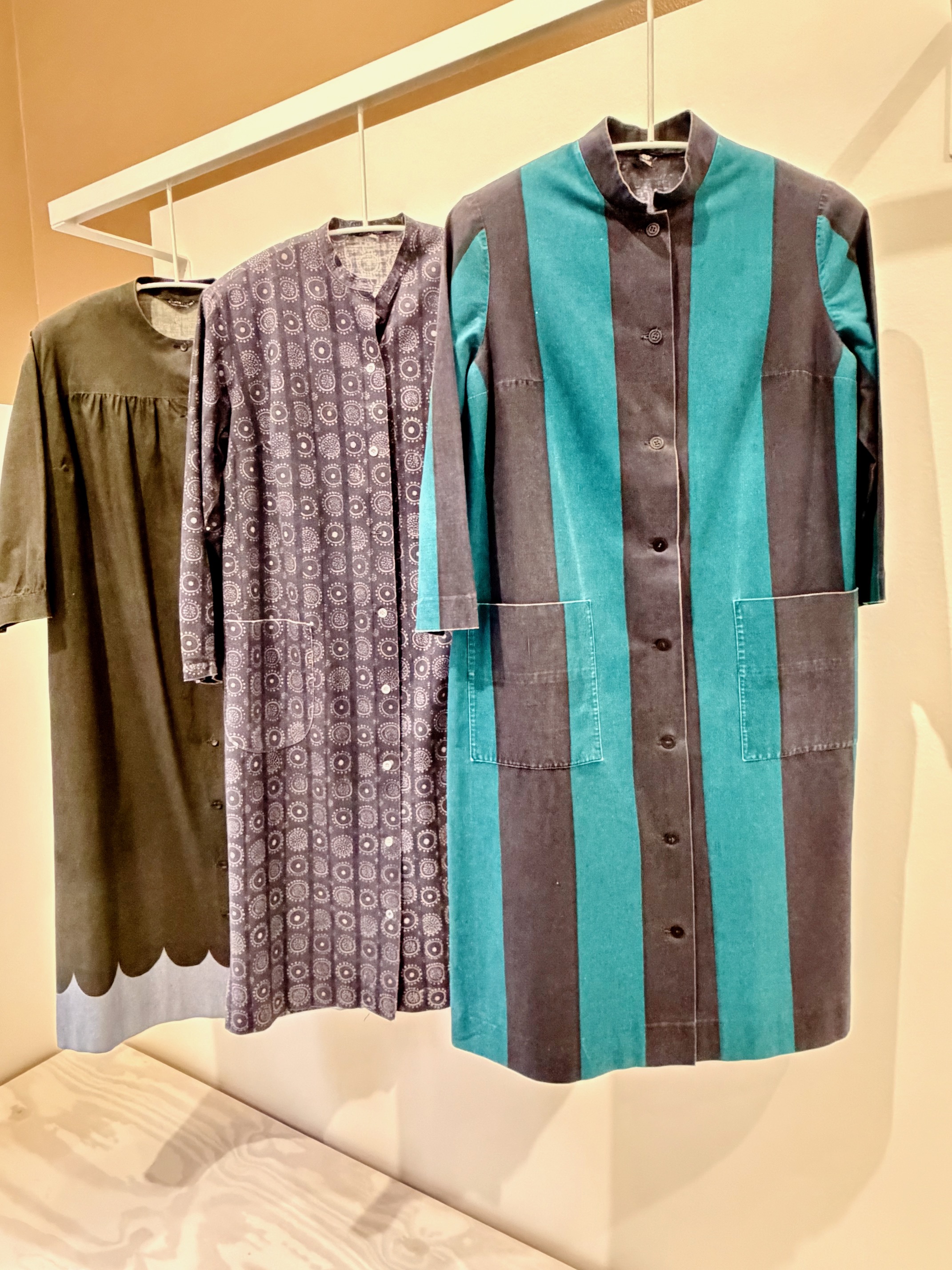
The curators also want us to remember that modern design principles also extended to Georgia’s dress preferences.

Three cool cotton dresses by Anika Ramala for Marimekko – 1963-1965 Varjo dress, 1961 Karutakkj dress, and 1963 Asumistakki dress.

When she wasn’t posing for the most famous photographers against the red rocks of New Mexico in her black hat and wrap dress, she preferred wearing loose-fitting Marimekko dresses.   A working studio artist could really move in them to prepare canvases, rehang paintings around the house, or carry around stuff in the pockets. Never mind that the dresses from the popular Finnish design house were marketed as the finishing sartorial touch for any modern Sixties interior.

Feel free to revisit our past blog post about the wildly successful traveling exhibition about Georgia’s fashions here.

See some of our favorite photos, furniture, and items in our Flickr album.

Two of her best friends and travel buddies were Alexander and Susan Girard. Georgia always welcomed the small textiles that Alexander Girard gifted her. Although she never adopted his revolutionary conversation-pit seating, she did get out the sewing notions and turn his iconic designs into small throw pillows placed lovingly (and colorfully) throughout her house. She also covered her kitchen work surfaces in Marimekko oil cloth to make it pop, too.

Visit this fantastic design exhibition on line here, and read more about each of Georgia’s mid-century modern choices.

For more, listen to Giustina Renzoni, the museum’s curator of historic properties, discuss how Georgia turned her modern sensibilities into a legendary high desert home:

And if you’re really interested in what Georgia had in her closet, the next time you’re in New Mexico, sign up for that new extra-special tour!

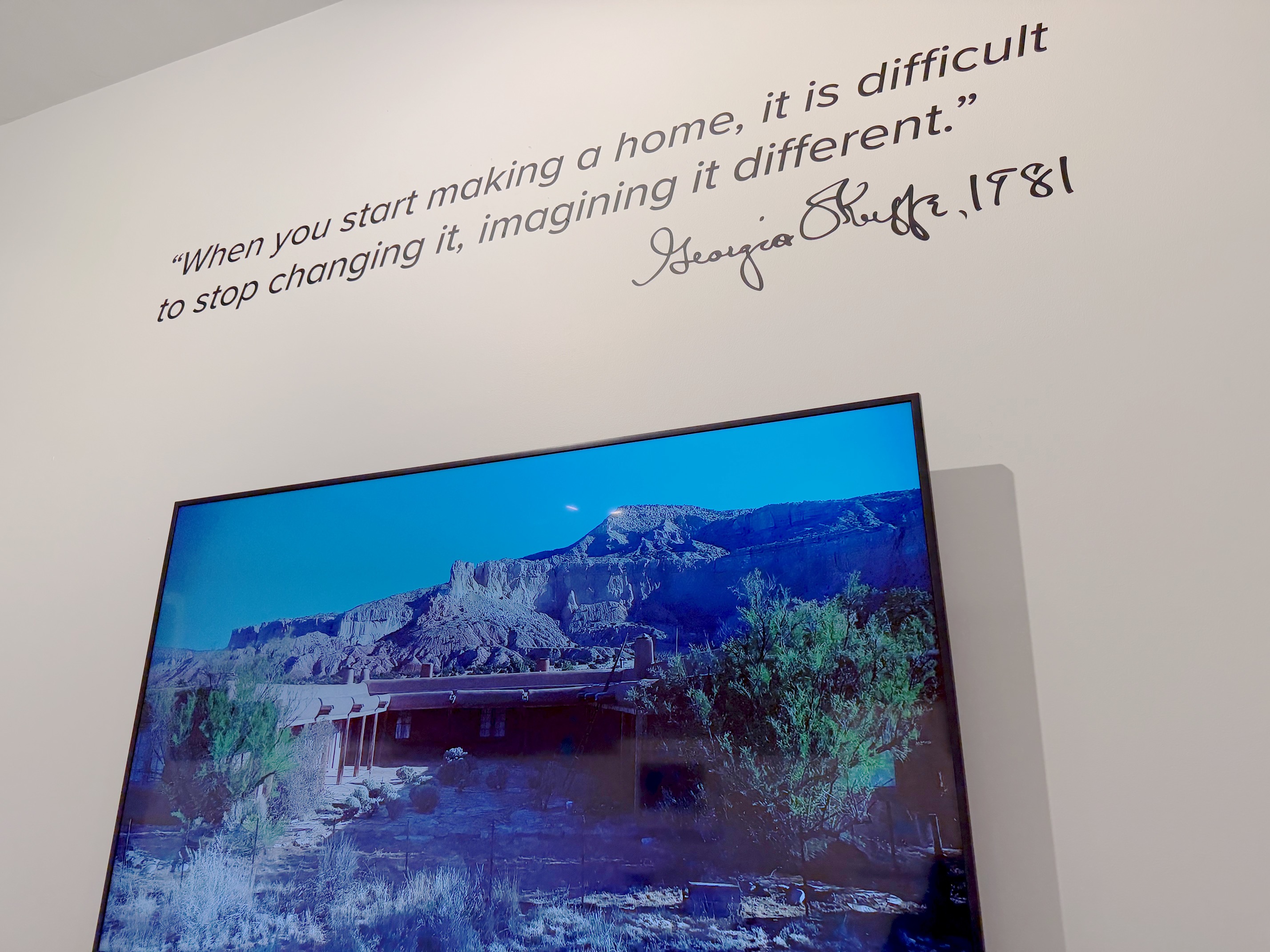
Video still of Georgia O’Keeffe’s Abiquiú home and her philosophy about home design