Indian Theater and Contemporary Art at SITE Santa Fe

The ambitious project paid off. Indian Theater: Native Performance, Art, and Self-Determination since 1969, on view at SITE Santa Fe and the IAIA Museum of Contemporary Native Arts through September 7, is a masterful mix of history, contemporary art, performance, and revealing installations that challenge what you know and think you know.

Filling the entire museum, the exhibition uses painting, sculptures, and performance sculptures to chronicle how radical performances by Native Americans shifted conversations, illuminated forgotten populations and treaties, asked difficult questions, and thoroughly influenced the trajectory of the contemporary Native American art movement.
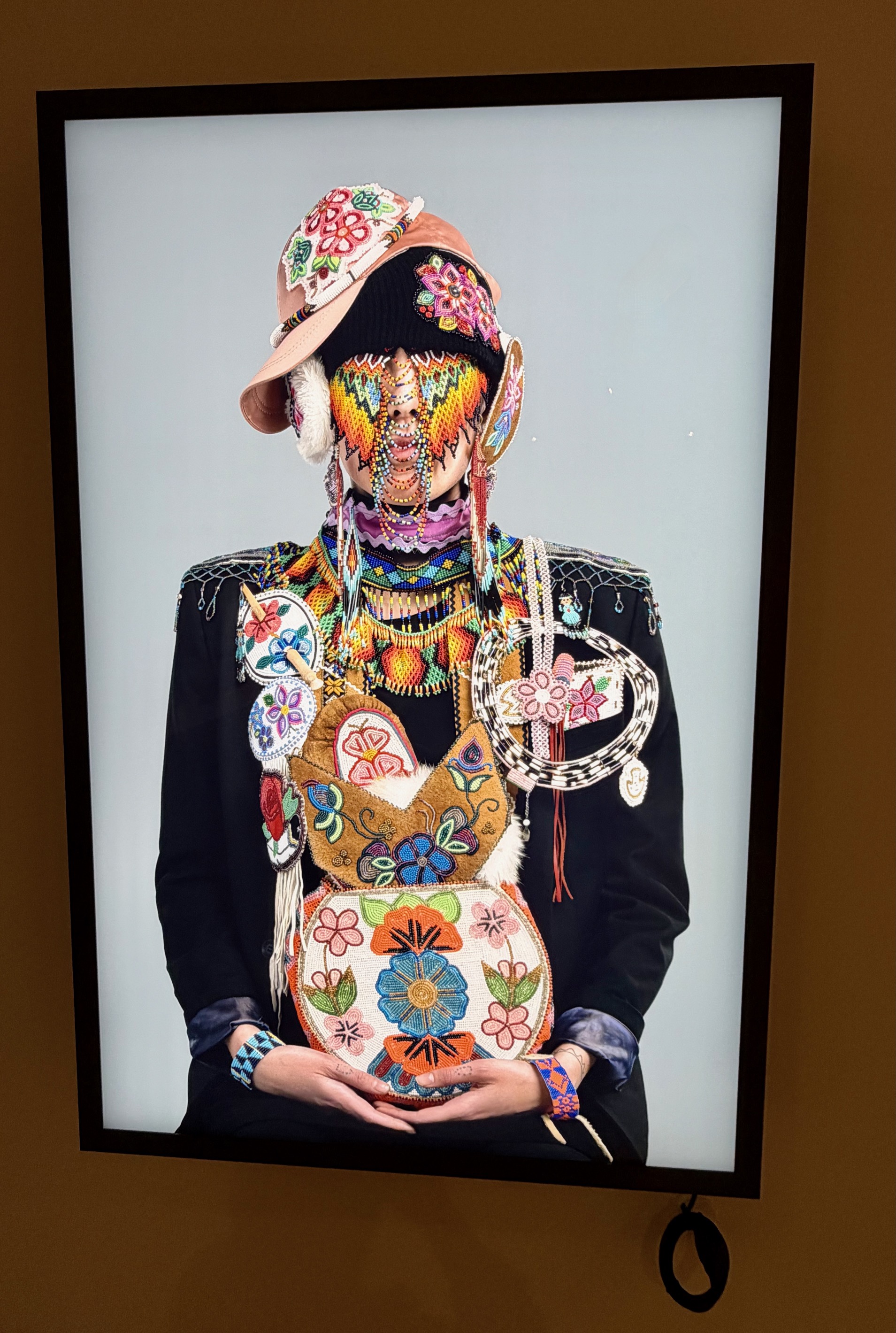
2019 lightbox portrait Headdress – Jeneen by Dana Claxton (Lakota); the sitter bedecked in beads and embroidered gifts. Courtesy: the artist and Forge Project Collection.

Take a walk through the show (and a few performances) in our Flickr album.

In the entry, a provocative neon sign by Demian DinéYazhi (Diné) beckons, but visitors are immediately pulled into the large space surrounded by a graphic history of the historic Alcatraz occupation (1969-1971, one-of-a-kind mask wall pieces by Lloyd Kiva New (leader of brand-new The Institute of American Indian Arts 1967-1978), IAIA’s 1969 manifesto on Indian Theater, and a 1972 video of a NYC production by the Native American Theater Ensemble (running on an ancient Sony Trinitron). It’s all surrounded by a wall textile designed by Linda Lomahaftawa (Hopi/Choctaw) when she was an IAIA student in the Sixties.  A provocative sculpture by Gabrielle L’Hirondelle Hill (Métis) adds the contemporary drama.
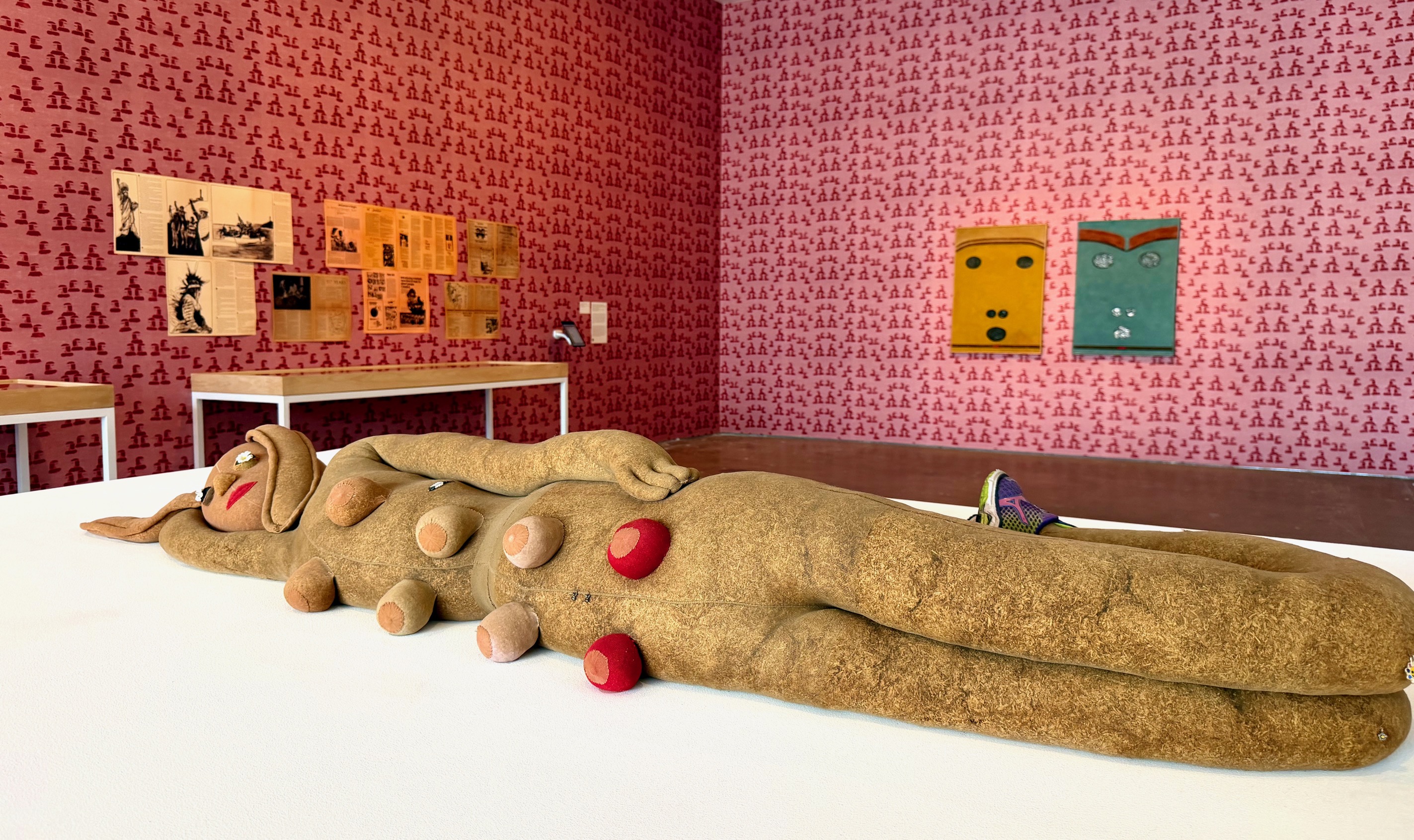
Exhibition entry: 2021 mixed media Counterblaste by Gabrielle L’Hirondelle Hill (Métis); tobacco-stuffed pantyhose rabbit-human figure; surrounded by 1969 Alcatraz occuption documentation and paintings by Lloyd Kiva New. Courtesy: Center for Curatorial Studies, Bard College; IAIA Museum of Contemporary Native Art; Art Bridges.

This sets the stage for curator Candace Hopkins’ thesis – in the 1960s, Native American performance went hand-in-hand with greater activism, self-determination by tribes, and contemporary art in all its forms.  Listen to her explain:

Two performance spaces lie just beyond this gallery. First Nicholas Galanin’s gallery where his performance The White Carver happens weekly (surrounded by photos of previous performances since it was first staged in 2012). The White Carver tackles the subject of appropriation and Native cultural misunderstanding head on.
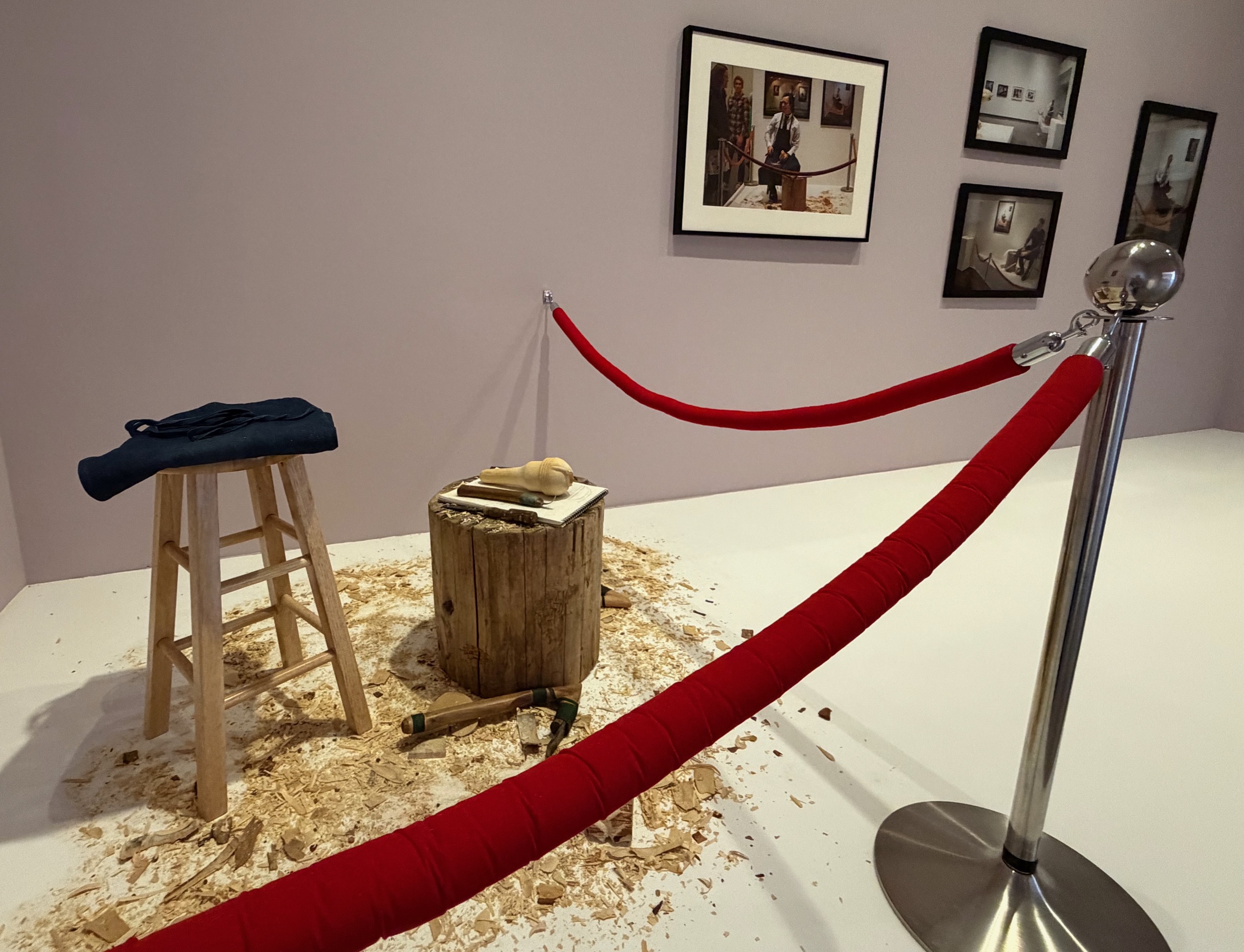
Behind the velvet rope: set for 2012-ongoing White Carver performance by Nicholas Galanin (Tlingit/Unangax) in which a Caucasian woodcarver replicates an object made by a Galinin – a commentary about appropriation and commercialization of Indigenous culture by non-Native communities. Courtesy: Gochman Family Collection.

Next, you enter a room hung with giant earring sculptures from Eric-Paul Riege (Diné), who activated them in a ritualistic performance at SITE in August. Riege’s installation allows everyone a simultaneous experience of the contemporary and cultural deep time.  Kite’s floor installation, right nearby, does this, too. (Check out our previous post about Kite’s innovative IAIA show here.)
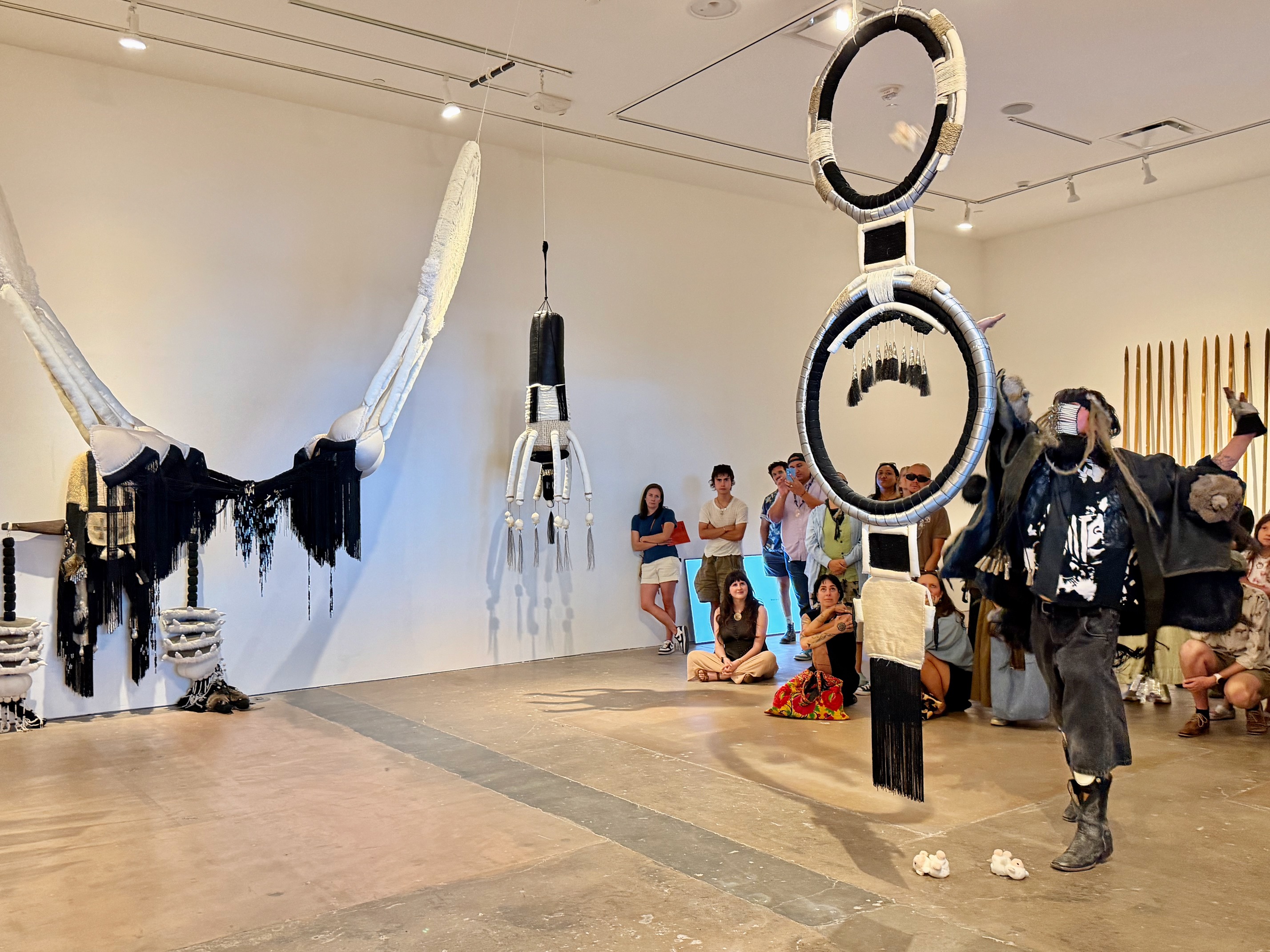
Museum goers watch Eric-Paul Riege (Diné) interact with his mixed-fiber scultptures 2020-2022 jaatloh4Ye’iitsoh (“earrings for the big god”) (August 15, 2026); oversized jewelry suggesting knowledge by listening, harmony of natural fibers, and totems of memory. Courtesy: Forge Project Collection, traditional lands of the Moh-He-Con-Nuck; Art Bridges.

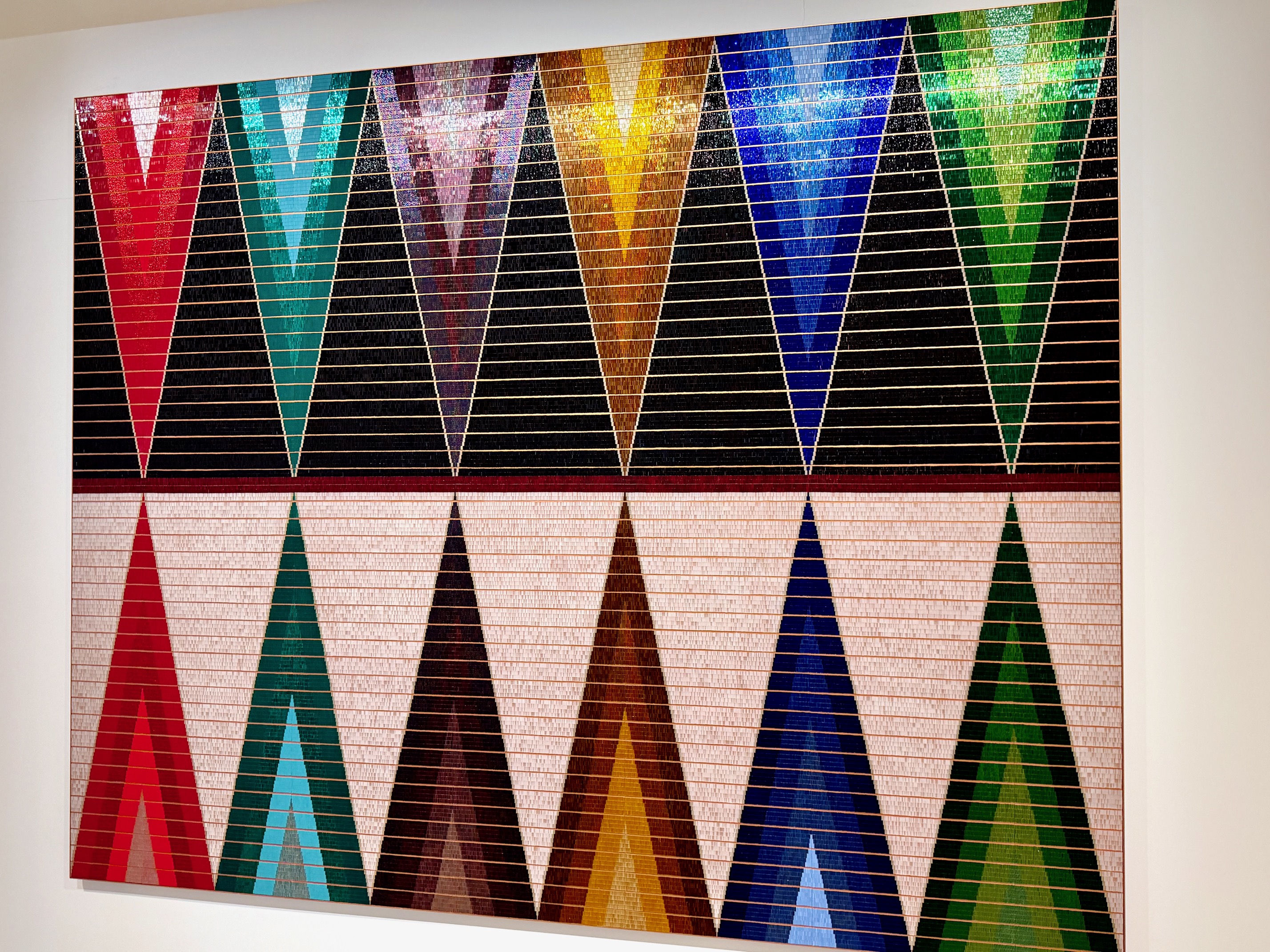
Two-dimensional art on display also evokes a mix of ancient and “now.” Action painting mixed with cultural symbols. Bugle beads or painted blankets echoing color-field painting.
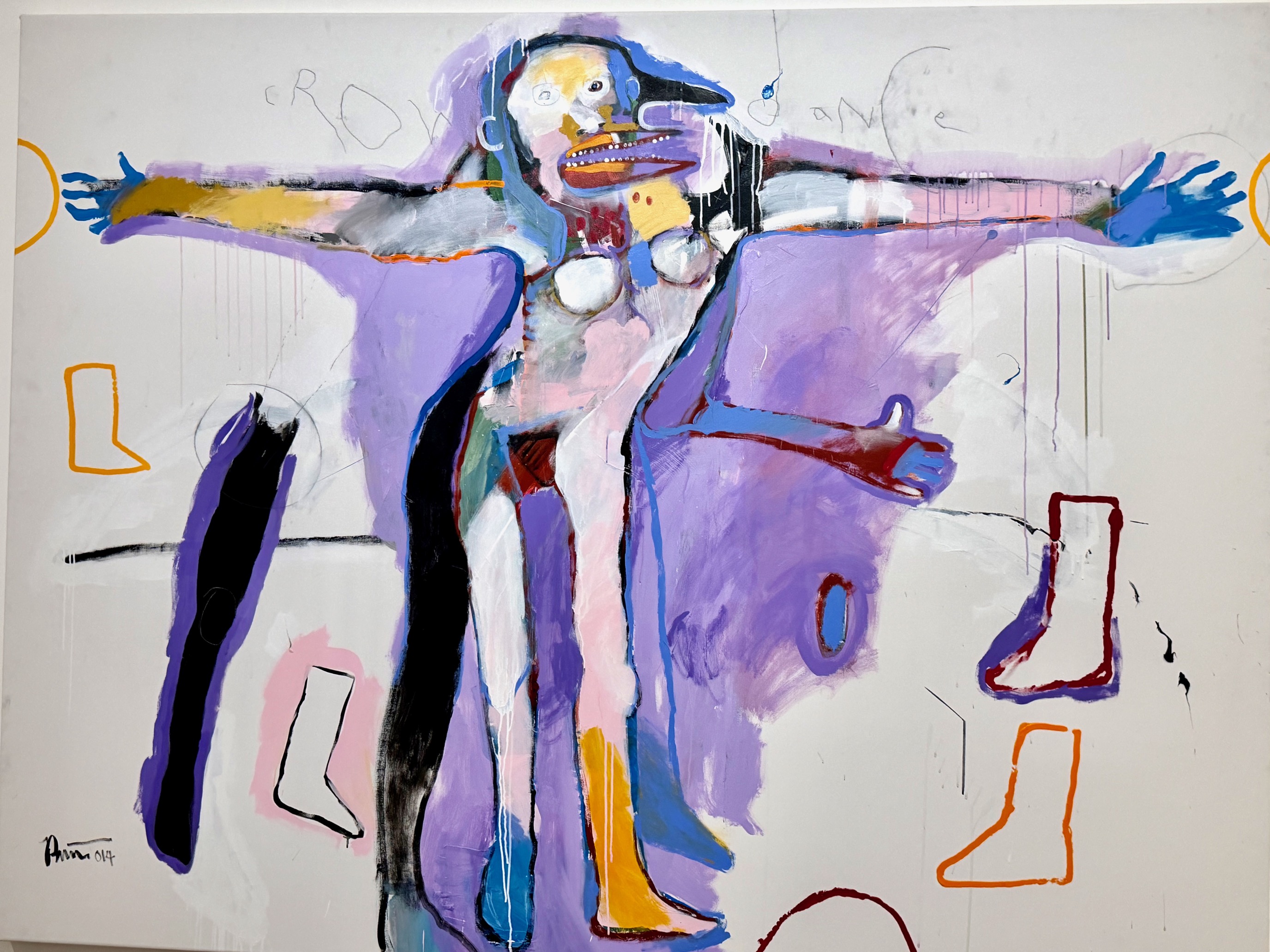
2014 acrylic and graphite Crow Dance by Rick Bartow (Wiyot). Courtesy: Denver Art Museum.
2022 acrylic and glass bugle bead Wopila/Lineage II by Dyani White Hawk (Sicangu Lakota) – a reference to the long tradition of Lakota abstraction. Courtesy: Gochman Family Collection.

Mash-ups of pop culture, cartoony cheesecake, ancient craft, culture, and social commentary – all the work on display incorporate aspects of performance.
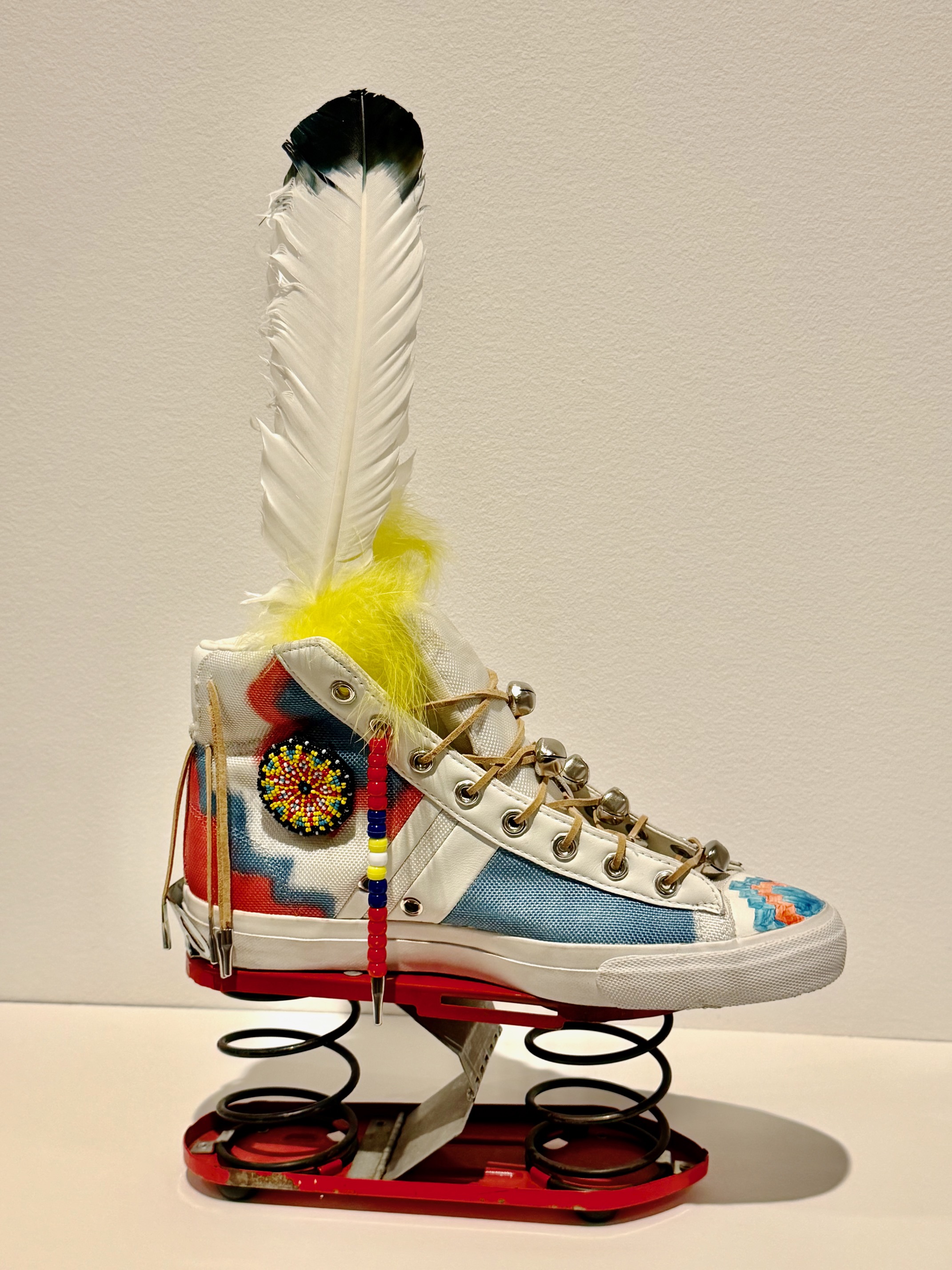
1990 sculpture War Dance Technology by performance artist James Luna (Payomkowicham, Ipai, and Mexican). Courtesy: Gochman Family Collection.
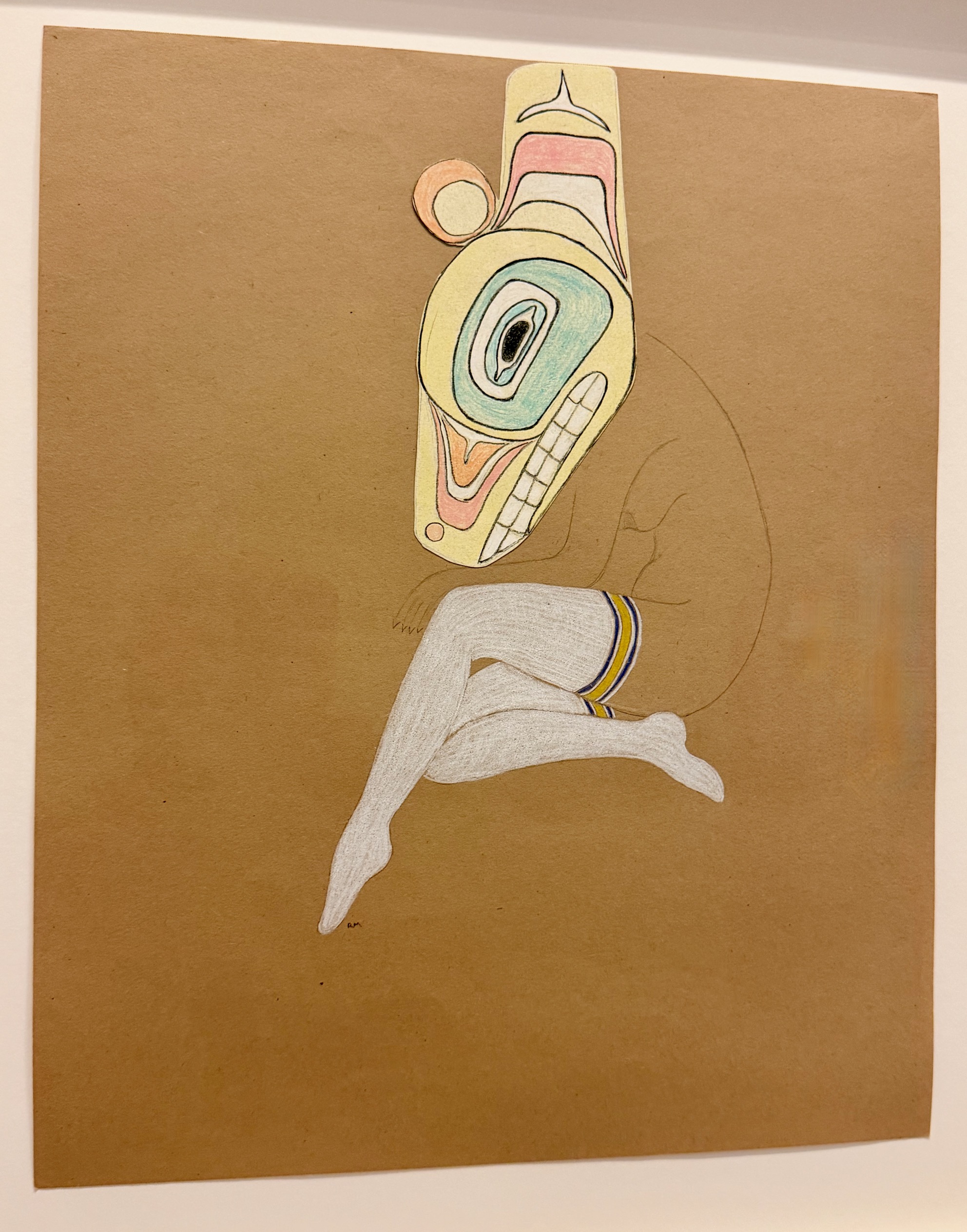
2014-2022 graphite and colored pencil drawing Killer Smile by Rachel Martin (Tlingit/Tsaagweidei, Killer Whale Clan of the Yellow Cedar House Eagle Moiety). Courtesy: the artist.

The back gallery takes us back into time to consider the irony of early ethnomusic recording in the Pacific Northwest during a period when potlatches were banned and ceremonies forbidden.  The exhibition has a beautiful installation of Native American LPs from the 1960s and 1970s beneath a stunning installation by Sonny Asu of copper recordings that cannot be played.
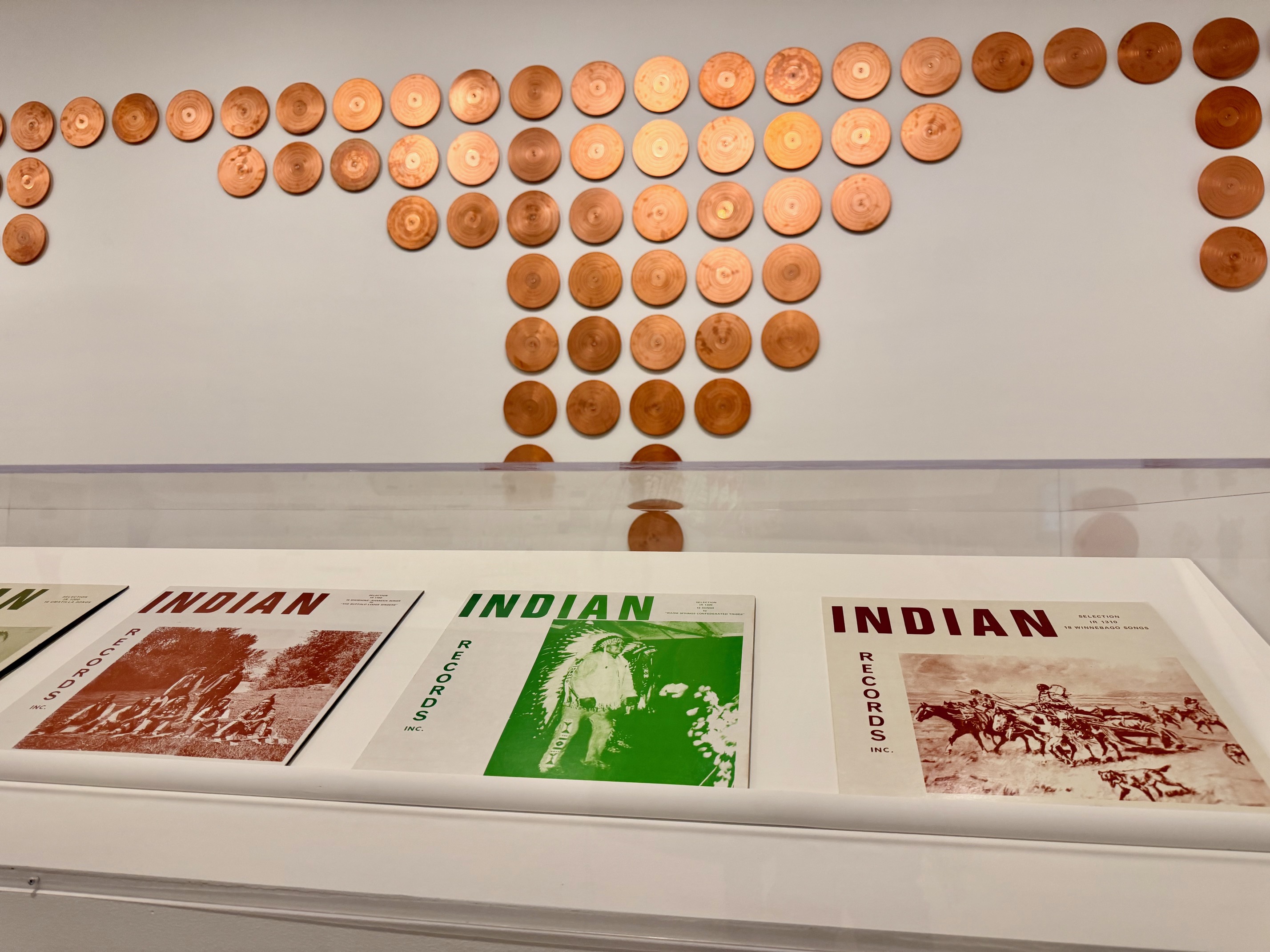
1960s-1970s LP recordings of Native American tribal songs by Indian Records; at rear, 2012 copper record installation “Ellipsis” by Sonny Asu (Ligwilda’xw Kwakwaka’wakw from the Wei Wai Kum Nation) – 138 records not intended for play. Courtesy: Forge Project Collection, traditional lands of the Moh-He-Con-Nuck.
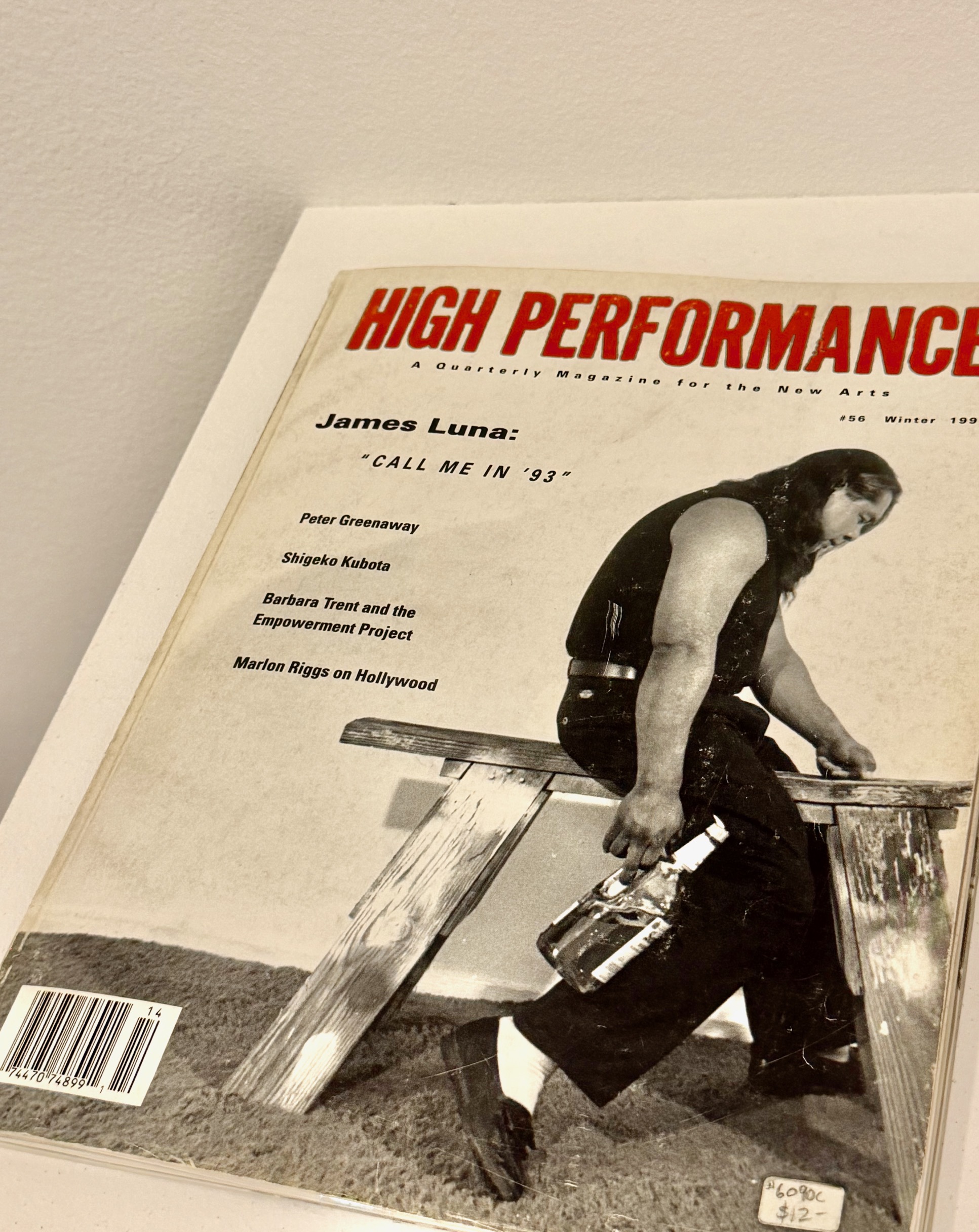
1991 High Performance art magazine cover featuring James Luna during his AA Meeting/Art History performance.

In every room, videos display performances on stages (Jeffrey Gibson or Spiderwoman Theater) or in nature (asinnajaq (Inuk). One room is devoted to a set, props, and documentation of work by the influential performance artist James Luna, whose art did not shy away from the ever-present issue of alcoholism in Native communities.

The exhibition also includes an immersive, highly theatrical, multi-gallery installation by the New Red Order. Here’s the manifesto by NRO’s Adam and Zach Kahalil (Sault Tribe of Chippewa Indians) and Jackson Polys (Tlingit).
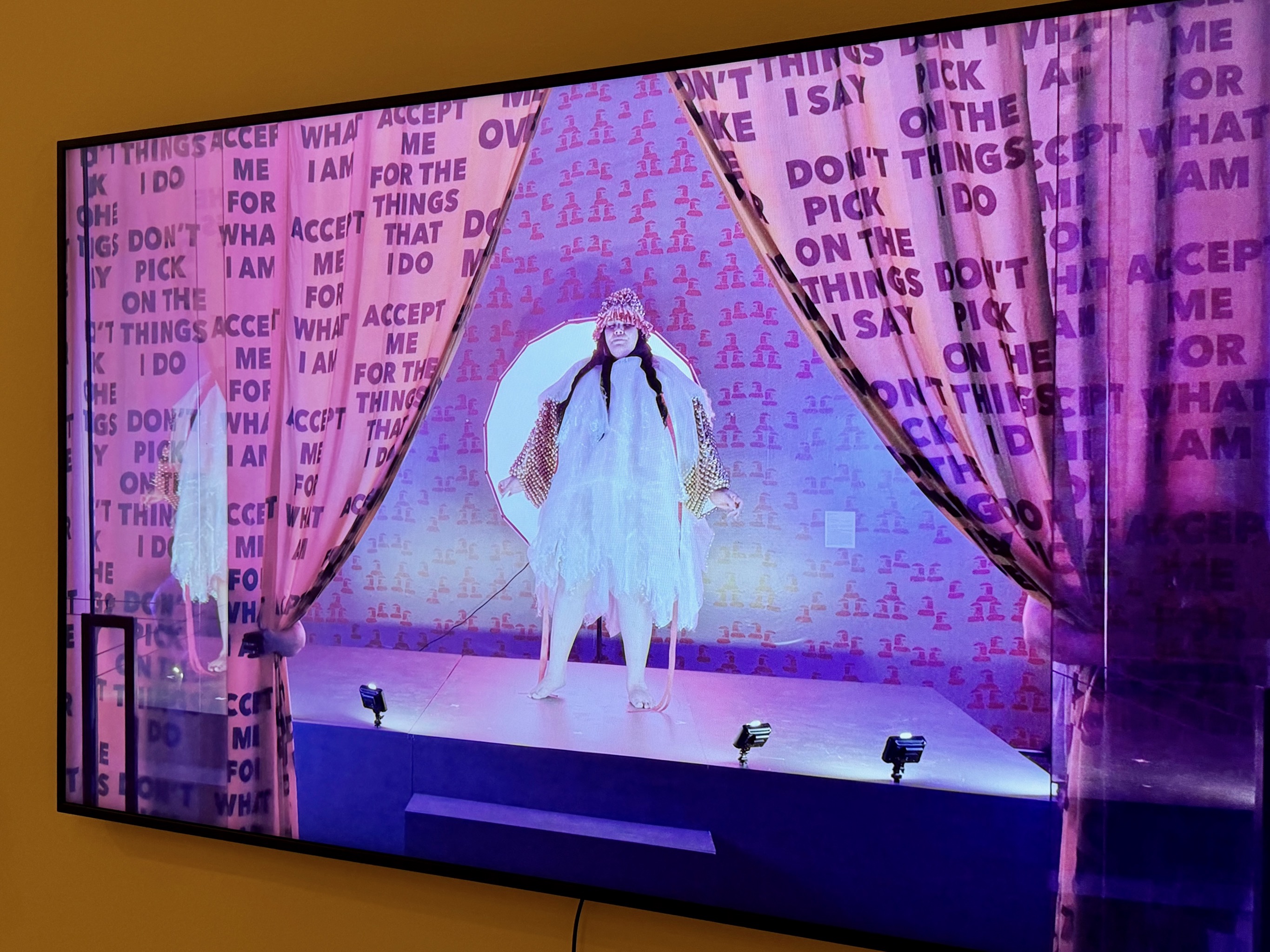
2023 performance documentation video of Don’t Make Me Over by Jeffrey Gibson (Mississippi Band of Choctaw and Cherokee) featuring performer Ariel Twist (Nehiyaw). Courtesy: the artist.

NRO uses satiric videos, props, murals, documents and timelines,  merchandise, and graffiti style to illuminate collisions of history, pop culture, and consciousness surrounding urban Native communities today – a totally head-spinning (and brain-spinning) experience.

Video of the 2020-ongoing Progenerator installation by the New Red Order, a mixed-media installation by artists Adam and Zach Kahalil (Sault Tribe of Chippewa Indians) and Jackson Polys (Tlingit) that probes societal stereotypes alongside non-Natives’ fascination with Native culture. Courtesy: the artists.

And thanks to the recreation by Erica Lord, SITE Santa Fe visitors were able to experience Artifact Revisited. Erica recreated an acclaimed 1987 performance by James Luna – a still Native body on display within a museum, encased in glass. In Erica’s recreation, her “cabinet” was surrounded by museum signage purporting to explain “Indians” and provide context for the “exhibit.” In the age of NAGPRA, the experience was unforgettable. Watch the performance heare, and listen to Erica explains how she came to perform this historic piece and how it felt.

For more background on the connections between Native American theater, politics, and art, here’s a link to the recently published book about this never-before-told story.
Lucy Lippard and The Radical Whirlwind

The Sixties and Seventies were a time of rebellion and change in the world at large and in the New York art world. As you enter Lucy R. Lippard: Notes from the Radical Whirlwind at the Vladem Contemporary in Santa Fe through August 9, 2026, the white gallery space appears quiet, but the art that confronts you is done by artists living, creating, and collaborating in a tumultuous, exciting time.

Post-war eclecticism, minimalism, conceptualism, feminism, environmentalism, and activism – these were the movements swirling in downtown Manhattan. Writer, curator, rabble-rouser, and activist Lucy R. Lippard seemed always to be near the center it all.

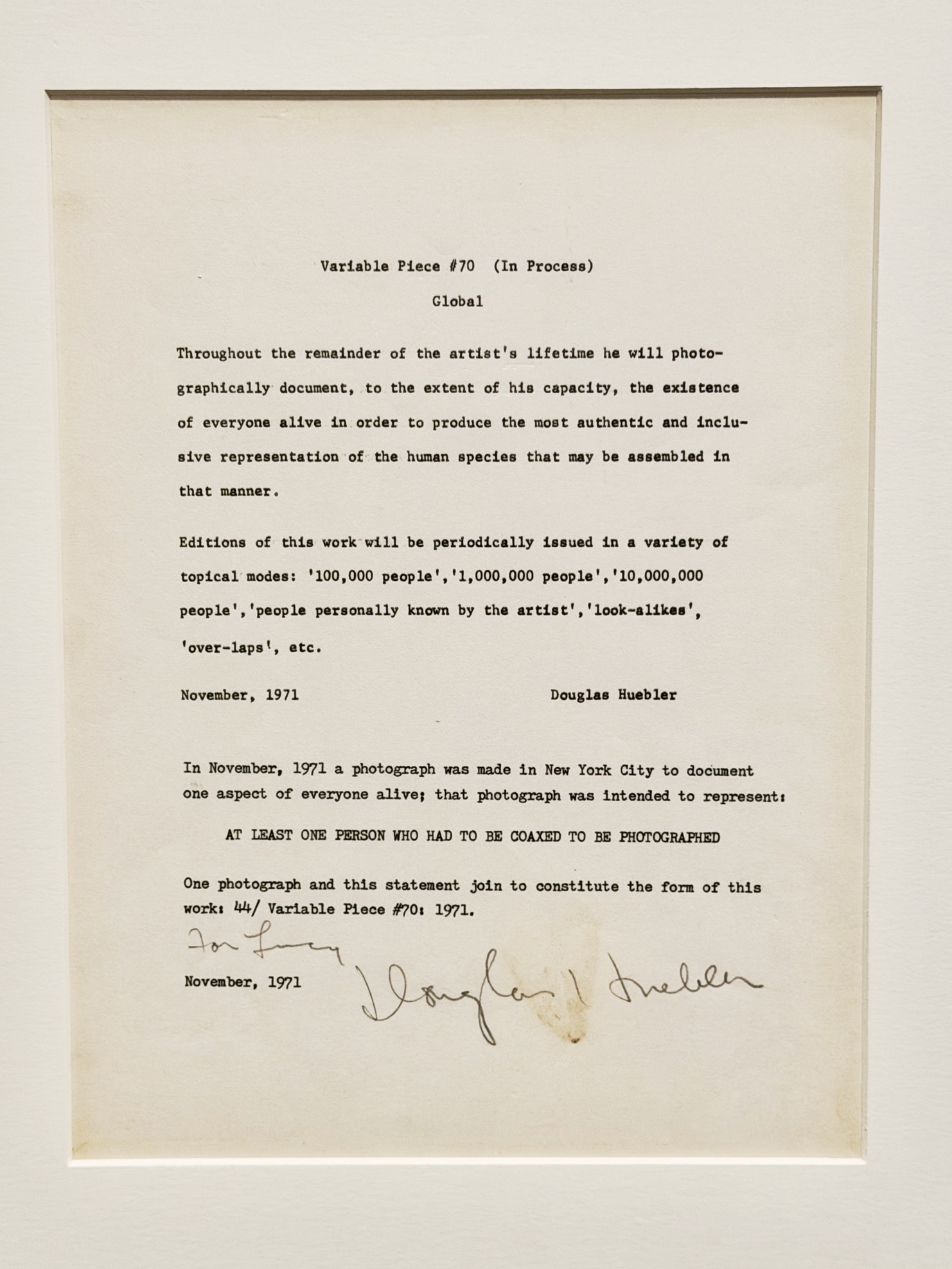
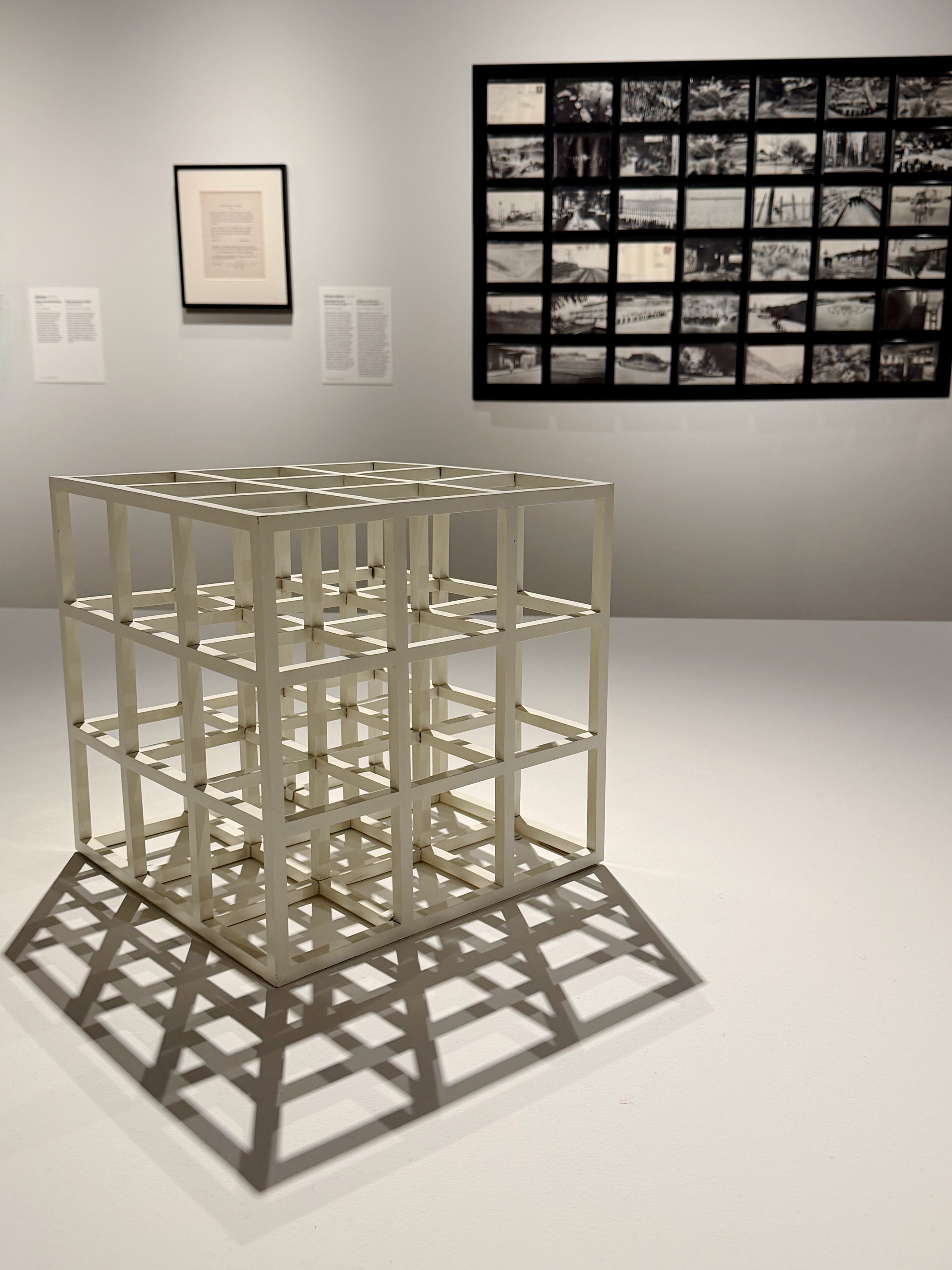
Minimal and conceptual art: Sol Lewitt’s 1979 Steel Grid 3 x 3 x 3; at rear, conceptualist Douglas Huebler’s 1971 typed 44/Variable Piece #7: 1971 (In Process) Global, and Eleanor Antin’s 1971-1973 postcard piece 100 Boots Marching.

The two-floor exhibition is just a fraction of the paintings, prints, sculptures, photographs, and art books that artists gifted to Lucy across four decades. To walk through it chronicles every important trend in American (and global) art and a “who’s who” of contemporary art in the latter half of the 20th century.

Take a look through it all in our Flickr album.

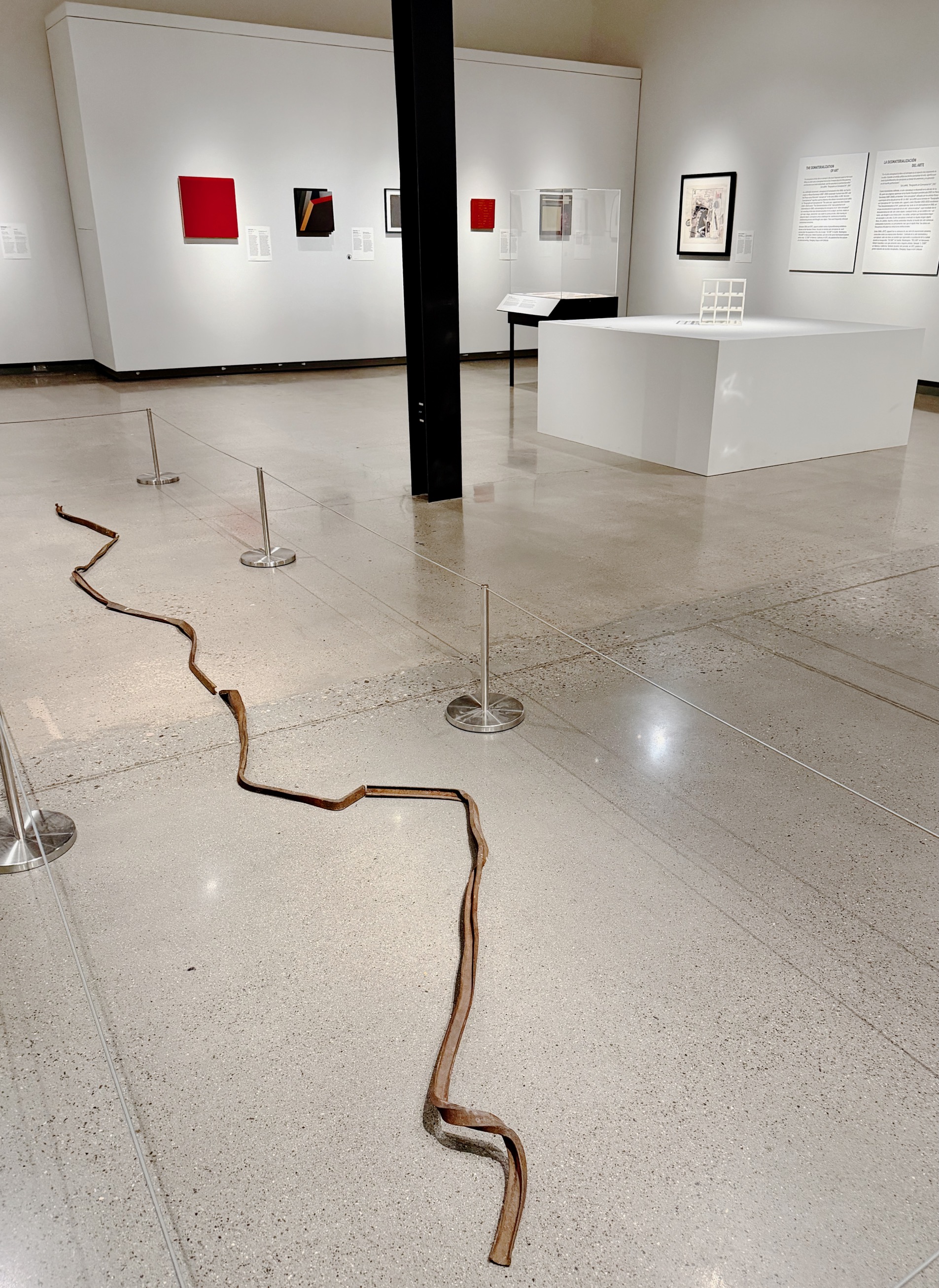
Gallery featuring minimal and conceptual artists; foreground, 1971 5 Steel Track Meander by Carl Andre.

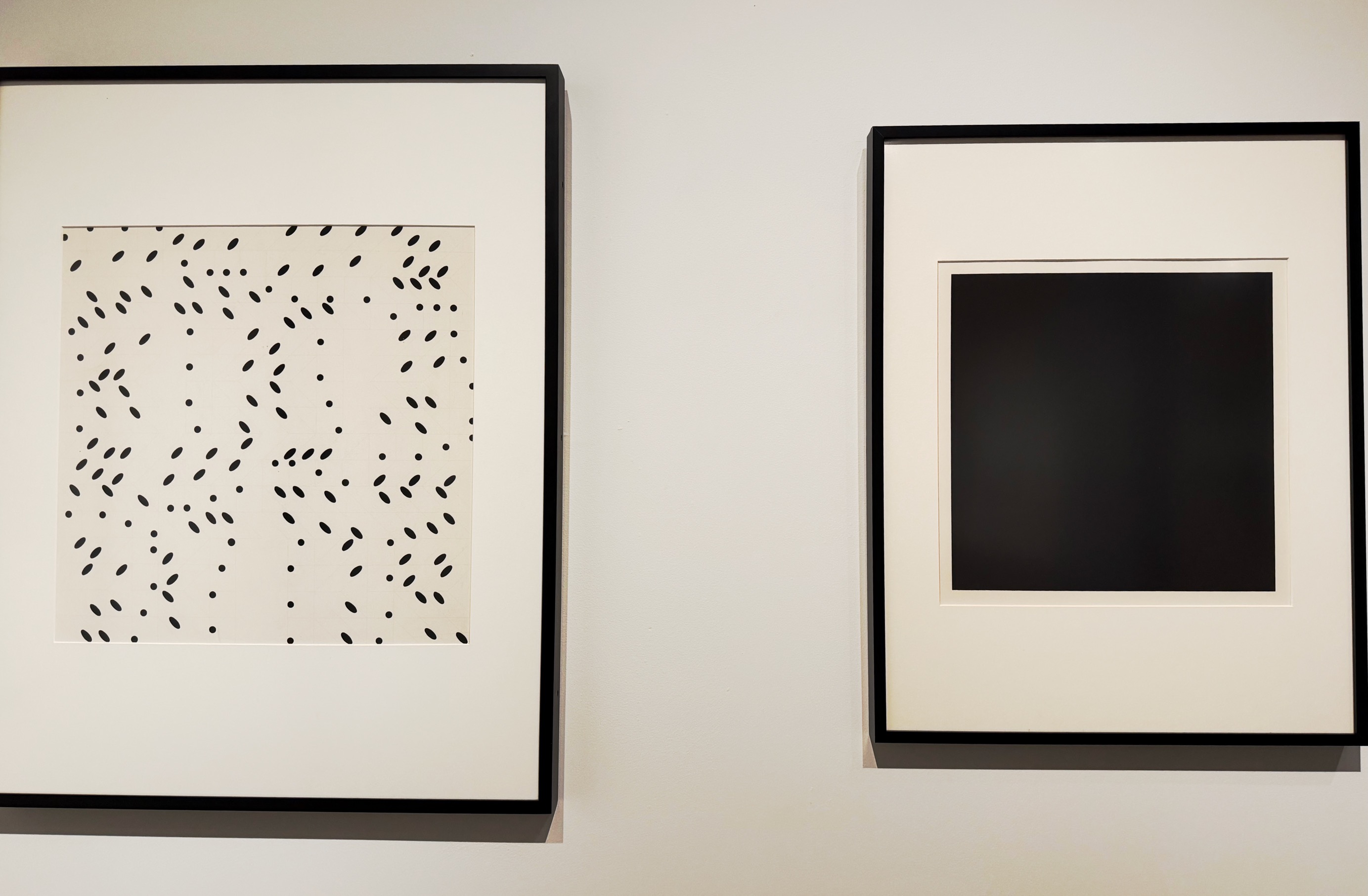
At the center of the first gallery are pieces by minimal-conceptualists Carl Andre (a twisted piece of chanelling lying on the floor that could have jumped out of a dumpster) and Sol Lewitt (a pristine grid sculpture). Nearby are super-minimalists Larry Poons and Ad Rhinehart, where you can see the hidden black-on-black squares if you peer through the glass just right.

But as the exhibition points out, Lucy didn’t just have the typical artist-curator relationship with the people whose work is on the wall. Her mentor Ad Rhinehardt asked her to pen his monograph for his ground-breaking 1966 retrospective at the Jewish Museum where is black-on-black canvases begged the question, “Is painting at an end?”

Minimalists: 1960 silkscreen by Larry Poons and 1964 screenprint Untitled (Black Square) by Ad Reinhardt.

Lucy and Carl Andre worked side-by-side in 1969 to organize the historic Art Workers’ Coalition to advocate for artists’ rights inside the art establishment. She and Sol Lewitt met at entry-level jobs at MoMA, but when Sol published his influential 1967 essay on Conceptualism in Artforum magazine, Lucy built upon his foundation with other essays and produced her acclaimed Numbers exhibitions across the country (1996 – 1972) to show conceptual and minimalist art to new audiences.

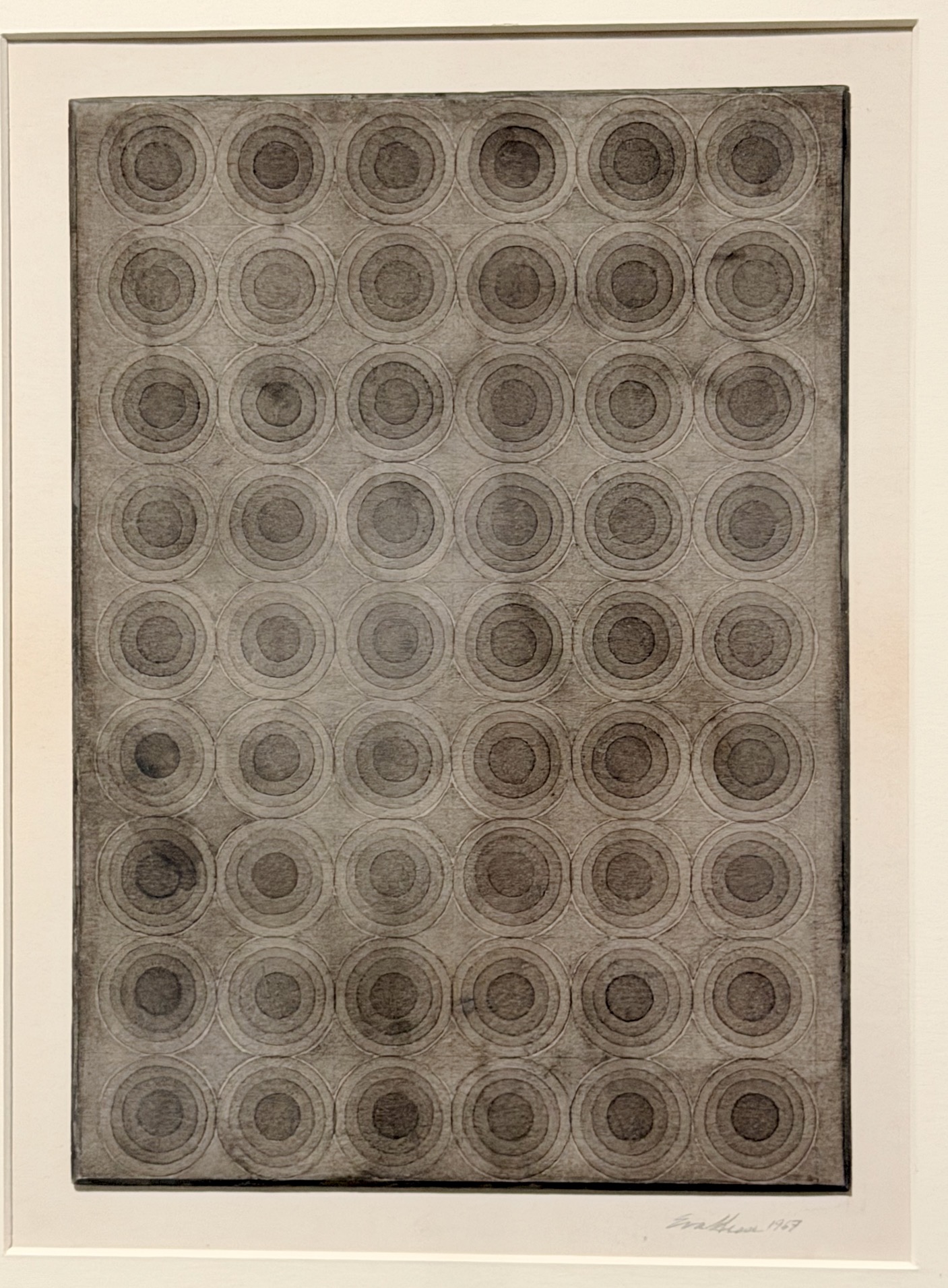
Lucy and Sol Lewitt championed the work of post-minimalist, Eva Hesse. Lucy included Eva’s work in her 1966 exhibition Eccentric Abstractionism at Fischbach Gallery, and both worked tirelessly to keep Eva’s work front and center after her untimely passing in 1970 at age 34.

The exhibition underscores the tight relationships among artists during a period of rampant experimentation, happenings, pop art, anti-war protests, and organizations protesting discrimination and advocating for justice. All forms of expression were welcomed – from performance pieces to typewritten instructions to mail art.

Post-minimalism: Eva Hesse’s 1967 ink and graphite drawing on an invisible grid.
Concepual art: Douglas Huebler’s 1971 typewritten project declaration – 44/Variable Piece #7: 1971 (In Process) Global.
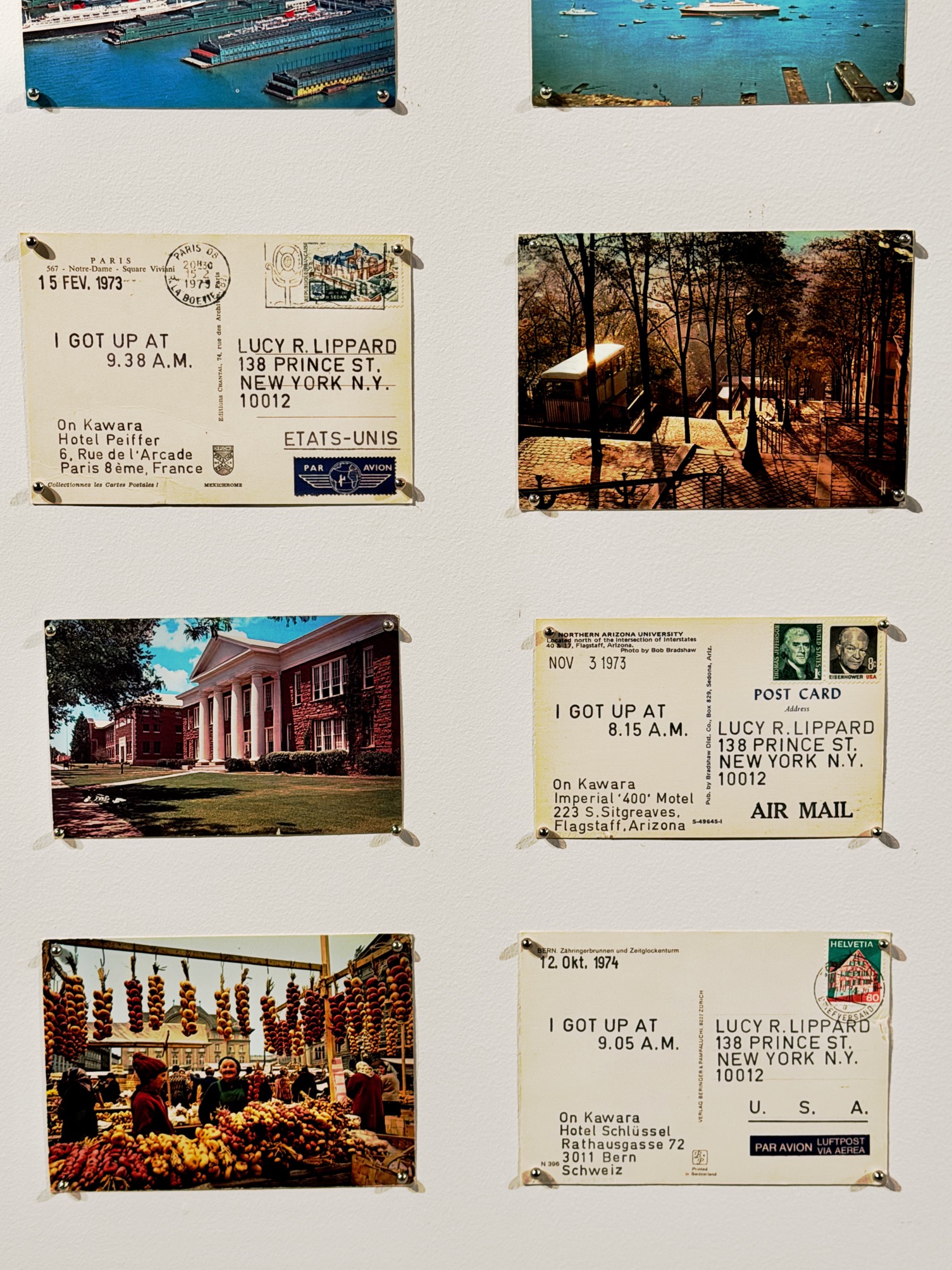
Details of On Kawara’s 1968-1973 I Got Up – commercial travel postcards stamped with reductive messages and mailed to friends.

The array of feminist and political/social protest art in the exhibition reinforces the activist theme that runs through Lucy’s life.  Works by Louise Bourgeois, Harmony Hammond, Ana Mendieta, Faith Ringgold, Mary Beth Edelson, and many more are shown – including the founders of A.I.R., New York’s first women-operated cooperative gallery, and the Heresies Collective, who published the first feminist art journal. Over time, their collective pressure worked, as museums and galleries finally opened up to exhibiting works by women and people of color.

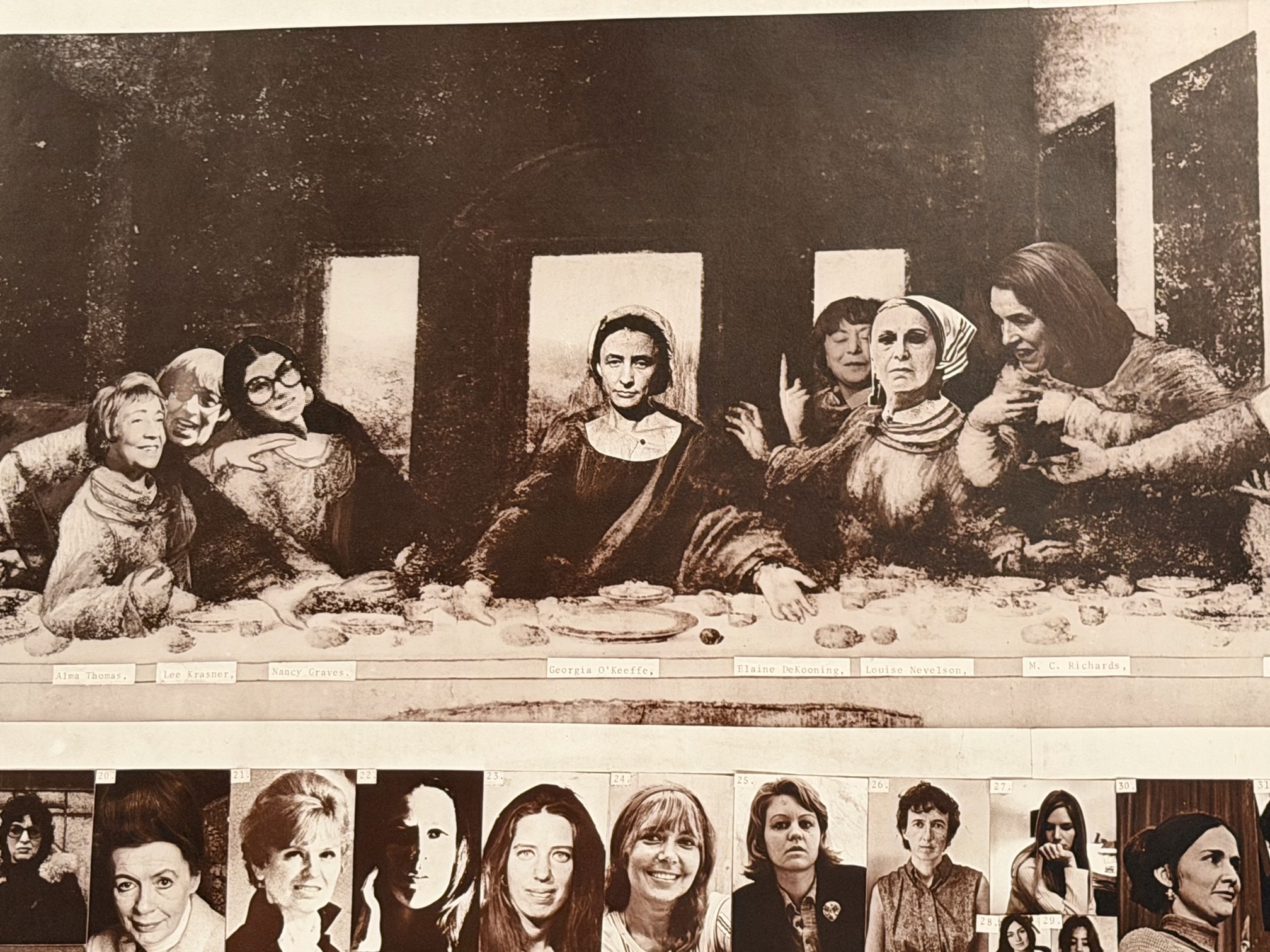
Feminist power: Mary Beth Edelson’s 1972 satirical poster Some Living American Women Artists a spoof of Da Vinci’s The Last Supper with O’Keeffe and Nevelson at center stage.
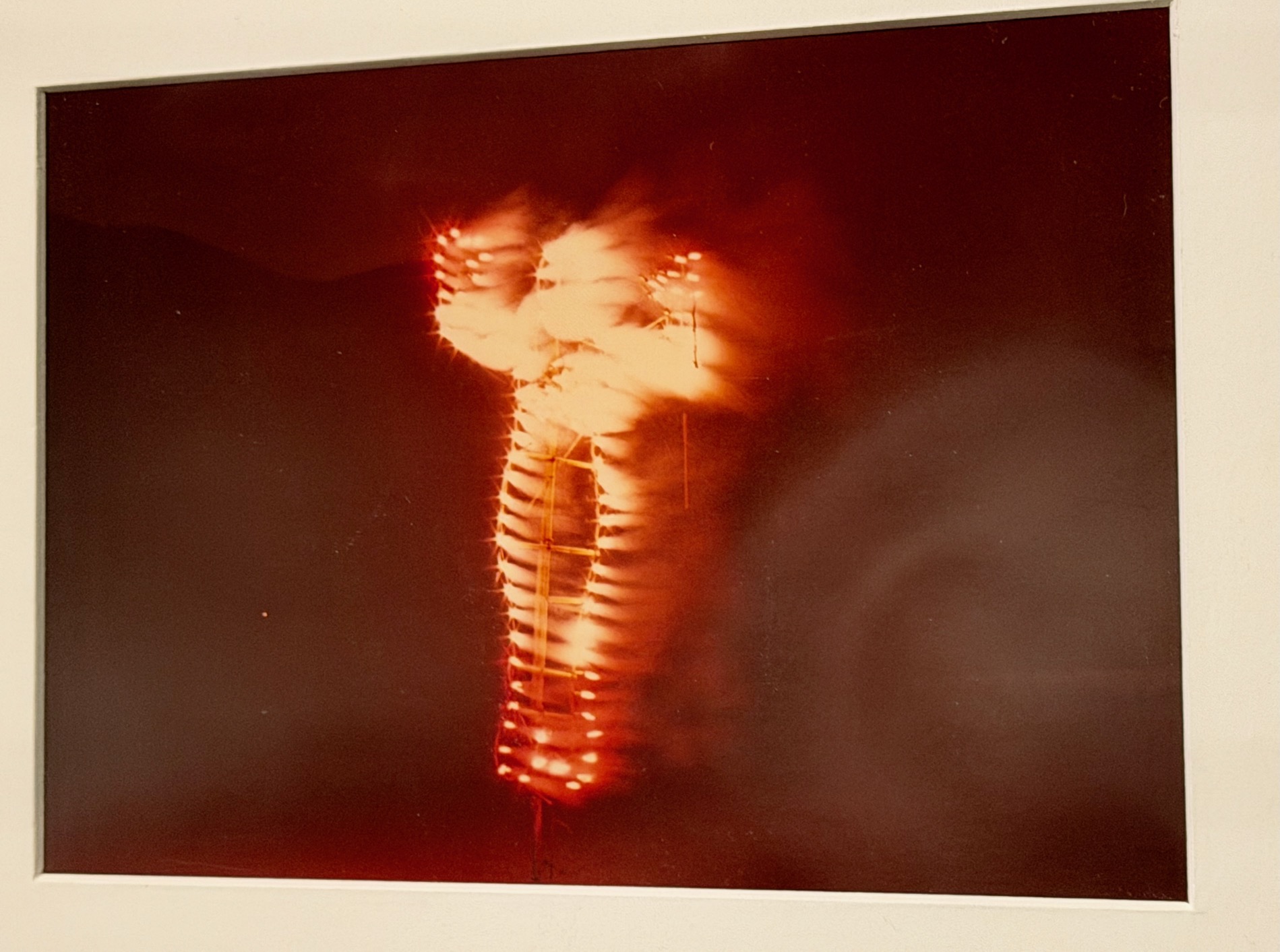
Performance art documentation: Ana Mendieta’s 1976 photo Silueta de Cohetes from her Siluetas eries – showing a body-shaped fireworks display agains the night sky.

The last section downstairs contains works on the Vietnam War, civil rights, Indigenous rights, the Cold War, and the risks from nuclear power. Lucy and her fellow artist were extremely active in response to injustice. In 1965-1967, they created the Angry Arts Festival through their collective, Artists and Writers Protest the Vietnam War to mobilize cultural leaders against U.S. involvement in Vietnam. In 1975, Artists Meeting for Cultural Change successfully lobbied for disenfranchised artist’s inclusion in the Whitney Biennial. In 1979, Artists Against Nuclear Madness mobilized.

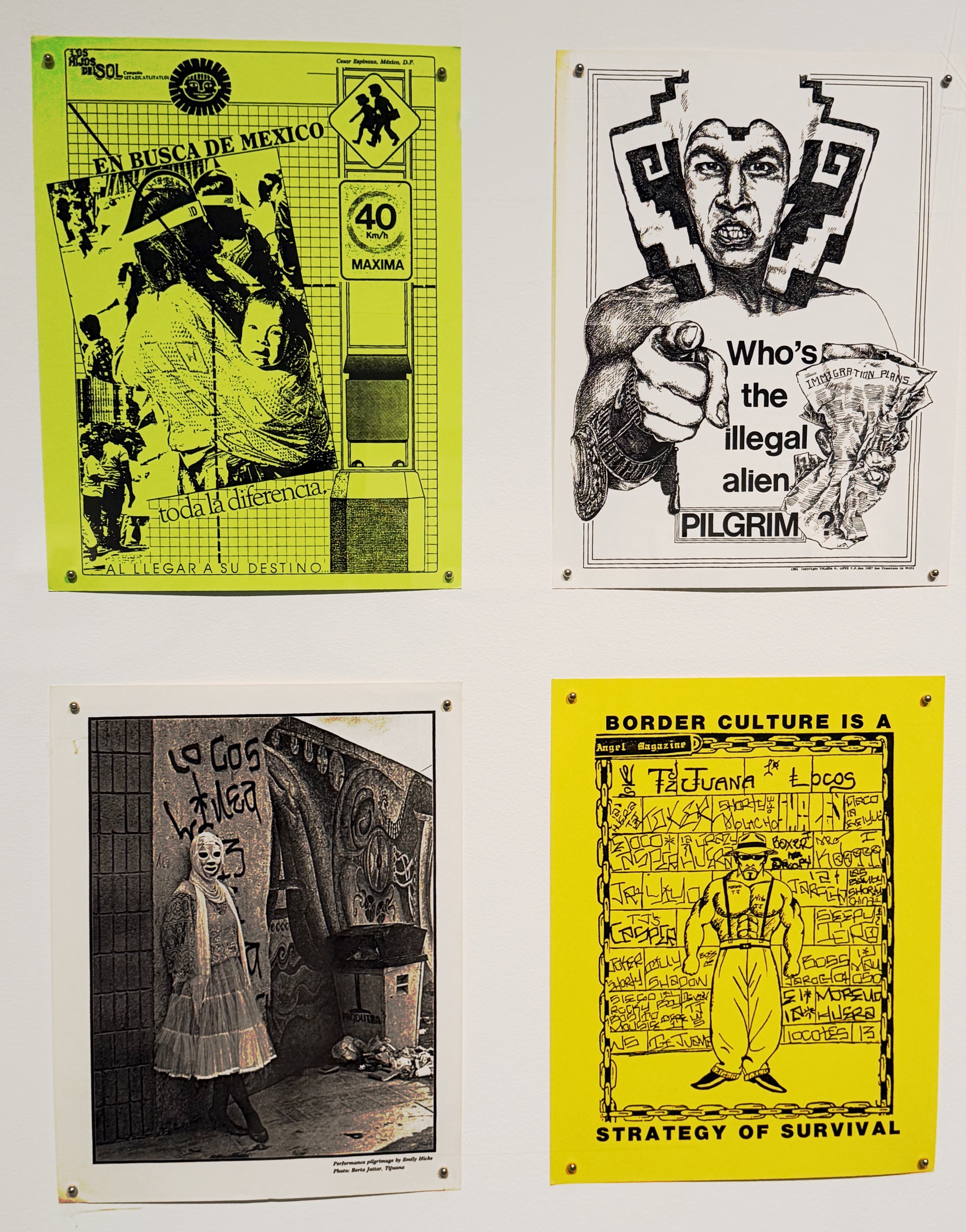
Artist power: selections from the 1986 mixed-media portfolio La linea quebrada = The Broken Line – a project to promote exhibition opportunities and cultural exchange in communities across the US-Mexico border; created by Guillermo Gomez-Pena, D.Emily Hicks, Harry Polkinhorn, and Cesar Espinoza.

In 1984, Lucy and other colleagues led Artists Call Against US Intervention in Central America. Over1,100 artists and activists mobilized to create over 200 events in 27 cities. (Click here to read our 2022 post about the University of New Mexico Art Museum’s exhibition on this mobilization.)

Lucy’s philosophy: “Artists alone cannot change the world. Neither can anyone else alone. But we can choose to be part of the world that is changing.”

The second-floor gallery is dedicated to artists books – a movement that started around the same time that everything else was happening. Many artists felt the high-end art market on the East Coast was too elitist. Many artists wanted to bypass the whole thing and create affordable art.

Lucy Lippard, Sol Lewitt and others decided to open a storefront in 1976 where anyone could buy inexpensive books created by artists…books that were themselves affordable art! Although it moved from Tribeca, to Soho, and Chelsea, it’s still selling artist’s books fifty years later!

The upstairs gallery is a tribute to the decades of “affordable art” perseverance.

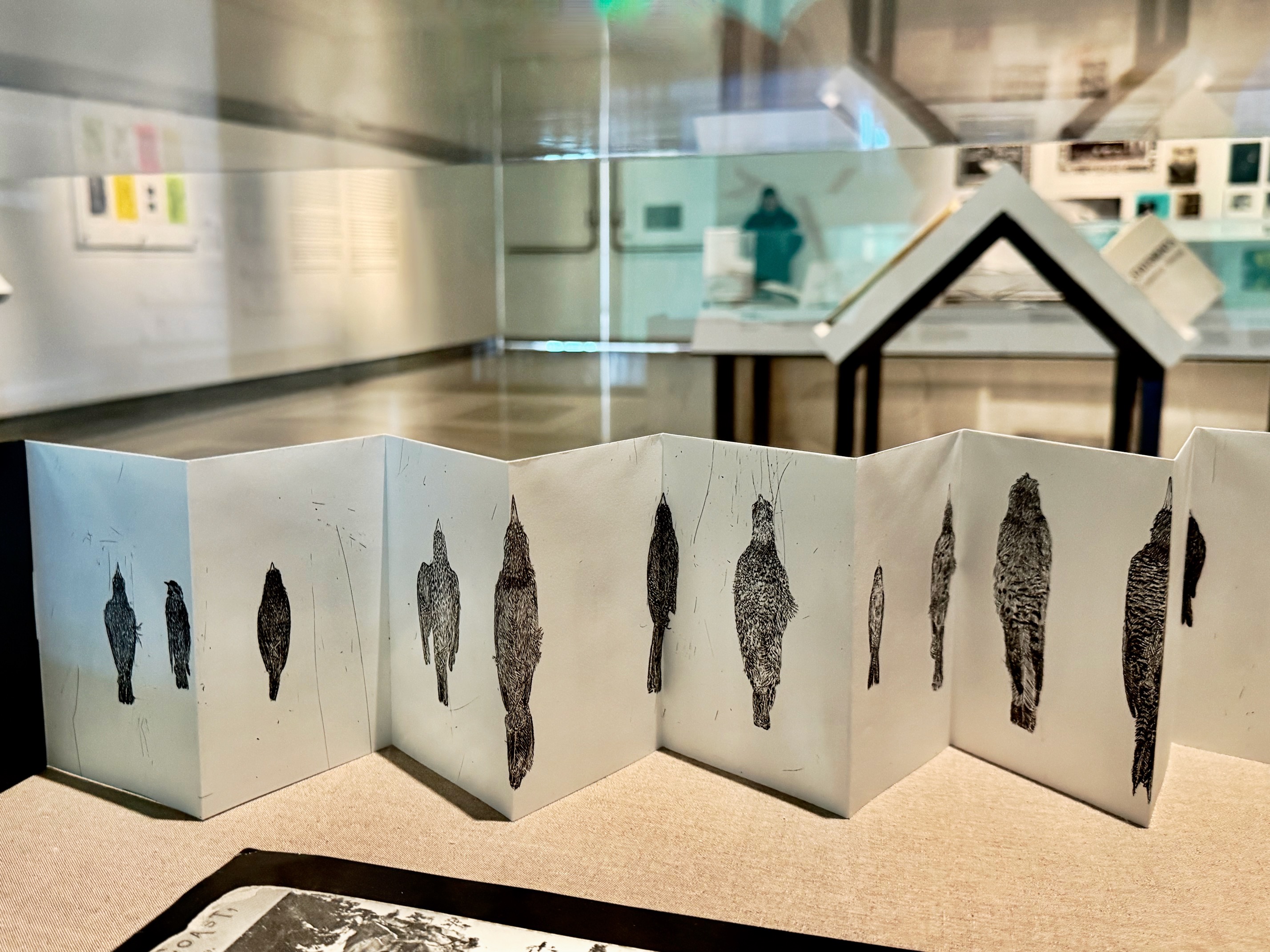
Environmental awareness: Kiki Smith’s 1997 accordion book The Fourth Day: The Destruction of Birds.

You can wander through imagining you are in the Printed Matter bookshop in the late 1970s, browsing through all the different projects, statements, picture books, and manifestoes flowing out of the Downtown New York art scene! 

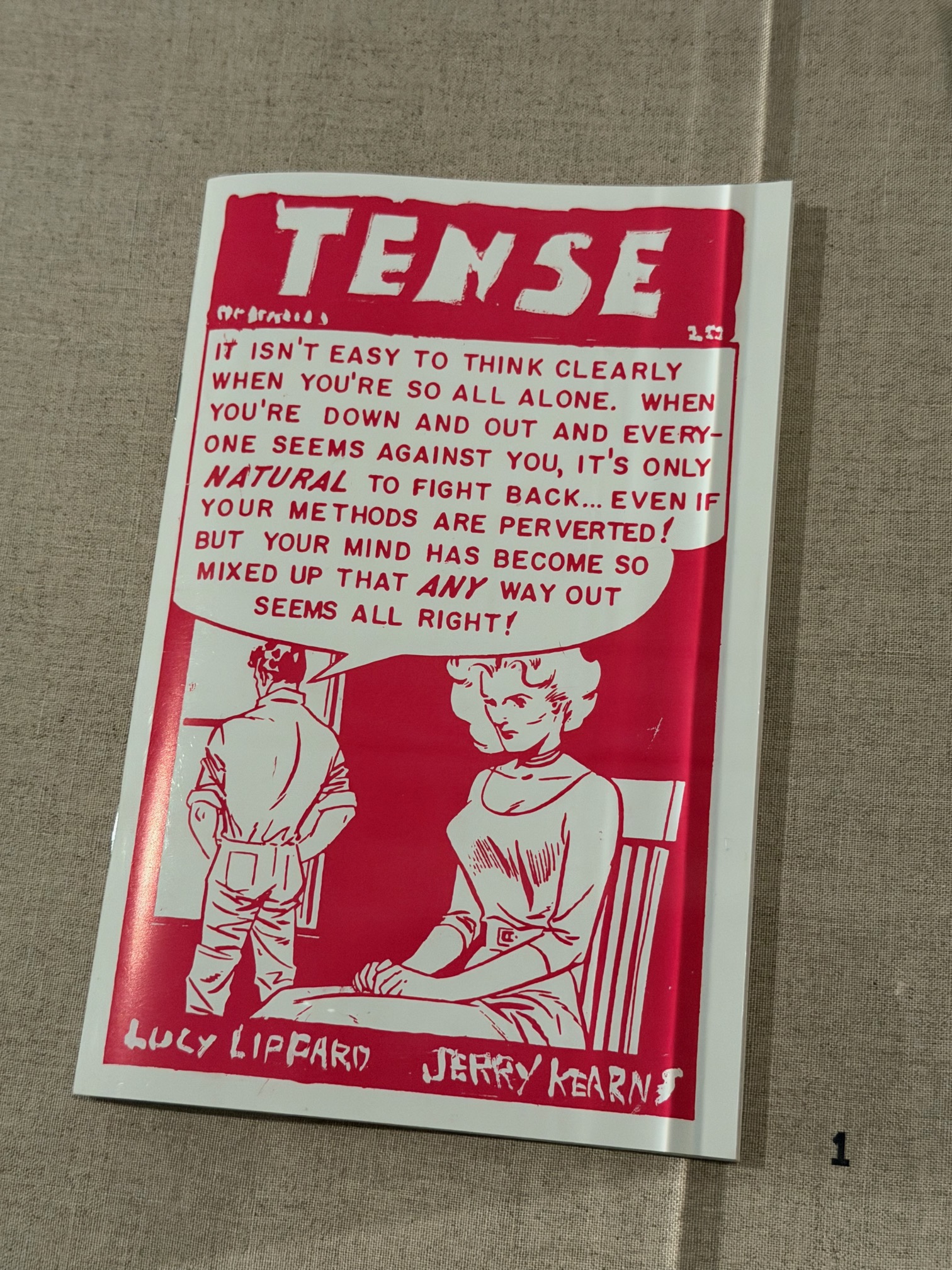
Social commentary: 1984 book Tense by Jerry Kearns and Lucy Lippard. Publisher: Kunstverein Amsterdam.
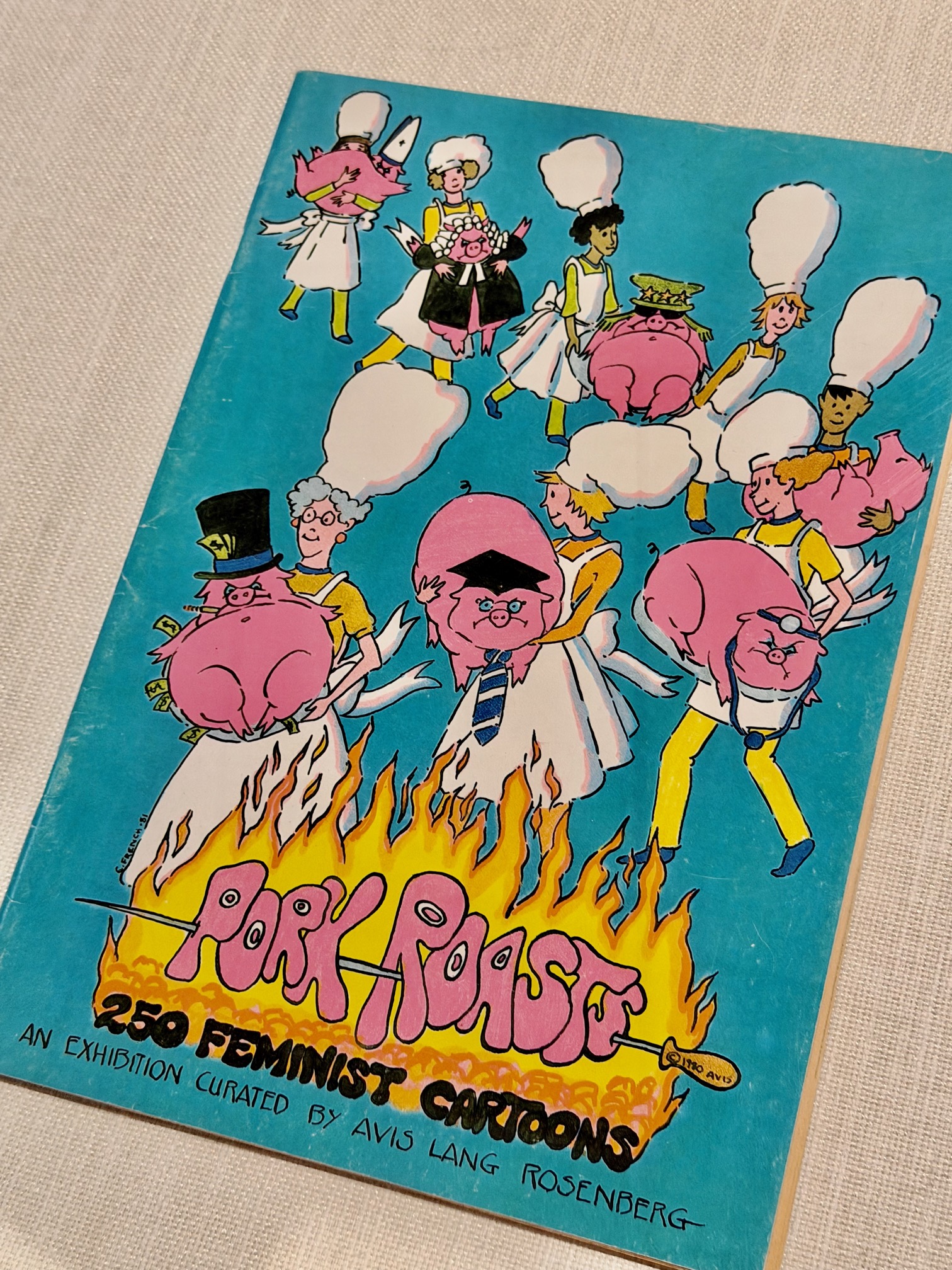
Feminist book: Avis Lang’s 1981 book Pork Roasts: 250 Feminist Cartoons. Publisher: UBC Fine Arts.

The gallery also contains some of the artist books that started it all by Ed Rucha.

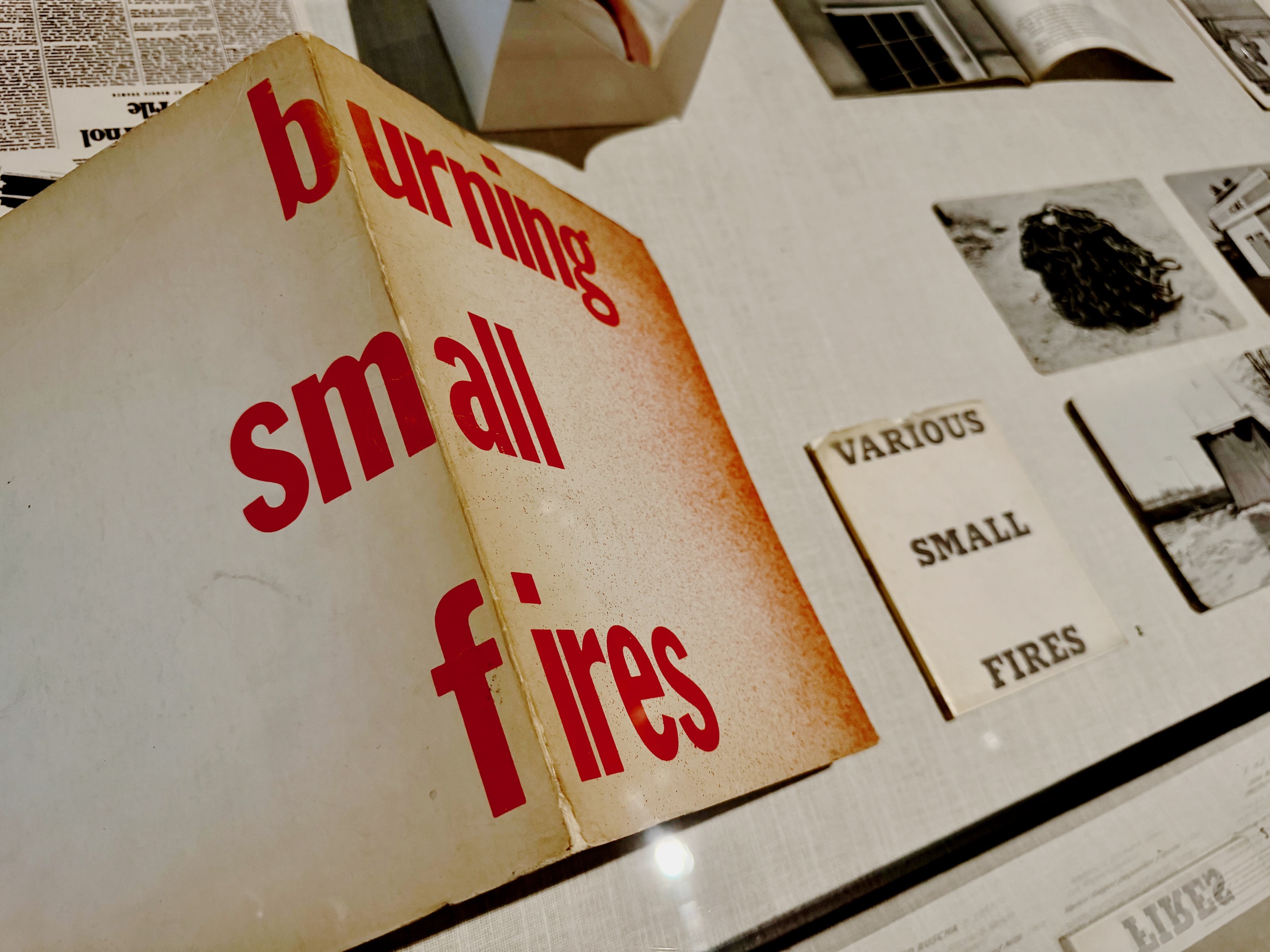
Two infamous artist books:  Ed Ruscha’s 1964 Various Small Fires and Bruce Naumann’s 1968 Burning Small Fires that documents his performance-art destruction of Ruscha’s earlier book. Publishers: Fluxus editions; Seth Siegelaub, The Louis Kellner Foundation.

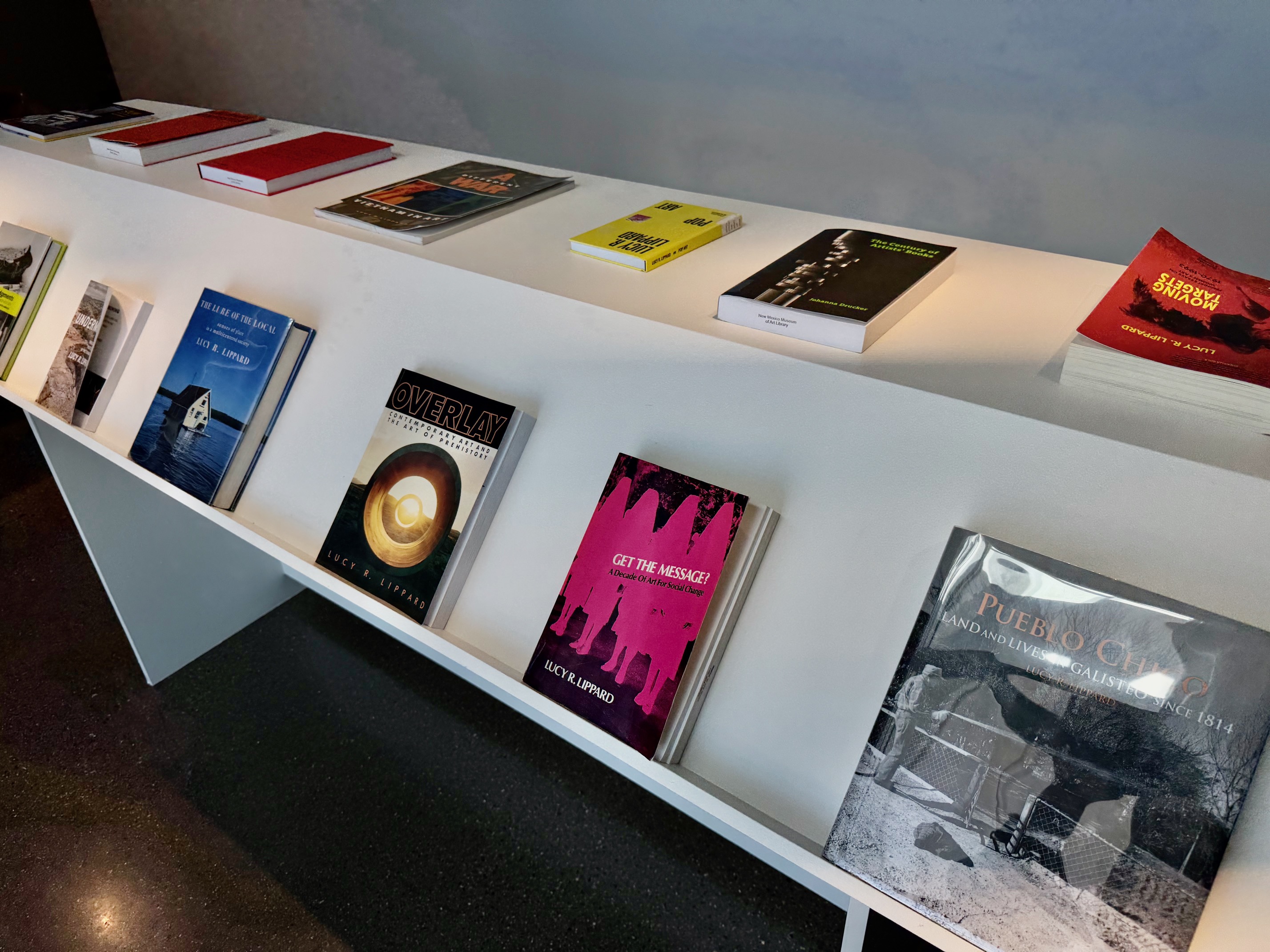
But maybe some of the best books are those found in the back reading room – some of the 30 influential treatises written by Lucy herself, publications that document art, life, and society in our times.

Lucy Lippard’s celebrated publications on display in the second-floor reading room.

Artists Call to Action for Central America

In the early 1980s, socially minded artists living downtown in New York couldn’t handle the news coming out of Central America and did something about it. The United States government was intervening in the affairs of Nicaragua, El Salvador, and Guatemala, and everyone was worried that the situation was going to devolve into another Vietnam.

This is just one part of the story told by the dynamic, timely, informative exhibition, Art for the Future: Artists Call and Central American Solidarities, on view at the University of New Mexico Museum of Art in Albuquerque through December 3.

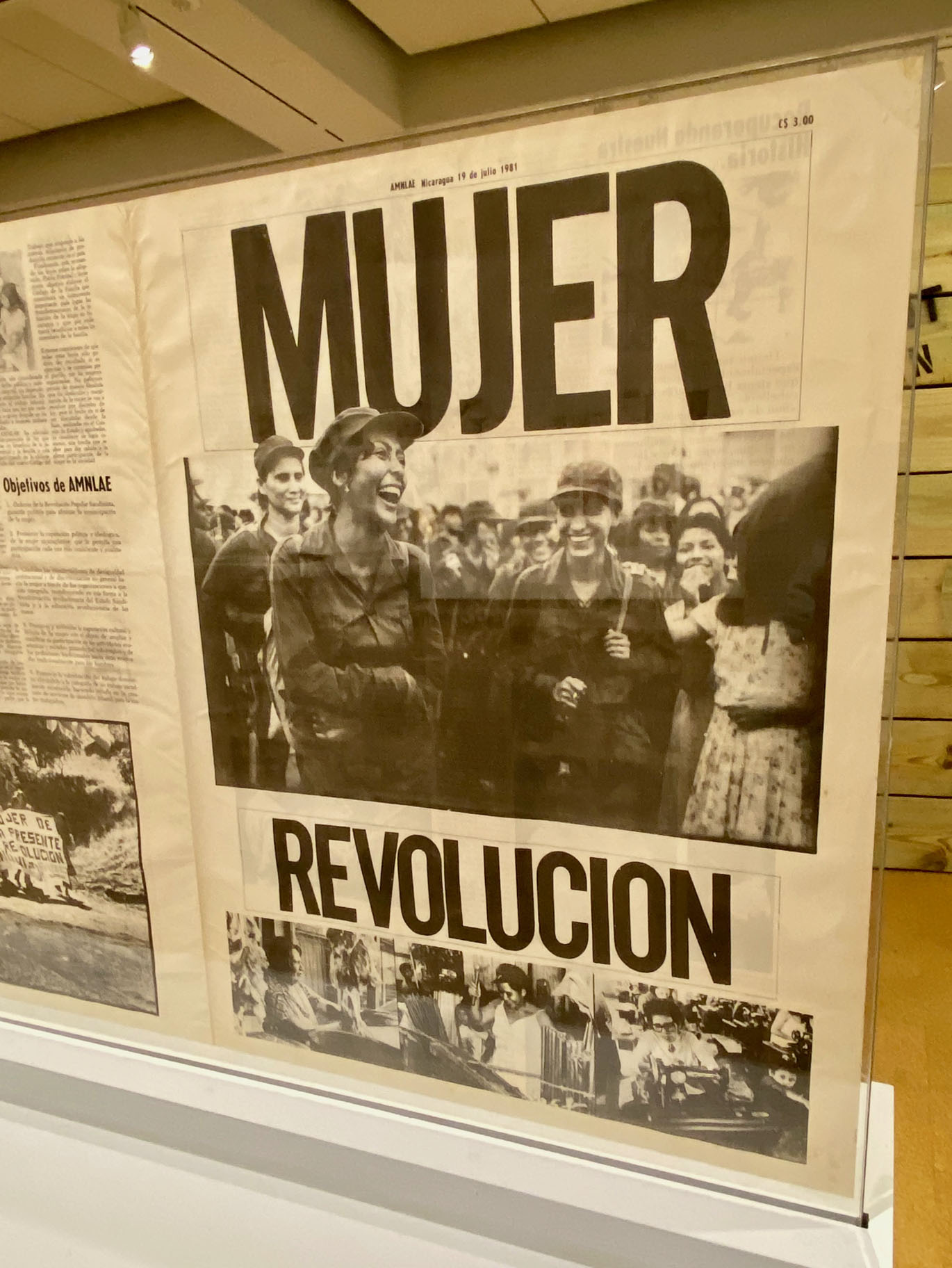
1981 pamphlet Mujer Revolución by Association of Nicaraguan Women. Private collection
1983 Print of Contra (after a drawing in Rock Comics, 1979) by Jerry Kearns, depicting communist fears stoked by the US government

In 1982, a group of New York artists collaborated with Latin American artists to create a show with contemporary art and cultural artifacts to draw attention to the escalating crises in Latin America. By 1984, organizers launched a national call to artists to raise money and awareness of what was happening.

Artists responded with performances, music concerts, films, poetry readings, and exhibition. In New York alone, over 1,100 artists participated in over 30 exhibitions.

Nationally, artists in 27 cities organized chapters and events and tried to build alliances in Latin America.

Videos, photographs, sculptures, paintings, and ephermera pulled from archives (like posters, buttons, mail art, and pamphlets) bring the story of artist-activists to life – their concerns about US government intervention, their efforts to organize artists across the United States, and their attempts to help artists living in oppressed Central American countries.

The Tufts University-organized show resurrects a largely forgotten story of artist activism, illuminates the tribulations of indigenous communities in Central America at the time, introduces us to contemporary works from artists inspired by their indigenous heritage, and gives us an idea of what’s happening in those countries now.

Two contributions to Solidarity Art by Mail project, a fast, cheap solution to boost Latin American and Caribbean participation in a 1984 New York exhibit at Judson Memorial Church. Private collection.

The three-floor show is packed with arresting images, works, and histories. The art work and documentation push and pull visitors between the international political crises of the 1980s and social-justice issues being addressed by artists today.

Take a look at the show on our Flickr site.

The installation features work by heavy hitters of the 1980s New York art scene – wall-size Vietnam-era work by Leon Golub, images documenting Ana Mendieta’s performance pieces, and Claes Oldenburg and Coosje van Bruggen’s sketches, maquettes, and exploding-banana image that branded the Artists Call Against US Intervention initiative.

The first-floor exhibition area includes Nancy Spero’s dramatic scroll-like drawing that calls attention to the oppression of Salvadorean women.

1984 Arts Magazine cover with Oldenburg’s image promoting Artists Call. Private collection

Downstairs, there’s another 1984 work that similarly unfurls the length of the gallery – an accordian-book project led by Sabra Moore that is a collaborative reconstruction of a rare 16th-century Mayan codex by 22 women. It’s the first time the codex has been displayed since 1984.

1984 “Reconstructed Codex,” a project organized by Sabra Moore with contributions from 22 diverse female Latin American and US artists. Courtesy: Barnard

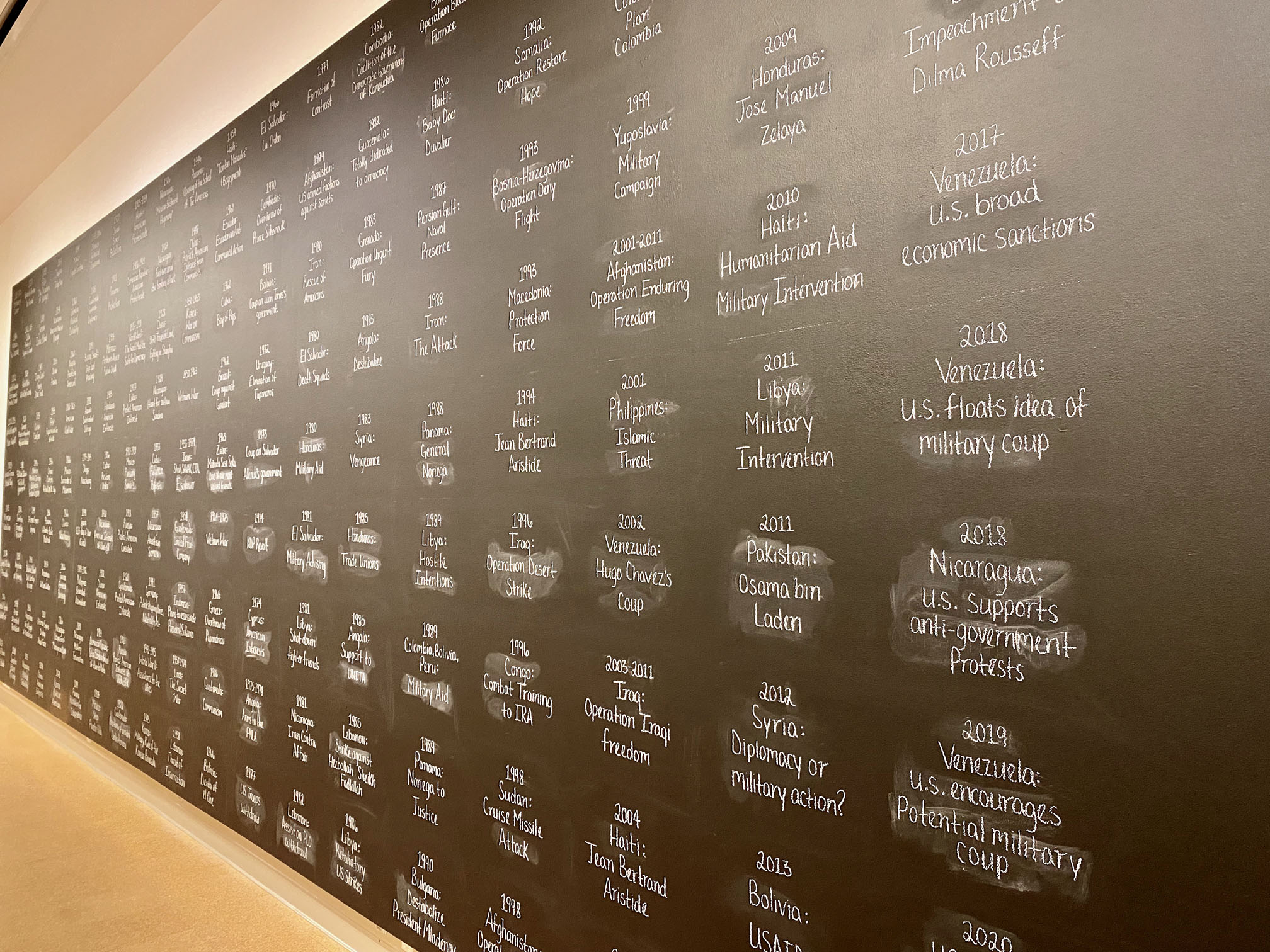
The third floor packs a punch, installing revolutionary images and publications around the infamous (and censored) Hans Haacke piece that questions the aftermath of the 1983 US invasion of Grenada.  Across the room, visitors pour over Carlos Motta’s 2005 wall-sized chalkboard installation Brief History of US Interventions in Latin America since 1946. 

Although the 1980 artist-activists did not achieve all of their utopian goals, the contemporary selections show that social consciousness, pride in indigenous heritage, and artistic futures are still alive – including a beautiful feathered immigrant history dome by Batriz Cortez, stitched by a team of immigrant collaborators.

2021 sculpture 1984: Space-Time Capsule by Salvadorian artist Batriz Cortez and immigrant collaborators – a shelter for immigrant histories.

Learn more about how the curator Erina Duganne and her collaborator Abigail Satinsky created this remarkable show:

Art for the Future will be on display at Chicago’s DePaul Art Museum from March to August 2023.

Carlos Motta’s 2005 detailed chalkboard installation Brief History of US Interventions in Latin America since 1946. Courtesy: the artist