
The ambitious project paid off. Indian Theater: Native Performance, Art, and Self-Determination since 1969, on view at SITE Santa Fe and the IAIA Museum of Contemporary Native Arts through September 7, is a masterful mix of history, contemporary art, performance, and revealing installations that challenge what you know and think you know.
Filling the entire museum, the exhibition uses painting, sculptures, and performance sculptures to chronicle how radical performances by Native Americans shifted conversations, illuminated forgotten populations and treaties, asked difficult questions, and thoroughly influenced the trajectory of the contemporary Native American art movement.
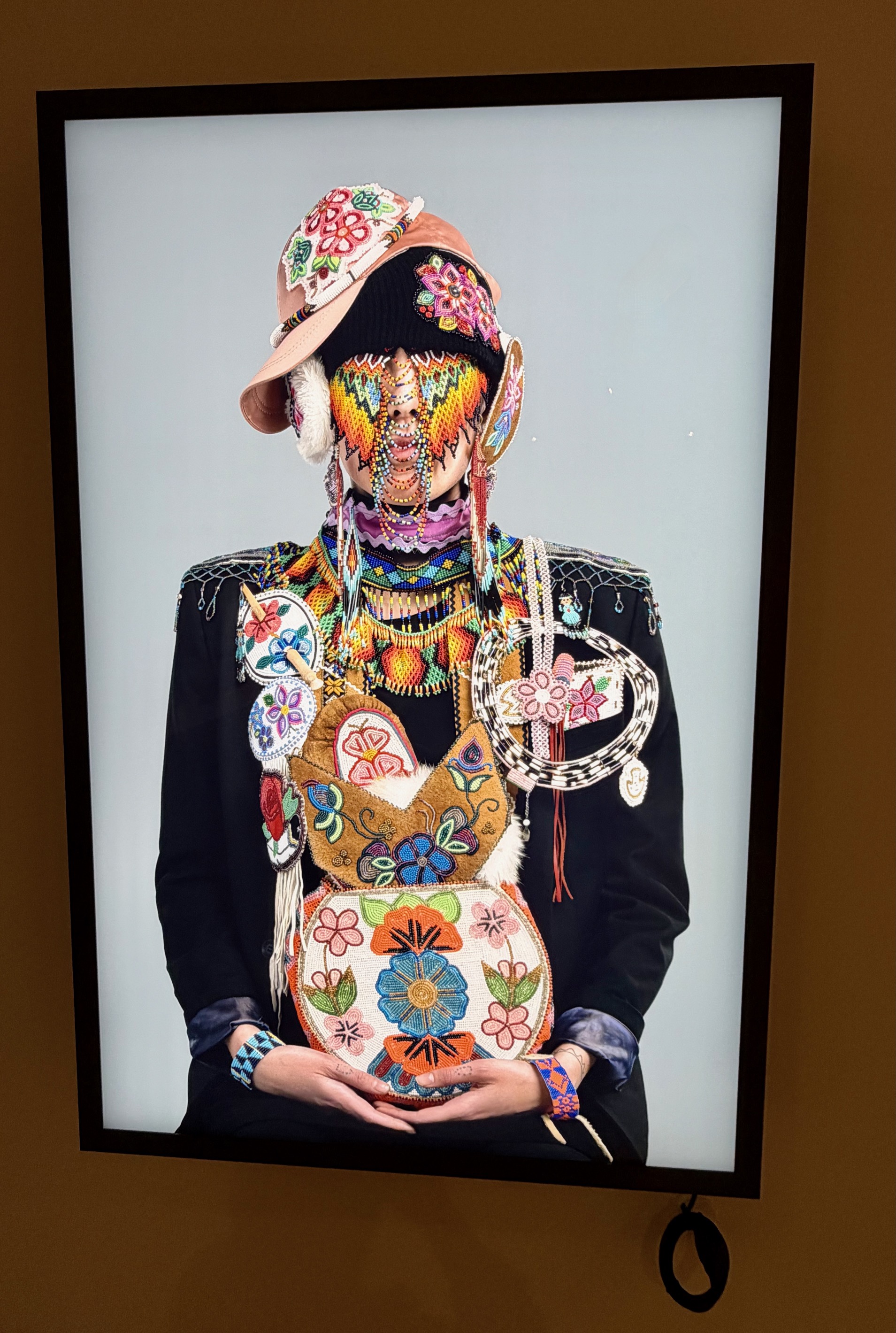
Take a walk through the show (and a few performances) in our Flickr album.
In the entry, a provocative neon sign by Demian DinéYazhi (Diné) beckons, but visitors are immediately pulled into the large space surrounded by a graphic history of the historic Alcatraz occupation (1969-1971, one-of-a-kind mask wall pieces by Lloyd Kiva New (leader of brand-new The Institute of American Indian Arts 1967-1978), IAIA’s 1969 manifesto on Indian Theater, and a 1972 video of a NYC production by the Native American Theater Ensemble (running on an ancient Sony Trinitron). It’s all surrounded by a wall textile designed by Linda Lomahaftawa (Hopi/Choctaw) when she was an IAIA student in the Sixties. A provocative sculpture by Gabrielle L’Hirondelle Hill (Métis) adds the contemporary drama.
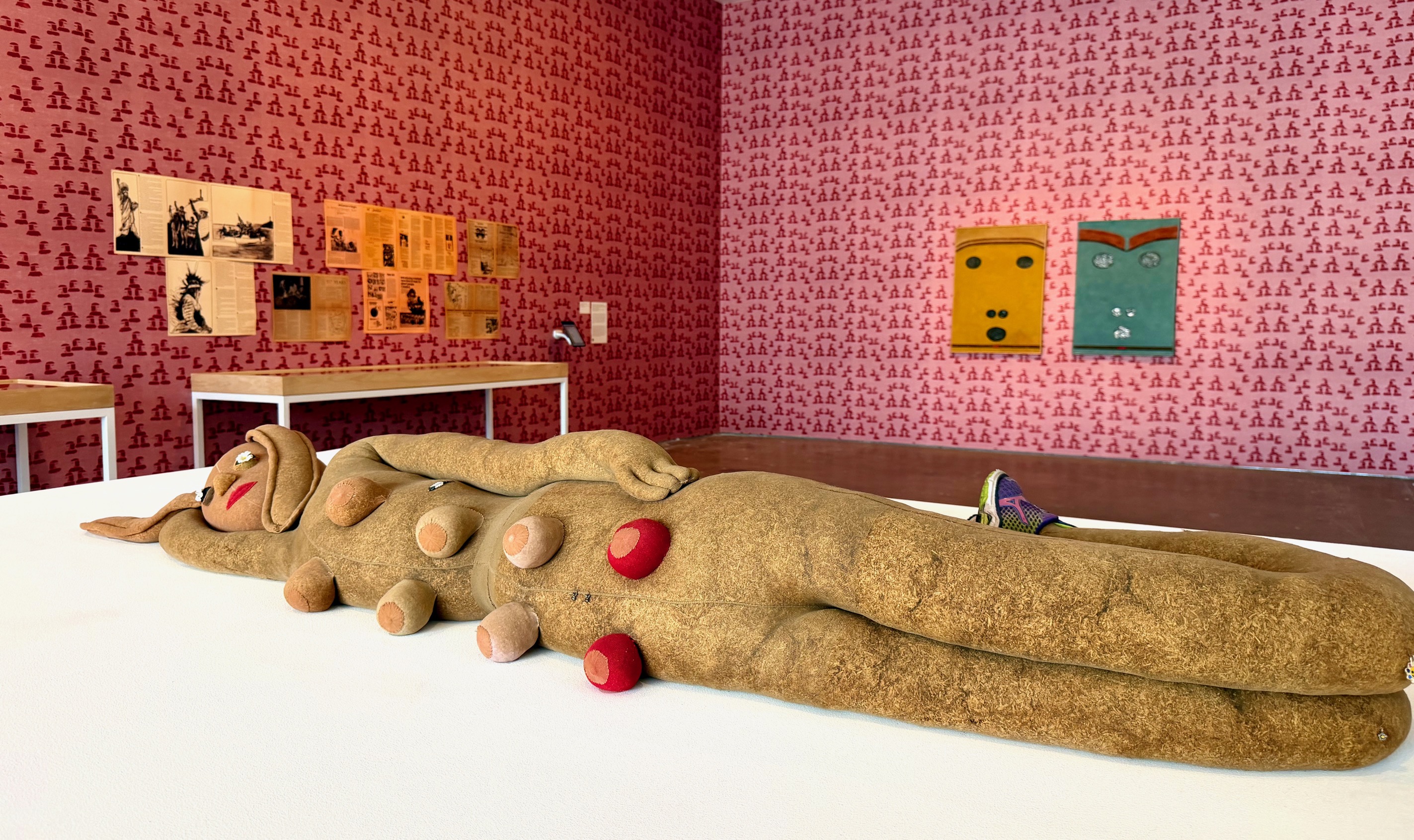
This sets the stage for curator Candace Hopkins’ thesis – in the 1960s, Native American performance went hand-in-hand with greater activism, self-determination by tribes, and contemporary art in all its forms. Listen to her explain:
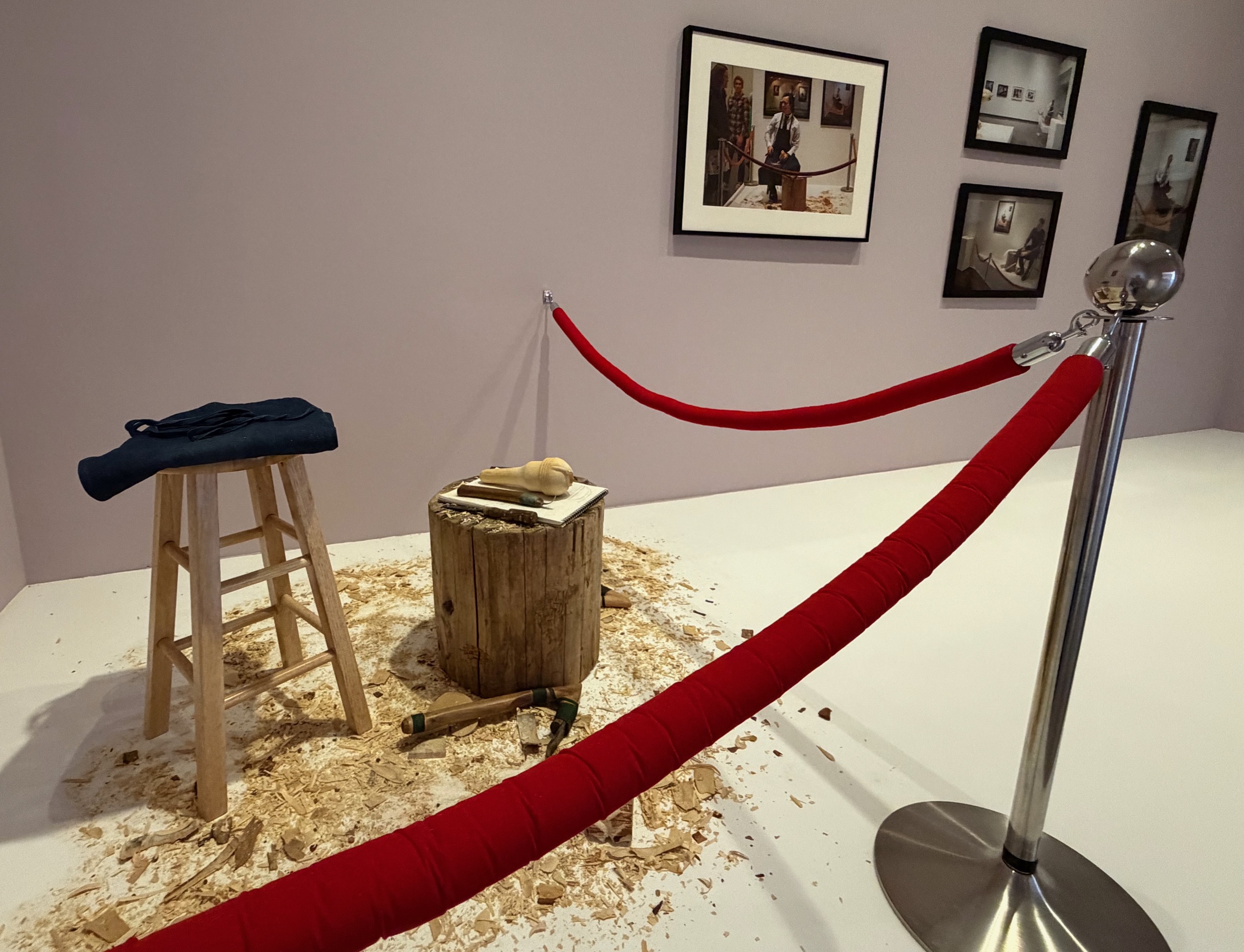
Two performance spaces lie just beyond this gallery. First Nicholas Galanin’s gallery where his performance The White Carver happens weekly (surrounded by photos of previous performances since it was first staged in 2012). The White Carver tackles the subject of appropriation and Native cultural misunderstanding head on.
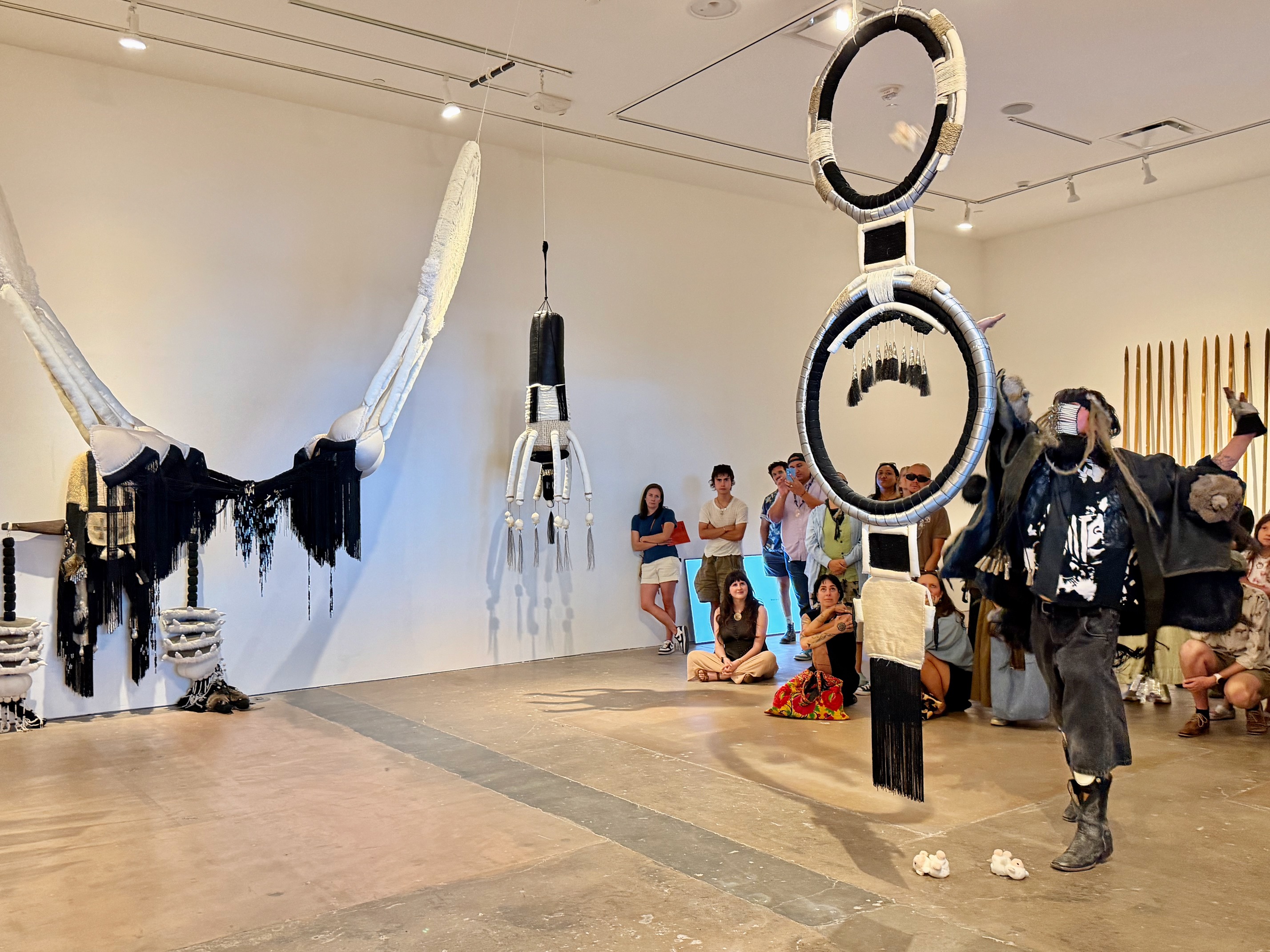
Next, you enter a room hung with giant earring sculptures from Eric-Paul Riege (Diné), who activated them in a ritualistic performance at SITE in August. Riege’s installation allows everyone a simultaneous experience of the contemporary and cultural deep time. Kite’s floor installation, right nearby, does this, too. (Check out our previous post about Kite’s innovative IAIA show here.)
Two-dimensional art on display also evokes a mix of ancient and “now.” Action painting mixed with cultural symbols. Bugle beads or painted blankets echoing color-field painting.
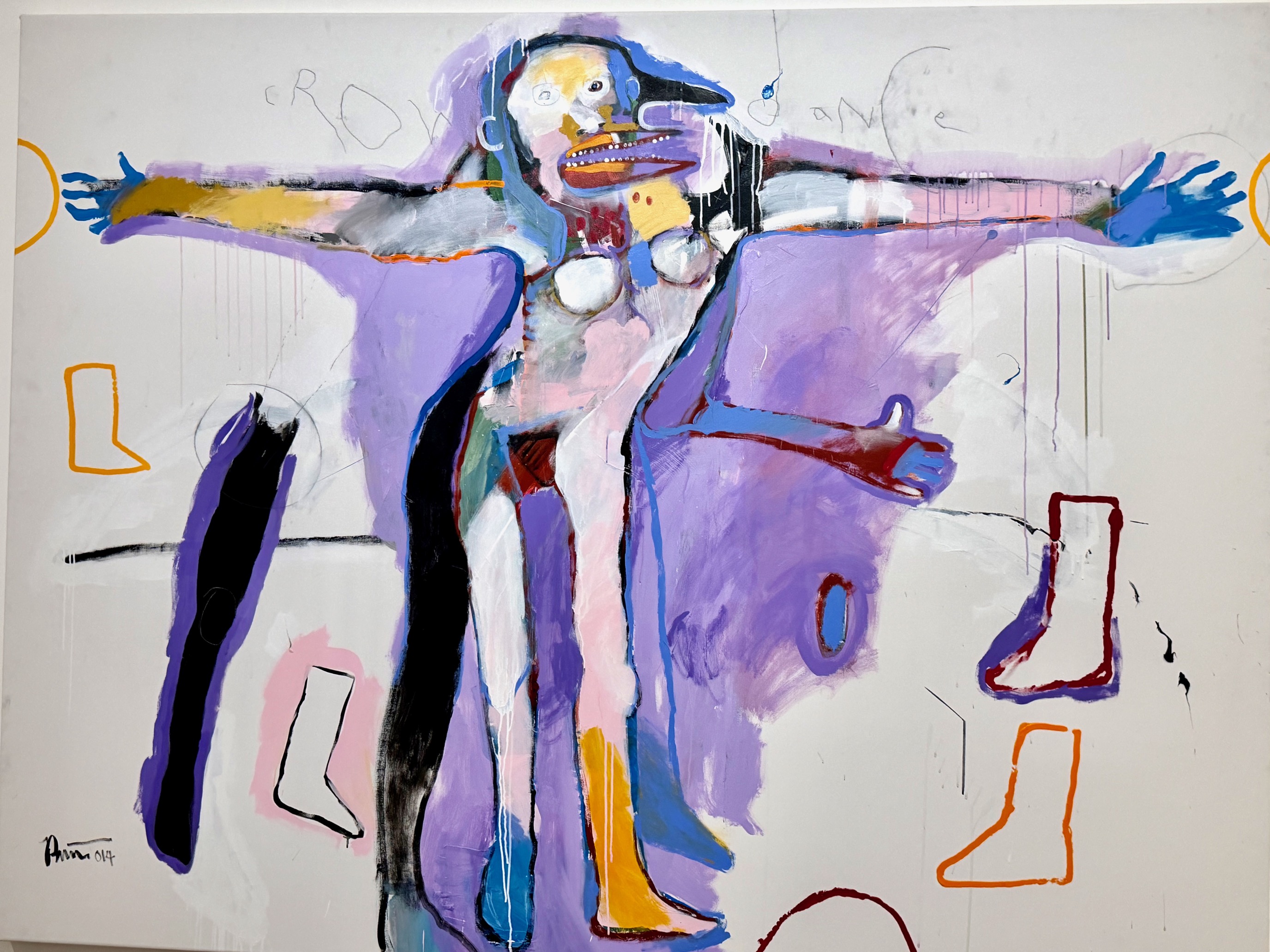
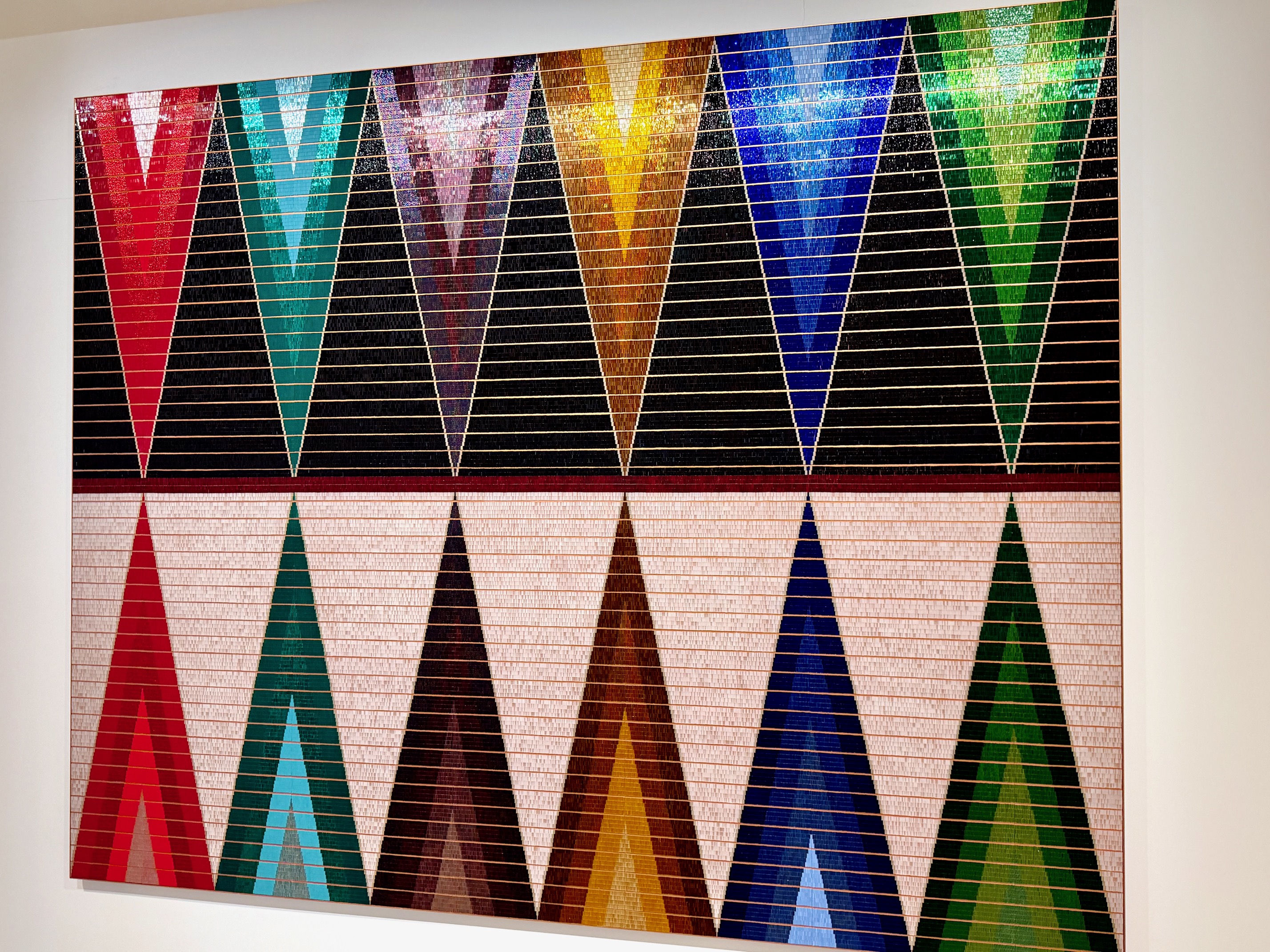
Mash-ups of pop culture, cartoony cheesecake, ancient craft, culture, and social commentary – all the work on display incorporate aspects of performance.
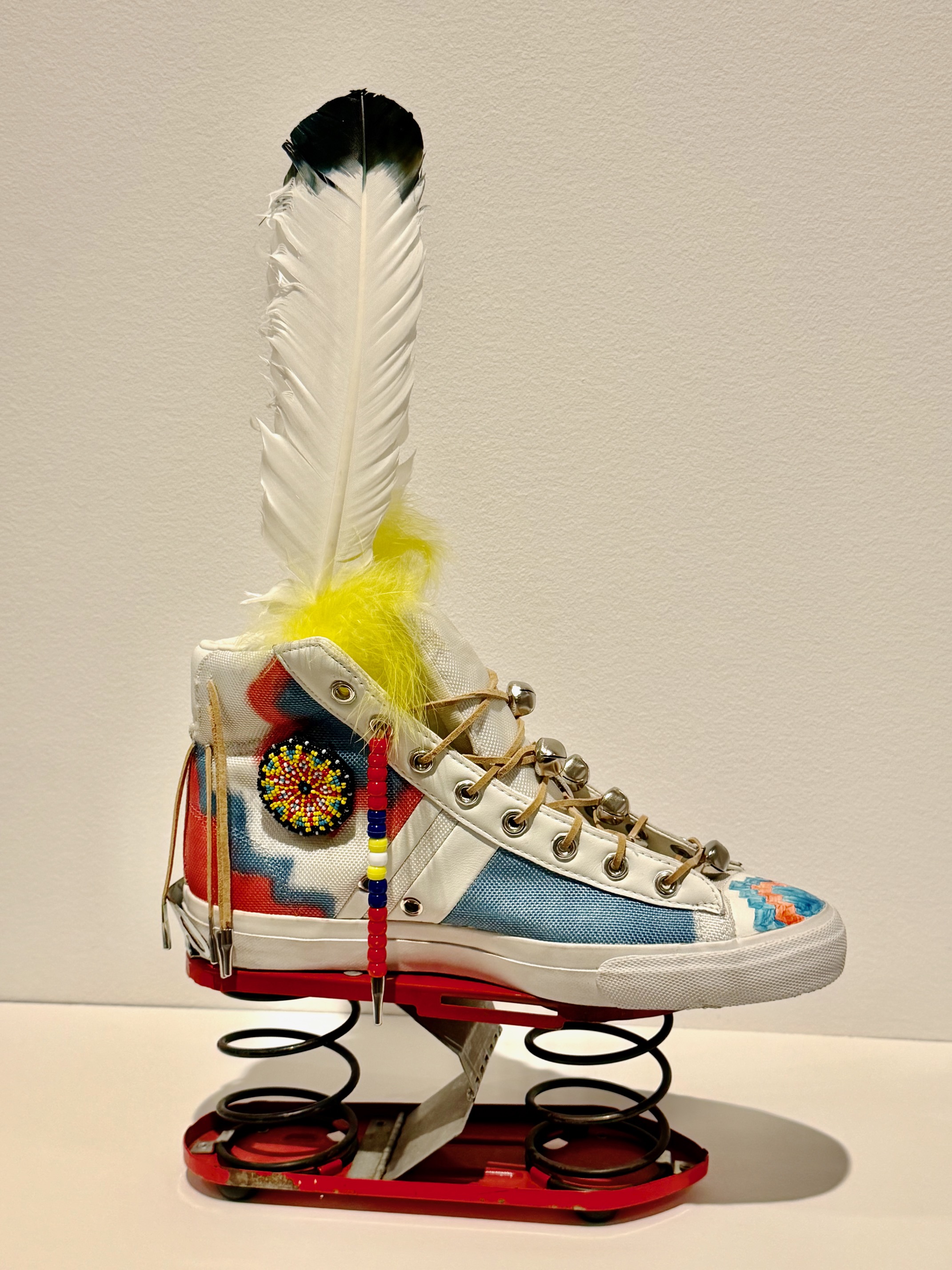
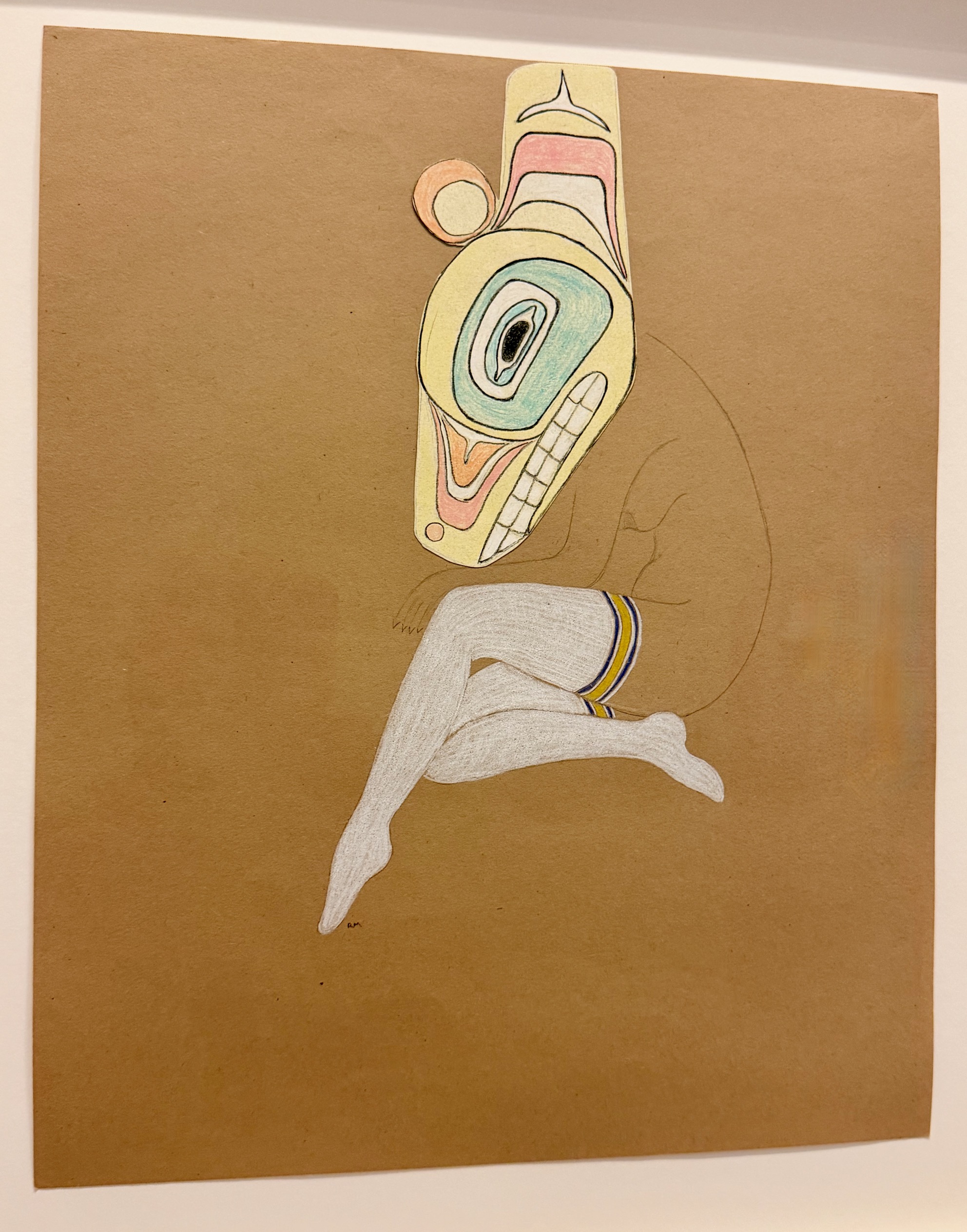
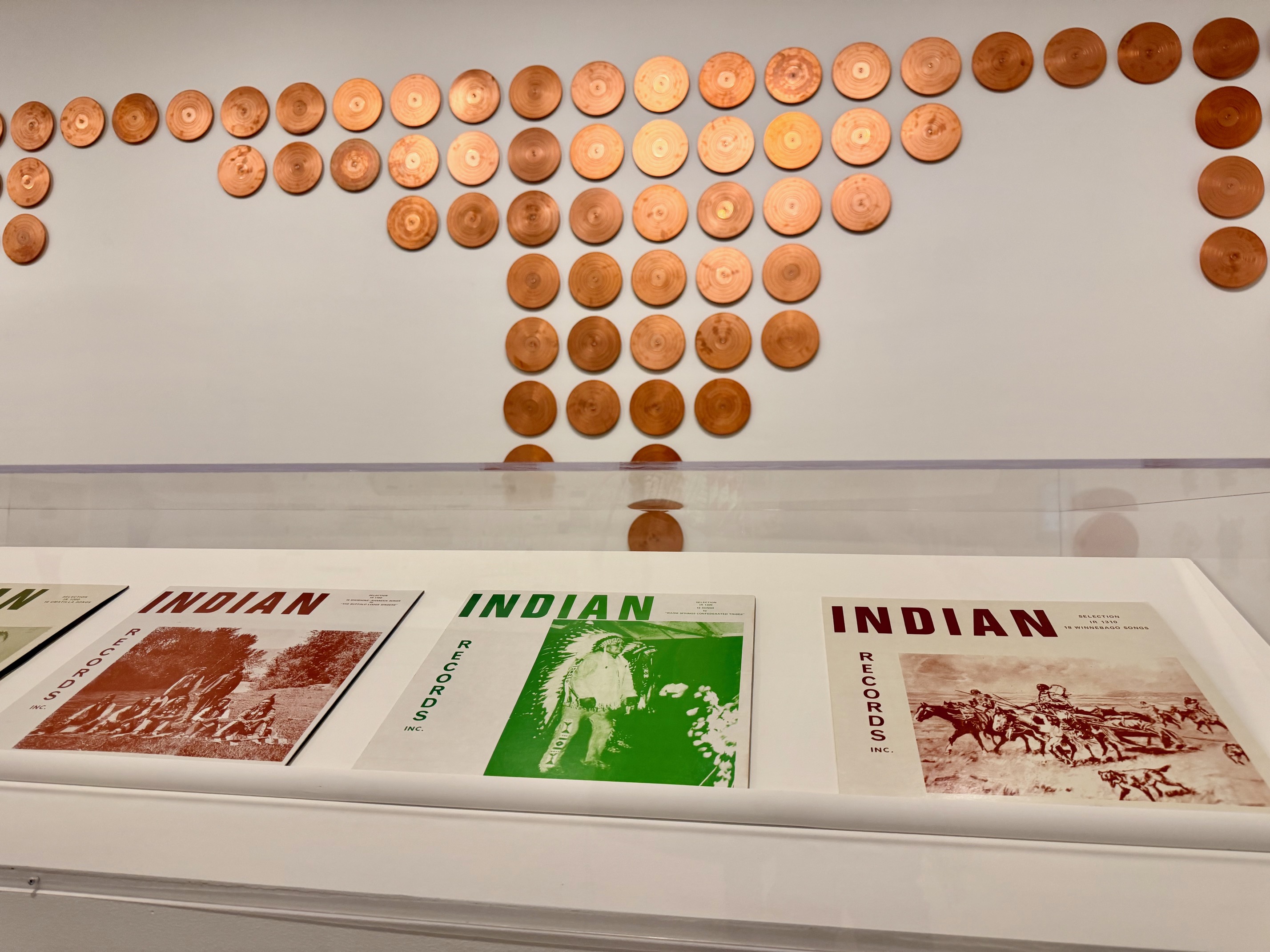
The back gallery takes us back into time to consider the irony of early ethnomusic recording in the Pacific Northwest during a period when potlatches were banned and ceremonies forbidden. The exhibition has a beautiful installation of Native American LPs from the 1960s and 1970s beneath a stunning installation by Sonny Asu of copper recordings that cannot be played.
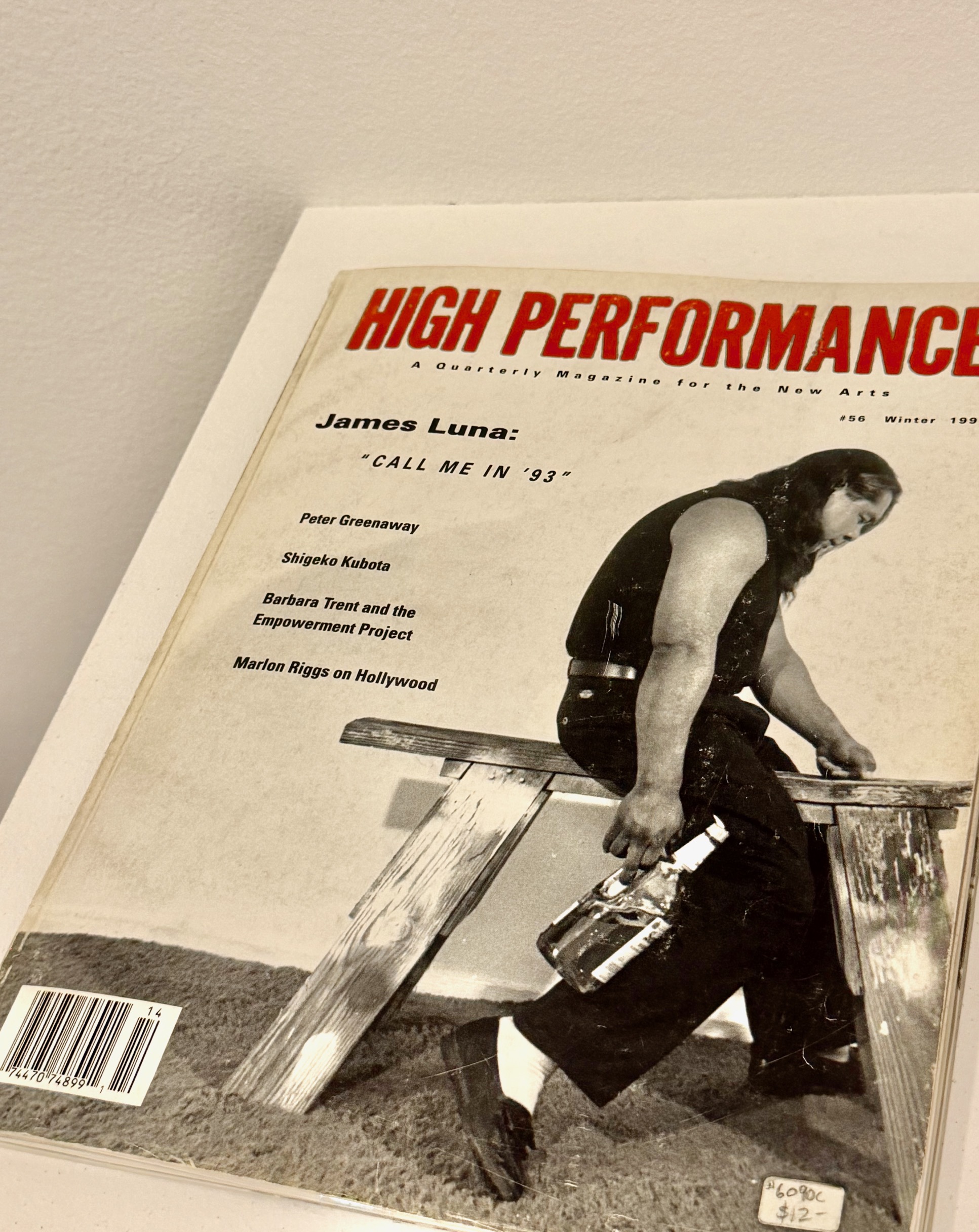
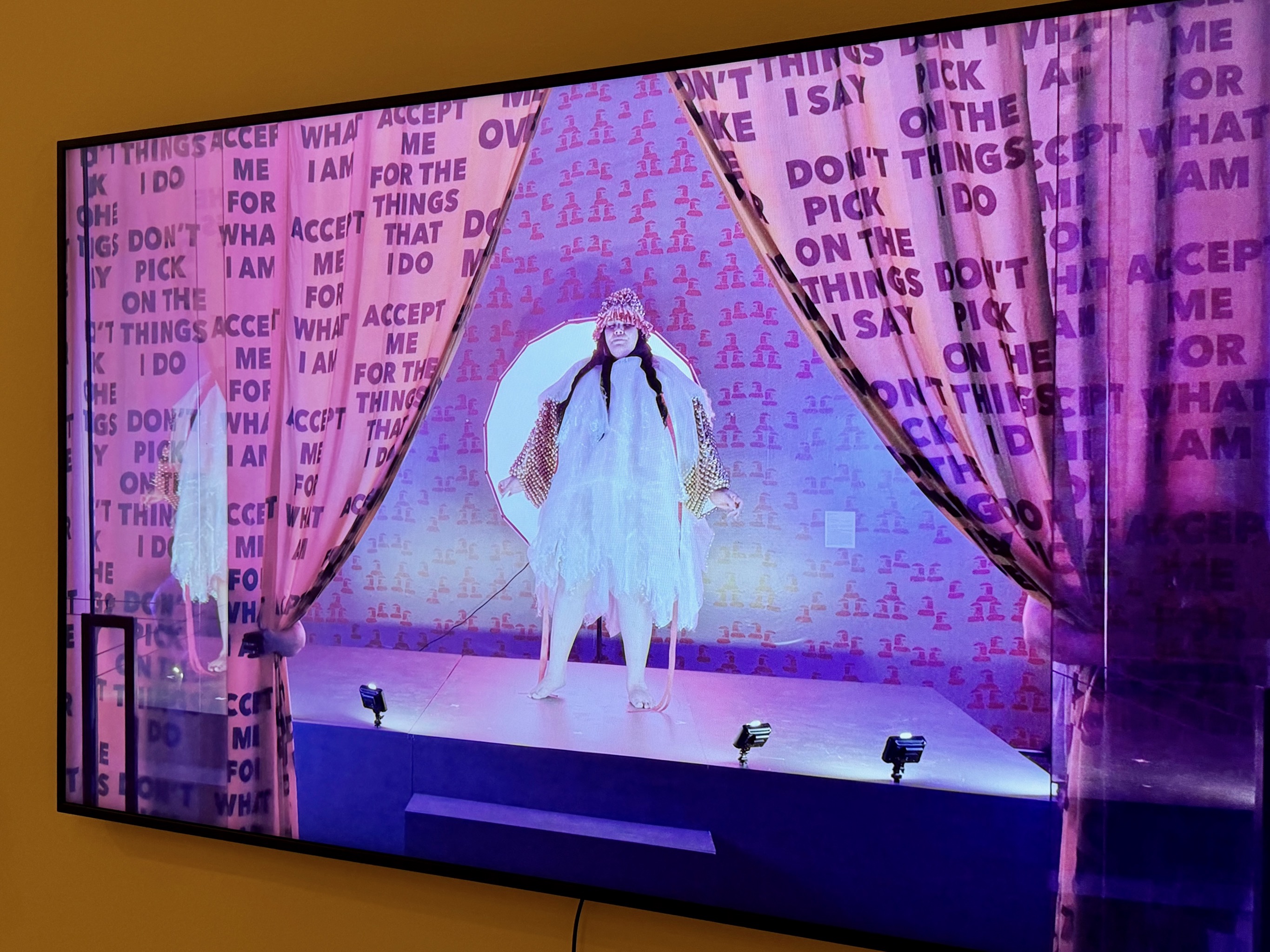
In every room, videos display performances on stages (Jeffrey Gibson or Spiderwoman Theater) or in nature (asinnajaq (Inuk). One room is devoted to a set, props, and documentation of work by the influential performance artist James Luna, whose art did not shy away from the ever-present issue of alcoholism in Native communities.
The exhibition also includes an immersive, highly theatrical, multi-gallery installation by the New Red Order. Here’s the manifesto by NRO’s Adam and Zach Kahalil (Sault Tribe of Chippewa Indians) and Jackson Polys (Tlingit).
NRO uses satiric videos, props, murals, documents and timelines, merchandise, and graffiti style to illuminate collisions of history, pop culture, and consciousness surrounding urban Native communities today – a totally head-spinning (and brain-spinning) experience.
And thanks to the recreation by Erica Lord, SITE Santa Fe visitors were able to experience Artifact Revisited. Erica recreated an acclaimed 1987 performance by James Luna – a still Native body on display within a museum, encased in glass. In Erica’s recreation, her “cabinet” was surrounded by museum signage purporting to explain “Indians” and provide context for the “exhibit.” In the age of NAGPRA, the experience was unforgettable. Watch the performance heare, and listen to Erica explains how she came to perform this historic piece and how it felt.
For more background on the connections between Native American theater, politics, and art, here’s a link to the recently published book about this never-before-told story.

