
To celebrate over six decades of the revolutionary educational institution, museum of the Institute of American Indian Arts (IAIA) decided to showcase the breadth and scope its spectacular contemporary jewelry collection made by students, faculty, and artists-in-residence. The Stories We Carry shows that wearable art can convey ancient tales, speak truth to power, and incorporate surprising materials in the hands of forward-thinking innovators.
The exhibition – which has occupied the upper floor of Santa Fe’s IAIA Museum of Contemporary Native Arts for a four-year run – is on view through September 28, 2026.
Take a walk through the exhibition in our Flickr album, and see what we’re talking about right here in closeups of the displays on the IAIA site.
The diverse range of jewelry created over the years at IAIA might surprise anyone with a stereotypical view of “Native jewelry,” but it’s exactly this mastery of ideas and materials that keeps visitors coming back for a closer look and to admire new favorites from the over 100 pieces on display.
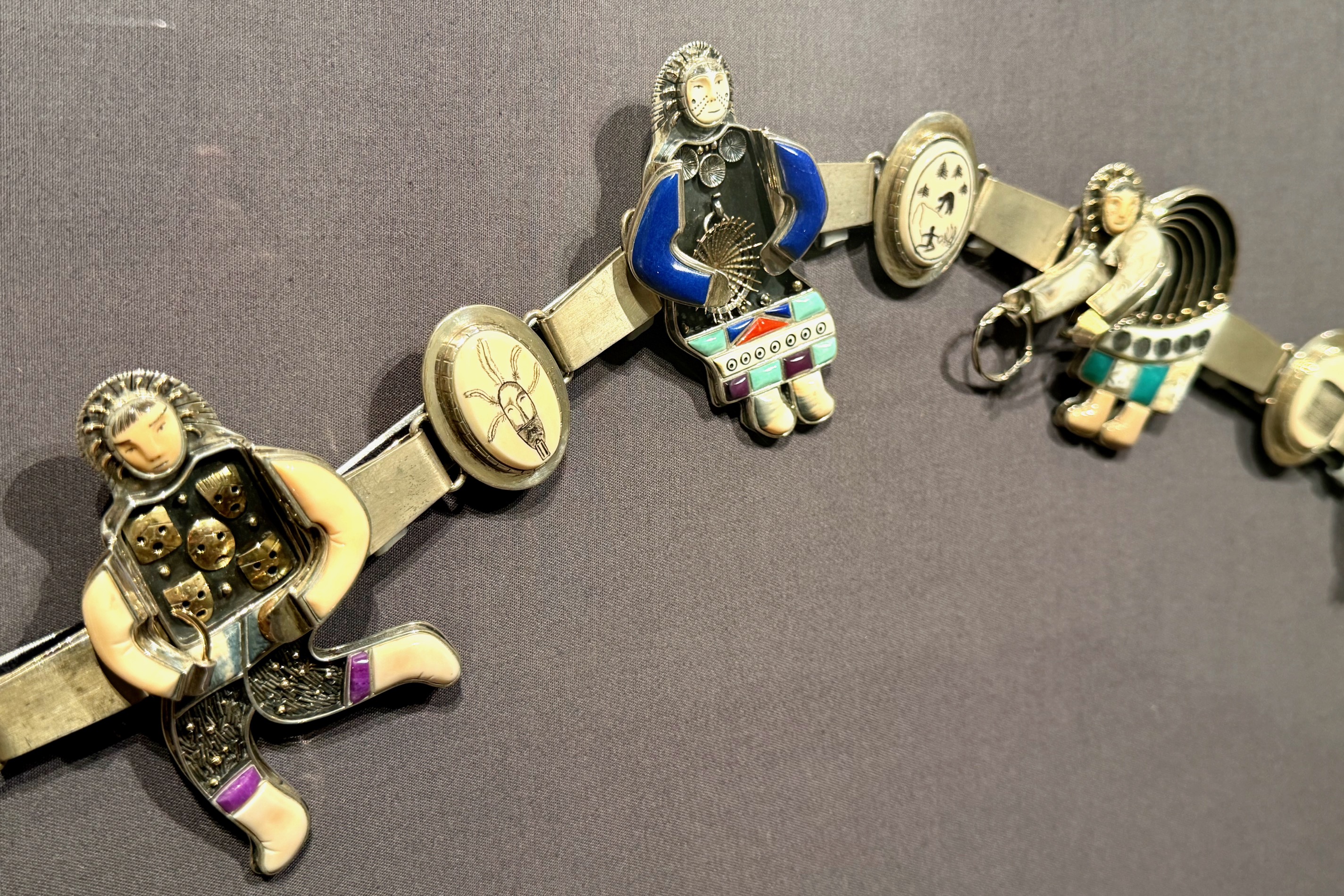
The first gallery is a clean, white space that presents the full range of techniquqes, processes, and types of wearable art. It’s no surprise that the curator has chosen to present the innovative, masterful belt by Denise Wallce to kick off the show. Denise has crafted ten distinctive silver/gold inlaid figures who are each gathering materials and making traditional art of the Pacific Northwest. Take a close-up look at the miniature craft makers going about their work.
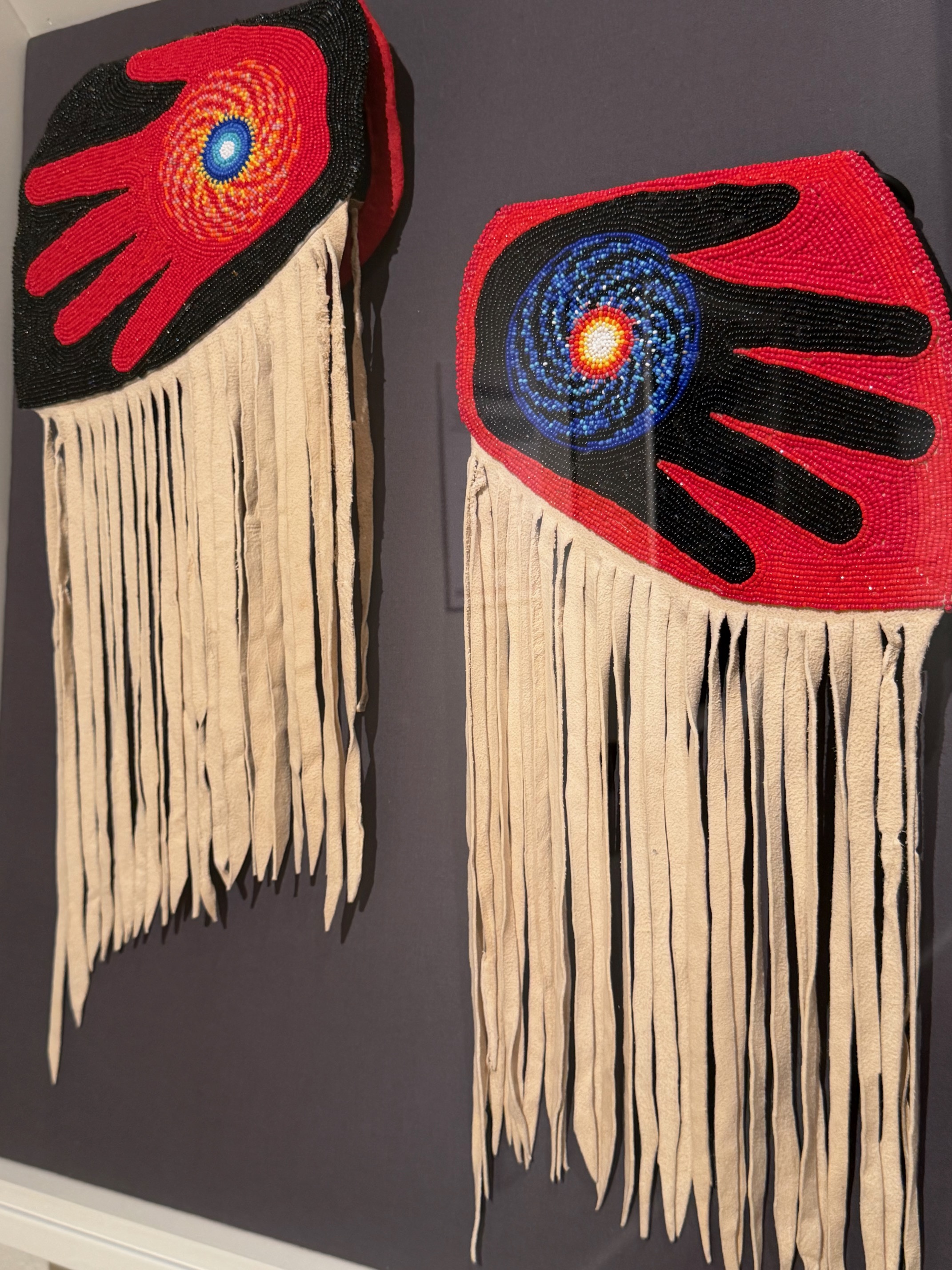
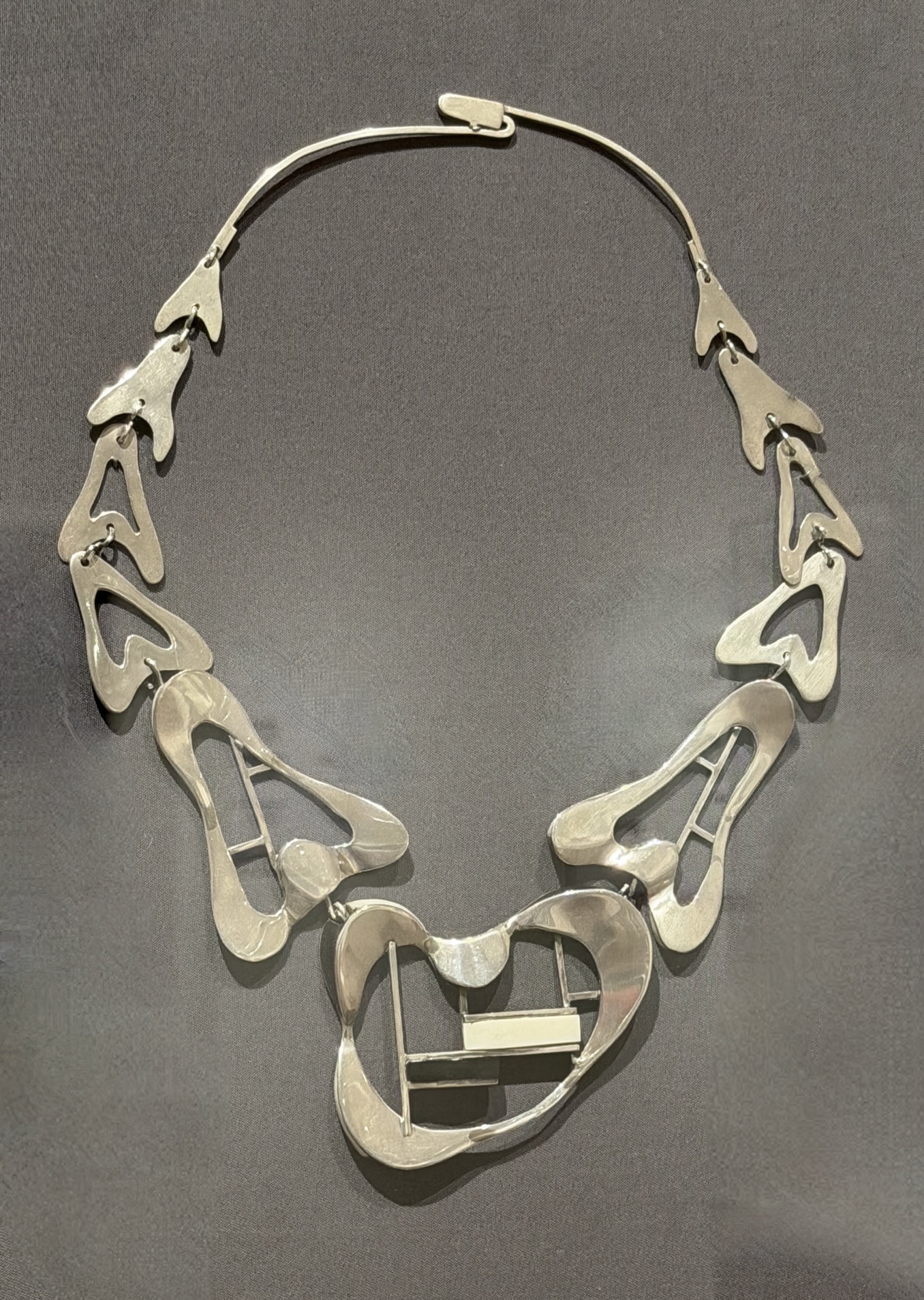
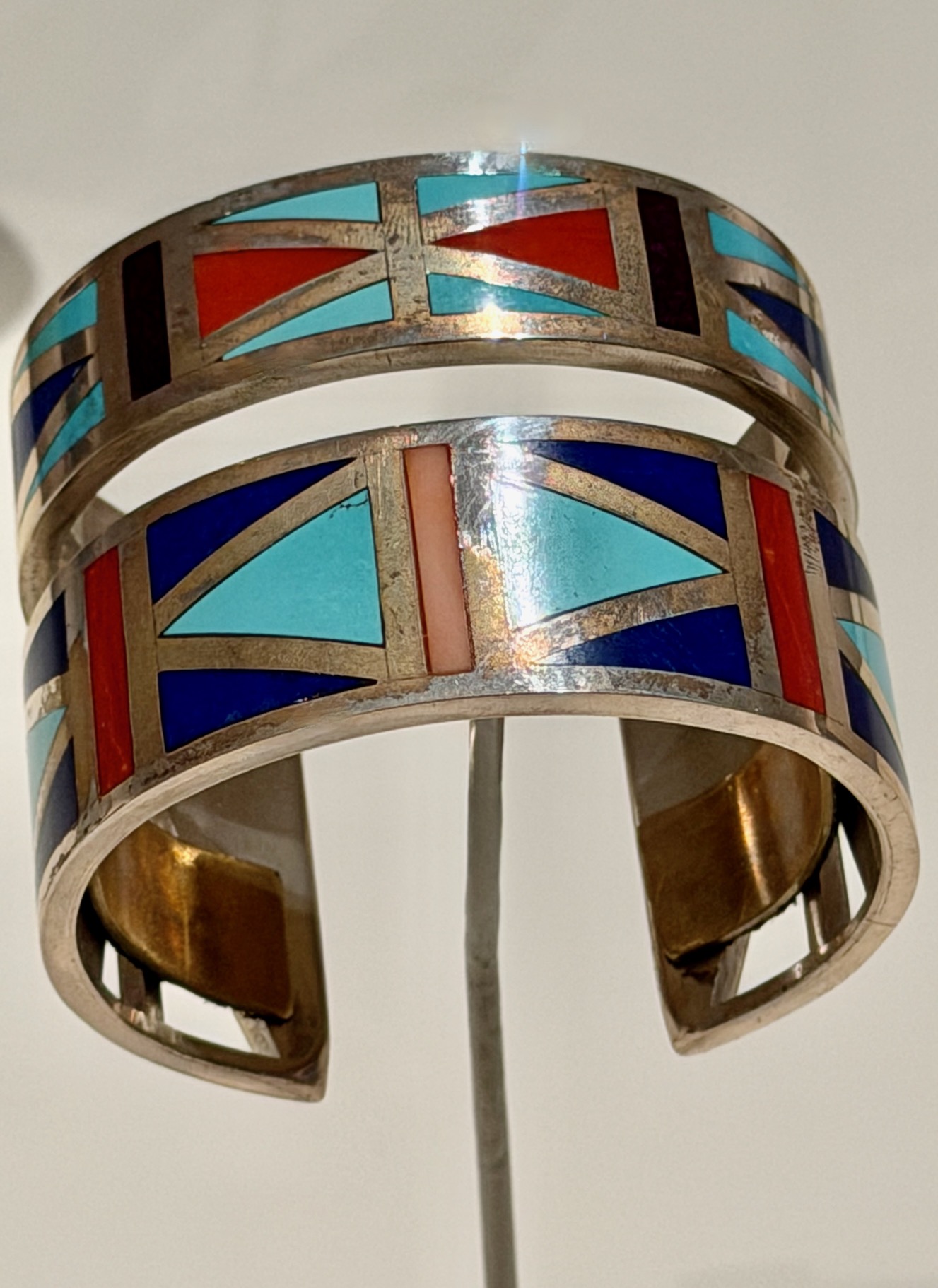
Over a dozen cases are filled with spectacular works that emphasize the material process that decades of IAIA students, faculty, and museum donors have contributed to the broader collection – necklaces, cuffs, belts, bolos, and pins made through inlay, casting, enamel, beadwork, and other studio techniques.
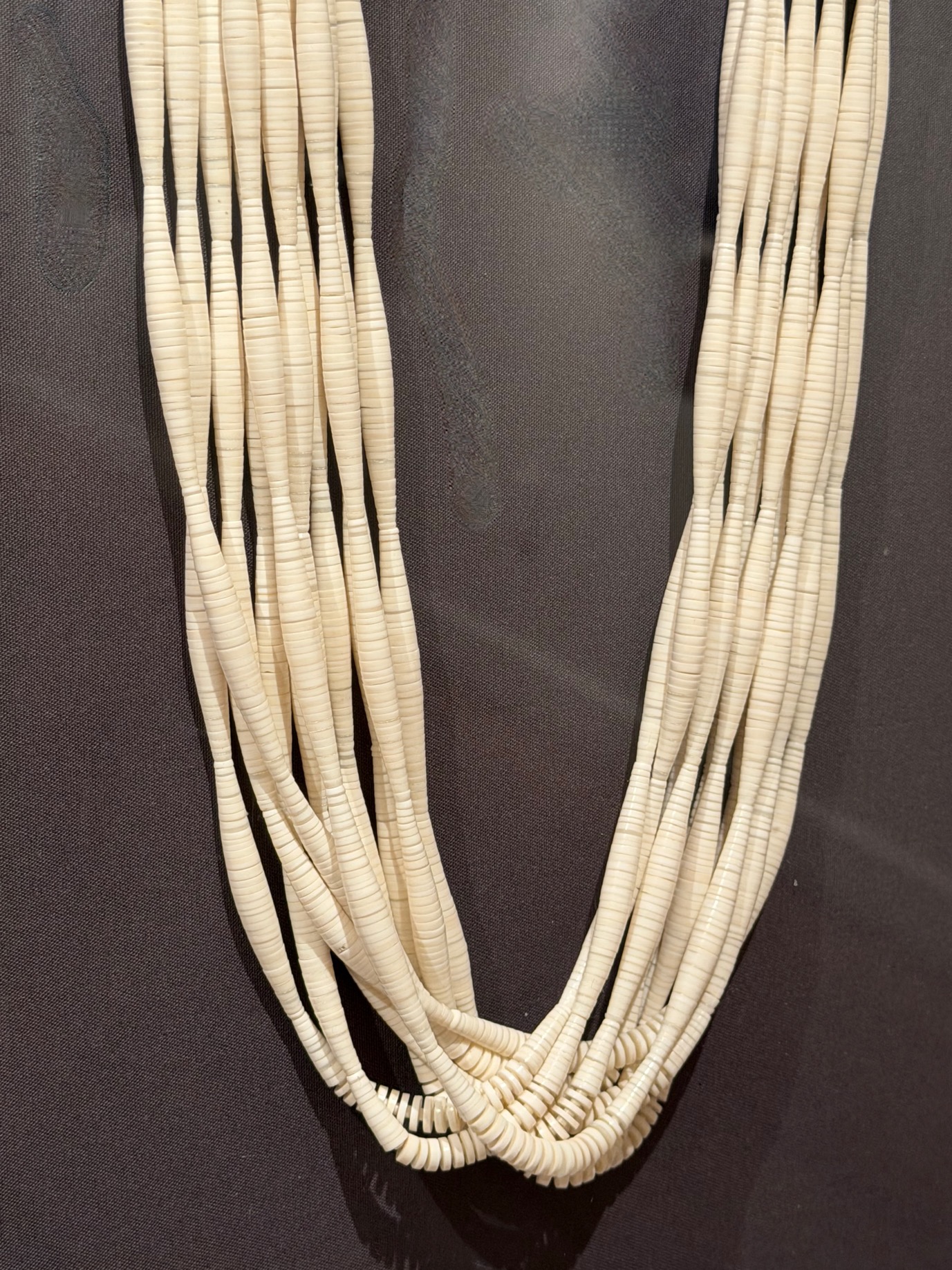
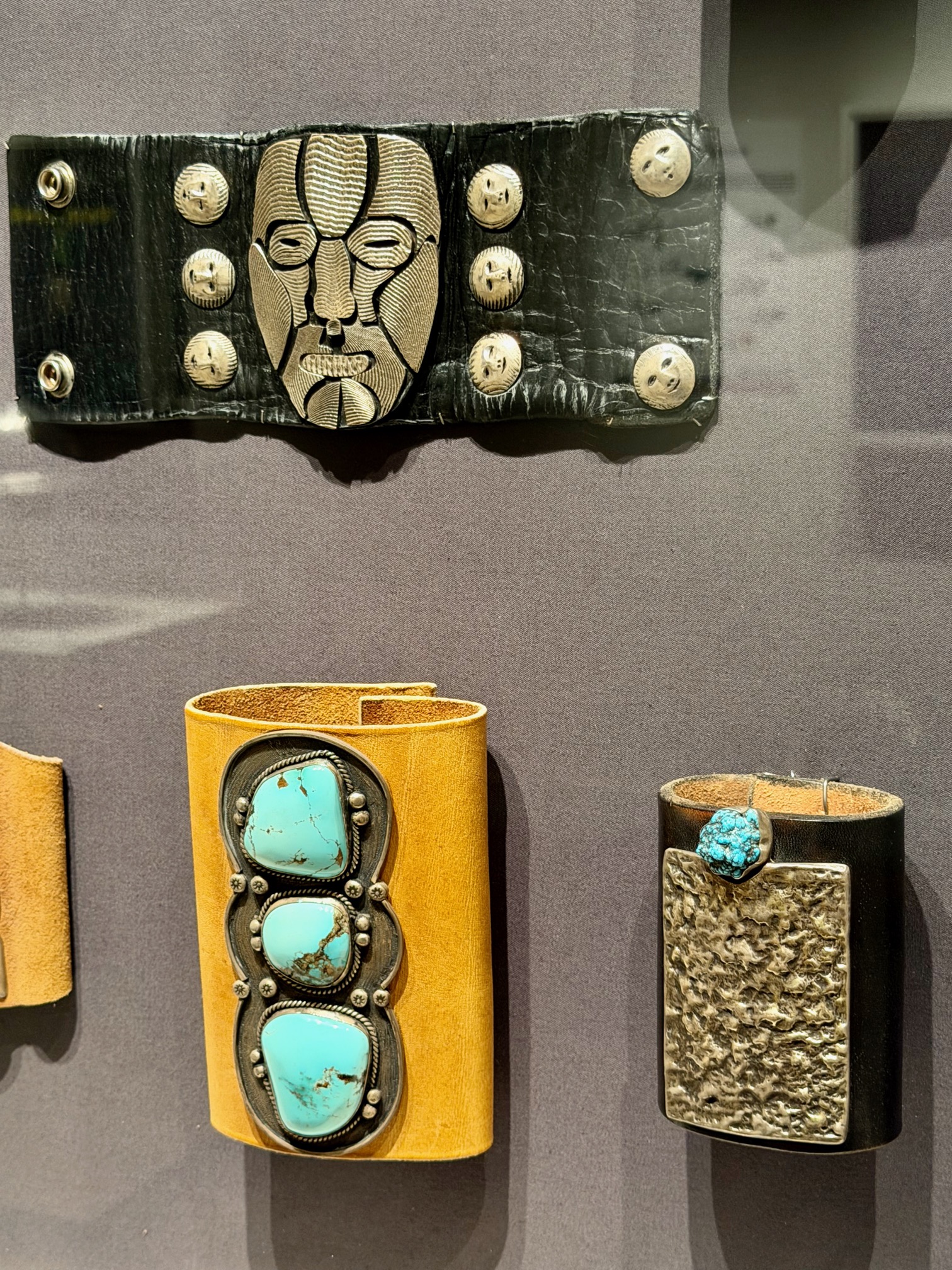
Some of the remarkable pieces collected by IAIA from the early years of the its Honors program are unfortunately marked “unknown artist.” But it’s still exciting to see early student pieces by artists like Estelle Loretto or Marcus Amerman who are considered leaders in contemporary Southwest art. (Click here to see our coverage of Marcus’s 1995 retrospective at the Wheelwright.)
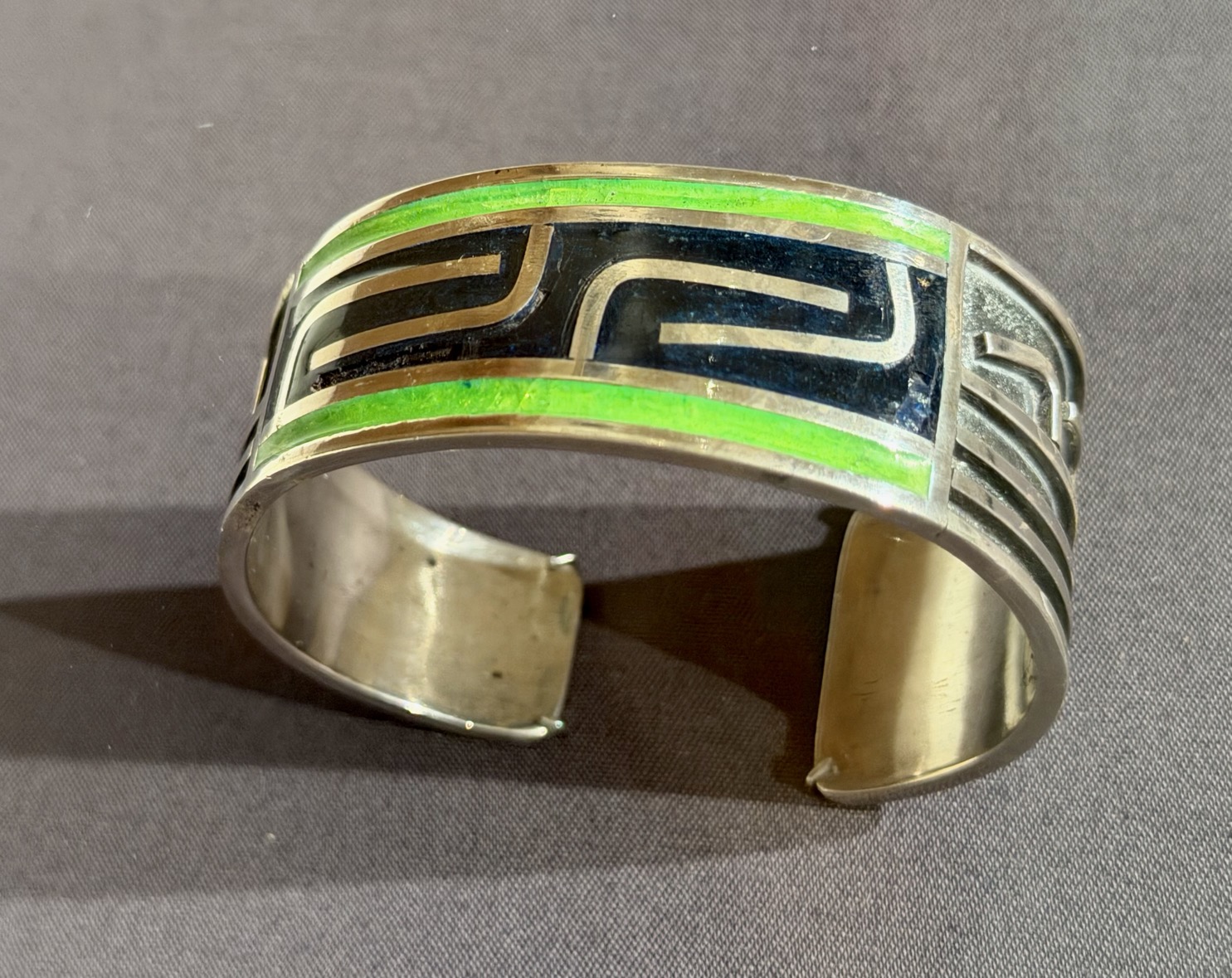
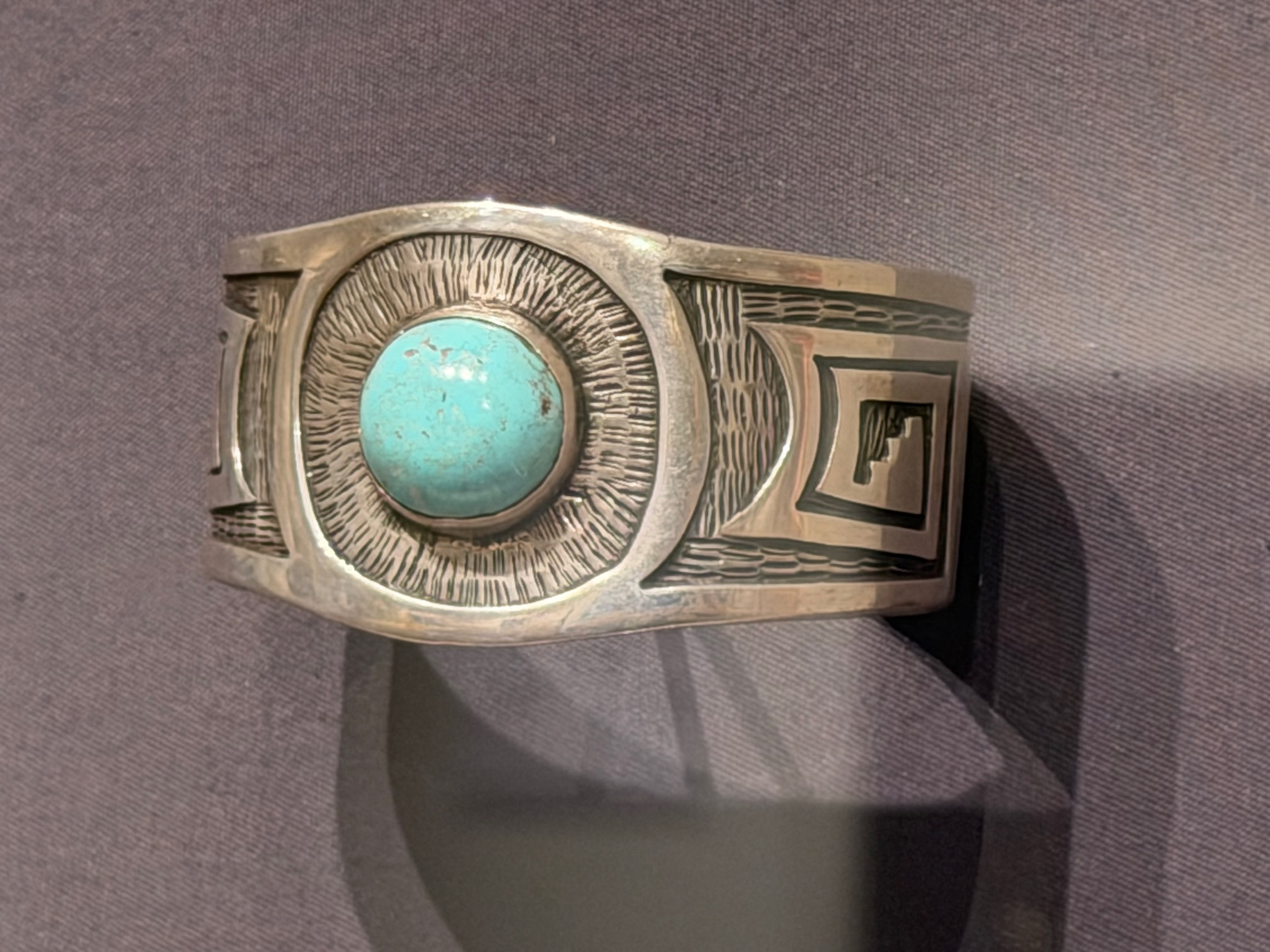
The second gallery begins with a large photo of the “room where it happens” – the IAIA jewelry studio. Back in the early Sixties, IAIA’s jewelry studio was begun by legendrary Charles Loloma (Hopi), who merged modernist aesthetics with traditional jewelry practice and encouraged his students to follow their own aesthetic paths. The innovation hasn’t stopped.
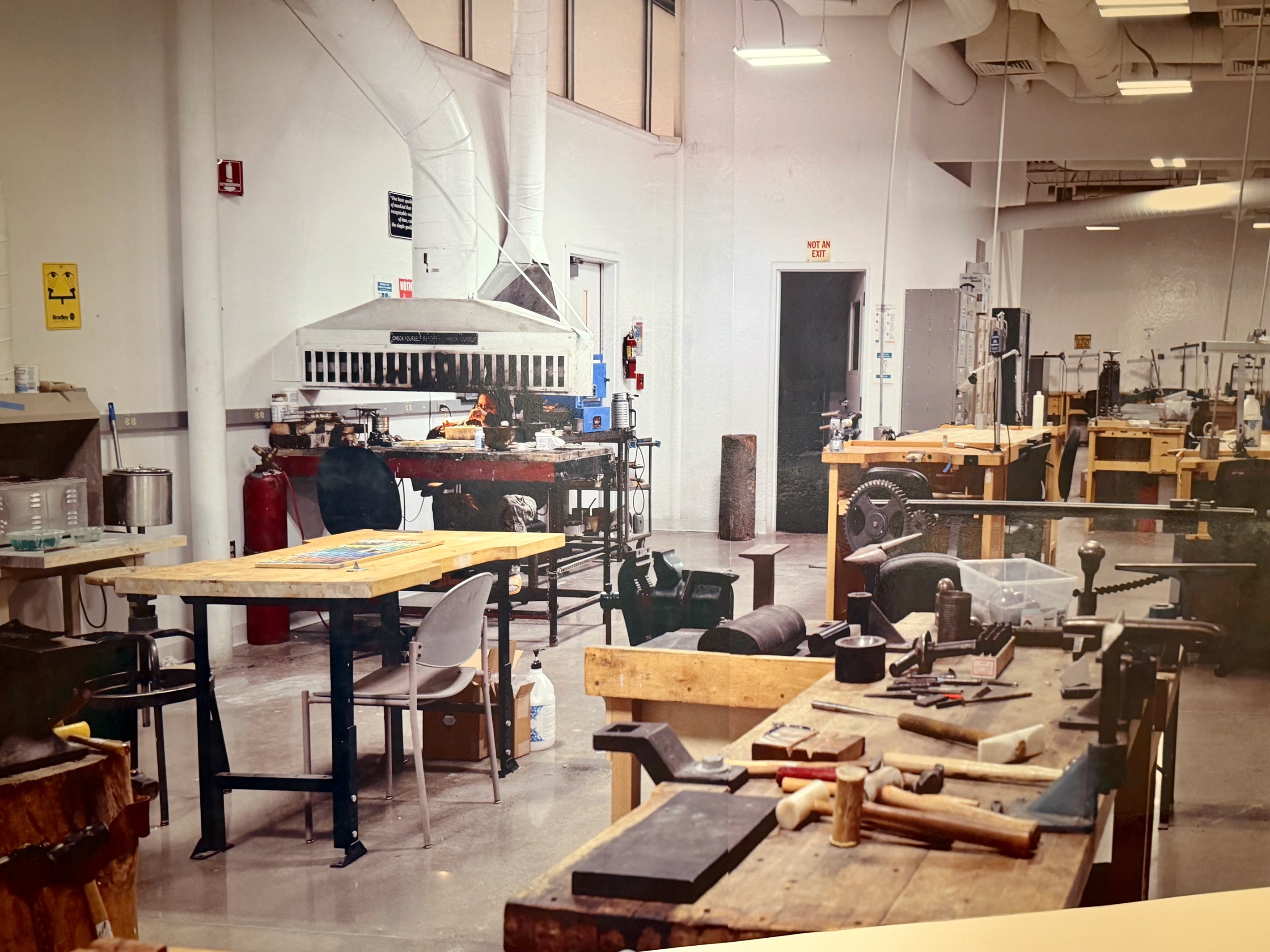
The gallery is filled wth workd by IAIA graduates, visiting artists, and faculty – a mind-bending experience that sets traditional, futuristic, technological, and controversial work side by side. Jewelry and wearable art that holds both a shining vision of the future and reflects upon dark corners of Indigenous history. It’s all quite a tribute to the creativity campus that IAIA was at its inception and continues to be.
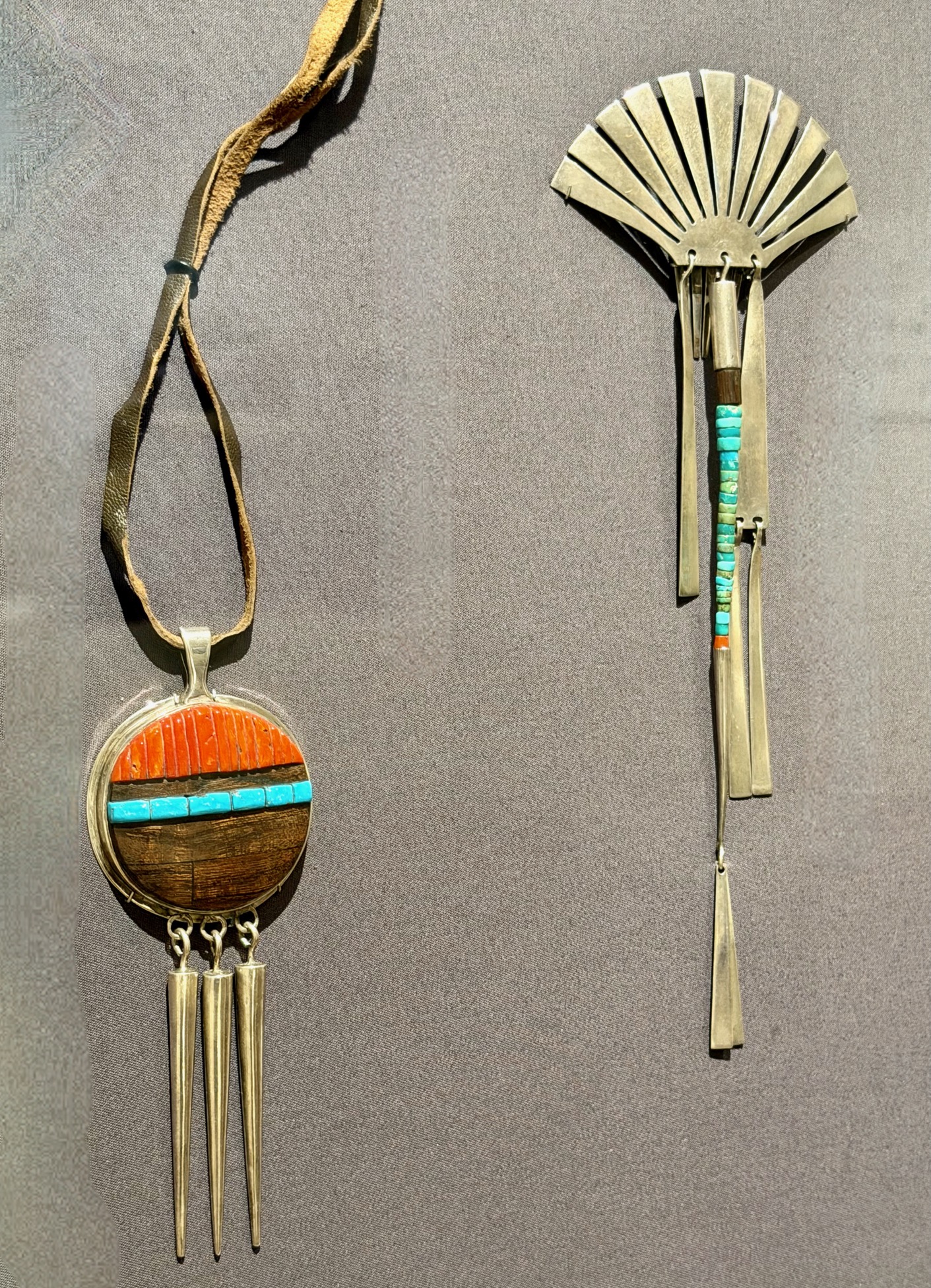
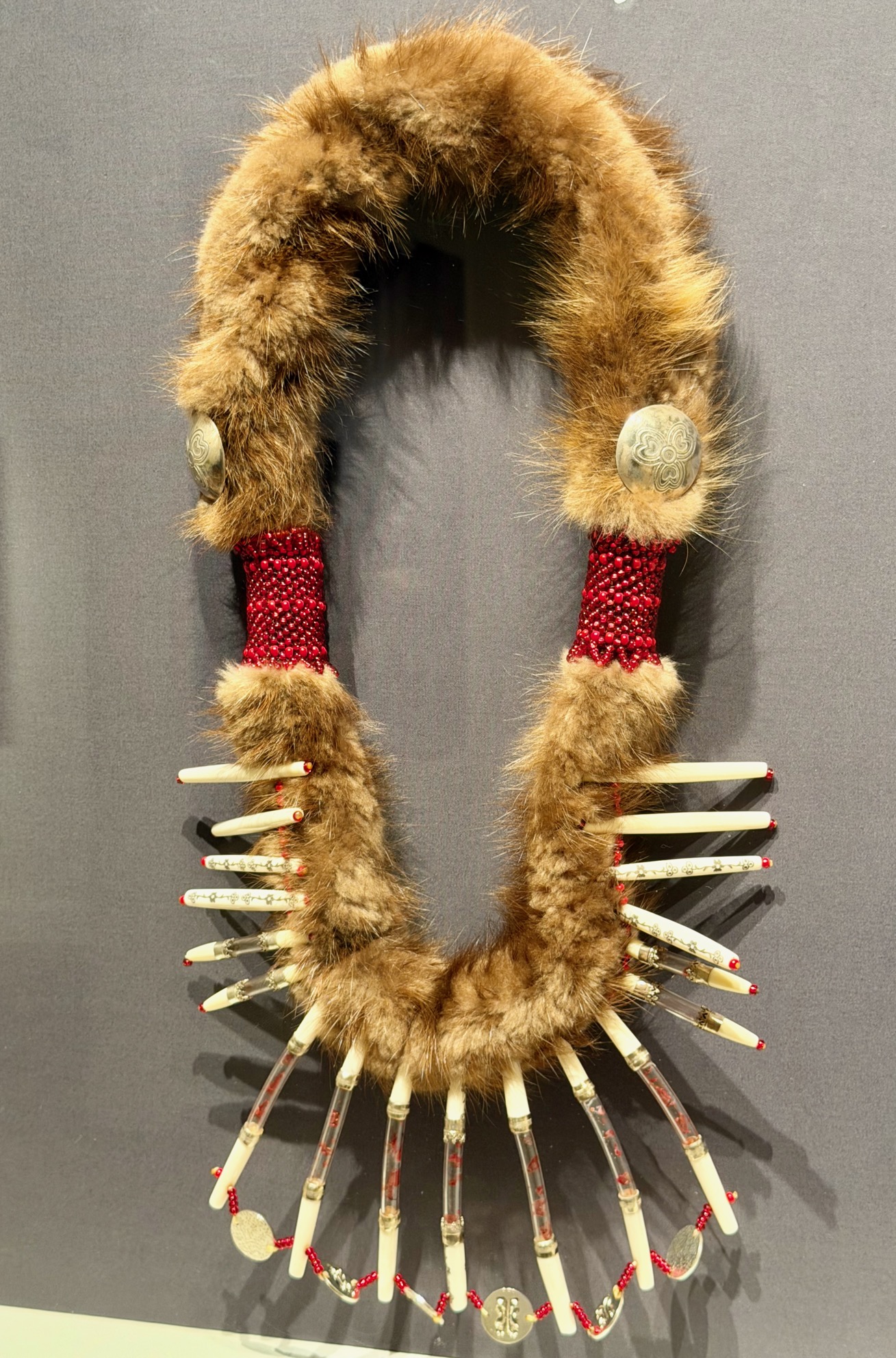
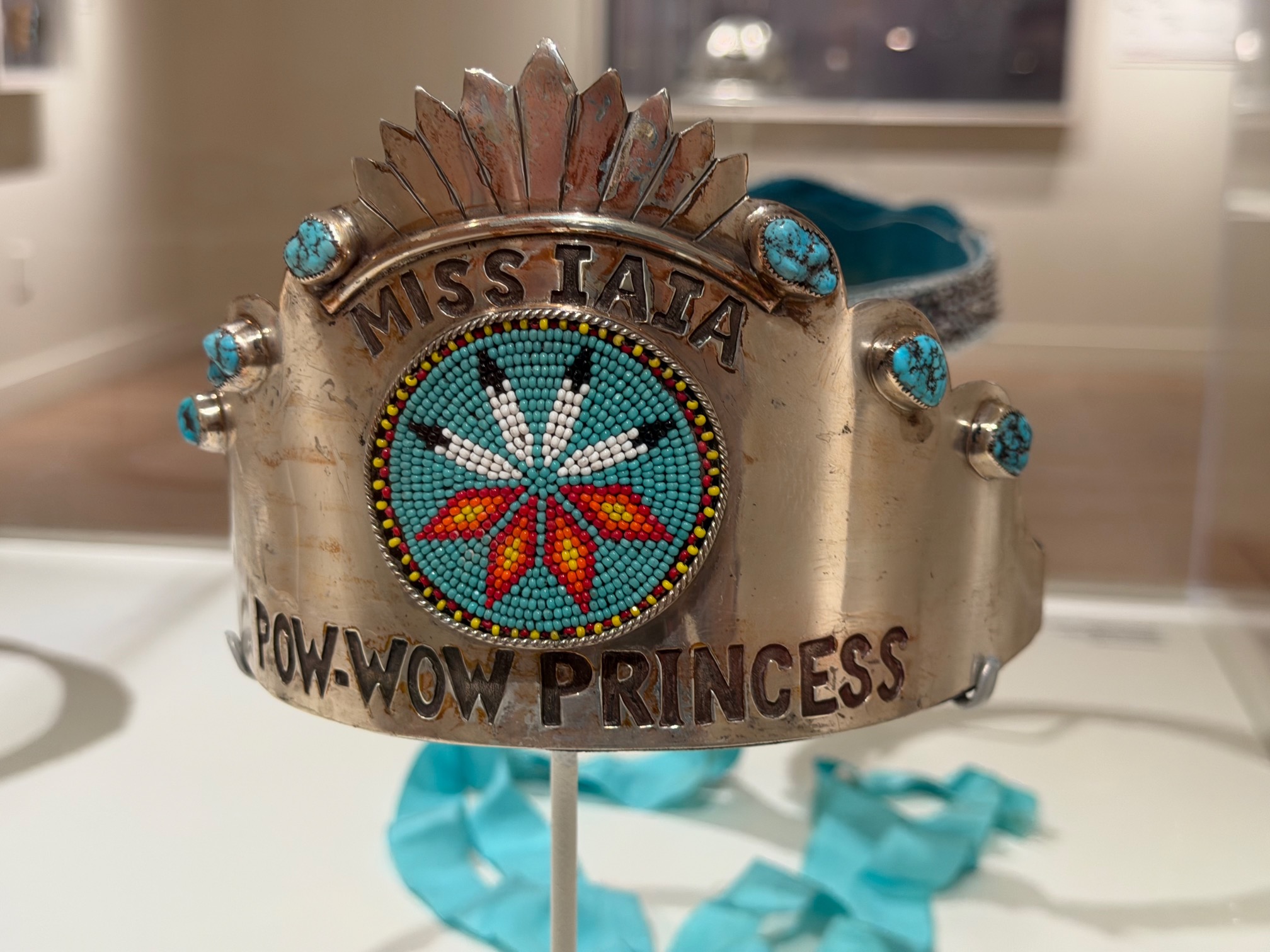
The last gallery features a mix of storytelling – everything from metalwork on a Mohawk hard hat telling a story of East Coast construction-trade prowess to pow-pow princess crowns to politics and a barely-there magical quartz amulet by Pacific Northwest artist Isaac Tait (Nisga’a). Contemporary achievement, 20th century culture, and ancient myths are all put to work in the IAIA jewelry studio.
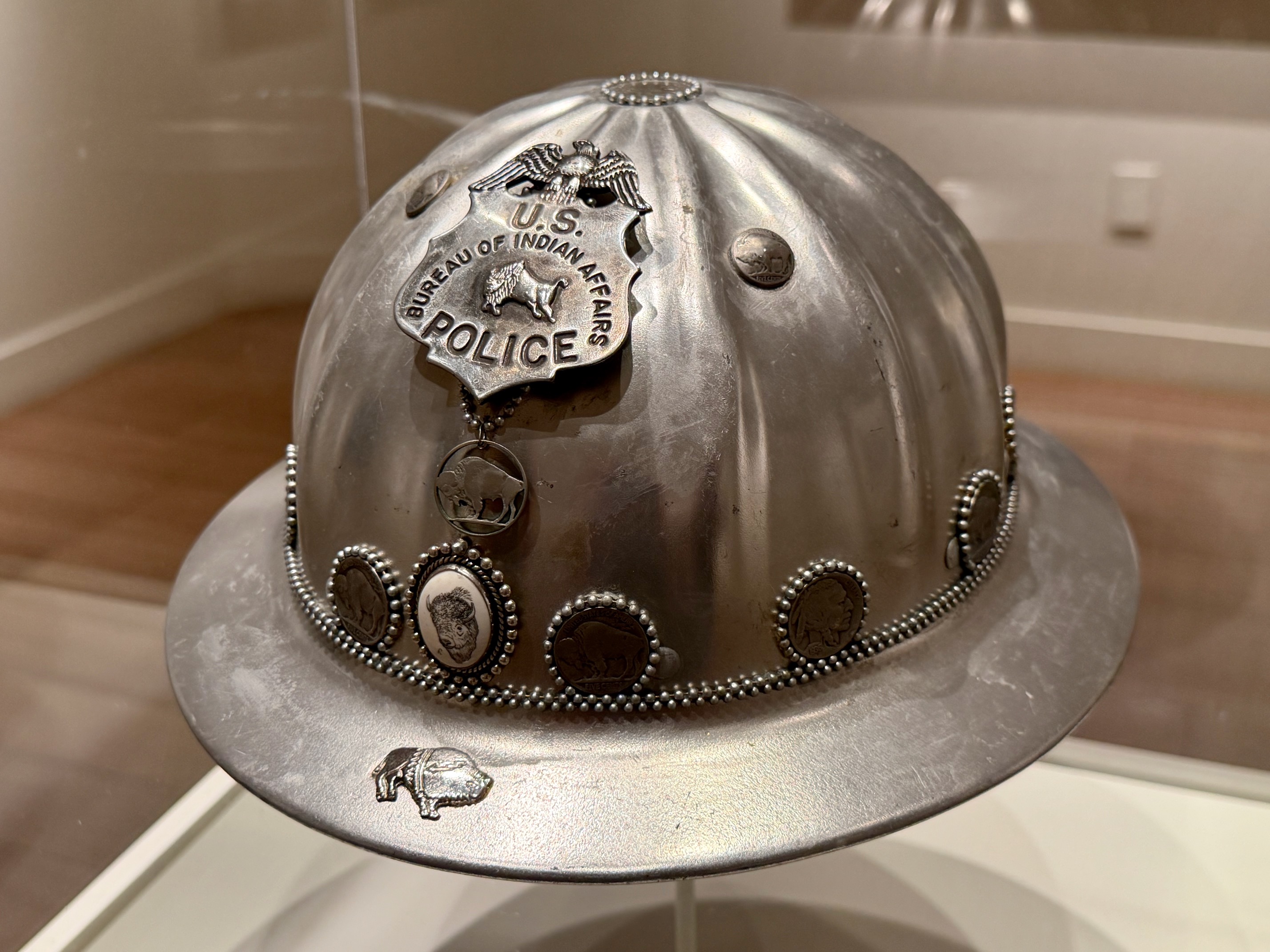
The exhibition represents over 100 years of Indigenous jewelry in all its forms from IAIA’s permanet collection. Take a walk through the exhibition with guest-curator Brian Fleetwood (Mvskoke), who explains his inspiration behind his selections and explains how wearable art has told stories from ancient times:
See all eight of IAIA’s short videos about these artists and this fascinating tribute to creativity and culture here, including the backstory on the crowns.
 itsnewstoyou