
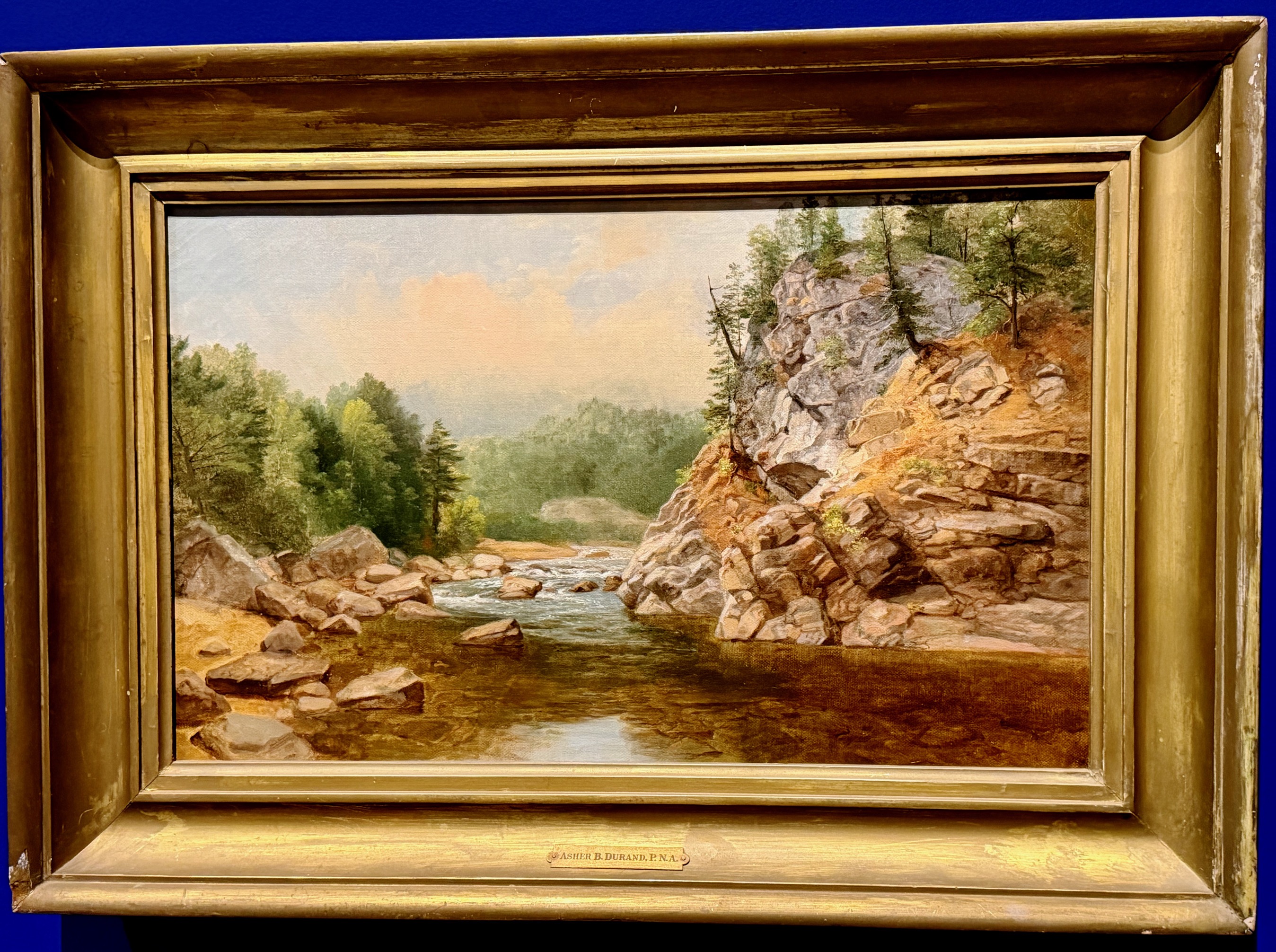
When New York Historical invited Kay WalkingStick to view its Hudson River School collection, she stood in awe of the evocative landscapes by Bierstadt, Durand, Kensett, and Cole – shimmering brooks, majestic mountains, and romantic skies. Their mastery of paint invites you to get lost in the inviting beauty. But Kay noticed that native people – who had inhabited these settings for millennia – were almost always missing. The supposed “wilderness” was likely still someone’s home.
Kay and the team at New York Historial correct this omission in the gorgeous, thought-provoking exhibition Kay WalkingStick/Hudson River School, now on view at the Heard Museum in Phoenix through May 25, 2026 – one of three stops for its US tour. (The exhibition debuted at NYH in New York in 2023.)
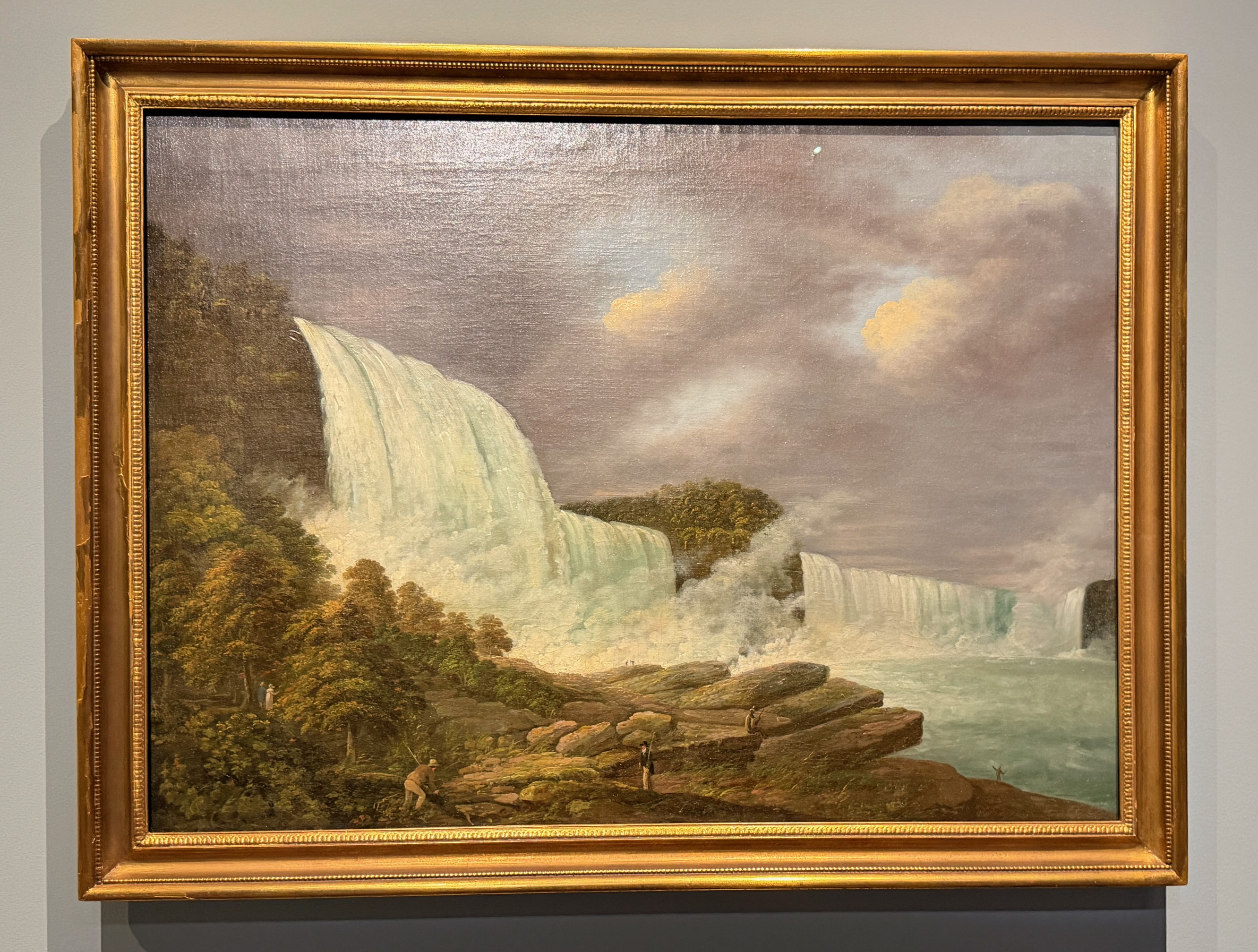
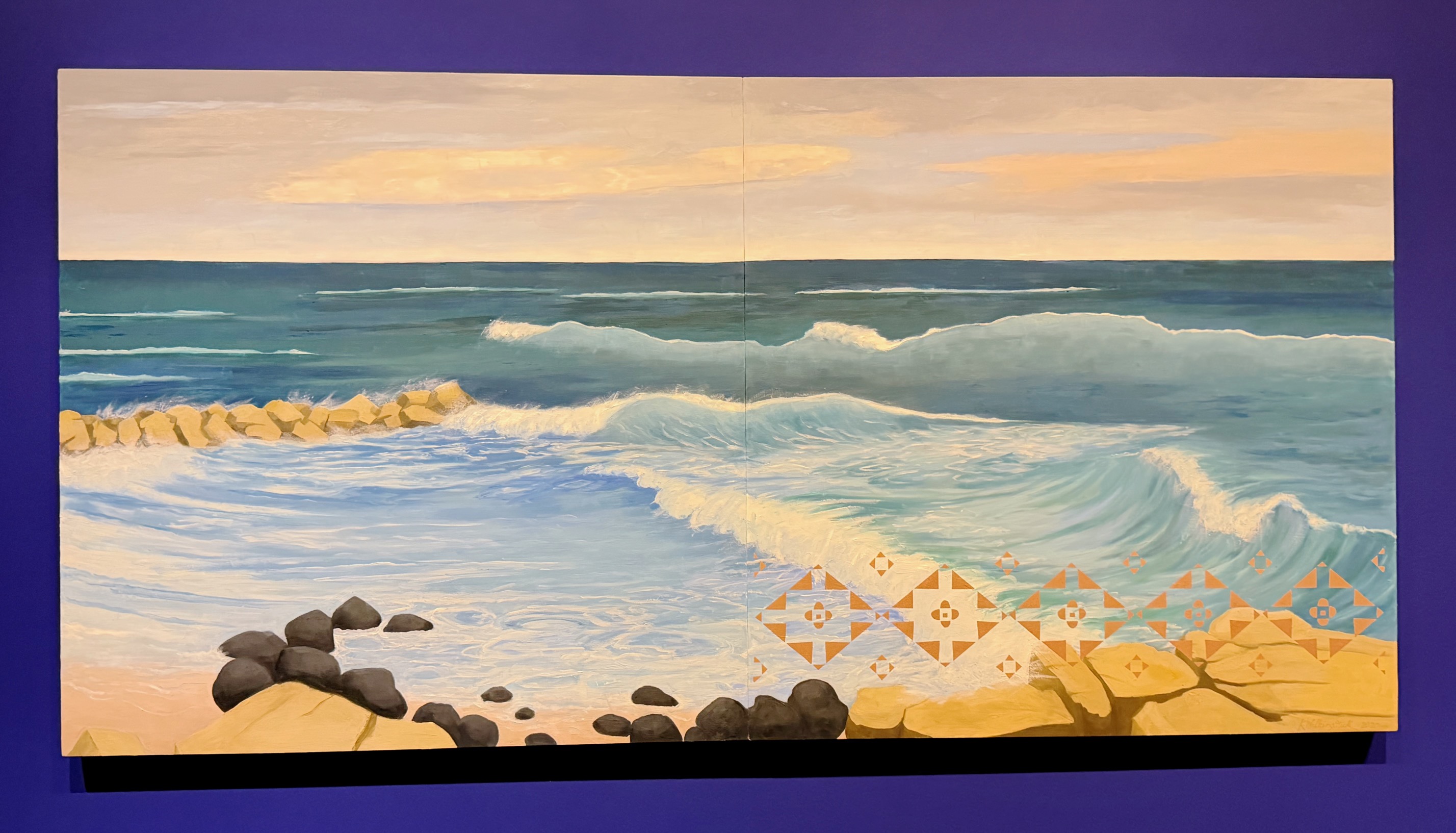
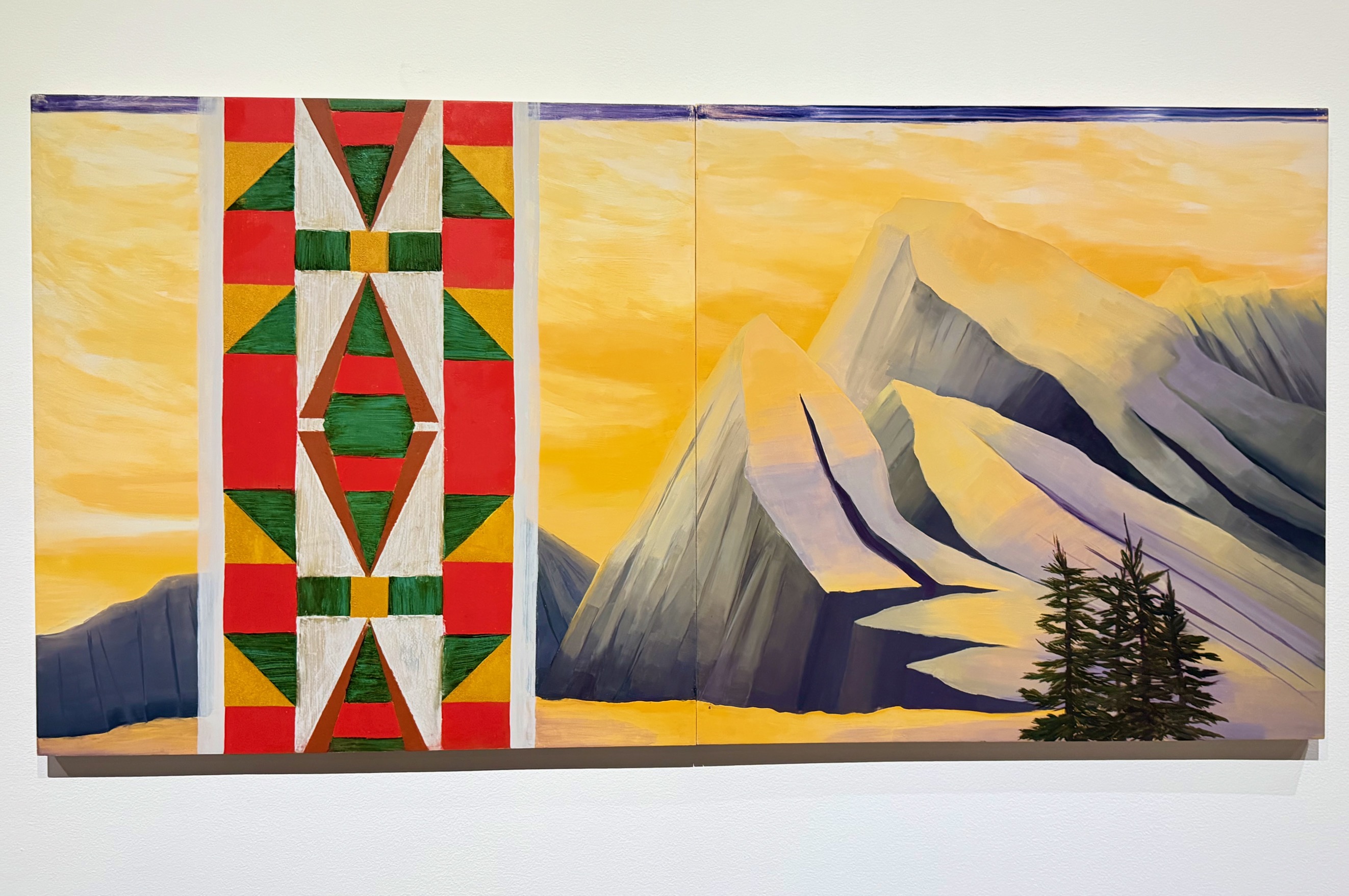
The exhibit juxtaposes early 19th century Hudson River School landscapes with a retrospective of Kay’s own landscapes – large paintings of swirling ocean currents, dramatic Western mountains, and East Coast rivers with bands of Indigenous geometric patterns stenciled across them. It’s a signal that we are all still living on Indian land.
Take a look at our favorite works in our Flickr album.
By hanging 19th-century landscapes side-by-side with Kay’s paintings, the curators suggest we contemplate different questions: Did the popularity of the Hudson River School’s view of “unhabited wilderness” contribute to Americans’ drive West? Does anyone remember that the East Coast was also Native land? Does anyone realize that Native Amerians still live there?
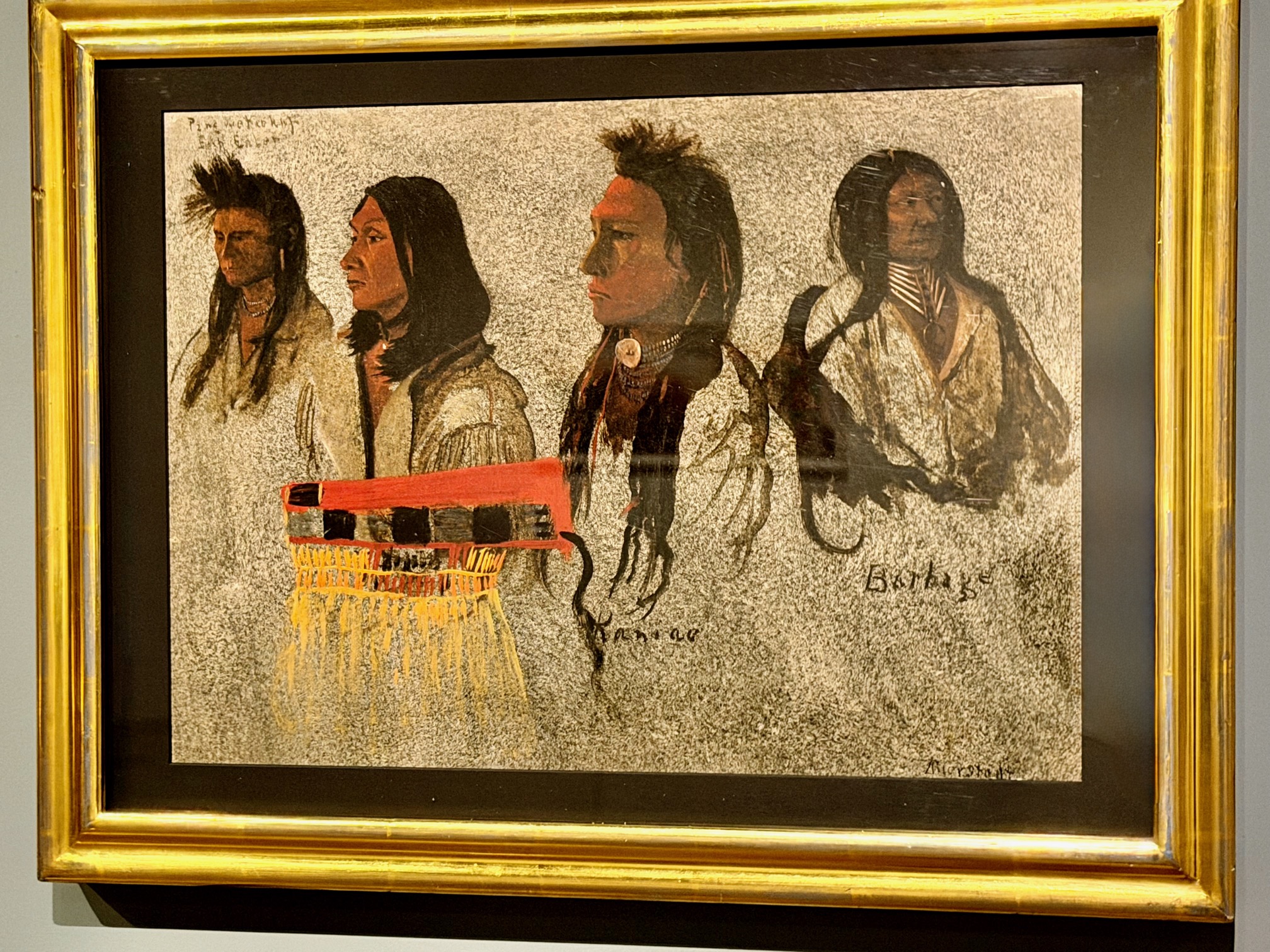
Bierstadt’s sketches of actual Shoshone tribal members is one of the few examples to depict specific Native Americans. And at the time, critics and buyers objected to his insertion of native people into his large-scale romantic landscapes.
The anchor painting of the exhibit is her epic Niagara, showing us the view from the Canadian side of the Falls. As she viewed the Niagara paintings in the NYS collection, WalkingStick wondered if she was up to the challenge of painting the Niagara falls herself. But when she saw a dramatic 1818 painting of Niagara by a relatively unknown female painter, Louisa Davis Minot, she decided to go for it! And what a triumph!
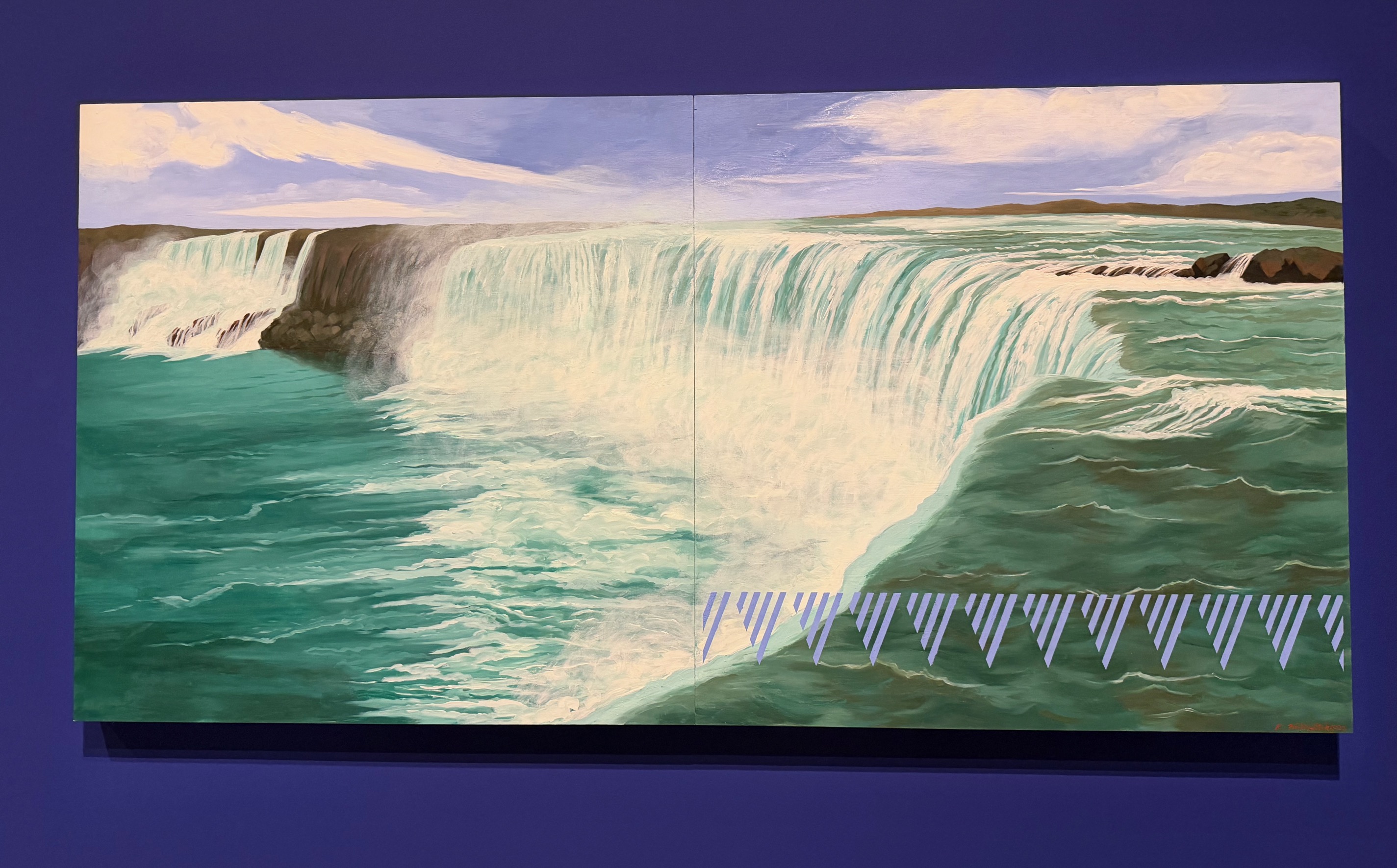
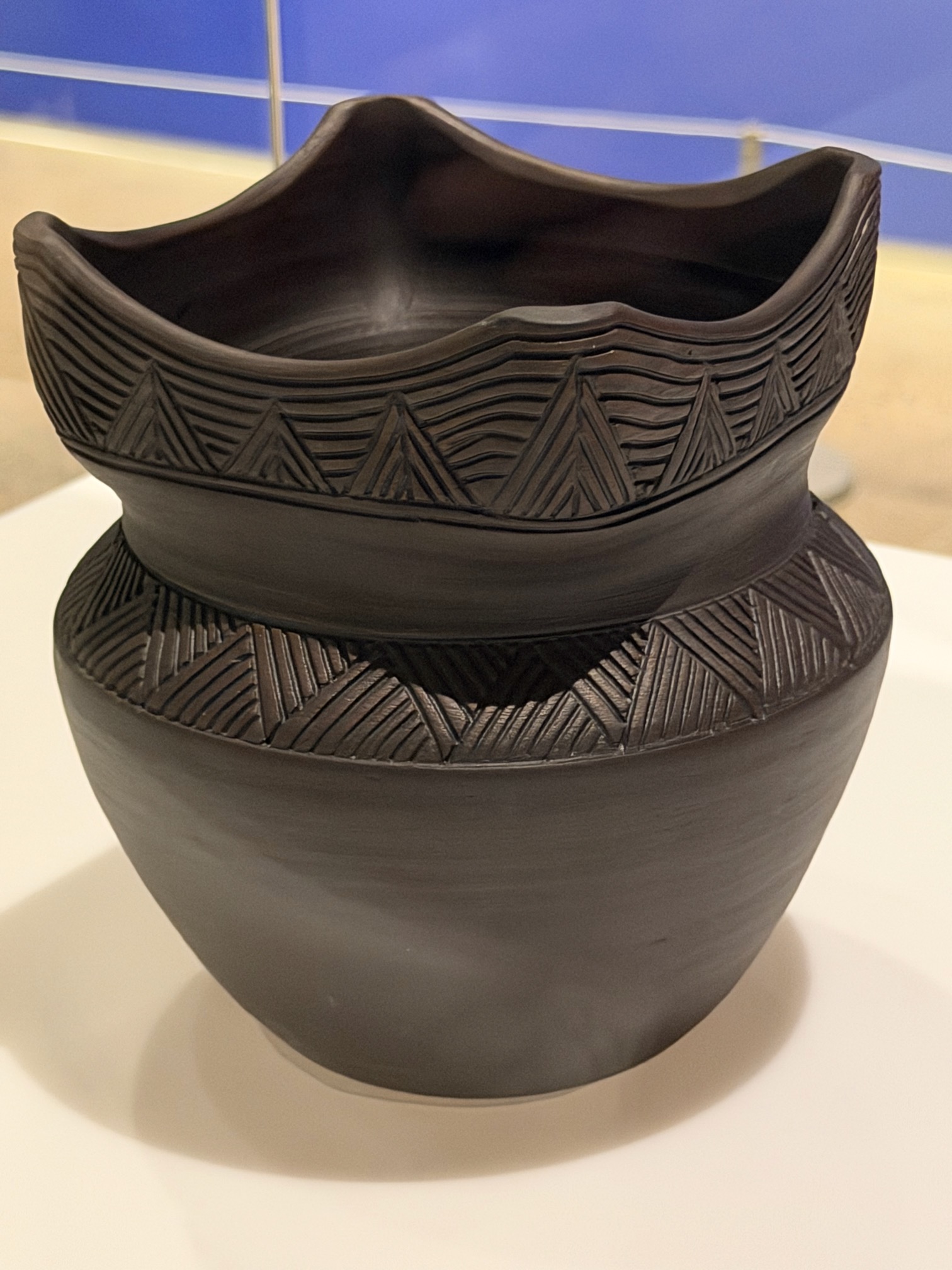
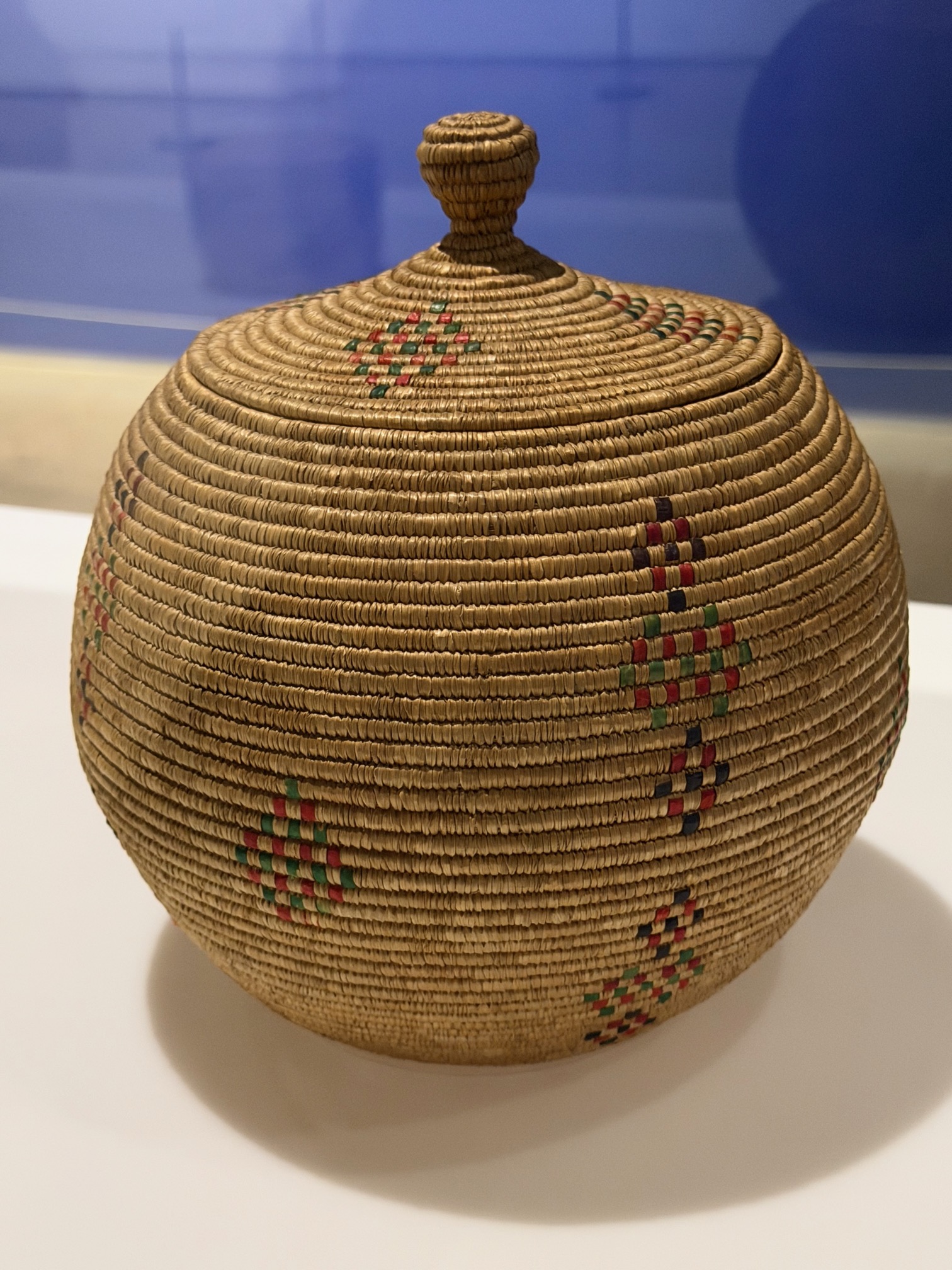
To drive home the connection between these landscapes with the original native inhabitants, WalkingStick looks for geometric patterns associated with specific groups of people. For Niagara, she used a Haudenosaunee pattern from a ceramic piece by David Smith, which is on view nearby in the gallery, along with patterned baskets from her own collection.
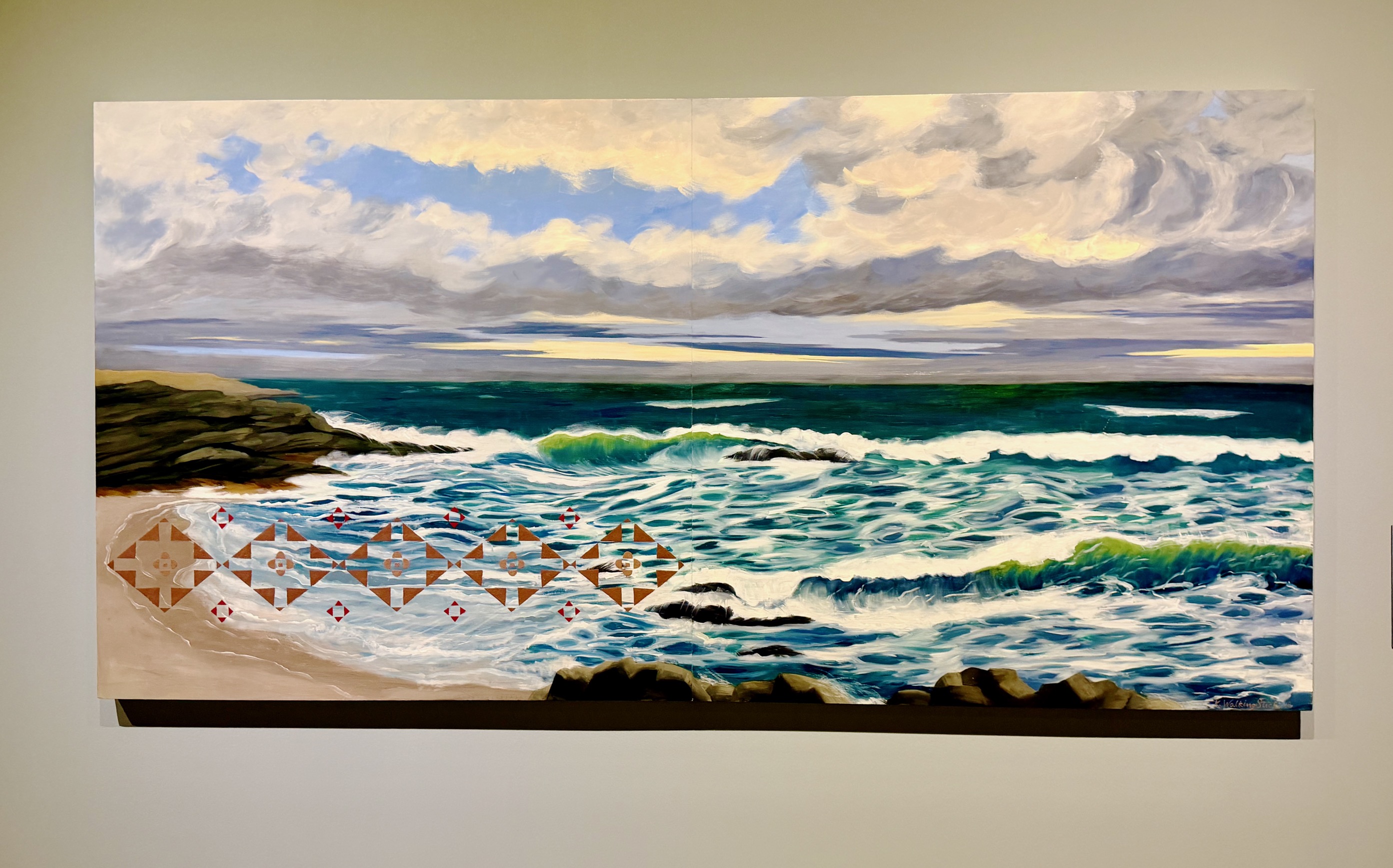
For her paintings of the Wampanoag Coast, she used a patterned band associated with the Pequot/Narraganset tribes who originally inhabited Massachusetts and Rhode Island.
Listen to Kay talk about her painting and see images of its original installation at New York Historical:
Other highlights of the exhibition are WalkingStick’s Our Land works, each emblazoned with a design from a Plains Indian woman’s parfleche bag – creations that WalkingStick contends are the first geometric abstract paintings done in America.
For a more in-depth discussion between Kay and the exhibition curator, Wendy Nālani E. Ikemoto, about Kay’s approach to painting and the beauty she admires in Hudson River School paintings, click here.
Kay WalkingStick/Hudson River School will be on display at the Allentown Art Museum June 20-October 11, 2026 and at the James Museum in St. Petersburg, Florida November 7, 2026 – March 21, 2027.

