Viewing Deep Time with Australian Contemporary Indigenous Artists

The massive exhibition is a blockbuster of abstraction – giant canvases, bold strokes, and enough dots and concentric circles to satisfy the most avid Kusama fan. But these visions don’t emanate from the 20th century’s Western modernist tradition. They’re the work of visionary artists from the Outback, whose abstractions use traditional icons as meditations on stories and landscapes that indigenous Australian people have relayed for thousands of generations.

The Stars We Do Not See is a journey like no other through the Denver Art Museum through July 26, 2026.
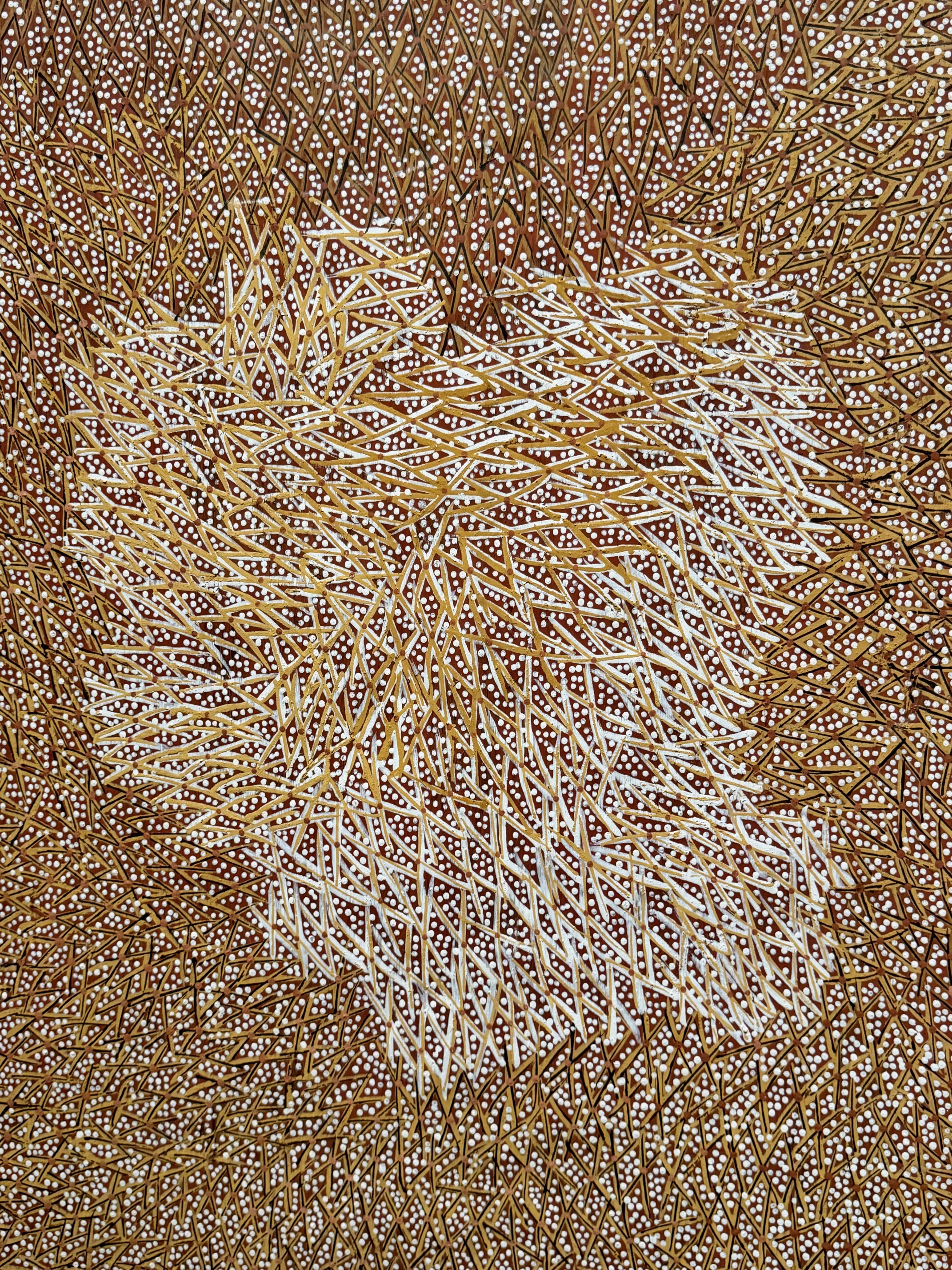
Detail of 2011 Gan’yu (Stars) by Gulumbu Yunupinju (Gumatj), referencing ancestral stories of the creation of stars and universe. Courtesy: National Gallery of Victoria, Canada

The winding path reveals principles of cyclical time, how the spirits of the land influence specific Indigenous cultures, and how icons of sacred landscapes and water sources are translated onto horizonless painted canvases.

Enjoy some of our favorites – full-size works and close-ups of paint details – in our Flickr album.
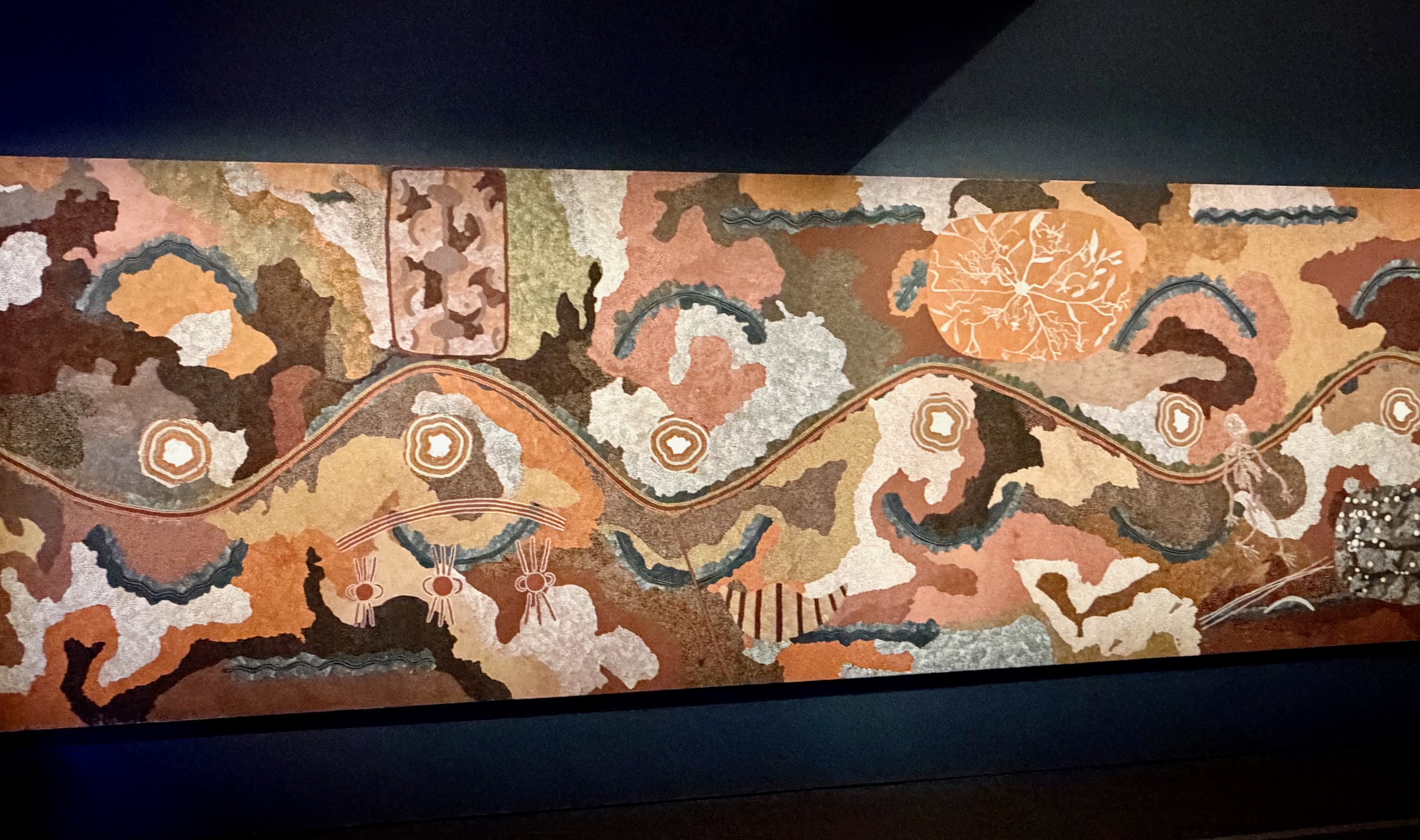
1980 painting Spirit Dreaming Through Napperby Country by Tim Leura and Clifford Possum Tjapaltjarri (Anmatyerre) – a recollection of ancestral homelands taken by cattle ranchers in the early 1900s. Courtesy: National Gallery of Victoria

At every turn, there are gigantic room-size works (some realized as large-group colleborations) and arrays of towering carved and painted memorial poles. Abstract symbols denote spirit beings, water, river systems, nature or animal traces. Everything is drawn from the massive collection of the National Gallery of Victoria, Canada.
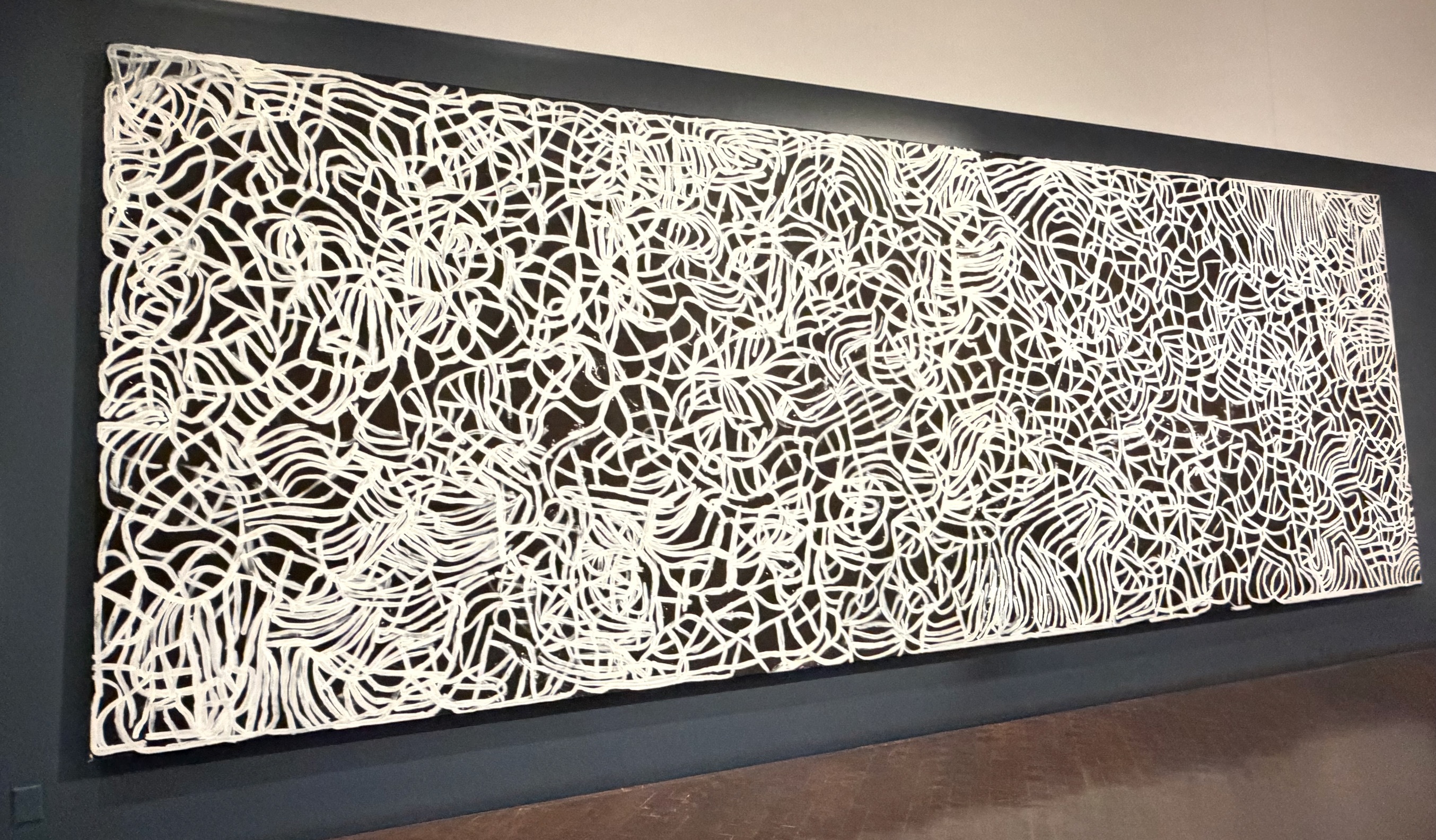
Epic 1995 abstraction Anwerlarr Anganenty (Big Yam Dreaming) by Emily Kam Kngwarry (Anmatyerre), depicting a network of sacred underground roots. Courtesy: National Gallery of Victoria

The curators start and end the show with arresting contemporary works by urban Indiginous artists – a neon installation, video, a painted skateboard, and representational works referencing forced relocation and unjust assimilation policies.
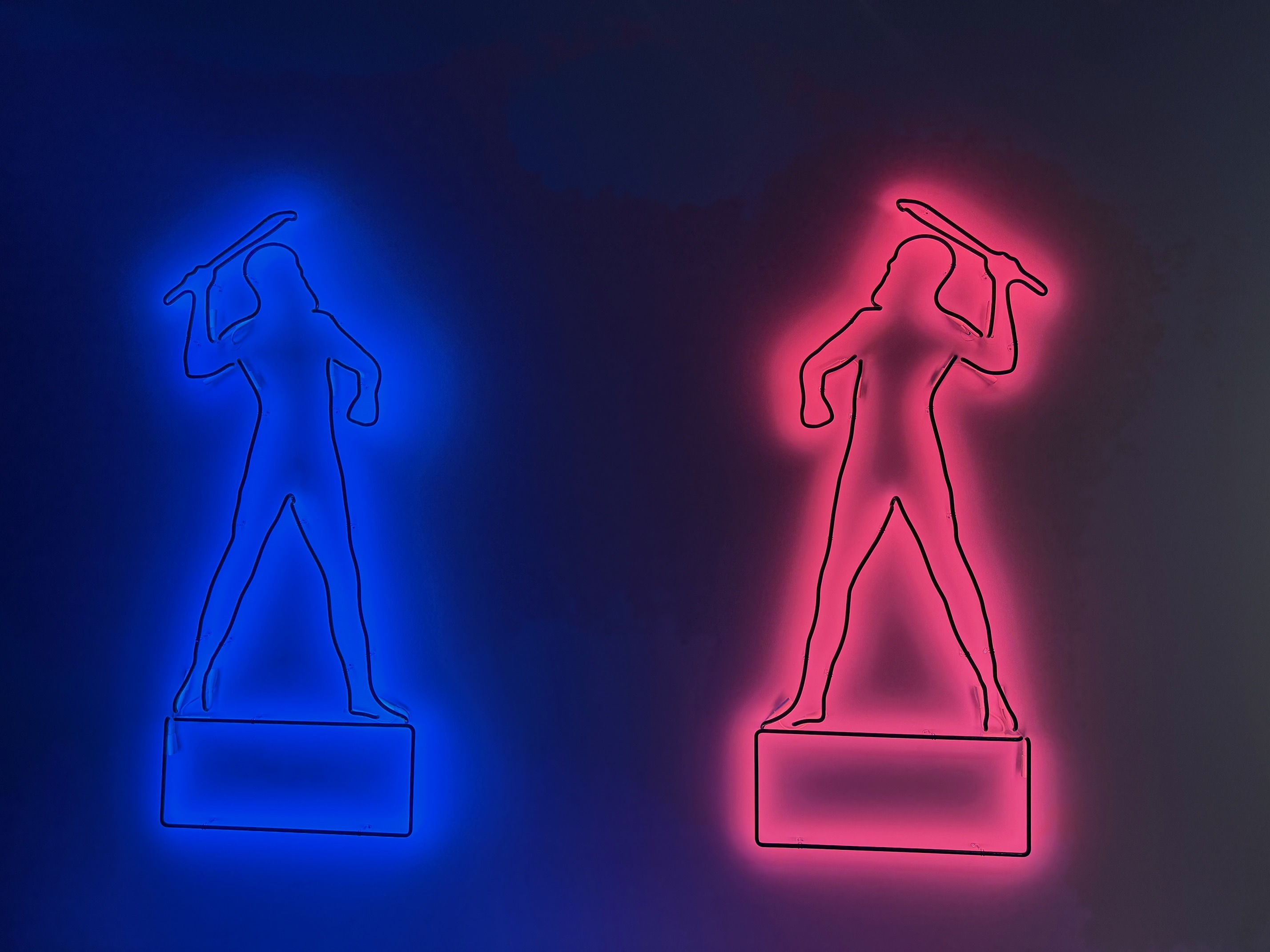
2020 neon “OA Warrior I (Blue) (Azul)” and “OA Warrior I (Pink) (Rosa)” by Reko Rennie (Kamilarol) – a mix of ancestral and urban culture. Courtesy: National Gallery of Victoria
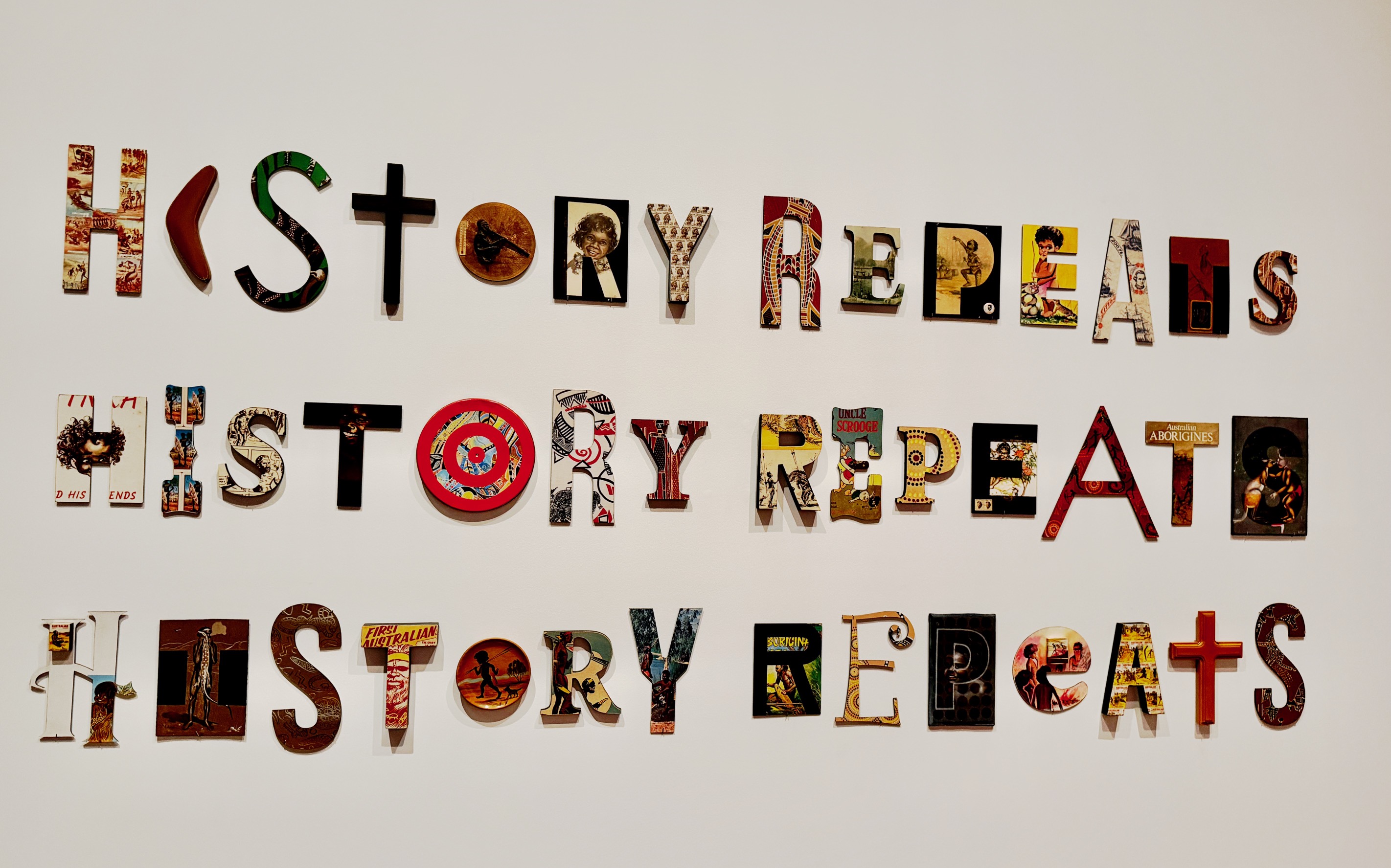
2022 History Repeats by Tony Albert (Girramay/Yidinji/Kuku Yalanji)– a work made of recycled vintage commercial knicknacks featuring appropriated Aboriginal iconography. Courtesy: National Gallery of Victoria

But the majority of the show shows how traditional artists using earth pigments on eucalyptus bark prior to the 1970s gave way to community artist who used new synthetic pigments to paint first on posterboard and then on canvas.
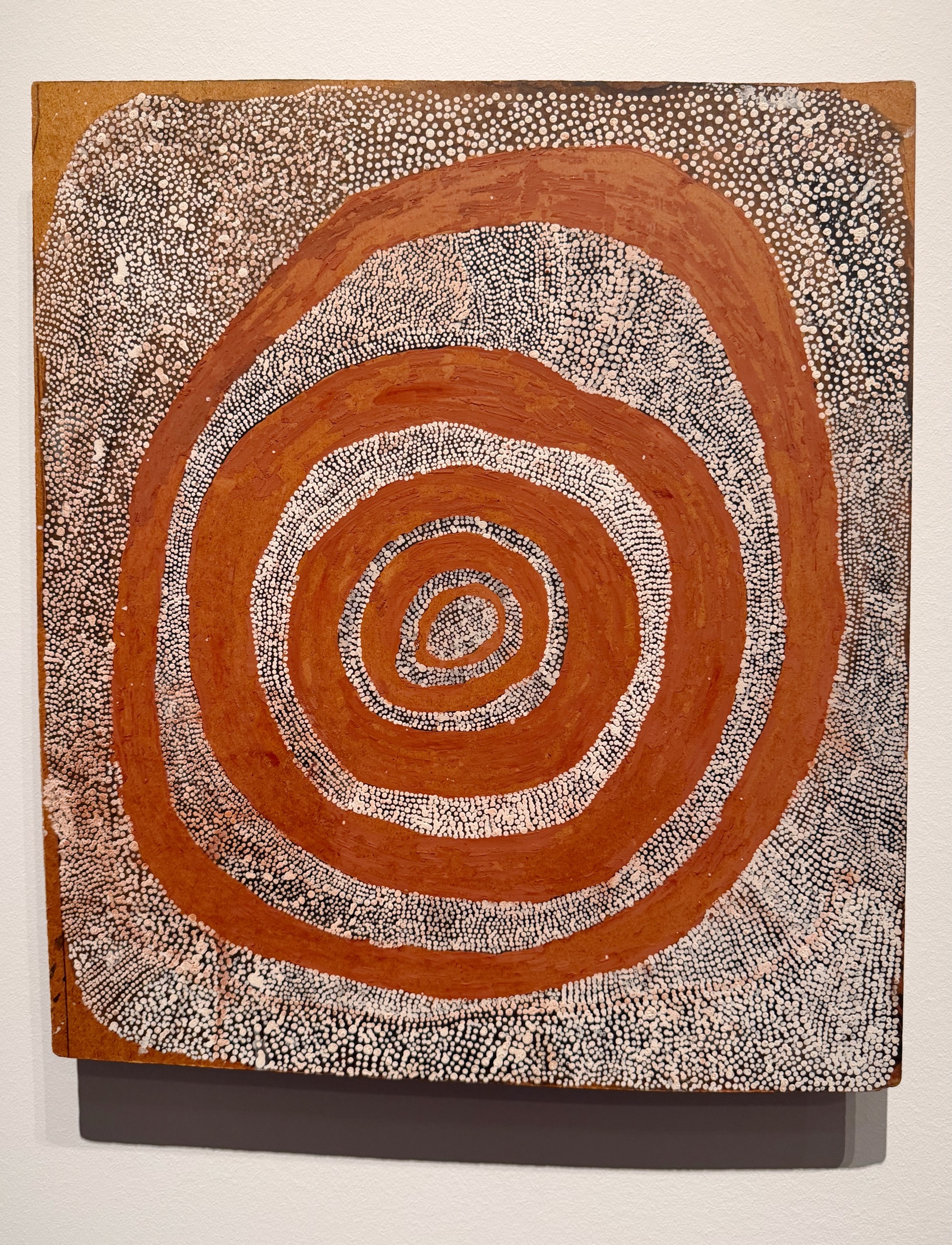
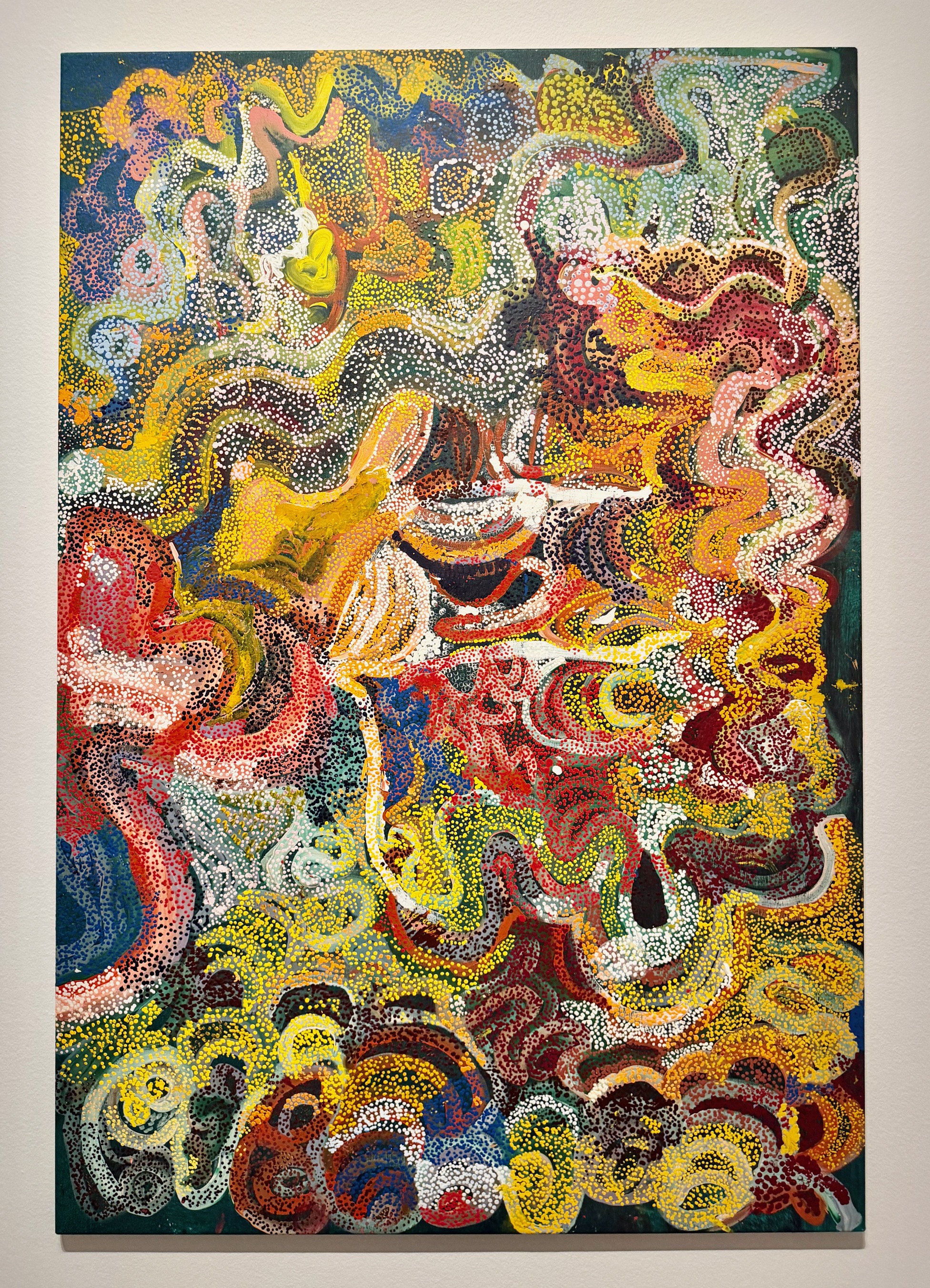
1972 Snake and Water Dreaming by Yala Yala Gibbs Tjungurray (Pintupi) from the first Indiginous art community in Papuna, Northern Territory to establish a contemporary art center; design from ritual body painting and cave art. Courtesy: National Gallery of Victoria
Conceptual Maps: 2006 conceptual abstraction Kalaya Wati (Emu Man) by Alkawari Dawson (Pitjantjatjara). Courtesy: National Gallery of Victoria

For more about the artists and how/why they create, take a look at the exhibition guide here.

Experience the majesty, scale, and experience of this exhibition through this walk-through produced by the Denver Museum of Art. Listen for the explanation of how the exhibit received its title, too!

Don’t worry if you missed this in Denver. The Stars We Do Not See will be on view at the Portland Art Museum in Oregon from September 5, 2026 through January 3, 2027, and at the Peabody Essex Museum in Massachusetts from February 27, 2027 through June 13, 2027.
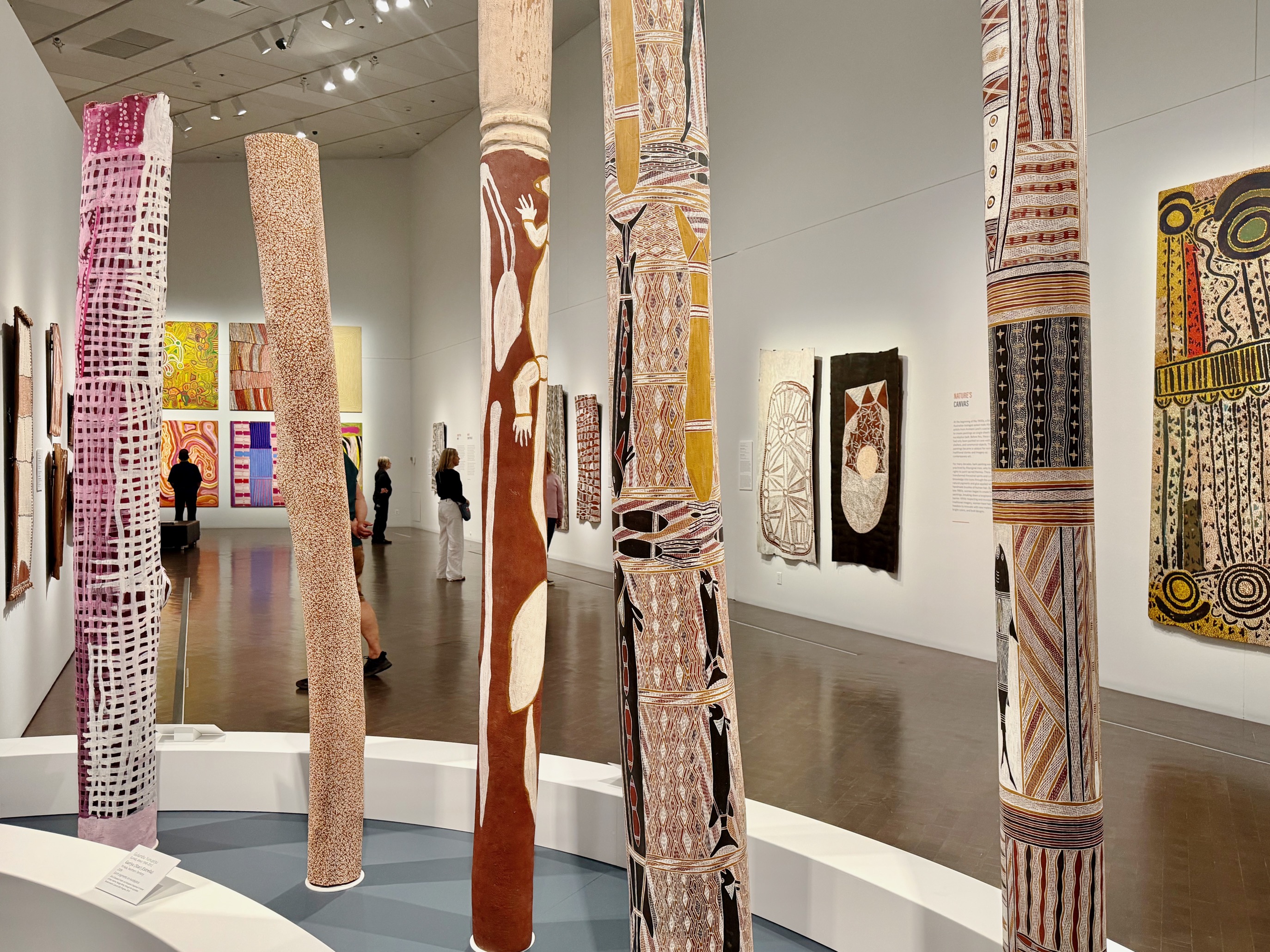
First gallery with display of eucalyptus memorial poles carved by Northern Aboriginal artists and painted with ritual designs

Alma Thomas Splashes Denver with Color

For a pop of color in the winter season, see Composing Color: Paintings by Alma Thomas from the Smithsonian Museum of American Art at the Denver Museum of Art through January 12 and at the Memorial Art Gallery in Rochester, New York February 8 through May 25, 2025.

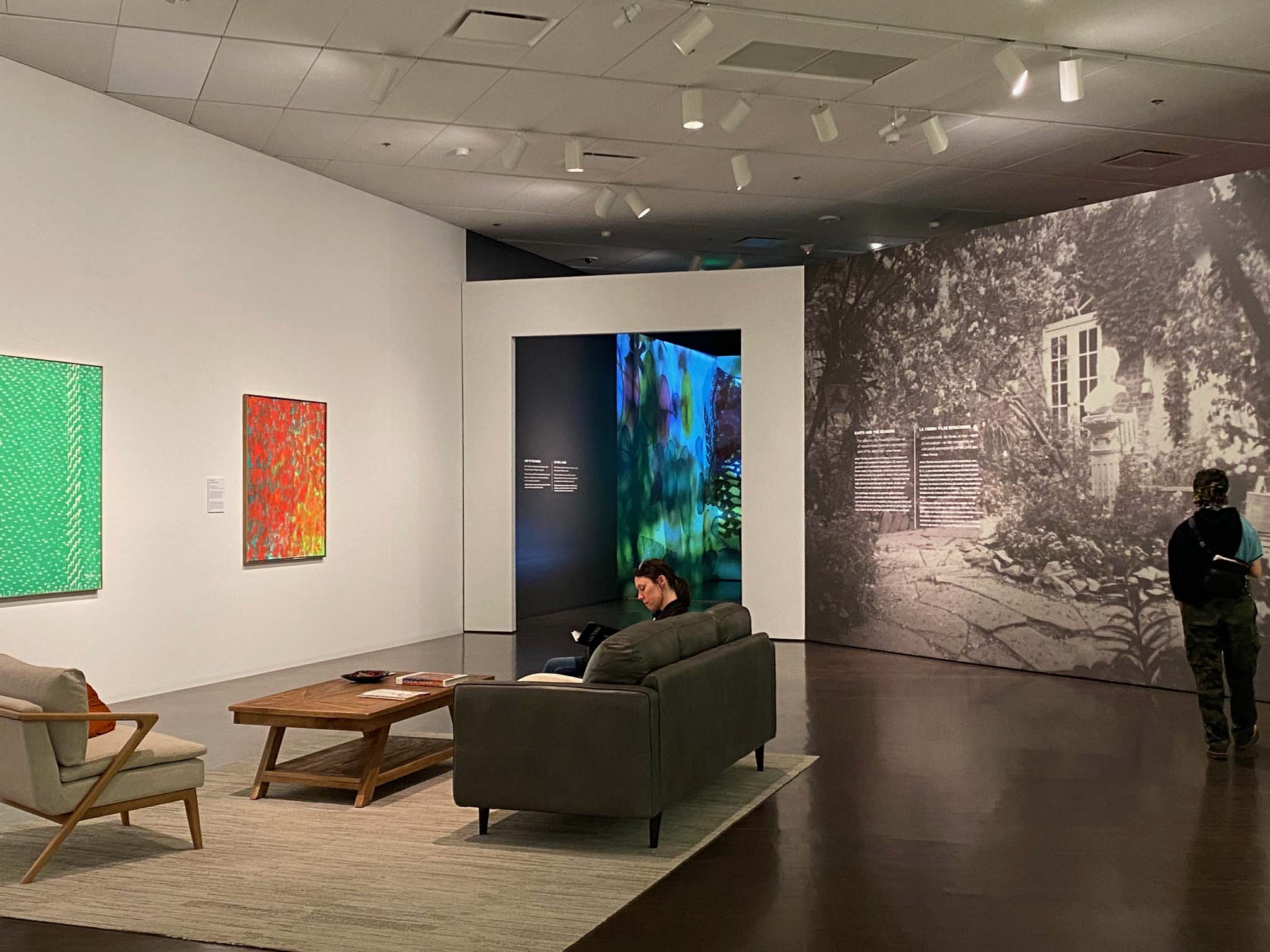
Denver has welcomed this mid-century modern painter with open arms, with visitors lounging in several living-room settings surrounded by abstractions from the Sixties and Seventies by a Washington, D.C. painter who born in the late 19th century but who lived to see a man land on the Moon.

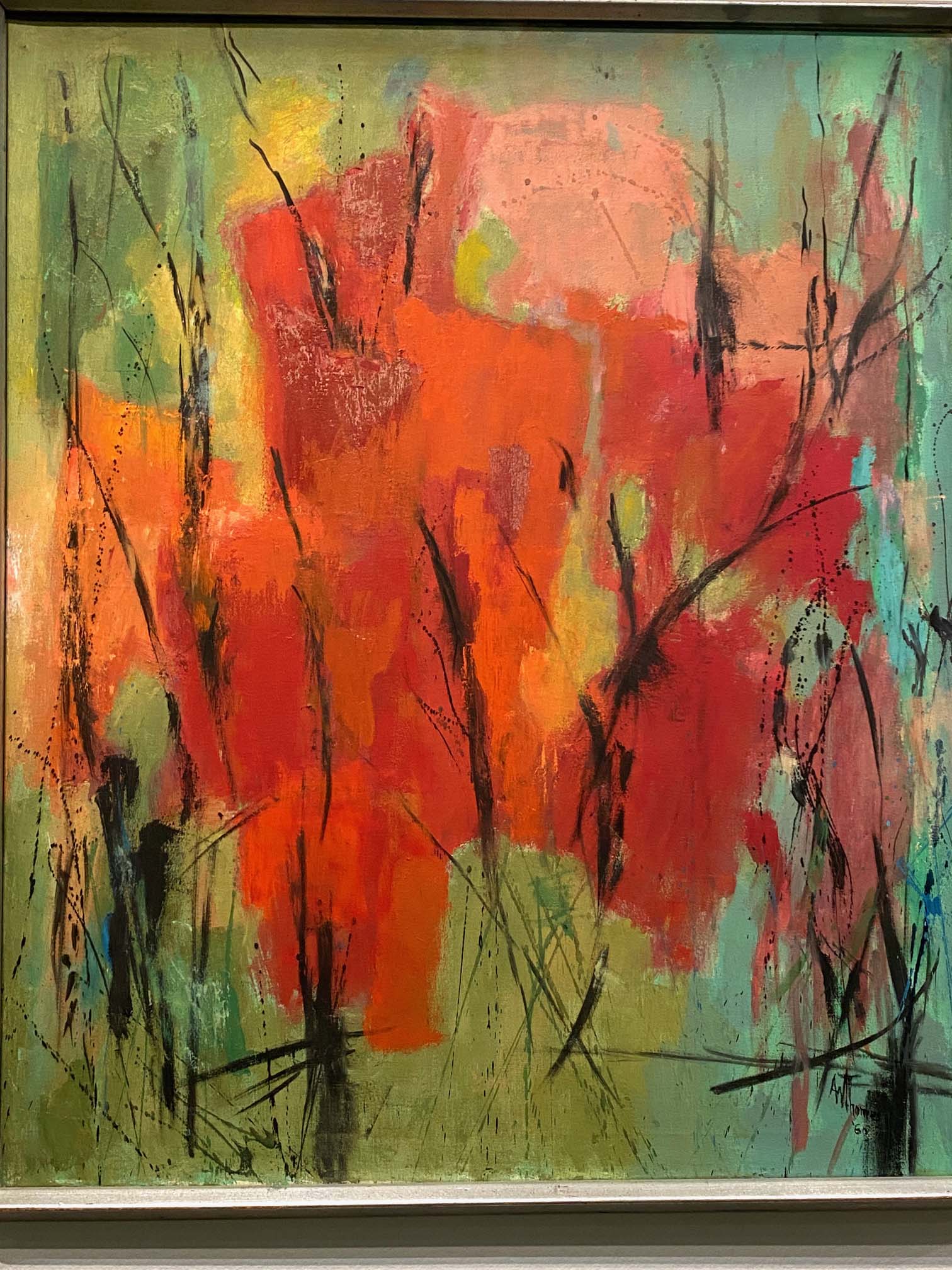
1960 Red Abstraction by Alma Thomas. Courtesy: Smithsonian American Art Museum.

Alma Thomas grew up in Georgia, and earned the first fine arts degree ever granted by Howard University in 1924.  After receiving a masters in education from Columbia, Alma spent the next 30 years teaching in Washington, D.C. public schools. 

Ida Jervis’s 1968 photo Alma Thomas working in her studio. Courtesy: Archives of American Art, Smithsonian Institution.

But she stayed close with her professors at Howard, who founded the Barnett Aden Gallery, one of first racially integrated and Black-owned art galleries in the United States.  Alma served as the gallery’s VP, which displayed a who’s who of contemporary African-American artists, like Elizabeth Catlett, Aaron Douglas, Jacob Lawrence, and Henry O. Tanner. 

By the early 1950s, Alma’s work was regularly shown in exhibitions at the gallery. When Alma finally retired from teaching in 1960 at age 69, she was finally able to paint full time. The Smithsonian’s exhibition features Alma’s work from this highly productive period.

Take a look at our favorites in our Flickr album.

The exhibition is centered around three subjects that inspired her – nature, the cosmos, and music. Her vivid color paintings welcome you to the exhibition but around the corner you see what really inspired her – a wall-sized photo of Alma’s beloved flower garden

Mid-century modern lounge in the Denver exhibition with paintings by Alma Thomas inspired by her garden

She loved the changing seasons, the patterns of gardens, and patterns observed by light flickering through the crepe myrtles in her garden or through the trees on her walks through DC’s endless greenways and parks.

1976 oil Fall Begins, suggesting rustling leaves. Courtesy: Smithsonian American Art Museum.
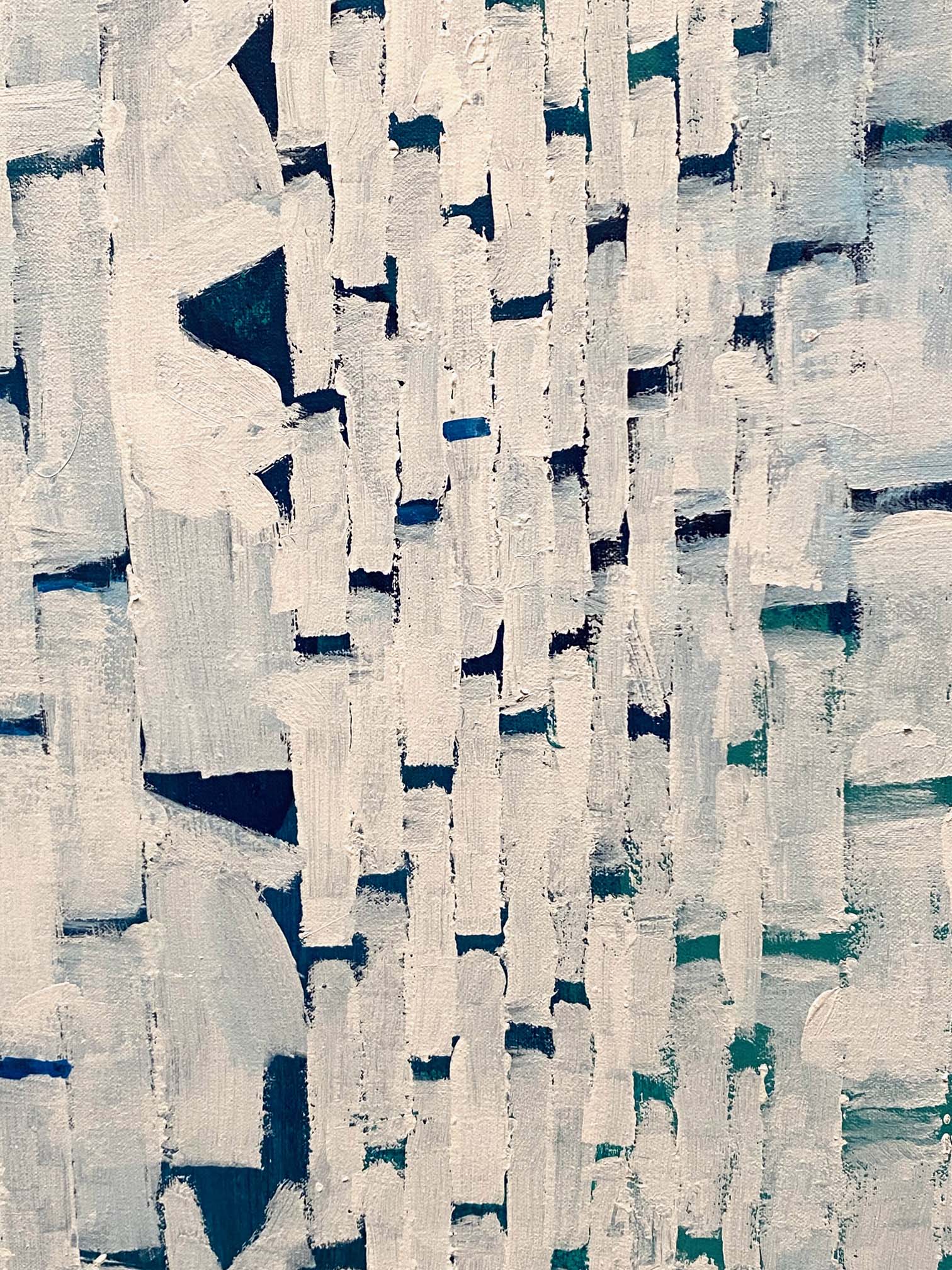
Detail of 1972 acrylic, Arboretum Presents White Dogwood. Courtesy: Smithsonian American Art Museum.

The exhibition also features an immersive environment where visitors can use colors and shapes from Alma’s paintings to splash supersized across the gallery walls.

Room in Denver where visitors use filters to create lightscapes on the gallery walls.
1976 acrylic, Grassy Melodic Chart. Courtesy: Smithsonian American Art Museum.

By the 1970s, Alma’s love of music and rhythm were reflected in her abstractions, although the titles of her canvases tell us that she saw expressive melodies in nature too.

Captivated by the promise of technology, Alma also reveled in the mysteries and rhythms of the planets, space, and those frontiers of exploration. She really felt that the Moon, planets, and stars represented the peace and harmony that were sometimes lacking on Earth.

Always searching for beauty in the world, continuing to paint, and contemplating a brighter future, Alma achieved unprecedented art-world recognition in 1972 at age 80 –a one-woman show at the Corcoran Gallery in Washington and in New York at the Whitney Museum of American Art.

Not bad for a gal who grew up in “horse and buggy days” in Georgia! Thank you to the Smithsonian for collecting Alma’s work and producing this joyful, colorful show.

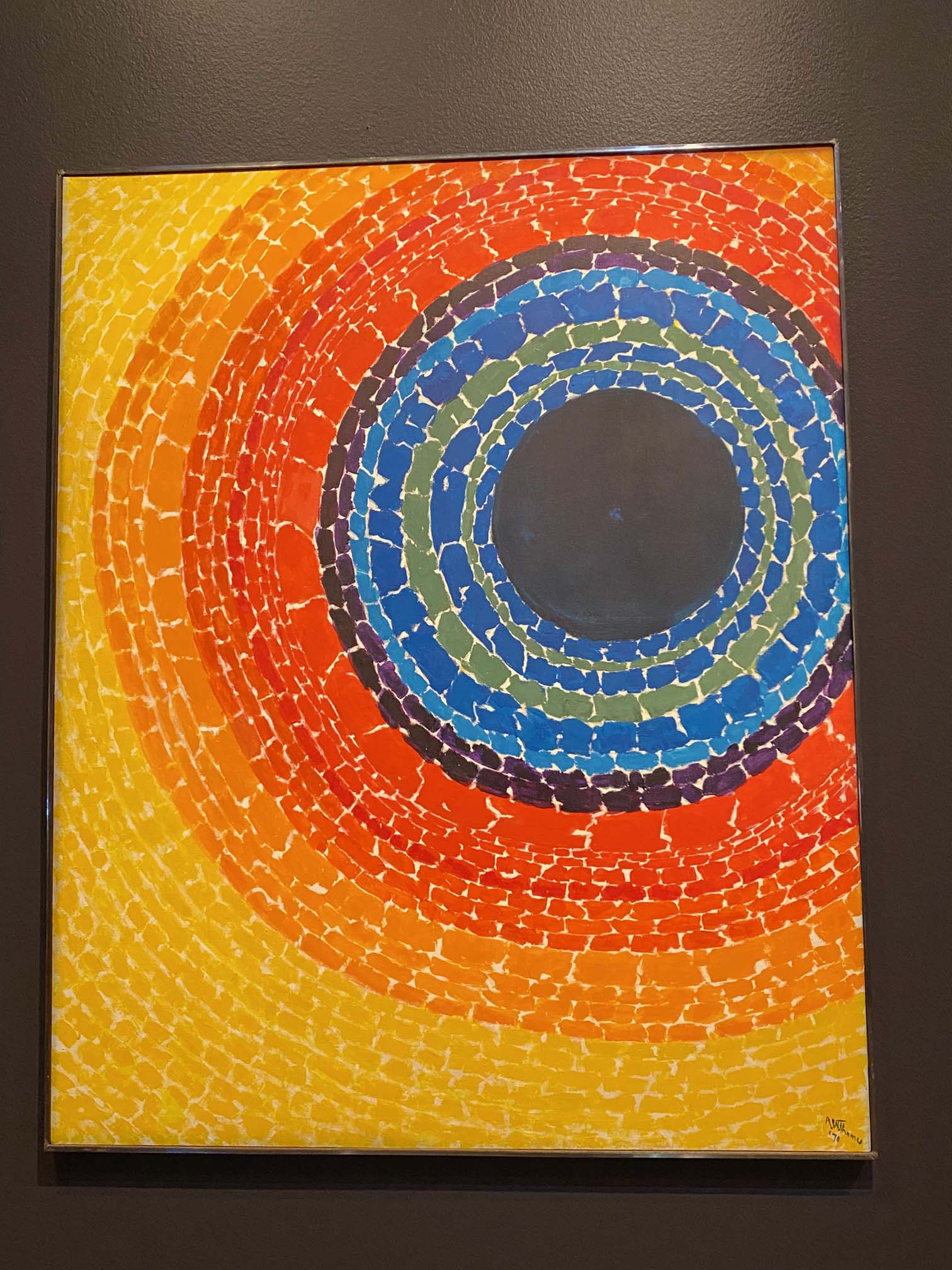
1970 acrylic The Eclipse, based on the March 7, 1970 total solar eclipse. Courtesy: Smithsonian American Art Museum.
1973 acrylic Celestial Fantasy. Courtesy: Smithsonian American Art Museum.

Click here to read more in Denver’s exhibition guide and watch this short glimpse of the galleries below:

Listen to curator Rory Padeken discuss Alma Thomas’s life and work with artist Jordan Casteel, choreographer and dancer Cleo Parker Robinson, and floral artist Breigh Jones-Coplin.