
NYC Museum Videos Receive 49 Million Views on Social Media

The Japan Society’s popular Japanese language series

The Japan Society’s popular Japanese language series

After reposting so many museum videos here, we wondered how much video museums were producing, what social media they were using, and who had the most viewership and followers. We counted, and found that the museums, zoos, and botanic gardens around New York have racked up 48.8 million views on their public YouTube channels since 2007.

The volume of activity on was so significant that we couldn’t help documenting it and packaging the rankings into a report, NYC Museums: 2013 Video and Social Media Rankings.

Museum folks may want to purchase the full 48-page report to see how their organization stacks up, but here are some of our key findings:

As of year-end 2012, NYC museums with the highest number of all-time YouTube channel views were the Paley Center, American Museum of Natural History, and  Japan Society. Paley merges its NYC and LA feeds, and it’s 33M all-time video views are mostly from TV celebrity show panels in LA. So if we’re really looking at the museum programming champs in NYC, it would be AMNH (15M), Japan Society (7M), and MoMA (6M).

The Top NYC Museum Video of 2012 -- an AMNH Science Bulletin Whales Give Dolphins a Lift

The Top NYC Museum Video of 2012 — an AMNH Science Bulletin Whales Give Dolphins a Lift

The top NYC museum viral video of all time is The Known Universe video produced by AMNH for the Rubin Museum’s 2009 show, Visions of the Cosmos – 11M views and still growing. The video was generated from the Hayden Planetarium’s data set.

In  2012, another AMNH video, Whales Give Dolphins a Lift, went viral with 2M views. The AMNH has an active video-production team supplying content to its Science Bulletin walls inside the museum. Hats off to them for making a winning wordless video out of a few still photographs from field scientists in Hawaii, simple titles, and tranquil music.

The popularity of Japan Society’s language lessons are driving the numbers on their channel. Who can resist clicking through all the 2-minute lessons in their Waku Waku Japanese series with Konomi?

Asia Society’s Top NYC Museum Music Video of 2012

Asia Society’s Top NYC Museum Music Video of 2012

The top 2012 NYC museum music video was produced by the Asia Society, Arif Lohar and Friends: Jugni Ji!. Who knew that the finale to a Sufi pop legend’s concert on Park Avenue one year ago would rack up over half a million views?

The top star featured in a 2012 NYC museum exhibition video was a piece of 18th century mechanical furniture displayed at the Metropolitan. Viewership of The Roentgens’ Berlin Secretary Cabinet grew from 182,000 views at year-end 2012 to 1.6 million today. Can anyone explain how mechanical furniture received 25 times the viewership of the Met’s video walk-through of its blockbuster McQueen show, Savage Beauty?

The NYC museums using the greatest range of social media and video channels are The Jewish Museum and the Rubin.  One of the best under-the-radar NYC museum Flickr sites was the historical archive of Wall Street documents and treasures posted by the Museum of American Finance.

All the video and social media rankings 63 museums are in the report. Click here to see what’s included and make a purchase from our Its News To You Reports shop.

OK, here it is: the all-time top NYC museum video from 2009:

FIT’s Fashion Tech Timeline

Black velvet evening dress by Charles James (c. 1955) with a zipper inserted along that diagonal seam

Black velvet evening dress by Charles James (c. 1955) with a 3-ft. zipper inserted along that diagonal seam

Once you see the clothes in FIT’s Fashion and Technology exhibition inside a technology context, you’ll start making the connections at other shows all over town.

Exhibit A right inside the entrance – a seamless nylon-powder dress and bag made from CAD software and a 3D printer by Freedom of Choice in 2005 is a mesh wonder that is made by the same process as Amanda Levete’s woven Fruit Bowl in MoMA’s current Applied Design show.

Take the brilliant purple British day dress that FIT displays as an example of the revolution in color that occurred in the 1860s as analine dyes began to be used for the first time in commercial cloth manufacture. The Metropolitan Museum showcases the same point (except surrounded by Manet and Monet masterpieces) in its blockbuster time-series Impressionism, Fashion and Modernity. (Reference Camille.)

The 1860s color revolution due to analine dyes in commercial fabrics

The 1860s color revolution due to analine dyes in commercial fabrics

Outstanding achievement award invention + application at the FIT show: invention of the zipper in 1913 and the stunning accomplishment of Charles James, who inserted a three-foot-long zipper into a spectacular gown in a hidden seam on the bias (see left).

In Fashion and Technology, FIT makes brilliant use of its own stellar collection to chronicle the changes in technology that revolutionized fashion, from the advent of the Spinning Jenny in 1764 to the world’s first programmable T-shirt (see below).

For fans of the 18th and 19th centuries, here’s what technology mattered:

1764 – cotton replaces wool and linen as the go-to fabric (thanks, Spinning Jenny)

1780s – machine-knit textiles (200 years before double-knits)

1801 – Jacquard looms create complex patterns by using punch cards (up to 10,000, so take that Univac!)

1846 – sewing machines eliminate tedious hand stitching for the interiors of gowns

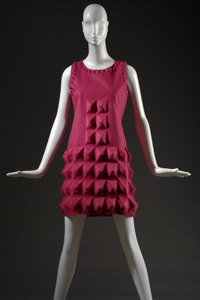
Pierre Cardin, dress, fuchsia “Cardine” textile with molded 3D shapes, 1968, Gift of Lauren Bacall.

Pierre Cardin, dress, fuchsia “Cardine” textile with molded 3D shapes, 1968, Gift of Lauren Bacall.

1856 – analine dyes bring about a color revolution to ladies’ fashions (go, hot pink!)

1857 – chain-stitch sewing machine

1860s – more color complexity with roller-printed fabrics

1880s – collapsible bustles let ladies sit down

1882 – celluloid used to imitate ivory and tortoiseshell for accessories

Check out the excellent exhibition timeline interactive to see these breakthroughs and what happened in the 20th and 21st centuries.

As promised, here’s the video of the world’s first programmable T-shirt:

Dance into Spring to Mr. Burrows’s Color-Block Beat at MCNY

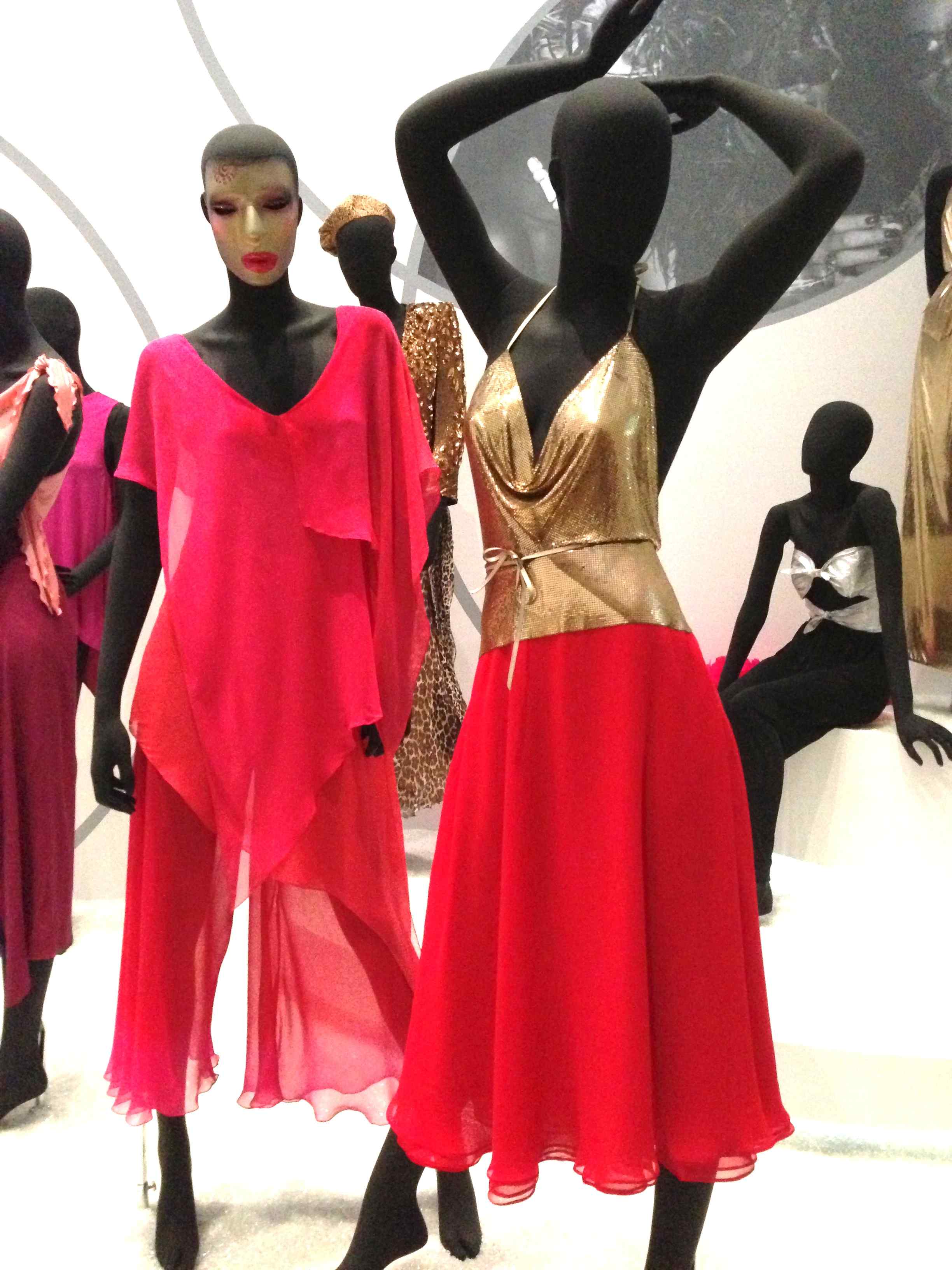
Studio 54 dance wear by Stephen Burrows.

Studio 54 dance wear by Stephen Burrows.

To experience an all-out burst of color, walk through the doors of the Museum of the City of New York and visit the paparazzi-worthy tribute to a 1970s design legend, Stephen Burrows: When Fashion Danced. You’ll get to know the man who styled Liza, Cher, Diana, Farrah, and so many icons of the 1970s with bright, beautiful, glamorous draped designs were made to whirl around the dance floor.

Vogue issues throughout the 1970s were filled with cavorting models sporting color-blocked coats, dresses, sweaters, and evening wear and lettuce-edged jersey wrap tops, cocktail dresses, and pant suits by King of Qiana, Stephen Burrows. When he burst upon the scene in the late Sixties, Geraldine Stutz installed him in her ground-breaking “street of shops” that she created at Henri Beldel, when it was still on 57th Street. If you don’t know Stephen’s work, a stroll through the first floor of MCNY will set you straight about who actually created the draped metallic disco top emblematic of Studio 54.

It’s the first retrospective dedicated to this stylish creative powerhouse, with ensembles drawn from the Burrows archive, FIT, the Metropolitan, and MCNY’s own treasure trove, and you’ll have until July 8 to see it.

Stephen gave us the draped metallic disco top and so much more.

Stephen gave us the draped metallic disco top and so much more.

The opening night party drew fashion royalty, and when we visited, Michael Kors was levitating with excitement, seeing the work that inspired so many to drape, piece, and glamorize with eye-popping colors. Check out the looks on the Flickr feed.

Don’t miss the major piece of fashion history hiding in one corner of the show: At a time when American fashion was viewed by Europeans as second rate, Burrows and Blass, Calvin, Oscar, and Halston were invited to follow the French at the still-talked-about 1973 benefit fashion show at Versailles. You’ll witness how Stephen and the NYC crew battled it out on the stage against YSL, Cardin, Ungaro, Givenchy, and Dior.

Spoiler alert: Stephen and his American crew won.  Historic is an understatement.

Surrealists Get Out Pencils and Scissors at The Morgan

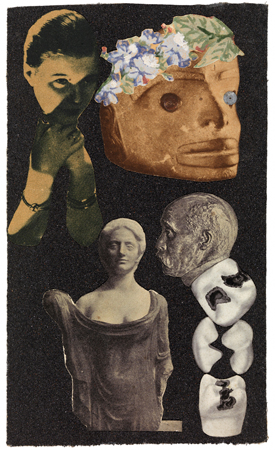
César Moro’s Adorée au grand air (1935). Source: The Getty Research Institute.

César Moro’s Adorée au grand air (1935). Source: The Getty Research Institute.

Automatic drawing, games, rubbings, collage, and dreams are all chronicled in the spectacular Drawing Surrealism show closing today at The Morgan. It’s an encyclopedia of what you can do with a scissors and pencil and demonstrates that these forms of play were critical to the most famous Surrealist works by superstars Ernst, Dali, Masson, and their European colleagues.

Some of the off-the-wall creations born out of the Surrealist’s drawing games eventually made their way into big-time oil paintings. The curators also contend that the monochrome grey-scale of some famous paintings is actually a tribute to the importance they attached to charcoal and pencil media.

The show, co-organized with the LA County Museum of Art, is the first time that Surrealist drawings have been the subject of an exhibition, and curators make quite the case for drawing technology transfer by showing us how these techniques (especially collage) spread to the rest of the world.

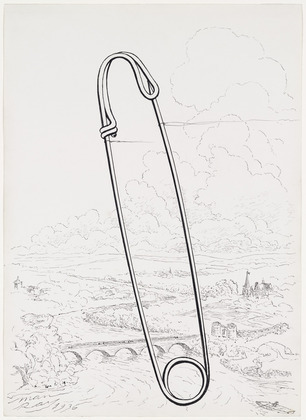
Man Ray’s Safety Pin (1936). Ink and pencil on paper. Source: MoMA. © 2013 Man Ray Trust / Artists Rights Society (ARS)

Man Ray’s Safety Pin (1936). Ink and pencil on paper. Source: MoMA. © 2013 Man Ray Trust / Artists Rights Society (ARS)

One of the genuine revelations is the work and importance of César Moro, a Parisian-trained Peruvian who brought Surrealism to Mexico and the rest of Latin America.

You can’t help but be struck by the forerunners of Pop: Man Ray’s Safety Pin sure looks like a precursor to Claes Oldenburg’s 1970s Clothespin, and there’s no question about the influence of Eduardo Paolozzi’s 1940s Surrealist-influenced collages: He and Richard Hamilton invented Pop Art in Britiain.

When the show was installed at LACMA, several contemporary artists were asked to create Surrealist-inspired works. Listen as Alexandra Grant, Mark Licari, and Stas Orlovski show and tell how European mind-and-hand games of the 1930s inspire work today:

Abstraction All-Stars Featured in MoMA’s LinkedIn

Installation view of the network behind the birth of abstract art

Installation view of the network behind the birth of abstract art, according to MoMA and Columbia Business School

As soon as you arrive at Inventing Abstraction 1910-1925, MoMA’s soon-to-close extravaganza featuring the relationships among painters, poets, composers, and dance innovators, you encounter a big, bold infographic on the wall – a web showing who was collaborating with, influencing, viewing, and reading each other as “abstract art” was born.

The stunning exhibit is a who’s who of modern art, with work by Picasso, Kandinsky, and Malevich (of course), but pulls in works from lesser-known early innovators from Britain, Poland, Italy, and America (hi, Georgia!) and across disciplines. So many connections, so little time! The show has books, music, pioneers of modern dance…just about everything.

If you can’t get to it, don’t worry. MoMA’s put it all on the web so you can explore all the connections yourself. The highlighted names show the artists with over 25 connections, like an early 20th century LinkedIn or really popular Facebook friends. Who knew that Russian fine-art diva Goncharova was more connected than, say, Malevich or El Lissitsky?  I guess inventing Rayism and designing sets for the Ballet Russes paid off in getting her positioned in this MoMA pantheon.

Created by MoMA curators, designers, and pros from the Columbia Business School, the interactive web highlights every artist featured in the massive MoMA show. The infographic allows you to zoom in to see how the buzz, particularly in 1911-1915, brought abstract art into being.  No matter which name you click on, you’ll get to view the works, play the music, and watch the dances – a web-based multimedia tour-de-force.

Now dive into one of the best art-websites ever, and get to know the network and likes of the hot, emerging artists who made the art world of 100 years ago into what we know today.

Watch how this show and web project were brought to life with Excel, great minds, and graphic design. And be sure to check out Paul Ingram’s views on the value of networks at the MoMA video site.

Shoe Obsession or War at FIT

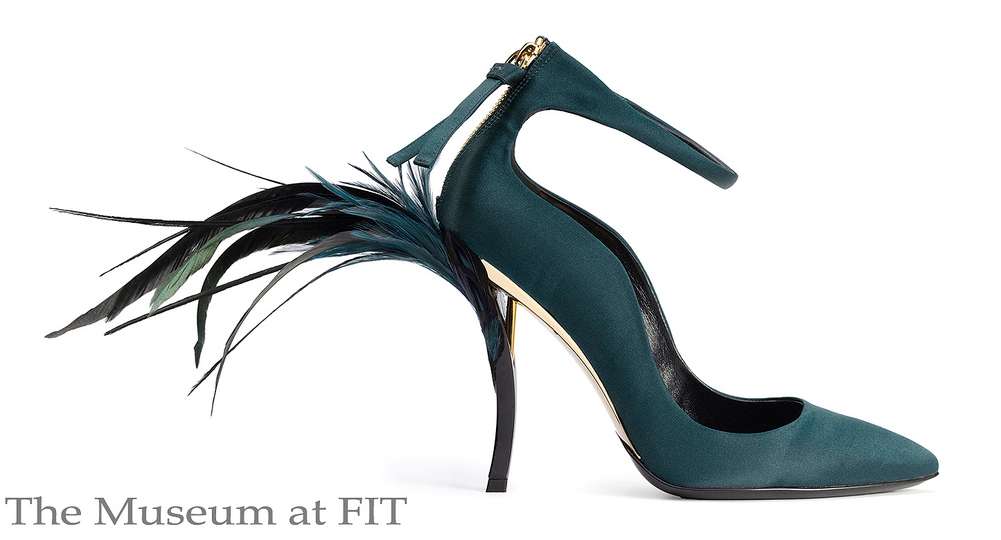
Eyelash Heel pump by Roger Vivier (Bruno Frisoni) (2012-2013). Courtesy of Roger Vivier/Photo by Stephane Garrigues

Eyelash Heel pump by Roger Vivier (Bruno Frisoni) (2012). Courtesy of Roger Vivier/Photo by Stephane Garrigues

The design gauntlet has been thrown down. The Museum at FIT’s lower-level exhibit, Shoe Obsession, pits establishment high-heel designers against upstart shoe artists in a no-holes-barred visual extravaganza that footwear lovers will savor.

There’s really no winner or loser. It’s all an impossible-to-take-in treasure trove. Take a look at FIT’s Flickr site, which gives you a taste, but doesn’t even tell half the story. There are 150 pairs of shoes on display, all fighting for your attention as to which is the best, highest, most outlandish, to-be-seen-in, and impossible-to-wear shoe creation.

Noritaka Tatehana’s Lady Pointe shoes designed for Lady Gaga (2012)

Noritaka Tatehana’s Lady Pointe shoes designed for Lady Gaga (2012)

The show, sponsored by Saks Fifth Avenue, focuses on 21st century shoe design, seeming to claim that bags are over and that shoes are “it”. If stats tell the story, FIT says that the average American woman today has over 20 pairs of shoes – double the average of the late 1990s.

The glass vitrines present all the artistry beautifully. When we visited, admirers were circling each slowly to view the exquisite, fanciful creations from all angles. The center  aisle features selections from several private shoe collections, including a few from McQueen muse Daphne Guiness.

You’ll see over-the-top works by incumbants Vivier, Prada, Blahnik, and Gucci right next to glass houses showcasing the upstarts, as in our photo here: Center front is Mariela’s actual glass slipper, which no one can actually wear. Above it and to the right, are Tea Petrovic’s prototypes inspired by futuristic sculptor Naum Gabo and the soaring architecture of Calatrava. On the left, Janina Alleyne’s menacing Exoskeleton shoe actually has been created by a 3D printer.

Go and make your own choice about what you would take home if you could.

There’s no video to accompany this incredible show (just a book), so enjoy the trailer for the documentary God Save My Shoes, which FIT had running in its 27th Street entrance:

Allen Ginsberg’s Time Machine Walkabout at NYU

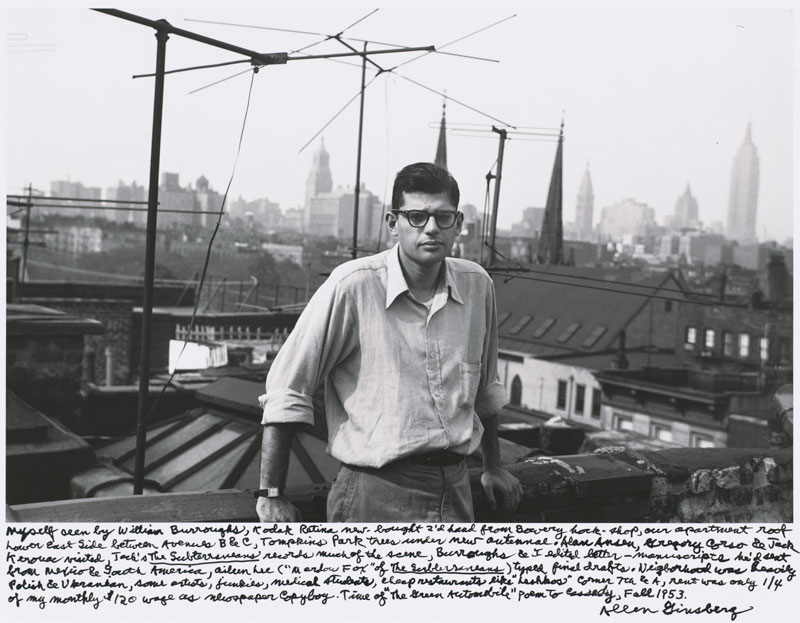
Myself seen by William Burroughs, Kodak Retina new-bought 2'd hand from Bowery hock-shop..., 1953, printed 1984-97. National Gallery of Art, Gift of Gary S. Davis. 
Images © 2012 Allen Ginsberg LLC. All rights reserved.

Myself seen by William Burroughs, Kodak Retina new-bought 2’d hand from Bowery hock-shop…, 1953, printed 1984-97. National Gallery of Art, Gift of Gary S. Davis. 
Images © 2012 Allen Ginsberg LLC. All rights reserved.

Walking through the Grey Art Gallery’s show Beat Memories: The Photographs of Allen Ginsberg is pretty much a stroll through the neighborhood circa 1953 – Tompkins Square Park, Avenue B, three-room apartments for $29 per month.

This incredible tribute to all things Beat was initially mounted by the National Gallery, but the best place to see it is NYU’s gallery in the Village, just steps away from where it all happened. Get to Washington Square to see what it was like to be young, broke, ambitious, and at the edge of a generational shift in America.

Allen Ginsberg had just gotten a $13 Kodak camera in a Bowery pawnshop and began taking photos of himself and his friends – Jack Kerouac, William S. Boroughs, and Gregory Corso. No one was famous yet. About thirty years later, Ginsberg found the snapshots, printed and enlarged them, and wrote in the margins his memories of sharing the flat, living on nothing, and breaking the rules.

The photos tell quite a coming-of-age story – the first publication of Howl, Ferlinghetti’s bookstore in San Francisco, emerging Beat sensibility, and life in a flat at 206 East 7th Street while Kerouac took to the road. The earlier photos were all taken from 1953 to 1963, but later photos of his from the 1980s include Dylan, Larry Rivers, Francesco Clemente, and even Madonna.

As an extra bonus, Grey Art Gallery interns developed a walking tour of Ginsberg’s East Village haunts, so you can actually experience Café Reggio, Café Wha?, and over 25 other spots where it all took place. Download the PDF tour inside the Beat Memories site and walk the walk of literary and cultural rebellion.

Get to this show right now in New York, or catch it in San Francisco’s Contemporary Jewish Museum later this year. If you can’t do either, poke through the online photos with Ginsberg’s commentary at either the Grey or the National Gallery sites (at the latter, you can enlarge the photos to read Ginsberg’s addendums). Here’s a promo from WNET:

FIT Grad Students Give Everyone the Boot

Curvy, red-lined leather “it” boot of 1900 by Jack Jacobus Ltd. Austrian fashion, gift of the V&A.

Curvy, red-lined leather “it” boot of 1900 by Jack Jacobus Ltd. Austrian fashion, gift of the V&A.

As part of FIT’s program in Fashion and Textiles Studies, the grad students have mounted a gem of a show about fashionable footwear  — Boots: The Height of Fashion, running just a few days more.

The museum’s side gallery tells an interesting story about how boots went from practical to glam, and from guy wear to girl fashion, beginning with some thought-provoking high-buttoned “look at me” boots from 1900, following on to the boot-clad flappers, and taking us straight through boot history to the heyday of the Warhol factory.

The students have rummaged through the FIT collection to show us their picks to demonstrate “boots as a second skin” (David Evins, Charles Jourdan, and silk Louboutins), the rebel look, fashion-tribe style, and over-the-top luxury.

Fantasy-meets-luxury suede and shearling creation by Manolo Blanik (1997, UK). Gift of Ruffo.

Fantasy-meets-luxury suede and shearling creation by Manolo Blanik (1997, UK). Gift of Ruffo.

Among our favorites are the 1922 Ball Brand flapper galoshes and everything from the collection of Warhol superstar Baby Jane Holzer – 1963 Davide Beatle boots, 1969 Guccis, and 1971 embroidered boots from The Chelsea Cobbler.

The students also gave us a behind-the-scenes look with two cases about boot conservation. One case features pairs of boots (baby boots and high-buttoned shoes) with one shoe “conserved” and the other in its deteriorating state. The second case shows how the museum is preserving those famous “second skin” David Evins polyurethane leggings from 1960s, which sadly have broken down due to the atmosphere and light.

Although the following video is not associated with the show, it certainly shows that form-fitting high-style boots did not originate with Mr. Evins. Enjoy:

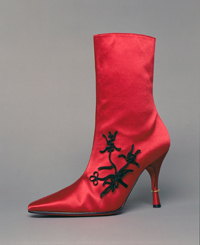
Second-skin Louboutin satin boots (1994-95 Fall collection)

Second-skin Louboutin satin boots (1994-95 Fall collection)

Easter Parade with Horses at Grand Central

GCT security keeping an eye on the red horse

GCT security keeping an eye on the red horse

The colors, crowds, finery, and promenade in Grand Central is every bit as celebratory as the famed Easter Parade on Fifth Avenue, except there’s live music and horses. It’s all part of Nick Cave’s monumental performance Heard NY going on each day at 11am and 2pm in Vanderbilt Hall.

Get there early and take your cameras to see The Ailey School students don the two-person horse costumes, created out of raffia, to whoosh and swirl away to the drums and harp. Take a look at the Flickr photos of yesterday’s 11am performance.

Creative Time and MTA Arts for Transit have decided to use both sections of Vanderbilt Hall for simultaneous performances, so you have lots of options to see the 30 magnificent horses close up. Afterward, you’ll see the volunteers grooming the horses, so there’s lots of opportunity to check out the loving detail that Cave has given each of them.

Half of the 30-horse herd

Half of the 30-horse herd

The raffia flies, the dancers whirl, and it’s breathtaking to see the horses come alive before your eyes and cavort about with their distinct personalities. Even if you go to the Easter Parade at St. Patrick’s on Sunday, you’ll still have time to catch their final 2pm performance.  If you want to see another example of Nick’s work, check out our post on The Armory Show a few weeks ago. For now, enjoy this wonderful promo:

Celebrity Robot Says Good-Bye to Upper East Side

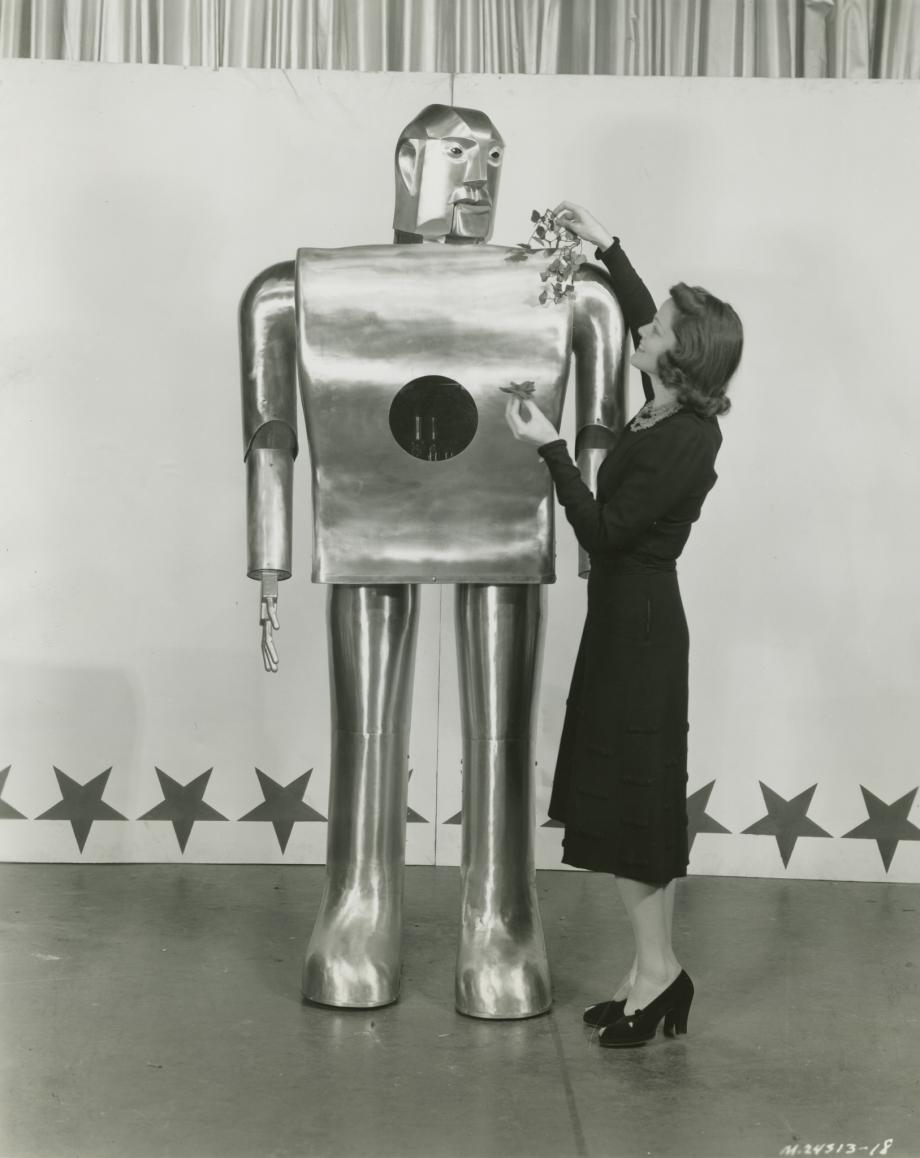
As musician Lois Kendall shows him red roses and green leaves, Elektro tells her the color of each. Source: NYPL

As musician Lois Kendall shows him red roses and green leaves, Elektro tells her the color of each. Source: NYPL

If you love the future, you have to see Elektro, the celebrity robot, who once held court in the Westinghouse pavilion at the 1939 New York’s World’s Fair, before he leaves the city once again. He’s the star attraction in the Museum of the City of New York’s Designing Tomorrow: America’s World’s Fairs of the 1930s exhibition, closing soon.

We couldn’t take photos inside the show, so here’s a publicity picture of Elektro back in 1939. He walked, talked, smoked cigarettes, as you’ll witness in this 1939 YouTube clip. This sensational moto-man used vacuum tubes, a 78 RPM record player, photoelectric cells, and telephone relays to wow the crowds.

But Elektro is only the tip of the Trylon of how fair design and engineering shaped modern American style. The show introduces the industrial design engineers that shaped products that grace MoMA’s design collection and insinuated themselves into everyday life – streamlined appliances, nylon stockings, Herman Miller clocks, Greyhound buses, and superhighways. Check out the MCNY’s excellent Tumblr feed for their visions of the future.

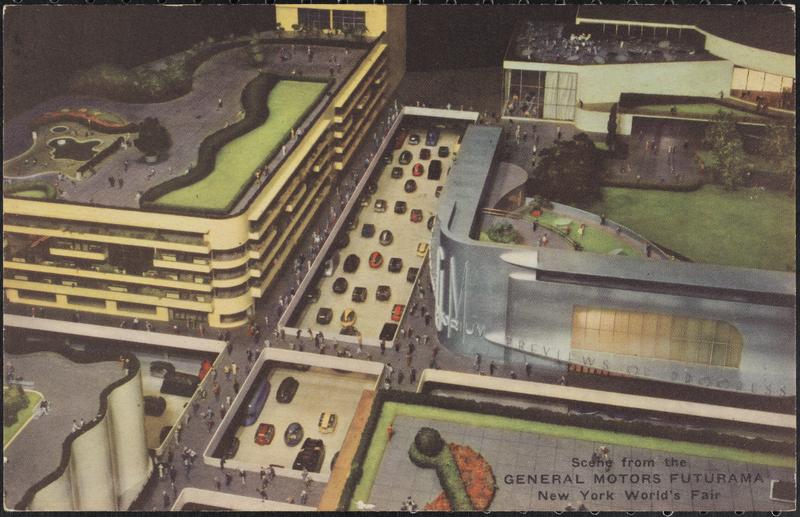
Postcard of the General Motors Futurama, NY 1939 World's Fair. Source: MCNY

Postcard of the General Motors Futurama, NY 1939 World’s Fair, that resembles BPC today. Source: MCNY

Among the show’s highlights are clips showing the GM Futurama, where New Yorkers waited in line for hours to see what the city of 1960 would look like. “Sound chairs” moved them along a conveyor belt where they could witness a vast scale model of modernized America, with superhighways soaring over canyons and cutting through mountains, and urban/suburban cloverleaf interchanges to keep traffic moving.

Afterward, people would exit into a full-scale World of Tomorrow where they would see what the urban intersection of the future would be – filled with pedestrian overpasses, department stores, and unimpeded whizzing traffic. It sure looked a lot like the view of Battery Park City along West Street.

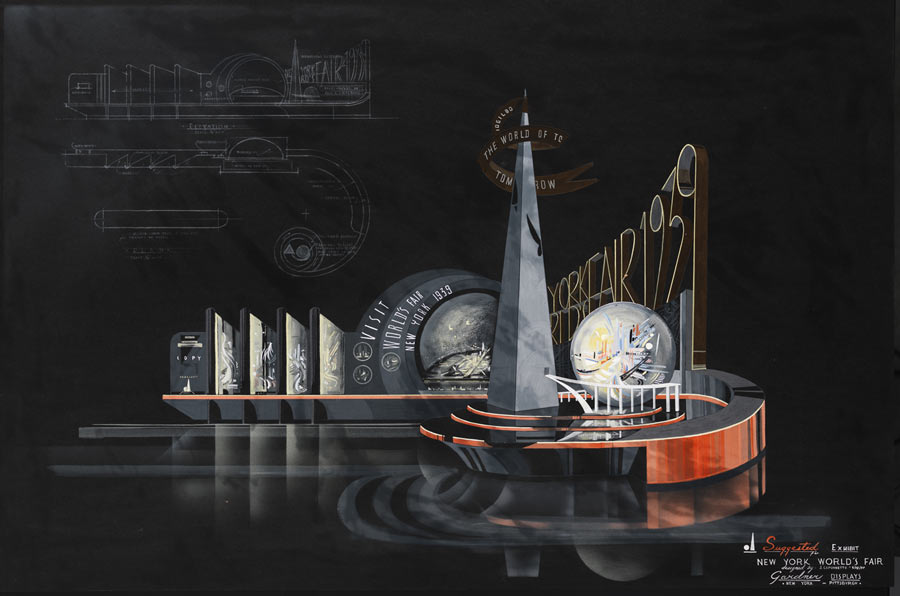
Suggested Exhibit for NY 1939 World's Fair. Watercolor & gouache on board. Source: MCNY

Beautiful watercolor/gouache from MCNY collection: “Suggested Exhibit for NY 1939 World’s Fair.”

Oh! Wallace Harrison, one of the architects of the Trylon and Perisphere actually did the master plan for Battery Park City…and Lincoln Center and the UN Headquarters building and Time-Life on Sixth Avenue!

So, no wonder Elektro feels right right at home in 2013 Manhattan. In 1939, he already could see what it would look like, right from his pavilion!

Take a spin around Elektro’s world, courtesy of the New York Public Library: