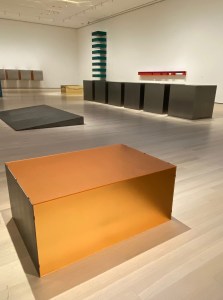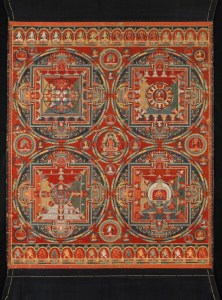
Weekly Virtual Museum Events – Meditation, Museum March Madness, and Exhibition Tours of Acclaimed Shows

Meditate with the Rubin on Monday.

As you start the week, take a look at the range of on-line events, discussions, art tours, and previews being offered by NYC museum on our virtual events page. Mediate, check out the March Madness museum playoffs, and tour acclaimed shows at the New Museum and the Whitney. Some highlights:

Today (March 1) at 1pm, get centered with a meditation at the Rubin Museum. Join Lama Aria Drolma for a 45-minute program that begins with a discussion of an inspiring work of Himalayan art that will be used for the meditation, a 20-minute sitting session, and a closing discussion. Donations graciously accepted.

Will the Newark Museum win the March Madness playoff against Brooklyn?

Want to get in on the art museum playoffs?  On Tuesday (March 2) at 8pm, there will be an on-line “playoff” for you to help decide whether the Newark Museum or the Brooklyn Museum have the top art collection.  Each institution will be pulling out their top pieces to garner your votes to see who will proceed to the national finals.

The same day at 2:00pm, join the New Museum director for a conversation with Melvin Edwards, the first African-American artist to have a solo exhibition at the Whitney Museum of American Art. Listen in to hear him talk about body of work and his dramatic, moving installation in the Grief and Grievance exhibition.

Work by Melvin Edwards in Grief and Grievance at the New Museum

On Wednesday (March 3) at 4pm, go inside the New Museum to take a virtual tour of this must-see exhibition.

There are two opportunities this week to virtually tour two terrific exhibitions at the Whitney. On Wednesday (March 3) at 7pm, take a tour of the amazing photography show Working Together: The Photographers of the Kamoinge Workshop. On Thursday (March 4) at noon, take a tour of Making Knowing: Craft in Art, 1950–2019, an entertaining walk through the myriad of ways that artists have used traditional craft approaches to making a statement.

On Thursday (March 4) at 8pm, the Newark Museum is hosting another night of competition in the Museum March Madness – the Milwaukee Art Museum vs. Columbus Museum of Art. Weigh in on your favorite!

Liza Lou’s amazing kitchen in Making Knowing at The Whitney

On Saturday (March 7) at 7pm, join the Museum of the City of New York for a “hometown” conversation with acclaimed playwright Lynn Nottage about what it was like to come of age in Brooklyn in the Sixties and Seventies.

There’s a lot more art, history, and discussion, so check the complete schedule. Most of the events are free, but it’s always nice to add a thank-you donation.

Museum Updates
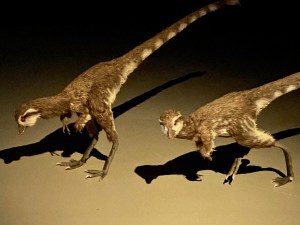
T Rex babies headed to Peoria after March 14

Have you ever wanted to go on one of the sleepovers at the American Museum of Natural History and have the whole place to yourself at night?  The sleepovers are on hold at the moment, but the next best thing is to sign up for an AMNH membership and take advantage of their Thursday Members Nights, where you can have a run of the place for two hours.

Last week, we had the Dinosaur Halls (and everywhere else!) to ourselves and were able to spend one-on-one time with old friends the Titanosaur, the starry-blue Coelacanth, Allosaurus, and Deinonychus. Maybe there were one or two other people wandering through, but you there is plenty of time and space.

Alone with Allosaurus at AMNH on Thursday nights

We checked in on the special T Rex: The Ultimate Predator exhibition, closing March 14.  If you haven’t seen it, it will be your last chance to see the first full-size, scientifically accurate sculpted versions of T Rex as a baby, four-year-old, and adult.  Next stop on his tour: the museum in Peoria, Illinois.  Midwesterners should get ready!
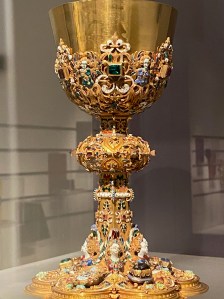
The Met Asks What the Renaissance Thought It Was Worth

1608 chalice by Otto Meier, Germany. Value = 255 cows.

What kind of art and collectables were Northern Europeans buying in the 16th century? How much were they paying?

The Metropolitan Museum of Art answers that question in a highly creative way in its exhibition, Relative Values: The Cost of Art in the Northern Renaissance, on view through January 2022.

The gallery is filled with a wide range of beautiful objects made in the Renaissance – ceramic containers, cups made from natural shells, bejeweled chalices, gorgeous drinking glasses, fancy sporting boxes, and portable desktop personal shrines. At a distance of 400 years, museums and modern viewers regard them as priceless treasures.

1530-1535 glass painted by Dirck Vellert, Flanders. Value = 12 cows

But the Met curators wondered how much these items cost in their day. How rare were these items in the collection? How much did collectors value them? And how did Renaissance makers market them?

The curators dug into assessments of royal holdings, craft guild price lists, and estate inventories. But understanding pricing was complicated because each price list used different regional European currencies (gilders, shillings, florins, and so forth). Then a light bulb went off.

Across Europe, the price of a cow was stabilized at 175 grams of silver. So, the cost of every item in the show is shown in cows!

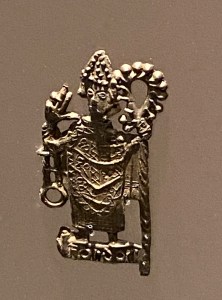
15th c. British or French pilgrims’ badge with Saint Leonard. Value = ½ cow

It’s fun to view the museum’s treasures from this perspective – how many cows was each piece of art worth? Take a look at our Flickr album, which shows some of our favorite treasures from low to high value.

Two of the least expensive items in the show are the ceramic jug used for a silly drinking game (value = 1/8 cow) and the sought-after pilgrim pins that you could pin to your hat to show that you had actually made and completed your pilgrimage across Europe (value = ½ cow). The mass-produced traveler pins seem a little pricey, but probably not compared to the cost of the trip itself. In any case, the pin was probably the only piece of art owned by the lower classes.

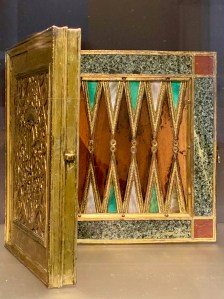
Nobleman’s multi-game board made in 16th c. Spain. Value = 14 cows

Wealthy patrons were attracted to over-the-top virtuoso pieces made from high-priced materials – elaborate traveling game board sets with exotic inlays (14 cows) and silver utilitarian art pieces (10 cows). Commissioning a work from a well-known goldsmith, glass painter, or locksmith drove up the price, especially if you wanted upscale materials.

If you ordered something in solid silver, you could melt it down in a pinch if you needed the cash.

Just like the latest smart device, collectors went wild over buying the latest technological marvel, like automaton clocks (21 cows) or rare natural wonders.  Unusual natural materials and virtuosity really drove up the price. Coconut-shell cups with silver (11 cows) or ruby-eyed rock-crystal carved birds (275 cows), anyone?

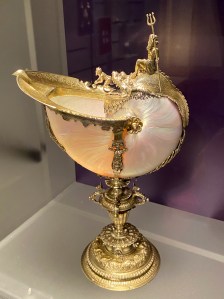
1602 nautilus shell cup, Netherlands. Value = 18 cows.

High-end collectors created cabinets to store their “curiosities” and reveled in showing guests how their advanced mechanical wonders worked or talking about where in the world the unusual materials were sourced.

With economies booming, the merchant and the middle classes desperately wanted to emulate the upper classes, so over the course of the 16th century, demand for fabulous objects only grew. Some makers began using molds to decorate or replicate sculptures to create attractive, but less expensive works for middle-market buyers, such as decorative molded German stoneware (1/2 to ¾ cow).

Some cities began hosting annual art markets, drawing buyers from across Europe. Guilds enhanced distribution by setting up trading posts for their wares in key market towns.

1580 rock crystal bird ruby eyes, Nuremburg. Value = 275 cows

Different from today’s art market that sees paintings at auction in the millions, classical paintings during the Renaissance were relatively inexpensive (5 cows).  Works that emanated and reflected “divine light” were highly prized – painted glass (12 cows), alabaster sculptures (40 cows), and bejeweled chalices (255 cows). And tapestries, which took forever to make, were considered the ultimate luxury.

To capitalized on the demand, the design/art stars of the day worked across media, elevating value of less expensive works by putting their highly prized monograms on prints and ceramics as well as high-end masterpieces, channeling their inner Andy Warhol.

Take a look at all of the wonders in the show on our Flickr album and on the Met website, were you can click on each work and then click to see where it falls on the museum’s incredible, feature-rich Timeline of Art History.

Weekly Virtual Museum Events – Green Book Trip, Willi Smith, Ice Cores, Revolutionary Design, and Museum Scavenger Hunt

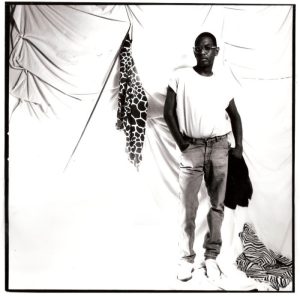
NYC fashion designer Willi Smith, ca. 1981. Courtesy: Kim Steele

Mark your calendars for any (or all) of fifty special on-line events sponsored by NYC museums, including a trip inspired by The Green Book, a tribute to a fashion designer who electrified runways in the Eighties, a look under Greenland’s ice, a Q&A on MoMA’s revolutionary design show, and a game-night trip to 18 American museums (with prizes!).

There are many other Black History Month events, discussions, art tours, and previews, so check the week’s listings on our virtual events page. For starters:

Sights along the road trip Driving the Green Book at MAD Museum Monday.

Today (February 22) at 6pm, hit the road with Alvin Hall, Janée Woods, and MAD Museum to learn about a 2,021-mile road trip that they took, inspired by the historic Green Book, which guided Black American motorists on family road trips for decades. The event will be an extension of their podcast, “Driving the Green Book” and feature lots of photos of what they found along the way.

CITIC Tower talk at the Skyscraper Museum

On Tuesday (February 23) at 12:30pm, join the Cooper-Hewitt in its tribute to Willi Smith, the beloved, exuberant fashion designer who dressed all the fun people in the Eighties. Since the museum has been shuttered nearly a year, few were able to see the Willi’s retrospective inside the Carnegie Mansion. So, our national design museum has declared “Willi Smith Day” so that it can shine a light on this historic Black designer for the world to see.

Get inside a supertall building. At 6pm, jet off to Beijing with the Skyscraper Museum and Robert Whitlock, the architect of the city’s tallest buildings. Hear about the design and construction of the CITIC Tower, whose shape is inspired by an ancient ritual vessel from China’s Bronze Age. This is just one of several upcoming talks at the museum on supertall buildings.

African Burial National Monument program at the Tenement Museum

Want to travel back a few centuries? On Wednesday (February 24) at 1pm, visit the Tenement Museum and the African Burial Ground National Monument for a talk on lifestyles of two African families living in old New Amsterdam. Using original source materials, you’ll get a fresh understanding of everyday life in mid-1600s Manhattan.

NYBG’s edible archway

At 6pm, take a trip around the country with a preview of the latest exhibition at the International Center for Photography. Join photographer-curator Paul Graham to walk through the exhibition But Still, It Turns: Recent Photography from the World. Celebrate unexpected journeys and enjoy the nondocumentary approach (no stories, just looking).

On Thursday (February 25) at 11am, start the morning with the New York Botanical Garden’s program with Leslie Bennett of Pine House Edible Gardens on creating gardens of sanctuary. Learn how she creates inspirational gardens that are organic and yield plenty of food, flowers, and medicinal herbs.

Icebergs now, but what happens if Greenland melts?

Thinking about climate patterns recently? Get a completely different perspective.  At 2pm, join a glacier scientist in Beneath the Ice at the American Museum of Natural History to learn what happens when Greenland’s ice melts. You’ll look at how ice core samples are taken, what they show, and how they are being used to predict what’s next with the climate.

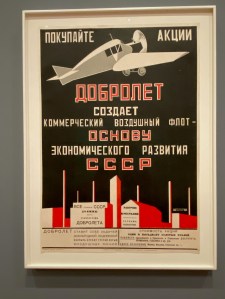
Rodchenko’s 1923 Russian airline poster at MoMA

At 8pm, visit revolutionary Russia and see what role designers played with Jodi Hauptman, MoMA’s senior drawings and prints curator, and Ellen Lupton, Cooper Hewitt’s senior curator. Angles, fonts, photos, montage, social issues, and politics will be flying fast and furious as Jodi and Ellen answer your questions about the lives and fates of the artists behind the hundreds of 1920s and 1930s ads, posters, brochures, and magazines showcased in Engineer, Agitator, Constructor: The Artist Reinvented­.

Haven’t you been dying to take a vacation? On Saturday (February 27) at 8pm, join the New York Historical Society and Watson Adventures for a live, virtual scavenger hunt that will take you to 18 different museums across America to search for clues among the history, art, and design collections. Get a team! Have fun! Win prizes!! Co-sponsored by the Museum of the American Revolution and Missouri Historical Society.

There’s a lot more art, history, and discussion, so check the complete schedule. Most of the events are free, but it’s always nice to add a thank-you donation.

Museum Updates

2020 painting by Henry Taylor at New Museum

We were able to get a ticket to the New Museum’s acclaimed exhibition this opening week, Grief and Grievance: Art and Mourning in America, and were happy to attend last week’s on-line curators’ panel (available here).

It’s a beautifully installed show, filled with top-notch painting, sculpture, music, performance art, and films that deliver on so many levels.

Still from Gone Are the Days of Shelter and Martyr, a 2017 video by ©Theaster Gates. Courtesy: White Cube and Regen Projects, Los Angeles

We’ll be reporting on this show soon, but in the meantime, we want to draw your attention to the weekly (and bi-weekly) panels that New Museum is offering on-line with many of the participating artists. This week, New Museum is speaking with South Side Chicago artist Theaster Gates, represented in the show by a performance video recorded in a church in the process of being demolished. Viewers inside the video gallery were mesmerized.

We’ll be featuring New Museum’s upcoming events on our weekly listing, but check out everything coming up over the next six weeks here under Conversations.

Virtual NYC Museum Events – Harlem Heavyweights, Design Disrupters, Rap History, and Gulla Cooking

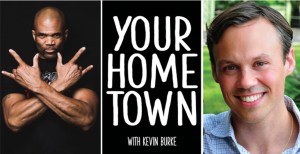
Darryl McDaniels of Run-DMC talks with Kevin Burke at MCNY

Despite the massive nor’easter moving through New York, we’re assuming that the virtual NYC museum events are happening as planned – an opportunity get behind the scenes of New York’s hottest photography show, visit a West Coast design archive, meet a Rock legend, and dive into historic Southern cuisine.

Check the daily listings on our virtual events page to for these events and details on many, many others.

The Kamoinge workshop show at The Whitney. Meet the artists this week.

We want to alert you all to the upcoming opportunities that the Whitney is offering to showcase the photographers and work featured in Working Together: The Photographers of the Kamoinge Workshop. On Wednesday (February 3) at 7pm, you can meet the Kamoinge artists live and hear them talk about how Harlem influenced their work. On Friday (February 5) at 3pm, see which artists used “the body” for inspiration and which contemporary photographers take on similar themes.

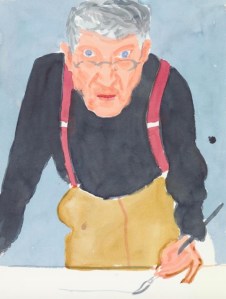
Two tours of the Morgan’s David Hockey show this week.

Also, just a reminder that there are two opportunities to walk through the Morgan Library’s David Hockney life-drawing show – on Wednesday, February 3 at 3pm and on Thursday, February 5 at 12:30pm.

Here’s how the rest of this week will shape up, with just a few suggestions (see the entire list here):

On Tuesday (February 2) at 4pm, take a trip to California with the Poster House to hear Letterform Archive’s Stephen Coles talk about (and show examples of) what happens when graphic designers break the rules of what typically constitutes good design.

Close-up of Swiss grid at Poster House. What happens when designers ignore it?

At 7pm at the Museum of the City of New York in the Your Hometown series, meet Rock and Roll Hall of Famer Darryl McDaniels of Run-DMC who will talk about growing up in Queens during the Sixties and Seventies and how the lessons learned contributed to becoming a rap icon atop the music industry.

On Wednesday (February 3), you can join two programs that take you inside museum collections and exhibitions to ask questions about how indigenous cultures and artists are represented, and what is changing.  At 6pm at Bard Graduate Center, hear about “Indigenous Arts in Transition” from two Native American curators in Minnesota and Oklahoma.

Boy’s hide shirt made by female Crow artist in 1870-1900 displayed at the Met in 2017

At 7pm, join the SciCafe crowd for a talk and Q&A on “Museums and Race” at the American Museum of Natural History that has a long (and current) history of grappling with these issues. Anthropologist Monique Scott will focus on African objects in the collection in New York and other museums around the world.

At 8pm, join the Museum of Food and Drink (collaborating with the Smithsonian Folklife Festival) for a fun dive into regional cooking in “Sustaining Gullah Geechee Cooking across Land and Sea.” You’ll hear a fascinating migration story told through food and learn how to make crab fried rice.

There’s a lot more music, science, and get-togethers, so check the complete schedule. Most of the events are free, but it’s always nice to add a thank-you donation.

Museum Updates

Toxic Titan program at the AMNH Hayden Planetarium last week was a hit

We dropped in on fun virtual events last week at the AMNH, Fraunces Tavern Museum, and the NYPL’s discussion with Amber Ruffin, and couldn’t have enjoyed them more!

The Toxic Titan show with the Hayden Planetarium crew had nearly 400 viewers from around the world!  Congratulations to the virtual team, who even un-muted everyone to give the crazy-good speaker a live round of virtual applause!

Get to the Guggenheim by February 14!!

Before the storm hit, we were able to visit the Guggenheim to see Countryside, the Future, the spectacular show by AMO/Rem Koolhaas. Although the curators say you can either breeze through or read through it slowly, the crowds were definitely making the most of their time and digesting everything – the history of our obsession with country and leisure, the ways 20th-century leadership tried to reshape vast swaths of their countries, and the efforts going on today to reimagine non-urban environments in Africa, the Middle East, the Arctic, and everywhere.  It’s a must-see. Two more weeks.

Mexican Muralists and The Whitney Rewrite Art History

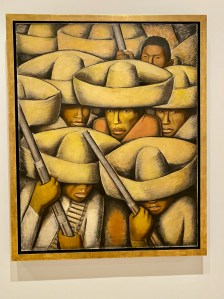
1932 Zapatistas by Alfredo Ramos Martínez. Courtesy: San Francisco Museum of Art

When you enter the Whitney Museum exhibition, you’re surrounded by tropical settings, Oaxacan beauties, lush floral compositions, and the romance of Mexico. But a few steps beyond, Vida Americana: Mexican Muralists Remake American Art, 1925–1945  delivers epic struggles, monumental murals, revolutionary fervor, inspirational triumphs, and heroic views of everyday people.

It’s the most important art exhibition currently on view in New York, on view through January 31, because it shows how three acclaimed, radical Mexican artists – Orozco, Rivera, and Siqueiros – influenced a generation of artists in the United States with their commitments to public works, no-holds-barred graphic depiction of social injustices, and masterful, innovative techniques.

Diego Rivera’s 1931 fresco The Uprising – everyday people showing heroism in extraordinary times. Private collection

Take a tour through the show on the Whitney exhibition site, listen to the audio guide, and see some of our favorite works here.

The paintings, photos, and films in the first gallery celebrate a romantic vision of Mexico’s native heritage alongside works evoking poignant, sometimes violent moments in the country’s recent revolution. It’s a rich experience, with modernist photos by Modotti, evocative footage by Eisenstein, and riveting works by Khalo, Rivera, and Alfredo Ramos Martínez.

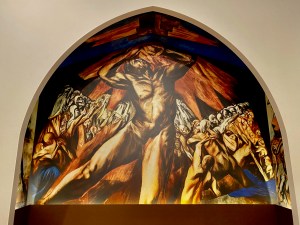
Orozco’s 1930 mythic mural Prometheus for Pomona College, California

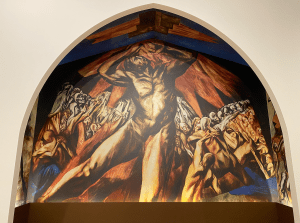
But just beyond, you’ll glimpse galleries that promise deeper stories of emotional, turbulent, modernist angst. A half-scale reproduction of Orozco’s mythic Prometheus mural occupies an alcove, surrounded by works by artists he inspired –Jacob Lawrence’s pictorial history of African-American northern migration in 1910-1940 and Jackson Pollack’s early Thirties paintings that channel Orozco’s depiction of writhing life forces.

Take a look at The Whitney’s introduction to Orozco, Rivera, and Siqueiros, which shows life in Mexico at the time they developed their distinctive styles, gained international acclaim, and came to the United States:

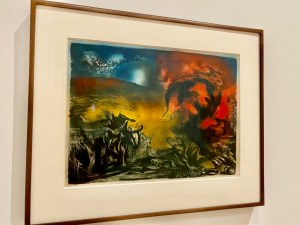
Another startling Pollack reveal lies in the Siqueiros gallery that tells the story of the experimental workshop that the Mexican master ran in New York, where New York artist were encouraged to experiment with airbrushes, stencils, and paint splatters.

Pollack’s 1937 airbrushed litho Landscape with Steer – influenced by his workshop with Siqueiros. Courtesy: MoMA

Siqueiros was big on pushing the boundaries and using modern materials to create truly revolutionary work. Pollack’s experiments are here, along with the revelation that workshop participants were encouraged to lay unstretched canvas down on the floor and work from above. Sound familiar?

The magic of this exhibition is the side-by-side mounting that allows visitors to ponder the many ways that young Depression-era US artists took so many of the lessons of the Mexican muralists to heart.

Detail of 1939-1940 Charles White Progress of the American Negro: Great American Negroes. Courtesy: Howard University

The exhibition goes on to chronicle artists who were inspired to tell epic stories of the American frontier and forgotten African-American success stories. In one room alone, you can pivot and take in expansive, monumental paintings by Thomas Hart Benton, Aaron Douglas, and Charles White.

Another section of the show looks at Diego Rivera’s fascination with American industrialization and assembly-line workers, including a wall-size video of Rivera’s 1932 mural of Detroit’s Ford assembly line. The adjacent gallery shows his influence through WPA-funded works by Ben Shahn, Phillip Evergood, Thelma Johnson Streat, Marion Greenwood, and others. Gears, machines, heroic workers, and strivers in an industrial age.

Reproduction of Rivera’s 1934 mural Man, Controller of the Universe, originally created for Rockefeller Center

A “wow factor” at the far end of the gallery is the reproduction of the infamous Rivera mural commission for Rockefeller Center that was destroyed due to Rivera’s refusal to take out Communist references. You experience the uproar it caused by reading original newspaper clippings and magazine articles. When his work was destroyed, Mexico City’s Palace of Fine Arts invited him to recreate it. That’s the reproduction at the Whitney, giving everyone a chance to experience a piece of lost New York art.

Many exhibition visitors miss one of the most satisfying components of the show – a three-channel video of the murals done by a host of painters (under Rivera’s direction) in a market in Mexico City. Walk to the right corner of the big Rivera mural and step inside the Abelardo L. Rodriguez Market to see murals created by Ramón Alva Guadarrama, Marion and Grace Greenwood, Noguchi, and others:

Online Museum Events – Virtual Trips to the Sixties, the 20th Century Limited, and the Arctic

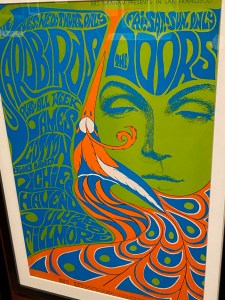
Poster by Bonnie McLean for Fillmore Auditorium July 1967. Courtesy: Bahr Gallery

New York City museums are kicking off the first week of the New Year with a look at music and transportation history, far-away places (on Earth and beyond), and artist hang-outs. Find the daily listings for everything on our virtual events page.

Tomorrow afternoon (January 5) there are two fun historical programs: at 4pm, you can take one last look at the New-York Historical Society’s great rock-and-roll extravaganza (which ended yesterday!), Bill Graham and the Rock & Roll Revolution. If you did not get to see the exhibition, don’t miss this … psychedelic posters, the story of the Fillmore East and West, how Bill’s artists got booked for Woodstock, how The Last Waltz concert happened, and lots of photos of the legendary stars he promoted.

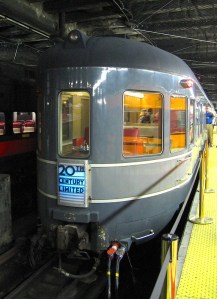
The streamlined 1947 lounge car for the 20th Century Limited.

At 5:30pm, you go back a little further in time. Join New York Transit Museum educator Joe Hartman to hear the incredible story of the legendary 20th Century Limited luxury train that ferried celebrities between New York’s Grand Central and Chicago’s LaSalle Street Station in high style for decades. Learn all about how red-carpet obsessions were born.

On Wednesday (January 6) at 7pm, hang out with a few hundred science geeks at the monthly SciCafe at the American Museum of Natural History. This month’s topic is Arctic Dragonflies with museum curator Jessica Ware, who will explain how these little guys keep from freezing. The Q&A is always fascinating with this group, so stick around for that part of the program, too!

Reproduction of Orozco’s 1930 Prometheus mural at The Whitney

On Thursday, (January 7), delve into great art: at Noon, the Whitney presents a look at the three Mexican muralists – Orozco, Rivera, and Siqueiros – whose passion and techniques inspired a generation of socially conscious artists of the Thirties and Forties. Find out more about their work in the United States and hear how Pollack, Benton, Noguchi, Lawrence, and many others learned at the feet of the masters in this talk about the blockbuster Vida Americana exhibition.

Jesse Wine, 11:10 am / 15.10.1983 / 75 Heath Lane / Chester / United Kingdom / CH3 5SY, 2020, installation view

At 7pm, take a trip to the Sculpture Center to meet Jesse Wine, see highlights of his solo show in Long Island City, and hear about his past work and inspirations.

Many more programs are on the schedule, so register for as many of the topics and events that you can fit into your schedule. Many of the events are free, but it’s always nice to add a thank-you donation.

How Textiles Became Modern at MoMA

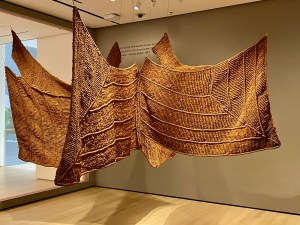
1977 Águila Beige (Brown Eagle) by Spanish artist Aurèlia Muñoz

Dramatic fiber sculptures welcome visitors at the entry to MoMA’s modern textile history exhibition, Taking a Thread for a Walk, on view on the third floor through January 10.

When the show initially opened back in 2019, visitors were greeted by Magdalena Abakanowicz’s imposing Yellow Abakan textile sculpture; today, it’s the wall-size Red Marca by Aurèlia Muñoz in its place. Inside the main gallery, Aurèlia’s Brown Eagle spreads out to fill the entire corner. But these fiber sculptures are really the finale to the exhibition’s story.

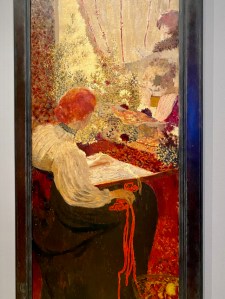
Yarn, prints, and fabric in Vuillard’s 1896 painting of his mother at home

Your journey through 20th century textile art is fleshed out using MoMA’s unparalleled collection of modern paintings, furniture, posters, film, and ephemera. Every time we’ve visited the exhibition, we’ve observed museum goers who are fully engaged, taking in every detail of the big story told by quiet works – how textile craft transitioned from small-time “women’s work” to statements within the big-time worlds of fine arts, commercial furniture, and interior design.

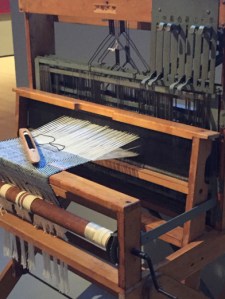
The first thing you hear upon entering is the clacking sound of a working loom. The sound draws you right toward an actual loom. Nearby, there are fourth-century Coptic textile fragments that were the first textiles to enter MoMA’s collection and a delicate sculpture by Ed Rossbach that echoes weaving’s ancient origins.

1952 loom used by Anni Albers in Connecticut

The pristine loom was used by Anni Albers, who revolutionized how American artists began thinking about, making, and innovating with textiles. In a way, Anni’s educational philosophy is the “thread” that connects nearly every other section in the show – teach students to execute the basics but push them to experiment in unconventional ways.

Using fiber and weaving to “learn by doing” extends back to the 1850s and the beliefs of German early-childhood educator Friedrich Froebel, who suggested that parents and teachers use “playthings” – balls of yarn and colorful weaving slats to spur kids’ creativity. His ideas caught on, with toy manufacturers offering commercial creativity kits. MoMA has 1898 versions from Boston in the show.

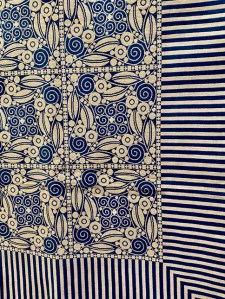
Vienna: corner of 1905 tablecloth by Josef Hoffman and Berthold Löffler

Around the same time, the British Arts & Crafts movement and rampant industrialization inspired continental innovators to create new schools and interdisciplinary movements that elevated textile design in the design and art-school hierarchy.

MoMA displays a beautiful tablecloth by Hoffman and Loeffler that exemplifies the design direction Hoffman and colleagues took with the Wiener Werkstätte.  Fabric designs by Elena Izcue are nearby, showing how pre-Columbian textiles served as inspiration for artists and students exploring an “American” design direction.

An entire wall is devoted to the ground-breaking work by Anni Albers and others from the textile workshop at the Bauhaus, led by innovator Gunta Stölzl, who encouraged interdisciplinary students to experiment by incorporating unusual materials, proportions, and colors.

Bauhaus Weaving Workshop: 1923-1924 work by Benita Koch-Otte

A short black-and-white film that takes you inside the workshop is projected next to a dramatic large-scale woven modernist statement by Benita Koch-Otte.

The back wall tells the story of 20th-century textile production and commercialization – a Soviet children’s book to explain how cotton is grown and turned into mass-market fabric, and commercial brochures, posters, and catalogues created by graphic artists who founded branding agencies to help European manufacturers market stylish rugs, draperies, and furniture to buyers.

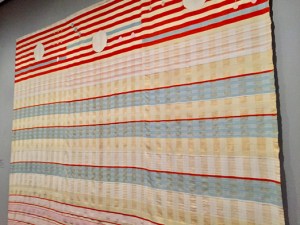
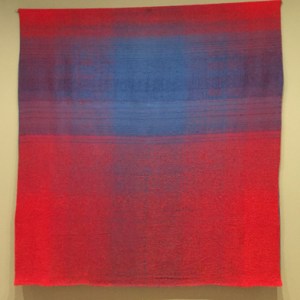
1964 wall hanging woven by Delores Dembus Bitterman, an Albers student at Yale

Like Anni Albers, many design innovators fled Europe in the Thirties, worked as educators in the United States, and influenced the next generation of textile modernists through Cranbrook, the New Bauhaus in Chicago, and Black Mountain College.

MoMA shows plenty of expressive wall-sized works, fabric-covered modern furniture, and textile room dividers used to stunning effect by architects and interior designers in commercial spaces and open-plan homes in the Fifties and Sixties. A Seventies poster promoting furniture by Knoll reminds you that Brazilian and other Latin American designers were fully on board, too.

Stretch fabric: Bruno Manari’s 1964 hanging lamp and Pierre Paulin’s 1967 Tongue chair

Finally, the story comes back to where it began – liberation for textile artists in the Sixties and Seventies, like Sheila Hicks and others, to create large-scale sculptural work.

Walk through the exhibition with MoMA on its website and look at our favorites in our Flickr album.

To get an idea of how one contemporary master thinks about creating with textiles, here is a short video with Sheila Hicks, featuring her Pillar of Inquiry installation last year for MoMA’s reopening:

Folk Art Museum Tells 85 American Stories

Eliza Gordon, as she arrived in 1833 for her first job at a New Hampshire textile mill

When you enter the exhibition American Perspectives: Stories from the American Folk Art Museum Collection, on view at Lincoln Square through January 3, you may experience a nostalgic feeling seeing images of early Americans, spectacularly pieced quilts, and finely carved wooden relics of bygone eras.

But the purpose in bringing all of these small masterpieces together is to present the in-depth stories behind the creators and subjects, which adds a completely different, lively layer to the journey through the three galleries – tales of itinerant portrait painters, stagecoaches along America’s first turnpikes, independent women surviving husbands and adventures in the Wild West, and back-country singing masters making their own teaching tools from roots and berries.

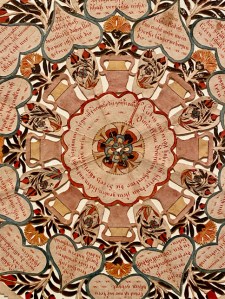
1790 love letter drawn by Christian Strenge, a former Hessian mercenary who settled in Pennsylvania

The stories make each work come alive, taking you back to the founding of America, looking at how people moved around in the Nation’s early years, made social-justice and political statements through their art, and used their artistic skills to transform their lives. 

The first section of the show has several works with early German immigrants, many of whom came to America as Hessian mercenaries fighting for the British and stayed as citizens, using their artistic skills to pen intricate love letters and embellish important documents.

Portraits come alive as you see the fresh face of a 20-year-old mill worker (Eliza Gordon) who just arrived to take on her first independent job after leaving the family farm, portraits of new arrivals from the East Coast (the Bosworth siblings) who were starting new lives in up-and-coming Illinois, or a wife (Mrs. Bentley) committed to abolition who ran a famous spa in upstate New York in the early 1800s.

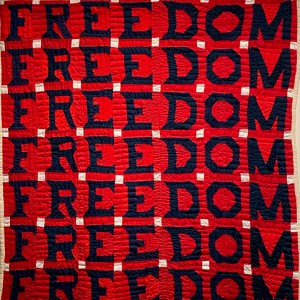
1983 Freedom quilt by Jessie B. Telfair of Parrott, Georgia

It’s not always easy to tell just from looking when works were made, and many come from the 20th century, often from a period later in the artist’s life – the drawing made by a Romanian immigrant (Ionel Talpazan) who used his art to work out his experience with a UFO as a child, the artist (Jessie B. Telfair) who made quilts in the Eighties to channel her feelings about being punished for registering to vote in Georgia in the Sixties, and a painter (Lorenzo Scott) whose portraits cast Atlanta beauties as Renaissance royalty whose style impressed him when he hung out at the Met in the years he lived in New York.

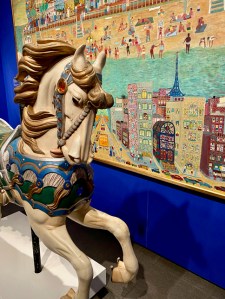
1918 Coney Island carousel horse by Charles Carmel and 1965 Workers’ Holiday by Ralph Fasanella

In the stories told about artworks involving far-away destinations, we learn that sea captain portraits were used as substitutes for husbands gone for years at a time, that many 18th-century students learned geography by copying intricate maps of exotic animal habitats, and that overhead rail was the magical mechanism that brought working-class people to the over-the-top fantasy destination of Coney Island.  

The curators point out that the grand 1888 Grover Cleveland quilt was created by a woman who was a passionate political supporter. The quilt was her way of casting a vote for her favorite candidate, even though she did not yet have the right to vote. She even used the red-bandana campaign swag as the center!

Next to this, there’s a masterful “quilt” made out of wood by New Orleans artist Jean-Marcel St. Jacques, an Afro-Creole artist living in Treme.

Detail of 2014 wood “quilt” by Katrina survivor Jean-Marcel St. Jacques, Mother Sister May Have Sat in That Chair When She Lived in This House Before Me

The spectacular wall-sized work is pieced together from pieces of furniture that he salvaged from his home following his neighborhood’s devastation by Hurricane Katrina. Some of it pre-dated his residency, so the assemblage contains layers and layers of local history.

The final gallery contains works by people who used art to transform their lives ­– one of the thousands of abstract drawings made each night in West Virginia by Eugene Andolsek to relieve his workplace stress, and a large tiger with a personality carved and painted by Felipe Benito Archuleta, who was out of work in the Sixties and began carving animals to sell in Santa Fe.

1977 Tigere by Felipe Benito Archuleta

His whimsical creations not only led to a wildly lucrative art career, but jump-started an entirely new direction for the New Mexico art market.

These tales are only a few of the 85 told by this exhibition.  Download all the stories here, and enjoy some of our favorite works of art in our Flickr album.

Exhibition curator Stacy C. Hollander provides a virtual tour and shares some of her favorite stories about early-American artists and 19th-century travelers in this video below.

Stacy provides lots of background on Eliza Gordon and what her work was like in the textile industry. The video also tells the incredible story of Emma Rebecca Cummins (maker of the crazy-quilt trousseau robe), who was married four times, lived in five Eastern and frontier states (also Canada!), and worked as one of the first female Western Union telegraphers out West.

Enjoy getting to know the backstories of some of the incredible artists among the 85 featured in this tribute to American working artists, activists, and visionaries:

Genius Artist Reinterprets Brooklyn’s Native American Archives

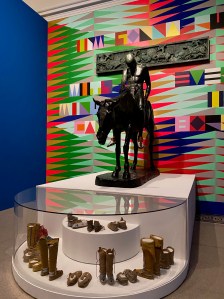
Moccasins at the feet of 1904 Dying Indian sculpture by Charles Cary Rumsey. On Gibson’s mural, a study for Rumsey’s Manhattan Bridge buffalo-hunt frieze.

The Brooklyn Museum invited a MacArthur genius to dig through its vast Native American collection and archives, use it alongside his own thought-provoking contemporary art work, and take visitors minds for a spin. The colorful, creative, memorable results are on display across three galleries in Jeffrey Gibson: When Fire Is Applied to a Stone It Cracks, on view through January 10. Take a look in our Flickr album.

Gibson, a big thinker whose heritage is Choctaw/Cherokee, does work that challenges people to think differently about Native Americans today and to question the assumptions about their “disappearance” from the national dialogue. Flying above art-world silos, he works at large and small scales, employs colleagues who are experts in beadwork and mural making, and shows art-gallery works as well as more conceptual projects.

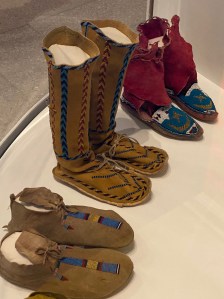
Custom 19th and early 20th-century moccasins from the Brooklyn Museum collection.

His Brooklyn show begins by presenting a monumental 1904 “Dying Indian” bronze by Victorian-era classical artist, Charles Cary Rumsey, and an array of moccasins from the museum’s collections made by unknown tribal artists in the late 19th and early 20th centuries.

To the right, there’s a giant stained-glass work that says, “Whose World Is This? It’s Yours It’s Mine.” To the left, there’s a colorful gallery packed with Gibson’s contemporary art work, and historic beaded, painted, and pieced items made by tribal artists.

Scores of museum visitors who exited Brooklyn’s Studio 54 show were captivated by Gibson’s dynamic installation, entered, and explored.

Gibson’s stained-glass Whose World Is This? It’s Yours It’s Mine. Private collection.

Below the massive statue, Gibson wants us to witness how carefully Native American makers created and customized footwear for specific practical purposes and ceremonial occasions for specific individuals. Unfortunately, the beautiful beadwork and deft, custom designs by tribal craftsmen are unattributed – a contrast to the society artist’s imposing vision of Native Americans who are sad, vanquished, and gone.

To change the statue’s narrative, Gibson asked contemporary Pawnee/Cree artist John Little Sun Murie to design moccasins for the figure atop Rumsey’s horse, so the rider is now presented as an individual member of an historic tribe – not just a generalized stereotype. Listen as Jeffrey talks about moccasins:

To drive home the point that Victorian-era artists and anthropologists incorrectly generalized and romanticized Native Americans, Gibson adds two other small bronzes and a study for Rumsey’s buffalo-hunting frieze made to embellish the entrance to the Manhattan Bridge. (Just ignore the fact that the Lenape didn’t hunt buffalo on our shores!) His beaded works say it all – “I Don’t Belong to You” and “You Don’t Belong to Me.”

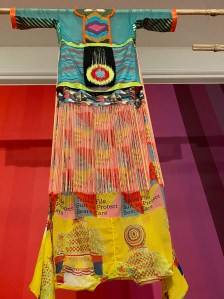
Gibson’s 2018, Tribes File Suit to Protect Bears Ears.

In the second gallery, Gibson shows his own recent creations with those bought on early 20th-century expeditions and added to Brooklyn’s ethnographic collection.

Gibson’s bright, geometric murals – which complement the museum’s vintage geometric-patterned tiled floors – provide a joyful backdrop for a brightly colored Seminole jacket, beaded hats, and other art. Gibson’s new paintings, sculptures, and patchwork garments use beads, colors, and messages on fabric – contemporary statements that hearken to the creativity and innovation of these unattributed artists. Take a look:

Ba:lawahdiwa, Zuni’s governor, and his family in 1890

The final gallery presents other artifacts and art that Gibson curated from museum’s vast Native American holdings, expedition records, and archives, and contrasts them with some of Gibson’s recent photography.

A large case displays a range of commercial, ancient, and ceremonial pots, expedition photographs, and drawings of Pueblo life made by expedition artists over 100 years ago. In one instance, Gibson reunites several photos of a Zuni family, normally stored apart from one another the museum’s archives.

Gibson relishes showing how Native American artists still thrive today and how over the centuries they have adapted their materials and creativity for both commercial art-markets and their own expressive purposes.

Gibson’s 2019 photo Regan De Loggans. Courtesy: Gibson & Sikkema Jenkins

For example, he features a photograph of a young early 20th-century Navajo weaver, creating traditional Indian” rugs for a trading post with new, more colorful materials that Mr. Hubbell supplied. Gibson also unearthed a tourist map on where to find different California tribes and buy their wares – a direct rebuke to the concept that all these people “vanished.”

Best of all, Gibson also features several gorgeous recent photographs, including tribal artist-activists.

Visit Jeffery’s studio in this video produced for the 2019 Whitney Biennial. Hear him talk about his evolution, his creative process, and his team up in Hudson:

No Monolith but Judd’s Works at MoMA Deliver the Power

1968 stainless steel and Plexiglass tower (Froehlich Collection)

For anyone lamenting the disappearance of the Monolith and yearning to experience its minimalist magic, walk through MoMA’s Donald Judd retrospective before January 3 to understand how big, gleaming, super-sleek objects create such electrifying force fields.

Initially, journalists speculated that the Utah Monolith was the work of West Coast artist John McCracken. It wasn’t, but Judd was one of McCracken’s art-world heroes – a master who reveled in pure shape, pure color, and (when he wanted to) pure transparency. Judd also built repeating rectangles (seemingly not created by human hands) in remote western landscapes (Marpha, Texas).

On MoMA’s top floor, you’ll encounter wide, open spaces with spare, clean hard-edged objects inhabiting four galleries.

1964 construction of orange pebbled Plexiglass and hot-rolled steel. Private collection.

In the first room, you’ll see cadmium-red shapes from the early Sixties that Judd made in his Soho studio. The idea was to remove any gestures or evidence of craft in the work – just present the pure painted shape.

But to get the perfection he craved, Judd went one step further – engaging industrial fabricators to create large-scale works from his meticulous drawings. Industrial materials like aluminum, iron, and Plexiglass are transformed into magical rectangles, epic towers, and airy channels. See our favorites in our Flickr album.

In each gallery, visitors are invited to circumnavigate and explore the monumental works. One orange box seems to glow; another has a transparent surface that lets you peer inside. An enticing series of blue and silver boxes seem to let you peek through to an entirely different dimension.

1969 “channel” of aluminum and Plexiglass units (Saint Louis Art Museum)

Towers emerge from walls in each room – neat stacks of monumental rectangles, separated by exact amounts of space. It’s quite a sensation to approach one, look up, and feel its commanding presence. One silver tower seems to be emitting yellow light. A copper tower gleams a little from a subtle spotlight.

Judd wanted it this way – no interpretation. Just you and the large, beautiful, perfect form, as this short video demonstrates:

MoMA cautions visitors to remain at least six feet away from each of the works, but most admirers are cautious and reverent, taking it all in and giving everything its space.

Here, curator Ann Temkin talks about Judd’s work and the joy of bringing such a monumental exhibition to New York:

Take a trip through the installation on MoMA’s website here, and hear artists describe their experience of the show here.