Pueblo Pots Speak in “Grounded in Clay”

Contemporary artists say they can hear their ancestors speak across generations. All they have to do is hold their community’s ancient pots – living beings that connect them to the Earth and the people from the past who made them.

You can hear these modern and ancient voices and see ceramic masterworks in Grounded in Clay: The Spirit of Pueblo Pottery, an exhibition on view the The Museum of Fine Arts, Houston through January 12, 2025; continuing at the St. Louis Art Museum March 7 to September 14, 2025; and on display at the Pueblo Cultural Center in Albuquerque from March 2026 to February 2027.

In video at Museum of Indian Arts and Culture, Clarence Cruz (Okay Owingeh) reflects on a pots’s personal meaning

Clay is central to Pueblo culture, and this show is special, because it’s the first major exhibition of Pueblo pots curated entirely by the indigenous community – artists, leaders, teachers, and museum professionals.
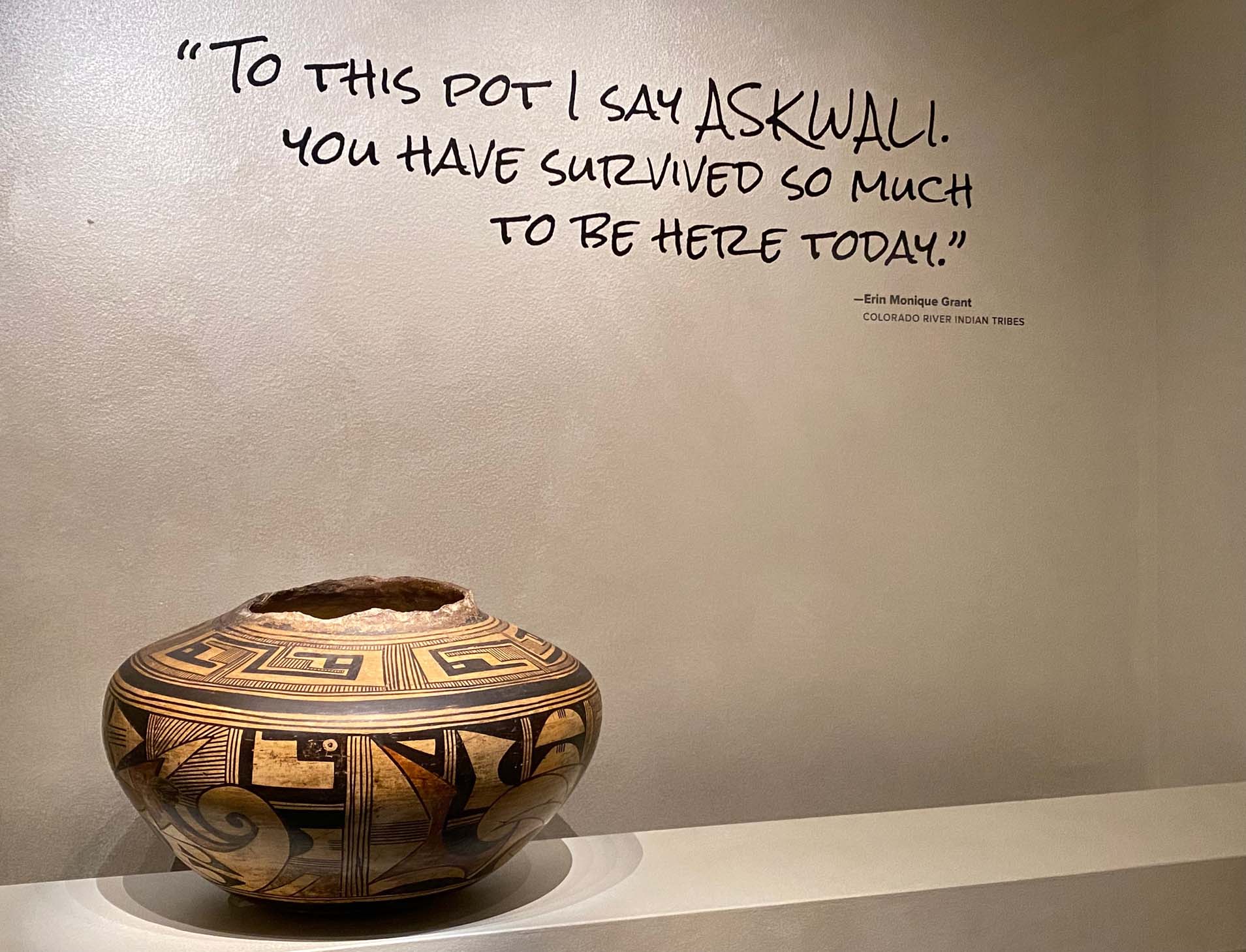
1900 Tewa-Hopi Hno jar selected by Erin Monique Grant (Colorado River Indian Tribes); it reminded her of her Hopi family. Courtesy: Vilcek Collection.

For the 100th birthday of the Indian Arts Research Center at School for Advanced Research (SAR), the exhibition debuted in 2023 at Santa Fe’s Museum of Indian Arts and Culture, and then traveled to New York to open at the Metropolitan Museum of Art.
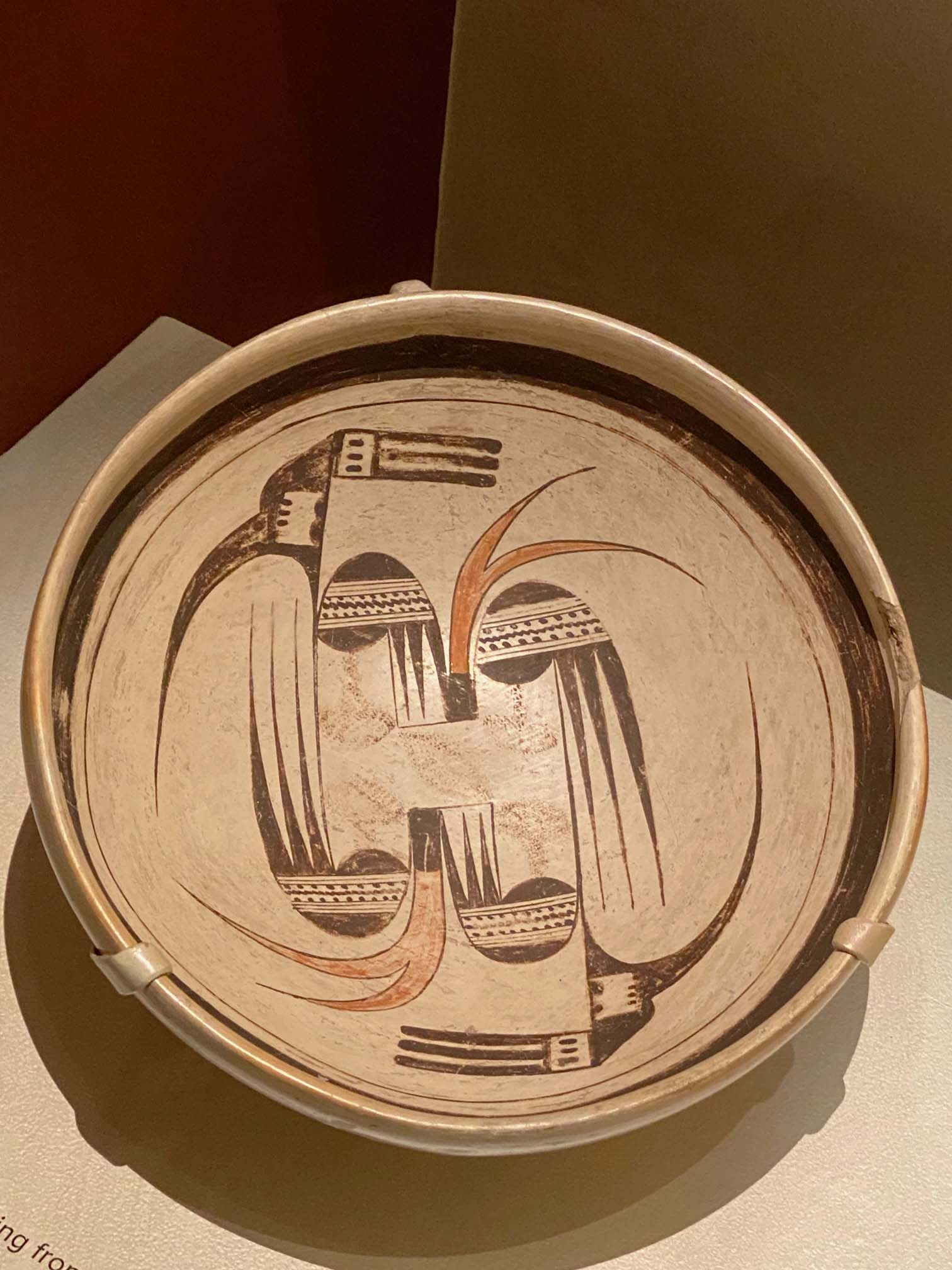
1907-1910 bowl by Nampeyo (Tewa/Hopi) selected by her great-great-grandson artist Dan Namingha. Courtesy: SAR

New York’s Vilcek Foundation co-sponsored the community-curation project, exhibition, and project website. The organizers consulted with sixty curators from 22 pueblo communities across the Southwest to select work from the IARC collection and write about the spirit of these works. Communications weren’t always easy, since Internet service (email) is still spotty on some tribal lands.  

But The Pueblo Collective’s inclusive approach to create the exhibition and catalog is now considered a template for major art institutions to work with tribal communities to convey their stories and culture to the public..

The IARC collection is legendary, spanning prehistoric to modern-day works. This video takes you inside IARC archive to meet a few of the Pueblo curators and the pots they selected:

Utilitarian vessels, ancient legacies, and intergenerational connections are themes explored in the 2023 installation at Santa Fe’s Museum of Indian Arts and Culture. The exhibition design artfully integrated the words and thoughts of the curators in, around, and above the spectacular selections. Take a look at some of our favorites in our Flickr album.

Two 19th-century Tesuque water jars: a jar chosen by artist Marita Hinds (Tesuque), who saw it on a 1980s class field trip; and one admired by potter Bernard Mora (Tesuque) for its personality and imperfections. Courtesy: SAR

In some cases, a curator chose an Ancestral Pueblo pot from the 1100s and reflected on how well it’s survived today. In other cases, a curator discovered their grandmother’s pot stored for decades within the IARC collection. What a joy to bring it out and let it breathe! Listen in….

This statement about Lonnie Vigil’s magnificent vessel by Nora Naranjo Morse says it all.  The MIAC gallery space recreated a Pueblo kitchen so we can experience the environment in which most Pueblo potters create their work.
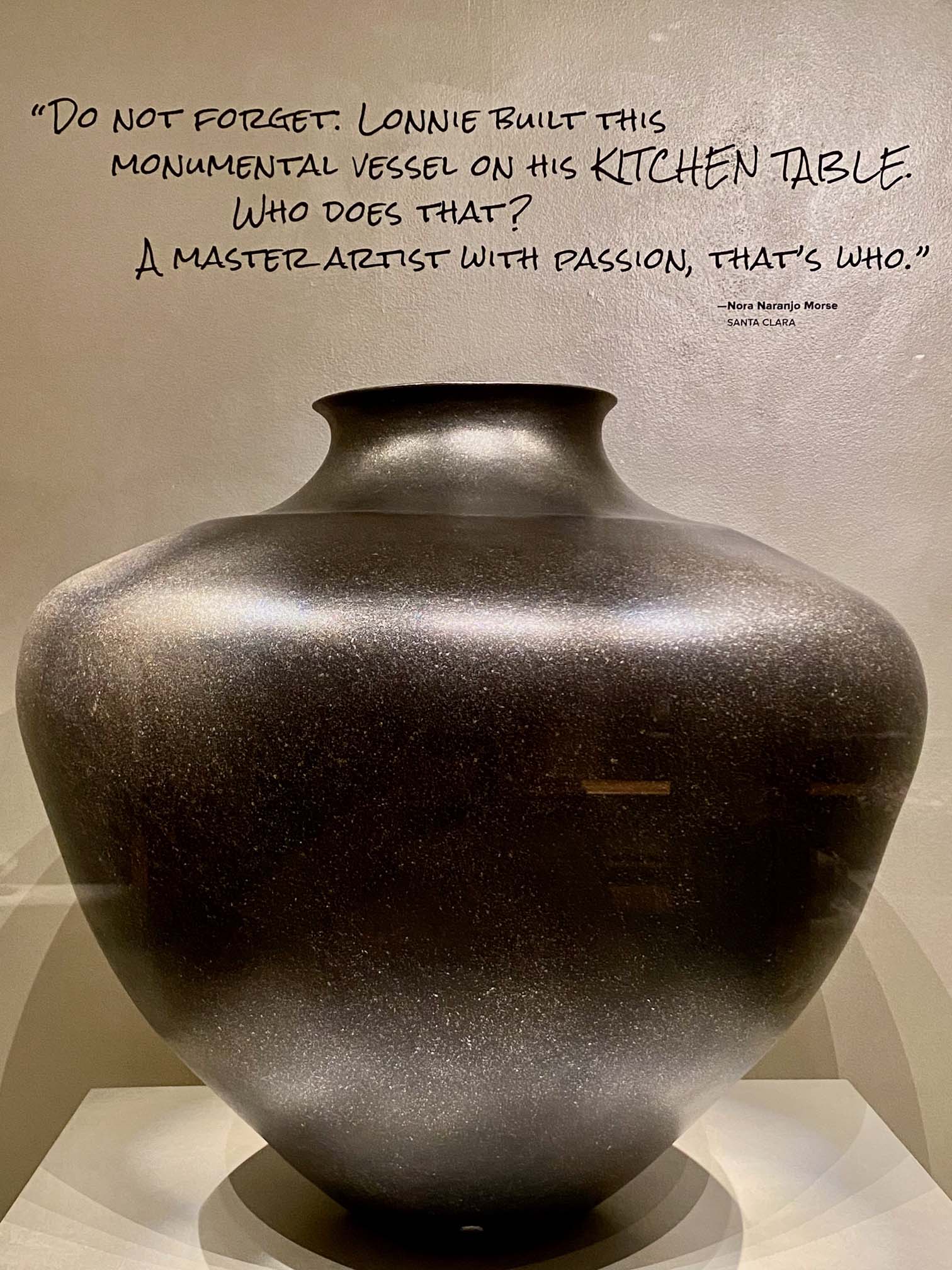
1995 micaceous clay jar made by Lonnie Vigil (Nambe) selected by Nora Naranjo Morse (Santa Clara) because it glitters like stars. Courtesy: SAR
Santa Fe’s Museum of Indian Arts and Culture’s replica of Pueblo kitchen where most pottery is created

And here’s how the Met featured Lonnie’s show-stopping work – made on his kitchen table – prominently in the American Wing entrance!
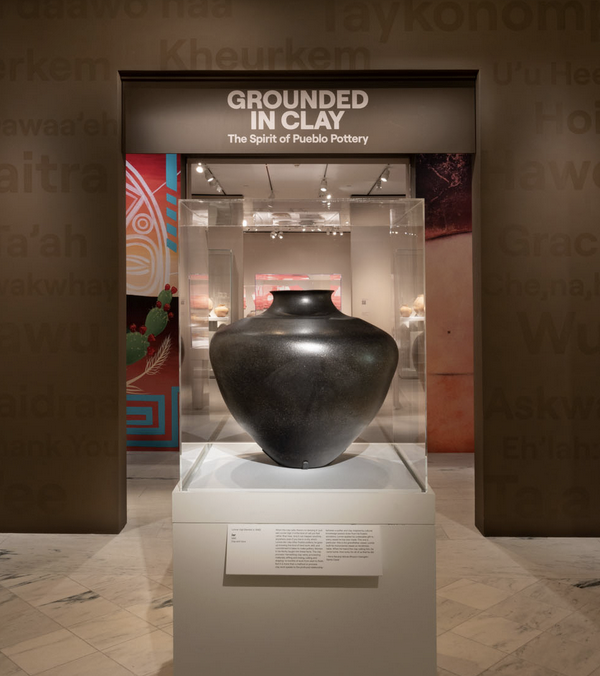
Micaceous clay jar by Lonnie Vigil (Nambe) in the show’s entrance at the Met’s American Wing. Photo by Richard Lee; courtesy: The Metropolitan Museum

The project website presents the curators’ biographies, their selections, and stories. As of 2026, the pots have toured other institutions in the United States and have come home to New Mexico. See this beautiful exhibition at the Indian Pueblo Cultural Center in Albuquerque through February 21, 2027.

Listen to the Met’s 2023 panel with five curators behind this magnificent community-curated indigenous exhibition and find out why they believe understanding the vessels’ power is important:

Fernandez Curates Smithson at SITE Santa Fe

It’s not often you get to see Robert Smithson’s large-scale works inside gallery walls. Strolling through SITE Santa Fe’s magnificent Teresita Fernández/Robert Smithson exhibition, through October 28, provides an opportunity to see how a contemporary Brooklyn-based Cuban-American artist – inspired by landscape and societal histories of the Caribbean – positions her own work “in conversation” with Smithson’s 1960s-1970s geologic works, drawings, and photo installations.

SITE invited art-world superstar Teresita Fernández to curate this show with the Santa Fe-based Holt/Smithson Foundation. Prior to her deep dive into Smithson’s career, her primary knowledge centered around his 1970 epic Spiral Jetty – 6,650 tons of rock and earth jutting out from the shore of Utah’s Great Salt Lake.

Smithson’s 1969-1970 Mirrors and Shelly Sand and two by Fernández: 2009 Drawn Waters (Borrowdale) and 2024 Sfumato (Epic) 2. Courtesy: Dallas Museum of Art; the artist and Lehmann Maupin.
Still from Robert Smithson’s 1970 film Spiral Jetty, Great Salt Lake, Utah. Courtesy: Holt/Smithson Foundation.

But Fernández found a lot more from Smithson’s too-short career that she could couple with her own work to create SITE’s spectacular installation. Both artists use landscapes, deep time, ancient history, and travel.

Smithson’s 1968 installation A Nonsite (Franklin, New Jersey) with 2020 Archipelago charcoal work by Teresita Fernández. Courtesy: Museum of Contemporary Art Chicago; private collection

In the first gallery, Fernández selected a Smithson “nonsite” work – a minimalist series of boxes, each packed with rocks from the decidedly unromantic site of Franklin, New Jersey. Smithson’s “nonsite” includes a framed aerial photo that appears to document the site, but it’s a “readjusted” depiction of it. Not what it seems.

Next to the “nonsite,” Fernández hangs Archipelago, a charcoal wall sculpture., which appears to be a legit map, but it’s not. It’s an imagined map of separate Caribbean islands and continents linked together, making us reflect upon their shared socio-political colonial histories.

Viñales (Plateau) is a wall-sized “stacked landscape” depicting Cuba’s Viñales Valley, home of ancient karst caves once inhabited by Taino people and later where escaped plantation slaves sought refuge. At a distance, it evokes the valley’s ecological, social, and political legacies; up close, you see that the image is made up of thousands of tiny ceramic tiles. Something to get lost in.

2019 ceramic mosaic by Teresita Fernández Viñales (Plateau). Courtesy: the artist and Lehmann Maupin.

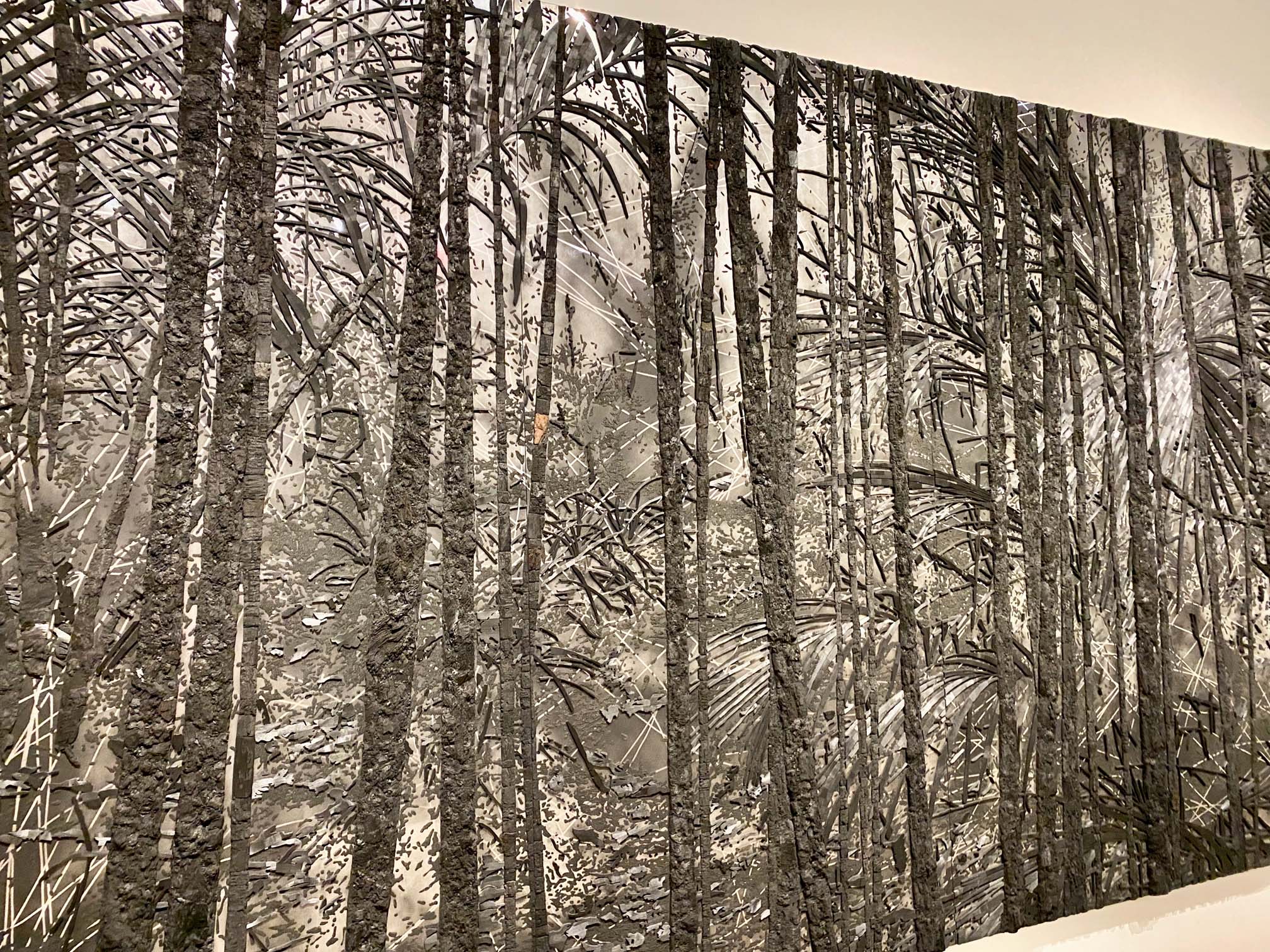
Both artists use reflection in their works. Manigual (Mirror) by Fernández– a tropical forest created from charcoal and sand – is affixed to a reflective surface, so you can “see yourself” in the charred thicket when you get right up to it. Smithson designed his earth-and-mirror Red Sandstone Corner Piece so that every gallery goer’s image is part of the visual experience – from close up, far back, and far away. You’re linked to the red sandstone.

Detail of 2023 Manigual (Mirror) by Teresita Fernández. Courtesy: Crystal Bridges Museum of American Art.

On the other hand, Smithson famous photographic series, Yucatán Mirror Displacements, documents his meticulously arranged mirrors set into Mexico’s coastal landscapes. Just reflections of landscape and sky in all the settings he documented his set of mirrors; no people.

Detail of Smithson’s 1969 Yucatán Mirror Displacements (1-9). Courtesy: Guggenheim Museum.

Nature’s continual ebb and flow, the Earth’s surface, ecosystems, and the cosmos ­are all subjects explored by both artists.What’s beneath the Earth’s surface, forces of nature, and human impact on it all pop up covertly in every room.  See more in our Flickr album.

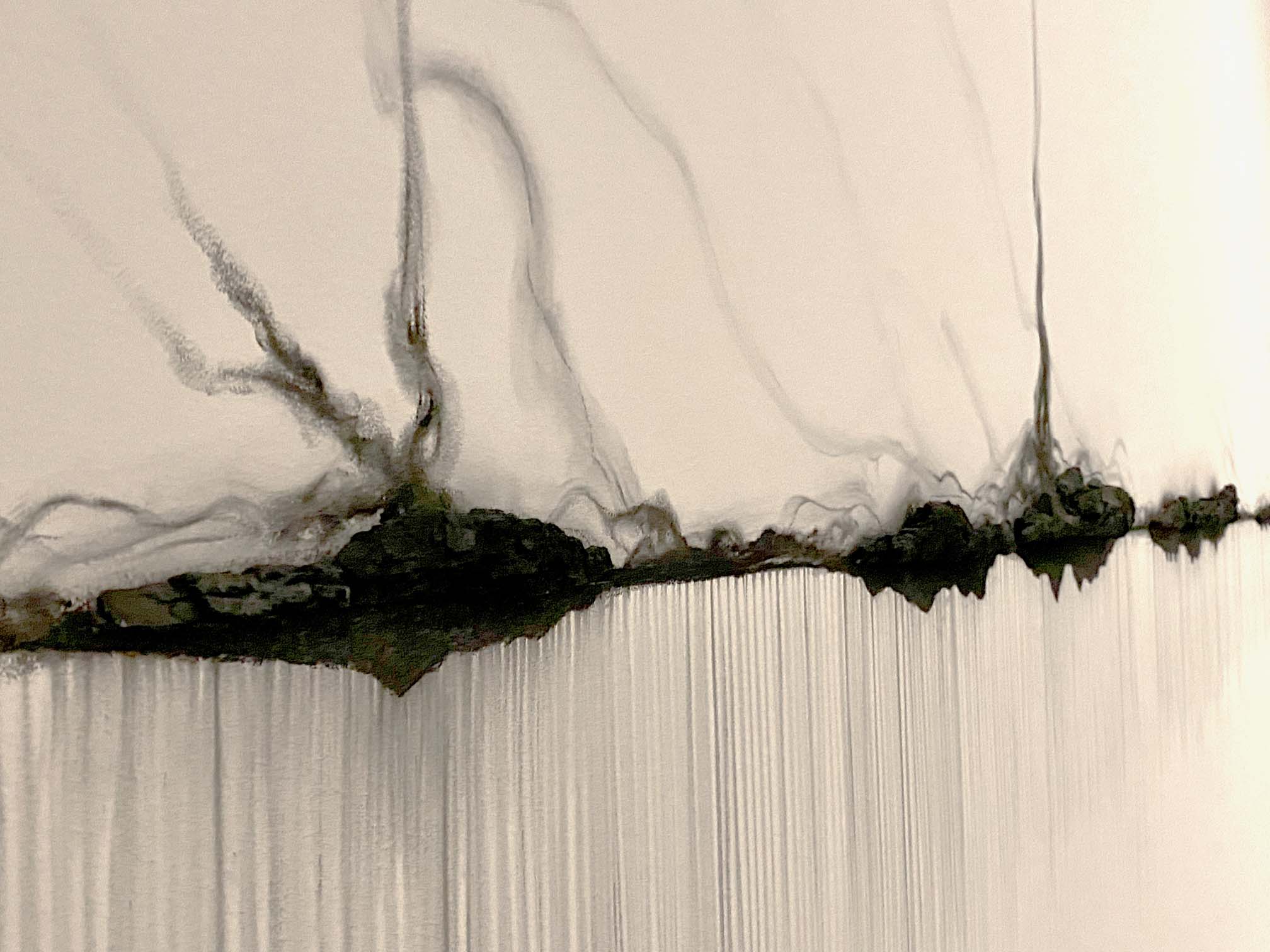
Detail of 2017 charcoal work by Fernández Charred Landscape (America). Courtesy: the artist, Lehmann Maupin.
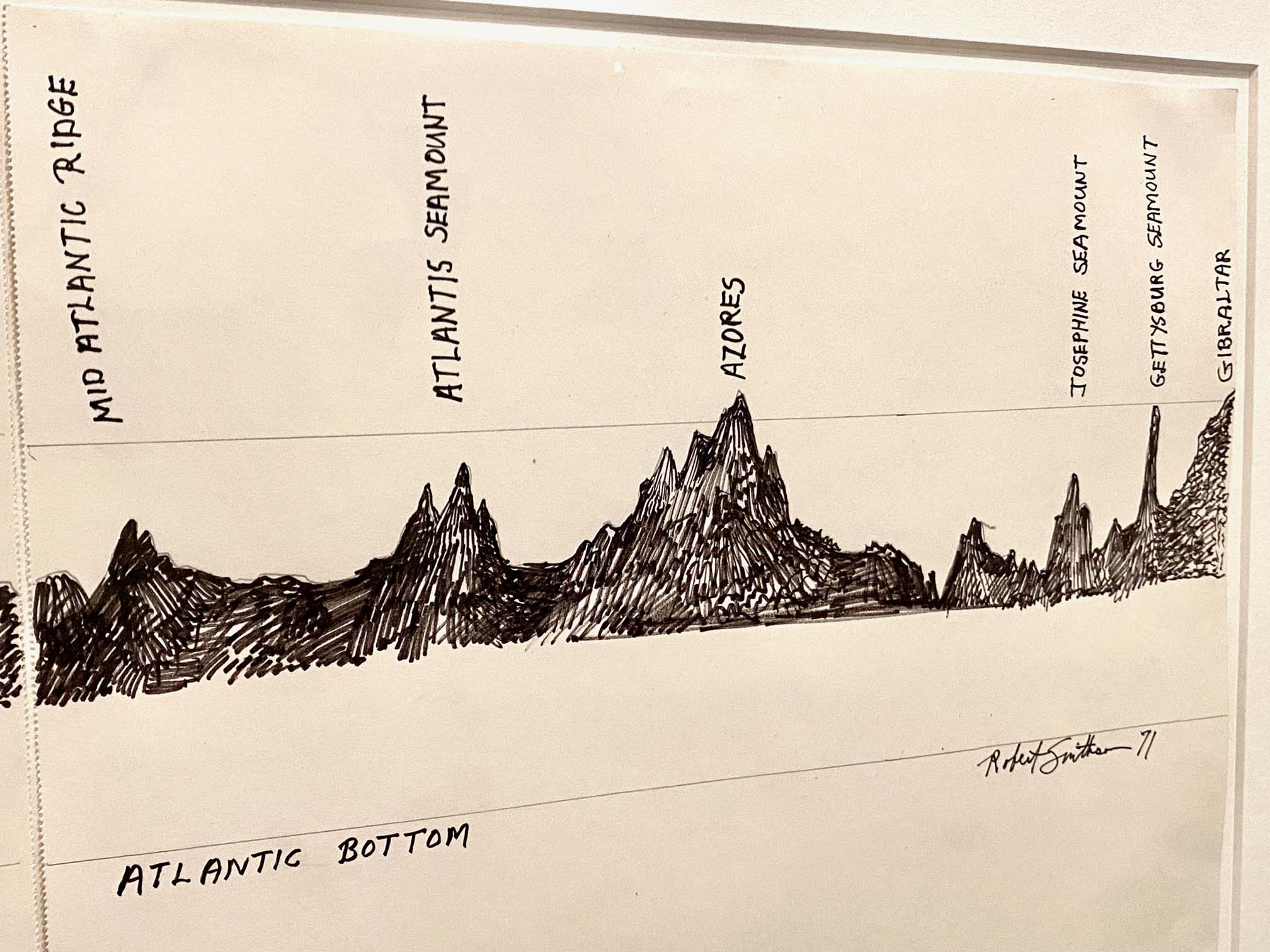
Detail of Smithson’s 1971 ink drawing A Profile of the Atlantic Bottom. Courtesy: private collection.

And learn more about the “conversations” that works by these artists are having in the curator lectures in SITE Santa Fe’s videos with Fernández herself and her co-curator from the Holt/Smithson Foundation.

Detail of Robert Smithson’s 1961-1963 paint and photo collage Algae, algae. Courtesy: Holt/Smithson Foundation and Marian Goodman Gallery.
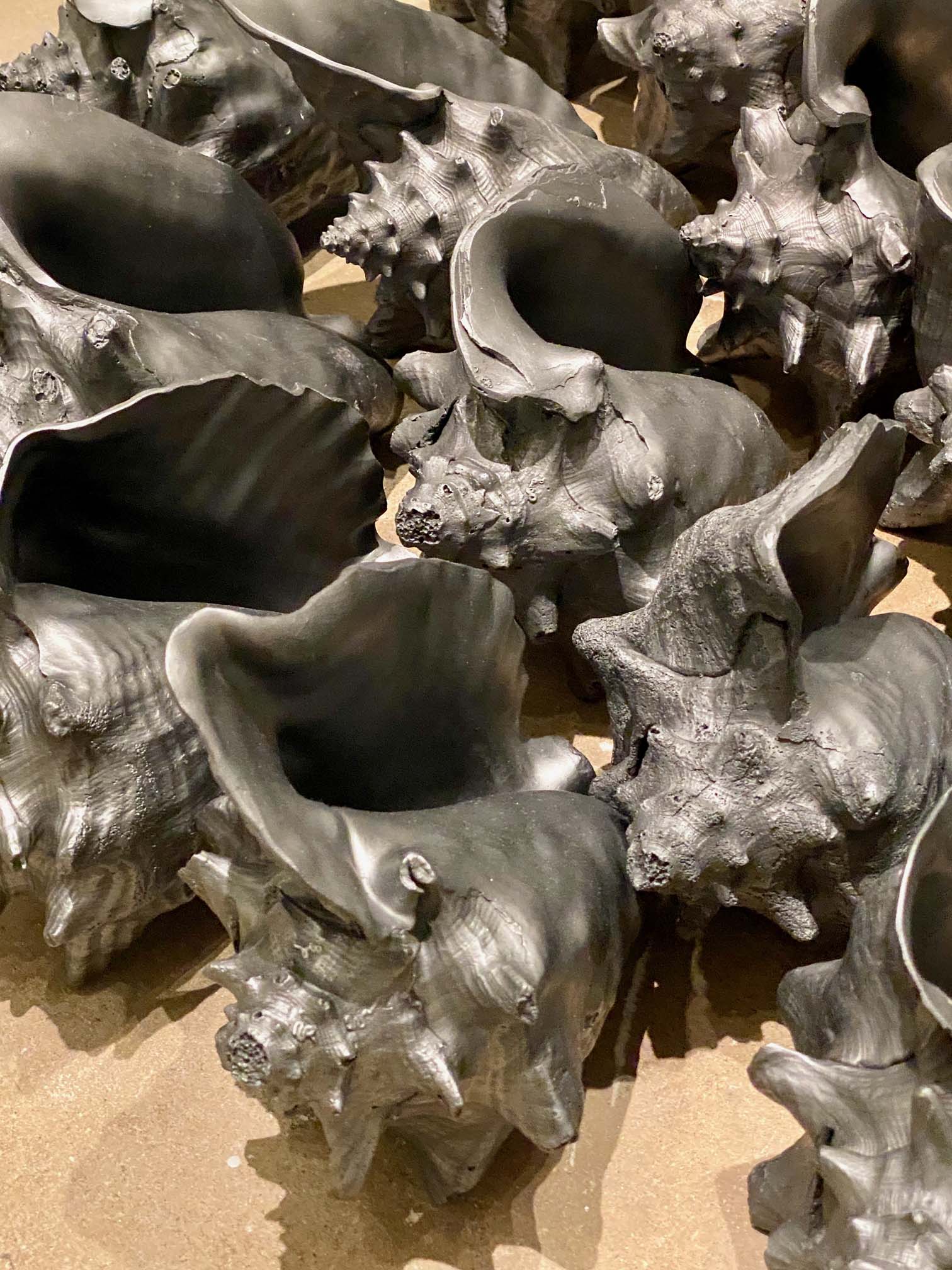
Detail of 2019 graphite-covered shell installation Chorus by Teresita Fernández. Courtesy: the artist and Lehmann Maupin.

National Gallery Celebrates 50 Contemporary Native Artists

If you want to take a trip across American land with 50 living Native artists, there’s still time to catch the ground-breaking exhibition, The Land Carries Our Ancestors: Contemporary Art by Native Americans, at Connecticut’s New Britain Museum of American Art through September 15, 2024.

The National Gallery of Art in Washington, D.C. asked Jaune Quick-to-See Smith (Citizen of the Confederated Salish and Kootenai Nation) to survey the United States and create an exhibition reflecting the diversity of the living Native American artists.

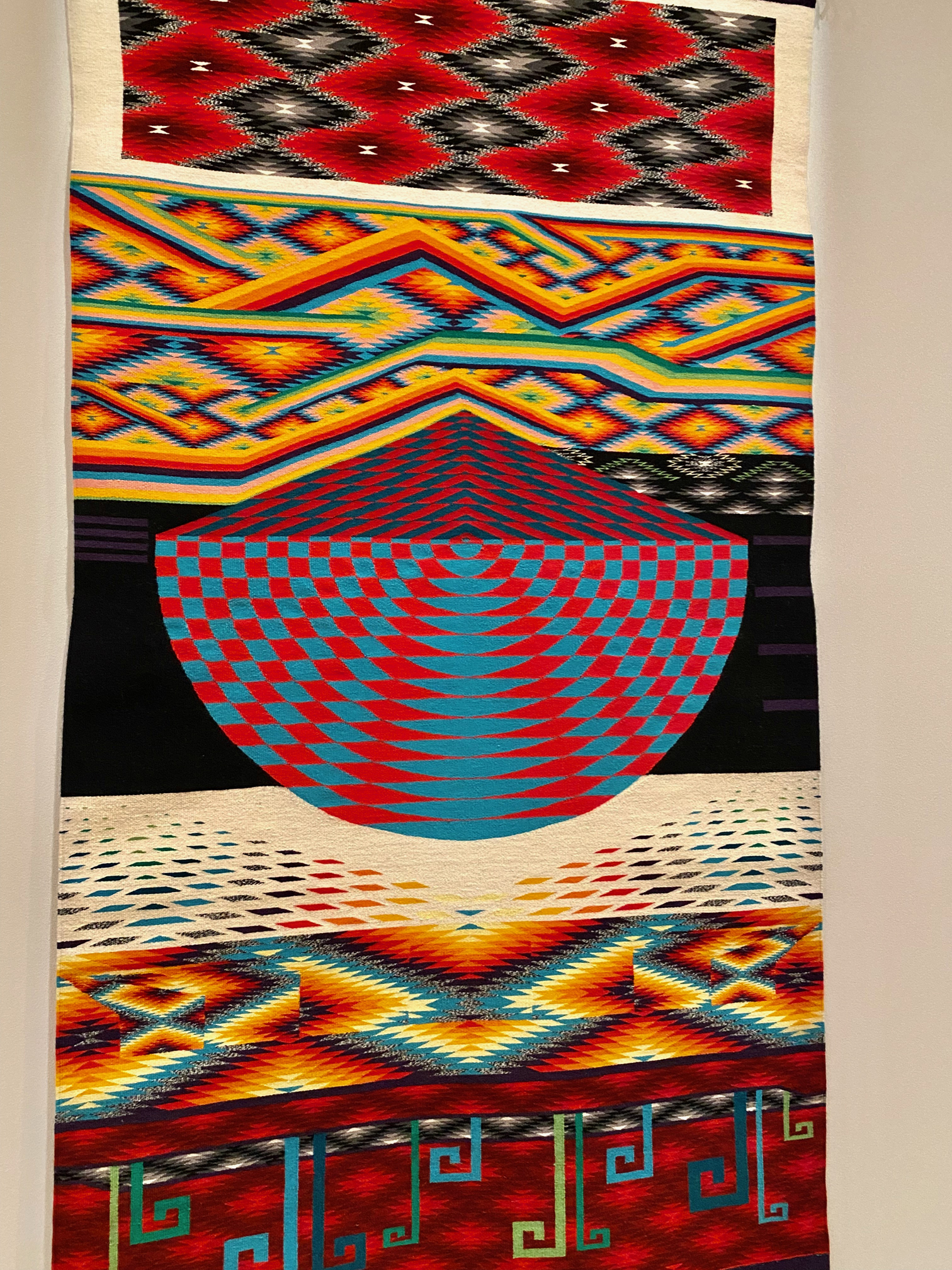
2014 wool weaving World Traveler by Melissa Cody (Navajo). Courtesy: Stark Museum of Art.

Smith, whose own artistic achievement was honored most recently in a three-museum retrospective in 2023-2024, became the first artist invited to curate a show at the National Gallery.

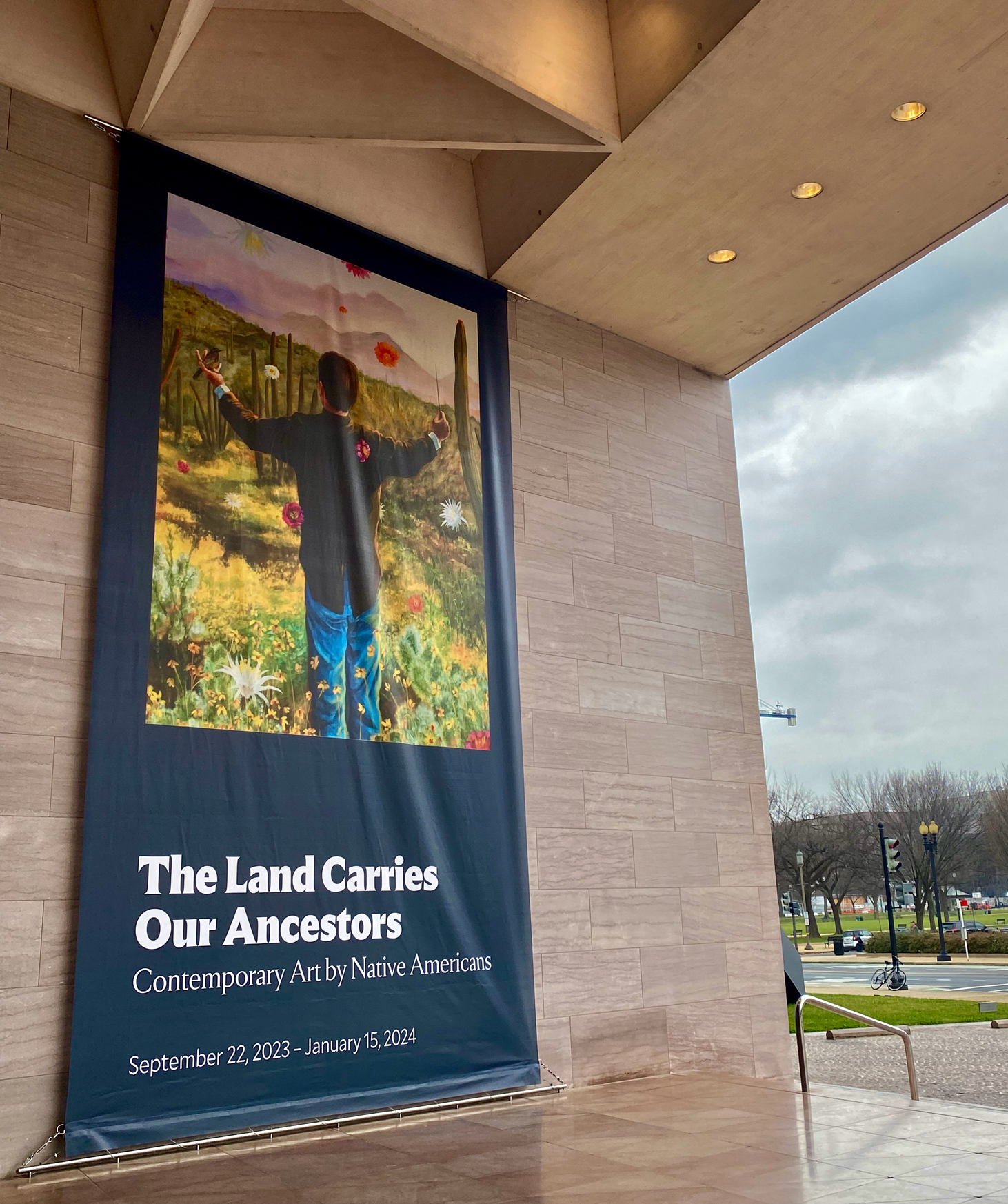
Entrance banner features Orchestrating a Blooming Desert by Steven Yazzie (Diné/Laguna Pueblo).

Smith has always done whatever possible to increase the visibilty of Native artists in the contemporary art world. For this exhibition, she chose 50 intergenerational artists from diverse regions, cultures, and artistic practices. Look at our Flickr album of the National Gallery installation to see some of our favorites.

All of the works reflect the artists’ deep connection to the land, especially Orchestrating a Blooming Desert by Steven Yazzie (Diné/Laguna Pueblo), a painting that reflects one man’s joyful encounter with a lush landscape.

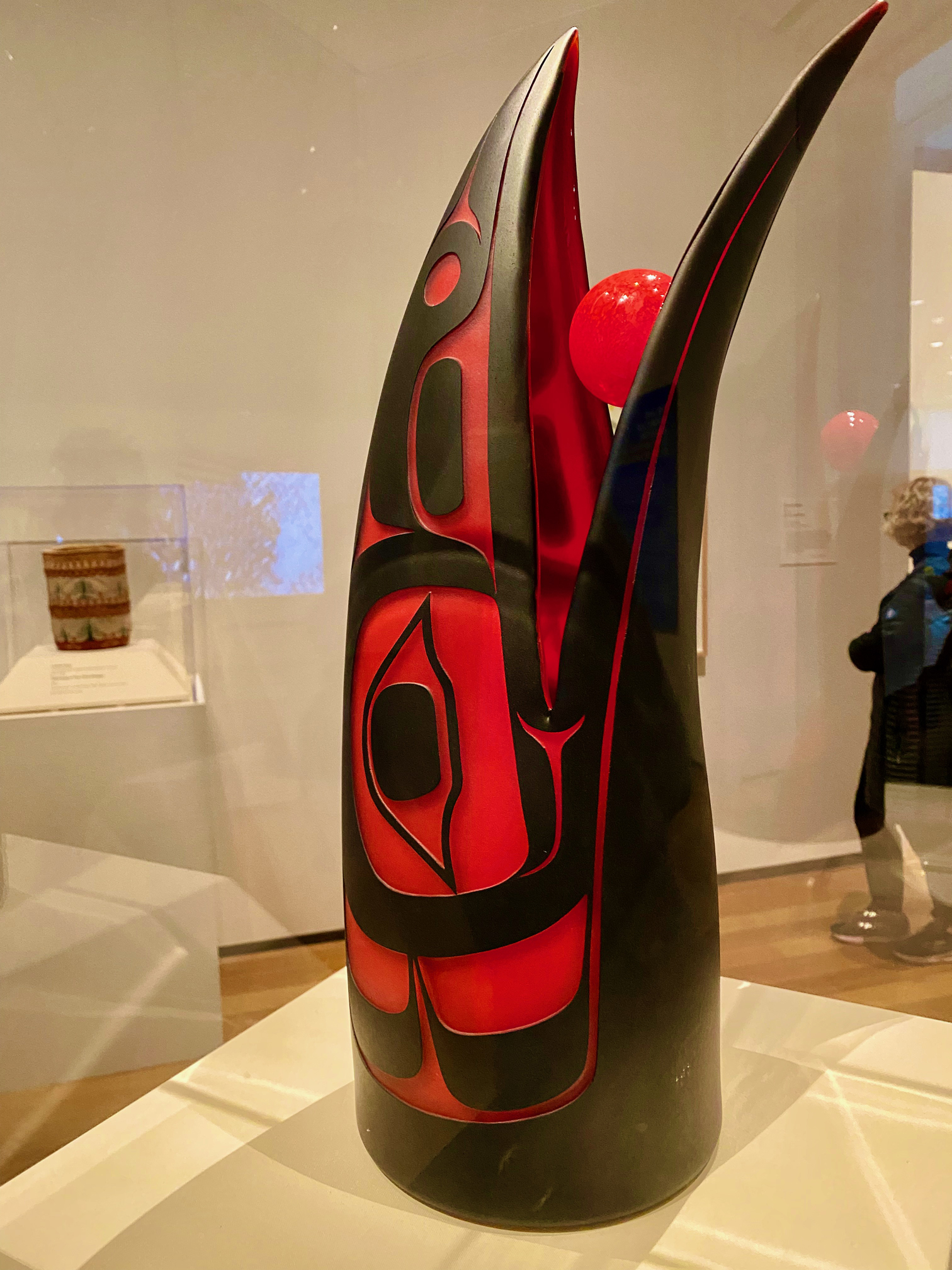
Some works depict a tribe’s link to the natural world through origin stories. Visitors are mesmerized by Preston Singletary’s exquisite sculpture of Tlingit creation-myth legend, Raven stealing the Sun. It’s glorious to admire this dramatic icon fully realized in a distinctly nontraditional medium – blown and sand-carved glass.

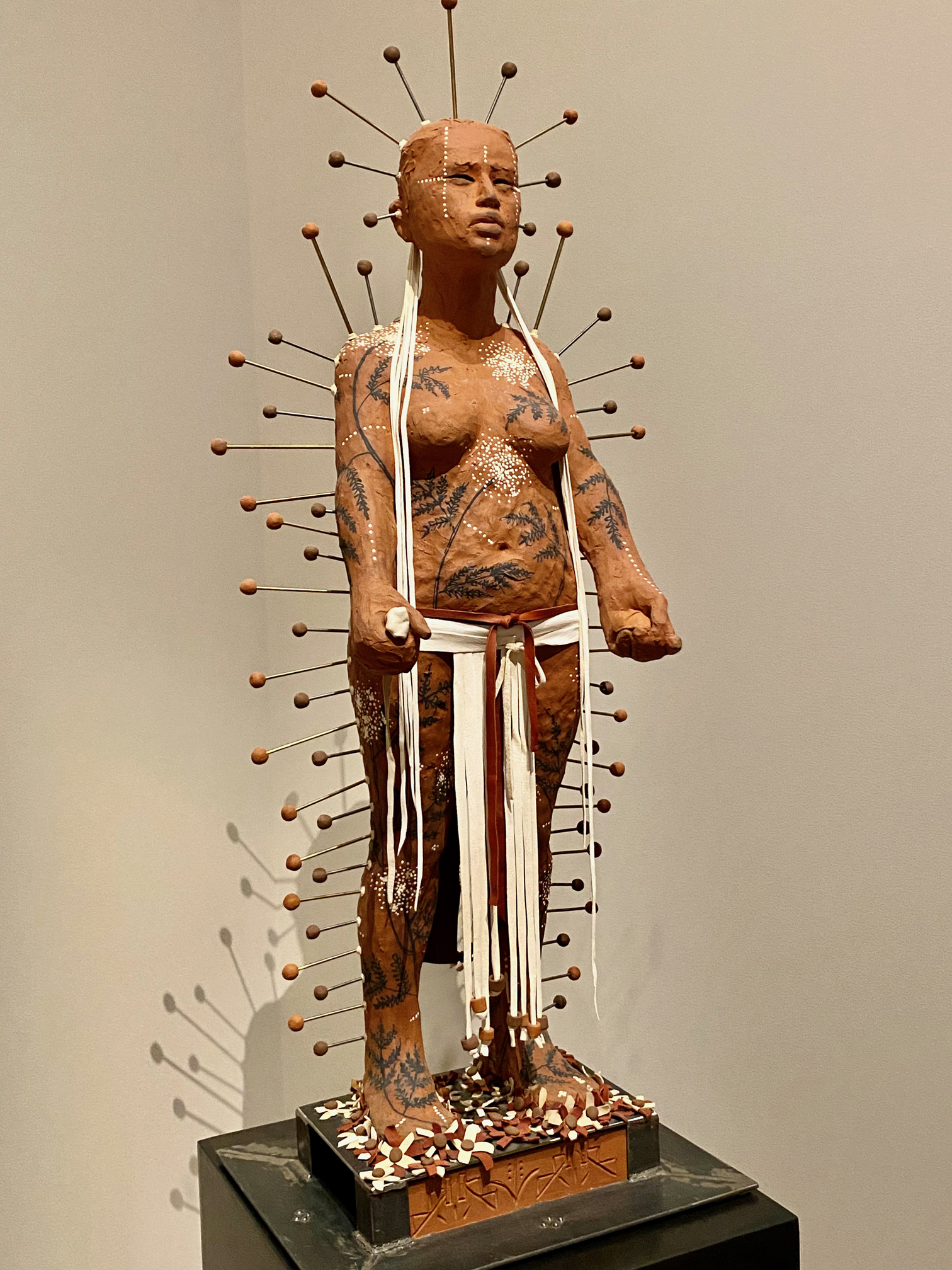
Experiencing the large, spiritual earth-colored ceramic figure by Rose B. Simpson (Santa Clara Pueblo) harkens back to eras when people had a more integral connection to the earth. Simpson calls her figure Tonantzin, an Aztec name for earth mothers, corn mothers, and even the Virgin of Guadalupe.

2017 blown and sand-carved glass Raven Steals the Sun by Preston Singletary (Tlingit). Courtesy: private collector.
2021 ceramic, steel, leather, and brass Tonantzin by Rose B. Simpson (Santa Clara Pueblo). Courtesy: Tia Collection.

Smith has chosen to hang many smaller two-dimensional works across a long wall in a checkerboard to suggest that visitors reflect on the impact of 1887 Dawes Act upon Native lands – a law that cut Native territory into “checkerboard” lots to facilitate private ownership.

At the National Gallery, Jeffrey Gibson’s punching bag (all made of found materials) was hung nearby, reminding us of the delicate balance that has to be struck by simultaneously caring for and taking gifts from the earth.

Next to checkerboard wall, the 2020 beaded punching bag To Feel Myself Loved On the Earth by Jeffrey Gibson (Mississippi Band of Choctaw Indians/Cherokee Nation). Courtesy: Hirschhorn Museum.

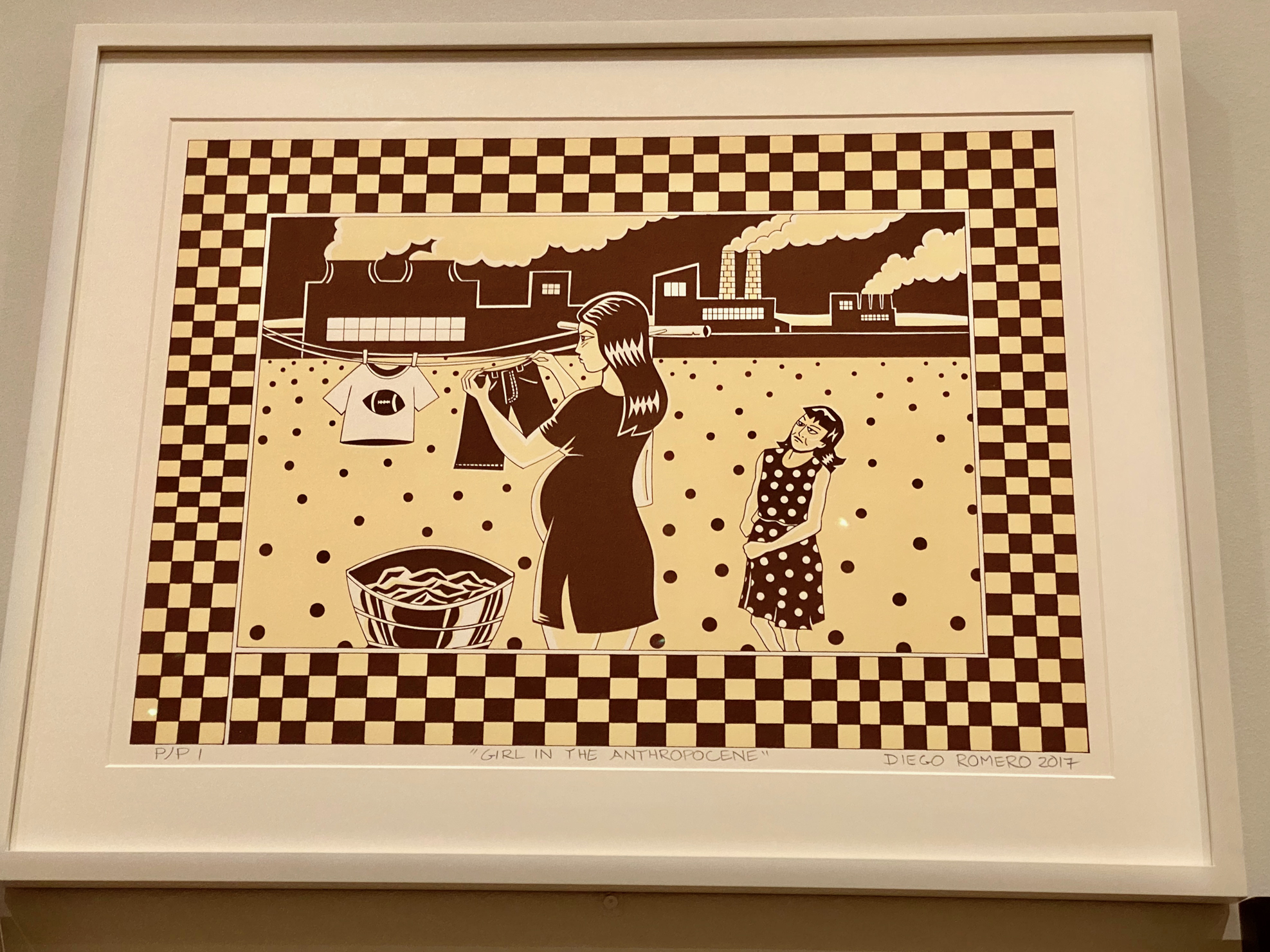
Some artists mix impressions of modern life with tribal lands, such as satiric works by Diego Romero (Cochiti Pueblo) and stylized symbols in a monoprint by Joe Fedderson (Colville Confederated Tribes).

2017 lithograph Girl in the Anthropocene by Diego Romero (Cochiti Pueblo). Private collection

In addition to sculptures, paintings, and photos, Smith has also included pieces made for fashion runways, live performances, and social protests.

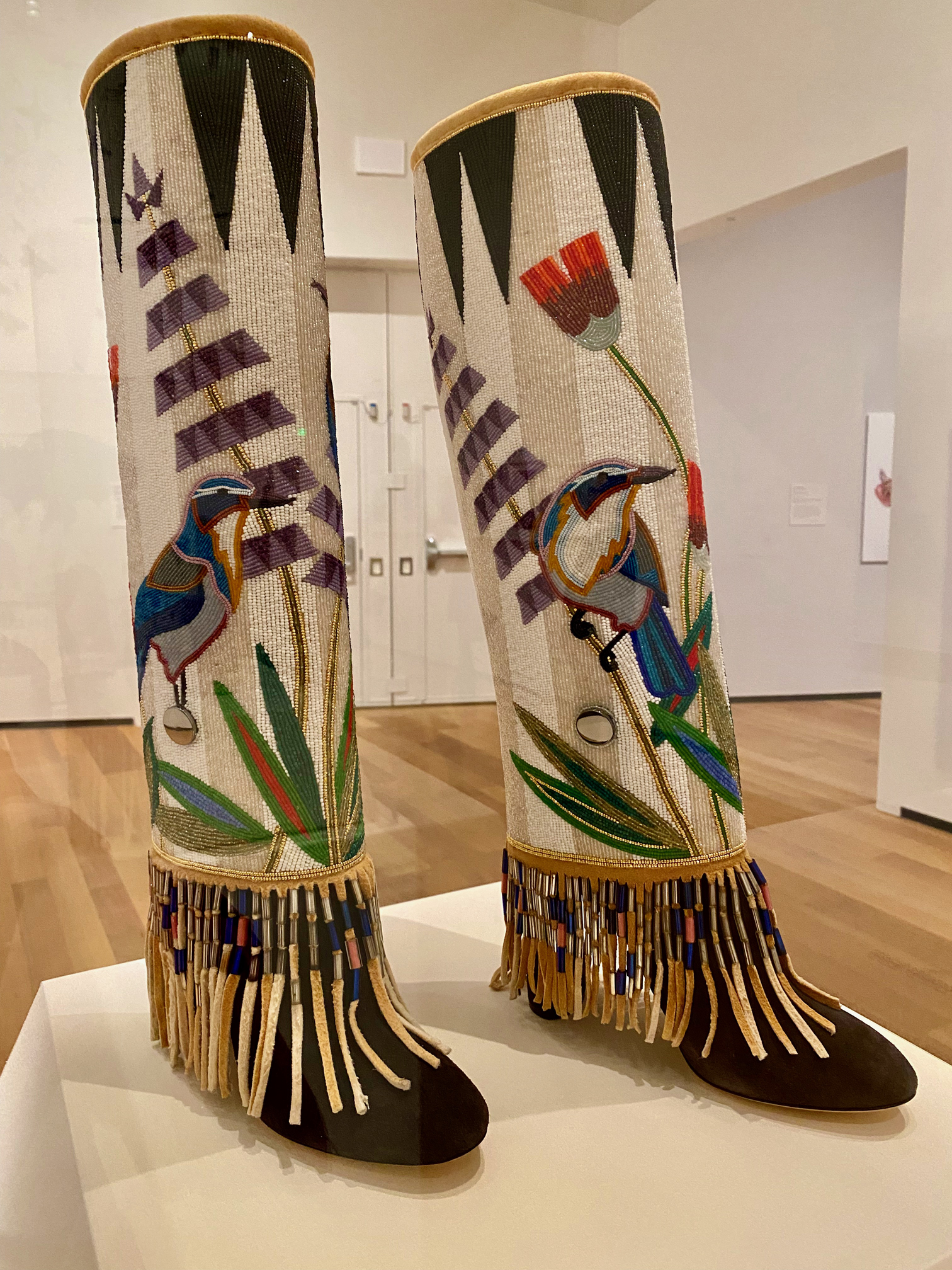
Fashion designer Jamie Okuma (La Jolla Band of Luiseno Indians) beaded her fringed fashion boots with a portrait of her family’s pet scrub jay.

Ten foot-long fiber seashell earrings designed for an interactive video and gallery performance by fiber and performance artist Eric-Paul Riege (Diné) are a reminder of the ancient trade networks that brought trade items from the ocean to the interior deserts.

2021 beaded and fringed Casedei boots by Jaime Okuma (La Jolla Band of Luiseno Indians). Courtesy: Dartmouth College’s Hood Museum
2020 mixed-fiber installation jaatloh4Ye’iitosoh [3-4] by Eric-Paul Riege (Diné). Courtesy: Tia Collection.

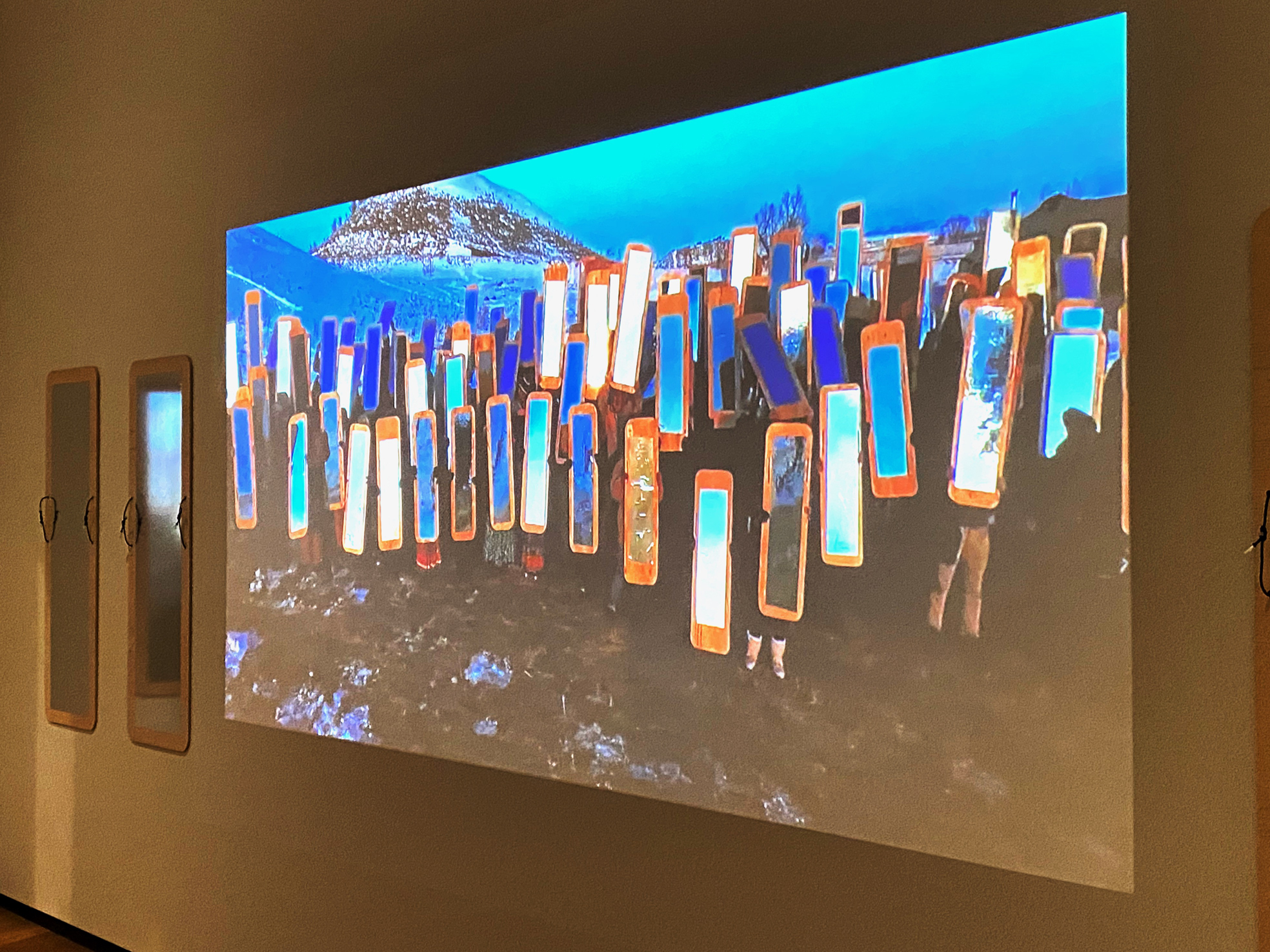
A wall of “mirror shields” were mounted by artist-activist Cannupa Hanska Luger (Mandan/Hidatsa/Arikara/Lakota), showing just a small sample of the 1,000 protective and reflective shields made by people to help water protectors during thre 2016 pipeline intervention at Standing Rock Sioux Tribe Reservation, Luger’s childhood home. Take a look at Luger’s instruction video here.

The shields served to protect the peaceful protesters from rubber bullets and water cannons, and reflected images of the security forces back to them. The crowd-sourced shields were also used in a social-action performance piece at Standing Rock.

2016 mirror shields and video for Mirror Shield Project – River (The Water Spirit) by Cannupa Hanska Luger (Mandan/Hidatsa/Arikara/Lakota). Courtesy: the artist, Garth Greenan Gallery.

Textiles and vinyl drawings also pack a punch in this show. Take a look at the dazzler woven by Melissa Cody (Diné), who draws inspiration from video gaming and the matriarchs of Navajo Nation. Watch her interview from her recent exhibition at MoMA PS1.

Here, John Hitchcock explains how his room-sized drawing, Impact vs. Influence, incorporates his influences – nature, family, Native beadwork, and the next-door military base:

Take a look the National Gallery’s trailer and meet the 50 contemporary artists whose work and relationship to the land is celebrated in the show: