Wit, Humor & Satire in Albuquerque

If you want to have a good laugh or contemplate a biting piece of social satire, head over to Wit, Humor & Satire at the Albuquerque Museum, on view through January 29.

Pulled from the museum’s permanent collection, themed sections of the show present artists’ side-glance takes on Western mythology, art jokes, image puns, and politics.

Right in the entry, you see the huge wall of Warhol Mao Tse-Tungs in blazing Pop Art colors, alongside Thomas J. Lane’s satirical ceramics – Bart Simpson impersonating Jesus and Homer as Buddha. Irreverant satire mixed with social commentary in impeccable execution.
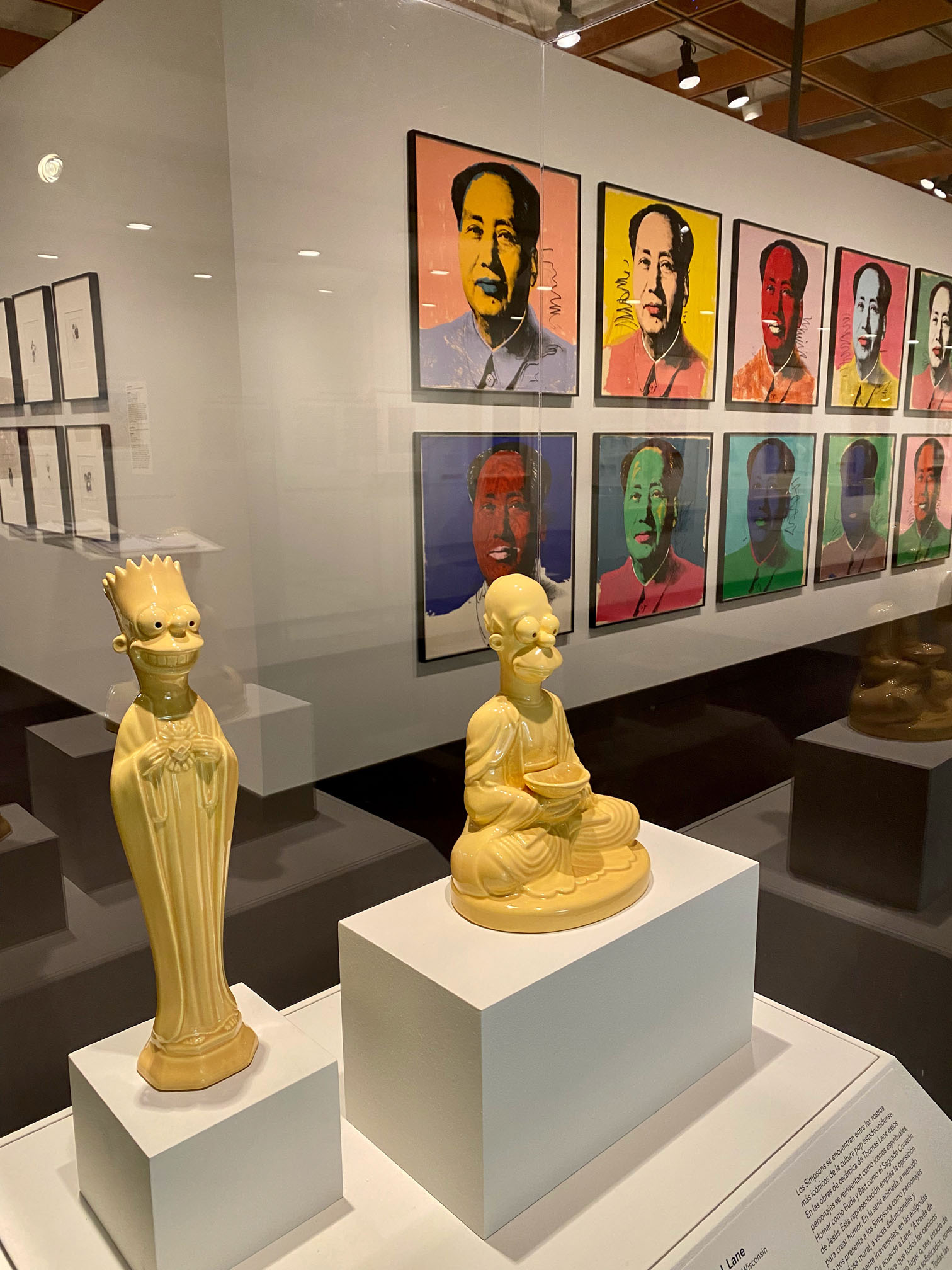
Art history “jokes” and political portraits: Thomas J. Lane’s satirical Simpson ceramics with Warhol’s monumental 1972 Mao Tse Tung silkscreens.

There’s a dark 18th-century Goya etching in the first gallery and a funny Sloan print skewering 1920s tourists, but most of the offerings are more recent vintage, particularly whimsical sculptures and social commentary of the Seventies, Eighties, and Nineties. 
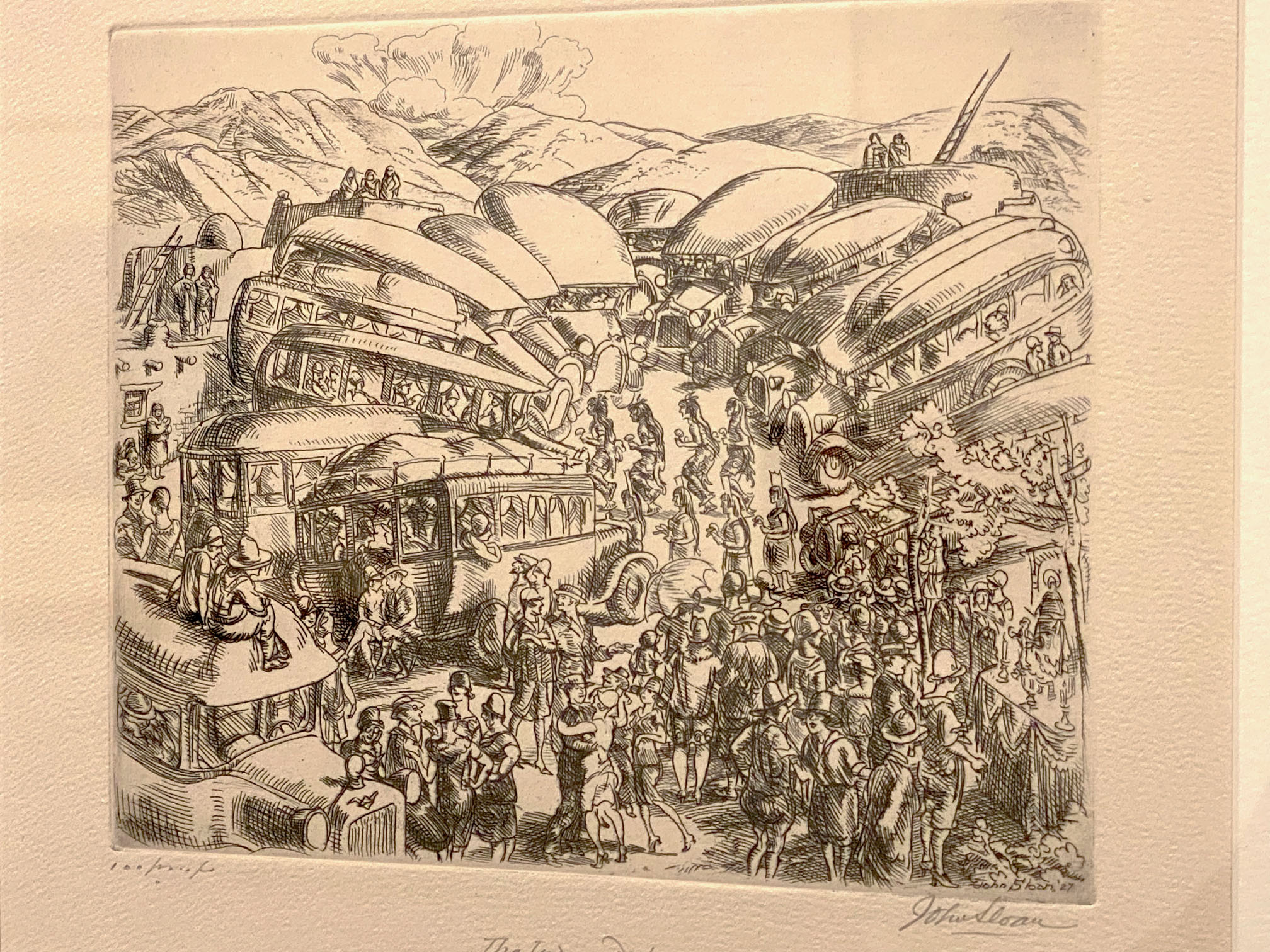
Comments on Commodification: John Sloane’s 1927 Indian Detour etching, a satire showing hoards of souvenir-buying tourists descending upon Indian pueblos on their Fred Harvey packaged excursions.

It’s nice to encounter clever Sixties and Seventies Warhol, Rauchenberg, and Red Grooms prints in other humorous sections of the show, and to revisit Southwestern superstars like the T.C. Canon and Scholder, who like challenging stereotypes of what people think of Western people and cultures.

Political commentary: Red Grooms’ 1976 silkscreen Bicentennial Bandwagon,”which references America’s troubled past versus all-out patriotic celebration of American history.

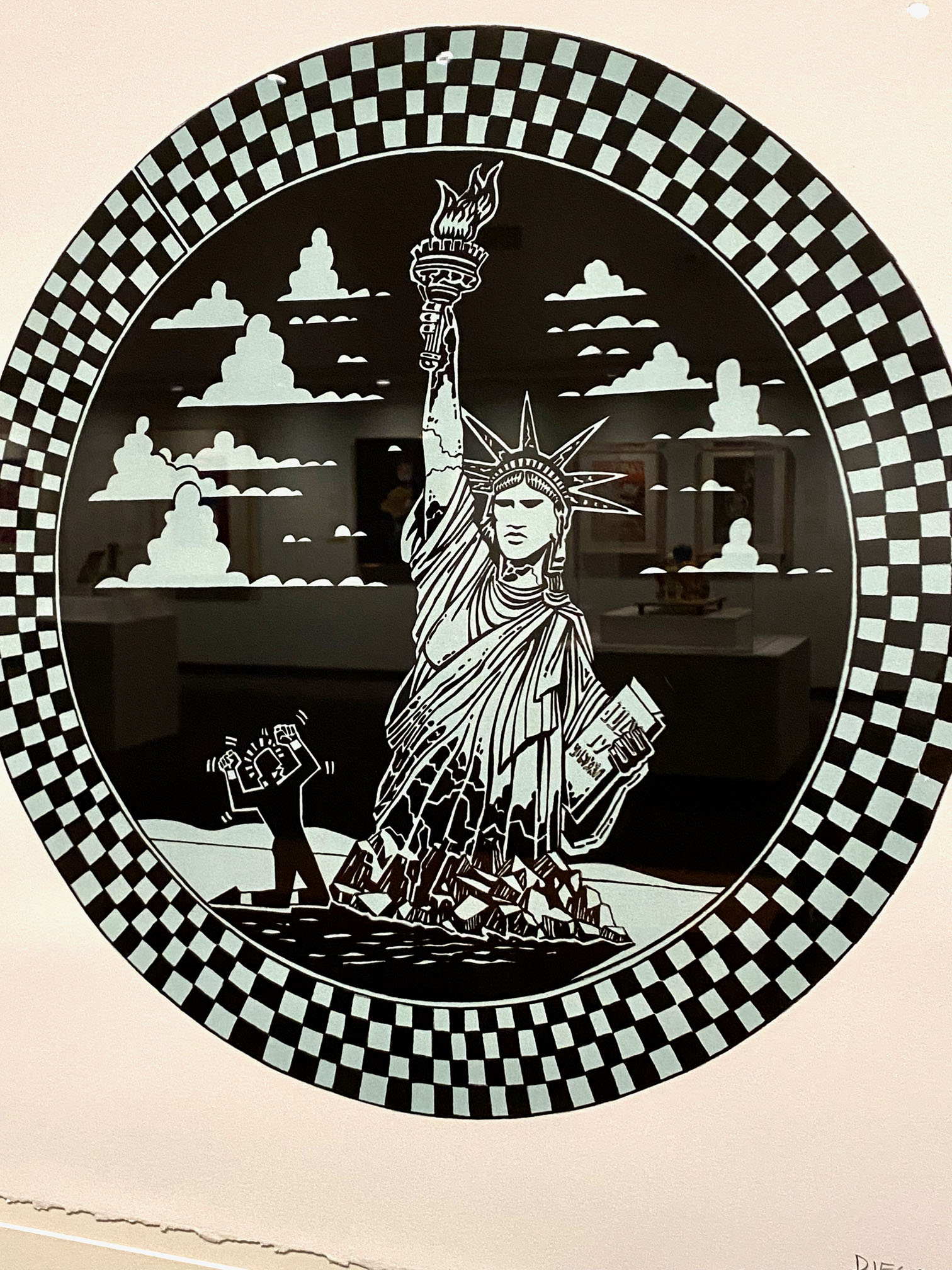
Most of the anti-War and social commentary are in the back half of the gallery, with strong pieces by Bob Haozous, John L. Doyle, and Sue Coe. Diego Romero lays it out with a lithograph that resembles his normal medium of politics-on-a-plate.

War: 1990 steel-plated sculpture El Piloto by Bob Haozous, depicting a skeleton pilot whose nose is a plane with a bomb trailing.
Political commentary: Diego Romero’s 2011 Apocalypto lithograph.

Another stand-out is the first poster ever designed by Keith Haring – a combination of images that came to define subterranean visual protest in the dark, scary times of 1980s New York. He debuted it for an anti-nuclear rally in Central Park, but his unforgettable images and icons soon became ubiquitous on City streets and subways, on T-shirts, and downtown art galleries.

Indigenous humor and commentary are well represented by Jason Garcia’s water-carrying pueblo gals in a contemporary landscape and Wendy Red Star’s Native seasons studio-portraiture spoof.

War commentary: Keith Haring’s first poster – his 1982 Anti-Nuclear Weapons Poster, featuring his iconic “radiant baby”.
Western mythologies: Subversive autumnal studio self-portrait from Wendy Red Star’s 2006 digital print series Four Seasons, which highlights artificial elements.

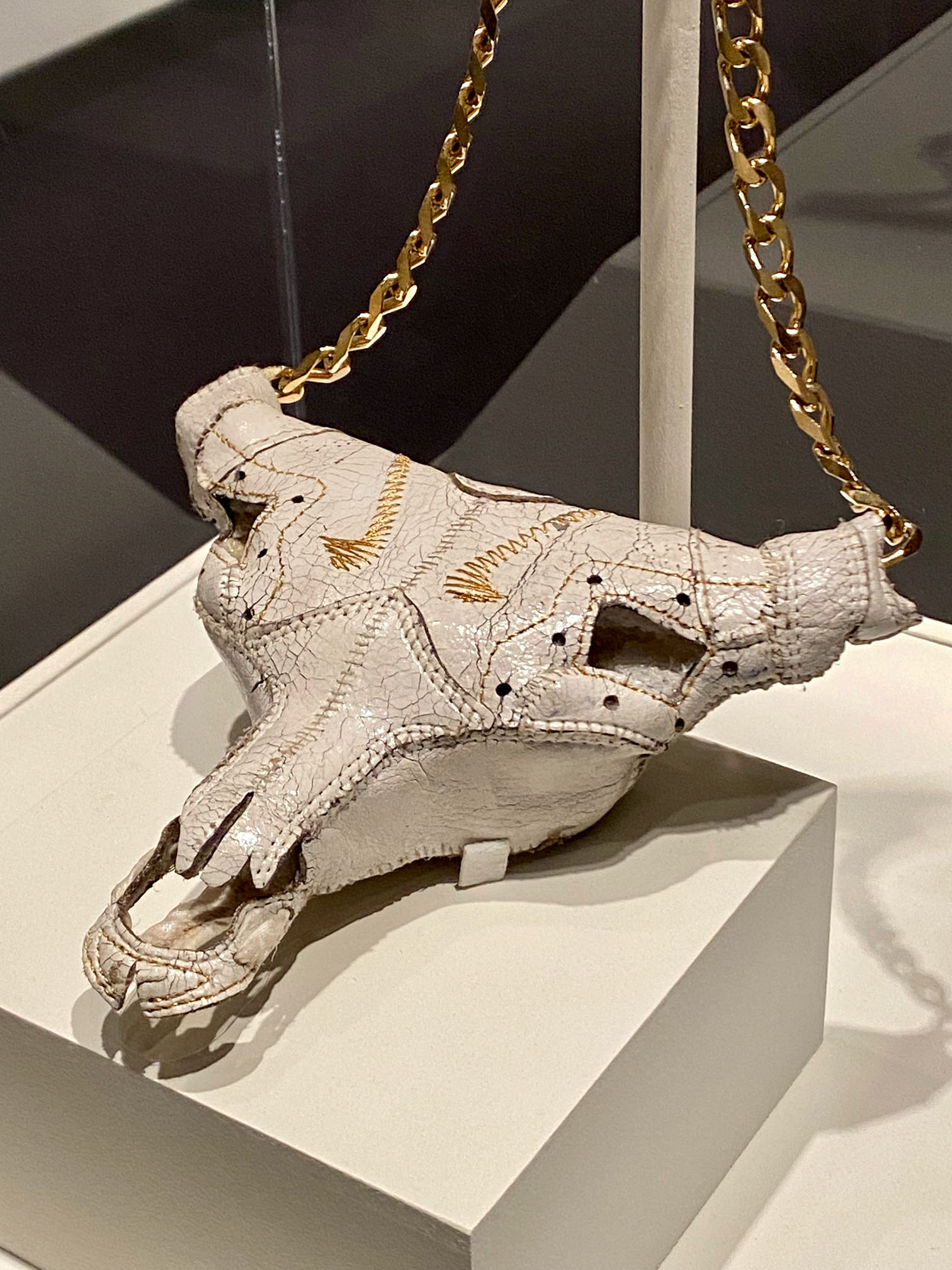
Too bad that no one knows who made the 1960s traditional Zuni pop-culture Disney necklace. But it’s fun to contemplate the Nike-sneaker sculpture/neckpiece by Sean Paul Gallegos.

Exploring wit: 1960s silver Zuni necklace by unknown artist featuring Disney characters inlaid with shell, coral, turquoise, and jet.
Commodification commentary: 2015 satiric “high fashion” neckpiece by Sean Paul Gallegos, created from recycled Nike sneakers and gold thread.

There’s a lot to think about and enjoy in this provocative show. Visit our Flickr album to enjoy more of our favorite works.

Art of Indigenous Fashion at IAIA

How do Native American designers transform traditional beading, ancient symbols, social commentary, and tribal embroidery into contemporary fashion? 

Answers are on display in the exhibition, Art of Indigenous Fashion at Santa Fe’s IAIA Museum of Contemporary Native Art (MoCNA) through January 8. It’s a fitting exhibition that opened in conjunction with the tenth anniversary of the Southwestern Association for Indian Arts (SWIA) Indigenous Fashion show.

Take a look at our favorite pieces in our Flickr gallery.

2015 Jamie Okuma wool dress with shells. Courtesy: National Museum of the American Indian
2022 Recon Watchmen costumes by Virgil Otiz (Cochiti Pueblo). Courtesy: the artist.

The show puts the work of 2022 Native American Treasure honoree Virgil Ortiz front and center, with three imposing Recon Watchmen costumes. No, it’s not runway fashion. But these futuristic sci-fi ensembles from the year 2180 are made for a film where protectors travel back in time to help the New Mexico pueblos successfully fight their opressors in the Revolt of 1680.

Ortiz (Cochiti Pueblo) combines film, fabric, headresses, and history to tell the story of a real-life Native revolution that Pueblo kids never learned in their New Mexican history classes. Look close at the awesome printed silk cloaks, lamé “armor”, and dramatic sculpted masks of these dramatic Native superheroes.

Next, you see how Native artists combined art and fashion from the mid-20th century until now.

Several historic pieces are by the godfather of Native American contemporary fashion (and early leader of IAIA), Lloyd Kiva New (Cherokee), who had a successful contemporary line in Scottsdale in the 1940s and1950s.

The clothes in this exhibition feature buttons and clasps made by Charles Loloma, a Hopi innovator in contemporary Native jewelry, who also had a shop in Scottsdale and joined New at IAIA in the Sixties. Lucky that collectors saved these gems for us.

1950s and 1960s ensembles by Lloyd Kiva New (Cherokee). Private collection.
2016 ribbon dress by Jamie Okuma ((Luiseño/Shoshone/Bannock)) and 2018 silk dress by Orlando Dugi (Dine’). Courtesy: the artist; IAIA

The rest of the work in the exhibition represents the 2000s, primarily three types – ensembles taking a luxurious haute-couture approach, wearable social commentary, and sly conceptual art-as-fashion installations.

The 2000 embroidered, appliqued wool “Chilkat” cape by Pamela Baker (Tlingit/Haida) is regal enough to wear at any black-tie affair.

The same for Orlando Dugi’s (Dine’) 2018 feathered and beaded evening dress with a subtle golden eagle and touches of sparkling corn pollen. Dugi is a self-taught couturier, who meticulously applies each bead and feather himself.

Two dramatic red-carpet dresses by Lesley Hampton (Anishinaabe) that have appeared at recent Emmy and Golden Globe Award events are reminders of the inroads being made by Native Americans artists in the entertainment sector.

Among the most dramatic social-commentary work, Canadian design team Decontie & Brown (Penobscott Nation) has two attention-grabbers – a “wedding dress” offering the wearer protective spikes from unwanted advances and radiating power-feathers, and the “I Am A Reflection…” mirrored man’s coat. Absorbed in the kaleidoscope of the coat’s reflected light, viewers contemplate Decontie & Brown’s message as they marvel at the visual magic.

Decontie & Brown’s 2017 Armored Beauty wedding dress and 2021 upcycled I Am a Reflection…Mirror Coat. Courtesy: the artists
2018 It’s in Our DNA, It’s Who We Are ensemble by Anita Fields reflecting tribe’s past and present. Courtesy: Minneapolis Museum of Art

The elegant embroidered cashmere shift by Sho Sho Esquiro (Kaska Dena/Cree) has delicate somber black wings fluttering across the back. But these are paired with a front shouting the savage message of 20th-century Indian boarding school government policy. Beautiful but chilling.

Anita Fields (Osage) is represented by a suspended fashion installation in the center of main gallery – a wildly oversized embroidered top hat and wedding coat titled “It’s In Our DNA, It’s Who We Are.” Intertwined strands are emblazoned on the front; images of the unfortunate treaty her tribe signed in 1808 line the inside.

Outside the main gallery, MoCNA has invited Mohawk multimedia artist Skawennati to create a digital mural and installation of her “Activist Avatars,” cyber-protesters modeling a virtual clothing line. Multiple screens of social-justice protesters in power-to-the-people cammo and calico march toward viewers in the MoCNA screening room to an energetic Native hip-hop track.

Skawennati’s (Mohawk) 2022 Calico and Camouflage: Assemble! multichannel video installation.

Many of the artists represented in this show – Patricia Michaels, Jason Baerg, Jamie Okuna, Sho Sho Esquiro, and others – were featured in this year’s Indigenous Fashion show. Watch the 2022 SWIA Fashion Designers runway videos here.

2019 silk and leather Sunset Dress by Jason Baerg (Cree Métis), symbolizing dynamic optimism and referencing trees, sky, and earth. Courtesy: the artist.

Jasper Johns Takes Victory Lap at The Whitney

Iconic imagery, big statements, technical mastery, and long-distance endurance are all on display from the second you enter Jasper Johns: Mind/Mirror at The Whitney – the mind-bending retrospective of one of the century’s most celebrated artists.

Then you realize that this 12-part extravaganza is only half the story ­– a mirror image of the Whitney retrospective that is also on display 90 minutes south at the Philadelphia Museum of Art.

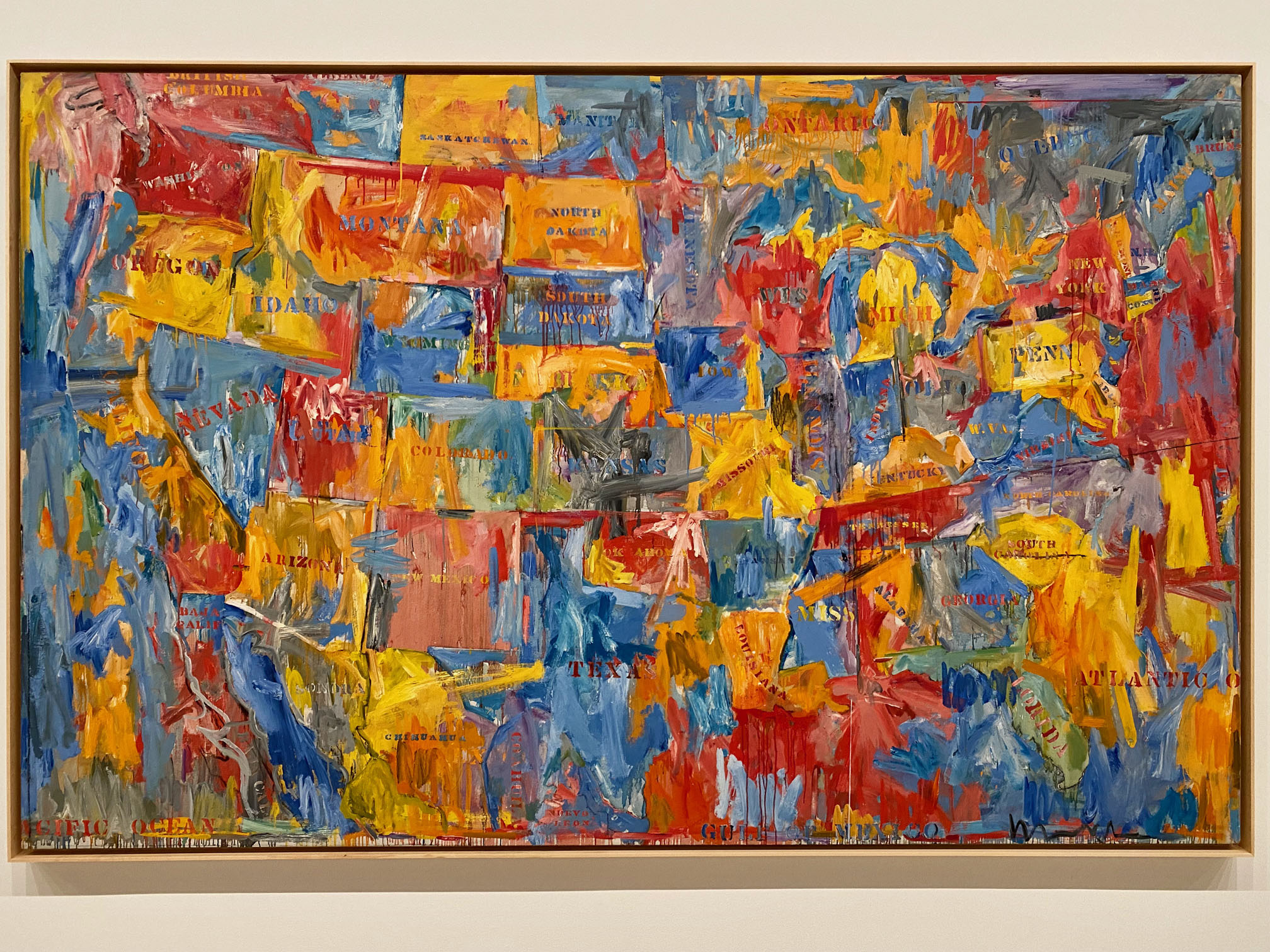
1961 Map by Jasper Johns. Courtesy: MoMA
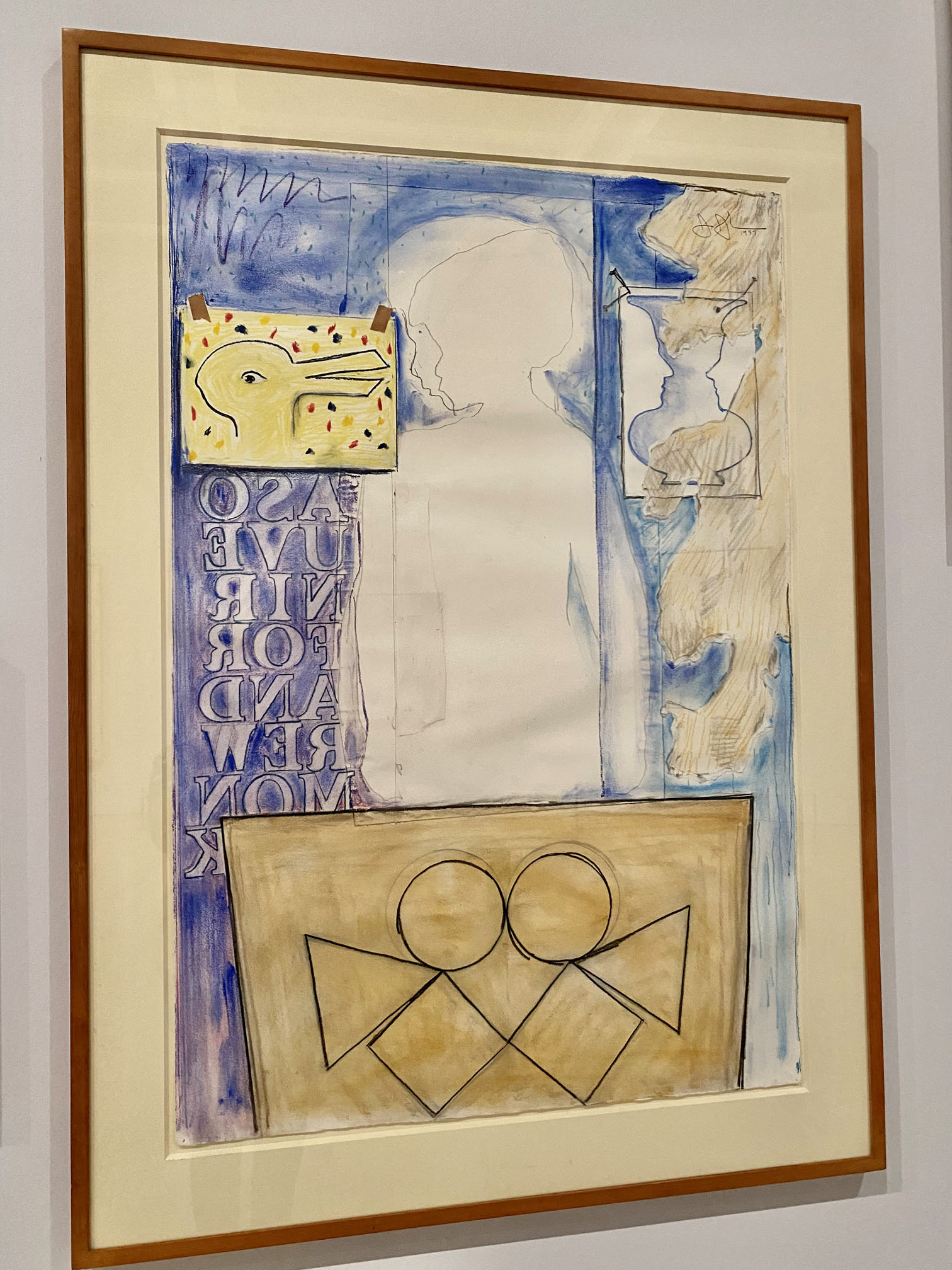
1982 Savarin monotype of Johns’ 1960 bronze.

Each has different works and minutely different themes (the number paintings vs. the flag), but reflect the same scale and scope of the artist’s astonishing 70-year career.

Most art lovers know that the early work of Johns and Rauschenberg in the late 1950s and early 1960s helped to redirect the New York art scene from Abstract Expressionism toward Pop. But show puts a much-needed spotlight on the rest of Johns’ career – how he kept experimenting with media, pushing his own boundaries, manipulating paint to evoke an emotional response, and not letting any art-world “ism” impede his creative journey over the next 50 years.

Hear what the show’s two curators, Scott Rothkopf (NYC) and Carlos Basualdo (Philly), have to say about Johns, the “rules” he “broke,” and the mark his work left upon 20th century American art:

The sheer magnitude and quality of the artist’s output is on full display as you take the journey through the Whitney – masterful paintings, prints, drawings, watercolors, and sculptures

See some of our favorite works in our Flickr album.

Exhibition entrance with full scope of Johns prints.

As soon as the elevator doors open at The Whitney, viewers are confronted with a curved wall that contains dozens of surprises – a chronology of prints stretching from Johns’ early days in New York through works completed as recently as 2019.  Walking left to right, the wall serves as a mini-retrospective as well as the intro to the larger show.  Bravo to the team for this brilliant, engaging welcome.

It’s joyful to poke through the first few galleries and experience Johns’ early experimentations with stenciled lettering, disappearing letters, collaged newsprint, and maps enlivened by painterly gestures and swipes.

But then you see works done in South Carolina, where Johns took in the beach and sky and recollected back to his childhood in the South. Big, bold, mystical, evocative puzzles taking the form of large-scale canvases, small intimate sculptures, and all forms of drawing and mark making.

1964 Studio with paint cans, created at the South Carolina beach.
1967 Harlem Light from Johns’ 1968 Leo Castelli gallery show. Courtesy: Seattle Art Museum.

You experience a room where the team has brought together work originally shown by Leo Castelli in his New York townhouse gallery in 1968. The exhibition designers mimic the size of the original gallery to let you experience the same thrill of interacting with these big, colorful, slightly conceptual, architectural paintings.

The centerpiece of the Whitney exhibition is a spectacular gallery created by the exhibition team to showcase the retrospective’s theme – how Johns used doubles and “mirroring” to explore perception and entice viewers to ponder the works more carefully.  The exhibition designer explains and shows how the famed bronze Ballantine ale cans are the fulcrum around which Johns’ subsequent work revolves:

There are hundreds of loans from other museums and private collectors, and the two museums even swapped some of their own holdings.

And Johns himself has loaned never-before-exhibited works, including watercolors and drawings that he did in the 1980s. Although the colors draw you in, they represent the artist’s process of working through the ravages of HIV and loss inside the art community.

The curatorial precision of the show allows you to experience an evolving appreciation of Johns’ later work – experimental monotypes in the print studio, contemplation of the arc of life in monumental elegiac grey paintings, and sculptures completed in the 2000s. See more on the Whitney website about the works in the show.

1990 watercolor from Johns’ collection with mysterious, surreal, personal imagery.

The latter are displayed in natural light, which allows you to enjoy the cast bronze and aluminum number blocks as the sun shines over the Hudson from different angles. The changes illuminate the hand work, gestures, and conceptual rigor over time – a fitting encapsulation of this two-city tribute to Mr. Johns.

Reverse side of 2008 bronze 0-9 sculpture. Private collection.

Exploring New York with Painter Alice Neel

The sights you’ll see! The people you’ll meet!  There’s nothing like seeing 20th-century New York through the eyes of one of most astute observers of the human condition. It’s why people have been flocking to The Met to see Alice Neel: People Come First, on view through August 1.

Considered one of America’s greatest figurative painters, Alice herself considered her relentless artistic pursuit more in line with history painting.  And what a history you’ll experience, walking through room after room of insightful portraits and cityscapes.

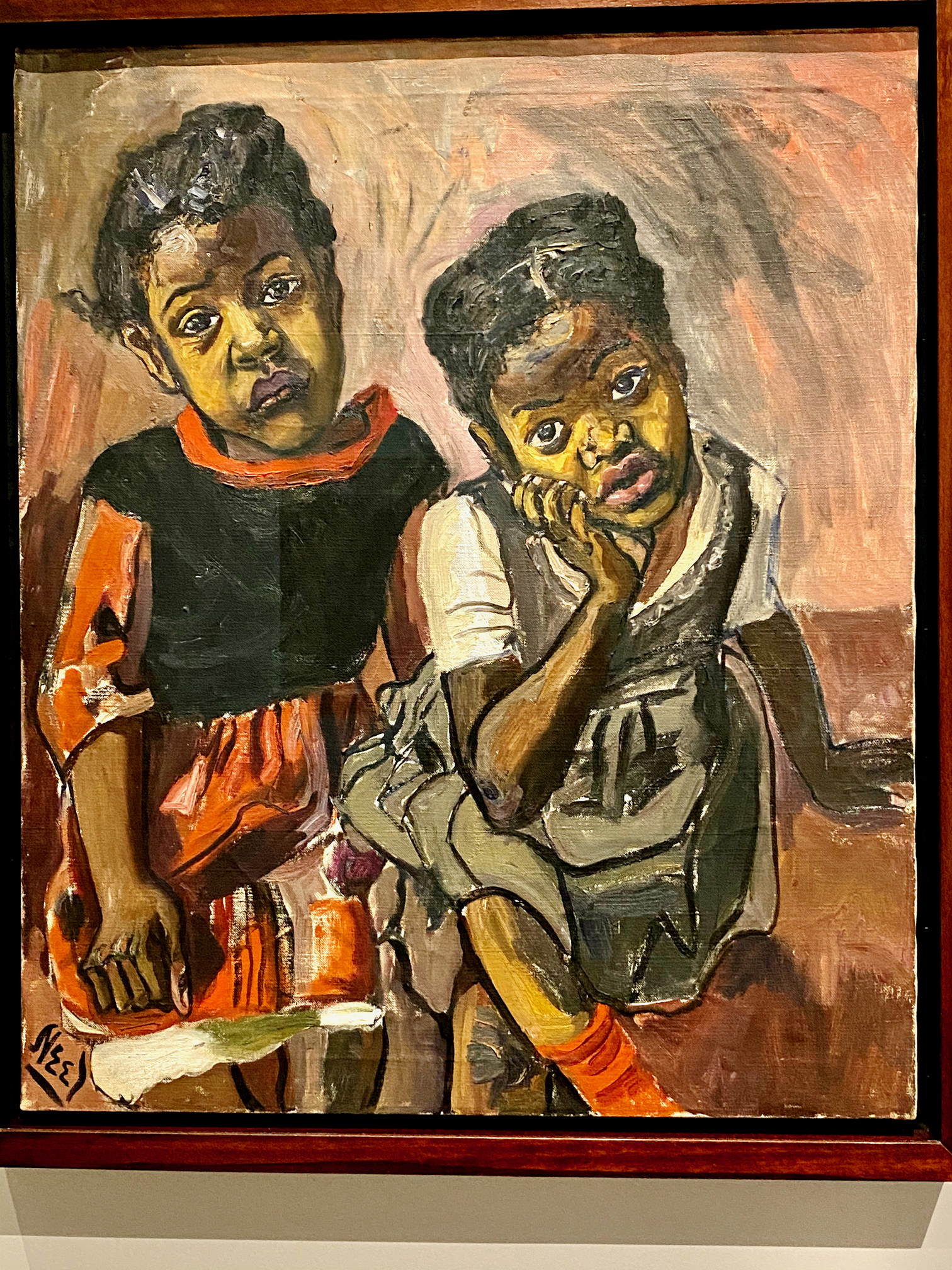
1958 Two Girls, Spanish Harlem with Alice’s neighbors Antonia and Carmen Encarnación. Courtesy: Boston Museum of Fine Arts
1972 portrait depicting Irene Peslikis, a leading Seventies feminist activist. Private collecdtion.

Alice’s colorful, insightful works introduce you first-hand to bohemian life post-WWI, the Great Depression, the socialist fight for workers’ and artists’ rights, the push for civil rights, the art underground, and the rise of feminism.

Through it all, Alice kept raising her family and painting in her home studio, sparing nothing in her portrayals of kids experiencing the world, families just trying to make ends meet in Harlem, marriages, births, and annual trips to the country.

Her earliest artistic influence was her early 20th-century academy training, in which the bravura brushwork of Robert Henri was admired – merging virtuoso painting with unfiltered views of everyday people and sights. Alice drew and painted like a virtuoso herself, sure of her ability of laying down an expressive line. 

Neel’s 1955 A Spanish Boy with Henri’s 1907 Dutch Girl in White.

Throughout her life, her frequent trips to the Metropolitan Museum bolstered her work with the continued influence Cassatt, Soutine, and other grand masters of the brush and the masters of social commentary, like Jacob Lawrence or Daumier.

The result is a decade-by-decade window into the life, times, struggles, and perseverance of a working mother-artist who took the same master, unflinching approach to documenting her pregnant daughter-in-law, civil rights leaders, Andy Warhol, and her own aging body.

Take a look at our favorites in our Flickr album.

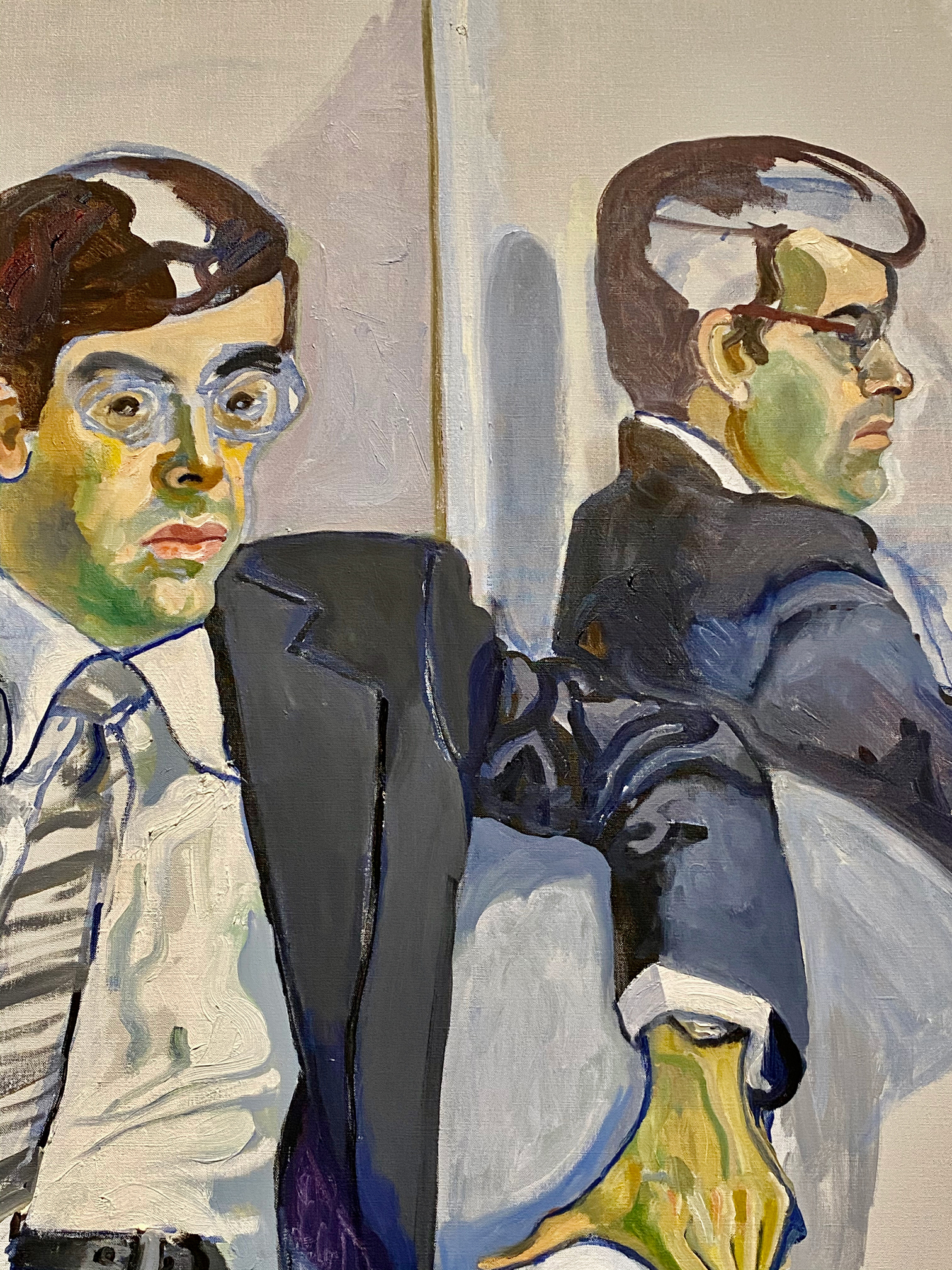
Detail of 1978-79 portrait of her son when he worked for Pan Am, Richard in the Era of the Corporation.

Alice and the curators keep the surprises coming through the exhibition, but why not hear from her yourself?  Here is Alice’s own description of her life, times, and what inspired her:

Experience Alice Neel’s New York in the Met’s multimedia primer here, and see all of the works assembled for her incredible exhibition.

1984 photo of Neel as a guest on The Tonight Show Starring Johnny Carson. Courtesy: Neel estate

Hockney’s Personal Drawings at The Morgan

The drawings at the Morgan, David Hockney: Drawing from Life, on view through May 30, are a tribute to the friendships maintained and the artistic experimentations sustained over the artist’s 83-year lifetime.

Hockney self-portraits through the years.

The show was created by the National Portrait Gallery in London and centers on 100 portraits of five people who sat for Hockney across the decades – his mother and several close friends.

The exhibition is organized by person, so you can compare how each person looked from the beginning of Hockney’s studies, across the years, and most recently when they came to visit him in Normandy, where he lives now.

Most of the works are from the Hockney Foundation or from the artist’s own personal collection, which makes the show extra-special.

The exhibition begins with a series of self-portraits that Hockney did as a teen, and features his etching series about his first trip to America in the early 60s. Then it jumps to the many portraits he did of his mother in England.

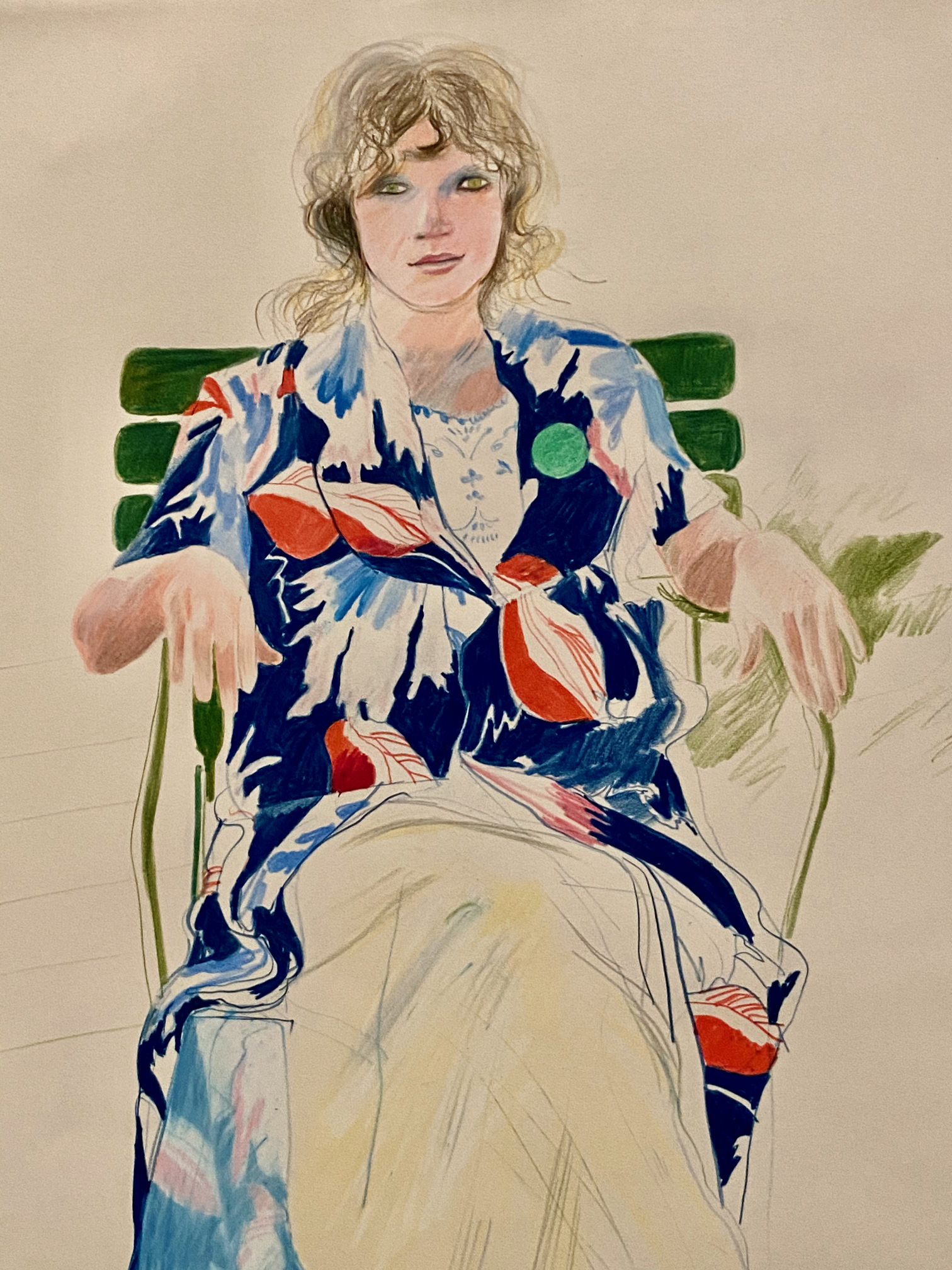
Colored pencil portrait, Celia, Carennac, August 1971
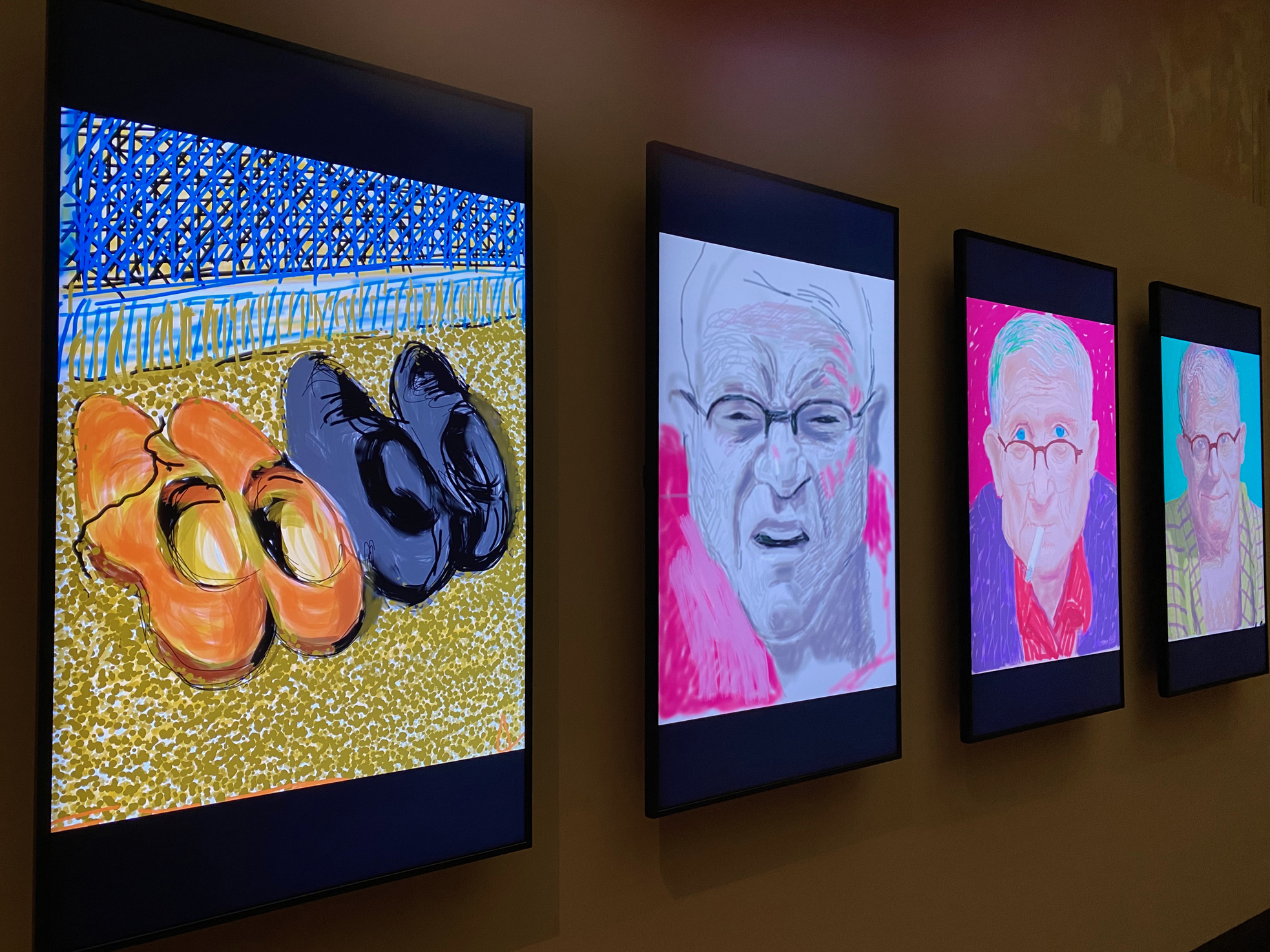
Digital wall of Hockney 2010 iPad drawings
Charcoal drawing Maurice Payne, October 9, 2000

Each series shows off his masterful accomplishments in precise colored pencil, mixed-media collage, watercolor, crayon, arranged Polaroid mosaics, etchings, ink washes, tight pencil sketches, and the biggest leap of all – digital drawings from his iPad.

Walking past the portraits, self-portraits, sketchbooks, and digital drawings, it’s quite a tribute to an artist who never stopped looking, wanting to sit with his favorite people, and slowed down to adopt techniques by other masters that he admired.

Take a look at works by a pop-culture virtuoso. Here’s a brief introduction to the exhibition by the Morgan’s director:

Take a walk through the exhibition on the Morgan’s website here, and join a YouTube tour with the curator here.

And see our favorites in our Flickr album here.

When Advertising was Revolutionary

Abstraction was being invented, monarchies were falling, wars were raging, and modern 20th century artists decided to turn advertising on its head, too. Artists left studios in droves and began making posters, brochures, billboards, traveling agit-prop theater wagons, and new-fangled telecommunications towers.

1-11 Engineers Agitators Reconstructors at MoMA
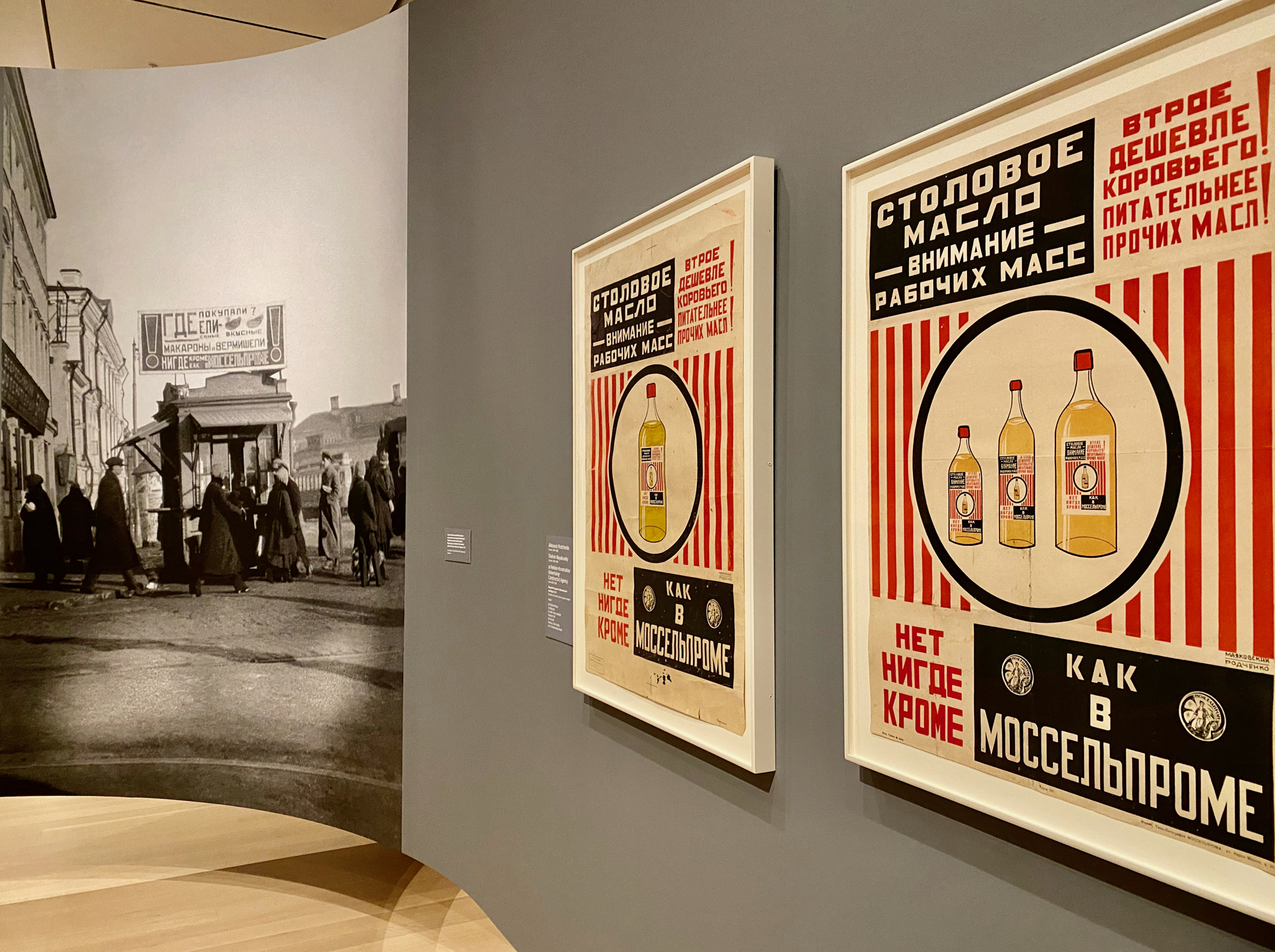
Modernist Russian billboards and works from Rodchenko and Mayakovsky’s 1923-1925 Advertising-Constructor agency

That’s just the first gallery of Engineer, Agitator, Constructor: The Artist Reinvented, on view at MoMA through April 10 – a show that investigates how artists change their focus to meet the moment of social, technical, commercial, and political change.

The focus is the period between WWI and WWII, when the avant-garde began mixing it up to bring about a whole new world for consumers, city planners, publishers, and the proletariat. Take a look at our favorite works in our Flickr album.

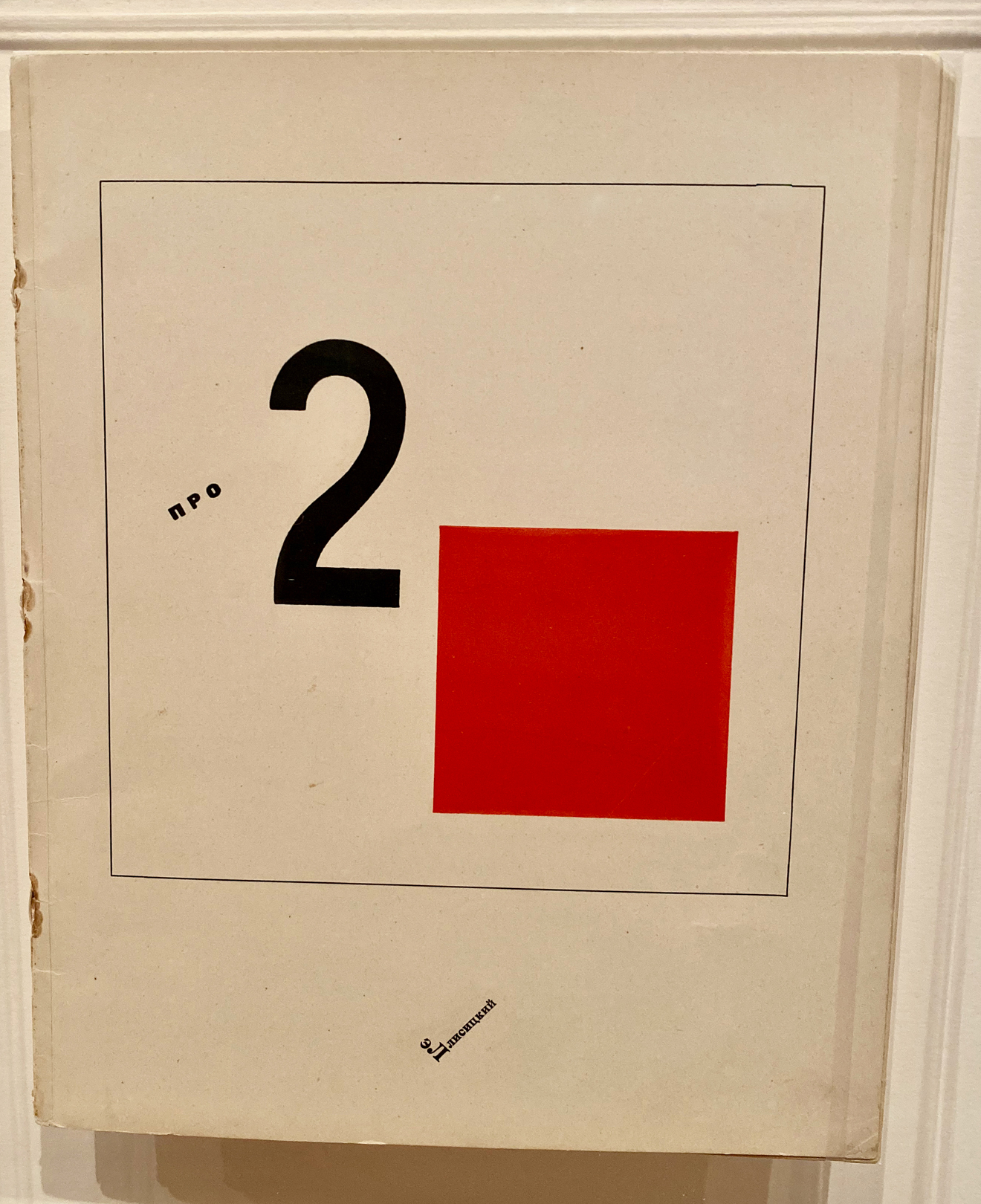
The first gallery provides a broad view of how other avant-garde abstractionists first inspired by Malevich’s Suprematism experimented now used pure, kinetic shapes to dance across children’s books, pavilions, costumes, and posters in the earliest days after the Russian Revolution.

El Lissitzky’s 1922 book About Two Squares: A Suprematist Tale of Two Squares in Six Constructions

The 300 works in the show are principally works on paper, collected by and donated to MoMA by Merrill Berman – a treasure trove that includes particularly rare and unique items that the curators use to tell quite a story.

A 1922 costume design by Popova, inspired by workers’ uniforms

One entire wall is dedicated to Ms. Popova, where you can stroll by paintings, covers for sheet music, and prints – all the ways she applied her genius. Another long wall displays dynamic work by Rodchenko and Mayakovsky, whose Advertising-Constructor agency mixed poetry and innovative, angled constructivist style to sell chocolate and other consumer products.

Mixed-media plays a major role in the exhibition, with several galleries showing how European artists embraced collage and photomontage both in their personal studio work and in graphic designs that shook up the look of mass market publications, industrial marketing, postcards, and political posters.

Dynamic photo montage 1928 postcards by Gustav Klutsis to promote the All-Union Spartaklada Sporting Event

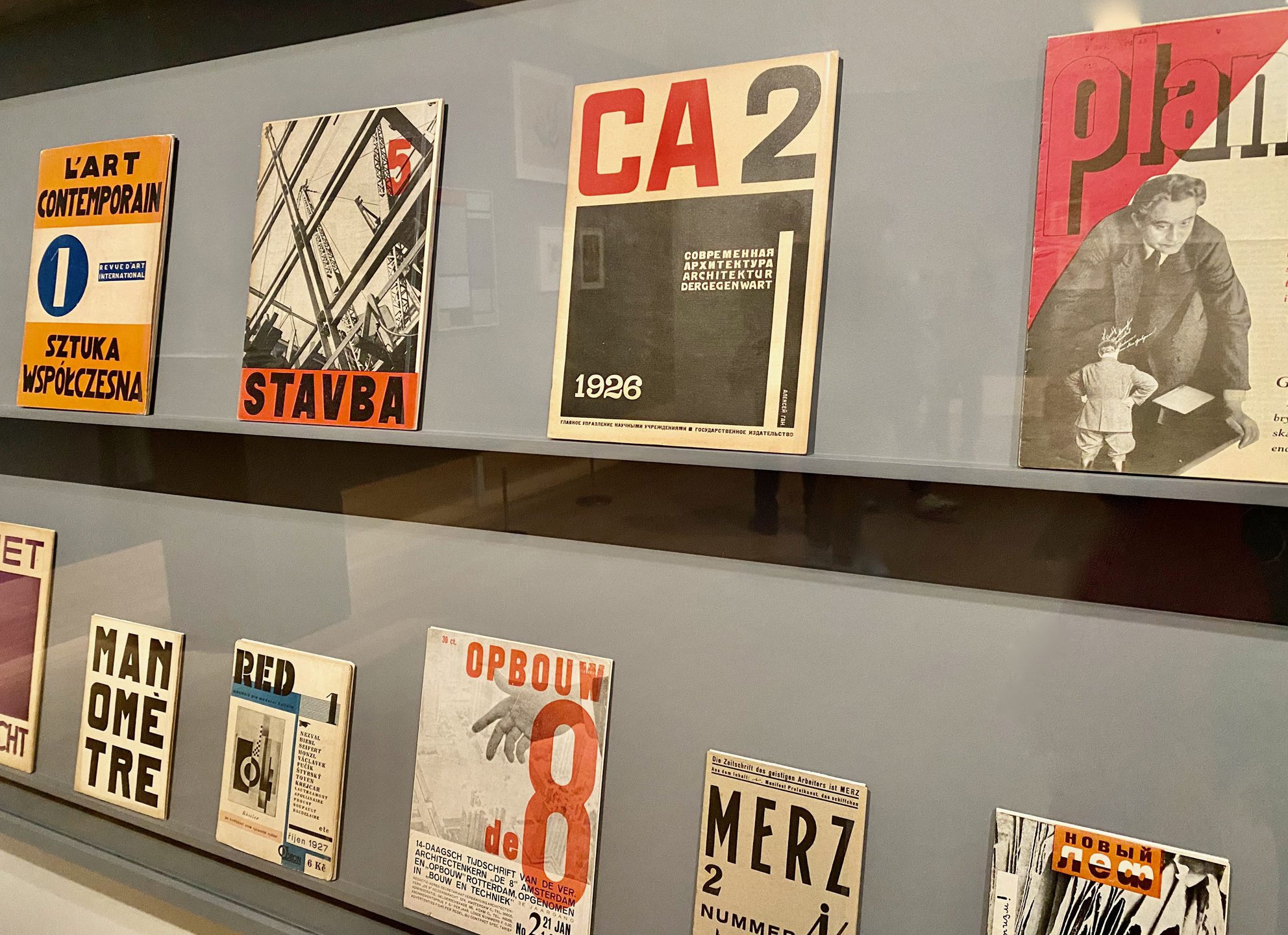
Another section of the show provides an introduction to innovative Polish, Hungarian, and Dutch indie zines shared, collected, and treasured by cutting-edge writers and designers excited by possibilities of the early 20th century.

Creative European magazines published in the late Twenties

Angled, geometric, and loaded with innovative typography, these rare magazines share the space with paintings by Mondrian, sculpture by Moholy-Nagy, and other geometric shape-shifters.

1924 photo of Henryk Berlewi and his exhibition at a Warsaw Austro-Daimler showroom with works from his Mechano Facture series, inspired by industrial technology

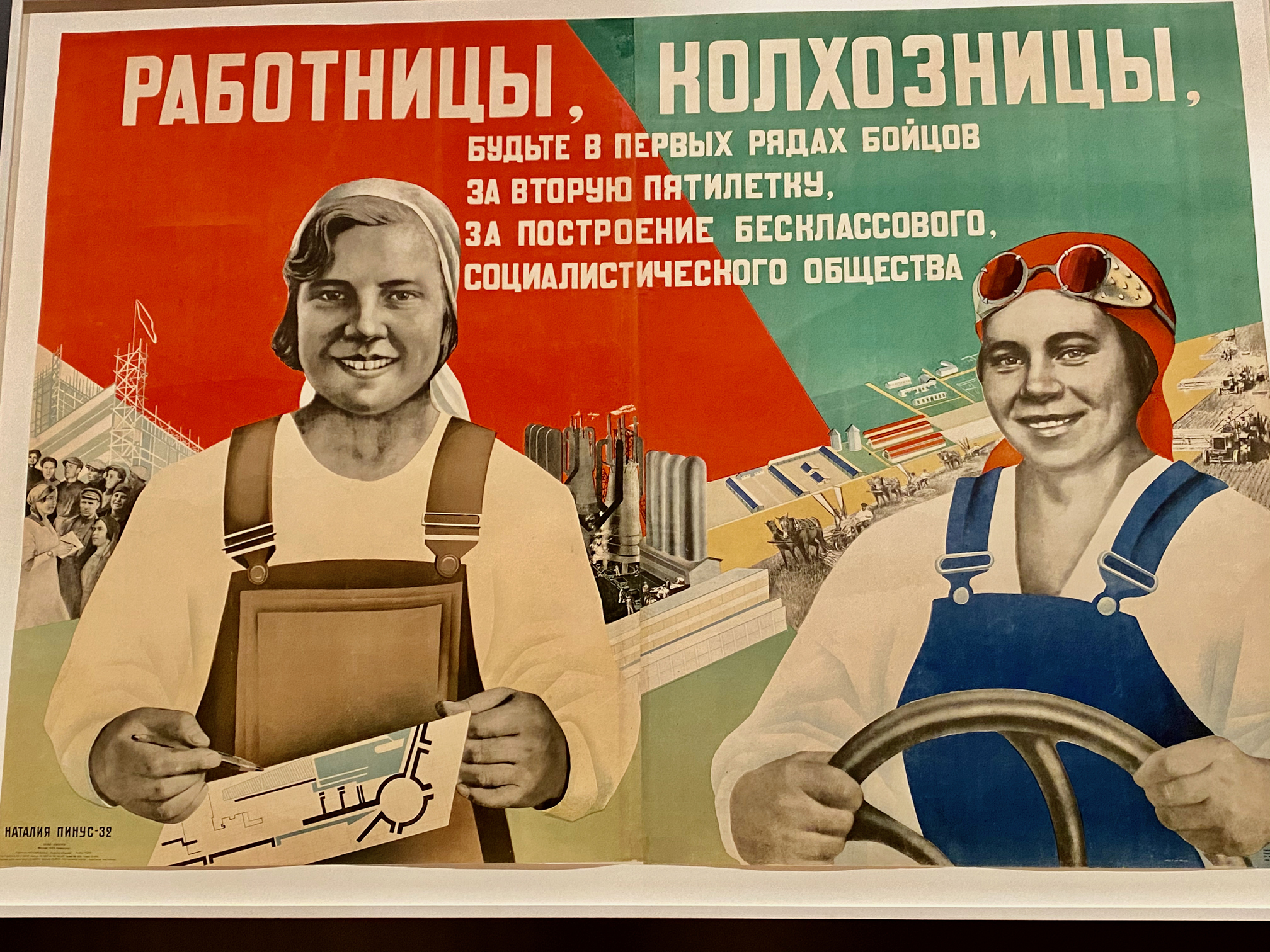
Women are prominently showcased in every gallery of the exhibition, including the massive wall of Soviet posters by female designers whose images celebrate the contributions of women to the industrial workforce.

1931 poster by Natalia Pinus acknowledging female farmers and other collective workers

Visionary drawings, watercolors, and poster posters are around every corner – and most are never-before-seen surprises. Before WWII brought it all to an end, the curators show the modern innovations that these creatives had in mind – new architecture, advertising constructions, and modern furniture fairs.

Walter Dexel’s 1928 design combines an airshaft, ad kiosk, and telephone booth. Herbert Bayer’s design for an electrified ad tower for an electricity company, done when he was just a student at the Bauhaus. Willi Baumeister’s 1927 poster that directly declares interior designs of the past are over.

Elena Semenova’s 1926 design sketch for a Russian worker’s lounge looks like a precursor to WeWork.

1927 poster by Willi Baumeister promoting a modern furniture exhibition in Stuttgart
Vision for model communal space: Elena Semenova’s 1926 design watercolor for a Russian worker’s club lounge

Enjoy this special program with Ellen Lupton and curator Jodi Hauptman in a fascinating discussion about work by several revolutionary designers and how so many intermingled careers in graphic and fine arts during tumultuous times:

Virtual Museum Events – Julie Mehretu, Craft in Art, Viennese Lettering, and Niki de Saint Phalle

Kick off April by choosing from many virtual museum events about the latest art shows, women’s history events, and what’s happening here! Here are just a few highlights:

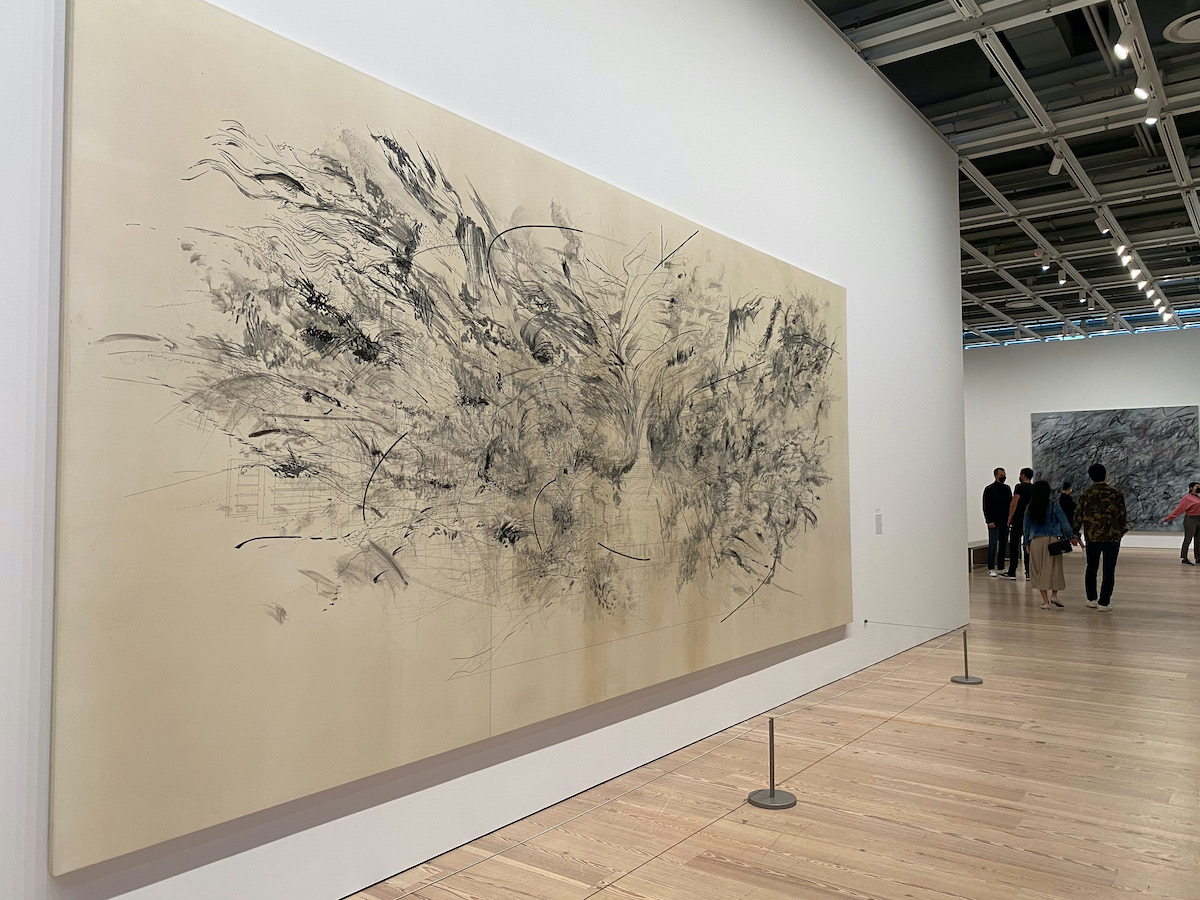
On Tuesday (April 6) at 6pm, meet Julie Mehretu at the Whitney Museum’s annual Annenberg Lecture. Julie will have a conversation with the Whitney’s director about how history, architecture, cities, protest, maps, and geography have influenced her work. Her magnificent mid-career retrospective is a must-see.

Julie Mehretu’s 2003 Transcending: The New International at The Whitney

Also at 6pm, the Skyscraper Museum presents Wright and New York: The Making of America’s Architect – an illustrated talk by Anthony Alofsin on how an early visionary design for a cathedral and skyscraper set the stage for the Wright’s later success.

At 6:30pm, bring your own pint to celebrate National Beer Day in this month’s Tavern Tastings series with Fraunces Tavern Museum and Connecticut’s Keeler Tavern Museum. The gals will tell you everything you ever wanted to learn about beer in 18th century taverns.

Simone Leigh’s 2008 Cupboard VIII in Making Knowing Craft in Art at The Whitney

On Thursday (April 8) at noon, join one of the Whitney’s teaching fellows in Art History from Home: Making Knowing to discuss how four artists use the materials and methods of craft to turn the idea of “fine art” on its head. Examples that you’ll discuss are selected from artworks featured in the Whitney’s expansive, fun exhibition, Making Knowing Craft in Art, 1950 – 2019. You’ll enjoy all of the twists and turns.

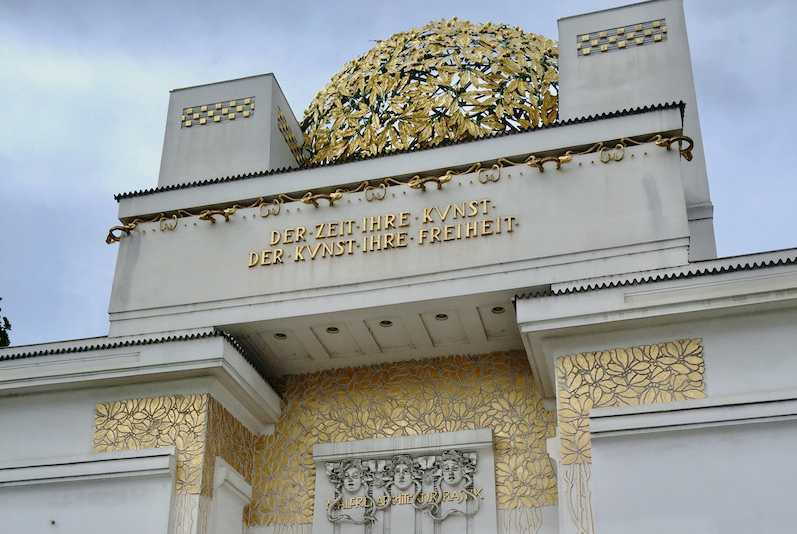
At 6:30pm, join Paul Shaw at Poster House for a tour of Viennese Lettering by some of the greats of the Vienna Secession movement. Paul will show examples of innovative lettering on posters, ads, and books and explain how all of this had an impact on artists of the Sixties and Seventies. The lecture is part of a series in honor of Julius Klinger: Posters for a Modern Age, currently on view at Poster House.

Letters on Vienna’s Secessionist Building – hear more at Poster House on Thursday

At 7pm, MoMA PS1 hosts Niki de Saint Phalle and the Art of Tarot to explore tarot’s influence on modern art and why the artist was inspired to create her monumental installation in Tuscany, Tarot Garden.

Niki de Saint Phalle’s life project in Tuscany, Tarot Garden.

There’s a lot more happening this week, so check the complete schedule. Most of the events are free, but it’s always nice to add a thank-you donation.

Museum Update

This week we checked out the new modern ceramics show at the Met, Shapes from Out of Nowhere: Ceramics from the Robert A. Ellison Jr. Collection, which showcases 75 works that are promised gifts to the Met. Among the highlights ­– several works by celebrated ceramicist George Ohr, whose late 19th century works predate midcentury shape, form, and abstraction. Lots of fans present when we visited. 

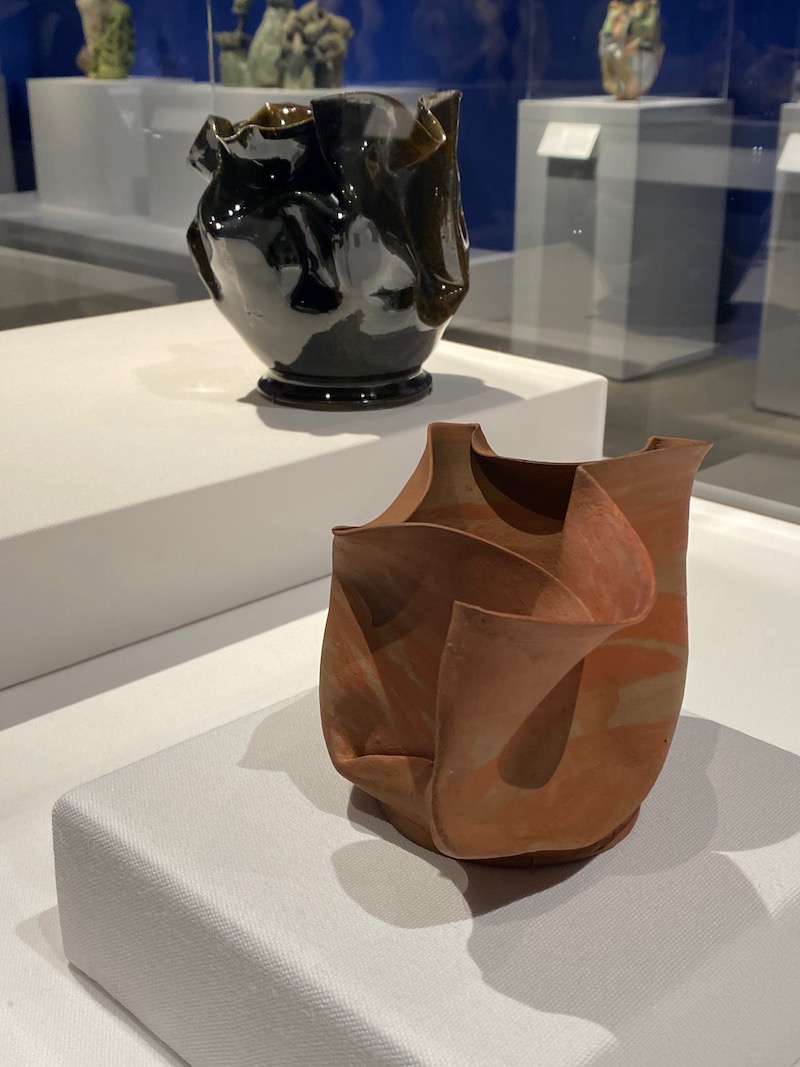
Rare George Ohr ceramics 1890–1900 in Out of Nowhere at The Met

Virtual Museum Events – New Show Tours at MoMA, The Whitney, Poster House, and American Folk Art

For Easter Week, you’ll have an opportunity to join online tours of the new architecture show at MoMA, Julie Mehretu’s retrospective at The Whitney, the Lincoln Center poster show at Poster House, and a look at visionary photography at the Museum of American Folk Art.  See the full list of activities this week on our virtual events page.

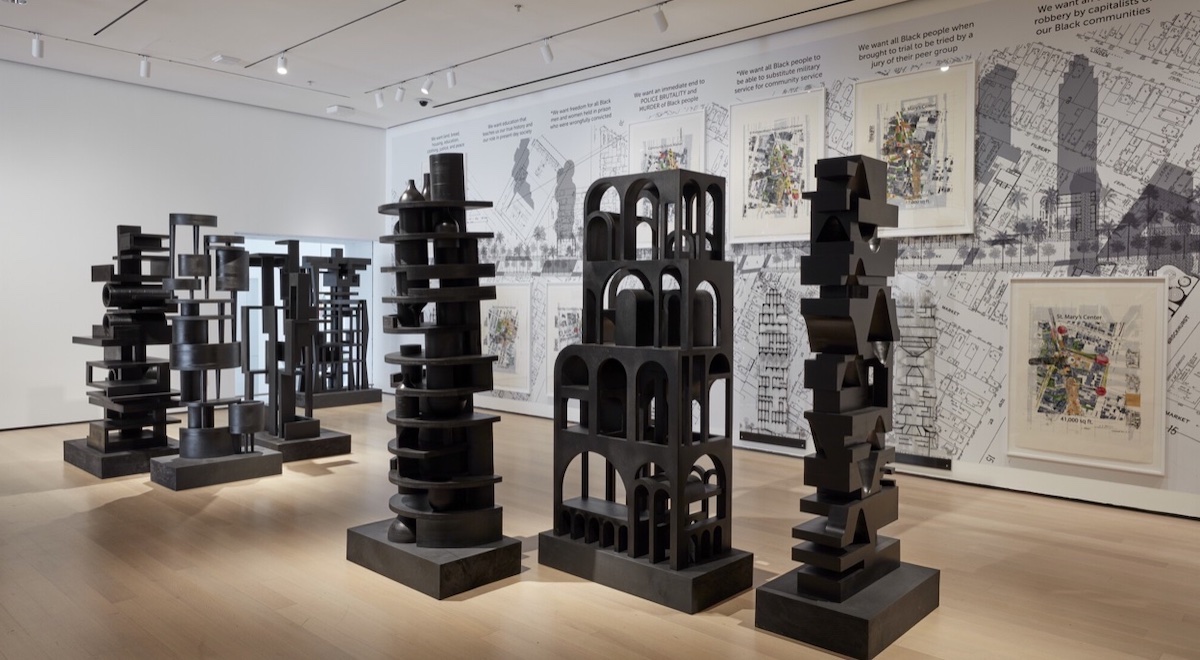
Today (March 29) at 6:30pm, join MoMA to hear a panel of high-powered Black architects and designers to discuss Cities and Spatial Justice – one of the themes presented in MoMA’s new exhibition Reconstructions: Architecture and Blackness in America. How are Black urban spaces created and protected? How do communities reckon with the past to create a future? Join in to participate in this timely discussion.

At 9pm, join the New Museum for a talk with Rachel Rossin, an artist whose work is part of World on a Wire, an online visual exhibition that is the first exhibition in a new partnership between Hyundai Motor Company and Rhizome, the museum’s digital art affiliate. The later (US) time was set to allow art lovers in Seoul and Beijing to join in at a reasonable time, too.

2_New Museum_Rhizome_Rossin

Rachel Rossin work at Hyundai Motorstudio Beijing and World on a Wire digital project.

On Tuesday (March 30) at 7pm, join a tour for the new Julie Mehretu mid-career retrospective at the Whitney Museum. See the giant, genius, multilayered canvases with the curator and find out how maps, revolutions, social justice, and architecture have inspired her to create such monumental works. (And for the tour of Julie’s show in Spanish, join the tour online at noon on Friday, April 2.)

3_Whitney_Mehretu_Invisible Line

Pondering Julie Mehretu’s Invisible Line at the Whitney

At 8pm, take a trip to Tokyo’s An’yo-in Temple to hear one of the earliest forms of meditative, chanting vocal music reimagined in a new work by the young composer. Japan Society, the University of Chicago, and Carnegie Hall present Shomyo: Buddhist Ritual Chant – Moonlight Mantra, followed by a live Q&A with the composer.

4_Japan Society_Chant_Shomyo

Traditional Buddhist chanting in Tokly’s An’yo-in Temple on Tuesday, courtesy of Japan Society and Carnegie Hall

The temple is created in a traditional method of joining wood without nails or glue, and ties into the society’s current exhibition, When Practice Becomes Form: Carpentry Tools from Japan.

On Wednesday (March 31), join Poster House for its program, For the Many: the Public Art of Lincoln Center, which is being held in association with the museum’s current exhibition, Vera List & The Posters of Lincoln Center. The program includes an introduction to Lincoln Center’s poster project – the landmark series pioneered by Vera List –and goes on to showcase the full range of public art commissioned for this New York cultural landmark.

Dorothy Gillespie’s 1989 Lincoln Center information center poster.

On Thursday (April 1) at 11am, take another trip to Japan to visit the Tokachi Millennium Forest ecological project on Hokkaido with experts from the New York Botanical Garden. Hear them talk about the master plan for this project, how they merged the “new Japanese horticulture” with wild nature, and how they created not only a beautiful garden but a gorgeous new book.

7_NYBG_Tokachi

Travel to the Tokachi Millennium Forest in Japan with NYBG and Dan Pearson and Midori Shintani

At 6pm, join the Museum of American Folk Art for a panel discussion (Re)Turning the Gaze, on the relationship of “the gaze” to gender, race, and sexuality. The panelists will feature photographs from the provocative current exhibition, PHOTO | BRUT: Collection Bruno Decharme & Compagnie.

Adam Pendleton at New Museum. Photo: Dario Lasagni

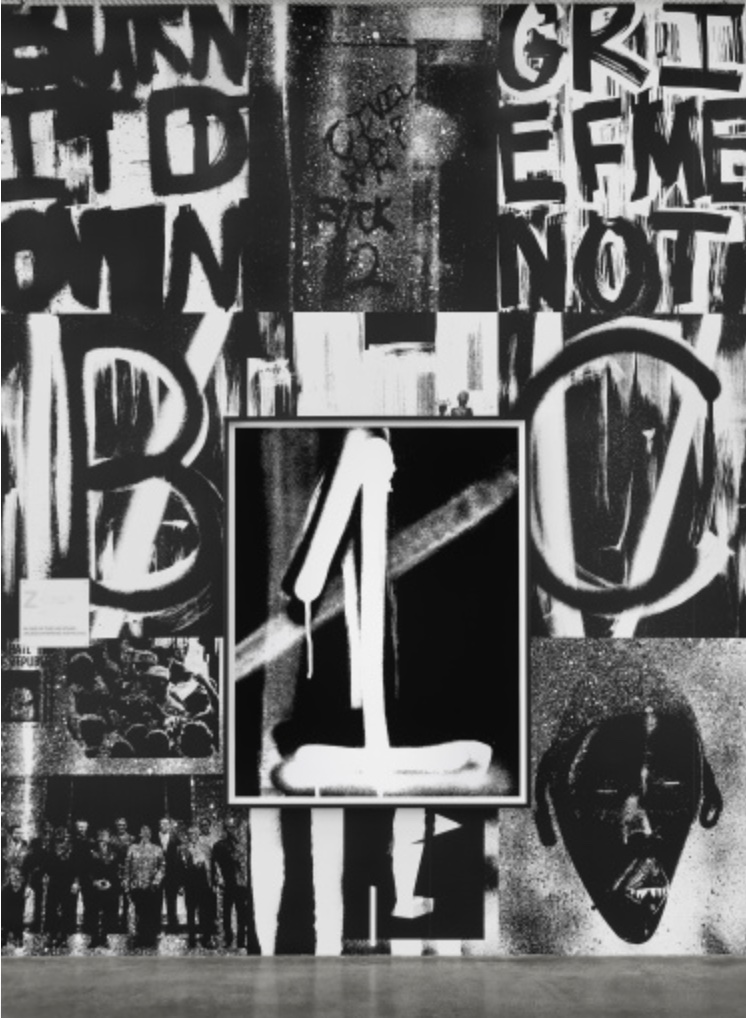
At 7pm, join the conversation at the New Museum with Adam Pendleton, who’s transformed the museum lobby into an exciting environment for the acclaimed Grief and Grievance: Art and Mourning in America exhibition. He often talks about “Black dada” – art that incorporates blackness, abstraction, and the avant-garde. If you can’t get to New York, take an online tour of the exhibition at 11am on Saturday, April 3.

There’s a lot more happening this week, so check the complete schedule. Most of the events are free, but it’s always nice to add a thank-you donation.

Museum Update

The crowds were at the Whitney to get their first look at the Julie Mehretu retrospective and to take a last look at the Kamoinge Workshop photographs from the Sixties and Seventies in the last weekend of Working Together. We saw lots of conversations and contemplations happening inside the Kamoinge gallery.  Although the show closed yesterday, the Whitney is offering one final virtual tour at noon on Thursday (April 1).

This past week, we went to the Met’s virtual opening of the Alice Neel retrospective, which is now posted online. Take a look.

We also joined MoMA’s online event with the Calder Foundation to take a closer look at the new exhibition, Alexander Calder – Modern from the Start.

The program is now posted on MoMA’s YouTube channel. Nearly 4,700 people have listened to Calder’s grandson Sandy Rower (and head of the Calder Foundation) shatter some Calder myths and show decades-old color 16mm film of Tanguy, Duchamp, and his grandmother hanging out with Calder in MoMA’s garden on 54th Street. (Don’t break that sculpture with the cat, Marcel!)

And while you’re on that YouTube channel, check out MoMA Virtual Cinema’s discussions with the directors, crews, and actors associated with some of their top picks for the film-awards season – Nomadland, Borat, Mank, Sound of Metal, and Minari.

Calder’s 1934 sculpture A Universe at MoMA

Kamoinge Workshop Photographers Show NYC in a Different Light

Anthony Barboza’s 1972 Kamoinge Workshop Portraits and multifold Kamoinge Artist’s Book.

When fourteen photographers decided to get together in 1963 to for regular critiques, history was happening in Harlem, Mississippi, and on the Capitol Mall and life was bursting at the seams in down-and-out neighborhoods all around them.

The collaboration, influence, mutual support, and artistic output of their first 20 years is the story told in Working Together: Photographers of the Kamoinge Workshop, an exhibition on view at the Whitney Museum of American through March 28.

Two by Beuford Smith, a 1978 self-portrait and 1972 Wall, Lower East Side.

The show, originally produced by the Virginia Museum of Fine Art in Richmond, shines a light on the work of the workshop’s founders. It’s a master class in black-and-white photography, experimentation, and community spirit. Everyone has their own style and path, all the works you’ll see here provide a window into community and life in New York during the Sixties and Seventies with a different slant than you’ve seen before.
The Kamoinge Workshop artists were keenly aware that they had access to people and events either ignored by mainstream media or at least invisible to it. Plus, they all had keen awareness and appreciation for artistic heroes, like Cartier-Bresson, Dorothea Lange, and other legendary photographers, and used the workshop to push one another forward – to make art that went beyond basic photojournalism, and use formal composition and other imaginative techniques.

Abstractions in the city –1973 Untitled (Harlem) by Ming Smith and 1966 Shadows by Adger Cowans.

When they began meeting in the Sixties, Herb Randall showed photos of Southern life taken the summer he accompanied the Freedom Riders to Mississippi; Adger Cowans showed his abstracted, from-a-rooftop image of the crowd listening to Malcom X; Herb Randall showed images of Harlem kids cutting up for his camera; James Mannes Jr. showed formally composed portraits evoking African royalty.

Share the excitement that they felt at the time:

The quality of the work and the unlikely prospects of being selected for shows in elite museums or high-end commercial galleries inspired them to get it out there a different way – by issuing portfolios that they donated to museums, libraries, and universities.

C. Daniel Dawson’s 1978 Olaifa and Egypt, taken at The Met

Anthony Barboza’s group portrait of the founding members is the welcome image for the Whitney show. Inside the space, the work is loosely grouped into areas featuring emerging political movements in Harlem, abstraction, experimentation, journeys to Africa and the Caribbean, and cityscapes during a time when New York was going downhill.

Every time we visited, viewers were studying each work closely, somewhat transfixed by each window into the past. Each image has a special twist to it – shadows creating abstractions across bodies or buildings, the unexpected jolt of the pattern of a man’s jacket, or the panorama of life in a fleeting moment on a street in Senegal.

Look at some of our favorites in our Flickr album, and meet each of the artists on the museum’s exhibition page. Click on each artist’s portrait to see some of their work in the exhibition, and listen to them speak about their work on the audio guide.

Meet the artists and listen to what this group meant to them in the Seventies and today:

Next stops on the exhibition tour – the Getty in Los Angeles (June 29 – September 26, 2021) and the Cincinnati Art Museum (February 25 – May 15, 2022).

On Wednesday, March 24, meet Ming Smith in a live online event, discussing the publication of her recent Aperture monograph and the influence of music upon her work.

Weekly Virtual Museum Events – Berlin Neon, Japanese Rap, Master Photographers, and Alice Neel

Commercial neon in Berlin under discussion at Poster House Monday

This week, NYC museums are offering more than 40 on-line events (mostly free) that will take you to Berlin in the Twenties, the music scene in Tokyo, studios of acclaimed photographers, and an opening at the Met.  See the full list on our virtual events page.

Tonight (Monday, March 22) at 6:30pm, join Poster House and photographer Thomas Rinaldi for Interwar Neon: Commercial Illumination in Weimar-Era Germany to look back on the electric art that flourished alongside the freewheeling nightlife scene for a brief time between the wars.

Dawoud Bey’s Birmingham series at the New Museum.

On Tuesday (March 23) at 4pm, join the New Museum to meet Dawoud Bey, a photography legend (and MacArthur genius) whose moving 2012 tribute, The Birmingham Project, is featured in the acclaimed exhibition, Grief and Grievance: Art and Mourning in America

At 7pm, join Japan Society for 333 Contemporaries – Looking for the Next Global Rap Star in Japan, the kickoff to its new on-line series which talks about how US rap music adopted and adapted by the next generation of Japanese artists.

Parlor of the Merchant’s House Museum, New York’s only intact 19th c. home

On Wednesday (March 24) at 6pm, if Monday’s session got you curious, Join the Merchant’s House for 19th Century Domestic Lighting: 100 Years of Change. It will be an in-depth look at the technology behind the historic home’s lighting fixtures from 1835 forward, a time when candles and oil lamps gave way to electric lighting.

Anthony Barboza’s 1972 Kamoinge Workshop portrait of Ming Smith

At 7pm, meet Kamoinge Workshop photographer Ming Smith in a live online event, discussing the publication of her recent Aperture monograph and the influence of music upon her work. Ming’s work features prominently in the current exhibition at The Whitney, Working Together: The Photographers of the Kamoinge Workshop. She is the first African-American female photographer to have her work enter MoMA’s collection.

On Thursday (March 25) at 6pm, get your fashion fix at the Museum at FIT with a special program, From Louis Armstrong to Dizzy Gillespie: Jazz and Black Glamour. The pre-recorded program will feature vintage performer Dandy Wellington, a deep-dive into the influence of jazz on 1920s menswear, and a live Q&A with FIT during the YouTube stream.

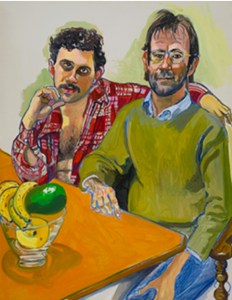
Alice Neel’s 1978 portrait Geoffrey Hendricks and Brian

At 7pm, join the Met for the online opening of its new exhibition, Alice Neel: People Come First, which features over 100 works by this beloved New York artist, considered one of America’s greatest 20th century portrait painters. You’ll find out all about how an artist who labored for decades in relative obscurity was drawn to document political movements, people, styles, and community in paint.

At 8pm, join MoMA for Virtual Views: Alexander Calder, a Live Q&A in honor if its new exhibition about Calder, MoMA’s founding, and modernism. The event will feature conversation with the artist’s grandson, who leads the Calder Foundation.

There’s a lot more happening, so check the complete schedule. Most of the events are free, but it’s always nice to add a thank-you donation.

Museum Update

1539 box for crossbow bolts made for the Bavarian duke. Value = 6 cows

We’re glad to report that the Met has extended its exhibition on the value of Renaissance art through the end of the 2021!  See it on the way to the Lehman Wing and the Dutch masters exhibition, and read about it (and the cows) in our February post The Met Asks What the Renaissance Thought It Was Worth.