Met Uses Dress to Deconstruct Matisse’s Creative Process

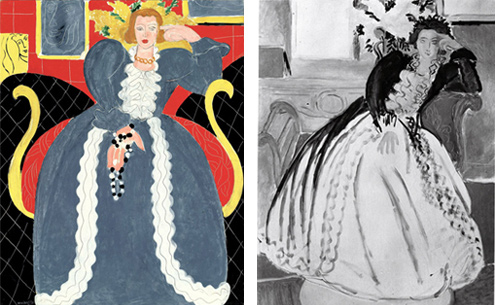
Finished product and earlier stage of Matisse’s The Large Blue Dress (1937). Source: Philadelphia Museum of Art. © 2012 Succession H. Matisse / Artists Rights Society (ARS), New York

Finished product and earlier stage of Matisse’s The Large Blue Dress (1937). Source: Philadelphia Museum of Art. © 2012 Succession H. Matisse / Artists Rights Society (ARS), New York

After walking through gallery after gallery of spectacular Matisse works, it’s a little shocking to turn enter Gallery 6 and see the actual skirt that his model wore to inspire one of his most loved works. Maybe it’s not so shocking, considering how much he loved textiles.

This surprise is just one part of a fascinating eight-gallery blockbuster that deconstructs the master’s creative process – the Metropolitan Museum of Art’s show Matisse: In Search of True Painting.

The show features nearly 50 works from Matisse’s career, chosen especially to reveal his thoughts behind selecting the colors, shapes, and patterns that we know so well. They’ve brought together versions of the same work and hung them next to one another. The Met’s website has views of each gallery.

The Gallery 2 view shows how the Met has displayed some of Matisse’s 1906 experiments. Check out this video narrated by curator Rebecca Rabinow:

Since Matisse liked to have visual reference points, by the 1930s he began more formal documentation of the various stages of each work. His famous Large Blue Dress painting (1937), lent by the Philadelphia Museum of Art, not only features photos of the painting’s stages but the actual blue dress made and worn by the model, Lydia Delectorskaya. Let the curator tell you more about it:

Take a look at some of the selected highlights of the show on the web, but get over to see it all in person to experience fully the power of Matisse’s color and light in a unique, exceptional, and illuminating context.
The Armory Show 2013: It’s a Wrap

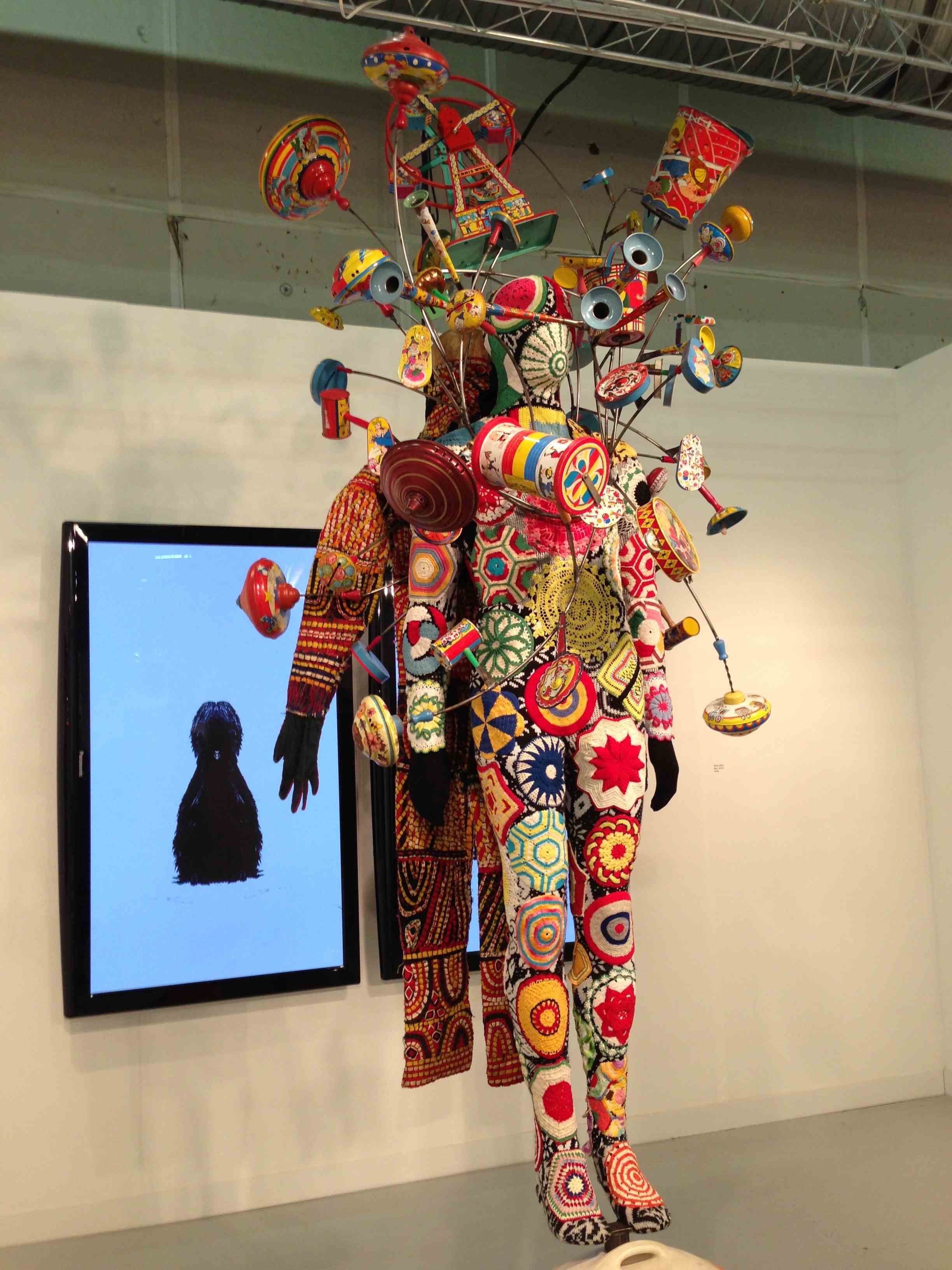
Nick Cave soundsuit (2012) and video featured at Jack Shaniman Gallery booth at the Armory Show’s Contemporary pier

Nick Cave soundsuit (2012) and performance video featured at Jack Shaniman Gallery at the Armory Show’s Contemporary pier

One hundred years ago, The Armory Show blew the roof off New York City as Matisse, Monet, Picasso, Seurat, Lautrec, Kandinsky and The Eight made history at Lexington and 26th Street. It was the beginning of Modern in America, and even Whistler’s Mother showed up.

This week, the 2013 edition of The Armory Show glamorized the West Side with its wall-to-wall extravaganza of modernist and contemporary sculpture, painting, and installation art at Piers 92/94. Take a walk-through of both shows via our Flickr photo feed.

Tributes to the original were in view in the Modern portion of the show, such as Munch’s intense woodcut Vampire II (1895-1902), as were edible Parisian imports from the Laudrée macaroon cart just inside the entrance. The show began right at coat check, where a few people were walking around carrying flattened-out versions of Andy’s Brillo boxes. Around the bend, there was the source: a silver chamber where the Pittsburgh’s Warhol Museum was inviting art-lovers to sit in front of a video camera to record a Warhol screen test. Obviously, the box carriers had claimed their 2.5 minutes of fame.

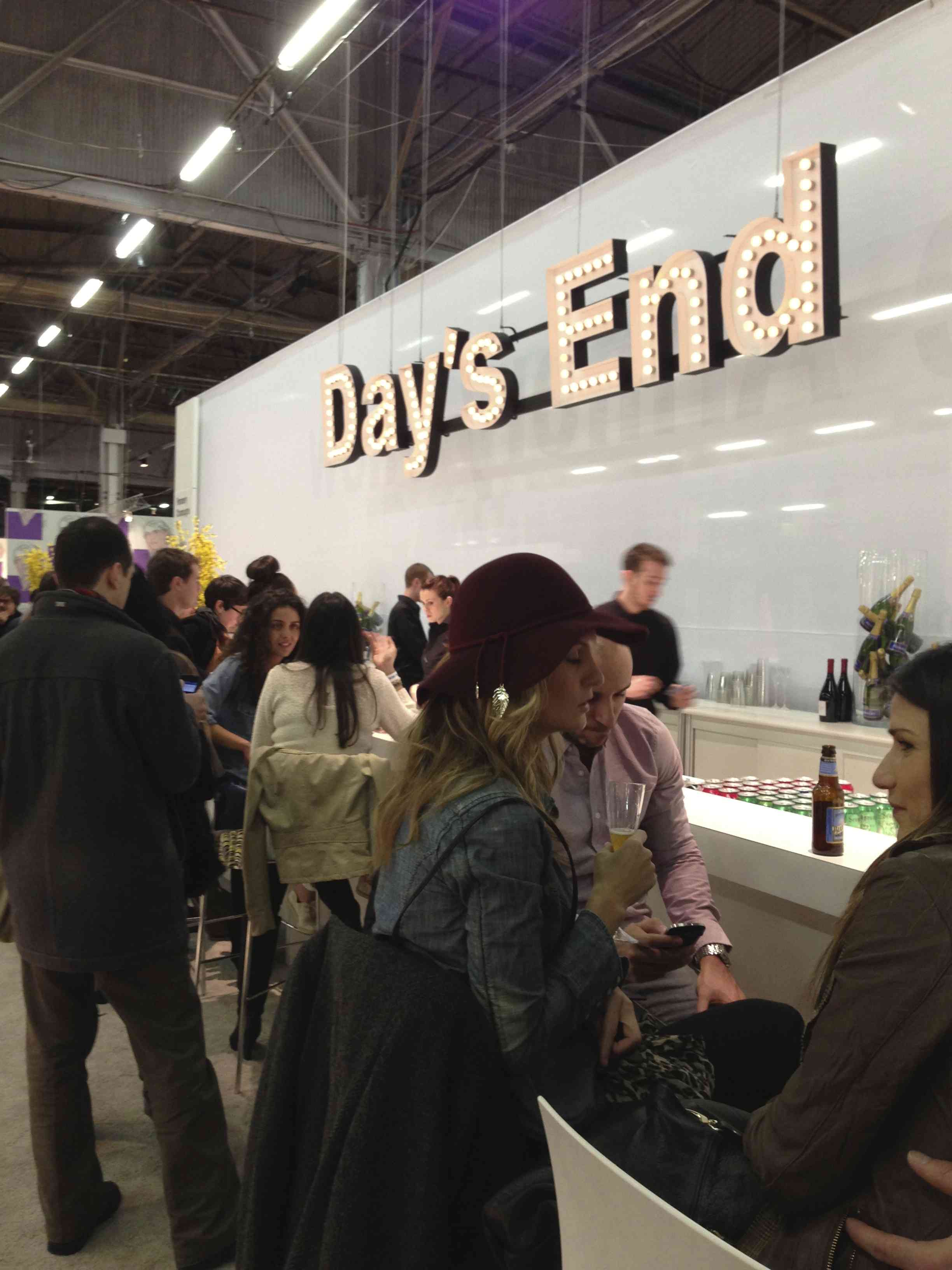
All-important champagne bar at the Armory Show’s Contemporary pier

All-important champagne bar at the Armory Show’s Contemporary pier

The Modern show featured a mix of new and old, but everything certainly looked fresh. People were even taking turns having their pictures taken with a large Basquiat painting at the Tokyo’s Galerie Sho Contemporary Art booth.

The Contemporary pier was filled with twice as much art. Although there were no actual performance installations on Saturday (as there were in last year’s show), two booths attracted lots of bystanders with performance videos – Marlborough’s Shade Composition video by Rashaad Newsome (evoking 80s Harlem ballroom voguing) and one of superstar Nick Cave’s soundsuit performances on a sharp, clean screen mounted right behind an actual, riotous soundsuit. (Be sure to catch his “horses” performing at Grand Central March 25-31 for Creative Time/MTA Arts for Transit.)

Other hits from the Contemporary pier (besides the champagne bar) included Tony Tasset’s snowman made entirely from inert material, right down to the bronze twigs and leaves (Kavi Gupta Gallery) and Kysa Johnson’s monumental recreation and embellishment of a Bank of America waiting room at Morgan Lehman, layered with the calculated, rational precision of Piranesi’s perspective.

Take a look, because it’s all being packed up and shipped back to Dusseldorf, Istanbul, Oslo, London, Paris, and Chelsea today.

Red Carpet History at Grand Central

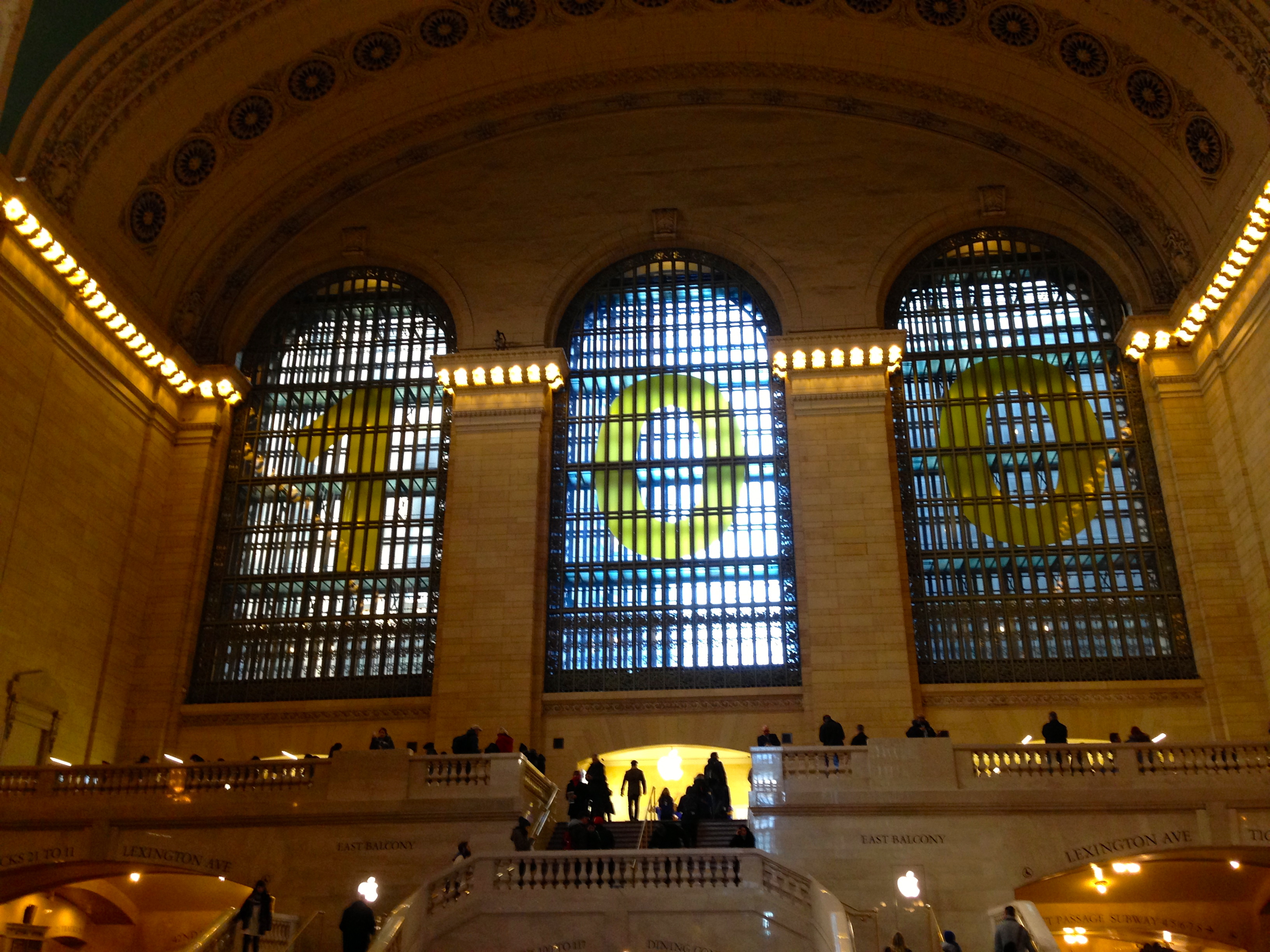
Original Red CarpetIf you’ve ever wanted to see where the red carpet began, run over to 42nd Street and take a left into Vanderbilt Hall to gaze upon the plush surface upon which so many famous, fabulous, and acclaimed celebrities and moguls trod – the red carpet that was spread daily to the lucky ones who could afford to board the 20th Century Limited from New York to Chicago.

It’s all part of the New York Transit Museum’s spectacular exhibition Grand by Design: A Centennial Celebration of Grand Central Terminal, running through March 15.

Docents give tours on the half hour, and they’ll tell you that the care taken with passengers right here at Grand Central was the origin of the phrase “red carpet treatment”. You’ll see an original destination sign, menus, and photos of the glamorous train (which will itself make an appearance at GCT on May 10-12). Take a look at the Flickr photos.

GCT at 100You’ll also be entertained by stories of the engineering, architectural, and pop-culture history of the terminal itself, and remember the stories about the chandeliers, stonework, ramps, and restoration every time you pass through. Get over to see all the memorabilia, trunks, engineering plans, and videos in person from 8am to 10pm daily before they are gone.

Some of the surprises are the “Ask Me” kiosks scattered throughout the hall, descriptions of how GCT changed the course of Midtown real estate, the story of how CBS and Walter Cronkite used to broadcast from here, and the size of that tunnel boring machine creating access for the LIRR to get into GCT 18 stories below. It’s all amazing, including the 1855 view of Midtown looking south from 42nd Street, lent to the show by the New-York Historical Society.

For a prequel, check out the NY Transit Museum’s historic timeline that lets you flip through online photos of various GCT incarnations since 1831. It’s really good, but not a substitute for seeing the red carpet, power-switch control panel, restored lamp post, and clips from movies that were filmed right where you’re standing. About 750,000 people pass through here each day, and from what we can tell, a lot of them are stopping to take a free 25-minute tour and check out the red carpet that started it all.

Artists Occupy Bank in Queens

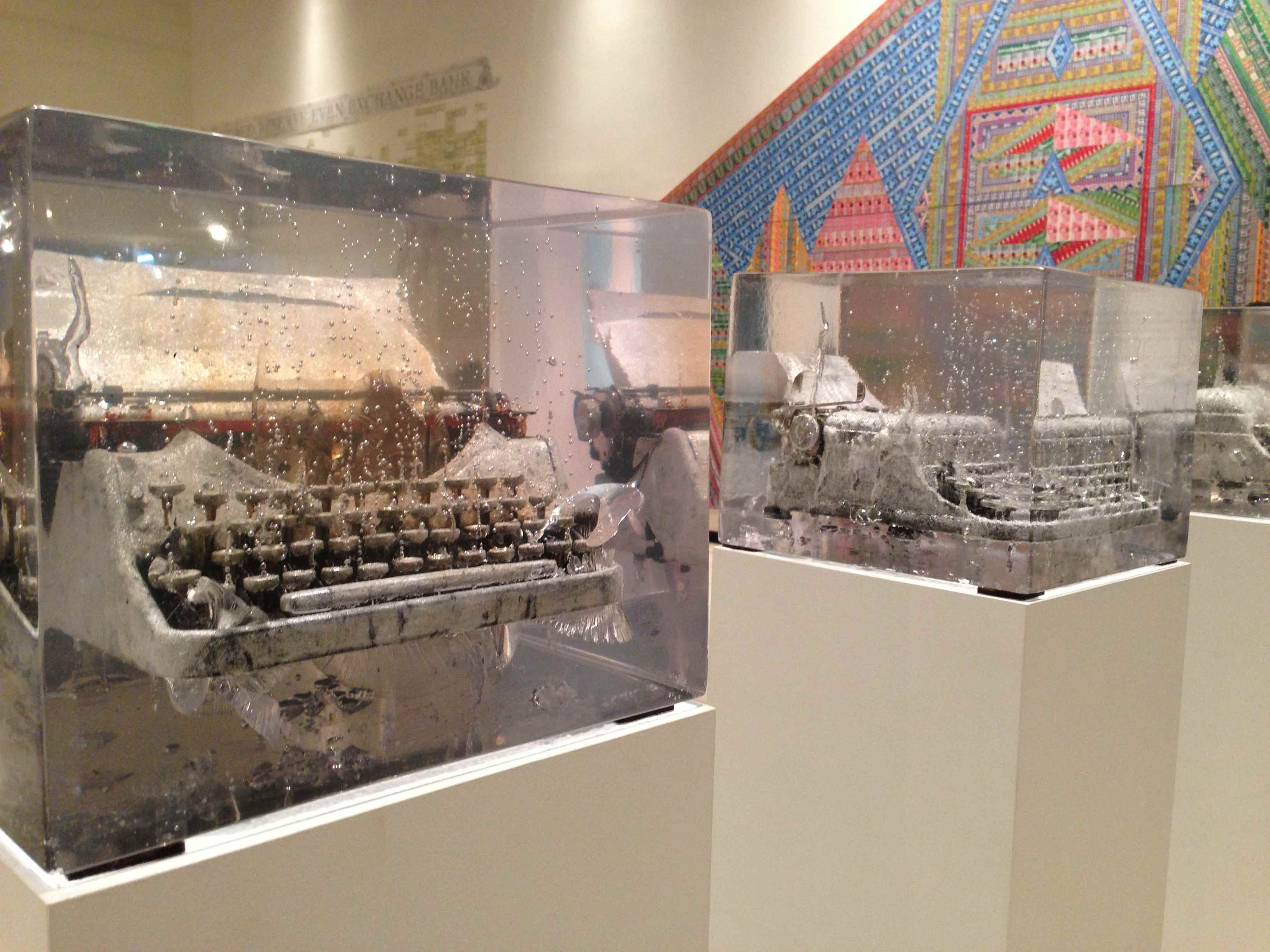
Installation view of Keiko Miyamori's typewriters-in-resin (2012) with Ghost of a Dream's The Price of Happiness mural (2011) made from US and Chinese lottery tickets.

Installation view of Keiko Miyamori’s typewriters-in-resin (2012) with Ghost of a Dream’s The Price of Happiness mural (2011) made from losing US and Chinese lottery tickets.

Just as they did in the Bronx last summer at the Andrew Freedman Home, No Longer Empty has invited artists take over the former Bank of Manhattan in Long Island City and let us contemplate the meaning of currency and exchange in today’s troubled times.

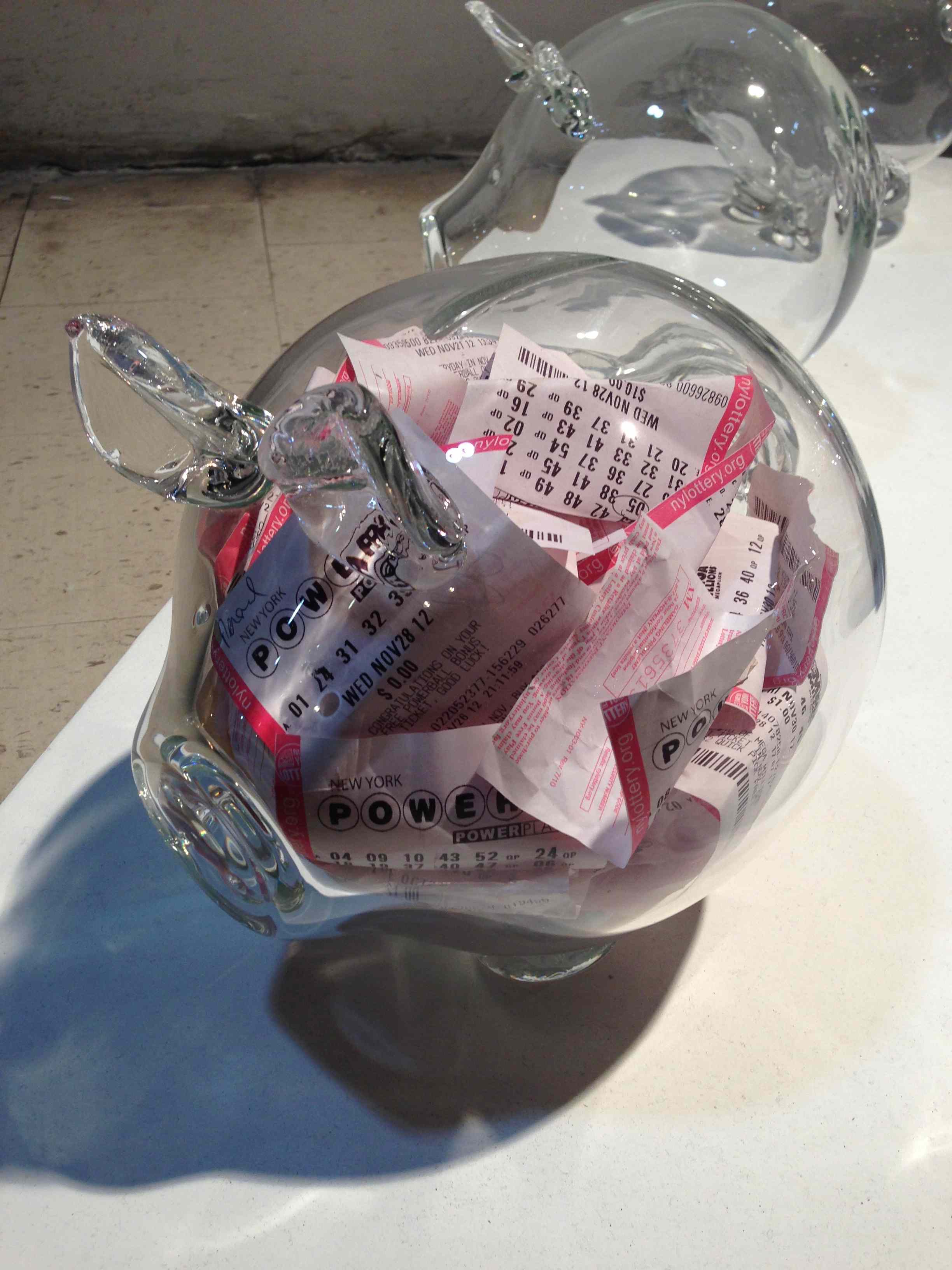
Get over to see how 26 artists from 15 countries think about the American economy in How Much Do I Owe You, which is right next to the Queens Plaza subway station in the Clock Tower Building (29-27 41st Avenue). There’s lots of thought-provoking stuff from the moment you enter the door, like Ghost of a Dream’s The Price of Happiness mural. It depicts a typical American house made up of losing US and Chinese lottery tickets, and was made by the group during their stay in China. Check out more pictures of our favorites on Flickr.

Installation view of Coleen Ford's Saving for our Future (2010), glass piggy banks stuffed with lottery tickets.

Installation view of Coleen Ford’s Saving for our Future (2012), glass piggy banks stuffed with lottery tickets.

Erika Harrsch’s Mao Dragon Kite and several US Dollar Kites fly overhead.  Keiko Miyamori’s typewriters-sunk-in-resin evoke historic systems and intractable problems. Susan Hamburger adorns a faux “bank” space (formerly where the bank tellers worked) with an old-style, symbol-filled mural that lays out relationships among Wall Street and Euro financial actors in the Greek debt crisis.

Downstairs by the bank’s vault, installations have a more private feel. Enter a small room to see and hear the results of Nicky Enright’s survey of the financial status of 80 artists in his Money Talks video (it’s not pretty). Enter a small alcove to watch Ana Prvacki’s amusing video of literal money laundering – in the guise of a “smelling good” household product commercial (think Wet Ones), she cleans and smells dollars in the hopes that she can bring about “a clean money culture”

When you round the corner to enter the open vault, you’ll be completely absorbed in watching Orit Ben-Shitrit’s mysterious performance video, Vive le Capitale, which was shot in HD among the vaults of the old Bankers Trust building at 14 Wall Street.

Last weekend, the gallery was packed for a round-table discussion – one of several live events that No Longer Empty has scheduled here until closing on March 17. Alert: Lots of cool things are planned for the space on March 8, Long Island City Night of Armory Arts Week, so catch a tour or a provocative conversation.

Spacewar Ending in Astoria

Replica of the round CRT and game controllers developed at MIT in 1962 to run Spacewar on DEC’s PDP-1, the first commercial interactive computer. Note input-output typewriter.

Replica of the round CRT and game controllers developed at MIT in 1962 to run Spacewar on DEC’s PDP-1, the first commercial interactive computer. Note input-output typewriter.

It’s all aliens, flying saucers, galaxies, and other worlds inside the Museum of the Moving Image’s tribute to gaming history, Spacewar! Video Games Blast Off, soon ending in Queens.

The big, expansive dark gallery is a gamer’s dream, with flashing lights, arcade consoles, virtual headgear, and wall-sized projections distributed around the room. Last weekend, enthusiastic museum-goers were happily roaming through the space, enjoying the please-touch experience of interacting with 20 historic video games from the last 50 years. Yes, they all work!

The show begins with a reverential replica of the game that started it all in 1962 at MIT, Spacewar, the first virtual intergalactic battle in deep space. Check out the story of SpaceWar, a slick, fun video created by the Computer History Museum in Silicon Valley. (Spoiler alert: it involves model railroading.) If you want to read more, here are links to the 1972 Rolling Stone article that predicted that computer gaming was going to take off in big ways.

Child waits turn as museum-goer enjoys Galaxy Force II, Sega’s 1988 arcade game built upon a flight-simulator cabinet.

Child waits turn as museum-goer enjoys Galaxy Force II, Sega’s 1988 arcade game built upon a flight-simulator cabinet.

The museum did not feel compelled to arrange its time-machine arcade in chronological fashion, and it’s fun switching back and forth among the different technologies. You’ll find Atari’s 1979 Asteroids arcade unit is next to Nintendo’s 2009 Super Mario Galaxy II and Atari’s 1982 home console for Yar’s Revenge. There’s even the 2009 iPad game Osmos.

No one has to wait very long to step up and play, although there was tiny queue for Space Invaders, the 1972 arcade sensation that was one of the earliest microprocessor-based units. Dads were having fun explaining to kids exactly why it didn’t fire as fast as games they have at home.

Leave that light saber app holstered, and get to Astoria to relive what it was like the first time you fought in space.  Note: Admission gets each person four complimentary arcade tokens, but you can always buy more.

Sarongs in Winter

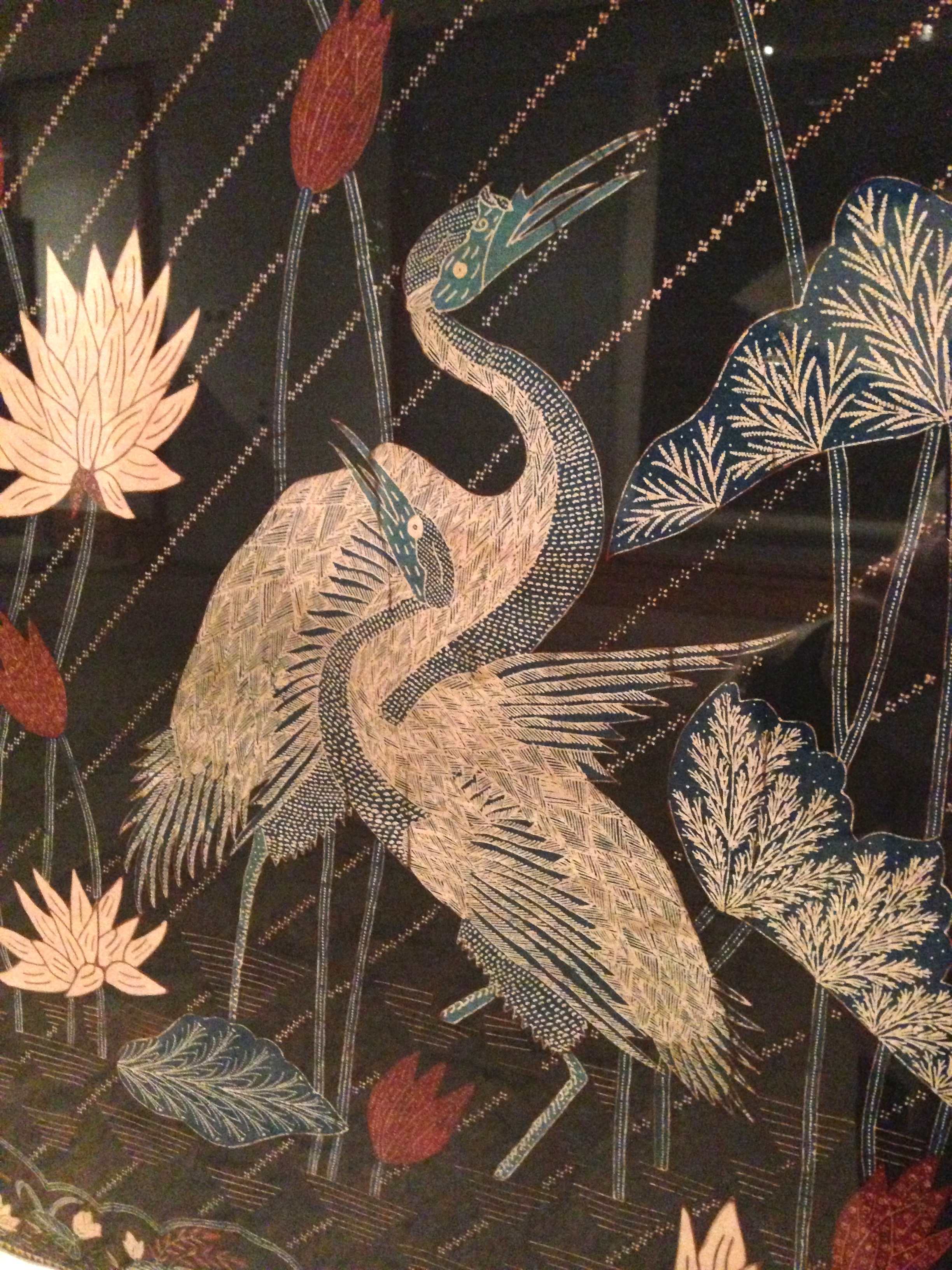
Installation view of woman’s cotton sarong incorporating Chinese-style cranes, probably from the workshop of Mrs. Wilemse (1890-1910). Central Java, Indonesia

Installation view of woman’s cotton sarong incorporating Chinese-style cranes, probably from the workshop of Mrs. Wilemse (1890-1910). Central Java, Indonesia

It’s the smallest show right now at The Met. It doesn’t even have its own web site. If you’re on the way to see Matisse on the First Floor, pause to take a close-up look at some marvels of the textile collection and imagine you’re on the faraway Indonesian island of Java in the micro-show, Resistance and Splendor in Javanese Textiles.

The curators have framed a collection of textile masterworks from that exotic corner of the world, mostly sarongs. If you read the label copy, the series of textiles embellished in the resist-dye technique evoke quite a bit of the recent history of Indonesia.

Everyone knows batik, but you may not know that it was cultivated as an export by the Dutch in colonial times on Java (formerly Dutch East Indies). Or that there were workshops whose fabric designs were as identifiable in 1890s Java as 1990s Versace prints are to us.

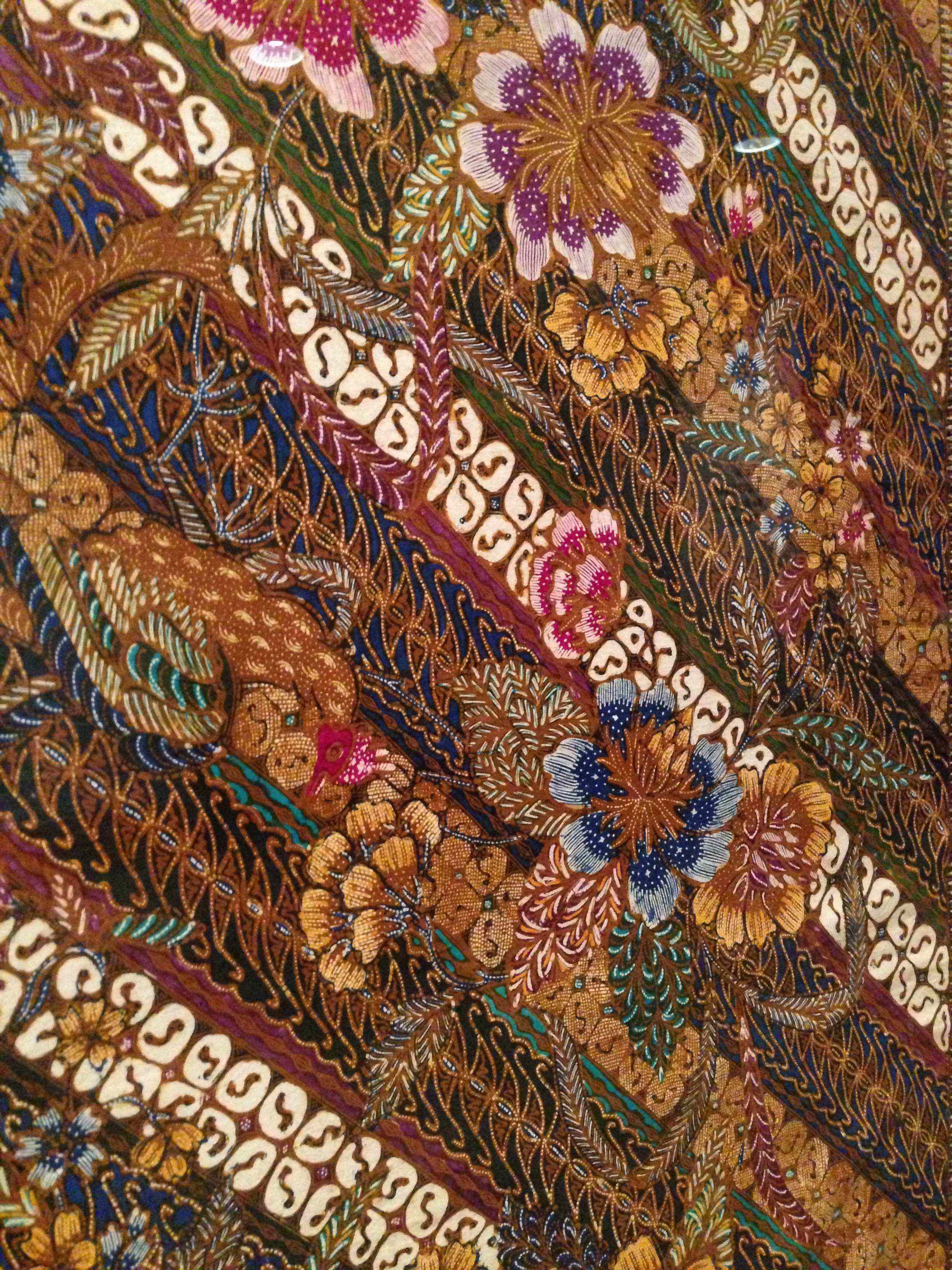
Small detail of wrapper in Hokokau style (early-mid 1940s). Traditional  motifs on diagonal with European-style flowers.

Small detail of wrapper in Hokokau style (early-mid 1940s). Traditional motifs on diagonal with European-style flowers.

As demand grew throughout the 20th century, designs changed, adhering to tastes of foreign buyers, even while the resist-dye masters kept mashing in the iconography of ancient Javenese royalty. As the curators mention, it’s particularly poignant that some of the most intricate, beautiful resist-dye textiles were made under the difficult WWII Japanese occupation of Indonesia. Apparently cotton shortages allowed the master craftsmen to spend more time perfecting elaborate techniques.

The intricacy, dynamism, and history of this textile display is something you really need to see up close. Thank you, Ratti Textile Center vault.

Virtual Ancestor Cornered in High-Tech Tree by AMNH

Carl Buell’s rendering of the hypothetical placental ancestor, a small insect-eating animal. Source: AMNH

Carl Buell’s rendering of the hypothetical placental ancestor, a small insect-eating animal. Source: AMNH

Who says dinosaurs get all the attention?

One of the big front-page science stories of the last few weeks is that a global team of researchers has mapped our ancestor tree back in time to a hypothetical small, furry critter that emerged just after the dinosaurs went extinct. The big news is that through a giant high-tech, data-crunching technique, 15-20 molecular-data scientists collaborating in six countries around the world figured out that the hypothetical ancestor to nearly all the mammals alive today emerged 200,000 to 400,000 years after the comet crashed to Earth 65 million years ago.

Ok, it wasn’t the first mammal (the ancestor to platypuses, opossums, kangaroos, and a lot of other extinct things came much earlier), but let’s applaud the American Natural History Museum for telling this story so clearly to a writer at The New York Times that it made it to the front page.

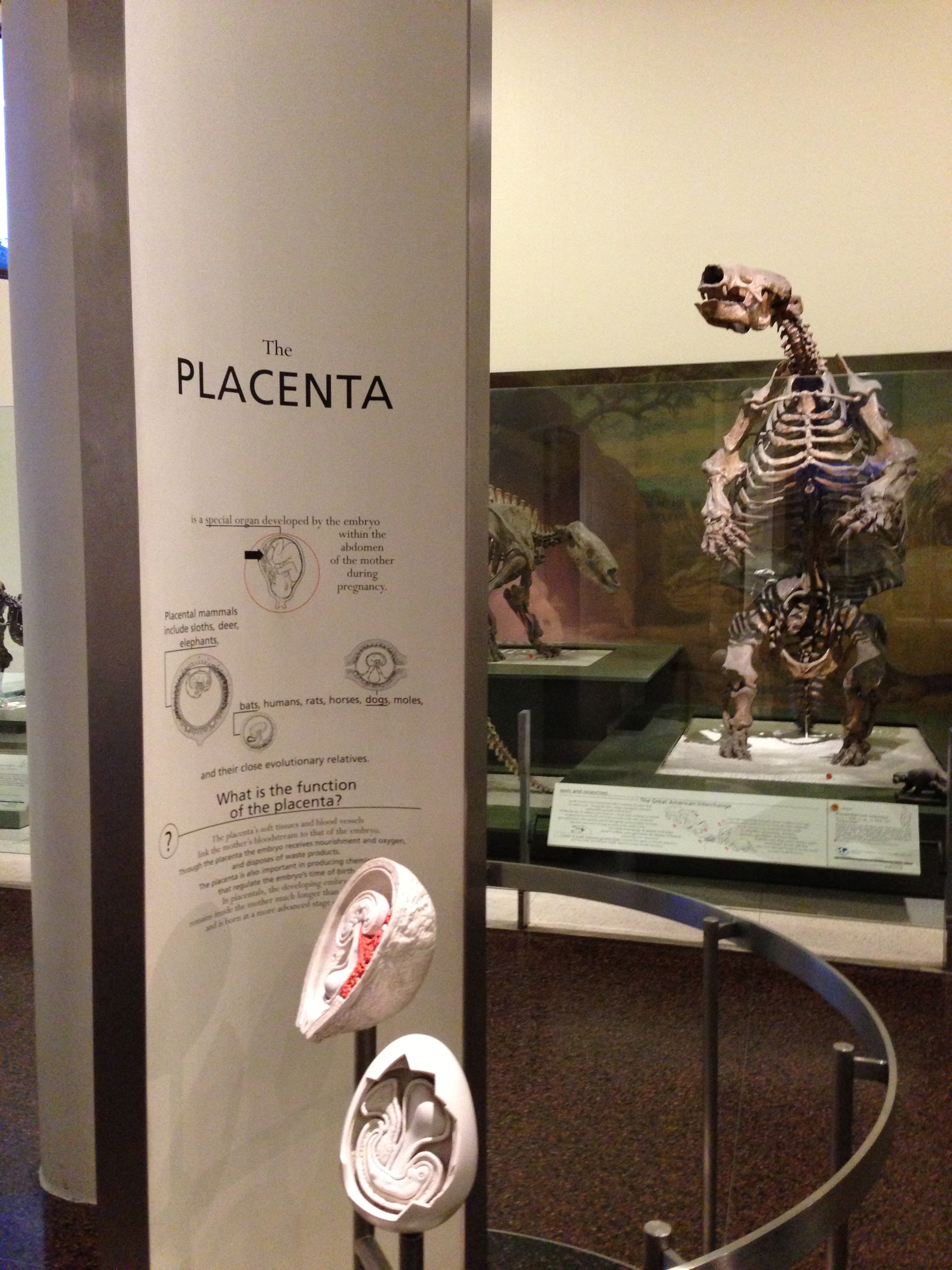
Column on AMNH Fourth Floor exhibit space that marks the spot where the virtual critter emerged along the evolutionary pathway in the Hall of Primitive Mammals.

Column on AMNH Fourth Floor exhibit space that marks the spot where the virtual critter emerged along the evolutionary pathway in the Hall of Primitive Mammals.

At Thursday’s Social Media Week event on how to tell stories in science, panelists repeatedly emphasized how hard it is to make clarity emerge from a morass of data.  In a way, this “story about the rat” reached a social-media science storytelling trifecta: over 240 comments “about the rat” on the NYT web site, a neat little video that’s racked up over 11,000 views in just two weeks, and an exhibition layout for the vertebrate paleo collection on the museum’s Fourth Floor that lets you stand in the exact spot on the evolutionary pathway where this tiny hypothetical ancestor emerged. (See the photo with the Giant Sloth, to the left.)

Great job, AMNH and Stony Brook storytellers for giving us this video view into deep time, showing how MorphoBank crunches data, and creating another social-media star out of a virtual ball of fur.

PS: The fossil background talent in this video appears to be a model of Gobiconodon, an actual Cretaceous mammal from 110 million years ago who’s not directly related to the star of this show, but looks good on camera.

How to Collect Exotic Oversized Jewelry

Teke style cordiform pendant (Turkmenistan, mid- to late 19th c.), silver, fire-gilded and chased with niello inlay, decorative wire, and table-cut carnelians

Teke style cordiform pendant (Turkmenistan, mid- to late 19th c.), silver, fire-gilded and chased with niello inlay, decorative wire, and table-cut carnelians

Take a peek at the accessories that two intrepid travelers spent years collecting in Central Asia and Iran – oversized jewelry that was so big they had to display it on a wall.  Now that Marshall and Marilyn Wolf have donated their collection to the Metropolitan Museum of Art, the Met has given it the star treatment, way up in that tiny magical Gallery 458 in the Islamic Art wing (which just welcomed its 1 millionth visitor a few weeks ago).

The dazzling show displays the 19th and 20th century creations of Turkmen craftsmen, whose ancestors roamed across Turkmenistan, Uzbekistan, Kazakhstan, and northeastern Iran.

Although Marshall and Marilyn Wolf collected jewelry and ceremonial objects of four tribal styles, the Met’s show spotlights Teke style from Merv, a Turkmenistan city-oasis that was a major hub along the ancient Silk Road. The collectors fell in love with the dynamic pieces – crowns, pendants, pectorals, armbands, rings, and long, vertical ornaments that flowed down braids on the backs of Central Asian beauties. Recent craftsmen may use glass instead of semiprecious stones and carnelian, but in all the vitrines on the Met’s second floor, you’ll see the real thing.

Installation view with matching silver armlets (bilezik), whip, and double-finger matchmaker’s ring with turquoise and carnelians.

Installation view with matching silver armlets (bilezik), whip, and double-finger matchmaker’s ring with turquoise and carnelians.

Take a close-up look at the Met’s spectacular collection photos. When you click on an image, the Met also shows you different views and similar objects from its collection.

Take three minutes to hear Marshall and Marilyn Wolf talk about their passion, how and why they began their collection, explain how their gift plugged a hole in the Met’s own holdings, and show more of their truly stunning pieces.  Keep an eye on that second-floor gallery for more to come.

Inhale…The MAD Exhibit They Won’t Let You See

JickeyThere’s nothing to see…only to experience…in The Art of Scent 1889-2012 currently at the Museum of Art and Design. Designed by Diller, Scofidio + Renfro, the exhibition space is completely bare, save for gentle depressions pressed into the wall where visitors can lean in and experience fragrances considered masterworks of innovation and complexity.

Thank you to curator Chandler Burr for paying tribute to the artists that created these scents. The earliest is Jicky, created by Guerlain in 1889 when the Eiffel Tower was on the rise, the first designer fragrance to use synthetic components.

Walking through these design innovations is an experience you won’t forget. Can you tell that a 1980s fragrance was inspired by the smell of laundry detergent (the essence of “clean”)? Do you agree with Prada’s 1990s take on the romanticism of the 19th century? Do you think Untitled by Daniela Andrier for Margiela in 2010 combines “excitement and unease”, as MAD purports?

MAD has many videos to let you in on the process behind the ephemeral. Listen as Jean-Marc Chaillon discusses what it’s like to create something that can’t be touched:

Ever wonder about the work that goes into designing a celebrity fragrance? Listen in on this enlightening and entertaining curator’s panel on the design and structure of olfactory art:

Look Up to See Where Your Grandmother’s Clothes Came From

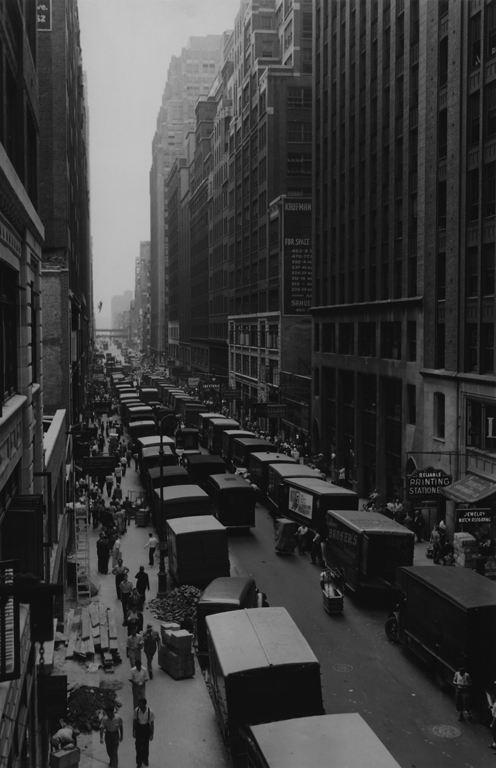
West 35th Street in 1938, looking east between Seventh and Eighth Avenues. Source: NYC Department of Records, Municipal Archives

West 35th Street in 1938, looking east between Seventh and Eighth Avenues. Source: NYC Department of Records, Municipal Archives

It can seem a little quiet walking over to Mood these days. Not too long ago, the streets above 34th Street between Sixth and Eighth Avenues were clogged with push boys, wheeling racks of  materials, trims, and fashions among jobbers, contractors, accessory importers, fabric stores, and showrooms. The way it used to be comes alive in the Skyscraper Museum’s show (closing today) Urban Fabric: Building New York’s Garment District.

In its heyday, those 18 blocks just north and west of Macy’s produced 75% of all US women’s and children’s clothes.  The exhibit tells the story of how this bustling hive happened.  In a nutshell, the old sweatshops in tenement buildings gave way to factory loft spaces in the 1890s around the area where NYU is today. When the big department stores emerged along Sixth Avenue and 23rd Streets, the lofts came with them. But the congestion proved to be a bit much for the female shoppers, who were disturbed by the throngs of guys loitering about on their lunch breaks, and the retailers took action.

The department stores (like Macy’s and Lord & Taylor) moved above 34th Street. To prevent the factory lofts from overwhelming them again, the City implemented the first zoning ordinance in America in 1916. The garment makers, closed out of the fancy retail neighborhood, started razing the Tenderloin District on the West Side and erecting architect-designed skyscrapers (like the Fashion Tower on West 36th) from that point on. About 125 buildings went up on those 18 blocks before the Depression hit.

Here’s a glimpse of what it was like in 1952:

As recently as the 1970s, carts were still being shuttled through the narrow streets, but we know how that story ended.  Today, no one even looks up at the entrances, set-backs, lobbies, or embellishments of these once grand hubs where models, marketers, Mad Men, laborers, seamstresses, teamsters, pattern makers, the designers co-mingled.

Interestingly enough, not a single building is landmarked. In fact, the Skyscraper Museum had trouble even finding photographs of the original buildings and had to turn to historic adverts and early brochures on factory electricity.

For the full, fascinating story by the curator who unearthed it all, listen to Andrew Dolkart of Columbia University, and watch his slide show:

Interns and staff built a nice model of the buildings lining 37th Street for the show, and a big thank you to The Skyscraper Museum for (again) putting the history and installation walkthrough on line. Tell your friends, and be sure to look up next time you walk over to Mood.