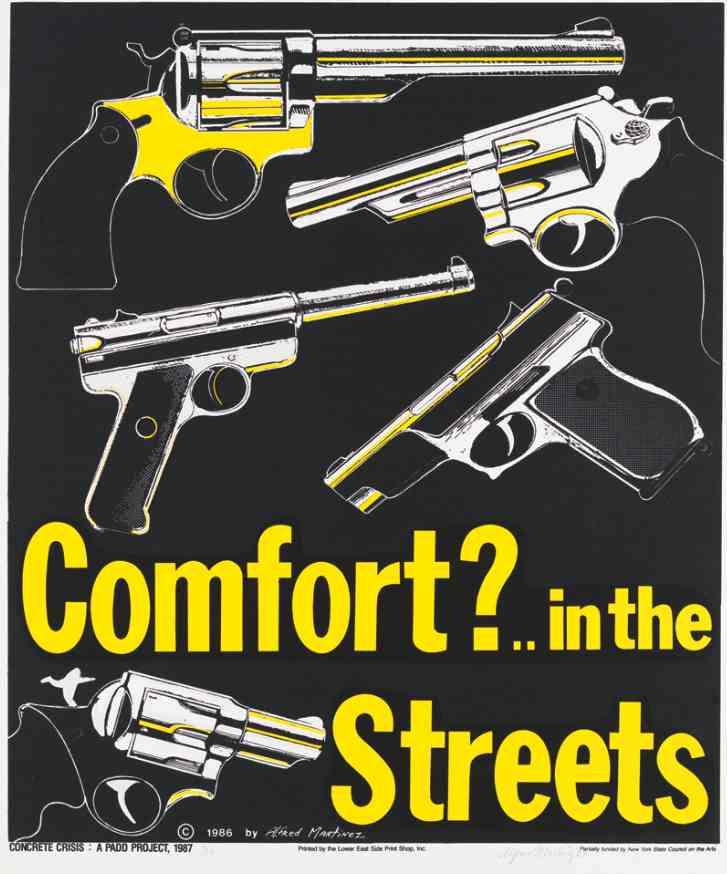
It’s not a comfortable art show, but the 1980s weren’t comfortable times. The Whitney Museum of American Art’s show I, YOU, WEresurrects art from a time when artists were protesting inequality and gentrification, the AIDS epidemic was raging, Wigstock brought gender shifting into the open air, and New York’s downtown community waited apprehensively for the next police crackdown on squatters, community gardens, and anyone flaunting an alternative lifestyle.
As it prepares to move to the High Line in 2015, The Whitney asked its curators to mine its permanent collection to see if there were periods of time that might have been overlooked in the shows of recent years.
I, YOU, WEis the answer: the difficult, searching, and searing work produced by the passionate and disenfranchised denizens of New York’s tumultuous 1980s and early 1990s.
Works feature the flip side of Warhol’s Interview magazine and Studio 54 – people struggling with identities, illness, injustice, and the consequences of Washington’s culture wars against edgy art.
The Whitney produced this video about the “WE” section of the show, when artists began protesting gentrification, how they used art as the lever to galvanize the East Village, and the battles that raged for the community. Other sections of the Whitney show focus on artists’ exploration of race, gender, religion, and the AIDS crisis.
Revisit the emerging street styles – graffiti, comics-inspired drawings, stencils, and posters – as Andrew Castrucci of Bullet Space leafs through one of the seminal art-protest pieces.
When you visit, make enough time to Nan Goldin’s 700-slide extravaganza that documents everything. Scroll down here to see installation views and other works in the show by Mapplethorpe, Basquiat, Currin, Wojnarowicz, and Ligon. Tough stuff, but not tougher than the lives these artists lived during that decade.
Congratulations to the Whitney for not forgetting, presenting this work to the next generation, and testing if the work still sticks 20 to 30 years later. The show runs through September 1.
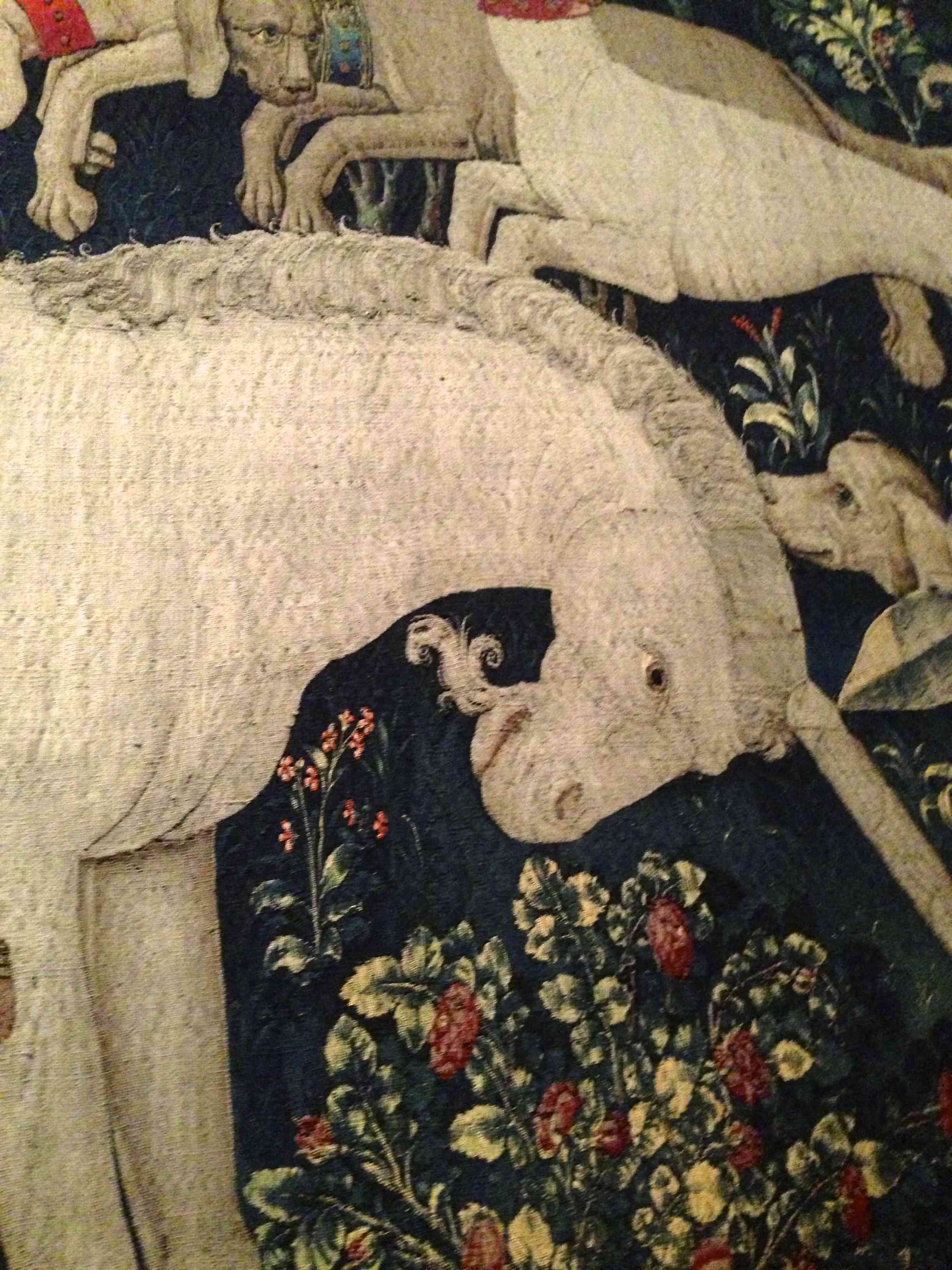
Detail from The Unicorn Defends Itself (1495-1505), a large tapestry in the main gallery.
Who says unicorns aren’t real? Mr. Rockefeller’s tapestry unicorns have been the celebrity draw for the last 75 years uptown at The Cloisters, and are the cavorting centerpieces of the show, Search for the Unicorn. But it took some brave curators to finally display all the unicorn-themed stuff in the Met’s collection and truly reveal the place this beloved icon has held in science, medicine, and art for the last 2,000 years.
But the surprises are loans from NYPL and the National Library of Medicine in Bethesda showing the unicorn’s inclusion in scientific texts, which attest to sightings and miracle cures from the impressive cloven-hoofed trotter.
Pome’s 1694 identification of species in General History of Drugs. Courtesy: US National Library of Medicine, Bethesda.
Conrad Gesner’s Histories of the Animals (1551), the most popular natural history book during the Renaissance, included the unicorn among its 1,200 woodcut images of the world’s quadrupeds. Gesner, who also published images of fossils for the first time here, was a stickler for documentation, and asserts that unicorns had been seen in Mecca by a reliable source. He wrote several pages about how to discern real from fake unicorn horns and told how it should be used to purify water, counteract poisons, and treat epilepsy.
General History of Drugs, which achieved global circulation after it was published in 1694, was written by Pierre Pome, the pharmacist to Louis XIV known for his expertise in medicines and treatments from exotic cultures. Pome gave unicorns their own chapter and described five species living in the Arabian desert and in proximity to the Red Sea. In Chapter 33, he correctly proclaimed “unicorn horn” to be narwhal tusk.
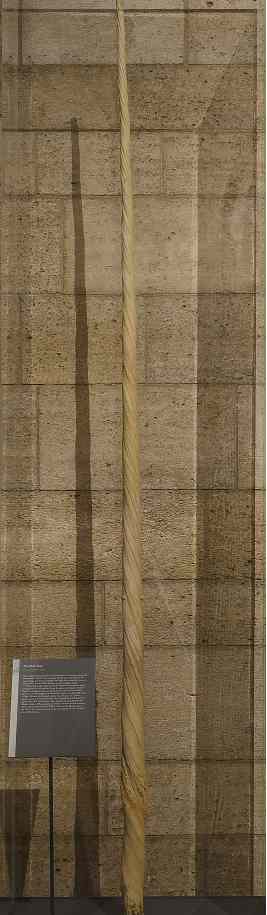
Narwahl tooth (a.k.a. unicorn horn). Source: Metropolitan Museum of Art.
The narwhal’s gracefully shaped, unicorn-looking incisor tooth is given a place in the show, too. One from a private collector is in the Romanesque gallery alongside one of the tapestries, The Unicorn in Captivity (the one in the fenced-in pasture); the second stands behind glass opposite the rest of the tapestries in their usual gallery.
Fancied by rich and powerful in years gone by, Charlemagne, Suleyman the Magnificent, Charles VI of France, and Lorenzo de Medici all owned this Arctic collectible.
We couldn’t take photos inside the show, but don’t worry. The Met’s done a fantastic job documenting everything online, so take time to peruse all the items in the show. Then click on our Flickr site to see the famous Unicorn gallery and glimpse the Cloisters on a perfect summer day.
Do you have 13 minutes? If so, you’ll enjoy the hilarious introduction to the show by curator Barbara Drake Boehm and her speculation on why it took the Cloisters 75 years to mount a show on unicorns. The natural history of unicorns starts around 3:40, and she’ll take you through all the key library materials. Watch to the end to find out where the unicorn was last sighted in the 21st century. It wasn’t Toys ‘R’ Us.
Ever wonder what story is told by the food on your plate? It’s all explained in the show at the American Museum of Natural History, Our Global Kitchen: Food, Nature, Culture, now in its final weekend.
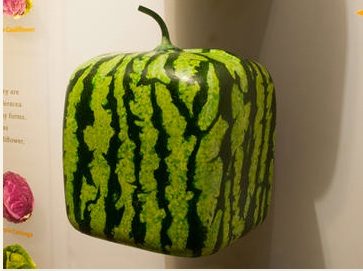
It’s a fascinating walk-through of how food is produced, transported, and consumed by cultures all over the world. You’ll see examples of the zillions of varieties of potatoes archived by the Peruvians high up in the Andes and interesting twists like cube-shaped melons grown in Japan.
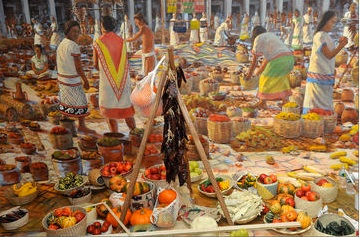
Diorama of the Aztec Tiatelolco market in 1519, just before the Conquistadors arrived. Photo: AMNH/R. Mickens
What’s everyone’s favorite part of the show? Most people can’t get enough of the interactive light table where you can watch the hands of master chefs making some incredible ethnic dishes and the Aztec market. The latter is a full-scale diorama of what shopping was like in 1519 down in Mexico City just before the conquistadors arrived. The market is vast, with an amazing array of items, all neatly arranged in sections, not unlike Eataly’s adventurous stalls near Madison Square.
You’ll get a glimpse of what was on the table of Gandhi, Roman royalty, the Great Khan, and other historic celebrities. The best is seeing what Otzi, the mummified Ice Man was packing as he crossed the Alps about 5,000 years ago.
Here’s the informative introductory video for this thought-provoking and mouth-watering show.
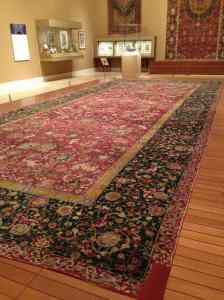
Installation view of the Emperor’s Carpet, second half 16th century. Iran, Safavid period (1501–1722). Source: The Met.
If royal guests had walked all over your Persian carpet for the last 600 years, how many repairs would you need? Before coming to the Met, the 16th-century Emperor’s Carpet, covered in animals and poetry, was once owned by the Shah of Iran and the Hapsburgs.
Since this large, beautiful carpet arrived in New York 60 years ago, the Metropolitan Museum was only able to display it twice because it was in such fragile shape. When they turned it over, they saw it had been patched over 700 times. How could they stabilize it and install it in their expansive New Galleries of the Art of the Arab Lands on the second floor?
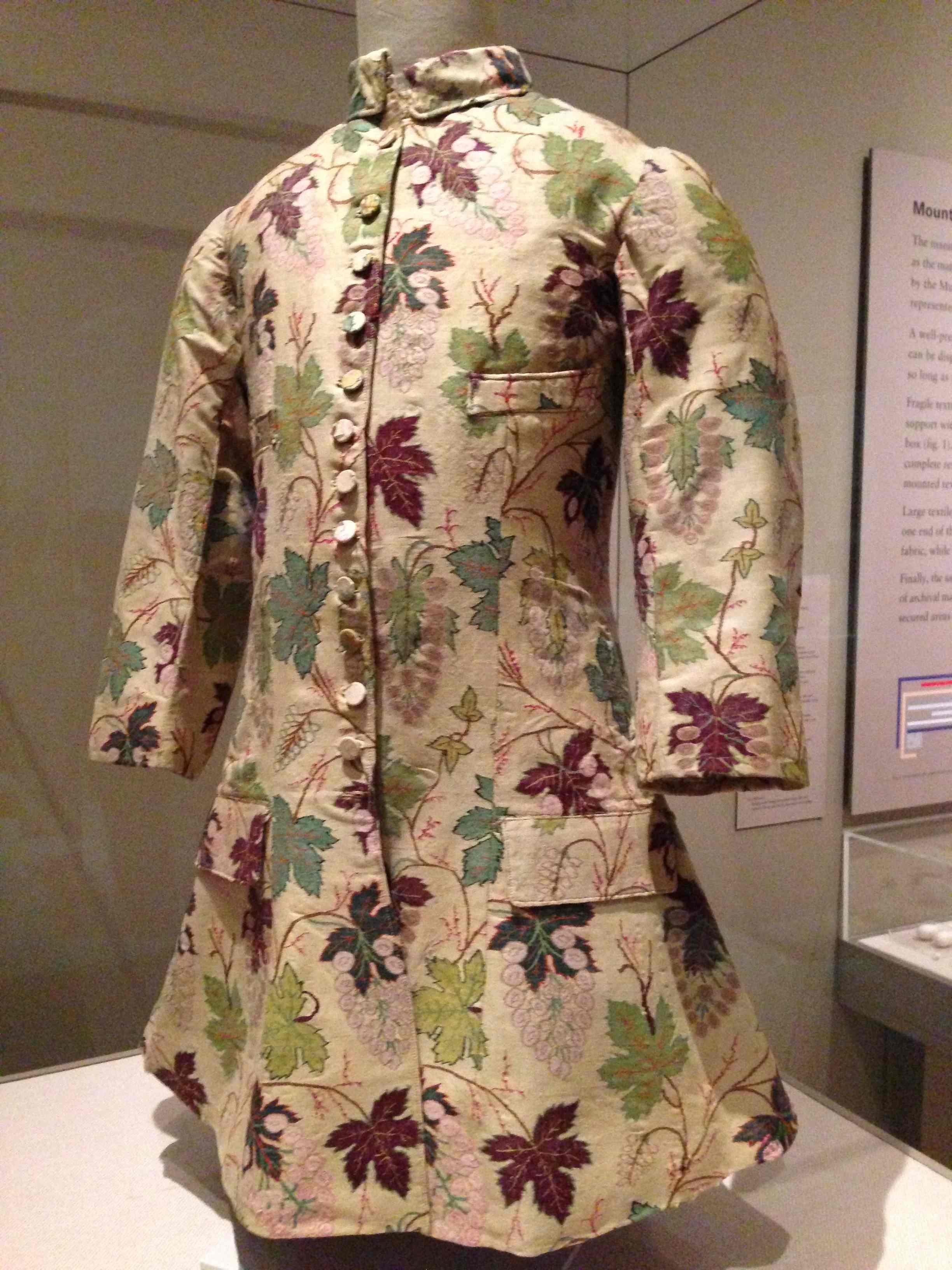
The show features all manner of science, technology, and process that the magical conservators put to work for other pieces, too – ceramics, tapestries made of gold and silver threads, wood, and works on paper over the last 2,000 years. One of our favorites is the child’s coat made from antique pashmina. They also have examples of the natural materials that were crushed and pounded into pigments for all these beautiful dyes and paints.
Although the gallery is tiny, the Met decided to send visitors on a treasure hunt by providing a brochure through which seekers of conservation wizardry can locate the Emperor’s Carpet and other works throughout the dozens of Islamic Art galleries. See the details on these and more our Flickr site.
Child’s coat from India on display in the show. Tailored in the late 19th c., but but fabric woven late 18th c. The textile is from Kashmir and is likely pashmina.
One of the shockers is seeing what the conservators reckon are the true colors of the 1707 Damascus room, long a favorite of Met period-room fans. The science showed that the darkened panels that we’re so familiar with were once bright, bright blue and gold.
If you can’t see the conservator’s showcase before August 4, read about all the science and technology on line at the special web site. You’ll find links to the stories of rehab for the carpet, the child’s coat, the gold-weave chadar, and more.
If you have eight minutes, take a look at three years of work on the royal carpet by the Met’s magicians:
Is it the best museum in the world? One of the happiest places to be in New York right now is Claes Oldenburg’s Mouse Museum and Ray Gun Wing, currently installed in MoMA’s atrium as the scene-stealing companion to the Fifth Floor exhibit, Claes Oldenburg: The Street and The Store, which ends August 5.
You’ll want to take your time contemplating the Pop master’s 1970s curated collection of average, everyday stuff that he showcased inside a geometric mouse-head structure, originally a design he proposed for Chicago’s (then unbuilt) Museum of Contemporary Art.
In the mid-1960s, Oldenburg began collecting souvenirs, rubber toys, and crazy stuff he found on his wanderings and storing them on shelves of his 14th Street studio. An early idea was a display of artificial vegetables and other food with Fluxus genius George Maciunas. It never happened, but luckily some of the 1960s-style replicas repurposed here in the Mouse collection.
Oldenburg decided to submit his museum to Documenta 5, whose theme was “inquiry into reality—today’s imagery.” He washed off his dusty collection (you can hear the tape of that inside) and he and some friends organized 367 objects into display categories. For Documenta, the little building itself was fabricated in Germany.
What’s really inside? In a riff on the classification systems that were then in vogue by conceptual artists, Oldenburg “classified” all his fun stuff – landscape, human beings, food, body parts, clothing (including makeup), tools, animals, buildings (including monuments and souvenirs), money containers, smoking articles, and studio remnants.
Here’s MoMA’s take on the importance of this little museum and its Ray Gun Wing:
Now, enjoy a virtual walk-through to examine this tiny museum’s treasures, shot by Christian Zurn when it was on display at MUMOK in Vienna last year. Do yourself a favor and go see this spectacularly funny, whimsical collection for yourself.
Want to spend some time with Claes himself? Here’s a YouTube of the master recollecting his life in the Sixties, travels to LA with Warhol, and how his soft sculptures came to be, click here.
There’s no way to cool off the Spanish heat you’ll experience at the dance-til-you-drop exhibition Flamenco: 100 Years of Flamenco in New York, currently in the last weeks at NYPL’s Library of Performing Arts at Lincoln Center (until August 3).
NYPL gives us videos, recordings, a few costumes, and other memorabilia, but mostly you’ll hear the castanets and rapid-fire footwork of the best of the best. Who knew that the first woman to appear in front of Edison’s movie camera was Carmencita, the Spanish sensation who debuted at Niblo’s Garden in 1889, and had a fairly good run at Koster & Bial’s Music Hall on 24th and Sixth Avenue. Her portrait by Sargent is at the Musee d’Orsay and her portrait by Chase at the Met. Here’s a link to Edison’s 1894 flick.
Carmencita’s fan photo (c. 1890). Source: NYPL Billy Rose Collection
This first Spanish-dance craze was further fueled in 1916 by the arrival in New York of La Argentina (Antonia Merce), Spain’s first modernist dance artist who fused classical dance, regional styles, and Flamenco. A decade later, she returned with a full company and presented New York’s first full-length Spanish dance-theater piece. By then, Ruth St. Denis, Martha Graham, and Ted Shawn were already incorporating Latin moves, gestures, and rhythms into their performances, and La Argentina’s company had a spectacular run. Here she is in a solo.
Although there’s lots more to the story, one of the best parts of the exhibition features photos, albums, videos, and recordings of the fast footwork of Carmen Amaya, who Sol Hurok billed as “The Human Vesuvius” in her 1941 New York debut. She could kick the 15-foot train of her dress right into the air.
Amaya’s innovation is that she injected a bit of the Gypsy style into Flamenco and was somewhat of a Spanish-dance rule-breaker – sporting tight-fitting trousers to show off her super-fancy footwork. Superstars Dietrich and Hepburn were also wearing trousers at the time, but it was a first in Amaya’s field of work.
Good move, Carmen, as shown in this clip from Follow the Boys, a 1944 all-star vehicle released by Universal to boost morale during the War. It’s like watching a great jazz tapper at work. Move over, Riverdance people.
Source: Archival clip, Follow the Boys, from the DVD, Queen of the Gypsies, A Portrait of Carmen Amaya.
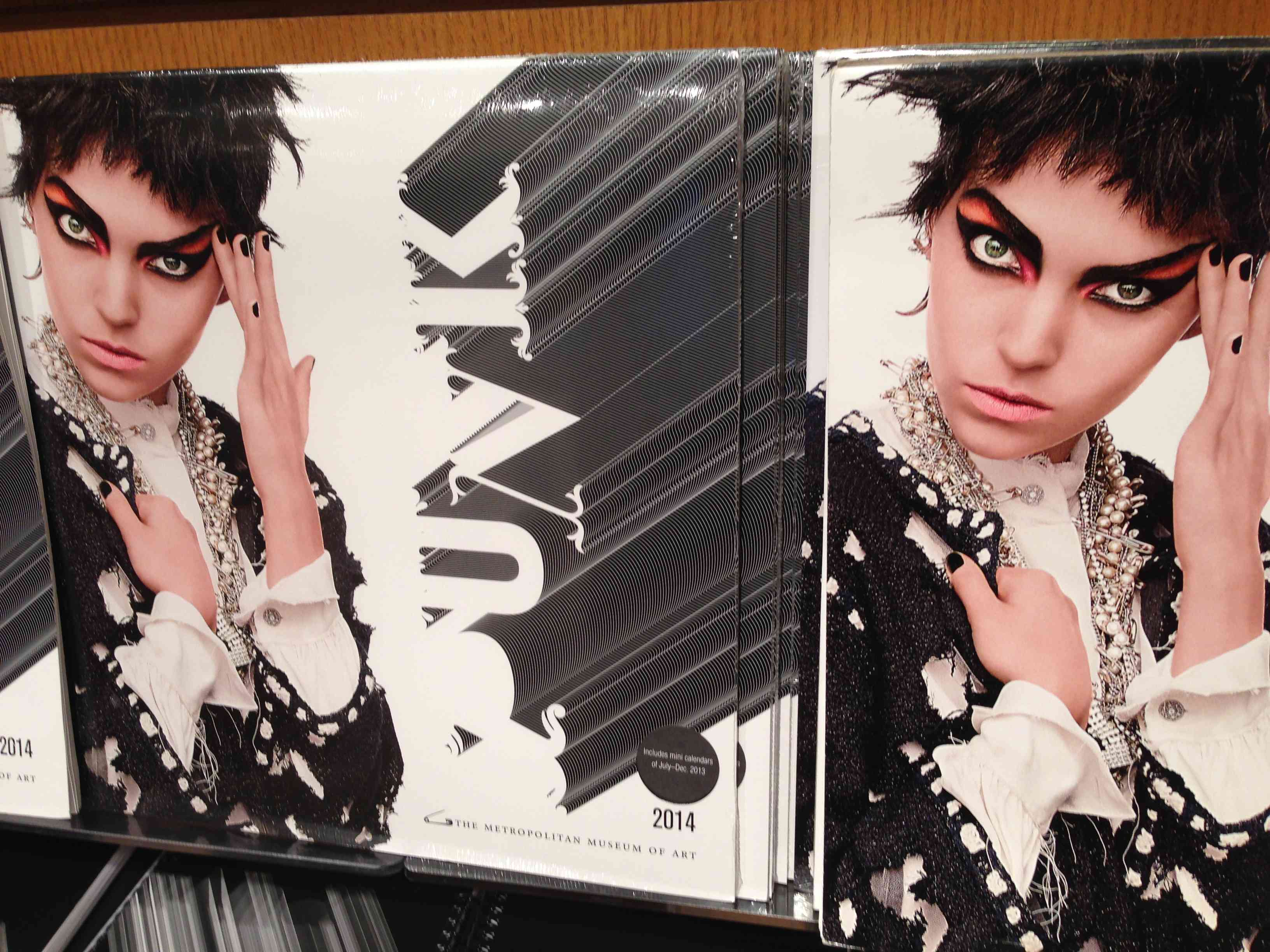
Too hot to get over to the Met this weekend and climb up all those high stairs out front? Stay in the comfort of your air-conditioned home and take this virtual tour of the Met’s Punk: Chaos to Couture show (closing August 14).
Curator Andrew Bolton explains the real-life inspirations for much of the iconic looks in this show –people from music, pop, and celebrity worlds, taking you through the galleries one by one, emphasizing the importance of recycling and deconstruction to the haute couture designers of today.
Our favorites: Rodarte’s crochet looks alongside those of Westwood and McLaren, McQueen’s faux recycled trash bag dresses, Chris Bailey’s spiked Burberry ensemble, and the great finale – Comme des Garcon’s amazing collection with trousers, mutton sleeves, and disassembled pieces of clothing brilliantly attached for maximum punch to the runway models.
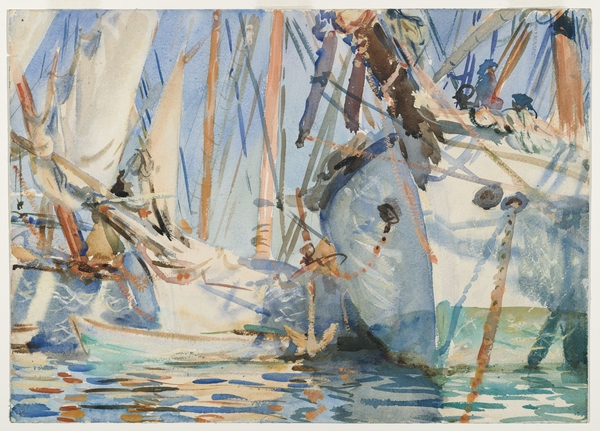
Sargent’s masterful 1908 White Ships that he likely painted in a day. Translucent and opaque watercolor and wax resist with graphite underdrawing, Source: Brooklyn Museum.
Back in 1909, John Singer Sargent’s watercolor show at Knoedler was considered a knockout, drawing discerning crowds in awe of his sensational technique. The images of Bedouin life, Venice, and boats on the Mediterranean were so compelling that the Brooklyn Museum raced in to buy 83 (nearly all of them), forcing Boston’s Museum of Fine Arts to wait until 1912, when they could clean out his entire next watercolor show.
Bedouins (c.1905–6). Opaque and translucent watercolor, Source: Brooklyn Museum.
Walking into John Singer Sargent Watercoloron Brooklyn’s Fourth Floor, you can see why the two great institutions went crazy. With 93 of their finest Sargent purchases collectively displayed, it’s impossible for visitors to pick the most spectacular. They’re all exceptional – the Bedouin horses at rest inside the tent, Sargent’s niece wrapped in her cashmere shawl, the cliffs of the Carrara quarries, and the lush Medici gardens.
How did he make such magnificent work with such an unforgiving medium? How did he whip them out? The two museums asked a team of conservators and curators to put the works under the microscope and ultraviolet light to discern more about the master’s process – the sequence of paint application, the types of paint used, and whether he did a pencil sketch before applying paint to paper.
The team gives visitors insights to the scientific process used — an unusual twist at the back of the gallery that visitors poured through enthusiastically. Brooklyn’s digital team installed a 30-second video in which paper conservator Toni Owen asks visitors what more they’d like to know. Here’s the site where she answers with comments on Sargent’s use of gouache, soft-wax resist, yellow paints, and the difficulties of explaining false-color infrared imaging (FCIR) in limited-space wall text in the gallery.
You’ll learn that Mr. Sargent painted very fast, did not rely on photographs, and did at least one watercolor sitting in a gondola.
Brooklyn’s integrating much more media into its visual art shows, and they’ve hit upon a winning combination here. Some videos show the gardens that were the subjects of Sargent’s work in Italy. Others explain the techniques that Sargent used in the painting next to it.
Listen as artist Monika deVries Gohlke reflects on the type of day Mr. Sargent might have experienced working on his 1908 Melon Boat painting. Watch as she prepares the watercolors, selects his colors, chooses his brushes, and attempts to recreate his “jungle” of shapes and impressions. Does her painting look like his? You be the judge and go get your own paintbox.
Since Smithsonian branches and other Washington, D.C. museums, zoos, and gardens began posting videos on line in 2007, collective YouTube views have climbed to 14 million, as chronicled in our latest report, Washington D.C. Museums: 2013 Video and Social Media Rankings.
Although the 14 million total is less than the 49 million views racked up by New York museums, don’t forget that two high-profile DC institutions – National Geographic and the Smithsonian – produce significant amounts of programming distributed on their popular cable TV channels, dedicated apps, and snazzy web sites. Even though it has a DC museum space, NatGeo (a joint venture with Fox Cable) has largely abandoned YouTube; however, the 18 individual Smithsonian branches are all still posting their own stuff regardless of the more comprehensive joint venture with Showtime.
In the Top Cultural Museum Video, archival footage is cleverly coupled with behind-the-scenes looks at the National Archives’ 1940s Census release
Here are some findings from our report on video and social media produced by DC institutions:
As of year-end 2012, the Washington museums having the highest number of total YouTube channel views were the Library of Congress (4.5M), the National Archives (2.1M), and the United States Holocaust Memorial Museum (1.6M). The top two are information powerhouses with massive collections to push out for public consumption, and the third is right on their heels with an innovative series with curators interpreting interesting items from their collections.
All-time top DC museum video, one of Edison’s earliest films, with over 329K hits on YouTube
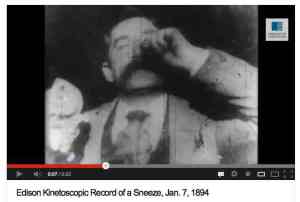
Edison still delivers. It’s interesting that the top ranked DC museum video of all time is Edison Kinetoscopic Record of a Sneeze, Jan. 7, 1894, the earliest surviving copyrighted movie – suggesting that our greatest media innovator is having the last laugh, contributing over 329,000 hits to the number-one ranking by Library of Congress on YouTube. It’s short enough for Fred Ott to be on Vine.
Four museum video channels have surpassed 1 million views. To put the DC numbers in context, if they were merged with the New York museum video rankings, the Library of Congress (4.5M) would rank seventh, just ahead of the Metropolitan Museum of Art. The Library of Congress would rank eight (2.1M), just ahead of the New York Public Library.
The National Zoo produced Washington’s top-viewed 2012 museum video – Shanthi, the National Zoo’s Musical Elephant, Plays the Harmonica!. Over 290,000 viewers watched this middle-aged mom experiment with a musical instrument in her enclosure and listen to her keeper talk about her performance. Shanthi’s viewership greatly surpassed the numbers generated by the most popular 2011 Washington museum video, the National Portrait Gallery’s Conan O’ Brien as Seen by Artist John Kascht. Surely, Conan would be amused.
The Smithsonian American Art Museum’s Top Exhibition Video of 2012 features curator Chris Melisinos describing why video games belong in an art museum
The top cultural video was a behind-the-scenes work at the National Archives for the release of the 1940s census. Over 115,000 family historians watched Learn About the 1940s Census, which showed the Archives census team, provided information on how to find your family’s records, and worked in interesting archival footage from the original census.
The Smithsonian American Art Museum produced Washington’s top video about a museum exhibition.Over 28,600 people watched The Art of Video Games: Chris Melissinos, Curator, a brief look into the evolution of the stories, technology, and visualization advances of this mass entertainment medium.
A few of the Flickr sets from Library of Congress
The most active Twitter users are the National Museum of American History, the National Air and Space Museum, and the National Postal Museum. But except for Air and Space, it’s a different set for Facebook followers.
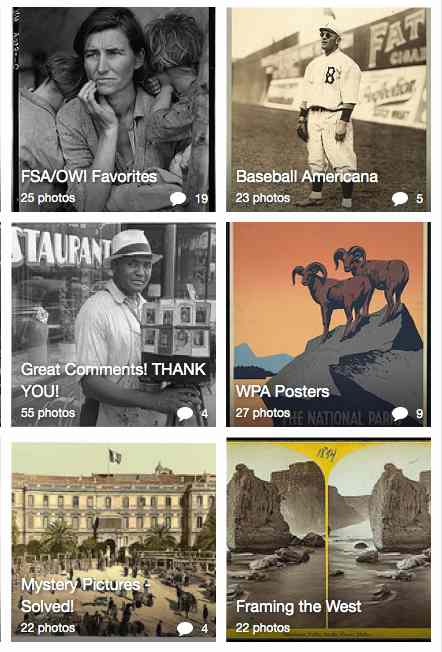
The most active Flickr users are the National Archives, the Library of Congress, and the Smithsonian American Art Museum. The Archives has organized its photos into creatively themed sets, such as “White House Wednesdays,” “Millinery Monday,” pictures of the 1940s census being taken, and pets of the First Families. The Library of Congress also posts a folder containing “mystery” photos and asks the public to help to identify them.
All the detailed video and social media statistics on 42 museums are in the report. Click here to see what’s included and make a purchase from our Its News To You Reports shop.
Enjoy the most popular DC museum video, a musical visit with the National Zoo’s sensation, Shanthi:
Annex window view of Lothar Osterburg’s model of his dream of Grand Central as a zeppelin docking station back in the 1930s
Even if you didn’t manage to board the historic train cars at Grand Central in May, you can still go back in time, courtesy of 18 artists featured in the GCT exhibition in the New York Transit Museum Annex, On Time: Grand Central at 100.
Inspired by The Clock and the continual flow of people and trains through Grand Central, MTA Arts for Transit cooked up a delightful mix of contemporary 2D works, models, videos, and digital art that puts a smile on the face of every commuter, tourist, and art-seeker that we’ve seen inside the tiny Annex.
Look closely to find this minute secret portal: Ledge with Lunette by Patrick Jacobs
Have you seen the mysterious Zeppelin posters by Lothar Osterburg on the subway? Right in the Annex window you’ll see the gigantic, fun-house model that he created to photograph as one step in the process of making the photogravure you see on the A train. Kids and parents can’t resist Lothar’s newspaper-covered multi-story GCT impression and the funny, fat yellow old-time taxis and zeppelin ends that poke out. Right next to it, you can examine his resulting print, Zeppelins Docking on Grand Central.
People are usually transfixed by the 2008 video documenting Frozen Grand Central, where Improv Everywhere staged a 250-person flash mob, where people “froze” for 5 minutes as commuters, tourists, and workers wondered what was going on.
Another hit is Grand Central Diary. London Squared Productions interviewed tourists and commuters about GCT, animated the furniture and items around the terminal, and…well, just watch The Clock and the Maintenance Cart speak for themselves:
Nearby, several small digital screens show Alexander Chen’s Conductor, a 15-minute video loop that animates the subway lines, suggesting trains moving through the system. He turns the subway lines into an animated stringed instrument. No wonder he’s working for Google Creative Labs. Spend a few moments, take a look, and experience it here.
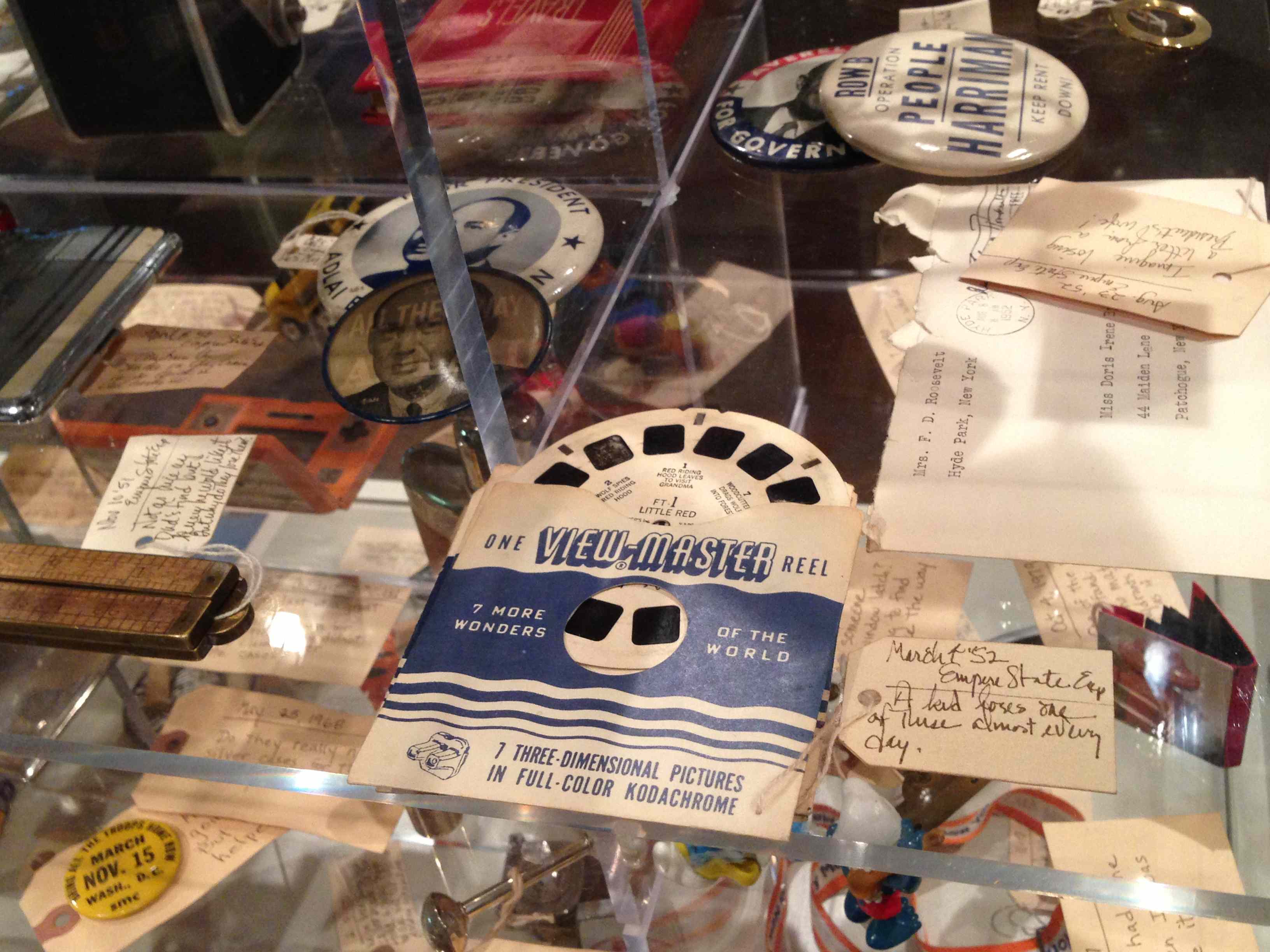
Close-up of Viewmasters and other leave-behinds inside Jane Greengold’s LostandFound.
Another must-see piece (among many) is Jane Greengold’s Lost and Found. She’s created a sort-of fiction about the dozens of tagged items in the vitrine, evoking the memories and observations of generations of conductors who found items that train passengers left behind. Actually, the items you’re looking at are actual leave-behinds collected by real-life conductors, so Jane’s work isn’t entirely made up. The archeological discoveries include things from the old Lake Shore Limited on the NY Central, a 1948 boxed baby tooth, 1943 ration cards, 1952 Viewmasters, a Kennedy campaign button, and a Kindle.
Get to the Annex before July 7. In the meantime, check out curator Amy Hausmann and her artists telling about the fun they had contemplating time, architecture, fashion, and Jackie O.












 itsnewstoyou