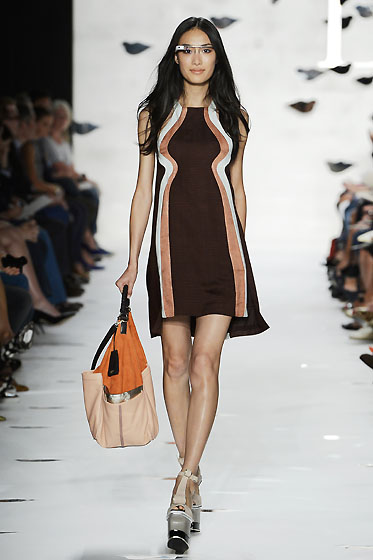
When Diane von Furstenberg and her models walked the runway at NYC’s recently concluded Fashion Week, they decided to give the world an inside peek at how it feels by recording the experience with Google Glass, the still-in-Beta avant-eyewear.
The innovative accessory shoots video, snaps pix, streams messages, and apparently looks good, so Diane decided to snap on the specs and take you with her (and her posse) on a fashion-tech flashbulb-popping stroll.
What’s cooler than Diane’s embrace of the new? Her Spring/Summer 2013 collection and her attitudes about life, potential, and empowerment. Take a look. Thanks, Diane!
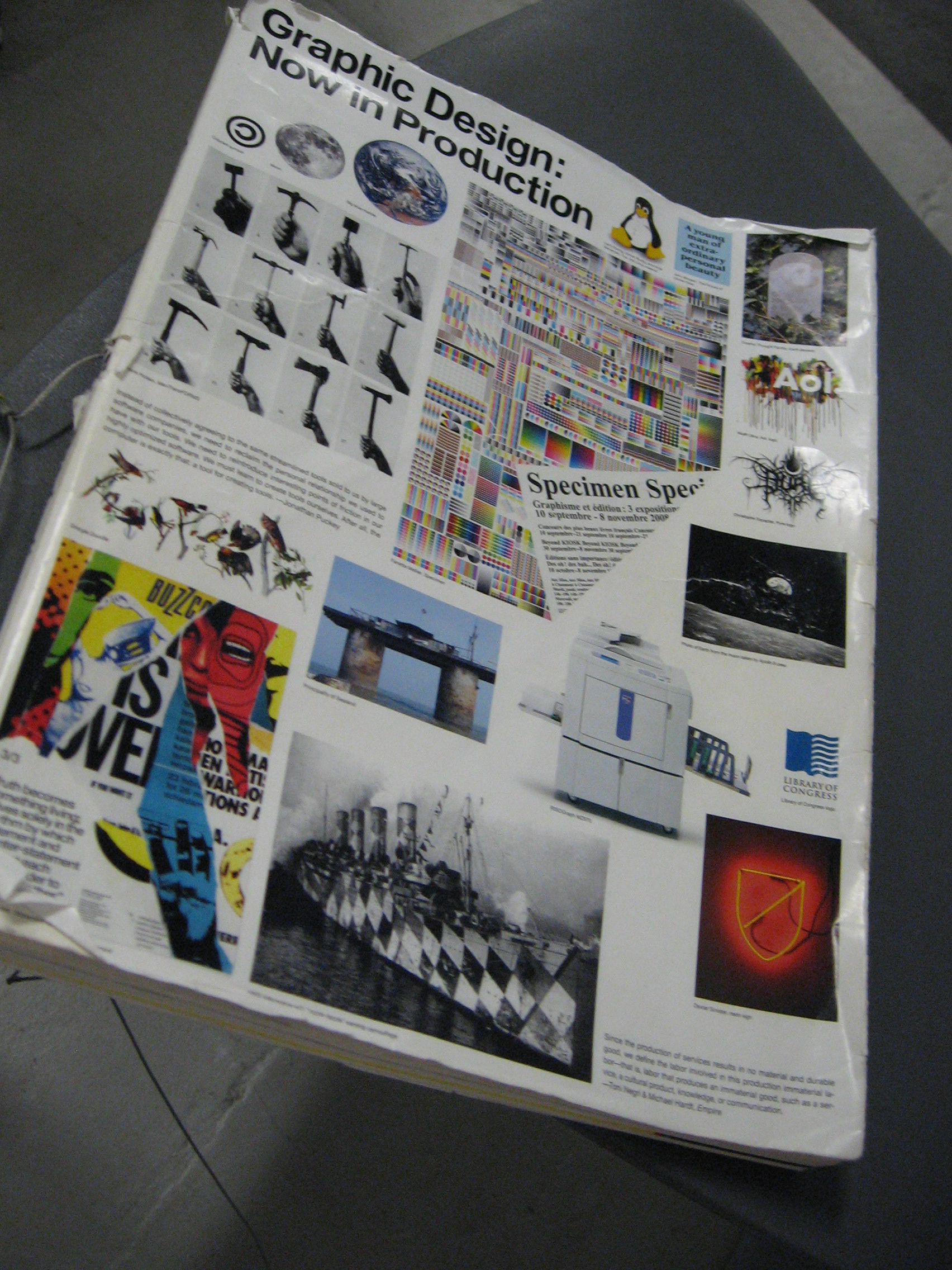
Let me guess. You didn’t get to see the spectacular design show that ended yesterday on Governor’s Island. While their mansion up on 91st Street is being renovated, The Cooper-Hewitt (a.k.a. Smithsonian) outdid itself by mounting a show inside Building 110 on New York Harbor’s hottest party-picnic location.
Graphic Design: Now in Production gathers great design produced since 2000 to feature what creative minds are offering. The summertime crowd loved it, and people flowed right from the ferry into the show and through the aisles where works were grouped around themes like storefronts, branding, typography, and print (it lives!). Check out the action on the Flickr feed.
The show is vibrant, interactive, mind-blowing, provocative, and fully documented in a 10-minute walk-through video with the curator Elleln Lupton that pretty much replicates the experience.
If you’re in LA, the show opens September 30 at UCLA’s Hammer Museum before migrating in 2013-2014 to Grand Rapids, Houston, Winston-Salem, and RISD.
Among our favorites are Brand New’s display, which asks visitors to vote (“before” or “after”) on redesigned corporate logos, and CognitiveMedia’s “RSA Animate: Changing Education Paradigms.”
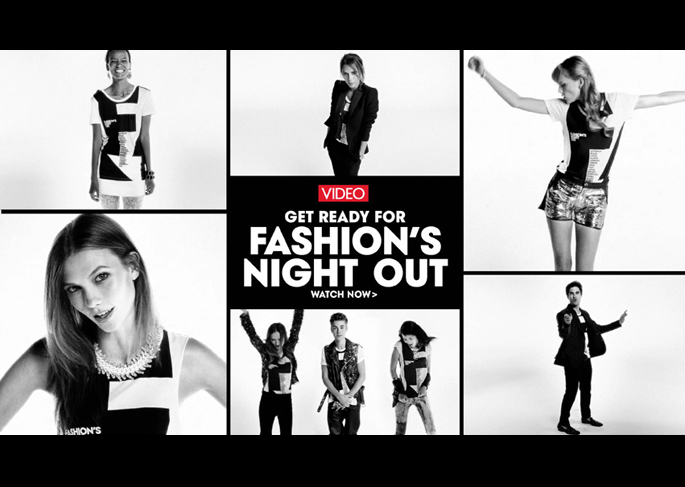
Better use the holiday weekend to rest up, since Fashion’s Night Out happens next Thursday!
The tents are going up at Lincoln Center, the stores are getting ready for the onslaught, and the NYPD is gearing up for crowd control everywhere in the City.
Check out the New York event listings at the web site, or (if you’re not in NYC that night) the FNO worldwide or elsewhere US sites. Hey, there are even events planned in Wyoming and online, so there’s no excuse not to shop, contribute to a cause (by buying stuff from the collection), and have fun all night!
If you’re in NYC, start early, have a strategy, and be prepared for crowds. The web site lets you sort the 800-plus events by neighborhood, shopping category, and the type of event you’re hankering for (pop-ups, fashion shows, new product launches, charity-focused, DJs, designer appearances, and block parties).
During the summer heat wave, there’s a way to cool down in Chelsea and let the team from the Science Gallery at Trinity College challenge you to think differently about the splashing water you take for granted.
Take advantage of the final weeks of Surface Tension: The Future of Water at Eyebeam Art & Technology Center on West 21st Street, an incubator for digital art/design experimentation. For the past two-plus months, they’ve hosted an exhibition (first curated in Dublin) on the social-economic-political tensions created by water scarcity.
As soon as you walk into Eyebeam, you’ll be struck by the plethora of infographics that show you just how much water bounty that we have in the United States versus the availability and consumption per capita in the rest of the world. What’s your water footprint?
One of the ways you’ll find out is by looking at The Virtual Water Project, a celebrated infographic by German designer Tim Kekeritz, that depicts everyday objects and the amount of water required to produce them. Download the iPhone app. For $1.99, it will blow your mind (but not your budget) and continue to deliver a truly a conscious-raising experience of epic proportion.
Another unforgettable experience is Bit.Fall by artist Julius Popp, an installation that translates words from Internet newsfeeds into bits that are reconverted into a stunning waterfall of words:
There’s so much great stuff: multiple takes on water consumption, conservation, next-gen thinking, third-world innovations, and art-meets-technology solutions. Like Tele-Present Water by David Bowen, which recreates actual water movements from NOAA data being collected from a random buoy out in the ocean.
If you can’t get over to Chelsea for an hour, just click through the thought-provoking objects, artworks, design solutions, documentaries, and thought pieces by the scientists, artists, engineers, and designers whose works are on display on the Dublin microsite.
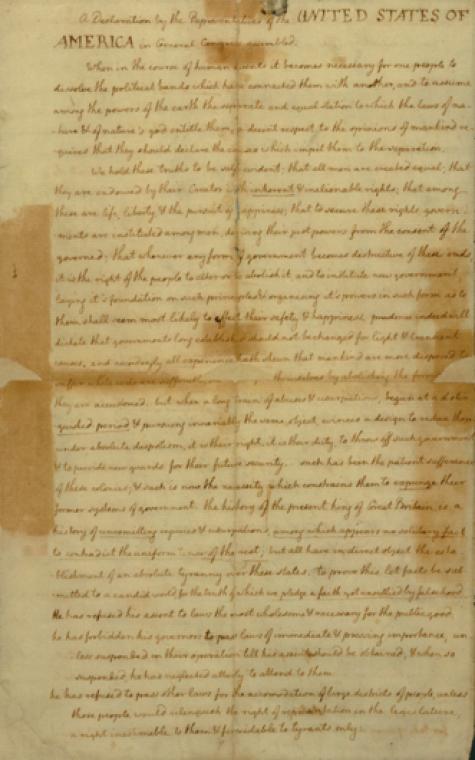
It’s never really the Fourth of July in New York without seeing Tom J’s annotated copy of his Declaration of Independence that’s usually shown this time of year at the New York Public Library.
Because Tom’s two-page handwritten draft was diplayed all year in NYPL’s 100th anniversary exhibition, the Library has decided that “It will be given a rest of a few years…” Even though you’re not able to visit Tom’s Declaration in person, the library’s digital team has made it available on line, along with a number of its other revolutionary treasures. Check out:
Ben Franklin’s June 21, 1776 note to General Washington (written while Tom was toiling away in the Philadelphia’s sweltering summer heat) that “a Declaration of Independence is preparing”.
Tom’s original draft of the Declaration with his paragraph objecting to the slave trade, which Congress forced him to edit out. (Check out this blog posting at NYPL and click on the images for a larger view.)
Also check out the first news report on the Declaration in The Pennsylvania Evening Post (dated July 6, 1776), telling everyone that something was up, followed by the classifieds on page 2.
You have one more week to find out what the 18th century social network was like at the intriguing exhibition at New-York Historical on the events that propelled simultaneous American, French, and Haitian revolutions.
Girodet’s 1797 painting of Jean-Baptiste Belley from Versailles
As soon as you enter Revolution! The Atlantic World Reborn at the New-York Historical, you find yourself inside the social hub a Caribbean seaport city in the mid-1770s – the coffee house, where people reread month-old newspapers, asked arriving seamen for news, discussed European imperials, and complained about taxes, trade, and tyranny.
Winding your way through the history maze, you’ll encounter the original penned version of the Stamp Act (1765), the first edition of Thomas Paine’s Common Sense (1776), and Napolean’s approval to sell Louisiana to the United States (1803). The story line weaves in the slave trade, the Haitian revolution, and the rise of voodoo in the Caribbean – a unique retelling of rebellion in the time of colonialism.
See the artifacts on line, but connect the dots to revolution by dropping into the exhibition this weekend.
And don’t miss the lobby painting featuring New York’s first big-time 18th c. social network — the Tontine Coffee House on Wall and Water, built by the brokers in 1793 to organize The New York Stock Exchange.
Always ahead of the curve, probably the most innovative, fun, addictive social-media experiment by a museum in New York has been created and curated by the Museum of Modern Art. Why is MoMA out-doing everyone else? Because MoMA’s social network is on paper!!!
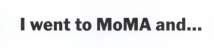
If you’ve strolled through MoMA’s lobby lately, you’ll see the biggest crowds (after the admissions line) gawking at a wall where MoMA projects digital scans of some of the 18,000 slips of paper filled out by visitors, all beginning “I went to MoMA and…”.
And what greater tribute to the success of this two-dimensional throwback in a hyper-connected world: MoMA featured some of the best in its full-page print ad in this past week’s Museum supplement in The New York Times (yes, that’s the newsprint edition).
Hilarious, touching, artistic, inspirational, and everyone looking, reading, and enjoying — isn’t that what we want our social media to be? Check out the pieces of paper on line.
Are you watching TV with a second screen? Oh, c’mon, don’t tell me that you don’t have your computer or smartphone out while you’re watching Real Housewives or Top Chef. During Social Media Week, some big TV networks and social-media start-ups revealed their strategies for boosting the entertainment quotient of popular shows with live social media. Pretty smart:
Bravo’s Watch What Happens Live is the only TV show where the host (VP Andy Cohen) receives live Tweets from the viewing audience dishing about shows that have just aired in the previous time slot (like Tabitha Takes Over).
Bravo’s Real Housewives: Social Edition asks viewers to Tweet during the program, and then selects the best to actually display on the “social edition” (i.e. rebroadcast), which boosted encore viewership by 50% (check out the Tweet Tracker)
GetGlue, a social network with 2 million users, lets viewers talk about what they’re watching, reading, and listening to and earn stickers (or coupons) related to their favorites
USA Networks pioneered supplying games for viewers, but went one step further by launching the online real-time story-game Hashtag Killer that runs across Facebook, Twitter, and other platforms (check out the YouTube video of how it all works)
Questions:
What’s the right “recipe” for second screens?
When will there be a standard measurement of second-screen activity to accompany Neilsen eyeball measurement?
Our continued Social Media Week wrap-up summarizes the top consumer trends identified by Ann Mack, a professional trend-spotter with JWT North America:
Internet + smartphones + social media have turned information into a constantly updated stream that we take wherever we go. We’ve become hyper-documentarians:
We upload the equivalent of eight years of content every 24 hours.
Over 845 million people are now on Facebook uploading 250 million photos each day.
200 million daily Tweets is the equivalent a 10-million page book every 24 hours.
The extreme social transparency that this flow generates is creating a type of social angst – the Fear of Missing Out (FOMO), which will likely increase.
Social networks will figure out ways to fine-tune our personal data and further customize ads, content, search results, and shopping choices that we see; however, some users will say things have gone too far and push back against personalization.
In the future, consumers may trend toward more random on-line experience…the way things used to be when we first “discovered” the Internet. It’s possible that some, especially Millennials, will unplug and just go back to connecting with pals face-to-face. On the other hand, more digital tools will be used as “butlers”.
In the meantime, brands might be able to tap into social-media users’ interest in “doing good”, collaborating, and being part of a bigger network. The challenge for marketers will be to figure out how to harness FOMO to drive spending while doing more social good.





 itsnewstoyou