
How do artists forge a path forward in contemporary art by adapting to and then shaking off the constraints of colonialism? The Tate Modern explains how one country’s artists did it through its expansive exhibition Nigerian Modernism: Art and Independence, on view in the Nathalie Bell Building Level 4 through May 10, 2026.
The exhibition unfolds across nine galleries that provide some history, honor 20th century art legends, and introduce groups of artists that converged in universities and other towns to chart their unique paths. It’s a sensational visual ride through an art culture that had to contend with civil wars, upheavals, ethnic conflict, and the decision either to stay put and build artistic infrastructure or to build another life abroad.
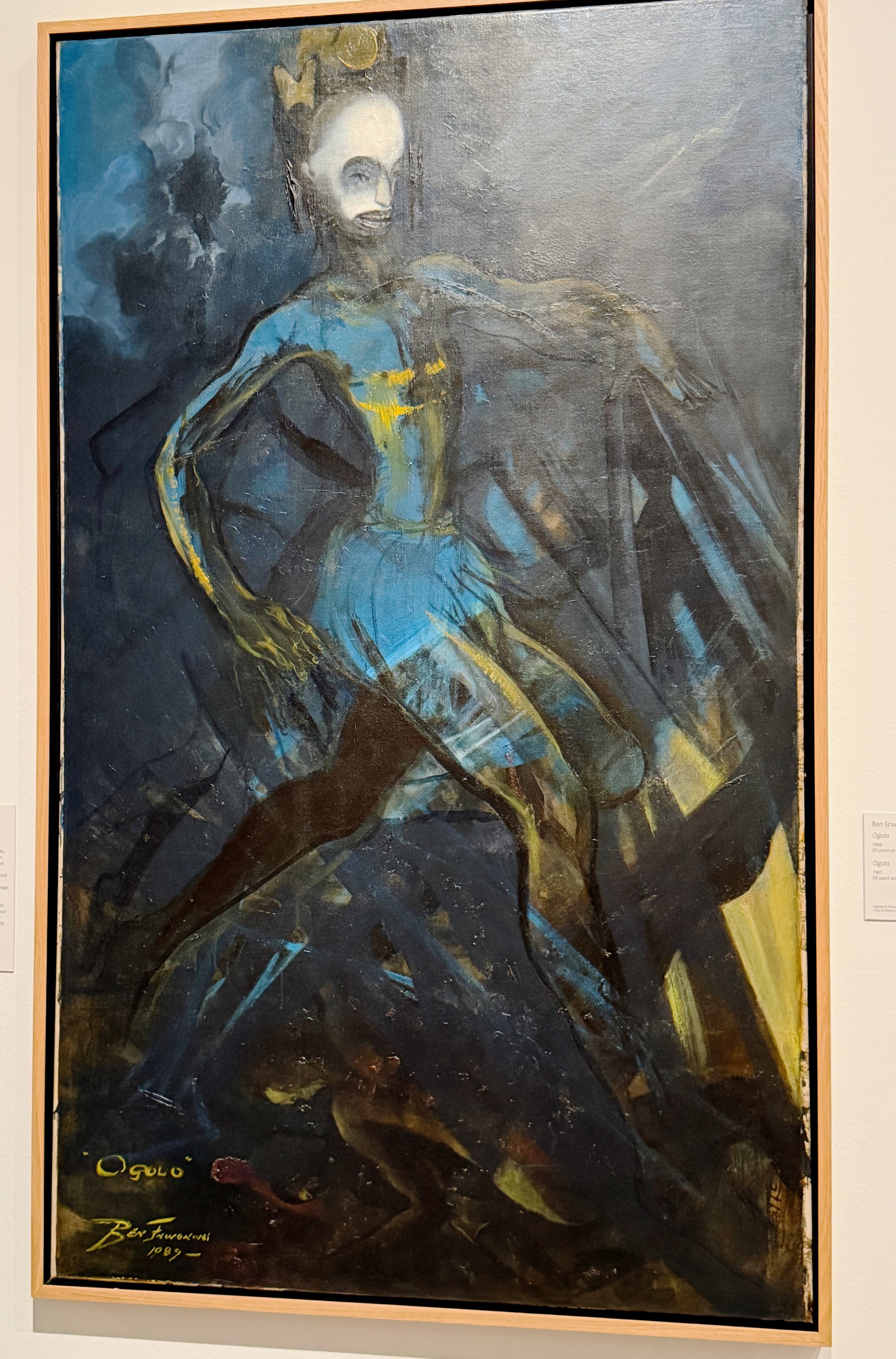
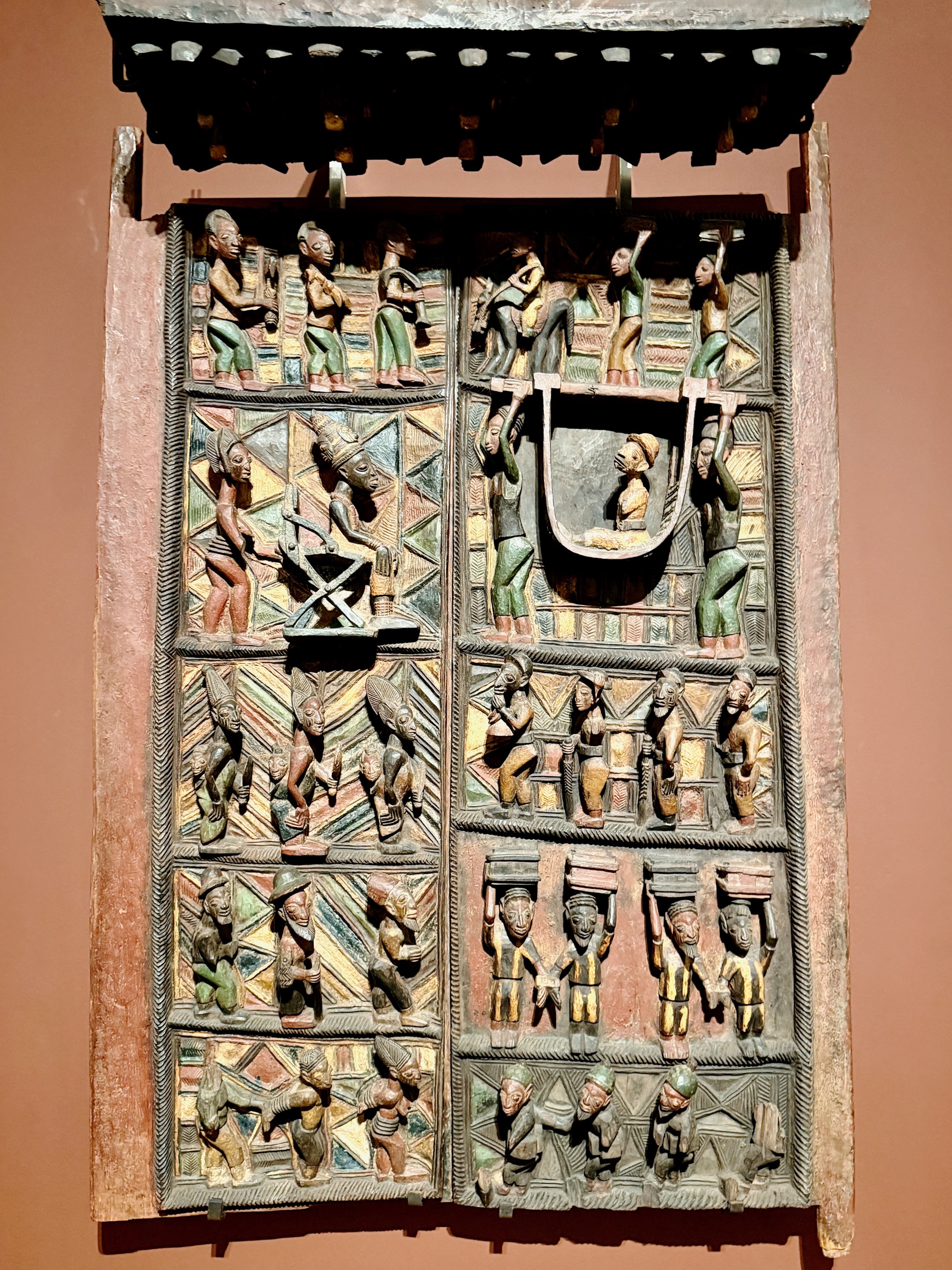
See some of our favorite works in our Flickr album.
The modernist tour begins with an introduction to artists who paved the way before Nigeria became an official colony of Great Britain in 1914 – such as late 18th-early 19th century photographer Jonathan Adagogo Green – and Aina Onabolu, a self-taught artist who went to Europe in the 1920s for academic art training. He then returned to Nigeria to create and implement a secondary-school art curriculum that taught young artists how to use European art techniques (perspective, color theory, easel painting) to depict Nigerian subjects.
Onabolu’s work was significant, since colonial schools had none. They were trying to create turn students into perfect “British” civil servants and missionary schools were out to destroy ethic Nigerian practices and symbols.
In this first gallery, you see work by the next generation of figurative artists who came of age during British rule, traveled to Europe, and blended what they learned with African subjects – traditionally inspired sculptures by globe-trotting Yoruba carving advocate, Lamidi Olonade Fakeye; portraits and scenes by modernist pioneer Akinola Lasekan; modern sculptural influencer Justice D. Akeredolu; and works by sculptor Felix Udabor, who opened the first contemporary gallery in Lagos.
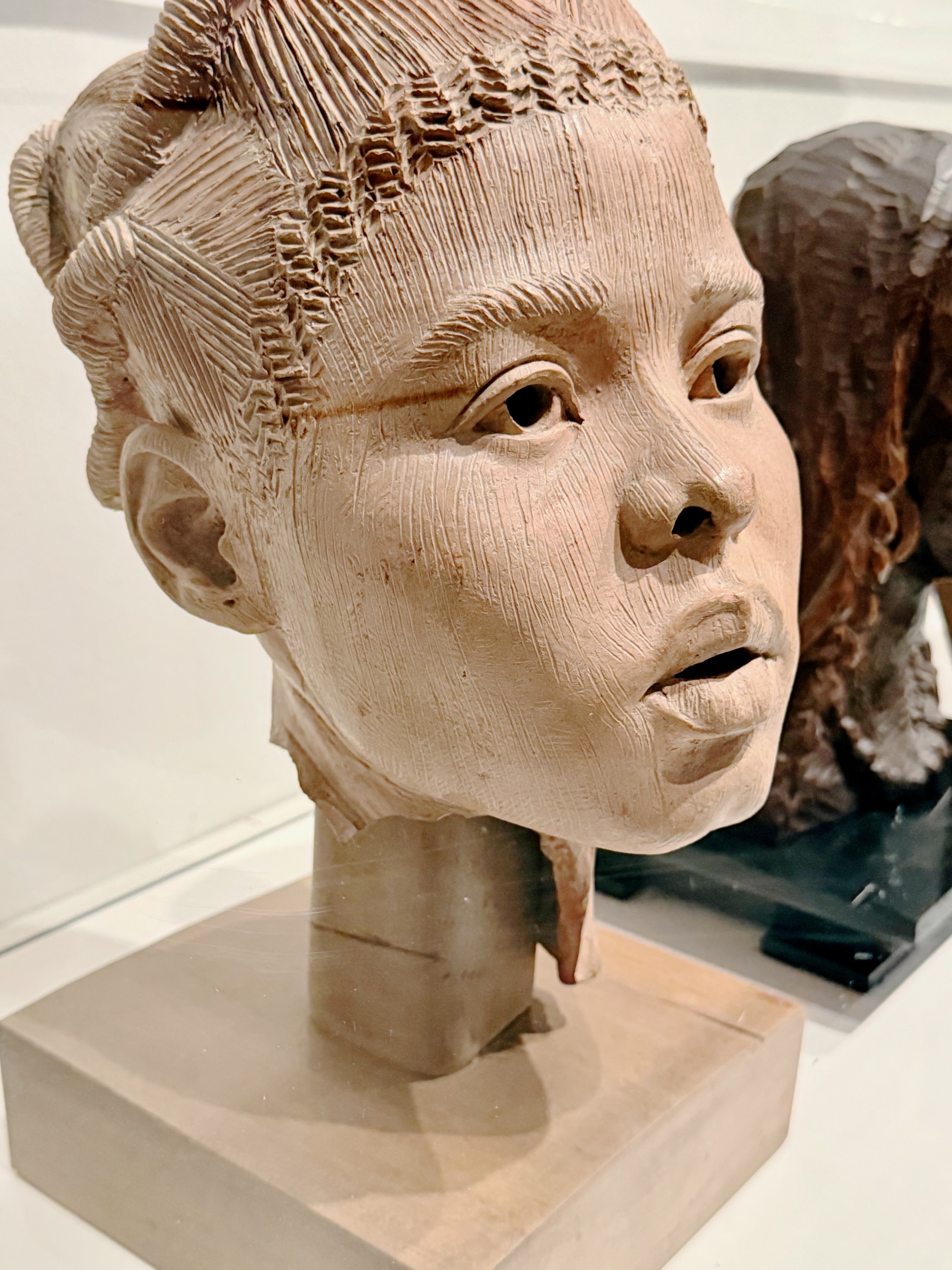
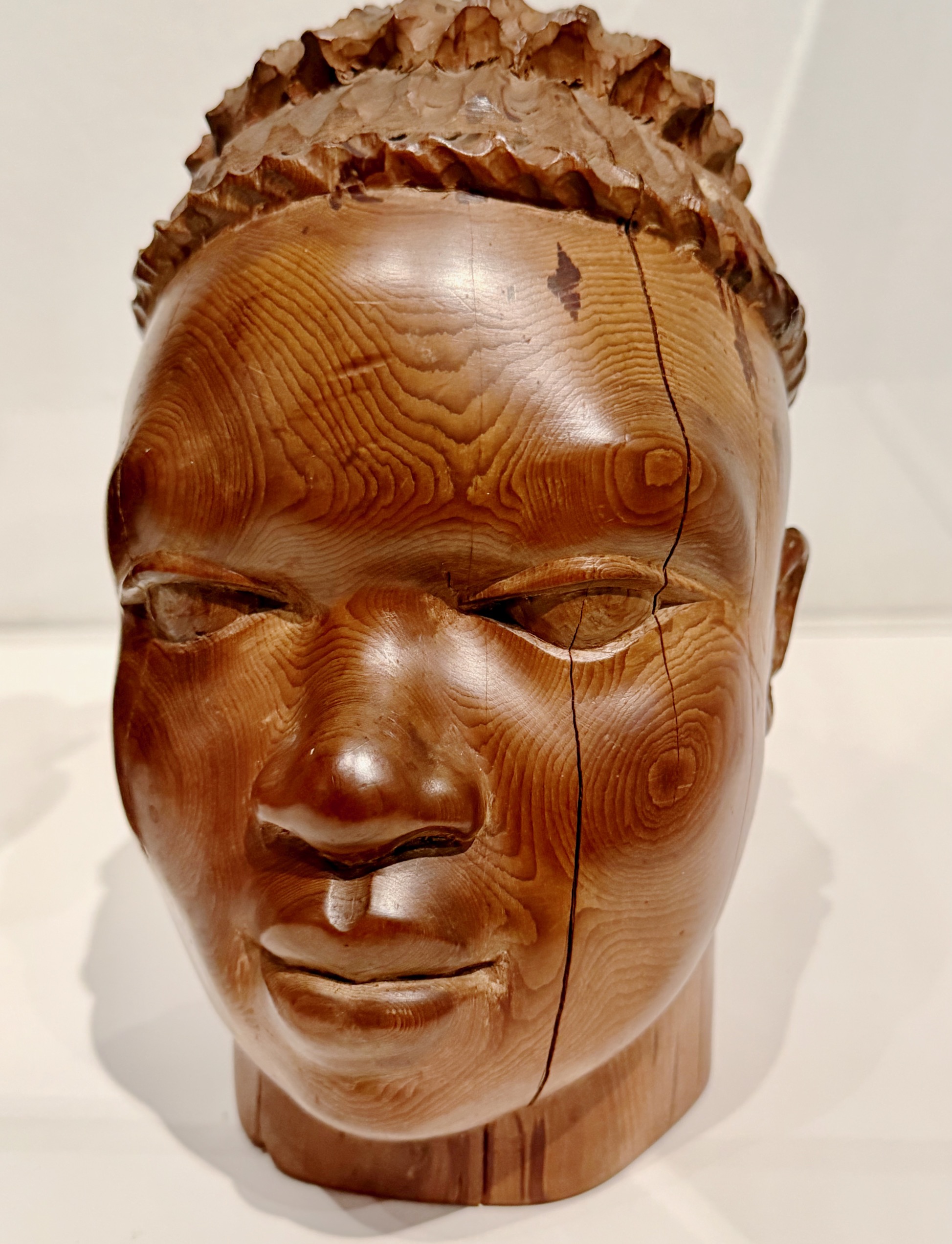
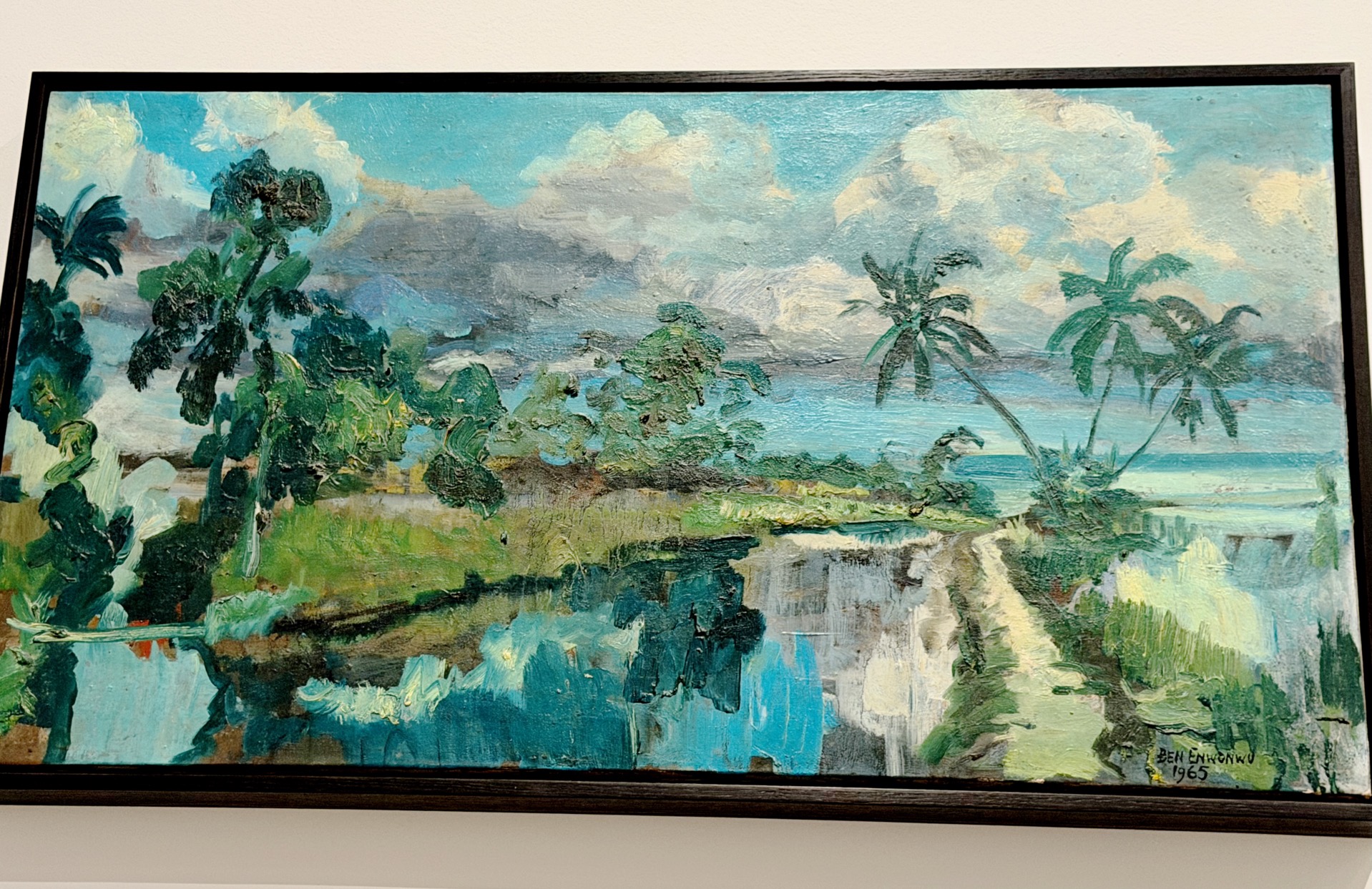
This room leads to a spectacular display of dramatic modernist ebony figures by Africa’s first internationally recognized modern painter, Ben Enwonwu. The room is a mini-retrospective of his work, from early student sculpture that has a Henry Moore influence to a self-portrait and larger, more emotive gestural work.
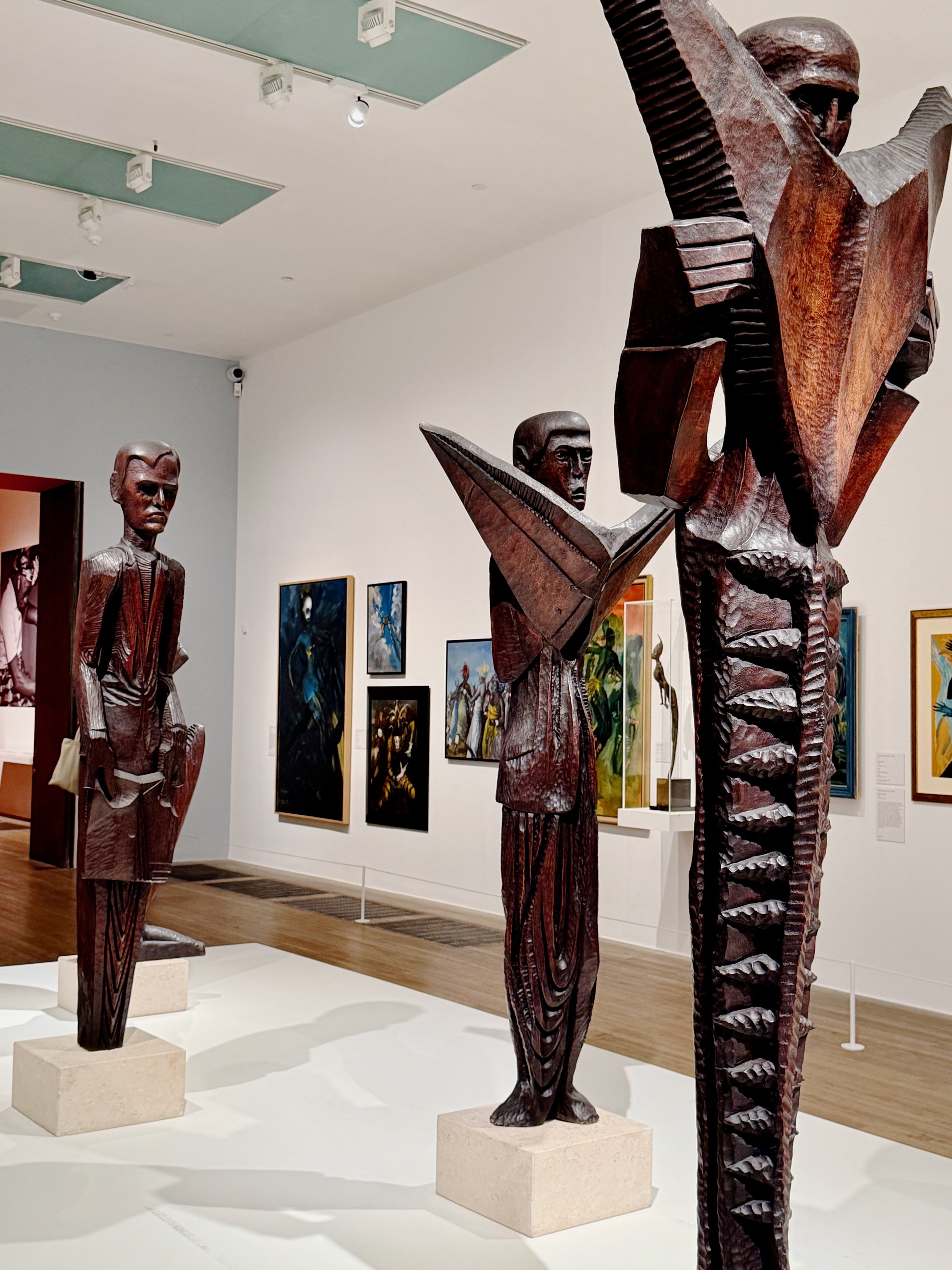
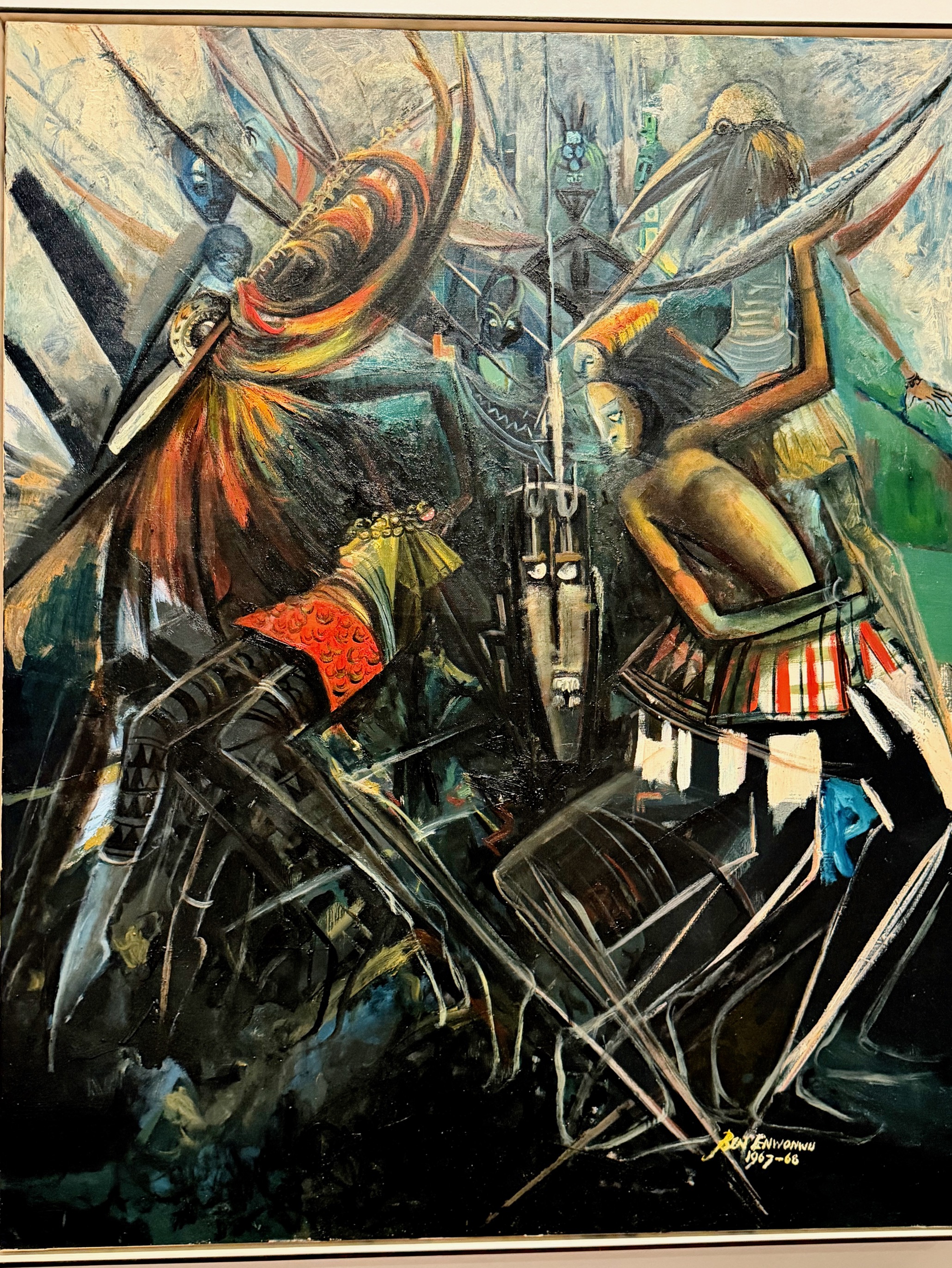
Born into an esteemed Nigerian family, Enwonwu was championed as a young artist by the top British art educator in the colony, and a received scholarship to train in London. He soaked up post-War artistic trends, exhibited extensively, toured and lectured across the United States, and sculpted the Queen when she visited Nigeria. Yet, through it all, he was blunt about repression under the colonial regime and advocated for the African Nationalist movement. Nigeria won its independence in 1960.
The next gallery shows the work and legacy of Nigerian art ambassador Ladi Kwali, who transformed traditional forms of earthenware into high-fired glazed modern art admired and collected worldwide.
With independence, formally trained artists, writers, poets, and dramatists formed associations to usher in new, more expressive works across all media – work that reflected a Nigerian sensibility, not just Europe’s. Pop music and new art flourished and Lagos nightclubs ruled. Successive exhibition galleries hone in on trends in different cities and geographic regions throughout Nigeria.
There’s a room dedicated to work by artists who wrote the manifesto for and created the legendary Zaria Art Society –Emmanual Okechukwu Odita, Bruce Onobrakpeya, Yusuf Grillo, Uche Okeke, Demas Nwoko, and Oseluka Osadebe. They wanted art to reflect Nigeria’s cultures – all of them, including Islam and Christian religions as well as traditional ethnic practices.
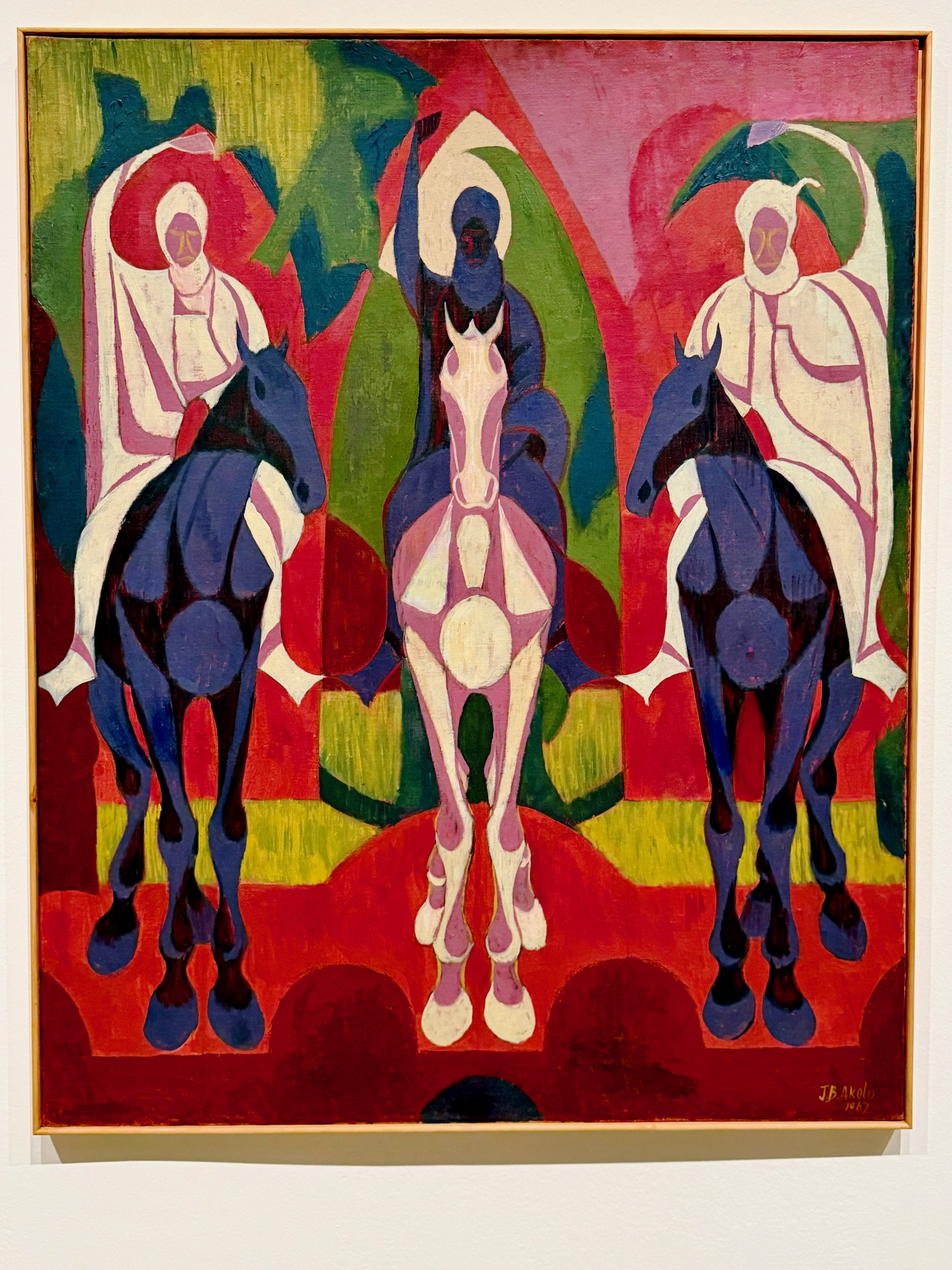
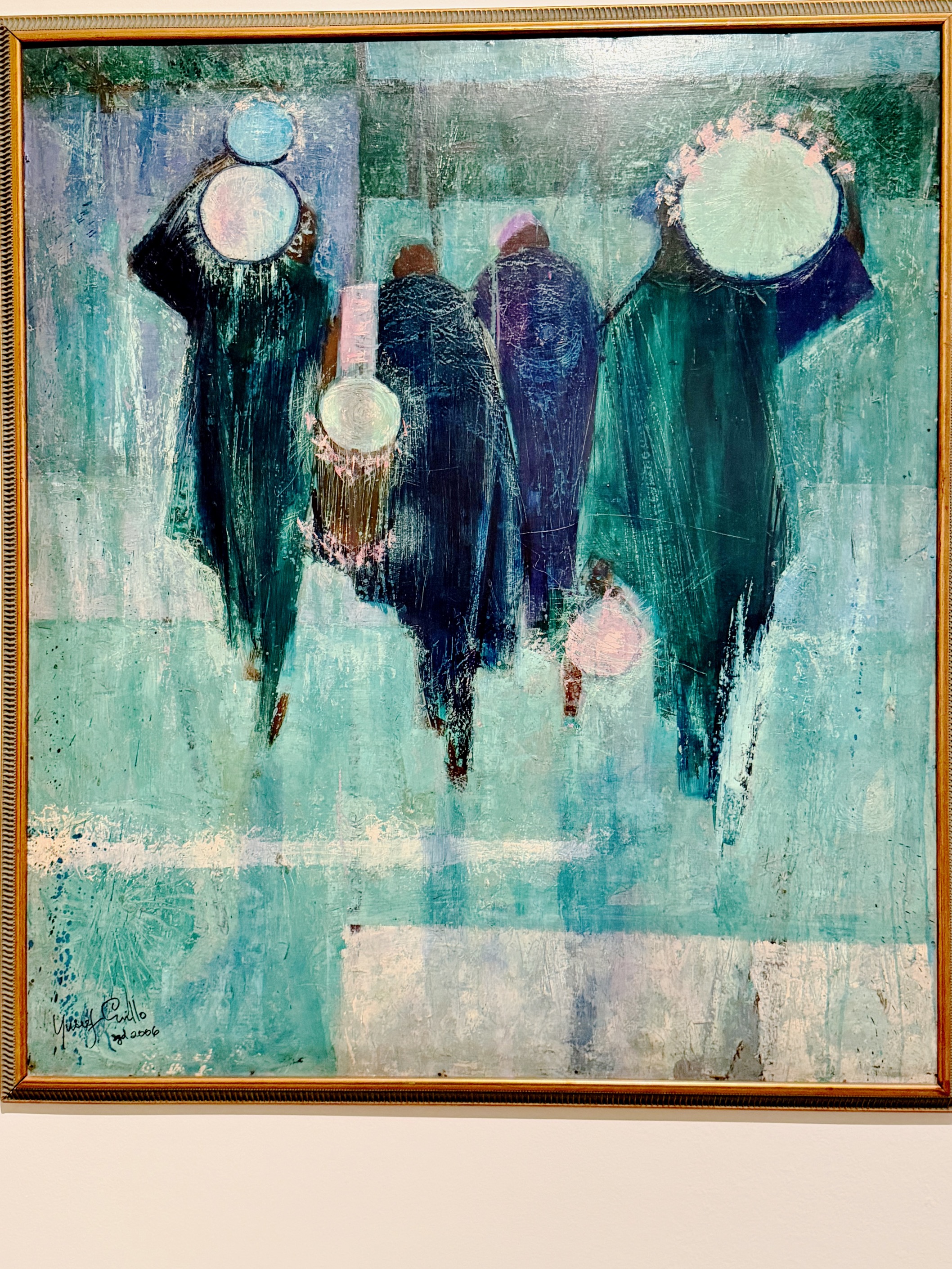
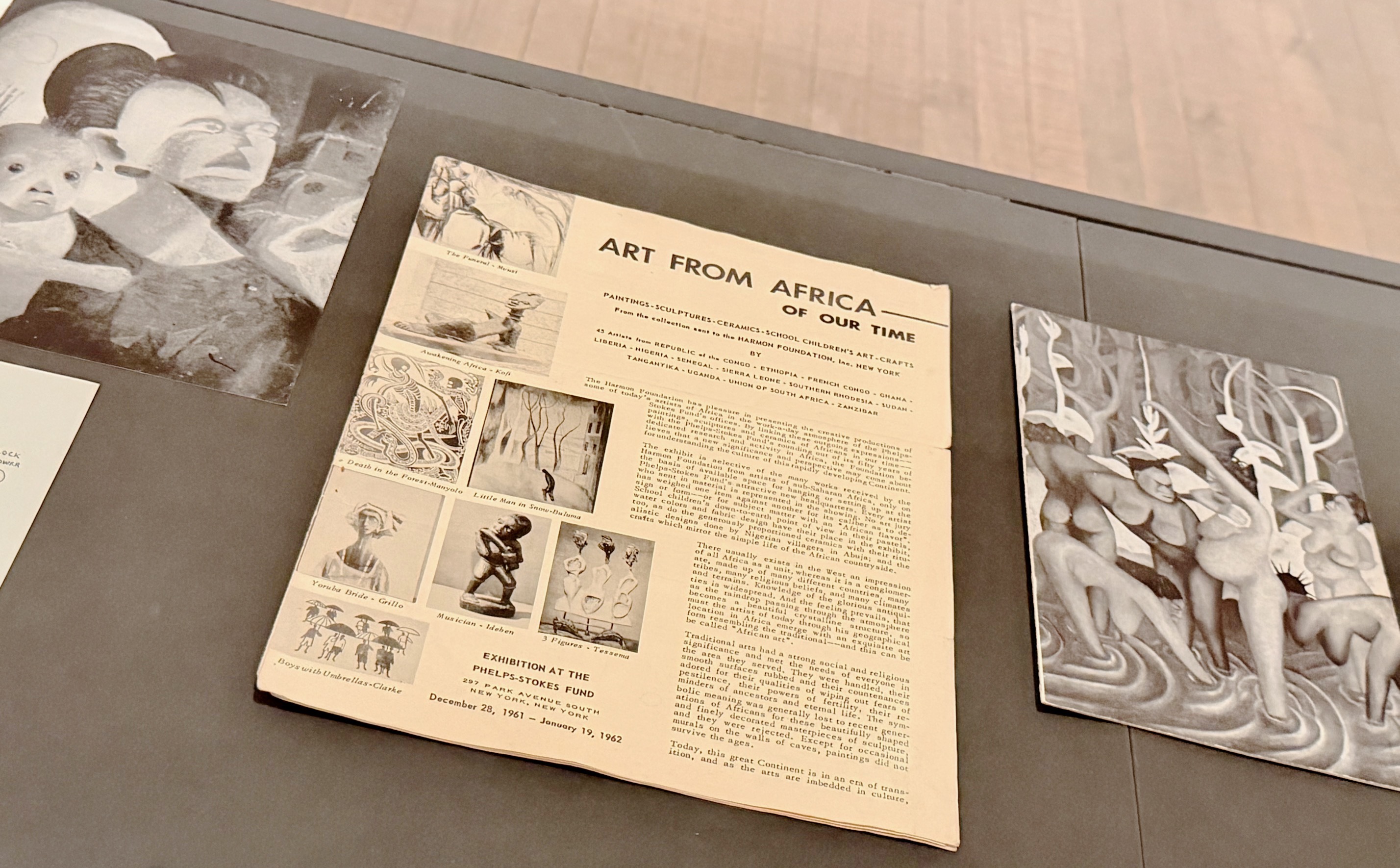
And the world was eager to see it, as exhibitions were organized and showcased overseas.
The New Sacred Art Movement was happening deep in the 400-year-old Osun-Osagbo Sacred Groves of southwest Nigeria, where artist Susanne Wenger gathered committed individuals (bricklayers, concrete workers) and other artists to transform (and save) the forest by building ritual clearings and shrines. In 2005, UNESCO declared it a World Heritage Site.
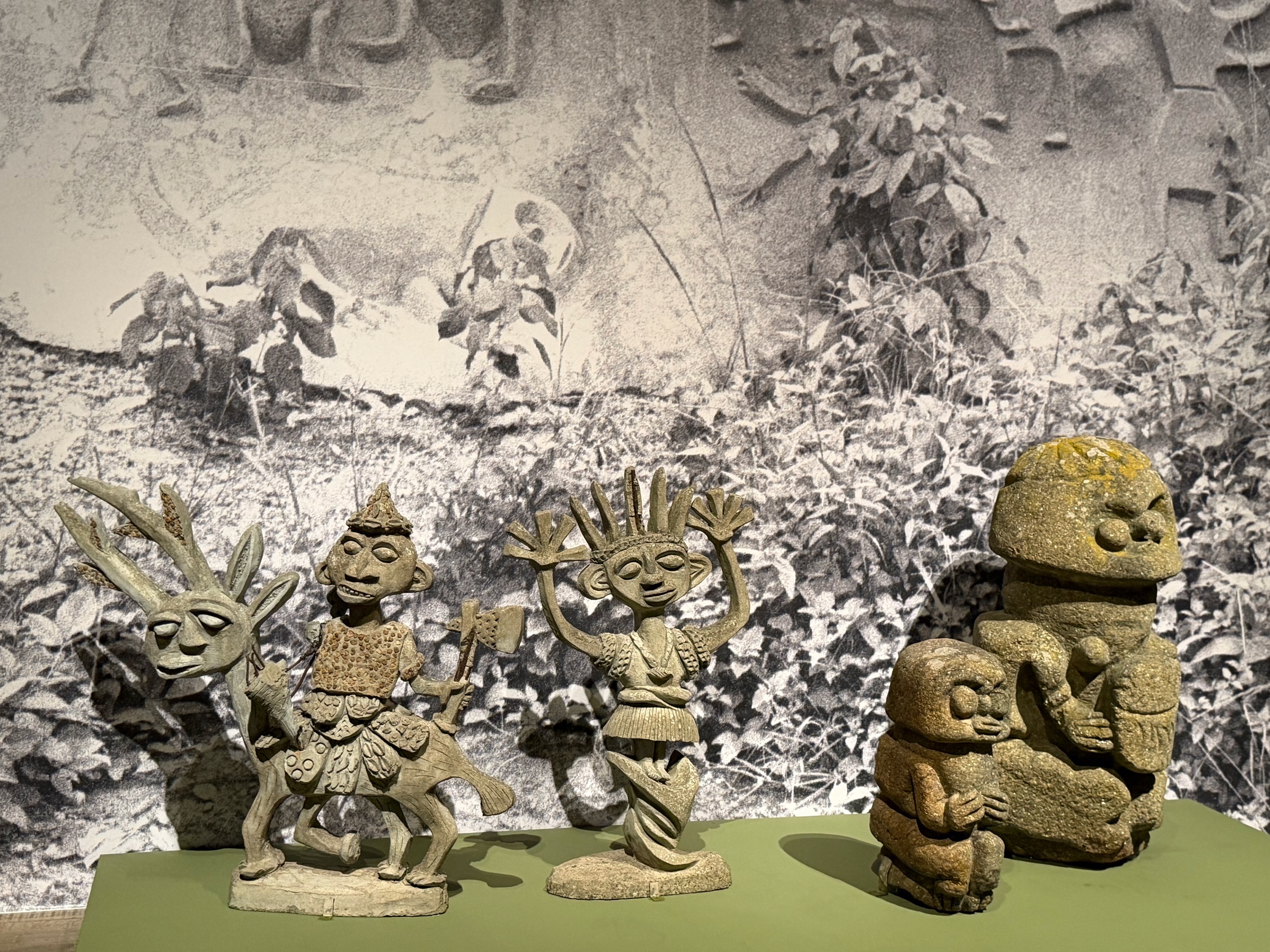
The artists associated with The Oshogbo School lived in a community where Christian, Muslim, and Yoruba festivals and ceremonies were held side by side. The cultural center in Osogbo was active, inviting international artists to run workshops and sending out theatrical troupes to perform traditional stories in honor of the the region’s river goddess, Osun.
When theater leaders wanted more community involvement, they trained theater performers and technicians to run painting, printmaking, and textile workshops. Many workshop participants and teachers went on to create and innovate, as shown on the walls.
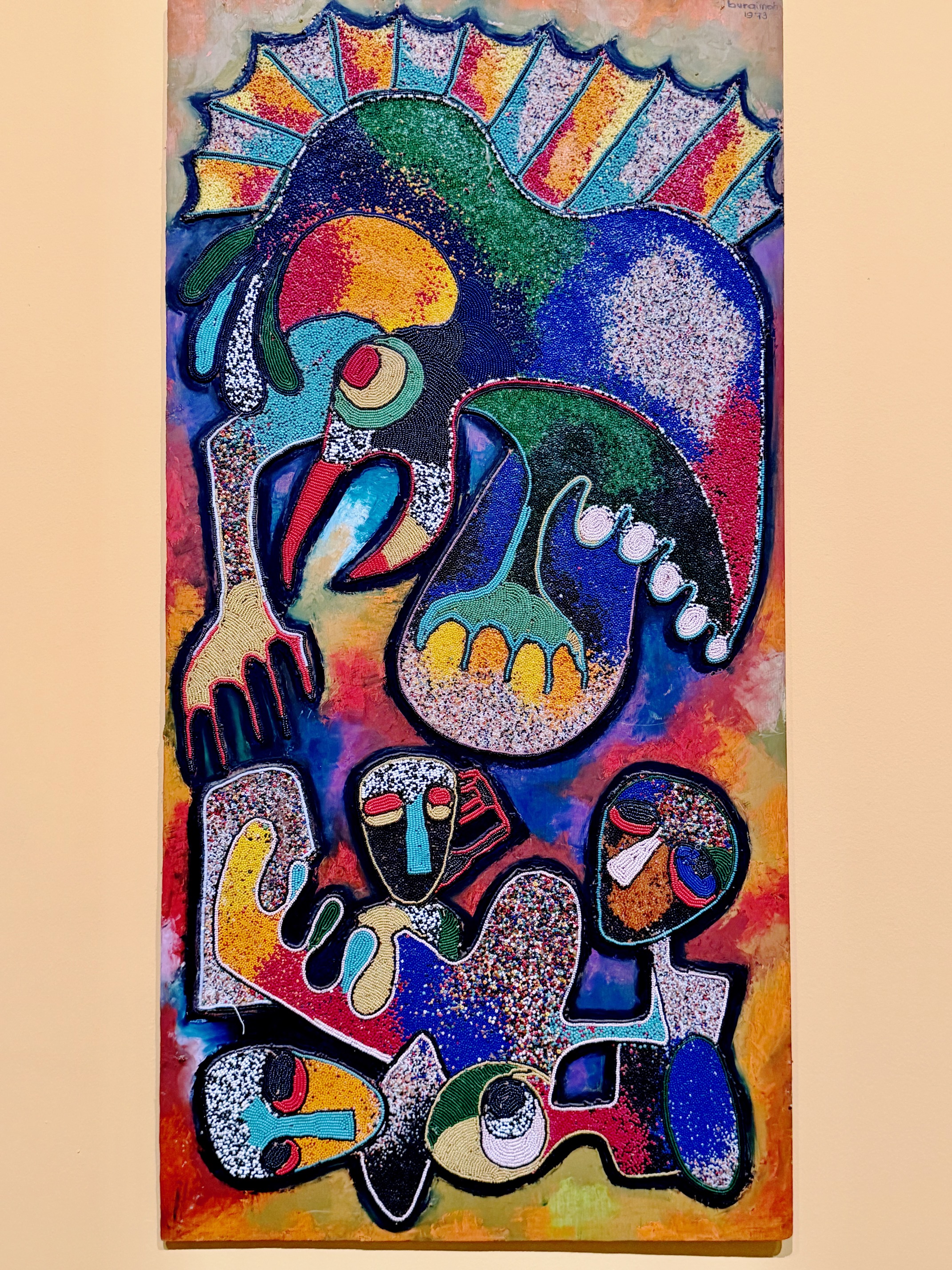
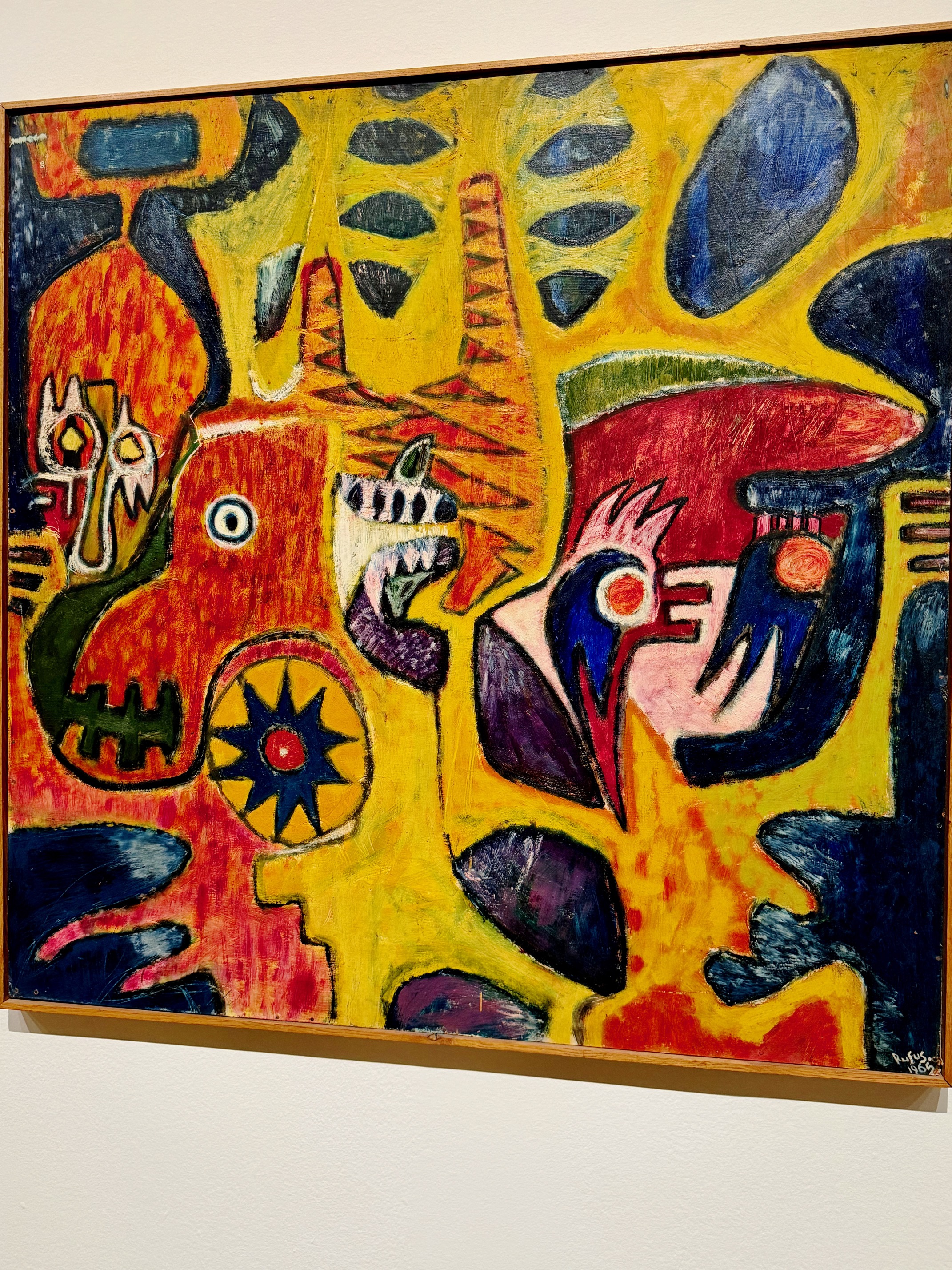
The Nsukka School developed at University of Nigeria, whose students were from a wide range of ethnic backgrounds. Uche Okeke was invited to lead the art department, and asked students to use art to “reclaim” indigenous culture toward the end of the 1960s after Nigeria’s tumultuous civil war. Artists mixed symbols from different ethnic traditions and produced powerful work.
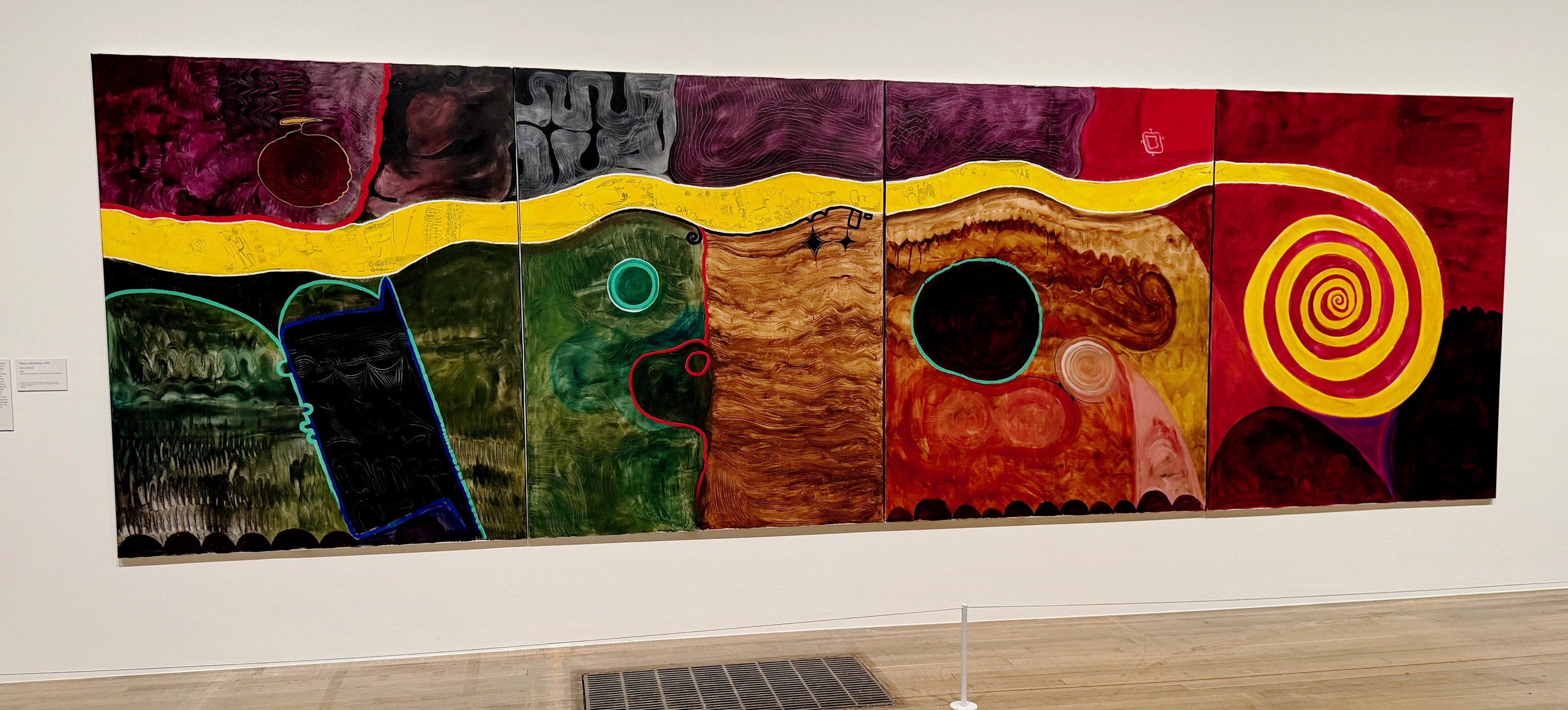
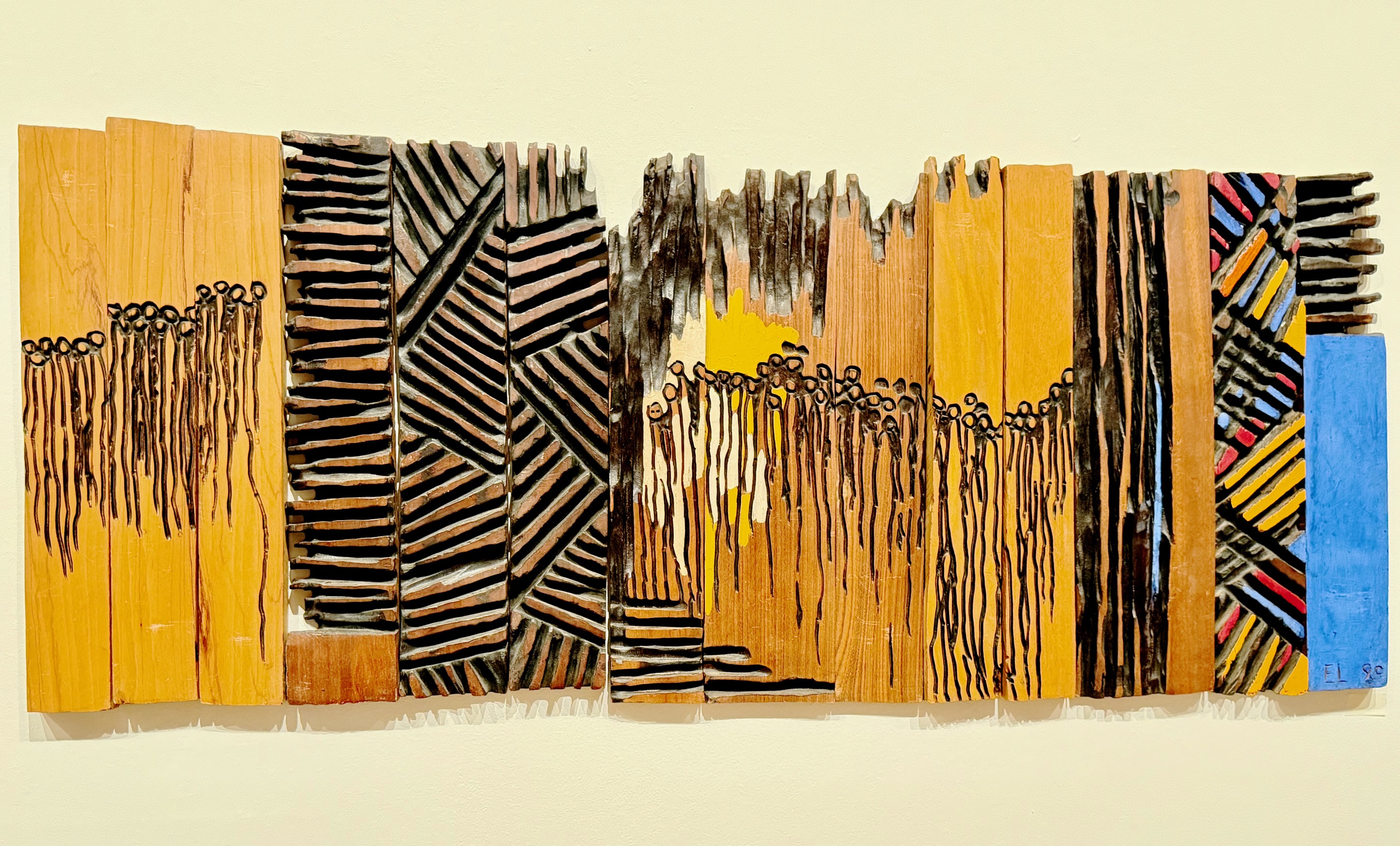
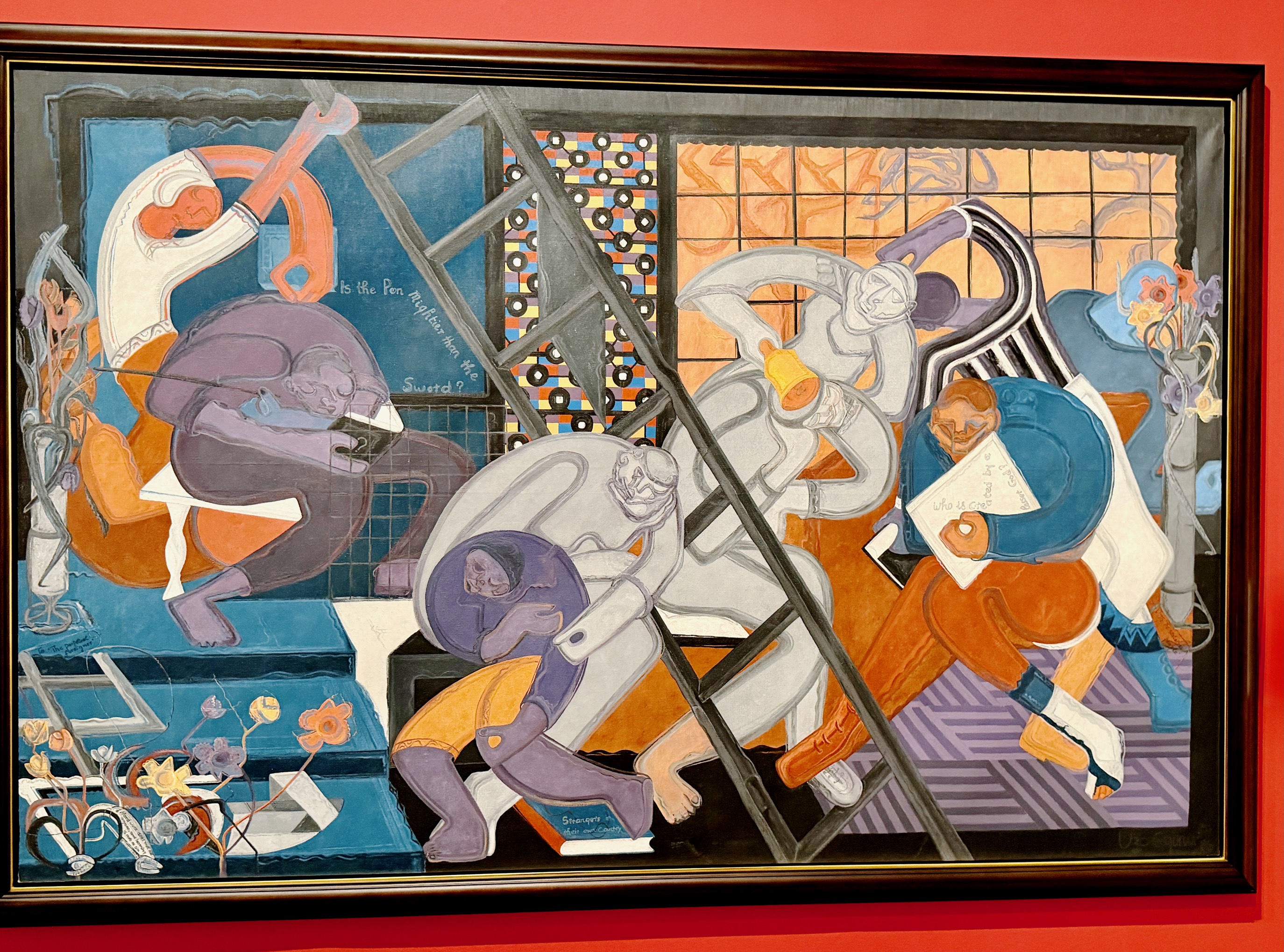
The final gallery showcases the work of Uzo Egonu, a Nigerian artist who left his homeland for a successful career abroad as an innovator in the British Black Art Movement. He’s a keen observer of the events, changes, and tumult that have rocked his home country, and through his work cheers on those whose work continues there.
For a glimpse of life inside a Lagos gallery today, meet chief Nike davies-Okundaye, one of Nigher’s best-known textile artists and painters. It’s a recent video produced by the Tate in honor of living artists carrying on modern legacies of this extraordinary exhibition:
To read the Tate guidebook for this show, click here.

