Turning Points: Designs That Changed Everything

It’s always fun when the MoMA design curators dig into the collection and present innovations that make you look – and think – twice. They’ve outdone themselves with the endlessly fascinating, super-popular, and throught-provoking exhibition, Pirouette: Turning Points in Design, on view through November 15, 2025.

Where (and why) did Crocs evolve?  Who improved the paper bag?  Who designed the first emojis? What’s the link between M&Ms and the US military? The exhibition celebrates designers and tells stories about eureka moments – a flash of genius in adapting industrial materials to solve everyday problems in unexpected ways. 

Early 1930s invention for the military by Forrest Mars – M&M’s candy-coated chocolates.

Each design innovation has its own little curtained cubby, giving the exhibit a luxe red World’s-Greatest-Showman vibe with surprises revealed around each bend. The show has it all – beloved technology innovations, fashion twists, furniture innovations, and ubiquitous everyday items that we take for granted.

1950 Bic Cristal Ballpoint pen designed by Marcel Bisch and the Décolletage Plastique Design Team for Société Bic, which eliminated clogs and leaks.
1962 View-Master Model G, a lightweight stereoscope viewer remodeled by Charles Harrison for Sawyer Manufacturing.

See some of our favorites in our Flickr album.

Right at the start, there’s an entire wall where you learn about Shegetaka Kurita, the Japanese innovator who designed emojis in 1998. 

Emojis, designed in 1998-1999 by Shigetaka Kurita for NTT DOCOMO in Japan; 176 designed for mobile phoes and pagers

The earliest innovation honored in the exhibition is the folding, flat-bottomed paper bag designed by Margaret E. Knight and Charles B. Stillwell in the 1870s.  MoMA honors Margaret as one of the first women in the United States to obtain a patent for her invention of the paper-bag manufacturing machine. By unfolding a paper container that “stood up” on its own, clerks were able to pack everything with two hands! Revolutionary shopping efficiency!!

1870s-1880s flat-bottomed paper bag designed by Margaret E. Knight and Charles B. Stillwell

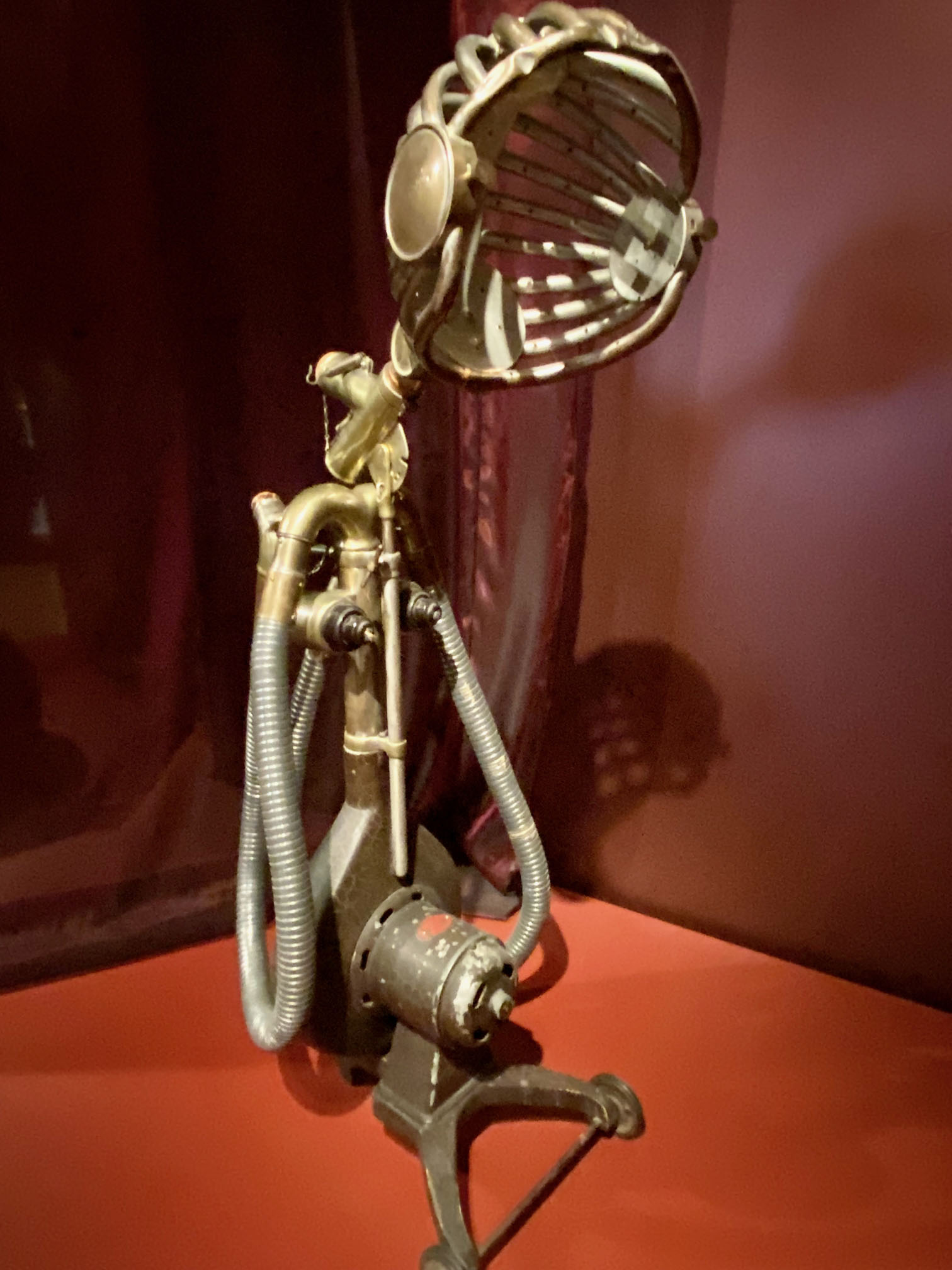
From the early 20th century, we have two European turning points in design – the electric hooded hairdryer and the at-home expresso maker. The Thirties’ version of the Müholos hairdryer is the first invention you see, but its heavy-duty industrial design is a shocker.

The innovative Moka Express expresso pot – invented in Italy during the Great Depresssion – is in every Italian home today. But it was revolutionary in the 1930s because it finally allowed people to economize by brewing at home instead of spending more at the café.

Highly intimidating 1930s hairdryer from the Müholos company of Leipzig, Germany, founded in 1909; innovators in electric hair clippers, too
2008 version of Moka Express designed in 1933 during the Great Depression by Alfonso Bialetti to enable Italians to brew espresso at home.

Going back to 1979, the team honors  Sony Walkman, the portable music wearable that replaced ginormous boom boxes. Steve Jobs and his team gets a nod for their 1983 Mac desktop all-in-one  and everything that came with it – the Oakland font designed by Zuzana Licko for the earliest Mac word processing and Susan Kare’s graphic OS icons. Kare invented the trashcan and didn’t even own a computer!

Although the tech world seems to be bringing it back this season, it’s nice to see the design innovation that began it all – 1996 Motorola flip phone!

Sony’s 1979 “Walkman” audio cassette player (Model TPS L-2) – the first portable listening “bubble”; designed with two headphone jacks for sharing.
1996 Motorola cellular telephone (Model V3682) – the lightest, smallest mobile device (“flip phone”) – designed by Albert Nagele.

And speaking of technology at your fingertips, it’s always nice to see MoMA display full-size 1926 Frankfurt kitchen that influenced every modern kitchen that came after it. After WWI, Germany undertook a big modernization project to alleviate the housing crisis.  Grete Lihetzk, who designed this kitchen was the only woman on the design team, but she made quite a mark!  She studied efficiencies in factory designs and incorporated them into the kitchen – revolving stools, built-in storage, stain-resistant cutting surfaces, and drop-down ironing boards.

1926-1927 Frankfurt Kitchen designed by Grete Lihetzky – a revolutionary, efficient approach with features still used in kitchen design today.

Listen to MoMA’s audio guide to hear the backstories of the Rainbow Flag, early Mac OS design, graphic design improvements to familiar signs, and how artificial acrylic nails became a trend.

Here’s a short history of shapewear:

And learn about the Monobloc Chair (designer unknown). It’s everywhere!

Superfine Tailoring Illuminates History of Black Style

Fancy neck ruffles, gilt-framed portraits, sleek suits, flowing trousers, and bold plaids and stripes pop from every corner of the Costume Institute exhibition Superfine: Tailoring Black Style, on display at the Metropolitan Museum of Art through October 27.

It’s a 12-chapter journey through Black men’s style that emphasizes how superb tailoring, style, and fashionable precision has been used successfully by newly emancipated slaves, Revolutionary political leaders, activists, sports and pop stars, and high-style travelers from the 17th-century through today.

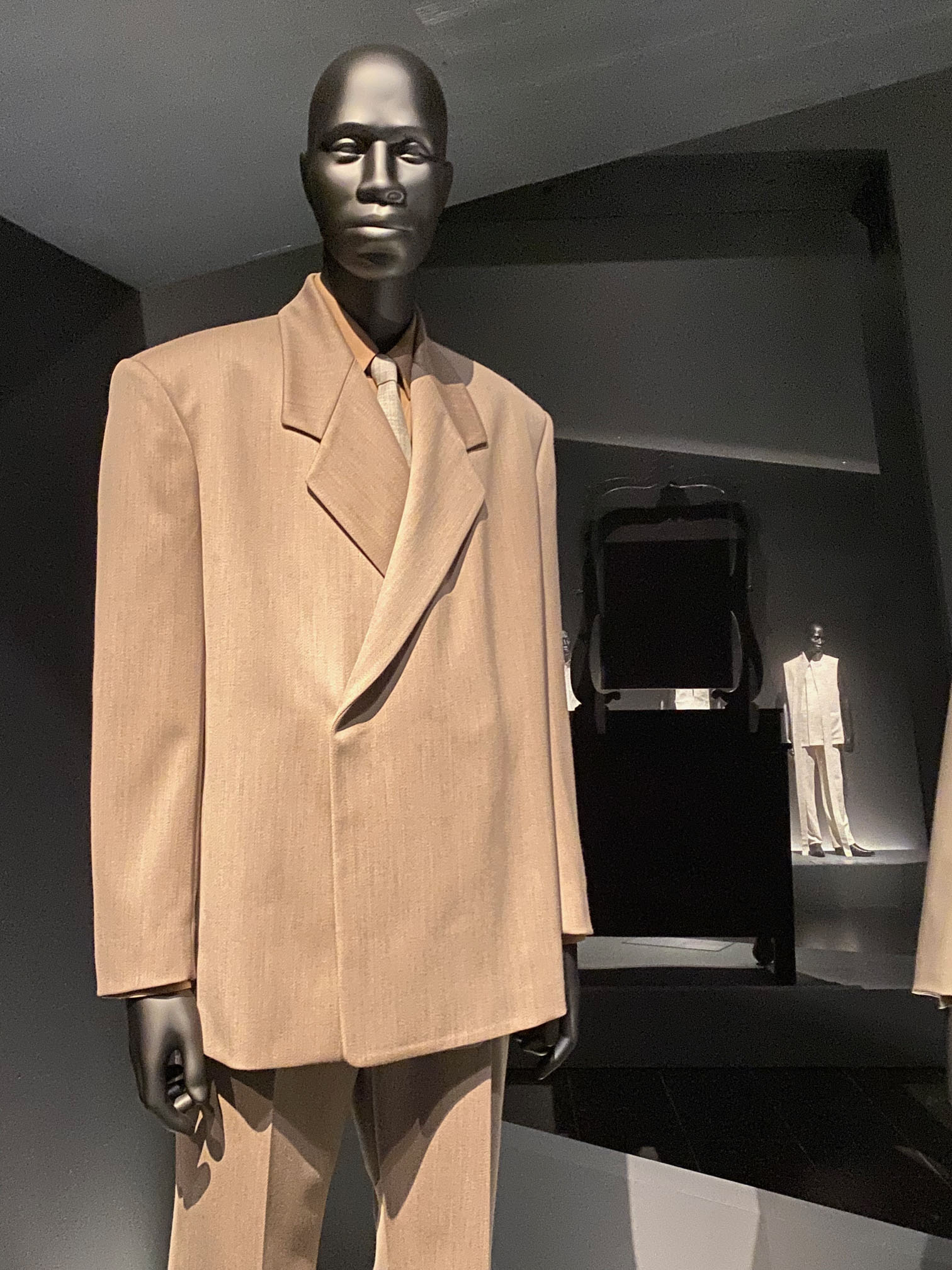
So cool: 2025 wool gabardine ensemble by Jerry Lorenzo for Fear of God – a modern throwback to Fifties’ tailoring. Courtesy: Fear of God

Each section provides a deep dive into history to explain how Black men (and a few daring women) adapted high-fashion menswear in the 17th and 18th centuries to reinvent themselves as authoritative, free, cosmopolitan high-achievers. Themes include Presence, Distinction, and Cool – based on co-curator Monica L. Miller’s acclaimed 2009 book, Slaves Slaves to Fashion: Black Dandyism and the Styling of Black Diasporic Identity.

Dressing for distinction: 1804 Portrait of Toussaint L’Ouverture, leader of the Haitian revolution, painted by Giradin. Courtesy: La Maison de l’histoire européen, Brussels.

The curators leverage the Met’s extensive collection of photos, books, magazines, fashion, and accessories to provide visitors with the full visual story of each of the angles of Miller’s treatise.  Plus, they’ve assembled loans from recent collections of cutting-edge contemporary Black designers who themselves are pulling inspiration from these same pages of history.

The Distinction section, for example, has a wall of impressive portraits and bedazzled swords of the first leaders of the Hatian revolution dressed in military finery – emphasizing their commitment to Englightenment ideals in the first successful slave rebellion in the Western Hemisphere.

 The brilliant multi-level exhibition design features contemporary menswear inspired by 18th-century revolutionary and military style, including a swaggering great coat designed for the ever-magnificent Vogue editor-at-large, Andre Leon Talley.

Jawara Alleyne’s 2004 tailored ensemble inspired by Jamaican style; at right, ensemble from his 2021-2022 “Renegade” collection inspired by 19th-century shipwrecked sailors. Courtesy: the designer.
Worn by Andre Leon Talley; 2000-2001 haute couture coat with gold braid by John Galliano for House of Dior. Courtesy: Talley estate.

The Freedom section tells the story of the rise of the Black dandy in the 19th century and how the entrepreneurial class of African Americans dressed to impress. Historic portraits, photos, a fancy tailcoat, and a book on how to tie fancy neckwear – evidence of social upward mobility – are shown alongside cutting-edge contemporary menswear.

2023 figure-enhancing white cotton ensemble by Bianca Saunders for her “Nothing Personal” collection. Courtesy: the artist.
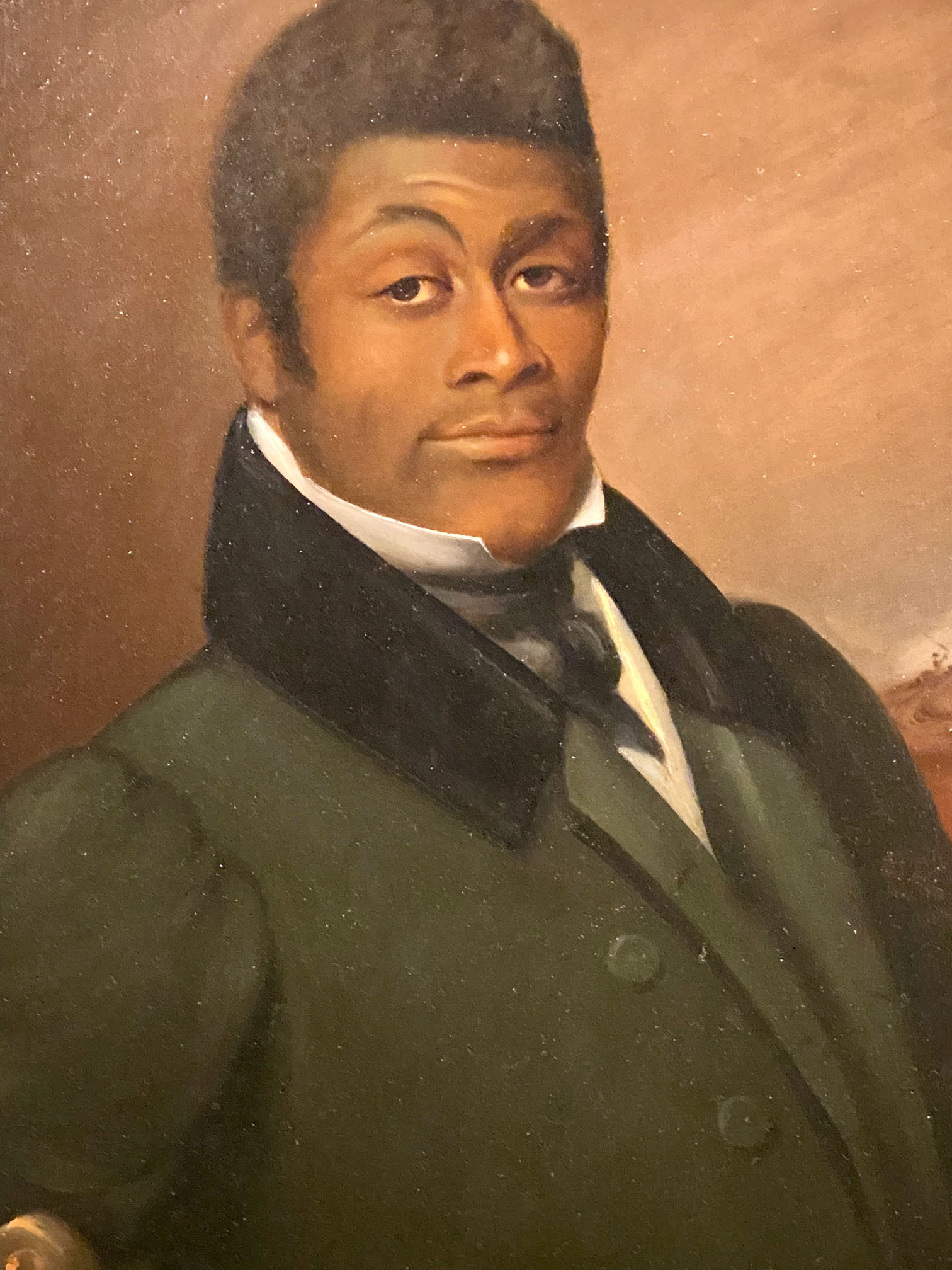
Freedom: Fashionable attire in 1850-1856 portrait of Thomas Howland, the first elected Black official in Providence. Courtesy: Rhode Island Historical Society.

The Champions section focuses upon how successful Black athletes – such as Jack Johnson, Walt Frazier, and Mohammed Ali – used fine clothing and style to make a statement, and how althetic wear transitioned into upscale runway fashion.

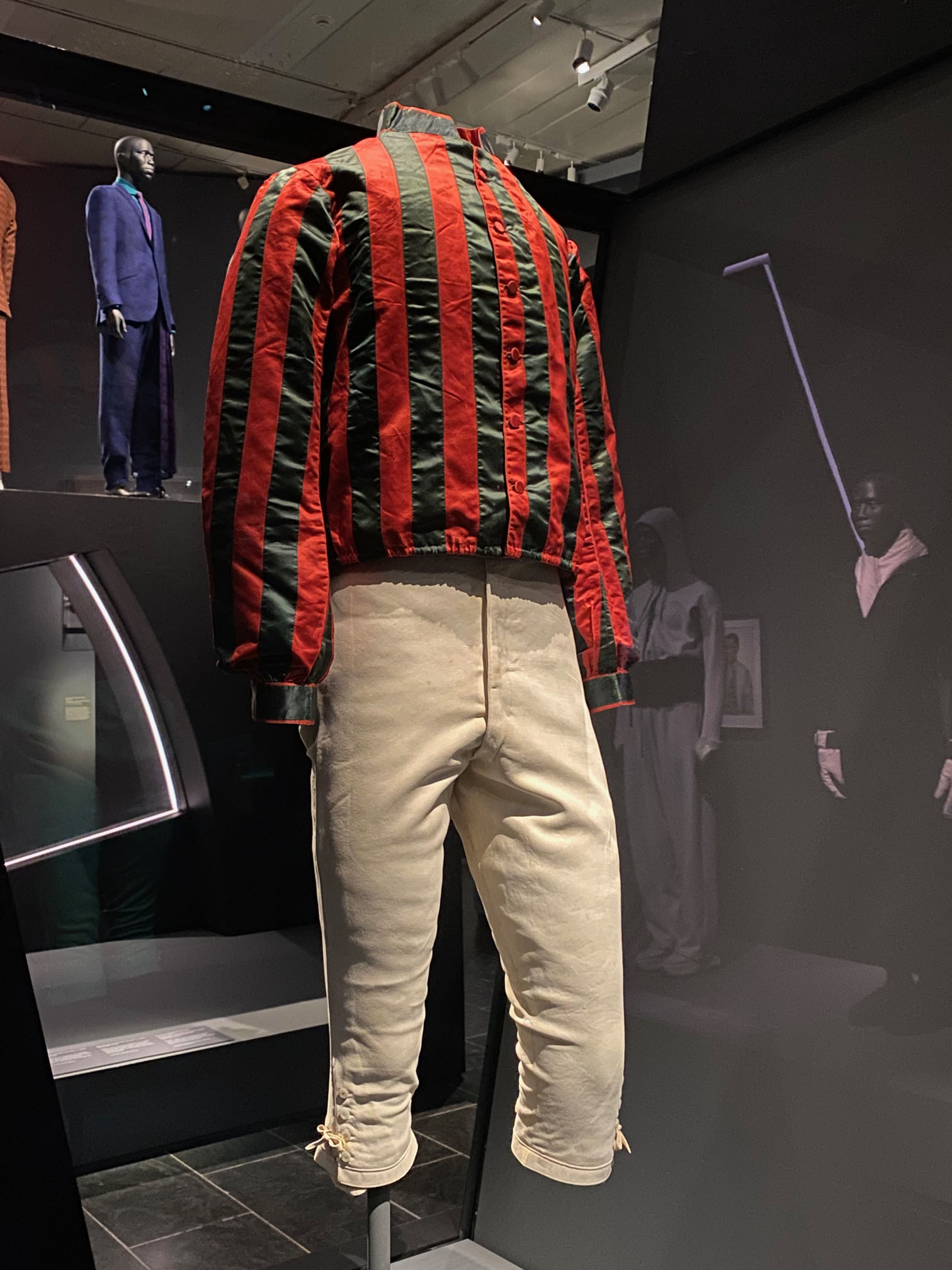
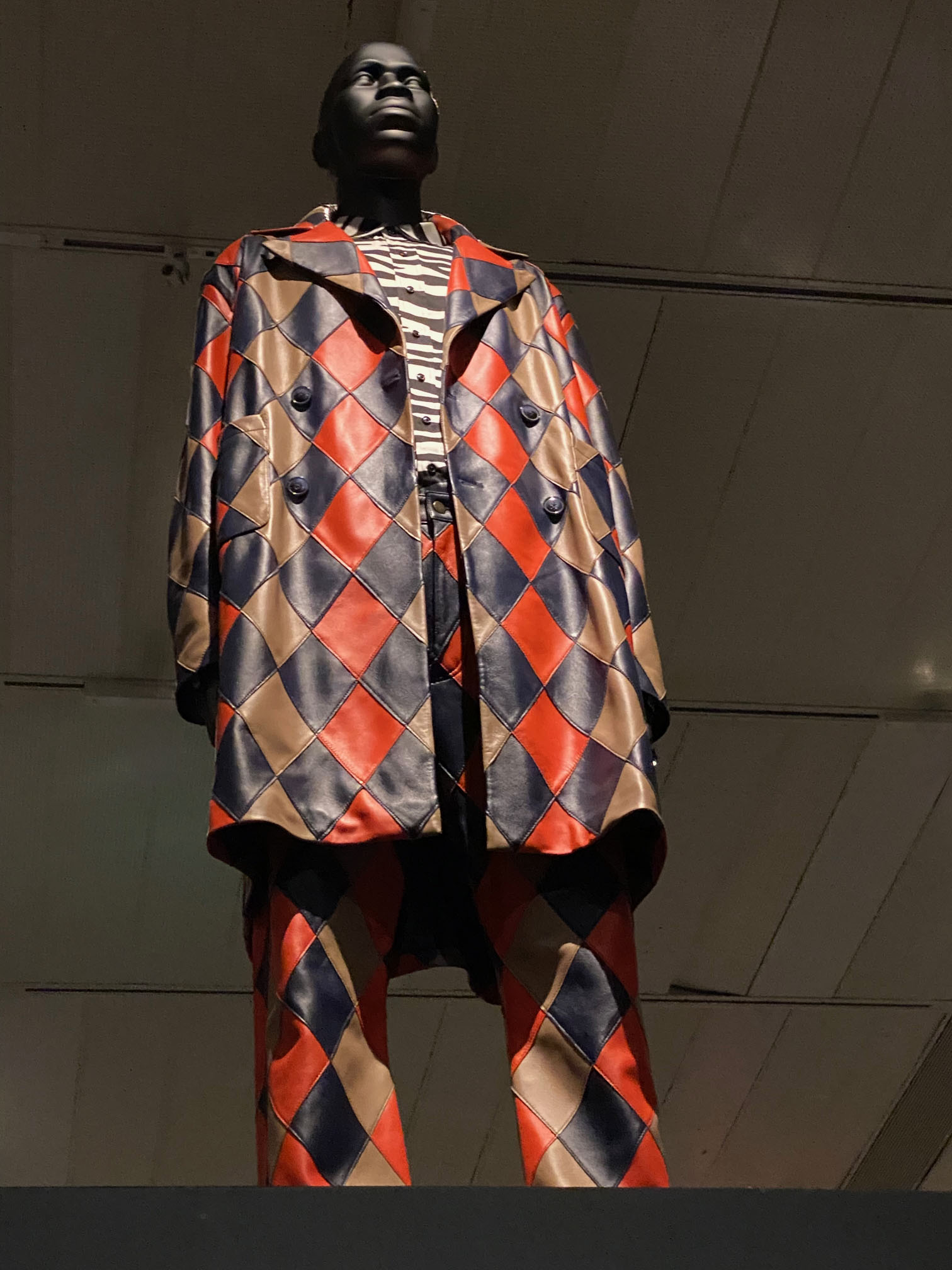
The story of Black jockeys is told – how 19th-century sports superstars got pushed out of early 20th-century racing when racial discrimination was at its peak, and how contemporary designers are incorporating this story into their designs.

EaEarliest surviving jockey suit (1830-1850): stripes appliquéd on silk jacket with and buckskin breeches made by plantation tailors. Courtesy: Charleston Museum, South Carolina.
2024 ensemble from “The Great Black Jockeys” collection by Tremaine Emory for Denim Tears; pieced lamb leather coat and trousers over silk shirt. Courtesy: Denim Tears.

The Respectability section explains how social-justice icons D.E.B. Du Bois and Frederick Douglass used their perfectionist style to draw a crown and make a statement, but it also discusses (and shows) the tools of the trade used by legions of Black tailors.  There’s also a beautifully cut in-process example from Saville Row tailor Andrew Ramroop.

2024 in-process tailored jacket by Andrew Ramroop for Maurice Sedwell of Saville Row. Courtesy: Maurice Sedwell
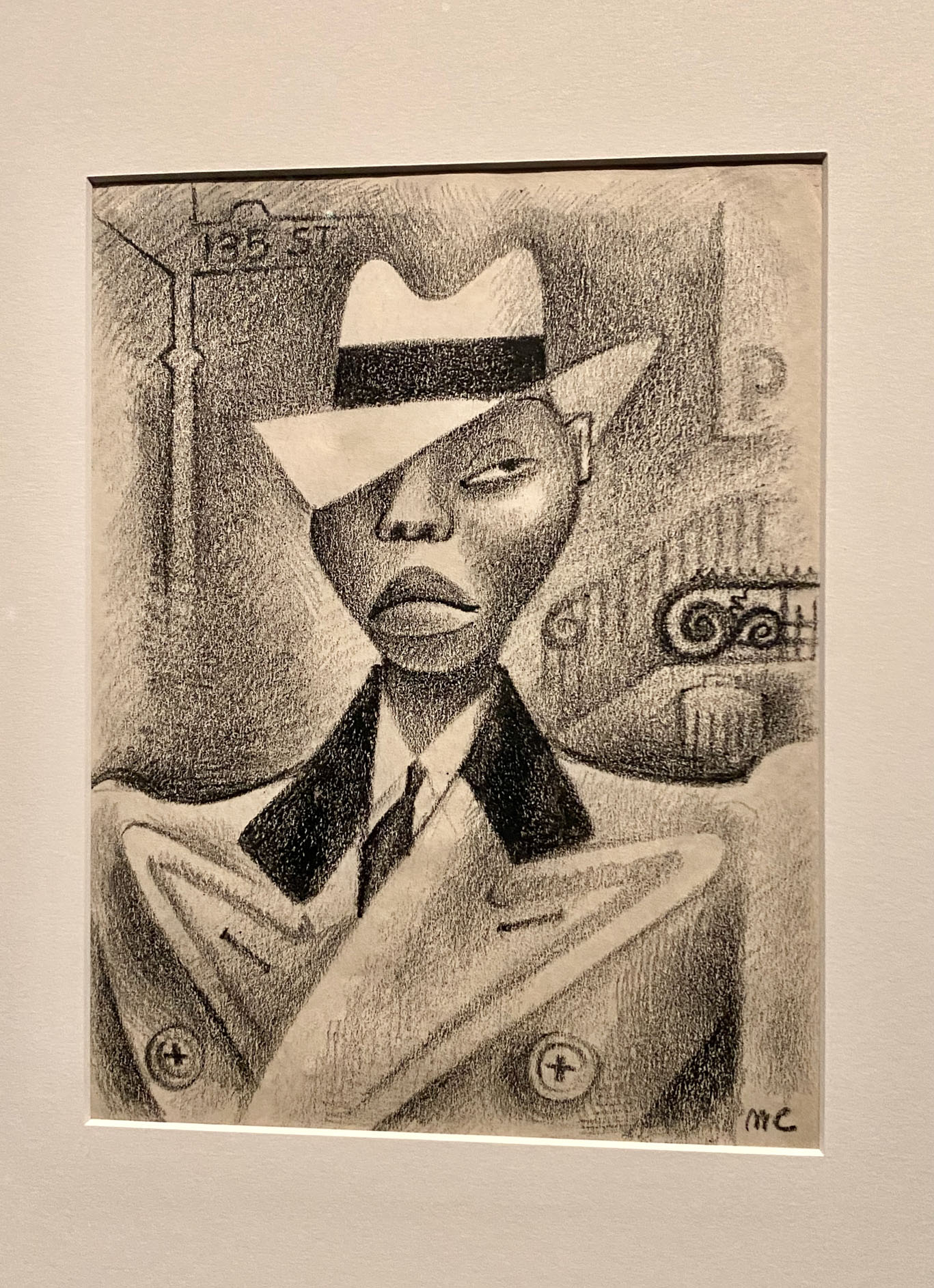
Hip community: 1930 lithograph of stylish Harlem Dandy on Striver’s Row by Miguel Covarrubias, a popular Vanity Fair contributor. Courtesy: University of Texas at Austin.

Of course, hip-hop takes its bow, too, with a tribute to Dapper Dan and other designers honoring the cool, ever-evolving style of Black musicians and performers.

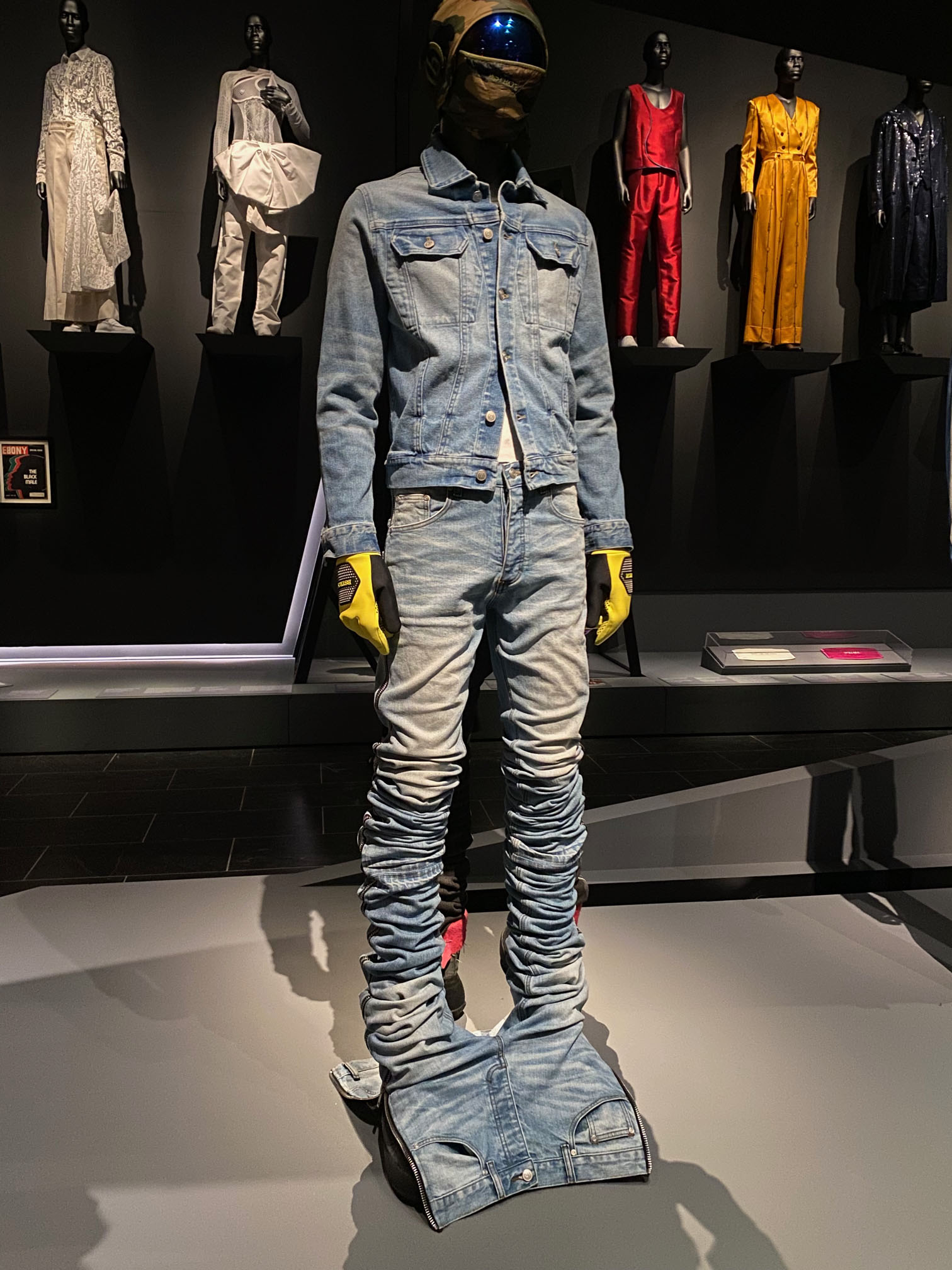
So cool: 2017 denim ensemble by Brick Owens and Dieter Grams for Bstroy, a reference to early all-denim hip-hop fashion. Courtesy: the designers.
1987 all-over LV-monogrammed leather jacket for Jam Master Jay of Run-DMC and pants for DJ Hurricane by Dapper Dan of Harlem. Courtesy: private collections.

Take a look at some of our favorite features of the exhibit in our Flickr album – upwardly mobile campus-inspired fasion, zoot suits from the hep cats of the Forties, beautiful fashion flourishes flaunted by pop superstar Prince, and nods to African heritage.

For more, walk through this stunning, insightful, memorable exhibit with co-curators Monica Miller and Andrew Bolton:

Belle da Costa Greene at The Morgan

How did a stylish, ambitious, saavy librarian toiling in the stacks of Princeton’s library at age 22 transform herself into the trusted confidante of the richest man in the world, helping him to build a celebrated collection of manuscripts, books, and art?

Find out in Belle da Costa Greene: A Librarian’s Legacy, the blockbuster exhibition at The Morgan Library and Museum on display through May 4, 2025. To celebrate its 100th birthday, the Morgan Library & Museum wanted to honor its first director, Belle da Costa Greene.

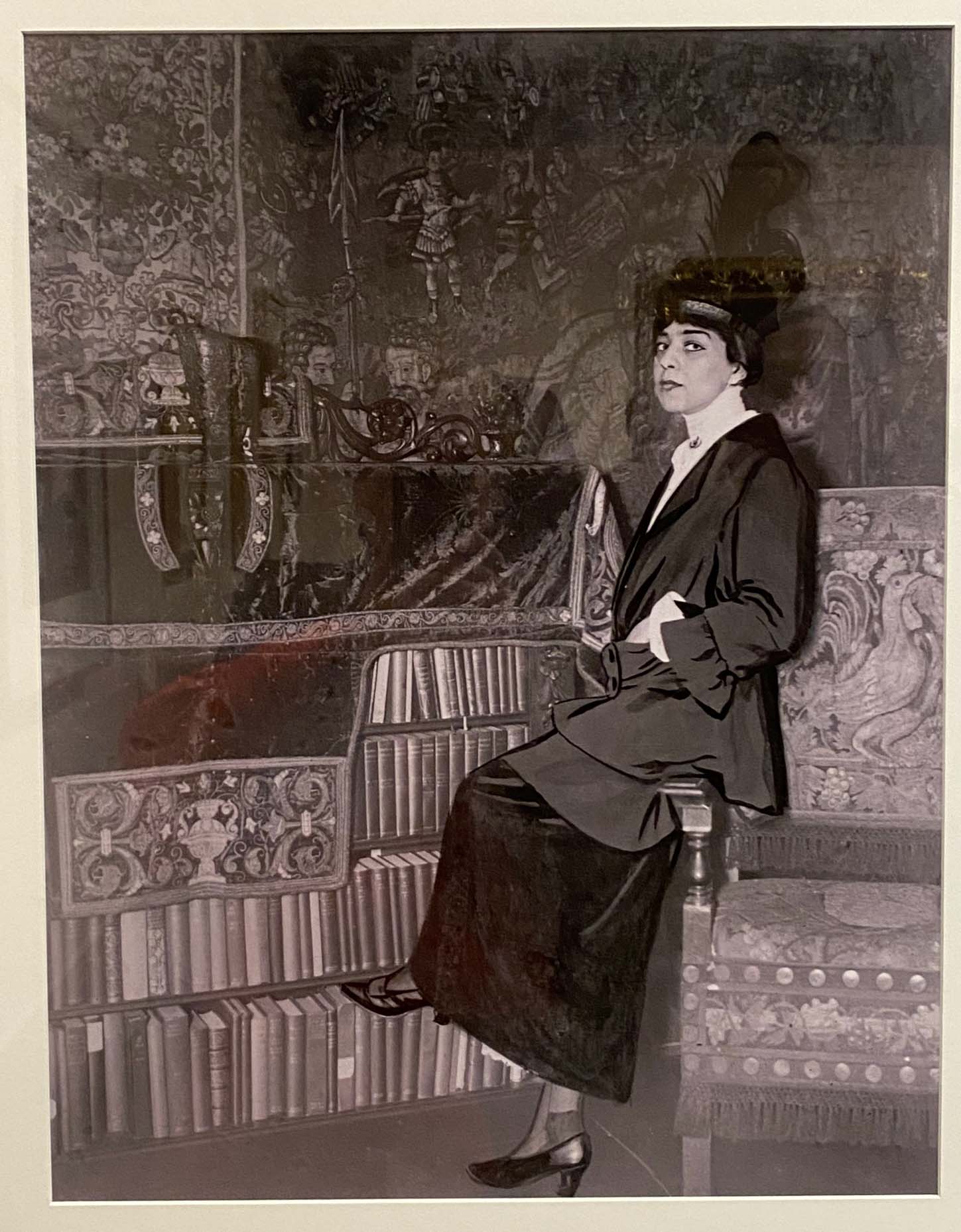
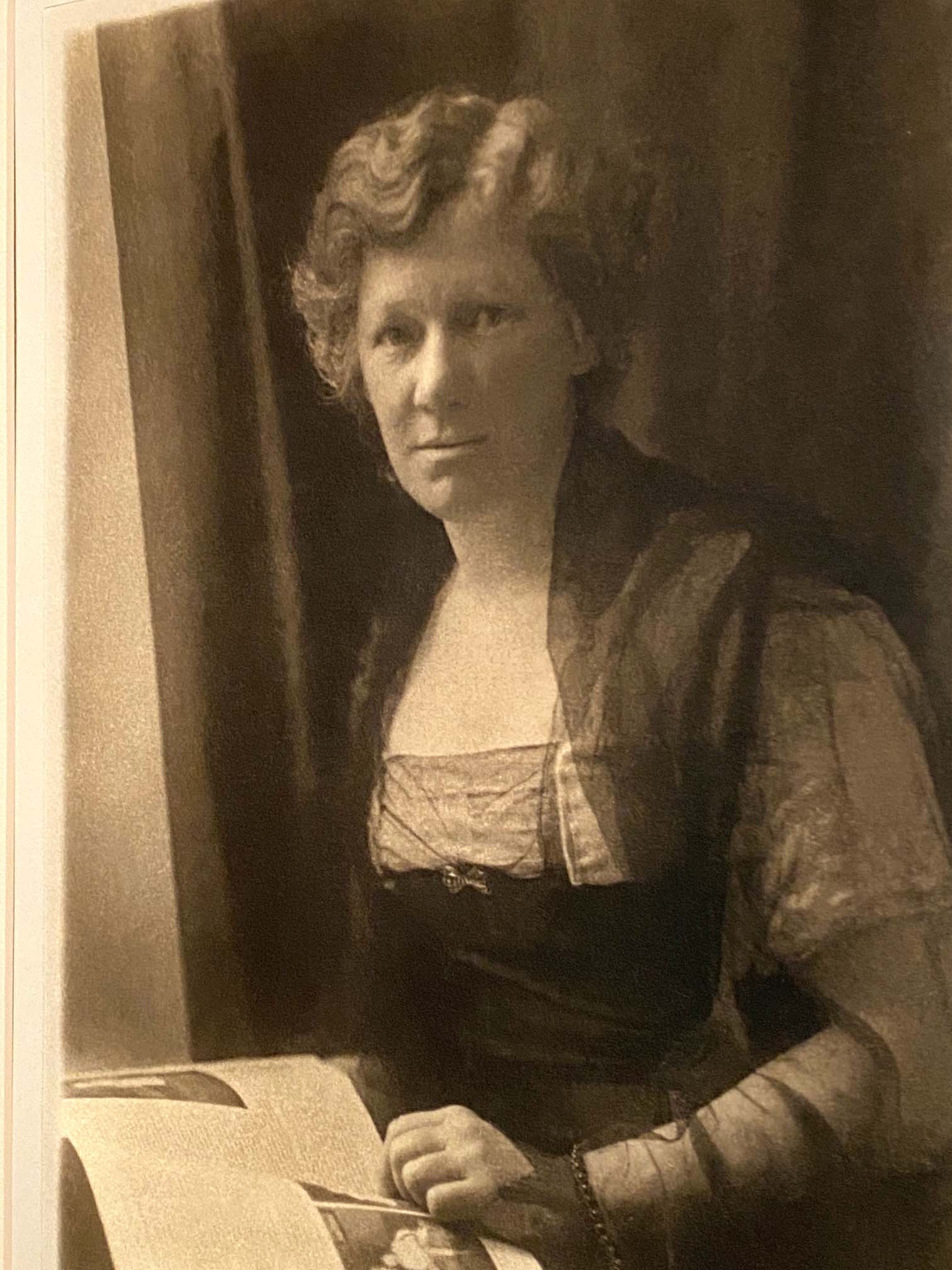
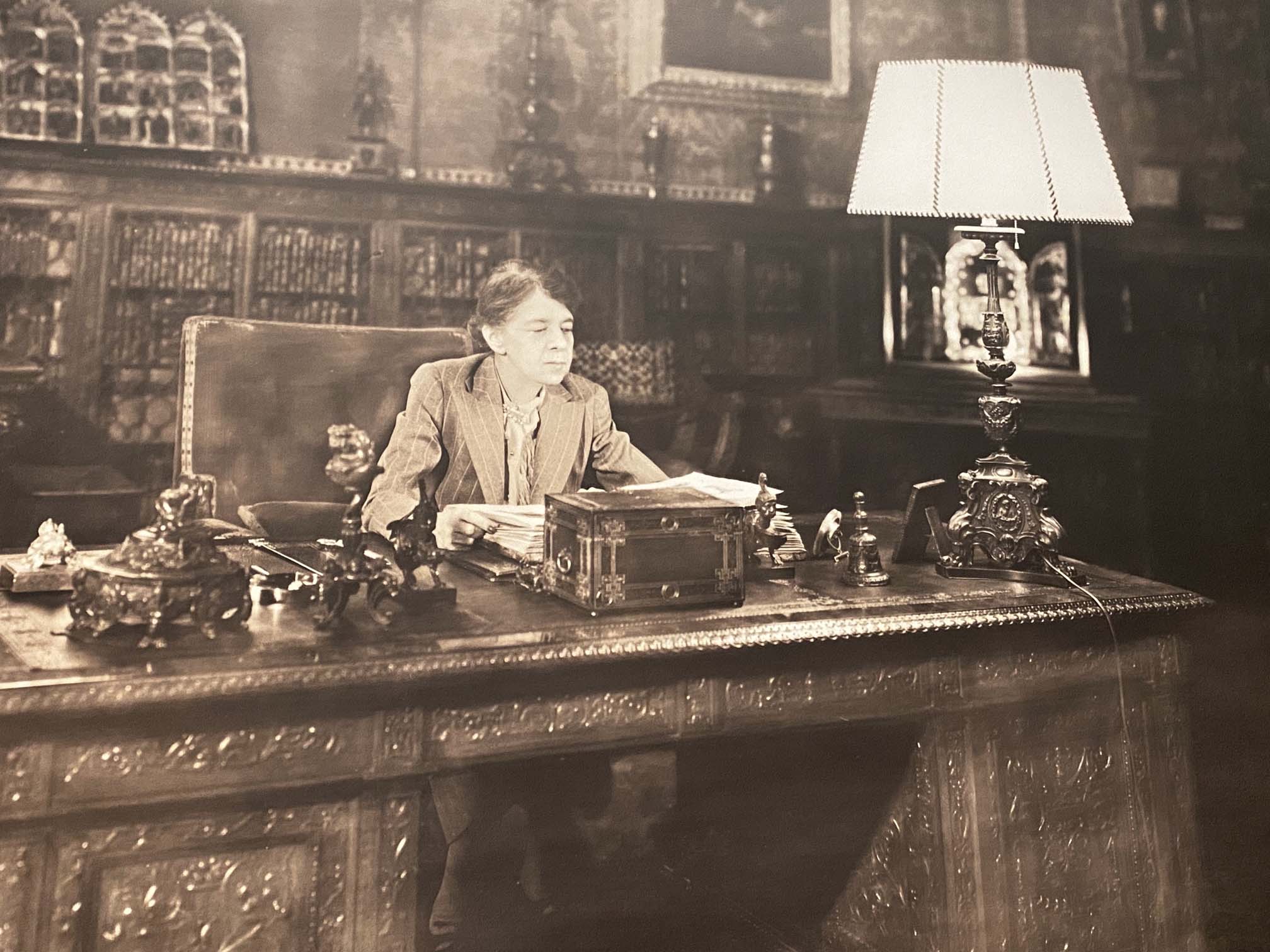
Belle Greene’s 1915 portrait at home; Paul Thompson photo for a news story on NYC high-salaried women. Courtesy: Getty/Bettmann.

Belle decended from an illustrious line of African-American intellectuals, lawyers, cultural leaders, and social-justice advocates, but lived her entire life passing for white in the early 20th century.

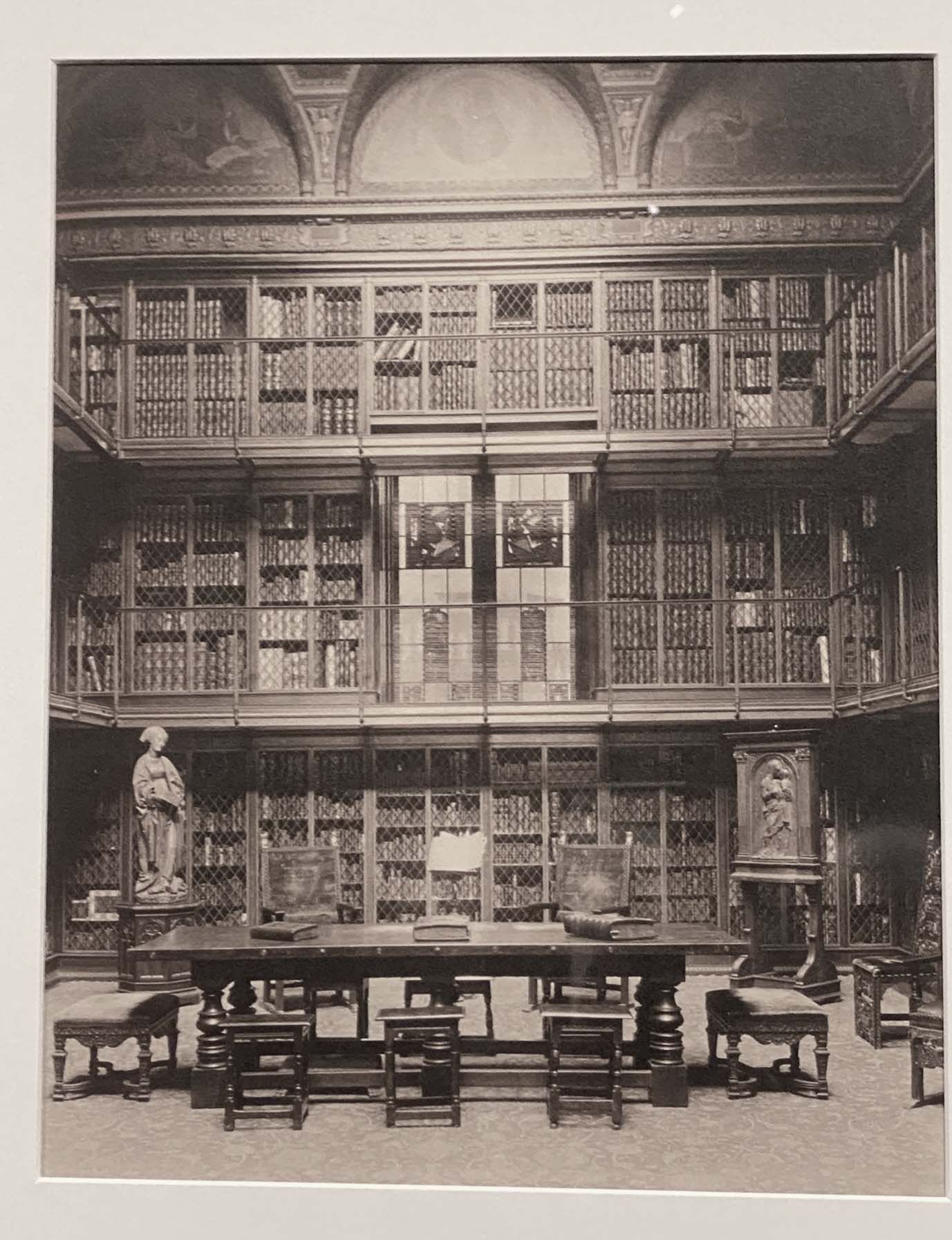
Tebbs & Knell’s 1923-1935 photograph of Mortan Library’s East Room with most of the 11,000 volumes acquired by Belle Greene.

As a young, culturally oriented woman, Belle dreamed of working in the brand-new field of library science.  Her impressive intellectual curiosity and research skills attracted benefactors who helped her with tuition at the best schools. Ultimately in 1901, she landed a job at Princeton’s library (when the campus was still segregated).

She came under the mentorship of library-science champiom Junius Spencer Morgan, J.P.’s nephew who eventually recommended her to his uncle who was building a private library to rival the best in Britain and France. The rest was history.

The exhibition tells Belle’s personal story, documents her acquisition triumphs for Morgan, shows her fame as one of the highest paid professional women in New York, and explains how she spent four decades building Mr. Morgan’s library into a premiere cultural institution.

Belle deftly navigated through society by gaining acclaim as a scholar, curator, and cultural innovator – often as the only woman on the auction bidding floor or at scholarly societies.

When she set her mind to something, she usually found a way to acquire it – even if it took years of waiting and entreaties. It was a quality that J.P. Morgan admired in her. He paid her handsomely, and trusted her completely to acquire works across Europe in his name.

Illustration for The World Magazine (May 21, 1911), showing Belle in action with at the auction of Robert Hoe’s library.
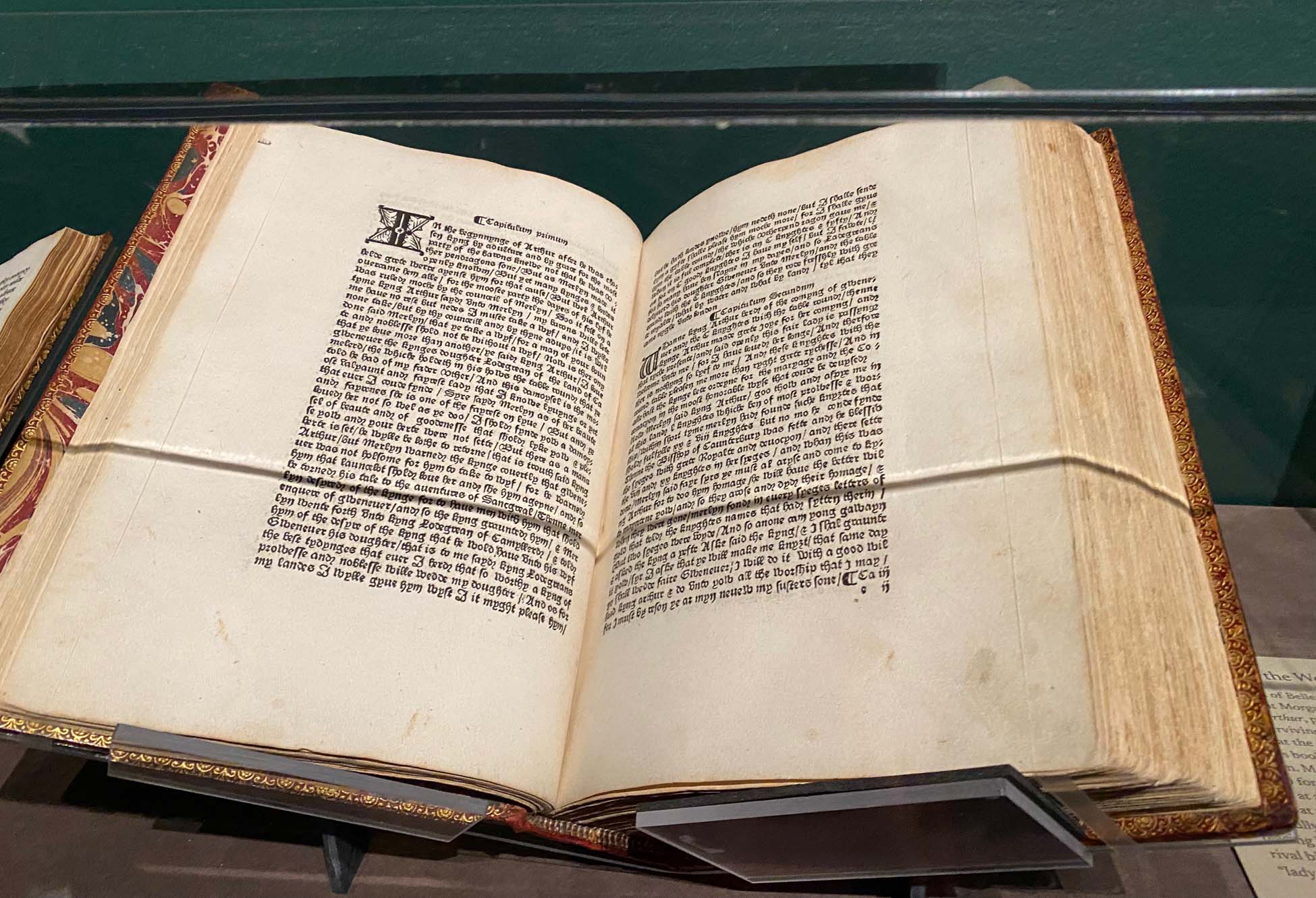
Belle Greene’s prized acquisition – the only surviving 1485 print edition of Thomas Malory’s Le Morte d’Arthur.

She even convinced Morgan to embrace classical Islamic art from India and Persia for the collection before other collectors caught on to their beauty and drove up prices.

In 1911, Belle purchased this 1750-75 album of Persian and Mughal paintings owned by British Museum expert Charles Hercules Read.

When Morgan died in 1913, his son, Jack, asked Belle to continue in her position and oversee the construction of the Annex on 36th Street.

In 1916 (without permission), Belle snuck over to Europe during World War I to convince an English collector to part with the much admired “Crusader Bible,” a gorgeous illuminated 13th century manuscript. Mr. Morgan had once made an offer for it. After Morgan died in 1913, Belle met with the collector in person, struck a deal, brought it back, and presented it to Jack Morgan for the collection.

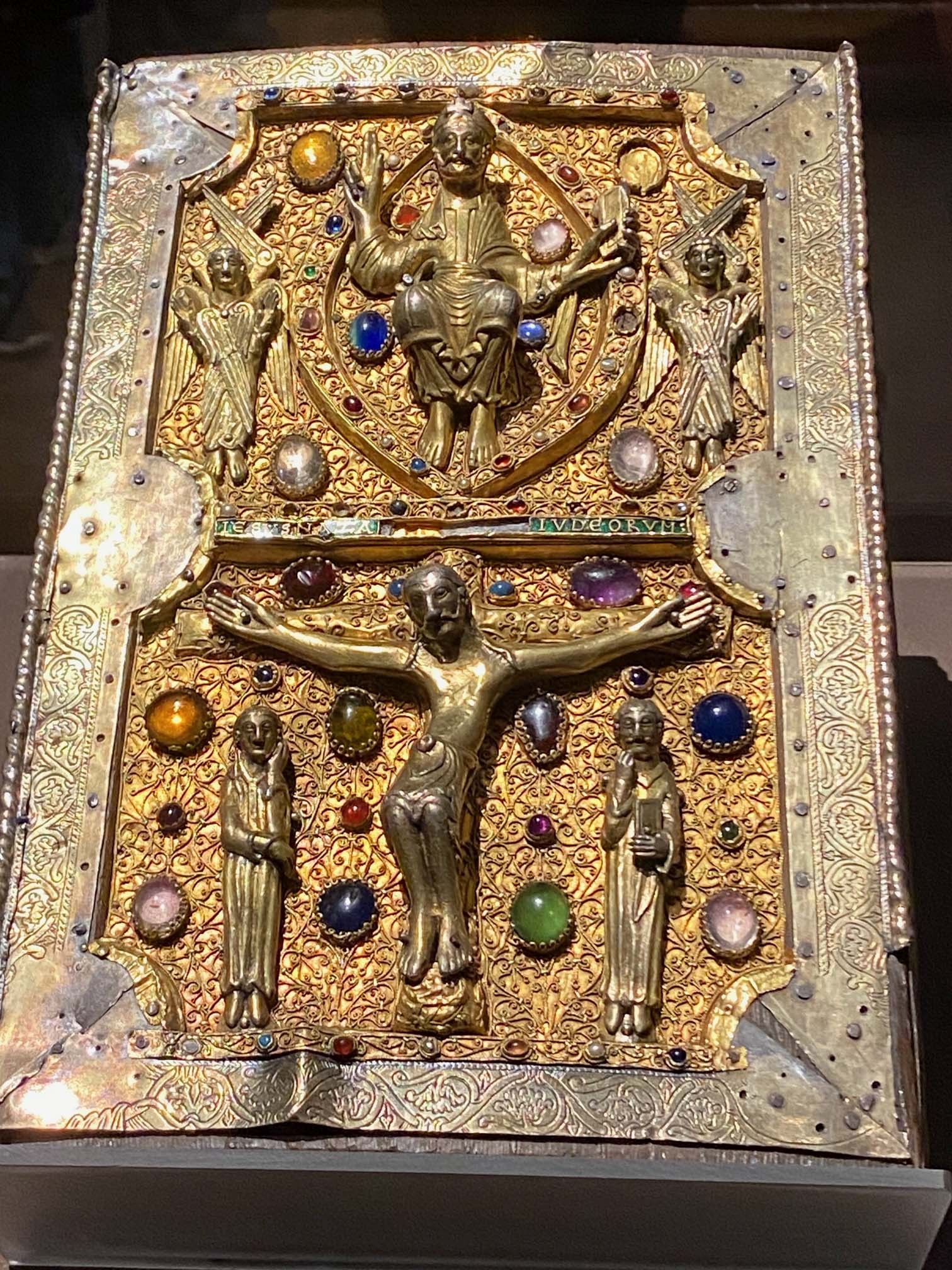
Jeweled cover of 1051-64 Gospels of Judith of Flanders – a 1926 purchase by Belle Greene and Jack Morgan.
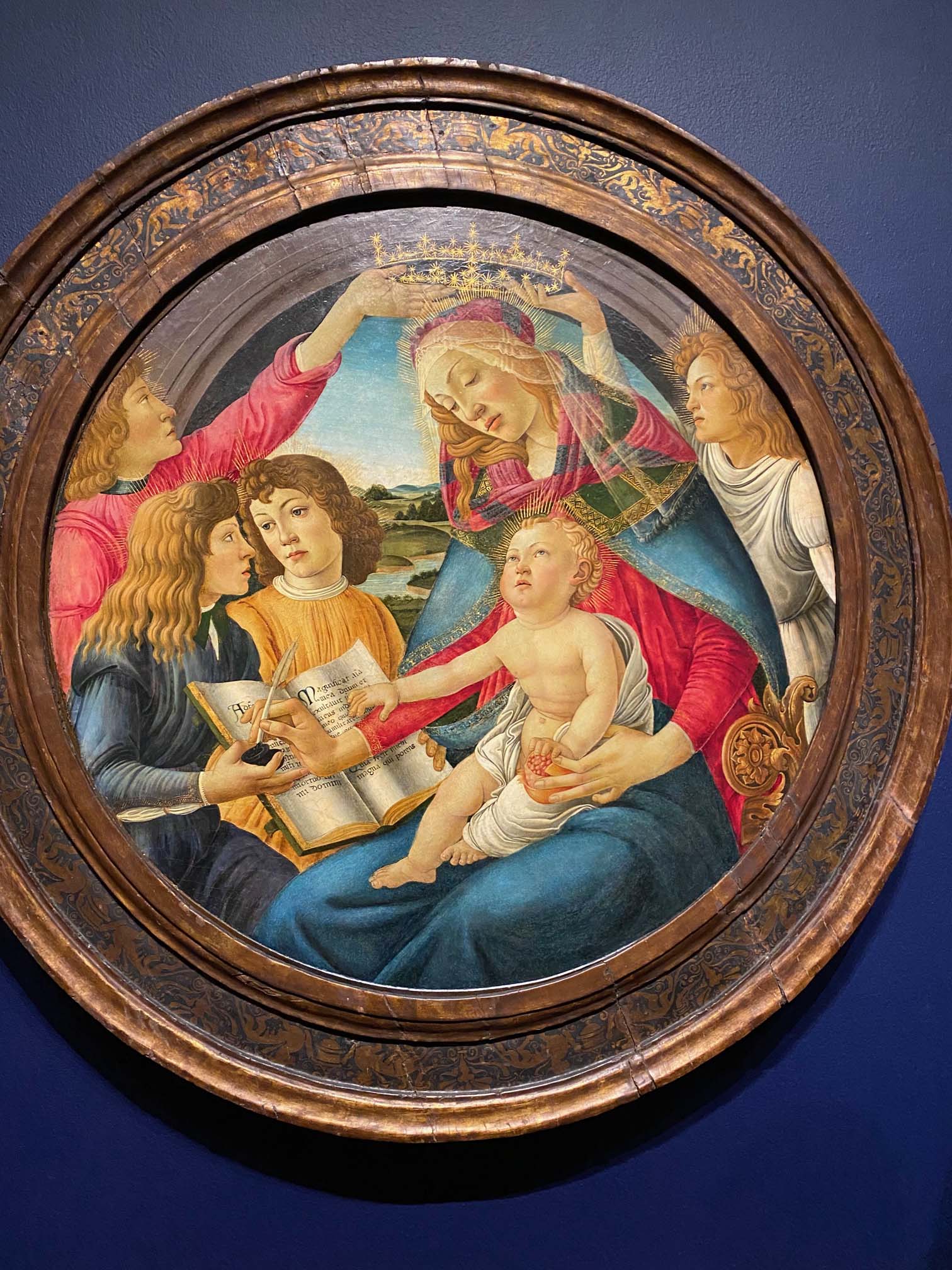
1490 Madonna of the Magnificent, a Florentine painting that Belle conserved, still hanging in Morgan’s study.

Her expertise in medieval illumination and manuscripts made her a friend and advisor for life among American and European scholars, collectors, and museum curators. The Metropolitan Museum made her a trustee for life, and often consulted with her on medieval masterpieces, fakes and forgeries, and other acquisitions.

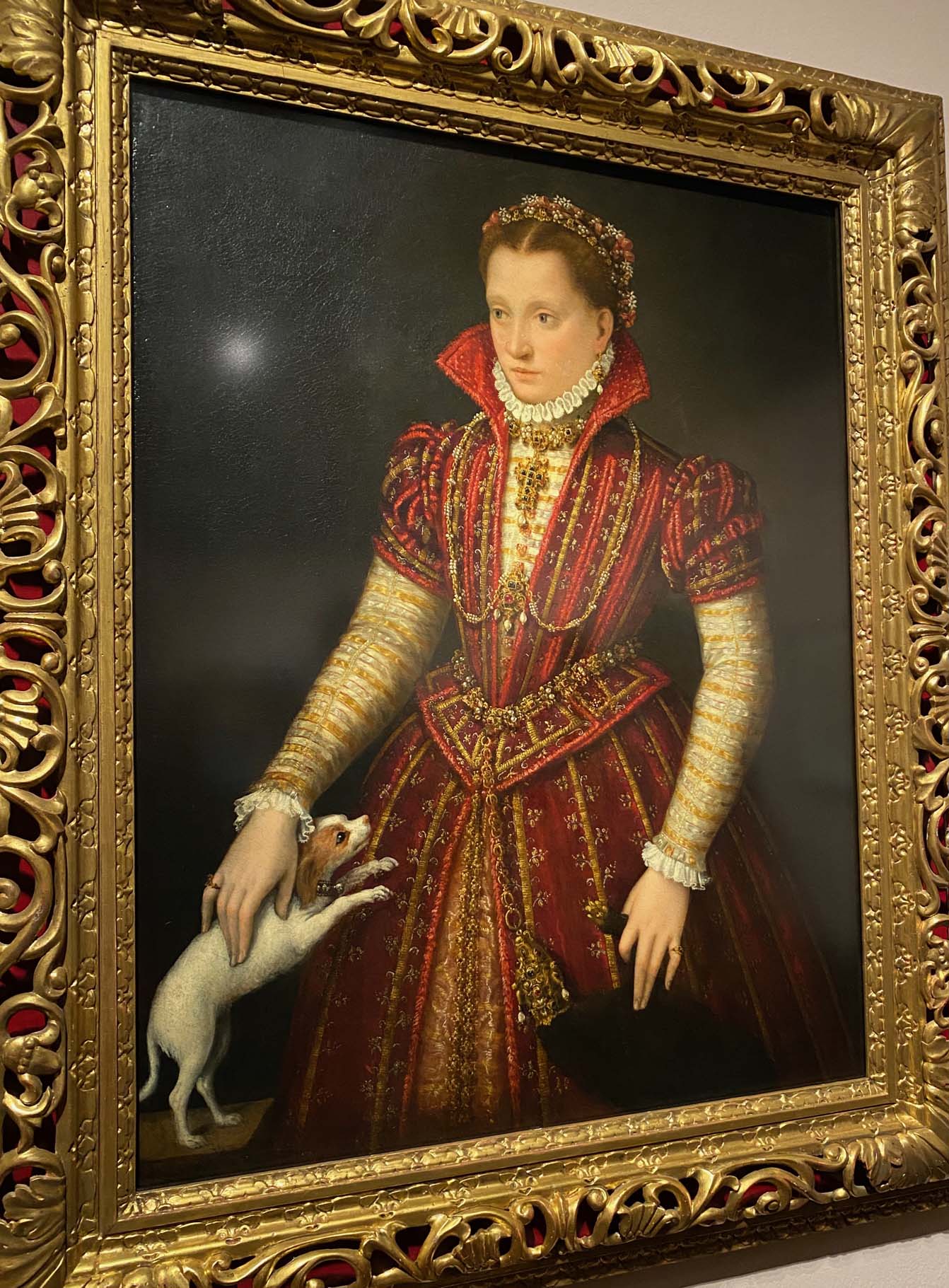
In Belle’s personal art collection – Lavinia Fontana’s 1580 Marriage Portrait of a Bolognese Noblewoman. Courtesy: National Museum of Women in the Arts.
From Belle’s jewelry– Benedetto Pistrucci’s 1840-1850 jasper and gold Head of Medusa. Courtesy: The Metropolitan Museum.

The curators tell her story across two galleries using items from the Morgan’s collection (including the many portraits of her!) as well as paintings, prints, photographs and documents from 20 other lenders.  Take a peek into the exhibition and hear the Morgan’s curators summarize Belle’s ground-breaking achievements:

Explore the works at your leisure here as you complete a 3D digital walk-through on the Morgan’s website. You can also listen to the audio tour from right inside the virtual gallery.

Get to know this legend, and take a look at our favorite exhibition pieces in our Flickr album

The ony question is – who will play Belle in the movie?

1950 photo of Bella reviewing her last acquisition, a 10th century Gospel Book from France. Courtesy: Harvard University’s Berenson Library in Florence, Italy.

Craft Mentorship in Spotlight at MAD

Take a look at generations of 20th century craft mentorship in Craft Front & Center: Conversation Pieces, on view at MAD Museum through April 20, 2025. The exhibition shines a light on how innovators shaped subsequent generations of craft artists at schools and art colonies across the United States. The curators have pulled from the MAD collection to show us the work of student and teacher side by side in several disciplines – fiber arts, ceramics, and glass.

Many of the mentors either taught at or were influenced by the Bauhaus, the legendary early 20th century design incubator.

Who are the generational inspirations for Eve Biddle’s 2019-2023 tiny ceramic sculptures, New Relics?

Bauhaus students could take classes in weaving, ceramics, typography, and metalwork alongside traditional fine arts classes. They were expected to excel in their applied-arts training and mix in aesthetics learned in their fine arts classes.

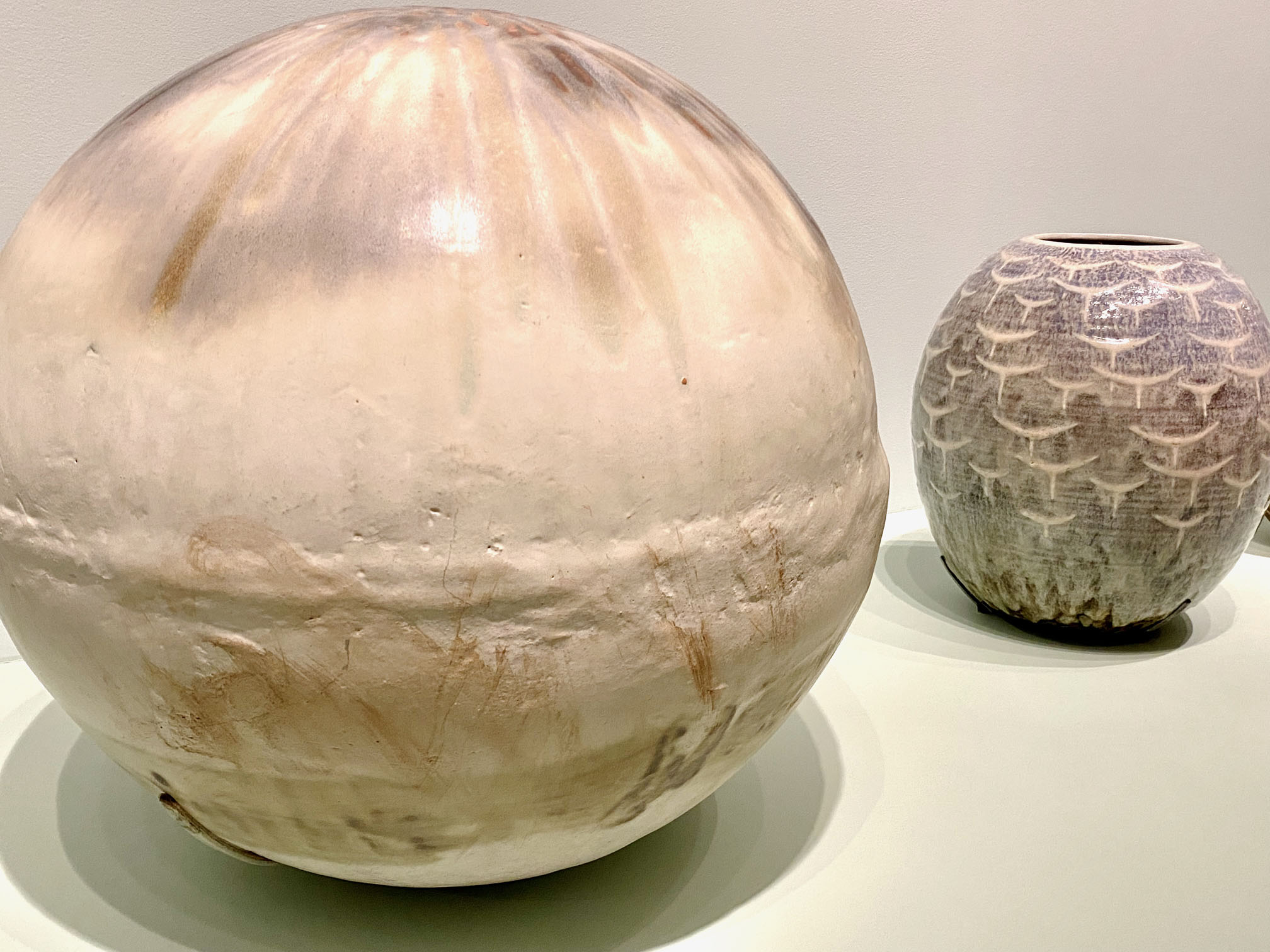
Bauhaus innovator Margeurite Friedlander Wildenhain’s 1966 Square and Textured Vase

When the Nazis closed the progressive school in 1933, many German-Jewish refugee teachers and students fled, transplanting Bauhaus design and educational philosophies across the world.

MAD highlights several artists – including Anni Albers, Trude Guermonprez, Margeurite Friedlander Wildenhain, and Maija Grotell – who came to the United States and integrated Bauhaus practice into curriculums at Black Mountain College, the California College of Arts and Crafts, Cranbrook, and new craft workshops they began.

One of the best-known 20th century textile artists, Anni Albers is featured in the show by a fine-art “pictoral textile” made on a small handloom. At the Bauhaus, Albers she trained under master weaver Gunta Stölzl, and eventally took over as head of the textile workshop. Albers moved to Black Mountain College in North Carolina with her husband, painter Josef Albers, and was the first textile artist invited by MoMA to have a one-person exhibition.

Anni Albers’s 1959 textile Sheep May Safely Graze made on a small handloom using gauze weave technique

Anni also designed commercial textiles for Knoll for years. Her influence on the next generation of painters and textile artists was profound.

MAD features work by two fiber-arts innovators (and Albers admirers) who pushed boundaries by crafting commanding, large-scale sculptures. Sheila Hicks (who studied with Josef at Yale) and Claire Zeisel (who studied with the former Bauhaus faculty at Chicago’s IIT) are credited as the leaders of America’s textile arts movement. Tufts burst from the wall in Hicks’ piece, and Zeisel’s hovers in the center of the gallery like a shaman.

Sheila Hicks’s 1968 Dark Prayer Rug, inspired by Anni Albers and Mexican and Moroccan textile artists.
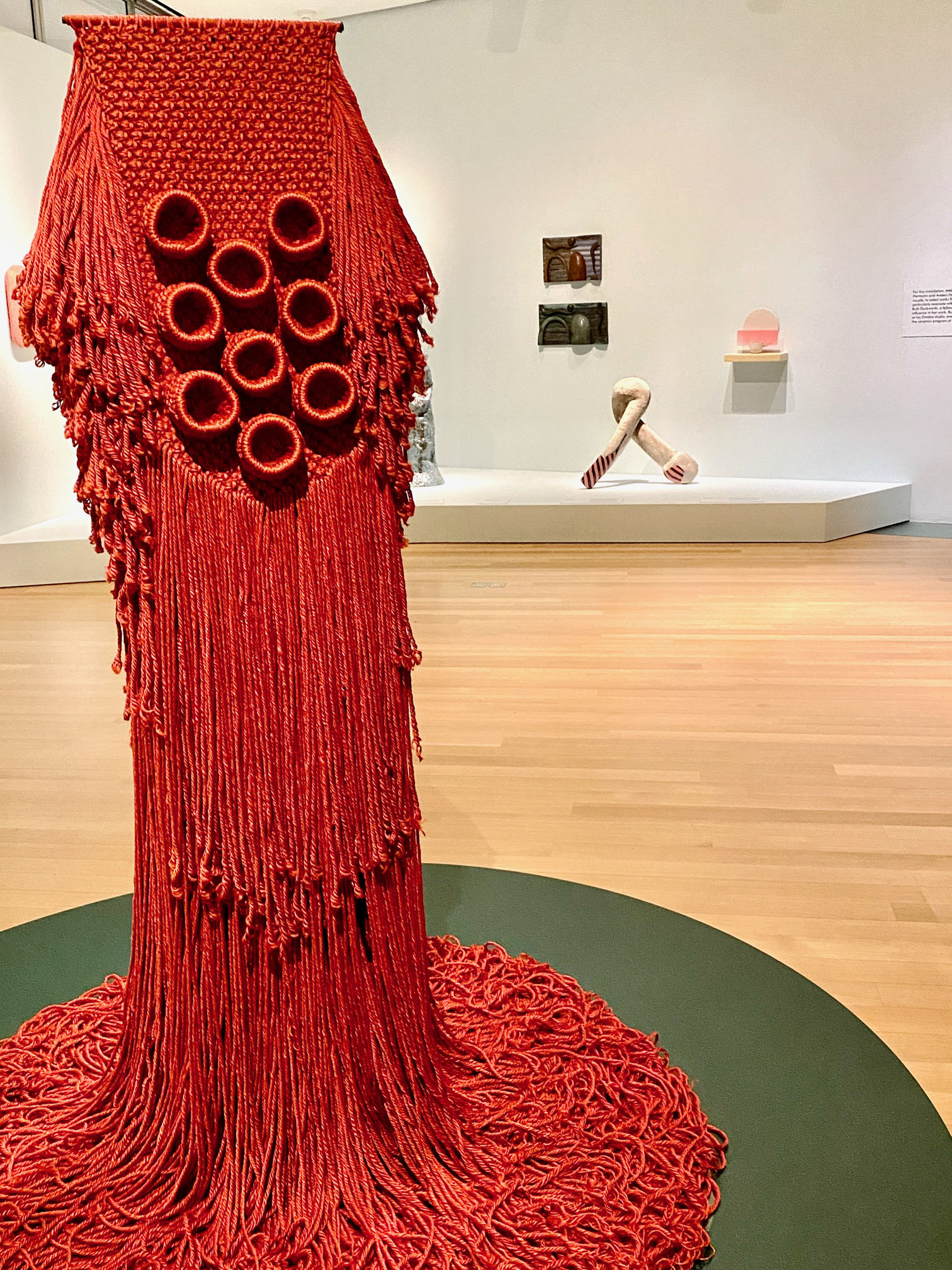
Claire Zeisler’s 1967 Red Wednesday with braid and cords twisting the sculpture’s armature

Trude Guermonprez, an unconventional materials artist known for innovations in three-dimensional weaving once worked at Berlin’s textile engineering academy; later, she consulted with industrial textile firms, as did Anni Albers.

Next to Guermonprez’s dynamic 3D hanging woven sculpture, MAD shows us a piece by Kay Sakimachi, a student who met Guermonprez in 1951 at the California College of Arts and Crafts summer craft workshop.

Guermonprez encouraged students to use latest technology, and here we see how Kay used a 1959 invention by DuPont – monofilament that’s better known today as fishing line. Kay’s woven it into an ethereal hanging sculpture.

Innovative fishing-line weaving 1968 Kunoyuki by Kay Sakimachi alongside 1962 Banner by her mentor, Trude Guermonprez.

In ceramics, MAD displays a series of vessels that transform into sculptures, starting with a modest, contained piece by Margeurite Friedlander Wildenhain, one of the first Bauhaus students and the first woman in Germany to be honored as a master potter. After emigrating to the United States in 1940, Wildenhain founded Pond Farm Workshops in Sonoma County, California ad instituted a rigorous Bauhaus instructional approach.

Frances Senska, her ceramics student, applied Wildenhain’s instructional principles to her own classes at Montana State, where student Peter Voulkos learned how to breathe new life into clay. Voulkos shashed, prodded, and poked clay, vigorously transforming the humble medium into wild, dramatic expressions.

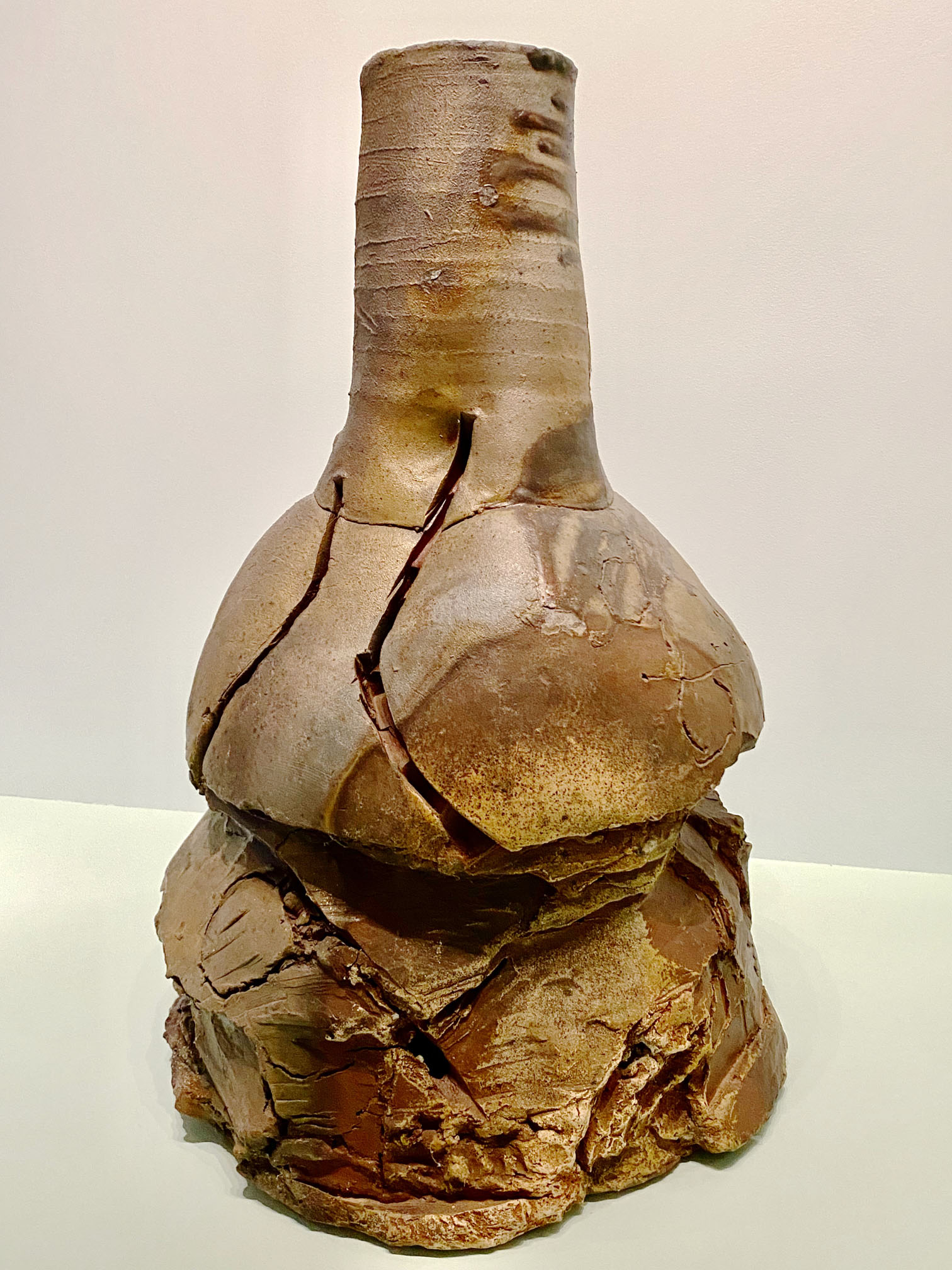
Peter Voulkos’s 1992 stoneware Sibley, an example of his revolutionary approach to ceramic form.
Mary Ann Unger 1994 terra cotta Hoist – an approach to ceramic sculpture inspired by teacher Peter Voulkos

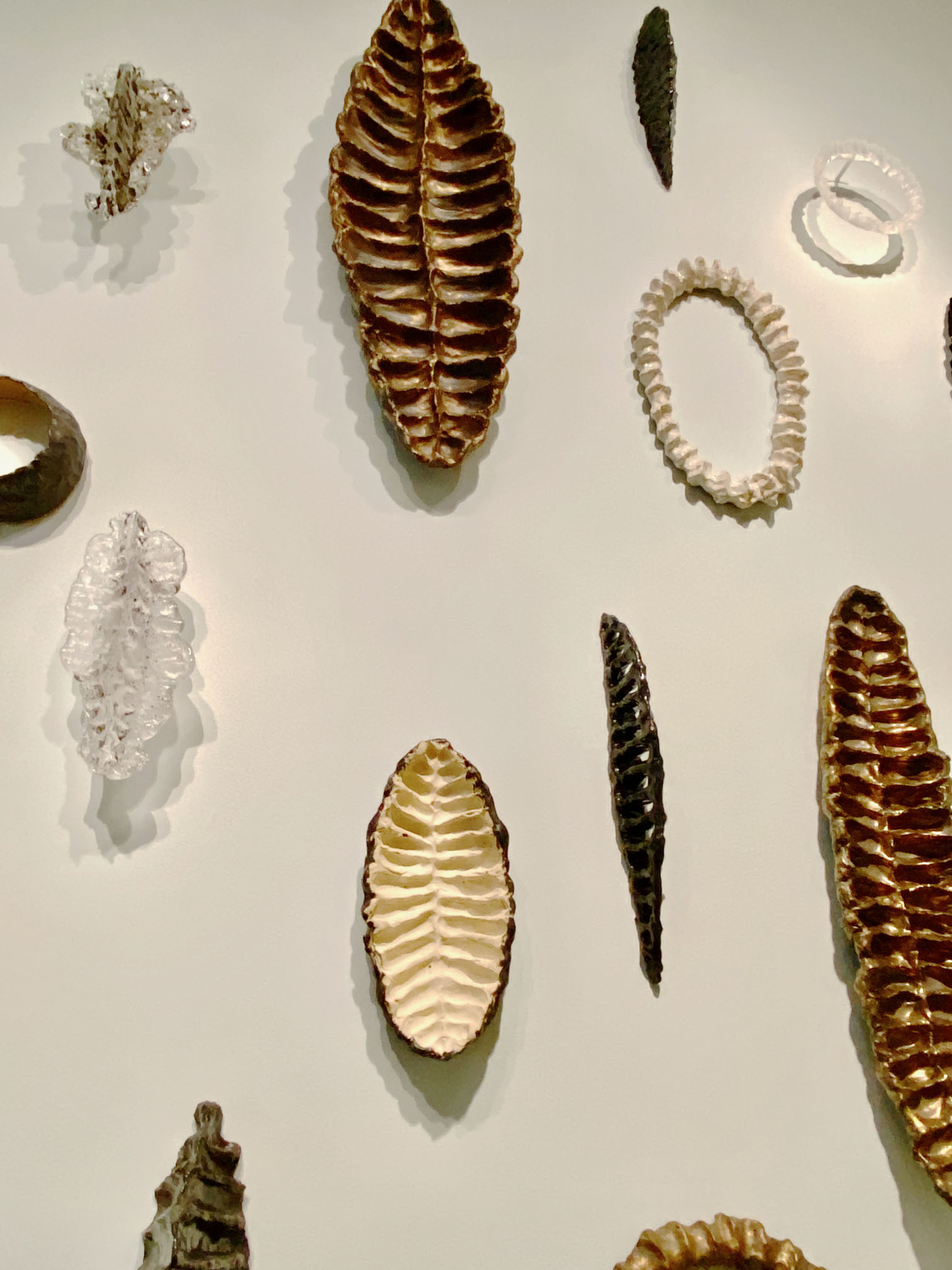
In turn, his UC-Berkeley student, Mary Ann Unger injected whimsey and improvisation into her sculptures, which allowed her daughter, Eve Biddle, to push it even further.  MAD shows Biddle’s ingenious installation of creative ceramic geodes, trilobites, and spines crawling around the gallery wall.

Ceramics mentors even play a role in the development of America’s Studio Glass movement, which begins with Harvey Littleton, whose dad was a physicist on the first reasarch team at Corning Glass Works (he later developed Pyrex). MAD displays Harvey’s gorgeous glass arcs.

Work by student and teacher: Toshiko Takaezu’s 1995 stoneware Mist #2, part of her Moon series, with Maija Grotell’s 1953 glazed earthenware vase

On weekends, Harvey spent lots of time with his dad in the Corning lab, assuming he would follow in dad’s footsteps as a physicist at the University of Michigan. But after Harvey experienced UM art classes, he switched major. Eventually, he was specializing in ceramics under Maija Grotell at Cranbrook Academy of Art (who also taught ceramic superstar Toshiko Takaezu).

Littleton’s travels to observe the Italian glassmaking masters at Verano inspired him to apply his kiln and physics skills to experimental glassmaking. Back home, e pioneered low-temperature glass-blowing techniques that enabled glass artists to create work in studio setting and not a factory.

Littleton achievement was established the first university-based glass-blowing program at University of Wisconsin-Madison. A lucky undergraduate, Dale Chihuly, learned from the master, and the rest was history for American glass making.

Glass sculptures by teacher and student – 1983 Double Blue Arches by innovator Harvey Littleton and 1968 Wine Bottle by created by Dale Chihuly in Venice under a Fulbright Fellowship.

After receiving his MFA in ceramics at RISD, Chihuly traveled to Venice (like his mentor), and observed how the team worked together to create a finished work of glass art. In 1971, he founded Pilchuk Glass Works in Washington State, where he emphasized the collaborative, collective process.  Chihuly’s own sculptural wonders emerged, plus the next generation of indigenous glass artist gained experience in collaborative expression – Tony Jojolla and Preston Singletary.

There are many more stories told in this illuminating exhibition from the MAD collection. Take a look in our Flickr album.

Tony Jojolla’s 1996-1997 Large Glass Olla, a traditional Pueblo pot made of glass at Dale Chihuly’s Pilchuk School; at right, Chihuly’s 1978 Untitled Basket

Lillie Bliss and Her Modernist Breakthrough

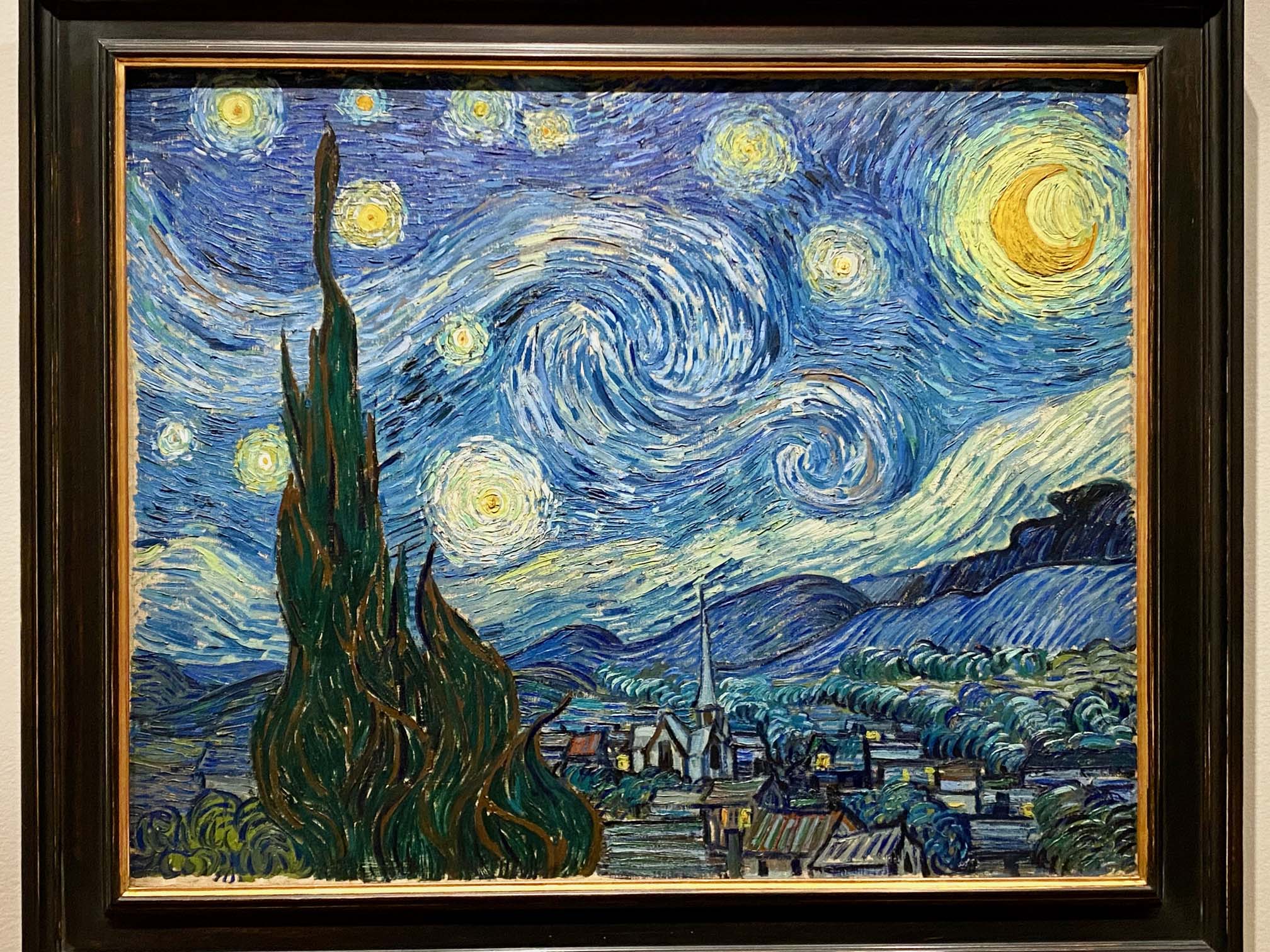
When you peek into the second-floor MoMA exhibition, you’ll see where Van Gogh’s The Starry Night has been holding court for the last few months.

Lillie P. Bliss and the Birth of the Modern, on view through March 29, tells the story of how one woman’s passion for modern art over a century ago formed the basis of the MoMA collection and MoMA itself.

Van Gogh’s 1889 The Starry Night, one of MoMA’s most beloved works.

Bliss was an early American patron of Cézanne, Seurat, Picasso, and Redon at a time when New York society looked askance at modern art’s tilted tables, fractured still lifes, and stippled surfaces. She even contributed to getting the 1913 Armory Show off the ground as a sponsor, art lender, daily visitor, and new-work buyer.

Maybe the constraints of growing up female in the Victorian era gave her an appreciation for the lack of inhibition Picasso’s and Matisse’s colors, Gauguin’s wild Tahitian woodcuts, and Redon’s ethereal woodsy fantasy figures.

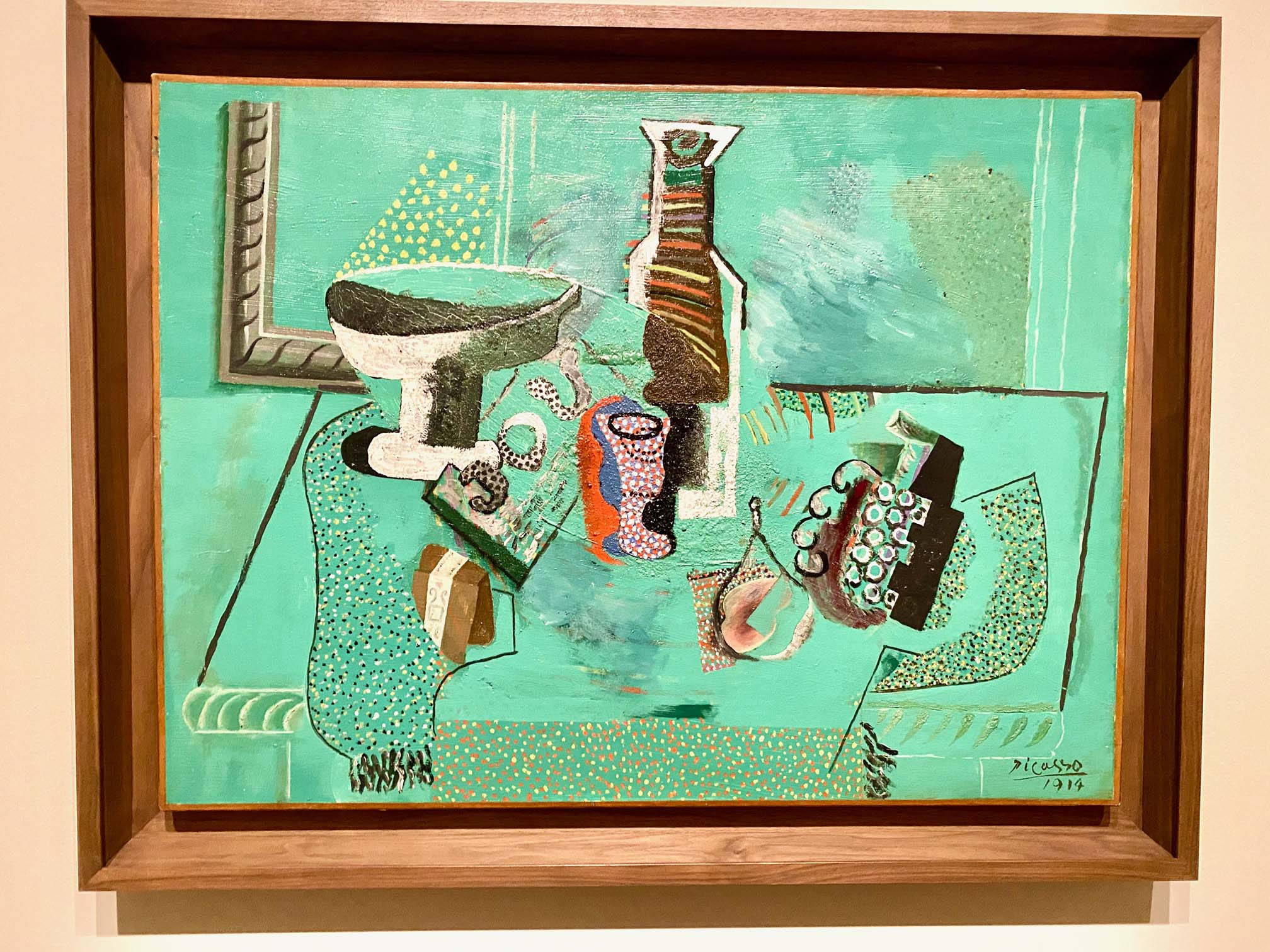
Picasso’s 1914 Green Still Life.

Endless modern-art discussions with art-world friends and mentors Arthur Davies and John Quinn gave her a sophisticated view of all the latest artists and trends. She joined a small group of modern-art lovers to lobby the Metropolitan Museum of Art to show the latest breakthroughs from Europe.

In 1921, the Met acquiesced and borrowed enough art to mount an exhibition of French impressionist and post-impressionist work. Bliss anonymously lent twelve pieces. People came to look, but the Met still resisted acquiring work that it considered too far-out.

When Bliss came into her inheritance in 1923, the pursestrings were unleashed. At age 49, she began to assemble the collection of her dreams via annual European buying trips and estate sales. Where could she show it? 

1904 portrait of Lillie P. Bliss

In 1928, she bought a lavish uptown triplex with a two-story gallery. She hung her favorite Cezanne over the grand piano and arranged a “who’s who” of avant-garde masters. Check out The Bather front and center, surrounded by Picassos, Seurats, and Gauguins.

1929-1931 photo of Lillie P. Bliss’s modernist collection hung in the music room of her Park Avenue apartment
Cézanne’s 1895-1898 Still Life with Apples hung at home in the place of honor, above the piano

The next year in a brainstorming session with Abby Rockefeller and Elizabeth Parkinson, the trio decided that New York needed a special place that was devoted exclusively to modern art. MoMA was born!

MoMA’s first exhibition – Cézanne, Gauguin, Seurat, van Gogh – was mounted in rented space at 730 Fifth Avenue, and crowds came.  The exhibition was a huge popular success, even though it coincided with the historic 1929 market crash. 

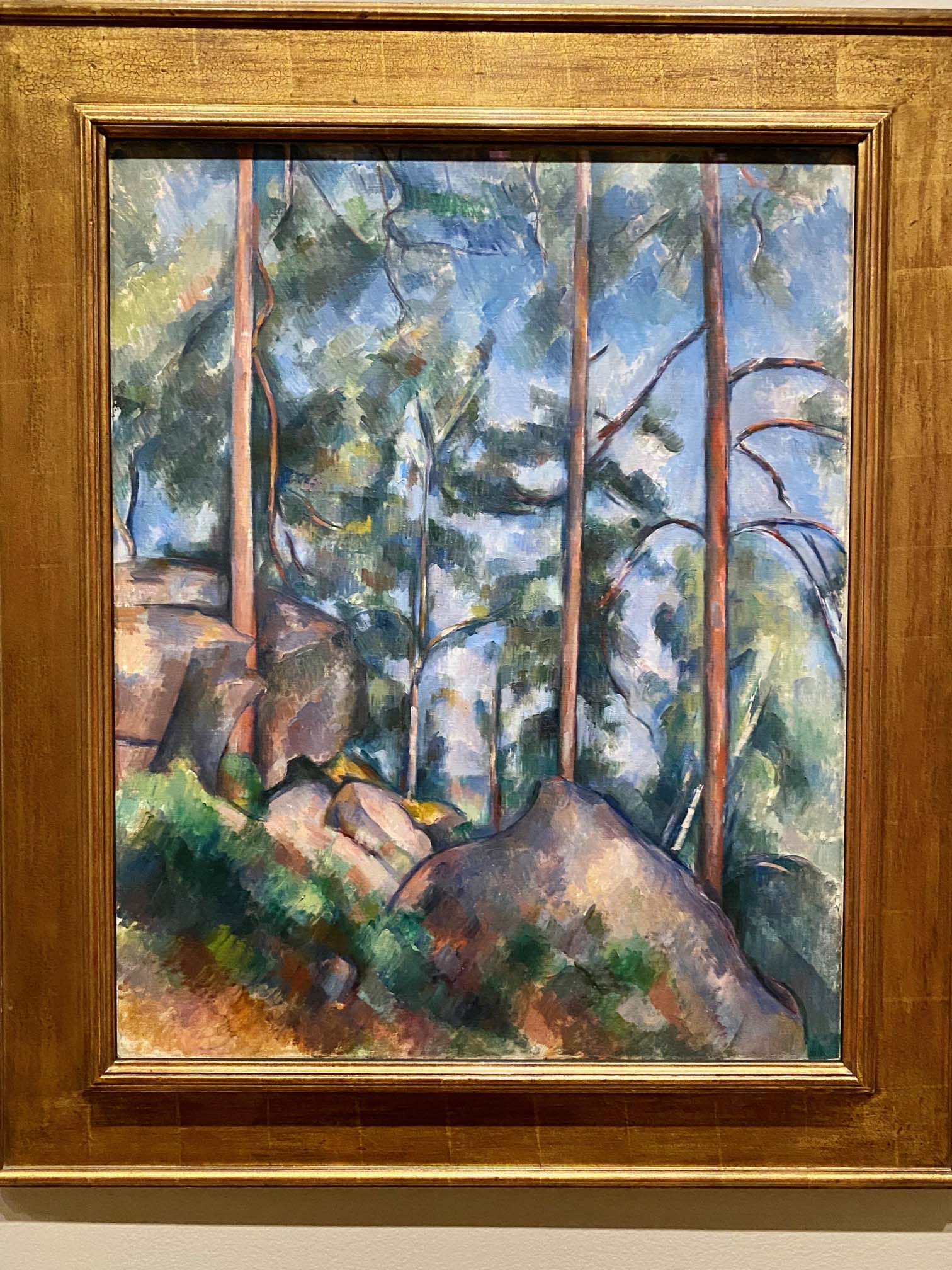
Cézanne’s 1897 oil Pines and Rocks (Fontainebleau?)
Seurat’s 1884 crayon drawing A Woman Fishing.

Lillie’s health crashed, too. On the heels of MoMA’s test run, she was diagnosed with cancer, and started drawing up a will to ensure that her beloved collection would carry on when she could not. She gave a Monet and a few gems to the Met, but bequeathed 150 works to the new Museum of Modern Art – forming the core of the collection we know today.

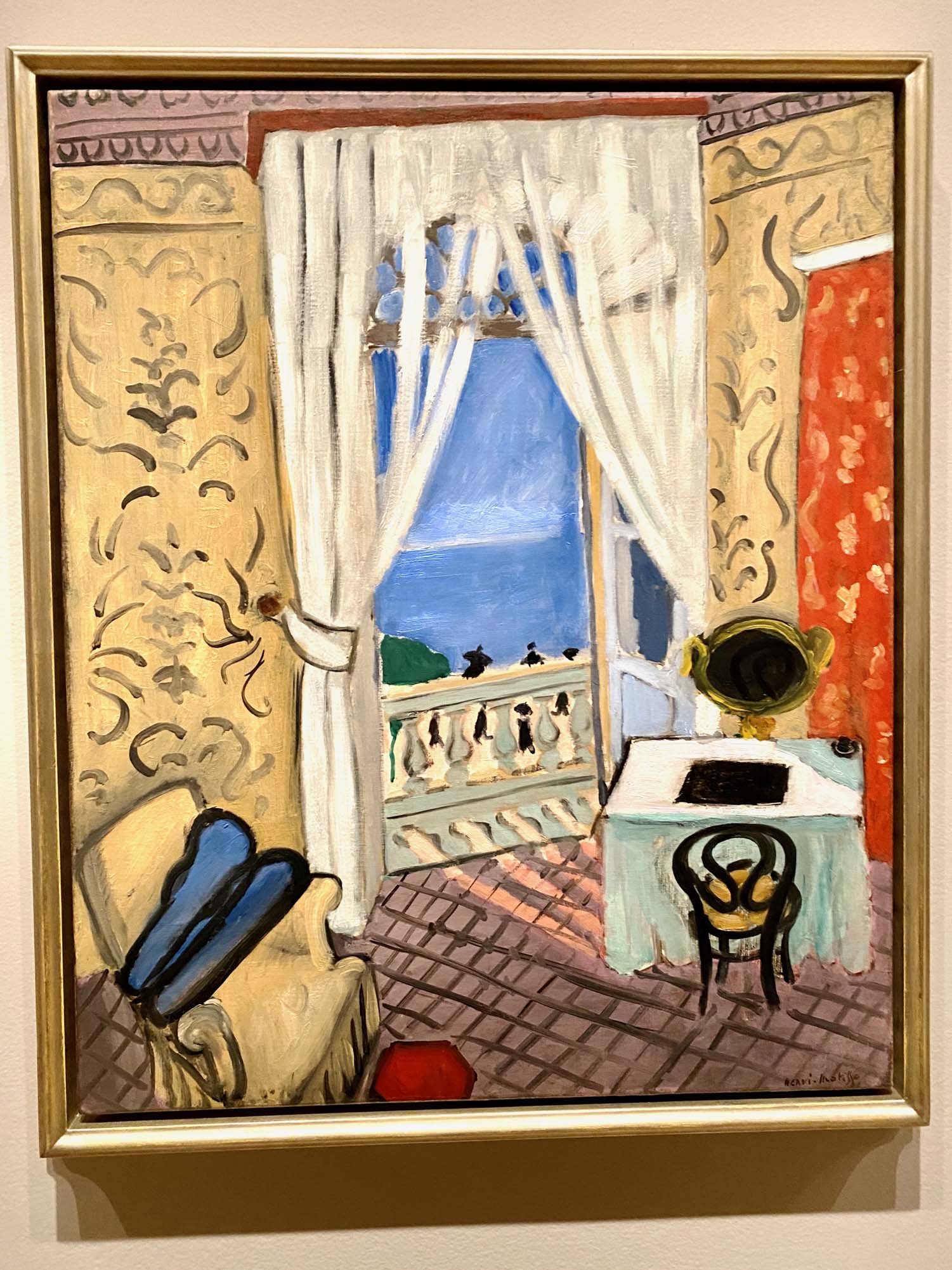
Matisse’s 1918-1919 Interior with a Violin Case.

When Lillie died in 1931 at age 66, there was only one last thing.  She was never able to acquire a Van Gogh. But in her will, she did give the museum permission to sell or exchange most of the paintings she bequeathed.

A few years later, MoMA sold one of Lillie’s Degas to acquire Picasso’s epic Demoiselles d’Avignon.

And in 1941, Alfred Barr made her dream come true. He heard that a dealer possessed a very special Van Gogh, and traded three of Lillie’s paintings for The Starry Night.

See our favorite works in our Flickr album, and enjoy other stories about this visionary MoMA founder by listening to the audio guide for the exhibition here.

Gauguin’s 1894 woodcut print The Creation of the Universe from the 10-print series, Noa Noa (Fragrant Scent)

Parisian Orphists Cover Guggenheim with Color

Ascending the ramp inside the Guggenheim Museum to enjoy Harmony and Dissonance: Orphism in Paris, 1910-1930, European optimism and color abound. The exhibition, on view through March 9, 2025, showcases the exuberance and innovation of artists living in early 20th century Paris, who felt exhilarated by the profusion of modern forms of music, dance, and architecture and used abstraction and prismatic color to translated their enthusiasm.

Avant-garde power couple Robert and Sonia Delaunay broke from analytic cubism’s monochromatic approach and injected pulsing color into the art-scene conversation in Paris.

Robert Delaunay’s 1911-1912 Red Eiffel Tower – modern architecture and cubism with a twist of color.

Inspired by 19th century color theory (wheels demonstrating complimentary and dissonant colors), they painted swirling orbs pulsing with harmonies and contrasts to show optimism about the future.

Modern buildings like the Eiffel Tower, electrification of city streets, and the syncopation in dance-hall music created a pre-war energy in Paris that motivated these “orphists.” Everything seemed to be happening simultaneously. Harmonious and dissonant colors and whirling shapes on large canvases seemed a good way to represent it, as shown in the Guggenheim’s fun musical promo:

The style was named “orphism” by none other than Apollinaire himself.  Robert Delaunay’s works in the exhibition include some of his early experimentation with abstract oval “windows,” his abstract riffs on the cosmos, and canvases still showing a hint of the real world.  All convey the simultaneous push-pull of Paris, modern life, and larger scientific forces.  

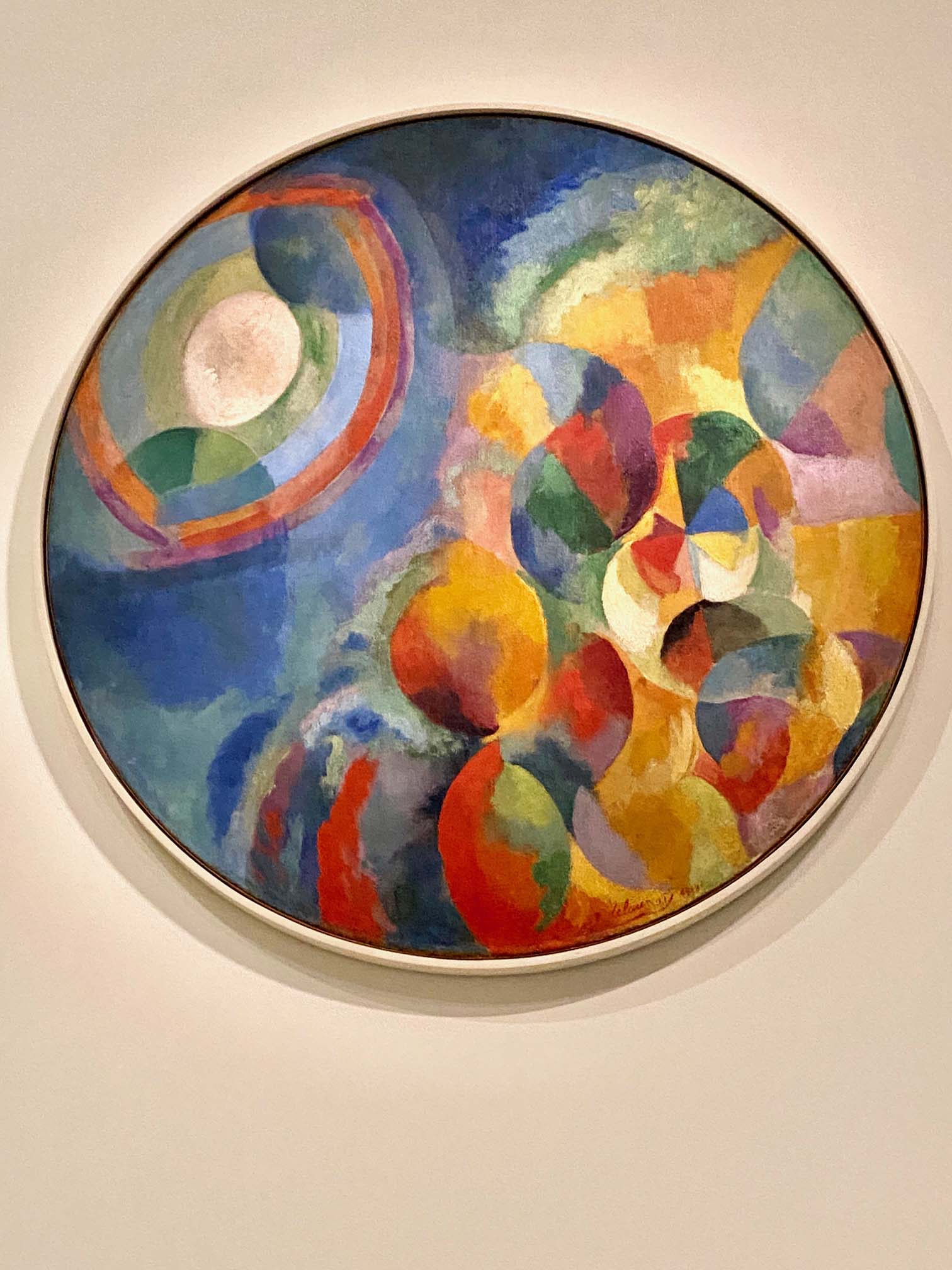
Robert Delaunay’s 1913 Simultaneous Contrasts: Sun and Moon. Courtesy: MoMA
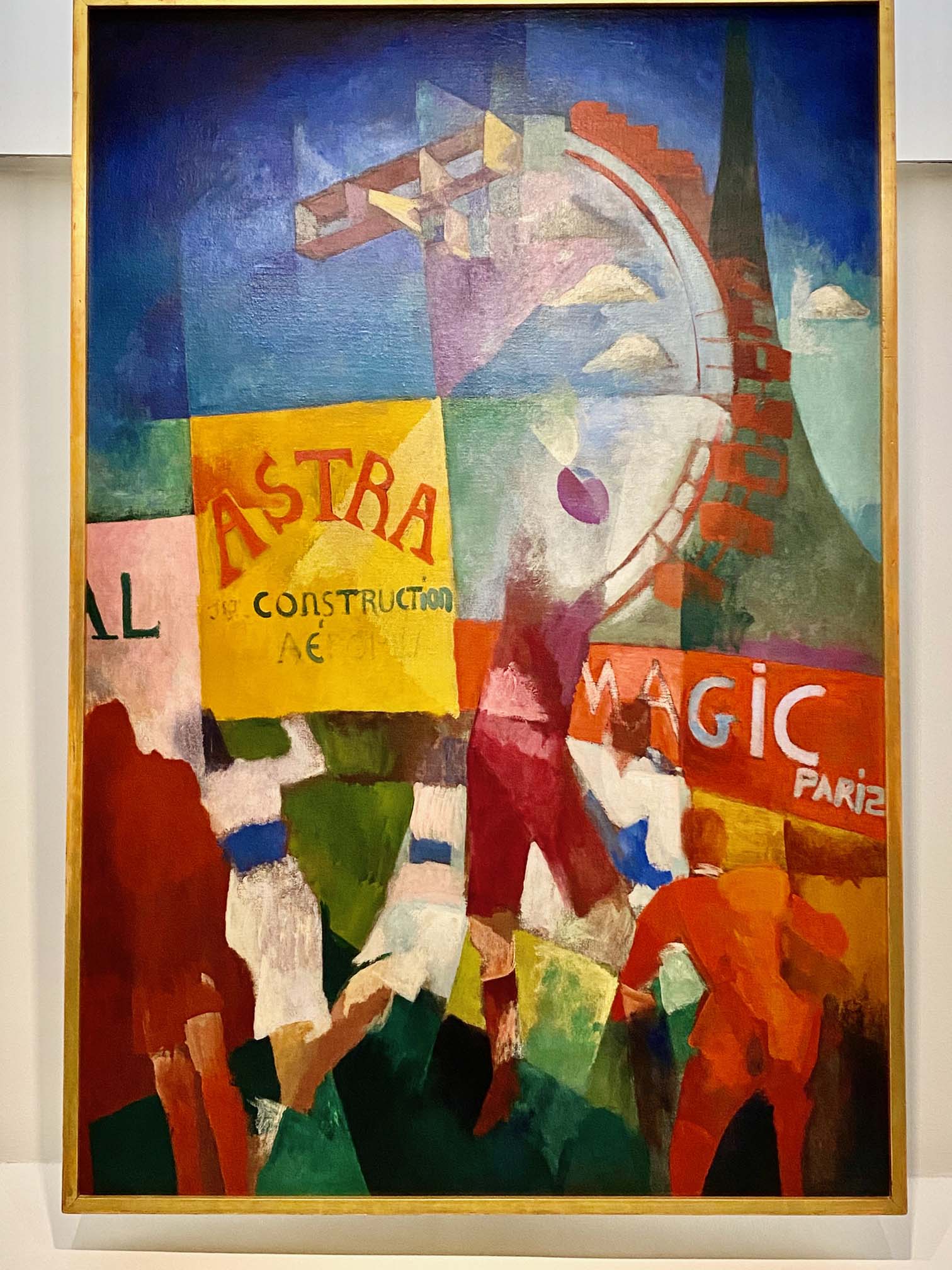
Robert Delaunay’s 1913 The Cardiff Team, with Eiffel’s tower, aerial achievements, and sports dynamics. Courtesy: Van Abbemuseum, The Netherlands.

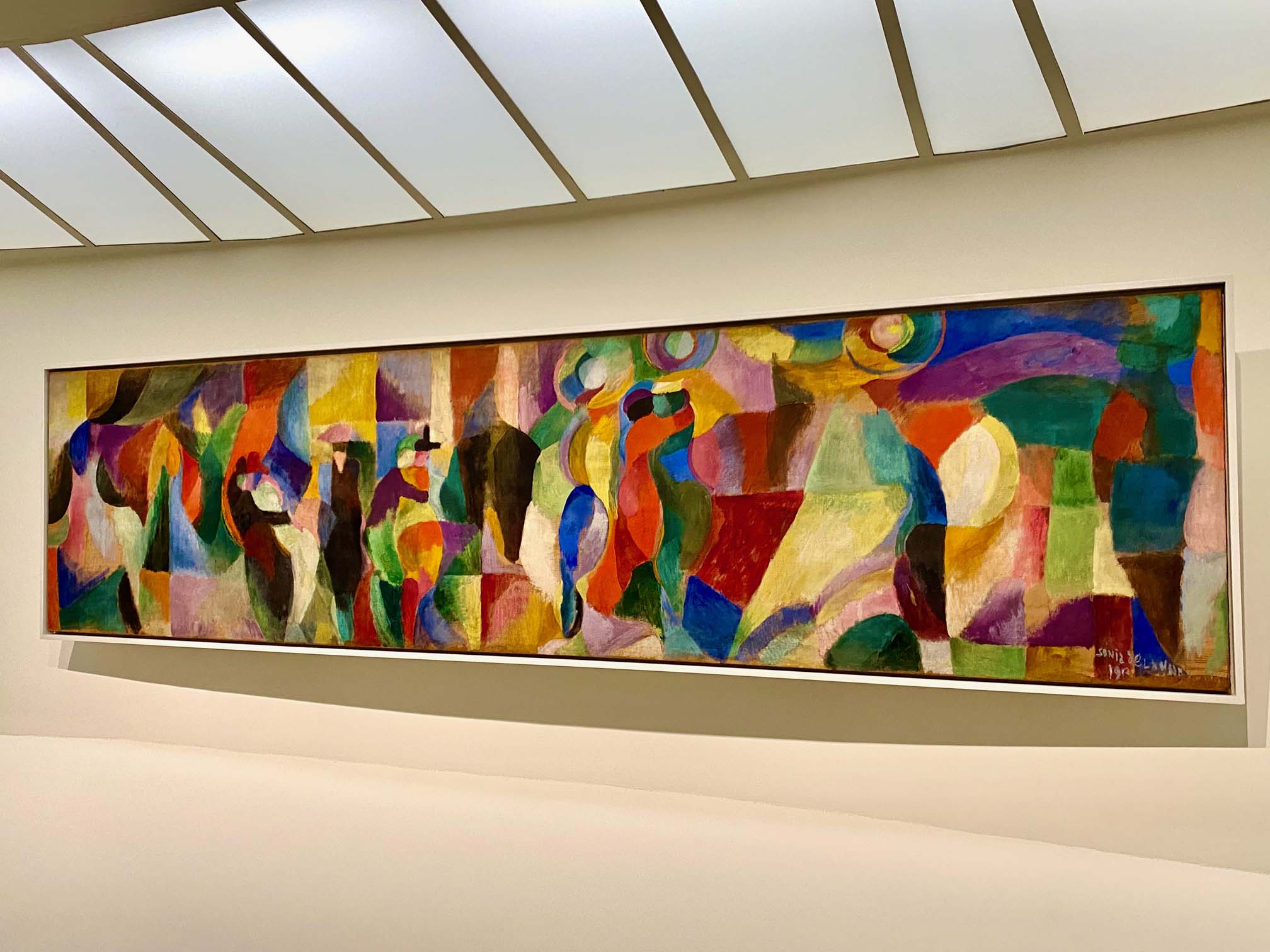
Many of Sonia’s orphist paintings are featured, including a gigantic horizontal color work inspired by the dynamic movement of tango dancers at a popular Parisian club. No doubt the massive 2024 Bard Graduate Center Gallery show about her forays into fashion and other creative fields (Sonia Delaunay: Living Art) influenced the Guggenheim curators to include her painted toy box and her celebrated super-tall accordion-book painting representing her collaboration with poet Blaise Cendrars.

Sonia Delaunay’s 1913 oil Bal Bullier inspired by dynamism of tango dancers at the popular Parisian club. Courtesy: Centre Pompidou

Innovations by the Delaunays are placed alongside other artists’ works that reflect the artistic breakthroughs of the early Twentieth Century – Kandinsky’s abstraction, the Blue Rider group’s symbolic use of color, and the synergies that artists felt between abstraction and music. In 1912, Leopold Survage intended to create the first fully abstract film, but the project was halted by World War I. Fortunately, we can envision his plan from his series of dynamic color drawings.

Colored Rhythms series of twelve 1912 ink drawings created by Léopold Survage for the first abstract film. Courtesy: La Cinémathèque Française

The music that inspired the Orphism is referenced throughout the exhibition – the improvisation and free structure of jazz, the dissonance of cutting-edge experimental music, and the staccato of the latest Parisian dance-hall craze – Argentine tango. The curators have even provided musical tracks to underscore this influence.

The Italian futurists Balla and Severini are also featured. Speed, modernity, and simultaneous city sensations were their bread and butter, too, even though they argued in the press and art journals that Futurism and Orphism were totally different.

Italian futurist Giacomo Balla’s 1914 Mercury Passing before the Sun, an allusion to recent cosmic events. Milan’s Museo del Novocento.
Gino Severini’s 1915 Dancer–Propeller–Sea. Courtesy: The Metropolitan Museum

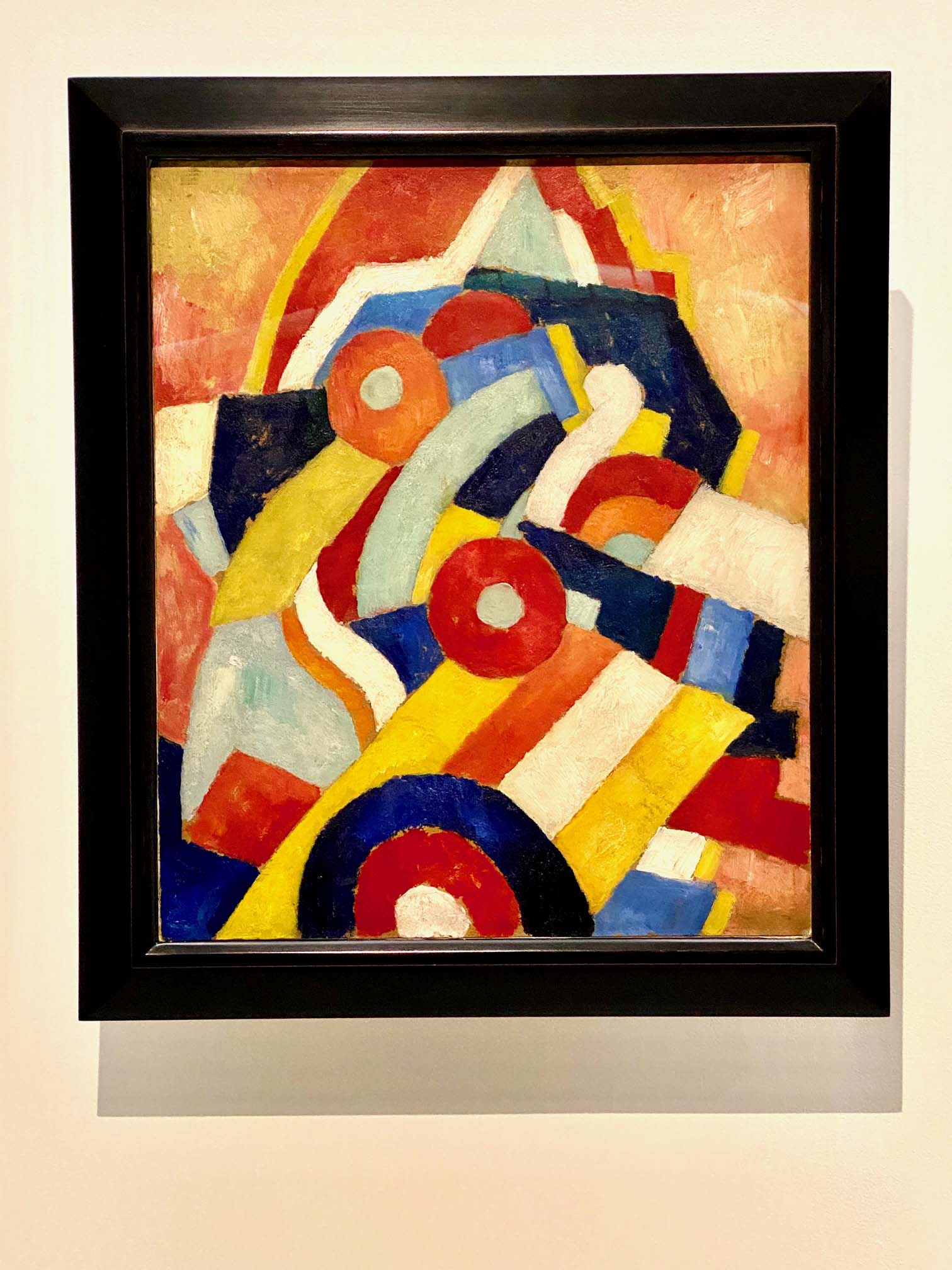
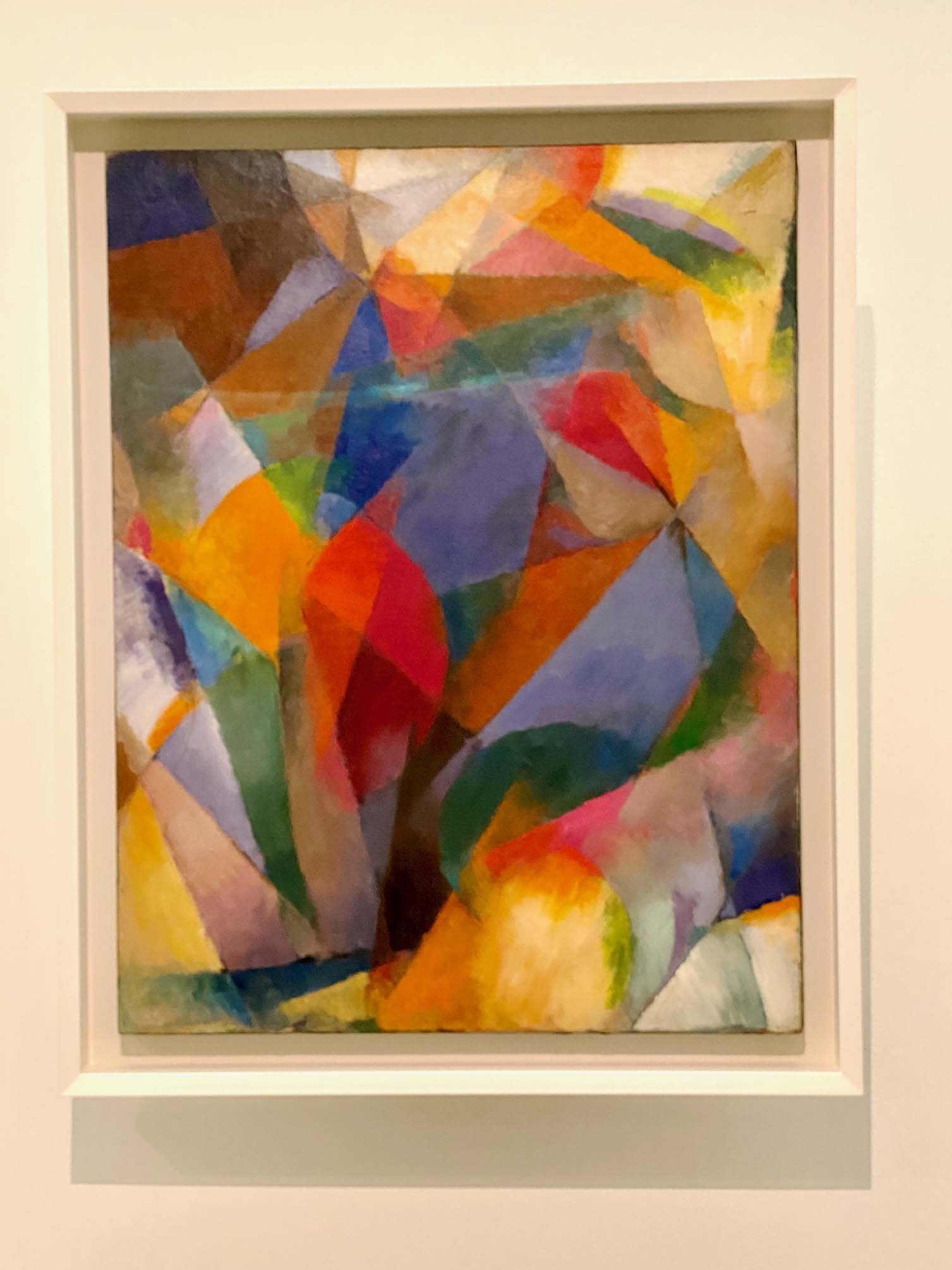
In pre-war Paris, American modernist painters Marsden Hartley, Stanton Macdonald-Wright, and Morgan Russell picked up on Orphism, although the latter two rebranded their work Synchronism when they wrote their manifesto.

Marsden Hartley’s 1914 Abstraction Courtesy: The Museum of Fine Arts, Houston.
Stanton Macdonald-Wright’s 1917 oil Synchromy. Courtesy: MoMA

Even after the War, the Delaunays continued to represent orphism even if they occasionally incorporated real-world elements. Early orphism adopter Albert Gleizes also continued in this style throughout his career, and inspired students like Mairnie Jelett to explore color theory and its potential.

Albert Gleizes’s 1942 Painting for Contemplation, Dominant Rose and Green.
Irish artist Mairnie Jellett’s 1938 Painting. Courtesy: National Museum, NI, Ulster.

Take a look at our favorite works in our Flickr album here, and enjoy a syncpated strut through the colorful side of Modernism in this catalog preview:

Alma Thomas Splashes Denver with Color

For a pop of color in the winter season, see Composing Color: Paintings by Alma Thomas from the Smithsonian Museum of American Art at the Denver Museum of Art through January 12 and at the Memorial Art Gallery in Rochester, New York February 8 through May 25, 2025.

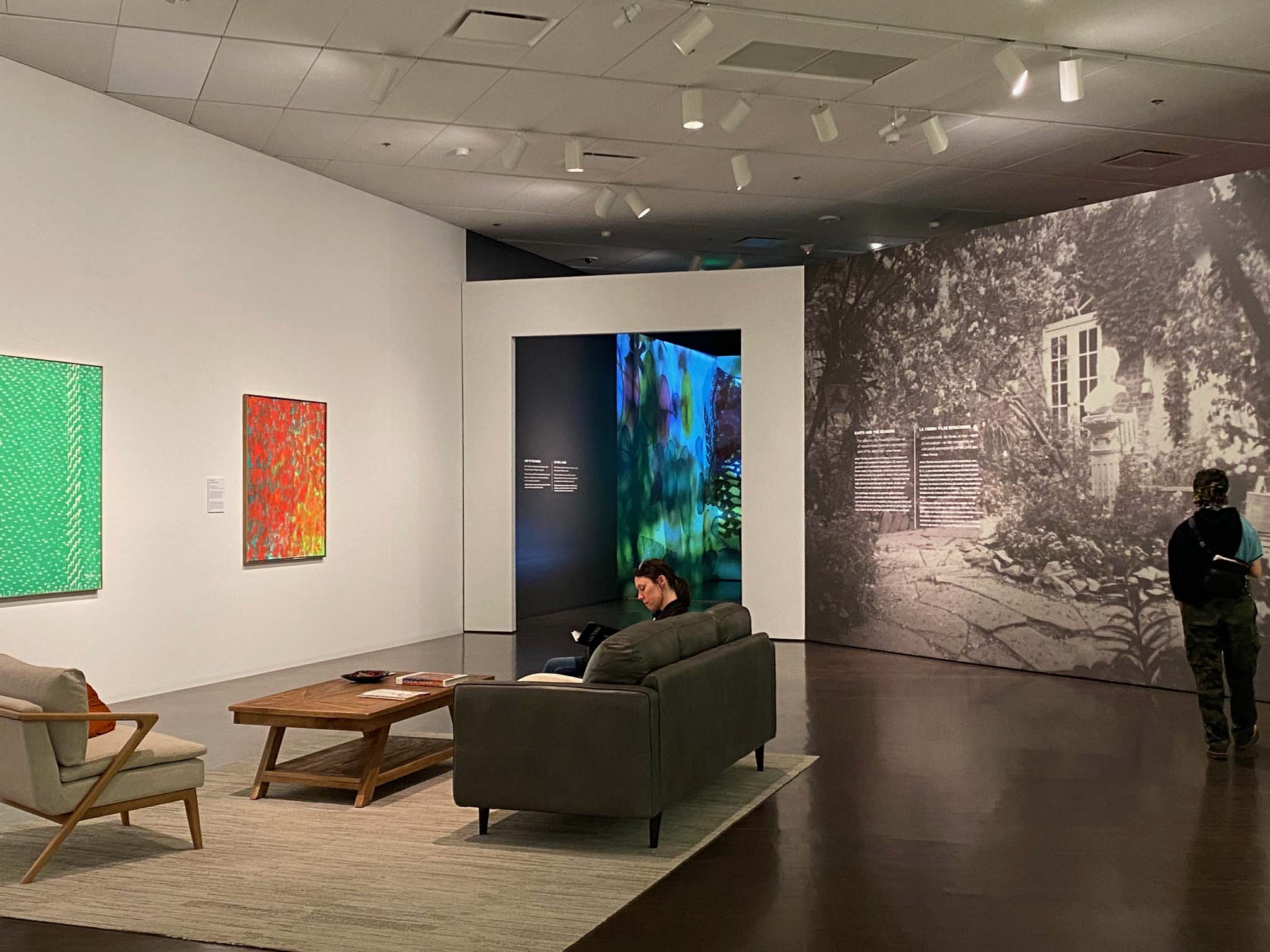
Denver has welcomed this mid-century modern painter with open arms, with visitors lounging in several living-room settings surrounded by abstractions from the Sixties and Seventies by a Washington, D.C. painter who born in the late 19th century but who lived to see a man land on the Moon.

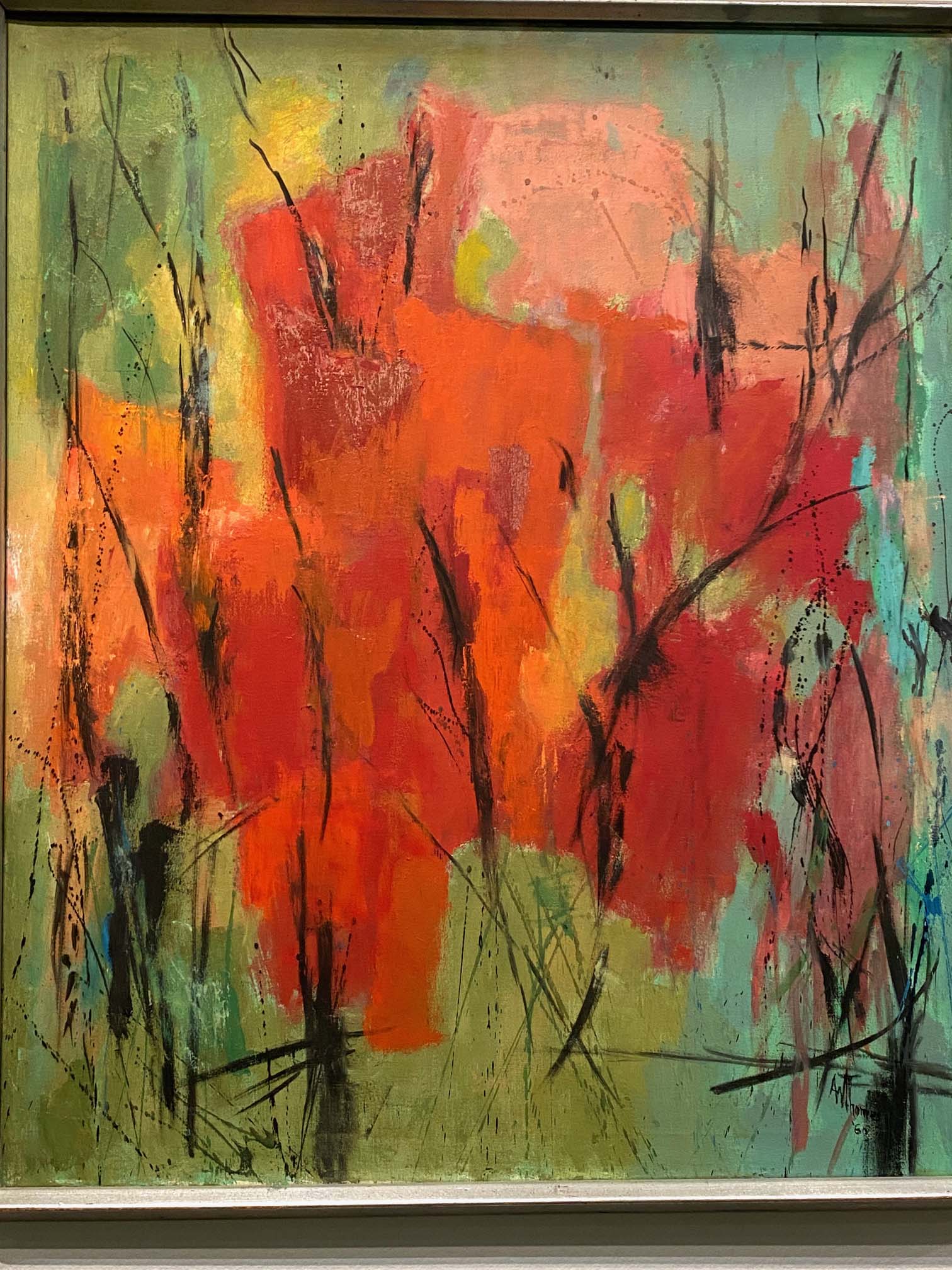
1960 Red Abstraction by Alma Thomas. Courtesy: Smithsonian American Art Museum.

Alma Thomas grew up in Georgia, and earned the first fine arts degree ever granted by Howard University in 1924.  After receiving a masters in education from Columbia, Alma spent the next 30 years teaching in Washington, D.C. public schools. 

Ida Jervis’s 1968 photo Alma Thomas working in her studio. Courtesy: Archives of American Art, Smithsonian Institution.

But she stayed close with her professors at Howard, who founded the Barnett Aden Gallery, one of first racially integrated and Black-owned art galleries in the United States.  Alma served as the gallery’s VP, which displayed a who’s who of contemporary African-American artists, like Elizabeth Catlett, Aaron Douglas, Jacob Lawrence, and Henry O. Tanner. 

By the early 1950s, Alma’s work was regularly shown in exhibitions at the gallery. When Alma finally retired from teaching in 1960 at age 69, she was finally able to paint full time. The Smithsonian’s exhibition features Alma’s work from this highly productive period.

Take a look at our favorites in our Flickr album.

The exhibition is centered around three subjects that inspired her – nature, the cosmos, and music. Her vivid color paintings welcome you to the exhibition but around the corner you see what really inspired her – a wall-sized photo of Alma’s beloved flower garden

Mid-century modern lounge in the Denver exhibition with paintings by Alma Thomas inspired by her garden

She loved the changing seasons, the patterns of gardens, and patterns observed by light flickering through the crepe myrtles in her garden or through the trees on her walks through DC’s endless greenways and parks.

1976 oil Fall Begins, suggesting rustling leaves. Courtesy: Smithsonian American Art Museum.
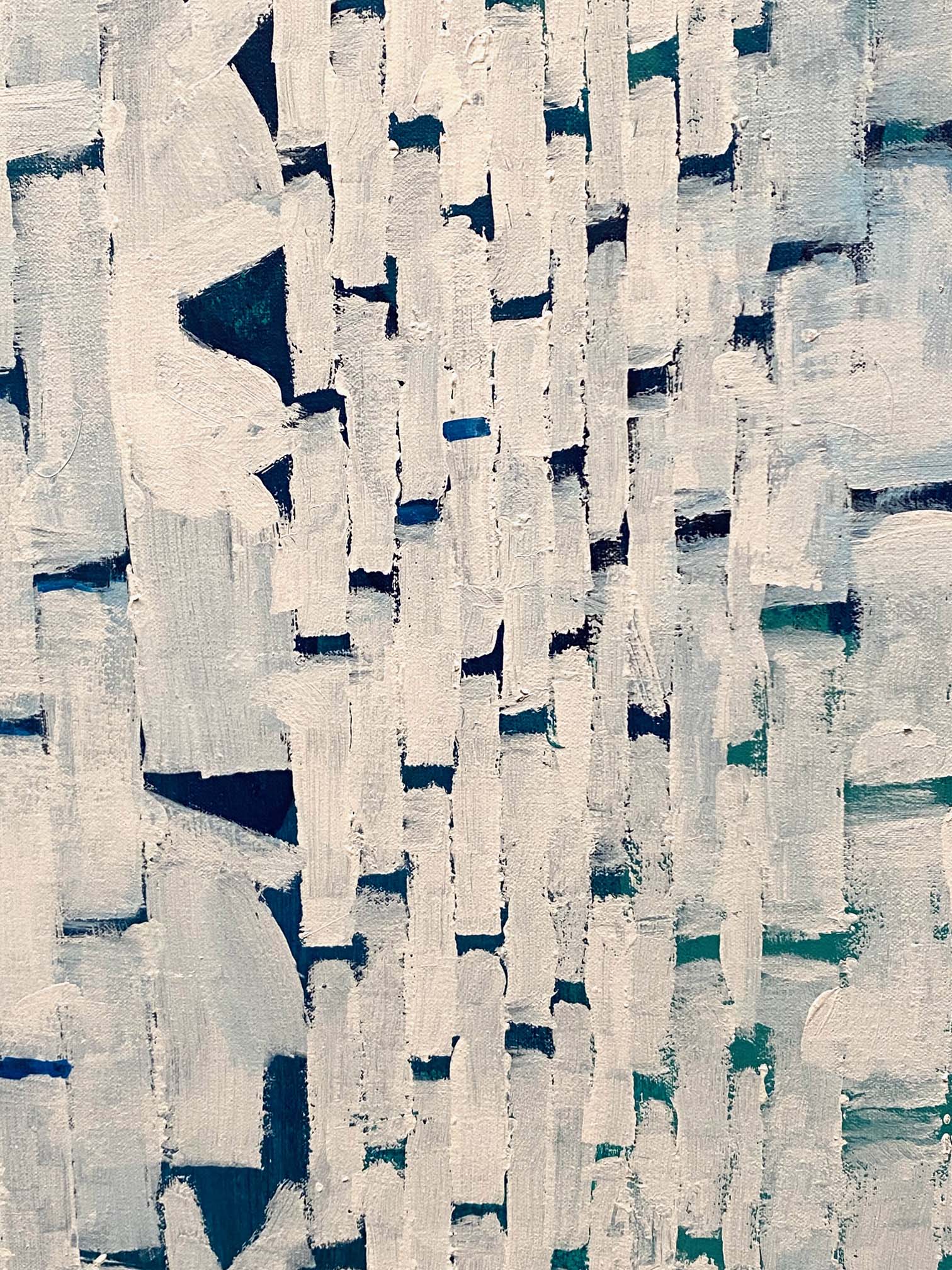
Detail of 1972 acrylic, Arboretum Presents White Dogwood. Courtesy: Smithsonian American Art Museum.

The exhibition also features an immersive environment where visitors can use colors and shapes from Alma’s paintings to splash supersized across the gallery walls.

Room in Denver where visitors use filters to create lightscapes on the gallery walls.
1976 acrylic, Grassy Melodic Chart. Courtesy: Smithsonian American Art Museum.

By the 1970s, Alma’s love of music and rhythm were reflected in her abstractions, although the titles of her canvases tell us that she saw expressive melodies in nature too.

Captivated by the promise of technology, Alma also reveled in the mysteries and rhythms of the planets, space, and those frontiers of exploration. She really felt that the Moon, planets, and stars represented the peace and harmony that were sometimes lacking on Earth.

Always searching for beauty in the world, continuing to paint, and contemplating a brighter future, Alma achieved unprecedented art-world recognition in 1972 at age 80 –a one-woman show at the Corcoran Gallery in Washington and in New York at the Whitney Museum of American Art.

Not bad for a gal who grew up in “horse and buggy days” in Georgia! Thank you to the Smithsonian for collecting Alma’s work and producing this joyful, colorful show.

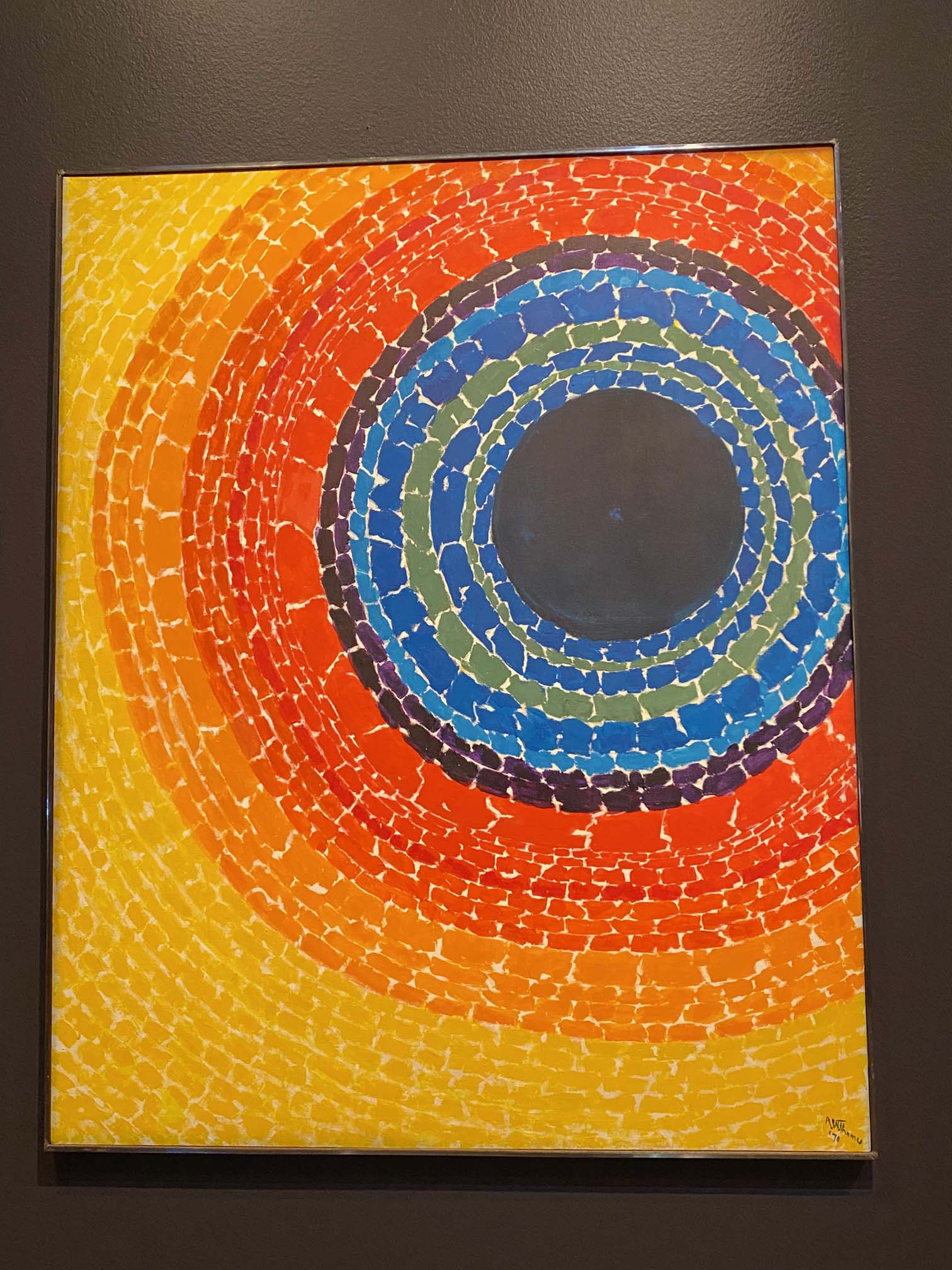
1970 acrylic The Eclipse, based on the March 7, 1970 total solar eclipse. Courtesy: Smithsonian American Art Museum.
1973 acrylic Celestial Fantasy. Courtesy: Smithsonian American Art Museum.

Click here to read more in Denver’s exhibition guide and watch this short glimpse of the galleries below:

Listen to curator Rory Padeken discuss Alma Thomas’s life and work with artist Jordan Casteel, choreographer and dancer Cleo Parker Robinson, and floral artist Breigh Jones-Coplin.

O’Keeffe Above and Beyond the Grid

Six years before she became transfixed with the drama of the colorful New Mexico desert, Georgia O’Keeffe began translating another magnificent, magical view from her skyscraper home in Manhattan. You can see all her transformational aerial cityscapes in Georgia O’Keeffe: “My New Yorks” on view at Atlanta’s High Museum of Art through February 16, 2025.

Created by the Art Institute of Chicago, the show assembles Georgia’s breakthrough city paintings and puts them squarely into the context of her better-known nature close-ups and other modernist takes – just the way she wanted it.

O’Keeffe’s 1927 Radiator Building – Night, New York. Courtesy: Crystal Bridges Museum of American Art

Listen to the Art Institute curators talk about Georgia’s approach to New York landscapes, her life in the city’s Roaring Twenties, and what inspired her walking Manhattan’s grid at a time of of such transformational urban change:

As a total modernist, Georgia couldn’t wait to move into the Shelton Hotel, a brand-new skyscraper, with her brand-new husband (Stieglitz) in 1924. As half of New York’s art-world “power couple” it’s most likely that Georgia was one of the first women to enjoy high-rise living in Manhattan.

O’Keeffe’s 1926 The Shelton with Sunspots, N.Y. Courtesy: Art Institute of Chicago

The Shelton (still there at Lexington and 49th Street) was an apartment-hotel built in Midtown around Grand Central. Although it was first envisioned as a men’s residence, the marketing team soon pivoted a more expanded market with newspaper ads that would attract women, couples, and artists!

Read more about the Shelton, Georgia’s life there, and see 1920s photographs on the Art Institute’s blog post.

Georgia and Alfred moved in, captivated by the views of the East River and rapidly changing Manhattan skyline, where new skyscrapers were popping up like daisies.  Alfred took photographs and Georgia recorded ths shifting light, atmosphere, and moods of the rapidly changing landscape.

O’Keeffe’s 1928 East River from the 30th Story of the Shelton Hotel.
Courtesy: New Britain Museum of American Art.

As the exhibition demonstrates, Georgia didn’t limit herself to urban landscapes at the time. She was still depicting the natural world, but was determined to channel the rising modern city.  At the time, Alfred and her fellow artists strongly discouraged her from displaying her urban work, arguing that painting cityscapes was “best left to the men.”  You can just imagine what our Georgia thought about that! Naturally, it was full steam ahead! 

Before Google Street view, Georgia walked the Midtown Grid, exploring (and remembering) her neighborhood streets as they transformed into skyscraper canyons. More high rises! The Empire State Building! Rockefeller Center!

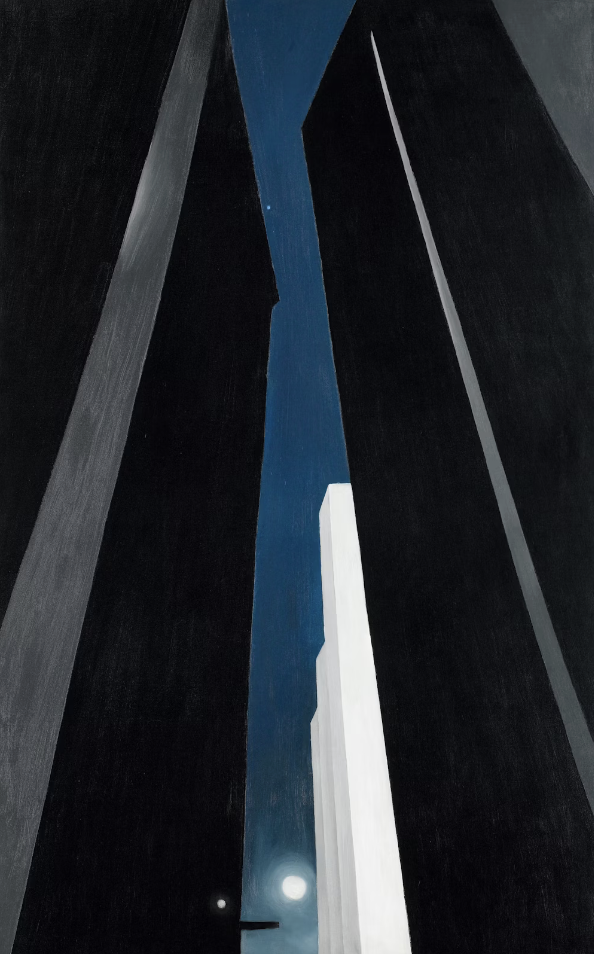
O’Keeffe’s 1926 City Night. Courtesy: Minneapolis Institute of Art
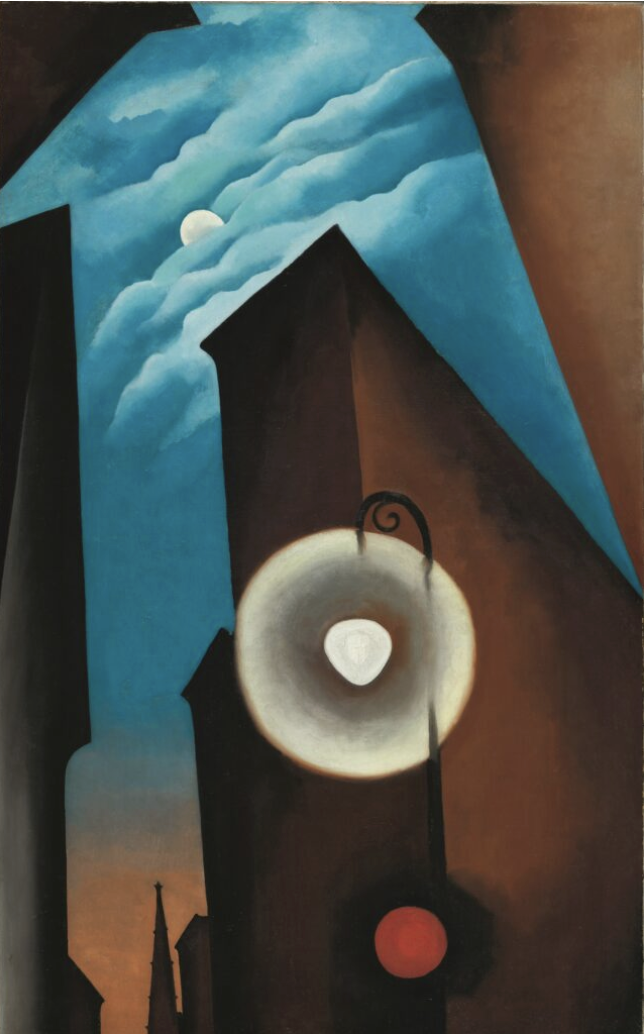
O’Keeffe’s 1925 New York with Moon. Courtesy: Carmen Thyssen Collection

Who knows if Georgia ever experienced Manhattanhenge, but she certainly enjoyed the verticality and sky views between the buildings.  A nature-lover, modernist, and virtuoso painter! 

Despite Stieglitz’s misgivings about her city paintings, when she finally had her annual one-woman show at his gallery, her city painting was the first work that sold!

The curators have hung some of Georgia’s paintings just as she displayed them – side-by-side flower close-ups, other nature-inspired works, and City views – to provide the full experience of a modern woman’s mastery.

O’Keeffe’s 1924 From the Lake, No. 1.
Courtesy: Des Moines Art Center
O’Keeffe’s 1929 Black Cross, New Mexico.
Courtesy: Art Institute of Chicago

For more, here’s a longer discussion about Georgia rip-roaring 1920s life and work by one of the Chicago Art Institute curators for Georgia O’Keeffe Museum members.

Contemporary Artists Talk with Thomas Cole

There’s a big conversation going on about epic landscapes, people’s impact upon the wilderness, and personal connections to nature. It involves four contemporary artists and American master Thomas Cole, mid-19th century landscape painter and visionary, through February 12 at the Albuquerque Museum.

Plus, visitors are able to step back in time to visit Cole’s studio, arranged much as it was at the moment of his untimely death at the age of 47 – an unfinished canvas, paint palettes, his paint box, plaster casts, and mementos of his wilderness walks and trips abroad.

1835-1845 paint box, palette, and tools in Cole’s studio. Courtesy: Greene County Historical Society’s Bronck Museum.

This section of the four-in-one exhibition is Thomas Cole’s Studio: Memory and Inspiration. The curators have also surrounded the studio recreation with a wide range of Cole’s studies and finished works, including his last completed commissioned work. Take a closer look in our Flickr album.

Unfinished Landscape with Clouds, paints, plaster casts, and furniture in Cole’s studio when he died in 1848. Courtesy: Thomas Cole National Historic Site.

Cole redefined American landscape painting in the 1830s and 1840s by merging the style of romantic European landscapes with the dramatic skies, vistas, and mountains of New York’s Adirondack wilderness. His work kick-started the Hudson River School of landscape painting, and by the time of his untimely death at age 47, he was America’s best known and best loved artist.

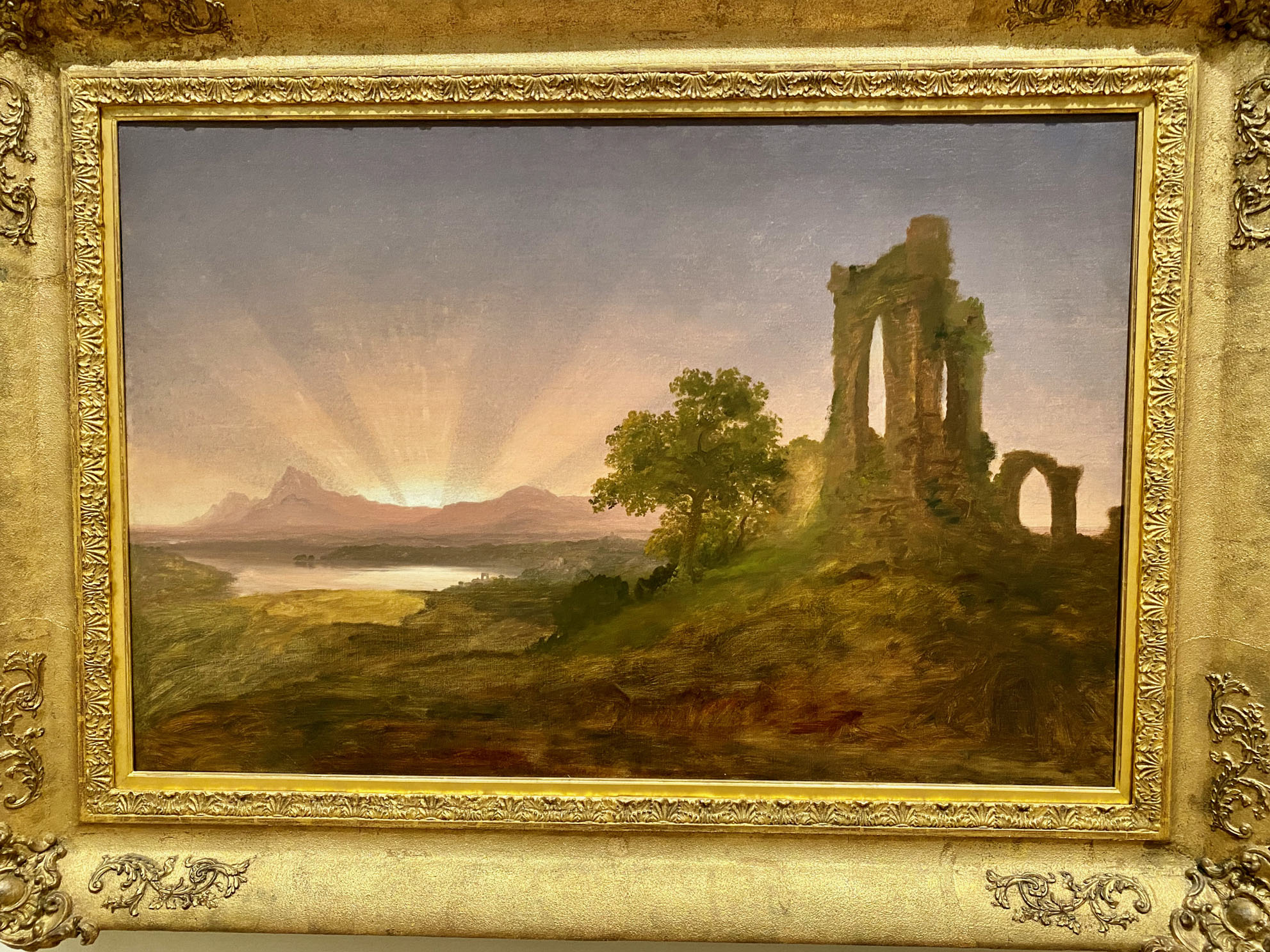
Cole’s 1848 Gothic Ruins at Sunset, an unfinished work from his studio. Private collection.
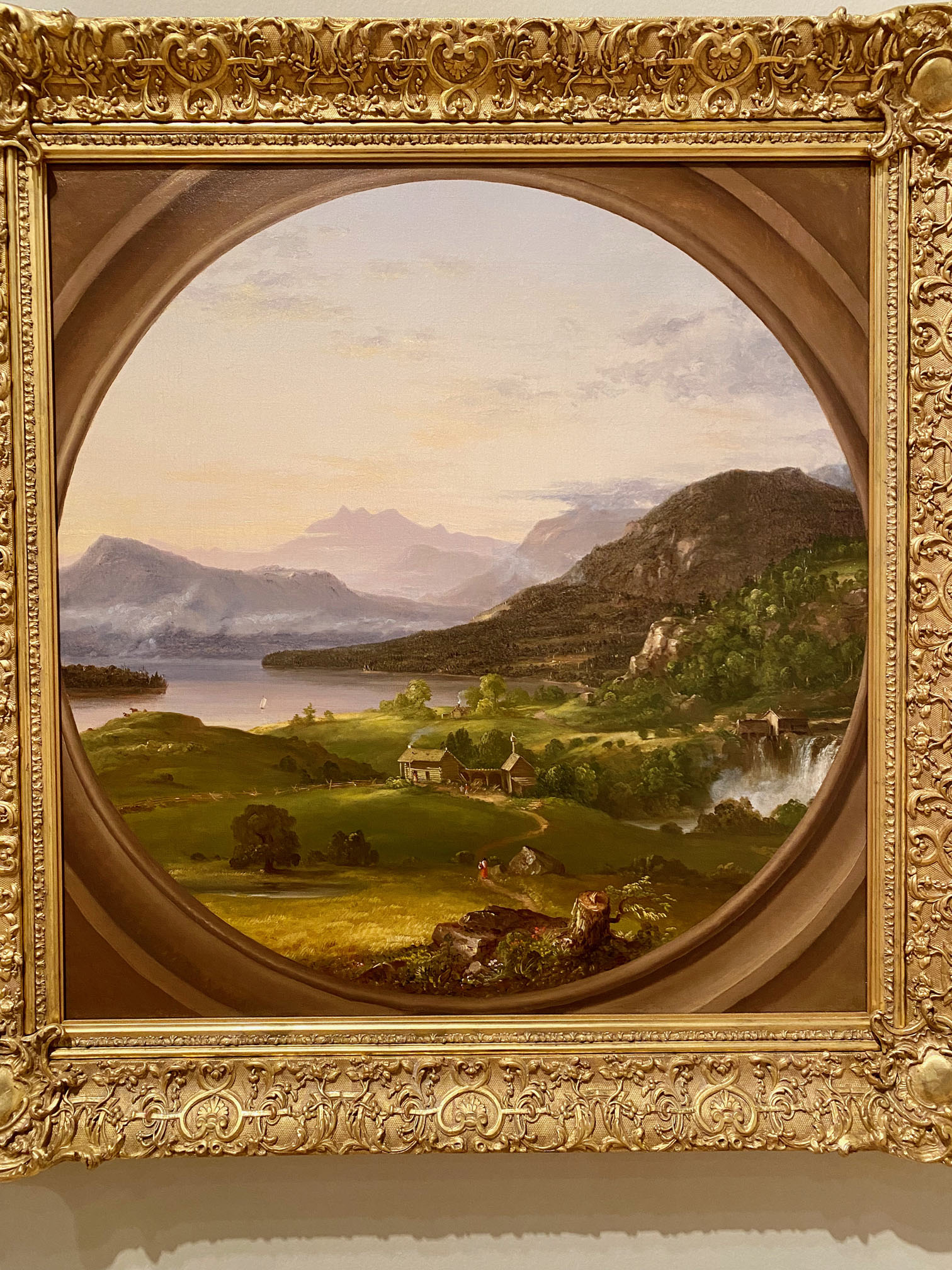
Cole’s 1846 Schroon Lake, showing a civilized landscape at the edge of mountain wilderness. Courtesy: Adirondack Experience

During his life (1801-1848), Cole witnessed how pristine American wilderness was changed by proliferating settlements, roads, bridges, mills, and commerce along the rivers. Sometimes he chose to paint sights, like Niagara Falls, minus human intrusion; other times he gently inserted “civilization” into magnificent landscapes, as in Schroon Lake.

Cole had been a mentor to innovative landscape painters like Durand, Church, Kensett, and Cropsey. When Cole passed away suddenly, they were devastated. His wife left his studio just as it was, and for the next ten years she welcomed painters to make the pilgrimage to visit it, spend time, and gain inspiration.

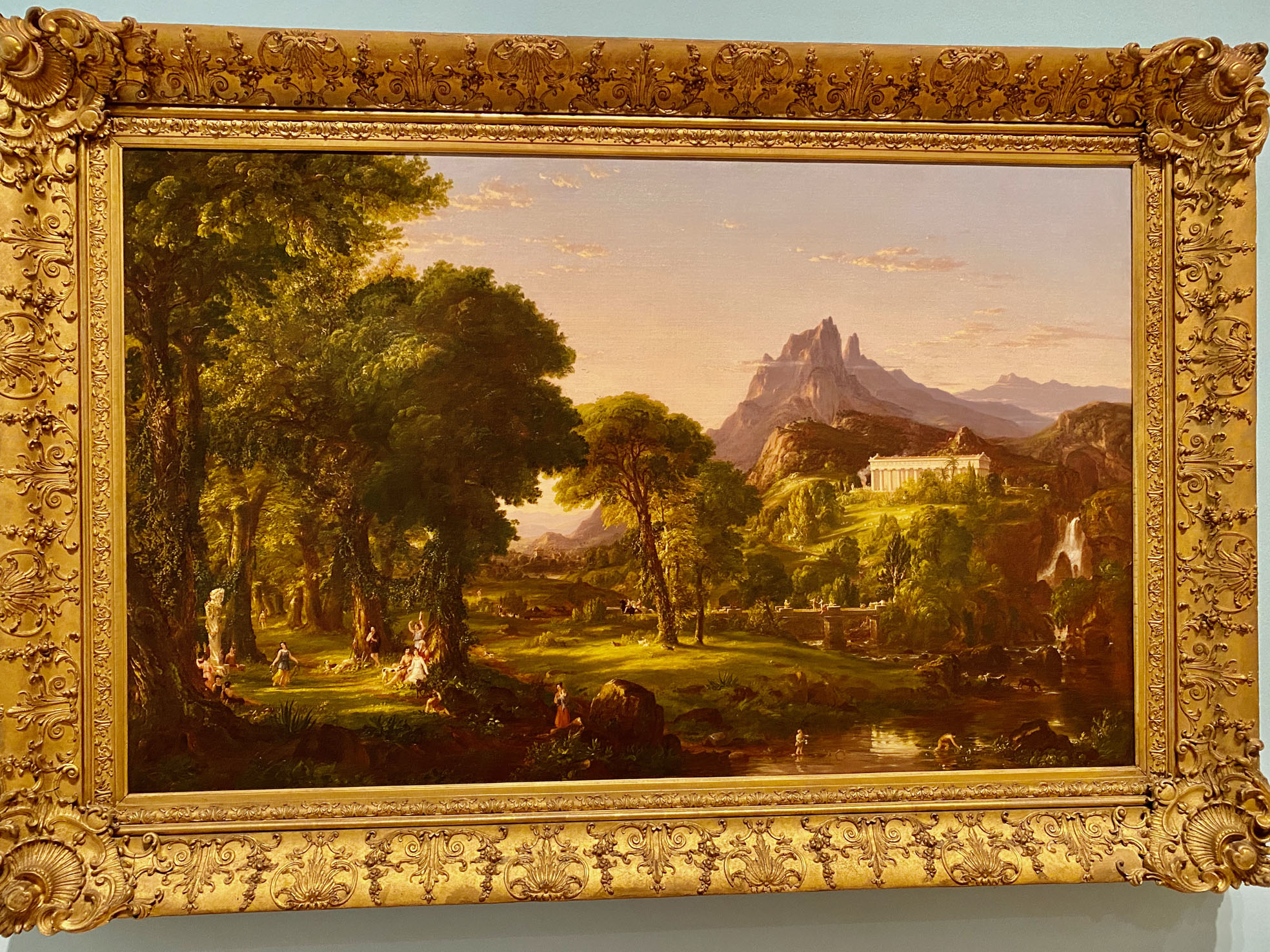
Visitors enter this exhibition and confront Cole’s large 1838 work, Dream of Arcadia, showing a mythical time when civilization existed in harmony with nature.  Can this ideal state truly exist?

Thomas Cole’s 1938 Dream of Arcadia. Courtesy: Denver Art Museum.

The Thomas Cole National Historic site, which organized three of the four shows, answers this question through the eyes of two well-known contemporary artists – Kiki Smith, who owned a house along a creek a short distance from where Cole lived, and Shi Guori, who created camera obscura images at Hudson Valley sites where Cole stood and painted.

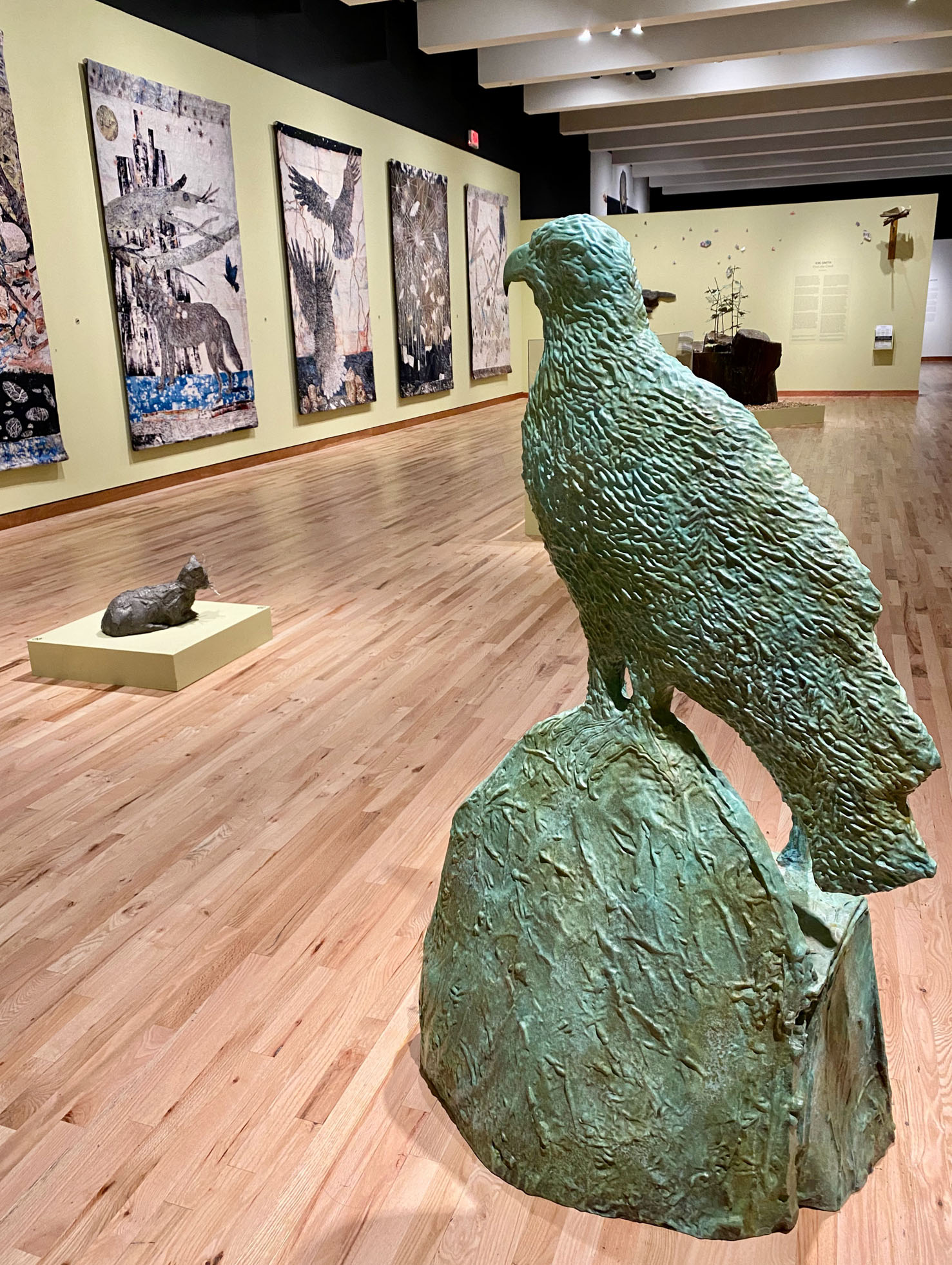
Kiki Smith: From the Creek is an immersive exhibition populated by the birds, beasts, insects, and plants along Catskill Creek – an area that Cole walked and knew well.

Kiki Smith’s 2016 bronze Eagle in the Pines in gallery with 2012-2014 jacquard tapestries

Visitors look up, down, and around to see owls, eagles, wolves, and pheasant peering back at them from perches, tapestries, frames, and vitrines…observing and being observed. Take a look at here.
2019 bronze Coxsackie sculpture of owl at the exhibition entrance.
Detail of Kiki Smith’s 2012 Cathedral jacquard tapestry (published by Magnolia Editions).

Kiki’s work always brings an air of other-worldly mystery. Here, it’s easy to enjoy all of her varied creations, which display her deep connection to nature and ask us to contemplate the cycles of life that busy people sometimes forget to notice. Cole’s paintings had the same impact.

Shi Guori’s Katerskill Falls, New York, July 26-28, 2019 – a 72-hour exposure made where Thomas Cole sketched in 1824. Courtesy: private collection.

Shi Guori: Ab/Sense – Pre/Sense presents monumental camera obscura images of landscapes Cole painted in the Hudson Valley 180 years ago. When he was growing up in China, Guori experienced the shock of rapid environmental disruption as Mao’s Cultural Revolution transformed the countryside.

Guori studied Cole’s documentation of similar 19th-century transformation in the Northeast, and traveled back to sites that Cole documented to bear witness to natural settings – somewhat still undisturbed – that resonated with Cole.

Guori built large camera-obscura tents, sat inside for up to 72 hours, and exposed light-sensitive paper to create his images. Images of Cole’s oil paintings at the same site are mounted nearby with Guori’s meditations on the experience.

Shi Guori’s camera obscura image The Clove, Catskill Mountains, New York, April 25, 2019. Courtesy: the artist
Basis for camera obscura work by Shi Guori: Thomas Cole’s 1827 oil The Clove. Image: Connecticut’s New Britain Museum of American Art.

In one case, Guori turned Cole’s own sitting room into a camera, capturing not only furniture that he would have used, but showing the image of nature that Cole surely would have spent hours gazing upon. View more of Guori’s work here.
Shi Guori’s camera obscura image View of the Catskill Mountains from Thomas Cole’s House, August 12, 2019 – which turned Cole’s sitting room into a camera. Courtesy: the artist

The fourth exhibition, Nicola López and Paula Wilson: Becoming Land, present large-scale environmental meditations on Southwestern desert landscapes. The Albuquerque curators selected these two popular New Mexico artists to get a bit of cross-cultural discussion going with Mr. Cole.

Glimpse some of the work in their gallery here.

Wilson, who works in Carrizozo, creates gigantic, mixed-media installations that prompt viewers to consider the interconnection among different people, desert landscapes, agricultural technologies, and even the debris left by civilization.

Paula Wilson’s 2021 monumental printed and painted installation, Yucca Rising. From the artist.

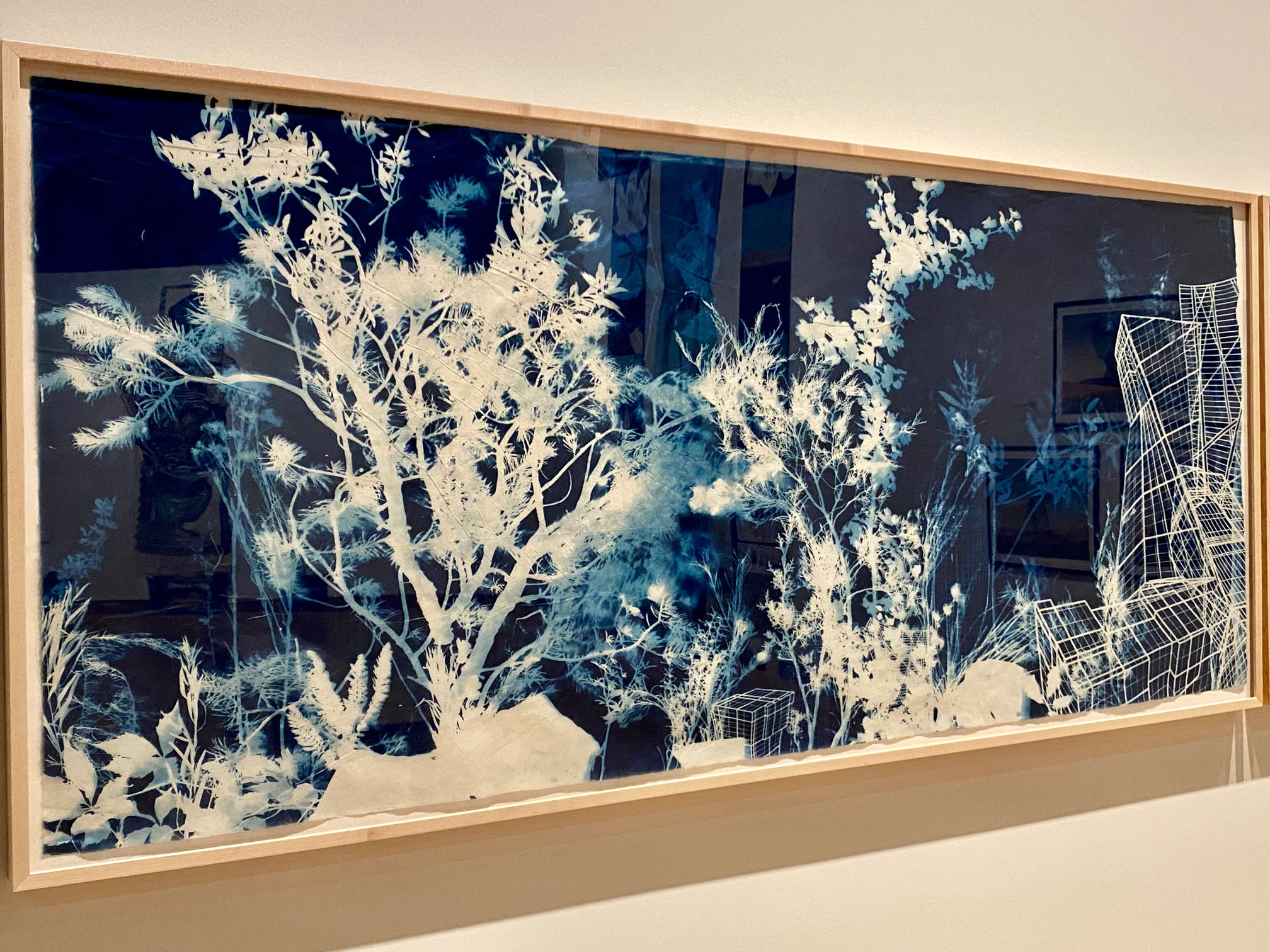
López, who works and teaches in New York, presents a large-scale cyanotype. Unlike Guori, who traveled to the Catskills to create his ghostly images with light, López was unable to travel during the pandemic and made this monumental work at home with the materials around her – a driveway, nearby desert plants, and the blazing New Mexico sun.
Detail of 2021 NeverWild cyanotype by Nicola López – ghostly images of New Mexico plants dwarfing mysterious architectural structures in the desert.

Congratulations to the Albuquerque Museum for inviting Thomas Cole’s team to collaborate in mounting such a beautiful, thought-provoking show.