Onstage at Theatre Picasso at Tate Modern

To celebrate the 100th birthday of its most acclaimed Picasso painting – and its own 25th birthday – the Tate Modern decided to commission a team of creative curators and designers to create an innovative experience and new lens through which to view an artist who seems to define 20th-century modernism.

Theatre Picasso uses a proscenium-like stage, tiered seating, and a big screen to give everyone a backstage pass to view The Three Dancers and nearly 50 other works by the master himself. It’s all on view through April 12, 2026.

How do you create a fresh viewpoint on Picasso?
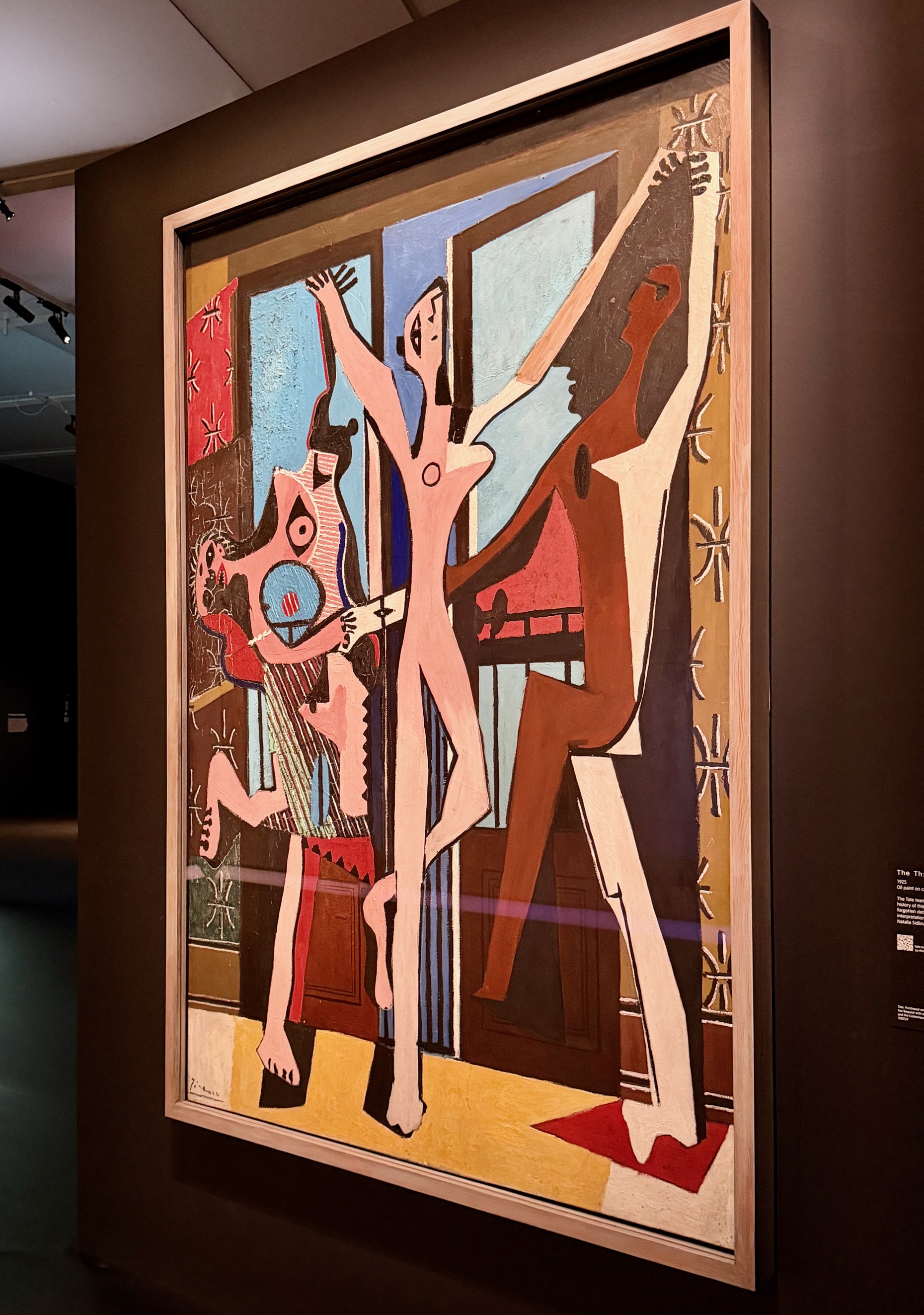
Picasso’s 1925 The Three Dancers – one of the Tate’s best-known works

The Tate Modern recruited two art-world mavericks – MacArthur (“genius”) grant recipient Wu Tsang and curator/author Enrique Fuenteblanca – who came up with a plan to stage the art in the same theatrical way that Picasso lived, created, and shape-shifted his entire life. .  Check out our favorite views in our Flickr album.

The exhibition entry is a nearly blank, but vigorously painted wall that only increases the suspense about what you will encounter inside – very much like entering a theatre with pent-up anticipation about the performance you’ll experience.  Some of the first images you see are images of Picasso hamming it up in makeshift costumes and headdresses in photos and film stills taken by his avant-garde pals – a reminder of his embrace of big personality, outsize physical statements, and alter egos. He was always performing in public.
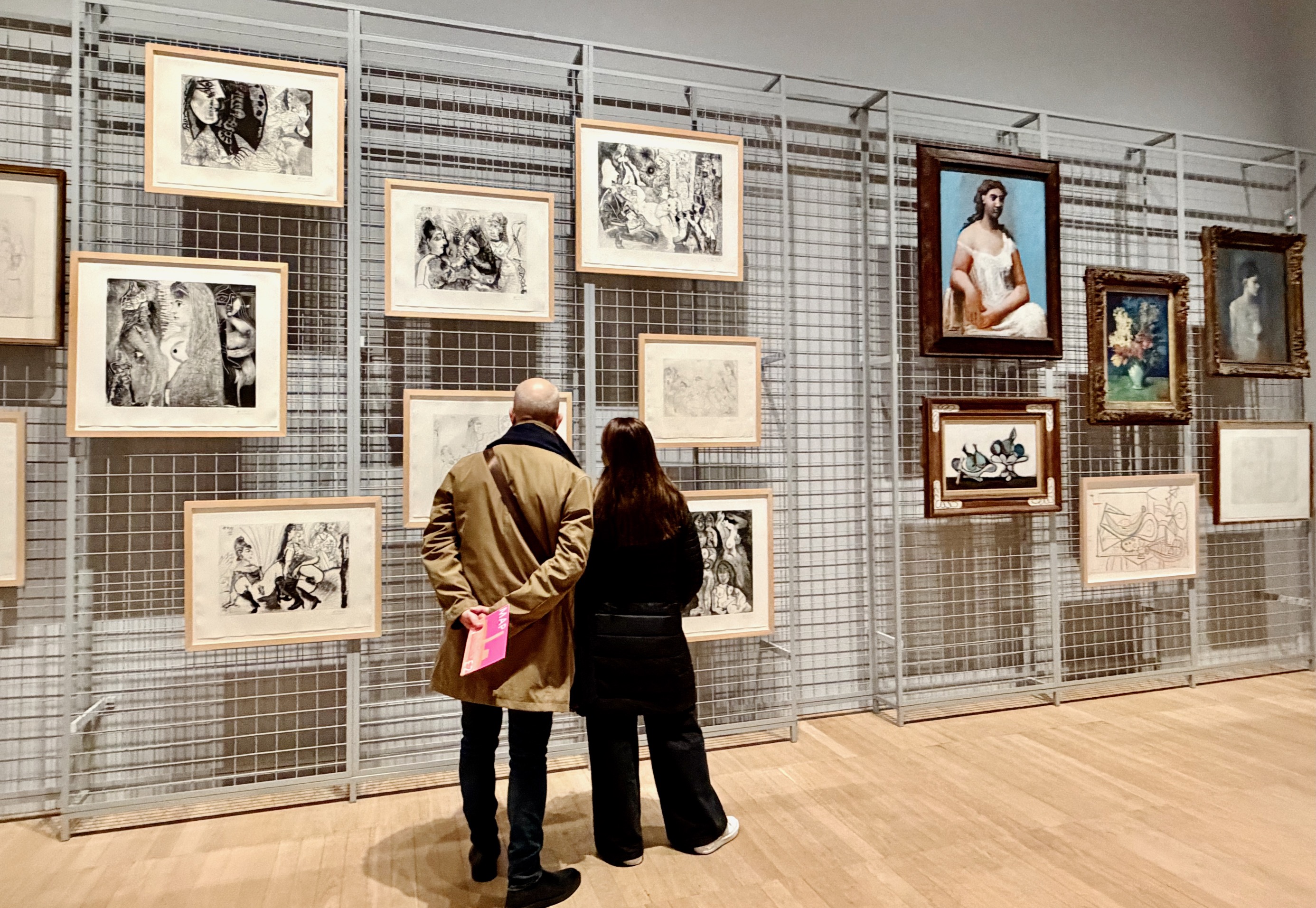
Performativity: Visitors scan a “backstage” wall of Picasso’s theatrically staged and posed scenes, some classical and some scandalous but always being showcased

A winding path leads next to a gallery with fittings hung with artwork that creates a slightly backstage feel. It’s a wall of smaller etchings, prints, and paintings from Picasso’s entire career, all selected to show how he loved creating a compositional frame for his sitters, groups, and abstracted still lifes. The curators want us to think about his performativity.
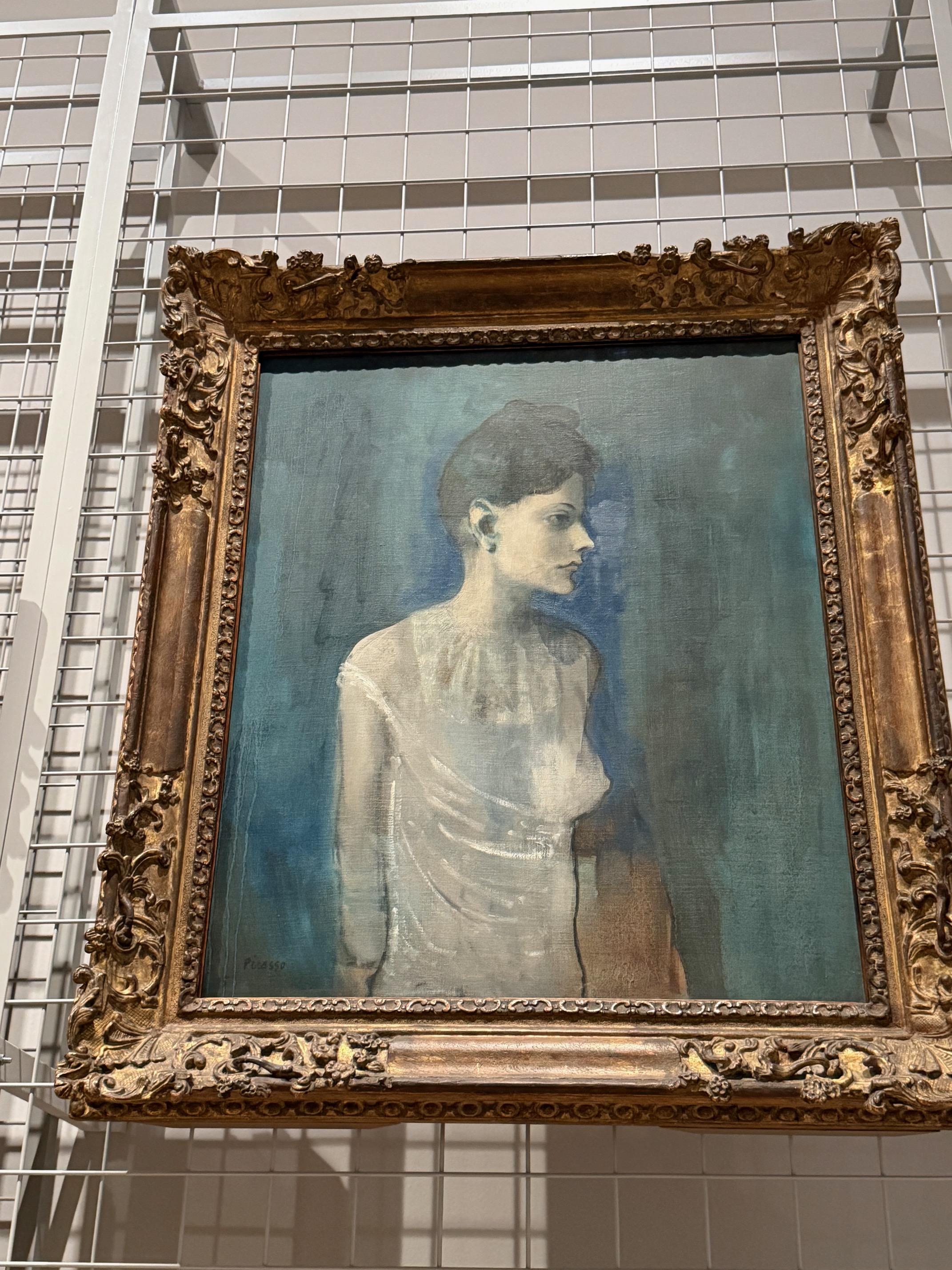
Picasso’s 1905 Girl in a Chemise – initially painted as a depiction of a young man
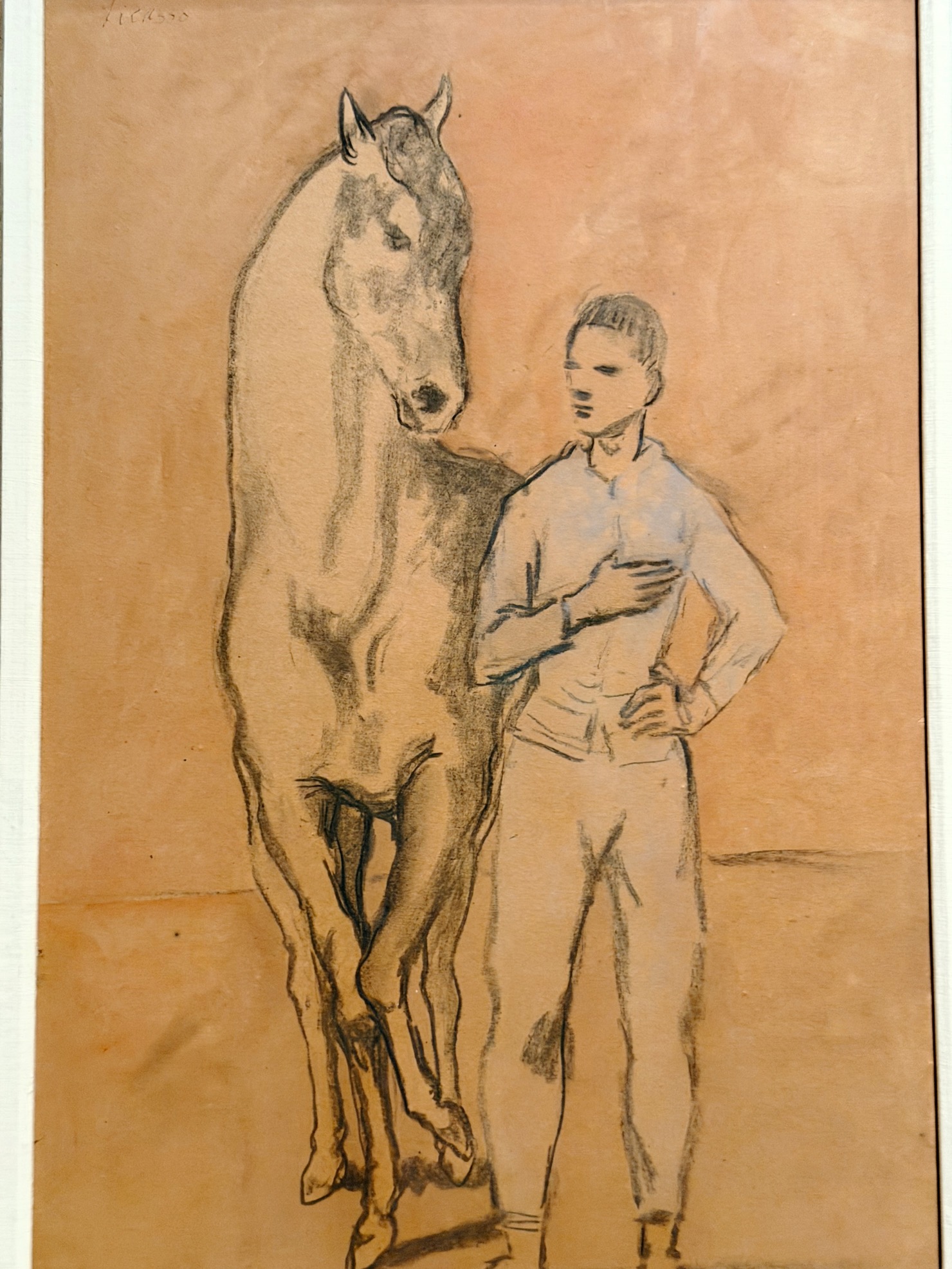
Picasso’s 1905-1906 watercolor and gouache Horse with a Youth in Blue.

Walking further, you see a photo from a 1932 exhibition that Picasso famously “staged” himself, followed by a wall of wooden supports that definitely looks like you’re manuevering behind a stage set. There are two carefully placed Picasso etchings that reference Rembrandt that drive home the point about Picasso’s heightened theatricality, including a print with the chaotic mass of humanity hovering about a stage set with unusual players.
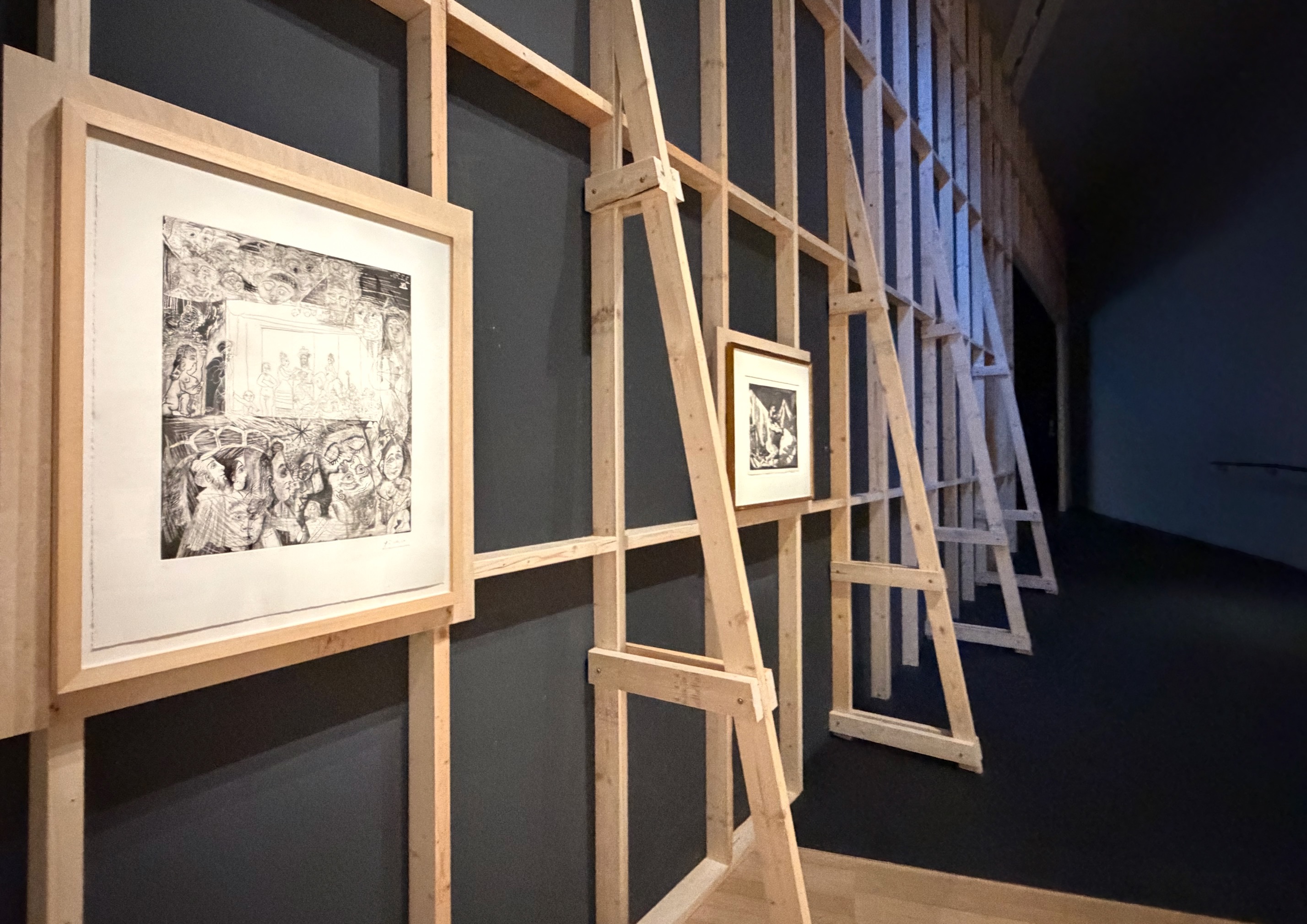
Two of Picasso’s etching and aquatints mounted “backstage” – 1970 Ecce Homo after Rembrandt IV State V 03-02-1970 and 1936 Faun Revealing a Sleeping Woman (Jupiter and Antiope, after Rembrandt).

Around the corner into the main exhibition space, you see it all – a large movie screen, a film showing Picasso in action, and a proscenium across the room that functions like an aperture through which to view more Picassos. An audience sits in rapt attention watching the movie, which features drawings that materialize in thin air from Picasso’s hand.
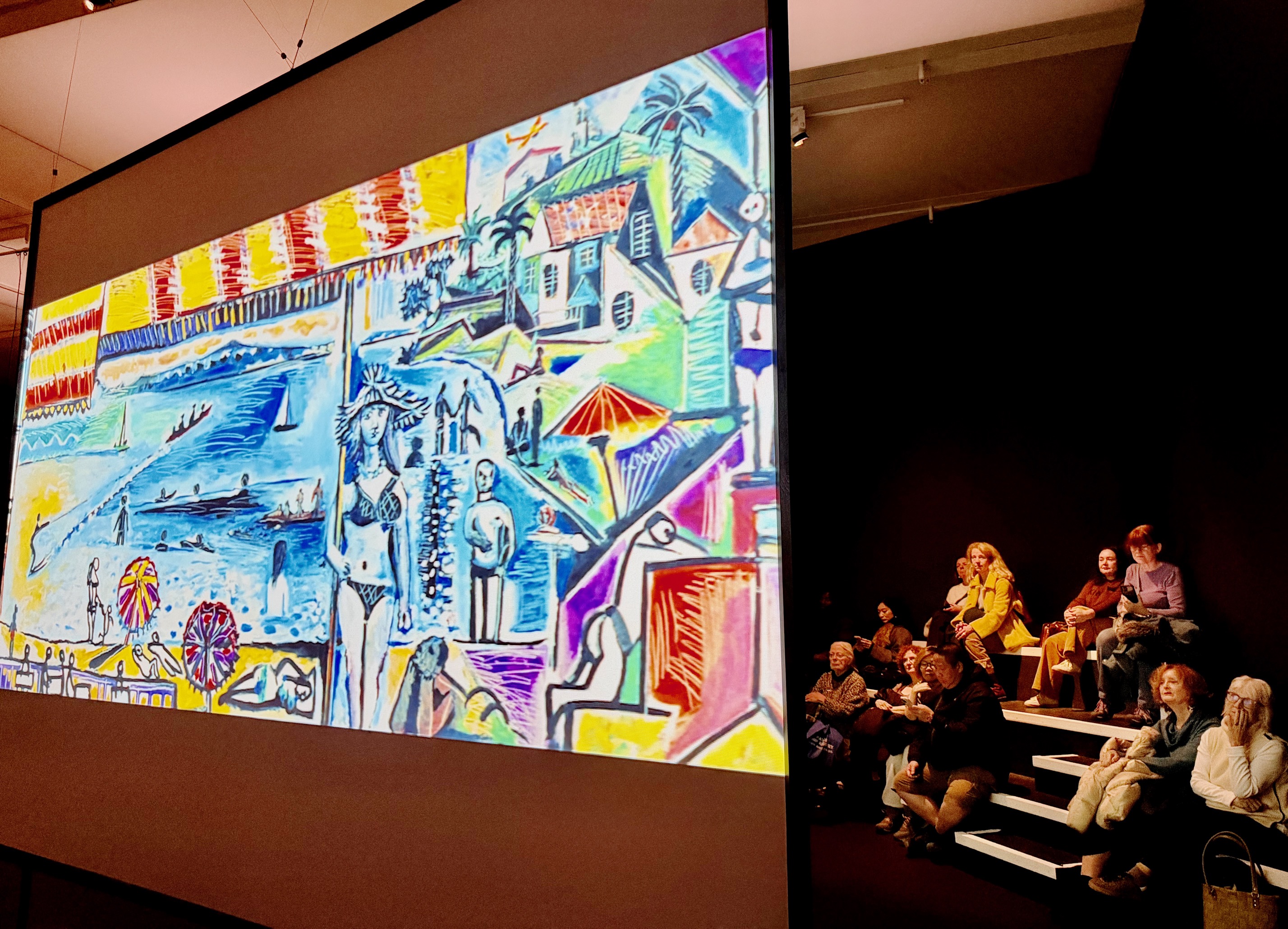
From behind the screen: audience watches Henri-Georges Clouzot’s 1956 film The Mystery of Picasso. Courtesy: Gaumont

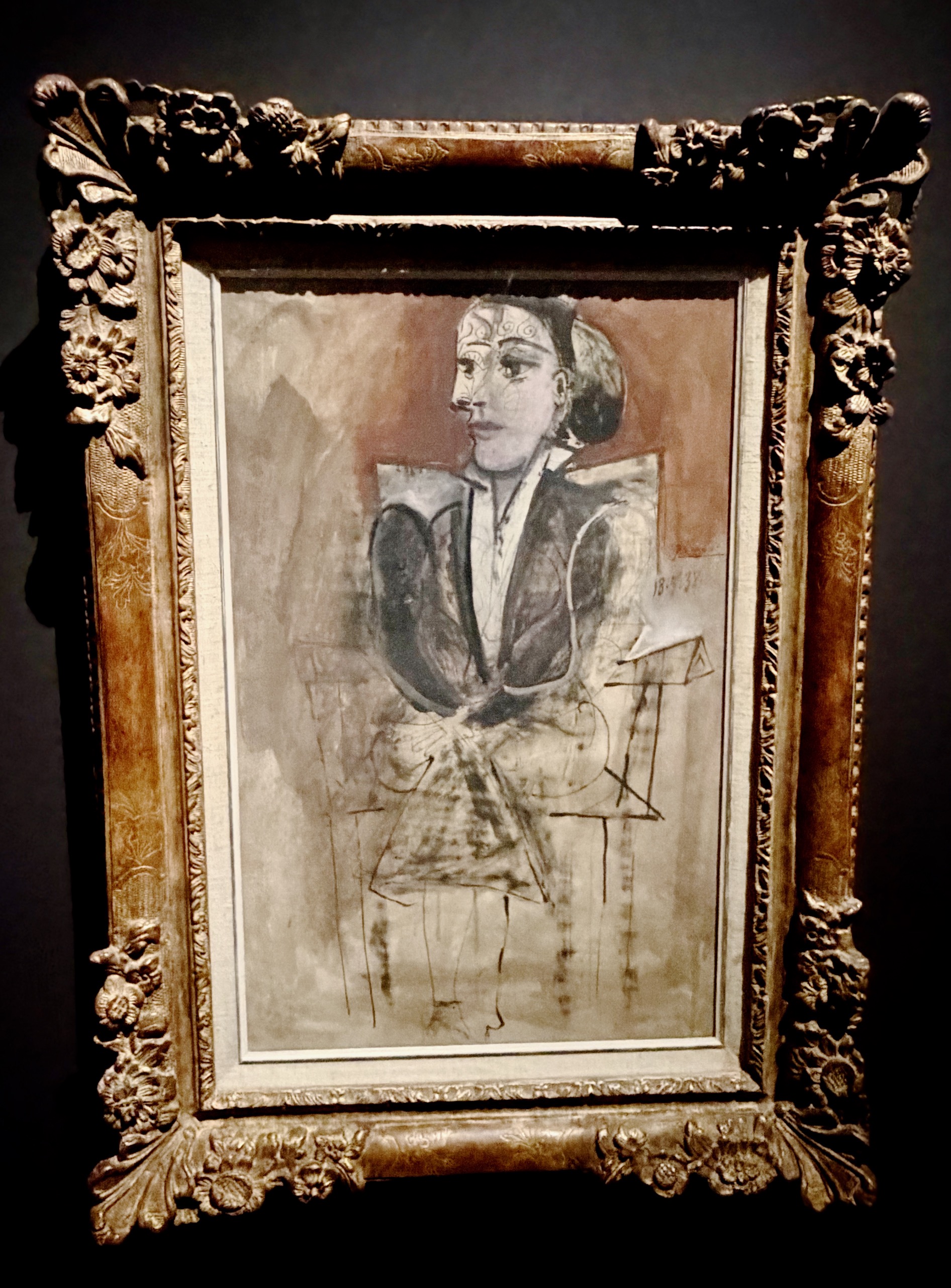
An inviting exhibition space opens out to the left, featuring works a range of works collected by the Tate (along with a few on loan from Muséée international Picasso-Paris) – cubist portraits, early still life collages, dramatically posed models, action sketches of bullfights, and his post-War lithograph Dove, which became the symbol of the international peace movement. It highlights how the artist staged and experimented with people, events, and symbols in his art.
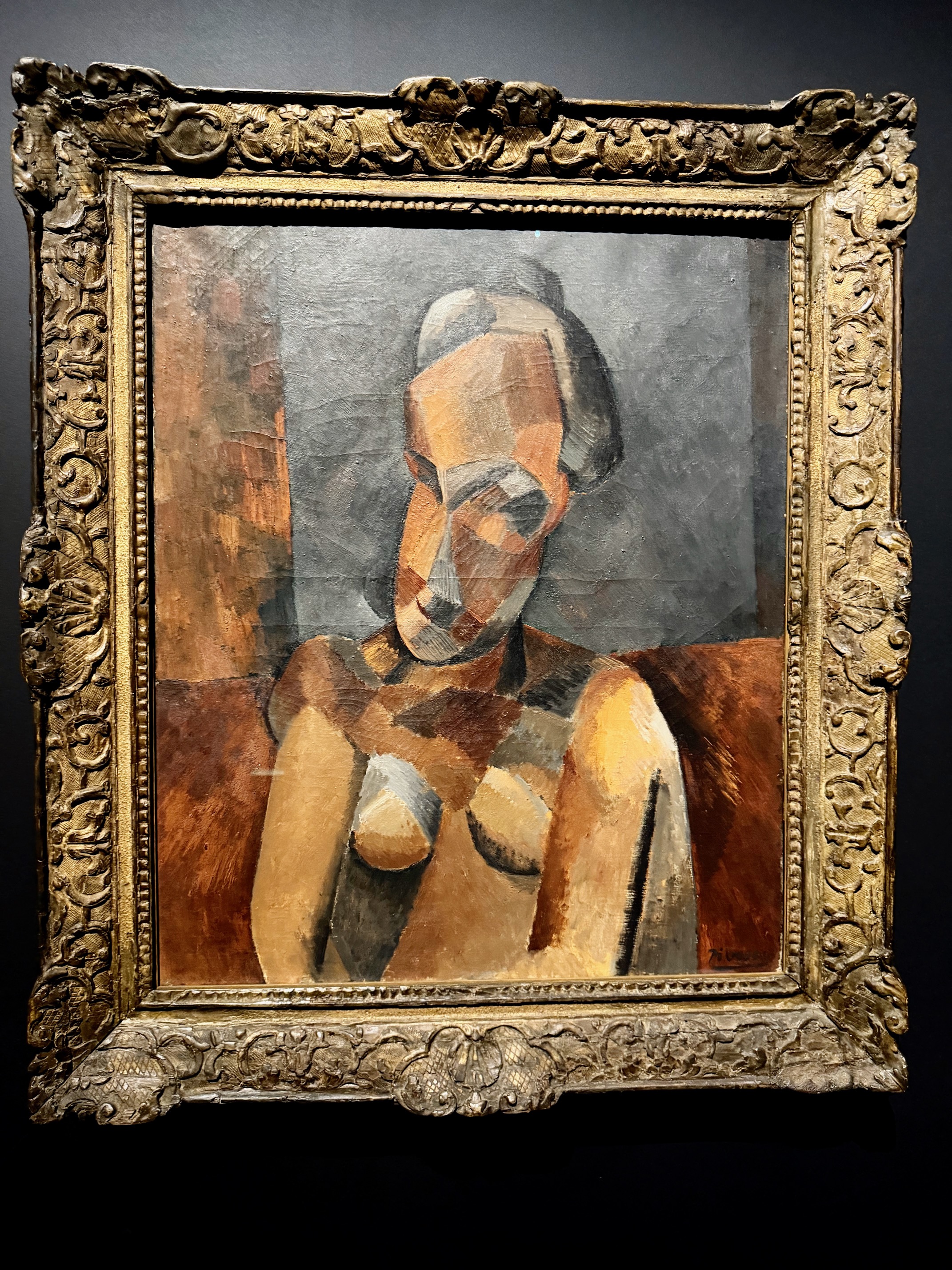
Contemplating the museum’s collecting choices: Picasso’s 1909 oil Bust of a Woman.
Picasso’s 1938 ink, gouache, and oil Dora Maar Seated.

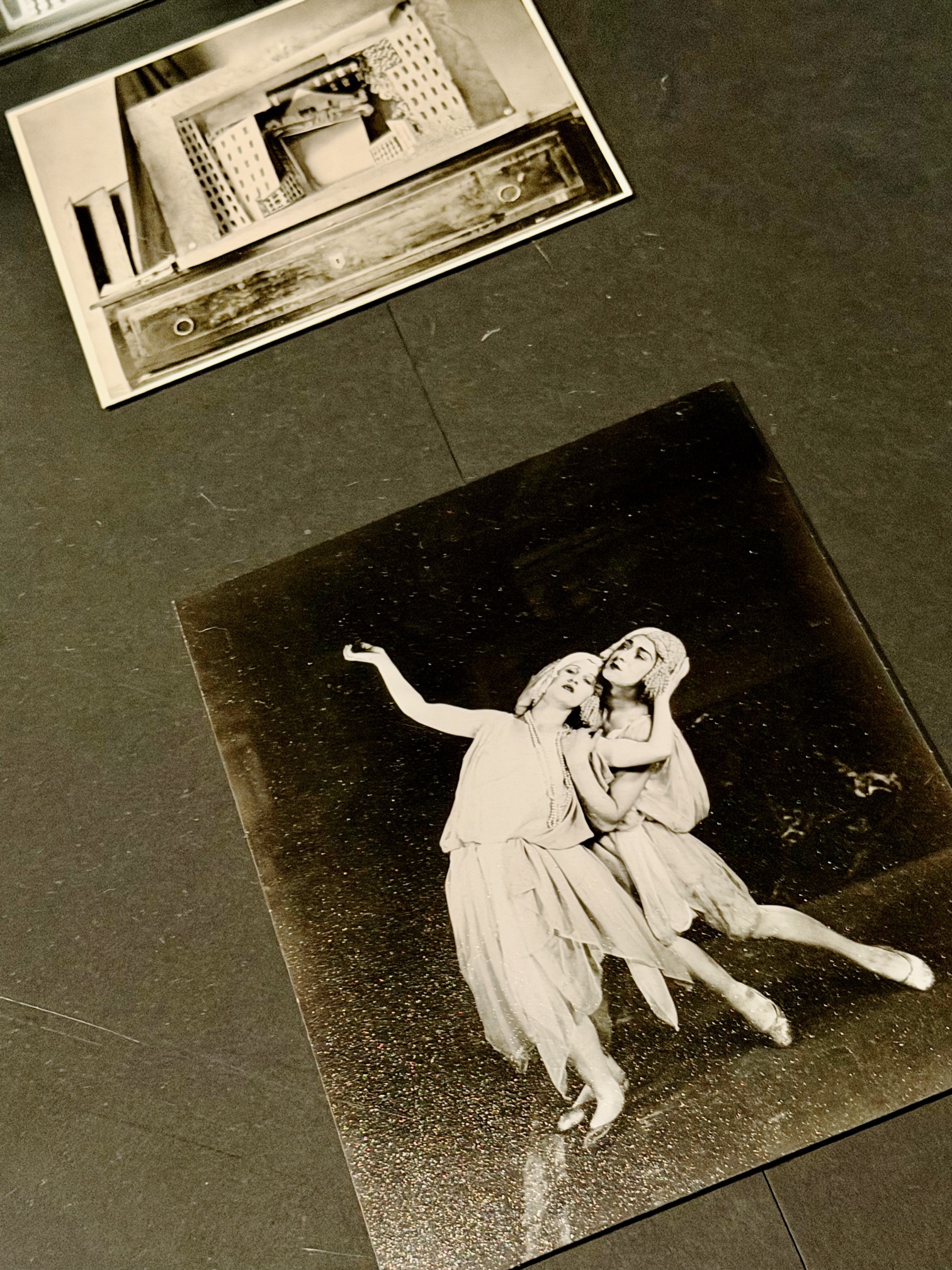
The journey all leads to a punctuation point – a view into Picasso’s early enthusiasm and aptitude for live theater, dance, artifice, and fantasy of the theater itself. Cases of small photos and sketches that chronicle Picasso’s designs for stage drops, costumes, and sets for the Ballet Russe – a legendary collaboration that boosted Picasso’s fame and fortune.
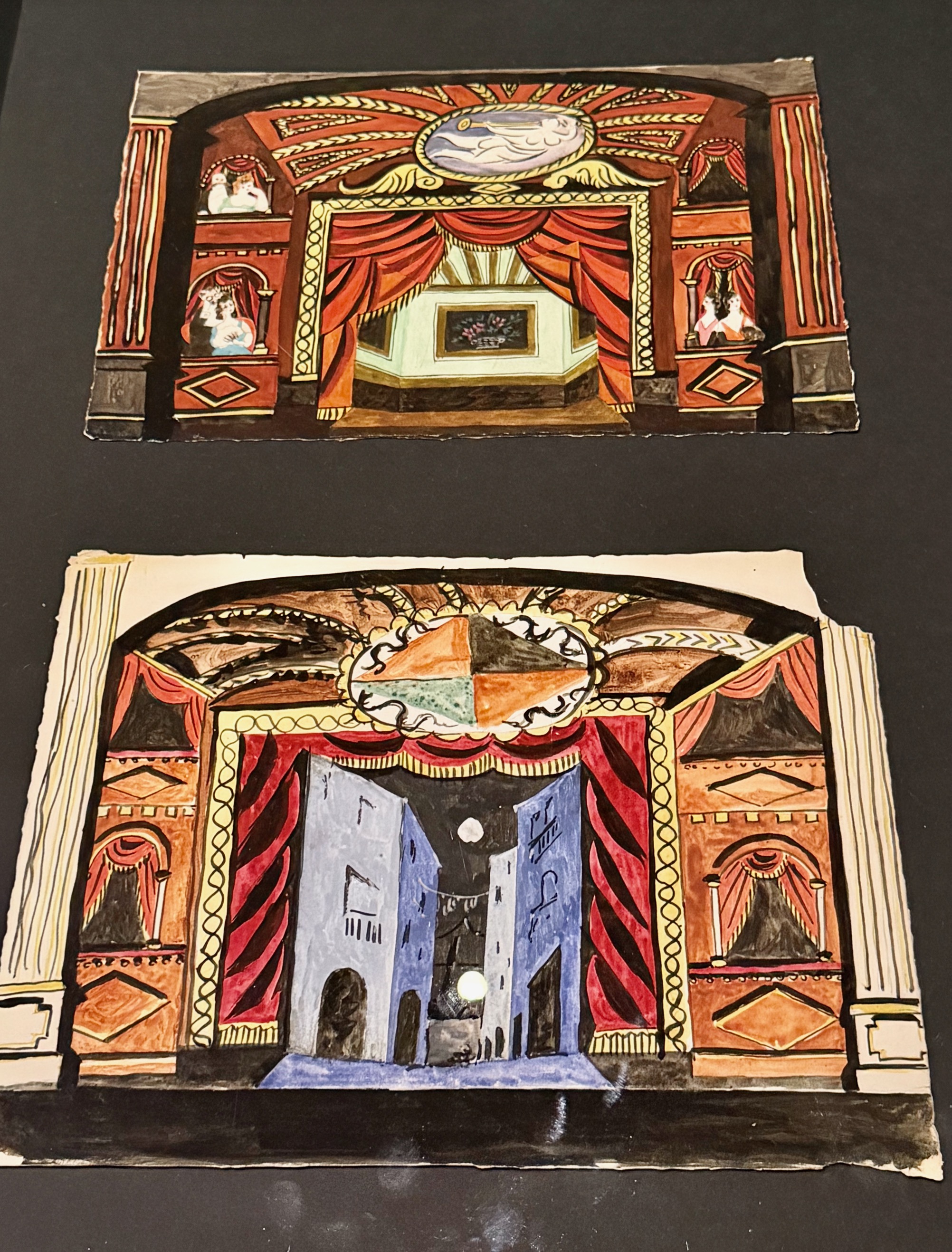
Copies of Picasso’s set designs for Sergei Diaghilev’s Ballets Russes: 1920 sketch for the ballet Pucinella and 1921 sketch for Cuadro Flamenco.
1917 photo of the Parade set model for the Ballet Russe; Sasha’s 1927 photo of Venus (Vera Petrova) and Apollo (Boris Lissanevitch) in Picasso’s costumes for Mercure for a rival avant-garde company.

And finally, there’s a full view – from a proscenium stage – of The Three Dancers, in which three performers form a tableau near an open window.
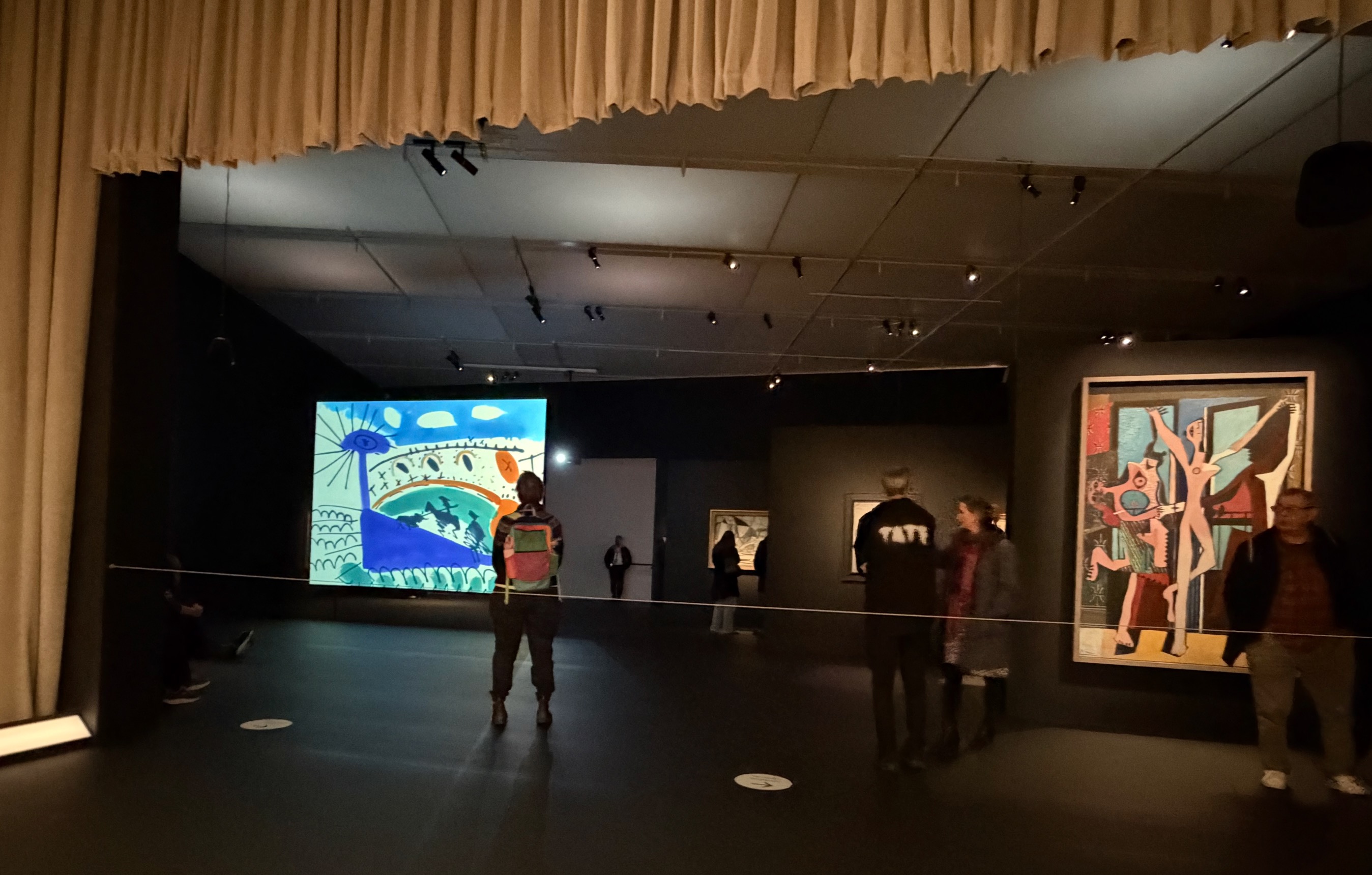
The audience takes the stage: view of Henri-Georges Clouzot’s 1956 film The Mystery of Picasso and Picasso’s 1925 The Three Dancers. Courtesy: Gaumont; the Tate.

Here’s the Tate’s deeper dive into Picasso’s inspiration from popular dance and how he channeled personal trauma and loss into his final painting. No wonder he kept this work particularly close.

And turn around to see the finalé – Picasso’s The Painter and His Model,

The Acrobat, and a dramatic tapestry of one of Picasso’s personae, The Minotaur, that seems like a big, grand theatrical drop curtain. It isn’t, but hits the perfect note to the end of an entertaining, theatrical show about one of the 20th century’s epic performers.
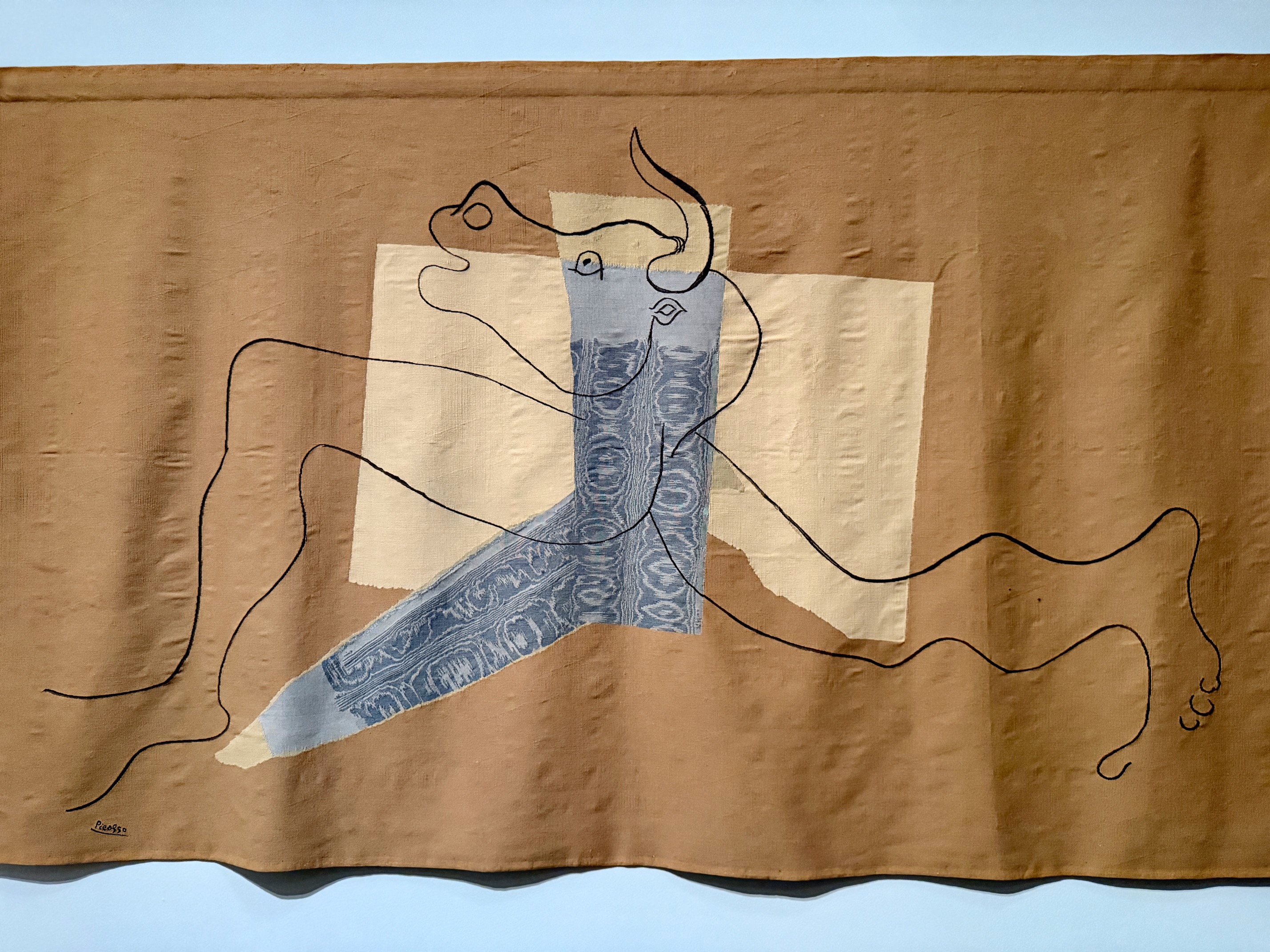
1935 wool and silk tapestry after Picasso’s 1928 Le Minotaur. Courtesy: Musée Picasso, Antibes.

Lillie Bliss and Her Modernist Breakthrough

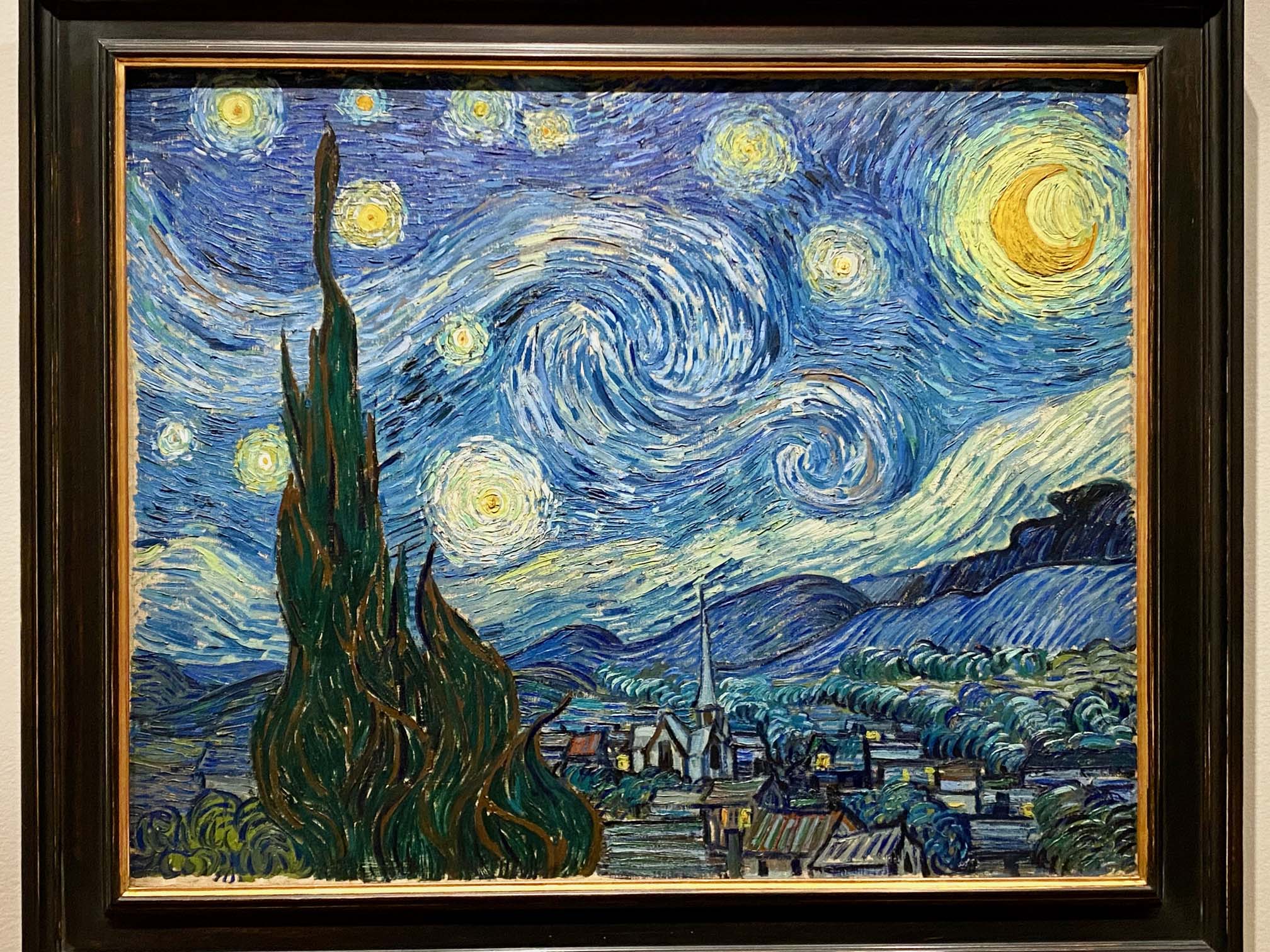
When you peek into the second-floor MoMA exhibition, you’ll see where Van Gogh’s The Starry Night has been holding court for the last few months.

Lillie P. Bliss and the Birth of the Modern, on view through March 29, tells the story of how one woman’s passion for modern art over a century ago formed the basis of the MoMA collection and MoMA itself.

Van Gogh’s 1889 The Starry Night, one of MoMA’s most beloved works.

Bliss was an early American patron of Cézanne, Seurat, Picasso, and Redon at a time when New York society looked askance at modern art’s tilted tables, fractured still lifes, and stippled surfaces. She even contributed to getting the 1913 Armory Show off the ground as a sponsor, art lender, daily visitor, and new-work buyer.

Maybe the constraints of growing up female in the Victorian era gave her an appreciation for the lack of inhibition Picasso’s and Matisse’s colors, Gauguin’s wild Tahitian woodcuts, and Redon’s ethereal woodsy fantasy figures.

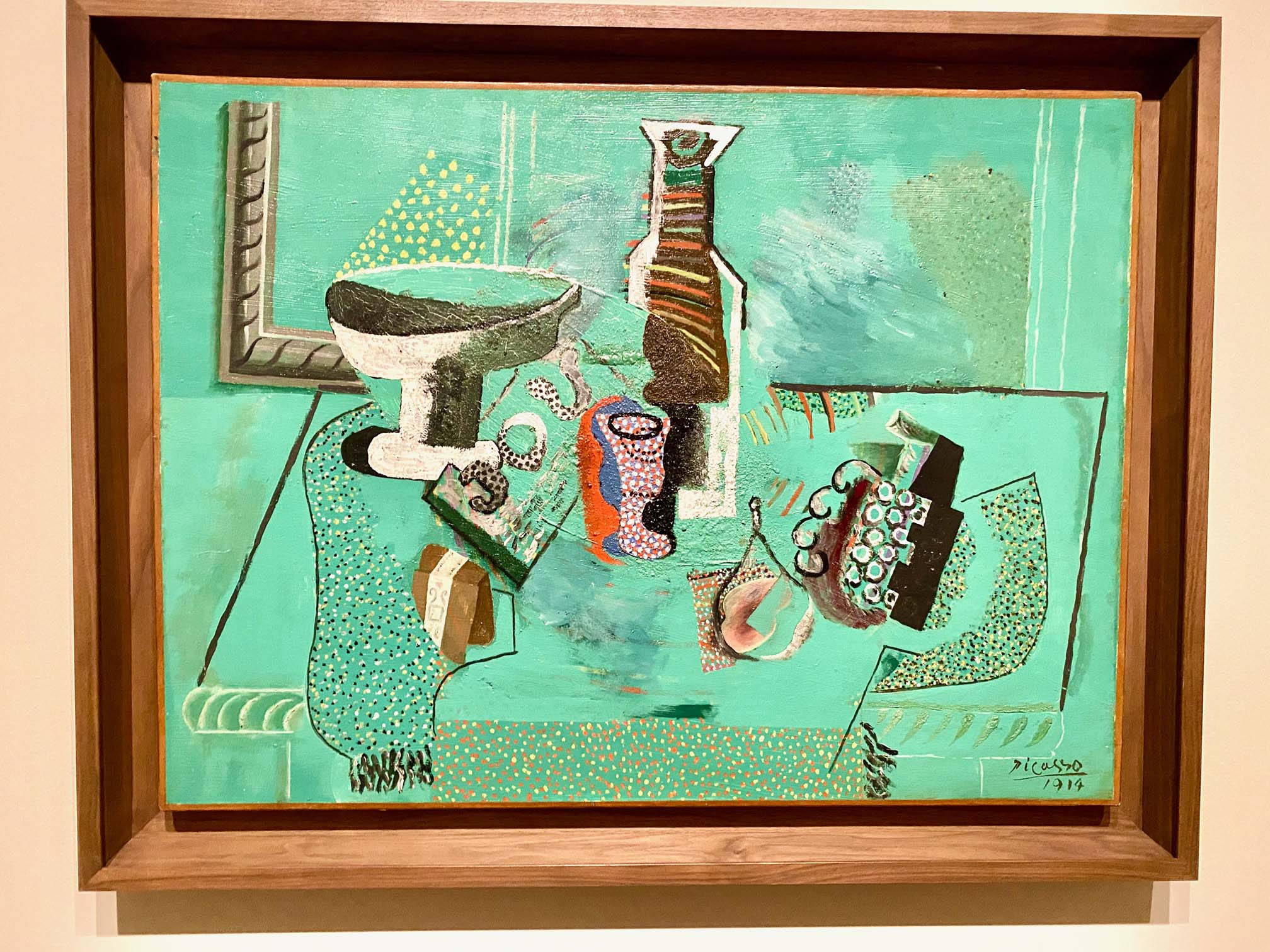
Picasso’s 1914 Green Still Life.

Endless modern-art discussions with art-world friends and mentors Arthur Davies and John Quinn gave her a sophisticated view of all the latest artists and trends. She joined a small group of modern-art lovers to lobby the Metropolitan Museum of Art to show the latest breakthroughs from Europe.

In 1921, the Met acquiesced and borrowed enough art to mount an exhibition of French impressionist and post-impressionist work. Bliss anonymously lent twelve pieces. People came to look, but the Met still resisted acquiring work that it considered too far-out.

When Bliss came into her inheritance in 1923, the pursestrings were unleashed. At age 49, she began to assemble the collection of her dreams via annual European buying trips and estate sales. Where could she show it? 

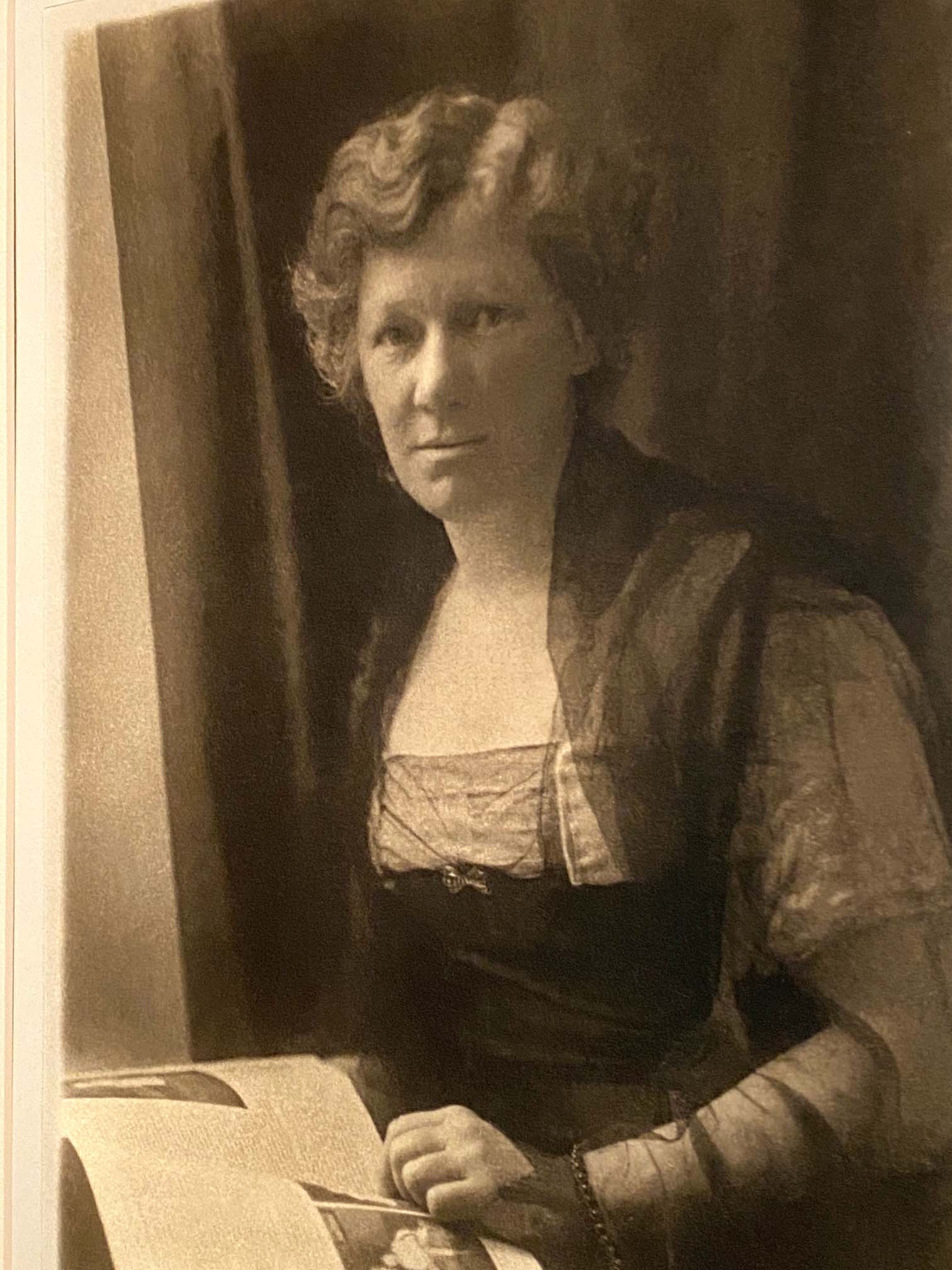
1904 portrait of Lillie P. Bliss

In 1928, she bought a lavish uptown triplex with a two-story gallery. She hung her favorite Cezanne over the grand piano and arranged a “who’s who” of avant-garde masters. Check out The Bather front and center, surrounded by Picassos, Seurats, and Gauguins.

1929-1931 photo of Lillie P. Bliss’s modernist collection hung in the music room of her Park Avenue apartment
Cézanne’s 1895-1898 Still Life with Apples hung at home in the place of honor, above the piano

The next year in a brainstorming session with Abby Rockefeller and Elizabeth Parkinson, the trio decided that New York needed a special place that was devoted exclusively to modern art. MoMA was born!

MoMA’s first exhibition – Cézanne, Gauguin, Seurat, van Gogh – was mounted in rented space at 730 Fifth Avenue, and crowds came.  The exhibition was a huge popular success, even though it coincided with the historic 1929 market crash. 

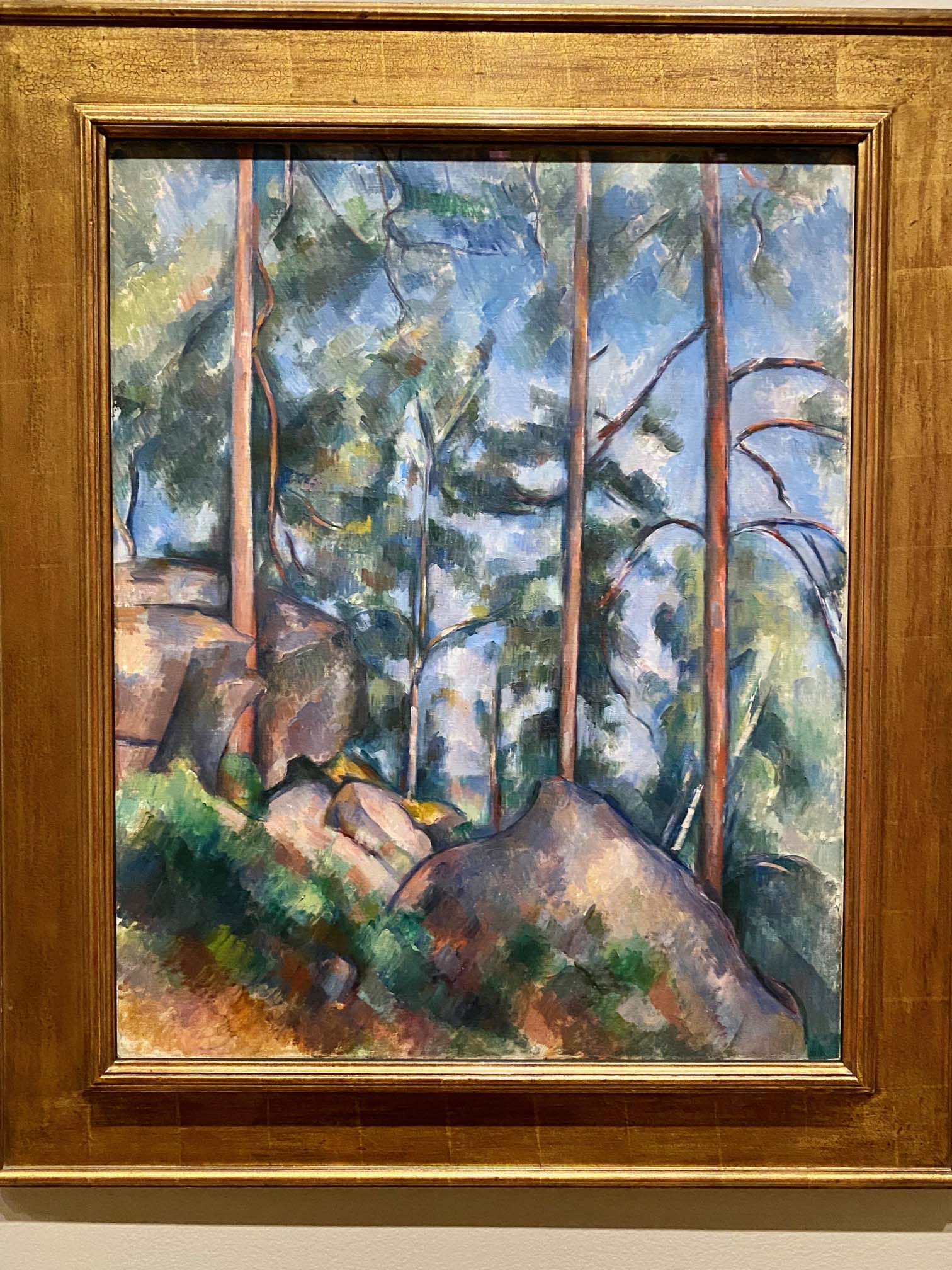
Cézanne’s 1897 oil Pines and Rocks (Fontainebleau?)
Seurat’s 1884 crayon drawing A Woman Fishing.

Lillie’s health crashed, too. On the heels of MoMA’s test run, she was diagnosed with cancer, and started drawing up a will to ensure that her beloved collection would carry on when she could not. She gave a Monet and a few gems to the Met, but bequeathed 150 works to the new Museum of Modern Art – forming the core of the collection we know today.

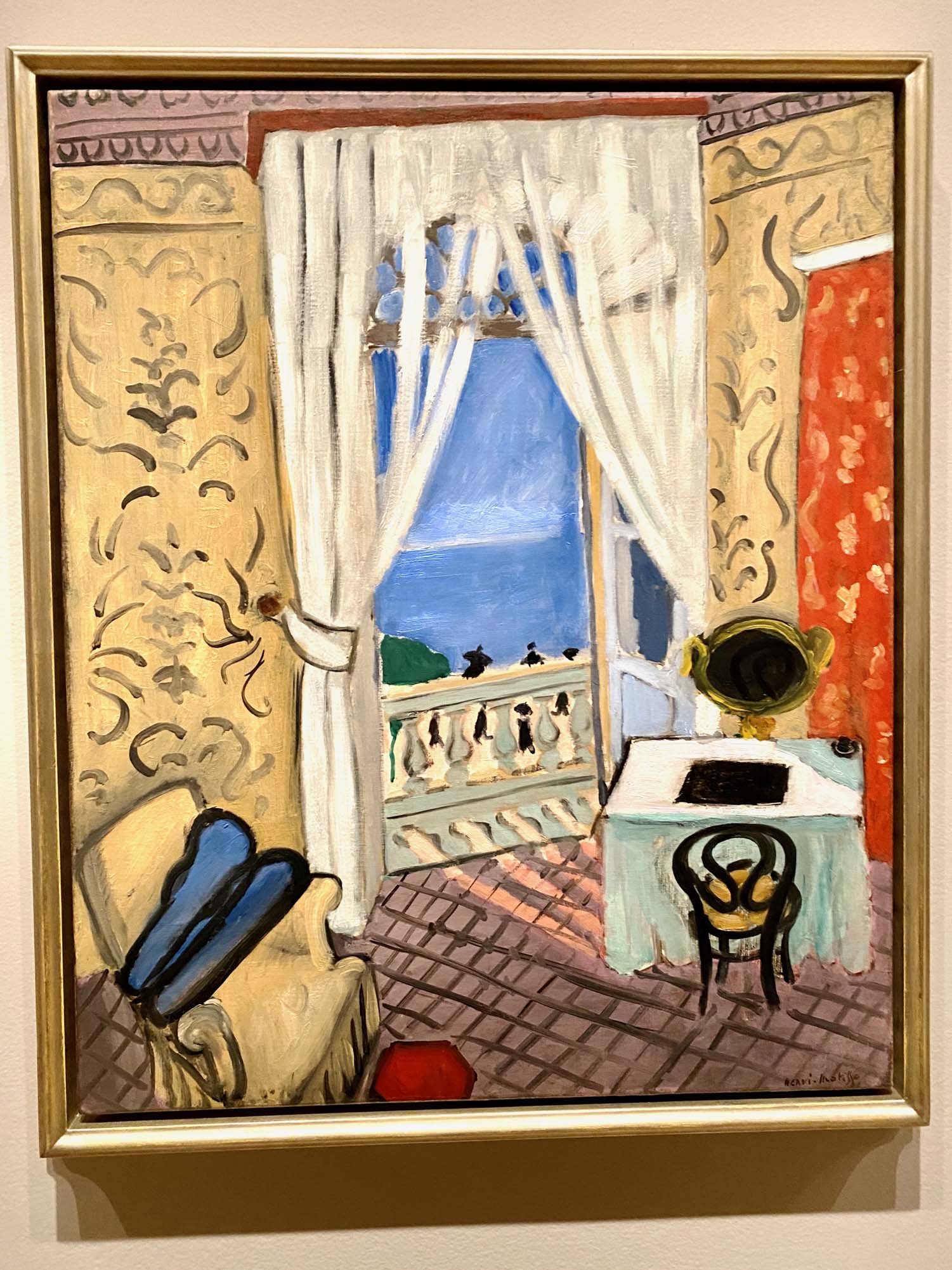
Matisse’s 1918-1919 Interior with a Violin Case.

When Lillie died in 1931 at age 66, there was only one last thing.  She was never able to acquire a Van Gogh. But in her will, she did give the museum permission to sell or exchange most of the paintings she bequeathed.

A few years later, MoMA sold one of Lillie’s Degas to acquire Picasso’s epic Demoiselles d’Avignon.

And in 1941, Alfred Barr made her dream come true. He heard that a dealer possessed a very special Van Gogh, and traded three of Lillie’s paintings for The Starry Night.

See our favorite works in our Flickr album, and enjoy other stories about this visionary MoMA founder by listening to the audio guide for the exhibition here.

Gauguin’s 1894 woodcut print The Creation of the Universe from the 10-print series, Noa Noa (Fragrant Scent)