NYC Museum Videos Receive 49 Million Views on Social Media

The Japan Society’s popular Japanese language series

The Japan Society’s popular Japanese language series

After reposting so many museum videos here, we wondered how much video museums were producing, what social media they were using, and who had the most viewership and followers. We counted, and found that the museums, zoos, and botanic gardens around New York have racked up 48.8 million views on their public YouTube channels since 2007.

The volume of activity on was so significant that we couldn’t help documenting it and packaging the rankings into a report, NYC Museums: 2013 Video and Social Media Rankings.

Museum folks may want to purchase the full 48-page report to see how their organization stacks up, but here are some of our key findings:

As of year-end 2012, NYC museums with the highest number of all-time YouTube channel views were the Paley Center, American Museum of Natural History, and  Japan Society. Paley merges its NYC and LA feeds, and it’s 33M all-time video views are mostly from TV celebrity show panels in LA. So if we’re really looking at the museum programming champs in NYC, it would be AMNH (15M), Japan Society (7M), and MoMA (6M).

The Top NYC Museum Video of 2012 -- an AMNH Science Bulletin Whales Give Dolphins a Lift

The Top NYC Museum Video of 2012 — an AMNH Science Bulletin Whales Give Dolphins a Lift

The top NYC museum viral video of all time is The Known Universe video produced by AMNH for the Rubin Museum’s 2009 show, Visions of the Cosmos – 11M views and still growing. The video was generated from the Hayden Planetarium’s data set.

In  2012, another AMNH video, Whales Give Dolphins a Lift, went viral with 2M views. The AMNH has an active video-production team supplying content to its Science Bulletin walls inside the museum. Hats off to them for making a winning wordless video out of a few still photographs from field scientists in Hawaii, simple titles, and tranquil music.

The popularity of Japan Society’s language lessons are driving the numbers on their channel. Who can resist clicking through all the 2-minute lessons in their Waku Waku Japanese series with Konomi?

Asia Society’s Top NYC Museum Music Video of 2012

Asia Society’s Top NYC Museum Music Video of 2012

The top 2012 NYC museum music video was produced by the Asia Society, Arif Lohar and Friends: Jugni Ji!. Who knew that the finale to a Sufi pop legend’s concert on Park Avenue one year ago would rack up over half a million views?

The top star featured in a 2012 NYC museum exhibition video was a piece of 18th century mechanical furniture displayed at the Metropolitan. Viewership of The Roentgens’ Berlin Secretary Cabinet grew from 182,000 views at year-end 2012 to 1.6 million today. Can anyone explain how mechanical furniture received 25 times the viewership of the Met’s video walk-through of its blockbuster McQueen show, Savage Beauty?

The NYC museums using the greatest range of social media and video channels are The Jewish Museum and the Rubin.  One of the best under-the-radar NYC museum Flickr sites was the historical archive of Wall Street documents and treasures posted by the Museum of American Finance.

All the video and social media rankings 63 museums are in the report. Click here to see what’s included and make a purchase from our Its News To You Reports shop.

OK, here it is: the all-time top NYC museum video from 2009:

Fluffy AMNH Animal Superstars Win Webby

Steve Quinn, diorama curator

Steve Quinn, diorama master

Steve Quinn couldn’t send them to the L’Oreal Paris hair and make-up room like Tim Gunn does on Project Runway. They’re just too big, too famous, and too fragile. We’re talking about the furry animals that populate the 43 dioramas on Floor 1 of the American Museum of Natural History’s in the Hall of North American Mammals.

So how do you buff, puff, make up, color, groom, blow dry, restore eyelashes, color brows, and repair noses on New York superstars that have been in the (literal) spotlight since the early 1940s? That’s the subject of AMNH’s YouTube sensation, Restoring Dioramas in Hall of North American Mammals a 16-show reality series that won a prestigious Webby Award earlier this month. Download the North American Mammal app (with before and after looks at the enhanced fur).

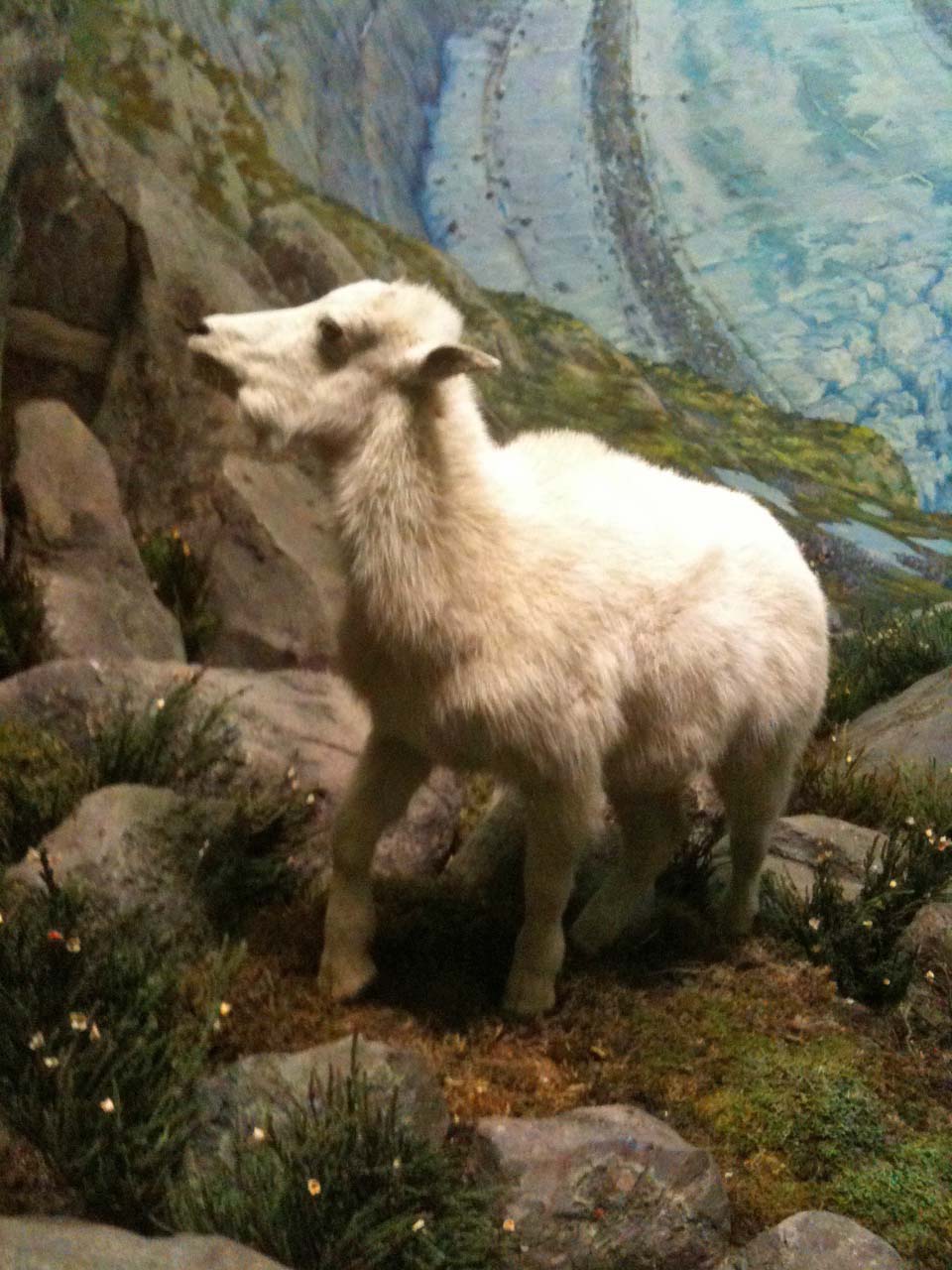
No more "demon" eye in the baby Mountain Goat, who is surrounded by thousands of flowers refurbished by AMNH volunteers

No more “demon” eye in the baby Mountain Goat, who is surrounded by thousands of flowers refurbished by AMNH volunteers

Steve Quinn leads a team of accomplished artists to, well, perform makeovers on the animals, plants, and background paintings that reside inside some of the most famous 3D attractions inside the AMNH. Steve told us that the first step was to update the decades-old lighting inside each case with state-of-the-art illumination that would inflict much less damage on the mammal coiffures.

His team engineered wooden platforms that extended into each scene so that leaf-turning and snow repair could occur with minimal disruption to the diorama floor. If you watch the 4-minute videos, you’ll see how they fixed a bison’s nose, put whiskers on cougars, restored the grass on the Great Plains, and restored the jackrabbit’s ears. The runaway hit of the series is Updating the “Moon Shadow” in the Wolf Diorama. With over 8,000 views, it’s not going to knock Dr. Neil off the AMNH charts any time soon, but Steve’s magical artistry is something to savor.

Go to the AMNH YouTube channel and scroll down to find the North American Mammal diorama series, depicting Steve and his crew at work. Check out this series trailer:

Just before Steve retired the other week, he gave us a special Night at the Museum, walking around and visiting his favorite dioramas after the visitors left.

Steve, you’re a total rock star. Thanks for all your spectacular work at AMNH over the years, and congratulations on the Webby.

Elvis has left the building.

Get Out into the Fresh Air (in Italy and France)

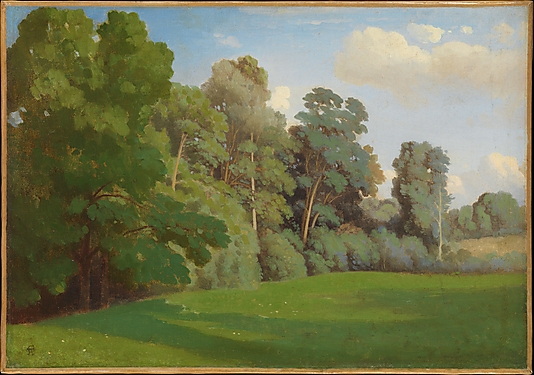
Théodore Caruelle d'Aligny’s Edge of a Wood (1850). Oil on canvas done northeast of Paris. The flattening technique was developed with his hiking companion, Corot.

Théodore Caruelle d’Aligny’s Edge of a Wood (1850). Oil on canvas done northeast of Paris. The flattening technique was developed with his hiking companion, Corot.

There’s nothing like stepping out into the fresh air to get a little perspective – exactly the view taken by the group of landscape painters featured in the Met’s exhibition, The Path of Nature: French Paintings from the Wheelock Whitney Collection, 1785-1850, on display in the Lehman Wing for a few more days.

Most of them feature Italian or French landscapes, and you’ll be surprised to know these tranquil, beautiful visions of nature were considered a little bit radical at the time. Apparently, there once was a time when painters didn’t travel beyond the studio, and certainly did not work outdoors.

Installation view of The Gate to the Temple of Luxor (1836) by La Bouëre. After Napolean invaded Egypt, the exotic Middle East became all the rage. The missing obelisk ended up in the Place de la Concorde.

Installation view of The Gate to the Temple of Luxor (1836) by La Bouëre. After Napolean invaded Egypt, the exotic Middle East became all the rage. The missing obelisk ended up in the Place de la Concorde.

The artists in this collection (gifted to the Met 10 years ago by Mr. Whitney) literally went on the road, took to the hills, and created spectacularly perfect outdoor oils to record a bit of the exotic, wild, and ruined visions they experienced. And it all happened long before Monet went outside to serialize his haystacks.

If you’ve ever wanted to take a Grand Tour of the wonders of Europe and the Middle East, now is your chance. Check out the Met’s online gallery of these works, and enter the mountains, hillsides, parks, ruins, and vistas with new 18th and 19th century friends.

If you have some time, you can listen to the Met’s curator, Asher Miller, discuss how adventure travel inspired a generation of painters to break the rules.

Don’t be Sad, He’s Irish!

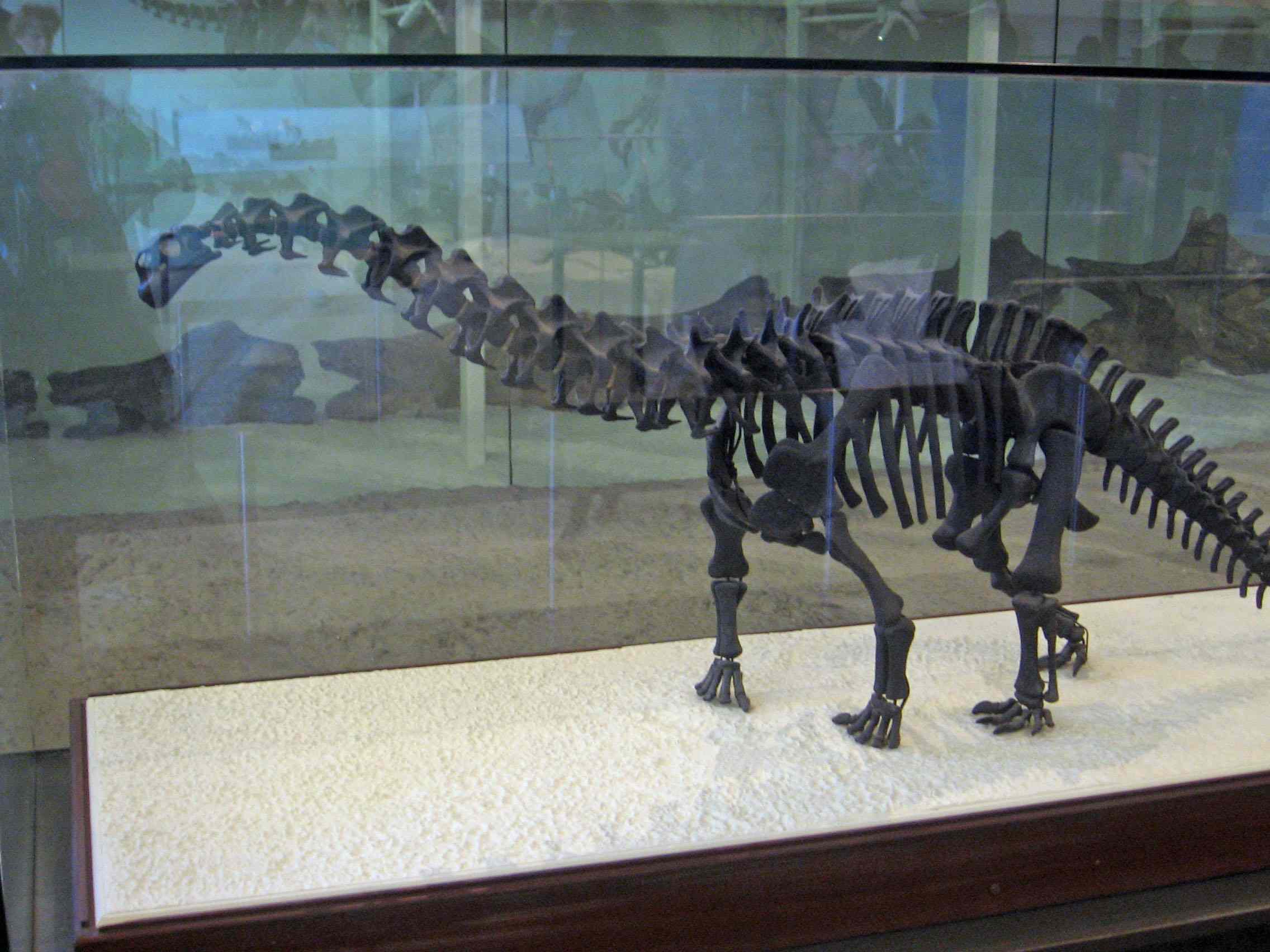
Apatosaurus holds court on the Fourth Floor of AMNH. Source: Scott Robert Anselmo

Apatosaurus holds court on the Fourth Floor of AMNH. Source: Scott Robert Anselmo

There’s no way to count the number of times that people get upset because his actual scientific name is no longer Brontosaurus.

He’s one of the most famous dinosaur celebrities in the world and you may know him as Brontosaurus from your Flintstone days, but his real name is the Apatosaurus.

So just think about it….It’s the perfect day for you to learn to say his “Irish” name — A-PAT-o’saurus. Isn’t that better? Go over to wish him well this weekend.

ModelHe’s the largest dinosaur on display in New York. He came here all the way from Wyoming, and he’s been standing here since 1905, when J.P. Morgan and the AMNH crew unveiled him. It was the first time that a really big dinosaur was ever mounted in 3D anywhere in the world.

To the left is the “architect’s model” that the 1905 crew used to figure out how to weld together enough steel to keep the tons of rock up in the air. A-PAT-o’saurus, Happy Irish Day!

Virtual Ancestor Cornered in High-Tech Tree by AMNH

Carl Buell’s rendering of the hypothetical placental ancestor, a small insect-eating animal. Source: AMNH

Carl Buell’s rendering of the hypothetical placental ancestor, a small insect-eating animal. Source: AMNH

Who says dinosaurs get all the attention?

One of the big front-page science stories of the last few weeks is that a global team of researchers has mapped our ancestor tree back in time to a hypothetical small, furry critter that emerged just after the dinosaurs went extinct. The big news is that through a giant high-tech, data-crunching technique, 15-20 molecular-data scientists collaborating in six countries around the world figured out that the hypothetical ancestor to nearly all the mammals alive today emerged 200,000 to 400,000 years after the comet crashed to Earth 65 million years ago.

Ok, it wasn’t the first mammal (the ancestor to platypuses, opossums, kangaroos, and a lot of other extinct things came much earlier), but let’s applaud the American Natural History Museum for telling this story so clearly to a writer at The New York Times that it made it to the front page.

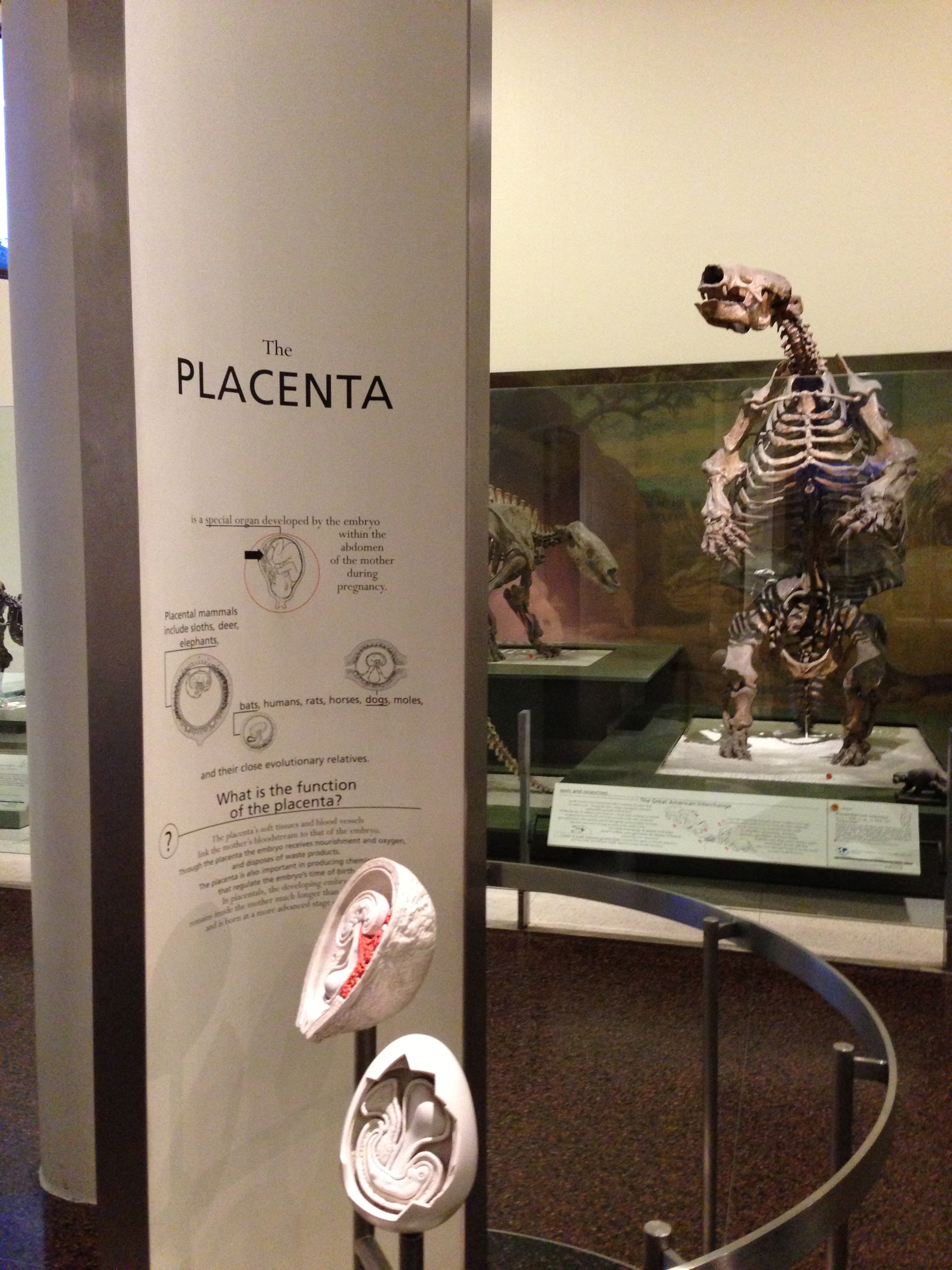
Column on AMNH Fourth Floor exhibit space that marks the spot where the virtual critter emerged along the evolutionary pathway in the Hall of Primitive Mammals.

Column on AMNH Fourth Floor exhibit space that marks the spot where the virtual critter emerged along the evolutionary pathway in the Hall of Primitive Mammals.

At Thursday’s Social Media Week event on how to tell stories in science, panelists repeatedly emphasized how hard it is to make clarity emerge from a morass of data.  In a way, this “story about the rat” reached a social-media science storytelling trifecta: over 240 comments “about the rat” on the NYT web site, a neat little video that’s racked up over 11,000 views in just two weeks, and an exhibition layout for the vertebrate paleo collection on the museum’s Fourth Floor that lets you stand in the exact spot on the evolutionary pathway where this tiny hypothetical ancestor emerged. (See the photo with the Giant Sloth, to the left.)

Great job, AMNH and Stony Brook storytellers for giving us this video view into deep time, showing how MorphoBank crunches data, and creating another social-media star out of a virtual ball of fur.

PS: The fossil background talent in this video appears to be a model of Gobiconodon, an actual Cretaceous mammal from 110 million years ago who’s not directly related to the star of this show, but looks good on camera.

Cage’s Zen Den at the Academy

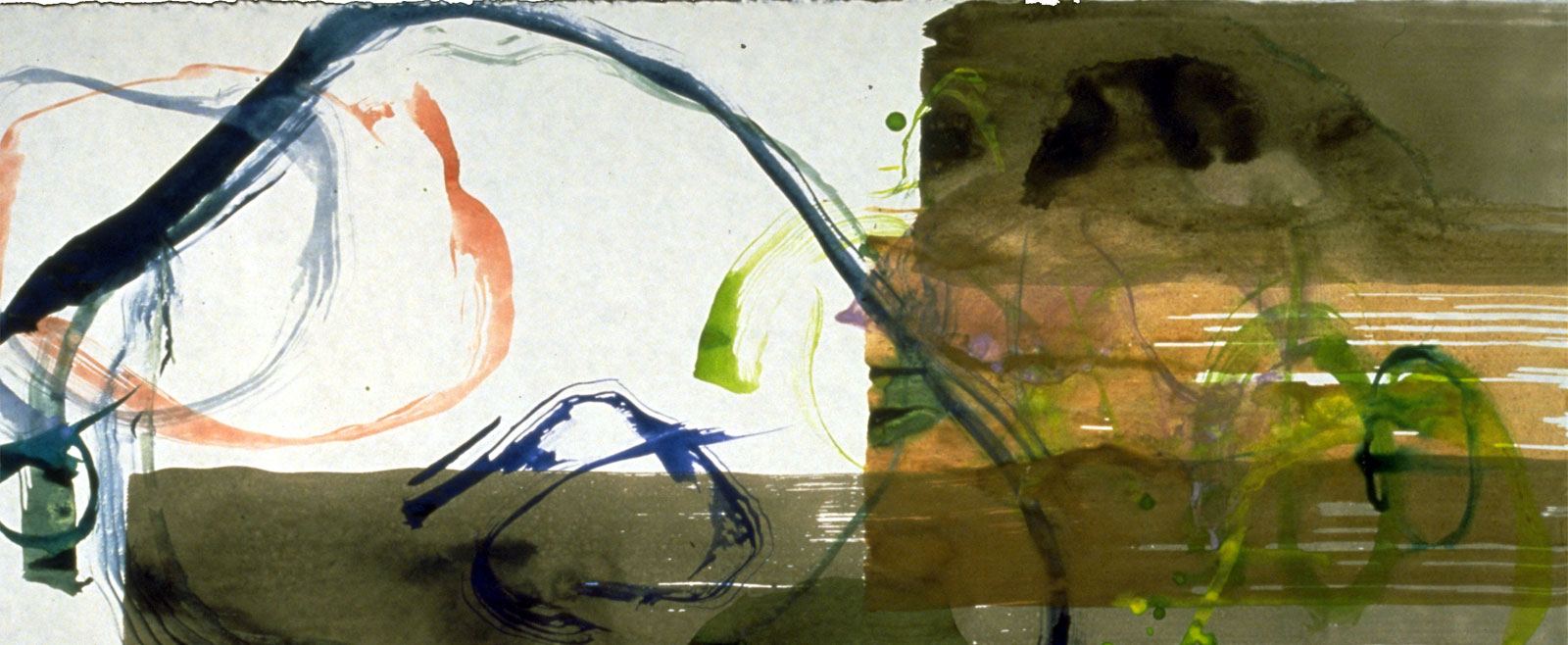
Cage's New River Watercolor Series I on parchment paper. Courtesy: Mountain Lake Workshop

Cage’s New River Watercolor Series I on parchment paper. Courtesy: Mountain Lake Workshop

Take one of the most controversial composers of the 20th century, give him some watercolors, drop him at the foot of the Blue Ridge Mountains, and leave everything to chance. See what happens.

You’ll see the results at the National Academy Museum’s John Cage: The Sight of Silence show this weekend. Back in 1988, Cage was the artist in residence at the Mountain Lake Workshop in Blacksburg, Virginia. He spent his time making a series of watercolors inspired by his trip to a Zen garden and temple in Kyoto, where he saw stones floating on a field of raked gravel.

Cage, whose lifelong interest in using chance (via the I Ching) to select and structure his musical compositions, decided to apply the same principles to watercolors, drawings, and prints. He customized some large-scale brushes that he could drag across wet paper like rakes, picked up feathers, and collected stones from the New River.

The brush, paper wetting, colors, stones, and actions are all determined by chance to stunning effect. Watch the artist at work and hear him talk about his process here:

Now see the results at the Academy and witness pure Zen.

Hidden New York Christmas Trees

NYPL’s nature-inspired Christmas tree

New York Public Library’s nature-inspired Christmas tree in Astor Hall on 42nd Street

Although Rockefeller Center has New York’s most popular tree, don’t forget to check out two others that are on the list of everyone’s favorites.

The grand tree inside the main entrance of the New York Public Library this season is an Age-of-Innocence wonder that has become the new favorite photo backdrop of New York City visitors this season It’s never crowded inside Mr. Astor’s grand hall, so there’s plenty of time to pose in front of the tree to show the folks back home what a beautiful time they’re having in City splendor. It’s in an intimate, spectacular setting with grand staircases, blazing illuminations, and ornaments evoking the natural world. IMG_1628

Now that Theodore Roosevelt has taken up residence in his Memorial on the First Floor, the American Museum of Natural History has moved one of the most charming trees in the City to the Grand Hall at the 77th Street entrance.

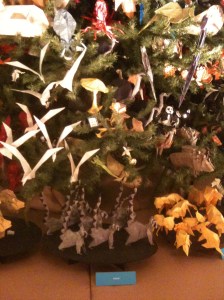
The fun of the Origami Tree is to get close enough to identify each of the 500 folded-paper ornaments by species. This year, the scientific theme is groupings of animals. You’ll find suspended origami doves circling a tree decorated with spiders, dinosaurs, lemurs, skunks, pelicans, cultures of bacteria, jellyfish, and many more surprises inspired by the vast holdings of the AMNH. Volunteers have been working since July to create this delightful menagerie.

If you haven’t seen these holiday wonders, check them out before they disappear.

The base of the AMNH Origami Tree features groups of ring-tailed lemurs and flock of doves

The base of the AMNH Origami Tree features groups of ring-tailed lemurs and flock of doves

NYC Spider Theater Due to Close

Bronze Spider 1, 1995 by Ms. Bourgeois lurks at the show’s entrance

About the best spider theater in town is about to close in a few weeks – the live-animal floor show inside the American Museum of National History’s Spiders Alive! exhibition, where an actual spider-handler enthralls the crowds with myth-busting tales while introducing the arachnid star of the show, a Chilean Rose Hair Tarantula. Nearly 20 live species are crawling around the terrariums, but crowds are flocking to the live demo/theater area of the show and sitting spellbound until intermission. Go see it!

Since the AMNH never does anything second-rate, it’s fitting to note that welcoming visitors to the show is an art-world superstar. Lurking inconspicuously in the “canoe” lobby area outside the show is one of the smaller bronze spiders crafted by Louise Bourgeois. It’s smaller than the babies that graced the 1999 opening of Tate Modern’s Turbine Hall in London (and later the Guggenheim in Bilbao and Rockefeller Center), but who cares? Stop by for a glimpse.

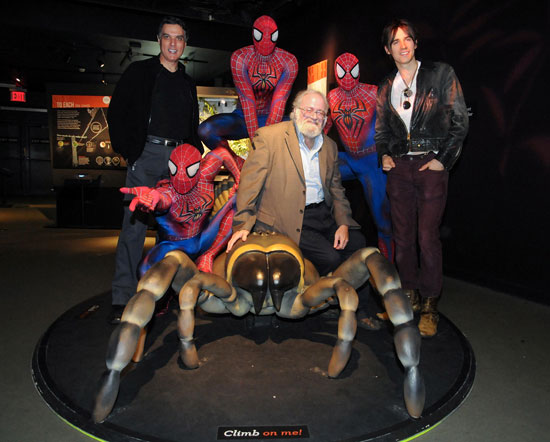
Robert Cuccioli, AMNH curator Norman Platnik, Reeve Carney and multiple Spider-Men take in AMNH’s “Spiders Alive!” © AMNH\R. Mickens

And lest you think that AMNH ignored the other obvious art-world connection, it didn’t, as shown by this amusing photo in September, when the cast of that other spider-themed show came to visit AMNH curator Normal Platnik for a walk-through.

Check out the opening-day YouTube promo below, but go meet the spiders up close and personal before they leave after January 6. If you’re a sci café geek that wants more, go poke around the AMNH World Spider Catalog.

MoMA Displays Post-Sandy Boardwalk Episode

Maybe it’s a bridge and not a coastal boardwalk, but the character in Munch’s pastel on view at MoMA through April 2013 pretty much sums up the experience of so many Tri-State residents in the last week.  Ironically, the privately owned drawing went up only a few days before the hurricane stormed through the region, devastating homes, beaches, and the Chelsea galleries.

Many downtown museums remain closed, including the South Street Seaport Museum, the New York City Police Museum, the National Museum of the American Indian, and the Skyscraper Museum, although the Museum of Jewish Heritage at the Battery has just announced its reopening. On the West Side, the Intrepid is closed until it can fix its inundated welcome center and repair the outdoor protective bubble around the space shuttle Enterprise, which got a little beat up. The High Line is repairing all of its electrical infrastructure.

To help the arts and museum community during this difficult week, MoMA has posted a PDF with instructions on conserving art works that have sustained flood damage and held a workshop with conservators from the American Institute for Conservation Collections Emergency Response Team for afflicted dealers and collectors this past weekend.

While the repairs and restoration will take time and with another windy storm on the way toward New York, Mr. Munch’s 117-year-old evocation remains pretty much on point.

NYC High Line Wilderness Being Swept Away

It’s not going to be swept away by Hurricane Sandy…We’re just alerting you to the fact that the last section of the High Line looping the West Side Rail Yards is about to undergo its final construction transformation from 30th Street up to 34th Street, right across the street from the Javits Convention Center.

As soon as the hurricane subsides, crews will start transforming the railroad-bed wilderness into a beautiful promenade designed by James Corner Field Operations, Diller Scofidio + Renfro, and planting designer Piet Oudolf. The City acquired the property from CSX Transportation this summer – the final piece of rail property to complete the High Line vision.

Earlier this month, the High Line opened up this final frontier to foot traffic as part of Open House New York, and we’re providing a last virtual look on the Flickr site.  Enjoy the trees, the views, the historic photos, and graffiti of the old elevated railway before the skyscrapers start rising over the old Penn Central yards.

And be sure to find the theropod dinosaur lurking in the weeds above Eleventh Avenue!