Alicja Kwade’s bicycle sculpture, Journey without arrival (Ralegh), 2012/2013
No, it’s not the mayoral race. As long as the nice weather holds up, get down to City Hall Park and poke around among the trees and plaza to see the whimsical sculpture that the Public Art Fund has on display in Lightness of Being. There’s plenty of time before the show closes December 13.
Take a look at what you can find on our Flickr feed.
Everyone will have their own favorites, but you’ll have to look closely to catch some of the work, since you can easily walk by and not notice – David Shrigley’s nearly hidden Metal Flip Flops near the fountain and Alicja Kwade’s delightfully twisted bicycle sculpture that’s hopefully not how your Citibike is going to end up. People walk right by them and then do a double-take.
At the foot of the park, Dalniel Buren’s Suncatcher functions more like an impromptu stage for fun-loving toddlers, but the true stars of the show are the six fantasty characters holding court nearby.
Buzzing it Down, 2012, by UK artist Gary Webb
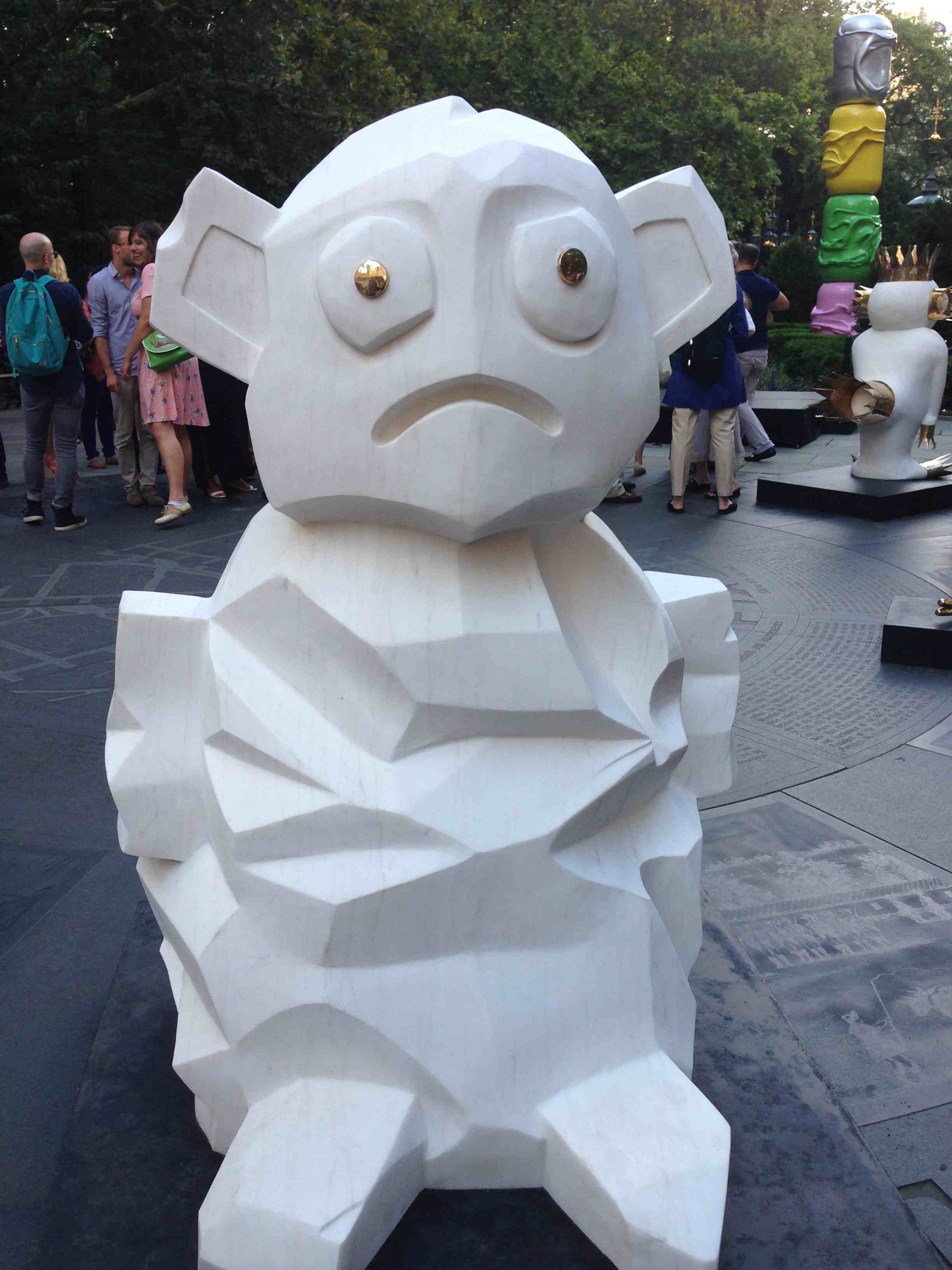
Get out your cameras for Olaf Breuning’s installation, The Humans. They’re some of the craziest marble statues you’ll ever meet, forming a circle to evoke the human evolution from “fish” to “fisher king.” Enjoy the contrast they make to the Park’s other, more traditional marbled details.
Poke around behind Nathan Hale to see Franz West’s whimsical forest of bulbous growths, and don’t miss the super-intriguing sculpture by James Angus. He’s made a full-scale John Deere tractor in steel and cast iron, but instead of being a faithful reproduction, he stretched it digitally and left it toppled among the trees near Broadway. It makes you think back to the pre-industrial 1660s when this land was used as a livestock pasture, and reflect on where agriculture is today.
One of six fantasy characters you’ll meet in Olaf Bruening’s TheHumans, 2007.
The show will delight, make you think, and turn you into an urban explorer probing the nooks and crannies of the southern portion of the park’s nine acres.
And if you take your camera and get any good shots, you can contribute them to the Gallery on the Pubic Art Fund’s site.
All those years walking up and down the aisles at craft fairs may have you convinced that there’s nothing new in wood art. Get over to the final days of Against the Grain: Wood in Contemporary Art, Craft, and Design at the Museum of Art and Design.
It’s not what you’d expect, and curator Lowery Stokes Sims has done a magnificent job in telling us what’s trending now with forward-looking artists on the scene.
In short, she focuses her two-floor exhibition on seven trends that she sees: Artists, like Ai Weiwei, working on socio-political themes, whimsical designers who make us smile, digital artists pushing the envelope with wood, collages, virtuoso technique, takes on trees, and works that just capitalize on the beautiful texture in the wood itself.
Check out our Flickr feed for views of some of our favorite works, and MAD’s four-minute video as Sims herself walks you through the show, the artists, and her thinking about the pieces and themes.
Steam-bent ash chairs by Christopher Kurtz
But let’s focus on some of our favorites, which you can see on Flickr.
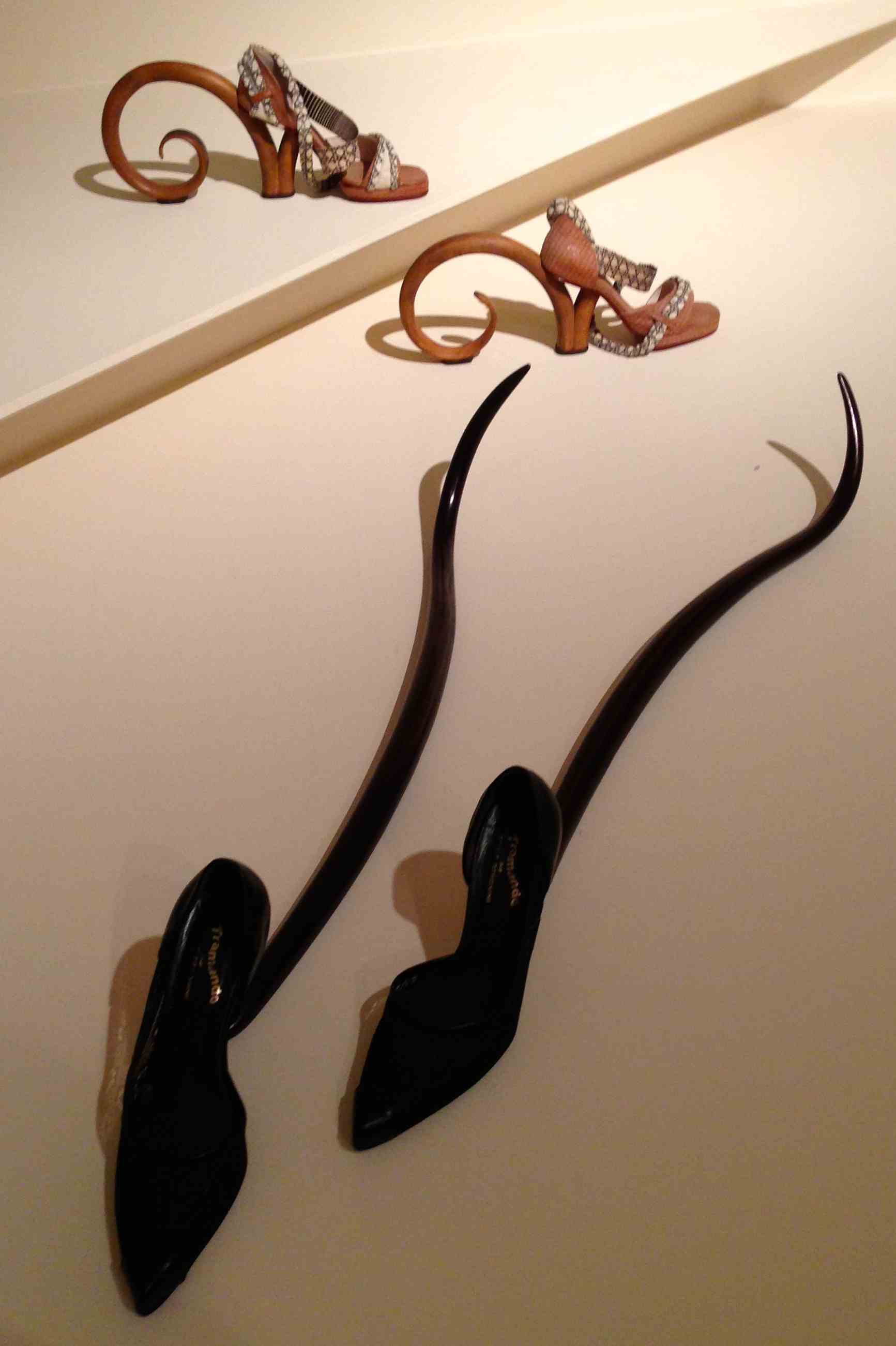
Wood as fashion: What about these shoes by Pablo Reinoso? If you’re thinking Dutch wooden shoes, think again, because these dainties are inspired by Thonet chairs, that he’s embellished with long, wooden “tails”. Or wooden hats by fashionable Moody & Farrell of London.
Music: How did Maria Elena Gonzalez go from looking at a fallen birch tree to creating paper-thin birch rolls that can create stunning music on a player piano? Watch and hear it all on this video of her player piano in action.
Laurel Roth’s Hominid: Chimpanze (2011) from vere wood with Swarovsky crystals in the teeth
How-did-they-do-that category: Bud Latvin’s gravity-defying wooden spiral sculptures, Christopher Kurtz’s impossible steam-bent chairs, and Elisa Strozyk’s wooden textile.
Recycled surprises: Think about what it took to turn 8,000 recycled chopsticks into a collapsible sofa. Good going, Yuya Yoshida.
If you can get to this show today or tomorrow, go. If not, take time to meet Leonard Drew in his studio, see his wood works in progress, and hear what success in wood feels like:
Tintagel, 1881. Large, masterful watercolor by William Trost Richards depicting castle ruins on the Cornwall coast of England, which Richards associated with the legends of King Arthur. Who needs to mess with oil paint and build big canvases when you can do this with water and paper?
In a brilliant pairing, the National Academy Museum has mounted dual shows by artists who draw their greatest inspiration from water. There’s no need for a trip out of town to experience crashing waves, monumental waterfalls, and wide expanses of sea and sky done by one of America’s greatest watercolorists of all time and a celebrated 21st century painter.
William Trost Richards: Visions of Land and Sea features 60 works from the Academy’s collection – early graphite sketches, oil paintings, and beautiful, grand, sweeping watercolor vistas that are some of the tiniest, most meticulous works you’ll see anywhere. Some are on display for the first time, which is remarkable considering that critics believe WTR to be among the greatest American landscape painters of the 19th century.
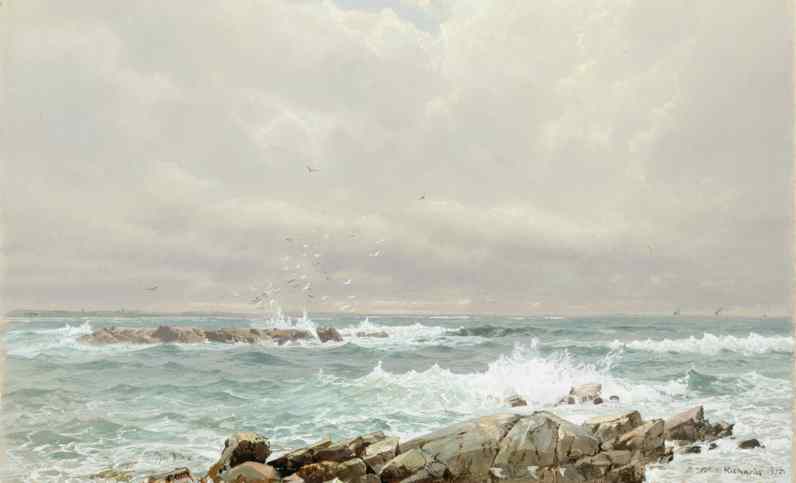
Seascape (1875), a tiny but monumental watercolor by William Trost Richards on cream paper. It’s only 9 X 14 inches. Source: National Academy
Inspired by Ruskin and the Pre-Raphaelites early in his career, WTR began documenting the intricacies of the Wissahickon River paths near Germantown, on the outskirts of Philadelphia. He soon became part of the American watercolor movement that began making works that were just as grand, romantic, and full of transcendence as anything by Church or Bierstadt. Quite a feat, when you’re working on such a tiny scale.
He spent years perfecting vistas of the ocean and sky from his home near Newport and on travels to the edges of the British Isles. Remarkably, he kept the horizon low to showcase the sky, all meticulously painted and built up from a ground of blue-gray wove paper. It’s remarkable how he evokes mood, rocks, night, dusk, and pale sky from that gray. Click here for more.
Steir’s monumental Blue River (2005) – one of her celebrated Waterfall series. Steir’s monumental Blue River (2005) – one of her celebrated Waterfall series. The video shows its true scale.
Pat Steir’s paintings, on the other hand, feature an opposite approach. Like Sam Francis or early post-Pop color-field painters, she pours, splatters, and drips her paint across canvases that seem a mile high and a block long. The masterwork on display at the Academy is Blue River, a virtual waterfall that’s just as mesmerizing as any of WTR’s watercolors, but done in bold, wide strokes on a larger-than-life canvas.
Go this weekend and delight in the masterful scenery. Pat herself indulges in the joy right here.
If you miss the Academy show, be sure to look for Pat’s Everlasting Waterfall hanging on the Fifth Floor of the Brooklyn Museum right next to Church.
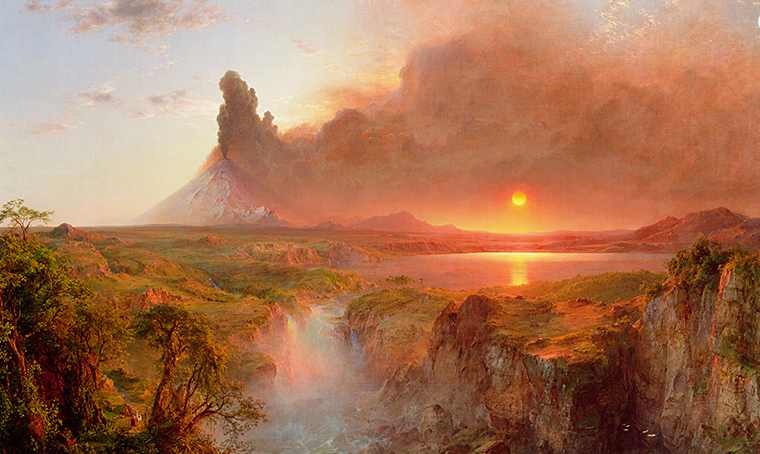
Frederic Edwin Church’s depiction of the volcanic eruption in Ecuador — Cotopaxi, painted in 1862 and shown the following year. Source: Detroit Institute of Arts.
Who expects that gigantic, bold 18th-century people-free landscapes by Bierstadt and Church to bear the heft of telling the anxious backstory of America before, during, and after the Civil War?
It’s true. Big landscapes are the booknds to the dramatic story told by the Smithsonian Museum of American Art’s exhibition to honor the 150th anniversary of Gettysburg, American Painting and the Civil War, installed through September 2 on the upper and lower levels of the Met’s Lehman Wing.
Seeing the stunning upper-gallery works within the context of America’s troubled times is a must. You’ll never look again at a Bierstadt or Church again without checking its date to see if it was painted in the 1859-1865 range.
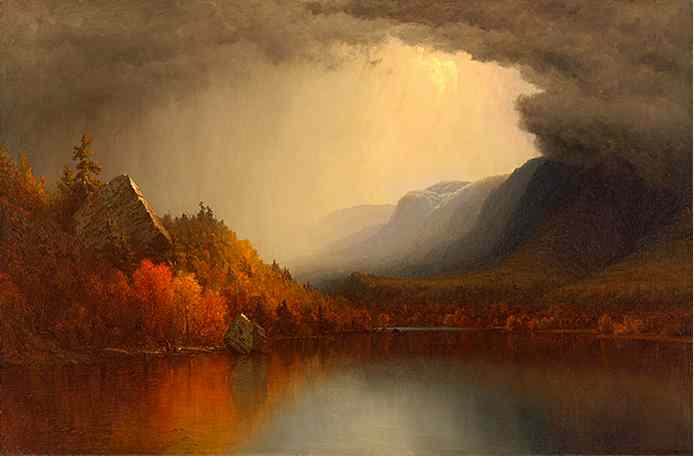
Sanford R. Giffins’s 1863 oil, A Coming Storm, says it all. Retouched by the artist in 1880. Source: Philadelphia Museum of Art.
Hear Smithsonian curator Eleanor Jones Harvey’s three-minute introduction to how these magnificent landscapes became the “emotional barometer” of the country and what approach genre painters took in the midst of changing times. Then, check out the Smithsonian’s nice timeline and click on Church’s Meteor of 1860 and Our Banner in the Sky from 1861 to see what was in the news while these were being created in the studio.
You’ll find Sanford Gilfford’s A Coming Storm (1863) in the timeline in 1865. Ironically, this was owned by Shakespearean superstar Edwin Booth right after it was painted, but before his brother actor John Wilkes changed history and trashed the family name. When Melville saw the painting in a New York gallery a few weeks later in April 1865, he felt the tragic irony so profoundly that he had to write a poem to process it all.
Bierstadt’s Looking Down Yosemite Valley, California, exhibited in 1865, one year after Lincoln signed legislation declaring this a public reserve. Source: Birmingham Museum of Art.
Church, Homer, and Gifford also painted camp life during the War, and those up-close-and-personal works are also featured in the show, alongside very precise oils of Confederate encampments by Conrad Wise Chapman. Thanks to Richmond’s Museum of the Confederacy, which loaned the works by Chapman, you’ll get to see the famous experimental submarine, The Hunley as it was in 1863. The submersible was raised from the depths near Charleston in 2000 with the tar bucket you’ll see in Chapman’s oil painting
But back to the giant landscape that closes the show upstairs. Bierstadt paid someone to take his place in the Union Army, so maybe that’s why his mind was free concentrate on more placid, ethereal works, such as the show’s finale, Looking Down Yosemite Valley, California of 1865 – a immersive look into the California Eden that Lincoln’s signature in 1864 preserved as public land and away from scarred landscapes of the battlefield states.
What’s the connection between Arctic exploration and unusual nighttime phenomenon of 1864? Watch this video to see how Church used them to convey the mood of the country through his powerful, gigantic, beautiful Aurora Borealis.
See a slide show of 34 paintings in the show and access the full set of video podcasts on the Smithsonian’s web site.
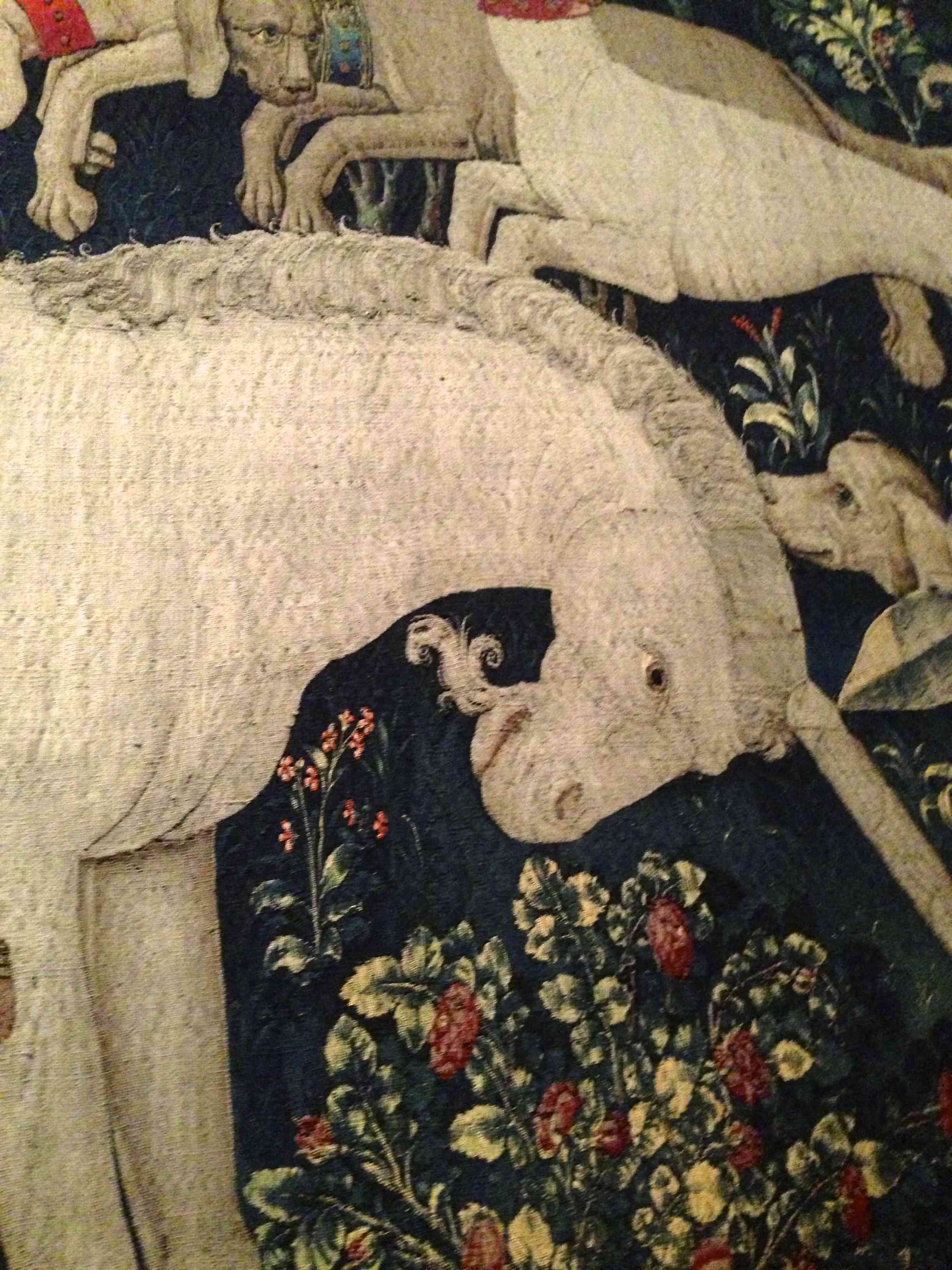
Detail from The Unicorn Defends Itself (1495-1505), a large tapestry in the main gallery.
Who says unicorns aren’t real? Mr. Rockefeller’s tapestry unicorns have been the celebrity draw for the last 75 years uptown at The Cloisters, and are the cavorting centerpieces of the show, Search for the Unicorn. But it took some brave curators to finally display all the unicorn-themed stuff in the Met’s collection and truly reveal the place this beloved icon has held in science, medicine, and art for the last 2,000 years.
But the surprises are loans from NYPL and the National Library of Medicine in Bethesda showing the unicorn’s inclusion in scientific texts, which attest to sightings and miracle cures from the impressive cloven-hoofed trotter.
Pome’s 1694 identification of species in General History of Drugs. Courtesy: US National Library of Medicine, Bethesda.
Conrad Gesner’s Histories of the Animals (1551), the most popular natural history book during the Renaissance, included the unicorn among its 1,200 woodcut images of the world’s quadrupeds. Gesner, who also published images of fossils for the first time here, was a stickler for documentation, and asserts that unicorns had been seen in Mecca by a reliable source. He wrote several pages about how to discern real from fake unicorn horns and told how it should be used to purify water, counteract poisons, and treat epilepsy.
General History of Drugs, which achieved global circulation after it was published in 1694, was written by Pierre Pome, the pharmacist to Louis XIV known for his expertise in medicines and treatments from exotic cultures. Pome gave unicorns their own chapter and described five species living in the Arabian desert and in proximity to the Red Sea. In Chapter 33, he correctly proclaimed “unicorn horn” to be narwhal tusk.
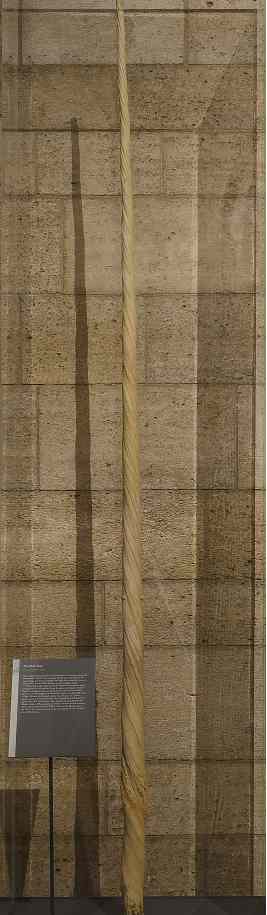
Narwahl tooth (a.k.a. unicorn horn). Source: Metropolitan Museum of Art.
The narwhal’s gracefully shaped, unicorn-looking incisor tooth is given a place in the show, too. One from a private collector is in the Romanesque gallery alongside one of the tapestries, The Unicorn in Captivity (the one in the fenced-in pasture); the second stands behind glass opposite the rest of the tapestries in their usual gallery.
Fancied by rich and powerful in years gone by, Charlemagne, Suleyman the Magnificent, Charles VI of France, and Lorenzo de Medici all owned this Arctic collectible.
We couldn’t take photos inside the show, but don’t worry. The Met’s done a fantastic job documenting everything online, so take time to peruse all the items in the show. Then click on our Flickr site to see the famous Unicorn gallery and glimpse the Cloisters on a perfect summer day.
Do you have 13 minutes? If so, you’ll enjoy the hilarious introduction to the show by curator Barbara Drake Boehm and her speculation on why it took the Cloisters 75 years to mount a show on unicorns. The natural history of unicorns starts around 3:40, and she’ll take you through all the key library materials. Watch to the end to find out where the unicorn was last sighted in the 21st century. It wasn’t Toys ‘R’ Us.
Ever wonder what story is told by the food on your plate? It’s all explained in the show at the American Museum of Natural History, Our Global Kitchen: Food, Nature, Culture, now in its final weekend.
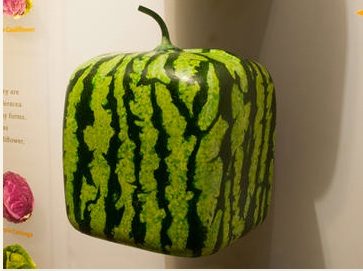
It’s a fascinating walk-through of how food is produced, transported, and consumed by cultures all over the world. You’ll see examples of the zillions of varieties of potatoes archived by the Peruvians high up in the Andes and interesting twists like cube-shaped melons grown in Japan.
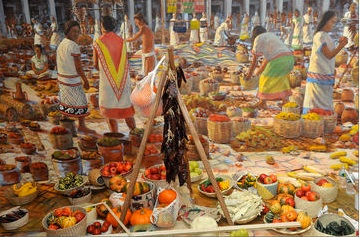
Diorama of the Aztec Tiatelolco market in 1519, just before the Conquistadors arrived. Photo: AMNH/R. Mickens
What’s everyone’s favorite part of the show? Most people can’t get enough of the interactive light table where you can watch the hands of master chefs making some incredible ethnic dishes and the Aztec market. The latter is a full-scale diorama of what shopping was like in 1519 down in Mexico City just before the conquistadors arrived. The market is vast, with an amazing array of items, all neatly arranged in sections, not unlike Eataly’s adventurous stalls near Madison Square.
You’ll get a glimpse of what was on the table of Gandhi, Roman royalty, the Great Khan, and other historic celebrities. The best is seeing what Otzi, the mummified Ice Man was packing as he crossed the Alps about 5,000 years ago.
Here’s the informative introductory video for this thought-provoking and mouth-watering show.
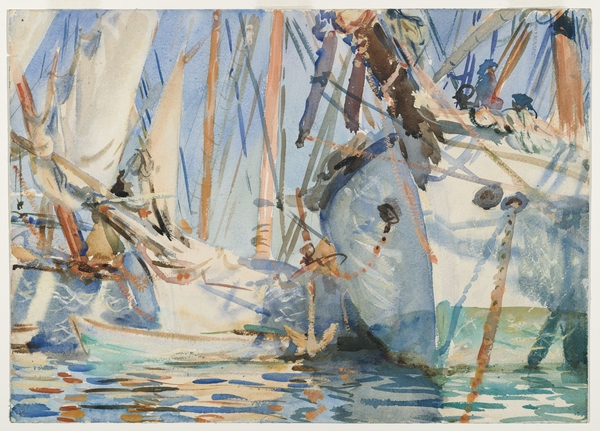
Sargent’s masterful 1908 White Ships that he likely painted in a day. Translucent and opaque watercolor and wax resist with graphite underdrawing, Source: Brooklyn Museum.
Back in 1909, John Singer Sargent’s watercolor show at Knoedler was considered a knockout, drawing discerning crowds in awe of his sensational technique. The images of Bedouin life, Venice, and boats on the Mediterranean were so compelling that the Brooklyn Museum raced in to buy 83 (nearly all of them), forcing Boston’s Museum of Fine Arts to wait until 1912, when they could clean out his entire next watercolor show.
Bedouins (c.1905–6). Opaque and translucent watercolor, Source: Brooklyn Museum.
Walking into John Singer Sargent Watercoloron Brooklyn’s Fourth Floor, you can see why the two great institutions went crazy. With 93 of their finest Sargent purchases collectively displayed, it’s impossible for visitors to pick the most spectacular. They’re all exceptional – the Bedouin horses at rest inside the tent, Sargent’s niece wrapped in her cashmere shawl, the cliffs of the Carrara quarries, and the lush Medici gardens.
How did he make such magnificent work with such an unforgiving medium? How did he whip them out? The two museums asked a team of conservators and curators to put the works under the microscope and ultraviolet light to discern more about the master’s process – the sequence of paint application, the types of paint used, and whether he did a pencil sketch before applying paint to paper.
The team gives visitors insights to the scientific process used — an unusual twist at the back of the gallery that visitors poured through enthusiastically. Brooklyn’s digital team installed a 30-second video in which paper conservator Toni Owen asks visitors what more they’d like to know. Here’s the site where she answers with comments on Sargent’s use of gouache, soft-wax resist, yellow paints, and the difficulties of explaining false-color infrared imaging (FCIR) in limited-space wall text in the gallery.
You’ll learn that Mr. Sargent painted very fast, did not rely on photographs, and did at least one watercolor sitting in a gondola.
Brooklyn’s integrating much more media into its visual art shows, and they’ve hit upon a winning combination here. Some videos show the gardens that were the subjects of Sargent’s work in Italy. Others explain the techniques that Sargent used in the painting next to it.
Listen as artist Monika deVries Gohlke reflects on the type of day Mr. Sargent might have experienced working on his 1908 Melon Boat painting. Watch as she prepares the watercolors, selects his colors, chooses his brushes, and attempts to recreate his “jungle” of shapes and impressions. Does her painting look like his? You be the judge and go get your own paintbox.
Since Smithsonian branches and other Washington, D.C. museums, zoos, and gardens began posting videos on line in 2007, collective YouTube views have climbed to 14 million, as chronicled in our latest report, Washington D.C. Museums: 2013 Video and Social Media Rankings.
Although the 14 million total is less than the 49 million views racked up by New York museums, don’t forget that two high-profile DC institutions – National Geographic and the Smithsonian – produce significant amounts of programming distributed on their popular cable TV channels, dedicated apps, and snazzy web sites. Even though it has a DC museum space, NatGeo (a joint venture with Fox Cable) has largely abandoned YouTube; however, the 18 individual Smithsonian branches are all still posting their own stuff regardless of the more comprehensive joint venture with Showtime.
In the Top Cultural Museum Video, archival footage is cleverly coupled with behind-the-scenes looks at the National Archives’ 1940s Census release
Here are some findings from our report on video and social media produced by DC institutions:
As of year-end 2012, the Washington museums having the highest number of total YouTube channel views were the Library of Congress (4.5M), the National Archives (2.1M), and the United States Holocaust Memorial Museum (1.6M). The top two are information powerhouses with massive collections to push out for public consumption, and the third is right on their heels with an innovative series with curators interpreting interesting items from their collections.
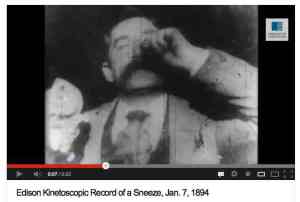
All-time top DC museum video, one of Edison’s earliest films, with over 329K hits on YouTube
Edison still delivers. It’s interesting that the top ranked DC museum video of all time is Edison Kinetoscopic Record of a Sneeze, Jan. 7, 1894, the earliest surviving copyrighted movie – suggesting that our greatest media innovator is having the last laugh, contributing over 329,000 hits to the number-one ranking by Library of Congress on YouTube. It’s short enough for Fred Ott to be on Vine.
Four museum video channels have surpassed 1 million views. To put the DC numbers in context, if they were merged with the New York museum video rankings, the Library of Congress (4.5M) would rank seventh, just ahead of the Metropolitan Museum of Art. The Library of Congress would rank eight (2.1M), just ahead of the New York Public Library.
The National Zoo produced Washington’s top-viewed 2012 museum video – Shanthi, the National Zoo’s Musical Elephant, Plays the Harmonica!. Over 290,000 viewers watched this middle-aged mom experiment with a musical instrument in her enclosure and listen to her keeper talk about her performance. Shanthi’s viewership greatly surpassed the numbers generated by the most popular 2011 Washington museum video, the National Portrait Gallery’s Conan O’ Brien as Seen by Artist John Kascht. Surely, Conan would be amused.
The Smithsonian American Art Museum’s Top Exhibition Video of 2012 features curator Chris Melisinos describing why video games belong in an art museum
The top cultural video was a behind-the-scenes work at the National Archives for the release of the 1940s census. Over 115,000 family historians watched Learn About the 1940s Census, which showed the Archives census team, provided information on how to find your family’s records, and worked in interesting archival footage from the original census.
The Smithsonian American Art Museum produced Washington’s top video about a museum exhibition.Over 28,600 people watched The Art of Video Games: Chris Melissinos, Curator, a brief look into the evolution of the stories, technology, and visualization advances of this mass entertainment medium.
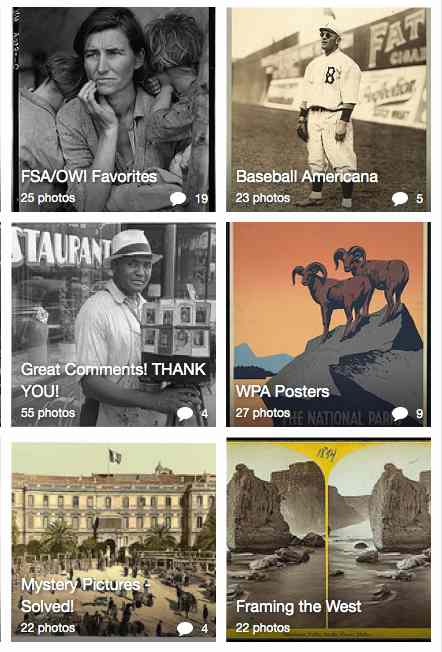
A few of the Flickr sets from Library of Congress
The most active Twitter users are the National Museum of American History, the National Air and Space Museum, and the National Postal Museum. But except for Air and Space, it’s a different set for Facebook followers.
The most active Flickr users are the National Archives, the Library of Congress, and the Smithsonian American Art Museum. The Archives has organized its photos into creatively themed sets, such as “White House Wednesdays,” “Millinery Monday,” pictures of the 1940s census being taken, and pets of the First Families. The Library of Congress also posts a folder containing “mystery” photos and asks the public to help to identify them.
All the detailed video and social media statistics on 42 museums are in the report. Click here to see what’s included and make a purchase from our Its News To You Reports shop.
Enjoy the most popular DC museum video, a musical visit with the National Zoo’s sensation, Shanthi:
Detail from Flock of Cranes (1767-1784) by Ishida Yutei, a six-panel folding screen
An avian free-for-all is happening on the second floor of the Met’s Asian Wing, with a lot of flapping, stalking, crowing, and displaying for all the world to see through July 28.
The birds (and one big, hairy deer) really come alive in the Sackler Wing show, Birds in the Art of Japan, The curators went into the collections to dig out masterworks featuring dozens of species of birds native to Japan, including medieval to modern clothing, jewelry, paintings, sculptures, ceramics, and baskets. If you’re a bird-lover still wondering whether the AMNH will ever bring back the Birds of the World dioramas in all their splendor, you’ll find comfort on examining all these species close up in the quietude of the Met,
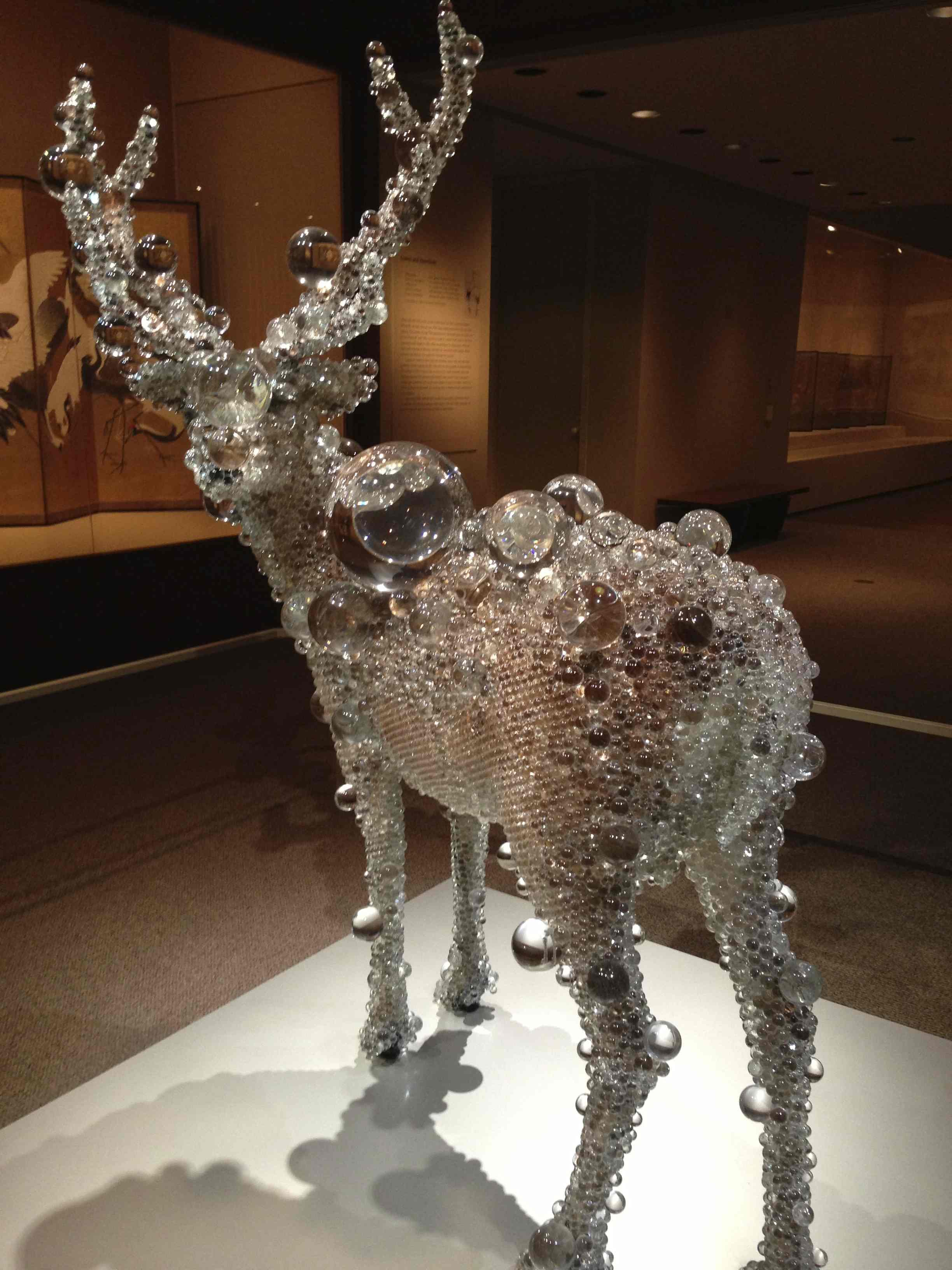
The exhibition starts behind the 12th century Buddhist temple platform and just past the 13th Century Bodhisattvas, where you’re greeted by a charming rooster that’s actually an 18th century incense burner. Turn the corner and you’ll come face to face with a startling 2011 Japanese sculpture — Kohei Nawa’s PixCell-Deer#24, an auspicious presence (ref. the messenger animal of the Shinto deities) in the form of a taxidermy specimen that Kohei creativly covered in glass bubbles.
How did Kohei Nawa’s deer get in here?
Every gallery delivers a surprise, from the water birds area right through to the “exotics”. Exquisite paintings of the 1700 are interspersed with startling realistic works by the masters of the forge. One of the show-stoppers is a spectacular life-size iron eagle hovering from his perch in the raptor gallery that the curators reckon was made for display at one of the late 19th century world expositions. The detail is amazing. Each feather was forged and riveted individually onto the bird’s metal body. It’s no wonder that the eagle, a nearby raven, and another headdress normally live in the Arms and Armor Department at The Met. Nice collaboration!
Check out our Flickr site for a walk-through of some of our favorite works, including the embroidered Phoenix-covered kimono, the 1908 Peafowl painting/screen by Mochizuki Gyokkei, Asano Toshichi’s hawk-shaped zither, and Kamisaka Sekka’s artistic book, which is brilliantly displayed in interactive form by the Met’s digital team.
Spectacular iron eagle lent by Arms & Armor Department
Enjoy this wildlife walk through the eyes of artists on the other side of the world, and be sure to relax in the George Nakashima reading room – a kind of “fire pit” roundtable where we found visitors sharing their impressions of the show. Check out the Met’s on-line catalog of the exhibition, but do yourself a favor and hike over to the Met in the next month before these birds fly away back to the collections.
You won’t be seeing the birds in the wild, but it’s likely that J.J. Audubon would approve. You’ll find joy in getting to know your new Asian friends, who you will likely spot in future exhibitions or in the aviary at the zoo.
Kimono embroidery detail. What did the Phoenix signify to this 19th c. bride?
Since Philadelphia museums, zoos, and gardens began posting videos online in 2008, collective YouTube views have climbed to 2.4 million, as chronicled in our latest report, Philadelphia Museums: 2013 Video and Social Media Rankings. The biggest surprise about the Philadelphia museum videos is that stylistically they are a bit different than New York museum videos. The institutions in Philly take a more whimsical approach to science, use a lot more promotional videos to drive exhibition attendance, and occasionally throw in a bit of the macabre.
The Top Philadelphia Exhibition Video of 2012, courtesy of the Longwood Gardens grounds crew and Bruce Munro
Highlights of our report on 32 Philadelphia museums:
As of year-end 2012, the Philadelphia institutions with the highest number of total YouTube channel views are the Penn Museum, the Mutter Museum, and Longwood Gardens. Penn’s channel features a mix of behind-the-scenes videos about exhibits, anthropology lectures, and a gigantic docu-archive; the Mutter produces highly creative shorts highlighting selections from its tantalizingly weird collection; and Longwood simply has tons and tons of fans that want to see what’s up with the seasons.
Last year, Longwood Gardens produced Philadelphia’s highest rated museum video — Light: Installations by Bruce Munro.Over 36,000 nature and art lovers viewed this short about Longwood transforming itself into Munro’s luminous vision. The garden also pumped out other video promos and features all year that kept their fans coming back to hit the YouTube channel.
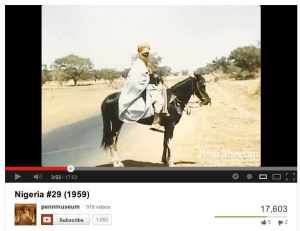
The Penn Museum’s Top 2012 Anthropology Video Nigeria #29 (1959) features a sheik, a mosque, a fuel depot with camels, and country life the way it used to be
The Penn Museum’s YouTube channel surpassed 1 million views in May. Penn’s been adding an enormous anthropology film collection to its channel (over 400 films) and the time-machine quality is irresistible. It’s no surprise that Penn’s Maya 2012: Lords of Time videos captivated the public all year, but it is interesting that the silent travelogue Nigeria #29 (1959) is up to 17,000 views. You could poke around that channel for days.
The Chemical Heritage Foundation produced Philadelphia’s most popular science video.Over 26,000 people watched A Distillations Explainer: Sweat, part of the Foundation’s Blood, Sweat, and Tears series (see below). It’s an entertaining, well-produced podcast series.
The Mutter Museum presents its unusual medical collections quite effectively through its YouTube series. Their 2012 series feature the curator taking “mystery” items out of the cabinets and challenging the viewers to identify them. Not for the squeamish, but really clever and nicely scripted.
The most active museum Twitter users in Philadelphia are the National Constitution Center, the Eastern State Penitentiary, and the Penn Museum. The most active Flickr users during 2012 were the Franklin Institute Science Museum and the Pennsylvania Academy of the Fine Arts. The largest Flickr photo pools are populated by Longwood Gardens and Eastern State Penitentiary enthusiasts.
All the video and social media details on 32 museums are in the report. Click here to see what’s included and make a purchase from our Its News To You Reports shop.
Enjoy watching Philadelphia’s top science video, courtesy of the Chemical Heritage Foundation. Meet Louis Pasteur and find out why sweat often smells:















 itsnewstoyou