Turning Points: Designs That Changed Everything

It’s always fun when the MoMA design curators dig into the collection and present innovations that make you look – and think – twice. They’ve outdone themselves with the endlessly fascinating, super-popular, and throught-provoking exhibition, Pirouette: Turning Points in Design, on view through November 15, 2025.

Where (and why) did Crocs evolve?  Who improved the paper bag?  Who designed the first emojis? What’s the link between M&Ms and the US military? The exhibition celebrates designers and tells stories about eureka moments – a flash of genius in adapting industrial materials to solve everyday problems in unexpected ways. 

Early 1930s invention for the military by Forrest Mars – M&M’s candy-coated chocolates.

Each design innovation has its own little curtained cubby, giving the exhibit a luxe red World’s-Greatest-Showman vibe with surprises revealed around each bend. The show has it all – beloved technology innovations, fashion twists, furniture innovations, and ubiquitous everyday items that we take for granted.

1950 Bic Cristal Ballpoint pen designed by Marcel Bisch and the Décolletage Plastique Design Team for Société Bic, which eliminated clogs and leaks.
1962 View-Master Model G, a lightweight stereoscope viewer remodeled by Charles Harrison for Sawyer Manufacturing.

See some of our favorites in our Flickr album.

Right at the start, there’s an entire wall where you learn about Shegetaka Kurita, the Japanese innovator who designed emojis in 1998. 

Emojis, designed in 1998-1999 by Shigetaka Kurita for NTT DOCOMO in Japan; 176 designed for mobile phoes and pagers

The earliest innovation honored in the exhibition is the folding, flat-bottomed paper bag designed by Margaret E. Knight and Charles B. Stillwell in the 1870s.  MoMA honors Margaret as one of the first women in the United States to obtain a patent for her invention of the paper-bag manufacturing machine. By unfolding a paper container that “stood up” on its own, clerks were able to pack everything with two hands! Revolutionary shopping efficiency!!

1870s-1880s flat-bottomed paper bag designed by Margaret E. Knight and Charles B. Stillwell

From the early 20th century, we have two European turning points in design – the electric hooded hairdryer and the at-home expresso maker. The Thirties’ version of the Müholos hairdryer is the first invention you see, but its heavy-duty industrial design is a shocker.

The innovative Moka Express expresso pot – invented in Italy during the Great Depresssion – is in every Italian home today. But it was revolutionary in the 1930s because it finally allowed people to economize by brewing at home instead of spending more at the café.
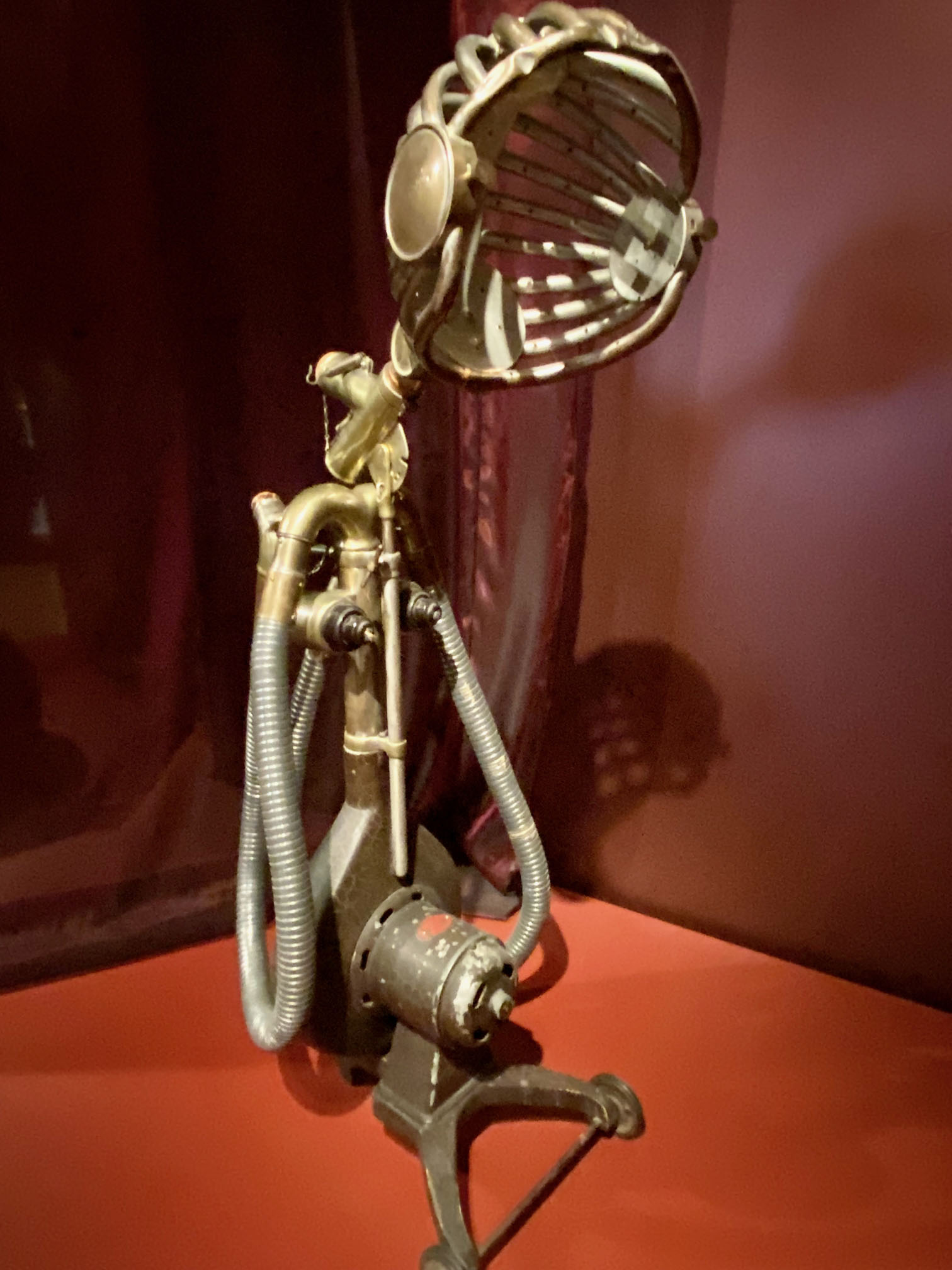
Highly intimidating 1930s hairdryer from the Müholos company of Leipzig, Germany, founded in 1909; innovators in electric hair clippers, too
2008 version of Moka Express designed in 1933 during the Great Depression by Alfonso Bialetti to enable Italians to brew espresso at home.

Going back to 1979, the team honors  Sony Walkman, the portable music wearable that replaced ginormous boom boxes. Steve Jobs and his team gets a nod for their 1983 Mac desktop all-in-one  and everything that came with it – the Oakland font designed by Zuzana Licko for the earliest Mac word processing and Susan Kare’s graphic OS icons. Kare invented the trashcan and didn’t even own a computer!

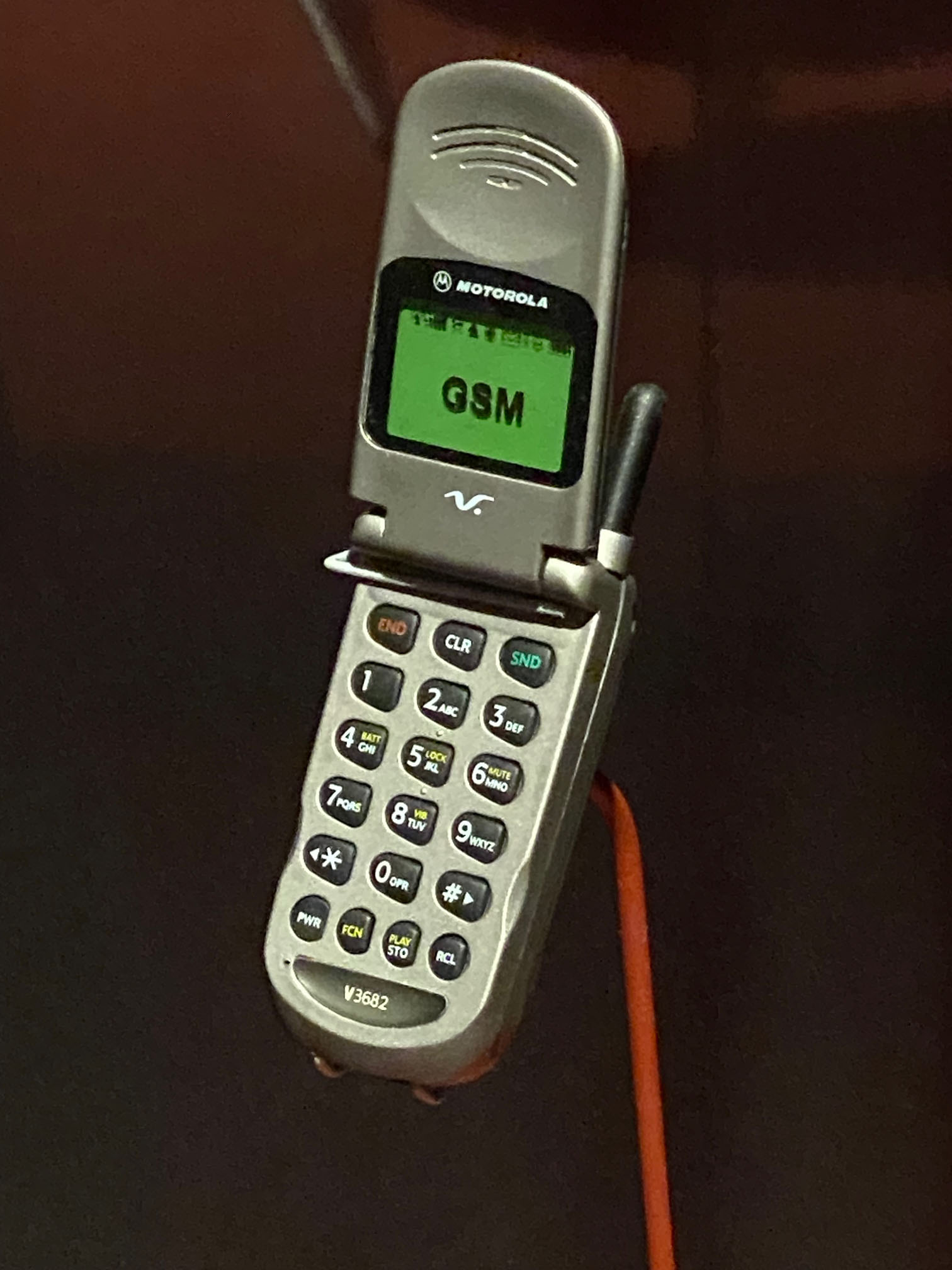
Although the tech world seems to be bringing it back this season, it’s nice to see the design innovation that began it all – 1996 Motorola flip phone!

Sony’s 1979 “Walkman” audio cassette player (Model TPS L-2) – the first portable listening “bubble”; designed with two headphone jacks for sharing.
1996 Motorola cellular telephone (Model V3682) – the lightest, smallest mobile device (“flip phone”) – designed by Albert Nagele.

And speaking of technology at your fingertips, it’s always nice to see MoMA display full-size 1926 Frankfurt kitchen that influenced every modern kitchen that came after it. After WWI, Germany undertook a big modernization project to alleviate the housing crisis.  Grete Lihetzk, who designed this kitchen was the only woman on the design team, but she made quite a mark!  She studied efficiencies in factory designs and incorporated them into the kitchen – revolving stools, built-in storage, stain-resistant cutting surfaces, and drop-down ironing boards.

1926-1927 Frankfurt Kitchen designed by Grete Lihetzky – a revolutionary, efficient approach with features still used in kitchen design today.

Listen to MoMA’s audio guide to hear the backstories of the Rainbow Flag, early Mac OS design, graphic design improvements to familiar signs, and how artificial acrylic nails became a trend.

Here’s a short history of shapewear:

And learn about the Monobloc Chair (designer unknown). It’s everywhere!
Lillie Bliss and Her Modernist Breakthrough

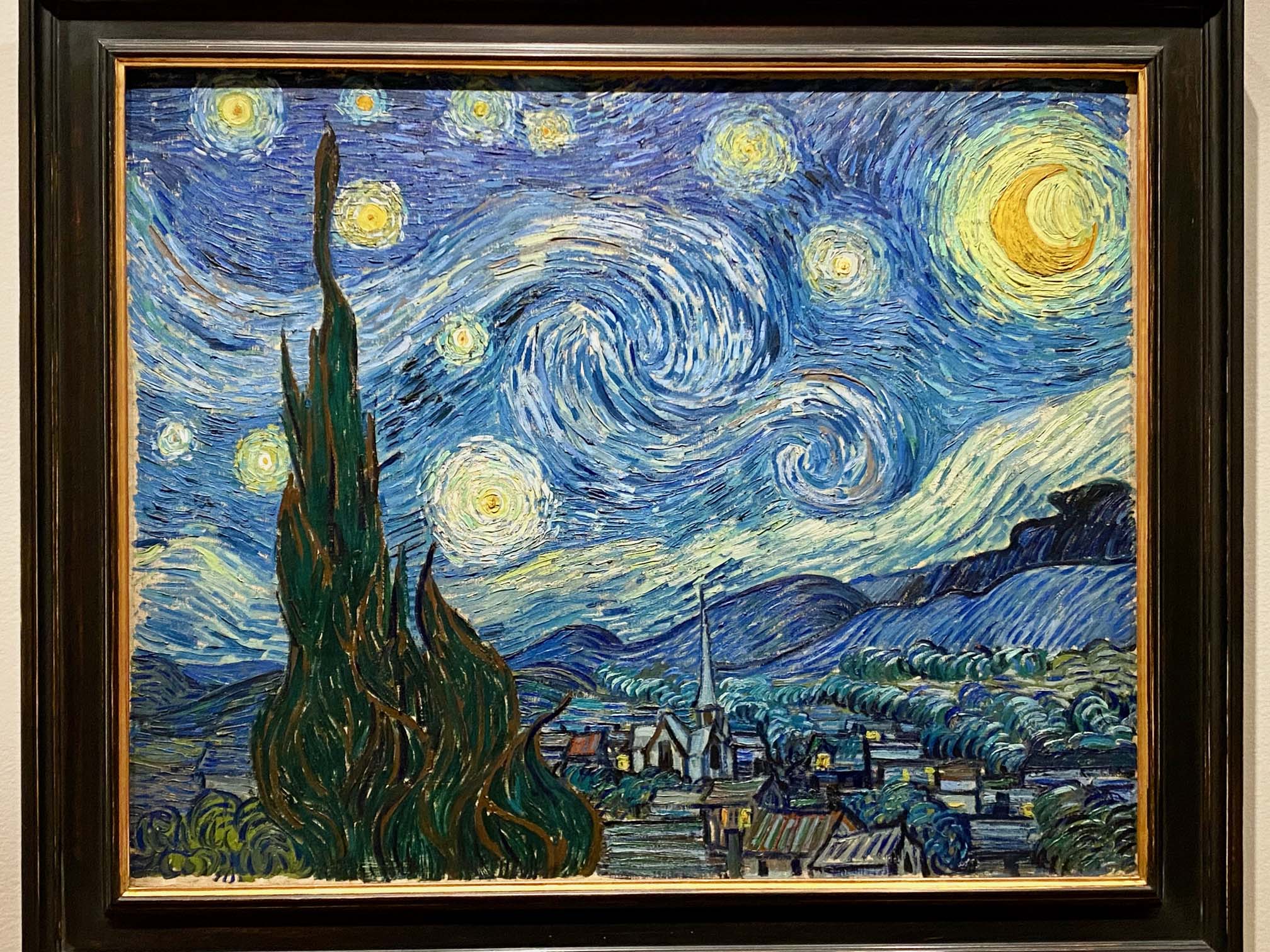
When you peek into the second-floor MoMA exhibition, you’ll see where Van Gogh’s The Starry Night has been holding court for the last few months.

Lillie P. Bliss and the Birth of the Modern, on view through March 29, tells the story of how one woman’s passion for modern art over a century ago formed the basis of the MoMA collection and MoMA itself.

Van Gogh’s 1889 The Starry Night, one of MoMA’s most beloved works.

Bliss was an early American patron of Cézanne, Seurat, Picasso, and Redon at a time when New York society looked askance at modern art’s tilted tables, fractured still lifes, and stippled surfaces. She even contributed to getting the 1913 Armory Show off the ground as a sponsor, art lender, daily visitor, and new-work buyer.

Maybe the constraints of growing up female in the Victorian era gave her an appreciation for the lack of inhibition Picasso’s and Matisse’s colors, Gauguin’s wild Tahitian woodcuts, and Redon’s ethereal woodsy fantasy figures.

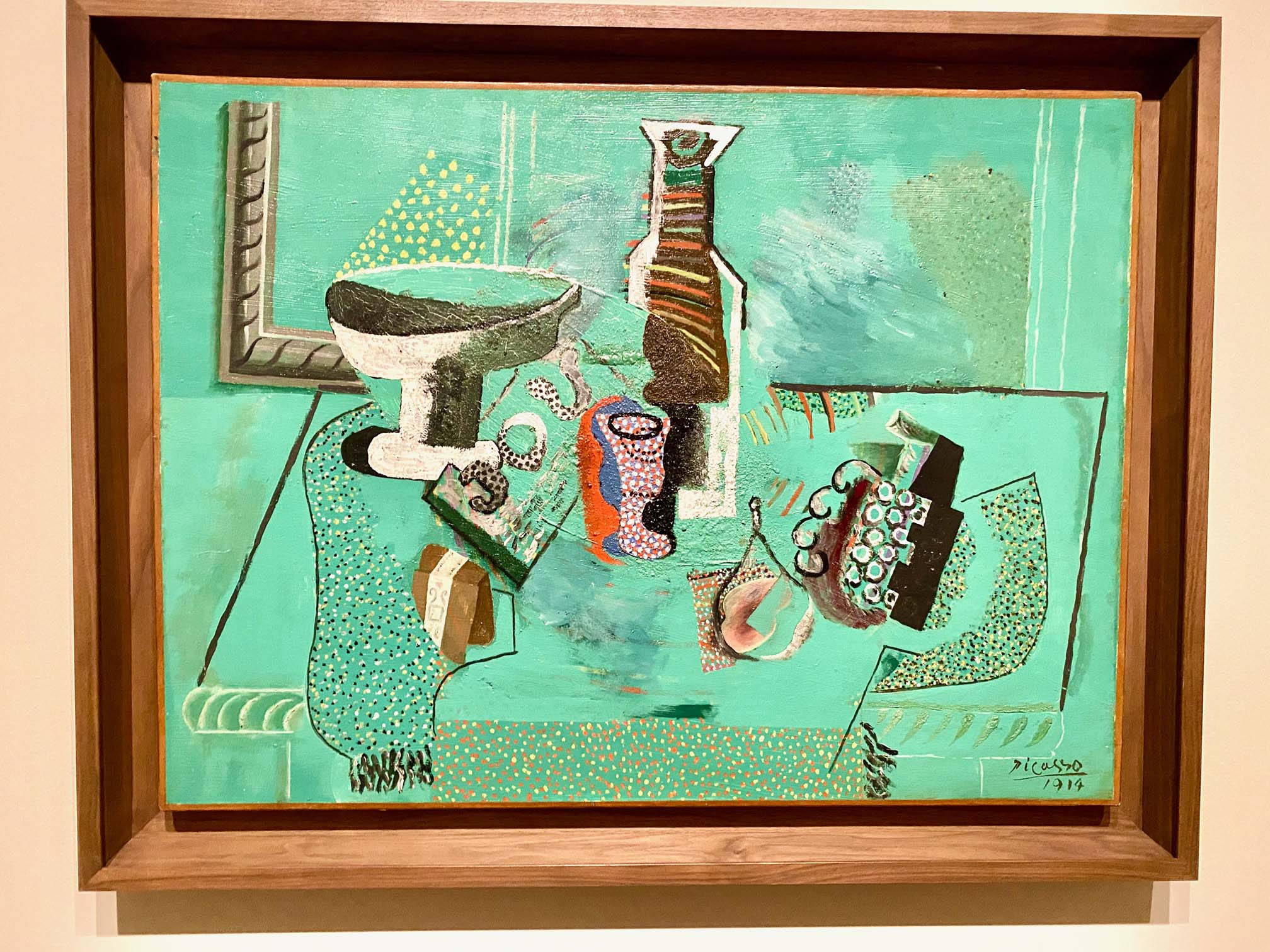
Picasso’s 1914 Green Still Life.

Endless modern-art discussions with art-world friends and mentors Arthur Davies and John Quinn gave her a sophisticated view of all the latest artists and trends. She joined a small group of modern-art lovers to lobby the Metropolitan Museum of Art to show the latest breakthroughs from Europe.

In 1921, the Met acquiesced and borrowed enough art to mount an exhibition of French impressionist and post-impressionist work. Bliss anonymously lent twelve pieces. People came to look, but the Met still resisted acquiring work that it considered too far-out.

When Bliss came into her inheritance in 1923, the pursestrings were unleashed. At age 49, she began to assemble the collection of her dreams via annual European buying trips and estate sales. Where could she show it? 

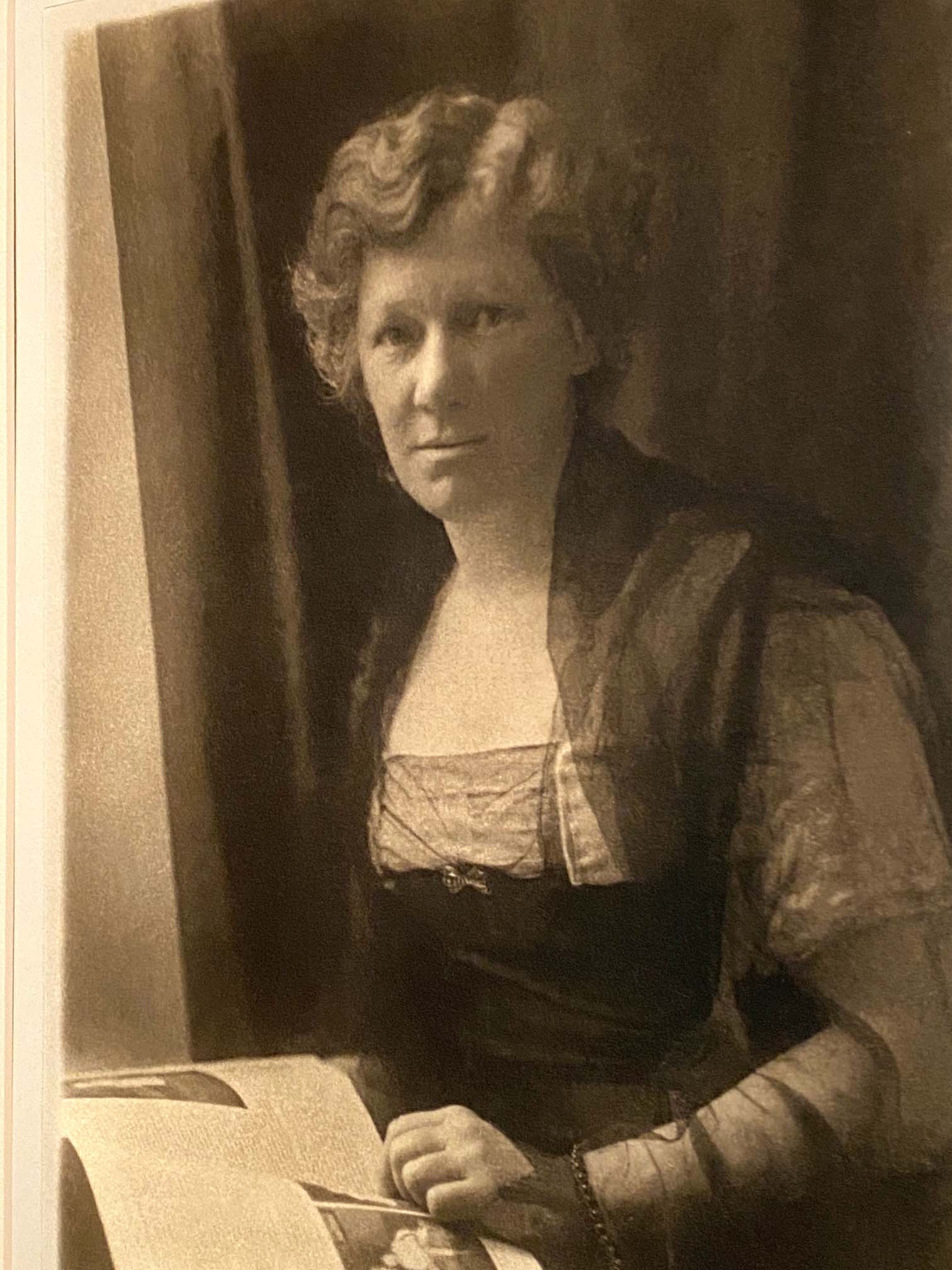
1904 portrait of Lillie P. Bliss

In 1928, she bought a lavish uptown triplex with a two-story gallery. She hung her favorite Cezanne over the grand piano and arranged a “who’s who” of avant-garde masters. Check out The Bather front and center, surrounded by Picassos, Seurats, and Gauguins.

1929-1931 photo of Lillie P. Bliss’s modernist collection hung in the music room of her Park Avenue apartment
Cézanne’s 1895-1898 Still Life with Apples hung at home in the place of honor, above the piano

The next year in a brainstorming session with Abby Rockefeller and Elizabeth Parkinson, the trio decided that New York needed a special place that was devoted exclusively to modern art. MoMA was born!
MoMA’s first exhibition – Cézanne, Gauguin, Seurat, van Gogh – was mounted in rented space at 730 Fifth Avenue, and crowds came.  The exhibition was a huge popular success, even though it coincided with the historic 1929 market crash. 

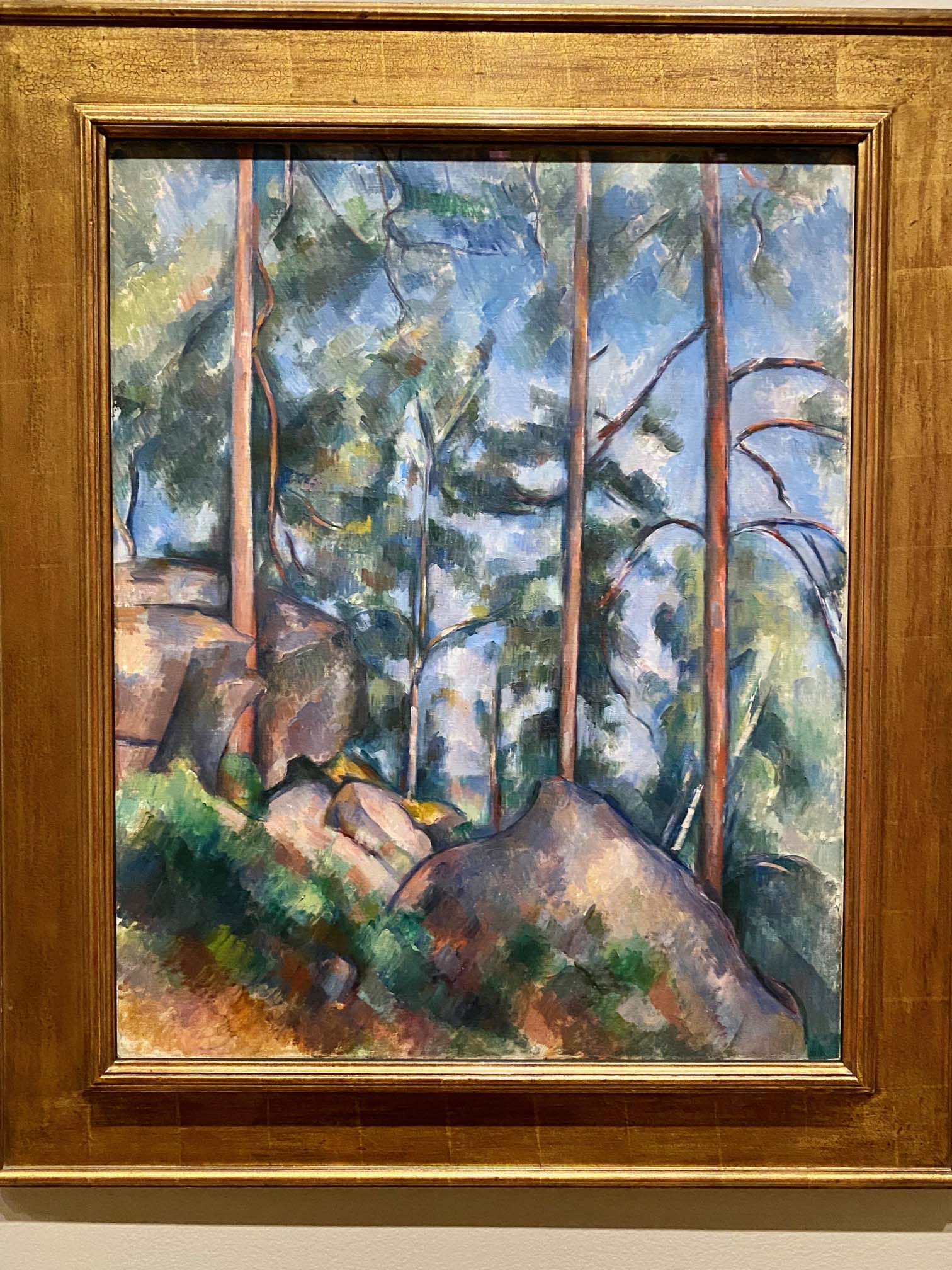
Cézanne’s 1897 oil Pines and Rocks (Fontainebleau?)
Seurat’s 1884 crayon drawing A Woman Fishing.

Lillie’s health crashed, too. On the heels of MoMA’s test run, she was diagnosed with cancer, and started drawing up a will to ensure that her beloved collection would carry on when she could not. She gave a Monet and a few gems to the Met, but bequeathed 150 works to the new Museum of Modern Art – forming the core of the collection we know today.

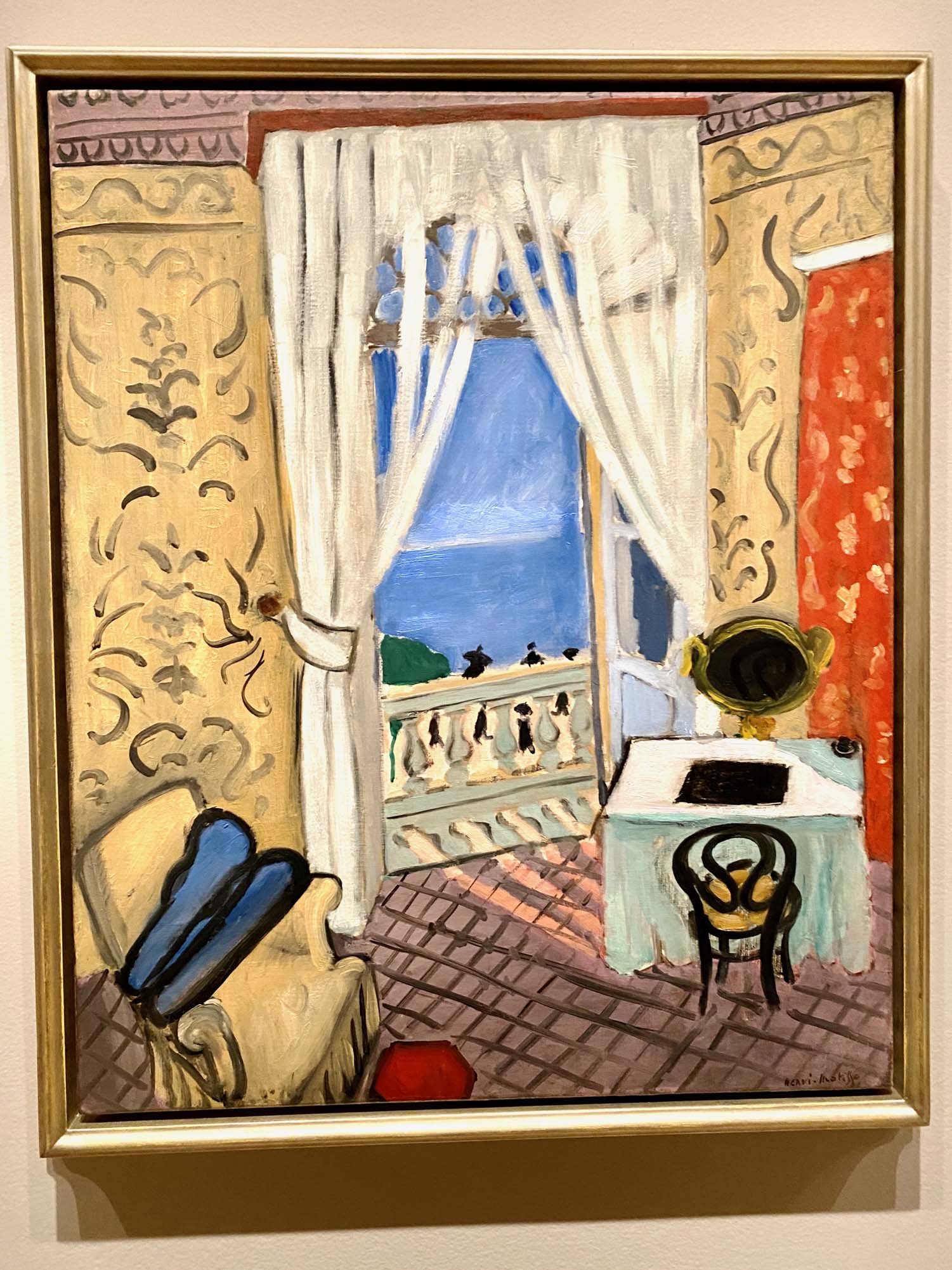
Matisse’s 1918-1919 Interior with a Violin Case.

When Lillie died in 1931 at age 66, there was only one last thing.  She was never able to acquire a Van Gogh. But in her will, she did give the museum permission to sell or exchange most of the paintings she bequeathed.

A few years later, MoMA sold one of Lillie’s Degas to acquire Picasso’s epic Demoiselles d’Avignon.

And in 1941, Alfred Barr made her dream come true. He heard that a dealer possessed a very special Van Gogh, and traded three of Lillie’s paintings for The Starry Night.

See our favorite works in our Flickr album, and enjoy other stories about this visionary MoMA founder by listening to the audio guide for the exhibition here.

Gauguin’s 1894 woodcut print The Creation of the Universe from the 10-print series, Noa Noa (Fragrant Scent)

When Advertising was Revolutionary

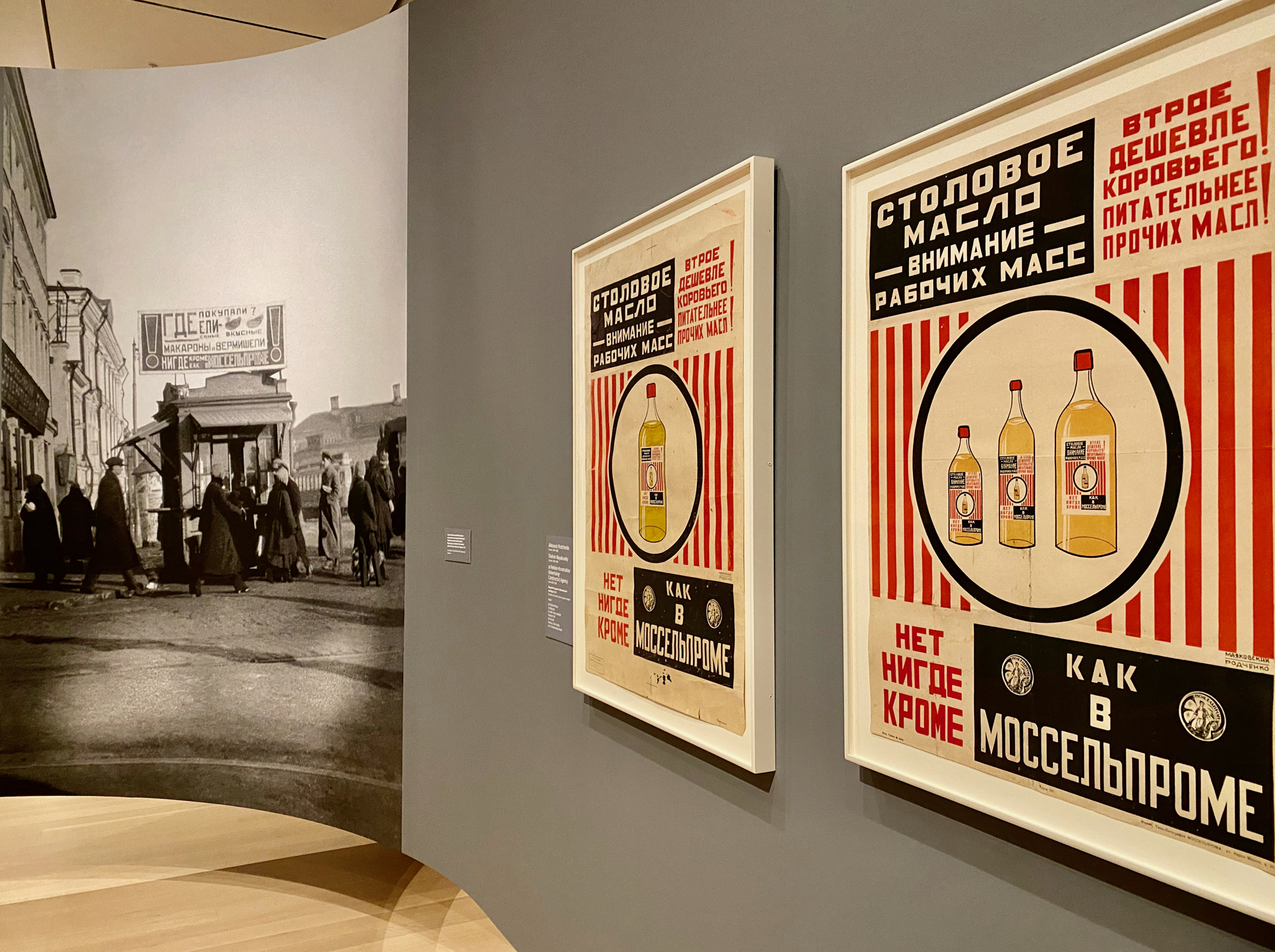
Abstraction was being invented, monarchies were falling, wars were raging, and modern 20th century artists decided to turn advertising on its head, too. Artists left studios in droves and began making posters, brochures, billboards, traveling agit-prop theater wagons, and new-fangled telecommunications towers.

1-11 Engineers Agitators Reconstructors at MoMA
Modernist Russian billboards and works from Rodchenko and Mayakovsky’s 1923-1925 Advertising-Constructor agency

That’s just the first gallery of Engineer, Agitator, Constructor: The Artist Reinvented, on view at MoMA through April 10 – a show that investigates how artists change their focus to meet the moment of social, technical, commercial, and political change.

The focus is the period between WWI and WWII, when the avant-garde began mixing it up to bring about a whole new world for consumers, city planners, publishers, and the proletariat. Take a look at our favorite works in our Flickr album.

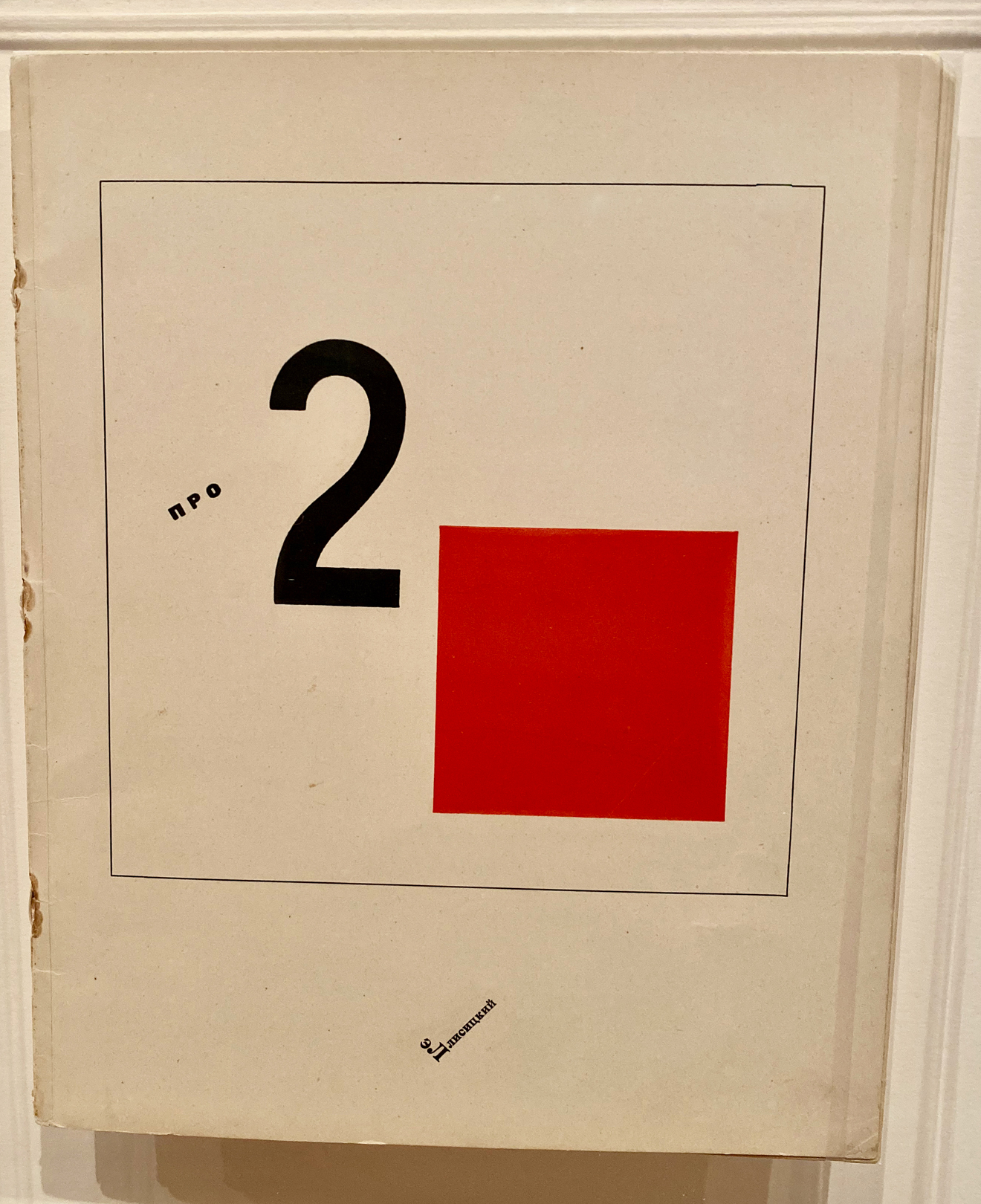
The first gallery provides a broad view of how other avant-garde abstractionists first inspired by Malevich’s Suprematism experimented now used pure, kinetic shapes to dance across children’s books, pavilions, costumes, and posters in the earliest days after the Russian Revolution.

El Lissitzky’s 1922 book About Two Squares: A Suprematist Tale of Two Squares in Six Constructions

The 300 works in the show are principally works on paper, collected by and donated to MoMA by Merrill Berman – a treasure trove that includes particularly rare and unique items that the curators use to tell quite a story.

A 1922 costume design by Popova, inspired by workers’ uniforms

One entire wall is dedicated to Ms. Popova, where you can stroll by paintings, covers for sheet music, and prints – all the ways she applied her genius. Another long wall displays dynamic work by Rodchenko and Mayakovsky, whose Advertising-Constructor agency mixed poetry and innovative, angled constructivist style to sell chocolate and other consumer products.

Mixed-media plays a major role in the exhibition, with several galleries showing how European artists embraced collage and photomontage both in their personal studio work and in graphic designs that shook up the look of mass market publications, industrial marketing, postcards, and political posters.

Dynamic photo montage 1928 postcards by Gustav Klutsis to promote the All-Union Spartaklada Sporting Event

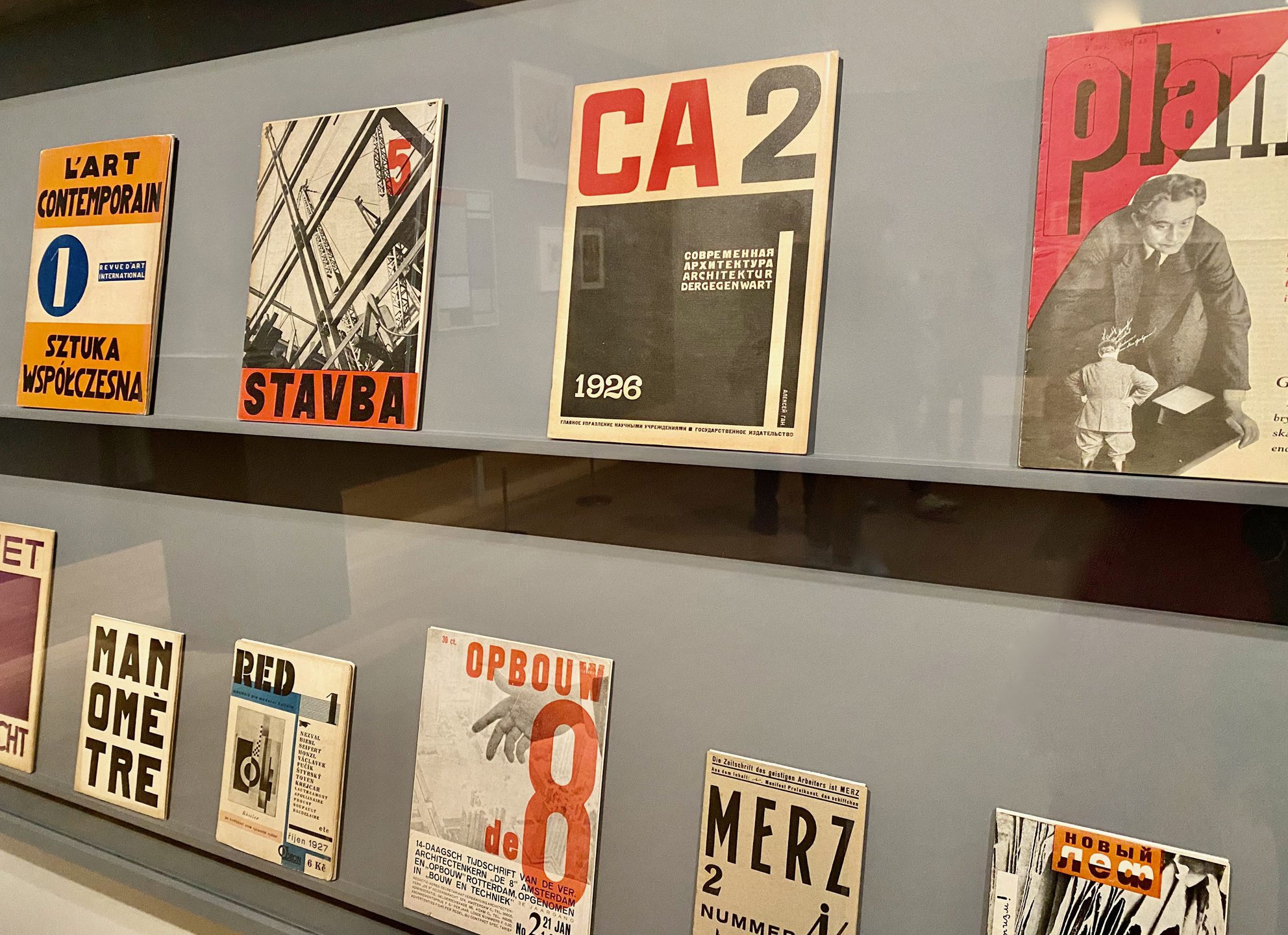
Another section of the show provides an introduction to innovative Polish, Hungarian, and Dutch indie zines shared, collected, and treasured by cutting-edge writers and designers excited by possibilities of the early 20th century.

Creative European magazines published in the late Twenties

Angled, geometric, and loaded with innovative typography, these rare magazines share the space with paintings by Mondrian, sculpture by Moholy-Nagy, and other geometric shape-shifters.

1924 photo of Henryk Berlewi and his exhibition at a Warsaw Austro-Daimler showroom with works from his Mechano Facture series, inspired by industrial technology

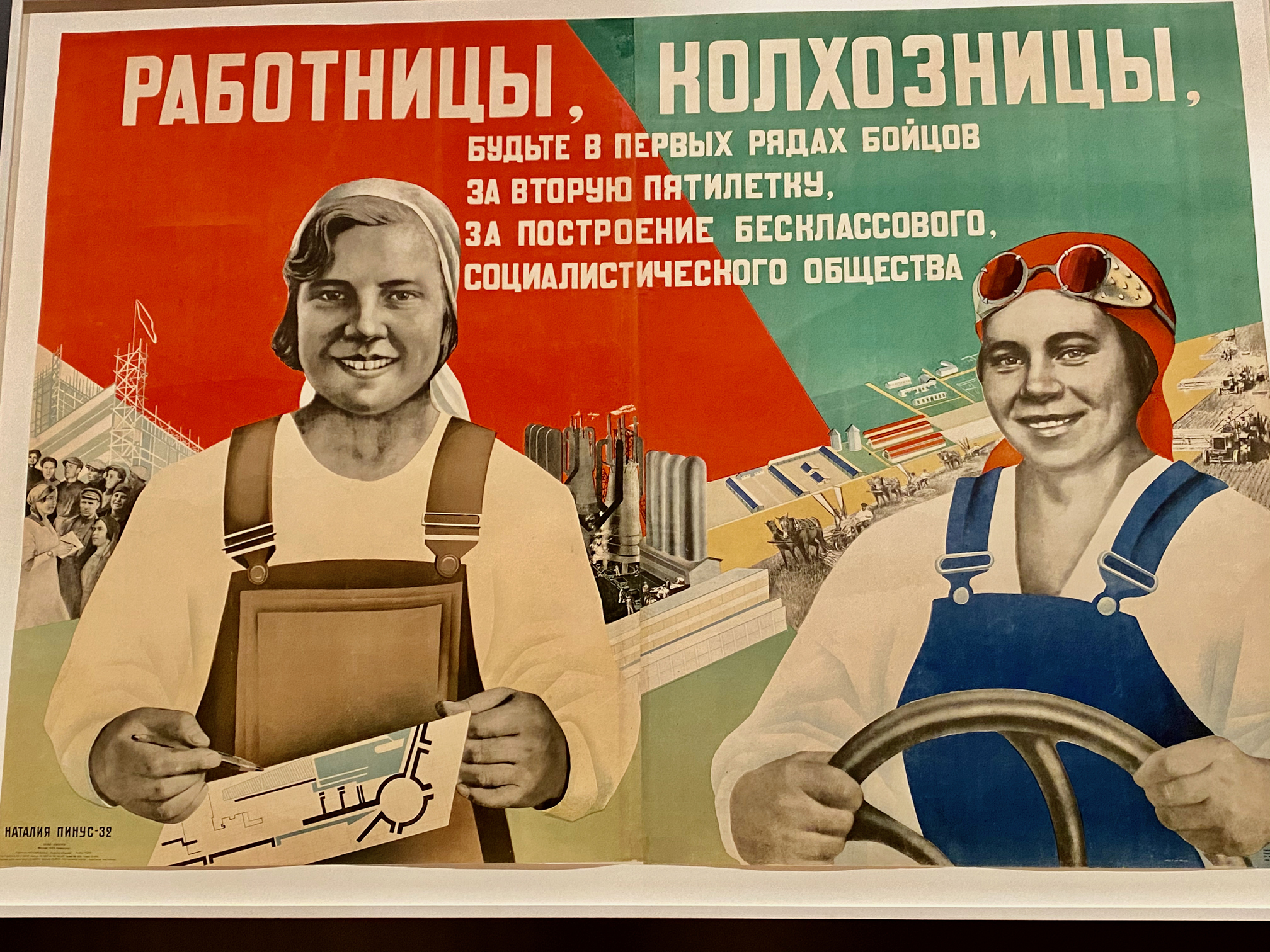
Women are prominently showcased in every gallery of the exhibition, including the massive wall of Soviet posters by female designers whose images celebrate the contributions of women to the industrial workforce.

1931 poster by Natalia Pinus acknowledging female farmers and other collective workers

Visionary drawings, watercolors, and poster posters are around every corner – and most are never-before-seen surprises. Before WWII brought it all to an end, the curators show the modern innovations that these creatives had in mind – new architecture, advertising constructions, and modern furniture fairs.

Walter Dexel’s 1928 design combines an airshaft, ad kiosk, and telephone booth. Herbert Bayer’s design for an electrified ad tower for an electricity company, done when he was just a student at the Bauhaus. Willi Baumeister’s 1927 poster that directly declares interior designs of the past are over.

Elena Semenova’s 1926 design sketch for a Russian worker’s lounge looks like a precursor to WeWork.

1927 poster by Willi Baumeister promoting a modern furniture exhibition in Stuttgart
Vision for model communal space: Elena Semenova’s 1926 design watercolor for a Russian worker’s club lounge

Enjoy this special program with Ellen Lupton and curator Jodi Hauptman in a fascinating discussion about work by several revolutionary designers and how so many intermingled careers in graphic and fine arts during tumultuous times:

Virtual Museum Events – New Show Tours at MoMA, The Whitney, Poster House, and American Folk Art

For Easter Week, you’ll have an opportunity to join online tours of the new architecture show at MoMA, Julie Mehretu’s retrospective at The Whitney, the Lincoln Center poster show at Poster House, and a look at visionary photography at the Museum of American Folk Art.  See the full list of activities this week on our virtual events page.

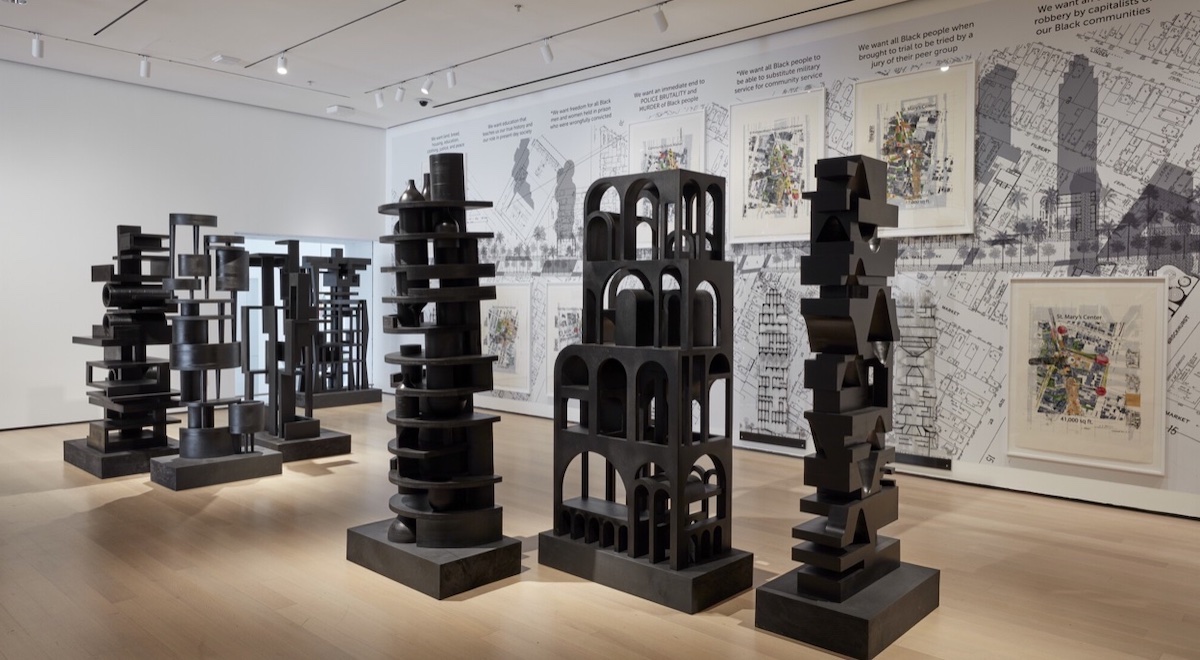
Today (March 29) at 6:30pm, join MoMA to hear a panel of high-powered Black architects and designers to discuss Cities and Spatial Justice – one of the themes presented in MoMA’s new exhibition Reconstructions: Architecture and Blackness in America. How are Black urban spaces created and protected? How do communities reckon with the past to create a future? Join in to participate in this timely discussion.

At 9pm, join the New Museum for a talk with Rachel Rossin, an artist whose work is part of World on a Wire, an online visual exhibition that is the first exhibition in a new partnership between Hyundai Motor Company and Rhizome, the museum’s digital art affiliate. The later (US) time was set to allow art lovers in Seoul and Beijing to join in at a reasonable time, too.

2_New Museum_Rhizome_Rossin

Rachel Rossin work at Hyundai Motorstudio Beijing and World on a Wire digital project.

On Tuesday (March 30) at 7pm, join a tour for the new Julie Mehretu mid-career retrospective at the Whitney Museum. See the giant, genius, multilayered canvases with the curator and find out how maps, revolutions, social justice, and architecture have inspired her to create such monumental works. (And for the tour of Julie’s show in Spanish, join the tour online at noon on Friday, April 2.)

3_Whitney_Mehretu_Invisible Line

Pondering Julie Mehretu’s Invisible Line at the Whitney

At 8pm, take a trip to Tokyo’s An’yo-in Temple to hear one of the earliest forms of meditative, chanting vocal music reimagined in a new work by the young composer. Japan Society, the University of Chicago, and Carnegie Hall present Shomyo: Buddhist Ritual Chant – Moonlight Mantra, followed by a live Q&A with the composer.

4_Japan Society_Chant_Shomyo

Traditional Buddhist chanting in Tokly’s An’yo-in Temple on Tuesday, courtesy of Japan Society and Carnegie Hall

The temple is created in a traditional method of joining wood without nails or glue, and ties into the society’s current exhibition, When Practice Becomes Form: Carpentry Tools from Japan.

On Wednesday (March 31), join Poster House for its program, For the Many: the Public Art of Lincoln Center, which is being held in association with the museum’s current exhibition, Vera List & The Posters of Lincoln Center. The program includes an introduction to Lincoln Center’s poster project – the landmark series pioneered by Vera List –and goes on to showcase the full range of public art commissioned for this New York cultural landmark.

Dorothy Gillespie’s 1989 Lincoln Center information center poster.

On Thursday (April 1) at 11am, take another trip to Japan to visit the Tokachi Millennium Forest ecological project on Hokkaido with experts from the New York Botanical Garden. Hear them talk about the master plan for this project, how they merged the “new Japanese horticulture” with wild nature, and how they created not only a beautiful garden but a gorgeous new book.

7_NYBG_Tokachi

Travel to the Tokachi Millennium Forest in Japan with NYBG and Dan Pearson and Midori Shintani

At 6pm, join the Museum of American Folk Art for a panel discussion (Re)Turning the Gaze, on the relationship of “the gaze” to gender, race, and sexuality. The panelists will feature photographs from the provocative current exhibition, PHOTO | BRUT: Collection Bruno Decharme & Compagnie.

Adam Pendleton at New Museum. Photo: Dario Lasagni

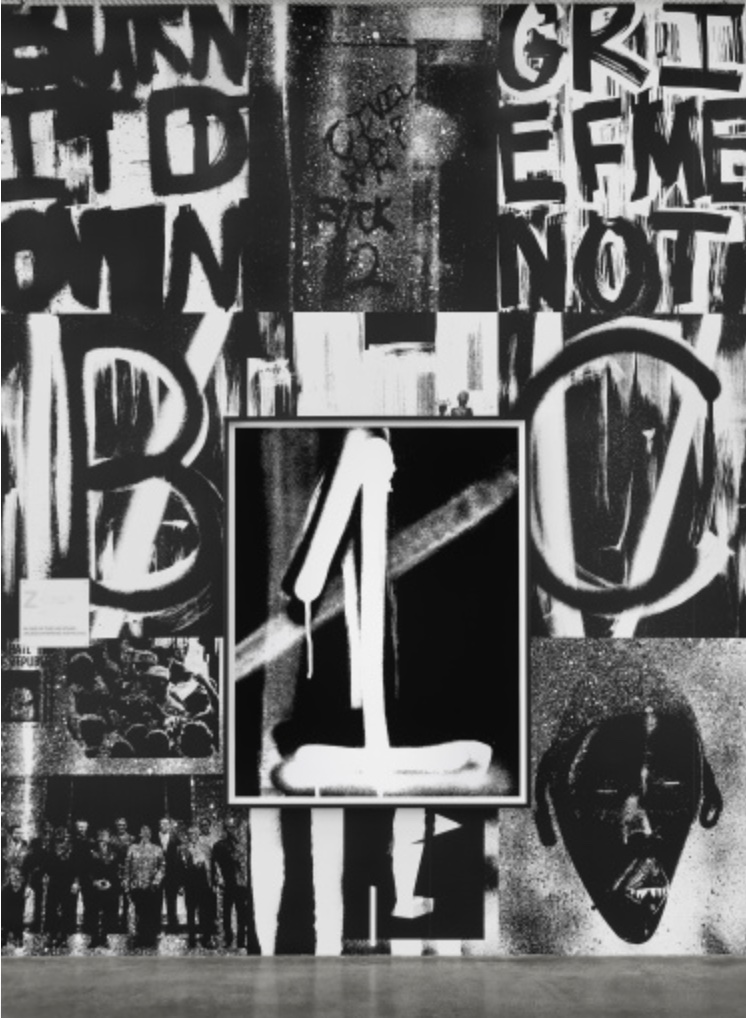
At 7pm, join the conversation at the New Museum with Adam Pendleton, who’s transformed the museum lobby into an exciting environment for the acclaimed Grief and Grievance: Art and Mourning in America exhibition. He often talks about “Black dada” – art that incorporates blackness, abstraction, and the avant-garde. If you can’t get to New York, take an online tour of the exhibition at 11am on Saturday, April 3.

There’s a lot more happening this week, so check the complete schedule. Most of the events are free, but it’s always nice to add a thank-you donation.

Museum Update

The crowds were at the Whitney to get their first look at the Julie Mehretu retrospective and to take a last look at the Kamoinge Workshop photographs from the Sixties and Seventies in the last weekend of Working Together. We saw lots of conversations and contemplations happening inside the Kamoinge gallery.  Although the show closed yesterday, the Whitney is offering one final virtual tour at noon on Thursday (April 1).

This past week, we went to the Met’s virtual opening of the Alice Neel retrospective, which is now posted online. Take a look.

We also joined MoMA’s online event with the Calder Foundation to take a closer look at the new exhibition, Alexander Calder – Modern from the Start.

The program is now posted on MoMA’s YouTube channel. Nearly 4,700 people have listened to Calder’s grandson Sandy Rower (and head of the Calder Foundation) shatter some Calder myths and show decades-old color 16mm film of Tanguy, Duchamp, and his grandmother hanging out with Calder in MoMA’s garden on 54th Street. (Don’t break that sculpture with the cat, Marcel!)

And while you’re on that YouTube channel, check out MoMA Virtual Cinema’s discussions with the directors, crews, and actors associated with some of their top picks for the film-awards season – Nomadland, Borat, Mank, Sound of Metal, and Minari.

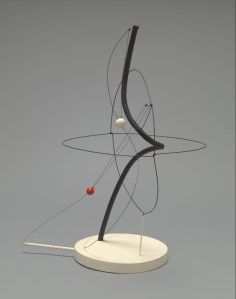
Calder’s 1934 sculpture A Universe at MoMA

Weekly Virtual Museum Events – Berlin Neon, Japanese Rap, Master Photographers, and Alice Neel

Commercial neon in Berlin under discussion at Poster House Monday

This week, NYC museums are offering more than 40 on-line events (mostly free) that will take you to Berlin in the Twenties, the music scene in Tokyo, studios of acclaimed photographers, and an opening at the Met.  See the full list on our virtual events page.

Tonight (Monday, March 22) at 6:30pm, join Poster House and photographer Thomas Rinaldi for Interwar Neon: Commercial Illumination in Weimar-Era Germany to look back on the electric art that flourished alongside the freewheeling nightlife scene for a brief time between the wars.

Dawoud Bey’s Birmingham series at the New Museum.

On Tuesday (March 23) at 4pm, join the New Museum to meet Dawoud Bey, a photography legend (and MacArthur genius) whose moving 2012 tribute, The Birmingham Project, is featured in the acclaimed exhibition, Grief and Grievance: Art and Mourning in America

At 7pm, join Japan Society for 333 Contemporaries – Looking for the Next Global Rap Star in Japan, the kickoff to its new on-line series which talks about how US rap music adopted and adapted by the next generation of Japanese artists.

Parlor of the Merchant’s House Museum, New York’s only intact 19th c. home

On Wednesday (March 24) at 6pm, if Monday’s session got you curious, Join the Merchant’s House for 19th Century Domestic Lighting: 100 Years of Change. It will be an in-depth look at the technology behind the historic home’s lighting fixtures from 1835 forward, a time when candles and oil lamps gave way to electric lighting.

Anthony Barboza’s 1972 Kamoinge Workshop portrait of Ming Smith

At 7pm, meet Kamoinge Workshop photographer Ming Smith in a live online event, discussing the publication of her recent Aperture monograph and the influence of music upon her work. Ming’s work features prominently in the current exhibition at The Whitney, Working Together: The Photographers of the Kamoinge Workshop. She is the first African-American female photographer to have her work enter MoMA’s collection.

On Thursday (March 25) at 6pm, get your fashion fix at the Museum at FIT with a special program, From Louis Armstrong to Dizzy Gillespie: Jazz and Black Glamour. The pre-recorded program will feature vintage performer Dandy Wellington, a deep-dive into the influence of jazz on 1920s menswear, and a live Q&A with FIT during the YouTube stream.

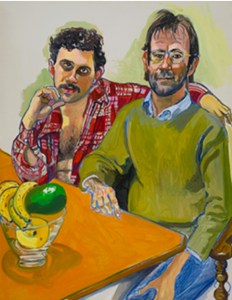
Alice Neel’s 1978 portrait Geoffrey Hendricks and Brian

At 7pm, join the Met for the online opening of its new exhibition, Alice Neel: People Come First, which features over 100 works by this beloved New York artist, considered one of America’s greatest 20th century portrait painters. You’ll find out all about how an artist who labored for decades in relative obscurity was drawn to document political movements, people, styles, and community in paint.

At 8pm, join MoMA for Virtual Views: Alexander Calder, a Live Q&A in honor if its new exhibition about Calder, MoMA’s founding, and modernism. The event will feature conversation with the artist’s grandson, who leads the Calder Foundation.

There’s a lot more happening, so check the complete schedule. Most of the events are free, but it’s always nice to add a thank-you donation.

Museum Update

1539 box for crossbow bolts made for the Bavarian duke. Value = 6 cows

We’re glad to report that the Met has extended its exhibition on the value of Renaissance art through the end of the 2021!  See it on the way to the Lehman Wing and the Dutch masters exhibition, and read about it (and the cows) in our February post The Met Asks What the Renaissance Thought It Was Worth.


Weekly Virtual Museum Events – Broadway Memories, Irish History, French Culinary Getaway, and Black Rock

Joe Allen’s West 46th Street Broadway institution on Restaurant Row.

This week, NYC museums are offering 45 on-line events (mostly free) on Broadway, St. Patrick’s Day-inspired programs, music, and artist talks…even magic!  See the full list on our virtual events page.

Have you ever wanted to spend time at a Broadway hang-out with all the show people?  Today (March 15) at 5:30pm, drop in on a 2016 interview with the late Joe Allen, whose Restaurant Row spot provided a home since for decades of Broadway stars, fans, actors, dancers, and producers. Hits, flops, feuds, gossip, deals, and more each night at the bar. The New York Public Library of Performing Arts at Lincoln Center is showing this video for the first time to commemorate a true Broadway original.

Meet MoFAD Tuesday to explore the diverse flavors of Marseilles.

On Tuesday (March 16) at 6pm, travel to abroad with the Museum of Food and Drink in A Taste of Marseille: A Virtual Tour and Tasting with Culinary Backstreets. Enjoy a guided tour of Marseille’s diverse neighborhoods and foods. It’s too late to order the ingredients from MoFAD, but you can still be a fly on the wall for the food prep, and enjoy early evening apéro and Provençal snacks.

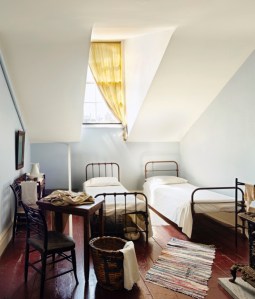
Irish servants’ quarters at Merchant’s House.

At 7pm, learn about the women of rock in a special performance and panel at the Schomburg Center for Research in Black Culture at the Women’s Jazz Festival 2021. Enjoy Black Women in Rock & Roll and meet author Maureen Mahon, DJ Lynnée Denise, and Amythyst Kiah for performances and conversation.

On St. Patrick’s Day (Wednesday) at 6pm, see what working life was like for the first generation of young Irish women to make New York City their home. The Merchant’s House Museum takes you on a virtual historic home tour, In the Footsteps of Bridget Murphy, emphasizing what it took for servants to keep an 18th century townhouse humming and the lady of the house happy.

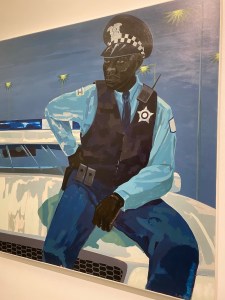
Installation view of 2015 painting by Kerry James Marshall at New Museum

At 8pm, enjoy a mix of Irish history with a little magic in a special program at the New-York Historical Society – Celtic Magic: Exploring Irish History through Grand Illusion. Illusionists Daniel GreenWolf and Bella GreenWolf will take you on an entertaining, surprising journey from the ancient Celts to Irish immigrants

On Thursday at 4pm, the New Museum continues its series of conversations with artists featured in its exhibition, Grief and Grievance. This week, do not miss acclaimed artist Kerry James Marshall in conversation with New Museum artistic director Massimiliano Gioni.

There’s a lot more happening, so check the complete schedule. Most of the events are free, but it’s always nice to add a thank-you donation.

Museum Updates

Calder’s 1934 sculpture A Universe at MoMA

This week, we were able to do a quick spin around MoMA’s new exhibition, Alexander Calder: Modern from the Start. The new show had a steady flow of visitors, with everyone loving it!  People were taking selfies with the larger sculptures and standing mesmerized by the Snow Flurries mobile dancing with its shadow.

We’re also looking forward this week to the Whitney’s preview of the Julie Mehretu retrospective, opening March 25, and the Met’s opening of the Alice Neel retrospective, opening March 22.

Weekly Virtual Museum Events – Jim Dine, Niki de Saint Phalle, and Frida Khalo and New Artists

Jim Dine talking drawings online at The Morgan on Wednesday

This week, NYC museums are offering 35 on-line events (mostly free) on design, art, history, architecture, fashion, and performance.  See the full list on our virtual events page.

But we want to alert you to several events in connection with some of the brand-new exhibitions in town:

On Wednesday (March 10) at Noon, the Morgan Library is sitting down with Jim Dine to talk about classical and contemporary drawing. The program is being held in association with the Morgan’s new exhibition, Conversations in Drawing: Seven Centuries of Art from the Gray Collection. Register here for the on-line session (free, but limited seats). Jim will be talking about his own work that’s in the show and how his commitment to drawing relates to work by other artists included, such as Rubens, Ingres, Picasso, and Matisse.

Niki de Saint Phalle arrives at MoMA PS1. Interior view of Empress, Tarot Garden, Italy

On Thursday (March 11) at 1pm, join MoMA PS1 for the launch of the catalogue for its newest exhibition, Niki de Saint Phalle: Structures for Life. Although Niki’s work was everywhere in the latter part of the 20th century, this exhibition marks her first New York retrospective. Curators, admirers, and artists come together at this panel to discuss the exhibition and her daring, provocative installations, ideas, and work.

At 2pm, the Cooper-Hewitt will host another conversation in honor of Willi Smith’s passion for making art outside of the dressmaking atelier – Art, Fashion, Performance: Seeing Through Creative Collaboration.

1939 portrait of Frida by Nickolas Muray. © Nickolas Muray Archives

At 6pm, the Museum at FIT is debuting a pre-recorded video with the curator of the acclaimed exhibitions in Brooklyn in 2019 on Frida Khalo’s style and art. Fashion curators from FIT will be running a live Q&A during the YouTube premiere of Curating Frida Kahlo: Fashion & Prosthetics.

On Friday (March 12) at 6pm, join the curators at El Museo del Barrio for an on-line tour of their important, new show on emerging artists – Estamos bien – La Trienal 20/21. The pandemic delayed the in-gallery opening of this important survey of new art, so El Museo put the work on line, and is just now welcoming in-person visits to its Fifth Avenue home. Check it out and see what’s new.

LaToya Ruby Frazier’s story in Grief and Grievance at the New Museum

At 7pm, join the New Museum to meet with another incredible artist participating in Grief and Grievance, the exhibition that has all of New York buzzing. LaToya Ruby Frazier, who has a compelling, wall-sized autobiographical work in the show, will be talking with Margot Norton – a discussion that you shouldn’t miss.

And in the run-up to St. Patrick’s Day, the Tenement Museum will be hosting a special on-line tour of the Moore family’s flat on Saturday (March 13) at 7pm and on Sunday (March 14) at 4pm.  Next week, too!

There’s a lot more happening, so check the complete schedule. Most of the events are free, but it’s always nice to add a thank-you donation.

Museum Updates

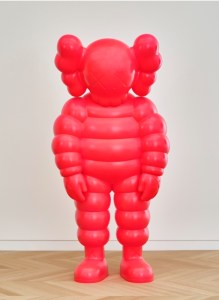
KAWS: WHAT PARTY © KAWS. Photo: Michael Biondo

New York has some exciting new shows coming on line right now! Last week, the Brooklyn Museum opened its big art-commerce-culture exhibition, KAWS: What Party, to celebrate 25 years of audacious work by Brooklyn’s own Brian Donnelly.

On March 11, Japan Society finally reopens its exhibition space with When Practice Becomes Form: Carpentry Tools from Japan. In honor of the earthquake’s tenth anniversary, the exhibition is a tribute to the resilient spirit of Japanese architecture and craftsmanship.

On March 14, MoMA opens Alexander Calder: Modern from the Start. We saw the workmen putting on the finishing touches on the third floor when we swung by MoMA this week to check out the other new show in the design galleries – Reconstructions: Architecture and Blackness in America.

Weekly Virtual Museum Events – Green Book Trip, Willi Smith, Ice Cores, Revolutionary Design, and Museum Scavenger Hunt

NYC fashion designer Willi Smith, ca. 1981. Courtesy: Kim Steele

Mark your calendars for any (or all) of fifty special on-line events sponsored by NYC museums, including a trip inspired by The Green Book, a tribute to a fashion designer who electrified runways in the Eighties, a look under Greenland’s ice, a Q&A on MoMA’s revolutionary design show, and a game-night trip to 18 American museums (with prizes!).

There are many other Black History Month events, discussions, art tours, and previews, so check the week’s listings on our virtual events page. For starters:

Sights along the road trip Driving the Green Book at MAD Museum Monday.

Today (February 22) at 6pm, hit the road with Alvin Hall, Janée Woods, and MAD Museum to learn about a 2,021-mile road trip that they took, inspired by the historic Green Book, which guided Black American motorists on family road trips for decades. The event will be an extension of their podcast, “Driving the Green Book” and feature lots of photos of what they found along the way.

CITIC Tower talk at the Skyscraper Museum

On Tuesday (February 23) at 12:30pm, join the Cooper-Hewitt in its tribute to Willi Smith, the beloved, exuberant fashion designer who dressed all the fun people in the Eighties. Since the museum has been shuttered nearly a year, few were able to see the Willi’s retrospective inside the Carnegie Mansion. So, our national design museum has declared “Willi Smith Day” so that it can shine a light on this historic Black designer for the world to see.

Get inside a supertall building. At 6pm, jet off to Beijing with the Skyscraper Museum and Robert Whitlock, the architect of the city’s tallest buildings. Hear about the design and construction of the CITIC Tower, whose shape is inspired by an ancient ritual vessel from China’s Bronze Age. This is just one of several upcoming talks at the museum on supertall buildings.

African Burial National Monument program at the Tenement Museum

Want to travel back a few centuries? On Wednesday (February 24) at 1pm, visit the Tenement Museum and the African Burial Ground National Monument for a talk on lifestyles of two African families living in old New Amsterdam. Using original source materials, you’ll get a fresh understanding of everyday life in mid-1600s Manhattan.

NYBG’s edible archway

At 6pm, take a trip around the country with a preview of the latest exhibition at the International Center for Photography. Join photographer-curator Paul Graham to walk through the exhibition But Still, It Turns: Recent Photography from the World. Celebrate unexpected journeys and enjoy the nondocumentary approach (no stories, just looking).

On Thursday (February 25) at 11am, start the morning with the New York Botanical Garden’s program with Leslie Bennett of Pine House Edible Gardens on creating gardens of sanctuary. Learn how she creates inspirational gardens that are organic and yield plenty of food, flowers, and medicinal herbs.

Icebergs now, but what happens if Greenland melts?

Thinking about climate patterns recently? Get a completely different perspective.  At 2pm, join a glacier scientist in Beneath the Ice at the American Museum of Natural History to learn what happens when Greenland’s ice melts. You’ll look at how ice core samples are taken, what they show, and how they are being used to predict what’s next with the climate.

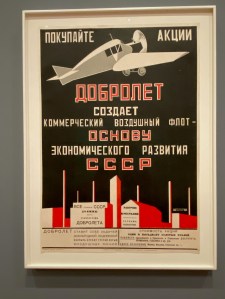
Rodchenko’s 1923 Russian airline poster at MoMA

At 8pm, visit revolutionary Russia and see what role designers played with Jodi Hauptman, MoMA’s senior drawings and prints curator, and Ellen Lupton, Cooper Hewitt’s senior curator. Angles, fonts, photos, montage, social issues, and politics will be flying fast and furious as Jodi and Ellen answer your questions about the lives and fates of the artists behind the hundreds of 1920s and 1930s ads, posters, brochures, and magazines showcased in Engineer, Agitator, Constructor: The Artist Reinvented­.

Haven’t you been dying to take a vacation? On Saturday (February 27) at 8pm, join the New York Historical Society and Watson Adventures for a live, virtual scavenger hunt that will take you to 18 different museums across America to search for clues among the history, art, and design collections. Get a team! Have fun! Win prizes!! Co-sponsored by the Museum of the American Revolution and Missouri Historical Society.

There’s a lot more art, history, and discussion, so check the complete schedule. Most of the events are free, but it’s always nice to add a thank-you donation.

Museum Updates

2020 painting by Henry Taylor at New Museum

We were able to get a ticket to the New Museum’s acclaimed exhibition this opening week, Grief and Grievance: Art and Mourning in America, and were happy to attend last week’s on-line curators’ panel (available here).

It’s a beautifully installed show, filled with top-notch painting, sculpture, music, performance art, and films that deliver on so many levels.

Still from Gone Are the Days of Shelter and Martyr, a 2017 video by ©Theaster Gates. Courtesy: White Cube and Regen Projects, Los Angeles

We’ll be reporting on this show soon, but in the meantime, we want to draw your attention to the weekly (and bi-weekly) panels that New Museum is offering on-line with many of the participating artists. This week, New Museum is speaking with South Side Chicago artist Theaster Gates, represented in the show by a performance video recorded in a church in the process of being demolished. Viewers inside the video gallery were mesmerized.

We’ll be featuring New Museum’s upcoming events on our weekly listing, but check out everything coming up over the next six weeks here under Conversations.

MoMA Drawings Show How to Reboot

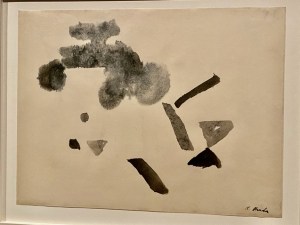
Detail of Chryssa’s 1959 Drawing for Stock Page

How do you start over when life is disrupted, everything is rearranged, and the world seems upside down? How do artists respond? A quiet show at MoMA lays out the answers in 80 works in its post-WWII exploration, Degree Zero: Drawing at Midcentury, on view through June 5.

Drawn from the museum’s archive of works on paper, the show illuminates the ways artists were seeking new means of expression following the traumatic years of the world war – turning to contemplative traditions of Asian culture, channeling under-the-surface emotions through abstraction, embracing chance in the process, and trying processes that no one had tried before.

Kline’s 1952 ink and oil drawing on cut-and-pasted paper

Visitors always seem to be taking the time to study each work and consider the ways each artist responded during a time of profound disruption, change, and promise. The works in the show, from across disciplines and continents, provide a contemplative window into the expressive ideas germinating between 1948 and 1961.

One of the first stories told by the beautiful, light abstract washes in the first gallery focuses on calligraphy-based experiments by post-war Japanese artists and their American counterparts. You’ll encounter beautiful, spiritual work by avant-garde Japanese artists that pay tribute to their culture’s calligraphic tradition.

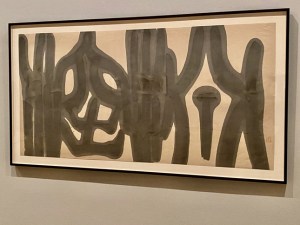
Osawa Gakyu’s 1953 The Deep Pool, featured in MoMA’s 1954 avant-garde Japanese calligraphy show

In occupied Japan, students were prohibited practicing traditional calligraphy, so the surviving artists, such as Osawa Gakyu, took it underground, producing 100% abstract work inspired by the brushwork and style of the ancient tradition. Since New York artists were gaining global attention with their spiritual and expressive abstraction, the Japanese artists wondered if putting a modern spin on traditional techniques could gain them an international audience.

1956 ink and watercolor made by Pierre Alechinsky during his trip to Japan

They formed groups like Bokujinkai (People of the Ink) and began publishing a journal, Bokubi (Beauty of Ink). They found an eager international readership among forward-looking European and American artists who felt it was the right time to incorporate cross-cultural influences into their art.

In 1954, MoMA showcased avant-garde Japanese calligraphy in a special exhibition that brought wider recognition to the reinvention happening overseas.

1957 drawing by Kenzo Okada, done seven years after his move to The Village

Some artists, like France’s Pierre Alechinsky, were up front in his enthusiasm for avant-garde calligraphy and traveled to Japan to study. Others, like Franz Kline, eagerly absorbed exciting techniques from the new movement, but kept his enthusiasm quiet to avoid stirring up still-simmering anti-Japanese sentiments. Chryssa simply applied calligraphic strokes to the grid-like columns of newspaper stock listings.

MoMA also shows that influences were a two-way street, citing Kenzo Okada, who ultimately decided to move from Tokyo to Greenwich Village in 1950, give up realist painting, immerse himself in the AE scene, and set up a long, successful career in America. The show features one of his acclaimed abstract works.

1957 oil on paper by inspired abstractionist Joan Mitchell

The show also features works on paper by emerging abstractionists known for their hard-edge style, such as Ellsworth Kelly, Latin American modernist Willys de Castro, and Hungarian artist Vera Molnar.

In the latter half of the show, there’s an emphasis on joyous marks, color and process – a trio of crayon scribble drawings by Cy Twombly, gestural drawings (like mini-paintings) by Jackson Pollack and Joan Mitchell, and intense pastels by Beaufort Delaney. There are lots of examples of how visual artists used humble, small-scale materials to channel complex feelings onto a page. Often the results look just as epic as their big canvases elsewhere in the museum.

1953-54 Tomb by Sari Dienes, a gravestone rubbing with a flag

The process section of the exhibition features music notations by chance-master John Cage, but also showcases highly engaging work by artists who aren’t as well known today. Sari Dienes loomed large in the downtown experimental (Black Mountain/Fluxus) art scene of the Fifties and Sixties, and the presence of her large gravestone rubbing with flag explains directly why Rauchenberg and Johns felt they had learned from a master in their found-object forays through Lower Manhattan.

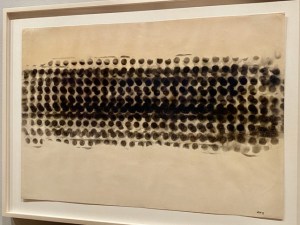
Experimental processes abound in the final gallery, evidence that artists everywhere were searching for new means of expression, letting chance take its course, and trying to usher in a new era of art making. Otto Piene’s dramatic drawing looks like he made tire track across the paper, but he actually created it by holding his paper over a candle flame and letting the soot make the marks.

Otto Piene’s 1959 drawing made by holding paper above a candle flame and letting the soot make its mark

Otto’s also the artist that founded Dusseldorf’s Zero group in 1958, stating “Zero is the incommensurable zone in which the old state turns into the new.”

Thanks to curator Samantha Friedman for taking his inspiration and creating such a satisfying, revealing show that’s perfect for making the transition from 2020 to 2021.

See our favorite works on our Flickr album and walk through the show with the curator here.

Virtual NYC Museum Events – Women with a Message, Pop Shop History, and Toxic Titan

Gloria Steinem and Julie Taymor at Asia Society on Monday

So many virtual NYC museum events are happening online this week – an opportunity to meet amazing women, bring organization to your life, attend a premiere at The Met, and get the inside story on Saturn’s moon, Titan. Check the daily listings on our virtual events page to for these events and details on many, many others.

Today (January 25), at 6:30pm, you can join an exciting event at Asia Society – a conversation with Gloria Steinem and director Julie Taymor, followed by a panel of visionary activists discussing how visionary women are serving as agents of change as people in our world grows more interdependent.

Tuesday talk at Japan House

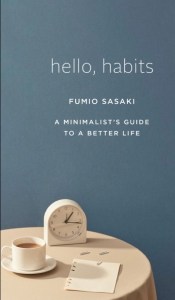
Is it time to pare down? Purge stuff? Feel more organized? On Tuesday (January 26), at 6pm, join Japan House to hear Fumio Sasaki talk about how to live a more ordered, fulfilling life – all included as part of the theme of his new book, Habit-Making: A Minimalist’s Tips for a Better Life.

At 7pm, enjoy The Met will debut a music and film collaboration on the life of Armenian-American abstract painter Arshile Gorky, who immigrated with his family in the early 20th century and influenced a generation of abstract expressionists. Watch the digital premiere of They Will Take My Island.

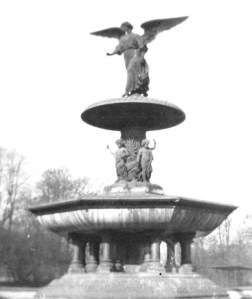
Curious about why Manhattan has such a big park in the center of the island?

Wednesday history of Central Park (NYHS)

On Wednesday (January 27), at 3pm, hear the New-York Historical Society talk about the origins of Central Park. You’ll get to see what’s in the NYHS archive, view the plans for its design, see construction photos, and learn about the shocking removal of Seneca Village, a thriving African-American community.

At 6pm, you can learn about more recent history with the Brooklyn Museum. Amy Raffel will talk about her latest book on the legendary Keith Haring, how he created New York’s most popular memes, and what he sold in his famed downtown retail experiment, the Pop Shop.

Composite infrared image of Titan from NASA’s Cassini spacecraft. (University of Arizona/University of Idaho/NASA/JPL)

At 7pm, join planetary scientists at the Haden Planetarium at AMNH to examine Titan, Saturn’s large but toxic moon. Understand the questions scientists are trying to answer, and whether Earthlings have lessons to learn from their solar-system neighbor.

Love gardening?  Why is that? On Thursday (January 28), spend the morning at the New York Botanical Garden with UK psychiatrist-gardener Sue Stewart-Smith, who will share insights revealed in her book, The Well-Gardened Mind – how people’s minds and gardens interact.

Gardens at the New York Botanical Garden

Get a perspective that you’ve never had before from people you’ve never met – participants in a ground-breaking filmmaking workshop. At 6:30pm on Thursday night, go behind the scenes at MoMA P.S.1 to meet the organizers of the workshop and watch films made by imprisoned artists in “Pens to Pictures” – a media showcase that accompanies P.S. 1’s art exhibition, Marking Time: Art in the Age of Mass Incarceration that critics at The New York Times said was one of 2020’s best.

At 8pm, join the New York Public Library to hear Amber Ruffin, one of the funniest women in late-night TV, and her sister Lacey Lamar compare notes on hilarious and harrowing experiences with racism in New York City and Nebraska – all drawn from their new bestseller, You’ll Never Believe What Happened to Lacey

Yes, it’s serious, but it’s also really, really funny.  Amber’s first African-American woman to write for a late-night network show, and if you’ve seen her with Seth Myers, you know what we’re talking about. Don’t miss this!

There’s a lot more, so check our complete schedule. Most of the events are free, but it’s always nice to add a thank-you donation.