Portrait Masterworks at Home in Taos

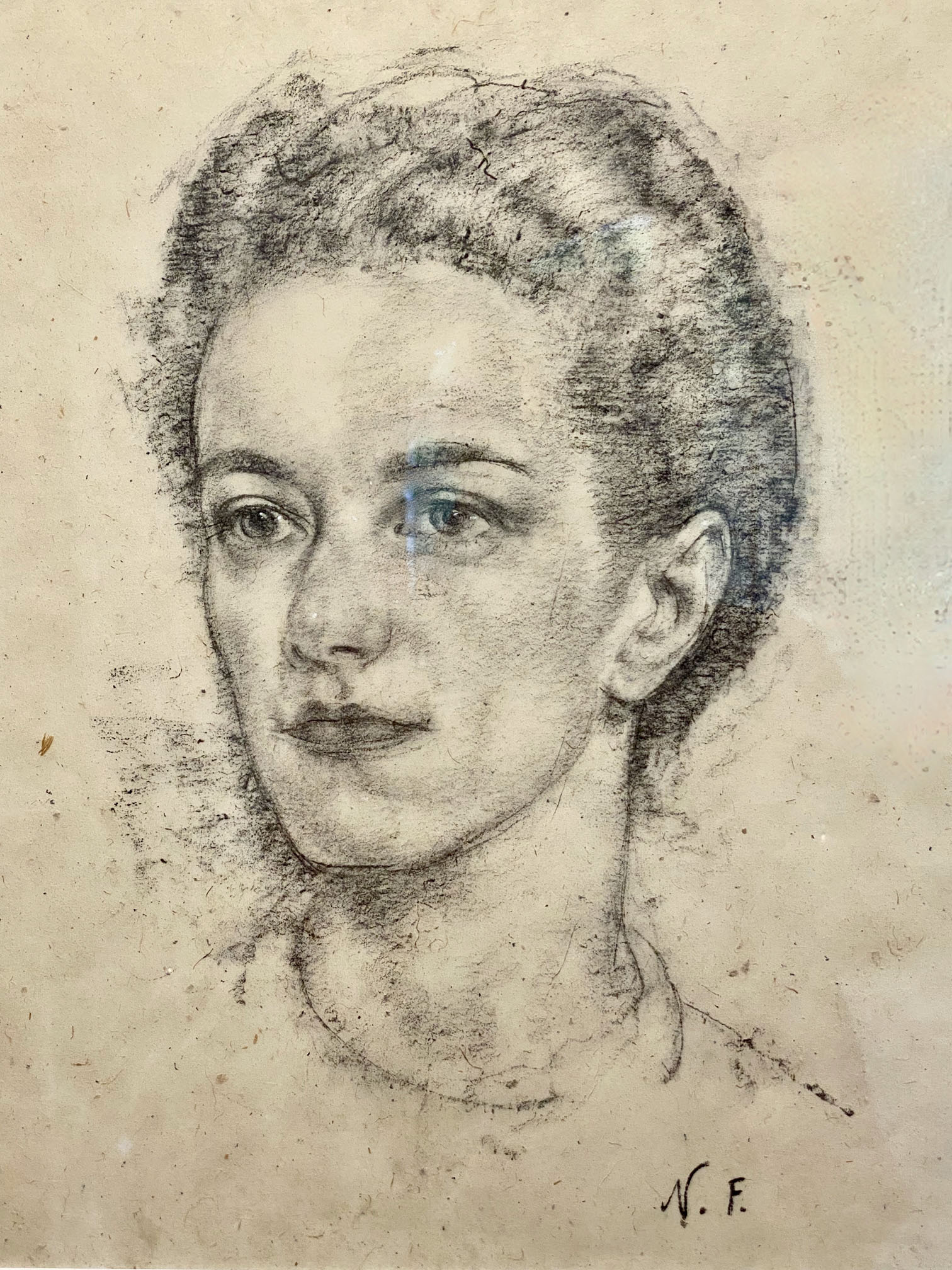
To see the works by one of the top virtuoso portraitists of the 20th century, drop into the home that Nicolai Fechin designed and built for his family in Taos, New Mexico. Masterful oil and charcoal portraits created throughout his life are hung in quiet, contemplative corners of his spectacular 1920s home as part of Masterful Expression: Nicolai Fechin’s Portraiture, on view at the Taos Art Museum at Fechin House through December 31, 2025.

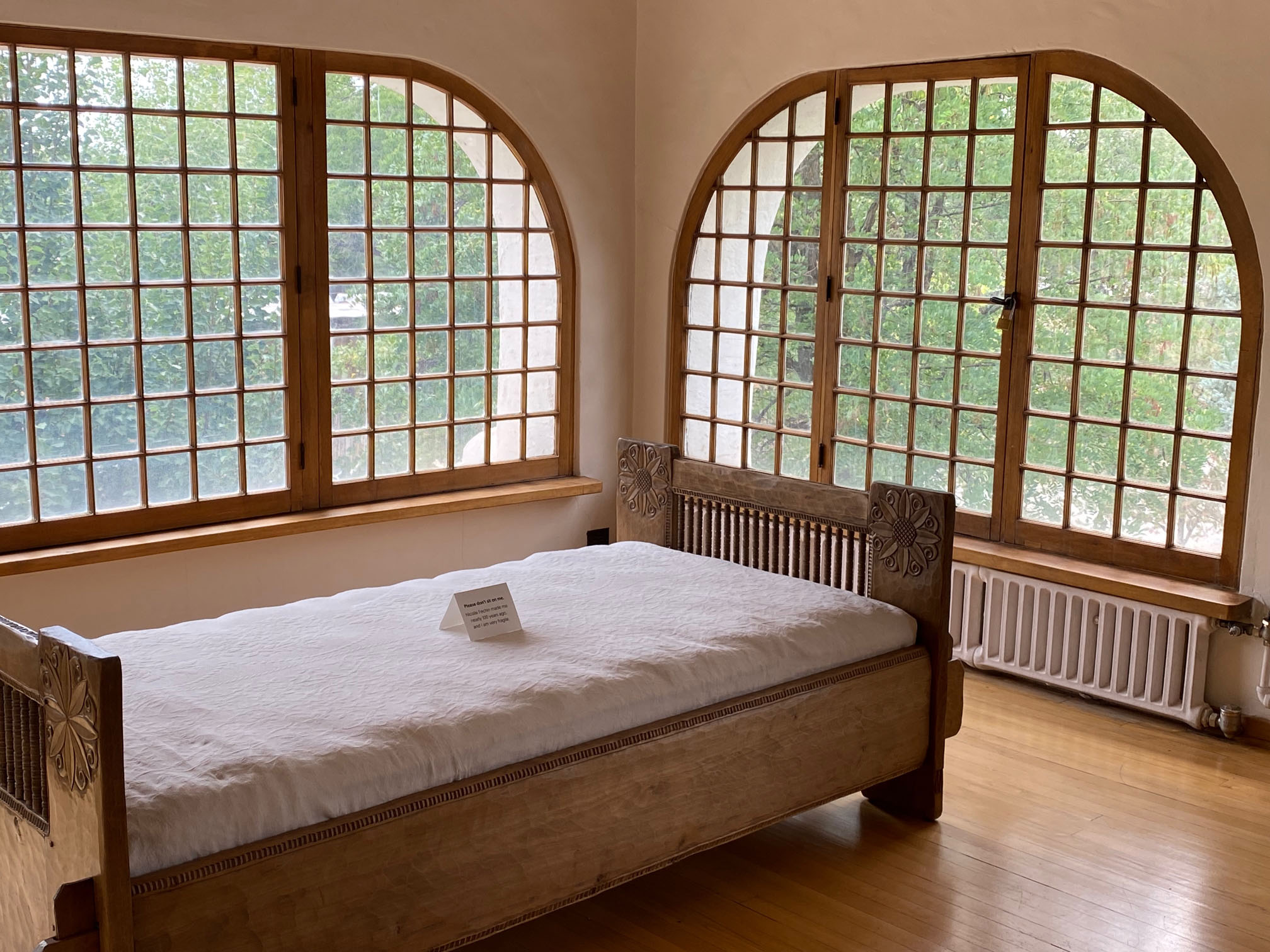
The house itself is a masterwork with all the doors, railings, and embellishments carved by Fechin’s own hand, but the portraits and small, carved wooden busts show why he is considered one of the greatest Russian artists ever to take up residency in the United States.

Fechin’s undated charcoal portrait Manuelita. Courtesy: private collector
Fechin’s 1927-1933 oil painting Taos Studio Interior. Courtesy: private collection; Owings Gallery.

Fechin grew up during the time when Russia was ruled by the Czar, and thrived at the Higher Art School of the Russian Imperial Academy of Arts in St. Petersburg, where he studied with the acclaimed Russian history painter, Ilya Rapin.

Fechin’s classical training followed the principles advocated by the French virtuoso, Dominque Ingre – subtle human expression, anatomical awareness, and verisimilitude that jumps right of the page (or canvas).
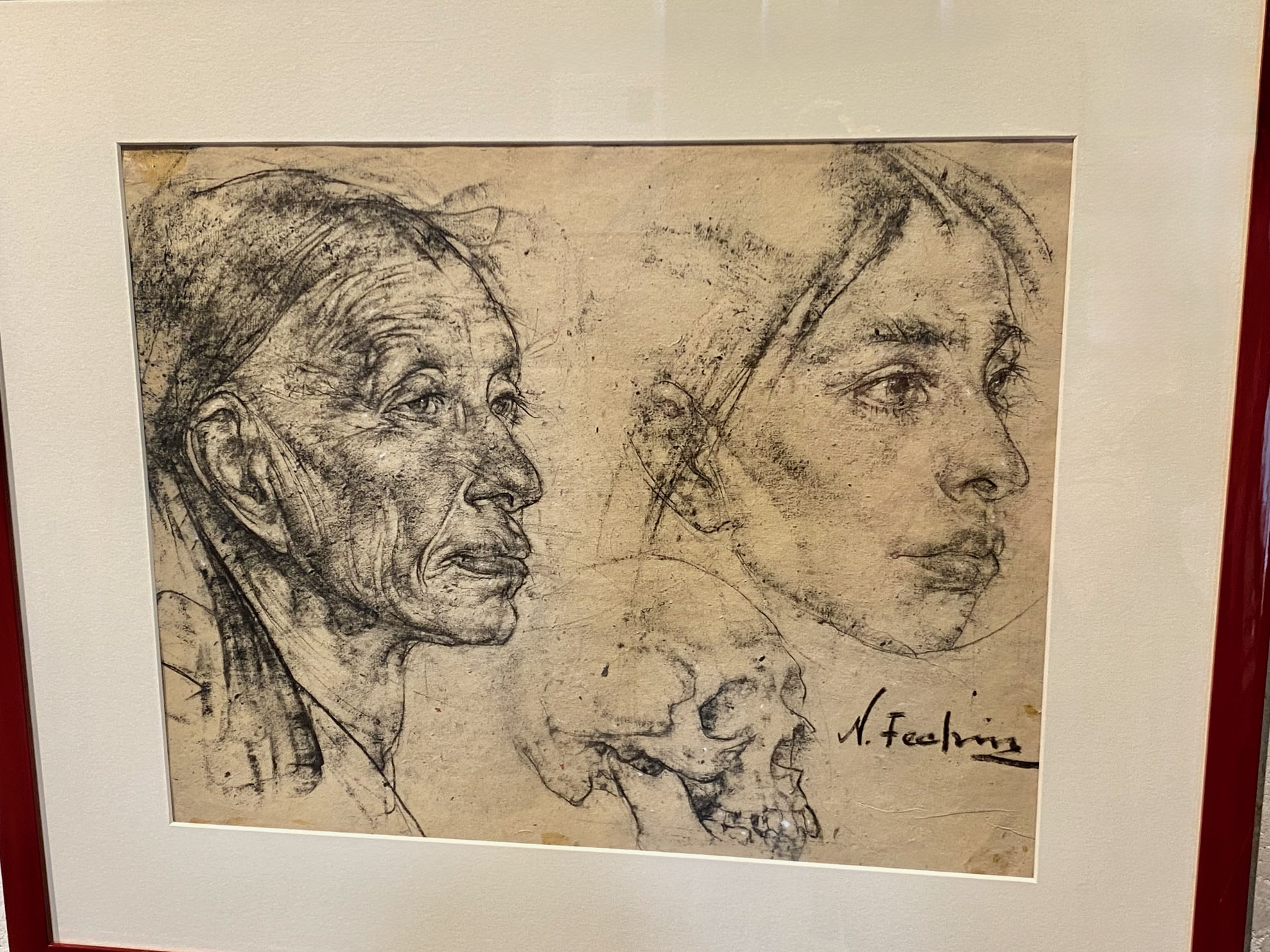
Fechin’s charcoal Head and Skull Study. Courtesy: private collector

Fechin learned his lessons well and won national acclaim in Russia by 1908 for his grand, epic depictions of peasant life, which provided an opportunity for his work to be shown internationally and gain fans in the United States.  But it was his reputation for portraits that captured the essence of human expression that cemented his reputation in the United States and provided him with continuing commissions.

When the Russian Revolution and civil war brought disruption to the domestic life he was starting to build with his new bride, Alexandra, an American benefactor arranged for them to emigrate to the United States.  As soon as the Fechin family landed in the United States, the commissions began, largely due to the enthusiastic public reaction his portraits in shows at the Grand Central Gallery and the Brooklyn Museum.

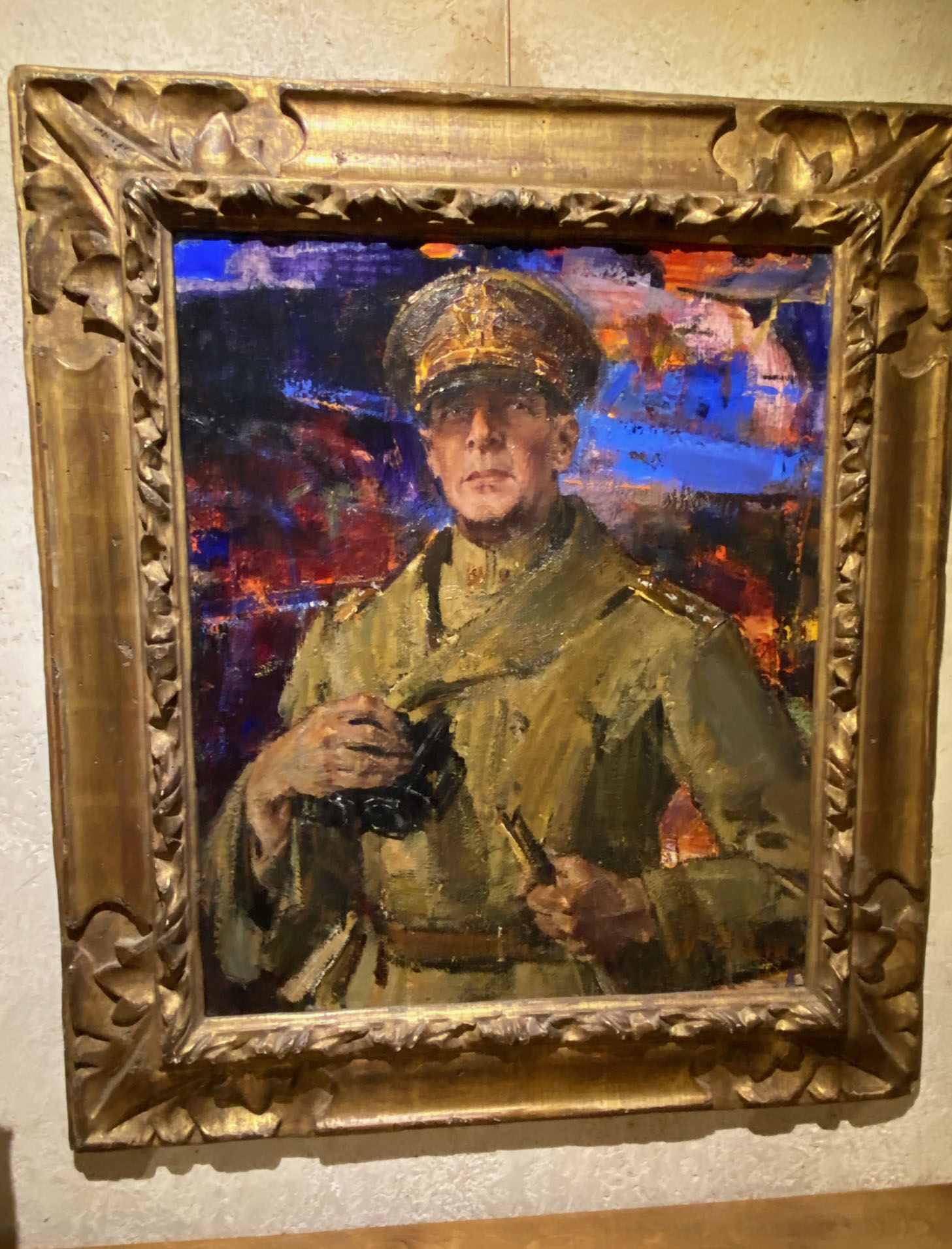
Fechin’s undated oil portrait Russian Singer with Fan. Courtesy: private collector
Fechin’s 1951 oil portrait of General Mac Arthur. Courtesy: Taos Art Museum

For health reasons, Fechin and his family left the sophisticated steets of New York City during the high-flying 1920s for the high desert of Taos – a thriving art community anchored by Mabel Dodge Luhan. Fechin figured that when the tumult in Russia died down, he would return. But that never happened.

The exhibition, with many works drawn from private collections, provides a glimpse of the Fechin family over time, with portraits and sculptures of his wife early in their courtship (an oil), a bronze bust, and drawn portraits in their life in New Mexico.

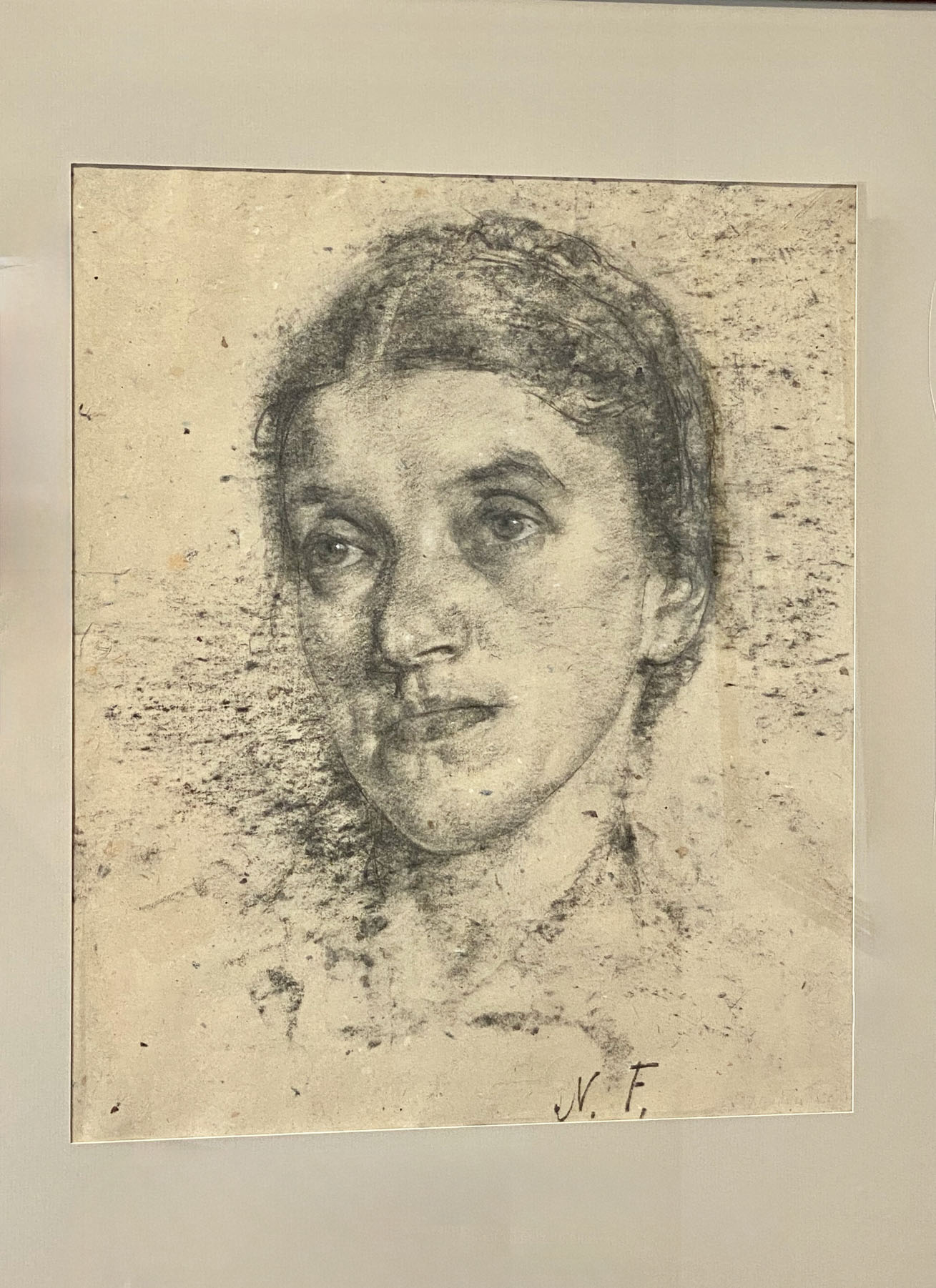
Fechin’s 1910 oil portrait of his wife Alexandra with Coral Beads. Courtesy: private collector
Fechin’s 1927-1933 charcoal portrait of his wife Alexandra; on rice paper. Courtesy: private collector

His beloved daughter Enya – who ultimately saved and restored this unforgettable home and her dad’s studio – is shown as a baby in Russia, as an older child in carved wooden busts, and in paintings in her coming of age, as well as a portrait of her as a grown woman looking out for her dad later in his life.

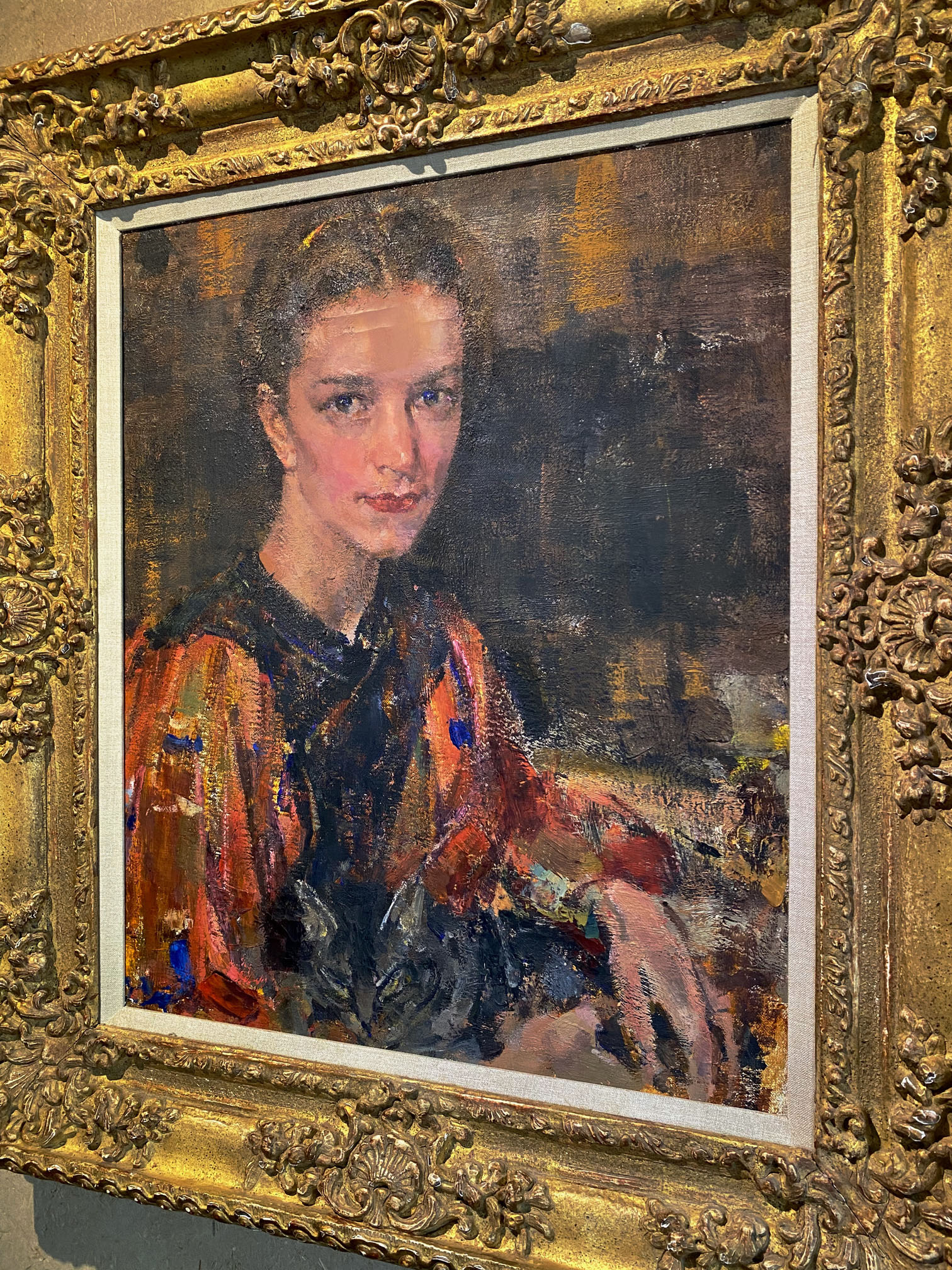
Fechin’s carved wooden bust of his daughter Eya.. Courtesy: private collector
Fechin’s 1940s charcoal portrait of his daughter Eya; on rice paper. Courtesy: private collector

The exhibit also includes sensitive, gorgeous portraits and studies that Fechin created in his five-month stay in Bali in 1938 – delicate features of young models and reflective expressions of respected elders. All have clean, sure lines and carefully observed, personalized nuances.

Fechin’s 1938 charcoal portrait Balinese Girl with Long Hair. Courtesy: private collector
Fechin’s 1938 charcoal portrait Balinese Man with Beard. Courtesy: private collector

This walk-through the Fechin home holds delight and awe at every turn – awe at the hand-carved interiors and delight at at the humanity and diversity of the faces greeting us in every room. Visit, if you can!

Take a look at more in our Flickr album.

Fechin’s 1950s charcoal self- portrait on rice paper. Courtesy: private collector
Fechin’s 1940s charcoal portrait of his daughter Eya; on rice paper. Courtesy: private collector
Inside the 1933 Fechin house: sunroom on the second floor features his hand-carved bed for his daughter, Eya.

Lillie Bliss and Her Modernist Breakthrough

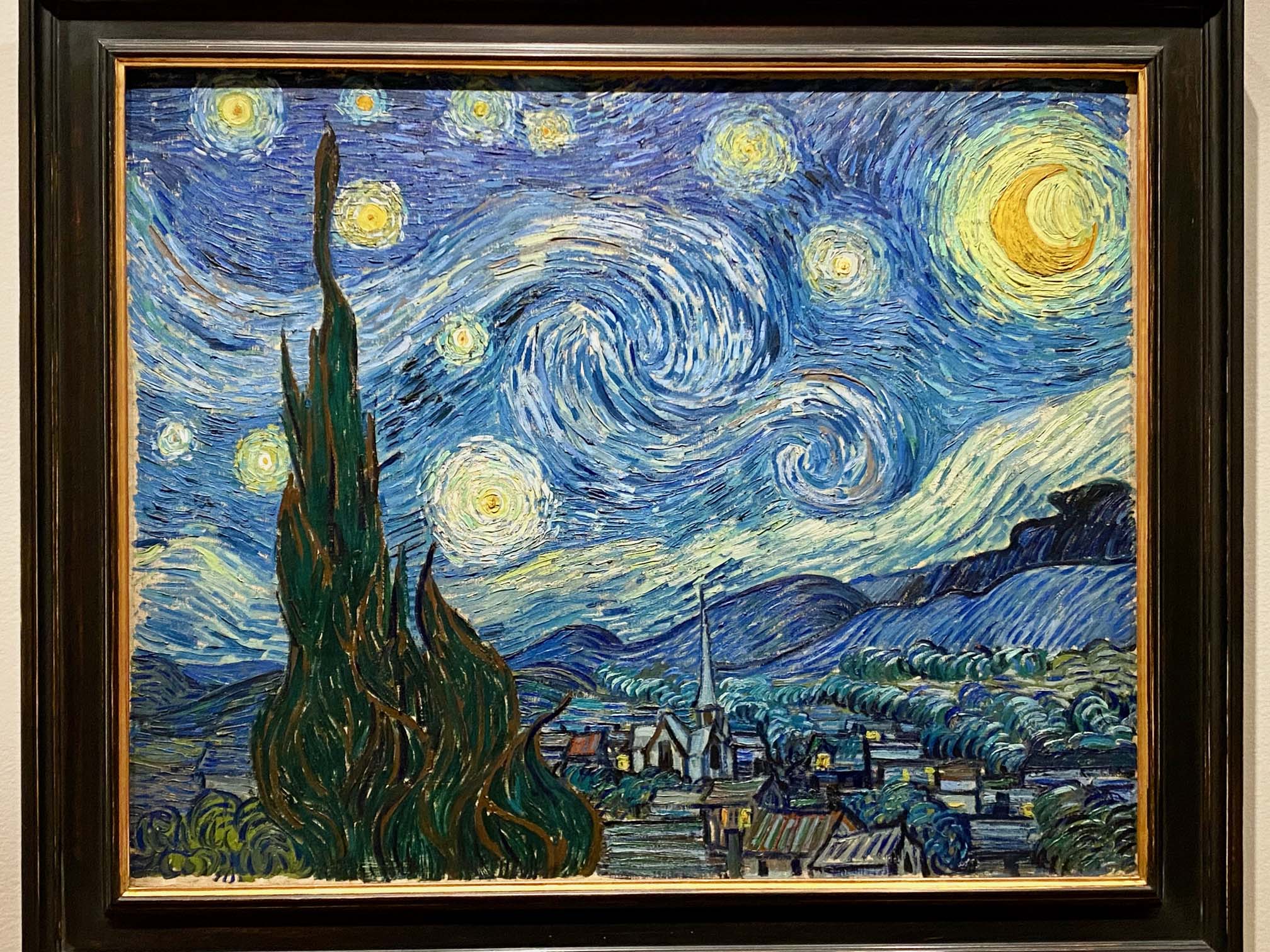
When you peek into the second-floor MoMA exhibition, you’ll see where Van Gogh’s The Starry Night has been holding court for the last few months.

Lillie P. Bliss and the Birth of the Modern, on view through March 29, tells the story of how one woman’s passion for modern art over a century ago formed the basis of the MoMA collection and MoMA itself.

Van Gogh’s 1889 The Starry Night, one of MoMA’s most beloved works.

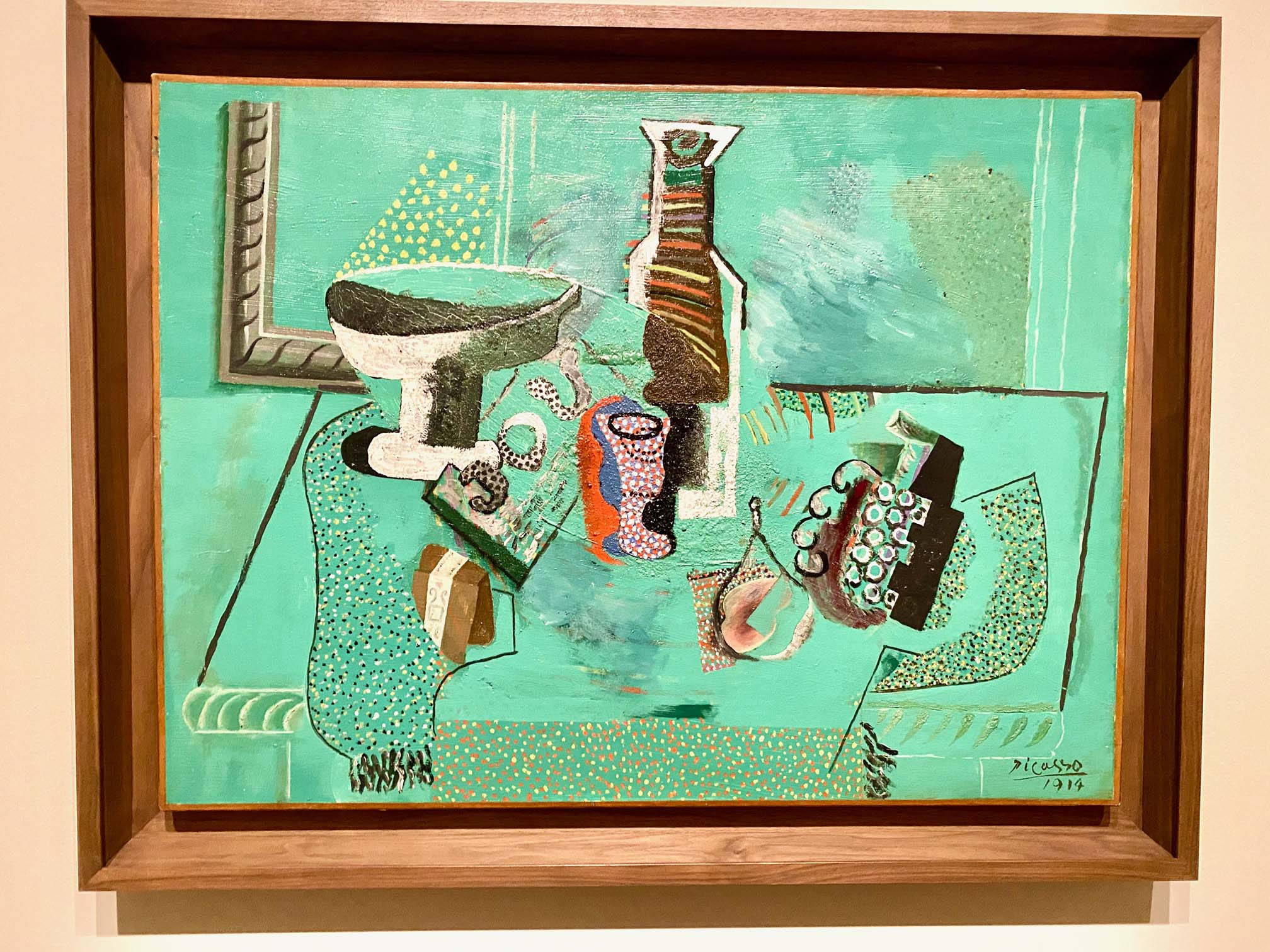
Bliss was an early American patron of Cézanne, Seurat, Picasso, and Redon at a time when New York society looked askance at modern art’s tilted tables, fractured still lifes, and stippled surfaces. She even contributed to getting the 1913 Armory Show off the ground as a sponsor, art lender, daily visitor, and new-work buyer.

Maybe the constraints of growing up female in the Victorian era gave her an appreciation for the lack of inhibition Picasso’s and Matisse’s colors, Gauguin’s wild Tahitian woodcuts, and Redon’s ethereal woodsy fantasy figures.

Picasso’s 1914 Green Still Life.

Endless modern-art discussions with art-world friends and mentors Arthur Davies and John Quinn gave her a sophisticated view of all the latest artists and trends. She joined a small group of modern-art lovers to lobby the Metropolitan Museum of Art to show the latest breakthroughs from Europe.

In 1921, the Met acquiesced and borrowed enough art to mount an exhibition of French impressionist and post-impressionist work. Bliss anonymously lent twelve pieces. People came to look, but the Met still resisted acquiring work that it considered too far-out.

When Bliss came into her inheritance in 1923, the pursestrings were unleashed. At age 49, she began to assemble the collection of her dreams via annual European buying trips and estate sales. Where could she show it? 

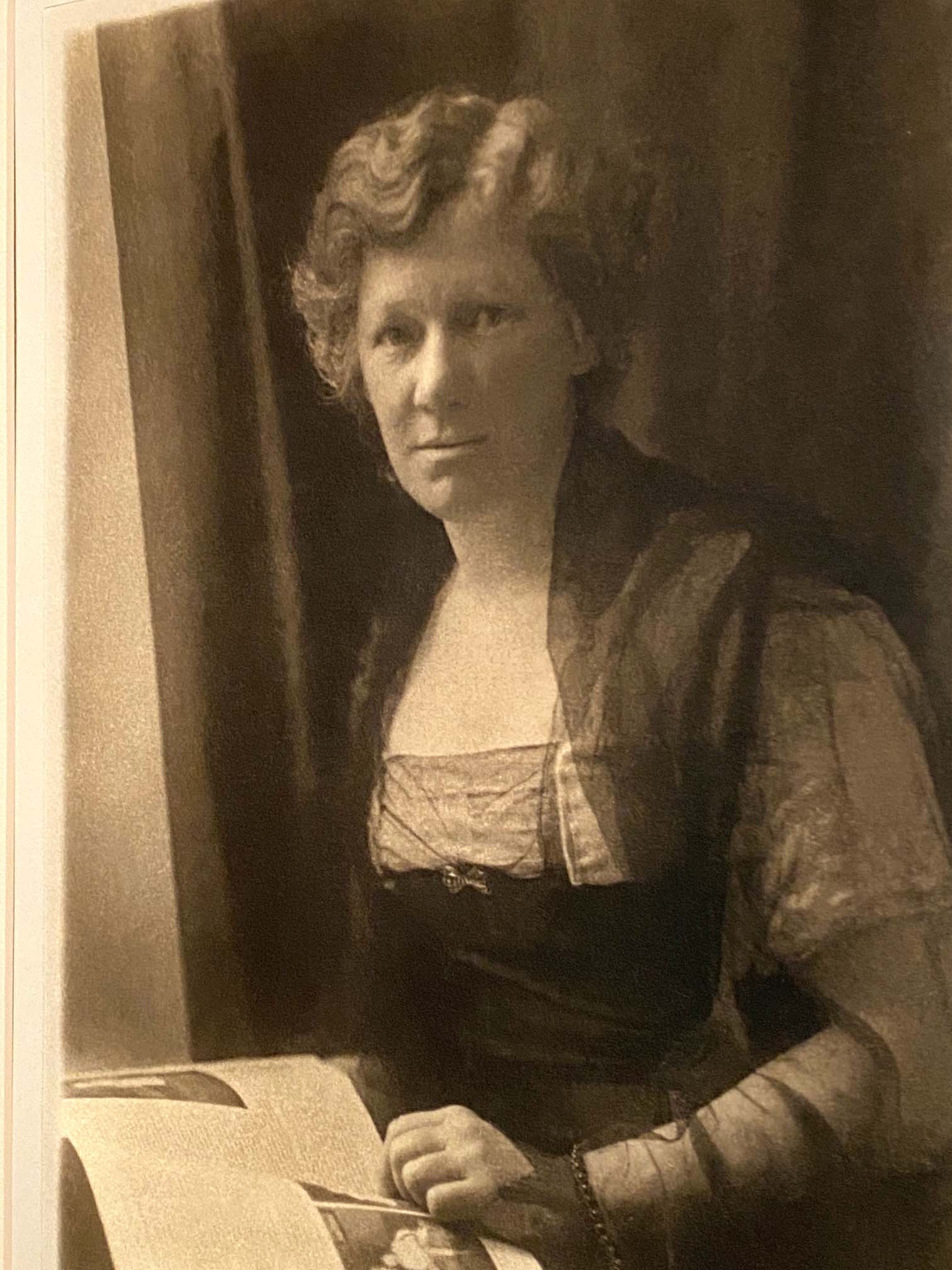
1904 portrait of Lillie P. Bliss

In 1928, she bought a lavish uptown triplex with a two-story gallery. She hung her favorite Cezanne over the grand piano and arranged a “who’s who” of avant-garde masters. Check out The Bather front and center, surrounded by Picassos, Seurats, and Gauguins.

1929-1931 photo of Lillie P. Bliss’s modernist collection hung in the music room of her Park Avenue apartment
Cézanne’s 1895-1898 Still Life with Apples hung at home in the place of honor, above the piano

The next year in a brainstorming session with Abby Rockefeller and Elizabeth Parkinson, the trio decided that New York needed a special place that was devoted exclusively to modern art. MoMA was born!

MoMA’s first exhibition – Cézanne, Gauguin, Seurat, van Gogh – was mounted in rented space at 730 Fifth Avenue, and crowds came.  The exhibition was a huge popular success, even though it coincided with the historic 1929 market crash. 

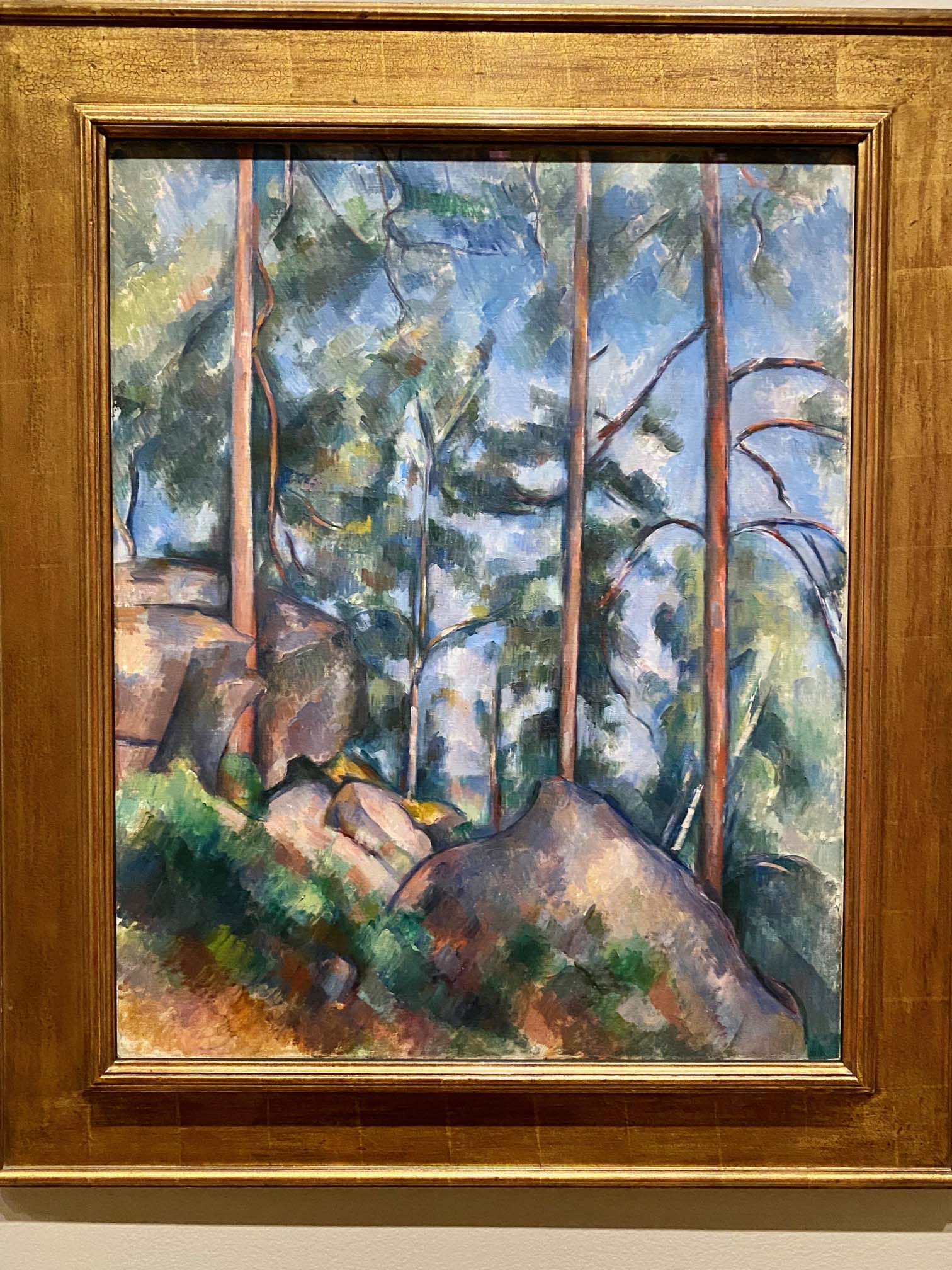
Cézanne’s 1897 oil Pines and Rocks (Fontainebleau?)
Seurat’s 1884 crayon drawing A Woman Fishing.

Lillie’s health crashed, too. On the heels of MoMA’s test run, she was diagnosed with cancer, and started drawing up a will to ensure that her beloved collection would carry on when she could not. She gave a Monet and a few gems to the Met, but bequeathed 150 works to the new Museum of Modern Art – forming the core of the collection we know today.

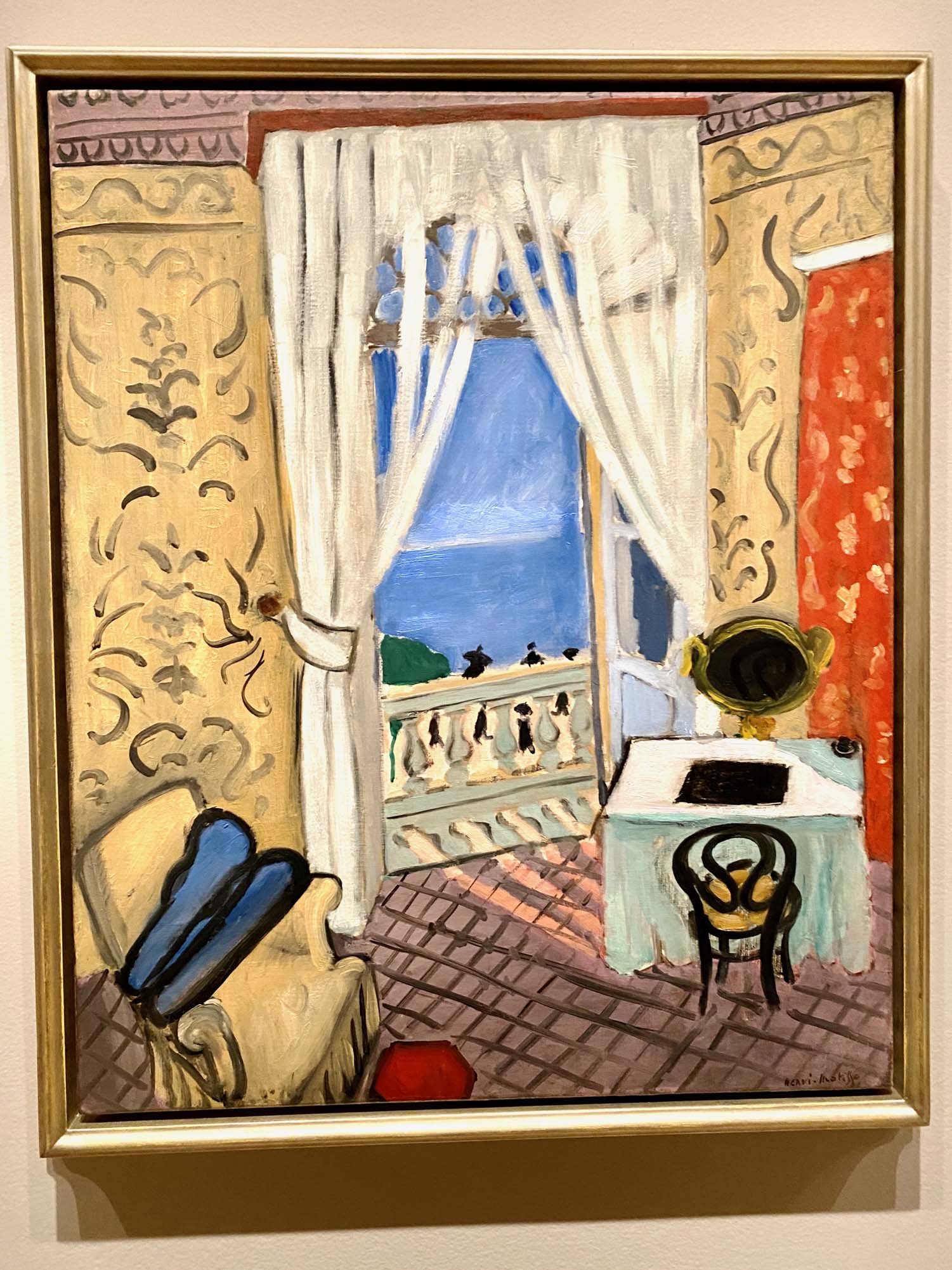
Matisse’s 1918-1919 Interior with a Violin Case.

When Lillie died in 1931 at age 66, there was only one last thing.  She was never able to acquire a Van Gogh. But in her will, she did give the museum permission to sell or exchange most of the paintings she bequeathed.

A few years later, MoMA sold one of Lillie’s Degas to acquire Picasso’s epic Demoiselles d’Avignon.

And in 1941, Alfred Barr made her dream come true. He heard that a dealer possessed a very special Van Gogh, and traded three of Lillie’s paintings for The Starry Night.

See our favorite works in our Flickr album, and enjoy other stories about this visionary MoMA founder by listening to the audio guide for the exhibition here.

Gauguin’s 1894 woodcut print The Creation of the Universe from the 10-print series, Noa Noa (Fragrant Scent)

Pelton & Jonson’s Transcendental Desert Art

Decending into the ground-floor gallery of the University of New Mexico Art Museum, visitors find themselves in a transcendental chamber, filled with abstraction, color, and spiritual emanations.

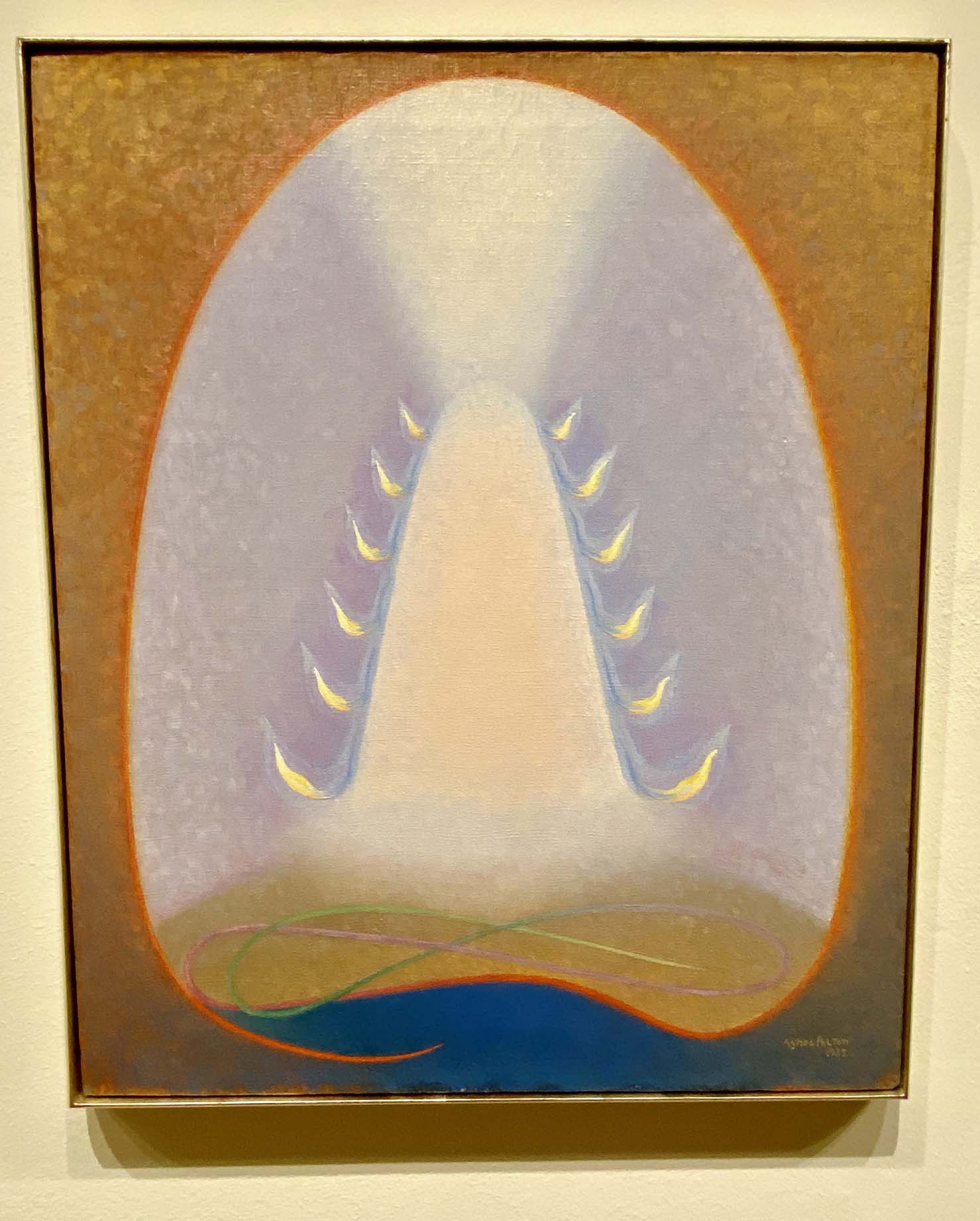
Pelton & Jonson: The Transcendent 1930s, on view in Albuquerque through March 15, features the work, letters, and personal photographs documenting the professional and personal friendship between two artists that wanted people to see realities beyond the visible world. Artists Raymond Jonson, former UNM professor, and Agnes Pelton, the visionary New York artist who relocated to the Western desert, felt they were kindred spirits, and the exhibition shows us why.

Agnes Pelton’s 1930 painting The Voice – suggesting enlightened dialogue within human consciousness.

As a young artist, Jonson was thunderstruck by the modern art he witnessed in the 1913 Armory Show when it came to Chicago (which included a painting by his future friend, Agnes Pelton from her “imaginative” period of work). Jonson read Kandinsky’s influential The Art of Spiritual Harmony when it was published in English in 1914, and increasingly pushed his work toward pure shape and design that could evoke a deeper response from the viewer.

By 1930, he and his wife moved to Santa Fe. He began teaching, curating shows, and continuing to pursue abstraction. When concepts were simply too much for a single canvas, he conceived a triptych.

Raymond Jonson’s 1930 tryptich – Time Cycle: Morning, Noon, and Night

Around 1931, new-age/Jungian composer, author, and painter Dane Rudhyar told Jonson about Pelton’s abstractions, and put them in touch.  For the next 30 years, Jonson and Pelton corresponded about art making, materials, abstraction, and spiritual connections.

By this time, Pelton had had 14 solo exhibitions and been in 20 group shows. Her interest in spiritual practices kept growing, and the lure of the new-age communities in southern California beckoned her. During a 1932 yoga-retreat trip to Cathedral City, she decided to stay put and paint in the peaceful desert for the rest of her life

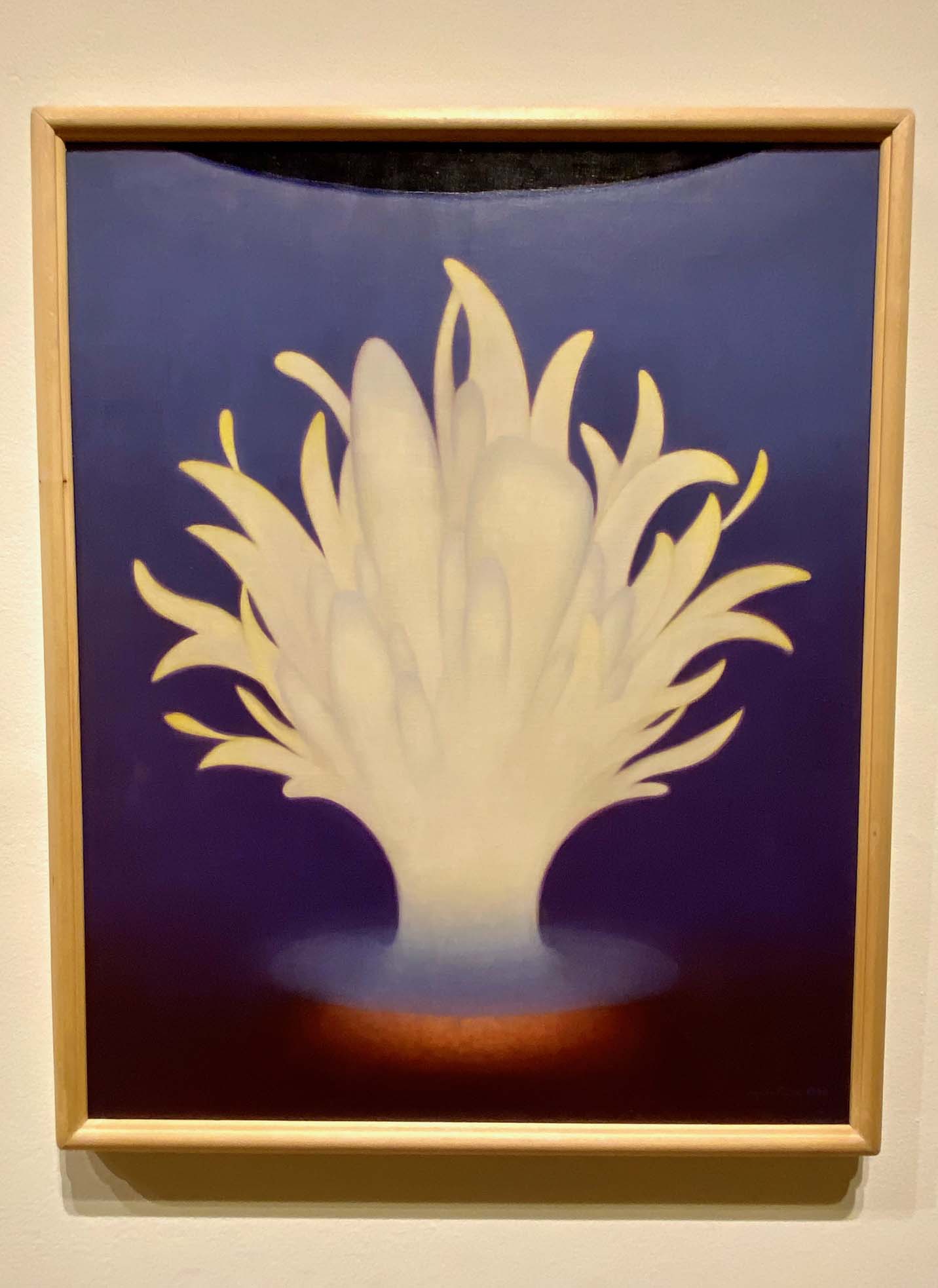
Pelton’s 1930 White Fire – showing light radiating from the inner self – from Jonson’s 1933 exhibition
Pelton’s 1932 Mount of Flame – symbolizing the beauty in the abstract – from Jonson’s 1933 exhibition.

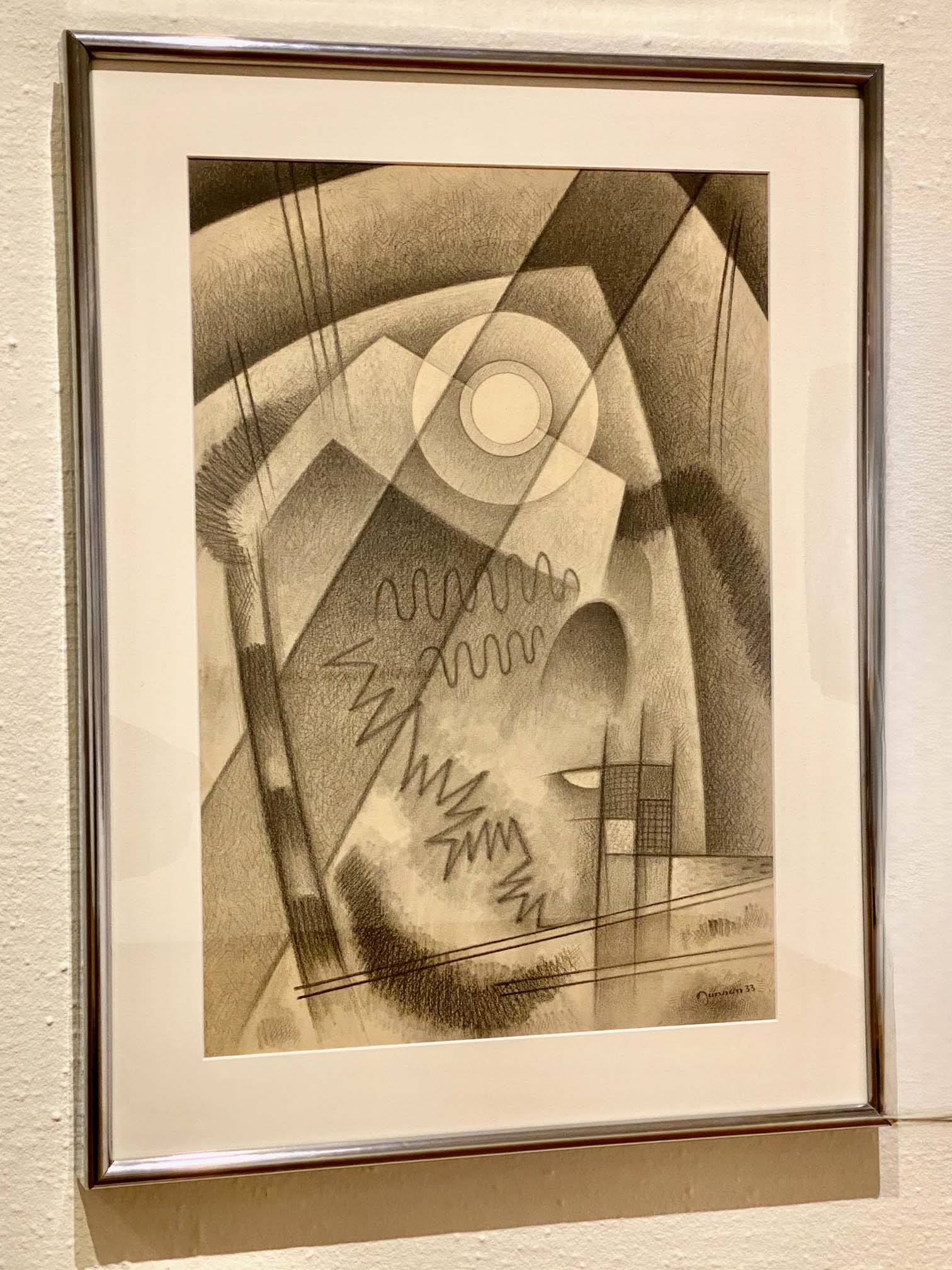
In 1933, Jonson invited Pelton to participate in a Santa Fe exhibition alongside himself and Cady Wells. This current exhibition at UNM commemorates this convergence by reuniting some of the original works by Pelton, Wells, and Jonson.  See some of the pieces in our Flickr album.
From the 1933 exhibition: Jonson’s 1933 charcoal drawing Ascending Circle

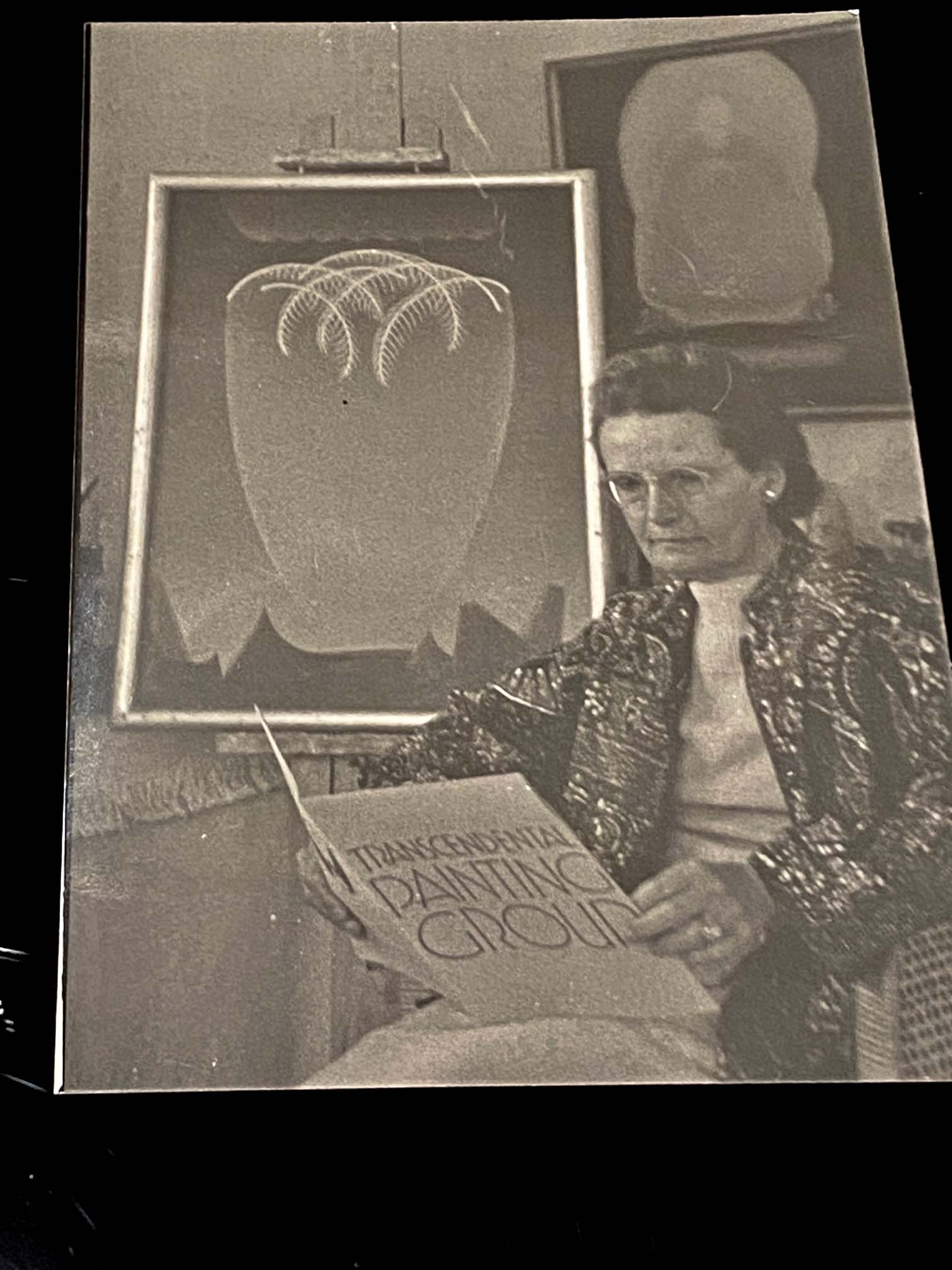
Jonson and his wife took a road trip to visit Pelton in 1935 – their one and only meeting. Although they were at a distance, the letters kept coming, and when Jonson and others in New Mexico organized the Transcendental Painting Group in 1938, she was invited to participate and serve as the grand dame/president.

In recent years, Agnes Pelton’s work has been resurgent due to the traveling exhibition organized in 2019 by the Phoenix Art Museum, which traveled to the Whitney in 2020. Read our review here.

To hear how this Albuquerque exhibition came together, listen in on Christian Waguespack’s interview with curator Mary Statzer:

UNM is lucky to have over 600 works by Raymond Jonson in its collection, and all the letters, sketches, publications, and journals he kept. For more on Raymond Jonson’s life and work, visit his portal on the UNM website.

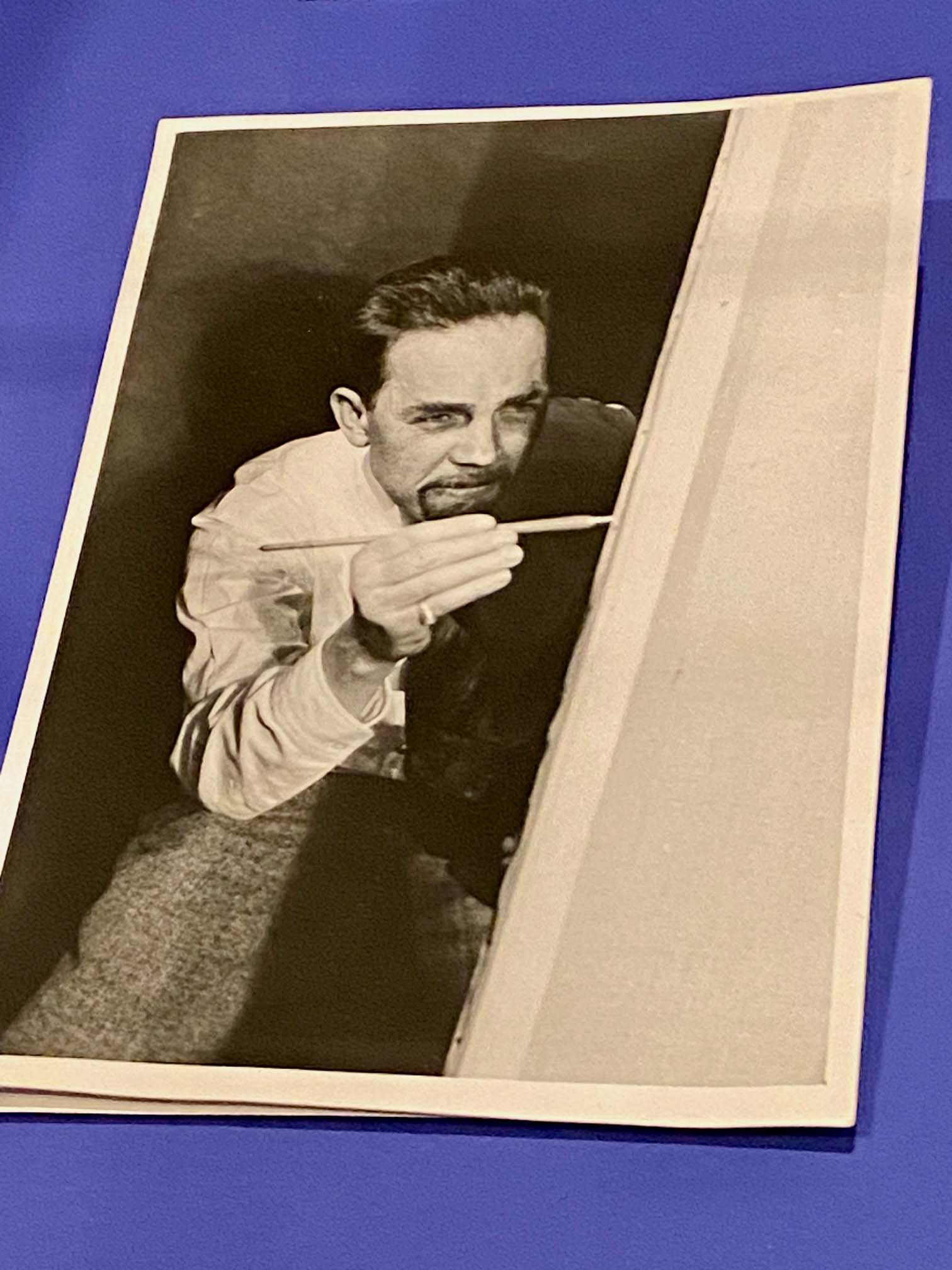
Jonson touching up work at his solo exhibition in Tulsa in a 1937 photo by F. Von James.
1935-1940 photo of Pelton reading the TPG brochure in her Cathedral City studio with Mount of Flame behind her.

Hockney’s Personal Drawings at The Morgan

The drawings at the Morgan, David Hockney: Drawing from Life, on view through May 30, are a tribute to the friendships maintained and the artistic experimentations sustained over the artist’s 83-year lifetime.

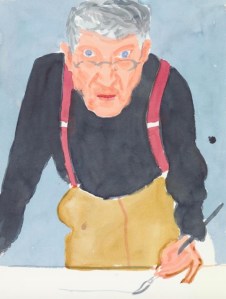
Hockney self-portraits through the years.

The show was created by the National Portrait Gallery in London and centers on 100 portraits of five people who sat for Hockney across the decades – his mother and several close friends.

The exhibition is organized by person, so you can compare how each person looked from the beginning of Hockney’s studies, across the years, and most recently when they came to visit him in Normandy, where he lives now.

Most of the works are from the Hockney Foundation or from the artist’s own personal collection, which makes the show extra-special.

The exhibition begins with a series of self-portraits that Hockney did as a teen, and features his etching series about his first trip to America in the early 60s. Then it jumps to the many portraits he did of his mother in England.

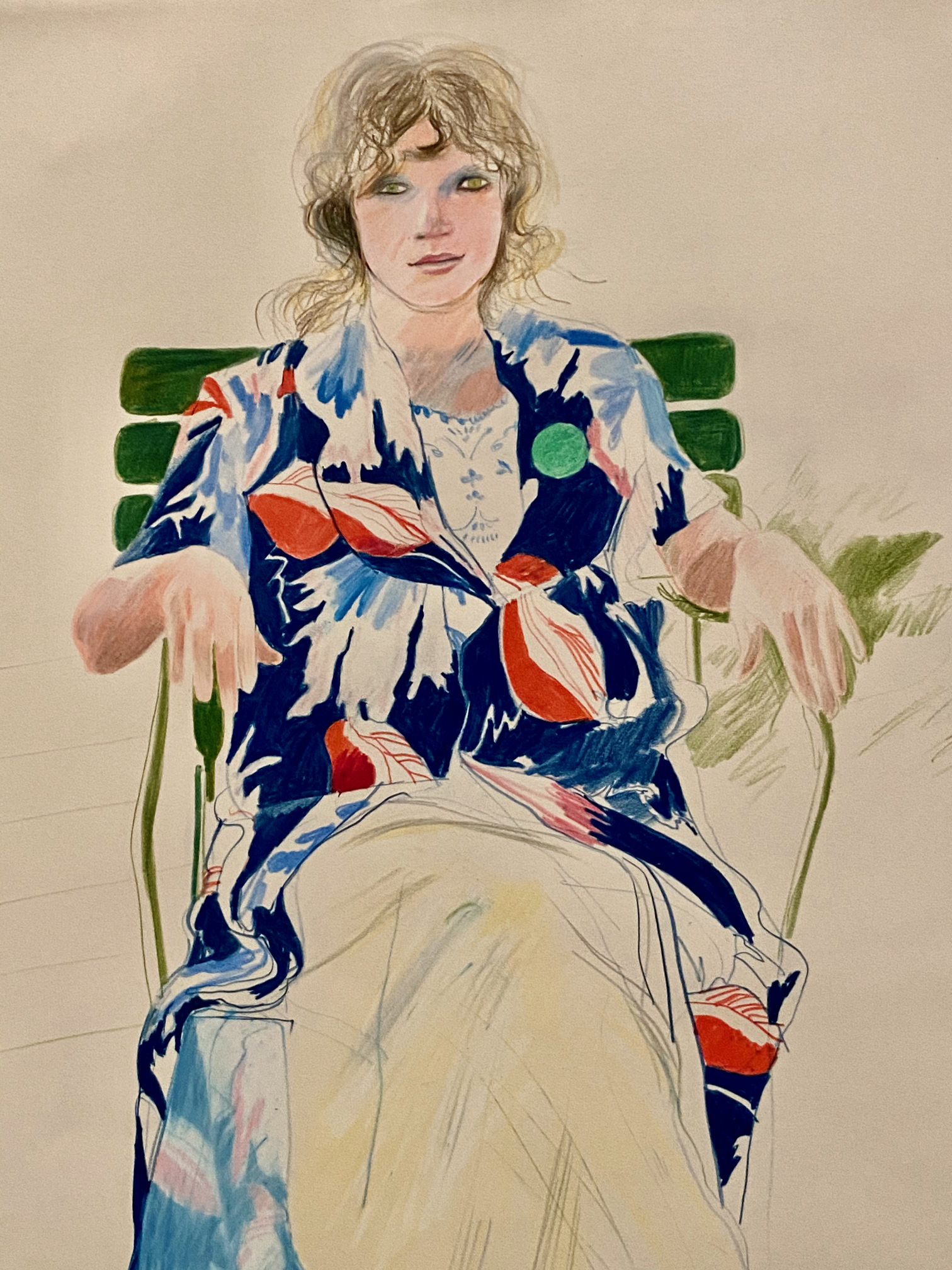
Colored pencil portrait, Celia, Carennac, August 1971
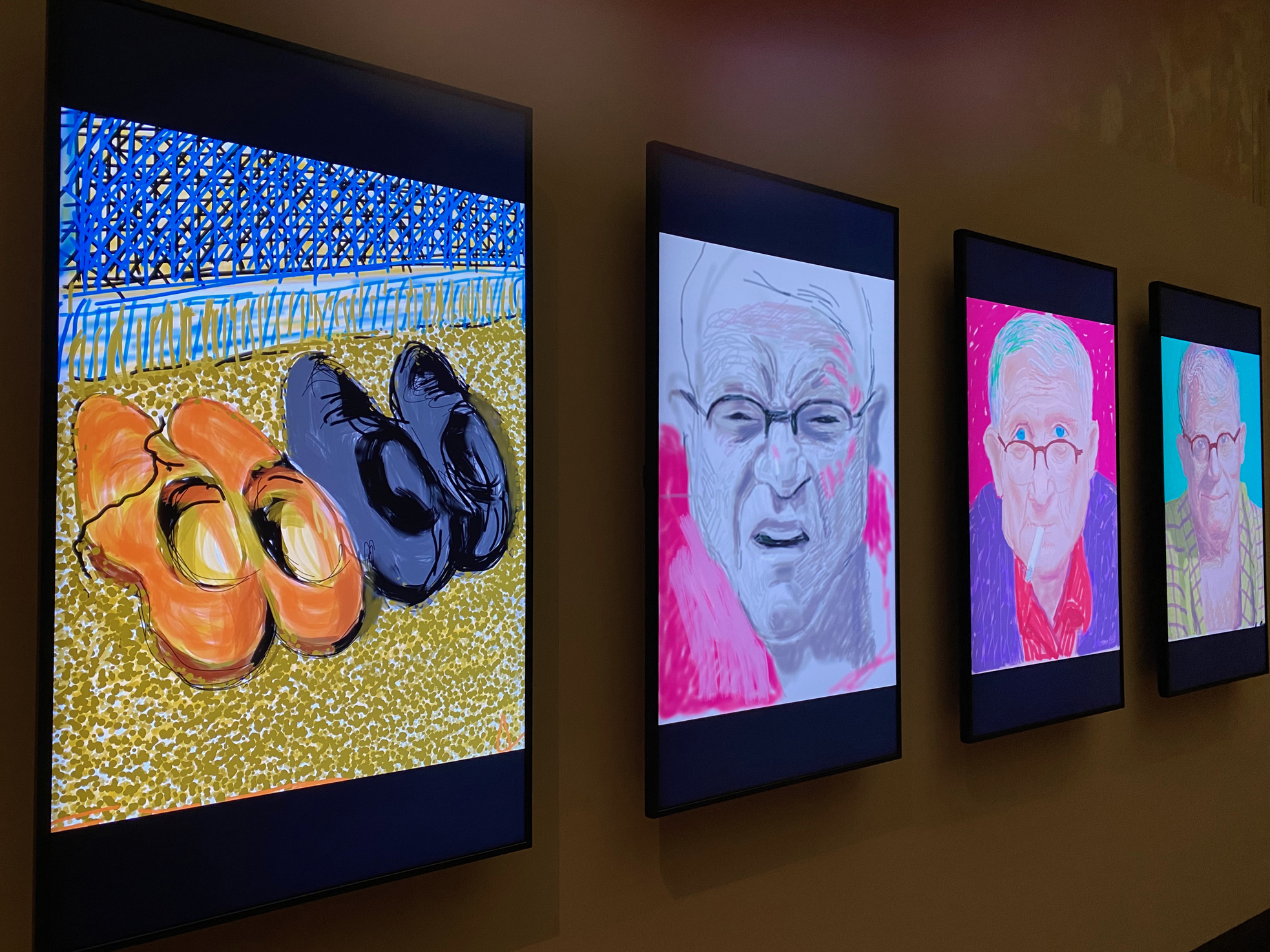
Digital wall of Hockney 2010 iPad drawings
Charcoal drawing Maurice Payne, October 9, 2000

Each series shows off his masterful accomplishments in precise colored pencil, mixed-media collage, watercolor, crayon, arranged Polaroid mosaics, etchings, ink washes, tight pencil sketches, and the biggest leap of all – digital drawings from his iPad.

Walking past the portraits, self-portraits, sketchbooks, and digital drawings, it’s quite a tribute to an artist who never stopped looking, wanting to sit with his favorite people, and slowed down to adopt techniques by other masters that he admired.

Take a look at works by a pop-culture virtuoso. Here’s a brief introduction to the exhibition by the Morgan’s director:

Take a walk through the exhibition on the Morgan’s website here, and join a YouTube tour with the curator here.

And see our favorites in our Flickr album here.

Weekly Virtual Museum Events – Jim Dine, Niki de Saint Phalle, and Frida Khalo and New Artists

Jim Dine talking drawings online at The Morgan on Wednesday

This week, NYC museums are offering 35 on-line events (mostly free) on design, art, history, architecture, fashion, and performance.  See the full list on our virtual events page.

But we want to alert you to several events in connection with some of the brand-new exhibitions in town:

On Wednesday (March 10) at Noon, the Morgan Library is sitting down with Jim Dine to talk about classical and contemporary drawing. The program is being held in association with the Morgan’s new exhibition, Conversations in Drawing: Seven Centuries of Art from the Gray Collection. Register here for the on-line session (free, but limited seats). Jim will be talking about his own work that’s in the show and how his commitment to drawing relates to work by other artists included, such as Rubens, Ingres, Picasso, and Matisse.

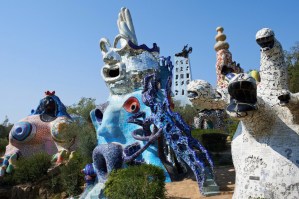
Niki de Saint Phalle arrives at MoMA PS1. Interior view of Empress, Tarot Garden, Italy

On Thursday (March 11) at 1pm, join MoMA PS1 for the launch of the catalogue for its newest exhibition, Niki de Saint Phalle: Structures for Life. Although Niki’s work was everywhere in the latter part of the 20th century, this exhibition marks her first New York retrospective. Curators, admirers, and artists come together at this panel to discuss the exhibition and her daring, provocative installations, ideas, and work.

At 2pm, the Cooper-Hewitt will host another conversation in honor of Willi Smith’s passion for making art outside of the dressmaking atelier – Art, Fashion, Performance: Seeing Through Creative Collaboration.

1939 portrait of Frida by Nickolas Muray. © Nickolas Muray Archives

At 6pm, the Museum at FIT is debuting a pre-recorded video with the curator of the acclaimed exhibitions in Brooklyn in 2019 on Frida Khalo’s style and art. Fashion curators from FIT will be running a live Q&A during the YouTube premiere of Curating Frida Kahlo: Fashion & Prosthetics.

On Friday (March 12) at 6pm, join the curators at El Museo del Barrio for an on-line tour of their important, new show on emerging artists – Estamos bien – La Trienal 20/21. The pandemic delayed the in-gallery opening of this important survey of new art, so El Museo put the work on line, and is just now welcoming in-person visits to its Fifth Avenue home. Check it out and see what’s new.

LaToya Ruby Frazier’s story in Grief and Grievance at the New Museum

At 7pm, join the New Museum to meet with another incredible artist participating in Grief and Grievance, the exhibition that has all of New York buzzing. LaToya Ruby Frazier, who has a compelling, wall-sized autobiographical work in the show, will be talking with Margot Norton – a discussion that you shouldn’t miss.

And in the run-up to St. Patrick’s Day, the Tenement Museum will be hosting a special on-line tour of the Moore family’s flat on Saturday (March 13) at 7pm and on Sunday (March 14) at 4pm.  Next week, too!

There’s a lot more happening, so check the complete schedule. Most of the events are free, but it’s always nice to add a thank-you donation.

Museum Updates

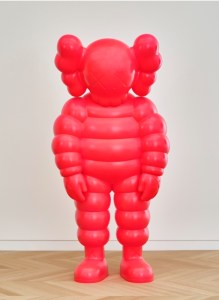
KAWS: WHAT PARTY © KAWS. Photo: Michael Biondo

New York has some exciting new shows coming on line right now! Last week, the Brooklyn Museum opened its big art-commerce-culture exhibition, KAWS: What Party, to celebrate 25 years of audacious work by Brooklyn’s own Brian Donnelly.

On March 11, Japan Society finally reopens its exhibition space with When Practice Becomes Form: Carpentry Tools from Japan. In honor of the earthquake’s tenth anniversary, the exhibition is a tribute to the resilient spirit of Japanese architecture and craftsmanship.

On March 14, MoMA opens Alexander Calder: Modern from the Start. We saw the workmen putting on the finishing touches on the third floor when we swung by MoMA this week to check out the other new show in the design galleries – Reconstructions: Architecture and Blackness in America.

Virtual NYC Museum Events – Contemporary Crafts, William Blake, Lost Cities, and Tiffany Lamps

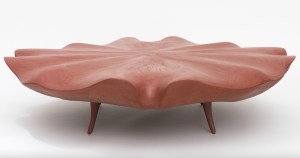
2018 furniture by Christopher Kurtz

With so many stuck inside during the deep freeze, why not tune into an ever-growing list of great virtual NYC museum events this week – meet curators that keep their finger on the pulse of great contemporary design, see works by William Blake and hear musical interpretations, find out why four civilizations were lost to history, and hear about the woman behind iconic Tiffany lamps.

There’s so much more coming out of our museums right now, so check the week’s listings on our virtual events page. Some highlights:

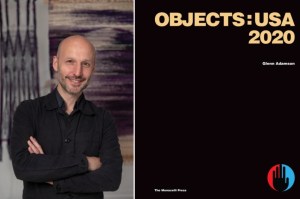
Glenn Adamson at MAD this week. Photo © Monacelli Press

Today (February 15) at 6pm and Wednesday (February 17) at 2pm, reserve a seat (virtually) at MAD Museum to hear Glenn Adamson speak about his downtown gallery exhibition at R & Company that showcases masterpieces of modern design and how it was inspired by the historic 1969 exhibition that introduced crafts as fine art in America. It’s a great chance to see what’s new in the context of art history.

On Wednesday (February 17) at 3pm, take a trip to the Morgan Library to see books and prints by visionary William Blake and new classical compositions inspired by it in Exuberance is Beauty: William Blake, the Viol, and the Book.

James M. Mannas Jr.’s 1964 No Way Out, Harlem, NYC

At 7pm, meet James M. Mannas Jr., one of the celebrated artists of the Whitney’s acclaimed exhibition, Working Together: The Photographers of the Kamoinge Workshop. He and the panel will screen and discuss King is Dead, a documentary he shot in Harlem about the reactions of people in his community to the 1968 assassination. His photographs of this are unforgettable, so don’t miss this chance to learn more about how he captured a moment of historic importance.

Calling all archaeology and history fans! At 8pm, join a discussion with journalist Annalee Newitz at the New York Public Library on her book, Four Lost Cities. She’ll fill you in on the rise and fall of Çatalhöyük in Central Turkey, Pompeii, Angkor Wat, and the mysterious Cahokia in our own Midwest – a deep dive into the lessons to be learned about urban life.

Designed by Clara Driscoll, the head of Tiffany’s Women’s Glass Cutting Department

On Thursday (February 18), do you know about Clara Driscoll, the woman behind the Tiffany lamps?  If not, join the New-York Historical Society’s history happy hour at 6pm to find out one of the most amazing stories showcased in their stunning galleries of Tiffany lamps.

Do you want to ride a subway car deep into the ocean to see what’s there?  Did you even know that old MTA subway cars are providing homes for sea life off the coast of South Carolina? Join the New York Transit Museum on Wednesday at 6:30pm to hear about what it took to turn the cars into an artificial ocean reef.

Some museums are doubling up on programs this week, so if you’re looking to celebrate George Washington’s birthday, Fraunces Tavern is offering two opportunities – Wednesday at 7pm with the Morris-Jumel Mansion to hear about New York’s impact on him and Thursday at 6:30pm on his “final battle” to build a capital city.

There’s a lot more history, art, and get-togethers, so check the complete schedule. Most of the events are free, but it’s always nice to add a thank-you donation.

Museum Updates

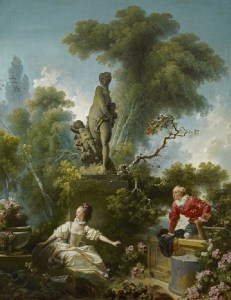
Fragonard is moving to Madison Avenue as part of Frick Madison.

This week, the Frick Collection announced March 18 as its official opening on Madison at the Breuer. While Mr. Frick’s Fifth Avenue mansion is being refreshed and renovations happen, the curators are reinstalling their classics in the former Whitney Museum building (and former Met Breuer) for the next two years. Here’s the news about what’s planned. Tickets on sale this week.

There were long lines of members at the opening preview for the Met’s new show, Goya’s Graphic Imagination. If you want to get a peek inside, join the virtual opening online this Thursday (February 18) at 7pm.

Tameca Cole’s collage at MoMA PS1’s Marking Time: The Age of Mass Incarceration

Despite the weather, MoMA PS1 had a steady stream of visitors to see the acclaimed show presenting works by incarcerated artists, Marking Time: Art in the Age of Mass Incarceration. It’s a major show that The New York Times cited as one of the best of the year.  If you want to meet one of the artists, join MoMA PS1 on Thursday (February 18) at Noon in their program, “Chosen Family: Marking Time.”

MoMA PS1 is open five days a week, and its expanded book store is now so large that you should think of it as a destination all on its own. (And in case you were wondering…as of this weekend, the corner diner is open and serving inside.)

MoMA Drawings Show How to Reboot

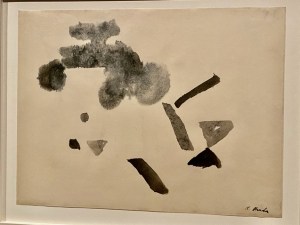
Detail of Chryssa’s 1959 Drawing for Stock Page

How do you start over when life is disrupted, everything is rearranged, and the world seems upside down? How do artists respond? A quiet show at MoMA lays out the answers in 80 works in its post-WWII exploration, Degree Zero: Drawing at Midcentury, on view through June 5.

Drawn from the museum’s archive of works on paper, the show illuminates the ways artists were seeking new means of expression following the traumatic years of the world war – turning to contemplative traditions of Asian culture, channeling under-the-surface emotions through abstraction, embracing chance in the process, and trying processes that no one had tried before.

Kline’s 1952 ink and oil drawing on cut-and-pasted paper

Visitors always seem to be taking the time to study each work and consider the ways each artist responded during a time of profound disruption, change, and promise. The works in the show, from across disciplines and continents, provide a contemplative window into the expressive ideas germinating between 1948 and 1961.

One of the first stories told by the beautiful, light abstract washes in the first gallery focuses on calligraphy-based experiments by post-war Japanese artists and their American counterparts. You’ll encounter beautiful, spiritual work by avant-garde Japanese artists that pay tribute to their culture’s calligraphic tradition.

Osawa Gakyu’s 1953 The Deep Pool, featured in MoMA’s 1954 avant-garde Japanese calligraphy show

In occupied Japan, students were prohibited practicing traditional calligraphy, so the surviving artists, such as Osawa Gakyu, took it underground, producing 100% abstract work inspired by the brushwork and style of the ancient tradition. Since New York artists were gaining global attention with their spiritual and expressive abstraction, the Japanese artists wondered if putting a modern spin on traditional techniques could gain them an international audience.

1956 ink and watercolor made by Pierre Alechinsky during his trip to Japan

They formed groups like Bokujinkai (People of the Ink) and began publishing a journal, Bokubi (Beauty of Ink). They found an eager international readership among forward-looking European and American artists who felt it was the right time to incorporate cross-cultural influences into their art.

In 1954, MoMA showcased avant-garde Japanese calligraphy in a special exhibition that brought wider recognition to the reinvention happening overseas.

1957 drawing by Kenzo Okada, done seven years after his move to The Village

Some artists, like France’s Pierre Alechinsky, were up front in his enthusiasm for avant-garde calligraphy and traveled to Japan to study. Others, like Franz Kline, eagerly absorbed exciting techniques from the new movement, but kept his enthusiasm quiet to avoid stirring up still-simmering anti-Japanese sentiments. Chryssa simply applied calligraphic strokes to the grid-like columns of newspaper stock listings.

MoMA also shows that influences were a two-way street, citing Kenzo Okada, who ultimately decided to move from Tokyo to Greenwich Village in 1950, give up realist painting, immerse himself in the AE scene, and set up a long, successful career in America. The show features one of his acclaimed abstract works.

1957 oil on paper by inspired abstractionist Joan Mitchell

The show also features works on paper by emerging abstractionists known for their hard-edge style, such as Ellsworth Kelly, Latin American modernist Willys de Castro, and Hungarian artist Vera Molnar.

In the latter half of the show, there’s an emphasis on joyous marks, color and process – a trio of crayon scribble drawings by Cy Twombly, gestural drawings (like mini-paintings) by Jackson Pollack and Joan Mitchell, and intense pastels by Beaufort Delaney. There are lots of examples of how visual artists used humble, small-scale materials to channel complex feelings onto a page. Often the results look just as epic as their big canvases elsewhere in the museum.

1953-54 Tomb by Sari Dienes, a gravestone rubbing with a flag

The process section of the exhibition features music notations by chance-master John Cage, but also showcases highly engaging work by artists who aren’t as well known today. Sari Dienes loomed large in the downtown experimental (Black Mountain/Fluxus) art scene of the Fifties and Sixties, and the presence of her large gravestone rubbing with flag explains directly why Rauchenberg and Johns felt they had learned from a master in their found-object forays through Lower Manhattan.

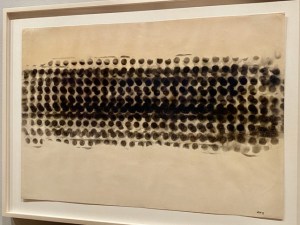
Experimental processes abound in the final gallery, evidence that artists everywhere were searching for new means of expression, letting chance take its course, and trying to usher in a new era of art making. Otto Piene’s dramatic drawing looks like he made tire track across the paper, but he actually created it by holding his paper over a candle flame and letting the soot make the marks.

Otto Piene’s 1959 drawing made by holding paper above a candle flame and letting the soot make its mark

Otto’s also the artist that founded Dusseldorf’s Zero group in 1958, stating “Zero is the incommensurable zone in which the old state turns into the new.”

Thanks to curator Samantha Friedman for taking his inspiration and creating such a satisfying, revealing show that’s perfect for making the transition from 2020 to 2021.

See our favorite works on our Flickr album and walk through the show with the curator here.

Virtual NYC Museum Events – Harlem Heavyweights, Design Disrupters, Rap History, and Gulla Cooking

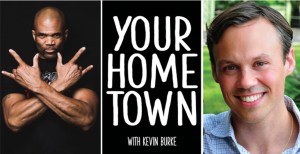
Darryl McDaniels of Run-DMC talks with Kevin Burke at MCNY

Despite the massive nor’easter moving through New York, we’re assuming that the virtual NYC museum events are happening as planned – an opportunity get behind the scenes of New York’s hottest photography show, visit a West Coast design archive, meet a Rock legend, and dive into historic Southern cuisine.

Check the daily listings on our virtual events page to for these events and details on many, many others.

The Kamoinge workshop show at The Whitney. Meet the artists this week.

We want to alert you all to the upcoming opportunities that the Whitney is offering to showcase the photographers and work featured in Working Together: The Photographers of the Kamoinge Workshop. On Wednesday (February 3) at 7pm, you can meet the Kamoinge artists live and hear them talk about how Harlem influenced their work. On Friday (February 5) at 3pm, see which artists used “the body” for inspiration and which contemporary photographers take on similar themes.

Two tours of the Morgan’s David Hockey show this week.

Also, just a reminder that there are two opportunities to walk through the Morgan Library’s David Hockney life-drawing show – on Wednesday, February 3 at 3pm and on Thursday, February 5 at 12:30pm.
Here’s how the rest of this week will shape up, with just a few suggestions (see the entire list here):

On Tuesday (February 2) at 4pm, take a trip to California with the Poster House to hear Letterform Archive’s Stephen Coles talk about (and show examples of) what happens when graphic designers break the rules of what typically constitutes good design.

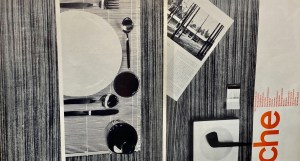
Close-up of Swiss grid at Poster House. What happens when designers ignore it?

At 7pm at the Museum of the City of New York in the Your Hometown series, meet Rock and Roll Hall of Famer Darryl McDaniels of Run-DMC who will talk about growing up in Queens during the Sixties and Seventies and how the lessons learned contributed to becoming a rap icon atop the music industry.

On Wednesday (February 3), you can join two programs that take you inside museum collections and exhibitions to ask questions about how indigenous cultures and artists are represented, and what is changing.  At 6pm at Bard Graduate Center, hear about “Indigenous Arts in Transition” from two Native American curators in Minnesota and Oklahoma.

Boy’s hide shirt made by female Crow artist in 1870-1900 displayed at the Met in 2017

At 7pm, join the SciCafe crowd for a talk and Q&A on “Museums and Race” at the American Museum of Natural History that has a long (and current) history of grappling with these issues. Anthropologist Monique Scott will focus on African objects in the collection in New York and other museums around the world.

At 8pm, join the Museum of Food and Drink (collaborating with the Smithsonian Folklife Festival) for a fun dive into regional cooking in “Sustaining Gullah Geechee Cooking across Land and Sea.” You’ll hear a fascinating migration story told through food and learn how to make crab fried rice.

There’s a lot more music, science, and get-togethers, so check the complete schedule. Most of the events are free, but it’s always nice to add a thank-you donation.

Museum Updates

Toxic Titan program at the AMNH Hayden Planetarium last week was a hit

We dropped in on fun virtual events last week at the AMNH, Fraunces Tavern Museum, and the NYPL’s discussion with Amber Ruffin, and couldn’t have enjoyed them more!

The Toxic Titan show with the Hayden Planetarium crew had nearly 400 viewers from around the world!  Congratulations to the virtual team, who even un-muted everyone to give the crazy-good speaker a live round of virtual applause!

Get to the Guggenheim by February 14!!

Before the storm hit, we were able to visit the Guggenheim to see Countryside, the Future, the spectacular show by AMO/Rem Koolhaas. Although the curators say you can either breeze through or read through it slowly, the crowds were definitely making the most of their time and digesting everything – the history of our obsession with country and leisure, the ways 20th-century leadership tried to reshape vast swaths of their countries, and the efforts going on today to reimagine non-urban environments in Africa, the Middle East, the Arctic, and everywhere.  It’s a must-see. Two more weeks.

Virtual NYC Museum Events – Women with a Message, Pop Shop History, and Toxic Titan

Gloria Steinem and Julie Taymor at Asia Society on Monday

So many virtual NYC museum events are happening online this week – an opportunity to meet amazing women, bring organization to your life, attend a premiere at The Met, and get the inside story on Saturn’s moon, Titan. Check the daily listings on our virtual events page to for these events and details on many, many others.

Today (January 25), at 6:30pm, you can join an exciting event at Asia Society – a conversation with Gloria Steinem and director Julie Taymor, followed by a panel of visionary activists discussing how visionary women are serving as agents of change as people in our world grows more interdependent.

Tuesday talk at Japan House

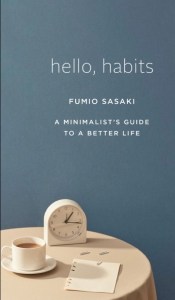
Is it time to pare down? Purge stuff? Feel more organized? On Tuesday (January 26), at 6pm, join Japan House to hear Fumio Sasaki talk about how to live a more ordered, fulfilling life – all included as part of the theme of his new book, Habit-Making: A Minimalist’s Tips for a Better Life.

At 7pm, enjoy The Met will debut a music and film collaboration on the life of Armenian-American abstract painter Arshile Gorky, who immigrated with his family in the early 20th century and influenced a generation of abstract expressionists. Watch the digital premiere of They Will Take My Island.

Curious about why Manhattan has such a big park in the center of the island?

Wednesday history of Central Park (NYHS)

On Wednesday (January 27), at 3pm, hear the New-York Historical Society talk about the origins of Central Park. You’ll get to see what’s in the NYHS archive, view the plans for its design, see construction photos, and learn about the shocking removal of Seneca Village, a thriving African-American community.

At 6pm, you can learn about more recent history with the Brooklyn Museum. Amy Raffel will talk about her latest book on the legendary Keith Haring, how he created New York’s most popular memes, and what he sold in his famed downtown retail experiment, the Pop Shop.

Composite infrared image of Titan from NASA’s Cassini spacecraft. (University of Arizona/University of Idaho/NASA/JPL)

At 7pm, join planetary scientists at the Haden Planetarium at AMNH to examine Titan, Saturn’s large but toxic moon. Understand the questions scientists are trying to answer, and whether Earthlings have lessons to learn from their solar-system neighbor.

Love gardening?  Why is that? On Thursday (January 28), spend the morning at the New York Botanical Garden with UK psychiatrist-gardener Sue Stewart-Smith, who will share insights revealed in her book, The Well-Gardened Mind – how people’s minds and gardens interact.

Gardens at the New York Botanical Garden

Get a perspective that you’ve never had before from people you’ve never met – participants in a ground-breaking filmmaking workshop. At 6:30pm on Thursday night, go behind the scenes at MoMA P.S.1 to meet the organizers of the workshop and watch films made by imprisoned artists in “Pens to Pictures” – a media showcase that accompanies P.S. 1’s art exhibition, Marking Time: Art in the Age of Mass Incarceration that critics at The New York Times said was one of 2020’s best.

At 8pm, join the New York Public Library to hear Amber Ruffin, one of the funniest women in late-night TV, and her sister Lacey Lamar compare notes on hilarious and harrowing experiences with racism in New York City and Nebraska – all drawn from their new bestseller, You’ll Never Believe What Happened to Lacey

Yes, it’s serious, but it’s also really, really funny.  Amber’s first African-American woman to write for a late-night network show, and if you’ve seen her with Seth Myers, you know what we’re talking about. Don’t miss this!

There’s a lot more, so check our complete schedule. Most of the events are free, but it’s always nice to add a thank-you donation.

Mexican Muralists and The Whitney Rewrite Art History

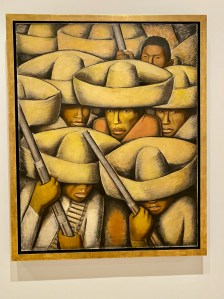
1932 Zapatistas by Alfredo Ramos Martínez. Courtesy: San Francisco Museum of Art

When you enter the Whitney Museum exhibition, you’re surrounded by tropical settings, Oaxacan beauties, lush floral compositions, and the romance of Mexico. But a few steps beyond, Vida Americana: Mexican Muralists Remake American Art, 1925–1945  delivers epic struggles, monumental murals, revolutionary fervor, inspirational triumphs, and heroic views of everyday people.

It’s the most important art exhibition currently on view in New York, on view through January 31, because it shows how three acclaimed, radical Mexican artists – Orozco, Rivera, and Siqueiros – influenced a generation of artists in the United States with their commitments to public works, no-holds-barred graphic depiction of social injustices, and masterful, innovative techniques.

Diego Rivera’s 1931 fresco The Uprising – everyday people showing heroism in extraordinary times. Private collection

Take a tour through the show on the Whitney exhibition site, listen to the audio guide, and see some of our favorite works here.

The paintings, photos, and films in the first gallery celebrate a romantic vision of Mexico’s native heritage alongside works evoking poignant, sometimes violent moments in the country’s recent revolution. It’s a rich experience, with modernist photos by Modotti, evocative footage by Eisenstein, and riveting works by Khalo, Rivera, and Alfredo Ramos Martínez.

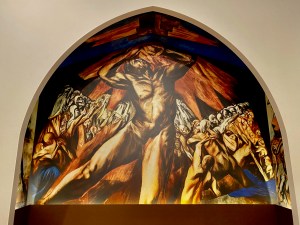
Orozco’s 1930 mythic mural Prometheus for Pomona College, California

But just beyond, you’ll glimpse galleries that promise deeper stories of emotional, turbulent, modernist angst. A half-scale reproduction of Orozco’s mythic Prometheus mural occupies an alcove, surrounded by works by artists he inspired –Jacob Lawrence’s pictorial history of African-American northern migration in 1910-1940 and Jackson Pollack’s early Thirties paintings that channel Orozco’s depiction of writhing life forces.

Take a look at The Whitney’s introduction to Orozco, Rivera, and Siqueiros, which shows life in Mexico at the time they developed their distinctive styles, gained international acclaim, and came to the United States:

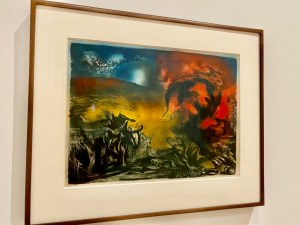
Another startling Pollack reveal lies in the Siqueiros gallery that tells the story of the experimental workshop that the Mexican master ran in New York, where New York artist were encouraged to experiment with airbrushes, stencils, and paint splatters.

Pollack’s 1937 airbrushed litho Landscape with Steer – influenced by his workshop with Siqueiros. Courtesy: MoMA

Siqueiros was big on pushing the boundaries and using modern materials to create truly revolutionary work. Pollack’s experiments are here, along with the revelation that workshop participants were encouraged to lay unstretched canvas down on the floor and work from above. Sound familiar?

The magic of this exhibition is the side-by-side mounting that allows visitors to ponder the many ways that young Depression-era US artists took so many of the lessons of the Mexican muralists to heart.

Detail of 1939-1940 Charles White Progress of the American Negro: Great American Negroes. Courtesy: Howard University

The exhibition goes on to chronicle artists who were inspired to tell epic stories of the American frontier and forgotten African-American success stories. In one room alone, you can pivot and take in expansive, monumental paintings by Thomas Hart Benton, Aaron Douglas, and Charles White.

Another section of the show looks at Diego Rivera’s fascination with American industrialization and assembly-line workers, including a wall-size video of Rivera’s 1932 mural of Detroit’s Ford assembly line. The adjacent gallery shows his influence through WPA-funded works by Ben Shahn, Phillip Evergood, Thelma Johnson Streat, Marion Greenwood, and others. Gears, machines, heroic workers, and strivers in an industrial age.

Reproduction of Rivera’s 1934 mural Man, Controller of the Universe, originally created for Rockefeller Center

A “wow factor” at the far end of the gallery is the reproduction of the infamous Rivera mural commission for Rockefeller Center that was destroyed due to Rivera’s refusal to take out Communist references. You experience the uproar it caused by reading original newspaper clippings and magazine articles. When his work was destroyed, Mexico City’s Palace of Fine Arts invited him to recreate it. That’s the reproduction at the Whitney, giving everyone a chance to experience a piece of lost New York art.

Many exhibition visitors miss one of the most satisfying components of the show – a three-channel video of the murals done by a host of painters (under Rivera’s direction) in a market in Mexico City. Walk to the right corner of the big Rivera mural and step inside the Abelardo L. Rodriguez Market to see murals created by Ramón Alva Guadarrama, Marion and Grace Greenwood, Noguchi, and others: