Brooklyn Museum Reveals Sargent’s Master Strokes

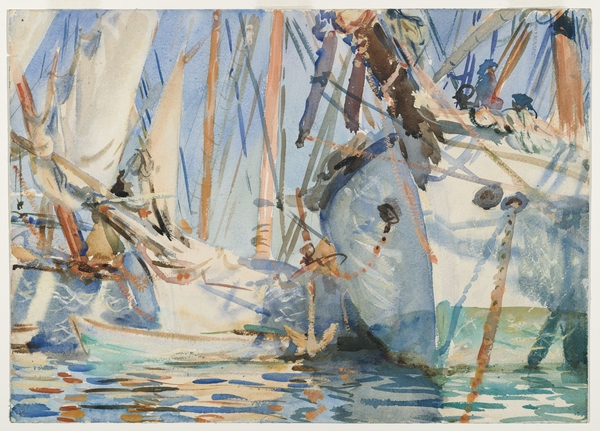
Sargent’s masterful 1908 White Ships. Translucent and opaque watercolor and wax resist with graphite underdrawing, Source: Brooklyn Museum.

Sargent’s masterful 1908 White Ships that he likely painted in a day. Translucent and opaque watercolor and wax resist with graphite underdrawing, Source: Brooklyn Museum.

Back in 1909, John Singer Sargent’s watercolor show at Knoedler was considered a knockout, drawing discerning crowds in awe of his sensational technique. The images of Bedouin life, Venice, and boats on the Mediterranean were so compelling that the Brooklyn Museum raced in to buy 83 (nearly all of them), forcing Boston’s Museum of Fine Arts to wait until 1912, when they could clean out his entire next watercolor show.

Bedouins

Bedouins (c.1905–6). Opaque and translucent watercolor, Source: Brooklyn Museum.

Walking into John Singer Sargent Watercolor on Brooklyn’s Fourth Floor, you can see why the two great institutions went crazy. With 93 of their finest Sargent purchases collectively displayed, it’s impossible for visitors to pick the most spectacular. They’re all exceptional – the Bedouin horses at rest inside the tent, Sargent’s niece wrapped in her cashmere shawl, the cliffs of the Carrara quarries, and the lush Medici gardens.

How did he make such magnificent work with such an unforgiving medium? How did he whip them out? The two museums asked a team of conservators and curators to put the works under the microscope and ultraviolet light to discern more about the master’s process – the sequence of paint application, the types of paint used, and whether he did a pencil sketch before applying paint to paper.

The team gives visitors insights to the scientific process used — an unusual twist at the back of the gallery that visitors poured through enthusiastically. Brooklyn’s digital team installed a 30-second video in which paper conservator Toni Owen asks visitors what more they’d like to know. Here’s the site where she answers with comments on Sargent’s use of gouache, soft-wax resist, yellow paints, and the difficulties of explaining false-color infrared imaging (FCIR) in limited-space wall text in the gallery.

Carrara: A Quarry (1911). Translucent and opaque watercolor and wax resist with graphite underdrawing, Photo: © 2013 Museum of Fine Arts, Boston

Carrara: A Quarry (1911). Translucent and opaque watercolor and wax resist with graphite underdrawing, Photo: © 2013 Museum of Fine Arts, Boston

You’ll learn that Mr. Sargent painted very fast, did not rely on photographs, and did at least one watercolor sitting in a gondola.

Brooklyn’s integrating much more media into its visual art shows, and they’ve hit upon a winning combination here. Some videos show the gardens that were the subjects of Sargent’s work in Italy. Others explain the techniques that Sargent used in the painting next to it.

Listen as artist Monika deVries Gohlke reflects on the type of day Mr. Sargent might have experienced working on his 1908 Melon Boat painting. Watch as she prepares the watercolors, selects his colors, chooses his brushes, and attempts to recreate his “jungle” of shapes and impressions. Does her painting look like his? You be the judge and go get your own paintbox.

Warhol, The Queen, Madonna, and The Scream

Warhol’s 1984 silkscreen, The
Scream
(After
Munch). Source: Part of the founding collection contributed
by
The
Andy
Warhol
Foundation
for
the
Visual Arts to The Andy Warhol Museum;  ©2013
AWFVA/ ARS, NY

Warhol’s 1984 silkscreen, The
Scream
(After
Munch). Source: Part of the founding collection contributed
by
The
Andy
Warhol
Foundation
for
the
Visual Arts to The Andy Warhol Museum; ©2013
AWFVA/ ARS, NY

Andy is kicking Mr. Munch’s Scream up a notch on Park Avenue, all to the delight of the Queen of Norway, in the Scandinavia House’s stellar exhibition, Munch, Warhol, and the Multiple Image through July 27.

Actually, Queen Sonja herself was one of Andy’s subjects in his Celebrity series, so it’s no wonder that she flew in to preside over Mr. Munch’s 150th birthday at a New York show where his most iconic work is appropriated and reimagined by the Master of Pop.

Andy first encountered Munch’s woodcuts in Oslo in the 1970s, and took home reproductions. So, when a now-defunct 57th Street gallery invited him to their 1982 Munch exhibition and offered him a commission to make 15 paintings and 30 silkscreens about the work, Warhol accepted.

The Scream was so iconic, Andy considered it almost a “ready made”, as ripe as any other pop culture image for his flat, unemotional, Day-Glo serial treatment. Ditto for Munch’s Madonna and Self Portrait with Skeleton Arm. He photographed reproductions of four Munch works, blew them up, traced on them, and rephotographed what he had traced. And then he turned it all over to a master silkscreen printer with suggested colors. So totally Andy.

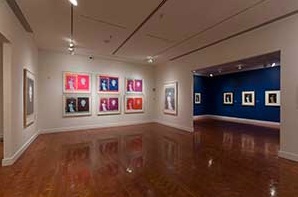
Room full of Munch Madonna prints seen from gallery with Warhol silkscreens of same. Eileen Travell’s photo for Scandinavia House/The American-Scandinavian Foundation, 2013

Room full of Munch Madonna prints seen from gallery with Warhol silkscreens of same. Eileen Travell’s photo for Scandinavia House/The American-Scandinavian Foundation, 2013

With all the commotion earlier this year at MoMA over The Scream (like fans along the red carpet, jockeying to get their photographs taken with the world’s-most-anxious celebrity-on-a-bridge), this show deserves similar crowds. Because Warhol’s prints were never published, you’re seeing one-of-a-kind prints that are dispersed around the world and rarely on view.

The curators have also brought together (with the help of The Munch Museum in Norway) multiples created by Munch. It’s fascinating to compare the five controversial Madonna prints side by side, walk into the first Warhol gallery, turn around, and see both Munch and Warhol Madonna interpretations right in front of you. It’s a smart, immensely satisfying installation.

You’ll enjoy listening to what the Queen had to say (first 8 minutes of the video) and see photos of her younger self at The Factory with Andy and Mr. Rosenquist.

Oh, and the photo below isn’t a disco queen from Studio 54. It’s Andy’s wall-sized reinterpretation of Munch’s The Brooch, Eva Mudocci, a lithograph originally done in 1903 to celebrate the beautiful, talked-about violinist.

The last 15 minutes of the video features the curator showing the work of the two Modern masters who knew how to leverage print technology and multiples into fame, fortune, and icon status.

Matthew Barney Digs Up Morgan Treasures

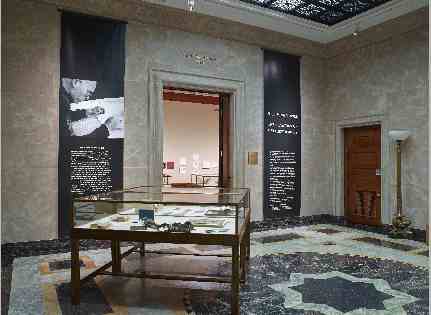
Barney’s show entrance at the Morgan, as photographed by Graham S. Haber. Courtesy: Matthew Barney, Morgan Library.

Barney’s storyboard case for River of Fundament in the entrance to his show at the Morgan. Photo: Graham S. Haber. Courtesy: Matthew Barney, Morgan Library.

The brilliant, perplexing, and mysterious Matthew Barney has combed through the Morgan’s collection to curate mini-collections for the first-ever retrospective of his drawings — Subliming Vessel: The Drawings of Matthew Barney (on view through September 8).

Whether you enjoy his work or not, you can’t deny that he and his curators did a bang-up job of presenting his works-on-paper. Get over to enjoy highlights of the Morgan’s collection in an entirely new way – a mash-up of controversial contemporary work with infrequently seen gems, many collected by J.P. himself.

Barney’s
CREMASTER 4: Manx Manual (1994-95)
Graphite, lacquer, and petroleum jelly on paper framed in cast epoxy, prosthetic plastic, and Manx tartan. Source: Private collection. Courtesy: Matthew Barney, Gladstone Gallery.

Barney’s
CREMASTER 4: Manx Manual (1994-95)
Graphite, lacquer, and petroleum jelly on paper framed in cast epoxy, prosthetic plastic, and Manx tartan. Source: Private collection. Courtesy: Matthew Barney, Gladstone Gallery.

There’s real fun to be had by examining the flat waist-high cases in chronological order (clue: they are marked with the letters A to O). Your walk will take you through Barney’s storyboards for his early works, through Cremaster, and to his current project – River of Fundament, a seven-act opera combining film and live performance.

The cases contain stuff from the Morgan Library interspersed with the props, photos, drawings, and other images that inspired Barney’s extravaganzas. In order to enjoy this to the max, take a guidebook (in a stack right inside the gallery door). Even if you’re a Barney connoisseur, you’ll need the gallery guide to ID the great picks from the Library.

Case C is very satisfying to anyone who’s followed Barney’s career from his satyr-prancing videos at his first Biennials – you’ll see an 18th-century satyr drawing from Italy and the 1290 Persian blockbuster, The Benefits of Animals, opened right to the page with two crazy mountain goats. (And, yes, they’re standing in trees!).

Barney’s Ancient Evenings: Ba Libretto, 2009. Ink, graphite and gold leaf on paperback copy of Norman Mailer’s Ancient Evenings, on carved salt base, in nylon and acrylic vitrine. Courtesy: Marguerite Steed Hoffman and Matthew Barney

Barney’s Ancient Evenings: Ba Libretto, 2009. Ink, graphite and gold leaf on paperback copy of Mailer’s Ancient Evenings, on carved salt base, in nylon and acrylic vitrine. Courtesy: Marguerite Steed Hoffman and Matthew Barney

The Cremaster 2 storyboard in Case F has an Goya drawing and the original edition of one of New York’s most popular entertainments – Joseph Smith’s 1830 The Book of Mormon. (Trust me, you won’t find it without the guidebook.)

Cases K-O contain the River of Fundament storyboards, which were inspired by Norman Mailer’s book, Ancient Evenings, Egyptian reincarnation myths, and the Chrysler bankruptcy. Alongside Barney’s props and things, you’ll glimpse sky burials documented by Curtis, Whitman’s original Leaves of Grass, and a Diane Arbus portrait of Mailer.

Look at the slide show from the exhibition, but know that Barney’s drawings are best enjoyed in person. They’re tiny, detailed, and often disturbing. With many references to Egyptian deities, Renaissance drawings, and cars, each is a tiny world unto itself.

Will you ever understand what those iconic self-lubricating frames are about? It doesn’t matter. It’s just nice to dive into an alternate, mysterious universe and simply swim around in Barney’s non-linear excavation of similarly provocative illuminations and page-turners from Mr. Morgan’s stacks.

Washington, D.C. Museum Videos Reach 14 Million YouTube Views

Since Smithsonian branches and other Washington, D.C. museums, zoos, and gardens began posting videos on line in 2007, collective YouTube views have climbed to 14 million, as chronicled in our latest report, Washington D.C. Museums: 2013 Video and Social Media Rankings.

Although the 14 million total is less than the 49 million views racked up by New York museums, don’t forget that two high-profile DC institutions – National Geographic and the Smithsonian – produce significant amounts of programming distributed on their popular cable TV channels, dedicated apps, and snazzy web sites. Even though it has a DC museum space, NatGeo (a joint venture with Fox Cable) has largely abandoned YouTube; however, the 18 individual Smithsonian branches are all still posting their own stuff regardless of the more comprehensive joint venture with Showtime.

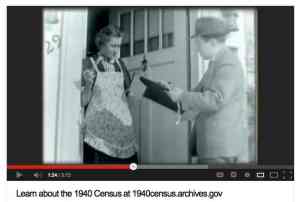
In the Top 2012 Cultural Museum Video, archival footage is cleverly coupled with behind-the-scenes looks at the National Archives’ 1940s Census release

In the Top Cultural Museum Video, archival footage is cleverly coupled with behind-the-scenes looks at the National Archives’ 1940s Census release

Here are some findings from our report on video and social media produced by DC institutions:

As of year-end 2012, the Washington museums having the highest number of total YouTube channel views were the Library of Congress (4.5M), the National Archives (2.1M), and the United States Holocaust Memorial Museum (1.6M). The top two are information powerhouses with massive collections to push out for public consumption, and the third is right on their heels with an innovative series with curators interpreting interesting items from their collections.

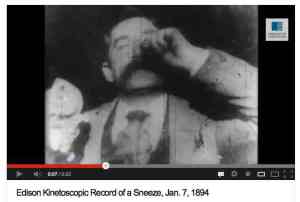
All-time top DC museum video, one of Edison’s earliest films, with over 329K hits on YouTube

All-time top DC museum video, one of Edison’s earliest films, with over 329K hits on YouTube

Edison still delivers. It’s interesting that the top ranked DC museum video of all time is Edison Kinetoscopic Record of a Sneeze, Jan. 7, 1894, the earliest surviving copyrighted moviesuggesting that our greatest media innovator is having the last laugh, contributing over 329,000 hits to the number-one ranking by Library of Congress on YouTube. It’s short enough for Fred Ott to be on Vine.

Four museum video channels have surpassed 1 million views. To put the DC numbers in context, if they were merged with the New York museum video rankings, the Library of Congress (4.5M) would rank seventh, just ahead of the Metropolitan Museum of Art. The Library of Congress would rank eight (2.1M), just ahead of the New York Public Library.

The National Zoo produced Washington’s top-viewed 2012 museum video – Shanthi, the National Zoo’s Musical Elephant, Plays the Harmonica!. Over 290,000 viewers watched this middle-aged mom experiment with a musical instrument in her enclosure and listen to her keeper talk about her performance. Shanthi’s viewership greatly surpassed the numbers generated by the most popular 2011 Washington museum video, the National Portrait Gallery’s Conan O’ Brien as Seen by Artist John Kascht. Surely, Conan would be amused.

The Smithsonian American Art Museum’s Top Exhibition Video of 2012 features curator Chris Melisinos describing why video games belong in an art museum

The Smithsonian American Art Museum’s Top Exhibition Video of 2012 features curator Chris Melisinos describing why video games belong in an art museum

The top cultural video was a behind-the-scenes work at the National Archives for the release of the 1940s census. Over 115,000 family historians watched Learn About the 1940s Census, which showed the Archives census team, provided information on how to find your family’s records, and worked in interesting archival footage from the original census.

The Smithsonian American Art Museum produced Washington’s top video about a museum exhibition. Over 28,600 people watched The Art of Video Games: Chris Melissinos, Curator, a brief look into the evolution of the stories, technology, and visualization advances of this mass entertainment medium.

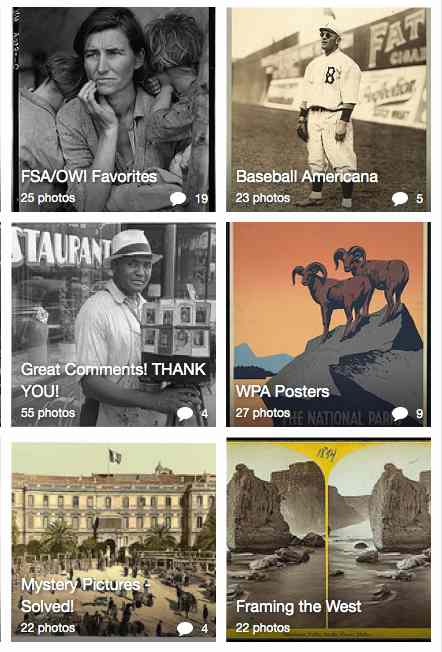
A few of the Flickr sets from Library of Congress

A few of the Flickr sets from Library of Congress

The most active Twitter users are the National Museum of American History, the National Air and Space Museum, and the National Postal Museum. But except for Air and Space, it’s a different set for Facebook followers.

The most active Flickr users are the National Archives, the Library of Congress, and the Smithsonian American Art Museum. The Archives has organized its photos into creatively themed sets, such as “White House Wednesdays,” “Millinery Monday,” pictures of the 1940s census being taken, and pets of the First Families. The Library of Congress also posts a folder containing “mystery” photos and asks the public to help to identify them.

All the detailed video and social media statistics on 42 museums are in the report. Click here to see what’s included and make a purchase from our Its News To You Reports shop.

Enjoy the most popular DC museum video, a musical visit with the National Zoo’s sensation, Shanthi:

More Time Tripping at Grand Central

Annex window view of Lothar Osterburg’s model of his dream of Grand Central as a zeppelin docking station back in the 1930s

Annex window view of Lothar Osterburg’s model of his dream of Grand Central as a zeppelin docking station back in the 1930s

Even if you didn’t manage to board the historic train cars at Grand Central in May, you can still go back in time, courtesy of 18 artists featured in the GCT exhibition in the New York Transit Museum Annex, On Time: Grand Central at 100.

Inspired by The Clock and the continual flow of people and trains through Grand Central, MTA Arts for Transit cooked up a delightful mix of contemporary 2D works, models, videos, and digital art that puts a smile on the face of every commuter, tourist, and art-seeker that we’ve seen inside the tiny Annex.

Look closely to find this minute secret portal: Ledge with Lunette, 2013 by Patrick Jacobs

Look closely to find this minute secret portal: Ledge with Lunette by Patrick Jacobs

Have you seen the mysterious Zeppelin posters by Lothar Osterburg on the subway? Right in the Annex window you’ll see the gigantic, fun-house model that he created to photograph as one step in the process of making the photogravure you see on the A train. Kids and parents can’t resist Lothar’s newspaper-covered multi-story GCT impression and the funny, fat yellow old-time taxis and zeppelin ends that poke out. Right next to it, you can examine his resulting print, Zeppelins Docking on Grand Central.

People are usually transfixed by the 2008 video documenting Frozen Grand Central, where Improv Everywhere staged a 250-person flash mob, where people “froze” for 5 minutes as commuters, tourists, and workers wondered what was going on.

Another hit is Grand Central Diary. London Squared Productions interviewed tourists and commuters about GCT, animated the furniture and items around the terminal, and…well, just watch The Clock and the Maintenance Cart speak for themselves:

Nearby, several small digital screens show Alexander Chen’s Conductor, a 15-minute video loop that animates the subway lines, suggesting trains moving through the system. He turns the subway lines into an animated stringed instrument. No wonder he’s working for Google Creative Labs. Spend a few moments, take a look, and experience it here.

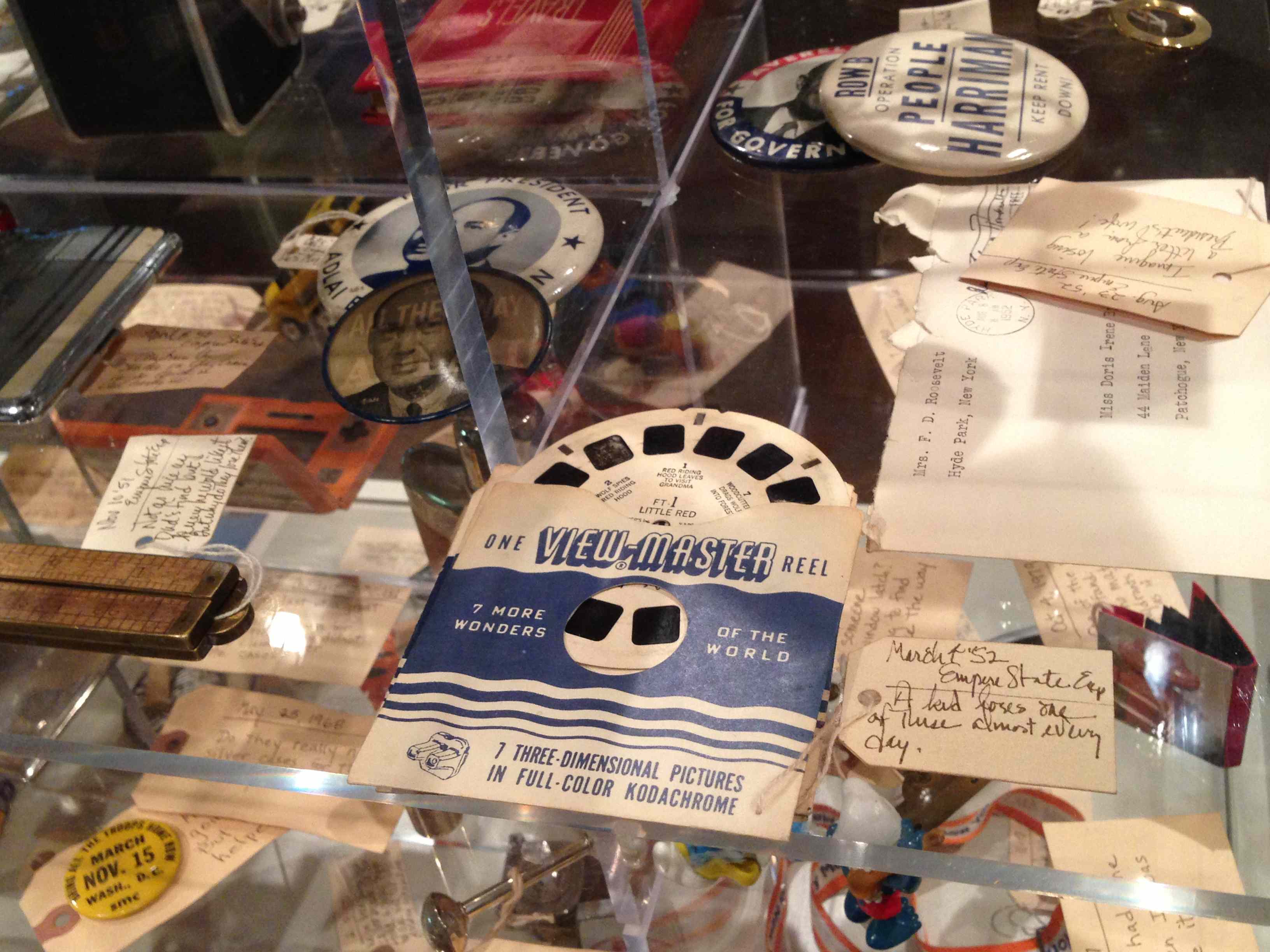
Close-up of Viewmasters and other leave-behinds inside Jane Greengold’s Lost and Found.

Close-up of Viewmasters and other leave-behinds inside Jane Greengold’s Lost and Found.

Another must-see piece (among many) is Jane Greengold’s Lost and Found. She’s created a sort-of fiction about the dozens of tagged items in the vitrine, evoking the memories and observations of generations of conductors who found items that train passengers left behind. Actually, the items you’re looking at are actual leave-behinds collected by real-life conductors, so Jane’s work isn’t entirely made up. The archeological discoveries include things from the old Lake Shore Limited on the NY Central, a 1948 boxed baby tooth, 1943 ration cards, 1952 Viewmasters, a Kennedy campaign button, and a Kindle.

Get to the Annex before July 7. In the meantime, check out curator Amy Hausmann and her artists telling about the fun they had contemplating time, architecture, fashion, and Jackie O.

Bird Watching Opportunity at The Met

1-4 Birds in Japan

Detail from Flock of Cranes (1767-1784) by Ishida Yutei, a six-panel folding screen

An avian free-for-all is happening on the second floor of the Met’s Asian Wing, with a lot of flapping, stalking, crowing, and displaying for all the world to see through July 28.

The birds (and one big, hairy deer) really come alive in the Sackler Wing show, Birds in the Art of Japan, The curators went into the collections to dig out masterworks featuring dozens of species of birds native to Japan, including medieval to modern clothing, jewelry, paintings, sculptures, ceramics, and baskets. If you’re a bird-lover still wondering whether the AMNH will ever bring back the Birds of the World dioramas in all their splendor, you’ll find comfort on examining all these species close up in the quietude of the Met,

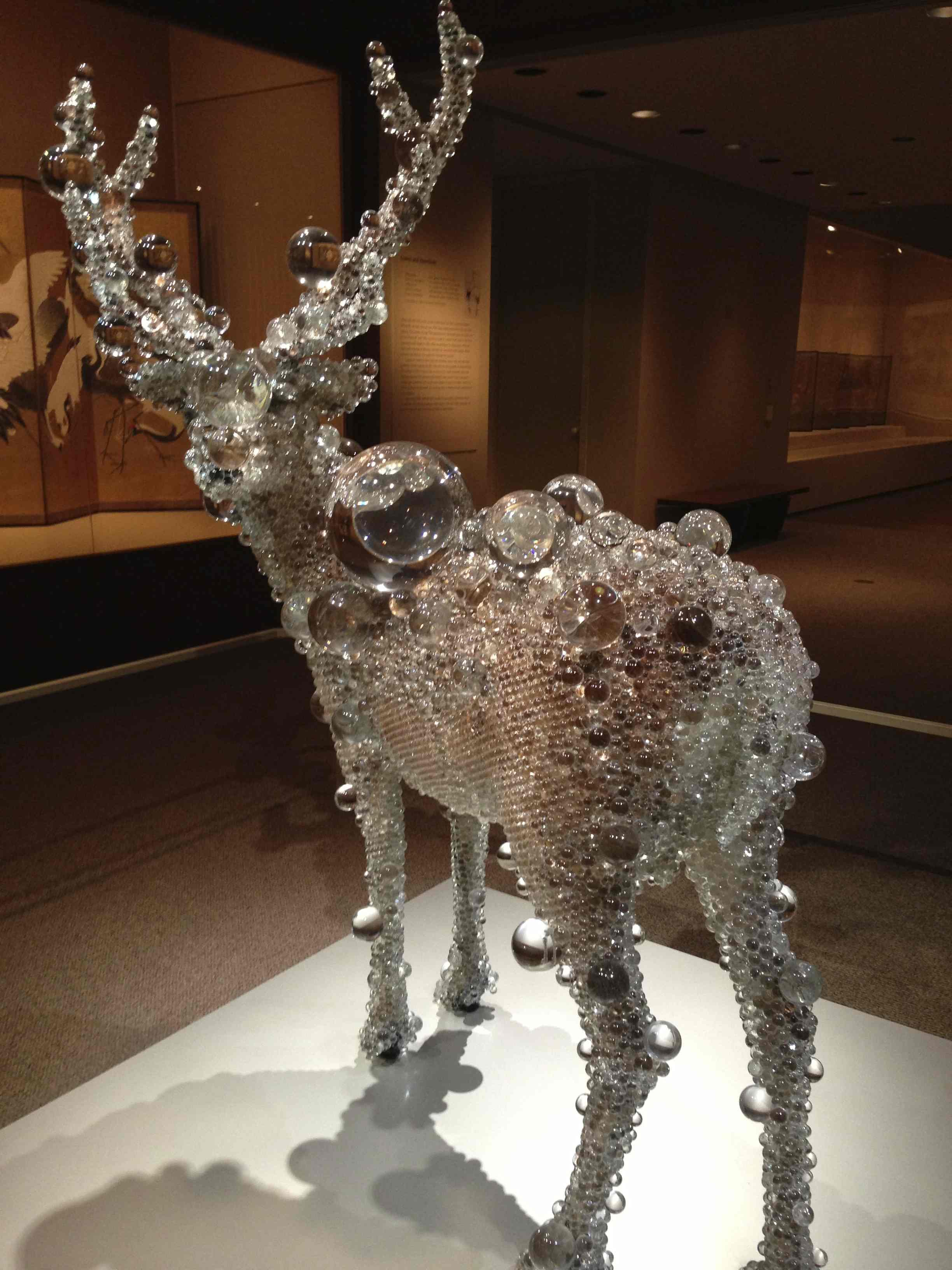
The exhibition starts behind the 12th century Buddhist temple platform and just past the 13th Century Bodhisattvas, where you’re greeted by a charming rooster that’s actually an 18th century incense burner. Turn the corner and you’ll come face to face with a startling 2011 Japanese sculpture — Kohei Nawa’s PixCell-Deer#24, an auspicious presence (ref. the messenger animal of the Shinto deities) in the form of a taxidermy specimen that Kohei creativly covered in glass bubbles.

How did Kohei Nawa’s deer get in here?

How did Kohei Nawa’s deer get in here?

Every gallery delivers a surprise, from the water birds area right through to the “exotics”. Exquisite paintings of the 1700 are interspersed with startling realistic works by the masters of the forge. One of the show-stoppers is a spectacular life-size iron eagle hovering from his perch in the raptor gallery that the curators reckon was made for display at one of the late 19th century world expositions. The detail is amazing. Each feather was forged and riveted individually onto the bird’s metal body. It’s no wonder that the eagle, a nearby raven, and another headdress normally live in the Arms and Armor Department at The Met. Nice collaboration!

Check out our Flickr site for a walk-through of some of our favorite works, including the embroidered Phoenix-covered kimono, the 1908 Peafowl painting/screen by Mochizuki Gyokkei, Asano Toshichi’s hawk-shaped zither, and Kamisaka Sekka’s artistic book, which is brilliantly displayed in interactive form by the Met’s digital team.

Spectacular iron eagle lent by Arms & Armor Department

Spectacular iron eagle lent by Arms & Armor Department

Enjoy this wildlife walk through the eyes of artists on the other side of the world, and be sure to relax in the George Nakashima reading room – a kind of “fire pit” roundtable where we found visitors sharing their impressions of the show. Check out the Met’s on-line catalog of the exhibition, but do yourself a favor and hike over to the Met in the next month before these birds fly away back to the collections.

You won’t be seeing the birds in the wild, but it’s likely that J.J. Audubon would approve. You’ll find joy in getting to know your new Asian friends, who you will likely spot in future exhibitions or in the aviary at the zoo.

Kimono embroidery detail. What did the Phoenix signify to this 19th c. bride?

Kimono embroidery detail. What did the Phoenix signify to this 19th c. bride?

Mary Cassatt’s Tech Start-Up Chronicled by NYPL

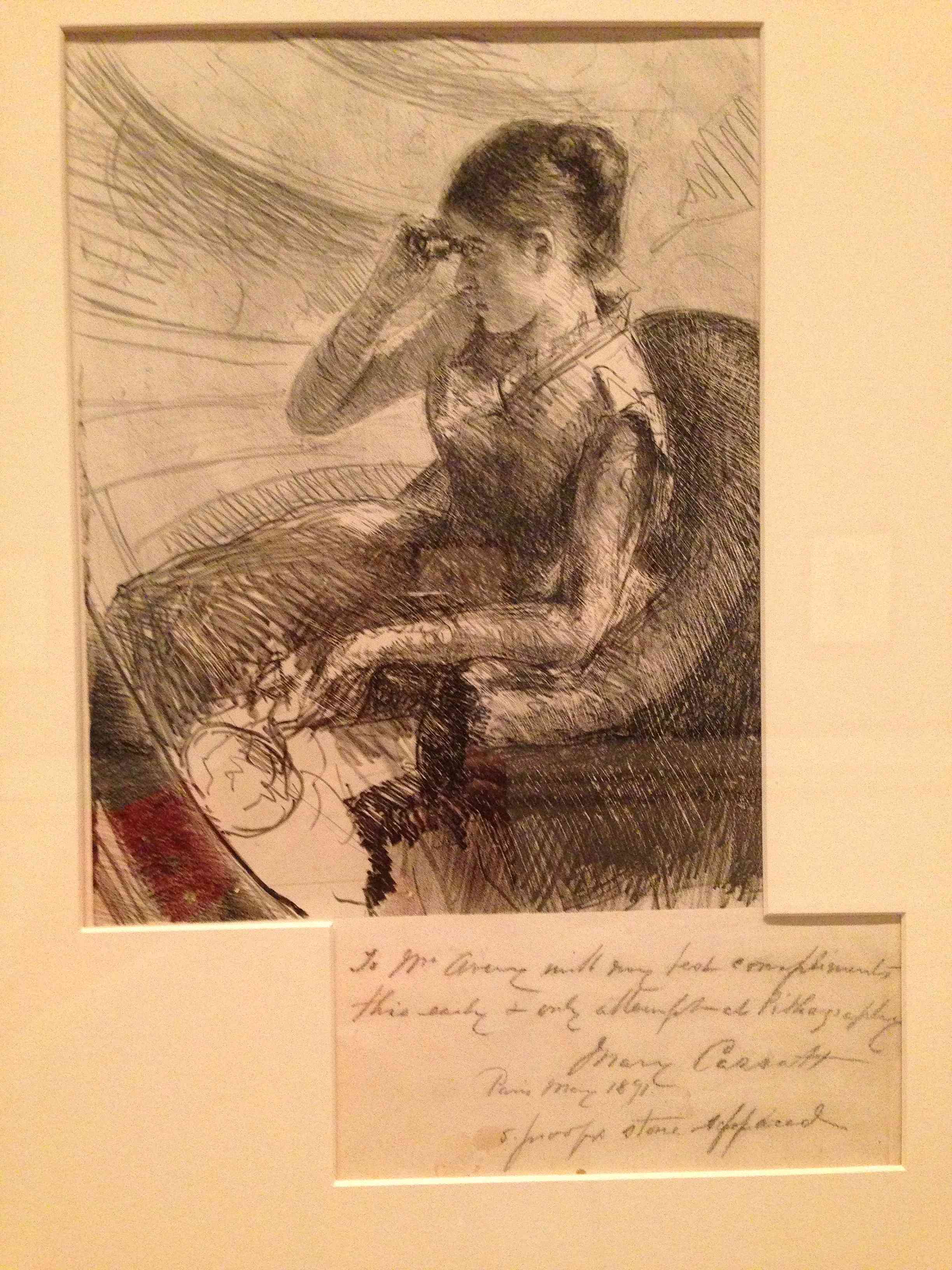
Woman Seated in a Loge (1881). The only lithograph Cassatt ever did, personally inscribed to Mr. Avery.

Woman Seated in a Loge (1881). The only lithograph Cassatt ever did, personally inscribed to Mr. Avery.

Still using a flip phone? Don’t know how to code? There’s nothing wrong with sticking with what you know, but expanding horizons with new technology is always good. In 1876, it’s exactly why Mr. Degas invited 32-year-old Mary Cassatt into his studio, showed her some of his printmaking techniques, and encouraged her to jump in and try something new. She did, and her technological triumph is the story of NYPL’s illuminating third-floor show, Daring Methods: The Prints of Mary Cassatt, which ends Saturday.

The show gives you a new slant, documenting this American artist’s struggle to make new work, push her technical boundaries, and mash up styles to total critical acclaim at the turn of the last century. NYPL found itself in a unique position to mount this show, since art dealer/print collector Samuel Putnam Avery made an unprecedented donation back in 1900 — more than 17,000 19th-century prints, including dozens and dozens he purchased directly from Cassatt as evolved her printmaking between 1878 and 1898.

The Letter (1891) – color print with drypoint and aquatint. This is an earlier state (iii/iv) of Cassatt’s famous print minus the wallpaper pattern and letter on the desk

The Letter – 1891 color print with drypoint and aquatint. This is an earlier state (iii/iv) of Cassatt’s famous print minus the wallpaper pattern and letter on the desk

This show provides art-lovers with a unique, chronological walk-through of Cassatt’s technical trial-and-error, beginning with her early drypoints (1878 costume studies suggested by Degas), simple drypoints and etchings, and her only litho (see right). Cassatt continued to experiment throughout the 1880s, perfecting her softground, drypoint, aquatint, and etching techniques, often mashing them together – brave moves by a stylish, curious female artist of the modern era.

Gallery visitors walk slowly from print to print, taking in the subtle changes, redirects, and reworks of this modern, mid-career artist determined to find status and success in the male-dominated Parisian art scene of the late 19th century.

The NYPL curators decided to hang multiple versions of similar subjects side by side, so you can really examine the mind of the artist at work. It’s interesting that Cassatt let Avery have prints off cancelled plates that she pulled after the “good” print run was finished. You’ll see the scratched-up images in the show next to the best ones.

The Fitting – 1891 color print with drypoint and aquating, printed with three plates

The Fitting – 1891 color print with drypoint and aquatint, printed with three plates

In 1890, everything changed for Cassatt, when she saw an exhibition of Japanese woodblock prints took the Parisian cultural community by storm. It was the moment that her technical experiments paid off and her printmaking vision, style, and legacy became sharply focused. In the last portion of the show, you witness her brilliant response — making intaglio look like woodblock, applying multiple areas of bright color, injecting pattern into domestic surfaces, and zooming in for low-angle close-ups of private moments in women’s lives.

Enjoy NYPL’s selections from Mr. Avery’s collection and spend some time examining the multiple states of the most beloved prints in the Impressionist canon, mash-ups of aquatint and drypoint. It’s a master class in color, ink, and composition.

If you can’t get to the show this week, download the PDF and take a look at Ms. Cassatt’s technical journey. Then go out and try something new.

Impressionist Line Ends at Frick

Toulouse-Lautrec, The Jockey, 1899. Color-printed lithograph on cream wove paper

Toulouse-Lautrec, The Jockey, 1899. Color-printed lithograph on cream paper

If you’re already nostalgic for the grand Impressionist show that ended at The Met, you can still find your favorites filling the Frick’s two downstairs galleries and the room next to the gift shop. While the Clark Art Institute (Williamstown, Massachusetts) was undergoing renovation, the Frick borrowed some of their finest works on paper for the gem-of-a-show, The Impressionist Line from Degas to Toulouse-Lautrec: Drawings and Prints from the Clark.

If you loved seeing Al Hirschfeld apply his pen and ink to paper in our last post, you will delight in perusing how lines by Degas, Manet, Lautrec, and Gaugin created a profitable niche in the rapidly expanding art market at the 19th century’s end. (By the way, Hirschfeld fans, who knew that Monet drew crazy caricatures to support himself early in his career? Claude’s Man with a Snuff Box looks like it was drawn in the 1950s…not the 1850s!)

Toulouse-Lautrec, Miss Loïe Fuller (1893), Lithograph printed touched with gold and silver powder. Source: Clark Art Institute

Toulouse-Lautrec, Miss Loïe Fuller (1893), Lithograph printed touched with gold and silver powder. Source: Clark Art Institute

Although a few politically charged works are in the show (like Manet’s 1874 print of the Commune uprising The Barricade), the majority are masterworks of portraiture, everyday life, cafes, and modern entertainments like horseracing, circuses, and boulevard promenades. Some of our favorites are Degas’s sketches of horses in motion and Lautrec’s circus-themed sketches that he drew from memory while in rehab.

If you can’t get to the show, the Frick web site allows you to peruse all of these works in detail (with the curator’s descriptions) by decade, by artist, or by the order in which they’re hung in the exhibition.

For sheer theatricality and delight, Lautrec takes the cake in this show, as shown in the images here. The hand-painted 1896 Lumiere Brothers film below shows silk-clad modern dance pioneer Loïe Fuller making the moves that inspired Lautrec to create dozens of experimental lithographs (sprinkled in gold and silver powder, no less!) of her abstractionist performances.

Yes, it’s all about the line.

If you have time, watch the video of the co-curator’s lecture about Impressionist line and how sketches, watercolors, woodcuts, lithographs, pastels, and improvised etchings created a revolution in affordable art.

Toulouse-Lautrec, The Englishman at the Moulin Rouge, 1892. Color-printed lithograph

Toulouse-Lautrec, The Englishman at the Moulin Rouge, 1892. Color-printed lithograph

Tony Week Pilgrimage to NYPL

Al's studio at New York Public Library of the Performing Arts

Al watches over his studio at NYPL for the Performing Arts

Tony favorite Kinky Boots is playing at the Hirschfeld, but as you contemplate the number of awards it will pick up Sunday night, walk over to the entrance of NYPL at Lincoln Center to pay tribute to Al himself. Peek through the window of NYPL for the Performing Arts to see the nook where every Broadway star since the 1920s had their portrait done –the studio of Al Hirschfeld, the man who immortalized them all.

Look through the window and you’ll see his drawing table, lamp, and the cozy, cushioned barber chair where he perched day after day, recording entertainment history over the decades with his unmistakable whimsical flair and line. The Lincoln Center library is a fitting home for Al’s studio furniture, since he consulted the NYPL theater archives for a lot of his work.

Liza in Minnelli On Minnelli (1999), one of more than 20 portraits Al did of her. In color for The New York Times. Source: Library of Congress.

Liza in Minnelli On Minnelli (1999), one of more than 20 portraits Al did of her. Source: Library of Congress.

It’s hard to believe that Hirschfeld first began drawing celebrity caricatures in the 1920s, and continued his illustrious career for the next eighty years. Click on this link to his dealer’s site (Margo Feiden) to scroll through all the plays and musicals he’s covered, documenting the quirks, panache, and performances of everyone from Fanny Brice to Martin Short.

You can click through the “time table” of Al’s work at the gallery site, or in the Timeline of the Hirschfeld Foundation’s website. Every drawing after 1948 was done from a cushioned barber chair in which he could swivel to his heart’s content. Initially, he found it on the Bowery for $3.00, but the one you’ll see in the Performing Arts library entrance is the replacement (the original just wore out), which he bought in 1993 from a barber shop in the Chrysler Building.

So, pay tribute to Broadway’s most beloved artist. And before we post about the Impressionist Line show at the Frick, why not watch a 20th century master of line make his mark so you can imagine all the creativity that emanated from the table you see in the window. The clip from The Line King, uploaded to YouTube by Al’s grandson, documents the legend drawing a caricature of Paul Newman as he appeared in Our Town. 

Enter House of Memory at The Customs House

Detail of Dad’s House, (2012). Horse hair, feathers, cotton cloth, Photo by Clarissa Rose Pepper.

Detail of Dad’s House (2012). Installation with horse hair, feathers, cotton cloth, Photo by Clarissa Rose Pepper.

What do you remember about where you grew up? About your family when you were young? C. Maxx Stevens, an artist of the Seminole/Muscogee Nation of Oklahoma, answers these questions for herself (and us) in the evocative show, House of Memory, in its final weeks at the Customs House at the Smithsonian’s National Museum of the American Indian in New York.

Stevens, currently teaching art at University of Colorado-Boulder, scrounges around in junk stores and yard sales out west to find the ephemeral materials for her installations – slightly transparent gauze made into hoop-skirt structures and large multimedia recreations of 1950s homes with floating scrims. Can you see through the haze?

The experience of walking around the show takes you back to corners of Stevens’ memory growing up in a multitribal community of Plainview, Kansas, just outside Wichita. It may not be like your own experience, but the stuff she weaves, scatters, and constructs will cause you to tap into your own memories.

Three Graces (2004) installation. Source: Eitelijorg Museum of American Indians and Western Art, Indianapolis

Three Graces (2004) mixed-media installation. Source: Eitelijorg Museum of American Indians and Western Art, Indianapolis

The first gallery with The Three Graces is a tribute to her relationships with her sisters, and a must-see for lovers of fabrics, textiles, and interwoven mixed media.

The second gallery has several installation that resemble mini-stage sets that trigger memories through scattered photos, altered clothing, suspended objects, horse hair, garden stakes, and evocative combinations of other props – Dad’s House, Mum’s House, Sister’s House, Four Directions House, and House of Transitions.

Detail of Cultural Landscape installation of 1950s houses (2012). Photo: Clarissa Rose Pepper

Detail of Cultural Landscape installation of 1950s houses (2012). Photo: Clarissa Rose Pepper

Cultural Landscape is an immersive installation with tiny illuminated homes (found in thrift stores), scrims, and multimedia that “remembers” the 1950s streets of her suburban Kansas community.

The Smithsonian chose to publish black-and-white photos of the installations, which we’re using here. It’s kind of fitting…not quite of-the-moment and a little back-in-time feeling.

Want to reflect more about your own childhood home, your grandparents, and your neighborhood? Take a trip down to the Customs House before June 16, and let Stevens take you on that journey.

NMAI is making the leap into downloadable digital media with this show, so go to the iTunes U store, type in “NMAI-NY” and download the app, which contains an audio guide for this show. If you’d prefer to read about Stevens and her work, download the PDF.