When Theater was Fashion

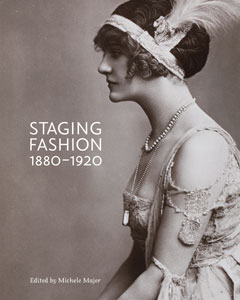
With everyone still mourning the demise of Bill’s Gay Nineties, fans of US theater of the early 1900s can gaze for one more week at the fashionable women who trod the boards way back then at the Bard Graduate Center’s show, Staging Fashion, 1880-1920.

Like the FIT’s Youthquake show, graduate students contributed heavily to this exhibition gem, which explores the intersection of theater and fashion back when stage actresses first became pop icons. Photographers needed celebrities to promote their studios; actresses needed to keep fans supplied with a steady flow of images; and designers wanted the latest to be seen on glamorous, trend-setting actresses.

The show on Bard’s top-floor gallery features clothes and images of three of the most popular actresses – Jane Hading, Lily Elsie, and Billie Burke. Check out the highlights – mass-produced postcards, theater fan magazines, advertisements, and personal testimonials for consumer products. Has pop culture really changed much? Judge for yourself.

Neue Gives the Met and MoMA a Run for Their Money

April 2 is the last opportunity to see for the spectacular array of riches acquired by Ronald S. Lauder and on glorious display in the 1914 rooms of the Neue Galerie as part of this establishment’s tenth anniversary.

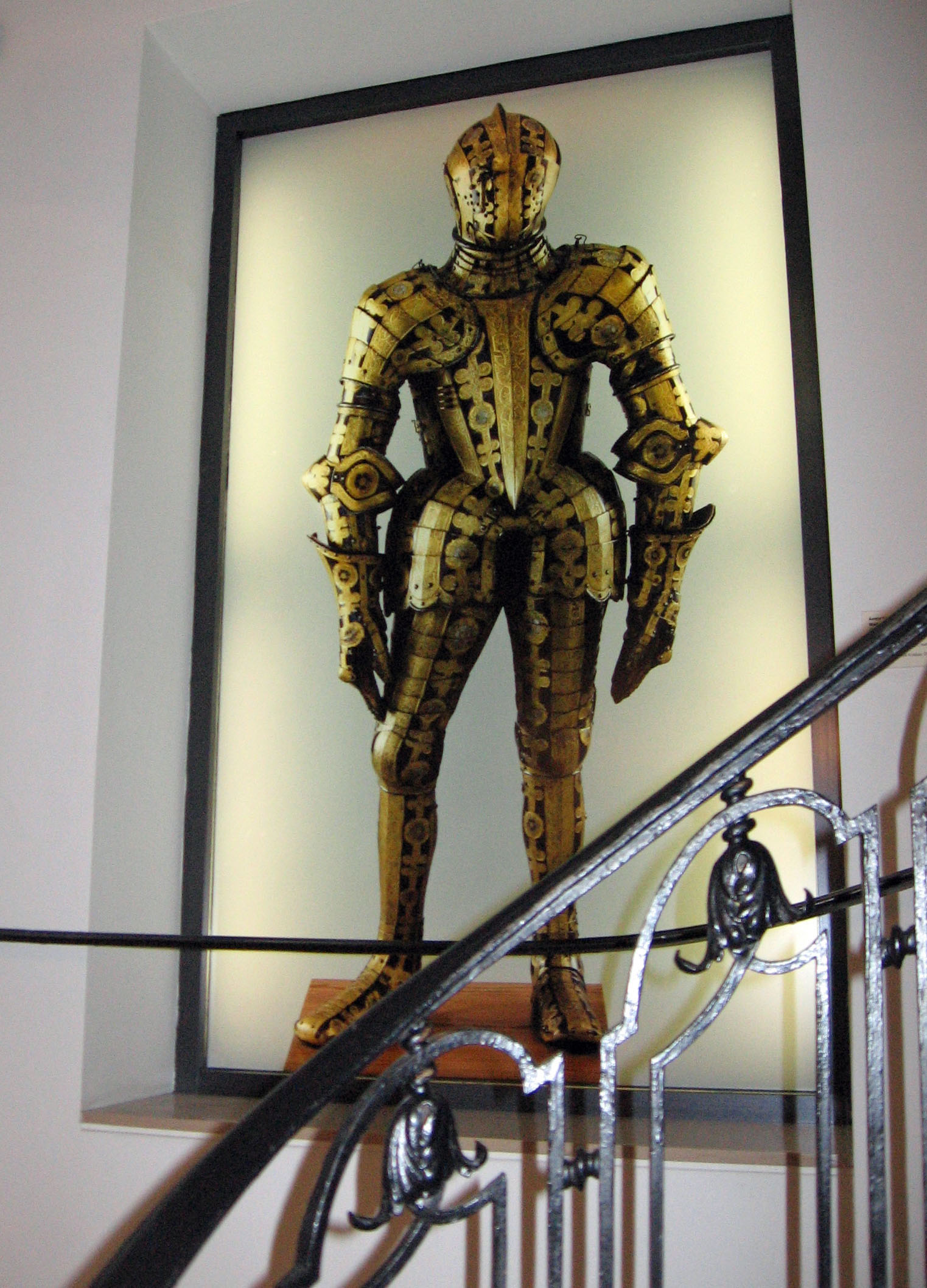
Did you ever think that you’d see a wall of Cezannes (including a self-portrait) gazing down at full-standing suits of Renaissance armor, inlaid pistols, a German crossbow, and two fully armored knights astride bedecked horse mannequins? You really don’t know where to look first, and neither, it appears, does Cezanne.

If you took the entire 5th Floor at MoMA and shrunk it down to fit the second and third stories of the Neue mansion, that’s what you get – incredible works by Picasso, Degas, Matisse, Kandinsky, Klimt, Shiele, and Brancusi alongside Adele and all the other Klimt favorites. Even Gerhard Richter and Sigmar Polke are there.

Wish you could see the Seurat show at MoMA? Or the Van Gogh drawing show that was at the Met? There’s an exquisite, dimly lit room packed with drawings that will make you feel that you’re right back at those historic exhibitions.

Take a look at the slides from the show, but try to get there now and enjoy the wealth. Bravo to Lauder.

Prehistoric Book Debuts

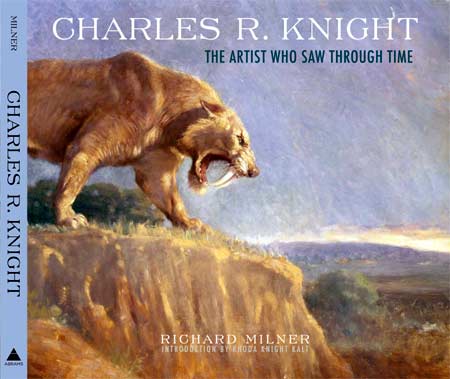
The art biography that the paleo community has been waiting for is here – Charles R. Knight: The Artist Who Saw Through Time. It’s about the artist who was the first to take us all into his time machine, back to the time of the cave people, saber-toothed cats, and the Cretaceous through his paintings and murals that we grew up with at the AMNH and Chicago’s Field Museum.

At this month’s New York Paleontological Society meeting, we got to meet his granddaughter Rhoda Knight Kalt and author Richard Milner, who provided stories, recollections, and art works of the 19th-century sculptor and painter. Milner took us back in time, reminding us that Knight (1874-1953) came of age when North America’s mammals (like Bison, which were down to 1,100 in 1889) and birds were being hunted into extinction – a call to arms that stuck with Knight throughout his life, as he painted over 800 species in his lifetime, giving priority to the most endangered first.

In addition to the murals at the AMNH and the numerous paintings gracing the halls, Knight also drew the Bison on the old $10 bill, the sculptures on the Bronx Zoo’s Heads & Horns house, and dinosaurs, dinosaurs, dinosaurs, inspired initially by a three-week visit with Cope.

Milner reminded us that in Knight’s day, there were no museum dioramas or 3-D dinosaur skeleton mounts — just a Brooklyn artist with a classical education with a love of animals and a commission from AMNH to create dramatic, convincing images based upon the boxes of bones in the basement.

P.S. We would be remiss if we didn’t tell you to check out Milner’s Broadway-oriented tribute to the life, times, and philosophy of Charles Darwin at The New York Times video site.

Hey, Hey It’s the ‘60s!

You have two more weeks to explore the fab, new tribute to the Mod, Mod world of 1960s fashion at FIT’s grad-student-curated exhibit Youthquake! The 1960s Fashion Revolution.

If you can’t make it to Seventh & 27th Street, check out the paper dresses, boutiques, and YouTube videos from the era, all posted on the exhibition web site. What’s better than watching original Paco Rabanne and Andre Courreges fashion movies from the late 60s, Grace Slick, and Ready, Steady, Go?

And what about the Youthquake timeline!!

Closes April 7, but it’s open until 8pm Tuesdays through Fridays.

Historic Performances at Historic Congregations

Did you know that some of the best performances are taking place this weekend at two of NYC’s most historic houses of worship?

  • The Queen’s Chamber Band & Choir gathers around the harpsichord to celebrate Bach’s Birthday tonight at 8pm at one of the oldest congregations in the City, the First Moravian Church at Lexington & 30th Street. Although the church building itself dates from 1849, the actual congregation dates back to 1748, when Johann Sebastian Bach (1685-1750) himself was still composing. Be sure to take a peek at the unusual and historic 1840s organ behind you in the loft. If you can’t make it in person, enjoy the Queen’s Chamber Band’s beautiful Bach on YouTube.
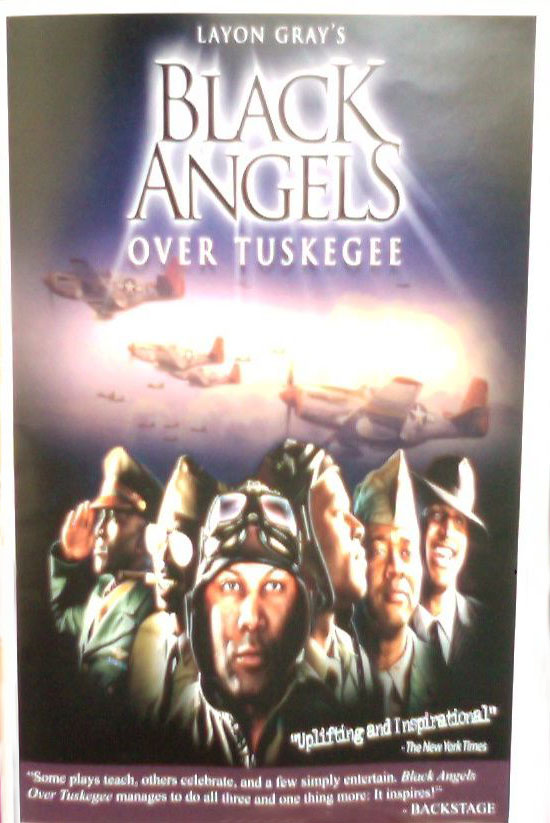
  • Although the Hell’s Kitchen synagogue was founded in 1917, when you walk through the doors of the Actors Temple at 339 West 47th Street, you’ll enter a 1923 national landmark frequented by the greats of vaudeville, nightclubs, and live TV. Personalities like Al Jolson, Jack Benny, Shelley Winters, Harpo Marx, and even Frank Sinatra. The space was designed to multitask as a house of worship, gathering space, and (can’t you guess?) a theater. Appearing every Saturday and Sunday you can catch the terrific ensemble of Laydon Gray’s Black Angels over Tuskegee, the gripping true-life tale of WWII’s first African-American fighter-pilot squadron (currently in its third year). Go see it and take a trip through history.  


MoMA’s Best-Ever Social Media Event

Always ahead of the curve, probably the most innovative, fun, addictive social-media experiment by a museum in New York has been created and curated by the Museum of Modern Art. Why is MoMA out-doing everyone else? Because MoMA’s social network is on paper!!!

If you’ve strolled through MoMA’s lobby lately, you’ll see the biggest crowds (after the admissions line) gawking at a wall where MoMA projects digital scans of some of the 18,000 slips of paper filled out by visitors, all beginning “I went to MoMA and…”.

And what greater tribute to the success of this two-dimensional throwback in a hyper-connected world: MoMA featured some of the best in its full-page print ad in this past week’s Museum supplement in The New York Times (yes, that’s the newsprint edition).

Hilarious, touching, artistic, inspirational, and everyone looking, reading, and enjoying — isn’t that what we want our social media to be? Check out the pieces of paper on line.


How Social is Your TV?

Are you watching TV with a second screen? Oh, c’mon, don’t tell me that you don’t have your computer or smartphone out while you’re watching Real Housewives or Top Chef. During Social Media Week, some big TV networks and social-media start-ups revealed their strategies for boosting the entertainment quotient of popular shows with live social media. Pretty smart:

Bravo’s Watch What Happens Live is the only TV show where the host (VP Andy Cohen) receives live Tweets from the viewing audience dishing about shows that have just aired in the previous time slot (like Tabitha Takes Over).

Bravo’s Real Housewives: Social Edition asks viewers to Tweet during the program, and then selects the best to actually display on the “social edition” (i.e. rebroadcast), which boosted encore viewership by 50% (check out the Tweet Tracker)

GetGlue, a social network with 2 million users, lets viewers talk about what they’re watching, reading, and listening to and earn stickers (or coupons) related to their favorites

USA Networks pioneered supplying games for viewers, but went one step further by launching the online real-time story-game Hashtag Killer that runs across Facebook, Twitter, and other platforms (check out the YouTube video of how it all works)

Questions:

  • What’s the right “recipe” for second screens?
  • When will there be a standard measurement of second-screen activity to accompany Neilsen eyeball measurement?

Last Look at Soon-to-Close Theater Museum

Friends enjoy reviewing the wall of 1900s showgirl cards, showing scantily clad actresses in “classical” garb

With Rick McDonald at the piano of the 1924 speakeasy, Bill’s Gay Nineties, last Thursday night, the crowd was singing, the joint was jammed, and dozens of hungry diners were climbing the stairs to sit in the gaslight glow of the second-floor dining room, packed with carefully preserved playbills, theater cards, and lithographs of the men and women who built the foundation of the American theater and founded the form that is American popular entertainment — George M. Cohan, Buffalo Bill Cody, Enrico Caruso, Tony Pastor. The list goes on and on.

This temple to theater, created in the 1920s by the original Bill’s wife, a former Ziegfeld girl, is about to close on March 24.

How fortunate that we met a master vaudevillian and Coney Island sideshowman, Todd Robbins, who (between a few tableside magic tricks) walked us through the history of the place, the legacy of the hundreds of show people gazing down on our dining table, and stories of how George Burns, Jack Benny, and the pantheon of American entertainers found solace around Bill’s piano (just like us) in decades past.

How comforting to be amongst other time-travelers in this unique and soon-to-be-gone living, breathing archive of the last 150 years of American entertainment. Take a walk around Bill’s with us. These Flickr photos are sometimes a little blurry and hard to make out, but they seem appropriately evocative for a room, history, and gathering spot that will soon be like the celebrities on these walls…fading but important memories of spectacular, vibrant nights spent singing and sharing the high points of the latest Broadway debut.

Where is Social Media Trending?

Our continued Social Media Week wrap-up summarizes the top consumer trends identified by Ann Mack, a professional trend-spotter with JWT North America:

Internet + smartphones + social media have turned information into a constantly updated stream that we take wherever we go. We’ve become hyper-documentarians:

  • We upload the equivalent of eight years of content every 24 hours.
  • Over 845 million people are now on Facebook uploading 250 million photos each day.
  • 200 million daily Tweets is the equivalent a 10-million page book every 24 hours.

The extreme social transparency that this flow generates is creating a type of social angst – the Fear of Missing Out (FOMO), which will likely increase.

Social networks will figure out ways to fine-tune our personal data and further customize ads, content, search results, and shopping choices that we see; however, some users will say things have gone too far and push back against personalization.

In the future, consumers may trend toward more random on-line experience…the way things used to be when we first “discovered” the Internet. It’s possible that some, especially Millennials, will unplug and just go back to connecting with pals face-to-face. On the other hand, more digital tools will be used as “butlers”.

In the meantime, brands might be able to tap into social-media users’ interest in “doing good”, collaborating, and being part of a bigger network. The challenge for marketers will be to figure out how to harness FOMO to drive spending while doing more social good.

Your thoughts? To be continued…

Social Media Week: What Happened?

The infographic designed by Dopamine says it all – over 1,000 events in 12 cities on five continents. But don’t let the stats fool you…New York City contributed over half the activity at Social Media Week worldwide…several hundred keynote, seminars, talk-backs, entrepreneur forums, and socials. I got to about 15 events over the five days.

Everyone’s asked me what it was like, so the bottom line is that it was exhilarating to find out how the best minds in advertising, publishing, brand management, creative enterprise, and finance were thinking about social media 2.0. Best of all, we met inside the most cutting-edge spaces in the City –Bloomberg, JWT, Hearst, and Quirky’s new digs at the High Line – watching the infographics and Twitter feeds streaming live.

But more than that was finding out what was trending…”second screen”, how marketing is migrating toward Facebook, the importance of “stories” in branding, new metrics to measure us, and FOMO (“Fear Of Missing Out”). We heard lots about Facebook, Twitter, and new platforms. I didn’t count many mentions of LinkedIn, but there was no mention of Google+ without a rolling of eyes or deep skepticism. If I had a nickel for every mention of Pinterest, we could all retire (PS: It began in the Midwest!).

I’ll be posting various summaries to explain what movers and shakers are thinking, starting with the following comments, insights, and questions by keynote speaker, David Eastman, CEO/Worldwide Digital Director of JWT:

  • Social media is a core disruption to “the Internet”
  • Facebook’s social platform has become “the Internet” for many people (like a new “Windows”)
  • Apple has turned iTunes into a “digital passport” linked to over 200M credit cards
  • Kindle is key to Amazon’s ploy to controlling the market (AMZN revenue will reach $100B soon)
  • Google has been more advertiser-focused, so it’s trying to catch up with Google+
  • Brands need to have conversations with customers via social media (just starting on Facebook)
  • Pressing “Like” is fine, but it’s important to understand what people truly care about

Eastman wants to know:

  • Is Pinterest turning us from active hunter-gatherers to passive “pasters and copiers”?
  • If geeks are the success stories of our time, are business plans the latest art form?

Discussion?To be continued…