Virtual NYC Museum Events – Women with a Message, Pop Shop History, and Toxic Titan

Gloria Steinem and Julie Taymor at Asia Society on Monday

So many virtual NYC museum events are happening online this week – an opportunity to meet amazing women, bring organization to your life, attend a premiere at The Met, and get the inside story on Saturn’s moon, Titan. Check the daily listings on our virtual events page to for these events and details on many, many others.

Today (January 25), at 6:30pm, you can join an exciting event at Asia Society – a conversation with Gloria Steinem and director Julie Taymor, followed by a panel of visionary activists discussing how visionary women are serving as agents of change as people in our world grows more interdependent.

Tuesday talk at Japan House

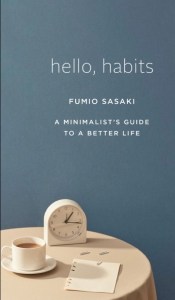
Is it time to pare down? Purge stuff? Feel more organized? On Tuesday (January 26), at 6pm, join Japan House to hear Fumio Sasaki talk about how to live a more ordered, fulfilling life – all included as part of the theme of his new book, Habit-Making: A Minimalist’s Tips for a Better Life.

At 7pm, enjoy The Met will debut a music and film collaboration on the life of Armenian-American abstract painter Arshile Gorky, who immigrated with his family in the early 20th century and influenced a generation of abstract expressionists. Watch the digital premiere of They Will Take My Island.

Curious about why Manhattan has such a big park in the center of the island?

Wednesday history of Central Park (NYHS)

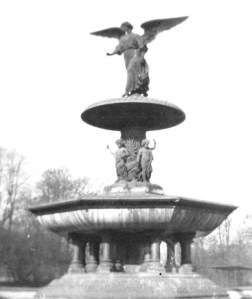
On Wednesday (January 27), at 3pm, hear the New-York Historical Society talk about the origins of Central Park. You’ll get to see what’s in the NYHS archive, view the plans for its design, see construction photos, and learn about the shocking removal of Seneca Village, a thriving African-American community.

At 6pm, you can learn about more recent history with the Brooklyn Museum. Amy Raffel will talk about her latest book on the legendary Keith Haring, how he created New York’s most popular memes, and what he sold in his famed downtown retail experiment, the Pop Shop.

Composite infrared image of Titan from NASA’s Cassini spacecraft. (University of Arizona/University of Idaho/NASA/JPL)

At 7pm, join planetary scientists at the Haden Planetarium at AMNH to examine Titan, Saturn’s large but toxic moon. Understand the questions scientists are trying to answer, and whether Earthlings have lessons to learn from their solar-system neighbor.

Love gardening?  Why is that? On Thursday (January 28), spend the morning at the New York Botanical Garden with UK psychiatrist-gardener Sue Stewart-Smith, who will share insights revealed in her book, The Well-Gardened Mind – how people’s minds and gardens interact.

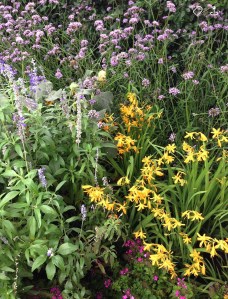
Gardens at the New York Botanical Garden

Get a perspective that you’ve never had before from people you’ve never met – participants in a ground-breaking filmmaking workshop. At 6:30pm on Thursday night, go behind the scenes at MoMA P.S.1 to meet the organizers of the workshop and watch films made by imprisoned artists in “Pens to Pictures” – a media showcase that accompanies P.S. 1’s art exhibition, Marking Time: Art in the Age of Mass Incarceration that critics at The New York Times said was one of 2020’s best.

At 8pm, join the New York Public Library to hear Amber Ruffin, one of the funniest women in late-night TV, and her sister Lacey Lamar compare notes on hilarious and harrowing experiences with racism in New York City and Nebraska – all drawn from their new bestseller, You’ll Never Believe What Happened to Lacey

Yes, it’s serious, but it’s also really, really funny.  Amber’s first African-American woman to write for a late-night network show, and if you’ve seen her with Seth Myers, you know what we’re talking about. Don’t miss this!

There’s a lot more, so check our complete schedule. Most of the events are free, but it’s always nice to add a thank-you donation.

Weekly NYC Virtual Museum Events on What Came Before

Recreation of Manhatta by the Welikea Project, presenting virtually with NYPL

On Tuesday November 10, New York museums and cultural institutions have packed the digital schedule with events that look to the past to inform our understanding of nature, the history of fake news, and the sometimes-forgotten participants in Veteran’s Day – the millions of WWII home-front workers:

At 1pm, the New York Public Library hosts a session with the ground-breaking Welikia Project, which recreates ecosystems that existed in New York City before Henry Hudson sailed into the harbor 400 years ago. The program will explain how the city’s current built environment syncs with the marshes, ponds, rivers, and hills that the Lenape knew so well.

“A Warning to Libellers”, an 1804 broadside attacking vice-president Burr. Collection: NYPL

At 6pm, the New-York Historical Society is taking the long look at the relationships between presidents and the press, going back to the time of the Founding Fathers, investigating how their surrogates spread fake news, and comparing then and now.

At 6pm, the Brooklyn Historical Society will take you behind the gates of the Brooklyn Navy Yard to present the stories and voices of everyday New Yorkers who kept up the riveting, launching, and maintenance of the Atlantic fleet during WWII.

1942 Brooklyn Navy Yard worker. Collection: Brooklyn Historical Society

Find the links to these and other museum events on our virtual events page here. Poster House is having all sorts of virtual get-togethers this week centered around its Chinese and Swiss poster shows, so look through our list. On other days of the week:

  • On Wednesday November 11 at 7:00pm, the Museum of the City of New York explores the history of celebrations in the city – parades, marches, and spontaneous outpourings of emotion on the streets.
  • On Thursday November 12, the Museum at FIT presents a conversation on sustainability in fashion at 6pm, and the International Center of Photography will present the five young photographers it commissioned to make work in response to the COVID crisis at 7pm.

    David Hockney, Self Portrait with Red Braces, 2003. © David Hockney. Photography by Richard Schmidt. Courtesy: The Morgan

  • On Friday at 3pm, there’s another chance to go on a virtual tour of the Morgan Library’s David Hockney portrait show.

Take a look and register for as many of the topics and events that you can fit into your schedule. Most of the events are free, but it’s always nice to add a thank-you donation.

Museum Updates

Last week, we dropped into the Metropolitan Museum to see if we could take a quick peek at the “rediscovered” painting in the Jacob Lawrence American Struggle series, but that didn’t happen, since the lines through the 20th-century wing stretched all the way back to the Rockefeller Wing. Anyone needing to get their Lawrence fix can see his historic Migration series on MoMA’s Fifth floor, and his WWII War Series in its own gallery at The Whitney.

Donald Judd installation at MoMA

Anyone needing to chill out in a clean, white space can have the Donald Judd show at MoMA all to themselves weekdays (MoMA is open 7 days a week).  We swung by last Thursday and found a peaceful garden, empty Matisse Swimming Pool room, and acres of space around Persistence of Memory. Get there now!

If you missed the Museum at FIT conversation last week on Native America Fashion with designer Korina Emmerich and Choctaw-Cherokee artist Jeffrey Gibson, who currently has a three-gallery exhibition in Brooklyn, the conversation is now posted here on the museum’s YouTube channel.

Virtual Visits with a Fashion Icon and Rock History

Poster Inspiration with Anna Sui at Poster House

There’s no fashion designer more rock-and-roll than Anna Sui, who will be (virtually) at Poster House tonight (October 19) to show posters from the Sixties and Seventies and explain how they’ve inspired her eye-popping, fun, funny, and magical runway looks.  Take a peek at our Flickr album of her retrospective this year at MAD Museum, and you’ll see what we’re talking about.

Poster House, New York’s newest museum, has one of the best line-ups of virtual events in the City, so get in on this special “Poster Inspiration” event with Anna tonight at 6:30pm. Tickets are only $5, so chip in a few dollars extra to keep their programming rolling.  This week, Poster house is also hosting “Lippert & Lowry: Fireside Chats” on Instagram (October 21) and a virtual tour of their fantastic poster archive on October 22.

Anna Sui channels Sixties Fillmore psychedelic in her MAD Museum show this year

Continue the rock-and-roll vibe with Thursday’s morning virtual tour of “Bill Graham and the Rock & Roll Revolution” by the New-York Historical Society (October 22). Revisit the legendary Fillmore East and West. Find the links to this and so many other great museum events on our virtual events page here.  Here’s a few:

  • A double header on Agnes Pelton’s show at the Whitney: On October 20, curator Barbara Haskell will answer your questions live, and she’ll be back on October 22 with the panel that had been postponed, “Seeing Agnes Pelton.”
  • On October 20, makers are invited to a panel at the Cooper-Hewitt on to learn how to launch a design project, which is part of National Design Month.
  • On October 23, the Met will host artist Dred Scott speaking about Jacob Lawrence.
  • On October 24, horticulturalists can get an insider’s look at the medieval gardens as the Fall season begins at the Met Cloisters.

    Gardens at the Met Cloisters

There are also more chances to catch the Morgan Library’s virtual tour of the Hockney show, a full line-up of paranormal goings on at the Merchant’s House Museum, and more tours at the Tenement Museum. Take a look and register for as many of the topics and events that you can fit into your schedule.

Most events are free, but an extra thank-you donation helps everyone, big and small.

Reopening Update

Just a reminder to fashion fans that the Met will soon open its much-delayed fashion extravaganza, which should have debuted the first Monday in May.  It’s coming and we’ll keep you posted about a virtual event the Met has planned to give everyone a preview.

Agnes Pelton’s Meditation Chamber at The Whitney

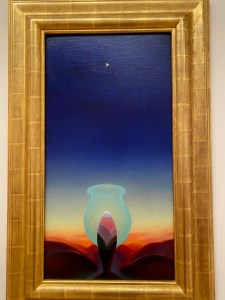
Agnes Pelton’s 1929 Star Gazer, suggesting rebirth in a desert landscape. Private collection.

Have you wanted to enter a light-filled, spiritual place and be transported to another realm? Get a ticket to the Whitney Museum of American Art enter the Agnes Pelton: Desert Transcendentalist, on view through November 1.

You’ll experience six decades of abstract paintings whose shapes fly, hover, and float above desert mountains and in deep space – another dimension that feels light, otherworldly, and pure. Take a look at our Flickr album.

She began developing her style in the early years of the 20th century when abstraction, the symbolic meaning of color, and spiritualism were being explored in the New York art world, and she took to heart what she read in Kandinsky’s influential 1910 treatise, On the Spiritual in Art.

1926 Meadowlark’s Song, Winter. Courtesy: Maurine St. Gaudens.

The exhibition opens with a figurative work in the style for which Agnes was first known to the New York art scene –  an ethereal artistic woman inhabiting a dreamy, semi-abstract, soft-colored landscape. Her work earned her inclusion in New York’s landmark 1913 Armory Show – the exhibition that introduced “modernism” to America – in Gallery D alongside other young American artists experimenting with bold color and abstraction.

But the Whitney exhibition (originally mounted by the Phoenix Art Museum) is actually focused on the next phase of Alice’s abstract work, which reflects her embrace of spiritualism, experience with New Mexico’s desert landscapes, and interaction with creative, like-minded thinkers in and around Taos in the Twenties. Although she often accepted commissions for portraits or landscapes throughout her life, she considered the abstract works the core of her artistic journey.

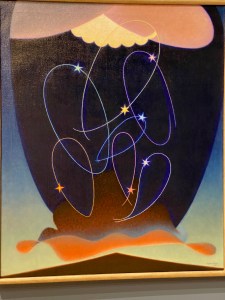
1934 Orbits. Courtesy: Oakland Museum.

Like her contemporary, Georgia O’Keeffe, Agnes found inspiration in the Southwest desert. However, Agnes had a different artistic approach, using color, natural form, and abstract shapes to lead viewers into another realm of consciousness that exists beyond the natural world.

Agnes’s journals and notebooks are filled with lessons from spiritual teachers and with sketches for paintings with notes on what the different forms and colors mean.

Visitors to the Whitney show move slowly, taking time to digest each canvas and to appreciate the artist’s care and thought. Swooping shapes, illuminated portals, and clusters of abstracted forms take center stage, posing questions, and leading you into another dimension.

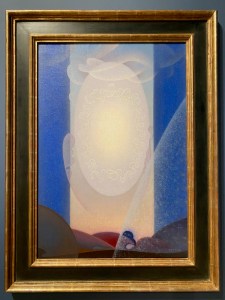
1947 Light Center, evoking one’s ability to transform. Private collection.

The center gallery features work done after Agnes moved to her desert home near Palm Springs in the Thirties, where she was transfixed by the quality of desert light.  She loved incorporating water and light into her works – two natural phenomenon that symbolize transformation and change.

The dark walls of the center gallery enhance the glowing nature of her spiritual canvases. Her technique is masterful, with layers of translucent washes applied to give the white ovals nearly a three-dimensional feel, like looking into the void of an Anish Kapoor sculpture, except that Agnes achieves the effect with simply a canvas.

Here’s a talk recorded last year at the Phoenix Art Museum in which Notre Dame professor Erika Doss explains Agnes Pelton’s spirituality and puts her work in the context of the modernist movement:

Reopening News

 The Whitney has just announced that the large outdoor public project on the Hudson waterfront by David Hammons will open this fall.  The other big announcement is that a one-year Biennial postponement will give artists and curators more time to view and prepare work that was put on hold by the shutdown. Read more about upcoming shows here.

At 7:00pm on October 20, Whitney curator Barbara Haskell will take your questions about Agnes in an online “Ask a Curator” event. Check our Virtual Museum Event page for all of the museum’s nearly daily virtual tours, talks, and walks on this and other exhibitions.

If you’re in New York, you can visit the Whitney five days each week, Thursday through Monday, with extended hours every Friday until 9:00pm. All exhibition spaces are open, including the magnificent collection show, which features mini-shows by Jacob Lawrence, Hopper, and Calder. Here’s our previous post about this fantastic exhibition.

Building a Retail Empire on Wearable Art

Vera’s 1950 silk “Fish Scroll” scarf, featured on the cover Harper’s

So many of the great female entrepreneurial success stories begin at the kitchen table, and the story currently being told by the Museum of Arts and Design (MAD) in Vera Paints a Scarf: The Art and Design of Vera Neumann, on view through January 26, is no exception.

Fashionistas today may be too young to remember when the American height of chic was to sport a scarf by Vera. Back in the Sixties and Seventies, Vera pretty much had a lock on the retail market for bold, colorful silk scarves through major department-store behemoths.

The exhibition is a tribute to a woman who took her love of painting, travel, nature, and culture to the wardrobe and accessory drawers of all fashionable American households, and ended up partnering with many top manufacturers to push her aesthetic and flare into mid-century modern homes.

Vera’s silk scarves, based upon watercolors, hung as art at MAD

Although her name is not well known by young people today, MAD’s exhibition is a fitting tribute to a woman who virtually invented the concept of “lifestyle” brand. It’s hard to believe that an aspiring artist born in Connecticut in 1907 would grow up and develop her company to pack such a punch in retail.

A graduate of Cooper Union and Traphagen in the 1920s, during the Depression, Vera and her husband set up a silkscreen on their little Manhattan kitchen table and began printing her paintings on surplus parachute silk. Within a few years, her beautiful silks were being retailed at B. Altman, Lord & Taylor, and other nice shops in the city. Her joyous prints were a success!

Vera’s 1960-1965 silk blouses with paintings of blue poppies and woodland images

Building her business through the war years, Vera took her first foray into fashion in the 1950s, creating tops and blouses that she came to market as “wearable art.” Rather than simply printing yards of repeating patterns, she went a step further – engineering prints in panels, so when pattern cutters and sewers assembled her shirts, her beautiful patters would strategically appear in the final product, enhancing cuffs, collars, edges, and hems.

Of course, everything was priced for the widest possible market, so a woman seeking a bit of fashion flair could buy a Vera without blowing her budget. She followed the art-plus-commerce philosophy – a Bauhaus innovation – and maximized accessibility of mid-century modern design by expanding into home textiles, tabletop accessories, and dishes.

1979 “The Birches” china dining set for Mikasa with matching tablecloth

As her business grew, Vera came to rely upon the next generation (Perry Ellis got his start with her) to keep the design development chugging along while she traveled to Asia and other parts of the world to feed the constant demand for new inspiration for her collections.

MAD has assembled a beautiful, loving exhibition of Vera’s output, showing how her original watercolor work made its way into her commercial ventures – scarves, clothes, and home décor. Perhaps most remarkable is that this powerhouse kept traveling, painting, and channeling joy into her textiles well into her eighties – an inspirational lesson in love of life, art, craft, and culture.

1971 “Northwest Coast” silk scarf

Thank you, Vera! Long may your prints wave!

And thank you to MAD for sharing Vera’s lifetime of creations and inspiring story!

See more photos of this wonderful exhibition in our Flickr album.

World-Class Design Inspired by Nature

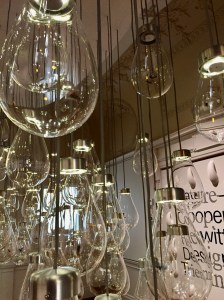
Mischer’Traxler’s Curiosity Cloud installation

Visitors are immediately drawn into front room of the Carnegie Mansion to enter a magical environment in which insects appear to be fluttering inside hand-blown glass bulbs in the entry to Nature: Cooper-Hewitt Design Triennial, on display through January 20.

But it’s actually artificial insects that are creating the commotion, programmed to activate as a visitor approaches – all replicas of extant and extinct species of New York State created by Austrian design team Mischer’Traxler.

This Curiosity Cloud installation serves as the introduction to an expansive show that presents how innovative designers are applying new technical solutions inspired by nature to architecture, agriculture, textiles, construction materials, and robotics.

In cooperation with the Cube Design Museum in Kerkrade, Netherlands, the show highlights the work of over 60 international design teams who explore biomimicry, new materials, and artificial intelligence as they create solutions to climate challenges and sustainability in the real world.

2019 Fantasma garment by design studio Another Farm from transgenetic glowing silk

Among the highlights, shown in our Flickr album – textiles printed by rain and pigment-producing microbes, a fruit tree grafted with dozens of fruit varieties, a biodegradable Michelin tire, a personal food computer, and a robotic bionic ant programmed to interact autonomously with other similar ants, just like they do in real life.

The showpiece on the second floor of the exhibition is the concept garment by design studio Another Farm from transgenetic glowing silk, manufactured by Kyoto’s Hosoo textile company. The silk was engineered by injecting DNA from bioluminescent coral into silkworm eggs and using it to create the fabric. Visitors used special glasses to see the other-worldly glow.

Another favorite is the Cosmic Web project by Kim Albrecht, based upon the scientific research on 24,000 galaxies. Take a look:

To spread the good work, the Cooper Hewitt and Cube are installing a portion of the show at the World Economic Forum in Davos, Switzerland in January, hoping to inspire global thinkers to look into the future of possibilities for a changing world.

Listen as one of the Cooper-Hewitt curators introduces the exhibition and hear contributing artists talk about their work in a video produced by ALL ARTS as part of the documentary series Climate Artists.

Drawing with the Patience of an Astronomer

1983 Star Field III drawing, graphite on acrylic ground on paper

She’s gone where no draftsman has gone before – up into the atmosphere, to distant galaxies, across the limitless sea, and into uninhabited expanses of desert.

Vija Celmins: To Fix the Image in Memory, the two-floor retrospective at the Met Breuer through January 12, presents five decades of exacting observation of the unknowable distilled into small graphite and charcoal drawings like nothing you’ve ever seen.

1969 drawing, graphite on acrylic ground on paper

The casual observer might mistake the works for photographs, since her goal has been precise replication of waves, stars, and other natural phenomenon. Close examination, however, reveals systematic build-up of marks and erasures that have all but eliminated gesture and other indications of personality.

The experience is incredible, showing how her early years as a Southern California artist – using photographs of the freeway and her earliest memories as a child growing up in WWII in Latvia – were the building blocks for the methods, patience, and artwork of her most acclaimed body of work.

Untitled (Night Sky #10) charcoal drawing, 1994-1995

The Met Bruer’s entire fourth floor is given over to selections from her series of meticulous drawings of the Pacific’s waves, early photos transmitted back from the Moon, the night sky as seen from the desert, and the Southwestern desert itself.

Occasionally she broke from graphite drawings to make an oil painting of the night sky, creating the deepest blacks she could to let the viewer get lost in the space.

To Fix the Image in Memory I-XI, eleven stones and eleven bronze “stones” and painted to resemble the originals, 1977-1982

Visitors’ favorites are the rock samples she collected from her desert journeys. Never one to shy away from the impossible, they are presented side-by-side to nearly identical painted bronze sculptures. Which one is the actual rock? You could stand in the gallery and listen all day to the quiet deliberations among her fans.

Take a look at some of our favorites on our Flickr site, and listen to the artist discussing it all:

Hilma af Klint and Innovations in Large-scale Abstractionist Art

“Adulthood,” from Group IV, the Ten Largest on stages of life,  developed in 1907 via mystical revelations during sceances.

Over a decade before Kandinsky and Malevich discovered the transcendence of non-objective painting, a spiritual thinker in Sweden was creating hundreds of giant abstract canvases, automatic drawings inspired by biomorphic shapes, and a series of squares that predated Albers by half a century.

Hilma af Klint: Paintings for the Future, the Guggenheim’s surprise blockbuster running through April 23, introduced the world to the glorious visions of a woman who believed that spirits were guiding her to create a temple laden with images that explored transcendentalism.

Armed with the best painterly education, Hilma soon abandoned her impressionist landscape leanings of the 1880s and by 1906, dedicated her life to channeling spiritual thought through references to biology, evolution, planetary discoveries, radio waves, and other scientific forms that were invisible to the eye.

1915 painting from Group IX/UV, The Dove, depicting planetary and astrological symbols

She began by creating large works representing big thoughts that she claimed were channeled to her by spirits via seances, but later developed a more personal style.

Take a look at Hilma’s work on our Flickr album. And listen to the audio tour of the show here.

And hear what the Guggenheim has to say about this remarkable, innovative, and otherwise unknown painter:

Photo-Science Pioneer Atkins Debuts Work in New York

Plate from Anna Atkins’ 1849-1850 Photographs of British Algae: Cyanotype Impressions.

The New York literary and art world have spoken: nearly 150 years after photography pioneer Anna Atkins faded into obscurity, her work is receiving the tribute it deserves in the NYPL’s Wachenheim Gallery off Fifth Avenue – gorgeous, hand-crafted compositions of ephemeral marine flora in hand-stitched volumes, using a untested, new technology.

Volumes of Anna Atkins’ Photographs of British Algae: Cyanotype Impressions, 1849-1850

Blue Prints: The Pioneering Photographs of Anna Atkins, on display through February 17, is a show that has it all – an artistic first, a publishing breakthrough, Victorian time travel back to Darwin’s day, and a resurrection story of a visionary woman rescued from history’s dustbin. Although this innovator was born in 1799, it’s the first full full-blown retrospective of her work.

The show centers on the achievements of a female amateur botanist, who came up with an ingenious method to use one of the latest technology breakthroughs to transform her specimen collection of British algae into the world’s first book illustrated entirely through photographs. It’s also the first scientific book illustrated that way.

In a day where smartphones have made image taking (and making) ubiquitous, Anna’s show takes you back to the time before photographs, where meticulously observed drawings, sketches, and a watercolor box were the only means available to record the floral wonders of the world.

Anna’s 1823 spondylus shell illustrations

As a talented young artist, her scientist father commissioned her to illustrate his translations of Lamarck.

In 1842, Anna heard about a family friend’s accidental discovery of cyanotypes – basically blueprint technique – and she had a brainstorm. Instead of making drawings of plants that would require tedious hours of replications by hand, maybe the new technique could let the sun do the work.

She treated paper with a mix of chemicals, arranged her botanical specimens on top, and exposed it to the sun.

1860s printing frame with prepared cyanotype paper and specimen

The photographic impressions were incredible – detailed and beautiful. The task of documenting her collection of complex, seaside plants now didn’t seem so overwhelming.

Although this is a tiny show, the gallery experience delivers quite an aesthetic impact  – rows of rare prints in blazing blue, delicate images of marine plants that compel close study, and exquisite hand-stitched bindings on multiple volumes, lovingly created for family and friends. It’s a maker tour de force.

In her day, Photographs of British Algae: Cyanotype Impressions was considered a triumph of technology, art, and science.

From an artistic perspective, you simply can’t stop admiring Anna’s work. Seaside stuff simply never looked this good. Take a look at our Flickr album.

Volume III of Anna Atkins’ 1853 publication

Most of the gorgeous books and artworks in the show have been acquired by NYPL. The curators have added a range of other items to put Anna’s achievement in context – early herbariums, Anna’s own watercolors, a frame used for making cyanotypes, and Henry Talbot Fox’s first book promoting all the ways that his “photographic drawing” invention could be applied.

To drive the last point home, the curators included a 1839 magazine that wrote about Talbot’s invention. But upon closer inspection, there’s something quite curious: No one had yet figured out how to use photographs as publication illustrations, so the magazine commissioned a woodcut to replicate what a “photographic drawing” looked like!!

Album of 74 artistic cyanotypes created in 1861 by Anna Atkins and her friend, Anne Dixon

Anna’s cyanotype techniques allow her pages to still dazzle 175 years after they were made, compared to other early photo techniques whose images have faded and remain barely visible to the modern eye.

Later in life, Anna collaborated with her childhood friend on artistic arrangements of botanical specimens that went way beyond algae.

The show is dazzling and should serve as an inspiration to anyone with a passion, a collection, and the creativity and drive to take a personal project and see it through to the end.

Walk through the show with our Flickr album.

Statues Converse in “Like Life” at Met Breuer

Two “ballerinas” — a costumed 1880 Degas bronze and a clothed 2007 mannequin by Yinka Shonibare. Collection: The Met and private.

Can statues talk to one another? If you visit the Met Breuer’s exhibition, Like Life: Sculpture, Color, and the Body (1300 – Now) before July 22, you’ll find out. The 120 sculptures on display across two floors are having some pretty major conversations among themselves.

For starters, just witness the dialog between everyone’s favorite, the dressed bronze Degas ballerina, and Yinka Shonibare’s little girl statue who mimics the ballerina’s pose with a gun hidden behind her back.

Or the “conversation” between modern installations, such as the hyper-real day-in-the-life illusions by Duane Hanson, and the Renaissance statues evoking a more classical human “ideal”.

Is “white” better than color? Does one statue appear more “noble” than other? Do you “like” one better than another? The questions in your head keep flowing as you make your way around corners and bump into other provocative pairings.

Duane Hanson’s 1984 bronze, “Housepainter II.” Private collection

In the galleries devoted to the “presumption of white” theme, you will see and experience what happens when classicists decided apply colored wax to otherwise “white” statues’ to create a more “real” illusion. Does it work?

Witness John Gibson’s 1850s “Tinted Venus.” Victorian audiences were shocked that it looked like a “naked lady” and not like the popular, idealized goddess.

Will this show be the first time you encounter the contemporary life-size Jeff Koons porcelain of Michael Jackson and his pet primate, Bubbles? If so, it will probably stop you in your tracks. It’s right next to an 18th-century painted plaster experiment by Canova. Just what is it about this pairing that seems so “off”?

1894 marble sculpture of Louise Gould by Saint-Gaudens with wax version commissioned to “bring her back to life”. Private collection.

The show pulls from a wide range of collections within the Met – contemporary, European, and the Cloisters – and beyond. It’s all designed to pull art out of its historical context, ask questions, and encourage you to look at historical sculpture in a new way.

What happens when Medieval sculptures of the saints become overtly muscle-bound? How do artists incorporate clothes, hair, and real human teeth to give their creations a different form of life? How to contemporary artists riff on ancient forms to start a new conversation?

1989 reproduction of 1765 mechanized “Sleeping Beauty”. From Madame Tussaud’s, London.

Look at some intriguing selections from the show in our Flickr album.

The Met has convinced other museums to contributed show-stoppers that normally don’t travel – a costumed 18th-century bullfighter from Spain, an eerie 16th-century Florentine “Saracen” mannequin used for jousting, and a highly disturbing life-sized sculpture of 19th-century UK philosopher Jeremy Bentham, which contains his actual body.

The other floor explores “proxies” for the human body, such as life-size mannequins and sometimes creepy artist “dolls.” Sculpting in wax is a tried and true artist technique that gives the appearance of flesh.

Examine the light-breathing mechanized wax beauty from Madame Tussaud’s of London, and the bust of Mrs. Gould that Saint-Gaudens crafted for her bereaved husband so that he could pretend that she was still there.

The journey through the show evokes a range of genuine emotion, strange attraction, and shock, just as the artists intended.

Listen as the curators provide a brief tour of the exhibition: