Thin, Rich, and MAD Embrace of the Middle East

Martin Munkácsi photo of Doris in an ensemble that is in the exhibition. Source: Doris Duke Charitable Foundation Historical Archives, Duke University.

Martin Munkácsi photo of Doris in an ensemble that is in the exhibition. Source: Doris Duke Charitable Foundation Historical Archives, Duke University.

Walking into MAD’s soon-to-close exhibit, Doris Duke’s Shangri La: Architecture, Landscape, and Islamic Art, what do you see? An architect’s model of a small palace by the sea, dazzling objects that adorned it, exotic loungewear inspired by faraway ports of call, Vogue-worthy jewelry, and photographs of a young socialite/philanthropist consulting with master craftsmen in busy Iranian and Moroccan workshops off the world’s most ancient streets.

As you examine these bits and pieces of Shangri La and its history, there’s a single vision that emerges – a portrait of a woman who knew about light, color, beauty, form, design, artistry, history, and had the vision, passion, and resources to put it all together in a way that any interior designer, fashionista, curator, and global traveler would envy.

Here’s the story line: In 1935, Doris Duke fell in love, went on a round-the-world honeymoon with James Cromwell, and fell in love again – with the exotic sights, sounds, patterns, textures, and artisanal wonders of the Middle East. Followed everywhere by reporters, she and James sojourned for months through Palestine, Jordan, Egypt, and the Indian subcontinent, marveling at the dazzling historic architecture, sinuous designs, luxurious carpets, lattice metalwork, colorful tile, and bejeweled ornament.

Tim Street-Porter’s photo of Doris’s dining room at Shangri La (2011) Source: DDFIA

Tim Street-Porter’s photo of Doris’s dining room at Shangri La (2011) Source: DDFIA

She just had to have it, and when she and James landed in Hawaii, she knew that no home in Palm Beach was going to cut it. They bought an ocean-view lot on the Big Island and began constructing a dream house. Her architects hewed to her vision — to create a seaside home into a tribute to the Islamic architecture and design that thrilled her imagination.

They brought artists and designers in from Iran, Syria, India, and Morocco to work on the home, and Doris herself traveled went back to check on progress in the home-country workshops and buy more. Eventually, she amassed one of the largest private collections of Islamic art in the world. Peruse her collecting timeline.

The actual home (now christened Doris Duke Foundation for Islamic Art) is now open to the public. Take time to explore Shangri La on the virtual tour. It hosts not only a 2,500-item collection, but thought-provoking installations by contemporary artists. (So does the show.) Here’s a video of artist Shahzia Sikander sharing what it felt like to project her light installations on this magical dream house.

For more history, watch the curators’ video. Doris’s vision, taste, and style will be on view at MAD for a few more days, then tour museums across the country.

You’ll never walk through the Islamic Wing at The Met again without thinking, “What would Doris do with this?”
What Seinfeld Ate for Lunch

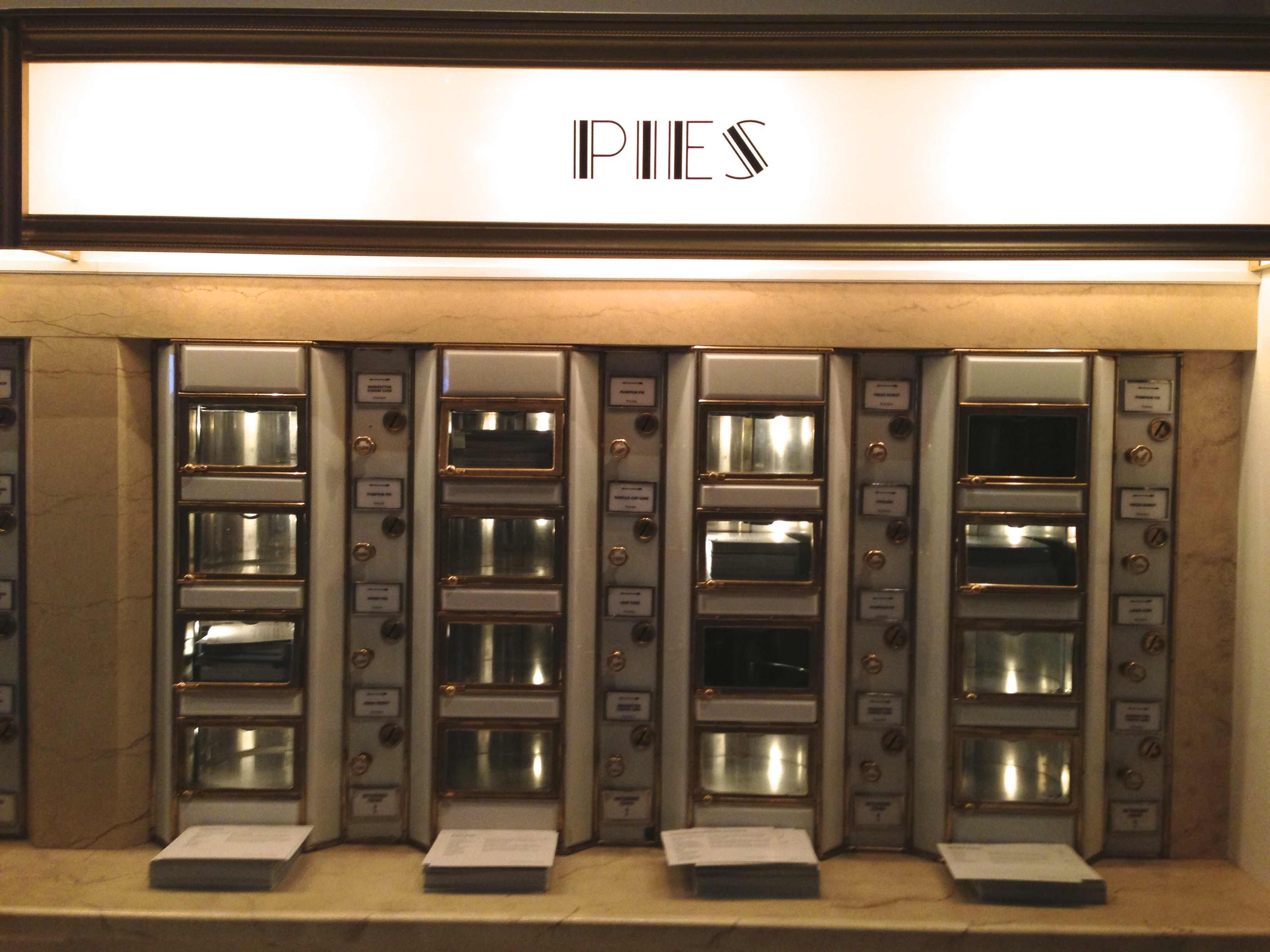
Installation view of the pie section of the historic Automat

Installation view of the pie section of the historic Automat

If you’re a New Yorker, you eat the same stuff – Chinese take out, sushi, hero sandwiches, and the occasional power lunch. So, where did it come from? How long have these New York traditions been going on? Did you know that take-out began in 1976?

Get to see the New York Public Library’s walk-through of culinary history at Lunch Hour NYC. As soon as you enter, you see a reproduction of the oyster carts that fed millions of working New Yorkers in the early 1800s, when these small bites were so plentiful in our waters that entrepreneurs made fortunes shipping them to Paris and London.

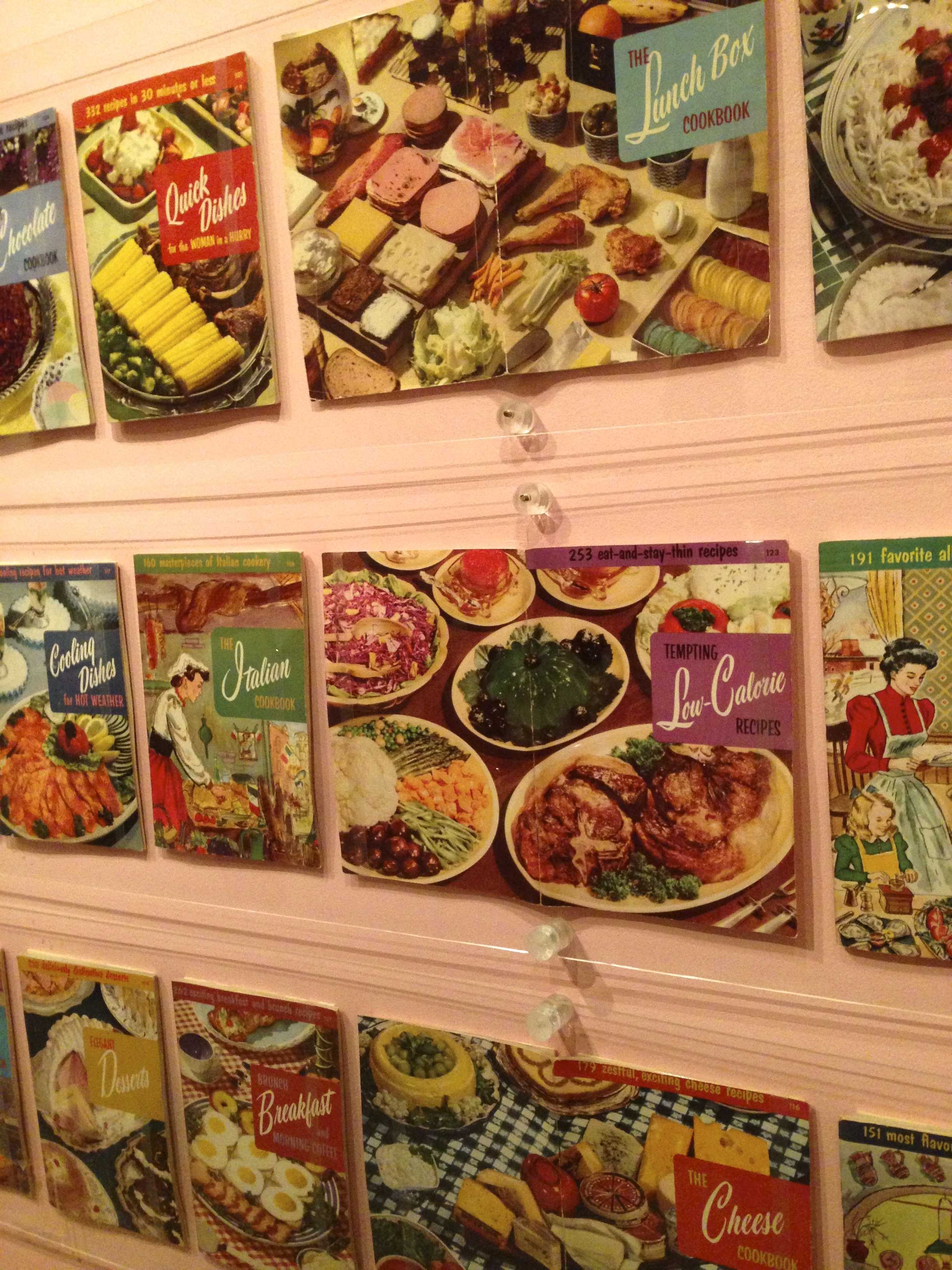
Recipes for 1960s homemakers

Installation view of homemaker recipes

You’ll also see tribute paid to the ubiquitous Chinese take-out bike, learn that pretzels have been sold on street corners for 150 years, and meet the creator of the stainless steel hot dog cart, Ed Beller. Listen to his story yourself.

Of course, the genuine star of the show is the Automat wall. You not only get a glimpse of the original doors, but you can go around behind the scenes and see where workers put in the fresh creamed spinach, baked beans, beef with burgundy sauce, and pie. People tend to linger in this section of the show, watching videos of Marlo Thomas in That Girl, a career girl without a lot of cash eyeing the yummier selections chosen by more successful types – a theme that’s also echoed in the clips from other movies, too.

Nostalgia lovers will be delighted to see a vintage Frigidere, a wall full of lunch boxes, and an array of 1950s and 1960s homemaker recipe booklets, and to learn that dieting crazes go back for decades. (Favorite: the article “Nice People Don’t Eat” from a 1941 Ladies Home Journal.) There’s also a 1940s Betty Crocker book with open to an article that any New Yorker would find comforting:  “Meals at Odd Hours.” Watch the NYPL’s lively video promo:

Get a close-up look with these photos on Flickr.

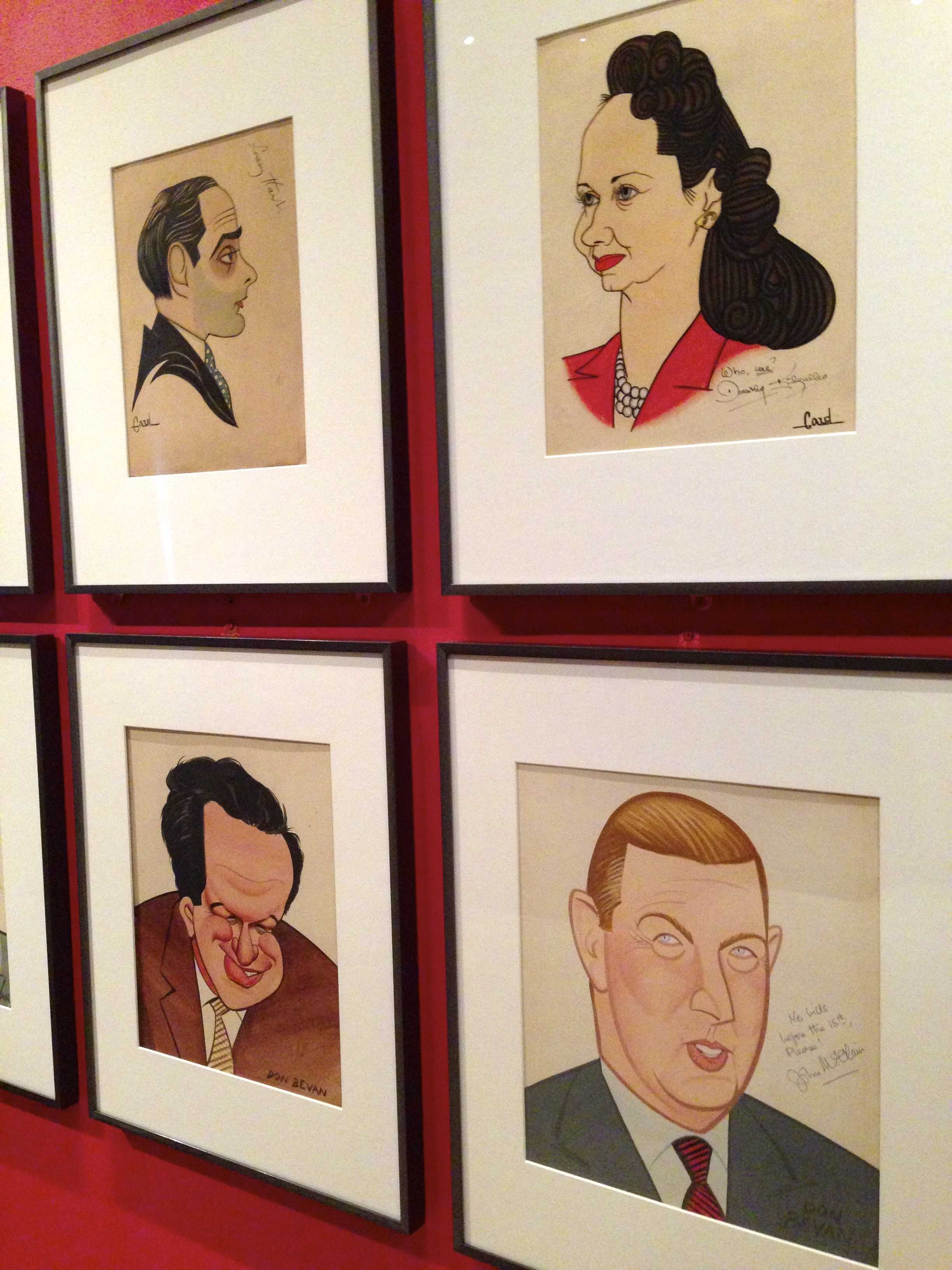
Installation view of Alex Gard’s portraits at Sardi’s – Lorenz Hart, Dorothy Kilgallen, Al Capp, and John McClain. Collection: NYPL

Installation view of Alex Gard’s portraits at Sardi’s – Lorenz Hart, Dorothy Kilgallen, Al Capp, and John McClain. Collection: NYPL

NYPL has a terrific Automat-themed website, filled with revelations. Go read about how cafeterias began in 1898 at 130 Broadway, how peanut butter began in 1900, how Alex Gard did all those portraits at Sardi’s in exchange for dinners on a regular basis, and how NYPL needs volunteers to transcribe its collection of historic menus.  (Go sign up.)

Is David Roentgen the 18th Century Steve Jobs?

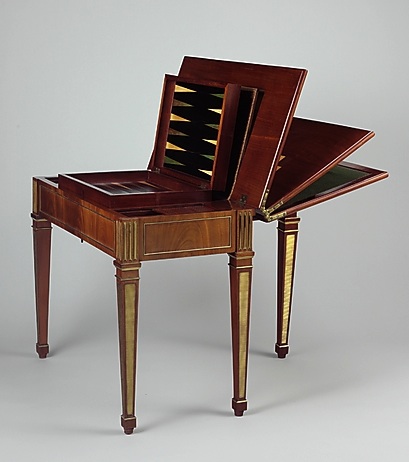
David Roentgen’s Game Table (ca. 1780–83). Oak, walnut, veneered with mahogany, maple, stained maple, holly, stained holly; felt; leather, partially tooled and gilded; iron and steel fittings; brass and gilt bronze mounts. Source: Metropolitan Museum, Pfeiffer Fund, 2007.

David Roentgen’s Game Table (ca. 1780–83). Oak, walnut, veneered with mahogany, maple, stained maple, holly, stained holly; felt; leather, partially tooled and gilded; iron and steel fittings; brass and gilt bronze mounts. Source: Metropolitan Museum, Pfeiffer Fund, 2007.

Even if David Roentgen didn’t produce for the mass-market, he certainly seemed to have written Steve’s playbook  — wow them with innovative design, refined surfaces, exacting craftsmanship, playful art, and sophisticated multimedia integration. Oh, and if that’s not enough, why not make it passkey protected and portable, too? Like Steve, David knew how to turn engineering into art and ka-ching.

Experience out-of-the-box design innovation in the closing week of the Metropolitan Museum’s unforgettable show, Extravagant Inventions, Princely Furniture of the Roentgens. The beauty of the marquetry and fittings on the displayed desks, sofas, clocks, commodes, and rolltop desks would be enough, even if they simply occupied a quiet corner of a drawing room or boudoir.

But if an 18th-century king, queen, or royal saw them in action – revealing hidden apps for writing, reading, drawing, music, games, curios, and hiding the desktop – there was no turning back. The mechanical furniture was so desirable that wealthy trend-setters just had to have it (like iPads).

What social-minded gamer could resist Roentgen’s 1780s Game Table if they saw David’s demo?

The desire to own and show off the most up-to-date artistic engineering marvel had royals running for their strongboxes to put down deposits on anything Roentgen could produce. In fact, the Met tells us that the Berlin Secretary Cabinet, the star of the show, is probably the most expensive piece of furniture ever produced. And we can’t even begin to discuss robot Marie Antoinette playing the dulcimer, or the clocks that turn into orchestras.

When the French Revolution put an end to sales at Versailles, Roentgen cut out the curliques, tailored the outer design to a sleeker look, and shifted his retail operations to Russia. Catherine and her court bought the newer stuff by the cartload.

The Met has an entire YouTube playlist devoted to these 18th century wonders, and you really should peruse them all. Get to the show in the final week and see what another style and multimedia-obsessed generation spent their money on.

And lest it slipped your mind, Steve and Woz’s first Apple 1 computer was assembled within a wooden case. Maybe it’s good that David and his engineering/sales team weren’t around to critique it.

Sparkle Plenty, Move Over Manet

Installation view of Mickalene Thomas's Les Dejeuner sur l’herb Les Trois Femmes Noires, 2010.

Installation view of Mickalene Thomas’s Les Dejeuner sur l’herb Les Trois Femmes Noires, 2010.

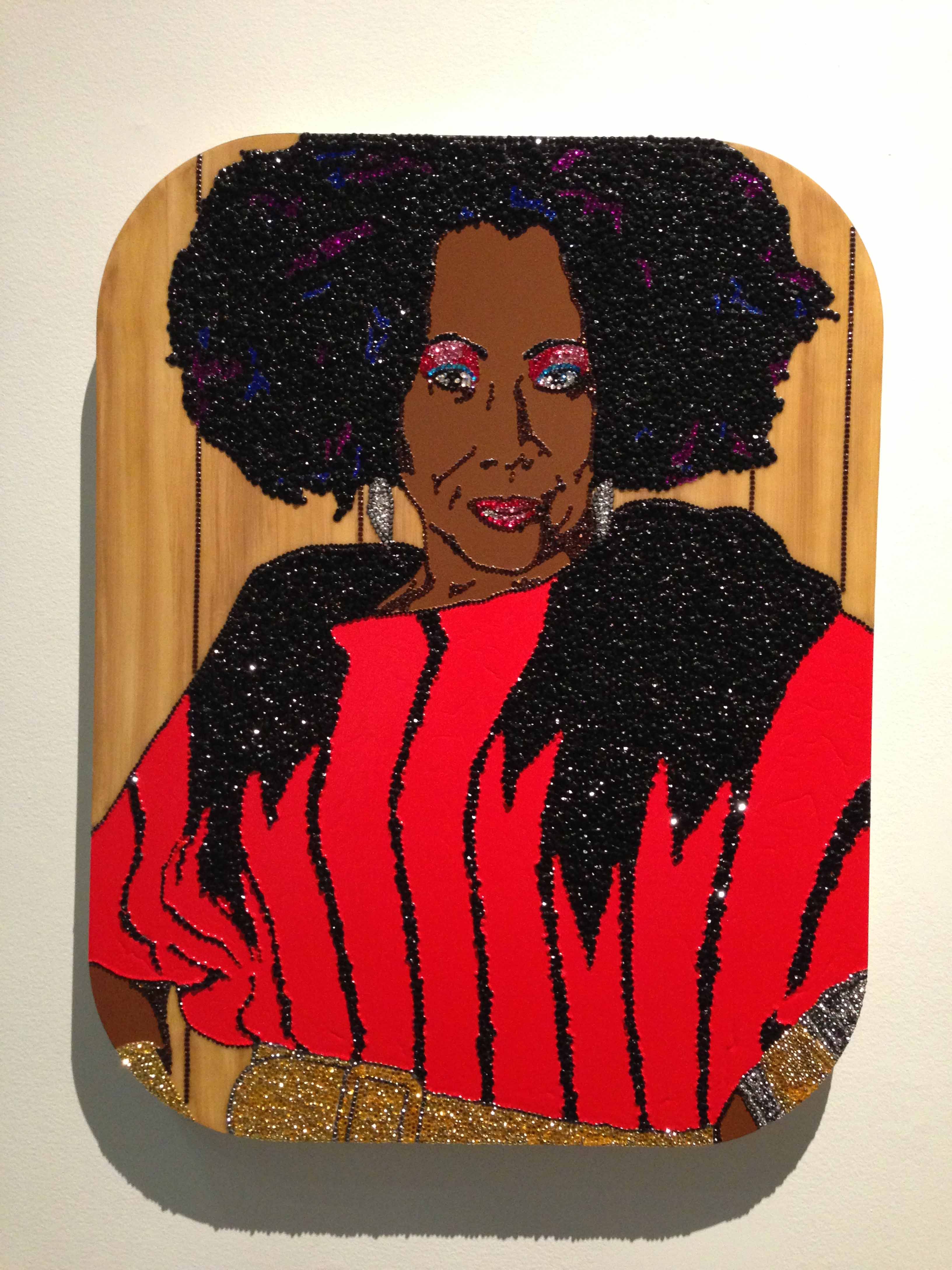
It’s large-scale, monumental painting of beautiful women languishing amidst patterned profusion, but it’s not Manet or Monet. Unlike MoMA’s modern masters, you’re encountering Afro-wearing, rhinestone-studded Black lovelies with an ambiance of the 1970s and Blaxploitation about them.

It’s all the work of Mickalene Thomas (originally from Camden, New Jersey, and now Brooklyn) in the grand show, Mickalene Thomas: Origin of the Universe, mounted first by the Santa Monica Museum of Art and now expanded by the Brooklyn Museum.

Thomas uses an encyclopedic knowledge of art history and museum-world references to tease viewers to reflect on how her fancy, sparkly ladies are equally worthy of fine-art treatment as any ruffed Dutch gal from the 1600s or French odalisque.

Installation view of part of Mickalene Thomas's depiction of her mother: "Ain’t I Woman, Sandra," 2009. Rhinestones, acrylic paint, and oil enamel on wood panel. DVD and framed monitor; rhinestones, acrylic paint, and enamel on wood.

Installation view of part of Mickalene Thomas’s depiction of her mother: Ain’t I Woman, Sandra, 2009. Rhinestones, acrylic paint, and oil enamel on wood panel. DVD and framed monitor; rhinestones, acrylic paint, and enamel on wood.

Enamored of slightly vintage interior decor magazines, Thomas constructs settings in her studio corner and photographs her subjects dressed in 70s prints laying on 70s sofas in wood-paneled rooms. Later she turns these into paintings merged with old photos, faux wood paneling, and Photoshop fracturing on a large scale. Check out the Flickr gallery.

On every visit, crowds gather in the back video gallery to hear her mother tell the story of how she changed her ways from a drug-addicted girl to a clean and sober, meditation-minded fine-art model for her brilliant, fantastically creative daughter. She’s a stunning model.

See these large-scale works in person this week. Otherwise, catch her work at ICA in Boston through April.

For more, listen in on this discussion between Mickalene Thomas and Carrie Mae Weems. It’s a great insight to how an established artist inspires an emerging artist to forget about law school and do great things in the art world.

Cage’s Zen Den at the Academy

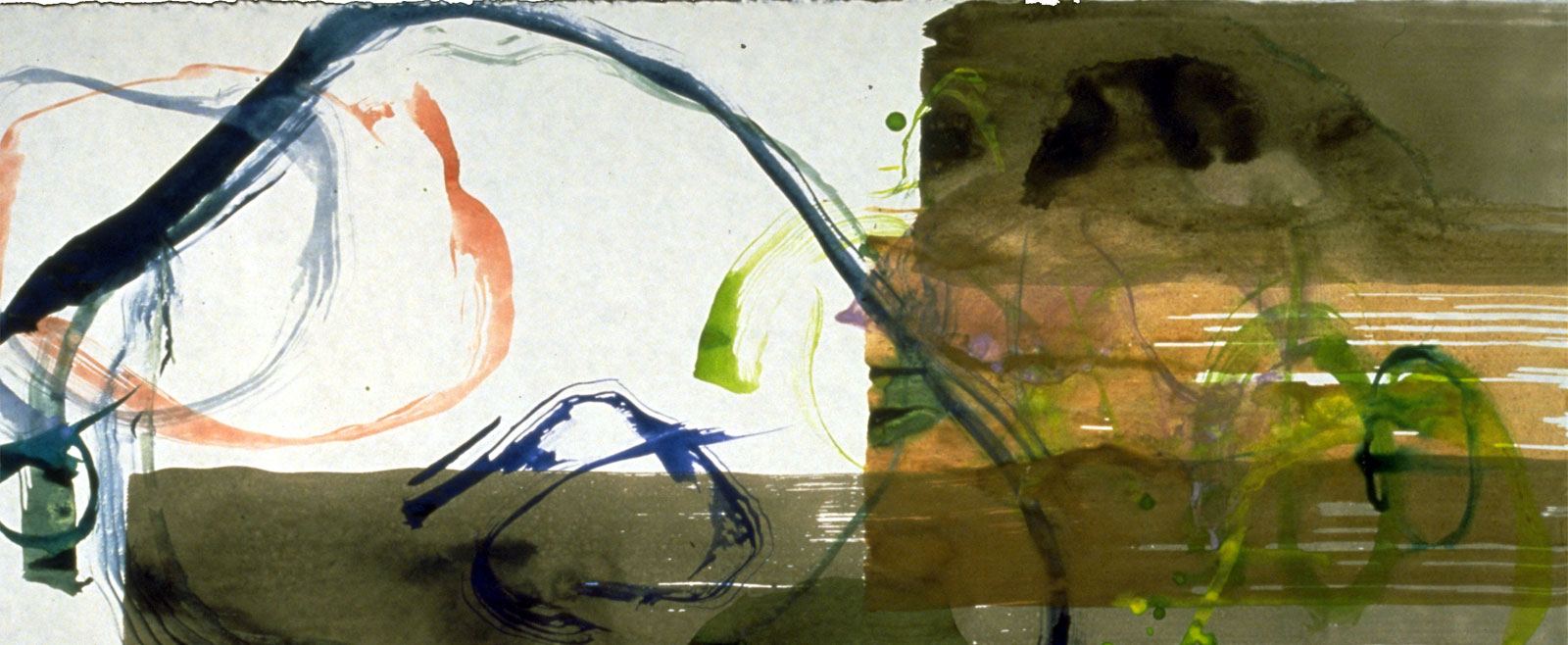
Cage's New River Watercolor Series I on parchment paper. Courtesy: Mountain Lake Workshop

Cage’s New River Watercolor Series I on parchment paper. Courtesy: Mountain Lake Workshop

Take one of the most controversial composers of the 20th century, give him some watercolors, drop him at the foot of the Blue Ridge Mountains, and leave everything to chance. See what happens.

You’ll see the results at the National Academy Museum’s John Cage: The Sight of Silence show this weekend. Back in 1988, Cage was the artist in residence at the Mountain Lake Workshop in Blacksburg, Virginia. He spent his time making a series of watercolors inspired by his trip to a Zen garden and temple in Kyoto, where he saw stones floating on a field of raked gravel.

Cage, whose lifelong interest in using chance (via the I Ching) to select and structure his musical compositions, decided to apply the same principles to watercolors, drawings, and prints. He customized some large-scale brushes that he could drag across wet paper like rakes, picked up feathers, and collected stones from the New River.

The brush, paper wetting, colors, stones, and actions are all determined by chance to stunning effect. Watch the artist at work and hear him talk about his process here:

Now see the results at the Academy and witness pure Zen.

3D Cave Art Revealed at NYU

Left Hand of Maitreya, Buddha of the Future, Holding the Looped End of His Robe
Xiangtangshan: Northern Group of Caves, North Cave, south face altar of central pillar, 550-559 ce., limestone. Source:
Asian Art Museum of San Francisco, Transfer from the Fine Arts Museum of San Francisco

Left Hand of Maitreya, Buddha of the Future, Holding the Looped End of His Robe
Xiangtangshan: Northern Group of Caves, North Cave, south face altar of central pillar, 550-559 ce., limestone. Source:
Asian Art Museum of San Francisco, Transfer from the Fine Arts Museum of San Francisco

The exhibition closing today on 84th Street isn’t about Herzog’s 12,000-year old French cave art, but about truly monumental art that has been largely unknown in the West until the University of Chicago unveiled a truly spectacular achievement – the digital recreation of a Sixth Century Buddhist cave temple destroyed in the 20th century by vandals selling to the international Asian art market.

Echoes of the Past: The Buddhist Cable Temples of Xiangtangshan was brought here by NYU’s Institute for the Study of the Ancient World after the show’s run at the Sackler in Washington.

The story of this cave temple’s recreation began when the University of Chicago started asking what happened to all the stuff from the vandalized cave temples that were originally built as hostels for wandering Buddhist monks in the Fourth Century in Northern China along the old East-West trade routes. UC ultimately identified about 100 statue fragments in museums and collections all over the world.

Take a look at the cave temples today and the techniques used by the University to bring an amazing collection back together in virtual reality:

At NYU, you first immerse yourself in the Digital Cave and then enter the elegant gallery to see the works themselves – holy men, heads and hands of Bodhisattvas, and little monsters all gathered from collections from Penn, the Met, the V&A, the Nelson-Atkins of Kansas City, and the Asia Art Museum of San Francisco. Check out the highlights on line.

Ivy Style or Gangnam Style?

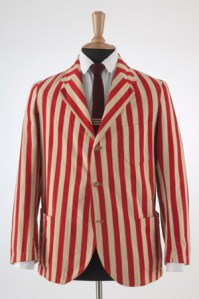
Red and white cotton flannel blazer, c.1928. Museum at FIT purchase.

Red and white cotton flannel blazer, c.1928. Museum at FIT purchase.

It’s hard to remember a time without Gangnam Style, but it’s even harder to remember before there was Ivy (as in Preppie) Style. There’s just a few more days to trek to The Museum at FIT for its revealing show on the roots of American menswear, Ivy Style.

Sure, the show is peppered with references and examples of the current Kings of Prep –Lauren, Hilfiger, and (prep with a twist) Thom Browne. But the real eye-opener here is the manner in which the curators journey back in time to show you how something so familiar today was once so radical – how “Ivy” got its name in 1876, how students set the sportswear trends before WWI, and the debut of the now-forgotten (but influential) “beer suits” at Princeton in 1912.

It’s also startling to learn that Brooks Brothers industrialized wardrobes as far back as 1818, and that J. Press “owned” the market for natural-shoulder jackets for pretty much the entire 20th Century.

1937 illustration of college men’s fashions from FIT Library and Archives.

1937 illustration of college men’s fashions from FIT Library and Archives.

Thankfully, FIT has packed enormous amounts of menswear history on its special exhibition web site, so work your way through it and mine it for your own favorite tidbits (e.g. origins of saddle shoes, polo coats, and blazers).

Favorite factoid: In 1931, the average college student spent 51% more on clothes than the average man-on-the-street – a college trend that kept going right through the Great Depression. So, maybe it’s like Gangnam Style, after all? Psy sports it too, you know.

If you can’t get to the show in the next few days, take the virtual walkthrough with the Richard Press, the former President of J. Press, who interprets the who, what, why, and when of menswear history (including the roots of the most memorable scene in Animal House). Don’t ask, just watch:

Mayans Dispute 2012 Ending

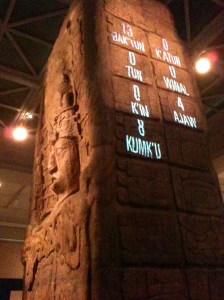
Illumination translates glyphs into numbers on stele, marking the end of the Long Count cycle on December 29, 775 CE

Illumination translates glyphs into numbers on stele, marking the end of the Long Count cycle on December 29, 775 CE

One of the best things about the Penn Museum’s “Maya 2012: Lord of Time” exhibition is the manner in which the curators meld the ancient, the mathematical, the historic, and the modern to answer the question “Will the world end at the end of the Mayan Long Count calendar in December 2012?”

The exhibition is built around the spectacular work that Penn’s archeological teams have done for decades in Copan, an ancient Mayan city located in today’s Honduras not far from the Guatemalan border – excavating tombs, uncovering clues to the succession of rulers, and figuring out exactly what all the once-cryptic hieroglyphics tell us. Check out the Flickr photos.

It turns out that the rulers kept a tight rein on the calendar, astronomic phenomenon, and various time-counting cycles to assert their right to rule. As some of the most spectacular stele show, the stone monuments actually enabled kings to embody dates, such as October 21, 731 (Copan Stele A).

Censor lid depicting founder of the Copan dynasty (695 CE)

Censor lid depicting founder of the Copan dynasty (695 CE)

The towering Quirigua Stele C from Guatemala associates the ruler with December 29, 775, the last time that the calendar flipped to the number 13.0.0.0 to signal the end of the Long Count.

There are many beautiful altars, sculptures, and pieces from the Penn’s collection, but the curators also went further, including the famous Dresden Codex, the Popol Vuh, and a phenomenal digital blow-up of a map showing how and where the Aztecs and Spaniards brought down the Maya. But one of the best contributions to the show are the video interviews with contemporary Maya commenting on their still-thriving culture and debunking the worries of their global neighbors about events later this month.

It’s obvious the view that Penn is taking, since the show is scheduled to run through January 13, 2013. Here’s Penn’s YouTube preview:

Get Out Your Credit Cards for FNO

Better use the holiday weekend to rest up, since Fashion’s Night Out happens next Thursday!

The tents are going up at Lincoln Center, the stores are getting ready for the onslaught, and the NYPD is gearing up for crowd control everywhere in the City.

Check out the New York event listings at the web site, or (if you’re not in NYC that night) the FNO worldwide or elsewhere US sites. Hey, there are even events planned in Wyoming and online, so there’s no excuse not to shop, contribute to a cause (by buying stuff from the collection), and have fun all night!

If you’re in NYC, start early, have a strategy, and be prepared for crowds. The web site lets you sort the 800-plus events by neighborhood, shopping category, and the type of event you’re hankering for (pop-ups, fashion shows, new product launches, charity-focused, DJs, designer appearances, and block parties).

Check out the video to get in the mood.

Hidden Iranian Gems at The Met

Contemporary Iranian Art installation at The Met with Tanavoli’s sculpture and Farmanfarmaian’s mirrored glass mosaic.

You really don’t expect to find stunning contemporary art works way, way back in a remote corner of the Islamic Art wing, and you really don’t expect to see new, sparkly stuff from Iran. Surprise!

Once you make your way back on the second floor, past the 13th century enameled and gilded glass from Syria, you’ll spy a secluded gallery with shimmering light. It’s Parviz Tanavoli’s dramatic Sufi-inspired sculpture at the center and Flight of the Dolphin, a mirrored mosaic by Iran’s most famous female artist casting its magic.

Monir Shahroudy Farmanfarmaian, who made the mirrored mosaic, is probably Iran’s best-known female artist. In 1944, she studied in New York at Cornell and Parsons and got to know art-world luminaries like Pollack, Stella, and Warhol. It changed her life and her art, as you’ll hear in this video shot inside the gallery by ArtAsiaPacific.

Detail of Still Garden (2011) by Afruz Amighi.

Last weekend, the tiny show enjoyed a steady stream of visitors. Most were captivated by another truly remarkable piece – Afruz Amighi’s Still Garden. The closer you get to the wall-size hanging, the more amazement you’ll have. Afruz has cut intricate patterns into thin polyester fabric that’s commonly used to construct refugee tents and has projected white light through it. The light-shadow play inches behind have a mesmerizing effect that you just have to experience in person.

Although everything’s now in the Met’s permanent collection, it’s worth making the journey through the Arab Lands upstairs and experience the light from Iran at the end.