
To celebrate the 100th birthday of its most acclaimed Picasso painting – and its own 25th birthday – the Tate Modern decided to commission a team of creative curators and designers to create an innovative experience and new lens through which to view an artist who seems to define 20th-century modernism.
Theatre Picasso uses a proscenium-like stage, tiered seating, and a big screen to give everyone a backstage pass to view The Three Dancers and nearly 50 other works by the master himself. It’s all on view through April 12, 2026.
How do you create a fresh viewpoint on Picasso?
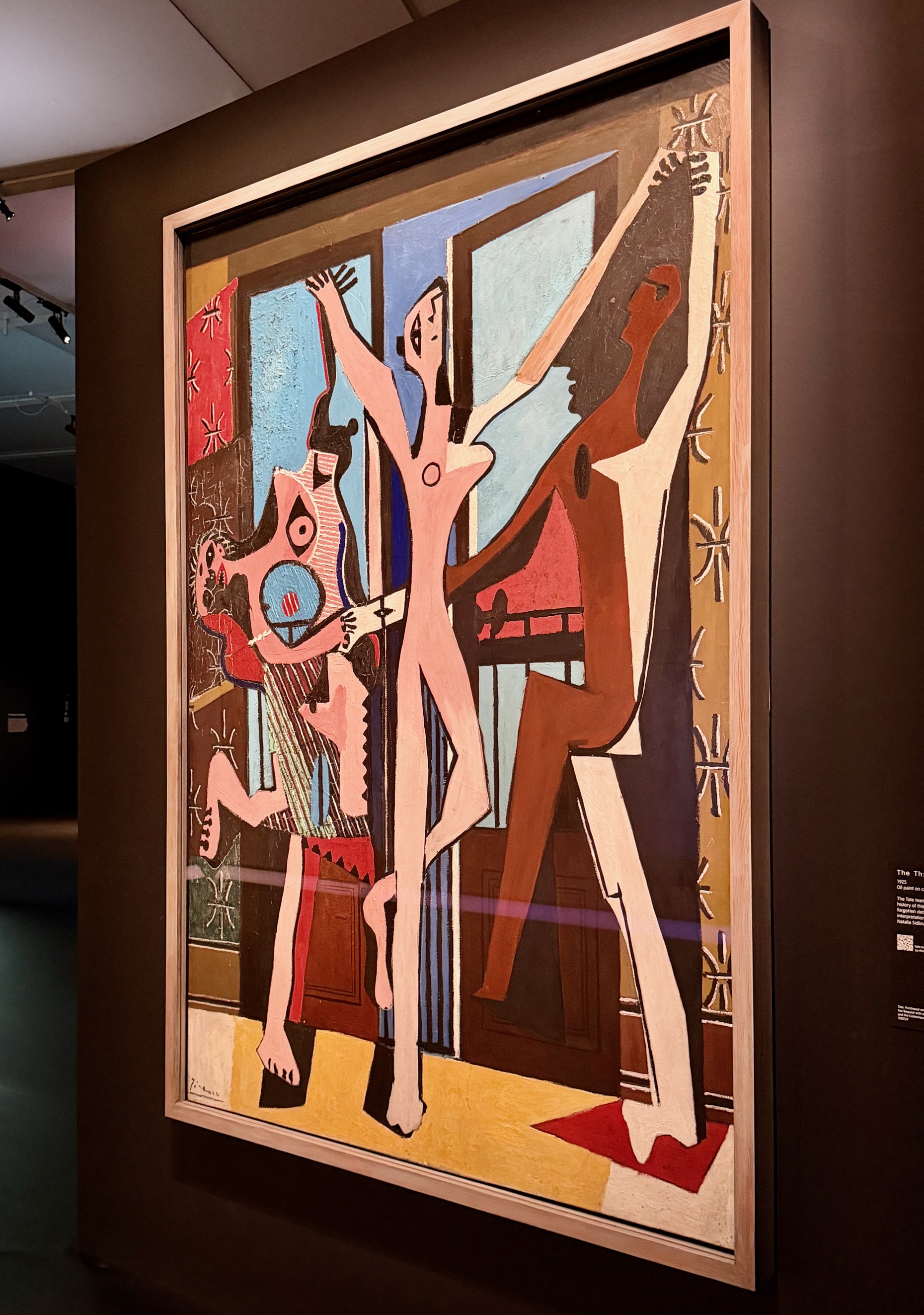
The Tate Modern recruited two art-world mavericks – MacArthur (“genius”) grant recipient Wu Tsang and curator/author Enrique Fuenteblanca – who came up with a plan to stage the art in the same theatrical way that Picasso lived, created, and shape-shifted his entire life. . Check out our favorite views in our Flickr album.
The exhibition entry is a nearly blank, but vigorously painted wall that only increases the suspense about what you will encounter inside – very much like entering a theatre with pent-up anticipation about the performance you’ll experience. Some of the first images you see are images of Picasso hamming it up in makeshift costumes and headdresses in photos and film stills taken by his avant-garde pals – a reminder of his embrace of big personality, outsize physical statements, and alter egos. He was always performing in public.
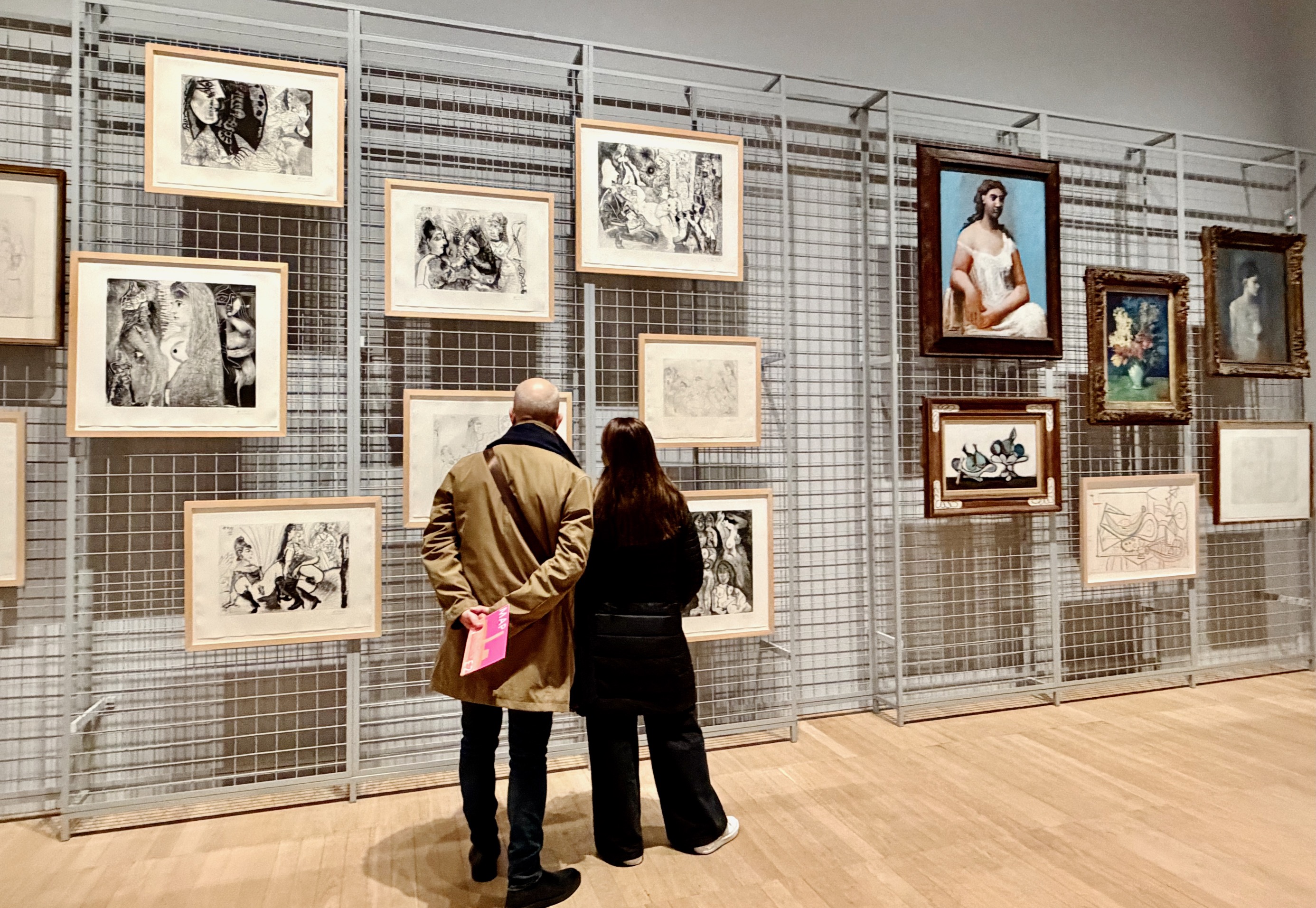
A winding path leads next to a gallery with fittings hung with artwork that creates a slightly backstage feel. It’s a wall of smaller etchings, prints, and paintings from Picasso’s entire career, all selected to show how he loved creating a compositional frame for his sitters, groups, and abstracted still lifes. The curators want us to think about his performativity.
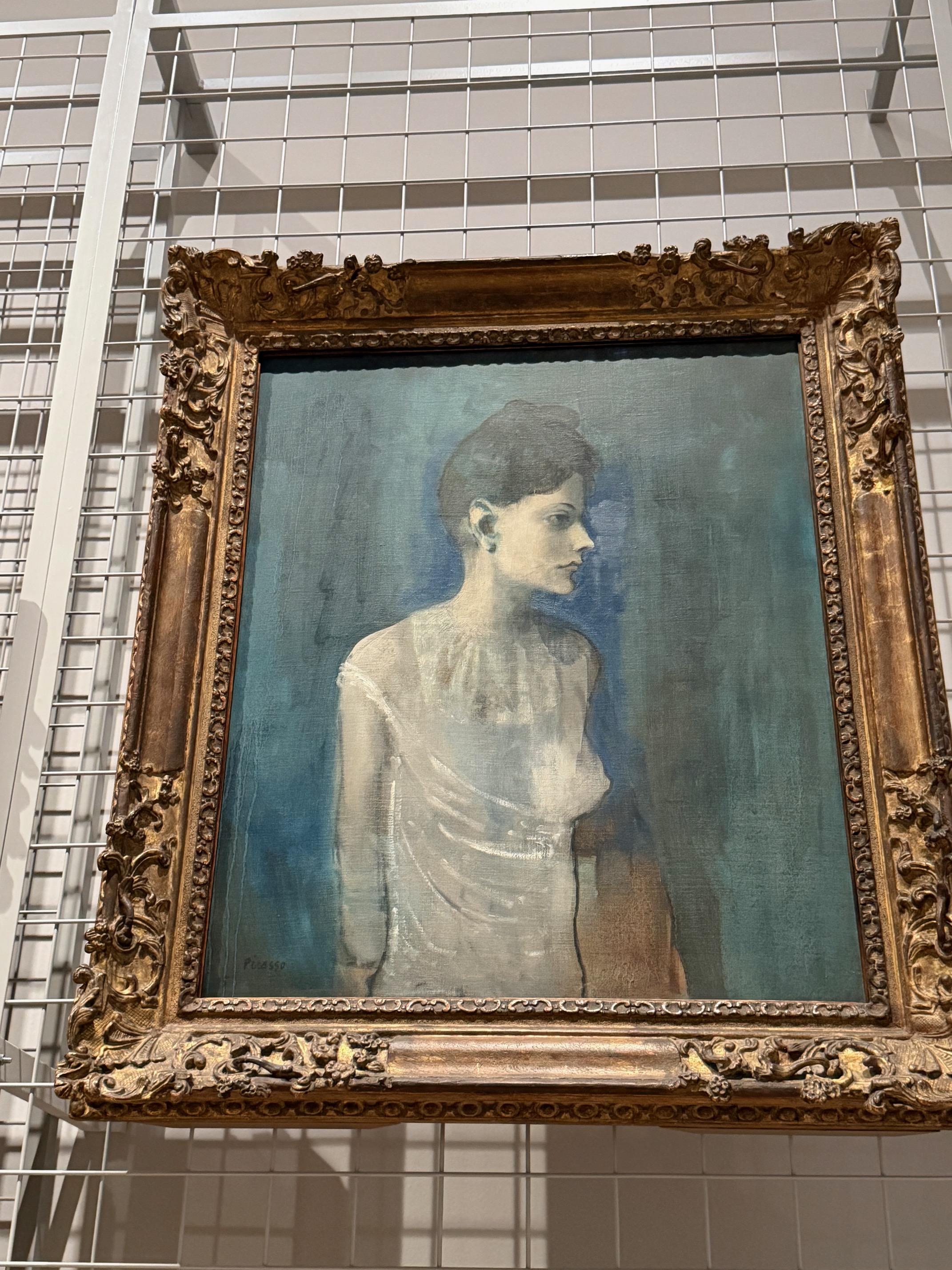
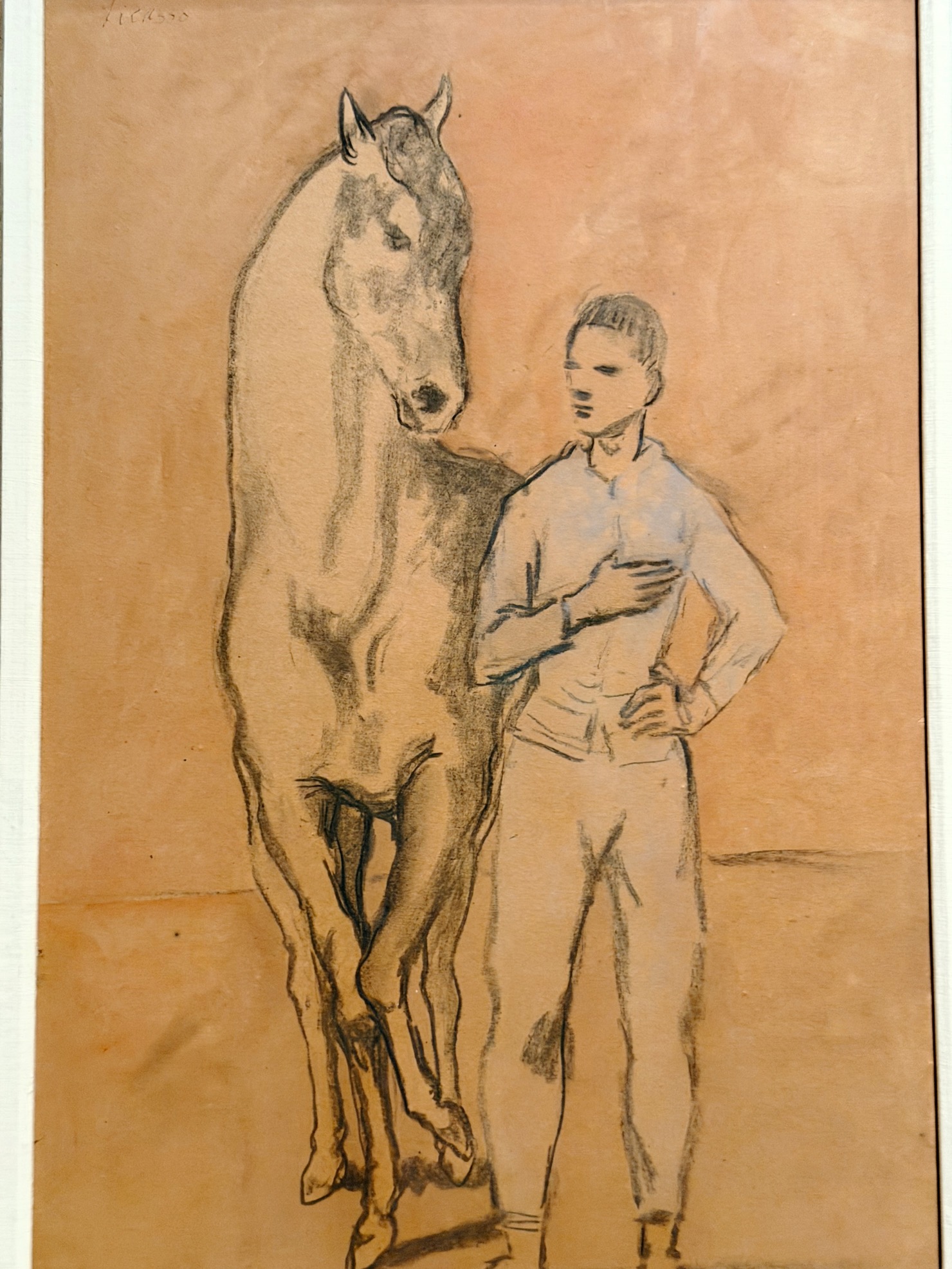
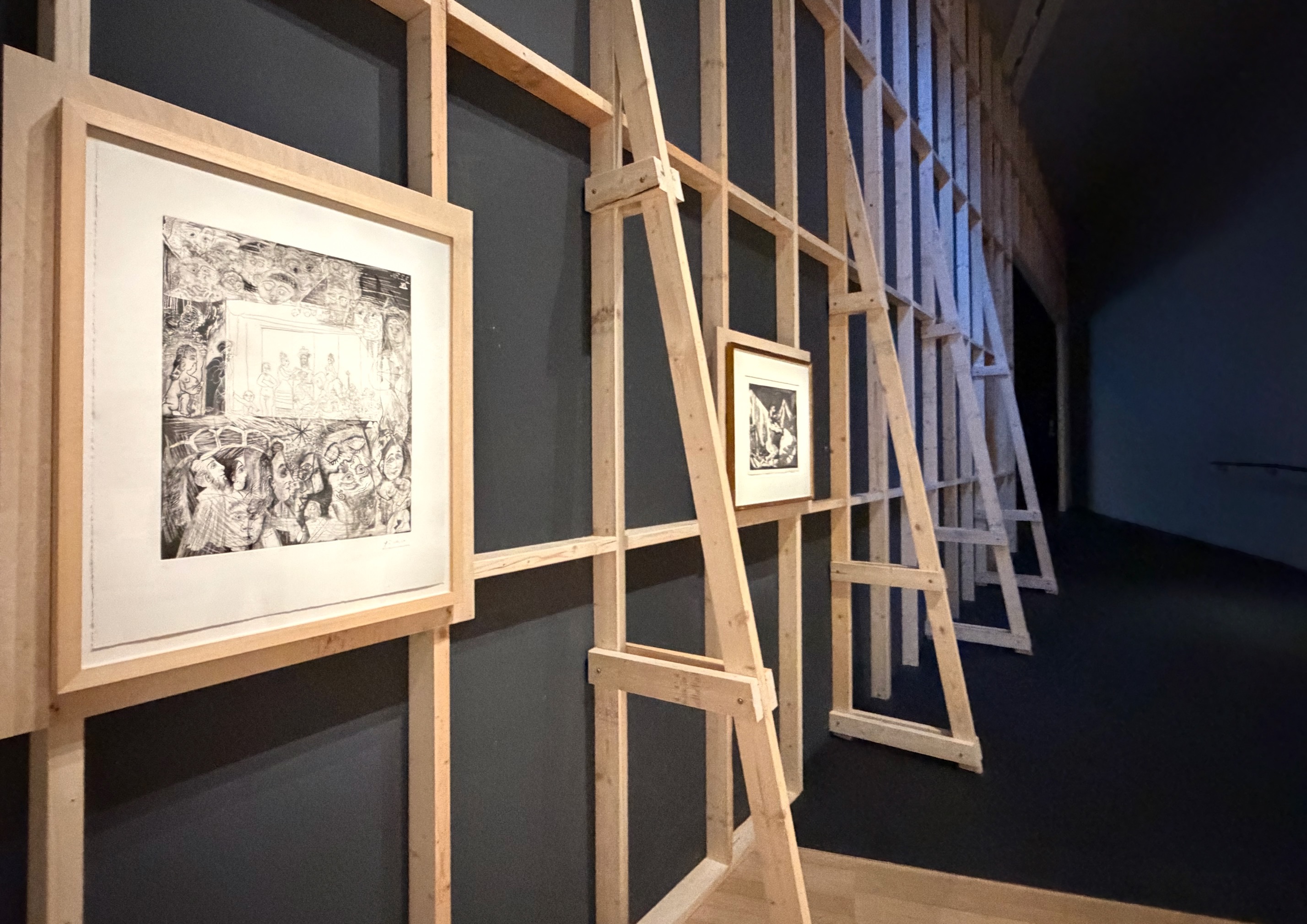
Walking further, you see a photo from a 1932 exhibition that Picasso famously “staged” himself, followed by a wall of wooden supports that definitely looks like you’re manuevering behind a stage set. There are two carefully placed Picasso etchings that reference Rembrandt that drive home the point about Picasso’s heightened theatricality, including a print with the chaotic mass of humanity hovering about a stage set with unusual players.
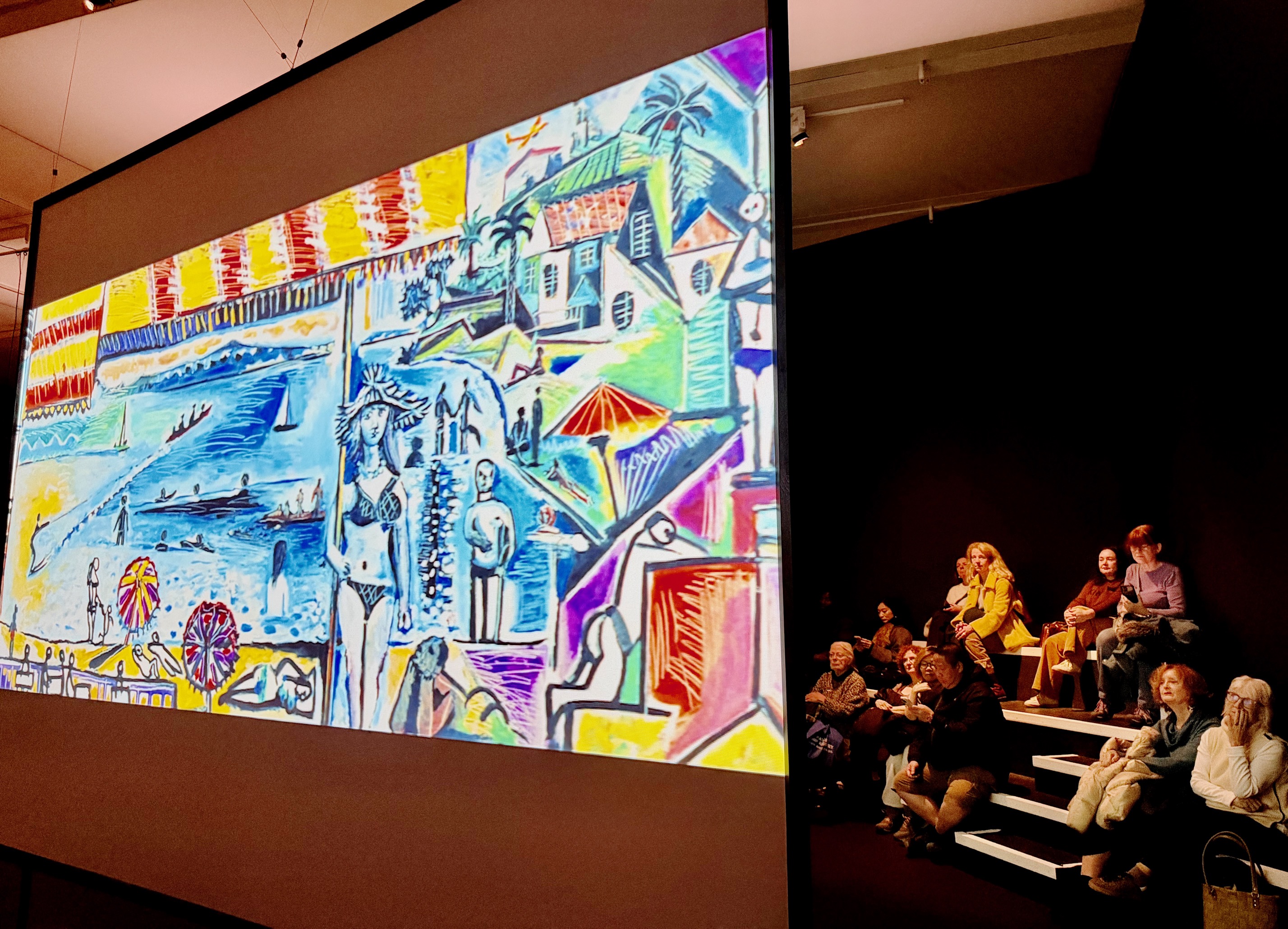
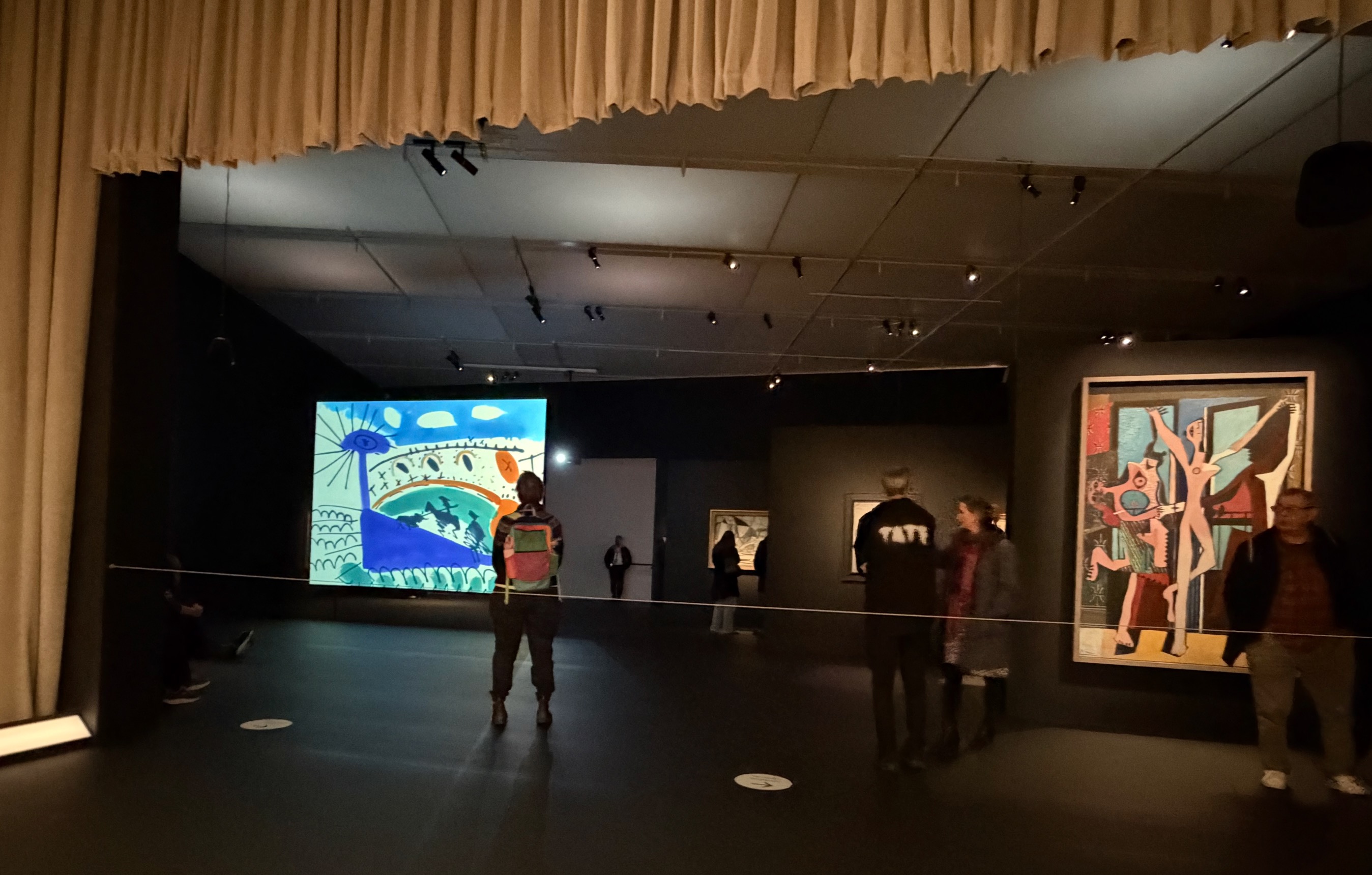
Around the corner into the main exhibition space, you see it all – a large movie screen, a film showing Picasso in action, and a proscenium across the room that functions like an aperture through which to view more Picassos. An audience sits in rapt attention watching the movie, which features drawings that materialize in thin air from Picasso’s hand.
An inviting exhibition space opens out to the left, featuring works a range of works collected by the Tate (along with a few on loan from Muséée international Picasso-Paris) – cubist portraits, early still life collages, dramatically posed models, action sketches of bullfights, and his post-War lithograph Dove, which became the symbol of the international peace movement. It highlights how the artist staged and experimented with people, events, and symbols in his art.
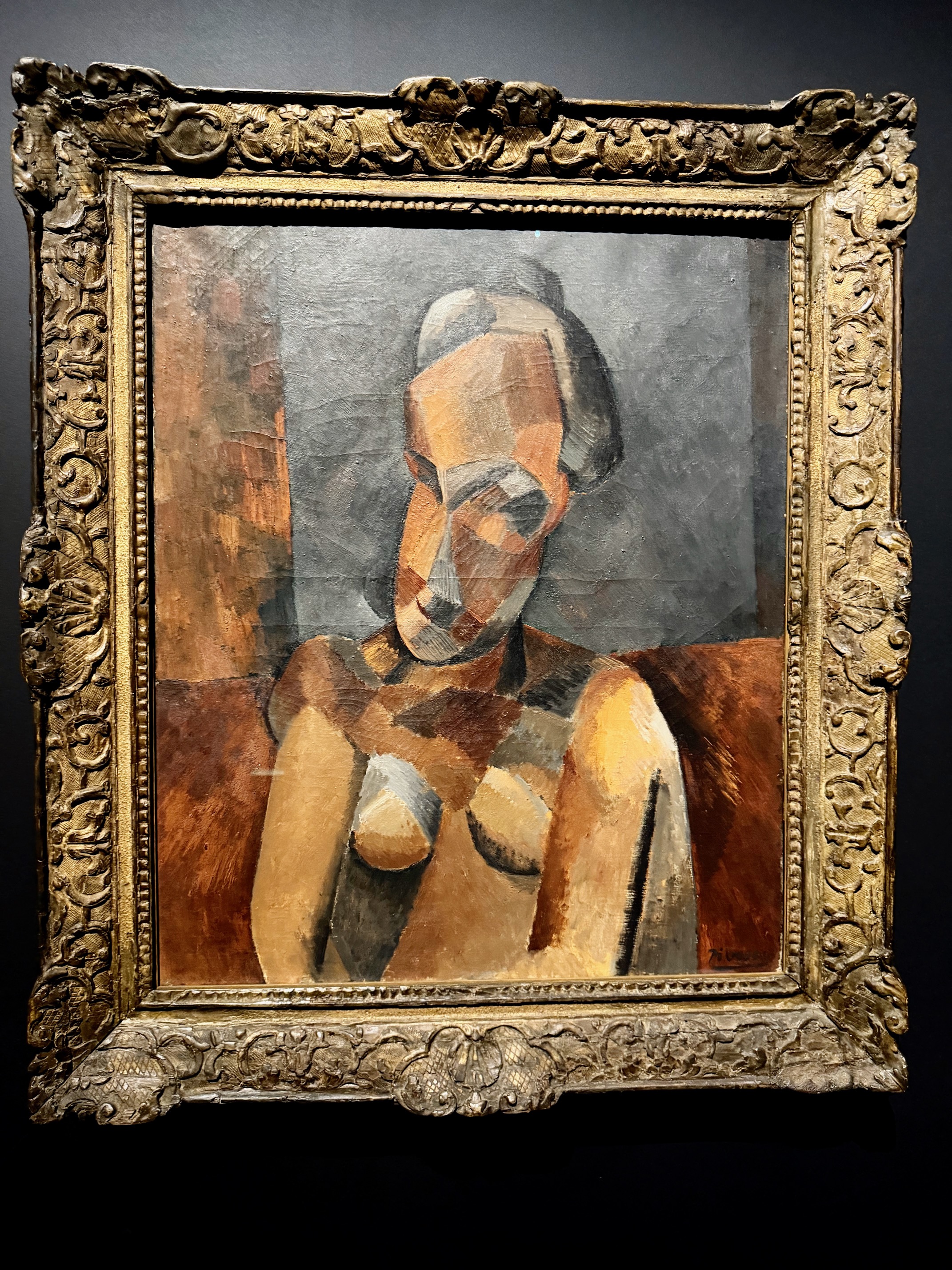
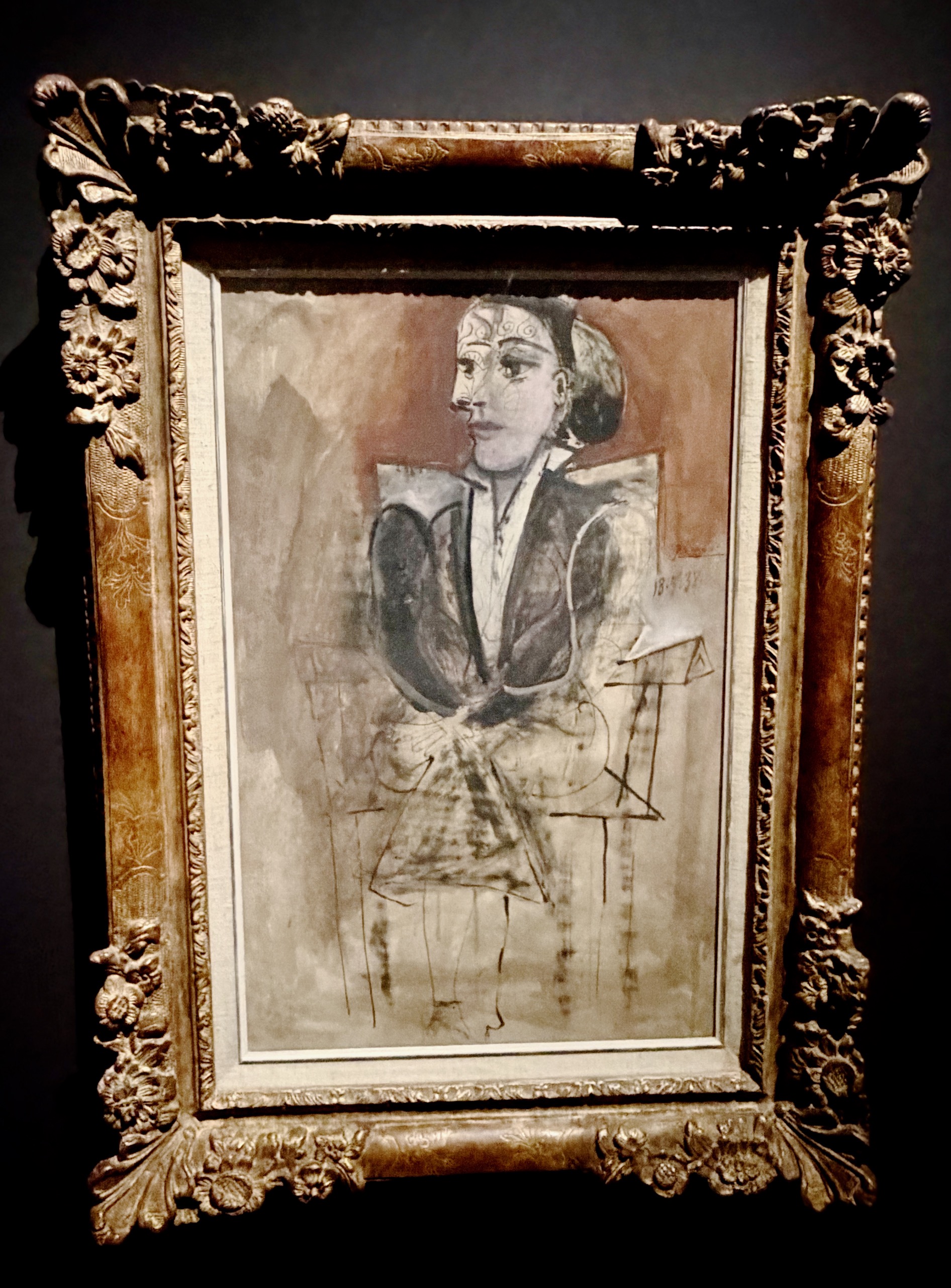
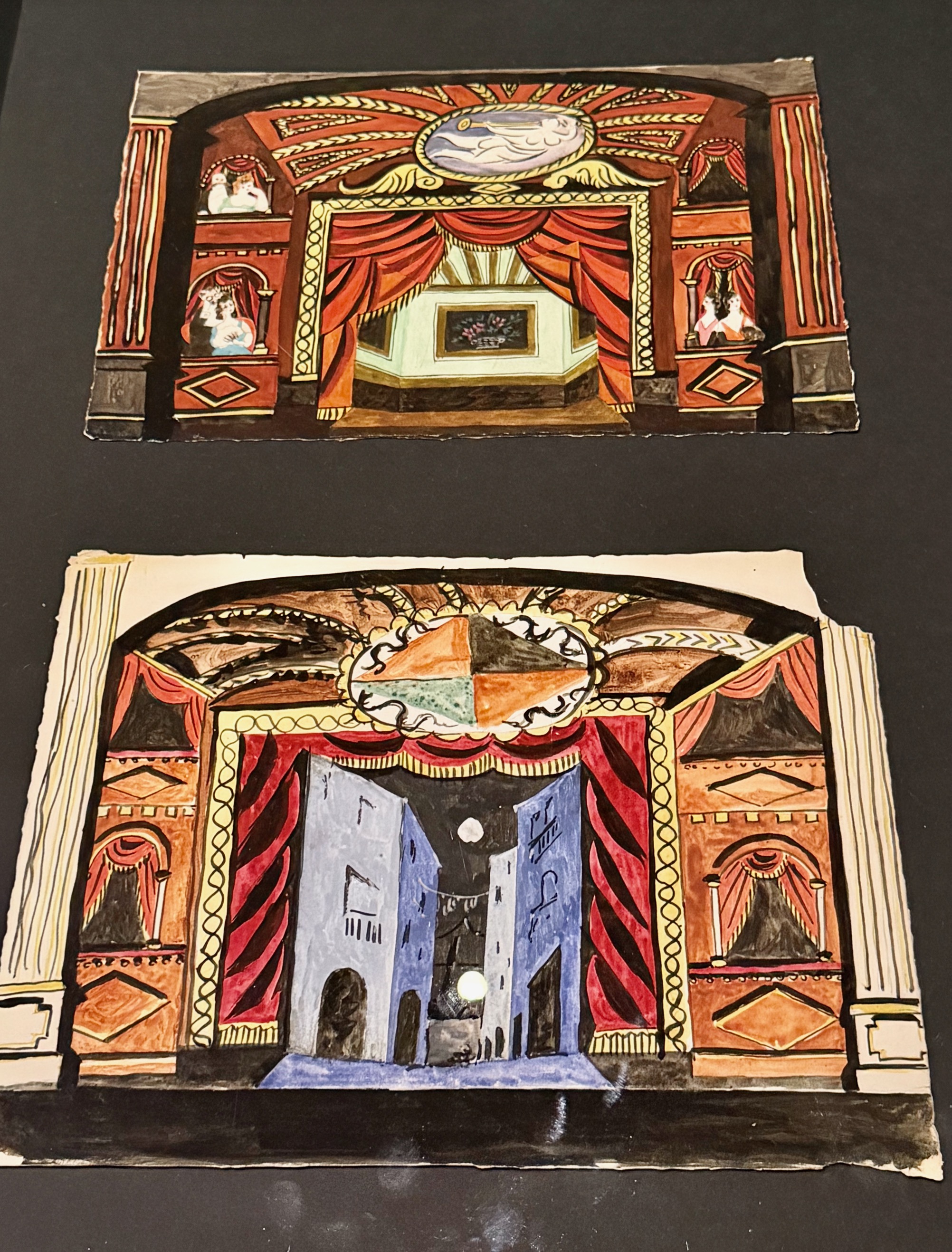
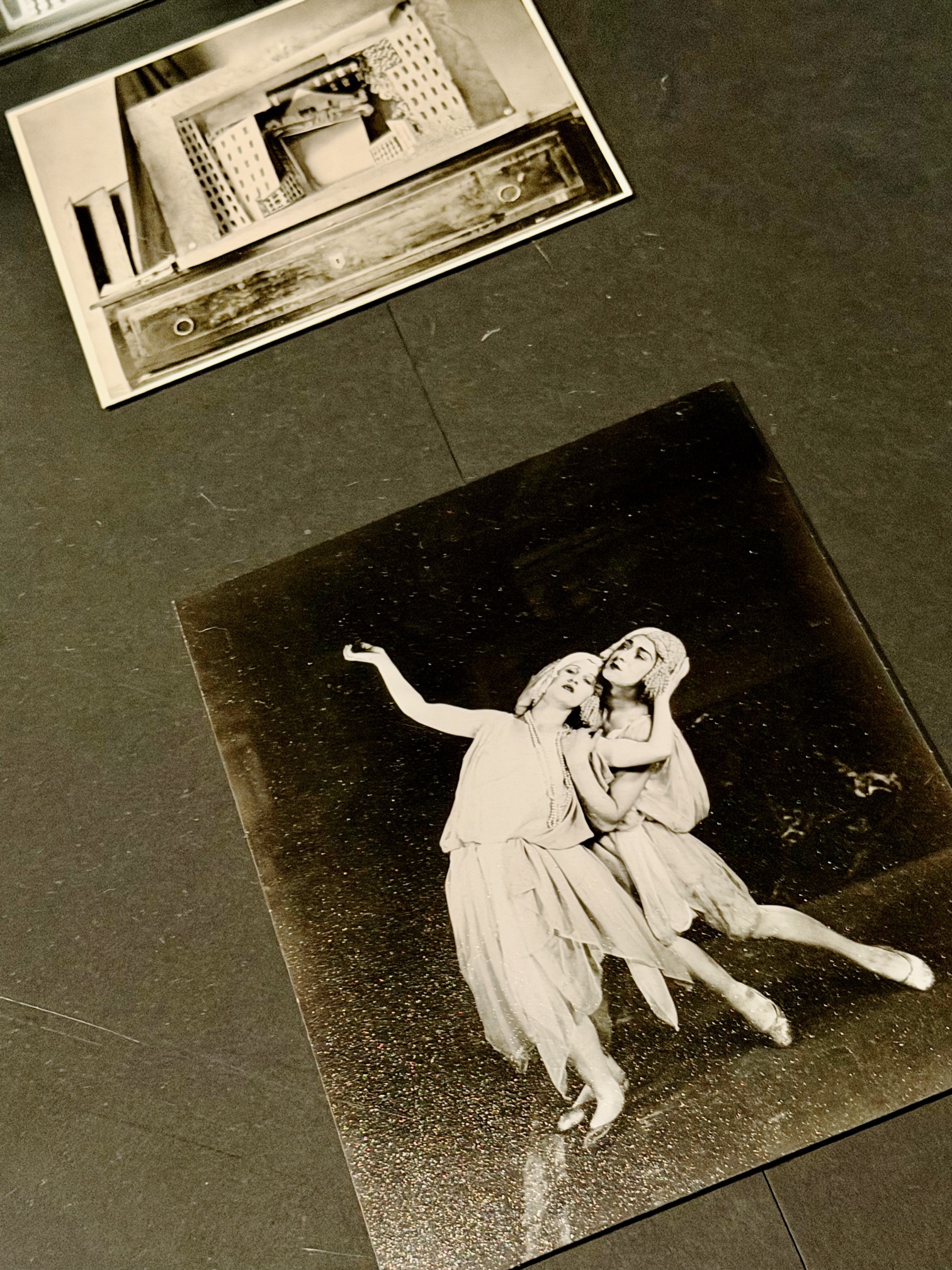
The journey all leads to a punctuation point – a view into Picasso’s early enthusiasm and aptitude for live theater, dance, artifice, and fantasy of the theater itself. Cases of small photos and sketches that chronicle Picasso’s designs for stage drops, costumes, and sets for the Ballet Russe – a legendary collaboration that boosted Picasso’s fame and fortune.
And finally, there’s a full view – from a proscenium stage – of The Three Dancers, in which three performers form a tableau near an open window.
Here’s the Tate’s deeper dive into Picasso’s inspiration from popular dance and how he channeled personal trauma and loss into his final painting. No wonder he kept this work particularly close.
And turn around to see the finalé – Picasso’s The Painter and His Model,
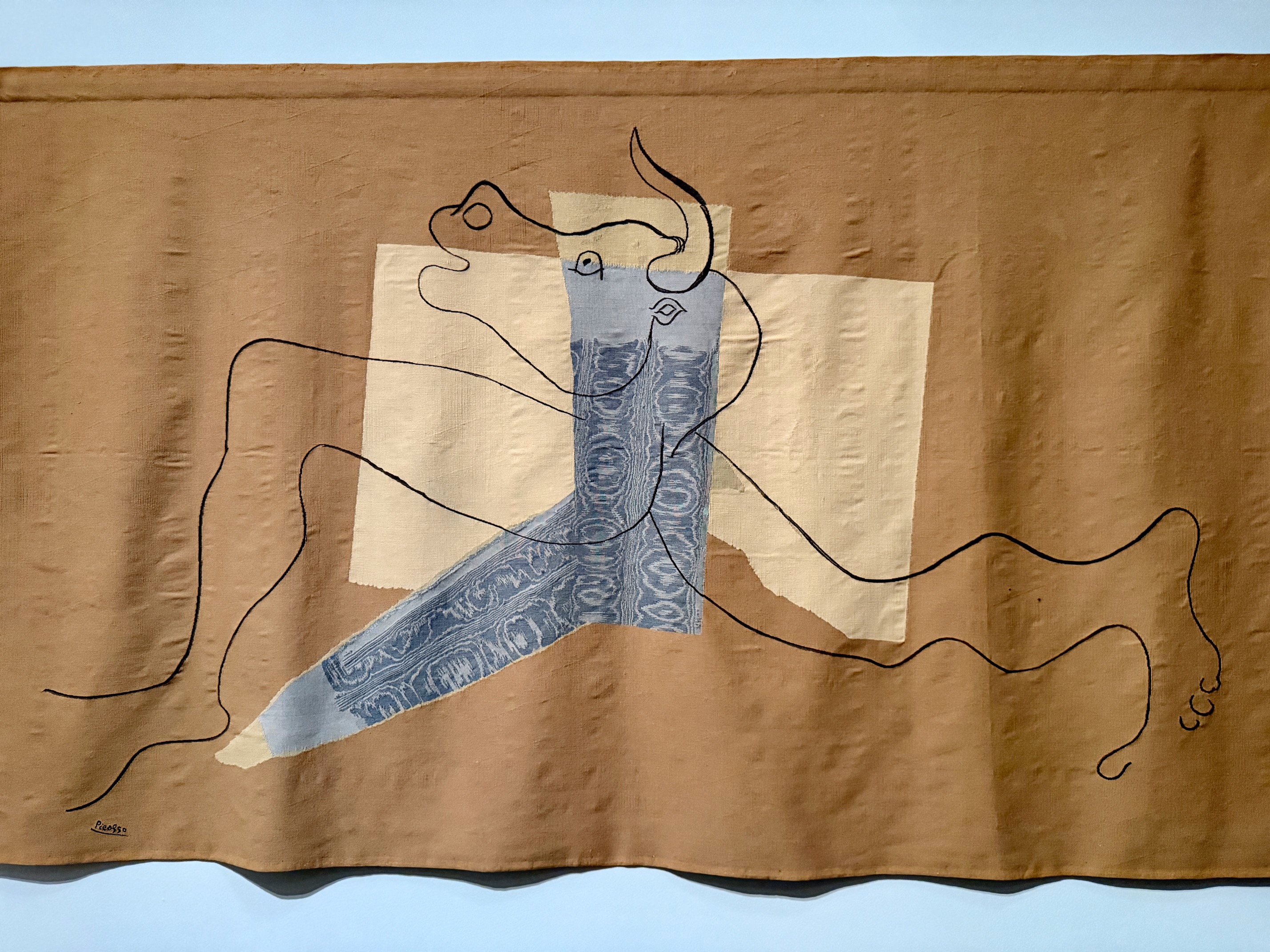
The Acrobat, and a dramatic tapestry of one of Picasso’s personae, The Minotaur, that seems like a big, grand theatrical drop curtain. It isn’t, but hits the perfect note to the end of an entertaining, theatrical show about one of the 20th century’s epic performers.
 itsnewstoyou