Abstracting Nature in Albuquerque

How do abstract artists visually channel their response to awesome landscapes? You’ll get a glimpse of how ten artists approach natue and atmospheric phenomenon in Abstracing Nature, an engaging contemporary exhibition at the Albuquerque Museum, on view thorugh October 12.

Works by grand-master abstractionists Richard Diebenkorn and Agnes Martin greet you right at the entrance. 

Diebenkorn isn’t normally associated with New Mexico, but decades before embarking upon his epic Ocean Park series, he spent two years (1950-1952) at the University of New Mexico (1950-1952) working toward his MFA before returning to the West Coast.

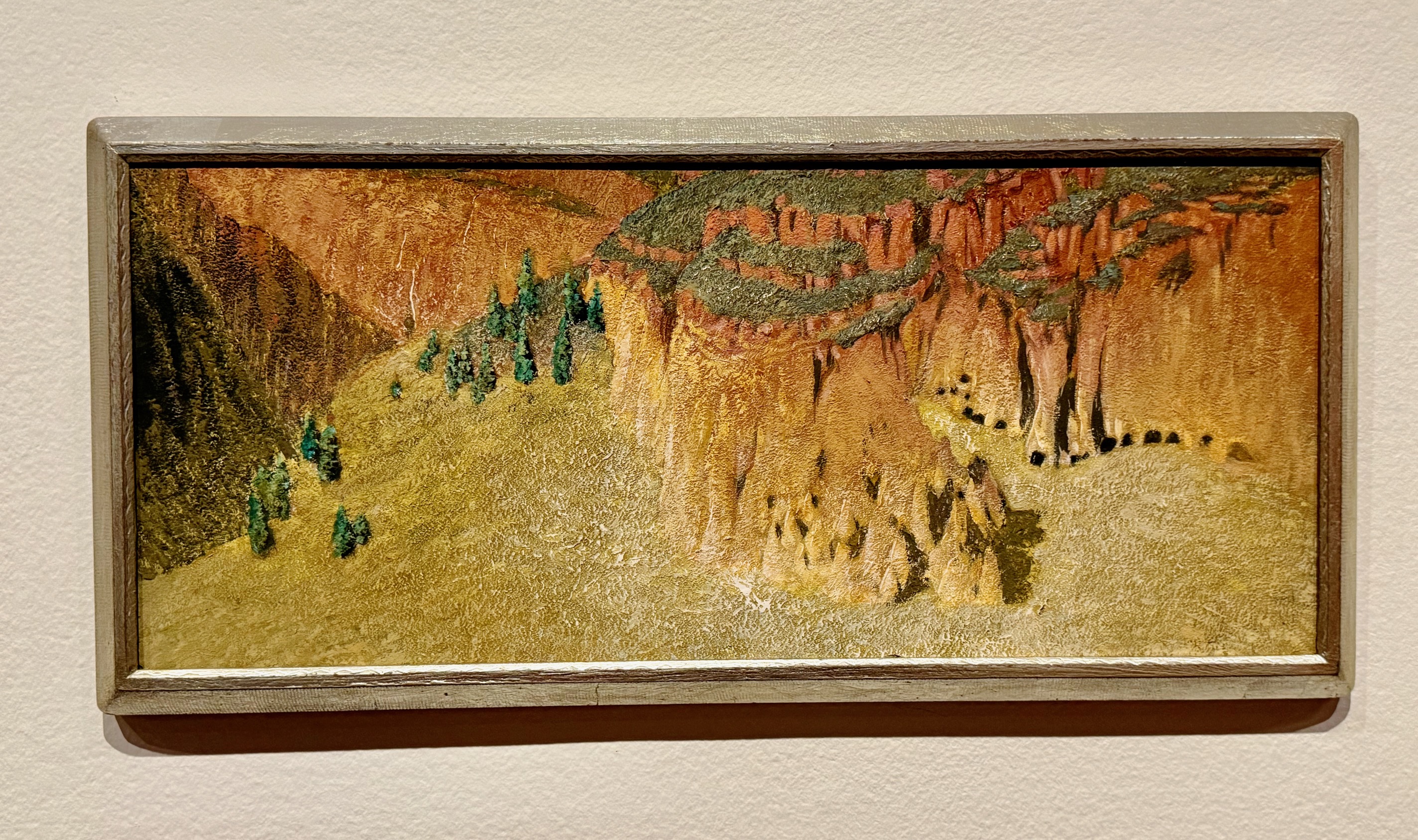
Richard Diebenkorn’s 1952 Untitled (Albuquerque), featuring deep earth tones and undulating forms.

The Diebenkorn on display is a recent museum acquisition from those years. Complete abstract expressionist approach to the colors and undulating geologic forms he saw surrounding the post-war boom town.

Martin – the abstractionist grand-dame of New Mexico – made no attempt to hide the fact that her grids and minimal approach were expressions of the tranquililty and serenity she saw and felt from her retreats in Cuba and Galisteo, New Mexico.  She was channeling her emotional, meditative response in her surroundings – not following the reductivist, minimalist trend fo the East and West Coast gallery scene.

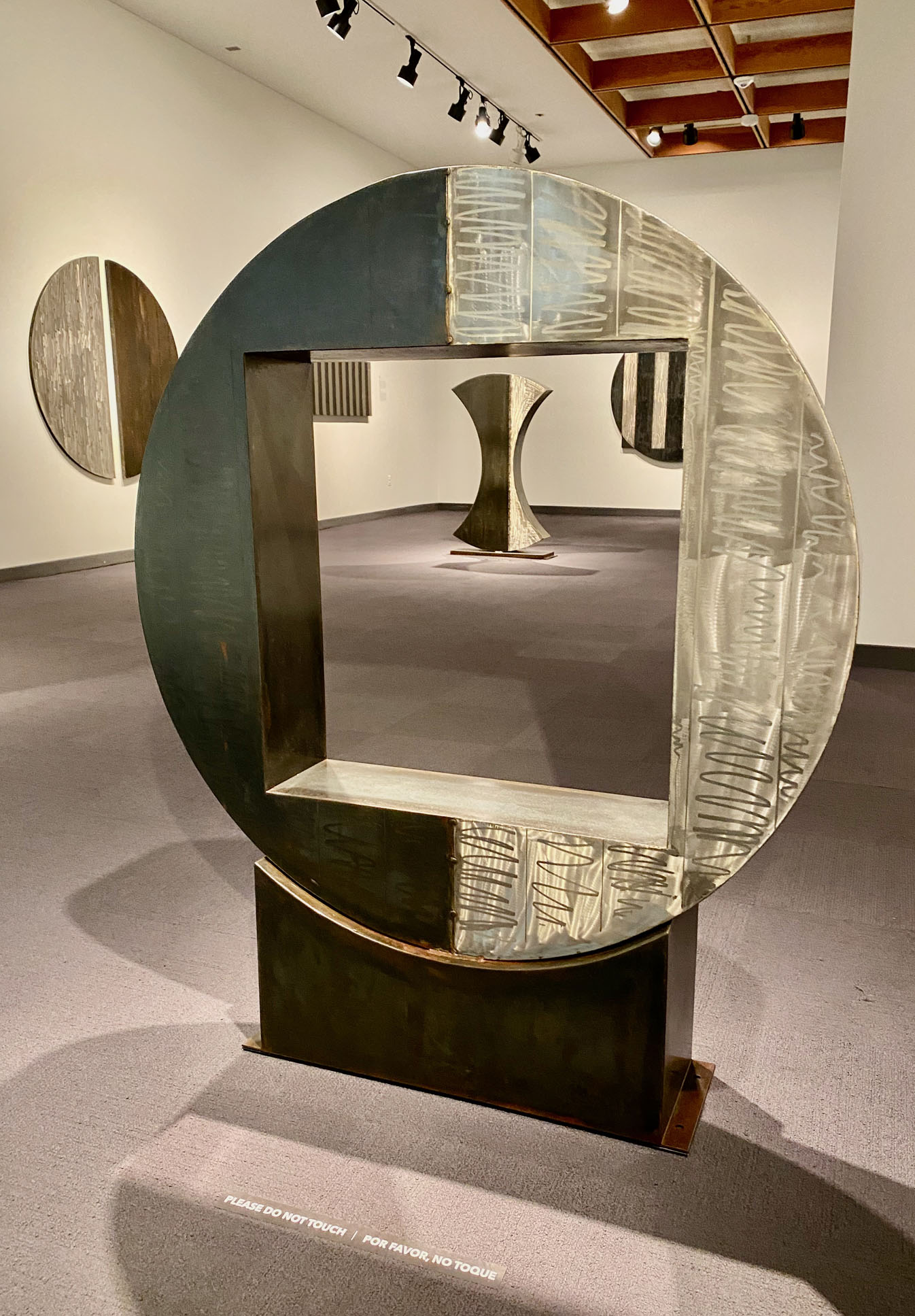
By getting up close to the two Martin paintings, you can appreciate her hand-drawn approach. Several stainless-steel sculptures by Agnes Martin’s great friend and student Karen Yank are nearby. The gleaming, hard-edged pieces do not resemble her mentor’s approach, except for the light, gestural touches across the surface.

Agnes Martin’s 1980 acrylic Untitled #6. Courtesy: New Mexico Museum of Art.
Karen Yank’s 2023 steel View with Silhouette VII and other sculptures visible through the portal. Courtesy: the artist.

The large pastels by Emmi Whitehorse look to the landscape and sacred colors of the Navajo Nation inspiration – a poetic approach most evident in Yei Retires to Mt. Taylor. Dramatic blue gestures suggest the spiritual turquoise color associated with the Navajo’s soutnern sacred mountain Tsoodzil.

Emmi Whitehorse 1985 pastel abstraction on canvas Yei Retires to Mt. Taylor.

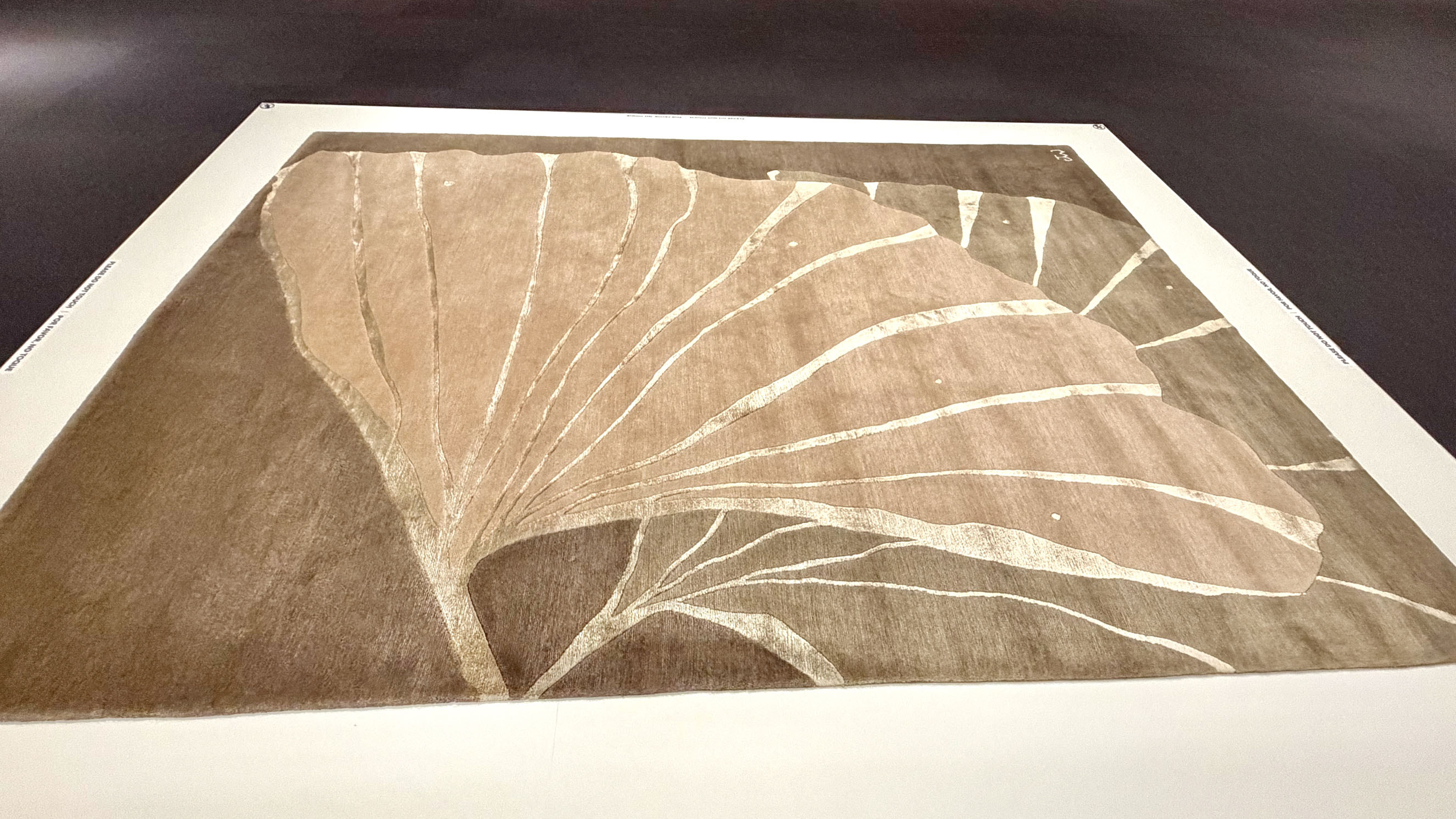
Abstractions used by textile artist Joan Weissman come from a place of process in which she starts with recognizable nature studies but allows her iterations to become more abstract.  Approaching her seemingly abstract Ginko, only gradually do visitors see that the hand-knotted rug (created at large scale by Pakistani artisans) is an extreme close-up of a leaf. 

Joan Weissman’s 2006 Ginko, a wool and silk hand-knotted rug, highlighting the intricacies of the leaf. Courtesy: the artist

2023 Hearing the Sun by Marietta Patricia Leis. Courtesy: the artist

Mariette Patricia Leis translates her experience of nature more formally. In one case, six seemingly minimalist wall-mounted panels are painted to reflect how we perceive the color of sunlight in different atmospheres and at different times of the day.

Another is a series of abstract panels suggesting horizons across volcanic surfaces during Iceland’s 24 hours of darkness.

Enjoy walking through the full exhibition in our Flickr album.

Detail of 2018 Vacuities by Marietta Patricia Leis inspired by Iceland’s winter night sky. Courtesy: the artist.

Here’s a close look at Judy Tuwaletstiwa’s 2001 Divination. She transformed sand by creating an arrangement of glass objects – cubes, spheres, and organic shapes – all displayed across a soft sand base.

Like the rest of the work in this exhibition, it allows us to think about the natural world, our perception of it, and the many ways that the experience can be transformed into art.

Hanging Out with Georgia’s Stuff

Fans have had a special opportunity to get up close to that iconic black dress and gaucho hat, OK Calder pin, denim apron, and Marimekko dress in Georgia O’Keeffe: Making a Life, on view in Santa Fe through October 19 2025 at the O’Keeffe Museum.

After you’ve walked through a somewhat chronological presentation of Ms. O’Keeffe’s paintings in the museum, the final two galleries allow you to take a close-up look at tools, cookbooks, and other stuff that she used to make things – sculpture, recipes, pastels, and clay pots.

Photomural of Todd Webb’s 1962 photograph Georgia Making Stew, Ghost Ranch.

Due to the overwhelming popular response to Living Modern, the traveling exhibition that featured O’Keeffe’s wardrobe and chronicled how she portrayed herself for the greatest photographers of the 20th century, the museum curators decided to give visitors a little taste of the woman behind the art.

See some of our favorite things in our Flickr album here, and listen to the museum’s audio guide here.

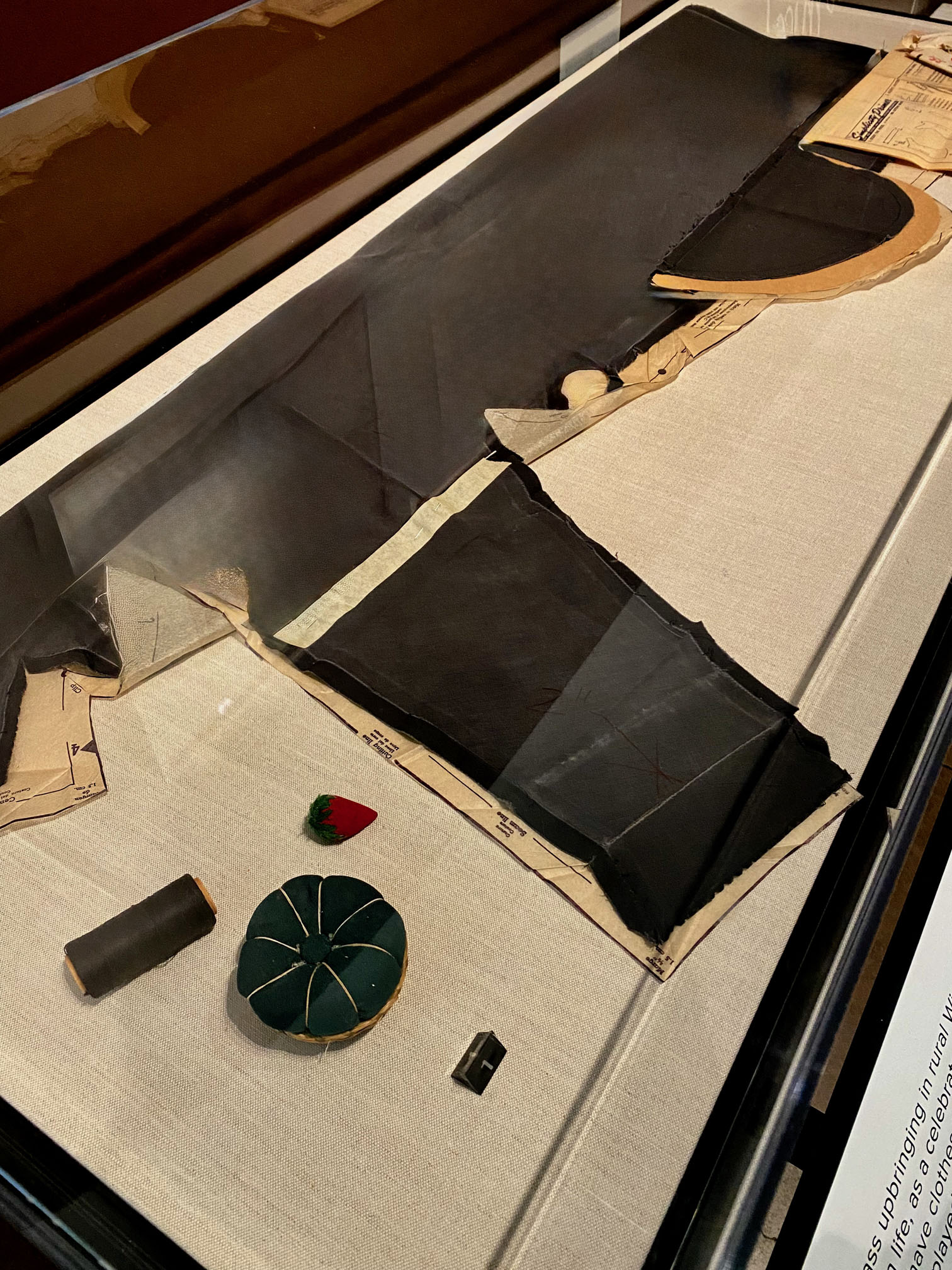
It’s the first time that the O’Keeffee Museum has itself presented her clothing. To emphasize the “making” part of her life in New Mexico, they’ve included a case showing how Santa Fe artist Carol Sarkasian moonlighted as Georgia’s seamstress. There’s a case with sewing notions and cut pattern pieces for another version of Georgia’s always in-style black wrap dress. She totally believed in multiples!

Georgia’s iconic 1960-1970 wrap dress sewn by Carol Sarkasian with 1950 belt by Hector Aguilar; Tony Vacarro’s 1960 Portrait of O’Keeffe with one of her dogs.
 
Sewing notions, cut fabric, and tissue-paper pattern – Carol Sarkasian’s preparation to make a wrap dress for Ms. O’Keeffe.

She also believed in wearing her clothes for a long time, and so they showed they had years of life.

The most popular feature of her Abiquiu home tour is the kitchen and pantry, and learn about Georgia’s farm-to-table approach with her garden, recipies, and day-to-day lifestyle.  Here, you get a glimpse of the modern and traditional appliances used for her daily coffee ritual (yes, she loved Bustelo!) and get to peruse a sampling of her cookbooks and hand-written recipies. 

Shelves with Georgia’s pantry items

One of her unrealized dreams was to write a cookbook, and it shows. She was all about healthy eating and living, and in her later years she relied upon her trusted Abiquiu team to assist with gardening, cooking, and putting out a spread for the constant stream of visitors.  (No recluse, she!)

From the pantry: Georgia’s cookbooks with her hand-written breakfast, rice, and drink recipe cards.

The final room shows the process and tools she used to create her paintings, pastels, and sculptures

There’s a dramatic photomural of Georgia standing in front of her largest sculpture – temporarily housed nearby at the New Mexico Museum of Art until the new GOK museum is built.  Beneath, you see several prototypes – a wax spiral made in 1916 and bronze maquettes from the Forties.

Cast when she was in her nineties, the case demonstrates that she kept making versions of this her whole life and finding inspiration from stuff found on her New Mexico wanderings.

Bruce Webber’s photo of Georgia and her 1979-1980 spiral sculpture; the case below with its inspiration – a ram’s horn and earlier maquettes.

There are things from her travels to Japan, an unfinished work on an easel, and a case showing the pot she made when her assistant, Juan Hamilton, convinced her to keep making shapes, even when her macular degeneration made it impossible for her to paint.

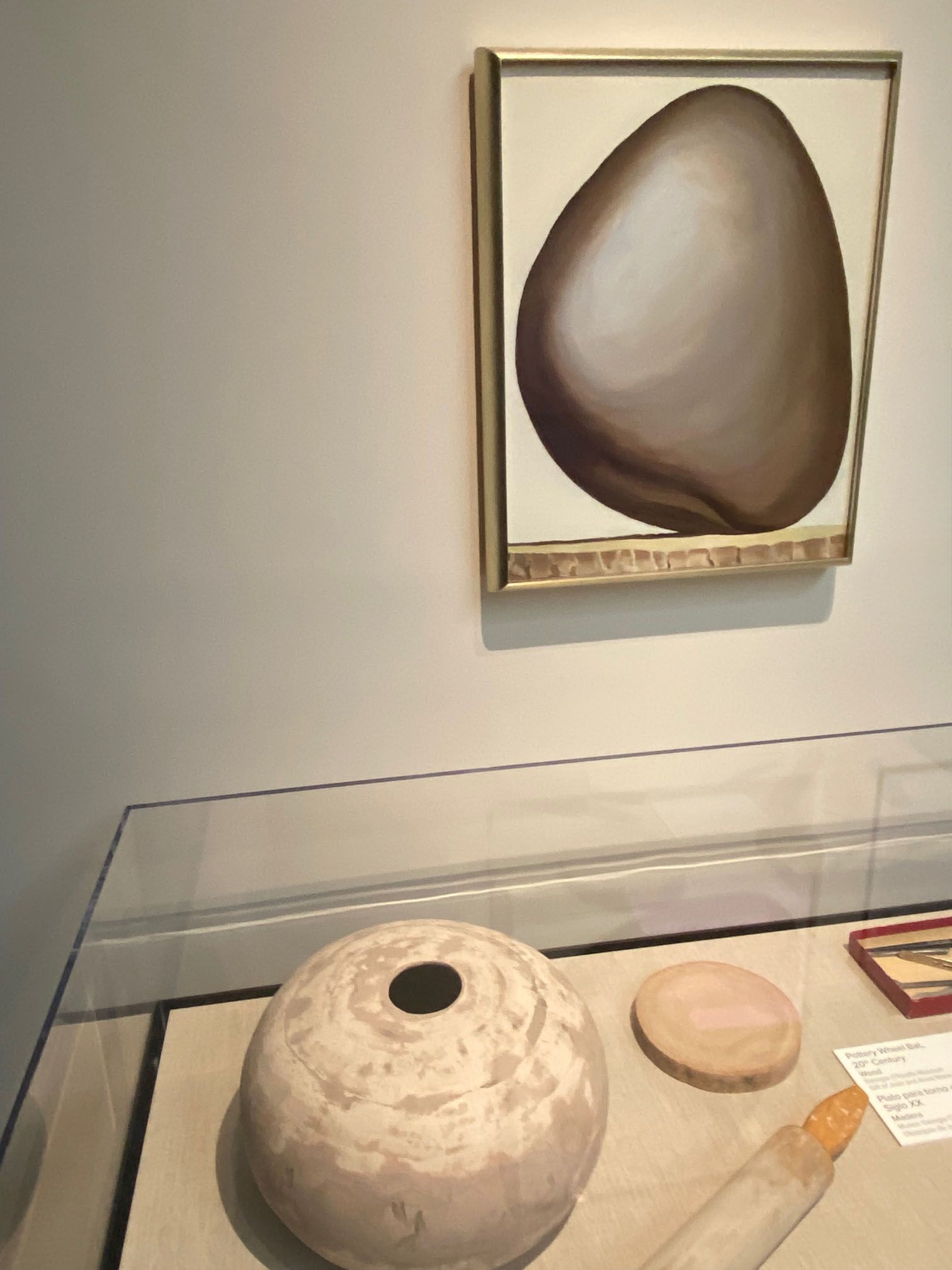
The round, smooth shape echoes the rocks that she liked to collect, so it’s fitting that the museum paired her tools and pot with a beautiful oil painting done of one of her favorites.

1963-1971 Black Rock with White Background; below, Georgia’s 1980 stoneware pot and tools– a pottery wheel bat and Sears rolling pin.
Georgia’s denim studio apron and an unfinished work – a pencil sketch on primed canvas.

For more on Georgia and her life, listen to Pita Lopez, who worked as a companion and secretary for Miss O’Keeffee from 1974 to 1986 and later oversaw maintenance and preservation of her Abiquiu and Ghost Ranch homes.

Painters Tell Stories of Nature’s Resilience

Feel like things are out of balance?  Seven narrative painters let animals take center stage get visitors thinking about the future for nature and the world in Vivarium, Exploring Intersections of Art, Storytelling, and the Resilience of the Living World at the Albuquerque Museum through February 9, 2025..

Big, bold paintings let nature tell the story and present juxtapositions that present questions about society, environmental dissonance, and what messages animals might want to send. See some of our favorites in our Flickr album.

2023 oil Astrid by Stephen J. Yazzie (Laguna Pueblo/Diné). Courtesy: private collection

Although the exhibition begins with a small selection of works from Santa Fe’s Tia Collection – Dan Namingha (Hopi-Tewa), Nanibah Chacon (Dine/Chicana), and others – the majority of the space features a selection of works by the seven featured painters. Clusters of paintings immerse viewers in each artist’s unique world, style, and narrative – mini-vivariums, or artificial worlds.

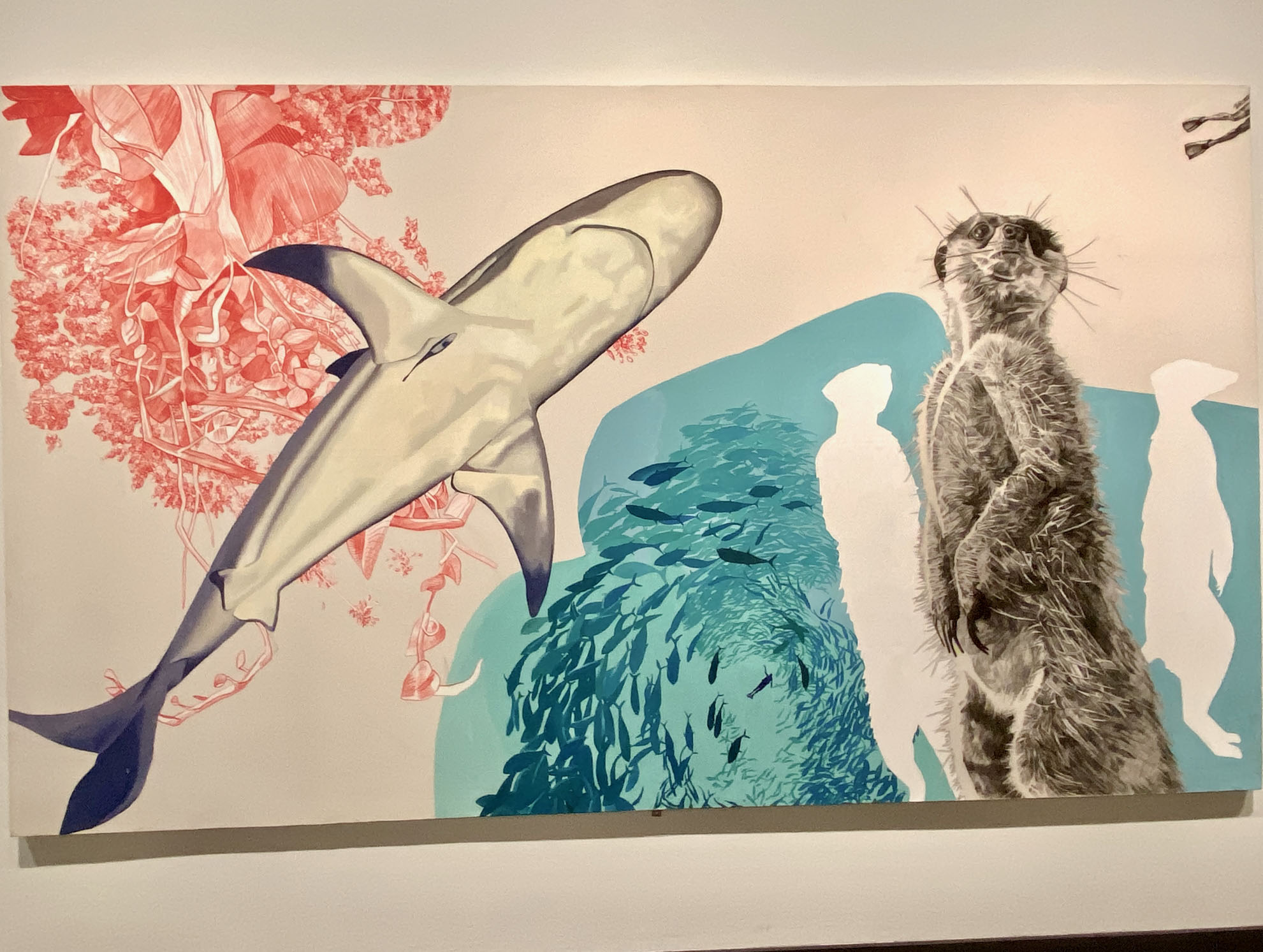
Nature explodes of Nathan Budoff’s giant canvases – tigers, meerkats, swimming octopii, schools of fish, prarie dogs – all floating and interacting in a pure, white space.  He creates realistic depictions in charcoal, oil, acrylic, and ink, but juxtaposes natural components that are startling. Visitors stand back, pause, take it all in at once, trying to make sense of how these magnificent creatures interact in unusual landscapes.  Mostly, the canvases do not include people, but Nathan enjoys letting the remarkable, minutely observed wildlife speak their own truths.

2017 charcoal, oil, acrylic, and ink Imminent Danger by Nathan Budoff – showing systems and social behaviors in the natural world. Courtesy: the artist.

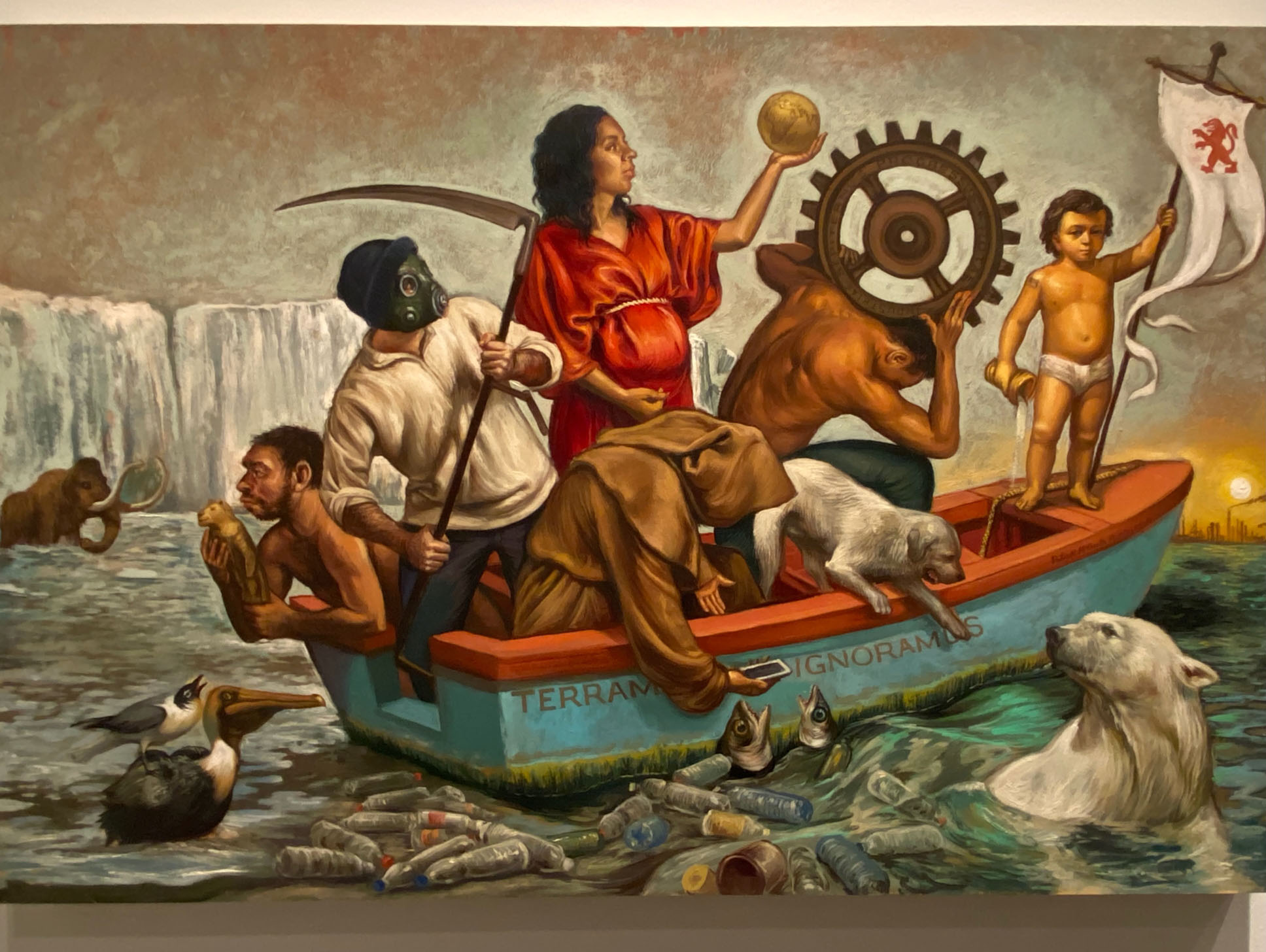
Paintings by Patrick McGrath Muñiz are intellectual puzzles, mixing modern issues, depictions of modern technology, and classical Renaissance and

Baroque painting techniques.  Signs, symbols, and details on the horizon demand slow scrutiny to unravel the allegories and associations packed into the paintings.

2018 oil painting Terram Ignoramus by Patrick McGrath Muñiz – a warning about the perils of climate change; depicting a perilous Arctic journey in a boat named “We know not the earth.” Courtesy: the artist

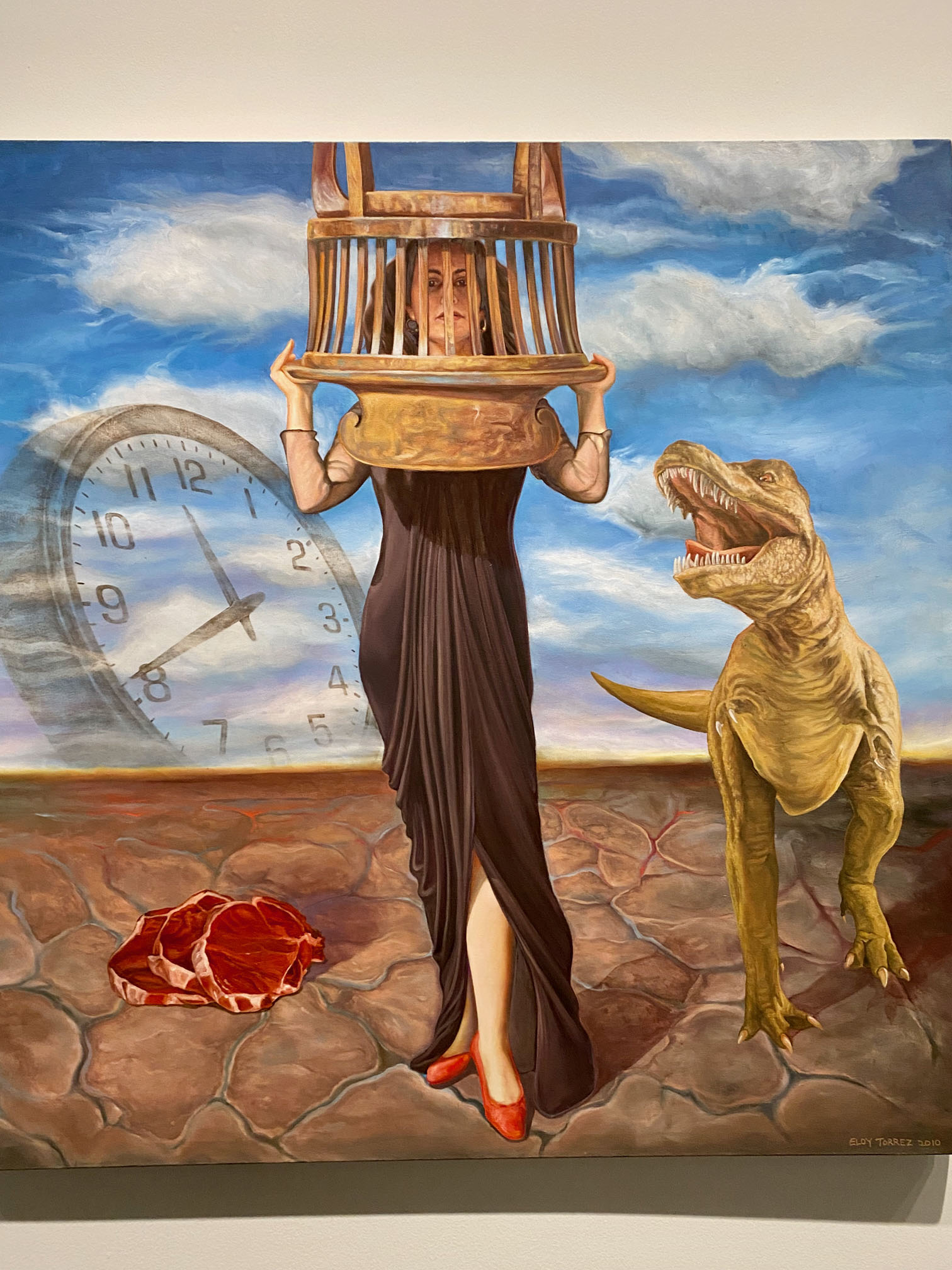
Eloy Torres, a Chicano activist and muralist, uses religious, mythological, and surrealist pictorial conventions to construct worlds that lets the viewer their intuition to connect the dots.

2006 oil portrait of Cheech Martin It’s a Brown World After All by Eloy Torrez; the crown connects him to his ancestral past. Courtesy: Riverside Art Museum.
2010 oil on panel Meat by Eloy Torrez, a surreal allegory on precarious relationships between humans and thenatural world. Courtesy: the artist.

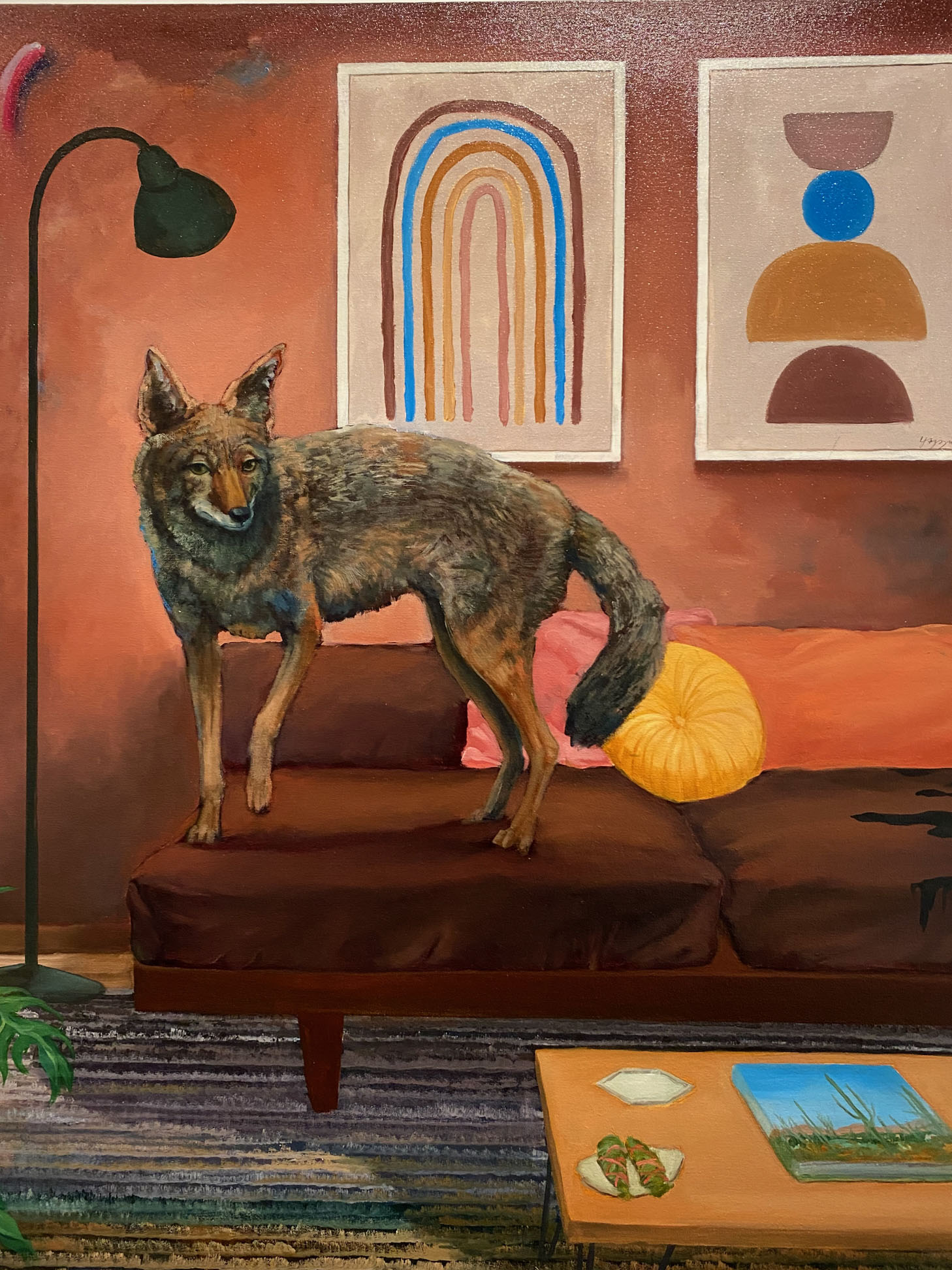
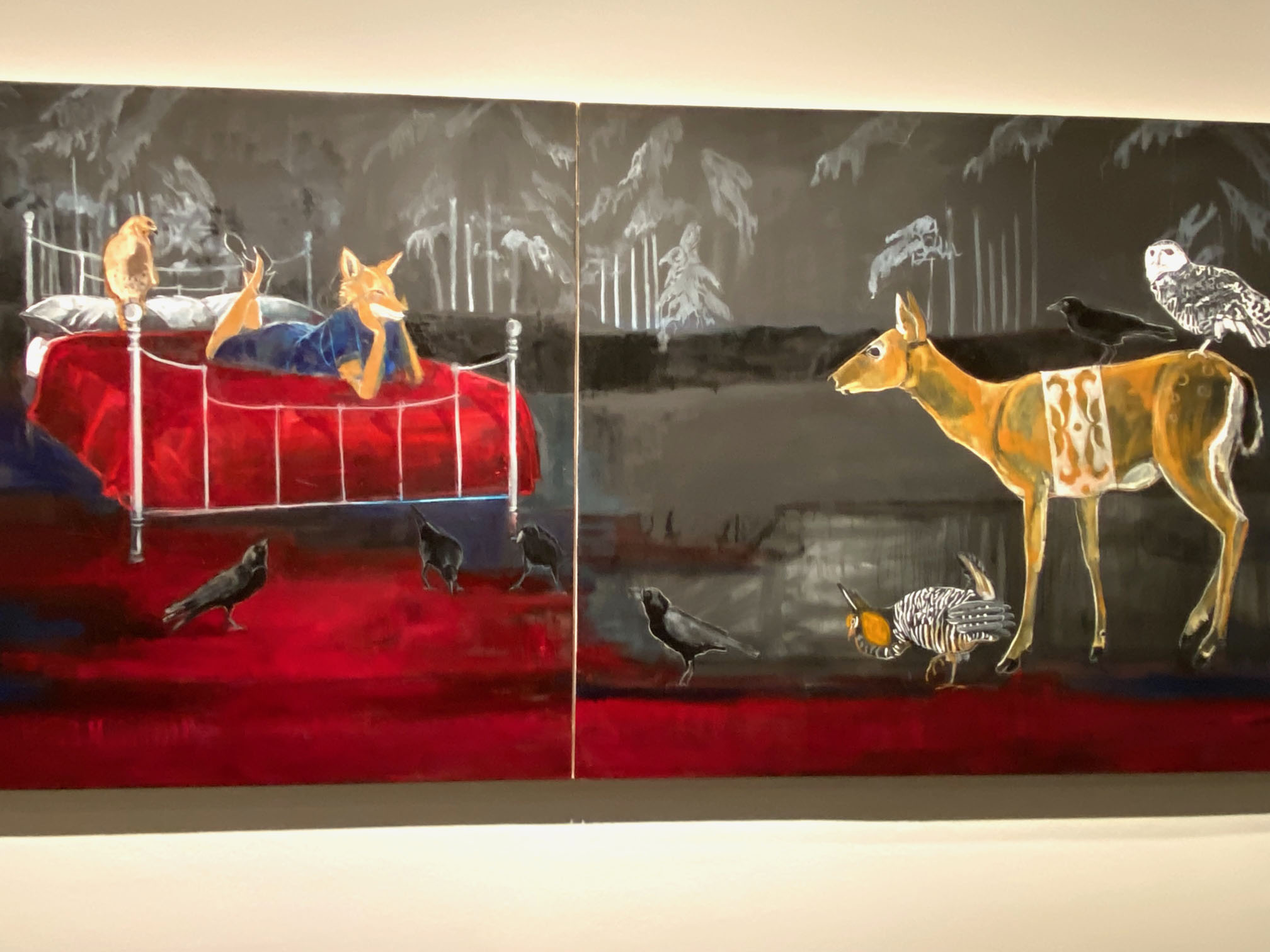
Stephen J. Yazzie (Laguna Pueblo/Diné) exhibits a series of works in which Coyote inhabits upscale suburban interiors, emphasizing the inside/outside, nature/culture dichotomies in contemporary life.

Julie Buffalohead (Ponca Tribe of Oklahoma), a member of her tribe’s Deer Clan, creates narratives featuring animals as protagonists, often metaphors for interactions between natural and spiritual realms. Large works allow players in her stories to prance, dance, and float across saturated color fields.

2018 oil and pastel Straight Legs by Julie Buffalohead (Ponca Tribe of Oklahoma) – a painting reflecting her membership in the Deer Clan. Courtesy: University of Wyoming Art Museum

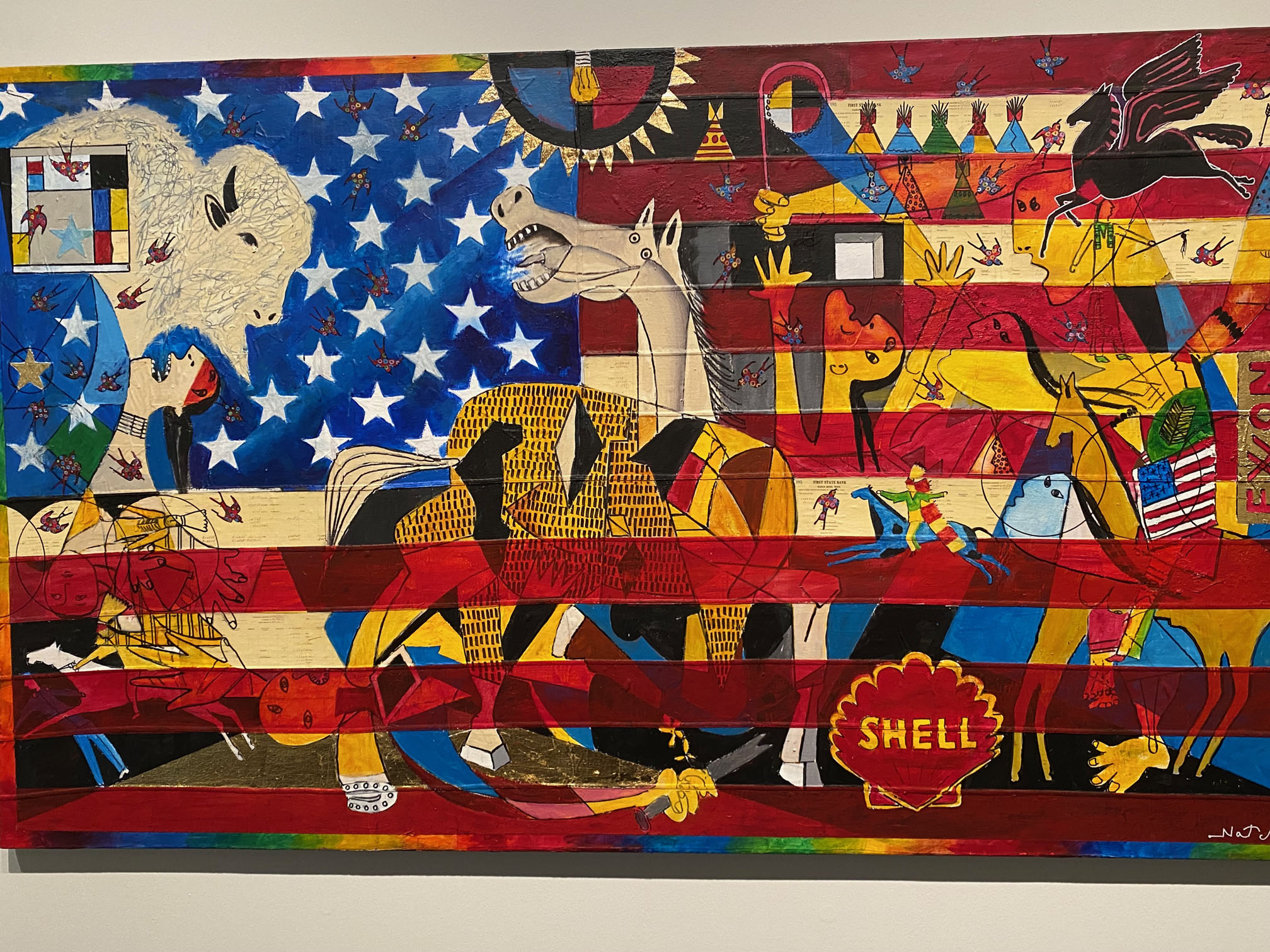
Artist/educator Stan Netchez (Shoshone/Tataviam) presents a throught-provoking masterpiece, using Picasso’s Guernica imagery, US brands, and indigenous spiritual icons to display the chaos and destruction inflicted on indigenous peoples.

2019 acrylic, oil, and metal leaf “Guernica Flag” by Stan Netchez (Shoshone/Tataviam) – a critique of colonialism’s impact. Courtesy: Tia Collection

Listen in on a panel with four of these storytellers conducted by the Albuquerque Museum.

Contemporary Artists Talk with Thomas Cole

There’s a big conversation going on about epic landscapes, people’s impact upon the wilderness, and personal connections to nature. It involves four contemporary artists and American master Thomas Cole, mid-19th century landscape painter and visionary, through February 12 at the Albuquerque Museum.

Plus, visitors are able to step back in time to visit Cole’s studio, arranged much as it was at the moment of his untimely death at the age of 47 – an unfinished canvas, paint palettes, his paint box, plaster casts, and mementos of his wilderness walks and trips abroad.

1835-1845 paint box, palette, and tools in Cole’s studio. Courtesy: Greene County Historical Society’s Bronck Museum.

This section of the four-in-one exhibition is Thomas Cole’s Studio: Memory and Inspiration. The curators have also surrounded the studio recreation with a wide range of Cole’s studies and finished works, including his last completed commissioned work. Take a closer look in our Flickr album.

Unfinished Landscape with Clouds, paints, plaster casts, and furniture in Cole’s studio when he died in 1848. Courtesy: Thomas Cole National Historic Site.

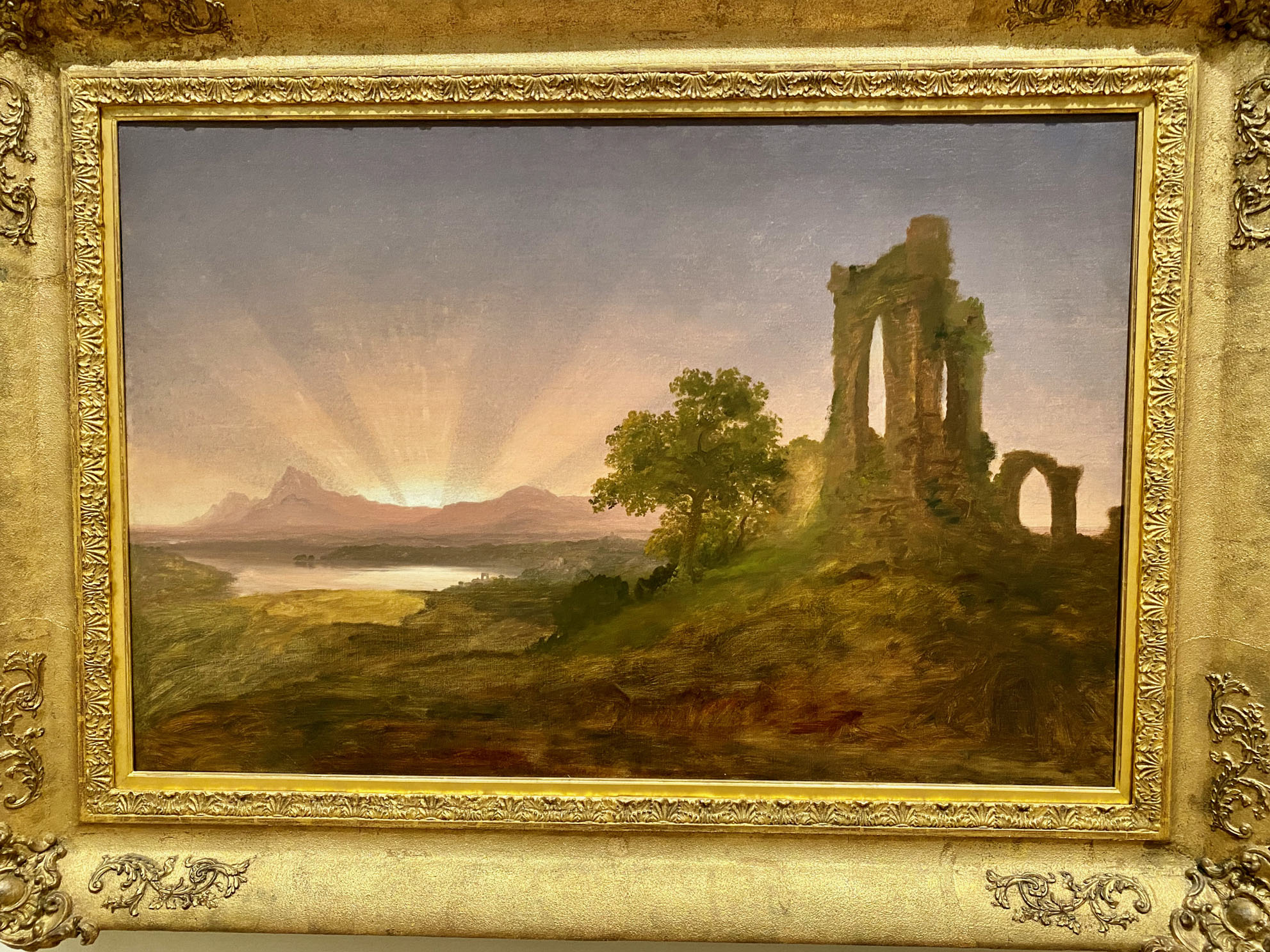
Cole redefined American landscape painting in the 1830s and 1840s by merging the style of romantic European landscapes with the dramatic skies, vistas, and mountains of New York’s Adirondack wilderness. His work kick-started the Hudson River School of landscape painting, and by the time of his untimely death at age 47, he was America’s best known and best loved artist.

Cole’s 1848 Gothic Ruins at Sunset, an unfinished work from his studio. Private collection.
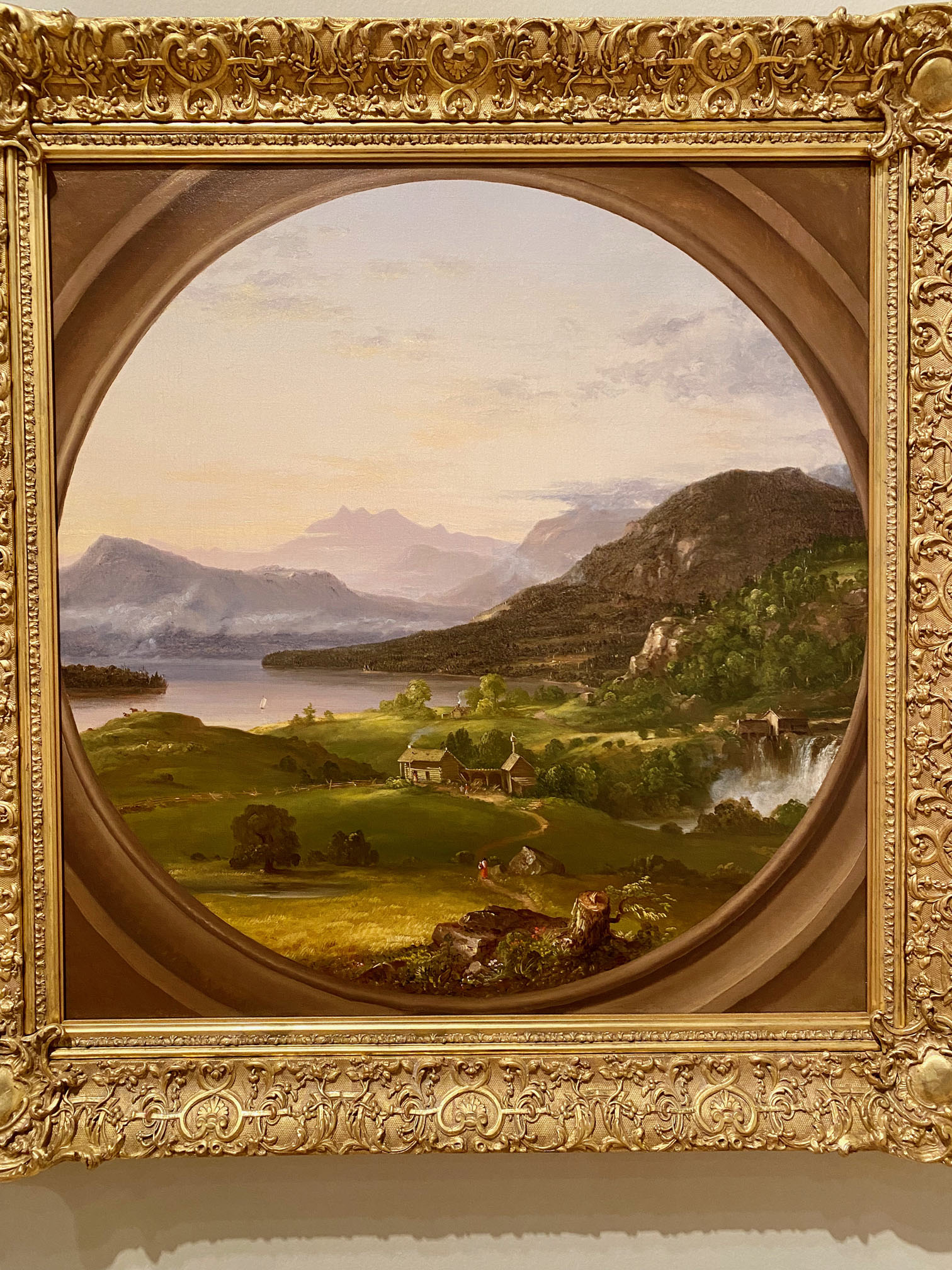
Cole’s 1846 Schroon Lake, showing a civilized landscape at the edge of mountain wilderness. Courtesy: Adirondack Experience

During his life (1801-1848), Cole witnessed how pristine American wilderness was changed by proliferating settlements, roads, bridges, mills, and commerce along the rivers. Sometimes he chose to paint sights, like Niagara Falls, minus human intrusion; other times he gently inserted “civilization” into magnificent landscapes, as in Schroon Lake.

Cole had been a mentor to innovative landscape painters like Durand, Church, Kensett, and Cropsey. When Cole passed away suddenly, they were devastated. His wife left his studio just as it was, and for the next ten years she welcomed painters to make the pilgrimage to visit it, spend time, and gain inspiration.

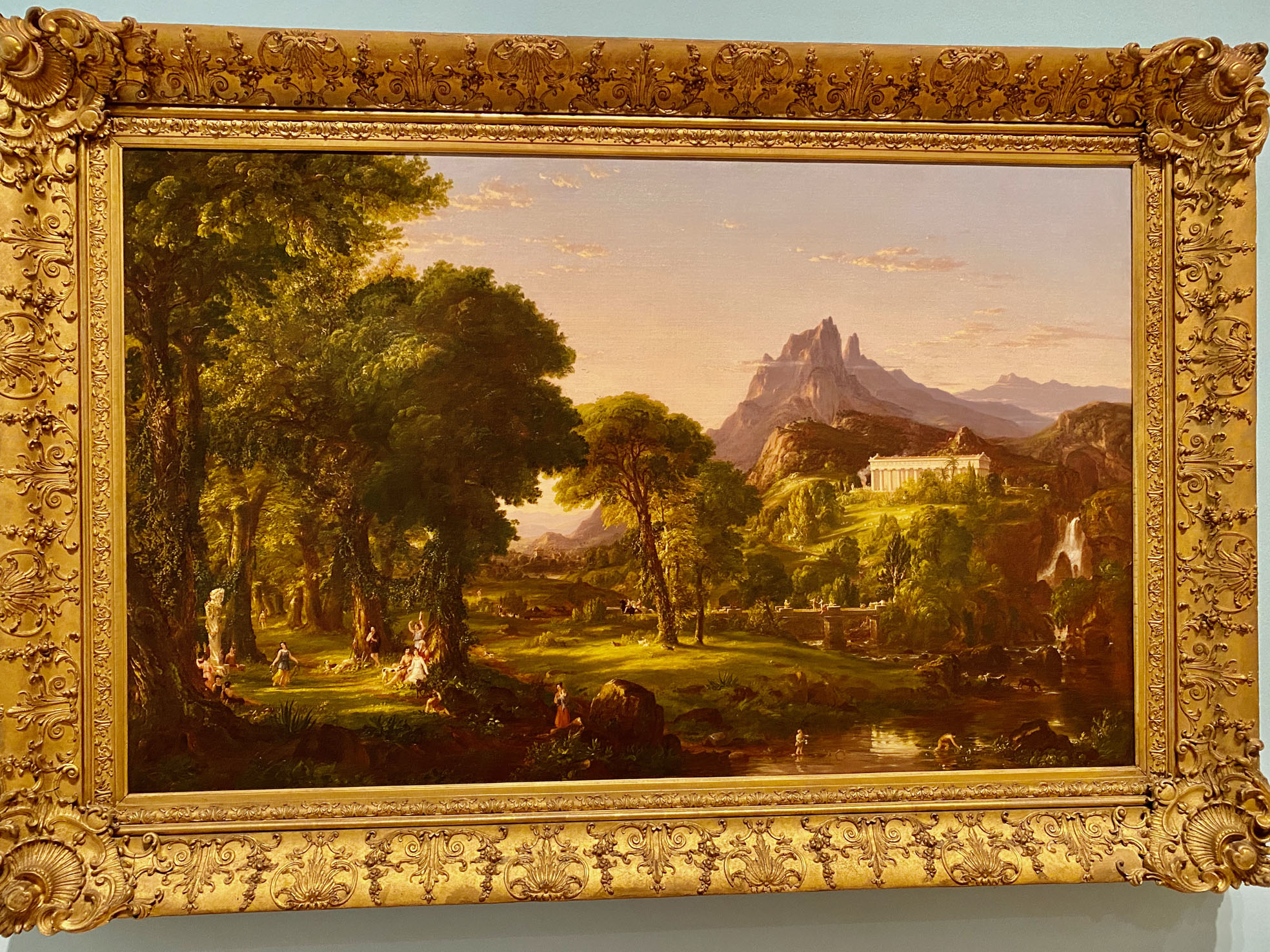
Visitors enter this exhibition and confront Cole’s large 1838 work, Dream of Arcadia, showing a mythical time when civilization existed in harmony with nature.  Can this ideal state truly exist?

Thomas Cole’s 1938 Dream of Arcadia. Courtesy: Denver Art Museum.

The Thomas Cole National Historic site, which organized three of the four shows, answers this question through the eyes of two well-known contemporary artists – Kiki Smith, who owned a house along a creek a short distance from where Cole lived, and Shi Guori, who created camera obscura images at Hudson Valley sites where Cole stood and painted.

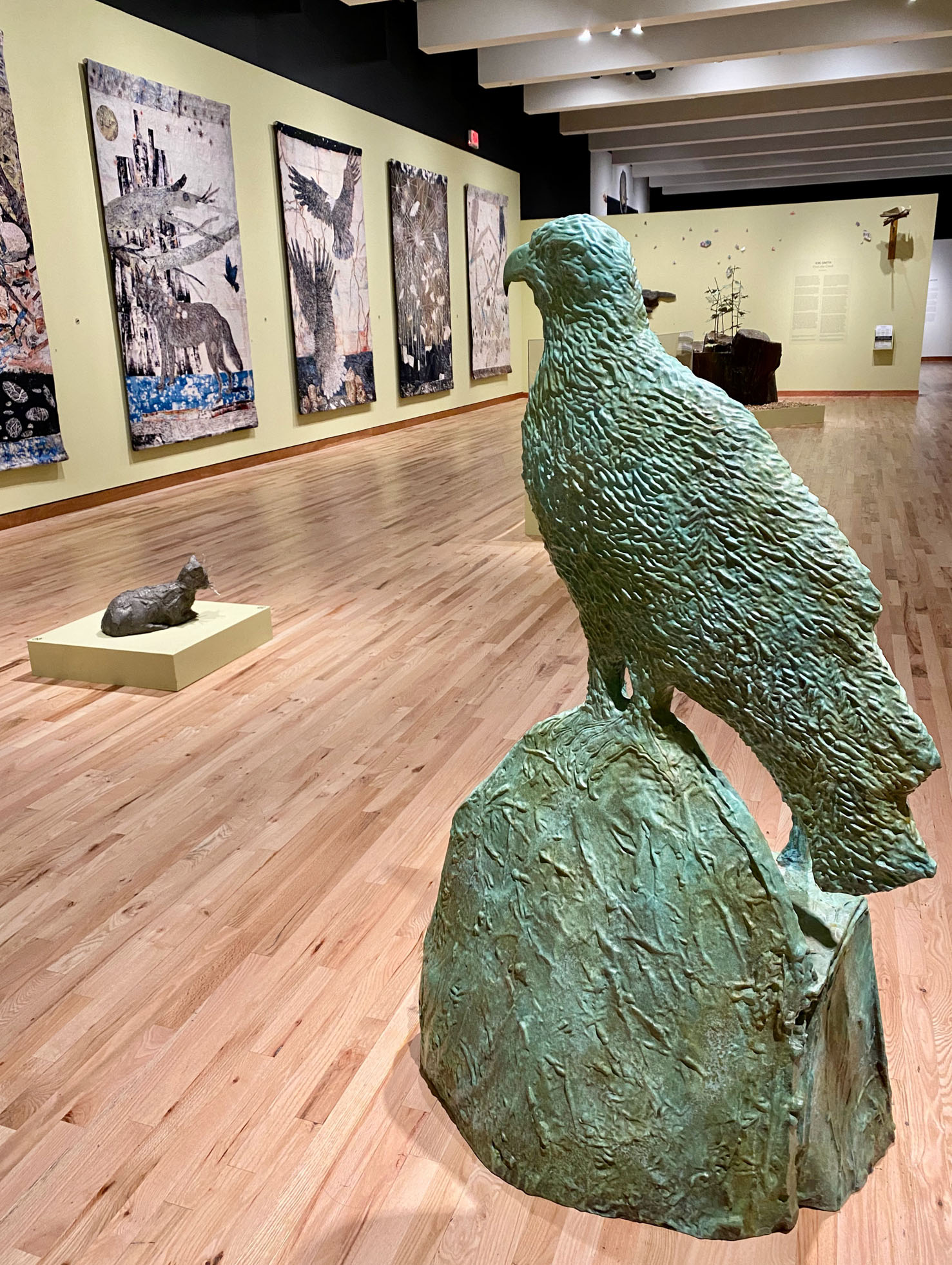
Kiki Smith: From the Creek is an immersive exhibition populated by the birds, beasts, insects, and plants along Catskill Creek – an area that Cole walked and knew well.

Kiki Smith’s 2016 bronze Eagle in the Pines in gallery with 2012-2014 jacquard tapestries

Visitors look up, down, and around to see owls, eagles, wolves, and pheasant peering back at them from perches, tapestries, frames, and vitrines…observing and being observed. Take a look at here.

2019 bronze Coxsackie sculpture of owl at the exhibition entrance.
Detail of Kiki Smith’s 2012 Cathedral jacquard tapestry (published by Magnolia Editions).

Kiki’s work always brings an air of other-worldly mystery. Here, it’s easy to enjoy all of her varied creations, which display her deep connection to nature and ask us to contemplate the cycles of life that busy people sometimes forget to notice. Cole’s paintings had the same impact.

Shi Guori’s Katerskill Falls, New York, July 26-28, 2019 – a 72-hour exposure made where Thomas Cole sketched in 1824. Courtesy: private collection.

Shi Guori: Ab/Sense – Pre/Sense presents monumental camera obscura images of landscapes Cole painted in the Hudson Valley 180 years ago. When he was growing up in China, Guori experienced the shock of rapid environmental disruption as Mao’s Cultural Revolution transformed the countryside.

Guori studied Cole’s documentation of similar 19th-century transformation in the Northeast, and traveled back to sites that Cole documented to bear witness to natural settings – somewhat still undisturbed – that resonated with Cole.

Guori built large camera-obscura tents, sat inside for up to 72 hours, and exposed light-sensitive paper to create his images. Images of Cole’s oil paintings at the same site are mounted nearby with Guori’s meditations on the experience.

Shi Guori’s camera obscura image The Clove, Catskill Mountains, New York, April 25, 2019. Courtesy: the artist
Basis for camera obscura work by Shi Guori: Thomas Cole’s 1827 oil The Clove. Image: Connecticut’s New Britain Museum of American Art.

In one case, Guori turned Cole’s own sitting room into a camera, capturing not only furniture that he would have used, but showing the image of nature that Cole surely would have spent hours gazing upon. View more of Guori’s work here.

Shi Guori’s camera obscura image View of the Catskill Mountains from Thomas Cole’s House, August 12, 2019 – which turned Cole’s sitting room into a camera. Courtesy: the artist

The fourth exhibition, Nicola López and Paula Wilson: Becoming Land, present large-scale environmental meditations on Southwestern desert landscapes. The Albuquerque curators selected these two popular New Mexico artists to get a bit of cross-cultural discussion going with Mr. Cole.

Glimpse some of the work in their gallery here.

Wilson, who works in Carrizozo, creates gigantic, mixed-media installations that prompt viewers to consider the interconnection among different people, desert landscapes, agricultural technologies, and even the debris left by civilization.

Paula Wilson’s 2021 monumental printed and painted installation, Yucca Rising. From the artist.

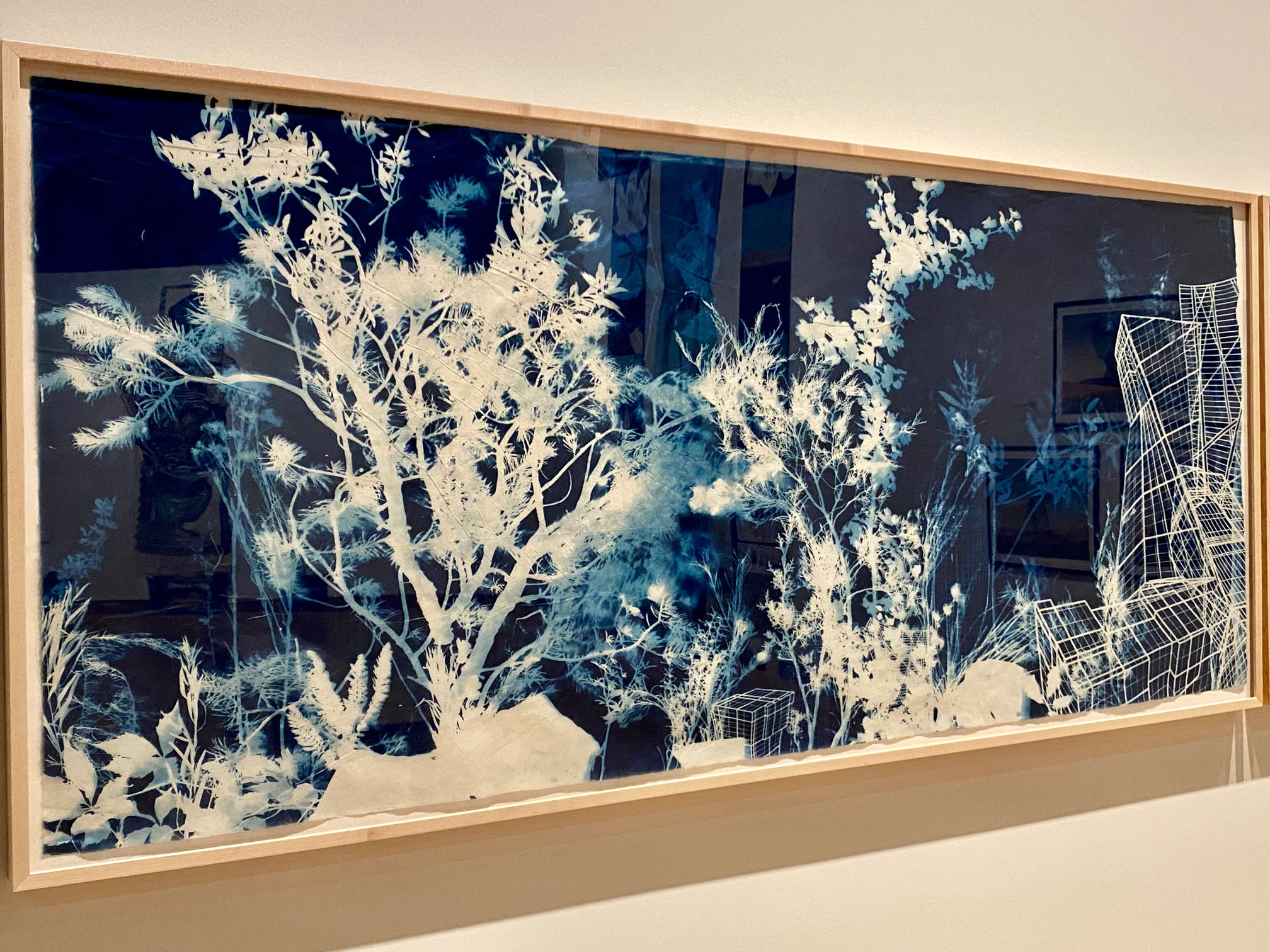
López, who works and teaches in New York, presents a large-scale cyanotype. Unlike Guori, who traveled to the Catskills to create his ghostly images with light, López was unable to travel during the pandemic and made this monumental work at home with the materials around her – a driveway, nearby desert plants, and the blazing New Mexico sun.

Detail of 2021 NeverWild cyanotype by Nicola López – ghostly images of New Mexico plants dwarfing mysterious architectural structures in the desert.

Congratulations to the Albuquerque Museum for inviting Thomas Cole’s team to collaborate in mounting such a beautiful, thought-provoking show.

Weekly Virtual Museum Events – Meditation, Museum March Madness, and Exhibition Tours of Acclaimed Shows

Meditate with the Rubin on Monday.

As you start the week, take a look at the range of on-line events, discussions, art tours, and previews being offered by NYC museum on our virtual events page. Mediate, check out the March Madness museum playoffs, and tour acclaimed shows at the New Museum and the Whitney. Some highlights:

Today (March 1) at 1pm, get centered with a meditation at the Rubin Museum. Join Lama Aria Drolma for a 45-minute program that begins with a discussion of an inspiring work of Himalayan art that will be used for the meditation, a 20-minute sitting session, and a closing discussion. Donations graciously accepted.

Will the Newark Museum win the March Madness playoff against Brooklyn?

Want to get in on the art museum playoffs?  On Tuesday (March 2) at 8pm, there will be an on-line “playoff” for you to help decide whether the Newark Museum or the Brooklyn Museum have the top art collection.  Each institution will be pulling out their top pieces to garner your votes to see who will proceed to the national finals.

The same day at 2:00pm, join the New Museum director for a conversation with Melvin Edwards, the first African-American artist to have a solo exhibition at the Whitney Museum of American Art. Listen in to hear him talk about body of work and his dramatic, moving installation in the Grief and Grievance exhibition.

Work by Melvin Edwards in Grief and Grievance at the New Museum

On Wednesday (March 3) at 4pm, go inside the New Museum to take a virtual tour of this must-see exhibition.

There are two opportunities this week to virtually tour two terrific exhibitions at the Whitney. On Wednesday (March 3) at 7pm, take a tour of the amazing photography show Working Together: The Photographers of the Kamoinge Workshop. On Thursday (March 4) at noon, take a tour of Making Knowing: Craft in Art, 1950–2019, an entertaining walk through the myriad of ways that artists have used traditional craft approaches to making a statement.

On Thursday (March 4) at 8pm, the Newark Museum is hosting another night of competition in the Museum March Madness – the Milwaukee Art Museum vs. Columbus Museum of Art. Weigh in on your favorite!

Liza Lou’s amazing kitchen in Making Knowing at The Whitney

On Saturday (March 7) at 7pm, join the Museum of the City of New York for a “hometown” conversation with acclaimed playwright Lynn Nottage about what it was like to come of age in Brooklyn in the Sixties and Seventies.

There’s a lot more art, history, and discussion, so check the complete schedule. Most of the events are free, but it’s always nice to add a thank-you donation.

Museum Updates

T Rex babies headed to Peoria after March 14

Have you ever wanted to go on one of the sleepovers at the American Museum of Natural History and have the whole place to yourself at night?  The sleepovers are on hold at the moment, but the next best thing is to sign up for an AMNH membership and take advantage of their Thursday Members Nights, where you can have a run of the place for two hours.

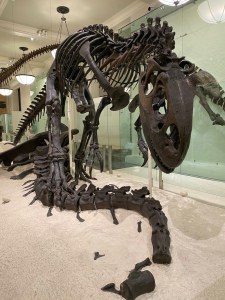
Last week, we had the Dinosaur Halls (and everywhere else!) to ourselves and were able to spend one-on-one time with old friends the Titanosaur, the starry-blue Coelacanth, Allosaurus, and Deinonychus. Maybe there were one or two other people wandering through, but you there is plenty of time and space.

Alone with Allosaurus at AMNH on Thursday nights

We checked in on the special T Rex: The Ultimate Predator exhibition, closing March 14.  If you haven’t seen it, it will be your last chance to see the first full-size, scientifically accurate sculpted versions of T Rex as a baby, four-year-old, and adult.  Next stop on his tour: the museum in Peoria, Illinois.  Midwesterners should get ready!

The Met Asks What the Renaissance Thought It Was Worth

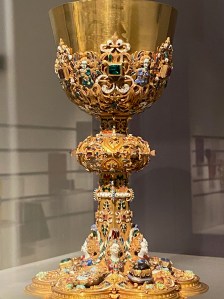
1608 chalice by Otto Meier, Germany. Value = 255 cows.

What kind of art and collectables were Northern Europeans buying in the 16th century? How much were they paying?

The Metropolitan Museum of Art answers that question in a highly creative way in its exhibition, Relative Values: The Cost of Art in the Northern Renaissance, on view through January 2022.

The gallery is filled with a wide range of beautiful objects made in the Renaissance – ceramic containers, cups made from natural shells, bejeweled chalices, gorgeous drinking glasses, fancy sporting boxes, and portable desktop personal shrines. At a distance of 400 years, museums and modern viewers regard them as priceless treasures.

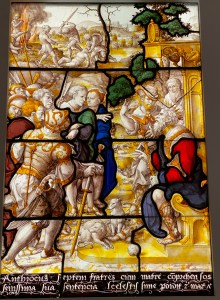
1530-1535 glass painted by Dirck Vellert, Flanders. Value = 12 cows

But the Met curators wondered how much these items cost in their day. How rare were these items in the collection? How much did collectors value them? And how did Renaissance makers market them?

The curators dug into assessments of royal holdings, craft guild price lists, and estate inventories. But understanding pricing was complicated because each price list used different regional European currencies (gilders, shillings, florins, and so forth). Then a light bulb went off.

Across Europe, the price of a cow was stabilized at 175 grams of silver. So, the cost of every item in the show is shown in cows!

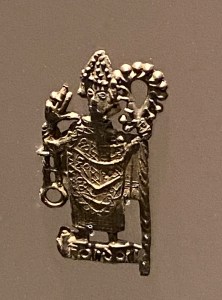
15th c. British or French pilgrims’ badge with Saint Leonard. Value = ½ cow

It’s fun to view the museum’s treasures from this perspective – how many cows was each piece of art worth? Take a look at our Flickr album, which shows some of our favorite treasures from low to high value.

Two of the least expensive items in the show are the ceramic jug used for a silly drinking game (value = 1/8 cow) and the sought-after pilgrim pins that you could pin to your hat to show that you had actually made and completed your pilgrimage across Europe (value = ½ cow). The mass-produced traveler pins seem a little pricey, but probably not compared to the cost of the trip itself. In any case, the pin was probably the only piece of art owned by the lower classes.

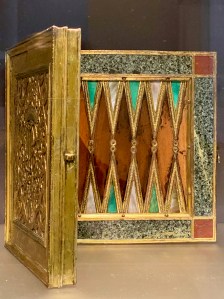
Nobleman’s multi-game board made in 16th c. Spain. Value = 14 cows

Wealthy patrons were attracted to over-the-top virtuoso pieces made from high-priced materials – elaborate traveling game board sets with exotic inlays (14 cows) and silver utilitarian art pieces (10 cows). Commissioning a work from a well-known goldsmith, glass painter, or locksmith drove up the price, especially if you wanted upscale materials.

If you ordered something in solid silver, you could melt it down in a pinch if you needed the cash.

Just like the latest smart device, collectors went wild over buying the latest technological marvel, like automaton clocks (21 cows) or rare natural wonders.  Unusual natural materials and virtuosity really drove up the price. Coconut-shell cups with silver (11 cows) or ruby-eyed rock-crystal carved birds (275 cows), anyone?

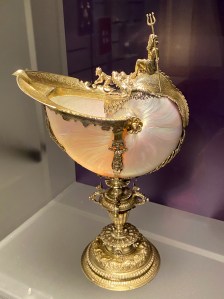
1602 nautilus shell cup, Netherlands. Value = 18 cows.

High-end collectors created cabinets to store their “curiosities” and reveled in showing guests how their advanced mechanical wonders worked or talking about where in the world the unusual materials were sourced.

With economies booming, the merchant and the middle classes desperately wanted to emulate the upper classes, so over the course of the 16th century, demand for fabulous objects only grew. Some makers began using molds to decorate or replicate sculptures to create attractive, but less expensive works for middle-market buyers, such as decorative molded German stoneware (1/2 to ¾ cow).

Some cities began hosting annual art markets, drawing buyers from across Europe. Guilds enhanced distribution by setting up trading posts for their wares in key market towns.

1580 rock crystal bird ruby eyes, Nuremburg. Value = 275 cows

Different from today’s art market that sees paintings at auction in the millions, classical paintings during the Renaissance were relatively inexpensive (5 cows).  Works that emanated and reflected “divine light” were highly prized – painted glass (12 cows), alabaster sculptures (40 cows), and bejeweled chalices (255 cows). And tapestries, which took forever to make, were considered the ultimate luxury.

To capitalized on the demand, the design/art stars of the day worked across media, elevating value of less expensive works by putting their highly prized monograms on prints and ceramics as well as high-end masterpieces, channeling their inner Andy Warhol.

Take a look at all of the wonders in the show on our Flickr album and on the Met website, were you can click on each work and then click to see where it falls on the museum’s incredible, feature-rich Timeline of Art History.

Weekly Virtual Museum Events – Green Book Trip, Willi Smith, Ice Cores, Revolutionary Design, and Museum Scavenger Hunt

NYC fashion designer Willi Smith, ca. 1981. Courtesy: Kim Steele

Mark your calendars for any (or all) of fifty special on-line events sponsored by NYC museums, including a trip inspired by The Green Book, a tribute to a fashion designer who electrified runways in the Eighties, a look under Greenland’s ice, a Q&A on MoMA’s revolutionary design show, and a game-night trip to 18 American museums (with prizes!).

There are many other Black History Month events, discussions, art tours, and previews, so check the week’s listings on our virtual events page. For starters:

Sights along the road trip Driving the Green Book at MAD Museum Monday.

Today (February 22) at 6pm, hit the road with Alvin Hall, Janée Woods, and MAD Museum to learn about a 2,021-mile road trip that they took, inspired by the historic Green Book, which guided Black American motorists on family road trips for decades. The event will be an extension of their podcast, “Driving the Green Book” and feature lots of photos of what they found along the way.

CITIC Tower talk at the Skyscraper Museum

On Tuesday (February 23) at 12:30pm, join the Cooper-Hewitt in its tribute to Willi Smith, the beloved, exuberant fashion designer who dressed all the fun people in the Eighties. Since the museum has been shuttered nearly a year, few were able to see the Willi’s retrospective inside the Carnegie Mansion. So, our national design museum has declared “Willi Smith Day” so that it can shine a light on this historic Black designer for the world to see.

Get inside a supertall building. At 6pm, jet off to Beijing with the Skyscraper Museum and Robert Whitlock, the architect of the city’s tallest buildings. Hear about the design and construction of the CITIC Tower, whose shape is inspired by an ancient ritual vessel from China’s Bronze Age. This is just one of several upcoming talks at the museum on supertall buildings.

African Burial National Monument program at the Tenement Museum

Want to travel back a few centuries? On Wednesday (February 24) at 1pm, visit the Tenement Museum and the African Burial Ground National Monument for a talk on lifestyles of two African families living in old New Amsterdam. Using original source materials, you’ll get a fresh understanding of everyday life in mid-1600s Manhattan.

NYBG’s edible archway

At 6pm, take a trip around the country with a preview of the latest exhibition at the International Center for Photography. Join photographer-curator Paul Graham to walk through the exhibition But Still, It Turns: Recent Photography from the World. Celebrate unexpected journeys and enjoy the nondocumentary approach (no stories, just looking).

On Thursday (February 25) at 11am, start the morning with the New York Botanical Garden’s program with Leslie Bennett of Pine House Edible Gardens on creating gardens of sanctuary. Learn how she creates inspirational gardens that are organic and yield plenty of food, flowers, and medicinal herbs.

Icebergs now, but what happens if Greenland melts?

Thinking about climate patterns recently? Get a completely different perspective.  At 2pm, join a glacier scientist in Beneath the Ice at the American Museum of Natural History to learn what happens when Greenland’s ice melts. You’ll look at how ice core samples are taken, what they show, and how they are being used to predict what’s next with the climate.

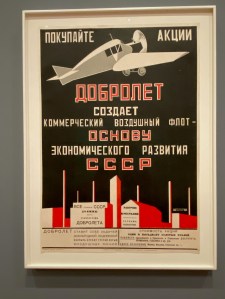
Rodchenko’s 1923 Russian airline poster at MoMA

At 8pm, visit revolutionary Russia and see what role designers played with Jodi Hauptman, MoMA’s senior drawings and prints curator, and Ellen Lupton, Cooper Hewitt’s senior curator. Angles, fonts, photos, montage, social issues, and politics will be flying fast and furious as Jodi and Ellen answer your questions about the lives and fates of the artists behind the hundreds of 1920s and 1930s ads, posters, brochures, and magazines showcased in Engineer, Agitator, Constructor: The Artist Reinvented­.

Haven’t you been dying to take a vacation? On Saturday (February 27) at 8pm, join the New York Historical Society and Watson Adventures for a live, virtual scavenger hunt that will take you to 18 different museums across America to search for clues among the history, art, and design collections. Get a team! Have fun! Win prizes!! Co-sponsored by the Museum of the American Revolution and Missouri Historical Society.

There’s a lot more art, history, and discussion, so check the complete schedule. Most of the events are free, but it’s always nice to add a thank-you donation.

Museum Updates

2020 painting by Henry Taylor at New Museum

We were able to get a ticket to the New Museum’s acclaimed exhibition this opening week, Grief and Grievance: Art and Mourning in America, and were happy to attend last week’s on-line curators’ panel (available here).

It’s a beautifully installed show, filled with top-notch painting, sculpture, music, performance art, and films that deliver on so many levels.

Still from Gone Are the Days of Shelter and Martyr, a 2017 video by ©Theaster Gates. Courtesy: White Cube and Regen Projects, Los Angeles

We’ll be reporting on this show soon, but in the meantime, we want to draw your attention to the weekly (and bi-weekly) panels that New Museum is offering on-line with many of the participating artists. This week, New Museum is speaking with South Side Chicago artist Theaster Gates, represented in the show by a performance video recorded in a church in the process of being demolished. Viewers inside the video gallery were mesmerized.

We’ll be featuring New Museum’s upcoming events on our weekly listing, but check out everything coming up over the next six weeks here under Conversations.

Walking into the Countryside and its Future at The Guggenheim

An innovative, continuous exploration about rural areas along the futuristic ramps

Want to go for a trip around the world? Visit out-of-the-way places? Meet interesting people?

There’s no better trip than hanging out with Rem Koolhaas and his think tank, AMO, in their all-encompassing exhibition, Countryside, The Future, on display at The Guggenheim through February 15.

It’s a colorful, engaging, data-driven, and provocative show that began as a response to the fact that population projections show indicate that in the not-too-distant future only 20 percent of people will live in the countryside.

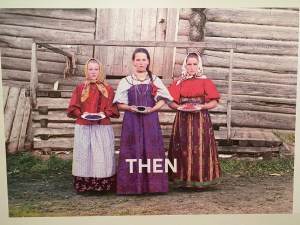
1909 photo of three peasant women in Kirilov, Russia

Rem, Samir Bantal of AMO, and their university collaborators believe that many of the most important, exciting, and radical innovations are happening outside cities, and this is their way of taking you there.

You’ll zip into the past, zoom into current village experiments, watch videos, and meet robots as you swirl your way up the Guggenheim’s ramps.

Listen to famed architect Rem Koolhaas explain the context for the project and research that make up this extraordinary experience:

As this promo notes, this exhibition opened just a few days before New York City and all the museum shut down to mitigate the pandemic. The team did not foresee the impact that the pandemic would have, but the exhibition could not be more of the moment.

1,000 Koolhaas questions about the countryside and society

In the audio guide, the curators say that you can view the exhibit like a buffet (just snacking on this and that) or dive in and read/see everything.  When we experienced Countryside, everyone was digging in, reading, watching, absorbing, and interacting with everything.

View part of the exhibition in our Flickr album.

The show begins with Rem’s 1,000 questions about the world and the future. He makes it clear that he and the team are not there to provide answers – that’s up to you.

How “countryside” has been equated with leisure since Roman times

There’s a walk through history on the next level by way of fun floor-to-ceiling collages filled with Romans from murals, Chinese people from scrolls, quotes, and fun facts – all to drive home the fact that for 2,000 years, major urban sophisticates have seized upon the idea that city people need to visit the country for peace, quiet, contemplation, leisure pursuits, and artistic inspiration.

The history walk continues by exploring Marie Antoinette’s decision to create a rural “hamlet” on the Versailles grounds, the desire of Sixties Hippies to create communes in the country, and the emergence of today’s rural “wellness” spas and retreats.

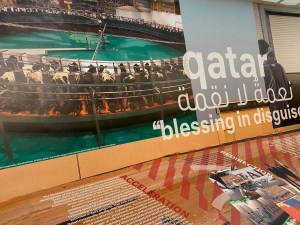
Qatar’s solution to achieving national food security after the June 2017 border closure

The story continues by presenting details about efforts by famous political leaders to “redesign” their countries rural regions on a large scale – Jefferson’s adaptation of the 640-acre grid for developing the West, how the Soviets scaled up collective farming, FDR’s “shelterbelt” policy to minimize soil erosion in the Thirties, and the agricultural emphasis in Mao’s Cultural Revolution.

The most startling story is how Qatar, which imported the majority of its food, did years of research into ways it could be self-sustaining. When the Saudis jammed Qatar’s border in 2017, the country already had a plan. Within 36 hours, it airlifted in 4,000 cows and milking machines, a move that immediately (and successfully) started its domestic dairy industry.

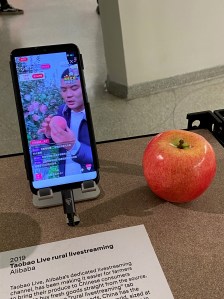
Chinese service that lets city dwellers select apples from trees

The exhibition takes you to villages in China where interesting things are happening – a dying farming town that transformed itself into a “wellness” tourist destination, and an apple-growing region that uses livestreaming on mobile phones to let city-dwellers pick out the specific apples that the villager will pick and ship to them overnight.

The exhibition includes mini-galleries on the move to “preserve” nature, presenting facts and posing land-use questions related to mountain gorilla habitats in Central Africa, permafrost melts that are exposing mammoth fossils, and American billionaires buying and preserving Patagonian land.

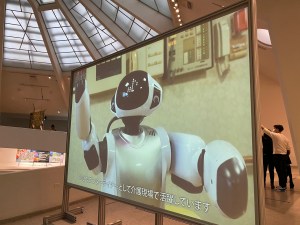
Humanoid PALRO robot from Fujisoft in action

The top floor is alive with roaming robots powered by Roombas, who invite you to enter mini-theaters to see worlds beneath the ocean, developments of industrial facilities run completely by robots, and vast expanses of industrial-level agriculture. You’ll even meet PALRO, Fujisoft’s humanoid robot who hangs out with seniors in Japan, and Prospero, a little robot farmer that’s designed to work in swarm teams.

Hear all about the research and collaborations behind the exhibition and how the exhibition design brings it all to life:

To take a leisurely stroll through the future, listen to the audio guide.

For the full report, purchase the book (a steal at $12).

Virtual NYC Museum Events – Harlem Heavyweights, Design Disrupters, Rap History, and Gulla Cooking

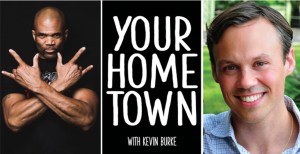
Darryl McDaniels of Run-DMC talks with Kevin Burke at MCNY

Despite the massive nor’easter moving through New York, we’re assuming that the virtual NYC museum events are happening as planned – an opportunity get behind the scenes of New York’s hottest photography show, visit a West Coast design archive, meet a Rock legend, and dive into historic Southern cuisine.

Check the daily listings on our virtual events page to for these events and details on many, many others.
The Kamoinge workshop show at The Whitney. Meet the artists this week.

We want to alert you all to the upcoming opportunities that the Whitney is offering to showcase the photographers and work featured in Working Together: The Photographers of the Kamoinge Workshop. On Wednesday (February 3) at 7pm, you can meet the Kamoinge artists live and hear them talk about how Harlem influenced their work. On Friday (February 5) at 3pm, see which artists used “the body” for inspiration and which contemporary photographers take on similar themes.

Two tours of the Morgan’s David Hockey show this week.

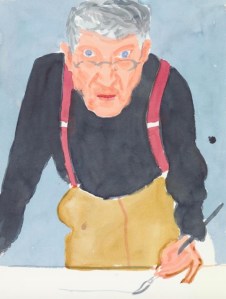
Also, just a reminder that there are two opportunities to walk through the Morgan Library’s David Hockney life-drawing show – on Wednesday, February 3 at 3pm and on Thursday, February 5 at 12:30pm.

Here’s how the rest of this week will shape up, with just a few suggestions (see the entire list here):

On Tuesday (February 2) at 4pm, take a trip to California with the Poster House to hear Letterform Archive’s Stephen Coles talk about (and show examples of) what happens when graphic designers break the rules of what typically constitutes good design.

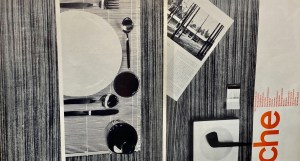
Close-up of Swiss grid at Poster House. What happens when designers ignore it?

At 7pm at the Museum of the City of New York in the Your Hometown series, meet Rock and Roll Hall of Famer Darryl McDaniels of Run-DMC who will talk about growing up in Queens during the Sixties and Seventies and how the lessons learned contributed to becoming a rap icon atop the music industry.

On Wednesday (February 3), you can join two programs that take you inside museum collections and exhibitions to ask questions about how indigenous cultures and artists are represented, and what is changing.  At 6pm at Bard Graduate Center, hear about “Indigenous Arts in Transition” from two Native American curators in Minnesota and Oklahoma.

Boy’s hide shirt made by female Crow artist in 1870-1900 displayed at the Met in 2017

At 7pm, join the SciCafe crowd for a talk and Q&A on “Museums and Race” at the American Museum of Natural History that has a long (and current) history of grappling with these issues. Anthropologist Monique Scott will focus on African objects in the collection in New York and other museums around the world.

At 8pm, join the Museum of Food and Drink (collaborating with the Smithsonian Folklife Festival) for a fun dive into regional cooking in “Sustaining Gullah Geechee Cooking across Land and Sea.” You’ll hear a fascinating migration story told through food and learn how to make crab fried rice.

There’s a lot more music, science, and get-togethers, so check the complete schedule. Most of the events are free, but it’s always nice to add a thank-you donation.

Museum Updates

Toxic Titan program at the AMNH Hayden Planetarium last week was a hit

We dropped in on fun virtual events last week at the AMNH, Fraunces Tavern Museum, and the NYPL’s discussion with Amber Ruffin, and couldn’t have enjoyed them more!

The Toxic Titan show with the Hayden Planetarium crew had nearly 400 viewers from around the world!  Congratulations to the virtual team, who even un-muted everyone to give the crazy-good speaker a live round of virtual applause!

Get to the Guggenheim by February 14!!

Before the storm hit, we were able to visit the Guggenheim to see Countryside, the Future, the spectacular show by AMO/Rem Koolhaas. Although the curators say you can either breeze through or read through it slowly, the crowds were definitely making the most of their time and digesting everything – the history of our obsession with country and leisure, the ways 20th-century leadership tried to reshape vast swaths of their countries, and the efforts going on today to reimagine non-urban environments in Africa, the Middle East, the Arctic, and everywhere.  It’s a must-see. Two more weeks.

Virtual NYC Museum Events – Women with a Message, Pop Shop History, and Toxic Titan

Gloria Steinem and Julie Taymor at Asia Society on Monday

So many virtual NYC museum events are happening online this week – an opportunity to meet amazing women, bring organization to your life, attend a premiere at The Met, and get the inside story on Saturn’s moon, Titan. Check the daily listings on our virtual events page to for these events and details on many, many others.

Today (January 25), at 6:30pm, you can join an exciting event at Asia Society – a conversation with Gloria Steinem and director Julie Taymor, followed by a panel of visionary activists discussing how visionary women are serving as agents of change as people in our world grows more interdependent.

Tuesday talk at Japan House

Is it time to pare down? Purge stuff? Feel more organized? On Tuesday (January 26), at 6pm, join Japan House to hear Fumio Sasaki talk about how to live a more ordered, fulfilling life – all included as part of the theme of his new book, Habit-Making: A Minimalist’s Tips for a Better Life.

At 7pm, enjoy The Met will debut a music and film collaboration on the life of Armenian-American abstract painter Arshile Gorky, who immigrated with his family in the early 20th century and influenced a generation of abstract expressionists. Watch the digital premiere of They Will Take My Island.

Curious about why Manhattan has such a big park in the center of the island?

Wednesday history of Central Park (NYHS)

On Wednesday (January 27), at 3pm, hear the New-York Historical Society talk about the origins of Central Park. You’ll get to see what’s in the NYHS archive, view the plans for its design, see construction photos, and learn about the shocking removal of Seneca Village, a thriving African-American community.

At 6pm, you can learn about more recent history with the Brooklyn Museum. Amy Raffel will talk about her latest book on the legendary Keith Haring, how he created New York’s most popular memes, and what he sold in his famed downtown retail experiment, the Pop Shop.

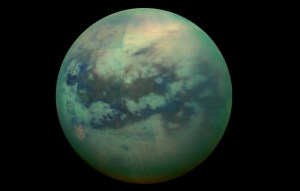
Composite infrared image of Titan from NASA’s Cassini spacecraft. (University of Arizona/University of Idaho/NASA/JPL)

At 7pm, join planetary scientists at the Haden Planetarium at AMNH to examine Titan, Saturn’s large but toxic moon. Understand the questions scientists are trying to answer, and whether Earthlings have lessons to learn from their solar-system neighbor.

Love gardening?  Why is that? On Thursday (January 28), spend the morning at the New York Botanical Garden with UK psychiatrist-gardener Sue Stewart-Smith, who will share insights revealed in her book, The Well-Gardened Mind – how people’s minds and gardens interact.

Gardens at the New York Botanical Garden

Get a perspective that you’ve never had before from people you’ve never met – participants in a ground-breaking filmmaking workshop. At 6:30pm on Thursday night, go behind the scenes at MoMA P.S.1 to meet the organizers of the workshop and watch films made by imprisoned artists in “Pens to Pictures” – a media showcase that accompanies P.S. 1’s art exhibition, Marking Time: Art in the Age of Mass Incarceration that critics at The New York Times said was one of 2020’s best.

At 8pm, join the New York Public Library to hear Amber Ruffin, one of the funniest women in late-night TV, and her sister Lacey Lamar compare notes on hilarious and harrowing experiences with racism in New York City and Nebraska – all drawn from their new bestseller, You’ll Never Believe What Happened to Lacey

Yes, it’s serious, but it’s also really, really funny.  Amber’s first African-American woman to write for a late-night network show, and if you’ve seen her with Seth Myers, you know what we’re talking about. Don’t miss this!

There’s a lot more, so check our complete schedule. Most of the events are free, but it’s always nice to add a thank-you donation.