Virtual Indie Declarations

It’s never really the Fourth of July in New York without seeing Tom J’s annotated copy of his Declaration of Independence that’s usually shown this time of year at the New York Public Library.
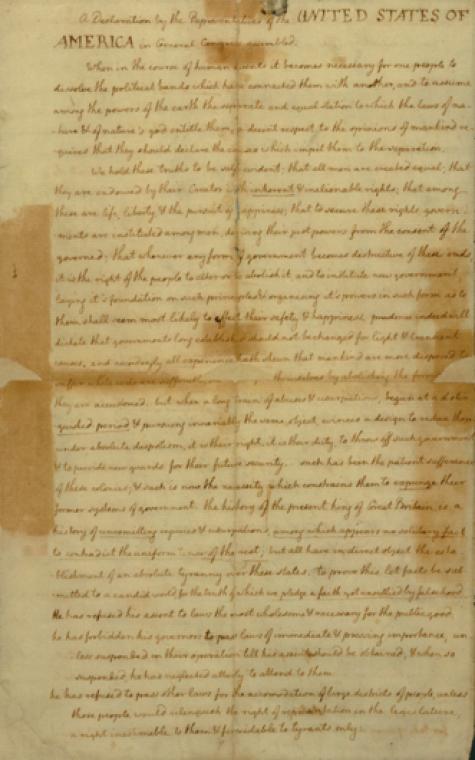
Because Tom’s two-page handwritten draft was diplayed all year in NYPL’s 100th anniversary exhibition, the Library has decided that “It will be given a rest of a few years…” Even though you’re not able to visit Tom’s Declaration in person, the library’s digital team has made it available on line, along with a number of its other revolutionary treasures. Check out:

Ben Franklin’s June 21, 1776 note to General Washington (written while Tom was toiling away in the Philadelphia’s sweltering summer heat) that “a Declaration of Independence is preparing”.

Tom’s original draft of the Declaration with his paragraph objecting to the slave trade, which Congress forced him to edit out. (Check out this blog posting at NYPL and click on the images for a larger view.)

Tom’s clean draft that became official.

Also check out the first news report on the Declaration in The Pennsylvania Evening Post (dated July 6, 1776), telling everyone that something was up, followed by the classifieds on page 2.

Manhattan’s Digital Grid

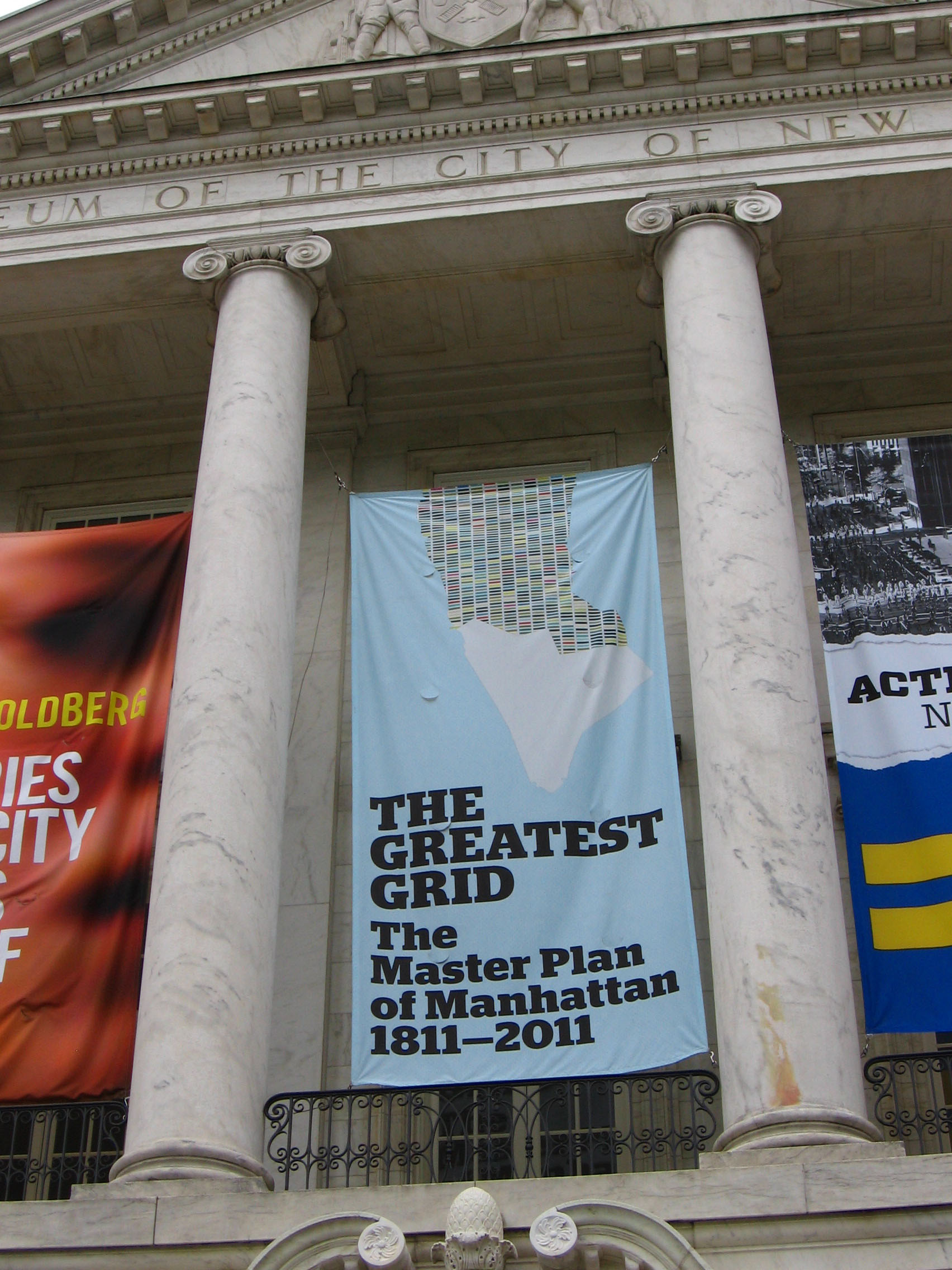
How much fun can you have with the Manhattan Grid? Plenty, if you have computer access and can make a trip (before July 15) to the The Greatest Grid exhibition at the Museum of the City of New York.

Plan to spend a couple of hours wrapping your mind around how the farmland in your neighborhood was leveled by hand and horse cart to make the wide, smooth streets and sidewalks we’re used to today. (You’ll quickly see that the East Side’s Second Avenue Subway construction isn’t that big a disruption after all!)

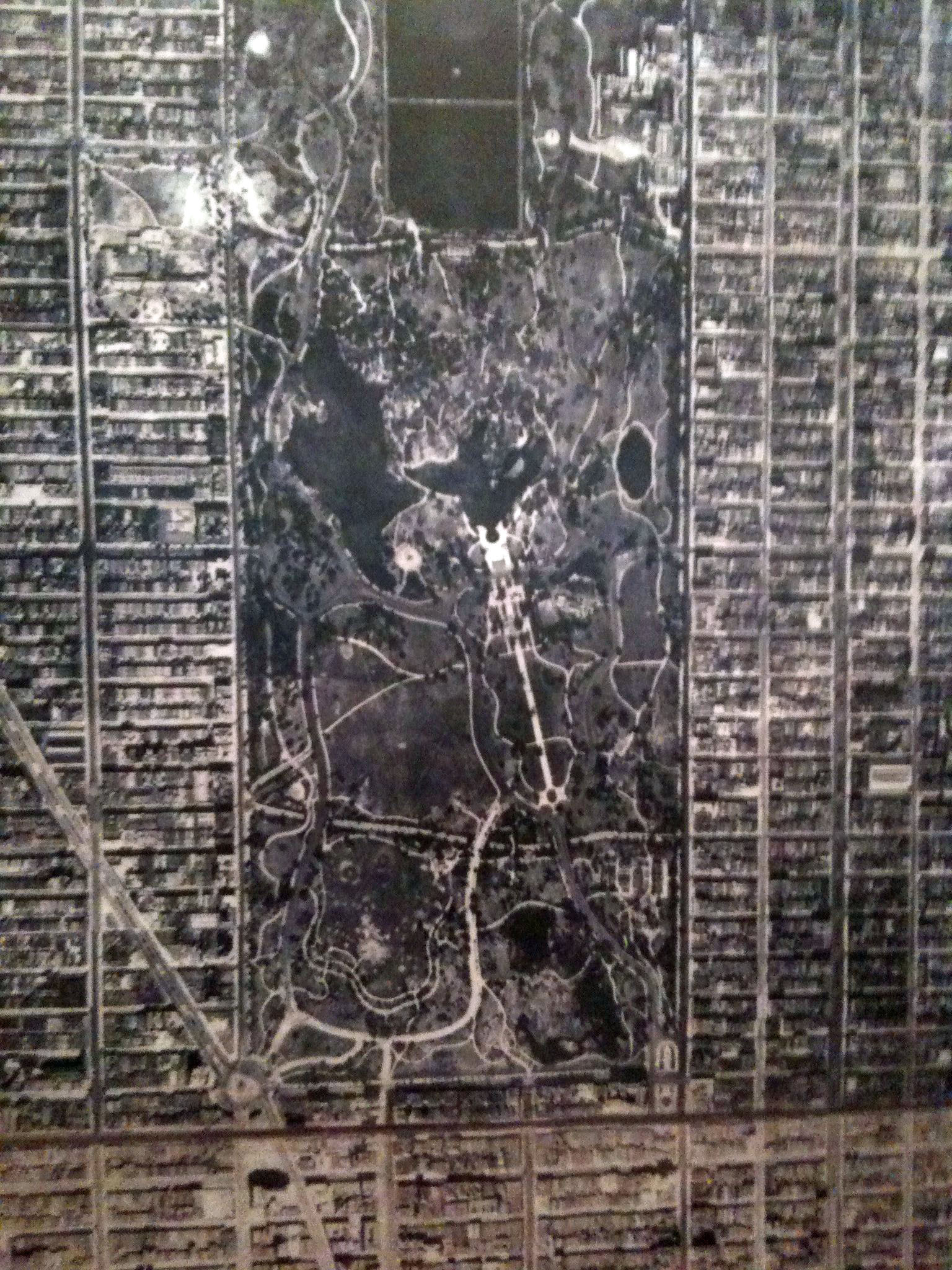
Go online and check out one of the exhibit’s highlights – a digital composite of 92 farm maps drafted in 1818-1820 by John Randel, Jr. to show how the grid would bisect various hills, rivers, streams, swamps and pastures in years to come. Zoom in on your street and see who owned your property in the early 1800s, and read how MCNY worked with the City create this cool online map.

Also, take a look at the digital maps posted by The New York Times, including Randel’s big 1811 map of the grid (the centerpiece of the MCNY show), the 1836 farm map, and other interactive images created by the NYT team. Clicking through the views on the left will reveal all sorts of interesting history.

Check out the Channel 7 Eyewitness News video, featuring an interview with the curator (NYU’s Hillary Ballon) and a peek inside the show.

Want to do a little time travel on the modern version of the Manhattan grid or another borough? It’s easy. Go to NYCityMap and type in an address. When the schematic map appears, clock on the “Photo Camera” icon at the top of the map and you’ll see an aerial view of the neighborhood. Move the slide bar to enjoy the view to any time between 1924 and today to see what the block was like way back when.

When Coffee Houses Were Facebook

You have one more week to find out what the 18th century social network was like at the intriguing exhibition at New-York Historical on the events that propelled simultaneous American, French, and Haitian revolutions.

Girodet’s 1797 painting of Jean-Baptiste Belley from Versailles

As soon as you enter Revolution! The Atlantic World Reborn at the New-York Historical, you find yourself inside the social hub a Caribbean seaport city in the mid-1770s – the coffee house, where people reread month-old newspapers, asked arriving seamen for news, discussed European imperials, and complained about taxes, trade, and tyranny.

Winding your way through the history maze, you’ll encounter the original penned version of the Stamp Act (1765), the first edition of Thomas Paine’s Common Sense (1776), and Napolean’s approval to sell Louisiana to the United States (1803). The story line weaves in the slave trade, the Haitian revolution, and the rise of voodoo in the Caribbean – a unique retelling of rebellion in the time of colonialism.

See the artifacts on line, but connect the dots to revolution by dropping into the exhibition this weekend.

And don’t miss the lobby painting featuring New York’s first big-time 18th c. social network — the Tontine Coffee House on Wall and Water, built by the brokers in 1793 to organize The New York Stock Exchange.

Last Look at Soon-to-Close Theater Museum

Friends enjoy reviewing the wall of 1900s showgirl cards, showing scantily clad actresses in “classical” garb

With Rick McDonald at the piano of the 1924 speakeasy, Bill’s Gay Nineties, last Thursday night, the crowd was singing, the joint was jammed, and dozens of hungry diners were climbing the stairs to sit in the gaslight glow of the second-floor dining room, packed with carefully preserved playbills, theater cards, and lithographs of the men and women who built the foundation of the American theater and founded the form that is American popular entertainment — George M. Cohan, Buffalo Bill Cody, Enrico Caruso, Tony Pastor. The list goes on and on.

This temple to theater, created in the 1920s by the original Bill’s wife, a former Ziegfeld girl, is about to close on March 24.

How fortunate that we met a master vaudevillian and Coney Island sideshowman, Todd Robbins, who (between a few tableside magic tricks) walked us through the history of the place, the legacy of the hundreds of show people gazing down on our dining table, and stories of how George Burns, Jack Benny, and the pantheon of American entertainers found solace around Bill’s piano (just like us) in decades past.

How comforting to be amongst other time-travelers in this unique and soon-to-be-gone living, breathing archive of the last 150 years of American entertainment. Take a walk around Bill’s with us. These Flickr photos are sometimes a little blurry and hard to make out, but they seem appropriately evocative for a room, history, and gathering spot that will soon be like the celebrities on these walls…fading but important memories of spectacular, vibrant nights spent singing and sharing the high points of the latest Broadway debut.