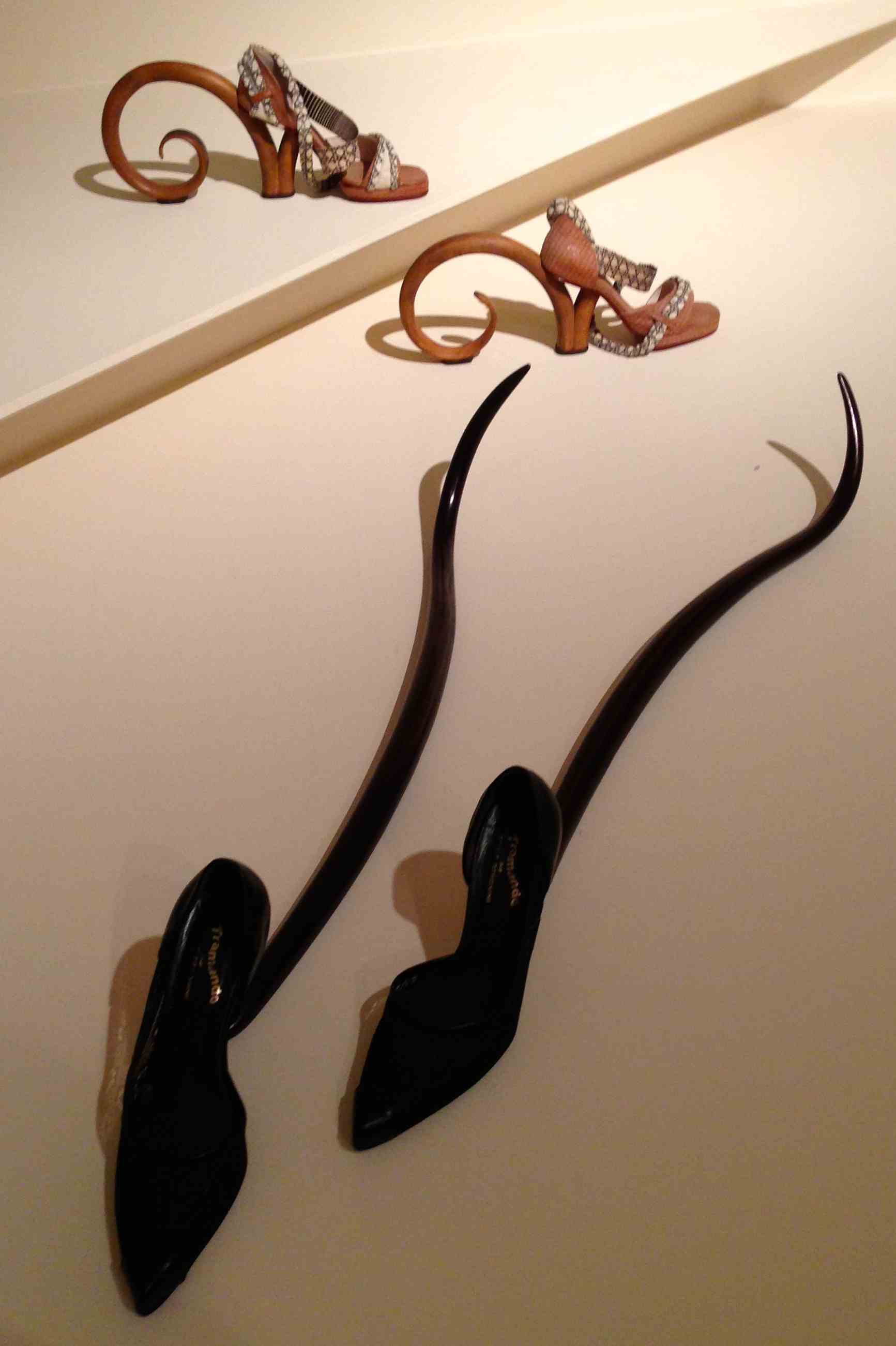
Wood Goes Against Grain at MAD

Pablo Reinoso's whimsical wooden shoes

Pablo Reinoso’s whimsical wooden shoes

All those years walking up and down the aisles at craft fairs may have you convinced that there’s nothing new in wood art. Get over to the final days of Against the Grain: Wood in Contemporary Art, Craft, and Design at the Museum of Art and Design.

It’s not what you’d expect, and curator Lowery Stokes Sims has done a magnificent job in telling us what’s trending now with forward-looking artists on the scene.

In short, she focuses her two-floor exhibition on seven trends that she sees: Artists, like Ai Weiwei, working on socio-political themes, whimsical designers who make us smile, digital artists pushing the envelope with wood, collages, virtuoso technique, takes on trees, and works that just capitalize on the beautiful texture in the wood itself.

Check out our Flickr feed for views of some of our favorite works, and MAD’s four-minute video as Sims herself walks you through the show, the artists, and her thinking about the pieces and themes.

Steam-bent ash chairs by Christopher Kurtz

Steam-bent ash chairs by Christopher Kurtz

But let’s focus on some of our favorites, which you can see on Flickr.

Wood as fashion: What about these shoes by Pablo Reinoso? If you’re thinking Dutch wooden shoes, think again, because these dainties are inspired by Thonet chairs, that he’s embellished with long, wooden “tails”. Or wooden hats by fashionable Moody & Farrell of London.

Music: How did Maria Elena Gonzalez go from looking at a fallen birch tree to creating paper-thin birch rolls that can create stunning music on a player piano? Watch and hear it all on this video of her player piano in action.

Laurel Roth's Hominid Chimpanze (2011) from vere wood with Swarovsky crystals in the teeth

Laurel Roth’s Hominid: Chimpanze (2011) from vere wood with Swarovsky crystals in the teeth

How-did-they-do-that category: Bud Latvin’s gravity-defying wooden spiral sculptures, Christopher Kurtz’s impossible steam-bent chairs, and Elisa Strozyk’s wooden textile.

Recycled surprises: Think about what it took to turn 8,000 recycled chopsticks into a collapsible sofa. Good going, Yuya Yoshida.

If you can get to this show today or tomorrow, go. If not, take time to meet Leonard Drew in his studio, see his wood works in progress, and hear what success in wood feels like:

Amazing Baby Shoes Under the Met’s Stairs

Infant-size palm leaf sandals (only 2 x 5 in.) made at the Kharga Oasis, Byzantine-era Egypt (4th-7th c.)

Infant-size palm leaf sandals (only 2 x 5 in.) made at the Kharga Oasis, Byzantine-era Egypt (4th-7th c.)

Will all the excitement over babies this week (the Royals and the Fallons), you might want to sneak a peak at some of the most perfect infant shoes ever, on display at the Met’s micro-exhibit, Objects from the Kharga Oasis, right under the grand staircase just past security until August 4.

Back in the 1930s, Metropolitan Museum archaeologists found this pair of infant sandals crafted beautifully from palm leaves at an oasis in the western Egyptian desert that was one of the earliest frontier Christian communities serving the trans-Saharan caravan routes.

The shoes are tiny – only about 2 x 5 inches – and were made during the Coptic (Byzantine) era sometime between 300 AD and 600 AD. There are also 1,500 year-old linen tunics and caps for kids and adults nearby, too. It’s amazing that the clothing survived at all.

Totally wearable Kharga bracelet. Iron from 4th-7th c. Egypt. Source: Met

Totally wearable Kharga bracelet. Iron from 4th-7th c. Egypt. Source: Metropolitan Museum of Art

Besides building churches (and there are plenty of photos and illustrations in the show), the communities around Kharga were busy growing grains, sesame, olives, and grapes. They apparently had a huge business making and exporting wine to the thirsty Egyptians 150 miles east along the Nile and 400 miles northeast in Cairo.

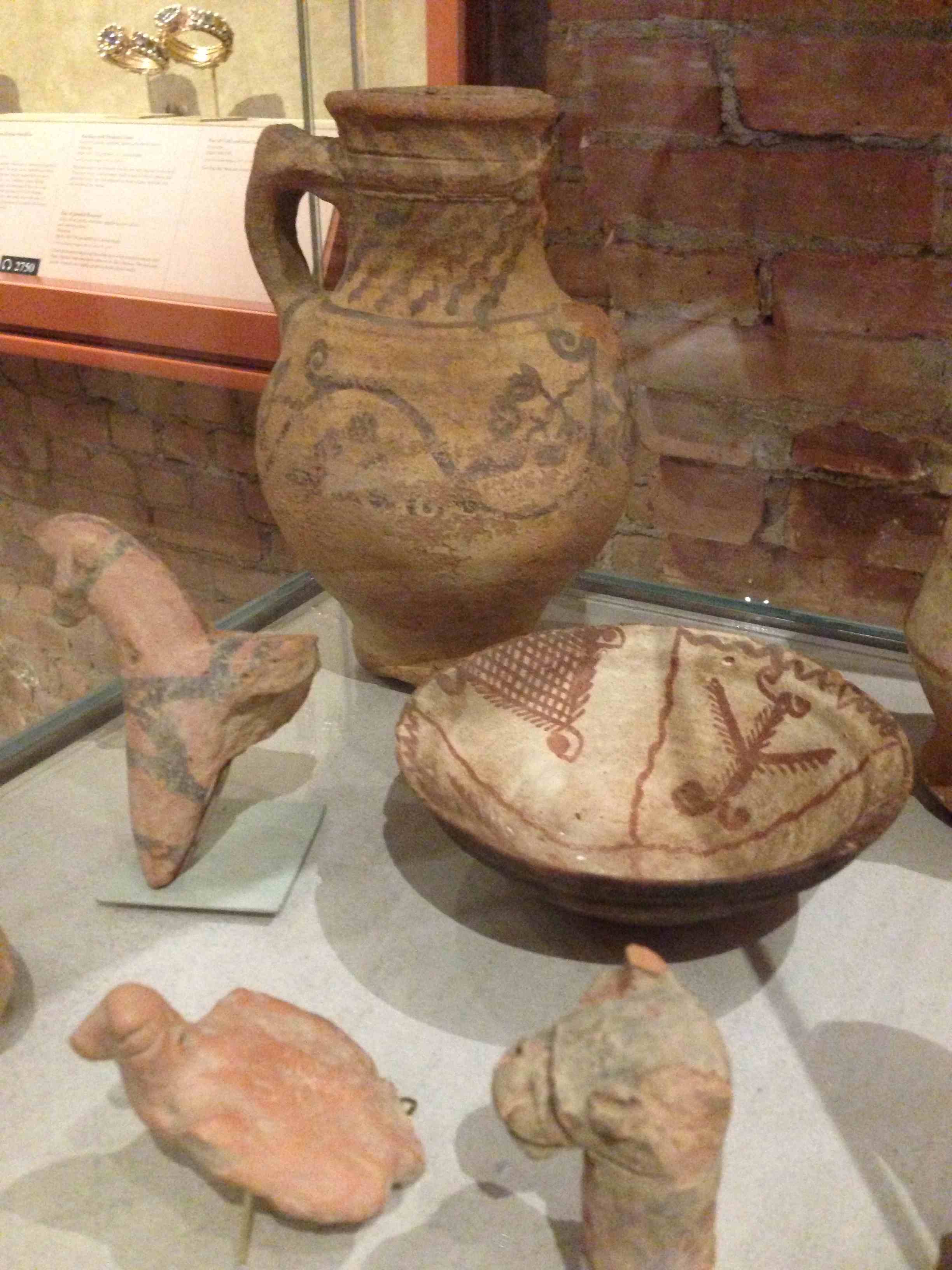
Drawing upon a ceramic craft tradition that was happening at the oasis since Old Kingdom times (2600 BC), potters cranked out transport jugs for the vino (shown here) and decorated them with grapevine paintings. The show has jewelry, tombstones, and photos of early Christian churches, but the brand-new-looking baby shoes are really the stars of the show.

Among dozens of ceramic items dug up by the Met are grapevine-decorated earthenware jugs to transport locally made wine from the Oasis to the Nile and upriver to Cairo.

Among dozens of ceramic items dug up by the Met are grapevine-decorated earthenware jugs to transport locally made wine from the Oasis to the Nile and upriver to Cairo.

First Ladies of Spanish Dance at NYPL Performing Arts

PosterThere’s no way to cool off the Spanish heat you’ll experience at the dance-til-you-drop exhibition Flamenco: 100 Years of Flamenco in New York, currently in the last weeks at NYPL’s Library of Performing Arts at Lincoln Center (until August 3).

NYPL gives us videos, recordings, a few costumes, and other memorabilia, but mostly you’ll hear the castanets and rapid-fire footwork of the best of the best. Who knew that the first woman to appear in front of Edison’s movie camera was Carmencita, the Spanish sensation who debuted at Niblo’s Garden in 1889, and had a fairly good run at Koster & Bial’s Music Hall on 24th and Sixth Avenue. Her portrait by Sargent is at the Musee d’Orsay and her portrait by Chase at the Met. Here’s a link to Edison’s 1894 flick.

Carmencita’s fan photo (c. 1890). Source: NYPL Billy Rose Collection

Carmencita’s fan photo (c. 1890). Source: NYPL Billy Rose Collection

This first Spanish-dance craze was further fueled in 1916 by the arrival in New York of La Argentina (Antonia Merce), Spain’s first modernist dance artist who fused classical dance, regional styles, and Flamenco. A decade later, she returned with a full company and presented New York’s first full-length Spanish dance-theater piece. By then, Ruth St. Denis, Martha Graham, and Ted Shawn were already incorporating Latin moves, gestures, and rhythms into their performances, and La Argentina’s company had a spectacular run. Here she is in a solo.

Although there’s lots more to the story, one of the best parts of the exhibition features photos, albums, videos, and recordings of the fast footwork of Carmen Amaya, who Sol Hurok billed as “The Human Vesuvius” in her 1941 New York debut. She could kick the 15-foot train of her dress right into the air.Carmen Amaya Record Album

Amaya’s innovation is that she injected a bit of the Gypsy style into Flamenco and was somewhat of a Spanish-dance rule-breaker – sporting tight-fitting trousers to show off her super-fancy footwork. Superstars Dietrich and Hepburn were also wearing trousers at the time, but it was a first in Amaya’s field of work.

Good move, Carmen, as shown in this clip from Follow the Boys, a 1944 all-star vehicle released by Universal to boost morale during the War. It’s like watching a great jazz tapper at work. Move over, Riverdance people.

Source: Archival clip, Follow the Boys, from the DVD, Queen of the Gypsies, A Portrait of Carmen Amaya.

Virtual Visit to the Met’s Punk Couture Show

IMG_2416Too hot to get over to the Met this weekend and climb up all those high stairs out front? Stay in the comfort of your air-conditioned home and take this virtual tour of the Met’s Punk: Chaos to Couture show (closing August 14).

Curator Andrew Bolton explains the real-life inspirations for much of the iconic looks in this show –people from music, pop, and celebrity worlds, taking you through the galleries one by one, emphasizing the importance of recycling and deconstruction to the haute couture designers of today.

Our favorites: Rodarte’s crochet looks alongside those of Westwood and McLaren, McQueen’s faux recycled trash bag dresses, Chris Bailey’s spiked Burberry ensemble, and the great finale – Comme des Garcon’s amazing collection with trousers, mutton sleeves, and disassembled pieces of clothing brilliantly attached for maximum punch to the runway models.

Look closely, remember, and enjoy.

Mardis Gras Indians Land in NC Beach Town

"Chief Albert Lambreaux: No Hum Bow, Don’t Know How" costume. In the pilot, the character returns to his devastated home six months after Katrina, enters, and emerges in this costume.

“Chief Albert Lambreaux: No Hum Bow, Don’t Know How” costume. In the pilot, the character returns to his devastated home six months after Katrina, enters, and emerges in this costume.

Towering feathered headdresses, intricate beaded panels, plumes, and miles and miles of ruffled edging adorn more than a dozen Mardis Gras Indians that are camping out until November 3 at the Cameron Art Museum in Wilmington, North Carolina.

The dazzling incarnations are all part of the exhibition, Well Suited: The Costumes of Alonzo V. Wilson for HBO’s ® Treme. Alonzo was on hand for the opening, where he explained the challenges he faced designing elaborate, 60-lb. Mardis Gras Indian costumes for the actors playing characters living in New Orleans’ Tremé neighborhood (the Third Ward) in the months after Hurricane Katrina.

The African-American men who bead the panels and feather the elaborate costumes for their Mardis Gras Indian tribes typically take all year to execute their visions, which reflect their position in the tribe (e.g. the Big Chief, Second Chief, Spy Boy, Wild Man). To meet HBO’s production schedule, Alonzo and his team often had a much shorter time to create the patches, headdresses, staffs, panels, and shoes for the script’s characters.

Alonzo Wilson explains how the cycle of life and the seasons are reflected on the beaded apron of the "Big Chief: Tree of Life" costume.

Alonzo Wilson explains how the cycle of life and the seasons are reflected on the beaded apron of the “Big Chief: Tree of Life” costume.

For the series, Alonzo felt it was important to embed part of each character’s story into the stories being told on the panels, even if the costume was only seen for a few minutes on TV. Thankfully, the exhibition (and our Flickr feed) lets you closely examine some of this character development-in-beadwork – a chief shedding a crystal tear for his hurricane-damaged home, a white buffalo evoking the return of bounty post-Katrina, and stunning use of hurricane weather symbols amidst a bold S.O.S.

Originally mounted by the Ogden Museum of Southern Art, curator Bradley Sumrall was impressed by Alonzo’s use of narrative that broke through the typical Hollywood stereotypes of African Americans and Indians. “We could have just done a show with traditional Mardi Gras Indian costumes, but Alonzo’s work had so much narrative built in.” With the mix of African-American, Native American, government, city, and current-event references, Bradley felt the layers of meaning in such intricate craftwork was an achievement worthy of a fine-art exhibition.

"Spy Boy: Katrina Memorial" costume. Feathers on lower half spell out "S.O.S.", the international distress signal, using the universal symbol for hurricanes from weather maps.

“Spy Boy: Katrina Memorial” costume. Feathers on lower half spell out the “S.O.S.” distress signal, using the universal weather-map symbol for hurricanes.

The NC stop for the show is a way for others to understand a bit more about New Orleans people, neighborhoods, and culture. Plus, Wilmington is Alonzo’s hometown. The movie and slide show inside the gallery provide an even deeper window into to this achievement – showing how Alonzo and his crew learned from the traditional craftsmen, shared new beading techniques, and received some “rescue help” from the locals when the production deadlines were too much to handle.

The exhibition all adds up to win-win storytelling about Alonzo, his team, New Orleans, and the Indians. Read an interview with Alonzo on the HBO blog and see behind-the-scenes production photos on page 40 of the Wilmington magazine Salt.

Mary Cassatt’s Tech Start-Up Chronicled by NYPL

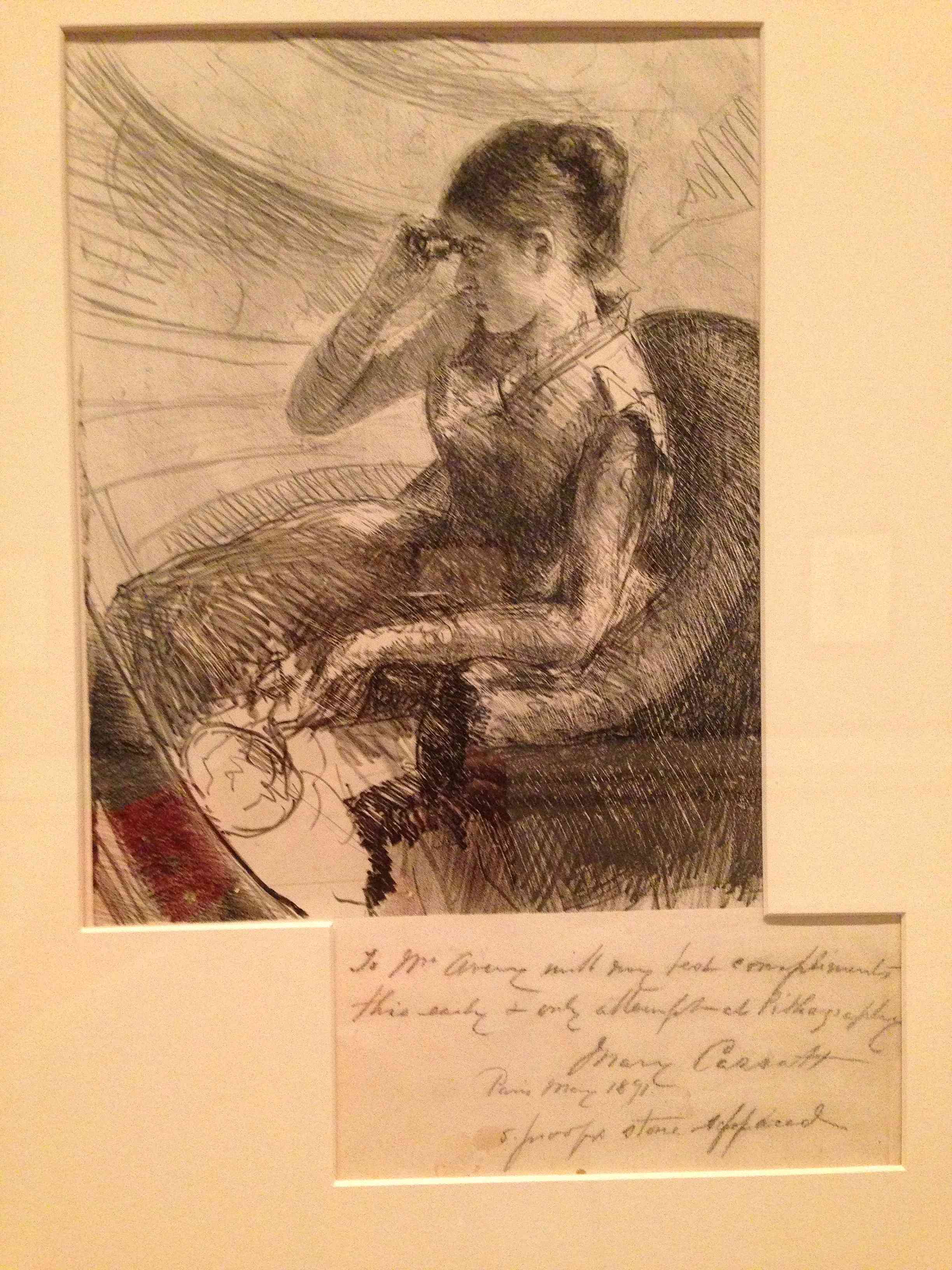
Woman Seated in a Loge (1881). The only lithograph Cassatt ever did, personally inscribed to Mr. Avery.

Woman Seated in a Loge (1881). The only lithograph Cassatt ever did, personally inscribed to Mr. Avery.

Still using a flip phone? Don’t know how to code? There’s nothing wrong with sticking with what you know, but expanding horizons with new technology is always good. In 1876, it’s exactly why Mr. Degas invited 32-year-old Mary Cassatt into his studio, showed her some of his printmaking techniques, and encouraged her to jump in and try something new. She did, and her technological triumph is the story of NYPL’s illuminating third-floor show, Daring Methods: The Prints of Mary Cassatt, which ends Saturday.

The show gives you a new slant, documenting this American artist’s struggle to make new work, push her technical boundaries, and mash up styles to total critical acclaim at the turn of the last century. NYPL found itself in a unique position to mount this show, since art dealer/print collector Samuel Putnam Avery made an unprecedented donation back in 1900 — more than 17,000 19th-century prints, including dozens and dozens he purchased directly from Cassatt as evolved her printmaking between 1878 and 1898.

The Letter (1891) – color print with drypoint and aquatint. This is an earlier state (iii/iv) of Cassatt’s famous print minus the wallpaper pattern and letter on the desk

The Letter – 1891 color print with drypoint and aquatint. This is an earlier state (iii/iv) of Cassatt’s famous print minus the wallpaper pattern and letter on the desk

This show provides art-lovers with a unique, chronological walk-through of Cassatt’s technical trial-and-error, beginning with her early drypoints (1878 costume studies suggested by Degas), simple drypoints and etchings, and her only litho (see right). Cassatt continued to experiment throughout the 1880s, perfecting her softground, drypoint, aquatint, and etching techniques, often mashing them together – brave moves by a stylish, curious female artist of the modern era.

Gallery visitors walk slowly from print to print, taking in the subtle changes, redirects, and reworks of this modern, mid-career artist determined to find status and success in the male-dominated Parisian art scene of the late 19th century.

The NYPL curators decided to hang multiple versions of similar subjects side by side, so you can really examine the mind of the artist at work. It’s interesting that Cassatt let Avery have prints off cancelled plates that she pulled after the “good” print run was finished. You’ll see the scratched-up images in the show next to the best ones.

The Fitting – 1891 color print with drypoint and aquating, printed with three plates

The Fitting – 1891 color print with drypoint and aquatint, printed with three plates

In 1890, everything changed for Cassatt, when she saw an exhibition of Japanese woodblock prints took the Parisian cultural community by storm. It was the moment that her technical experiments paid off and her printmaking vision, style, and legacy became sharply focused. In the last portion of the show, you witness her brilliant response — making intaglio look like woodblock, applying multiple areas of bright color, injecting pattern into domestic surfaces, and zooming in for low-angle close-ups of private moments in women’s lives.

Enjoy NYPL’s selections from Mr. Avery’s collection and spend some time examining the multiple states of the most beloved prints in the Impressionist canon, mash-ups of aquatint and drypoint. It’s a master class in color, ink, and composition.

If you can’t get to the show this week, download the PDF and take a look at Ms. Cassatt’s technical journey. Then go out and try something new.

Dive Into MAD’s New Jewelry Web

MAD's digital gallery navigation tool, featuring a photo of a model wearing Peter Hoogeboom’s Spanish Collar (1995)

MAD’s digital gallery navigation tool, featuring a photo of a model wearing Peter Hoogeboom’s Spanish Collar (1995)

The Museum of Art and Design has spent a lot of time collecting brooches, collars, rings, and pins for its collection — around 200 mid-century pieces over the last few years. About half of MAD’s new stuff is on display in the show, Wear It or Not: Recent Jewelry Acquisitions, which closes this Sunday.

If you can’t get up to Columbus Circle to see the works in person, be sure to check out the new digital archive for the show. MAD has spent considerable time and effort to get its collections pushed out through the web, and the effort really pays off.

This photo of Peter Hoogeboom’s Spanish Collar shows the navigation tools that MAD has designed for its on-line archive that let you zoom in close right in to take in all of the construction details of his ceramic, silver, and brass construction.

Model wearing The Big Spiderweb, No. 2 made of sterling silver in 2005 by Lucie Heskett-Brem, The Gold Weaver. Photo: Louis Brem

Model wearing The Big Spiderweb, No. 2 made of sterling silver in 2005 by Lucie Heskett-Brem, The Gold Weaver. Photo: Louis Brem

Use the + to zoom in, and then click on the arrows to navigate up, down, left, and right across the image. The detail is incredible.

Dive into the archive to zoom in on Robert Ebendorf’s Berlin Wall brooch (made from guess what?), Luis Acosta’s multilayered paper constructions, and The Big Spiderweb. Also be sure to inspect Boris Bally’s brooches that were crafted from recycled traffic signals and the 19th century Sprocket Cuff from Northern Pakistan. It looks on trend right now.

You’ll be inside the archive for hours, since every time you click on an artist’s work, other related innovations pop up in the sidebar.

And what’s up with that red adhesive piece by Rebecca Strzelec? Take a look at how you wear it!

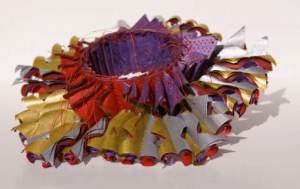
Luis Acosta’s 2009 bracelet is made of six layers of stitched paper. Photo: Luis Acosta

Luis Acosta’s 2009 bracelet is made of six layers of stitched paper. Photo: Luis Acosta

Liberace Sparkles at Time Warner

Purple Cuff

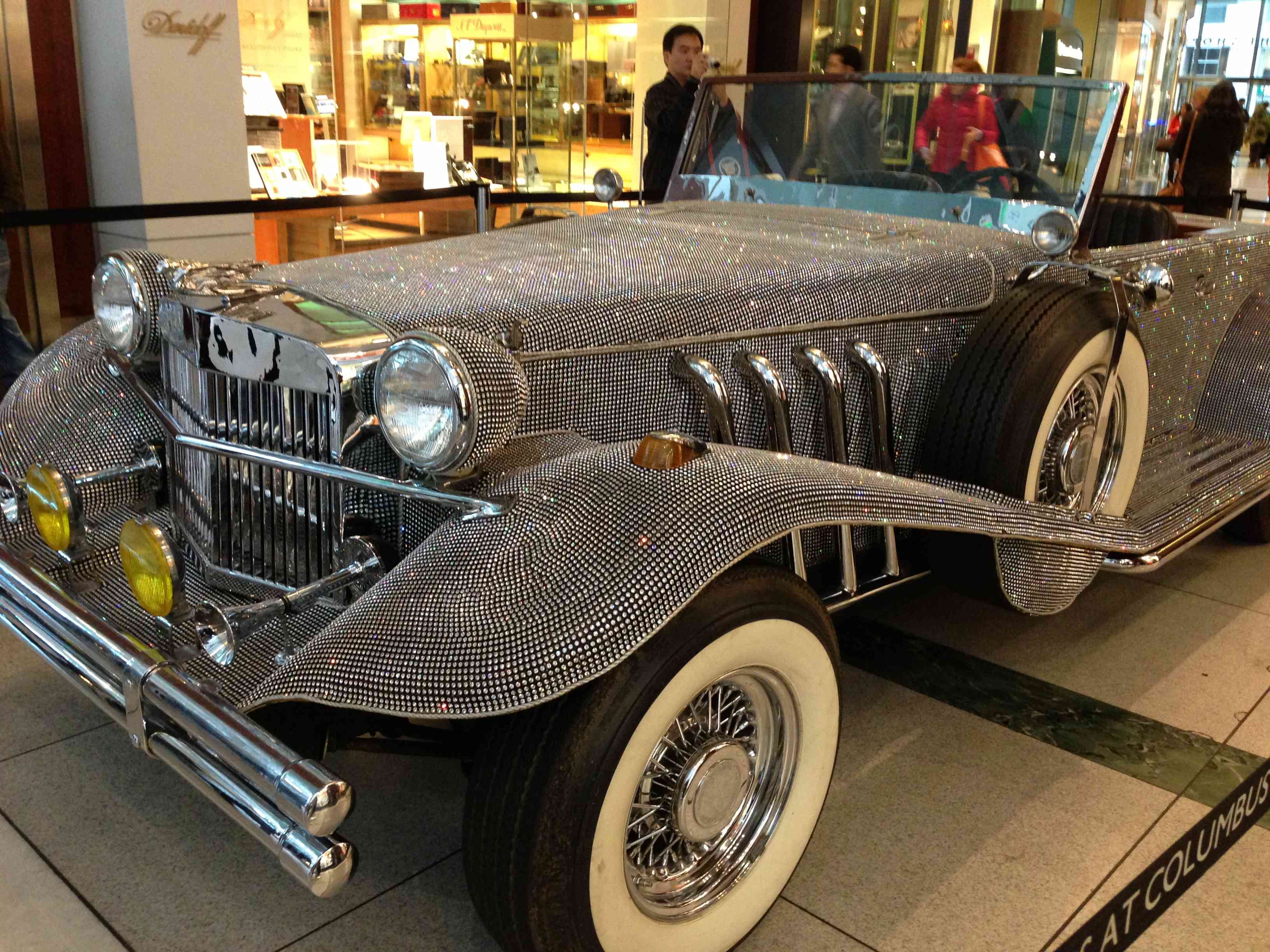
Dazzling rhinestones and teardrop crystals are providing the antidote to a rainy summer weekend inside the Time Warner Center, where HBO has installed Liberace’s piano, signature suits, and a tower of champagne to celebrate of the debut of the Michael-Douglas-as-Liberace pic Behind the Candelabra.

Up the escalators on the Third Floor, crowds were swimming through glitter Nirvana – Lee’s head-to-toe glamour looks: white cravats, bejeweled lapels, matching boots with rhinestone-studded heels, and the all-important cuff, which framed those flying ring-encrusted hands.

Purple BootsEnjoy it all in the Flickr gallery, because it’s all about the details. Besides, there’s no more Liberace Museum to visit in Vegas, so this is your chance to check out a bit of his million-dollar legacy.

Branding for the HBO film was everywhere, featuring giant pictures of Matt Damon and Michael D, but people mostly hovered about the glass cases to see look after look loaned by the barely-surviving Liberace Foundation.

RoadsterThere were no capes in sight, but plenty of fur-trimmed boots, beaded fringe, and a giant Swarovski crystal. Downstairs throngs were circling Lee’s rhinestone Duesenberg and admiring the bling on the Baldwin.

Check out the HBO movie, but run over to Time Warner to see (for real) what made this man a show business legend. Open 9am to 9pm through May 27.

Monumental Impression of Fashion at the Met

Monet’s
Women in the Garden (1866) from the
Musée d'Orsay, Paris features impressions of fast-changing dappled sunlight and ladies’ fashions (e.g. the fad for soutache)

Monet’s
Women in the Garden (1866) from the
Musée d’Orsay, Paris featuring impressions of fast-changing dappled sunlight and ladies’ fashions (e.g. the fad for soutache)

You can witness the collisions of the new crashing into the old in the Metropolitan Museum’s joyous show, Impressionism, Fashion, and Modernity. Impressionism’s heaviest hitters (Manet, Monet, Renoir, Cassatt, and Morisot) are displayed alongside stunning 19th Century dresses, suits, accessories, and underthings to prove a point — that incorporating the latest fashions was one of the cudgels that these rule-breakers used to facilitate their revolution in painting.

The show features paintings from three grand Impressionist collections (the Met, the Art Institute of Chicago, and the Musée d’Orsay), and includes breathtaking dresses from NYC’s fashion-collection superpowers – the Met, the Brooklyn Museum, FIT, and Museum of the City of New York.

The Met’s website explains the key themes of the show, but it’s no substitute for going through the galleries in person. Why? The tiny photos cannot do justice to the monumentality of these paintings, where scandalous 19th-century fashionistas stormed the barricades of the French Salon, in large-format framed paintings normally reserved for staid, moralistic history paintings.

Summer day dress worn by Madame Bartholomé in her husband’s painting In the Conservatory 
(1880) 
Source:
Musée d'Orsay

Crisp summer day dress worn by Madame Bartholomé in her husband’s 1880 painting In the Conservatory. Source:
Musée d’Orsay

The size, colors, and techniques are amazing, especially as the Impressionists moved outdoors just as new technology was encouraging lifestyle and fashion revolution. Steam-powered train lines were inventing the concept of the weekend getaway for City hipsters, so a lot of the paintings feature dappled sunlight with high-fashion young people lolling about in nature. (See the show’s highlights.)

The show’s curators shine the spotlight on how fashion, innovation, and the art world influenced one another: New aniline dyes allowed hot pink, bold color-blocking and vivid hues for extravagant skirts and dressing gowns. New fabric-finishing technology enabled super-white cotton fabric to be crafted into diaphanous, desirable, but high-maintenance dresses and gowns for the first time in fashion history.

The Met scatters mass media throughout the galleries, just to demonstrate fashion’s democratization during 1850-1890. New printing technology enabled trendy fashion magazines to be consumed by the masses. New-fangled duplication techniques revolutionized the studio photograph by inventing the eight-image carte-de-visite – a paper-based way to market your “celebrity” self and show off your fashion chops long 150 years before Facebook and YouTube.

Silk and ivory French parasol (1860-69) from Brooklyn Museum Costume Collection at The Met (Source: gift of Mrs. William Ashbaugh)

Silk and ivory French parasol (1860-69) from Brooklyn Museum Costume Collection at The Met (Source: gift of Mrs. William Ashbaugh)

Pop-art pink velvet, boleros with pompoms, lace parasols, Worth gowns, kid gloves, top hats, corsets, hat shop girls, high-end boutiques, and Cezanne’s surprising oil painting based on a fashion-magazine layout. Which part of this show is the best?

Go before May 29, when the show decamps for Chicago for its June 26 opening.

Crowds See Luxury on Vintage Rail Cars at Grand Central

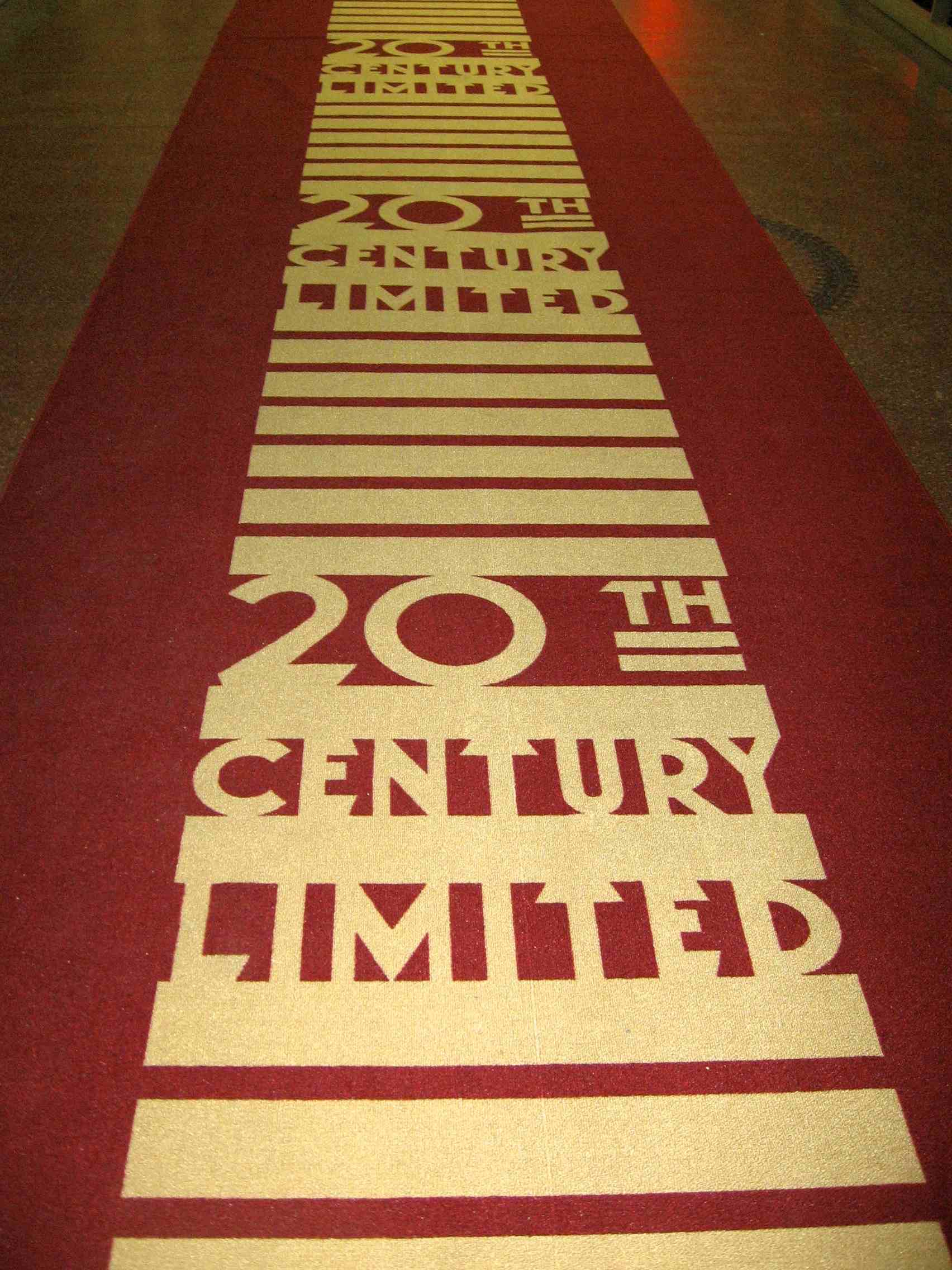
Red CarpetThe red carpet is back at Grand Central, right where it belongs: leading visitors down Tracks 34 and 35 to the door of the 1947 observation car of the 20th Century Limited and to fifteen other vintage sleeper, dining, and lounge cars that once traveled the New York Central rails and other lines all over the United States between the 1920s and 1950s.

An unexpected treat was being greeted by former “Century Girl” Joan Jennings Scalfani, who politely posed for photos with admirers and talked about the 1960s when she represented the brand to celebrities such as Frank Sinatra, Bess and Harry Truman, Ernest Hemingway, and Lena Horne.

Joan Jennings Scalfani, a former “Century Girl”, at the Parade of Trains

Joan Jennings Scalfani, a former “Century Girl”, at the Parade of Trains

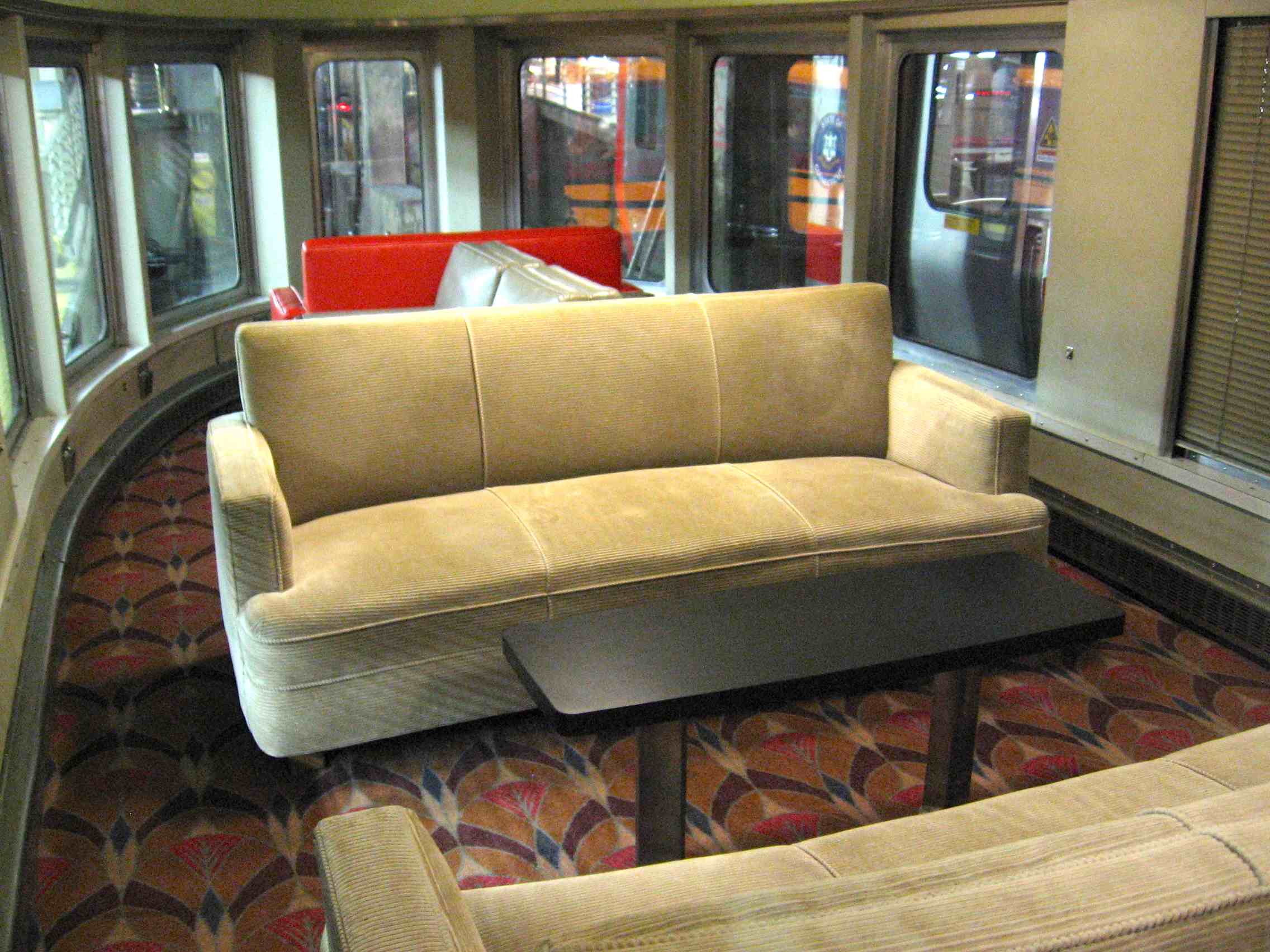
Besides the streamlined 20th Century observation car, we visited the leather lounge of the 1923 Kitchi Gammi Club (Pennsylvania Railroad), the 1949 Babbling Brook observation car (New York Central), and the refurbished Broadway Limited baggage car that has transformed into a luxurious private-dining experience, Dover Harbor.

All sixteen cars were brought to New York for the Parade of Trains in honor of GCT’s 100 anniversary – the largest convergence of private rail cars ever assembled at one time in the City.

Small crews of people serve up meals and make guests comfortable whenever the rail cars are booked for parties, getaways, and dinners. Rail clubs, crews, and owners welcomed us in every car we visited, including the fully stocked barbershop aboard the Overland Trail, which once ran on the Southern Pacific.

Due to the crowds, not everyone who came to Grand Central was able to walk through the halls of long-distance travel history, so we’re providing a closer look at the luxury, design, and history on our Flickr feed.

Front of the streamlined Hickory Creek sleeper-observation lounge car (1947) for the 20th Century Limited.

Front of the streamlined Hickory Creek sleeper-observation lounge car (1947) for the 20th Century Limited.

To accommodate the overflow crowds who weren’t able to make it onto Metro-North Tracks 34 and 35 before the afternoon cut-off time, MTA provided a train made up of three vintage subway cars, which shuttled between Times Square and Grand Central  – the 1948 R-12 car that was still equipped with wicker seats and whirring fans, the red 1950 IRT R-15 (the first subway to be air conditioned) with its iconic “portholes” in the doors, and the R33-S “World’s Fair” car which took visitors to the 1963 fair in style.

Dining aboard the Babbling Brook (1949)

Dining aboard the Babbling Brook (1949)