The Skies Have It: Thomas Cole Paints to Protect Nature

Cole’s 1936 panoramic masterpiece The Oxbow – a call to preserve the rapidly disappearing American wilderness. Collection: The Met

Awestruck by the magnificence of nature, romantic painter Thomas Cole set out to create visions so powerful that they would convince development-obsessed American to preserve landscapes and vistas for future generations.

Although the Metropolitan Museum of Art’s exhibition chronicles his artistic journey, Thomas Cole’s Journey: Atlantic Crossings, on view through May 13, the subtext of the show is how he leveraged the romantic thrill of nature for a higher purpose.

Cole was battling pro-development sensibilities back then, in the same way environmentalists are fighting eco-battles today — 200 years after Cole started sketching upstate New York.

Detail from Turner’s 1829 Ulysses Deriding Polyphemus that Cole sketched in London. Collection: National Gallery

The exhibition sums up how British painters in the early 1800s were rebelling against the horrors of the Industrial Revolution, how Cole romanticized the drama views of nature, and then took the techniques that he learned on his trip to Europe to turn his painting into a call to action.

The most famous Cole works showcased at the Met – The Oxbow and The Course of Empire – are from New York City collections, but the curators have placed Cole’s artistic development into a global context by showing us the powerful Turners and Constables that actually inspired Cole on his Grand Tour of Europe in the 1820s and 1830s. Visitors get to experience them as he did.
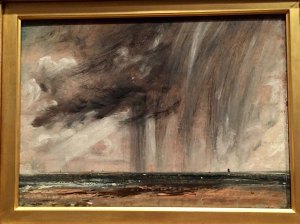
Constable’s 1824-28 expressive oil sketch Rainstorm Over the Sea. Collection: Royal Academy

The presence of these landscape giants is exquisite – enormous masterworks with overpowering skies, majestic vistas, mythological allegories, and poignant ruins. The show also includes ethereal and dramatic cloud studies that Constable did out in the open air – works that inspired Cole to do the same.

Back in America, he founded the Hudson River school of painting – the first great art movement of the United States — and encouraged students to learn from nature. They certainly did, as shown by the dramatic landscape paintings by Chuch and Durand.

Take a look at all 76 paintings and studies in the exhibition on the Met’s website and see closeups of our favorite Cole, Turner, and Constable paintings in our Flickr album.
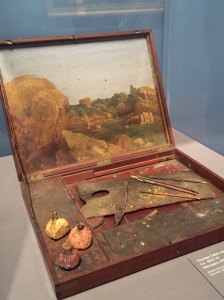
Cole’s 1832-1841 paint box used when he worked outdoors. Collection: Bronck Museum

The Met has given The Oxbow and The Course of Empire series positions of honor at the center of the show. To prepare these six paintings for their showcase, the conservation team did investigative work that uncovered some insights to Cole’s thinking (the video below shows what’s beneath the painted surface).

In the concluding section of the show, the curators point out that Cole’s students and followers didn’t always see eye-to-eye with the preservationist instincts of their teacher.

Cole’s romantic vision of nature fell out of fashion (for a while), replaced by big-sky and big-vista landscapes that elevated the “beauty” of building roads, harnessing nature, and seeding new towns and industries.

Industrial progress in 19th-century America was inevitable, but the experience of seeing Cole’s unspoiled vision of wilderness still shows visitors that there is value in keeping up the fight.

Take a look at the Met’s insightful film about Cole, his inspirations, and what it was like to paint in the Age of Jackson:

And for a glimpse into what the Met’s curatorial team found, watch this silent movie about about Cole’s thought process as he created his masterpiece:

If you miss this magnificent show, you can visit the room where it happened at Thomas Cole National Historic Site in Catskill, New York. More about that trip here.

Church’s 1849 Above the Clouds at Sunrise, a tribute to Cole
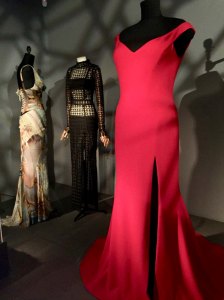
FIT Challenges Designers over Shape, Physique, and Fashion’s Future

Red carpet looks for curvy women: Roberto Cavalli’s ensemble, LaQuan Smith’s see-through for Kim Kardashian, and Christian Siriano’s dress for Leslie Jones

Against the historical context provided by examples of how women (and men) have pushed and pulled their bodies into fashionable silhouettes since the 1750s, The Museum at FIT asks a broader, more contemporary question:  Why don’t designers today create attractive clothes for women who don’t fit into a size 2?

The exhibition, The Body: Fashion and Physique, on display through May 5, begins with a thoughtful video in which young New York designers, including Christian Siriano, call for change in the industry to give plus-size women fashion-forward off-the-rack options that project youth, style, and pizzazz.

As usual, FIT has an excellent website for the show, where you can step through 250 years of fashion history in sequence to see and read about how the concept of the “ideal” body has changed.  For some of our favorite items, see our Flickr album.

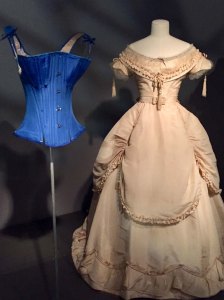
1845-1855 corset with metal eyelets and 1865 Scottish dress buoyed by hooped crinoline

The 1800s fashions on display from the FIT archive pair undergarments – like corsets, crinolines, and bustles – to demonstrate how fashion emphasized the importance of tiny waists through most of the 19th century. The swags covering protruding bustles eventually gave way to the no-corset looks of early 20th century artistic women who worshipped the exotic excesses of Paul Poiret.

The curators focus on the roots of fashion-induced body issues back then, too. An iPad shows the proliferation of fashion illustrations that draw women with impossibly tiny waists. Nearby, they show evidence from their collection to bust the myth that all corsets were laced tight enough to achieve an 18-inch waist. Simply not true. The illusion of that “ideal” was created with wide skirts and pouf sleeves.

When powerful structure was in: a 1981 dress by Mugler and 1986 jacket by Donna Karan

From there, the show moves through the next 100 years, providing examples of tube silhouettes of the Twenties, languid body-skimming styles of the Thirties when women used girdles to achieve the “ideal” body, the built-in structure of Dior’s New Look, and through to more recent times.

Although the intricate architectural cut of a Thierry Mugler dress would not normally be paired with a soft-tailored jacket by Donna Karen, the curators note that the “ideal” shape for women in the 1980s was athletic, fit, and toned. The pairing of these two designers shows how the impact of powerfully shaped fashion worked for equally well for Grace Jones or for powerfully shaped women who inhabited the C-suite.

In more recent times, the show makes the point that designers and image-makers increasingly shifted the “ideal” shape to the super-young and super-slim, encouraging completely unrealistic expectations about women’s bodies. Men and women obsesses over diets and fitness to achieve body shapes that are fairly impossible goals.

Two padded looks: a 1996 statement dress by Rei Kawakubo and the 1994 Wonderbra

The show concludes where it started – with a conversation about how designers, fashion fans, and the rise of social media are influencing and showing how real women dress today.

A fantastic red-carpet evening gown that Siriano designed for Leslie Jones after a Tweet storm ensued about designers not offering to dress a larger woman serves as the cornerstone content of the show. One dress says it all – class, elegance, beauty, sass, and bravery all summed up in one statement-creation.

Listen to what Christian and the other passionate young designers have to say about where fashion must go for the good of all:

If you have more time, listen to the conversation between Valerie Steele and Tim Gunn, which led FIT’s all-day seminar on this topic. This conversation digs deeper into lack of industry and designer support for less-than-ideal-sized women and concludes with ideas on what emerging designers can do to bring about change.

Nick Mauss Brings NYC Modern Art/Dance Influences to Life at The Whitney

Dancers strike poses inspired by the surrounding works of art in a piece collaboratively choreographed with Nick Mauss

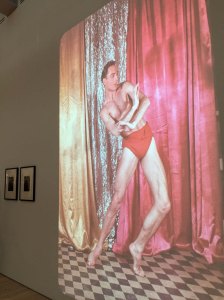
Cecil Beaton’s 1937 Vogue photo of poet Charles Henri Ford in a costume by Salvador Dali

Go when the dancers are there. Entering Nick Mauss: Transmissions, installed on the top floor of the Whitney through May 14, you’ll see them moving behind a transparent scrim as the elevator doors open.

The artist had a vision and the Whitney curators gave him the freedom to scour their deep-storage archives, delineate a space for dancers, install works of art, and write scintillating details about the fruits of his research.

Nick’s vision was to create a visual conversation about the collisions between modern art and dance in New York between 1930 and 1950 – a time when bon vivants, peripatetic painters, scandalous artistes, and boundary-pushing dancers expressed themselves in every manner possible.

He succeeds spectacularly. But the show isn’t laid out in a chronological manner like a history show. It’s more of a curated, free association experience that genuinely works.

Visitors encounter Whitney works that are almost never displayed, photos from the Kinsey Institute, works from the NYPL’s Jerome Robbins Division archive, ephemera from personal collections, and Nick’s own creations.

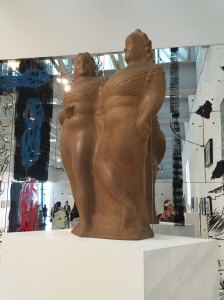
1928 dancer-inspired sculptures by Elie Nadelman stand in front of Nick’s mirrored mural.

Nick’s put a quartet of live dancers at the center of the swirl, encouraging and challenging visitors to explore clues surrounding them – private artistic photos, Diaghilev’s calling card, costume designs by Dorothea Tanning, a video of Balanchine in rehearsal.

As dancers quietly assume poses, visitors are left to move about and make their own connections. Do the dance poses echo the quiet Gaston Lachaise or Elie Nadelman sculptures, or the over-the-top expressions of NYC ballet superstars in Carl Van Vechten’s slide show splashed across the opposite wall?

Nick’s research unearthed an extraordinary wealth of information about relationships among artists, cross-currents of artistic influence, intimate social circles, and gay life. His idea was to inject a little more color to the American modern-art narrative.

One of 830 slides taken of American Ballet Theatre dancers by Carl Van Vechten, America’s first dance critic.

When the Whitney staff read the captivating associations that Nick uncovered as he selected objects for the installation, they decided that it was too rich to simply identify things in the traditional cut-and-dried museum label card format

The curators mounted Nick’s extraordinary background stories next to the artworks, photos, stage set mock-ups, and costume designs to let visitors get inside Nick’s head and share in his fun.

The stories – like the dance quartet – encourage visitors to connect their own knowledge about the origins of modern dance and modern art in New York with what they see and read:

What impact did modern dance pioneers Loie Fuller and Ruth St. Denis have on 1920s sculpture? How did a Ballet Russe-obsessed cultural impresario convince George Balanchine to start the New York City Ballet?

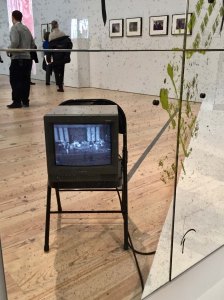
Reflected in Nick’s mirrored mural, a monitor shows videos of Balanchine rehearsing the New York City Ballet.

What was a sophisticated dance critic doing in his studio with props, costumes, Agnes de Mille, and stars of the New York ballet world?

The beauty of Nick’s installation is that people wandering about the space are able construct their own visual and mental narratives and understand the swirl of modernism from that time in a new way. Take a look at our Flickr album to view some of our favorite works in the show.

The choreographed piece was developed collaboratively by Nick and the dancers. The complete experience is poetic, revelatory, interactive, and constantly in motion.

The dancers perform from 12 p.m. to 4 p.m. daily, and also on Friday nights from 6 p.m. to 10 p.m.

Here’s a short clip of the quartet of dancers performing in the gallery:

And another short clip of duets:

Club 57 Rejects at MoMA 35 Years Later

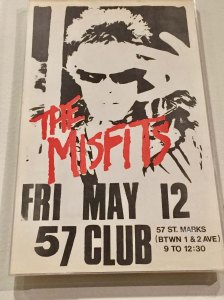
Music poster for Club 57

They didn’t fit in to any of the scenes back in the Eighties, but now they have their own show at MoMA in a basement club all their own – just like in the old days.

Entering Club 57: Film, Performance, and Art in the East Village, 1978–1983, on view at the Museum of Modern Art through April 8, you’ll be required to find the right way downstairs, peek behind curtains, and lurk around corners where transgressive, challenging art is on display.

The show is a tribute to the ultimate DIY art scene in Alphabet City at a time in New York when things were just plain tough.

Housed in the basement of the Polish National Church on St. Mark’s Place, the misfits invited their friends to imagine and create performance art on a regular basis.

Klaus Nomi’s cape, from his 1978 New Wave Vaudeville finale

Although Danceteria and The Pyramid Club were contemporaneous music scenes, Club 57 was the place to create characters, imagine scenarios, revel in kitsch, celebrate “bad” art, and create performance art or a DIY film festival every night.

The kids – many classmates from School of the Visual Arts – created and handed out flyers to entice the adventurous to witness the uncensored experimentation.

It’s where Keith Haring, Joey Arias, Ann Magnuson (MoMA’s guest curator), and others spent their formative years dressing up, wigging out, and pushing boundaries.

The show displays ephemera from those years and experiments, from Klaus Nomi’s transparent cape (when he appeared as the closing act in New Wave Vaudeville in 1978) to Clayton Patterson’s flyers based on the latest in new technology in 1983, the color Xerox. See it, start to finish, in our Flickr album.

Kenny Scharf’s recreation of his 1979 Cosmic Closet

The installation is on two levels, but downstairs is where it’s all happening. Silkscreened posters by John Sex poke out of the dark. A secret hideaway reveals Kenny Scharf’s black-light psychedelia “Cosmic Closet.”

Hand-crafted calendars by Ann Magnuson illustrate the variety of activities that took place nightly – film screenings, performance, music, and lady wrestling.

Collaged and Xeroxed zines, drag performances with small casts of thousands, and graffiti art jolted life into a subculture struggling to make ends meet, live in a city clawing its way back from financial ruin and high crime, and trying to make sense of the mysterious illness that was plaguing the gay community.

Richard Hambleton’s 1983 Shadowman series

One person’s trash is another one’s art. And the reverse is true — Basquiat was busy sprinkling his moniker all over the decaying walls of the East Village, and Richard Hambleton’s epic Shadowman paintings were popping up in the neighborhood where you’d least expect them. The street and the art were in an ever-renewing cycle.

This immersive journey back in time is stupendous. Be sure to hang out in the basement to watch two or three of the videos from Club 57’s heyday.

For now, take a walk through the show with Frank Holliday, one of the founding members of Club 57.

Also, watch and listen to the artists recollect club experiences during MoMA’s opening night party.

Mod New York Pops at MCNY

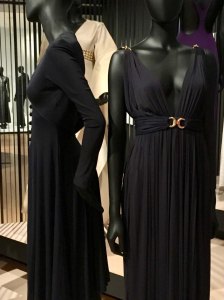
1967 mohair coat by Bill Blass from Saks and Leo Narducci’s evening culotte, sold at Bendel

It’s been 45 years since New York fashion leaders entered the “Battle of Versailles” with Paris designers and came out victorious, establishing New York City as the world’s fashion capital.

Although the show only makes passing reference to this epic throwdown, the Museum of the City of New York’s exhibition, Mod New York: Fashion Takes A Trip, on view through April 1, shows Seventh Avenue’s evolution to reach this epic turning point.

MCNY has plucked 70 ensembles (plus accessories) from its costume collection to tell how fashion, pop, and mod moved through the wild, epic decade of the Sixties to the classic ease of the Seventies, mixing in works by influential French designers with our own. See our favorites in the Flickr album.

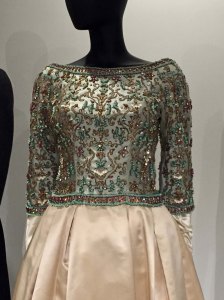
1961 custom embroidered satin evening gown by Sarmi, worn by client to JFK’s inaugural ball

The show’s entrance (outside the gallery) previews the theme of the show and also showcases the vibrant Sixties fashion dolls by Harlem’s Ruby Bailey, which have been lovingly restored by MCNY’s costume collection team.

Inside the main gallery, MCNY features an intriguing timeline of New York City fashion firsts alongside world events and a “Black is Beautiful” wall that provides context for the influence of Uptown style and street fashion throughout the decade.

The gallery show tells the story of how early fashion got a jolt of electricity when Jackie Kennedy stepped into the White House in the early Sixties, sporting cleanly tailored looks by Oleg Cassini and Dior’s Mark Bohan.

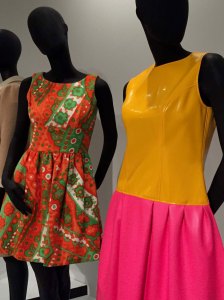
1964 Chester Weinberg dress from Bendel and 1965 vinyl dress by Joan “Tiger” Morse

Sleek Givenchy and high-society Audrey-Hepburn ruled, as shown by nearby Vogue spreads from that era. MCNY throws in some of New York’s own – Mollie Parnis dresses, ladylike Beth Levine pumps, and jewelry by Arnold Scaasi that complimented his elegant evening designs for celebrities and first ladies.

Around the corner, there’s a color, fabric, and geometric-shape explosion, with a vibrant “youthquake” display – Mary Quant miniskirts, Courrèges and Cardin space-inspired looks, and the allure of sparkly synthetic and vinyl knee-high boots from 1964 through 1966.

The New York designers featured here include Donald Brooks, Chester Weinberg, Anne Klein, and Geoffrey Beene, along with the electrifying dresses and ensembles created by Deanna Littell and others for Henri Bendel, where Geraldine Stutz created the boutique-within-a-store retail concept and Andy Warhol illustrated shoes.

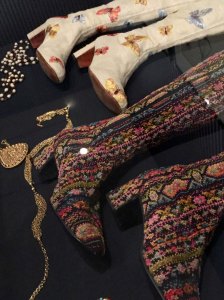
1971 boots by Beth Levine, 1969 glazed apple-seed necklace by Azuma, and late 1960s pendant by Kenneth Jay Lane

The Paraphernalia boutique, where Betsey Johnson go her fashion start, gets a nod, too.

The “new Bohemia” style follows, featuring even more over-the-top mash-ups of color, pattern, tribal influences, and pizzazz. Flower-power, psychedelia, and cross-cultural references even work their way into accessories — Beth Levine’s embroidered and embellished boots and Kenneth Jay Lane’s Etruscan-inspired pendants.

Pucci and Bohan are still bringing it from Europe, but Weinberg, Blass, Beene, Betsy Johnson, and the Serendipity boutique are adding their innovations from New York streets and hippie culture.

The show concludes with selections from the Seventies, which reverts back to a less-is-more aesthetic with the advent of supple, slinky Quiana jersey and, as Vogue dubbed it – “the new ease.”

1973 fluid jersey dresses by Scaasi and Yves Saint Laurent

In New York, it was the era of Halston and Stephen Burrows, who created dresses that moved in a disco, and did not distract from the women who wore them. Oscar de la Renta, Anne Klein, and Geoffrey Beene went with them to duke it out in Versailles, and the exuberant, easy nonchalance of the American designers and multiracial models won.

Listen in as stylist Jacqui Stafford and fashion expert Susan Swimmer walk through the show and discuss how the Sixties continue to influence fashion and red carpets today, with comments by the show’s curator, Phyllis Magidson

Mapping Roads to America’s Revolution

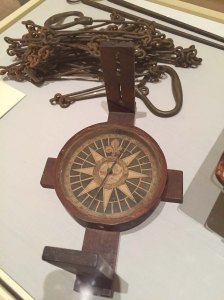
1761-1769 surveyor’s compass and chain, the way early America was mapped

How did anyone find their way around before GPS and digital mapping software?  The painstaking task of making maps fell to surveyors walking the land with compasses and chains, expert draftsmen, masterful engravers, and printmakers. If you wanted anything in color, you’d have to get out the watercolor set.

The show at the New-York Historical Society, Mapping America’s Road from Revolution to Independence, on display through March 11, presents glorious examples of the art of mapmaking during America’s colonial days, the fight for independence, and the aftermath of the British defeat.

Although the show was originally mounted by the Boston Public Library with key holdings from the Leventhal Map Center, the NYHS show adds items from its own collection – a letter from George Washington just before the Battle of Brooklyn, a beautifully illustrated journal of a French officer aboard the French ship Hercule, and delightful illustrations of life in Lower Manhattan 35 years after the Declaration of Independence was read to the troops.

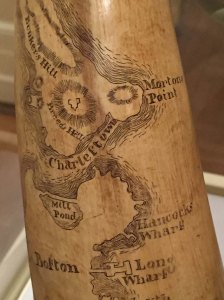
Local maps carved into a powder horn in 1775 by a British soldier occupying Boston.

Check out our Flickr album of some of our favorites from the show.

The first gallery showcases the two-part 1754 Peter Jefferson-Joshua Frye map, which was the go-to cartography for everyone in the Tidewater and the Blue Ridge frontier throughout the 18th century.  Yes, it was created by Tom’s father and reproduced over a dozen times by European mapmakers.

The show features engravings by Paul Revere, broadsides vilifying the Stamp Act, announcements of New York’s would-be Tea Party, maps made by both the British and Continentals (even one carved on a powder horn), including the stupendous, famed, gigantic Ratzer map of Lower Manhattan.

1781 hand-colored French engraving showing the French armada and celebrations following the British surrender at Yorktown.

The central gallery features battleground maps, including the New Jersey standoff at Monmouth and evidence of the French blockade that won the war at Yorktown. (Is that partying in the streets?)

The final gallery celebrates post-war America: the creative 1789 New York City business directory (complete with fold-out map of the town) and a curious 1784 proposal for ten additional western states, as named by Thomas Jefferson. Anyone want to homestead in Polypotamia?

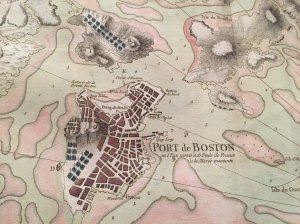
Close up of French 1776 engraved hand-colored map of Boston harbor.

Following a successful run in Colonial Williamsburg, this show brings the art, logistics, design, and scope of the Revolution to grand, colorful life.

If you can’t get to the show in person, take time to go through the incredible website for the 2015 edition of this show in Boston, which walks you through maps of Boston, including the showdown between the Americans and British when the city was still practically an island in the bustling bay. And don’t forget to check out the interactive of the Jefferson-Frye map here, and compare what Virginia and DC looked like when rivers were roads with the interstates today.

Basquiat: A Singular Sensation

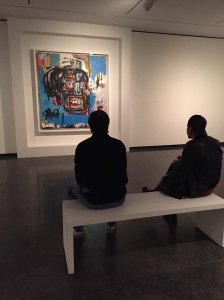
Visitors contemplate Basquiat’s 1982 Untitled

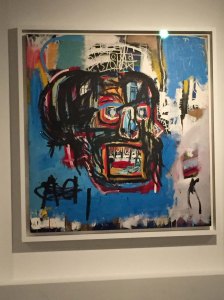
One painting in a white room in a quiet corner is all anyone really needs to contemplate the life, art, and brilliance of Brooklyn’s most celebrated art-world superstar, Jean-Michel Basquiat.

Lest anyone underestimate the reverence in which art fans hold Mr. Basquiat, just observe which paintings are the biggest selfie magnets at The Armory Show or in the survey galleries at MoMA.  You’ll see a constant stream of excited fans posing one by one to record their presence with any canvas by Jean-Michel – rough, gestural, colorful, graffiti-smeared, topical, socially conscious, channeling voices and ideas in a way that’s his alone.

The Brooklyn Museum’s 2005 retrospective of Basquiat was just like that – legions coming to celebrate one of the borough’s greatest stars. Now the museum’s turned the tables – giving everyone a view of their favorite son in a completely different, audacious setting.

“Untitled”, the focal point of the show, acrylic and oil stick

One Basquiat, on view through March 11 at the Brooklyn Museum of Art, provides an almost church-like atmosphere with stark white benches reverently set where fans can sit quietly and contemplate the work of this legendary Brooklyn artist. No flash, no drama – just you and a singular sensation by Jean-Michel.

Japanese collector and Basquiat super-fan Yusaku Maezawa paid a fortune for this painting at auction last May and decided to collaborate with the museum to spread the joy with other fans in Basquiat’s hometown.

Never mind that his bid was the sixth-highest ever made for a contemporary painting – when you buy something that no one else has seen in over 30 years, why not give props to its creator in the classy way he deserves – white room, solitary contemplation, just one work.

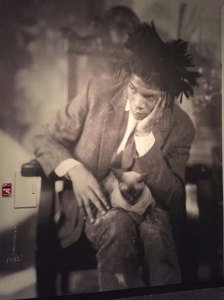
James Van Der Zee’s 1982 portrait of Basquiat

A few discrete wall panels explain Jean-Michel’s importance and context, and the little vitrine with his Brooklyn Museum junior membership card says it all about the artist-as-youngster. His mom enrolled him when he was six.

The show is lovingly bookended (outside the white room) with a monumental James Van Der Zee portrait of Jean-Michel and clips from a 1981 film showing the creative genius in action, making his mark on unadorned walls. See our Flickr album.

Get out to Brooklyn immediately to see the hometown hero’s work before it takes flight to Chibu, Japan.

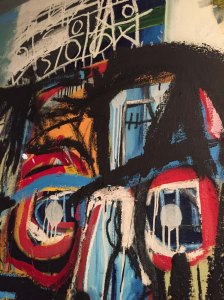
Close up of Basquiat’s brushwork and drawing

Modern Japanese Design from Humble Plants Blossoms at Met

2017 immersive bamboo sculpture by Tanabe Chikuunsai IV

Ancient grasses are the medium through which master craftsmen have made eye-popping, intricate statements, as evidenced in the Metropolitan’s exhibition, Japanese Bamboo Art: The Abbey Collection, running until February 4.

The show opens with a dynamic, undulating tiger-bamboo sculpture installation by Tanabe Chikuunsai IV, a modernist descended, trained, and influenced by three previous generations of acclaimed Japanese bamboo innovators.

In fact, families passing on the secrets and traditions in three different regions of Japan is a featured theme of the show. In many cases, work by fathers and sons is shown side-by-side, such as the intricate works by Tanabe’s own great-grandfather and grandfather, and the stunning sculptures by Honma Hideaki and his father, Honma Kazuaki.

Mid-19th c. hanging cicada-shaped basket collected by Moore

The show showcases contemporary and 20th-century bamboo art from the Abbey Collection (which will eventually be given to the Met) alongside 19th-century pieces collected and donated to the Met in different eras.

For example, the Met received a bonanza of Asian art from Tiffany’s artistic director of silver, Edward Moore – over 80 textiles, bamboo baskets, metal work, and ceramics – from his overseas journeys in the 1860s and 1870s.

Beautiful gold-and-lacquered bamboo pieces that he collected are displayed in this show, alongside kimonos, painted screens, and netsuke-toggled containers featuring images of bamboo growing wild.

Modern lines of 1940s Peony Basket by Maeda Chikubosai

There’s also a unique bamboo and rattan bowler hat from the 1880s, courtesy of the Abby Collection, which injects a bit of the “Pacific Overtures” feel to the show, demonstrating how Western influences began to creep into Japan and push artists, such as Shokosai, to use traditional materials in contemporary life. In this case, snappy items sported by fashionable celebrities.

Despite the centuries in which craftsmen shaped large and small specimens of some of the more than 600 species of these grasses, bamboo work remained classified as “craft” versus “art.”

By 1929, however, the up-and-coming generation of bamboo innovators finally accomplished what their artistic ancestors had not – full recognition by the Japanese art hierarchy that their creations were on a par with painting, other types of sculpture, and fashion.

2014 sculpture by Honma Hideaki next to 1983 panel by his father, Honma Kazuaki

An example is Sakaguchi Sounsai’s fruit tray, one of the first pieces of bamboo works accepted into a government-organized national art exhibition. Kudos to the Abbey Collection and the Met for showing how Japanese artists took a humble plant and made it blossom into a dramatic, rich, intricate statement reflecting modern times.

Take a look at everything on the Met’s website and our favorites on Flickr, which shows some of the Moore and Abbey-collected works in chronological order.

To get an idea of the skill involved in transforming these natural materials, watch this time-lapse video of The Gate, the dynamic, undulating installation dominating the show’s entrance, created by a team led by bamboo artist Tanabe Chikuunsai IV.

And listen to Hiroshi Sugimoto, the famed photographer, looks at Tosa Mitsunobu’s 15th-century Bamboo in the Four Seasons screen, also included in this show at the Met, describing how a two-dimensional work brilliantly uses nature to convey the passage of time.

MoMA Picks Fashion Items with Modern Impact

1970 looks envisioned by Rudi Gernreich people in the Year 2000

The MoMA design department came up with a list of 111 clothing items that have had an impact on the world and is presenting them for your reflection through January 28  in Items: Is Fashion Modern?

Capri pants, graphic T-shirts, jumpsuits, backpacks…they’re easy to identify, but do you really know where they came from or where they’re going?

The design team dug deep, interviewing experts, commissioning new designs, and taking you on quite a journey from what seems familiar but has deeper implications and meanings.

Each item on the list gets more-or-less the same treatment: familiar examples, a little historic context, audio by experts intimately familiar with the prototype and its societal significance, and maybe videos providing a little more background. (Go, Beatnik video, next to the felt berets and black turtlenecks!)

Close-up of MoMA-commissioned jumpsuit by Richard Malone, made from recycled acrylics

There are sections on shaping undergarments, luxury items, expedition wear, and power dressing. Check out our Flickr album of some of our favorites, and be sure to check out the video of the graphic T-shirt installation.

The MoMA team gets the digital gold star for using sound, video, social media, and social platforms to explore each item on the list. Hear the many voices who contributed to the show – designers, curators, fashionistas – on MoMA’s terrific audio tour.

For example, everyone knows “the little black dress” but MoMA calls it “a concept” and then displays everything from Gabby Chanel’s original 1920s bugle-beaded innovation to Gianni’s safety-pin number to subversive top-shorts combos for a hip-hop crowd by Rick Owens.

It’s nice to see all the versions while listening to FIT’s Valerie Steele on the audio tour and to watch the gallery video of how the laser-cut nylon pieced dress by Nervous System symbolizes the LBD’s future.

1997 A-POC Queen by Miyake Design Studio — one tubular piece of cloth knitted by an industrial machine from one thread.

And as for the future, there are plenty of visions: Gernreich’s 1960s take on what people would be wearing in the Year 2000. Donna’s Seven Easy Pieces from the Eighties are still being treasured as components for a totally modern dressing solution.

It’s remarkable to think that the Miyake Design Studio’s innovative, red-hot one-thread tubular computer-knit everything-in-one piece first debuted in 1997 and that paper shift-dresses weren’t born yesterday.

A soft, doe-colored Halston Ultrasuede shirtdress is featured in one of the final galleries, but there’s nothing about its demure look to suggest the societal fashion mania that ensued during the Seventies for this washable suede-like innovation.  It was one of the decade’s had-to-have items.

There’s plenty of flash, surprise, and history to go around. Sign up for MoMA’s free course on Fashion as Design on Coursera and poke through MoMA’s YouTube channel for insights on Saville Row suits, fashion lifecycles, digital dresses, and more.

Take a walk with MoMA’s design curator Paola Antonelli though this enjoyable, provocative show:

Also, MoMA produced a set of videos to provide a behind-the-scenes look at some of the garments commissioned especially for the show, such as futuristic biker jacket by Asher Levine and James DeVito. Step into their atelier as they enhance their design:

Disorienting Delirious Art at Met Breuer

Detail of Jim Nutt’s 1967 Miss E. Knows, representing twisted expressions of Sixties angst

Do you believe that delirious times call for delirious art? This was the impetus for the Met Breuer to create “Delirious: Art at the Limits of Reason, 1950-1980,” to take viewers on an experience of vertigo, excess, nonsense, and twisted sensibilities through January 14.

About a third of the show is drawn from the Met’s own collections, but there are plenty of surprises around each corner – art from lesser-known artists who were channeling their times as well as little-known pieces from well-known artists.

The first rooms of the show explore vertigo by catapulting you back in time to the 1960s, when psychedelia and altered, fractured states drove artists to experiment and translate the feelings of social change and upheaval.

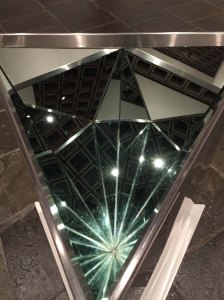
Peering into Robert Smithson’s 1965 Three Mirror Vortex

Works include the stunning, ultra-controlled, and visually disorienting op-art canvases of Edna Andrade as well as a fractured inside-out sculpture by Robert Smithson. You can even put your head inside of it and experience worlds within worlds.

In case you miss the point of all this early Sixties experimentation, the curators have the Met’s copy of Timothy Leary’s psychedelic tome on display, along with drawings done by his colleagues under trance-like conditions.

From there, the curators accelerate the feeling of delirium and disorientation by grouping works according to excess (read obsessive), nonsense (gibberish), and twisted.

Detail of Alfred Jensen’s obsessive 1978 work

You’ll see highly obsessive, ordered works, such as a monumental Alfred Jensen systems painting with rows of numbers caked in oil impasto and an all-white 3-D see-through grid installation by Sol Lewitt. All very precise but irrational, regardless whether the work is messy or clean.

Turn the corner and find that obsessive Kusama is at it again with her self-titled “compulsion furniture,” plastering an ordinary ladder with high-heeled shoes and who-knows-what. It feels as though her work is the opposite of the previous group, but it’s just as over-the-top.

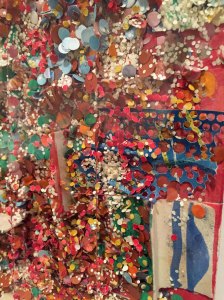
Punched-paper details in Howardina Pindell’s 1977 collage

In a nice surprise, the Met pairs Kusama with obsessive, joyous, and glittering works by former curator Howardena Pindell, who channeled her experience of a 1970s African odyssey into an abstract riot of punched-out paper holes, colors, and stuff. Bravo, Howardena! (Note: Her work is also featured on the walls of the Whitney right now in “An Incomplete History of Protest.”)

The nonsense portion of the galleries feature word-play and an unusual early Oldenburg totem inspired by his old neighborhood – “Letter Tenement” is a mish-mash sturdily assembled from oil and rags. An abstract Stan VanDerBeek video pulses nearby.

Impermanence and found-object inspirations are represented by letterset, photocopy art, and large-scale works made from torn Parisian posters by Jacque Mahé de la Villegié from the Tate collection. Layers upon layers of jumbled, dazzling fragments that you can get lost in.

For a walk on the wild side, visit this stimulating show. Take a look at some of our favorite works on our Flickr feed, and listen in as the curator presents highlights of the show: