War Ends at NY Historical

Welcome to New YorkJoin the crowds for two more days to pay tribute to NYC’s Greatest Generation at the revealing, reflective exhibition, WWII & NYC created by the New-York Historical Society. If you can’t get there in person, take a look at the synopsis here, but in the galleries there are surprises at every turn. The slideshow gives you a glimpse.

Right inside, you’ll find a line-up of people checking out a portion of the actual 1938 Cyclotron, a kind-of atom smasher that physicists at Columbia University were using confirm nuclear fission. It’s also surprising to see an interactive map of where “The Manhattan Project” was actually located in Manhattan. At Fifth Avenue and 29th Street, the Army had 300 people on the 22nd Floor of 261 Fifth sourcing materials for the first atom bomb. Other teams were working in the Woolworth Building and at 270 Broadway.

People also cluster around the interactive map of New York’s harbor, which explains how all those interesting-looking, now quiet big buildings, forts, and warehouses along the shore were once alive with 3.3 million active duty service men and women headed for Europe and North Africa. Take this video tour and see it then and now:

And the show would not be complete without a in-depth look at the activities of the Brooklyn Navy Yard and the rise of Rosie the Riveter. Watch this video to experience what it was like from a woman who lived it:

The show includes stories about how Tito Puente, Jacob Lawrence, filmmaker Francis Lee, MoMA, the Metropolitan Museum of Art, Maiden Form, Nabisco, and countless other New York people and companies joined in to the war effort. Check out additional videos expertly produced by NYHS on line. You’ll never look at these City streets or harbor the same way again.

Liberace Sparkles at Time Warner

Purple Cuff

Dazzling rhinestones and teardrop crystals are providing the antidote to a rainy summer weekend inside the Time Warner Center, where HBO has installed Liberace’s piano, signature suits, and a tower of champagne to celebrate of the debut of the Michael-Douglas-as-Liberace pic Behind the Candelabra.

Up the escalators on the Third Floor, crowds were swimming through glitter Nirvana – Lee’s head-to-toe glamour looks: white cravats, bejeweled lapels, matching boots with rhinestone-studded heels, and the all-important cuff, which framed those flying ring-encrusted hands.

Purple BootsEnjoy it all in the Flickr gallery, because it’s all about the details. Besides, there’s no more Liberace Museum to visit in Vegas, so this is your chance to check out a bit of his million-dollar legacy.

Branding for the HBO film was everywhere, featuring giant pictures of Matt Damon and Michael D, but people mostly hovered about the glass cases to see look after look loaned by the barely-surviving Liberace Foundation.

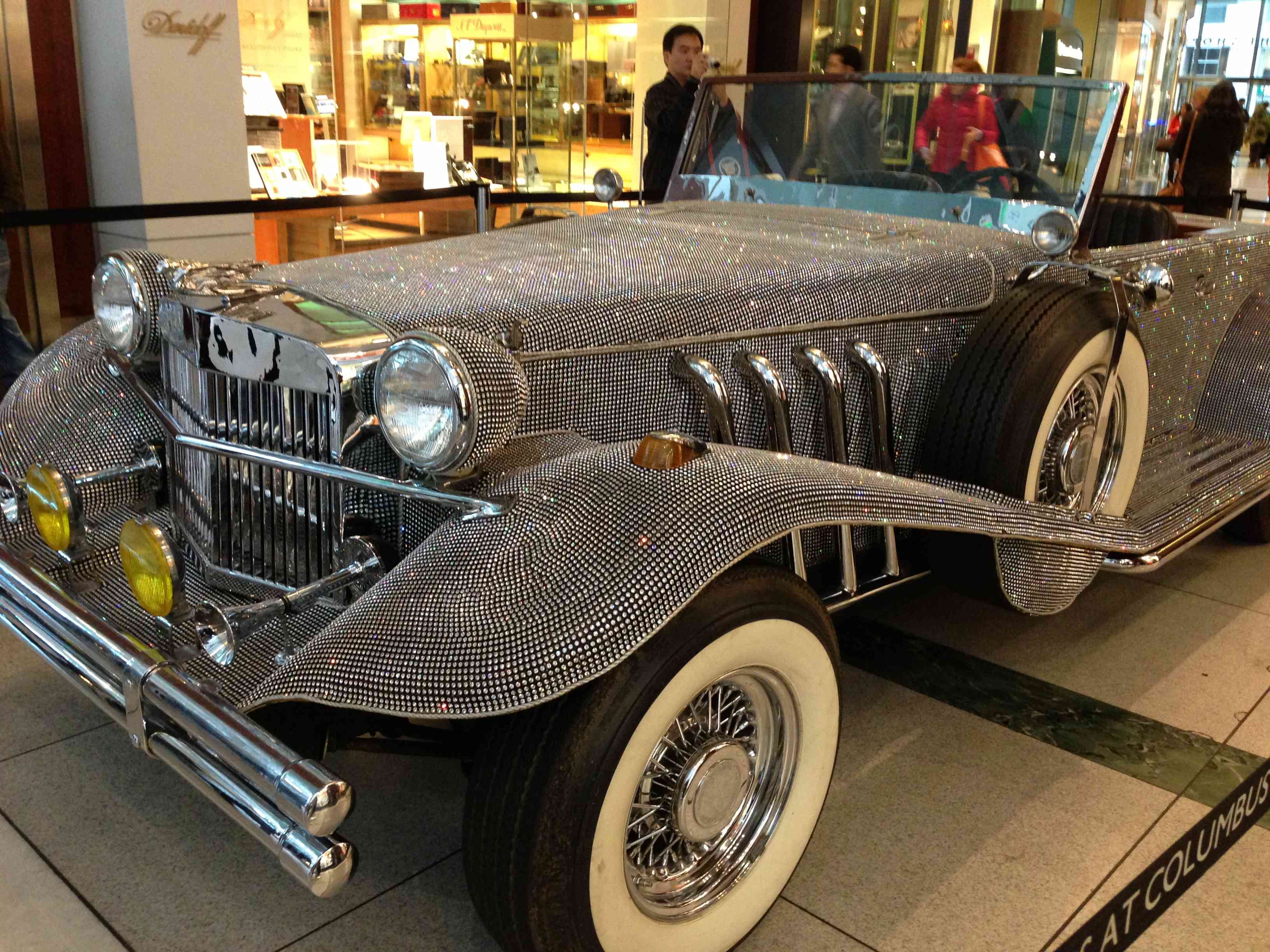
RoadsterThere were no capes in sight, but plenty of fur-trimmed boots, beaded fringe, and a giant Swarovski crystal. Downstairs throngs were circling Lee’s rhinestone Duesenberg and admiring the bling on the Baldwin.

Check out the HBO movie, but run over to Time Warner to see (for real) what made this man a show business legend. Open 9am to 9pm through May 27.

Monumental Impression of Fashion at the Met

Monet’s
Women in the Garden (1866) from the
Musée d'Orsay, Paris features impressions of fast-changing dappled sunlight and ladies’ fashions (e.g. the fad for soutache)

Monet’s
Women in the Garden (1866) from the
Musée d’Orsay, Paris featuring impressions of fast-changing dappled sunlight and ladies’ fashions (e.g. the fad for soutache)

You can witness the collisions of the new crashing into the old in the Metropolitan Museum’s joyous show, Impressionism, Fashion, and Modernity. Impressionism’s heaviest hitters (Manet, Monet, Renoir, Cassatt, and Morisot) are displayed alongside stunning 19th Century dresses, suits, accessories, and underthings to prove a point — that incorporating the latest fashions was one of the cudgels that these rule-breakers used to facilitate their revolution in painting.

The show features paintings from three grand Impressionist collections (the Met, the Art Institute of Chicago, and the Musée d’Orsay), and includes breathtaking dresses from NYC’s fashion-collection superpowers – the Met, the Brooklyn Museum, FIT, and Museum of the City of New York.

The Met’s website explains the key themes of the show, but it’s no substitute for going through the galleries in person. Why? The tiny photos cannot do justice to the monumentality of these paintings, where scandalous 19th-century fashionistas stormed the barricades of the French Salon, in large-format framed paintings normally reserved for staid, moralistic history paintings.

Summer day dress worn by Madame Bartholomé in her husband’s painting In the Conservatory 
(1880) 
Source:
Musée d'Orsay

Crisp summer day dress worn by Madame Bartholomé in her husband’s 1880 painting In the Conservatory. Source:
Musée d’Orsay

The size, colors, and techniques are amazing, especially as the Impressionists moved outdoors just as new technology was encouraging lifestyle and fashion revolution. Steam-powered train lines were inventing the concept of the weekend getaway for City hipsters, so a lot of the paintings feature dappled sunlight with high-fashion young people lolling about in nature. (See the show’s highlights.)

The show’s curators shine the spotlight on how fashion, innovation, and the art world influenced one another: New aniline dyes allowed hot pink, bold color-blocking and vivid hues for extravagant skirts and dressing gowns. New fabric-finishing technology enabled super-white cotton fabric to be crafted into diaphanous, desirable, but high-maintenance dresses and gowns for the first time in fashion history.

The Met scatters mass media throughout the galleries, just to demonstrate fashion’s democratization during 1850-1890. New printing technology enabled trendy fashion magazines to be consumed by the masses. New-fangled duplication techniques revolutionized the studio photograph by inventing the eight-image carte-de-visite – a paper-based way to market your “celebrity” self and show off your fashion chops long 150 years before Facebook and YouTube.

Silk and ivory French parasol (1860-69) from Brooklyn Museum Costume Collection at The Met (Source: gift of Mrs. William Ashbaugh)

Silk and ivory French parasol (1860-69) from Brooklyn Museum Costume Collection at The Met (Source: gift of Mrs. William Ashbaugh)

Pop-art pink velvet, boleros with pompoms, lace parasols, Worth gowns, kid gloves, top hats, corsets, hat shop girls, high-end boutiques, and Cezanne’s surprising oil painting based on a fashion-magazine layout. Which part of this show is the best?

Go before May 29, when the show decamps for Chicago for its June 26 opening.

Crowds See Luxury on Vintage Rail Cars at Grand Central

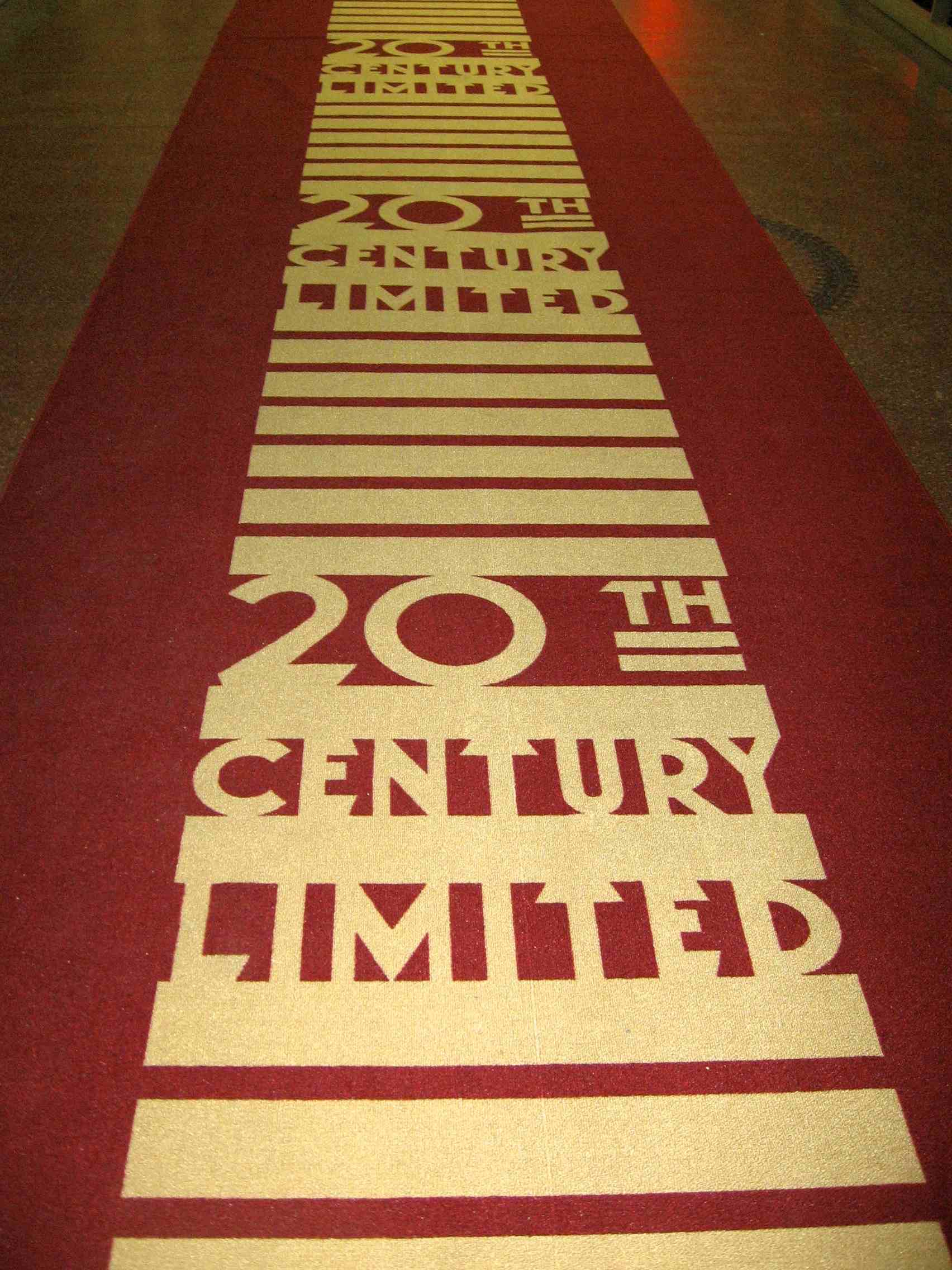
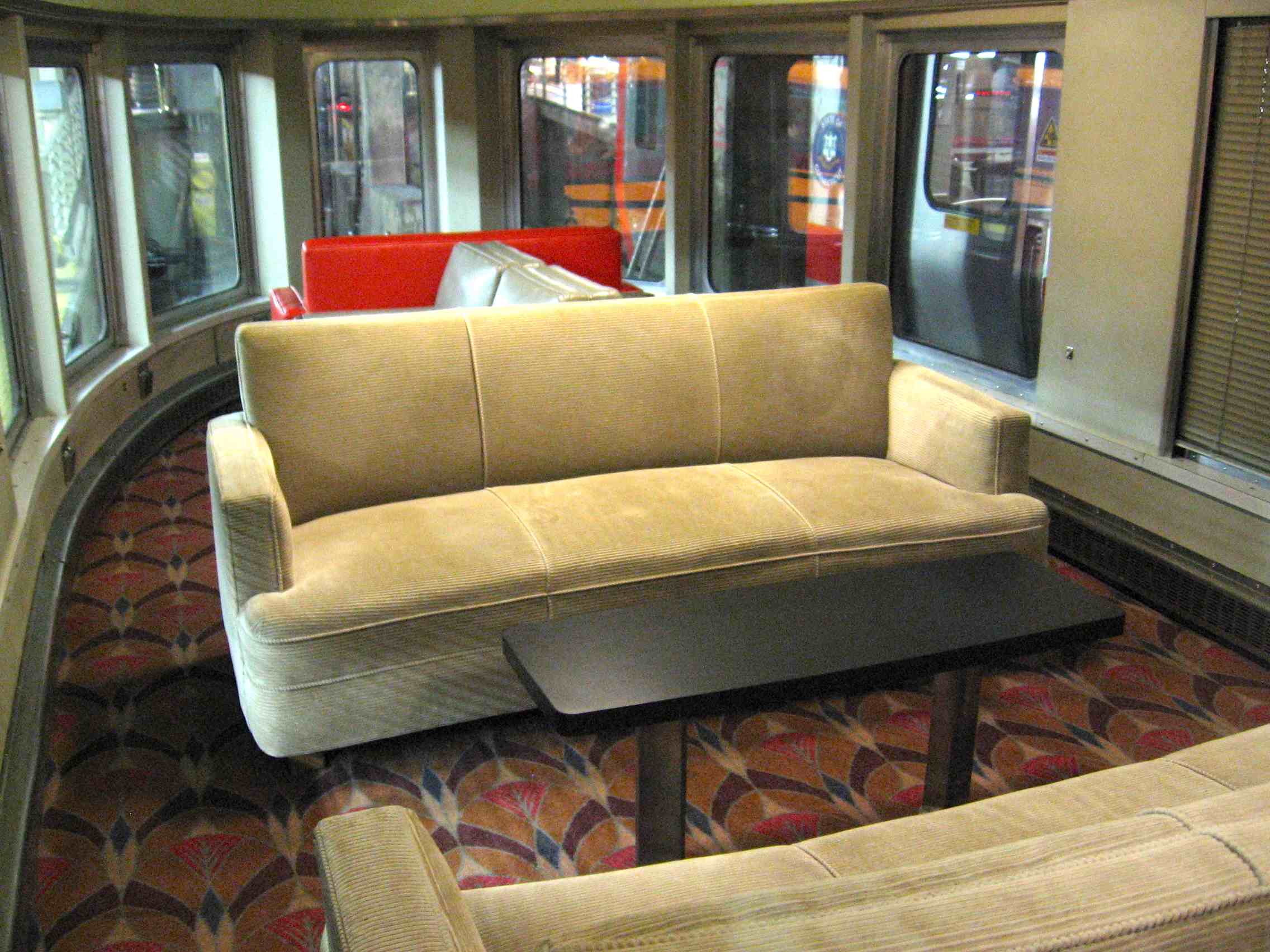
Red CarpetThe red carpet is back at Grand Central, right where it belongs: leading visitors down Tracks 34 and 35 to the door of the 1947 observation car of the 20th Century Limited and to fifteen other vintage sleeper, dining, and lounge cars that once traveled the New York Central rails and other lines all over the United States between the 1920s and 1950s.

An unexpected treat was being greeted by former “Century Girl” Joan Jennings Scalfani, who politely posed for photos with admirers and talked about the 1960s when she represented the brand to celebrities such as Frank Sinatra, Bess and Harry Truman, Ernest Hemingway, and Lena Horne.

Joan Jennings Scalfani, a former “Century Girl”, at the Parade of Trains

Joan Jennings Scalfani, a former “Century Girl”, at the Parade of Trains

Besides the streamlined 20th Century observation car, we visited the leather lounge of the 1923 Kitchi Gammi Club (Pennsylvania Railroad), the 1949 Babbling Brook observation car (New York Central), and the refurbished Broadway Limited baggage car that has transformed into a luxurious private-dining experience, Dover Harbor.

All sixteen cars were brought to New York for the Parade of Trains in honor of GCT’s 100 anniversary – the largest convergence of private rail cars ever assembled at one time in the City.

Small crews of people serve up meals and make guests comfortable whenever the rail cars are booked for parties, getaways, and dinners. Rail clubs, crews, and owners welcomed us in every car we visited, including the fully stocked barbershop aboard the Overland Trail, which once ran on the Southern Pacific.

Due to the crowds, not everyone who came to Grand Central was able to walk through the halls of long-distance travel history, so we’re providing a closer look at the luxury, design, and history on our Flickr feed.

Front of the streamlined Hickory Creek sleeper-observation lounge car (1947) for the 20th Century Limited.

Front of the streamlined Hickory Creek sleeper-observation lounge car (1947) for the 20th Century Limited.

To accommodate the overflow crowds who weren’t able to make it onto Metro-North Tracks 34 and 35 before the afternoon cut-off time, MTA provided a train made up of three vintage subway cars, which shuttled between Times Square and Grand Central  – the 1948 R-12 car that was still equipped with wicker seats and whirring fans, the red 1950 IRT R-15 (the first subway to be air conditioned) with its iconic “portholes” in the doors, and the R33-S “World’s Fair” car which took visitors to the 1963 fair in style.

Dining aboard the Babbling Brook (1949)

Dining aboard the Babbling Brook (1949)

Interior Design Goes Medieval Avant-Garde at National Gallery

An avant-garde 1890s tapestry by Morris & Co., Edward Burne-Jones, William Morris, and John Henry Dearle (designers), The Arming and Departure of the Knights of the Round Table on the Quest for the Holy Grail. Collection of Jimmy Page, courtesy of Paul Reeves, London

An avant-garde 1890s tapestry by Morris & Co., Edward Burne-Jones, William Morris, and John Henry Dearle (designers), The Arming and Departure of the Knights of the Round Table on the Quest for the Holy Grail. Collection of Jimmy Page, courtesy of Paul Reeves, London

How did a secret society of artists in the 19th century turn into one of the most beloved interior design trends of the modern era? That story is the most surprising part of the exhibition (closing May 19) at Washington’s National Gallery of Art, Pre-Raphaelites: Victorian Art and Design, 1848–1900.

Organized by the Tate (and originally titled Pre-Raphaelites: Victorian Avant-Garde), the show introduces us to the PR Brotherhood (founded 1848), whose oil paintings and writings looked to the Middle Ages, myths, and legends of ancient literature for the spirituality that they felt was missing from modern, rapidly industrializing life.

Early collaboration by Rossetti and Morris, The Arming of a Knight chair, 1856 – 1857, painted pine, leather, and nails. Source: Delaware Art Museum, Wilmington.

Early collaboration by Rossetti and Morris, The Arming of a Knight chair, 1856 – 1857, painted pine, leather, and nails from the Delaware Art Museum,.

Dante Rosetti, William Holman Hunt, Edward Burne-Jones, William Morris, and others took inspiration from meticulous observation of nature, sensual textiles replicated in their paintings, and ethereal muses in medieval robes, which they often painted on location in leafy, natural settings.

In 1859, Rosetti painted a cupboard as a wedding gift for Morris. It wasn’t long before these pals ran with the inspiration — constructing medieval-inspired furniture and decorating it with similar mystical medieval images and experimenting with mixed media (images + poetry) on tiles, tables, and other creations made by hand.

For all the beautiful painting in the National Gallery’s show, the most startling room is the one that showcases the fact that the painters took it one step further by creating chairs, tapestries, tables, and textiles for forward-looking couples who wanted to live the 360-degree experience. In the 1860s, Morris & Co. was the go-to interior design shop for medieval-style avant-garde furnishings. They singlehandedly drove the stained-glass revival in Victorian architecture.

In 1873, Morris & Co. went international, selling wallpaper in Boston. Soon, American retailers in most major cities were carrying the hand-blocked or woven wall coverings and textiles.

Block-printed cotton designed by Morris (printed 1884-1917) from The Baltimore Museum of Art

Block-printed cotton designed by Morris (printed 1884-1917) from The Baltimore Museum of Art

Ever the advocate of the handmade, Morris was passionate about the relationship of decorative arts to the modernist movement. During Oscar Wilde’s US speaking tour in 1882, his lectures about Morris, the Pre-Raphaelites, and the nobility of hand-crafted work spread the trend in hand-crafted interior design in America.

Today, just about every museum shop carries William Morris-inspired something-or-others. Here’s the Tate’s video about the 17th century carved oak bed that Morris himself used in the 1890s. It’s all about the hand-made approach to the bedding textiles – a modern-medieval collaboration between his designer daughter, Mary, and wife, Jane.

Hats off to the Tate and National Gallery for presenting avant-garde design in a new light. Check out the rest of the Tate’s PR videos, including the one with Karen Elson on the topic of model as muse, then and now.

NYC Museum Videos Receive 49 Million Views on Social Media

The Japan Society’s popular Japanese language series

The Japan Society’s popular Japanese language series

After reposting so many museum videos here, we wondered how much video museums were producing, what social media they were using, and who had the most viewership and followers. We counted, and found that the museums, zoos, and botanic gardens around New York have racked up 48.8 million views on their public YouTube channels since 2007.

The volume of activity on was so significant that we couldn’t help documenting it and packaging the rankings into a report, NYC Museums: 2013 Video and Social Media Rankings.

Museum folks may want to purchase the full 48-page report to see how their organization stacks up, but here are some of our key findings:

As of year-end 2012, NYC museums with the highest number of all-time YouTube channel views were the Paley Center, American Museum of Natural History, and  Japan Society. Paley merges its NYC and LA feeds, and it’s 33M all-time video views are mostly from TV celebrity show panels in LA. So if we’re really looking at the museum programming champs in NYC, it would be AMNH (15M), Japan Society (7M), and MoMA (6M).

The Top NYC Museum Video of 2012 -- an AMNH Science Bulletin Whales Give Dolphins a Lift

The Top NYC Museum Video of 2012 — an AMNH Science Bulletin Whales Give Dolphins a Lift

The top NYC museum viral video of all time is The Known Universe video produced by AMNH for the Rubin Museum’s 2009 show, Visions of the Cosmos – 11M views and still growing. The video was generated from the Hayden Planetarium’s data set.

In  2012, another AMNH video, Whales Give Dolphins a Lift, went viral with 2M views. The AMNH has an active video-production team supplying content to its Science Bulletin walls inside the museum. Hats off to them for making a winning wordless video out of a few still photographs from field scientists in Hawaii, simple titles, and tranquil music.

The popularity of Japan Society’s language lessons are driving the numbers on their channel. Who can resist clicking through all the 2-minute lessons in their Waku Waku Japanese series with Konomi?

Asia Society’s Top NYC Museum Music Video of 2012

Asia Society’s Top NYC Museum Music Video of 2012

The top 2012 NYC museum music video was produced by the Asia Society, Arif Lohar and Friends: Jugni Ji!. Who knew that the finale to a Sufi pop legend’s concert on Park Avenue one year ago would rack up over half a million views?

The top star featured in a 2012 NYC museum exhibition video was a piece of 18th century mechanical furniture displayed at the Metropolitan. Viewership of The Roentgens’ Berlin Secretary Cabinet grew from 182,000 views at year-end 2012 to 1.6 million today. Can anyone explain how mechanical furniture received 25 times the viewership of the Met’s video walk-through of its blockbuster McQueen show, Savage Beauty?

The NYC museums using the greatest range of social media and video channels are The Jewish Museum and the Rubin.  One of the best under-the-radar NYC museum Flickr sites was the historical archive of Wall Street documents and treasures posted by the Museum of American Finance.

All the video and social media rankings 63 museums are in the report. Click here to see what’s included and make a purchase from our Its News To You Reports shop.

OK, here it is: the all-time top NYC museum video from 2009:

FIT’s Fashion Tech Timeline

Black velvet evening dress by Charles James (c. 1955) with a zipper inserted along that diagonal seam

Black velvet evening dress by Charles James (c. 1955) with a 3-ft. zipper inserted along that diagonal seam

Once you see the clothes in FIT’s Fashion and Technology exhibition inside a technology context, you’ll start making the connections at other shows all over town.

Exhibit A right inside the entrance – a seamless nylon-powder dress and bag made from CAD software and a 3D printer by Freedom of Choice in 2005 is a mesh wonder that is made by the same process as Amanda Levete’s woven Fruit Bowl in MoMA’s current Applied Design show.

Take the brilliant purple British day dress that FIT displays as an example of the revolution in color that occurred in the 1860s as analine dyes began to be used for the first time in commercial cloth manufacture. The Metropolitan Museum showcases the same point (except surrounded by Manet and Monet masterpieces) in its blockbuster time-series Impressionism, Fashion and Modernity. (Reference Camille.)

The 1860s color revolution due to analine dyes in commercial fabrics

The 1860s color revolution due to analine dyes in commercial fabrics

Outstanding achievement award invention + application at the FIT show: invention of the zipper in 1913 and the stunning accomplishment of Charles James, who inserted a three-foot-long zipper into a spectacular gown in a hidden seam on the bias (see left).

In Fashion and Technology, FIT makes brilliant use of its own stellar collection to chronicle the changes in technology that revolutionized fashion, from the advent of the Spinning Jenny in 1764 to the world’s first programmable T-shirt (see below).

For fans of the 18th and 19th centuries, here’s what technology mattered:

1764 – cotton replaces wool and linen as the go-to fabric (thanks, Spinning Jenny)

1780s – machine-knit textiles (200 years before double-knits)

1801 – Jacquard looms create complex patterns by using punch cards (up to 10,000, so take that Univac!)

1846 – sewing machines eliminate tedious hand stitching for the interiors of gowns

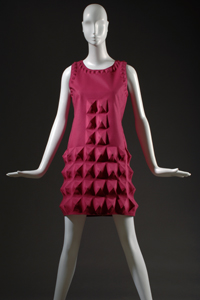
Pierre Cardin, dress, fuchsia “Cardine” textile with molded 3D shapes, 1968, Gift of Lauren Bacall.

Pierre Cardin, dress, fuchsia “Cardine” textile with molded 3D shapes, 1968, Gift of Lauren Bacall.

1856 – analine dyes bring about a color revolution to ladies’ fashions (go, hot pink!)

1857 – chain-stitch sewing machine

1860s – more color complexity with roller-printed fabrics

1880s – collapsible bustles let ladies sit down

1882 – celluloid used to imitate ivory and tortoiseshell for accessories

Check out the excellent exhibition timeline interactive to see these breakthroughs and what happened in the 20th and 21st centuries.

As promised, here’s the video of the world’s first programmable T-shirt:

Dance into Spring to Mr. Burrows’s Color-Block Beat at MCNY

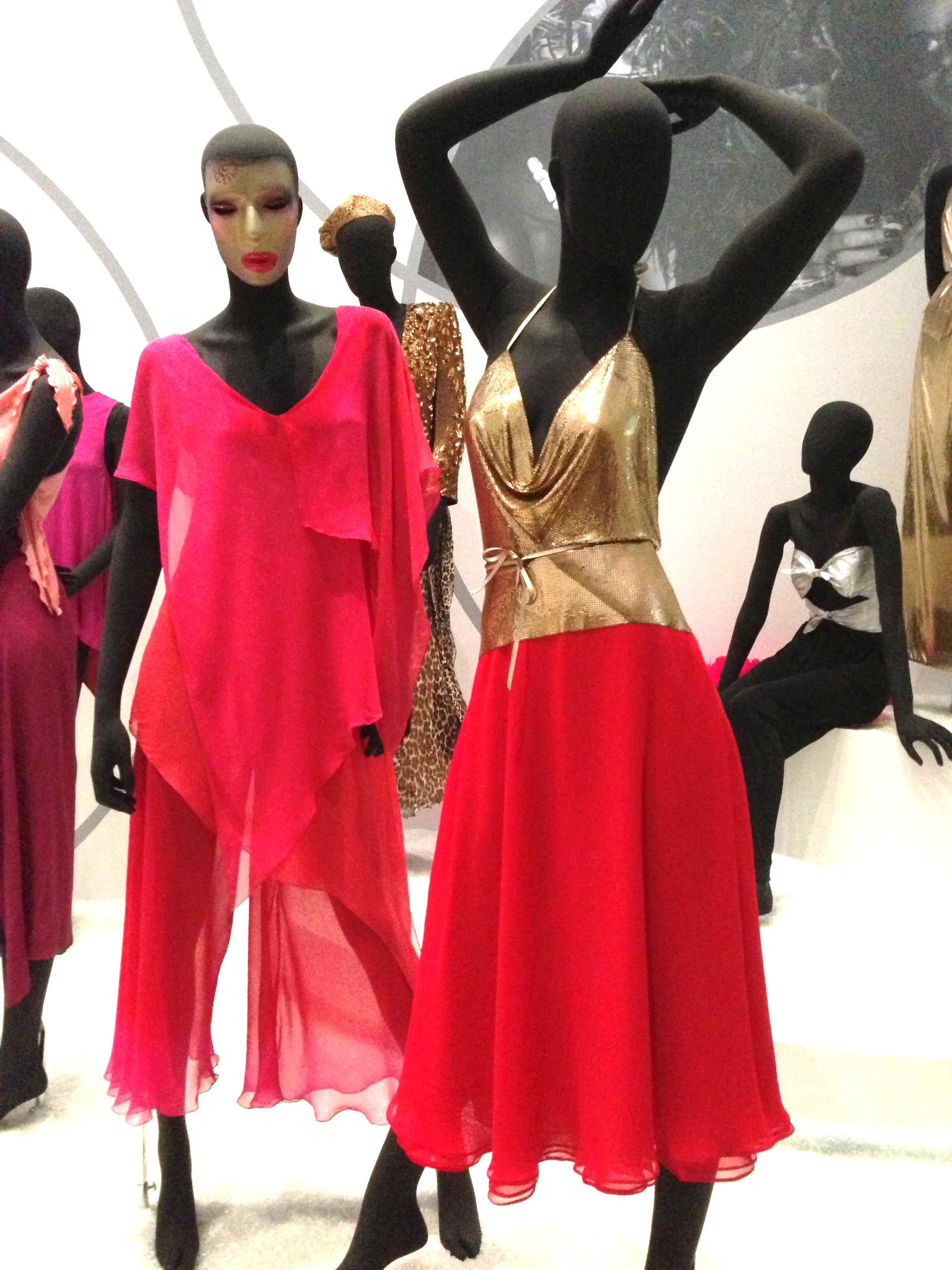
Studio 54 dance wear by Stephen Burrows.

Studio 54 dance wear by Stephen Burrows.

To experience an all-out burst of color, walk through the doors of the Museum of the City of New York and visit the paparazzi-worthy tribute to a 1970s design legend, Stephen Burrows: When Fashion Danced. You’ll get to know the man who styled Liza, Cher, Diana, Farrah, and so many icons of the 1970s with bright, beautiful, glamorous draped designs were made to whirl around the dance floor.

Vogue issues throughout the 1970s were filled with cavorting models sporting color-blocked coats, dresses, sweaters, and evening wear and lettuce-edged jersey wrap tops, cocktail dresses, and pant suits by King of Qiana, Stephen Burrows. When he burst upon the scene in the late Sixties, Geraldine Stutz installed him in her ground-breaking “street of shops” that she created at Henri Beldel, when it was still on 57th Street. If you don’t know Stephen’s work, a stroll through the first floor of MCNY will set you straight about who actually created the draped metallic disco top emblematic of Studio 54.

It’s the first retrospective dedicated to this stylish creative powerhouse, with ensembles drawn from the Burrows archive, FIT, the Metropolitan, and MCNY’s own treasure trove, and you’ll have until July 8 to see it.

Stephen gave us the draped metallic disco top and so much more.

Stephen gave us the draped metallic disco top and so much more.

The opening night party drew fashion royalty, and when we visited, Michael Kors was levitating with excitement, seeing the work that inspired so many to drape, piece, and glamorize with eye-popping colors. Check out the looks on the Flickr feed.

Don’t miss the major piece of fashion history hiding in one corner of the show: At a time when American fashion was viewed by Europeans as second rate, Burrows and Blass, Calvin, Oscar, and Halston were invited to follow the French at the still-talked-about 1973 benefit fashion show at Versailles. You’ll witness how Stephen and the NYC crew battled it out on the stage against YSL, Cardin, Ungaro, Givenchy, and Dior.

Spoiler alert: Stephen and his American crew won.  Historic is an understatement.

Surrealists Get Out Pencils and Scissors at The Morgan

César Moro’s Adorée au grand air (1935). Source: The Getty Research Institute.

César Moro’s Adorée au grand air (1935). Source: The Getty Research Institute.

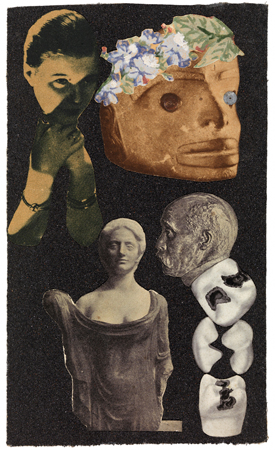
Automatic drawing, games, rubbings, collage, and dreams are all chronicled in the spectacular Drawing Surrealism show closing today at The Morgan. It’s an encyclopedia of what you can do with a scissors and pencil and demonstrates that these forms of play were critical to the most famous Surrealist works by superstars Ernst, Dali, Masson, and their European colleagues.

Some of the off-the-wall creations born out of the Surrealist’s drawing games eventually made their way into big-time oil paintings. The curators also contend that the monochrome grey-scale of some famous paintings is actually a tribute to the importance they attached to charcoal and pencil media.

The show, co-organized with the LA County Museum of Art, is the first time that Surrealist drawings have been the subject of an exhibition, and curators make quite the case for drawing technology transfer by showing us how these techniques (especially collage) spread to the rest of the world.

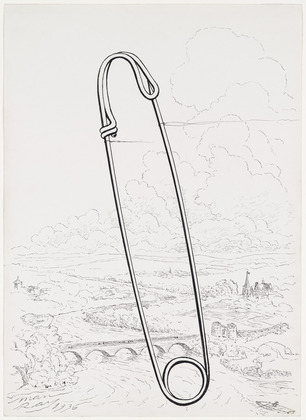
Man Ray’s Safety Pin (1936). Ink and pencil on paper. Source: MoMA. © 2013 Man Ray Trust / Artists Rights Society (ARS)

Man Ray’s Safety Pin (1936). Ink and pencil on paper. Source: MoMA. © 2013 Man Ray Trust / Artists Rights Society (ARS)

One of the genuine revelations is the work and importance of César Moro, a Parisian-trained Peruvian who brought Surrealism to Mexico and the rest of Latin America.

You can’t help but be struck by the forerunners of Pop: Man Ray’s Safety Pin sure looks like a precursor to Claes Oldenburg’s 1970s Clothespin, and there’s no question about the influence of Eduardo Paolozzi’s 1940s Surrealist-influenced collages: He and Richard Hamilton invented Pop Art in Britiain.

When the show was installed at LACMA, several contemporary artists were asked to create Surrealist-inspired works. Listen as Alexandra Grant, Mark Licari, and Stas Orlovski show and tell how European mind-and-hand games of the 1930s inspire work today:

Abstraction All-Stars Featured in MoMA’s LinkedIn

Installation view of the network behind the birth of abstract art

Installation view of the network behind the birth of abstract art, according to MoMA and Columbia Business School

As soon as you arrive at Inventing Abstraction 1910-1925, MoMA’s soon-to-close extravaganza featuring the relationships among painters, poets, composers, and dance innovators, you encounter a big, bold infographic on the wall – a web showing who was collaborating with, influencing, viewing, and reading each other as “abstract art” was born.

The stunning exhibit is a who’s who of modern art, with work by Picasso, Kandinsky, and Malevich (of course), but pulls in works from lesser-known early innovators from Britain, Poland, Italy, and America (hi, Georgia!) and across disciplines. So many connections, so little time! The show has books, music, pioneers of modern dance…just about everything.

If you can’t get to it, don’t worry. MoMA’s put it all on the web so you can explore all the connections yourself. The highlighted names show the artists with over 25 connections, like an early 20th century LinkedIn or really popular Facebook friends. Who knew that Russian fine-art diva Goncharova was more connected than, say, Malevich or El Lissitsky?  I guess inventing Rayism and designing sets for the Ballet Russes paid off in getting her positioned in this MoMA pantheon.

Created by MoMA curators, designers, and pros from the Columbia Business School, the interactive web highlights every artist featured in the massive MoMA show. The infographic allows you to zoom in to see how the buzz, particularly in 1911-1915, brought abstract art into being.  No matter which name you click on, you’ll get to view the works, play the music, and watch the dances – a web-based multimedia tour-de-force.

Now dive into one of the best art-websites ever, and get to know the network and likes of the hot, emerging artists who made the art world of 100 years ago into what we know today.

Watch how this show and web project were brought to life with Excel, great minds, and graphic design. And be sure to check out Paul Ingram’s views on the value of networks at the MoMA video site.