Contemporary Pueblo Architecture Honors Ancient Beliefs

Any visitor to Chaco Canyon National Historial Park (850-1250 CE) makes the journey to appreciate innovative masonry of the Great Houses, the precision of the ancient road system, and the astronomically aligned walls, windows, and kivas. But how do contemporary Pueblo architects incorporate these traditional beliefs in their 21st century projects?

A fascinating, in-depth exhibition, Restorying our Heartplaces: Contemporary Pueblo Architecture – on view at Albuquerque’s Indian Pueblo Cultural Center through December 7, 2025 – explores how modern Indigenous architects incorporate traditional world views into their work.
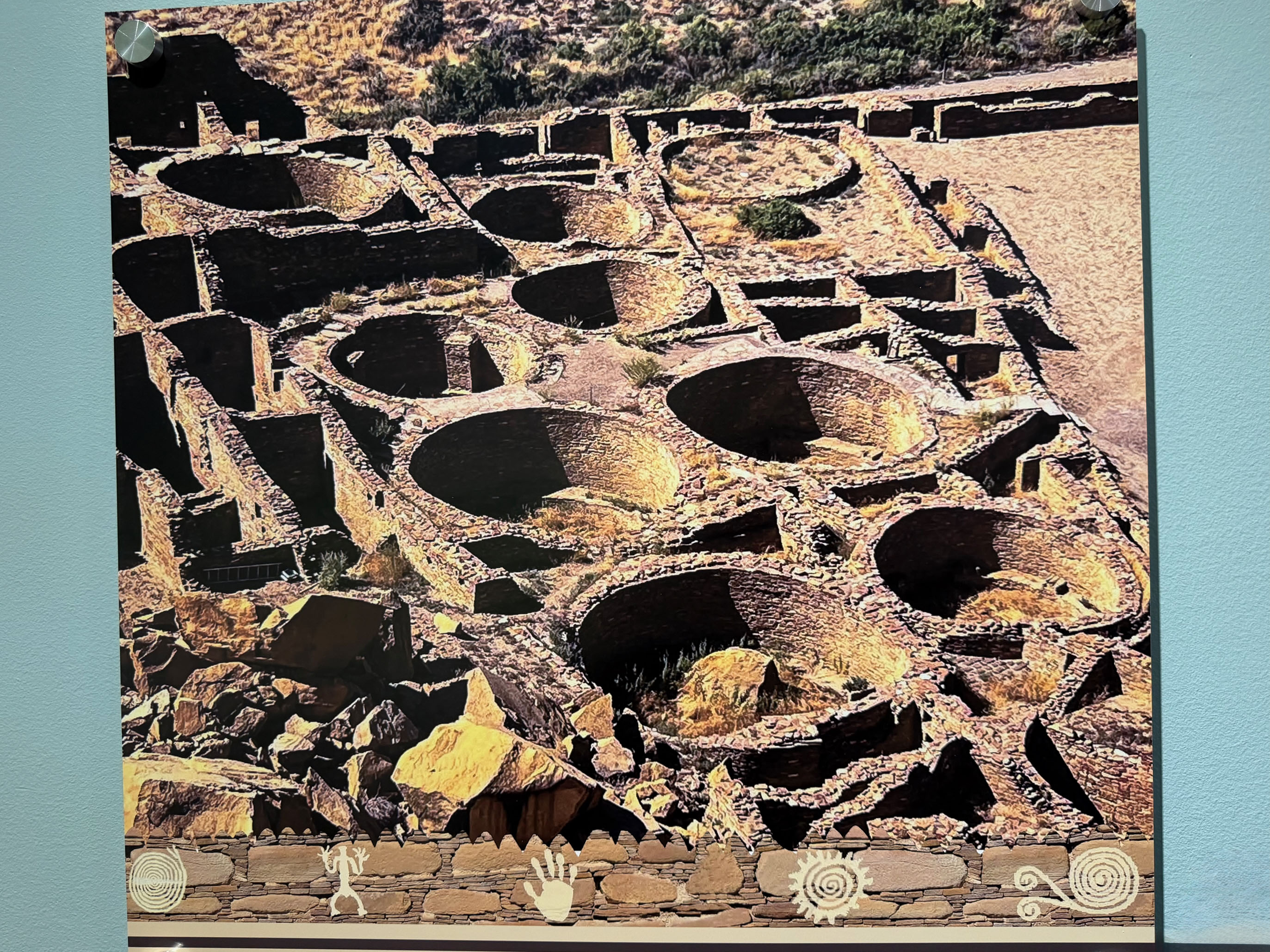
2023 photo Kivas at Pueblo Bonito,Chaco Canyon by curator Ted Jojola (Islela Pueblo) showing advanced masonry and architectural concepts.

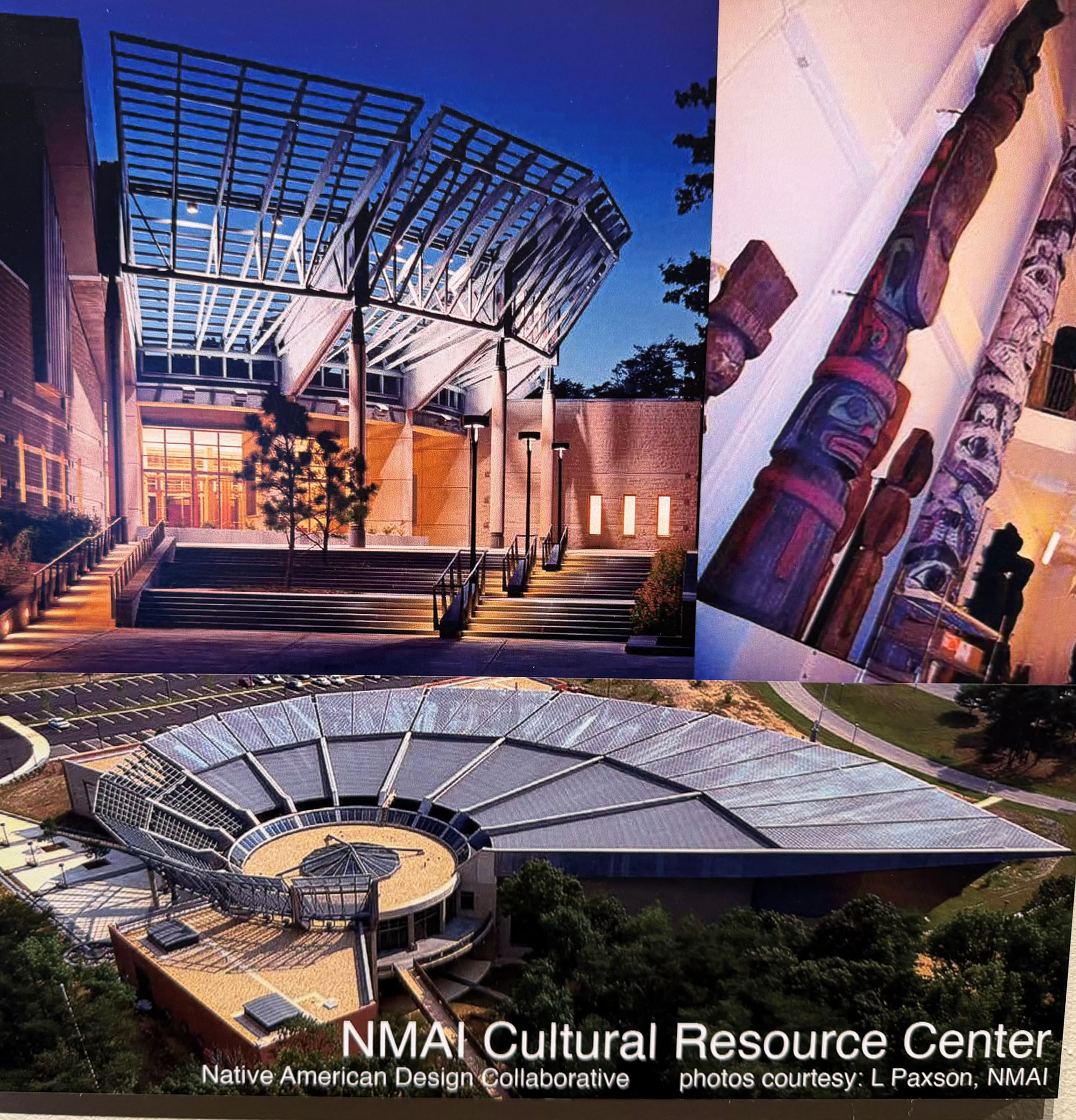
For example, just look at the design of the National Museum of the American Indian’s Resource Center – an organic design, aligned to the four cardinal directions, with extensive use of cedar wood.
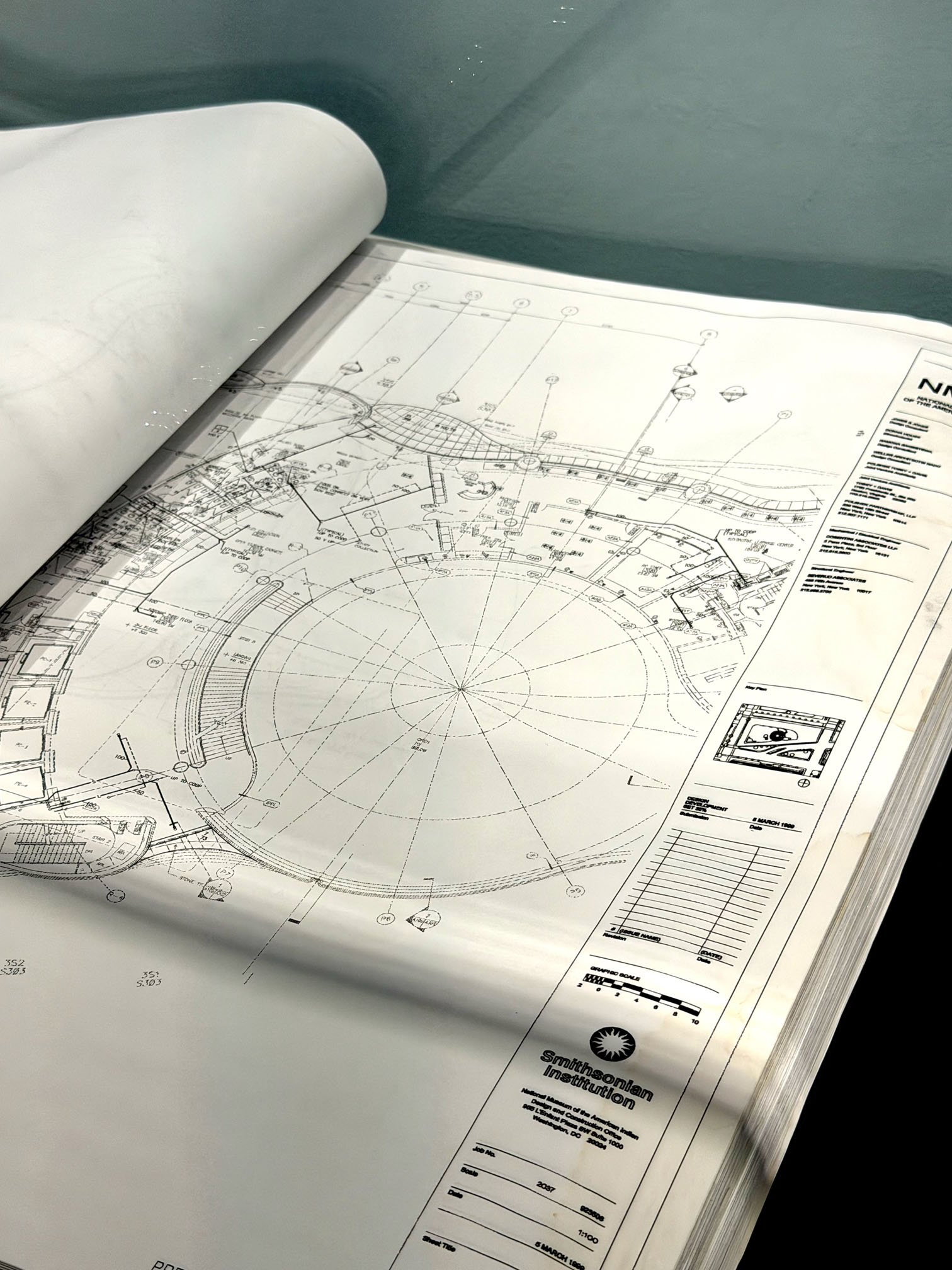
1999 plans for the National Museum of the American Indian Resource Center. Courtesy: Ted Jojola (Isleta Pueblo)
Views of the 1999 National Museum of the American Indian Cultural Resource Center in Suitland, Maryland. Courtesy: Lynn Paxson.

This exhibition coincides with the 50th anniversary of the 1975 Indian Self-Determination and Education Assistance Act – legislation that shifted Native American policy in the United States from assimilation to self-determination. Tribes were now able to initiate and run justice, government, health and education departments of their own – a change that triggered a construction boom for new schools and administrative buildings.

The show opens as an immersive experience in a large, circular gallery that introduces the core belief system and origin story of the Ancient Puebloans. Across a large screen in a vivid animation, the Pueblo people emerge into this world from a previous world. You watch them migrating outward in a spiral – symbols that are reflected across the art, murals, and photographs on the surrounding walls.
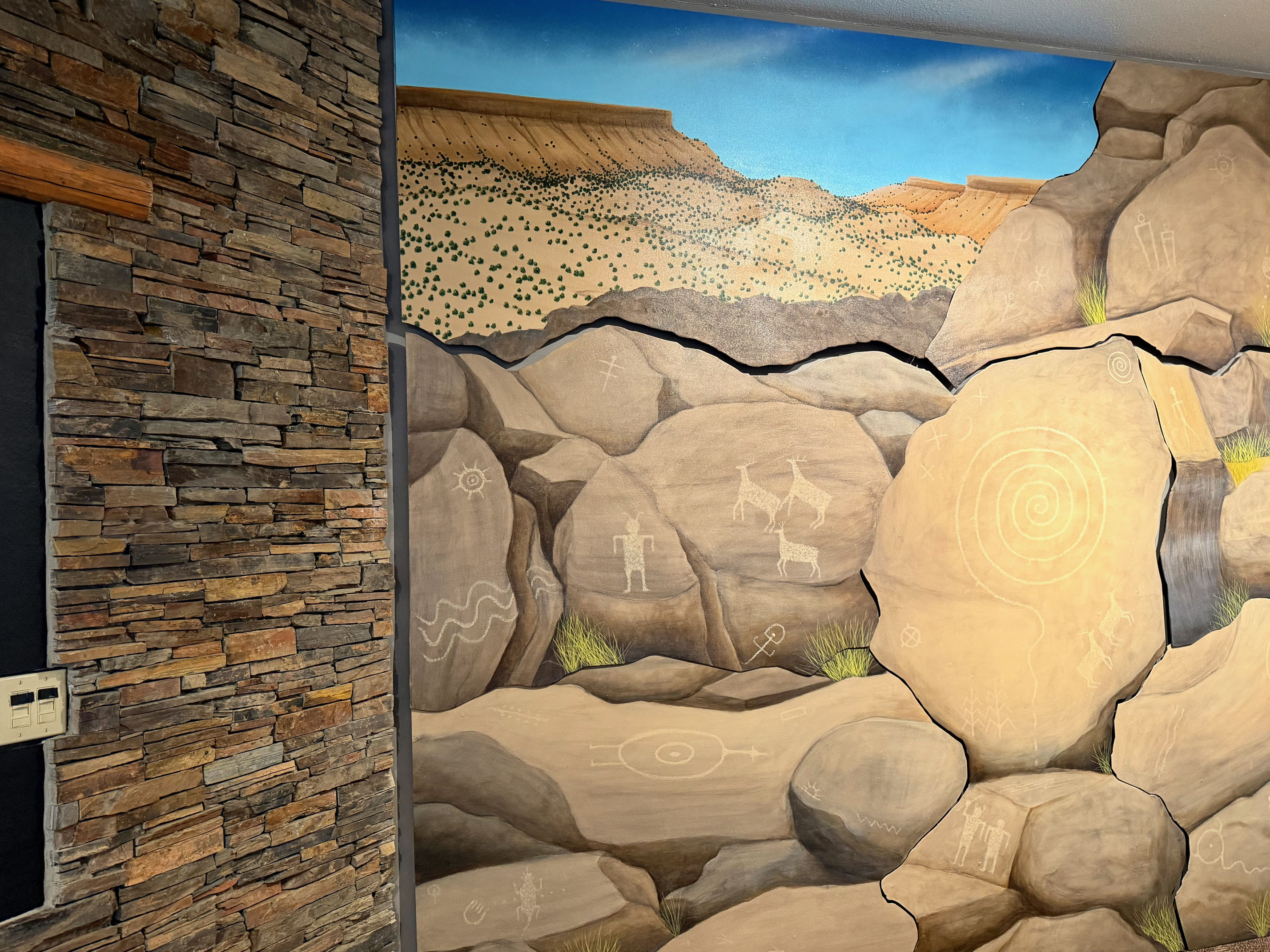
Mural by Dominic Aquero (Cochiti) with symbols of Pueblo creation; T-door represents the spiritual passage between two worlds (sky and Earth)

This experience sets the stage for the rest of the exhibition by showing how the stonework and beliefs reflected by the architecture of Ancient Puebloan centers points the way forward for Pueblo architects today.

2022 print by Gerald Dawavandewa (Hopi Cherokee) with T-shaped door for passage between worlds (sky and Earth]

The exhibition describes Ancient Puebloan architectural innovations – passive solar heating, precise window alignment, and masonry approaches. How did the Ancients achieve such precision in their dramatic Chaco and Mesa Verde buildings?

The curators present engineering and survey tools from archaeological excavations and modern survey backpacks side by side – plumb bobs, levels, and measuring devices.

Ancient stone and ceramic plumb bobs (from California and from Hewitt excavation at Rito de los Frijoles, Bandelier). Courtesy: Museum of Indian Arts & Culture/Lab of Anthropology.
Modern survey tools: level, tape measure, compass, brass plumb bob, wood, and string. Courtesy: curator Ted Jojola (Isleta Pueblo)

They also add comparisons of selenite used as window panels in Old Acoma’s Sky City (among the longest-inhabited communities in the US) and the contemporary architectural approach to windows in the recently built Acoma museum – a thoughtful reflection of the past

The exhibition directly addresses past HUD housing approaches on tribal lands – pushing suburban-style low-income housing, which moved families away from the traditional Pueblo plaza (the HeartPlace) and provided pitched-roof designs that blunted community cultural practices that utilized traditional Pueblo flat-roof construction.

The curators remind us of the continual upkeep required by adobe construction – a repeated communal task typically undertaken by a community’s women that happened on a regular, cyclical basis.  It’s also a reminder that Pueblo communities view buildings as living presences that evolve – not just concrete objects exist in a “finished” state.

Views of the 2000 campus for the Institute of American Indian Arts in Santa Fe. Courtesy: Paul Fragua (Jemez Pueblo)
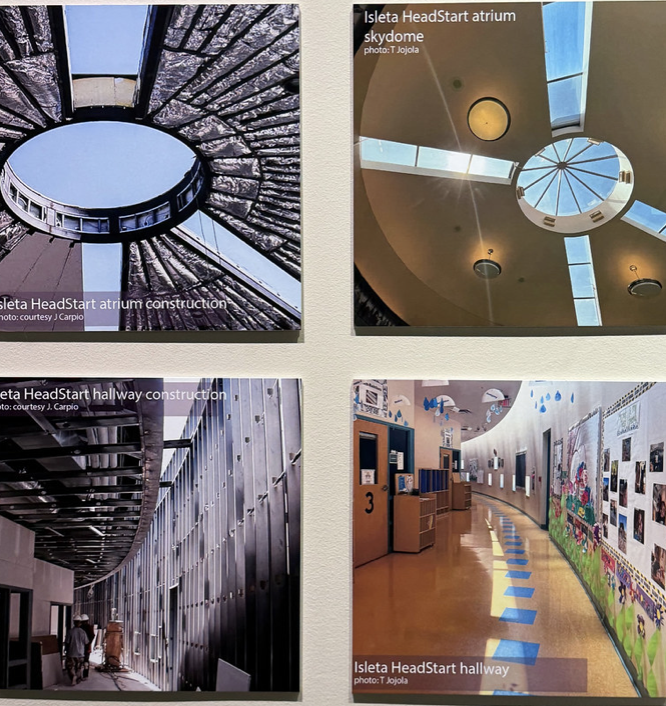
Views of 2004 building designed by Janet Carpio (Laguna/Isleta Pueblos) for Pueblo of Isleta’s Headstart/Child Care Center.

Wall panels, blueprint books, and architectural models are used to demonstrate the contemporary innovations of Pueblo architects – the Resource Center of the National Museum of the American Indian (1999), the campus of the Institute of Amercian Indian Arts in Santa Fe (2000), and the Headstart Child Care Center for Isleta Pueblo (2004). Both incorporate design elements echoing the spiral migration path, alignment to the cardinal directions, and colors and elements of the Earth.

A huge multimedia interactive theater punctuates the walk-through – an immersive visit to Acoma’s new Cultural Center and Haa’ku Museum with tribal members and designers explaining the architectural details and how the buildings reflect the landscape and traditional belief systems.

Immersive interactive experience of Acoma’s new Cultural Center and Haa’ku Museum. Courtesy: Anna Seed Productions, Electric Playouse, and UNM ASPIRE.

The exhibition features the work of the Indiginous Design and Planning Institute (iD+Pi) at UNM and presents dramatic architectural models of the past, present, and future of the community of Nambe Pueblo.

Look through the exhibition in our Flickr album here – a future-forward look at the continuing progression of innovative architectural designs and the next generation of designers and architects respecting and integrating the Pueblo world view with buildings considered to be living, breathing HeartPlaces for the community. 
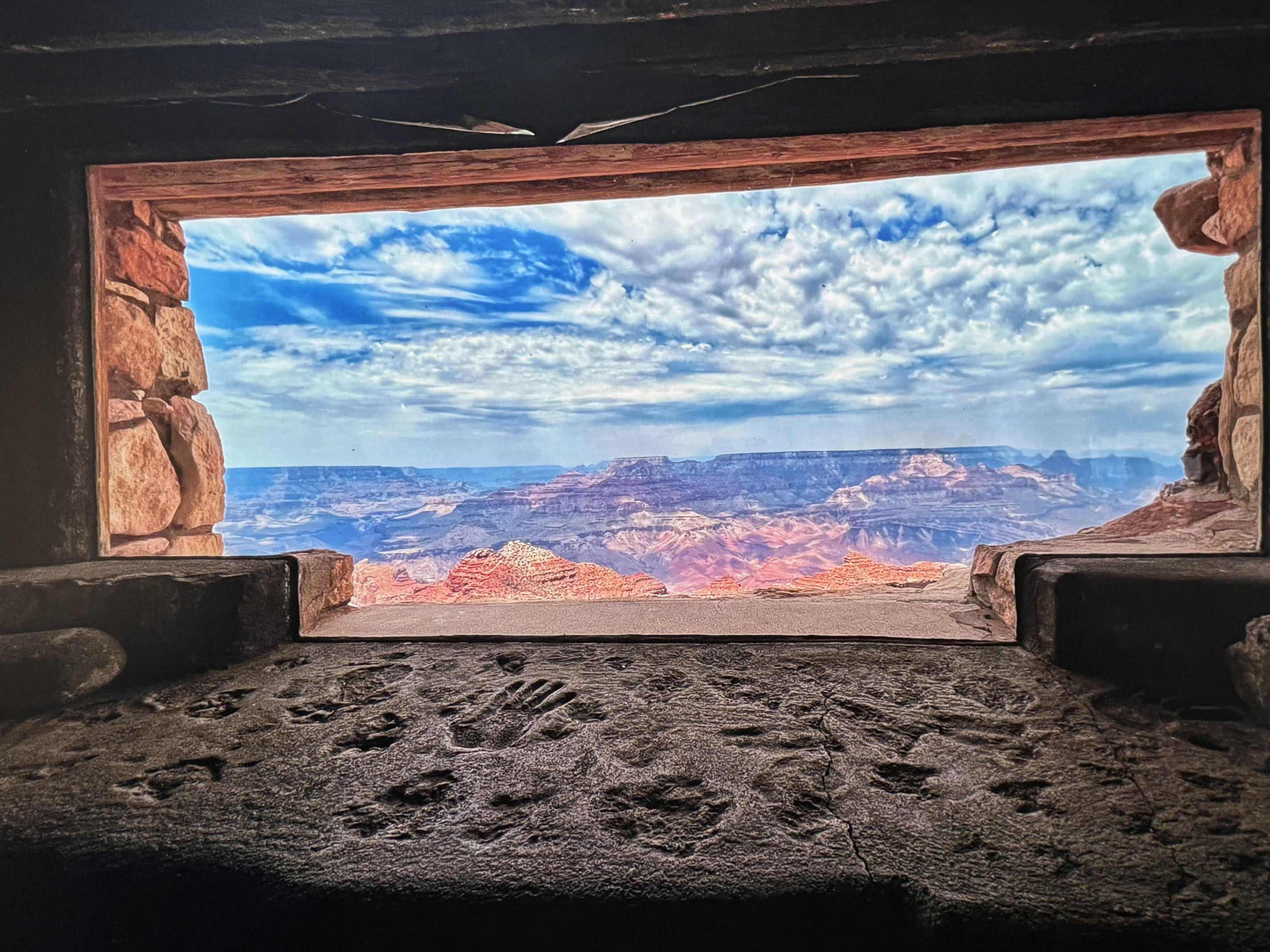
2023 photo by curatorTed Jojola (Islela Pueblo) North Window View from Desert View Watchtower, Grand Canyon showing the T-shaped doorway symbolizing passage between worlds

As the curators made clear in their opening-day remarks, a similarly extensive exhibition could explore architectural innovation and spiritualism across Navajo Nation. Let’s hope that happens!
Judith Lowry Retrospective and Her Great Basin Legacy

She grew up on US military bases all over the world, and was thankful that her parents exposed her to the best museums, art, and culture in every country they resided. As an adult member of the Pit River Tribe, she moved back to her ancestors’ land in California and Nevada’s Great Basin, and began telling stories of her family’s history and modern Indigenous experience.

The Art of Judith Lowry showcases 40 years of this artist’s work in Reno, Nevada at the Nevada Museum of Art through November 16, 2025 – large-scale painting, triptychs, and installations.

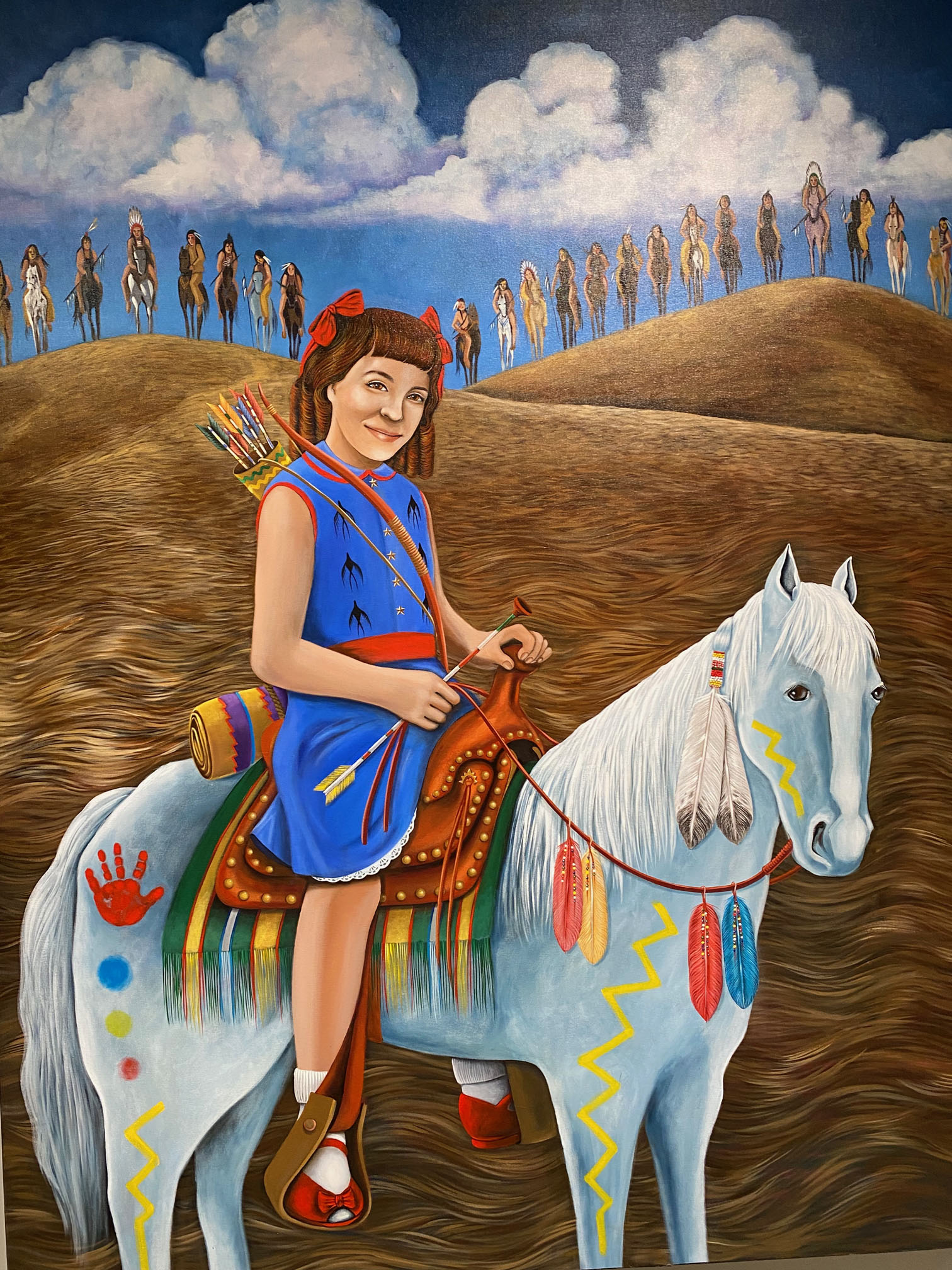
Lowry’s 1997 Red Ribbons depicts herself as a light-skinned Native American teen equipped for battle. Courtesy: The Wheelwright Museum of the American Indian, Santa Fe.

The museum assembled Lowry’s most celebrated work from major collections across the United States, but is also using the occasion to celebrate Lowry’s own (and her husband’s) gift to the museum with a companion installation of The Lowrey and Croul Collection of Native American Art.

Take a look at some at our favorites from both shows in our Flickr album.

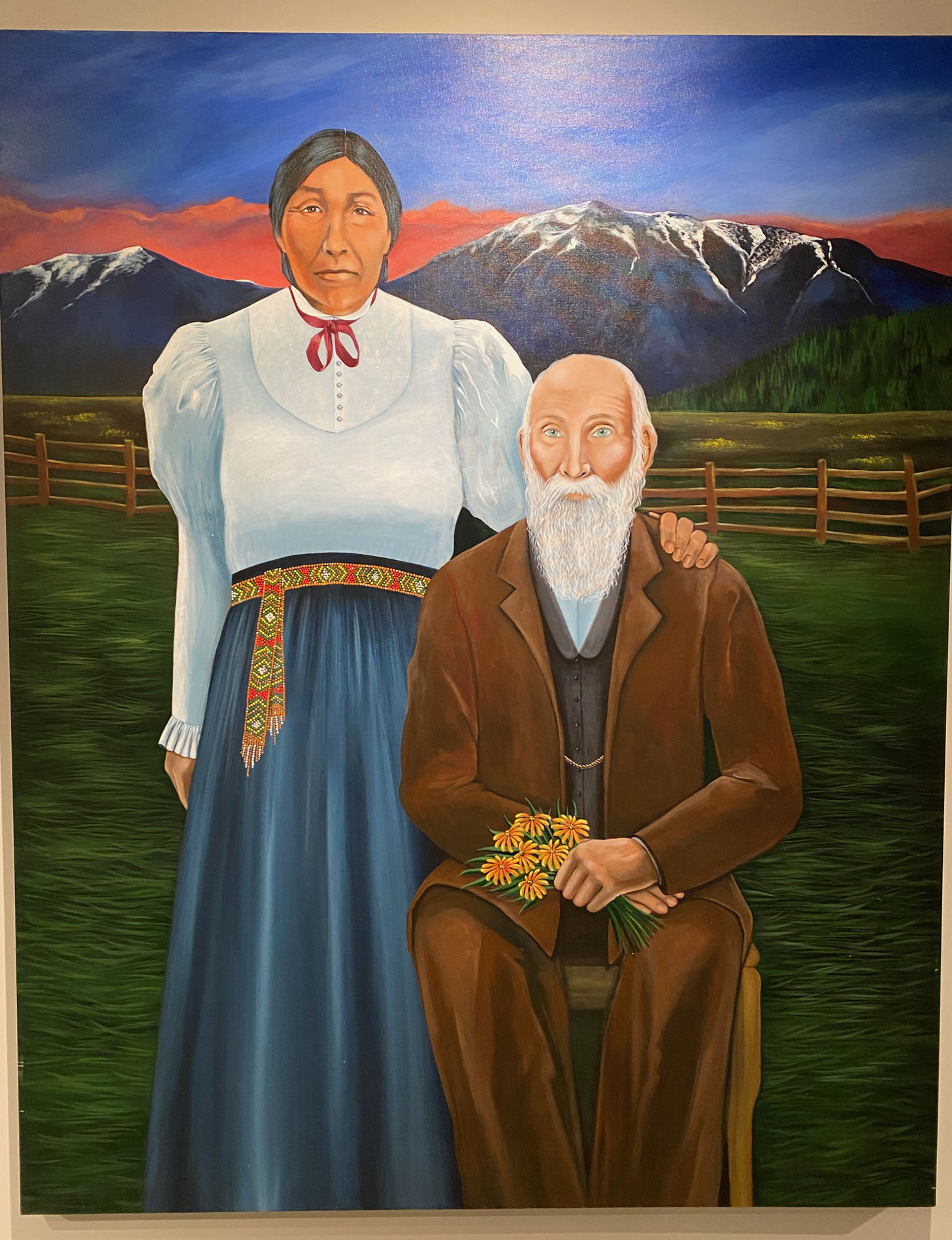
The entry of the exhibition shows how Lowry explores her complex family history at the turn of the last century in frontier ranch lands along the California-Nevada border – images of her biracial great-grandparents and a beautifully mystical depiction of her grandmother. Her regal portrait shows her ancestor’s face tatoos coupled with perfect Victorian dress and small references to the tragedies that befell her family – a symbolic approach Lowry adapted from her deep appreciation of Renaissance works by Bellini, da Vinci, and other masters.

Lowry’s 1997 The Good Marriage – her Native American great-grandmother and German-Irish great-grandfather at their Greenville, California ranch. Courtesy: private collection.
Lowry’s 1999/2012 Edna at Honey Lake depicts her biracial grandmother holding one of her many children who did not survive to adulthood.

A case in the center of the gallery presents Lowry’s paintings for her children’s book about her father and uncle’s Indian boarding-school experience, break out, and unauthorized journey back home.

She also presents family photos and representations of her own growing-up with rich stories and excerpts from her family photo albums. The experience of reading personal history, seeing her ancestors’ faces, and looking at the painted details on her epic canvases is a deep, warm experience that allows you to feel like you’re welcomed into Lowry’s complex and loving family.

Lowry’s 1995 triptych Family: Love’s Unbreakable Heaven showing the moment she understood her family’s unique biracial identity while living at an American military base in Germany. Courtesy: The Rockwell Museum, Corning, New York.

Many of the paintings are satiric takes on the pressures facing contemporary Native Americans navigating life in modern American society – startling theatrical juxtapositions in Indian casinos, retail emporiums, and Renaissance altarpieces.

Lowry’s 1996 Shopping – a sales associate shows the Virgin of Guadalupe’s cloak to a pre-Columbian mother and daughter who are shopping for prom. Courtesy: Peabody Essex Museum

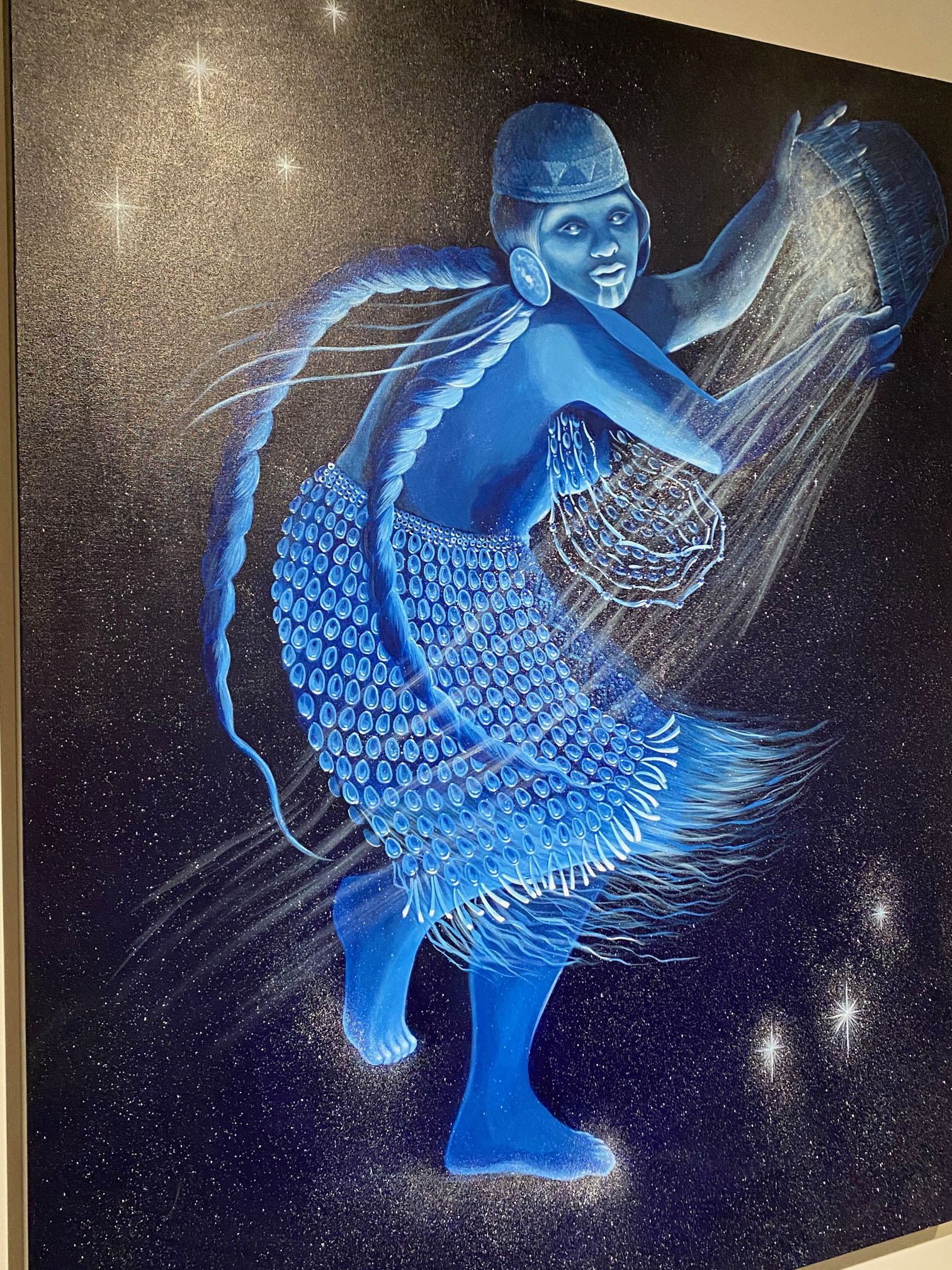
Some of the most arresting works allow us to enter a spiritual realm – magical depictions of legends, stories, and lessons that she heard from her dad growing up.  Lowry’s large-scale, dramatic canvases are immersive – letting us enter the world of the girl-power Star Maidens, who who dance across the sky holding baskets of stars and tossing comets.

Lowry’s 2003 Northern Coast panel from the series Weh-Pom and the Star Sisters celebrating female autonomy and strength. Courtesy: National Museum of the American Indian, Smithsonian
Lowry’s 2003 Southern Coast panel from the story of the the Star Sisters holding their own in the sky and rejecting the advances of trickster Coyote Weh-Pom. Courtesy: National Museum of the American Indian, Smithsonian.

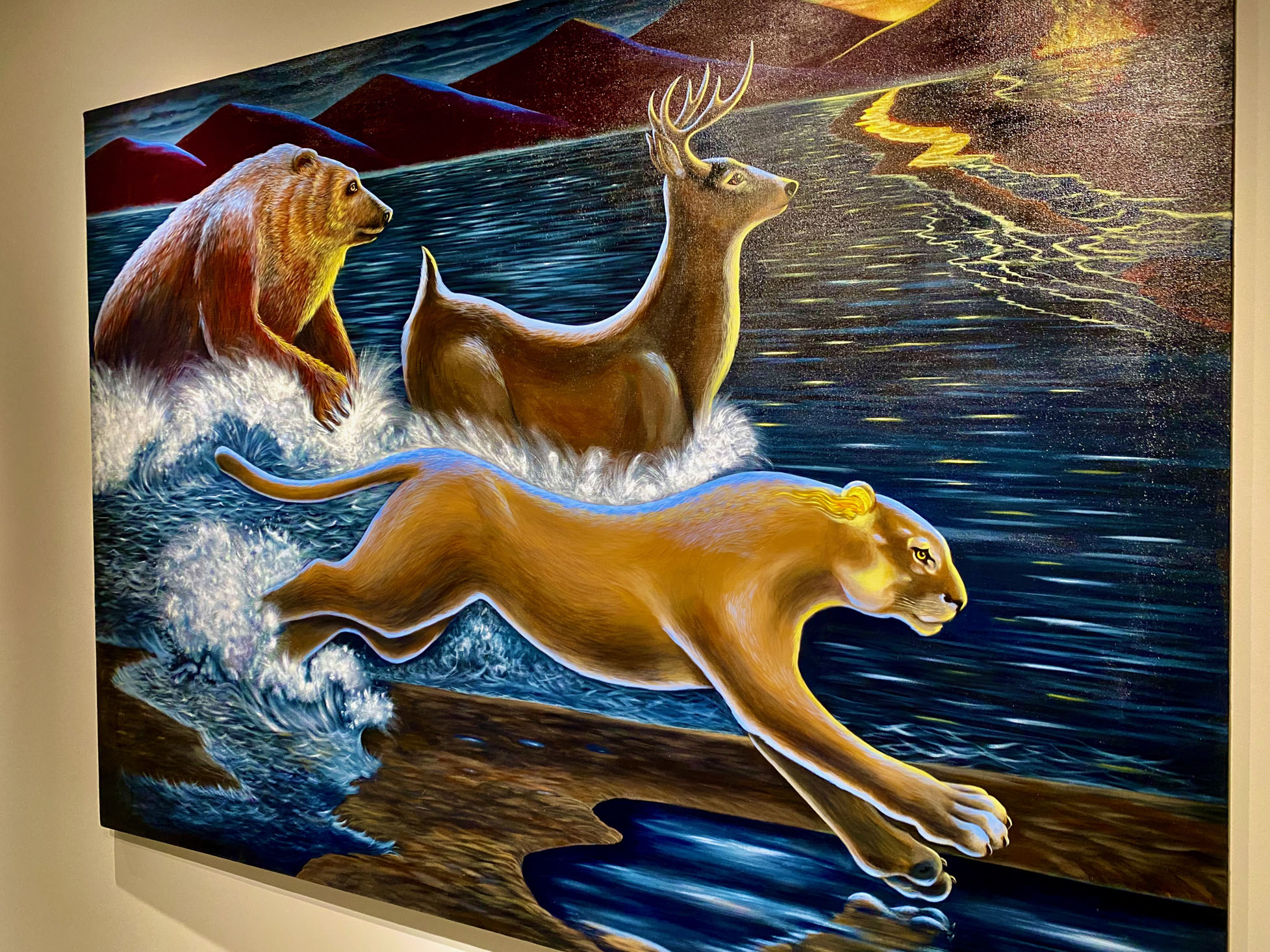
Or letting us enjoy the epic, triumphant forces of natural world that led to the environment Lowry now inhabits in the shadow of the Sierra Nevadas.

Lowry’s 2001 The Race for Fire showing animal spirits charging to retrieve fire from the mountains after a devastating flood. Courtesy: Maidu Museum and Historic Site, Roseville, California.

But at the end of her retrospective, Lowry presents the ultimate immersive experience – an imagined native Northern California roundhouse where visitors can enter, think, and see mystical images of Lowry’s inspiring female ancestors, tribal story-carriers, and cultural symbols.  Visitors enter quietly and linger respectfully, taking in all the details of the painted walls and dome.  See our short video to see Lowry’s comforting interior.

Lowry’s 2005/2025 mixed-media installation K’um degoi-dom (Home Place), an imagined Native California roundhouse covered in snow; built for quiet reflection. Courtesy: private collection

After immersion in this spiritual space, visitors enter a bright contemporary gallery displaying some of the 125 contemporary Indigenous works that Lowry and her husband Brad Croul donated to the Nevada Museum – honoring the accomplishments of the notable artists working in the region in the 1990s. The gallery is filled with art by famed Northern California indigenous artists (inspirations and friends like Harry Fonseca and Jean LeMarr. The gift significantly expands the museum’s indigenous contemporary collection.

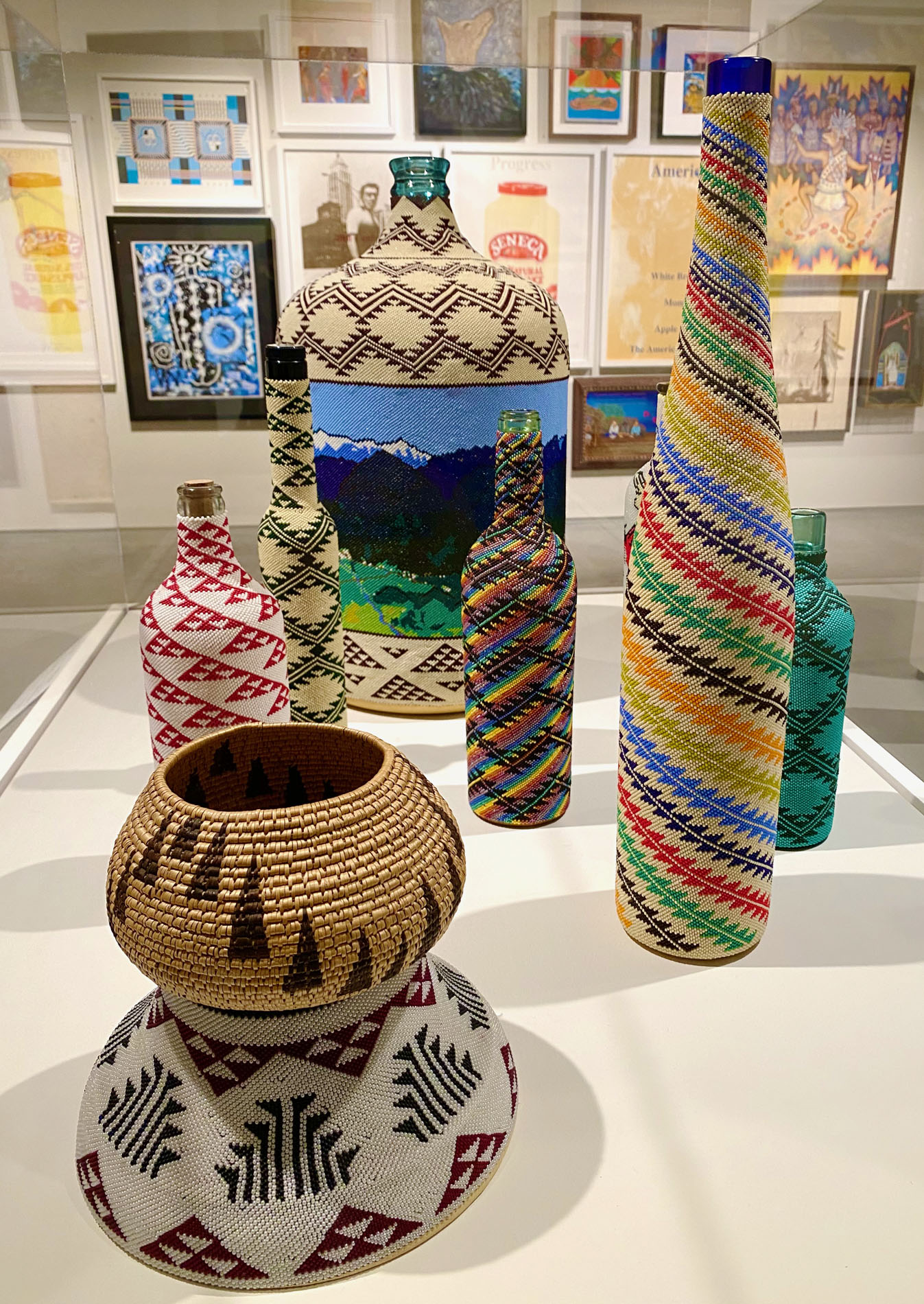
It’s also a nice punctuation that the spectacular case of beaded glasswork by Lorena Gorbet also features a treasured piece of Judith’s family history – a beautiful grasshopper-stitch basket made by Judith’s great-aunt Annie Gorbet when she was only fourteen years old. 

1914 red maple and willow Grasshopper Stitch Basket by 14-year-old Annie Gorbet [Yamani Maidu (Mountain Maidu)] (Judith’s great aunt) and undated beaded glass water jug and bottles by Annie’s granddaughter, Lorena Gorbet
Car Crash Necklace by Brian Tripp (Karuk); created from auto reflector fragments, river rock, duct tape, fabric, and string.

Lowry’s work and generous collection provide a loving immersion into family, friends, and spiritual traditions of the Great Basin. It’s a rich tribute to a prolific contemporary artist – one who cares about her culture and committed to ensuring its legacy for her region.

MIAC Connects Diné Textiles to Land and Community

Building on the groundwork laid in the artist-curated exhibition Grounded in Clay: The Spirit of Pueblo Pottery (opening in St. Louis on March 7), Santa Fe’s Museum of Indian Arts and Culture asked five Navajo textile artists, photographers, and scholars to delve into MIAC’s historic collections to tell the story of Diné weavng.

Horizons: Weaving Between the Lines with Diné Textiles, on view through February 2, 2025, presents historic and contemporary weavings alongside epic photographs of Navajo Nation landscapes to show the connections textile artist have to ancestors, their mentors, the community, the land, and their materials.

Historic Diné weaving with photomural by co-curator Rapheal Begay. Courtesy: the artist.

Appropriately, the story told by over 30 historic textiles is presented in MIAC’s Masterpieces gallery.

The entrance presents a dazzling display – a pictorial blanket woven in the 1890s set against a photomural of co-curator Rapheal Begay’s family sheep corral. It’s a visual testament to the importance of wool, life, and the 27,000 square miles of Navajo Nation. 

The blanket’s creator (unknown today) was an astute observer of the life on the land and translated it all into warp and weft – cow punchers, cattle, boots, birds, and new-fangled railroad cars, that only arrived in Navajo Country around the 1880s. Click here to see the detail.

1885 pictorial blanket created with Germantown wool yarn introduced in the Southwest by the railroads; photomural Navel (Hunter’s Point, AZ) by co-curator Rapheal Begay. Photo courtesy of artist.

Nothing was newer than the railroad, at the time this artist depicted it – a steam-fed invention from the East that would change western life forever, but that also brought a wide array of colorful yarn that could be mixed and matched with vegetal dyes to create new Native designs.

The intertwined history of Diné (“The People” in the Navajo language), textile art, and the land is told through quotes and recollections by the exhibition’s Native collaborators. While examining masterful geometric weaving techniques in 19th-century works, visitors are provided with an historic context – the types of art materials introduced to captives imprisoned at Bosque Redondo after the Long Walk, the images that could be interpreted as a longing for the homeland by the incarcerated, and coded spiritual affirmations.

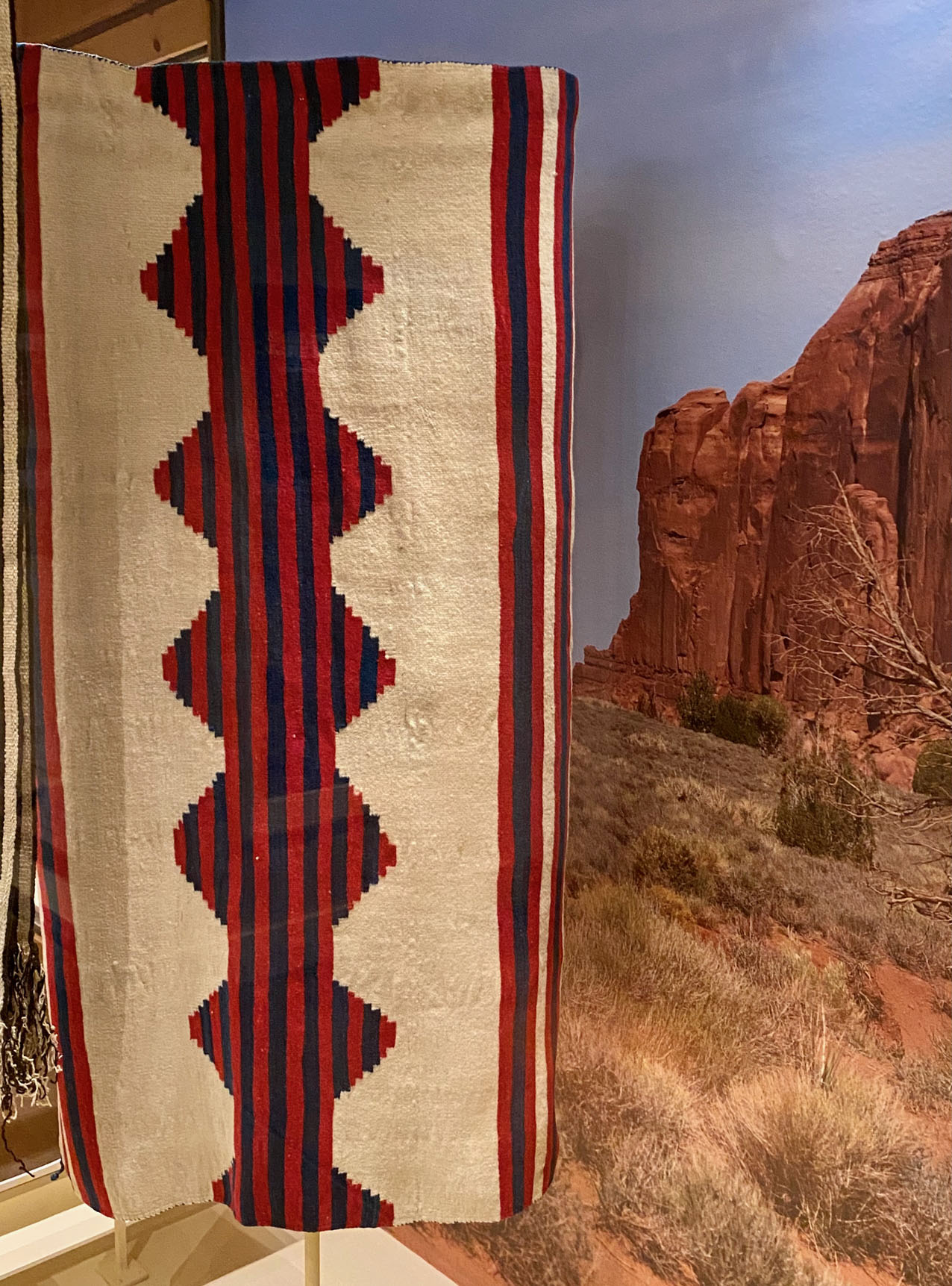
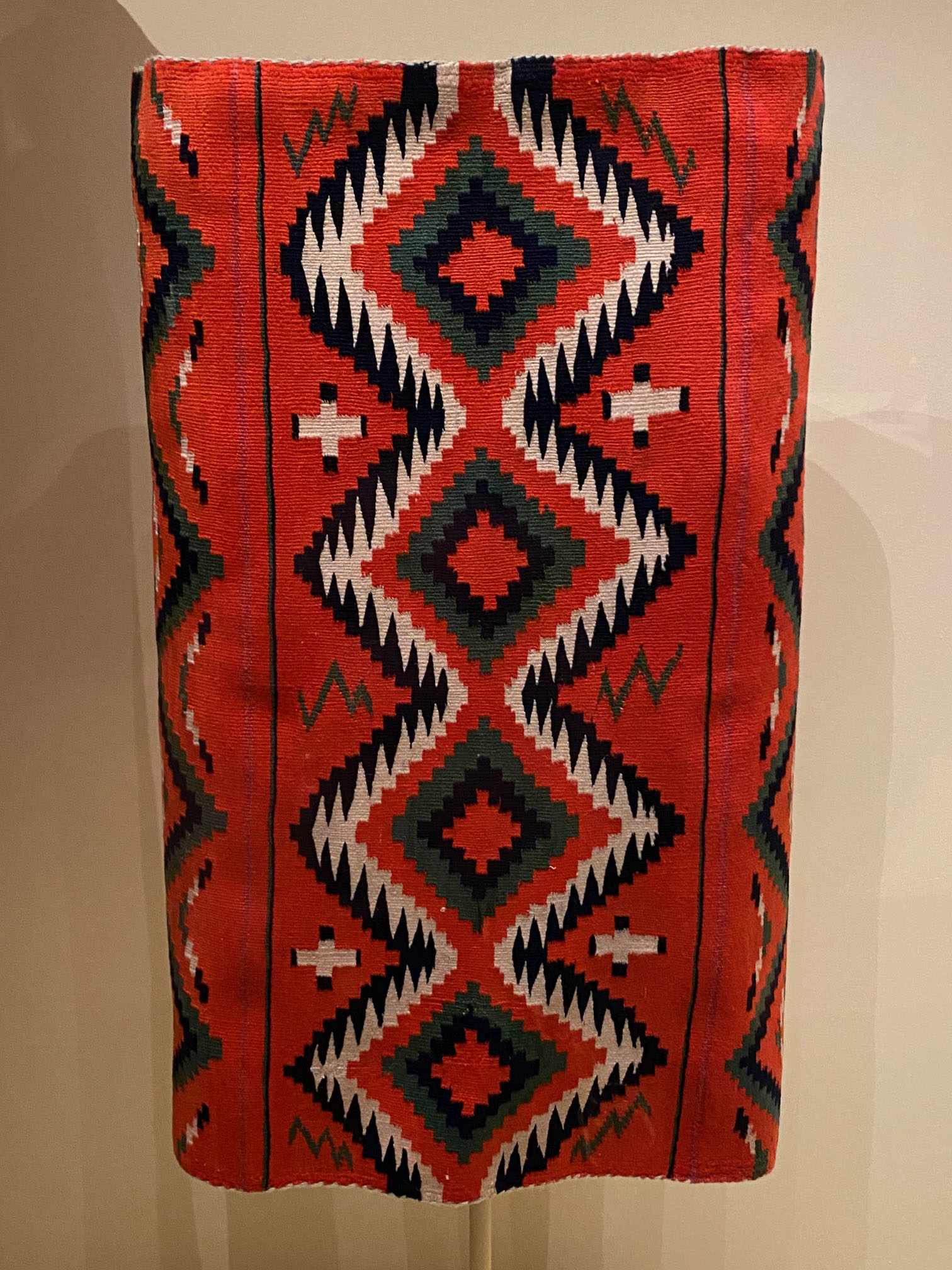
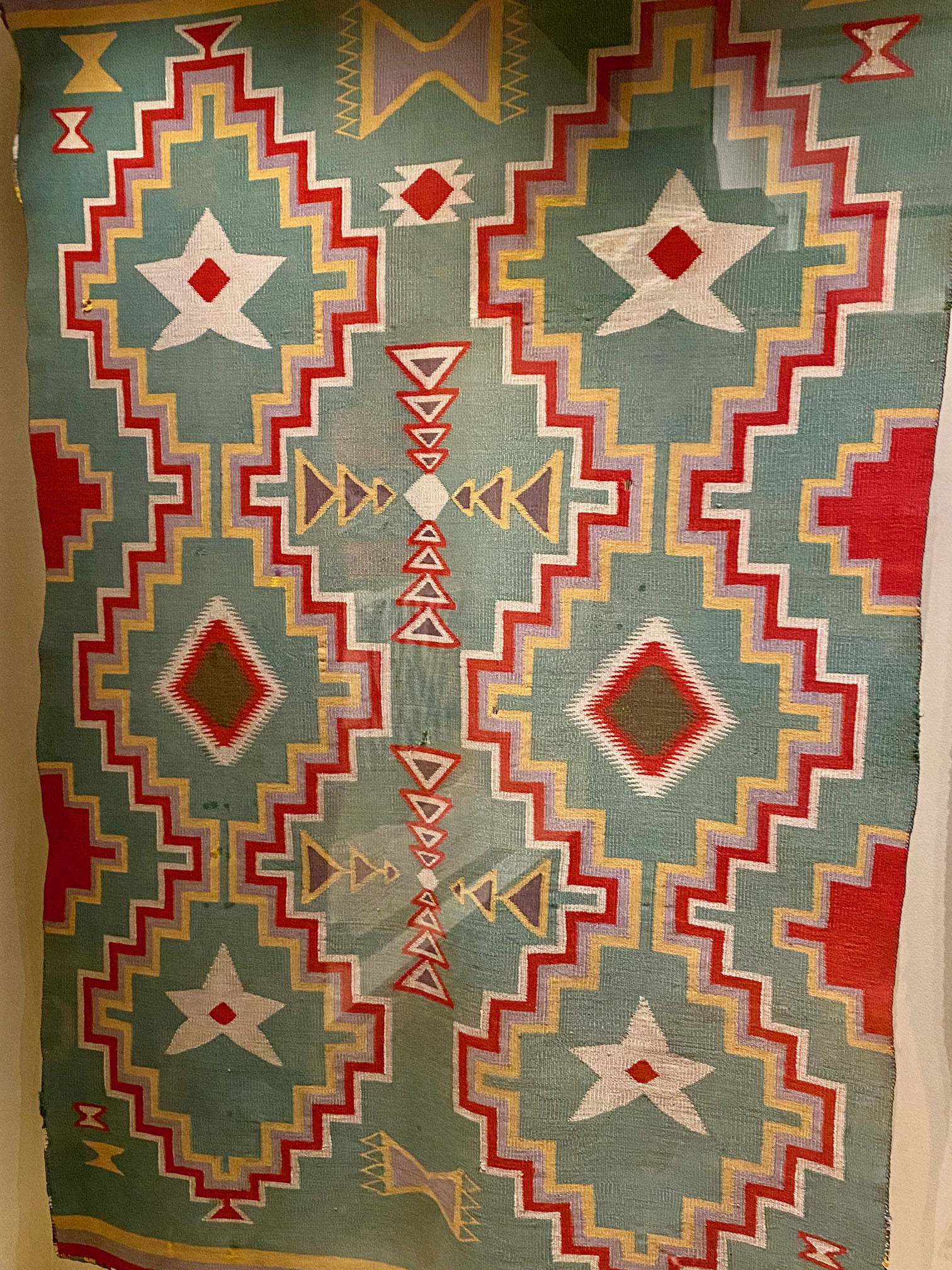
1850-1860 hand-spun wool child’s (or saddle) blanket with Spider Woman crosses; created with natural cocineal, indigo, and chamisa dye
1880-1897 rug made with Germantown wool yarn, cotton string, and raveled yarn; materials used in weaving at Bosque Redondo era, post-Long Walk.

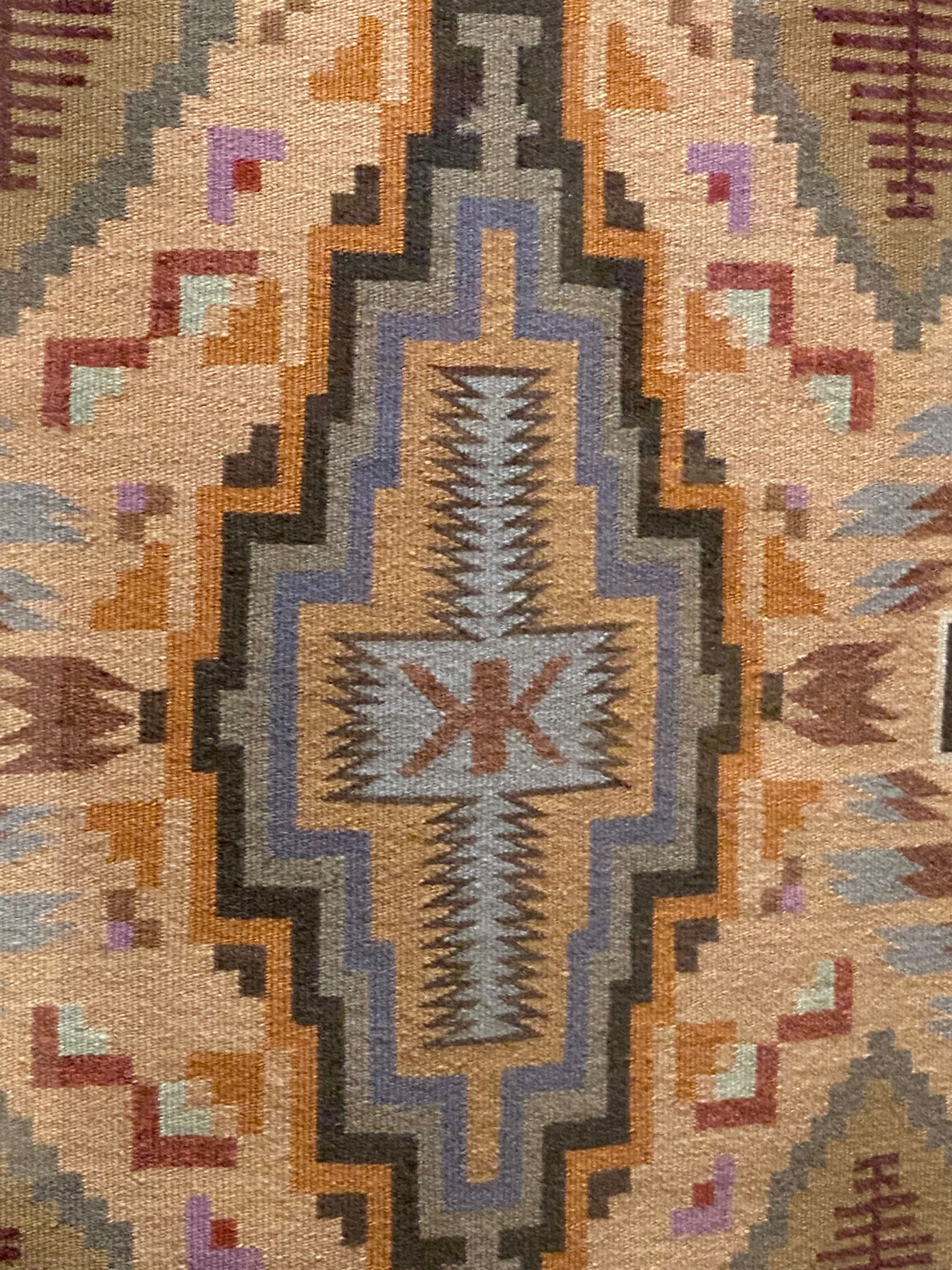
The participants in the exhibition make sure that viewers also experience how the landscape inspires the work of the past and contemporary Native textile artists. Diné fiber artist Tyrrell Tapaha includes her two-panel dress in which incorporates images of the Utah clouds and mountains that bring her spiritual peace. The masterful wall hanging by Lillie Joe uses the palette of the desert to create a mesmerizing geometric dazzler.

2020 two-panel dress by fiber artist Tyrrell Tapaha with images from Utah landscapes that inspired her; woven from churro, silk, mohair, and marino wool..
Close up of highly detailed 1980s Burntwater wall hanging by Lillie Joe, reflecting colors and patterns of the Navajo Nation landscape.

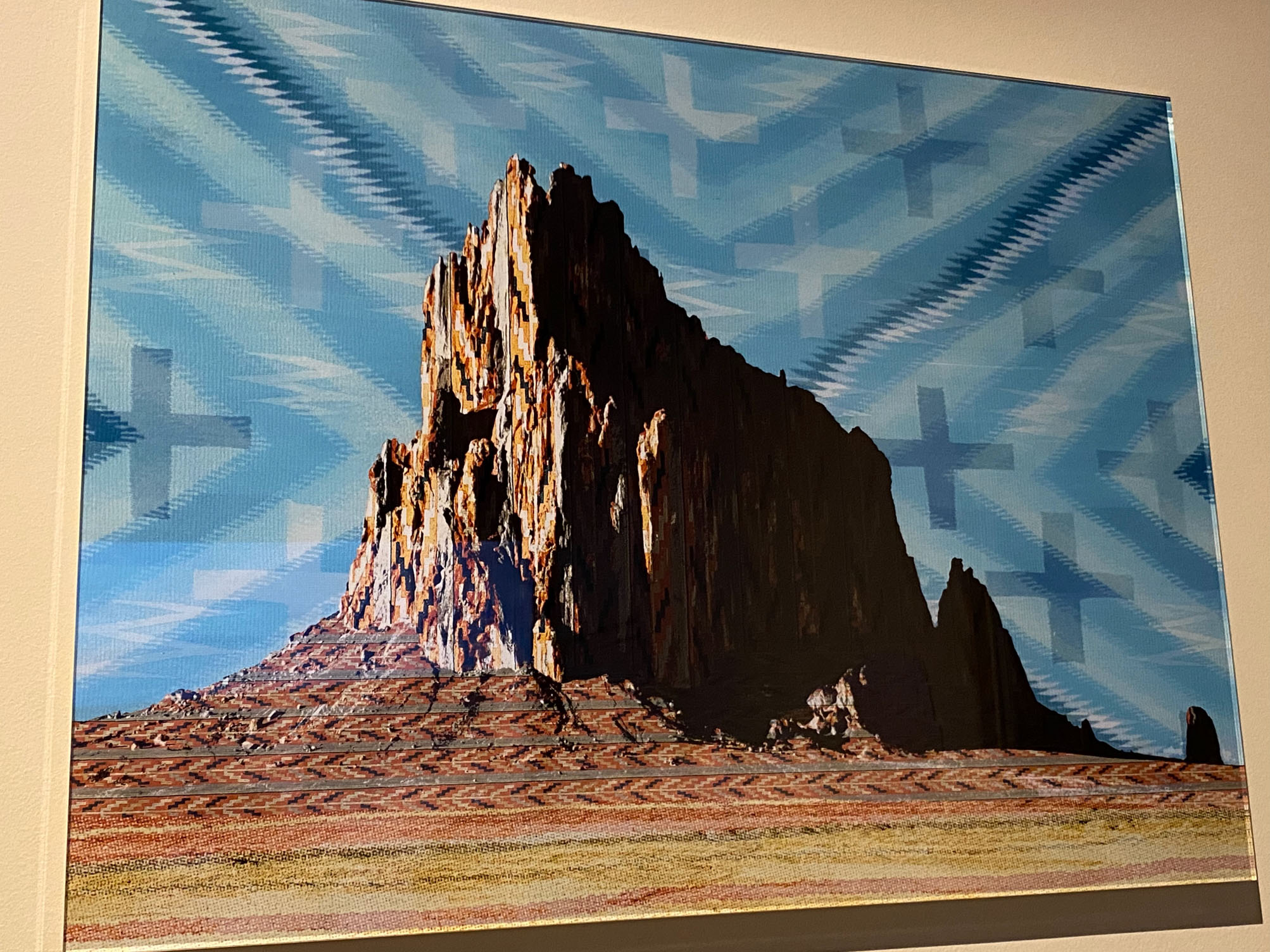
The curators feature both the photography of co-curator Rapheal Begay and Darby Raymond-Overstreet to allow gallery visitors to experience the awesome beauty of the homeland that inspires artists. Digital artist Raymond-Overstreet overlays geometric textile patterns across his luscious, beautiful landscapes.

2018 digital print Woven Landscape, Shiprock by Darby Raymond-Overstreet (Diné), overlaying digital landscapes with traditional weavings. Courtesy: the artist

Take a look at some of our favorite works in our Flickr album. And enjoy these historic and contemporary dazzlers.

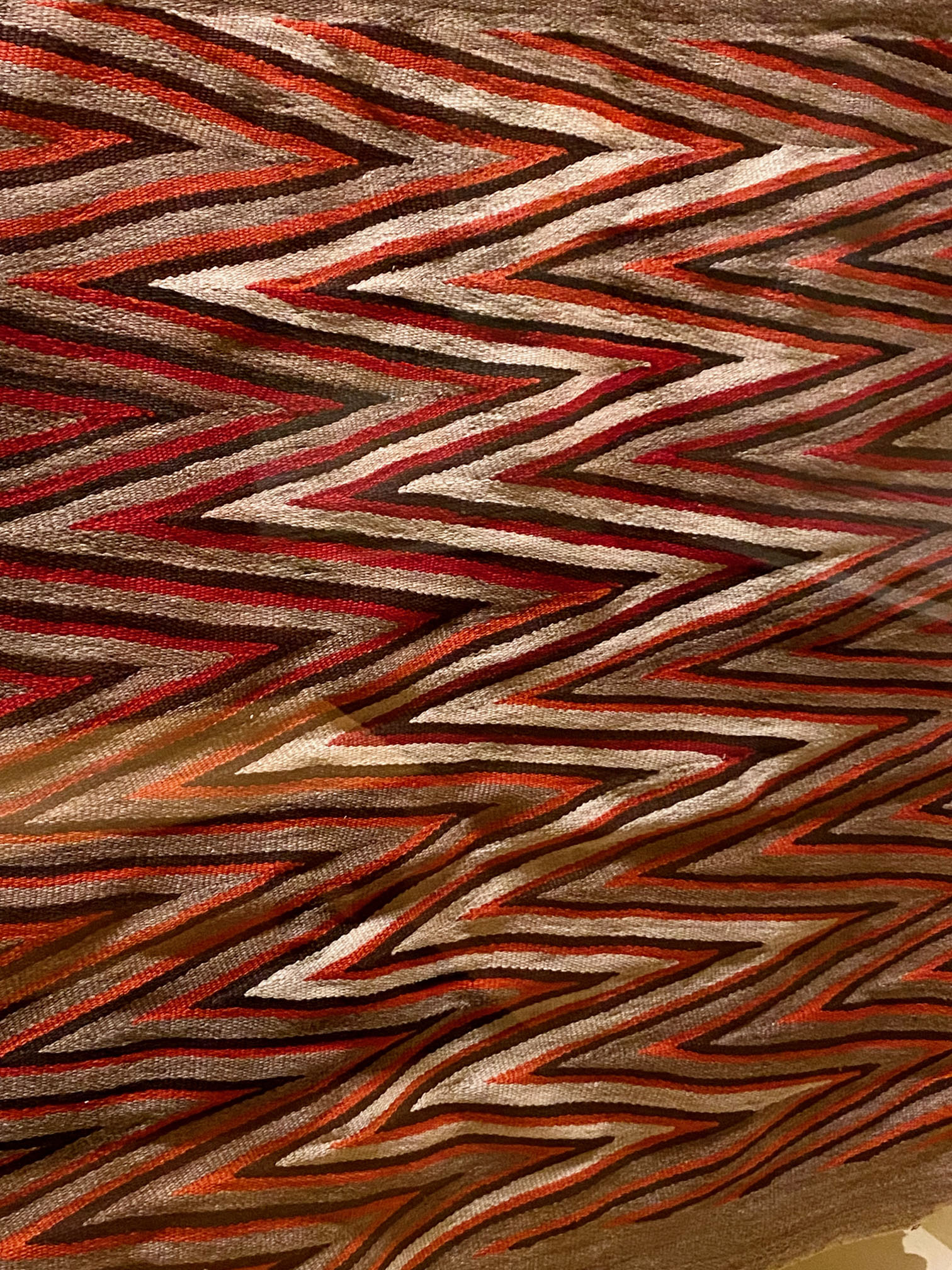
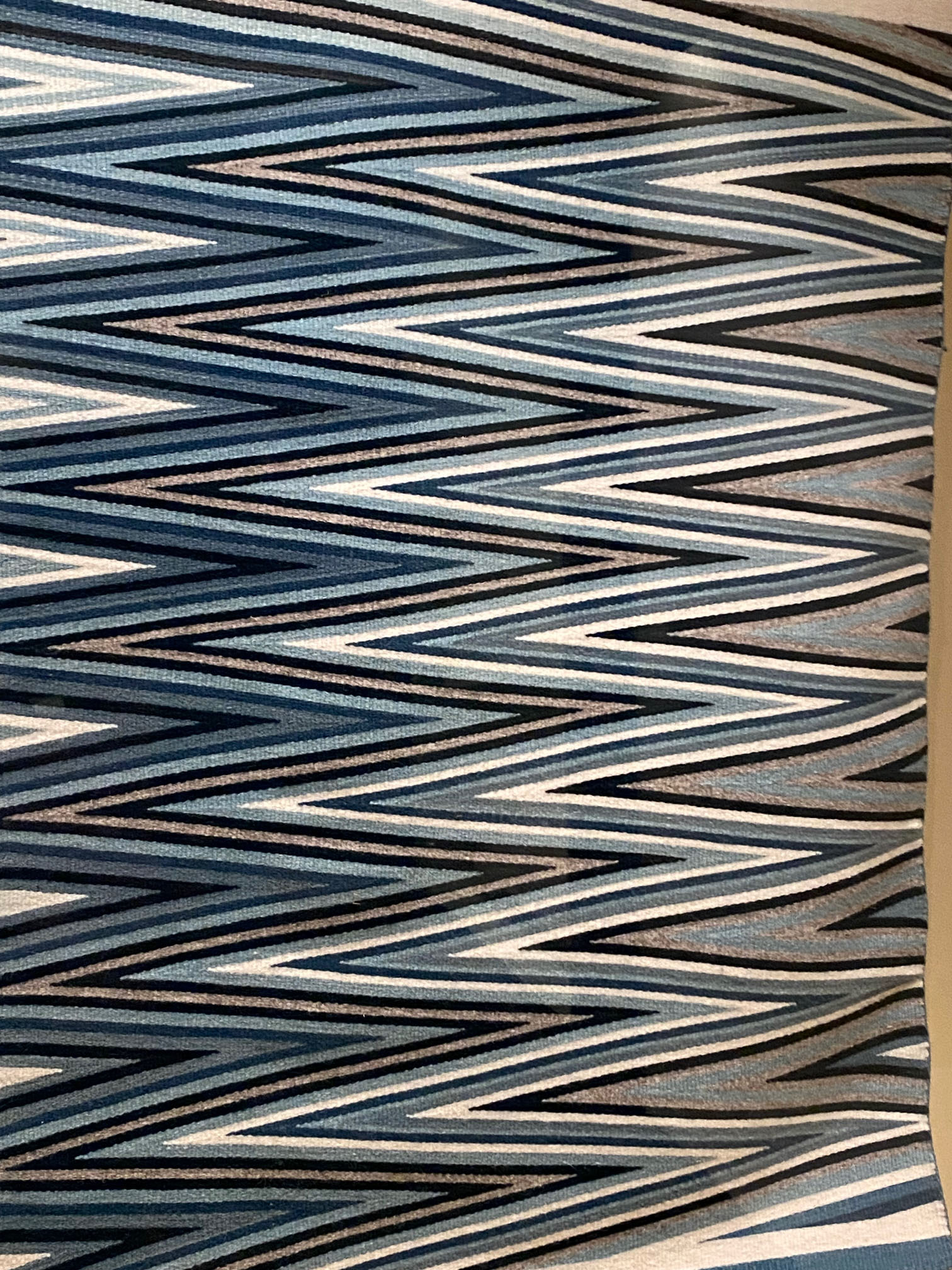
Detail of 1895 wedge weave blanket made with commercial cotton string and Germantown wool – a dramatic 19th c. weaving innovation. Courtesy: International Museum of Folk Art.
2022 wedge weave by Kevin Aspaas; white and grey wool yarn with indigo dye. Courtesy: private collection.
Detail of dynamic Diné 1960 wool tapestry weave. Courtesy: International Museum of Folk Art

Pueblo Pots Speak in “Grounded in Clay”

Contemporary artists say they can hear their ancestors speak across generations. All they have to do is hold their community’s ancient pots – living beings that connect them to the Earth and the people from the past who made them.

You can hear these modern and ancient voices and see ceramic masterworks in Grounded in Clay: The Spirit of Pueblo Pottery, an exhibition on view the The Museum of Fine Arts, Houston through January 12, 2025; continuing at the St. Louis Art Museum March 7 to September 14, 2025; and on display at the Pueblo Cultural Center in Albuquerque from March 2026 to February 2027.

In video at Museum of Indian Arts and Culture, Clarence Cruz (Okay Owingeh) reflects on a pots’s personal meaning

Clay is central to Pueblo culture, and this show is special, because it’s the first major exhibition of Pueblo pots curated entirely by the indigenous community – artists, leaders, teachers, and museum professionals.

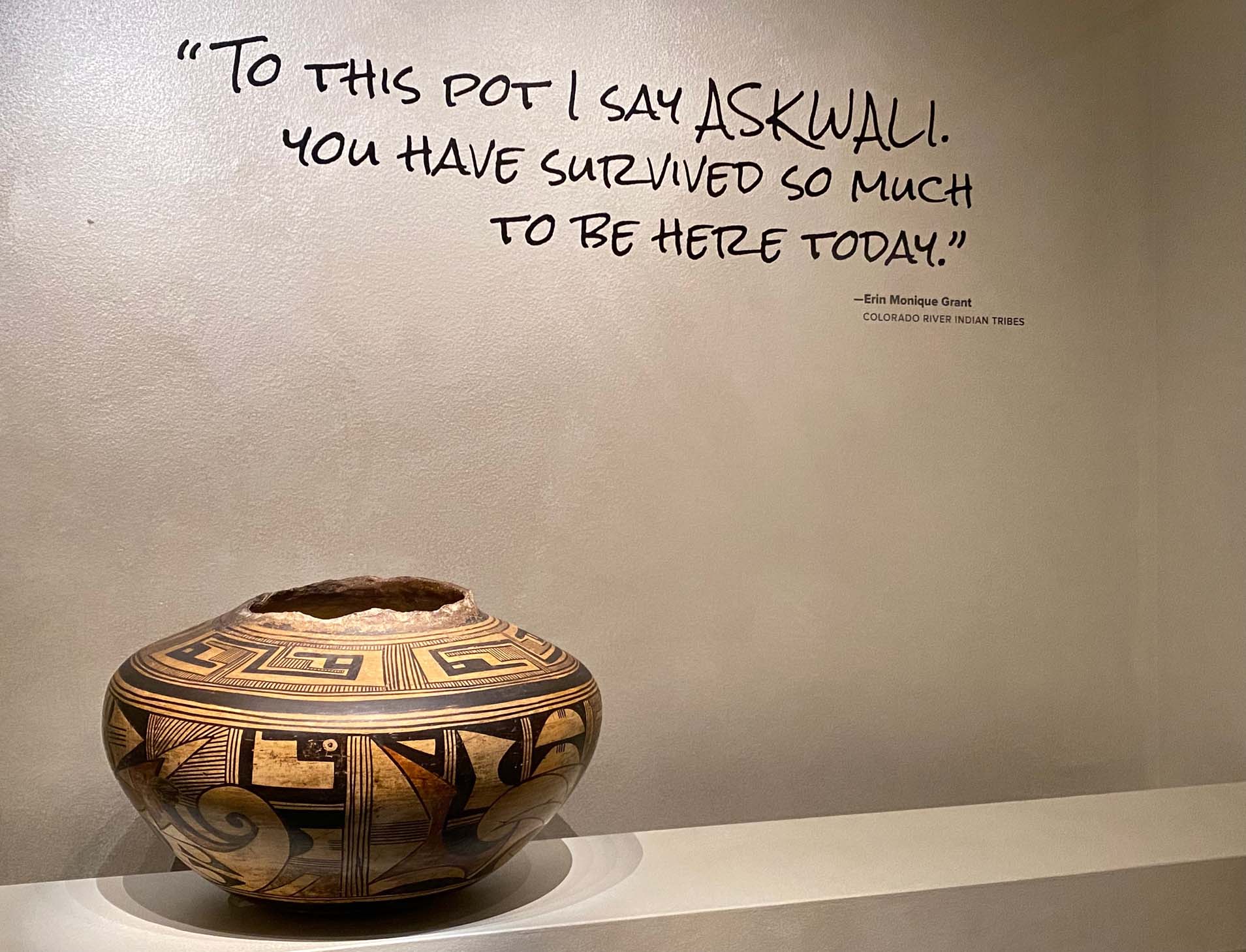
1900 Tewa-Hopi Hno jar selected by Erin Monique Grant (Colorado River Indian Tribes); it reminded her of her Hopi family. Courtesy: Vilcek Collection.

For the 100th birthday of the Indian Arts Research Center at School for Advanced Research (SAR), the exhibition debuted in 2023 at Santa Fe’s Museum of Indian Arts and Culture, and then traveled to New York to open at the Metropolitan Museum of Art.

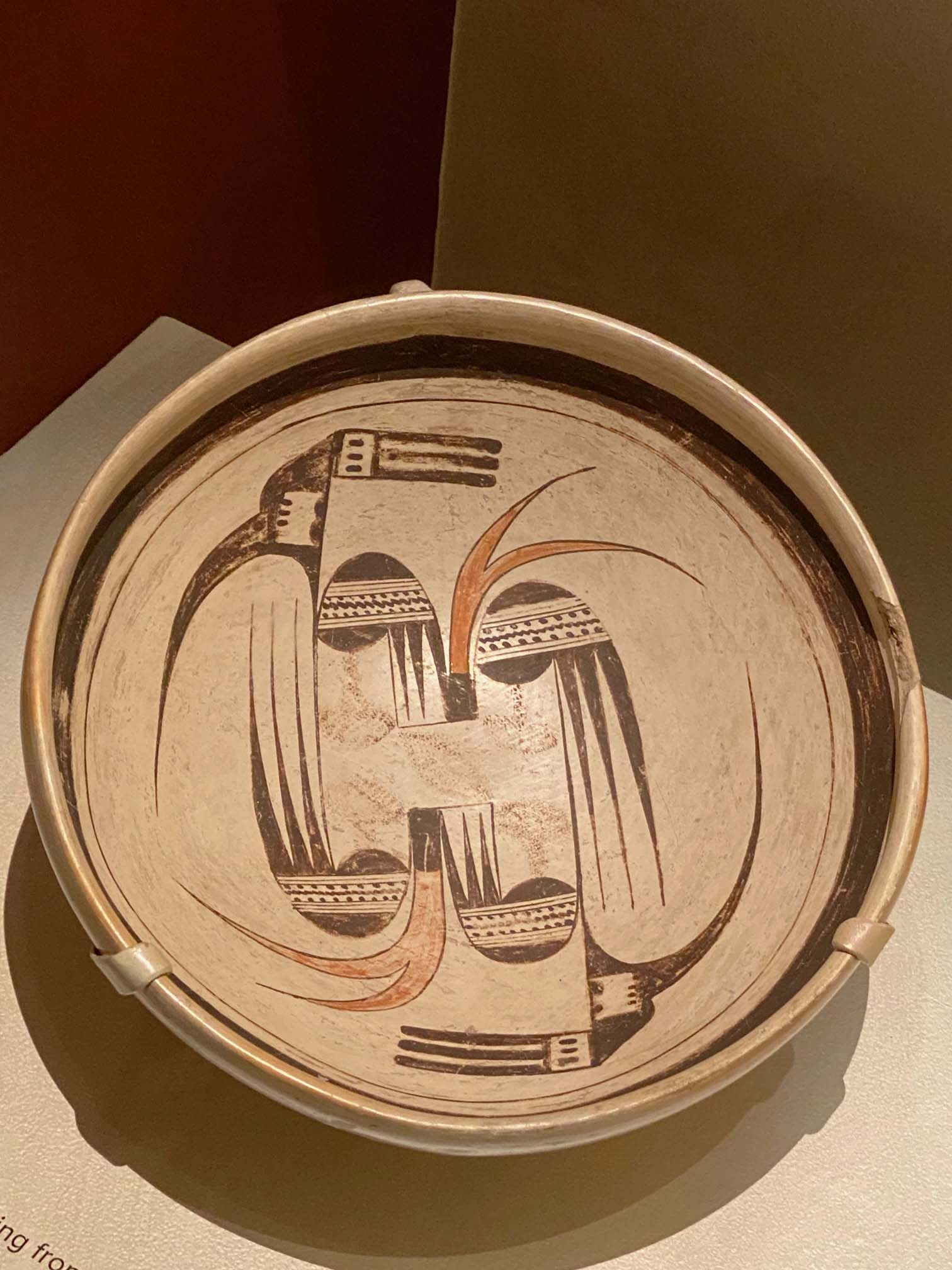
1907-1910 bowl by Nampeyo (Tewa/Hopi) selected by her great-great-grandson artist Dan Namingha. Courtesy: SAR

New York’s Vilcek Foundation co-sponsored the community-curation project, exhibition, and project website. The organizers consulted with sixty curators from 22 pueblo communities across the Southwest to select work from the IARC collection and write about the spirit of these works. Communications weren’t always easy, since Internet service (email) is still spotty on some tribal lands.  

But The Pueblo Collective’s inclusive approach to create the exhibition and catalog is now considered a template for major art institutions to work with tribal communities to convey their stories and culture to the public..

The IARC collection is legendary, spanning prehistoric to modern-day works. This video takes you inside IARC archive to meet a few of the Pueblo curators and the pots they selected:

Utilitarian vessels, ancient legacies, and intergenerational connections are themes explored in the 2023 installation at Santa Fe’s Museum of Indian Arts and Culture. The exhibition design artfully integrated the words and thoughts of the curators in, around, and above the spectacular selections. Take a look at some of our favorites in our Flickr album.

Two 19th-century Tesuque water jars: a jar chosen by artist Marita Hinds (Tesuque), who saw it on a 1980s class field trip; and one admired by potter Bernard Mora (Tesuque) for its personality and imperfections. Courtesy: SAR

In some cases, a curator chose an Ancestral Pueblo pot from the 1100s and reflected on how well it’s survived today. In other cases, a curator discovered their grandmother’s pot stored for decades within the IARC collection. What a joy to bring it out and let it breathe! Listen in….
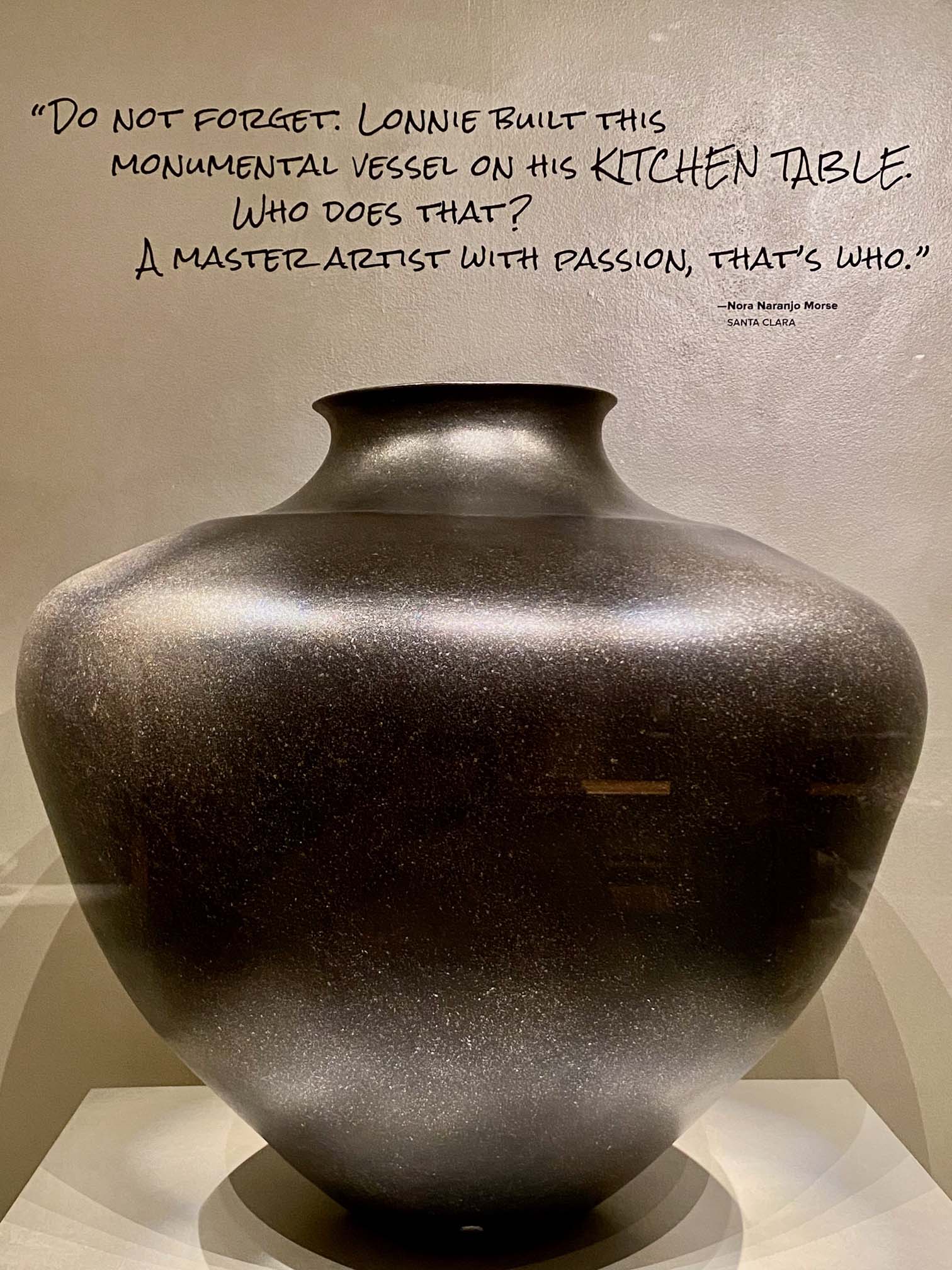
This statement about Lonnie Vigil’s magnificent vessel by Nora Naranjo Morse says it all.  The MIAC gallery space recreated a Pueblo kitchen so we can experience the environment in which most Pueblo potters create their work.

1995 micaceous clay jar made by Lonnie Vigil (Nambe) selected by Nora Naranjo Morse (Santa Clara) because it glitters like stars. Courtesy: SAR
Santa Fe’s Museum of Indian Arts and Culture’s replica of Pueblo kitchen where most pottery is created

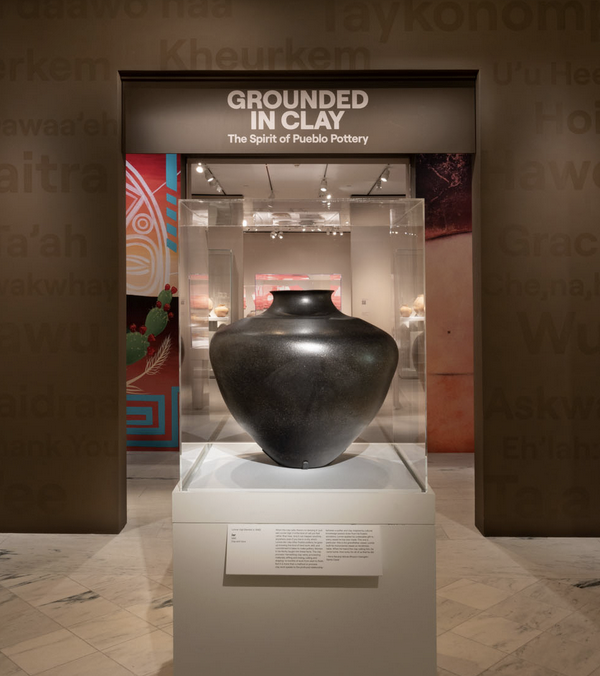
And here’s how the Met featured Lonnie’s showstopping work – made on his kitchen table – prominently in the American Wing entrance!

Micaceous clay jar by Lonnie Vigil (Nambe) in the show’s entrance at the Met’s American Wing. Photo by Richard Lee; courtesy: The Metropolitan Museum

The project website presents the curators’ biographies, their selections, and stories.

Listen to the Met’s 2023 panel with five curators behind this magnificent community-curated indigenous exhibition and find out why they believe understanding the vessels’ power is important:

Artists Call to Action for Central America

In the early 1980s, socially minded artists living downtown in New York couldn’t handle the news coming out of Central America and did something about it. The United States government was intervening in the affairs of Nicaragua, El Salvador, and Guatemala, and everyone was worried that the situation was going to devolve into another Vietnam.

This is just one part of the story told by the dynamic, timely, informative exhibition, Art for the Future: Artists Call and Central American Solidarities, on view at the University of New Mexico Museum of Art in Albuquerque through December 3.

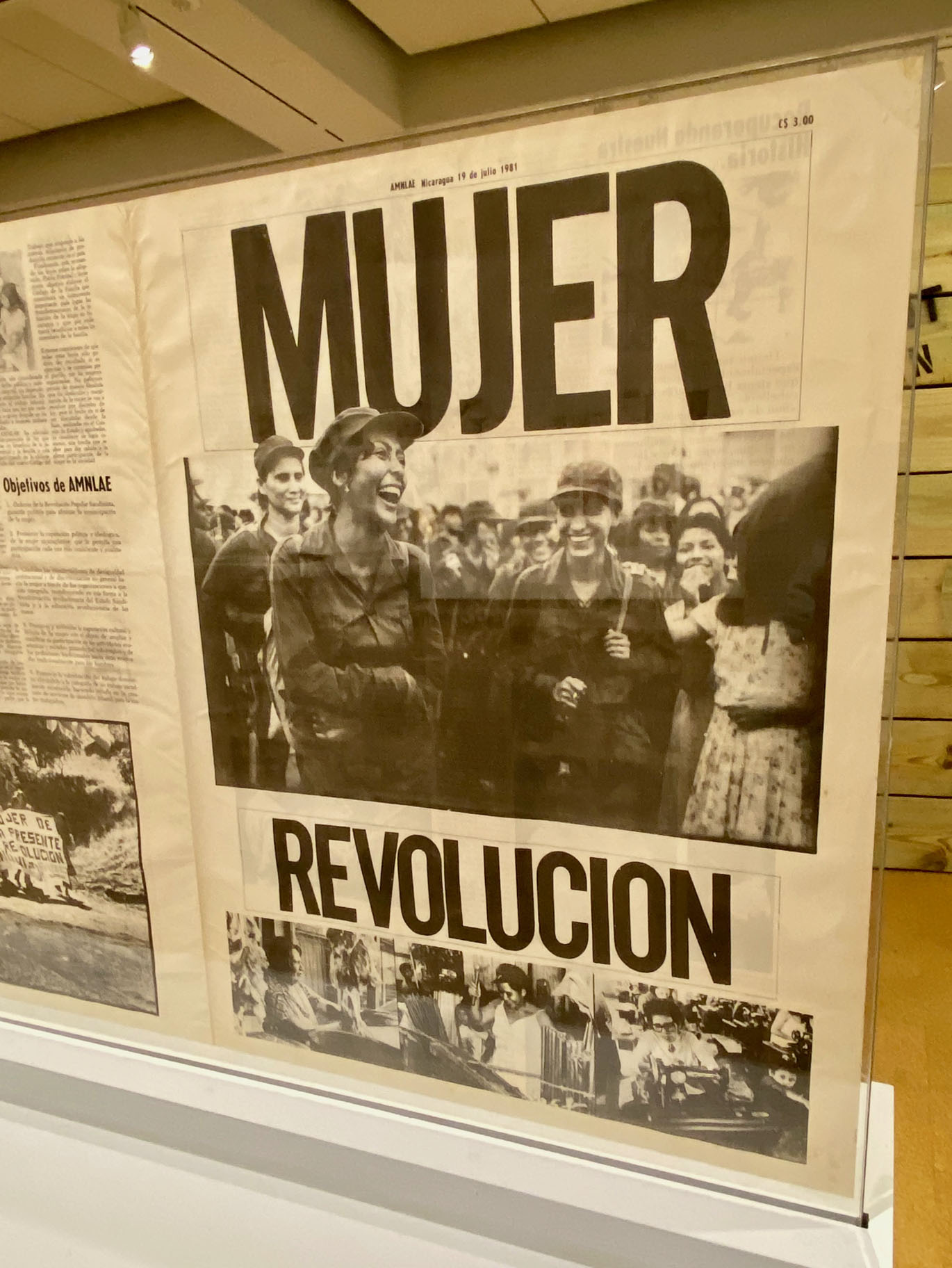
1981 pamphlet Mujer Revolución by Association of Nicaraguan Women. Private collection
1983 Print of Contra (after a drawing in Rock Comics, 1979) by Jerry Kearns, depicting communist fears stoked by the US government

In 1982, a group of New York artists collaborated with Latin American artists to create a show with contemporary art and cultural artifacts to draw attention to the escalating crises in Latin America. By 1984, organizers launched a national call to artists to raise money and awareness of what was happening.

Artists responded with performances, music concerts, films, poetry readings, and exhibition. In New York alone, over 1,100 artists participated in over 30 exhibitions.

Nationally, artists in 27 cities organized chapters and events and tried to build alliances in Latin America.

Videos, photographs, sculptures, paintings, and ephermera pulled from archives (like posters, buttons, mail art, and pamphlets) bring the story of artist-activists to life – their concerns about US government intervention, their efforts to organize artists across the United States, and their attempts to help artists living in oppressed Central American countries.

The Tufts University-organized show resurrects a largely forgotten story of artist activism, illuminates the tribulations of indigenous communities in Central America at the time, introduces us to contemporary works from artists inspired by their indigenous heritage, and gives us an idea of what’s happening in those countries now.

Two contributions to Solidarity Art by Mail project, a fast, cheap solution to boost Latin American and Caribbean participation in a 1984 New York exhibit at Judson Memorial Church. Private collection.

The three-floor show is packed with arresting images, works, and histories. The art work and documentation push and pull visitors between the international political crises of the 1980s and social-justice issues being addressed by artists today.

Take a look at the show on our Flickr site.

The installation features work by heavy hitters of the 1980s New York art scene – wall-size Vietnam-era work by Leon Golub, images documenting Ana Mendieta’s performance pieces, and Claes Oldenburg and Coosje van Bruggen’s sketches, maquettes, and exploding-banana image that branded the Artists Call Against US Intervention initiative.

The first-floor exhibition area includes Nancy Spero’s dramatic scroll-like drawing that calls attention to the oppression of Salvadorean women.

1984 Arts Magazine cover with Oldenburg’s image promoting Artists Call. Private collection

Downstairs, there’s another 1984 work that similarly unfurls the length of the gallery – an accordian-book project led by Sabra Moore that is a collaborative reconstruction of a rare 16th-century Mayan codex by 22 women. It’s the first time the codex has been displayed since 1984.

1984 “Reconstructed Codex,” a project organized by Sabra Moore with contributions from 22 diverse female Latin American and US artists. Courtesy: Barnard

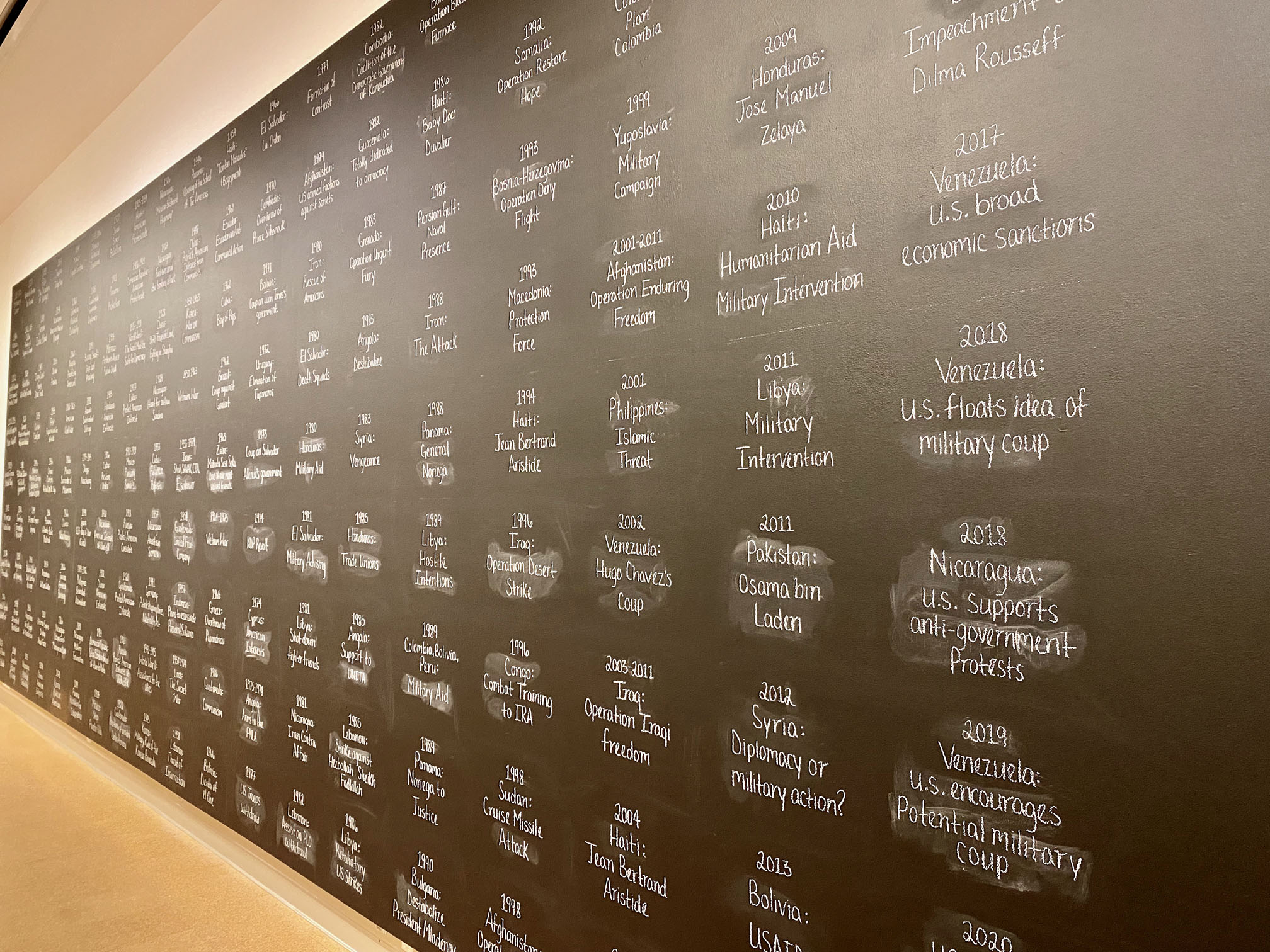
The third floor packs a punch, installing revolutionary images and publications around the infamous (and censored) Hans Haacke piece that questions the aftermath of the 1983 US invasion of Grenada.  Across the room, visitors pour over Carlos Motta’s 2005 wall-sized chalkboard installation Brief History of US Interventions in Latin America since 1946. 

Although the 1980 artist-activists did not achieve all of their utopian goals, the contemporary selections show that social consciousness, pride in indigenous heritage, and artistic futures are still alive – including a beautiful feathered immigrant history dome by Batriz Cortez, stitched by a team of immigrant collaborators.

2021 sculpture 1984: Space-Time Capsule by Salvadorian artist Batriz Cortez and immigrant collaborators – a shelter for immigrant histories.

Learn more about how the curator Erina Duganne and her collaborator Abigail Satinsky created this remarkable show:

Art for the Future will be on display at Chicago’s DePaul Art Museum from March to August 2023.

Carlos Motta’s 2005 detailed chalkboard installation Brief History of US Interventions in Latin America since 1946. Courtesy: the artist

O’Keeffe Museum Shows Georgia at Home

One of the most photographed artists of the 20th century, everyone is used to seeing Georgia O’Keeffe in her “formal” pose and gear – angular black hat, stark wrap dress, punctuated by her modernist Calder pin, standing against the New Mexico sky peering solemnly into the future.

In its latest offering, the Georgia O’Keeffe Museum is giving fans a special treat (and a different view) through its exhibition, Georgia O’Keeffe, a Life Well Lived: Photographs by Malcolm Varon, on display in Santa Fe through October 31.

2021 print of Varon’s 1977 photo of Georgia relaxing at Ghost Ranch. Courtesy: the artist
Georgia’s 1946 Part of the Cliff, a painting inspired by the view through her studio window.

The show features a smiling, at-ease 89-year-old surrounded by family, friends, companions, and pets – images quite apart from the GOK that we all admire and revere. How did this happen?

In the 1960s in New York, photographer Malcolm Varon established quite a reputation for documenting painters’ works in a way that captured a lot of their spirit. No wonder that in the mid-1970s, he was summoned out to Ghost Ranch and Abiquiu to document some of Georgia’s huge body of work.

While he was working with the artist during the summer of 1977, a journalist arrived to interview the icon for a feature in ARTnews.

No photographer had been attached to the story, so Georgia came up with hew own solution – ask her colleague Malcolm to shoot her in the setting of her Ghost Ranch home.

Since Malcolm was already familiar with the operations around Ghost Ranch and Abiquiu, he ended up taking about 300 photos of her homes, the landscapes that inspired her, and the people who kept things humming.

2021 prints of Varon’s 1977 portraits of Ida Archuleta, Candelaria Lopez, and Estiben Suazo, the people who managed Georgia’s homes and properties. Courtesy: the artist.

Despite Georgia’s reputation as a loner living out in the middle of nowhere, Malcolm appreciated that the day-to-day operations in the outback were quite fun, busy, natural, and happy at her two studio compounds.

ARTnews made a few selections from Varon’s photographs and ran them in the feature, but the majority of the 300 shots were never printed or seen…until now.

Visitors at the GOK museum pour over every detail of the portraits and landscapes, enjoying a new, different glimpse of the artist and her world – Varon’s portrait of Georgia’s sister, beautiful portraits of her property caretakers (whose families still take care of the GOK home for the museum), and her assistant Juan Hamilton.

The curators present several paintings from the 1940s showing the same cliffs, landscapes, and skies that Varon captured in the summer of 1977. Visitors have fun shifting back and forth between the oil paintngs and photos.

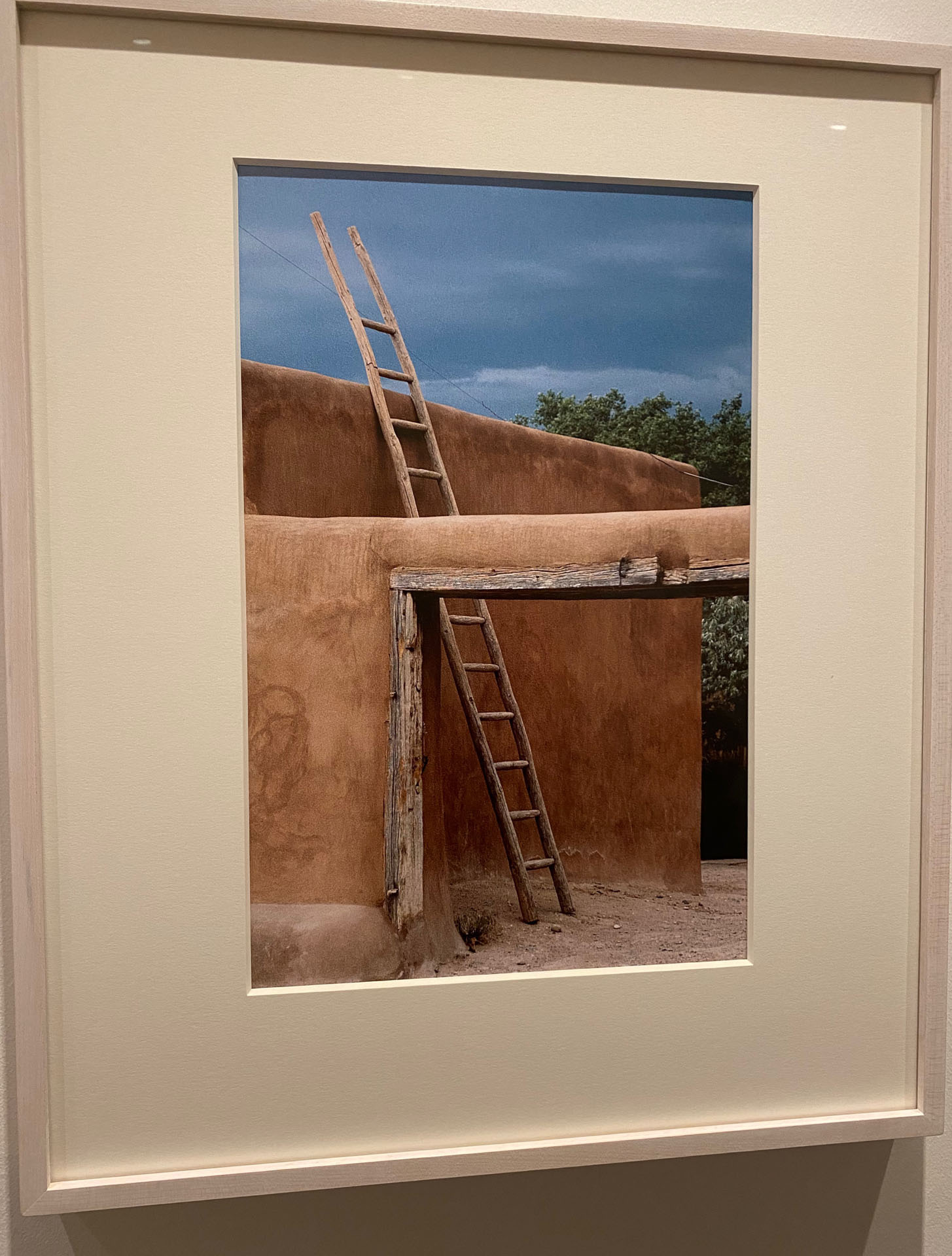
2021 print of Varon’s 1977 photograph of the tall ladder at Georgia’s Abiquiu home – a platform from which she surveyed the world. Courtesy: the artist

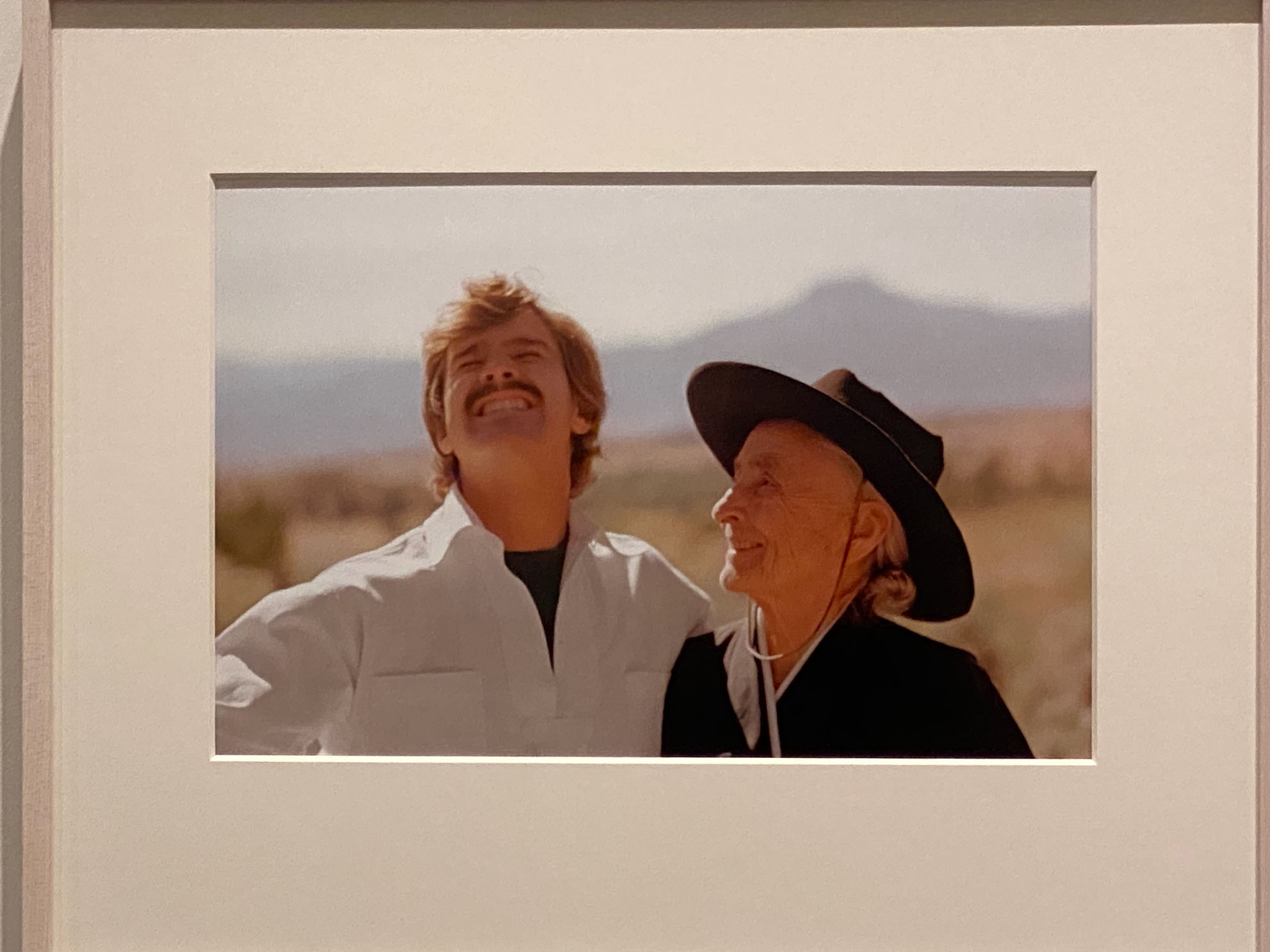
2021 print of Varon’s 1977 fun photograph of Georgia at Ghost Ranch with her friend and assistant, artist Juan Hamilton with the Pedernal as backdrop. Courtesy: the artist

Take a look at some of our favorites in our Flickr album.

Listen in as the curators of this delightful show draw back the curtain on the legendary O’Keeffe, her relationship with photography, and what happened when a trusted friend got her to smile for the camera:

Fashion Manifestos by Carla Fernández

What does “slow” fashion look like? A revolutionary Mexican haute couture designer shows how it’s done in Carla Fernandez Casa de Moda: A Mexican Fashion Manifesto, on display at the Denver Art Museum through October 16.

As a young woman, Carla met and got to appreciate Mexico’s indigenous communities as she traveled with her father, a renowned anthropologist. She loved collecting hand-made indigenous garments reflecting the distinct local styles she saw. 

As a student of art history and fashion design, the complex indigenous textile techniques in these out-of-the way communities seemed to stand in contrast to the ever-changing, always-disposable cycle of Western fashion.

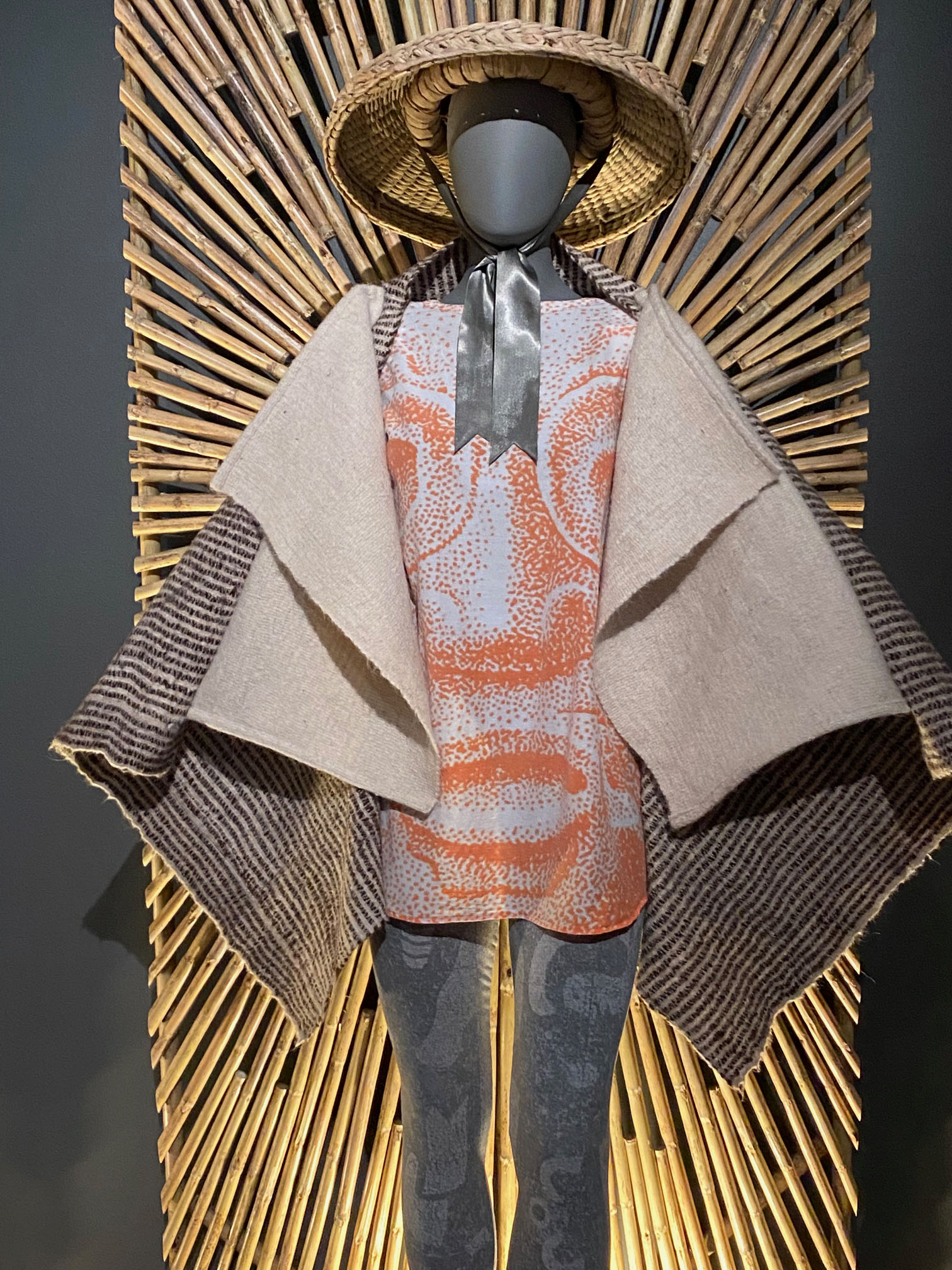
Carla Fernández 2014 jacket collaboration with Juanez Lopez Santis (San Juan Chamula, Chiapas) over digital-printed silk top and leggings.
2003 wool poncho – a Carla Fernández collaboration San Juan Chamula (Chiapas) artisans ­– over a 2009 pantsuit. From the collection of photographer/model Luisa Sáenz

Why not use these indigenous “haute couture” techniques for a high-fashion collection? Why not create a mix-and-match aesthetic using traditional, geometric shapes? Why not credit the artists?

As presented in her first-ever museum retrospective, the results are dramatic, detailed, intriguing, and one-of-a-kind – a completely different kind of fashion system that incorporates indigenous work, pays and credits community makers, and gives artisans the time to create pieces that collectors cherish.

Carla travels to mountain and desert communities to collaborate with textile artists.

With her fame growing, communities now invite her to drive over, see what they’re doing and brainstorm about potential collaborations. It’s an approach that involves time, dialogue, and mutual respect between the artisans and Carla-as-fashion-facilitator.

In her mobile studio (Taller Flora), they create hand-woven, dyed, and painted works of wearable art that Carla brings to the runway, but always with an eye toward collectors who value innovative, indigenous craft traditions.

The exhibition features runway looks, accessories, and videos of performance art that showcase different facets of her fashion manifesto – that artisan-made is the true “luxury” in a “fast fashion,” throw-away world.

2021 hand-painted coverall and digital-printed jumper and coat with Leonardo Linares (Mexico City); embroidered jumper with Antonia Vasquez (San Pedro Chenalhó, Chiapas).

Fiesta masks, leather caballero fretwork, whimsical basket-purses, and fuzzy handmade pom-poms provide home-grown Mexican flair to the cinched, draped, easy ensembles.

Take a look through our Flickr album, and enjoy this video of the installation at Denver Art Museum:

Every section of the exhibition demonstrates her commitment to stimulating innovation and creativity among indigenous makers.

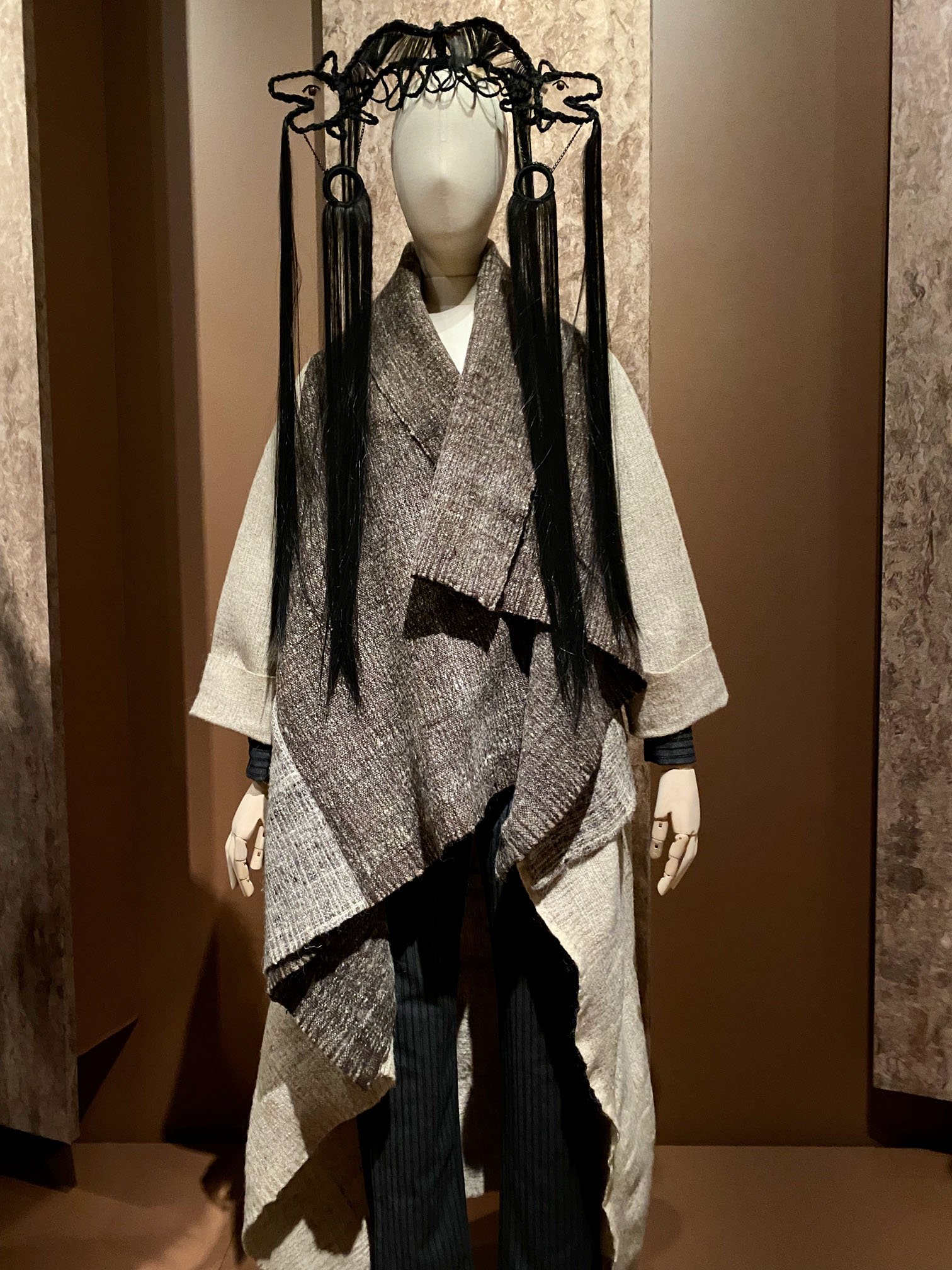
Inspired by decorative fretwork on rodeo apparel, a 2022 wool poncho and pants done in collaboration with calado master Fidel Martínez (Chimalhuacán, State of Mexico).

As of 2022, Carla’s collaborated with more than 164 artisans in 39 communities in 15 Mexican states, with more to come. The show presents a map and identifies all of her collaborators.

To see and hear more about Carla’s collaborative process, watch the Denver Art Museum’s 2019 seminar on culture, cultural appropriation, and fashion in this YouTube video.

And join in on Carla’s beautiful, expressive fashion revolution by checking out her current and past collections on her website.

Jeffrey Gibson at SITE Santa FE

What happens when a Native American MacArthur genius is asked by SITE Santa Fe to create an art exhibition during a time of a global pandemic and social justice marches? And invite him to a location where Native Americans make up a significant percentage of the population?

The result is Jeffrey Gibson: The Body Electric – a constantly surprising gallery journey where shape-shifting, cultural disassociation, beadwork, kitsch-image appropriation, gender-identity questions, and science-fiction inspiration reigns.

The show is filled with life-size beaded dolls and garments, films, pulsing papered walls, mysterious film experiences, and social statements either woven or stamped onto clothes (or are they banners?).

Gibson’s 2021 White Swan mixed-media painting in wall-papered gallery with a beaded, life-size, genderless “doll”
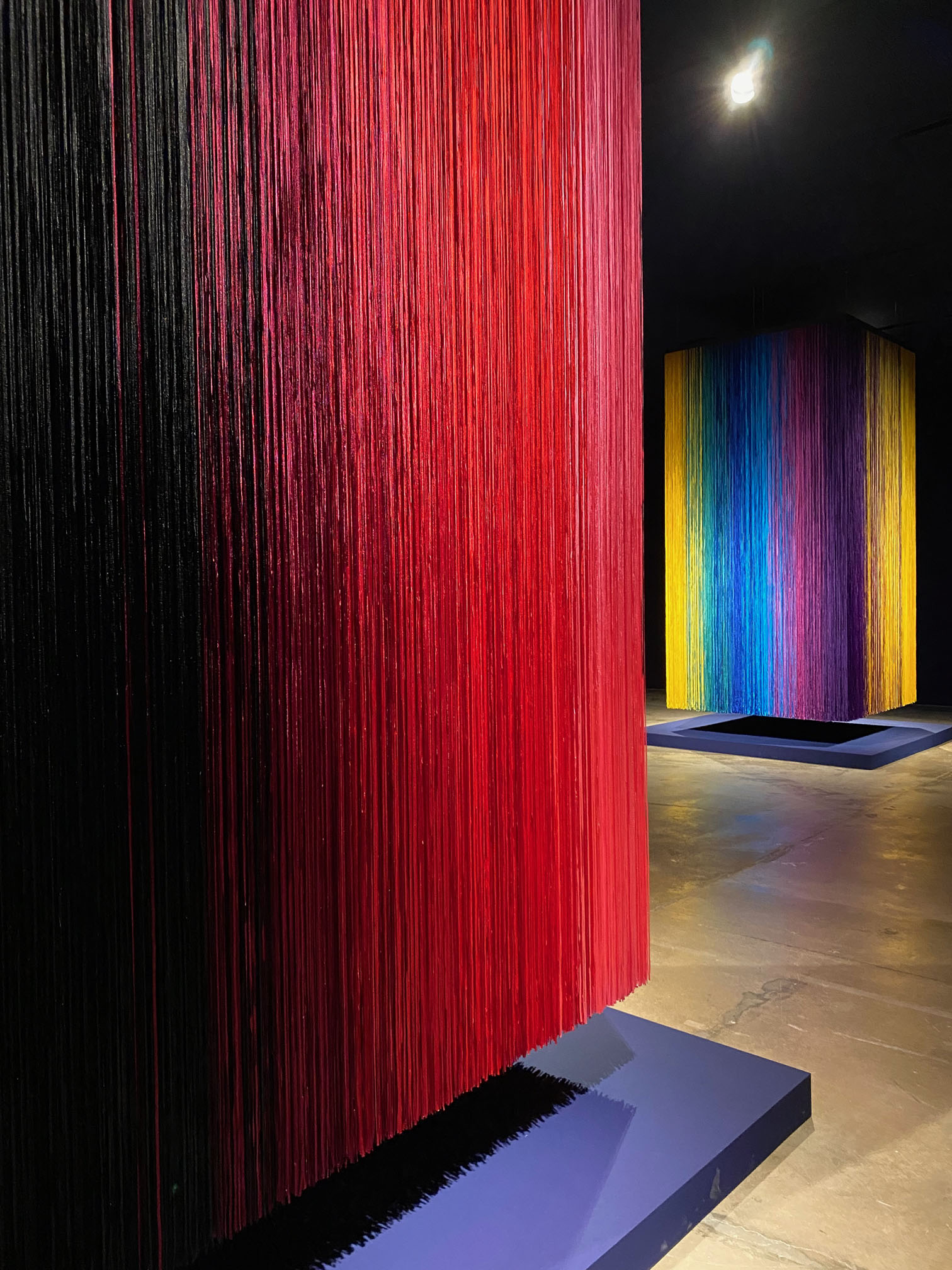
2020 Red Moon and Desert Sky minimalist sculptures created from strands of dance fringe.

Gibson, who is based in New York, is an intertribal artist who is a member of Mississippi Band of Choctaw and half Cherokee. However, his influences were forged from prestigious art schools, international travel, and living in non-Native societies.

The opportunity to come to Santa Fe, host a cinema series and several performances, and stay out West for a while was an open door to explore inter-cultural influences, host discussions with appreciative audiences, and show off his wide intellectual and artistic breadth.

In many of his works, Jeffrey mixes traditional “Indian” materials like beads or fringe with slogans, sayings, dime-store “Indian” images, and big-time art-world references.

See some our favorites from this exhibit in our Flickr album and hear Jeffrey explain his influences in SITE Santa Fe’s audio guide.

The little beaded birds that greet visitors in the first gallery and the big beaded life-sized “dolls” in the second were inspired by Jeffrey’s early work in the ethnographic collections of the Field Museum, where he encountered Haudenosaunee-made beaded tourist-trade whimsies and traditional “third gender” dolls for the first time. Why not make his own, but over-size them?

2021 My Joy My Joy My Joy, a mixed-media beaded bird inspired by Victorian-era Native American tourist whimsies

The nearby video gallery features a kaleidoscopic multichannel video of Sarah Ortegon, an award-winning Eastern Shoshone/Northern Arapaho jingle dress dancer, performing to the energetic Sisters track by A Tribe Called Red. This piece – She Never Dances Alone – refers to the dancers who came to the Standing Rock Reservation and lent their support to the 2016 pipeline protests though dance.

Here’s Sarah Ortegon in Gibson’s 2019 Times Square installation of She Never Dances Alone here…wait for it:

2021 They Play Endlessly mixed-media crazy quilt of paint, beads, words, and found objects.

And here’s another look at Gibson’s 2020 exhibition at the Brooklyn Museum, where he mixed works from his studio with artifacts and art from Brooklyn’s own collection.

And check out Gibson’s work our album documenting the Smithsonian’s National Museum of the American Indian exhibition of Native painting, Stretching the Canvas.

If you’re near Nashville, you’ll be able to see Gibson’s The Body Electric at the Frist Art Museum February 3 – April 23, 2023.

Dior Brings Opulent Extravagance to Brooklyn

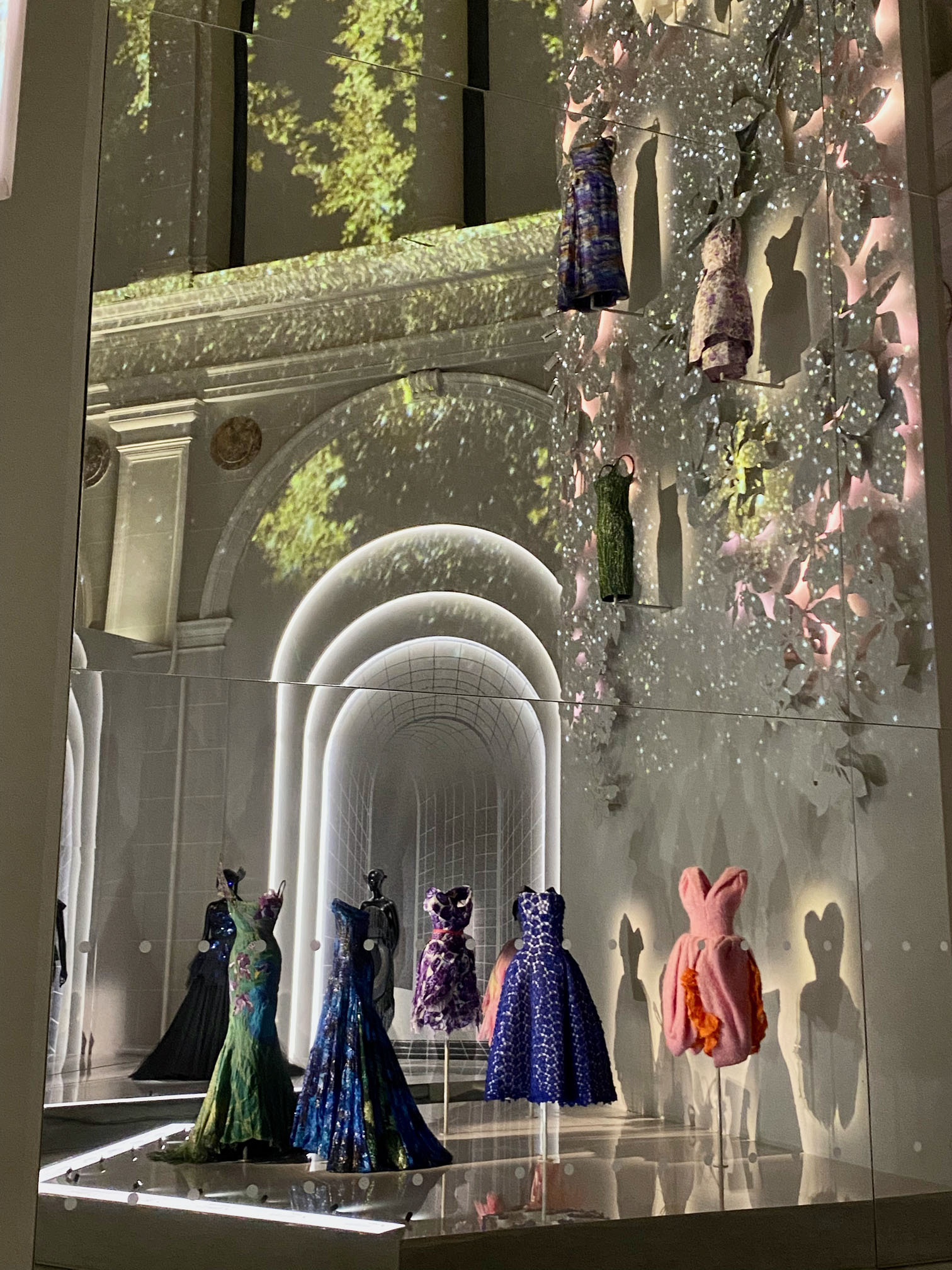
With lights dancing across dozens of floral dresses and sequined classical gowns in an over-the-top Beaux-Arts setting, visitors to the Brooklyn Museum generally stand speechless in awe of the extravagance before them in, Christian Dior: Designer of Dreams, closing February 20.

It takes a minimum of two hours to travel through the galleries, and much more time to absorb the wonders of this must-see fashion exhibition, drawn largely from the Dior archives in Paris.

Take a look at some of our favorites in our Flickr album.

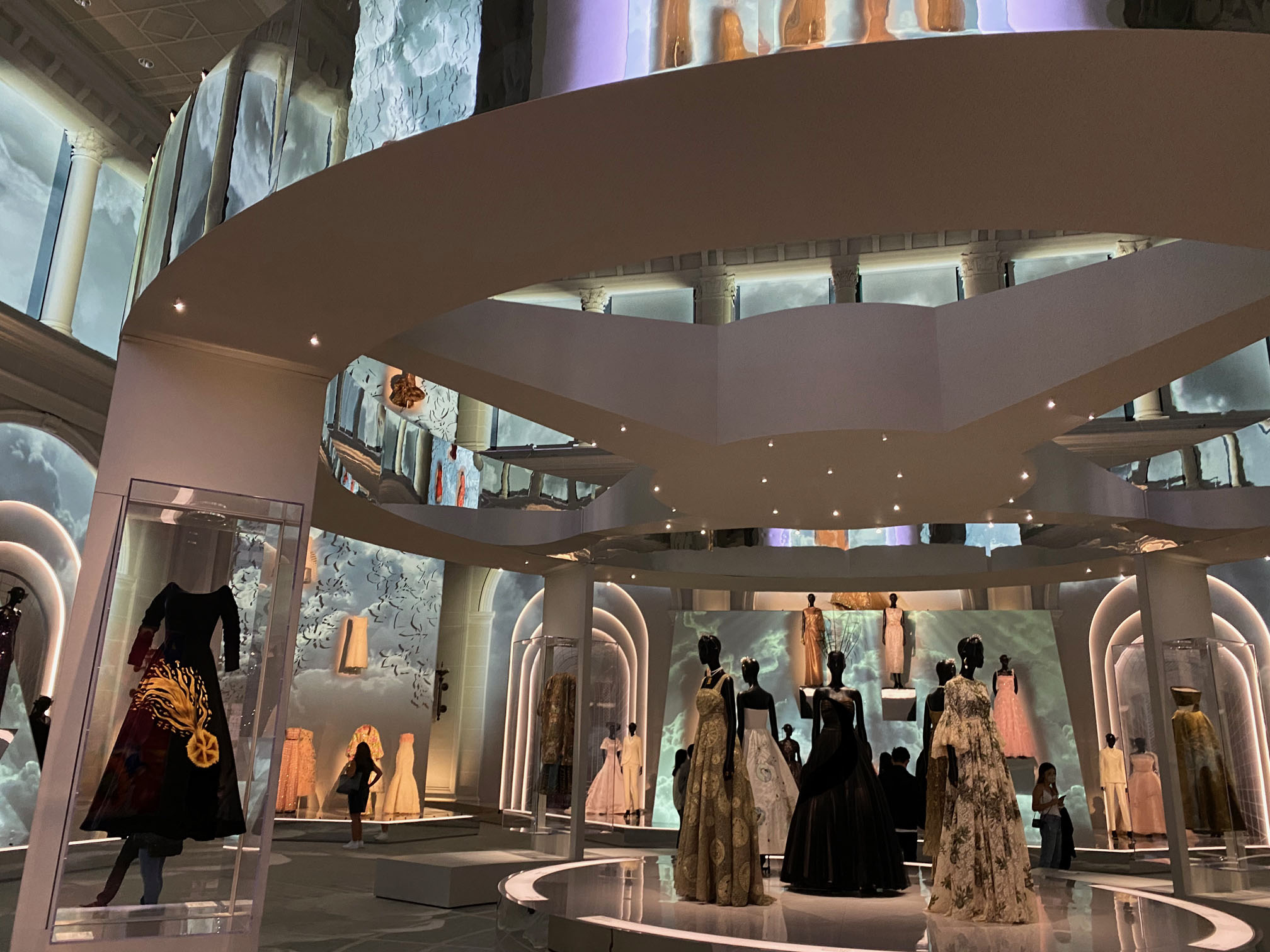
Haute couture in Brooklyn’s Beaux Arts court. Courtesy: Dior heritage collection.
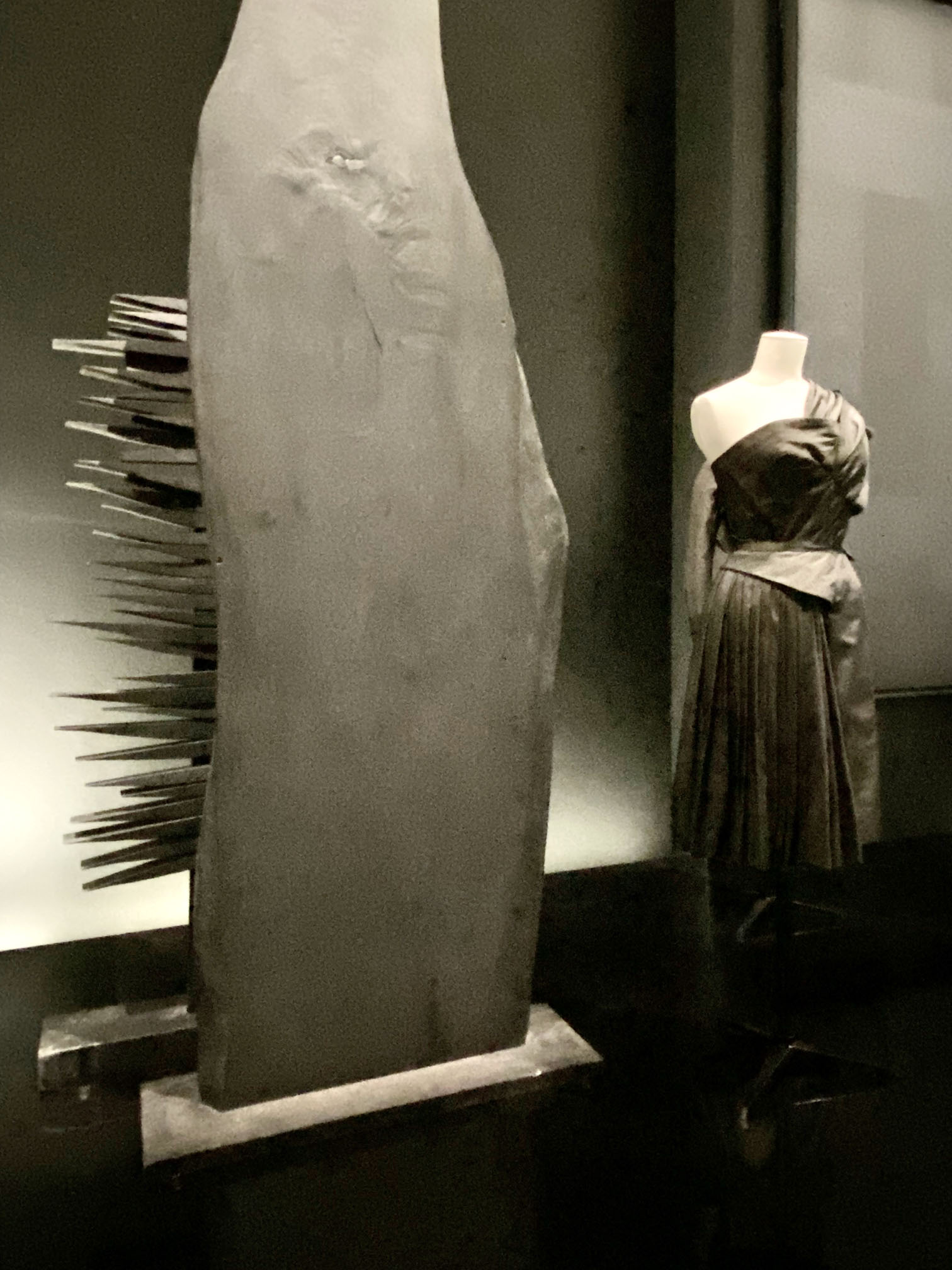
Nevelson’s 1956 sculpture and 1952 Dior dinner dress. Courtesy: Dior.

The exhibition begins in a traditional gallery format, showcasing Dior’s epic haute couture works of the Forties and Fifties.

Print and film media document Dior’s ecstatic reception in America, including custom client fittings and retail showings in New York and San Francisco.

Some of the most spectacular evening and cocktail looks are paired with modern sculpture by Nevelson and design by Eames from the Brooklyn Museum’s collection.

Turning the corner into the photography gallery, visitors encounter the full spectrum of photographers who have documented Dior couture from the Forties until today.

Visitors are ecstatic when they see the dress next to the Avedon photo that is one of the most iconic fashion images of the 20th century – Dovima modeling Dior’s spectacularly sinuous black-and-white gown, caressing massive, animated elephants that surround her.

After Dior’s untimely death, a succession of fashion superstars led the creative side of the house. The show pays tribute to YSL, Bohan, Ferré, Galliano, and Simons with dramatic installations showing their inspirations from French film noir, modern art, opera, and art history. 

1955 haute couture, worn by Dovima for Avedon. Courtesy: Dior.

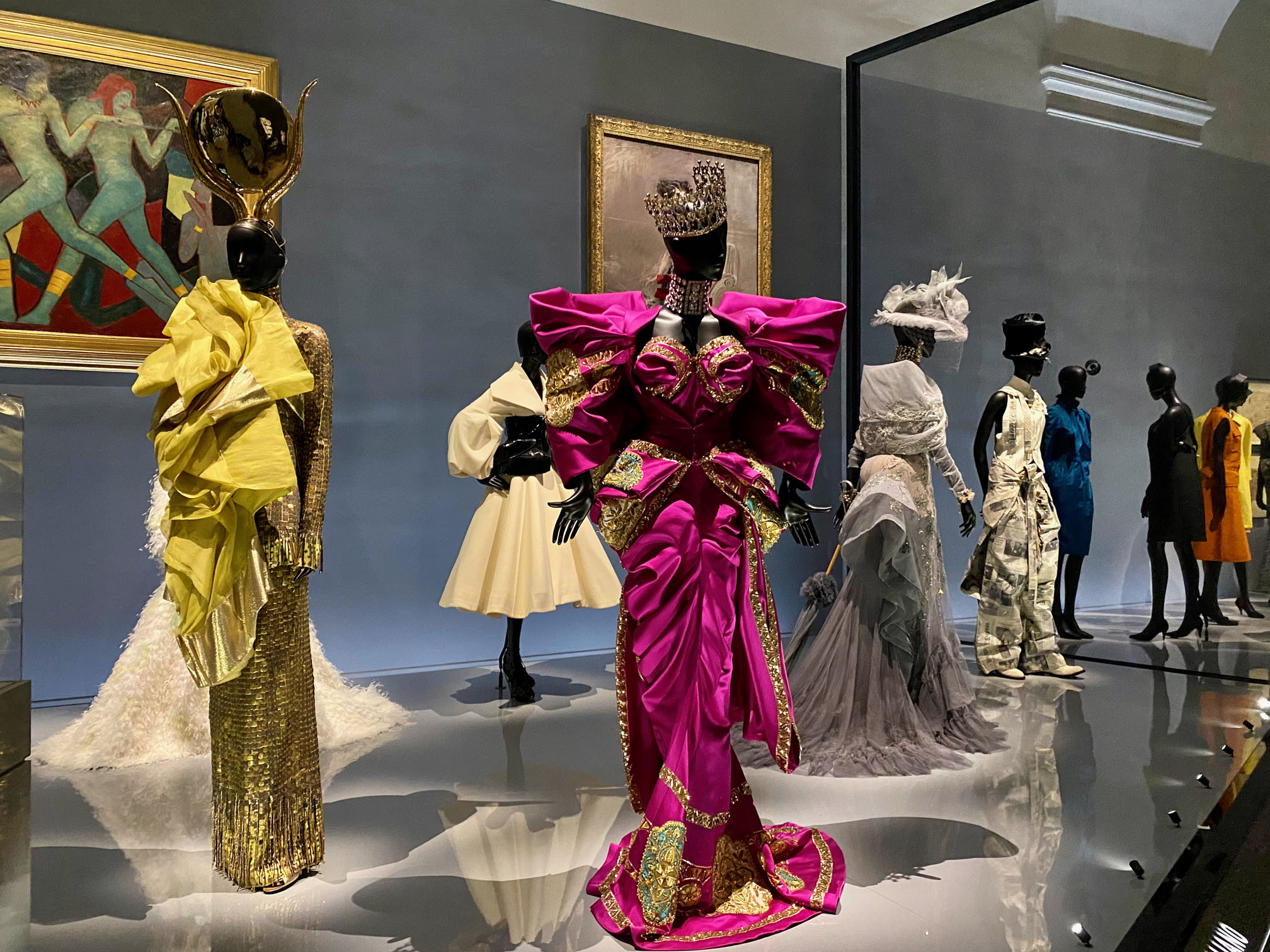
The garments are over-the-top, highly embellished, and smartly paired with Egyptian and Gilded Age works from the museum’s extensive permanent collection.

John Galliano haute couture for Christian Dior, inspired by ancient Egypt, the Belle Epoque, and other historical references. From the Dior Legacy gallery. Courtesy: Dior heritage collection.
Three 2020 ensembles by Maria Grazia Chiuri against Judy Chicago banners. Courtesy: Dior

There’s a special installation reserved for Dior’s current artistic director, Marie Grazie Chiuri, who has long used her platform in the fashion world to ask probing questions about culture, society, and women.

In this gallery, her dramatic haute couture work is surrounded by shimmering banners that she commissioned from Judy Chicago, whose epic The Dinner Party is the centerpiece of Brooklyn’s feminist art center.

A major set of galleries evokes the Hall of Mirrors at the Palace of Versailles – a source of inspiration for Mr. Dior.

The curators use the space to show off Dior’s Miss Dior perfume product displays and pairings of old and more recent haute couture inspired by 18th century glamour of the French court. If the exhibition ended right there, you’d be satisfied.

Haute couture from House of Dior: John Galiano’s 2000 dress in embroidered antique satin and Christian Dior’s 1952 satin cocktail ensemble. In the 18th-century gallery. Courtesy: Dior heritage collection.

But there’s much more – a gallery segmented by color to show off fashions, accessories, shoes, and miniatures; and an Instagram-ready all-white infinity room with dozens of white toilles made by the Dior ateliers from the designer’s sketches.

It’s another unforgettable gallery experience that pays proper tribute to the teams of behind-the-scenes experts who bring these fashion visions to life. 

Although the gallery of celebrity Dior looks is the final stop in the show, it almost feels like an after-thought compared to the magical displays of the Beaux-Arts Court.

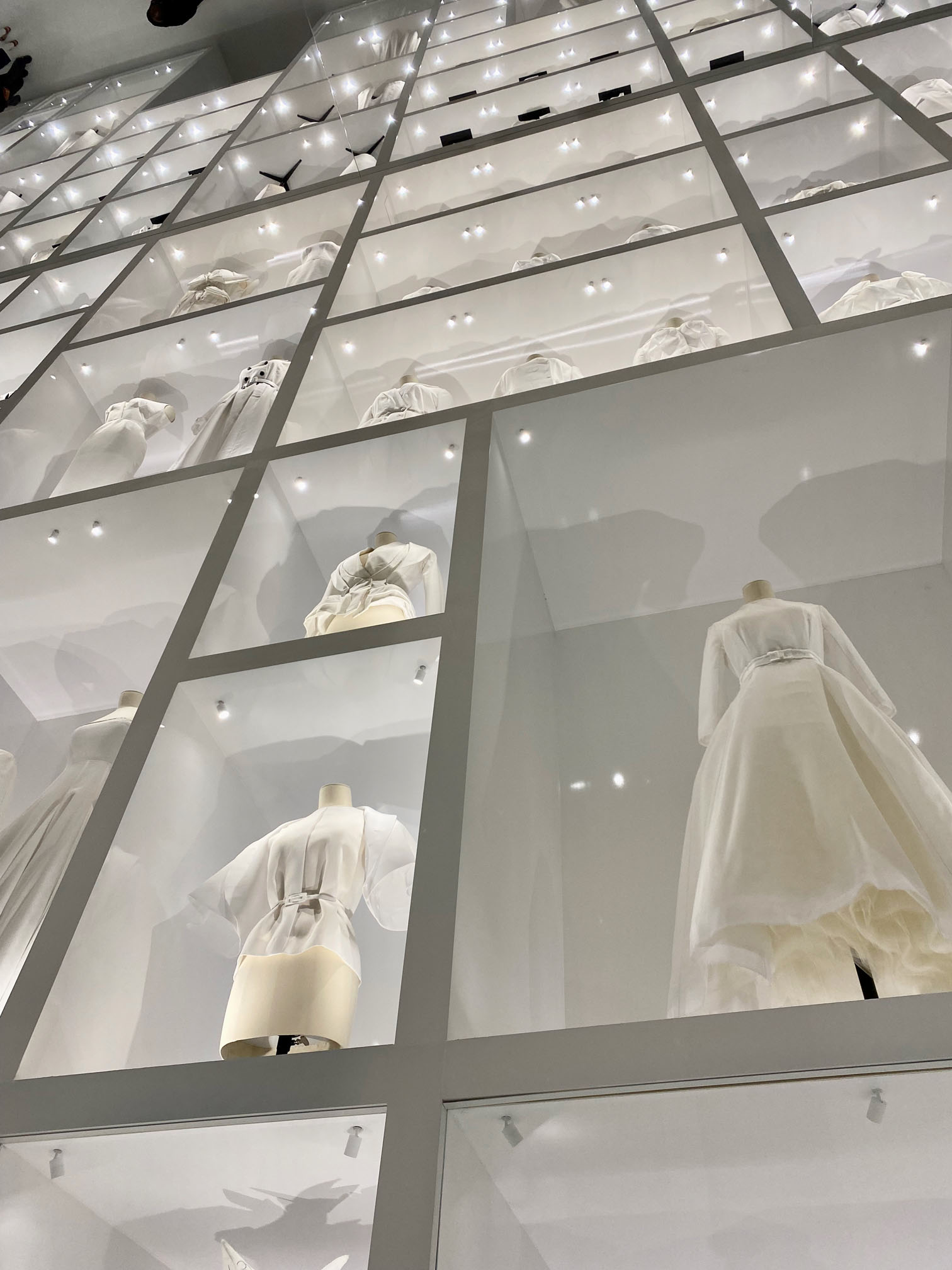
Wall of 2007-2020 toiles for haute couture dresses, jackets and coats.

Haute couture is everywhere – clustered in the center, surrounding you on all sides, and artfully displayed on two-story-high walls and balconies.  One area features floral gowns, another shimmering gold ensembles, and another mysterious, dramatic black drama.

Haute couture dresses inspired by the divining arts surrounded by dresses inspired by nature, flowers, and gardens. Courtesy: Dior heritage collection.
2010 haute couture hand-painted embroidered evening dress by John Galliano for Christian Dior.

The show is a breathtaking array of light, sound, and visual riches – possibly the greatest feast for the fashion eye since the McQueen show at the Met.  Thanks to Dior for letting us see these amazing works from the archive, and to Brooklyn for giving us such an unforgettable fashion experience in its 125-year-old court.

Next up for Brooklyn’s galleries: a tribute to Virgil Abloh, opening July 1.

Jasper Johns Takes Victory Lap at The Whitney

Iconic imagery, big statements, technical mastery, and long-distance endurance are all on display from the second you enter Jasper Johns: Mind/Mirror at The Whitney – the mind-bending retrospective of one of the century’s most celebrated artists.

Then you realize that this 12-part extravaganza is only half the story ­– a mirror image of the Whitney retrospective that is also on display 90 minutes south at the Philadelphia Museum of Art.

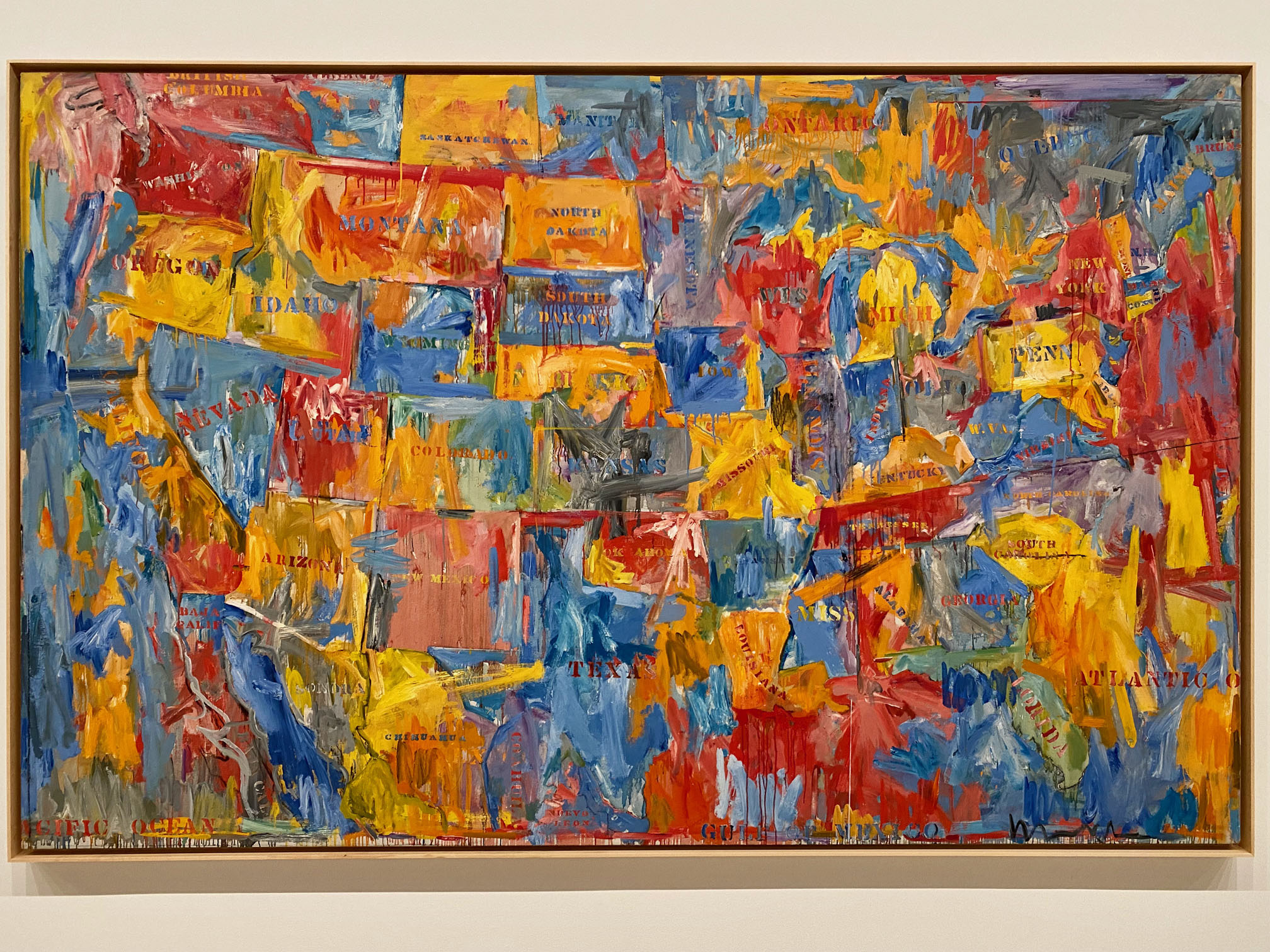
1961 Map by Jasper Johns. Courtesy: MoMA
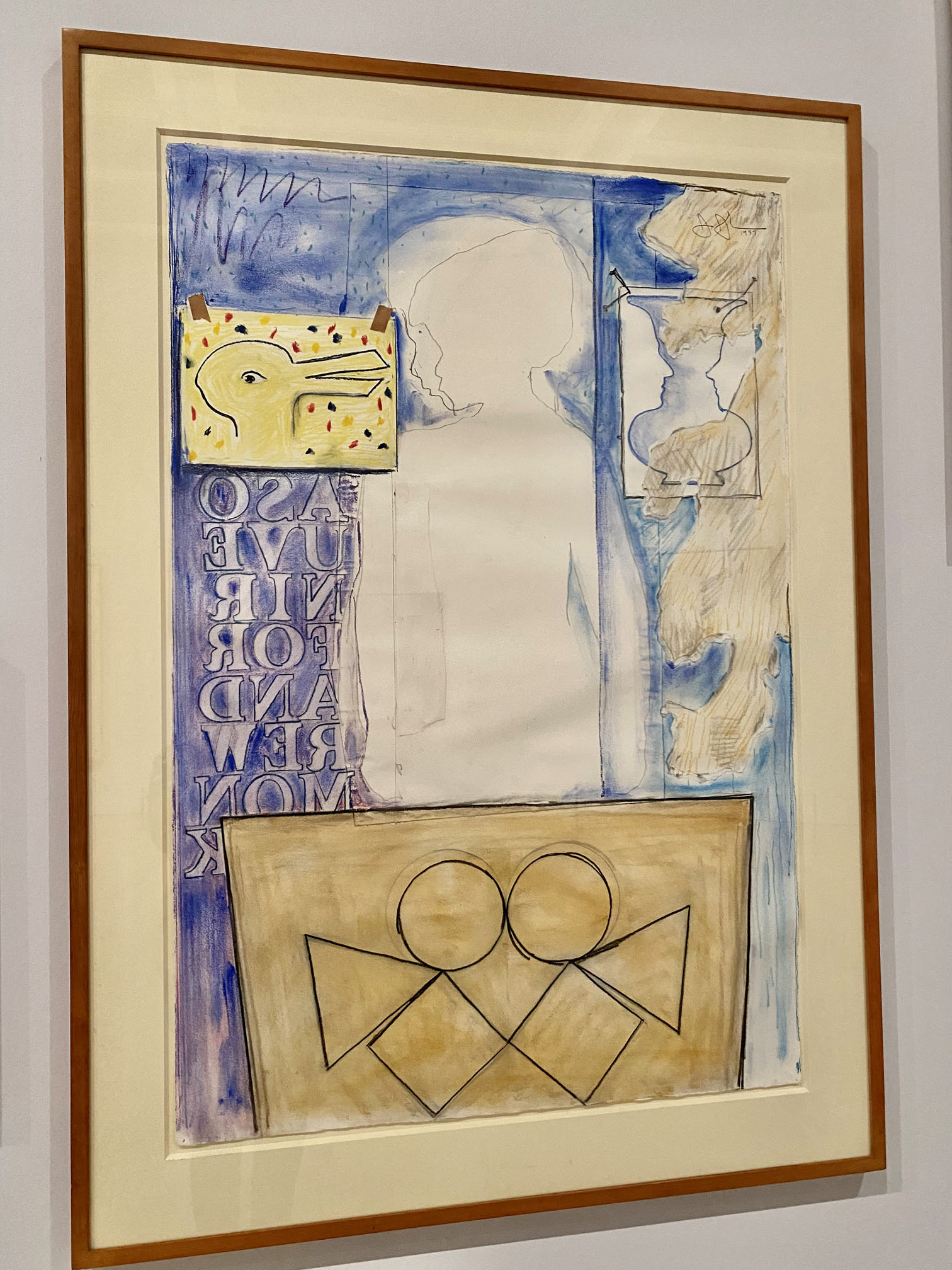
1982 Savarin monotype of Johns’ 1960 bronze.

Each has different works and minutely different themes (the number paintings vs. the flag), but reflect the same scale and scope of the artist’s astonishing 70-year career.

Most art lovers know that the early work of Johns and Rauschenberg in the late 1950s and early 1960s helped to redirect the New York art scene from Abstract Expressionism toward Pop. But show puts a much-needed spotlight on the rest of Johns’ career – how he kept experimenting with media, pushing his own boundaries, manipulating paint to evoke an emotional response, and not letting any art-world “ism” impede his creative journey over the next 50 years.

Hear what the show’s two curators, Scott Rothkopf (NYC) and Carlos Basualdo (Philly), have to say about Johns, the “rules” he “broke,” and the mark his work left upon 20th century American art:

The sheer magnitude and quality of the artist’s output is on full display as you take the journey through the Whitney – masterful paintings, prints, drawings, watercolors, and sculptures

See some of our favorite works in our Flickr album.

Exhibition entrance with full scope of Johns prints.

As soon as the elevator doors open at The Whitney, viewers are confronted with a curved wall that contains dozens of surprises – a chronology of prints stretching from Johns’ early days in New York through works completed as recently as 2019.  Walking left to right, the wall serves as a mini-retrospective as well as the intro to the larger show.  Bravo to the team for this brilliant, engaging welcome.

It’s joyful to poke through the first few galleries and experience Johns’ early experimentations with stenciled lettering, disappearing letters, collaged newsprint, and maps enlivened by painterly gestures and swipes.

But then you see works done in South Carolina, where Johns took in the beach and sky and recollected back to his childhood in the South. Big, bold, mystical, evocative puzzles taking the form of large-scale canvases, small intimate sculptures, and all forms of drawing and mark making.

1964 Studio with paint cans, created at the South Carolina beach.
1967 Harlem Light from Johns’ 1968 Leo Castelli gallery show. Courtesy: Seattle Art Museum.

You experience a room where the team has brought together work originally shown by Leo Castelli in his New York townhouse gallery in 1968. The exhibition designers mimic the size of the original gallery to let you experience the same thrill of interacting with these big, colorful, slightly conceptual, architectural paintings.

The centerpiece of the Whitney exhibition is a spectacular gallery created by the exhibition team to showcase the retrospective’s theme – how Johns used doubles and “mirroring” to explore perception and entice viewers to ponder the works more carefully.  The exhibition designer explains and shows how the famed bronze Ballantine ale cans are the fulcrum around which Johns’ subsequent work revolves:

There are hundreds of loans from other museums and private collectors, and the two museums even swapped some of their own holdings.

And Johns himself has loaned never-before-exhibited works, including watercolors and drawings that he did in the 1980s. Although the colors draw you in, they represent the artist’s process of working through the ravages of HIV and loss inside the art community.

The curatorial precision of the show allows you to experience an evolving appreciation of Johns’ later work – experimental monotypes in the print studio, contemplation of the arc of life in monumental elegiac grey paintings, and sculptures completed in the 2000s. See more on the Whitney website about the works in the show.

1990 watercolor from Johns’ collection with mysterious, surreal, personal imagery.

The latter are displayed in natural light, which allows you to enjoy the cast bronze and aluminum number blocks as the sun shines over the Hudson from different angles. The changes illuminate the hand work, gestures, and conceptual rigor over time – a fitting encapsulation of this two-city tribute to Mr. Johns.

Reverse side of 2008 bronze 0-9 sculpture. Private collection.