Man Ray at The Met

After Man Ray saw European Cubism at the 1913 Armory Show, he knew what he had to do in his own art – abandon all of the constraints of contemporary American art and dive headfirst into Dada and push the boundaries – go rogue.  

Some say that Man Ray became America’s most important 20th century artist. Marcel Duchamp – who became one of Man Ray’s best friends and collaborators – would certainly agree. All the evidence for Man Ray’s status is right here in the Met’s survey of Man Ray’s formative years (1914-1929), Man Ray: When Objects Dream on view through February 1, 2026.

Man Ray’s 1930 Self-Portrait with Camera – a solarized portrait. Courtesy: The Jewish Museum.

Walking in, you look through the exhibition’s architectural aperture to an endless array of Man Ray’s famed rayographs – dreamy abstract black-and-white cameraless images – lining parallel black gallery walls. Nearly sixty have been gathered for this occasion from international public and private collections.

See our favorite works in the exhibition in our Flickr album.
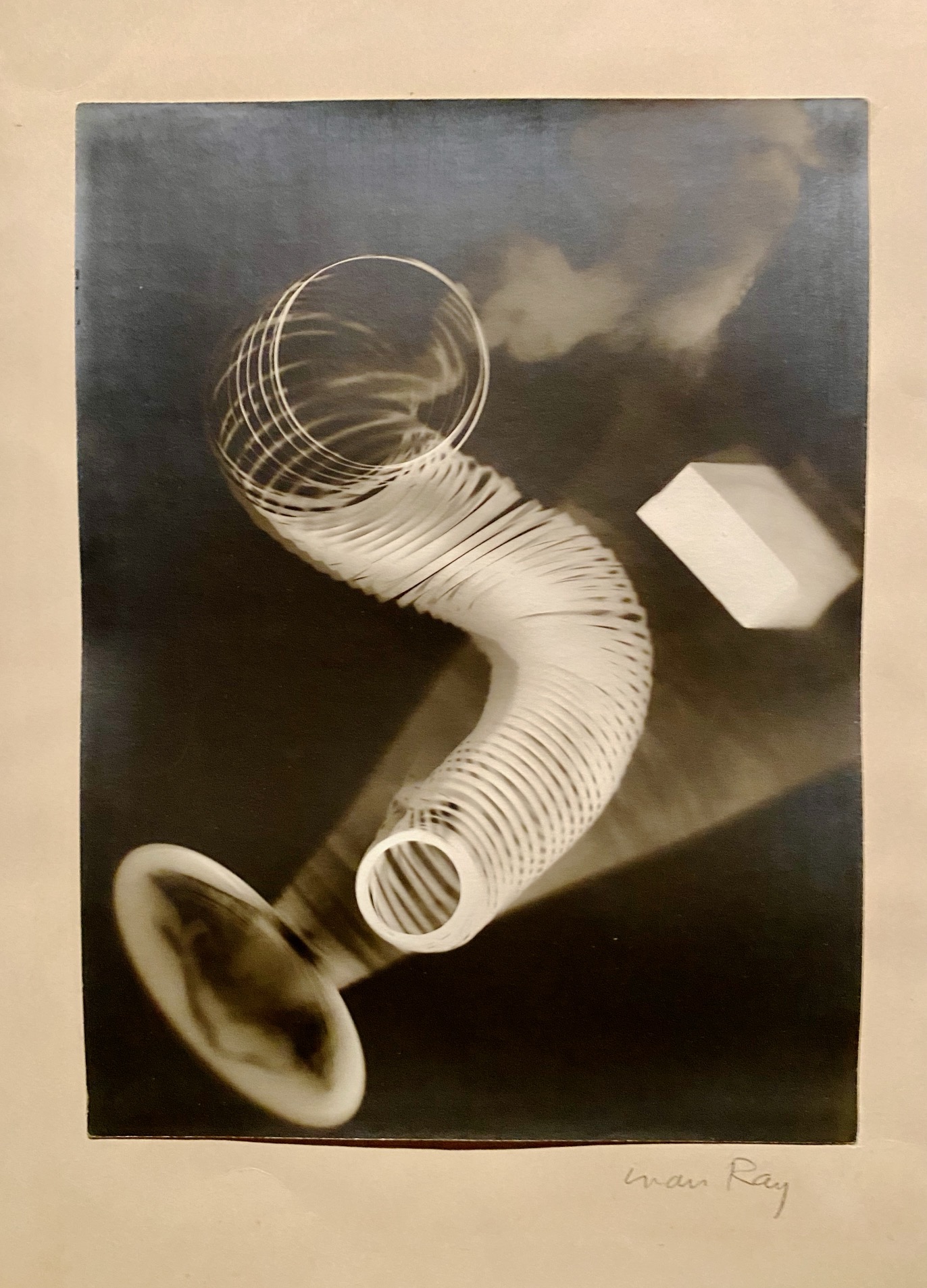
Man Ray’s 1922 Rayograph published in Les Fuilles Libres (Loose Pages) magazine – a coiled wire puffing smoke emerges from a glass.  Courtesy: private collection.
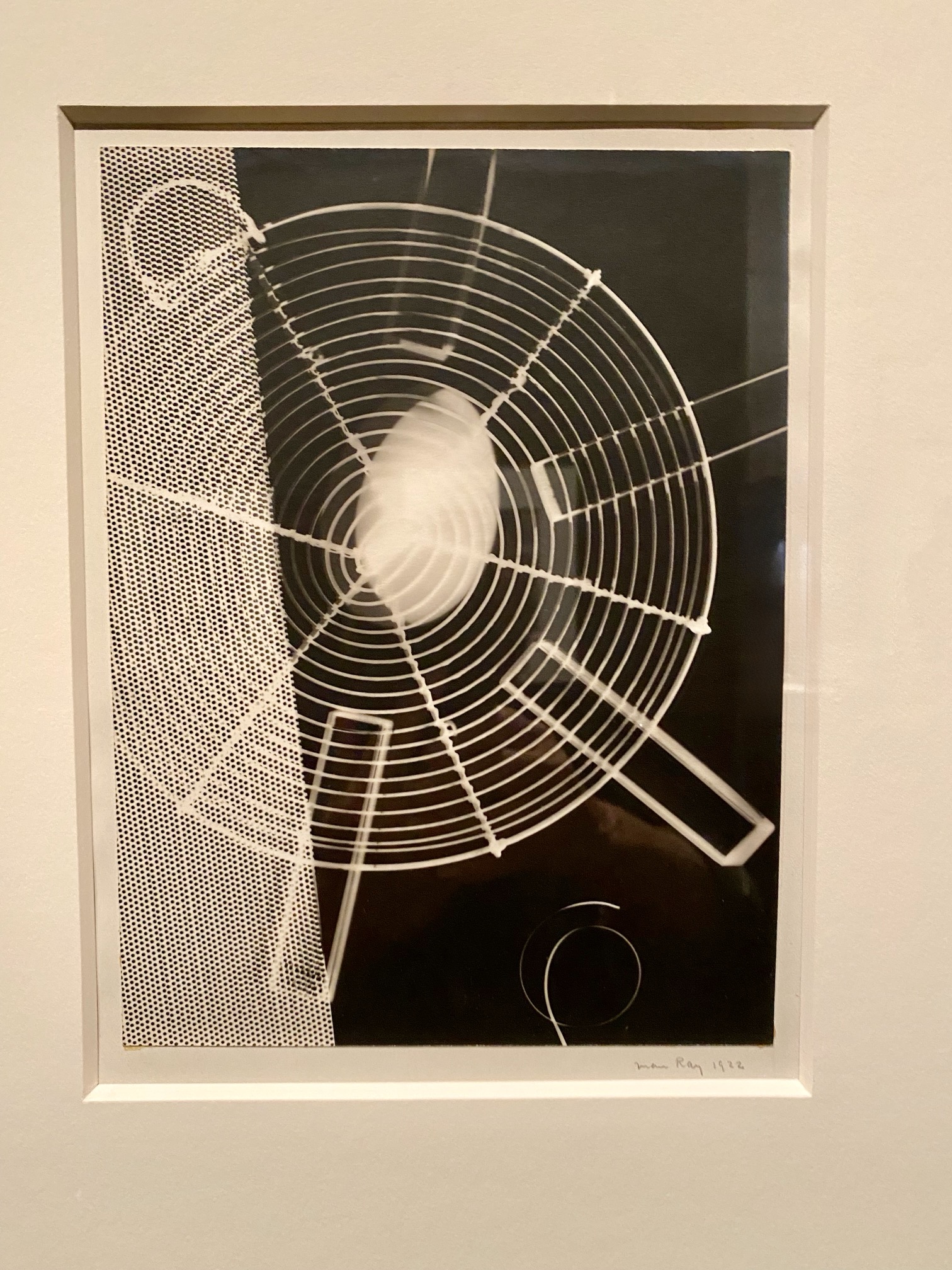
Man Ray’s 1922 gelatin silver print Rayograph incorporating an everyday wire rack for dramatic effect.  Courtesy: Yale University Art Gallery.

Although the rayographs form the core of this show, you also see the oil paintings, airbrush drawings, sculptures, movies, and game boards – works that are rarely seen, but illustrate why Man Ray rapidly took center-stage in the modern avant-garde community.

While working as a commercial artist and photographer, he used his free time to make unconventional, revolutionary works that banished representation. In 1916, he wrote a “new art” treatise on how to condense motion and dynamic shapes into two dimensions.
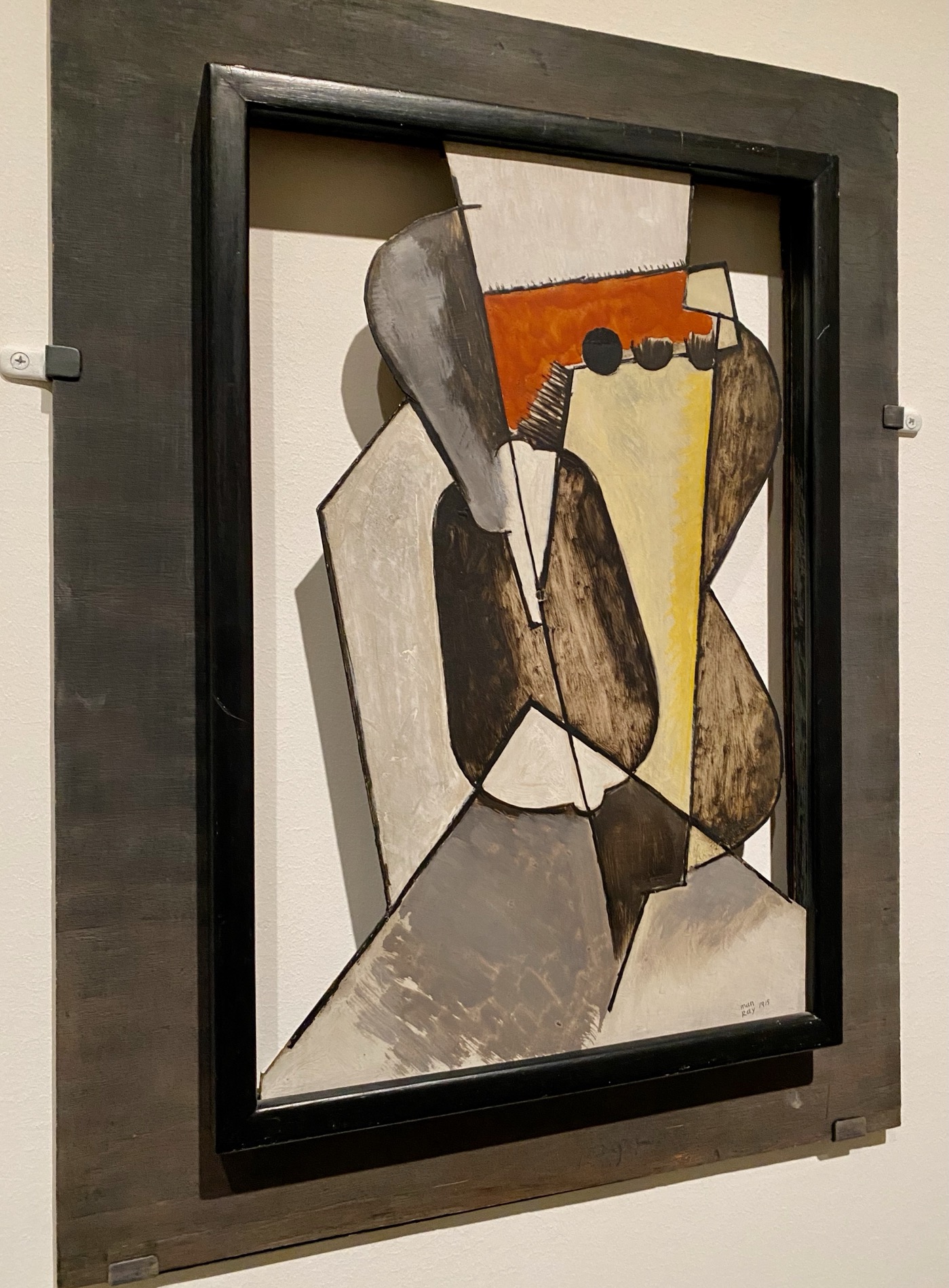
Man Ray’s 1915 oil on board Cut-Out from his first solo show in New York in 1919 – representing three dimensions within two.
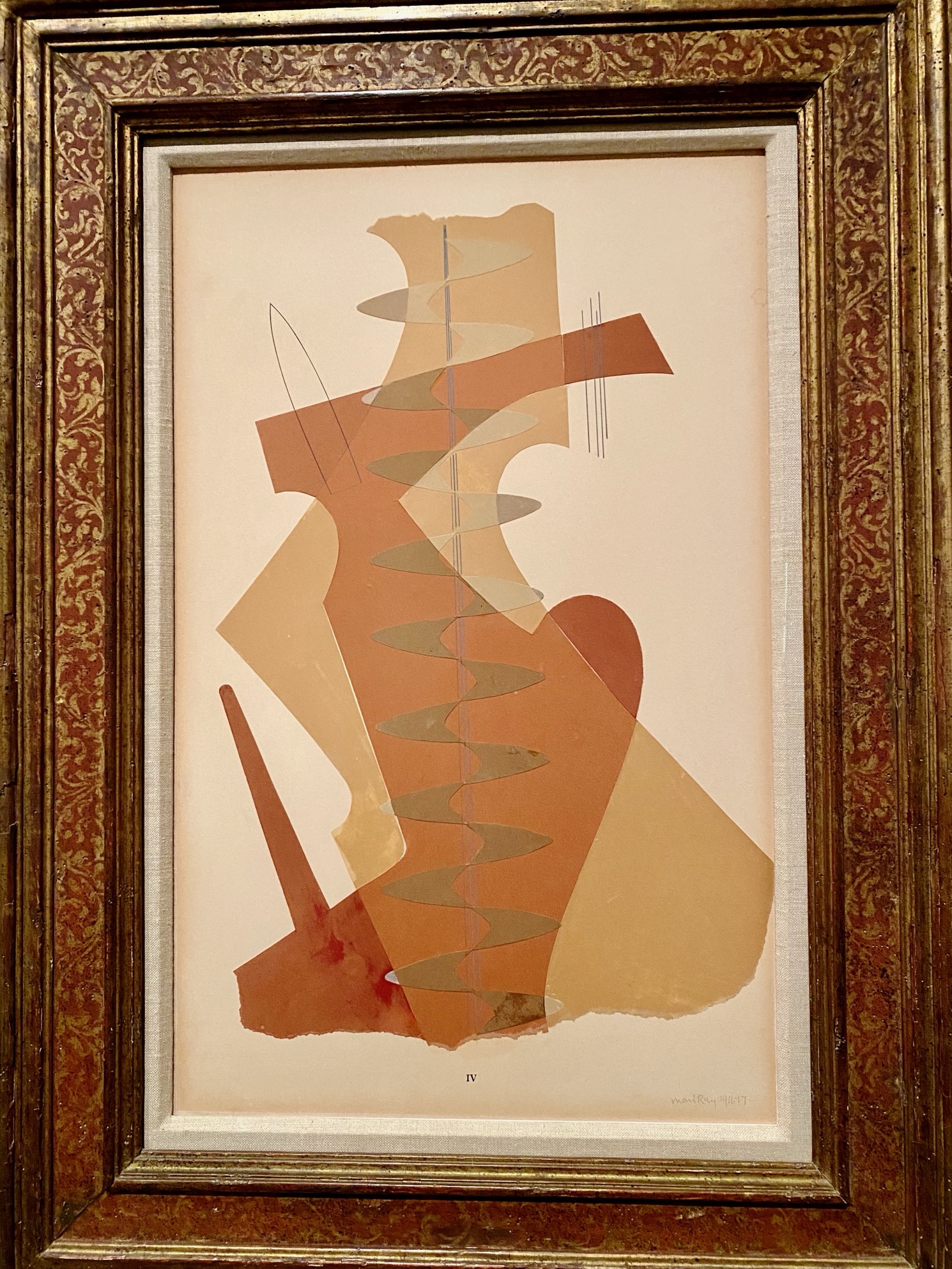
Man Ray’s 1916-1917 collage and pen-ink drawing The Meeting. Courtesy: The Whitney Museum of American Art.

By 1917, he was making large-scale works, portraying a Rope Dancer mid-performance with stencils, cut-up pieces of colored paper, and big colored spaces representing her shadows.
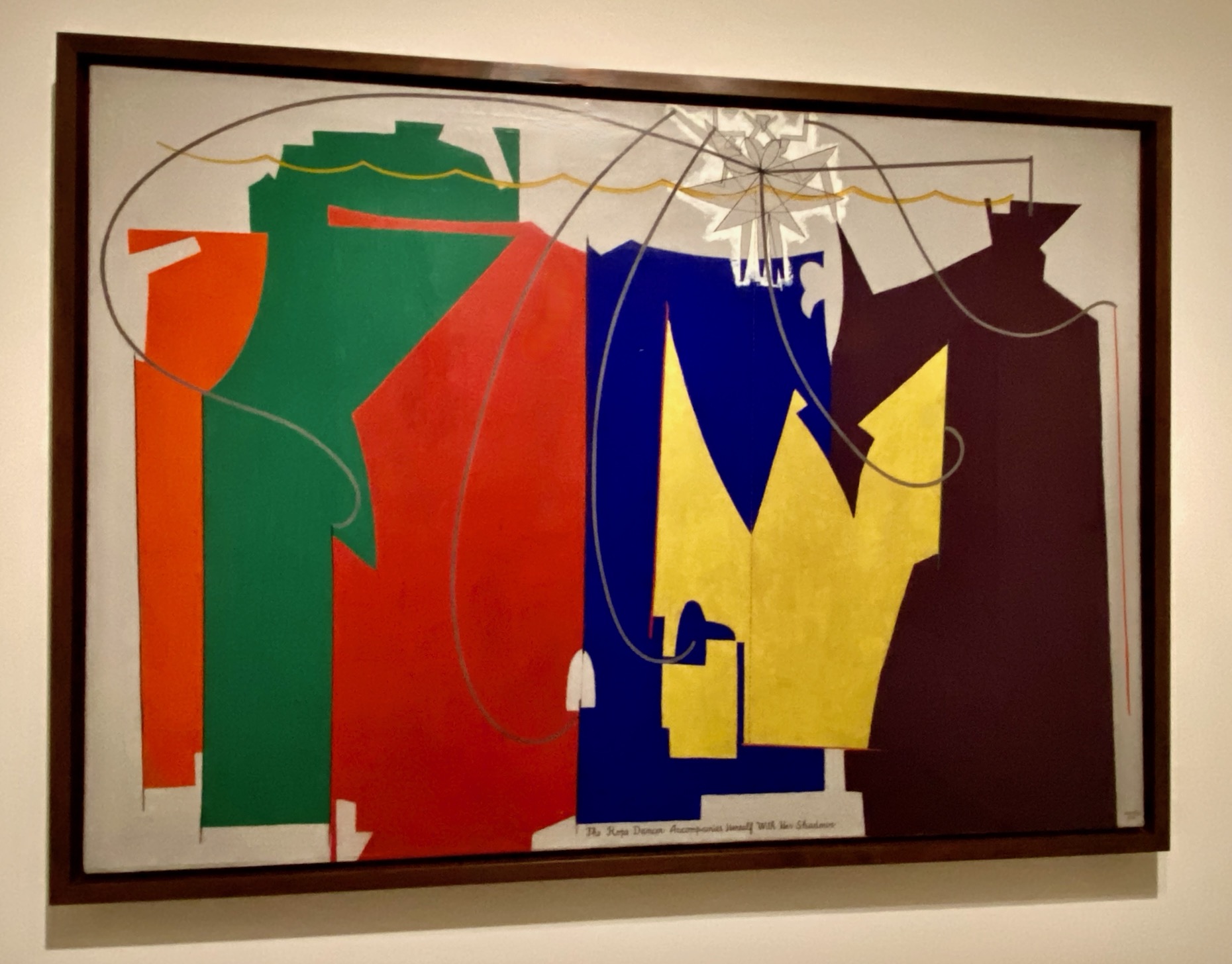
Man Ray’s 1916 oil painting The Rope Dancer Accompanies Herself with Her Shadows planned with cut paper. Courtesy: MoMA

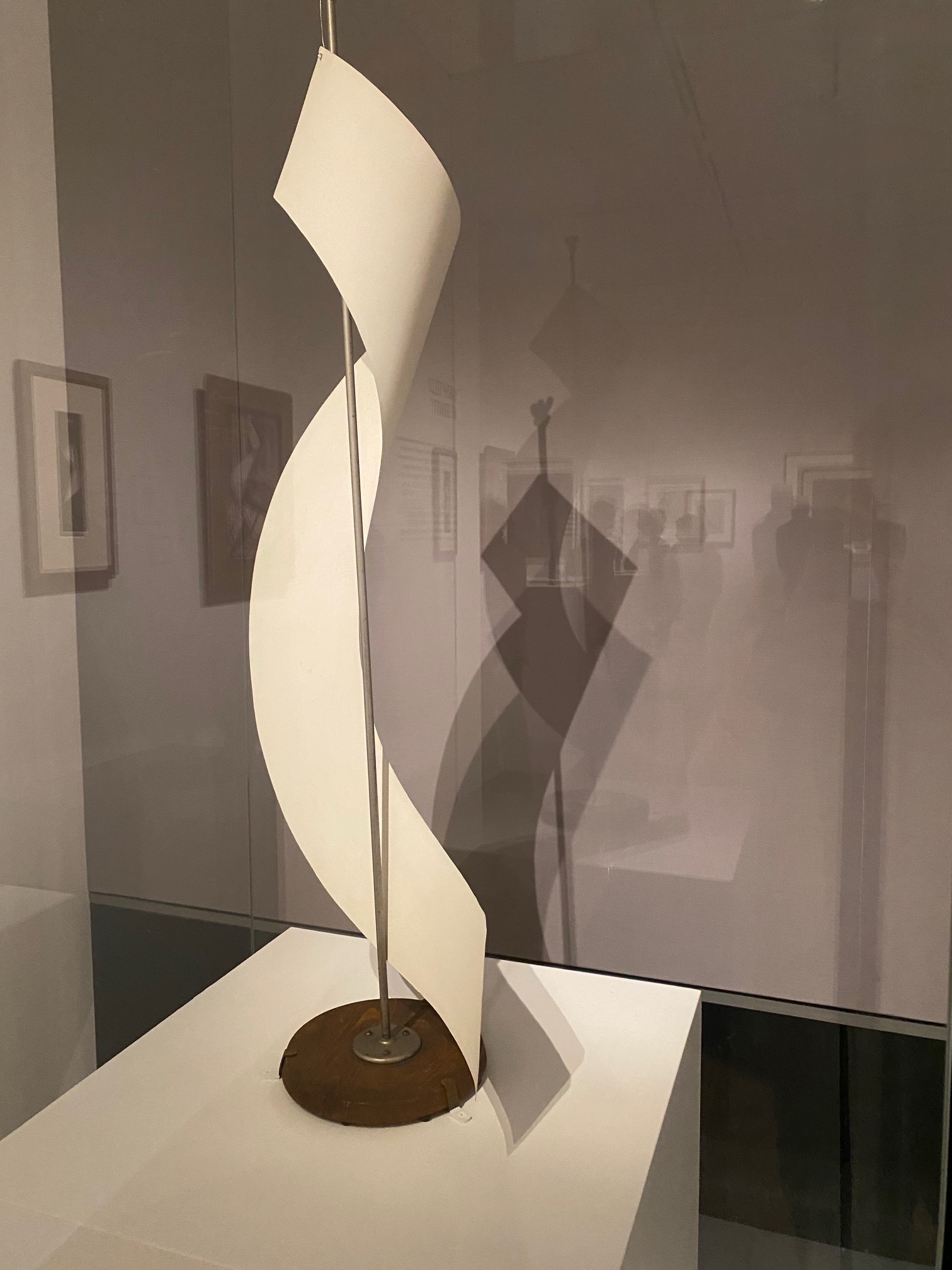
His sculptures were made in true anarchist-Dada fashion – from junk found on the street or in his apartment-building trash can. In one gallery, a precarious grouping of dramatically lit wooden hangars is installed overhead like a chandelier. The cast shadows look pretty good, too.  His spiraling Lampshade, a sensuously curved metal sculpture is nearby, alongside paintings and avant-garde portraits where he repurposed the great shape.
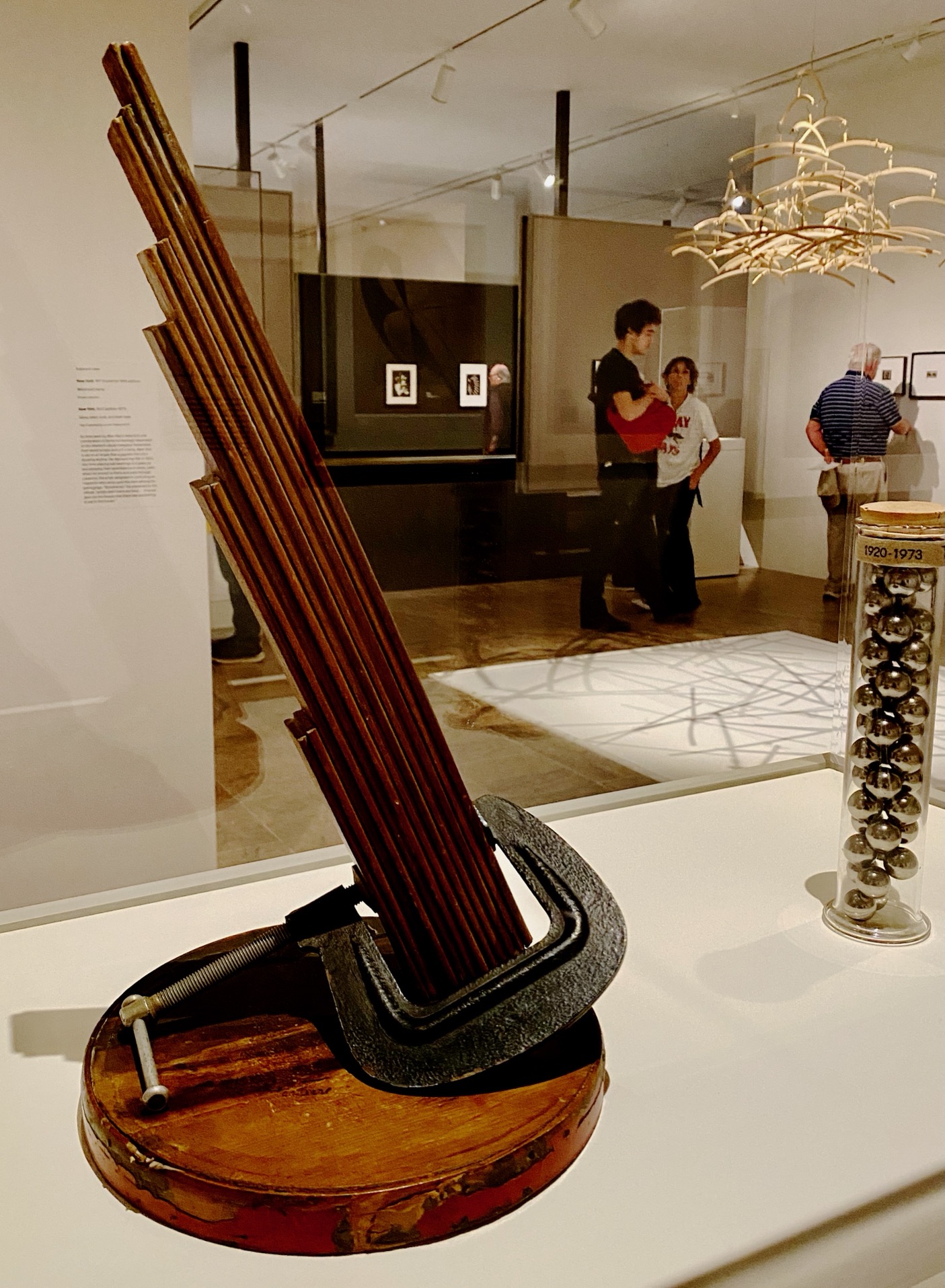
Man Ray’s 1917 wood and clamp sculpture New York like a tilted skyscraper; at right, 1920 sculpture New York – a mysterious stack of ball bearings in a glass container. Courtesy: private collection; Tate.
Man Ray’s 1921 Lampshade – a dynamic painted tin and metal sculpture; inspired by a paper lampshade found in the trash a year earlier. Courtesy: Yale University Art Gallery.

He even made game boards and chess sets to symbolize his philosophy about the best way to make art – spur-of-the-moment imagination, abstract planning, clear intention, and an element of surprise.
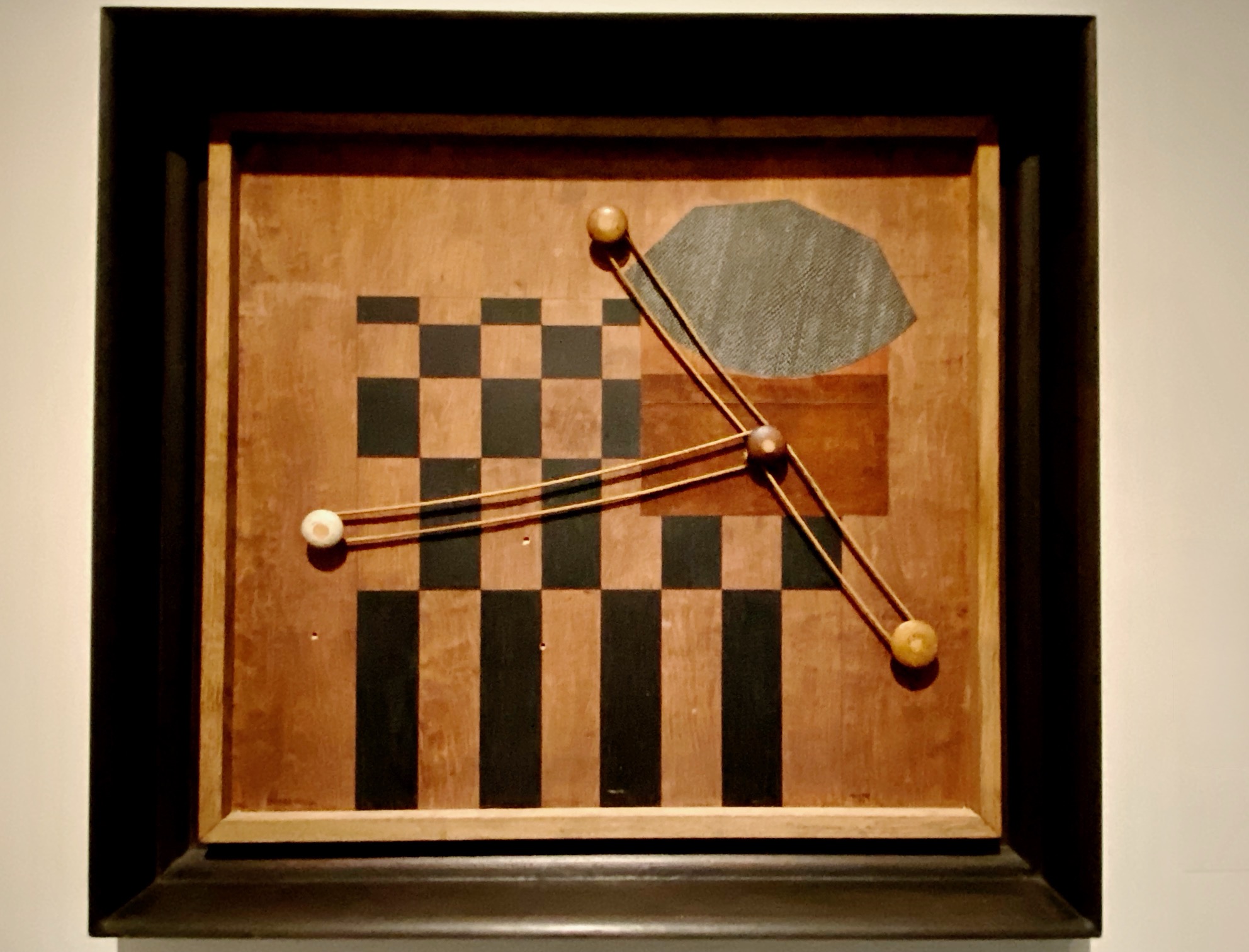
The philosophy of the chessboard: Man Ray’s 1917 Boardwalk – an assemblage of oil, furniture knobs, and yarn on wood. Courtesy: Staatsgalerie Stuttgart.

For Man Ray’s fine-art photographs, he preferred using inanimate, everyday objects to humans. And as he progressed as an artist, he didn’t use a camera.  In 1917, he started making glass-plate prints (cliché-verre) with sinuous, patterned line drawings. Soon, he was innovating with Aerographs – abstract pencil-and-airbrush drawings inspired by new technology (“drawing in air”).
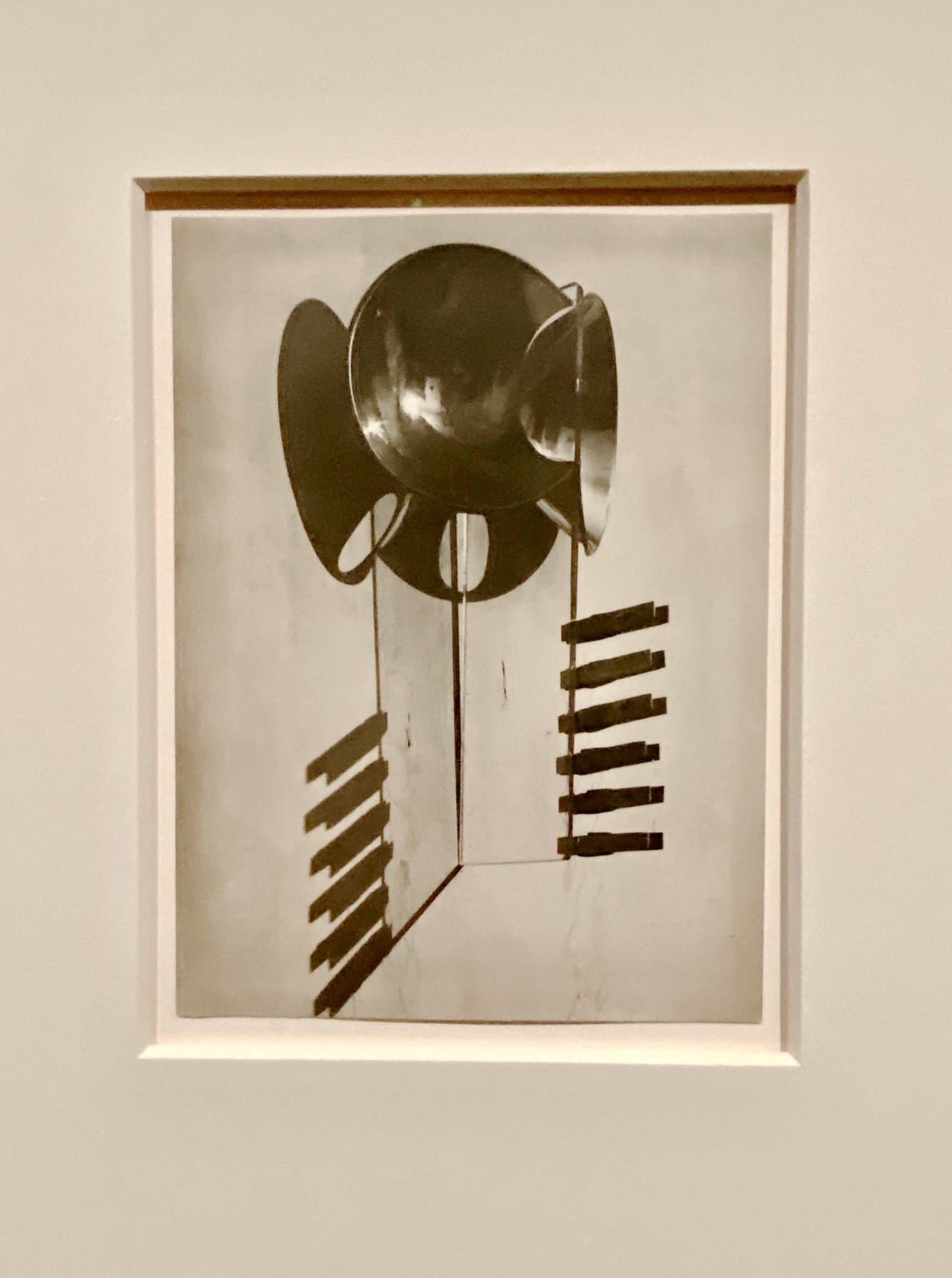
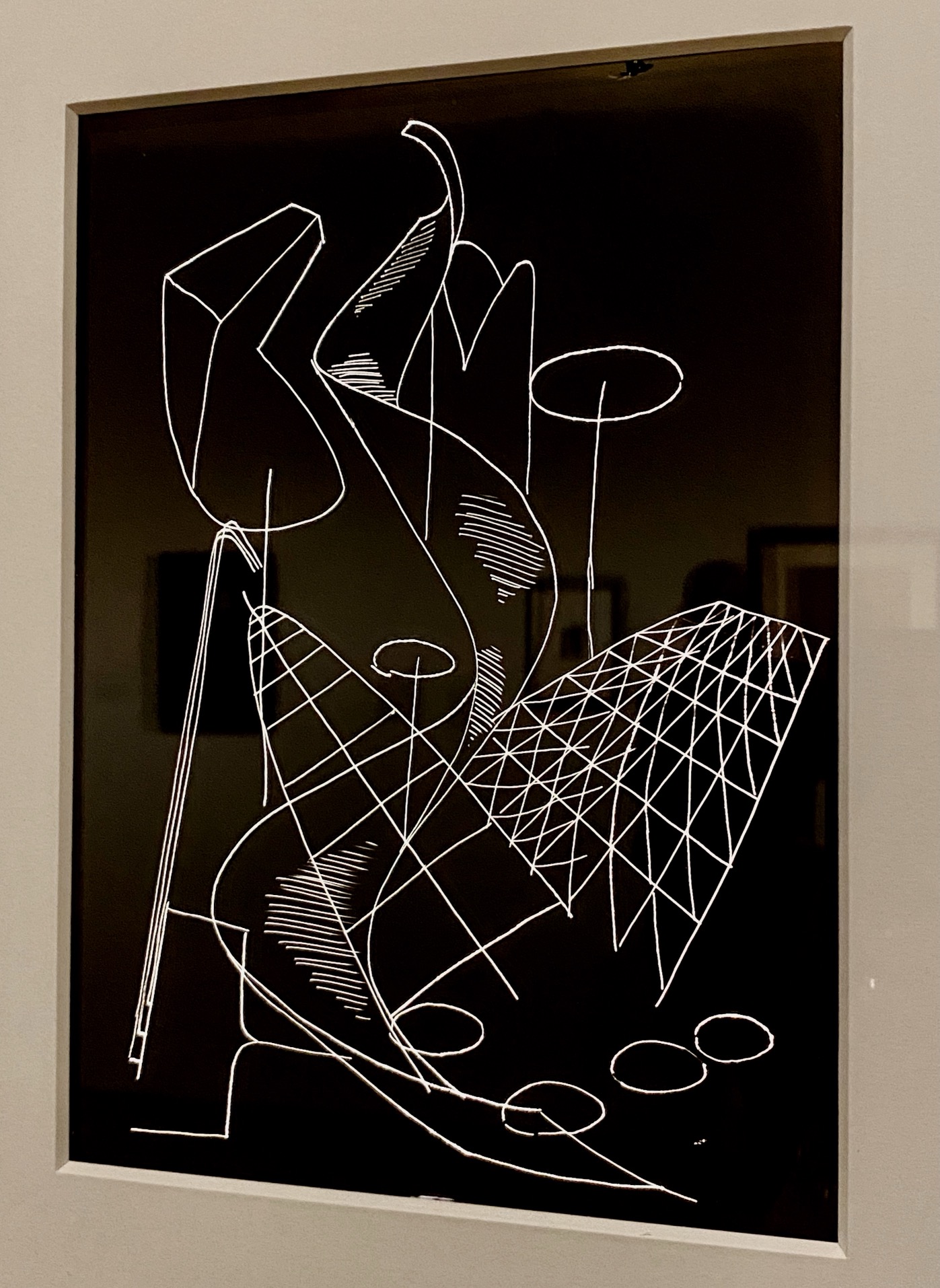
Man Ray’s 1918-1920 gelatin silver print “Integration of Shadows” – an assemblage of clothespins, glass, and reflectors; printed after 1935. Courtesy: private collection.
Before the rayograph: Man Ray’s 1917 untitled glass-plate negative (cliché-verre). Courtesy: Centre Pompidou, Paris

Man Ray primarily spent his time in Paris during the 1920s. Once he began making rayographs in his studio, he was content playing with unusual juxtapositions of everyday objects, studio lights, and various types of photographic exposures. It’s reported that in 1922, he created over 100 rayographs and abandoned painting altogether. (But he took it up again the next year!)

The curators make a point of juxtaposing several rarely-seen paintings with specific rayograms from the same period to make a point – the artist might have returned to experimental paintings as a compliment to some of the shapes and feelings he was exploring through photography.
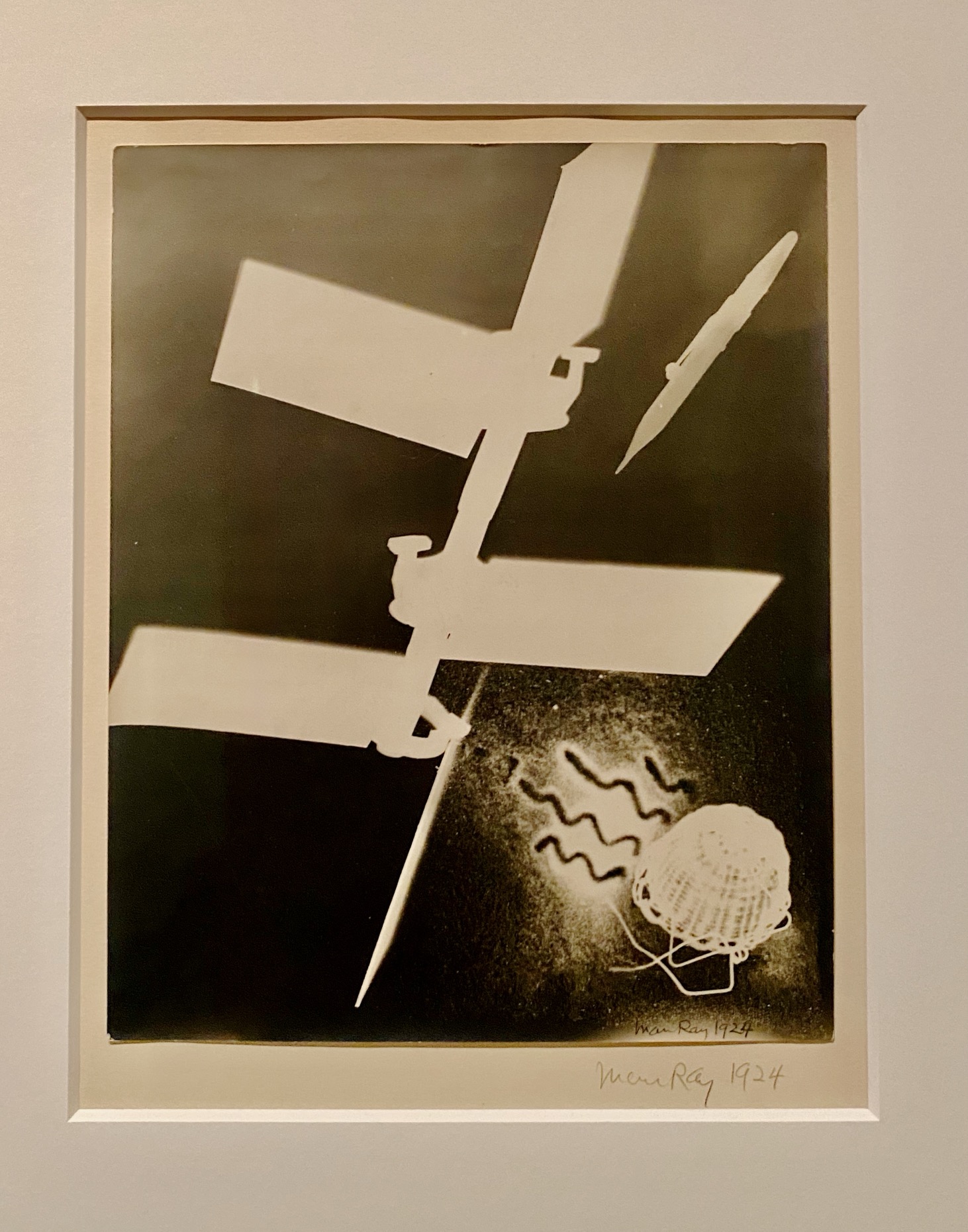
Man Ray’s 1924 gelatin silver print “Rayograph.”  Courtesy: Whitney Museum of American Art.
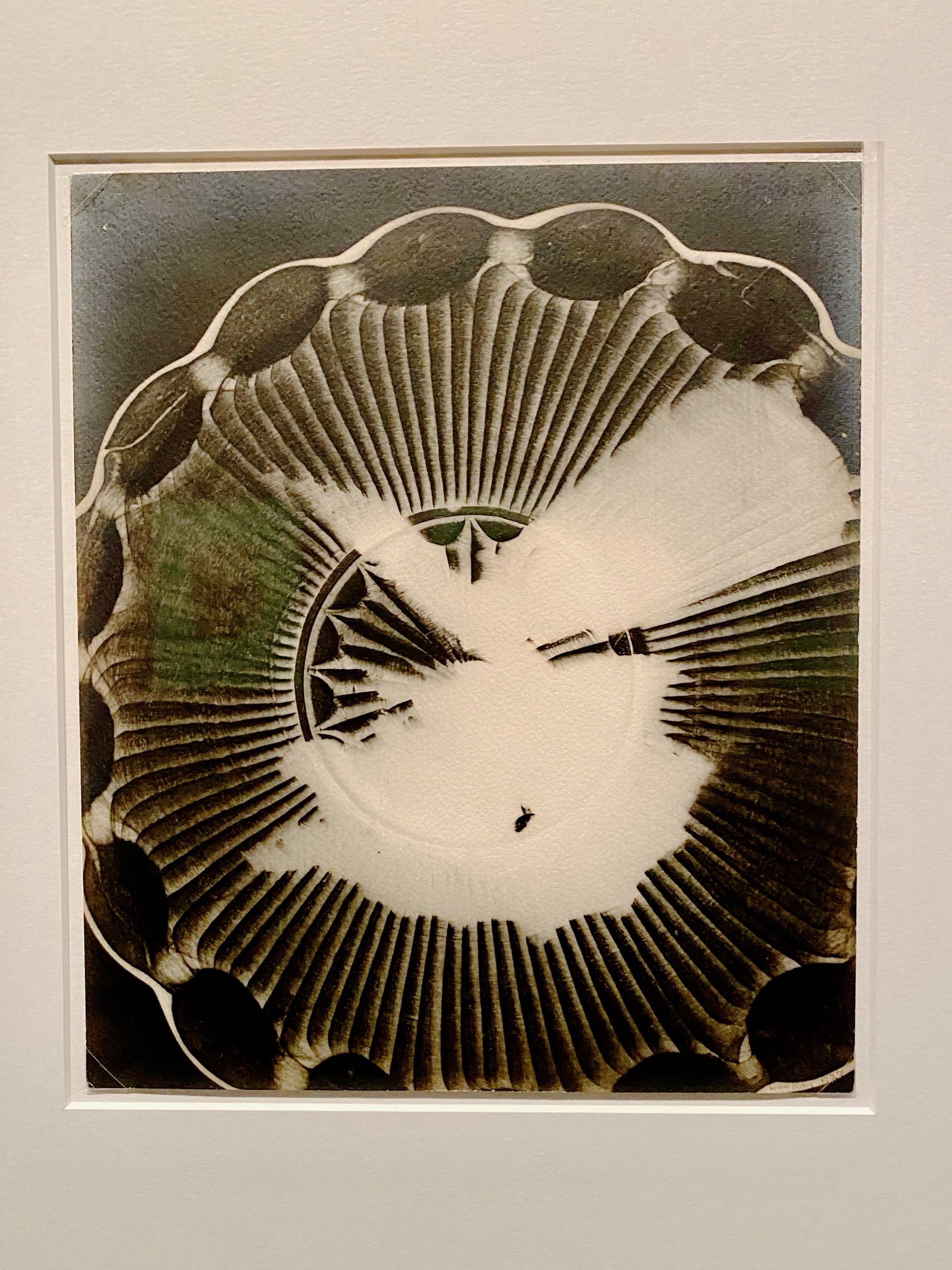
Man Ray’s 1927 gelatin silver print Rayograph – an experimental exploration of printing his images on textured paper.  Courtesy: private collection.

His unusual, dream-like images were eagerly applauded by the inner circle of European poets and artists who would soon be the official founders of Surrealism. They were intrigued by dreams, psychoanalysis, inner worlds, and startling juxtapositions. In fact, the title of the Met’s show comes a phrase written by Man Ray’s fan, poet Tristan Tzara – “when objects dream” refers to Man Ray’s mesmerizing work.

Man Ray’s ability to make magic with the camera – distorted images, adding surprising symbols, and creating tableaux of otherworldly floating objects – only added to the  enthusiasm for his work.
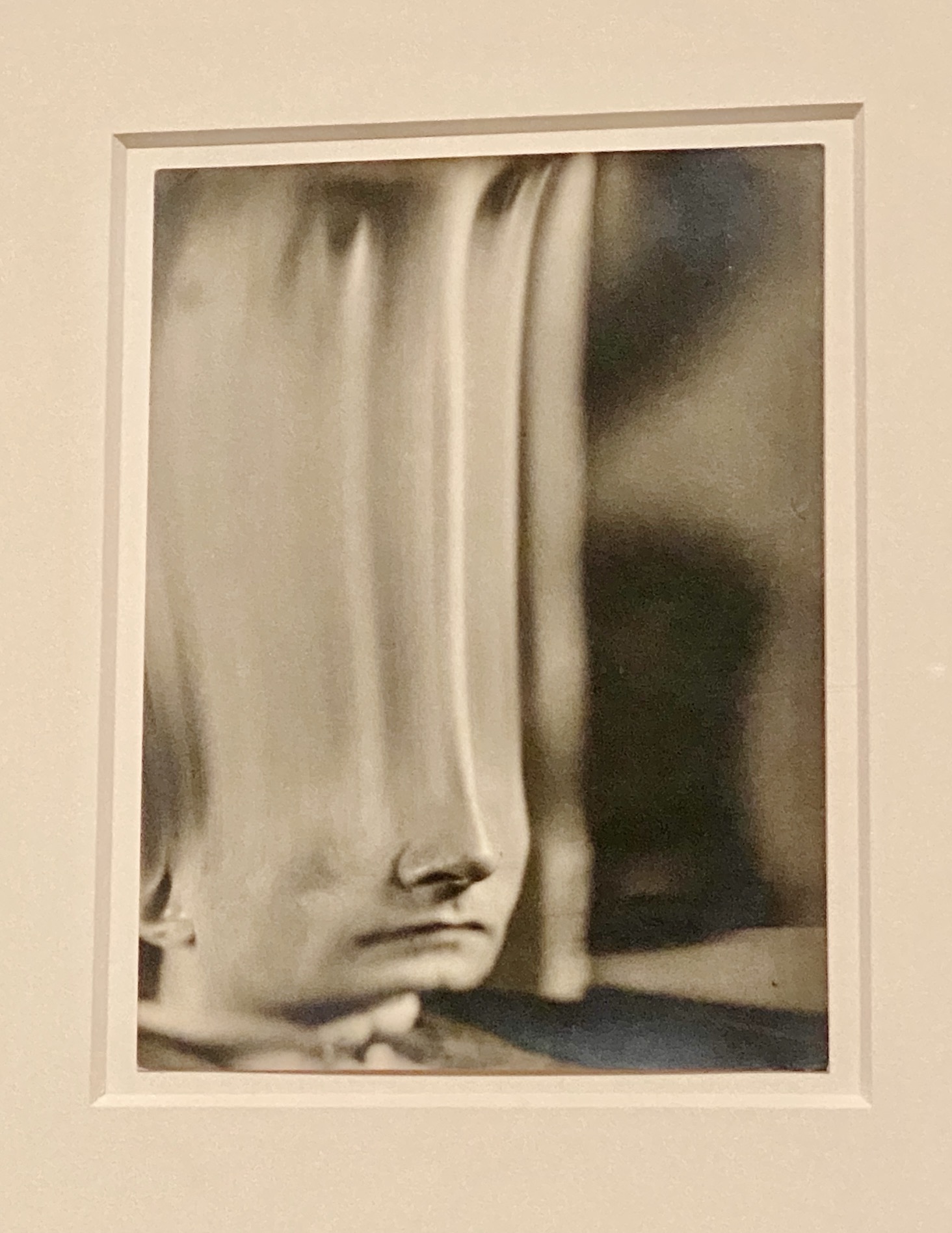
Man Ray’s 1925-1928 gelatin silver print Marcel Duchamp. Courtesy: private collection.
Man Ray’s 1924 gelatin silver print Le Violon d’Ingres featuring performer Kiki de Montparnasse – published in the proto-Surrealist journal Littérature.

The exhibition concludes with Man Ray’s beautiful solarized prints (a technique co-invented with model/photographer Lee Miller), symbolic paintings, and photographs that have become icons of Surrealism.

Hear the curators talk about the exhibition as they walk through this beautiful, inspiring show:

Take a look through all of the artwork in the exhibition here on the Met’s website. For more on Man Ray’s life and collaborations, listen to a longer Met telecast about his 1920s work with Lee Miller, Kiki de Montparnasse, and Berenice Abbott here.
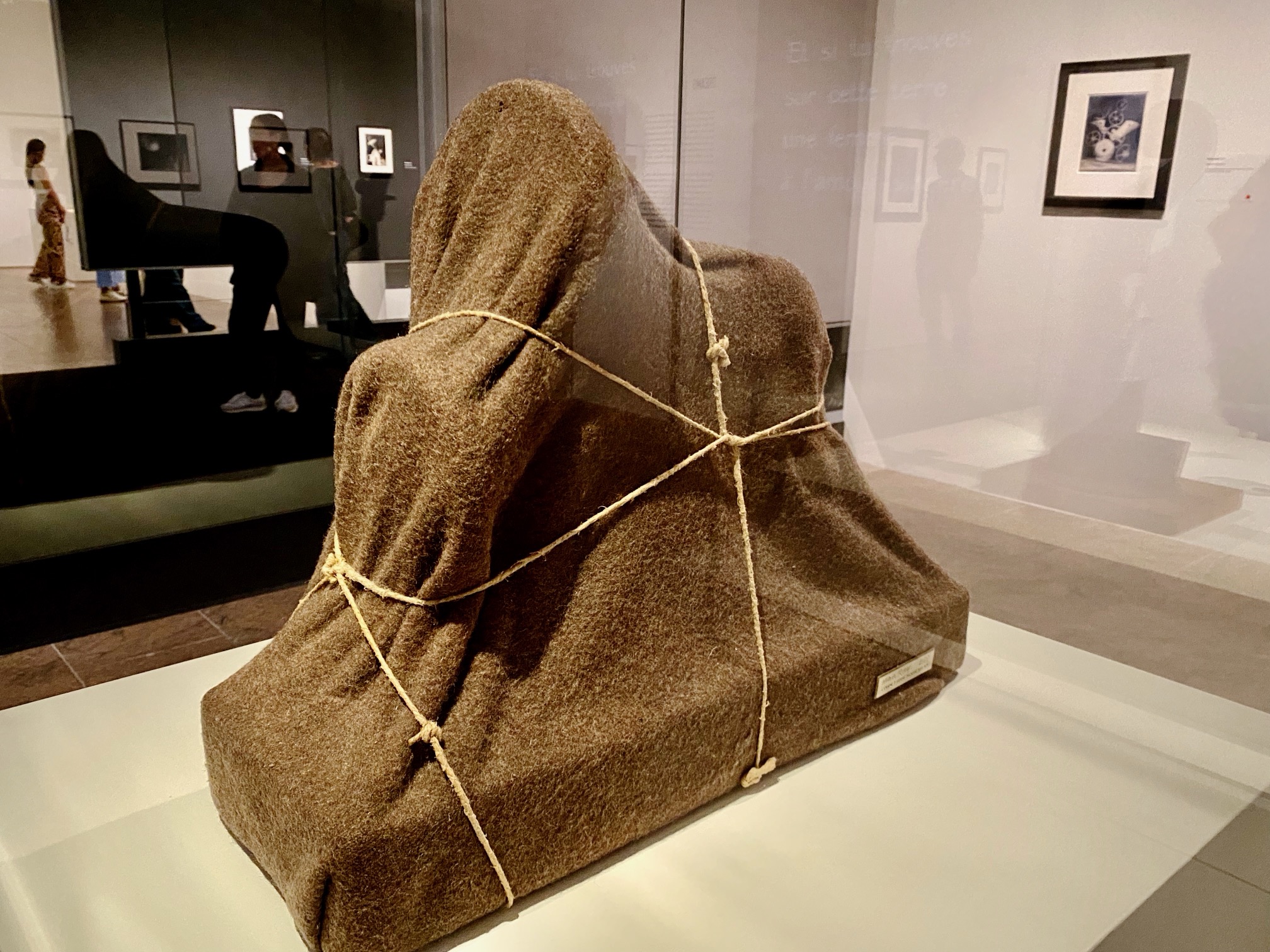
Man Ray’s 1920 sculpture L’enigme d’Isidore Ducasse (The Enigma of Isidore Ducasse) a mysterious wood, iron, wool, and rope assemblage to stir the subconscious (1971 edition). Courtesy: private collection.

Georgia O’Keeffe’s Modern Living

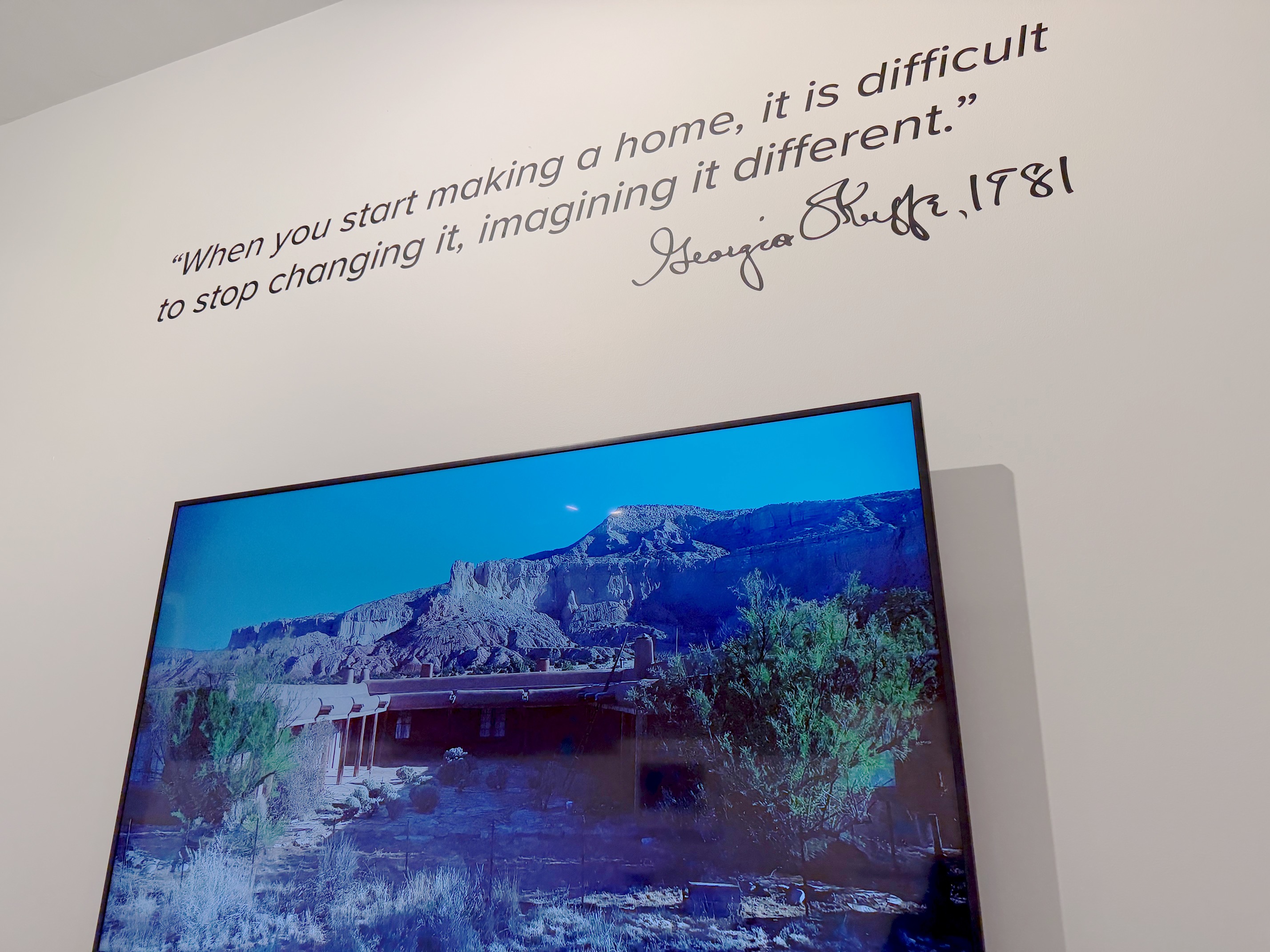
How do you turn a 200-year-old adobe home into a temple of mid-century modern design? See how Georgia O’Keeffe did it in Artful Living: O’Keeffe and Modern Design, an exhibition available on-line and at the GOK Museum’s Welcome Center near her home and studio in Abiquiu, New Mexico through January 31, 2026.

When Georgia bought her second New Mexico home in 1945, it was a wreck. All the better, for her to envision the possibilities of her dream house. Why was she obsessed with this? It had a home garden and irrigation, a placita in the center of the house with a working well, the iconic black door in the red wall, and an incredible view of the stunning landscape (and Pedernal).

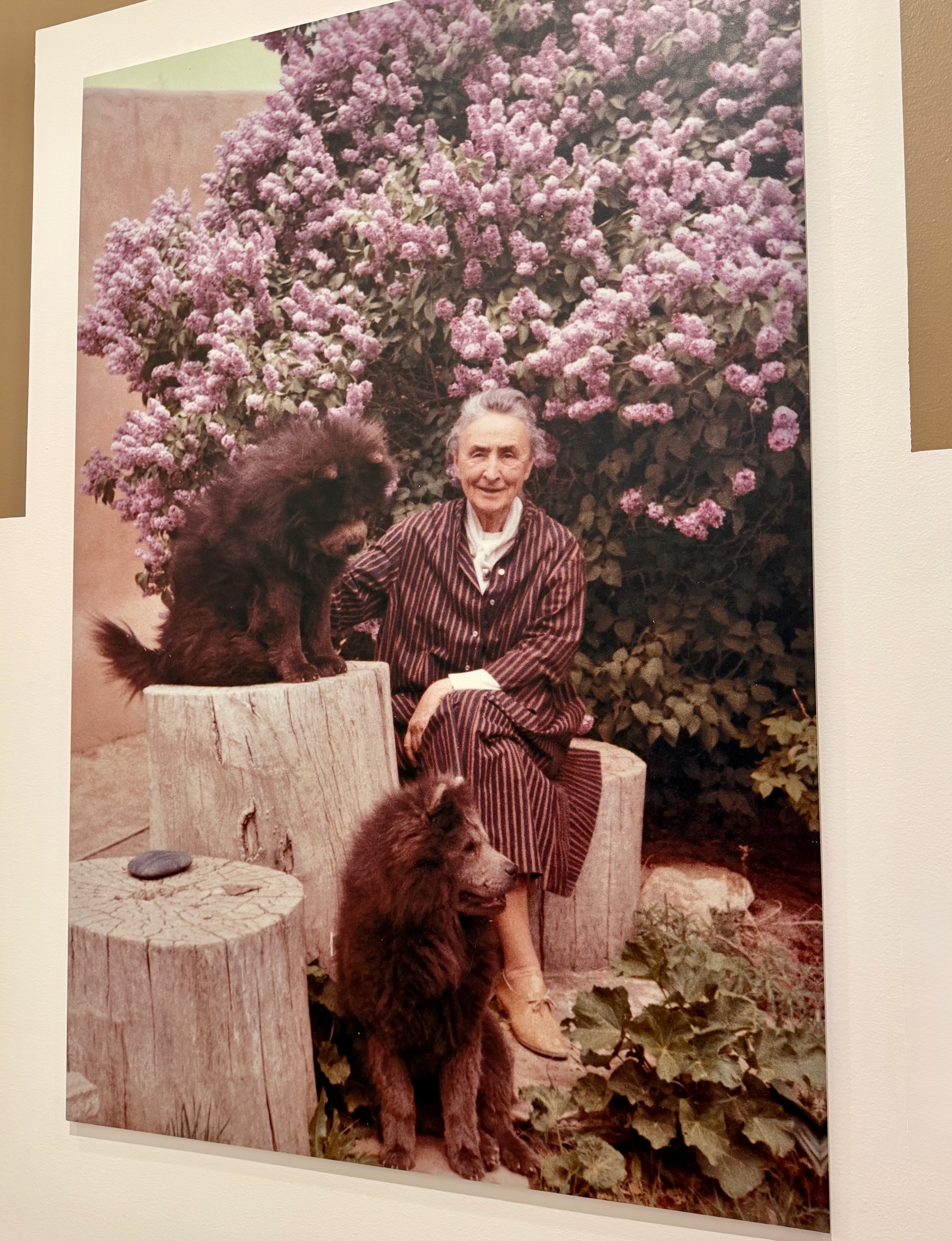
Todd Webb’s 1962 photo Georgia O’Keeffe and Chows in Abiquiú Garden with Georgia in a striped Marimekko dress.

By collaborating for the next four years with her friend and project manager Maria Chabot, the property was transformed into a showcase for everything modern – furniture, fabrics, lamps, tableware, and (eventually) architectural innovations like skylights, gigantic picture windows, and open-plan living.  To keep her creative sparks going, Georgia never stopped rearranging, adding, and switching things up.

The exhibition space is small, but provides a tight curated selection of Georgia’s things accompanied by great photos of her interiors over time.

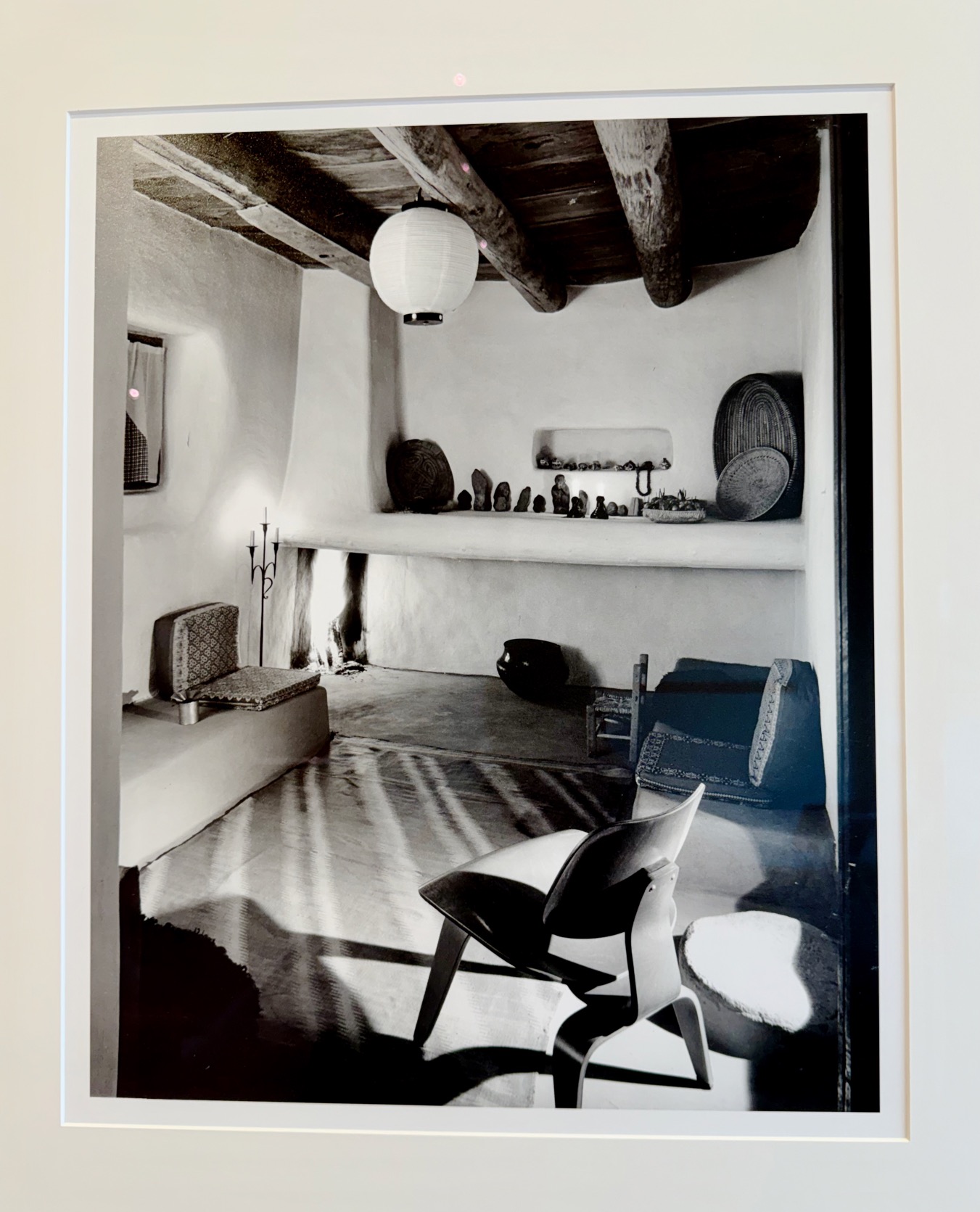
Balthazar Korab’s 1965 photo Abiquiú House, Indian Room with Noguchi lamp and Eames chair.
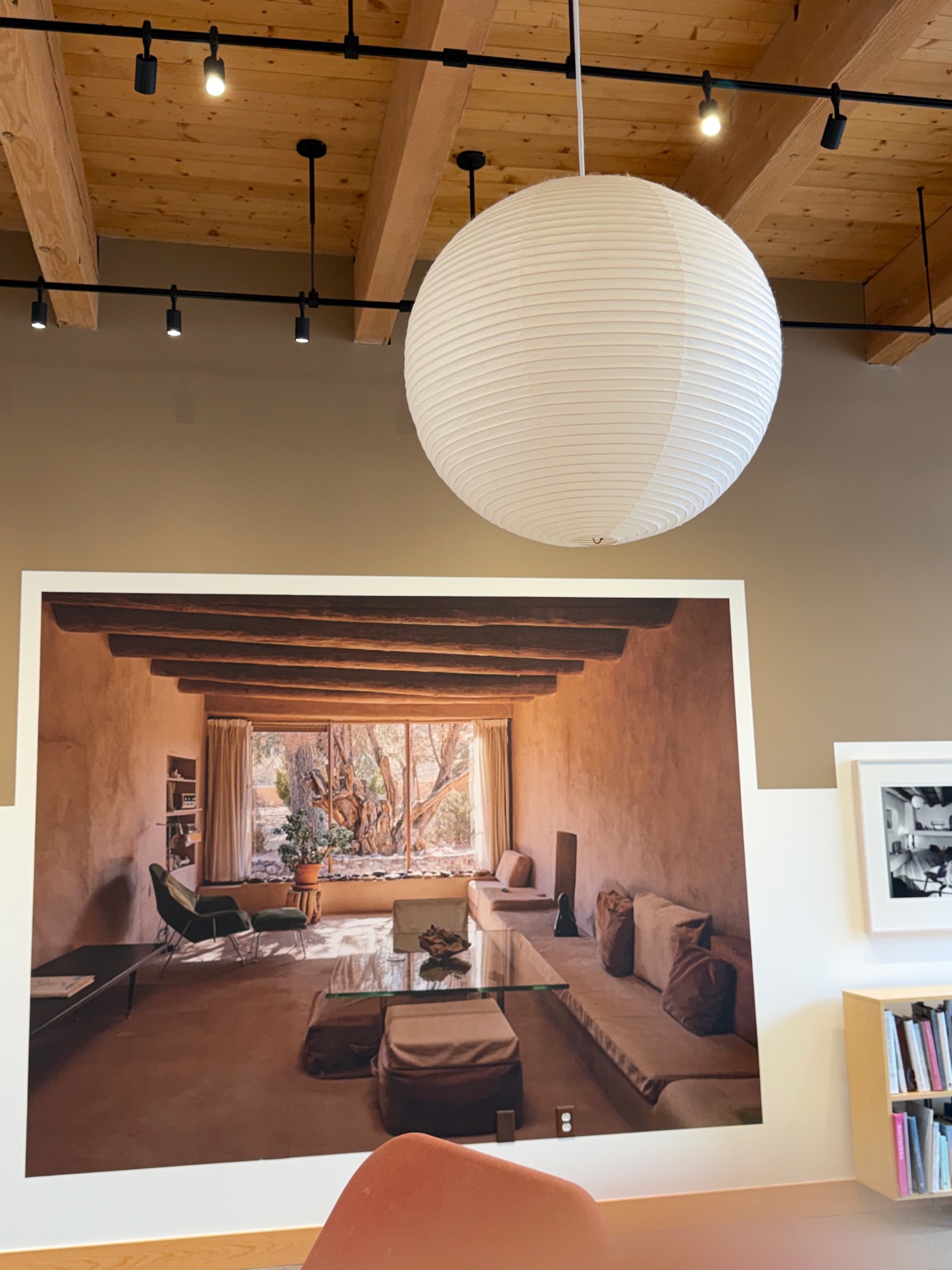
1960s Akari Lantern, a gift from sculptor and designer Isamu Noguchi with Krysta Jabczenski’s 2019 photo of her living room arranged as she left it in 1984.

The furniture is front and center, made by a who’s who of American 20th century designers.  After all, as one of the recognized greats of modern American painting, the designers were often her friends, too. Simple, clean, modern lines – that’s what Georgia liked. But she loved design innovations, too.

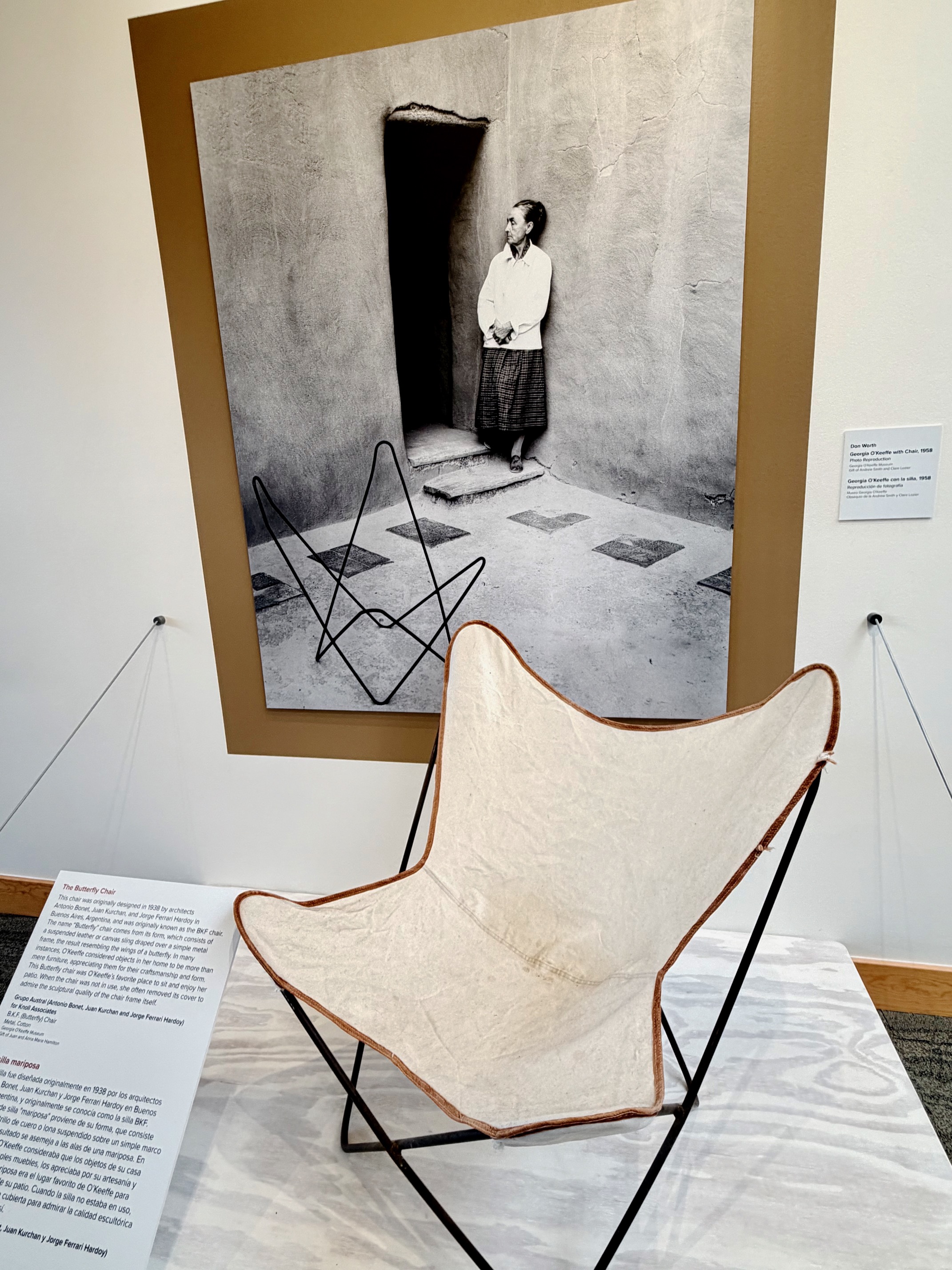
No wonder she was captivated by the innovative BFK (“Butterfly”) chair designed by a trio of Argentine architects in 1938. She ordered one from Knoll, used it on her patio, and sometimes took the cover off just to admire the frame. And she bought several LCW chairs by her friends, Charles and Ray Eames – the molded-plywood marvel that defined a design decade.

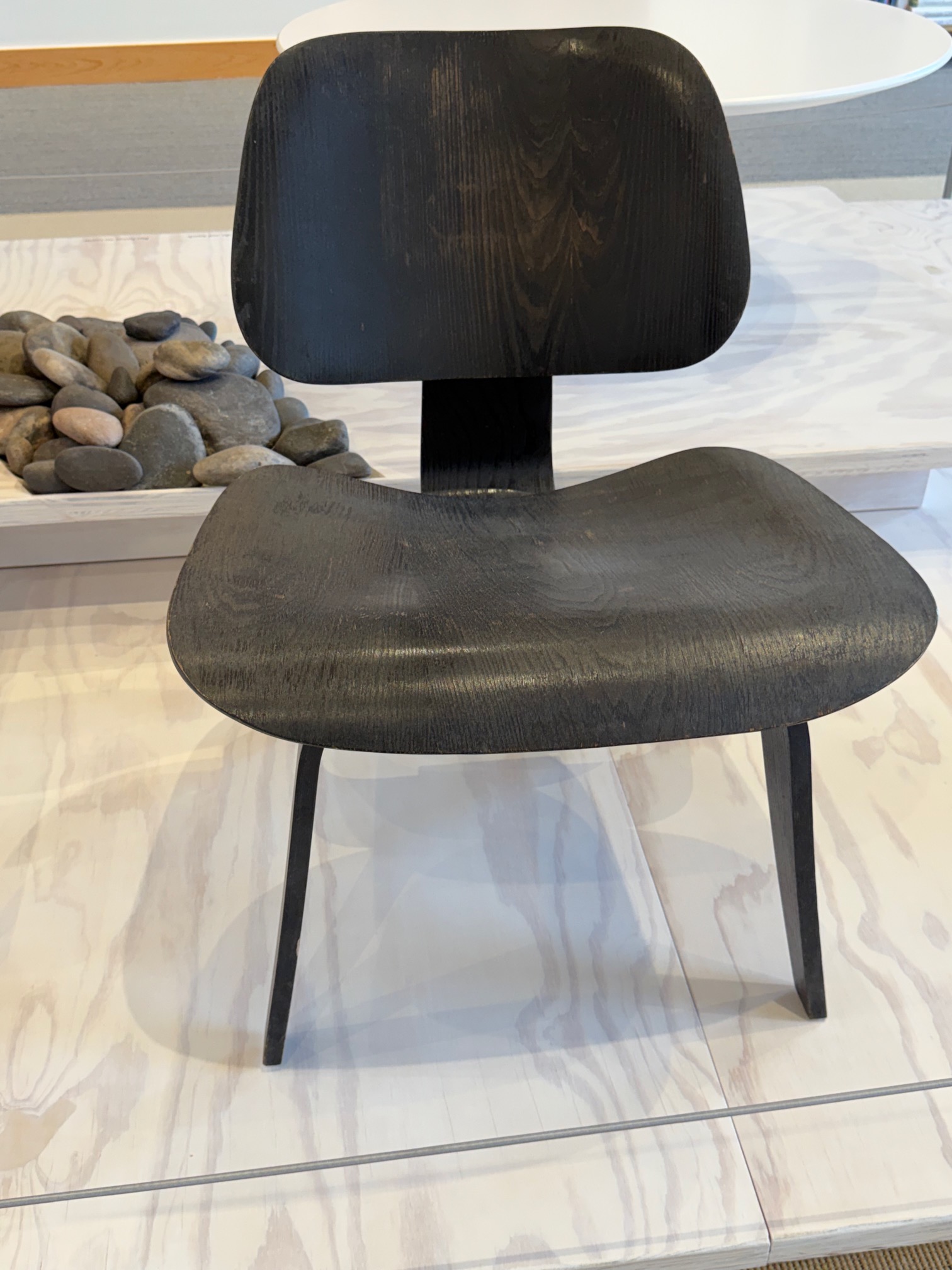
1940s LCW Plywood Lounge Side Chair designed by Charles and Ray Eames for Herman Miller – the first chair in the Eames’ molded plywood series.
Don Worth’s 1958 photo Georgia O’Keeffe with Chair with 1938 metal and cotton Butterfly Chair for Knoll Associates.

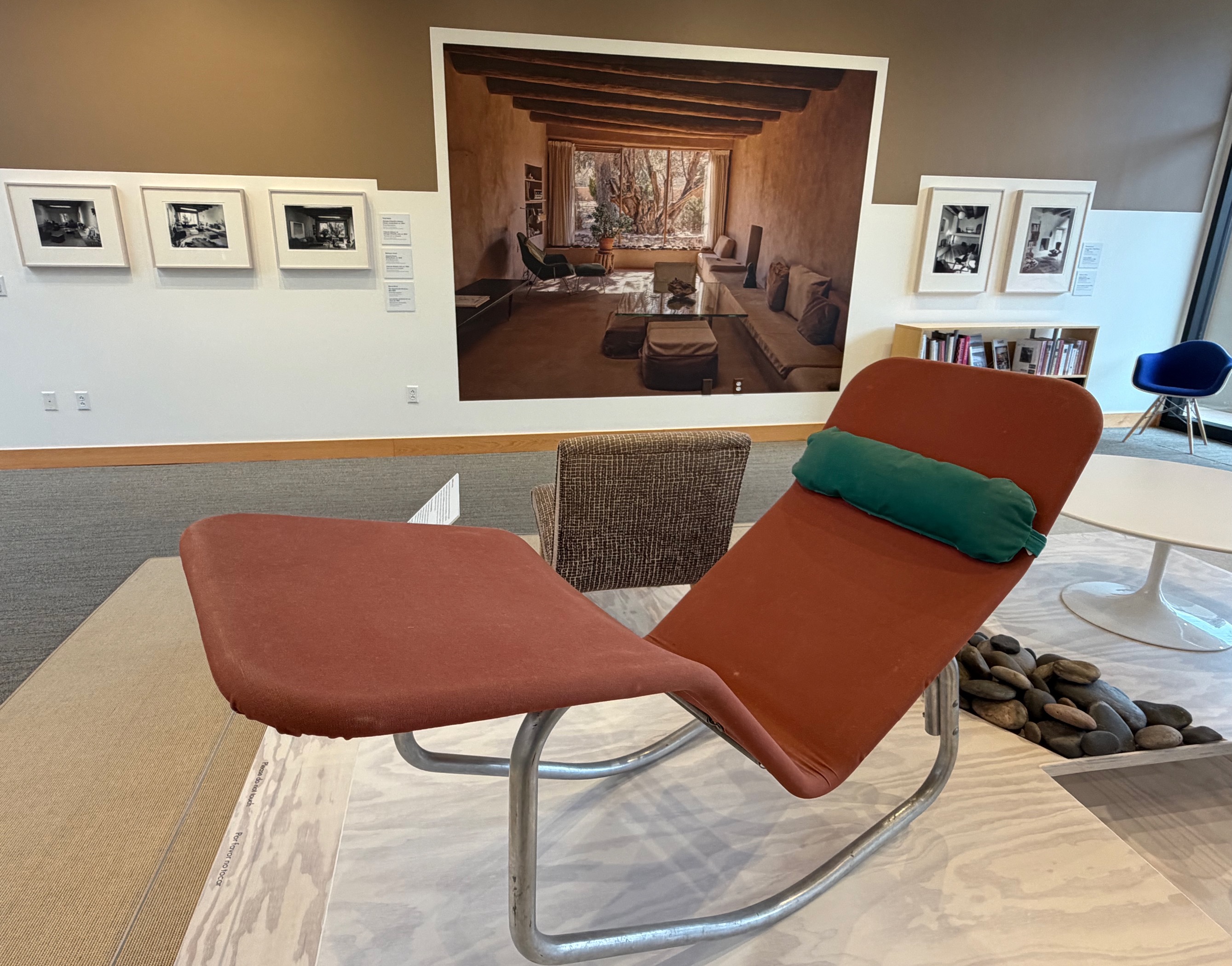
But perhaps her most-used piece was the versatile BARWA Lounger – perfect for laying back and listening to classical music or looking at the stars during a summer camping trip to the badlands. The aluminum frame made it light enough to strap to the top of her car.

1940s BARWA Lounger designed by Edgar Bartolucci and John Waldheim of BARWA Associates; Georgia relaxed here while listening to classical music.

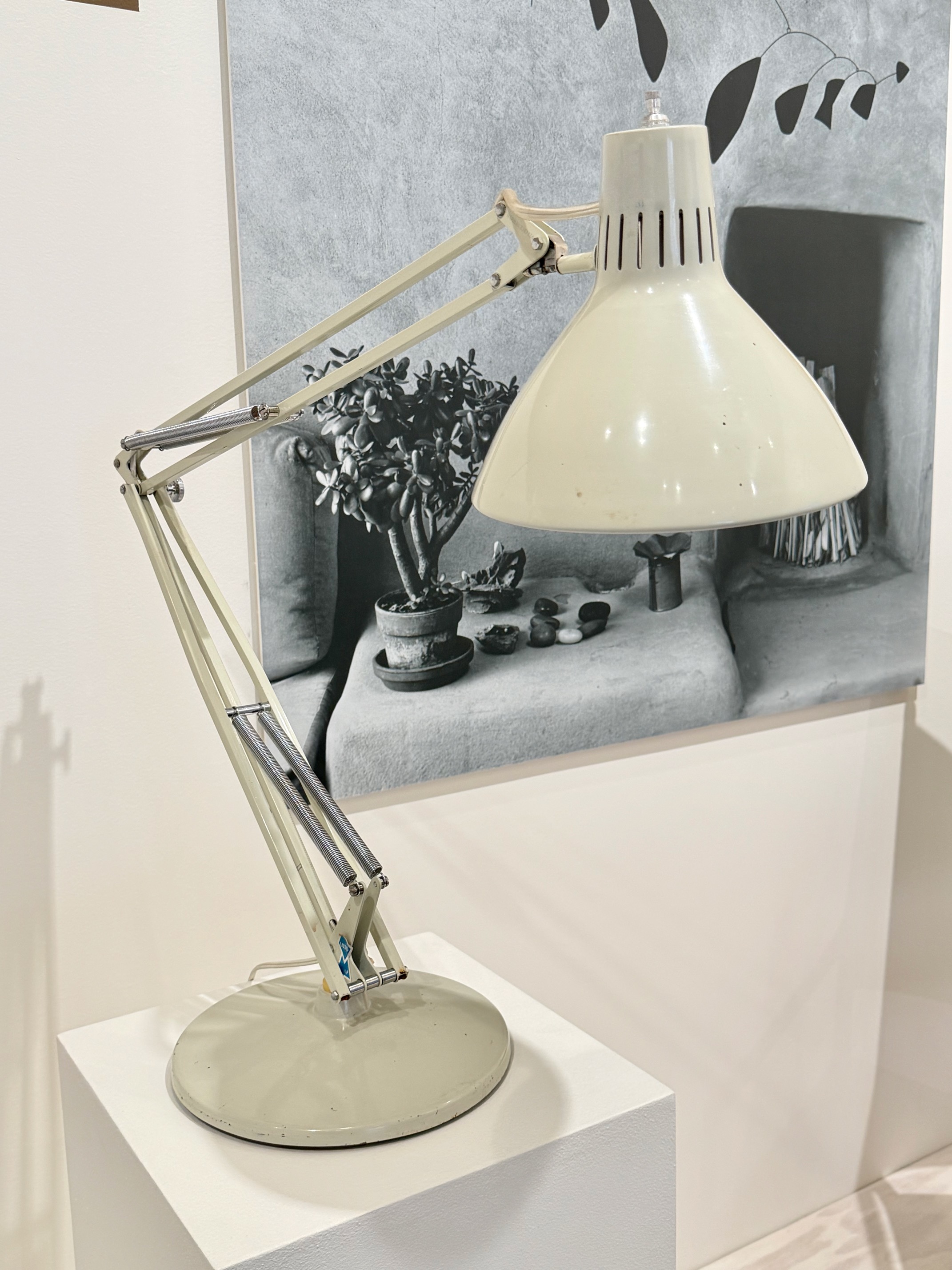
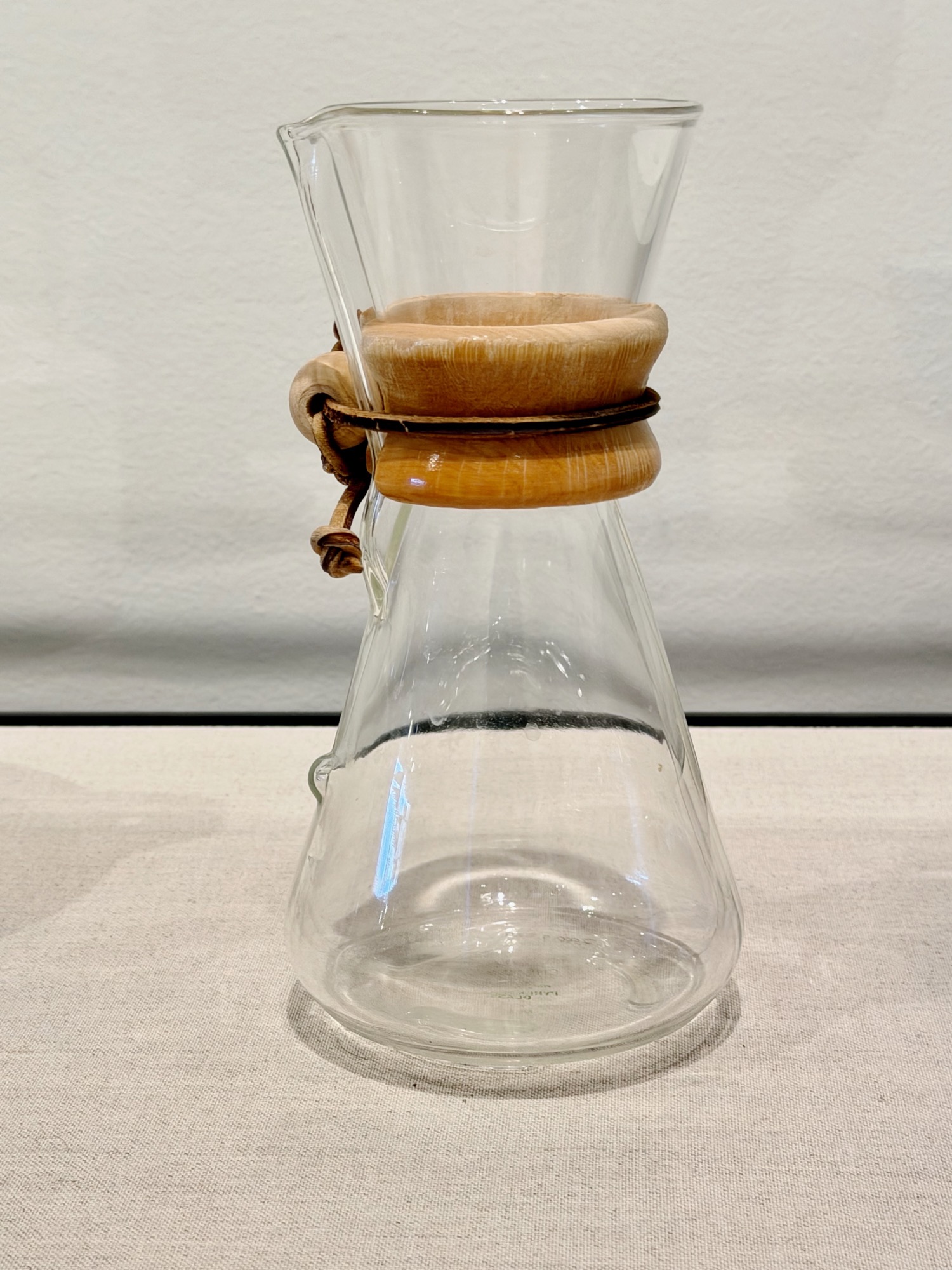
Of course, Georgia loved her rock and bone collections, but she also collected practical items for her home that epitomized mid-century design.  Why not select a Finnish design innovation that you could adjust to get the light just right on your work desk or still life? Or use a sleek, modern, see-through coffee maker to prepare your morning cup of Bustelo? Pure bliss.

Finnish design: 1960s metal Luxo Lamp designed by Jac Jacobsen.
Everyday modern design: 1950s Chemex coffee maker designed by Peter Schlumbohm for Chemex.

The curators also want us to remember that modern design principles also extended to Georgia’s dress preferences.

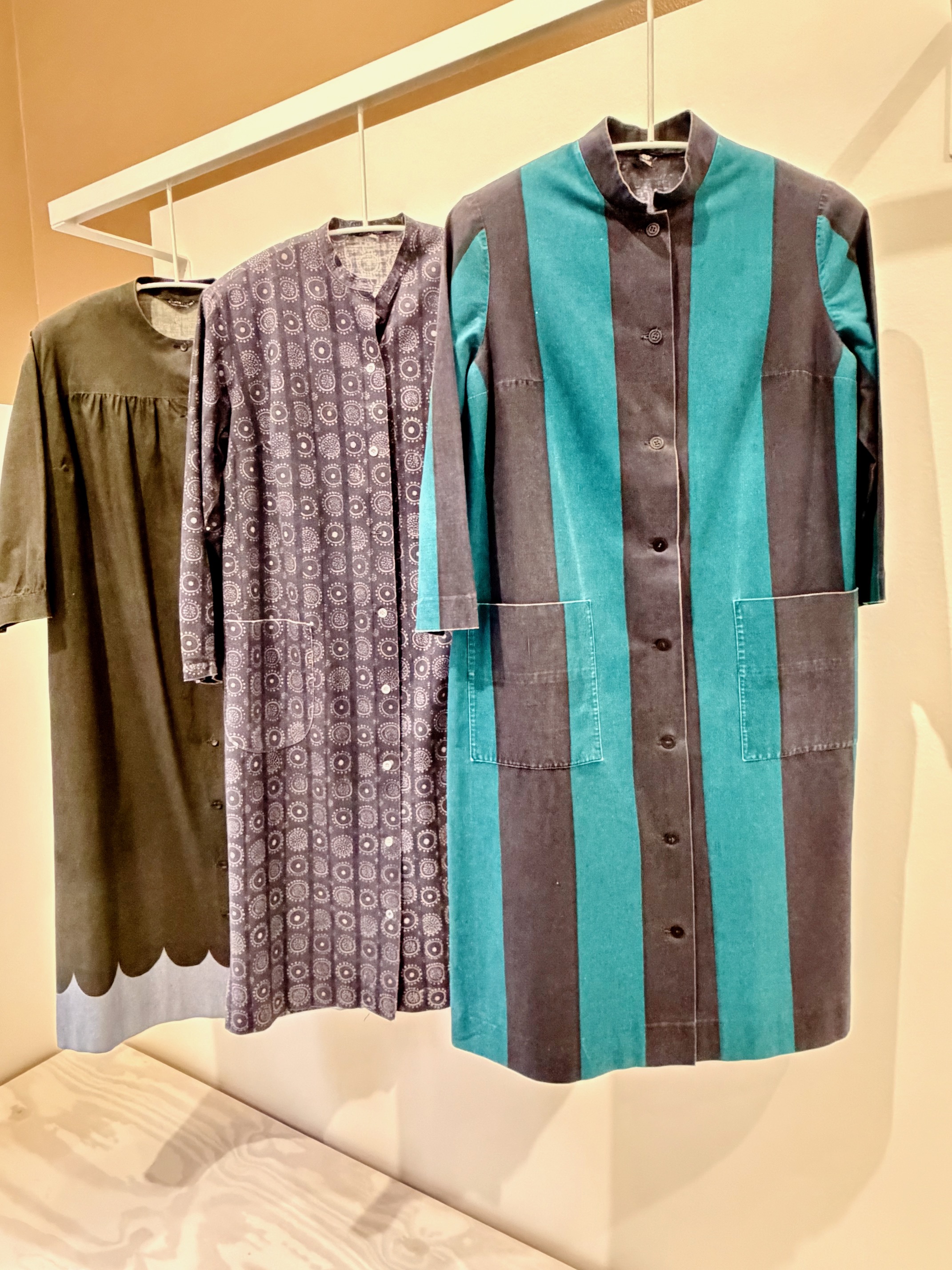
Three cool cotton dresses by Anika Ramala for Marimekko – 1963-1965 Varjo dress, 1961 Karutakkj dress, and 1963 Asumistakki dress.

When she wasn’t posing for the most famous photographers against the red rocks of New Mexico in her black hat and wrap dress, she preferred wearing loose-fitting Marimekko dresses.   A working studio artist could really move in them to prepare canvases, rehang paintings around the house, or carry around stuff in the pockets. Never mind that the dresses from the popular Finnish design house were marketed as the finishing sartorial touch for any modern Sixties interior.

Feel free to revisit our past blog post about the wildly successful traveling exhibition about Georgia’s fashions here.

See some of our favorite photos, furniture, and items in our Flickr album.

Two of her best friends and travel buddies were Alexander and Susan Girard. Georgia always welcomed the small textiles that Alexander Girard gifted her. Although she never adopted his revolutionary conversation-pit seating, she did get out the sewing notions and turn his iconic designs into small throw pillows placed lovingly (and colorfully) throughout her house. She also covered her kitchen work surfaces in Marimekko oil cloth to make it pop, too.

Visit this fantastic design exhibition on line here, and read more about each of Georgia’s mid-century modern choices.

For more, listen to Giustina Renzoni, the museum’s curator of historic properties, discuss how Georgia turned her modern sensibilities into a legendary high desert home:

And if you’re really interested in what Georgia had in her closet, the next time you’re in New Mexico, sign up for that new extra-special tour!

Video still of Georgia O’Keeffe’s Abiquiú home and her philosophy about home design

Epic Histories of Kerry James Marshall Wow London

It’s fitting that Kerry James Marshall provides a master class in history painting at the Royal Academy of Arts in London – one of the most sensational shows to inhabit those hallowed galleries off Picadilly – Kerry James Marshall: The Histories, on view through January 18, 2026.

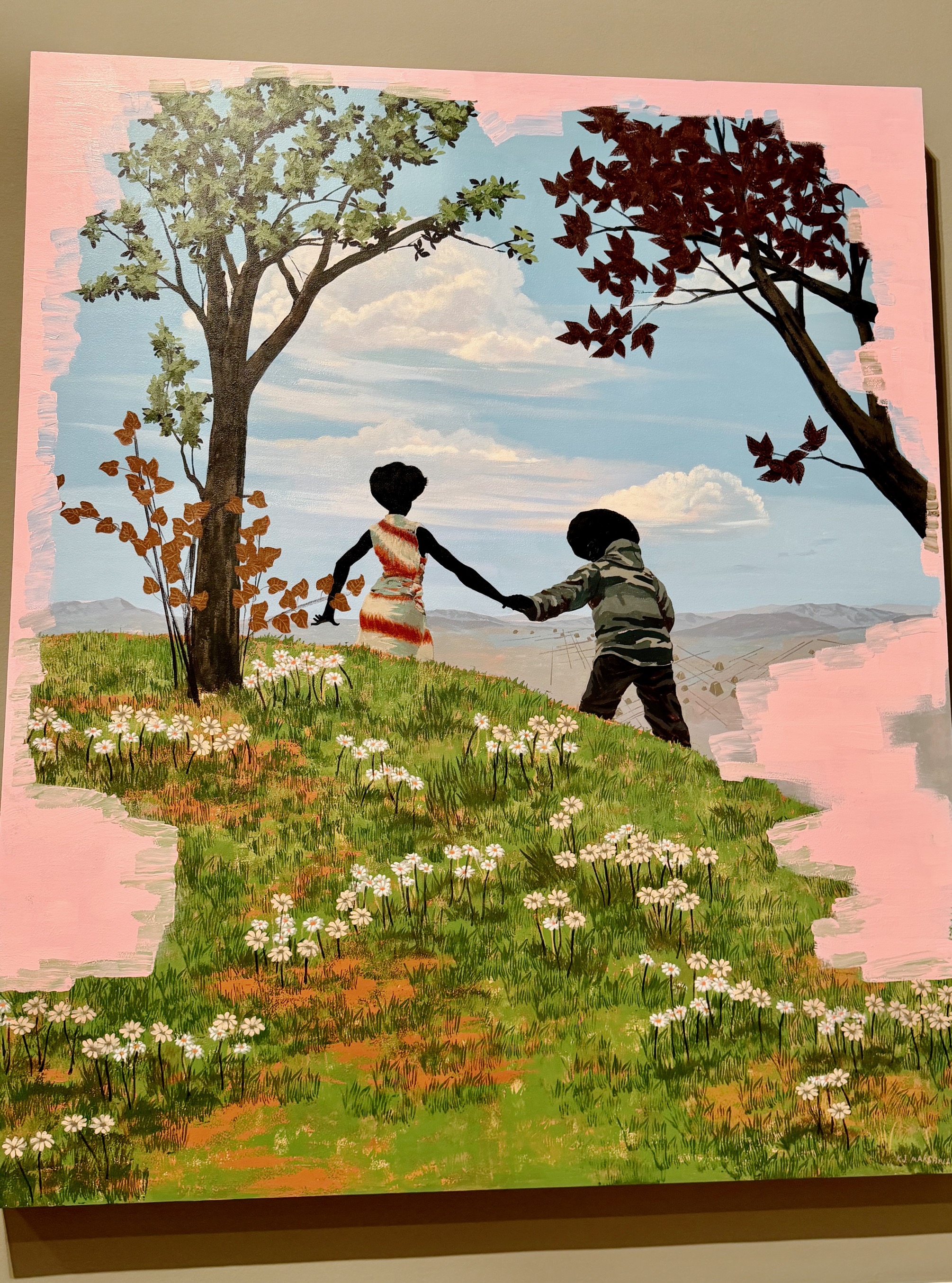
Marshall’s work fills eleven galleries of Burlington House with masterful paintings that put Black subjects back into the frame – Black citizens working in museums and art studios, delivering style in neighborhood barber and beauty shops, maintaining gardens in public housing projects, and wafting through floral fields à la Watteau and Fragonard.

Marshall’s 2008 acrylic Vignette #13 – a Rococo-inspired scene with a couple walkng through a meadow. Courtesy: private collection.

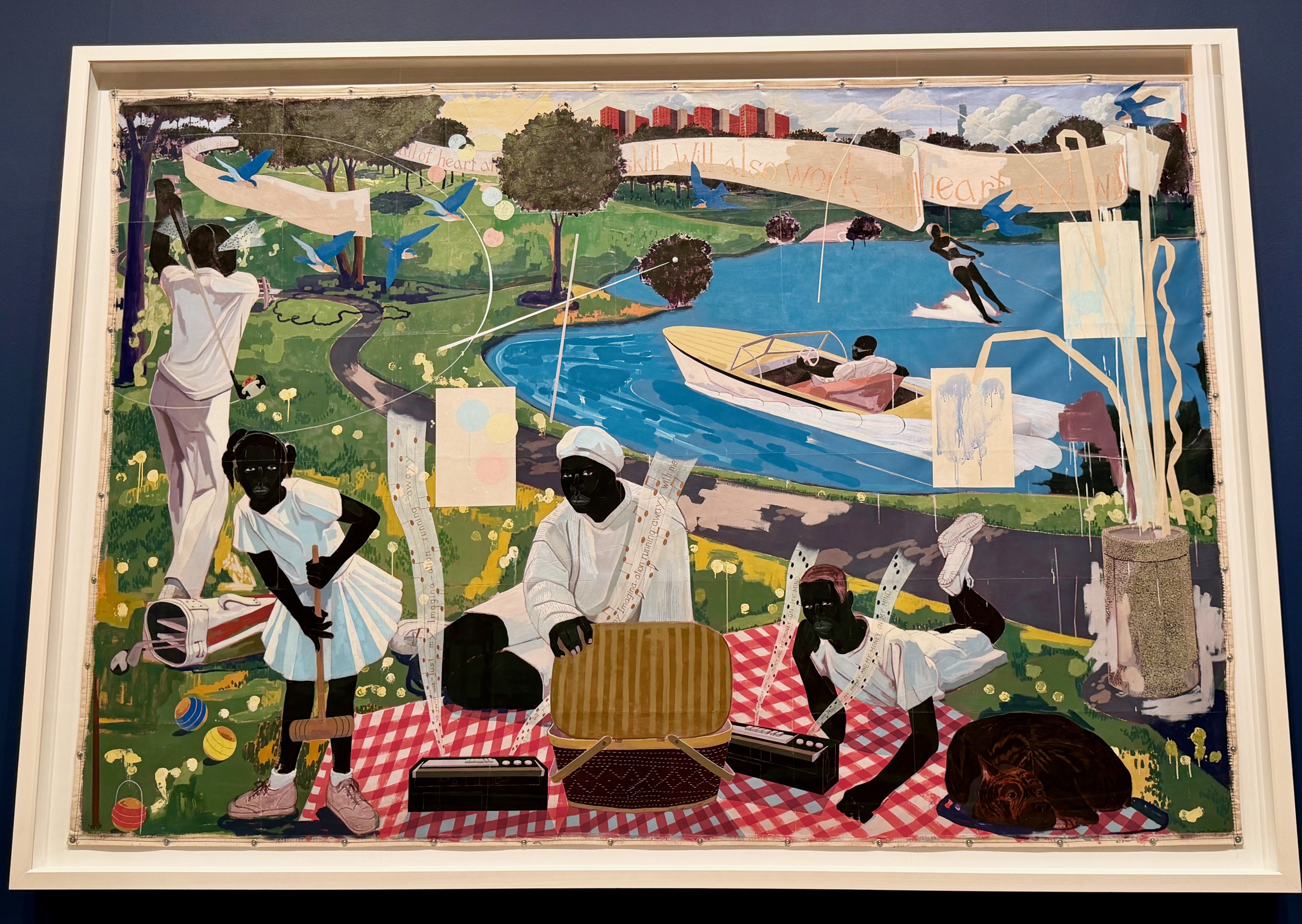
Most of these scenes are presented on a large scale and jam-packed with art-historical, literary, and world-history references. In The Painting of Modern Life-themed gallery, his grand Past Times certainly evokes Parisian leisure-class epics by Manet and the Post-Impressionists. Marshall’s twist is to depict a wholesome, all-white-clad Black family enjoying its picnic lunch lakeside as music and lyrics by The Temptations and Snoop Dogg (literally) drift up from the radios to ask if this is “just my imagination.”

Referencing Manet and Seurat, Marshall’s 1997 acrylic and collage Past Times, where a middle-class family enjoys a picnic and music in a lakeside park. Courtesy: Art Institute of Chicago.

Take a quick look at the Academy’s exhibition preview video and hear Marshall talk about his inspirations and approach:

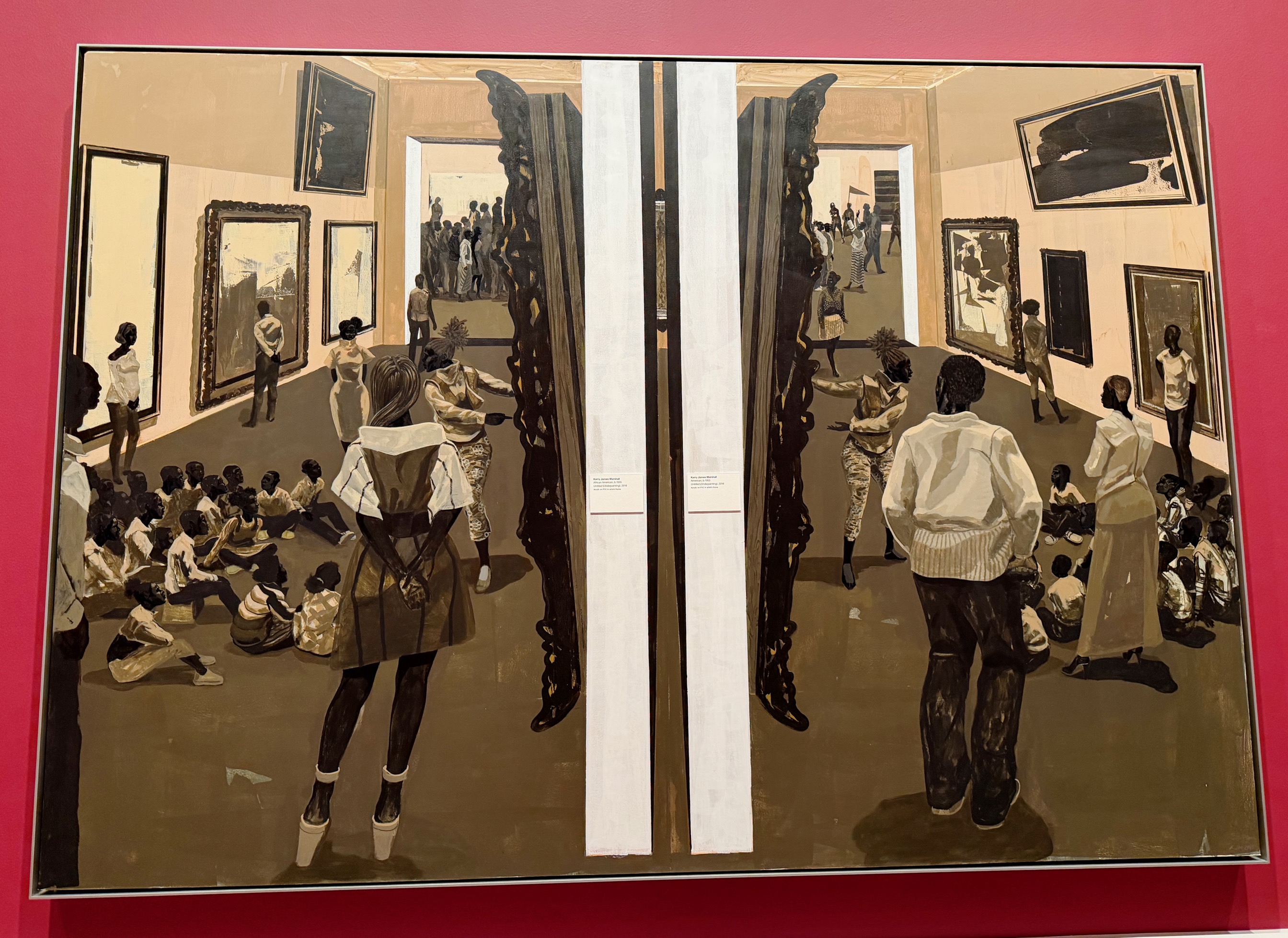
The exhibition begins with a gallery depcting self-confident artistic portraits, scenes from the academic art studio, and kids joyfully visiting a museum for the first time – a recollection of Marshall’s own exhilarating inauguration to a new world.

Marshall’s 2018 acrylic and collage Untitled (Underpainting), showing two rooms of Black kids on a museum school trip – reflecting on his earliest museum outings. Courtesy: Glenstone Museum

It’s followed by some of his earlier works inspired by Ralph Ellison’s 1952 Invisible Man and the similarly named 1897 book by H.G. Wells, with Marshall’s innovative black-on-black portraits.

Here’s a short video with Marshall describing all the different ways he uses black paint to create such vivid dimensionality:

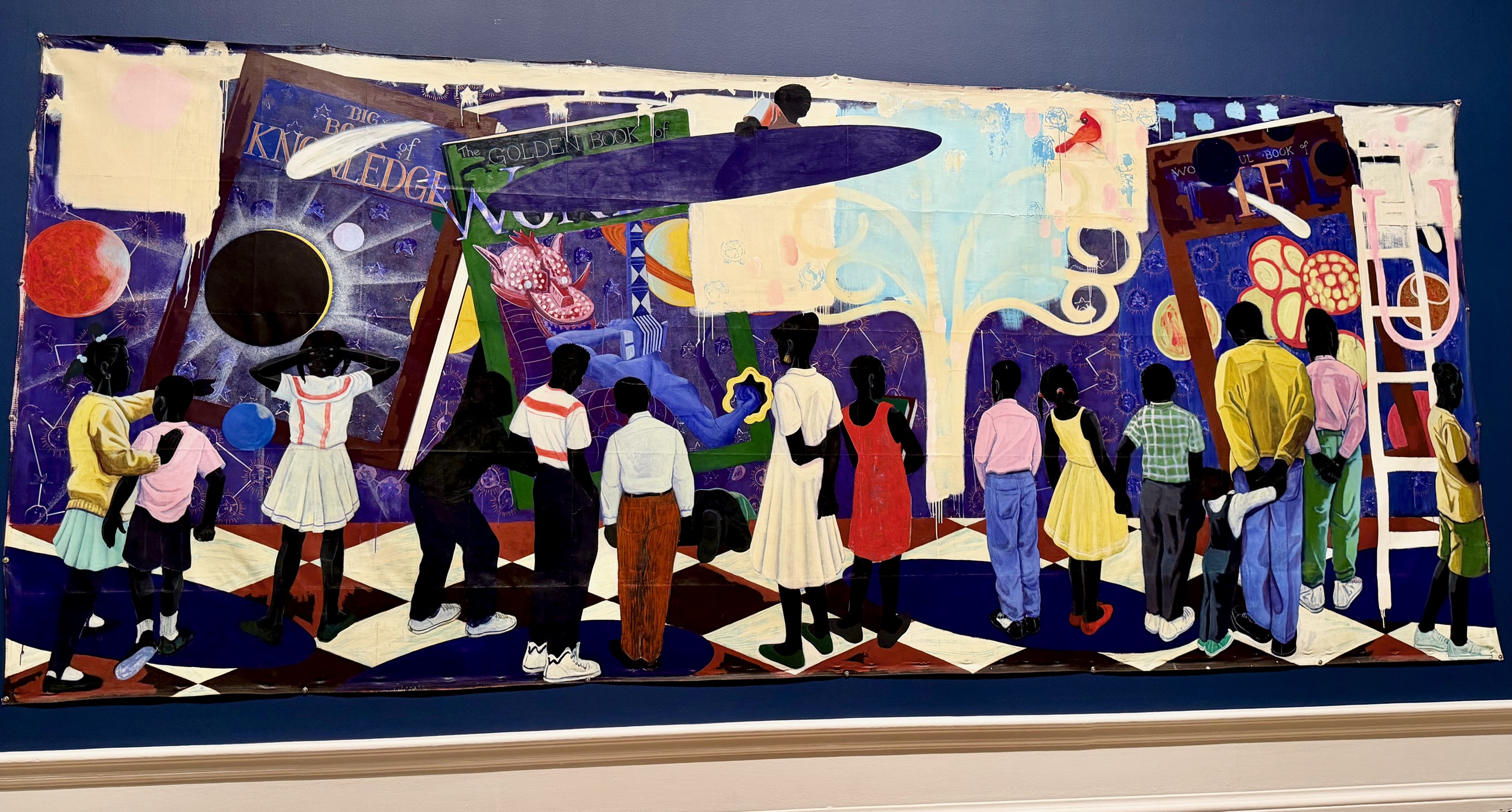
Other modern-life paintings bring viewers unexpectedly into a world of gardens among Chicago public-housing complexes and a magical world of books awaiting eager young readers.

Marshall’s 1995 mixed-media mural Knowledge and Wonder –showing inquisitive children surrounded by a world of books. Courtesy: City of Chicago Public Art Program and Chicago Public Library.

Other galleries are hung with Marshall’s assertive portraits of historic African-American abolitionist and literary figures, like Harriet Tubman and Phillis Wheatley-Peters, and tributes to 20th century political and cultural leaders.

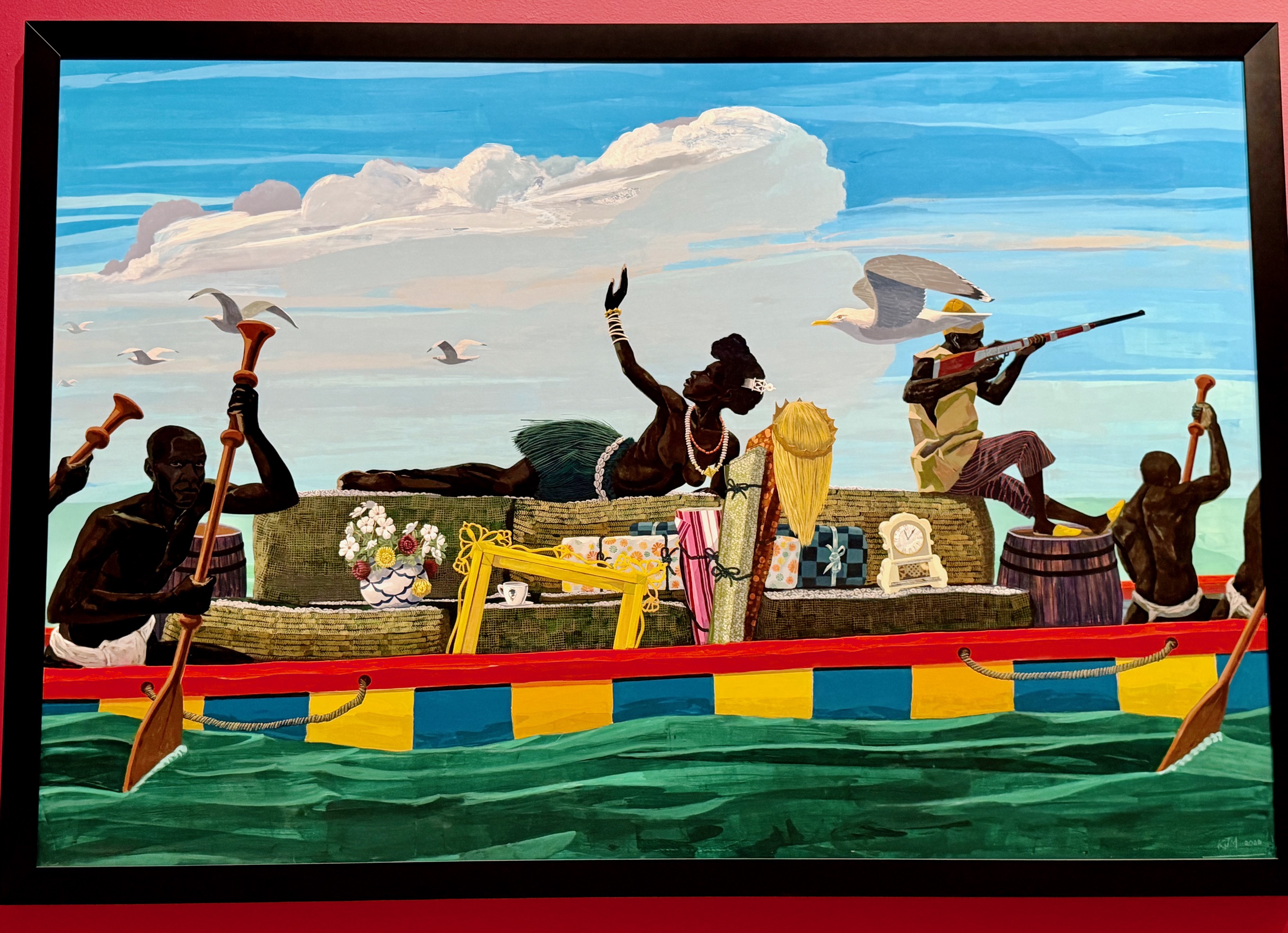
But the most talked-about works are Marshall’s grand canvases depicting the history of the trans-Atlantic slave trade – a group of symbolic works on the terrors of the Middle Passage (an Atlantic crossing where many souls never made it to the far shore) and dramatic murals of the Africans who successfully facilitated the capture and sale of fellow Africans.

Africa Revisited: Marshall’s 2025 acrylic Haul, showing Africans transporting payment from European slave traders for trafficked Africans. Courtesy: the artist and David Zwirner, London.

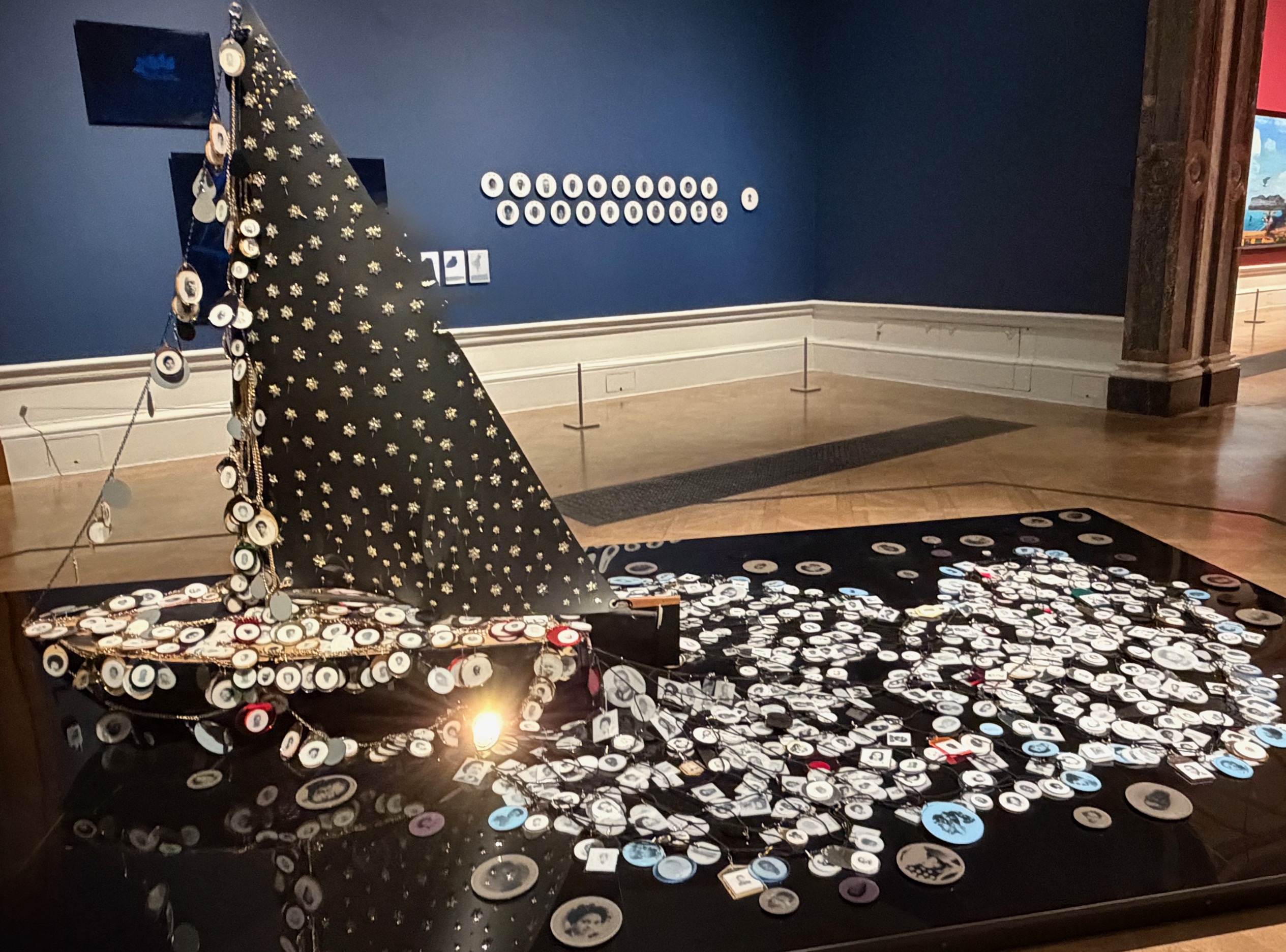
Visitors linger quietly in one of the last galleries devoted to Marshall’s installation at the 2003 Venice Bienniale. Most circumnavigate the sailing ship to get a better look at the hundreds with African-American achievement medals that are scattered about it. They also take close, respectful looks at each of the the commemorative ceramic plates that Marshall created with invented portraits of the first enslaved Africans brought to America.

Marshall’s 2003-ongoing mixed-media installation Wake originally displayed at the 2003 Venice Bienniale – a sailing ship covered with African-American achievement medals with other photographs and portraits. Courtesy: Rennie Collection, Vancouver.

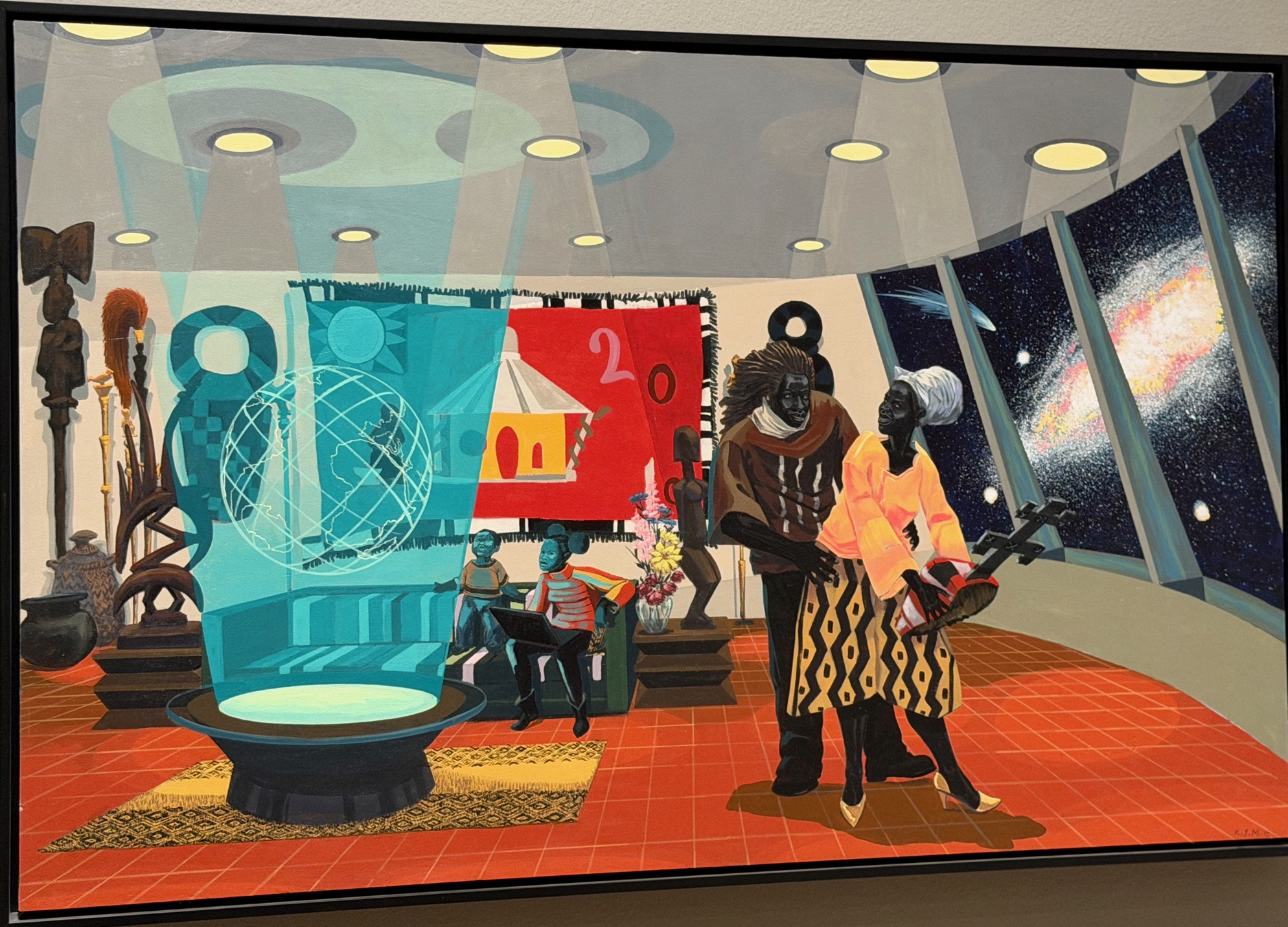
The show closes with an Afro-Futurist vision – a family in a beautifully appointed living room shooting through the universe with a view of the cosmos.

Marshall’s 2010 Afro-Futurist oil Keeping the Culture, a family of the future living in the cosmos. Courtesy: private collection.

Past, present, future, brilliant color, intriguing composition, successful Black protagonists – everything about the exhibition creates an indelible adjustment to what you thought you knew about daily Black life, lost history, and potential futures.

See more our favorite works in our Flickr album.

If you missed this show at the Royal Academy in London, Kerry James Marshall: The Histories will be shown at Kunsthaus Zürich from Februrary 27 to August 16 (2026) and at Musée d’Art Moderne de Paris from September 18, 2026 to January 24, 2027.

Marshall’s 2014 acrylic Untitled (Porch Deck). Courtesy: Kravis Collection.
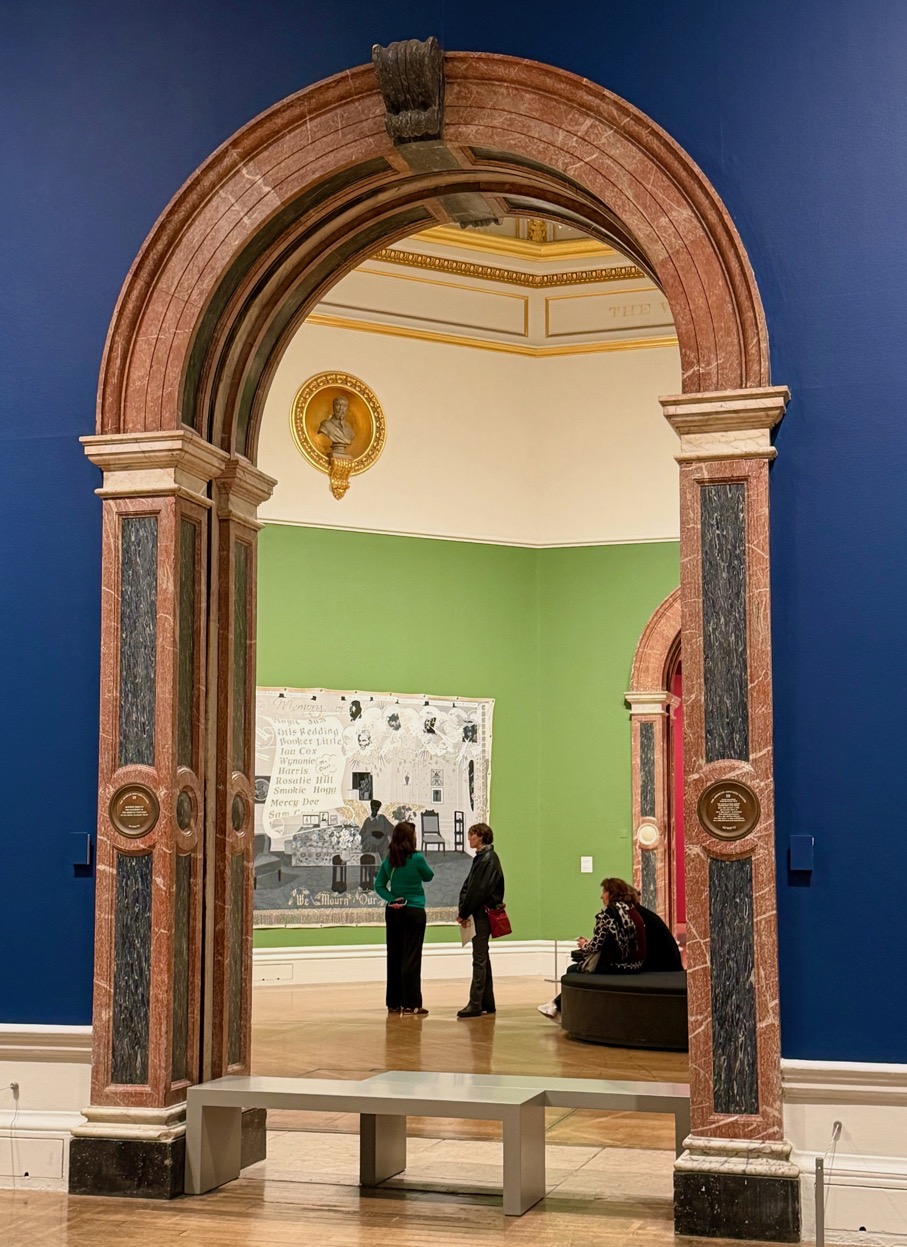
Through the arch of the central gallery; view of Marshall’s 1998 mourning tribute Souvenir IV.. Courtesy: Whitney Museum of American Art.
I

Sixties Surreal at The Whitney

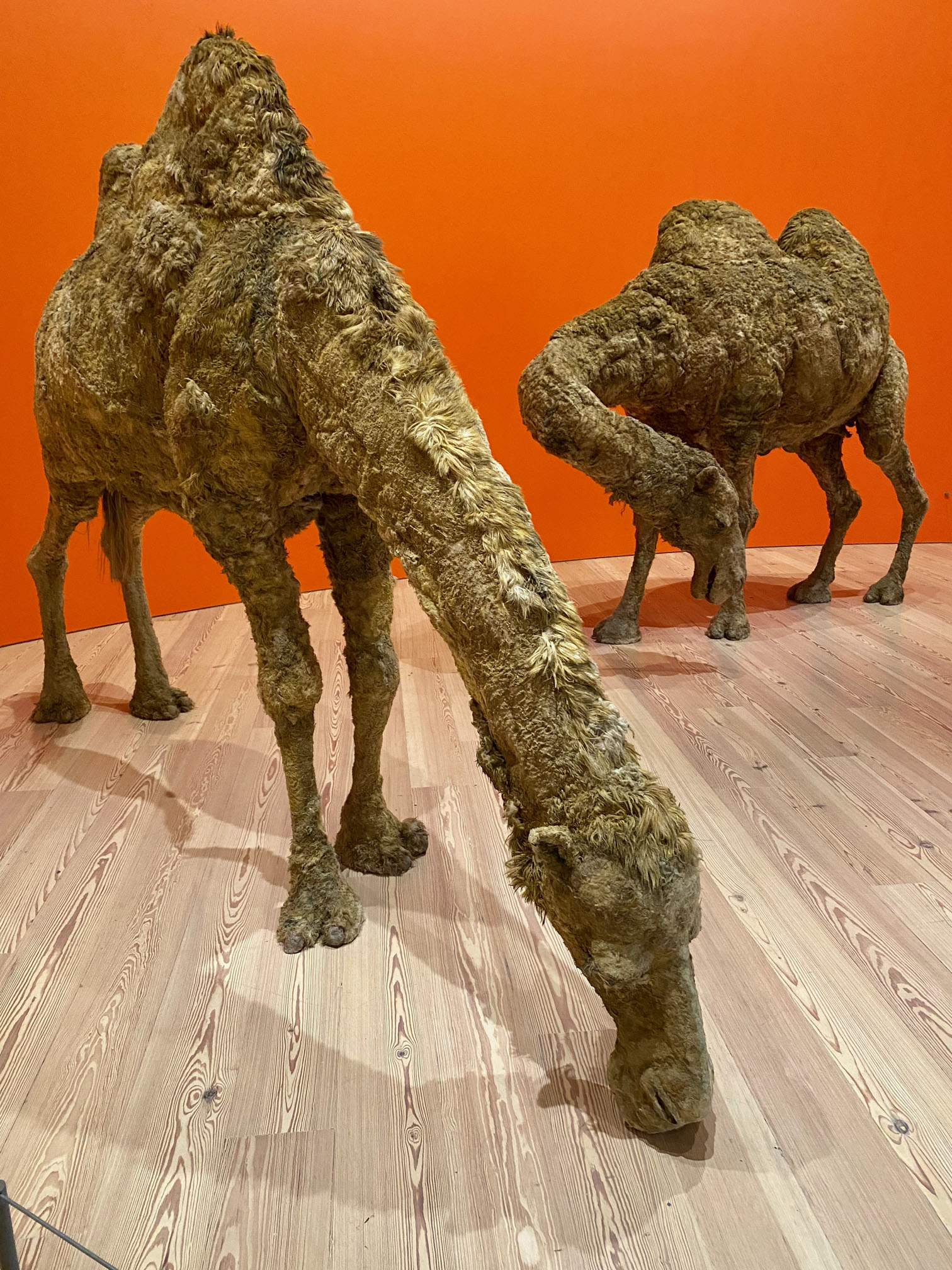
After more than 55 years, the camel herd is back at the Whitney. When they first appeared in 1969, the dromedaries were a media sensation. Who could resist the delight of seeing the life-sized camel sculptures by 28-year-old science nerd Nancy Graves nonchalantly going about their business in the pristine, white Breuer building?

At the new Whitney, the camels are welcoming everyone to Sixties Surreal – a superb exhibition (on view through January 19, 2026) that pulls out an array of engaging, cheeky work from that tumultuous decade. The show presents work by over 100 artists who chose to remain on the fringes of the big-time art world, creating pieces that poke at the Establishment, consumer culture, and social norms.

Strange, surrealistic 1968-1969 mixed-media, life-sized Camel sculptures by Nancy Graves; initially shown in her solo 1969 Whitney show. Courtesy: National Gallery of Canada, Ottawa.

The Whitney makes the case that American artists of the Sixties were not echoing the themes of European Surrealism (dreams, subconscious desires); but they did adapt a few of that group’s visual techniques to reflect and critique what was happening in America in off-center, slightly surreal ways.

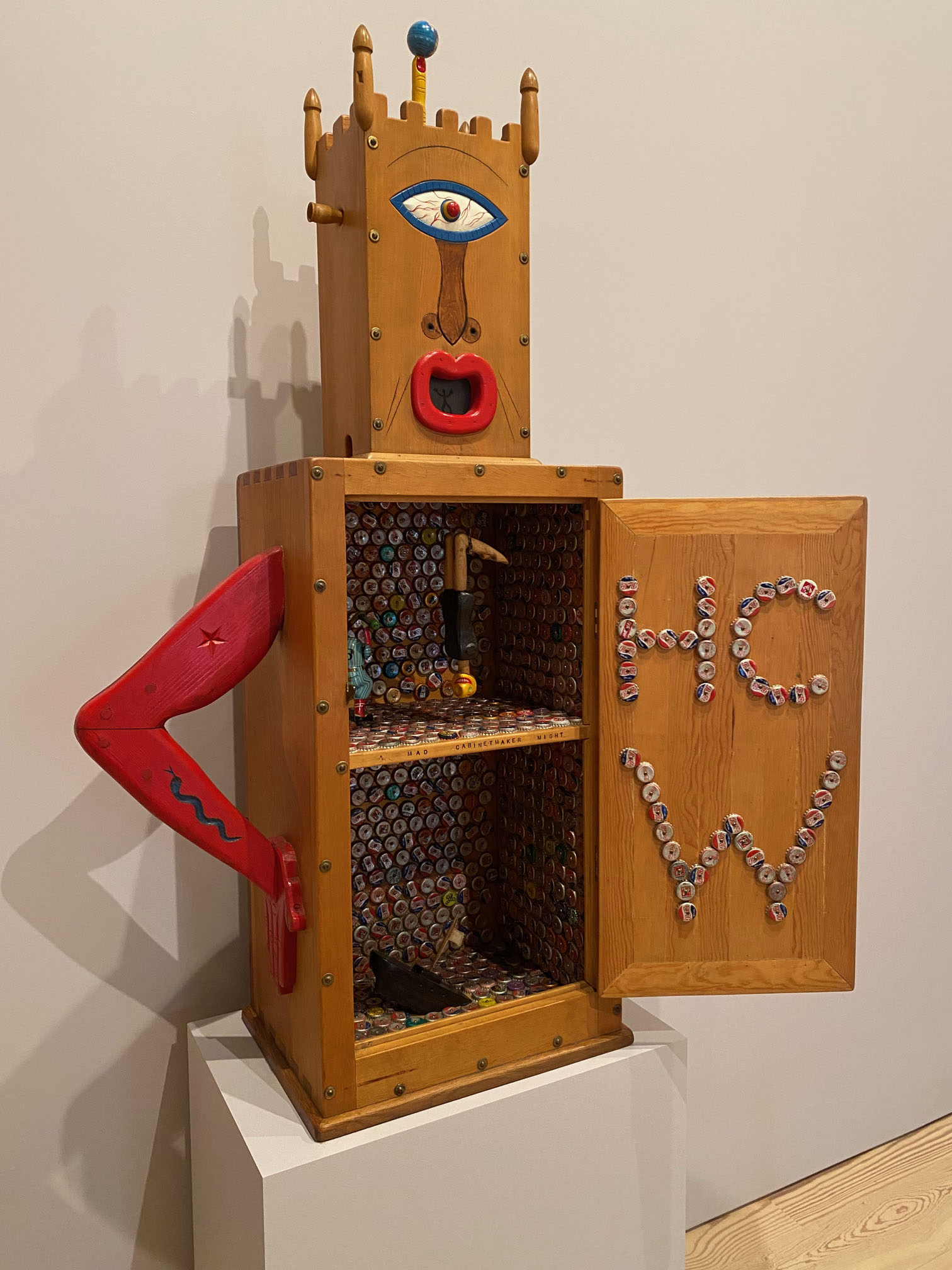
H.C. Westerman’s 1958 Memorial to the Idea of Man If He Was an Idea – a finely crafted “person” with an extremely complicated interior of bottle caps, toys, glass, metal, etc. Courtesy: Museum of Contemporary Art Chicago.
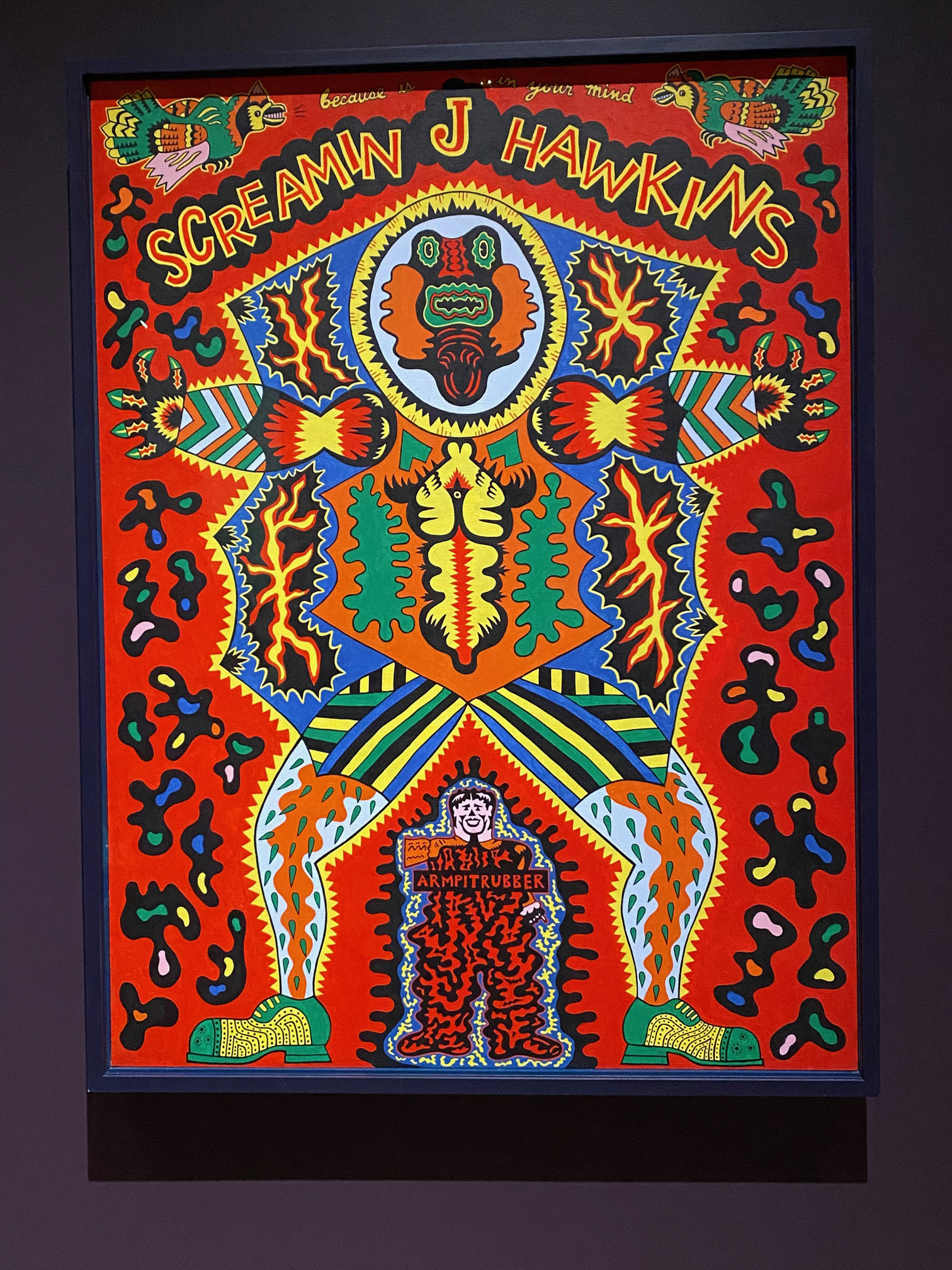
Karl Wirsum’s 1968 acrylic Screamin’ Jay Hawkins – a surreal, high-octane album cover painting for an early-rock icon. Courtesy: Art Institute of Chicago.

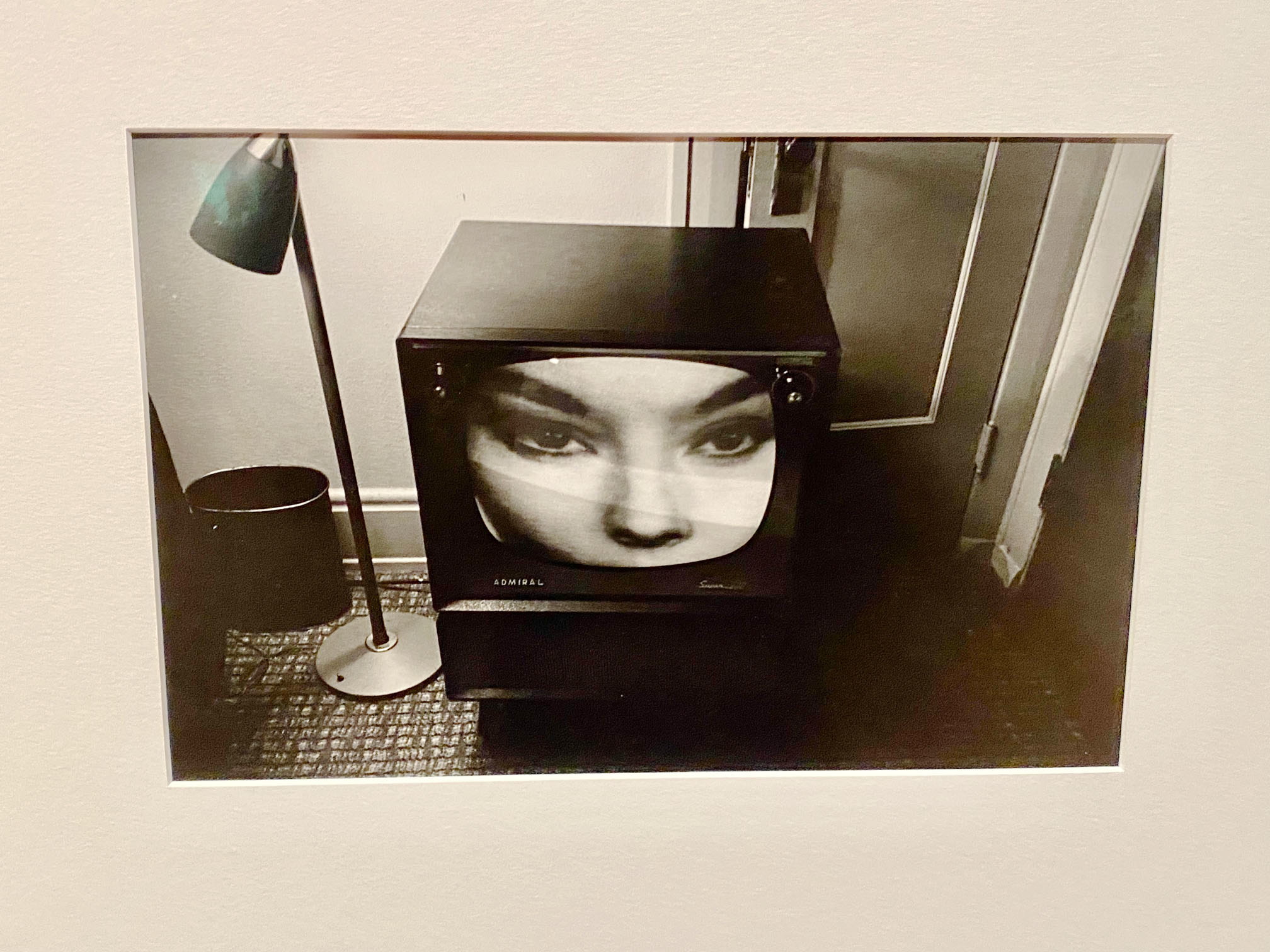
The Sixties was a decade when cultures were clashing, TVs were showering a kaleidoscope of images into people’s living rooms, nuclear catastrophes loomed, and people were landing on the Moon.

Lee Friedlander’s 1963 photograph Florida showing the surrealistic, disorienting impact of TVs in every home. Courtesy: Museum of Modern Art.

The exhibition shows how artists who didn’t belong to trendy “isms” still managed to create work that has stood the test of time – the Hairy Who of Chicago, the funk-and-pun artists of California, the downtown post-minimalists of New York, emerging Native American modernists, and social-justice artist-advocates.

Take a look at some of our favorites in our Flickr album.

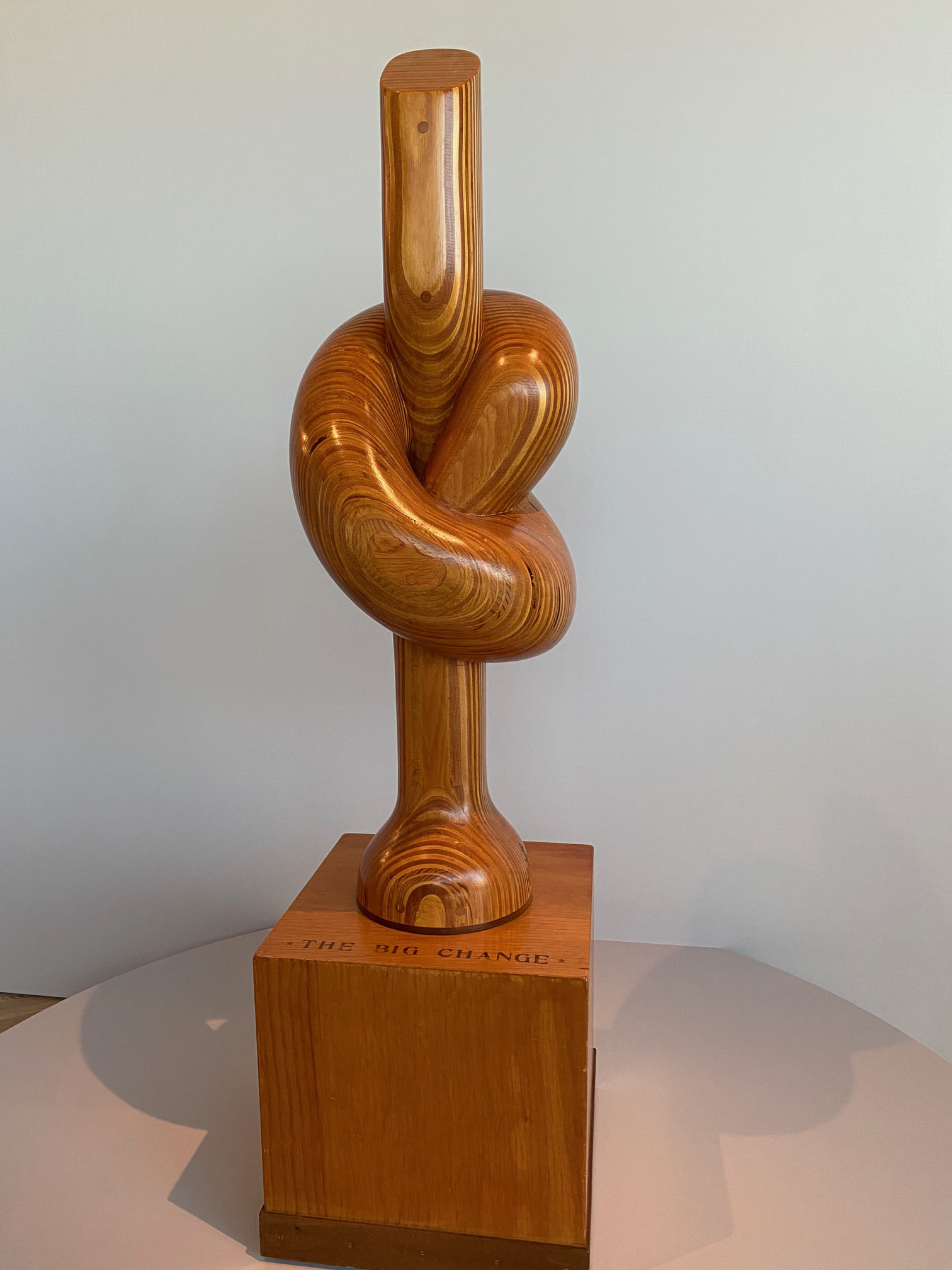
H.C. Westerman’s 1963 impossible wooden “knot” sculpture The Big Change – an allusion to all the social-political changes happening in America. Courtesy: The Art Institute of Chicago.

At a time when hard-edged minimalism and Pop Art ruled, the curators want us to see and experience (again) artists whose work was featured key exhibition showcases like Lucy Lippard’s 1966 Eccentric Abstration show at Fischbach Gallery in New York and Peter Selz’s 1967 Funk show at the Berkeley Art Museum. Each were full of work that defied contemporary art-world conventions.

The Whitney’s chosen to showcase several pieces of one of the artistic godfathers of the funk movement – H.C. Westerman. His satiric “minimalistic” shag carpet sculpture sits next to a William T. Wiley painting, but it’s wonderful to contemplate two virtuoso carved pieces  – The Big Change and Memorial to the Idea of Man If He Was an Idea.

The first gallery presents disquieting creations that present strange, out-of-context juxtapositions, weird images, and out-of-proportion everyday objects that seem to reflect the feeling that we’re living in an off-kilter world.  A large Rosenquist hovers over the gallery, but its muted tones and dissonant images evoke a far different mood than his famous, epic, over-the-top F-111.

Alex Hay’s 1968 strange, oversized painted fiberglass and epoxy Paper Bag sculpture. At rear, James Rosenquist’s 1961 oil The Light That Won’t Fail I, full of unsettling juxtapositions.
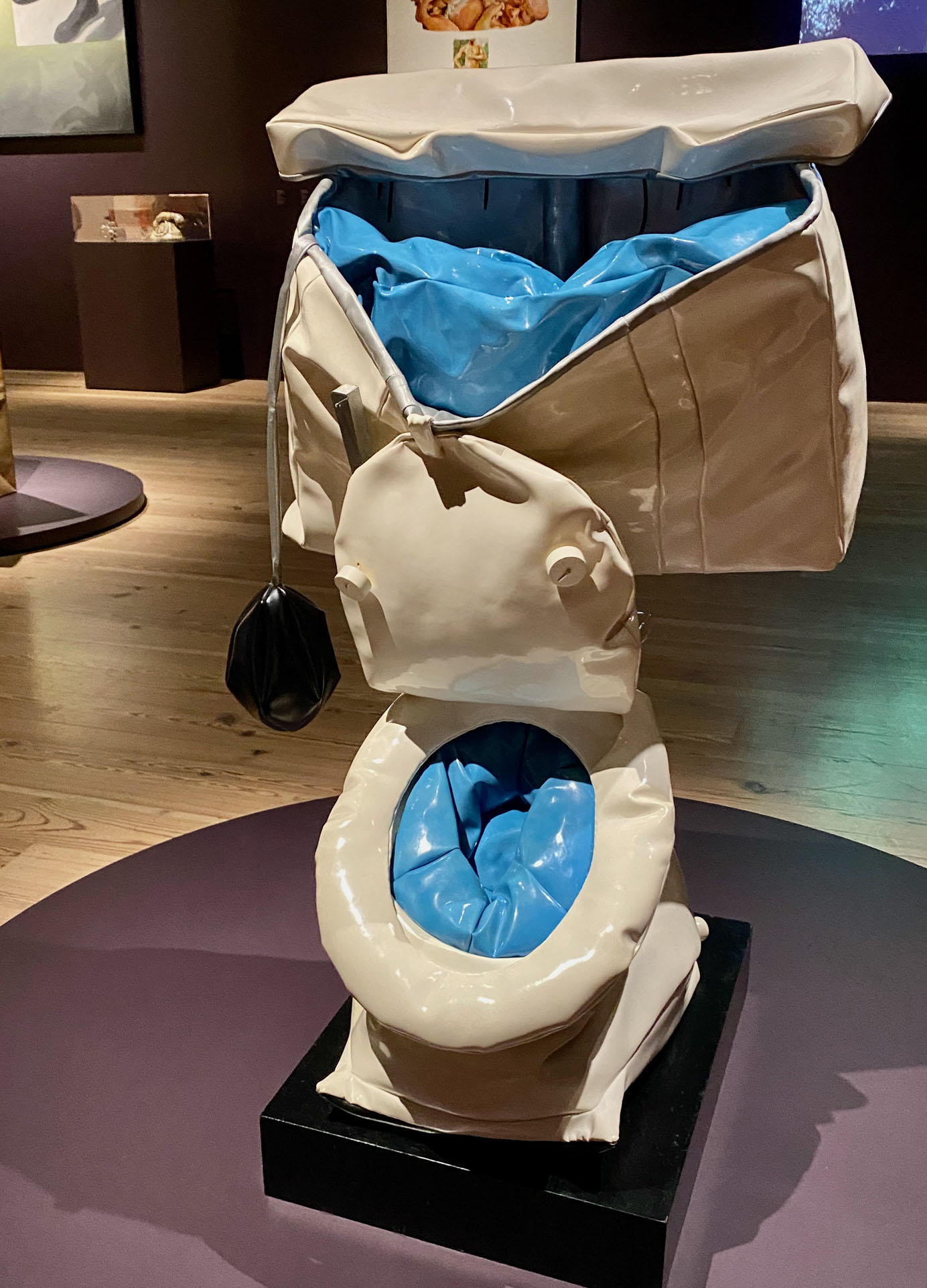
Claes Oldenburg’s 1966 mixed-media Soft Toilet – an unsettling, oversized fixture from the American bathroom.

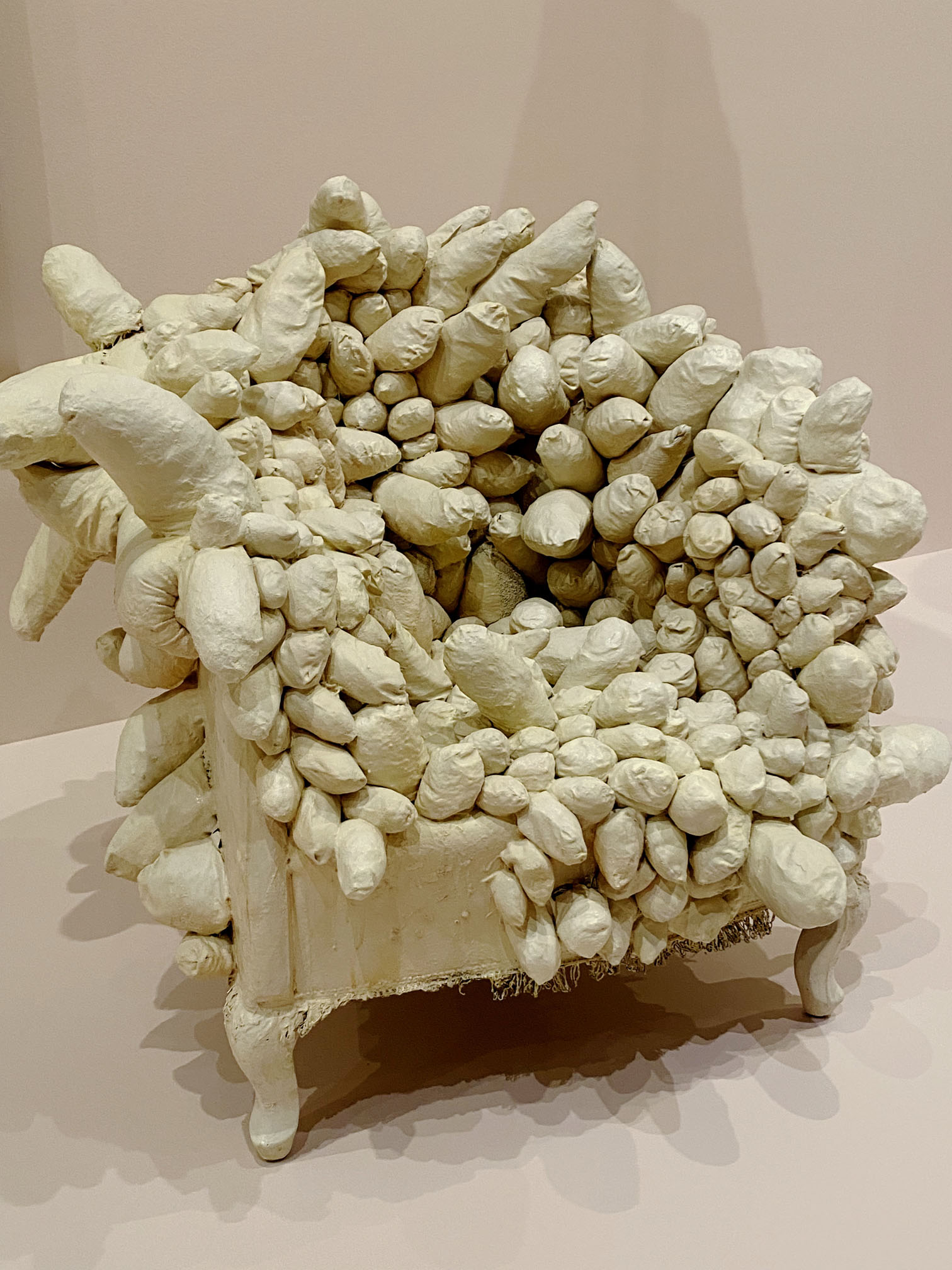
Another section presents work – many from repurposed or recycled material – with sensuous forms that suggest – but not directly depict – the human body. It’s nice to see such an array of soft, draped, and biomorphic work by artists like Kusama, Eva Hesse, Kay Segimachi, and nearly forgotten Miyoko Ito.

Kusama’s 1963 provocative hand-sewn, soft fabric-chair sculpture, Accumulation, which caused a sensation among New York critics.
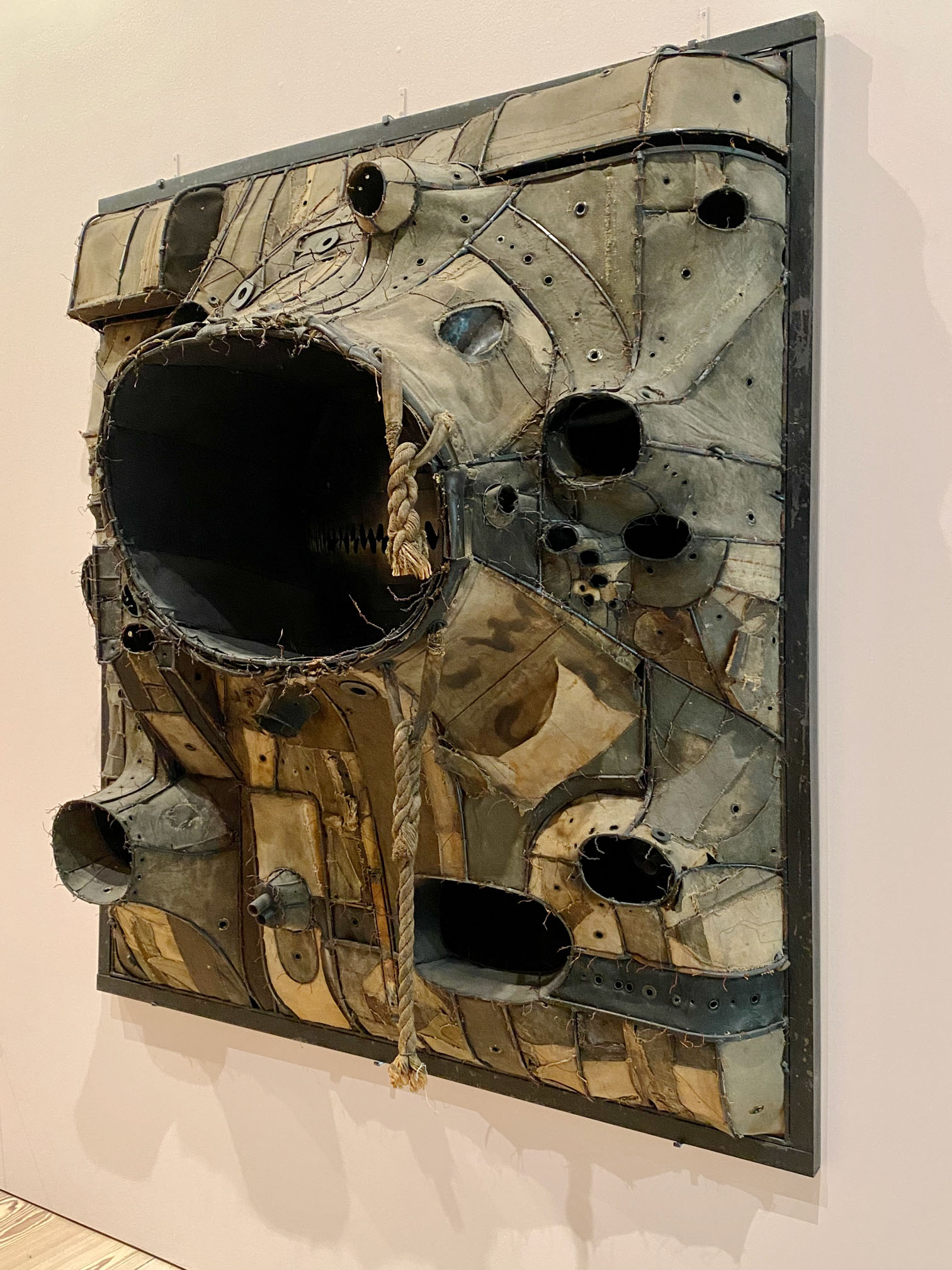
 Lee Bonticou’s 1961 welded, stitched canvas abstraction, created from scavenged steel, weathered canvas, clamps, wire, and rope from conveyor belts.

The far end of the exhibition presents works that take a stand to push for change in the world. Jasper Johns and Fritz Scholder let their paint do the talking. But others use a dada tactic to get the point across – hard-edge collages and assemblages.

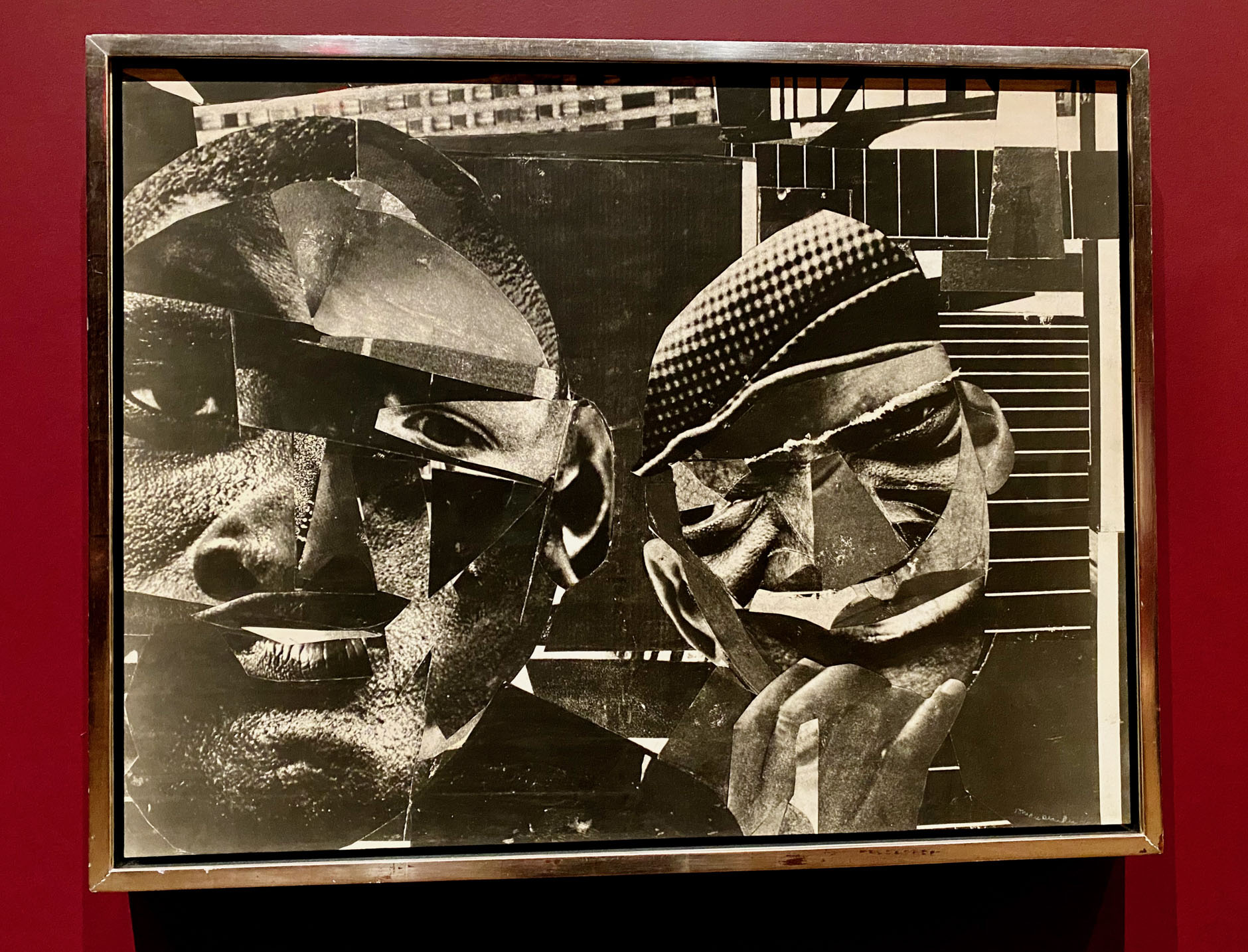
Social surreal: Romare Beardon’s 1964 Pittsburgh Memory 2/6 – mounted collage of photograph fragments creating the surreal experience of being Black in a big America city. Courtesy: private collection.

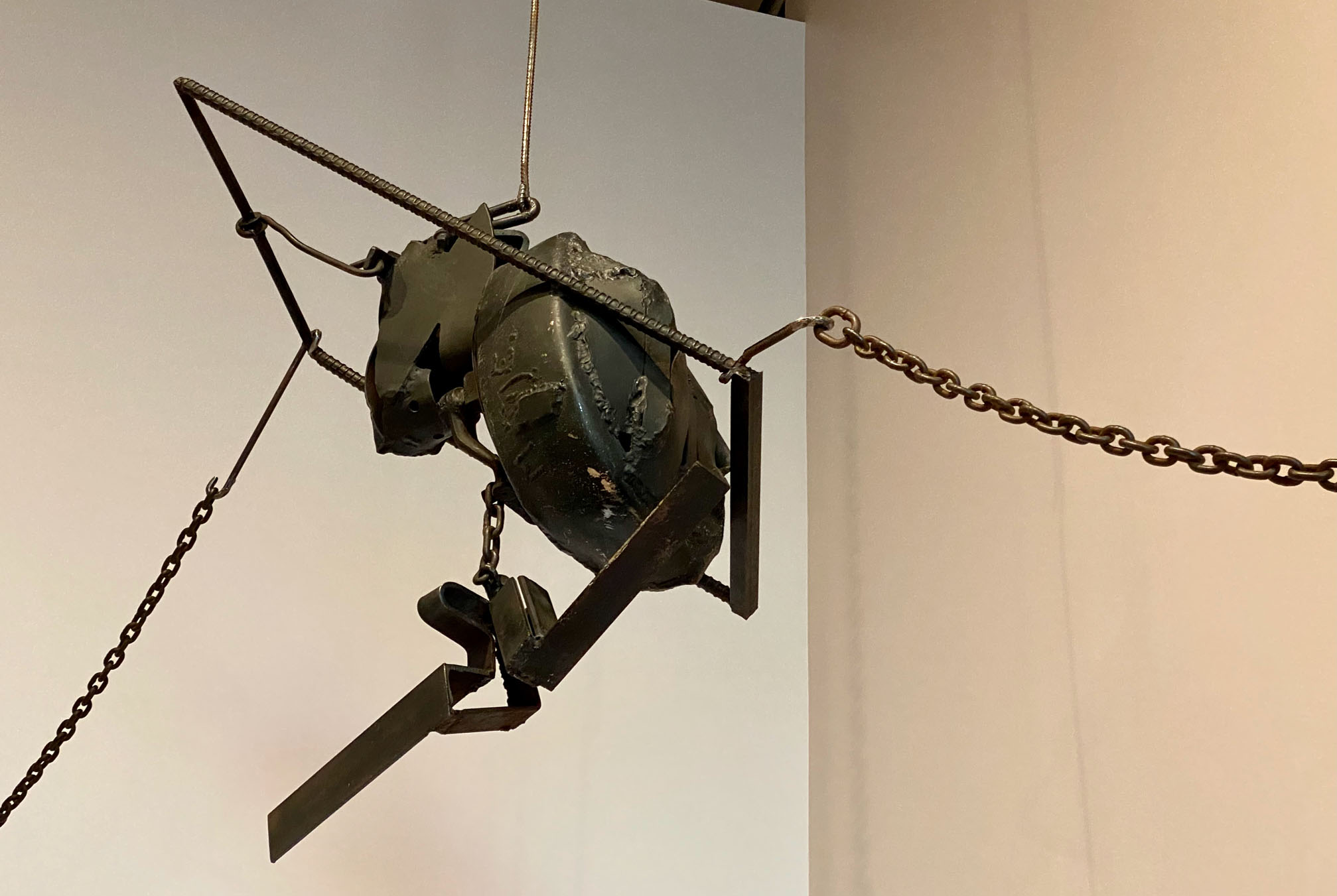
Works by Romare Beardon, John Outterbridge, Ralph Arnold, and Melvin Edwards create surreal dissonance that still packs a punch decades later.

1966 Cotton Hangup by Melvin Edwards – suspended abstraction from recycled industrial equipment; evokes historic violence and oppression against African Americans. Courtesy: Studio Museum in Harlem

The show concludes with a selection of works by artists reflecting alternative spiritual practices and beliefs. At a time when organized institutions and religions were being questioned, why not turn inward?

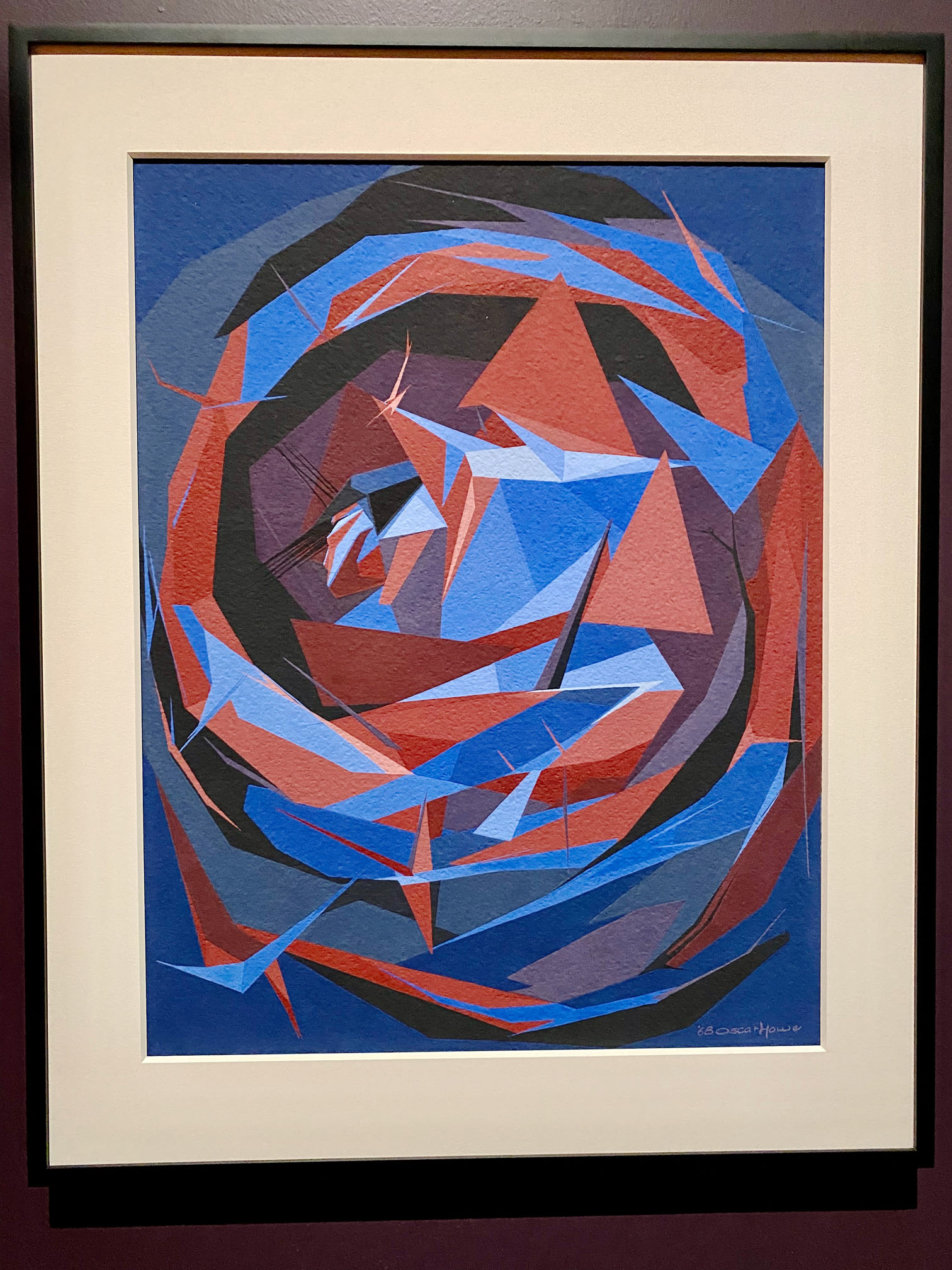
Oscar Howe’s 1968 painting Retreat – an Indigenous-modernist impression of a traditional Dakota ceremony.
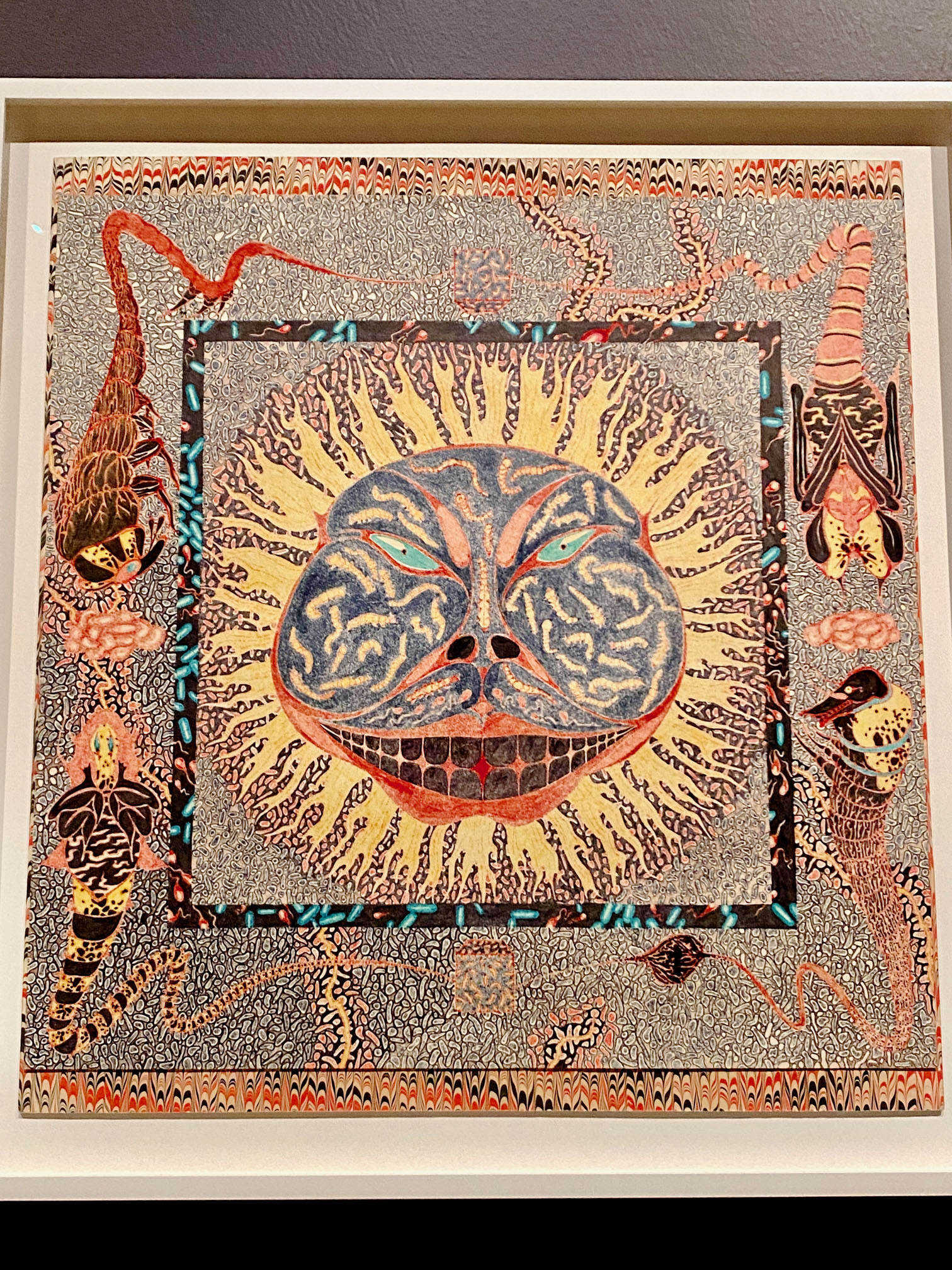
Ching Ho Cheng’s 1967 Sun Drawing, a meditative approach using a felt-tipped pen on found paper.

Have fun strolling through the Whitney’s Sixties Surreal galleries to a totally throwback Sixties soundtrack:

To hear more about specific works, listen to the curators talk about individual works in the audio guide here.

How Philadelphia Made American Artists

How does it feel to have the eyes of 200 years of art history upon you, peering out from portraits, history paintings, and scenes of everyday people? What stories do they have to tell you? And who gets to tell the history and make the story?

Find out by contemplating works by over 100 artists nurtured and celebrated by PAFA in Making American Artists: Stories from the Pennsylvania Academy of Fine Arts, 1777-1976, currently on view at the Albuquerque Museum through August 11, 2024…but coming soon to a museum near you (see below)!

Charles Willson Peale’s 1779 George Washington at Princeton, painted during the War of Independence. Courtesy: PAFA

While renovations are happening at the Academy in Philadelphia, the curators have chosen some of PAFA’s most iconic works to be shipped cross-country and installed “in conversation” with works by PAFA artists who may not be household names but were nonetheless ahead of their time.
It’s all a tribute to legacies preserved in the oldest art museum + art school in the United States, founded in 1805 by the dynamic duo of William Rush and Charles Willson Peale, both Continental Army militia (and artists!) during the American Revolution.

1810 painted pine sculpture Eagle by PAFA co-founder and Revolutionary War veteran William Rush.

Mr. Rush carved the bow figures on most of the ships for America’s first Naval fleet. All of those ships are now long gone, so it’s nice to see that we can admire his majestic Eagle in this exhibit.

Mr. Peale, one of the Sons of Liberty who served under and painted General Washington, later founded America’s first natural history museum on the second floor of Independence Hall. He also passed his talent on to the next generation through his very large family of artistic prodigies.

These two artists of the Revolution walked the walk and talked the talk and passionately felt the young nation needed an art academy.

PAFA’s first hundred years had some ground-breaking firsts – the first exhibition that included both male and female artists (1811), admission for Black artists (1857), and first female instructor (1878).

Charles Willson Peale’s 1822 self portrait (painted at age 81), The Artist in His Museum proudly showing his collection, turkey, and mastodon. Courtesy: PAFA

The show kicks off with a masterful history painting by Benjamin West, a Pennsylvania painting genius who landed in England in 1763, helped to found the Royal Academy, and somehow remained best friends with both King George III and Benjamin Franklin at the same time. He revolutionized history painting by depicting contemporary subjects and taught (in London) a who’s who of Americans artists – Peale, Stuart, Sully, Morse (who invented the telegraph and code), and Fulton (who invented steamships).

Benjamin West’s 1771-1772 Penn’s Treaty with the Indians, an imaginary scene painted to rehabilitate Penn’s image at the time, although it does feature Lenape chief Tamanend;. Courtesy: PAFA

In addition to masterworks by West and Gilbert Stuart, the exhibition showcases many works by female and African-African artists associated with PAFA – Patience Wright (America’s first professional sculptor), Cecilia Beaux (first female teacher), Henry O. Tanner (first successful African-American painter), and superstar Mary Cassatt.

1784-1786 wax relief portrait of George Washington by Patience Wright, the oldest American sculpture in the PAFA collection
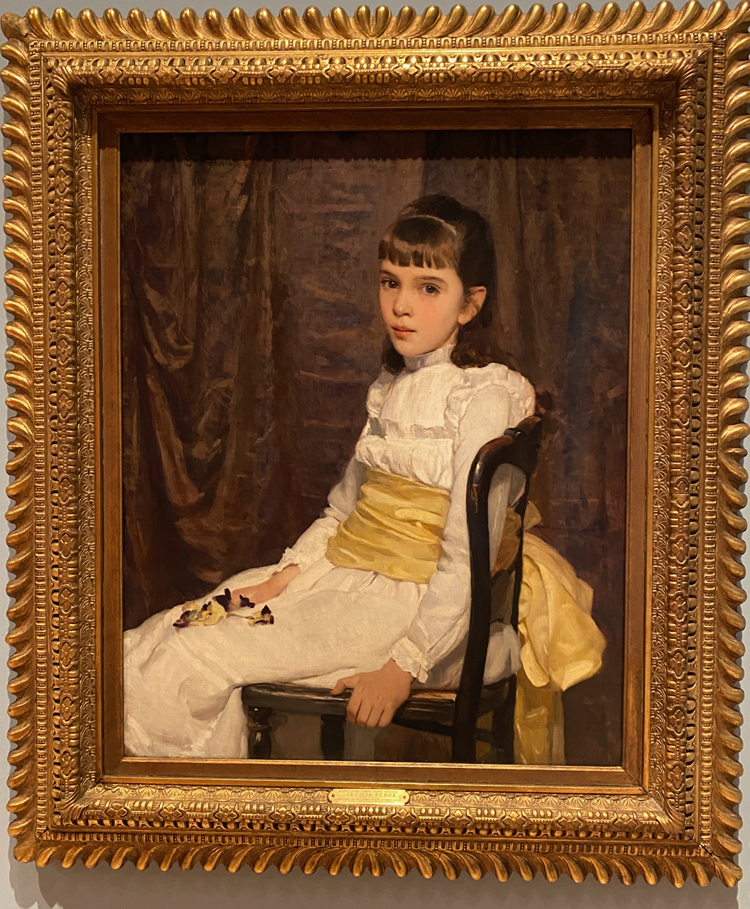
1887 A Little Girl by Cecilia Beaux, an acclaimed female portraitist known for her insightful psychological depictions of young women. Courtesy: PAFA

In the day, grand history paintings were primarily the work of men, but the exhibition emphasizes that many enterprising 19th century women still found ways to make it in the art world. They specialized in “lesser genres,” like portraits, still lifes, and scenes of everyday life. Check out our favorites in our Flickr album.

Making American Artists really comes alive by adding 20th century works on the walls. Alongside the Founding Fathers, the portrait section features liberated women, bohemian artists, and proud Black artists with attitude.

Margaret Foster Richardson’s 1912 A Motion Picture – an honest self-portrait reflecting society’s changing views of professional women. Courtesy: PAFA
Barkley L. Hendricks’ 1968 J.S.B III, a fashionable, life-sized, postmodern portrait of his PAFA classmate James Brantley. Courtesy: PAFA

The section of the exhibition on still life focuses on early female painters who made decent incomes from their work, as well as modernist superheroes O’Keeffe and Nevelson. The history painting section presents 20th century show-it-like-it-is artists, like Horace Pippin and Alice Neel.

Georgia O’Keeffe’s 1923 Red Cana, an early abstracted floral still life. Courtesy: PAFA
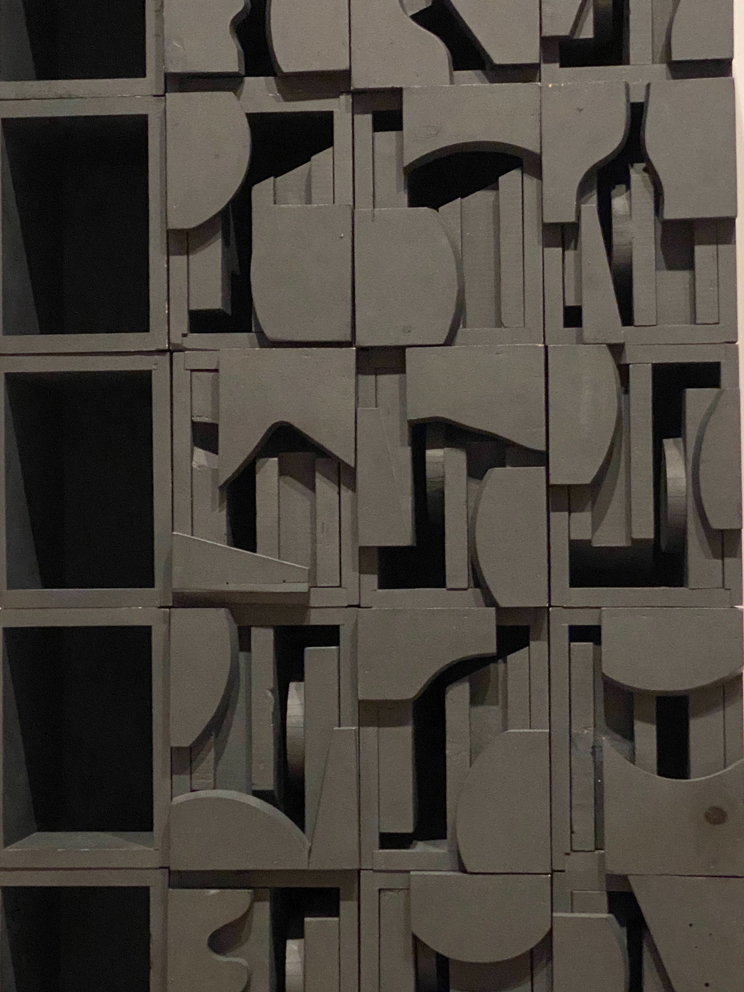
Detail of Louise Nevelson’s 1972 South Floral. Still life section. Courtesy: PAFA

We’re reminded that many of the great masters of American landscape, like Thomas Moran, got their starts by painting bucolic views of Philadelphia’s Wissahickon and Schulkyll Rivers. Painting Philadelphia’s river landscapes may have even inspired the rise of the Hudson River School.

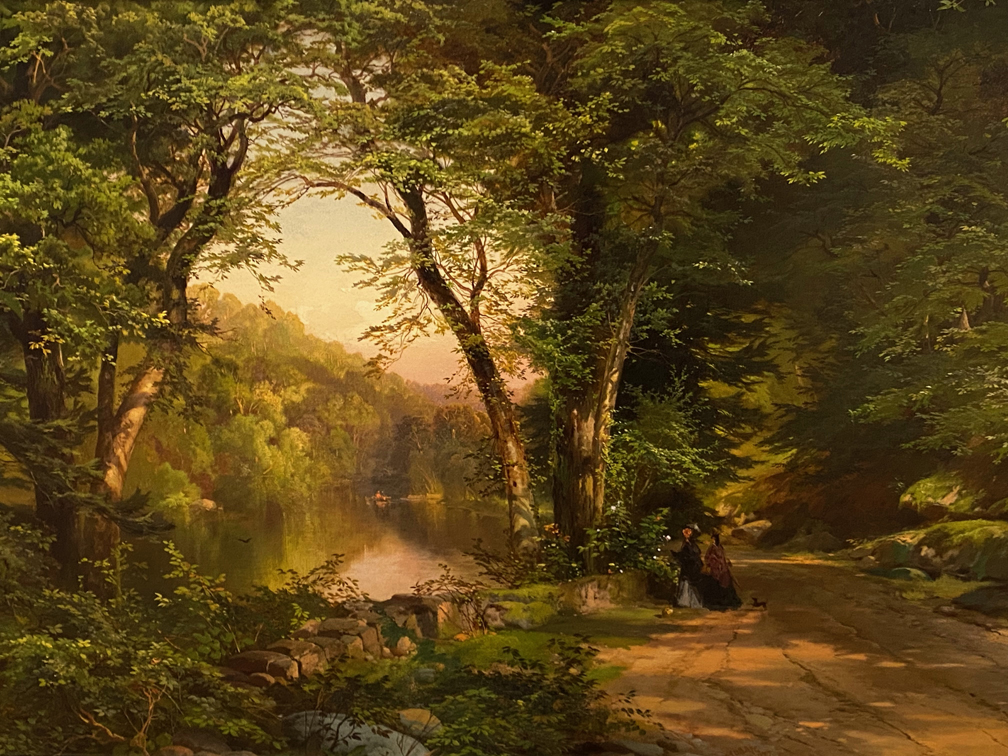
Thomas Moran’s 1870 Two Women in the Woods enjoying the green along the Wissahickon in Philadelphia. Courtesy: PAFA

And it was PAFA that gave Winslow Homer his professional start.

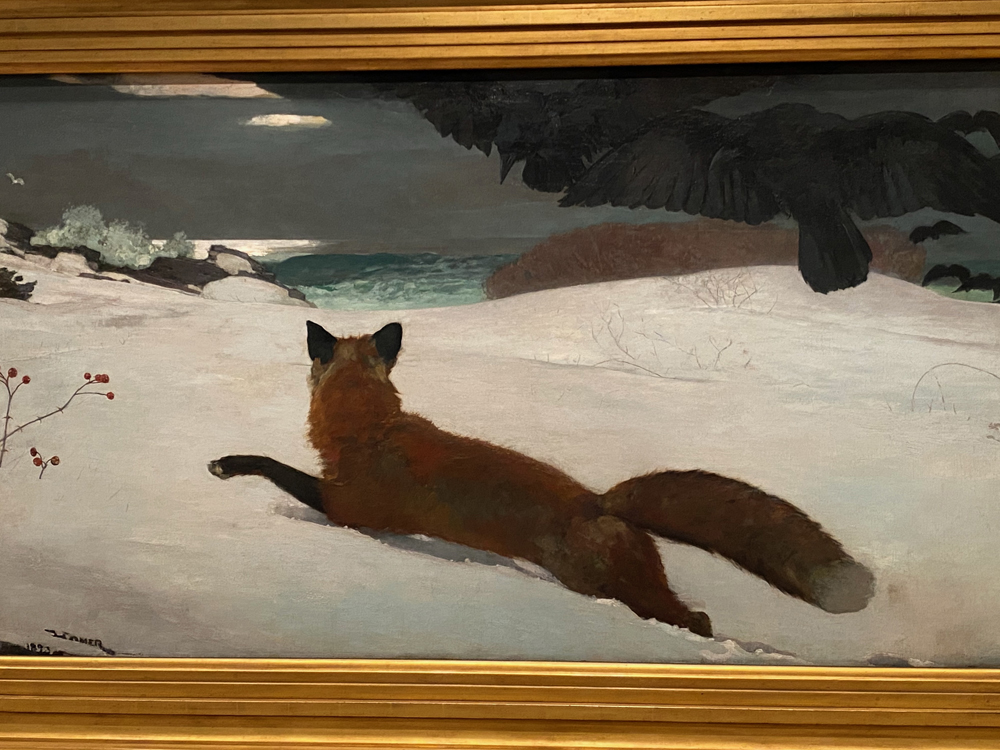
Winslow Homer’s 1893 Fox Hunt, where predator becomes the prey; Homer’s first painting to enter a museum collection. Landscape section. Courtesy: PAFA

The entire exhibition is a fresh look at American masters who created an astonishing legacy at one of our oldest art institutions ­and upstarts who never quite got their due. There’s so much to appreciate from this fresh, 21st century perspective!

Earlier this year, Making American Artists was at the Wichita Art Museum. Its next stop is the Philbrook Museum of Art in Tulsa, Oklahoma (September 25, 2024), followed by a spectacular road show: Everson Museum of Art in Syracuse (February 2025), the Peabody-Essex in Springfield, Massachusetts (June 2025), and the Taubman Museum of Art in Roanoke, Virginia (October 2025).

Don’t miss it. While you’re waiting, listen in to curator Anna O. Marley’s May talk at the Albuquerque Museum:

Gilded Age Treasure Hunt at The Met

Once you navigate the twists and turns of one of the furthest reaches of the Metropolitan Museum of Art’s American Wing (past the Versailles panorama and past the Rockefeller room), you’ll come to a treasure trove of Gilded Age interior design – Aesthetic Splendors: Highlights from the Gift of Barrie and Deedee Wigmore, on view through April 18.

What did rich people in the 1880s and 1890s want? The exhibition will show you.

1880s Herter Brothers cabinet, Britcher landscape, and reproduction wallpaper evoke the Wigmore’s home

You’ll find lush landscapes by second-generation Hudson River painters and first-generation romantic painters of the American West, elaborate furniture and decorative pieces embellished with tributes to Asian style, and bedazzled masterpieces from the Tiffany workshops.

Sanford Gifford’s 1879 An Indian Summer Day in Claverack Creek

The curators pay tribute to these avid Aesthetic Movement collectors by framing these promised gifts with reproduction period wallpaper and fixtures, and it’s hard to decide where to look first.

The approach to this marvelous exhibition gives modern gallery-goers an experience of what Gilded Age interior designers had in mind – cramming foyers and drawing rooms with lush paintings, flashy techno brass furniture, Japanese-style ceramics, art pottery, and fringed upholstered seats decorated with Arts & Crafts tiles that throwback to mythical times.

The mix of styles and techniques – some old and some new – reflect a time when consumption of luxury goods ran wild with the ascension of New York City as the trading and shipping capital of the world.  Many of the pieces reflect new machine-made technology mixed in with a bit of medieval nostalgia via the British Arts and Crafts movement.

Look closely at all these showstoppers in our Flickr album.

Detail of 1880 Modern Gothic cabinet by Kimbel and Cabus with tile by Minton & Co.

Although the exhibition is slightly hidden away, the landscapes appearing throughout the show provide windows to lush valleys of the Rockies (thank you, Mr. Bierstadt!), autumn colors of the Catskills, and spectacular, tranquil shorelines on Maine’s rocky coast.  All are either in their original fancy frames or reproductions from the era.

Alfred Thompson Bricher’s 1899 Low Tide, Hetherington’s Cove, Grand Manan in Maine

Most of the works are oil paintings, but (in case you didn’t know) New York was also the epicenter of the movement to make watercolor paintings the equal of any fine salon work.  The curators have included work by the masterful William Trost Williams, so you can enjoy a side-by-side comparison of the techniques he used to give those oil painters a run for their money. Every time we’ve visited this show, visitors simply stand transfixed, drinking in the saturated, tranquil views of the faraway.

The ceramics, cloisonné tabletops, andirons, and many large-scale pieces reflect the period’s mania for anything with a hint of Japanese or Chinese style – delicate birds flitting through bamboo and fierce dragons swirling in magical space. Designers for the upper classes were captivated by images from kimonos, scrolls, screens, and ceramics from the East and made sure that custom commissioned pieces were on trend.

Bradley & Hubbard’s 1895 phoenix andirons
Sapphire encircled by grapevines on 1910 gold and platinum Tiffany necklace

The mesmerizing beacon within the show is the spectacular array of Tiffany necklaces in the center – dramatic opals and sapphires, often encircled by intricate grapevines in gold or another nod to nature-by-design. The effect of these beauties side by side is magical, and you can imagine a Gilded Age beauty making an entrance with one of these dazzlers.

The Met just announced that its September 2022 Costume Institute exhibition would be displayed in the period rooms of the American Wing, so we’ll see if Mr. Bolton and his team deploy any period finery in the more-is-more 19th-century area.

Read more about pieces in this fantastic donation on the MetCollects blog and flip through close-ups of some the featured works.