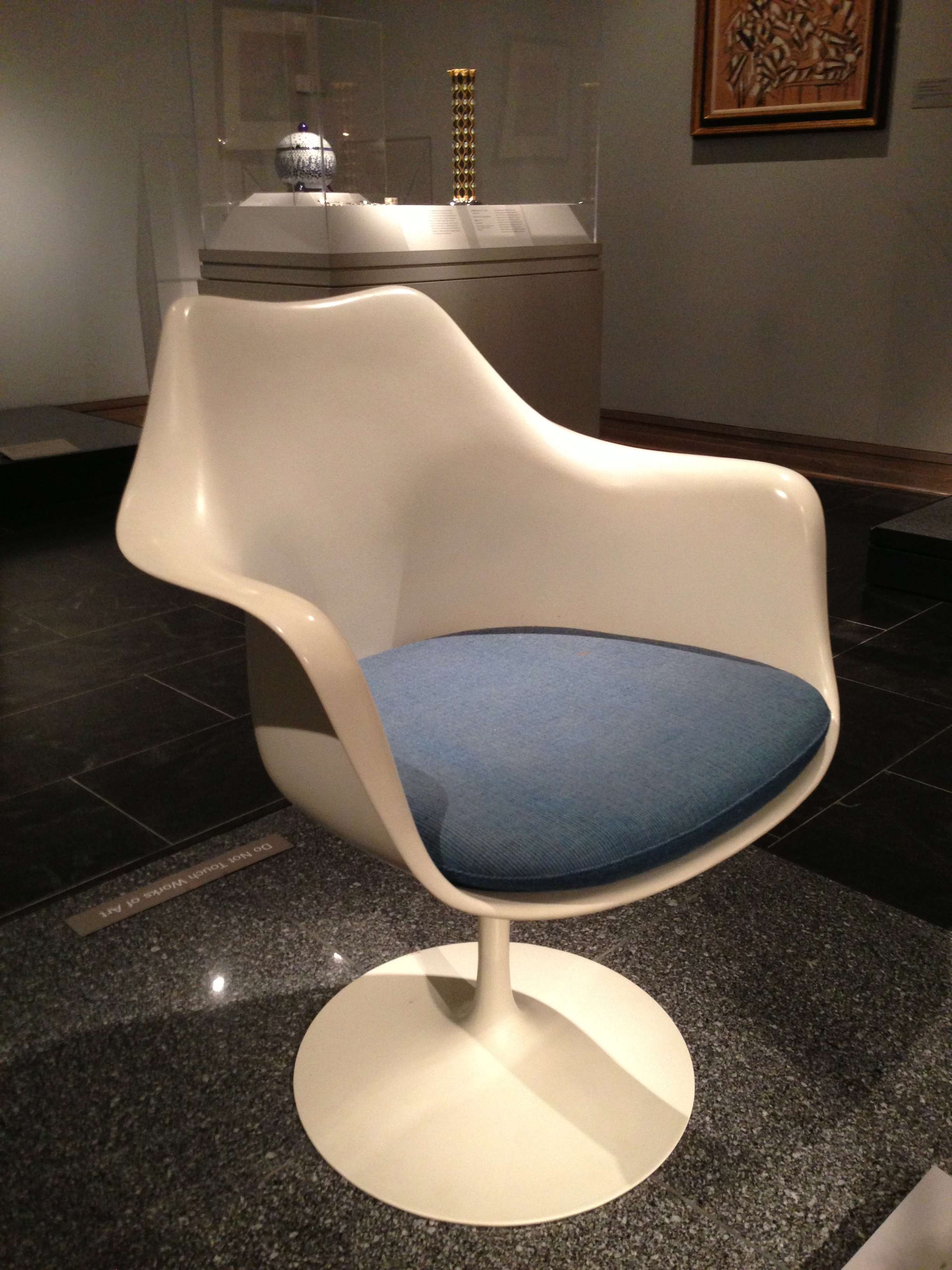
I Sat in the Saarinen Chair

The Saarinen chair at the Met

The 1956 Saarinen Tulip chair at the Met

If you’ve been to the Metropolitan Museum’s Modern Design gallery on the first floor, you’ve seen the iconic Eero Saarinen chair sitting on its platform at the back of the gallery with a “do not sit” sign prominently displayed.

Too bad you aren’t down in Wilmington, North Carolina at the Cameron Art Museum, where a tribute to three famous local artists provides you with an opportunity not only to sit in one, but at a Saarinen table with four of them, all surrounded by classy contemporary art in a setting only an artist can create. It’s a recreation of Claude Howell’s apartment 44, collecting and making art and holding salons for his entire life. Check out the Flickr photos of his fantastic place (yes, it’s a recreation, right down to the views of the Cape Fear River outside!).
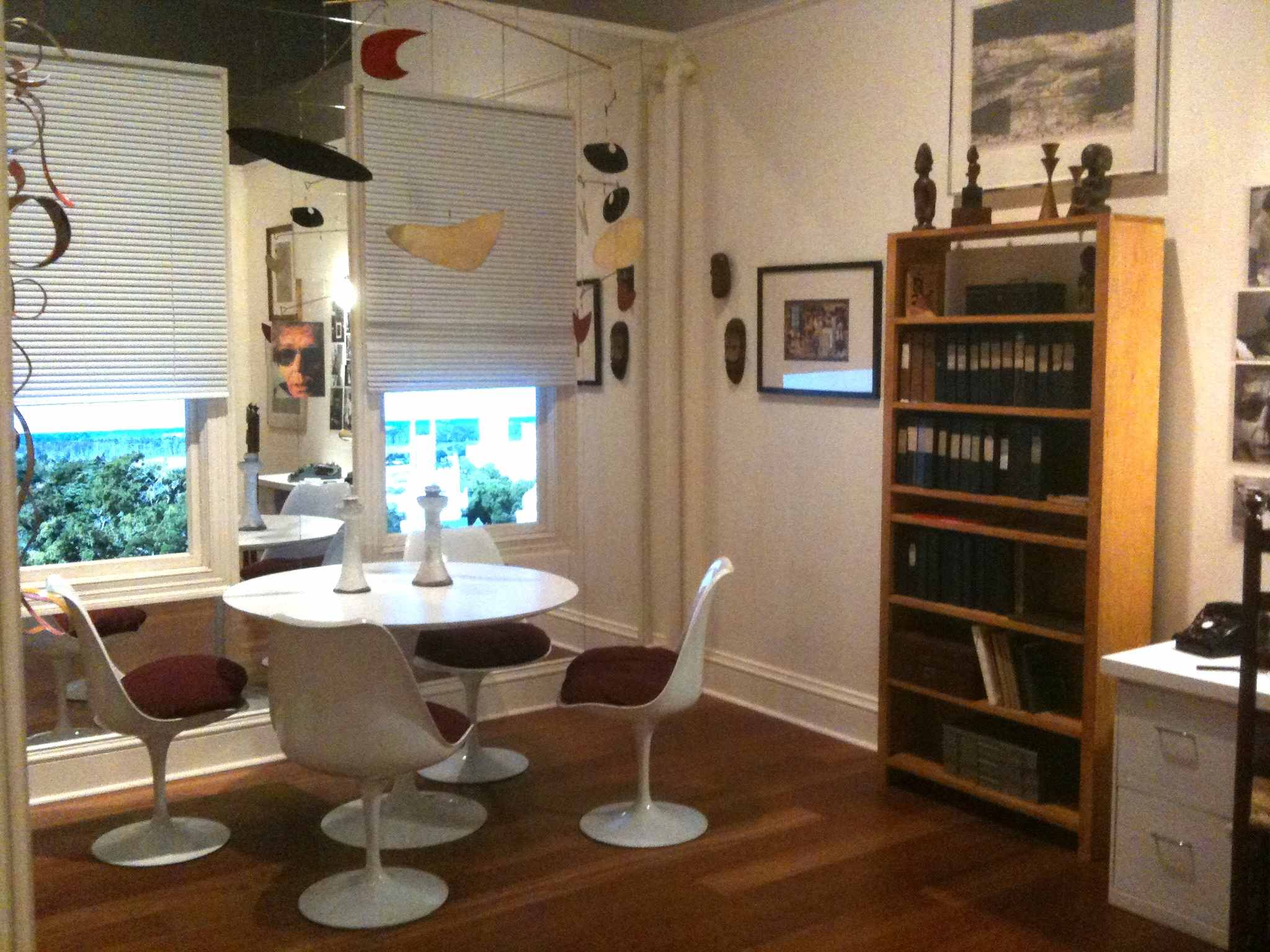
The Cameron invites you to sit down to enjoy Claude Howell’s beloved Saarinen set

The Cameron invites you to sit down to enjoy Claude Howell’s beloved Saarinen set

It’s part of the fantastic tribute “From Gatehouse to Winehouse” that is extended to April 14. Besides Claude’s apartment, the curators have also built the ramshackle botanical garden gatehouse where Minnie Evans sold tickets and created her visionary masterworks from 1948 to 1974. (By the 1970s, her work was displayed at the Whitney.) Take a look. The surrounding gallery walls are filled with projected “visions” and crayon drawings hung on a line. The third studio belongs to mysterious, mystical woman of the 1920s, Elisabeth Chant (and Claude’s art teacher.)
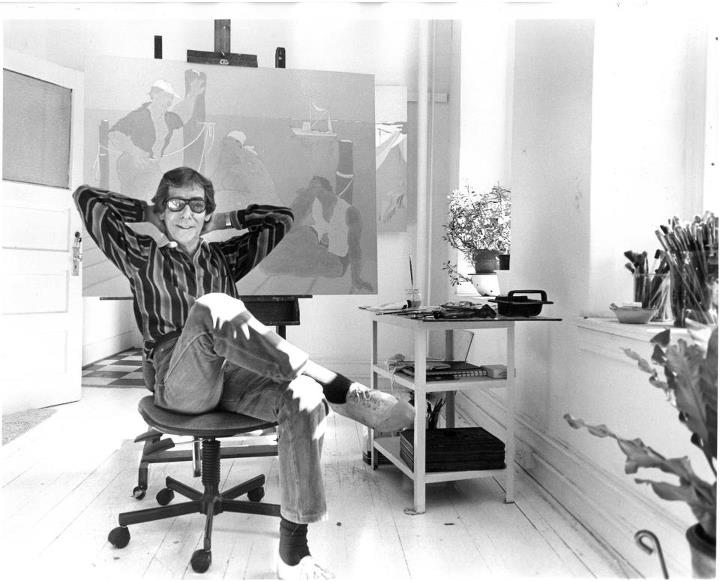
Claude at home in his salon-studio. Source: Cameron Art Museum

Claude at home in his salon-studio. Source: Cameron Art Museum

Enjoy seeing how Claude lived and worked with his museum-quality dining set, and if you are anywhere near Wilmington, be sure to go sit in the chairs for real. Claude would be glad to have you over!
70s East Village and Catholic School Mash-Up at MoMA PS1

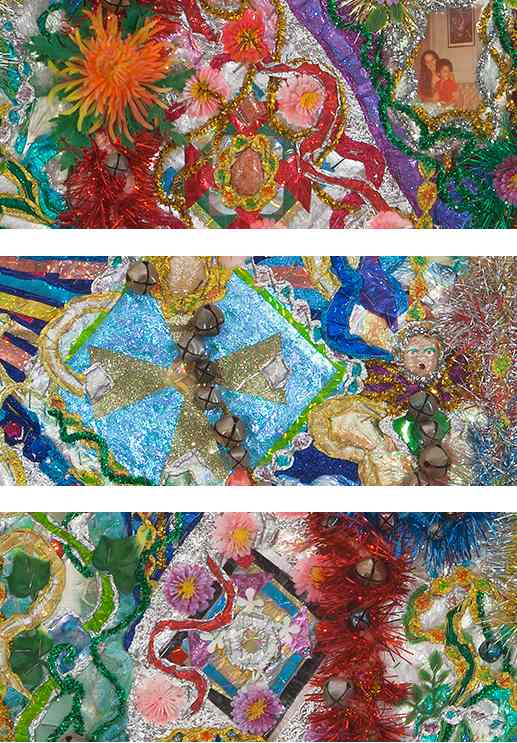
Glittery details from Thomas Lanigant-Schmidt’s 1986 collage, The Infant of Prague as a Personification of Liberation Theology. Source: International Collage Center.

Glittery details from Thomas Lanigant-Schmidt’s 1986 collage, The Infant of Prague as a Personification of Liberation Theology. Source: International Collage Center.

As a young gay runaway in the 1960s, Thomas Lanigan-Schmidt landed in New York City, looked at the trash littering the East Village streets where he roamed, and felt a strange attraction to the cellophane wrappers, fabric, and other dumpster treasures he retrieved. This is the jumping off point for the glittery art retrospective at MoMA PS1, Thomas Lanigan-Schmidt: Tender Love Among the Junk.

From his years of Catholic schooling and altar-boy duty, it wasn’t a stretch for Lanigan-Schmidt to use his street stuff to create glimmering duplicates of chalices, patents, and other altar accouterments. Or to work in the occasional high-school or East Village gay-life reference.

Soon, dozens of precious tin-foil creations were filling his walls. Why not go for an entire transformation? He hung diaphanous painted veils, dressed in drag as a “Czarina Tatlina” (an art-world reference to Russian Constructivism), and began to offer tours of his Gilded Summer Palace to friends. Word of this trash-to-fantasy performance spread, and he soon had a group of fans, including downtown theater innovator Charles Ludlam and famed Metropolitan Museum curator Henry Geldzahler.

Installation view. © MoMA PS1. Photo: Matthew Septimus

Installation view. © MoMA PS1. Photo: Matthew Septimus

Get out to PS1 for this trip. The installation photo here gives you an idea of his brilliance. The area is decorated as a chapel with icons, pilgrims, brownstones, and 1950s school posters. The devotional ledges are packed with tennis figures, aerosol-can consumer products (Secret, Wizard), and Perrier bottles. The walls are filled with Smurf and Miss Piggy plates with bugs in between. And there’s a sort-of East Village Gregorian chant playing in the room.

You’ll enter the recreation of his Czarina’s Gilded Summer Palace and Sacristy of the Hamptons (1969), see many gold-foil Rats (yes, there was a time before gentrification on Ave B/C!), and read through his actual Catholic school workbooks. You’ll love the vibe of experiencing this in an old public school building, too.

As soon as you walk in the door, you’ll find a piece of paper with a copy of his 1989 essay “1969 Mother Stonewall and the Golden Rats”, his first-hand recollection of the night that made history. So, take a walk back in time by seeing this important, unforgettable retrospective. In the meantime, enjoy a virtual visit with this former altar-boy/chronicler of the East Village past in his studio today:

Look at This, It’s from the Crusades!

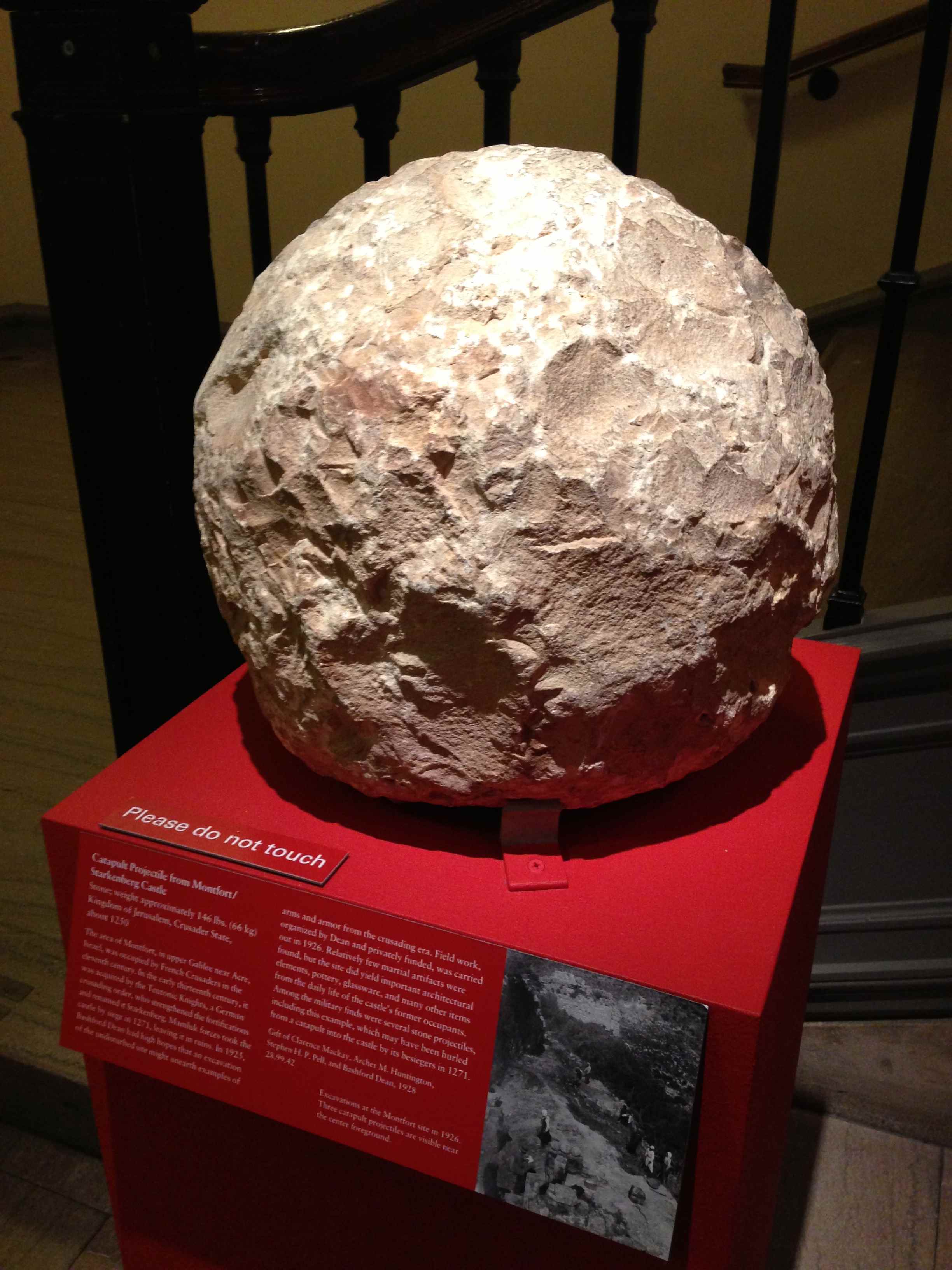
Catapult projectile hurled at Montfort Castle by Baibar’s military engineers in 1271

Catapult projectile hurled at Montfort Castle by Baibar’s military engineers in 1271

The Metropolitan curators are at it again. Just when you thought it was safe to walk back through the Arms and Armor hall, admire the century of work that went into building that collection, weave around the people checking out the Colt revolver in the case at the end of the hall, and hang a hard right to the faraway cul-de-sac…BAM!  You’re headed even further back in the time machine.

It may look like an asteroid or that lumpy moon model on Dr. Neil’s Scales of the Universe at AMNH’s Planetarium, but it’s something even more amazing — a projectile shot from a catapult in 1271 as part of the Crusades. Apparently it worked, since the German knights holed up in the Kingdom of Jerusalem’s Montfort Castle surrendered to the invaders.

The simple hunk of rock is right out there with a “do not touch” sign at the entrance to the tiny Gallery 380 where the Met is honoring Bashford Dean, who began the Arms and Armor collection 100 years ago. It may look all alone, yet it has one of the best, most exciting stories to tell – tales of Teutonic Knights, sieges, Mamluk invaders, grand expeditions, monumental excavations, and private enterprise.

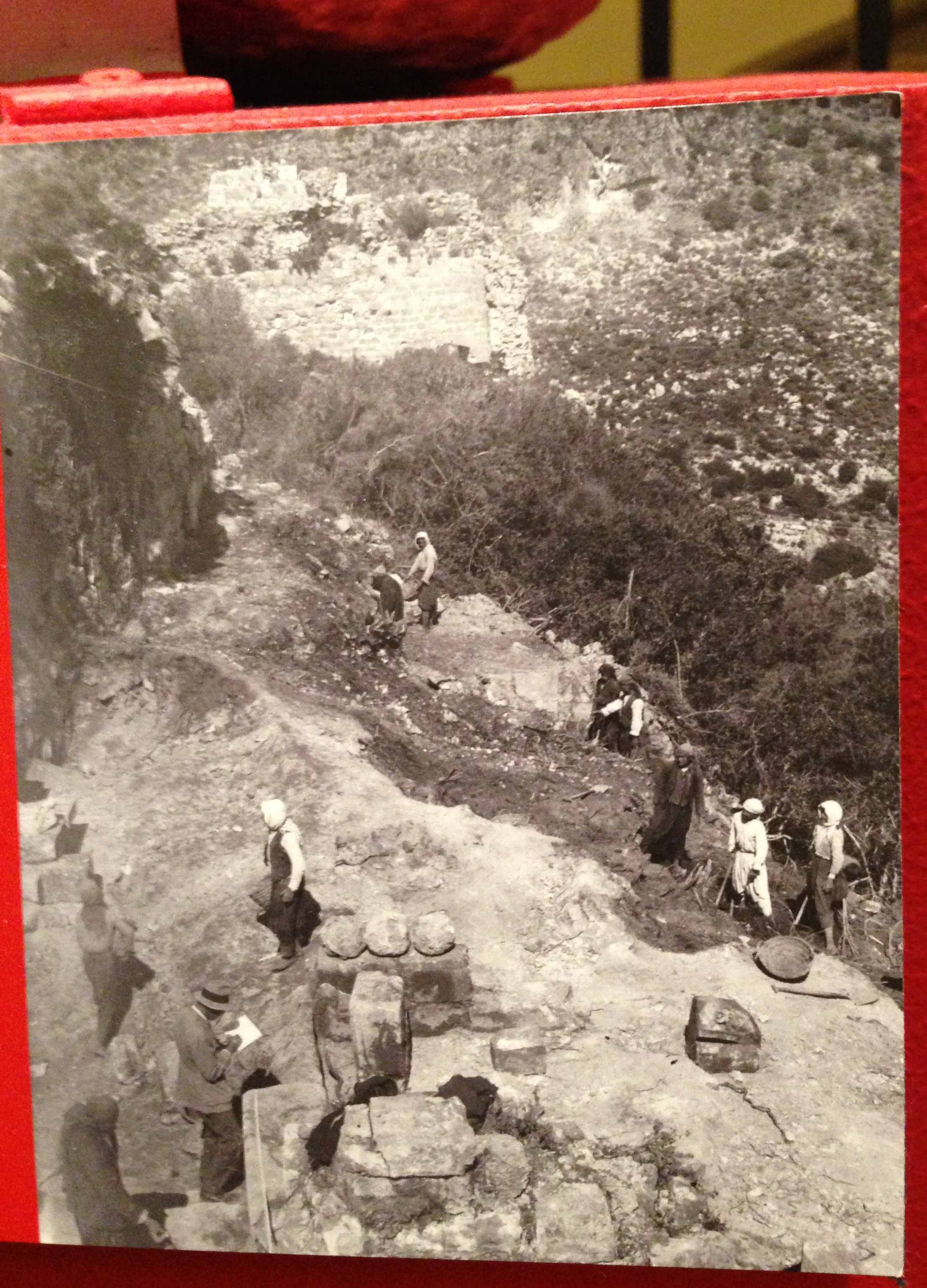
1926 excavation photo showing three projectiles

1926 excavation photo showing three projectiles

Apparently Dean thought that the keep inside the ruined Crusade-era castle in Upper Galilee might have Teutonic armor and other stuff from the 1200s. In 1925, he mounted a privately funded expedition to dig it up. He never found what he was after, but he did find day-to-day castle stuff (pottery, glass) and a few catapult projectiles (three are in the photo) lobbed in there by the invaders during the siege.

Looking through the Met’s online database, only about 100 items date from the 1200s, mostly from the Islamic countries. So, go take a look at this unique memento, sitting alone at the foot of the stairs in the furthest corner of the Met’s universe, and thank the curators and crew, who hoisted it out again into daylight 750 years after it met its mark.

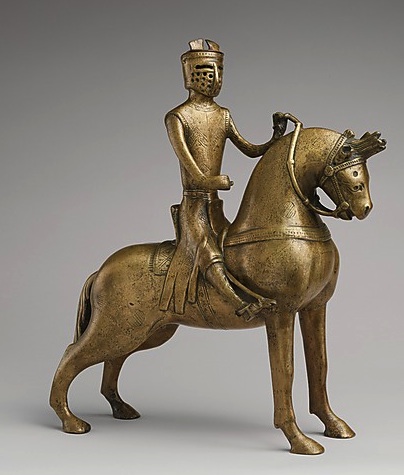
1250 Crusader fashion

1250 Crusader fashion

Don’t be Sad, He’s Irish!

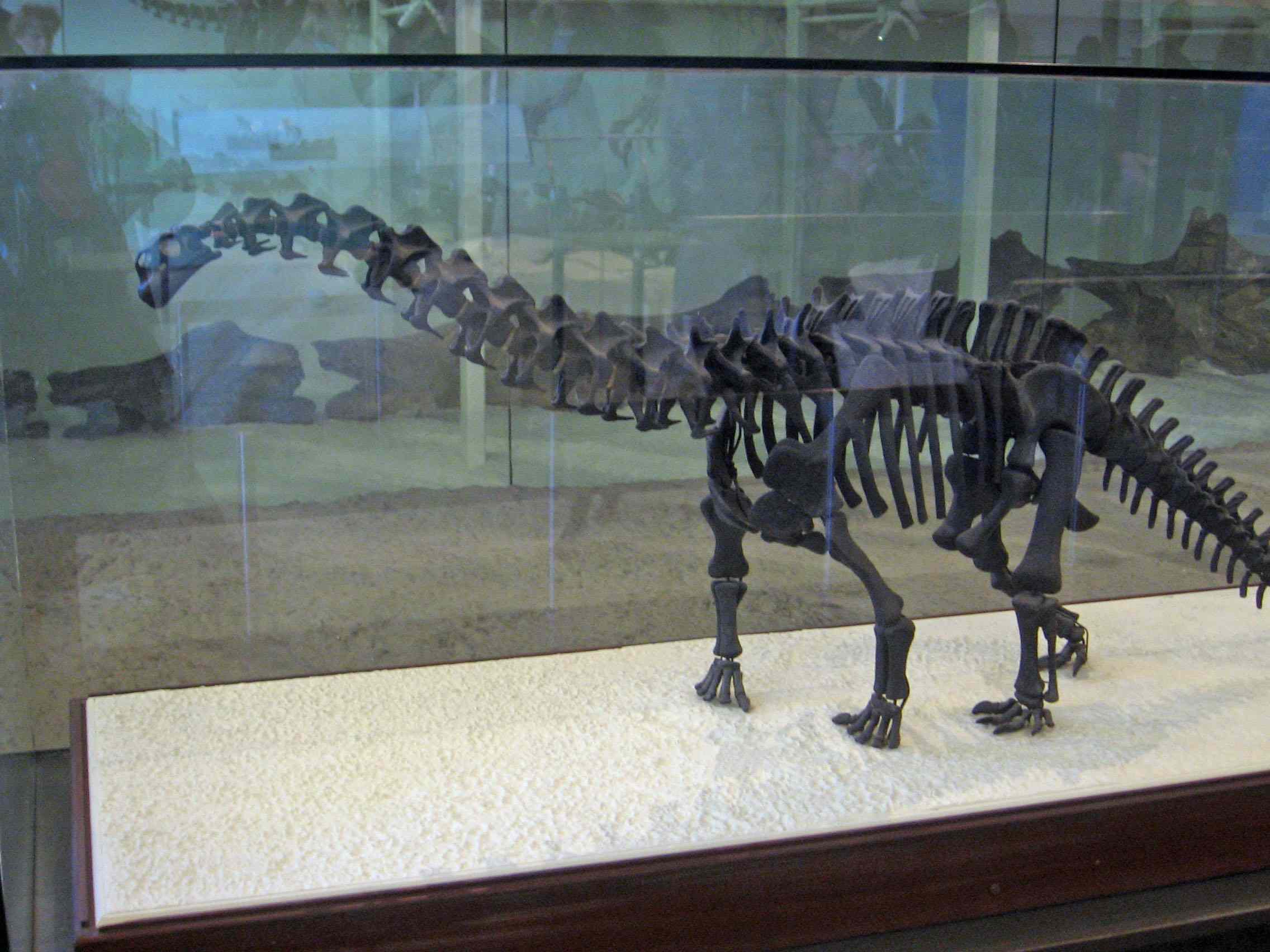
Apatosaurus holds court on the Fourth Floor of AMNH. Source: Scott Robert Anselmo

Apatosaurus holds court on the Fourth Floor of AMNH. Source: Scott Robert Anselmo

There’s no way to count the number of times that people get upset because his actual scientific name is no longer Brontosaurus.

He’s one of the most famous dinosaur celebrities in the world and you may know him as Brontosaurus from your Flintstone days, but his real name is the Apatosaurus.

So just think about it….It’s the perfect day for you to learn to say his “Irish” name — A-PAT-o’saurus. Isn’t that better? Go over to wish him well this weekend.

ModelHe’s the largest dinosaur on display in New York. He came here all the way from Wyoming, and he’s been standing here since 1905, when J.P. Morgan and the AMNH crew unveiled him. It was the first time that a really big dinosaur was ever mounted in 3D anywhere in the world.

To the left is the “architect’s model” that the 1905 crew used to figure out how to weld together enough steel to keep the tons of rock up in the air. A-PAT-o’saurus, Happy Irish Day!

Met Uses Dress to Deconstruct Matisse’s Creative Process

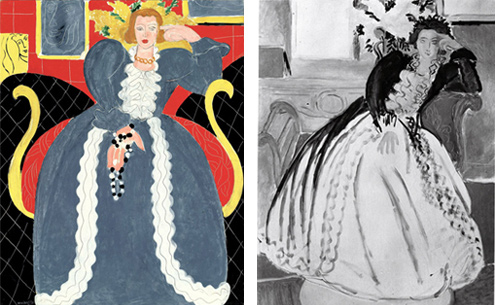
Finished product and earlier stage of Matisse’s The Large Blue Dress (1937). Source: Philadelphia Museum of Art. © 2012 Succession H. Matisse / Artists Rights Society (ARS), New York

Finished product and earlier stage of Matisse’s The Large Blue Dress (1937). Source: Philadelphia Museum of Art. © 2012 Succession H. Matisse / Artists Rights Society (ARS), New York

After walking through gallery after gallery of spectacular Matisse works, it’s a little shocking to turn enter Gallery 6 and see the actual skirt that his model wore to inspire one of his most loved works. Maybe it’s not so shocking, considering how much he loved textiles.

This surprise is just one part of a fascinating eight-gallery blockbuster that deconstructs the master’s creative process – the Metropolitan Museum of Art’s show Matisse: In Search of True Painting.

The show features nearly 50 works from Matisse’s career, chosen especially to reveal his thoughts behind selecting the colors, shapes, and patterns that we know so well. They’ve brought together versions of the same work and hung them next to one another. The Met’s website has views of each gallery.

The Gallery 2 view shows how the Met has displayed some of Matisse’s 1906 experiments. Check out this video narrated by curator Rebecca Rabinow:

Since Matisse liked to have visual reference points, by the 1930s he began more formal documentation of the various stages of each work. His famous Large Blue Dress painting (1937), lent by the Philadelphia Museum of Art, not only features photos of the painting’s stages but the actual blue dress made and worn by the model, Lydia Delectorskaya. Let the curator tell you more about it:

Take a look at some of the selected highlights of the show on the web, but get over to see it all in person to experience fully the power of Matisse’s color and light in a unique, exceptional, and illuminating context.

The Armory Show 2013: It’s a Wrap

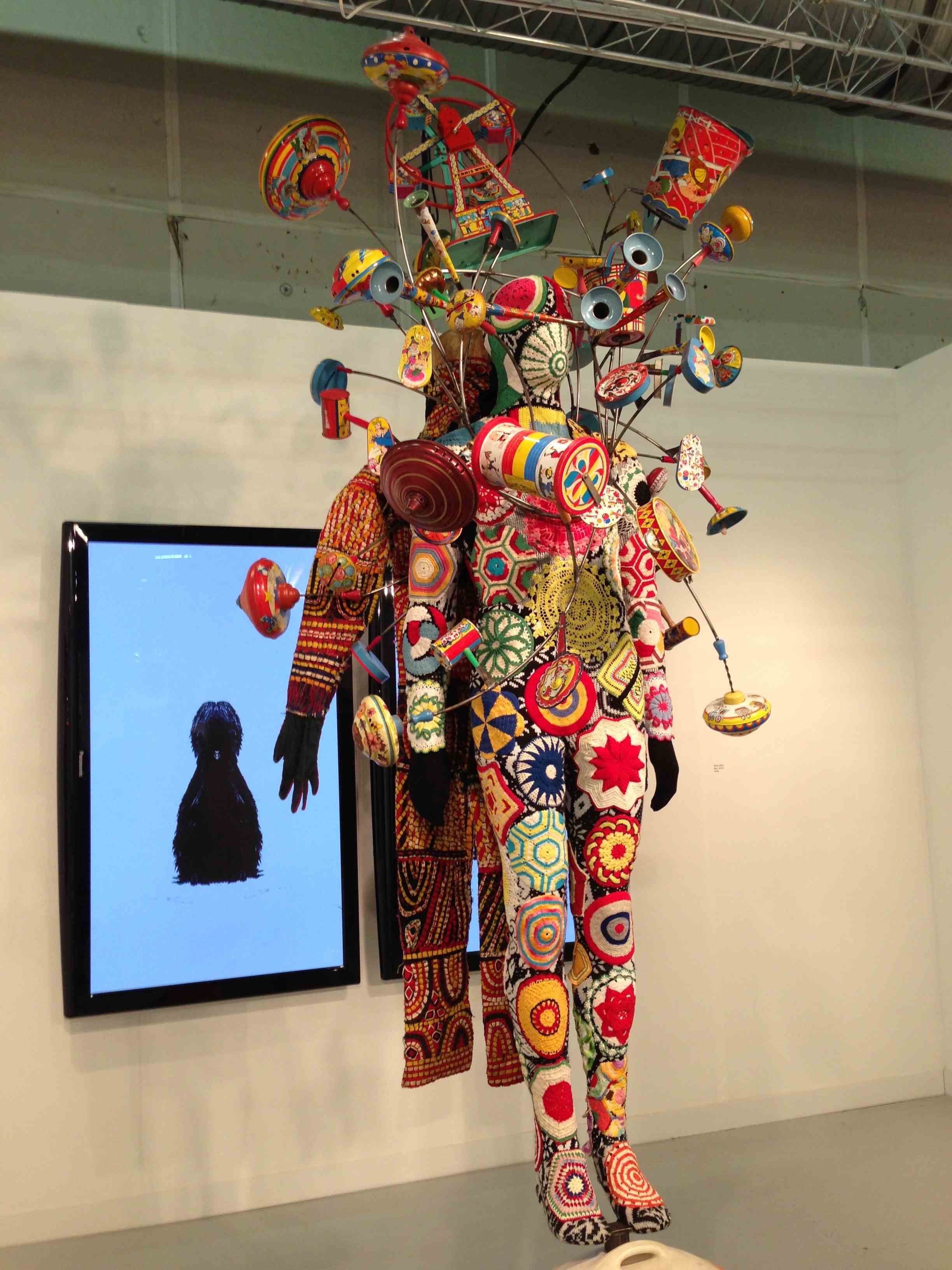
Nick Cave soundsuit (2012) and video featured at Jack Shaniman Gallery booth at the Armory Show’s Contemporary pier

Nick Cave soundsuit (2012) and performance video featured at Jack Shaniman Gallery at the Armory Show’s Contemporary pier

One hundred years ago, The Armory Show blew the roof off New York City as Matisse, Monet, Picasso, Seurat, Lautrec, Kandinsky and The Eight made history at Lexington and 26th Street. It was the beginning of Modern in America, and even Whistler’s Mother showed up.

This week, the 2013 edition of The Armory Show glamorized the West Side with its wall-to-wall extravaganza of modernist and contemporary sculpture, painting, and installation art at Piers 92/94. Take a walk-through of both shows via our Flickr photo feed.

Tributes to the original were in view in the Modern portion of the show, such as Munch’s intense woodcut Vampire II (1895-1902), as were edible Parisian imports from the Laudrée macaroon cart just inside the entrance. The show began right at coat check, where a few people were walking around carrying flattened-out versions of Andy’s Brillo boxes. Around the bend, there was the source: a silver chamber where the Pittsburgh’s Warhol Museum was inviting art-lovers to sit in front of a video camera to record a Warhol screen test. Obviously, the box carriers had claimed their 2.5 minutes of fame.

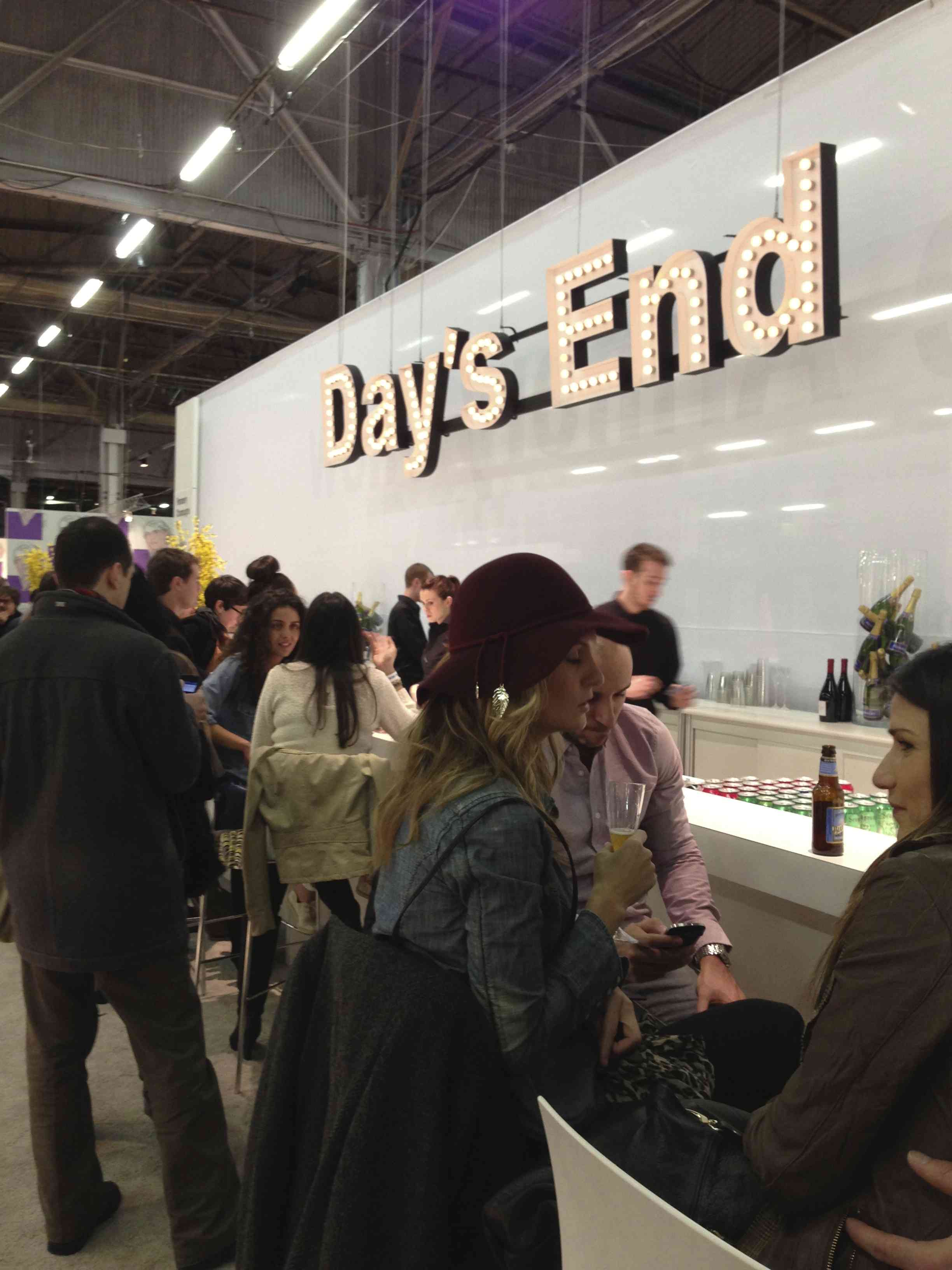
All-important champagne bar at the Armory Show’s Contemporary pier

All-important champagne bar at the Armory Show’s Contemporary pier

The Modern show featured a mix of new and old, but everything certainly looked fresh. People were even taking turns having their pictures taken with a large Basquiat painting at the Tokyo’s Galerie Sho Contemporary Art booth.

The Contemporary pier was filled with twice as much art. Although there were no actual performance installations on Saturday (as there were in last year’s show), two booths attracted lots of bystanders with performance videos – Marlborough’s Shade Composition video by Rashaad Newsome (evoking 80s Harlem ballroom voguing) and one of superstar Nick Cave’s soundsuit performances on a sharp, clean screen mounted right behind an actual, riotous soundsuit. (Be sure to catch his “horses” performing at Grand Central March 25-31 for Creative Time/MTA Arts for Transit.)

Other hits from the Contemporary pier (besides the champagne bar) included Tony Tasset’s snowman made entirely from inert material, right down to the bronze twigs and leaves (Kavi Gupta Gallery) and Kysa Johnson’s monumental recreation and embellishment of a Bank of America waiting room at Morgan Lehman, layered with the calculated, rational precision of Piranesi’s perspective.

Take a look, because it’s all being packed up and shipped back to Dusseldorf, Istanbul, Oslo, London, Paris, and Chelsea today.

Red Carpet History at Grand Central

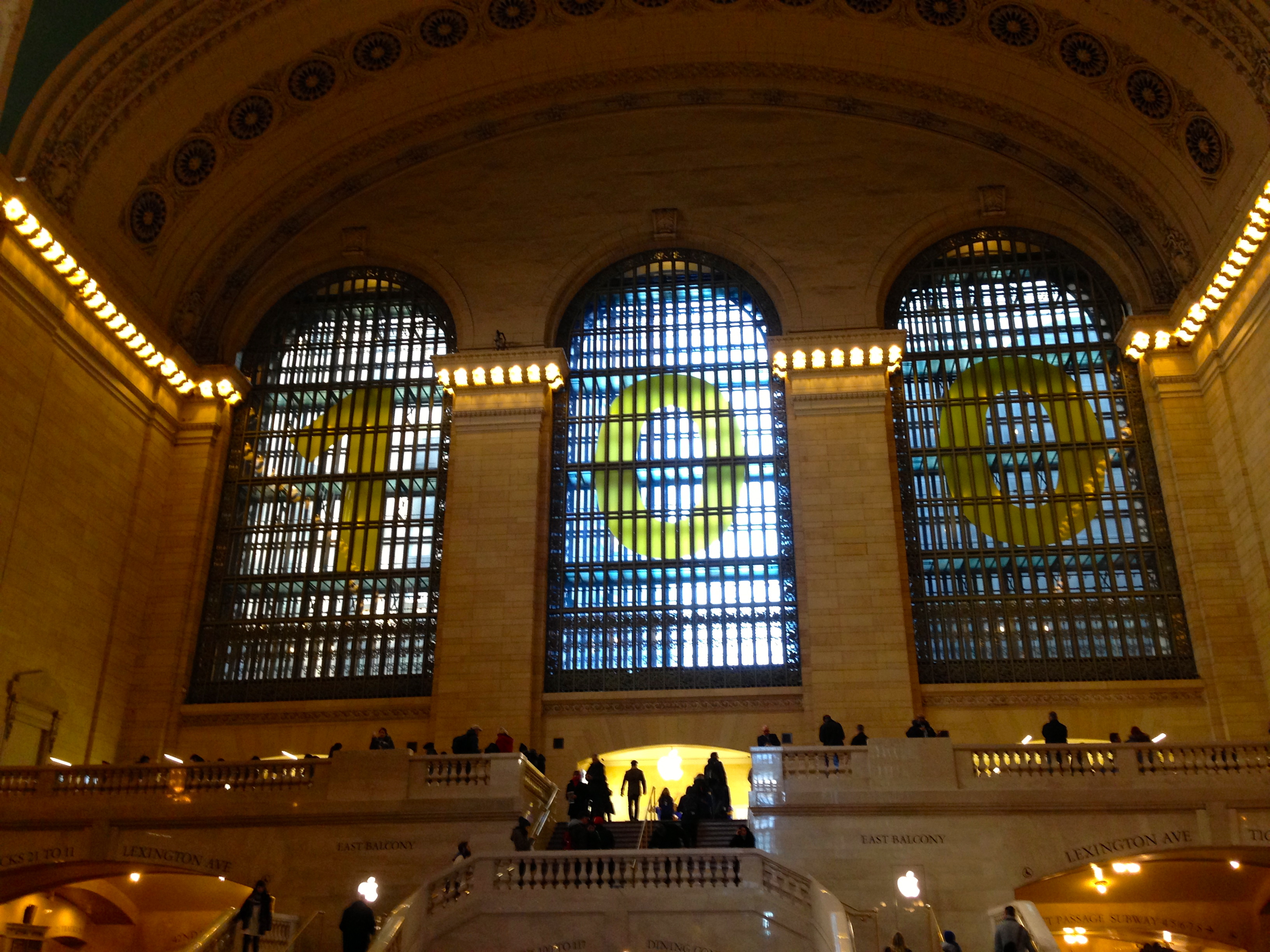
Original Red CarpetIf you’ve ever wanted to see where the red carpet began, run over to 42nd Street and take a left into Vanderbilt Hall to gaze upon the plush surface upon which so many famous, fabulous, and acclaimed celebrities and moguls trod – the red carpet that was spread daily to the lucky ones who could afford to board the 20th Century Limited from New York to Chicago.

It’s all part of the New York Transit Museum’s spectacular exhibition Grand by Design: A Centennial Celebration of Grand Central Terminal, running through March 15.

Docents give tours on the half hour, and they’ll tell you that the care taken with passengers right here at Grand Central was the origin of the phrase “red carpet treatment”. You’ll see an original destination sign, menus, and photos of the glamorous train (which will itself make an appearance at GCT on May 10-12). Take a look at the Flickr photos.

GCT at 100You’ll also be entertained by stories of the engineering, architectural, and pop-culture history of the terminal itself, and remember the stories about the chandeliers, stonework, ramps, and restoration every time you pass through. Get over to see all the memorabilia, trunks, engineering plans, and videos in person from 8am to 10pm daily before they are gone.

Some of the surprises are the “Ask Me” kiosks scattered throughout the hall, descriptions of how GCT changed the course of Midtown real estate, the story of how CBS and Walter Cronkite used to broadcast from here, and the size of that tunnel boring machine creating access for the LIRR to get into GCT 18 stories below. It’s all amazing, including the 1855 view of Midtown looking south from 42nd Street, lent to the show by the New-York Historical Society.

For a prequel, check out the NY Transit Museum’s historic timeline that lets you flip through online photos of various GCT incarnations since 1831. It’s really good, but not a substitute for seeing the red carpet, power-switch control panel, restored lamp post, and clips from movies that were filmed right where you’re standing. About 750,000 people pass through here each day, and from what we can tell, a lot of them are stopping to take a free 25-minute tour and check out the red carpet that started it all.

Artists Occupy Bank in Queens

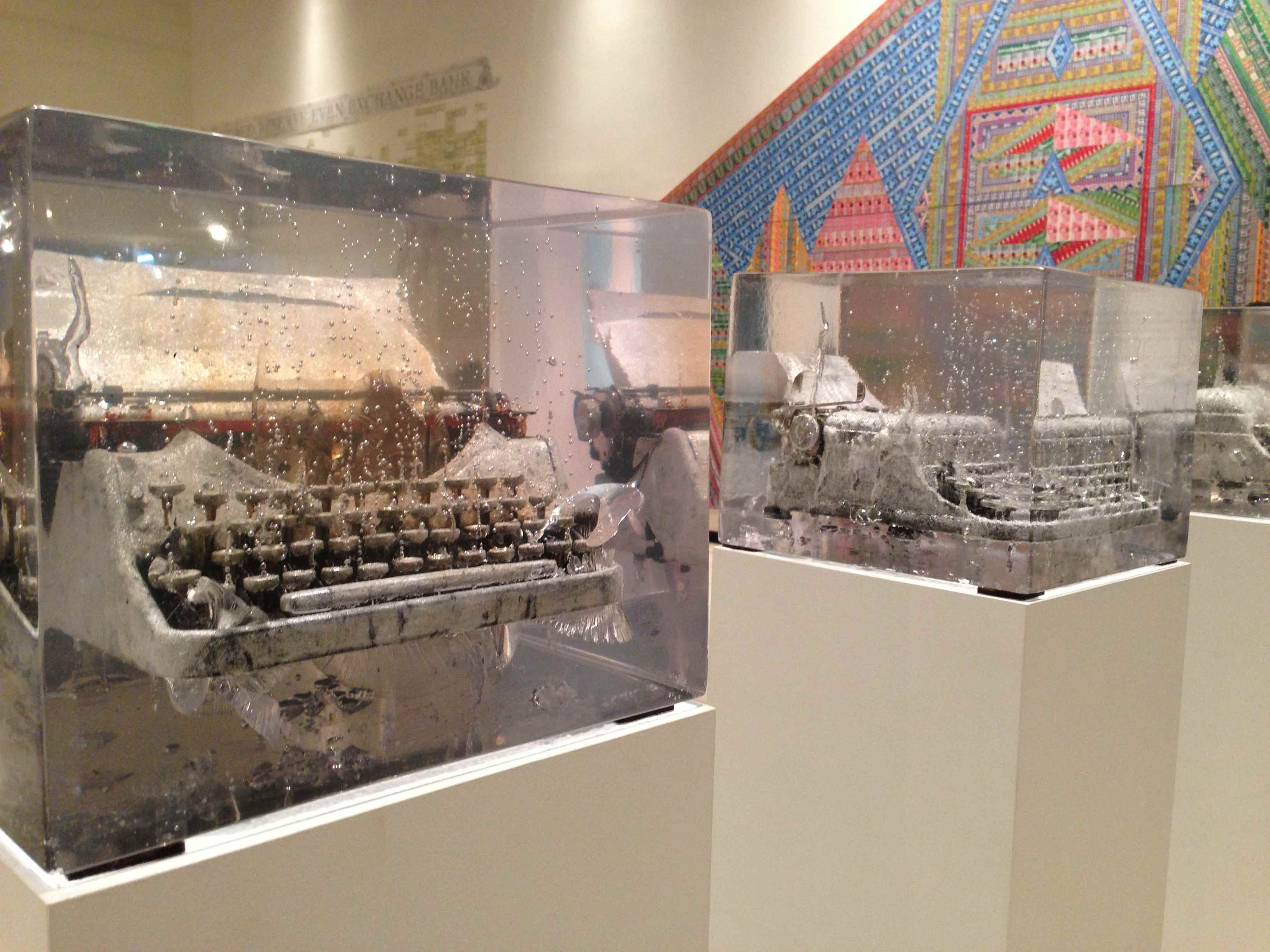
Installation view of Keiko Miyamori's typewriters-in-resin (2012) with Ghost of a Dream's The Price of Happiness mural (2011) made from US and Chinese lottery tickets.

Installation view of Keiko Miyamori’s typewriters-in-resin (2012) with Ghost of a Dream’s The Price of Happiness mural (2011) made from losing US and Chinese lottery tickets.

Just as they did in the Bronx last summer at the Andrew Freedman Home, No Longer Empty has invited artists take over the former Bank of Manhattan in Long Island City and let us contemplate the meaning of currency and exchange in today’s troubled times.

Get over to see how 26 artists from 15 countries think about the American economy in How Much Do I Owe You, which is right next to the Queens Plaza subway station in the Clock Tower Building (29-27 41st Avenue). There’s lots of thought-provoking stuff from the moment you enter the door, like Ghost of a Dream’s The Price of Happiness mural. It depicts a typical American house made up of losing US and Chinese lottery tickets, and was made by the group during their stay in China. Check out more pictures of our favorites on Flickr.

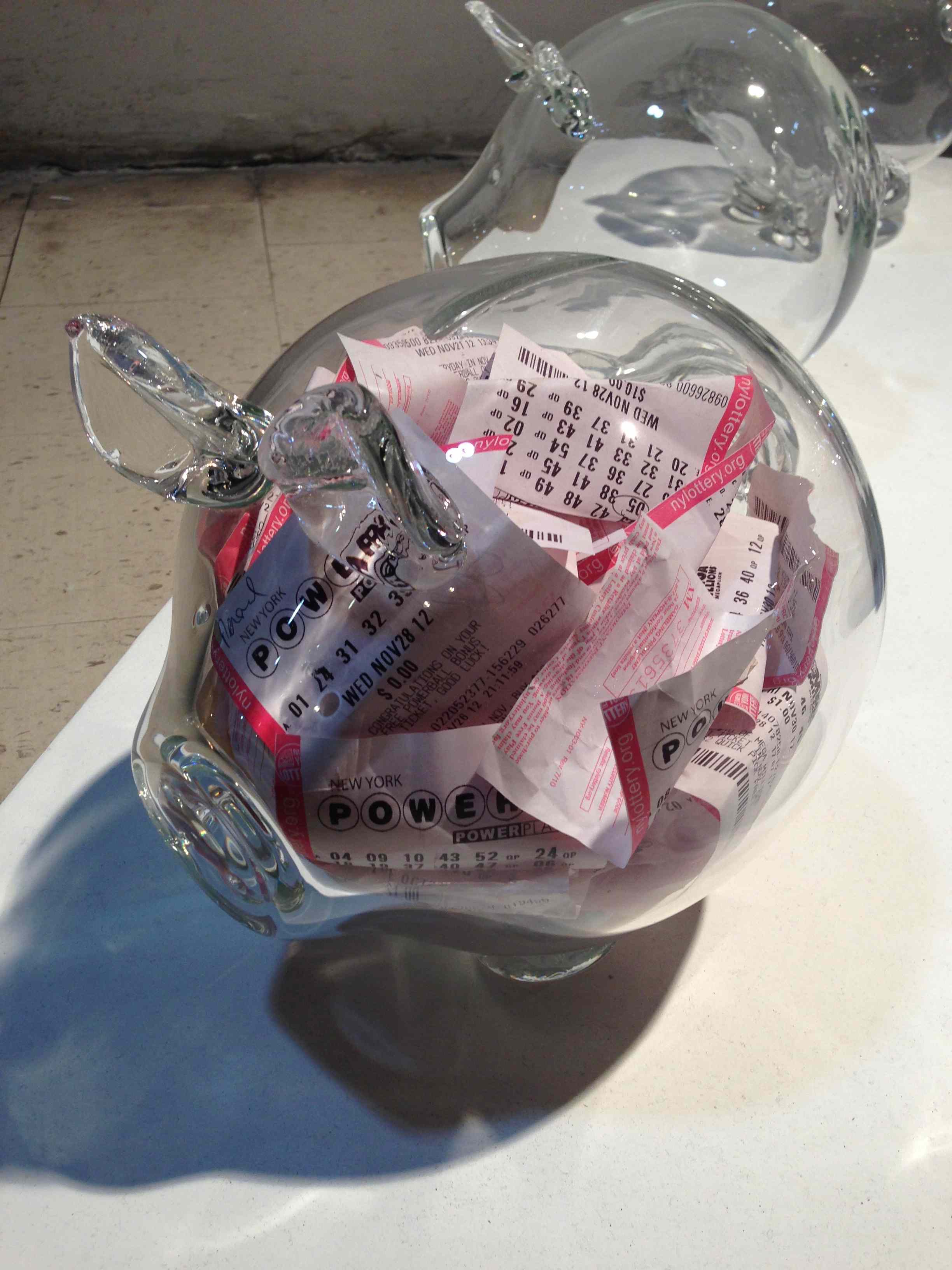
Installation view of Coleen Ford's Saving for our Future (2010), glass piggy banks stuffed with lottery tickets.

Installation view of Coleen Ford’s Saving for our Future (2012), glass piggy banks stuffed with lottery tickets.

Erika Harrsch’s Mao Dragon Kite and several US Dollar Kites fly overhead.  Keiko Miyamori’s typewriters-sunk-in-resin evoke historic systems and intractable problems. Susan Hamburger adorns a faux “bank” space (formerly where the bank tellers worked) with an old-style, symbol-filled mural that lays out relationships among Wall Street and Euro financial actors in the Greek debt crisis.

Downstairs by the bank’s vault, installations have a more private feel. Enter a small room to see and hear the results of Nicky Enright’s survey of the financial status of 80 artists in his Money Talks video (it’s not pretty). Enter a small alcove to watch Ana Prvacki’s amusing video of literal money laundering – in the guise of a “smelling good” household product commercial (think Wet Ones), she cleans and smells dollars in the hopes that she can bring about “a clean money culture”

When you round the corner to enter the open vault, you’ll be completely absorbed in watching Orit Ben-Shitrit’s mysterious performance video, Vive le Capitale, which was shot in HD among the vaults of the old Bankers Trust building at 14 Wall Street.

Last weekend, the gallery was packed for a round-table discussion – one of several live events that No Longer Empty has scheduled here until closing on March 17. Alert: Lots of cool things are planned for the space on March 8, Long Island City Night of Armory Arts Week, so catch a tour or a provocative conversation.

Spacewar Ending in Astoria

Replica of the round CRT and game controllers developed at MIT in 1962 to run Spacewar on DEC’s PDP-1, the first commercial interactive computer. Note input-output typewriter.

Replica of the round CRT and game controllers developed at MIT in 1962 to run Spacewar on DEC’s PDP-1, the first commercial interactive computer. Note input-output typewriter.

It’s all aliens, flying saucers, galaxies, and other worlds inside the Museum of the Moving Image’s tribute to gaming history, Spacewar! Video Games Blast Off, soon ending in Queens.

The big, expansive dark gallery is a gamer’s dream, with flashing lights, arcade consoles, virtual headgear, and wall-sized projections distributed around the room. Last weekend, enthusiastic museum-goers were happily roaming through the space, enjoying the please-touch experience of interacting with 20 historic video games from the last 50 years. Yes, they all work!

The show begins with a reverential replica of the game that started it all in 1962 at MIT, Spacewar, the first virtual intergalactic battle in deep space. Check out the story of SpaceWar, a slick, fun video created by the Computer History Museum in Silicon Valley. (Spoiler alert: it involves model railroading.) If you want to read more, here are links to the 1972 Rolling Stone article that predicted that computer gaming was going to take off in big ways.

Child waits turn as museum-goer enjoys Galaxy Force II, Sega’s 1988 arcade game built upon a flight-simulator cabinet.

Child waits turn as museum-goer enjoys Galaxy Force II, Sega’s 1988 arcade game built upon a flight-simulator cabinet.

The museum did not feel compelled to arrange its time-machine arcade in chronological fashion, and it’s fun switching back and forth among the different technologies. You’ll find Atari’s 1979 Asteroids arcade unit is next to Nintendo’s 2009 Super Mario Galaxy II and Atari’s 1982 home console for Yar’s Revenge. There’s even the 2009 iPad game Osmos.

No one has to wait very long to step up and play, although there was tiny queue for Space Invaders, the 1972 arcade sensation that was one of the earliest microprocessor-based units. Dads were having fun explaining to kids exactly why it didn’t fire as fast as games they have at home.

Leave that light saber app holstered, and get to Astoria to relive what it was like the first time you fought in space.  Note: Admission gets each person four complimentary arcade tokens, but you can always buy more.

Sarongs in Winter

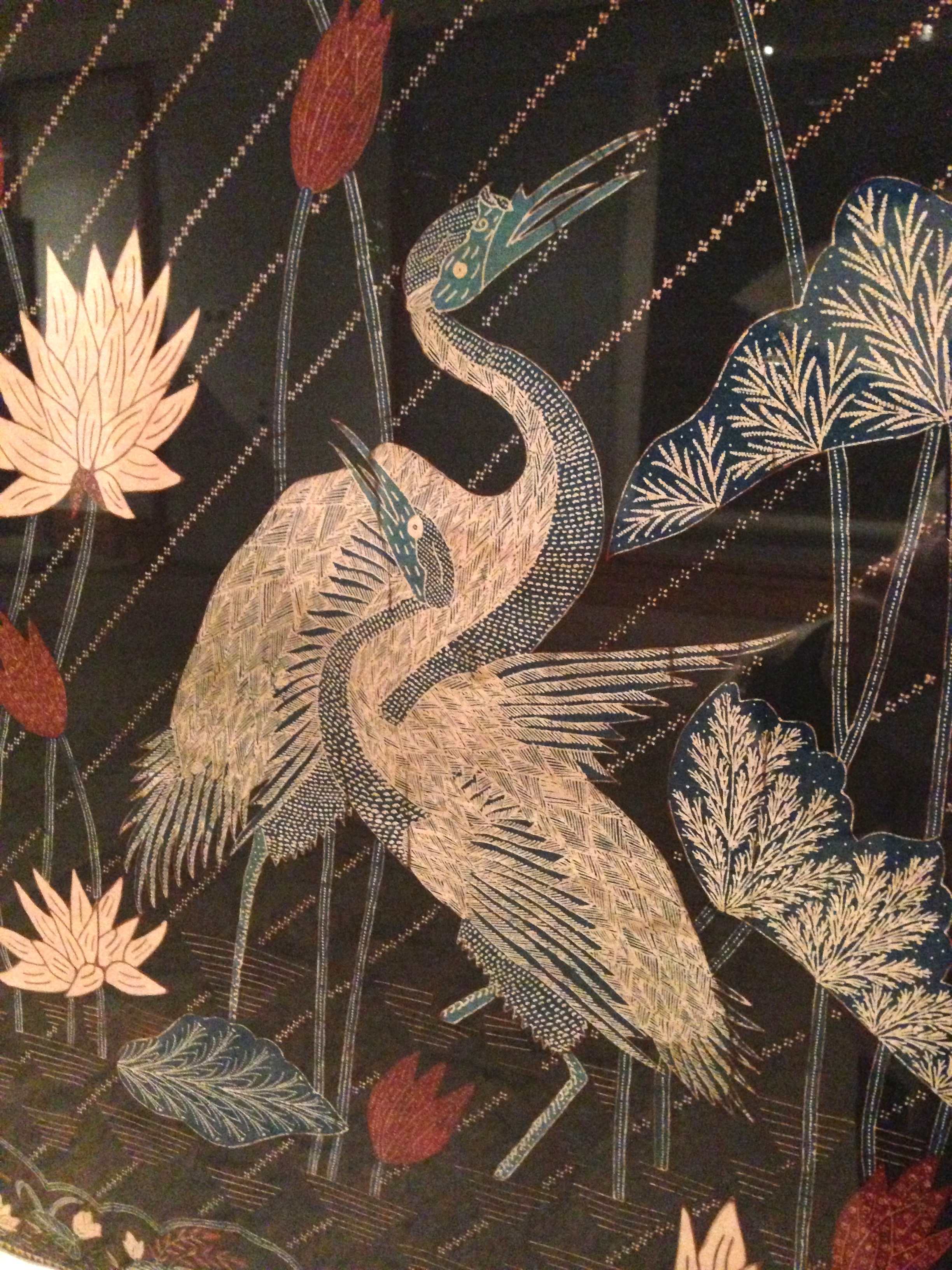
Installation view of woman’s cotton sarong incorporating Chinese-style cranes, probably from the workshop of Mrs. Wilemse (1890-1910). Central Java, Indonesia

Installation view of woman’s cotton sarong incorporating Chinese-style cranes, probably from the workshop of Mrs. Wilemse (1890-1910). Central Java, Indonesia

It’s the smallest show right now at The Met. It doesn’t even have its own web site. If you’re on the way to see Matisse on the First Floor, pause to take a close-up look at some marvels of the textile collection and imagine you’re on the faraway Indonesian island of Java in the micro-show, Resistance and Splendor in Javanese Textiles.

The curators have framed a collection of textile masterworks from that exotic corner of the world, mostly sarongs. If you read the label copy, the series of textiles embellished in the resist-dye technique evoke quite a bit of the recent history of Indonesia.

Everyone knows batik, but you may not know that it was cultivated as an export by the Dutch in colonial times on Java (formerly Dutch East Indies). Or that there were workshops whose fabric designs were as identifiable in 1890s Java as 1990s Versace prints are to us.

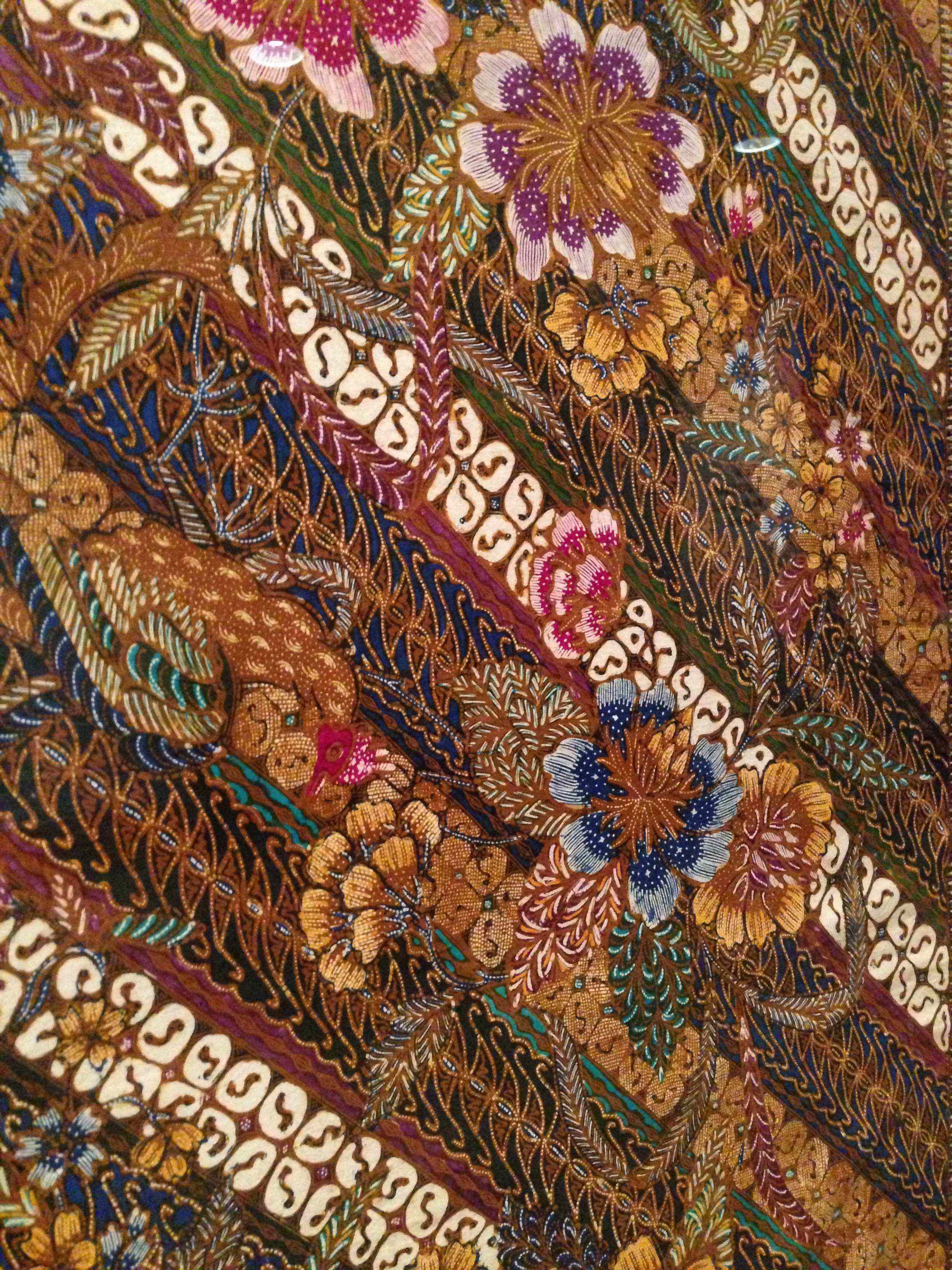
Small detail of wrapper in Hokokau style (early-mid 1940s). Traditional  motifs on diagonal with European-style flowers.

Small detail of wrapper in Hokokau style (early-mid 1940s). Traditional motifs on diagonal with European-style flowers.

As demand grew throughout the 20th century, designs changed, adhering to tastes of foreign buyers, even while the resist-dye masters kept mashing in the iconography of ancient Javenese royalty. As the curators mention, it’s particularly poignant that some of the most intricate, beautiful resist-dye textiles were made under the difficult WWII Japanese occupation of Indonesia. Apparently cotton shortages allowed the master craftsmen to spend more time perfecting elaborate techniques.

The intricacy, dynamism, and history of this textile display is something you really need to see up close. Thank you, Ratti Textile Center vault.