The Art of ElBulli’s Culinary Genius

Notebooks and menu drawings from ElBulli’s kitchen displayed in front of a mural of Ferran Adrià and staff in Roses, Spain in the most famous kitchen in the world. Courtesy: elBullifoundation, The Drawing Center

Notebooks and menu drawings from ElBulli’s kitchen displayed in front of a mural of Ferran Adrià and staff in Roses, Spain in the most famous kitchen in the world. Courtesy: elBullifoundation, The Drawing Center

If you weren’t able to visit the famed ElBulli restaurant on the coast of Spain before it closed two years ago, don’t worry. Pop down to Soho to meet the man, his team, and his legacy through The Drawing Center’s provocative show, Ferran Adrià: Notes on Creativity, running through February 28.

Even if you can’t taste the world-renowned creations, you’ll feel as though you’ve entered his kitchen during the six months per year that his team worked on R&D through up-close looks at experiments, plating, techniques, codes, inventions, and graphic treatises. Take a look at the installation on our Flickr feed.
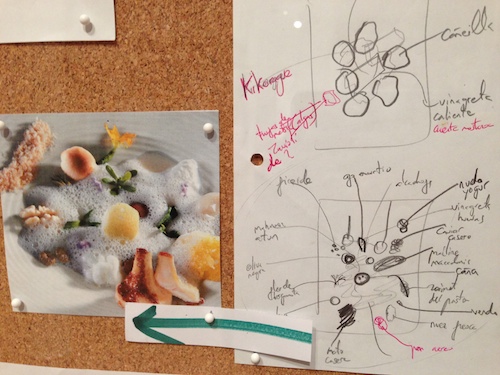
Close-up of large working board of photo and diagrams document the plating and components of each dish. Courtesy: elBullifoundation

Close-up of large working board of photo and diagrams document the plating and components of each dish. Courtesy: elBullifoundation

Last weekend, the Wooster Street space was jammed with visitors eager to see glimpse the genius behind the magic of the famed elBulli – notebooks filled with diagrams of exacting platings of food, a room inside the gallery evoking elBulli’s Barcelona archive, huge storyboards pinned with drawings and photographs of artist-inspired dishes, and glass-topped tables containing inventions that created some of the most amazing food–art in the world.

Examples: the apparatus that turns cheese into “spaghetti”, the glass bowls used to serve diners “edible air”, or the cocktail device that literally sprays a dry martini right into a diner’s mouth.
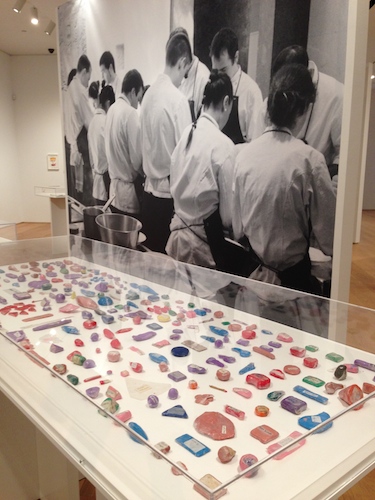
240 plasticine models used to standardize recreation of the sizes and shapes of various portions of food used as components in his highly inventive, artistic dishes. Courtesy: elBullifoundation, The Drawing Center

240 plasticine models used by staff to recreate precise shapes and portions of artistic dish components.

And how do you keep the beautiful dishes consistent? By making little plastic sculptures so that the kitchen crew knows how to duplicate forms for delicate platings precisely on everyone’s plate. When you’re delivering identical 40-course dinners to guests who have flown halfway around the world to join you for dinner, precision counts.

Improvisation may have happened during the six months of the year that elBulli shut down to devote itself to R&D, but not so much during dining-season crunch time. Just look at the large wall drawing that Adrià sketched for this show — Map of the Creative Process: Decoding the Genome of Creativity. Organization is key.

Last weekend, there were no empty seats in the downstairs video viewing gallery, as visitors sat mesmerized by 1846, the 90-minute film co-produced by The Drawing Center, showing every dish Adriá ever served at elBulli (1987 – 2011).
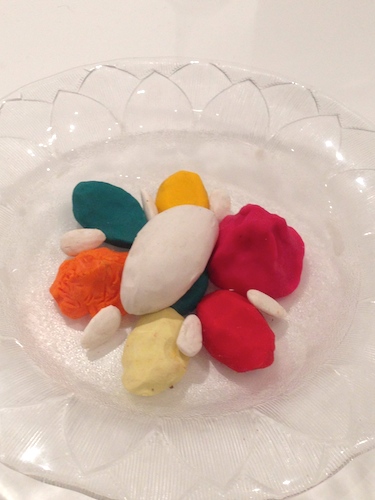
Plasticine model of the 1994 Le Menestra dish composed only of textures, including cauliflower mousse, basil jelly, almond sorbet, avocado, and numerous other components. Courtesy: elBullifoundation

Plasticine model of the 1994 Le Menestra dish composed only of textures, including cauliflower mousse, basil jelly, almond sorbet, avocado, and numerous other components.

Photos of gorgeous, glistening food on plates, rocks, and wood lilted by to an opera soundtrack punctuated by the sounds of water lapping on the shore near the restaurant.  Plates of vegetables, seafood slices, sprigs, and flowers wafted by. What are those spoons filled with? What appeared to be “hatching” out of that egg? What was the egg? What was perching on a stalk like an insect? The effect made you feel as if you were seeing life on Earth evolve…biomorphic shapes surrounded by foam.

You could tell that these art-and-food lovers had absorbed the exhibit upstairs when there was a collective gasp of recognition when the real-life version of La Menestra (accurately and lovingly represented in plascticene upstairs) floated onto the screen.

Since he shut the most desired and famous restaurant in the world, Adrià has been hard at work making sure that his thoughts, processes, philosophy, and research were well documented and translated to digital form. Although it’s still in beta, he’s incorporating it all into an online encyclopedia of gastronomic knowledge.

Kudos to Brett Littman and his team at The Drawing Center for mounting a show that pays tribute to food-as-art and shows us how creativity, inspiration, and documentation (in the hands of an genius, or team of geniuses) can turn experiments in a kitchen on a small Spanish seaside cove into a global digital export of wisdom and innovation for the next generation of chefs.

Take a look at Bullifoundation’s promo video to see what’s in store:

Happily, this show is going on the road in the United States before it leaves for The Netherlands in 2016:  See it at the ACE Museum in LA (May 4-July 31), Museum of Contemporary Art in Cleveland (September 26-January 18, 2015), or Minneapolis Institute of Art (September 17, 2015-January 3, 2016).

Here’s a link to Documenting Documenta, a 2011 film about Adrià’s life, inspiration, work, and participation in Documenta 12, an international cultural festival in Kassel, Germany that happens every five years.

The Corset that Changed Cultural History and the Man Who Made It

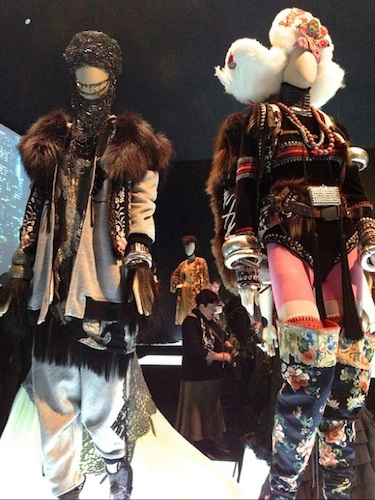
JPG’s creation for Madonna’s “Like a Virgin” segment of her 1990 tour. Made from vintage 1930s lame

JPG’s creation for Madonna’s “Like a Virgin” segment of her 1990 tour. Made from vintage 1930s lame

Amidst the light, glamour, glitter, and mystery sending shock waves and awe through the masses crowding into the Brooklyn Museum’s show, The Fashion World of Jean Paul Gaultier: From the Sidewalk to the Catwalk, a hush falls as each person realizes they’re only an arm’s length away from the Icon’s icon. Lovingly crafted from vintage lame, JPG and Madonna had no idea (according to Madonna) what a sensation their underwear-as-outerwear statement would create in fashion, performance, pop, and culture when JPG designed her get-ups for the Blond Ambition World Tour. Get out to Brooklyn to experience this über-tribute before Feb 23.

Madonna’s lent her JPG corsets to the section of the show where the walls are covered in quilted satin, and JPG dug into his archives, too: You’ll see the series of illustrations he did to show the looks he would create for the tour, as well as JPG’s personal Polaroids shot during the initial fittings. If you’re very quiet in this part of the show, you’ll also hear visitors gasp when they realize that they’re looking back at artifacts from 1990!

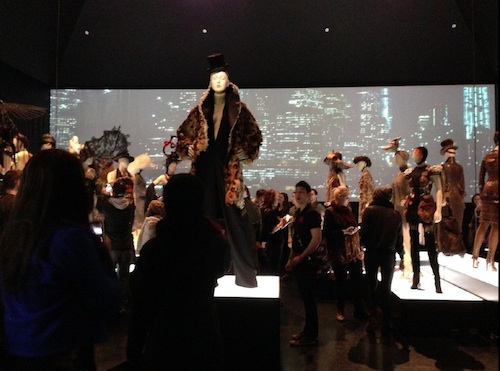
Crowds listen to the mannequin sing in the Metropolis gallery during the show’s final week.

Crowds listen to the mannequin sing in the Metropolis gallery during the show’s final week.

This genuinely theatrical tribute to JPG is chock full of corsets and cages made from silk, leather, raffia, wheat, and enough other stuff to win the Unconventional Materials challenge hands-down. O ye of Project Runway, worship at the mannequins of the Master!

At the entrance to the show, there are two small photo portraits of JPG taken by Mr. Warhol himself. They’re at a dance club in 1984 and JPG is in one of his Boy Toy collection outfits. Andy is quoted as saying, “What he does is really art.” It’s a curatorial anointment that offers a subtle, quiet, reflective moment to what you’re about to experience.

Dealing with the recent blizzards would have been more fun if you had shopped JPG’s Voyage Voyage ready-to-wear collection (2010-2011). These are styled with pieces from older collections.

Dealing with the recent blizzards would have been more fun if you had shopped JPG’s Voyage Voyage ready-to-wear collection (2010-2011). These are styled with pieces from older collections.

Room after room of gender-bending, mind-altering, color-crazy, history-twisting looks, gowns, shoes, bodysuits, and haute handwork reminds us that JPG has been pushing the boundaries for over 40 years, inspired by French sailors, French culture, 50s TV, global culture, his grandmothers unmentionables drawer, and the ever-inspiring gritty street. How do you use embroidery, neoprene, stuffed silk tubes, tulle, and illusion in a subversive manner? Take a stroll through JPG’s master class.

You’ll find mermaids worn by Beyoncé, a French sailor-striped gown worn by Princess Caroline, red carpet looks worn by Ms. Cotillard, a Mongolian shearing coat sported by Bjork, and photos of supermodels and superstars sporting outrageous and inventive looks. The names of the collections alone tell you the scope of his interests – Haute Couture Salon Atmosphere, Ze Parisienne, Flower Power and Skinheads, Paris and Its Muses, So British, Forbidden Gaultier, and Great Journey collections.

Close-up of corset from JPG’s Countryside Babes collection, prêt-à-porter spring/summer 2006. Made of wheat and braided straw, created in 84 hours

Close-up of corset from JPG’s Countryside Babes collection, prêt-à-porter spring/summer 2006. Made of wheat and braided straw, created in 84 hours

The show features 140 ensembles in all, enough to fill the entire wing. Mr. Gaultier even tells us that he expanded it a little for Brooklyn’s gigantic space, adding a “Muses” section with American icons and runway looks for big-boned, curvy girls.

Oh, and did I mention that the mannequins talk? (We can’t even begin on that, so here’s a video to explain how that magic happened.)

Brooklyn is the last stop on JPG’s North American tour, which was organized by the Montreal Museum of Fine Arts and Maison Jean Paul Gaultier.

If you can’t visit, take a walk through the show via our Flickr photos, and listen in on an hour-long discussion between JPG himself and the show’s curator Thierry-Maxime Lorio, where they talk about his “express yourself” philosophy.

The special promo video will give you a taste of the creative genius behind 40 years of memorable, challenging fashion as art:

Wool Smart Art Covers Guggenheim

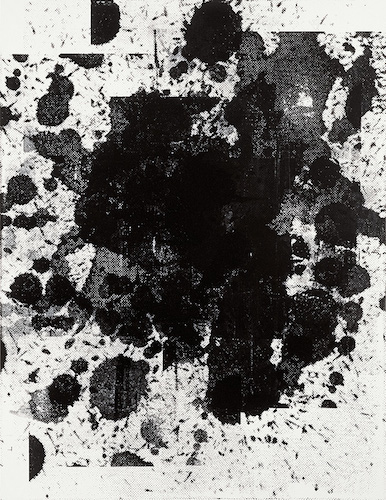
Wool’s untitled 2000 work, silkscreen on linen on the top-floor gallery. © Christopher Wool

Wool’s gigantic 2000 silkscreen installed on the top-floor gallery, a cool, hands-off approach to large-scale work. © Christopher Wool

The Saturday night art crowd packing the free Guggenheim night for the last weekend of the Christopher Wool retrospective was drinking in the cool, edgy dissonance of this savvy, art-world action artist. Check it out in person before January 22, or download the new free Guggenheim app and take the tour on your iPhone.

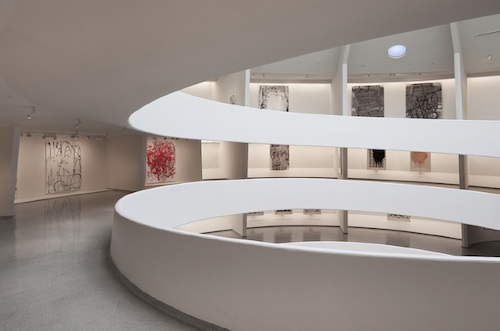
Gazing down from the third or fourth floor, the smooth rungs of Mr. Lloyd-Wright’s spirals punctuate tiers of Mr. Wool’s own spirals, splatters, wipe-outs, word art, and grids of gritty photos. The massive crowd of locals, tourists, and moms with tweens provided a lively audience for work originally germinated in the rough-and-ready Lower East Side during the days when NYC was not-so-nice.

Just up the ramp in the two-story mini-gallery, the curators hung pieces that sum up Wool’s lifetime achievements – large-scale enamels on aluminum using gigantic, ironic gestures and banal advertising-art flowers; channeling the down-and-out feel to 80s New York with cool word-and-letter art evoking graffiti; and appropriating phrases from revolutionary texts that seem to be about one thing but are actually heady philosophical and literary references that only super-smart people would “get.” The work is stunning.

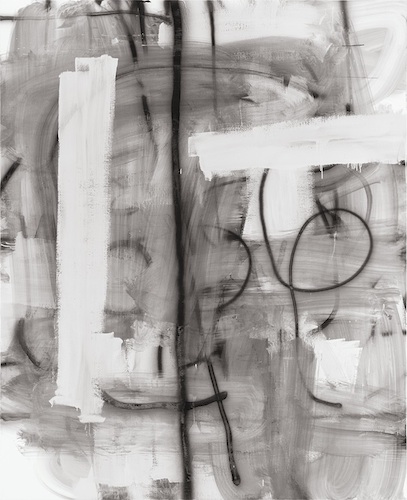
Wool’s 2010 untitled enamel on linen uses erasures, spray, and wipeouts. © Christopher Wool

Wool’s 2010 untitled enamel on linen uses erasures and spray. © Christopher Wool

Then a slightly more chronological journey begins through the rest of the museum. Wool began appropriating rollers used by painters to paint tenement walls and halls to apply decorative patterns methodically across his own giant canvases – taking a bit of the decision making out of the act of painting. At the time, it was an in-you-face comment directed toward more lyrical, or expressive gestural painters. Of course, he would screw up the pattern just a little to add a little extra dig at the current scene. Oh, yes, he mostly kept the color palette to black and white. Smack!

By 1987, he injected letters, words, and texts onto the white canvases and began collaborating with other artists in the “no wave” Downtown scene, which was rife with 8mm filmmakers, performance artists, and musicians reacting against the more commercial artists emanating from CBGB or other clubs. He collaborated making books, always an ephemeral, revolutionary choice.

Hydrant photo that resembles the above work, from East Broadway Breakdown, one of 160 inkjet prints, 1994–95/2002. © Christopher Wool

Hydrant photo with spilled water whose shape resembles the silkscreen above. Photo from East Broadway Breakdown, one of 160 inkjet prints, 1994–95/2002. © Christopher Wool

In the 1990s, the street was used as a start point for both his own photo books, which were shots of lonely urban areas that he photocopied over and over to obtain the I-don’t-care-about-glossy-quality look of the published work. When accessing the iPhone audio track in front of the 1990s photo piece, East Broadway Breakdown, Mr. Wool and the curators pretty much knock your socks off by blasting the superb Nation Time by Joe McPhee right through the earbuds. Thanks to them, you can hear the masterwork music that inspired Wool at the time, jolting you back the mean streets of Chinatown and East Broadway that sparked so much creative juice.

Installation view of Wool’s provocative all-word 1989 Black Book Drawings. Photo: David Heald.

Installation view of Wool’s provocative all-word 1989 Black Book Drawings. Photo: David Heald.

The top rungs of the show are gorgeous, even though that was probably not the original intent – cool, monumental works that are layered, blotted out, white-washed, and splattered over. If a line is blotted out, do you still see the line? If you do your painting on rice paper, is the end result different than when you do it on a canvas?

When you get to the final gallery way, way up top, Wool has digitized fragments of many of these earlier gestural images and silkscreened them onto the giant pieces of stretched linen. Very, very cool and covered in micro-dots from the silkscreen mesh. Check out the works on the Guggenheim website.

Stunning installation of Christopher Wool’s work in Mr. Wright’s building. Photo: David Heald.

Stunning installation of Christopher Wool’s work in Mr. Wright’s building. Photo: David Heald.

If you don’t know Wool’s work, using the iPhone guide provides a valuable context, showing you the works while you listen to the audio and watch other artists talk about Wool. Access some samples here.

But most of the people we saw on Saturday were standing in awe before the gigantic gestural canvases without the aid of an interpretive guide. Thousands of people were examining the curator notes, and moving forward and back within Mr. Wright’s bays to take it in from all angles…the kind of slow, deliberate, thoughtful face-to-face encounters that Mr. Wool likely treasures from cool admirers.

Medieval Enthusiasts Throng to See Departing Treasure

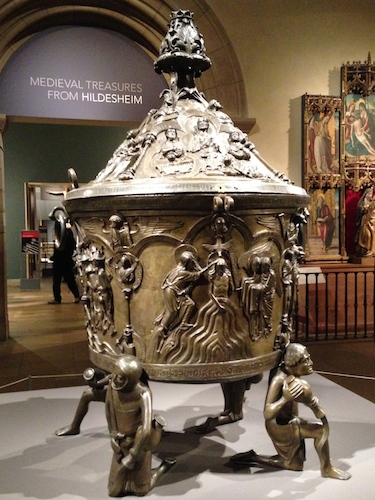
Hildesheim’s large cast 1226 baptismal font installed in the great Medieval Hall

Hildesheim’s large cast 1226 baptismal font installed in the great Medieval Hall

Before the Metropolitan Museum of Art takes down the Baroque Christmas tree, take a look at what’s sitting right behind it – a large, beautiful cast baptismal font that’s one of the treasures of a cathedral in Saxony that’s been transported to New York for the exhibition, Medieval Treasures from Hildesheim, closing January 5.

Like the medieval hall surrounding you, it will take you back to the Middle Ages, along with the manuscripts, castings, croziers, and spectacular rock crystal ornaments in Gallery 521, a few steps away in the special exhibition space that you pass going toward the Lehman wing.

During the holidays, the small space was packed with medieval-art lovers relishing the fact they were seeing treasures from a unique UNESCO World Heritage site right in the heart of Manhattan – the first time they have left Germany.

In the late 12th c., Bernward of Hildesheim, commissioned a dazzling new cover for the Gospel Book, which dates from the late 900s

In the late 12th c., Bernward of Hildesheim, commissioned a dazzling new cover for the Gospel Book, which dates from the late 900s

While renovations were being done at Hildesheim Cathedral, 50 amazing treasures were sent here to give their spiritual heft to the Met’s already hefty medieval holdings. Check out our Flickr site for some of our favorites.

The 1226 baptismal font is a true masterpiece of casting, along with the magnificent eagle that has sat upon a cathedral lectern since 1220. The Jesus figure of the Ringelheim Crucifix at the center of the exhibition is one of the most important (and awe inspiring) large-scale wood sculptures surviving from the post-1000 era in Europe.

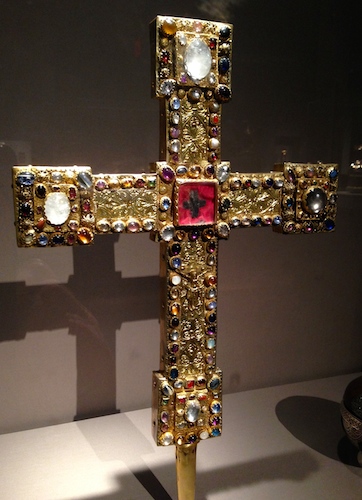
The chalices, reliquaries, croziers once held by medieval bishops, and bound books of the gospels and sacraments will stop you in your tracks.  Seek out the bejeweled cross with what was once believed to be a relic of the True Cross.

As quiet crowds milled around last weekend, savoring the beauty, one youngster came upon the Gospel Book that had been rebound in the second half of the 12th century and asked in a whisper, “Are those real jewels?”

A processional cross, made between 1170 and 1190, which is said to hold relics of the True Cross

A processional cross, made between 1170 and 1190, which is said to hold relics of the True Cross

Many of these treasures, including the bogglingly beautiful Gospel Book, were commissioned by Bishop Bernward of Hildesheim (960-1022), whose aesthetic vision transformed the cathedral into the must-see pilgrimage spot that it remains today.

One out-of-towner told us that they traveled to New York simply to see this show. See the baptismal font and the other works for yourself, and you’ll know why.

If you want to know more or if you’re a fan of the Middle Ages, take the time to sit in on this hour-long presentation about medieval alchemy, metalwork of the 1100s, and how these treasures came to New York:

World Wide Web (and Weft) of Past Centuries at The Met

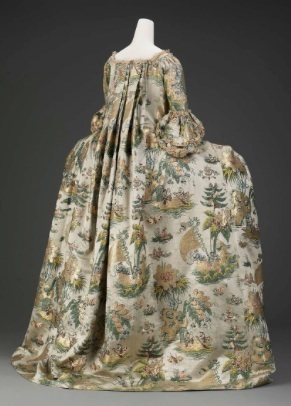
1730s Dutch brocaded satin, featuring exotic Asian islands and fauna, was refashioned into a more fashionable French frock in 1770. Source: Museum of Fine Arts, Boston. The Elizabeth Day McCormick Collection

1730s Dutch brocaded satin showing exotic Asian islands and fauna was refashioned in 1770 into a more fashionable French look. Source: Museum of Fine Arts, Boston.

A joyous collaboration among eight departments of the Metropolitan Museum of Art has written a new history of how a global network of fabric trade and manufacture once served the same purpose that YouTube, music videos, shelter magazines, Vogue, and The New York Times Style section do today – to present images of the latest trends and make anyone in the world that sees them understand the clothes or accessories needed to be “on trend” with other sophisticates.

Interwoven Globe: The Worldwide Textile Trade, 1500–1800, running through January 5, tells a monumental story about how trends went viral pre-Internet. It was a slower world dominated by sailing ships versus transoceanic cables, but the tale spanning centuries, continents, and cultures shows how gorgeous garments, incredible tapestries, bedazzled church vestments, quilted bedding, luxurious wall hangings, tour-de-force printed fabrics, and royal furniture telegraphed “trend” in a different way.

Embroidered muslin dress and fichu. The 18th c. craze for Neoclassical across Europe drove massive imports of lighter-than-air Bengali muslin. Source: The Met

Embroidered muslin dress. The 18th c. European Neoclassical craze drove massive imports of airy Bengali muslin. Source: The Met

The show can’t fully be appreciated in just one walk-through. Each textile and garment is incredible to behold, and the network of interrelationships among craftsmen, artisans, tradesmen, royal buyers, rich merchants, and brave sailors traversing strange shores is equally rich, complex, and layered.

This two-dimensional pageant, enhanced by exquisite gowns and garments whose fabrics were sourced from the four corners of the globe, is given the full-bore treatment in the top-floor galleries reserved for blockbusters.

How do you tell a story this big? The curators decided to put a large interactive map of the 16th- to 18th-century trade routes right inside the door, which brings you up to speed on the French, Portuguese, Spanish, Dutch, and British trade routes linking the Americas, India, the Orient, and islands.

Then come the galleries dedicated to the styles and fiber-tech associated with each – silks woven in China for Europe and Japan, Spanish embroideries that reference Islamic carpet borders, weavings made by Peruvian grand masters of the art, and Indian resist-dye masterpieces that turned into English chintz and fabrics for the King of Siam.

Japanese Jinbaori made from Dutch 17th century wool and Chinese silk, a luxury item worn over samurai armor. Source: John C. Weber Collection

17th c. Japanese Jinbaori made from Dutch wool and Chinese silk, a luxury item worn over samurai armor. Source: John C. Weber Collection

In the Spanish gallery, you’ll see how the crowned double-headed eagles of the Hapsburgs adopt kind of a Chinese-phoenix look when 16th-century Iberian traders commissioned silk artists in Macau to create silk they could sell back home. By the 17th century, everyone – East and West – had become accustomed to enjoying “exotic” images from halfway around the world – birds, animals, architecture, flowers, and landscapes. It had the same impact as Google Earth and World Wide Web access today.

One of the more startling facts is that before Commodore Perry “opened” Japan to the West (ref. Sondheim’s Pacific Overtures, the musical), Japan was more into luxury-goods consumption than production. Apparently, the trend was to import the ultra-luxury, Dutch wool, and make it into topcoats that Samurai warriors could drape over their armor.

If you don’t see this in person, visit the online exhibition site for an encounter that’s a real treat: You’ll get to zoom into each quilt, drape, embroidery, dress, shawl, and piece of fabric to see it all super-close.

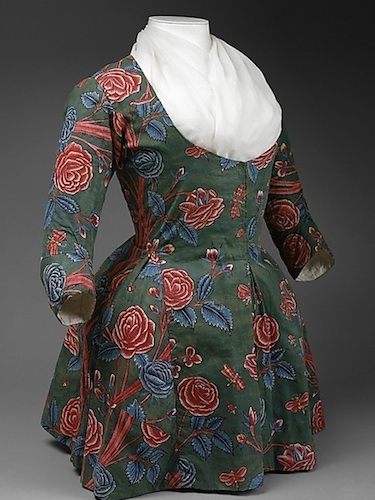
A late-18th century Indian-chintz Dutch jacket that knocked-off a French designer jacket in pink French fabric. Both have similar exotic floral prints. Source: The Met

A late-18th century Indian-chintz Dutch jacket that knocked-off a French designer jacket in pink French fabric. Both have similar exotic floral prints. Source: The Met

Click on the “full screen” button on each and toggle in to examine all of the glorious detail. The web site will tell you the story and show you the items in each gallery. You’ll be surprised to find the genesis of the fabrics-on-walls interior-decorating craze for country homes in the late 1700s and how men-only clubs adopted both plain and exotic dressing-gown dress from the Orient (a style also featured prominently in the current FIT show).

The King of Siam’s royal 18th century guard wore these resist-dye tunics. Fabrics were made in India and tailored in Siam. Source: Royal Ontario Museum, Toronto

The King of Siam’s royal 18th century guard wore these resist-dye tunics. Fabrics were made in India and tailored in Siam. Source: Royal Ontario Museum, Toronto

Magritte’s Surrealist Train Departing MoMA for Houston

Magritte’s 1938 oil, La durée poignardée (Time Transfixed) from The Art Institute of Chicago’s Winterbotham Collection. © Charly Herscovici ADAGP–ARS, 2013

Magritte’s 1938 oil, La durée poignardée (Time Transfixed) from The Art Institute of Chicago’s Winterbotham Collection. © Charly Herscovici ADAGP–ARS, 2013

One of the most recognizable trains in the history of modern art hasn’t left the station. It’s coming out of the wall at MoMA until January 12 as part of the tribute to Belgium’s only big-time Surrealist painter, Magritte: The Mystery of the Ordinary, 1926–1938. But don’t worry – this intriguing tribute chugs on, arriving at The Menil in Houston on Valentine’s Day (February 14) and at Chicago’s Art Institute on June 25. Catch it, because it’s loaded with new revelations, in person and on line.

In person: So many of paintings are icons of 20th century art, that it’s shocking to think that one anarchic visual artist had the chops to turn out so many great works in such a relatively short period of time. Walking through the first couple of galleries, you’ll recognize many famous images, but check out the dates on the labels: 40 were done in just his first three years in Paris between 1927 and 1929! He was so prolific, it makes you wonder when he made time to hang out at cafes, discuss dreams, and publish with Breton and the rest of the crew.

Jasper Johns owns the small version of Magritte’s 1935 oil La clef des songes (The Interpretation of Dreams), which uses English. © Charly Herscovici ADAGP–ARS, 2013. Photograph: Jerry Thompson

Jasper Johns owns the small English version of Magritte’s 1935 oil La clef des songes (The Interpretation of Dreams). © Charly Herscovici ADAGP–ARS, 2013. Photo: Jerry Thompson

Magritte liked making the familiar unfamiliar, playing with fact and fiction, probing dreams and reality, and appropriating pop culture into an art context.

Like Andy Warhol, Magritte began as an ad illustrator, and MoMA’s curators have included a few of his early fashion illustrations. It’s surprising to know that phrases that he injected onto his canvas (like “Ceci n’est pas une pipe”) were written in a script that was one of the most recognizable fonts used in European newspaper and magazine ads in the Twenties.

Was appreciation of Magritte’s ground-breaking cultural appropriation and subversion lost on our own American Pop pantheon? Not really, and the evidence is that one of the best examples of Magritte’s sly presentation of an everyday-object grid with ironic words was lent by the midcentury grandmaster, Jasper Johns.

So much contemporary pop culture and advertising art has reinterpreted, reimagined, and referenced Mr. Magritte’s images that it’s easy to forget that they rocked the world in the Twenties. His reverberation with our beloved 1960s Pop masters (and this show) reminds us that Mr. Magritte truly blazed an innovation pathway in taking the everyday and turning it into art.

MoMA discovered something lurking beneath the surface of its Magritte’s 1936 oil, Le portrait (The Portrait). Gift of Kay Sage Tanguy. © Charly Herscovici ADAGP–ARS, 2013

MoMA discovered something historic lurking under Magritte’s 1936 , Le portrait (The Portrait). Gift of Kay Sage Tanguy. © Charly Herscovici ADAGP–ARS, 2013

And speaking of pioneering, check out the amazing interactive site that lets us enter Magritte’s mind; learn how he turned nature, desire, dreams, language, and symbols into troubling, evocative, subversive works; and see the behind-the-scenes conservation and curatorial work. The beautiful, musical experience is designed by Hello Monday, and should probably win a Webby Award. See it now.

You’ll see how MoMA took off the old varnish, examined the canvases under ultra-violet light, and did detective work of which Magritte and his silent-movie-icon inspiration, Fantômas, would be proud.

Spend time letting each painting’s mini-site load into your browser window, click to hear the curators talk, and keep scrolling down to see what the conservators discovered. You can even toggle back and forth to see the surface of the painting and X-ray.

As a preview, here’s the YouTube video about the “lost” Magritte painting that conservator Cindy Albertson found lurking underneath The Portrait.

And while you’re at it, you might take a minute to see what technology was at work in possibly Magritte’s most famous image:

Met’s YouTube Star Seeks Holiday Friends

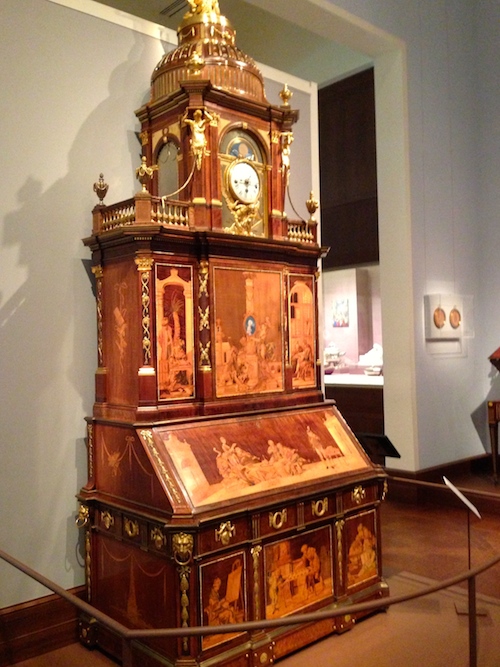
Mr. Roentgen's Berlin Secretary Cabinet, the viral NYC museum YouTube sensation, awaiting visitors in Met Gallery 553

Mr. Roentgen’s Berlin Secretary Cabinet, the viral NYC museum YouTube sensation, awaits visitors in Met’s Gallery 553

It’s lonely at the top. More specifically, it’s lonely in the Metropolitan Museum’s Gallery 553, where one of the biggest YouTube stars in NYC museum history is holding court until January 26 – David Roentgen’s Berlin Secretary Cabinet, which has racked up 4.4 million hits since his show, Extravagant Inventions, closed last January.

That’s right. A piece of mechanical furniture has 4.4 million YouTube fans (in addition to 13K on the Met’s own website) – quite an achievement since it had only around 200,000 when its show closed. It’s not the only piece of mechanical furniture to gain big YouTube numbers (another has over 91K), but to put the Cabinet’s achievement in perspective, consider that the Met’s McQueen video has only racked up 72,000 views in the two years since that blockbuster ended.

The crowds were crazy for the 18th-century marquetry extravaganza (see our earlier post), and the Met asked the Kunstgewerbemuseum, Staatliche Museen zu Berlin if it could keep the YouTube star a little longer.

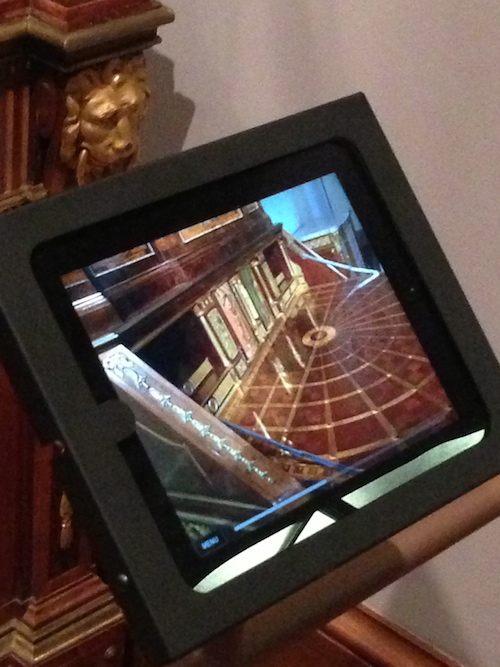
The Cabinet's video, displayed also in the gallery, has gone viral with 4.4M views

The Cabinet’s video, displayed also in the gallery, has gone viral with 4.4M views

The Met dedicated a cozy corner of its First Floor to the Cabinet and some of its other pieces from Mr. Roentgen’s studio — a rolltop desk and tall clock from the Met’s own collection, and a mechanical table lent by the Cooper-Hewitt. Take a closer look on our Flickr feed.

But every time we pass by, the Cabinet seems a little lonely. The Met says it’s likely the most expensive piece of furniture ever manufactured (there were only three), but it seems like the Fabergé eggs in the hallway are getting all the foot traffic. Yes, they’re beautiful, but a piece of marquetry that’s gone viral is something that deserves some in-person praise.

During the holidays, just hang a left at the Christmas tree. Look for a tall stately Cabinet in a gallery on the right after you pass through the European Sculpture Court and before the rooftop elevator. Spend a little time with the star before he decamps the Big Apple for Berlin.

Roentgen's Rolltop Desk also has its own video and has 59,000 YouTube fans of its own

Roentgen’s Rolltop Desk also has its own video and has 59,000 YouTube fans of its own

If you want to see the Roentgens in performance, the Met’s hosting a gallery talk and demo of the mechanical furniture at 2:30pm in Gallery 553 on December 17 and January 14

The Cabinet’s mega-hit video (produced by the Berlin museum, but posted by the Met) is also on display in the gallery — no people, no curators, no talking, no cats…just subtitles, a human hand wielding a key, and the magnificent magic of Mr. Roentgen. Hold on for the hidden easel.

Science Superwomen at Grolier

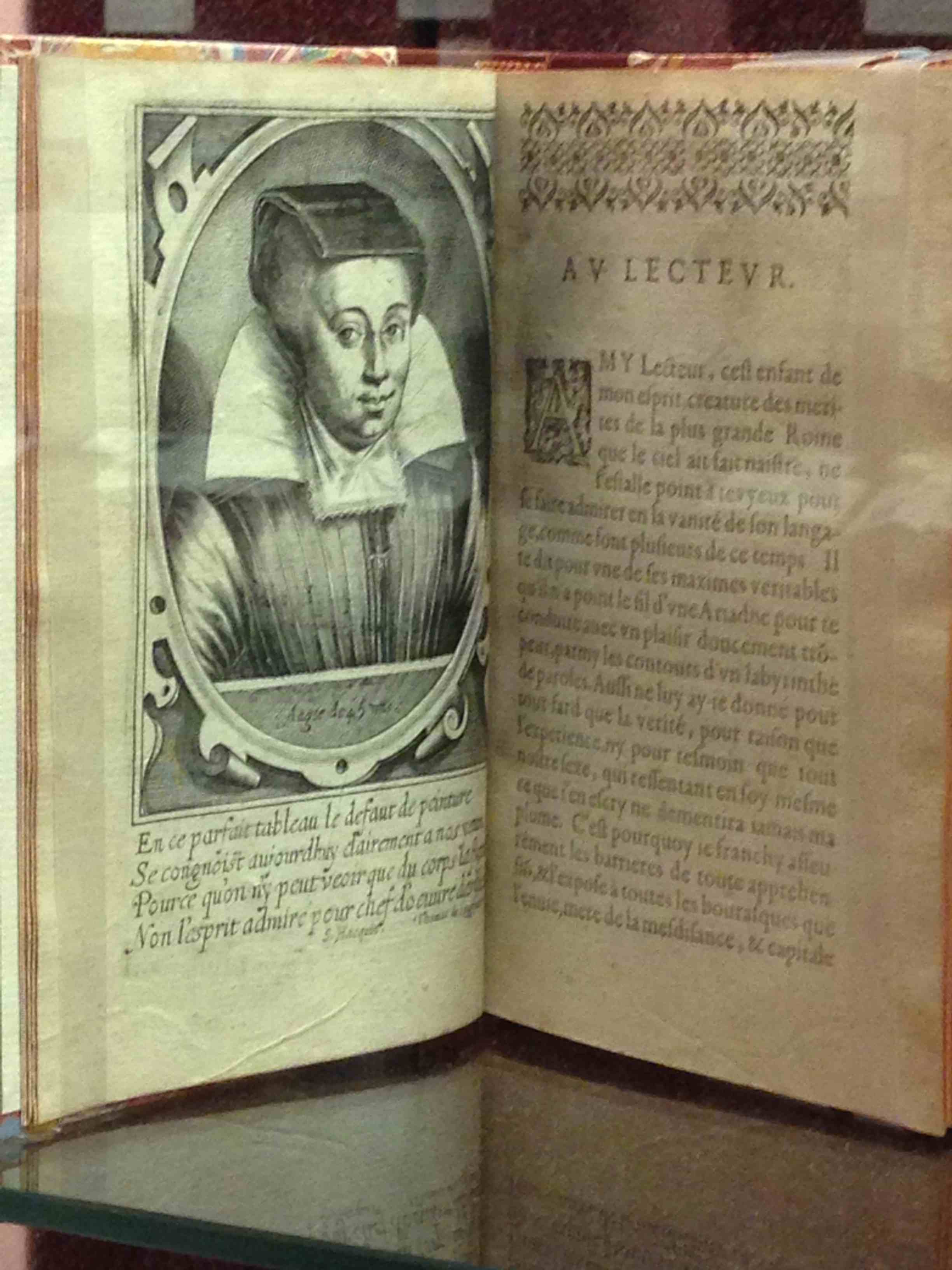
Portrait of Louise Bourgeois Boursier in one of her early 17th-c books on obstetrics, medical must-reads for over 100 years

Portrait of Louise Bourgeois Boursier in one of her early 17th-c books on obstetrics, medical must-reads for over 100 years

Just because the confab is ending, it’s no reason not to acknowledge the loving assembly of super-fantastic women pulled together by the curators at the Grolier Club for the astonishing exhibition, Extraordinary Women in Science & Medicine: Four Centuries of Achievement, which closes today.

Inside the Club’s small gallery, ten cases and other repositories enclose the names, histories, portraits, papers, and publications of 32 remarkable women that deserve high praise and high fives. Yesterday the gallery was packed with academics, admirers, school groups, and bibliophiles who couldn’t contain themselves at their astonishment at the relative obscurity of some of these grand dames in our pop-culture-saturated psyches.

Get to know some of our favorites:

Louise Bourgeois Boursier (1563-1636) was the first woman to write a book on obstetrics – a pioneer in evidence-based medicine. Having observed 2,000 deliveries as a midwife, she personally delivered all of the children of Henry IV and Queen Marie de Medici of France, including Louis XIII.

Madame Du Chatelet’s name is absent from  the top book, which she co-wrote in 1735 with Voltaire about Newton’s philosophy

Madame Du Chatelet’s name is absent from the top book, which she co-wrote in 1735 with Voltaire about Newton’s philosophy

Physicist, mathematician, and author Madame du Châtelet (1706-1749) was the first to translate Newton’s work Principia Mathematica into French. To this day, it’s the standard translation for students there, although in its day, only Voltaire’s name was on it, since it was considered inappropriate to print a lady’s name on a frontspiece. Her dad, who worked for Louis XIV, encouraged her scientific accomplishments, but her mom bucked her all the way. She worked on scientific philosophy, the properties of fire, and made breakthroughs in the understanding of kinetic energy – a foundation of the 150-years-later E = mc2.

Laura Bassi (1711-1778) was the first female physics professor in Europe and the second woman in Europe to actually have a university degree. Remarkably she still had 12 children, had a cheerleader in Pope Benedict XIV, and had the reputation and chops to do most of her work from home.

Victorian-era portrait of Ada Byron, Countess of Lovelace, with her 1843 “computer” program – the published sequence by which Babbage’s analytical engine could perform calculations

Victorian-era portrait of Ada Byron, Countess of Lovelace, with her 1843 “computer” program – the published sequence by which Babbage’s analytical engine could perform calculations

Lord Byron’s daughter, Augusta Ada Byron, Countess of Lovelace (1815-1852) created, according to some, the first computer program. She translated an Italian engineer’s description of the analytical engine designed by mathematician Charles Babbage, but she added a lot of her own notes to explain its difference from earlier incarnations and explained the steps by which it could perform complex calculations. She felt it was important to use calculating machines to do more than mathematics, and she speculated that a computing engine “might compose music” and other “poetic” things.

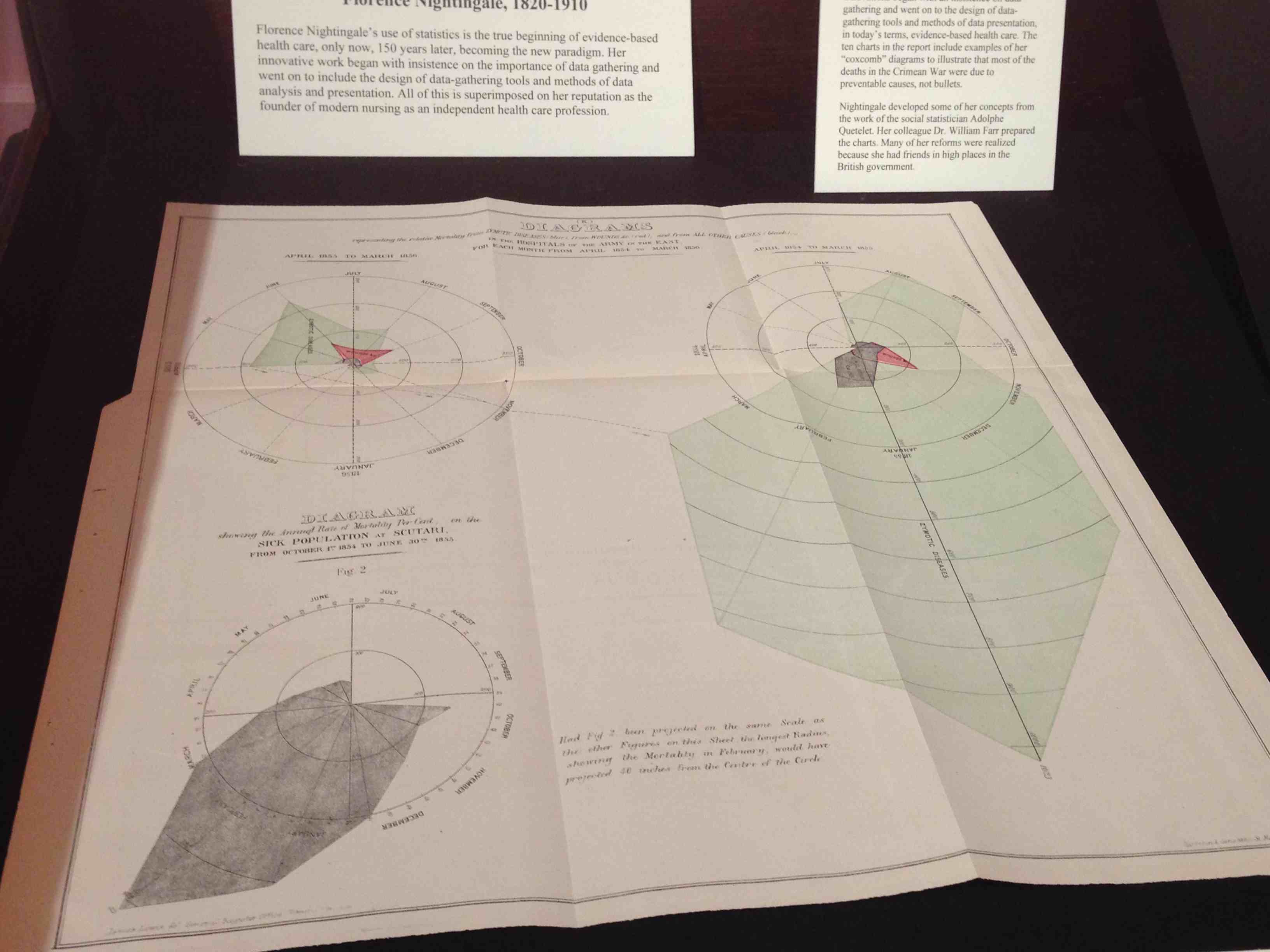
Everybody knows that Florence Nightingale (1820-1910) innovated modern nursing, but the exhibit showcased the fact that she got her ideas across because she was an expert statistician. She used stats to kick-start evidence-based healthcare. Think about it: life before Excel.

Madame Curie (1867-1934), along with Florence, is the most famous of the Grolier group – the first person (and only woman) ever to have received two Nobel Prizes in two scientific disciplines (physics and chem). After discovering radioactivity, polonium, and radium with her husband, the Polish super-achiever applied radiology to help surgeons deal with battlefield injuries in WWI, accompanied by her 17-year-old daughter, Irène (1897-1958). Irène also later won a Nobel Prize in Chemistry for creating radioactive elements.

Nightingale’s 1858 document for Queen Victoria’s commission, proving that Crimean War casualties were mostly from preventable diseases

Nightingale’s 1858 document for Queen Victoria’s commission, proving that Crimean War casualties were mostly from preventable diseases

New Yorker and Nobel-winner Gertrude Elion (1918-1999) never got a doctorate, but climbed her way to innovation from a job as a lab assistant. Say thank-you to her for inventing the first anti-cancer drugs, anti-viral drugs, and drugs to enable human organ transplants. Her pharma inventions treated leukemia, malaria, meningitis, and led to the development of AZT.

According to the curators, the show – which includes Curie’s apparatus, Ada’s portrait from London, a box showing how pre-mainframe pioneers tracked and sorted results of their experiments, and other items – will have a second life as a traveling exhibit and website. Until then, find out more by picking up the catalog, crammed with interesting essays, to this unforgettable tribute.

Go Underground and Outside at Grand Central

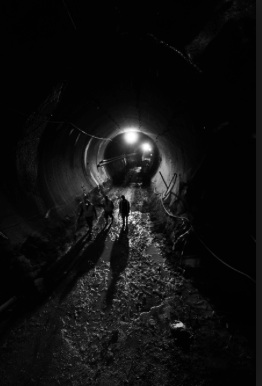
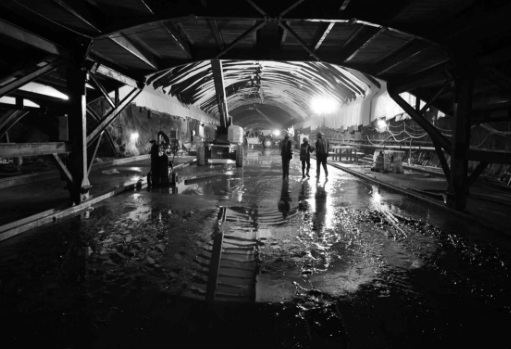
Hiroyuki Suzuki’s dramatic black-and-white view of the massive $8.2B project

Hiroyuki Suzuki’s dramatic black-and-white view of the massive $8.2B project

See New York above and below in two unique photography installations at everyone’s favorite train station right now.

At the New York Transit Museum Annex, you can glimpse your future path to the Hamptons in The Next Level: East Side Access Photographs by Hiroyuki Suzuki through October 27. Suzuki takes you over 14 stories below Grand Central to see the tunnels, sandhogs, tunnel boring machines, and chasms of the huge construction project that will allow 160,000 daily LIRR riders to arrive on Manhattan’s East Side when it’s done in 2019.

Suzuki had never before visited New York before starting his project, but he considers it a thank-you for the relief work done by the US Armed Services following the devastating earthquake and tsunami that hit his home country of Japan in 2011.

Underground view of East Side Access by Hiroyuki Suzuki

Underground view of East Side Access by Hiroyuki Suzuki

Contemplating the more than 50 black-and-white images, you can feel the monumental achievement happening underground, feel the damp, hear the light sloshing of men and machines moving through slightly damp tunnels, and see the miles of spaghetti-like cables illuminating the gigantic spaces where trains will soon thunder.

Suzuki made four trips down there during the project, and you may not even get to make one, so drop in and take a look at the engineering marvel happening right beneath a good patch of Midtown East. You’ll see supports labeled “48 Street” or “FDR” for orientation in the black wilderness.

Beautiful Hudson River photograph by Robert Rodriguez, Jr. from the one-day exhibition in Vanderbilt Hall

Beautiful Hudson River photograph by Robert Rodriguez, Jr. from the one-day exhibition in Vanderbilt Hall

Speaking of wilderness, get over to Vanderbilt Hall sometime today to experience the opposite – gorgeous landscapes of the spectacular Hudson Valley. To celebrate the achievements of an historic environmental organization (and encourage you to buy a train ticket to see scenery that inspired generations of artists), there’s a one-day-only photo spectacular — 150 images by Annie Leibovitz and 12 other photographers whose subject is the beauty of the Hudson River.

On Time and Place: Celebrating Scenic Hudson’s 50 Years, sponsored by Metro-North and Scenic Hudson, has traveled to five cities to celebrate this historic environmental organization’s 50 years of success. The photos are in Vanderbilt Hall from 10am until 4pm.

Mondrian Goes Digital Electronic at MoMA

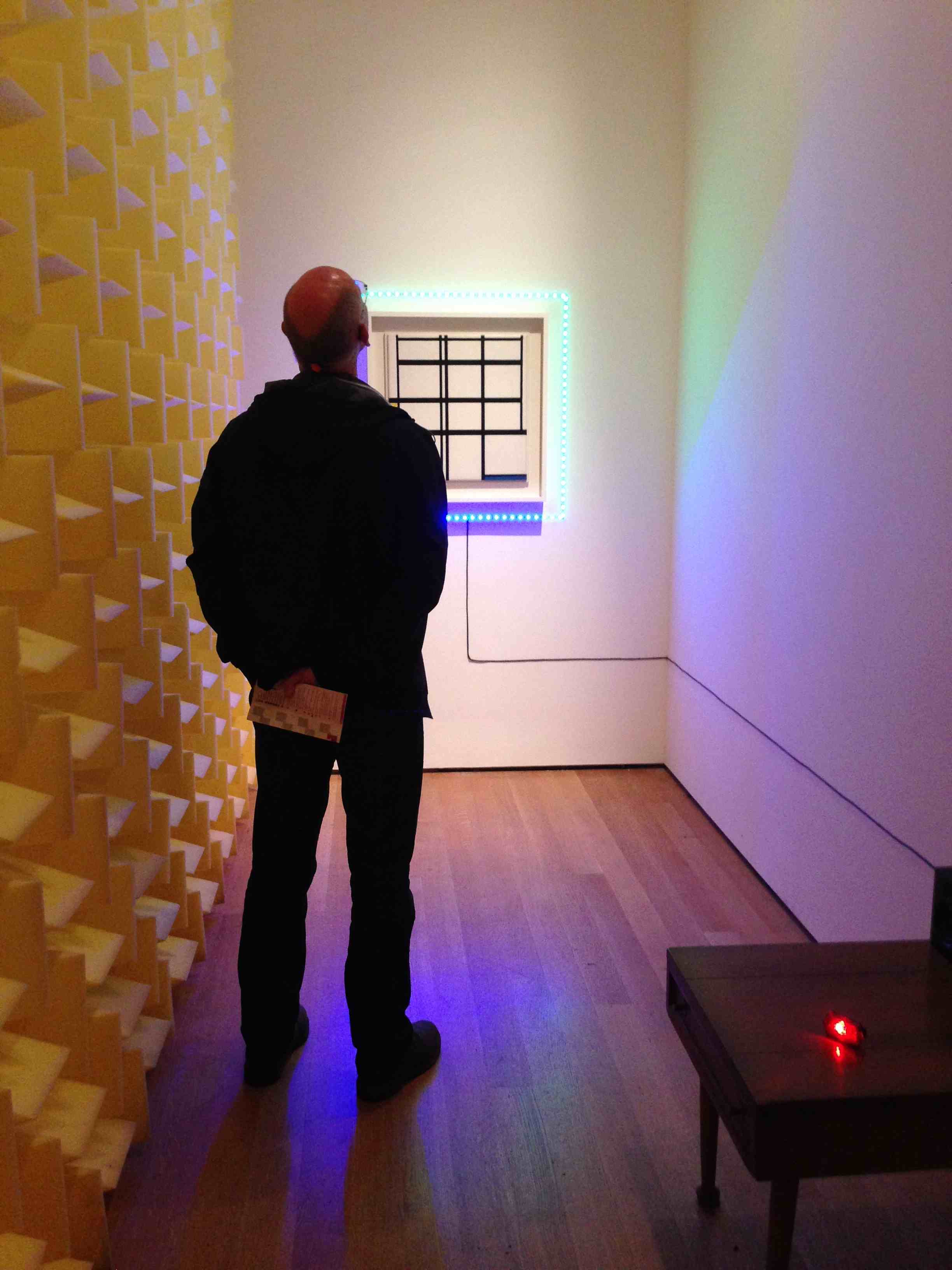
Mondrian’s Composition in Yellow, Blue, and White, I inside Haroon Mizra's installation Frame for a Painting

Mondrian’s Composition in Yellow, Blue, and White, I is framed in LEDs inside Haroon Mizra’s sound installation Frame for a Painting

Mondrian’s in the house (literally), starring in a fun interactive installation tucked away near the exit to Soundings: A Contemporary Score, MoMA’s first exhibition devoted entirely to the work of creative contemporary artists working in sound.

The show, which runs through November 3, has plenty of fascinating, thoughtful works in hallways, around bends, and in darkened galleries, such as Tristan Perich’s Microtonal Wall in the entrance hallway, which lets you experience the sound of 1,500 1-bit speakers up close and personal. Listen to it at the bottom of his MoMa artist page.

IMG_2939But the delightful surprise installation is a long, narrow almost hidden room, where Haroon Mizra has installed his ever-changing Frame for a Painting. On the occasion of being at MoMA, he’s chosen Mr. Mondrian’s Composition in Yellow, Blue, and White, I from MoMA’s collection and given this small, jazzy gridwork its own ultra-modern, swinging London, mid-century electro-pad. See it on our Flickr feed.

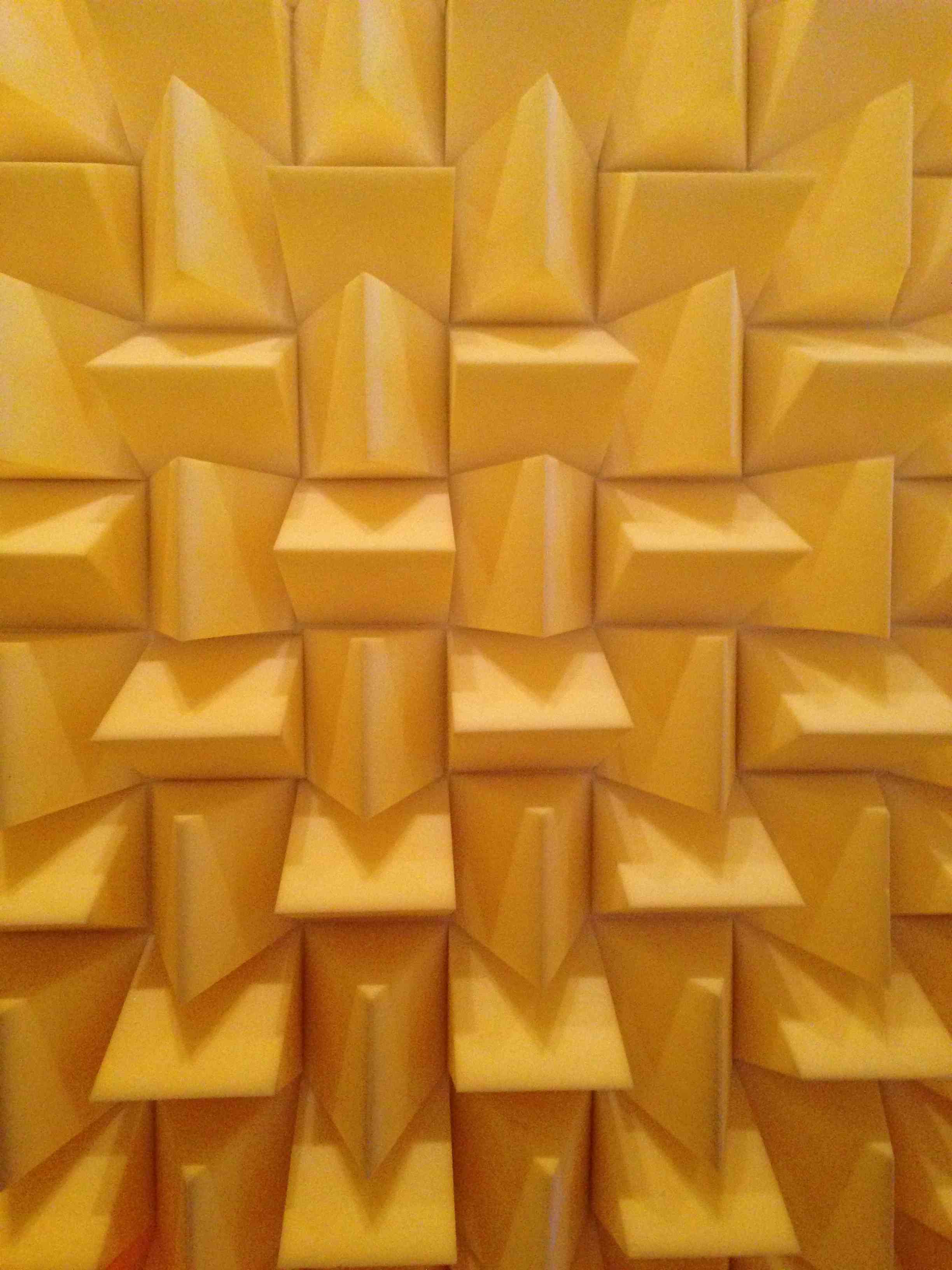
The narrow room has pointy yellow acoustic foam covering the tall walls. At the far end, you see Composition framed in a rectangle of electric blue LED lights that flash in sync to a pulsing electronic sound track. You have to maneuver around a low Danish modern side table from which a bright red bicycle light pulses and bleeps.

It’s a nice tribute to this favorite Modern master, and one of the few nooks in the show where visitors are taking photos and making little Vine videos like crazy. Composition harkens back to 1937, the table to the 1950s, and the sounds to the dawn of electronic music. It feels like a crazy time machine in an over-the-top conceptual 1960s living room.  Surely Mr. Mondrian would approve of the precision and interrupted rhythm. In any case, Composition certainly seems to enjoy being liberated from the white-wall treatment upstairs.

Close-up of the foam lining all the walls of Mondrian's slim room

Close-up of the foam lining all the walls of Mondrian’s slim room

Another work in the show that you might remember is a sound piece that used to be installed on the High Line in 2010 – Stephen Vitiello’s A Bell for Every Minute, which features New York City bells that he recorded and are heard every 60 seconds. You can get a taste of the experience listening to Bell Study, an audio track embedded at the bottom of his artist page used as an underlay in his longer audio piece.

Also check out the track from Jana Winderen’s Ultrafield, which slows down the ultrasound communications of bats, fish, and underwater insects so that we can hear the “hidden” sounds of our fellow species for the first time. Listen in to Jana’s work and check out the other artists on MoMA’s interactive show site.

And feel free to record and add your own everyday sounds to MoMA’s show site.