Fernandez Curates Smithson at SITE Santa Fe

It’s not often you get to see Robert Smithson’s large-scale works inside gallery walls. Strolling through SITE Santa Fe’s magnificent Teresita Fernández/Robert Smithson exhibition, through October 28, provides an opportunity to see how a contemporary Brooklyn-based Cuban-American artist – inspired by landscape and societal histories of the Caribbean – positions her own work “in conversation” with Smithson’s 1960s-1970s geologic works, drawings, and photo installations.

SITE invited art-world superstar Teresita Fernández to curate this show with the Santa Fe-based Holt/Smithson Foundation. Prior to her deep dive into Smithson’s career, her primary knowledge centered around his 1970 epic Spiral Jetty – 6,650 tons of rock and earth jutting out from the shore of Utah’s Great Salt Lake.

Smithson’s 1969-1970 Mirrors and Shelly Sand and two by Fernández: 2009 Drawn Waters (Borrowdale) and 2024 Sfumato (Epic) 2. Courtesy: Dallas Museum of Art; the artist and Lehmann Maupin.
Still from Robert Smithson’s 1970 film Spiral Jetty, Great Salt Lake, Utah. Courtesy: Holt/Smithson Foundation.

But Fernández found a lot more from Smithson’s too-short career that she could couple with her own work to create SITE’s spectacular installation. Both artists use landscapes, deep time, ancient history, and travel.

Smithson’s 1968 installation A Nonsite (Franklin, New Jersey) with 2020 Archipelago charcoal work by Teresita Fernández. Courtesy: Museum of Contemporary Art Chicago; private collection

In the first gallery, Fernández selected a Smithson “nonsite” work – a minimalist series of boxes, each packed with rocks from the decidedly unromantic site of Franklin, New Jersey. Smithson’s “nonsite” includes a framed aerial photo that appears to document the site, but it’s a “readjusted” depiction of it. Not what it seems.

Next to the “nonsite,” Fernández hangs Archipelago, a charcoal wall sculpture., which appears to be a legit map, but it’s not. It’s an imagined map of separate Caribbean islands and continents linked together, making us reflect upon their shared socio-political colonial histories.

Viñales (Plateau) is a wall-sized “stacked landscape” depicting Cuba’s Viñales Valley, home of ancient karst caves once inhabited by Taino people and later where escaped plantation slaves sought refuge. At a distance, it evokes the valley’s ecological, social, and political legacies; up close, you see that the image is made up of thousands of tiny ceramic tiles. Something to get lost in.

2019 ceramic mosaic by Teresita Fernández Viñales (Plateau). Courtesy: the artist and Lehmann Maupin.

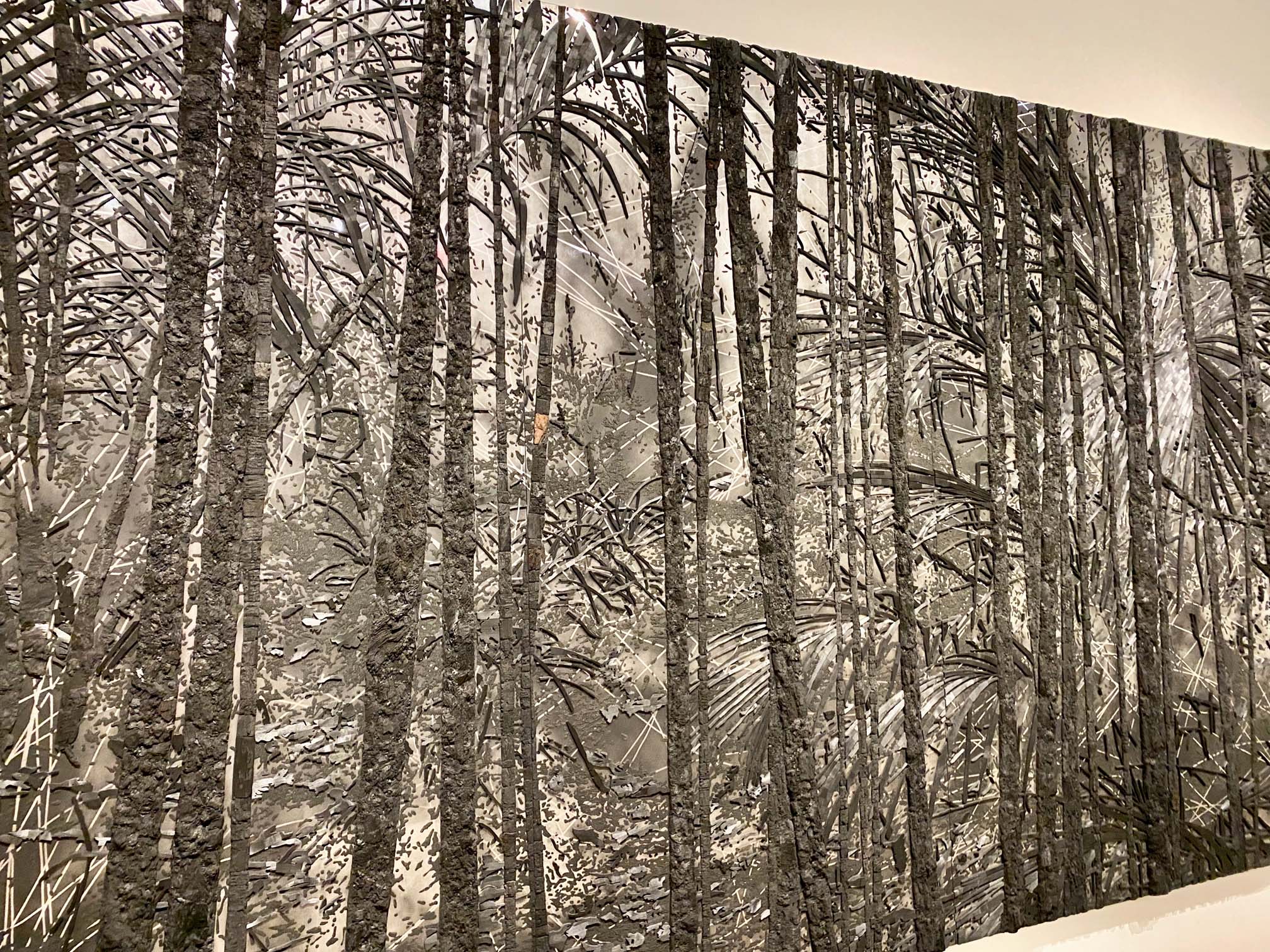
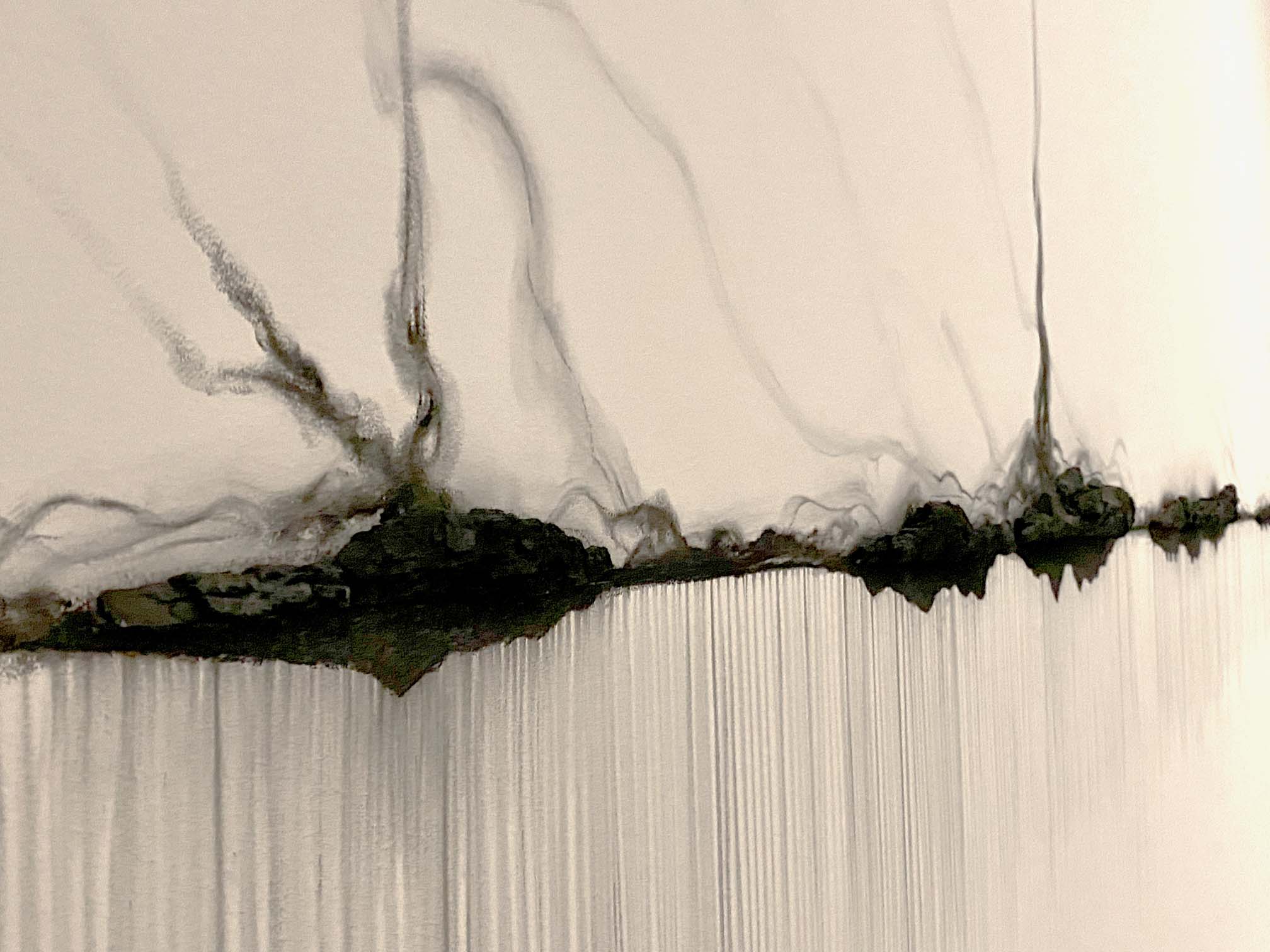
Both artists use reflection in their works. Manigual (Mirror) by Fernández– a tropical forest created from charcoal and sand – is affixed to a reflective surface, so you can “see yourself” in the charred thicket when you get right up to it. Smithson designed his earth-and-mirror Red Sandstone Corner Piece so that every gallery goer’s image is part of the visual experience – from close up, far back, and far away. You’re linked to the red sandstone.

Detail of 2023 Manigual (Mirror) by Teresita Fernández. Courtesy: Crystal Bridges Museum of American Art.

On the other hand, Smithson famous photographic series, Yucatán Mirror Displacements, documents his meticulously arranged mirrors set into Mexico’s coastal landscapes. Just reflections of landscape and sky in all the settings he documented his set of mirrors; no people.

Detail of Smithson’s 1969 Yucatán Mirror Displacements (1-9). Courtesy: Guggenheim Museum.

Nature’s continual ebb and flow, the Earth’s surface, ecosystems, and the cosmos ­are all subjects explored by both artists.What’s beneath the Earth’s surface, forces of nature, and human impact on it all pop up covertly in every room.  See more in our Flickr album.

Detail of 2017 charcoal work by Fernández Charred Landscape (America). Courtesy: the artist, Lehmann Maupin.
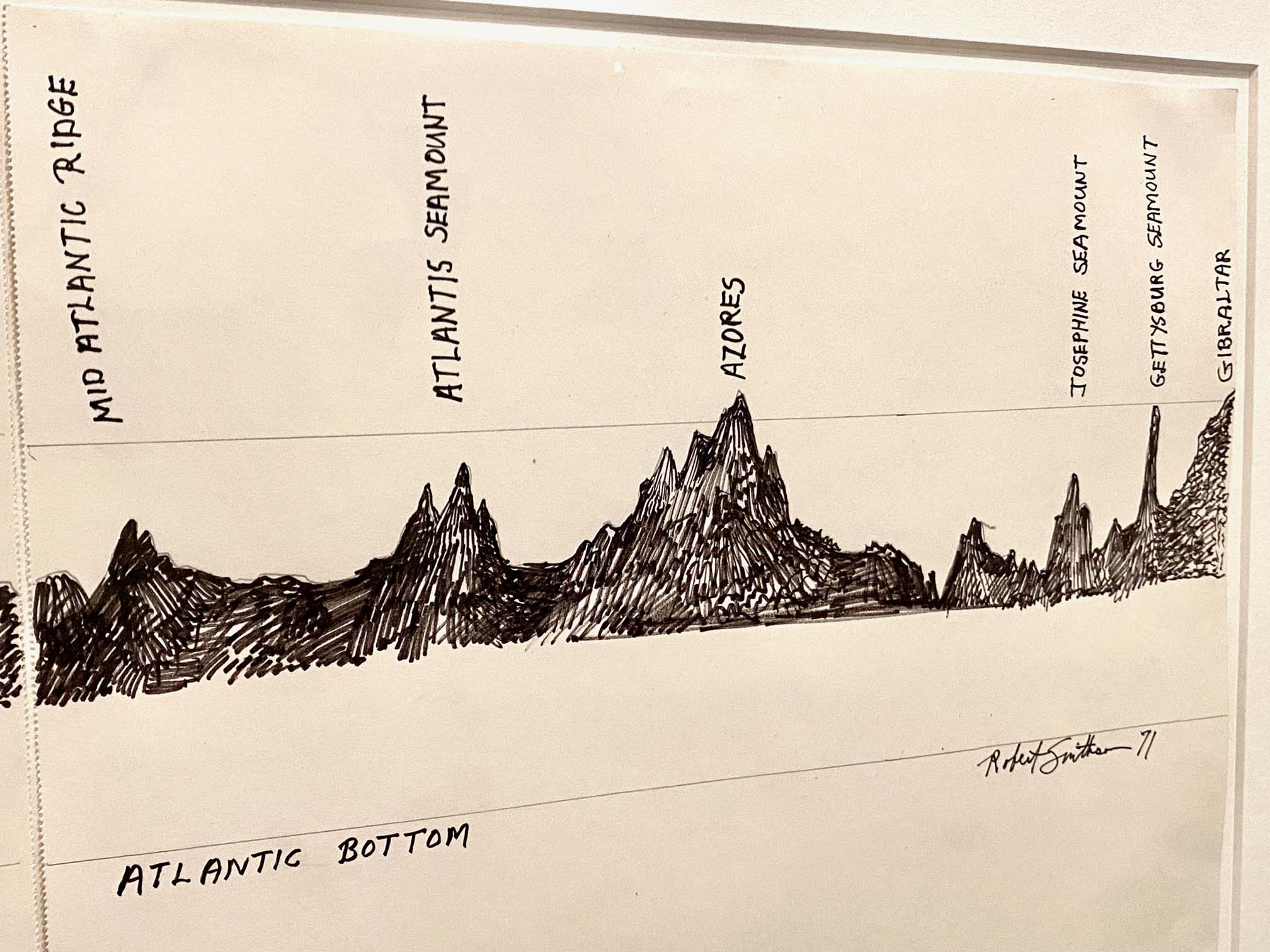
Detail of Smithson’s 1971 ink drawing A Profile of the Atlantic Bottom. Courtesy: private collection.

And learn more about the “conversations” that works by these artists are having in the curator lectures in SITE Santa Fe’s videos with Fernández herself and her co-curator from the Holt/Smithson Foundation.

Detail of Robert Smithson’s 1961-1963 paint and photo collage Algae, algae. Courtesy: Holt/Smithson Foundation and Marian Goodman Gallery.
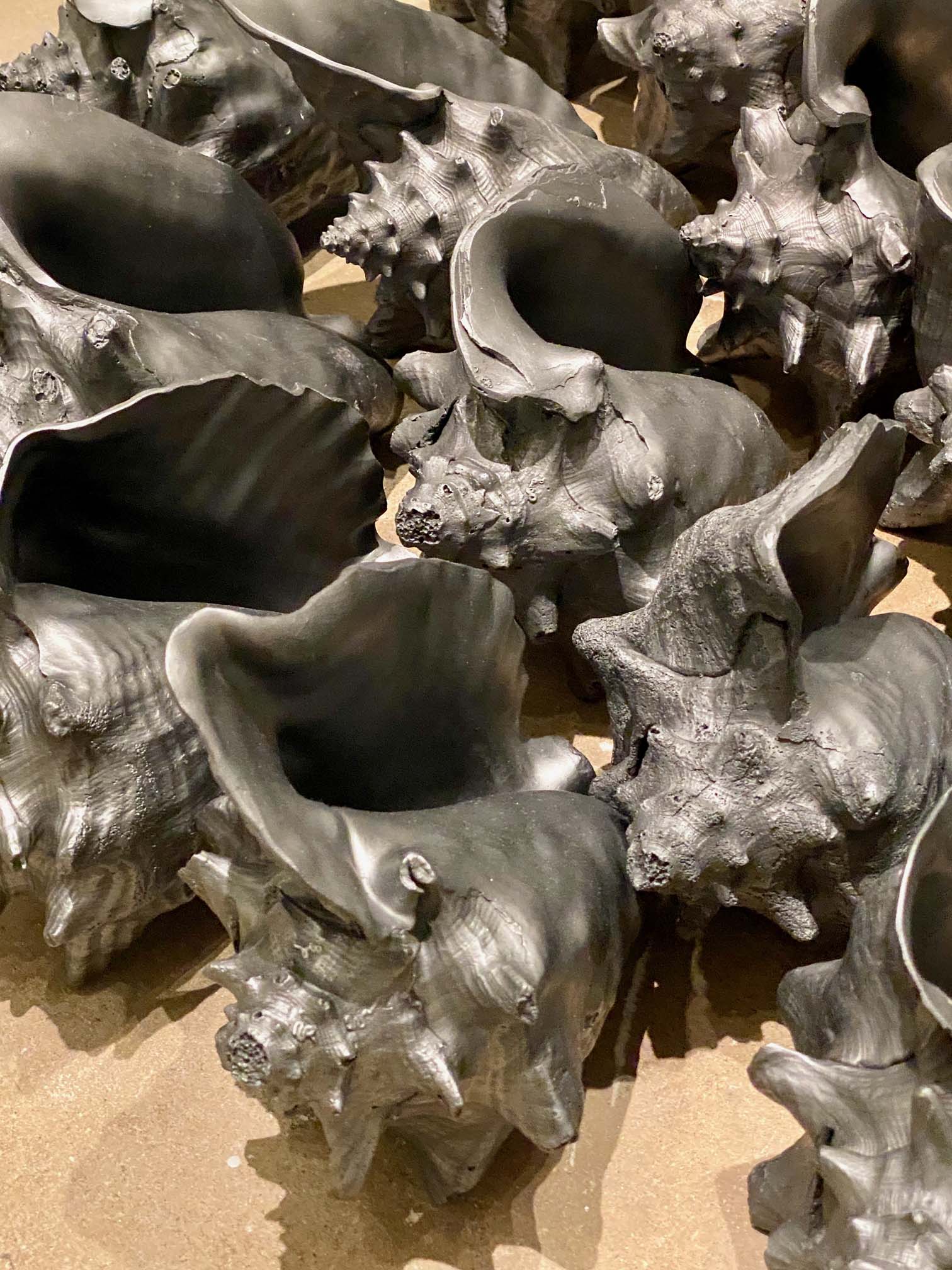
Detail of 2019 graphite-covered shell installation Chorus by Teresita Fernández. Courtesy: the artist and Lehmann Maupin.

National Gallery Celebrates 50 Contemporary Native Artists

If you want to take a trip across American land with 50 living Native artists, there’s still time to catch the ground-breaking exhibition, The Land Carries Our Ancestors: Contemporary Art by Native Americans, at Connecticut’s New Britain Museum of American Art through September 15, 2024.

The National Gallery of Art in Washington, D.C. asked Jaune Quick-to-See Smith (Citizen of the Confederated Salish and Kootenai Nation) to survey the United States and create an exhibition reflecting the diversity of the living Native American artists.

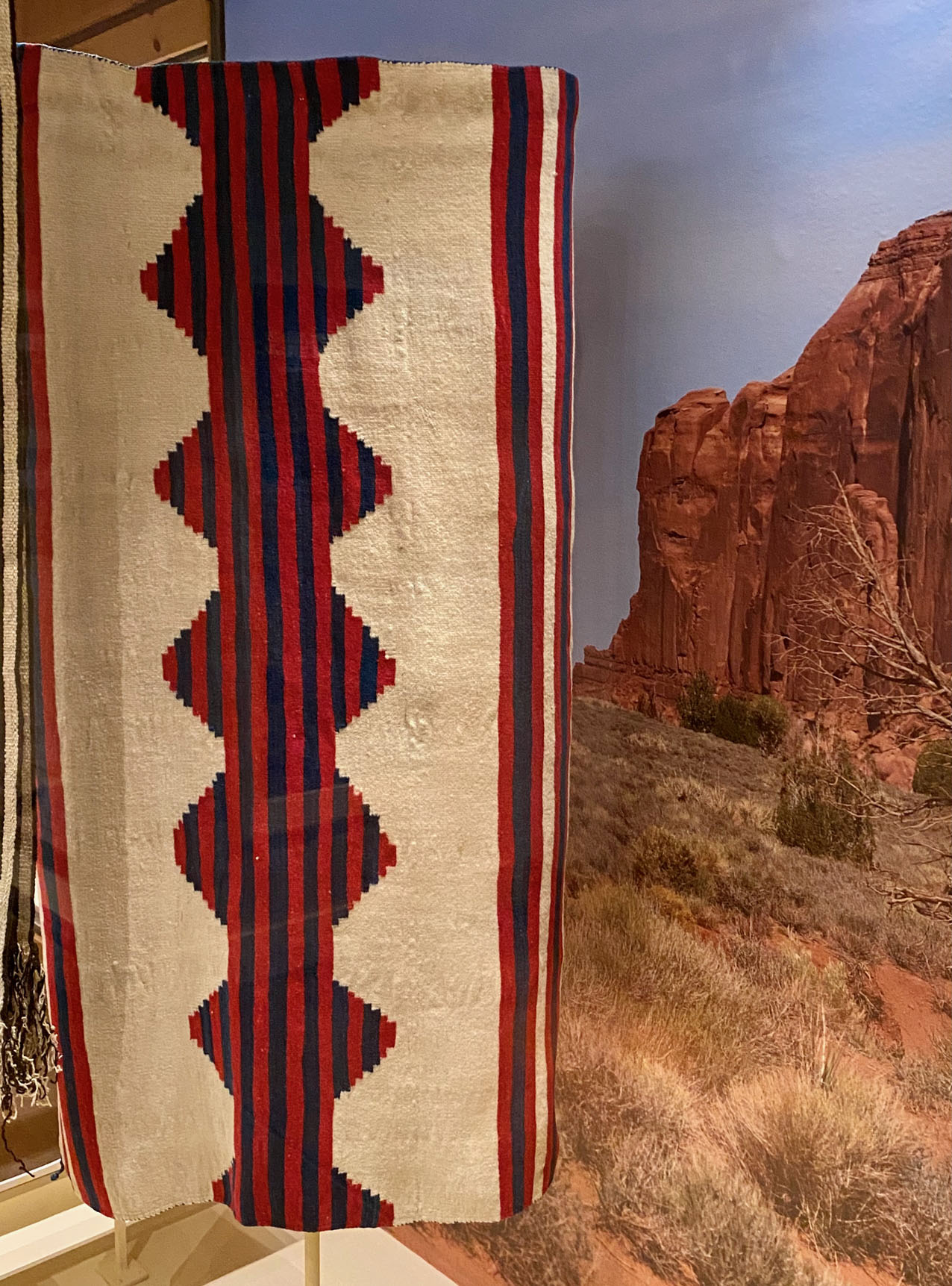
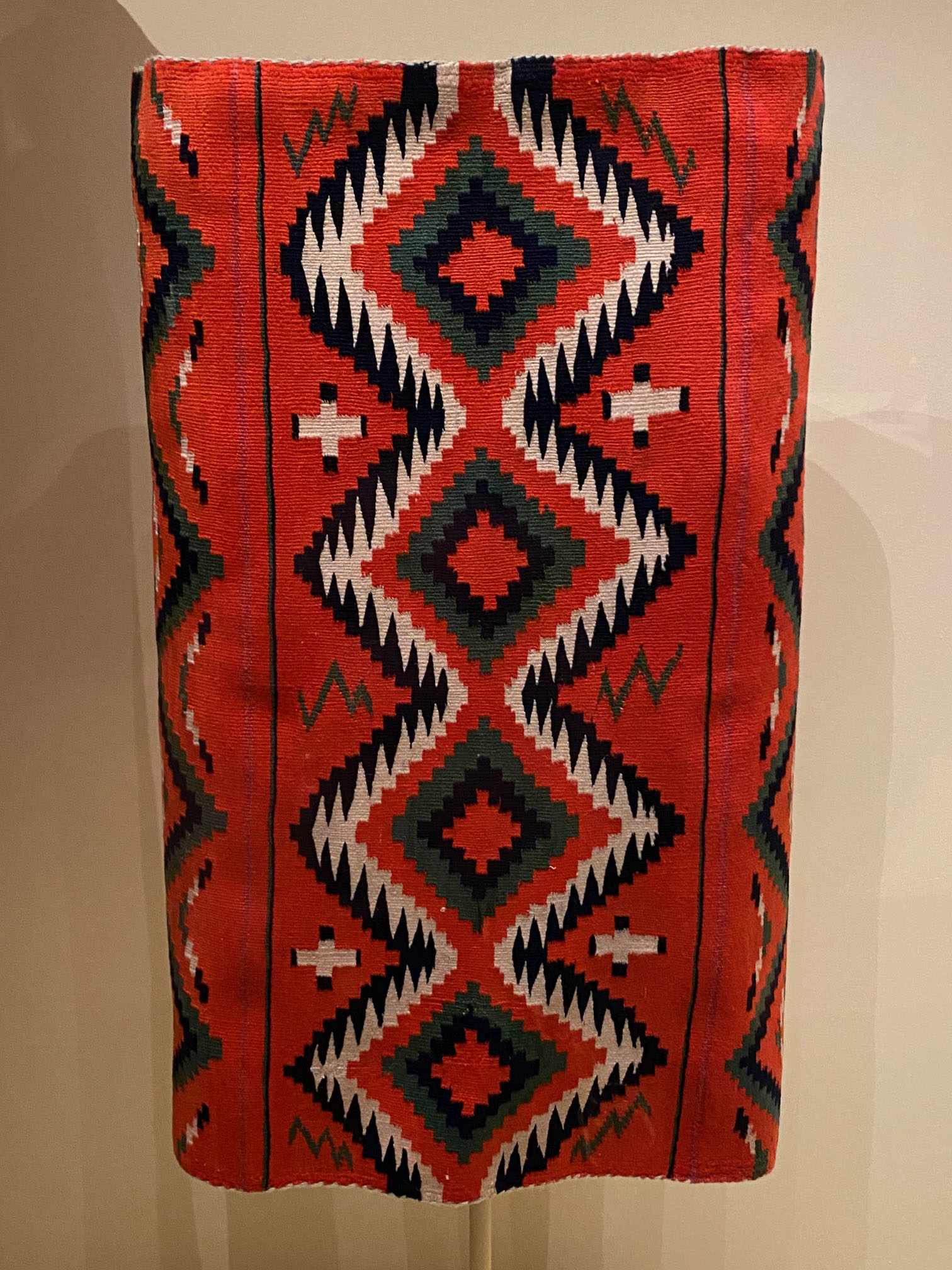
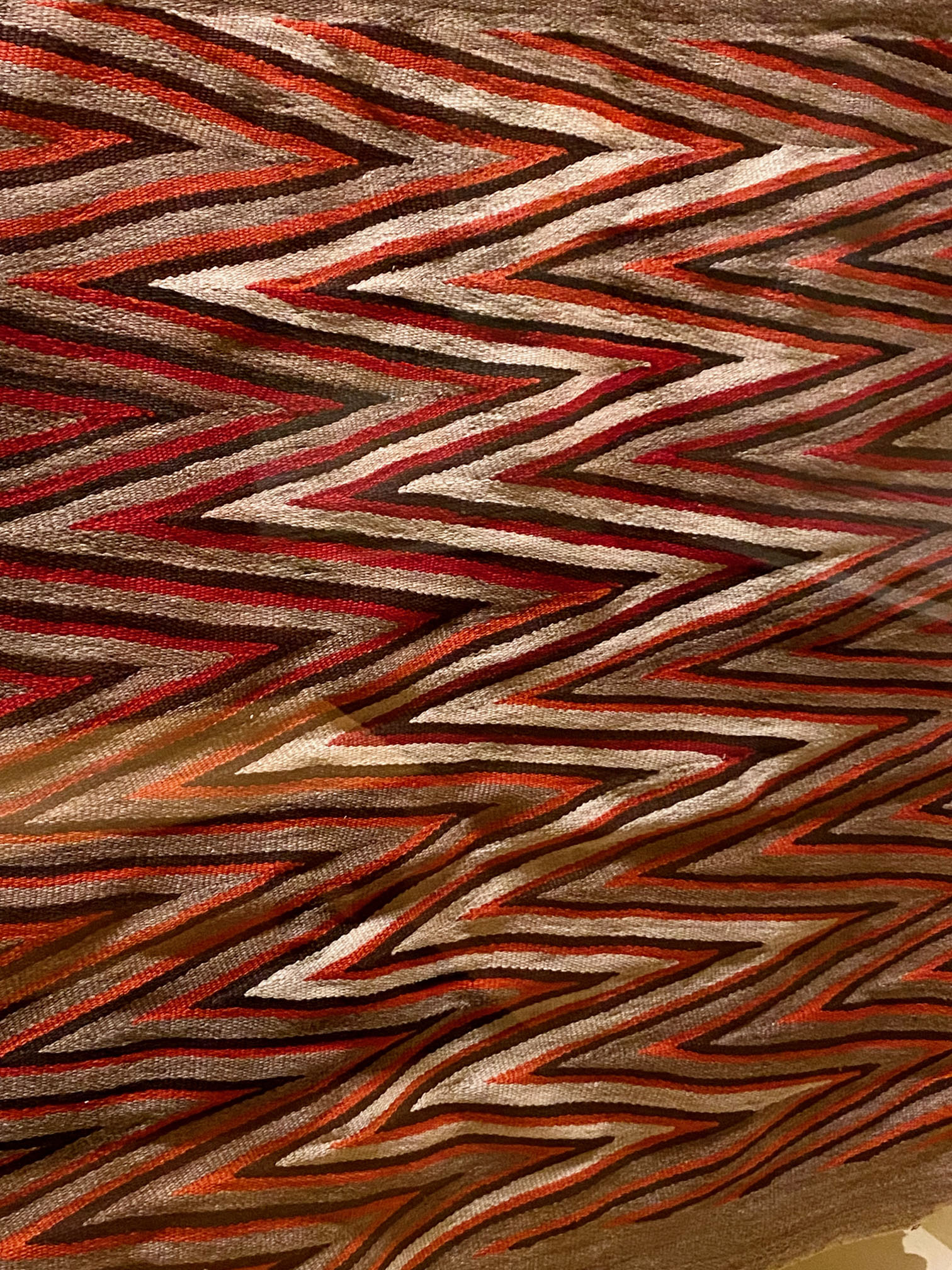
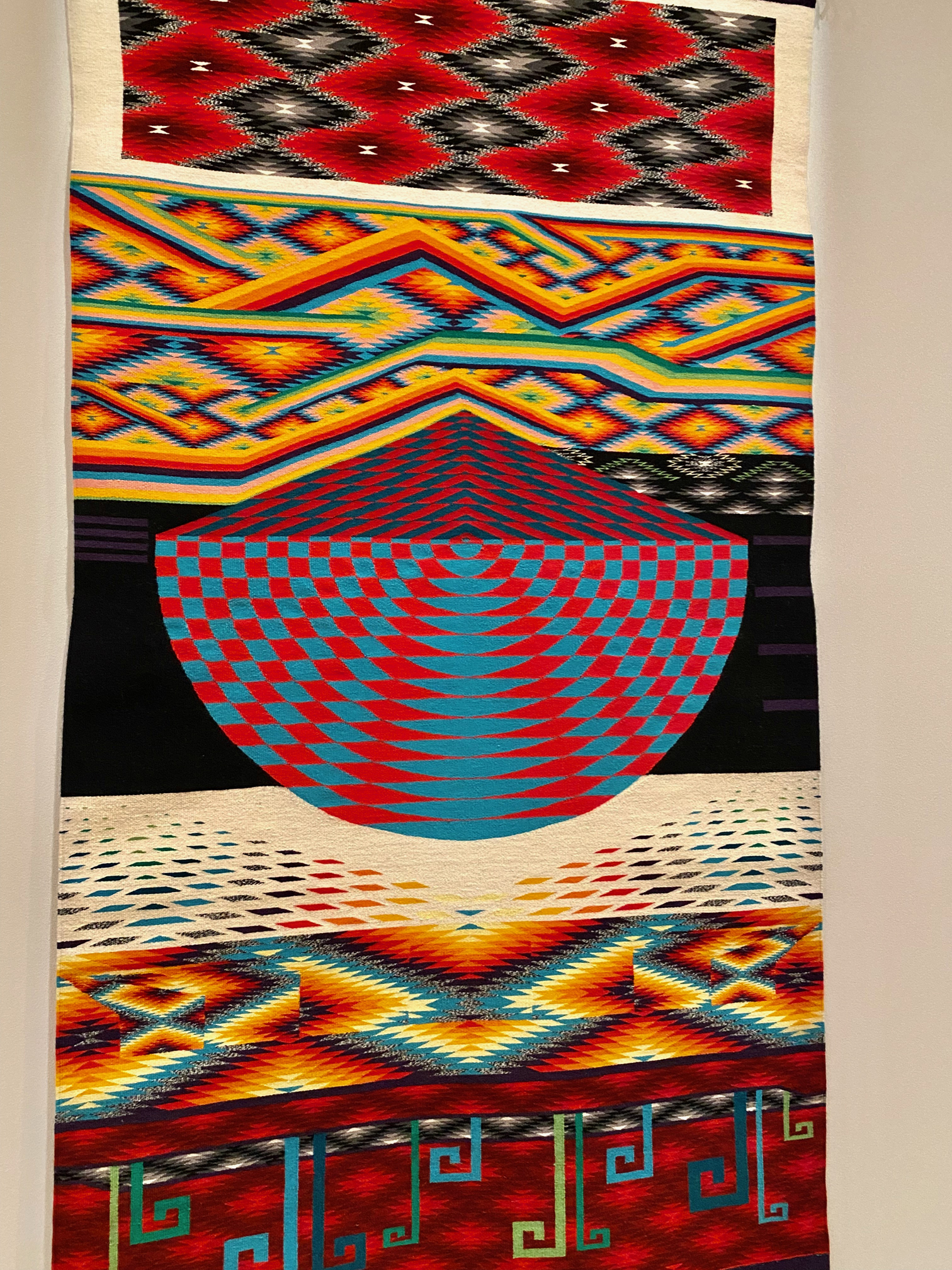
2014 wool weaving World Traveler by Melissa Cody (Navajo). Courtesy: Stark Museum of Art.

Smith, whose own artistic achievement was honored most recently in a three-museum retrospective in 2023-2024, became the first artist invited to curate a show at the National Gallery.

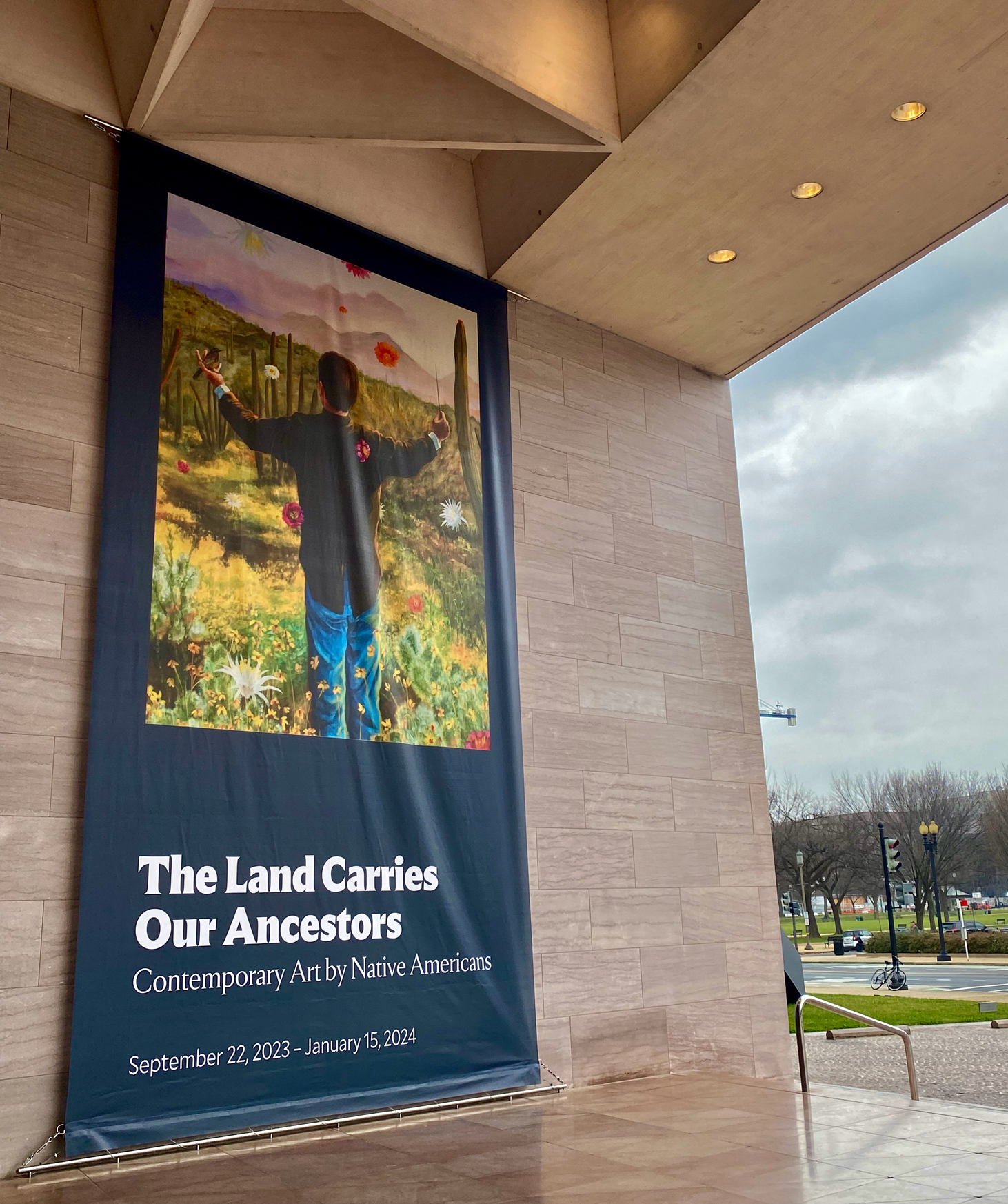
Entrance banner features Orchestrating a Blooming Desert by Steven Yazzie (Diné/Laguna Pueblo).

Smith has always done whatever possible to increase the visibilty of Native artists in the contemporary art world. For this exhibition, she chose 50 intergenerational artists from diverse regions, cultures, and artistic practices. Look at our Flickr album of the National Gallery installation to see some of our favorites.

All of the works reflect the artists’ deep connection to the land, especially Orchestrating a Blooming Desert by Steven Yazzie (Diné/Laguna Pueblo), a painting that reflects one man’s joyful encounter with a lush landscape.

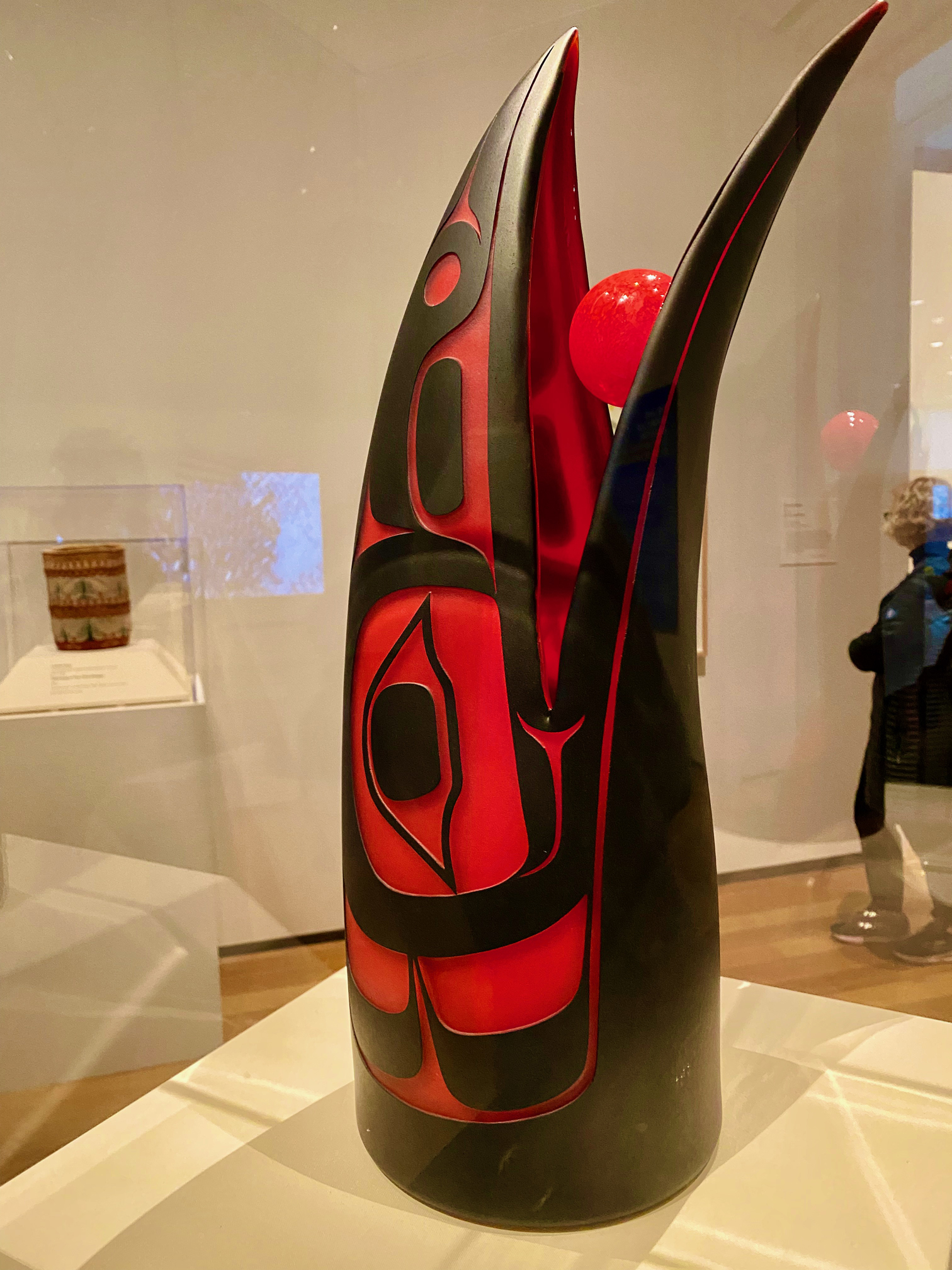
Some works depict a tribe’s link to the natural world through origin stories. Visitors are mesmerized by Preston Singletary’s exquisite sculpture of Tlingit creation-myth legend, Raven stealing the Sun. It’s glorious to admire this dramatic icon fully realized in a distinctly nontraditional medium – blown and sand-carved glass.

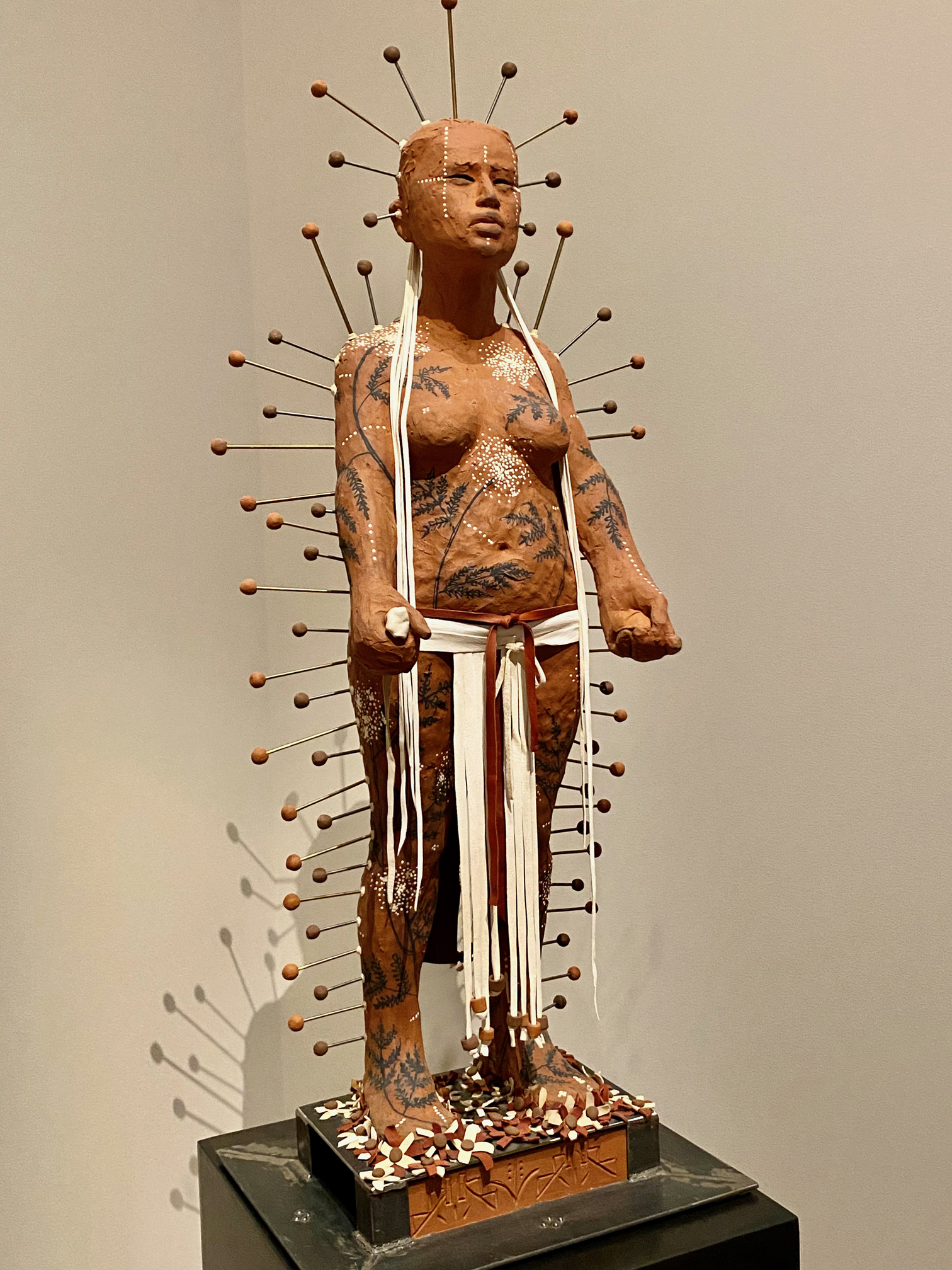
Experiencing the large, spiritual earth-colored ceramic figure by Rose B. Simpson (Santa Clara Pueblo) harkens back to eras when people had a more integral connection to the earth. Simpson calls her figure Tonantzin, an Aztec name for earth mothers, corn mothers, and even the Virgin of Guadalupe.

2017 blown and sand-carved glass Raven Steals the Sun by Preston Singletary (Tlingit). Courtesy: private collector.
2021 ceramic, steel, leather, and brass Tonantzin by Rose B. Simpson (Santa Clara Pueblo). Courtesy: Tia Collection.

Smith has chosen to hang many smaller two-dimensional works across a long wall in a checkerboard to suggest that visitors reflect on the impact of 1887 Dawes Act upon Native lands – a law that cut Native territory into “checkerboard” lots to facilitate private ownership.

At the National Gallery, Jeffrey Gibson’s punching bag (all made of found materials) was hung nearby, reminding us of the delicate balance that has to be struck by simultaneously caring for and taking gifts from the earth.

Next to checkerboard wall, the 2020 beaded punching bag To Feel Myself Loved On the Earth by Jeffrey Gibson (Mississippi Band of Choctaw Indians/Cherokee Nation). Courtesy: Hirschhorn Museum.

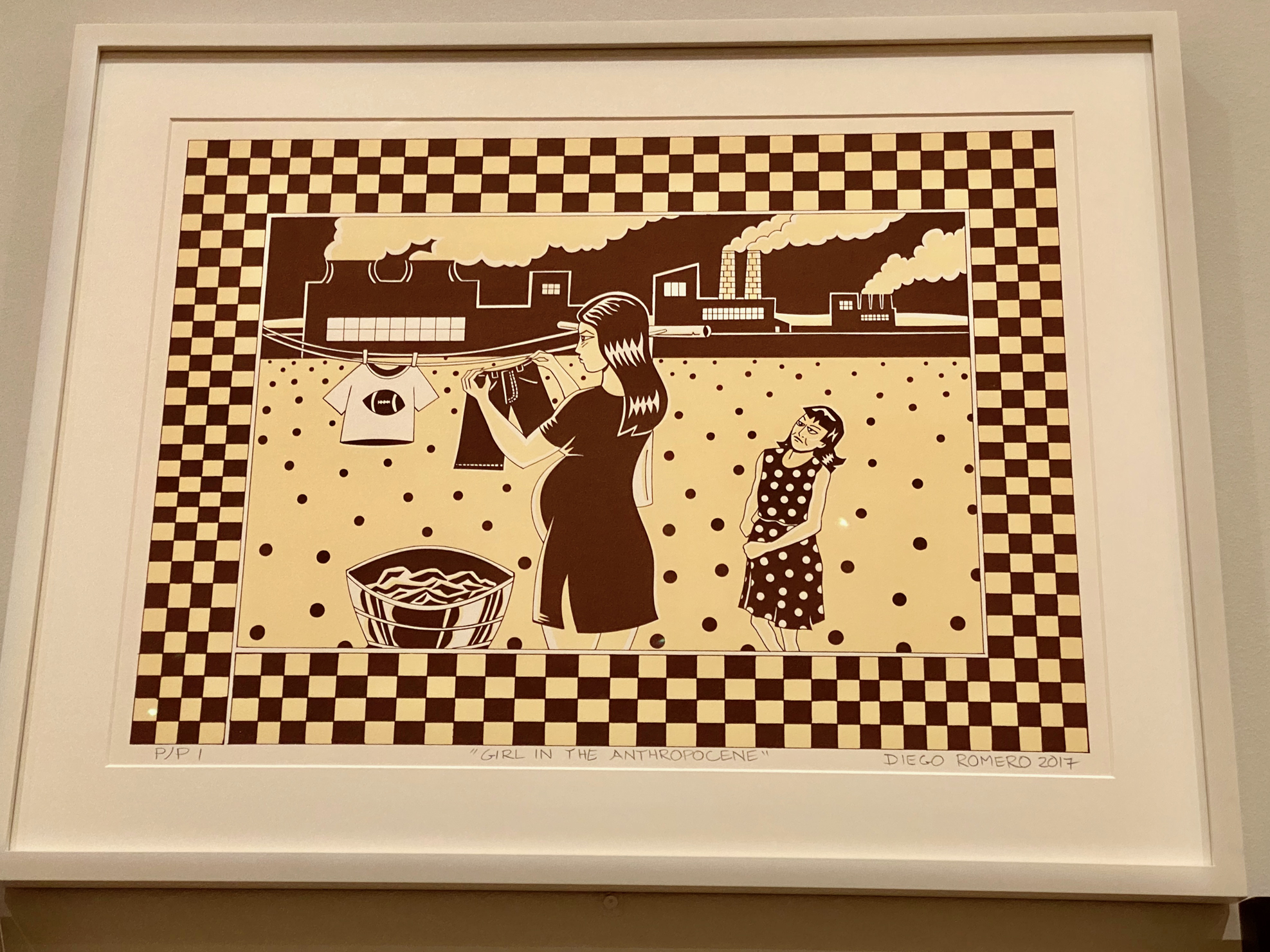
Some artists mix impressions of modern life with tribal lands, such as satiric works by Diego Romero (Cochiti Pueblo) and stylized symbols in a monoprint by Joe Fedderson (Colville Confederated Tribes).

2017 lithograph Girl in the Anthropocene by Diego Romero (Cochiti Pueblo). Private collection

In addition to sculptures, paintings, and photos, Smith has also included pieces made for fashion runways, live performances, and social protests.

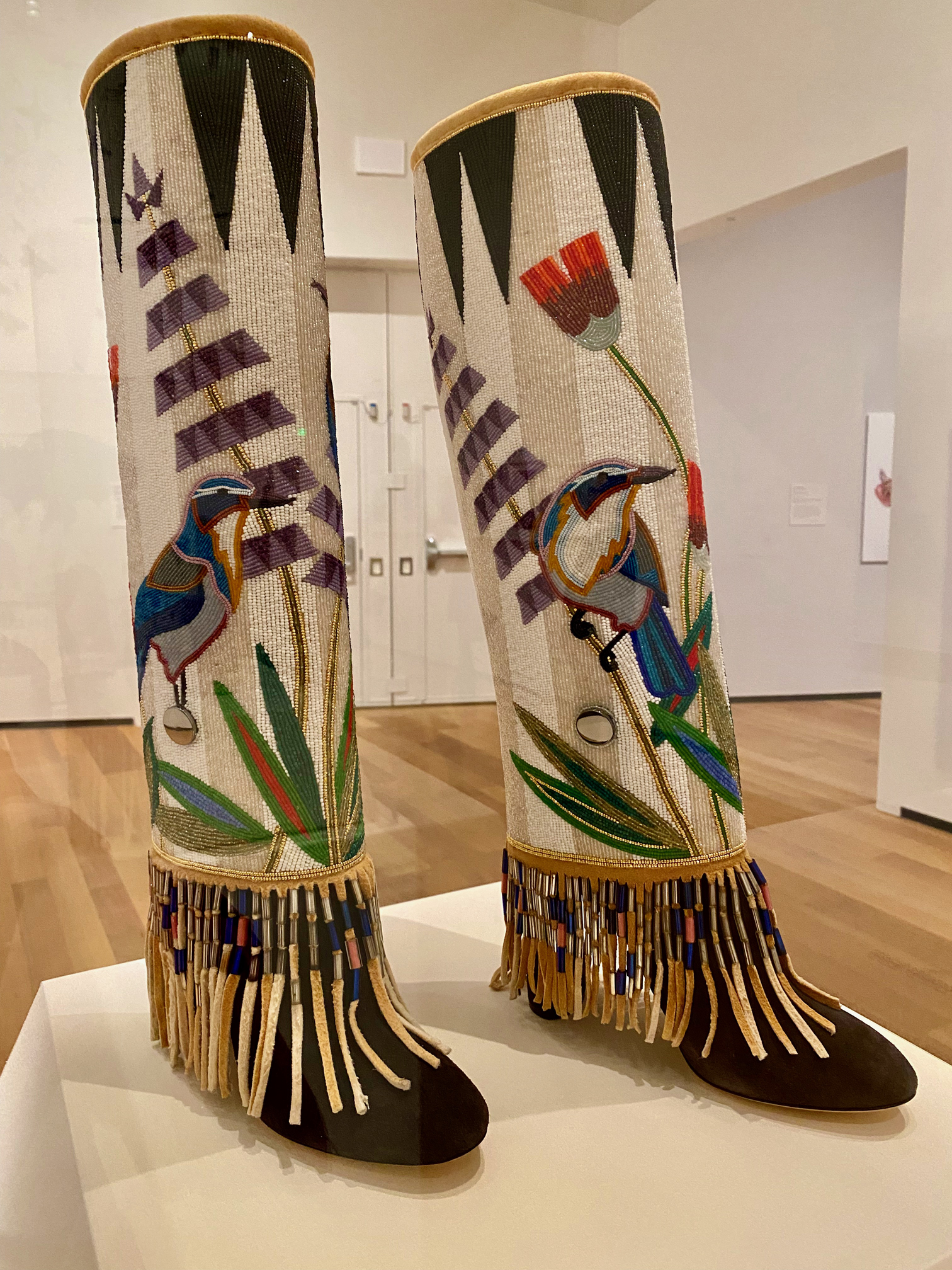
Fashion designer Jamie Okuma (La Jolla Band of Luiseno Indians) beaded her fringed fashion boots with a portrait of her family’s pet scrub jay.

Ten foot-long fiber seashell earrings designed for an interactive video and gallery performance by fiber and performance artist Eric-Paul Riege (Diné) are a reminder of the ancient trade networks that brought trade items from the ocean to the interior deserts.

2021 beaded and fringed Casedei boots by Jaime Okuma (La Jolla Band of Luiseno Indians). Courtesy: Dartmouth College’s Hood Museum
2020 mixed-fiber installation jaatloh4Ye’iitosoh [3-4] by Eric-Paul Riege (Diné). Courtesy: Tia Collection.

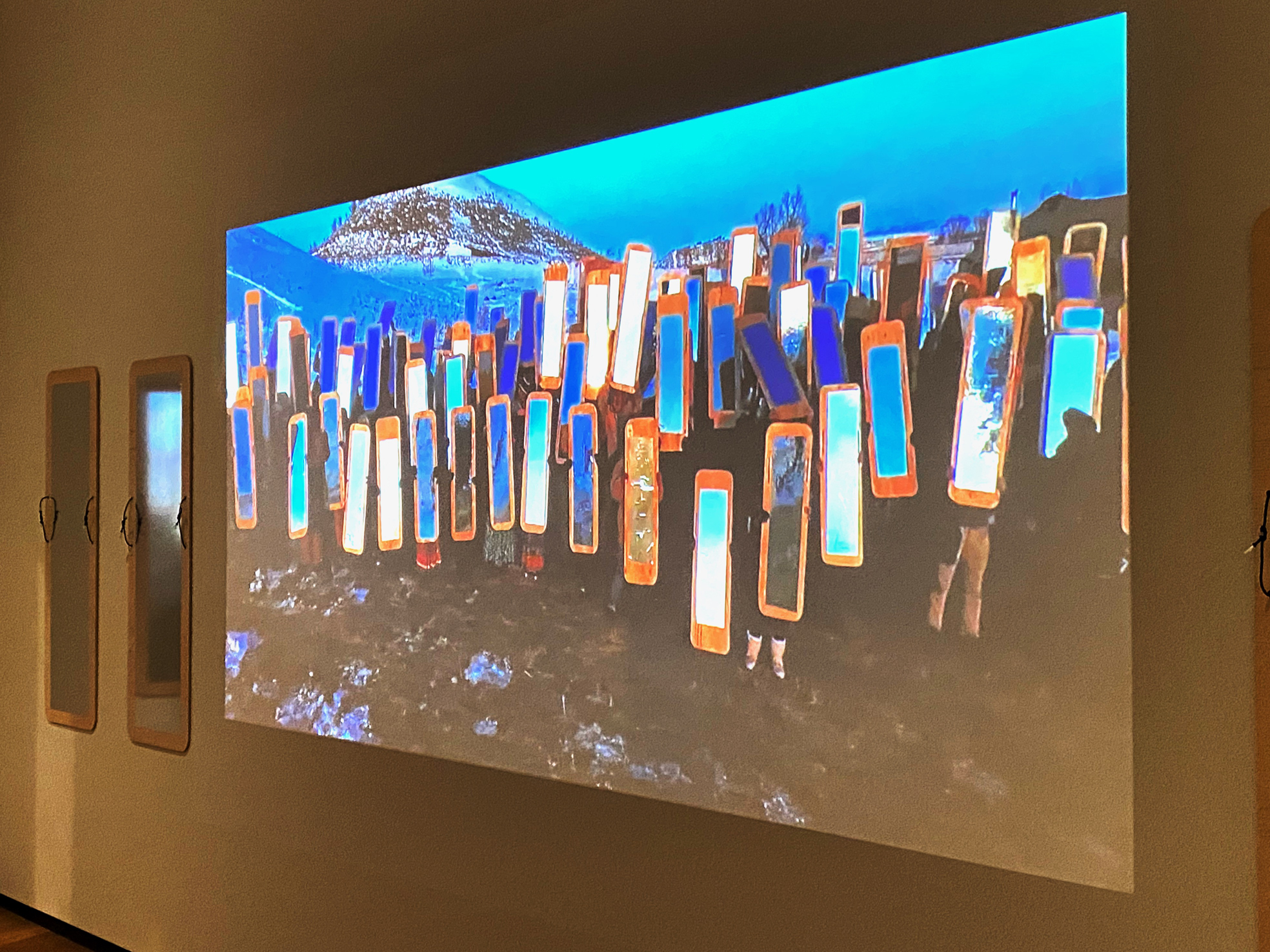
A wall of “mirror shields” were mounted by artist-activist Cannupa Hanska Luger (Mandan/Hidatsa/Arikara/Lakota), showing just a small sample of the 1,000 protective and reflective shields made by people to help water protectors during thre 2016 pipeline intervention at Standing Rock Sioux Tribe Reservation, Luger’s childhood home. Take a look at Luger’s instruction video here.

The shields served to protect the peaceful protesters from rubber bullets and water cannons, and reflected images of the security forces back to them. The crowd-sourced shields were also used in a social-action performance piece at Standing Rock.

2016 mirror shields and video for Mirror Shield Project – River (The Water Spirit) by Cannupa Hanska Luger (Mandan/Hidatsa/Arikara/Lakota). Courtesy: the artist, Garth Greenan Gallery.

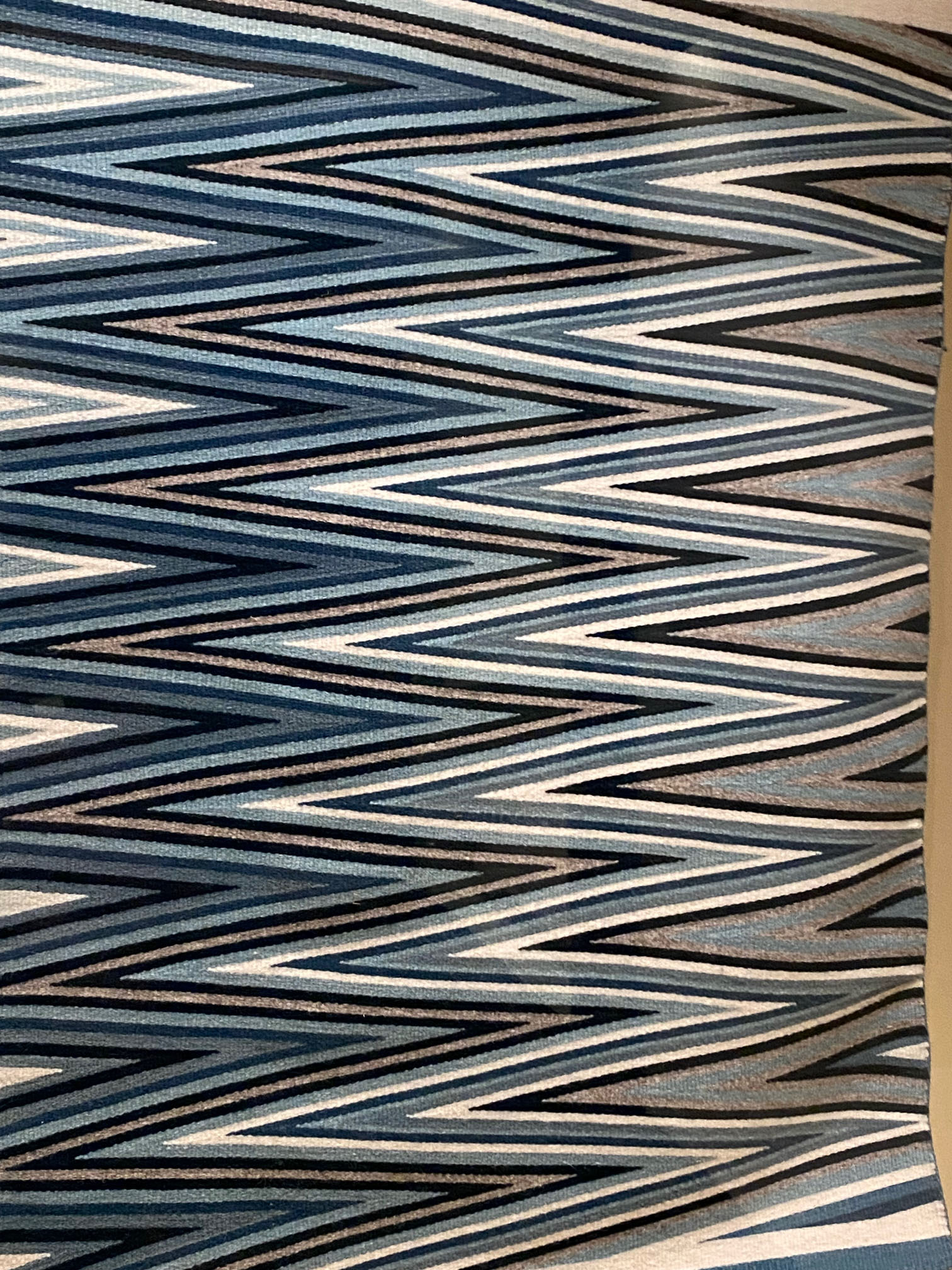
Textiles and vinyl drawings also pack a punch in this show. Take a look at the dazzler woven by Melissa Cody (Diné), who draws inspiration from video gaming and the matriarchs of Navajo Nation. Watch her interview from her recent exhibition at MoMA PS1.

Here, John Hitchcock explains how his room-sized drawing, Impact vs. Influence, incorporates his influences – nature, family, Native beadwork, and the next-door military base:

Take a look the National Gallery’s trailer and meet the 50 contemporary artists whose work and relationship to the land is celebrated in the show:

How Philadelphia Made American Artists

How does it feel to have the eyes of 200 years of art history upon you, peering out from portraits, history paintings, and scenes of everyday people? What stories do they have to tell you? And who gets to tell the history and make the story?

Find out by contemplating works by over 100 artists nurtured and celebrated by PAFA in Making American Artists: Stories from the Pennsylvania Academy of Fine Arts, 1777-1976, currently on view at the Albuquerque Museum through August 11, 2024…but coming soon to a museum near you (see below)!

Charles Willson Peale’s 1779 George Washington at Princeton, painted during the War of Independence. Courtesy: PAFA

While renovations are happening at the Academy in Philadelphia, the curators have chosen some of PAFA’s most iconic works to be shipped cross-country and installed “in conversation” with works by PAFA artists who may not be household names but were nonetheless ahead of their time.

It’s all a tribute to legacies preserved in the oldest art museum + art school in the United States, founded in 1805 by the dynamic duo of William Rush and Charles Willson Peale, both Continental Army militia (and artists!) during the American Revolution.

1810 painted pine sculpture Eagle by PAFA co-founder and Revolutionary War veteran William Rush.

Mr. Rush carved the bow figures on most of the ships for America’s first Naval fleet. All of those ships are now long gone, so it’s nice to see that we can admire his majestic Eagle in this exhibit.

Mr. Peale, one of the Sons of Liberty who served under and painted General Washington, later founded America’s first natural history museum on the second floor of Independence Hall. He also passed his talent on to the next generation through his very large family of artistic prodigies.

These two artists of the Revolution walked the walk and talked the talk and passionately felt the young nation needed an art academy.

PAFA’s first hundred years had some ground-breaking firsts – the first exhibition that included both male and female artists (1811), admission for Black artists (1857), and first female instructor (1878).

Charles Willson Peale’s 1822 self portrait (painted at age 81), The Artist in His Museum proudly showing his collection, turkey, and mastodon. Courtesy: PAFA

The show kicks off with a masterful history painting by Benjamin West, a Pennsylvania painting genius who landed in England in 1763, helped to found the Royal Academy, and somehow remained best friends with both King George III and Benjamin Franklin at the same time. He revolutionized history painting by depicting contemporary subjects and taught (in London) a who’s who of Americans artists – Peale, Stuart, Sully, Morse (who invented the telegraph and code), and Fulton (who invented steamships).

Benjamin West’s 1771-1772 Penn’s Treaty with the Indians, an imaginary scene painted to rehabilitate Penn’s image at the time, although it does feature Lenape chief Tamanend;. Courtesy: PAFA

In addition to masterworks by West and Gilbert Stuart, the exhibition showcases many works by female and African-African artists associated with PAFA – Patience Wright (America’s first professional sculptor), Cecilia Beaux (first female teacher), Henry O. Tanner (first successful African-American painter), and superstar Mary Cassatt.

1784-1786 wax relief portrait of George Washington by Patience Wright, the oldest American sculpture in the PAFA collection
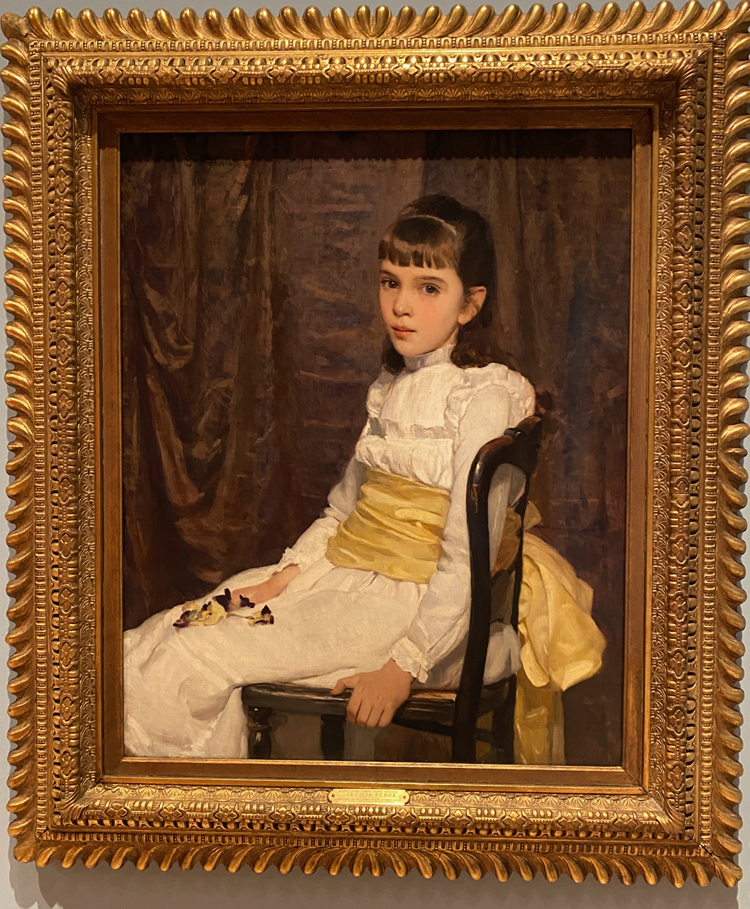
1887 A Little Girl by Cecilia Beaux, an acclaimed female portraitist known for her insightful psychological depictions of young women. Courtesy: PAFA

In the day, grand history paintings were primarily the work of men, but the exhibition emphasizes that many enterprising 19th century women still found ways to make it in the art world. They specialized in “lesser genres,” like portraits, still lifes, and scenes of everyday life. Check out our favorites in our Flickr album.

Making American Artists really comes alive by adding 20th century works on the walls. Alongside the Founding Fathers, the portrait section features liberated women, bohemian artists, and proud Black artists with attitude.

Margaret Foster Richardson’s 1912 A Motion Picture – an honest self-portrait reflecting society’s changing views of professional women. Courtesy: PAFA
Barkley L. Hendricks’ 1968 J.S.B III, a fashionable, life-sized, postmodern portrait of his PAFA classmate James Brantley. Courtesy: PAFA

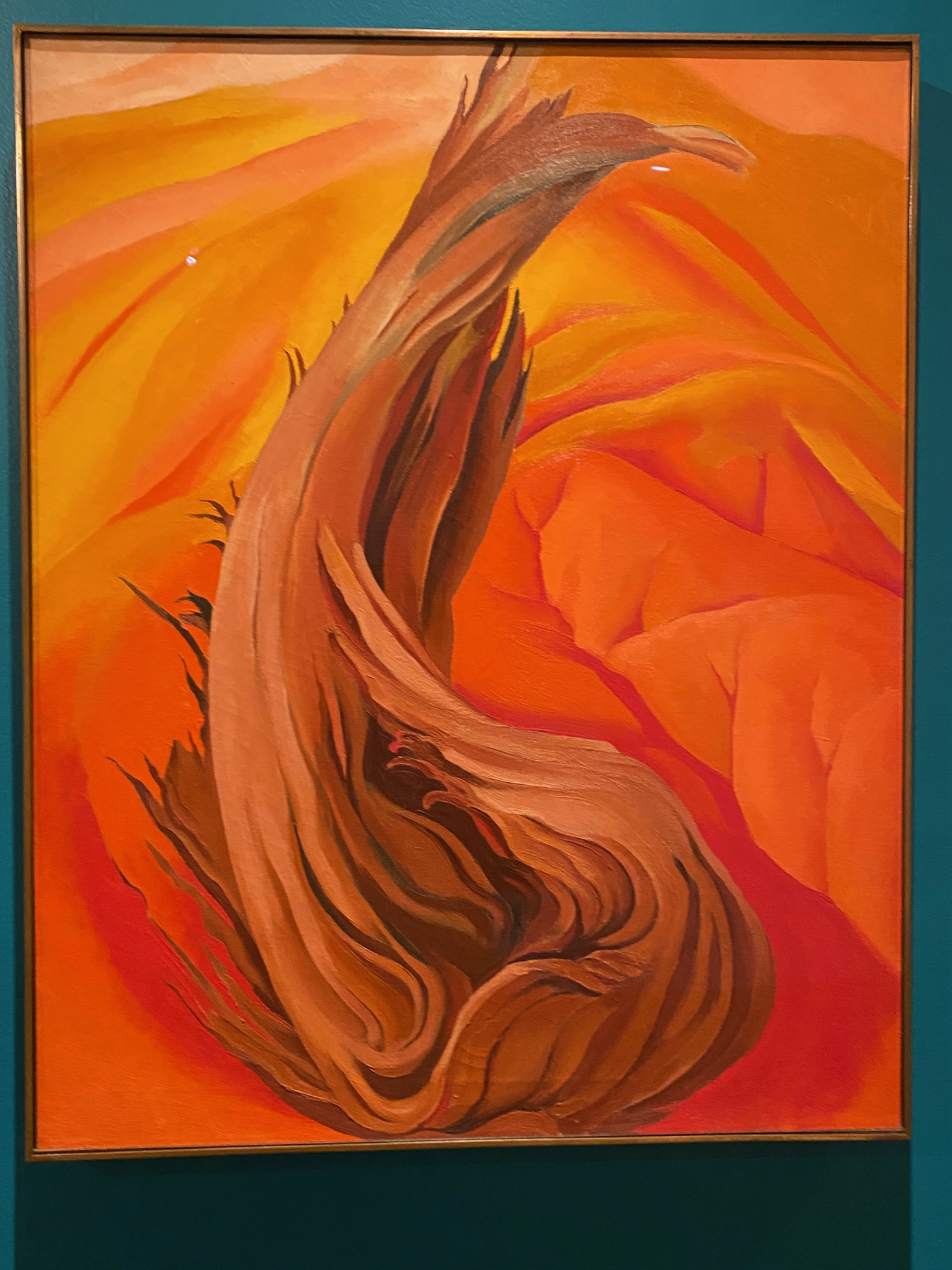
The section of the exhibition on still life focuses on early female painters who made decent incomes from their work, as well as modernist superheroes O’Keeffe and Nevelson. The history painting section presents 20th century show-it-like-it-is artists, like Horace Pippin and Alice Neel.

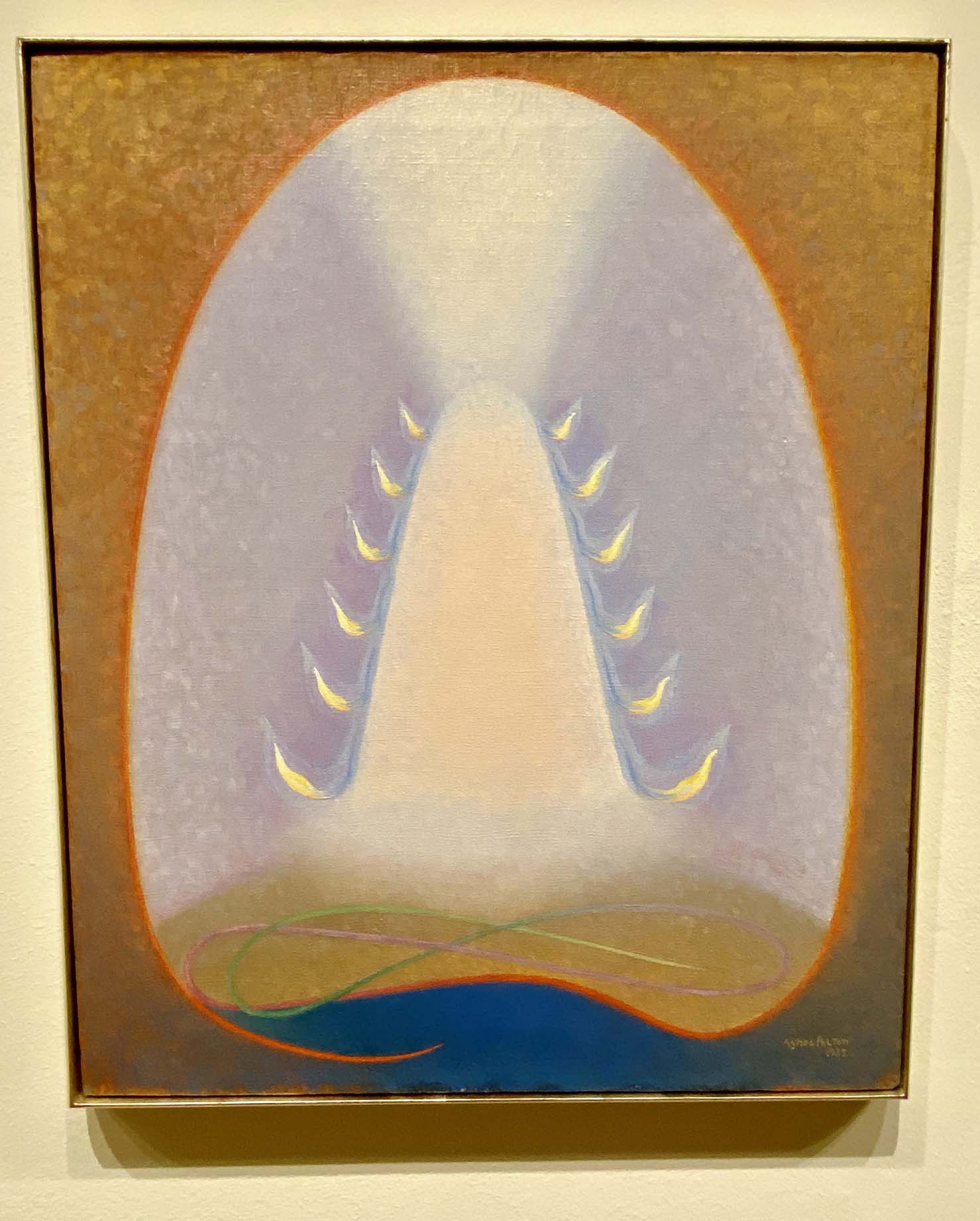
Georgia O’Keeffe’s 1923 Red Cana, an early abstracted floral still life. Courtesy: PAFA
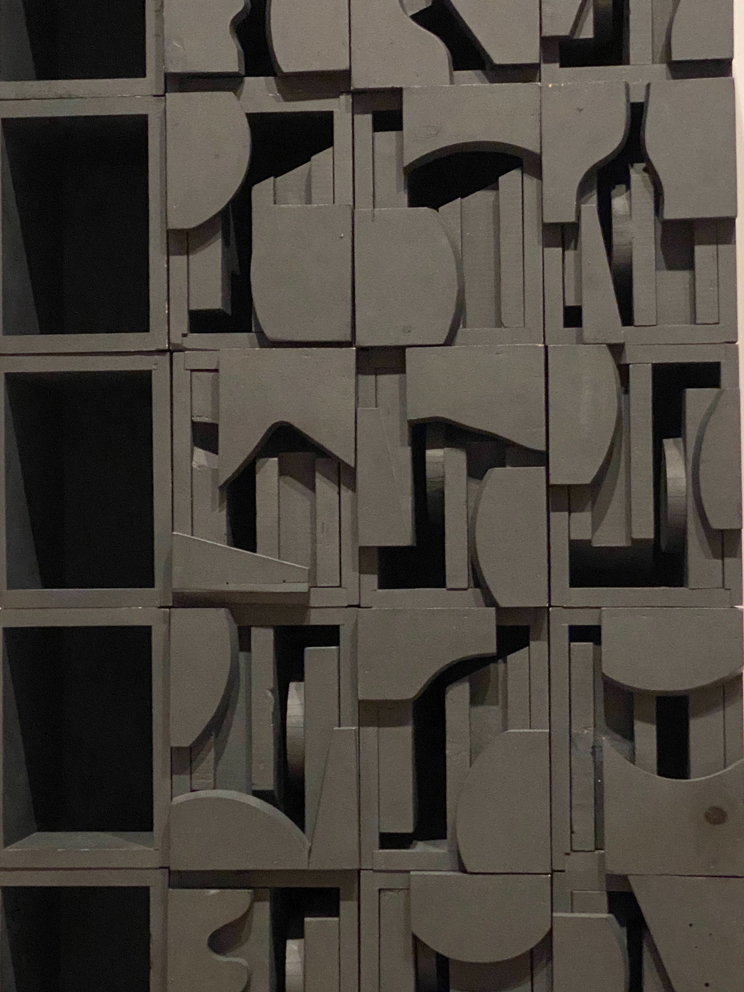
Detail of Louise Nevelson’s 1972 South Floral. Still life section. Courtesy: PAFA

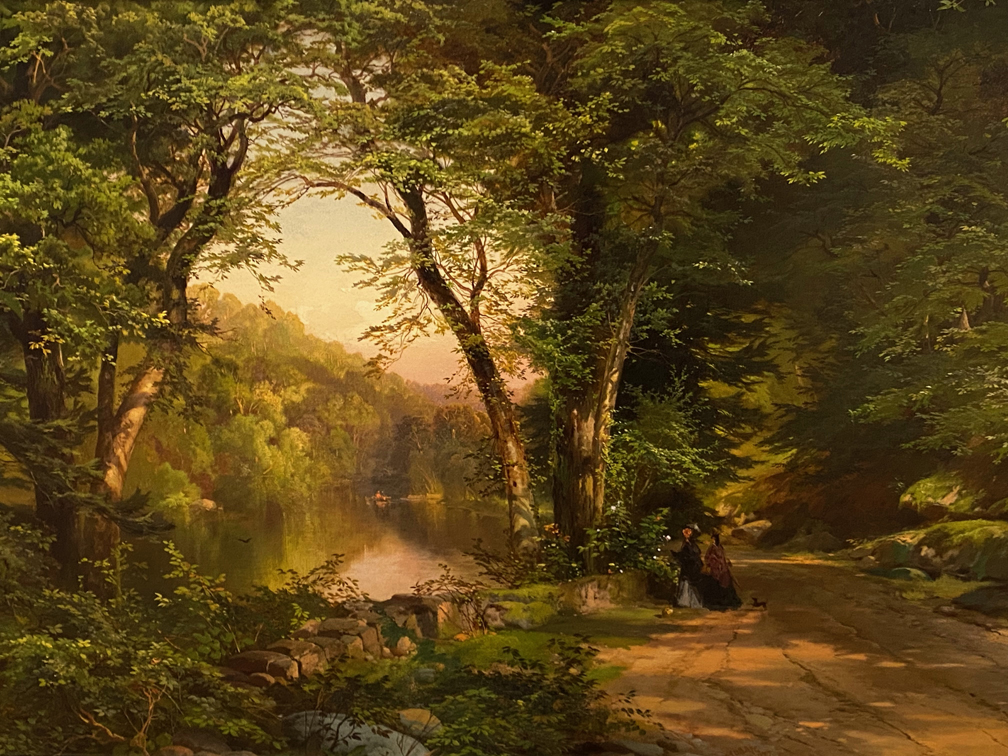
We’re reminded that many of the great masters of American landscape, like Thomas Moran, got their starts by painting bucolic views of Philadelphia’s Wissahickon and Schulkyll Rivers. Painting Philadelphia’s river landscapes may have even inspired the rise of the Hudson River School.

Thomas Moran’s 1870 Two Women in the Woods enjoying the green along the Wissahickon in Philadelphia. Courtesy: PAFA

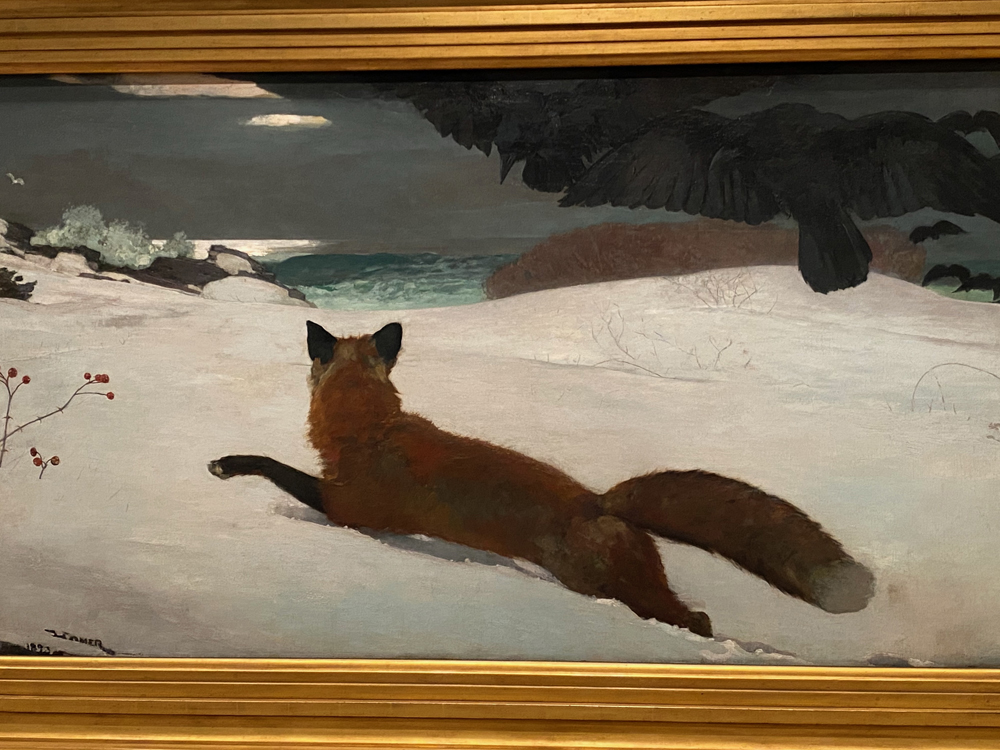
And it was PAFA that gave Winslow Homer his professional start.

Winslow Homer’s 1893 Fox Hunt, where predator becomes the prey; Homer’s first painting to enter a museum collection. Landscape section. Courtesy: PAFA

The entire exhibition is a fresh look at American masters who created an astonishing legacy at one of our oldest art institutions ­and upstarts who never quite got their due. There’s so much to appreciate from this fresh, 21st century perspective!

Earlier this year, Making American Artists was at the Wichita Art Museum. Its next stop is the Philbrook Museum of Art in Tulsa, Oklahoma (September 25, 2024), followed by a spectacular road show: Everson Museum of Art in Syracuse (February 2025), the Peabody-Essex in Springfield, Massachusetts (June 2025), and the Taubman Museum of Art in Roanoke, Virginia (October 2025).

Don’t miss it. While you’re waiting, listen in to curator Anna O. Marley’s May talk at the Albuquerque Museum:

How O’Keeffe Saw Trees

Whether she contemplated her surroundings among the greenery at Lake George or the multicolord rocks at Ghost Ranch, Georgia O’Keefe often started by sketching the trees around her.

in Rooted in Place, a special exhibit at the Georgia O’Keeffe Museum in Santa Fe through November 3, 2024, you are surrounded by Georgia’s watercolors, oils, and sketches interpreting (and abstracting) trees she encountered on her walks and international travels.

Take a look at our favorites in our Flickr album.

Georgia’s 1937 painting Gerald’s Tree I, a tree enjoyed by her friend, science historian Gerald Heard

The curators have selected works from the full span of Georgia’s life. The earliest are from her trips to Lake George, such as the glorious autumn maples surrounding the Stieglitz home.

The show’s curators leverage Georgia’s habit of collecting inspirational bits and pieces of nature from her Ghost Ranch walks, showing the twisted juniper she brought home alongside the dramatic oil painting in which it stars.

Piece of juniper that Georgia collected from the land surrounding her Ghost Ranch home.
Georgia’s 1940 painting Stump in Red Hills

The museum’s collaboration with the Santa Fe Botanical Garden adds scientific insights about the three cornerstone species of New Mexico wilderness that from which Ms. O’Keeffe drew inspiration – pinons and junipers next to the red rock, and wide, leafy cottonwoods along the river.

Georgia’s 1930 Cottonwoods Near Abiquiu showing the breeze catching the wide branches

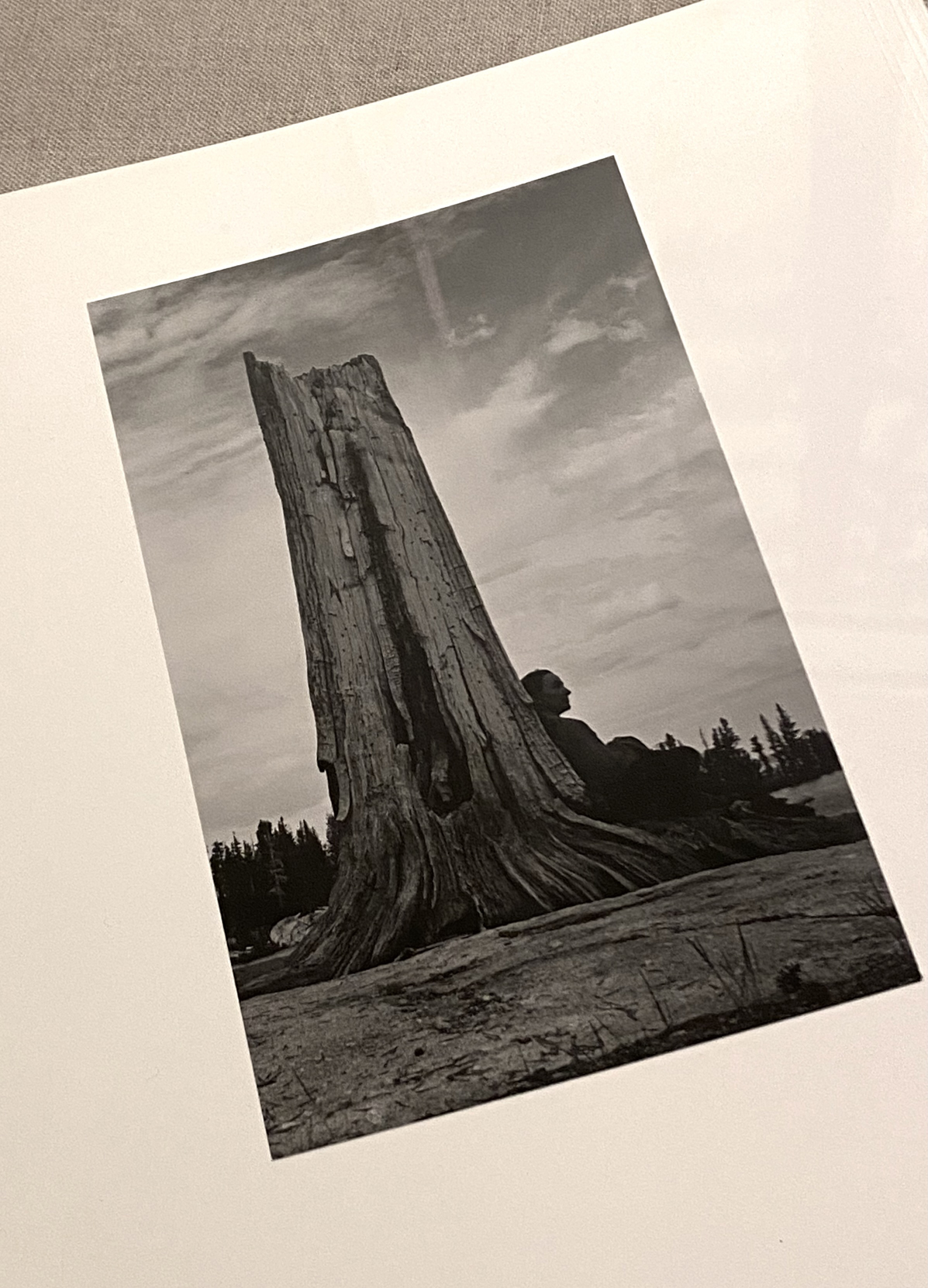
A gorgeous photo by Ansel Adams shows Georgia nestled up against one of her favorites nearby in the desert. She loved the fruit trees she planted near her home garden, but she never painted them.

When Georgia was a young student at the Art Institute of Chicago in 1905-1906, she studied with John Vanderpoel, well known for being a master educator in figure drawing. Looking at her drawing of a banyon tree from her trip to the Bahamas over thirty years later, it’s clear she employed those early lessons – bringing trees to life as living beings in her work ­– throughout her life.

Ansel Adams’1938 portrait of George O’Keeffe resting against a dramatic tree stump in northern New Mexico
Georgia’s 1934 figure-like drawing Banyon Tree created on her trip to Bermuda

Listen to the museum’s panel about Georgia’s approach to painting her favorite trees and the role they play in the ecosystem of northern New Mexico:

Contemporary Artists Talk with Thomas Cole

There’s a big conversation going on about epic landscapes, people’s impact upon the wilderness, and personal connections to nature. It involves four contemporary artists and American master Thomas Cole, mid-19th century landscape painter and visionary, through February 12 at the Albuquerque Museum.

Plus, visitors are able to step back in time to visit Cole’s studio, arranged much as it was at the moment of his untimely death at the age of 47 – an unfinished canvas, paint palettes, his paint box, plaster casts, and mementos of his wilderness walks and trips abroad.

1835-1845 paint box, palette, and tools in Cole’s studio. Courtesy: Greene County Historical Society’s Bronck Museum.

This section of the four-in-one exhibition is Thomas Cole’s Studio: Memory and Inspiration. The curators have also surrounded the studio recreation with a wide range of Cole’s studies and finished works, including his last completed commissioned work. Take a closer look in our Flickr album.

Unfinished Landscape with Clouds, paints, plaster casts, and furniture in Cole’s studio when he died in 1848. Courtesy: Thomas Cole National Historic Site.

Cole redefined American landscape painting in the 1830s and 1840s by merging the style of romantic European landscapes with the dramatic skies, vistas, and mountains of New York’s Adirondack wilderness. His work kick-started the Hudson River School of landscape painting, and by the time of his untimely death at age 47, he was America’s best known and best loved artist.

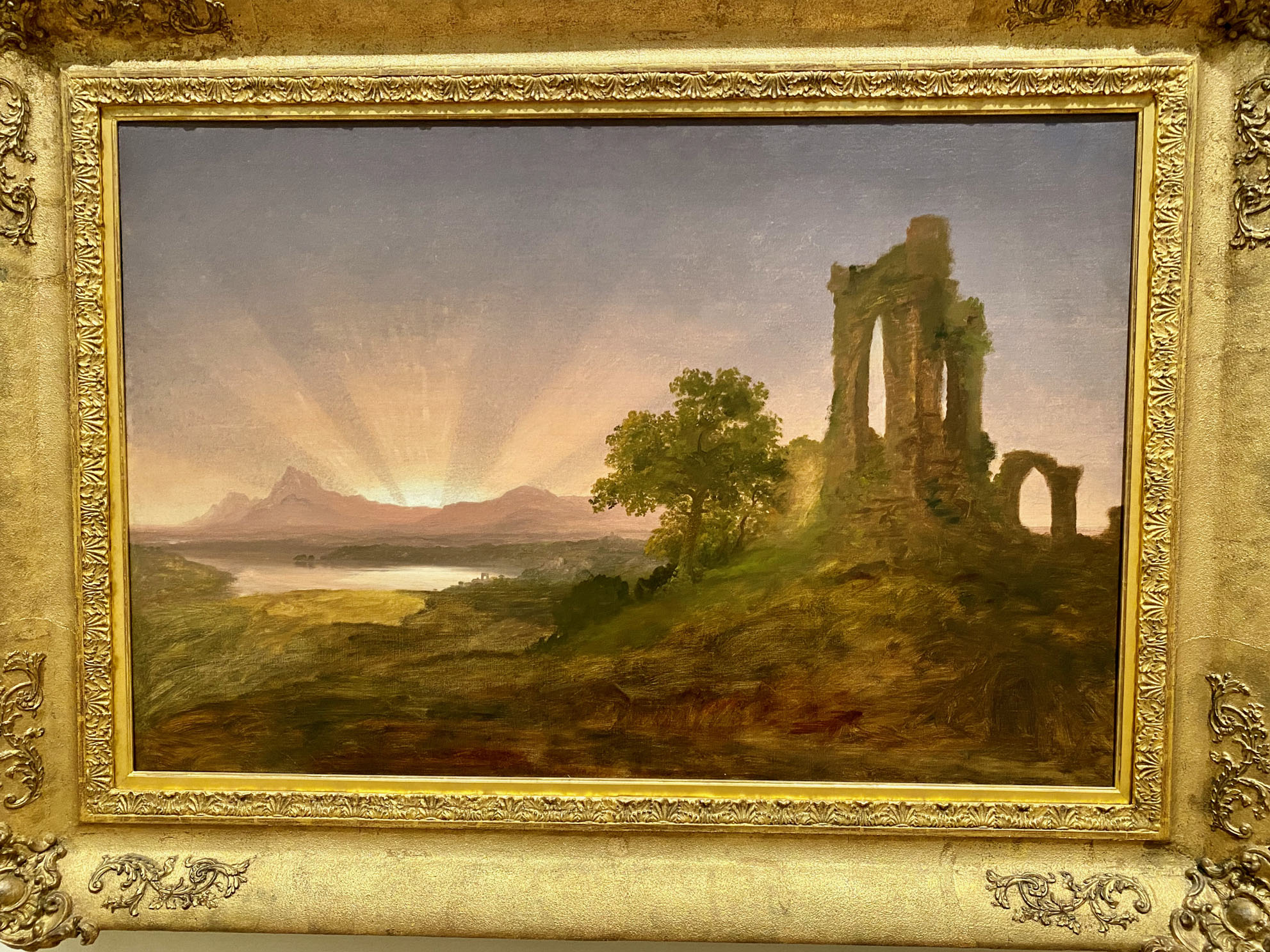
Cole’s 1848 Gothic Ruins at Sunset, an unfinished work from his studio. Private collection.
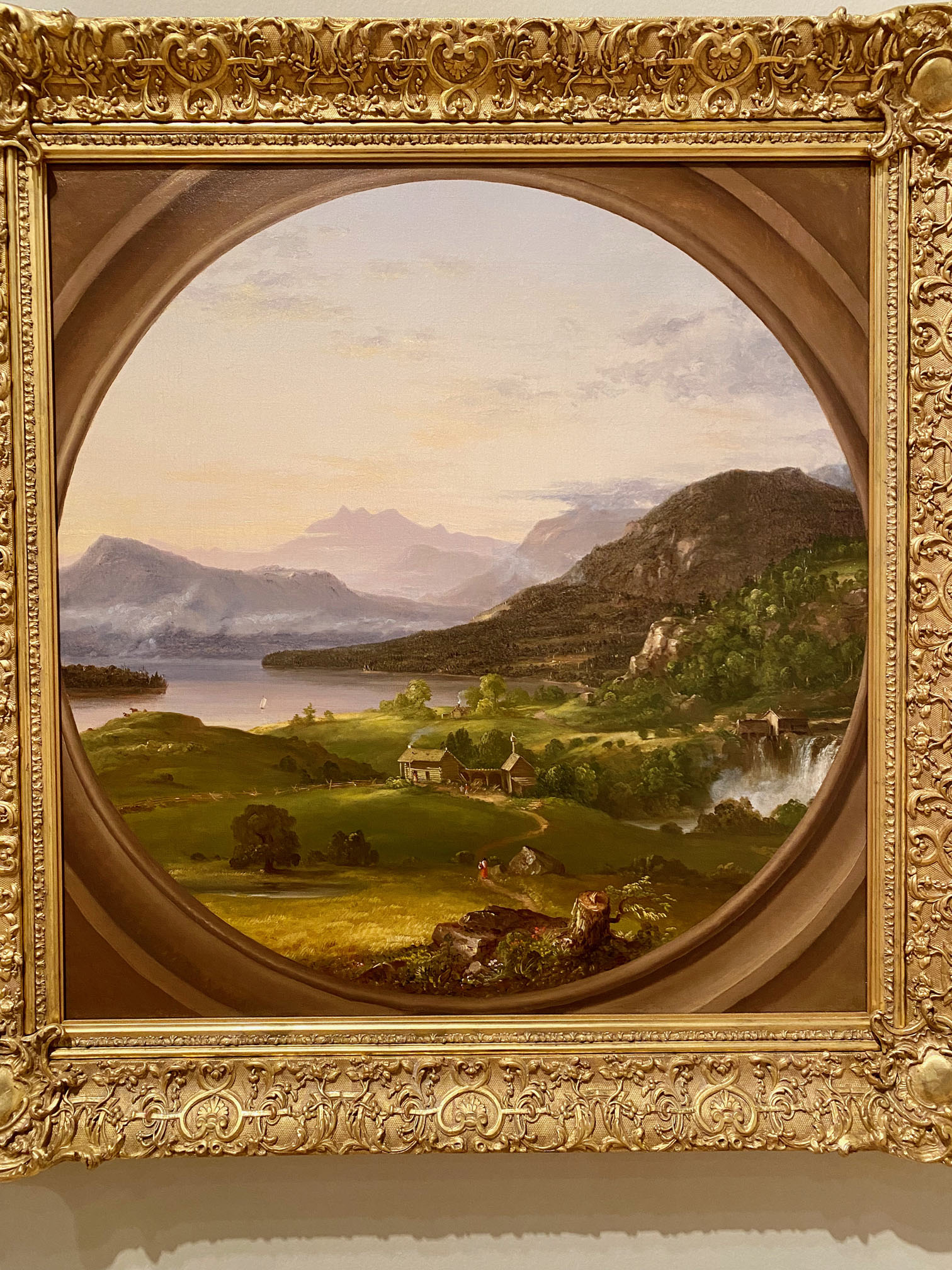
Cole’s 1846 Schroon Lake, showing a civilized landscape at the edge of mountain wilderness. Courtesy: Adirondack Experience

During his life (1801-1848), Cole witnessed how pristine American wilderness was changed by proliferating settlements, roads, bridges, mills, and commerce along the rivers. Sometimes he chose to paint sights, like Niagara Falls, minus human intrusion; other times he gently inserted “civilization” into magnificent landscapes, as in Schroon Lake.

Cole had been a mentor to innovative landscape painters like Durand, Church, Kensett, and Cropsey. When Cole passed away suddenly, they were devastated. His wife left his studio just as it was, and for the next ten years she welcomed painters to make the pilgrimage to visit it, spend time, and gain inspiration.

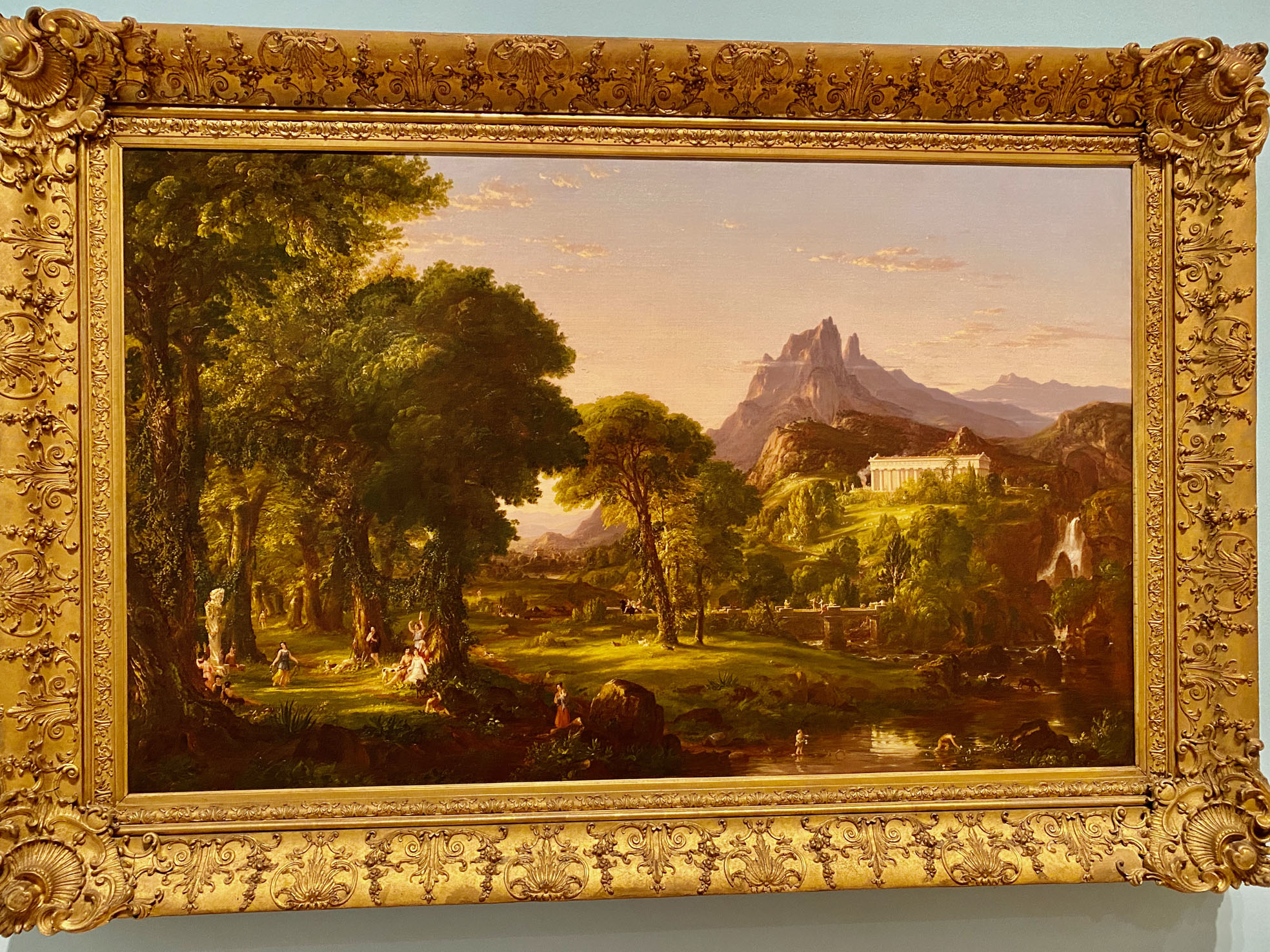
Visitors enter this exhibition and confront Cole’s large 1838 work, Dream of Arcadia, showing a mythical time when civilization existed in harmony with nature.  Can this ideal state truly exist?

Thomas Cole’s 1938 Dream of Arcadia. Courtesy: Denver Art Museum.

The Thomas Cole National Historic site, which organized three of the four shows, answers this question through the eyes of two well-known contemporary artists – Kiki Smith, who owned a house along a creek a short distance from where Cole lived, and Shi Guori, who created camera obscura images at Hudson Valley sites where Cole stood and painted.

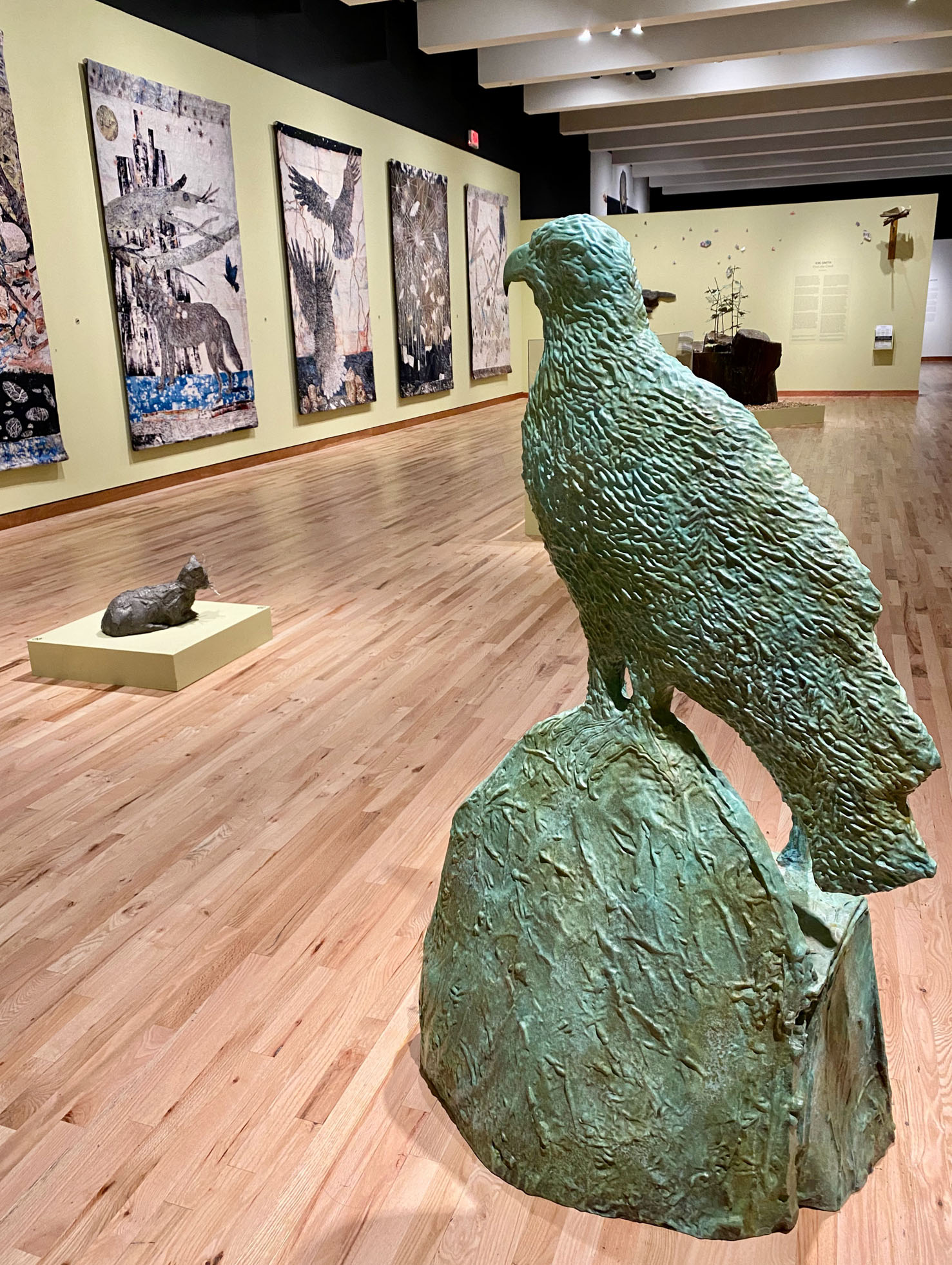
Kiki Smith: From the Creek is an immersive exhibition populated by the birds, beasts, insects, and plants along Catskill Creek – an area that Cole walked and knew well.

Kiki Smith’s 2016 bronze Eagle in the Pines in gallery with 2012-2014 jacquard tapestries

Visitors look up, down, and around to see owls, eagles, wolves, and pheasant peering back at them from perches, tapestries, frames, and vitrines…observing and being observed. Take a look at here.

2019 bronze Coxsackie sculpture of owl at the exhibition entrance.
Detail of Kiki Smith’s 2012 Cathedral jacquard tapestry (published by Magnolia Editions).

Kiki’s work always brings an air of other-worldly mystery. Here, it’s easy to enjoy all of her varied creations, which display her deep connection to nature and ask us to contemplate the cycles of life that busy people sometimes forget to notice. Cole’s paintings had the same impact.

Shi Guori’s Katerskill Falls, New York, July 26-28, 2019 – a 72-hour exposure made where Thomas Cole sketched in 1824. Courtesy: private collection.

Shi Guori: Ab/Sense – Pre/Sense presents monumental camera obscura images of landscapes Cole painted in the Hudson Valley 180 years ago. When he was growing up in China, Guori experienced the shock of rapid environmental disruption as Mao’s Cultural Revolution transformed the countryside.

Guori studied Cole’s documentation of similar 19th-century transformation in the Northeast, and traveled back to sites that Cole documented to bear witness to natural settings – somewhat still undisturbed – that resonated with Cole.

Guori built large camera-obscura tents, sat inside for up to 72 hours, and exposed light-sensitive paper to create his images. Images of Cole’s oil paintings at the same site are mounted nearby with Guori’s meditations on the experience.

Shi Guori’s camera obscura image The Clove, Catskill Mountains, New York, April 25, 2019. Courtesy: the artist
Basis for camera obscura work by Shi Guori: Thomas Cole’s 1827 oil The Clove. Image: Connecticut’s New Britain Museum of American Art.

In one case, Guori turned Cole’s own sitting room into a camera, capturing not only furniture that he would have used, but showing the image of nature that Cole surely would have spent hours gazing upon. View more of Guori’s work here.

Shi Guori’s camera obscura image View of the Catskill Mountains from Thomas Cole’s House, August 12, 2019 – which turned Cole’s sitting room into a camera. Courtesy: the artist

The fourth exhibition, Nicola López and Paula Wilson: Becoming Land, present large-scale environmental meditations on Southwestern desert landscapes. The Albuquerque curators selected these two popular New Mexico artists to get a bit of cross-cultural discussion going with Mr. Cole.

Glimpse some of the work in their gallery here.

Wilson, who works in Carrizozo, creates gigantic, mixed-media installations that prompt viewers to consider the interconnection among different people, desert landscapes, agricultural technologies, and even the debris left by civilization.

Paula Wilson’s 2021 monumental printed and painted installation, Yucca Rising. From the artist.

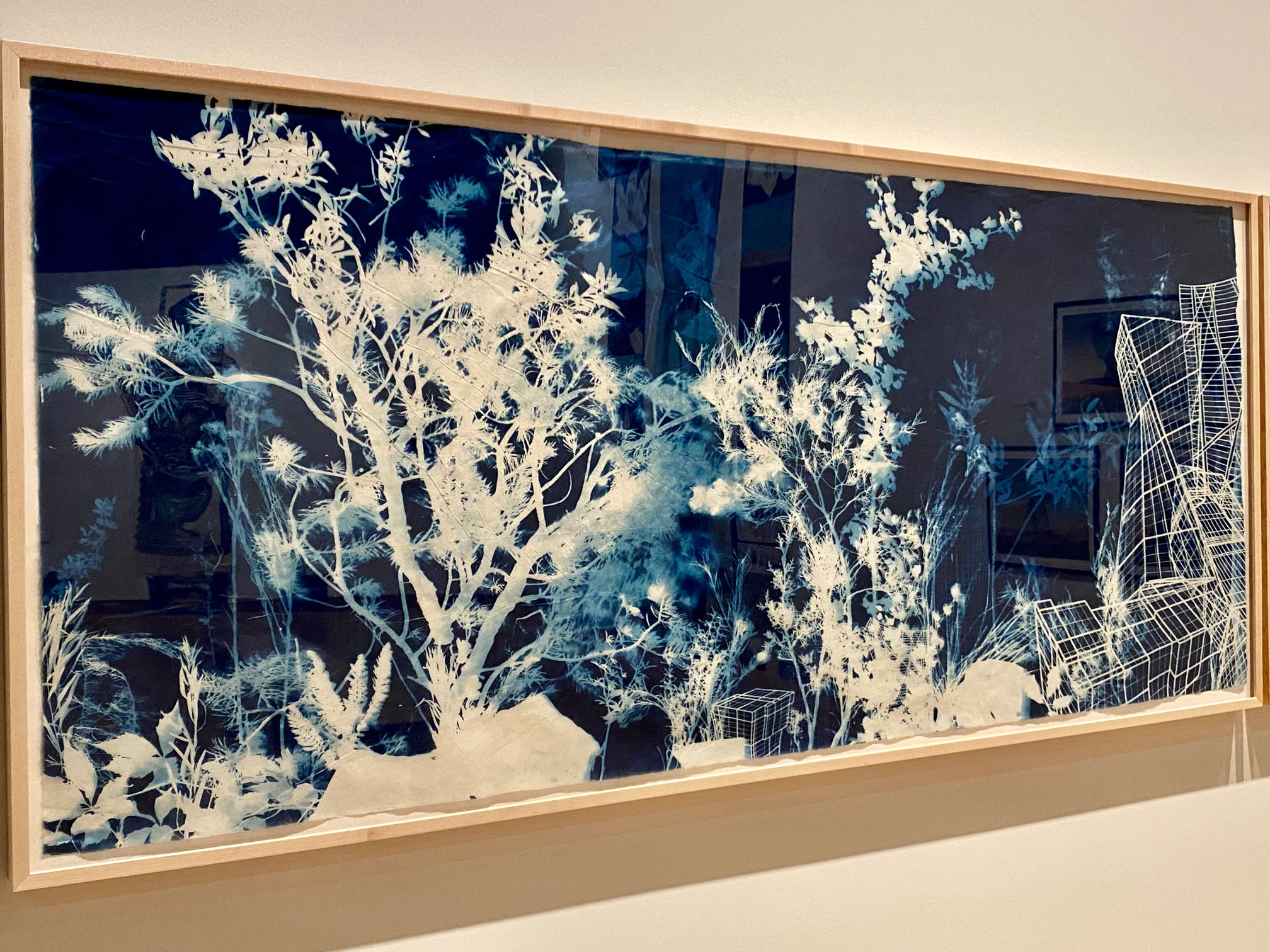
López, who works and teaches in New York, presents a large-scale cyanotype. Unlike Guori, who traveled to the Catskills to create his ghostly images with light, López was unable to travel during the pandemic and made this monumental work at home with the materials around her – a driveway, nearby desert plants, and the blazing New Mexico sun.

Detail of 2021 NeverWild cyanotype by Nicola López – ghostly images of New Mexico plants dwarfing mysterious architectural structures in the desert.

Congratulations to the Albuquerque Museum for inviting Thomas Cole’s team to collaborate in mounting such a beautiful, thought-provoking show.

O’Keeffe Museum Shows Georgia at Home

One of the most photographed artists of the 20th century, everyone is used to seeing Georgia O’Keeffe in her “formal” pose and gear – angular black hat, stark wrap dress, punctuated by her modernist Calder pin, standing against the New Mexico sky peering solemnly into the future.

In its latest offering, the Georgia O’Keeffe Museum is giving fans a special treat (and a different view) through its exhibition, Georgia O’Keeffe, a Life Well Lived: Photographs by Malcolm Varon, on display in Santa Fe through October 31.

2021 print of Varon’s 1977 photo of Georgia relaxing at Ghost Ranch. Courtesy: the artist
Georgia’s 1946 Part of the Cliff, a painting inspired by the view through her studio window.

The show features a smiling, at-ease 89-year-old surrounded by family, friends, companions, and pets – images quite apart from the GOK that we all admire and revere. How did this happen?

In the 1960s in New York, photographer Malcolm Varon established quite a reputation for documenting painters’ works in a way that captured a lot of their spirit. No wonder that in the mid-1970s, he was summoned out to Ghost Ranch and Abiquiu to document some of Georgia’s huge body of work.

While he was working with the artist during the summer of 1977, a journalist arrived to interview the icon for a feature in ARTnews.

No photographer had been attached to the story, so Georgia came up with hew own solution – ask her colleague Malcolm to shoot her in the setting of her Ghost Ranch home.

Since Malcolm was already familiar with the operations around Ghost Ranch and Abiquiu, he ended up taking about 300 photos of her homes, the landscapes that inspired her, and the people who kept things humming.

2021 prints of Varon’s 1977 portraits of Ida Archuleta, Candelaria Lopez, and Estiben Suazo, the people who managed Georgia’s homes and properties. Courtesy: the artist.

Despite Georgia’s reputation as a loner living out in the middle of nowhere, Malcolm appreciated that the day-to-day operations in the outback were quite fun, busy, natural, and happy at her two studio compounds.

ARTnews made a few selections from Varon’s photographs and ran them in the feature, but the majority of the 300 shots were never printed or seen…until now.

Visitors at the GOK museum pour over every detail of the portraits and landscapes, enjoying a new, different glimpse of the artist and her world – Varon’s portrait of Georgia’s sister, beautiful portraits of her property caretakers (whose families still take care of the GOK home for the museum), and her assistant Juan Hamilton.

The curators present several paintings from the 1940s showing the same cliffs, landscapes, and skies that Varon captured in the summer of 1977. Visitors have fun shifting back and forth between the oil paintngs and photos.

2021 print of Varon’s 1977 photograph of the tall ladder at Georgia’s Abiquiu home – a platform from which she surveyed the world. Courtesy: the artist

2021 print of Varon’s 1977 fun photograph of Georgia at Ghost Ranch with her friend and assistant, artist Juan Hamilton with the Pedernal as backdrop. Courtesy: the artist

Take a look at some of our favorites in our Flickr album.

Listen in as the curators of this delightful show draw back the curtain on the legendary O’Keeffe, her relationship with photography, and what happened when a trusted friend got her to smile for the camera:

Fashion Manifestos by Carla Fernández

What does “slow” fashion look like? A revolutionary Mexican haute couture designer shows how it’s done in Carla Fernandez Casa de Moda: A Mexican Fashion Manifesto, on display at the Denver Art Museum through October 16.

As a young woman, Carla met and got to appreciate Mexico’s indigenous communities as she traveled with her father, a renowned anthropologist. She loved collecting hand-made indigenous garments reflecting the distinct local styles she saw. 

As a student of art history and fashion design, the complex indigenous textile techniques in these out-of-the way communities seemed to stand in contrast to the ever-changing, always-disposable cycle of Western fashion.

Carla Fernández 2014 jacket collaboration with Juanez Lopez Santis (San Juan Chamula, Chiapas) over digital-printed silk top and leggings.
2003 wool poncho – a Carla Fernández collaboration San Juan Chamula (Chiapas) artisans ­– over a 2009 pantsuit. From the collection of photographer/model Luisa Sáenz

Why not use these indigenous “haute couture” techniques for a high-fashion collection? Why not create a mix-and-match aesthetic using traditional, geometric shapes? Why not credit the artists?

As presented in her first-ever museum retrospective, the results are dramatic, detailed, intriguing, and one-of-a-kind – a completely different kind of fashion system that incorporates indigenous work, pays and credits community makers, and gives artisans the time to create pieces that collectors cherish.

Carla travels to mountain and desert communities to collaborate with textile artists.

With her fame growing, communities now invite her to drive over, see what they’re doing and brainstorm about potential collaborations. It’s an approach that involves time, dialogue, and mutual respect between the artisans and Carla-as-fashion-facilitator.

In her mobile studio (Taller Flora), they create hand-woven, dyed, and painted works of wearable art that Carla brings to the runway, but always with an eye toward collectors who value innovative, indigenous craft traditions.

The exhibition features runway looks, accessories, and videos of performance art that showcase different facets of her fashion manifesto – that artisan-made is the true “luxury” in a “fast fashion,” throw-away world.

2021 hand-painted coverall and digital-printed jumper and coat with Leonardo Linares (Mexico City); embroidered jumper with Antonia Vasquez (San Pedro Chenalhó, Chiapas).

Fiesta masks, leather caballero fretwork, whimsical basket-purses, and fuzzy handmade pom-poms provide home-grown Mexican flair to the cinched, draped, easy ensembles.

Take a look through our Flickr album, and enjoy this video of the installation at Denver Art Museum:

Every section of the exhibition demonstrates her commitment to stimulating innovation and creativity among indigenous makers.

Inspired by decorative fretwork on rodeo apparel, a 2022 wool poncho and pants done in collaboration with calado master Fidel Martínez (Chimalhuacán, State of Mexico).

As of 2022, Carla’s collaborated with more than 164 artisans in 39 communities in 15 Mexican states, with more to come. The show presents a map and identifies all of her collaborators.

To see and hear more about Carla’s collaborative process, watch the Denver Art Museum’s 2019 seminar on culture, cultural appropriation, and fashion in this YouTube video.

And join in on Carla’s beautiful, expressive fashion revolution by checking out her current and past collections on her website.

Jeffrey Gibson at SITE Santa FE

What happens when a Native American MacArthur genius is asked by SITE Santa Fe to create an art exhibition during a time of a global pandemic and social justice marches? And invite him to a location where Native Americans make up a significant percentage of the population?

The result is Jeffrey Gibson: The Body Electric – a constantly surprising gallery journey where shape-shifting, cultural disassociation, beadwork, kitsch-image appropriation, gender-identity questions, and science-fiction inspiration reigns.

The show is filled with life-size beaded dolls and garments, films, pulsing papered walls, mysterious film experiences, and social statements either woven or stamped onto clothes (or are they banners?).

Gibson’s 2021 White Swan mixed-media painting in wall-papered gallery with a beaded, life-size, genderless “doll”
2020 Red Moon and Desert Sky minimalist sculptures created from strands of dance fringe.

Gibson, who is based in New York, is an intertribal artist who is a member of Mississippi Band of Choctaw and half Cherokee. However, his influences were forged from prestigious art schools, international travel, and living in non-Native societies.

The opportunity to come to Santa Fe, host a cinema series and several performances, and stay out West for a while was an open door to explore inter-cultural influences, host discussions with appreciative audiences, and show off his wide intellectual and artistic breadth.

In many of his works, Jeffrey mixes traditional “Indian” materials like beads or fringe with slogans, sayings, dime-store “Indian” images, and big-time art-world references.

See some our favorites from this exhibit in our Flickr album and hear Jeffrey explain his influences in SITE Santa Fe’s audio guide.

The little beaded birds that greet visitors in the first gallery and the big beaded life-sized “dolls” in the second were inspired by Jeffrey’s early work in the ethnographic collections of the Field Museum, where he encountered Haudenosaunee-made beaded tourist-trade whimsies and traditional “third gender” dolls for the first time. Why not make his own, but over-size them?

2021 My Joy My Joy My Joy, a mixed-media beaded bird inspired by Victorian-era Native American tourist whimsies

The nearby video gallery features a kaleidoscopic multichannel video of Sarah Ortegon, an award-winning Eastern Shoshone/Northern Arapaho jingle dress dancer, performing to the energetic Sisters track by A Tribe Called Red. This piece – She Never Dances Alone – refers to the dancers who came to the Standing Rock Reservation and lent their support to the 2016 pipeline protests though dance.

Here’s Sarah Ortegon in Gibson’s 2019 Times Square installation of She Never Dances Alone here…wait for it:

2021 They Play Endlessly mixed-media crazy quilt of paint, beads, words, and found objects.

And here’s another look at Gibson’s 2020 exhibition at the Brooklyn Museum, where he mixed works from his studio with artifacts and art from Brooklyn’s own collection.

And check out Gibson’s work our album documenting the Smithsonian’s National Museum of the American Indian exhibition of Native painting, Stretching the Canvas.

If you’re near Nashville, you’ll be able to see Gibson’s The Body Electric at the Frist Art Museum February 3 – April 23, 2023.

Jewelry for America Dazzles at The Met

Sparkling, historic, masterful jewels, settings, and stories await intrepid visitors who can find the out-of-the-way mezzanine gallery within the Metropolitan Museum’s American Wing. Jewelry for America, on view through May 8, chronicles the rise of the jewelry making arts through the Met’s own gorgeous collection.

Cases of jewelry from the mid-1700s though today are surrounded by period paintings that show how women (and men!) of different American eras sported, draped, and embellished themselves with the glittery treasures shown nearby.

The curators take five eras and angles, weaving in details of colonial dependency, Westward expansion, global discoveries, luxury consumption, high-end designers, and jewelry art trends.

Robert Fulton’s 1813 wedding portrait of Susan Hayne Simmons, wearing her pearls Empire-style
Rare 1783 Society of the Cincinnati badge by L’Enfant, awarded to Washington’s Continental Army officers

But while looking at the small, finely crafted pieces, you can delight in just looking for looking’s sake.

The first section focuses upon the colonial era through the early 19th century, when toddlers wore coral necklaces and bracelets to keep them “safe” and it was popular to weave the hair of a loved one into a locket, fob, brooch, or little container hanging from a necklace.

But the most historic piece in this first section is the small Society of Cincinnati badge designed by Pierre Charles L’Enfant, for the group of Continental Army officers who served under Washington.

The next portion of the show introduces the rise of American jewelers in the mid-1800s with brooches and earrings inspired by nature, antiquity, and bygone eras, such as Tiffany’s 1856 transformation of an historic Connecticut oak tree into gold accessories and the artistic 1880 silver necklace by Shleiber & Co inspired by coins unearthed in Pompeii.

Tiffany’s 1889-1896 enameled and jeweled orchid brooch, designed by J. Paulding Farnham

In addition to Tiffany’s renowned, naturalistic orchid brooches and hair ornaments that wowed spectators at turn-of-the-century world’s fairs, the show also includes gorgeous nature-inspired statement pieces from workshops in Newark, New Jersey – high-end suppliers to famous celebrities and socialites in New York.

1924 silver box with enamel plaques by Eda Lord Dixon and her husband, Laurence

There are dozens of necklaces, pins, and special boxes adorned with diamonds, platinum, artistic enamels, opals, emeralds, and other precious gems.

The final portion of the show portrays the rise of the artist-jeweler, showcasing jazzy, one-of-a-kind pieces by mid-century creators like Art Smith and Calder, and finishing up with Elsa Peretti, Verdura, and cuffs by Kenneth Jay Lane from Lauren Bacall’s collection

1948 and 1946 custom cuffs by Greenwich Village artist Art Smith

Enjoy our favorites in our Flickr album, and read more of the history of American jewelry on the Met’s website.
Early 20th century Pueblo necklaces worn by Navajo leader Henry Chee Dodge

Virtual NYC Museum Events – Broadway, Brooklyn, Karma, Kusama, and McQueen

New York museums are offering a full calendar of virtual events this week, including trips to Broadway history, hipster restaurants of the world, Buddhist virtual reality, and tributes to artistic genius. Take a look at the list here! Here are just a few highlights:

2002 Broadway revival of Rogers & Hammerstein’s Flower Drum Song

Do you miss Broadway? Learn about some little-known secrets behind hit shows today, Monday (April 12) at 5:30pm. It’s a rare chance to meet the president of the Rogers & Hammerstein Organization, Ted Chapin, who will be giving a behind-the-scenes look at the Great White Way in his program, From Follies to Flower Drum Song and Beyond. It’s the premiere of a conversation recorded last Fall with Broadway World’s Richard Ridge, courtesy of the New York Public Library for the Performing Arts at Lincoln Center.

Did this global restaurant trend actually start in Brooklyn? Find out with MOFAD and the creators of Global Brooklyn: Designing Food Experiences in World Cities.

Love restaurants? Especially ones with slightly nostalgic post-industrial interiors decorated with that hand-crafted look? At 7pm, join the Museum of Food and Drink to meet the authors who explored how the Brooklyn aesthetic for How a Restaurant Aesthetic Became a Global Phenomenon. Learn how restaurants around the world adopted the style, and find out if this brand of hip actually started in Brooklyn.

On Tuesday (April 14) at 6pm, join the architecture crowd at the Skyscraper Museum to hear Mark Sarkisian, the structural and seismic engineer who is a partner at SOM in San Francisco. Mark designed one of Shanghai’s first supertalls back in 1999. His talk Pivot to China: How Jin Mao Portended Future Supertalls will explain how this tower’s innovations influenced the generation of supertall skyscrapers that followed.

Shanghai’s Jin Mao tower, 1999
Berman Collection poster part of the Youth Style talk at Poster House.

On Wednesday (April 14) at 6:30pm, take a journey back to early modernist Europe at Poster House, who will be hosting A Tale of Three Cities: Youth Style in Berlin, Munich, & Vienna with the Kaller Research Institute. The evening will focus on how young designers made their mark on design from 1895 to 1910. You’ll see works from the Merrill C. Berman Collection (the collection featured at MoMA in Engineer Agitator Constructor), and works from the Poster House’s current Julius Klinger exhibition.

Also at 6:30pm – an opportunity to understand your karma. Join the Rubin Museum of Art for The Game of Life: An Interactive Virtual Experience. A contemplative psychotherapist will guide participants through a virtual Buddhist Wheel of Life to finding liberation from negative habits and patterns. The virtual game takes you throughout the different floors of the museum, and provides twists and turns. There are “Hell” and “God” Zoom rooms, but the payoff is higher awareness of one’s state of mind.

The Rubin’s reimagined Wheel of Life by eight graphic artists.
Kusama at New York Botanical Garden

On Thursday (April 15) at 11am, it’s what all of New York has been waiting for! Mika Yoshitake, the curator of New York Botanical Garden’s KUSAMA: Cosmic Nature will provide a look at how Kusama’s blockbuster installation reflects nature, the earth, the microscopic, and the cosmos. Cosmic Nature: Embracing the Unknown will present Mike’s insights about Kusama’s artistic language and her unrelenting, lifelong journey into new territory.

McQueen models backstage, as photographed by Richard Fairer

Want to go backstage at a McQueen show? At 6pm you can. Join Vogue photographer Robert Fairer at Museum at FIT for a live Q&A about his new book, Alexander McQueen: Unseen. Experience memorable moments of fashion’s greatest, most outrageous showman and see what a genius at work backstage before the show.

There’s a lot more happening this week, so check the complete schedule. Most of the events are free, but it’s always nice to add a thank-you donation.