Is David Roentgen the 18th Century Steve Jobs?

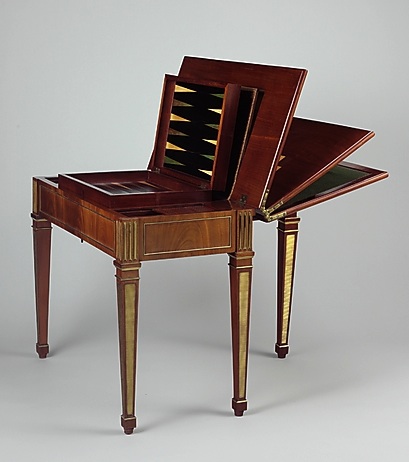
David Roentgen’s Game Table (ca. 1780–83). Oak, walnut, veneered with mahogany, maple, stained maple, holly, stained holly; felt; leather, partially tooled and gilded; iron and steel fittings; brass and gilt bronze mounts. Source: Metropolitan Museum, Pfeiffer Fund, 2007.

David Roentgen’s Game Table (ca. 1780–83). Oak, walnut, veneered with mahogany, maple, stained maple, holly, stained holly; felt; leather, partially tooled and gilded; iron and steel fittings; brass and gilt bronze mounts. Source: Metropolitan Museum, Pfeiffer Fund, 2007.

Even if David Roentgen didn’t produce for the mass-market, he certainly seemed to have written Steve’s playbook  — wow them with innovative design, refined surfaces, exacting craftsmanship, playful art, and sophisticated multimedia integration. Oh, and if that’s not enough, why not make it passkey protected and portable, too? Like Steve, David knew how to turn engineering into art and ka-ching.

Experience out-of-the-box design innovation in the closing week of the Metropolitan Museum’s unforgettable show, Extravagant Inventions, Princely Furniture of the Roentgens. The beauty of the marquetry and fittings on the displayed desks, sofas, clocks, commodes, and rolltop desks would be enough, even if they simply occupied a quiet corner of a drawing room or boudoir.

But if an 18th-century king, queen, or royal saw them in action – revealing hidden apps for writing, reading, drawing, music, games, curios, and hiding the desktop – there was no turning back. The mechanical furniture was so desirable that wealthy trend-setters just had to have it (like iPads).

What social-minded gamer could resist Roentgen’s 1780s Game Table if they saw David’s demo?

The desire to own and show off the most up-to-date artistic engineering marvel had royals running for their strongboxes to put down deposits on anything Roentgen could produce. In fact, the Met tells us that the Berlin Secretary Cabinet, the star of the show, is probably the most expensive piece of furniture ever produced. And we can’t even begin to discuss robot Marie Antoinette playing the dulcimer, or the clocks that turn into orchestras.

When the French Revolution put an end to sales at Versailles, Roentgen cut out the curliques, tailored the outer design to a sleeker look, and shifted his retail operations to Russia. Catherine and her court bought the newer stuff by the cartload.

The Met has an entire YouTube playlist devoted to these 18th century wonders, and you really should peruse them all. Get to the show in the final week and see what another style and multimedia-obsessed generation spent their money on.

And lest it slipped your mind, Steve and Woz’s first Apple 1 computer was assembled within a wooden case. Maybe it’s good that David and his engineering/sales team weren’t around to critique it.

Sparkle Plenty, Move Over Manet

Installation view of Mickalene Thomas's Les Dejeuner sur l’herb Les Trois Femmes Noires, 2010.

Installation view of Mickalene Thomas’s Les Dejeuner sur l’herb Les Trois Femmes Noires, 2010.

It’s large-scale, monumental painting of beautiful women languishing amidst patterned profusion, but it’s not Manet or Monet. Unlike MoMA’s modern masters, you’re encountering Afro-wearing, rhinestone-studded Black lovelies with an ambiance of the 1970s and Blaxploitation about them.

It’s all the work of Mickalene Thomas (originally from Camden, New Jersey, and now Brooklyn) in the grand show, Mickalene Thomas: Origin of the Universe, mounted first by the Santa Monica Museum of Art and now expanded by the Brooklyn Museum.

Thomas uses an encyclopedic knowledge of art history and museum-world references to tease viewers to reflect on how her fancy, sparkly ladies are equally worthy of fine-art treatment as any ruffed Dutch gal from the 1600s or French odalisque.

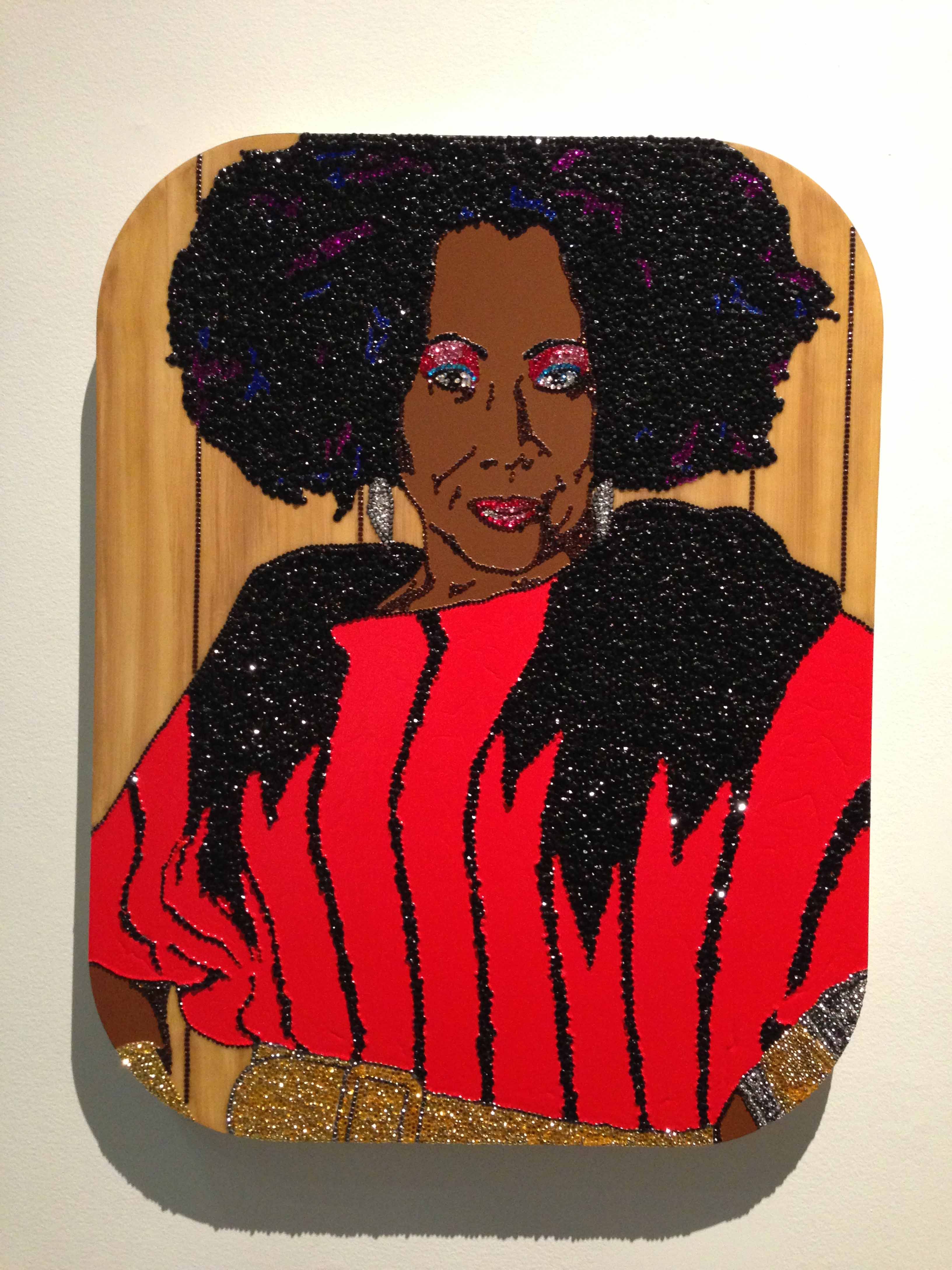
Installation view of part of Mickalene Thomas's depiction of her mother: "Ain’t I Woman, Sandra," 2009. Rhinestones, acrylic paint, and oil enamel on wood panel. DVD and framed monitor; rhinestones, acrylic paint, and enamel on wood.

Installation view of part of Mickalene Thomas’s depiction of her mother: Ain’t I Woman, Sandra, 2009. Rhinestones, acrylic paint, and oil enamel on wood panel. DVD and framed monitor; rhinestones, acrylic paint, and enamel on wood.

Enamored of slightly vintage interior decor magazines, Thomas constructs settings in her studio corner and photographs her subjects dressed in 70s prints laying on 70s sofas in wood-paneled rooms. Later she turns these into paintings merged with old photos, faux wood paneling, and Photoshop fracturing on a large scale. Check out the Flickr gallery.

On every visit, crowds gather in the back video gallery to hear her mother tell the story of how she changed her ways from a drug-addicted girl to a clean and sober, meditation-minded fine-art model for her brilliant, fantastically creative daughter. She’s a stunning model.

See these large-scale works in person this week. Otherwise, catch her work at ICA in Boston through April.

For more, listen in on this discussion between Mickalene Thomas and Carrie Mae Weems. It’s a great insight to how an established artist inspires an emerging artist to forget about law school and do great things in the art world.

Celebrity Lace at the Met

EuropeanLace_posterIt was all the rage 100 years ago – who could amass the best collection of antique lace owned by the rich and powerful, and what could you do with it to make a fashion statement?

The Met still has its Gems of European Lace micro-exhibit on display in a lower-level nook for a few more days, right outside of the Ratti Textile Center. (It’s down the stairs on the left side of the tiled medieval Gallery 304 on the first floor.)

The show blends astonishing craftsmanship with an object lesson in conspicuous consumption of the rich and famous of a century ago. It seems that in the late 1800s, wealthy American women tried to outdo one another with lace collections, vying for little masterpieces that might have been owned by European royalty.

Adolf de Meyer’s photo of Rita de Acosta Lydig in Harper’s Bazaar in 1917 (Source: The Met; gift of Mercedes de Acosta)

Adolf de Meyer’s photo of Rita de Acosta Lydig in Harper’s Bazaar in 1917 (Source: The Met; gift of Mercedes de Acosta)

One gem is the bobbin-made lace cravat end (featured above), allegedly commissioned by Austrian empress Maria Therese and later given to her daughter, Marie Antoinette. The Met cites this provenance, but will only say that it’s “maybe” true.

In the race by society ladies to amass the best lace collections, international lace-dealers made out like bandits. The frenzy only benefits us today, since so many patrons ultimately bequeathed their collections to the Metropolitan and the Brooklyn Museum.

By the early 20th century, the super-wealthy were also acquiring antique lace and asking for it to be refashioned into stylish haute couture. The example on display in Gems is a Callot Soers original made of 16th-century-style lace for the style icon Rita de Acosta Lydig, known for her celebrity-filled New York salons; lace-covered accessories and bedecked couture; and having her portraits done by Rodin, Sargent, and anyone who was anyone at the turn of the century.

Rita's 16th c. style lace remade by Callot Soers in the 1920s (Brooklyn Collection at the Met)

Rita’s 16th c. style lace remade by Callot Soers in the 1920s (Brooklyn Collection at the Met)

Check out the Met site for close-ups of masterworks of needle and bobbin.


Crisp Hepburn Clothing Tribute at Lincoln Center

There’s no surprise that the wardrobe on display in the Katherine Hepburn: Dressed for Stage and Screen exhibition is sharp, clean, and perfectly turned out. Finishing its run at NYPL at Lincoln Center this month, the Library has imported this stunning tribute developed by Kent State University. Check out this promo produced by WNET Channel 13:

The first clothes you encounter are a collection of her famous trousers and jodphurs, but tucked away in the corner to the right of the entrance is an item that underscores the purpose of this tribute – the Ernest Trova statuette that she received in 1985 from the Council of Fashion Designers of America for Lifetime Achievement (and inspiration).

Photo from NYPL’s Billy Rose Collection. This dress is in the show.

Photo from NYPL’s Billy Rose Collection, but the dress is in the show.

A fashion icon for the 20th Century, the show highlights her collaborations with the best designers throughout her life. The first gallery features her stage clothes – Valentina’s creations for the Broadway production of The Philadelphia Story, which look like they were made yesterday, and the Chanel outfits that she commissioned for her performances in Coco. Apparently she did not think that Cecil Beaton’s vision could compare to the real thing, so she wore genuine Chanel in the play. Beaton did get Hepburn to wear some of his creations, and you’ll see a gorgeous black gown there, too.

It was the same story for films. Edith Head said, ““One does not design for Miss Hepburn, one designs with her.” Hepburn bought hats directly from Hattie Carnegie for Alice Adams.  Margaret Furse, who loved working with the perfectionist Hepburn, said that she was glad to “share credit” for the contemporary designs in A Delicate Balance. You’ll see her solution – to simply let Bergdorf Goodman make the leopard-print caftan and other stuff.

Almost everything for Hepburn later in life had high necklines and longish sleeves. Still, the stunner is the revealing form-fitting black gown she wore in Adam’s Rib (1949) by Walter Plunkett, the designer who also did Gone With The Wind. (It’s the one in the video promo.)

Her theatrical make-up kit is also on display in the back room. Who else? Max Factor.

Ivy Style or Gangnam Style?

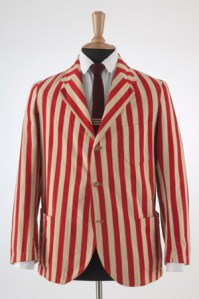
Red and white cotton flannel blazer, c.1928. Museum at FIT purchase.

Red and white cotton flannel blazer, c.1928. Museum at FIT purchase.

It’s hard to remember a time without Gangnam Style, but it’s even harder to remember before there was Ivy (as in Preppie) Style. There’s just a few more days to trek to The Museum at FIT for its revealing show on the roots of American menswear, Ivy Style.

Sure, the show is peppered with references and examples of the current Kings of Prep –Lauren, Hilfiger, and (prep with a twist) Thom Browne. But the real eye-opener here is the manner in which the curators journey back in time to show you how something so familiar today was once so radical – how “Ivy” got its name in 1876, how students set the sportswear trends before WWI, and the debut of the now-forgotten (but influential) “beer suits” at Princeton in 1912.

It’s also startling to learn that Brooks Brothers industrialized wardrobes as far back as 1818, and that J. Press “owned” the market for natural-shoulder jackets for pretty much the entire 20th Century.

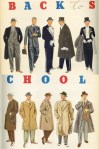
1937 illustration of college men’s fashions from FIT Library and Archives.

1937 illustration of college men’s fashions from FIT Library and Archives.

Thankfully, FIT has packed enormous amounts of menswear history on its special exhibition web site, so work your way through it and mine it for your own favorite tidbits (e.g. origins of saddle shoes, polo coats, and blazers).

Favorite factoid: In 1931, the average college student spent 51% more on clothes than the average man-on-the-street – a college trend that kept going right through the Great Depression. So, maybe it’s like Gangnam Style, after all? Psy sports it too, you know.

If you can’t get to the show in the next few days, take the virtual walkthrough with the Richard Press, the former President of J. Press, who interprets the who, what, why, and when of menswear history (including the roots of the most memorable scene in Animal House). Don’t ask, just watch:

Holiday Rush for Christopher Columbus

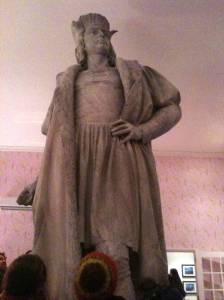
Greeting visitors in his apartment 75 feet in the air

Greeting visitors in his apartment 75 feet in the air

It’s the holiday season in New York, with art lovers rushing to see the spectacular apartment that Tatzu Nishi has created (courtesy of The Public Art Fund) for Christopher Columbus, the man at the center of things near the Time-Warner Building.

He’s been standing atop that column since 1892, so it’s about time that he had us over to see his taste in décor, books, and light TV viewing.  Here’s the Flickr feed, which takes you on a 360-degree view of his digs.

Who knew Captain Columbus was into pop culture? He even has a copy of one of Andy’s early cat lithos in his bookcase. Enjoy the holiday views that Columbus is enjoying, and get your free tickets now, because you won’t be seeing the City from this view again!

What Columbus is reading inside his apartment

What Columbus is reading inside his apartment

Coe Multimedia Accessory Collection at The Met

Detail of Possible bag (1900) from the Coe Collection at The Met

McQueen and the Paris runways have nothing over the 18th and 19th-century Native Americans who knew how to mix unusual materials and meanings into symbolic, functional, innovative, and salable accessories. A collector with an eye for the interesting is honored in the Met’s Michael C. Rockefeller wing in the micro-show, The Coe Collection of American Indian Art.

Ted Coe of Santa Fe was inspired to collect both ancient and contemporary works by Native Americans that caught his attention, amassing thousands of pieces that he bequeathed to the Met. He mounted a truly innovative show at AMNH in 1986, which linked old and new traditions in Native American art making, Lost and Found Traditions: Native American Art 1965-1985. The Met’s curators decided to honor his work by selecting forty objects.

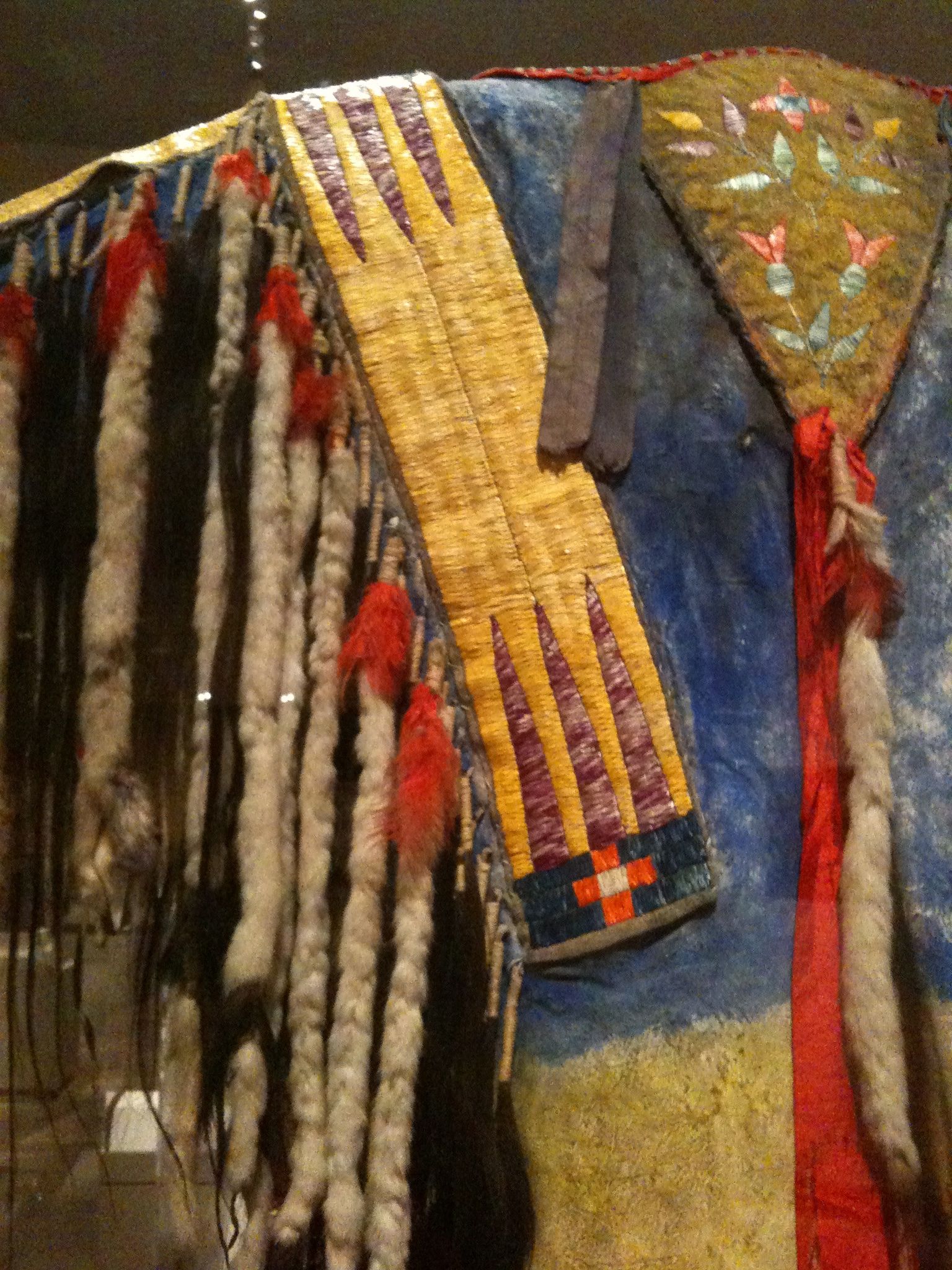
Detail of Arikara Leadership shirt (1860) from Coe collection at The Met

The show isn’t all about wearable art, but we decided to focus on a few details that you might find of interest. We’ve organized the Flickr feed to document some of the oldest to the newest creations on display, ranging from mid-Mississippian carved stone tools from 4,000 B.C. to the cheeky dough bowl (1994) made by Chochiti potter Diego Ramirez.

In between, you’ll see an array of sophisticated and rough creations made by artists from the 1700s to early 1900s for Native American leaders, nomads, and tourists – all designed, embellished, and crafted in a variety of materials. Who knew that nuns taught Canadian tribal artists to embroider with moose hair? Enjoy the details.

What’s Up with Those Dots, Yayoi?

You’ve seen them everywhere over town…the enigmatic dotted signs with the face of Yayoi Kusama peering out. During Fashion’s Night Out, the Vuitton store was ablaze in polka dots, all a tribute to this reclusive Japanese pop-art sensation who burst upon the Manhattan art scene in the 1960s.

This is the last weekend to see her retrospective in person at The Whitney, but if you can’t make it, enjoy the Vuitton collection that she inspired (they’ve created a whole website).

Take a peek into the show.

And click on this link to see a documentary clip about this Kusama’s life. Be surprised and find out how to merge into infinity!

Girls Who Wear (Google) Glasses

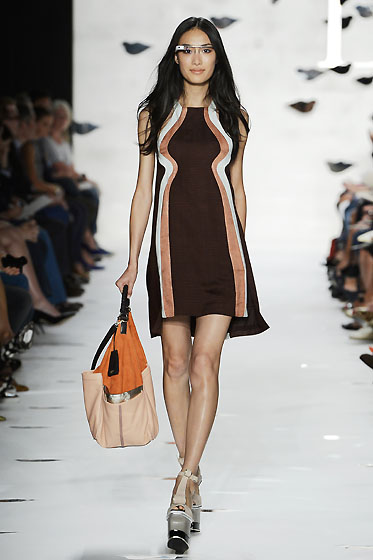
DVF’s Look #17 for Spring/Summer 2013

When Diane von Furstenberg and her models walked the runway at NYC’s recently concluded Fashion Week, they decided to give the world an inside peek at how it feels by recording the experience with Google Glass, the still-in-Beta avant-eyewear.

The innovative accessory shoots video, snaps pix, streams messages, and apparently looks good, so Diane decided to snap on the specs and take you with her (and her posse) on a fashion-tech flashbulb-popping stroll.

What’s cooler than Diane’s embrace of the new? Her Spring/Summer 2013 collection and her attitudes about life, potential, and empowerment. Take a look. Thanks, Diane!

Virtual Trip to Design Island

Let me guess. You didn’t get to see the spectacular design show that ended yesterday on Governor’s Island. While their mansion up on 91st Street is being renovated, The Cooper-Hewitt (a.k.a. Smithsonian) outdid itself by mounting a show inside Building 110 on New York Harbor’s hottest party-picnic location.

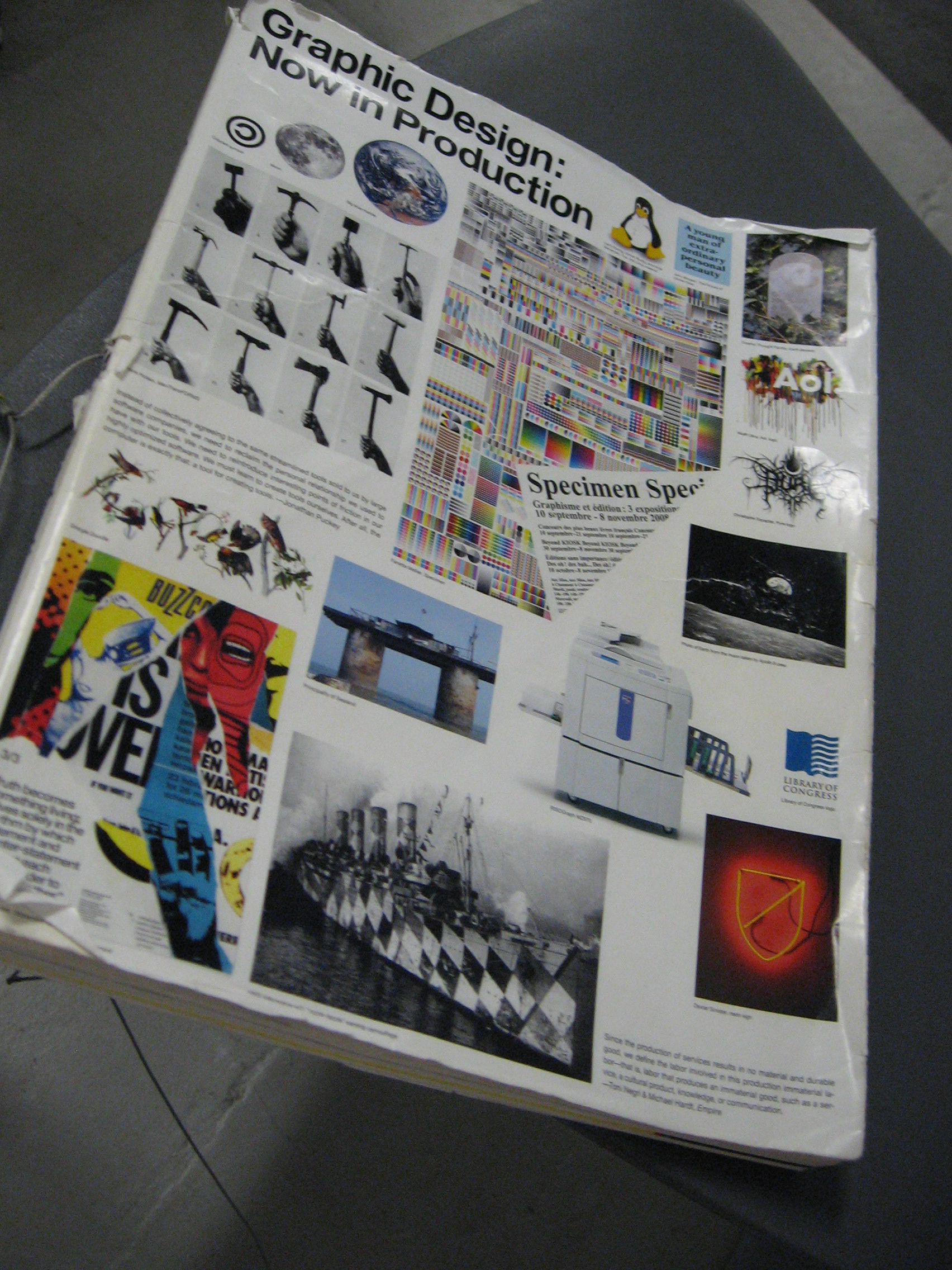
Graphic Design: Now in Production gathers great design produced since 2000 to feature what creative minds are offering. The summertime crowd loved it, and people flowed right from the ferry into the show and through the aisles where works were grouped around themes like storefronts, branding, typography, and print (it lives!). Check out the action on the Flickr feed.

The show is vibrant, interactive, mind-blowing, provocative, and fully documented in a 10-minute walk-through video with the curator Elleln Lupton that pretty much replicates the experience.

If you’re in LA, the show opens September 30 at UCLA’s Hammer Museum before migrating in 2013-2014 to Grand Rapids, Houston, Winston-Salem, and RISD.

Among our favorites are Brand New’s display, which asks visitors to vote (“before” or “after”) on redesigned corporate logos, and CognitiveMedia’s “RSA Animate: Changing Education Paradigms.”