Gus Baumann’s Legacy of Art and Fun in Santa Fe

Gus Baumann, America’s greatest master of color woodblock prints, never considered himself a fine artist. Nevertheless, his prints, sculptures, paintings, commercial art, furniture, and marionette stages fill four galleries in his grand retrospective at the New Mexico Museum of Art – Gustave Baumann: The Artist’s Environment, on view through February 22, 2026.

Demand for Gus’s intricate block-printed sun-dappled Western landscapes from the 1920s through the 1950s still runs high. So, it’s a treat to learn how Gus achieved such a high degree of technical proficiency early in his career, lived Arts and Crafts philosophy, relished immersion in art colonies, and found his family in Santa Fe.
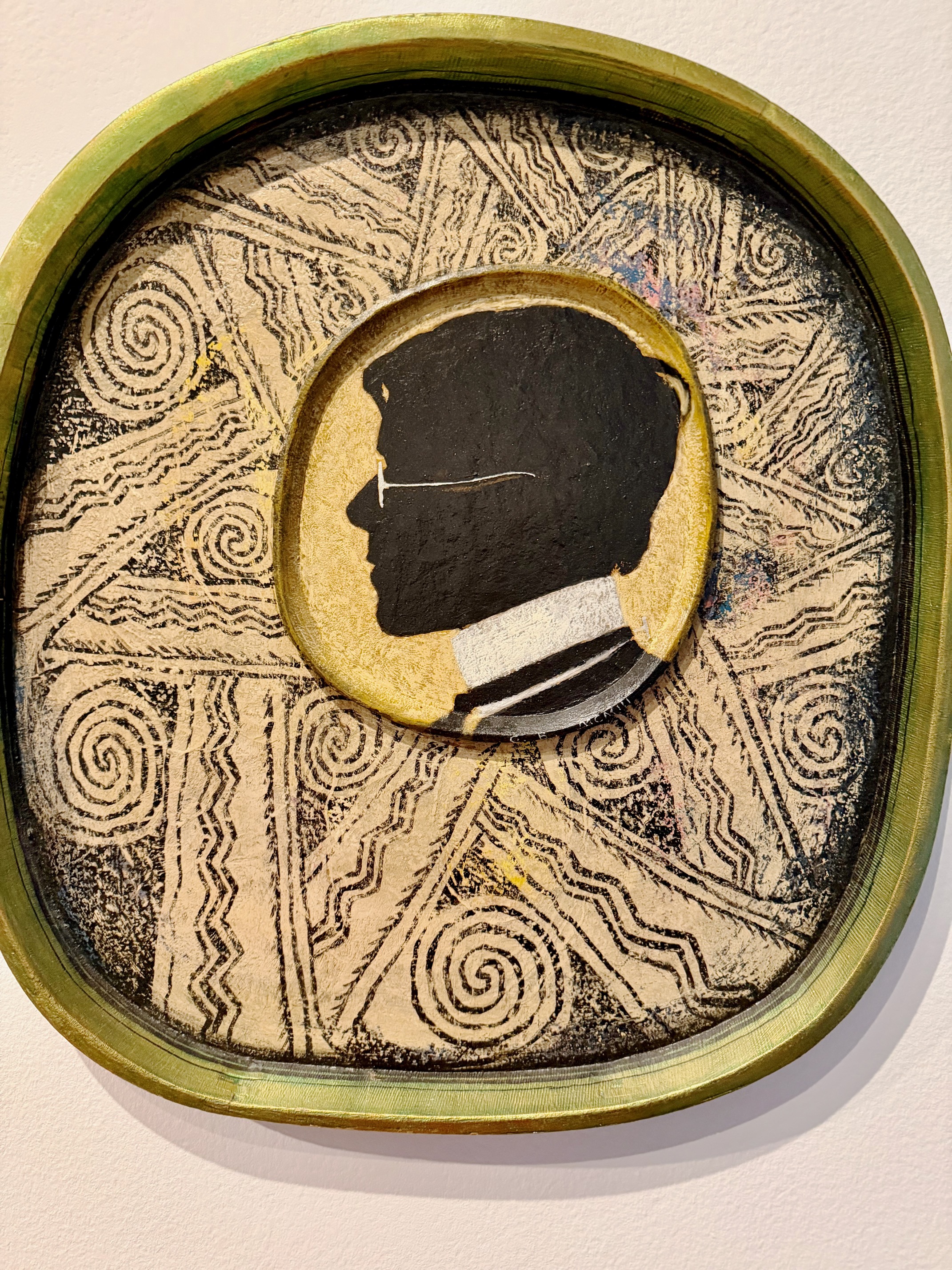
Gus Baumann’s 1903 oil Self-portrait (Silhouette) painted in his Chicago studio; reworked in Santa Fe after 1920 with a border inspired by Mimbres pottery.

See some of our favorites in our Flickr album.

Although Gus was born in Germany in 1881, his family emigrated to Chicago when he was around ten. His father was a craftsman and woodcarver, and it left an impression.  The first themed section of the exhibit – “Finding His Way”– gives a glimpse into his family background, early commercial art work, wood carving expertise, and furniture he designed later in the 1930s.
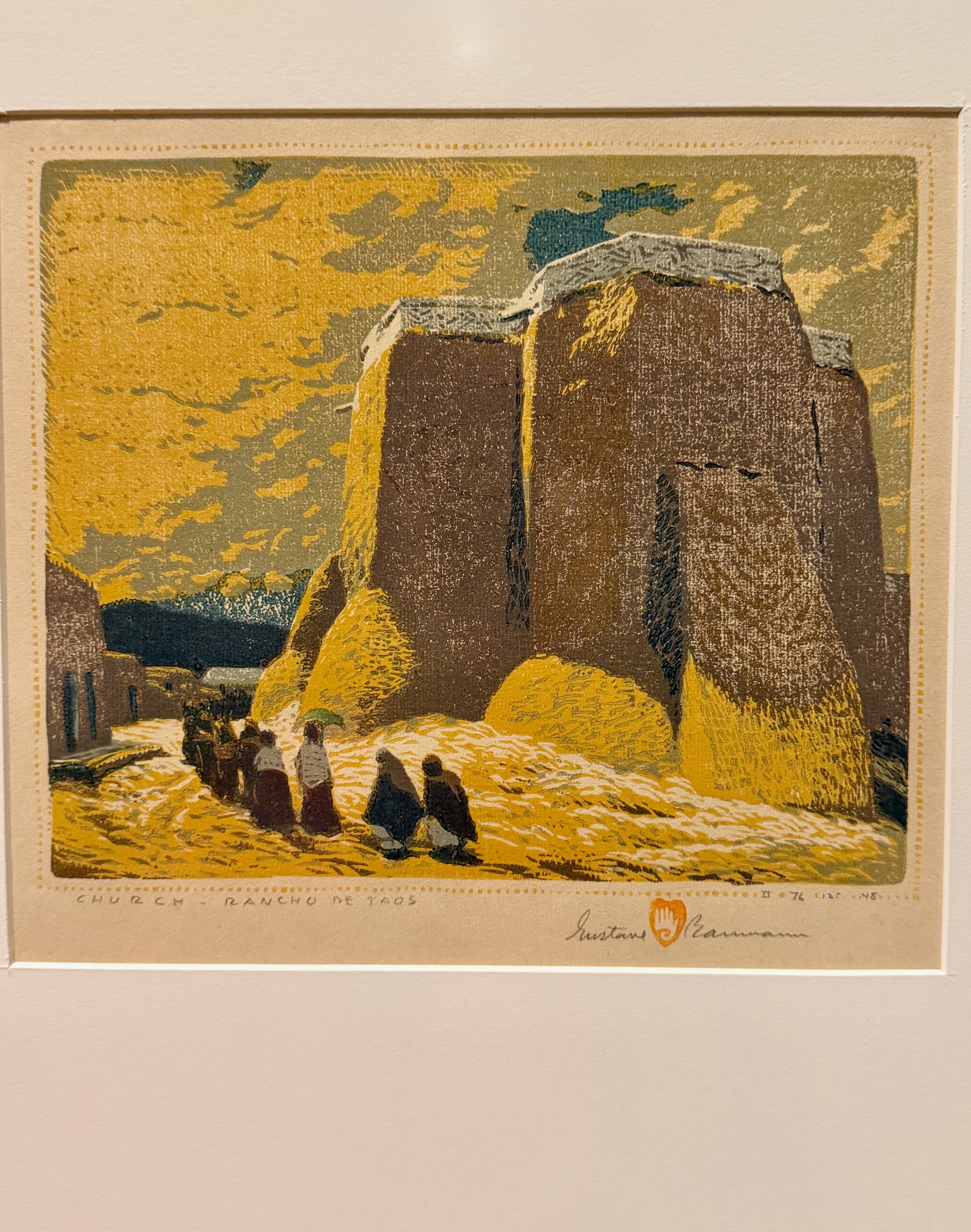
Gus Baumann’s 1919 color woodblock print Church Ranchos de Taos – one of the first modern artists to depict this iconic church; printed in 1948.
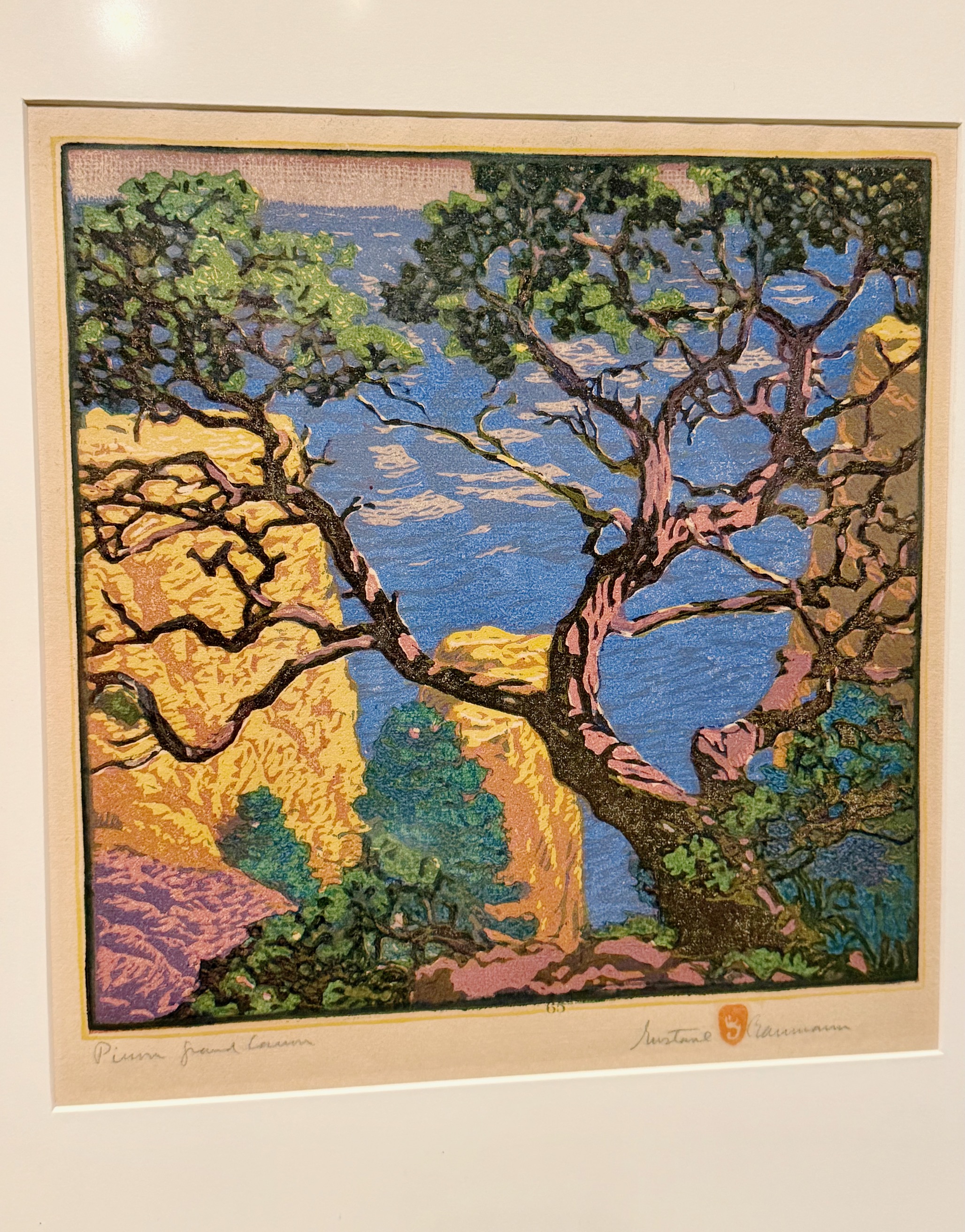
Gus Baumann’s 1921 color woodblock print Piñon Grand Canyon – one of four landscapes created after his first visit.

When he was 17 and his dad left the family, Gus had to find work to help his mom make ends meet.  He worked full time at a Chicago wood-engraving shop that cut illustrations for books, magazines, and newspapers. When he was 20, Gus opened his own wood-engraving studio.

To fine tune his skill, he attended Munich’s Royal Arts and Crafts School for a year to learn from the best German color wood-block print masters – a move that chose traditional skills over academy fine-arts training. When he returned to Chicago, he opened Baumann Graphic Art Service.
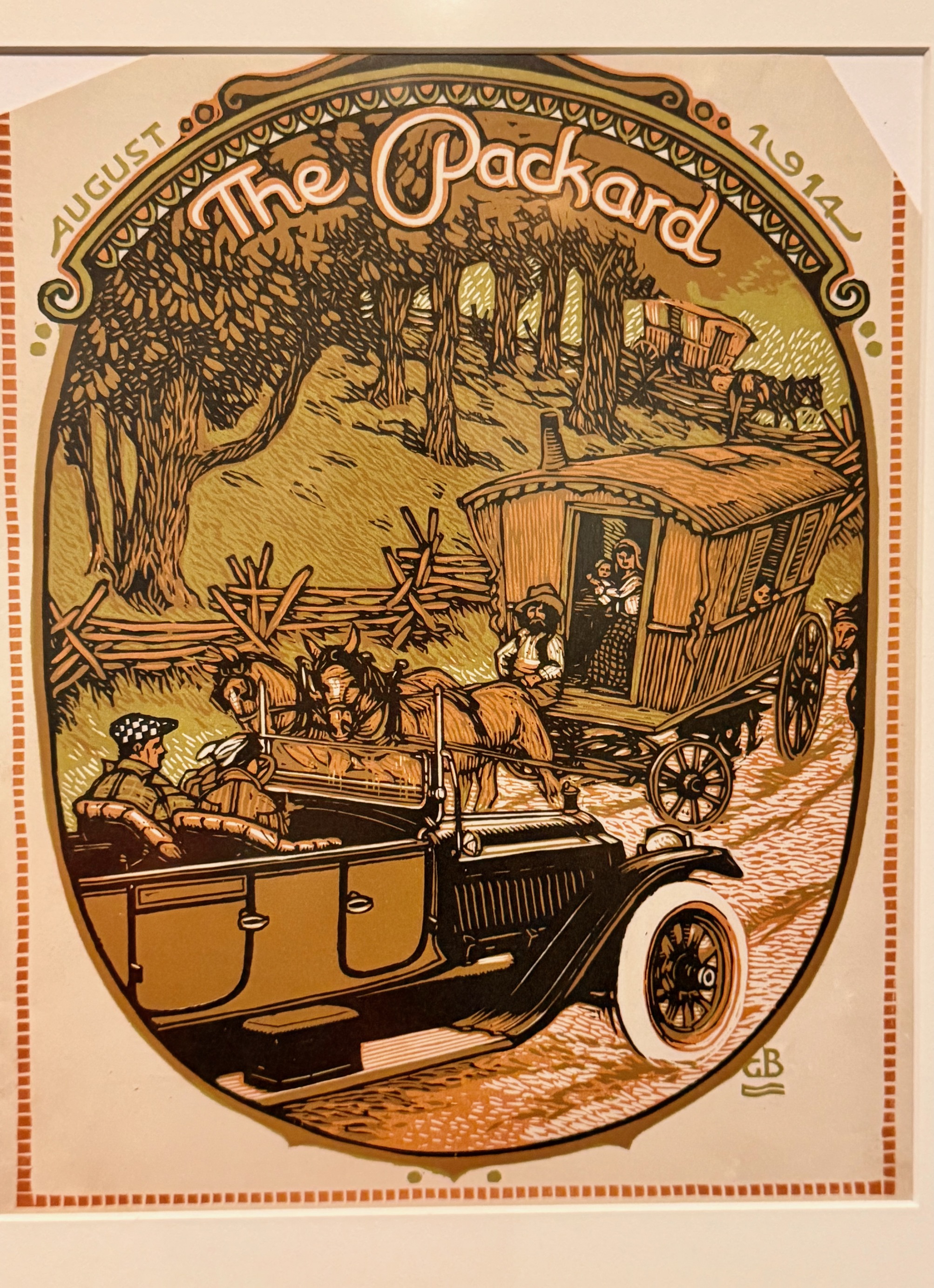
Gus Baumann’s 1913 Illustration for a Calendar: The Packard Car Motor Company, August 1914 – one of four he created for Packard.
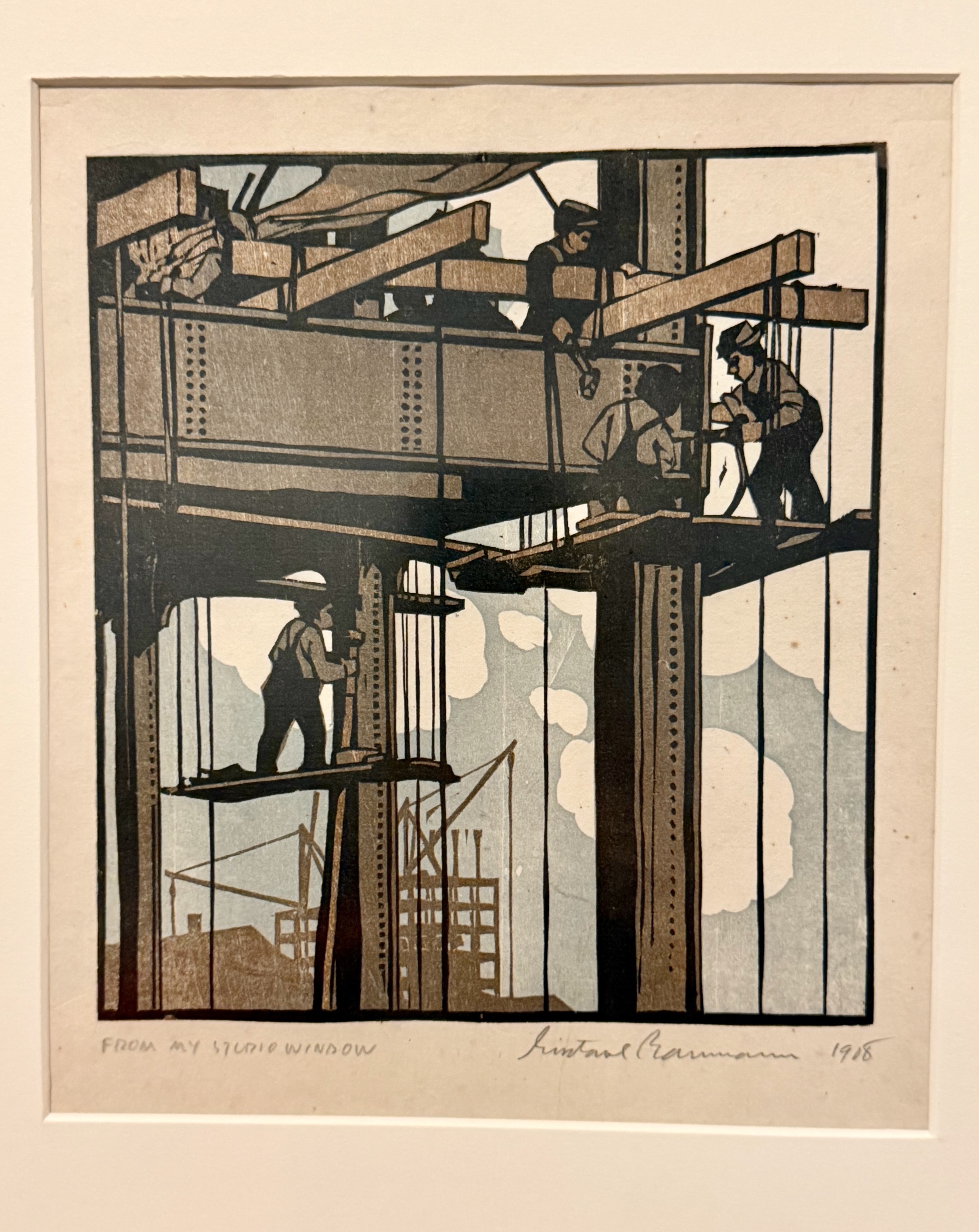
Gus Baumann’s 1908 color woodcut From My Studio Window in downtown Chicago –the high-rise McCormack Building going up on South Michigan Avenue.

Although Gus found success, his love of craft and traditional printmaking methods drew him to an art colony in Nashville, Indiana that revered traditional crafts and a slower pace of life.  The second section of the exhibition – “A Rolling Stone” – highlights work he did in Munich, his acclaimed print series featuring Indiana craftsmen, coastal life in Provincetown, and the electricity he felt in New York.
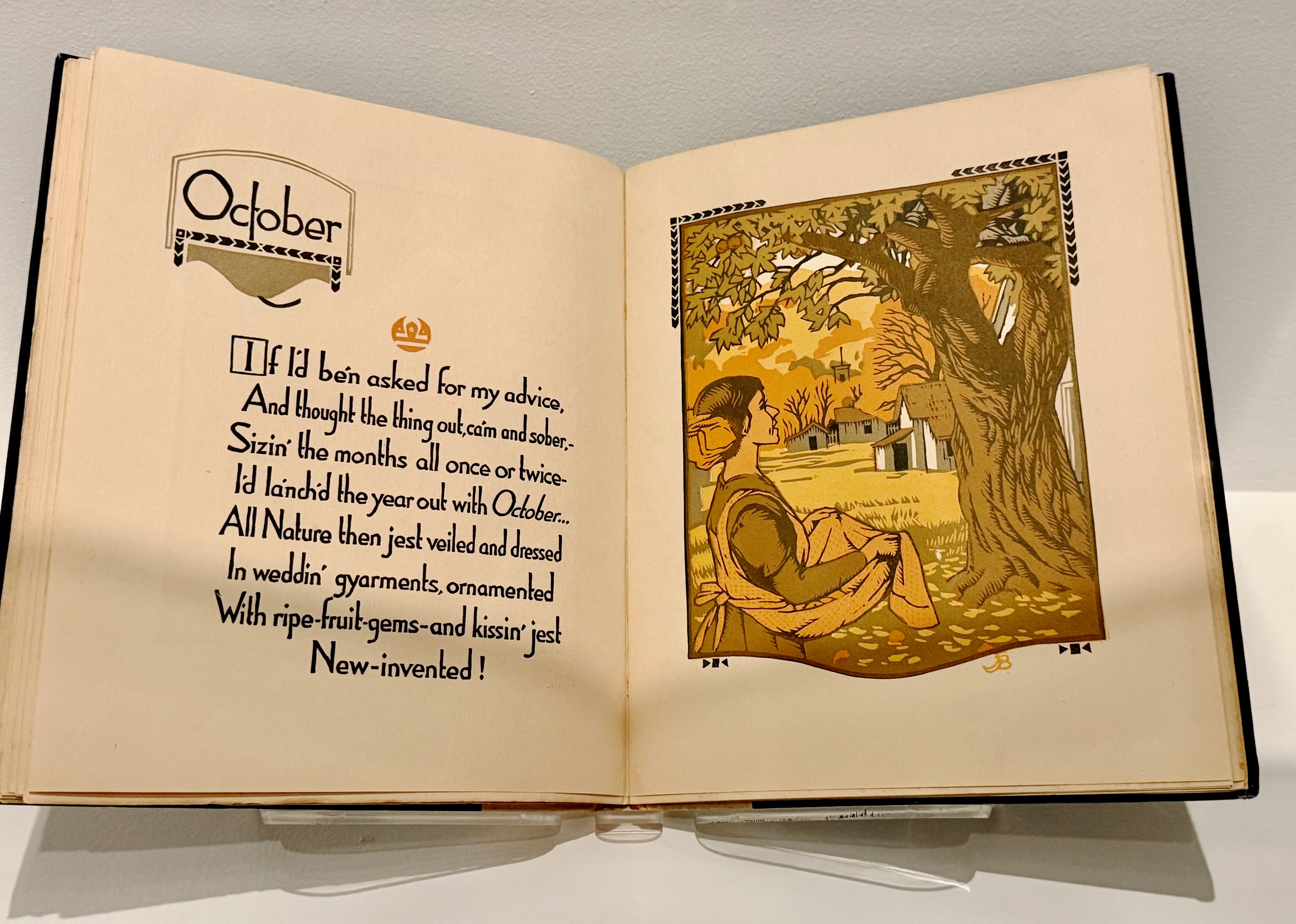
Gus Baumann’s 1912 book All the Year Round – woodcut illustrations and poetry James Whitcomb Riley, featuring scenes of daily rural life for each month of the year.

But his life would change forever when he traveled West and landed in New Mexico in 1918. Due to his reputation as an award-winning printmaker, Santa Fe welcomed him with open arms. Gus was struck by the unique Hispanic and Pueblo ways of life, the beauty of the Southwest, and the growing art colony in Santa Fe. 
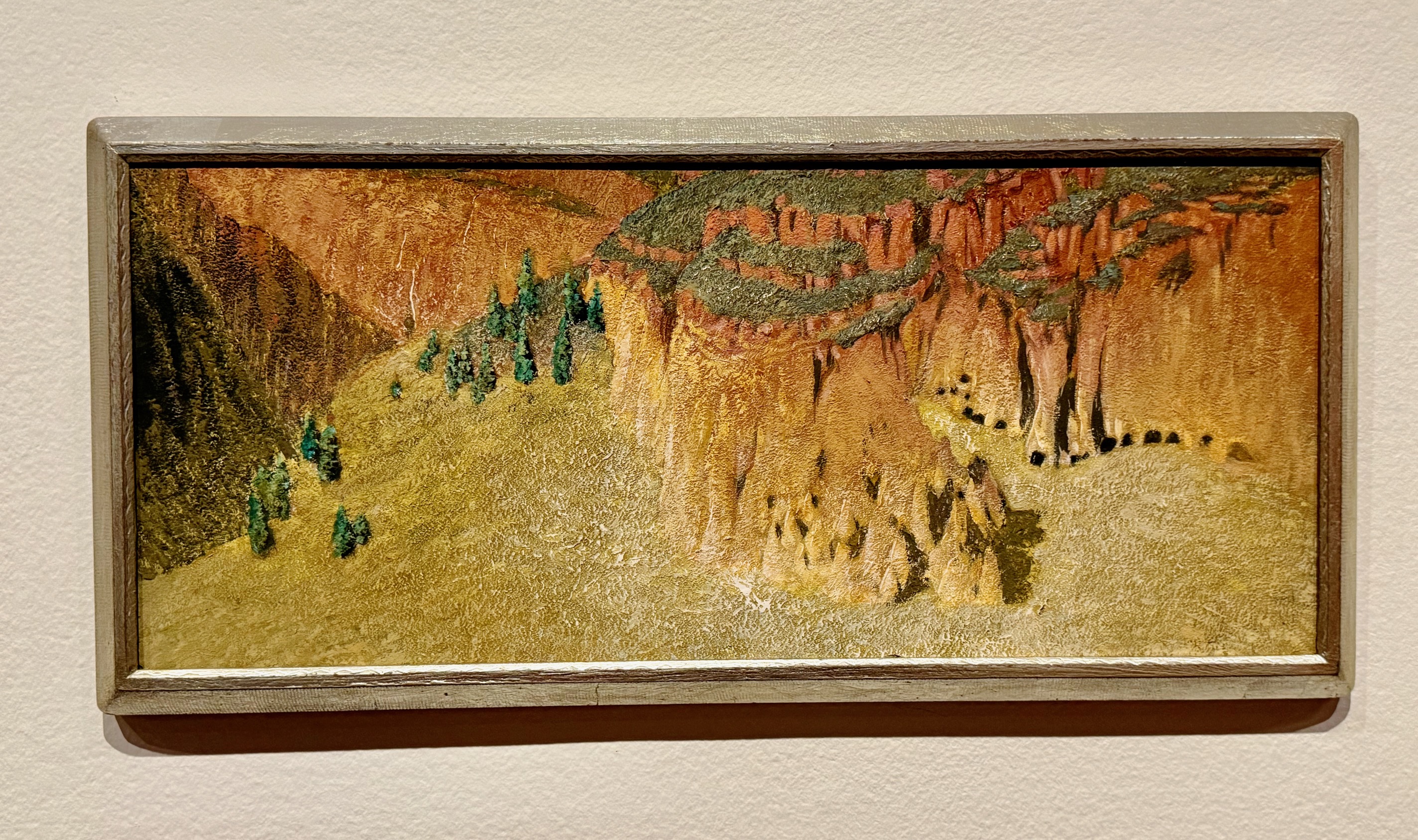
Gus Baumann’s 1925 oil painting Frijoles Canyon – a panorama of ancient tuff dwellings of Tuyoni Pueblo at Bandelier.

Before long, Gus was making and selling gorgeous prints, traveling to archeological sites, attending dances at the pueblos, soaking up the ambience of ancient Spanish churches, and putting brush to canvas, and partying with his new artist friends. And he met Jane, the love of his life, and started a family – creating a life full of fun, art, play, and community service.
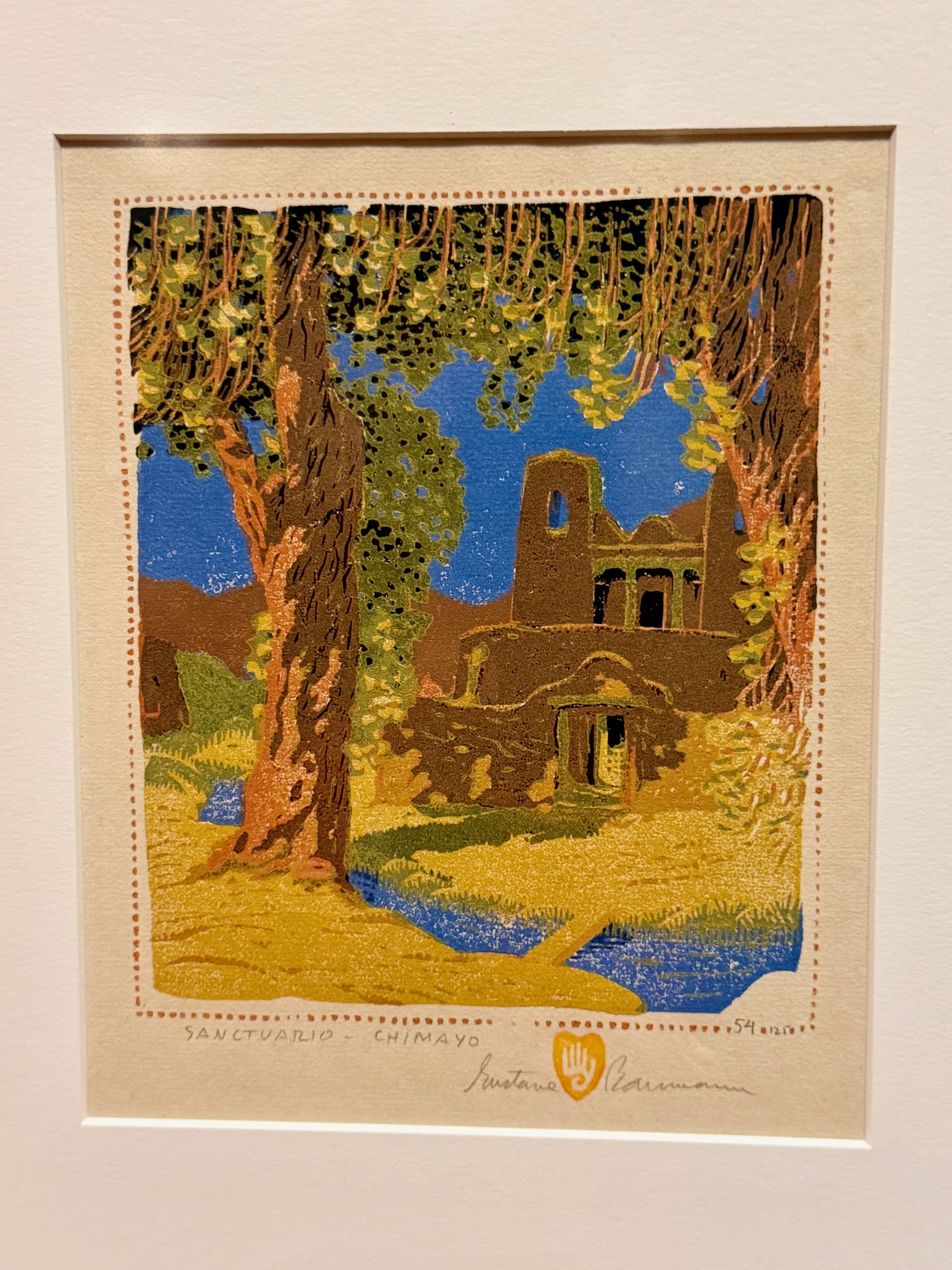
Gus Baumann’s 1924 color woodblock print Sanctuario Chimayo – learning of the historic church’s imminent sale on a sketching trip, he lobbied successfully for its preservation.
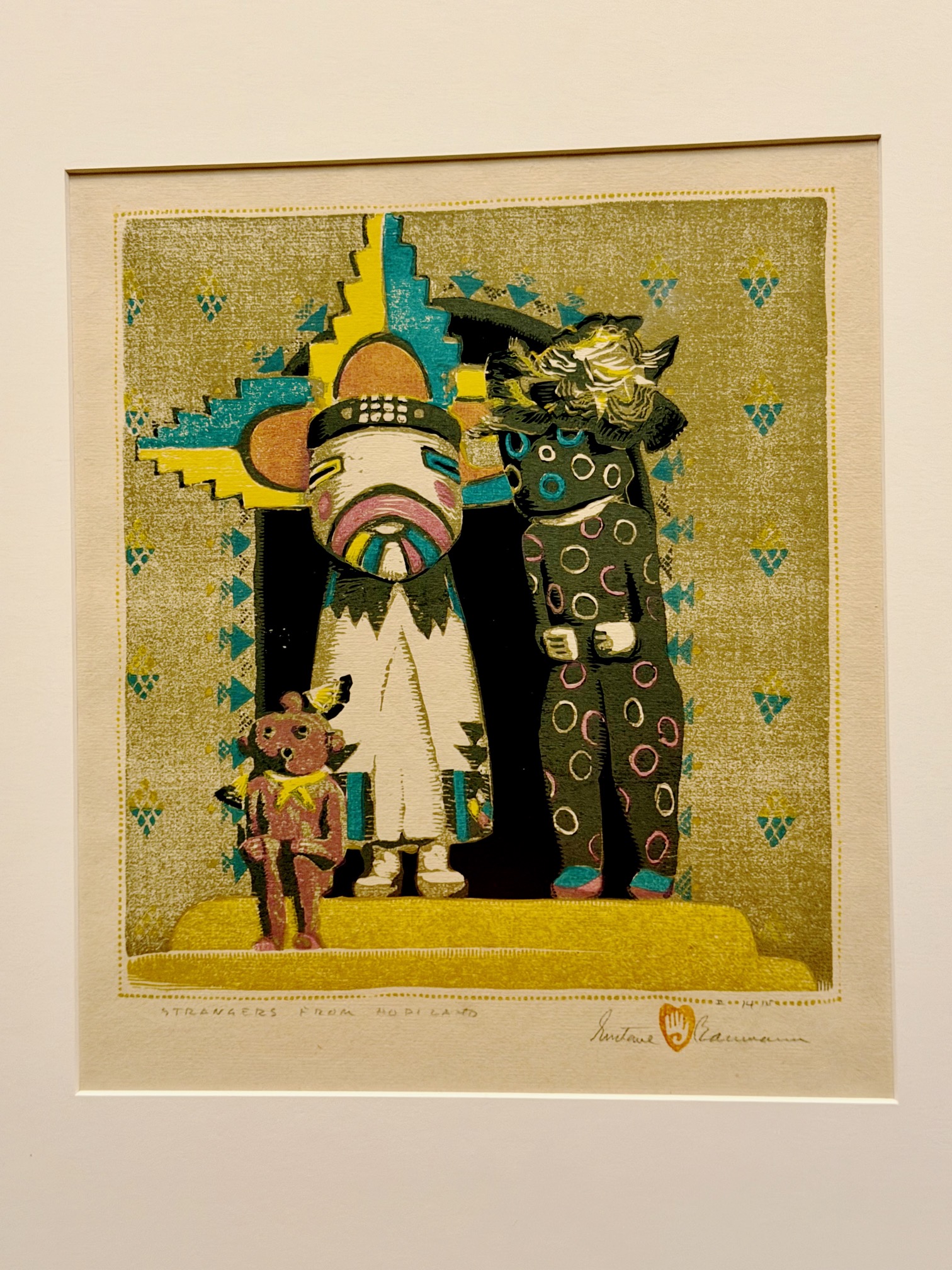
Gus Baumann’s 1921 color woodblock print Strangers from Hopiland, featuring kachinas from his collection; printed in the 1930s.

Since Jane and Ann Baumann donated so much of Gus’s work to the New Mexico Museum of Art, the curators were able to display finished prints alongside drawings and wood blocks that give visitors insight to his process.  One long wall dissects his multi-color printing process for his famed Old Santa Fe – the initial drawing, the separately carved color blocks, single-color proofs, multi-color runs, and the finished six-color print.
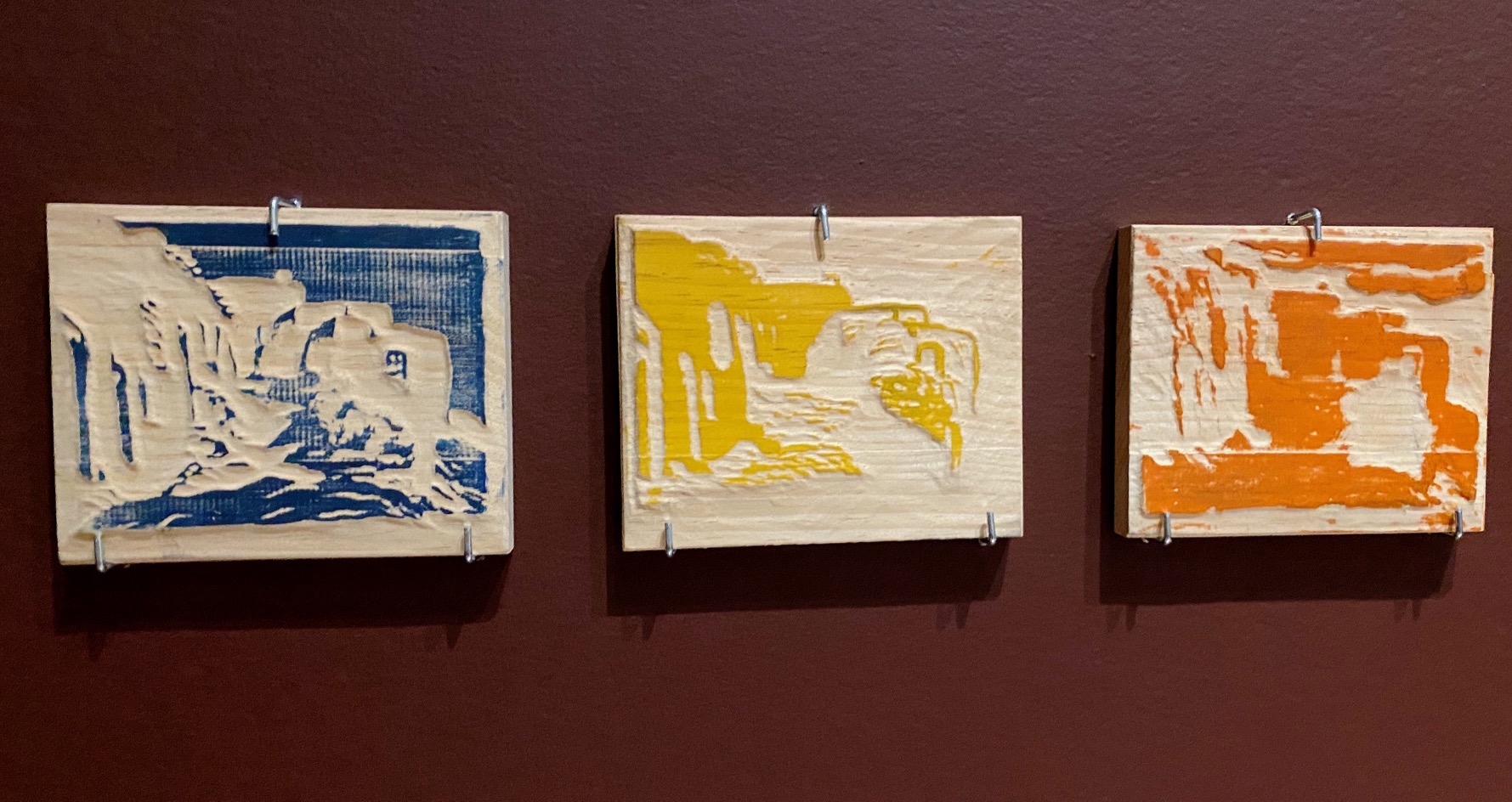
Reproductions of Baumann’s blue, yellow, and orange woodblocks for his 1925 print Old Santa Fe.

Nearly a half-dozen example of Gus’s watercolor paintings and finished prints are displayed side by side. Visitors are delighted to stand, look, compare, and wonder how he conceptualized steps to carve blocks for each color and achieve images of such depth and vibrancy.
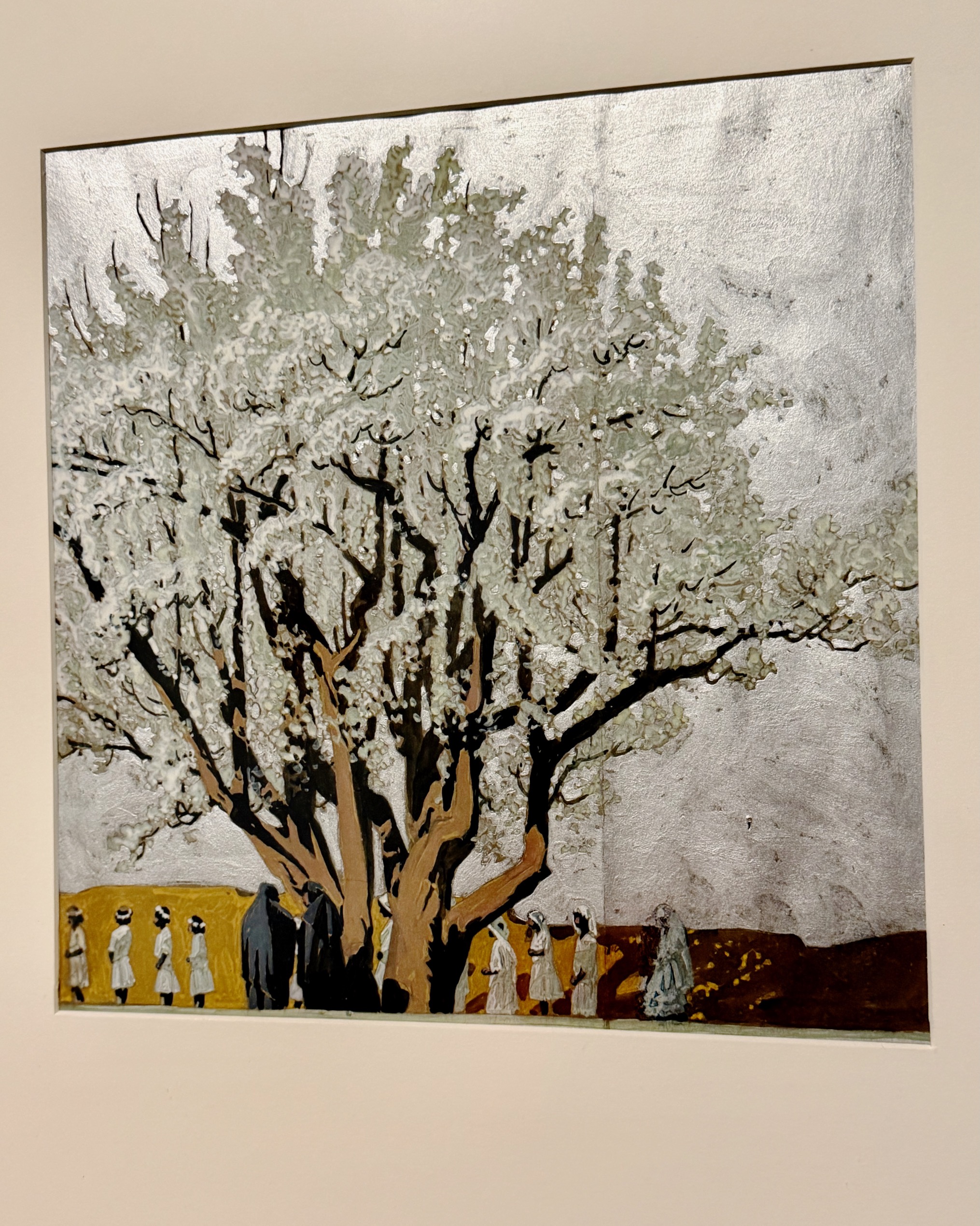
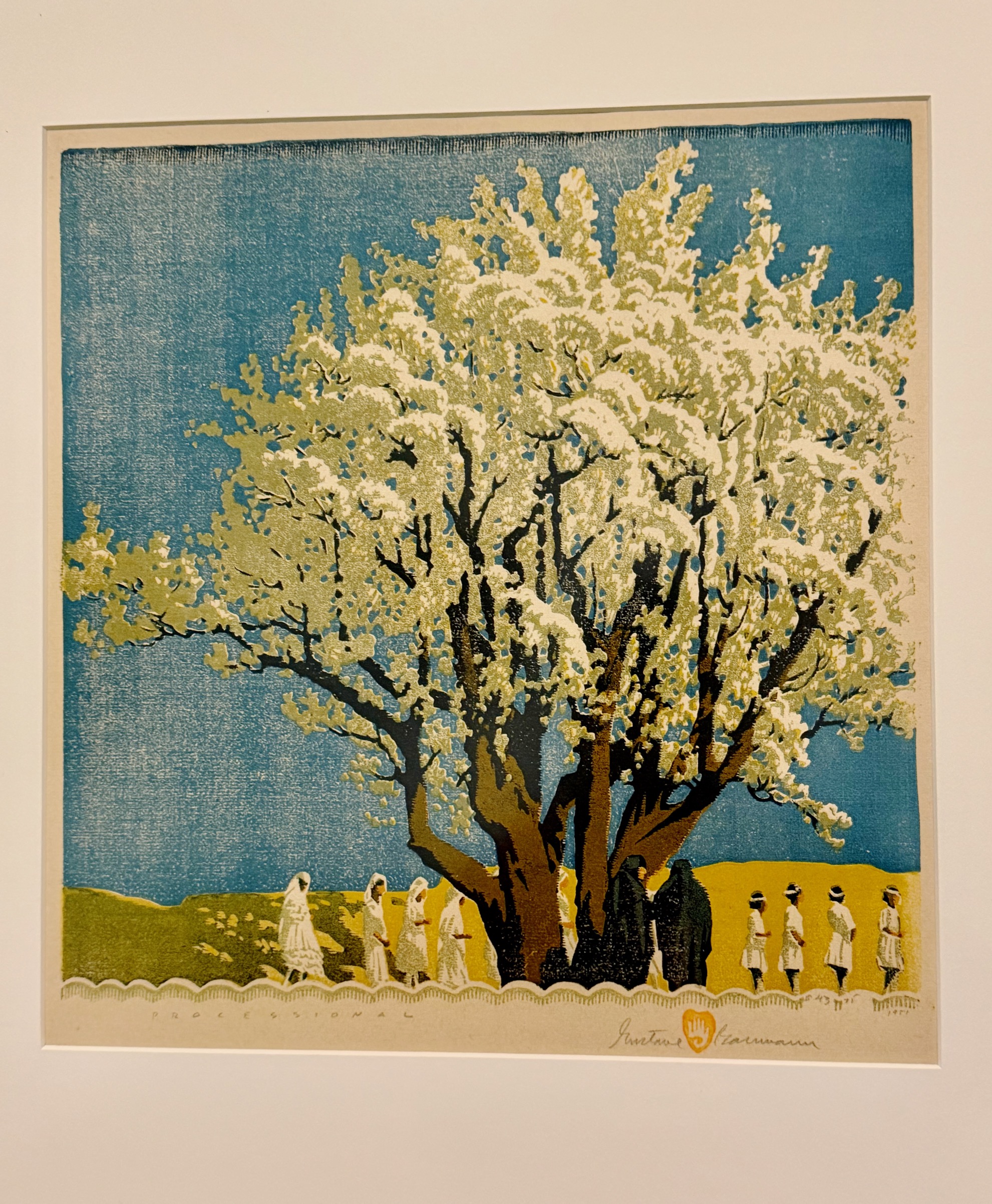
Gus Baumann’s 1930 watercolor Processional (Study), featuring girls walking to their First Holy Communion under a blooming tree and silver sky.
Gus Baumann’s 1930 color woodcut print Processional (printed 1951), based upon his watercolor.

The final gallery “An Artist by Accident” displays an array of intricate color woodcuts, experimental paintings, satirical works, paintings Spanish religious icons, whimisical wood carvings, and everyone’s favorites – Baumann’s marionettes.

It’s the first time Gus and Jane’s marionette casts have been displayed in decades, complete with hand-painted backdrops – scenes representing just a few of the couple’s scripted shows that they performed at home, in venues around Santa Fe, at world fairs, and on tour. 
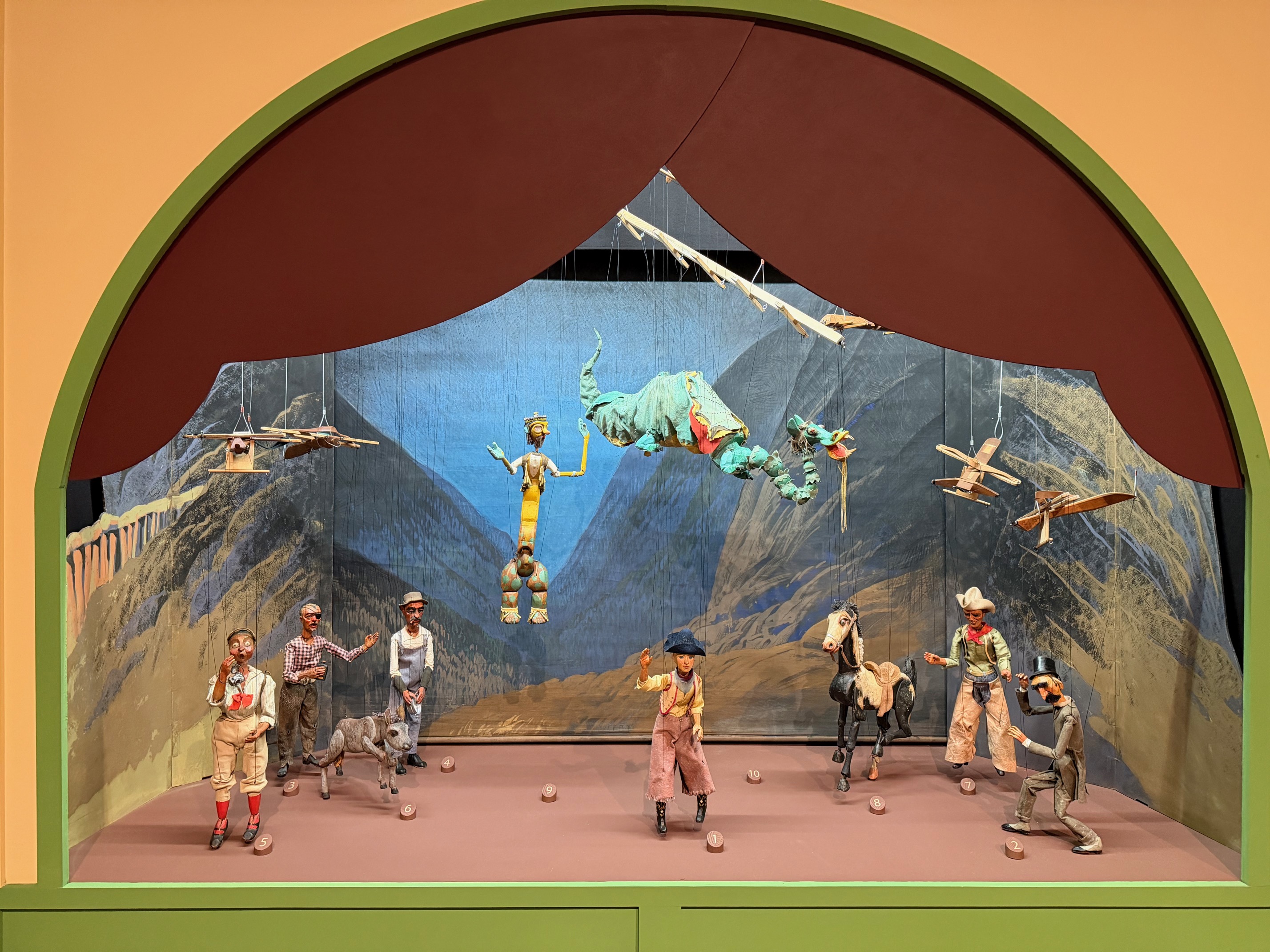
Gus and Jane Baumann’s stage set for the Santa Fe Puppett Wranglers’ 1932 marionette production of the comic melodrama The Golden Dragon Mine –starring The Tourist Lady, Temperence the Miner, Hardpan, Burro, Old Man of the Mountain, the Green Dragon, Nambé Nell, Coco the Horse, Pecos Bill, and Lord Leffinghoop.

Whimsey, delight, innovation, social commentary, and fun are all there, with surprises unfolding around every corner.  And this is all just a fraction of Gus’s creative output from his coming-of-age in the horse-and-buggy era to the Atomic Age.
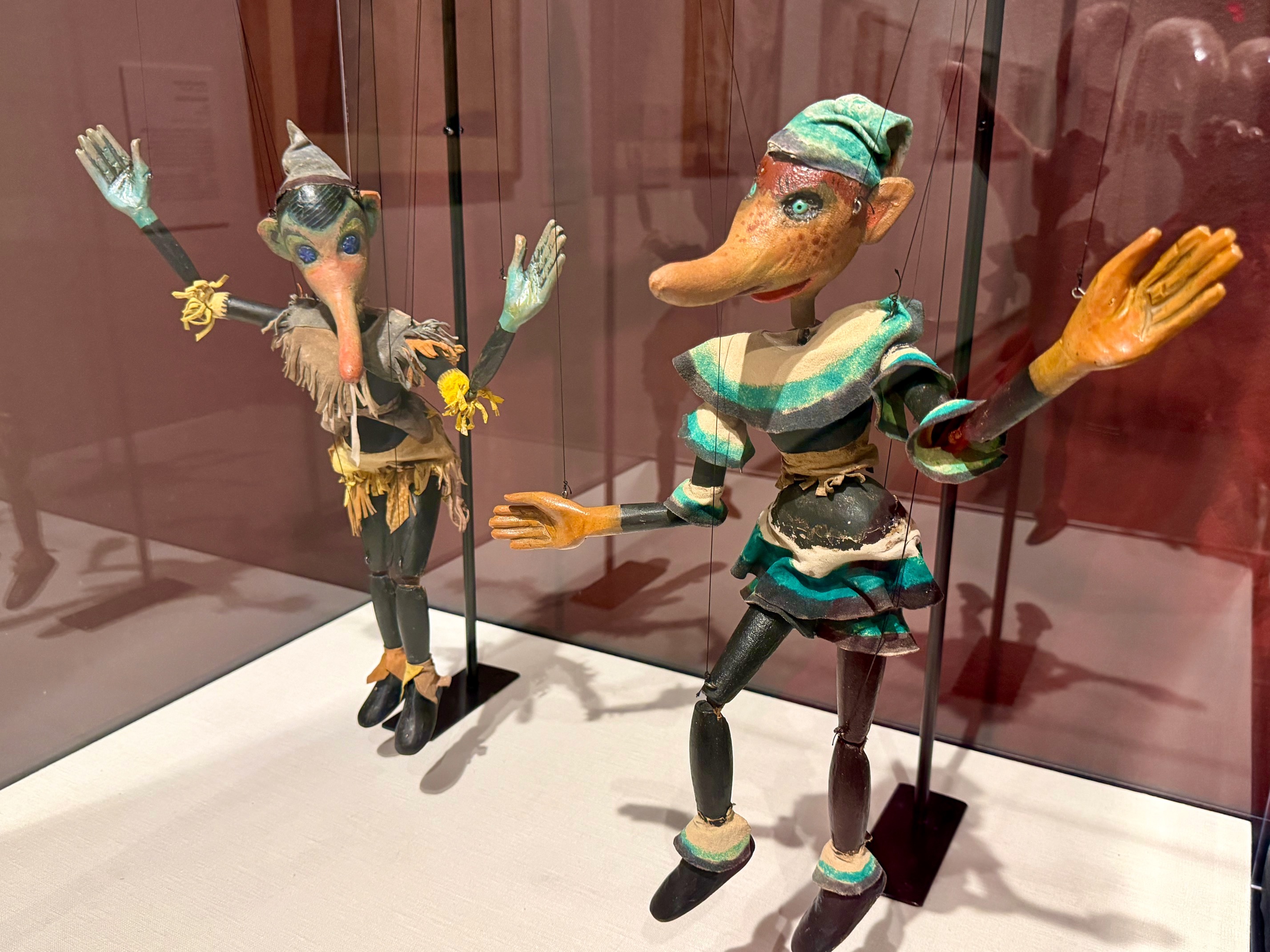
Gus Baumann’s 1940 marionette comedy stars of Teatro Duende – Long Nose (“Nosey”), the Duendi and Freckles the Duende – mischief-making Iberian elves.

No, he didn’t follow the traditional academic path, but he did leave his creative touch on America’s printmaking traditions, the foundation of many Santa Fe cultural and historical institutions, and the care and feeding of a state full of artists as head of New Mexico’s New Deal artist programs.
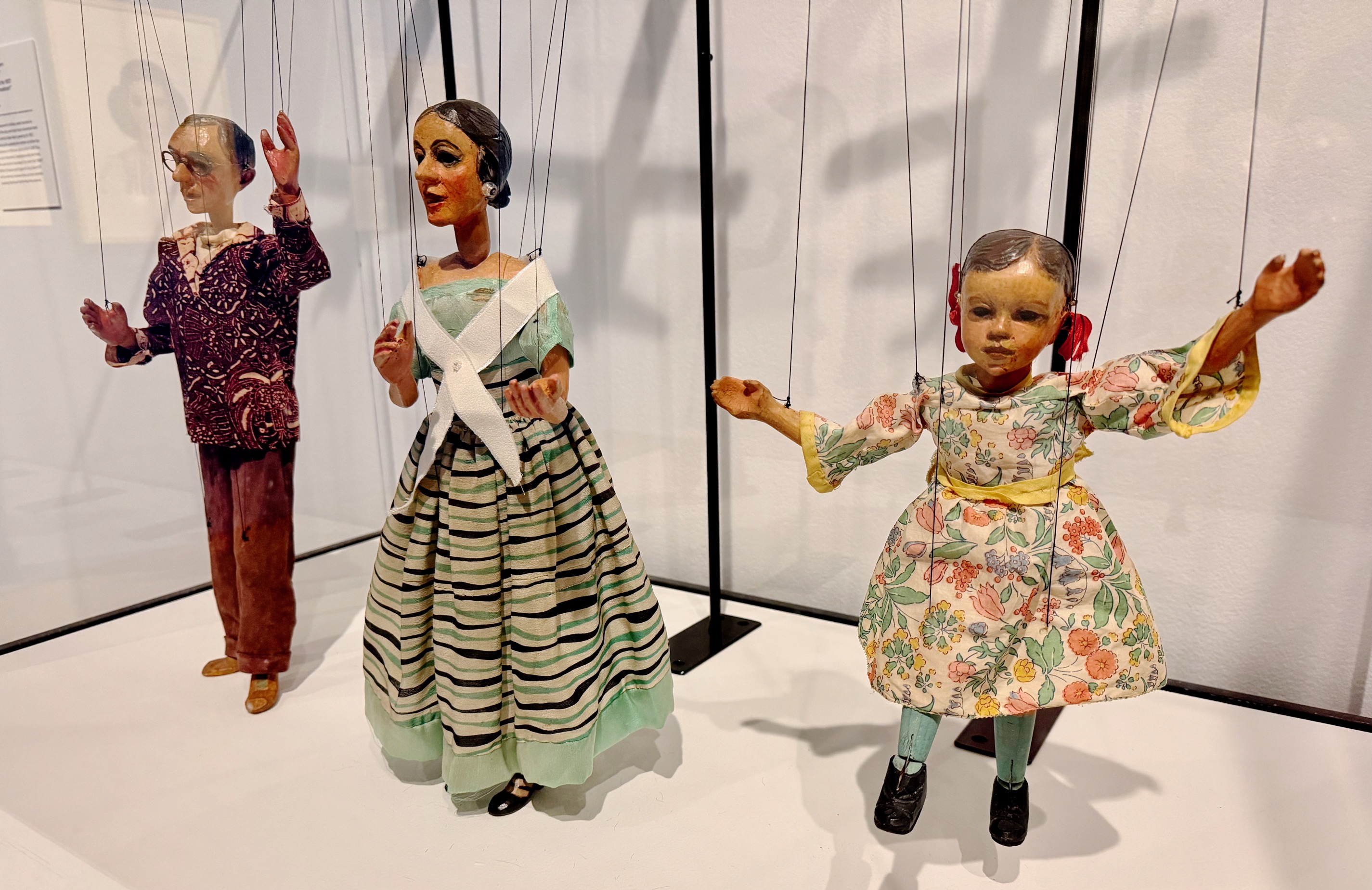
Gus Baumann’s 1932 carved family portrait – marionettes Gus, Jane, and Ann – with costumes by Jane.

Contemporary Pueblo Architecture Honors Ancient Beliefs

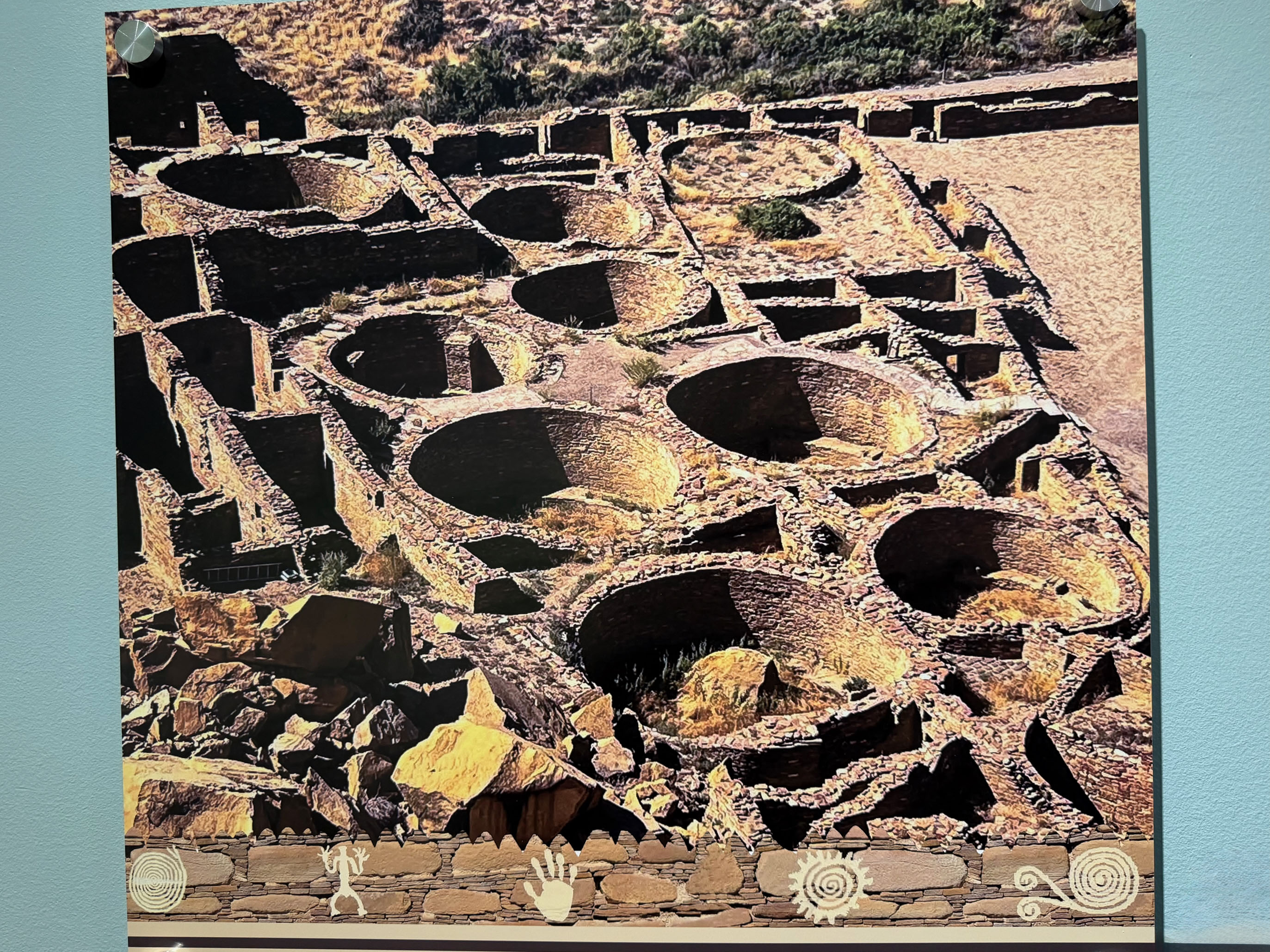
Any visitor to Chaco Canyon National Historial Park (850-1250 CE) makes the journey to appreciate innovative masonry of the Great Houses, the precision of the ancient road system, and the astronomically aligned walls, windows, and kivas. But how do contemporary Pueblo architects incorporate these traditional beliefs in their 21st century projects?

A fascinating, in-depth exhibition, Restorying our Heartplaces: Contemporary Pueblo Architecture – on view at Albuquerque’s Indian Pueblo Cultural Center through December 7, 2025 – explores how modern Indigenous architects incorporate traditional world views into their work.

2023 photo Kivas at Pueblo Bonito,Chaco Canyon by curator Ted Jojola (Islela Pueblo) showing advanced masonry and architectural concepts.

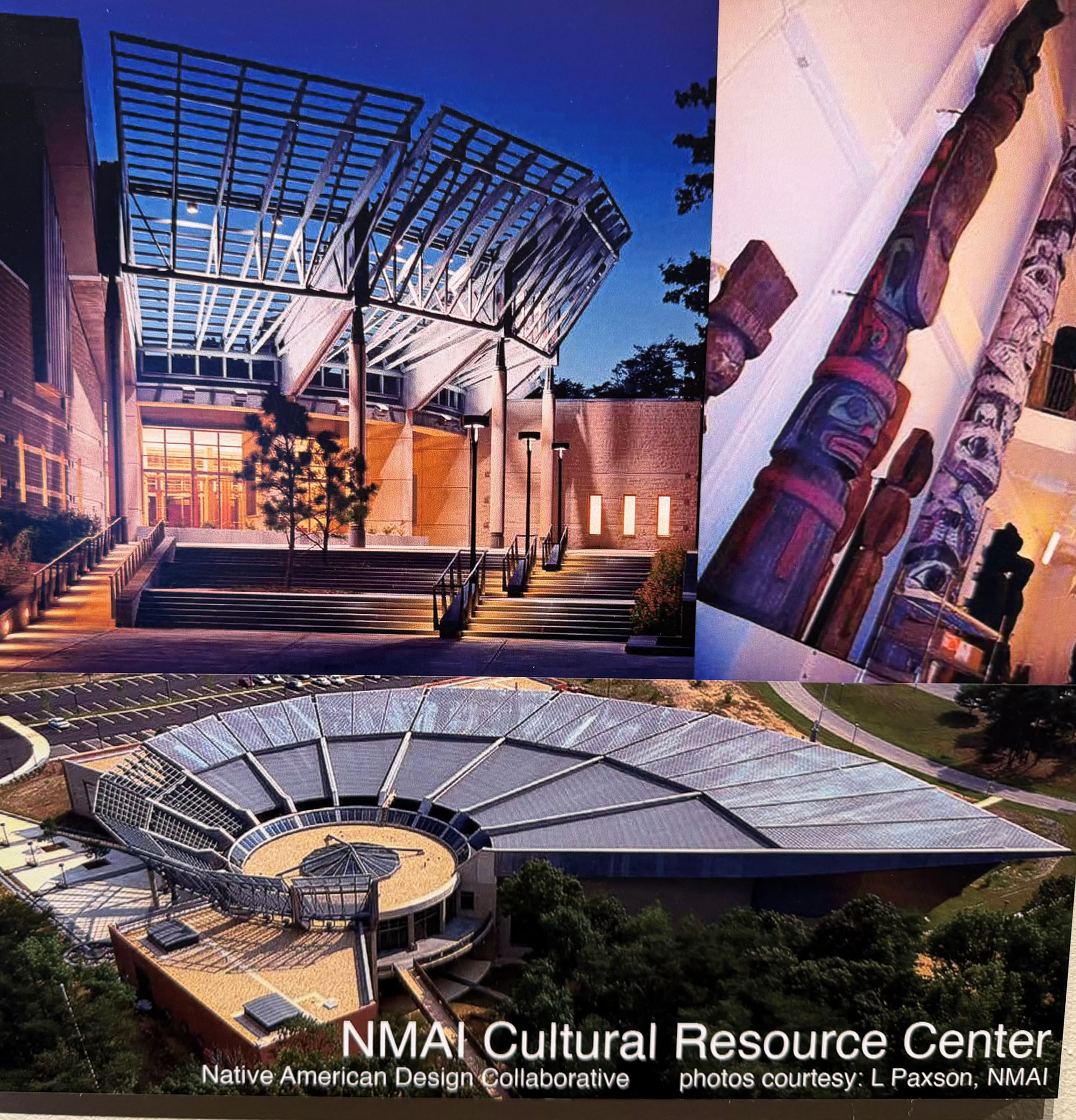
For example, just look at the design of the National Museum of the American Indian’s Resource Center – an organic design, aligned to the four cardinal directions, with extensive use of cedar wood.

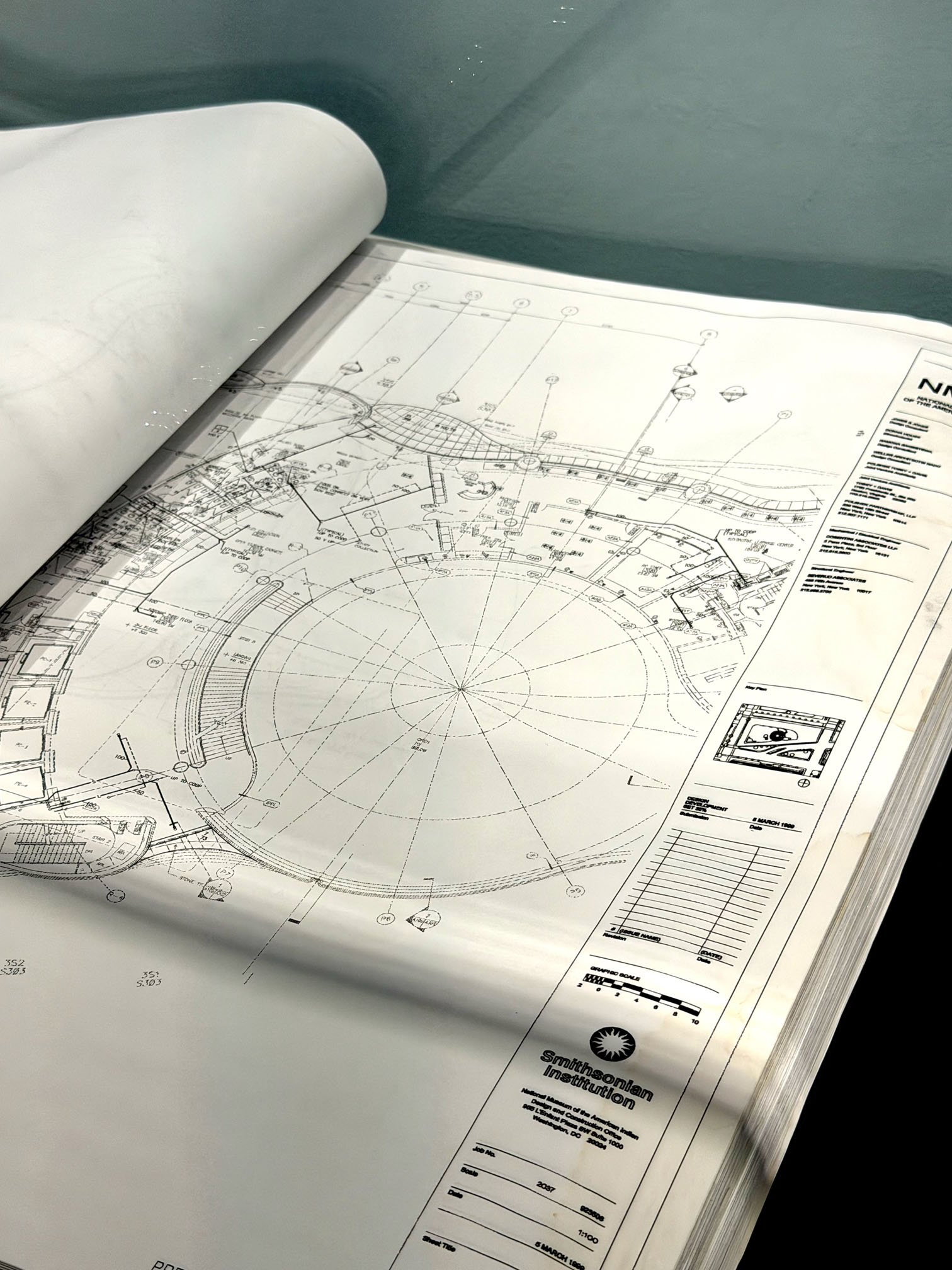
1999 plans for the National Museum of the American Indian Resource Center. Courtesy: Ted Jojola (Isleta Pueblo)
Views of the 1999 National Museum of the American Indian Cultural Resource Center in Suitland, Maryland. Courtesy: Lynn Paxson.

This exhibition coincides with the 50th anniversary of the 1975 Indian Self-Determination and Education Assistance Act – legislation that shifted Native American policy in the United States from assimilation to self-determination. Tribes were now able to initiate and run justice, government, health and education departments of their own – a change that triggered a construction boom for new schools and administrative buildings.

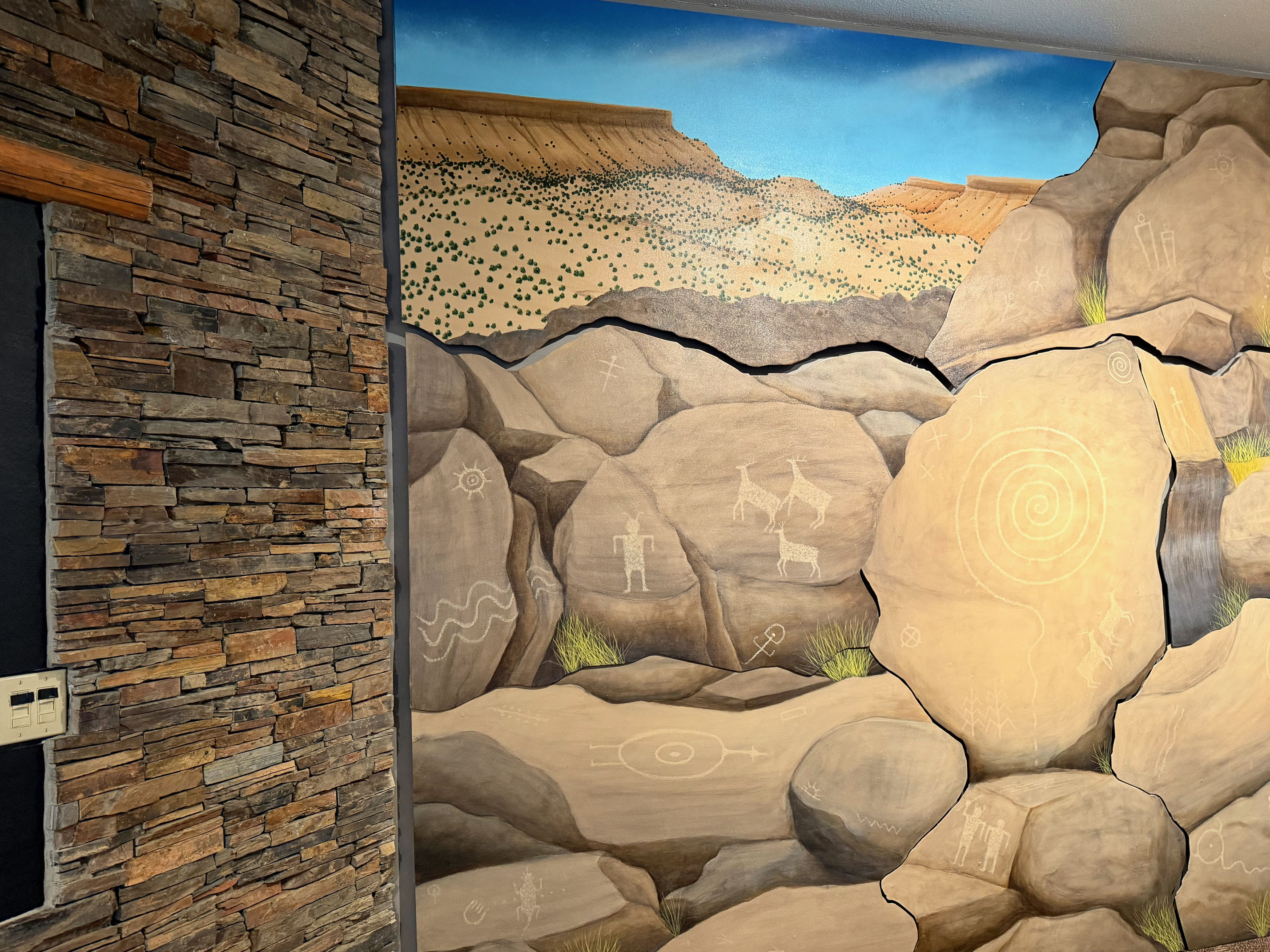
The show opens as an immersive experience in a large, circular gallery that introduces the core belief system and origin story of the Ancient Puebloans. Across a large screen in a vivid animation, the Pueblo people emerge into this world from a previous world. You watch them migrating outward in a spiral – symbols that are reflected across the art, murals, and photographs on the surrounding walls.

Mural by Dominic Aquero (Cochiti) with symbols of Pueblo creation; T-door represents the spiritual passage between two worlds (sky and Earth)

This experience sets the stage for the rest of the exhibition by showing how the stonework and beliefs reflected by the architecture of Ancient Puebloan centers points the way forward for Pueblo architects today.

2022 print by Gerald Dawavandewa (Hopi Cherokee) with T-shaped door for passage between worlds (sky and Earth]

The exhibition describes Ancient Puebloan architectural innovations – passive solar heating, precise window alignment, and masonry approaches. How did the Ancients achieve such precision in their dramatic Chaco and Mesa Verde buildings?

The curators present engineering and survey tools from archaeological excavations and modern survey backpacks side by side – plumb bobs, levels, and measuring devices.

Ancient stone and ceramic plumb bobs (from California and from Hewitt excavation at Rito de los Frijoles, Bandelier). Courtesy: Museum of Indian Arts & Culture/Lab of Anthropology.
Modern survey tools: level, tape measure, compass, brass plumb bob, wood, and string. Courtesy: curator Ted Jojola (Isleta Pueblo)

They also add comparisons of selenite used as window panels in Old Acoma’s Sky City (among the longest-inhabited communities in the US) and the contemporary architectural approach to windows in the recently built Acoma museum – a thoughtful reflection of the past

The exhibition directly addresses past HUD housing approaches on tribal lands – pushing suburban-style low-income housing, which moved families away from the traditional Pueblo plaza (the HeartPlace) and provided pitched-roof designs that blunted community cultural practices that utilized traditional Pueblo flat-roof construction.

The curators remind us of the continual upkeep required by adobe construction – a repeated communal task typically undertaken by a community’s women that happened on a regular, cyclical basis.  It’s also a reminder that Pueblo communities view buildings as living presences that evolve – not just concrete objects exist in a “finished” state.

Views of the 2000 campus for the Institute of American Indian Arts in Santa Fe. Courtesy: Paul Fragua (Jemez Pueblo)
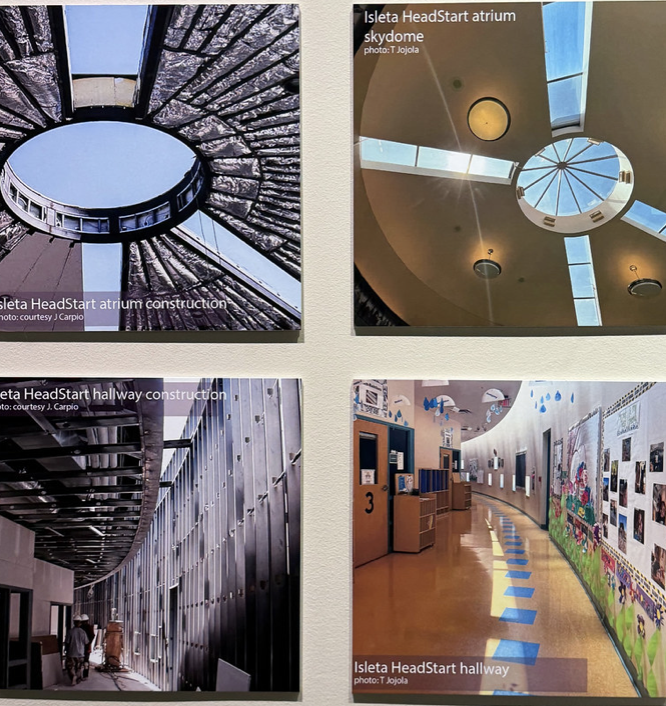
Views of 2004 building designed by Janet Carpio (Laguna/Isleta Pueblos) for Pueblo of Isleta’s Headstart/Child Care Center.

Wall panels, blueprint books, and architectural models are used to demonstrate the contemporary innovations of Pueblo architects – the Resource Center of the National Museum of the American Indian (1999), the campus of the Institute of Amercian Indian Arts in Santa Fe (2000), and the Headstart Child Care Center for Isleta Pueblo (2004). Both incorporate design elements echoing the spiral migration path, alignment to the cardinal directions, and colors and elements of the Earth.

A huge multimedia interactive theater punctuates the walk-through – an immersive visit to Acoma’s new Cultural Center and Haa’ku Museum with tribal members and designers explaining the architectural details and how the buildings reflect the landscape and traditional belief systems.

Immersive interactive experience of Acoma’s new Cultural Center and Haa’ku Museum. Courtesy: Anna Seed Productions, Electric Playouse, and UNM ASPIRE.

The exhibition features the work of the Indiginous Design and Planning Institute (iD+Pi) at UNM and presents dramatic architectural models of the past, present, and future of the community of Nambe Pueblo.

Look through the exhibition in our Flickr album here – a future-forward look at the continuing progression of innovative architectural designs and the next generation of designers and architects respecting and integrating the Pueblo world view with buildings considered to be living, breathing HeartPlaces for the community. 

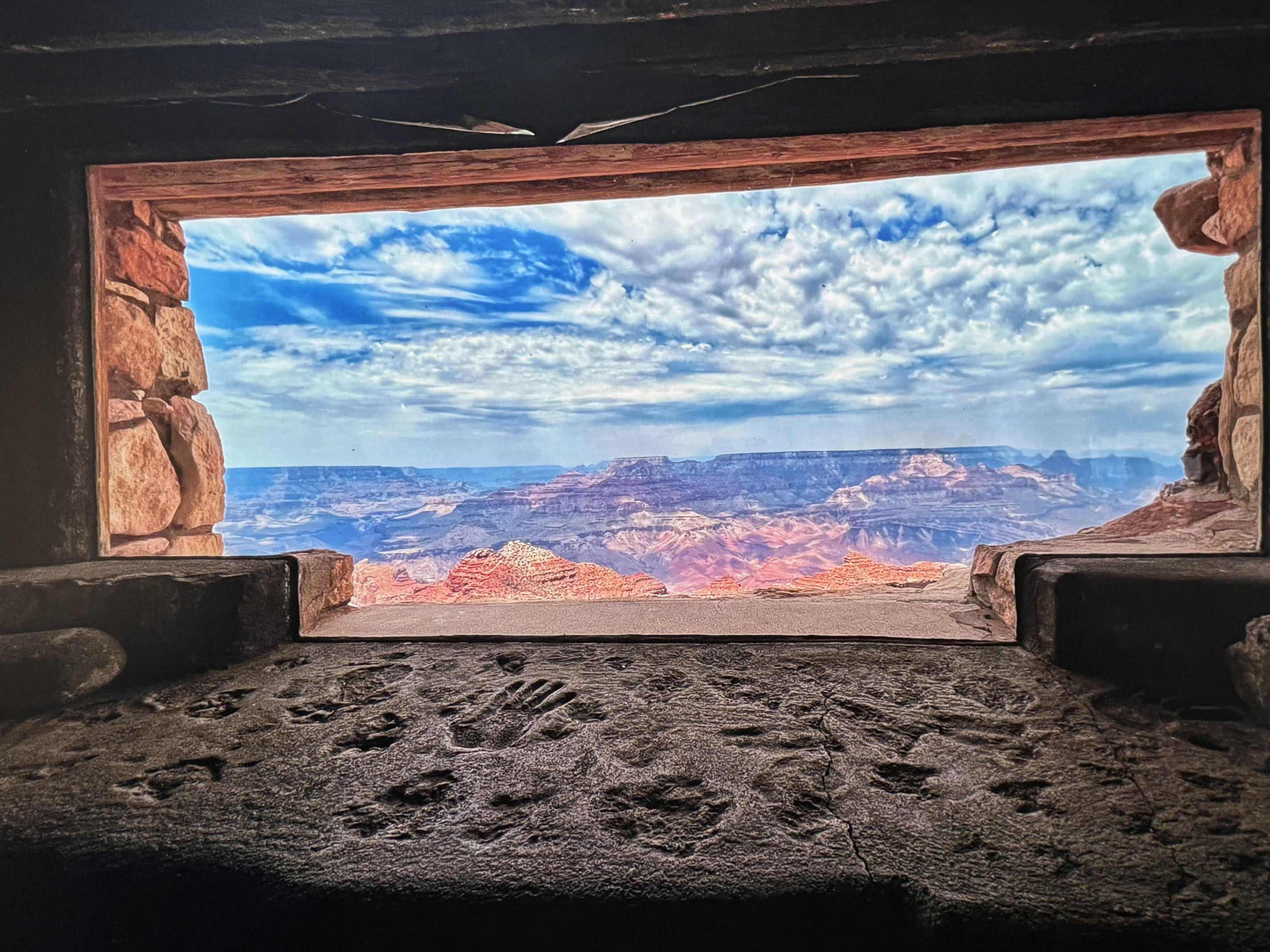
2023 photo by curatorTed Jojola (Islela Pueblo) North Window View from Desert View Watchtower, Grand Canyon showing the T-shaped doorway symbolizing passage between worlds

As the curators made clear in their opening-day remarks, a similarly extensive exhibition could explore architectural innovation and spiritualism across Navajo Nation. Let’s hope that happens!