Celebrating Juan Pino, First Pueblo Printmaker

It’s been just over 100 years ago that Juan Pino of Tesuque Pueblo popped into the Santa Fe studio of Charles Kassler, and experienced his enthusiasm about linoleum printmaking – a new-ish way to make multiple images without using an expensive press or chemicals.

Charles offered Juan some materials to take home so he could try it, and Juan got to work. See the results in Printing the Pueblo World: Juan Pino of Tay Tsu’geh Oweenge, on display at Santa Fe’s Museum of Indian Arts and Culture through August 17, 2025.

Take a look at our favorites in our Flickr album.

Exhibition banner on Museum Hill

Unlike his friend Kassler, who trained formally at Princeton and the Art Institute of Chicago, Juan received his artistic training in the Pueblo world, learning observation, craftsmanship, and patience from the ceramic and textile artists around him. By 1924, booming tourism in Northern New Mexico had created a big market for modern and traditional pueblo ceramics (think Maria Martinez and Margaret Tafoya) and for pueblo painters, like Julian Martinez and Awa Tsireh (Alfonso Roybal).

Juan Pino’s 1925 linocut print of people by the church in the Tesuque Pueblo plaza

Juan was an expert in wood carving, ceramics, textiles, and crafting dance regalia, but like most artists of his day, he juggled his artistic output with other income-generating pursuits – farming, gathering and selling home-heating wood, and posing as a model for Anglo artists flocking to the vibrant Santa Fe art colony.
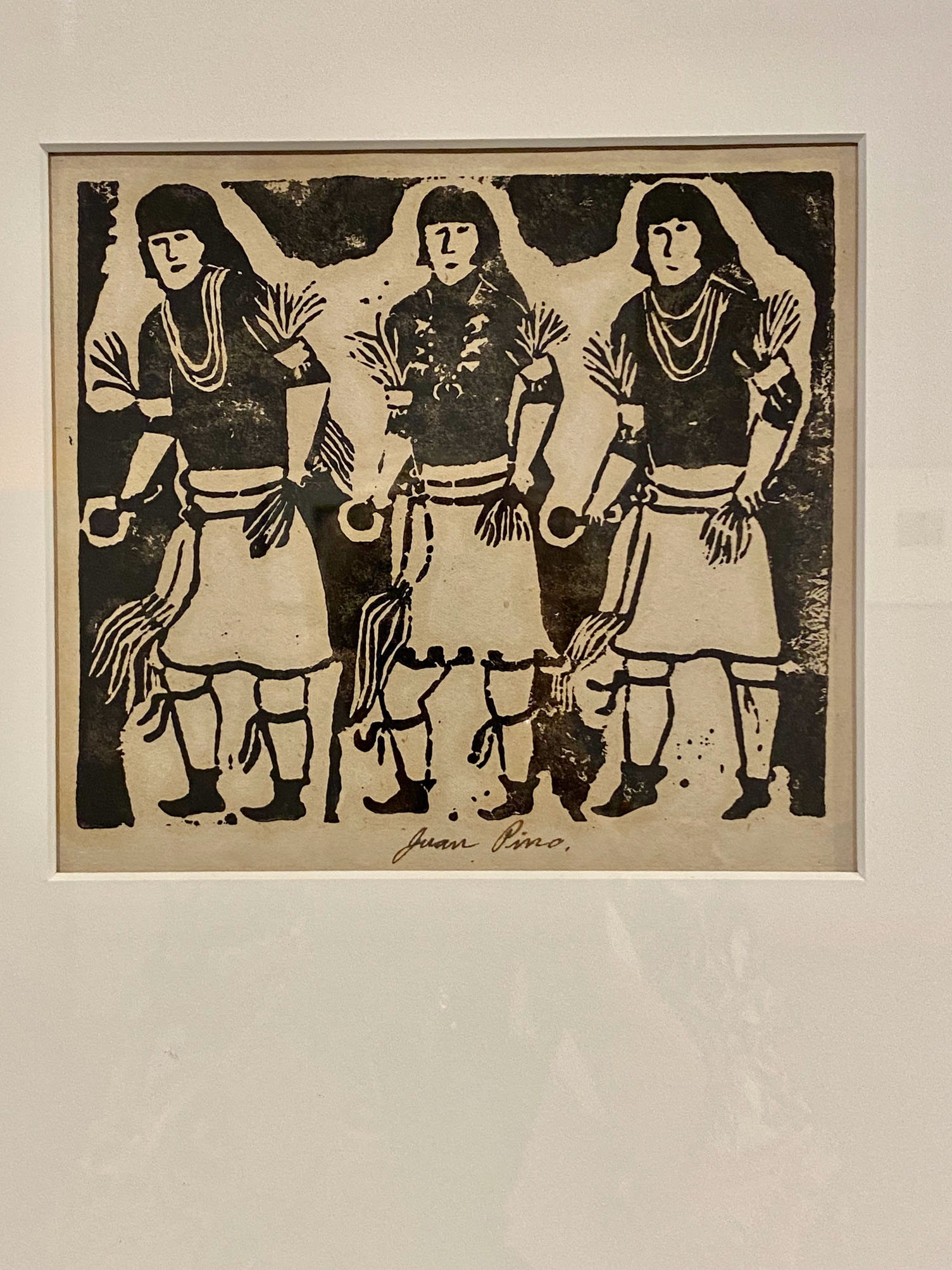
Juan Pino’s 1925 linocut print of three corn dancers – depicting himself, Vecillio Herrera, and Candido Herrera.

For linocut printmaking, you just cut your design into linoleum – a relatively accessible material since it was manufactured for use in kitchen floors or wall coverings for new homes. Once the block was carved and inked, you could either apply manual pressure to make the multiple images or ask a fellow artist to borrow their press.

Carving images into linoleum came naturally, and Juan started depicting the world around him in Tesuque – not just romanticized images of Indian life. Juan carved and printed the daily comings and goings of his fellow villagers in the pueblo plaza and images of traditional dances.

For all the car traffic and hubub on the streets of Santa Fe during the 1920s, Tesuque pueblo life still had elements of traditional Tewa ways.  Archaeologists have found remnants of village buildings dating back to 1200 CE, so Tesuque is one of the longest inhabited communities in the United States.
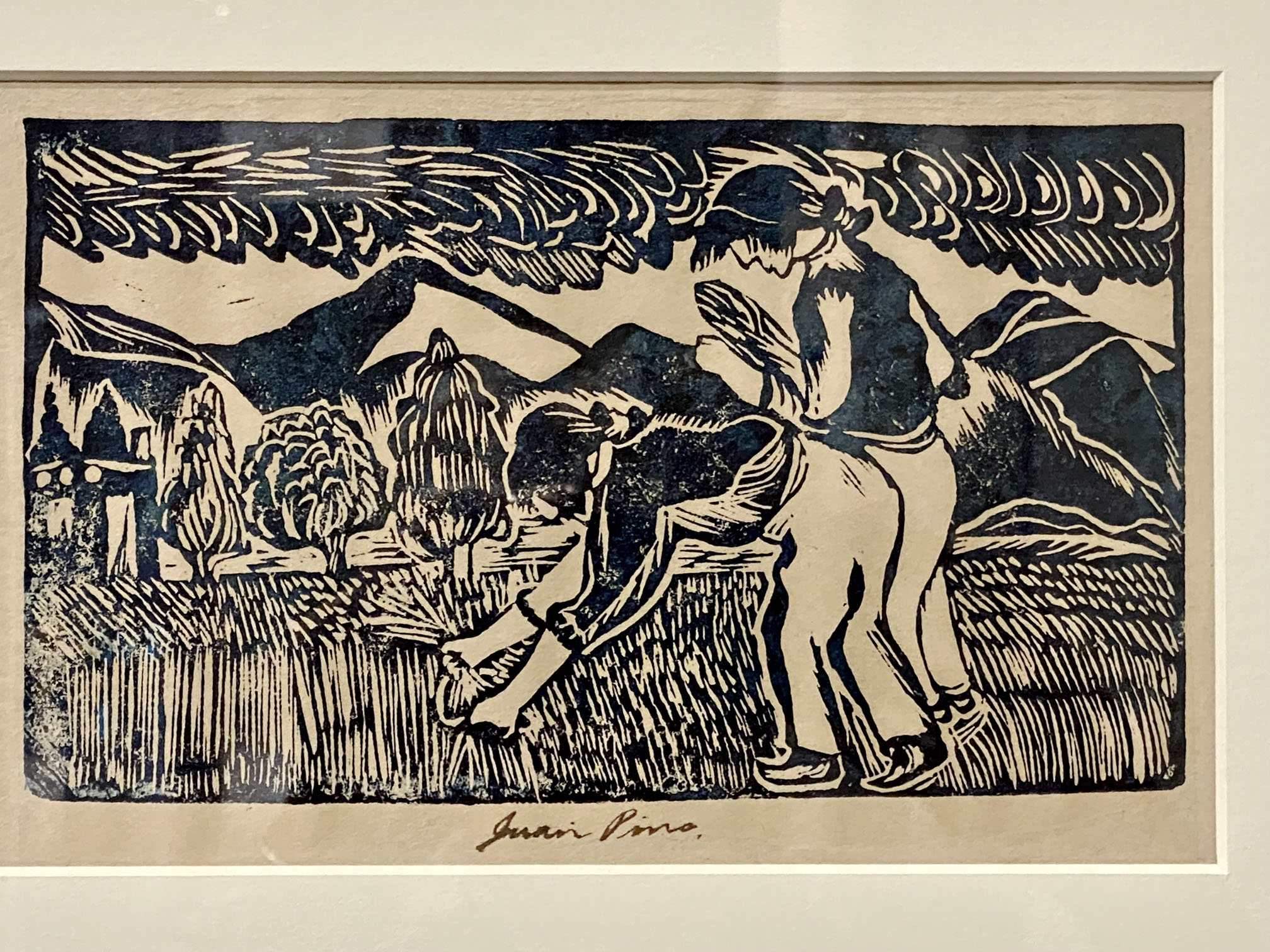
Juan Pino’s 1925 linocut print of two men harvesting wheat

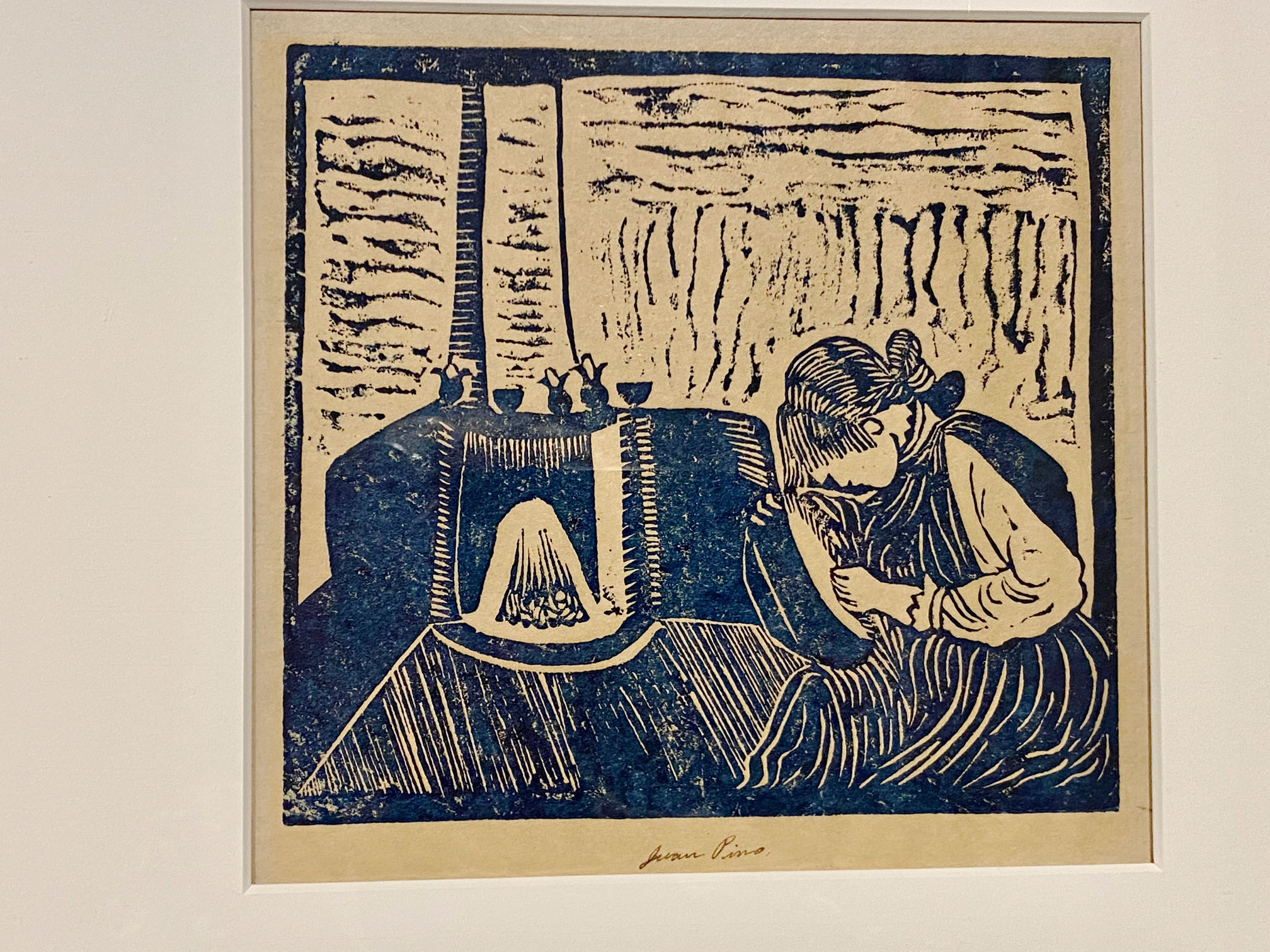
Taking in the twenty prints in the exhibition allows us to see day-to-day life as it was 100 years ago in the historic pueblo – making ceramics at home, harvesting, using oxen on the farm at a time just before horses replaced them as the work animal of choice.  We can even see detailed black-and-white depictions of the regalia men were wearing for the Corn Dance – including one print that likely includes a self-portrait!

After only a few months of making linoprints in 1925, Juan’s work was displayed at the New Mexico Museum of Art. Santa Fe and Pueblo artists celebrated his accomplishment as the first Pueblo artist to try his hand at printmaking. In Santa Fe’s commercial gallery market, however, tourists were more inclined to purchase prints and paintings that showed more romanticized visions of Indian life.

Juan kept creating, and seeing so much of his work 100 years later is truly a revelation – a set of quiet, enjoyable glimpses of everyday life at the foot of the Sangre de Christo Mountains.
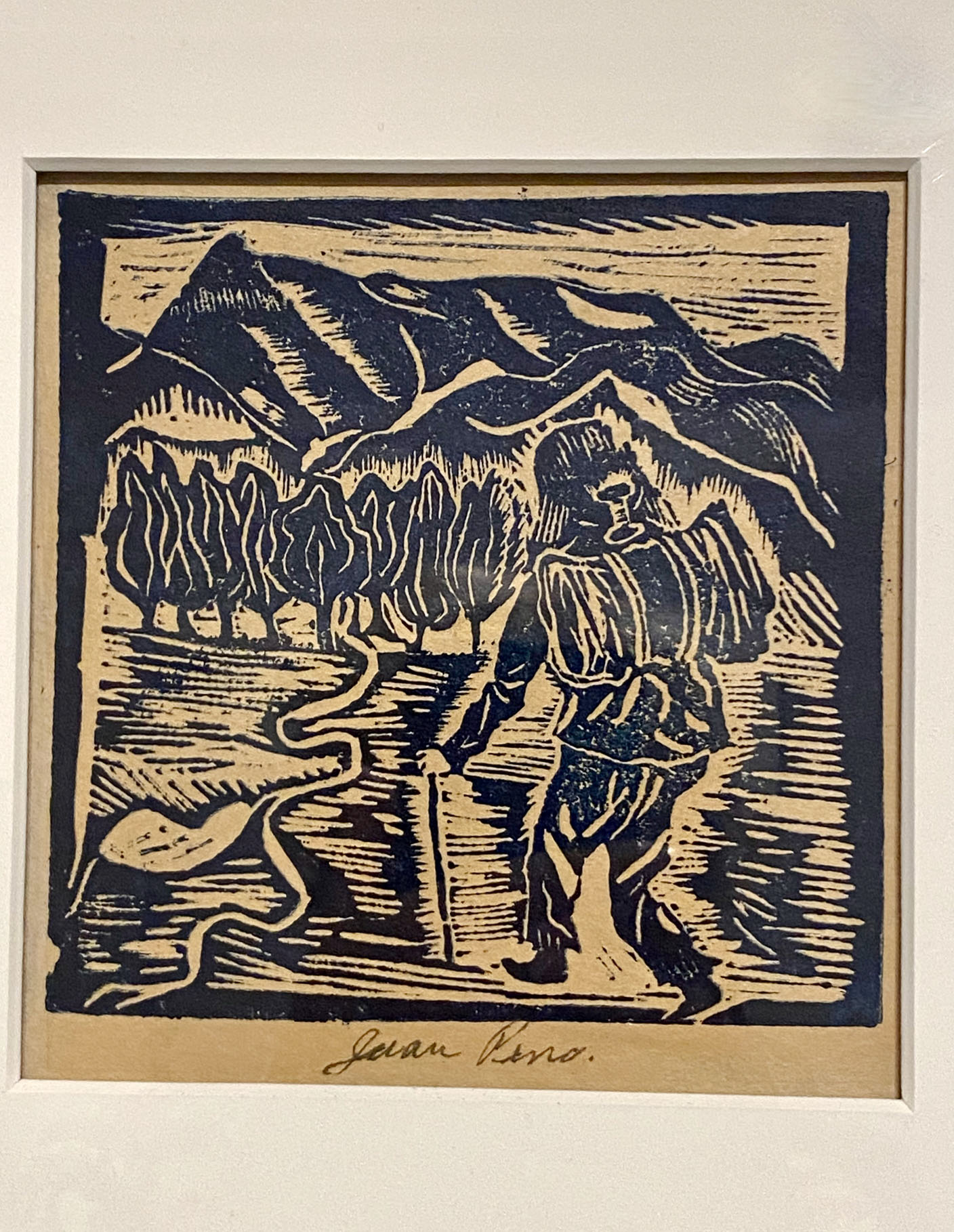
Juan Pino’s 1925 linocut print of a voyaging man. Courtesy: Indian Arts Research Center, School for Advanced Research, Santa Fe.

The show also has a beautiful touch that emphasizies Juan’s continuing artistic output: two large ceramic pieces from the Thirties and Forties created by his wife, Lorencita Pino. It’s likely Juan used his steady hand to apply strong, black lines – skills so evident in his masterful design for his slice-of-life print series.
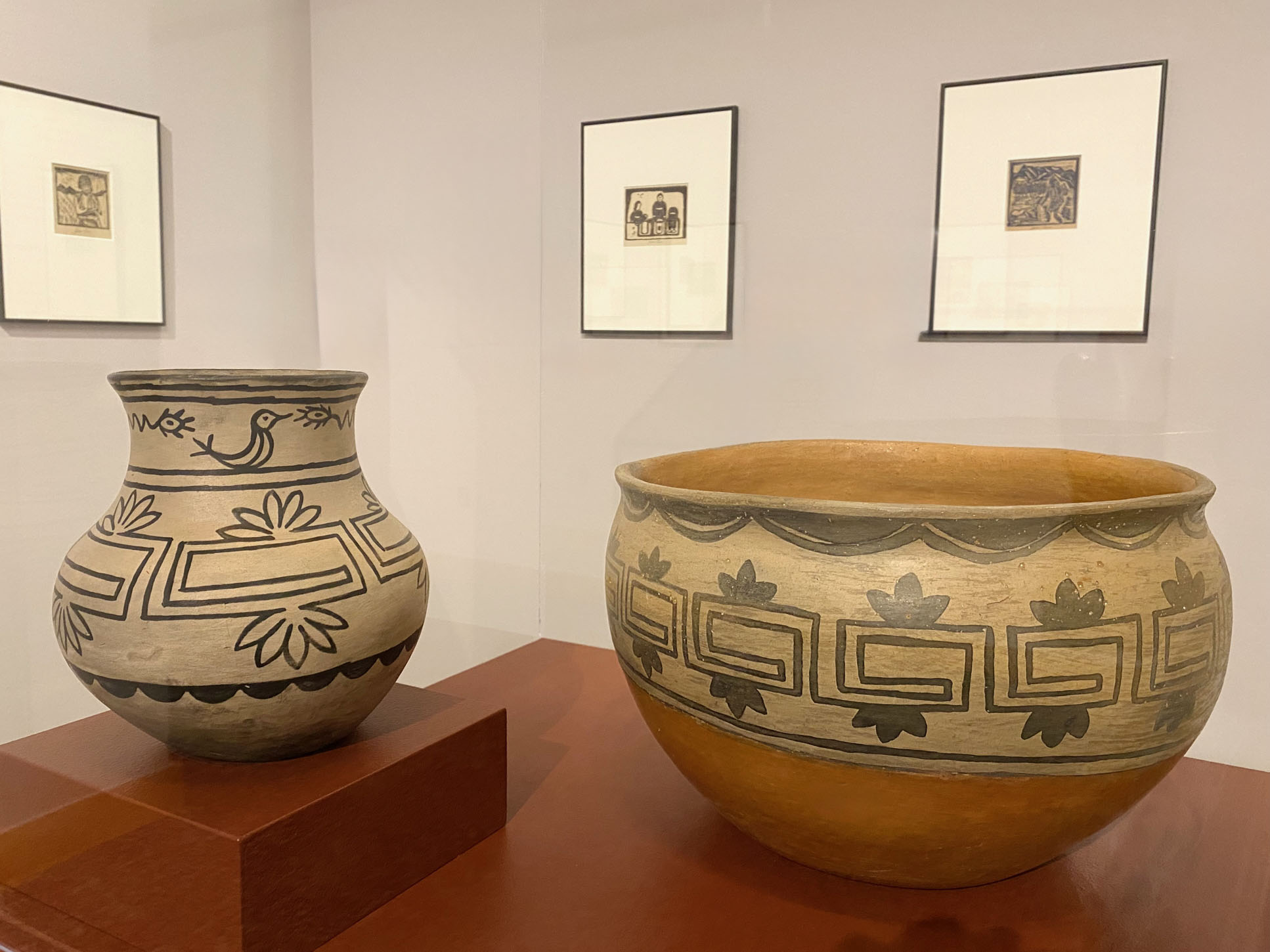
Lorencita Pino ceramics likely painted by her husband, Juan Pino – a 1940 dough bowl with cloud and scroll designs and 1930 jar with bird and scroll design.
1925 linocut print of woman making pottery near fireplace…is it Lorencita?

MIAC Connects Diné Textiles to Land and Community

Building on the groundwork laid in the artist-curated exhibition Grounded in Clay: The Spirit of Pueblo Pottery (opening in St. Louis on March 7), Santa Fe’s Museum of Indian Arts and Culture asked five Navajo textile artists, photographers, and scholars to delve into MIAC’s historic collections to tell the story of Diné weavng.

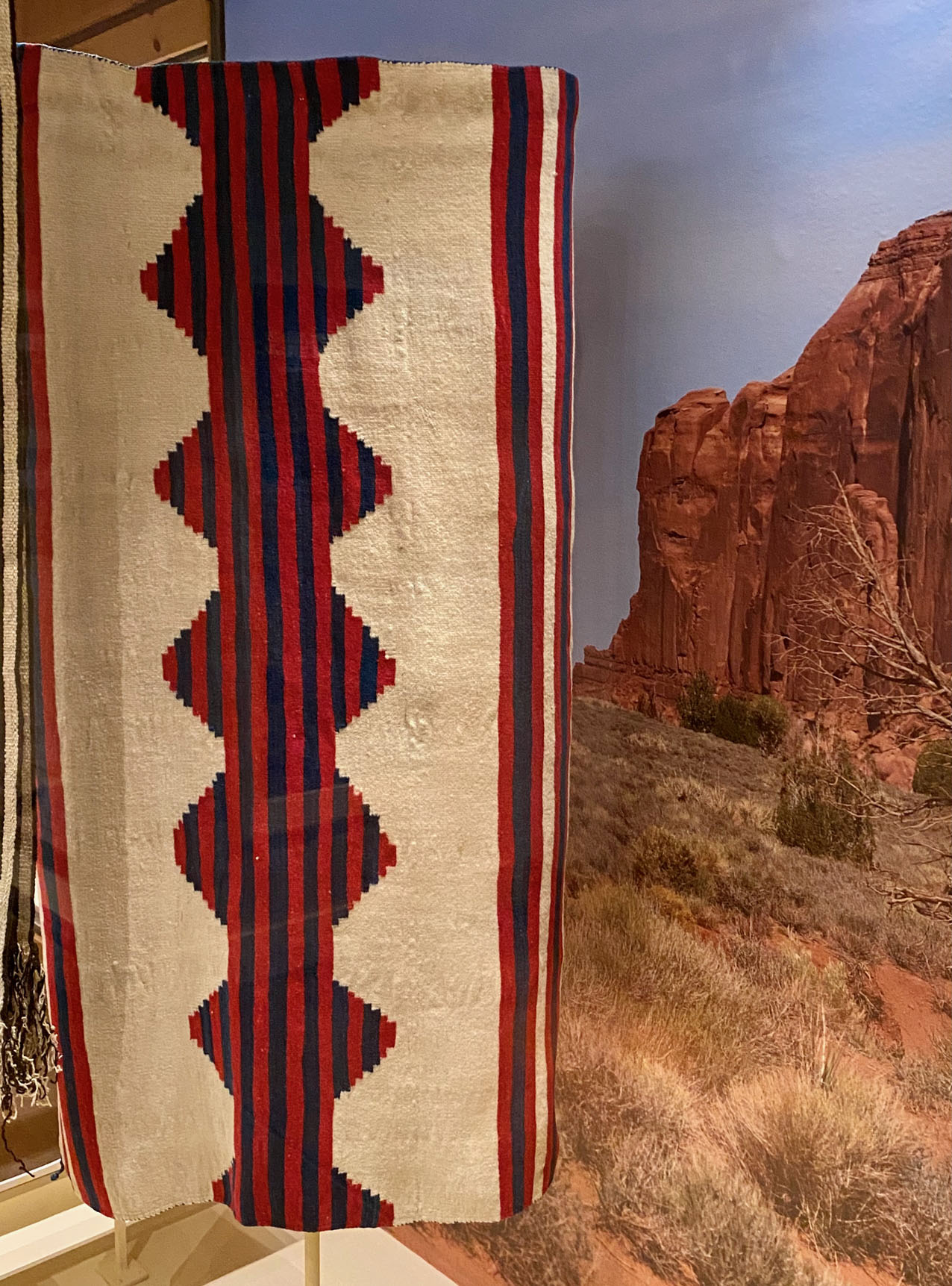
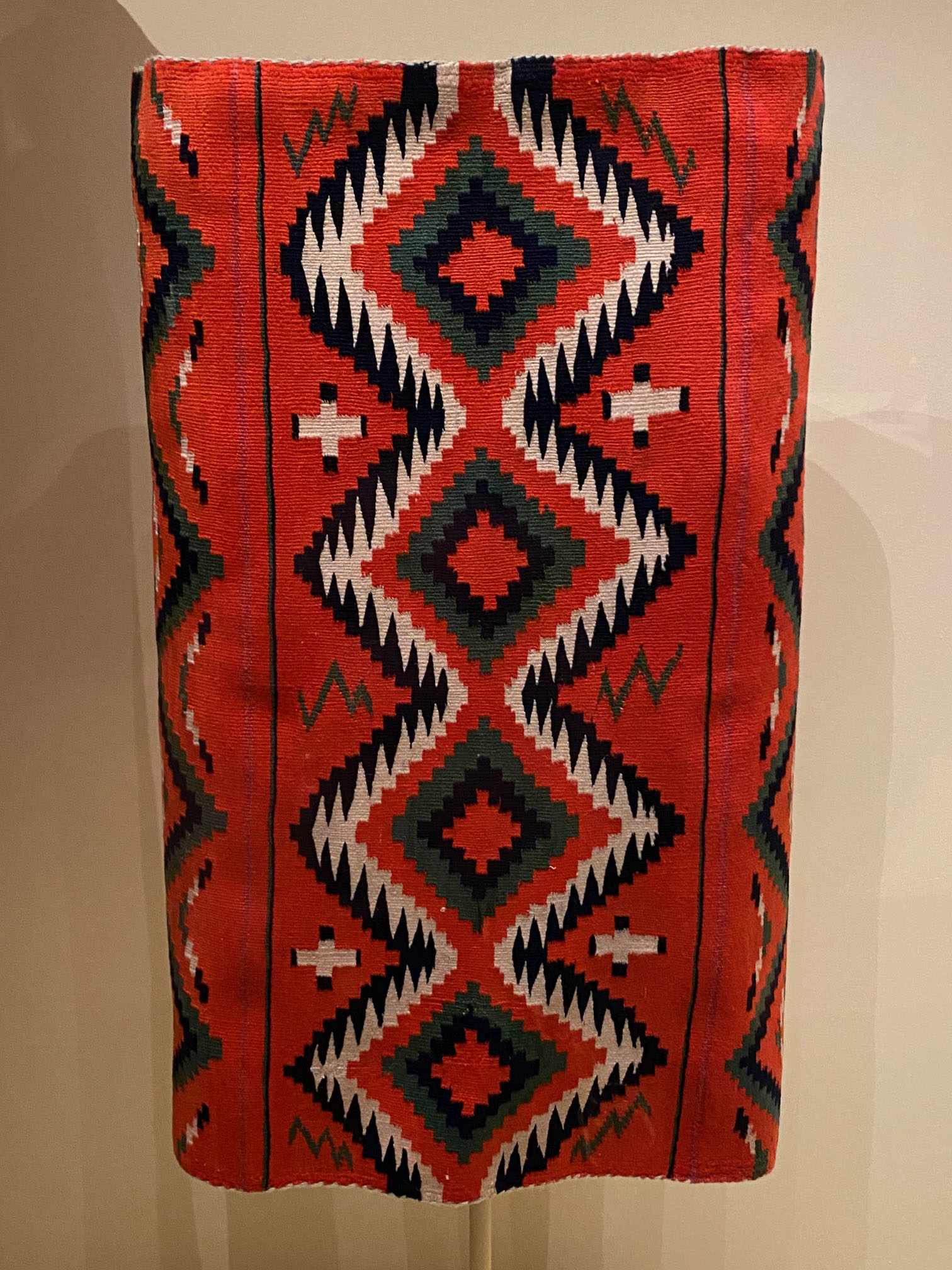
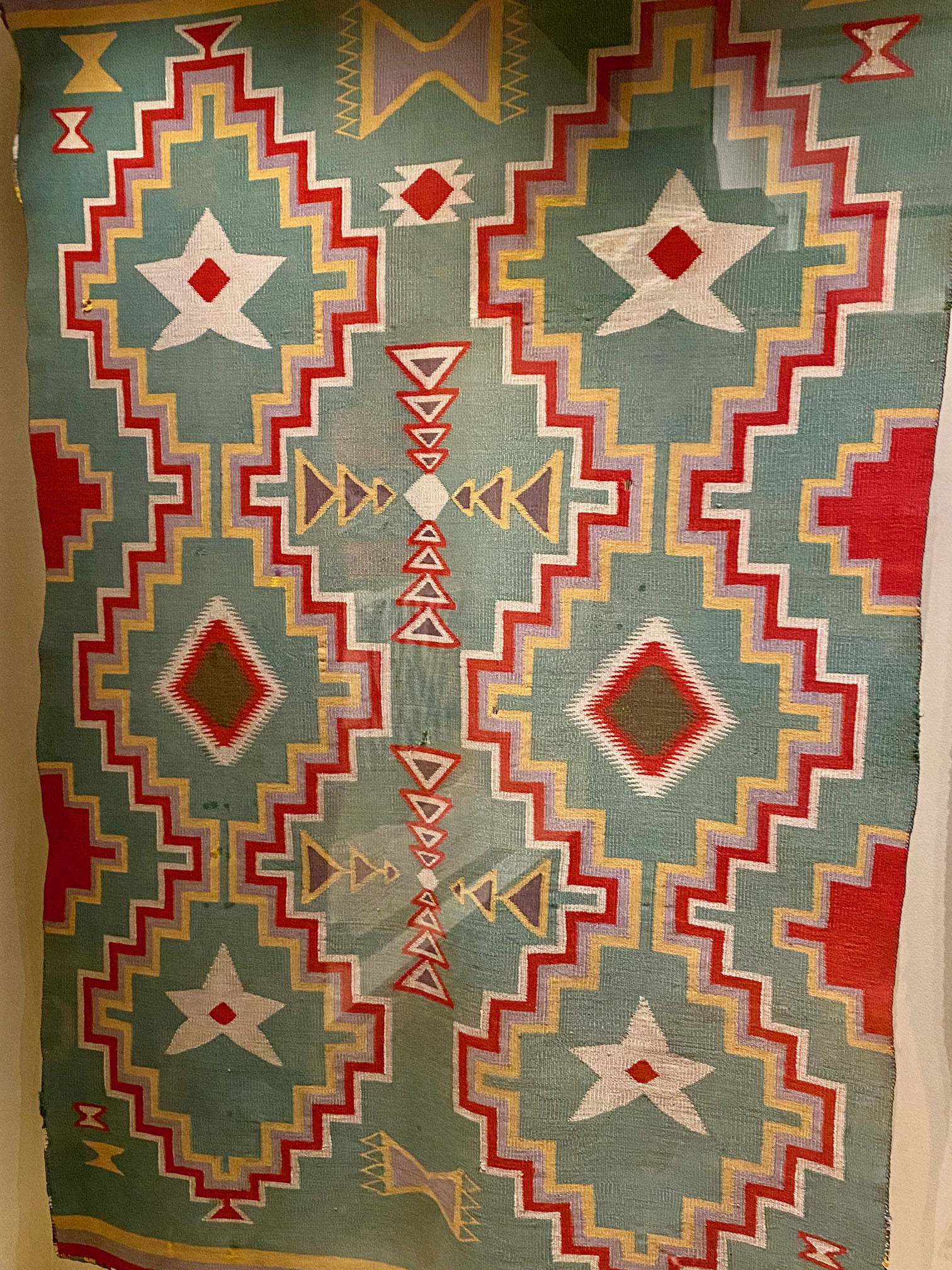
Horizons: Weaving Between the Lines with Diné Textiles, on view through February 2, 2025, presents historic and contemporary weavings alongside epic photographs of Navajo Nation landscapes to show the connections textile artist have to ancestors, their mentors, the community, the land, and their materials.

Historic Diné weaving with photomural by co-curator Rapheal Begay. Courtesy: the artist.

Appropriately, the story told by over 30 historic textiles is presented in MIAC’s Masterpieces gallery.

The entrance presents a dazzling display – a pictorial blanket woven in the 1890s set against a photomural of co-curator Rapheal Begay’s family sheep corral. It’s a visual testament to the importance of wool, life, and the 27,000 square miles of Navajo Nation. 

The blanket’s creator (unknown today) was an astute observer of the life on the land and translated it all into warp and weft – cow punchers, cattle, boots, birds, and new-fangled railroad cars, that only arrived in Navajo Country around the 1880s. Click here to see the detail.

1885 pictorial blanket created with Germantown wool yarn introduced in the Southwest by the railroads; photomural Navel (Hunter’s Point, AZ) by co-curator Rapheal Begay. Photo courtesy of artist.

Nothing was newer than the railroad, at the time this artist depicted it – a steam-fed invention from the East that would change western life forever, but that also brought a wide array of colorful yarn that could be mixed and matched with vegetal dyes to create new Native designs.

The intertwined history of Diné (“The People” in the Navajo language), textile art, and the land is told through quotes and recollections by the exhibition’s Native collaborators. While examining masterful geometric weaving techniques in 19th-century works, visitors are provided with an historic context – the types of art materials introduced to captives imprisoned at Bosque Redondo after the Long Walk, the images that could be interpreted as a longing for the homeland by the incarcerated, and coded spiritual affirmations.

1850-1860 hand-spun wool child’s (or saddle) blanket with Spider Woman crosses; created with natural cocineal, indigo, and chamisa dye
1880-1897 rug made with Germantown wool yarn, cotton string, and raveled yarn; materials used in weaving at Bosque Redondo era, post-Long Walk.

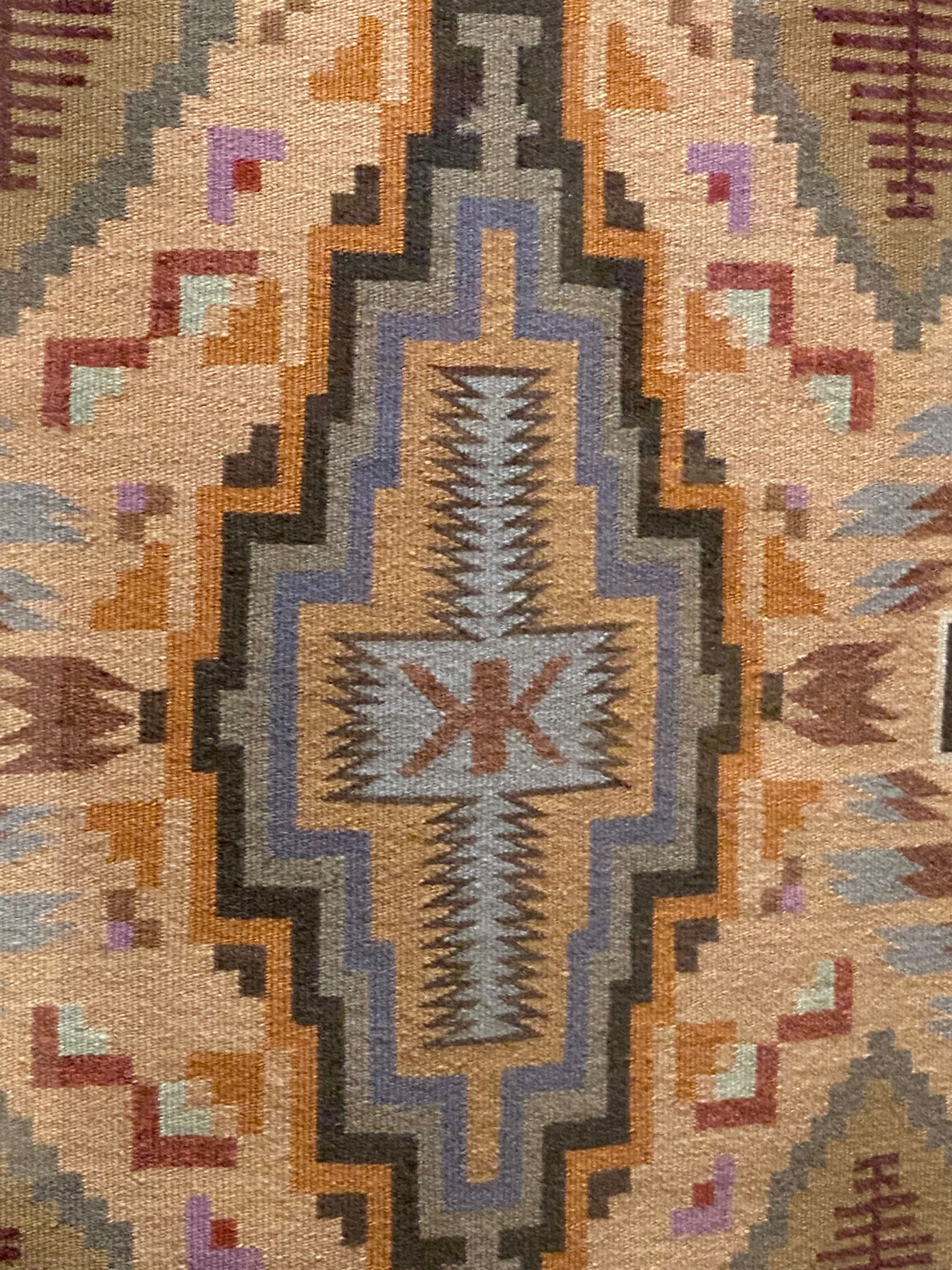
The participants in the exhibition make sure that viewers also experience how the landscape inspires the work of the past and contemporary Native textile artists. Diné fiber artist Tyrrell Tapaha includes her two-panel dress in which incorporates images of the Utah clouds and mountains that bring her spiritual peace. The masterful wall hanging by Lillie Joe uses the palette of the desert to create a mesmerizing geometric dazzler.

2020 two-panel dress by fiber artist Tyrrell Tapaha with images from Utah landscapes that inspired her; woven from churro, silk, mohair, and marino wool..
Close up of highly detailed 1980s Burntwater wall hanging by Lillie Joe, reflecting colors and patterns of the Navajo Nation landscape.

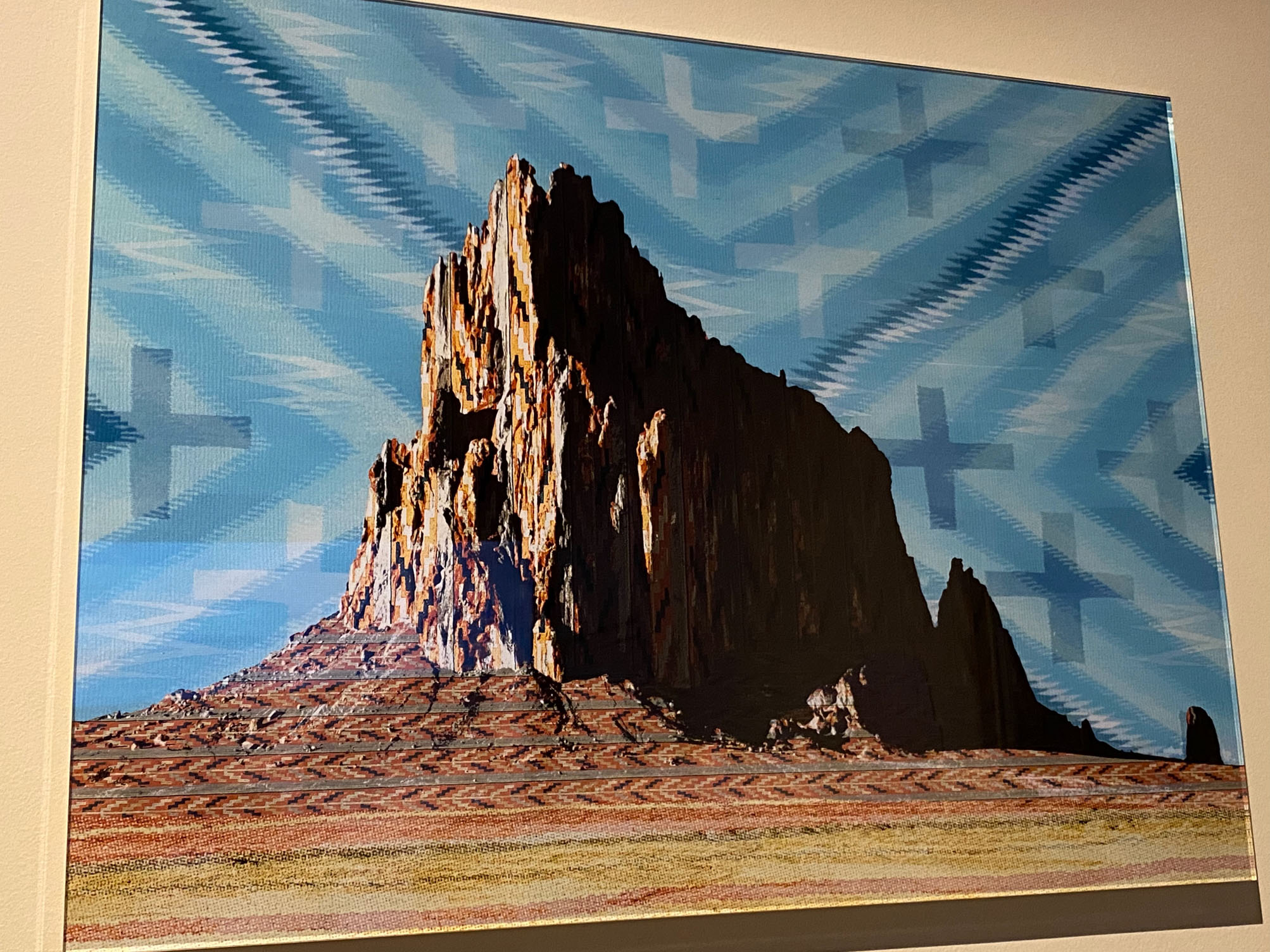
The curators feature both the photography of co-curator Rapheal Begay and Darby Raymond-Overstreet to allow gallery visitors to experience the awesome beauty of the homeland that inspires artists. Digital artist Raymond-Overstreet overlays geometric textile patterns across his luscious, beautiful landscapes.

2018 digital print Woven Landscape, Shiprock by Darby Raymond-Overstreet (Diné), overlaying digital landscapes with traditional weavings. Courtesy: the artist

Take a look at some of our favorite works in our Flickr album. And enjoy these historic and contemporary dazzlers.

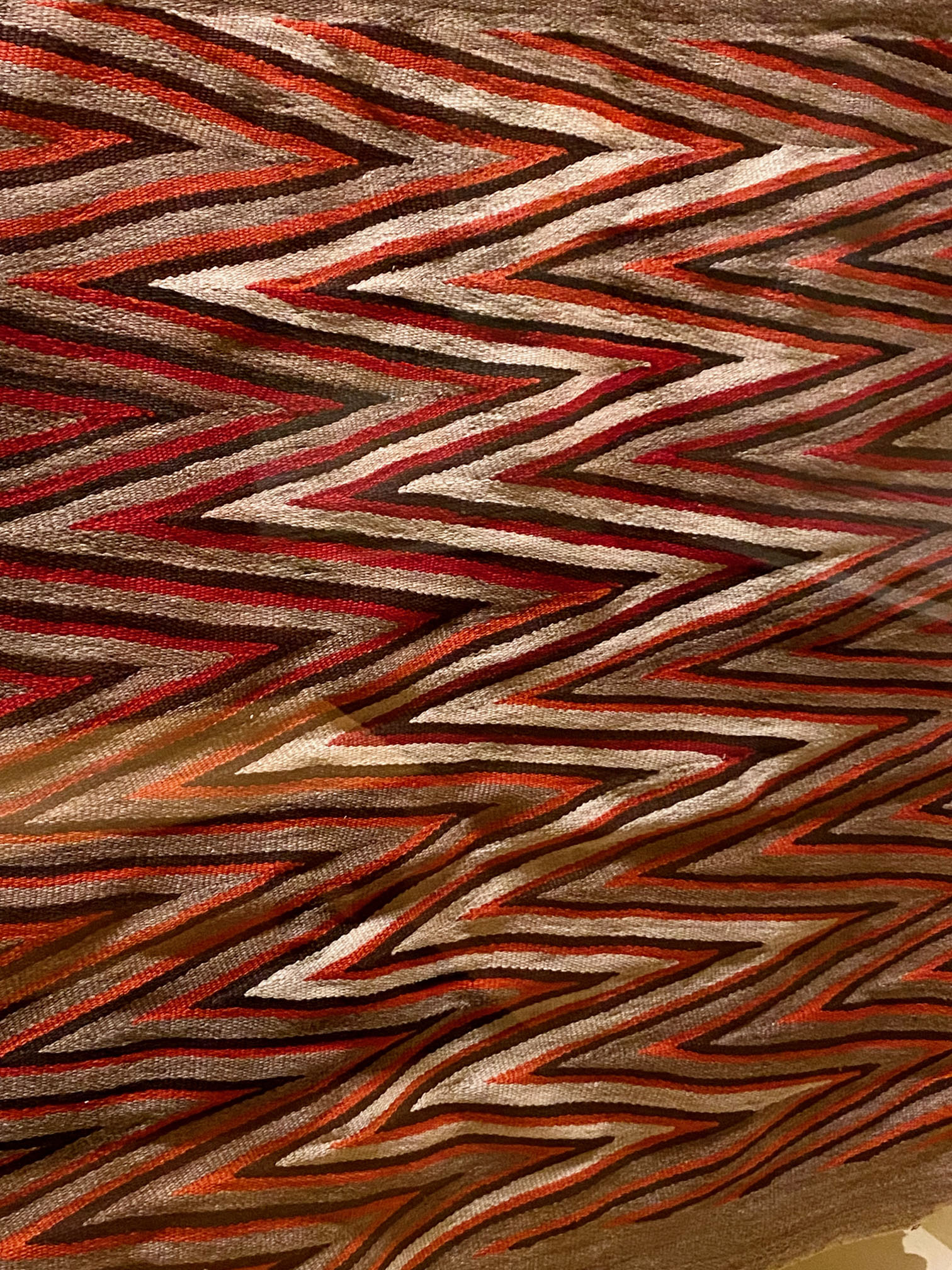
Detail of 1895 wedge weave blanket made with commercial cotton string and Germantown wool – a dramatic 19th c. weaving innovation. Courtesy: International Museum of Folk Art.
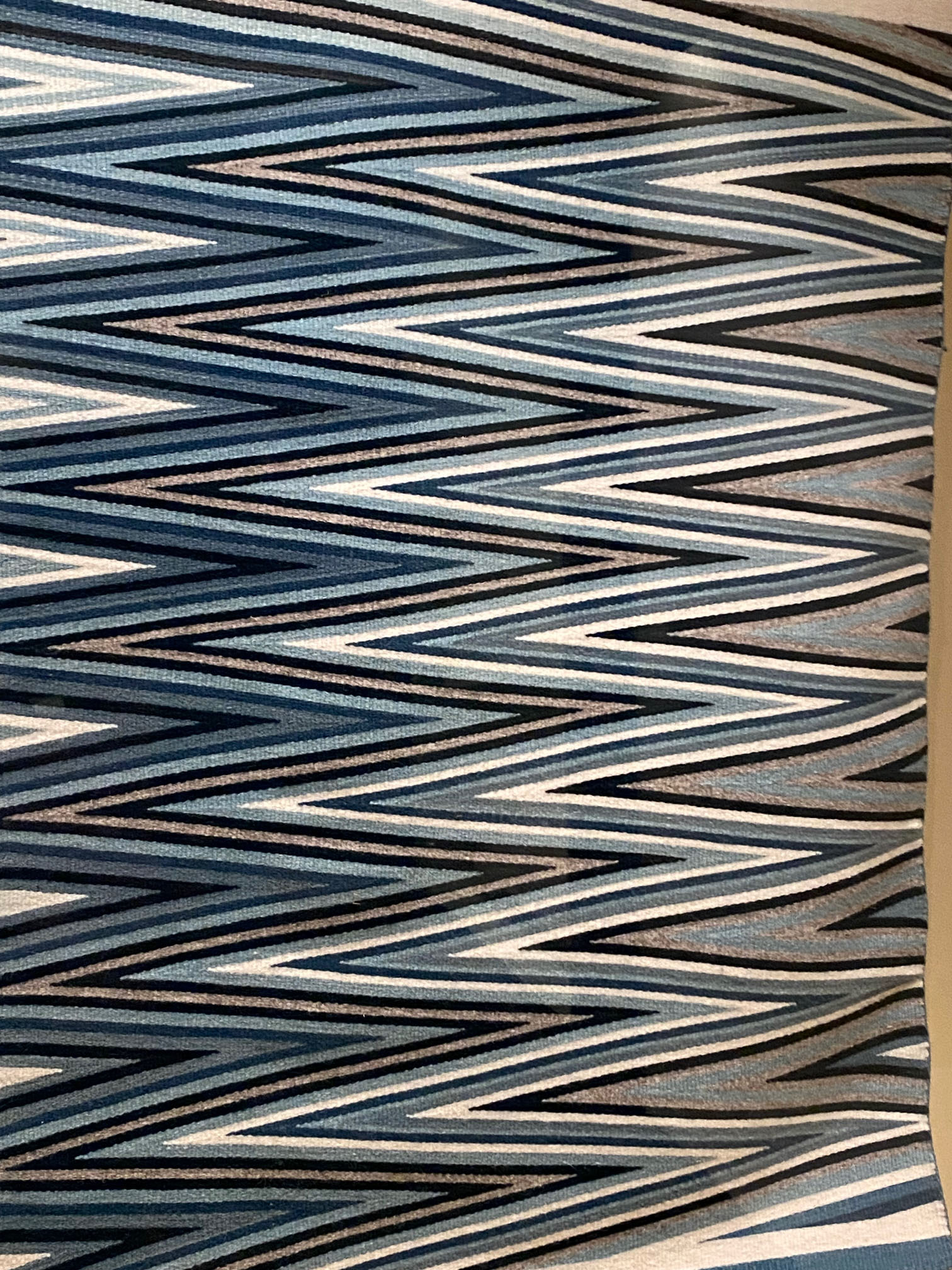
2022 wedge weave by Kevin Aspaas; white and grey wool yarn with indigo dye. Courtesy: private collection.
Detail of dynamic Diné 1960 wool tapestry weave. Courtesy: International Museum of Folk Art