Man Ray at The Met

After Man Ray saw European Cubism at the 1913 Armory Show, he knew what he had to do in his own art – abandon all of the constraints of contemporary American art and dive headfirst into Dada and push the boundaries – go rogue.  

Some say that Man Ray became America’s most important 20th century artist. Marcel Duchamp – who became one of Man Ray’s best friends and collaborators – would certainly agree. All the evidence for Man Ray’s status is right here in the Met’s survey of Man Ray’s formative years (1914-1929), Man Ray: When Objects Dream on view through February 1, 2026.

Man Ray’s 1930 Self-Portrait with Camera – a solarized portrait. Courtesy: The Jewish Museum.

Walking in, you look through the exhibition’s architectural aperture to an endless array of Man Ray’s famed rayographs – dreamy abstract black-and-white cameraless images – lining parallel black gallery walls. Nearly sixty have been gathered for this occasion from international public and private collections.

See our favorite works in the exhibition in our Flickr album.
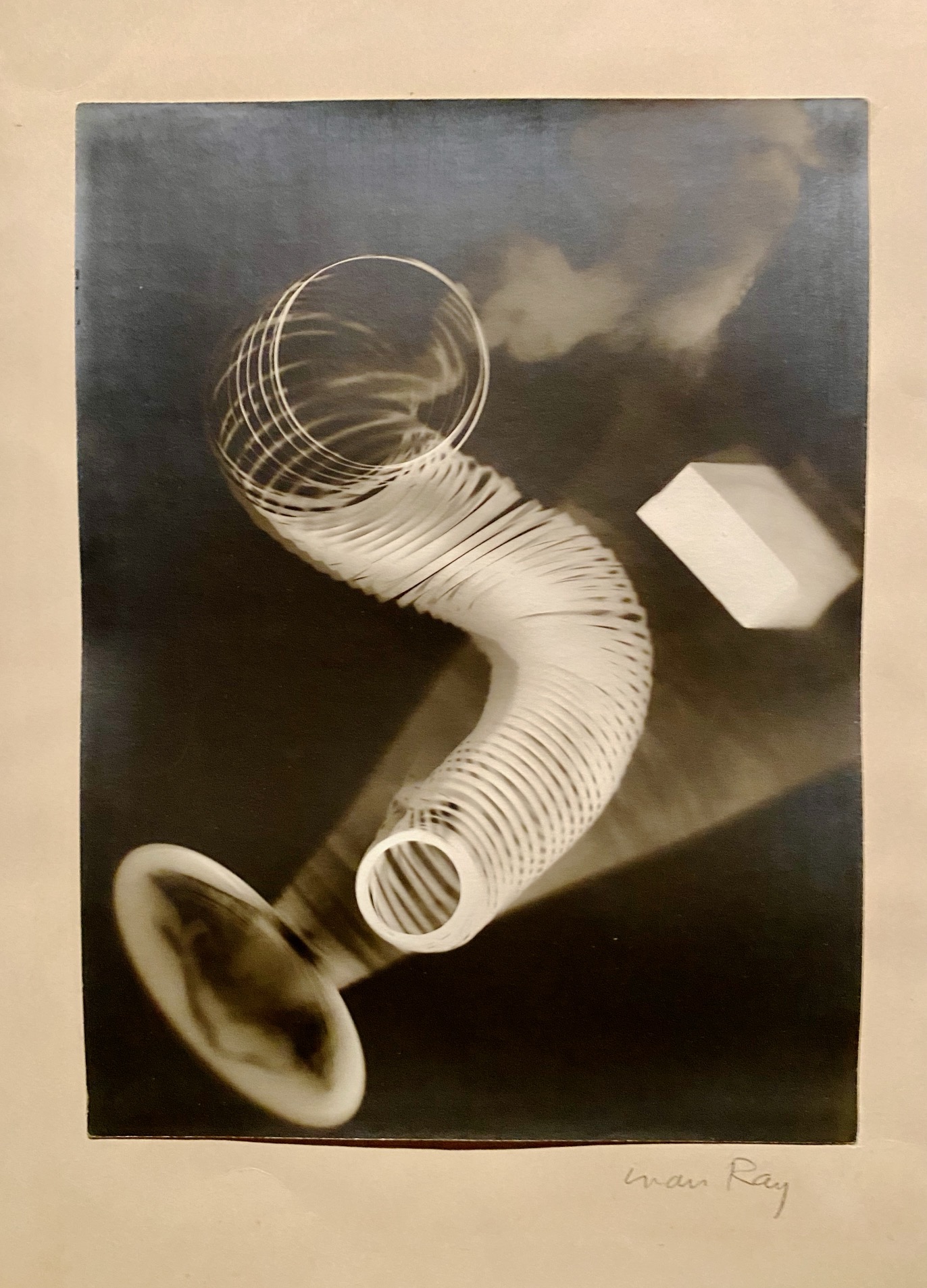
Man Ray’s 1922 Rayograph published in Les Fuilles Libres (Loose Pages) magazine – a coiled wire puffing smoke emerges from a glass.  Courtesy: private collection.
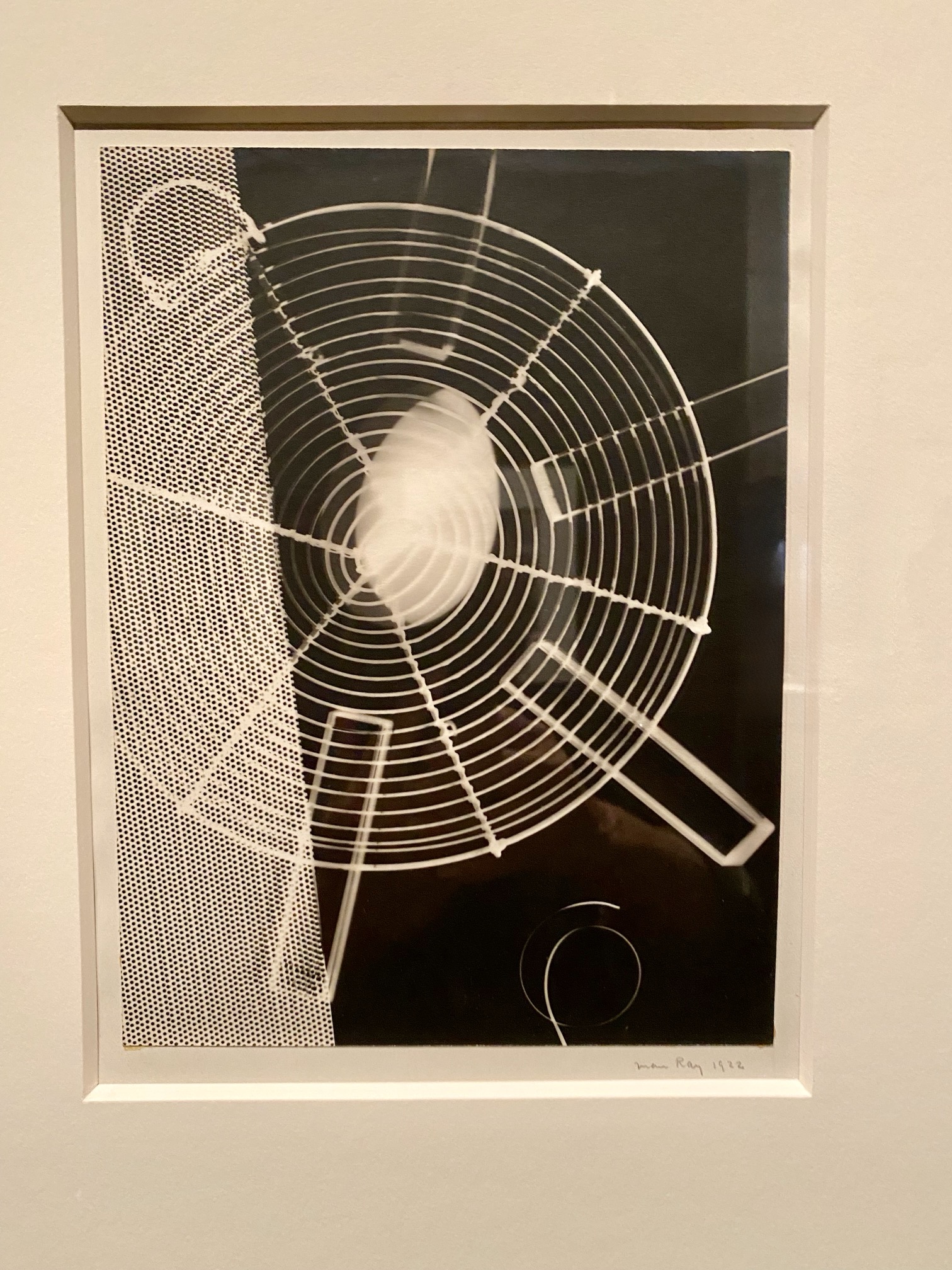
Man Ray’s 1922 gelatin silver print Rayograph incorporating an everyday wire rack for dramatic effect.  Courtesy: Yale University Art Gallery.

Although the rayographs form the core of this show, you also see the oil paintings, airbrush drawings, sculptures, movies, and game boards – works that are rarely seen, but illustrate why Man Ray rapidly took center-stage in the modern avant-garde community.

While working as a commercial artist and photographer, he used his free time to make unconventional, revolutionary works that banished representation. In 1916, he wrote a “new art” treatise on how to condense motion and dynamic shapes into two dimensions.
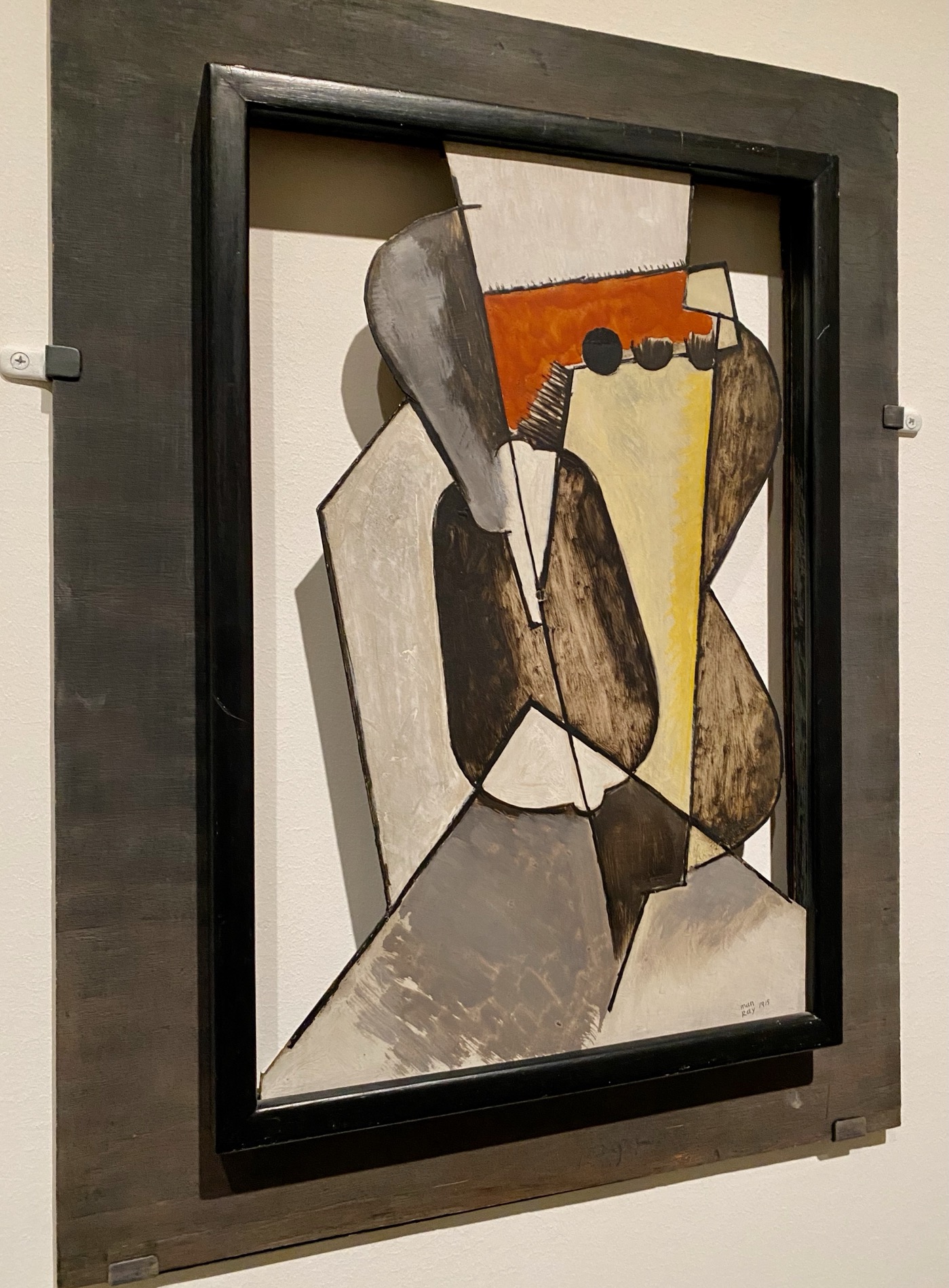
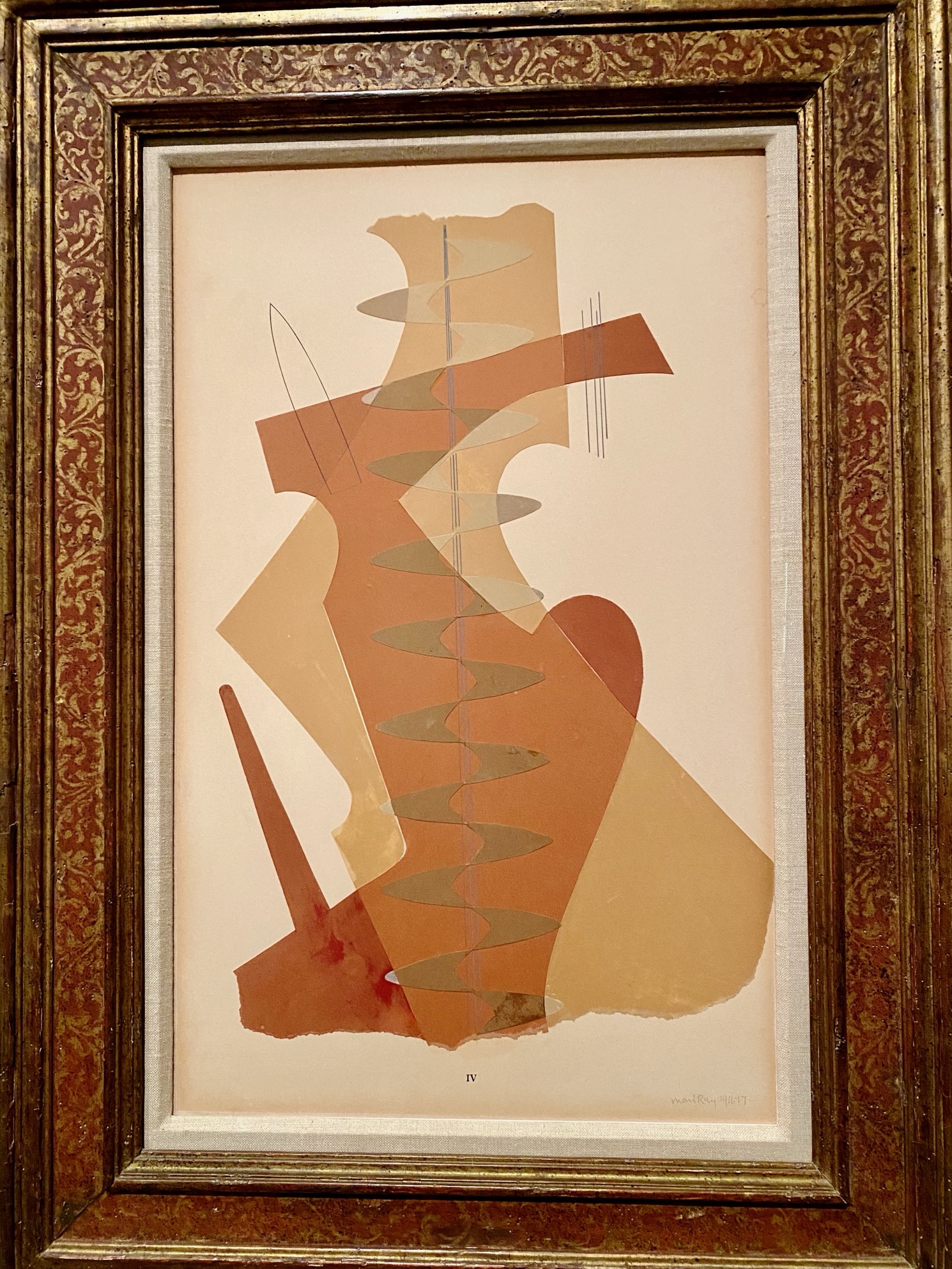
Man Ray’s 1915 oil on board Cut-Out from his first solo show in New York in 1919 – representing three dimensions within two.
Man Ray’s 1916-1917 collage and pen-ink drawing The Meeting. Courtesy: The Whitney Museum of American Art.

By 1917, he was making large-scale works, portraying a Rope Dancer mid-performance with stencils, cut-up pieces of colored paper, and big colored spaces representing her shadows.
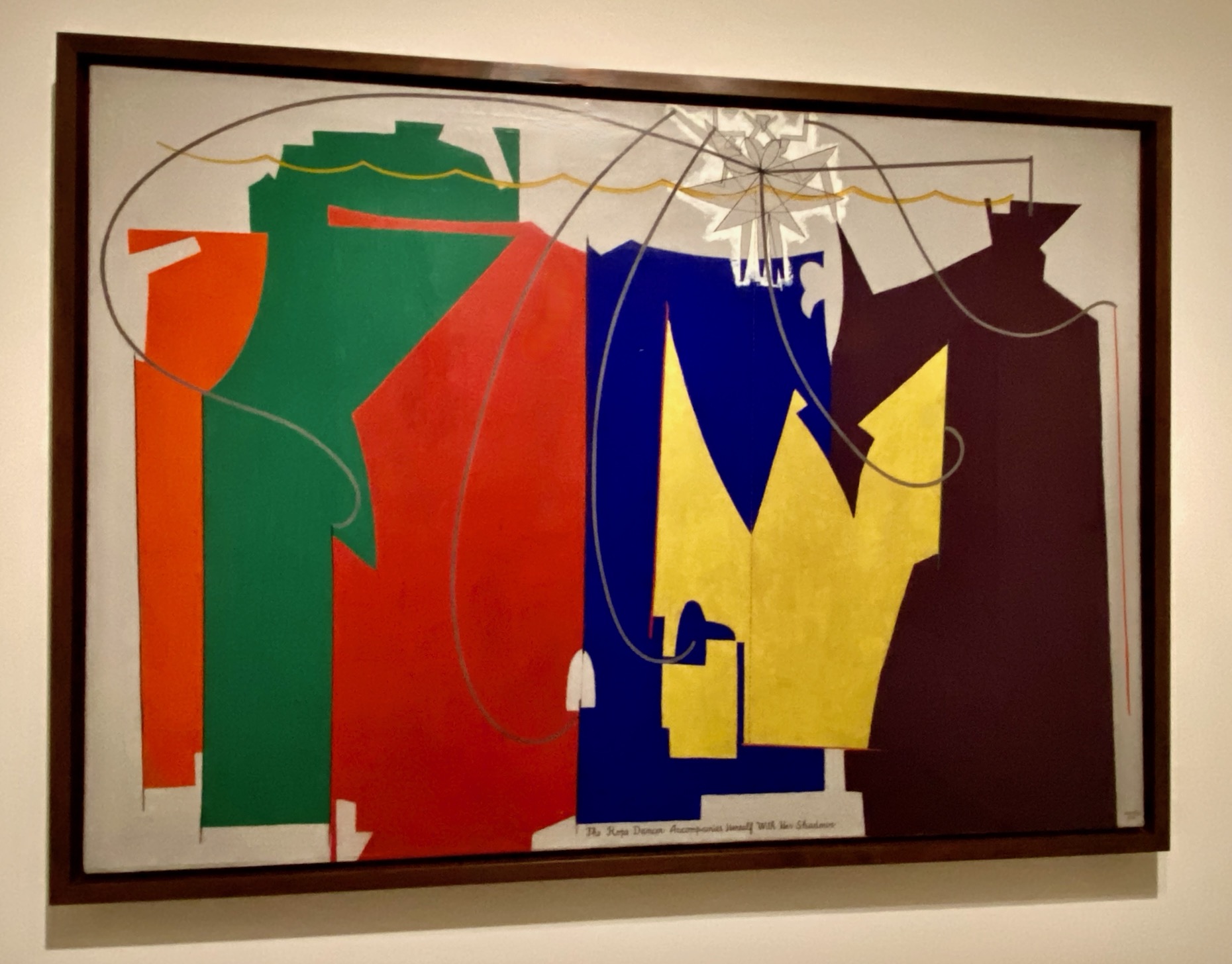
Man Ray’s 1916 oil painting The Rope Dancer Accompanies Herself with Her Shadows planned with cut paper. Courtesy: MoMA

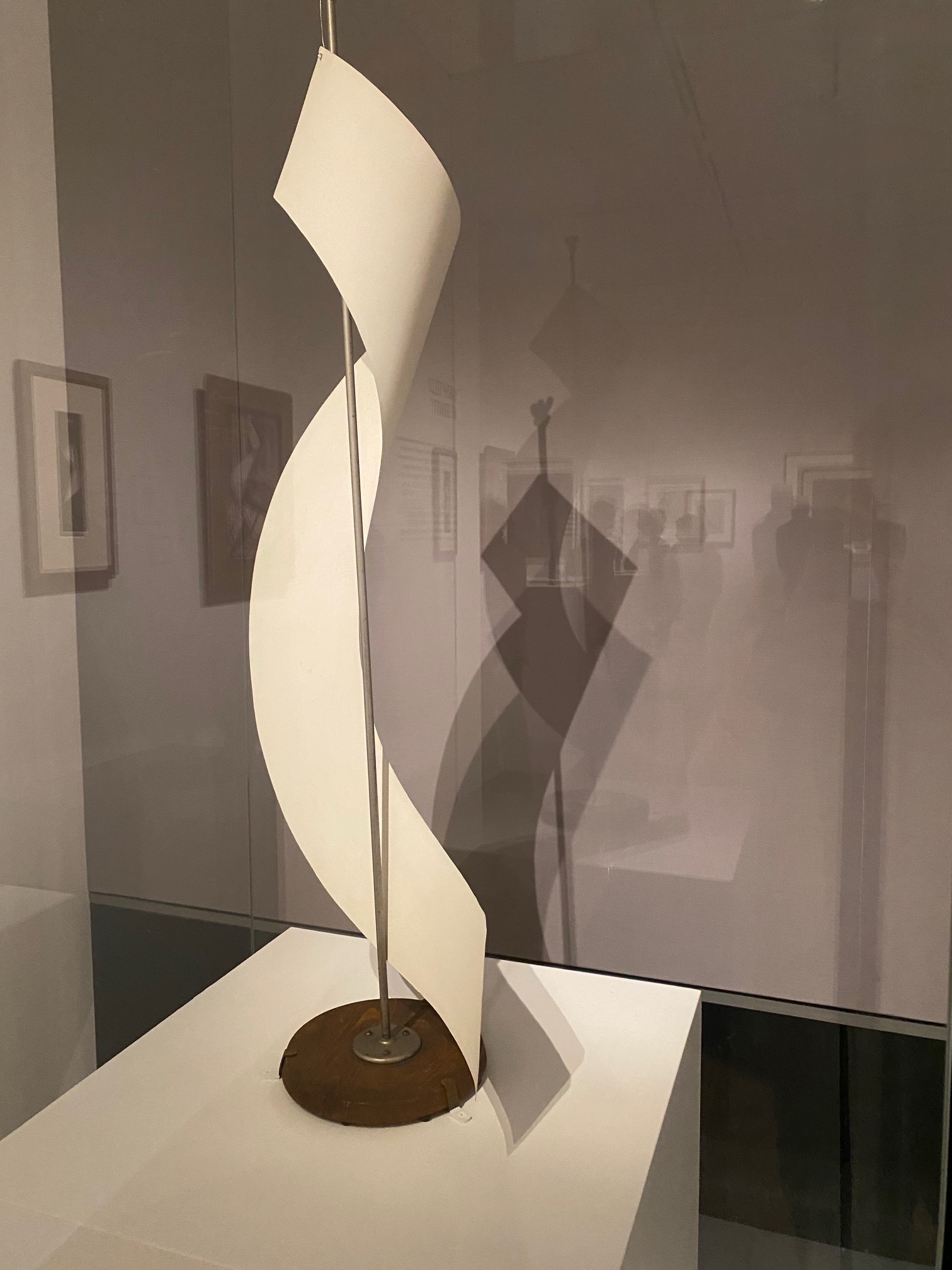
His sculptures were made in true anarchist-Dada fashion – from junk found on the street or in his apartment-building trash can. In one gallery, a precarious grouping of dramatically lit wooden hangars is installed overhead like a chandelier. The cast shadows look pretty good, too.  His spiraling Lampshade, a sensuously curved metal sculpture is nearby, alongside paintings and avant-garde portraits where he repurposed the great shape.
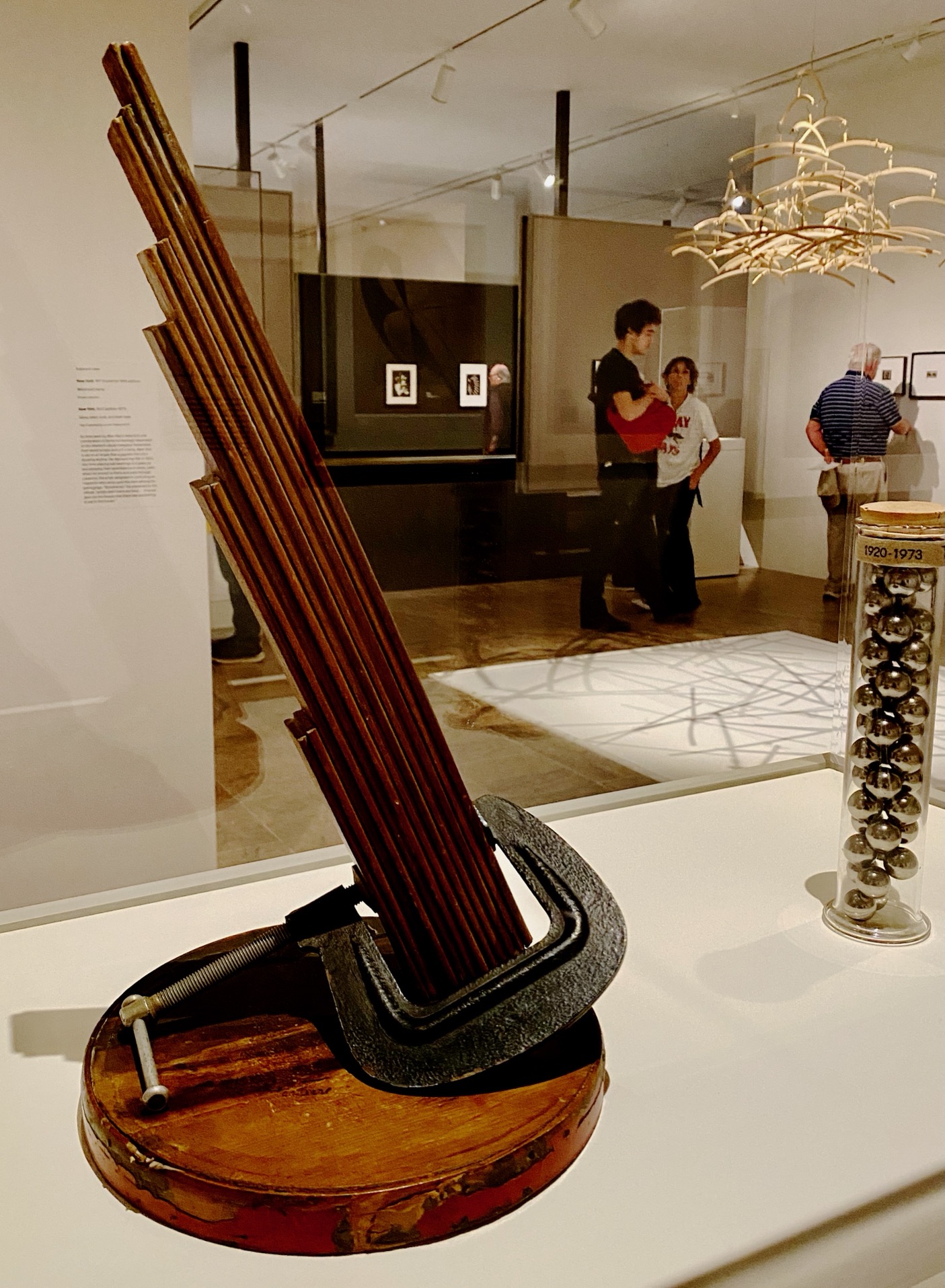
Man Ray’s 1917 wood and clamp sculpture New York like a tilted skyscraper; at right, 1920 sculpture New York – a mysterious stack of ball bearings in a glass container. Courtesy: private collection; Tate.
Man Ray’s 1921 Lampshade – a dynamic painted tin and metal sculpture; inspired by a paper lampshade found in the trash a year earlier. Courtesy: Yale University Art Gallery.

He even made game boards and chess sets to symbolize his philosophy about the best way to make art – spur-of-the-moment imagination, abstract planning, clear intention, and an element of surprise.
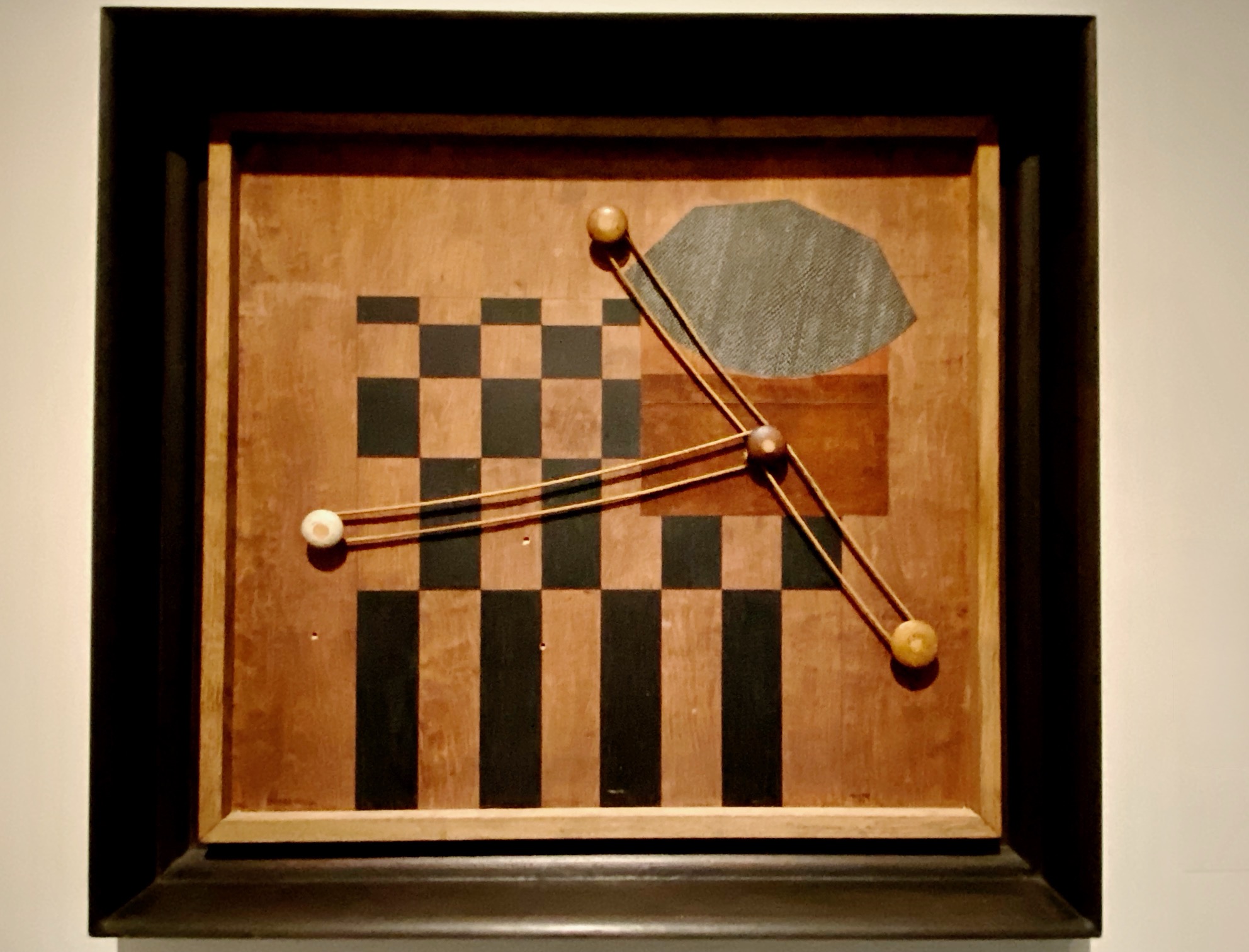
The philosophy of the chessboard: Man Ray’s 1917 Boardwalk – an assemblage of oil, furniture knobs, and yarn on wood. Courtesy: Staatsgalerie Stuttgart.

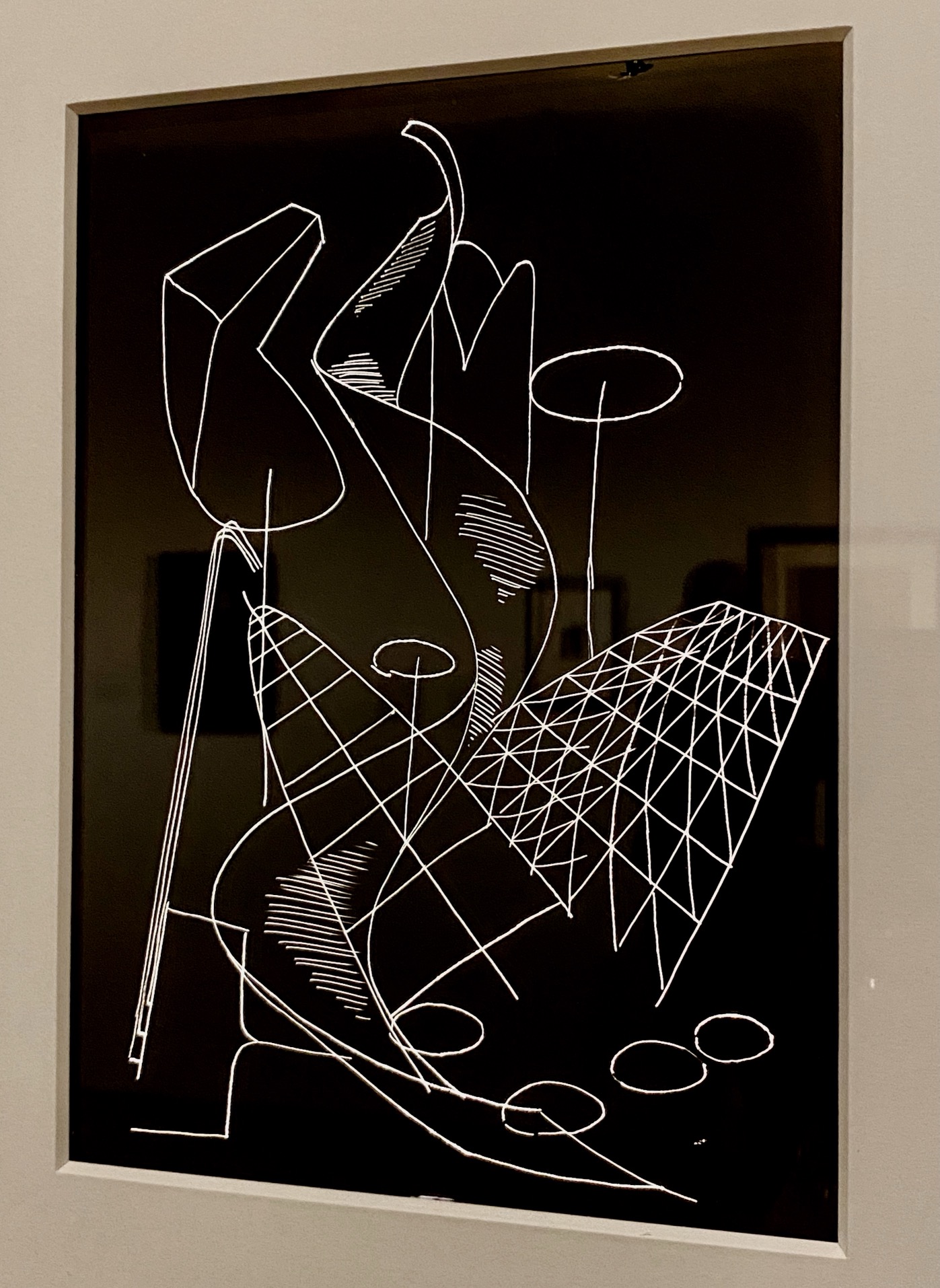
For Man Ray’s fine-art photographs, he preferred using inanimate, everyday objects to humans. And as he progressed as an artist, he didn’t use a camera.  In 1917, he started making glass-plate prints (cliché-verre) with sinuous, patterned line drawings. Soon, he was innovating with Aerographs – abstract pencil-and-airbrush drawings inspired by new technology (“drawing in air”).
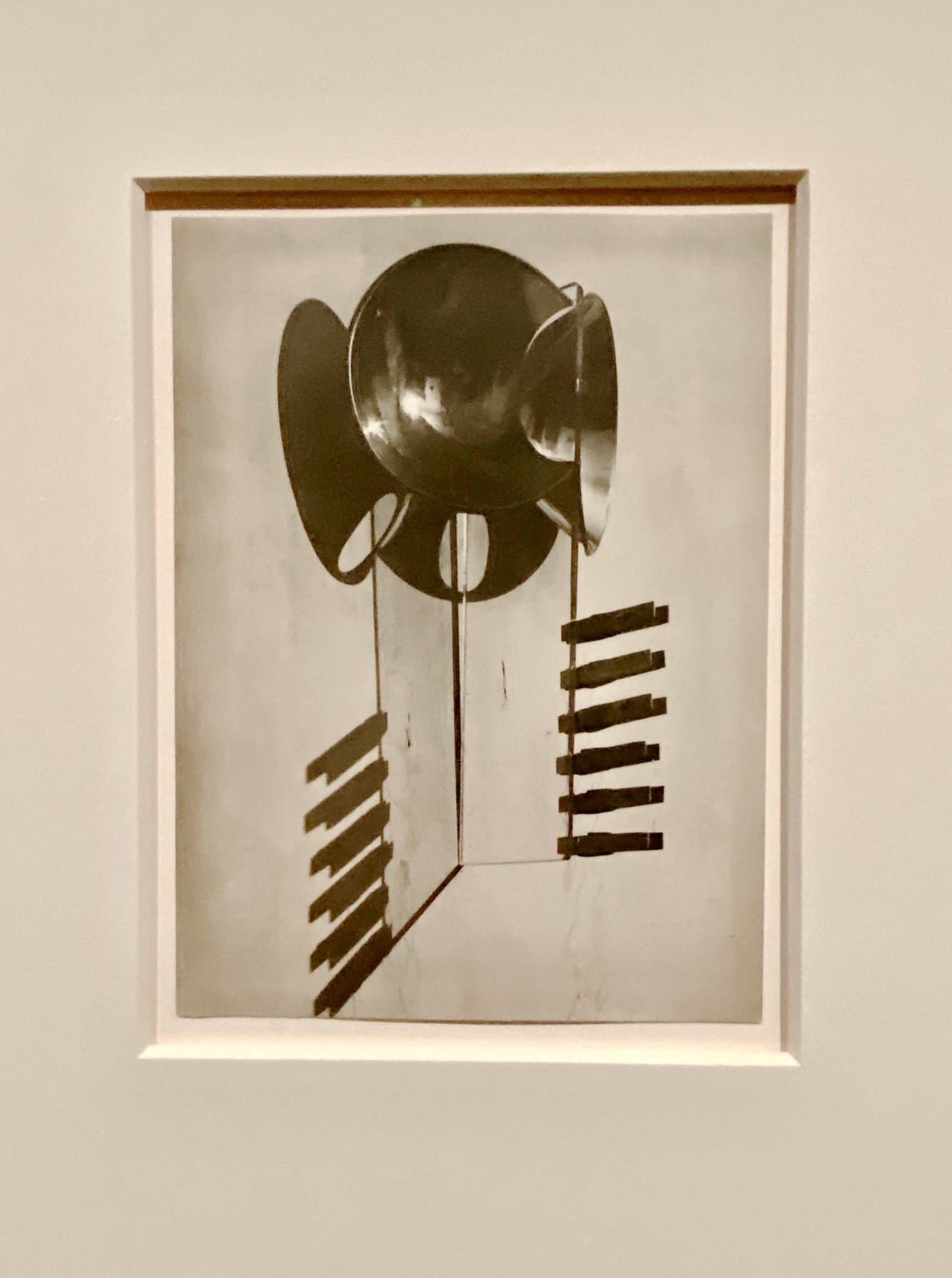
Man Ray’s 1918-1920 gelatin silver print “Integration of Shadows” – an assemblage of clothespins, glass, and reflectors; printed after 1935. Courtesy: private collection.
Before the rayograph: Man Ray’s 1917 untitled glass-plate negative (cliché-verre). Courtesy: Centre Pompidou, Paris

Man Ray primarily spent his time in Paris during the 1920s. Once he began making rayographs in his studio, he was content playing with unusual juxtapositions of everyday objects, studio lights, and various types of photographic exposures. It’s reported that in 1922, he created over 100 rayographs and abandoned painting altogether. (But he took it up again the next year!)

The curators make a point of juxtaposing several rarely-seen paintings with specific rayograms from the same period to make a point – the artist might have returned to experimental paintings as a compliment to some of the shapes and feelings he was exploring through photography.
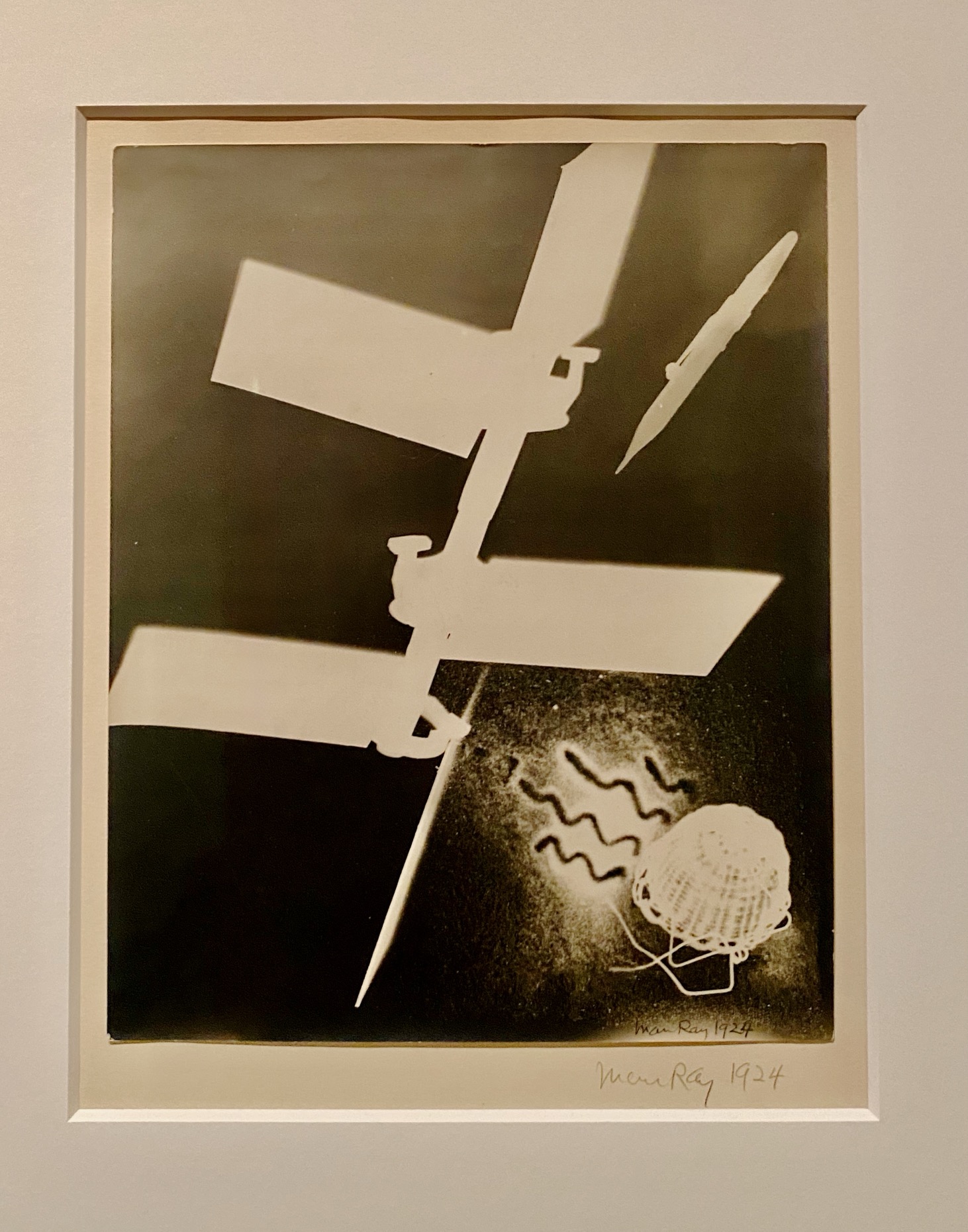
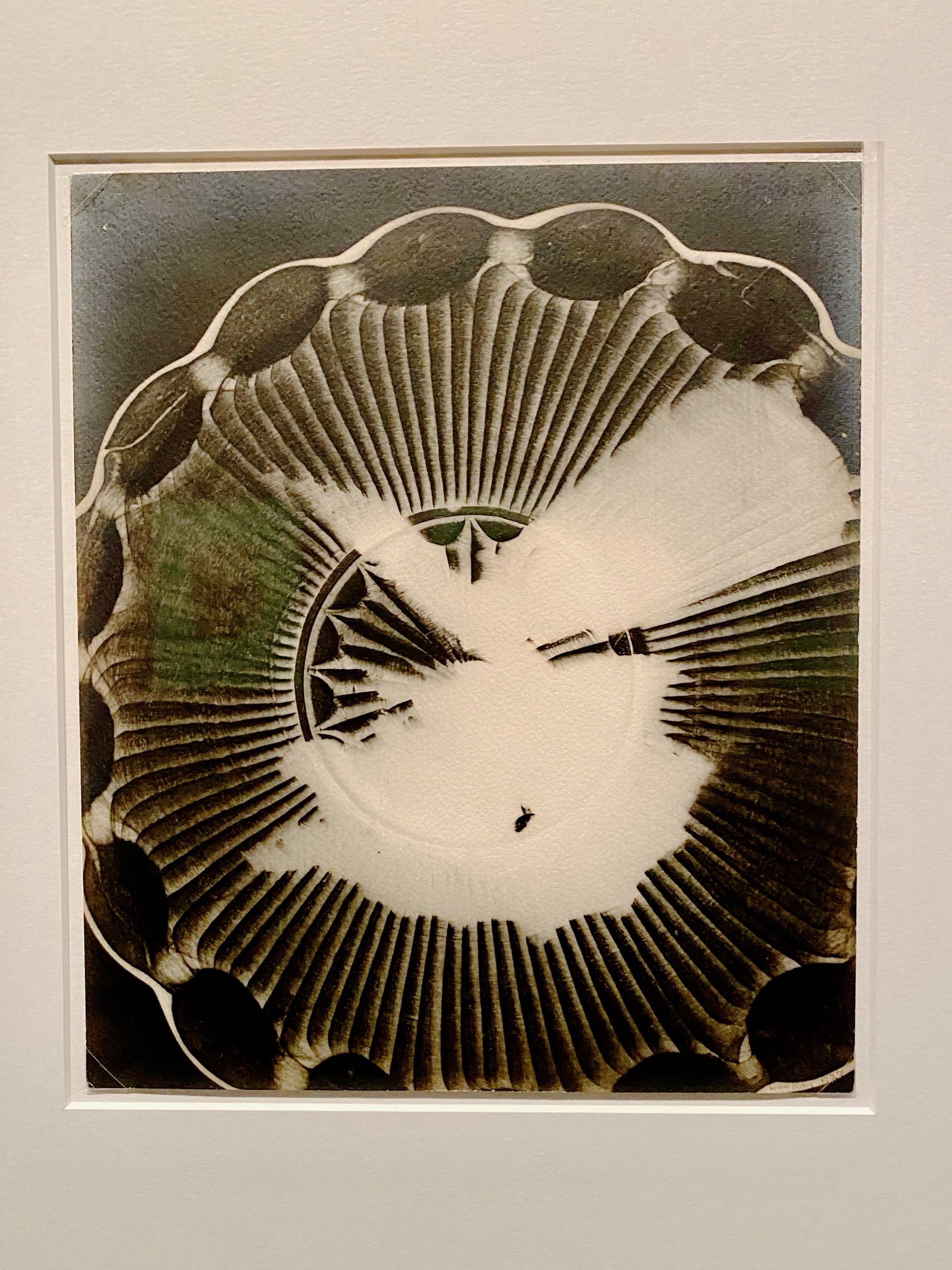
Man Ray’s 1924 gelatin silver print “Rayograph.”  Courtesy: Whitney Museum of American Art.
Man Ray’s 1927 gelatin silver print Rayograph – an experimental exploration of printing his images on textured paper.  Courtesy: private collection.

His unusual, dream-like images were eagerly applauded by the inner circle of European poets and artists who would soon be the official founders of Surrealism. They were intrigued by dreams, psychoanalysis, inner worlds, and startling juxtapositions. In fact, the title of the Met’s show comes a phrase written by Man Ray’s fan, poet Tristan Tzara – “when objects dream” refers to Man Ray’s mesmerizing work.

Man Ray’s ability to make magic with the camera – distorted images, adding surprising symbols, and creating tableaux of otherworldly floating objects – only added to the  enthusiasm for his work.
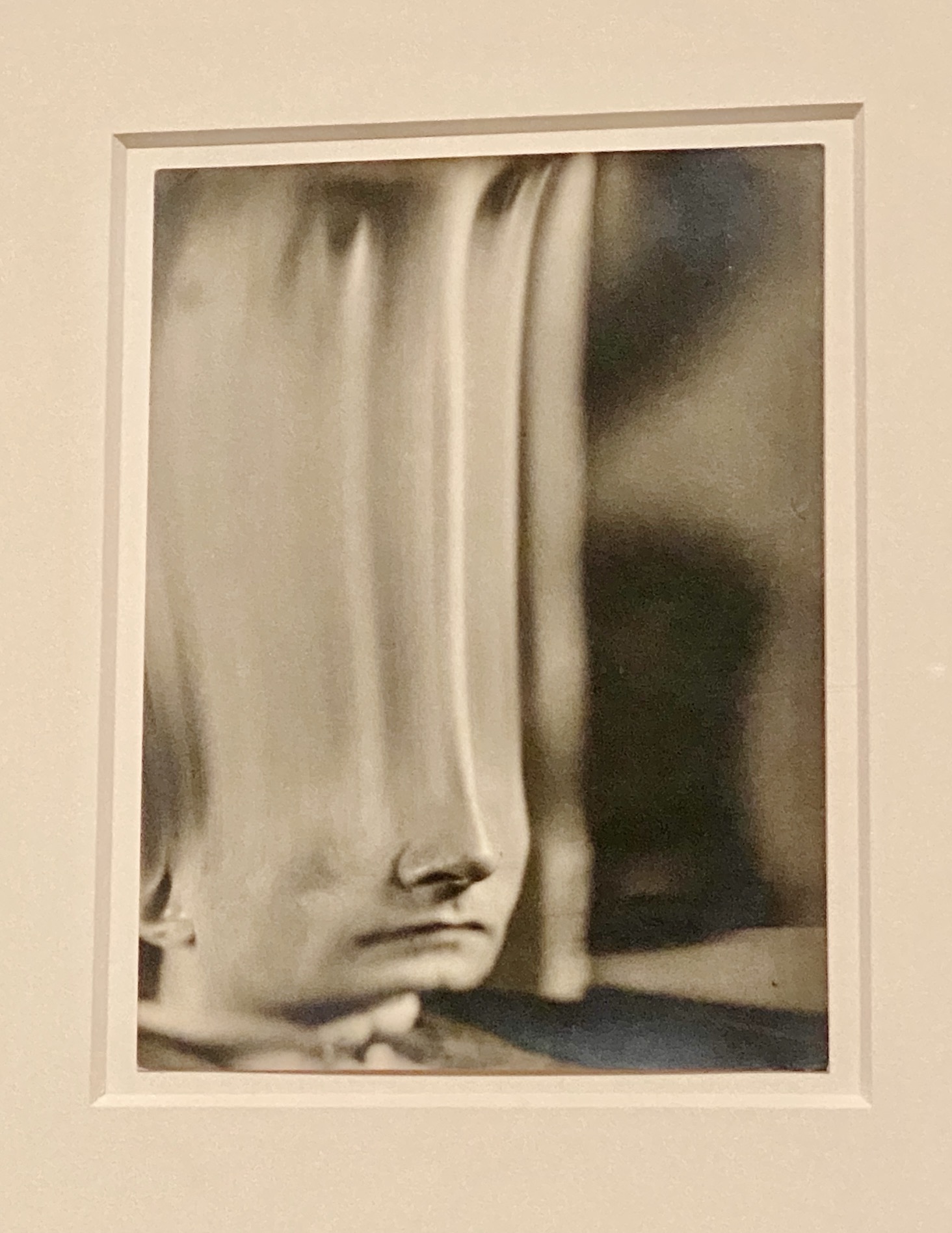
Man Ray’s 1925-1928 gelatin silver print Marcel Duchamp. Courtesy: private collection.
Man Ray’s 1924 gelatin silver print Le Violon d’Ingres featuring performer Kiki de Montparnasse – published in the proto-Surrealist journal Littérature.

The exhibition concludes with Man Ray’s beautiful solarized prints (a technique co-invented with model/photographer Lee Miller), symbolic paintings, and photographs that have become icons of Surrealism.

Hear the curators talk about the exhibition as they walk through this beautiful, inspiring show:

Take a look through all of the artwork in the exhibition here on the Met’s website. For more on Man Ray’s life and collaborations, listen to a longer Met telecast about his 1920s work with Lee Miller, Kiki de Montparnasse, and Berenice Abbott here.
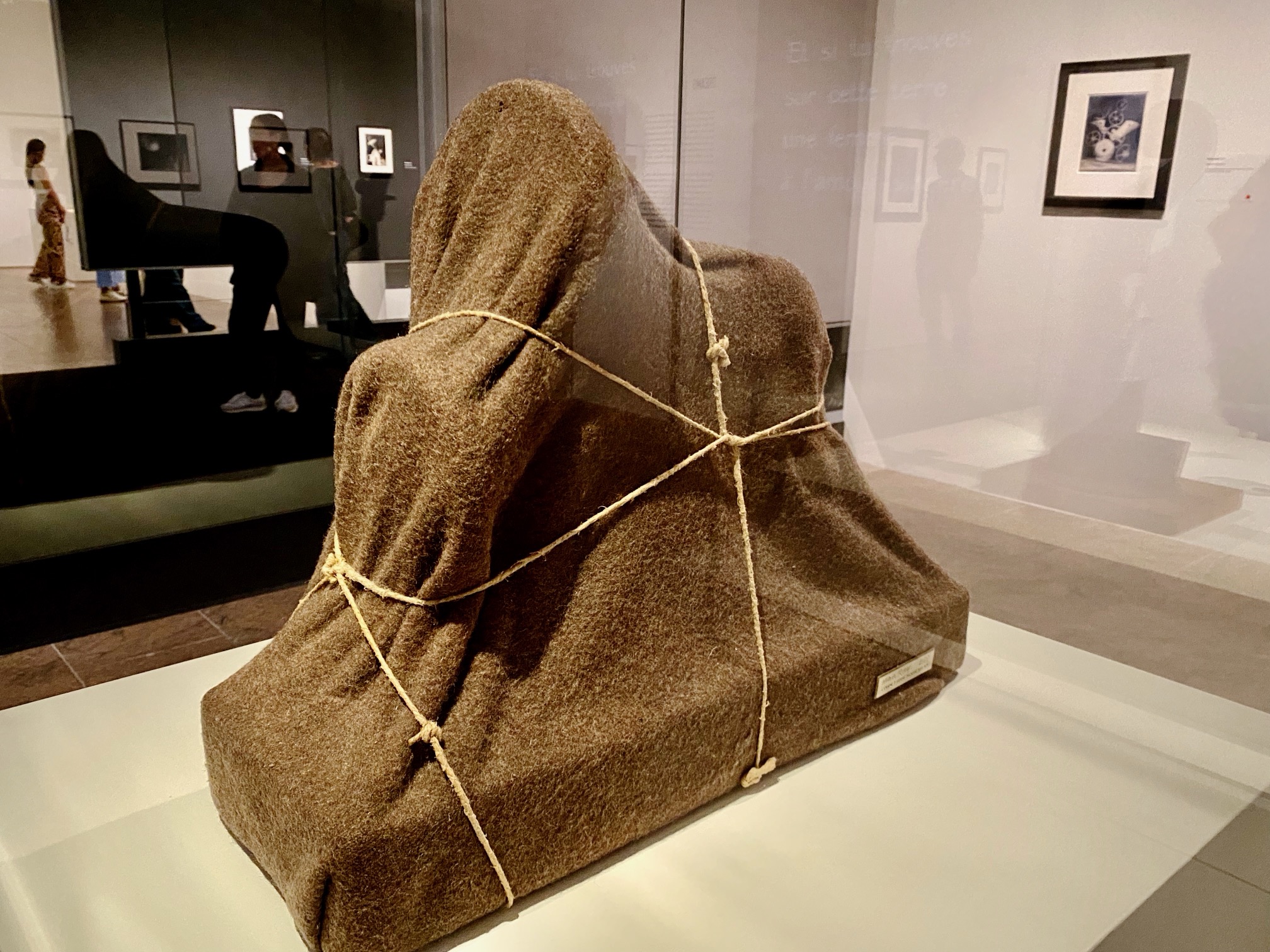
Man Ray’s 1920 sculpture L’enigme d’Isidore Ducasse (The Enigma of Isidore Ducasse) a mysterious wood, iron, wool, and rope assemblage to stir the subconscious (1971 edition). Courtesy: private collection.

Superfine Tailoring Illuminates History of Black Style

Fancy neck ruffles, gilt-framed portraits, sleek suits, flowing trousers, and bold plaids and stripes pop from every corner of the Costume Institute exhibition Superfine: Tailoring Black Style, on display at the Metropolitan Museum of Art through October 27.

It’s a 12-chapter journey through Black men’s style that emphasizes how superb tailoring, style, and fashionable precision has been used successfully by newly emancipated slaves, Revolutionary political leaders, activists, sports and pop stars, and high-style travelers from the 17th-century through today.

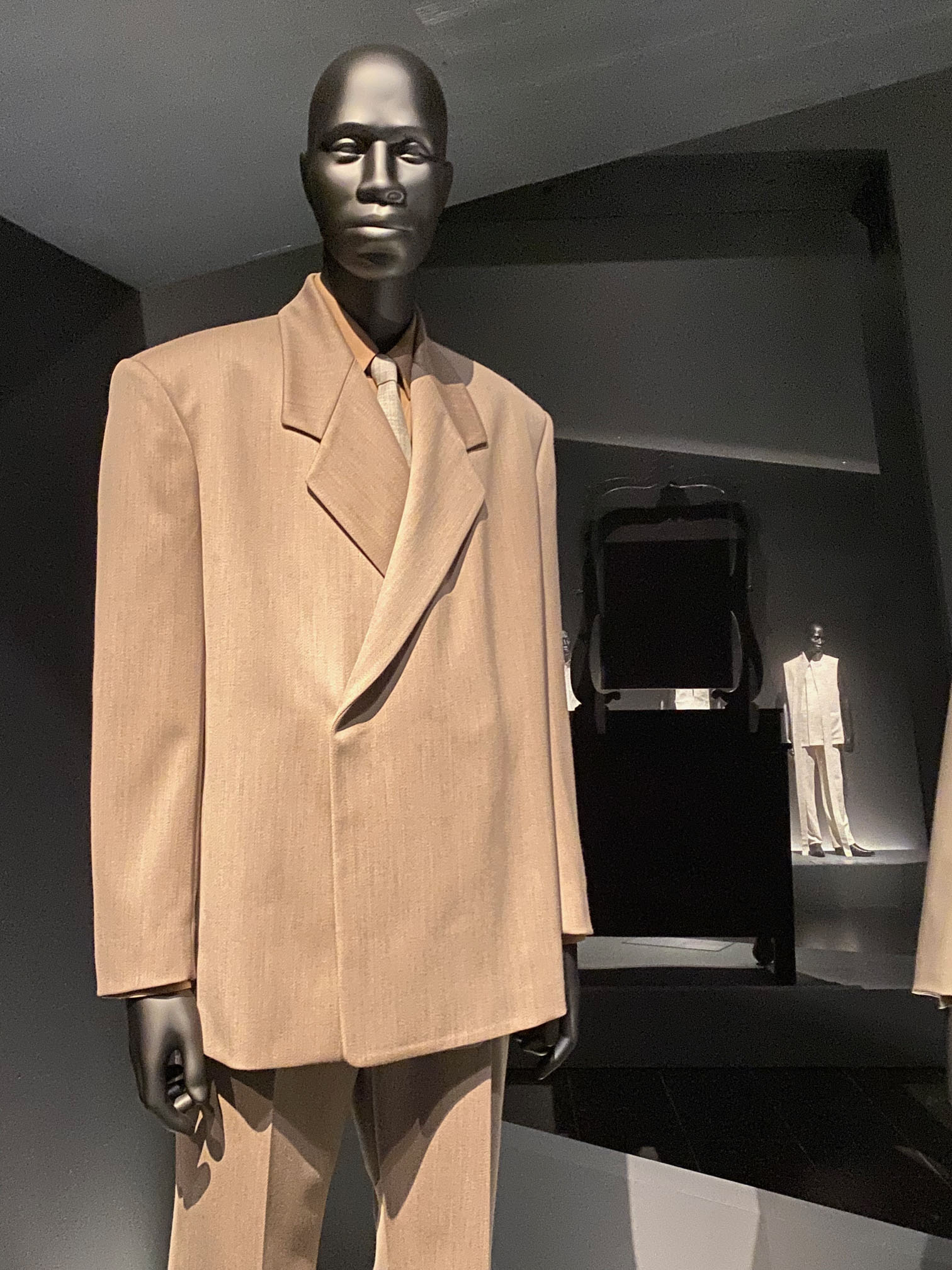
So cool: 2025 wool gabardine ensemble by Jerry Lorenzo for Fear of God – a modern throwback to Fifties’ tailoring. Courtesy: Fear of God

Each section provides a deep dive into history to explain how Black men (and a few daring women) adapted high-fashion menswear in the 17th and 18th centuries to reinvent themselves as authoritative, free, cosmopolitan high-achievers. Themes include Presence, Distinction, and Cool – based on co-curator Monica L. Miller’s acclaimed 2009 book, Slaves Slaves to Fashion: Black Dandyism and the Styling of Black Diasporic Identity.

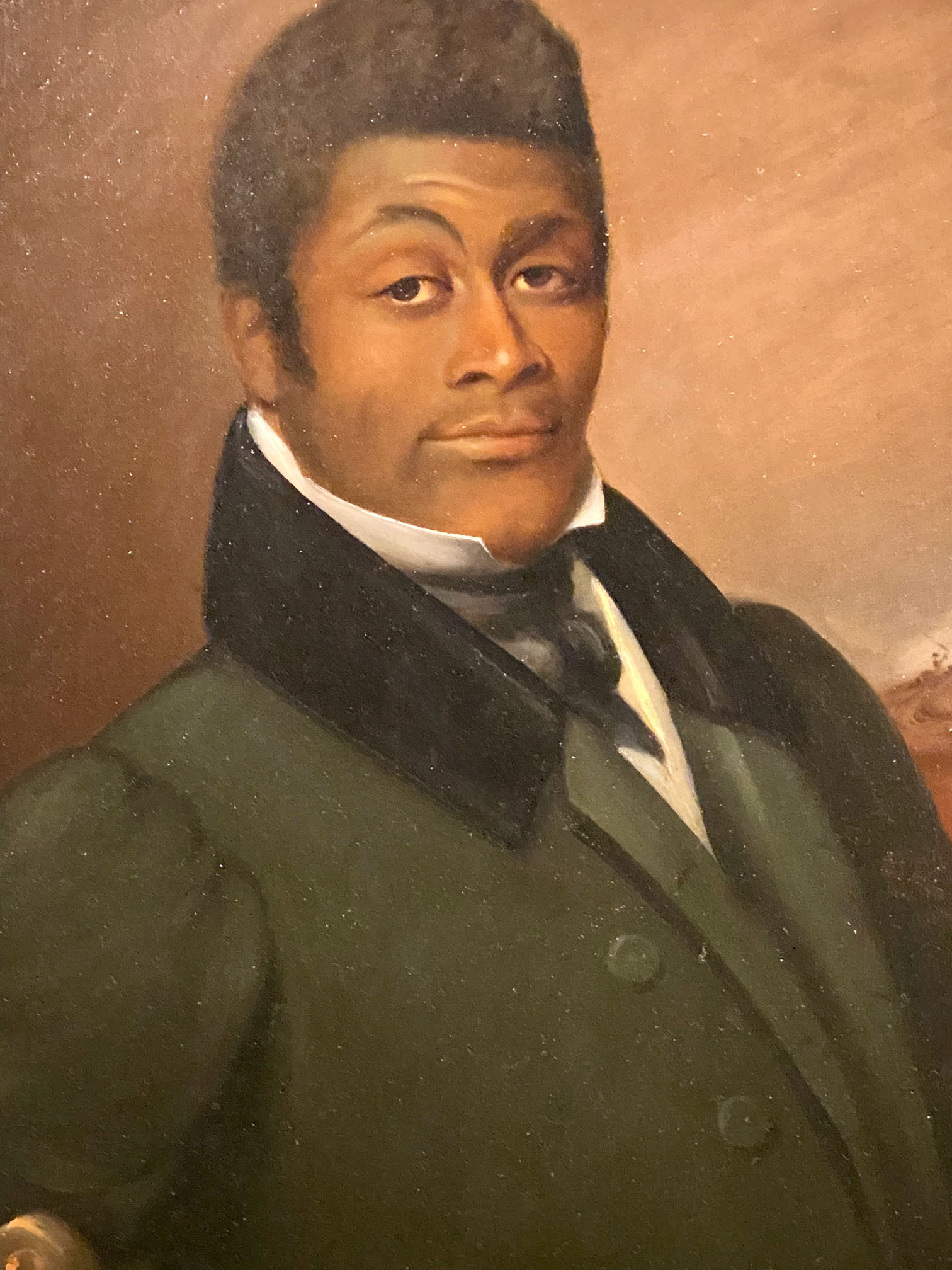
Dressing for distinction: 1804 Portrait of Toussaint L’Ouverture, leader of the Haitian revolution, painted by Giradin. Courtesy: La Maison de l’histoire européen, Brussels.

The curators leverage the Met’s extensive collection of photos, books, magazines, fashion, and accessories to provide visitors with the full visual story of each of the angles of Miller’s treatise.  Plus, they’ve assembled loans from recent collections of cutting-edge contemporary Black designers who themselves are pulling inspiration from these same pages of history.

The Distinction section, for example, has a wall of impressive portraits and bedazzled swords of the first leaders of the Hatian revolution dressed in military finery – emphasizing their commitment to Englightenment ideals in the first successful slave rebellion in the Western Hemisphere.

 The brilliant multi-level exhibition design features contemporary menswear inspired by 18th-century revolutionary and military style, including a swaggering great coat designed for the ever-magnificent Vogue editor-at-large, Andre Leon Talley.

Jawara Alleyne’s 2004 tailored ensemble inspired by Jamaican style; at right, ensemble from his 2021-2022 “Renegade” collection inspired by 19th-century shipwrecked sailors. Courtesy: the designer.
Worn by Andre Leon Talley; 2000-2001 haute couture coat with gold braid by John Galliano for House of Dior. Courtesy: Talley estate.

The Freedom section tells the story of the rise of the Black dandy in the 19th century and how the entrepreneurial class of African Americans dressed to impress. Historic portraits, photos, a fancy tailcoat, and a book on how to tie fancy neckwear – evidence of social upward mobility – are shown alongside cutting-edge contemporary menswear.

2023 figure-enhancing white cotton ensemble by Bianca Saunders for her “Nothing Personal” collection. Courtesy: the artist.
Freedom: Fashionable attire in 1850-1856 portrait of Thomas Howland, the first elected Black official in Providence. Courtesy: Rhode Island Historical Society.

The Champions section focuses upon how successful Black athletes – such as Jack Johnson, Walt Frazier, and Mohammed Ali – used fine clothing and style to make a statement, and how althetic wear transitioned into upscale runway fashion.

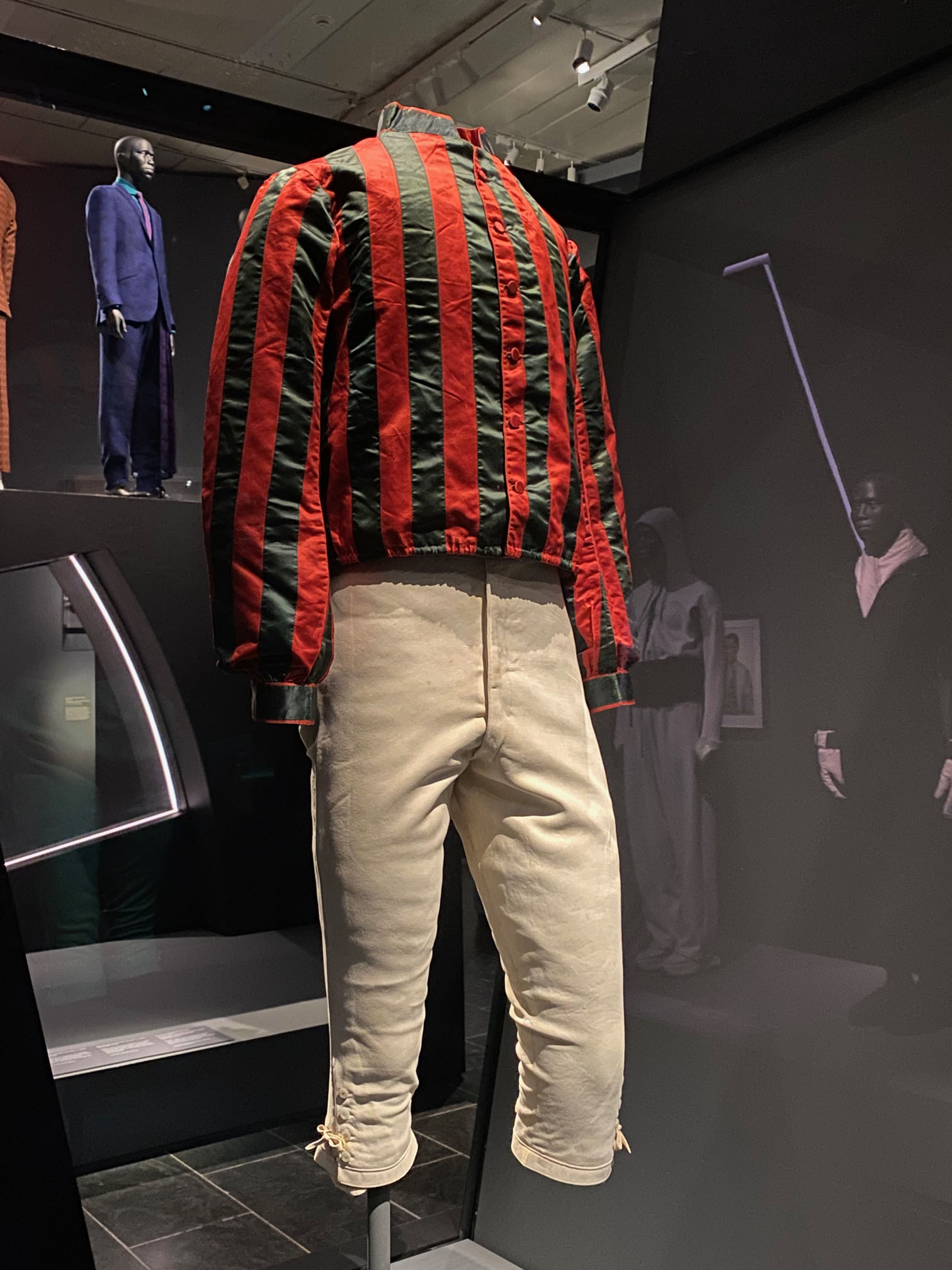
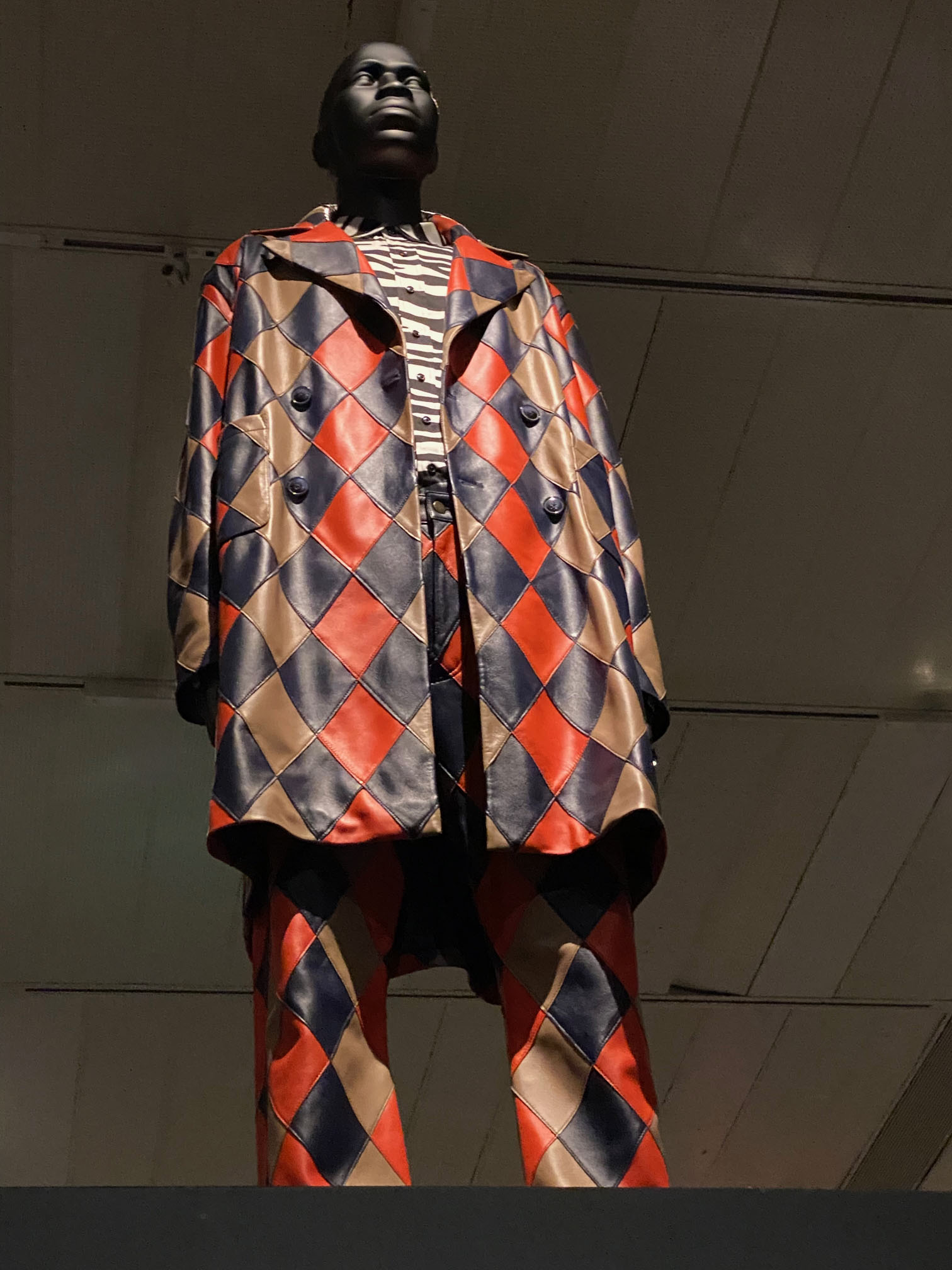
The story of Black jockeys is told – how 19th-century sports superstars got pushed out of early 20th-century racing when racial discrimination was at its peak, and how contemporary designers are incorporating this story into their designs.

EaEarliest surviving jockey suit (1830-1850): stripes appliquéd on silk jacket with and buckskin breeches made by plantation tailors. Courtesy: Charleston Museum, South Carolina.
2024 ensemble from “The Great Black Jockeys” collection by Tremaine Emory for Denim Tears; pieced lamb leather coat and trousers over silk shirt. Courtesy: Denim Tears.

The Respectability section explains how social-justice icons D.E.B. Du Bois and Frederick Douglass used their perfectionist style to draw a crown and make a statement, but it also discusses (and shows) the tools of the trade used by legions of Black tailors.  There’s also a beautifully cut in-process example from Saville Row tailor Andrew Ramroop.

2024 in-process tailored jacket by Andrew Ramroop for Maurice Sedwell of Saville Row. Courtesy: Maurice Sedwell
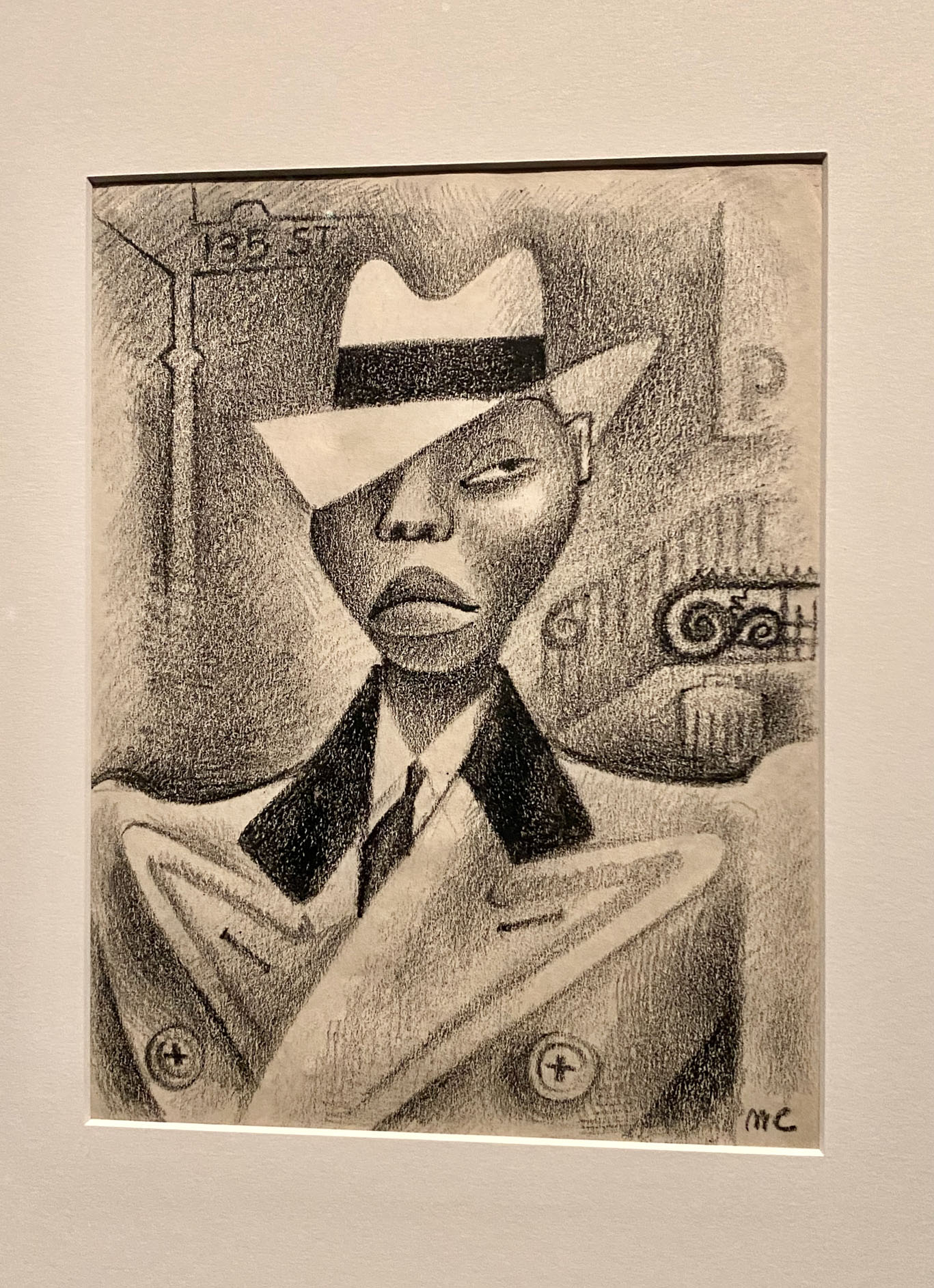
Hip community: 1930 lithograph of stylish Harlem Dandy on Striver’s Row by Miguel Covarrubias, a popular Vanity Fair contributor. Courtesy: University of Texas at Austin.

Of course, hip-hop takes its bow, too, with a tribute to Dapper Dan and other designers honoring the cool, ever-evolving style of Black musicians and performers.

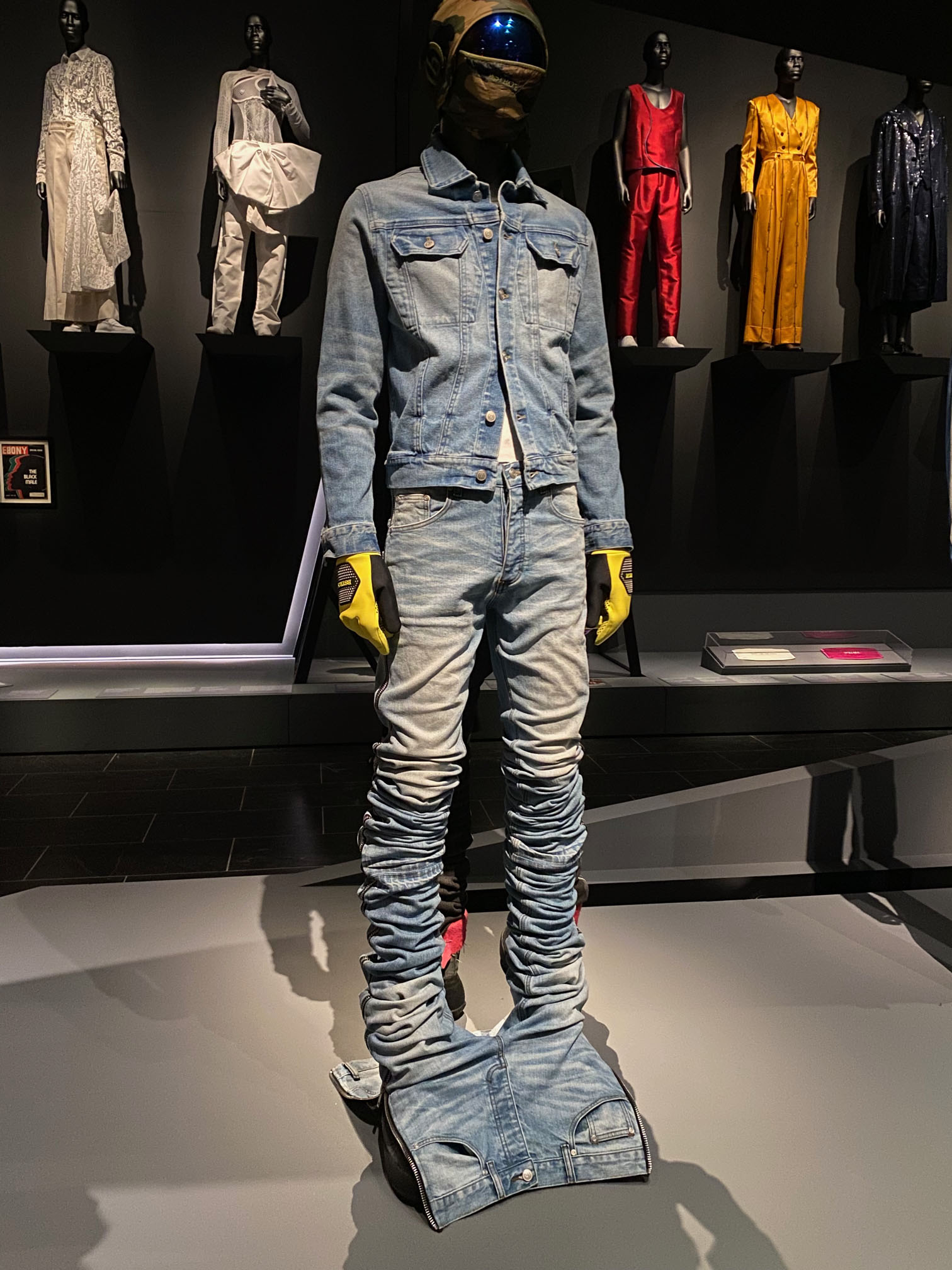
So cool: 2017 denim ensemble by Brick Owens and Dieter Grams for Bstroy, a reference to early all-denim hip-hop fashion. Courtesy: the designers.
1987 all-over LV-monogrammed leather jacket for Jam Master Jay of Run-DMC and pants for DJ Hurricane by Dapper Dan of Harlem. Courtesy: private collections.

Take a look at some of our favorite features of the exhibit in our Flickr album – upwardly mobile campus-inspired fasion, zoot suits from the hep cats of the Forties, beautiful fashion flourishes flaunted by pop superstar Prince, and nods to African heritage.

For more, walk through this stunning, insightful, memorable exhibit with co-curators Monica Miller and Andrew Bolton: