
Georgia O’Keeffe’s Modern Living

How do you turn a 200-year-old adobe home into a temple of mid-century modern design? See how Georgia O’Keeffe did it in Artful Living: O’Keeffe and Modern Design, an exhibition available on-line and at the GOK Museum’s Welcome Center near her home and studio in Abiquiu, New Mexico through January 31, 2026.

When Georgia bought her second New Mexico home in 1945, it was a wreck. All the better, for her to envision the possibilities of her dream house. Why was she obsessed with this? It had a home garden and irrigation, a placita in the center of the house with a working well, the iconic black door in the red wall, and an incredible view of the stunning landscape (and Pedernal).
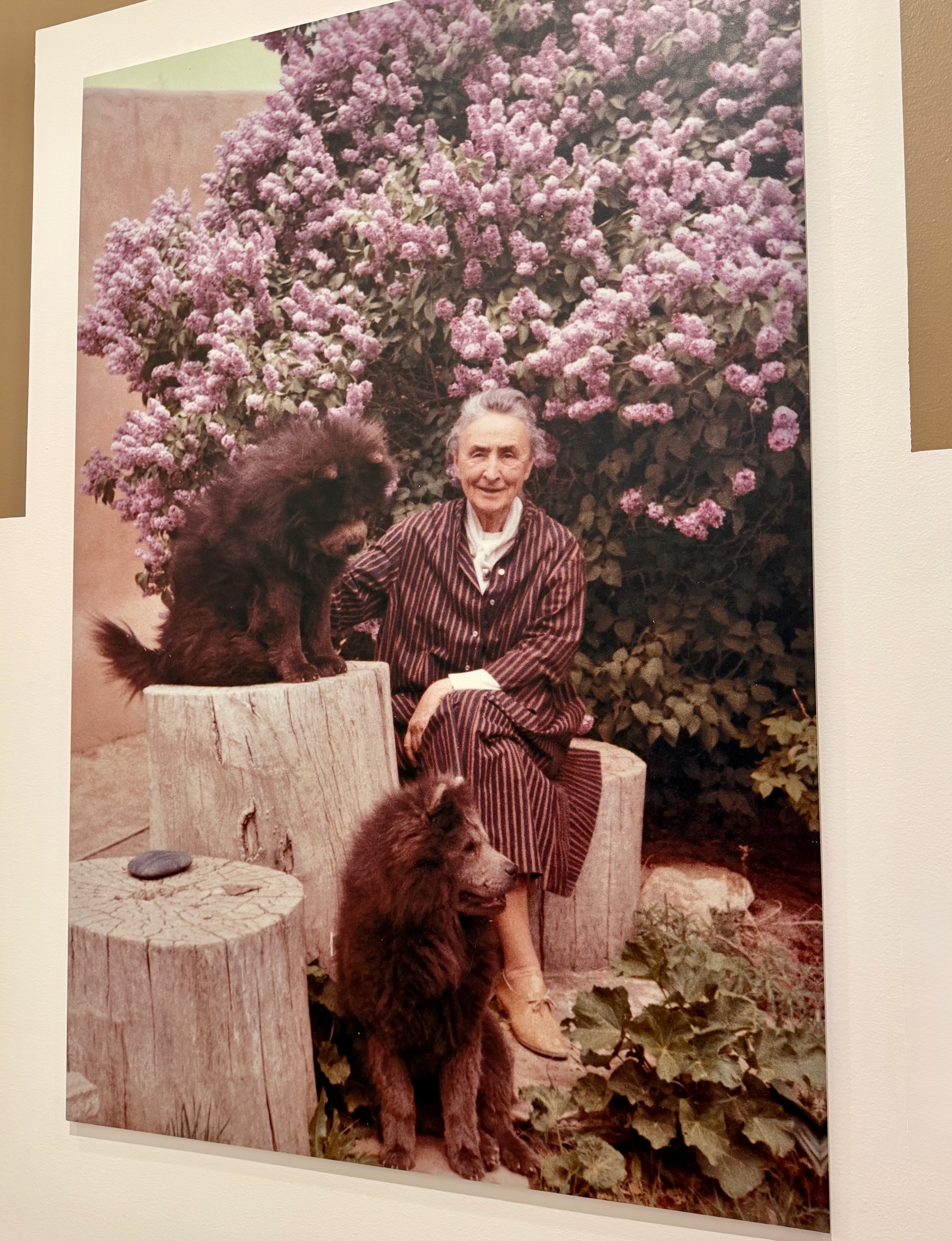
Todd Webb’s 1962 photo Georgia O’Keeffe and Chows in Abiquiú Garden with Georgia in a striped Marimekko dress.

By collaborating for the next four years with her friend and project manager Maria Chabot, the property was transformed into a showcase for everything modern – furniture, fabrics, lamps, tableware, and (eventually) architectural innovations like skylights, gigantic picture windows, and open-plan living.  To keep her creative sparks going, Georgia never stopped rearranging, adding, and switching things up.

The exhibition space is small, but provides a tight curated selection of Georgia’s things accompanied by great photos of her interiors over time.
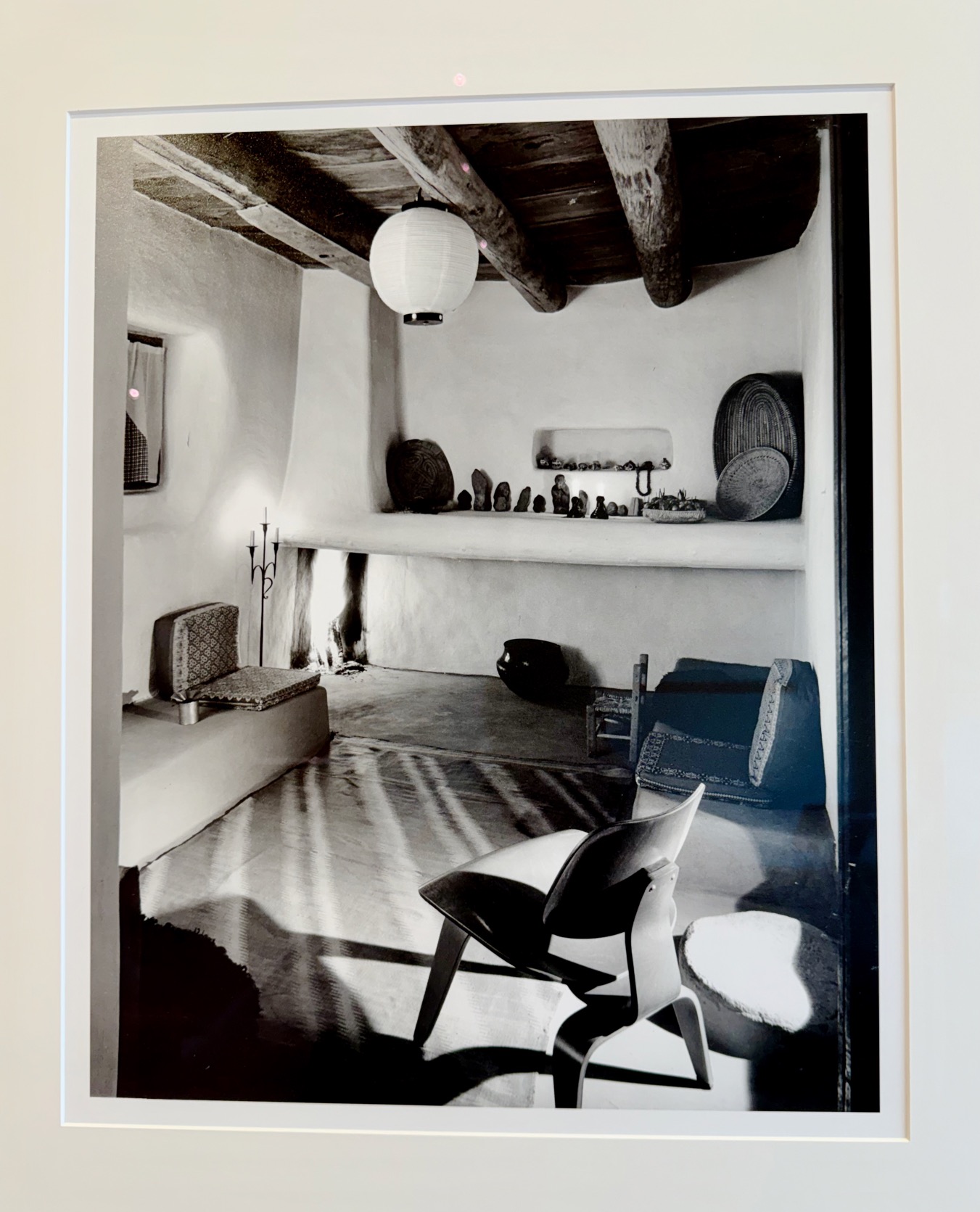
Balthazar Korab’s 1965 photo Abiquiú House, Indian Room with Noguchi lamp and Eames chair.
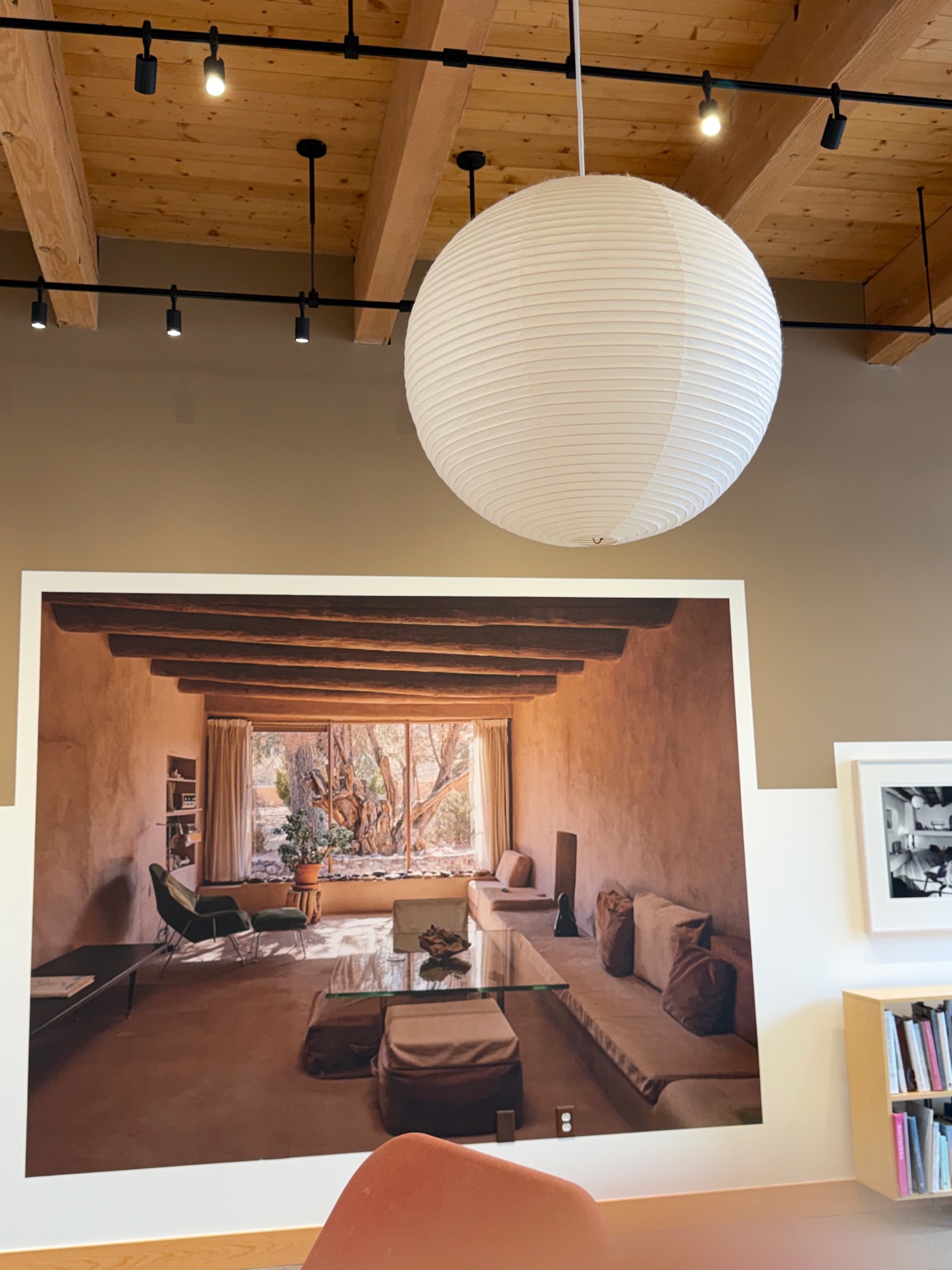
1960s Akari Lantern, a gift from sculptor and designer Isamu Noguchi with Krysta Jabczenski’s 2019 photo of her living room arranged as she left it in 1984.

The furniture is front and center, made by a who’s who of American 20th century designers.  After all, as one of the recognized greats of modern American painting, the designers were often her friends, too. Simple, clean, modern lines – that’s what Georgia liked. But she loved design innovations, too.

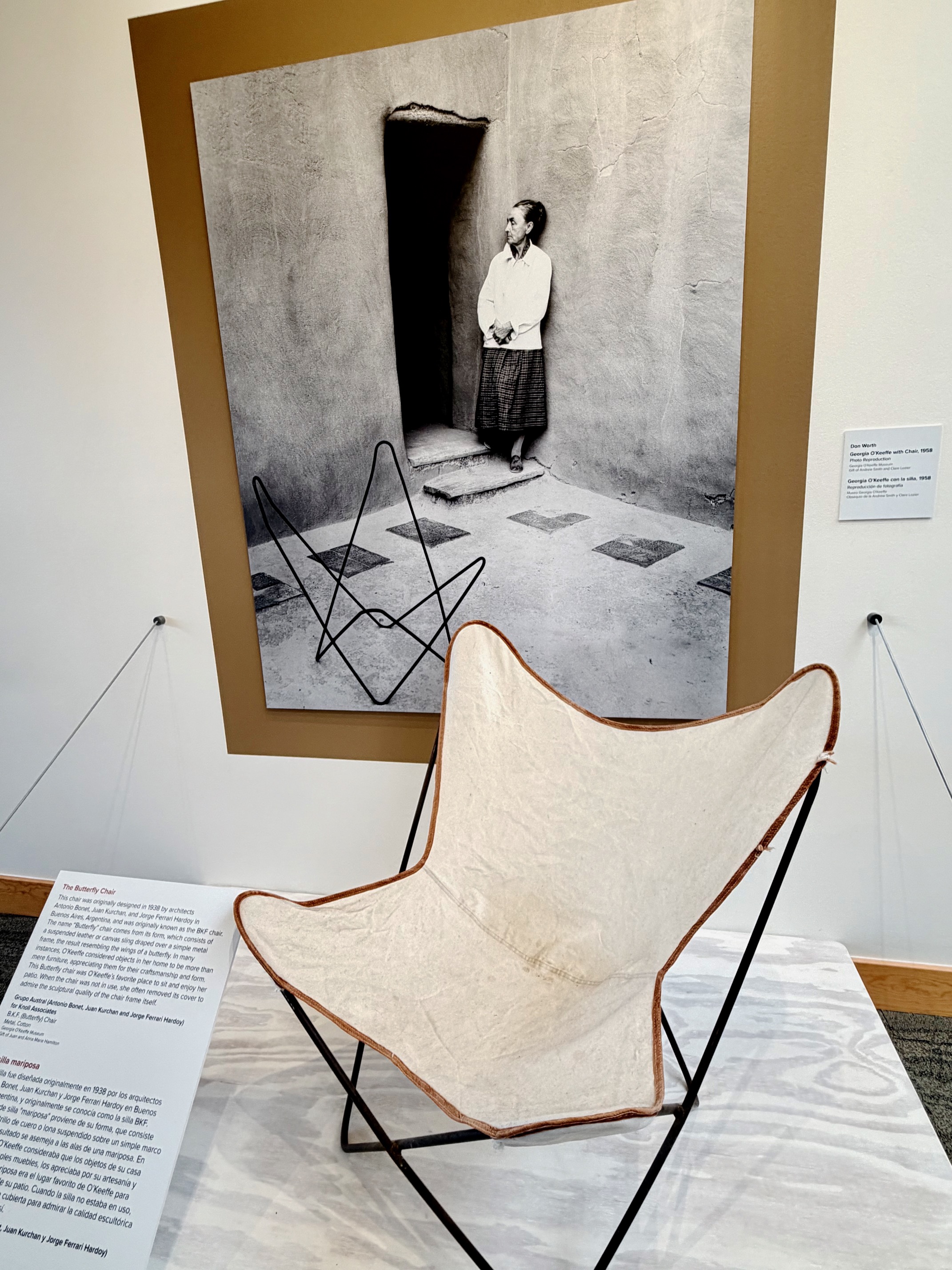
No wonder she was captivated by the innovative BFK (“Butterfly”) chair designed by a trio of Argentine architects in 1938. She ordered one from Knoll, used it on her patio, and sometimes took the cover off just to admire the frame. And she bought several LCW chairs by her friends, Charles and Ray Eames – the molded-plywood marvel that defined a design decade.
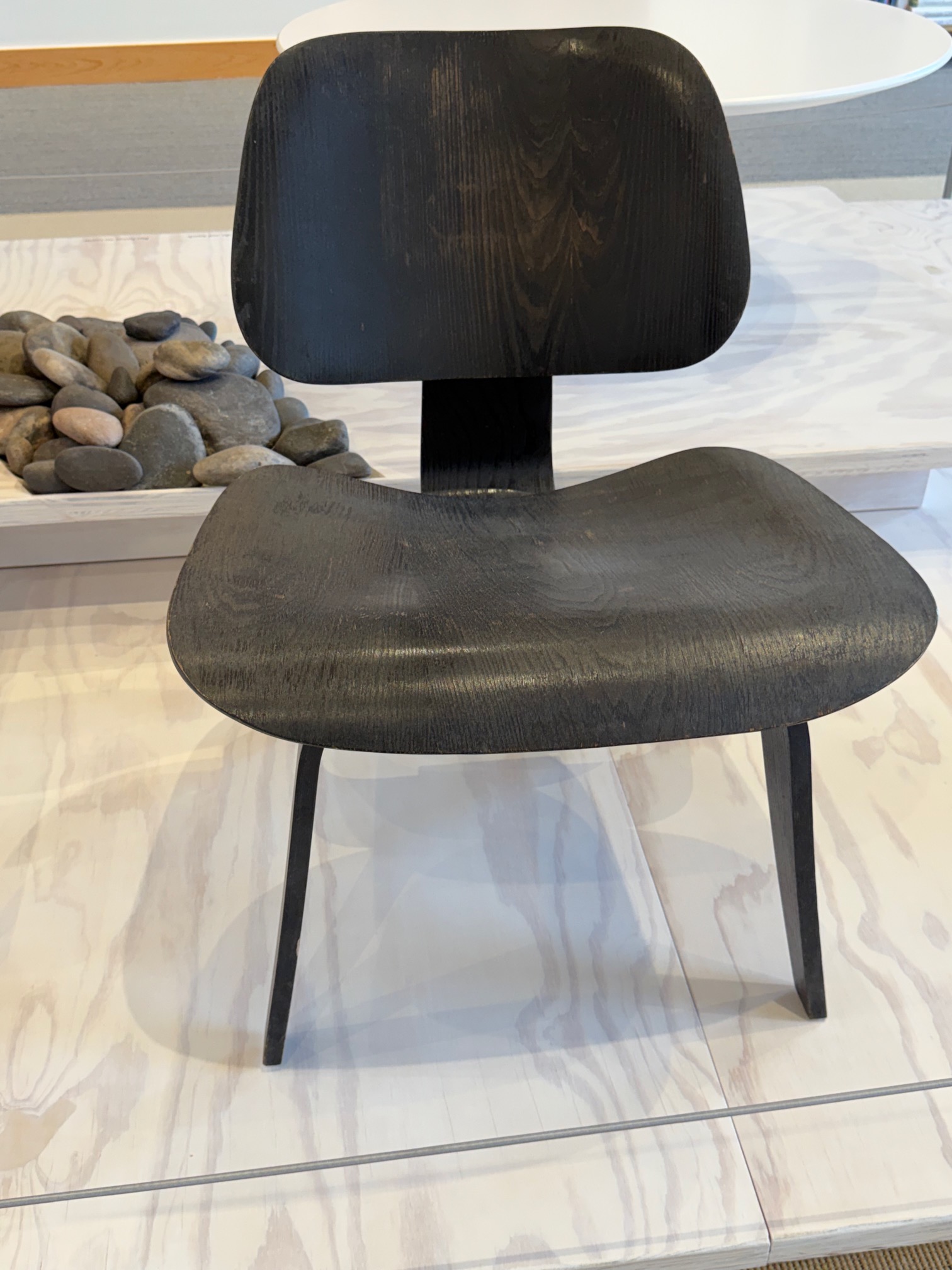
1940s LCW Plywood Lounge Side Chair designed by Charles and Ray Eames for Herman Miller – the first chair in the Eames’ molded plywood series.
Don Worth’s 1958 photo Georgia O’Keeffe with Chair with 1938 metal and cotton Butterfly Chair for Knoll Associates.

But perhaps her most-used piece was the versatile BARWA Lounger – perfect for laying back and listening to classical music or looking at the stars during a summer camping trip to the badlands. The aluminum frame made it light enough to strap to the top of her car.
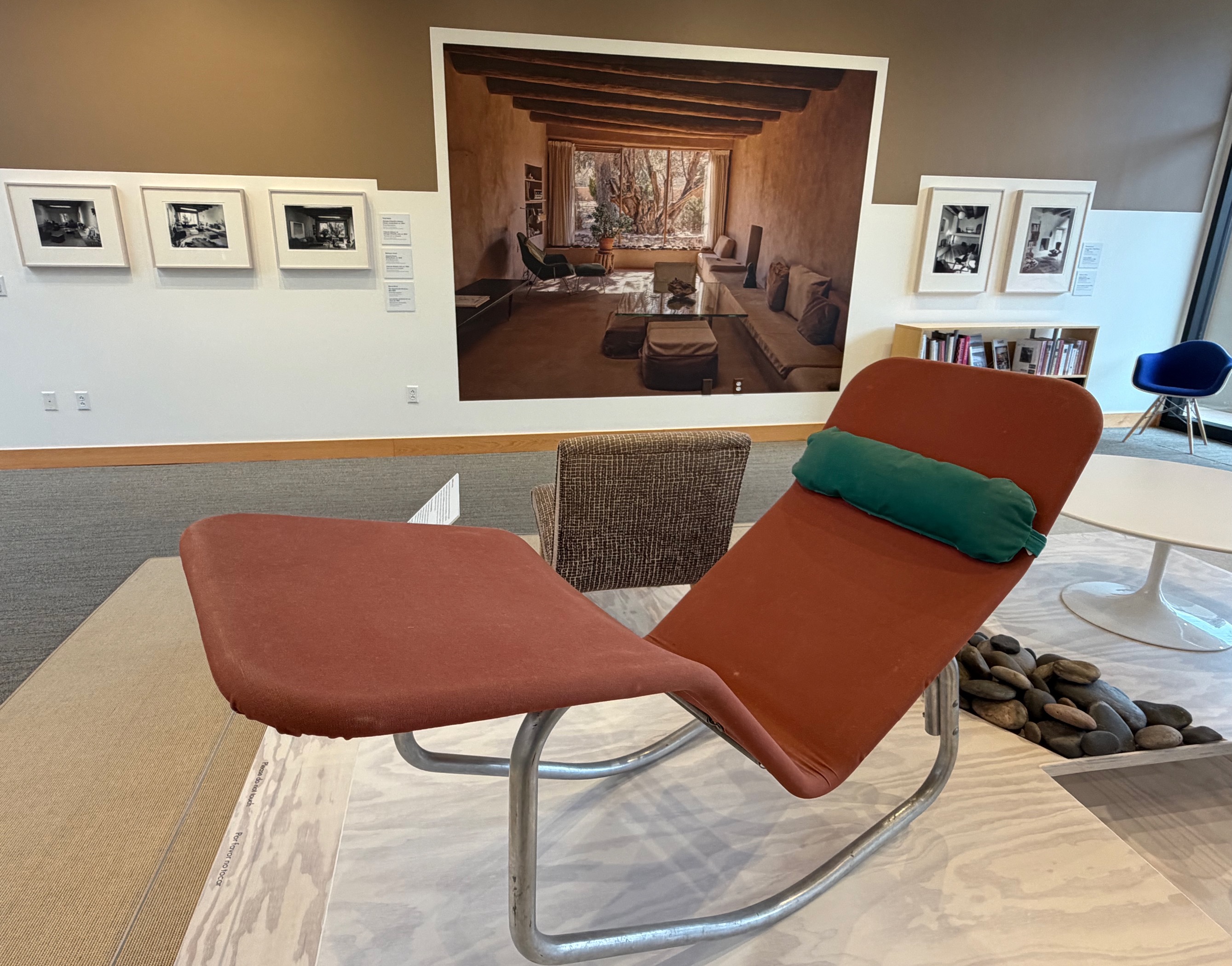
1940s BARWA Lounger designed by Edgar Bartolucci and John Waldheim of BARWA Associates; Georgia relaxed here while listening to classical music.

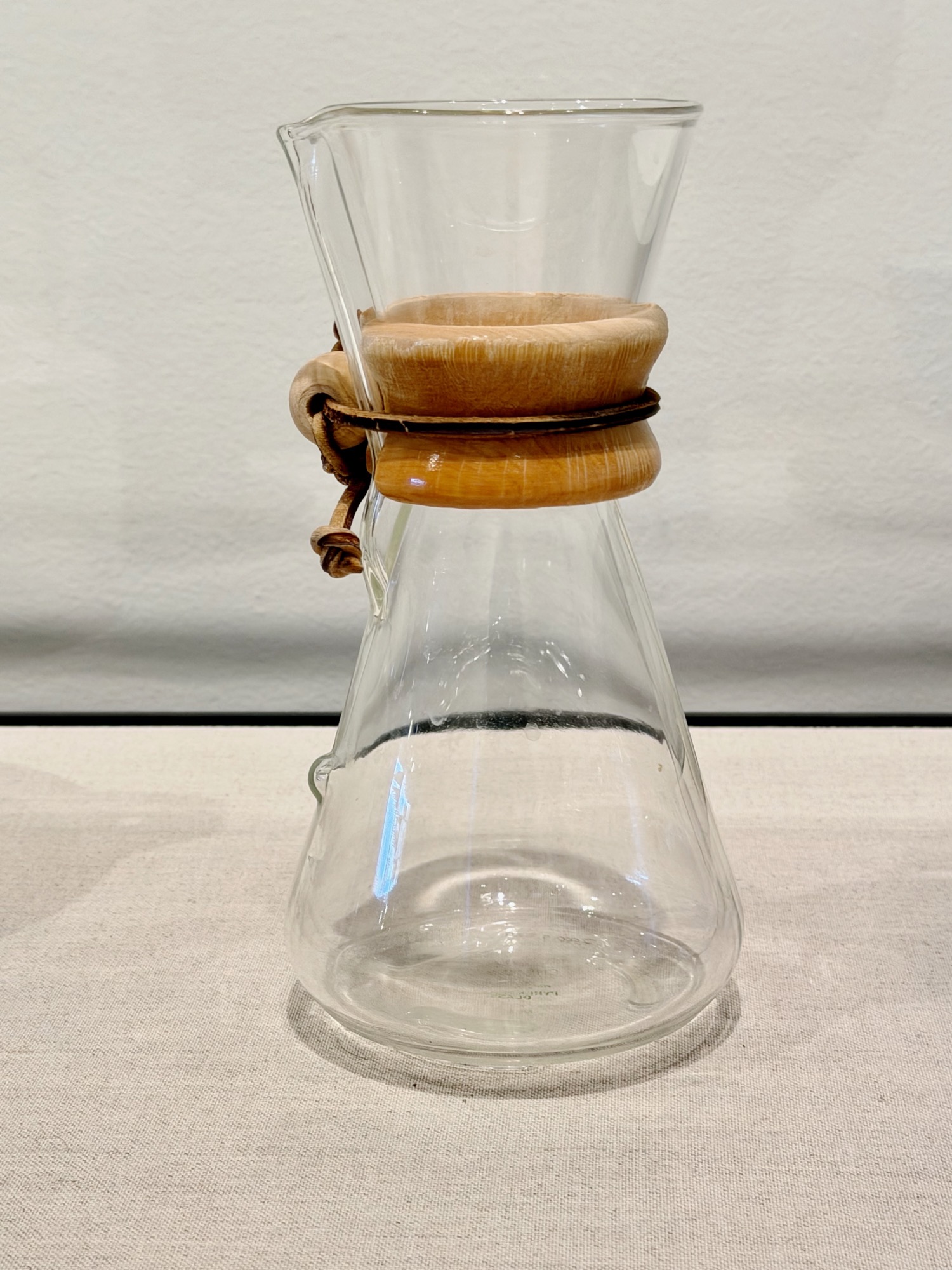
Of course, Georgia loved her rock and bone collections, but she also collected practical items for her home that epitomized mid-century design.  Why not select a Finnish design innovation that you could adjust to get the light just right on your work desk or still life? Or use a sleek, modern, see-through coffee maker to prepare your morning cup of Bustelo? Pure bliss.
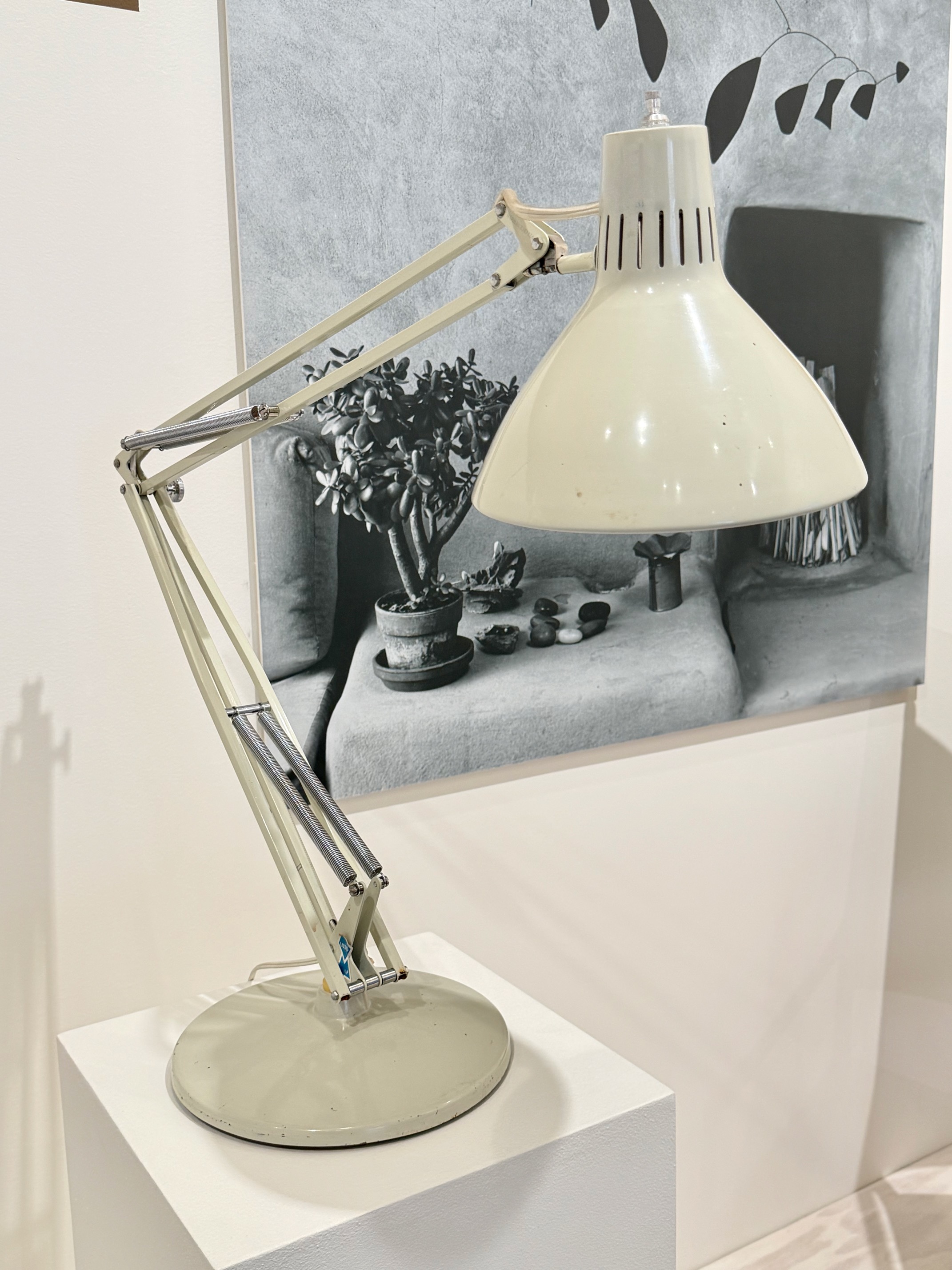
Finnish design: 1960s metal Luxo Lamp designed by Jac Jacobsen.
Everyday modern design: 1950s Chemex coffee maker designed by Peter Schlumbohm for Chemex.

The curators also want us to remember that modern design principles also extended to Georgia’s dress preferences.
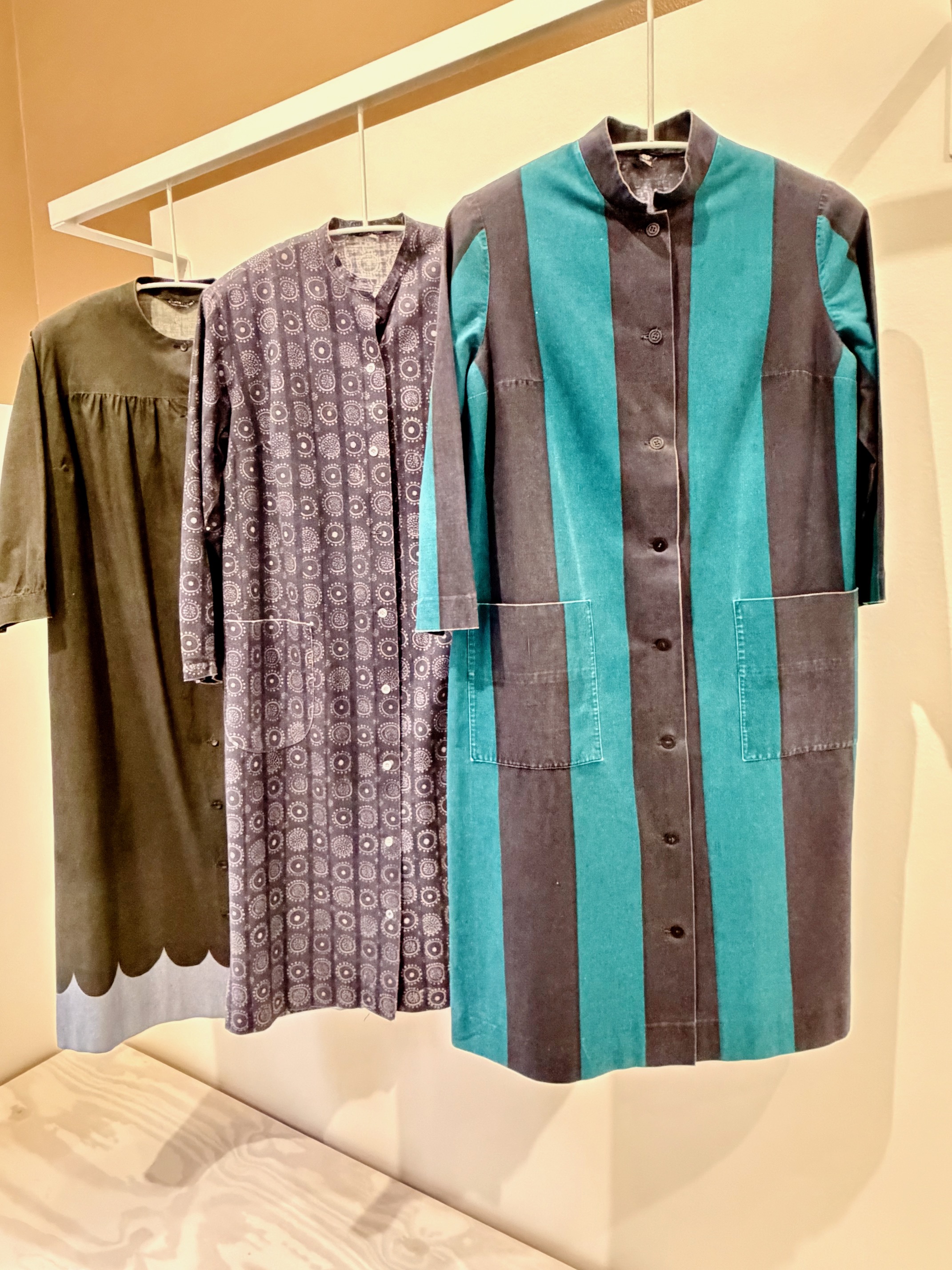
Three cool cotton dresses by Anika Ramala for Marimekko – 1963-1965 Varjo dress, 1961 Karutakkj dress, and 1963 Asumistakki dress.

When she wasn’t posing for the most famous photographers against the red rocks of New Mexico in her black hat and wrap dress, she preferred wearing loose-fitting Marimekko dresses.   A working studio artist could really move in them to prepare canvases, rehang paintings around the house, or carry around stuff in the pockets. Never mind that the dresses from the popular Finnish design house were marketed as the finishing sartorial touch for any modern Sixties interior.

Feel free to revisit our past blog post about the wildly successful traveling exhibition about Georgia’s fashions here.

See some of our favorite photos, furniture, and items in our Flickr album.

Two of her best friends and travel buddies were Alexander and Susan Girard. Georgia always welcomed the small textiles that Alexander Girard gifted her. Although she never adopted his revolutionary conversation-pit seating, she did get out the sewing notions and turn his iconic designs into small throw pillows placed lovingly (and colorfully) throughout her house. She also covered her kitchen work surfaces in Marimekko oil cloth to make it pop, too.

Visit this fantastic design exhibition on line here, and read more about each of Georgia’s mid-century modern choices.

For more, listen to Giustina Renzoni, the museum’s curator of historic properties, discuss how Georgia turned her modern sensibilities into a legendary high desert home:

And if you’re really interested in what Georgia had in her closet, the next time you’re in New Mexico, sign up for that new extra-special tour!
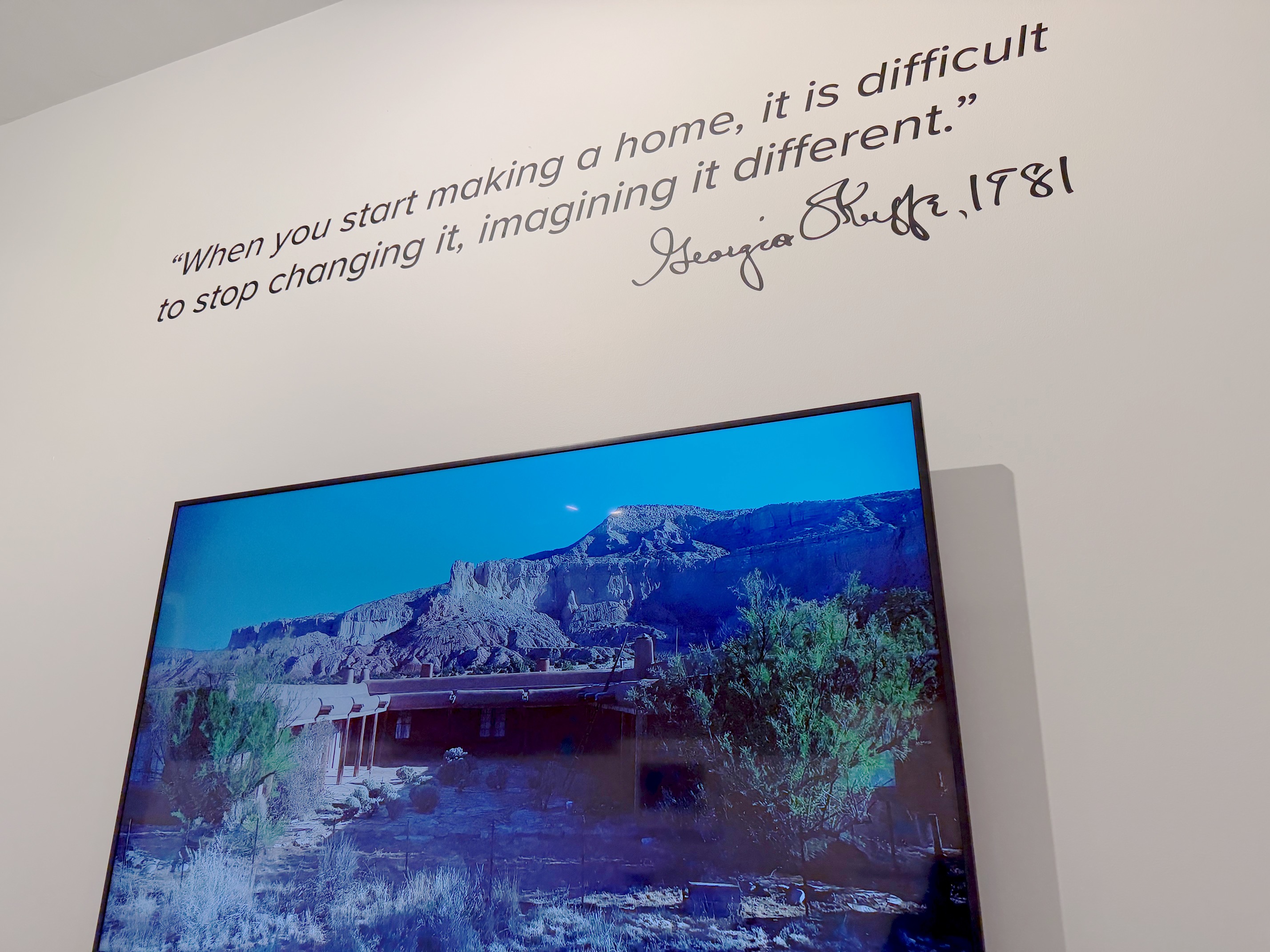
Video still of Georgia O’Keeffe’s Abiquiú home and her philosophy about home design

Gilded Age Treasure Hunt at The Met

Once you navigate the twists and turns of one of the furthest reaches of the Metropolitan Museum of Art’s American Wing (past the Versailles panorama and past the Rockefeller room), you’ll come to a treasure trove of Gilded Age interior design – Aesthetic Splendors: Highlights from the Gift of Barrie and Deedee Wigmore, on view through April 18.

What did rich people in the 1880s and 1890s want? The exhibition will show you.

1880s Herter Brothers cabinet, Britcher landscape, and reproduction wallpaper evoke the Wigmore’s home

You’ll find lush landscapes by second-generation Hudson River painters and first-generation romantic painters of the American West, elaborate furniture and decorative pieces embellished with tributes to Asian style, and bedazzled masterpieces from the Tiffany workshops.

Sanford Gifford’s 1879 An Indian Summer Day in Claverack Creek

The curators pay tribute to these avid Aesthetic Movement collectors by framing these promised gifts with reproduction period wallpaper and fixtures, and it’s hard to decide where to look first.

The approach to this marvelous exhibition gives modern gallery-goers an experience of what Gilded Age interior designers had in mind – cramming foyers and drawing rooms with lush paintings, flashy techno brass furniture, Japanese-style ceramics, art pottery, and fringed upholstered seats decorated with Arts & Crafts tiles that throwback to mythical times.

The mix of styles and techniques – some old and some new – reflect a time when consumption of luxury goods ran wild with the ascension of New York City as the trading and shipping capital of the world.  Many of the pieces reflect new machine-made technology mixed in with a bit of medieval nostalgia via the British Arts and Crafts movement.

Look closely at all these showstoppers in our Flickr album.

Detail of 1880 Modern Gothic cabinet by Kimbel and Cabus with tile by Minton & Co.

Although the exhibition is slightly hidden away, the landscapes appearing throughout the show provide windows to lush valleys of the Rockies (thank you, Mr. Bierstadt!), autumn colors of the Catskills, and spectacular, tranquil shorelines on Maine’s rocky coast.  All are either in their original fancy frames or reproductions from the era.

Alfred Thompson Bricher’s 1899 Low Tide, Hetherington’s Cove, Grand Manan in Maine

Most of the works are oil paintings, but (in case you didn’t know) New York was also the epicenter of the movement to make watercolor paintings the equal of any fine salon work.  The curators have included work by the masterful William Trost Williams, so you can enjoy a side-by-side comparison of the techniques he used to give those oil painters a run for their money. Every time we’ve visited this show, visitors simply stand transfixed, drinking in the saturated, tranquil views of the faraway.

The ceramics, cloisonné tabletops, andirons, and many large-scale pieces reflect the period’s mania for anything with a hint of Japanese or Chinese style – delicate birds flitting through bamboo and fierce dragons swirling in magical space. Designers for the upper classes were captivated by images from kimonos, scrolls, screens, and ceramics from the East and made sure that custom commissioned pieces were on trend.

Bradley & Hubbard’s 1895 phoenix andirons
Sapphire encircled by grapevines on 1910 gold and platinum Tiffany necklace

The mesmerizing beacon within the show is the spectacular array of Tiffany necklaces in the center – dramatic opals and sapphires, often encircled by intricate grapevines in gold or another nod to nature-by-design. The effect of these beauties side by side is magical, and you can imagine a Gilded Age beauty making an entrance with one of these dazzlers.

The Met just announced that its September 2022 Costume Institute exhibition would be displayed in the period rooms of the American Wing, so we’ll see if Mr. Bolton and his team deploy any period finery in the more-is-more 19th-century area.

Read more about pieces in this fantastic donation on the MetCollects blog and flip through close-ups of some the featured works.