Light, Space and Time in Albuquerque

Drift into another dimension in Light, Space, and the Shape of Time at the Albuquerque Museum through July 20, 2025. The show, with significant works from the museum’s own collection, harkens back to the founders of California’s 1960s Light and Space movement, but also presents work by contemporary artists – many from New Mexico – who continue to explore the same phenomenon.

The curators have arranged the exhibition to show how artists use light, space, and time as subjects through which visitors can slow down, contemplate, and experience.
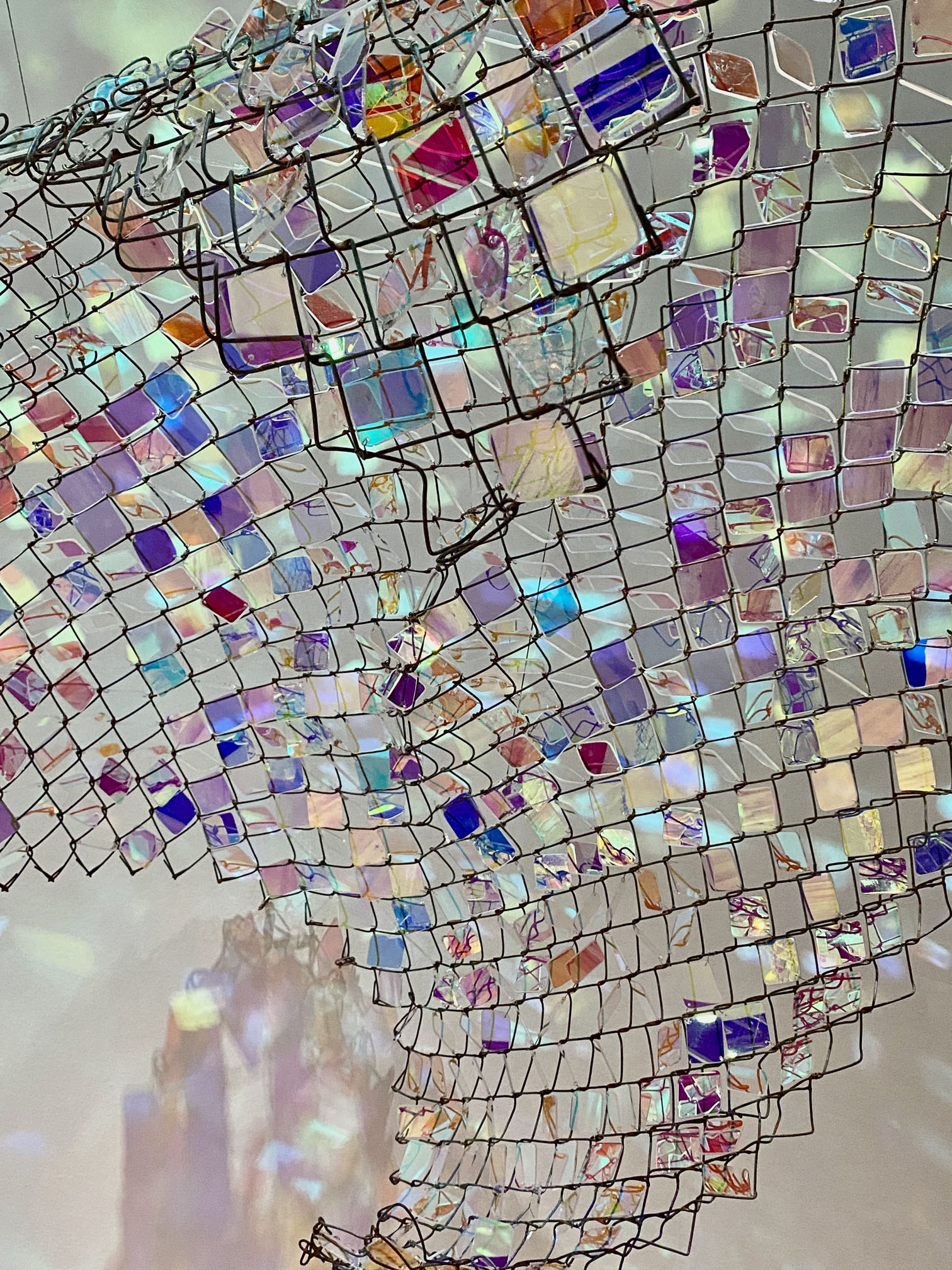
Detail of Soo Sunny Park’s 2013 Unwoven Light, an installation that seems to move as visitors walk through it. Courtesy: the artist

For more, see some of our favorites works in our Flickr album.

The first section showcases works where artists use light as the primary medium. Visitors can enjoy works by some of the most famous innovators from the Sixties and Seventies – Robert Irwin, who inspired a generation of West Coast art students to think differently; Dan Flavin, who merged minimalism with industrial light; and Helen Pashgian, who makes magic from luminous resins.

Irwin’s 2011 piece appears minimal, but his six fluorescent-light colors can be activated in four different variations, and he associated each with agricultural colors of Southern California. You can enjoy looking at Lucky You for its purity of form, or contemplate Irwin’s recollections of home.

Two fluorescent works by Space and Light superstars – Robert Irwin’s 2011 Lucky You and Dan Flavin’s 1987 untitled (in honor of Leo at the 30th anniversary of his gallery. Courtesy: Thoma Foundation

Behind the black curtain, you can enter a tranquility chamber. Helen Pashgian’s 2021 installation provides an unforgettable experience to visitors to slow down and wait. What are you seeing? The frosted, peach-colored epoxy sculpture at center stage appears dissolve in the light-filled space as lights slowly change. It’s like watching show changes to the sky during a dramatic sunset, but it’s light, white, ethereal, and pure.

Helen Pashgian’s 2021 untitled (peach lens) – the lens dissolve into space as the light changes to sunrise and sunset modes. Courtesy: Tia Collection

All-star word artist Jenny Holtzer’s Red Tilt takes an absolutely maximalist approach with multiple LED displays – a too-much, all-at-once, never-stopping tsunami of emotional words from her own story about survival and trauma.

Leo Villareal’s piece Scramble is the opposite. Albuquerque-bassed Villareal creates a mesmerizing, tranquil, never-repeating abstraction by programming LED lights. He’s done this on a larger scale in his epic commissions to light the San Francisco-Oakland Bay Bridge and all of London’s bridges over the Thames. Here, visitors get a more intimate experience – slowing down to watch Scramble’s gently changing colors and know what they’re seeing is unique to the moment.

Jenny Holtzer’s 2002 LED display, Red Tilt. Courtesy: Thoma Foundation
Leo Villareal’s 2011 Scramble, a programmed LED artwork that changes constantly. Courtesy: Thoma Foundation

Larry Bell’s 1984 installation is the centerpiece of exhibition’s exploration of how artists use light, illusion, and technology to explore (and play with) our perceptions of space. Direct from his retrospective in Phoenix, Bell’s barely-there The Cat is a delicate but monumental presence in the show.  Huge, planes of coated and non-coated glass require a circumnavigation. Moving around, you can see how works are reflected and how some opaque surfaces block views of others.
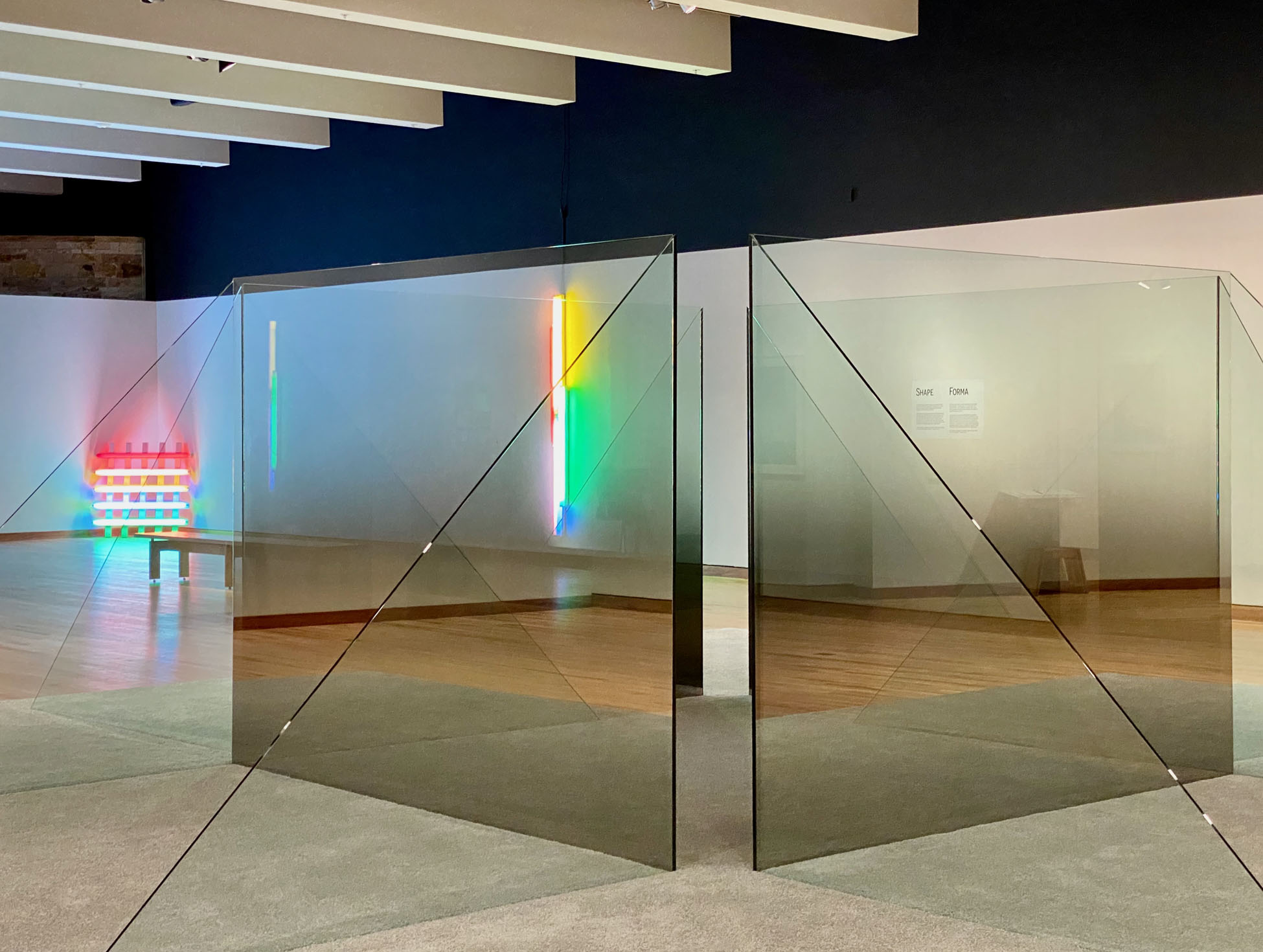
Larry Bell’s 1984 The Cat – rectangles of coated and uncoated float glass.

Two nearby works by Santa Fe-based August Muth offer visitors a more intimate experience. Muth uses a holographic etching technique in which he creates the illusion of a “floating” image.

August Muth’s 2024 holographic etching Shadow Within Light. Courtesy: Pie Projects Contemporary Art.
August Muth’s 2022 holographic etching Terra Solaris. Courtesy: Pie Projects Contemporary Art.

The exhibition concludes with a magnificent installation by Soo Sunny Park – an installation of lights and plexiglass pieces that appear to move as you move through. Take a peek in this video.

Detail of Soo Sunny Park’s 2013 Unwoven Light installation with tiles that appear to move as the visitor moves through it. Courtesy: the artist

Kite Dreams with AI at IAIA

How does a Lakȟóta artist link dreams and artificial intelligence to imagine futures for her people? Experience five years of innovative installations in Kite and Wíhaŋble S’a Center: Dreaming with AI, on view at the IAIA Museum of Contemporary Native Arts in Santa Fe through July 13, 2025.

The IAIA exhibition – Suzanne Kite’s third solo exhibition this year across the United States – presents several installations that highlight her collaborative work that merges cutting-edge technology with Indigenous knowledge systems. 

Download the exhibition catalogue here, and look at photos of the installation in our Flickr album.

2023 Wičhíŋčala Šakówiŋ (Seven Little Girls) and Wicháhpi Wóihanbleya (Dreamlike Star) use stones to translate Kite’s dreams into Lakhóta symbols.

In Iron Road and Dreamlike Star, stones and minerals (the building blocks of computers!) are arranged in Lakȟóta geometric language that suggest Lakȟóta quilt patterns. They’re placed atop a mirror to show resonance between the Earth and the cosmos (stars).

2023 Wicháhpi Wóihanbleya (Dreamlike Star) suggest that ancestor stars can point the way to Indigenous futures.

In this first section, inputs are taken from Kite’s dreams. Using AI, her dreams are translated into geometric Lakȟóta shapes created by designer Sadie Red Wing. Kite has figured out a way to bypass large-scale, commercial AI networks in favor of an AI model (run on her PC) that aligns more closely with Indigenous knowledge systems.    

A digital embroidery machine has yards of embroidered black velvet flowing out of it.  Oihanke Wanica (Infinity) is a collaboration with New York City’s Center for Art, Research and Alliances. As you examine the velvet, you’ll find geometric Lakȟóta shapes translated (using AI) from Kite’s dreams.

Nearby, there’s a comfortable lounge where you can watch Cosmologyscape, an interactive digital quilt – a public art project in which AI translates the public’s dreams into artist-created geometric symbols. It’s a collaboration with Alisha B. Wormsley, so the virtual community quilt manifests both African-American and Lakȟóta shapes.

2023 Oihanke Wanica (Infinity) – a digital embroidery machine stitches symbols representing dreams onto black velvet. Collaborator; Center for Art, Research and Alliances.
Lounge to watch Kite and Alisha B. Wormsley’s 2024 Cosmologyscape – Ai translates the public’s dreams into symbols for an ever-expanding digital quilt.

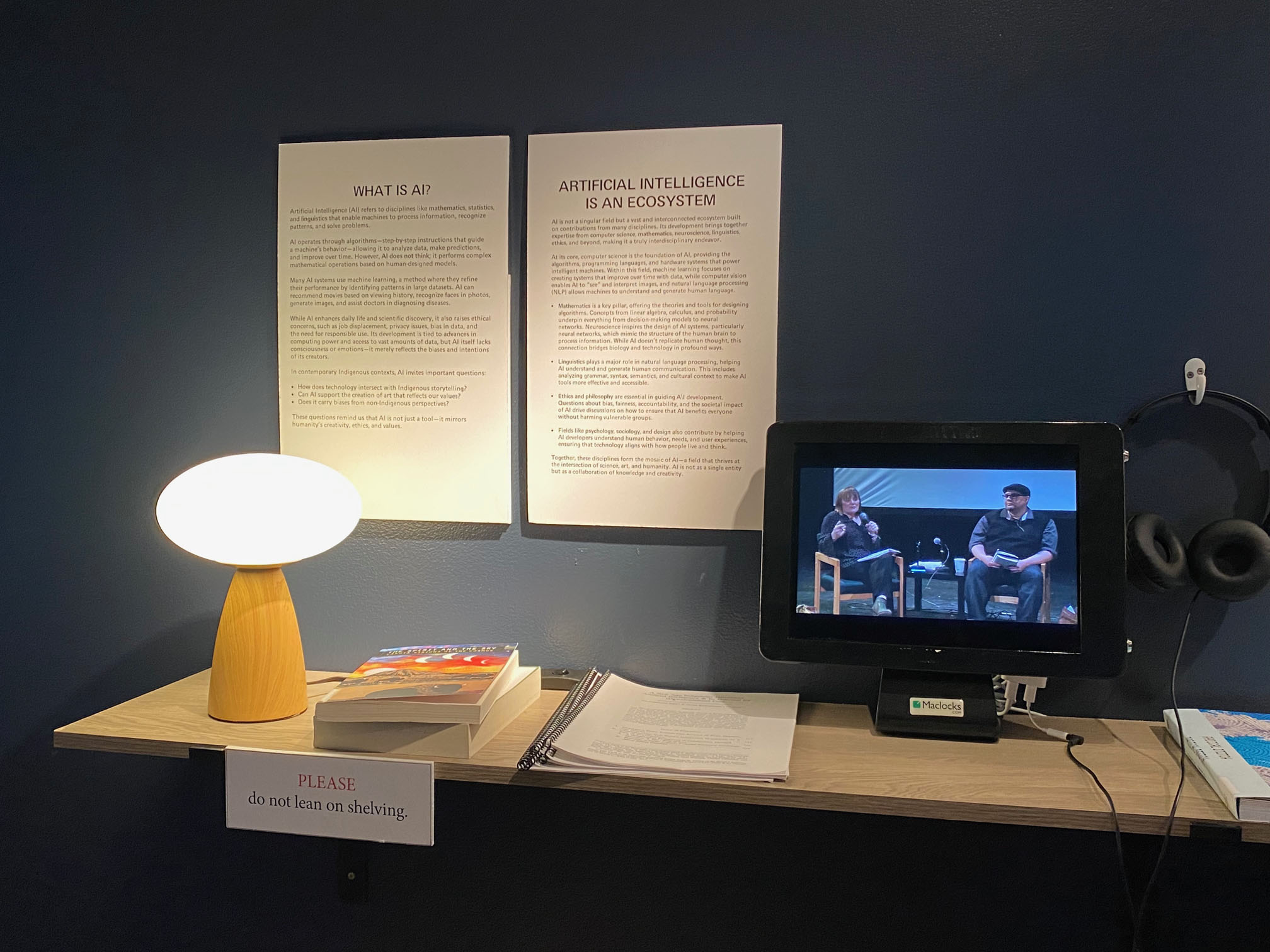
Installations in the other half of the exhibition shows collaborative projects that combine Indigenous knowledge systems and AI. Along one wall in the spectacular, tranquil gallery, you can explore a print and digital resource library on international research programs that integrate Indigenous knowledge systems into AI design.

Abundant Intelligences – a library and digital resource station for information on AI and futurism in contemporary Indigenous art.

Oneiris is a large interactive station through which visitors are invited to generate dream symbols that AI adds into a wall-sized display that looks like a portal to the cosmos. Inspired by the Lakȟóta concept of a Dream Language, she and her many technical collaborators genuinely bring dreams to life.

Oneiris – a collaborative project using advanced AI models to allow visitors to bring dreams to life.

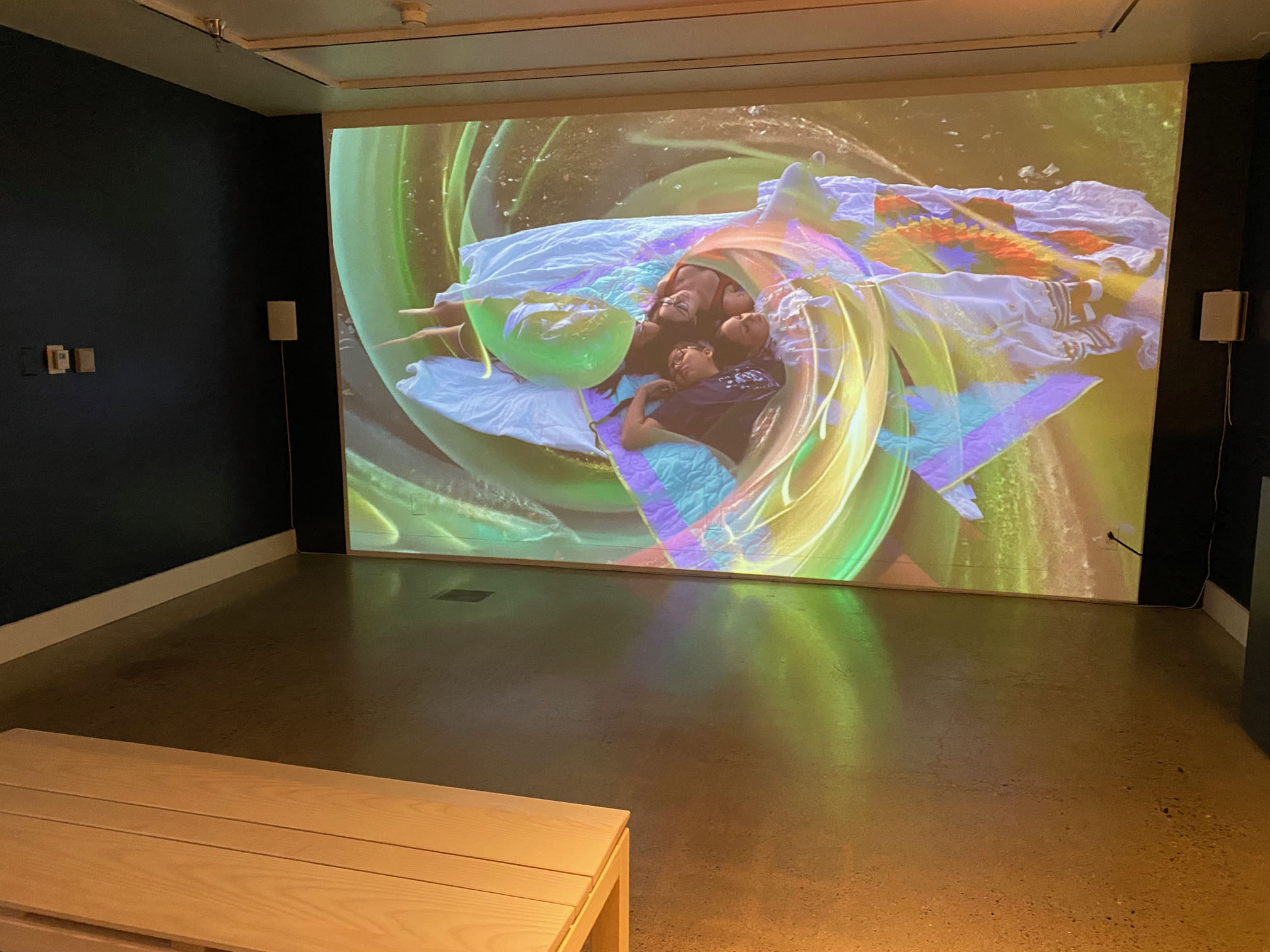
Spashed across the final wall of the space, The Land Paints Itself is a video collaboration with her Wíhaŋble S’a Center for Indigenous AI at Bard – a lab that explores Indigenous advances in this science and art. Watch as AI generates dazzling colors and patterns as four Lakȟóta dream about Indigenous futures. Kite suggests that the evolving technology of dreams is a legitimate way for her nation to envision ways forward.

2025 The Land Paints Itself video that uses AI to illustrate Lakhóta people’s dreams about Indigenous futures.

Provocative, visionary, and affirmative – meet Kite herself in an interview with Artforum editor Tina Rivers Ryan in March 2025, when Kite’s work was featured on the cover.