Hanging Out with Georgia’s Stuff

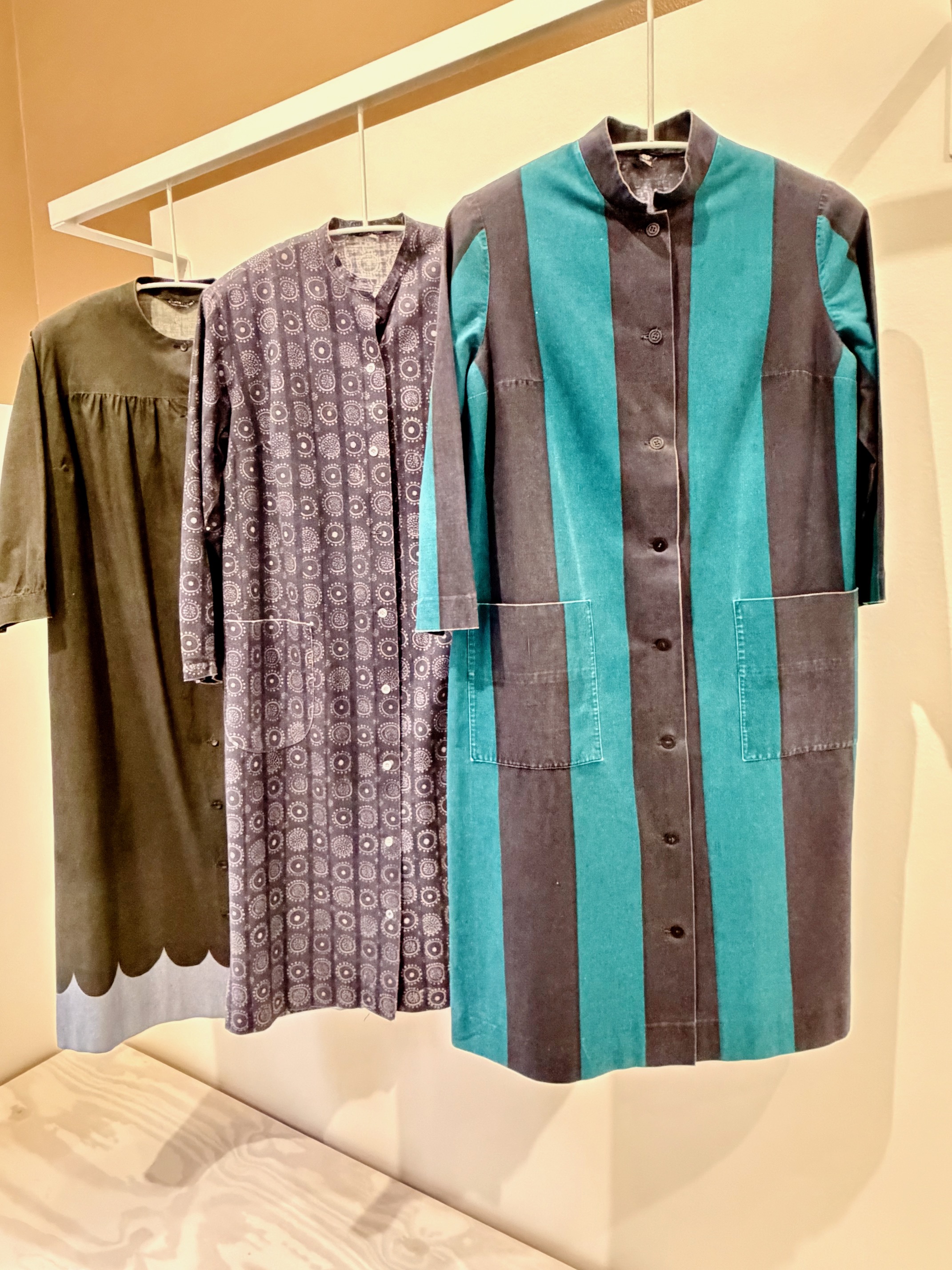
Fans have had a special opportunity to get up close to that iconic black dress and gaucho hat, OK Calder pin, denim apron, and Marimekko dress in Georgia O’Keeffe: Making a Life, on view in Santa Fe through October 19 2025 at the O’Keeffe Museum.

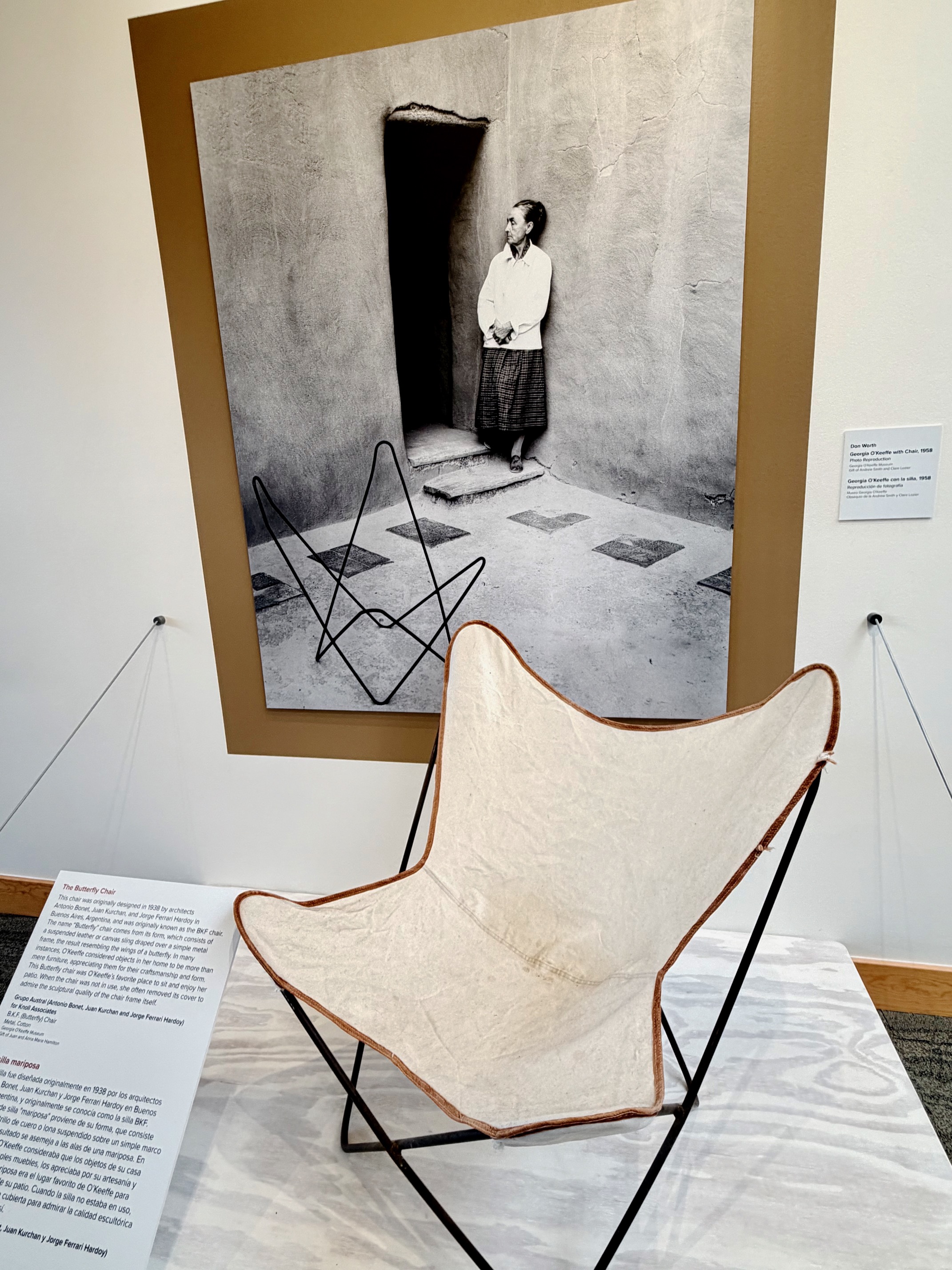
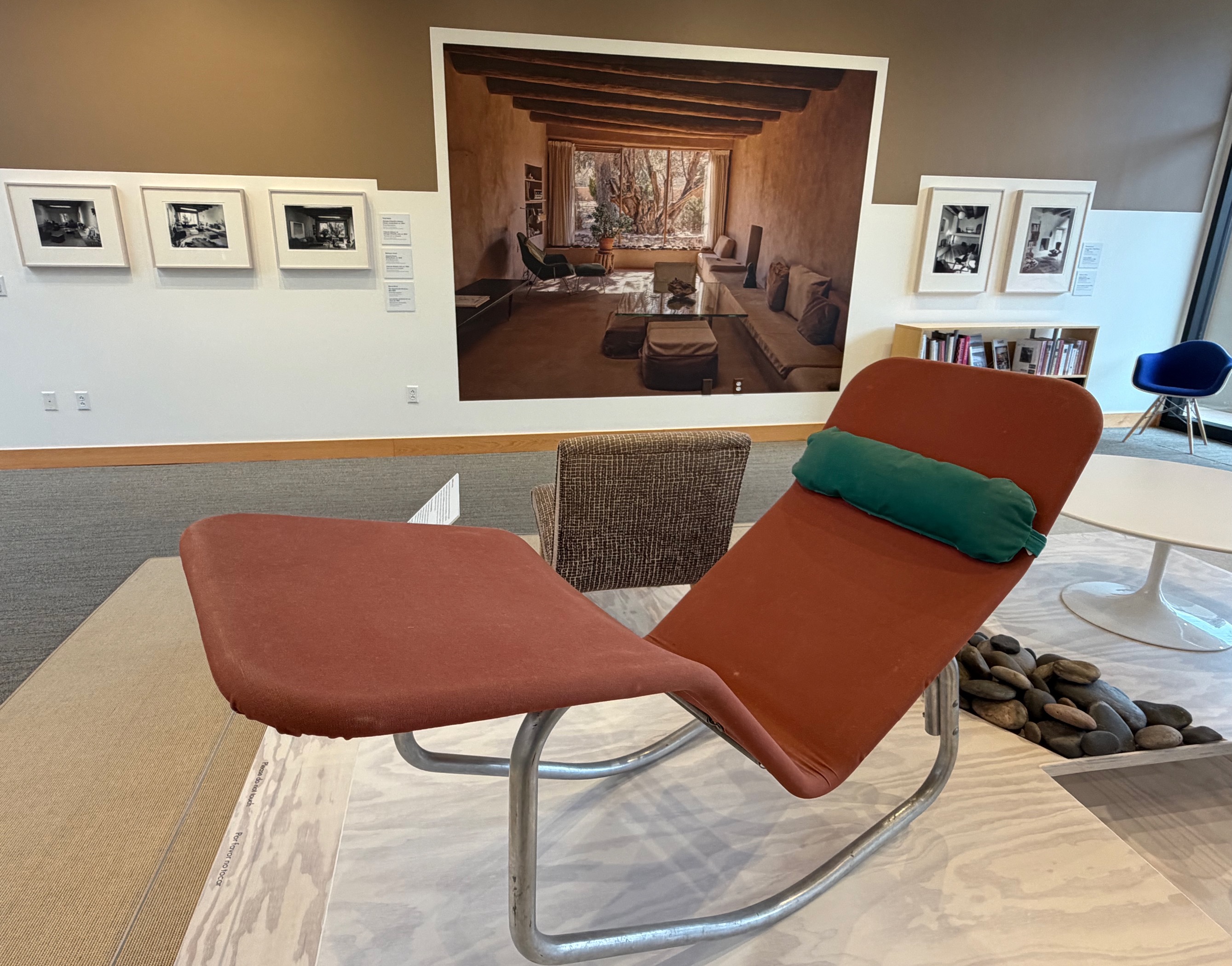
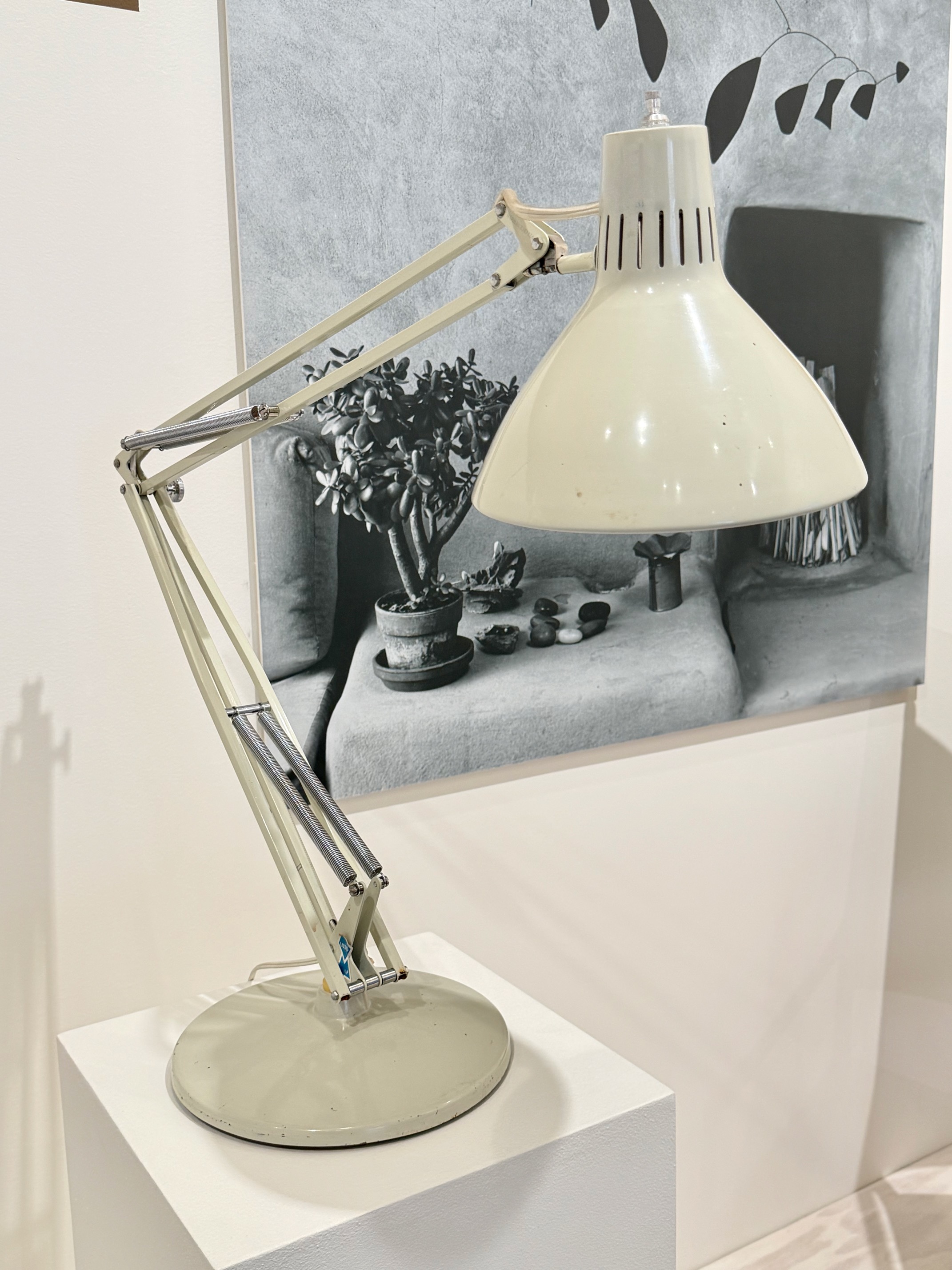
After you’ve walked through a somewhat chronological presentation of Ms. O’Keeffe’s paintings in the museum, the final two galleries allow you to take a close-up look at tools, cookbooks, and other stuff that she used to make things – sculpture, recipes, pastels, and clay pots.

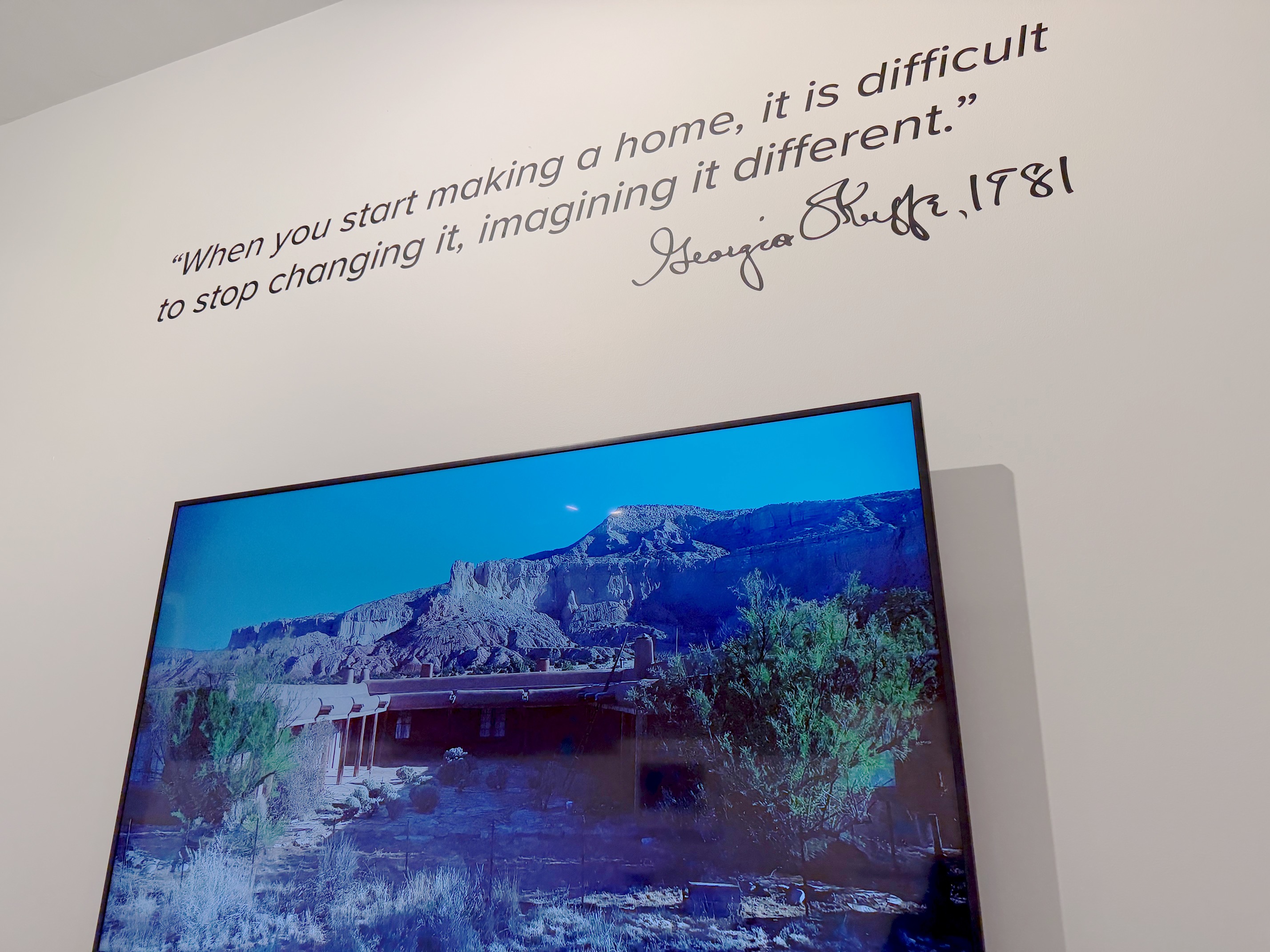
Photomural of Todd Webb’s 1962 photograph Georgia Making Stew, Ghost Ranch.

Due to the overwhelming popular response to Living Modern, the traveling exhibition that featured O’Keeffe’s wardrobe and chronicled how she portrayed herself for the greatest photographers of the 20th century, the museum curators decided to give visitors a little taste of the woman behind the art.

See some of our favorite things in our Flickr album here, and listen to the museum’s audio guide here.

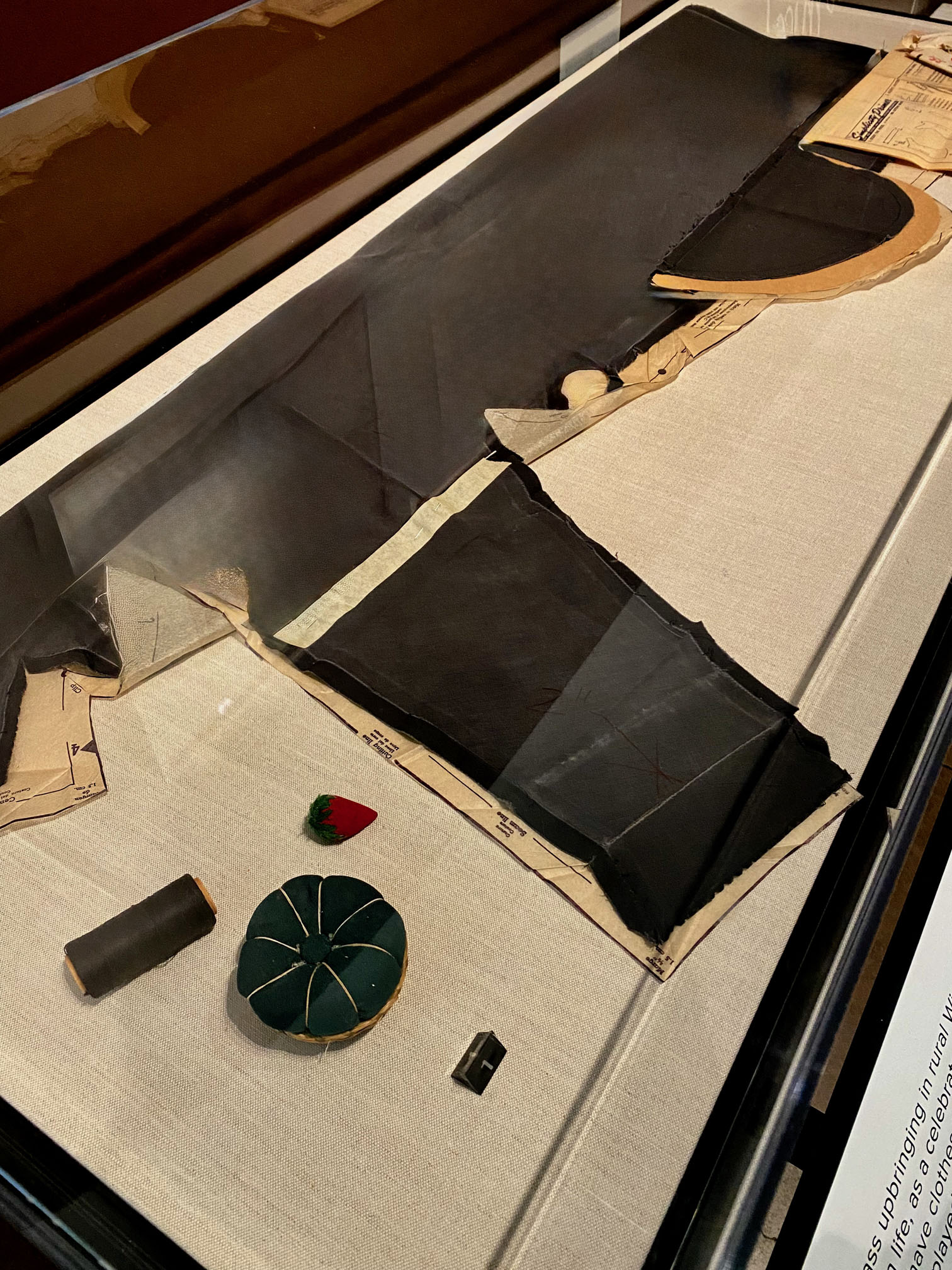
It’s the first time that the O’Keeffee Museum has itself presented her clothing. To emphasize the “making” part of her life in New Mexico, they’ve included a case showing how Santa Fe artist Carol Sarkasian moonlighted as Georgia’s seamstress. There’s a case with sewing notions and cut pattern pieces for another version of Georgia’s always in-style black wrap dress. She totally believed in multiples!

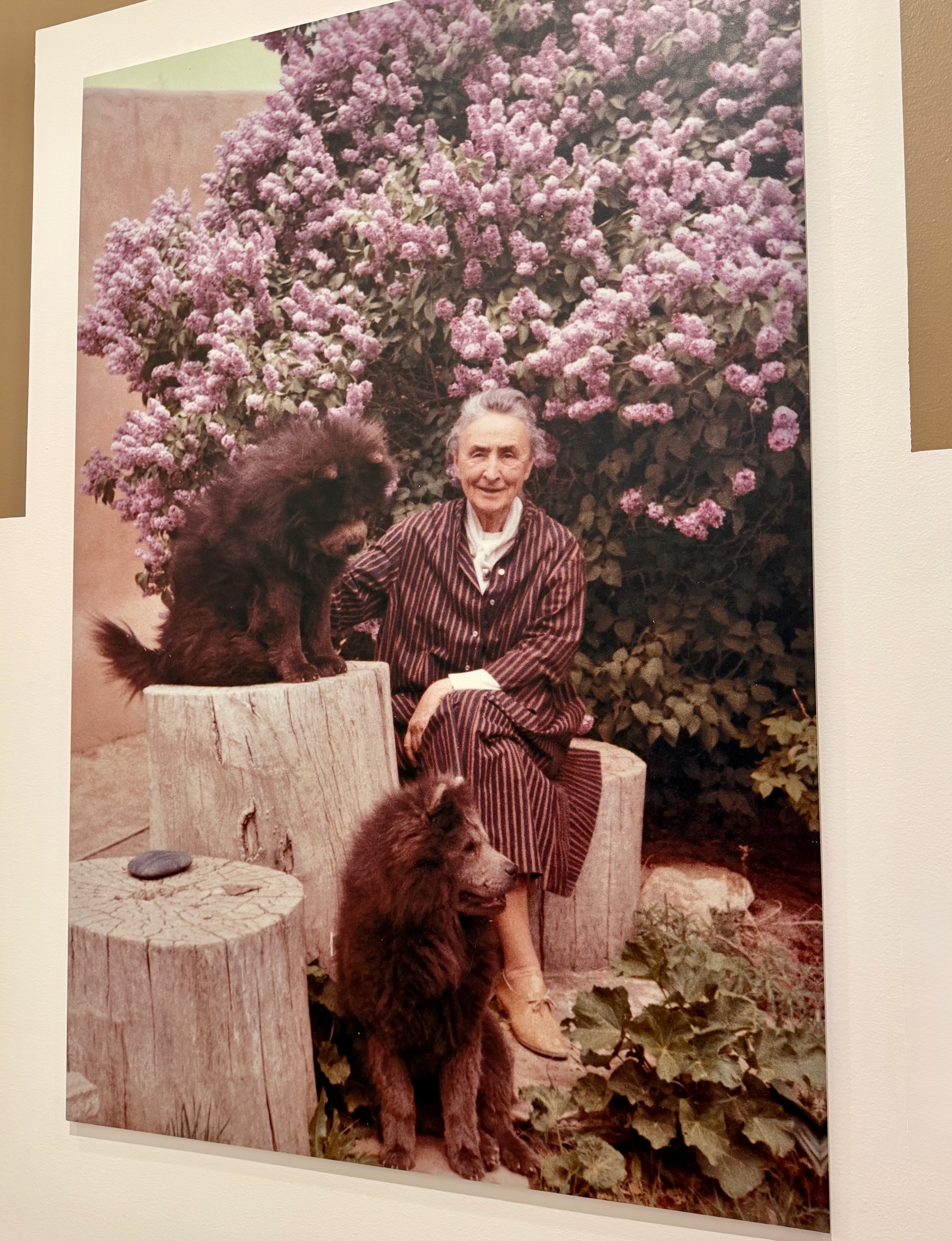
Georgia’s iconic 1960-1970 wrap dress sewn by Carol Sarkasian with 1950 belt by Hector Aguilar; Tony Vacarro’s 1960 Portrait of O’Keeffe with one of her dogs.
 
Sewing notions, cut fabric, and tissue-paper pattern – Carol Sarkasian’s preparation to make a wrap dress for Ms. O’Keeffe.

She also believed in wearing her clothes for a long time, and so they showed they had years of life.

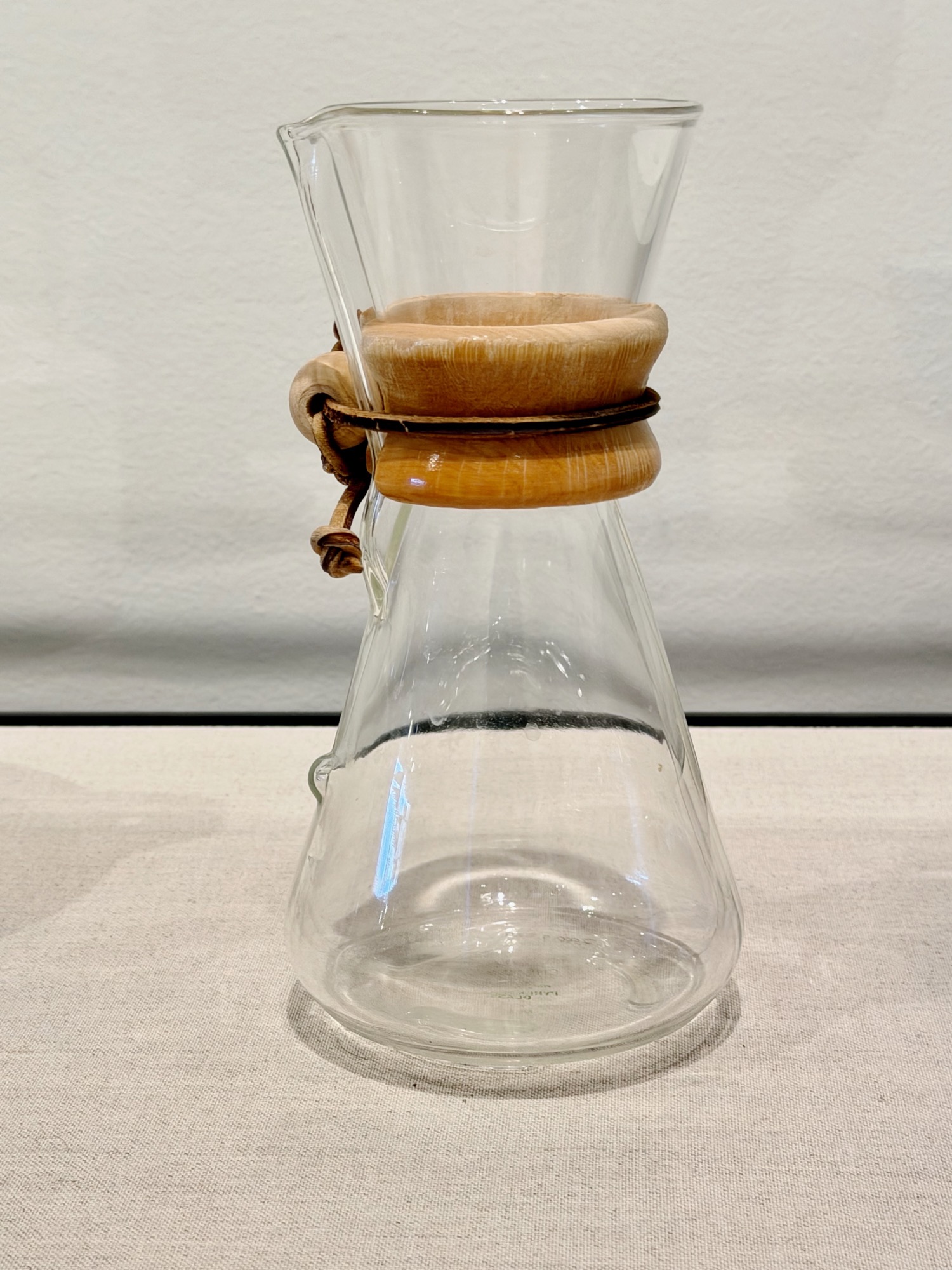
The most popular feature of her Abiquiu home tour is the kitchen and pantry, and learn about Georgia’s farm-to-table approach with her garden, recipies, and day-to-day lifestyle.  Here, you get a glimpse of the modern and traditional appliances used for her daily coffee ritual (yes, she loved Bustelo!) and get to peruse a sampling of her cookbooks and hand-written recipies. 

Shelves with Georgia’s pantry items

One of her unrealized dreams was to write a cookbook, and it shows. She was all about healthy eating and living, and in her later years she relied upon her trusted Abiquiu team to assist with gardening, cooking, and putting out a spread for the constant stream of visitors.  (No recluse, she!)

From the pantry: Georgia’s cookbooks with her hand-written breakfast, rice, and drink recipe cards.

The final room shows the process and tools she used to create her paintings, pastels, and sculptures

There’s a dramatic photomural of Georgia standing in front of her largest sculpture – temporarily housed nearby at the New Mexico Museum of Art until the new GOK museum is built.  Beneath, you see several prototypes – a wax spiral made in 1916 and bronze maquettes from the Forties.

Cast when she was in her nineties, the case demonstrates that she kept making versions of this her whole life and finding inspiration from stuff found on her New Mexico wanderings.

Bruce Webber’s photo of Georgia and her 1979-1980 spiral sculpture; the case below with its inspiration – a ram’s horn and earlier maquettes.

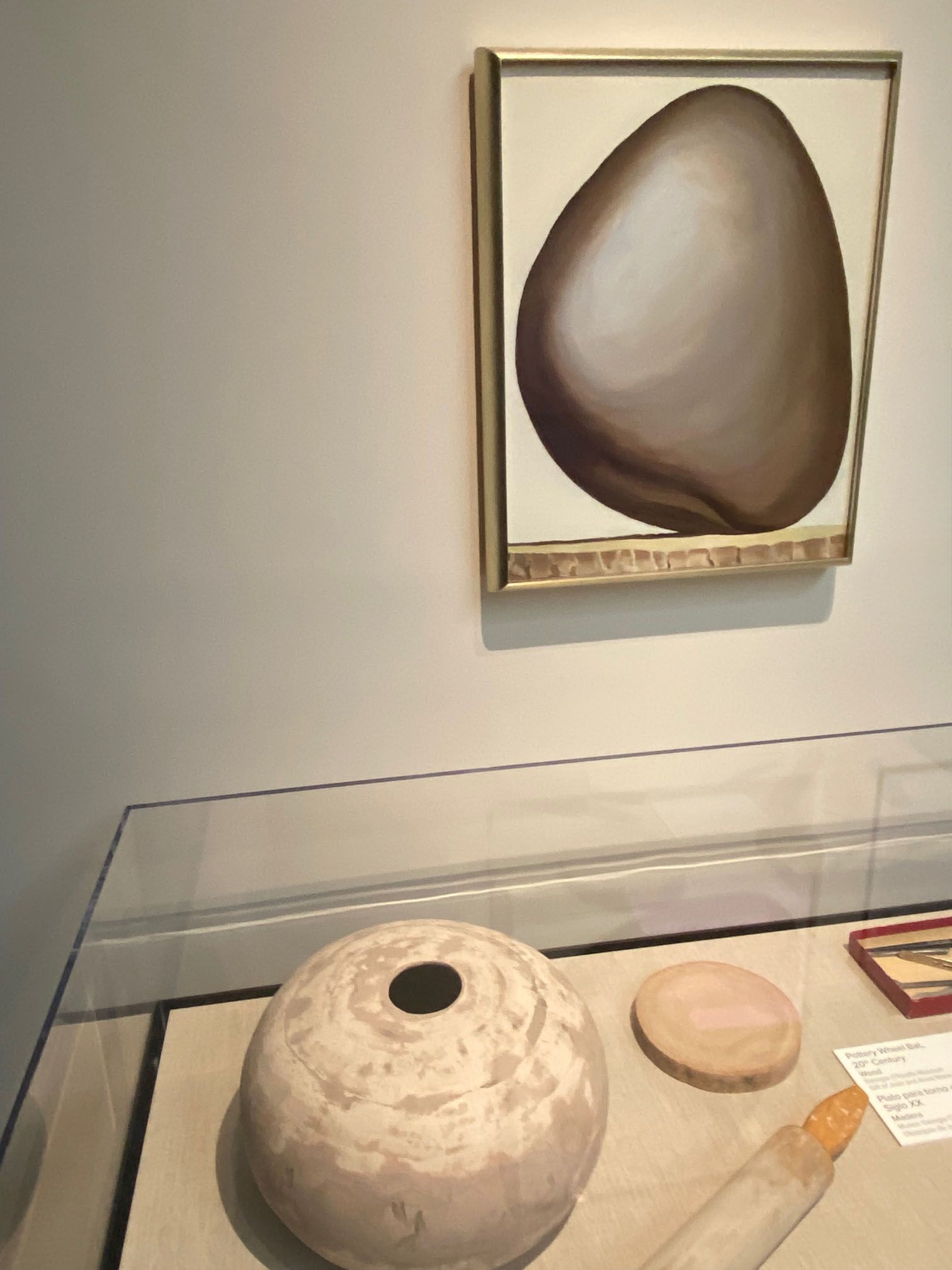
There are things from her travels to Japan, an unfinished work on an easel, and a case showing the pot she made when her assistant, Juan Hamilton, convinced her to keep making shapes, even when her macular degeneration made it impossible for her to paint.

The round, smooth shape echoes the rocks that she liked to collect, so it’s fitting that the museum paired her tools and pot with a beautiful oil painting done of one of her favorites.

1963-1971 Black Rock with White Background; below, Georgia’s 1980 stoneware pot and tools– a pottery wheel bat and Sears rolling pin.
Georgia’s denim studio apron and an unfinished work – a pencil sketch on primed canvas.

For more on Georgia and her life, listen to Pita Lopez, who worked as a companion and secretary for Miss O’Keeffee from 1974 to 1986 and later oversaw maintenance and preservation of her Abiquiu and Ghost Ranch homes.

O’Keeffe Above and Beyond the Grid

Six years before she became transfixed with the drama of the colorful New Mexico desert, Georgia O’Keeffe began translating another magnificent, magical view from her skyscraper home in Manhattan. You can see all her transformational aerial cityscapes in Georgia O’Keeffe: “My New Yorks” on view at Atlanta’s High Museum of Art through February 16, 2025.

Created by the Art Institute of Chicago, the show assembles Georgia’s breakthrough city paintings and puts them squarely into the context of her better-known nature close-ups and other modernist takes – just the way she wanted it.

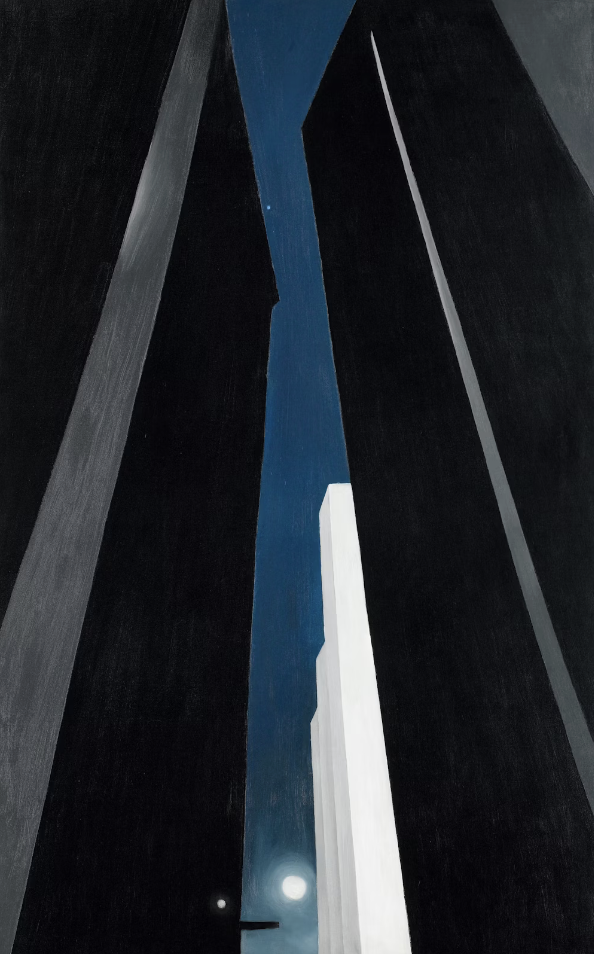
O’Keeffe’s 1927 Radiator Building – Night, New York. Courtesy: Crystal Bridges Museum of American Art

Listen to the Art Institute curators talk about Georgia’s approach to New York landscapes, her life in the city’s Roaring Twenties, and what inspired her walking Manhattan’s grid at a time of of such transformational urban change:

As a total modernist, Georgia couldn’t wait to move into the Shelton Hotel, a brand-new skyscraper, with her brand-new husband (Stieglitz) in 1924. As half of New York’s art-world “power couple” it’s most likely that Georgia was one of the first women to enjoy high-rise living in Manhattan.

O’Keeffe’s 1926 The Shelton with Sunspots, N.Y. Courtesy: Art Institute of Chicago

The Shelton (still there at Lexington and 49th Street) was an apartment-hotel built in Midtown around Grand Central. Although it was first envisioned as a men’s residence, the marketing team soon pivoted a more expanded market with newspaper ads that would attract women, couples, and artists!

Read more about the Shelton, Georgia’s life there, and see 1920s photographs on the Art Institute’s blog post.

Georgia and Alfred moved in, captivated by the views of the East River and rapidly changing Manhattan skyline, where new skyscrapers were popping up like daisies.  Alfred took photographs and Georgia recorded ths shifting light, atmosphere, and moods of the rapidly changing landscape.

O’Keeffe’s 1928 East River from the 30th Story of the Shelton Hotel.
Courtesy: New Britain Museum of American Art.

As the exhibition demonstrates, Georgia didn’t limit herself to urban landscapes at the time. She was still depicting the natural world, but was determined to channel the rising modern city.  At the time, Alfred and her fellow artists strongly discouraged her from displaying her urban work, arguing that painting cityscapes was “best left to the men.”  You can just imagine what our Georgia thought about that! Naturally, it was full steam ahead! 

Before Google Street view, Georgia walked the Midtown Grid, exploring (and remembering) her neighborhood streets as they transformed into skyscraper canyons. More high rises! The Empire State Building! Rockefeller Center!

O’Keeffe’s 1926 City Night. Courtesy: Minneapolis Institute of Art
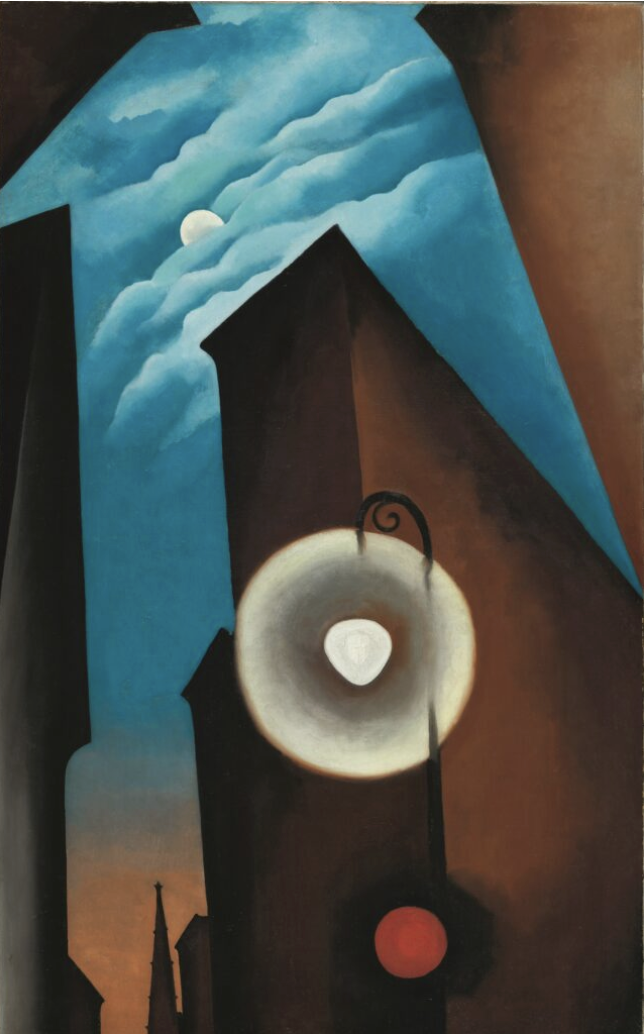
O’Keeffe’s 1925 New York with Moon. Courtesy: Carmen Thyssen Collection

Who knows if Georgia ever experienced Manhattanhenge, but she certainly enjoyed the verticality and sky views between the buildings.  A nature-lover, modernist, and virtuoso painter! 

Despite Stieglitz’s misgivings about her city paintings, when she finally had her annual one-woman show at his gallery, her city painting was the first work that sold!

The curators have hung some of Georgia’s paintings just as she displayed them – side-by-side flower close-ups, other nature-inspired works, and City views – to provide the full experience of a modern woman’s mastery.

O’Keeffe’s 1924 From the Lake, No. 1.
Courtesy: Des Moines Art Center
O’Keeffe’s 1929 Black Cross, New Mexico.
Courtesy: Art Institute of Chicago

For more, here’s a longer discussion about Georgia rip-roaring 1920s life and work by one of the Chicago Art Institute curators for Georgia O’Keeffe Museum members.

How O’Keeffe Saw Trees

Whether she contemplated her surroundings among the greenery at Lake George or the multicolord rocks at Ghost Ranch, Georgia O’Keefe often started by sketching the trees around her.

in Rooted in Place, a special exhibit at the Georgia O’Keeffe Museum in Santa Fe through November 3, 2024, you are surrounded by Georgia’s watercolors, oils, and sketches interpreting (and abstracting) trees she encountered on her walks and international travels.

Take a look at our favorites in our Flickr album.

Georgia’s 1937 painting Gerald’s Tree I, a tree enjoyed by her friend, science historian Gerald Heard

The curators have selected works from the full span of Georgia’s life. The earliest are from her trips to Lake George, such as the glorious autumn maples surrounding the Stieglitz home.

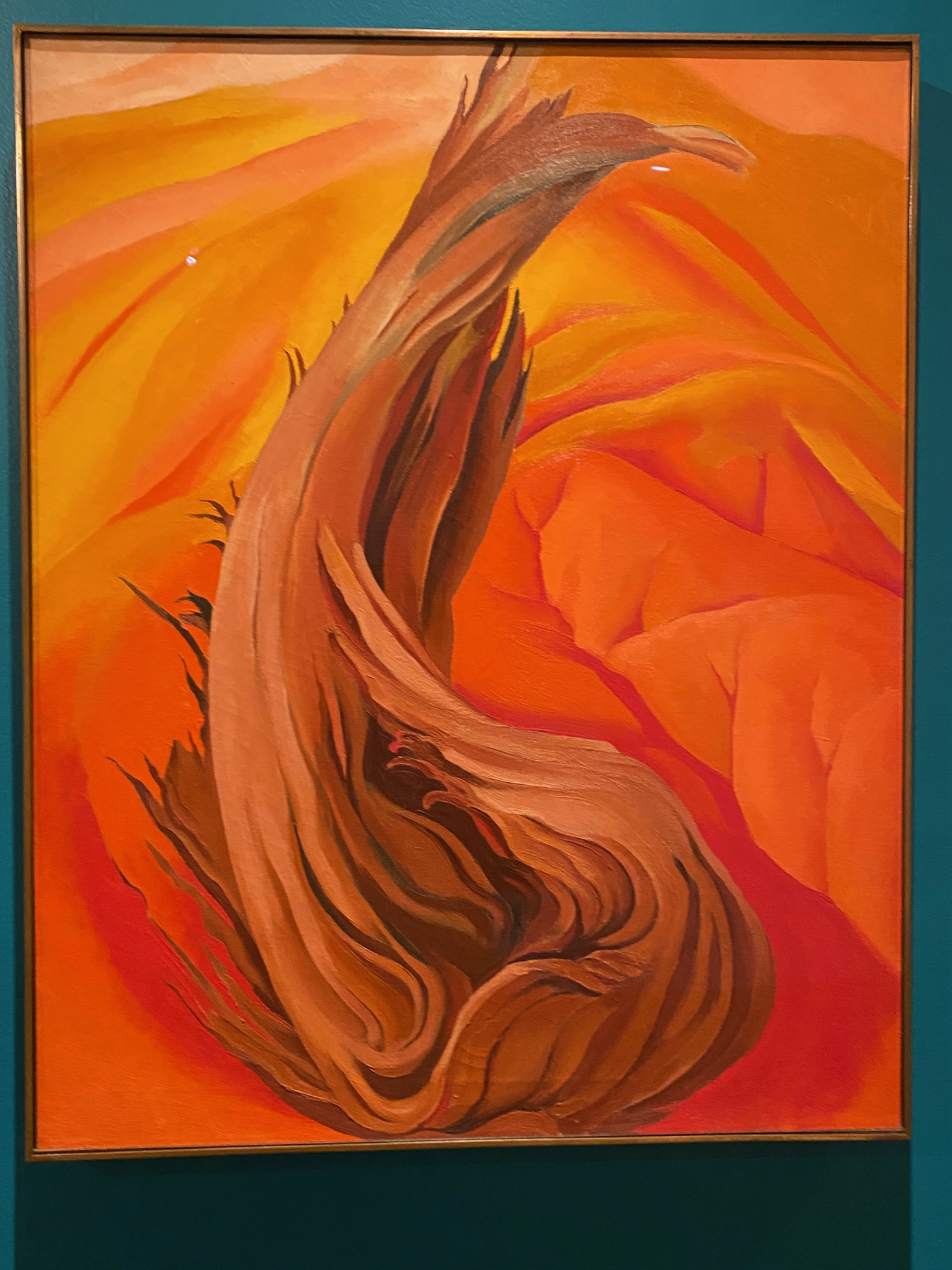
The show’s curators leverage Georgia’s habit of collecting inspirational bits and pieces of nature from her Ghost Ranch walks, showing the twisted juniper she brought home alongside the dramatic oil painting in which it stars.

Piece of juniper that Georgia collected from the land surrounding her Ghost Ranch home.
Georgia’s 1940 painting Stump in Red Hills

The museum’s collaboration with the Santa Fe Botanical Garden adds scientific insights about the three cornerstone species of New Mexico wilderness that from which Ms. O’Keeffe drew inspiration – pinons and junipers next to the red rock, and wide, leafy cottonwoods along the river.

Georgia’s 1930 Cottonwoods Near Abiquiu showing the breeze catching the wide branches

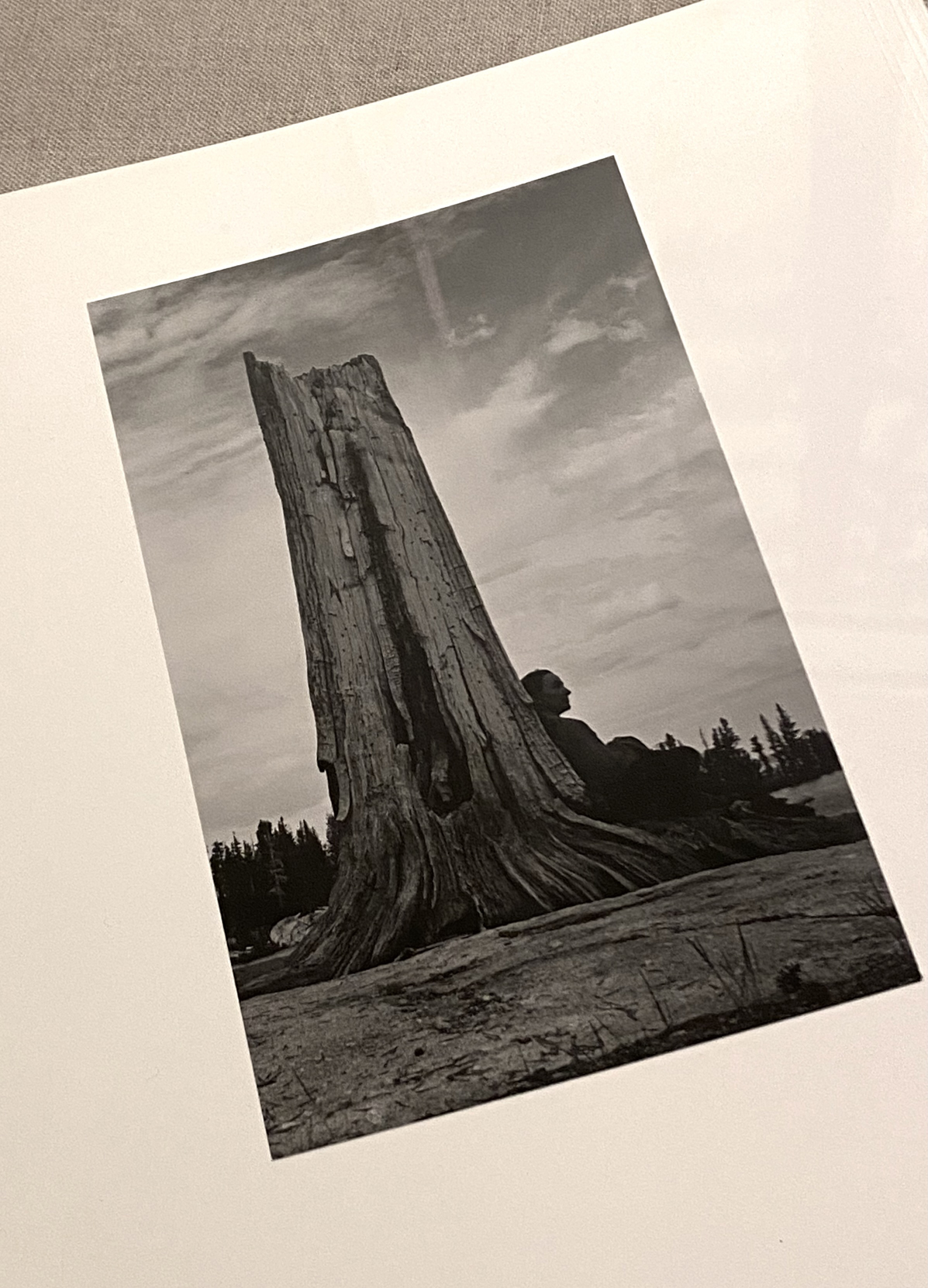
A gorgeous photo by Ansel Adams shows Georgia nestled up against one of her favorites nearby in the desert. She loved the fruit trees she planted near her home garden, but she never painted them.

When Georgia was a young student at the Art Institute of Chicago in 1905-1906, she studied with John Vanderpoel, well known for being a master educator in figure drawing. Looking at her drawing of a banyon tree from her trip to the Bahamas over thirty years later, it’s clear she employed those early lessons – bringing trees to life as living beings in her work ­– throughout her life.

Ansel Adams’1938 portrait of George O’Keeffe resting against a dramatic tree stump in northern New Mexico
Georgia’s 1934 figure-like drawing Banyon Tree created on her trip to Bermuda

Listen to the museum’s panel about Georgia’s approach to painting her favorite trees and the role they play in the ecosystem of northern New Mexico:

O’Keeffe Museum Shows Georgia at Home

One of the most photographed artists of the 20th century, everyone is used to seeing Georgia O’Keeffe in her “formal” pose and gear – angular black hat, stark wrap dress, punctuated by her modernist Calder pin, standing against the New Mexico sky peering solemnly into the future.

In its latest offering, the Georgia O’Keeffe Museum is giving fans a special treat (and a different view) through its exhibition, Georgia O’Keeffe, a Life Well Lived: Photographs by Malcolm Varon, on display in Santa Fe through October 31.

2021 print of Varon’s 1977 photo of Georgia relaxing at Ghost Ranch. Courtesy: the artist
Georgia’s 1946 Part of the Cliff, a painting inspired by the view through her studio window.

The show features a smiling, at-ease 89-year-old surrounded by family, friends, companions, and pets – images quite apart from the GOK that we all admire and revere. How did this happen?

In the 1960s in New York, photographer Malcolm Varon established quite a reputation for documenting painters’ works in a way that captured a lot of their spirit. No wonder that in the mid-1970s, he was summoned out to Ghost Ranch and Abiquiu to document some of Georgia’s huge body of work.

While he was working with the artist during the summer of 1977, a journalist arrived to interview the icon for a feature in ARTnews.

No photographer had been attached to the story, so Georgia came up with hew own solution – ask her colleague Malcolm to shoot her in the setting of her Ghost Ranch home.

Since Malcolm was already familiar with the operations around Ghost Ranch and Abiquiu, he ended up taking about 300 photos of her homes, the landscapes that inspired her, and the people who kept things humming.

2021 prints of Varon’s 1977 portraits of Ida Archuleta, Candelaria Lopez, and Estiben Suazo, the people who managed Georgia’s homes and properties. Courtesy: the artist.

Despite Georgia’s reputation as a loner living out in the middle of nowhere, Malcolm appreciated that the day-to-day operations in the outback were quite fun, busy, natural, and happy at her two studio compounds.

ARTnews made a few selections from Varon’s photographs and ran them in the feature, but the majority of the 300 shots were never printed or seen…until now.

Visitors at the GOK museum pour over every detail of the portraits and landscapes, enjoying a new, different glimpse of the artist and her world – Varon’s portrait of Georgia’s sister, beautiful portraits of her property caretakers (whose families still take care of the GOK home for the museum), and her assistant Juan Hamilton.

The curators present several paintings from the 1940s showing the same cliffs, landscapes, and skies that Varon captured in the summer of 1977. Visitors have fun shifting back and forth between the oil paintngs and photos.

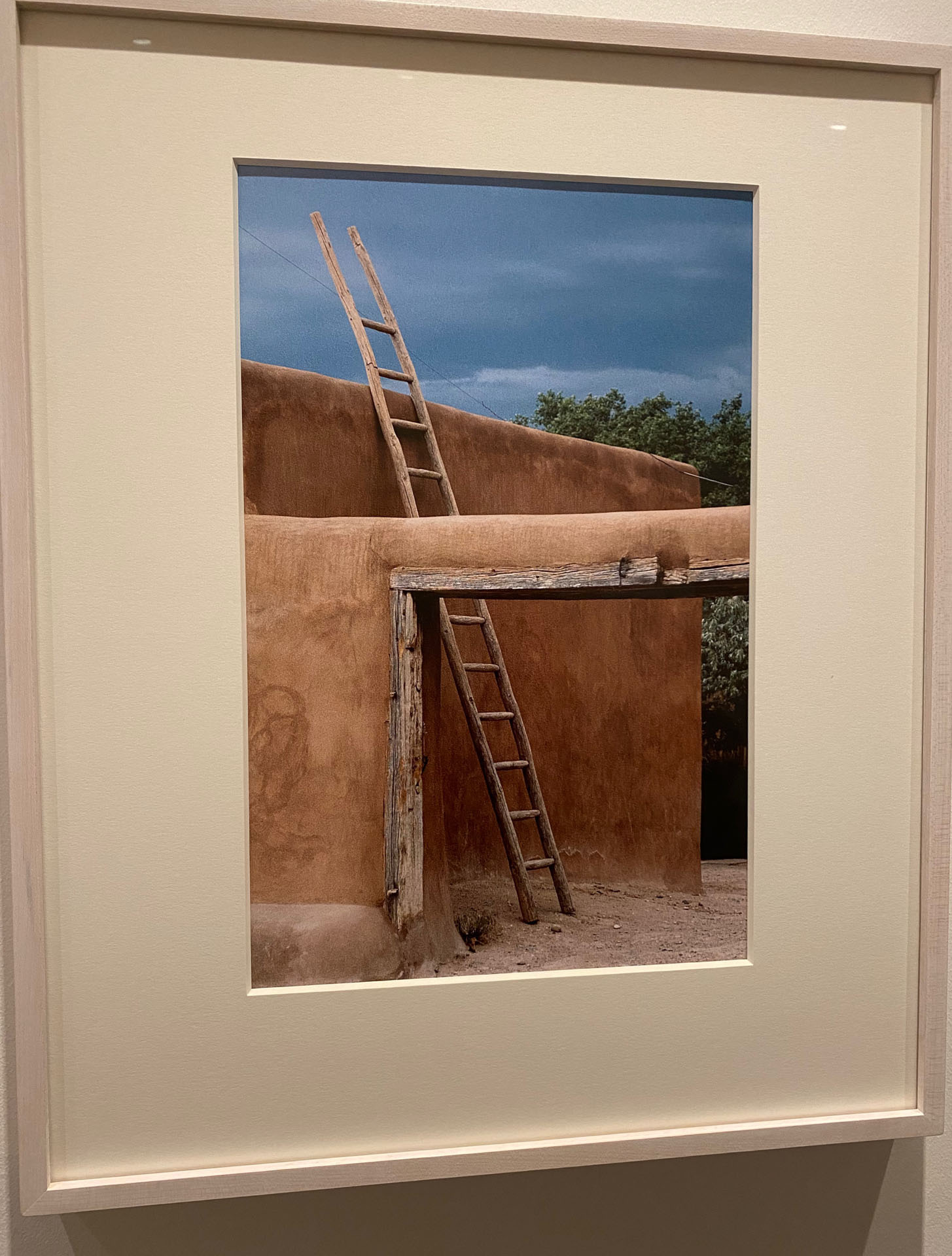
2021 print of Varon’s 1977 photograph of the tall ladder at Georgia’s Abiquiu home – a platform from which she surveyed the world. Courtesy: the artist

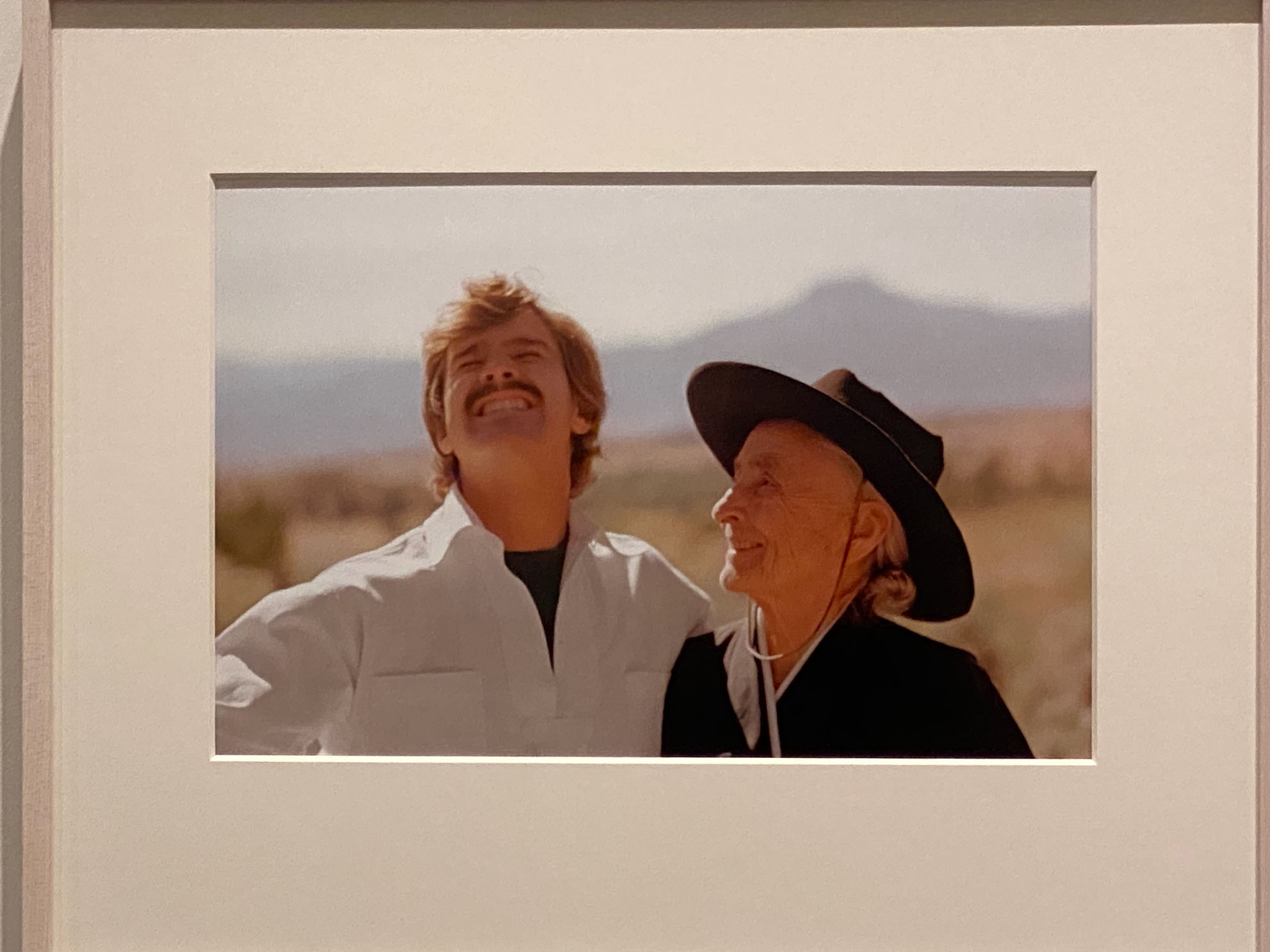
2021 print of Varon’s 1977 fun photograph of Georgia at Ghost Ranch with her friend and assistant, artist Juan Hamilton with the Pedernal as backdrop. Courtesy: the artist

Take a look at some of our favorites in our Flickr album.

Listen in as the curators of this delightful show draw back the curtain on the legendary O’Keeffe, her relationship with photography, and what happened when a trusted friend got her to smile for the camera: