Exploring Marie Antoinette’s Style at the V&A

In her day, she was considered a style icon, spendthrift, deviant, monster, and hapless victim. And why are we still talking about her and dissecting her lifestyle, look, and acquisitions over 200 years later?

You’ll find the answer in the South Kensington V&A galleries with portraits, clothes, artifacts, and haute couture fashion in Marie Antoinette Style, on view in London through March 22, 2026.

The Victoria & Albert Museum has pulled incredibly well-preserved fashions from its own 18th-century collection, and has also borrowed from Versailles and European collections that scooped up Marie’s stuff when it was ransacked and put on the open market after her death during the French Revolution – jewels, furniture, Sèvres table settings, and remnants of her dress fabric.
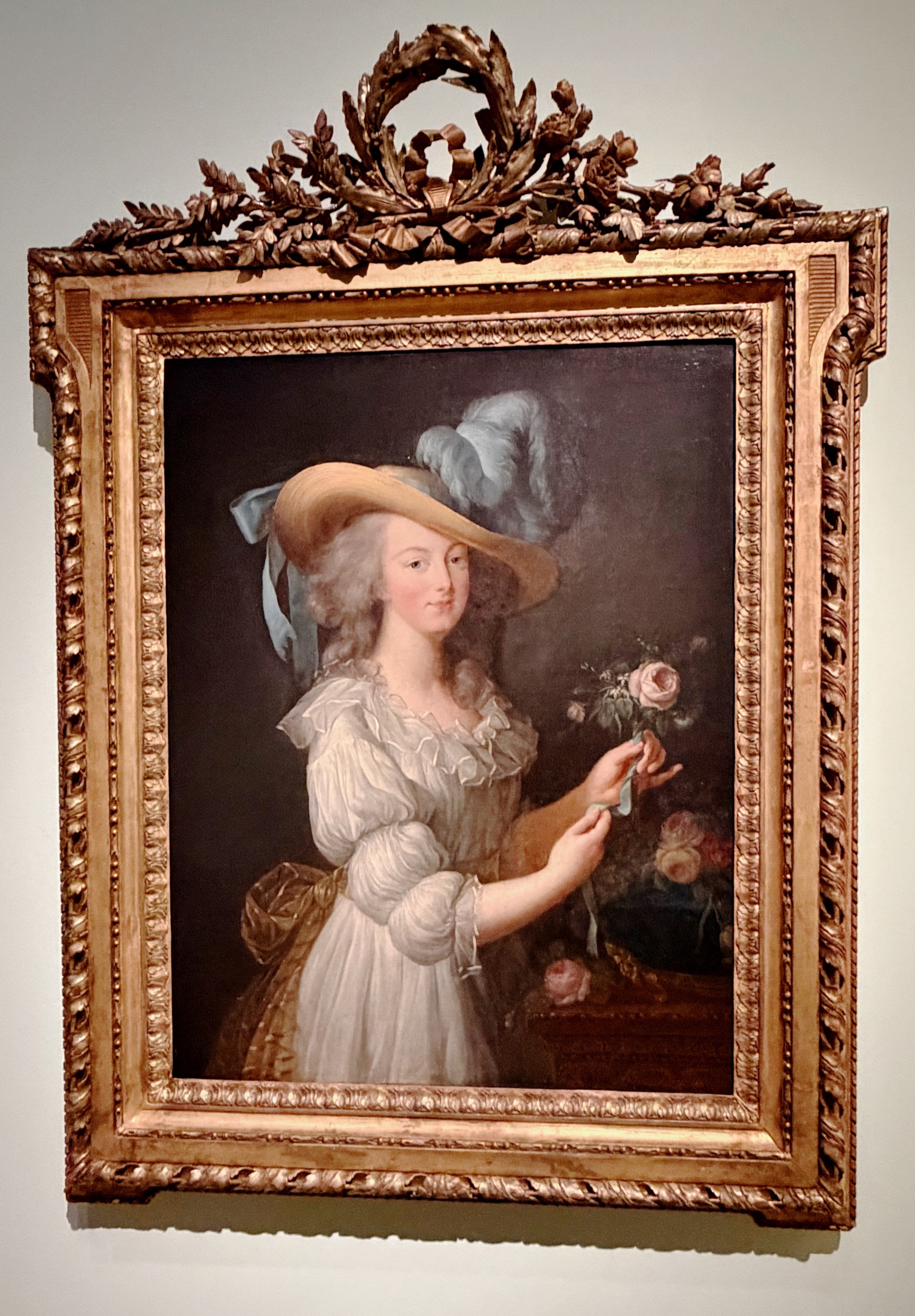
1783 Marie Antoinette in a muslin dress by Elisabeth Louise Vigée Le Brun; seeing the queen in a dress resembling underwear shocked everyone who saw it at the Paris Salon, but it soon became the style. Courtesy: National Gallery of Art, Washington, D.C.

As befitting a Versailles icon, the introductory gallery is a dazzling room of mirrors. With the dramatic illumination of opulent court dresses, wedding attire, royal portraits nof Marie, fans, and swaths of over-the-top embroidered silk, the effect is magnified by the points of light dancing across multiple reflections of sumptuously draped fabric.

Take a look through some of our favorites on display in our Flickr album.
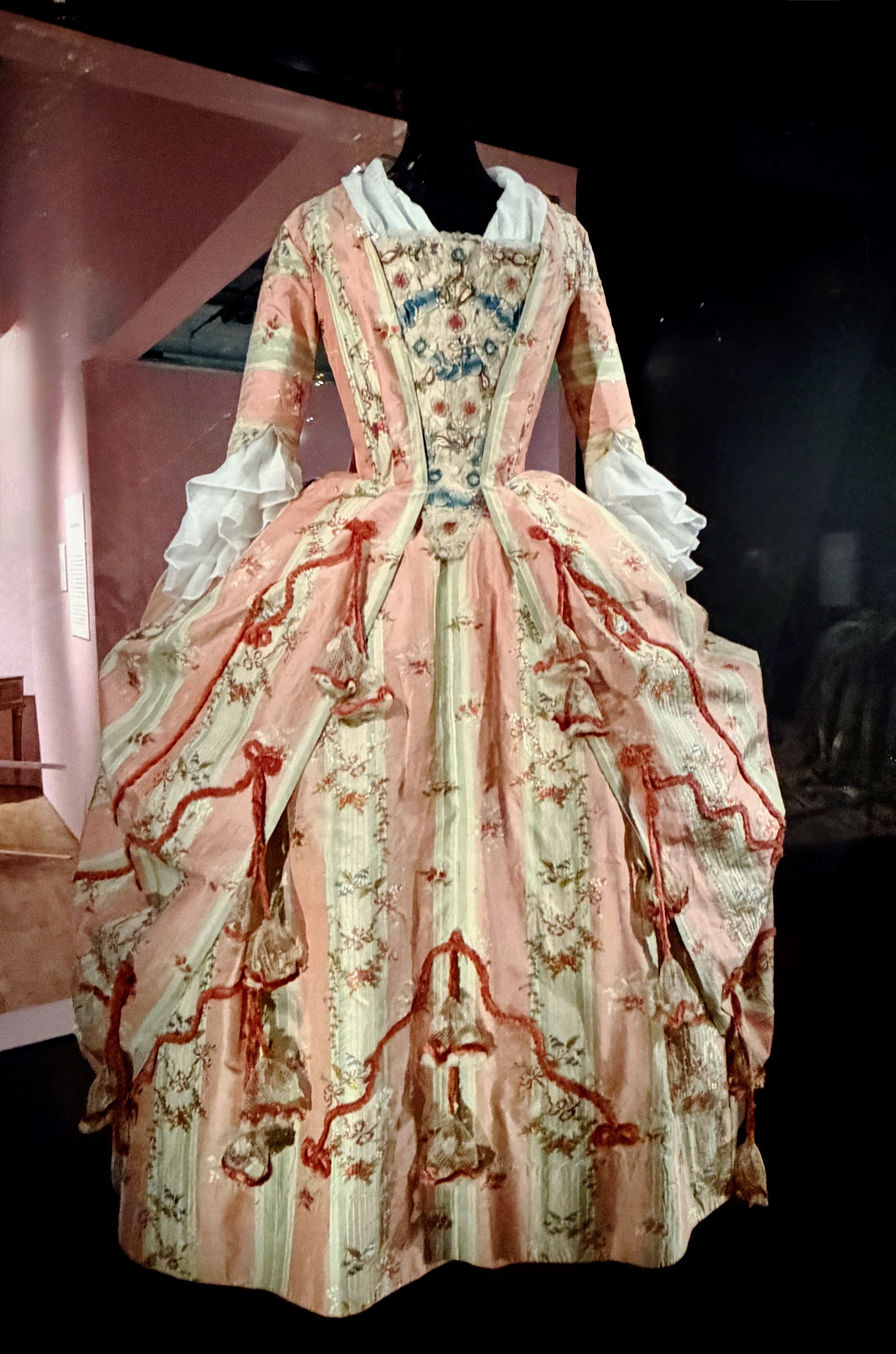
1775 French robe à la française à la Polonaise silk taffeta, silk chenille, and linen lace; less formal style with skirts looped up to create volume. Courtesy: Los Angeles County Museum of Art.
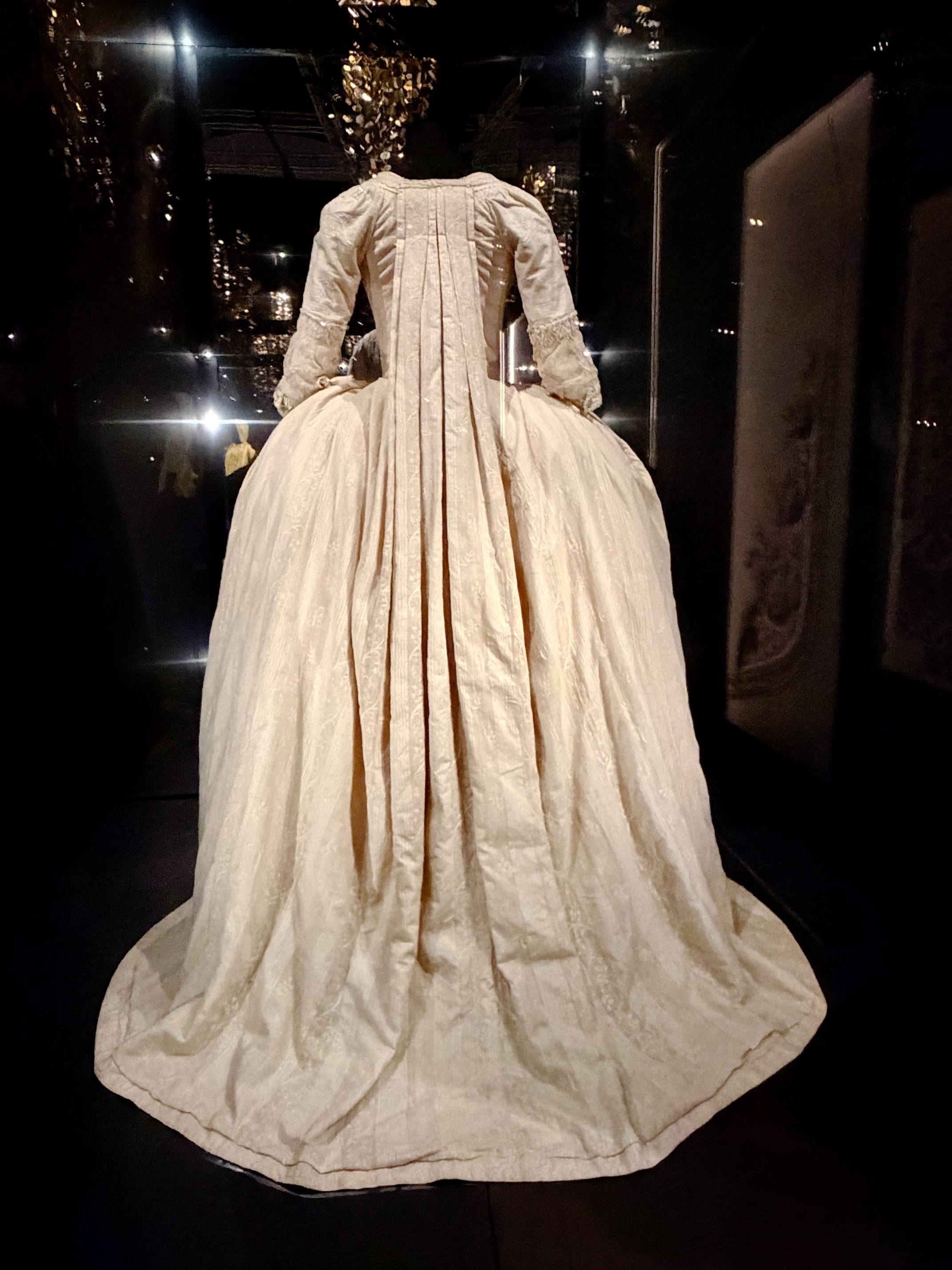
1775-1780 French embroidered cotton and linen muslin robe à la française – a fresh, light style innovated by the French court; silk lining creates a blush effect. Courtesy: V&A

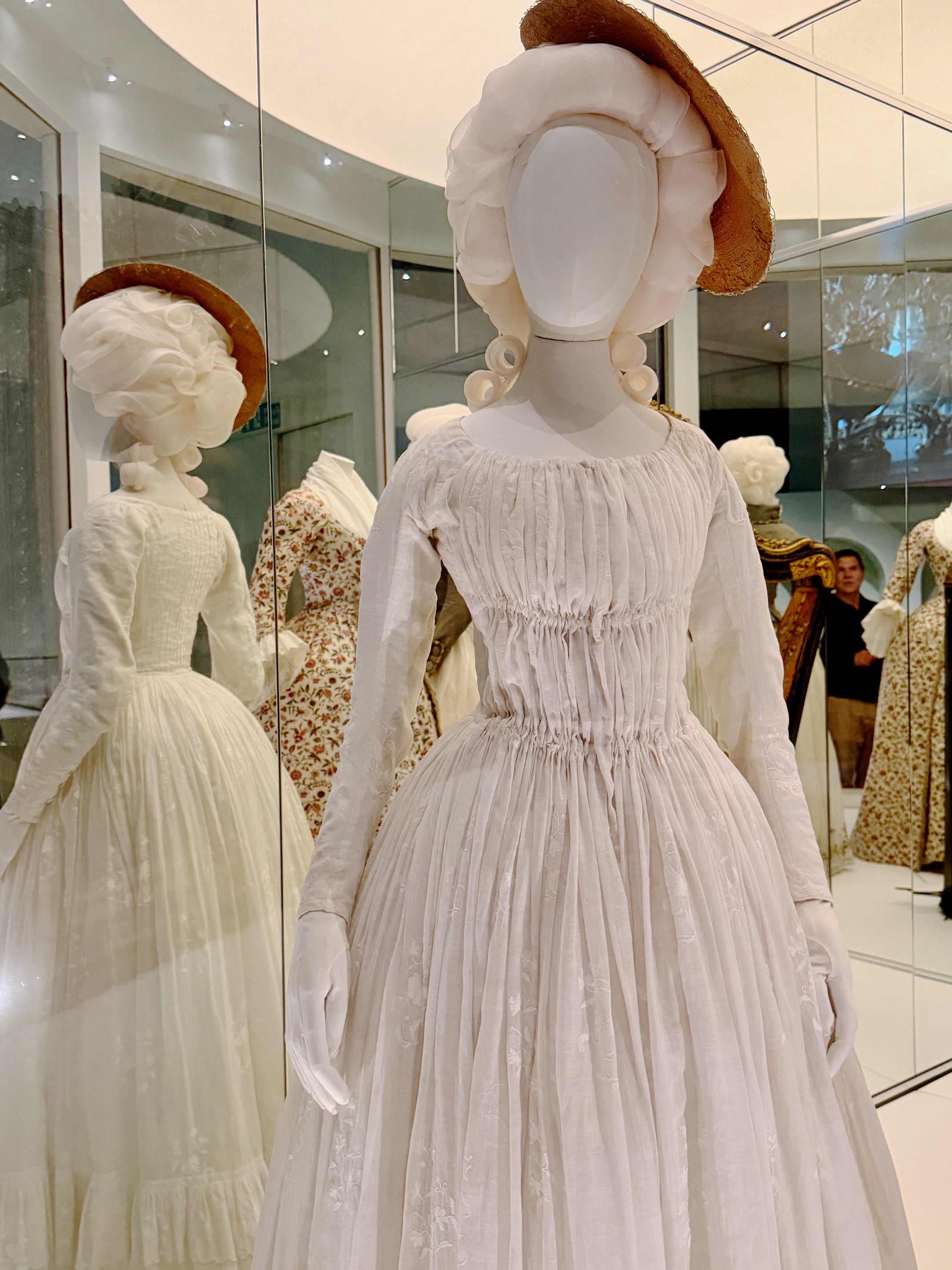
You experience how Marie’s fashion sense changed from the big-time Rococo style she sported as a teen to the more minimal muslin style she popularized as she and her friends gallivanted around the Tríanon grounds in jaunty Italian straw bonnets.
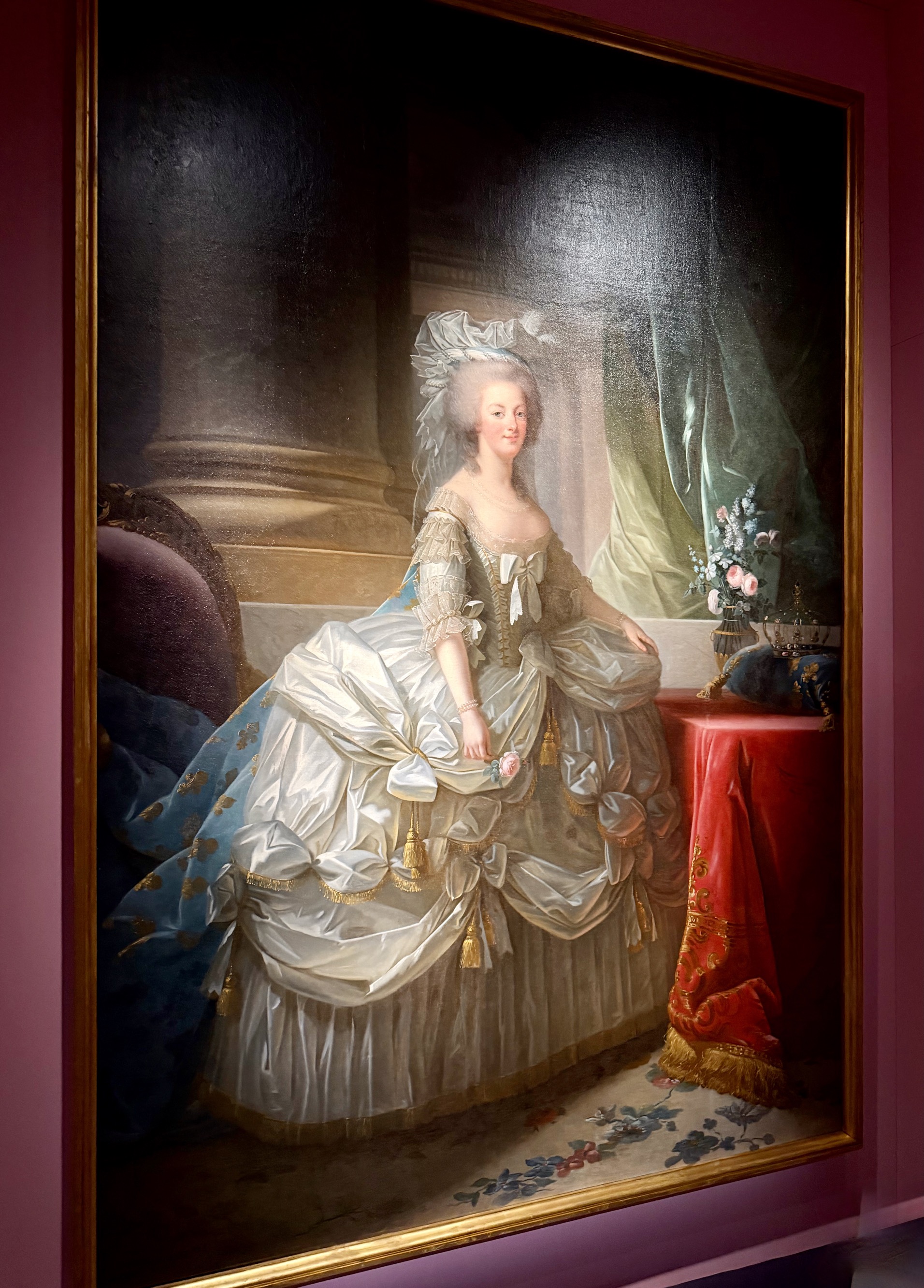
Style icon: later painting based on 1778 oil Queen Marie-Antoinette in Court Dress by Elisabeth Louise Vigée Le Brun; the queen at 22. Courtesy: Versailles, musée national des chateaux de Versailles.
Informal dress that Marie popularized: 1760-1780 “shepherdess” hat (bergères) of Italian straw and a rare 1785-1790 embroidered muslin dress (robe en chemise) owned by Madame Oberkampf of Jouy-en-Josas. Courtesy: V&A; Musée de la Toile de Jouy

Plates from 18th-century fashion publications show off the latest extravagant details of hair poufs that Marie popularized. Incredibly, there’s also an actual shoe owned by the style icon herself.  As queen, she received four new pairs of shoes per week!  Watch this short video to get a close-up view of her 230-year-old silk and kid shoe that survived!

During her reign, Marie had an outsized influence on interior design, landscape architecture, the decorative arts, and music. Her fashion selections and hairstyles were noted, discussed, and copied.

When the winds of democratic change came to France, Marie’s attire changed again to a more pared-down republican look that every patriotic woman in Paris also sported, right down to the patriotic silk cockades pinned to hats and lapels.
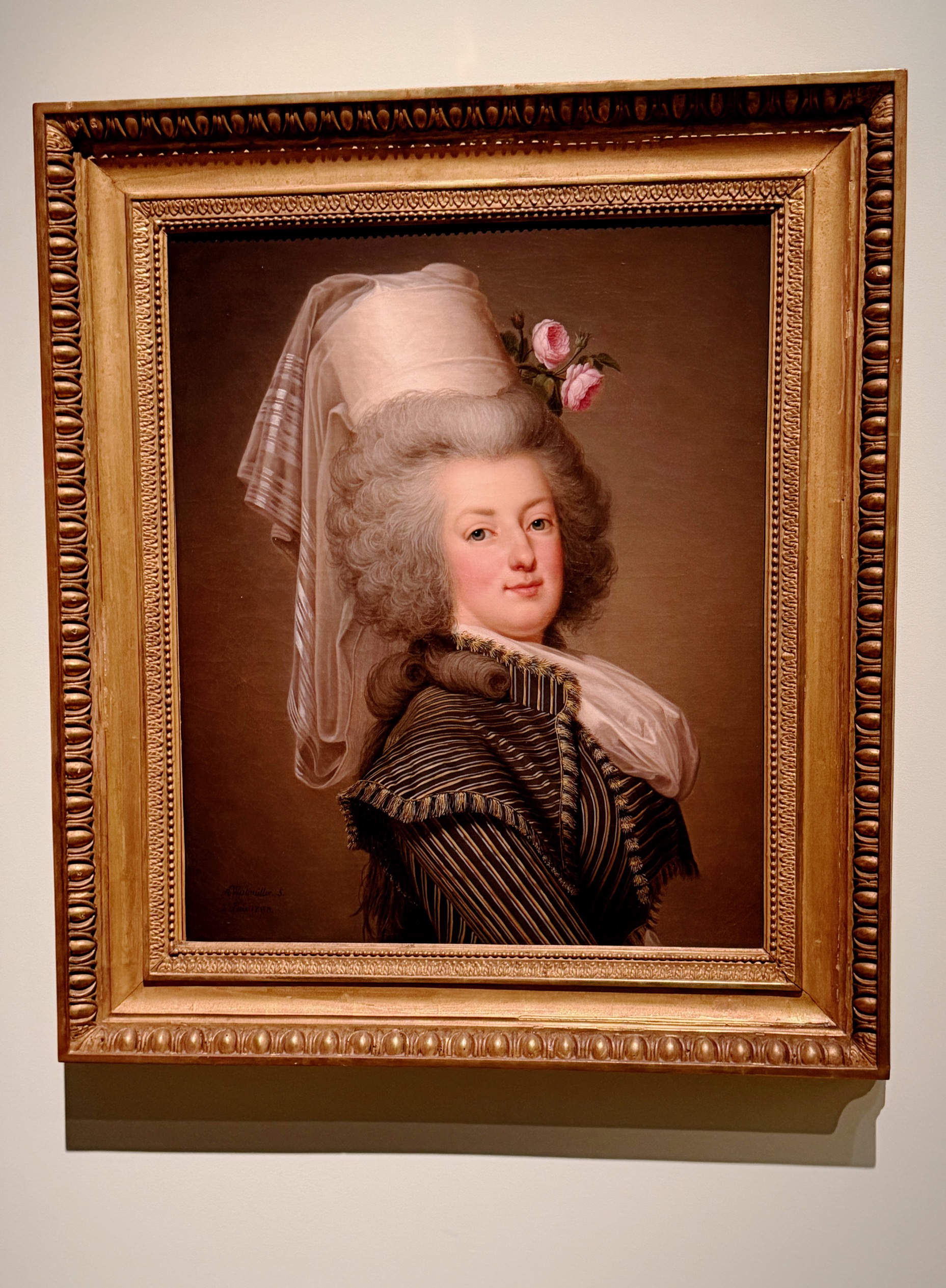
Years of the Republic: 1789 oil Marie Antoinette wearing a fashionable jacket (pierrot) and gauze-draped white silk fez; portrait by Adolf-Ulrich Wertmüller. Courtesy: Versailles, musée national des chateaux de Versailles et de Tríanon.
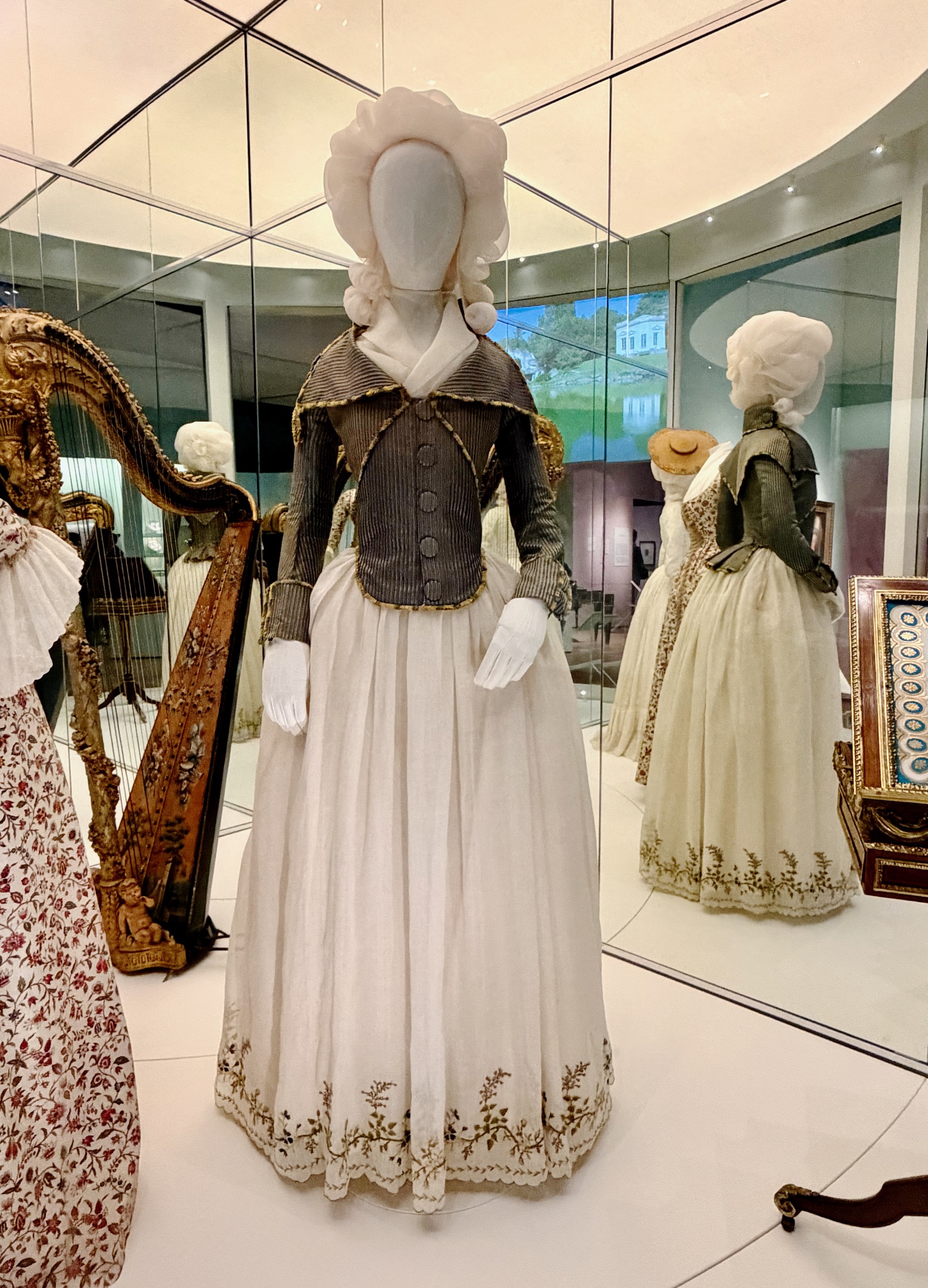
Years of the Republic: Height of French 1780s-1790s fashion – a 1790 striped silk pierrot (jacket) work atop a muslin petticoat, decorated with tambour embroidery. Courtesy: V&A

But by then public opinion had turned against Marie, largely due to the unfortunate incident that completely tarnished the public’s view of her – The Diamond Necklace Affair. In an exhibition section titled “The Queen of Sparkle,” the curators display a modern copy of the necklace that created the ruckus alongside lavish jewelry created from the diamonds removed (and resold) by an 18th-century con artist. 

Here, the V&A’s Senior Curator Sarah Grant provides a close-up look at those infamous diamonds and tells the story:

Decried, denounced, and executed, it’s remarkable that 75 years later, Marie-Antoinette style and influence had a come-back, thanks to an obsessive 19th century fan, Empress Eugénie of France.  Eugénie loved Marie’s fashion sense began sporting her look at various fancy-dress balls. She even commissioned haute courtier designer Charles Frederick Worth to design some looks, and he was happy to oblige.

Over the years, the Marie Antoinette’s Tríanon retreat had fallen into extreme disrepair and its contents scattered. Eugénie set about to find much of the furniture Marie had commissioned, did a major rehab job on the property, and had a big, public exhibition about Marie at the Tríanon’s reopening in 1867.
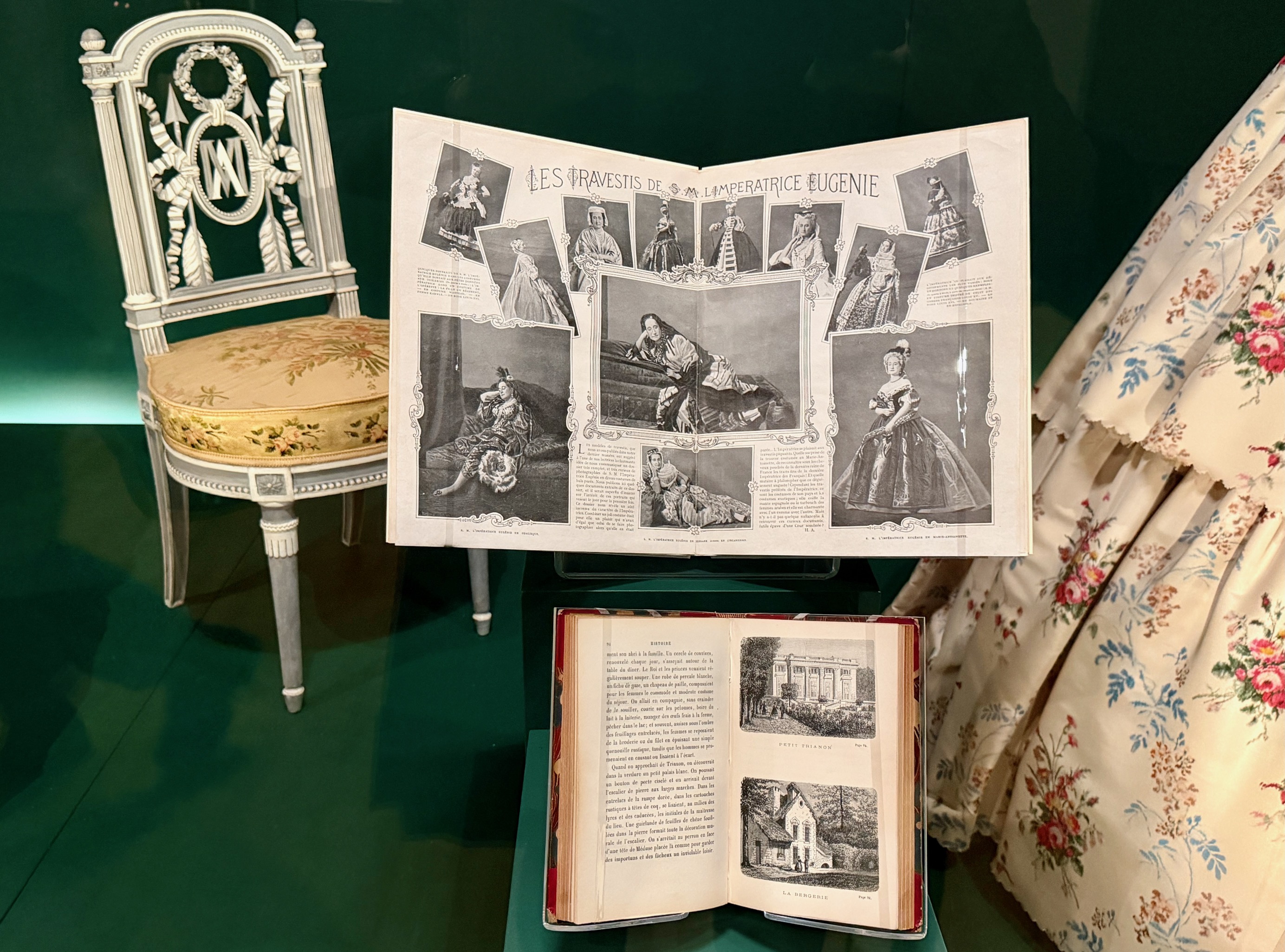
Style revival: Marie Antoinette’s 1784 carved monogrammed chair, part of a four-piece set; 1911 Fémina magazine article about Empress Eugénie’s love of big court costumes; and Eugénie’s 1867 exhibition catalogue about Marie Antoinette at the Petit Trianon. Courtesy: Versailles, musée national des chateaux de Versailles et de Tríanon; private collection; V&A

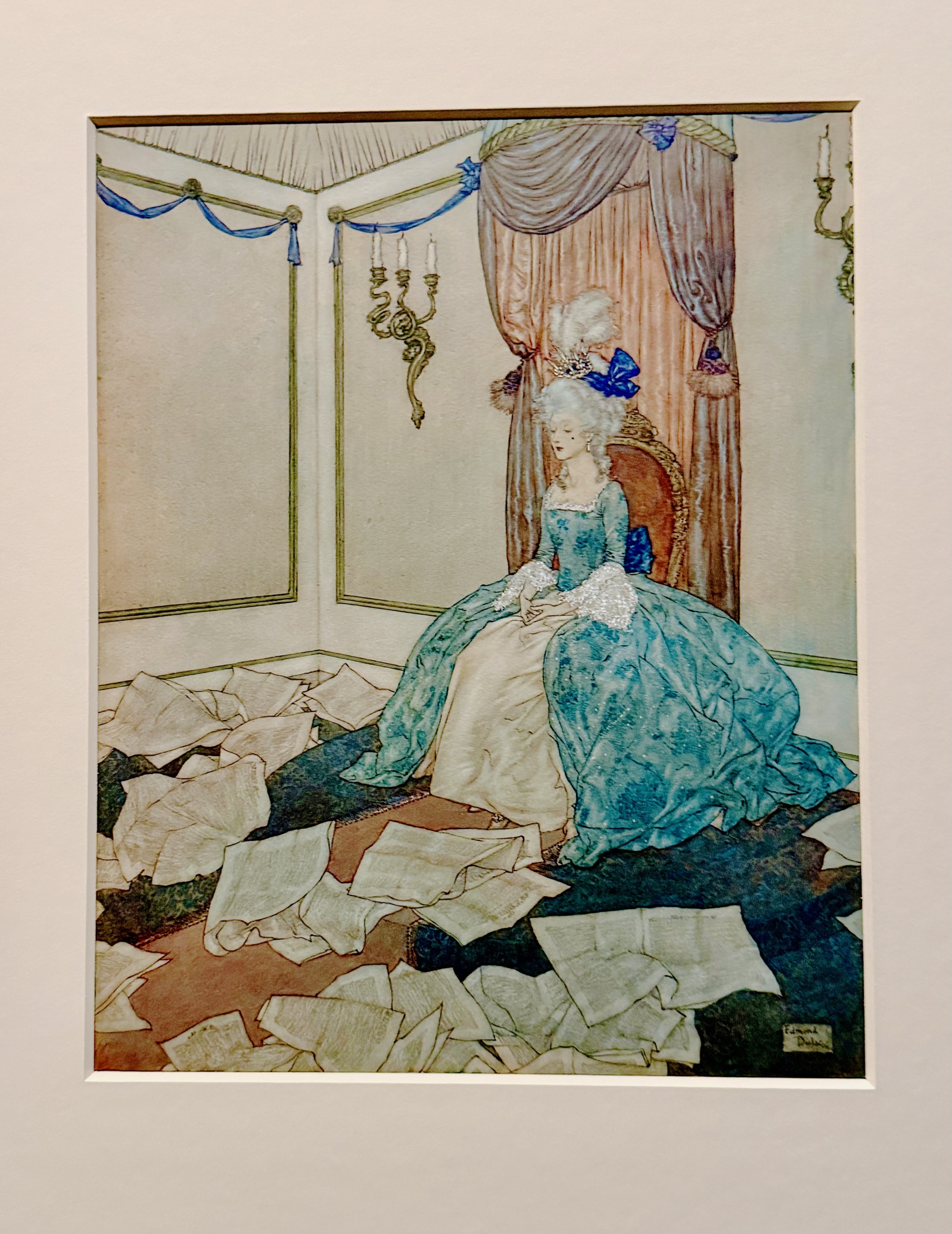
Spurred by Eugénie’s very public fandom into the 20th century, pop culture did not lose sight of Marie Antoinette as a style on display at upscale costume parties or as the evergreen image of fairy-tale princesses. The V&A shows illustrations using the queen’s pouf-do, tiny waist, princess-heel shoes, and voluminous 18th-century gowns to convey royal ingenues right into the 1910s and 1920s.
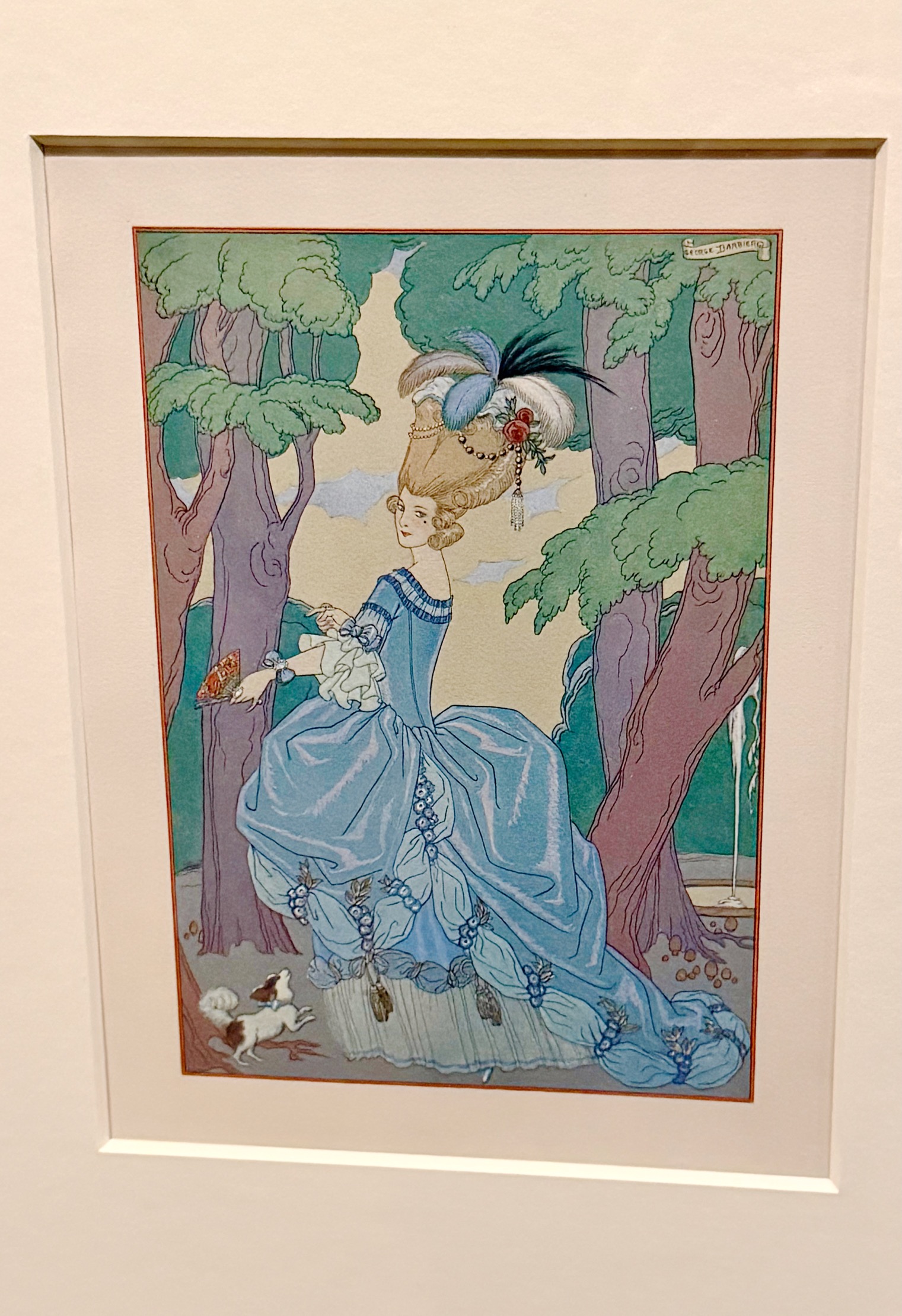
20th c. fairy tale princess: George Barbier’s 1928 illustration “L’Allée (The Pathway)” for Fete Galantes (Gallant Festivities) featuring an Art Deco image of Marie Antoinette based on Elisabeth Louise Vigée Le Brun’s portrait. Courtesy: private collection
20th c. fairy tale queen: Edmund Dulac’s 1911 watercolor illustration of Marie Antoinette as Hans Christian Anderson’s Snow Queen; aloof, seated on an icicle throne. Courtesy: private collection.

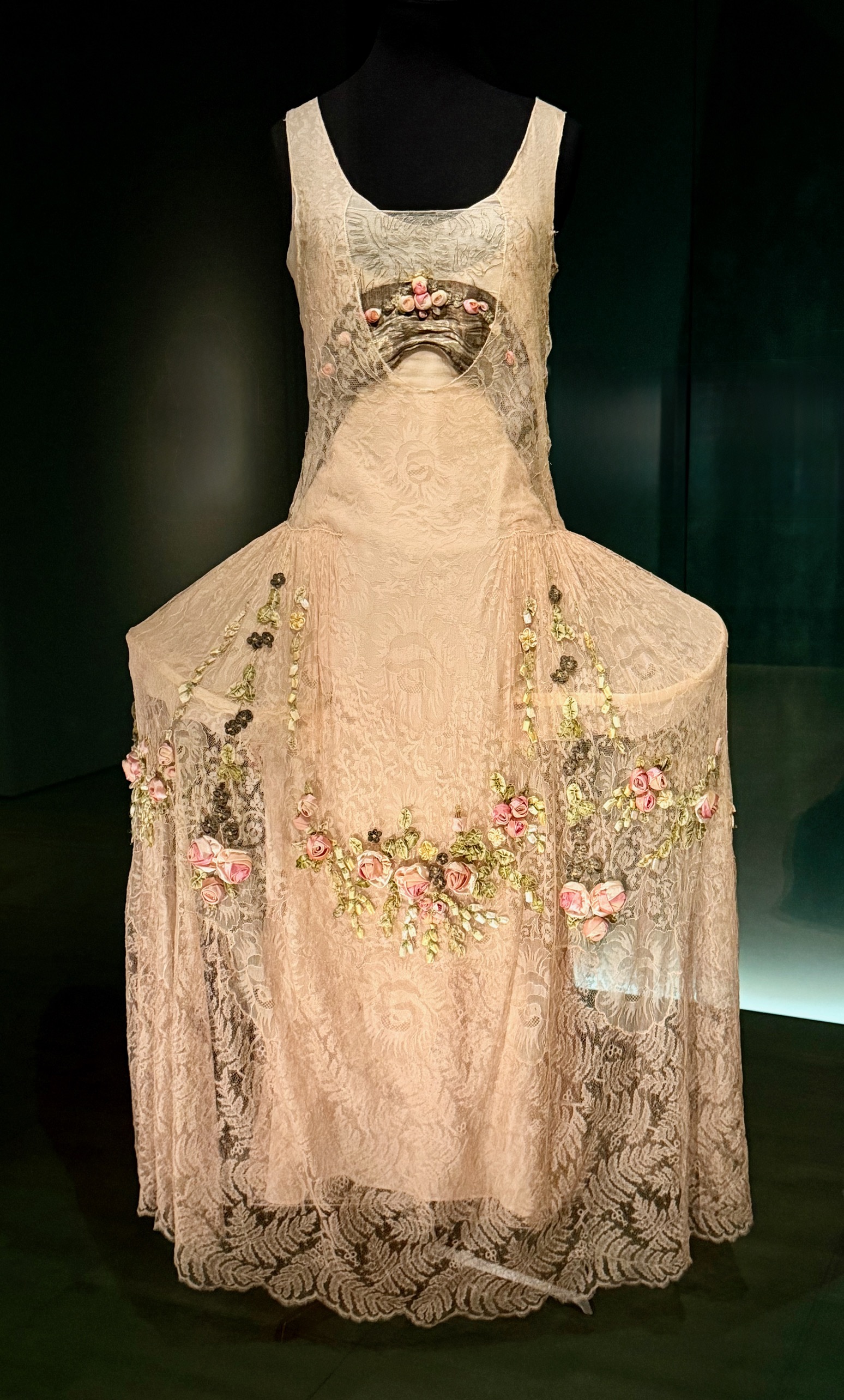
And 1920s fashion designers took note, mixing gauzy references to Marie’s muslin dresses with full skirts and panniers.
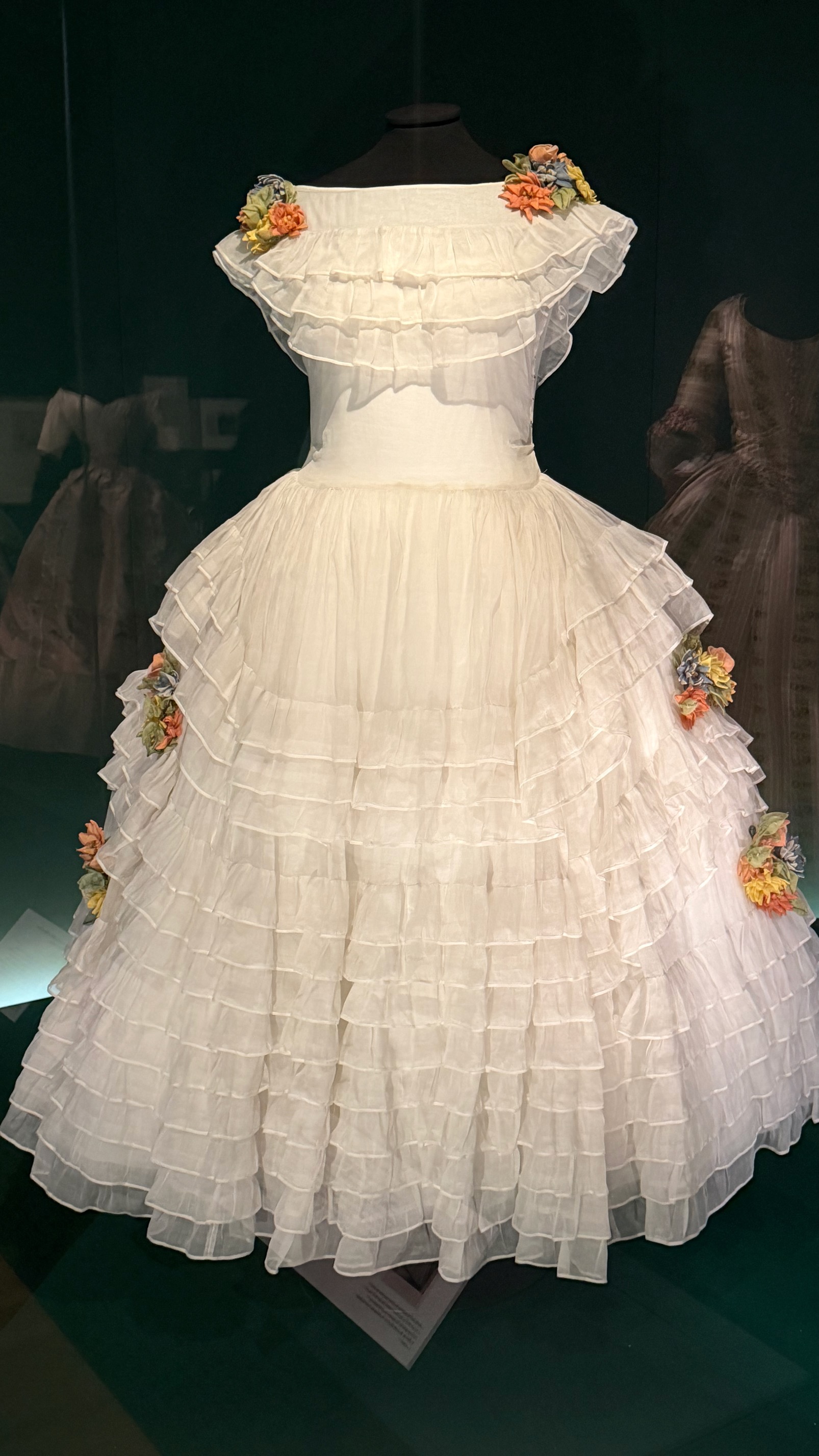
Referencing Marie Antoinette’s lingerie style: Jeanne Lanvin’s 1922-1923 silk organiza robe d’style (evening dress); a chemise with panniers. Courtesy: V&A
Boué Soers’ “lingerie frock” – a 1923 appliqued silk chiffon robe d’style (evening dress) with panniers and ribbon roses; advertised showing models as Trianon shepardesses. Courtesy: Designmuseum Danmark

The spectacular finale to the exhibition pays tribute to the costume designers and haute couturiers who have translated Marie’s style into modern times. Even Manolo Blahnik jumped at the invitation to make shoes for Coppola’s Marie Antoinette film actresses, making each pair himself and basking in the glamor of using truly opulent silks and embellishments. It’s fun to see an entire wall of them.
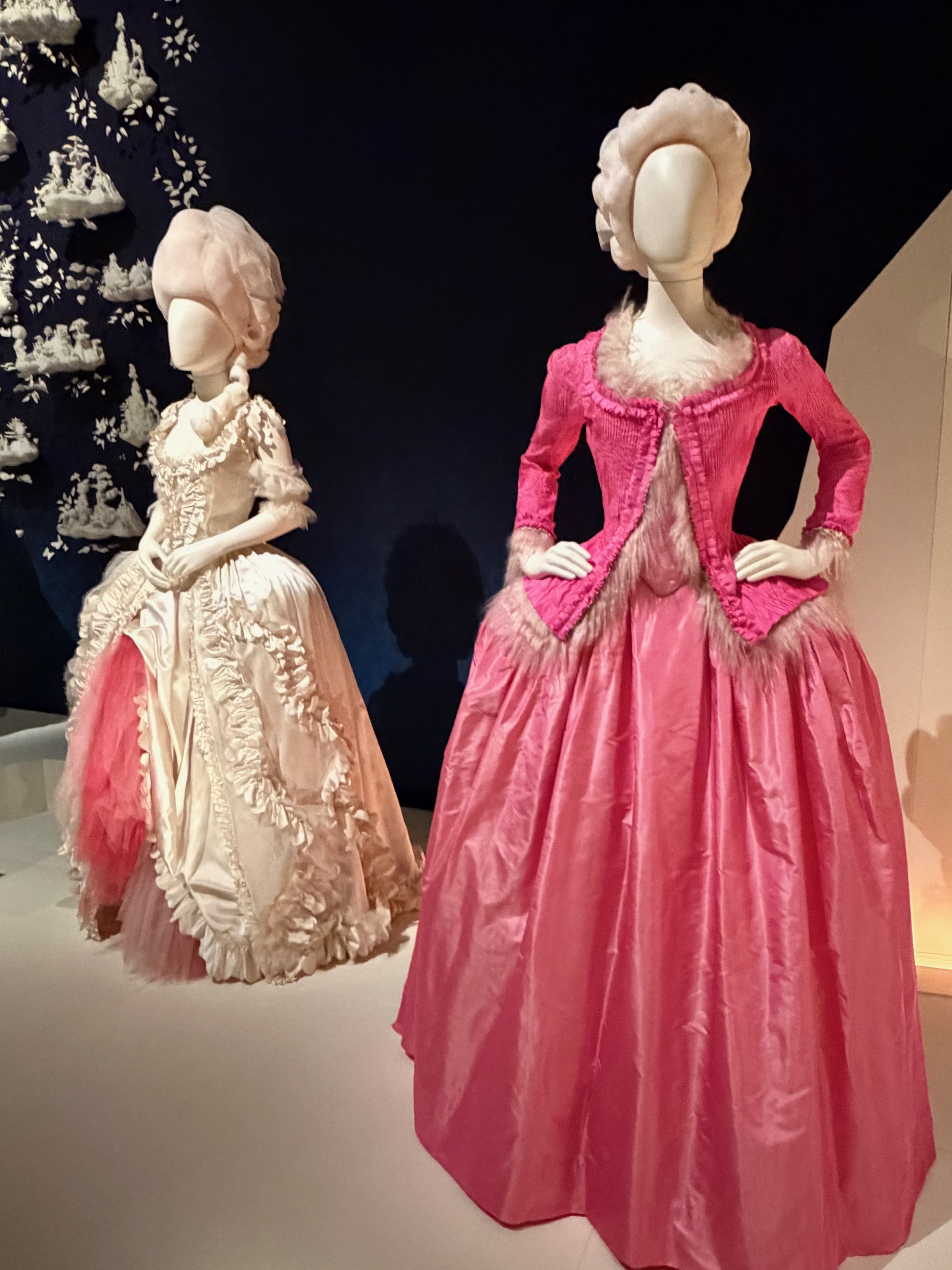
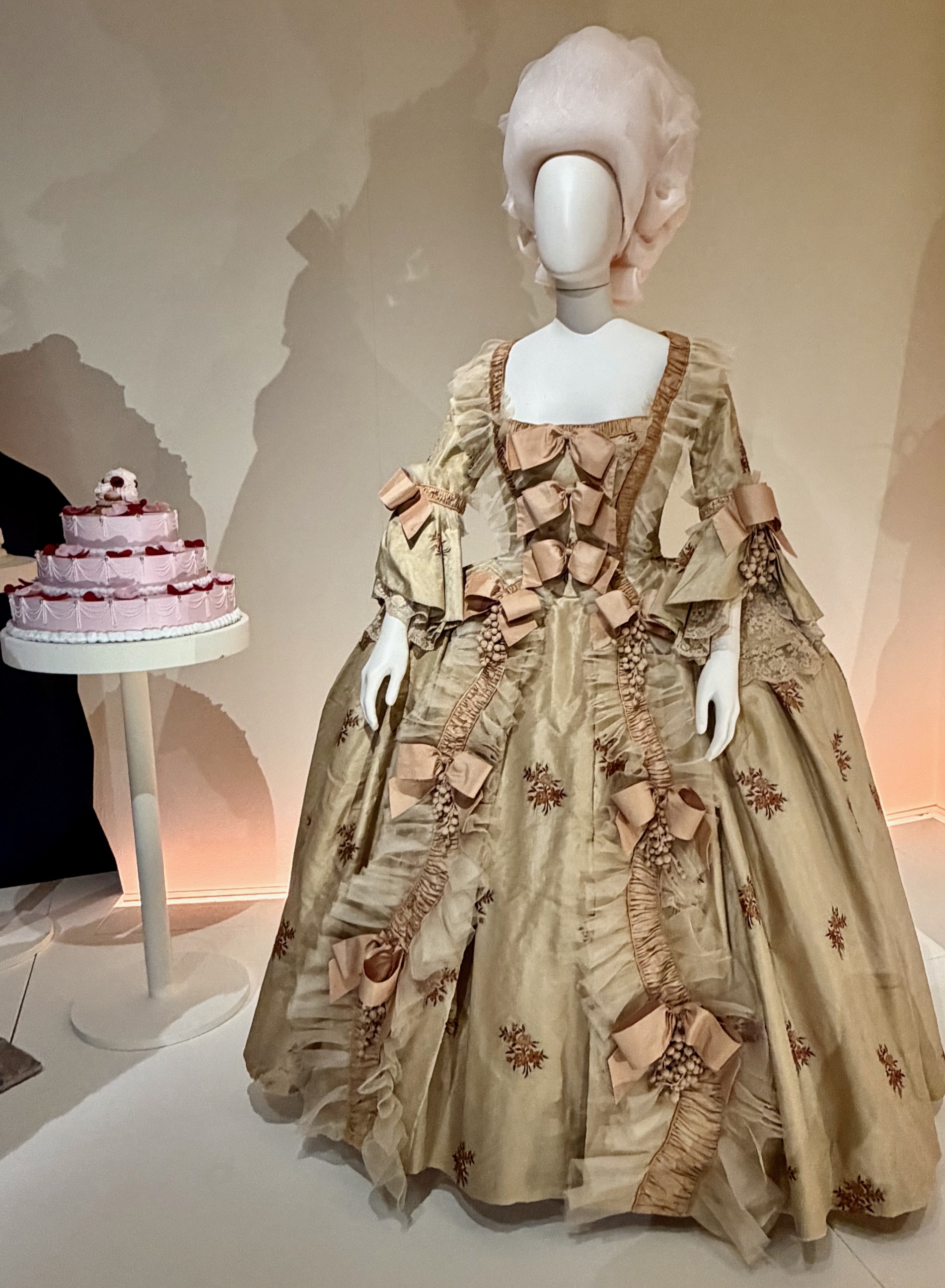
Neon pink costumes by Milena Canonero worn by Kirsten Dunst in Sofia Coppola’s 2006 film, Marie Antoinette. Courtesy: private collection.
Adrian’s silk gown worn by Norma Shearer in Willard Van Dyke’s 1938 Marie Antoinette film. Courtesy: private collection

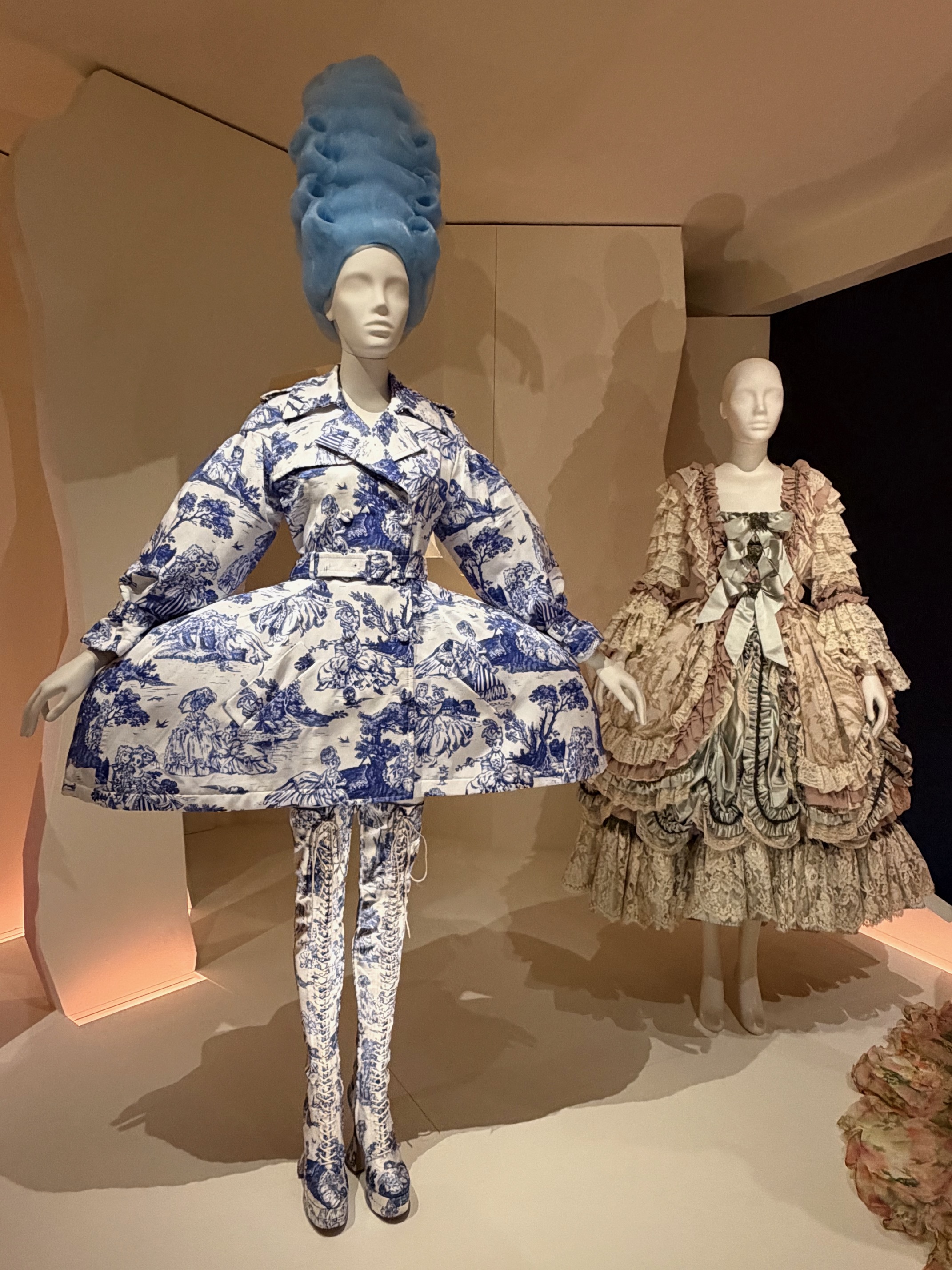
The show closes with a bigger-than-big wide gown by Galliano for Dior, surrounded by two tiers of Moschino silicone cake dresses, Moschino toile de jouy pannier spoofs, Marmalade’s drag ensemble, Vivienne Westwood’s bridal take, and even Lagerfeld’s take on those scandalous diamonds for Chanel. 
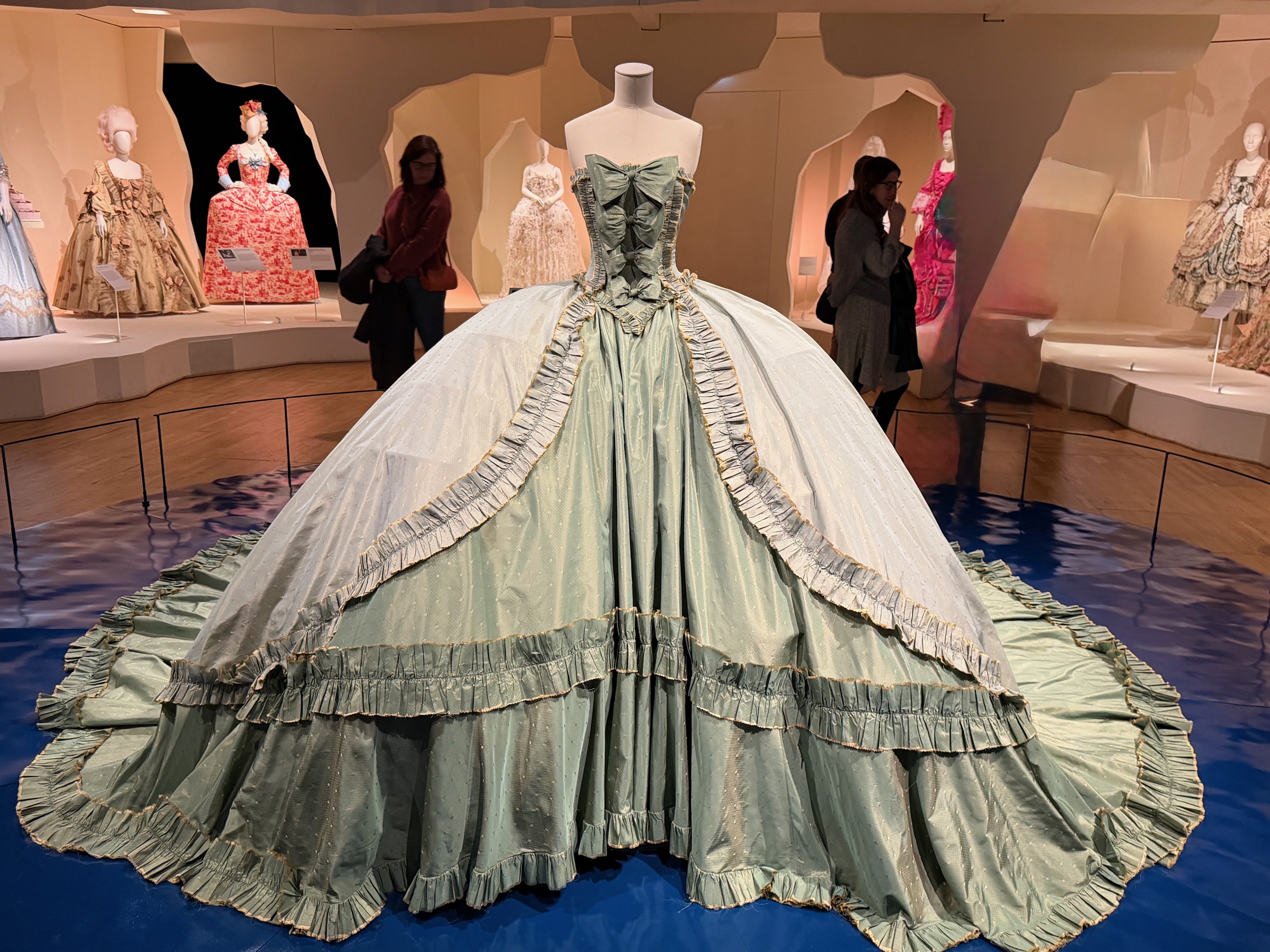
Gallery of restyled Marie Antoinette fashions by contemporary designers; at center, John Galliano’s 1998 iridescent silk taffeta Marquise Masquée gown for Dior. Courtesy: Dior

It’s an unmistakable style that’s recognizable hundreds of years later, and one everyone who’s seen this unforgettable show is still talking about!

Be forewarned: Schiaparelli opens at the V&A South Kensington on March 28, 2026.
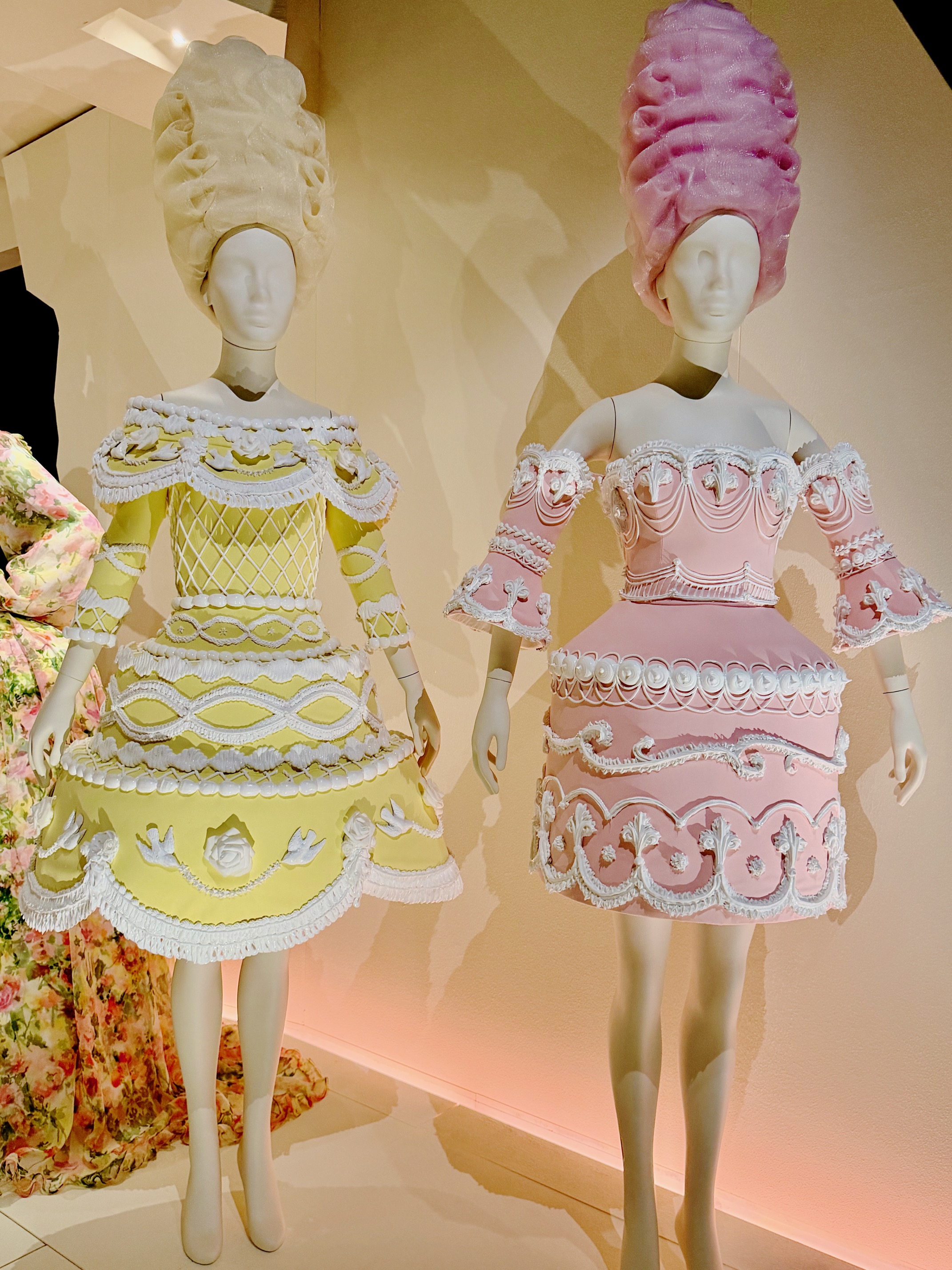
Jeremy Scott’s 2020-2021 silicone cake dresses from a runway show mixing contemporary and 18th century style and fun. Courtesy: Moschino archives.
Jeremy Scott’s 2020-2021 cotton anime Toile de Jouy mini-pannier dress with matching boots and Franco Moschino’s 1990 silk and lace robe á la polonaise. Courtesy: Moschino archives.

Visionary Collector Amasses Trove of Radical Works

It’s quite a leap from taking an art appreciation class with your daughter in your mid-thirties to assembling an enormous collection of paintings by radical art-world revolutionaries and anarchists. But that’s what one woman did and and the work is on display in Radical Harmony: Helene Kröller-Müller’s Neo-Impressionists, on view at the National Gallery in London through February 8, 2026.

Crowds have been flocking to see incredible works by Seurat, Signac, and Van Gogh, and meet the Dutch and Belgian painters who adopted their breakthroughs and ran with these innovations for two decades at the end of the 19th century. 

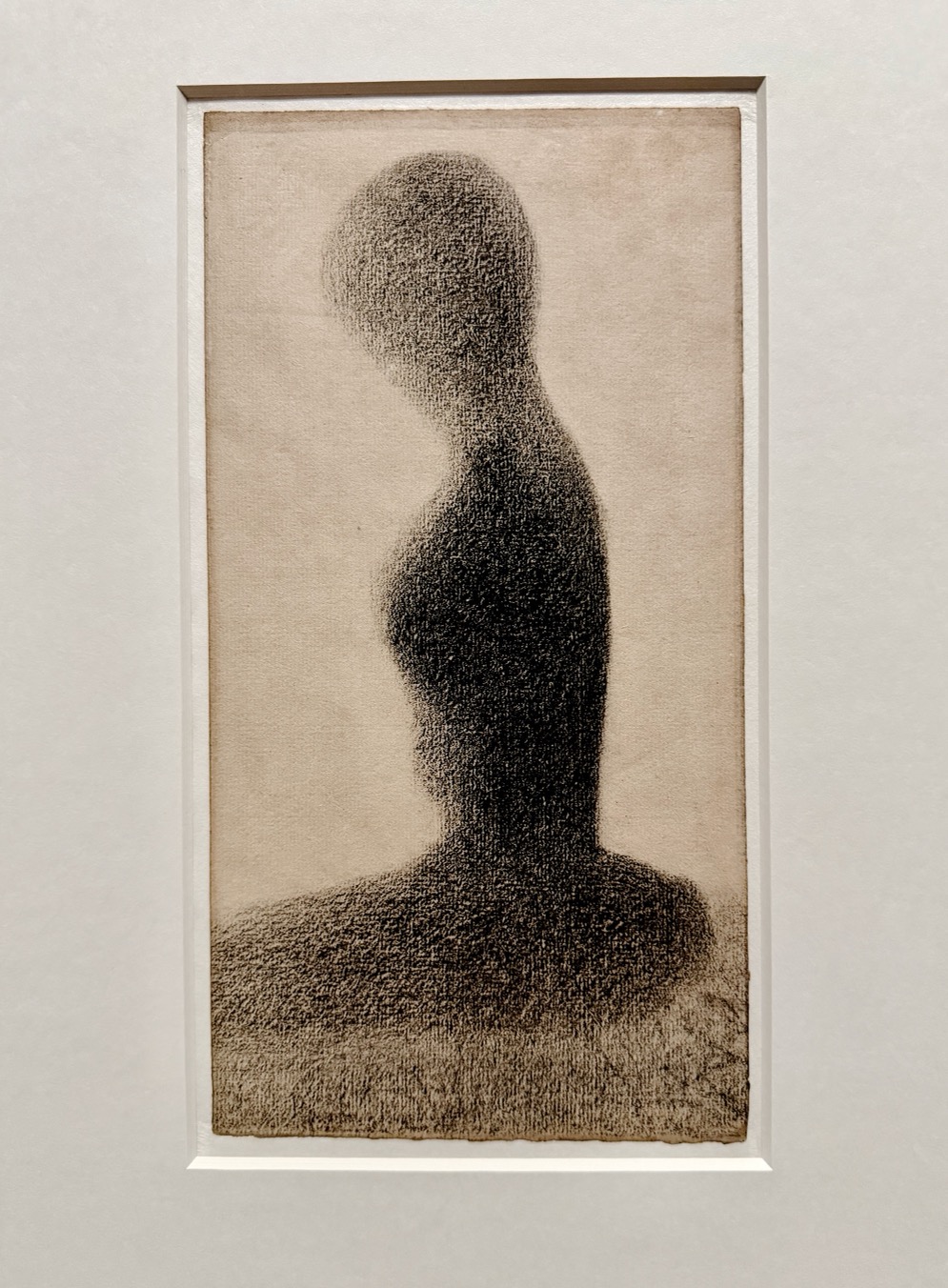
Seurat’s 1884-1885 Young Woman: Study for ‘A Sunday on Le Grande Jatte’” – a radical abstracted, dematerialized image. Courtesy: Kröller-Müller Museum

Maginificent, much-loved works were collected in the early 20th century by Helene Kröller-Müller, the daughter of a wealthy German industrialist.  Her husband ran businesses for her father (and eventually his entire company) in Rotterdam, where they lived.

Helene was always encouraged to follow her intellectual interests, and new ideas. After taking a class about art in 1905 from Dutch artist/dealer/critic H.P. Bremmer, Helene began to understand why the radical colors, compositions, and subjects in paintings by Van Gogh, Seurat, and others moved her so deeply. Working with Bremmer as an advisor, Helene eventually amassed the largest collection of Van Gogh paintings and drawings in the world (outside of the Van Gogh Museum itself).

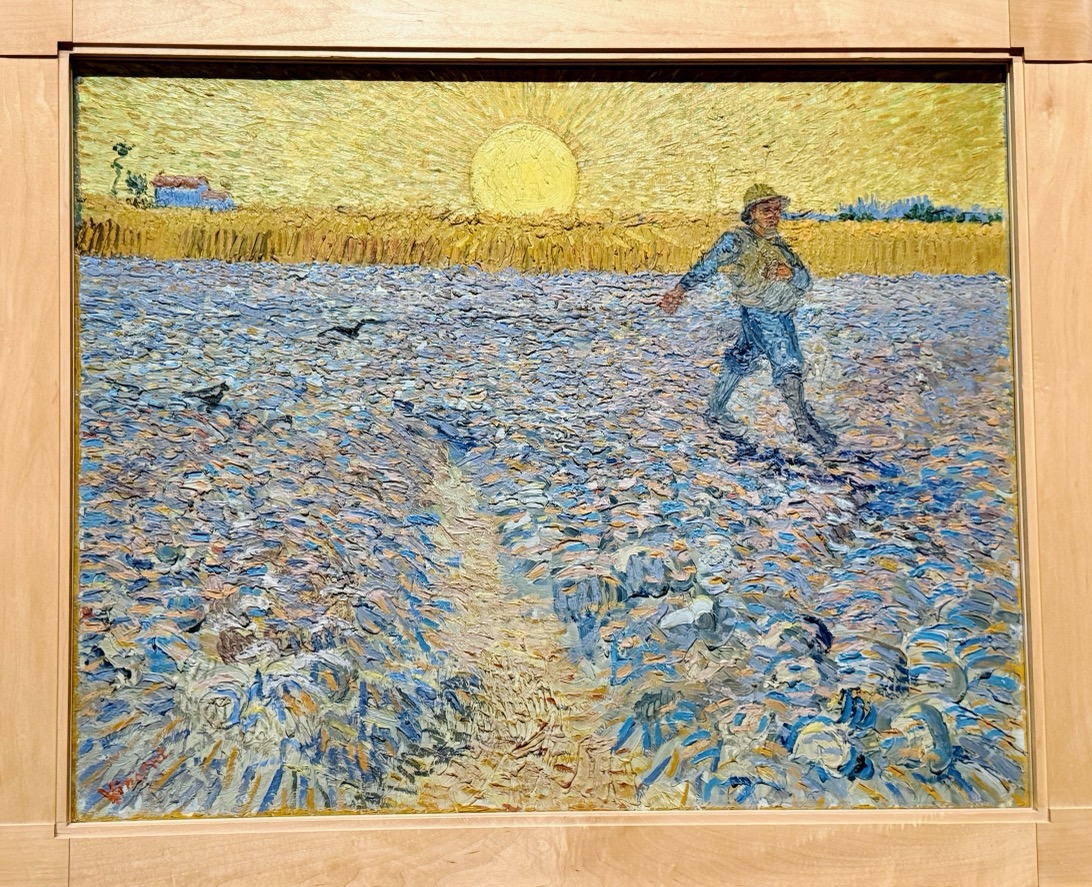
Van Gogh’s 1888 oil The Sower with the Sun rising hopefully over a rural worker. Courtesy: Kröller-Müller Museum

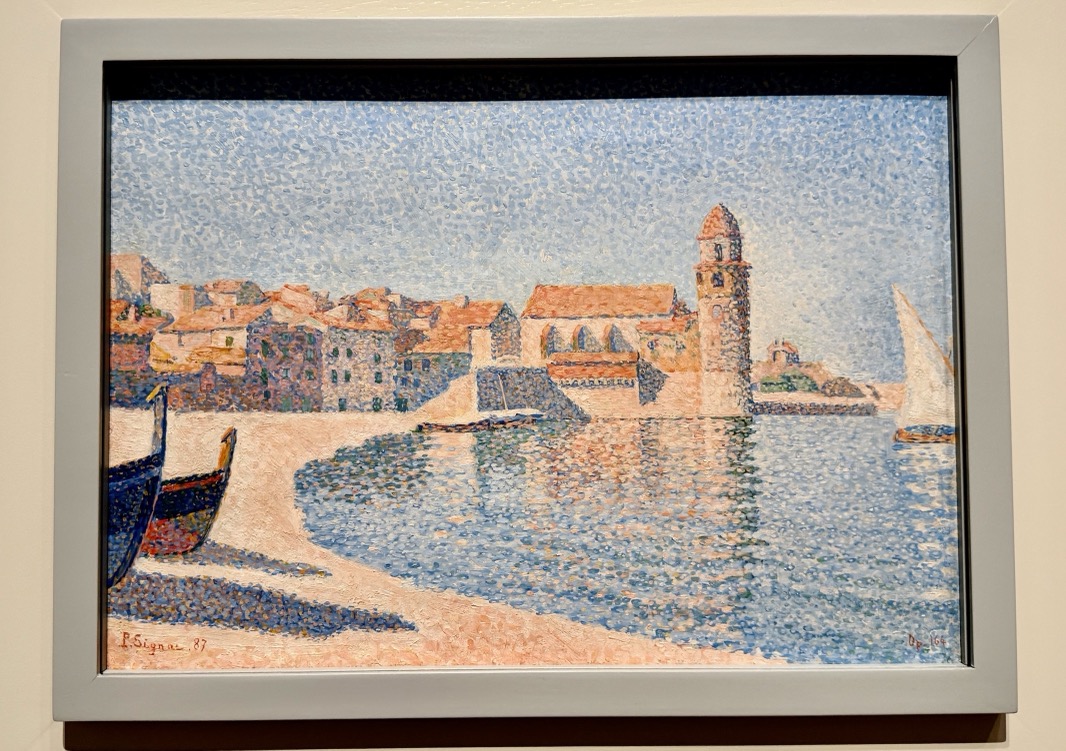
Helene sometimes accompanied Bremmer on buying trips with the goal of creating a public collection where people could see and experience the genesis of modern art.  In 1912, they even visited Signac in his studio, where Helene purchases two magnificent tranquil harbor views – one by Signac and one by his late friend, Seurat.

One of Helene’s first “new art” purchases on a buying trip to Paris: Signac’s 1887 oil pof the French Riviera capturing the Sun’s reflected light – Collioure, The Bell Tower, Opus 164. Courtesy: Kröller-Müller Museum

Here’s a brief video about Helene Kröller-Müller’s passion for art, how she built her massive collection, and the beautiful museum in the Netherlands countryside that should be on every art lover’s bucket list :

This gorgeous exhibition in central London shines a light on this visionary collector, but the focus is less on Helene’s history and fully on her stellar collection of Neo-impressionist painting and related works from the National Gallery and other collections. See some of our favorites in our Flickr album.

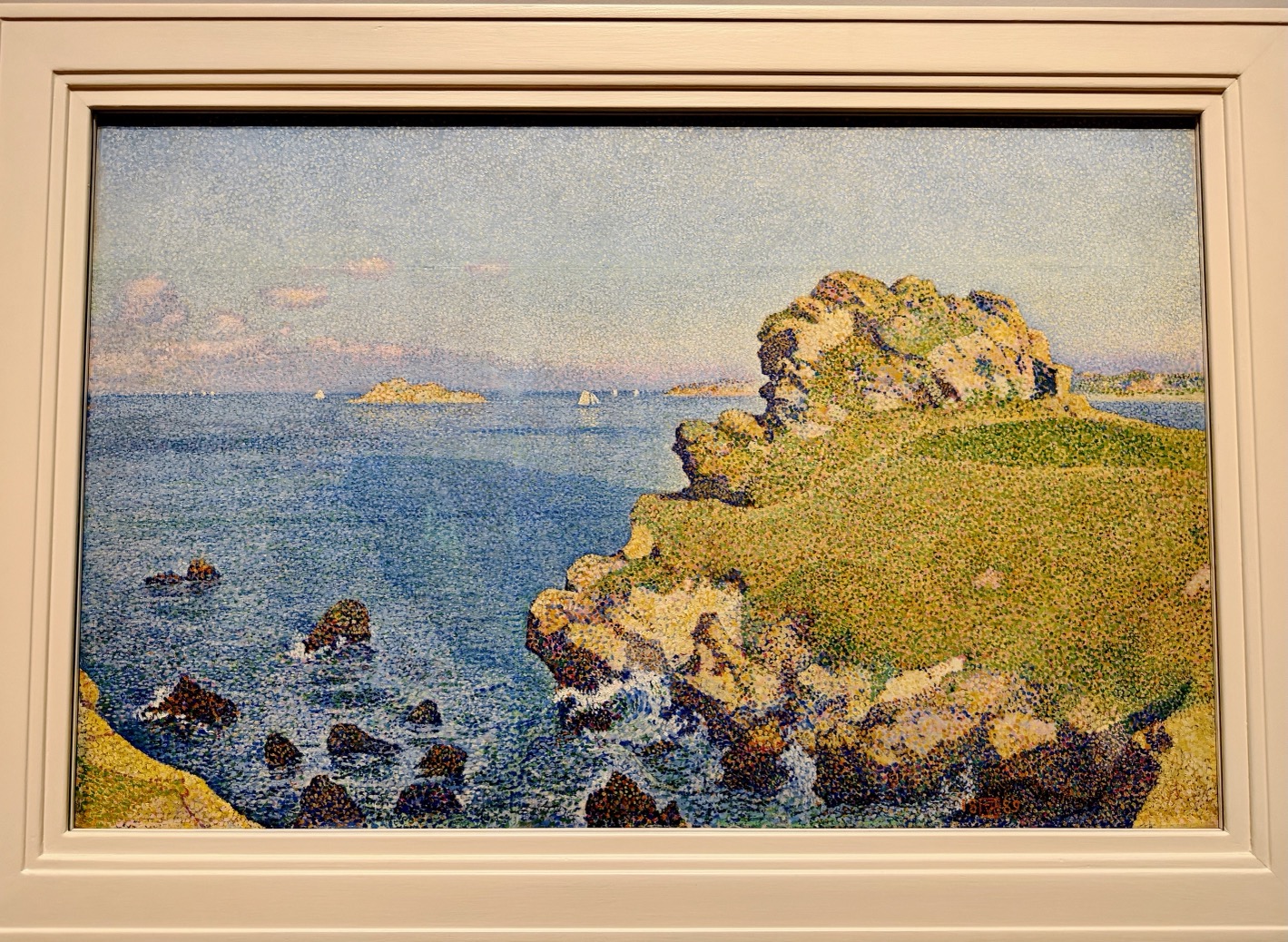
The exhibition begins with paintings by Seurat and Signac, who adopted color theory for their pointillist techniques to create shimmering images of simplified, tranquil harbors and seascapes. This new radical painting approach electrified artists across Europe, such as Belgian painter Theo van Rysselberghe and Dutch artist Jan van Toroop, whose works are also hung in the first gallery.

Van Rysselberghe’s 1889 oil inspired by Seurat ‘Per-Kiridy’ at High Tide. Courtesy: Kröller-Müller Museum

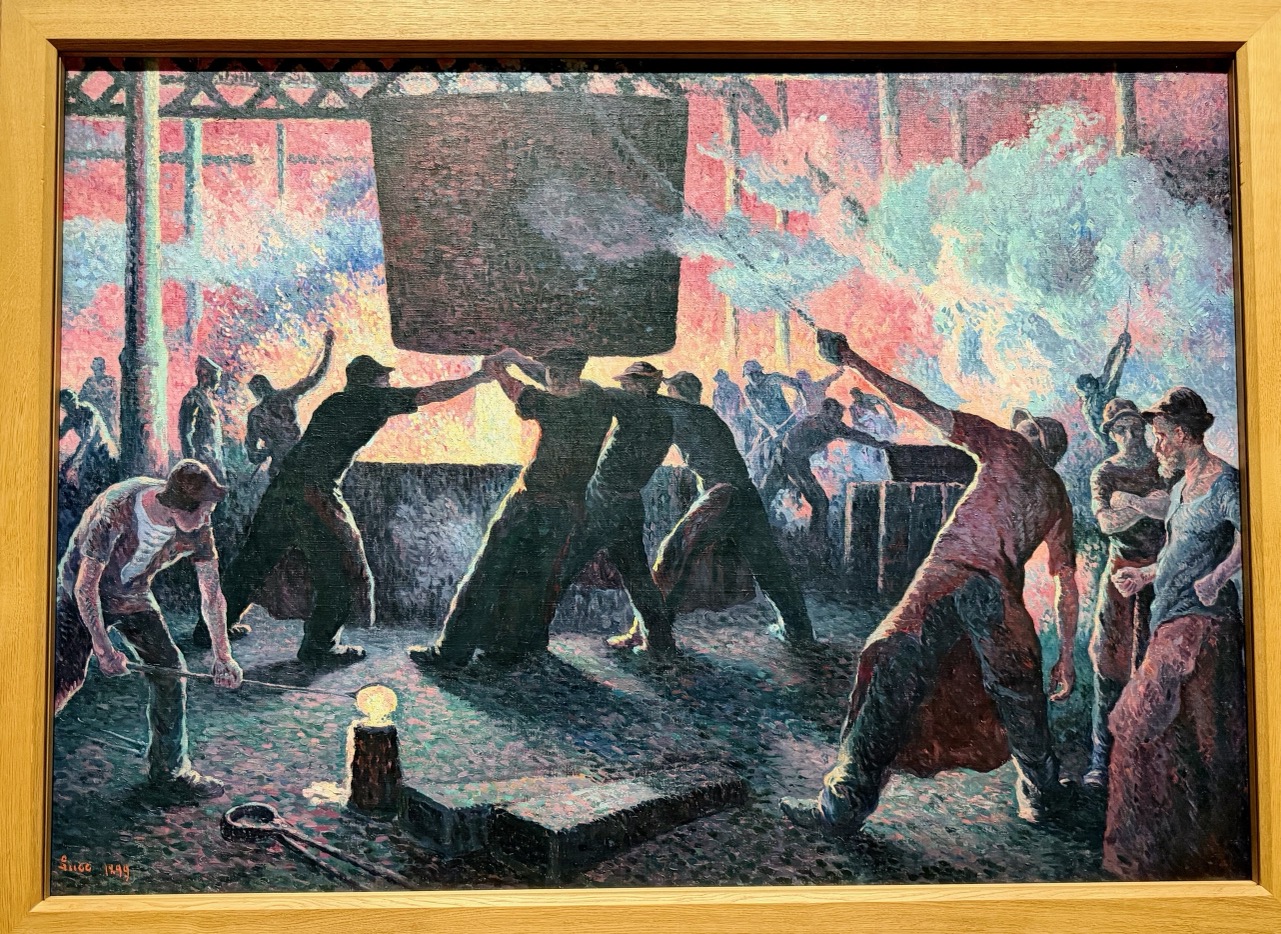
At a time when industrialization was transforming life, Helene did not shy away from acquiring works made by artists proud of their radical, progressive politics. Many of the artists featured in the exhibition were proud to call themselves anarchists – passionate radicals who used art to advocate for workers’ rights, elevate the image of working people, and create a hope of increasing harmony with nature.

Maximilien Luce’s 1899 The Iron Foundry showing strength and integrity of Belgian steel workers amid dangerous conditions – an acquisition that hung in the office of Helene’s industrialist husband. Courtesy: Kröller-Müller Museum

To create the pictoral harmony that they sought, these painters often stripped details out of landscapes. When people are present, they are depicted with highly simplified, streamlined faces – pleasing, but impersonal. These stand in contrast to paintings by Belgian and Dutch painters who applied their new color techniques to beautiful large portraits of their politically progressive friends and patrons.

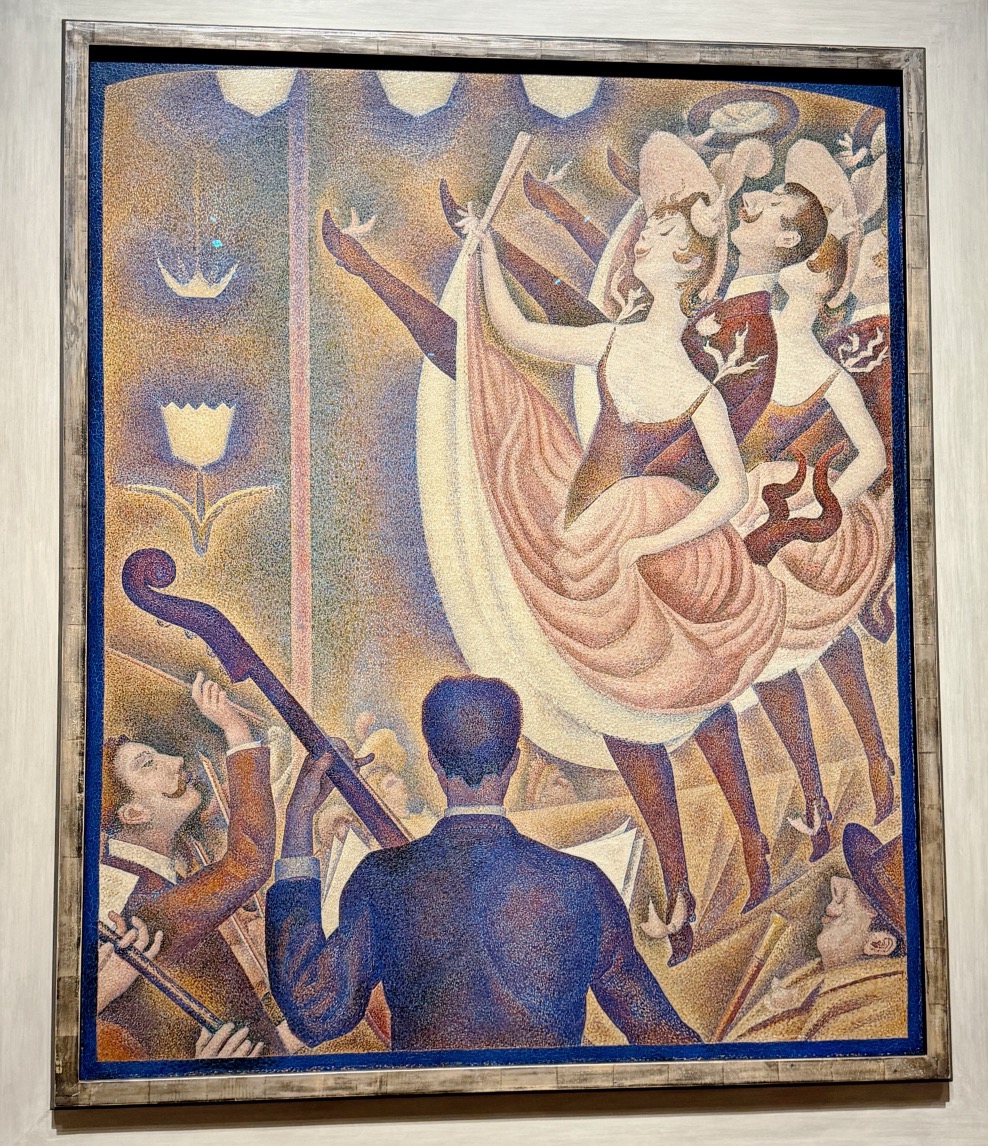
Seurat’s 1889-1890 grand Chahut – a stylized manifesto of his painting philosophy; features artificial, compressed, stylized figures and space. Courtesy: Kröller-Müller Museum

The centerpiece of the show is Seurat’s enormous painting of the scandalous can-can dance at a raucous late-night Paris venue. It’s the biggest, baddest, Neo-Impressionist work in Helene’s collection. The curators surrounded it with works showing how much other radical painters enjoyed music and nightlife.

But just beyond this gallery, you’re surrounded by still, quiet domestic interiors and sun-dappled garden scenes in a gallery titled “The Silent Picture.” People are introspective, lost in thought, or lost in a book. Helene loved collecting large-scale works that seem to envelope viewers with stillness and calm.

And she truly loved the serene, nearly empty landscapes that this group of painters created. The long horizon of the sea only adds to these works’ peaceful presence.  Helene wanted her museum to have clean lines, and unadorned galleries so that visitors could stand, contemplate, and find peace with these works. She truly felt these new, modern paintings had the ability to provide respite and even feel something spiritual.

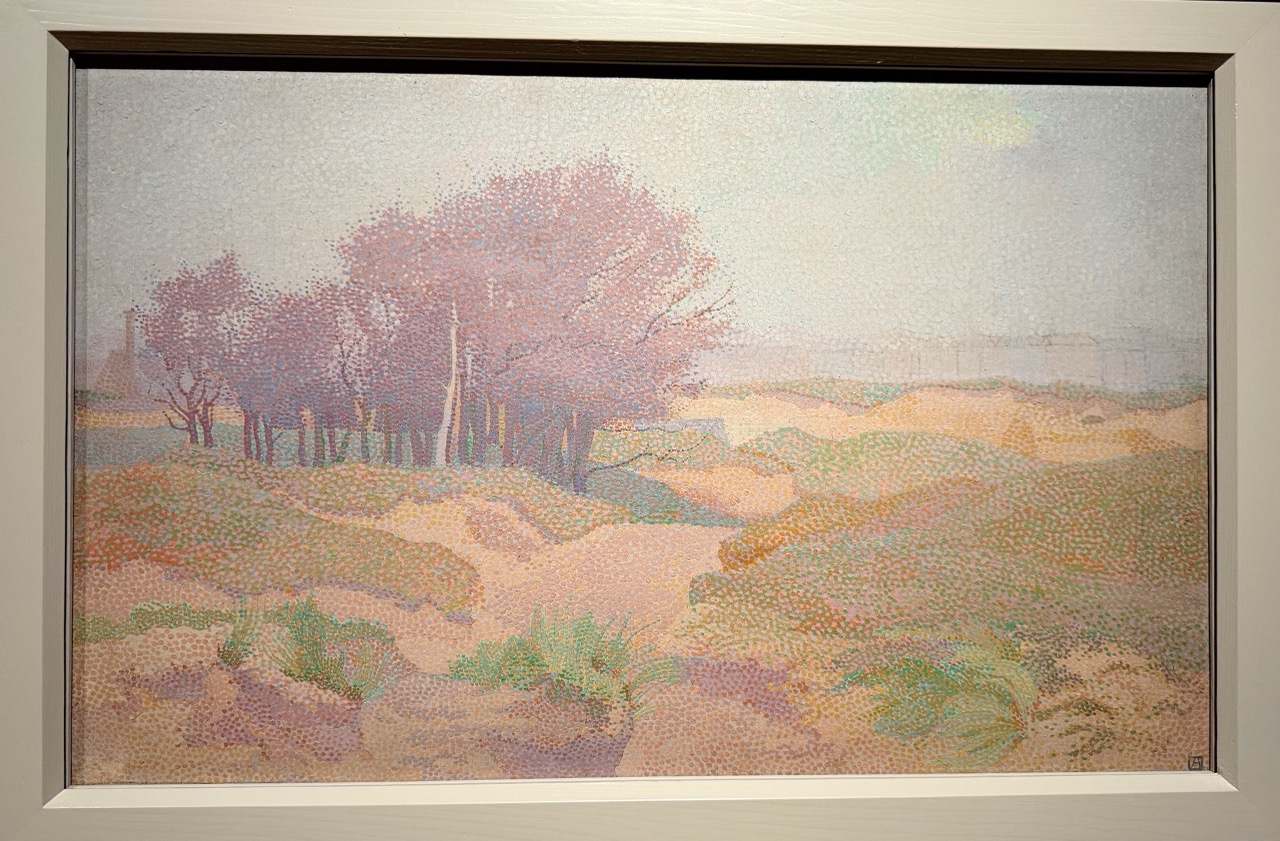
Johann Aarts’s 1895 oil Landscape with Dunes – a tranquil, simplified view of an urban seaside town, indicated by faint buildings on the horizon. Courtesy: Kröller-Müller Museum
Signac’s 1890 Saint-Briac, The Beacons, Opus 120 – the most radical of his four views of the River Fémur along the Breton coast. Courtesy: private collection

Take a walk through this incredible show with the curators from the National Gallery, and hear how Seurat, Signac, and their contemporaries broke the rules and made history: