Poison Packs Punch at AMNH Night at the Museum Adult Sleepover

The sleepover site under the Blue Whale

The sleepover site under the Blue Whale

The first-ever adult Night at the Museum sleepover at the American Museum of Natural History last night was a hit, thanks to the enthusiasm and star power of Dr. Mark Siddall, the curator of the fantastic exhibition, The Power of Poison, closing August 10.

Early in the evening, Siddall mingled with sleepover guests at dinner in the Powerhouse and later in a series late-night talks from the Victorian theater inside the Poison show where costumed performers normally show visitors how to gather clues to solve a period murder mystery involving poison. (Think “I’ve got poison in my pocket” from A Gentleman’s Guide to Love and Murder.)

After dinner, the adventurers, some in costumes themselves, made quick trips with their stuffed animals to the cots under the Blue Whale and bounded up the stairs through the low-light galleries to reach the shark IMAX, live animal demos, fossil tours, and Siddall’s Poison briefings.

The Victorian theater inside Poison. Photo: AMNH/D. Finnan

The Victorian theater inside Poison. Photo: AMNH/D. Finnan

You had to pass through the always eerie Hall of Reptiles and Amphibians (hello, Komodo dragons!) to enter the magical kingdom of the Poison galleries.

Once inside, you were transported to a tropical rainforest, with golden poison-dart frogs under a dome, huge models of dangerous insects, and a toxin-eating Howler Monkey lurking on a branch.

Beyond the tropics, the show morphed into a land of make-believe…or was it? Tableaux with a sleeping Snow White, the witches of Macbeth, and the Mad Hatter were captivating, with the label copy bringing you back down to earth by explaining the role played by poisons and toxins in these scenes and what exactly witches’ brew contained.
Supplies for the toxic witches’ brew. Source: AMNH

Supplies for the toxic witches’ brew. Source: AMNH

A Chinese emperor (the one with the terra cotta army, no less!) ingests mercury in one diorama, thinking it’s going to give him immortality. Wrong move. Glancing down, you find out that as recently as 1948, mercury-laced teething powder was still being used on babies in the United States.

A spectacular illusion along the way is a magical set of Greek vases whose painted figures came to life to tell stories of how poison helped Hercules and doomed Ms. Medea.
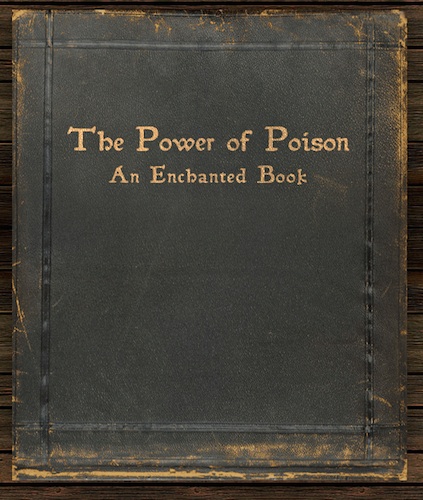
The Magic BookThe lively vases are a prelude to the exhibition team’s greatest wonder – the Enchanted Book – a gigantic tome where ancient illustrations leap to life as you turn big, think parchment pages. Visitors could not get enough of that magic book. Somehow the AMNH digital team replicated it on the website, so click here to take a look at The Power of Poison: An Enchanted Book and turn the pages on line.

Here’s a glimpse of one story from the belladonna page, providing the backstory on how witches fly:

A lot of Siddall’s spectacular, magical, immersive, theatrical exhibition explains the science behind venoms, the “arms races” in the natural world, poison’s role in children’s stories, and how to analyze clues in solving murder mysteries.

Check out the Victorian-style introduction to Poison with Dr. Mark Siddall, its creator, and get a little taste of what the sleepover guests saw and heard.

To ward off any bad dreams about toxins or creepy crawlers, a lot of the late-nighters nestled in to watch vintage Abbott and Costello and Superman films and post Instagrams from the cozy, pillow-lined pit in center of the Hall of Planet Earth.

See the Today show’s recap (video after the commercial).

PS: If you can’t get to this show before August 10, download the iPad app, Power of Poison: Be a Detective that allows you to experience the last portion of the show. It’s been nominated for a 2014 Webby Award in the Education and Reference category.

Last Day for Art & Industrial History: Kara Walker’s “Sugar Baby”

Crowds surround Kara Walker’s monumental sugar sculpture

Crowds surround Kara Walker’s monumental sugar sculpture

The crowds lined up yesterday on Kent Avenue all the way beyond the Williamsburg Bridge, almost to Schaeffer’s Landing, waiting to enter the rusted, aromatic, tumble-down confines of the old Domino Sugar Factory on one of the last days to see Kara Walker’s “A Subtlety, or The Marvelous Sugar Baby”, commissioned by Creative Time.

Today is the last day, so take a look at history in person, on our Flickr page, or in the video below.

Security was in full force to keep the Williamsburg bike path clear and drivers were slowing down to ask, “What’s going on and what are people waiting for?” only to be told by patient fans, “They’re lined up to see art!”

Once inside, the marvelous, gigantic Sugar Baby sculpture was on hand to preside over the far end of the abandoned several-block-long 1851 industrial space that once refined over half the sugar consumed in the entire United States.

One of her many attendants throughout the factory

One of her many attendants throughout the factory

As readers of Friday’s front-page article in The New York Times knew, Walker was again pushing the buttons with her homage to the brutal history of the sugar trade from the 1700s until today by giving us an experience that isn’t really all that sweet. Witnessing Kara’s witnessing is what had people – including some elderly visitors on canes — flocking to the sticky-floored, slightly ominous space. You could smell the sugar and molasses before you even entered the door.

Leading up to the gigantic white sculpture, people encountered all sorts of molasses-children, toting baskets full of…well…looks/smells like molasses. The experience evokes everything that Kara wished for…history, economics, society, race, abuse, industrial profit, and industrial scale.

Take a look at how it was made, and read about the history behind her thinking. Click on this link to Vimeo, look on the Creative Time website to see her sketches and graphic inspirations, and be sure to check out the various stages of Kara’s 3D digital sphinx up close.

If you go to Brooklyn today, expect to wait about an hour in line; once inside, there’s plenty to think about.

Last Call for the Whitney Biennial Uptown

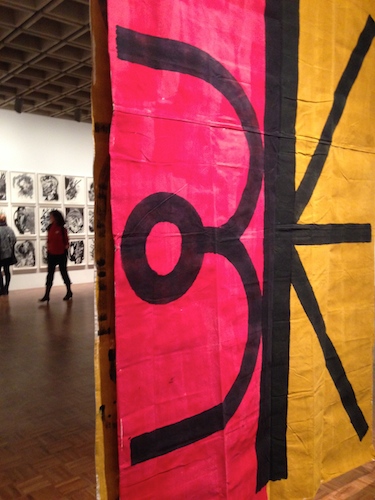
Detail of Elijah Burgher’s “The Pattern of All Patience 1” (2014), featuring magical symbols, installed on the second floor

Detail of Elijah Burgher’s The Pattern of All Patience 1 (2014), featuring magical symbols, installed on the second floor

It’s the last time the Whitney Biennial is holding its big, expansive, colorful, and provocative shindig on the Upper East Side, since it will decamp to its new riverside home at the foot of the High Line next year. Go before it ends on May 25.

It’s amazing to think that this is the 77th time that the Whitney has hosted either an annual or biennial show to showcase the best of American art, as controversial and impossible a task as that may be. This year, the Whitney threw in the towel in trying to showcase “the best” of what’s going on in contemporary art coast to coast. It just wasn’t possible given the expanse, diversity, and barrier-breaking works that American artists are cranking out right now.

Instead, the Whitney invited three innovative curators to choose what should be shown on each of three floors and around town. (Yes, there are offsite works, too.)

“Pillar of Inquiry/Supple Column” (2013-2014) by fiber artist superstar Sheila Hicks

Pillar of Inquiry/Supple Column (2013-2014) by fiber artist superstar Sheila Hicks

The divide-and-conquer approach works, resulting in a fun variety of media, installations, paintings, sculptures, textile art, performance, and collections-as-art. The team pulled it all together in only 18 months while still doing their day jobs at Chicago’s Art Institute, London’s Tate Modern, and Philadelphia’s ICA.

Visit our Flickr album and walk through the press preview with us, where several artists were on hand in the galleries with their work.

It’s a happier, lighter show compared to past Biennials, but that doesn’t mean that the artists ignore social commentary or darker sides of human nature. It just means that you won’t feel as though you need a graduate degree in Conceptual Art to enjoy and ponder the work you’ll encounter.

Highlights: Charlemagne Palestine has created a surprisingly spooky installation in the stairwell that features sonorous sounds emanating from speakers adorned with stuffed animals. LA painter Rebecca Morris has two bright, gigantic delightful paintings on the second floor, curated by Philadelphia’s Anthony Elms, which features several satisfying collections-as-art installations by Julie Ault, Richard Hawkins, and Catherine Opie.

Pterosaur and giant theropod are featured in Shio Kusaka’s third-floor ceramics display

Pterosaur and giant theropod are featured in Shio Kusaka’s fourth-floor ceramics display

Fans of NYC’s 1970s art scene (when Soho was still industrial) will be captivated by The Gregory Battcock Archive, peering at the ephemera collected by one of the decade’s most prominent art critics who died under mysterious circumstances in 1980. Amazingly, it was all found by artist Joseph Grigley wafting around garbage bins in an abandoned storage facility. Grigley’s created a disciplined, loving, and intimate installation of reclaimed Battcock mementos, memories, and letters with Cage, Warhol, Moorman, Paik, Ono, and other 70s superstars.

The top floor takes a down-home approach to some very enjoyable paintings, sculptures, installations, and ceramics. Midwest curator Michelle Grabner said that she wishes she could just camp out there for the run of the show. You’ll enjoy it, too — a dreamy installation by Joel Otterson, a monumental yarn pillar by uber-fiber-artist Sheila Hicks, a witty desk and bookcase by master woodsman-sculptor David Robbins, and shelf of delicate and whimsical ceramics by Shio Kusaka.

Knits with commentary by Lisa Anne Auerbach, including We Are All Pussy Riot

Knits with commentary by Lisa Anne Auerbach, including We Are All Pussy Riot

The third floor, curated by Stuart Comer (who’s recently moved to MoMA), features a lot of screens and digital media, essentially making you think about art in the age of the iPhone. As you step out of the elevator, you’ll encounter Ken Okiishi’s series of painted panels. Oh, wait! They’re actually abstract paintings on upended flat-screen TV displays – sort of like what would happen if Kandinsky’s Seasons were done at the Samsung plant.

The mixing of media keeps morphing in room after room of clever installations by Triple Canopy (antiques meet 3D printing) and Lisa Anne Auerbach (knitting meets social commentary, and zines meet the Giant in Jack and the Beanstalk). See Lisa’s work and listen to her explain her knitting:

There are dozens of other videos and audio guide stops posted on the Biennial web site (click on “watch and listen”), as well as bios of all the artists.

Alert: MAD’s own design biennial opens July 1.

Armory Show Stars on the West Coast of Manhattan

The Artforum Lounge on the Contemporary Pier

The Artforum Lounge on the Contemporary Pier

For four action-packed days, the art crowd made its way to the West Coast of Manhattan Island past gritty lots, warehouses, the ball fields of Clinton, and high-rises-under-construction to enter a white, light-filled glittery expanse of painting, sculpture, and champagne bars at the 2014 edition of The Armory Show.

This year, 205 exhibitors showed off the best in modern masters and contemporary upstarts. Walk through it with us on our Flickr feed.

If you’ve never been there, just know that the art fills two full piers (yes, where the cruise ships come in). You may think the Whitney Biennial is big, but The Armory promenade is vast.

On the Modern Pier: Chicago’s Alan Koppel Gallery gave tribute to original Armory Show in 1913 with several Duchamps, but most of the work is post-1940 by Modern superstars. Right at the start of the pier, Galleria d’Arte Maggiori positioned a nice rough-and-ready Mattia Moreni in kind-of a face-off with a pretty primitive Basquiat nearby.

Dramatic paper collage and charcoal work by Elaine de Kooning with two Picasso ceramics at Vivian Horan

Dramatic paper collage and charcoal work by Elaine de Kooning with two little Picasso ceramics at Vivian Horan

Frankfurt’s Die Galerie gave NYC glamour-icon Louise Nevelson a mini-tribute, and several galleries featured Marca-Relli’s painting/collages.

Best on the Modern Pier: Vivian Horan’s booth, dominated by a large Elaine de Kooning charcoal drawing with collage, but populated by two small Picasso ceramics that most fair goers didn’t even see, although they were practically out in the aisle. You don’t see Picasso ceramics too much, and they really added a nice touch.

Second runner-up was the Armand Bartos booth with a sharp Kenneth Noland, Andy’s chicken soup can under glass, and a no-holds-barred Stella. In fact, there were multiple 1980s 3D Frank Stellas leaping out from walls, demanding attention. Besides posing with the soup can, lots of visitors were snapping photos of themselves in front of Mr. Stella’s work.

1949 Hans Hoffman oil at London’s Crane Kalman

1949 Hans Hoffman oil at London’s Crane Kalman

Welcomed surprises: Even though he taught most of the post-war painters in New York, you don’t often see Hans Hoffman paintings, so it was nice to encounter one of his color explosions at Crane Kalman. And we’ve never seen the two super-early skinny Lichtenstein sculptures at Barcelona’s Galeria Marc Domenech booth. Guess they were made in those lean before-the-dots years on his path to Pop.

Susan Harris curated a great micro-show of 20th century female artists, mostly works on paper (e.g. Georgia O’Keefe, Kiki Smith, Lee Bonticou), all contributed by gallery exhibitors.

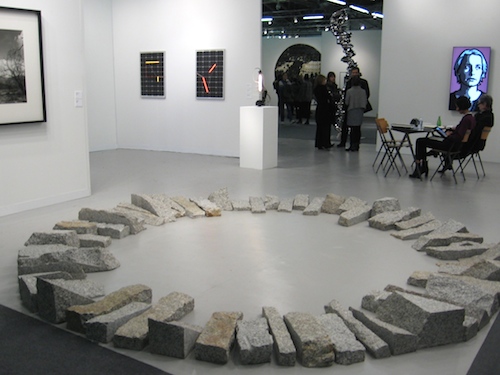
Richard Long’s 1994 Merrivale Circle at the Lisson Gallery

Richard Long’s 1994 Merrivale Circle at the Lisson Gallery

Although you could hike outdoors to get to the second pier along the West Side Highway, most were guided through a wormhole and down a flight of stairs to descend directly into the booths from 17 contemporary galleries across China – a great landing into a warren of booths featuring installations (watch out for the Roomba!), and user-friendly exercise equipment that the PRC makes available in public parks for citizen fitness.

From there, you enter the Contemporary Pier area.  Highlights: the whirling handbag piece (with real handbags) by Egill Saebjornsson at Reykjavik’s i8 Gallery, Richard Long’s stone circle at London’s Lisson Gallery booth, the completely constructed entry to Boesky Gallery, and Claudia Weiser’s cool wooden sculptures at Sies + Hoke (Dusseldorf).

Nick Cave Soundsuits at Jack Shainman

Nick Cave Soundsuits at Jack Shainman

A great place to end the journey was at the Jack Shainman booth, with its dramatic contemporary art exploring expressions from Africa, African-Americans, and global artists — the Nick Cave soundsuits and Richard Mosse’s spectacularly dissonant hot-pink infrared photograph of a waterfall in the continually disintegrating, war-torn Democratic Republic of Congo.

Take a look at the highlights here.

Fair goer relaxes on modernist egg chair under the watchful eye of Dali

Fair goer relaxes on modernist egg chair under the watchful eye of Dali

The Armory Show: One Ends, One Begins

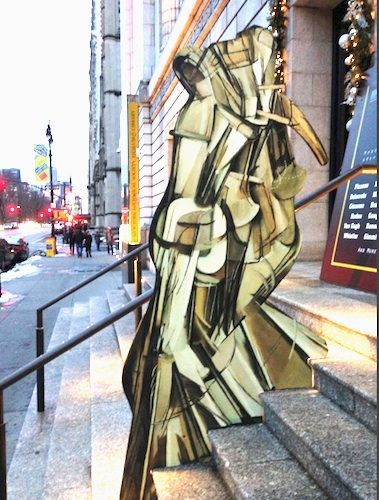
Mr. Duchamp’s 100 year-old icon exits NYHS on Central Park West after seeing the show.

Mr. Duchamp’s 100 year-old icon exits NYHS on Central Park West after seeing the show.

Challenging, ground-breaking art from all over the world under one roof, fashionable crowds, and buyers looking for the next big thing. On March 6, the 2014 edition of The Armory Show opens at the Hudson Piers 92 and 94; but for art-history lovers, there’s just a few days more to travel back in time to experience the 1913 edition that inspired it all at the New-York Historical Society’s show, The Armory Show at 100: Modern Art and Revolution, closing February 23. Check out the spectacular online exhibition site.

NYHS has gathered together 100 of the great art works that rocked Manhattan 100 years ago downtown at the 69th Regiment Armory on Lexington and 26th Street, where the Fighting Irish rented out their parade hall for a month to the newly formed Association of American Painters and Sculptors to show 1,400 works representing the latest trends in modernism.

One of the many postcards sold at the 1913 show’s merchandise table. Source: Smithsonian Archives of American Art

One of the many postcards sold at the 1913 show’s merchandise table. Source: Smithsonian Archives of American Art

Picasso, Cezanne, Matisse, Gauguin, and Munch were there in all their shocking glory – the first time many of these Europeans had been shown stateside. Take a look on the NYHS site and see what chaos ensued in the popular press. Even T. Roosevelt himself wrote an editorial about it.

NYHS not only shows us the work, but puts it all in the context of the times – the bohemian life in Greenwich Village, upstart galleries with an interest in the primitive and new, dissatisfaction with the confines of taste at the National Academy, and New York tastemakers yearning to make their mark on a world stage.

In the little low-light gallery next to the library, you’ll find all sorts of interesting ephemera – letters by the organizers of the show, registration cards with the insurance value of now-famous works, postcards for sale at the show, and a scrapbook of satirical telegrams read by the organizers at their celebratory dinner. This is where you can marvel at Gauguins selling for $8,100, Redon for $810, an oil by Braque for $200, a plaster Brancusi for $200, and Cezanne lithographs for $20 to $40. No wonder Stieglitz amassed such a great collection at these prices!

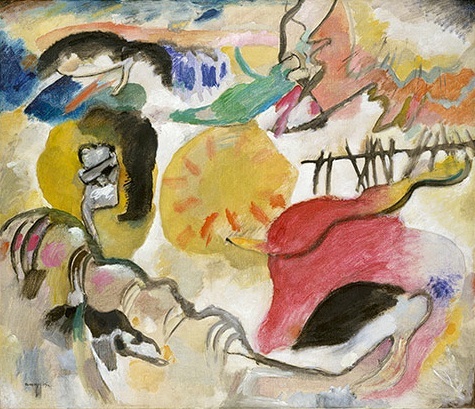
He had to have it. Stieglitz bought Kandinsky’s 1912 The Garden of Love (Improvisation Number 27) as soon as he saw it. Source: Metropolitan Museum/ © 2011 Artists Rights Society (ARS), NY / ADAGP, Paris

Stieglitz bought Kandinsky’s 1912 The Garden of Love (Improvisation Number 27) as soon as he saw it. Source: Metropolitan Museum/ © 2011 Artists Rights Society (ARS), NY / ADAGP, Paris

It’s interesting that the show would not have been such an affordable-art extravaganza without mega-dealer Vollard riding to the rescue, shipping crates of color lithographs and drawings to New York from Paris a scant three weeks before the show. Kuhn and his co-organizers devoted three galleries to works on paper. Works by Gaugin, Cezanne, Lautrec, and Munch flew off the walls, and when the show closed in New York, half of all the works sold had been supplied by Vollard.

Check out the price list and who-bought-what online. You can also probe the Smithsonian’s archive of Armory Show-related materials here.

The International Exhibition of Modern Art (a.k.a. Armory Show) installed in the 69th Regiment Armory at 25th & Lexington. Source: Smithsonian Archives of American Art, Kuhn family papers.

The International Exhibition of Modern Art (a.k.a. Armory Show) installed in the 69th Regiment Armory at 25th & Lexington. Source: Smithsonian Archives of American Art, Kuhn family papers.

The NYHS show is organized according to the original layout, including the grouping of Cubists with Mr. Duchamp’s iconic Nude Descending a Staircase, and the Fauve-Brancusi area – otherwise known in New York critic circles as the “Chamber of Horrors.” Looking at Matisse’s Blue Nude today, it’s hard to imagine that Art Institute of Chicago students found Matisse so shocking that they held a mock trial for him and burned it in effigy when the show arrived in the Windy City in April 1913.

And speaking of Chicago, the Armory Show was a huge success there – attracting over 180,000 art lovers, nearly double the attendance in New York. See the Art Institute’s gorgeous web site of exactly how everything looked in its grand galleries on Michigan Avenue. Everything really got the royal treatment. In turn, AIC can say it was the first museum in North America to show Picasso, Matisse, Duchamp, and Brancusi. No second-city status there.

Kuhn kept Picasso’s 1912 list of which artists should be shown. Source: Smithsonian Archives of American Art, Kuhn family papers.

Kuhn kept Picasso’s 1912 list of which artists should be shown. Source: Smithsonian Archives of American Art, Kuhn family papers.

Buy your ticket to this Armory Show before you buy one for the next one and feel what it’s like to walk through a turning point in American art history.

Must-See Skytop Panorama of NYC Past & Present at The Whitney

The installation view of T. J. Wilcox: In the Air, 2013. Photo: Bill Orcutt

The installation view of T. J. Wilcox: In the Air, 2013. Photo: Bill Orcutt

If you want to enjoy a beautiful view of Manhattan from the roof, don’t worry about the snow, rain, or cold weather. Go over to the Whitney Museum before February 9 and take in the film installation T.J. Wilcox, In the Air, that features a beautiful panorama (from the roof of Wilcox’s Union Square studio) that dreamily introduces six stories about the past and present of life, art, energy, fame, events, and cosmic forces that ebb and flow continuously below.

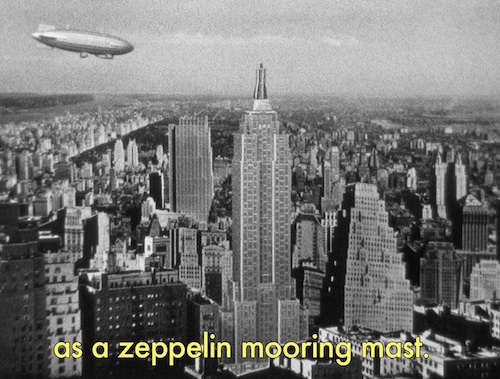
The big, in-the-round screen circles around you (duck and just walk into it), so you can really take in the view, all the way from the Battery to beyond the Empire State Building.

Still from T.J. Wilcox’s panoramic 2013 silent film installation, In the Air. Image courtesy of the artist and Metro Pictures.

Still from T.J. Wilcox’s panoramic 2013 silent film installation, In the Air. Image courtesy of the artist and Metro Pictures.

The film cycles from dawn to dusk, but along the way, Mr. Wilcox takes you on little journeys as you enjoy his movie panorama. The experience is one where you begin to see New York through his eyes, past and present together.

After a few minutes, one of his panorama screens fades you see a short, reflective, poetic, subtitled NYC story-movie. It’s a quiet experience — bringing you back to the Thirties when the Empire State Building was contemplated to be used as a zeppelin-docking station, to the present when 14th Street is one of the best vantage points to contemplate the out-of-this-world spectacle of Manhattanhenge, and the days of glitter, glamour, and grit of Warhol, Gloria Vanderbilt, and fashion-industry icon, Antonio Lopez.

Watching Wilcox’s Gloria Vanderbilt vignette from outside the installation. Photo: Bill Orcutt.

Watching Wilcox’s Gloria Vanderbilt vignette from outside the installation. Photo: Bill Orcutt.

He reminds you that Gertrude Whitney, the museum’s founder, long ago succeeded in a custody battle to care for little Gloria. The film takes you to her apartment and reflects on the fact that Gloria was “in the public eye from birth” and celebrates her vibrant artistic, business, and family accomplishments (re: plenty of shots of Anderson Cooper). Another mini-film focuses upon a nano-second in Warhol’s life, when his Factory crew unfurled Mylar balloons to welcome the arrival of the pope-mobile to New York City in 1965.

Weegee’s Variant of Untitled (Striking Beauty) is hung in an adjacent gallery. Courtesy: Whitney Museum

Weegee’s Variant of Untitled (Striking Beauty) is hung in an adjacent gallery. Courtesy: Whitney Museum

In his musing on the film about fashion-illustrator extraordinaire, Antonio, Wilcox reveals his surprise that Antonio’s studio was located right next to his own building, takes pleasure in asking us to gaze out over the community where so much magnificent art was made, careers enlivened, and life lived.

In a tiny back-room gallery, the Whitney has installed a few other reflections on skies over the City – Weegee’s lightening strike behind the Empire State Building and Yoko’s Sky TV, are two – but the big “wow” here is Mr. Wilcox’s ability to take us on a 35-minute journey in and among the streets and skyline that from his quiet, contemplative perch.

It’s quite a collage of memory, reflection, mythologies, politics, history, and beauty. Click here to see the Whitney’s slide show of the storyboards in Wilcox’s studio, and listen to him talk about it this beautiful work in this YouTube video:

Go Underground and Outside at Grand Central

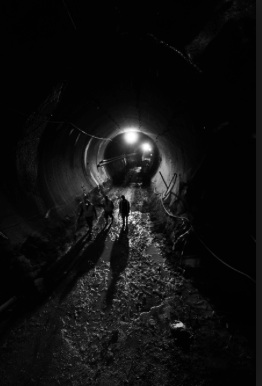
Hiroyuki Suzuki’s dramatic black-and-white view of the massive $8.2B project

Hiroyuki Suzuki’s dramatic black-and-white view of the massive $8.2B project

See New York above and below in two unique photography installations at everyone’s favorite train station right now.

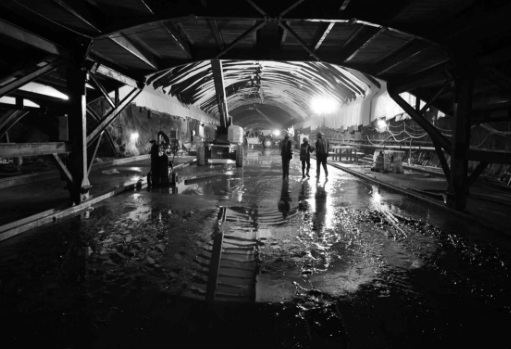
At the New York Transit Museum Annex, you can glimpse your future path to the Hamptons in The Next Level: East Side Access Photographs by Hiroyuki Suzuki through October 27. Suzuki takes you over 14 stories below Grand Central to see the tunnels, sandhogs, tunnel boring machines, and chasms of the huge construction project that will allow 160,000 daily LIRR riders to arrive on Manhattan’s East Side when it’s done in 2019.

Suzuki had never before visited New York before starting his project, but he considers it a thank-you for the relief work done by the US Armed Services following the devastating earthquake and tsunami that hit his home country of Japan in 2011.

Underground view of East Side Access by Hiroyuki Suzuki

Underground view of East Side Access by Hiroyuki Suzuki

Contemplating the more than 50 black-and-white images, you can feel the monumental achievement happening underground, feel the damp, hear the light sloshing of men and machines moving through slightly damp tunnels, and see the miles of spaghetti-like cables illuminating the gigantic spaces where trains will soon thunder.

Suzuki made four trips down there during the project, and you may not even get to make one, so drop in and take a look at the engineering marvel happening right beneath a good patch of Midtown East. You’ll see supports labeled “48 Street” or “FDR” for orientation in the black wilderness.

Beautiful Hudson River photograph by Robert Rodriguez, Jr. from the one-day exhibition in Vanderbilt Hall

Beautiful Hudson River photograph by Robert Rodriguez, Jr. from the one-day exhibition in Vanderbilt Hall

Speaking of wilderness, get over to Vanderbilt Hall sometime today to experience the opposite – gorgeous landscapes of the spectacular Hudson Valley. To celebrate the achievements of an historic environmental organization (and encourage you to buy a train ticket to see scenery that inspired generations of artists), there’s a one-day-only photo spectacular — 150 images by Annie Leibovitz and 12 other photographers whose subject is the beauty of the Hudson River.

On Time and Place: Celebrating Scenic Hudson’s 50 Years, sponsored by Metro-North and Scenic Hudson, has traveled to five cities to celebrate this historic environmental organization’s 50 years of success. The photos are in Vanderbilt Hall from 10am until 4pm.

Thousands Flock to the Light

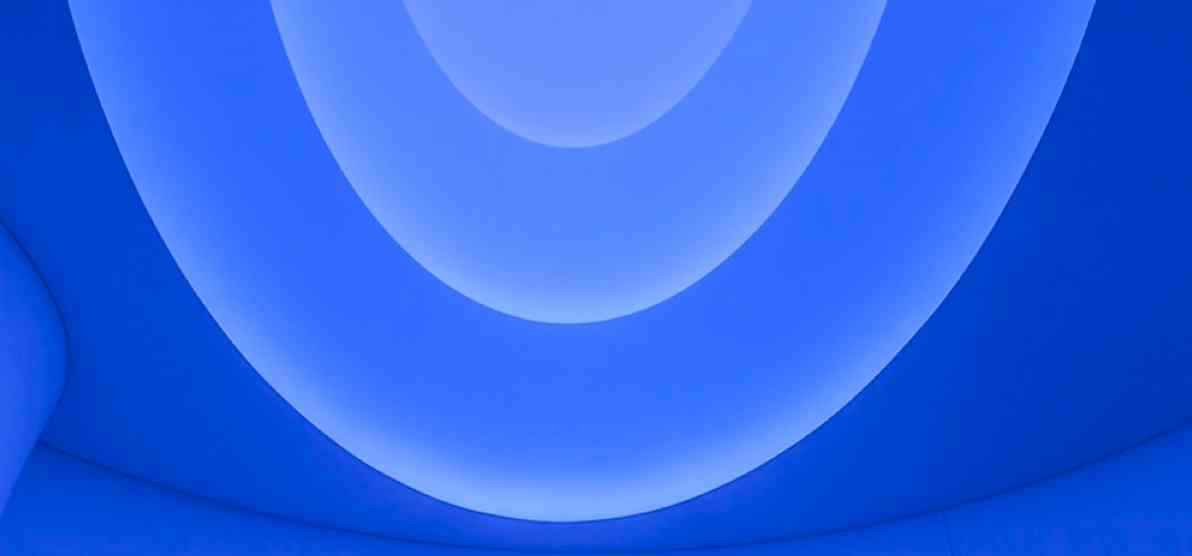
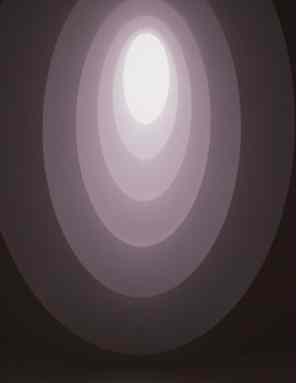
Imagine you are laying on the floor of the Guggenheim rotunda and that you are looking up at James Turrell’s new work. This is what you’d see.

James Turrell’s Aten Reign. Source: Guggenheim

The colors slowly, slowly morph for the next hour, changing from pink to green to yellow until they work through the entire color cycle. As yellow fades, you see the white, glowing sun…or is it the moon?

Aten Reign moment in the Guggenheim atrium, James Turrell’s site-specific spectacular. Source: Guggenheim

Aten Reign moment in the Guggenheim atrium, James Turrell’s site-specific spectacular. Source: Guggenheim

You need to get there to experience the spectacular light before September 25, when James Turrell takes his leave of New York, the end of his first major show here. The museum’s exhibition site is wonderful, but it’s no match for the out-of-this-world, cosmic experience of his masterful Aten Reign.

The Guggenheim has blocked off the famous skylight and any view of the atrium from its gallery spiral. Viewing the light show from the ground floor, all viewers see are these rings of slowly changing light with an oval center – a natural shape that Mr. Turrell loves.

Out-of-towners expecting to have the fun of walking up the ramp and looking down on ever-tinier ground-floor visitors will be disappointed. But other magical Turrell encounters await.

On Level 2, we found celebrated security guard, Jeffrey Martinez (see this week’s New York Times profile on him) holding throngs in rapt attention explaining the magic wrought by Mr. Turrell with his corner floor-to-ceiling strip of light. Martinez told us that although it appeared to be a vertical “light”, we were actually seeing an illumination emanating from behind the false wall. The New York Times was right to single him out for a story, because it felt like we were meeting a celebrity with art-world smarts, gently cautioning people against trying to touch and asking them to “stand back” to give the piece some space.

Afrum I (White), 1967, one of Mr. Turrell’s early cross-corner projections. Source: Guggenheim

Afrum I (White), 1967, one of Mr. Turrell’s early cross-corner projections. Source: Guggenheim

Upstairs, the show presents two more light installations that mimic two of the twenty 2D etchings precisely ringing a small gallery. Mr. Turrell creates the illusion, on paper, of light glowing from the white cubes surrounded by the ink. You just have to see them and then turn the corner to see “square” beams of light illuminating two walls. In the second room, Afrum I (White) astounds. You think you’re seeing a levitating white cube of light. Magical.

Hear him talk about his view of Mr. Wright’s philosophy and building and why they are so right for one another:

Enough said. Go see it.

Spoiler alert: The Guggenheim’s YouTube site has several videos about how Turrell and the team created the magic on the spiral.

I, YOU, WE: Art on the Front Lines of the 80s Culture Wars

Les Levine mounted his poster everywhere in the subway in 1981, a tough time in New York. Source: The Whitney © Les Levine for The Museum of Mott Art, Inc.

Les Levine mounted his poster everywhere in the subway in 1981, a tough time in New York. Source: The Whitney © Les Levine for The Museum of Mott Art, Inc.

It’s not a comfortable art show, but the 1980s weren’t comfortable times. The Whitney Museum of American Art’s show I, YOU, WE resurrects art from a time when artists were protesting inequality and gentrification, the AIDS epidemic was raging, Wigstock brought gender shifting into the open air, and New York’s downtown community waited apprehensively for the next police crackdown on squatters, community gardens, and anyone flaunting an alternative lifestyle.

As it prepares to move to the High Line in 2015, The Whitney asked its curators to mine its permanent collection to see if there were periods of time that might have been overlooked in the shows of recent years.

I, YOU, WE is the answer: the difficult, searching, and searing work produced by the passionate and disenfranchised denizens of New York’s tumultuous 1980s and early 1990s.

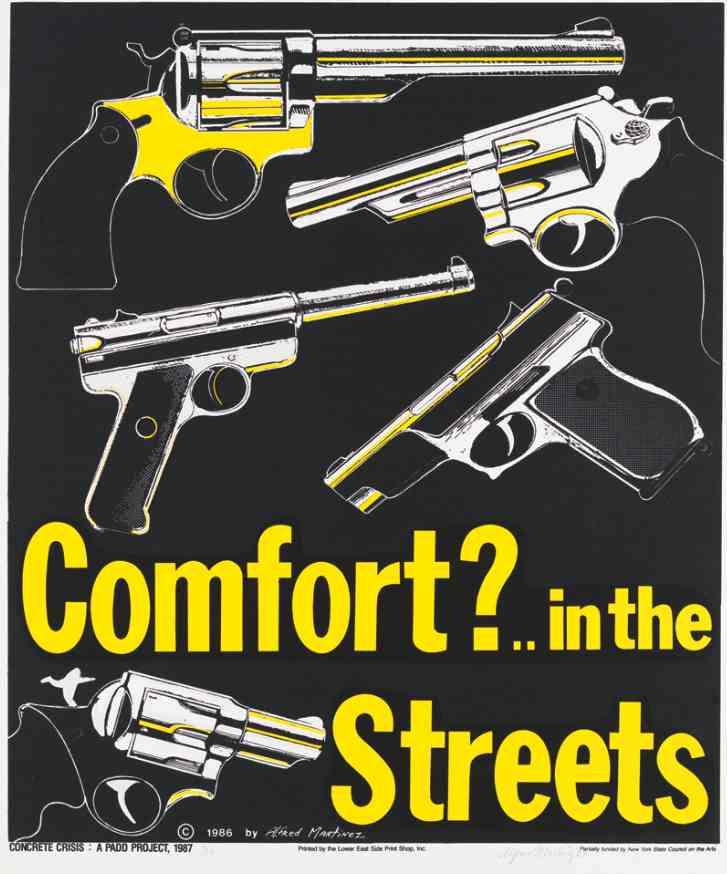
No one could miss Alfred Martinez’s 1987 screenprint. Source: The Whitney. © 1986 by Alfred Martinez

No one could miss Alfred Martinez’s 1987 screenprint. Source: The Whitney. © 1986 by Alfred Martinez

Works feature the flip side of Warhol’s Interview magazine and Studio 54 – people struggling with identities, illness, injustice, and the consequences of Washington’s culture wars against edgy art.

The Whitney produced this video about the “WE” section of the show, when artists began protesting gentrification, how they used art as the lever to galvanize the East Village, and the battles that raged for the community. Other sections of the Whitney show focus on artists’ exploration of race, gender, religion, and the AIDS crisis.

Revisit the emerging street styles – graffiti, comics-inspired drawings, stencils, and posters – as Andrew Castrucci of Bullet Space leafs through one of the seminal art-protest pieces.

When you visit, make enough time to Nan Goldin’s 700-slide extravaganza that documents everything.  Scroll down here to see installation views and  other works in the show by Mapplethorpe, Basquiat, Currin, Wojnarowicz, and Ligon. Tough stuff, but not tougher than the lives these artists lived during that decade.

Congratulations to the Whitney for not forgetting, presenting this work to the next generation, and testing if the work still sticks 20 to 30 years later. The show runs through September 1.

Native Americans Rock Pop Music

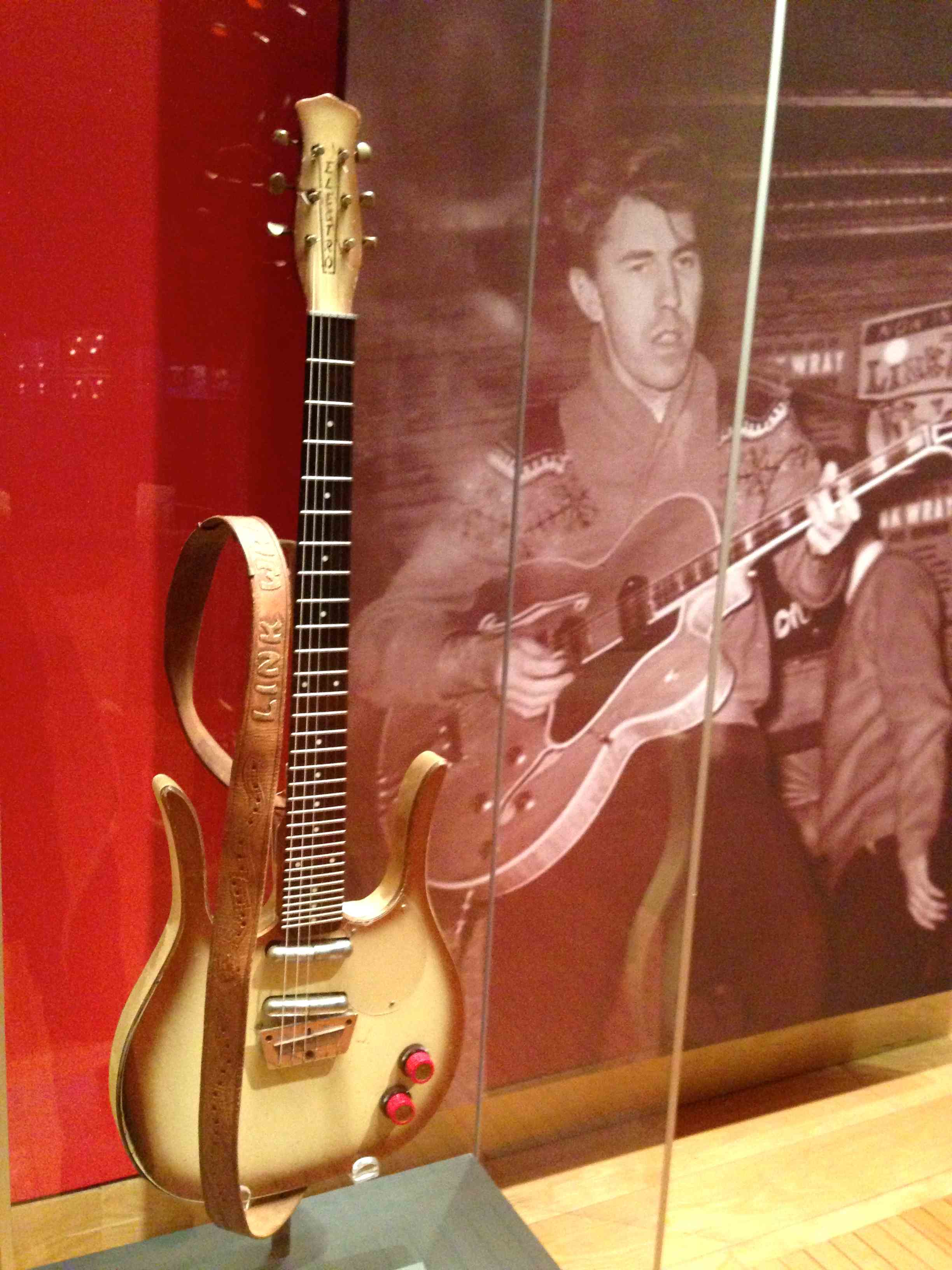
Link Wray in the 1950s and the guitar that introduced the power chord, wah wah, and distortion to rock ‘n’ roll

Link Wray in the 1950s and the guitar that introduced the power chord, wah wah, and distortion to rock ‘n’ roll

It’s not all flute music. Did you know that Link Wray, a Shawnee rock innovator, created the wah-wah, the power chord, and distortion echo that all rock superstars since the 1950s adopted? It’s just one part of the story told by Up Where We Belong: Native Musicians in Popular Culture, up through August 11 at the National Museum of the American Indian down at New York’s Customs House.

Don’t take our word for it. Take a seat in the comfortable bandstand-lounge inside the show and watch as Led Zeppelin’s Jimmy Page and The Edge discuss the importance that Wray’s innovations had on them and everyone in the scene.

The show doesn’t ignore jazz, blues, or rap but a lot of the pizzazz is seeing the stuff associated with folk, rock, and country stars alongside quotes (on the walls and in video clips) from legends like Slash, Ringo, Townsend, and Dylan testifying to the ties they had to fellow artists like Robbie Robertson, Jessie Ed Davis, and others. The show has historic (and beautiful) guitars and that famous multi-colored coat worn by Jimi Hendrix. You’ll really be amazed at the profusion of talent and historic connections.

Installation view with photos of Stevie Salas, Jessie Ed Davis, and Randy Castillo.

Installation view with photos of Stevie Salas, Jessie Ed Davis, and Randy Castillo.

You don’t normally associate Jimi Hendrix with the tribes, but the NMAI scholars reveal that his paternal grandmother was Cherokee who once played on the vaudeville circuit. It’s also a surprise to see Randy Castillo’s drum set from the last Mötley Crüe tour suspended reverently overhead. (Randy replaced Tommy Lee.) Check out our Flickr site for views of the show.

The NMAI scholars, as usual, did a stellar job digging out the facts behind the men and women honored. Like reminding us that Jessie Ed Davis first met John Lennon at The Rolling Stones Rock and Roll Circus and that Johnny Cash was one of the first pop music voices singing out on behalf of the Native American cause back in the 1960s.

The Hendrix coat of many colors

The Hendrix coat of many colors

The heart of the show, however, is the music. NMAI made sure that there’s plenty of opportunity to listen in to why these stars were great. You can sink into big, red settees throughout the space and snap on headphones, relax in the bandstand-like lounge room to watch 20 film clips, or play with iPads in the listening gallery. You’ll enjoy hearing Buffy sing “Universal Soldier”, Kristofferson and Coolidge performing their Grammy-winning duets, Link Wray rocking out with “Raw-Hide” during the American Bandstand days, and Illinois Jacquet’s swinging tenor sax on “Stompin’ at the Savoy”.

The NMAI did an incredible job not only with the show itself, but also with its fascinating run-of-show blog, which includes articles on how the Hendrix coat was loaned to the show, jazz great Mildred Bailey, and recollections contributed by the show’s visitors.

Enjoy this walk through music history and reconnect with some of the best in the business. A truly wonderful slant on what makes American pop culture so great.  If you’re in New York, get down to see Rita Coolidge in person at her free NMAI concert at 6pm on Thursday, August 8.